Willy Pragher was born in Berlin and trained at the Reimann School of Art and Design, one of the city’s most respected private art schools. By 1932, he had established himself as a freelance press photographer, contributing work to major publications including Ullstein, Berliner Illustrierte, and Badische Zeitung. His career was interrupted by World War II, when he was drafted into the Volkssturm — a national militia assembled by the German military in the war’s final months. In 1945, he was captured and sent to Siberia as a prisoner of war. He was not released until 1949, when he returned to Germany and resumed his photographic work.
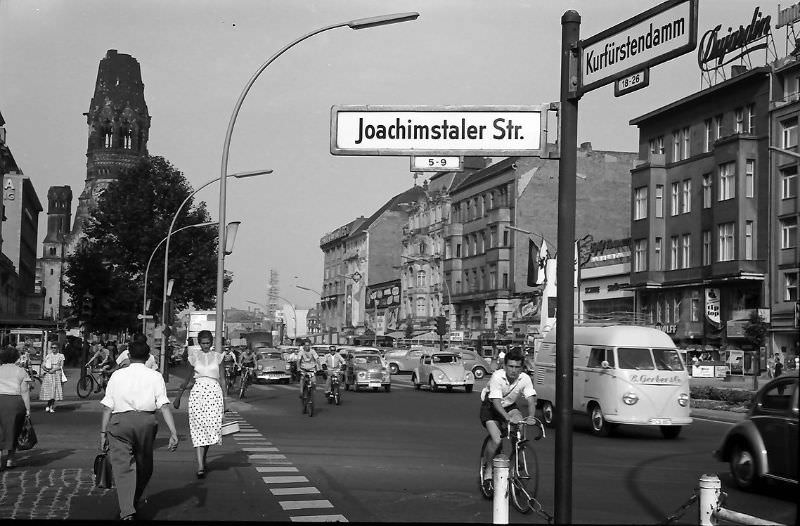
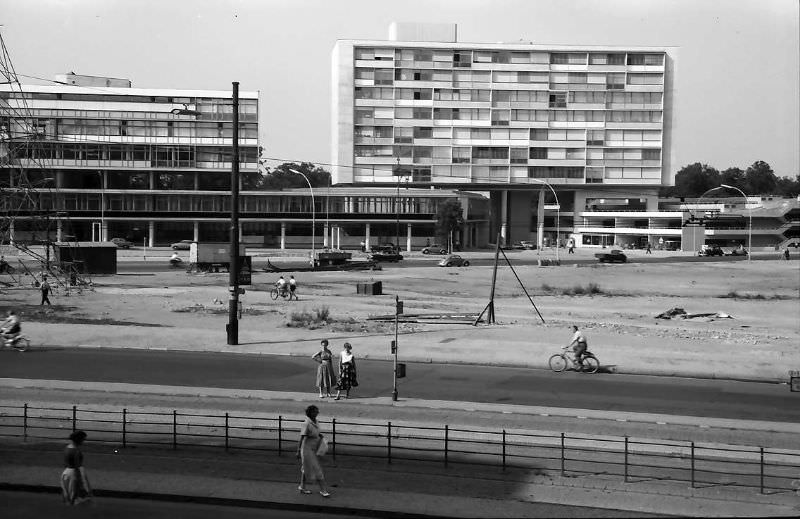
By the summer of 1957, Pragher was documenting West Berlin with a sharp and steady eye. The city was still rebuilding from wartime destruction, but life along its main boulevards was visibly returning. The Kurfürstendamm — West Berlin’s central commercial artery — buzzed with pedestrians, storefronts, and transit. These photographs capture that specific moment in time, when postwar reconstruction and everyday urban life existed side by side. One of his early shots shows the DOB-Hochhaus, a modern office block on Joachimsthalerstrasse that stood as one of the more striking new structures in the area.
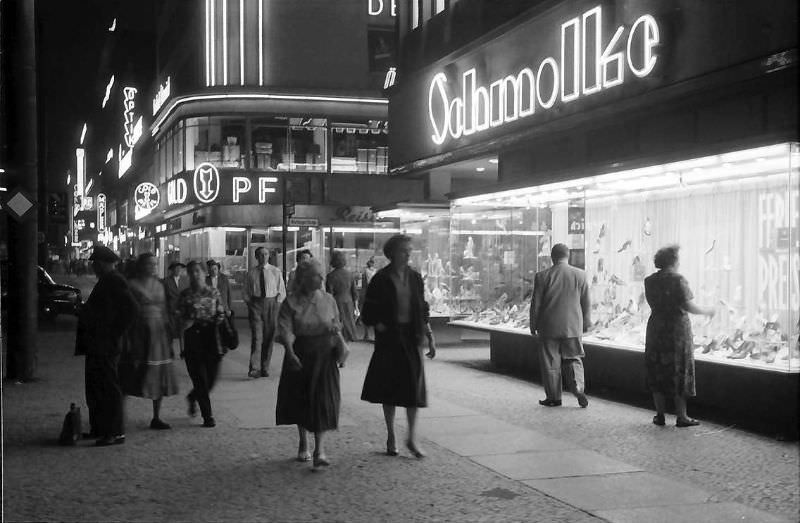
The streets around Tauentzienstrasse were among West Berlin’s busiest shopping corridors in 1957. Pragher photographed the corner of Tauentzienstrasse and Marburgerstrasse, showing the density of commercial activity in that part of the city.
The DOB-Hochhaus was more than just an office tower — it also housed Café Huthmacher, which offered an elevated view across the surrounding streets. Pragher captured that vantage point looking out over the city.
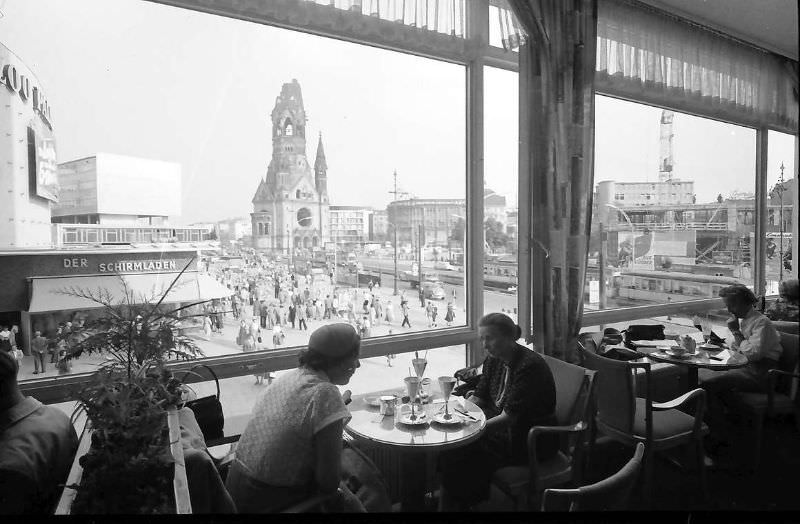
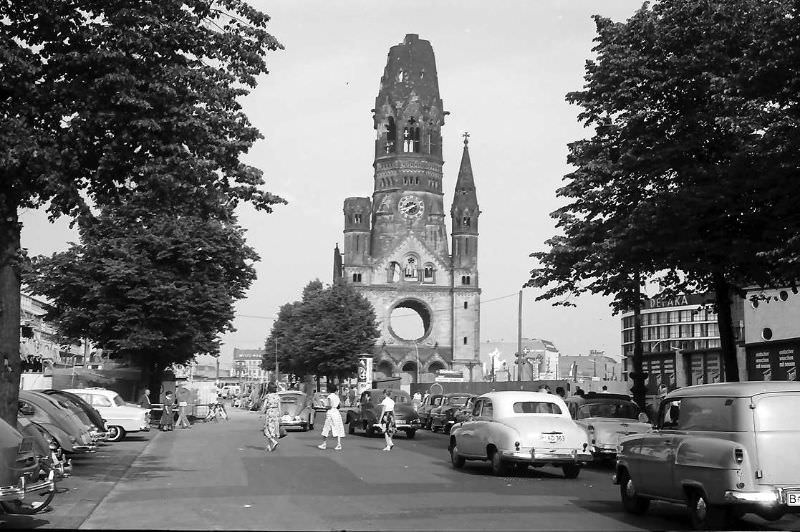
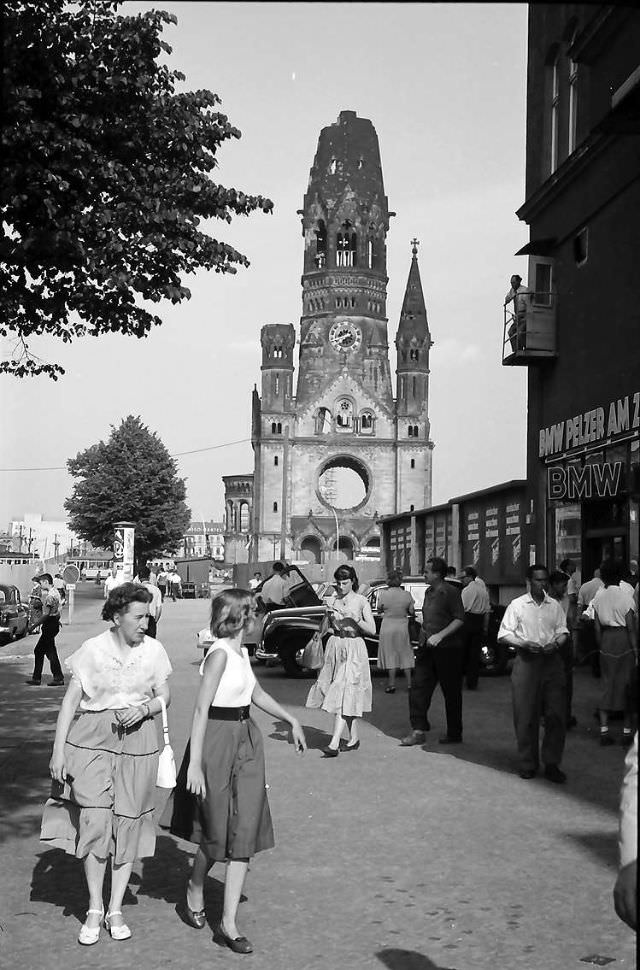
The Kaiser Wilhelm Memorial Church was one of the most recognizable landmarks in postwar West Berlin. Its bombed-out tower had been left standing as a deliberate reminder of the war. Pragher photographed it from multiple angles, including this view down Kantstrasse.
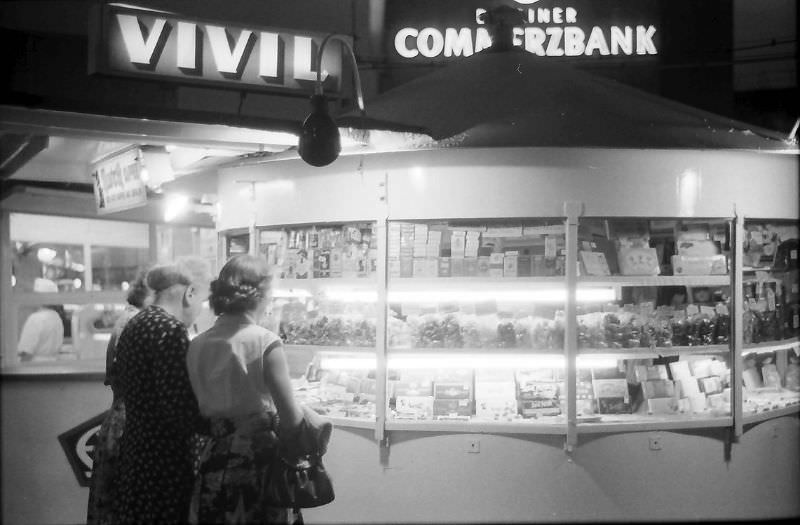
Street-level commerce was a defining feature of the Kurfürstendamm in 1957. News kiosks were a common sight along the boulevard, stocked with newspapers, magazines, and other goods for passing Berliners.
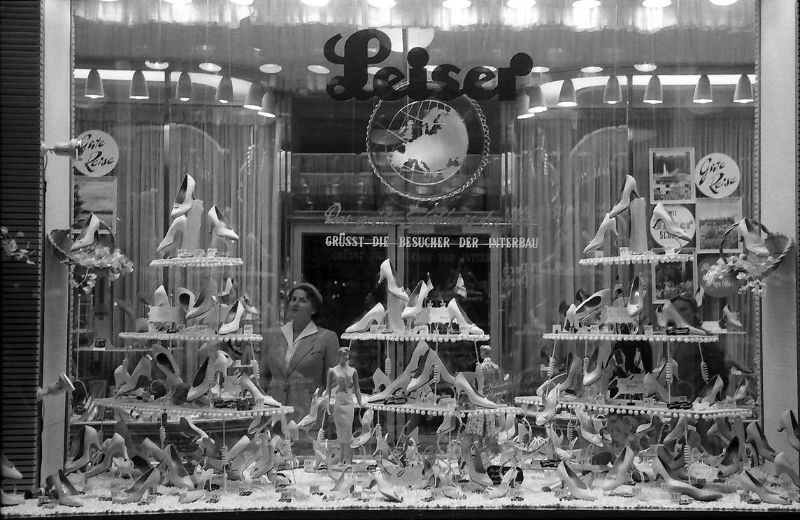
Retail shops were reopening and expanding along the main shopping streets. Leiser, a well-known German shoe retailer, had a prominent presence on Tauentzienstrasse, reflecting the consumer recovery that West Berlin was experiencing in the mid-1950s.
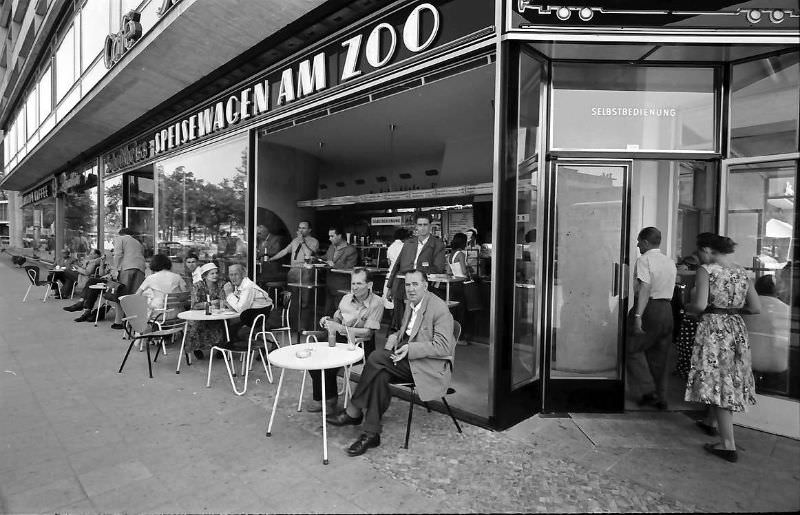
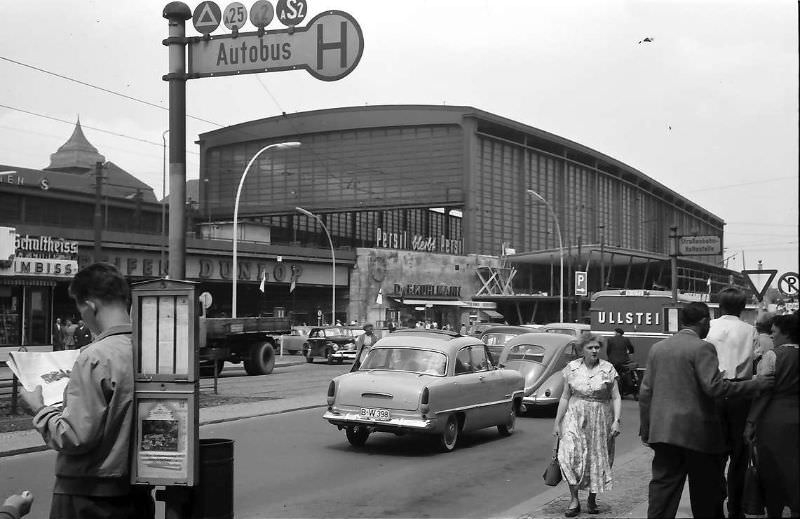
Berlin Zoologischer Garten station — commonly called Bahnhof Zoo — served as one of the city’s main transit hubs. In 1957 it was a central meeting point and a major stop for both the S-Bahn and long-distance rail services in West Berlin.
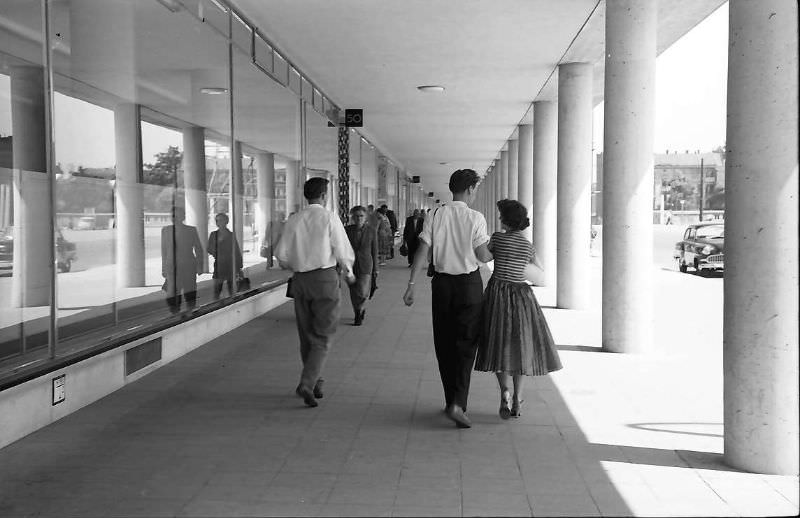
Just steps from Bahnhof Zoo stood the Bikini-Haus, a large commercial building completed in 1957. Its open colonnade at street level gave it a distinctive modern character compared to older surrounding structures.
Pragher returned to the view toward the Kaiser Wilhelm Memorial Church more than once. From Kantstrasse, the ruined spire dominated the skyline, a constant presence over the rebuilt commercial streets below.
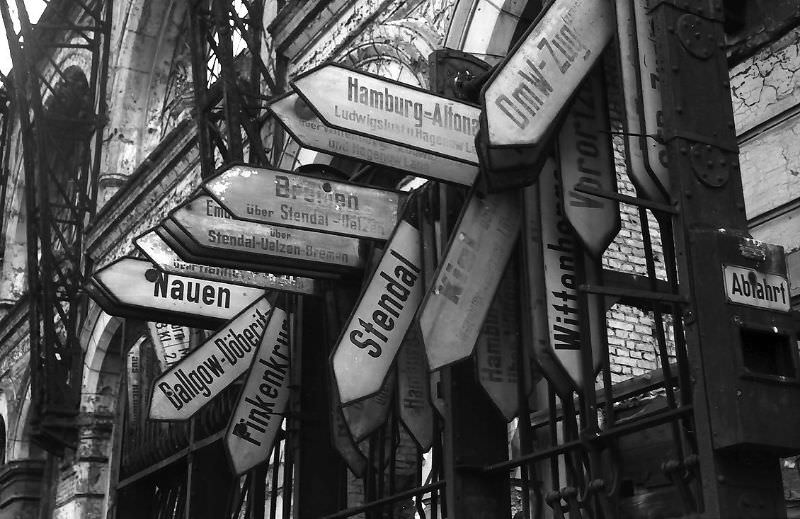
Not all of the city’s older infrastructure would survive the decade. Lehrter Bahnhof, one of Berlin’s historic railway stations, was still standing in 1957 but had already been marked for demolition. Pragher photographed it before it came down.
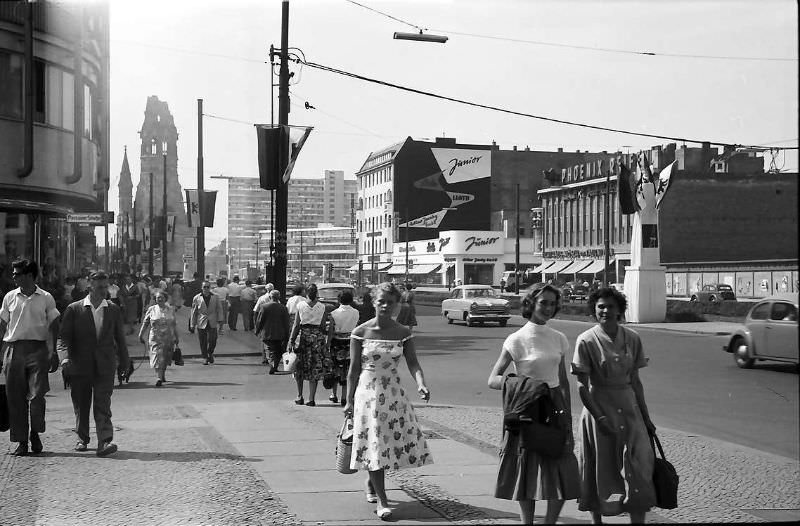
Looking down Tauentzienstrasse from Passauerstrasse, the street showed a mix of rebuilt storefronts and pedestrian traffic typical of a West Berlin summer afternoon. The street connected the Kurfürstendamm to the Wittenbergplatz and remained a key commercial route.
Pragher photographed Joachimsthalerstrasse from several positions, documenting this short but commercially active street that linked the Kurfürstendamm to Bahnhof Zoo.
In 1957, the site where the Europa-Center would eventually rise was still undeveloped. The lot sat near Breitscheidplatz, and its empty state stood in contrast to the dense commercial activity developing around it.
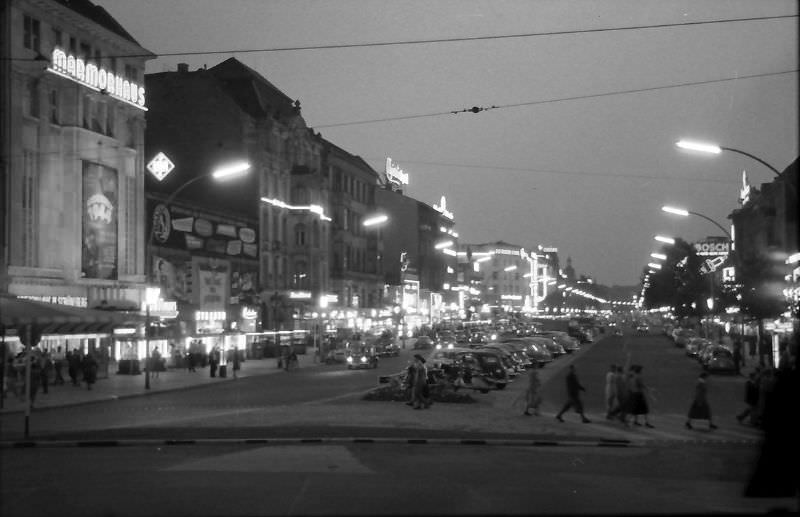
From Breitscheidplatz, the Kurfürstendamm stretched westward through the heart of West Berlin’s commercial district. This view captures the boulevard’s width and the steady flow of traffic and pedestrians.
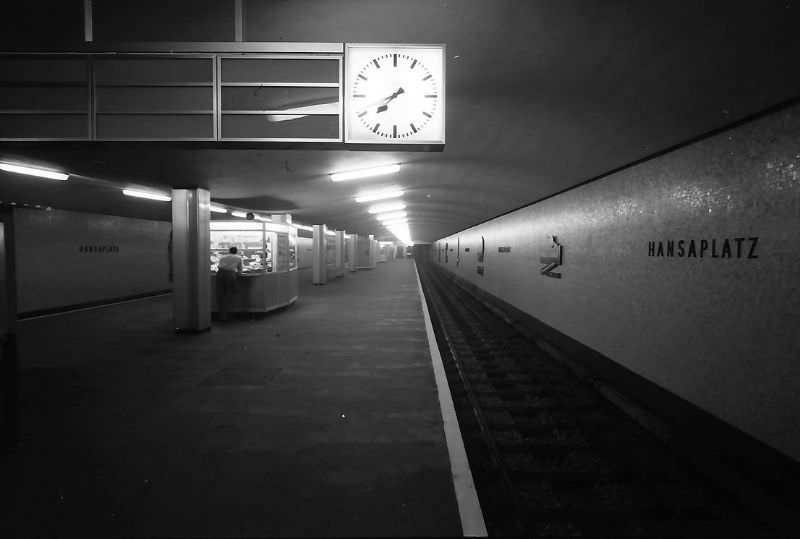
The Hansaplatz underground station was part of the U-Bahn infrastructure serving the Hansaviertel, a district that had been showcased as a modernist residential project for the 1957 Interbau international building exhibition.
Pragher made additional passes along Joachimsthalerstrasse, capturing different angles and lighting conditions as the day progressed.
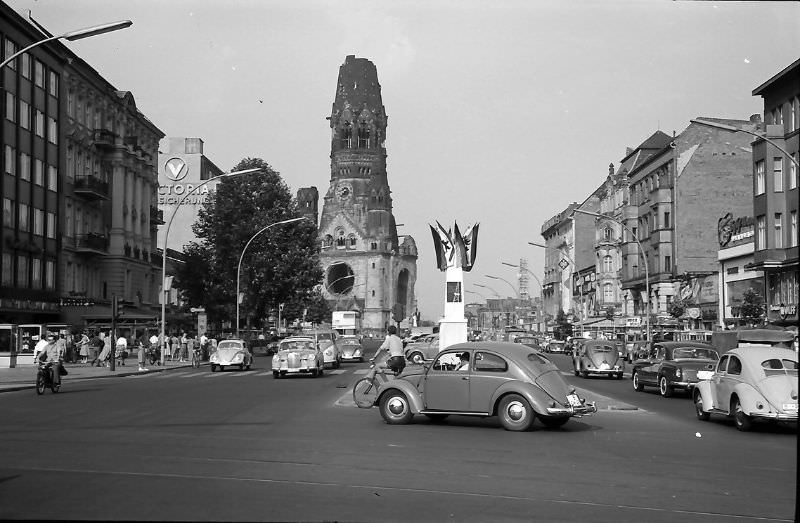
Looking west from Joachimsthalerstrasse, the Kurfürstendamm extended through a row of shops, cafés, and rebuilt apartment buildings. This stretch was the commercial spine of West Berlin at the height of the postwar recovery.
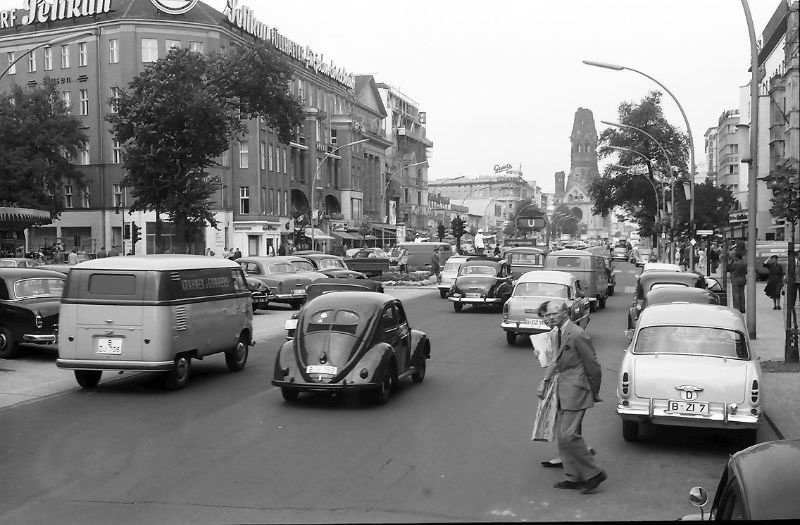
A third view along Joachimsthalerstrasse shows the street in a slightly different light, with the DOB-Hochhaus visible as a backdrop above the pedestrian activity at street level.
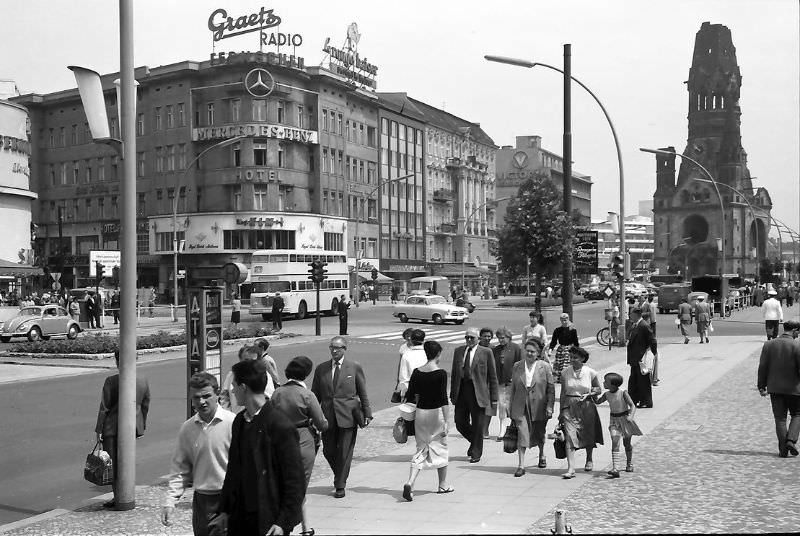
The intersection of the Kurfürstendamm and Uhlandstrasse was another well-trafficked crossroads in West Berlin’s western districts, lined with shops and restaurants drawing both locals and visitors.
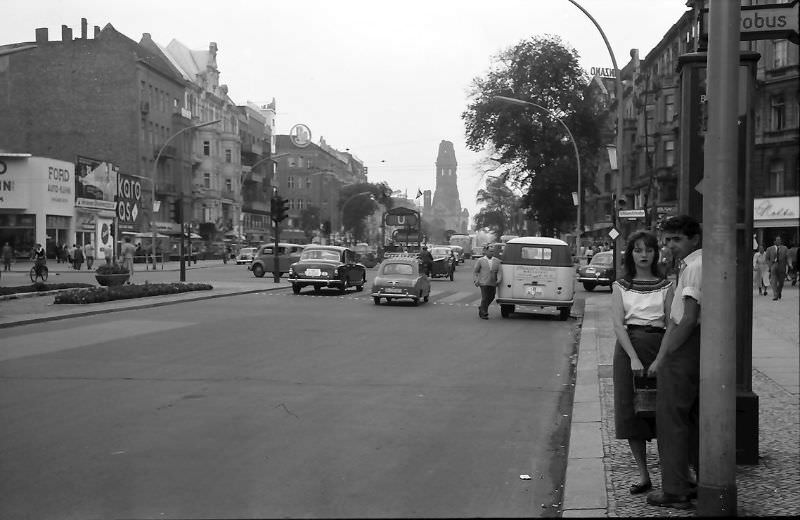
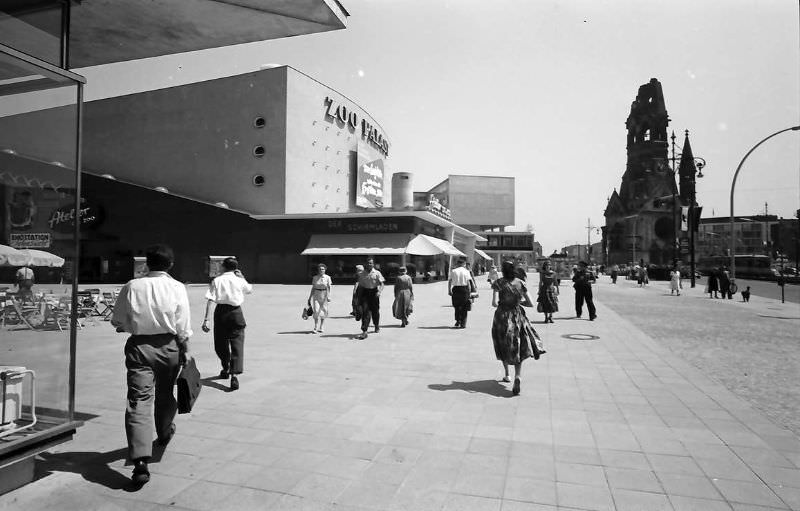
The Zoo Palast cinema, opened in 1957, sat near the Kaiser Wilhelm Memorial Church and quickly became one of the most prominent film venues in West Berlin. Pragher captured both structures together in one of his shots.
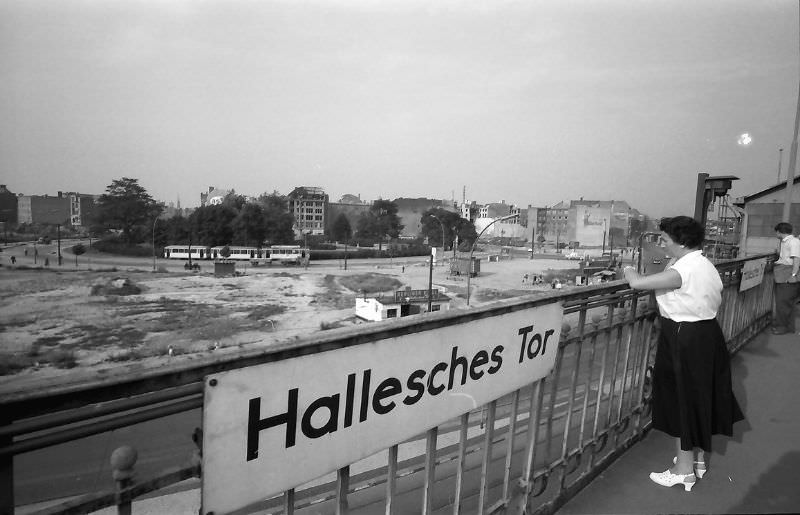
Pragher’s final image from this collection looks out from Hallesches Tor underground station toward the ruins of Mehringplatz. The square, which dated back to the 18th century, had been heavily bombed during the war and remained largely destroyed in 1957. The view from the station platform offered a direct look at how much of the city still lay in ruin more than a decade after the war ended.