
In 1986, photographer Peter Marshall walked the streets of London’s East End with a camera and documented what he found: shop fronts, street signs, markets, murals, and the people who lived and worked there. His images are a precise record of a place that was changing fast — and, in many corners, barely changing at all.
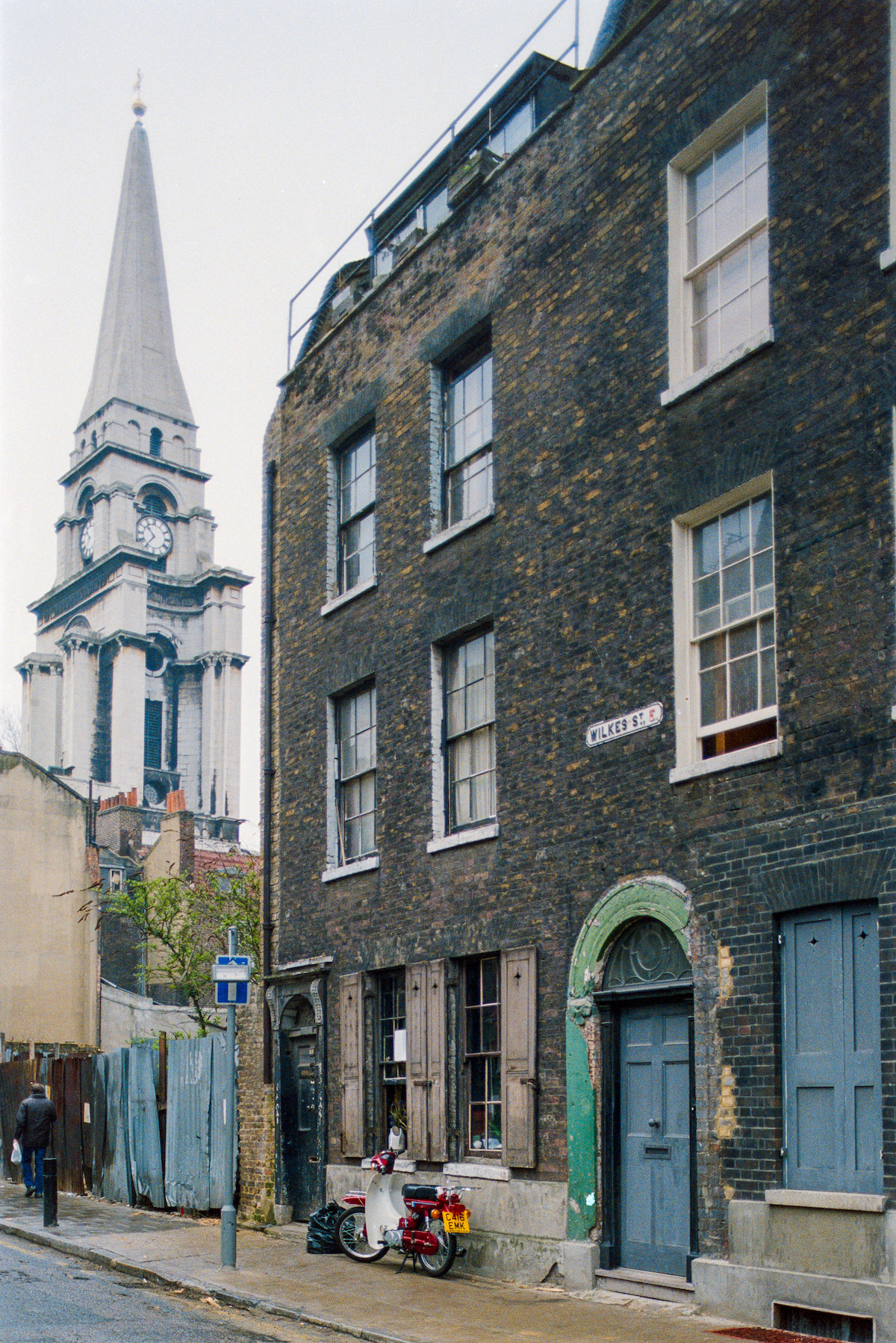
The East End in the mid-1980s was a place of sharp contrasts. Canary Wharf and the Isle of Dogs were undergoing major construction as part of the London Docklands redevelopment. New buildings were going up, investment was flowing in, and the skyline was shifting. At the same time, the area still held some of the worst poverty in the country. That gap — between the cranes on the horizon and the run-down streets closer to home — defined daily life for many residents.
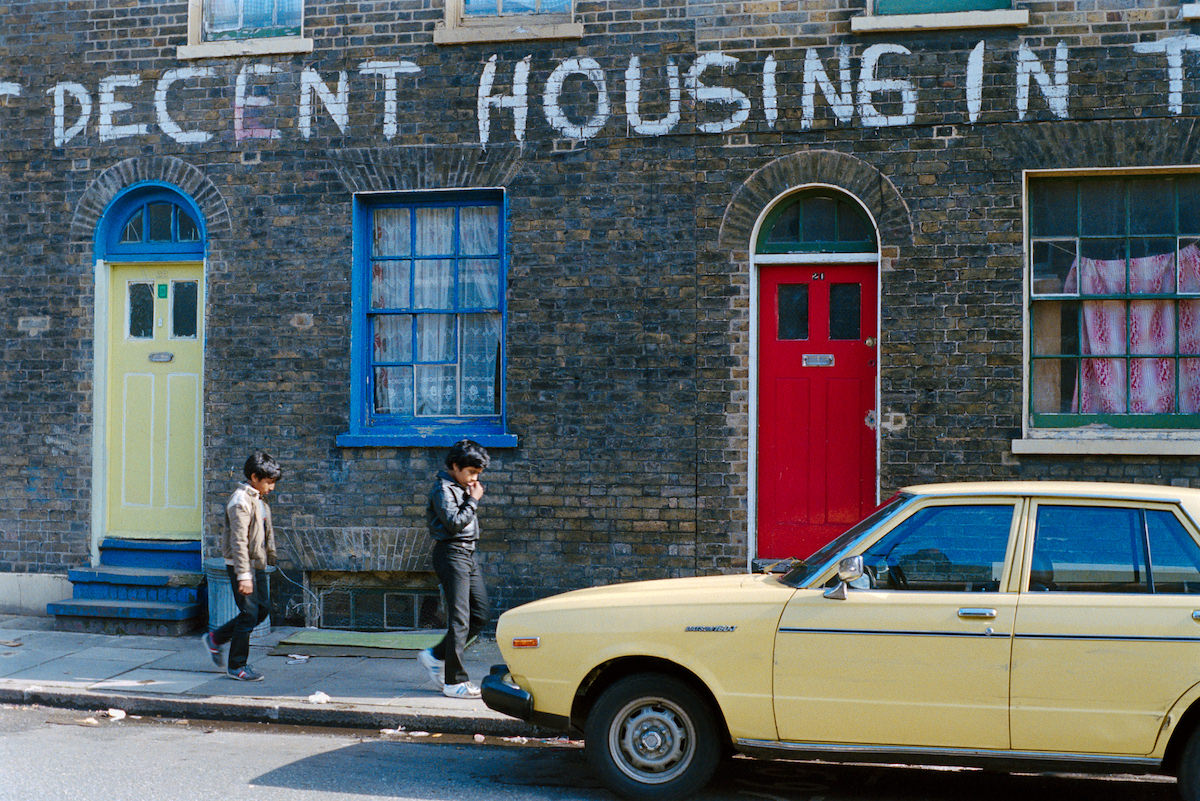
Transport was struggling to keep up. By the mid-1980s, both the District line and the Central line were beyond capacity. The Docklands Light Railway opened in 1987, and the Jubilee line extension followed in 1999, both designed to serve the growing demand in and around the East End. But in 1986, those solutions were still on the drawing board.
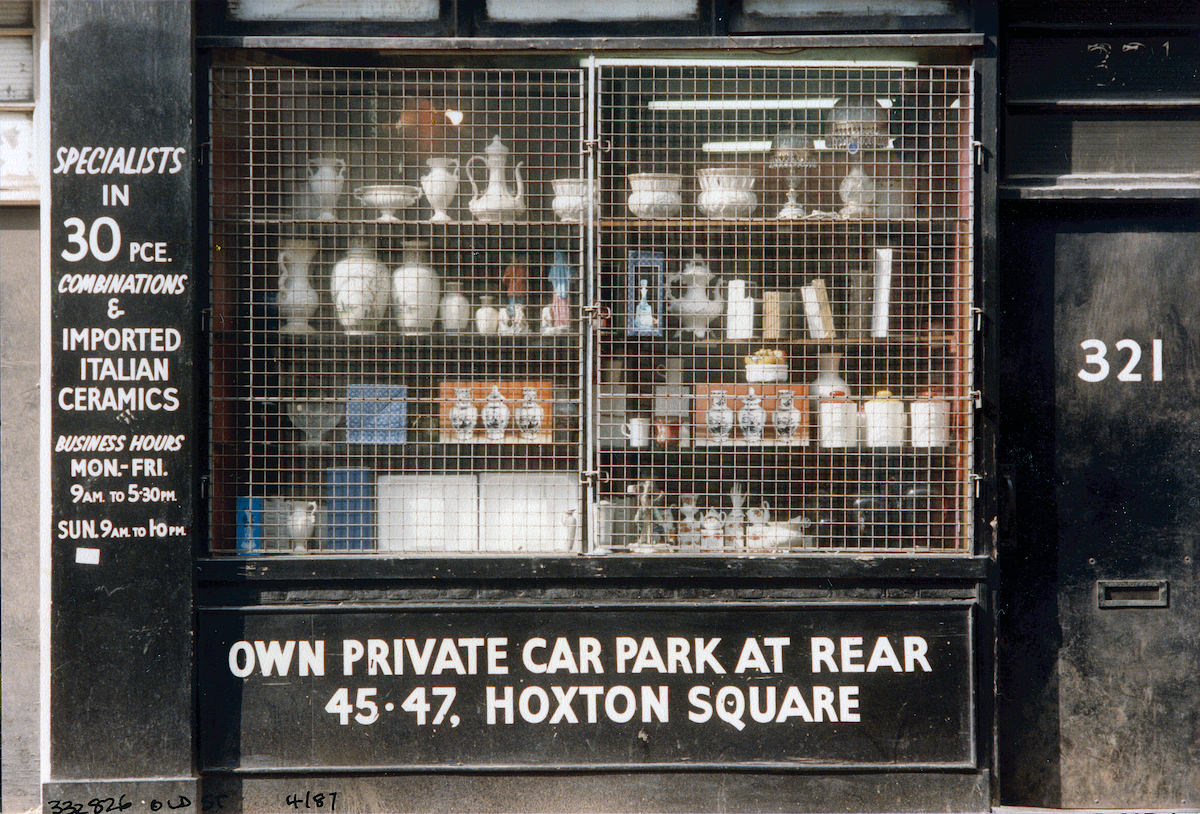
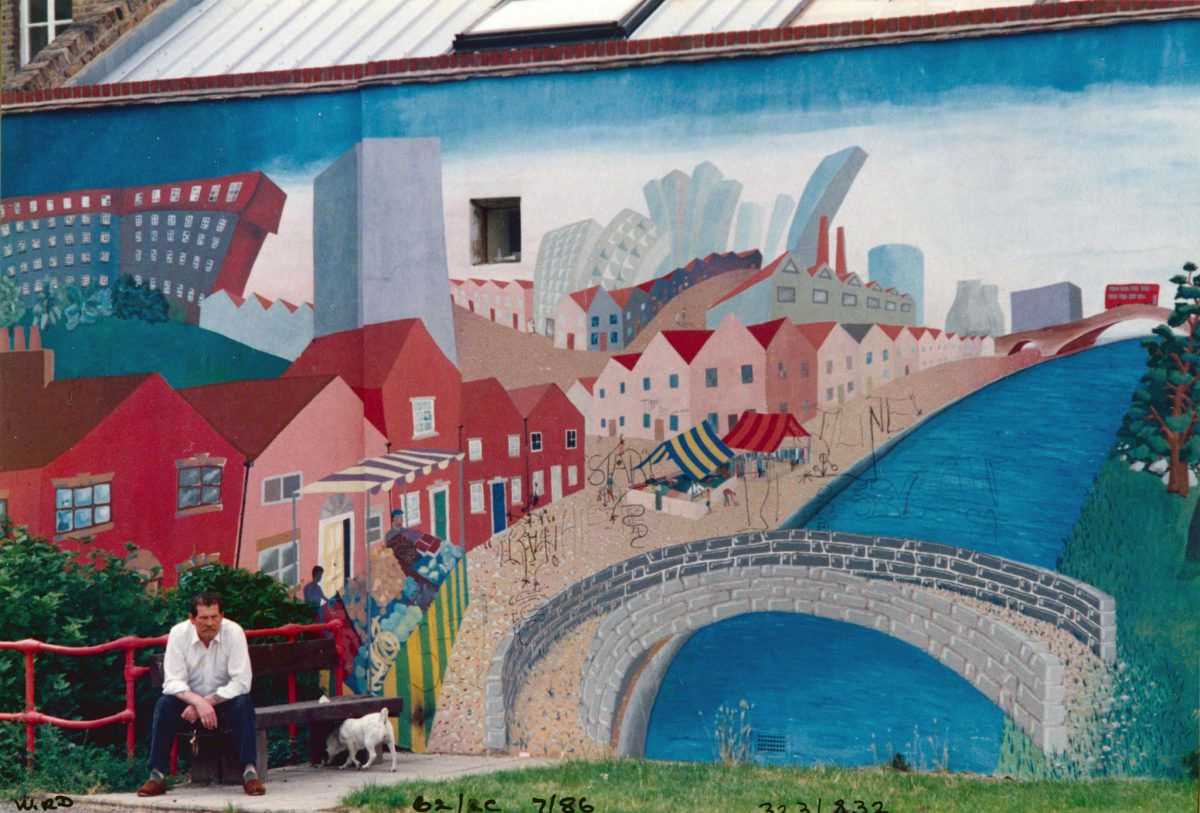
Fleet Street’s newspaper industry was also in the middle of a major upheaval. Many printing and publishing firms relocated from Fleet Street to the Wapping and Docklands area, transforming pockets of the East End into new industrial zones. Old trades and new industries sat side by side, sometimes on the same street.
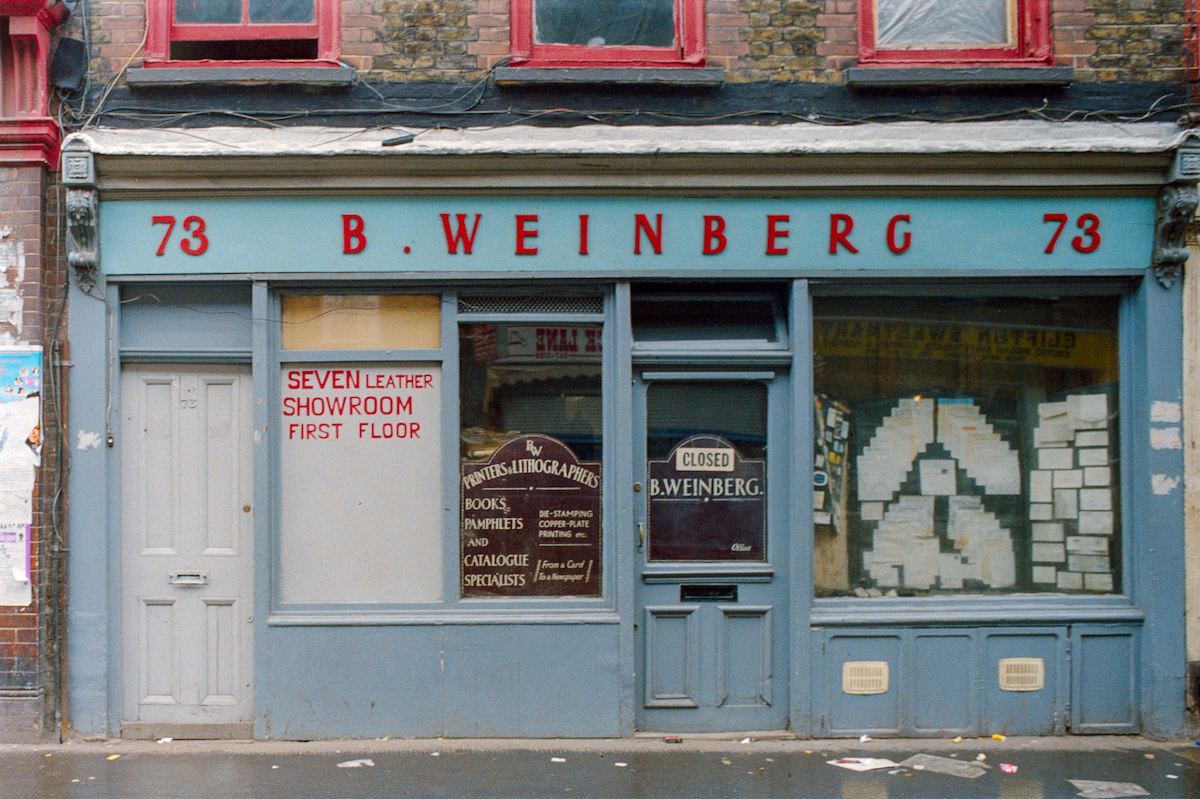
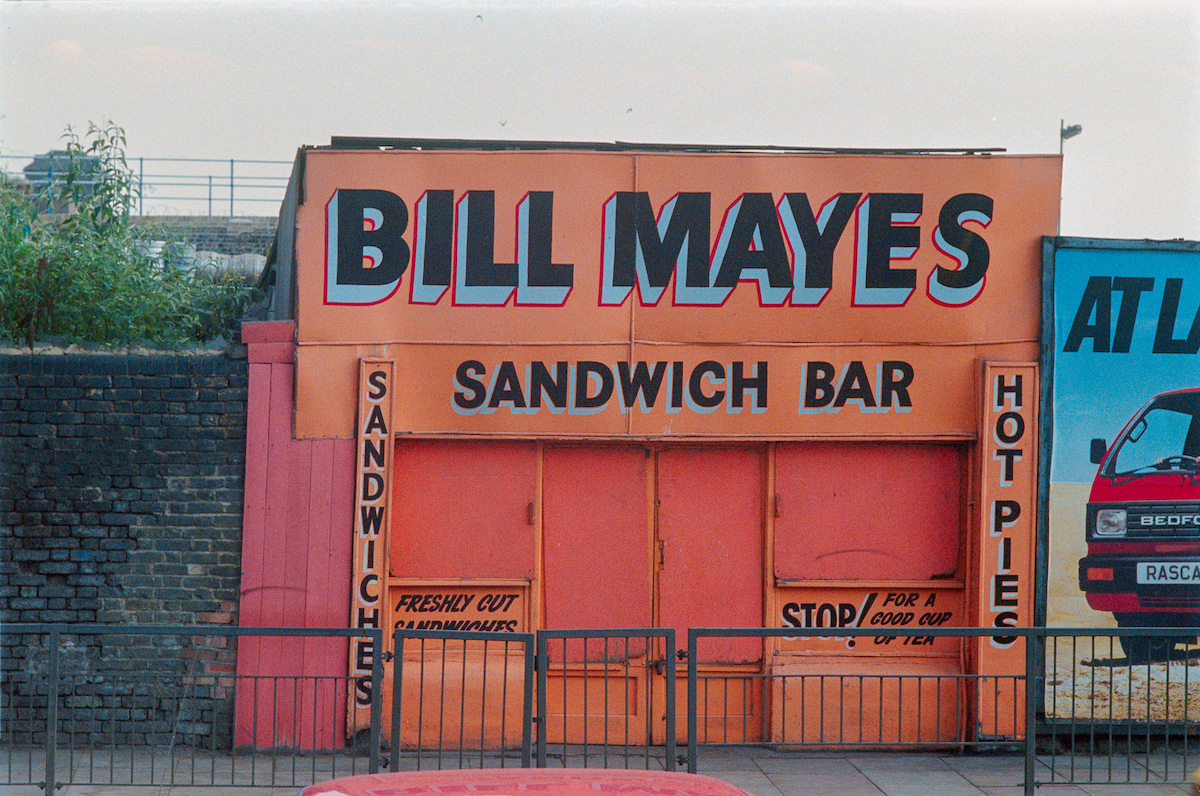
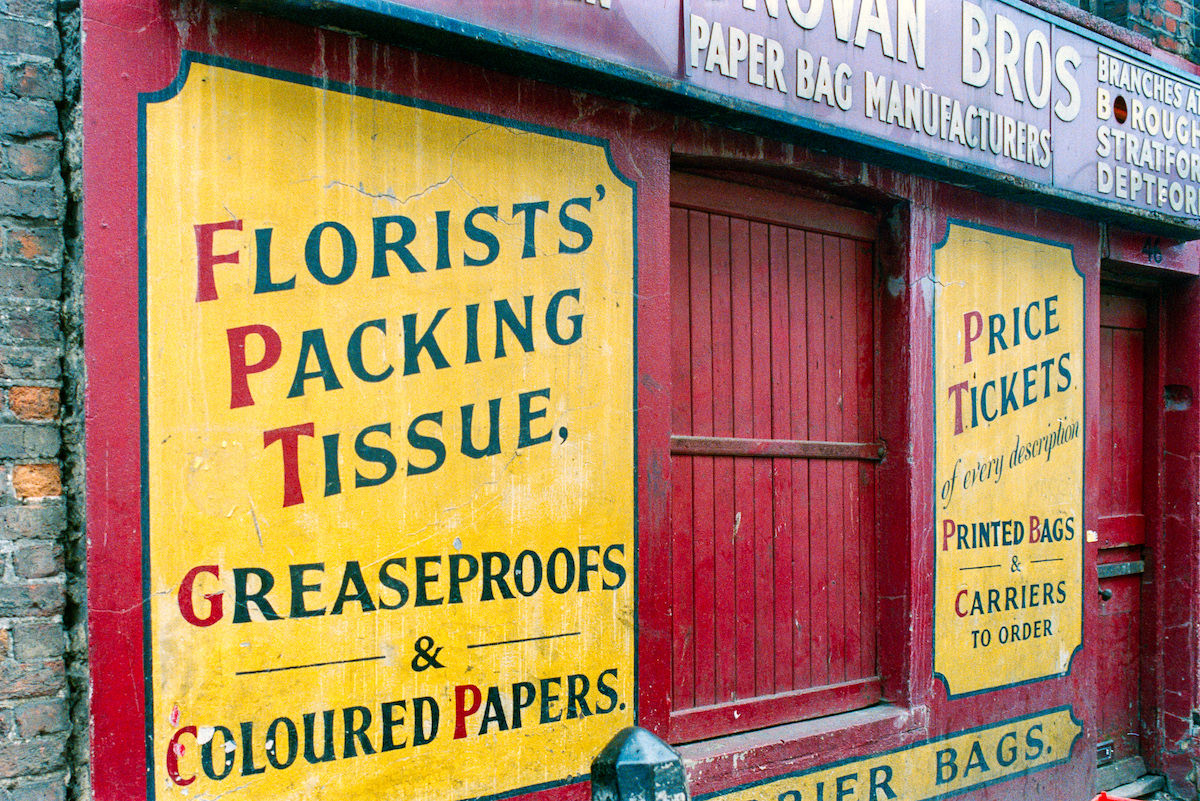
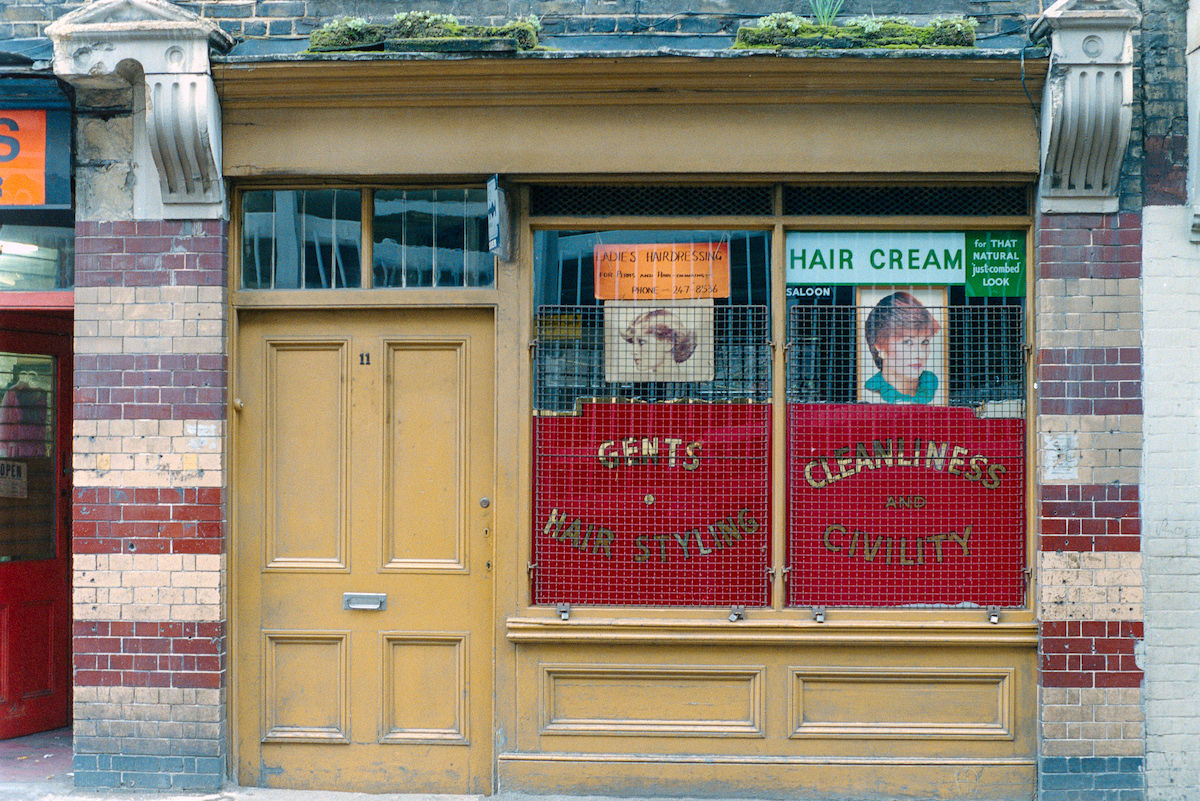
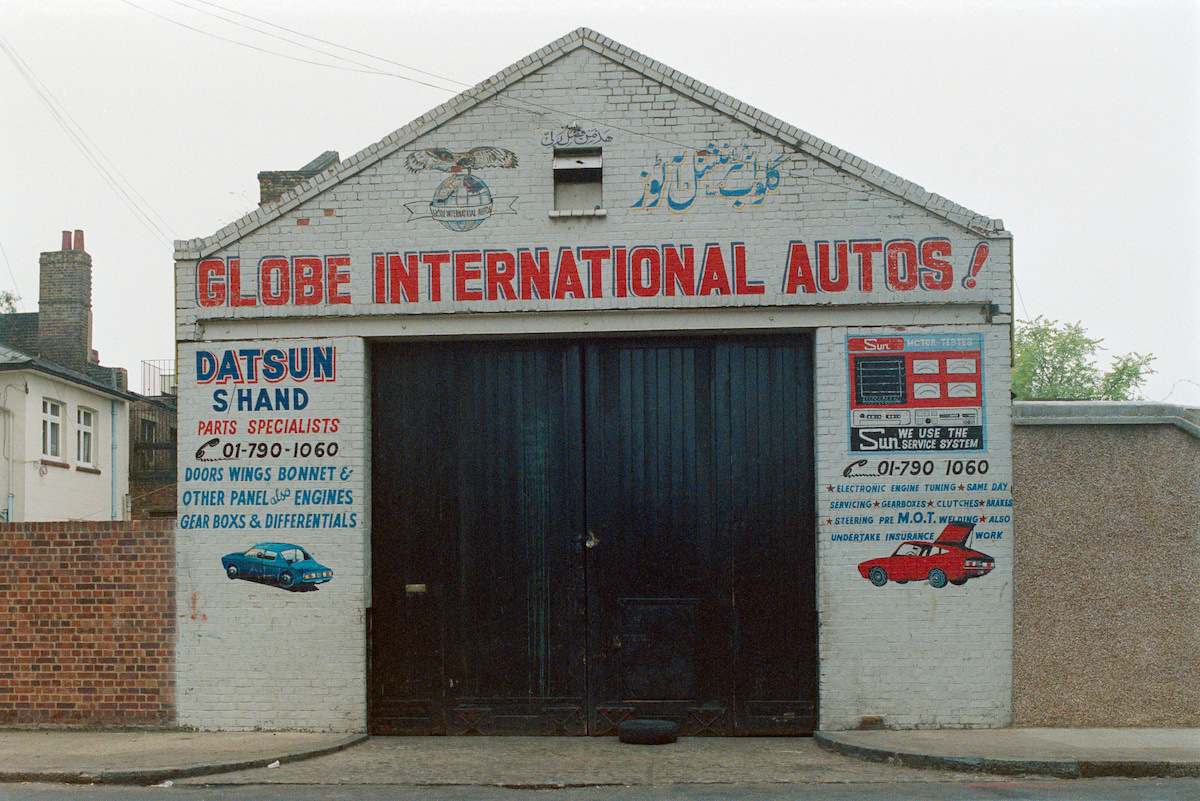
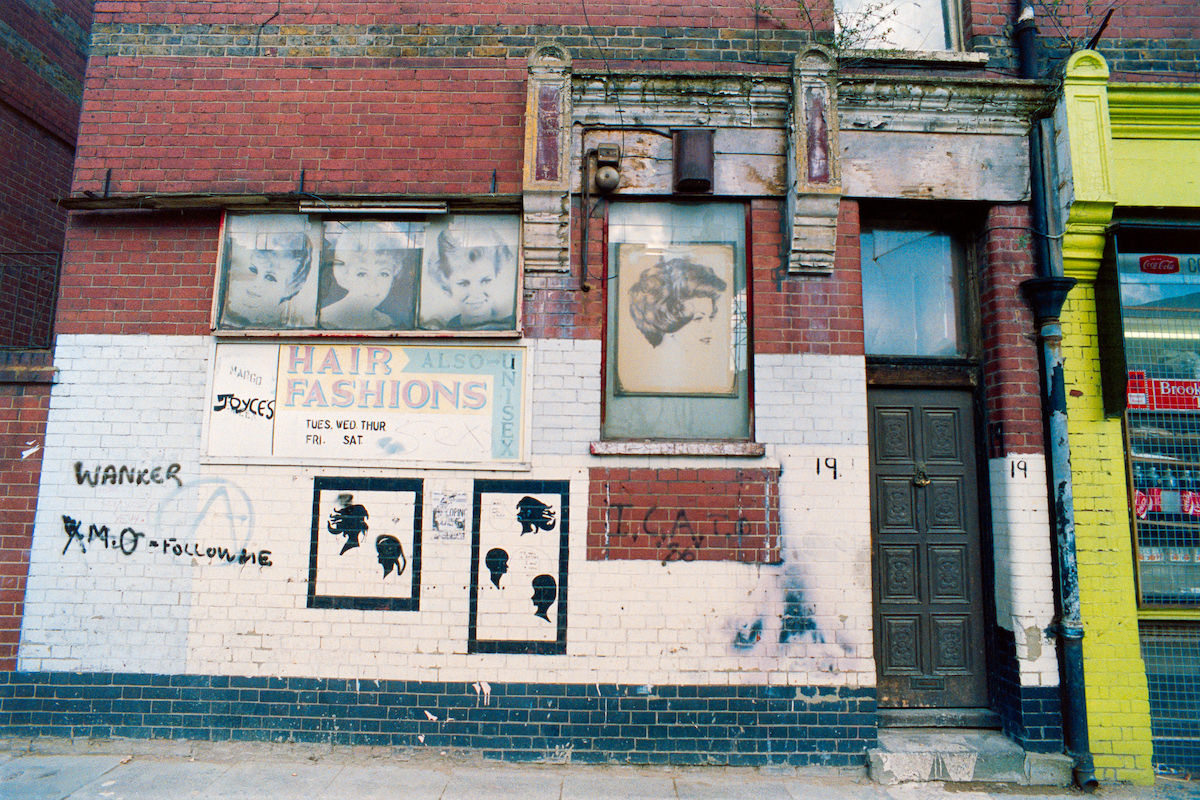
Marshall’s lens captured the texture of everyday life — the small businesses, hand-painted signs, and local landmarks that gave each neighbourhood its identity. Brick Lane in Spitalfields, Hoxton Street in Hackney, Commercial Road in Limehouse, and Whitechapel’s market streets all appear in his work, each with their own character.
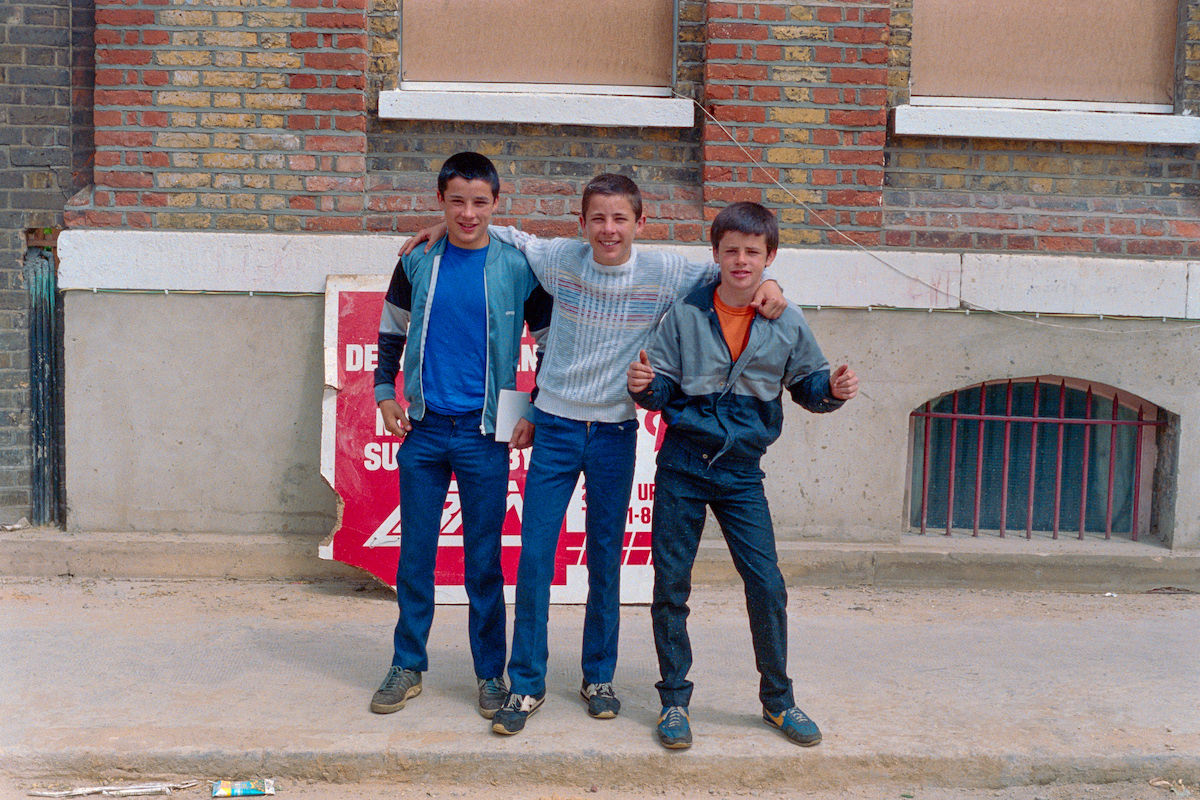
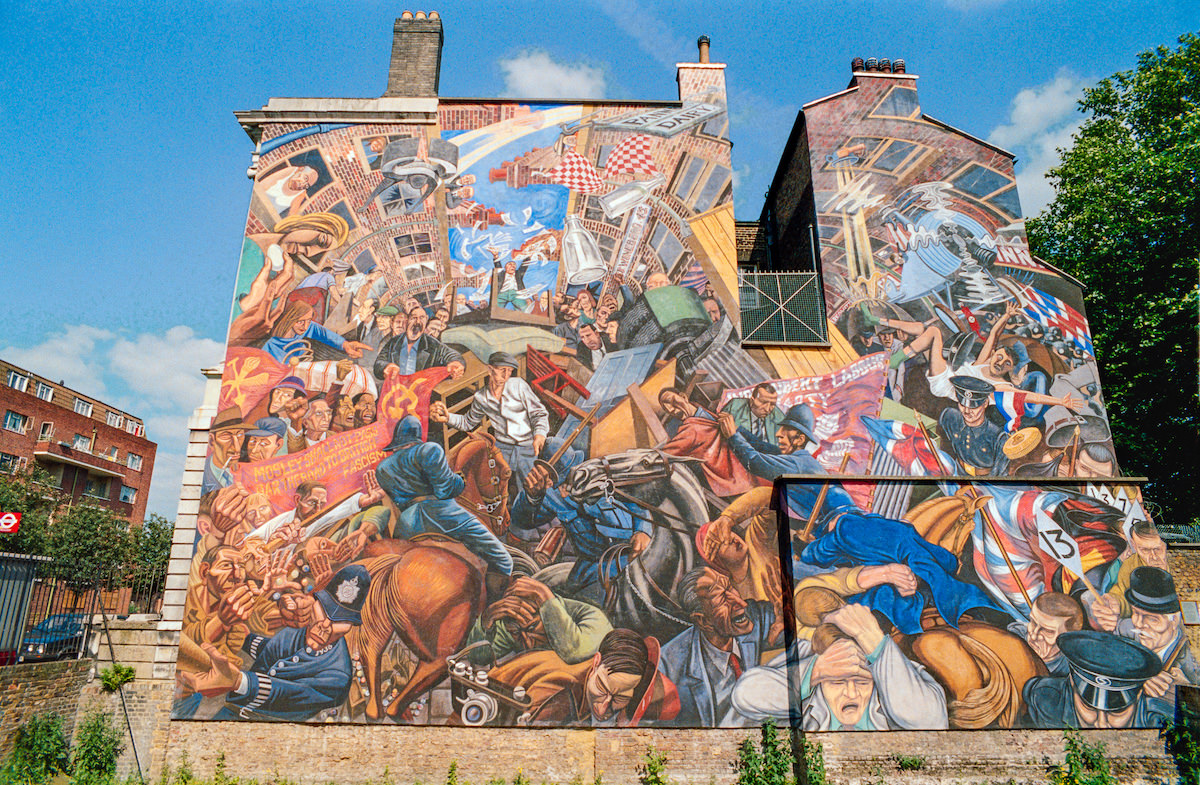
The Cable Street Mural, photographed here on Cable Street in Shadwell, commemorates the 1936 Battle of Cable Street, when local residents blocked a march by Oswald Mosley’s British Union of Fascists. By 1986, the mural had become a recognised piece of community history painted directly onto the side of a building.
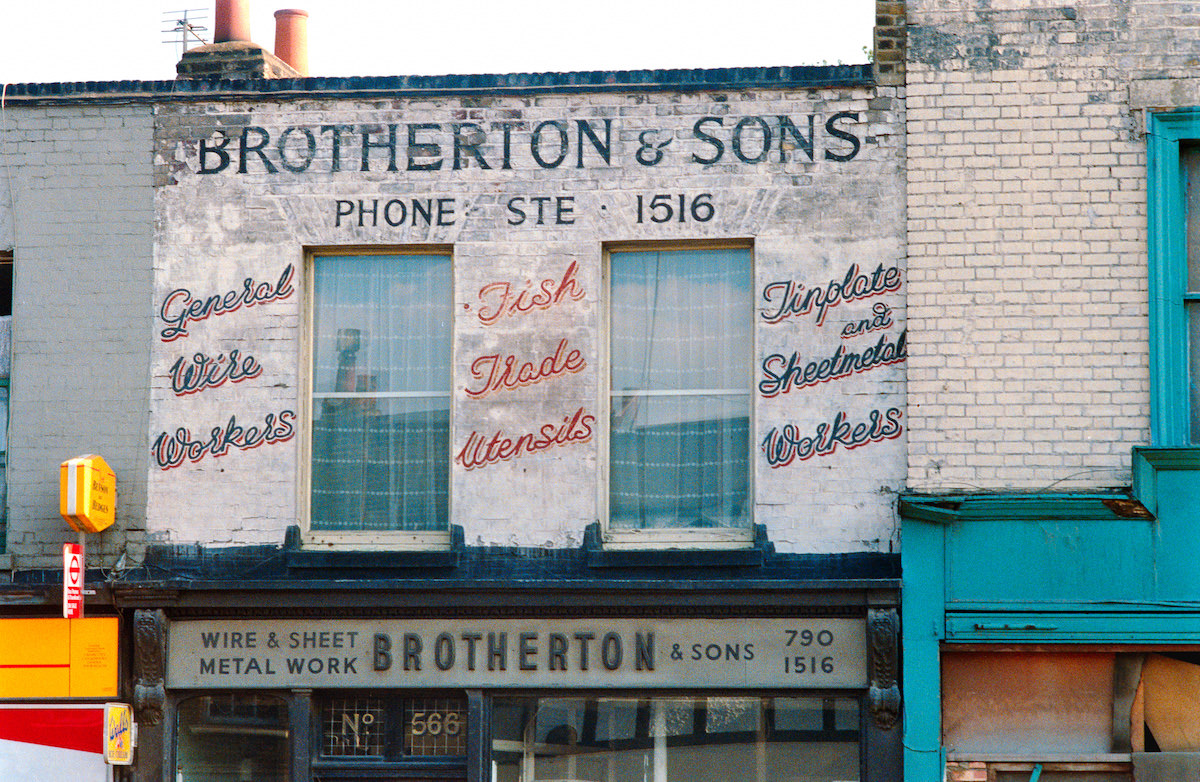
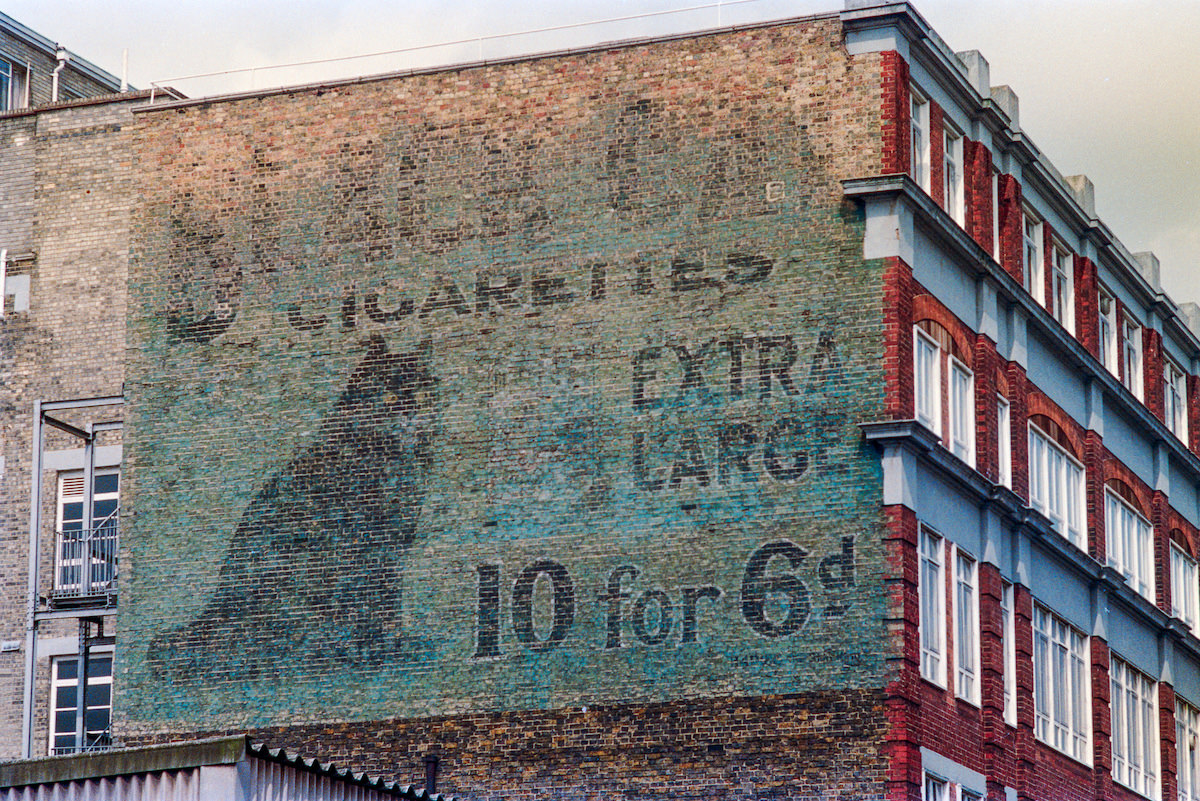
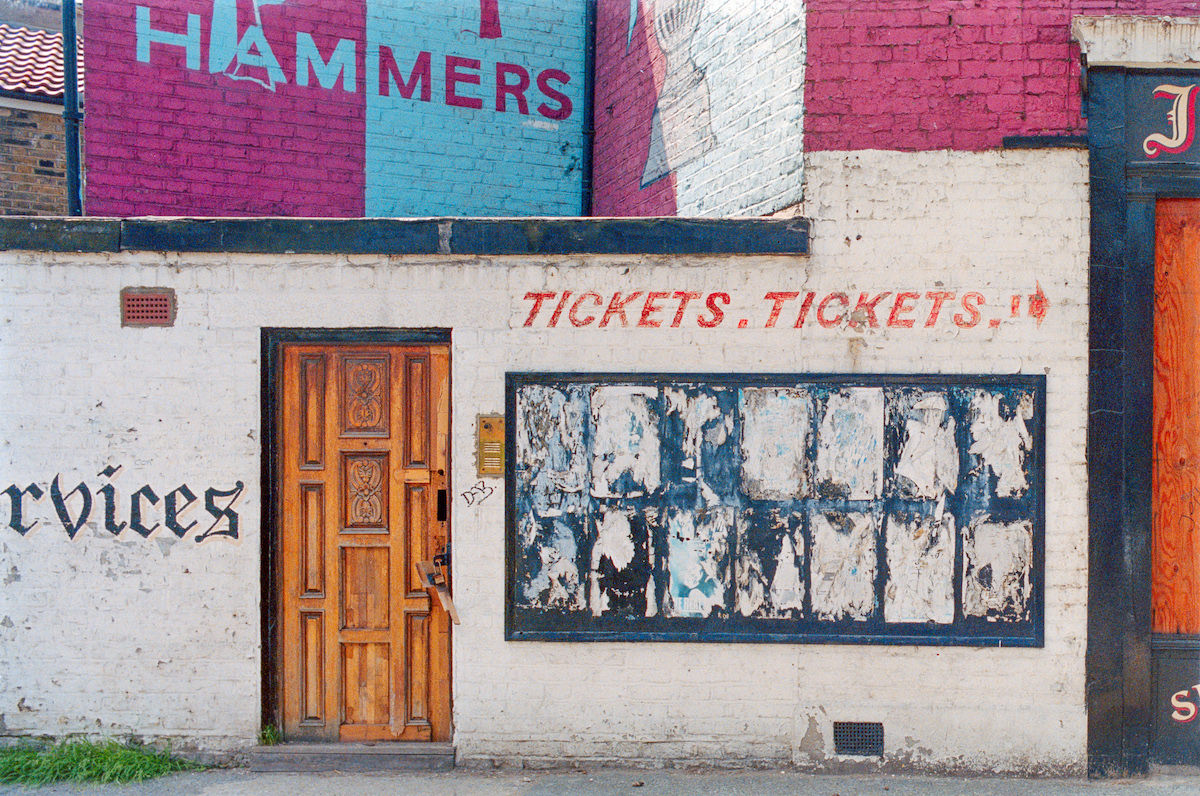
Ghost signs — old painted advertisements fading on brick walls — were still common across Hackney and Tower Hamlets in 1986. The Black Cat Cigarettes advert on the side of a Hackney block of flats is a good example: a relic of mid-twentieth century advertising, still visible decades after the campaign had ended.
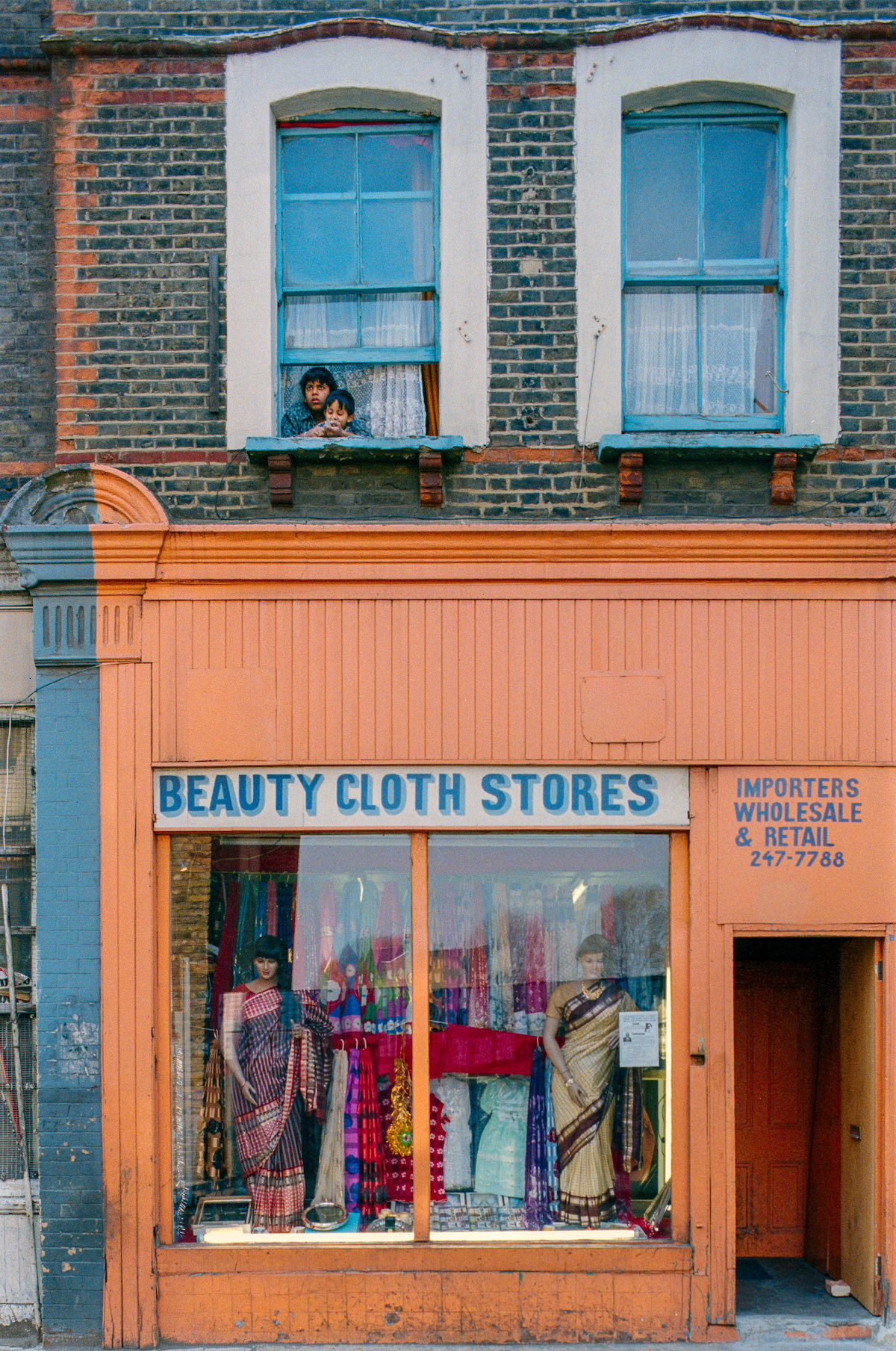
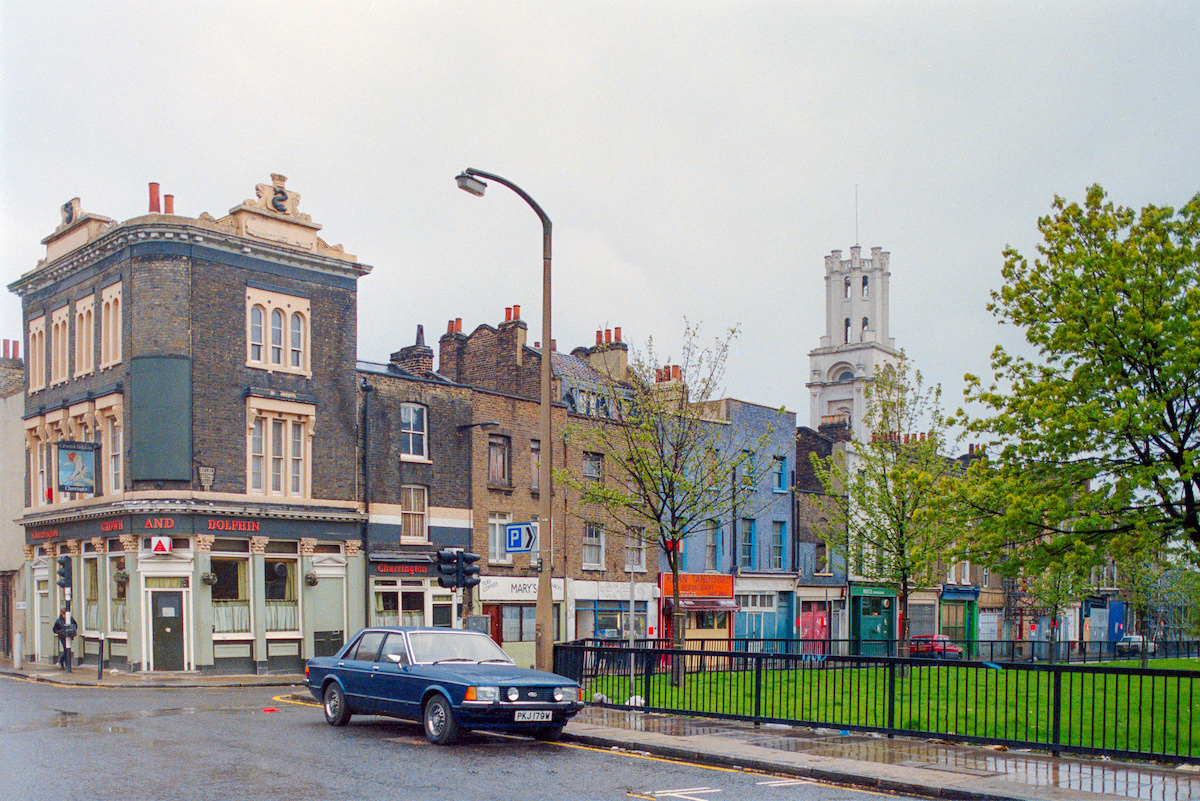
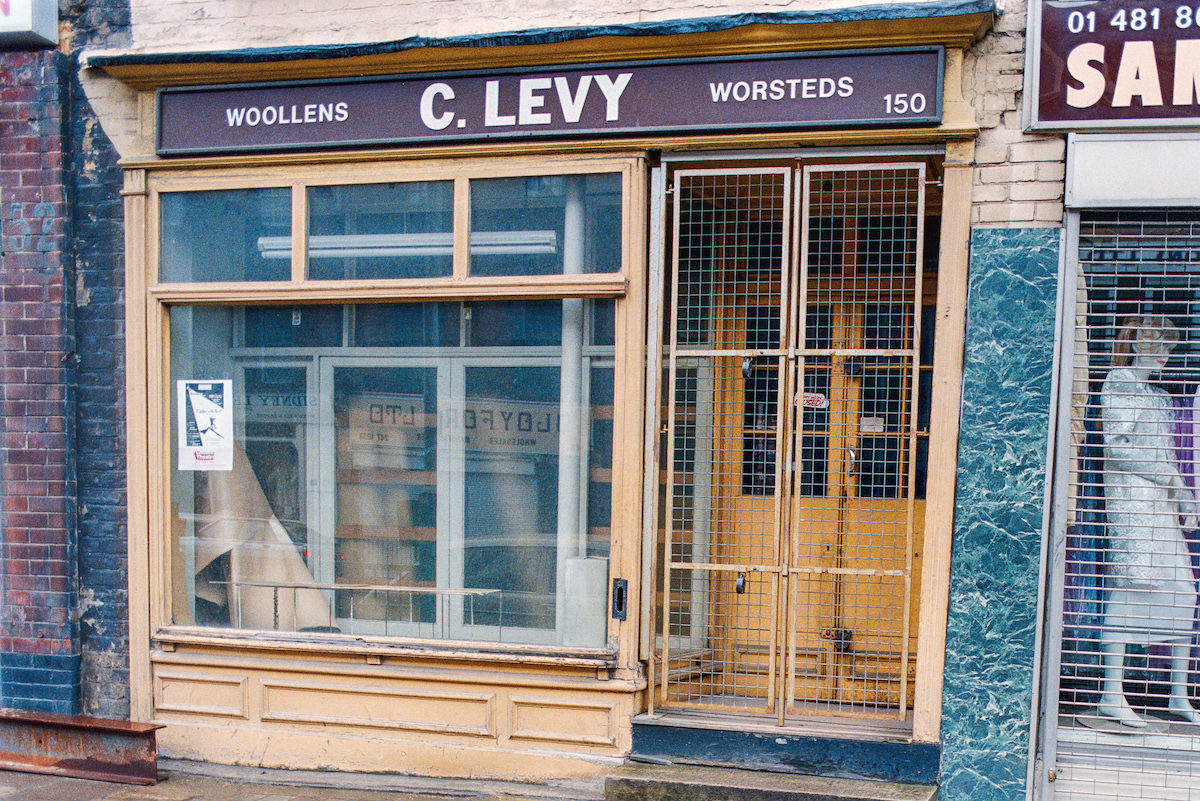
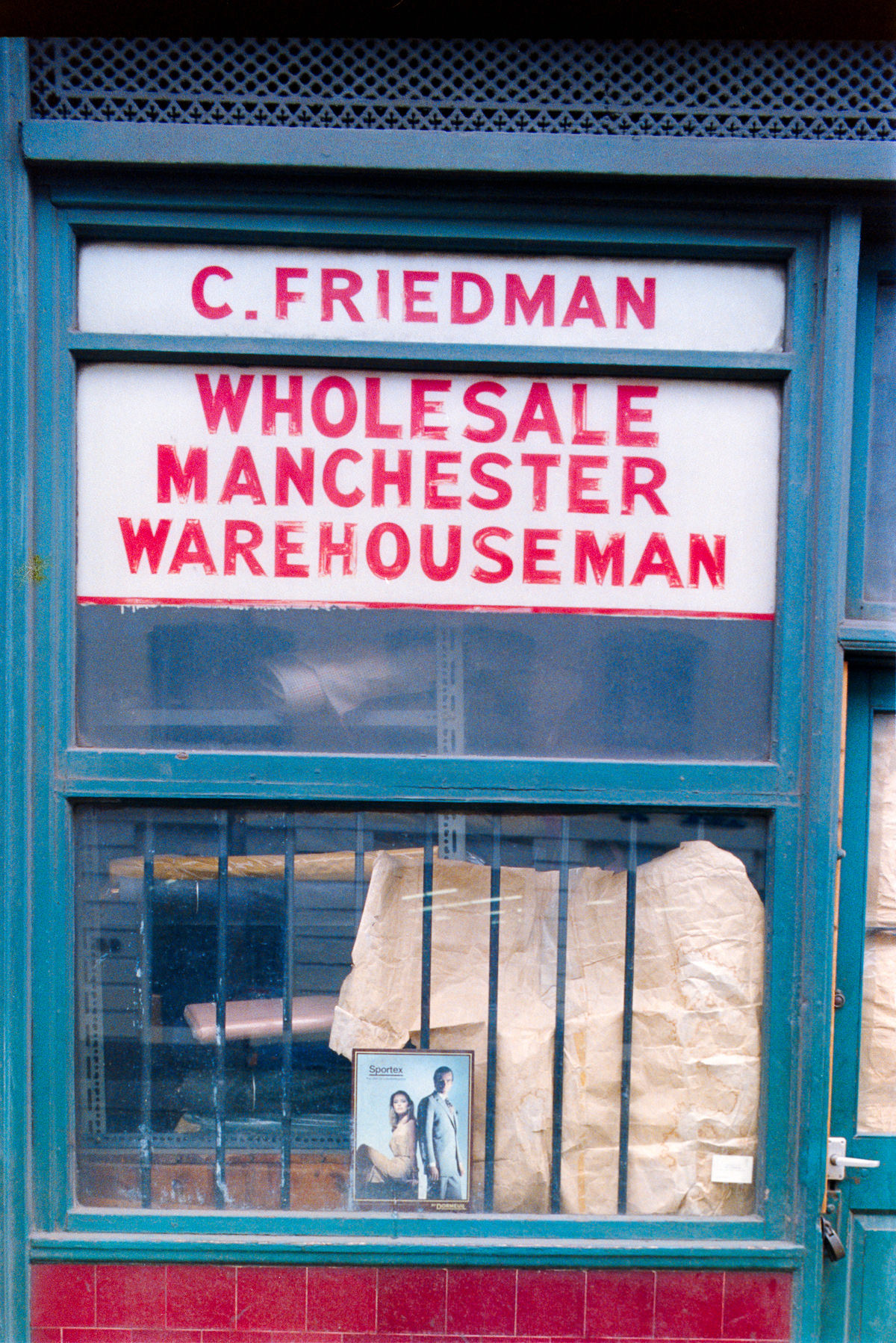
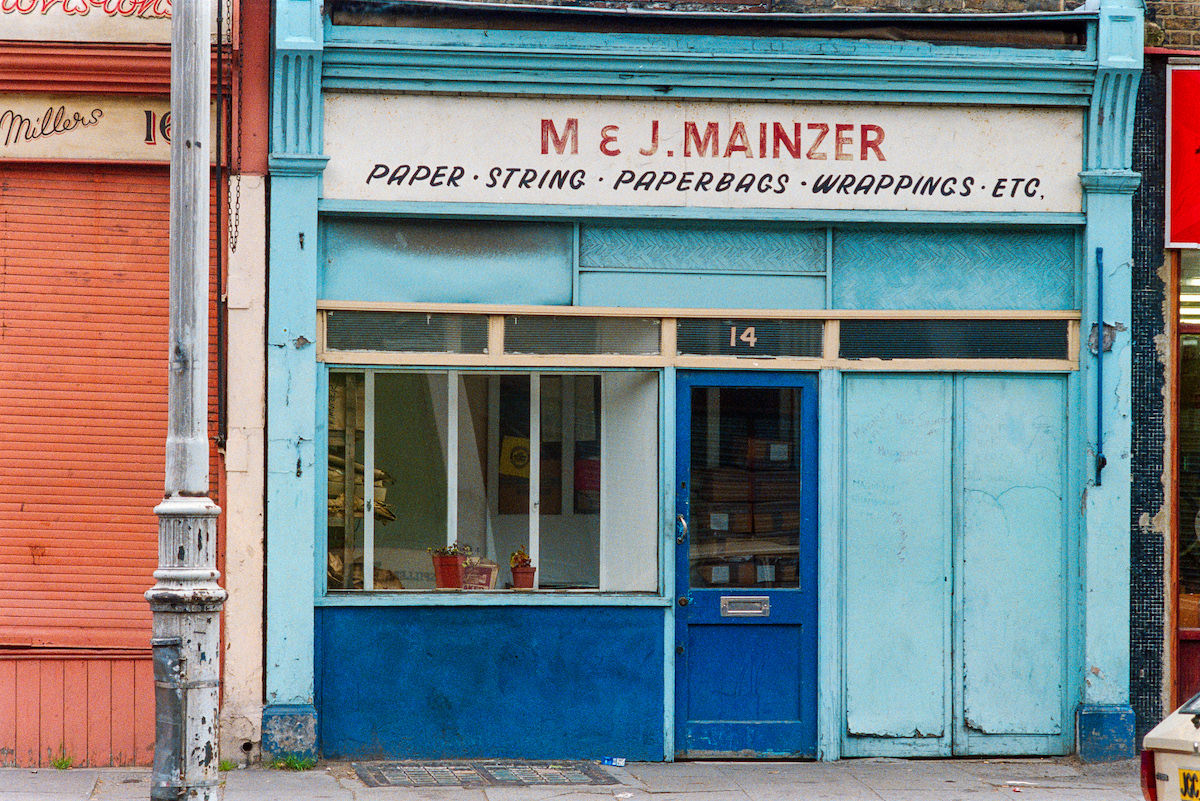
Whitechapel’s textile trade was still active in 1986, though it had thinned out considerably from its peak. Shops selling woollens, worsteds, and cloth had long served the area’s garment workers and immigrant communities, and some had operated on the same streets for generations.
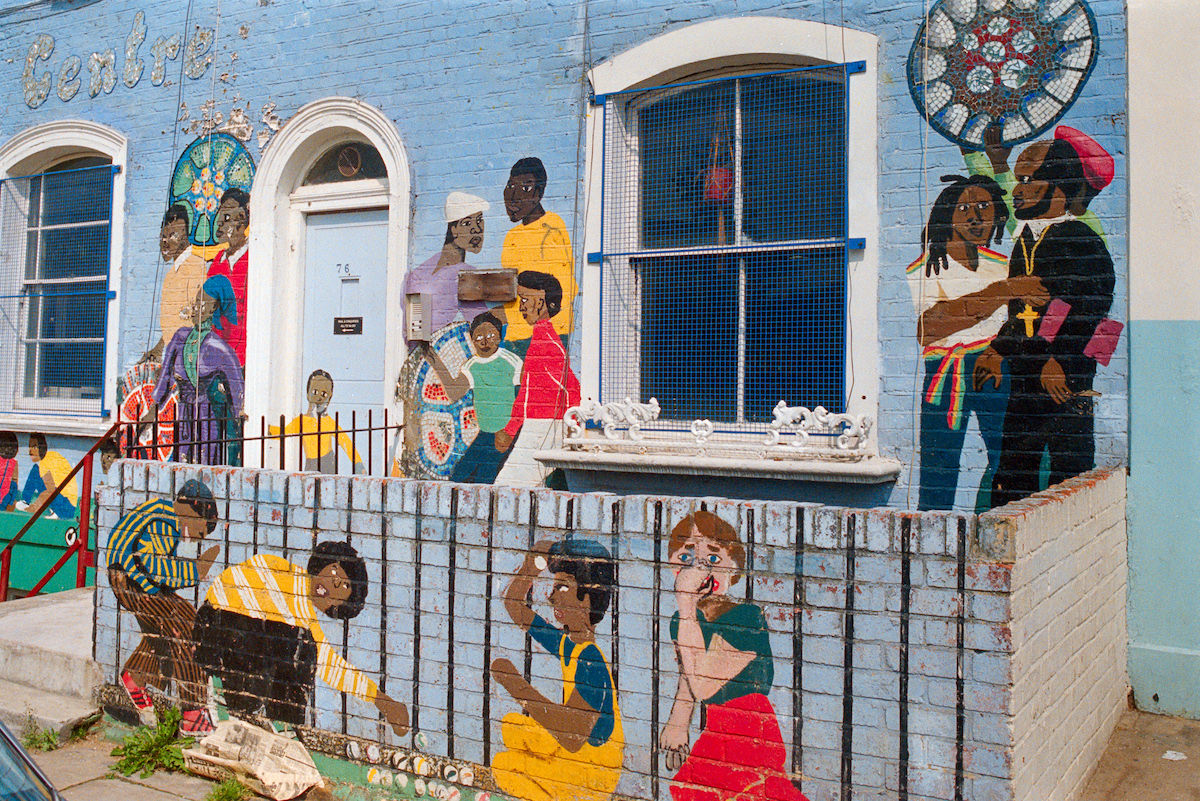
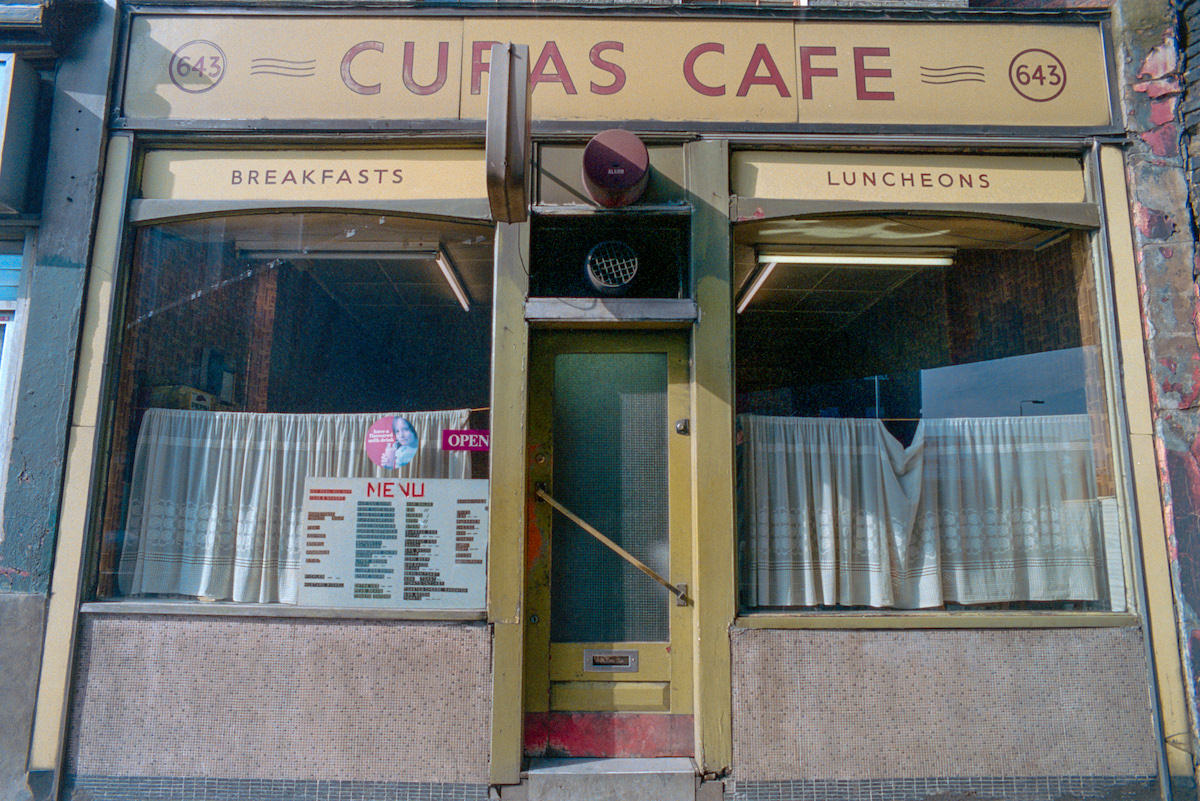
Community spaces and local cafés served as social anchors in neighbourhoods where many residents had little disposable income. Caribbean House in Hoxton and small cafés along Commercial Road in Limehouse were typical of the grassroots infrastructure that held communities together during a difficult decade.
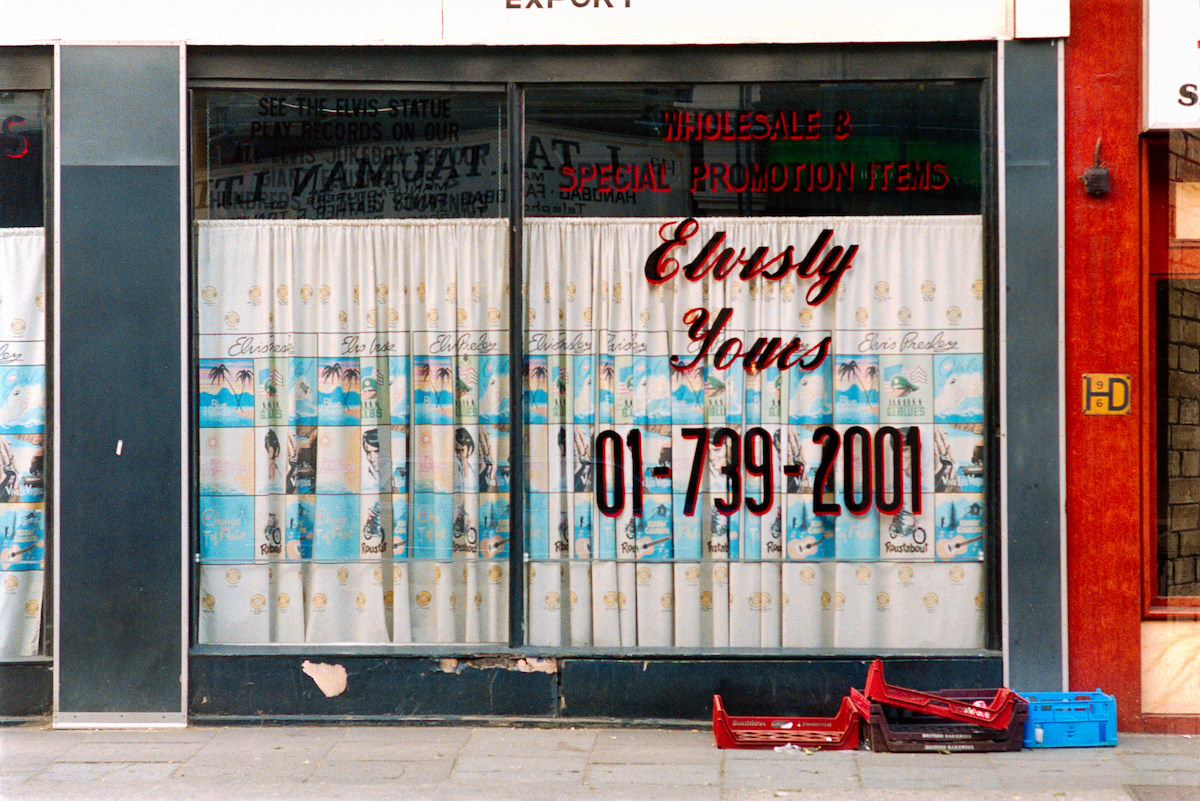
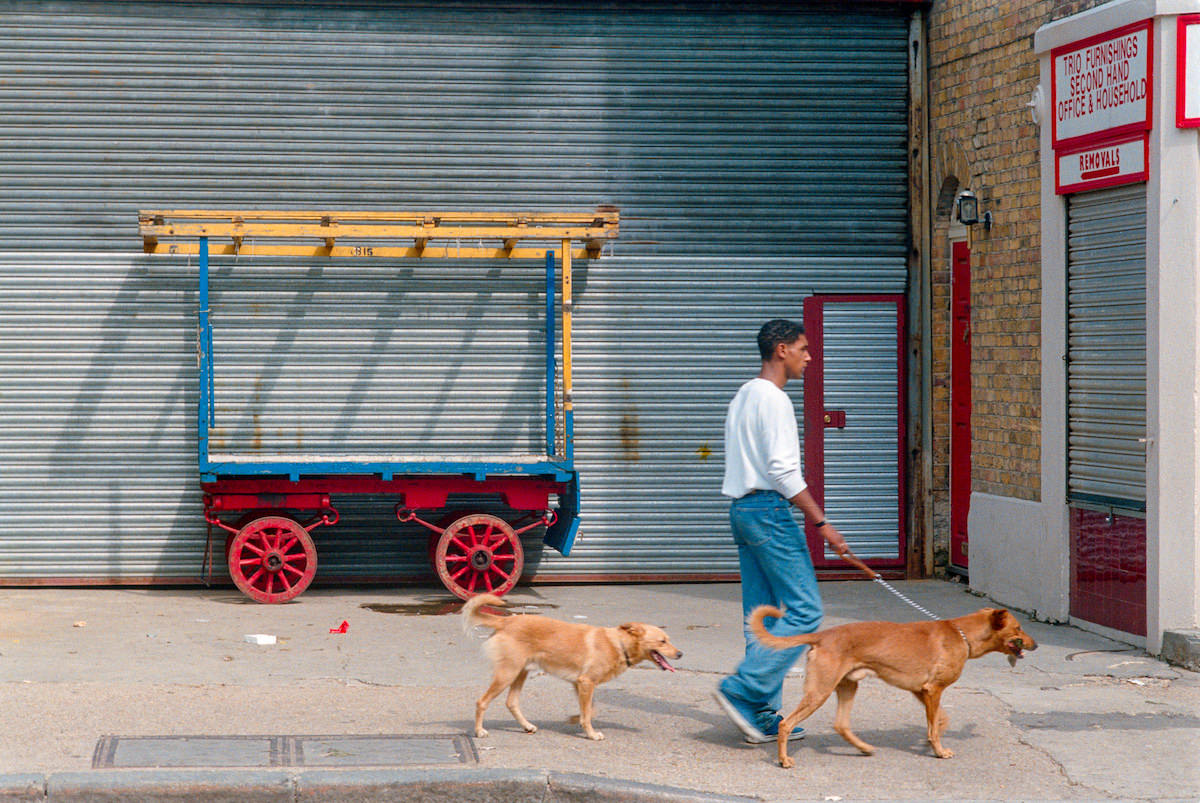
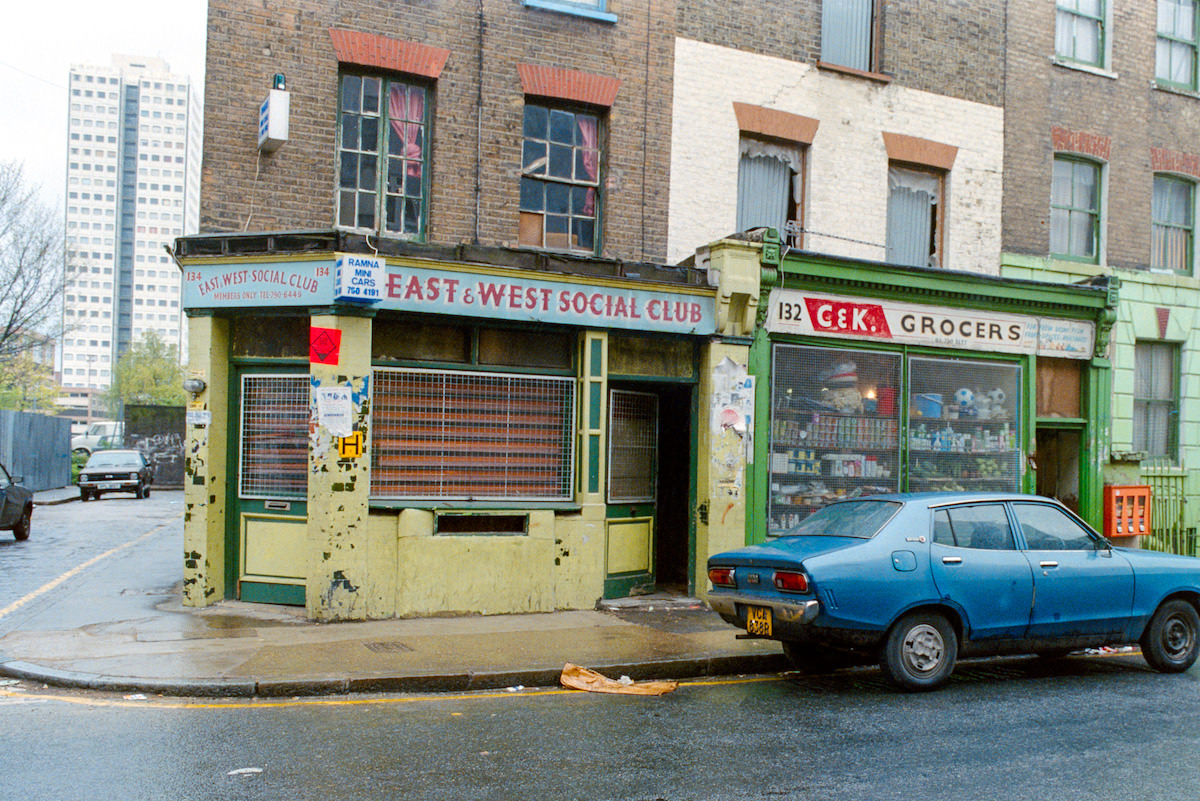
Social clubs with names like East & West on Cannon Street reflected the diverse mix of communities that had settled in Tower Hamlets over the decades — Bangladeshi, Somali, Jewish, Irish, and Caribbean populations all had a presence in the area by the 1980s.
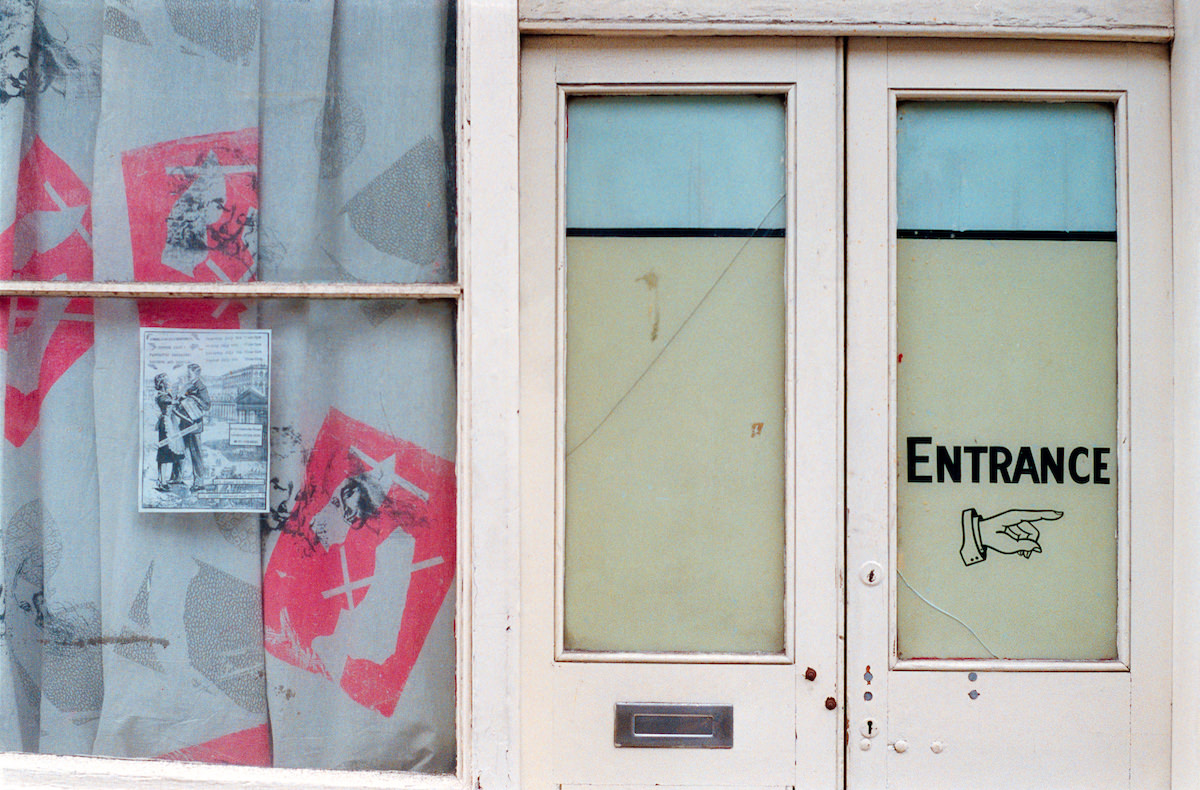
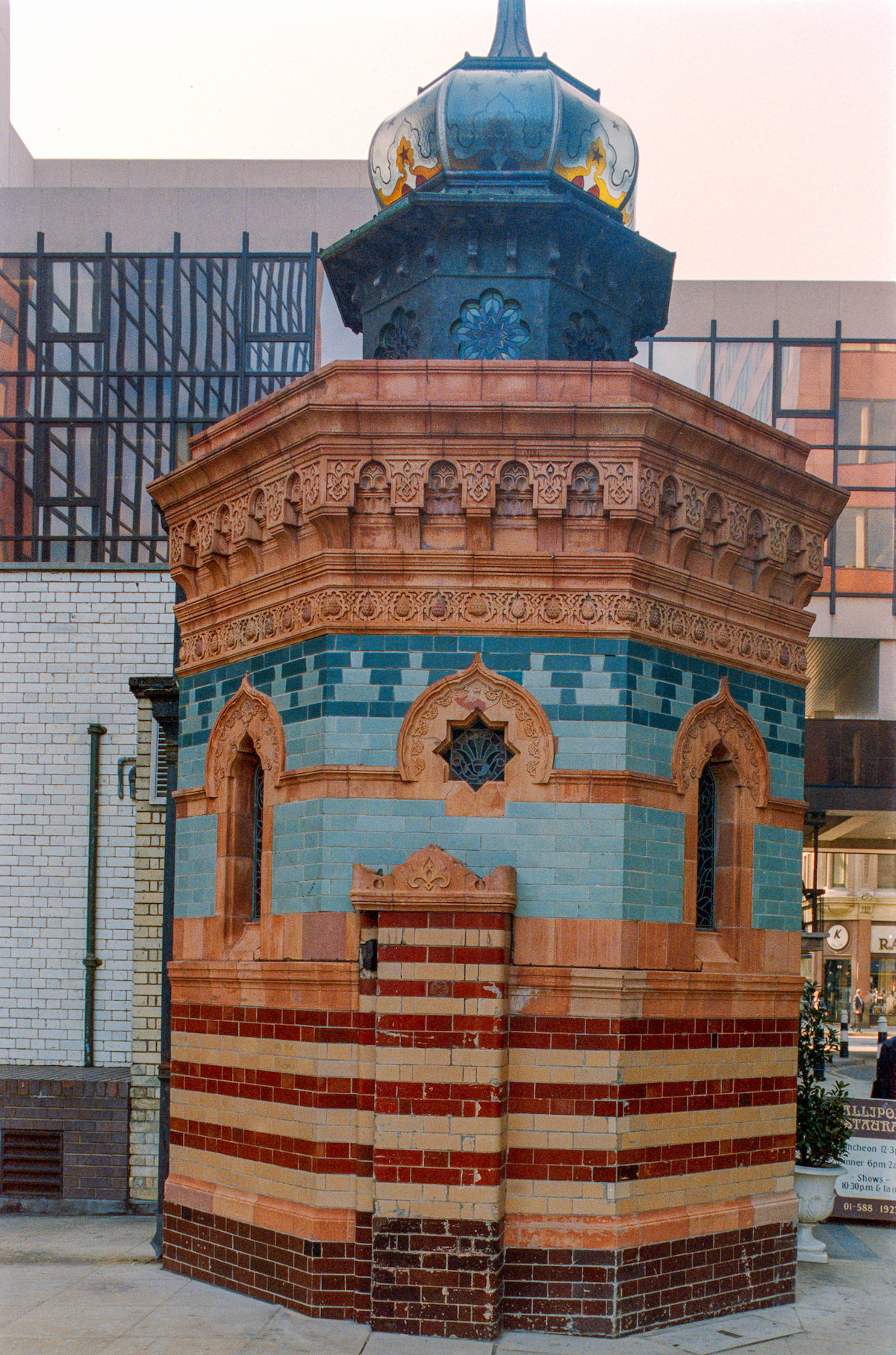
Bishopsgate Churchyard’s former Turkish bath was one of many historic structures still standing in 1986, though no longer in use. These kinds of buildings were scattered across the East End — remnants of Victorian and Edwardian public life that had survived demolition but lost their original purpose.
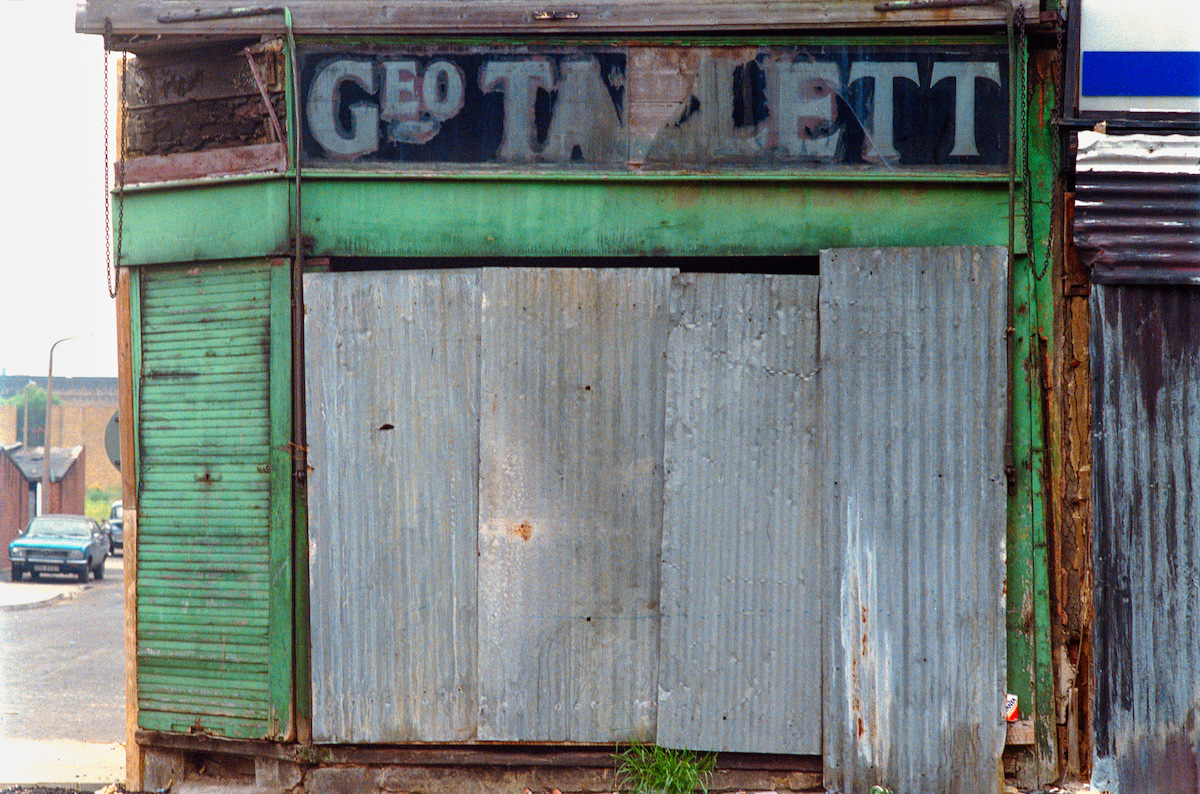
Broadway Market in Hackney still functioned as a working street market in 1986, serving local shoppers rather than the boutique clientele it would attract in later decades. Shops like Geo Tallent were part of that everyday economy — practical, unpretentious, and firmly rooted in the neighbourhood.
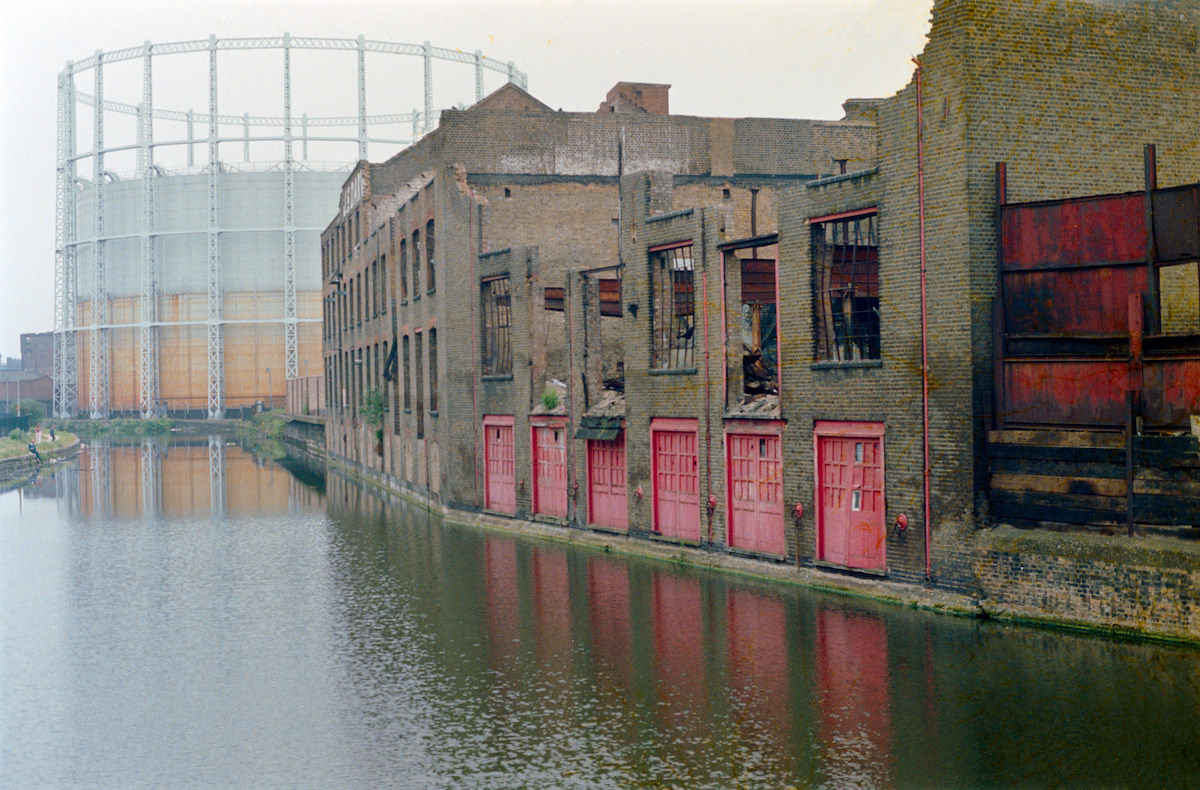
The gas holders along the Regent’s Canal near Bethnal Green were a familiar feature of the East End’s industrial landscape. These large iron structures dominated stretches of the canal and were still in active use in 1986, part of the infrastructure that kept the city running.
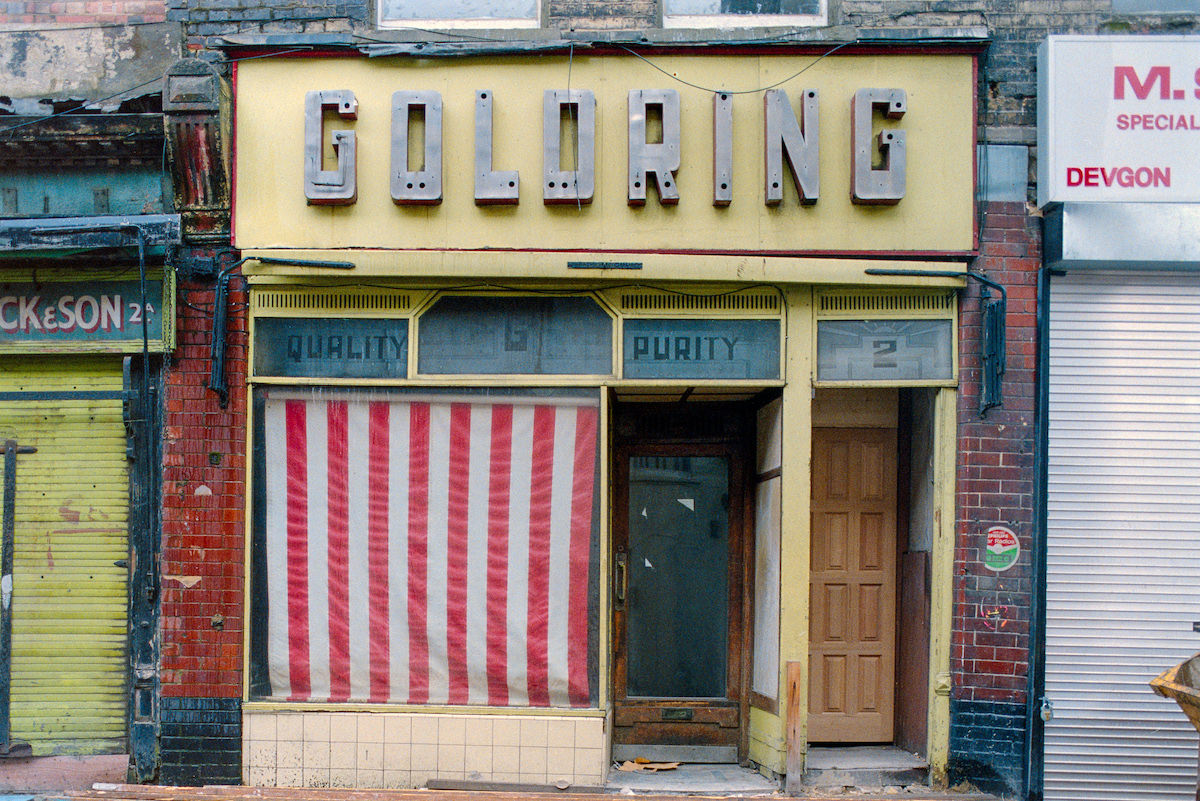
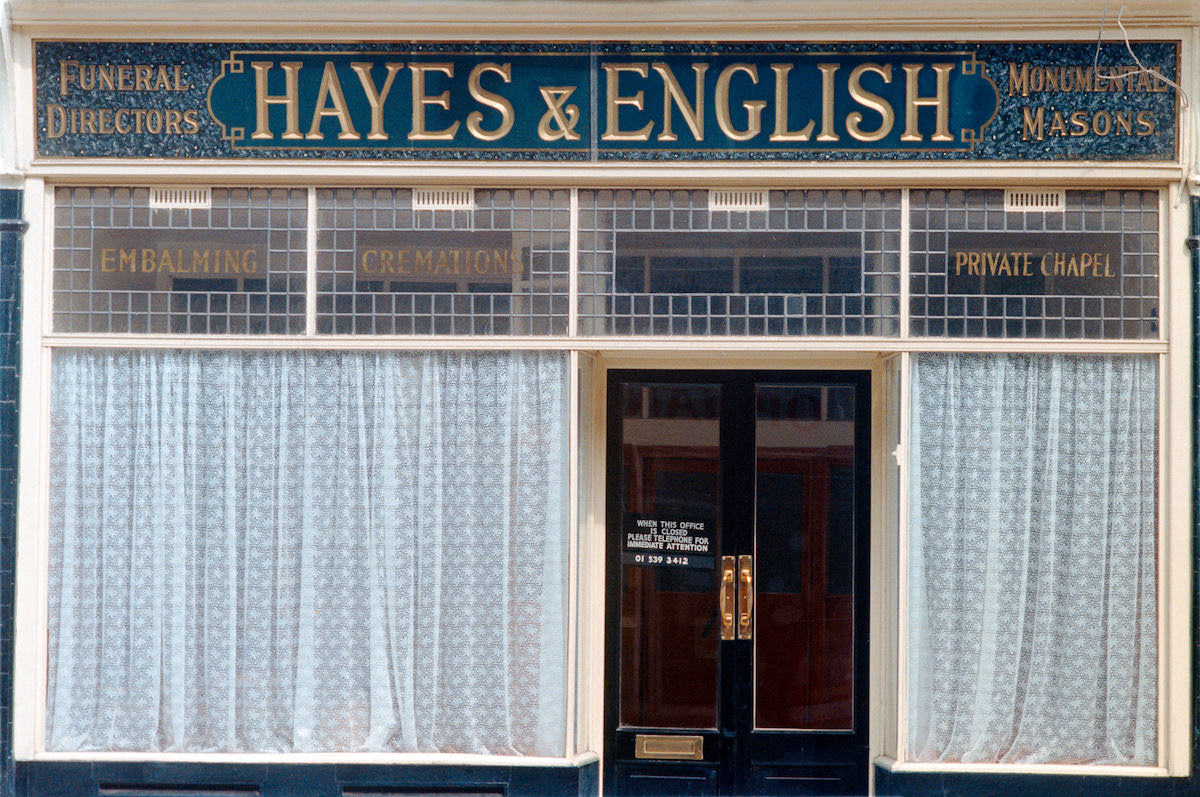
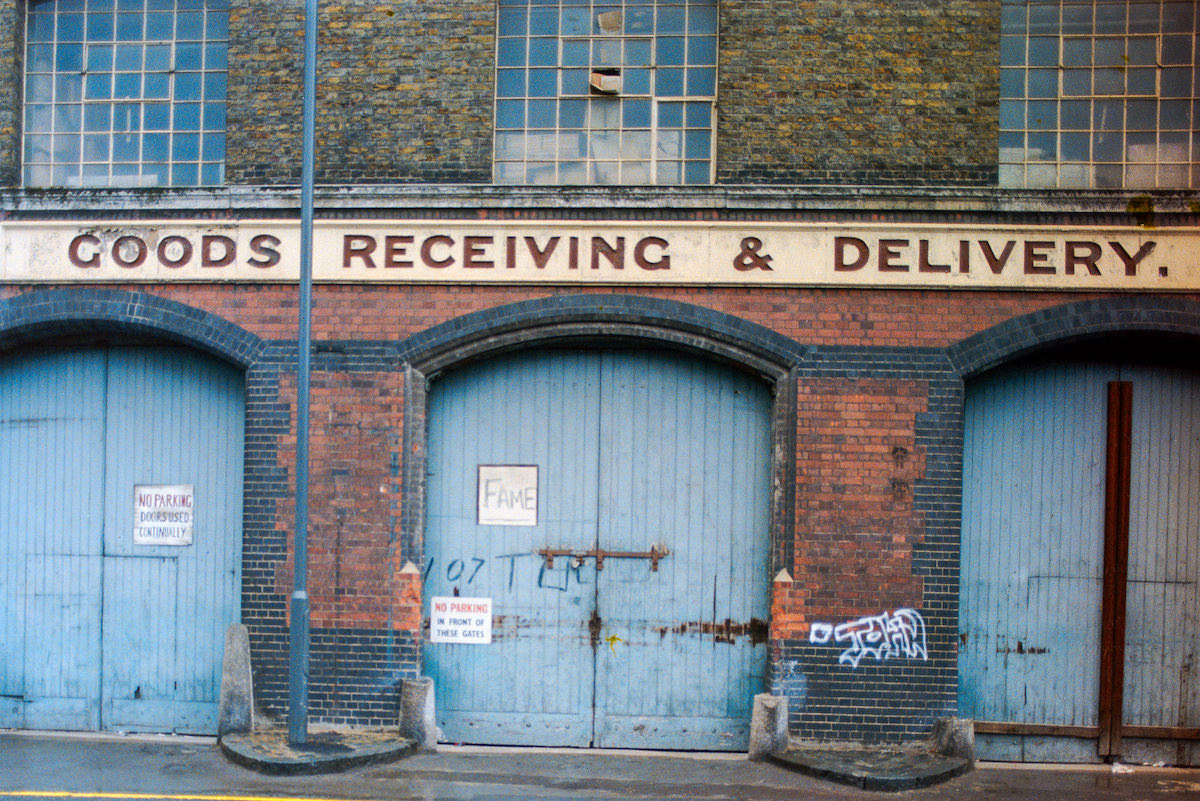
Back Church Lane in Whitechapel was typical of the East End’s commercial back streets — warehouses, delivery yards, and small wholesale operations crammed into narrow roads behind the main thoroughfares. This kind of light industrial activity was still very much part of the local economy in 1986.
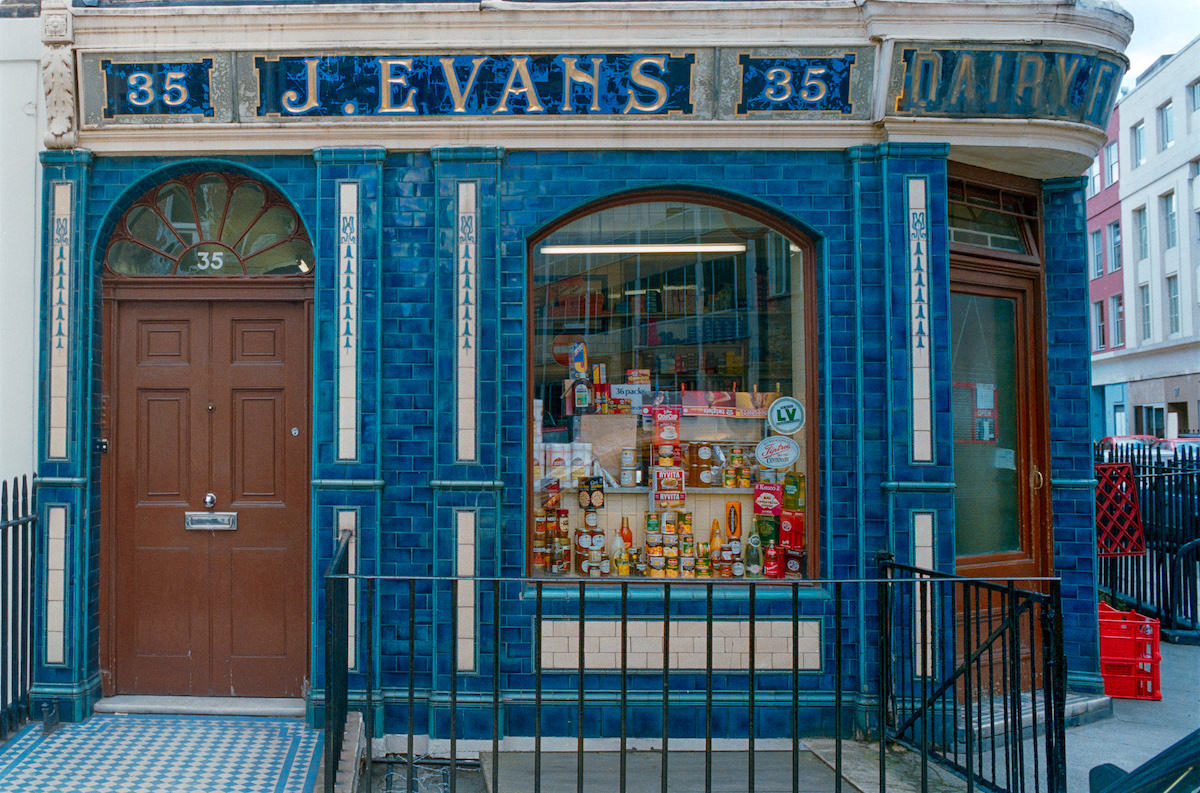
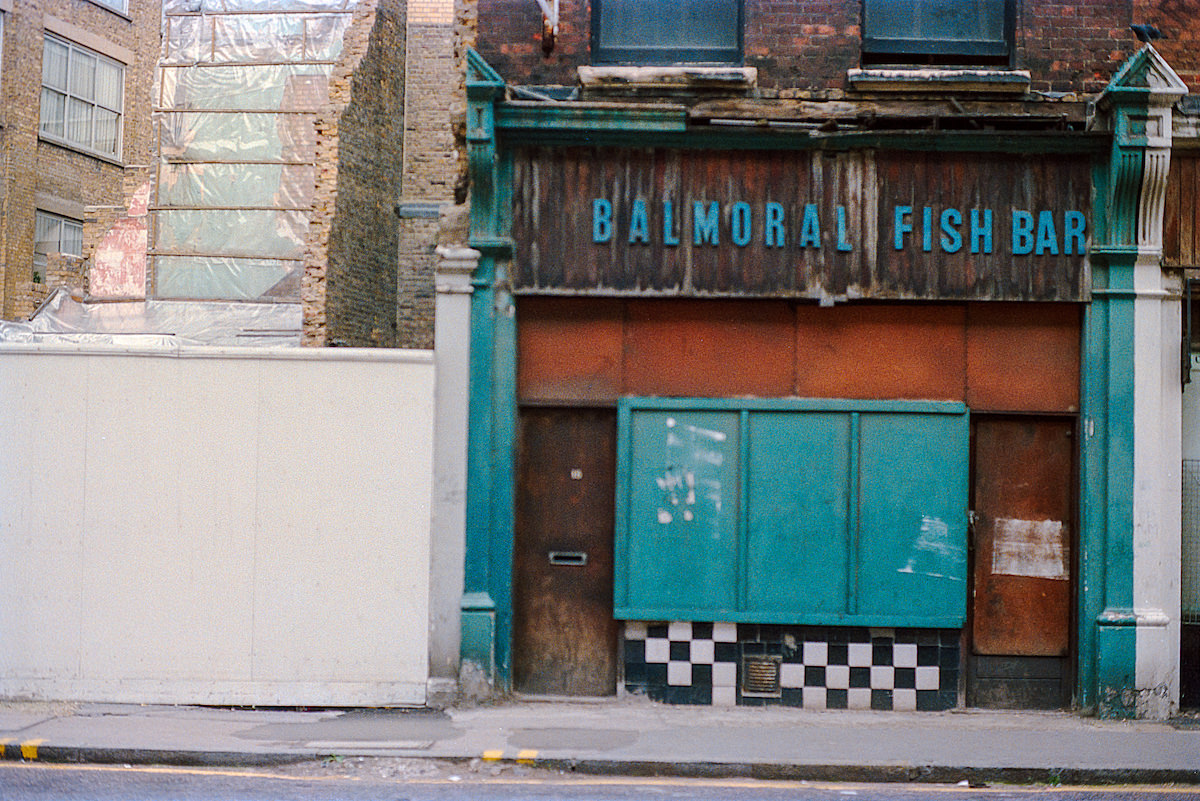
Fish and chip shops, dairies, and sandwich bars were staples of working-class East End street life. These businesses served local workers on tight budgets and kept short hours tied to the rhythms of nearby factories, markets, and docks.
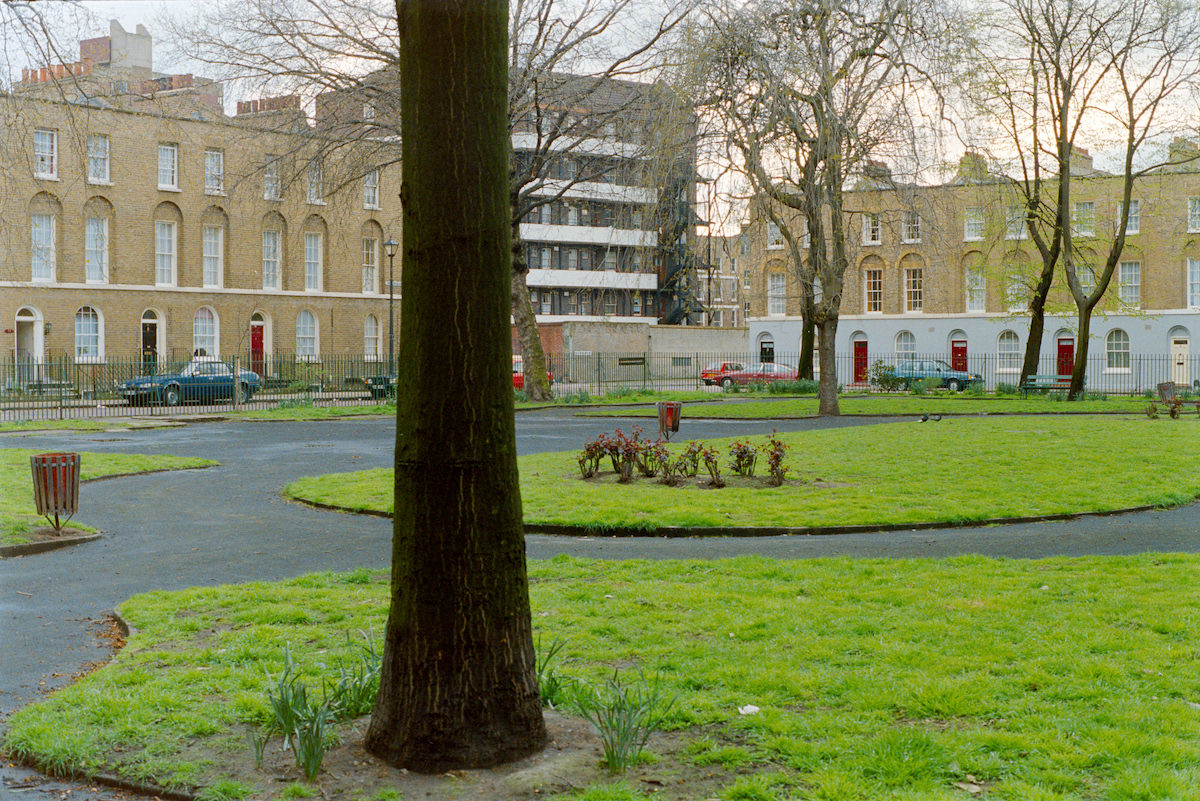
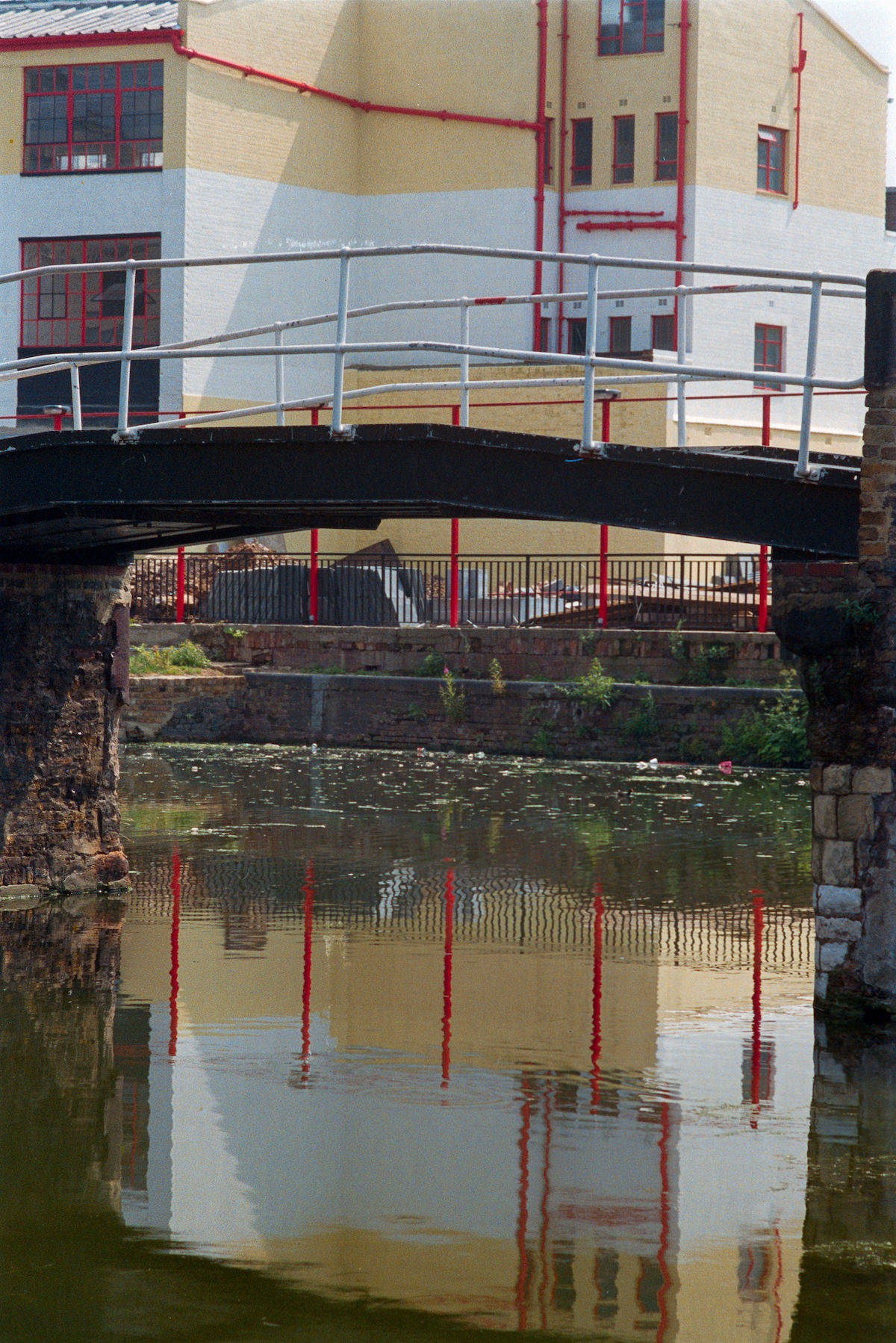
Kingsland Basin in Dalston was another piece of the East End’s old waterway infrastructure, connected to the network of canals that once carried goods through the city. By 1986, commercial barge traffic had largely dried up, and stretches like this had grown quiet.
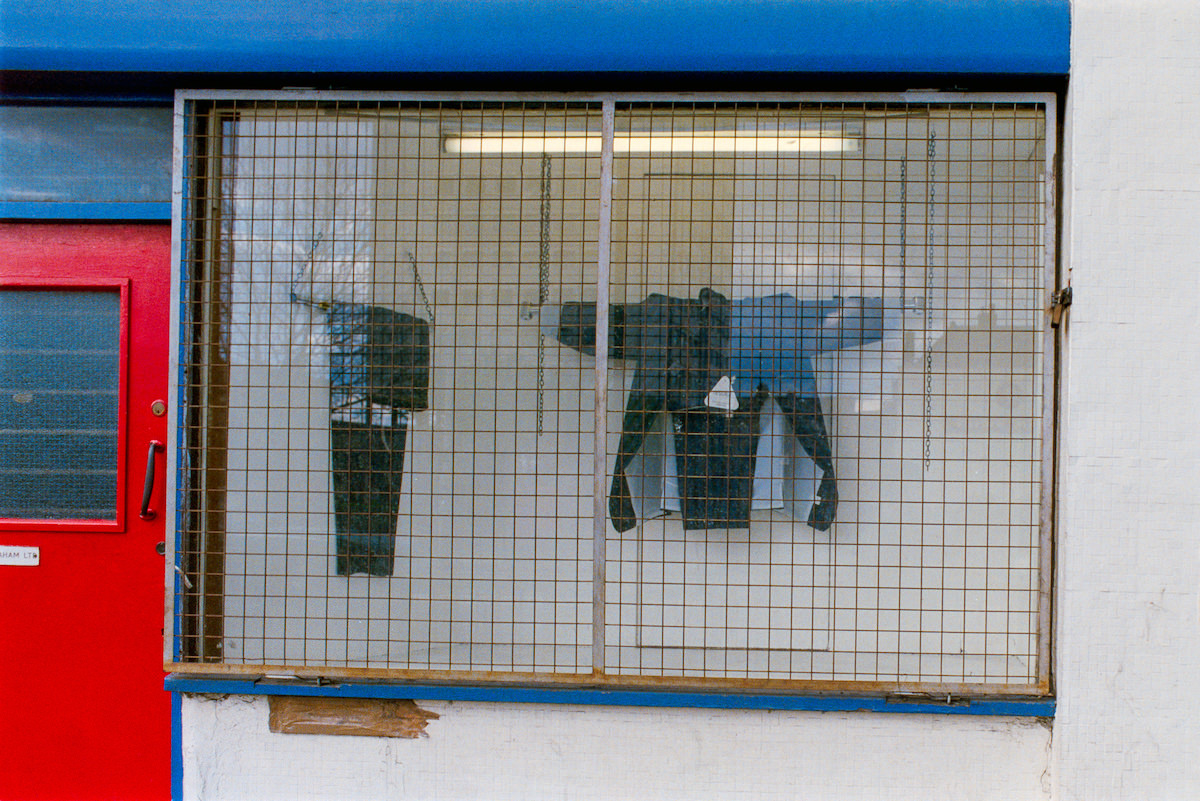
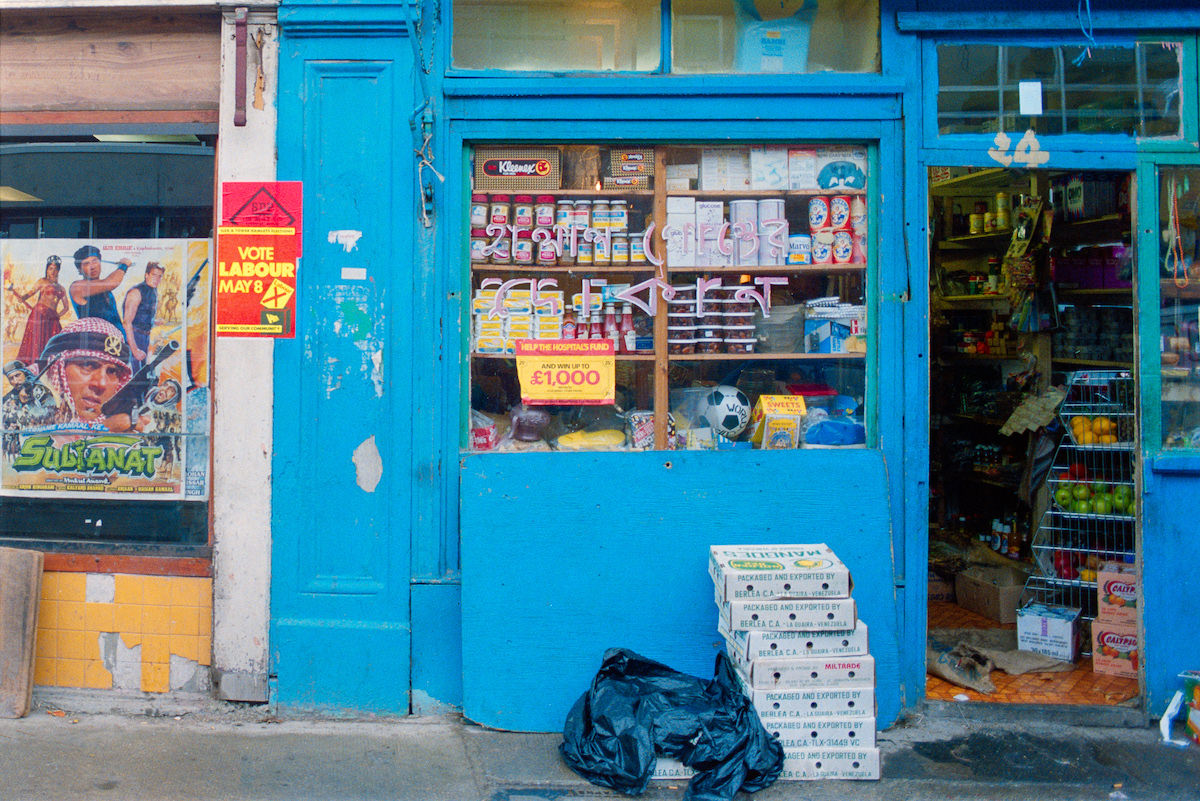
Hessel Street in Whitechapel had long been a Jewish market street, and in 1986 some of that character remained, though the population of the area was changing. The mix of old signage and newer occupants visible in Marshall’s photos reflects the ongoing demographic shifts across Tower Hamlets.
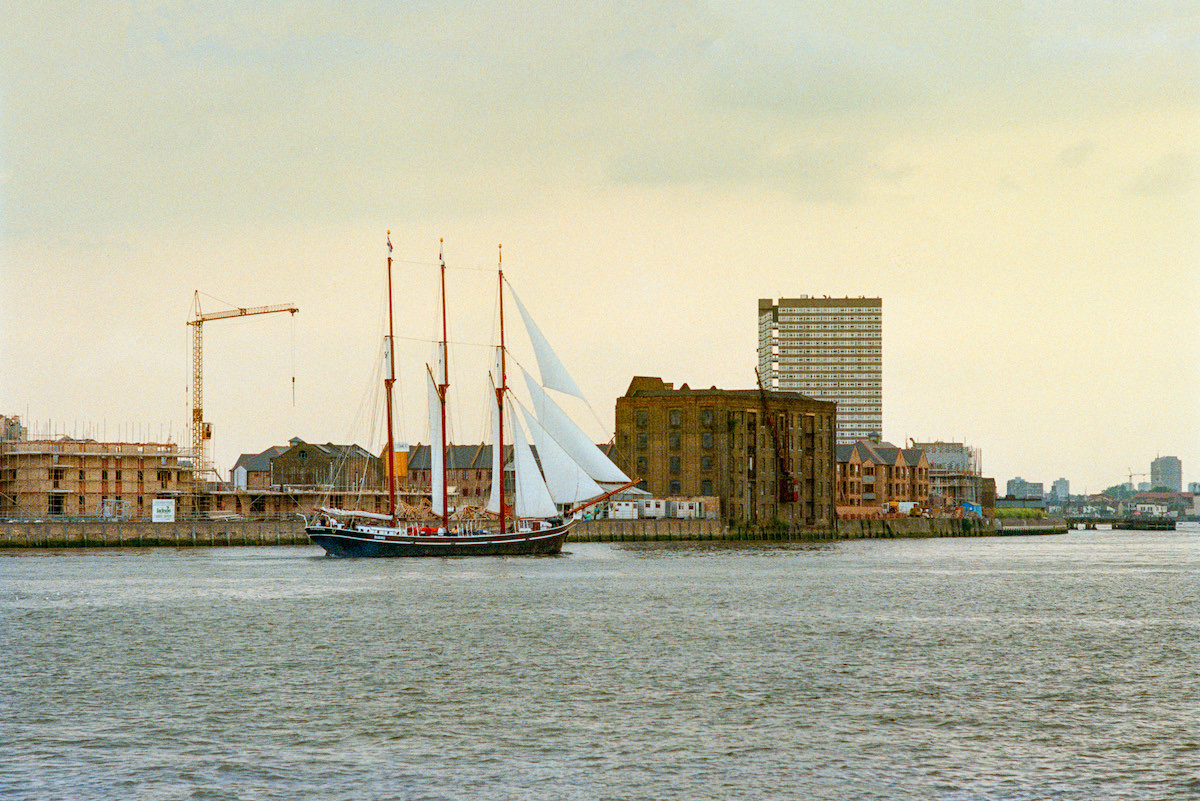
The Isle of Dogs was at the epicentre of the Docklands redevelopment in 1986. The old working docks had closed, and construction was underway on what would become one of London’s main financial districts. A sailing ship on the Thames here sat against a backdrop that was soon to look very different.
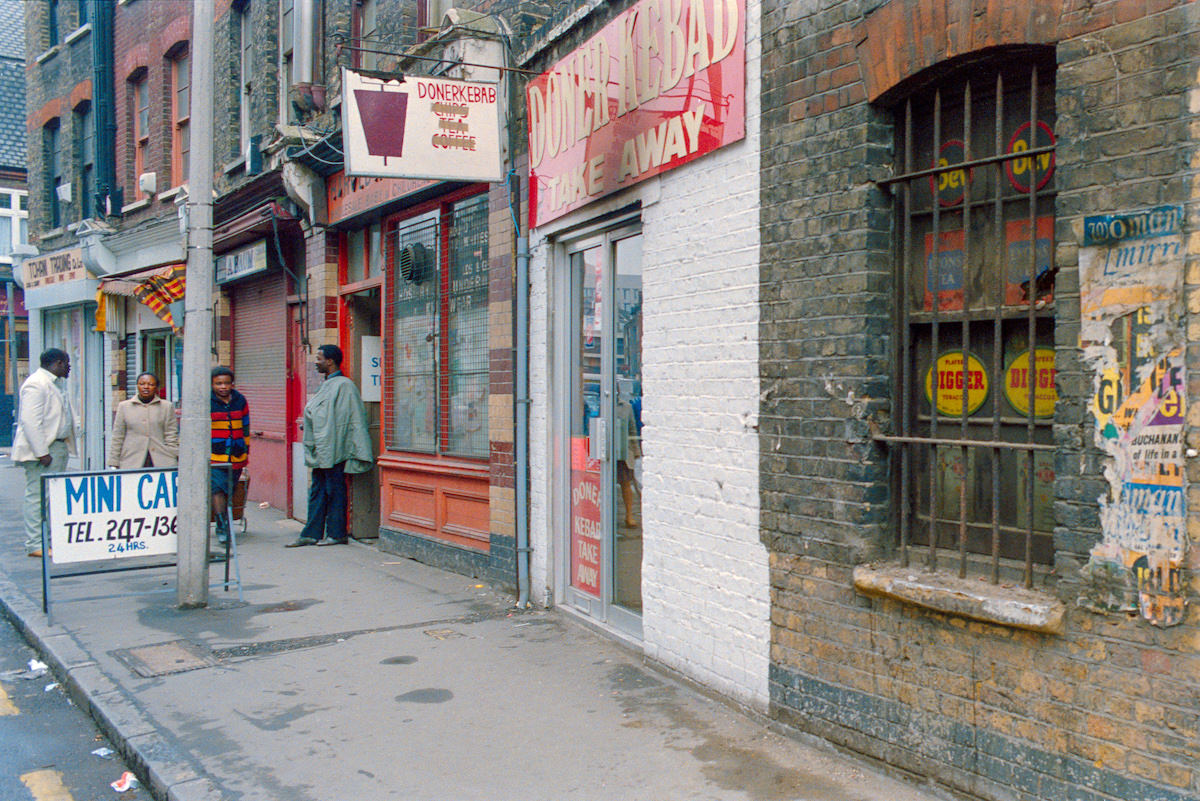
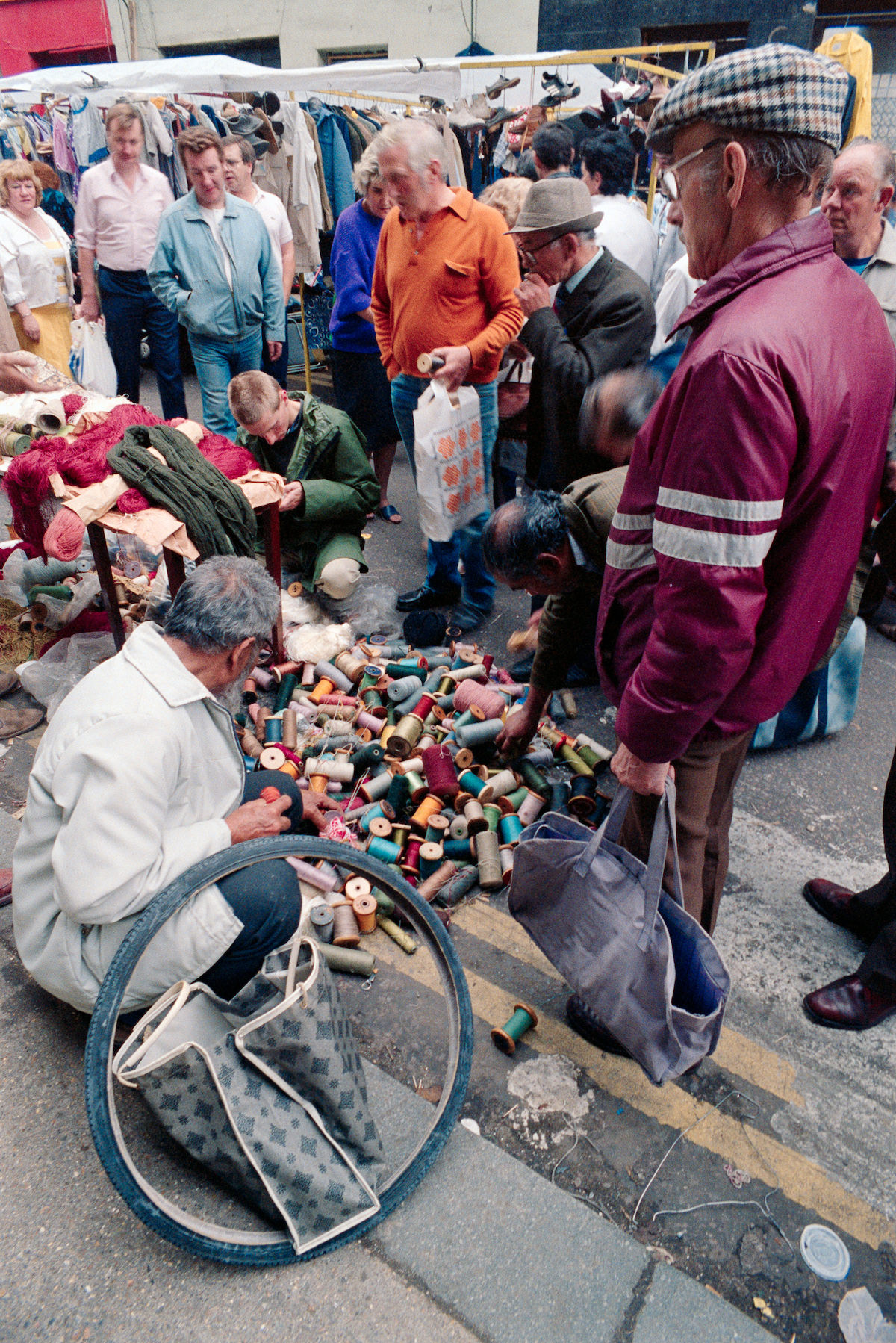
Cheshire Street in Spitalfields hosted a busy Sunday market, selling second-hand goods, clothing, and miscellaneous items to local buyers. It ran alongside the better-known Petticoat Lane and Brick Lane markets, forming part of a wider network of street trading that had existed in Spitalfields for centuries.
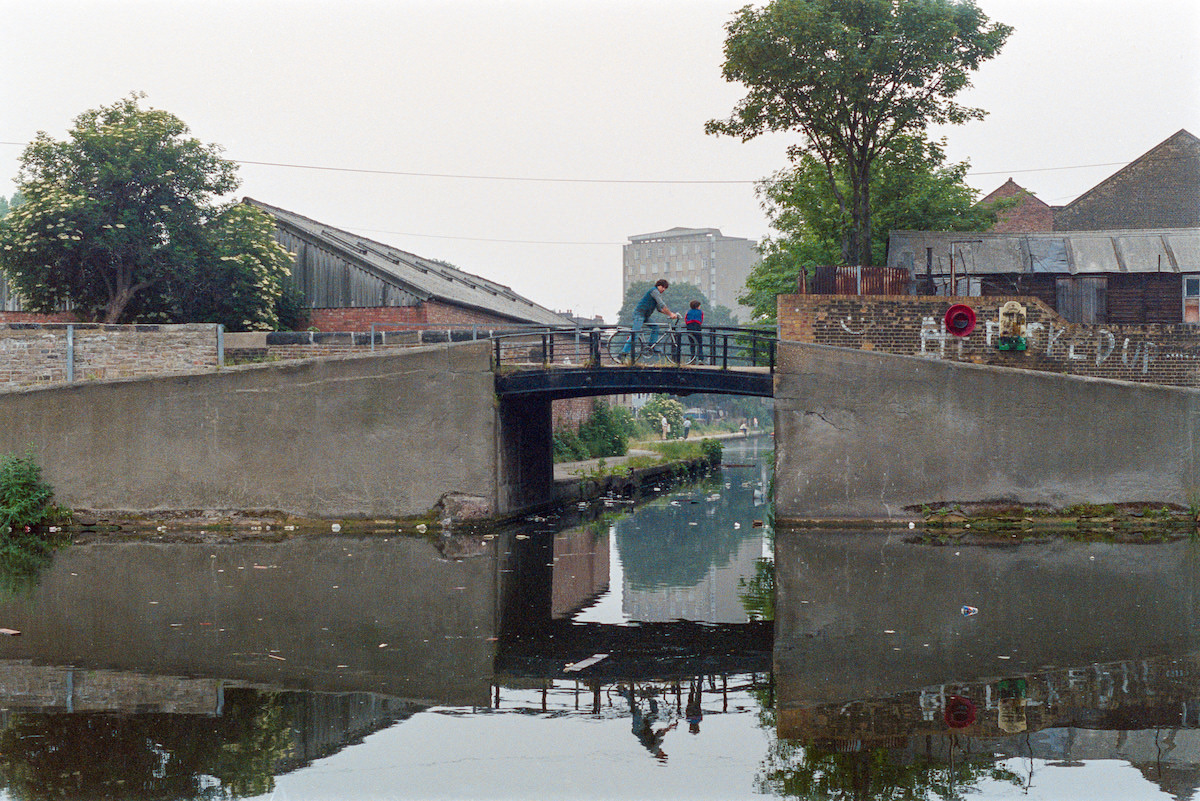
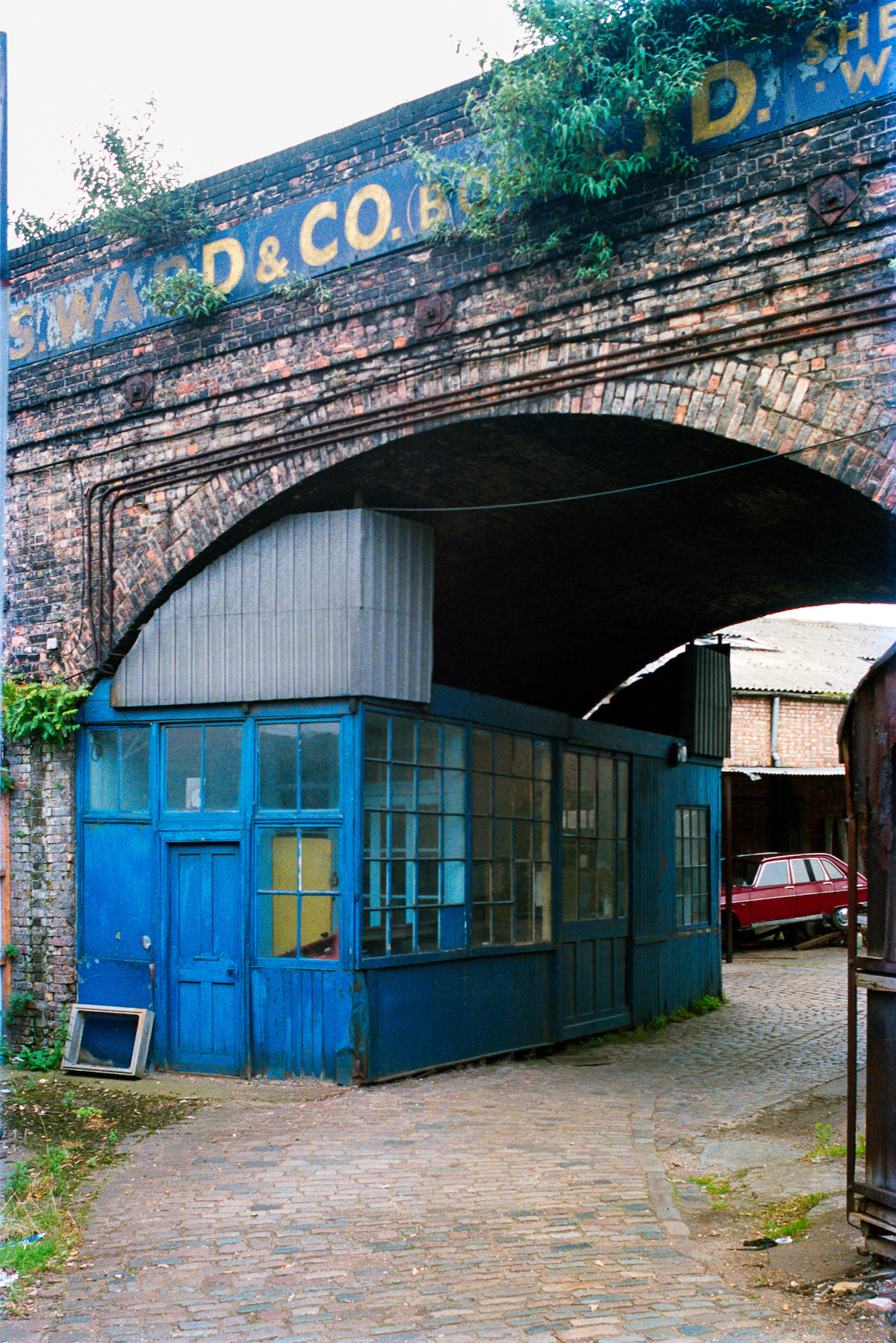
Railway arches in Limehouse, like the one occupied by S Ward & Co, were used by small businesses across the East End — mechanics, storage firms, and workshops all made use of the cheap, industrial space beneath the Victorian viaducts. They were a practical solution in a part of the city where space was tight and rents had to be low.
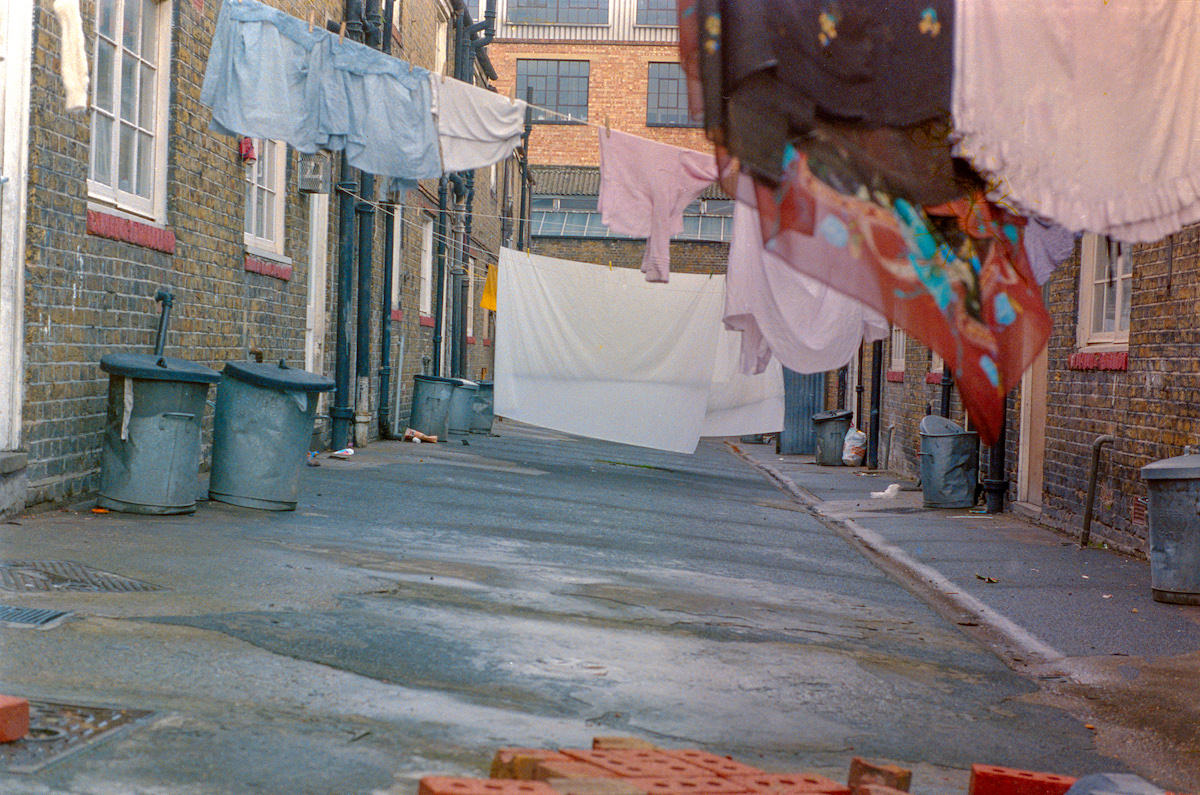
Cranford Cottages in Shadwell, with washing hung out in the yard, represents the residential side of East End life that Marshall also captured — not just the commercial streets and ghost signs, but the quiet, domestic spaces where people actually lived. These images, taken together, form a detailed portrait of a place at a specific moment in time.




