
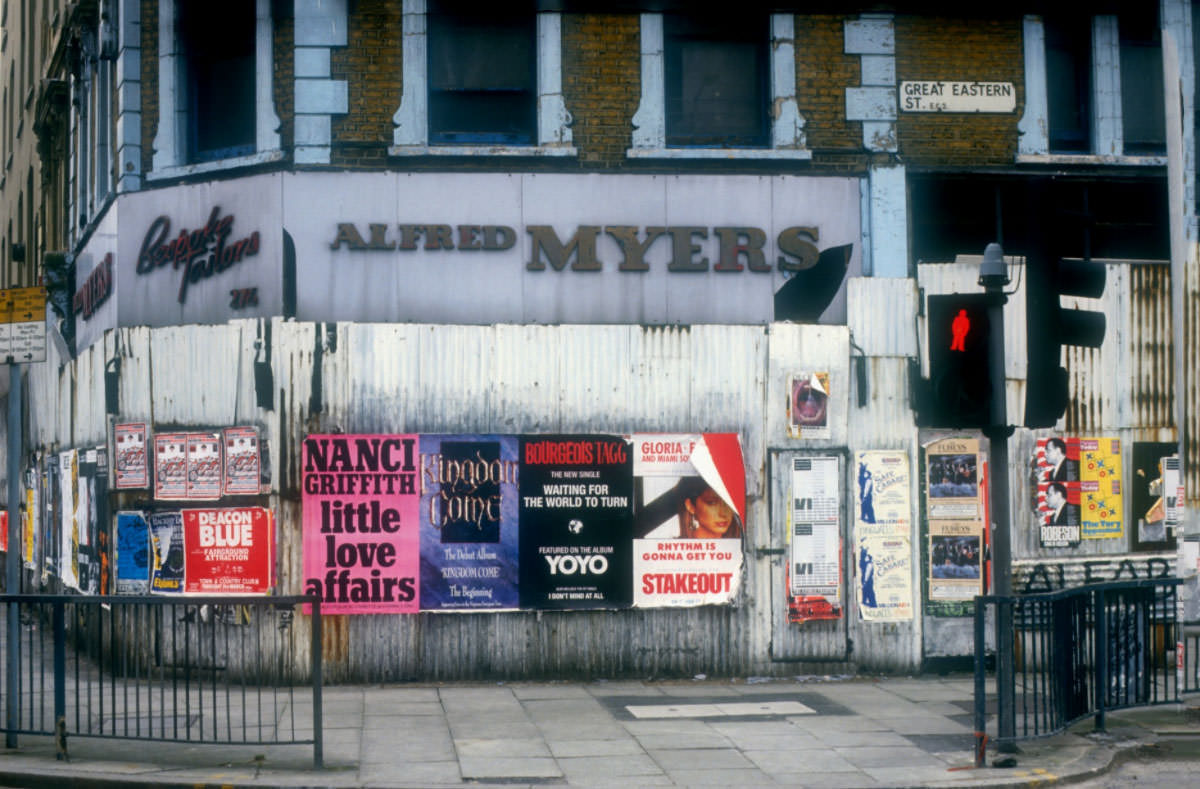
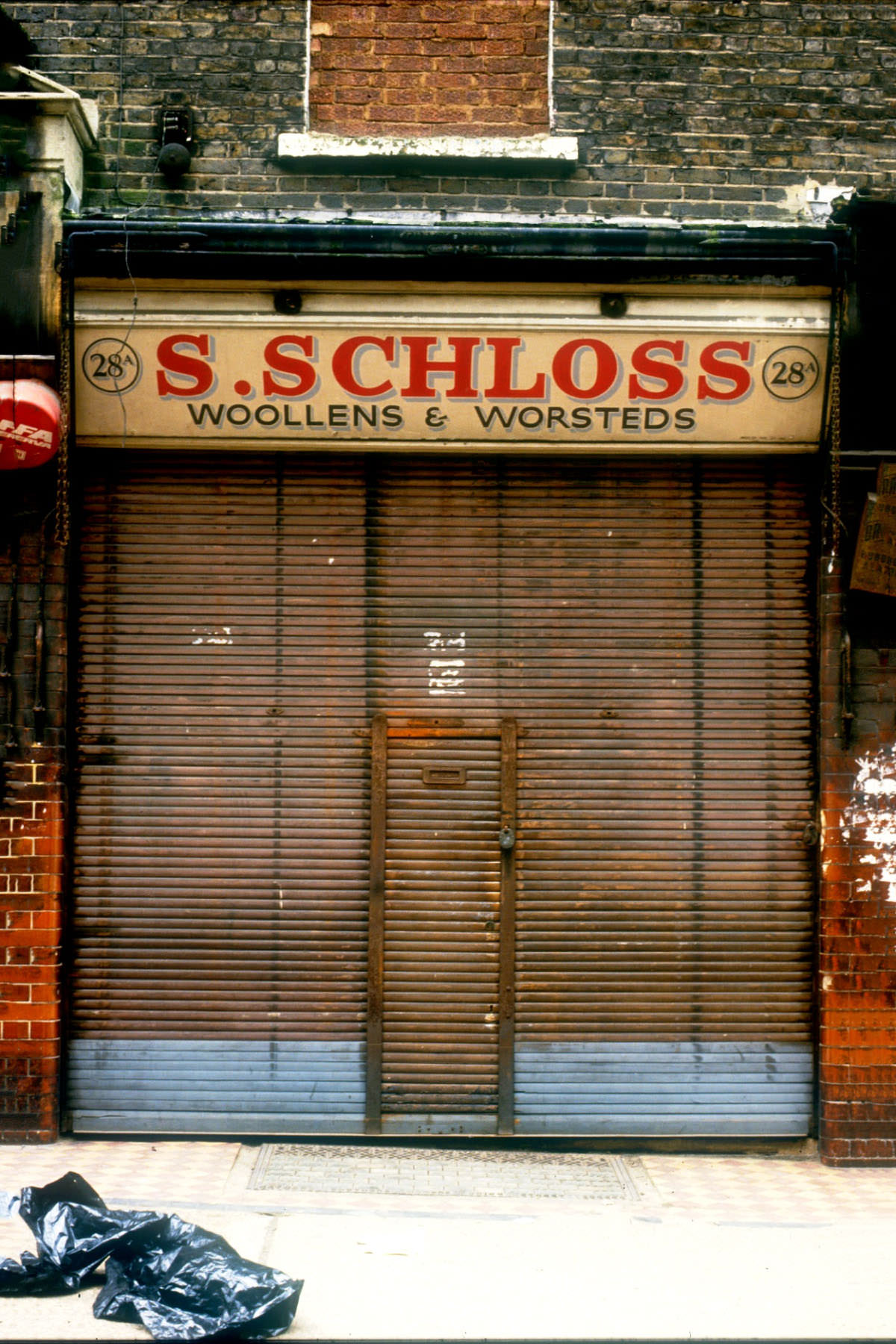
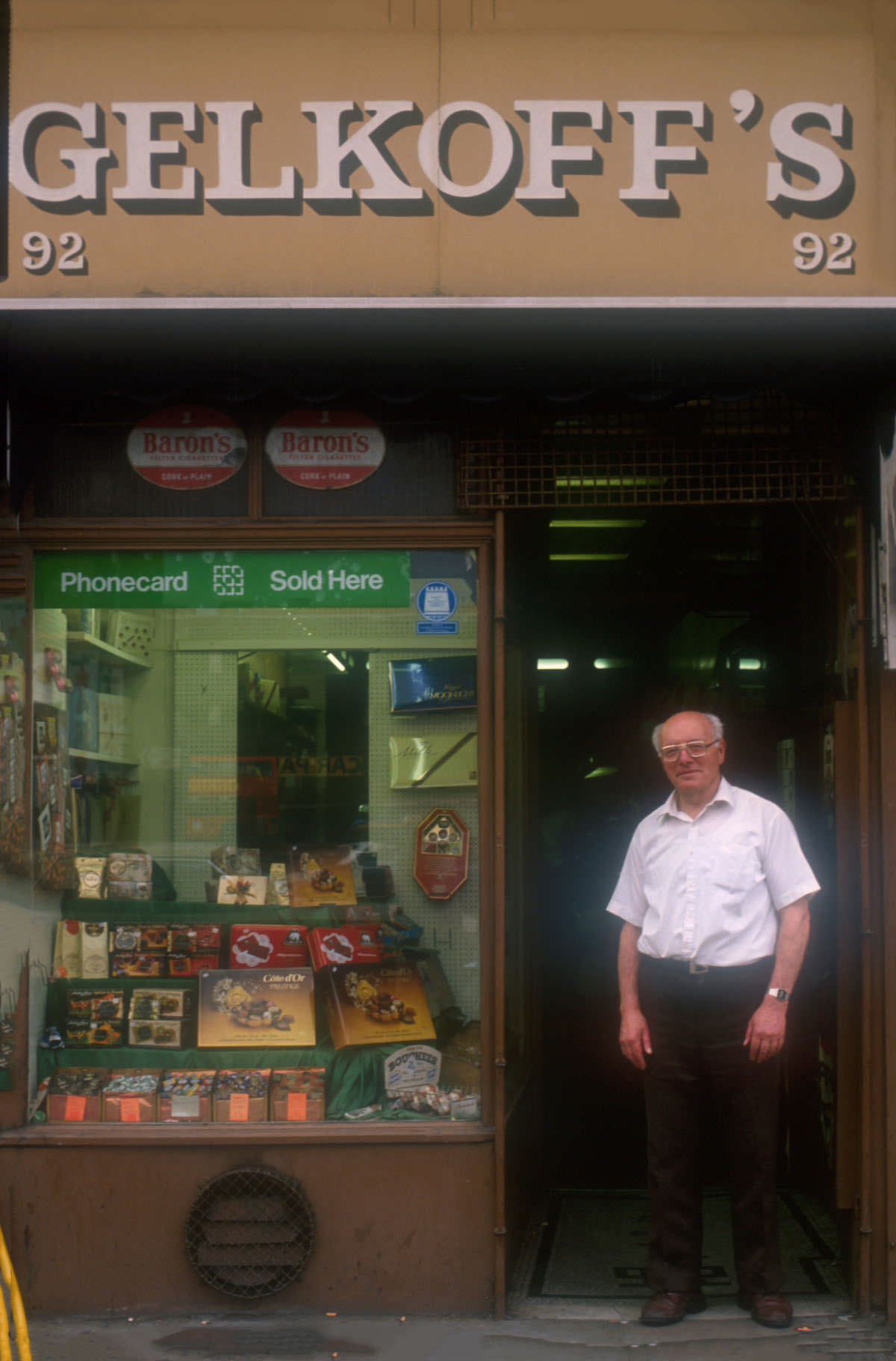
In 1988, broadcaster and oral historian Alan Dein walked the streets of Tower Hamlets with a camera. He lived in Stepney at the time, and what he saw around him was disappearing fast. Whole rows of shopfronts stood empty, their paint peeling, their windows boarded, their signs fading into the brickwork. Dein set out to photograph them before they were gone for good.
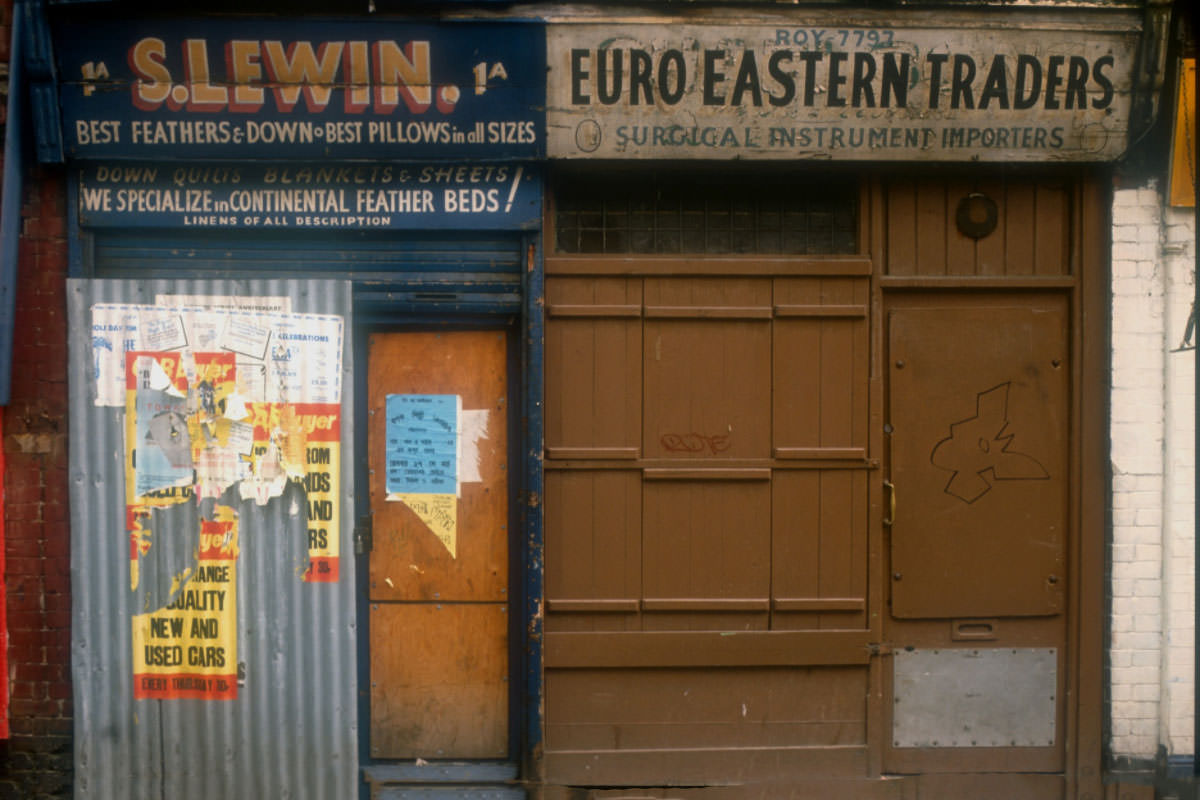
The shops Dein documented were not just abandoned buildings. They were the physical remains of a Jewish community that had once been a defining force in the East End. From the late 19th century through the interwar years, streets like Hessel Street, Cheshire Street, and Goulston Street were packed with Jewish-owned businesses — butchers, tailors, grocers, and drapers serving a dense working-class immigrant population.
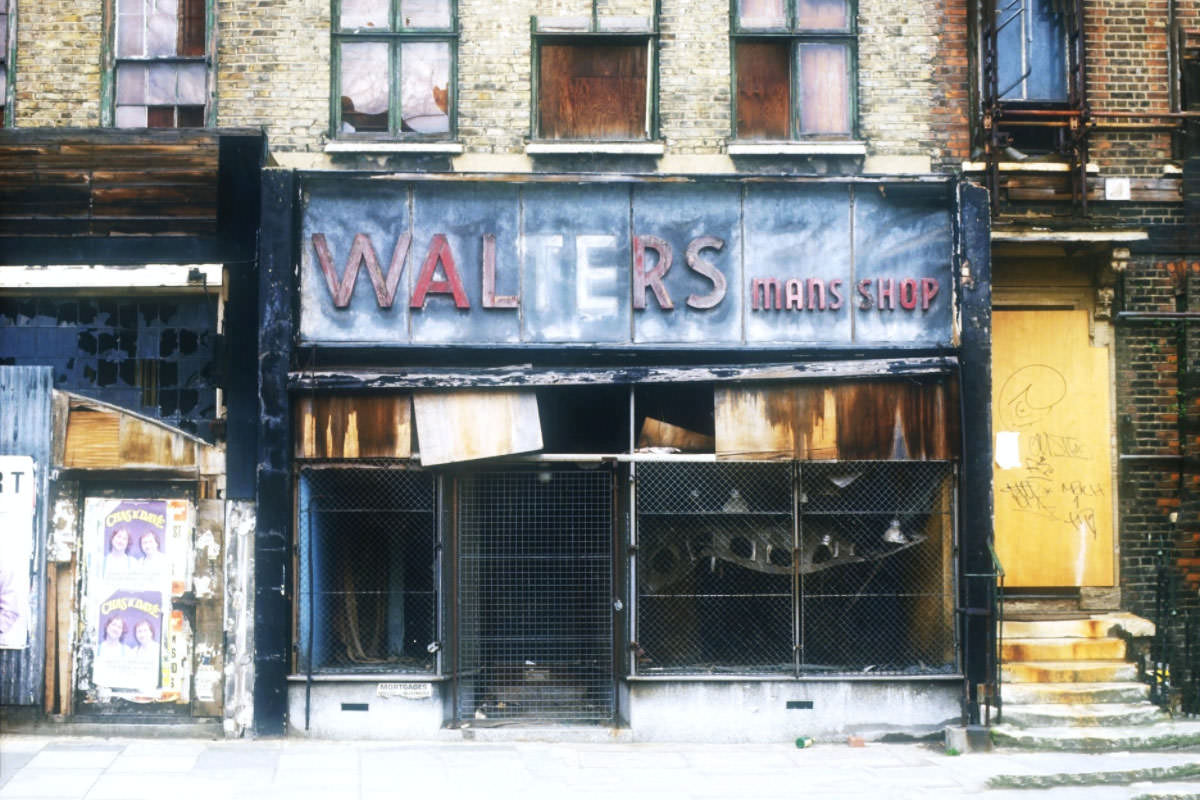
By the 1980s, that world had largely moved on. Post-war prosperity and the pull of suburban life had drawn much of the Jewish community out of the East End and into areas like Edgware, Golders Green, and Ilford. The businesses that had sustained those streets for decades either closed or relocated. What remained were the shells — storefronts with Hebrew lettering still visible above the door frames, signage that advertised trades no longer practiced inside.
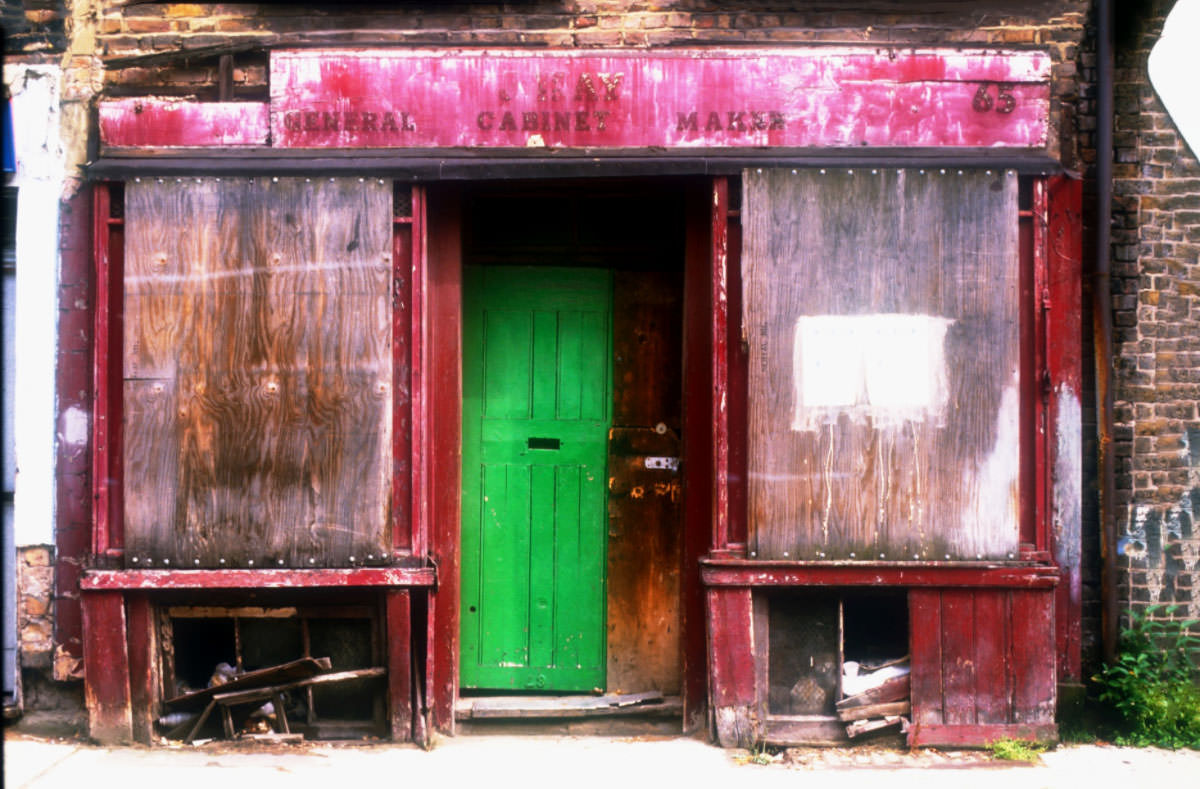
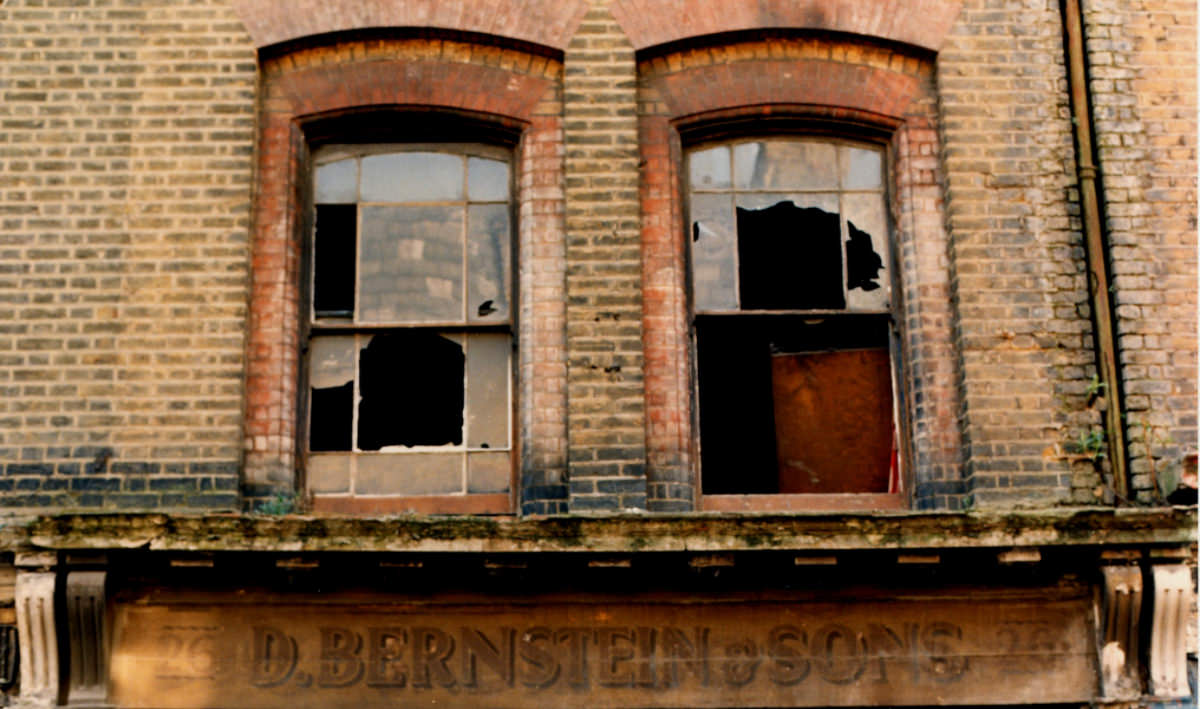
Dein described the streetscapes as looking like a mouthful of broken teeth — gaps where businesses had been demolished sitting between those still barely standing. Some premises had been empty for more than five years by the time he photographed them. The community that had stayed behind in the area was, as he put it, less identifiable. The vibrant, noisy commercial life of the interwar years had been reduced to hollow facades.
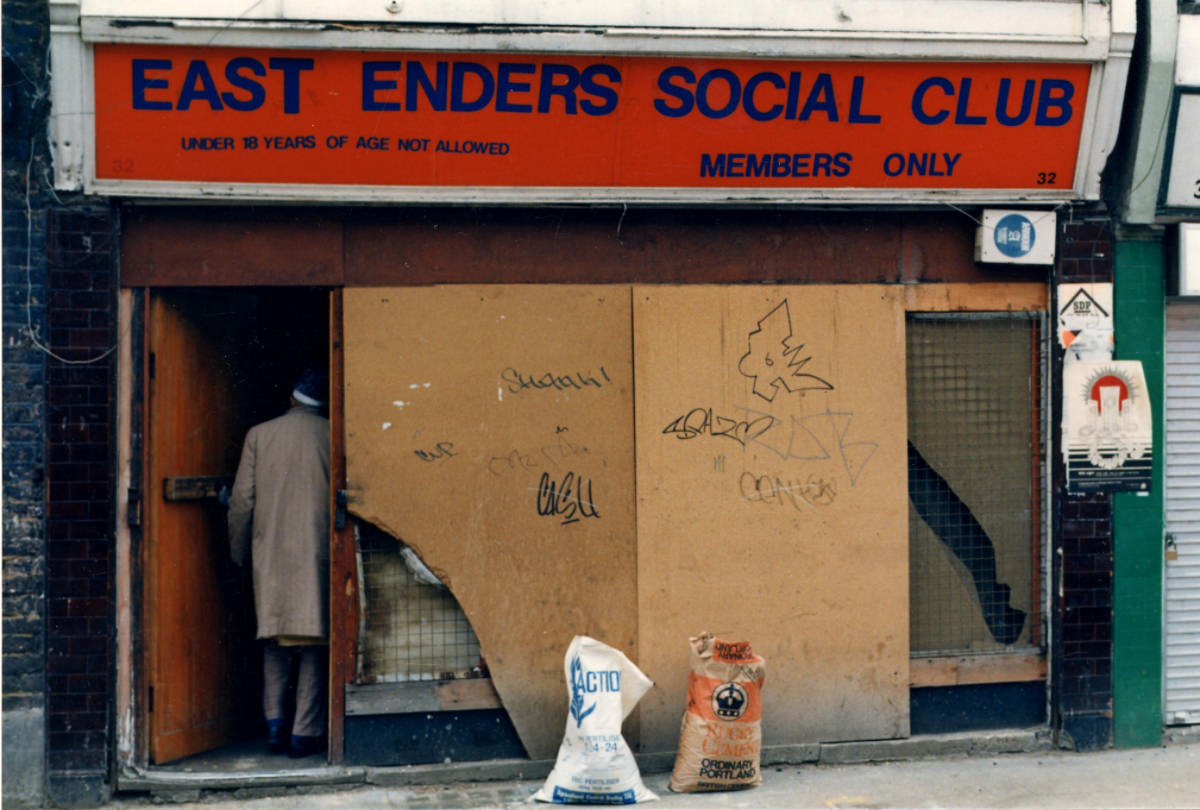
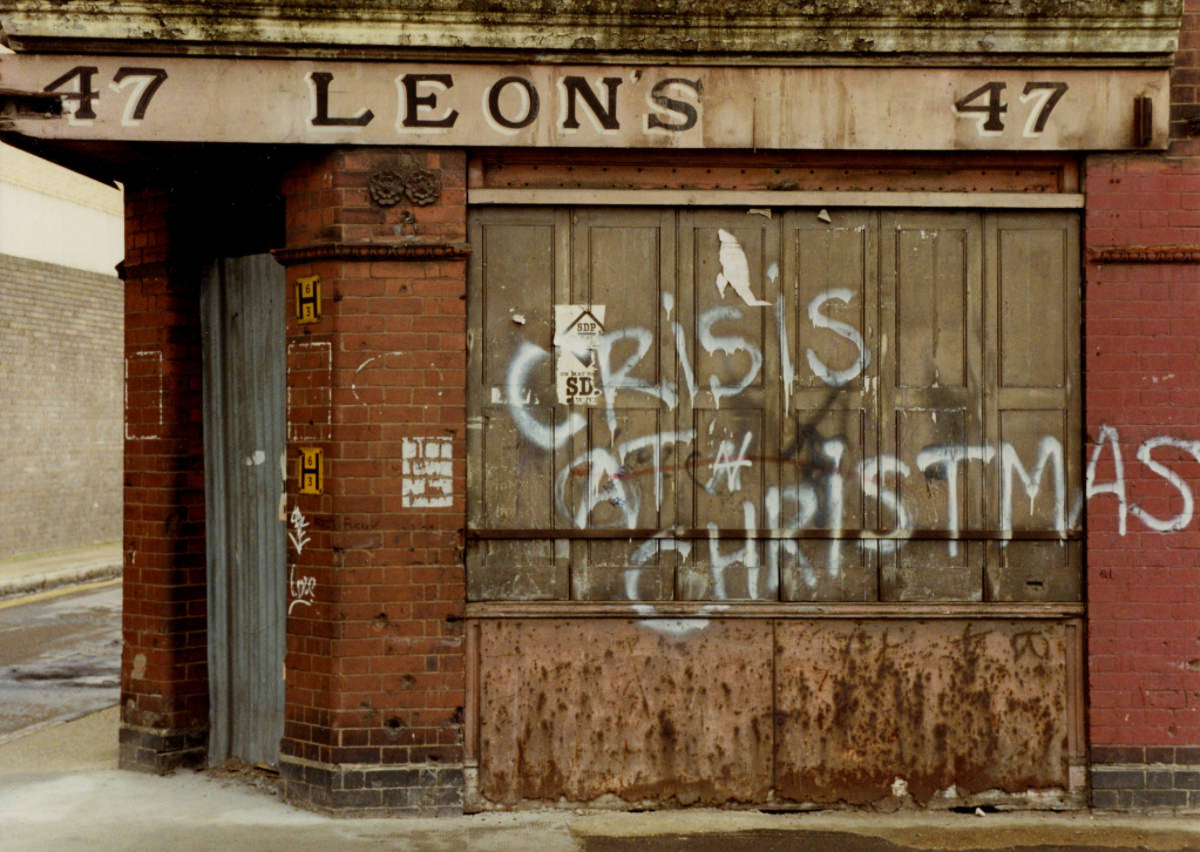
Tower Hamlets in 1988 was a borough under significant pressure. Redevelopment driven by the nearby Docklands regeneration project was reshaping large parts of east London. Older streets that had survived the Blitz were now being cleared for new housing and commercial developments. The timing of Dein’s project was precise — he was recording buildings that had only weeks or months left standing.
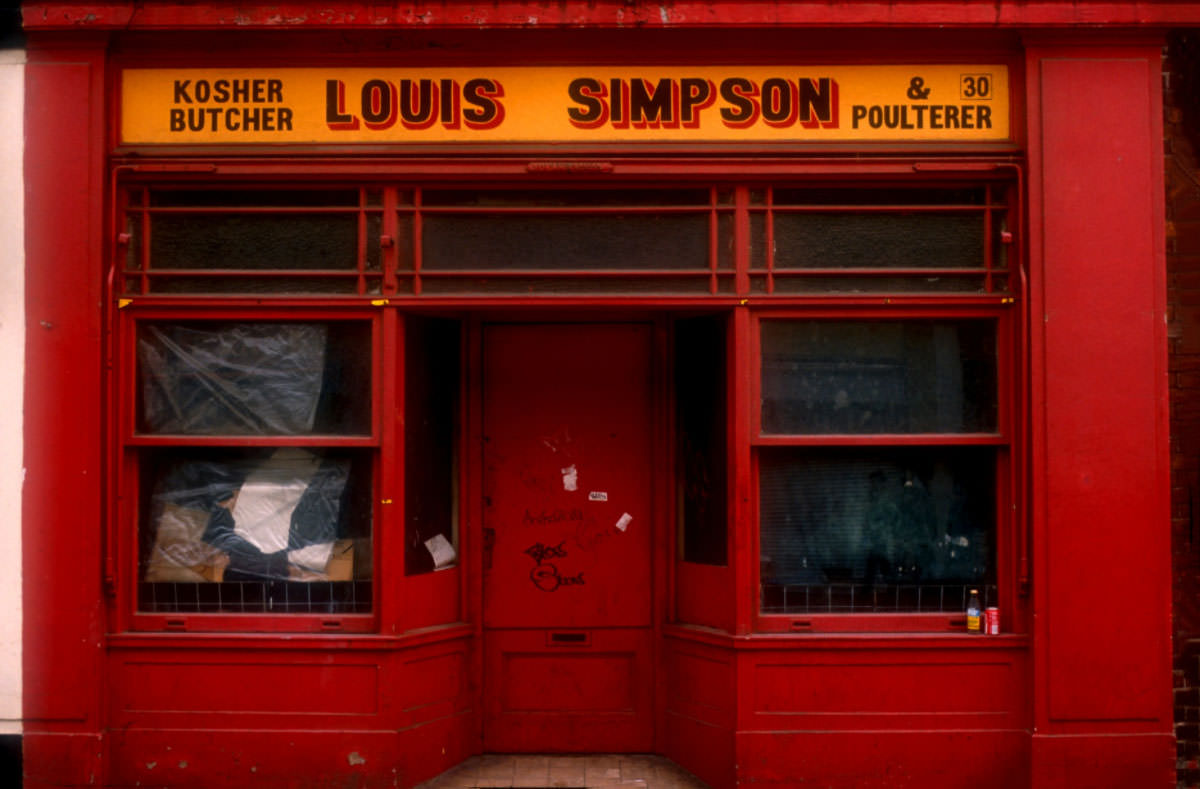
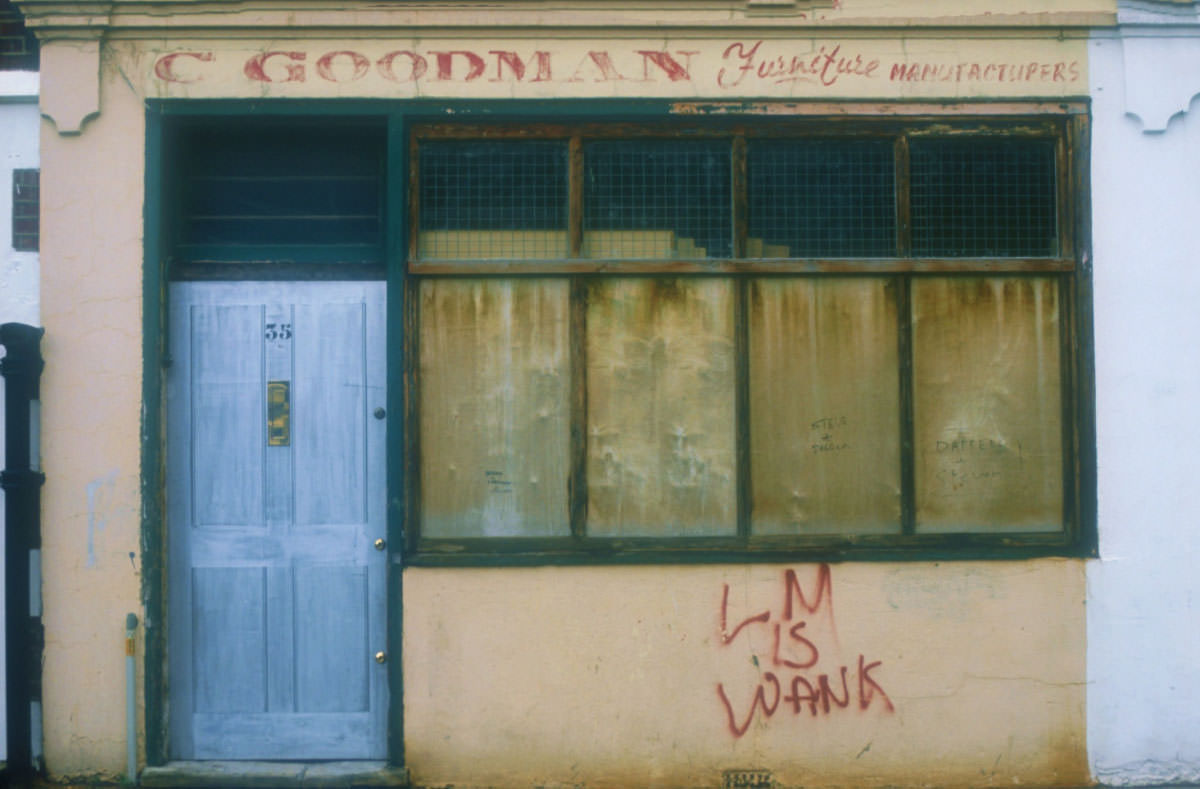
The photographs show a cross-section of streets across the borough. Great Eastern Street, Brick Lane, Wilkes Street, Goulston Street — each had its own character, but shared the same exhausted look. Shutters rusted shut. Tiles cracked. Signage half-stripped away. In some images, the original shop names are still legible, offering a direct link to the families and trades that once operated there.
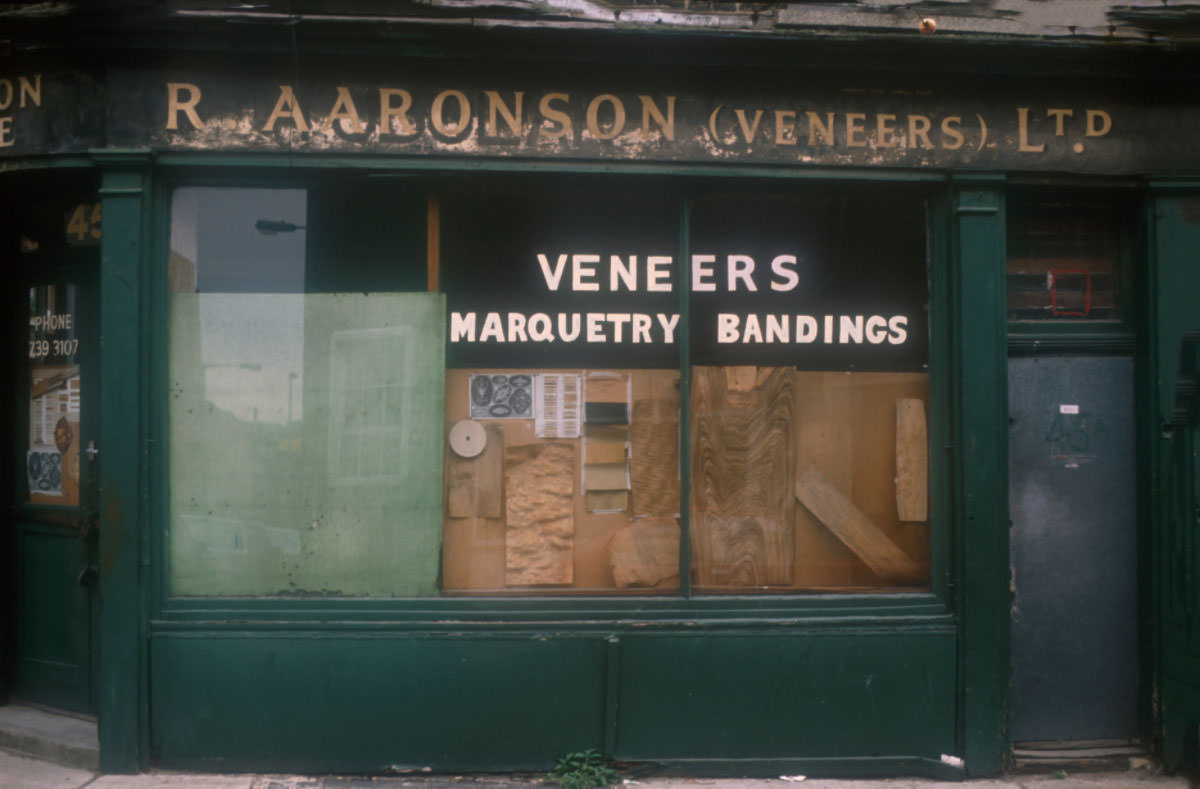
One photograph captures a sign that tells the story plainly: a business relocated to Edgware, the north London suburb that became one of the primary destinations for East End Jewish families moving out of the borough. The sign is not a farewell — it was likely painted decades earlier — but in 1988 it reads as a marker of a long, slow departure.
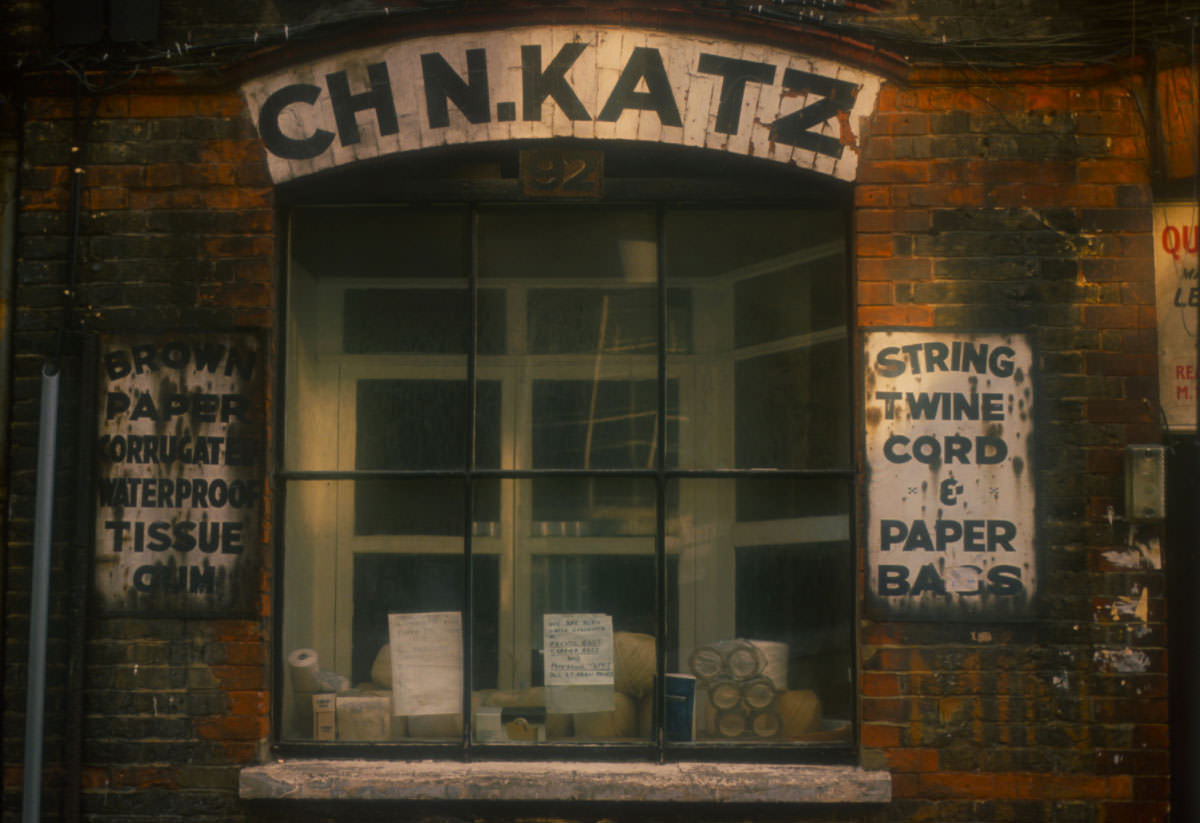
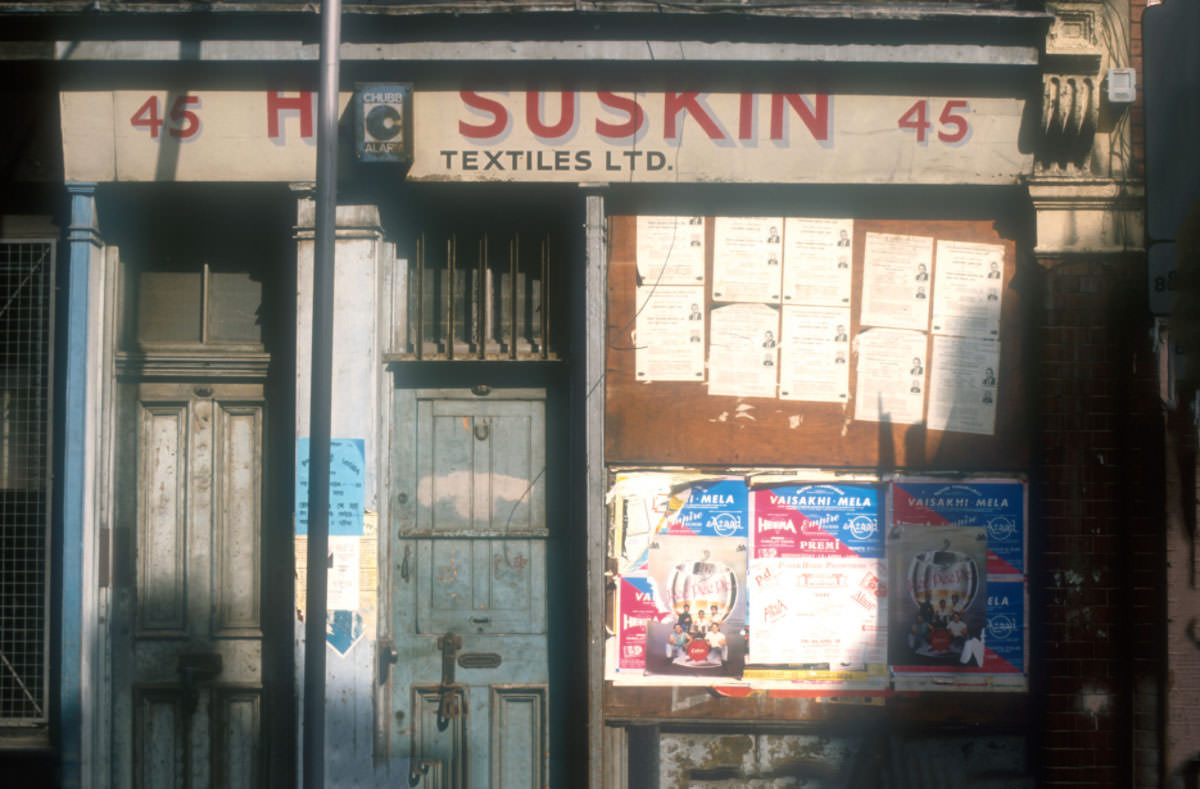
Brick Lane itself appears in the series, a street already undergoing its own transformation by the late 1980s. The Bangladeshi community had established a strong presence there from the 1970s onward, and the street’s character was shifting again — as it had done when the Jewish community first arrived, and when the Huguenot weavers occupied it before them. Dein’s photographs caught the Jewish layer of that history at the exact moment it was being erased at street level.
Goulston Street, which appears in the series, carried its own dark historical weight. It was here, in the early hours of September 30, 1888, that police found a piece of apron belonging to Jack the Ripper’s fourth victim, Catherine Eddowes, alongside a chalked message in a doorway. By 1988, that doorway and the building around it were among the structures being swept aside. Dein’s lens captured what little of the Victorian and Edwardian street fabric still survived.
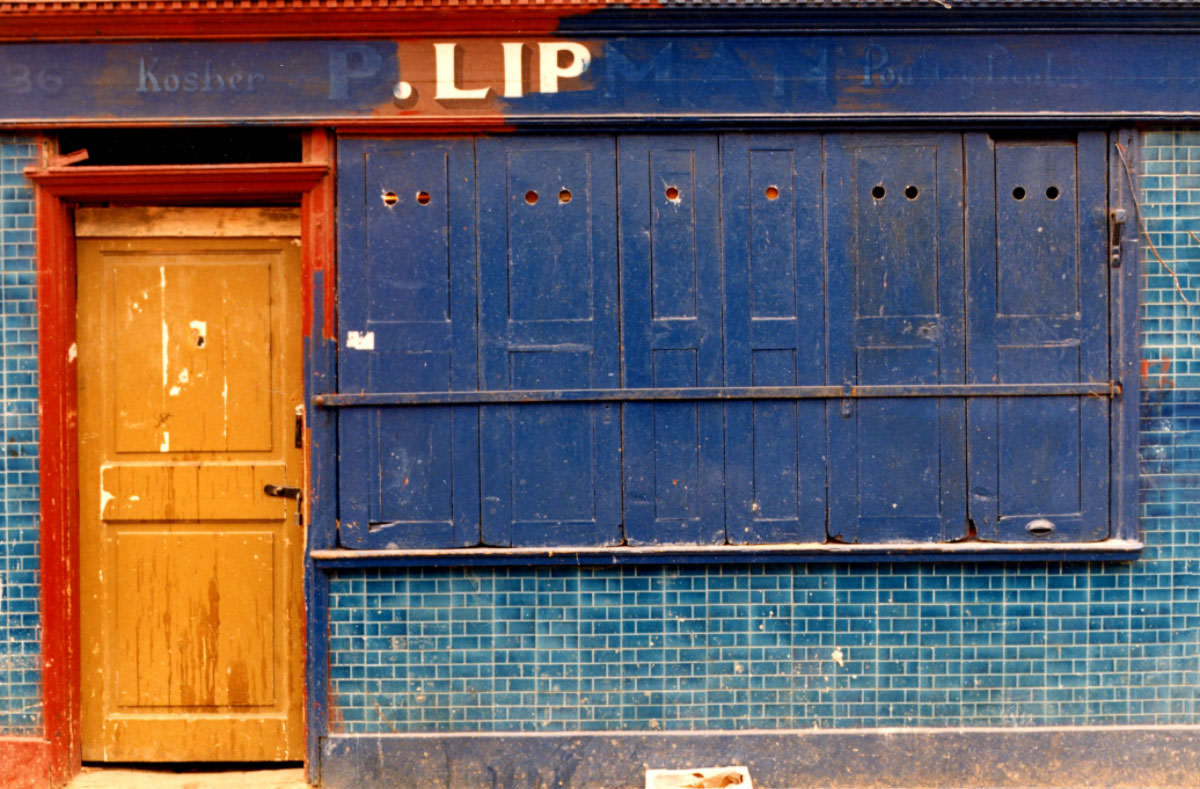
Hessel Street features three times in the collection — a sign of how significant it was to the area’s Jewish commercial life. It had been one of the East End’s most active open-air markets, known for kosher food stalls and the thick press of shoppers on market days. By the time Dein photographed it, the street was a shadow of that former activity. The stalls were gone. The shops were shuttered. The photographs are what remain.




