Paris in the 1910s was the undisputed capital of the fashion world. Wealthy women from across Europe and beyond traveled to the city specifically to visit its famous fashion houses, known in French as maisons de couture. These establishments were not simple shops. They were carefully designed spaces where skilled tailors and seamstresses crafted garments by hand, one stitch at a time. For the women who could afford them, these houses were a regular part of life.
This period in French history is called the Belle Époque, which translates to “Beautiful Era.” It stretched roughly from the 1870s through the outbreak of World War I in 1914. Paris during this time was a city of rapid change. Gas lamps gave way to electric lights. The Eiffel Tower had just been built. Art Nouveau architecture lined the boulevards. Fashion was very much part of this cultural energy.
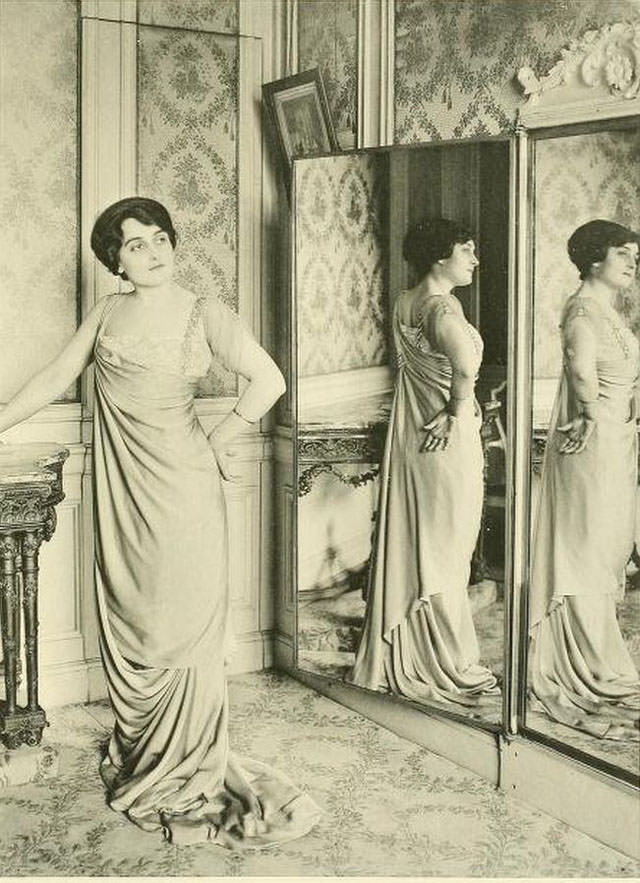
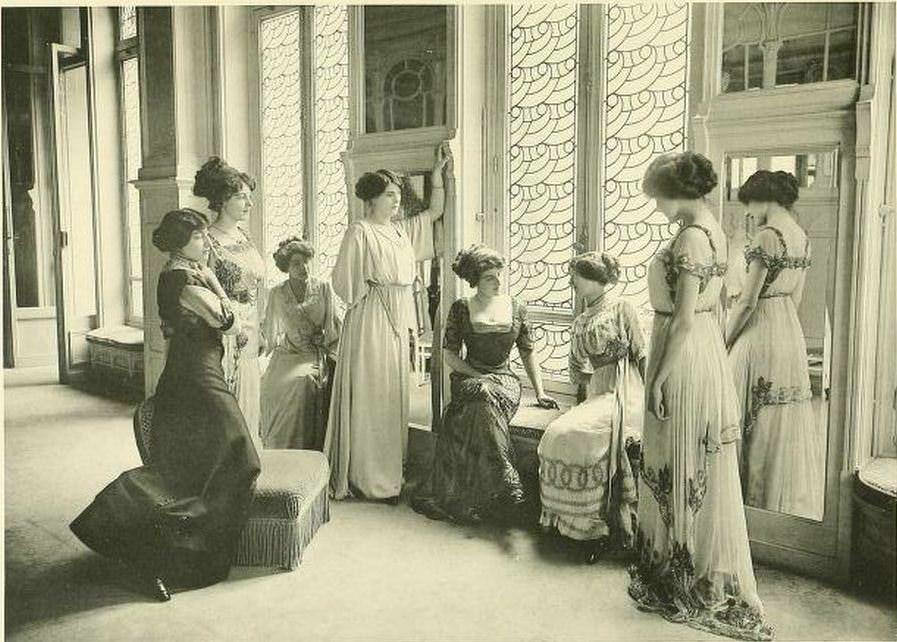
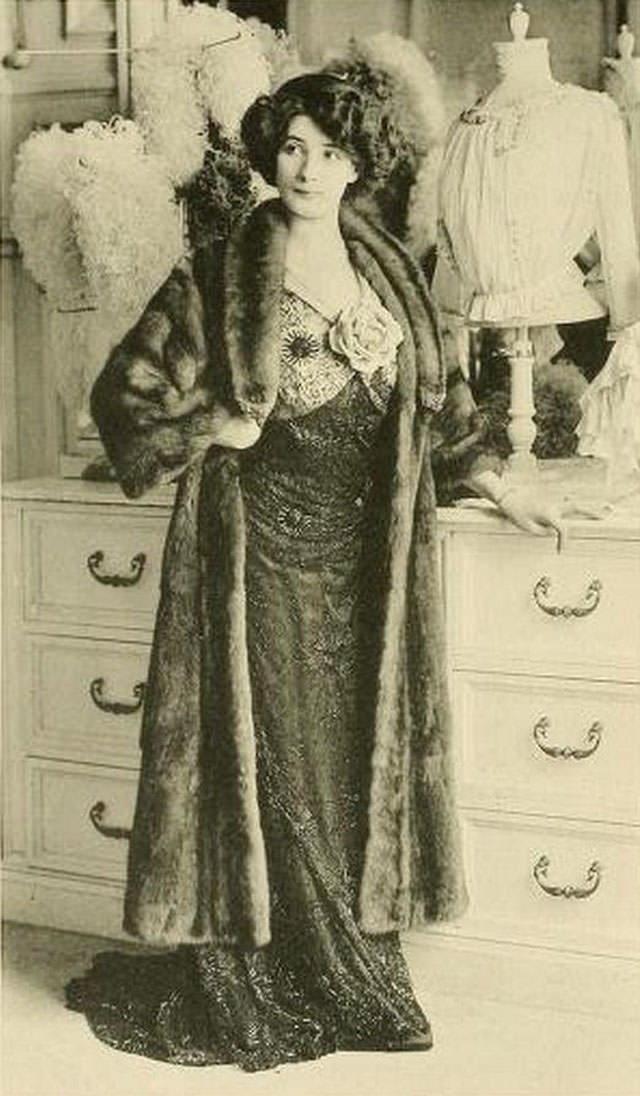
Clothing in this era was a direct signal of a person’s place in society. The most fashionable women wore long, structured gowns with fitted bodices, full sleeves, and elaborate detailing. Fabrics like silk, velvet, and lace were standard. Corsets shaped the silhouette, pulling in the waist and pushing out the bust and hips into the famous S-curve shape that defined Edwardian style.
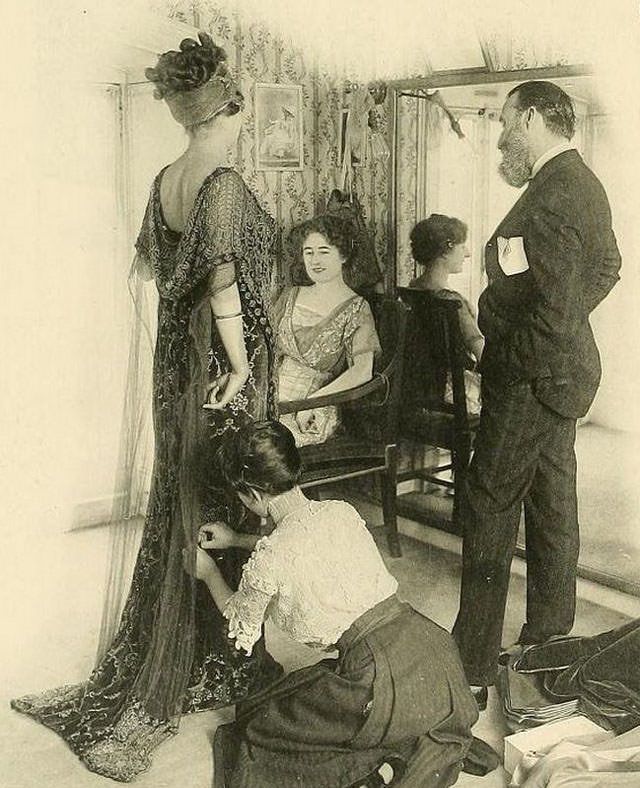
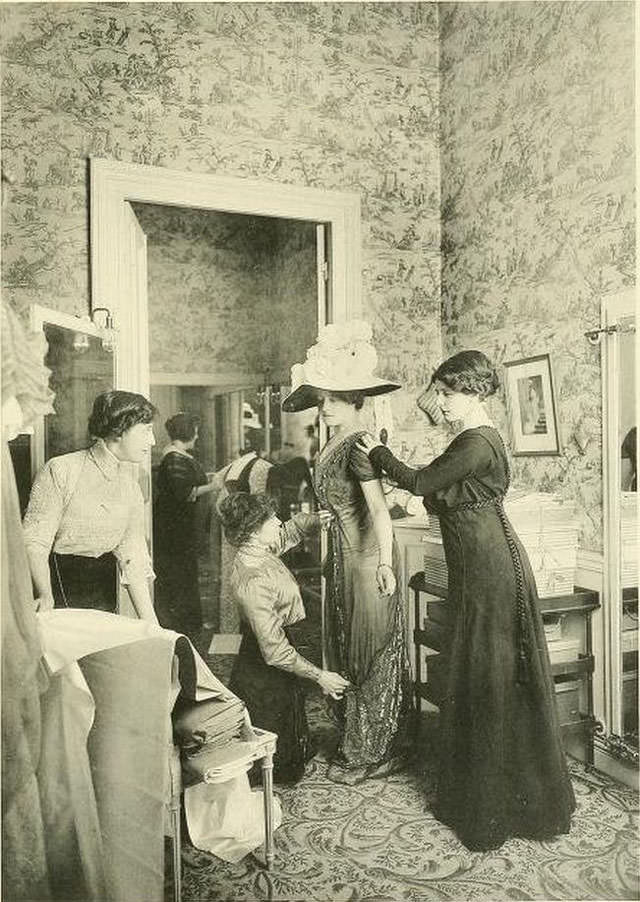
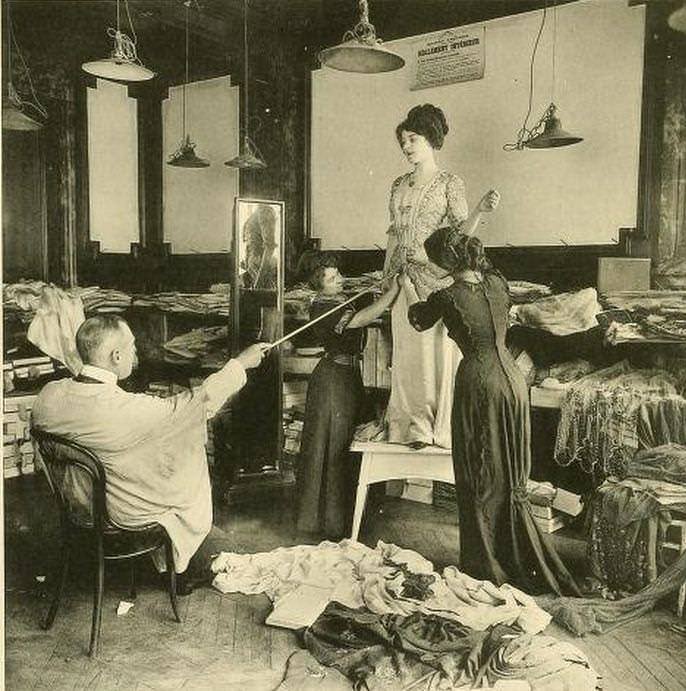
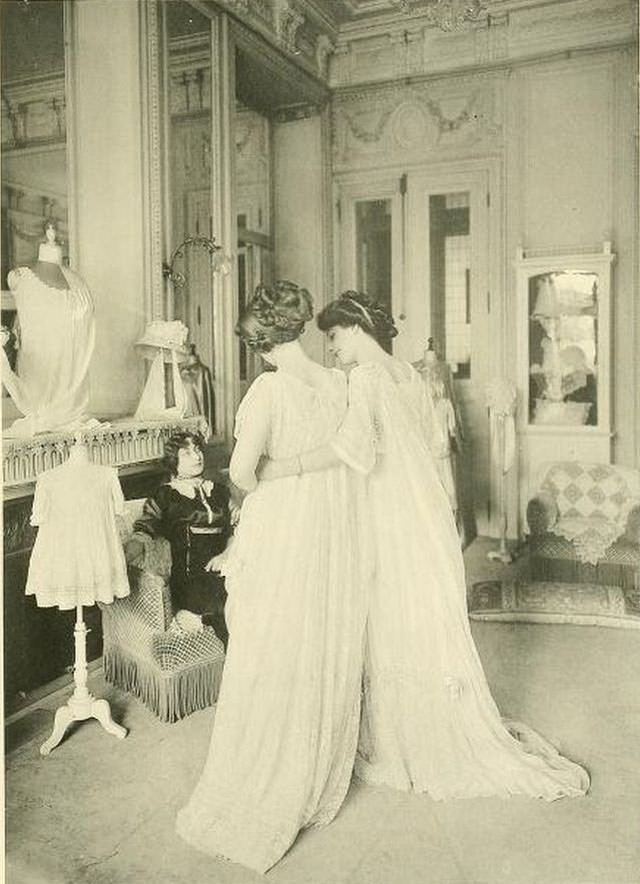
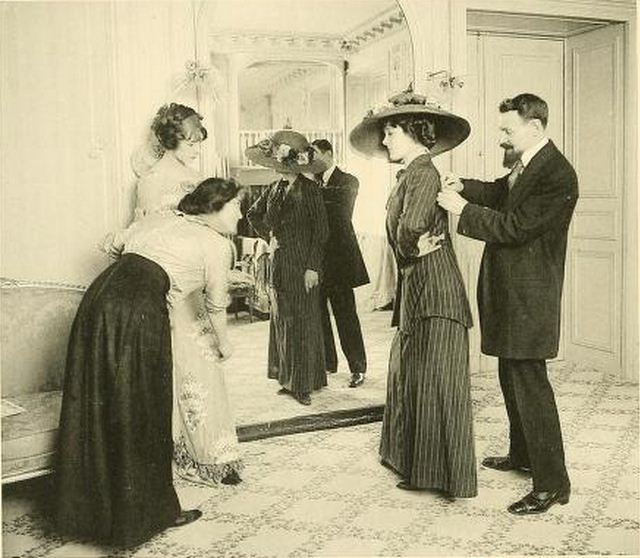
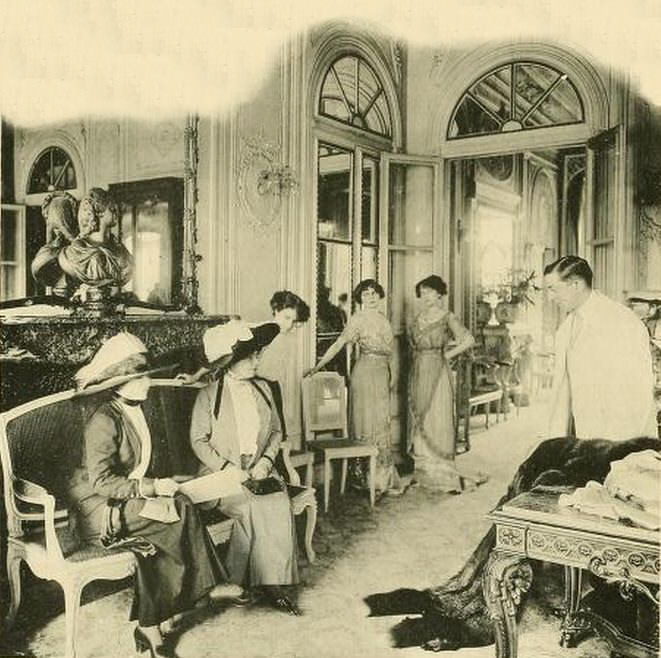
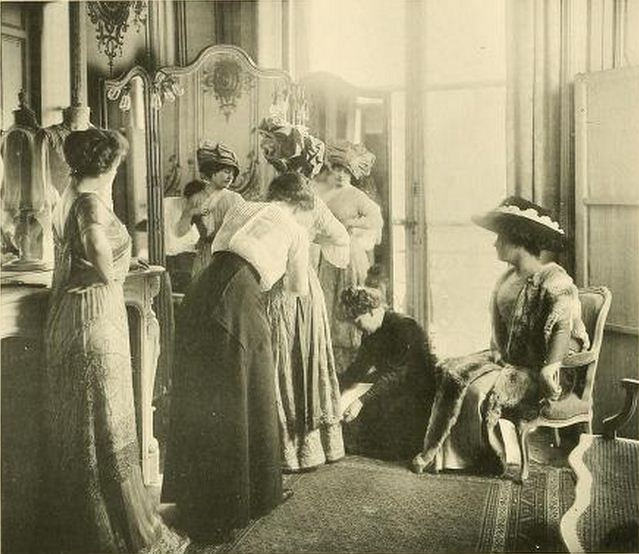
Inside the fashion houses, the experience of shopping was nothing like what we know today. A client would be received in a private salon, seated comfortably, and shown fabric samples. Measurements were taken with great precision. A single dress commission required multiple fittings spread over several weeks. Some garments took months to complete.
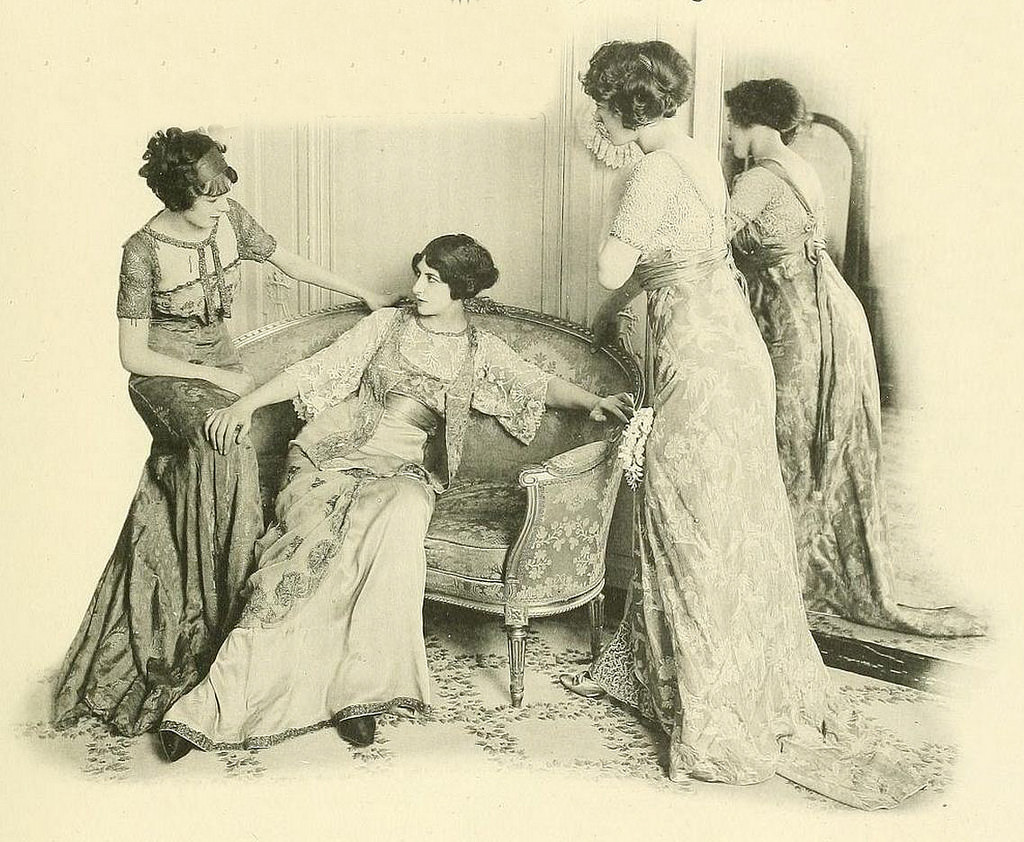
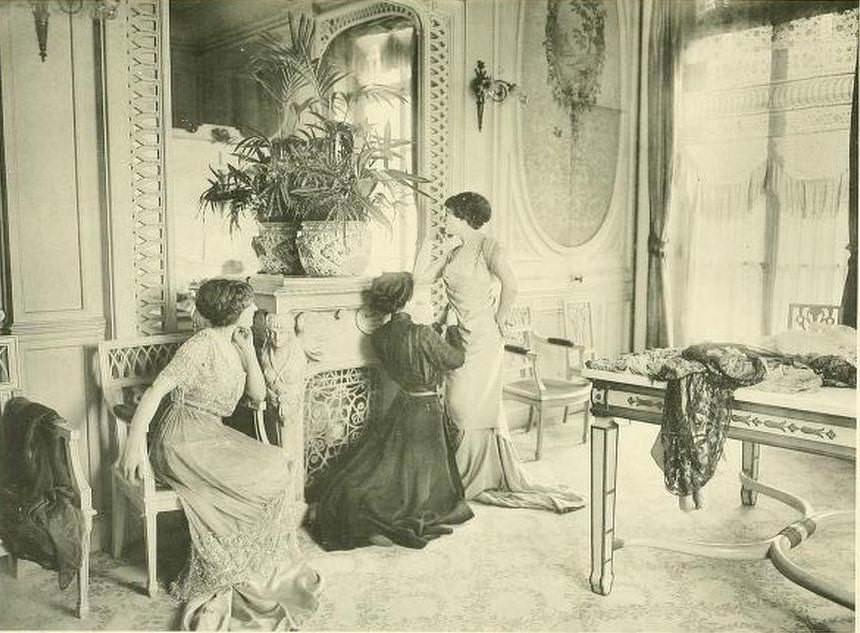
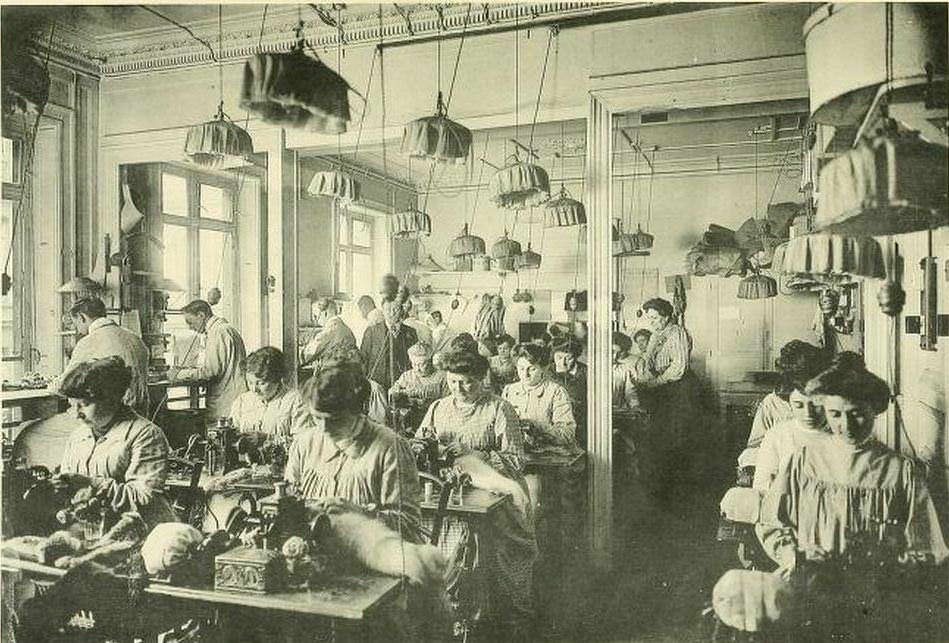
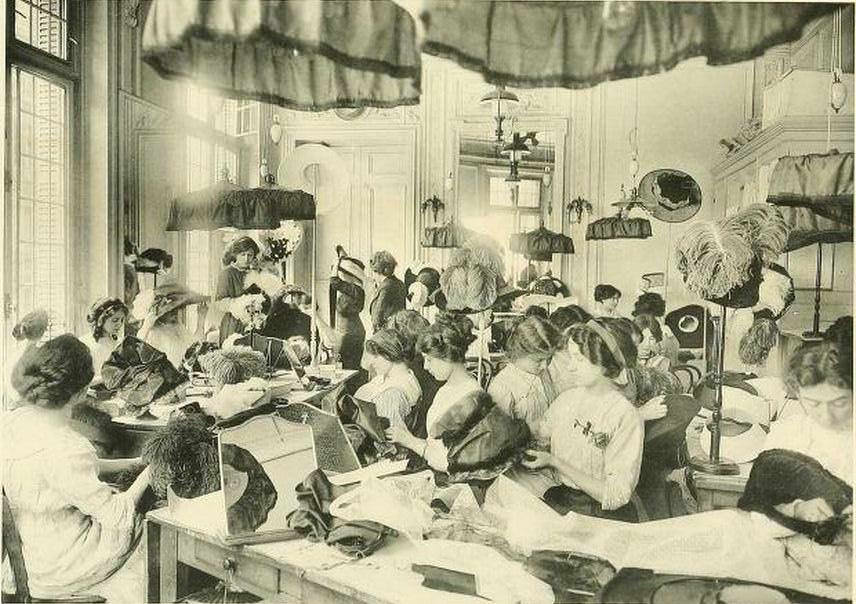
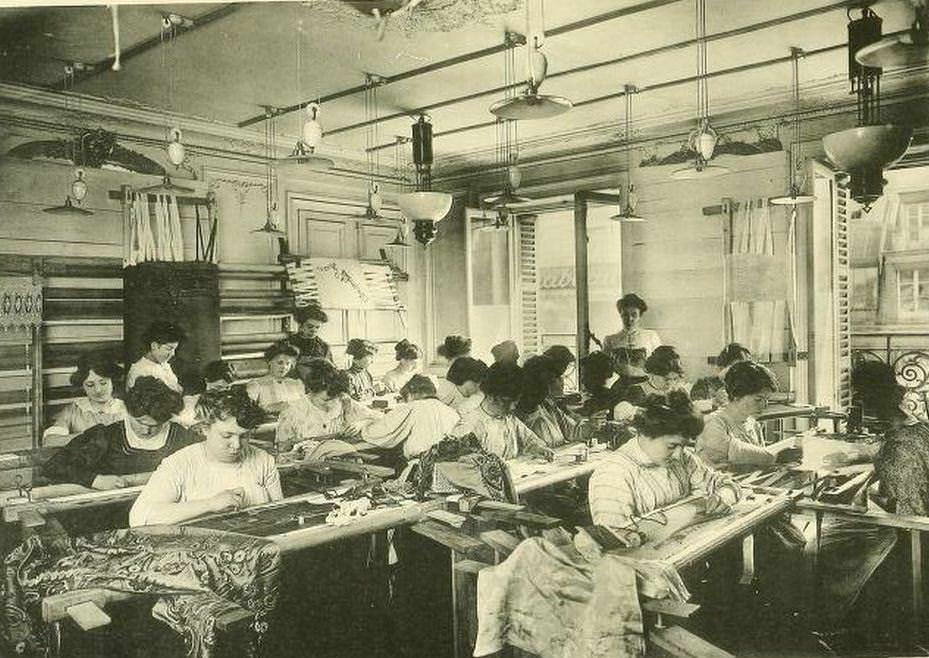
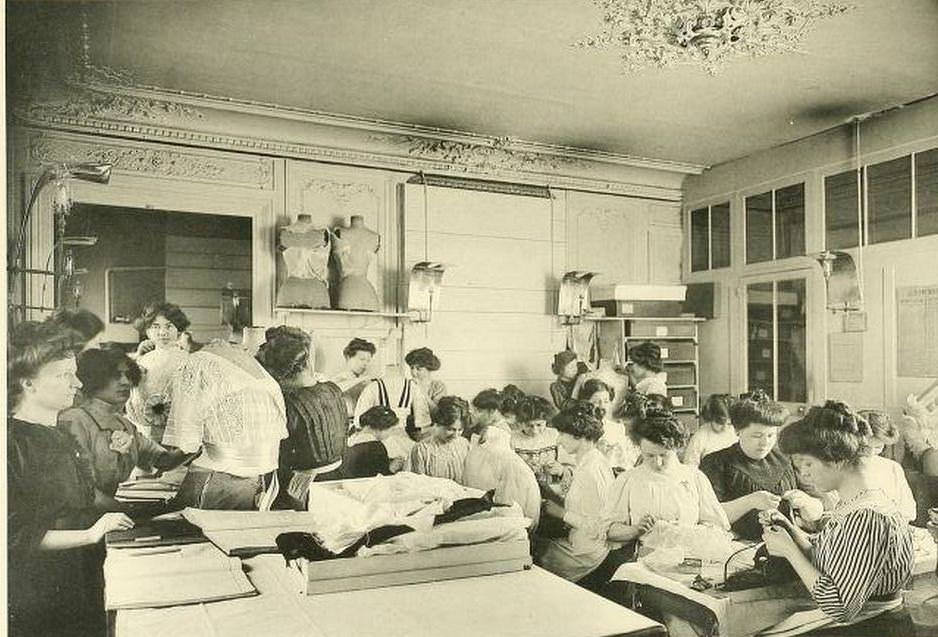
The tailors and seamstresses who worked in these houses were highly trained craftspeople. Many had apprenticed for years before being allowed to work on a garment independently. A single evening gown from a top Parisian house in the 1910s required hundreds of hours of labor. Beadwork, embroidery, and hand-stitched lace trimmings were all done by hand, often by workers who spent entire careers mastering one specific technique.
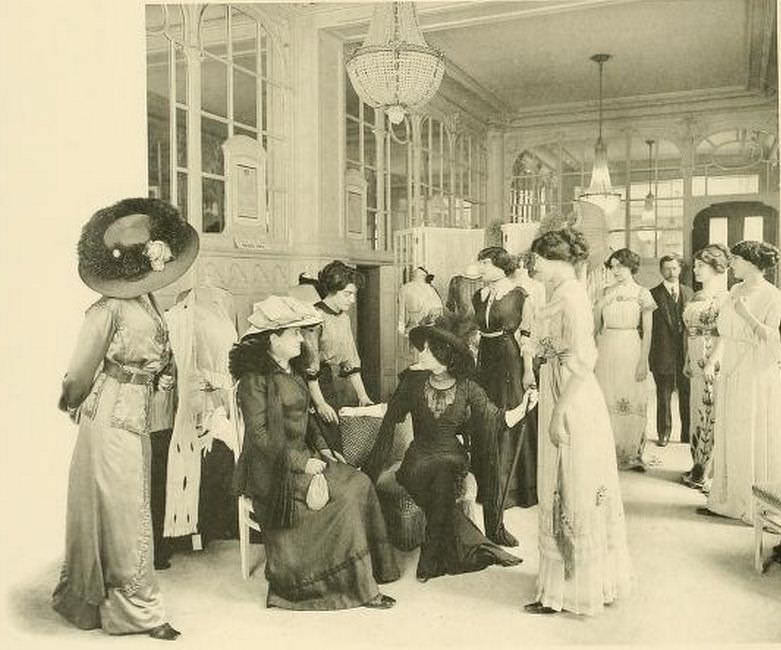
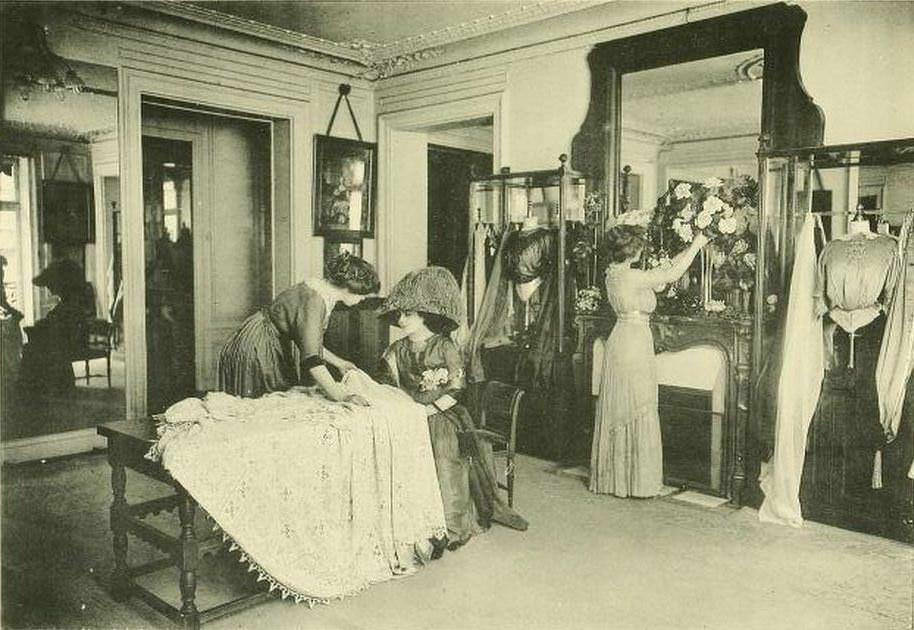
Names like Worth, Paquin, Doucet, and Callot Soeurs were among the most celebrated houses of the era. Charles Frederick Worth, though he had died in 1895, had set the template for how a couture house operated — the designer as artist, the client as patron. His sons carried the house into the 1910s. Jeanne Paquin became one of the first women to run a major fashion house successfully, opening branches in London, Buenos Aires, and New York.
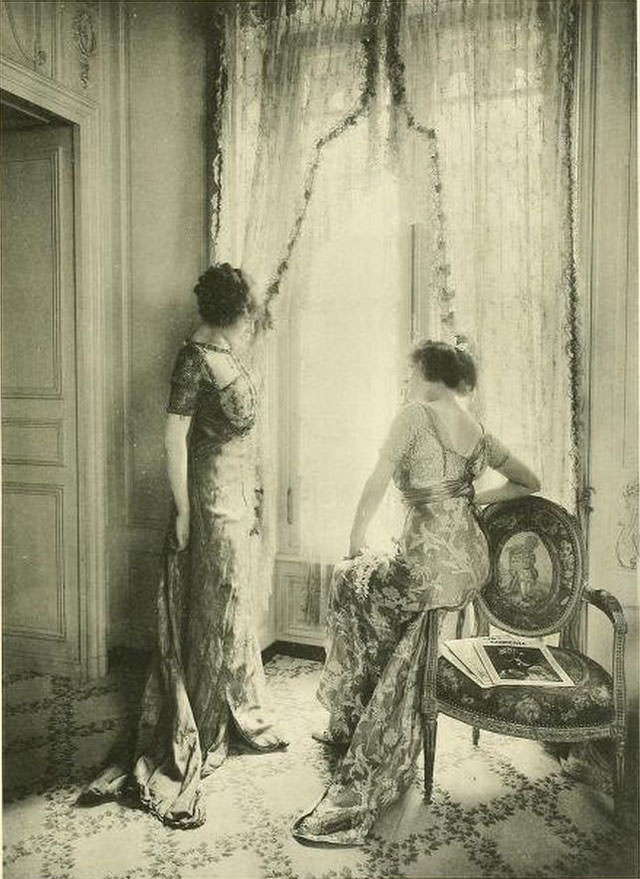
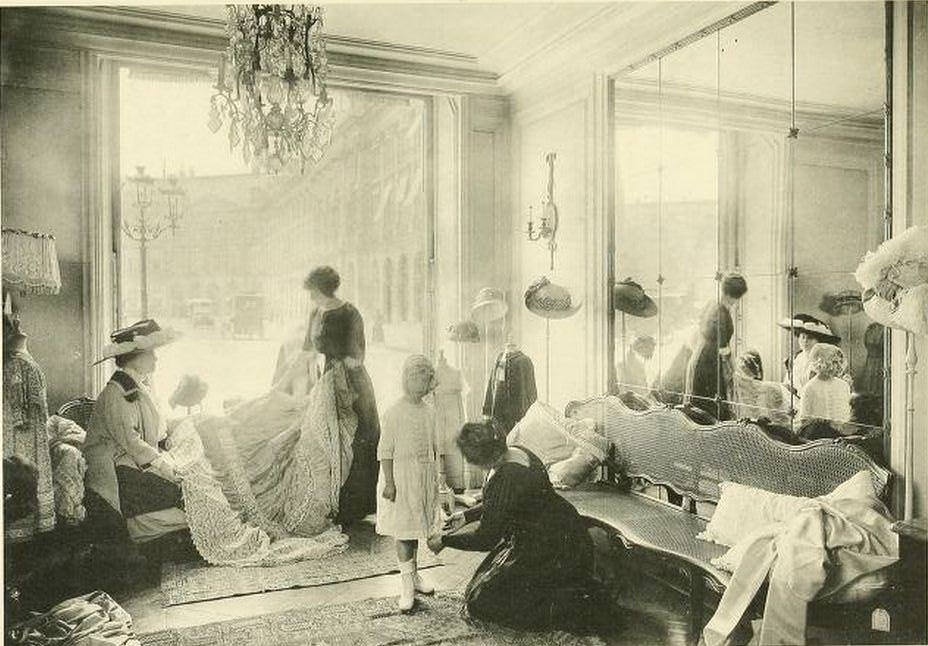
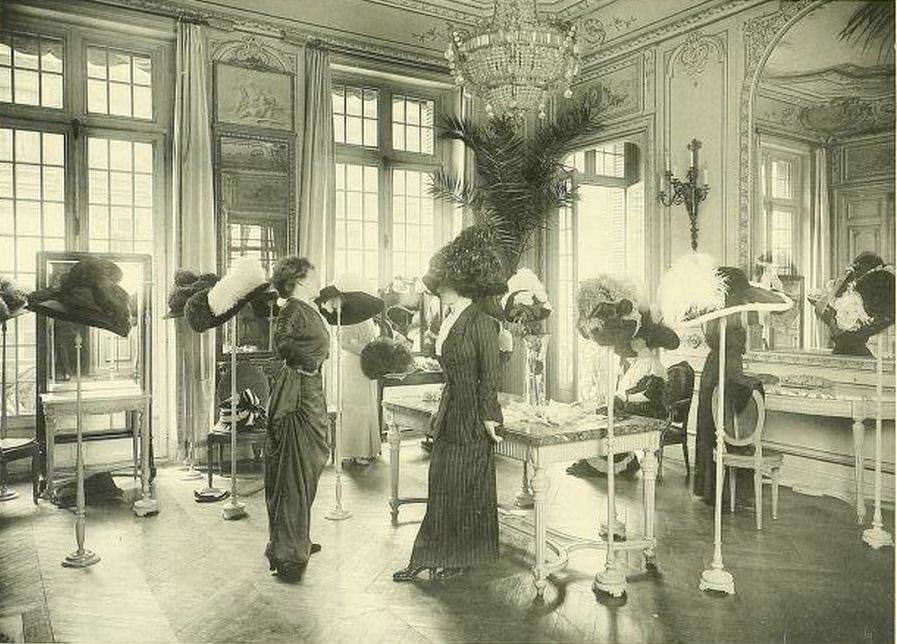
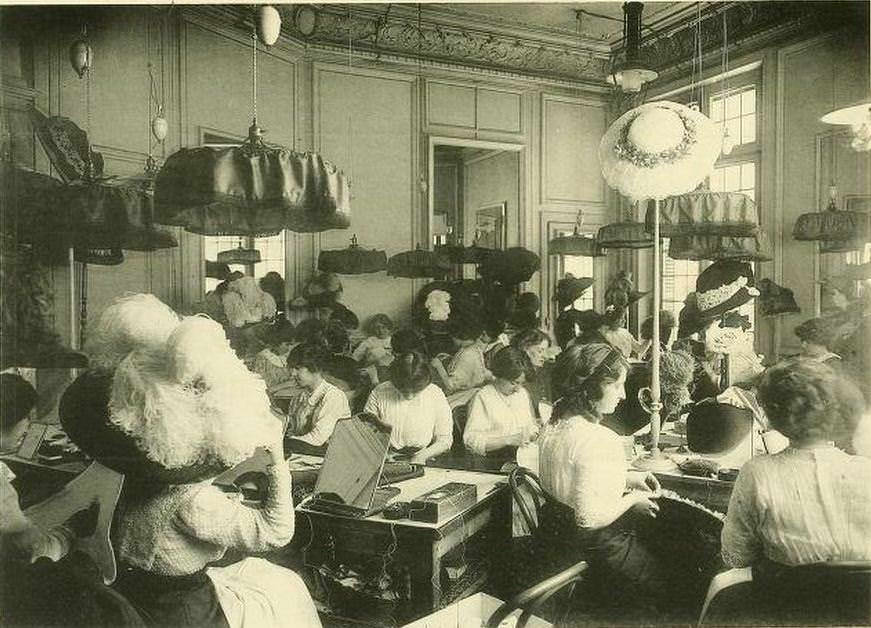
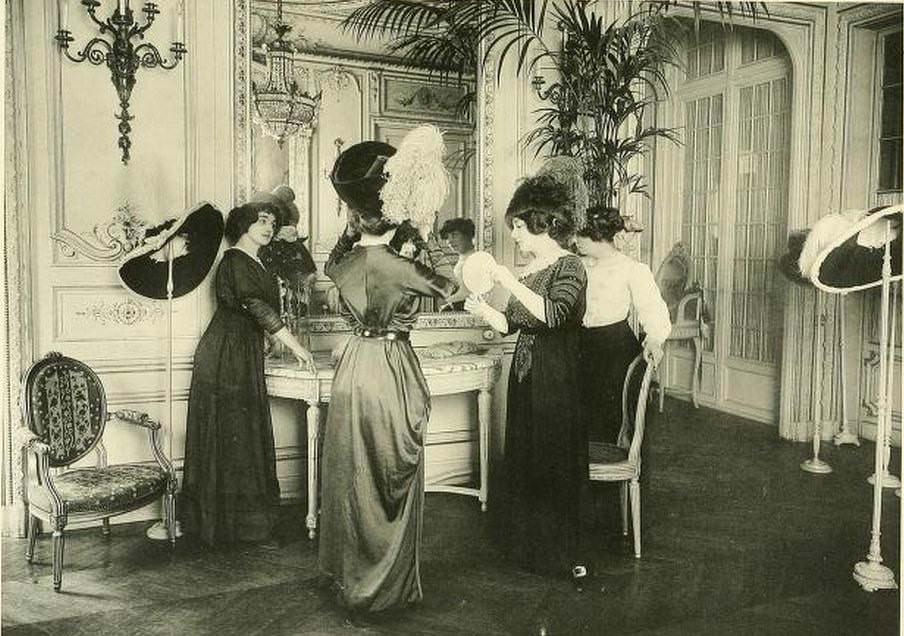
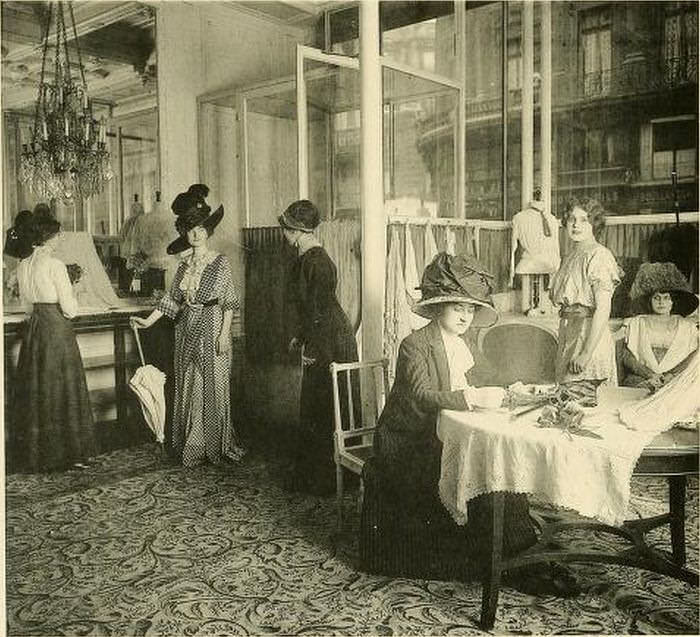
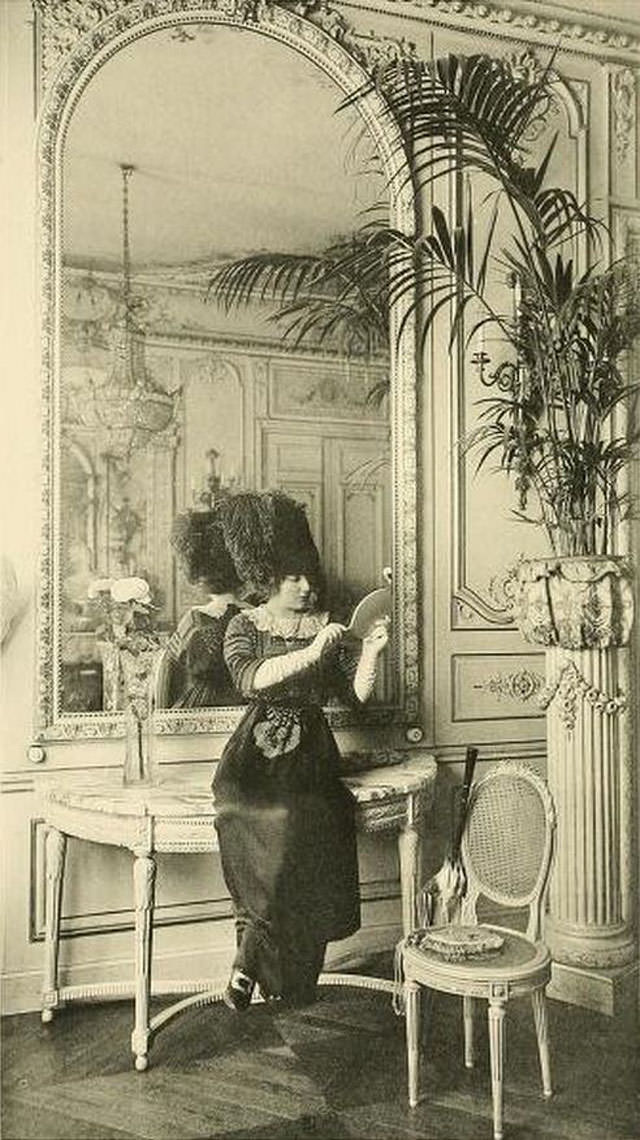
Hats were an essential part of any fashionable woman’s outfit. In the 1910s, hats grew to enormous sizes, wide-brimmed and piled high with feathers, flowers, and ribbons. A woman’s outfit was considered incomplete without one. Milliners — hat makers — were just as important to the fashion world as the dressmakers themselves.
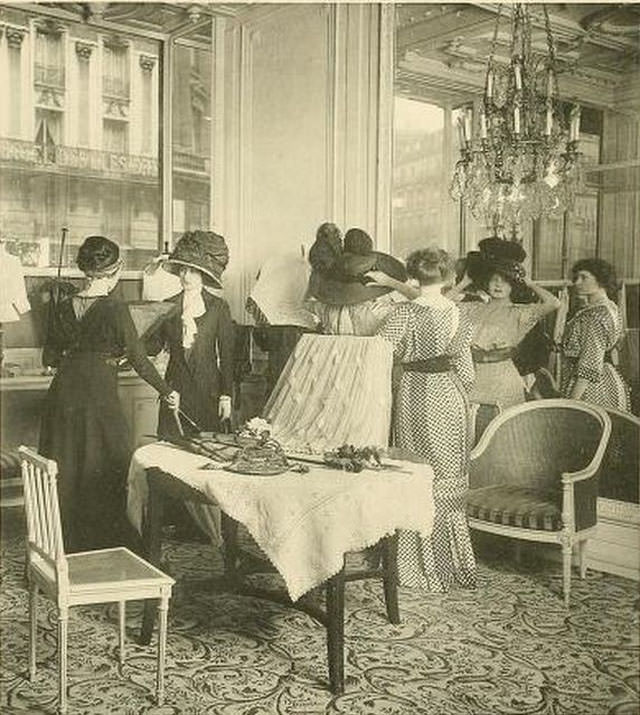
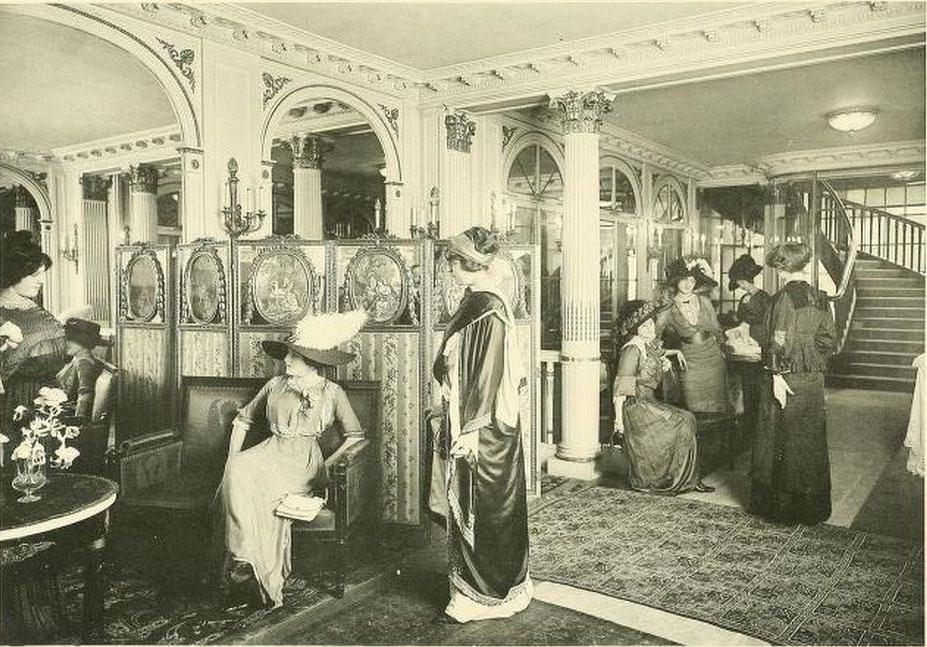
Photographs from inside these fashion houses are rare. Photography at the time was still a slow and somewhat cumbersome process. Cameras required careful setup, and the subjects had to hold still. That makes the surviving images from this period especially valuable. They offer a direct window into spaces that no longer exist in the same form.
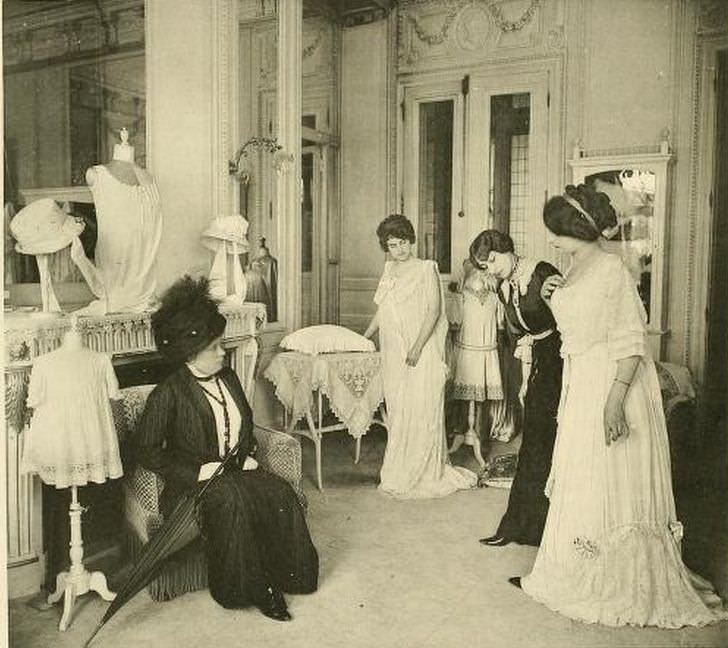
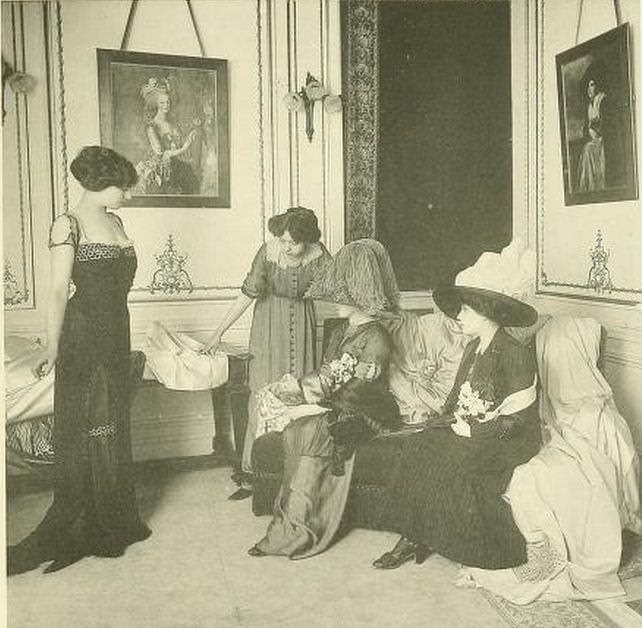
The women photographed in these settings were from the upper class. They were aristocrats, wives of industrialists, or prominent socialites. Fashion at this level was not about practicality. A woman might own dozens of gowns designated for specific occasions — morning wear, afternoon visiting dress, tea gowns, dinner gowns, and full evening dress. Each required its own accessories.
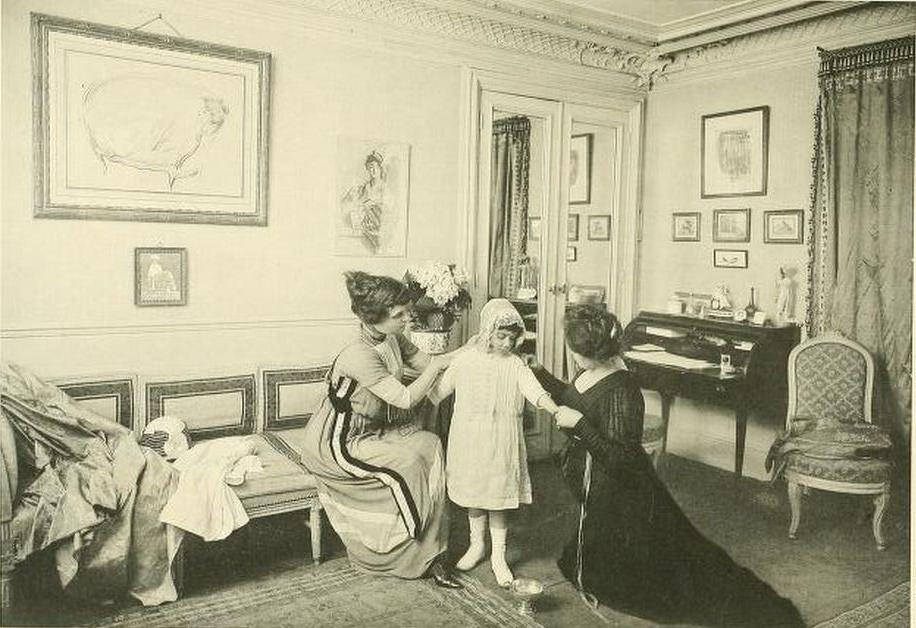
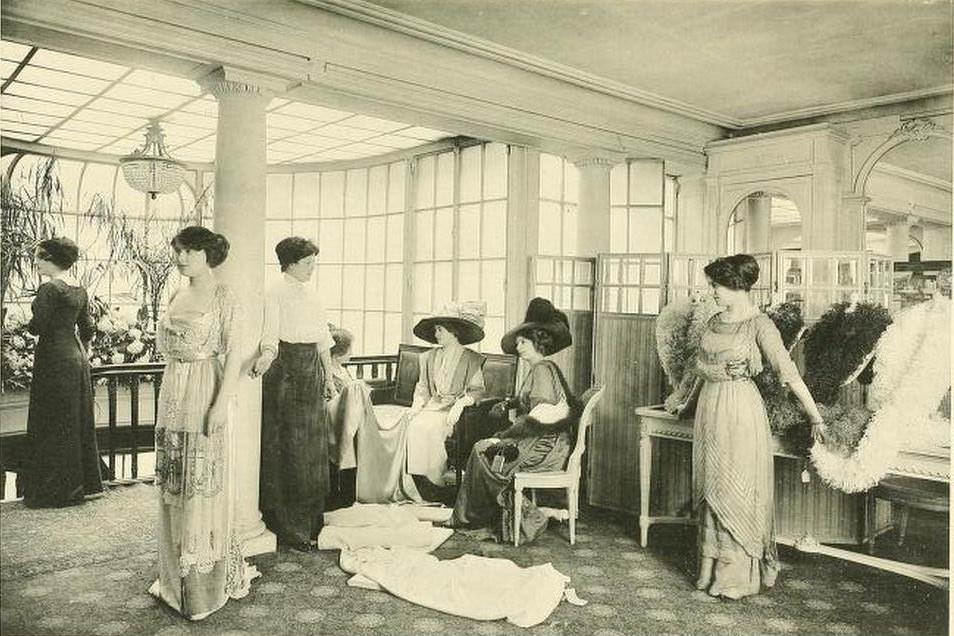
By the early 1910s, fashion was beginning to shift. Designers like Paul Poiret pushed back against the corset, introducing softer, more flowing silhouettes inspired by ancient Greek dress and Japanese kimono styles. His designs were controversial among traditionalists but popular with younger, more adventurous clients. The rigid Edwardian silhouette was loosening its grip.
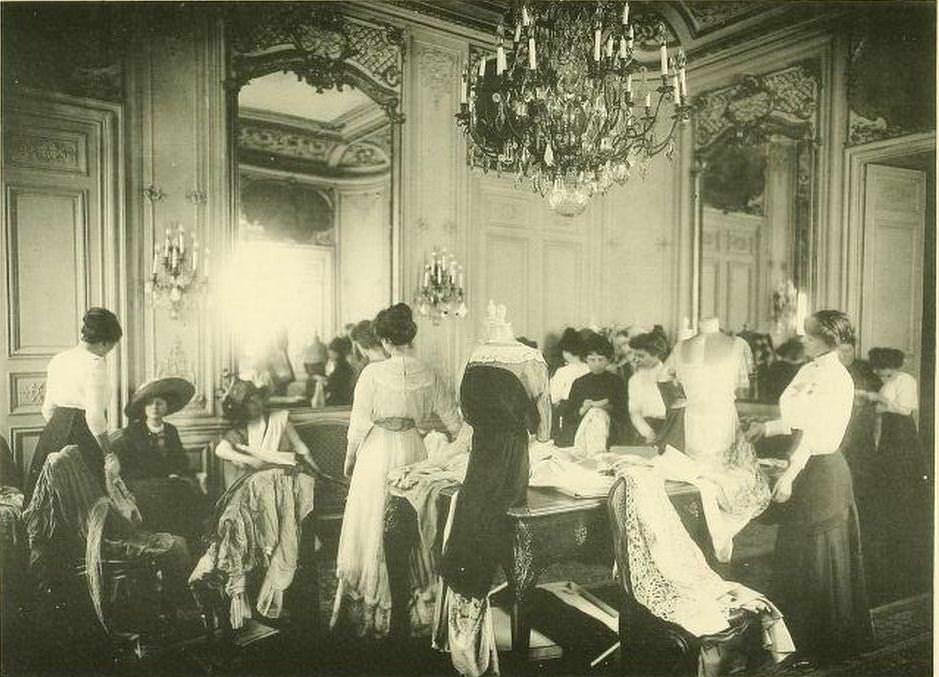
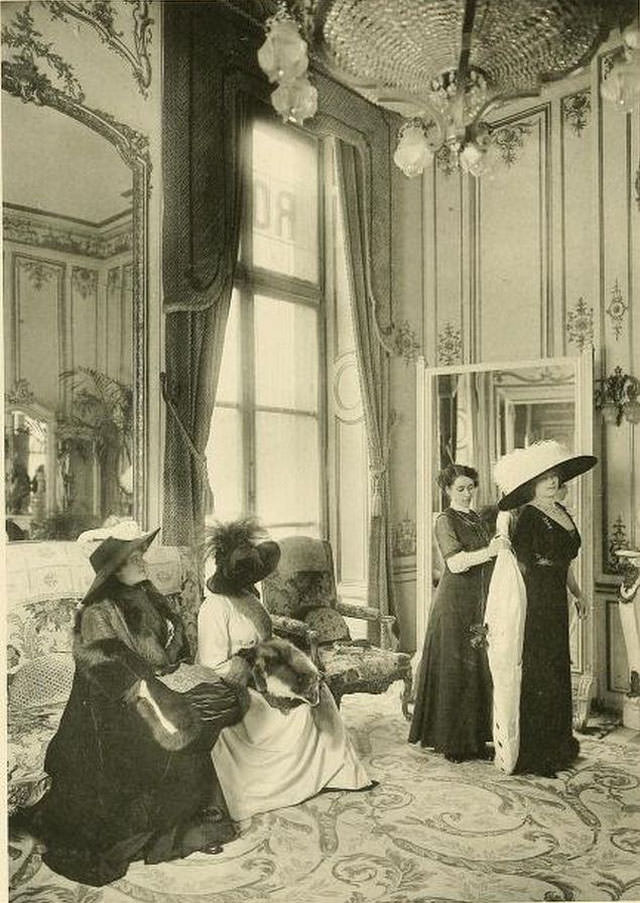
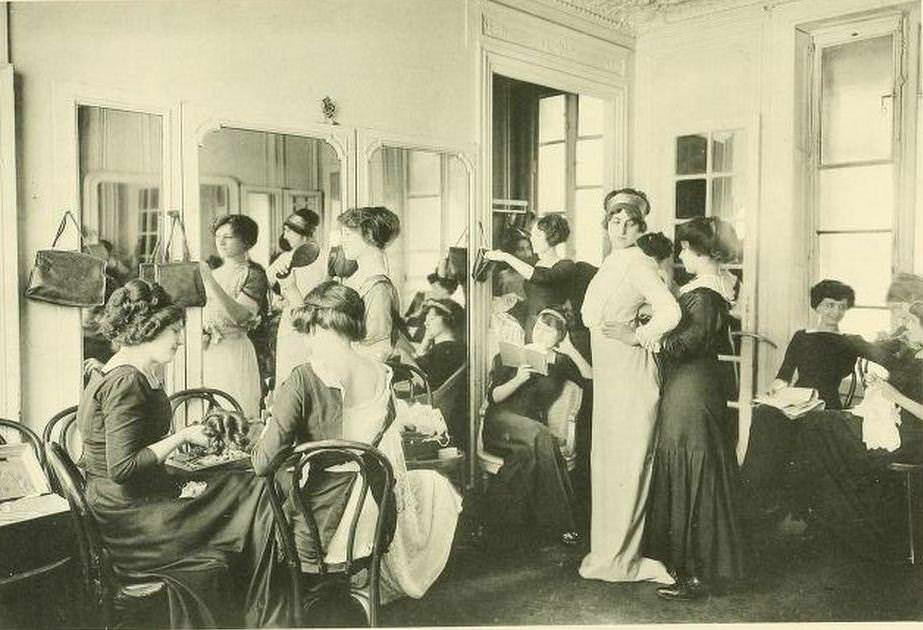
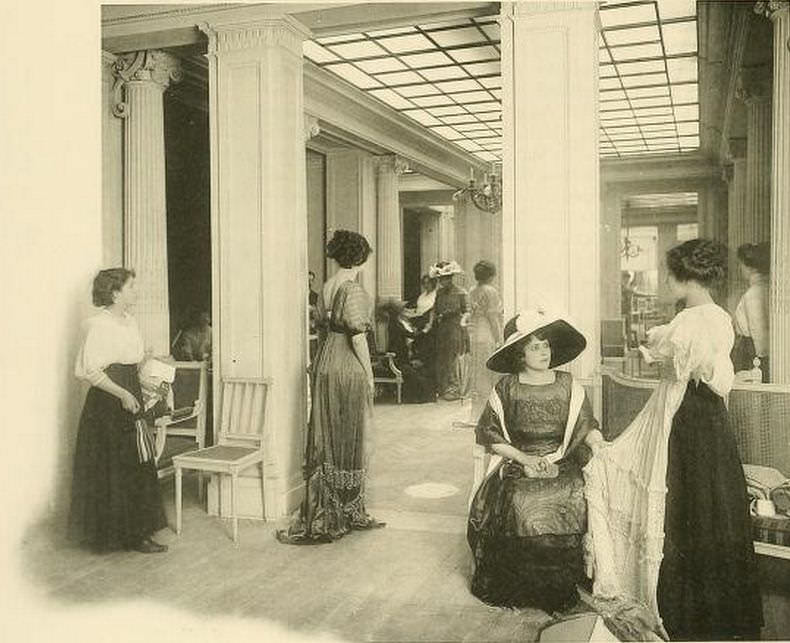
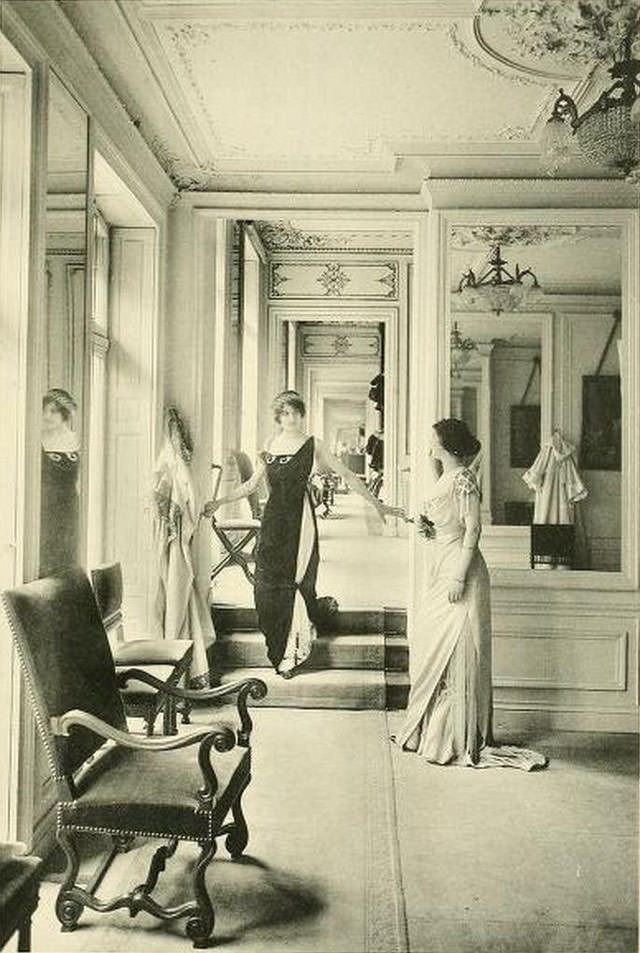
The fashion house was also a social space. Women came not only to order clothes but to see and be seen. The salons where fittings took place were elegant rooms, often furnished with gilt mirrors, upholstered chairs, and fresh flowers. Staff were trained to be discreet, attentive, and formal. The entire atmosphere was designed to make the client feel that she was receiving something exclusive.
Working conditions for the seamstresses who produced these luxurious garments were a stark contrast to the elegance on display. Many worked long hours in cramped back rooms or workshops, paid low wages for painstaking labor. The workers who hand-beaded a gown that sold for a small fortune earned a tiny fraction of its value.
Color in Edwardian fashion was rich and deliberate. Deep burgundies, forest greens, ivory, navy, and black were common for formal wear. Pastels — soft pinks, lilacs, and pale blues — appeared in afternoon and garden party dresses. Embellishment was applied with precision. A hem might be trimmed with hundreds of individually sewn pearls or jet beads.
Gloves were another required accessory. Short gloves for day wear and long white kid gloves reaching above the elbow for evening events were standard. A woman’s hands were rarely uncovered in formal settings. Parasols, fans, and handbags completed the ensemble and were often made to match the dress exactly.
Paris held its position as the global fashion authority in part because of its export trade. Fashion houses sold paper patterns and fabric samples to dressmakers across Europe, North America, and South America. Department stores in New York and London sent buyers to Paris each season to copy the latest styles and reproduce them at lower price points for middle-class consumers.
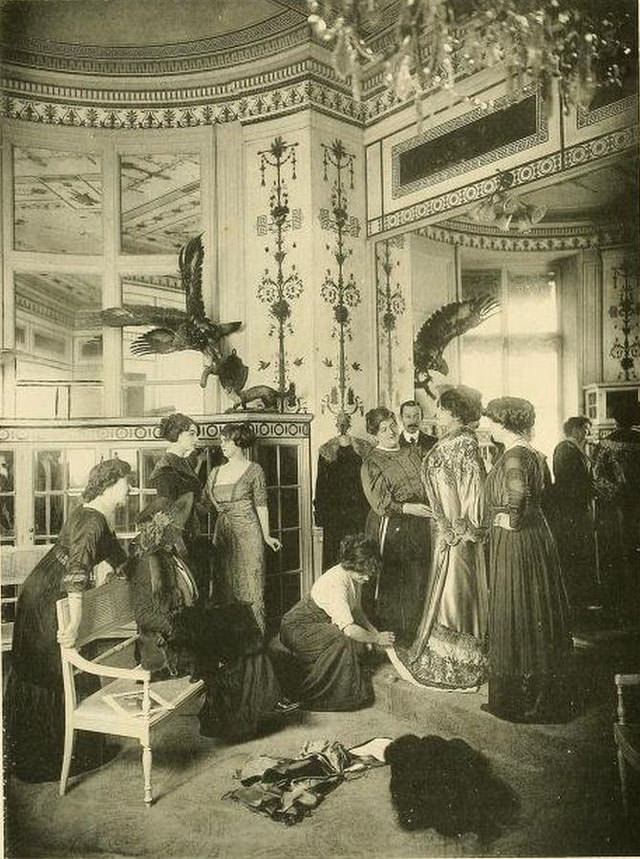
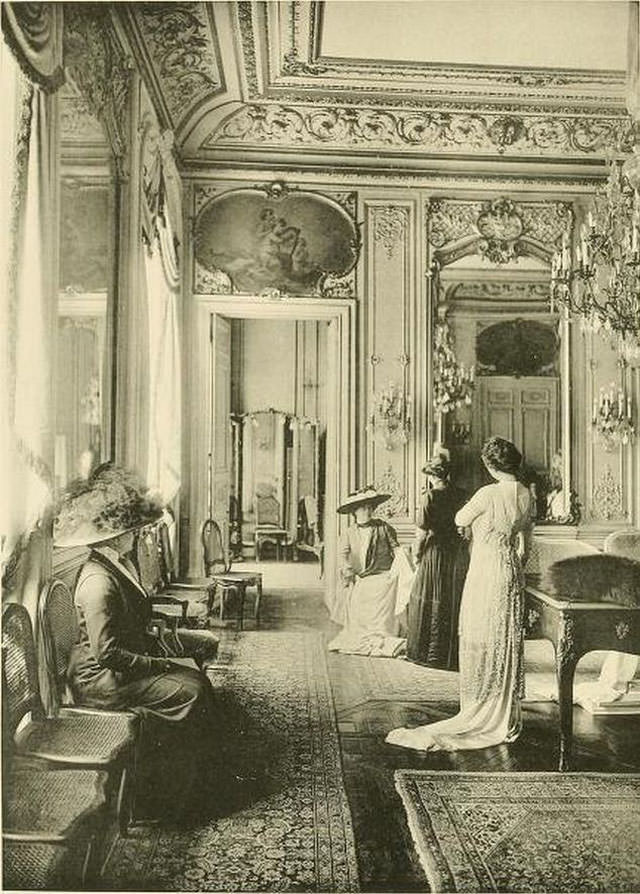
Fashion illustrations, published in magazines like La Gazette du Bon Ton and Les Modes, spread Parisian styles to a wide international audience. These publications were beautifully printed and treated as collector’s items. They depicted the latest designs from the top houses and were eagerly read by fashion-conscious women who would never set foot in Paris themselves.
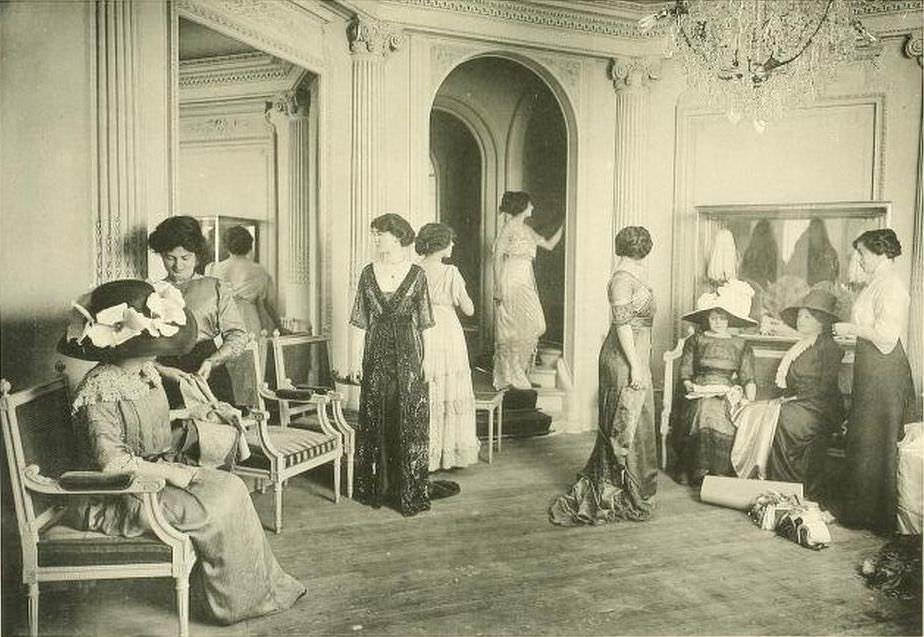
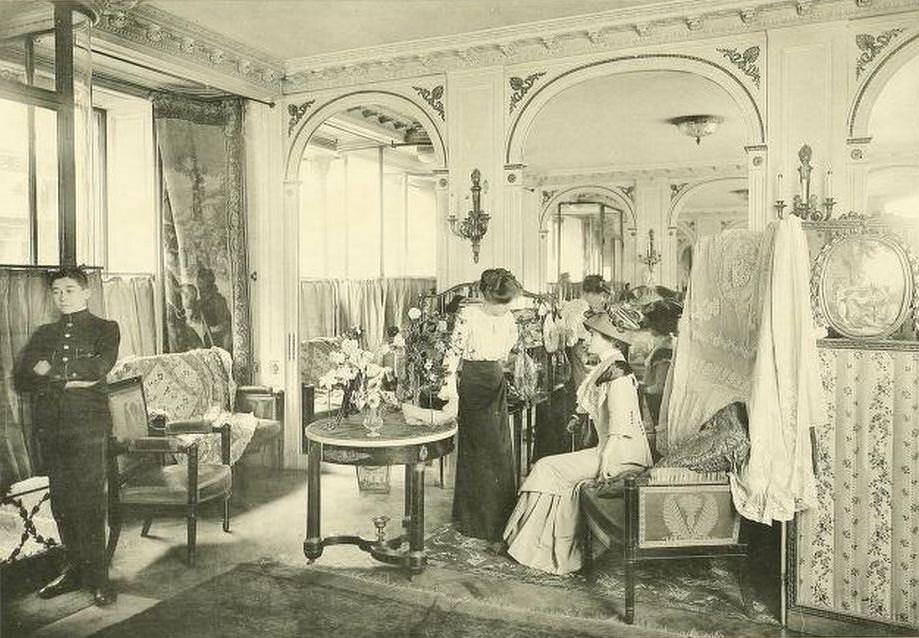
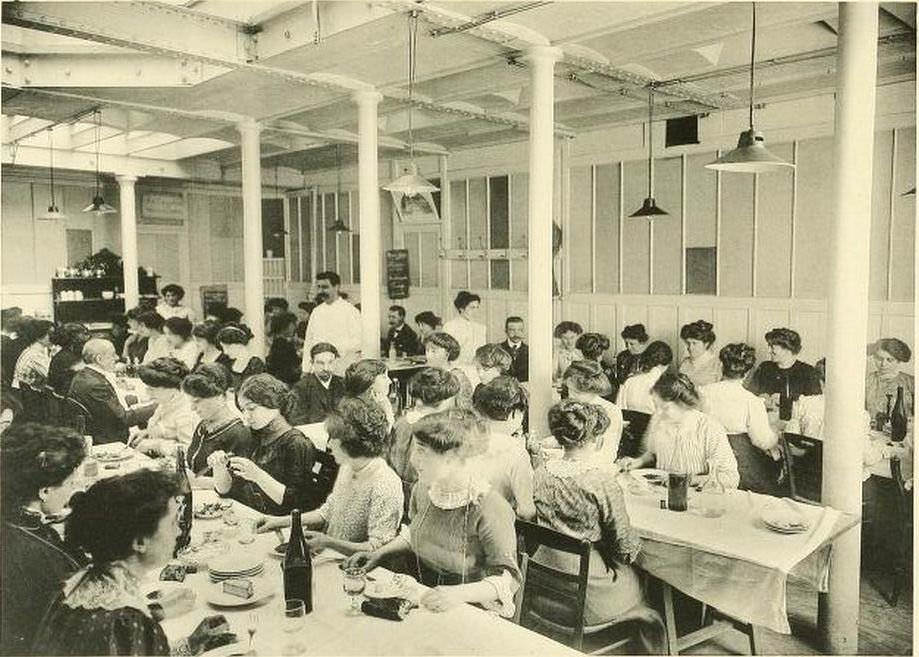
The tailor shops photographed in this collection show the range of the Paris fashion world. Some images capture the formal, posed atmosphere of a high-end fitting salon. Others show the more relaxed moment of a client examining fabric or consulting with a dressmaker. These candid glimpses are the most revealing, showing the genuine working relationship between client and craftsperson.
Men’s fashion houses also operated in Paris during this period, producing tailored suits, frock coats, and military dress uniforms. However, women’s fashion dominated the cultural conversation and generated the most business. The sheer number of garments an upper-class woman was expected to own ensured a steady stream of commissions for the top houses.
Shoes were crafted by specialist cobblers working alongside the fashion houses. Pointed-toe leather shoes with small heels were the standard silhouette of the early 1910s. Boots reaching above the ankle were popular for outdoor and country wear. Like every other element of a fashionable woman’s wardrobe, footwear was chosen to coordinate with the full outfit.
Jewelry worn by the women in these photographs would have included pieces set with diamonds, sapphires, rubies, and pearls. Long pearl necklaces were especially fashionable in the Edwardian era. Tiaras and hair ornaments were worn for evening events. Jewelry, like clothing, was carefully selected to match the occasion and signal social position.
World War I, which began in August 1914, brought significant changes to the fashion industry. Fabric rationing, labor shortages, and a shift in social priorities changed what women wore and how they obtained it. Many of the grand fashion houses scaled back dramatically. The elaborate, hand-crafted excess of the pre-war years was replaced by simpler, more practical designs suited to a world at war.
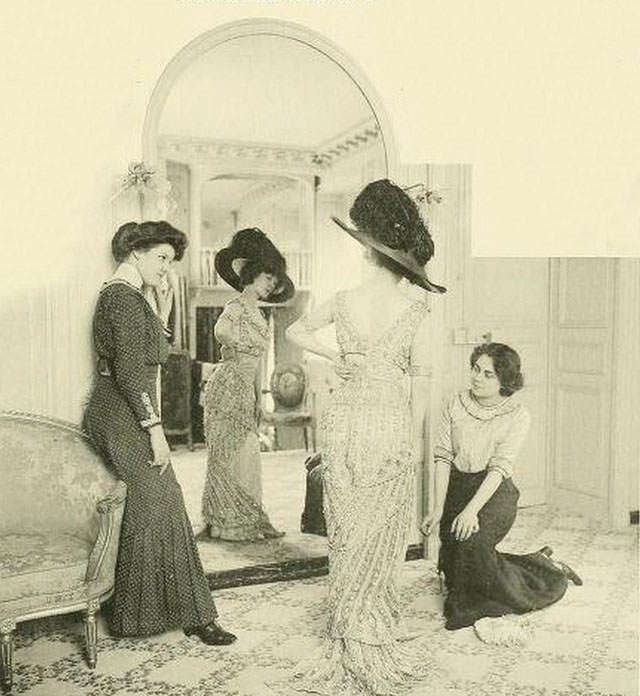
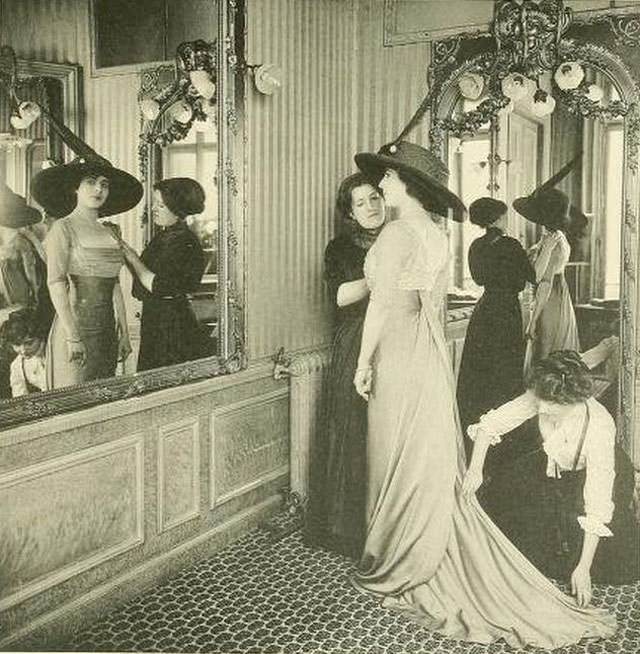
These photographs preserve a very specific moment — the final years of the Belle Époque, when Paris fashion was at its most elaborate and the couture house was at the height of its social importance. The women pictured had access to a world of craft and luxury that was about to be fundamentally altered by global conflict.
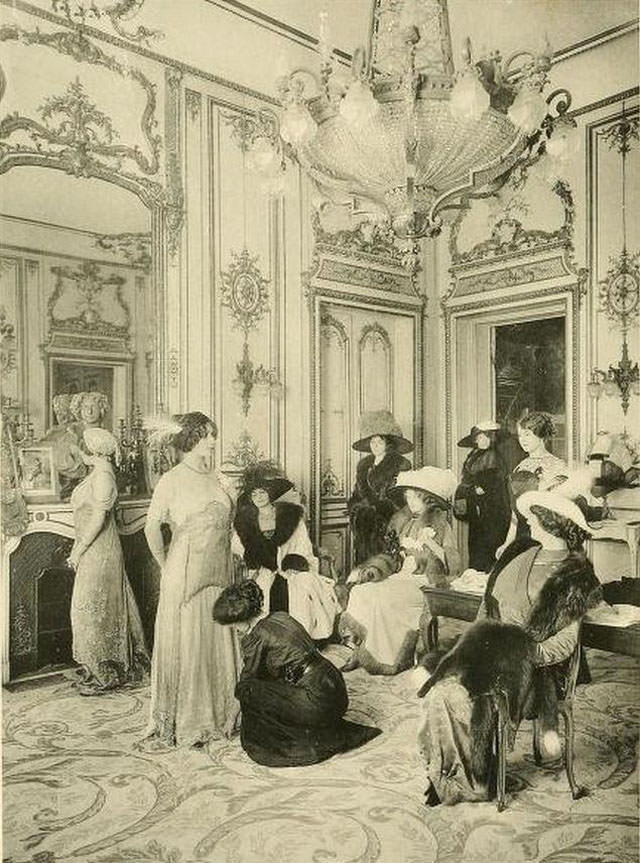
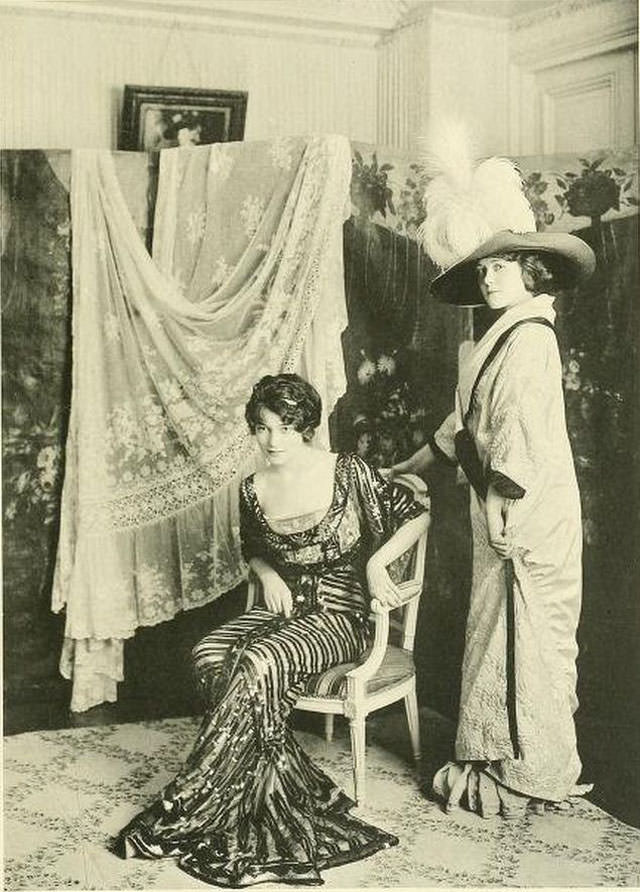
Each image in this collection is a document of daily life among Paris’s fashionable elite. The rooms, the garments, the poses, the faces — all of it records a culture that invested enormous time, money, and skill into the art of dressing well. These are not simply pictures of clothing. They are photographs of a way of life that defined an era.