Pontiac began as a practical business decision inside General Motors. Edward Murphy, a horse-drawn carriage manufacturer based in Pontiac, Michigan, founded the brand in 1907. GM originally launched Pontiac as a companion car to its more expensive Oakland line — a way to offer buyers something affordable without undercutting the luxury brands higher up the ladder. By 1933, Pontiac had grown so popular that it overtook Oakland entirely and replaced it. From that point on, Pontiac sat just above Chevrolet in GM’s five-division hierarchy, below Oldsmobile, Buick, and Cadillac, and was sold across the United States, Canada, and Mexico.
The brand’s personality sharpened considerably in 1959, when its marketing shifted from selling a car to selling a lifestyle. Pontiac pushed its “Wide Track” design as a performance identity, billing itself as the division that “built excitement.” That reputation stuck for decades. But in 2008, amid serious financial trouble and a company-wide restructuring, GM announced Pontiac would follow the same path as Oakland and Oldsmobile before it. The last Pontiac-badged vehicle rolled off the line in January 2010. When dealer franchise agreements expired on October 31, 2010, GM moved forward with just four North American brands: Chevrolet, Buick, Cadillac, and GMC.
What survives today in the form of family photographs tells a different story — one not of corporate strategy, but of real people in real moments, standing proudly beside their Pontiacs. The images below, drawn from the 1920s through the 1950s, capture the brand at street level: picnics in the country, winter drives, suburban driveways, and mountain roads. Each photo is a small window into how ordinary Americans — and a surprising number of Europeans — lived alongside these machines.
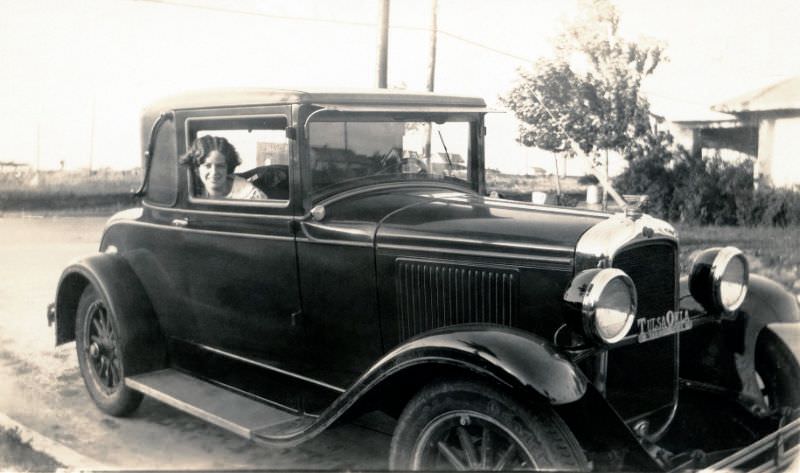
A sign reading “Tulsa Okla – The Magic City” can be seen attached to the car’s tie bar, 1928
By the late 1920s, Pontiac was still a young brand finding its footing. The 1928 Landau Coupe was an early example of the style GM wanted Pontiac to project — accessible but polished. Tulsa, Oklahoma, was booming at the time thanks to the oil industry, earning it the nickname “The Magic City.” The sign attached to the car’s tie bar connects the photograph directly to that era of American optimism.
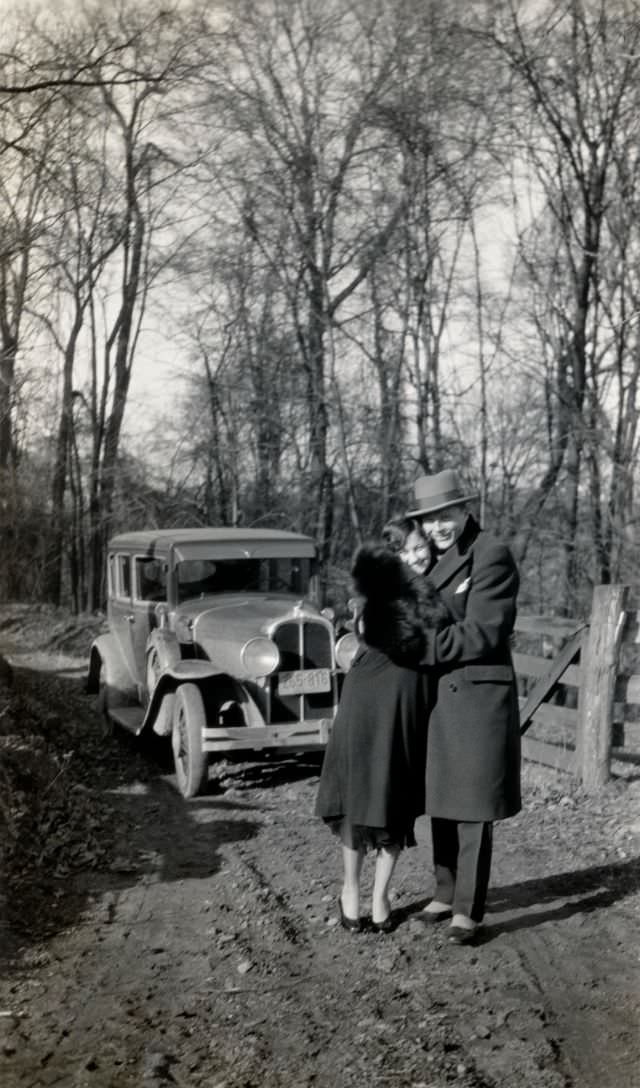
The 1929 model year arrived just as the American economy was about to collapse. Photos like this one — a couple in good spirits on a rural driveway — capture the last months before the Great Depression reshaped the country. Pontiac’s affordability would prove to be one of its strengths through the lean years ahead.
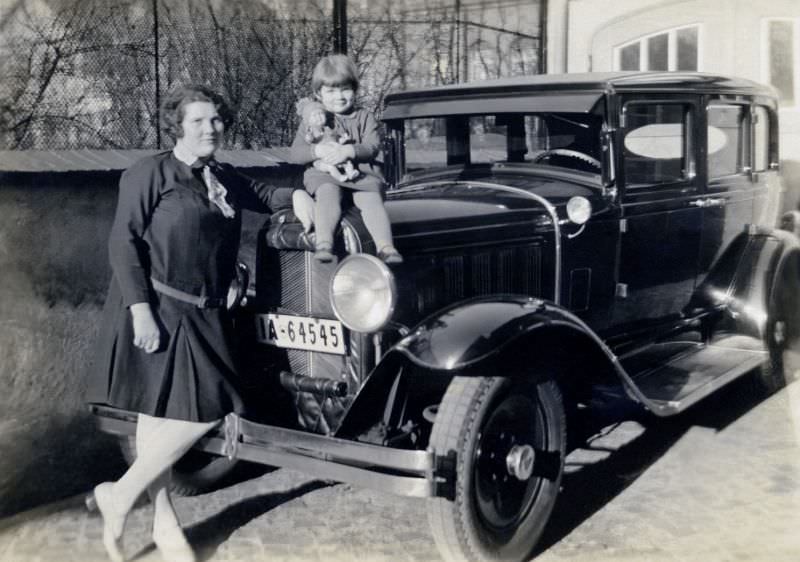
The car is equipped with a radiator grille cover for winter driving and registered in the city of Berlin, 1930
This photograph was taken in Berlin in 1930, showing that Pontiac’s reach extended well beyond North America by the start of the decade. The radiator grille cover fitted to this 1929 model was a common cold-weather modification in Europe, where winters were harsh and engine protection was a practical necessity.
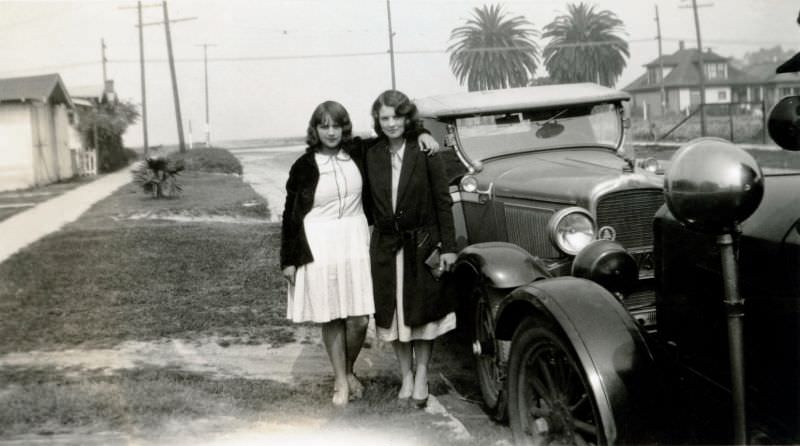
The palm trees in the background suggest that the location could be somewhere in Southern California, 1930
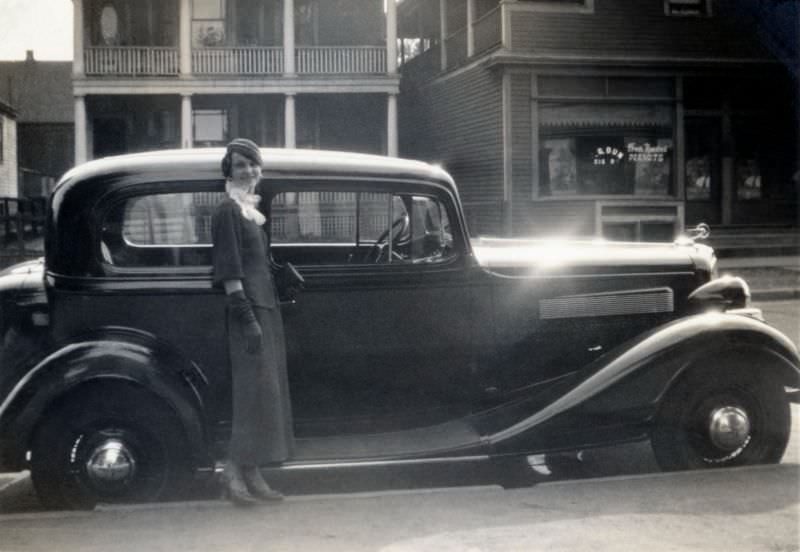
The 1934 Pontiac Economy Eight Sedan was introduced during some of the hardest years of the Great Depression. Pontiac leaned into the word “economy” deliberately — the car offered an eight-cylinder engine at a price point buyers could still reach. The woman in this photo dressed the part of refinement, suggesting that even during difficult times, Pontiac owners held on to a sense of occasion.
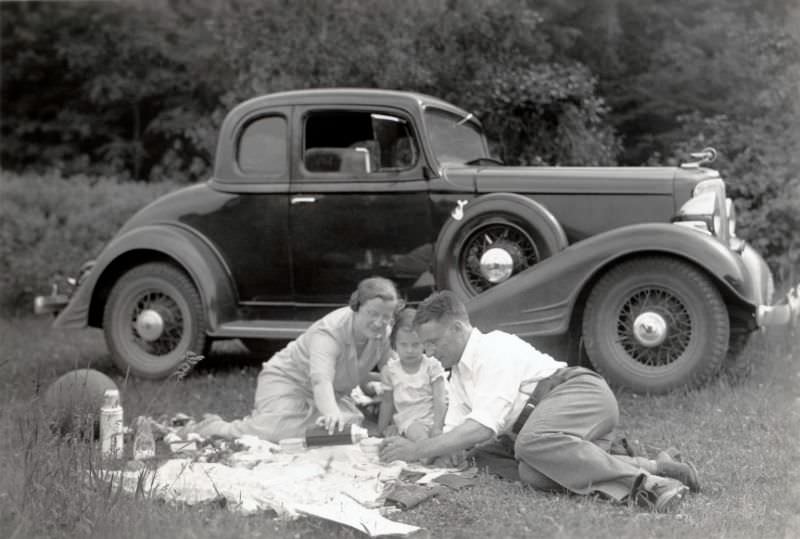
A 1933 Pontiac Eight Coupe can be seen in the background.
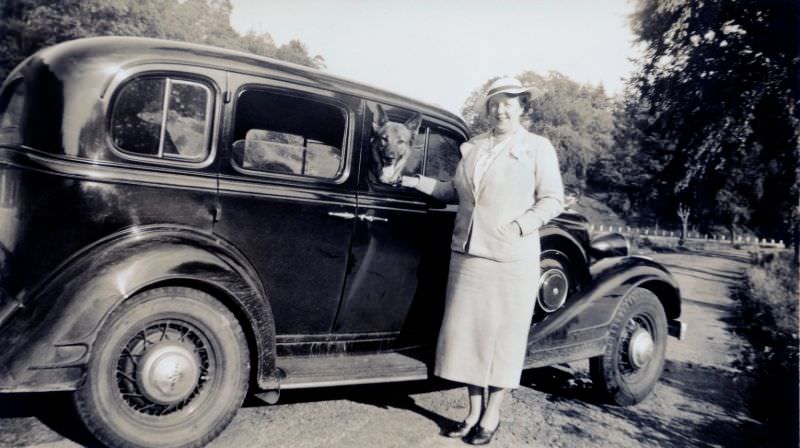
The words “Canada, 6. September 35” are handwritten on reverse, September 6, 1935
By the mid-1930s, Pontiac had established itself firmly in Canada, one of its three primary markets. A country drive with a dog in tow was the kind of relaxed, everyday scene that defined how owners actually used these cars. The handwritten notes on the backs of these prints — dates, places, names — give researchers a precise record that polished advertisements never could.
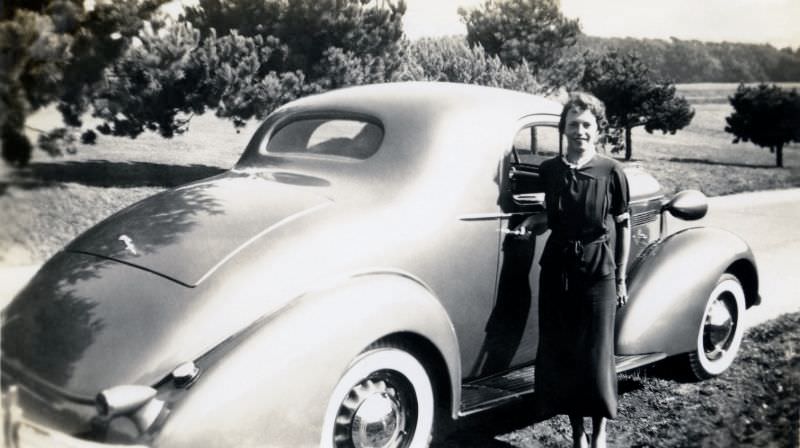
The 1936 model year was a significant one for Pontiac. The brand released several variants that year, and the photos from this period reflect the pride owners took in their vehicles. Women appear frequently as the central subjects in these snapshots — often posed deliberately beside the car, just as men were, treating the automobile as a personal statement.
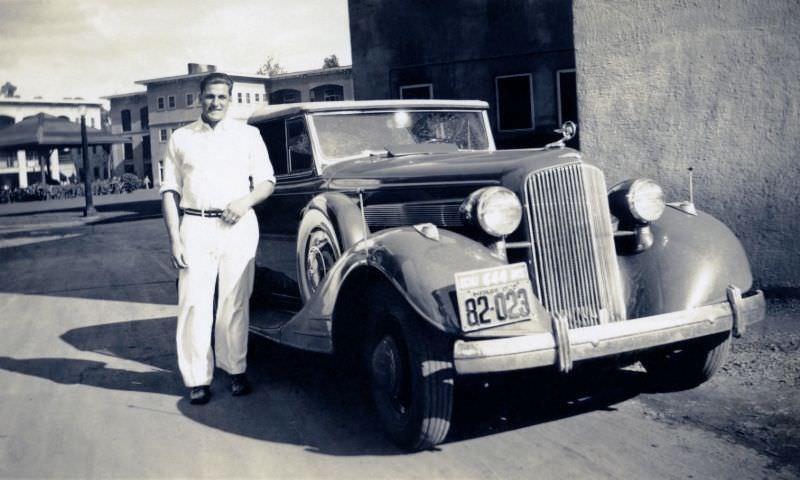
The car is registered in the Territory of Hawaii, 1936
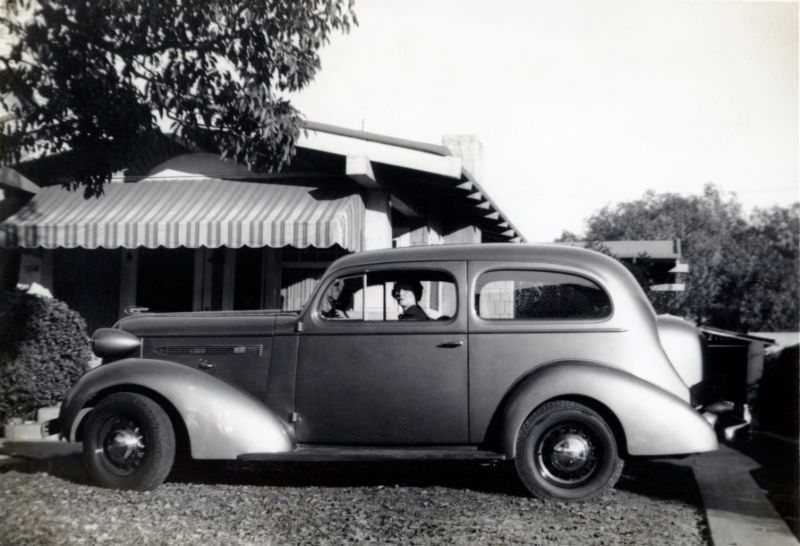
In the background, a single-story house with a striped awning can be seen, 1936
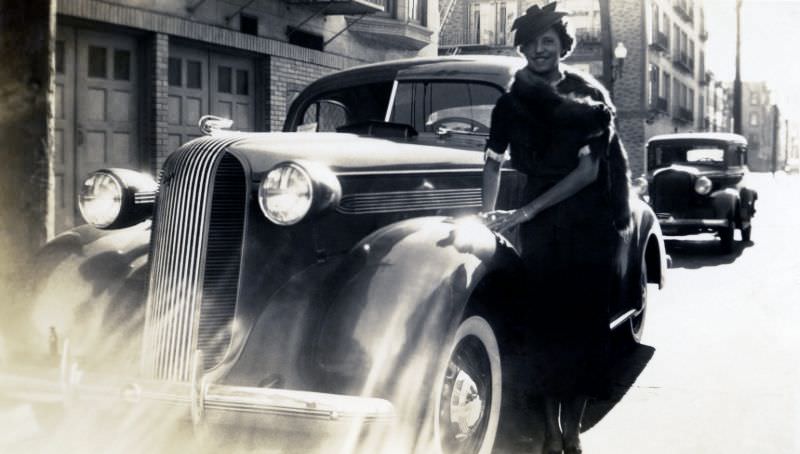
The shiny automobile is equipped with whitewall tires, 1936
Whitewall tires were a status symbol in the 1930s — a small but visible luxury. The contre-jour lighting in this photograph, with the light source behind the subject, gives the image an almost cinematic quality. Whether this was intentional or accidental, the result is one of the more striking images in this collection.
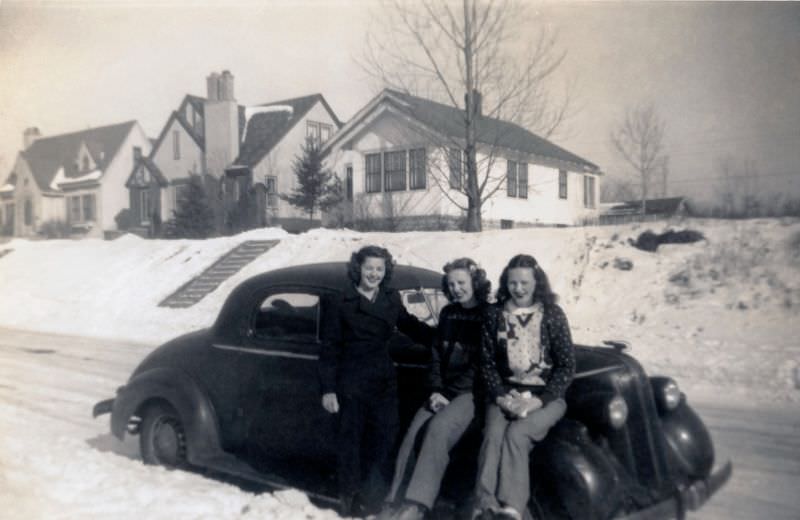
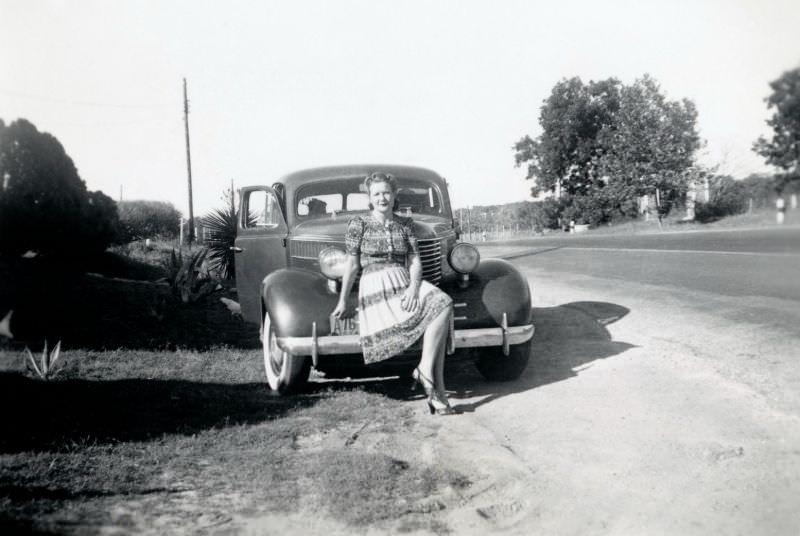
The car is registered in the state of Texas, 1938
The late 1930s brought a rounder, more streamlined look to American automobiles, and Pontiac kept pace with the trend. The 1938 Six was a practical, widely sold model. Texas plates on a country road in summer is about as American a setting as these photos get — straightforward and unposed in its composition, which is exactly what makes it feel genuine.
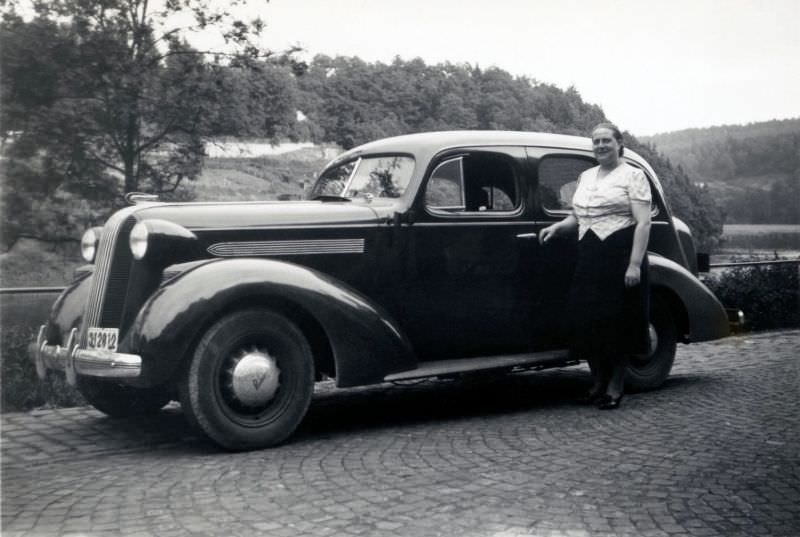
The words “Bouillon, Juillet 38” are handwritten on reverse. The American sedan is registered with Belgian number plates, July 1938
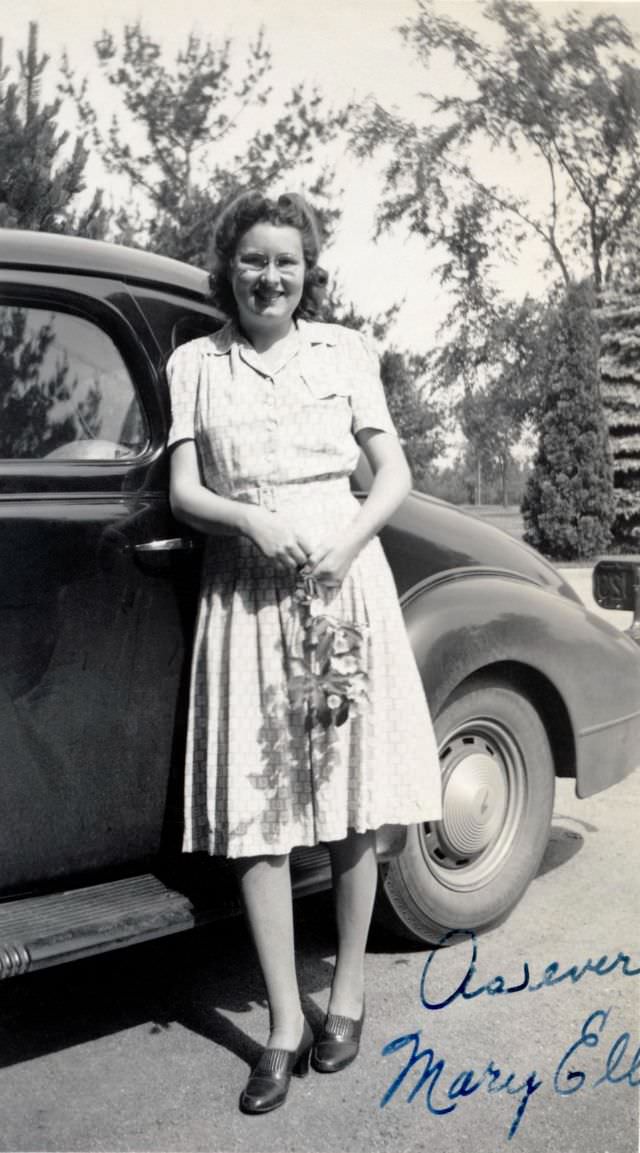
The words “As ever Mary Ellen” are handwritten on the bottom of the print, 1938
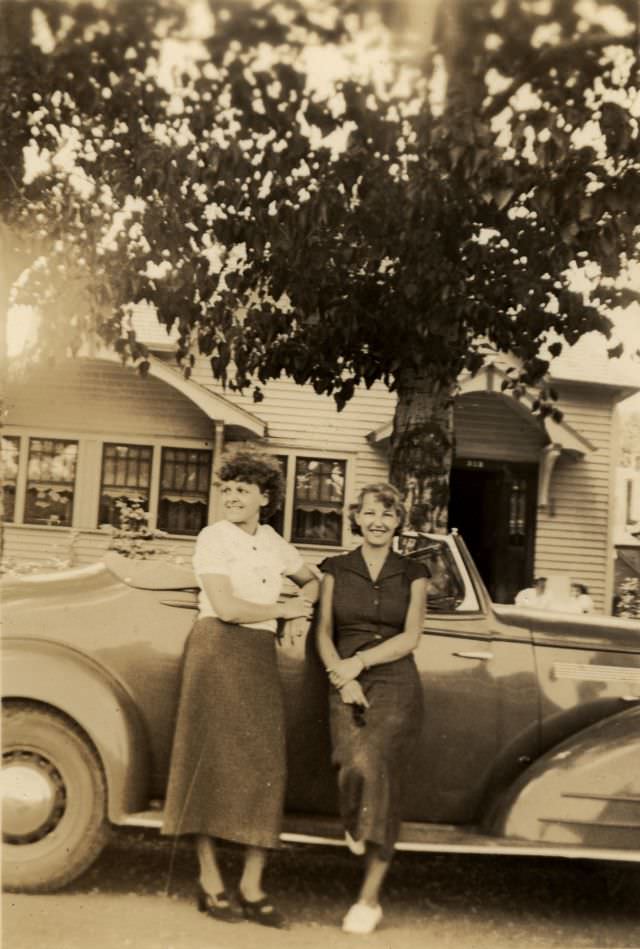
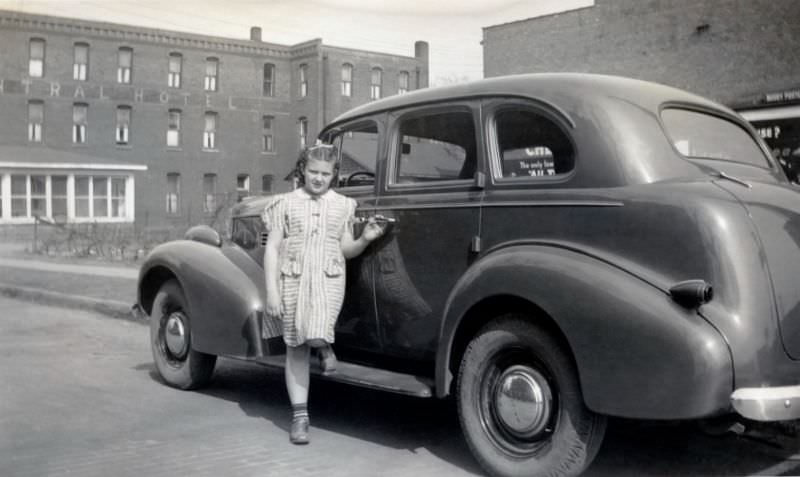
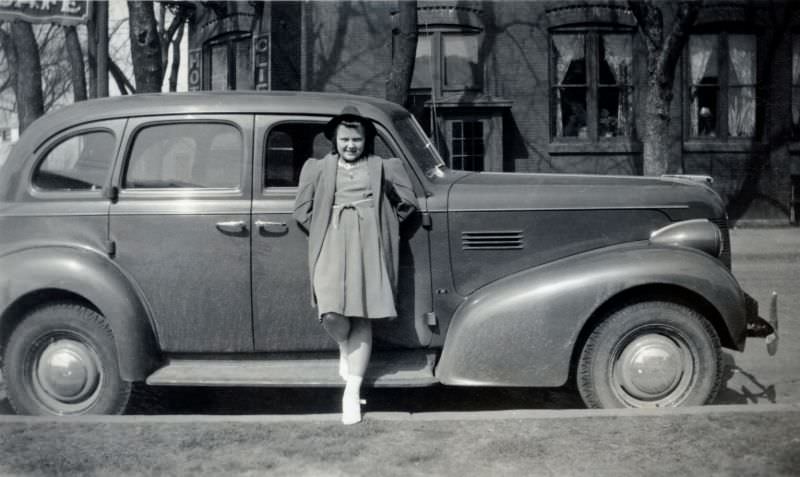
The lettering on the brick building in the background reads “Central Hotel”, 1939
Running boards — the narrow step platforms along the lower sides of the car — were still common on sedans in 1939, though they were beginning to disappear from newer designs. For children and teenagers, they doubled as a convenient perch for photographs. The Central Hotel visible in the background places this image in a small American town, the kind of Main Street setting that Pontiac’s marketing understood well.
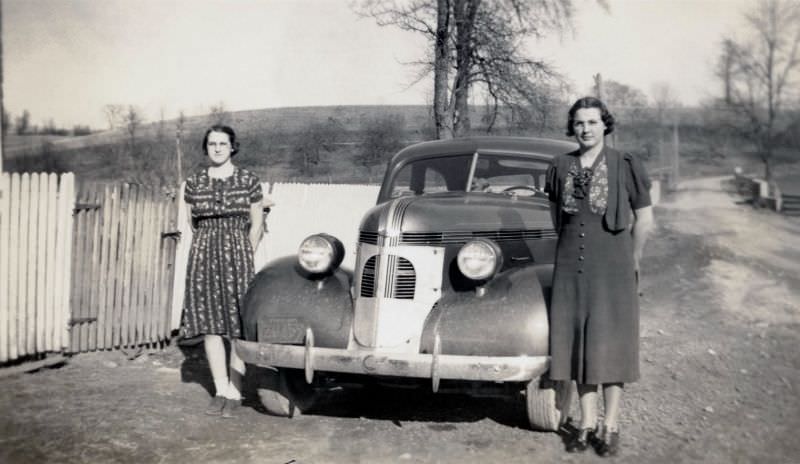
The car is equipped with a radiator grille cover and registered in the state of Pennsylvania, March 23, 1939
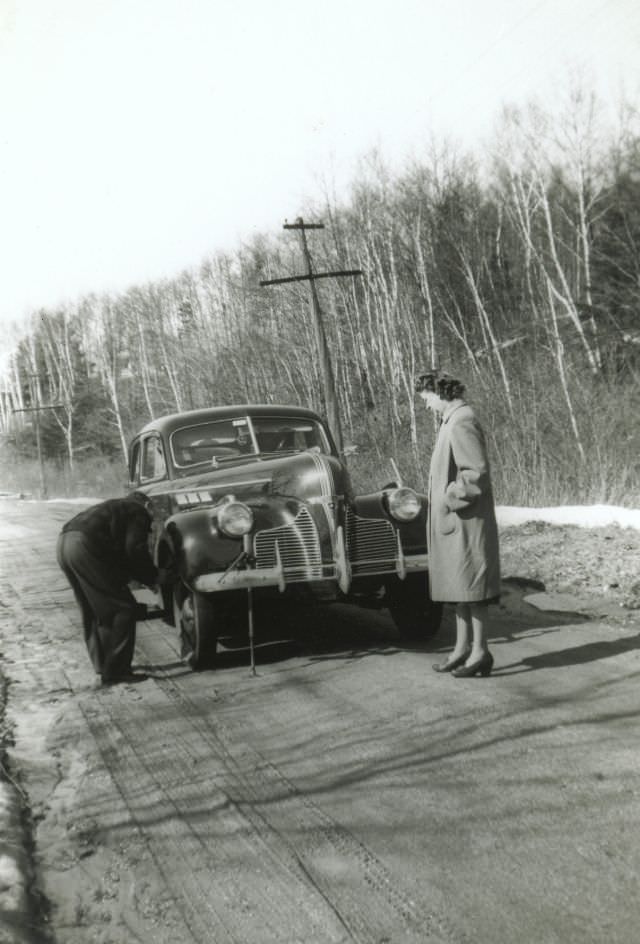
The location is a dirt road somewhere in rural America on a sunny day in early spring, 1940
Not every photograph in a family album was posed. This roadside tire change on a dirt road in early spring 1940 is one of the most candid images in the collection. It documents a common reality of car ownership in the era — unpaved roads, unreliable tires, and the expectation that drivers handled their own repairs on the spot.
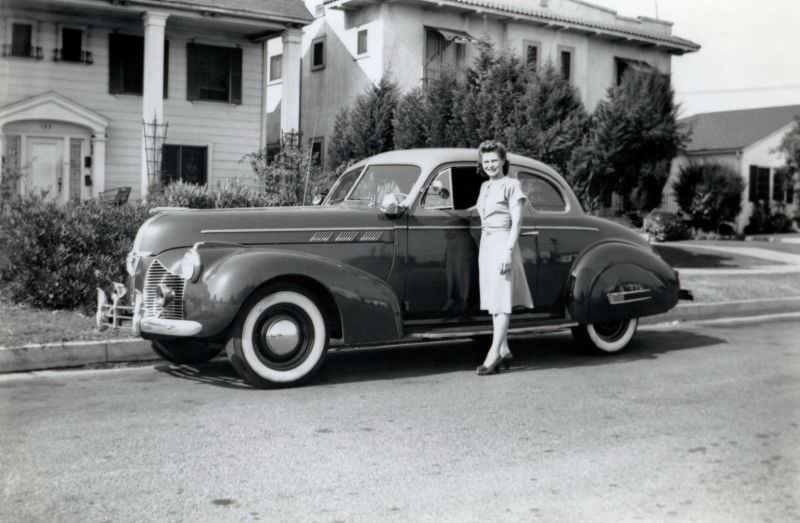
The 1940 Pontiac Torpedo was one of the brand’s most stylish offerings of the era, featuring a fastback roofline and a sleeker overall shape compared to earlier models. The Sport Coupe variant was aimed squarely at buyers who wanted something with a bit more flair. These were sold in large numbers before wartime production restrictions halted civilian automobile manufacturing.
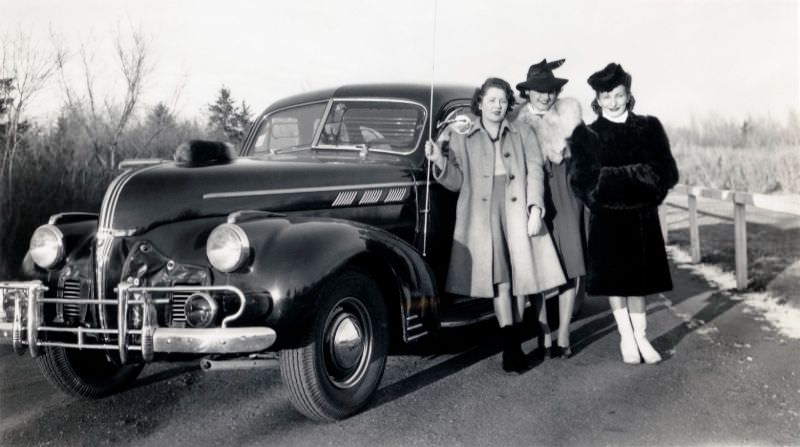
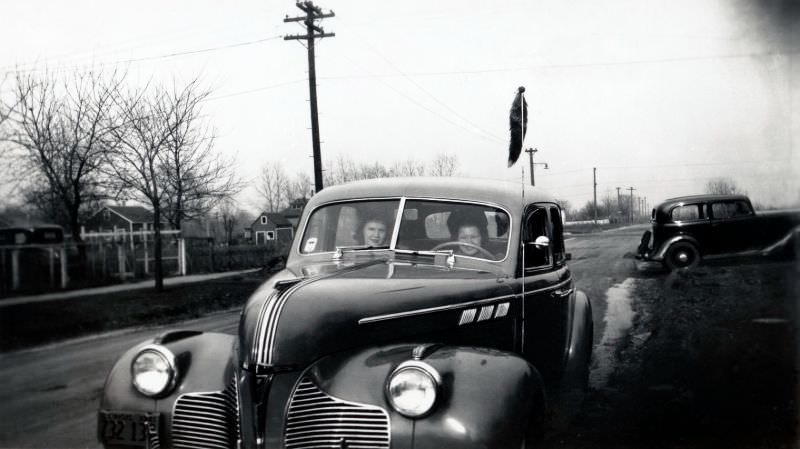
The Pontiac is registered in the state of Illinois with 1941 license plates, 1941
Illinois plates with a 1941 registration on a 1940 model is a detail worth noting — it confirms the car was still in active use shortly after purchase, driven through winter conditions on country roads. Interior shots like this one are relatively rare in the collection, making this photograph a useful record of what cabin life looked like at the time.
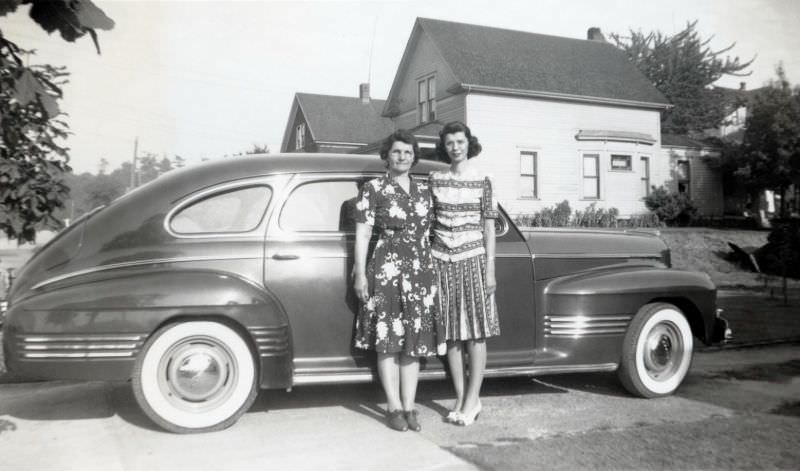
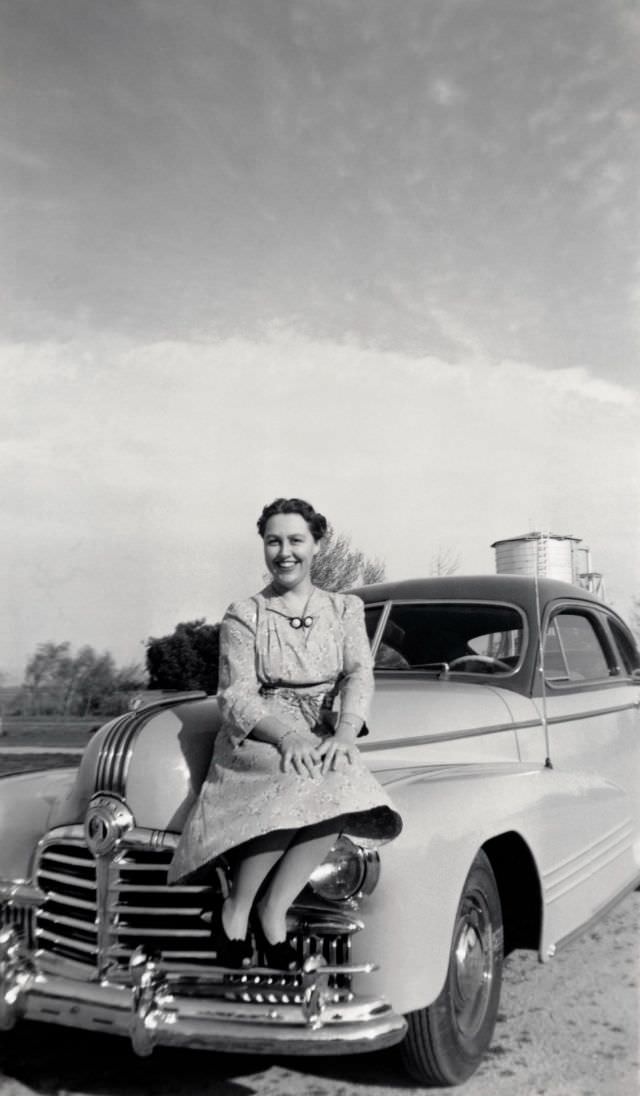
The location looks like a farmyard, somewhere in rural America, 1942
The 1942 model year was Pontiac’s last before the U.S. government ordered all civilian automobile production to stop, redirecting factory output toward the war effort. Only a partial year’s worth of 1942 models were ever built. This farmyard photograph, taken the same year, captures one of those rare vehicles in use almost immediately after it left the factory.
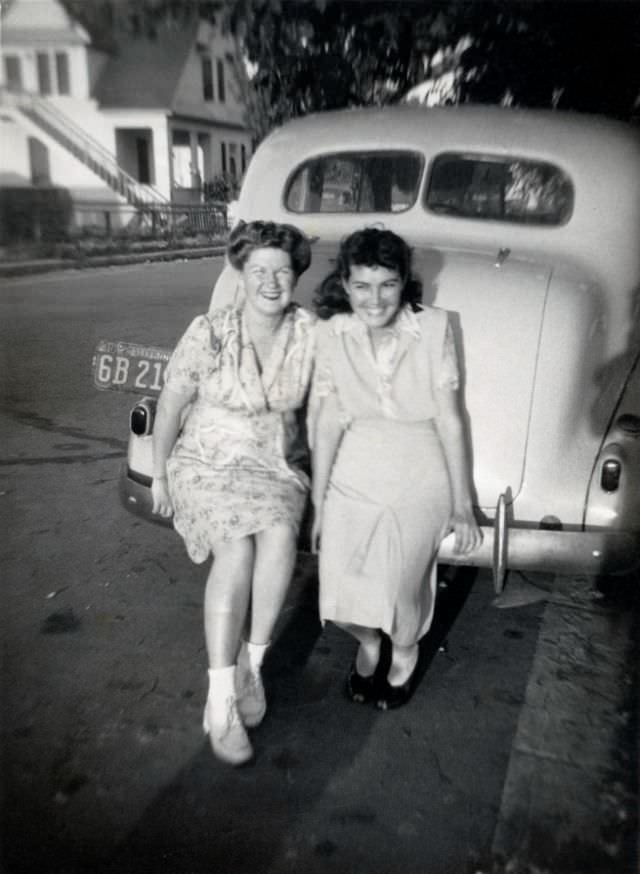
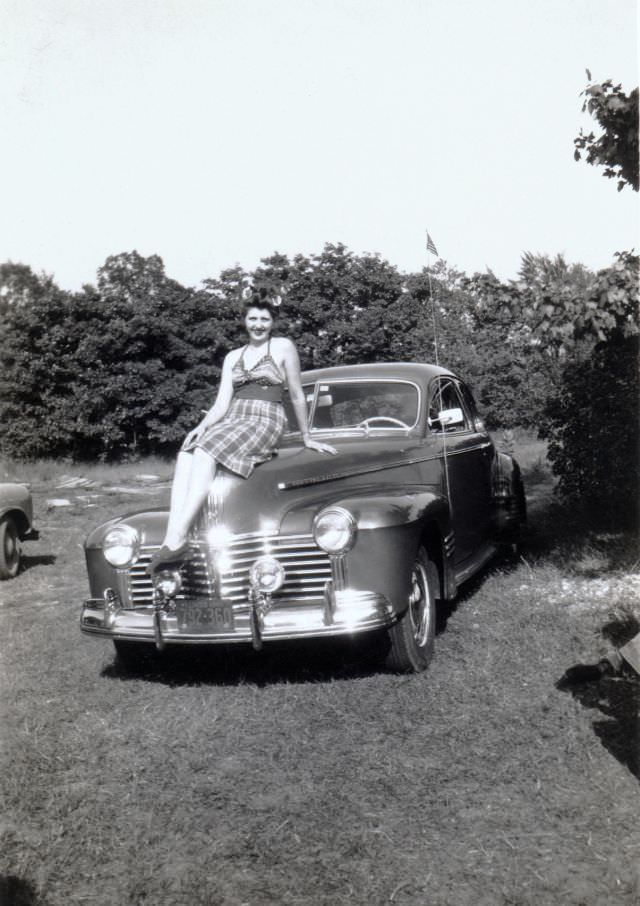
The car is registered in the state of Illinois, 1945
By 1945, the war was ending, but new Pontiacs were not yet back on sale — civilian production only resumed in late 1945 and ramped up through 1946. Older pre-war models like this 1941 Custom Torpedo Six remained the cars people drove, often in surprisingly good condition given the circumstances. The Illinois registration matches the car’s apparent continued service throughout the war years.
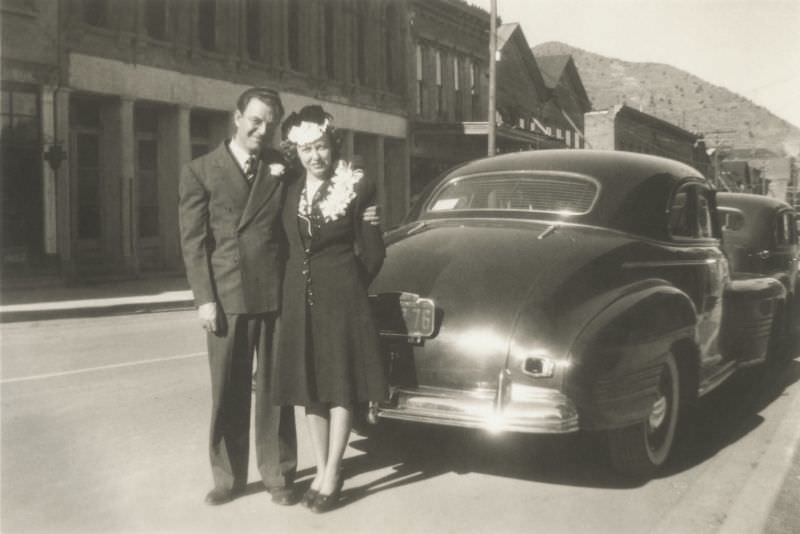
The location seems to be a small town in the American West. The car is registered in the state of California.
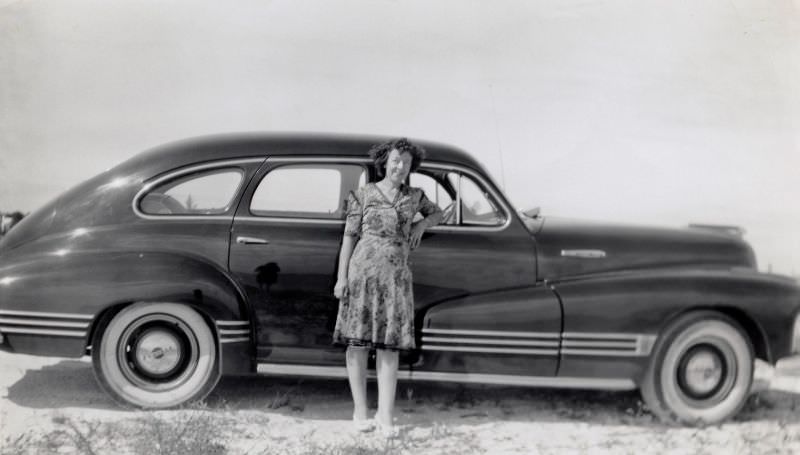
Pontiac resumed civilian production in 1945 and the 1946 models were among the first to reach buyers after the war. The Streamliner Sedan carried over much of the pre-war design — General Motors, like all automakers, needed time to retool for entirely new postwar models. Still, buyers were eager, and cars sold quickly in the pent-up postwar market.
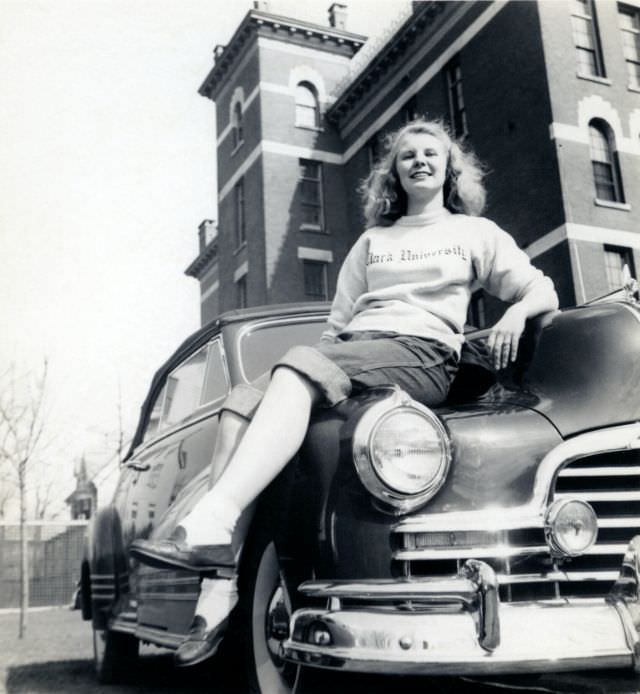
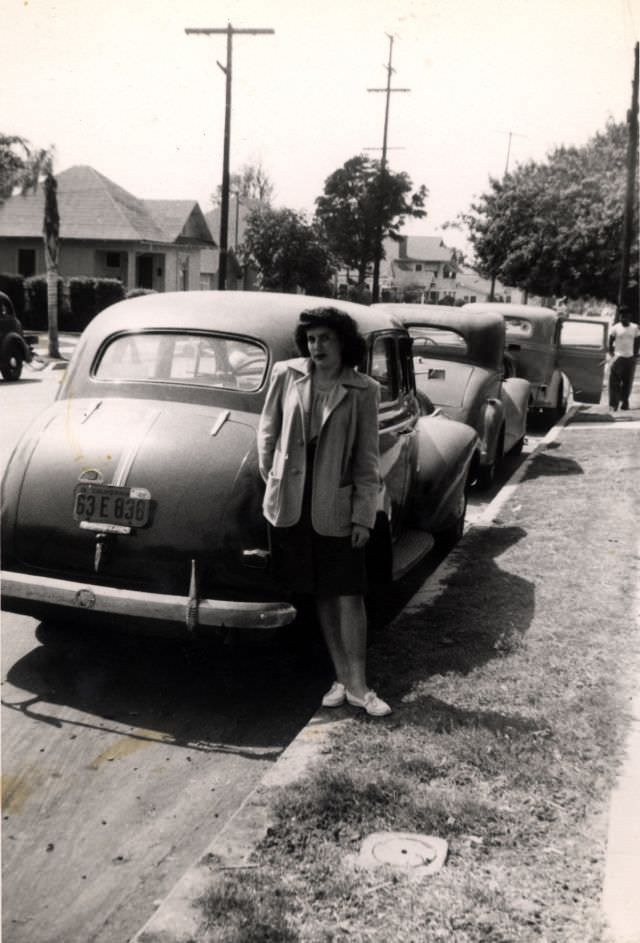
The car is registered in the state of California with 1949 license plates, 1949
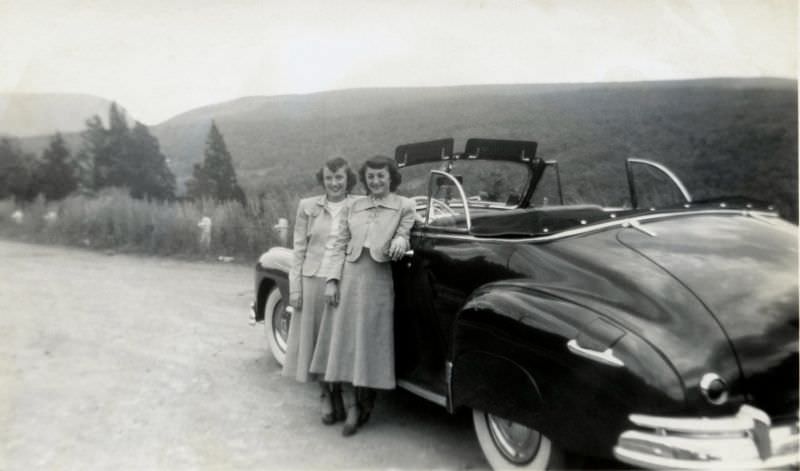
They are dressed in female suits in the fashion of the forties, 1949
By the late 1940s, Pontiac’s postwar lineup was finding its rhythm. Convertibles were popular symbols of postwar optimism — open-air driving represented freedom in a way that resonated strongly after years of wartime restrictions. Women photographed with convertibles appear repeatedly throughout the collection, often posed with the same confidence as any other owner.
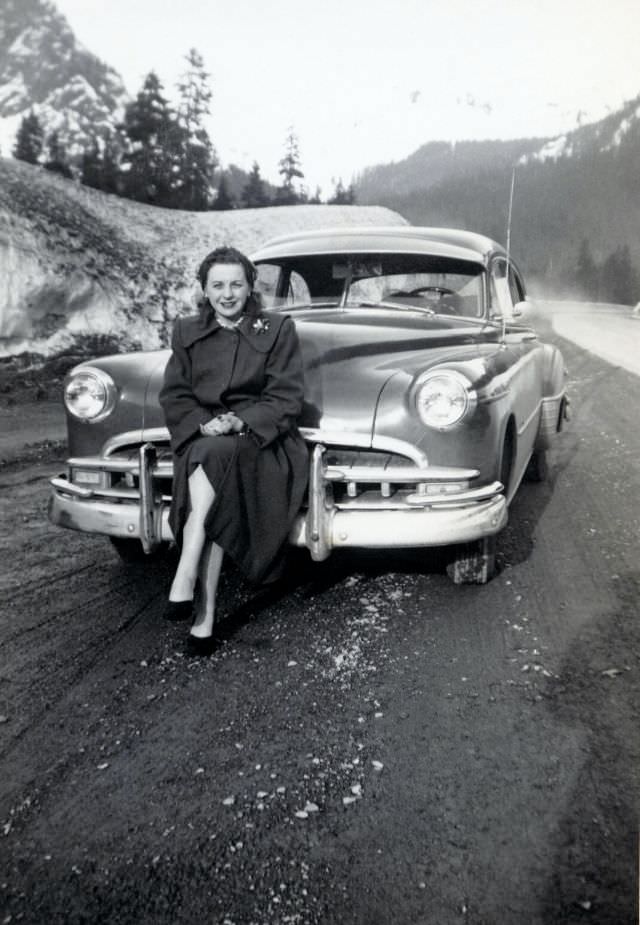
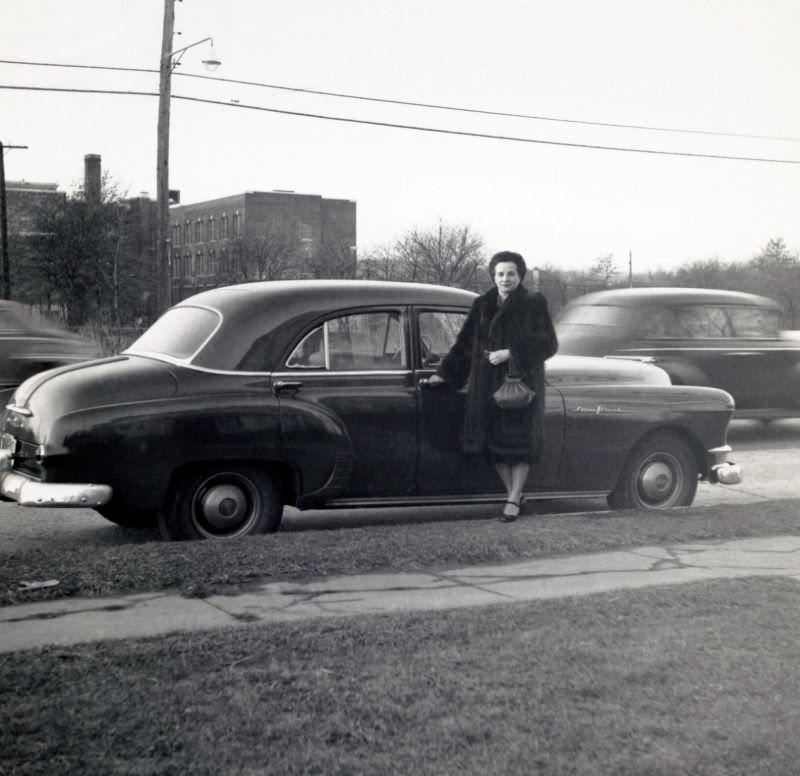
She’s wearing a dark-colored woolen coat with a brooch on the collar, 1950
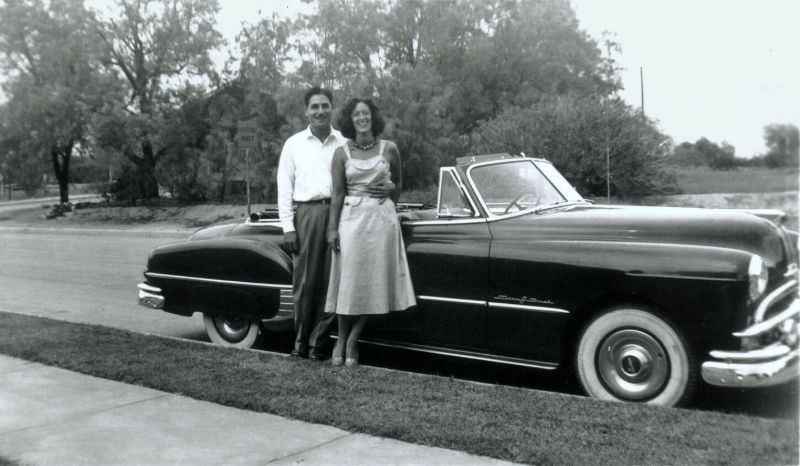
A sign reading “Hospital Quiet” can be seen in the background, 1950
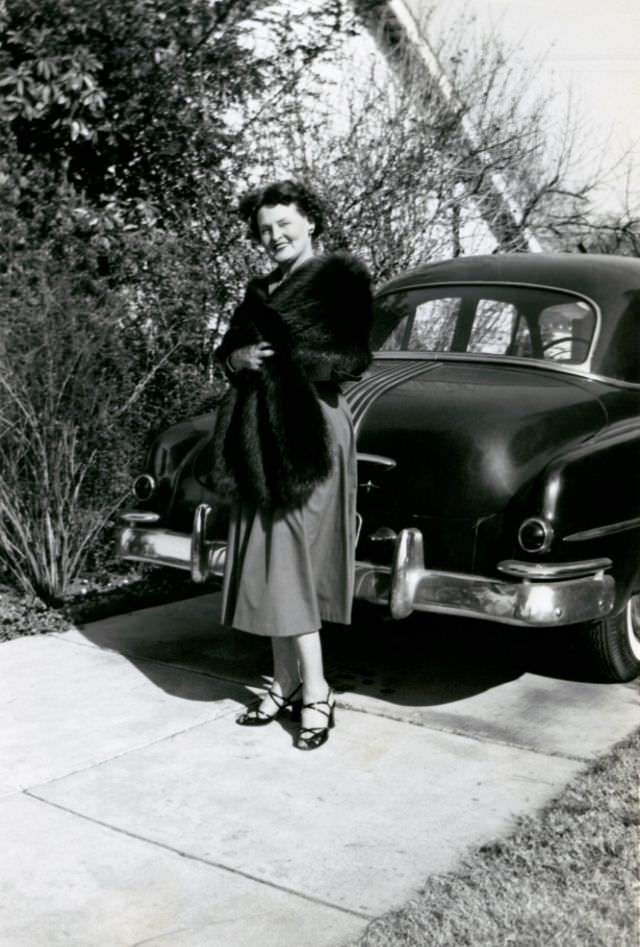
She is wearing a 3/4-length dress, a fur stole, nylon stockings, and heeled sandals, 1950
The 1949 Pontiac Chieftain was a significant model — it introduced a fully new postwar body design that moved away from pre-war styling for good. The Chieftain name would remain central to Pontiac’s lineup into the late 1950s. These 1950 photographs show buyers who had just received one of the brand’s freshest, most modern cars at the time.
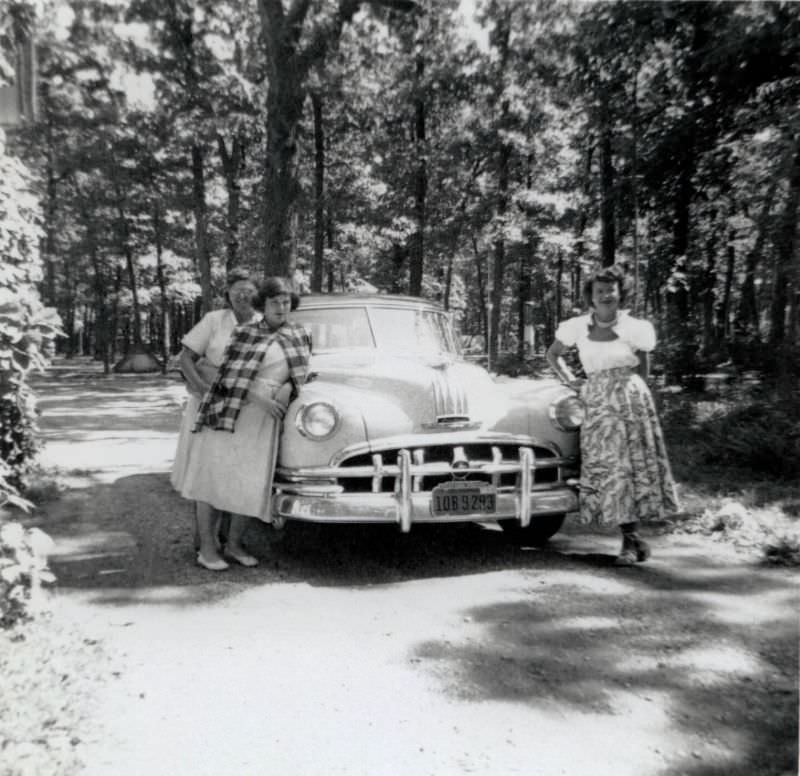
The car is registered in the state of California, 1950
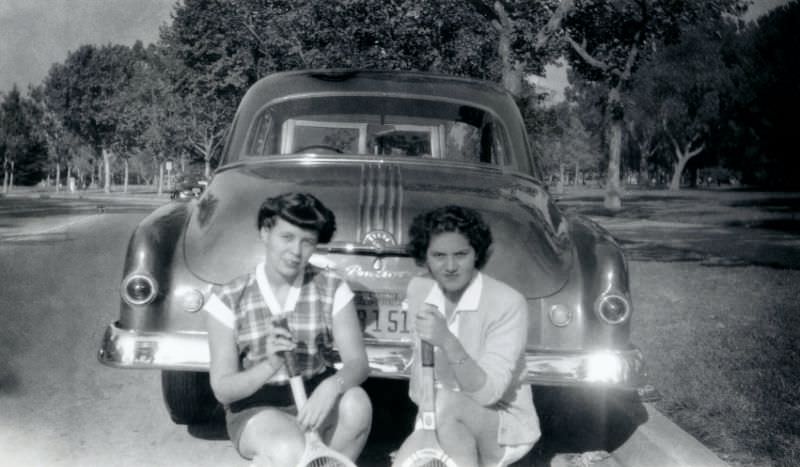
They are both holding wooden tennis rackets in their hands. The car is registered in the state of California, 1950
Tennis rackets in hand, California plates, summertime — this photograph captures a very specific slice of postwar American leisure. Pontiac’s marketing in this period leaned on exactly this kind of aspirational imagery: active, well-dressed people living comfortably. The fact that real customers photographed themselves in nearly identical scenes suggests the marketing genuinely reflected how buyers saw themselves.
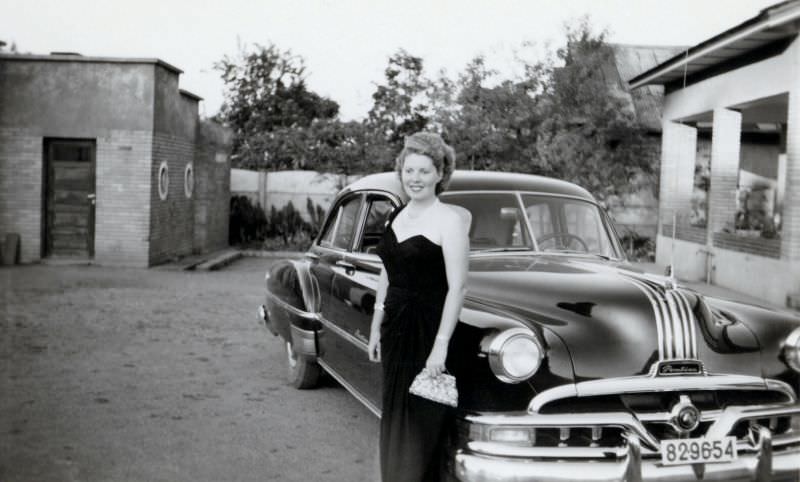
The car is registered with Belgian license plates, 1951
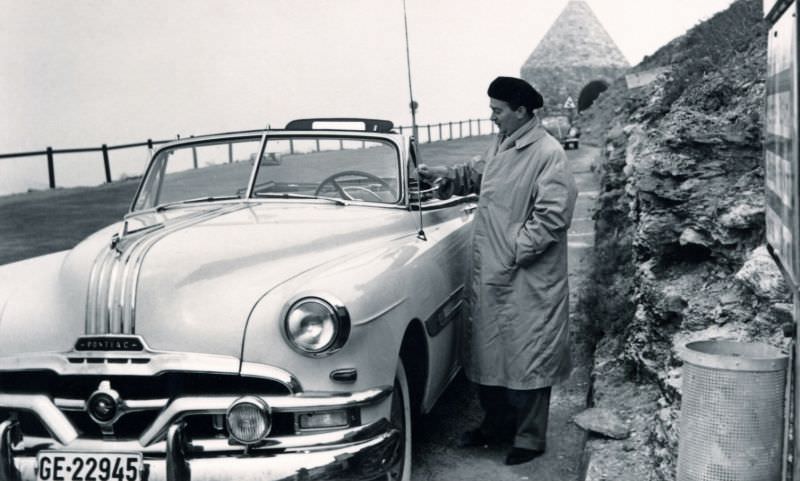
The location is Fuscher Törl on Grossglockner High Alpine Road, September 1952
The Grossglockner High Alpine Road in Austria is one of Europe’s most dramatic mountain routes. Driving a 1952 Pontiac Chieftain Convertible along it in September — at altitude, on a narrow road built for far smaller European cars — was a genuine statement. American cars were large, powerful, and eye-catching on European roads, which is part of what made ownership of one abroad so notable.
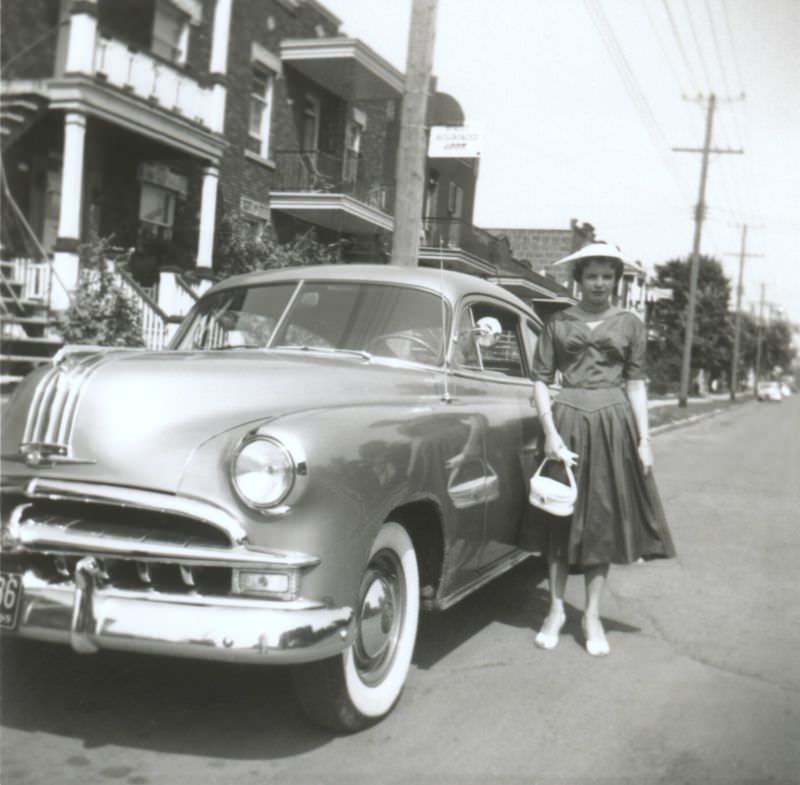
She is wearing an A-line dress and a white hat with matching handbag, gloves and shoes, 1955
By the mid-1950s, Pontiac’s styling had grown bolder. Longer hoods, more chrome, and two-tone paint schemes became standard features of the decade’s aesthetic. A young woman dressed head to toe in coordinated white against a shiny Pontiac in a residential street is a photograph that could easily have appeared in a magazine — but it didn’t. It ended up in a family album, which makes it more interesting.
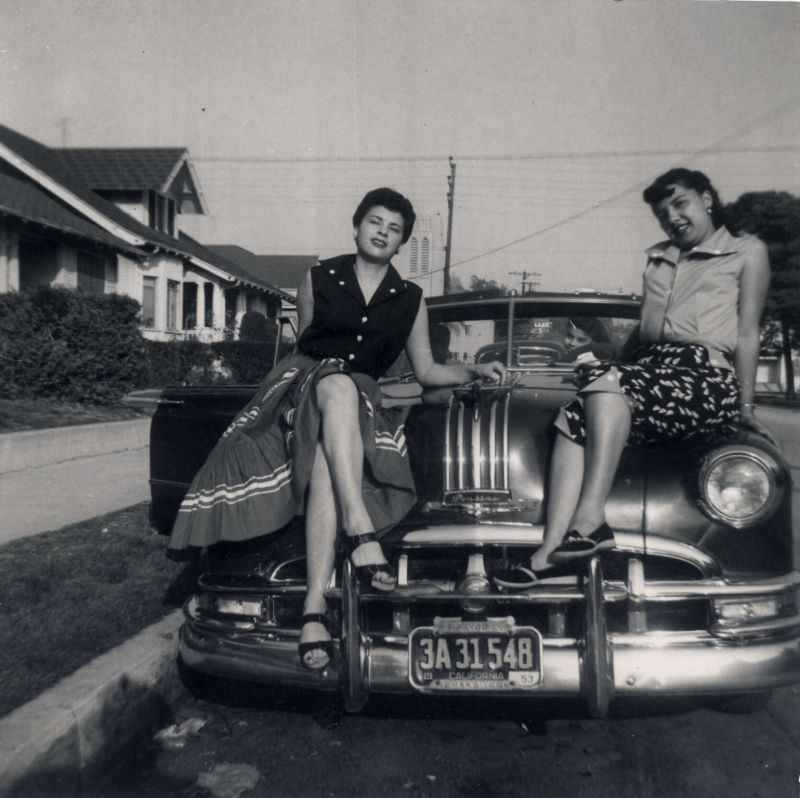
The face of a third girl can be seen through the windscreen in the background. The car has California license plates, March 1955
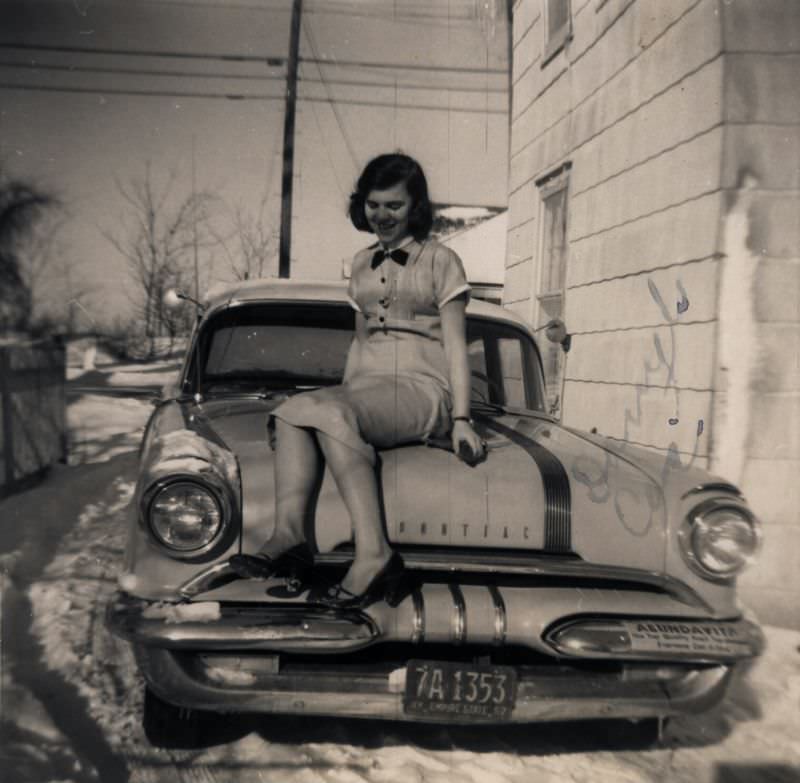
The words “Daryl’s Car” are handwritten on the print, the car has New York license plates, 1958
The handwritten inscription “Daryl’s Car” on the back of this 1958 print is the kind of detail that turns a photograph into a document. Daryl owned a 1955 Pontiac Chieftain and was proud enough of it to have his name attached to the image three years after the car was new. These personal notations — names, dates, places — scattered across the backs of prints throughout this collection show that people understood, even then, that the car and the moment mattered enough to record.