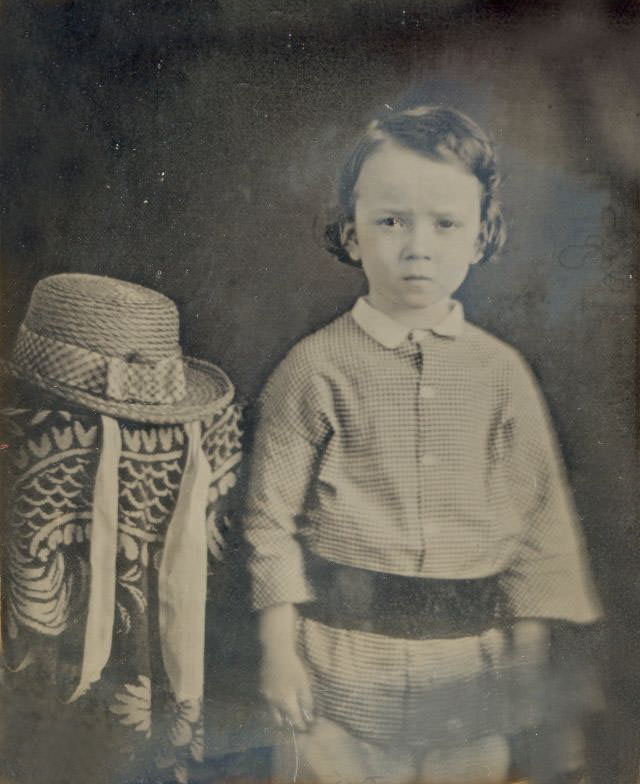
For most of American history, life meant life on the land. Farms, small towns, and villages were home to the overwhelming majority of the population well into the late 1800s. Even as cities began pulling people away from the countryside, the 1900 census still showed that most Americans lived in rural areas. These were communities built on hard work, close family ties, and a remarkable degree of self-sufficiency. Farmers grew their own food, made their own clothes, and traded with neighbors for what they couldn’t produce themselves. Cash crops were part of the picture, but so was a deep reliance on personal skill and community.
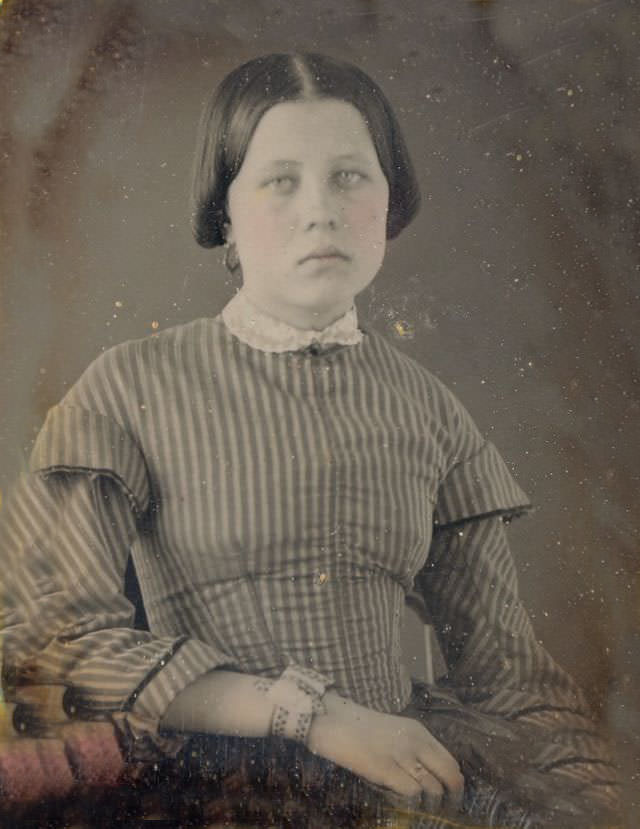
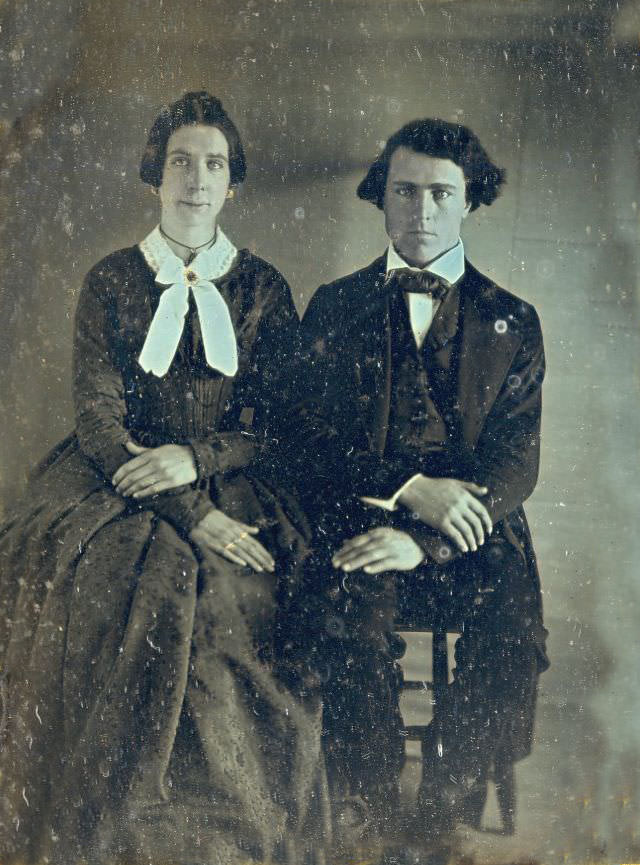
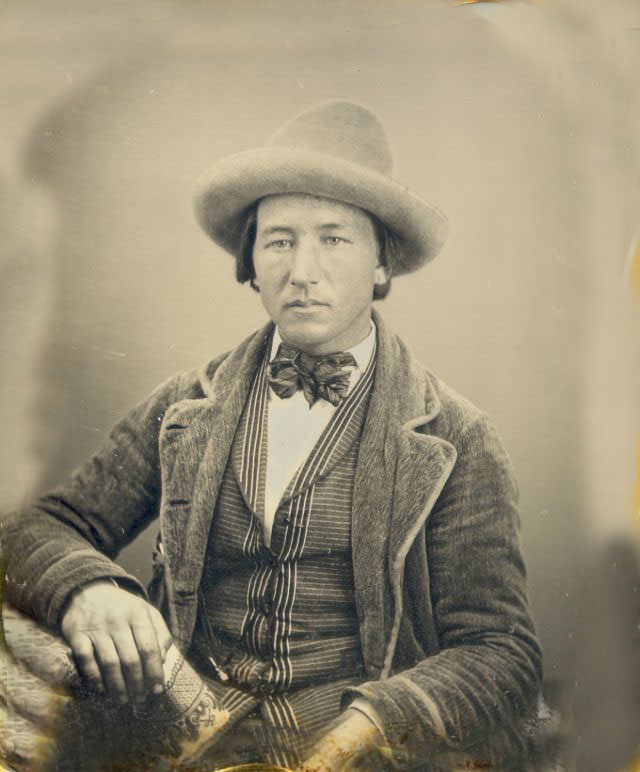
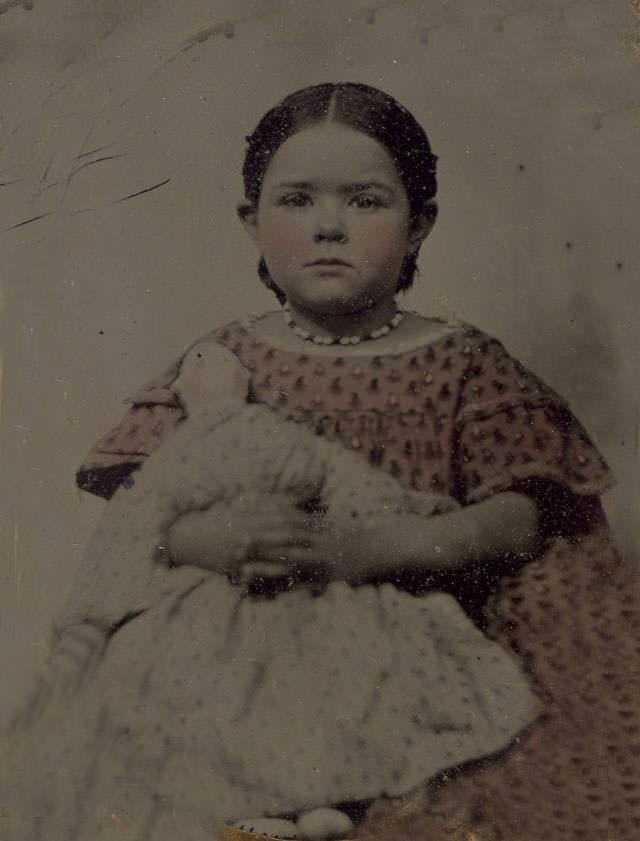
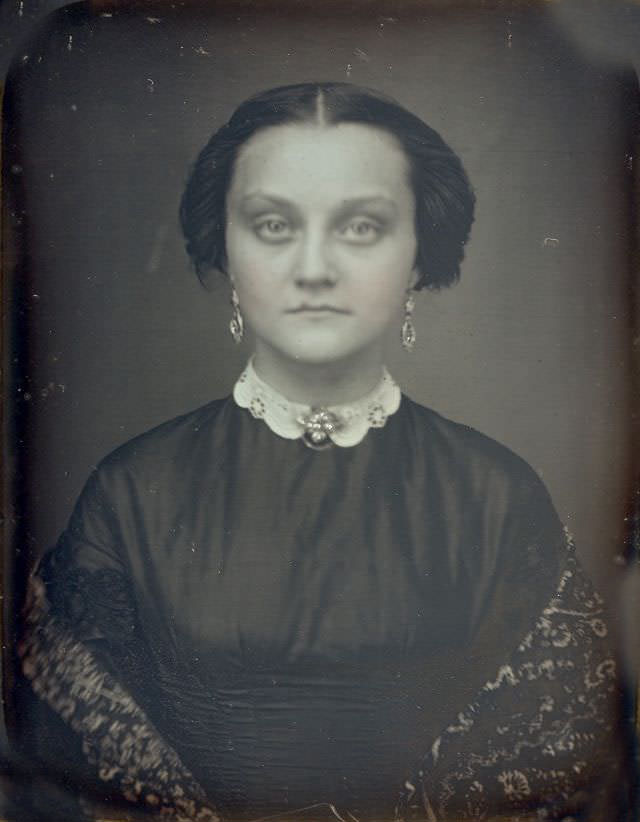
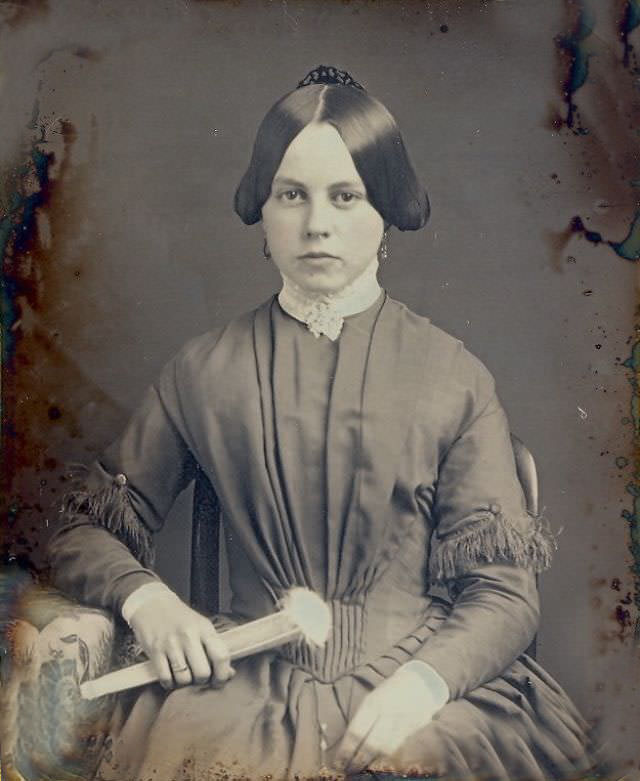
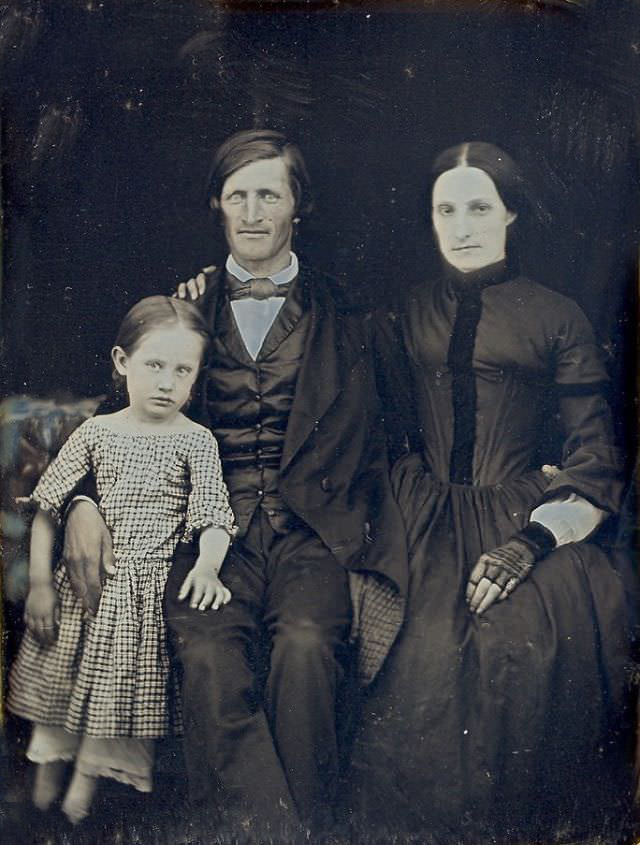
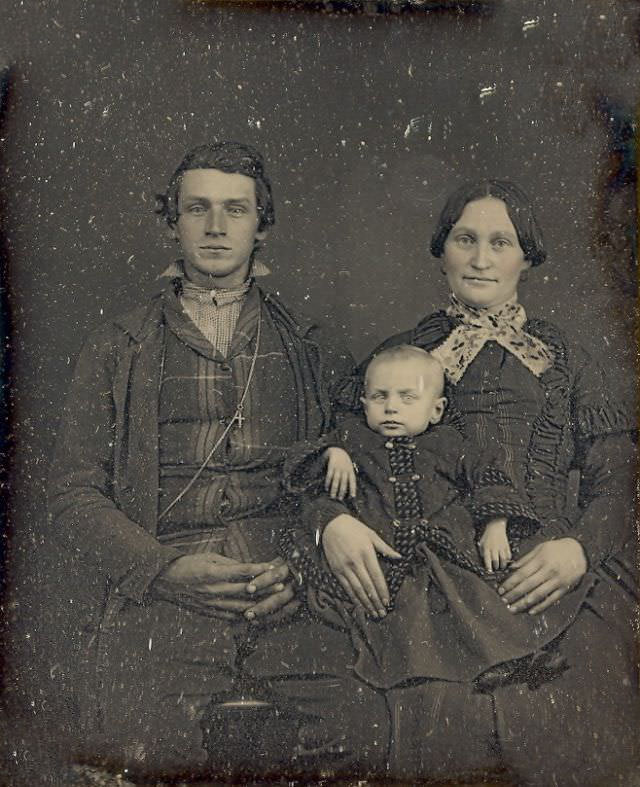
The 1850s and 1860s were a turning point for rural America. New farming machines were being introduced, but horses, oxen, and human labor still powered most of the work on the ground. Photography was also new — and expensive. Sitting for a portrait was a deliberate act, often reserved for milestones or special occasions. The images that survive from this era give us a rare, direct look at the faces of ordinary rural Americans: children clutching dolls, mothers in their finest dress, fathers sitting stiffly beside their families. These weren’t wealthy people. They were farmers, tradespeople, and small-town residents who took a moment to be remembered.
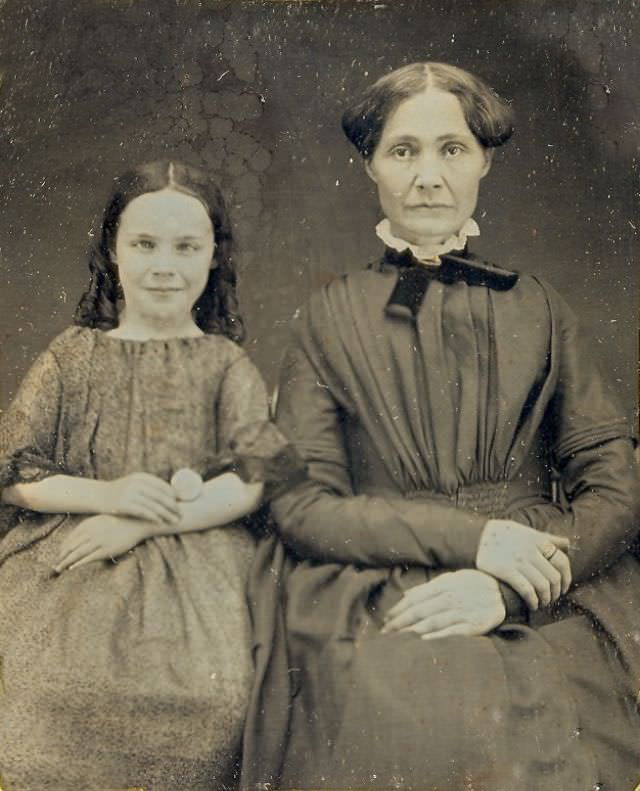
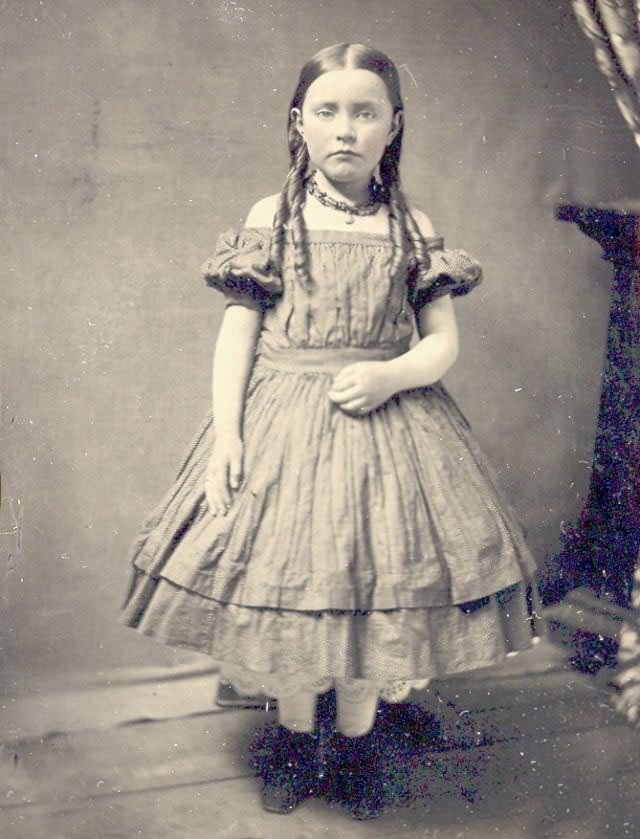
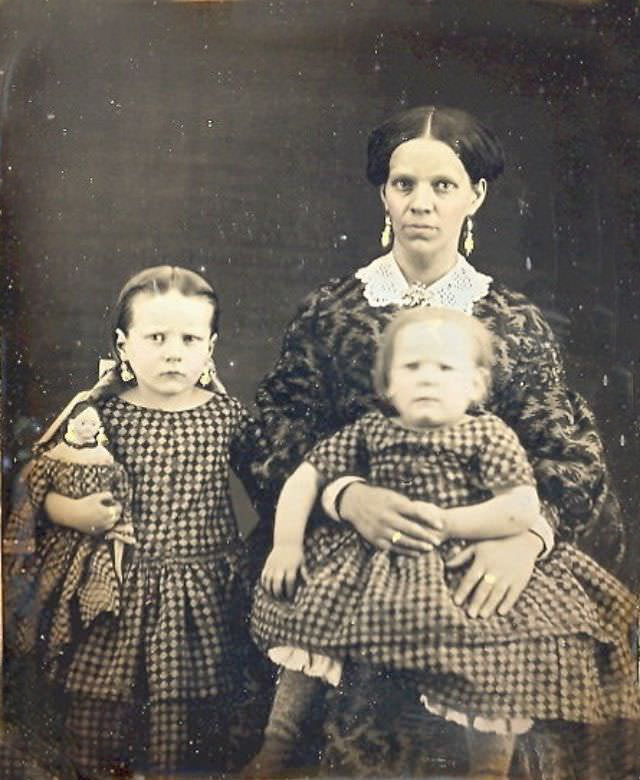
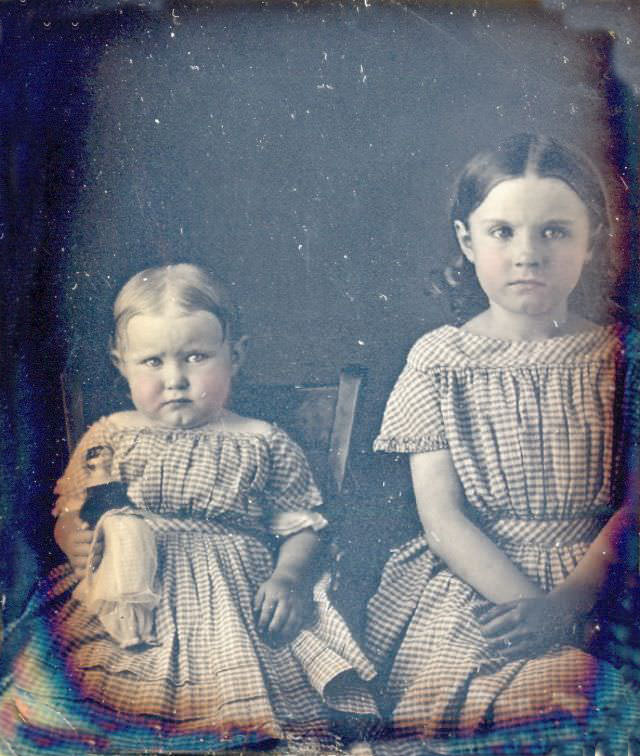
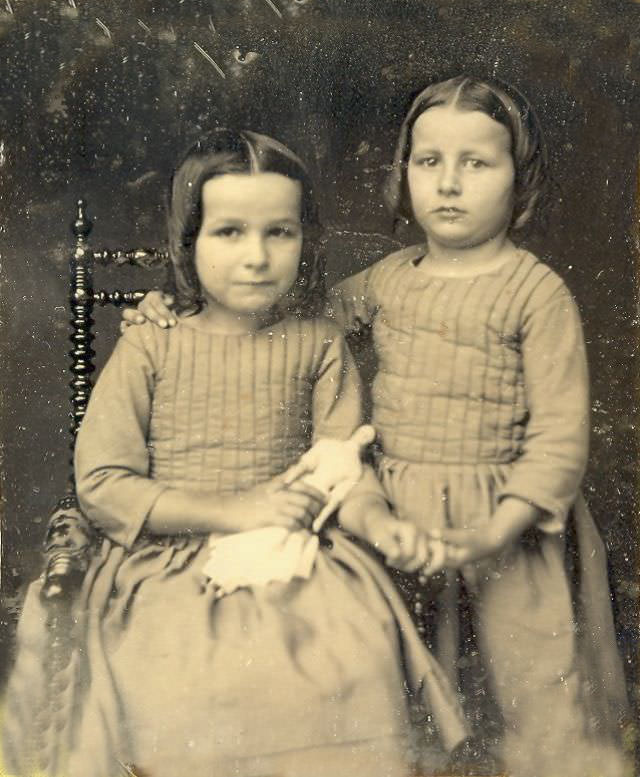
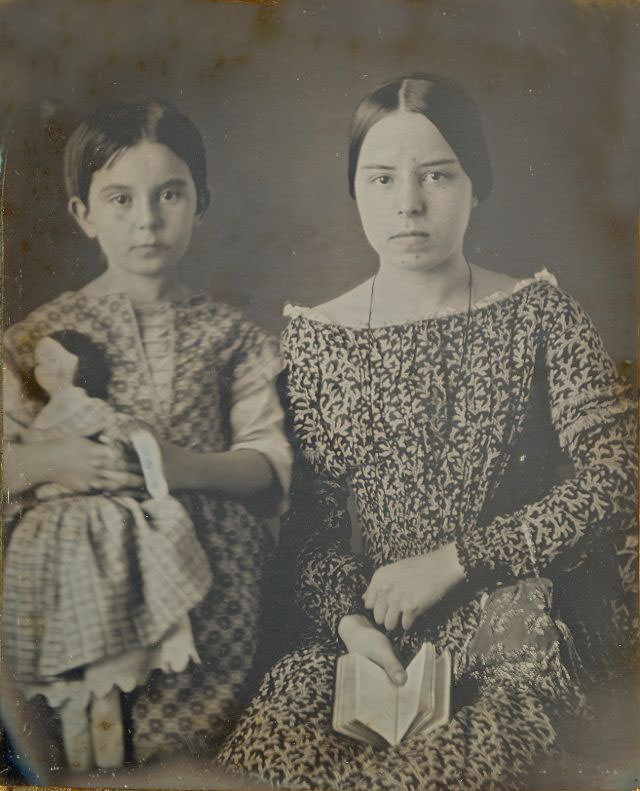
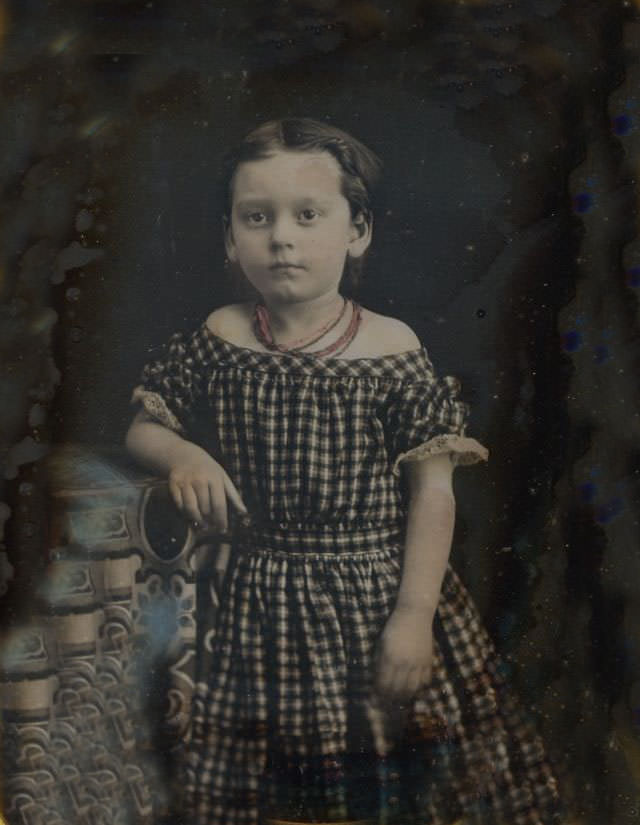
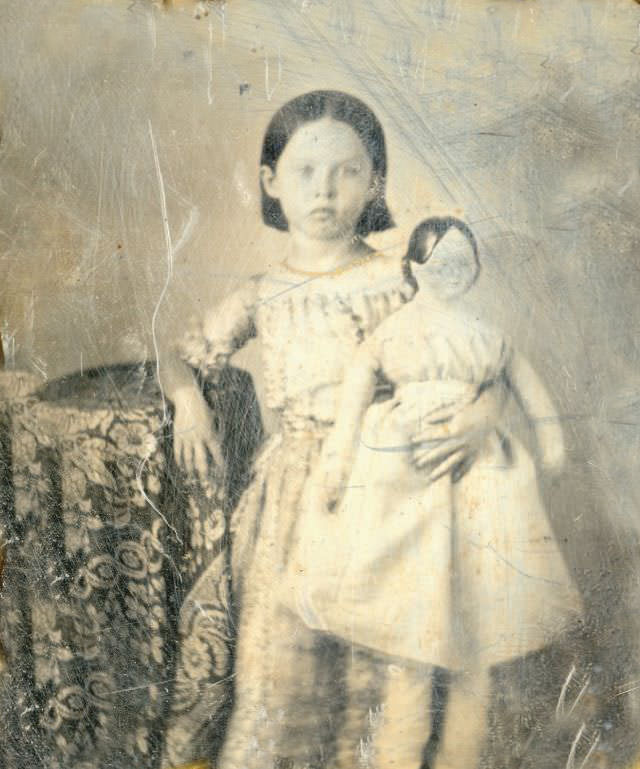
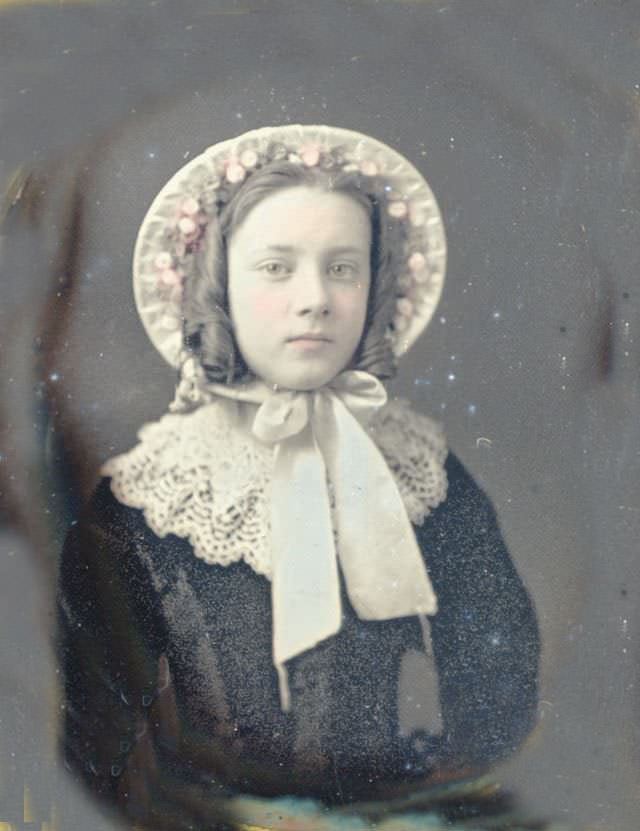
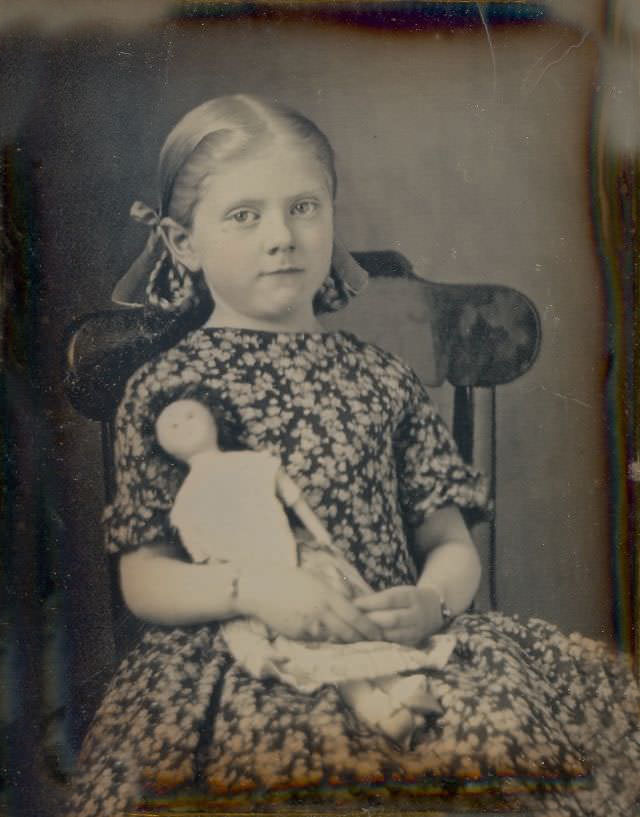
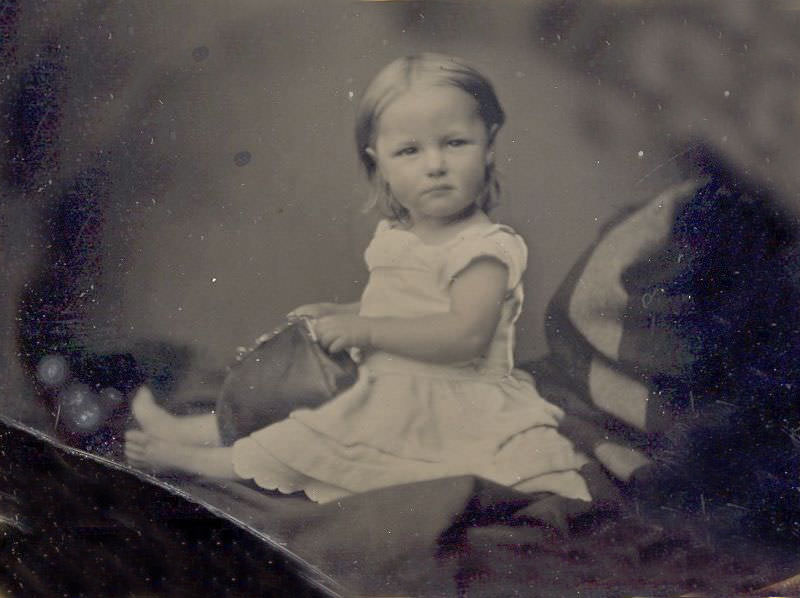
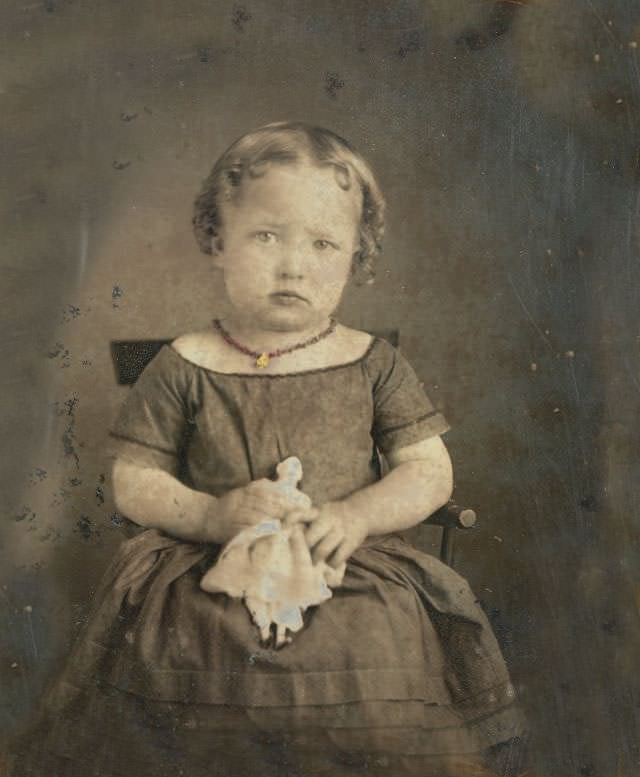
Children appear in many of these portraits, often dressed with surprising care. Bonnets, coral necklaces, and off-shoulder dresses show that rural families took pride in how their children appeared, even if the clothing was handmade. Dolls were a common prop — partly because children naturally brought their favorite toys, and partly because a familiar object helped keep a young child still during the long exposure time a photograph required.
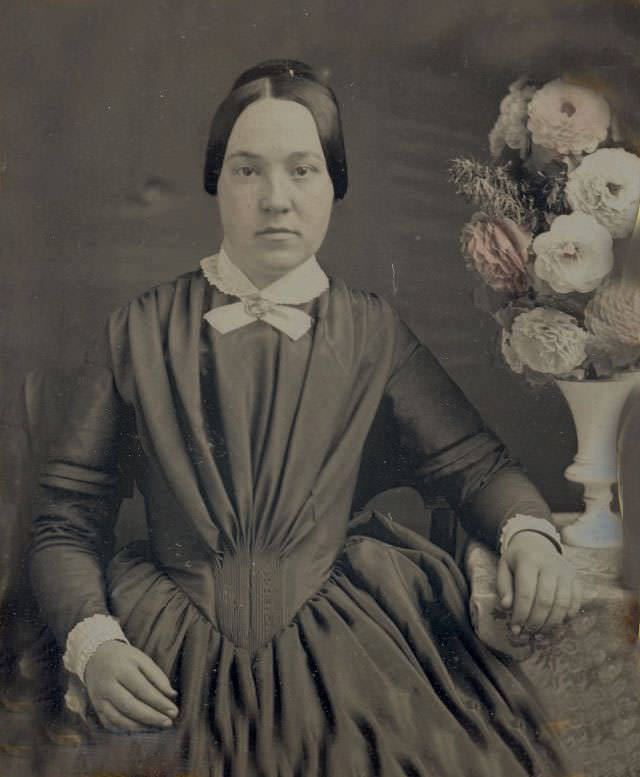
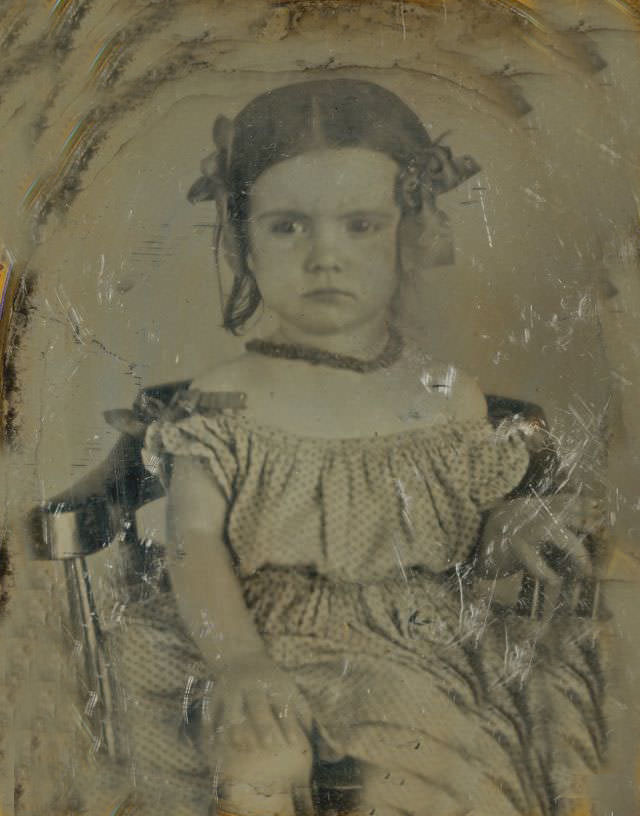
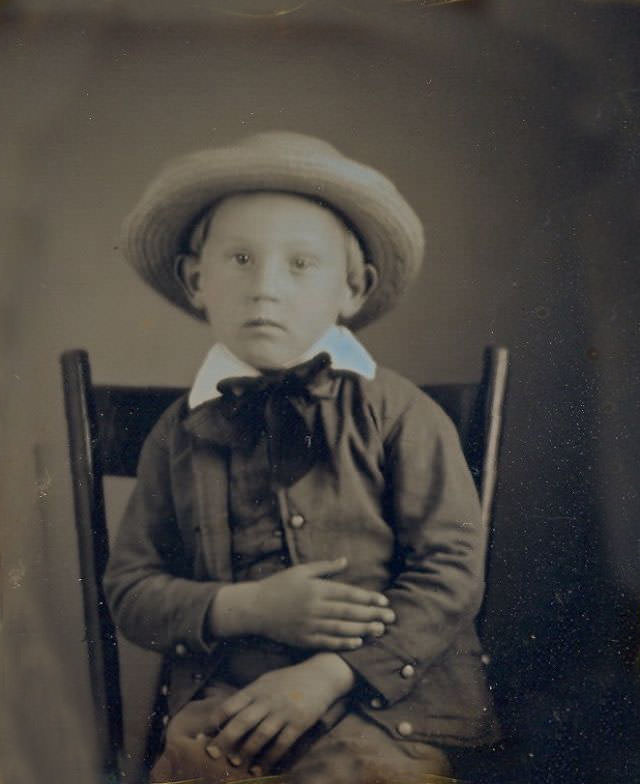
Boys showed up in straw hats and sturdy clothing that spoke to outdoor lives. Girls came in pink dresses and matching bonnets. Some portraits include notes on the back — names, dates, places — small pieces of information that anchor these faces to real histories. One image is labeled
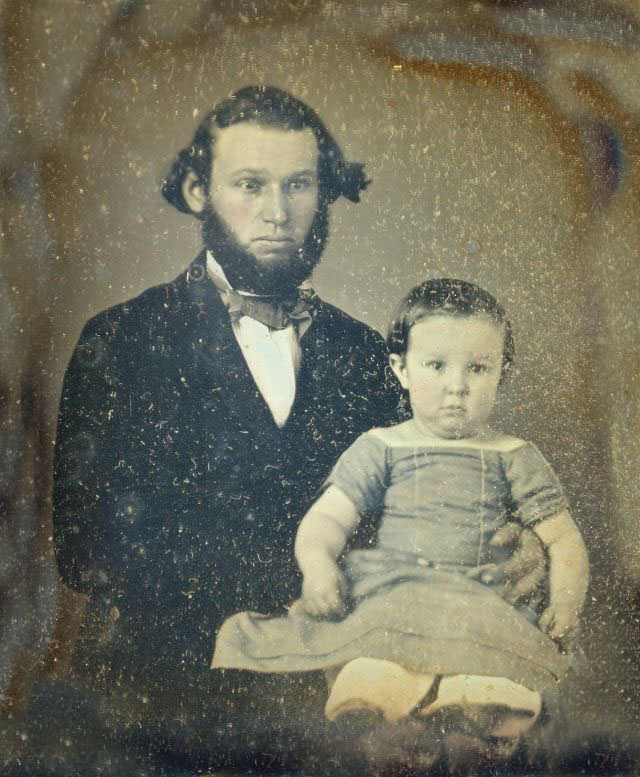
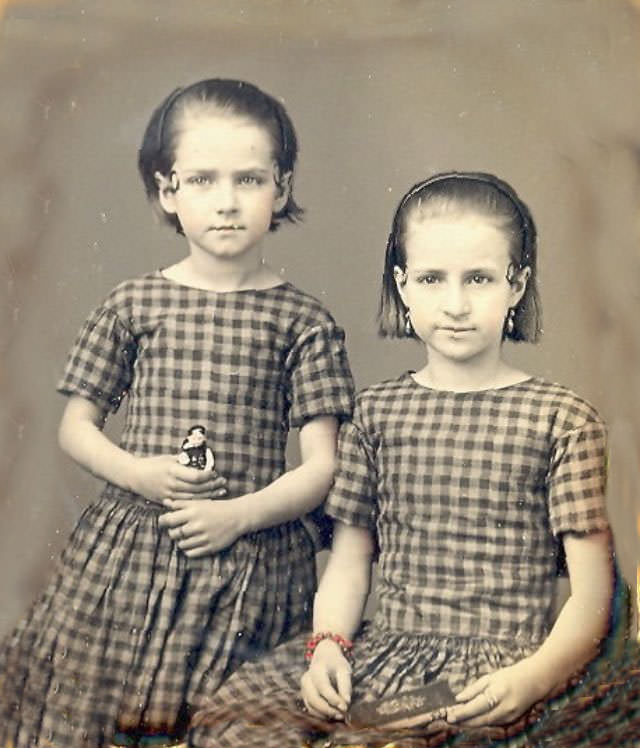
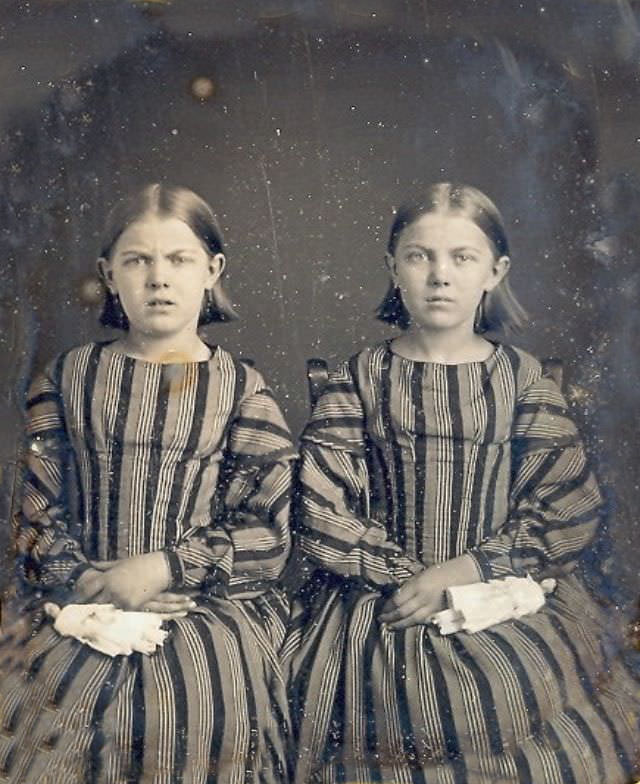
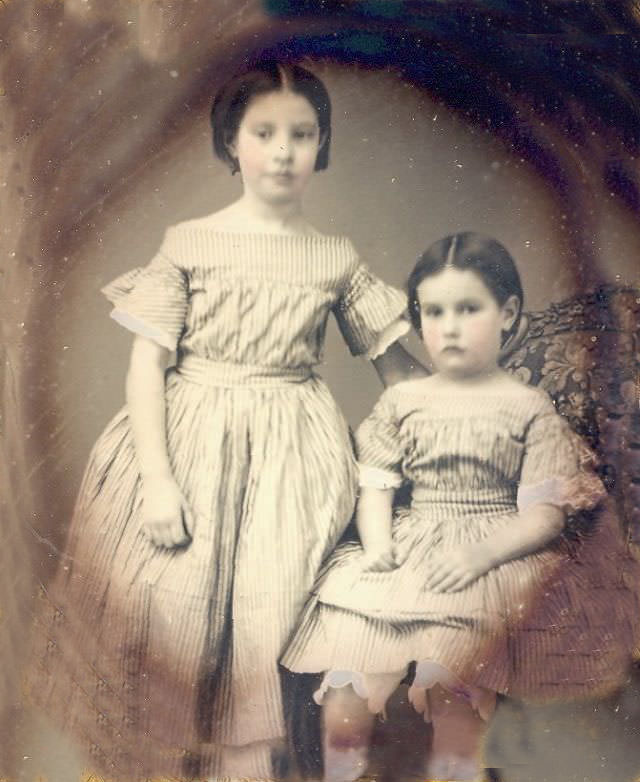
Family groupings were common subjects. A mother and daughter, a father with a child on his lap, siblings in matching dresses — these arrangements were intentional. Matching outfits between sisters or between a mother and her girls were a deliberate display of unity and effort. In one portrait, a mother dressed her two daughters in identical dresses, and even the doll the child held was dressed to match. That level of detail required planning and needlework, which points to the seamstress skills that rural women commonly held.
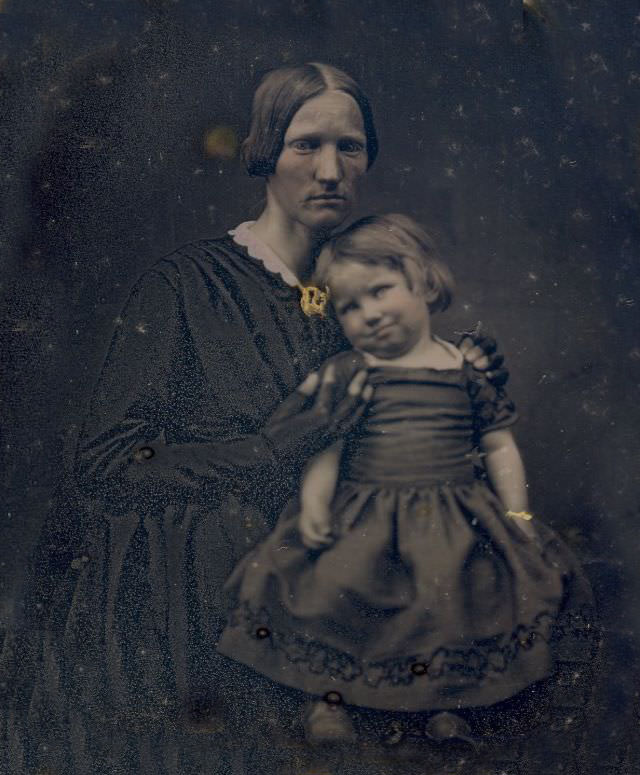
Photographers operated out of small studios in rural towns across the country. A photographer’s card on the back of one portrait identifies C.B. Lawry of Farmington, Maine — a small town that, like many others, had a local photographer serving the surrounding farming community. These traveling or town-based photographers made portraiture accessible beyond the major cities. Sitting for a photo was still a formal event, but it was no longer only for the elite.
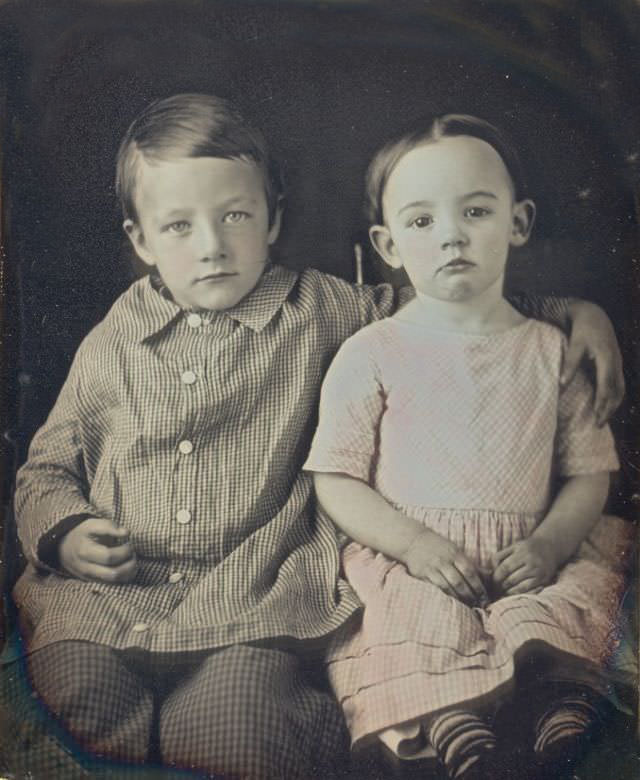
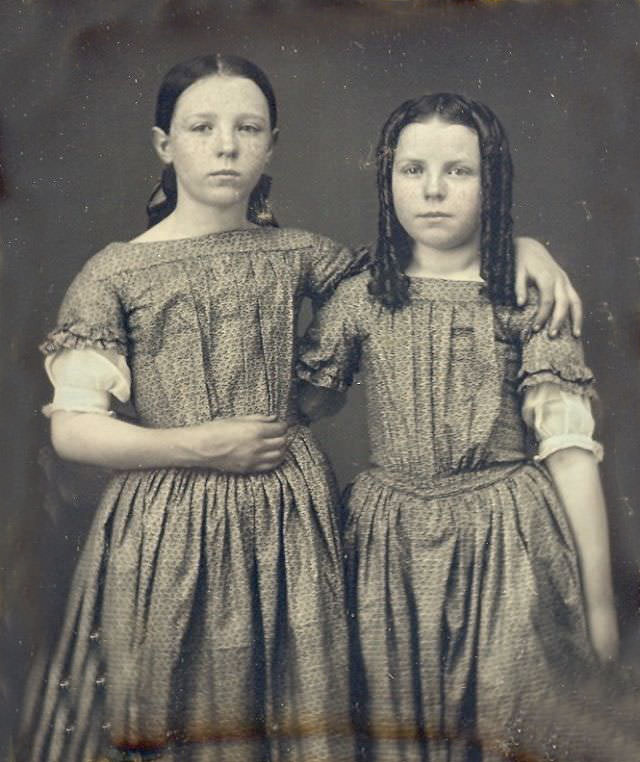
Some portraits carry visible signs of rural life. Two children photographed together show tan lines on their hands from working outside — details that no amount of dressing up could fully erase. Their homemade dresses and haircuts are equally telling. These weren’t studio-styled subjects. They were real farm children, briefly cleaned up and posed, then sent back to their fields and chores.
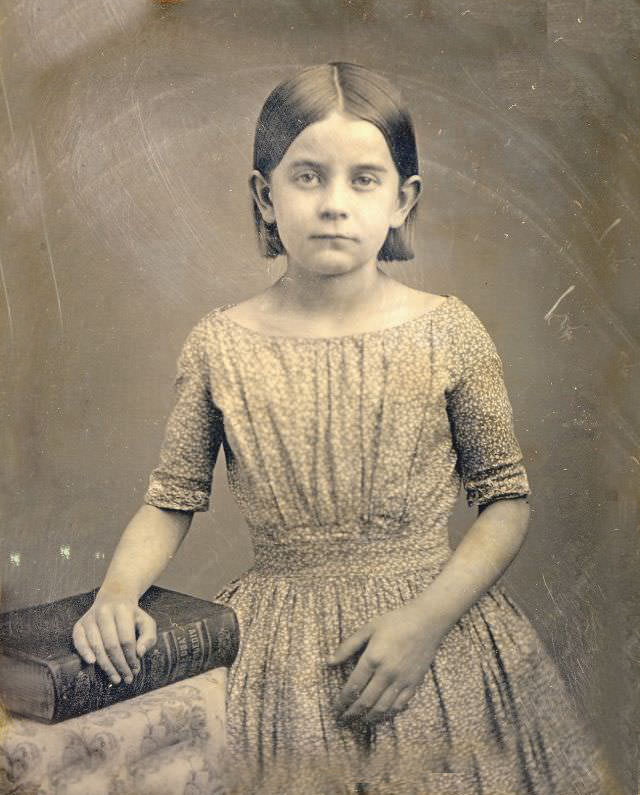
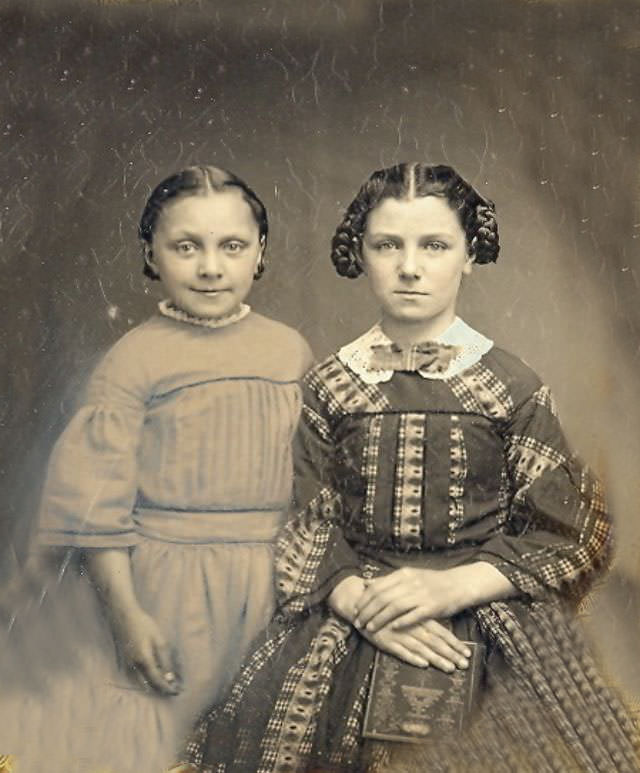
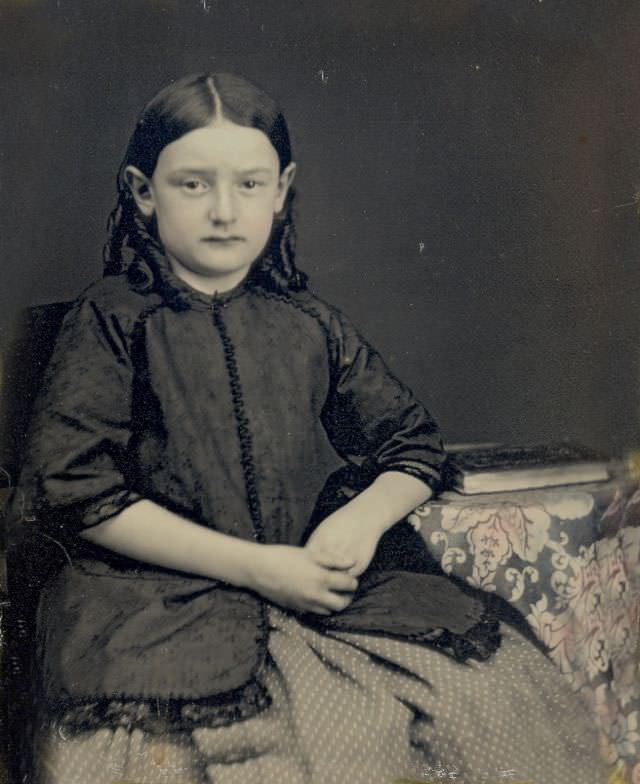
Books appear in several portraits as props — a sign of education and respectability. Rural schools existed across the country by the mid-1800s, and literacy was valued even in farming communities. A schoolgirl posed with her book was communicating something about her family’s values, not just sitting for a picture. Similarly, a young girl standing beside a large book signals that learning had a place even in homes where the days were shaped by planting seasons and harvest schedules.
One portrait identifies its subjects as Reverend C.T. Douglas holding his son Travis on his lap — a rare named example that shows the role of clergy in rural communities. Country ministers served small congregations spread across wide distances, often traveling between settlements. Their presence in the photographic record is a reminder that rural life was organized around more than farming alone. Churches, schools, and local businesses formed the backbone of community life.
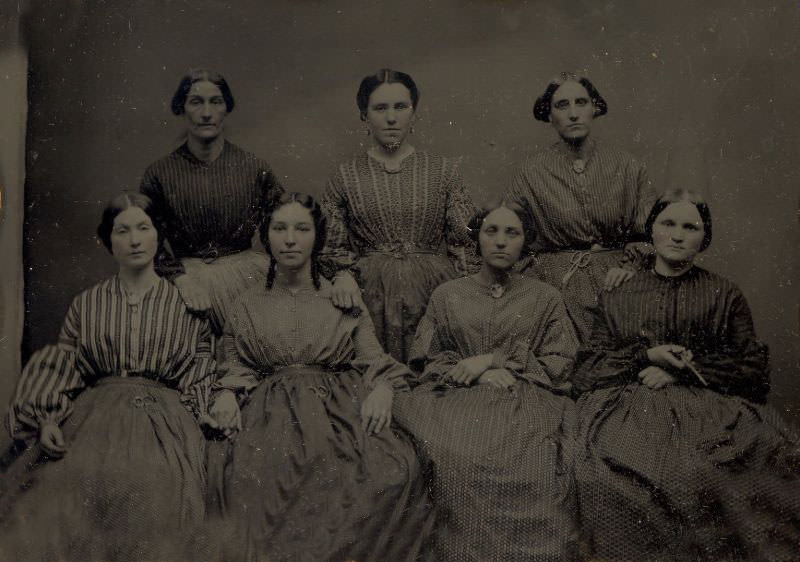
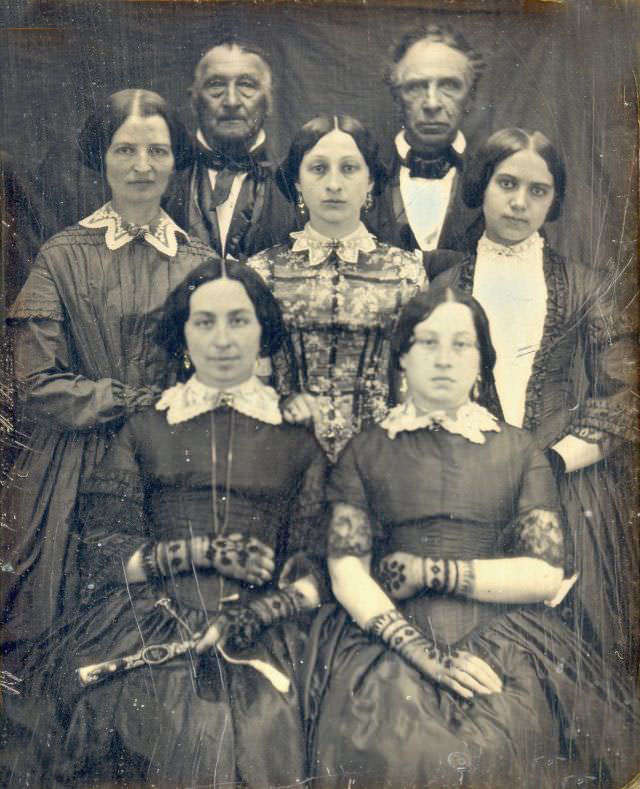
Seven seamstresses photographed together — most holding or displaying their scissors — represent a trade that was central to rural life. Before manufactured clothing was widely available, sewing was a daily necessity. Women and girls made garments for their entire households. The fact that these women chose to be photographed with their tools says something about how seriously they took their craft. It was skilled work, and they knew it.
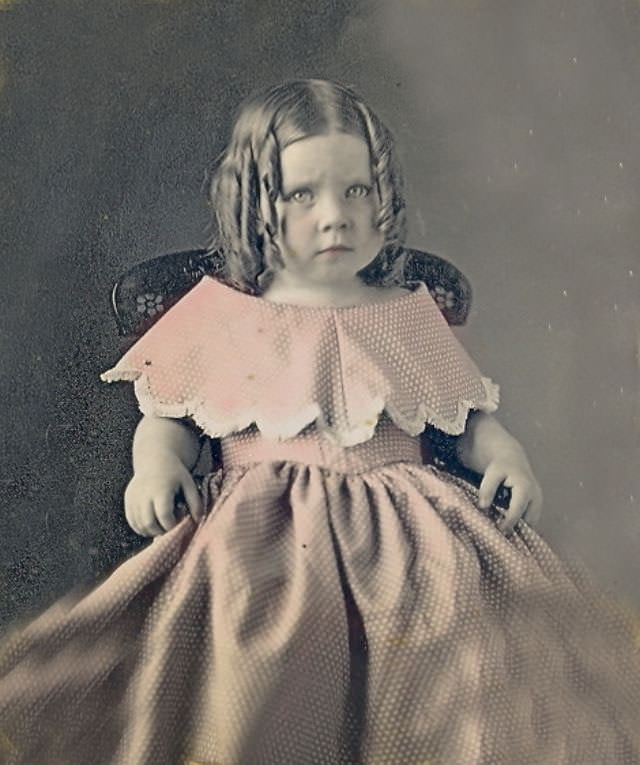
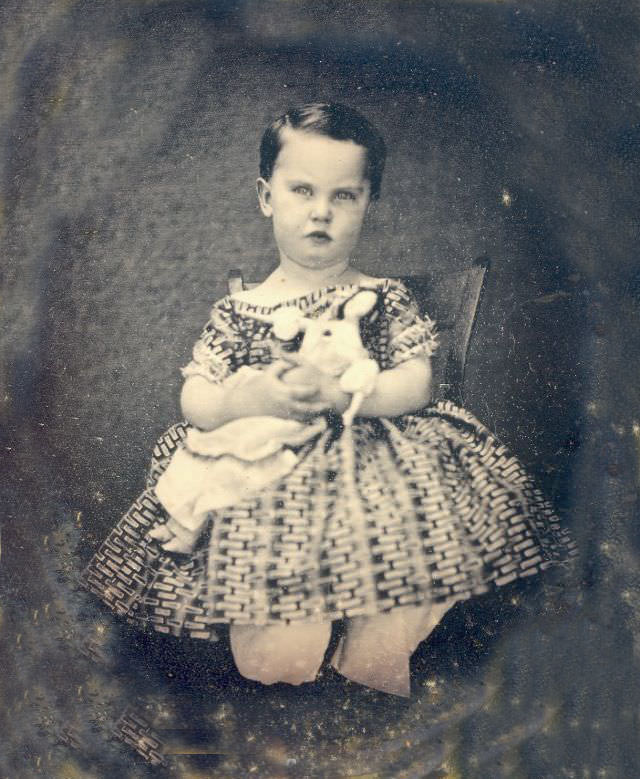
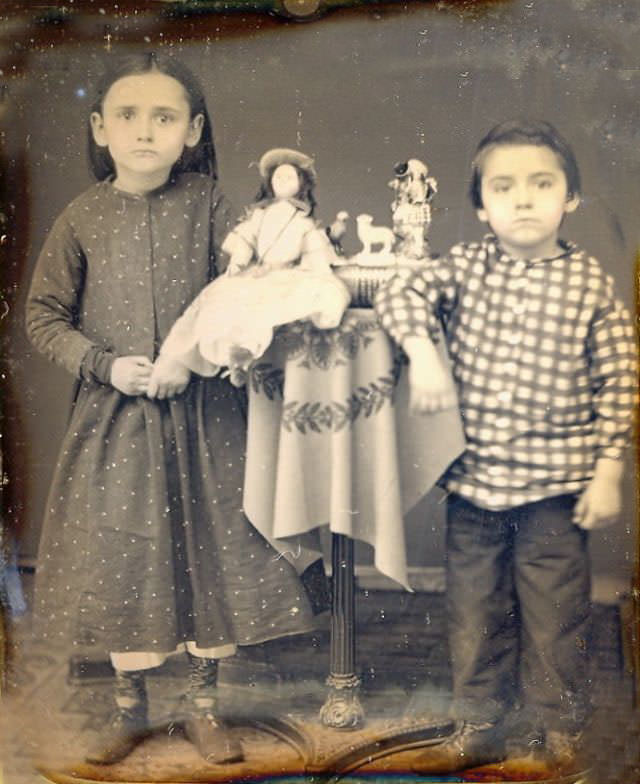
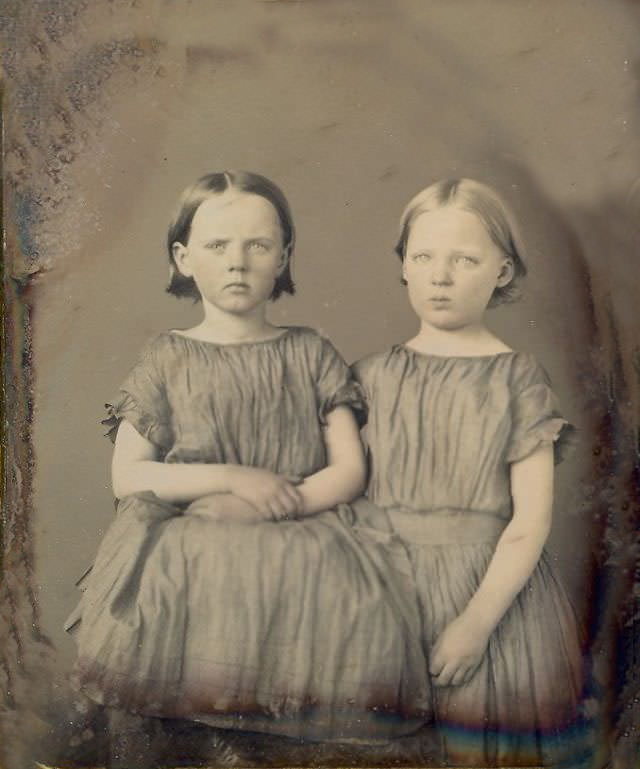
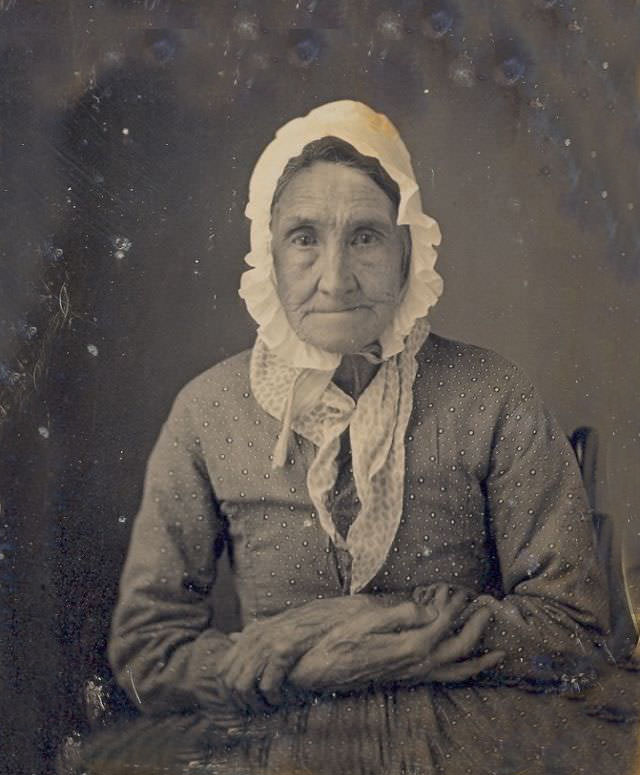
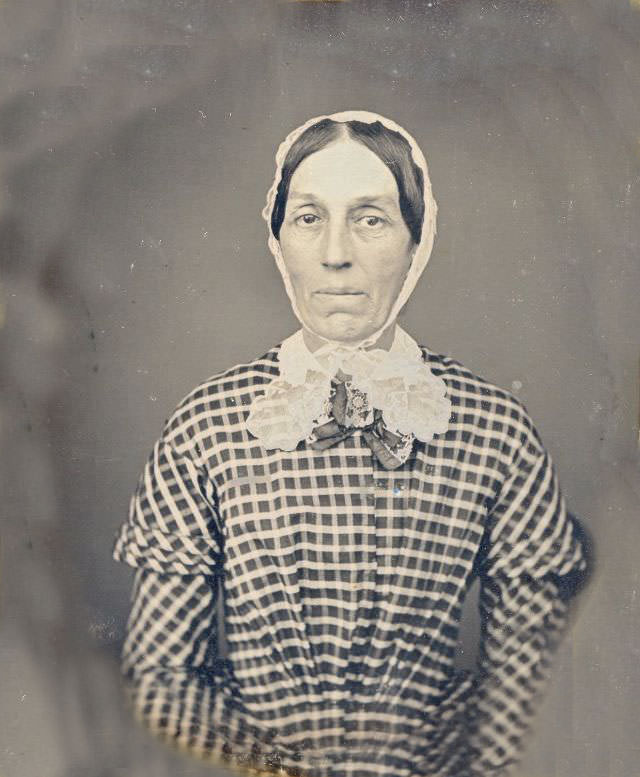
Twins photographed with matching twin dolls, sisters sharing a single frame, a grandmother in her bonnet — these images form a mosaic of rural American life in the decades before the Civil War and just after. The expressions are often serious, as long exposure times made smiling impractical, but the settings and choices within each portrait speak volumes. What people wore, what they held, who they stood beside — all of it was deliberate.