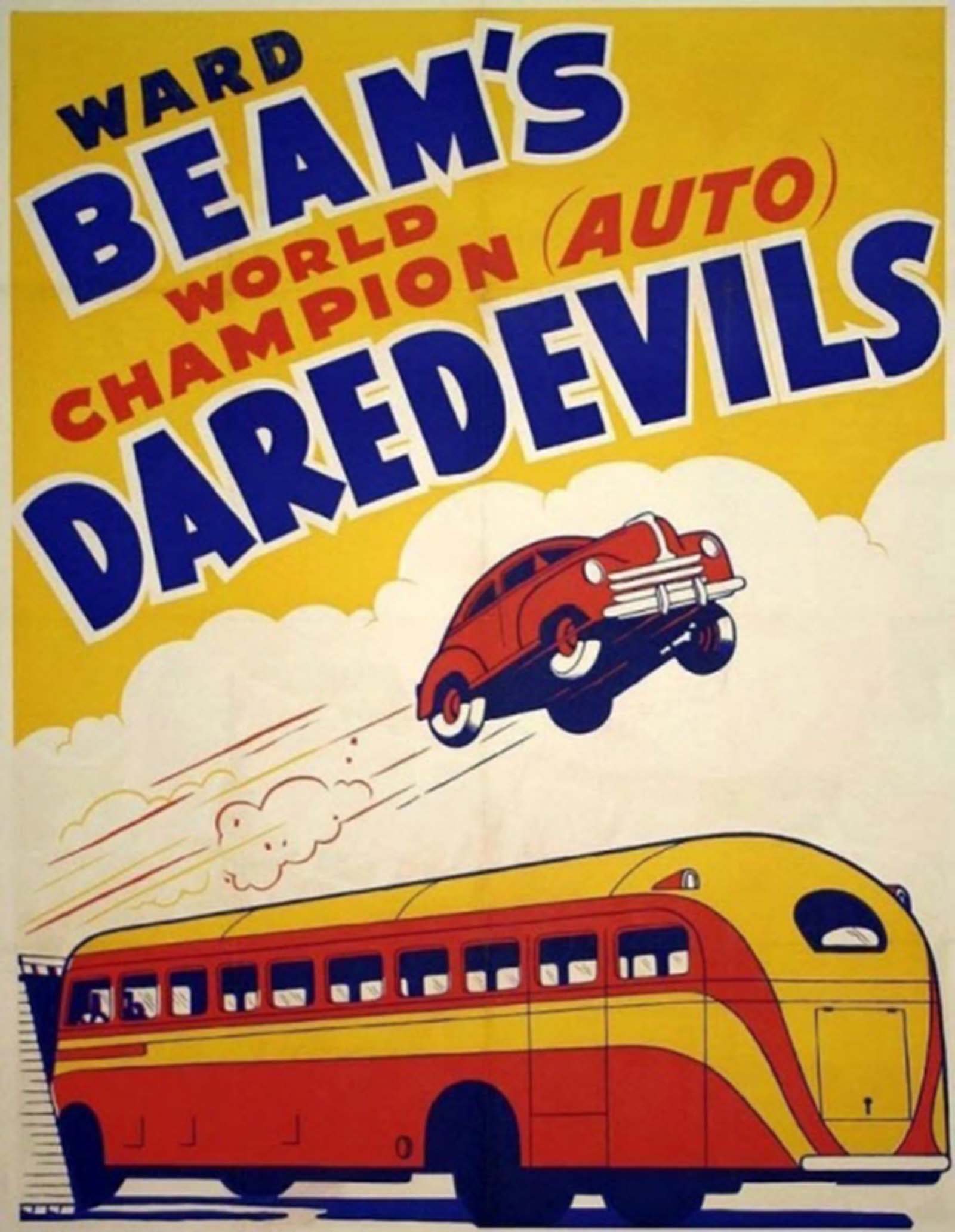
Long before Hollywood perfected the movie car chase, real stunt drivers were doing something far more raw in front of live crowds. In the 1930s, a breed of daredevils took to fairgrounds and arenas across the United States, putting on shows that left audiences gripping their seats. These men drove cars through walls of fire, tipped their vehicles onto two wheels, and launched off wooden ramps to clear rows of parked cars and city buses. There were no camera tricks, no safety nets, and very little protection between the driver and disaster.
The shows were built around controlled chaos. A driver would accelerate toward a ramp, catch air, and land — sometimes cleanly, sometimes not. Rollovers were part of the act. So were deliberate crashes. The cars used were often flimsy by any standard, held together just well enough to survive one more run. Crowds packed the stands because every stunt carried a genuine risk of going wrong, and everyone in attendance knew it.
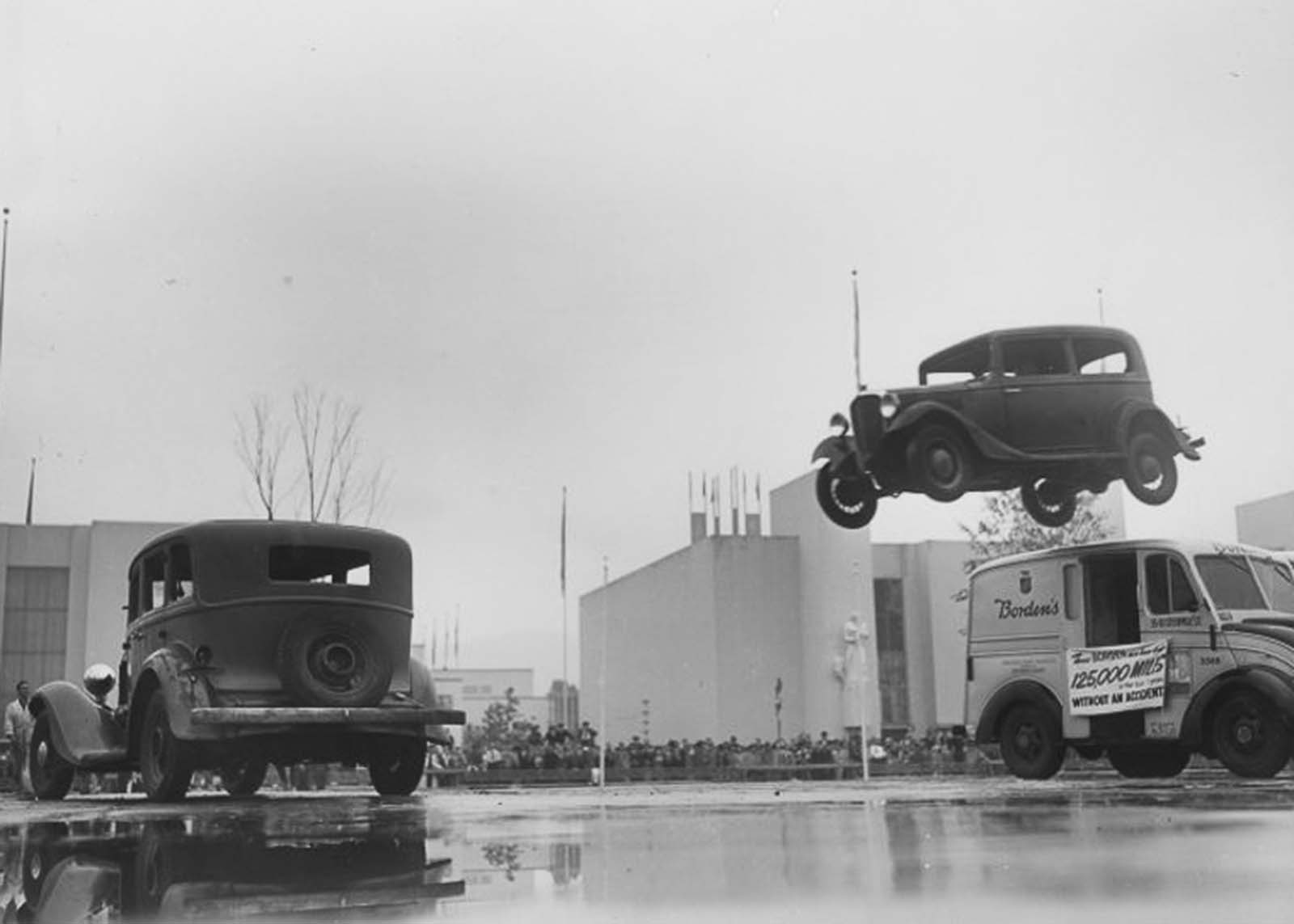
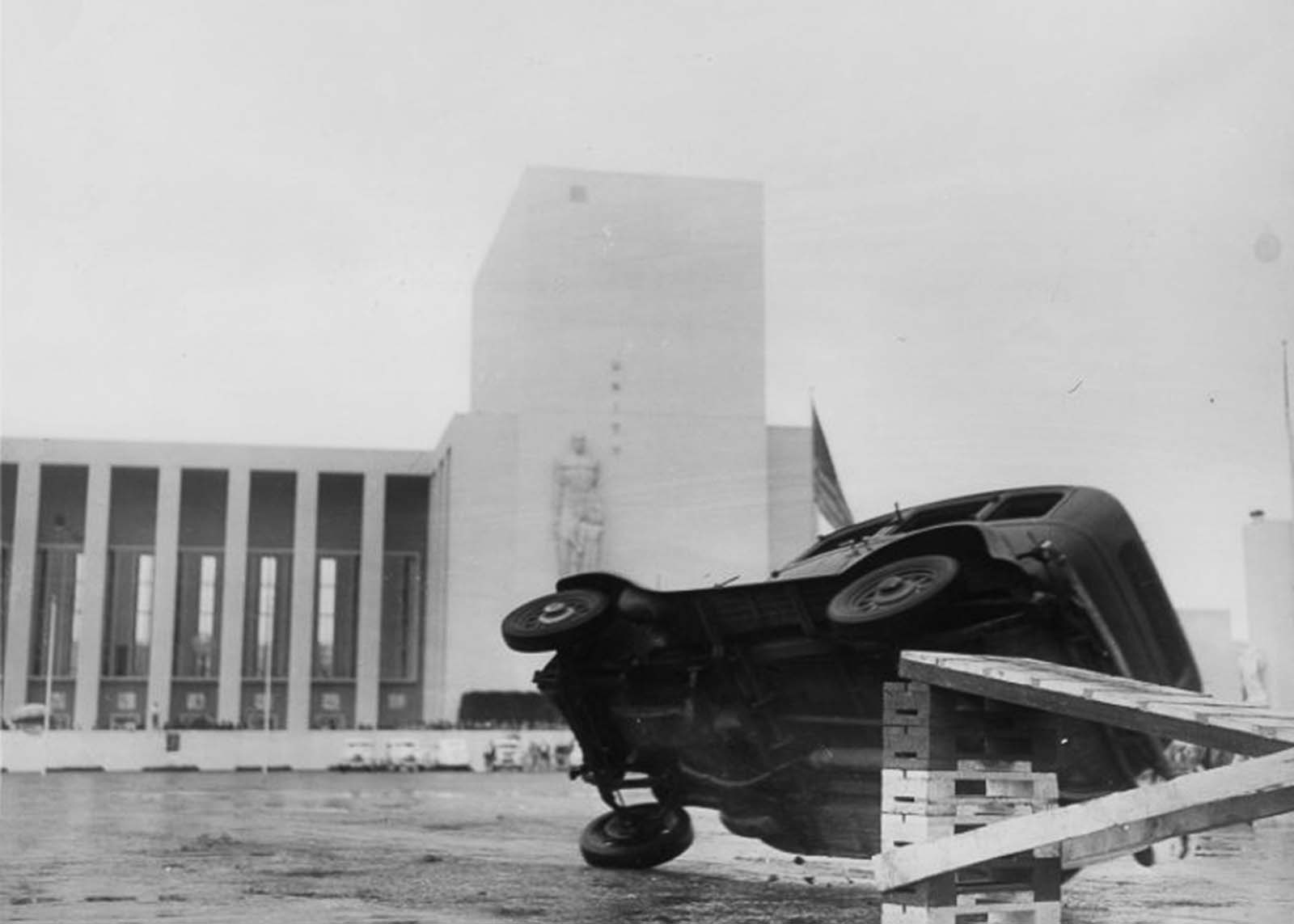
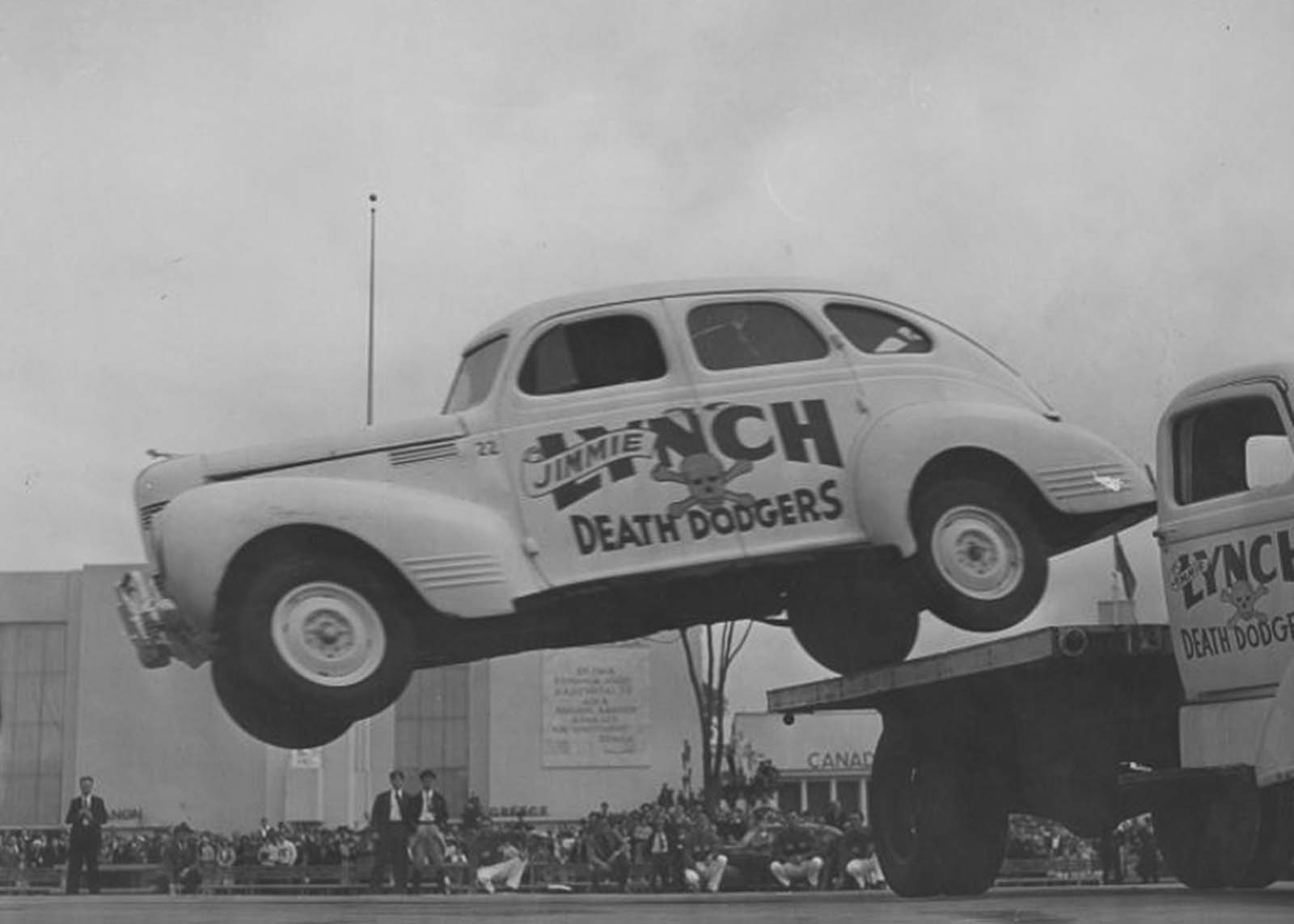
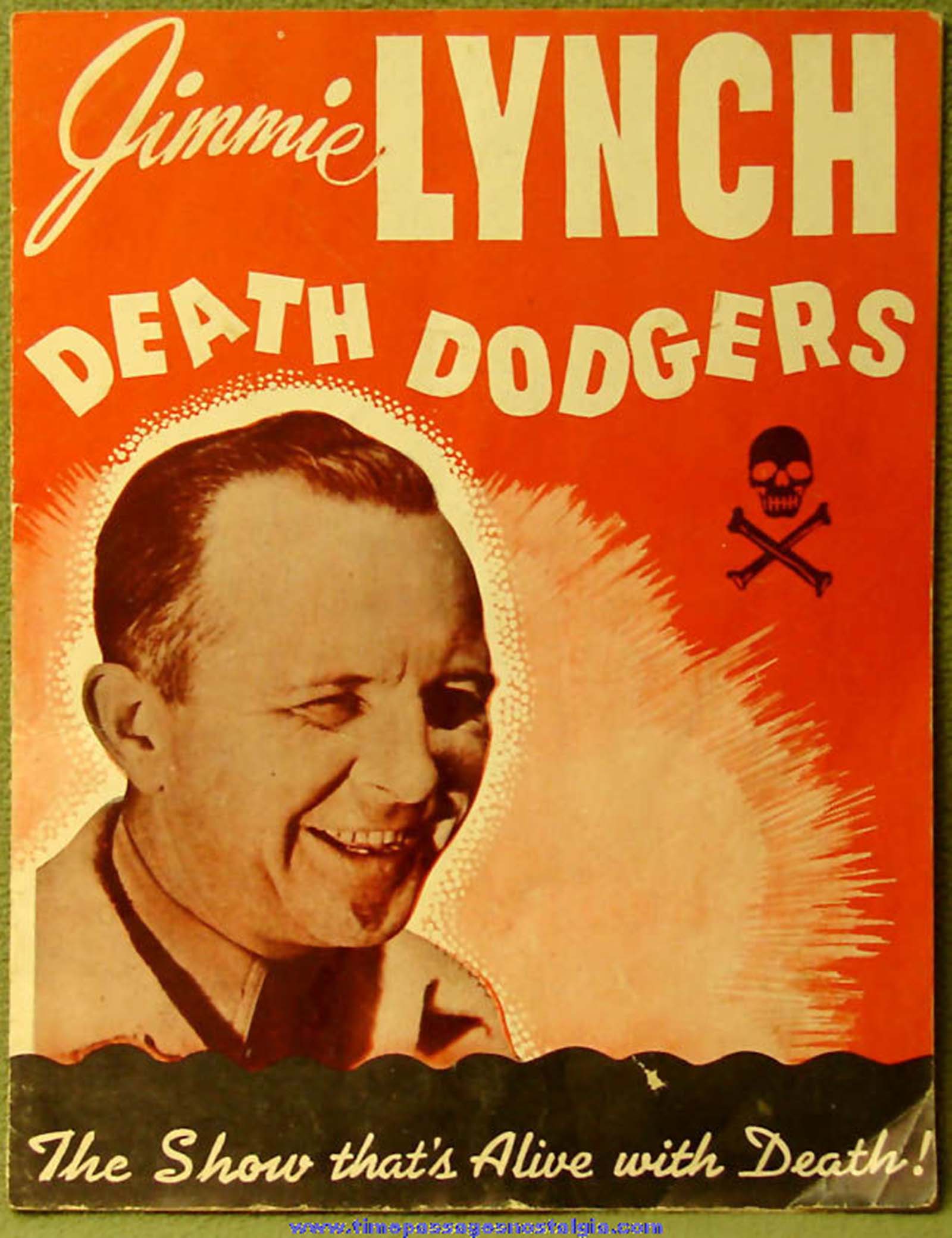
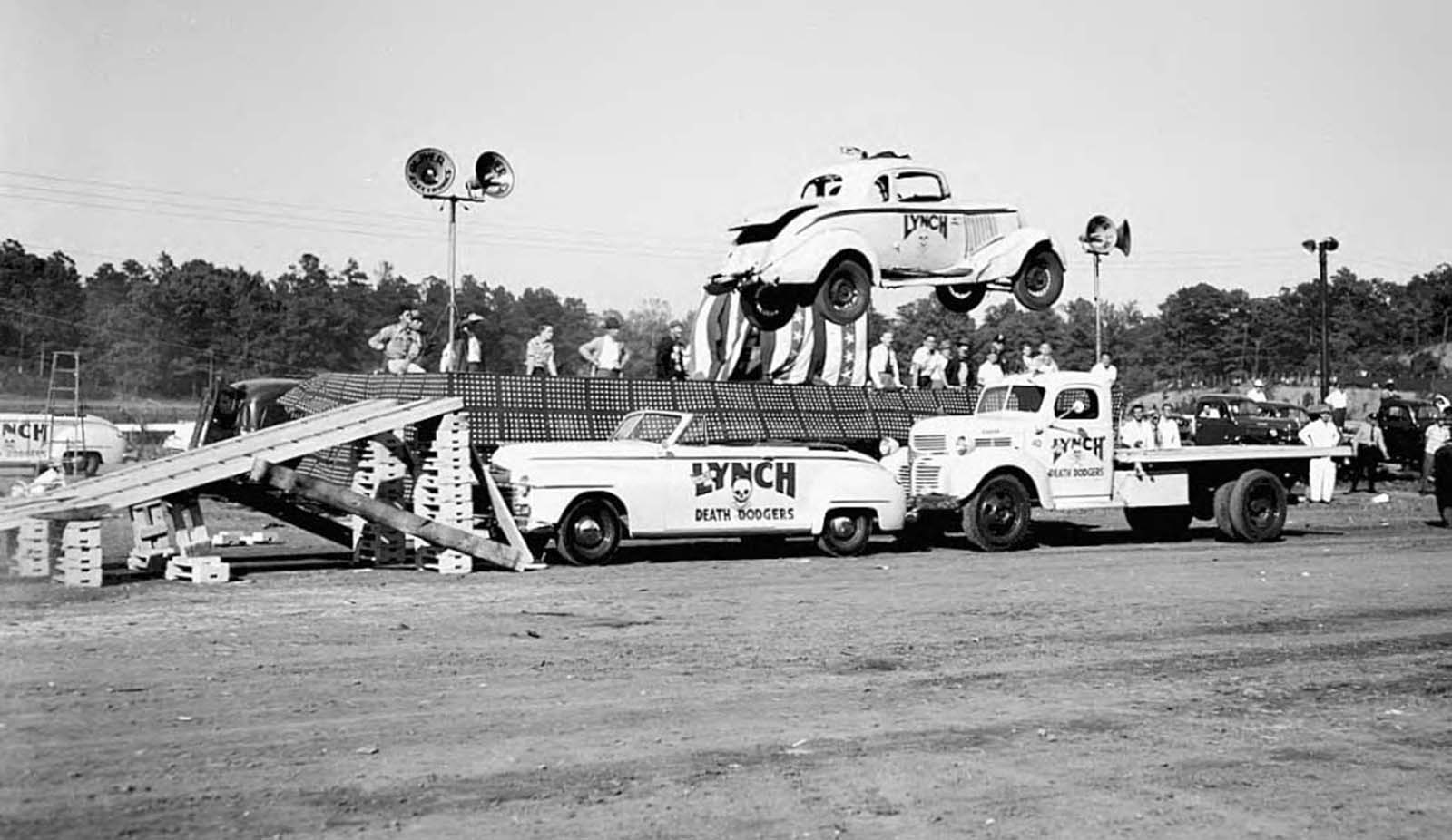
Jimmie Lynch was one of the most recognized names in the stunt driving world. He led his own troupe across the country, performing a rotating lineup of death-defying acts. His crew jumped over cars and trucks, smashed through flaming barriers, and tipped vehicles onto two wheels. Lynch himself performed one of the more unusual stunts in the circuit — he rode a “horse car” on the hood of a vehicle, steering it through a set of hydraulic cables rather than sitting behind the wheel.
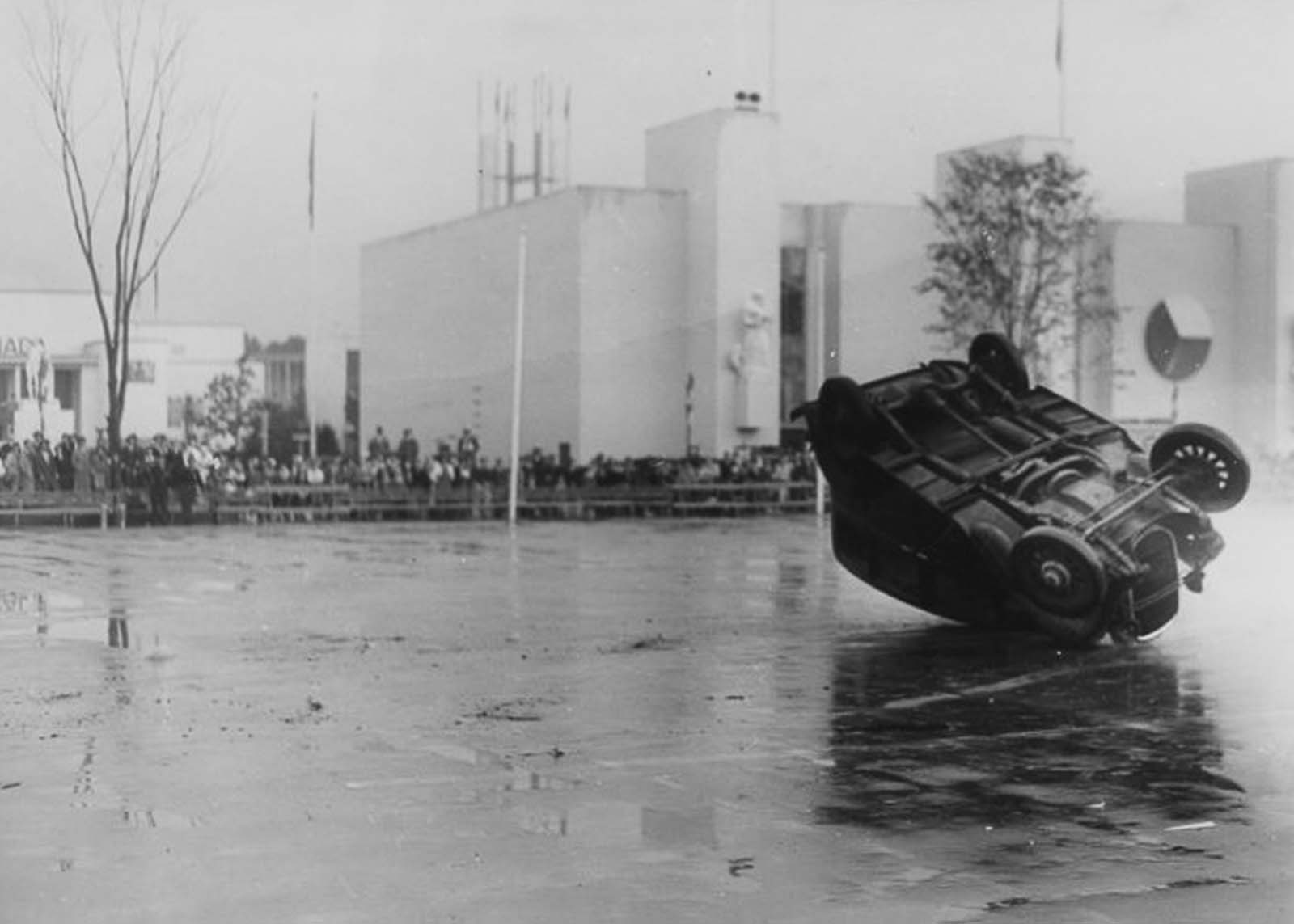
What made Lynch stand out beyond his stunts was his connection to automobile safety. Despite building a career on staged crashes and rollovers, Lynch worked with the National Safety Council. He tested drivers and taught defensive driving — a striking contrast to the mayhem he orchestrated on weekends in front of roaring crowds.
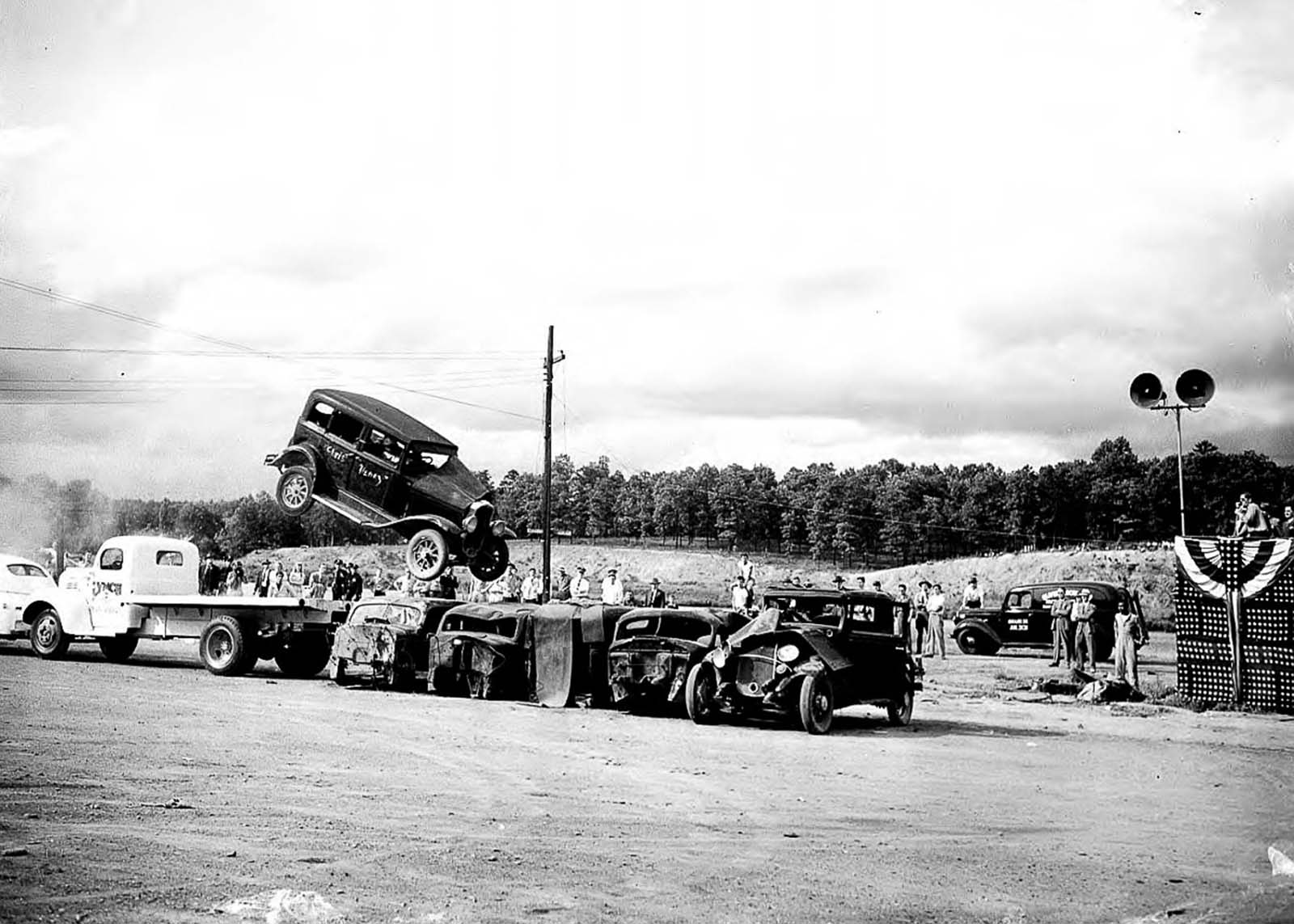
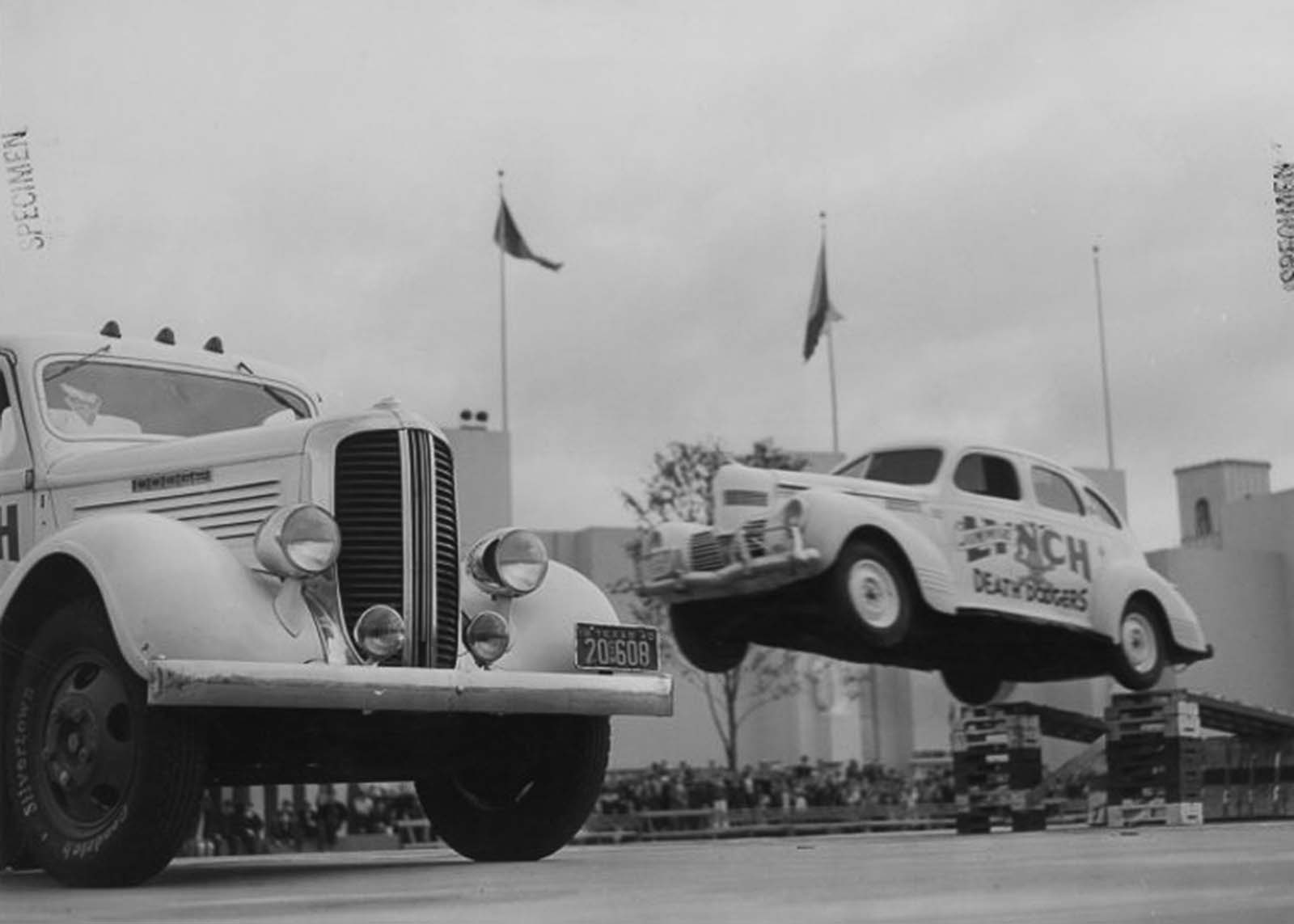
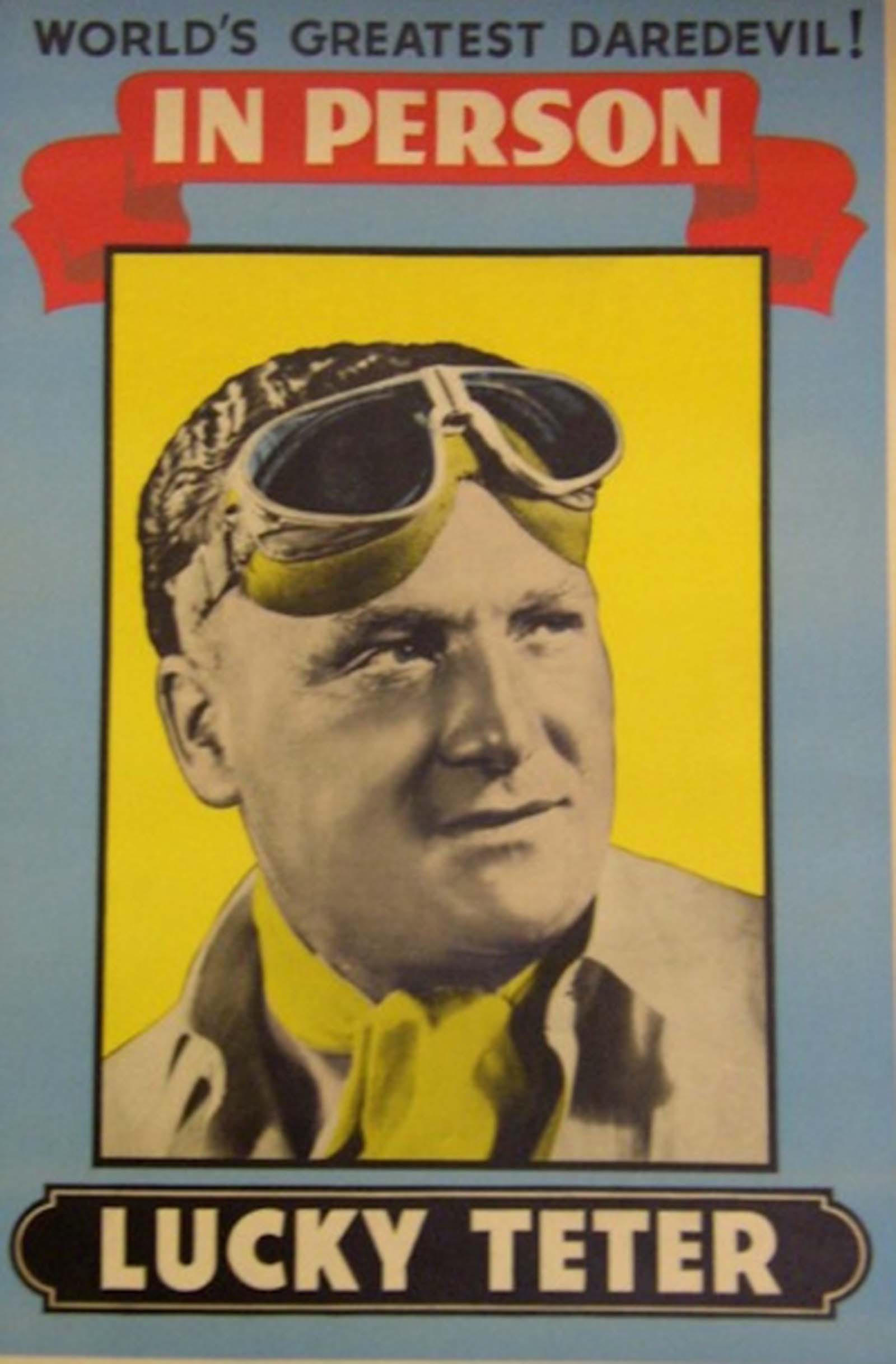
Another major figure was Earl Teter, better known by his nickname “Lucky.” Teter formed one of the era’s most famous stunt troupes, which he called the Hell Drivers. He was the first to use that name, and it stuck — eventually being adopted by other daredevil groups around the country. Teter’s troupe pushed the limits of what a car could do in front of an audience, and his shows drew massive crowds wherever they went.
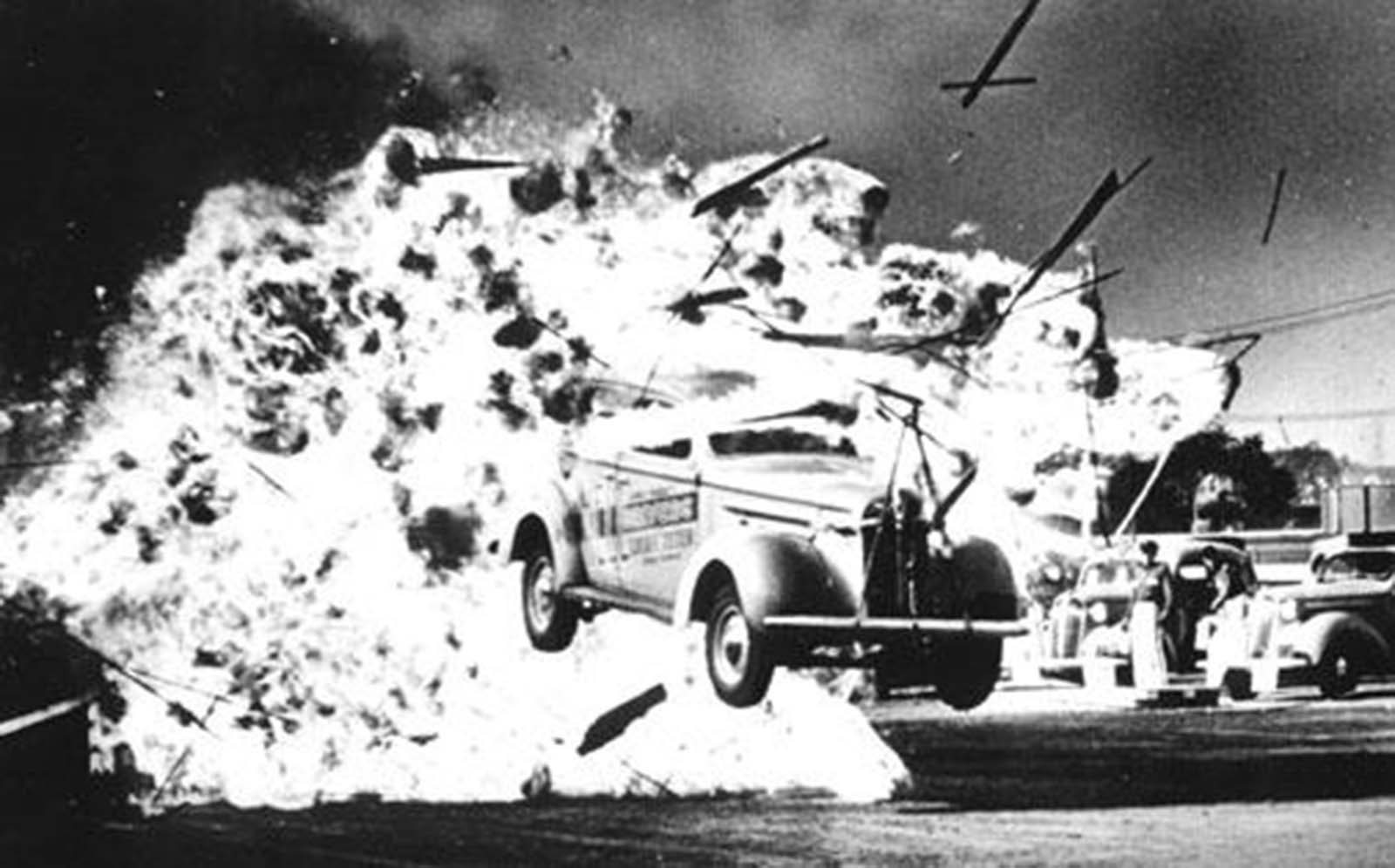
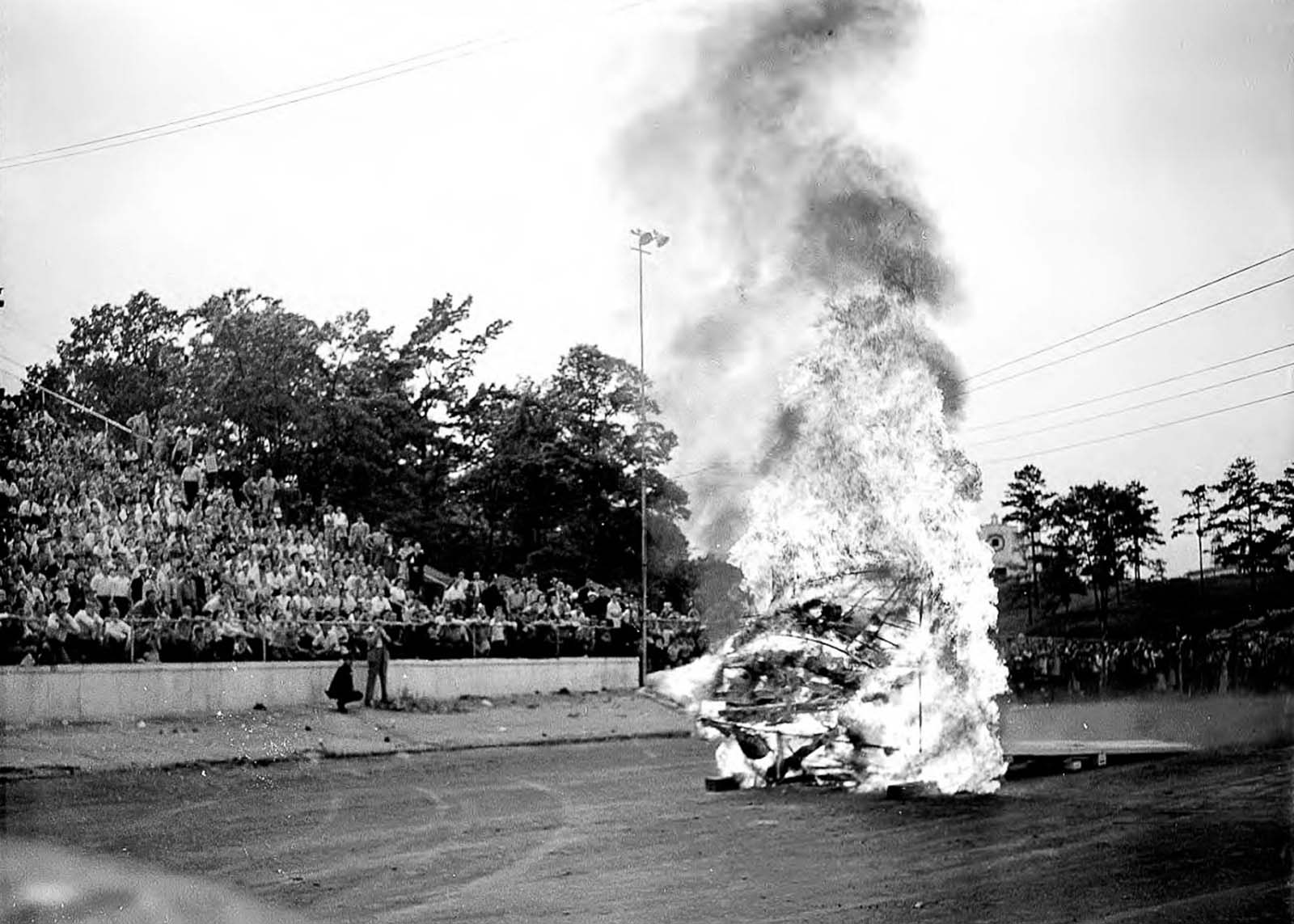
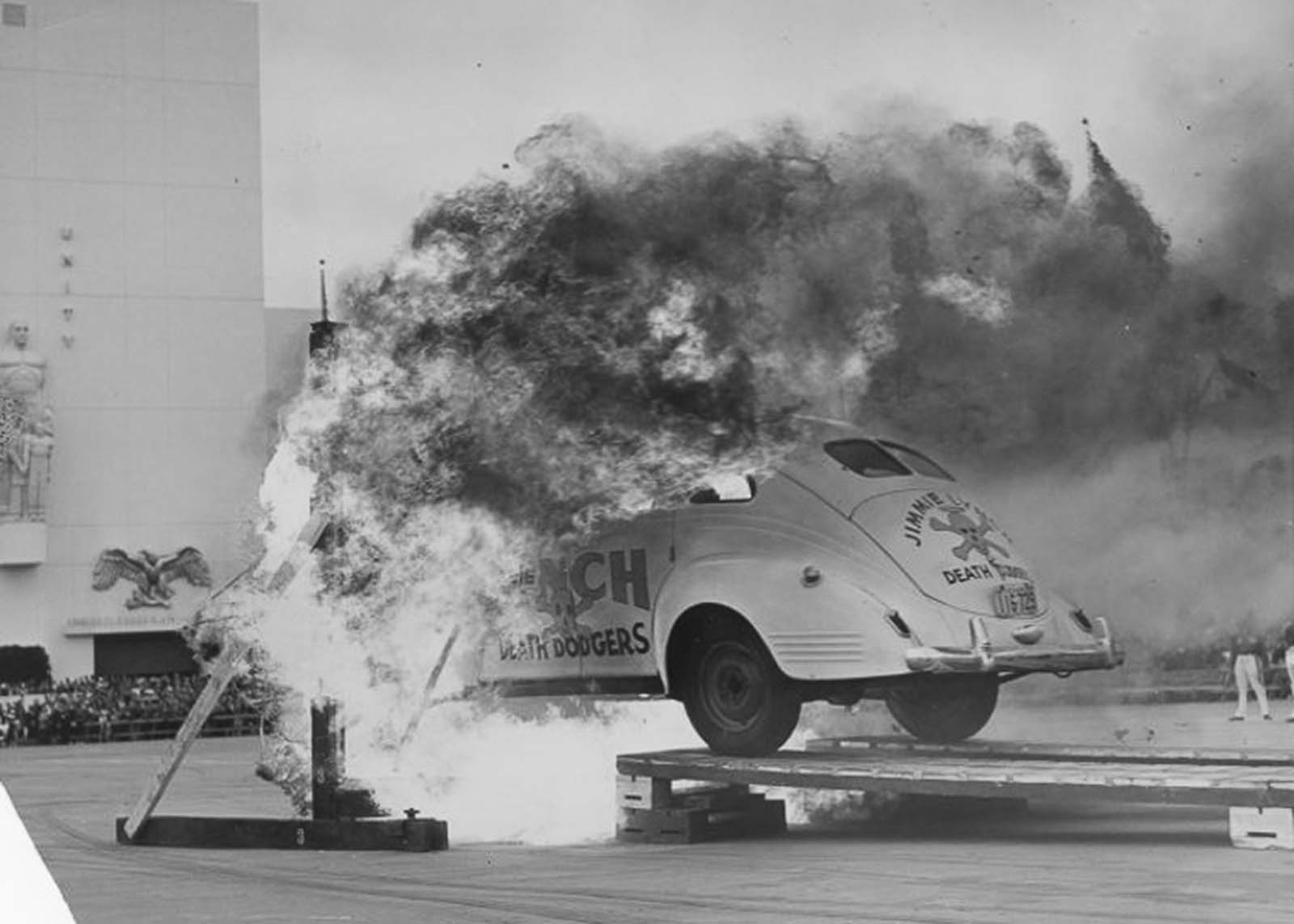
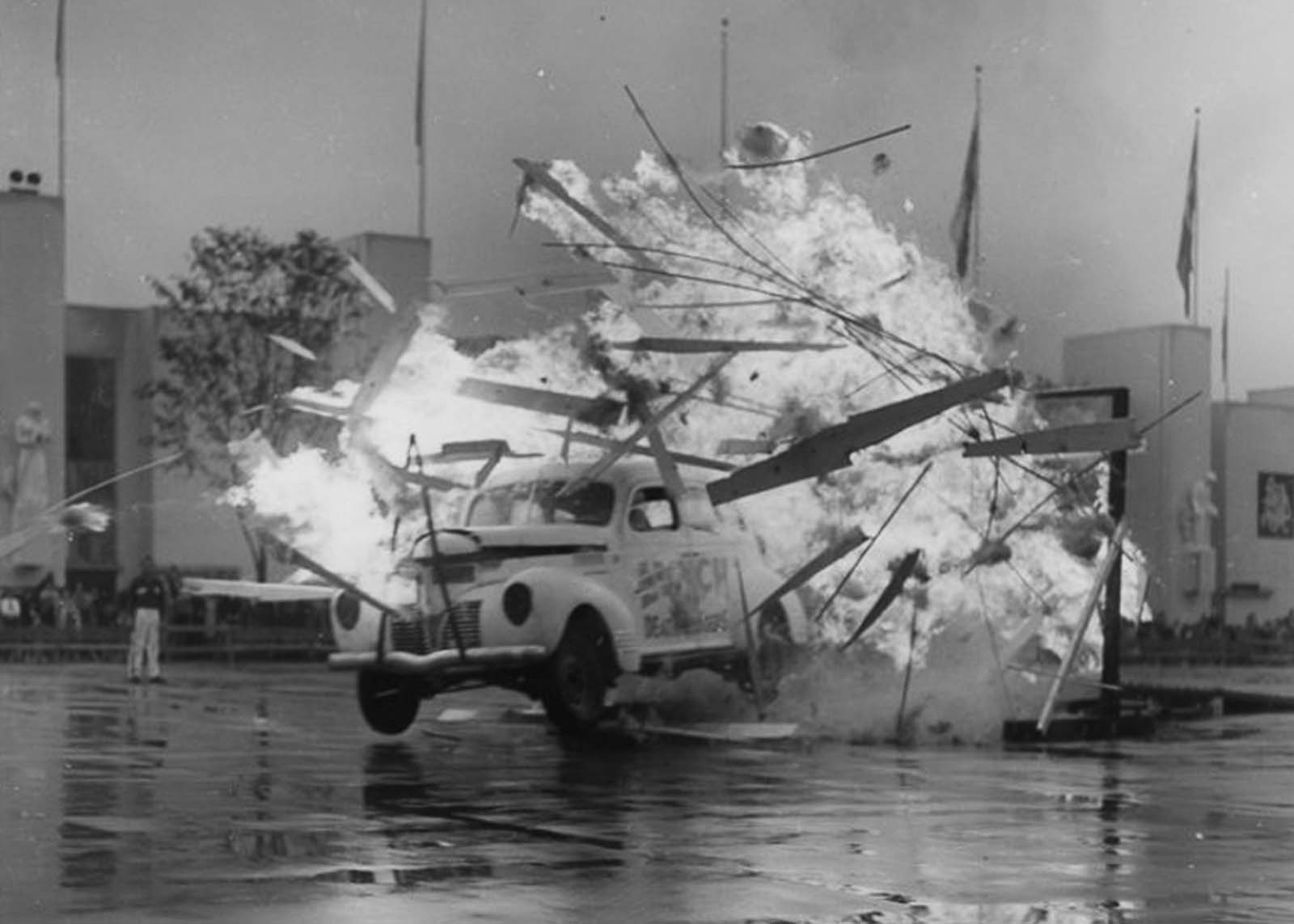
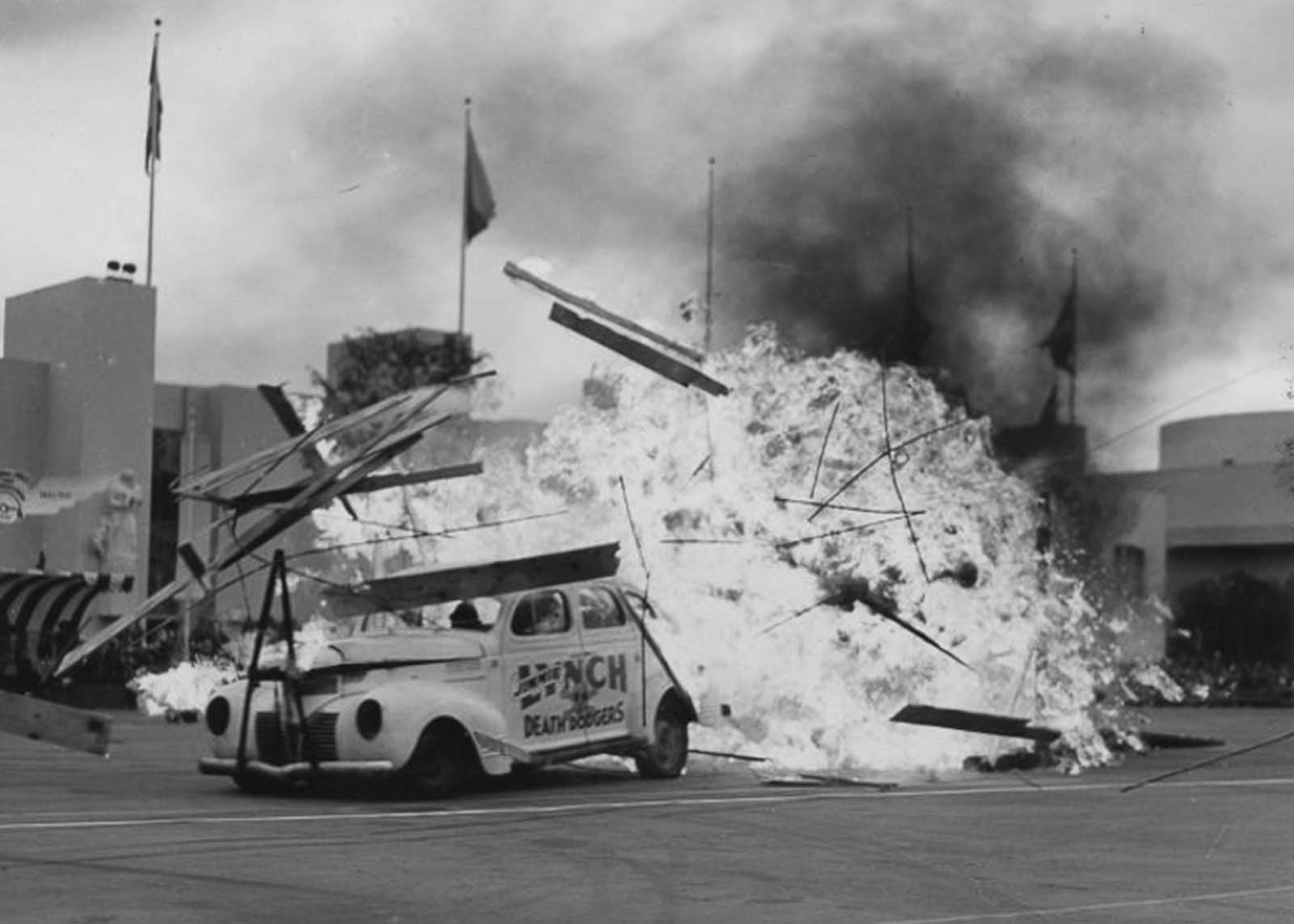
One of the most dramatic stunts in any daredevil show was the firewall drive. A driver would build up speed and crash straight through a wall constructed to burn. The heat, the splintering wood, and the burst of flame made it one of the most visually striking moments a live audience could witness.
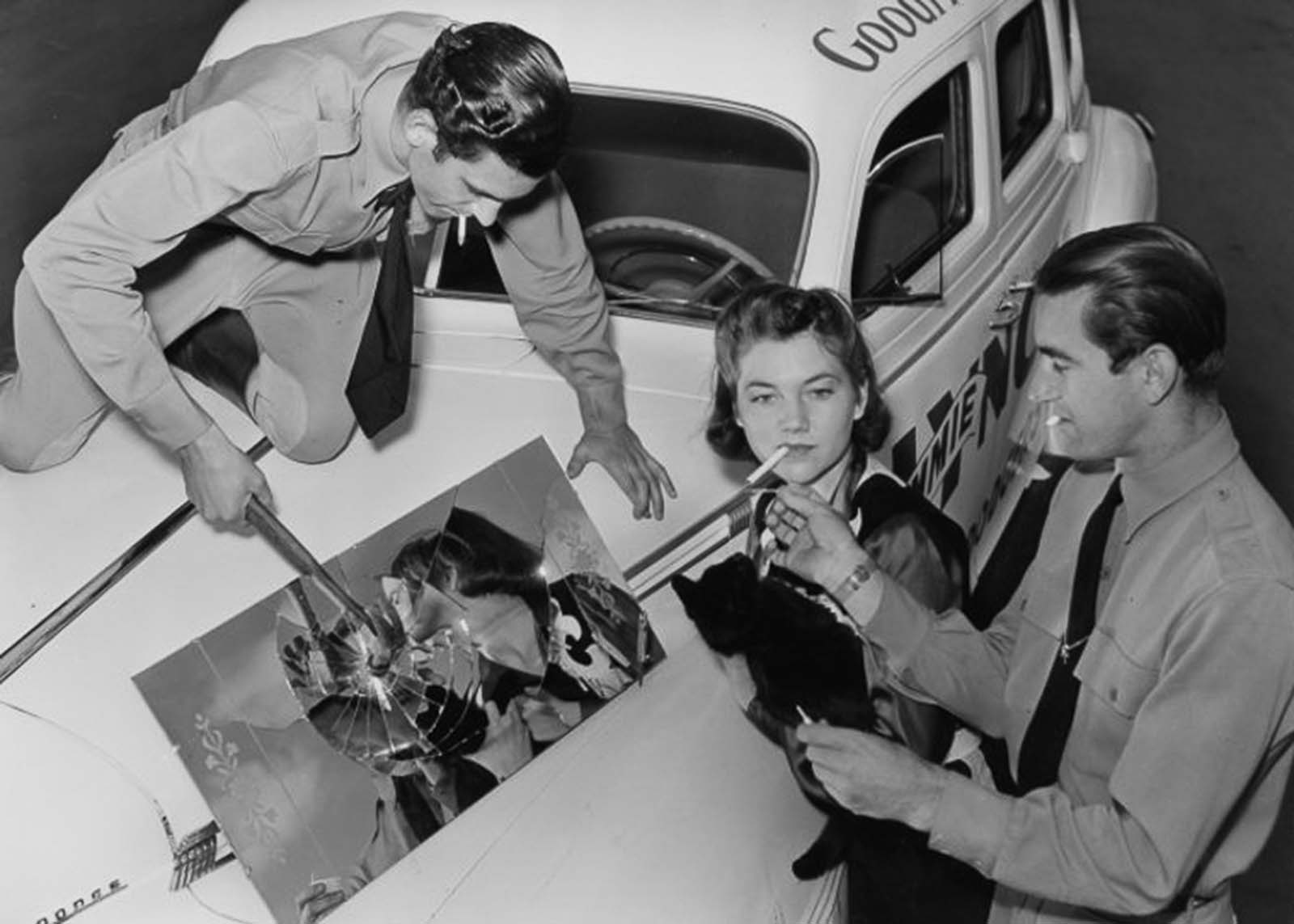
Troupes like the Death Dodgers leaned into the spectacle at every turn. They developed a signature identity, complete with their own brand of showmanship. Before performances, Death Dodgers would smash mirrors in front of the crowd — a deliberate gesture to signal that they didn’t rely on luck or superstition. Their stunts spoke for themselves.
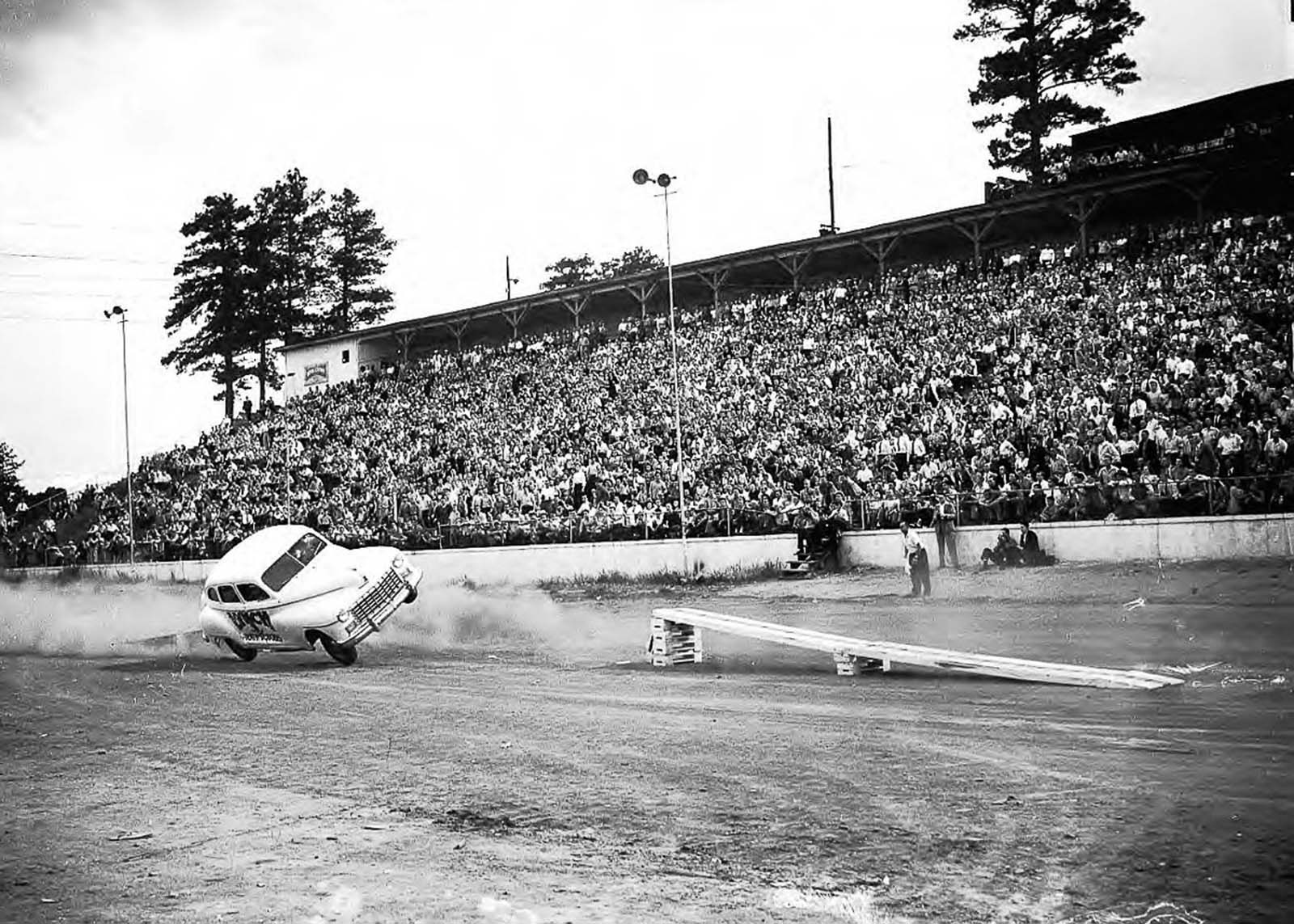
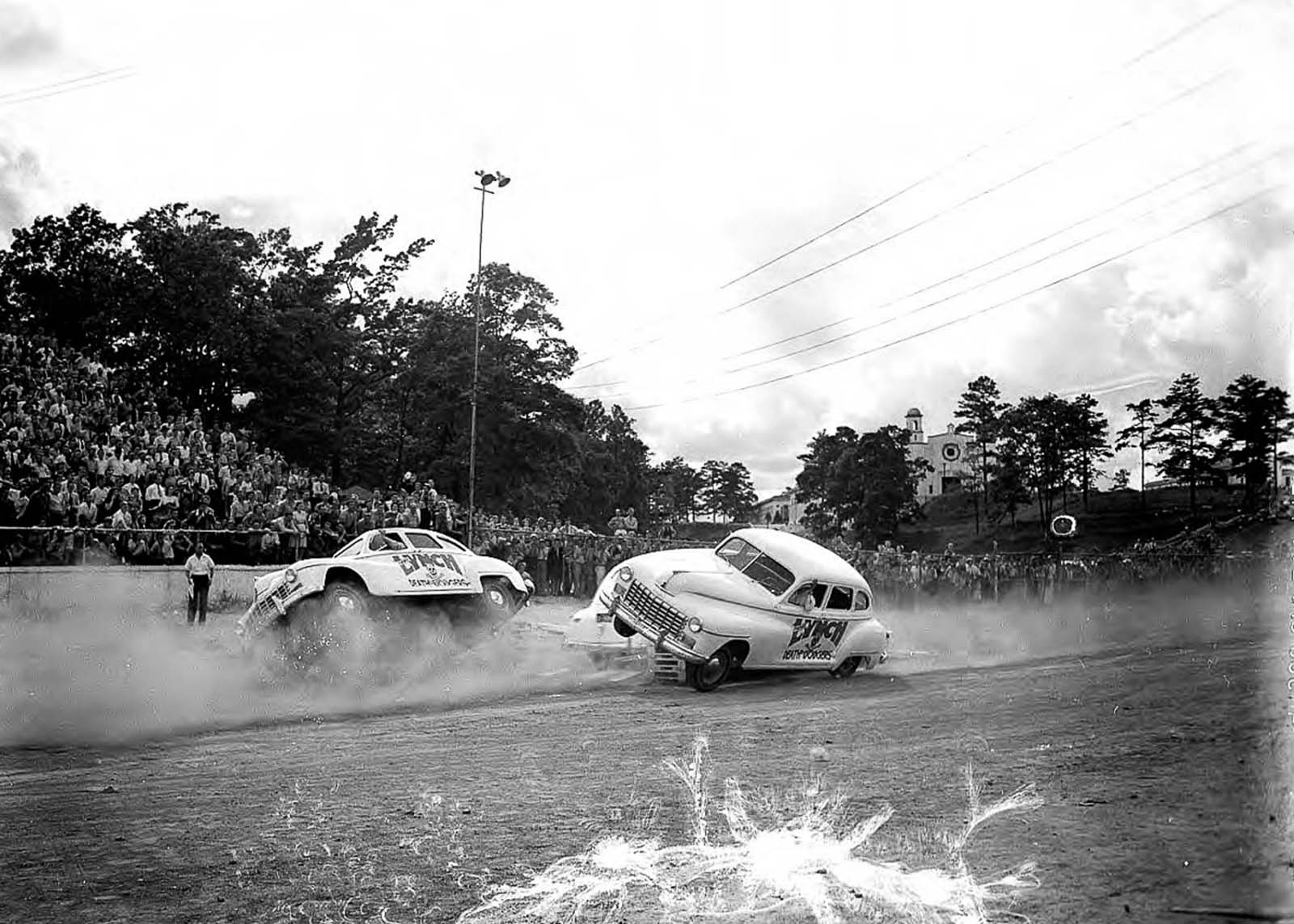
The two-wheel stunt was another crowd favorite. Drivers would hit a ramp at just the right angle to lift one side of the car off the ground, then race along balancing the vehicle on its two side wheels. Doing it with a single car was dangerous enough. Doing it in tandem with another driver required a level of coordination that left little room for error.
The Death Dodgers made a point of confronting superstition head-on. By breaking mirrors before a show, they sent a clear message to spectators: what they were about to see was skill, not luck.
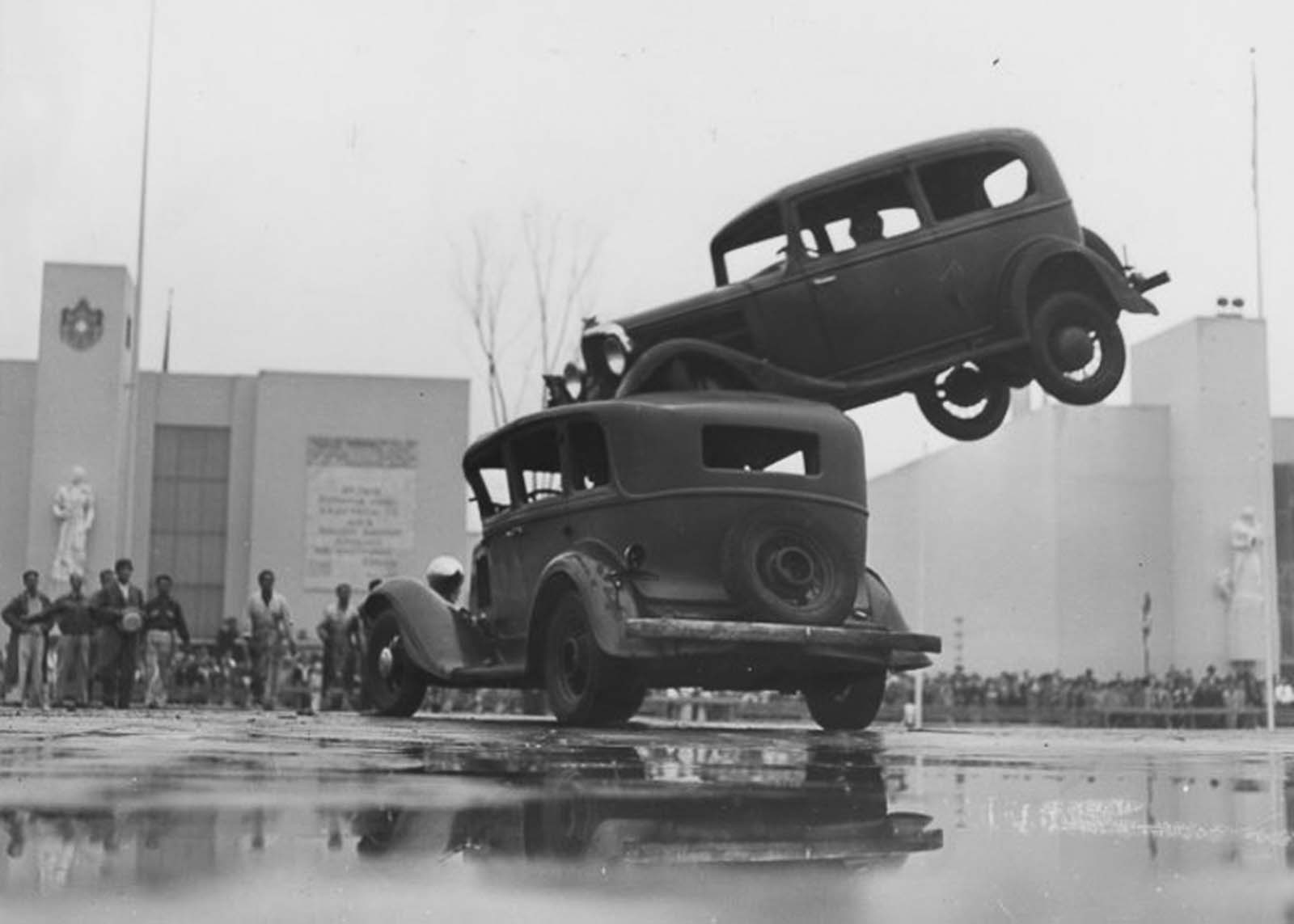
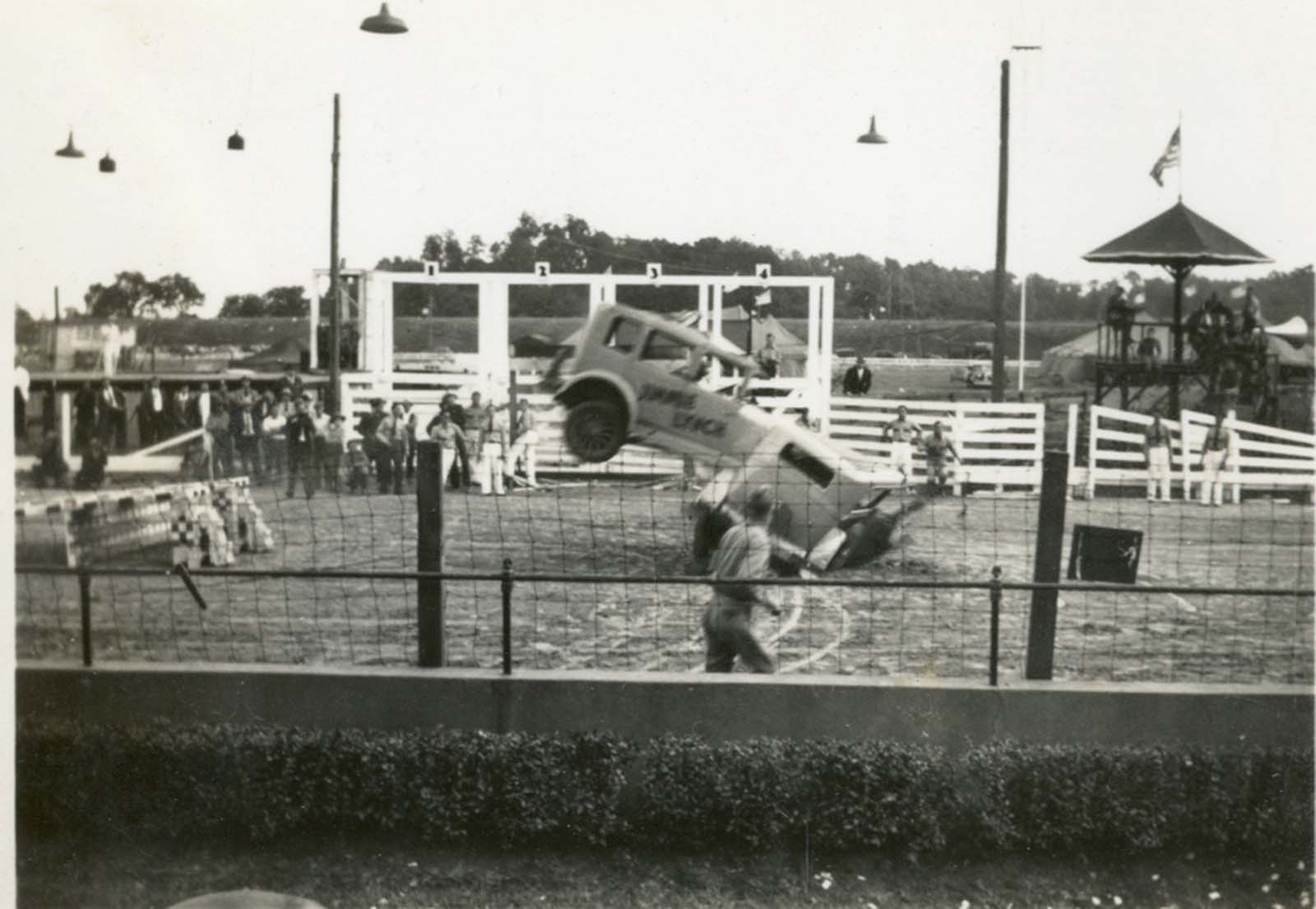
Not every stunt went according to plan. Ramp jumps were among the most unpredictable acts on the circuit. The margin between a clean landing and a full crash was measured in inches. Speed, ramp angle, wind, and the weight of the car all had to line up perfectly. When they didn’t, the result was immediate and violent.
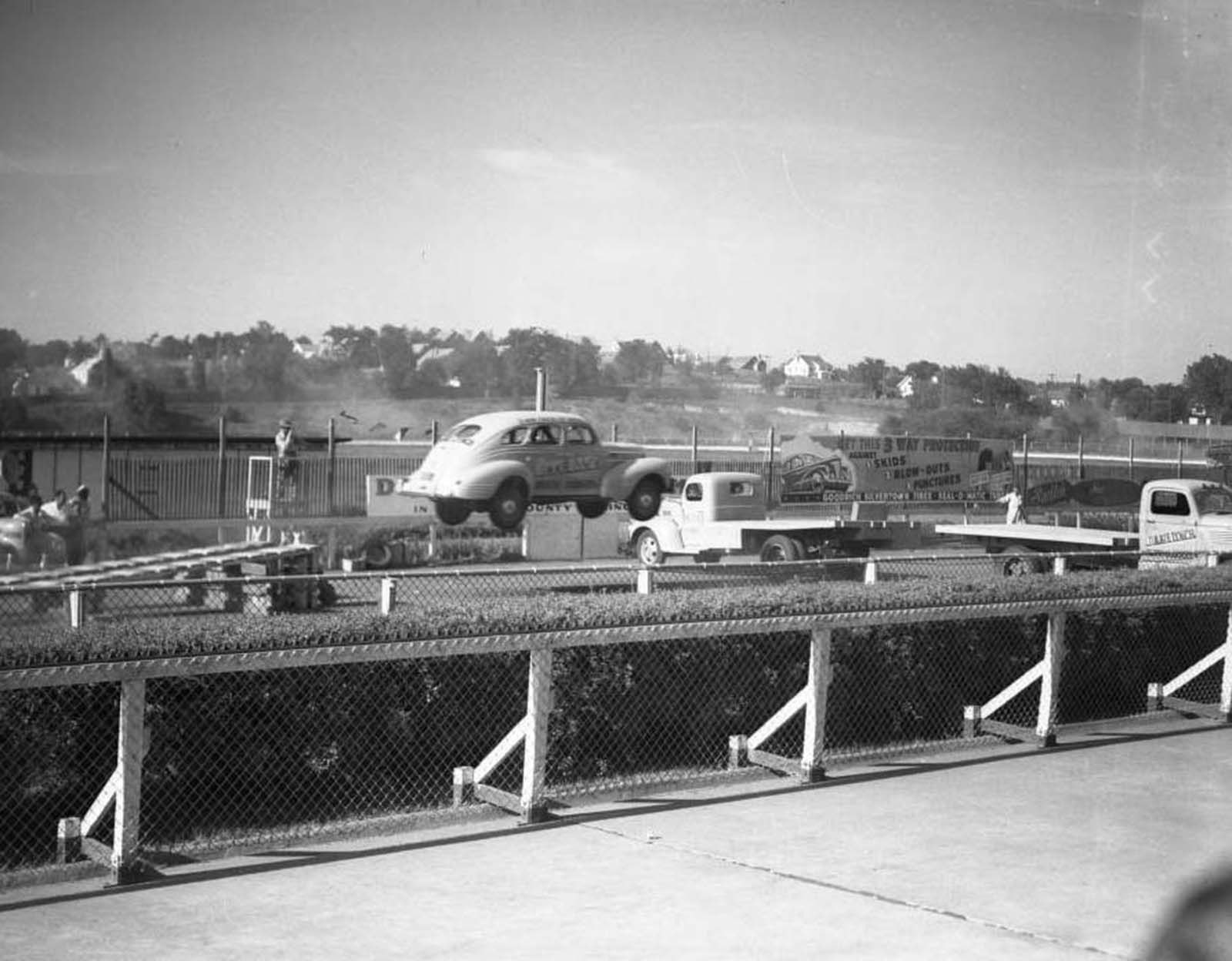
At the Rutland Fairgrounds, a jumping car came up short and slammed into the parked vehicle it was meant to clear. The image of that moment captures exactly what made these shows so electric — and so deadly. The crowd came for the danger, and sometimes the danger won.
Earl Teter’s career ended the same way many feared it would. During a jump over two Greyhound buses, his car failed to clear and the stunt turned fatal. The man who coined the term “Hell Drivers” and built one of the most recognizable acts on the circuit died doing what had made him famous.
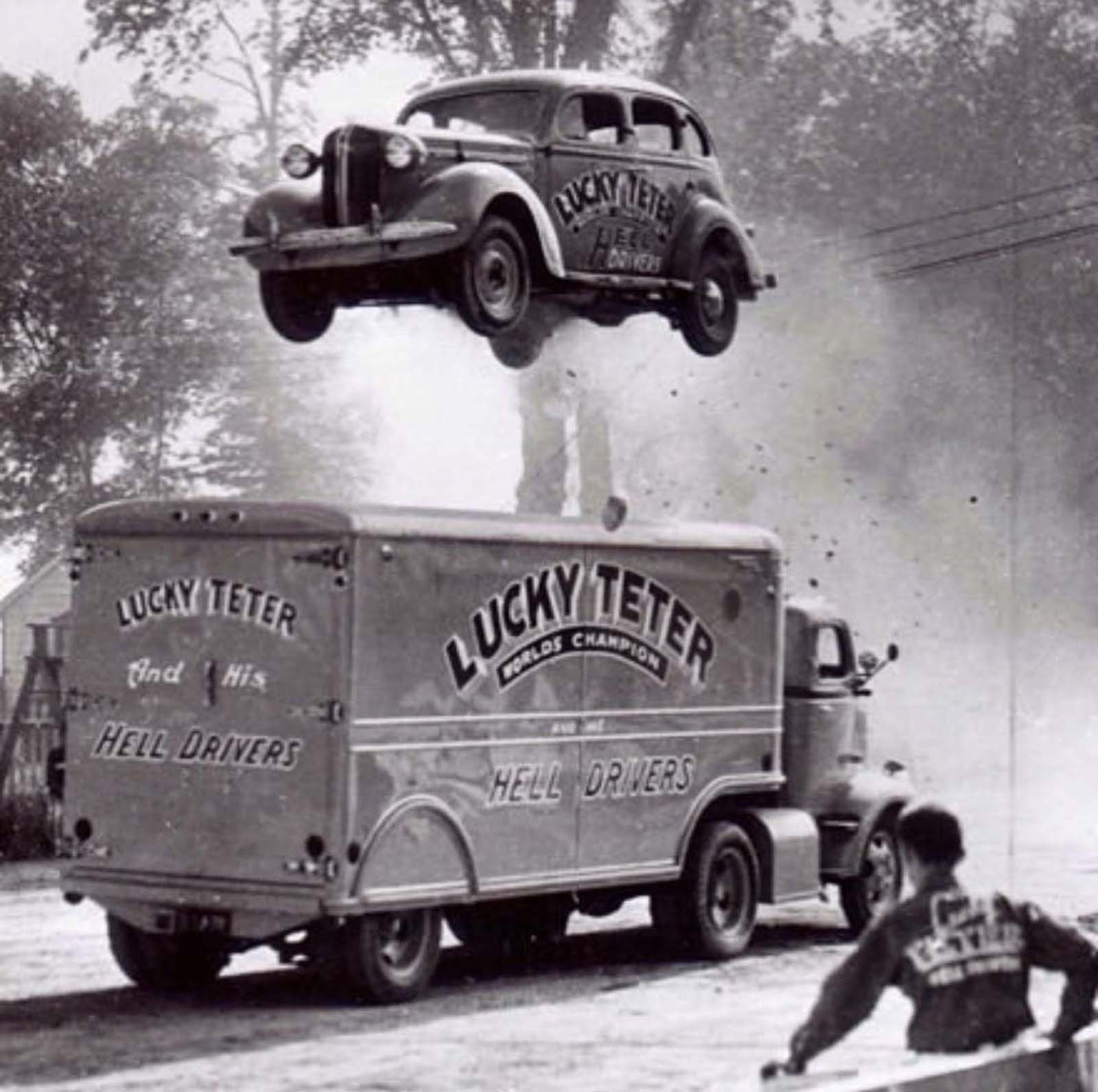
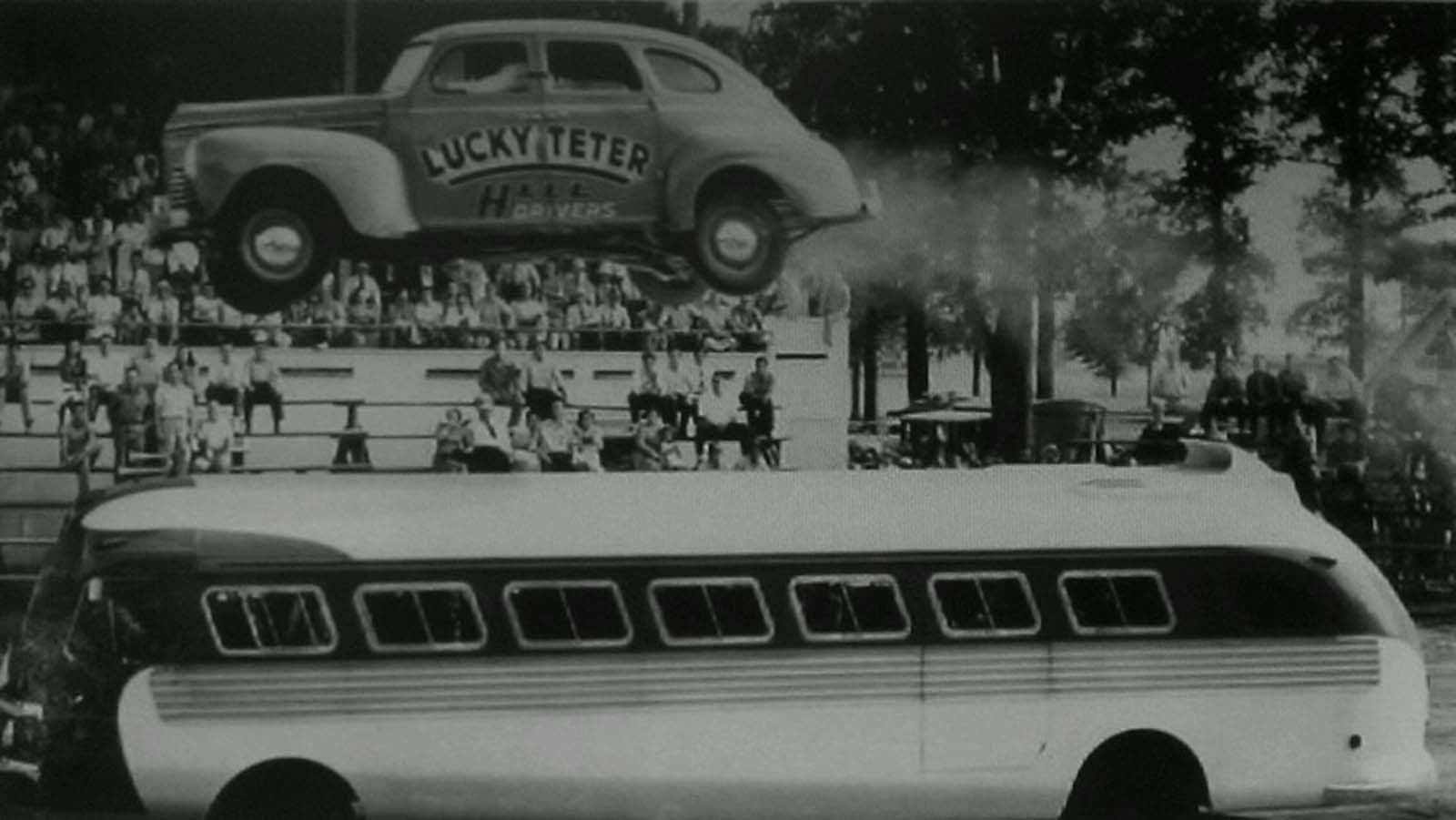
These historical photographs offer a direct look at the stunt driving world of the 1930s — the ramps, the fire, the two-wheel runs, and the crashes that were all part of a single afternoon’s entertainment. They document a time when live danger was the draw, and the men behind the wheel made a living by doing what most people wouldn’t dare think about.