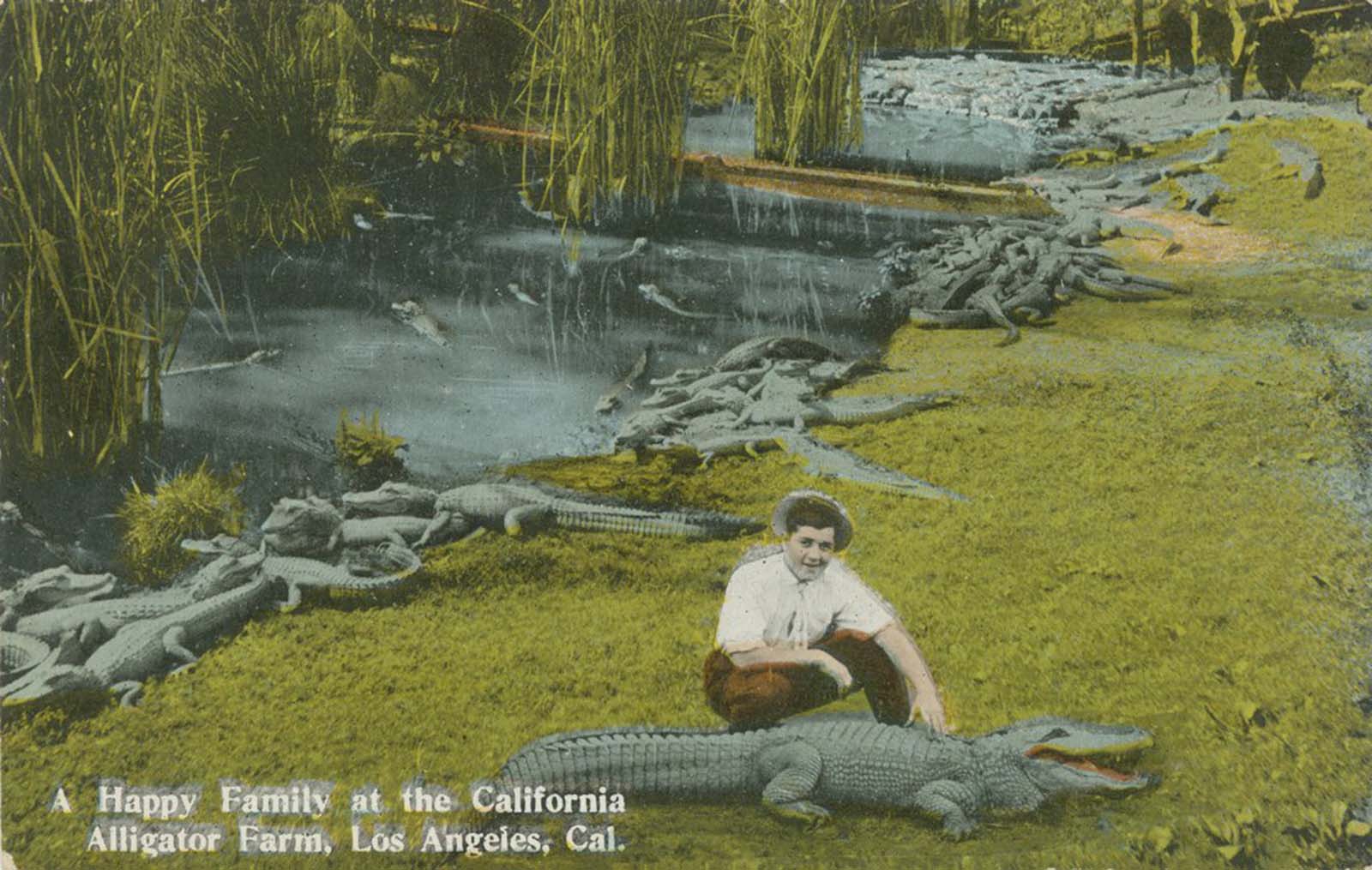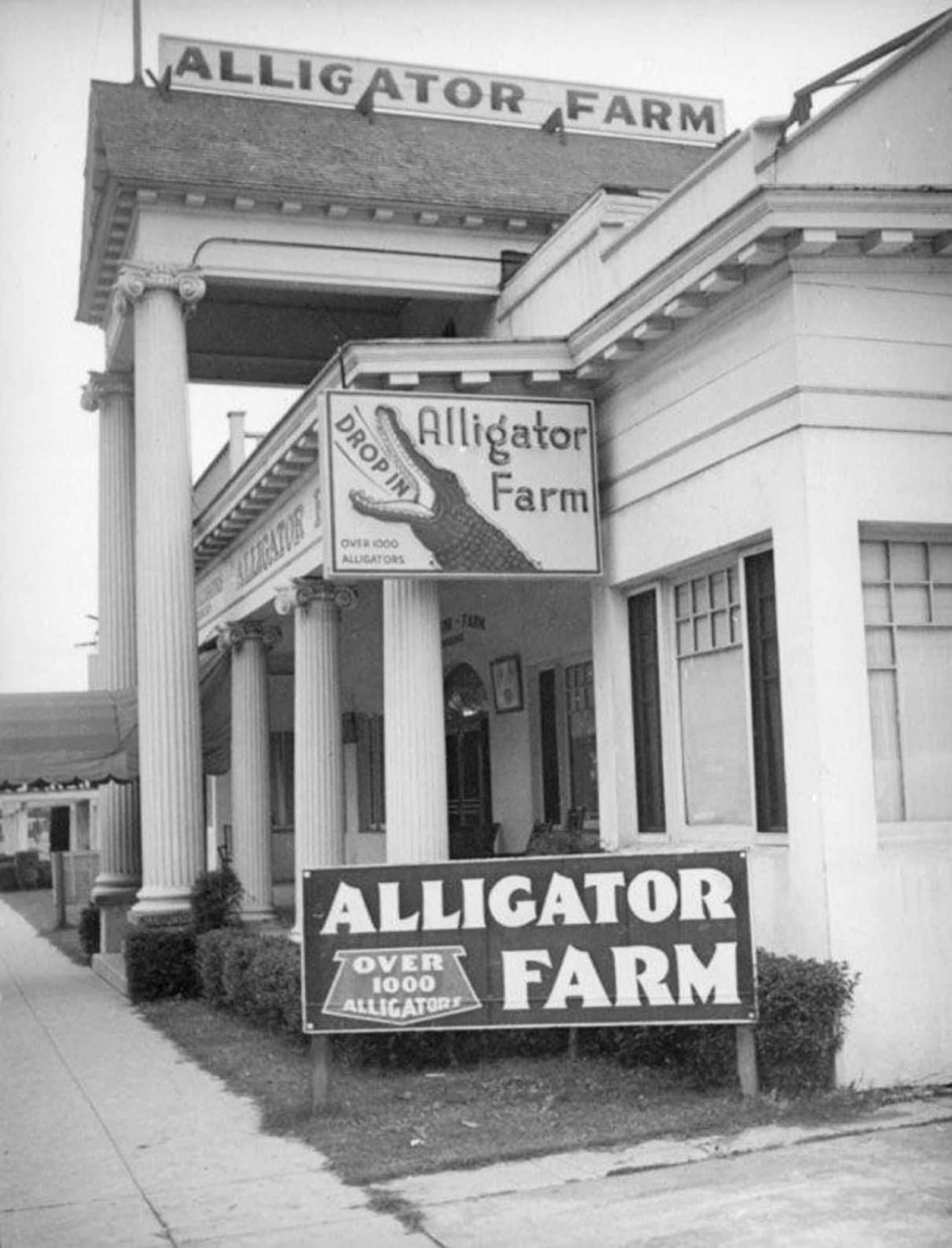

In 1907, two alligator farmers named Joseph Campbell and Francis Victor Earnest Sr. packed up their operation in Hot Springs, Arkansas, and moved it to Los Angeles. They set up shop right next to the Selig Zoo, and what followed was one of the strangest tourist attractions in American history. For nearly eight decades, visitors of all ages came to see, touch, and even ride live alligators — and for a long time, very few people thought anything of it.
The farm was massive. It held more than 1,000 reptile specimens spread across four buildings, including over 100 displays of snakes and lizards collected from around the world. Snapping turtles and giant tortoises shared space with alligators of every size, from hatchlings just a few inches long to full-grown adults stretching thirteen feet. By any measure, it was the largest reptile collection on Earth at the time.
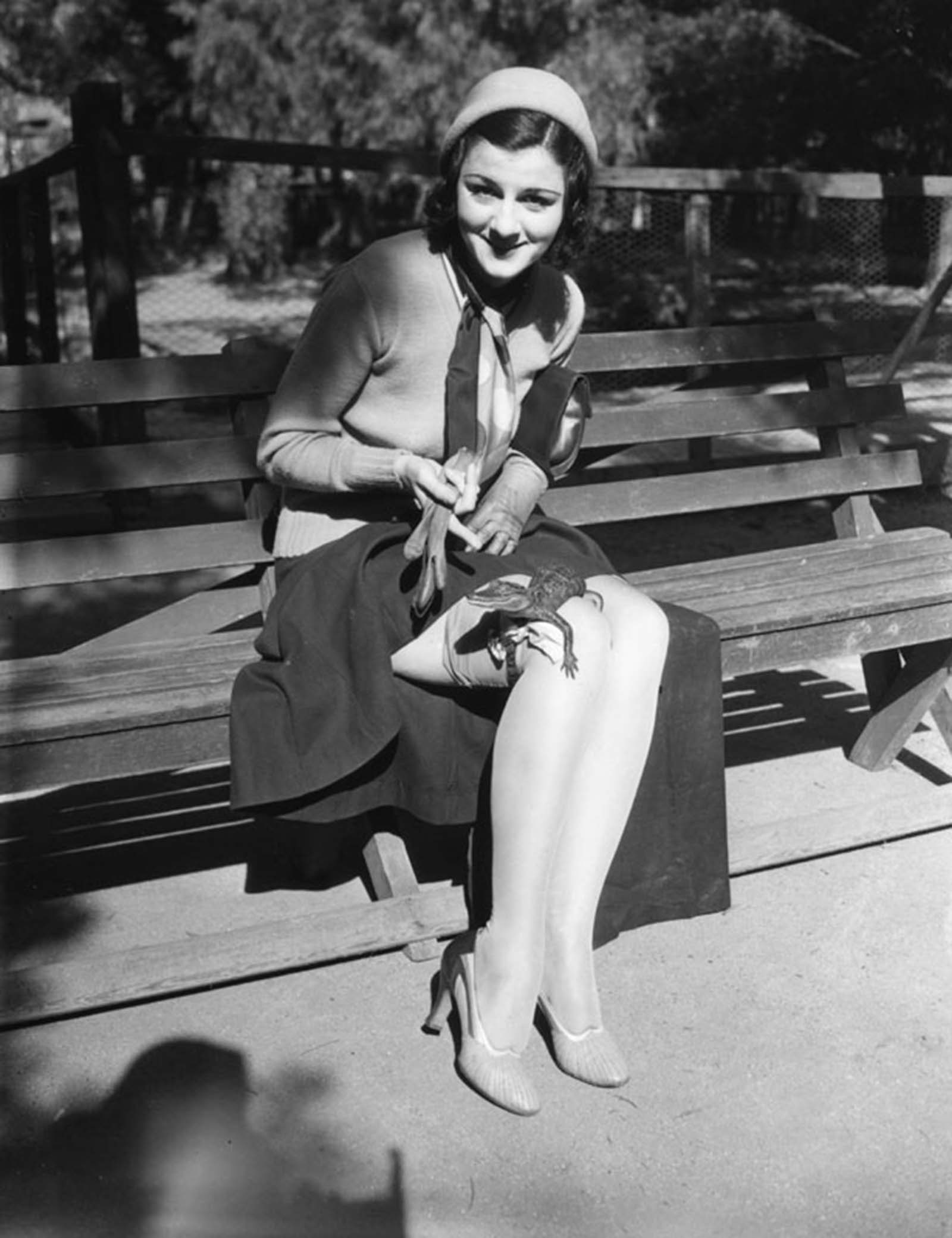
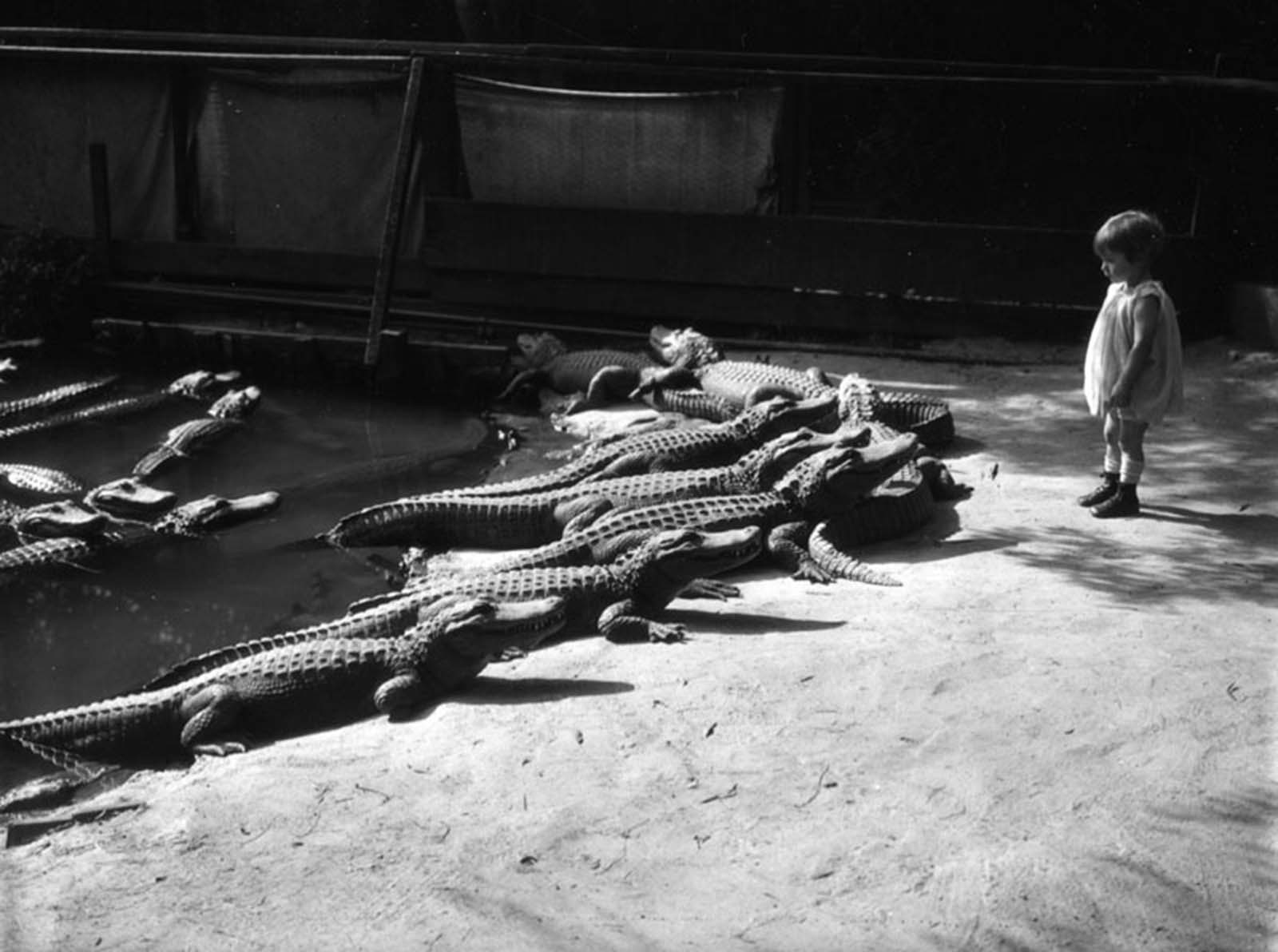
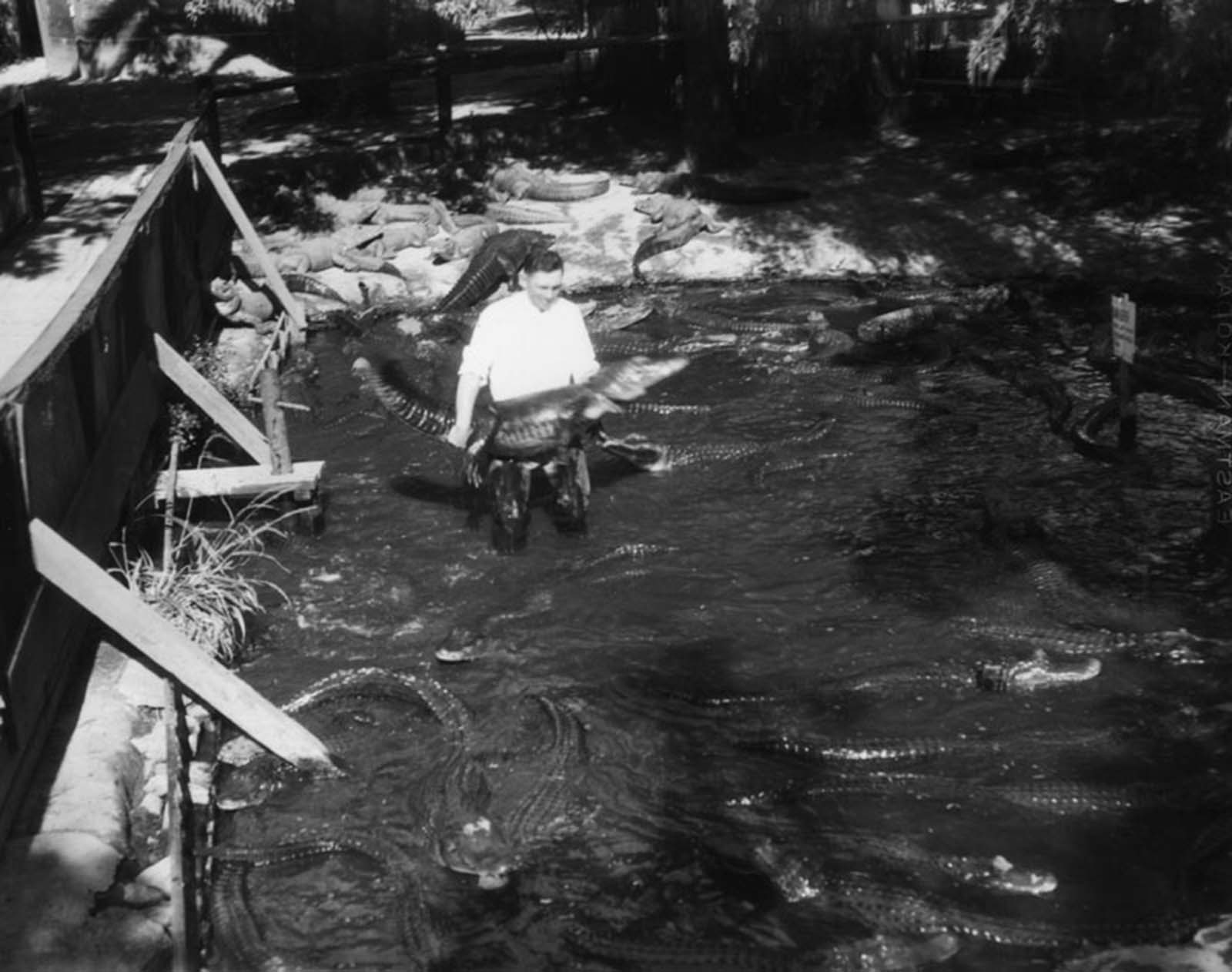
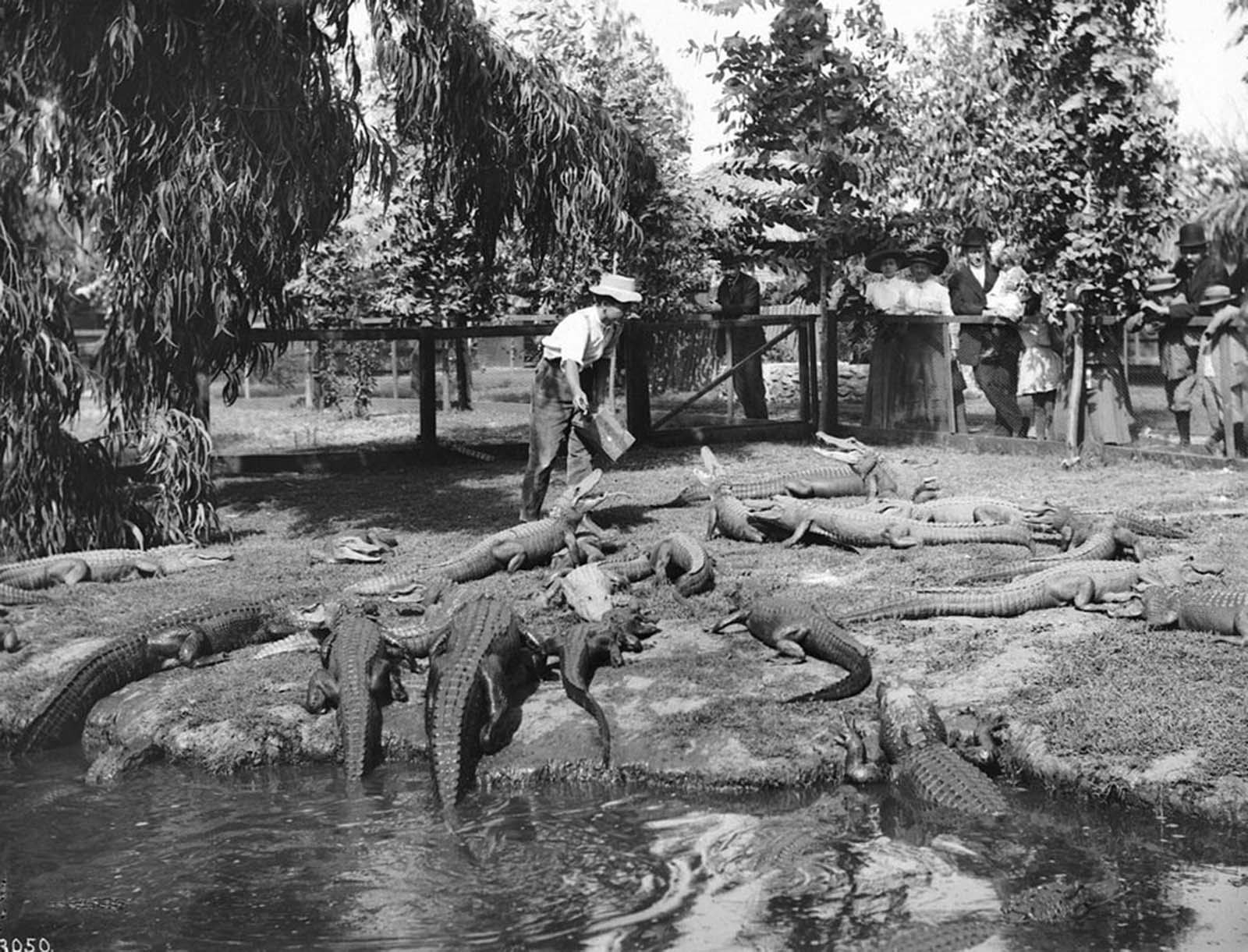
Twenty separate ponds kept the alligators organized by size. The smallest animals were easy for visitors to approach — and approach them they did. There were signs posted around the property warning people not to spit on the alligators, punch them, or throw stones at them. Those signs were largely ignored. Adults and children regularly reached in to touch the reptiles, and staff made no real effort to stop them.
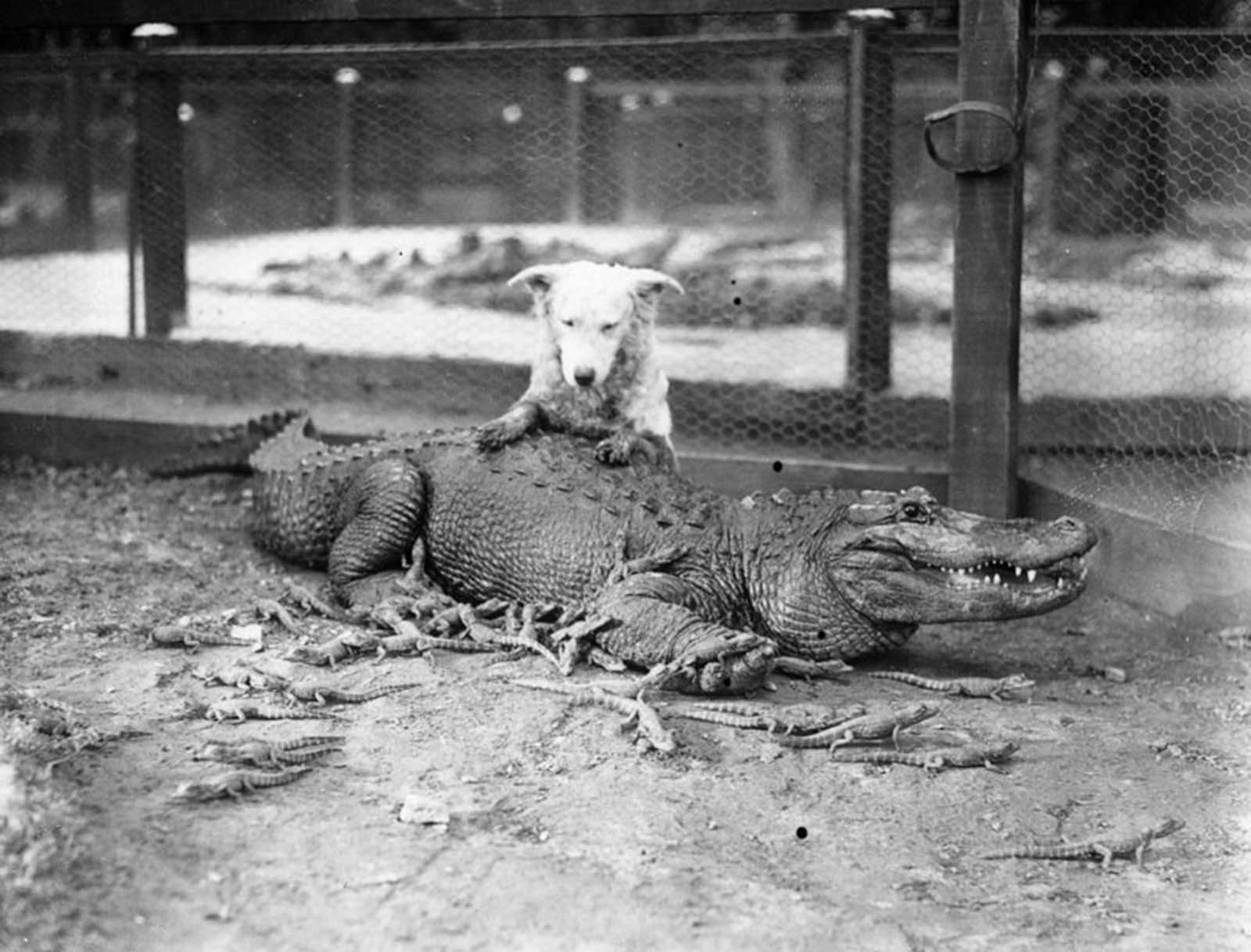
The farm welcomed essentially anyone — including, on many occasions, family pets. Dogs accompanied their owners through the grounds without restriction, wandering through an environment that would be unthinkable at any modern zoo or wildlife facility.
For 25 cents, parents could sit their children on top of a live alligator and take a photograph. The farm went even further with its most talked-about attraction: alligator rides. Children were placed in a specially made saddle strapped to a gator’s back and rode it around the edge of a pond. There was no fence between the child and the water, and the animal beneath them was very much alive.
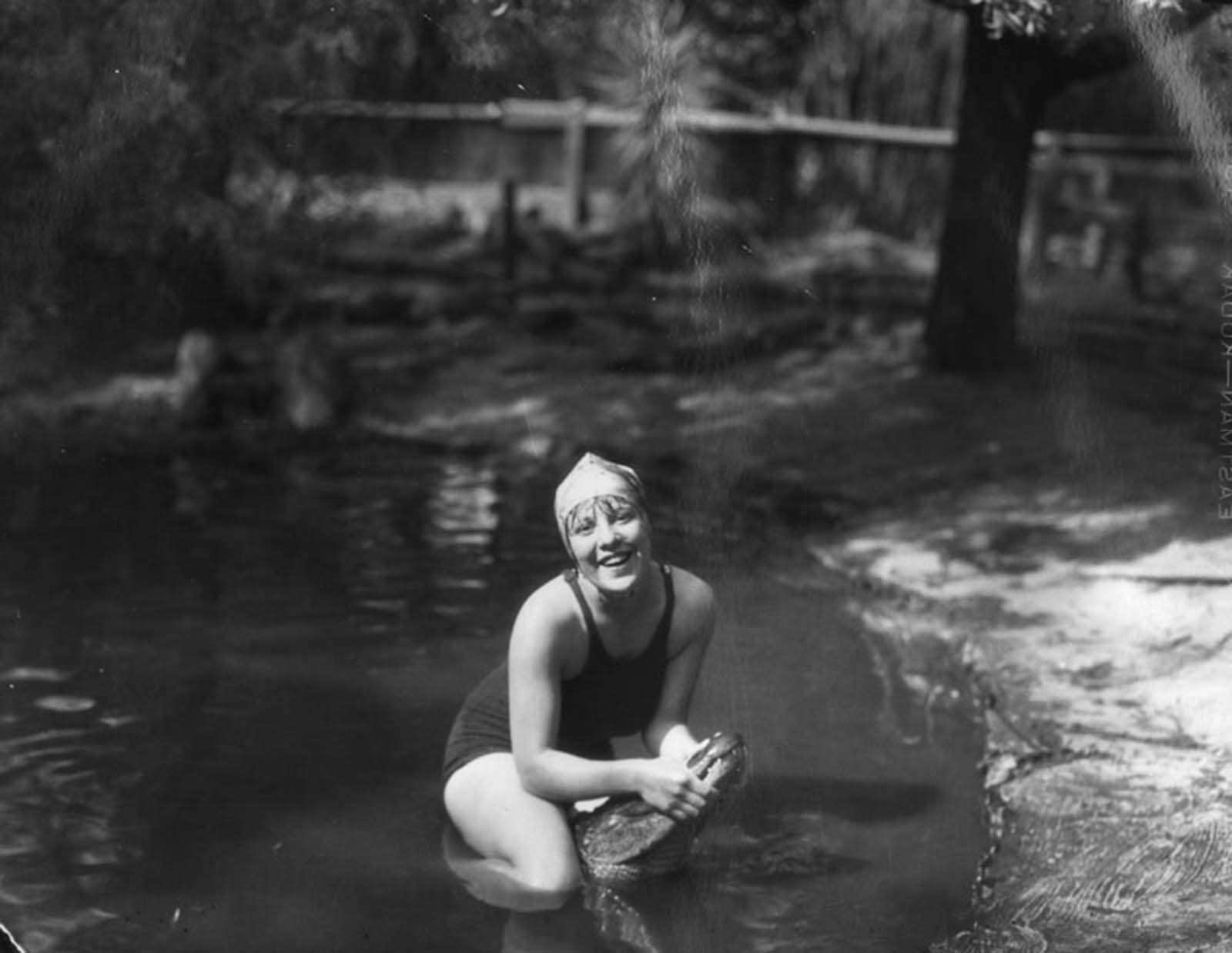
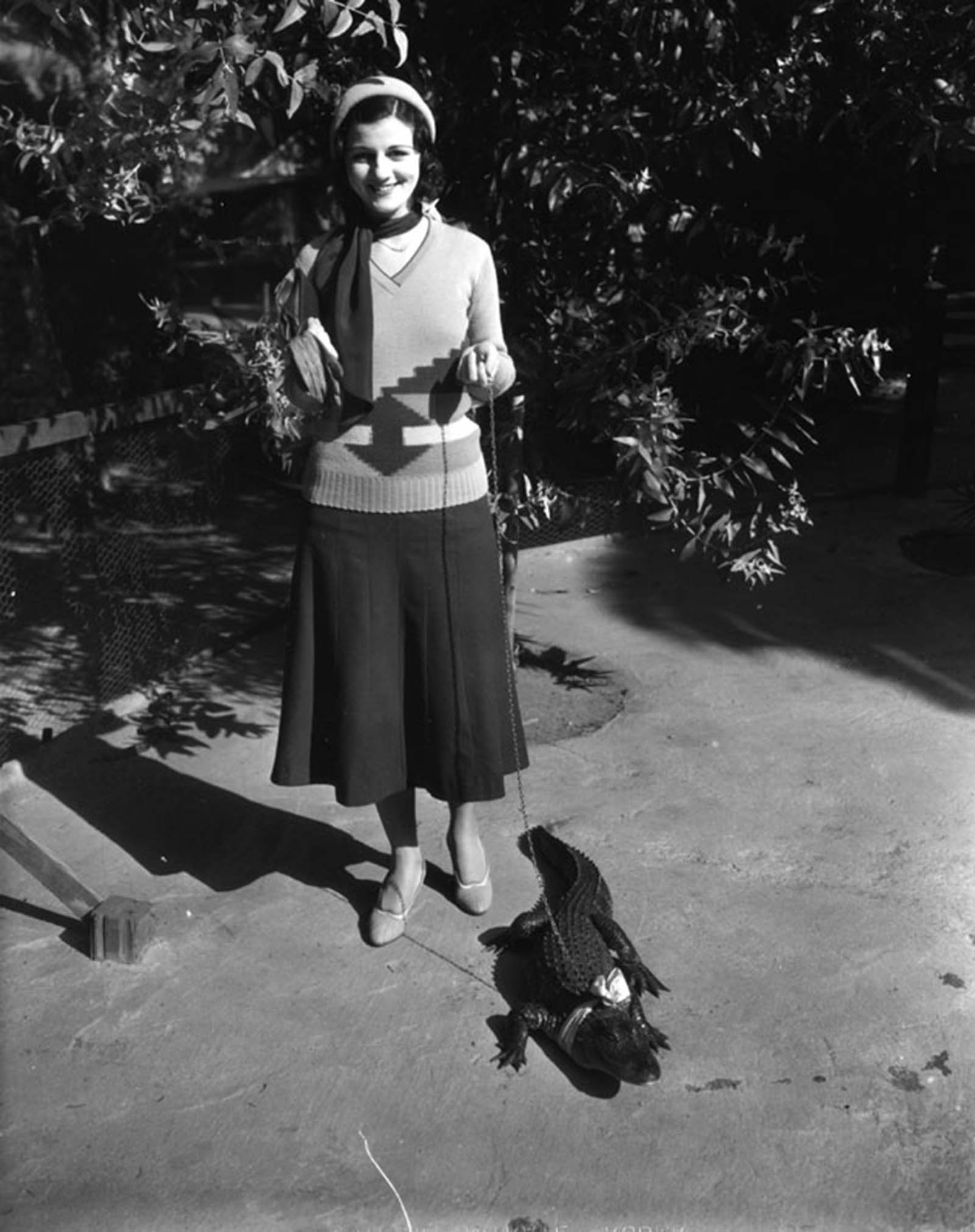
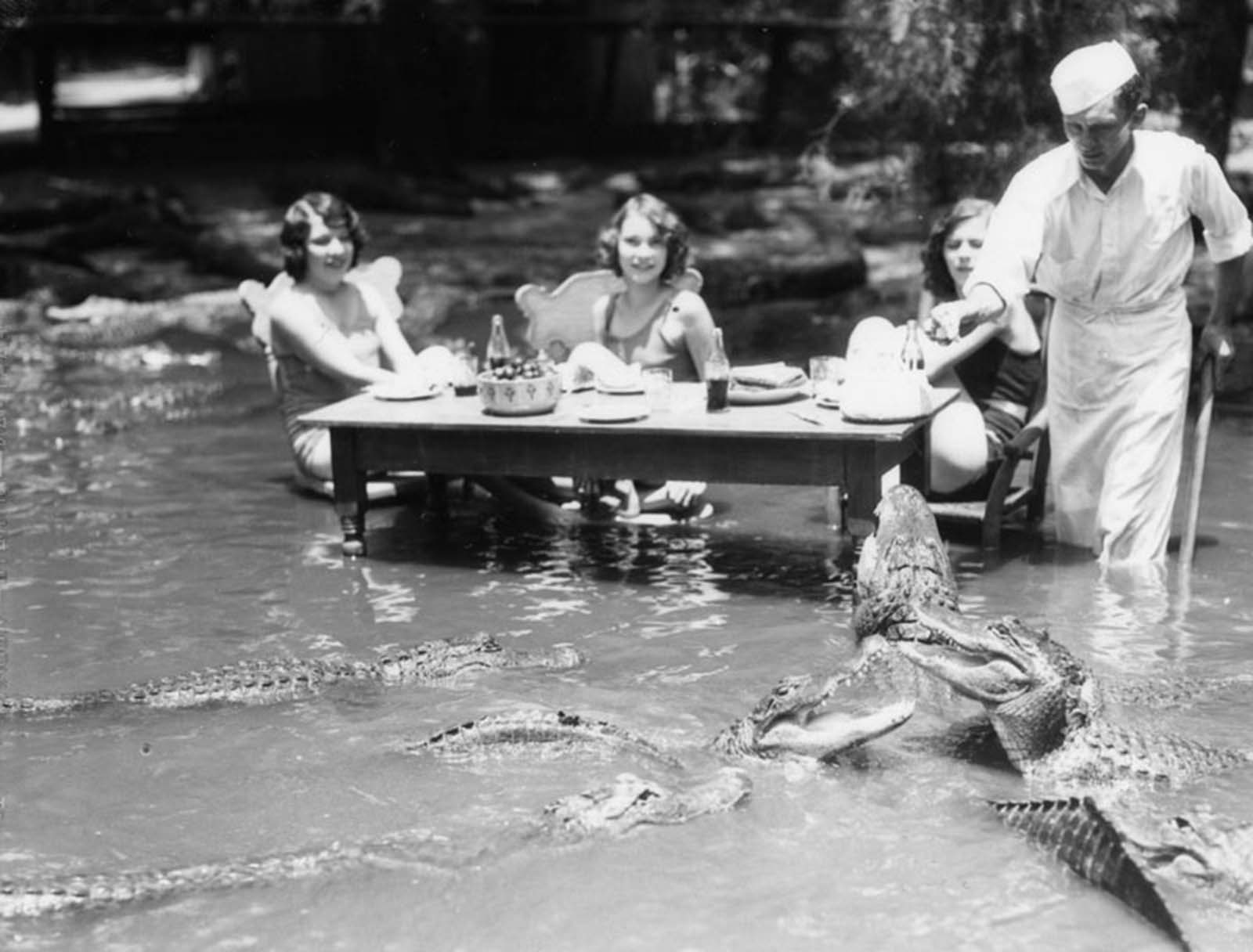
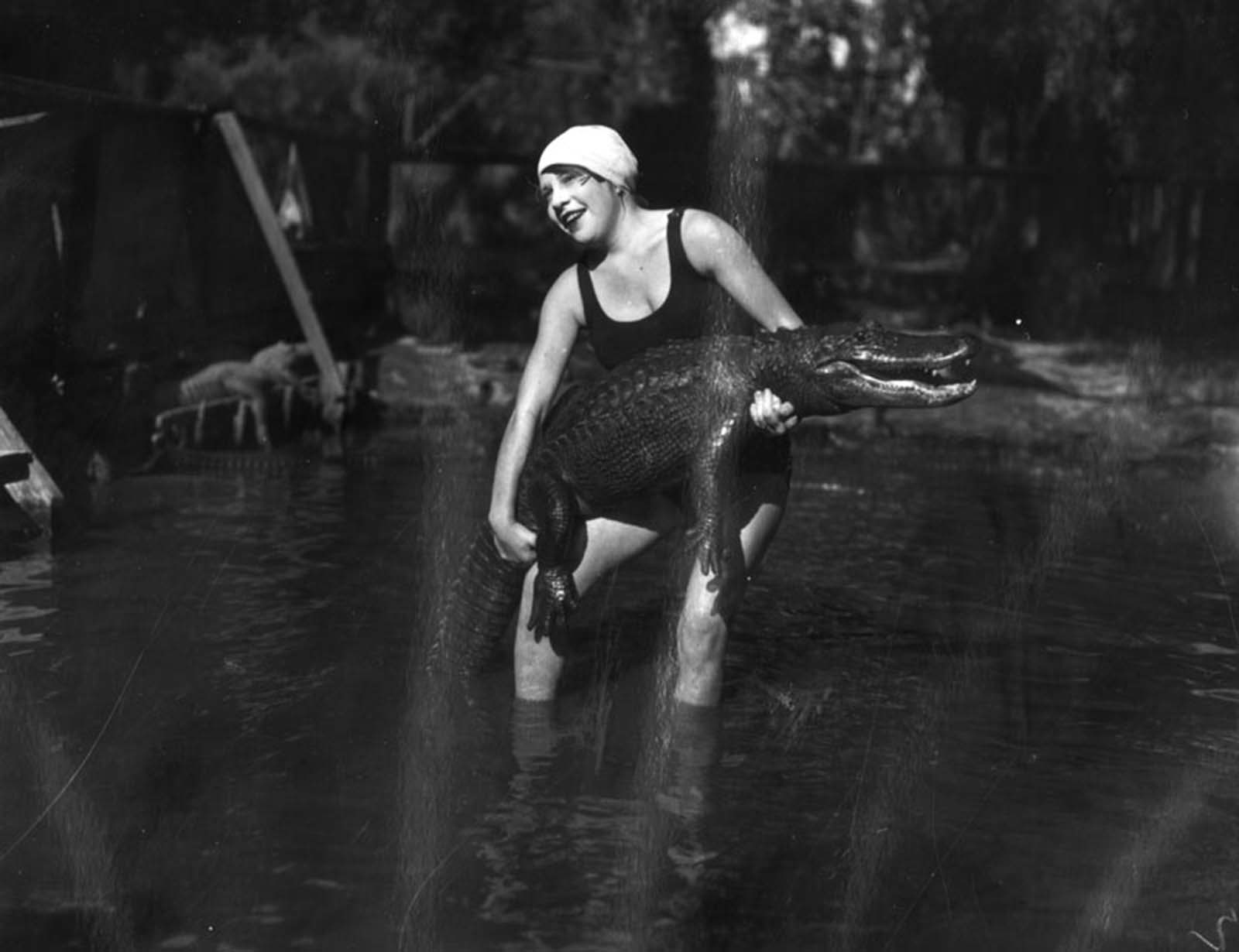
The farm also had a strong connection to Hollywood. Located next to a motion picture studio, it regularly rented reptiles out for film shoots and promotional photos. The ponds and alligator pits appeared as backdrops in early movies, and the unusual setting made it a favorite location for photographers looking for something dramatic. Some visitors even went into the water alongside the alligators during these shoots.
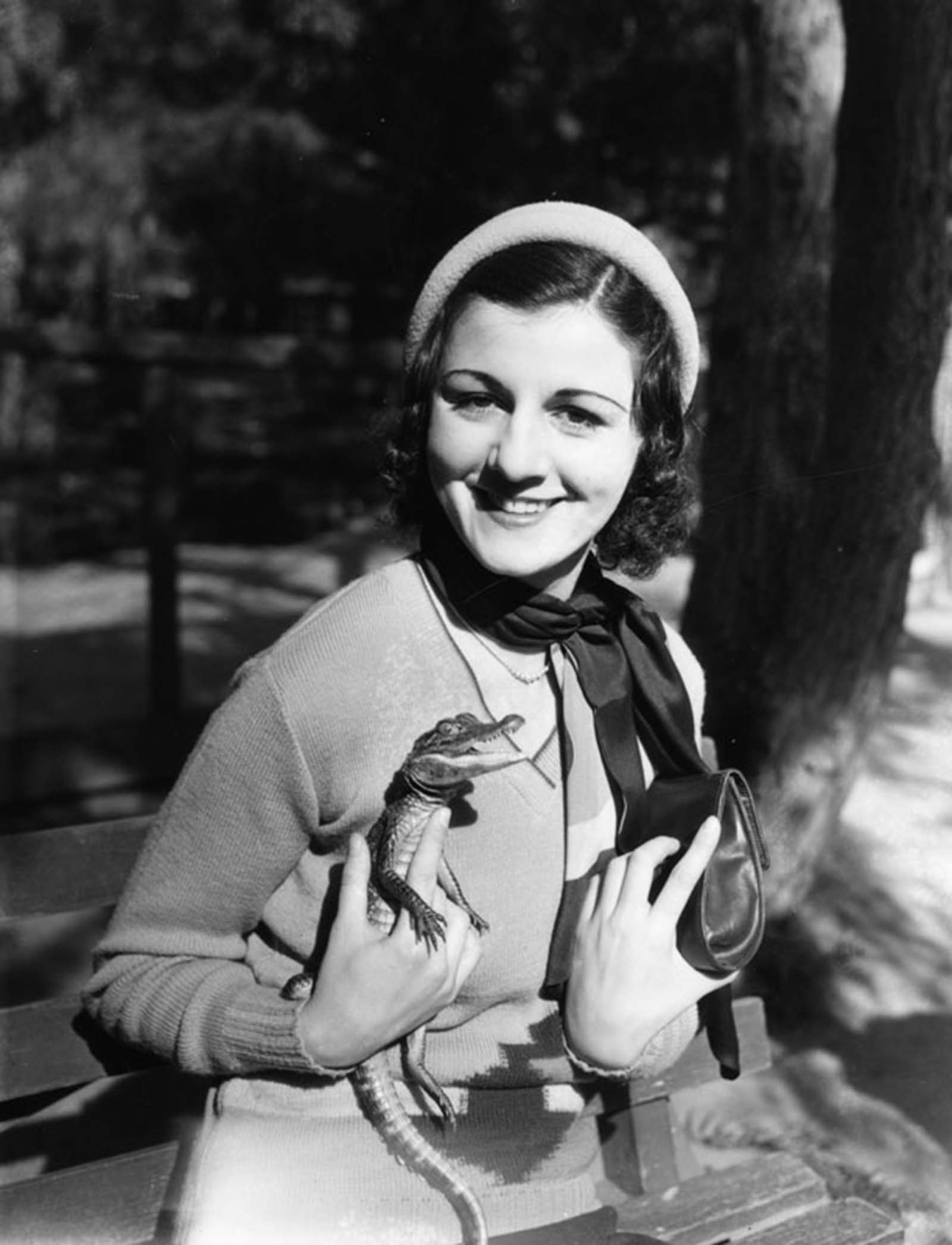
The gift shop rounded out the experience in its own way. Visitors leaving the farm could purchase alligator-skin handbags, bringing home a piece of the attraction in a form that would also raise serious concerns today. At the time, it was simply another line item in a gift shop, treated no differently than a souvenir postcard.
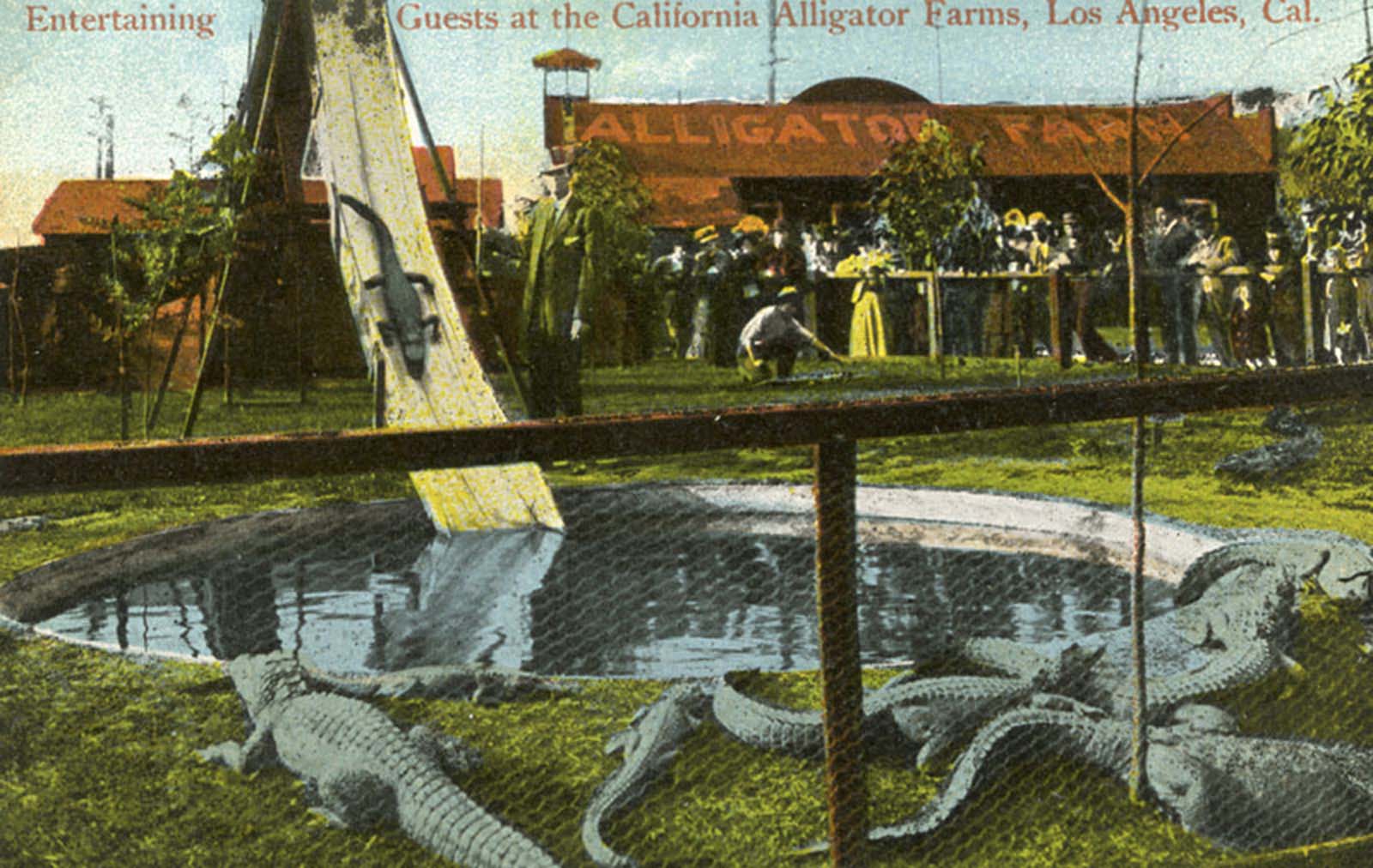
One of the most popular daily events at the farm was the trained alligator slide demonstration. Keepers would lure a gator up a set of stairs — no small task given that alligators have no natural reason to climb — and then guide the animal down a 16-foot chute into a pool of water below. Crowds gathered to watch it, and it became a signature part of the farm’s identity.
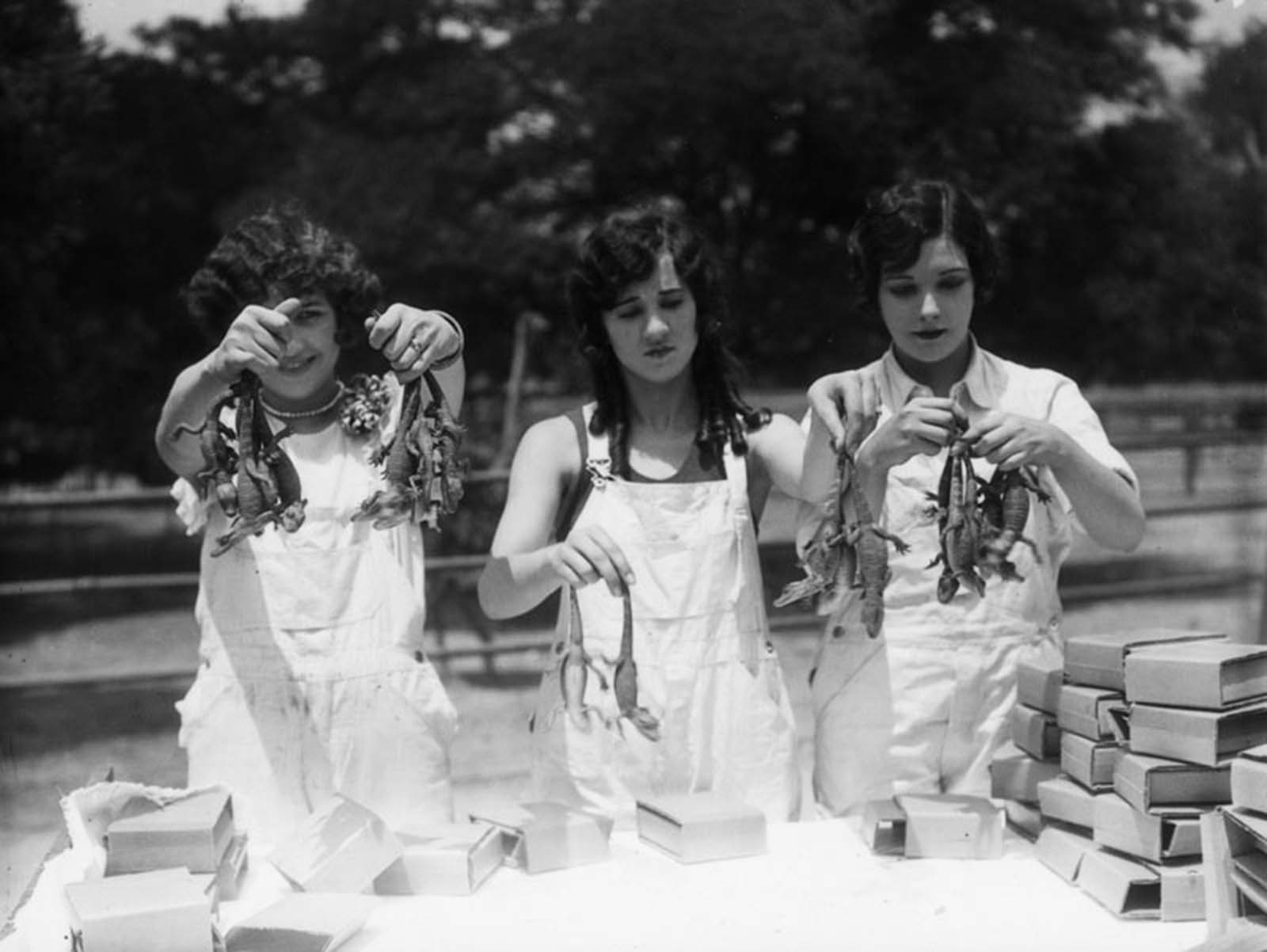
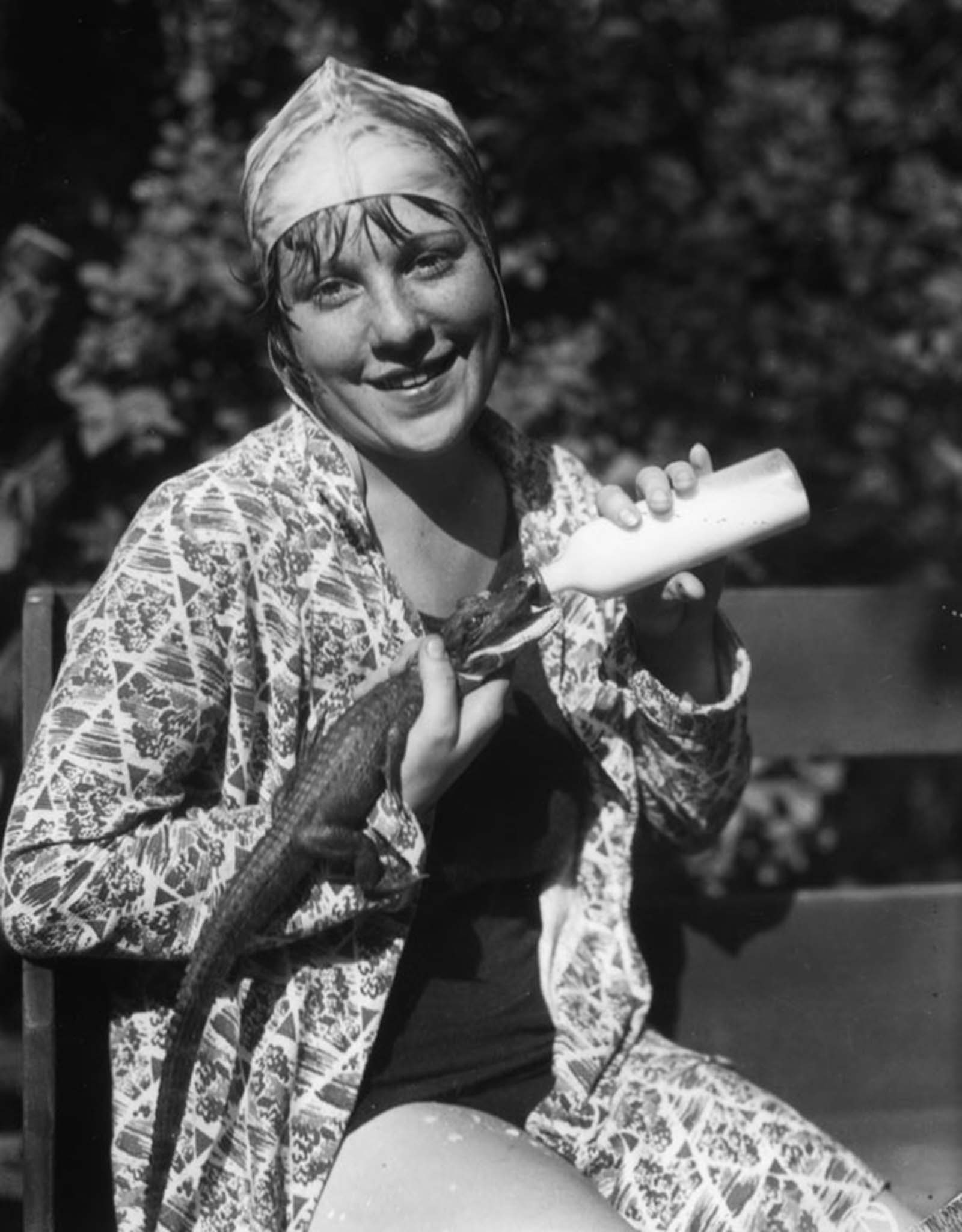
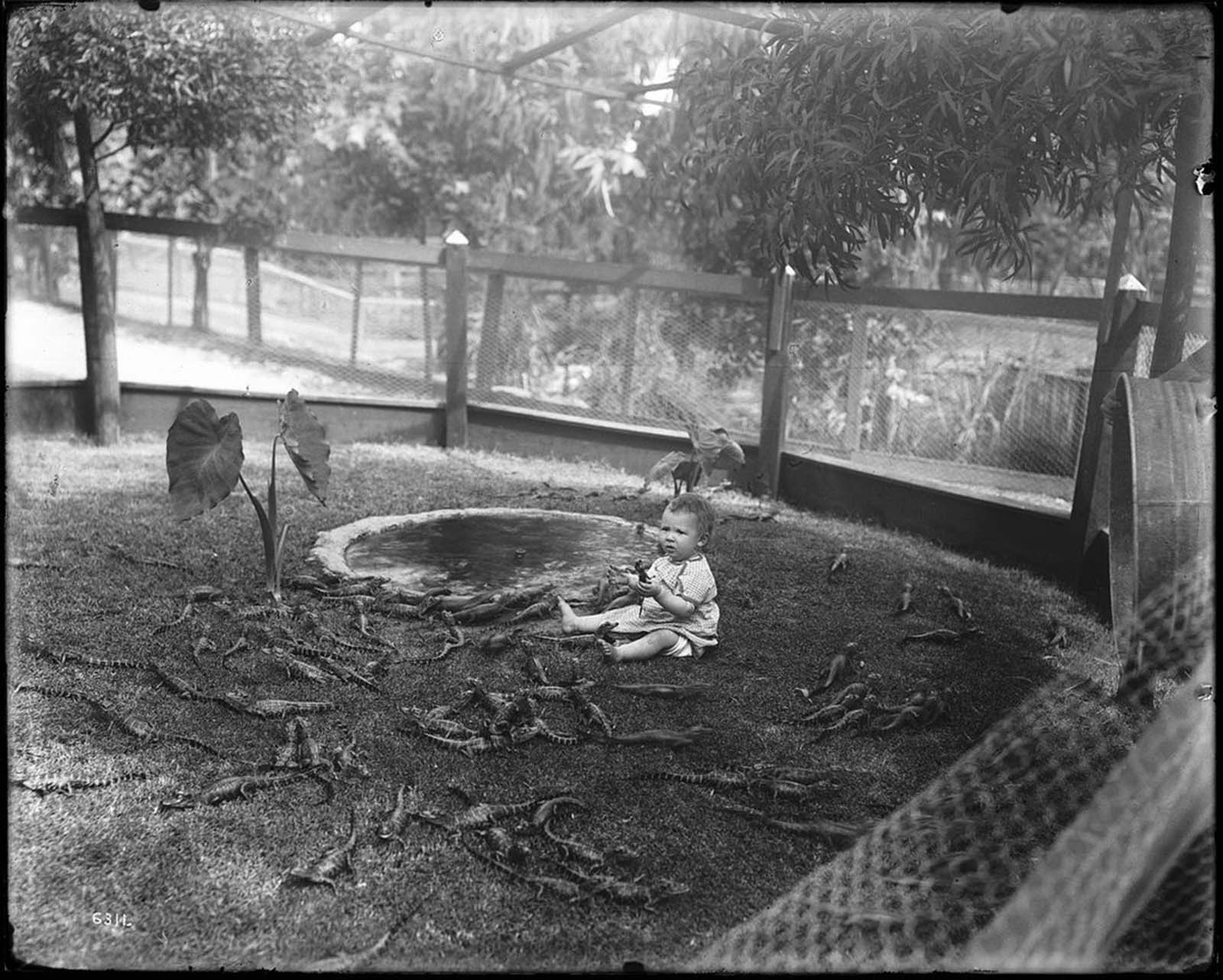
Young children were particularly drawn to the smaller animals. Baby alligators were handled freely, passed around, and set on the ground near visitors of all ages. Photos from the era show toddlers crouching inches from open-mouthed hatchlings with no adult stepping in to create distance.
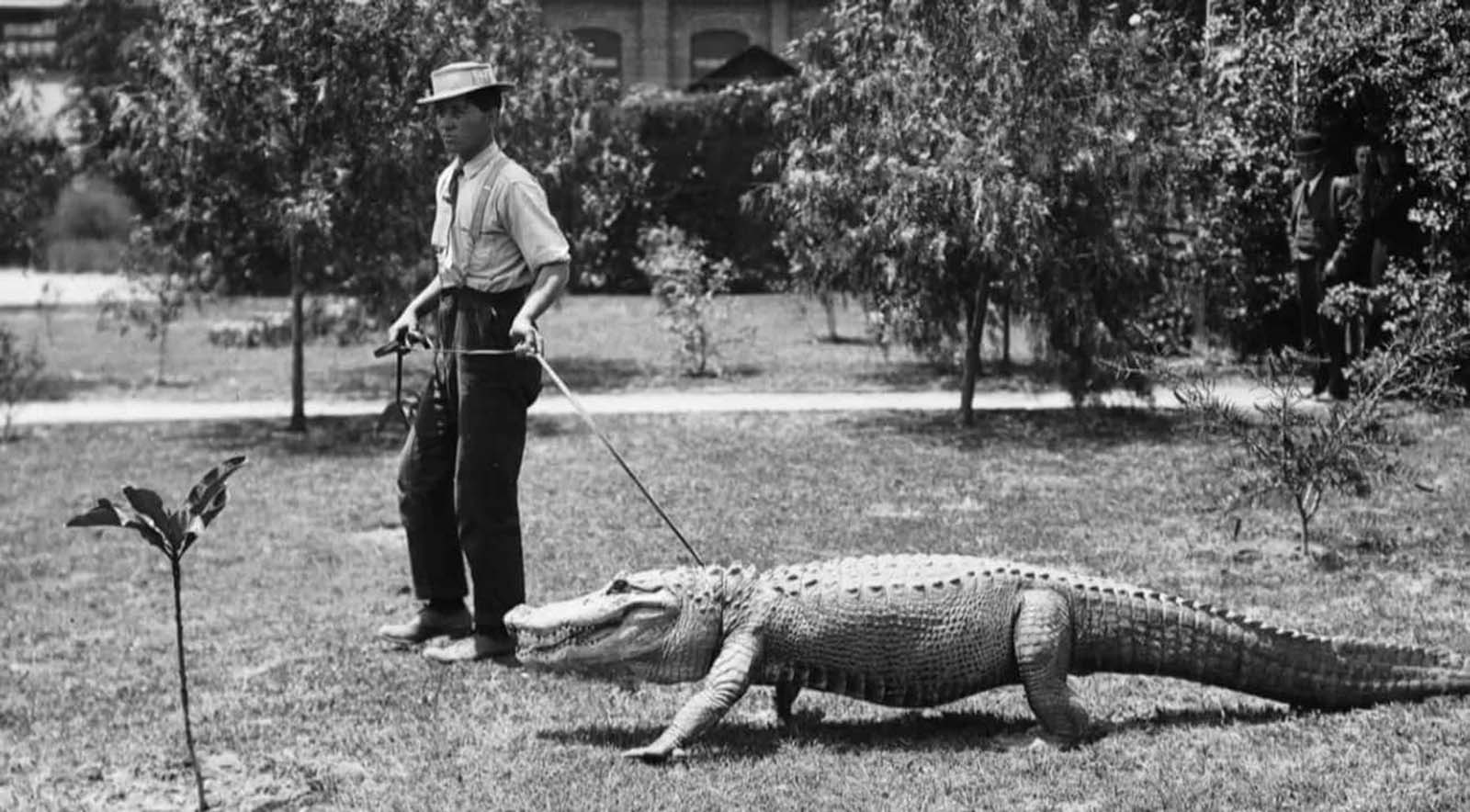
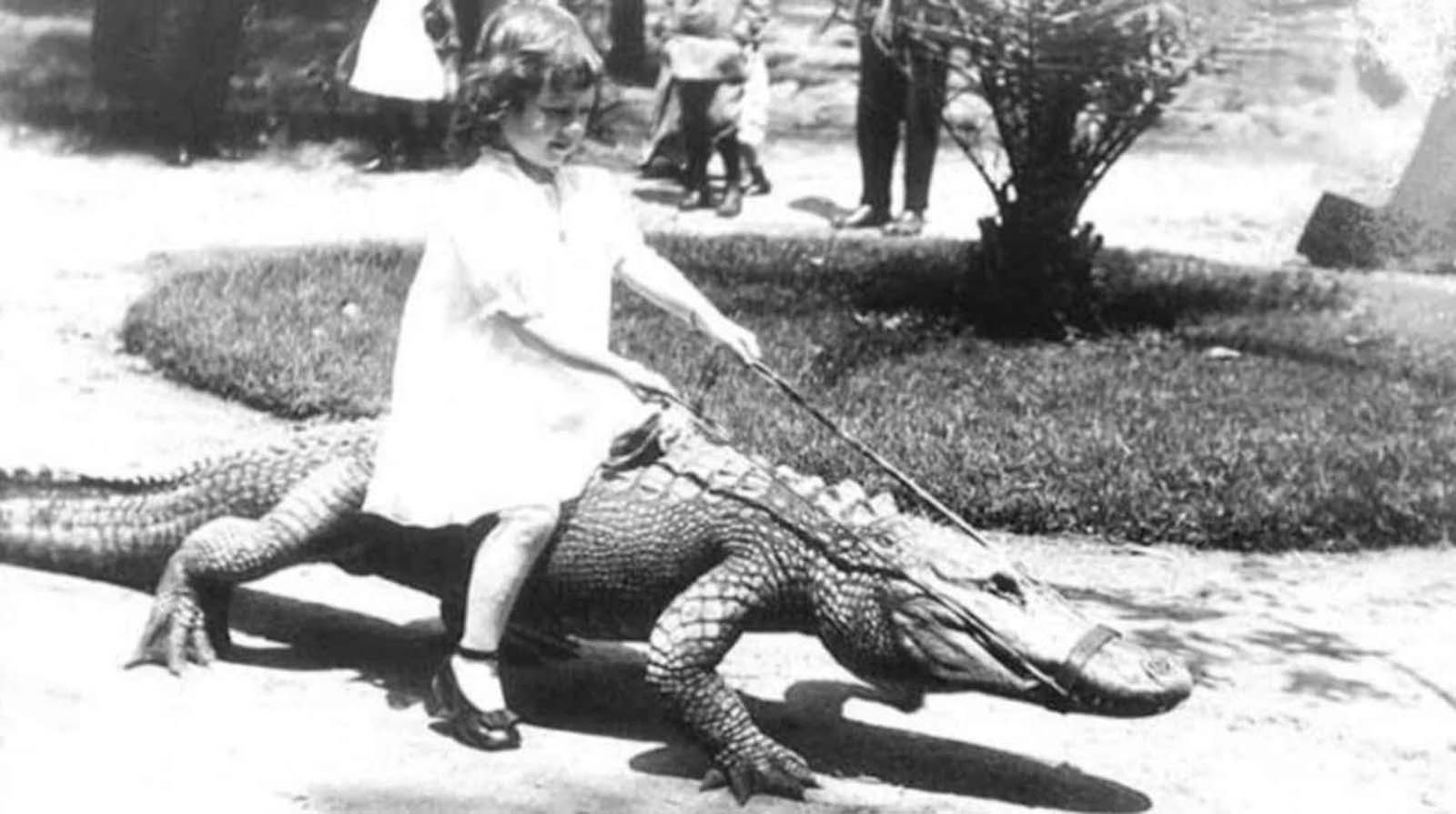
In May 1953, the farm relocated from Los Angeles to Buena Park in Orange County, where it reopened under the name California Alligator Farm. The move put it near other emerging attractions in the region, but the competitive landscape was shifting. Disneyland opened just a few miles away in 1955, and the kind of spectacle that had drawn crowds to the alligator farm for decades started to feel outdated.
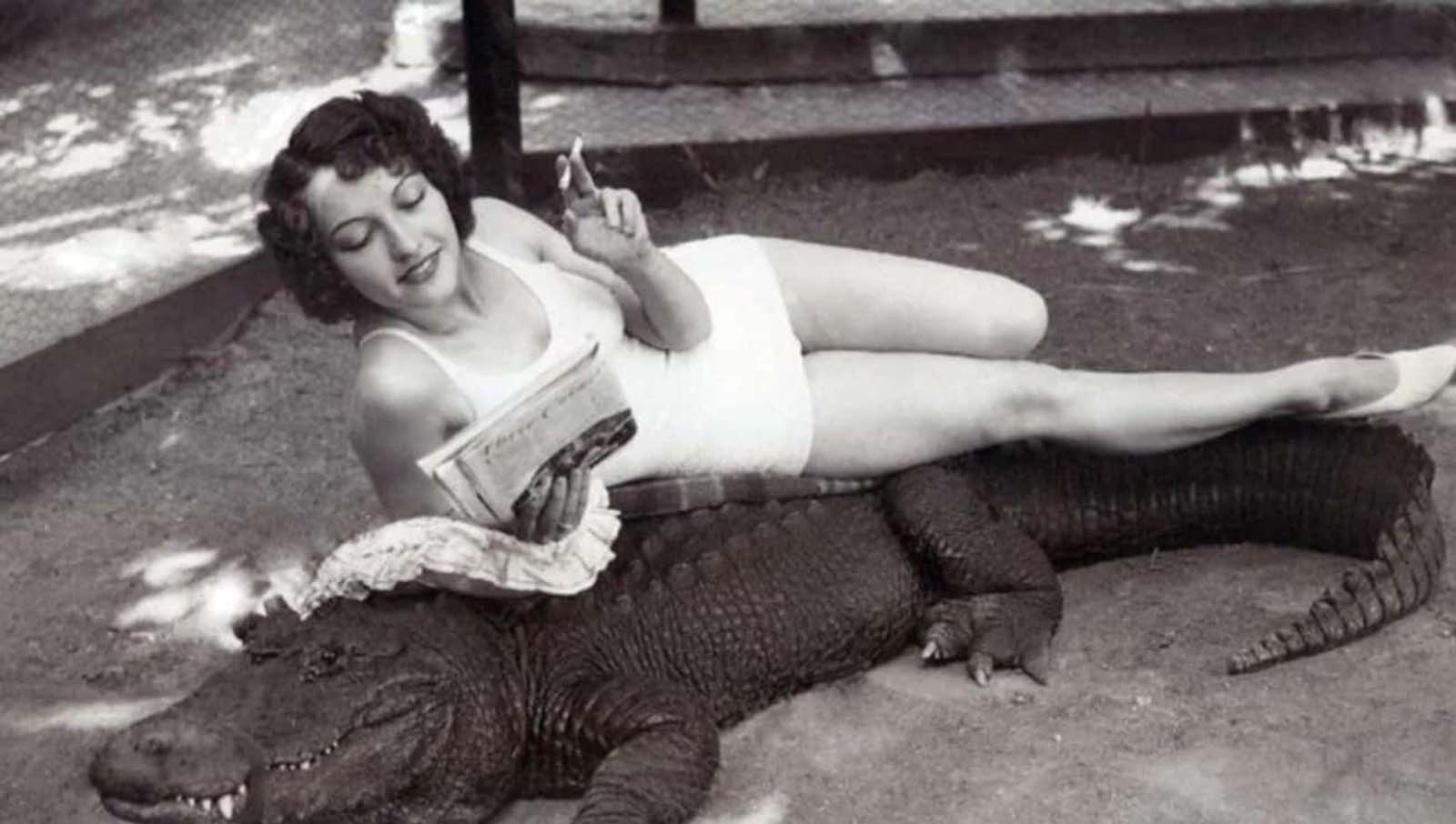
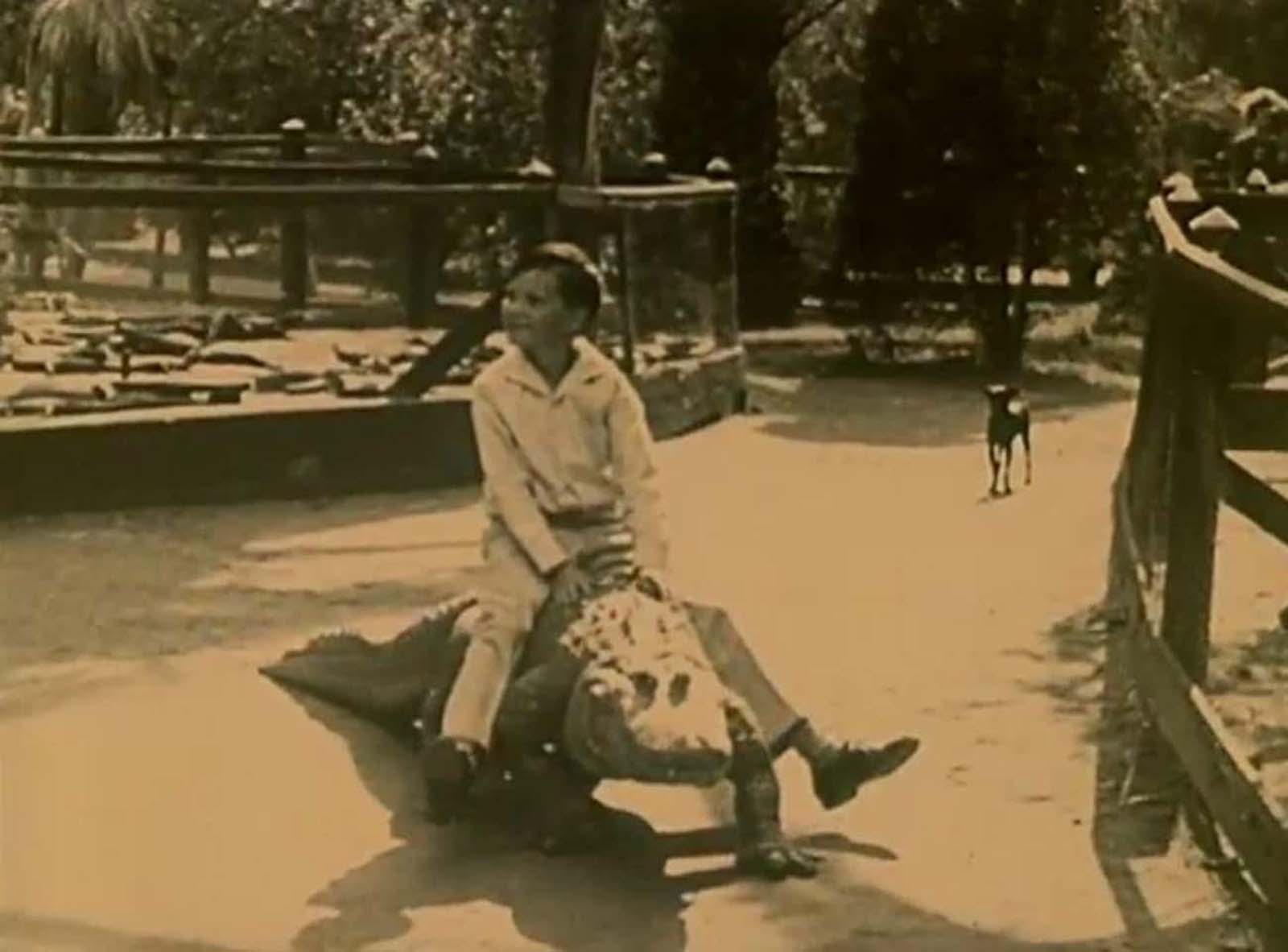
Attendance at the California Alligator Farm steadily declined through the 1960s and 1970s. By the early 1980s, annual visitors had dropped below 50,000 — a number far too low to justify keeping the operation running. When the farm’s lease came up for renewal, it was not extended. The attraction closed for good in 1984.
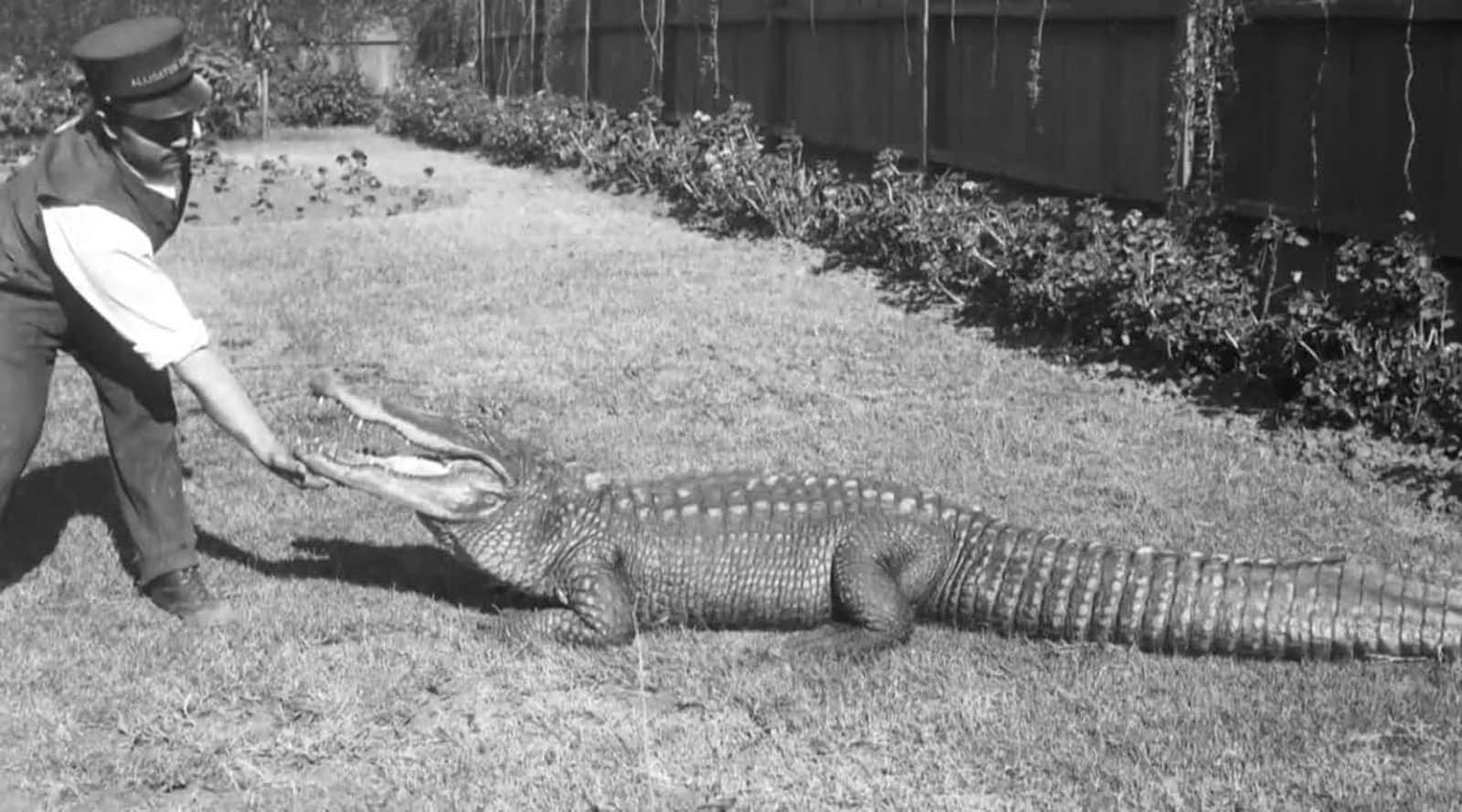
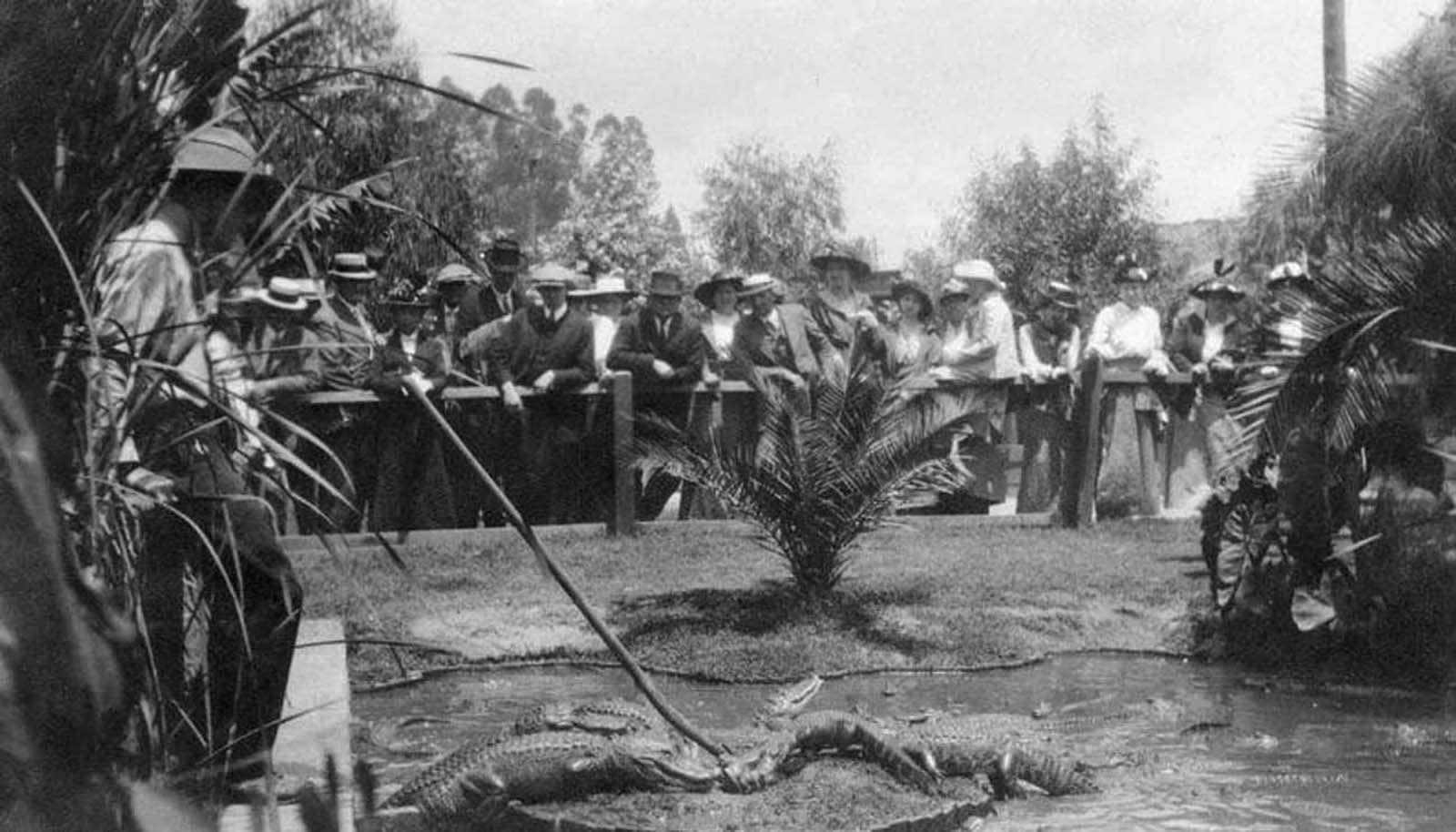
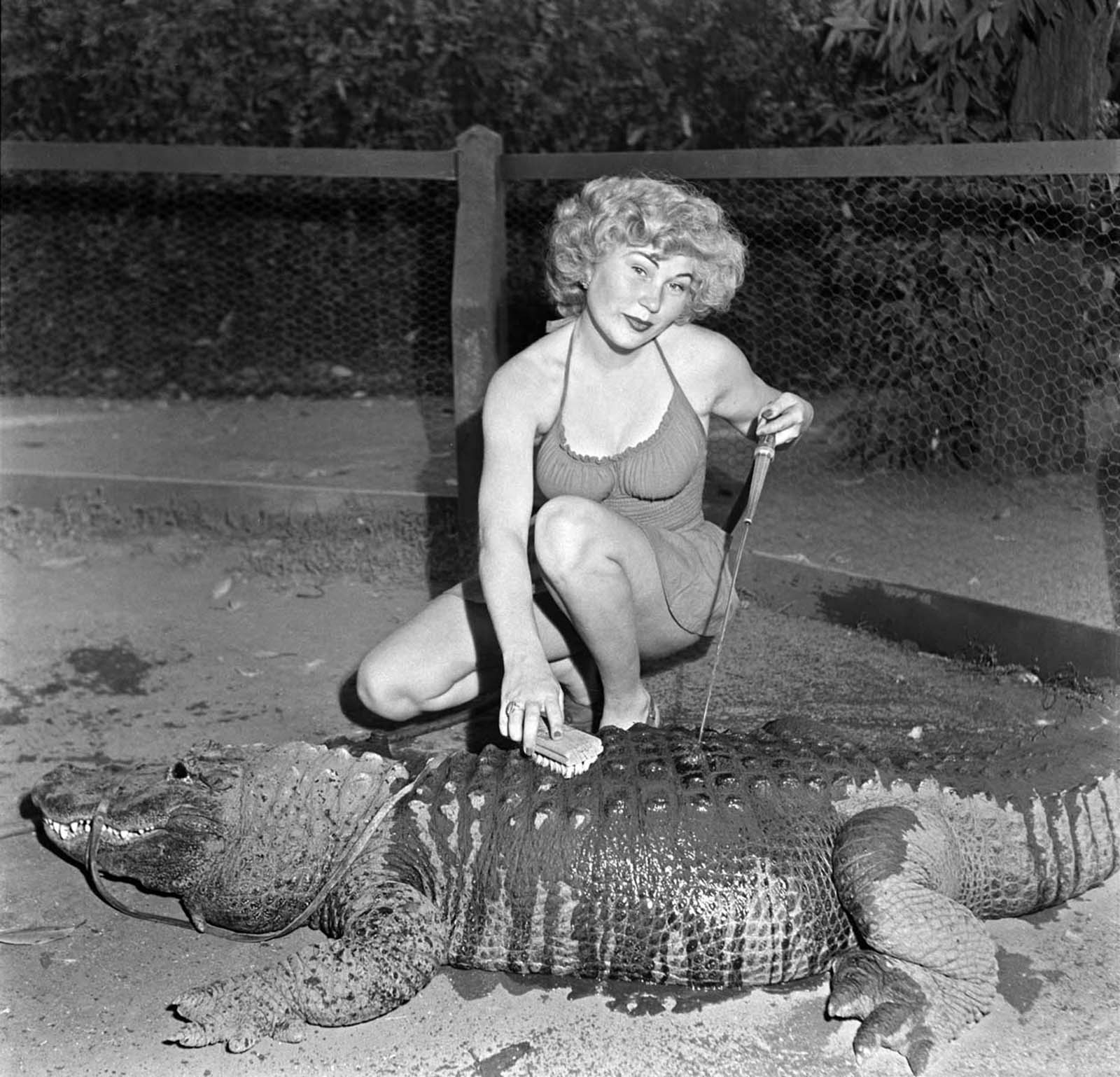
The alligators themselves were purchased by a private estate in Florida, giving them a quieter end than the bustling California attraction they had spent their lives in. The farm’s buildings, ponds, and chutes were cleared away, leaving behind only photographs and postcards as evidence of what had once stood there.
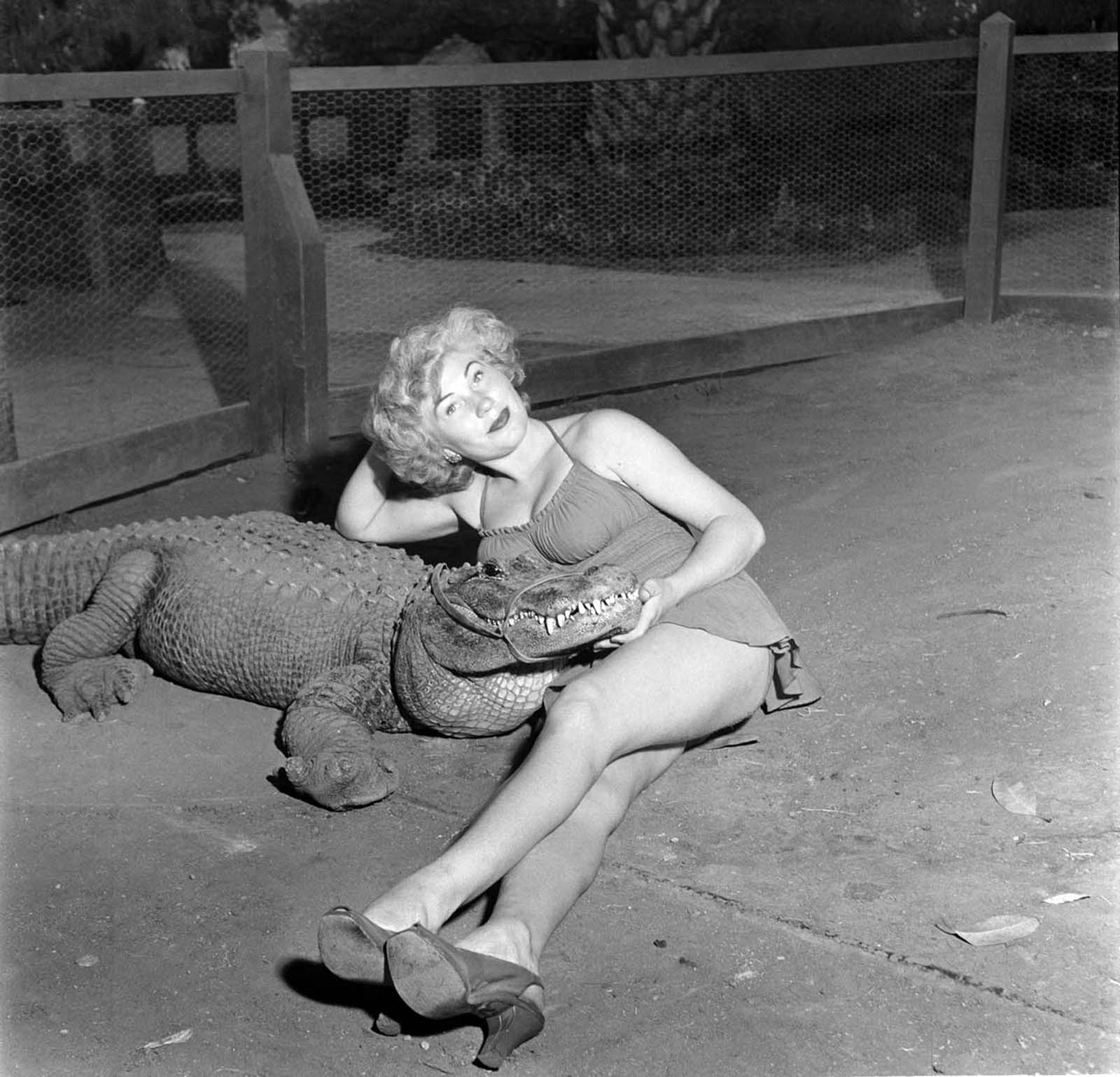
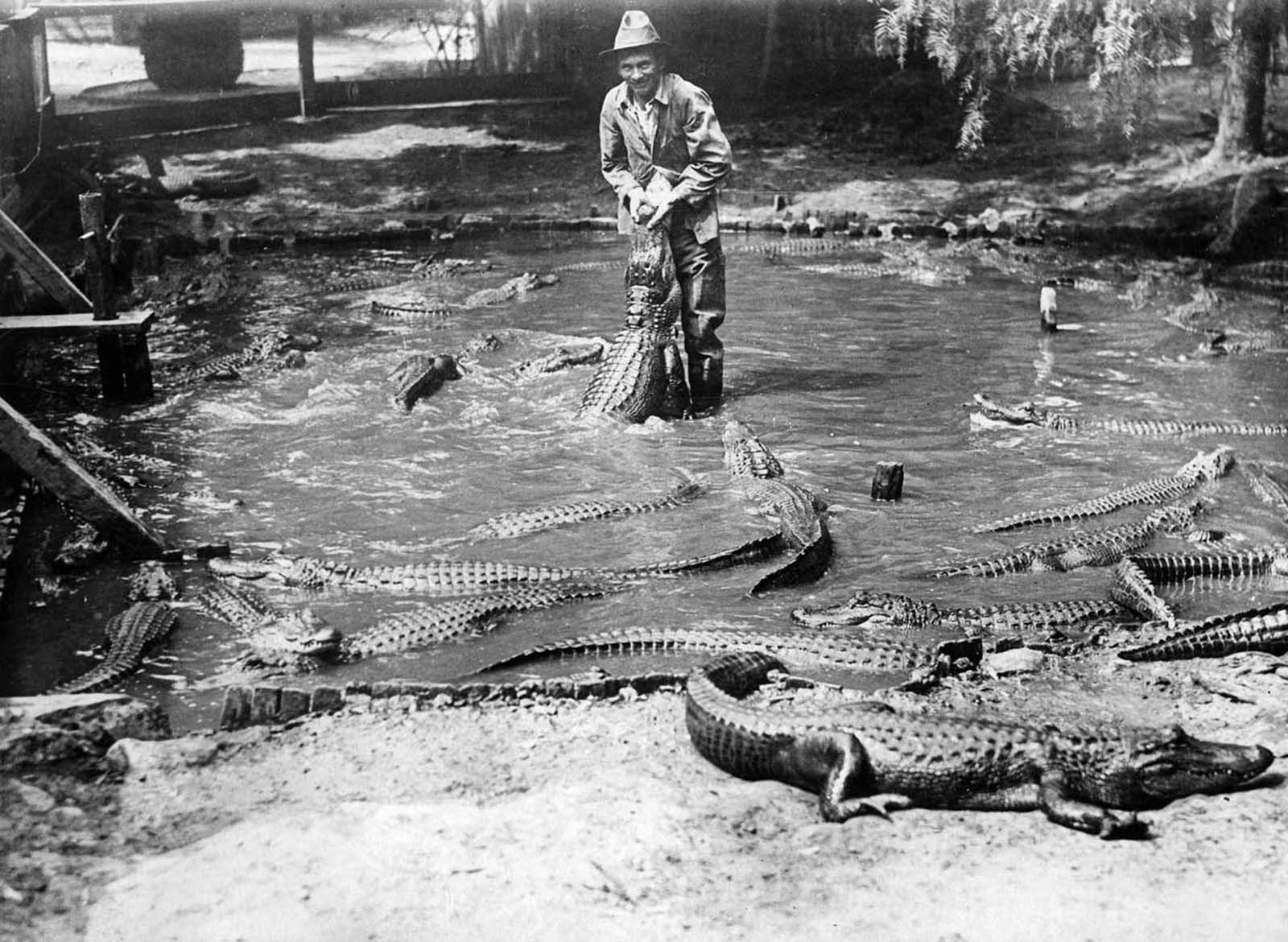
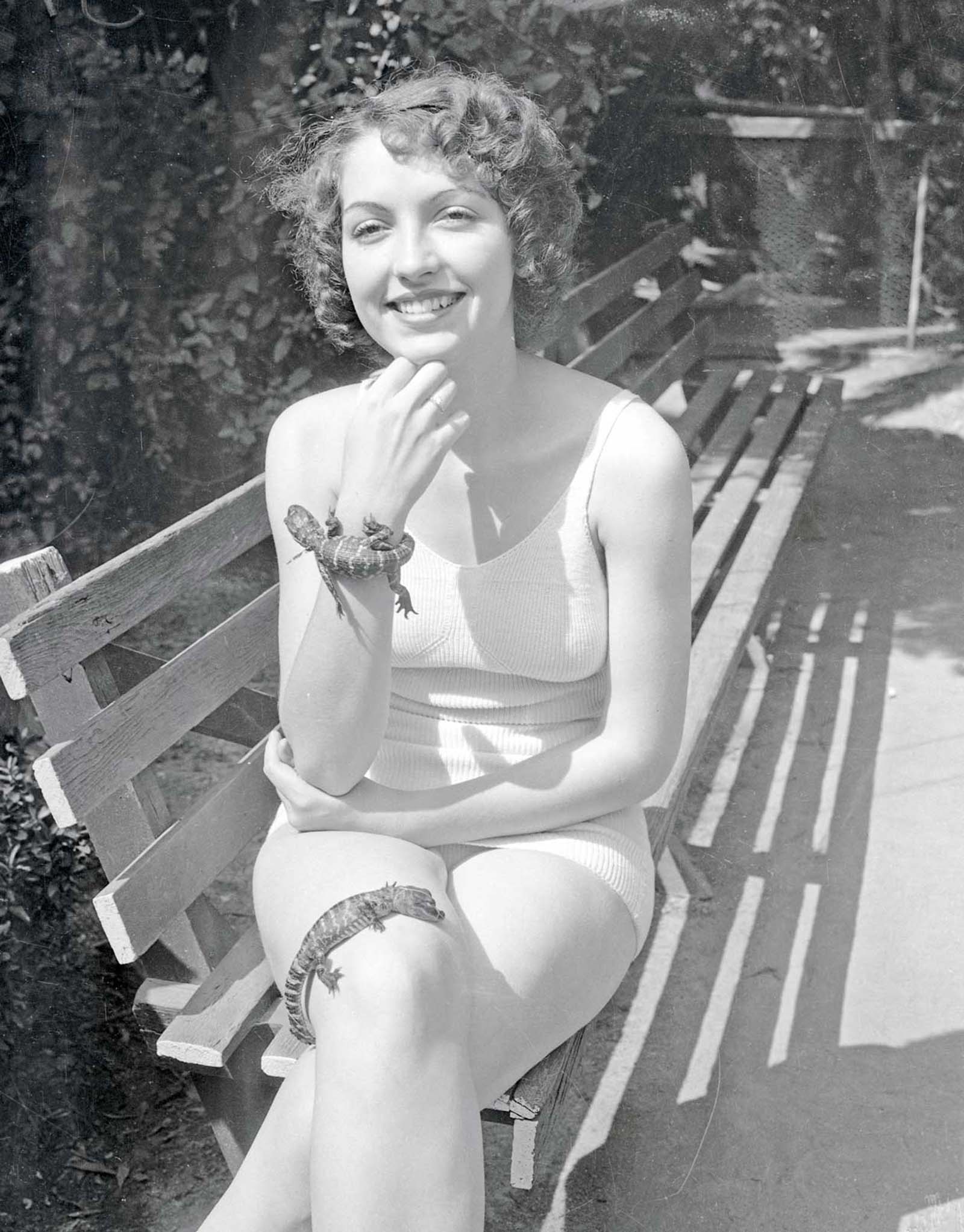
Those photographs are striking by modern standards. They show a world where the barrier between humans and dangerous animals was essentially nonexistent — where a family outing meant sitting your child on a thirteen-foot reptile and paying a quarter for the privilege. The farm operated this way for 77 years without the kind of regulatory framework that governs animal attractions today.
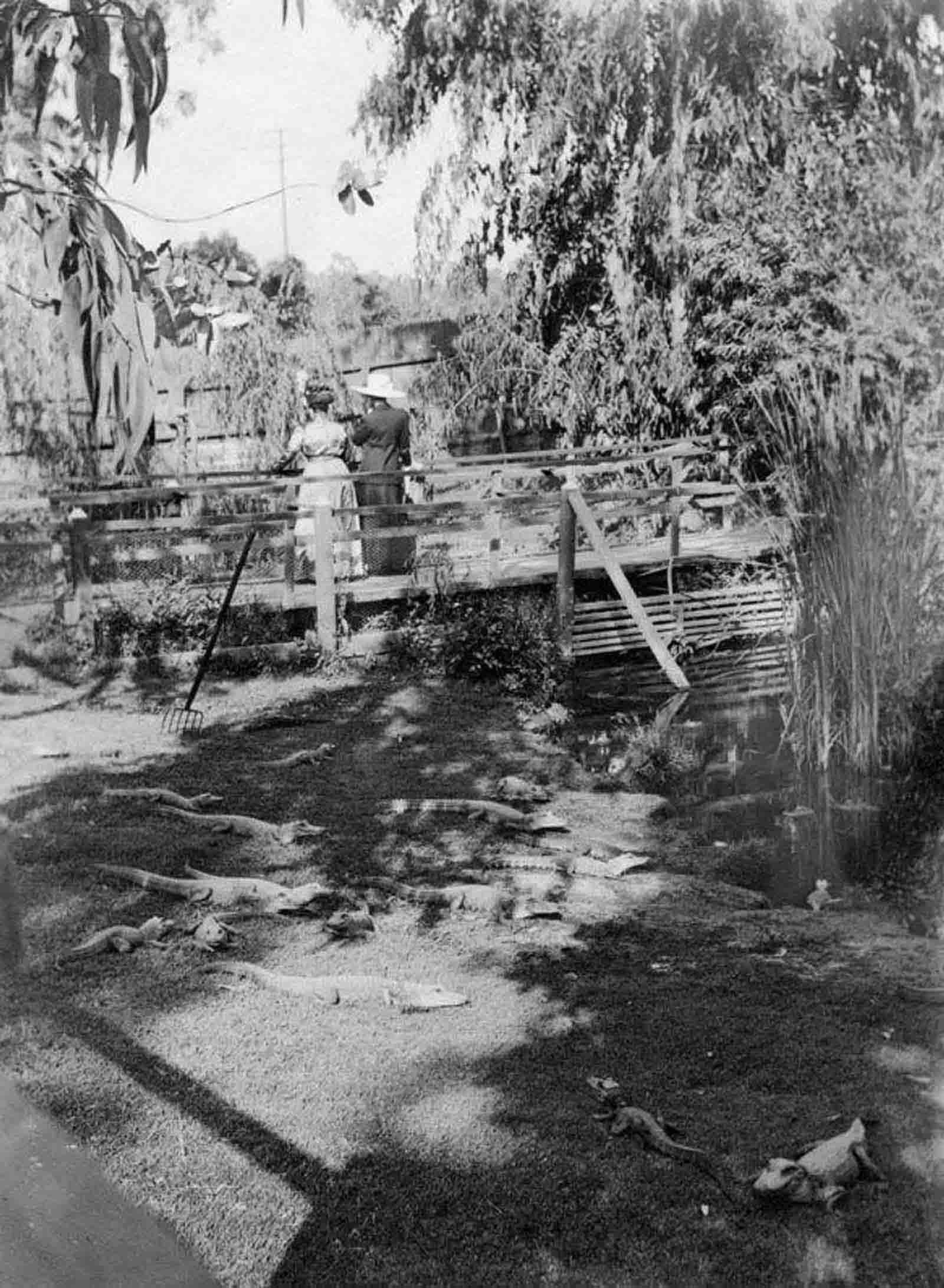
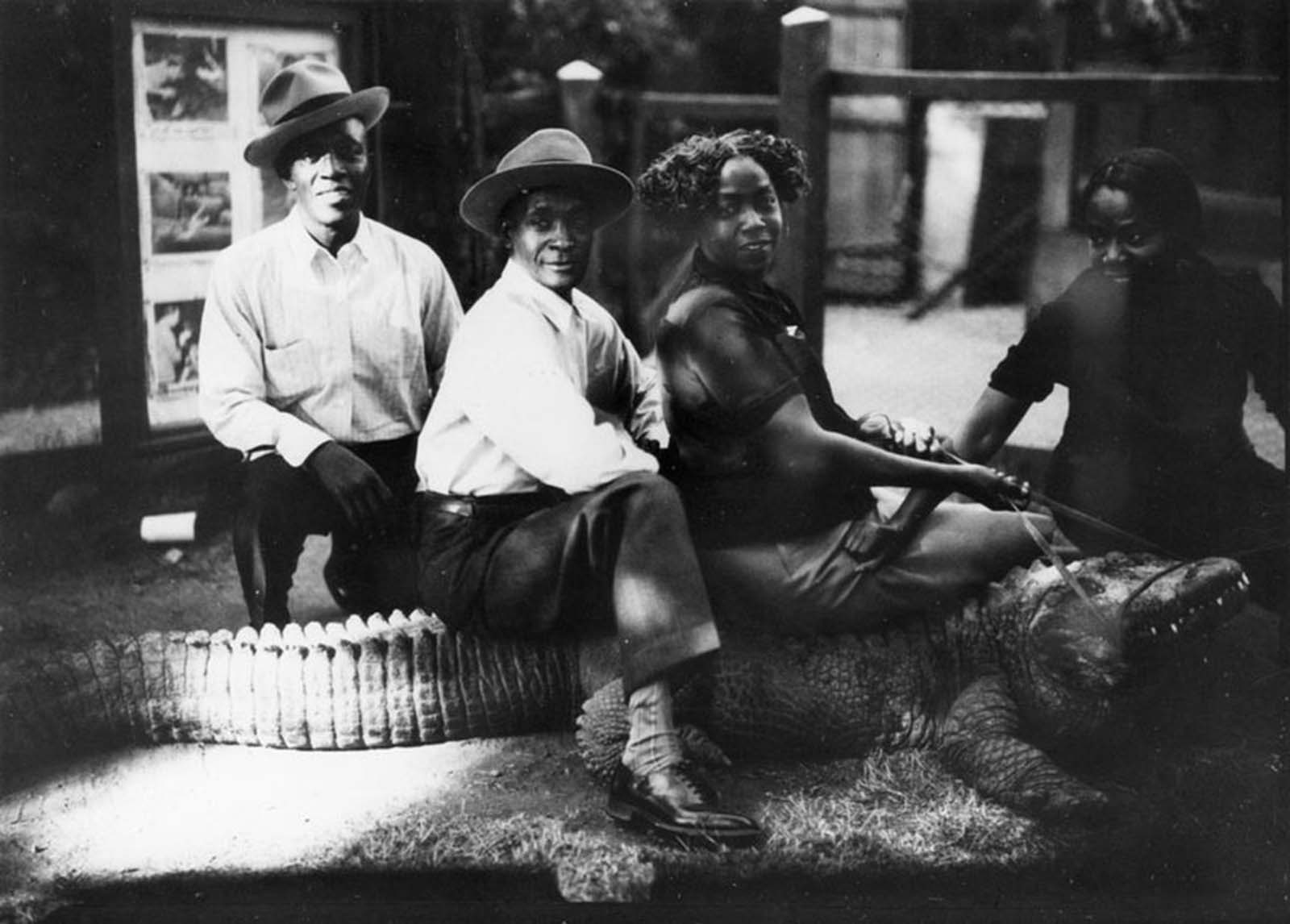
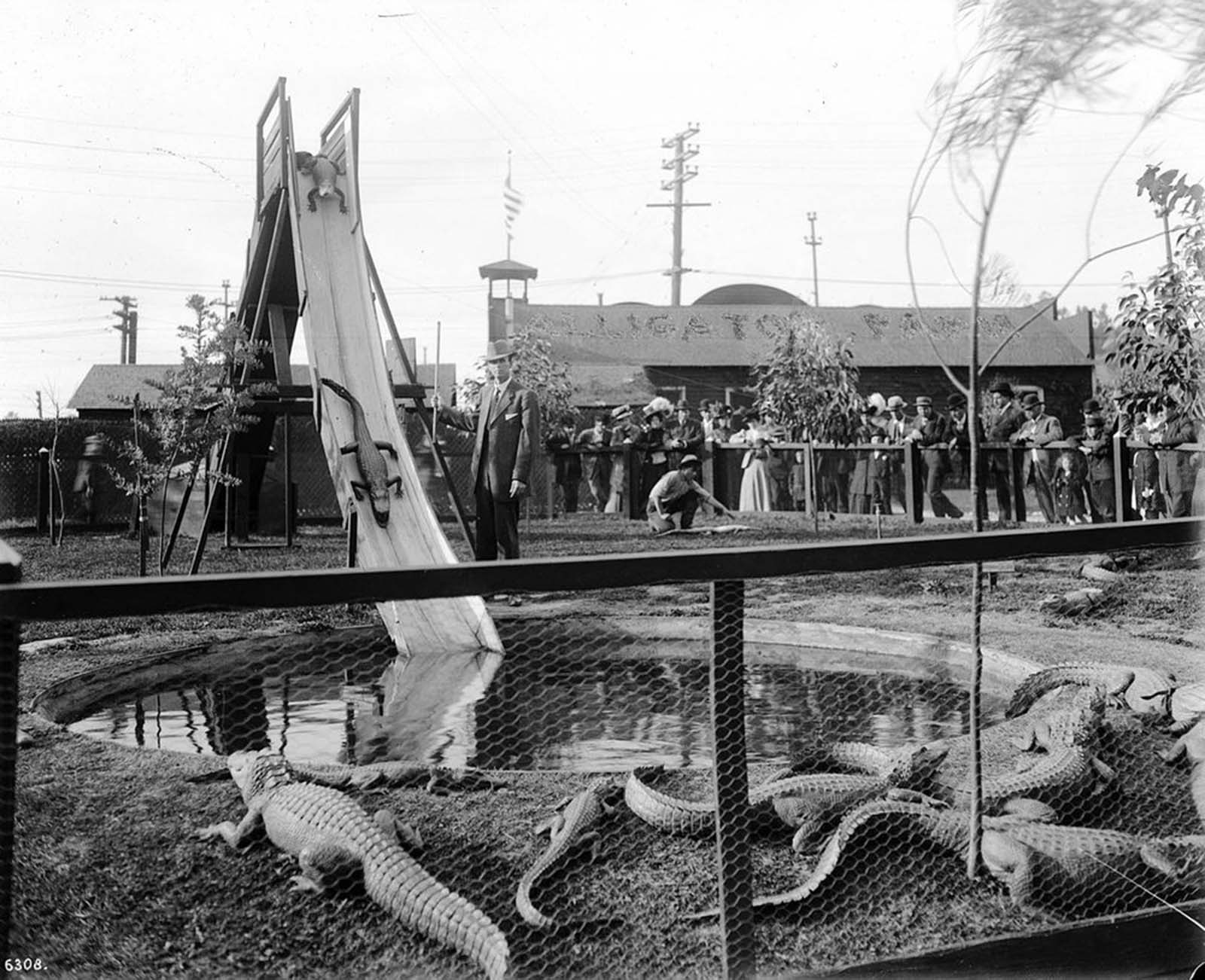
The trainers and keepers who worked the farm handled the animals daily, building routines around animals that remained wild at their core. Crowds watched from close range as staff directed the gators through their paces, with little more than familiarity and experience standing between handler and animal.
When the farm first opened in Los Angeles in 1907, promotional materials spread the word quickly. Postcards advertised the attraction to tourists and locals alike, building an image of a place unlike anything else available at the time. The farm was genuinely novel — a working alligator operation that doubled as a public entertainment venue, built around the idea that getting close to a dangerous animal was not a risk but a selling point.