
By 1980, Bellevue, Washington had a population of 73,903 — and it was moving fast. The city was no longer a quiet suburb sitting across Lake Washington from Seattle. It was becoming something bigger, busier, and far more complex. Over the course of the decade, Bellevue transformed into a regional economic hub, a growing retail destination, and one of the most diverse communities in the Pacific Northwest. These photos capture that decade in vivid detail, from construction cranes over downtown to the corner shops and parking lots that defined everyday life on the Eastside.
One of the most visible symbols of Bellevue’s growth in the early 1980s was Bellevue Square — known locally as Bel-Square. The open-air plaza that residents had shopped at for years was being fully enclosed and converted into an indoor mall. It was a sign of where the city was headed: bigger, more polished, and ready to compete with any retail center in the region.
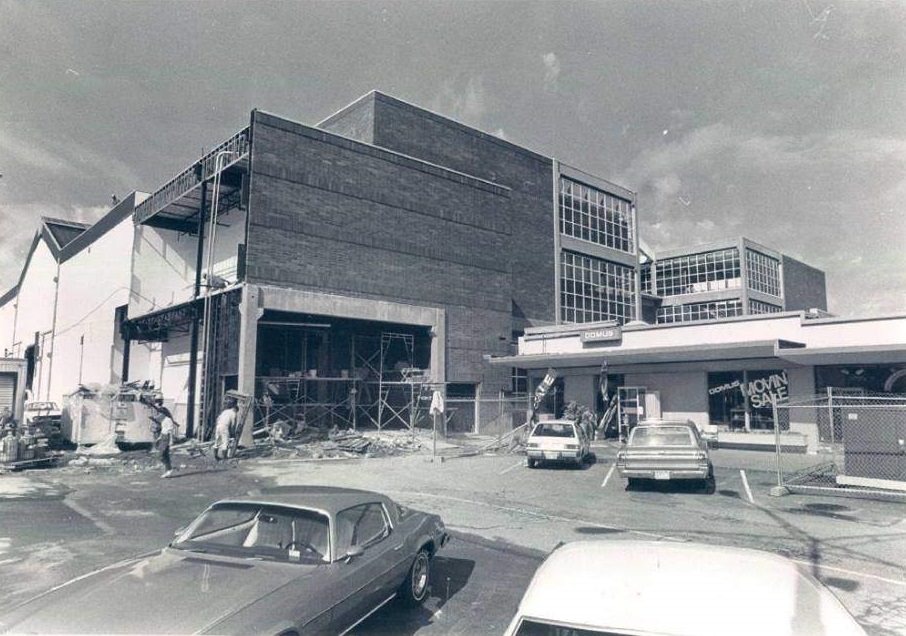
Entertainment options in Bellevue were also growing. Movie theaters, bowling alleys, and specialty shops lined the city’s commercial corridors. These weren’t just places to spend money — they were where the community gathered, and the photographs from this era show how ordinary and bustling those spaces were.
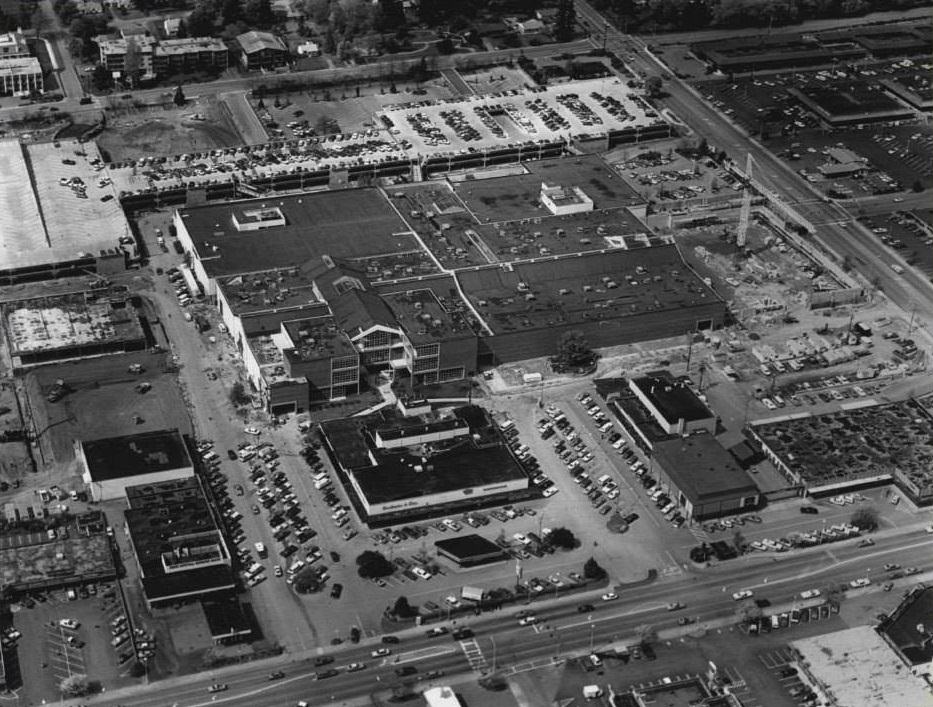
From the air, early 1980s Bellevue looked like a city mid-leap. Shopping centers and office buildings were clustered around a downtown core that was still finding its shape. Streets were widening. Parking lots were expanding. The low-rise sprawl of earlier decades was beginning to give way to something with more ambition.
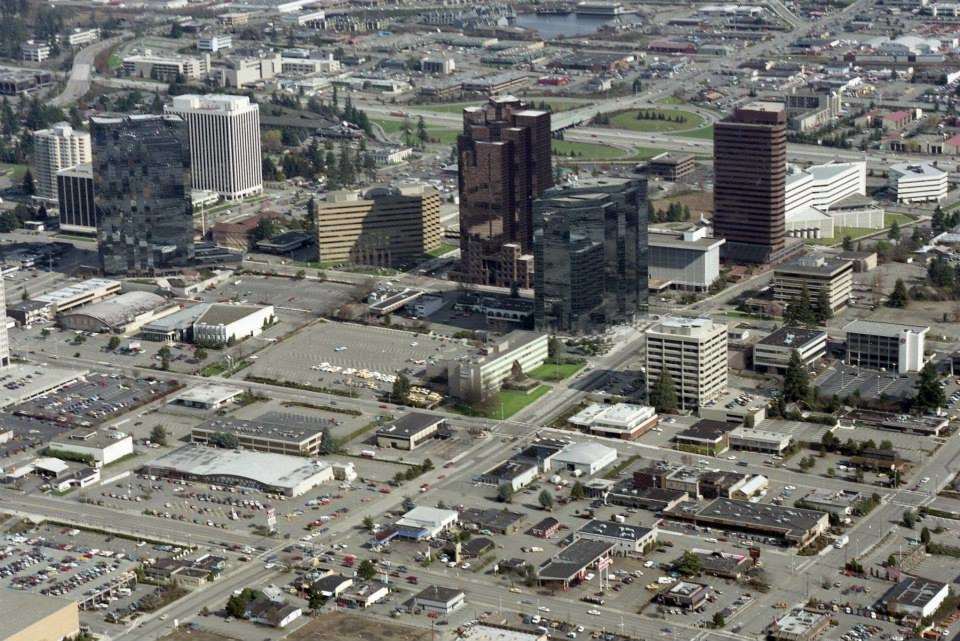
By the mid-1980s, demographers began tracking a notable shift: Eastside residents were staying on the Eastside to work. Instead of commuting into Seattle, they found jobs in Bellevue’s growing office buildings, distribution centers, light industries, and retail shops. Several of the region’s most prominent companies planted their corporate headquarters in the city. Microsoft famously launched in Bellevue before moving its operations to neighboring Redmond. The economic energy was unmistakable.
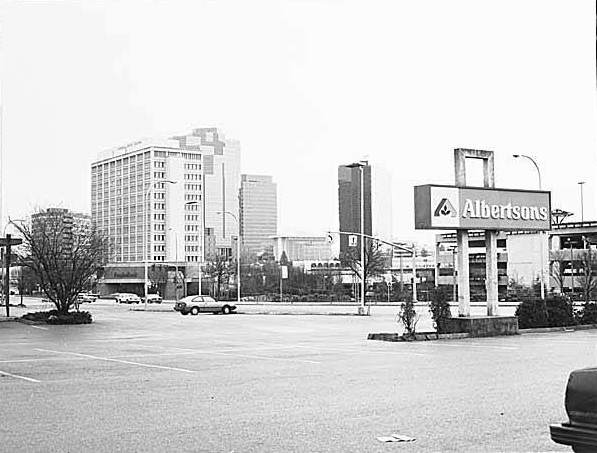
The 1990 census would later confirm what people living in Bellevue already felt during the 1980s: the city was becoming remarkably diverse. Minority populations grew at twice the overall rate, reaching nearly 15 percent of the total population by decade’s end. One in four schoolchildren came from Asian or Pacific Islander backgrounds. Nearly half of all residents spoke a language other than English at home. These numbers reflected a real, daily shift in the character of Bellevue’s neighborhoods, schools, and businesses.
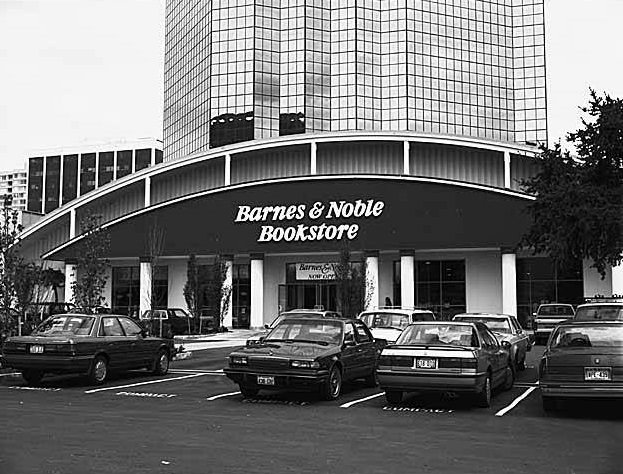
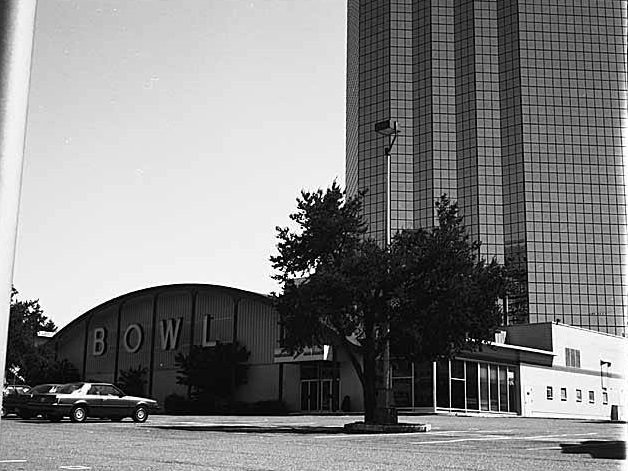
Retail chains were moving in alongside local businesses. Bookstores, grocery stores, and national brands set up shop throughout the city, filling strip malls and stand-alone buildings. The Belle Lanes bowling alley on this stretch of Bellevue would eventually be replaced — the building later became home to a Barnes & Noble and a Starbucks, with the Rainier Building visible in the background.
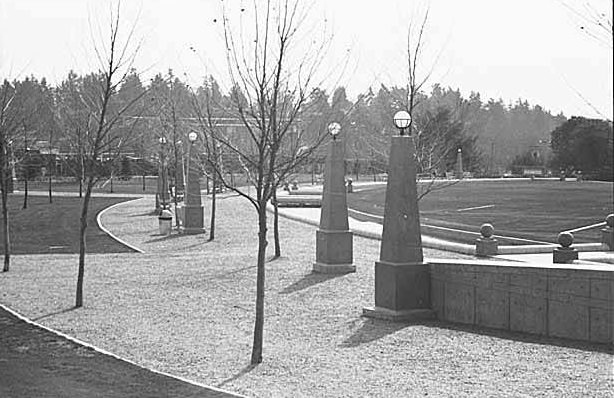
Downtown Bellevue wasn’t just about commerce. The city was also investing in public space. Bellevue Downtown Park began taking shape in the late 1980s, offering residents green space in the middle of a rapidly urbanizing core. These early photos from March 1988 show the park in its formative stage — raw and open, but already a commitment to balancing growth with livability.
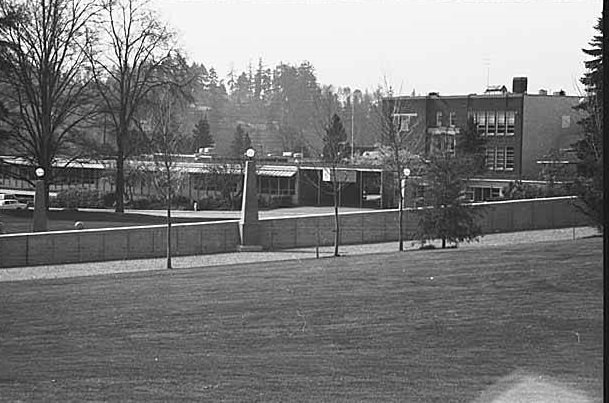
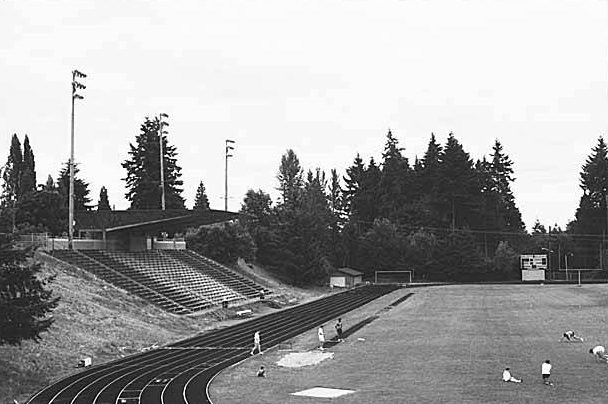
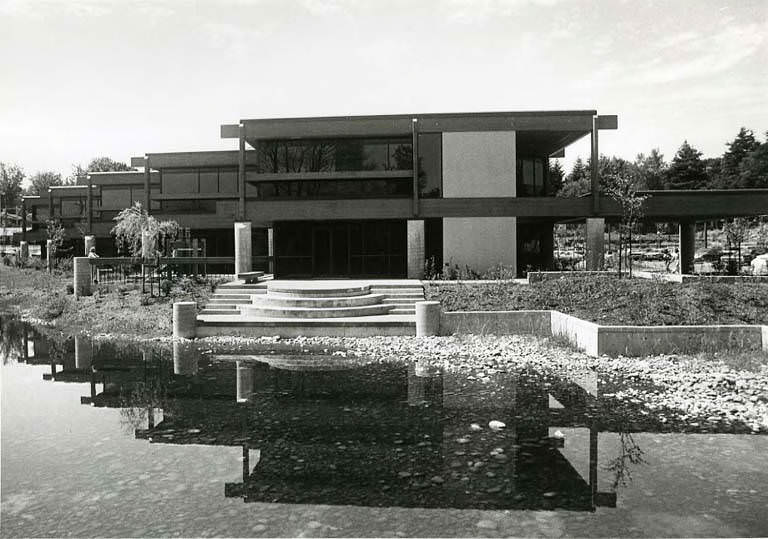
Community life stretched well beyond downtown. Bellevue High School’s football field anchored the city’s sense of neighborhood identity, and the multi-purpose center served residents across a wide range of recreational and civic needs. These weren’t glamorous facilities, but they were well-used and well-loved.
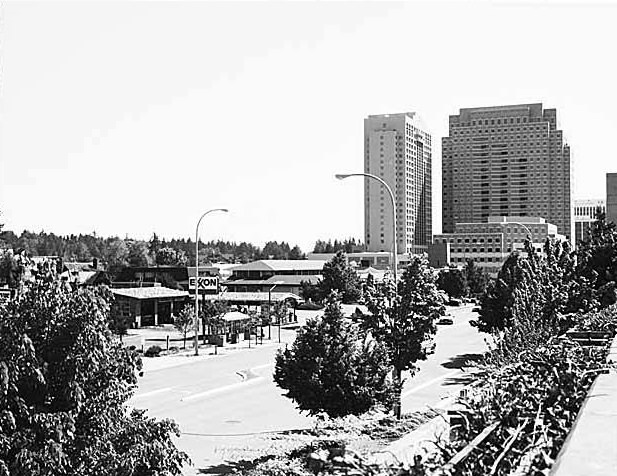
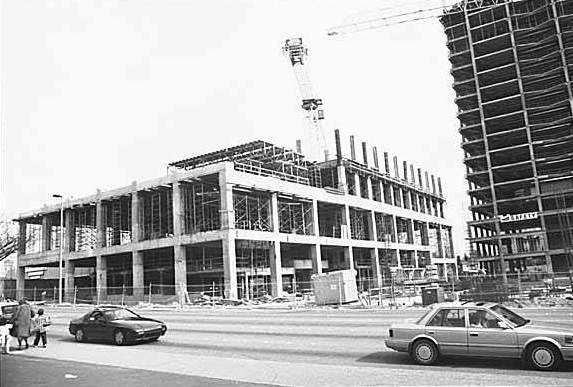
No project better captured Bellevue’s ambitions in the late 1980s than Bellevue Place. The mixed-use development, which included the Hyatt Hotel, was one of the boldest construction projects the city had seen. Photos from March 1988 show the site mid-construction — steel and scaffolding rising from the ground — and by May 1989, the finished complex stood as a landmark of the new downtown.
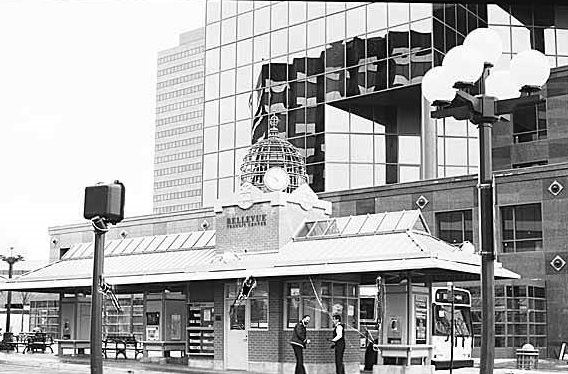
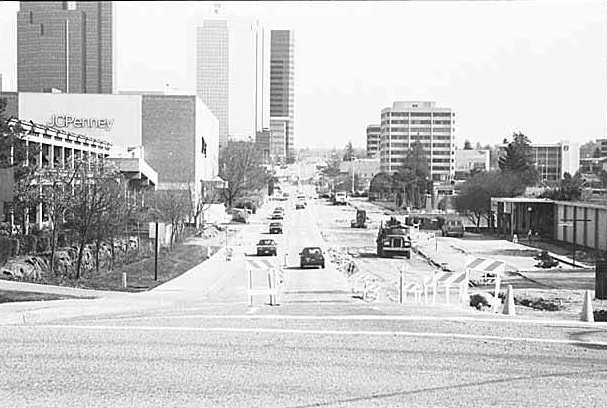
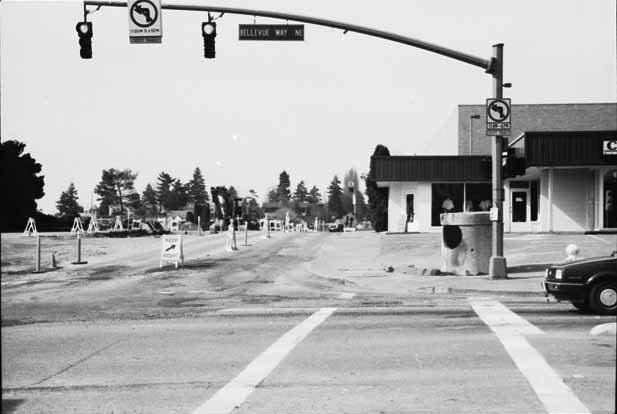
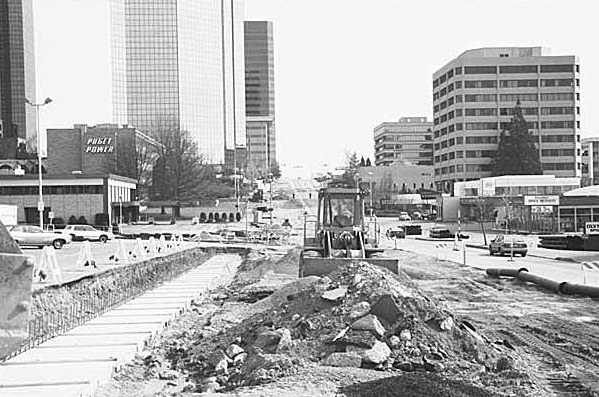
Getting around Bellevue was changing too. The Transit Center served as a key hub for bus routes connecting the Eastside to the broader region. Streets like Bellevue Way and NE 4th and NE 8th were being widened, repaved, and reconstructed to handle the surge in traffic that came with the city’s growth.
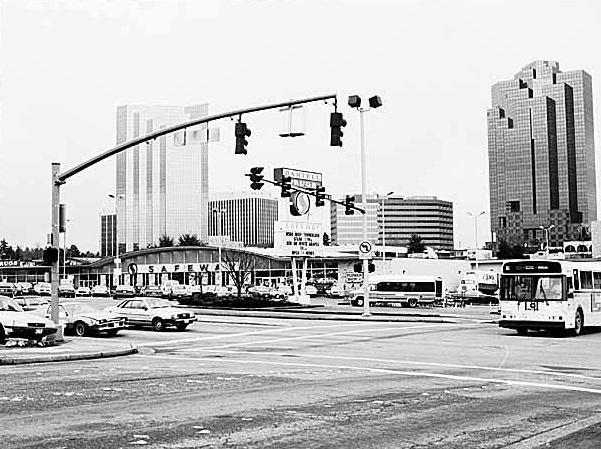
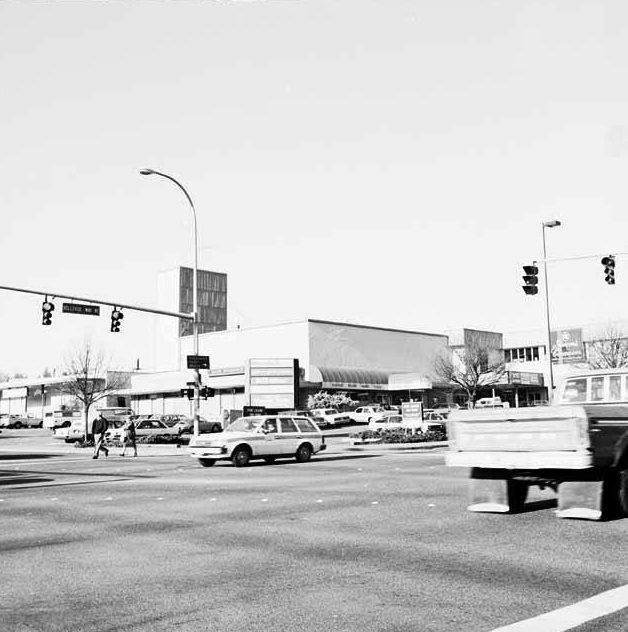
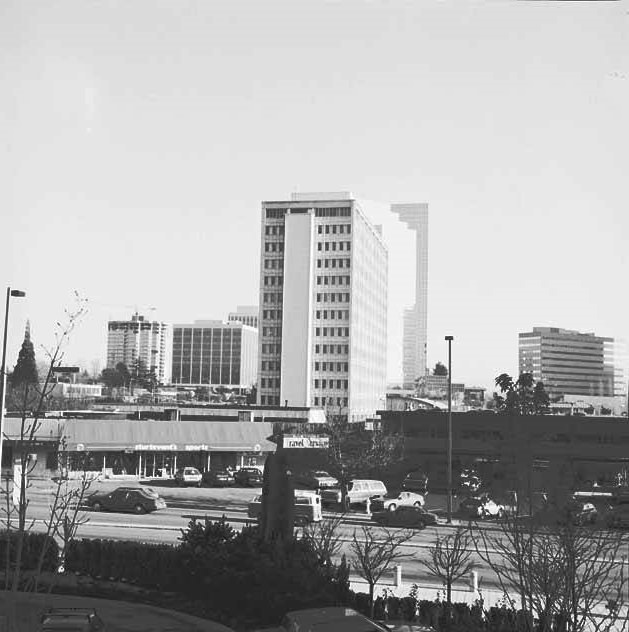
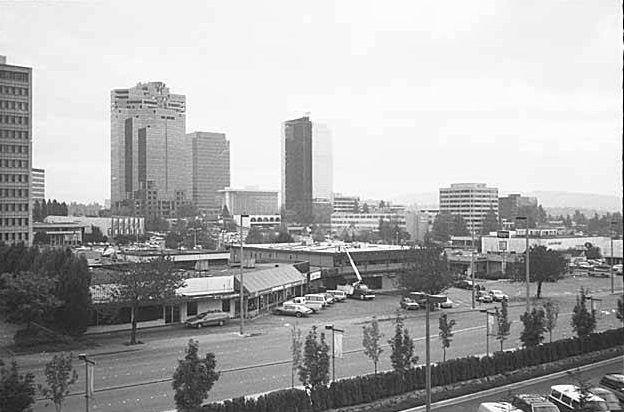
Comparing photos of Bellevue Way from 1985 and 1989 tells the story clearly. In just four years, the streetscape shifted. More buildings. More signage. More lanes. The pace of change was visible block by block.
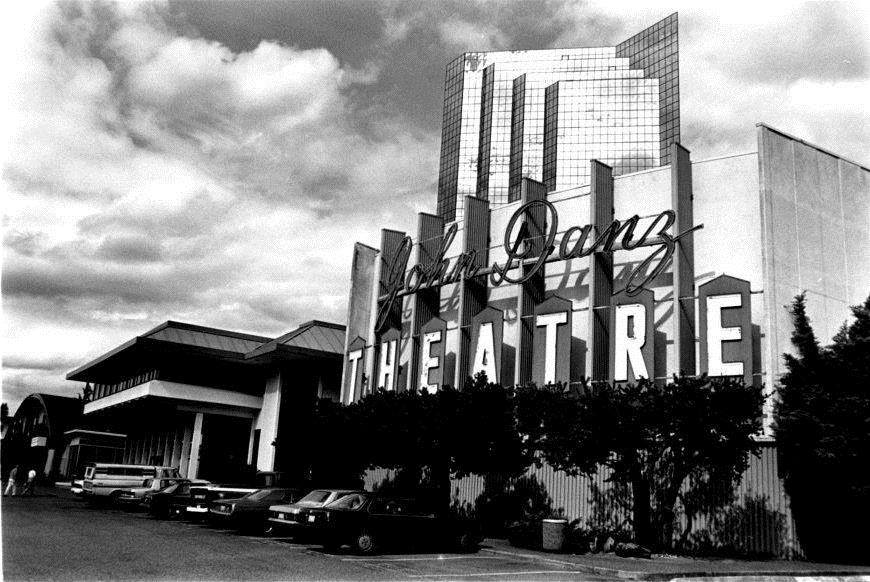
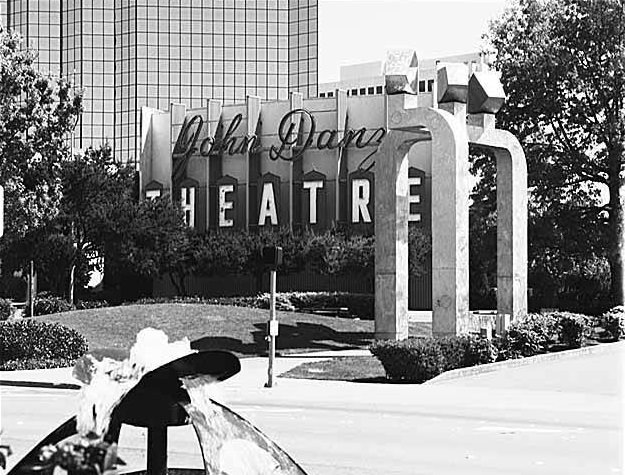
Public art found its place in the changing city as well. The Bellgate sculpture outside the John Danz Theatre was one example of Bellevue’s effort to add cultural character to its commercial landscape. The theatre itself was part of a broader arts presence that gave downtown Bellevue an identity beyond shopping and office work.
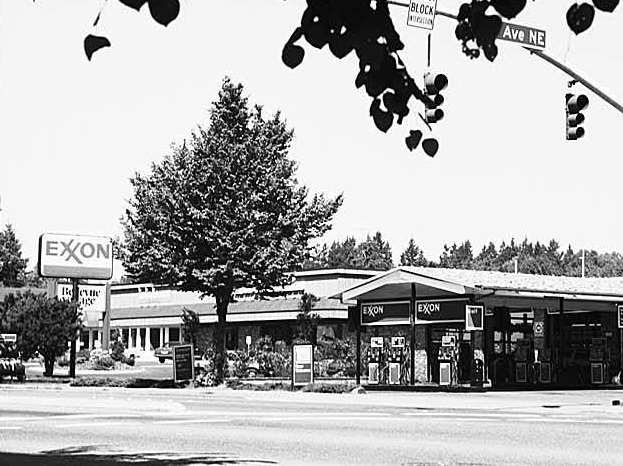
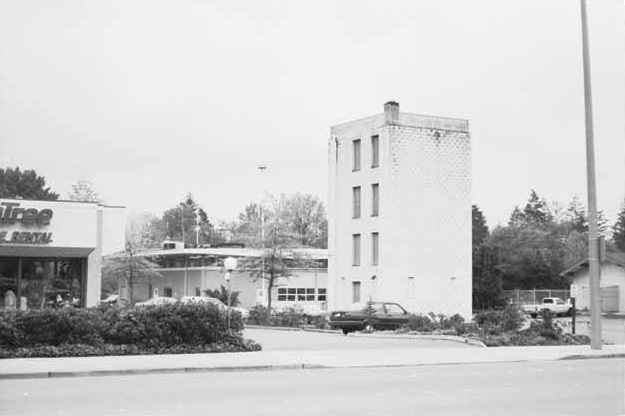
The everyday infrastructure of the city — gas stations, fire departments, transit stops — kept pace with the growth. The fire department’s hose tower stood as a straightforward reminder that behind all the development, the basic services of a functioning city were being maintained and expanded.
Not every part of Bellevue was new construction. The Hilltop cooperative residential development, established in 1947 and designed by Bassetti & Morse, was already one of the oldest cooperative communities in King County by the 1980s. It was founded on principles of modern planning and shared democratic benefit — a deliberate alternative to conventional real estate development. By 1987, it stood as a quiet counterpoint to the commercial energy reshaping the rest of the city.
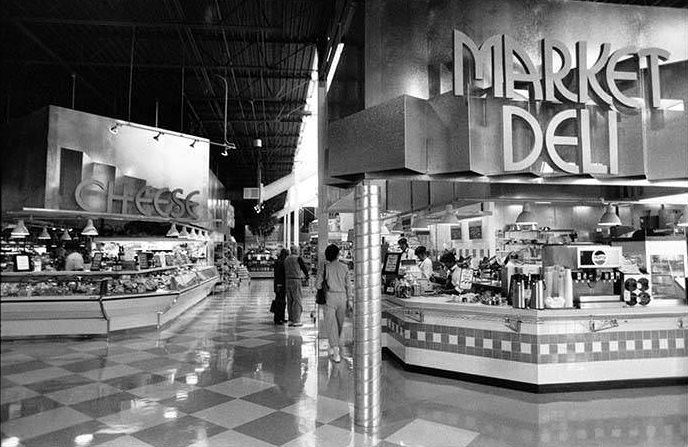
Grocery shopping in 1980s Bellevue meant stores like Larry’s Market, where wide aisles and full shelves reflected the purchasing power of an increasingly affluent community. Homeownership remained high throughout the decade, and wealth was visible in the stately homes along Lake Washington’s shoreline and in nearby communities like Medina and Hunts Point. At the same time, ranch-style and split-level homes in neighborhoods like Lake Hills gave the city a working-family texture that kept it grounded.
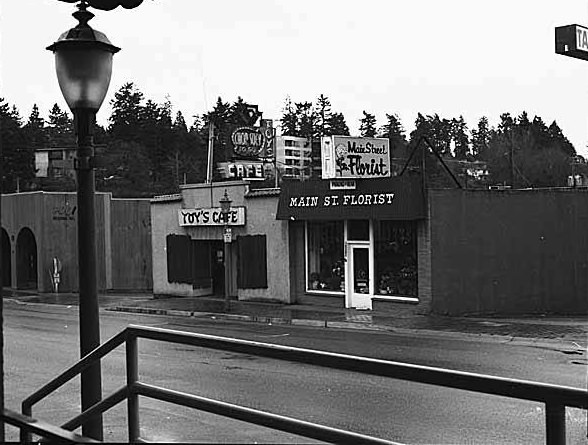
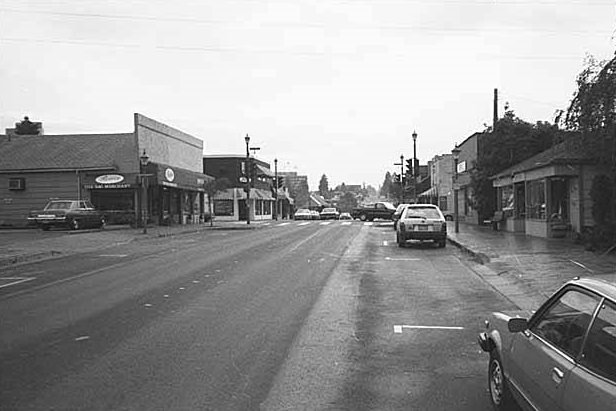
Main Street in the mid-1980s was a mix of small businesses, storefronts, and local character. Looking east, the street showed a city that still had plenty of room to grow — and was actively doing so. Road construction and street-widening projects were a constant presence throughout the decade.
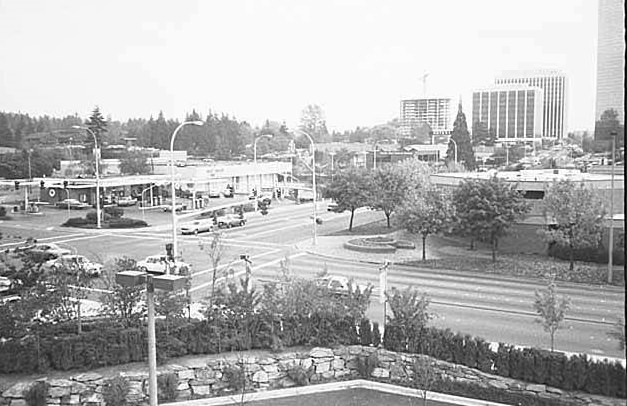
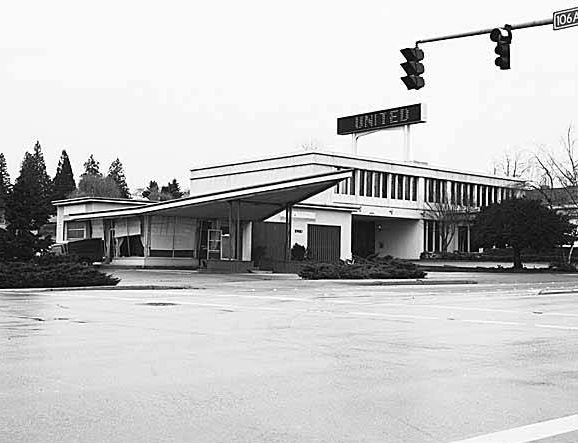
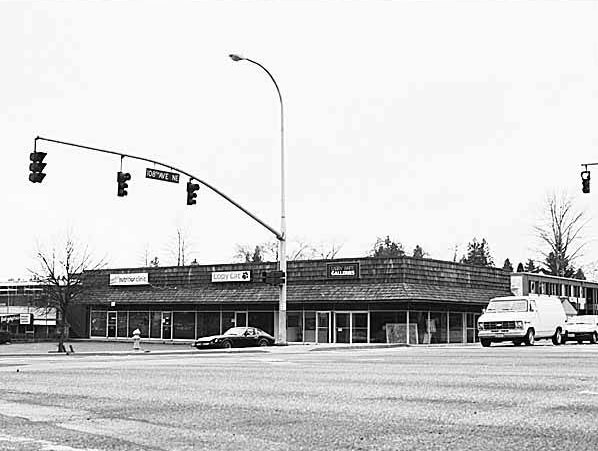
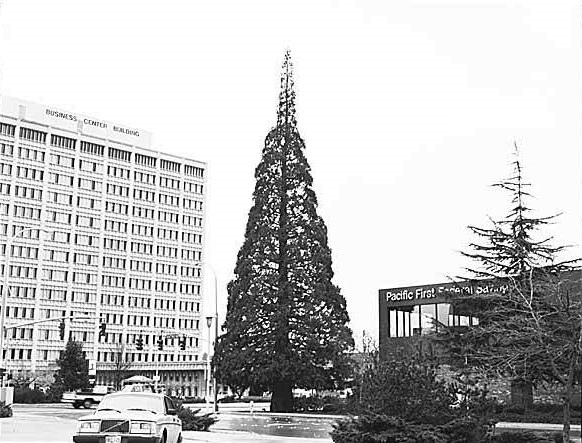
Even individual trees marked the passage of time and the texture of Bellevue’s streets. A sequoia at the corner of NE 8th and 106th Avenue NE stood as a rare natural landmark amid the asphalt and development. Shopping centers nearby catered to the steady stream of residents drawn to the city’s growing commercial zones.
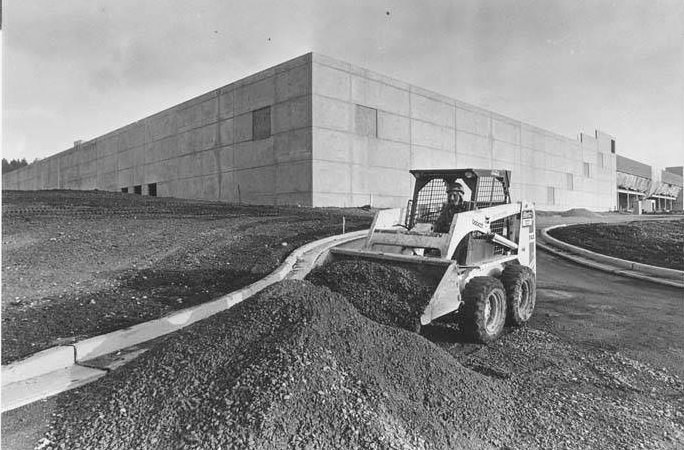
One of the decade’s most consequential developments happened just outside Bellevue’s city limits. By late 1987, Microsoft was clearing ground in Bothell for a new plant — part of its rapid expansion from a small software company into a global powerhouse. The company had started in Bellevue before moving to Redmond, and its growth was reshaping the entire Eastside economy.
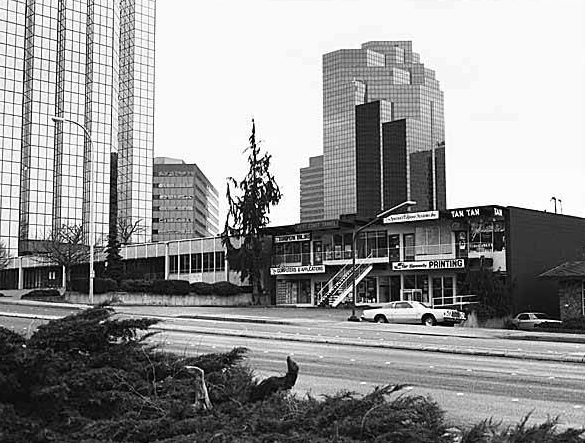
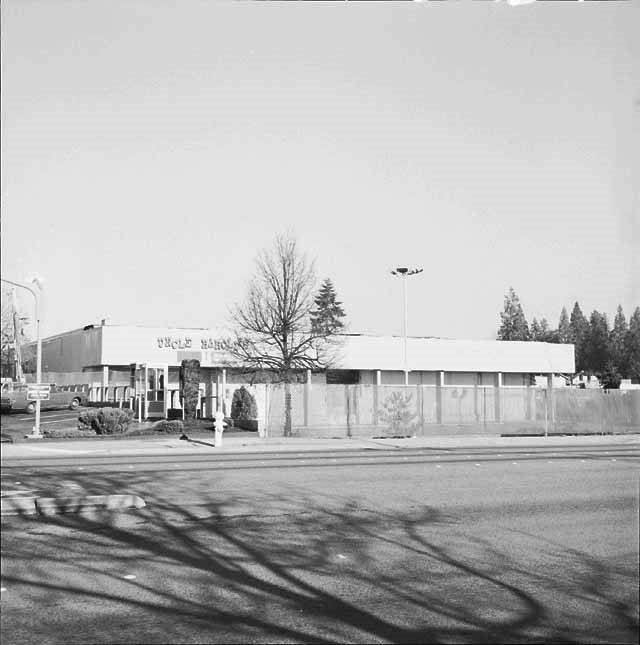
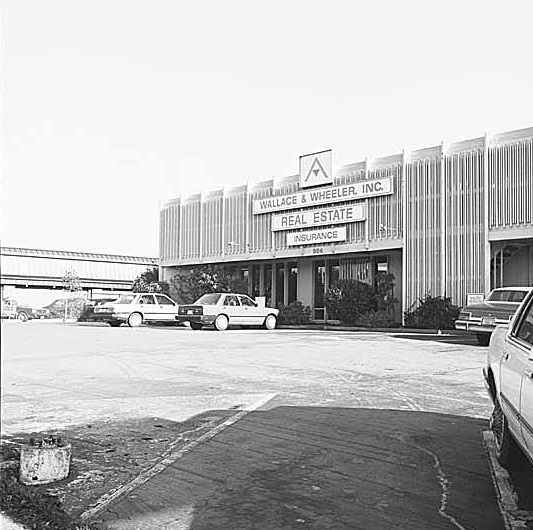
Small local businesses held their own alongside the national chains and tech campuses. Uncle Harold’s Bike Shop was the kind of place that gave a neighborhood its personality — practical, local, and well-worn. Firms like Wallace & Wheeler Inc. represented the professional services sector that quietly supported the city’s broader economy.
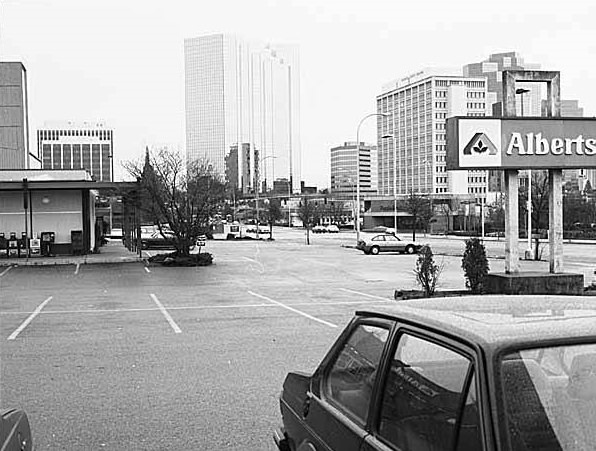
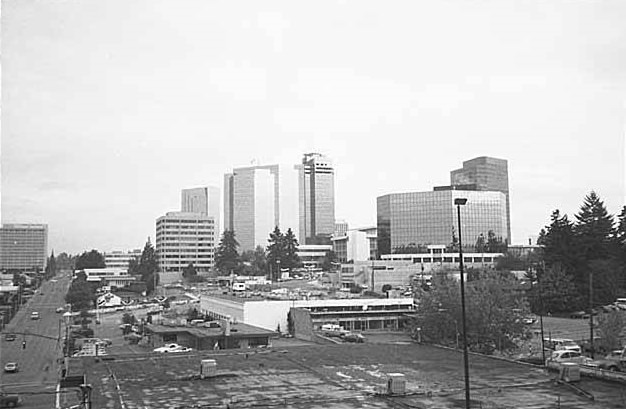
Street-level views from 1986 and 1987 show a city in constant motion. Cranes and construction equipment appeared regularly in photos from this period, and road-widening projects like the expansion of NE 4th Street were reshaping the grid to accommodate more cars, more buses, and more people.
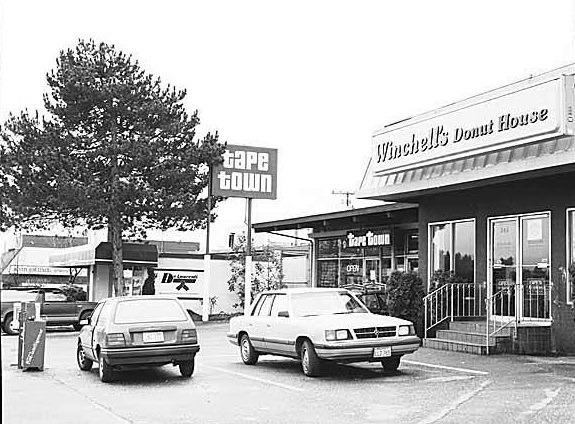
Some of the most evocative images from 1980s Bellevue are the simplest ones — a Winchell’s Donut Shop next to a Tape Town, a parking lot view looking east toward undeveloped hills, a fire tower standing against a grey Pacific Northwest sky. These photos don’t capture a city in its finest moment. They capture it in its most real one: working, growing, and figuring out what it wanted to become.





Fun photos. Would like to see some from other parts of town.
Why black and white? It was the 1980s not the 1880s. Just saying. I feel like color would have shown a lot more detail.
#38 I remember this corner being a coupla quaint houses (NE 4th and Bellevue Way) in the early seventies. By’72- ’73 that Winchell’s started life as an H. Salt Esq. Fish & Chips location. A Funeral Home to the North across on 4th, within the Bel Square footprint, and the world’s tiniest parking lot on the front corner. Opposite corner – the original Safeway – I’d not only worked there, but loved that it was Freeman Jr’s personal thorn for a very, very long time;)