
in

Street Life of London in the 1970s Through These Fabulous Color Photos

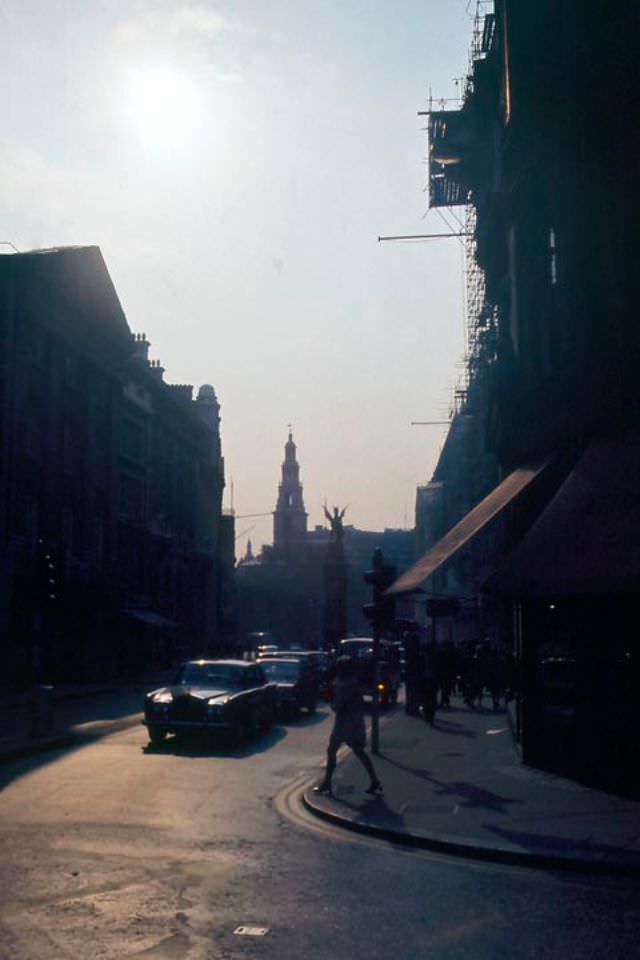
London in the 1970s was a city in motion. The decade brought rapid social change — political protests, feminist marches, cultural flashpoints, and street celebrations that drew thousands. It was a time when the city’s personality was written on its pavements, in its pub signs, and across its market stalls. These color photographs capture that world with a directness that black-and-white images simply cannot match.

Picadilly Circus – Regent Street

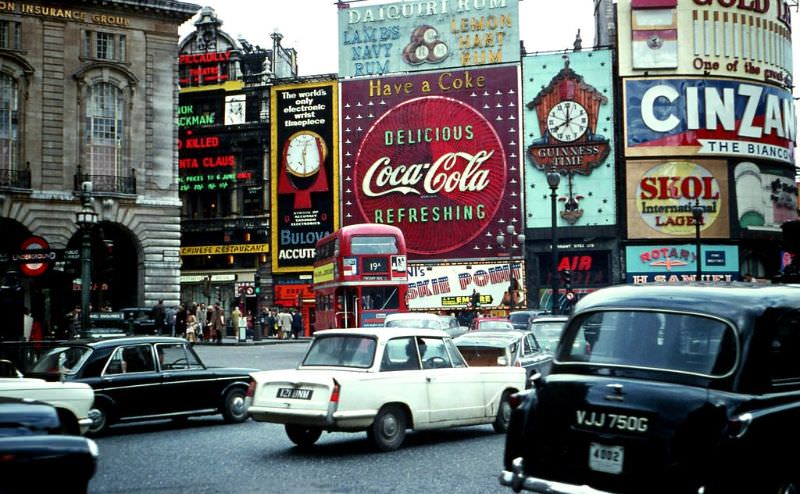
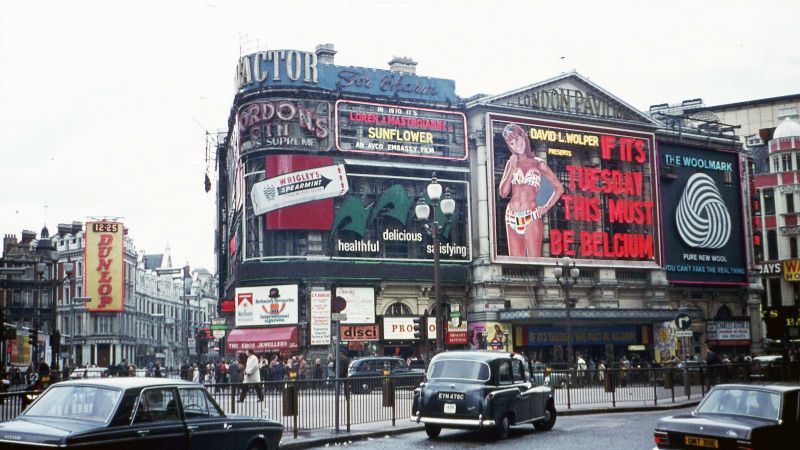
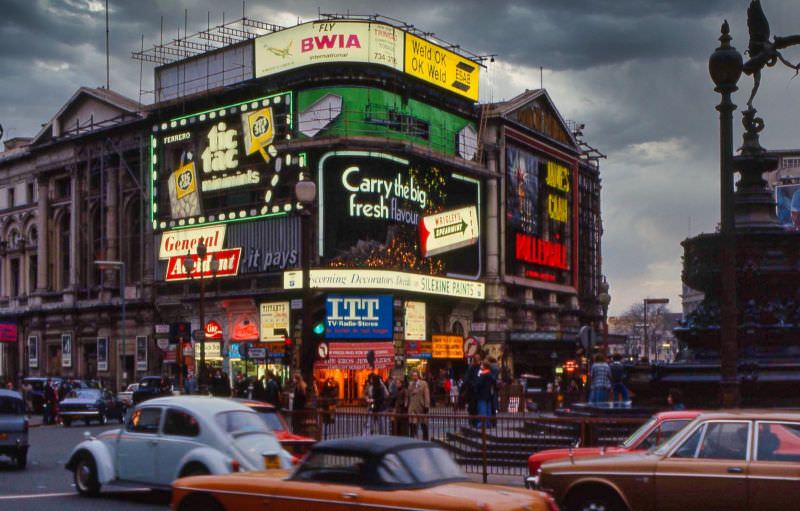
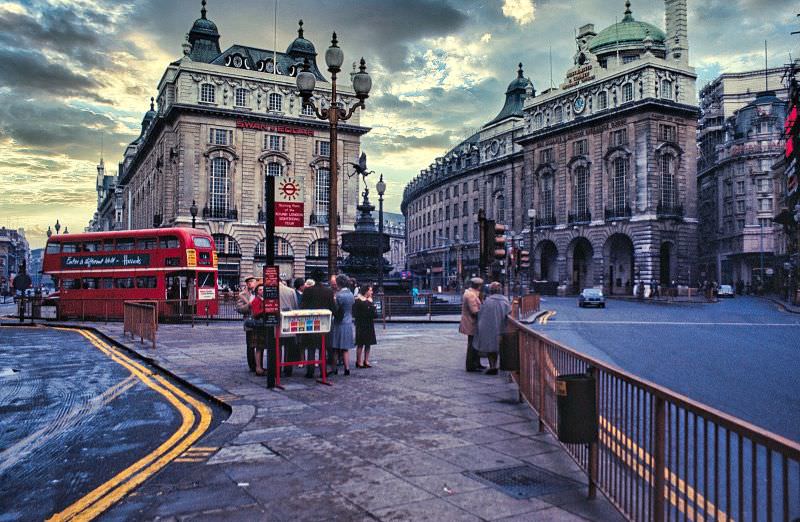
Piccadilly Circus was one of the most recognizable intersections in the world, and in the 1970s it pulsed with traffic, neon, and crowds around the clock. The junction where Regent Street meets Piccadilly served as a natural gathering point for Londoners and tourists alike.

Picadilly Circus
Picadilly Circus
Kings Road
Kings Road

King’s Road in Chelsea was the heartbeat of London’s fashion scene during the decade. Boutiques, record shops, and cafés lined the street, pulling in a crowd that ranged from punk pioneers to art school students. It was the kind of street where what you wore was a statement.

Kings Road
Kings Road
Kensington Market
Kensington Market

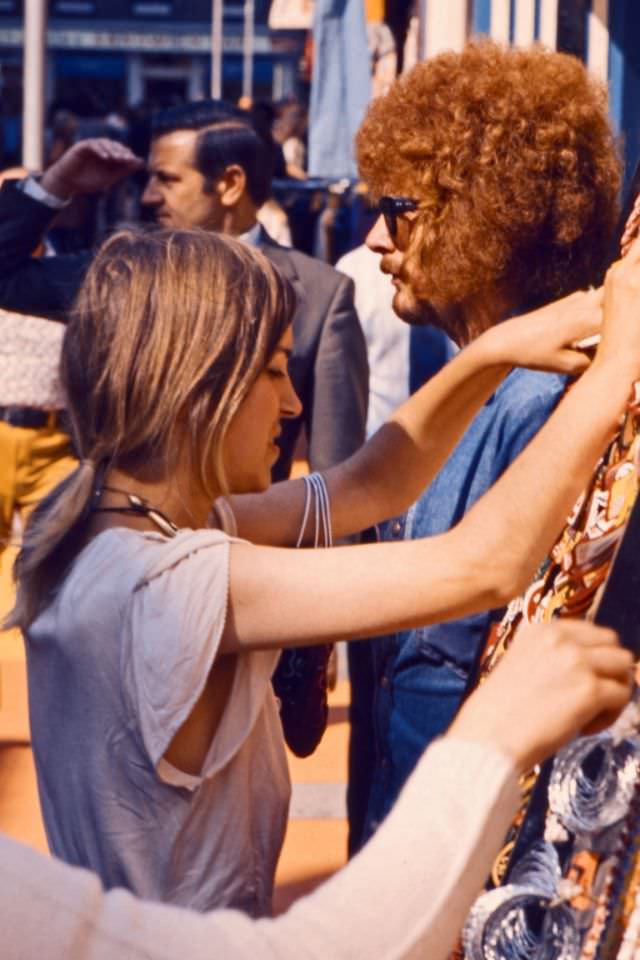
Kensington Market, tucked along Kensington High Street, was a labyrinth of stalls selling second-hand clothes, records, and handmade goods. It drew the alternative crowd — the people who weren’t shopping on Oxford Street. Meanwhile, Oxford Street itself remained one of the busiest retail corridors in Europe, with HMV standing as a landmark for music lovers.

Oxford street – HMV
Oxford street – HMV
Picadilly Circus
Picadilly Circus
Picadilly Circus
Picadilly Circus
Picadilly Circus
Picadilly Circus

The first UK Pride march in 1971 ended at Trafalgar Square, drawing around 2,000 participants. In 1977, the first Concorde flight from Heathrow to JFK Airport marked a leap in transatlantic travel. The Silver Jubilee that same year brought street parties across the city. People filled the roads for the Notting Hill Carnival and celebrated Arsenal’s FA Cup win over Liverpool. London’s streets were stages for all of it.

Kings Road Theatre – Rocky Horror

The King’s Road Theatre became home to the Rocky Horror Show, which premiered there in 1973 and ran for years. The production helped define the era’s appetite for theatrical rebellion and camp excess. Just down the road, the Chelsea Drugstore — made famous in a Rolling Stones song — offered three floors of shopping, food, and pharmacy services unlike anything else in the city.

Kings Road
Kings Road
Kings Road
Kings Road
Kings Road – Chelsea Drugstore
Kings Road Ind Coope Markham
Kings Road
Kings Road

Earl’s Court Road had its own distinct identity. The Hungry Years, a café and gathering spot on that strip, reflected the neighborhood’s mix of young professionals, Australian expats, and artists who had settled in the area during the decade.

Earls Court Road – Hungry Years
Oxford street
Oxford street
Kings Road
Kings Road
Kings Road
Kings Road
Kings Road
Kings Road

London’s population had been falling since World War II — dropping from a peak of around 8.6 million in 1939 to roughly 7.5 million by the 1970s. Yet the city didn’t feel empty. Its streets, stations, and squares were as crowded and alive as ever. Gloucester Road Station, like many Underground stops, was woven into the daily rhythm of millions of commuters.

Glouster Road Station
Picadilly Circus
Picadilly Circus

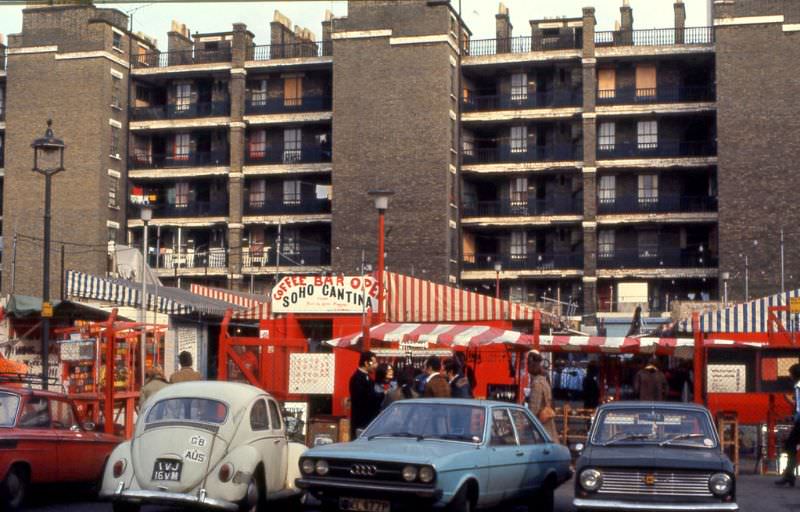
Soho in the 1970s was London’s most layered neighborhood. Film posters plastered the walls, sex shops sat beside jazz clubs and Italian restaurants, and the streets stayed busy well past midnight. Berwick Street Market ran through the middle of it all, with fruit and vegetable vendors trading alongside record stalls.

Soho – Movie Wall
Soho – Movie Wall
Kings Road
Kings Road
Leicester Square – Warner West End
Kings Road
Kings Road
Oxford street
Oxford street
Kings Road
Kings Road
Kings Road
Kings Road

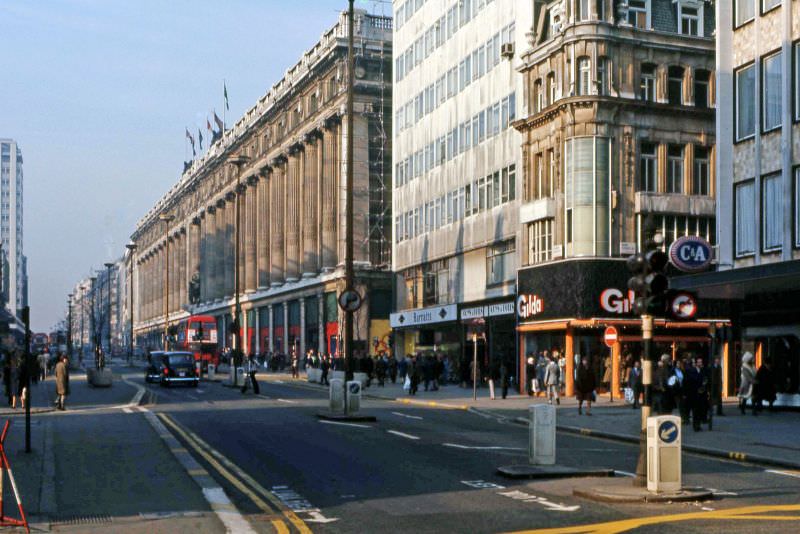
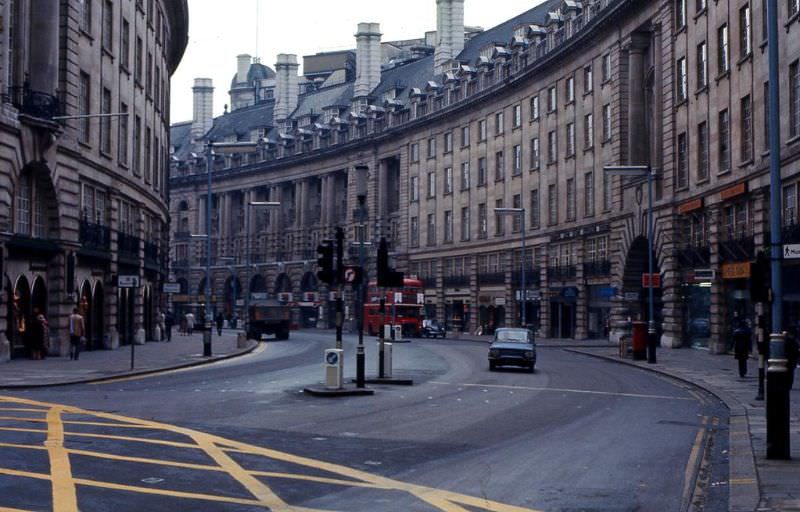
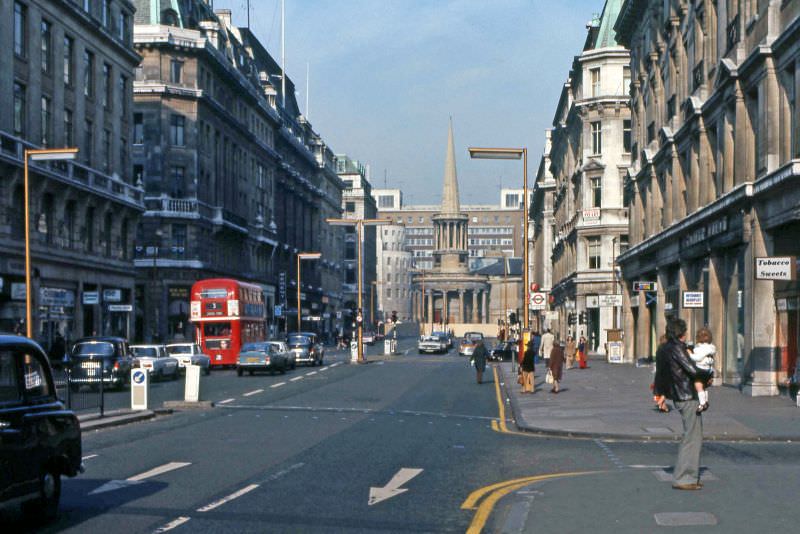
Regent Street connected the grand commerce of the West End in clean, curved lines. Its wide pavements and ornate facades gave it a different feel from the narrower, more chaotic streets of Soho nearby. Shoppers, office workers, and visitors all moved through it in constant flow.

Regent Street
Regent Street
Picadilly Circus
Picadilly Circus
Soho – Great Windmill Street
Kings Road – Rock Dreams
Picadilly Street
Picadilly Street
Knights bridge
Knights bridge
Kings Road
Kings Road
Regent Street
Regent Street
Oxford Street
Oxford Street
Regent Street
Regent Street

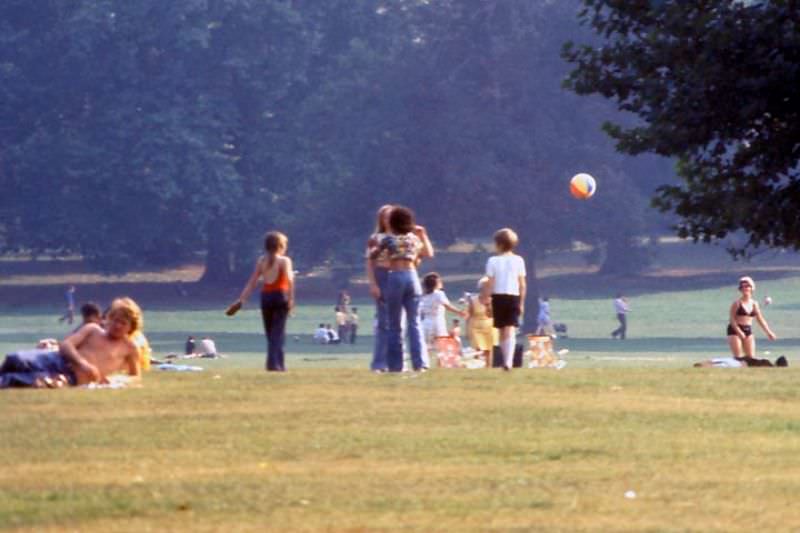
Beyond the West End, north London offered a very different pace. Hampstead and Golders Green Road carried their own character — quieter streets, independent shops, and the open expanse of Hampstead Heath close by. The Heath itself was a genuine escape from the city’s noise, used for walks, picnics, and informal gatherings.

Soho – Berwick Street
Golders Green Road
Golders Green Road
The Freemasons, Hampstead Heath
Hampstead High St
Hampstead High St
Gt Russell St
Gt Russell St

The British Museum on Great Russell Street drew visitors from across the world. Its gates and surrounding streets had a more measured, academic atmosphere compared to the commercial bustle further west. Nearby, the Museum Tavern served as a reliable stop for those who’d spent the day inside the museum’s galleries.

Gates of the British Museum
Hampstead Heath Extension
Museum Tavern
Museum Tavern
St Giles Circus
St Giles Circus

Charing Cross Road was London’s literary spine. Better Books was an independent shop on that stretch known for stocking radical, political, and avant-garde titles. The Compendium Bookshop in Camden carried a similar spirit, drawing readers interested in counterculture and alternative thought.

Better Books - Charing Cross Rd
Better Books – Charing Cross Rd
Liverpool St Station
Compendium Bookshop
Compendium Bookshop
The Good Mixer
The Good Mixer
Hampstead Heath
Hampstead Heath
London, Hampstead
London, Hampstead
St. James Park, London
Street scence of London
Charing Cross Station
Hampstead High Street, Hampstead, London
South End Green, Hampstead Heath, London
Hampstead Heath
Hampstead Heath
Punctual Departures
Punctual Departures
Western Ave
Western Ave
Western Ave
Western Ave
Golders Green Road
Golders Green Road

Bloom’s on Golders Green Road was one of London’s most well-known kosher restaurants, serving the Jewish community that had settled heavily in that part of north London. It was a neighborhood institution. Around the same time, Piccadilly Circus in April 1970 was captured in a series of photographs that show the junction in full daylight, with its advertising hoardings and constant stream of pedestrians.

Bloom's
Bloom’s
London
London
British Museum
British Museum
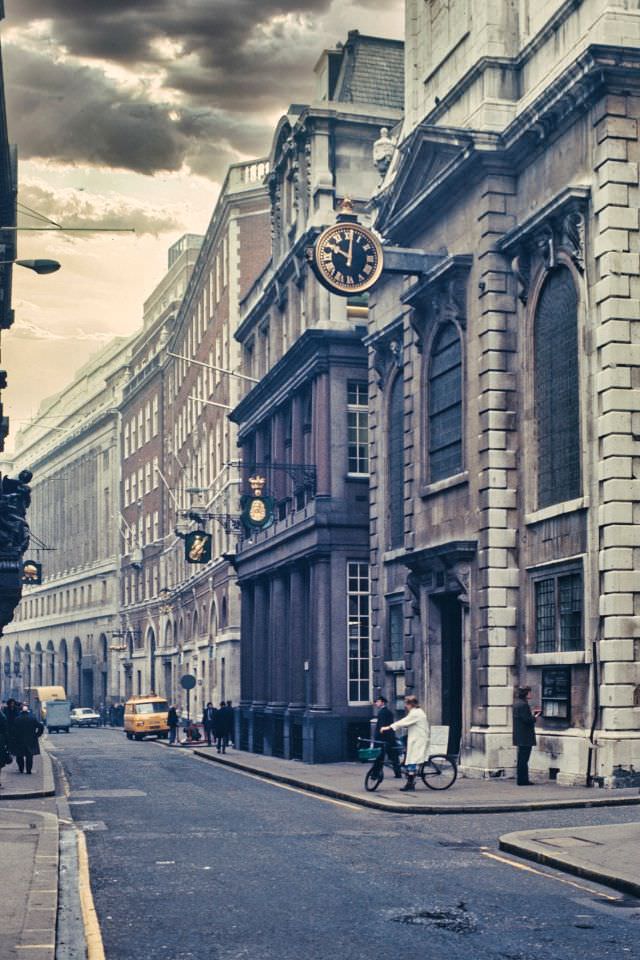
The City
The City
Piccadilly Circus, London, April 1970

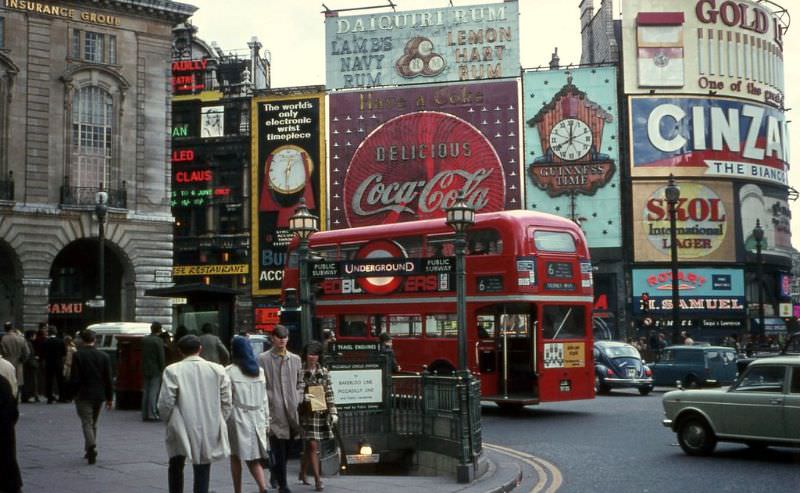
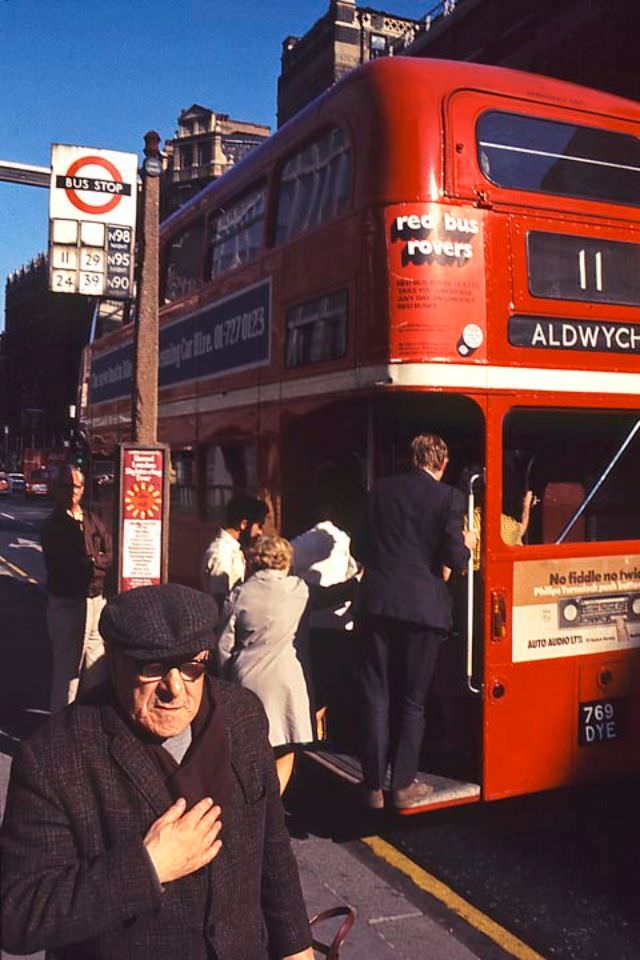
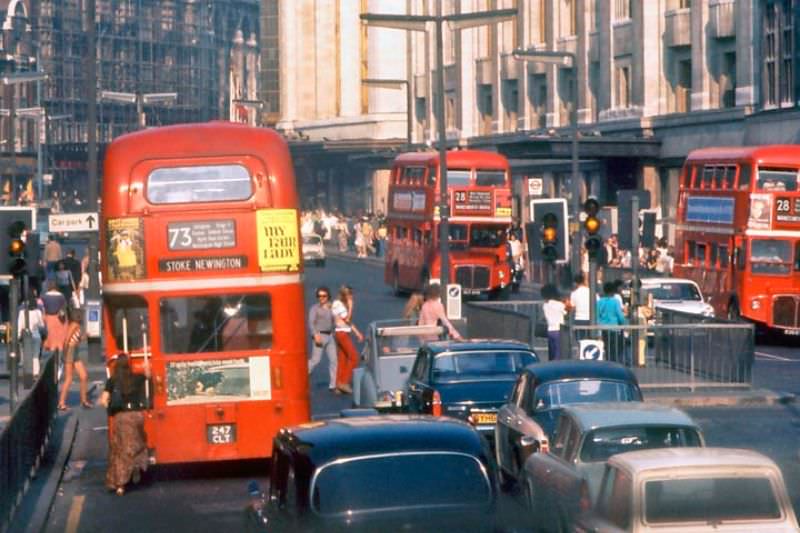
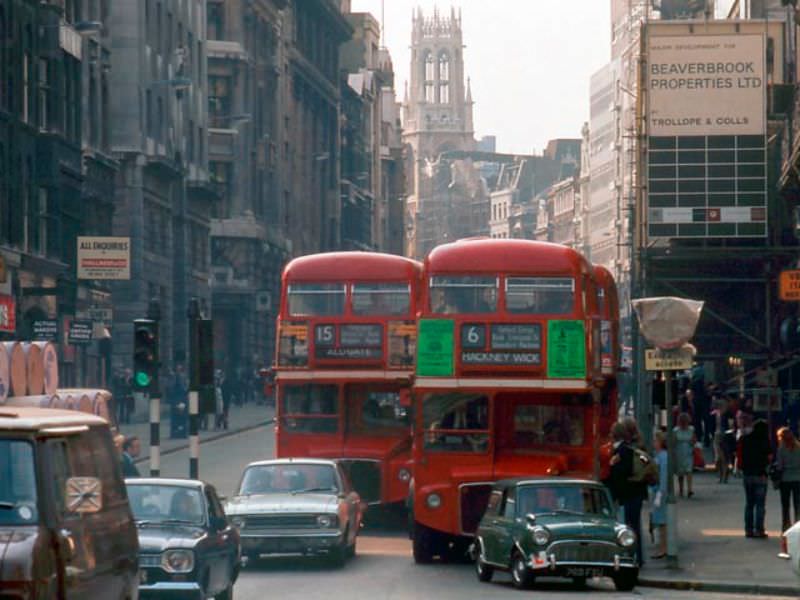
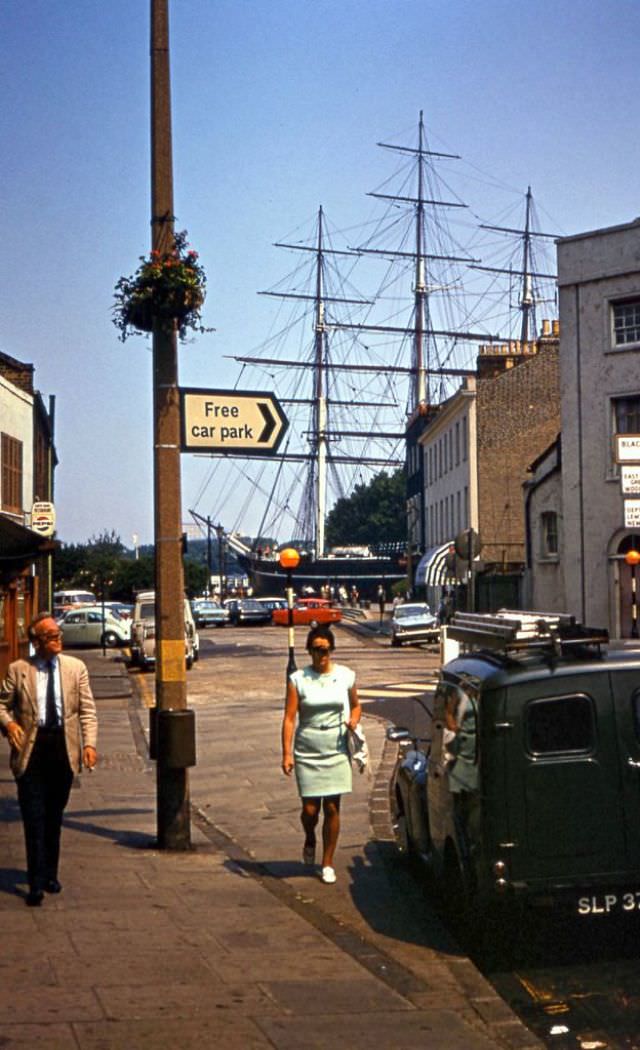
The AEC Routemaster — London’s iconic double-decker bus — was a constant presence on the city’s roads throughout the decade. Route 9 ran from Aldwych through Piccadilly and on to Hammersmith, passing through the heart of tourist and commercial London. The Cutty Sark, the famous clipper ship preserved at Greenwich, was a fixture for visitors to the south of the city.
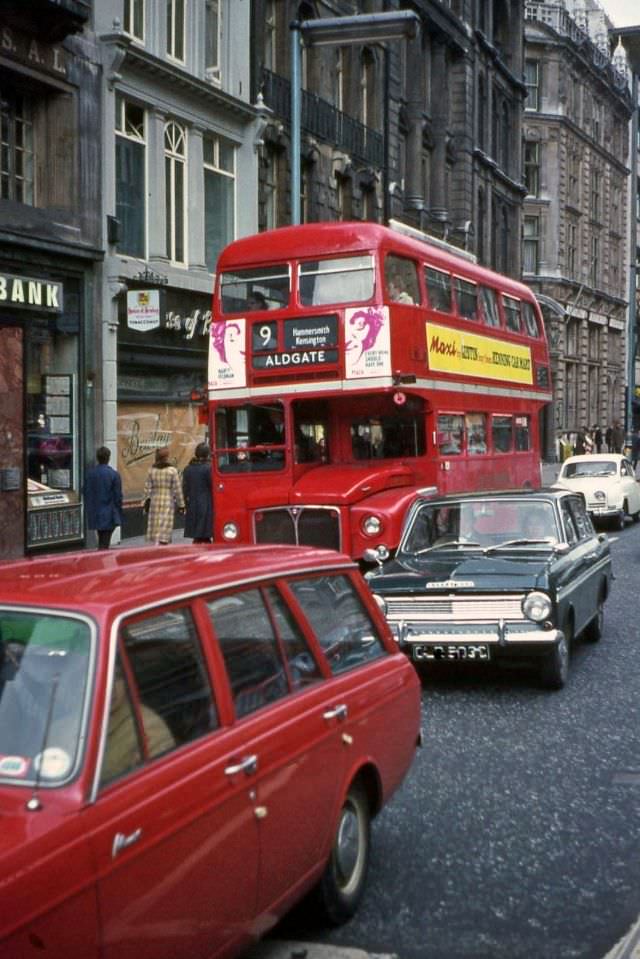
London Bus Route 9: AEC Routemaster, April 1970
Cutty Sark, London, July 1971
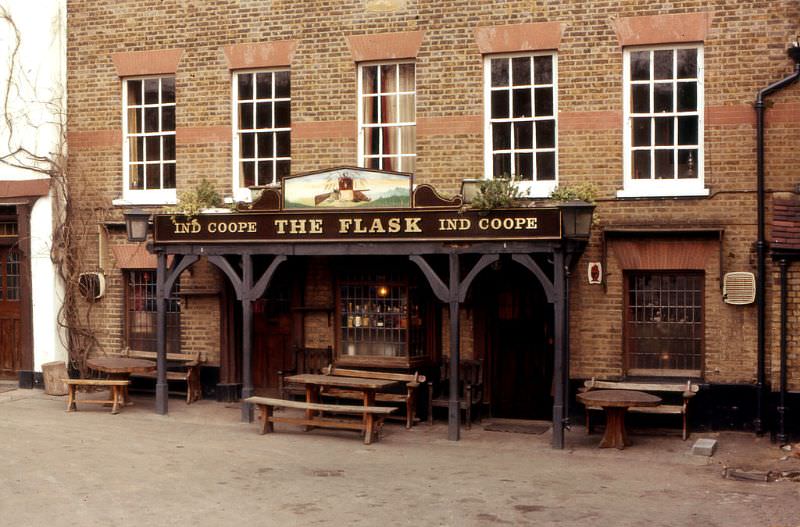
The Flask, 77 Highgate West Hill, Highgate, London, February 1974
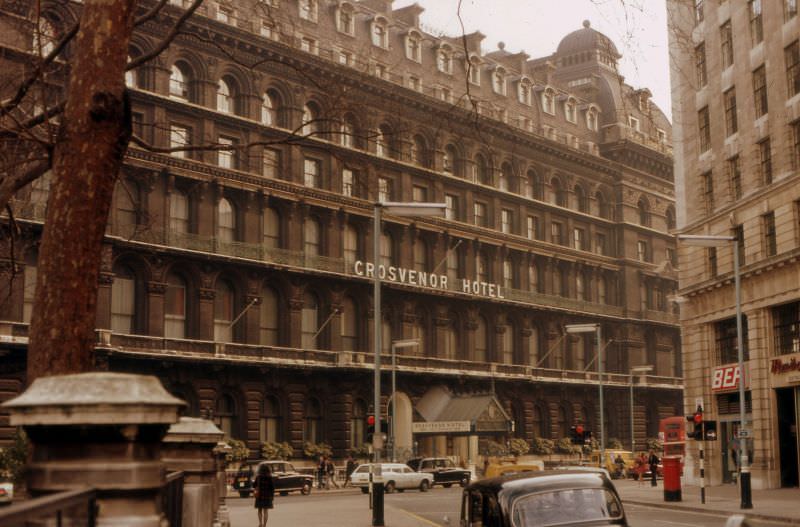
Victoria Grosvenor Hotel, London, February 1974

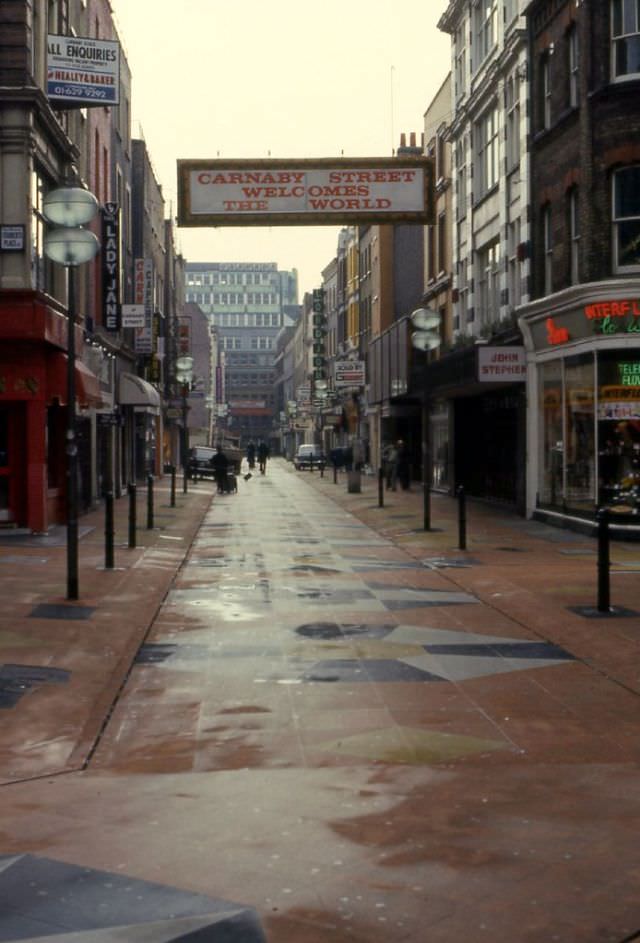
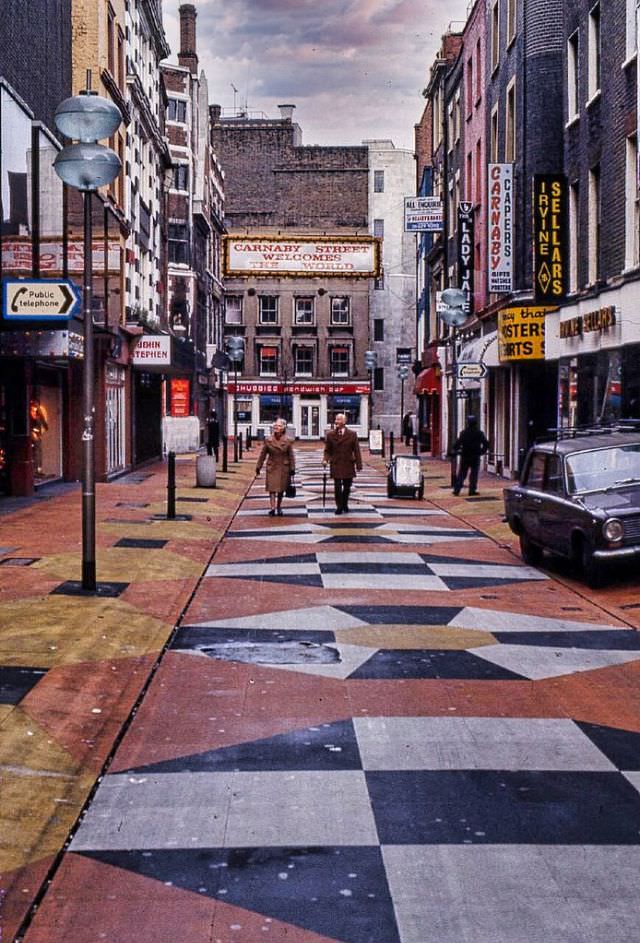
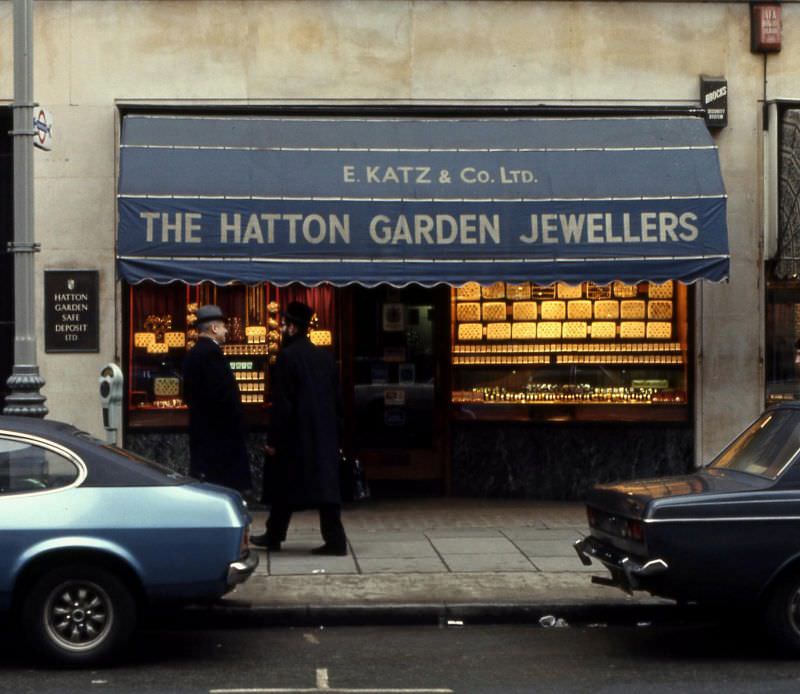
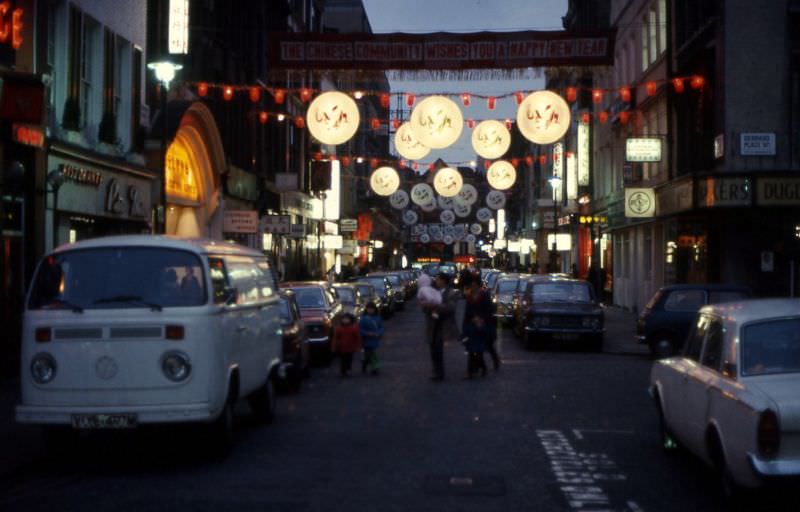
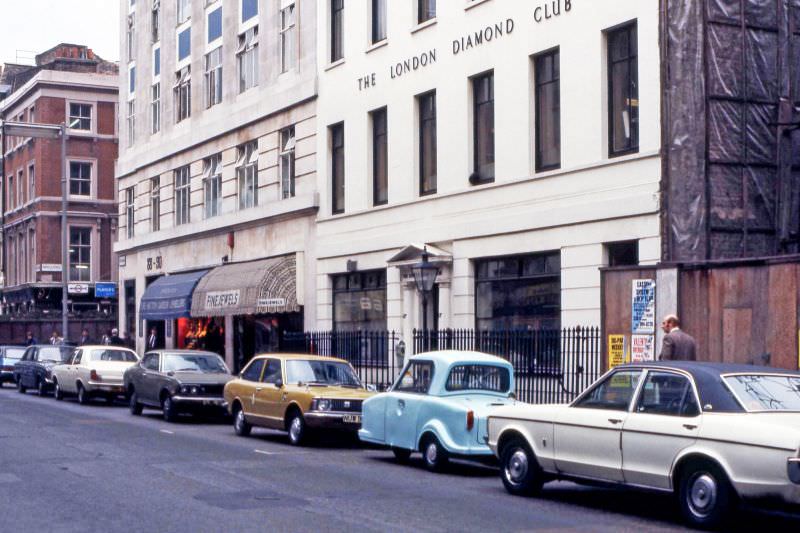
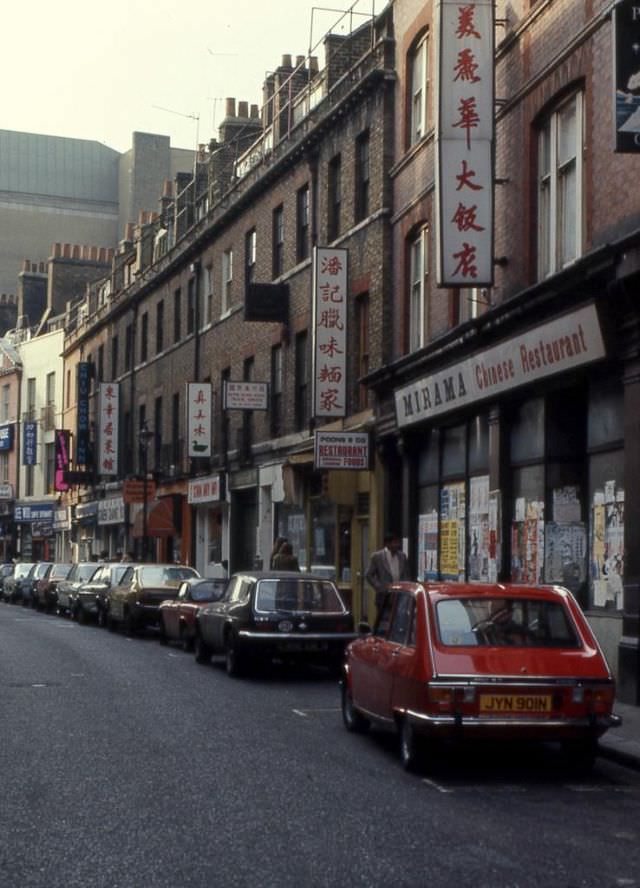
February 1976 produced a rich set of photographs across many of London’s distinct neighborhoods. Berwick Street in Soho, Carnaby Street in the West End, Hatton Garden — the center of the diamond and jewelry trade — and the emerging streets of Chinatown in Gerrard Street all appear in this collection. Each one tells a different story about who lived and worked in London and how they used the city’s spaces.
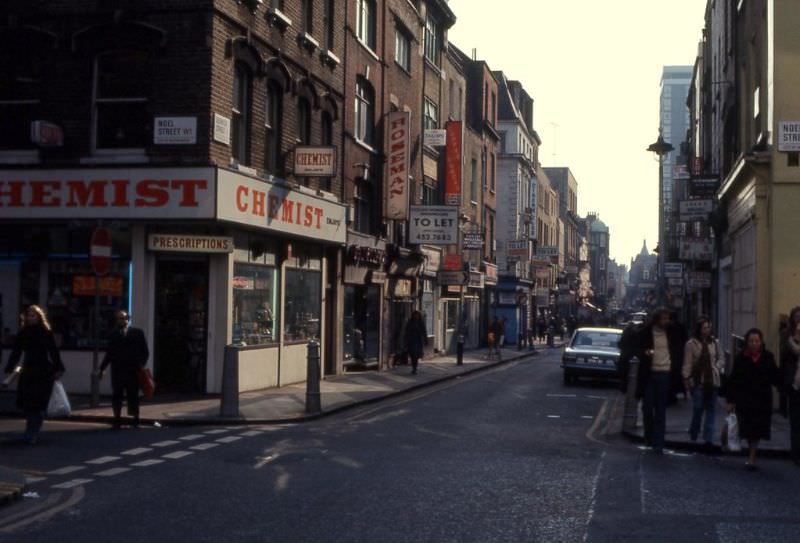
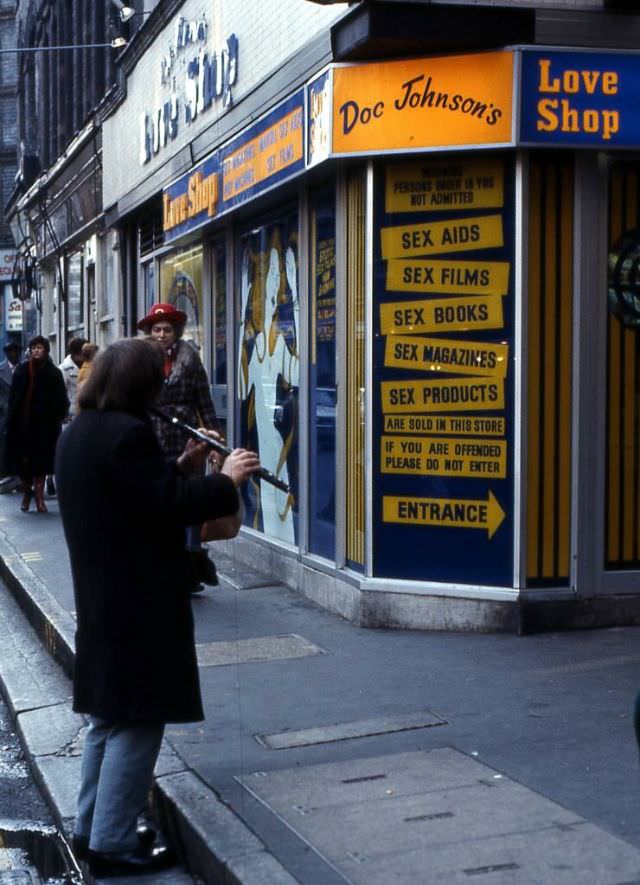
Berwick Street, London, February 1976
Busker, Soho, London, February 1976
Carnaby Street, London, February 1976
E. Katz & Co Ltd, 88-90 Hatton Garden, London, February 1976
Gerrard Street, Chinatown, London, February 1976
Goulston Street, London, February 1976
Hatton Garden: The London Diamond Club, London, February 1976
Lisle Street, Chinatown, London, February 1976

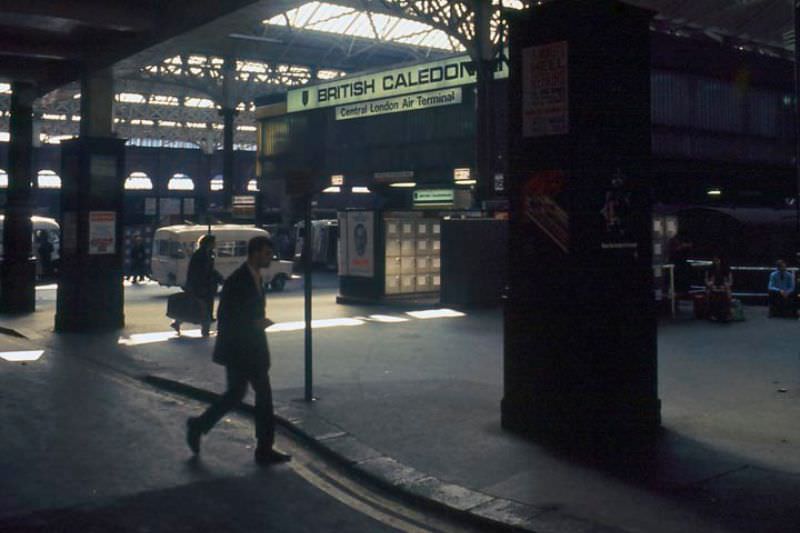
Liverpool Street Station in February 1976 was a working commuter hub, not yet the modernized terminus it would become after its 1980s redevelopment. The photographs taken there show the raw, functional reality of London’s rail infrastructure during the decade. Lombard Street in the City, flanked by banking institutions, represented a different London entirely — financial, formal, and relatively quiet on weekends.
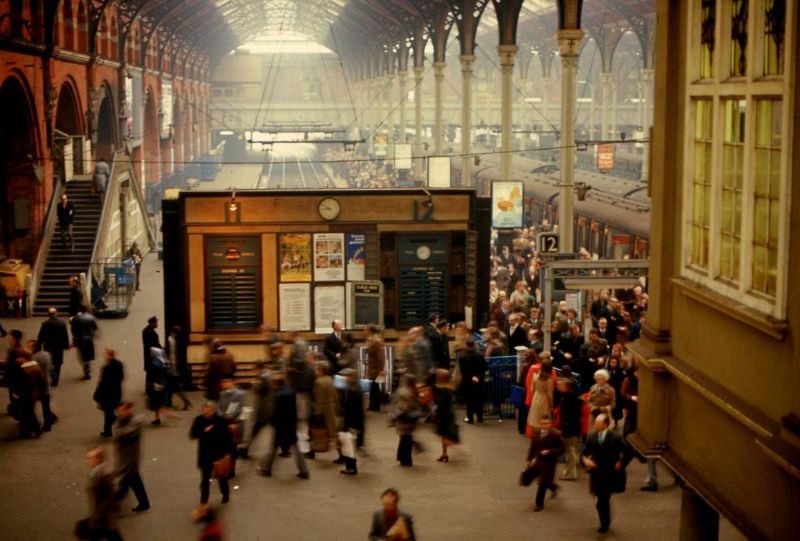
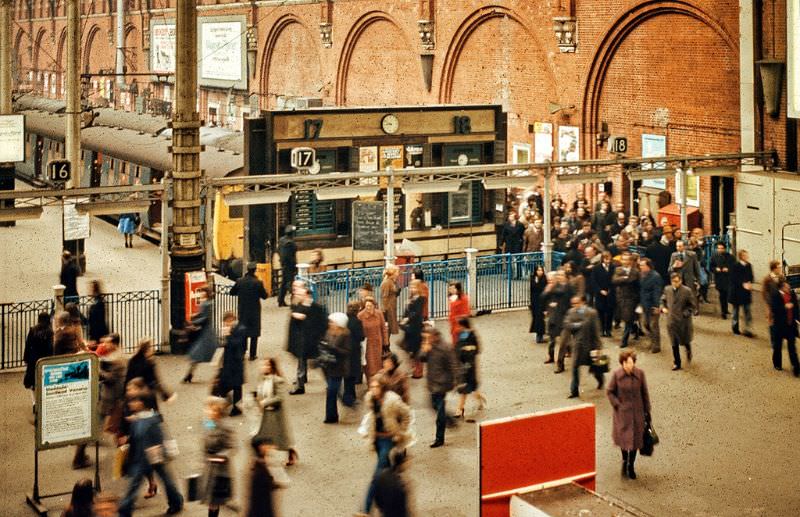
Liverpool Street Station, London, February 1976
Lombard Street, London, February 1976
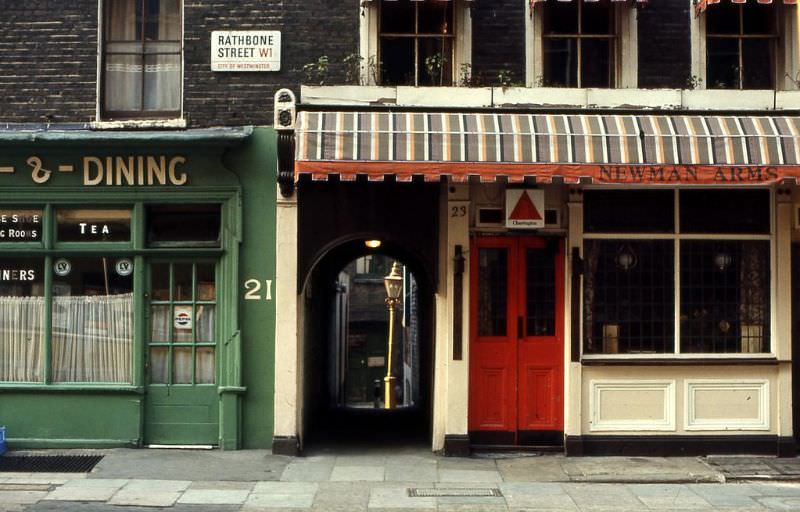
Newman Arms, 23 Rathbone Street, London, February 1976
Oxford Street, London, February 1976

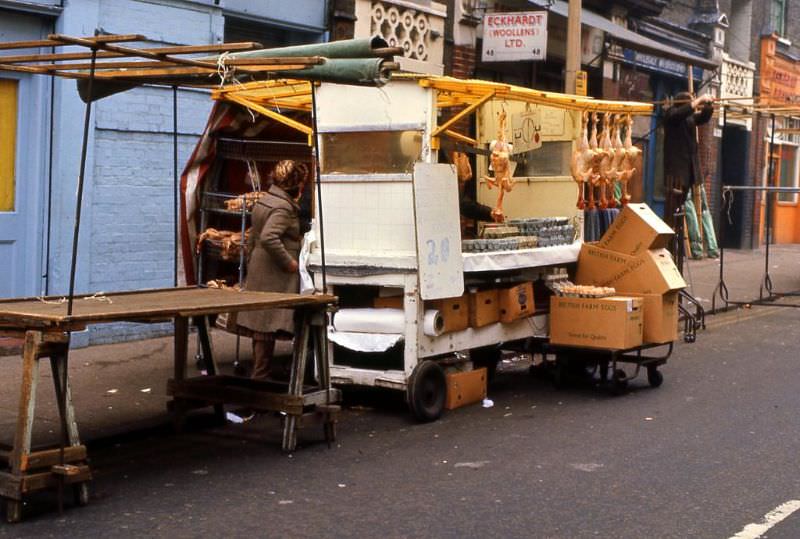
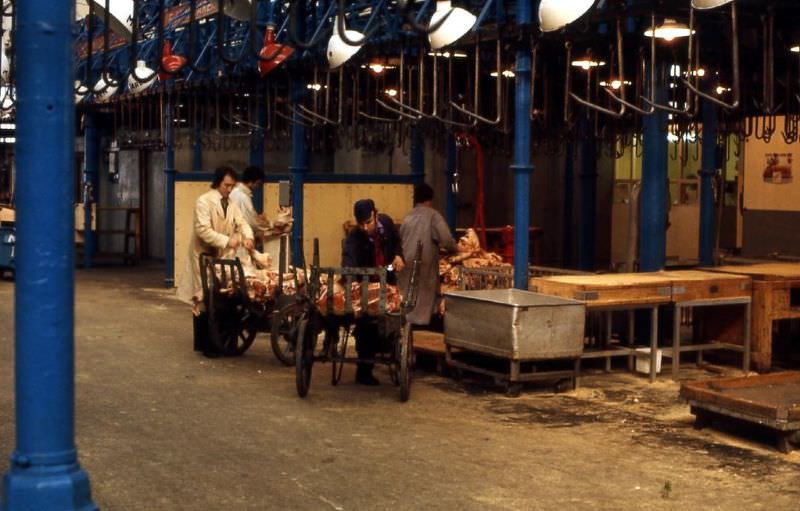
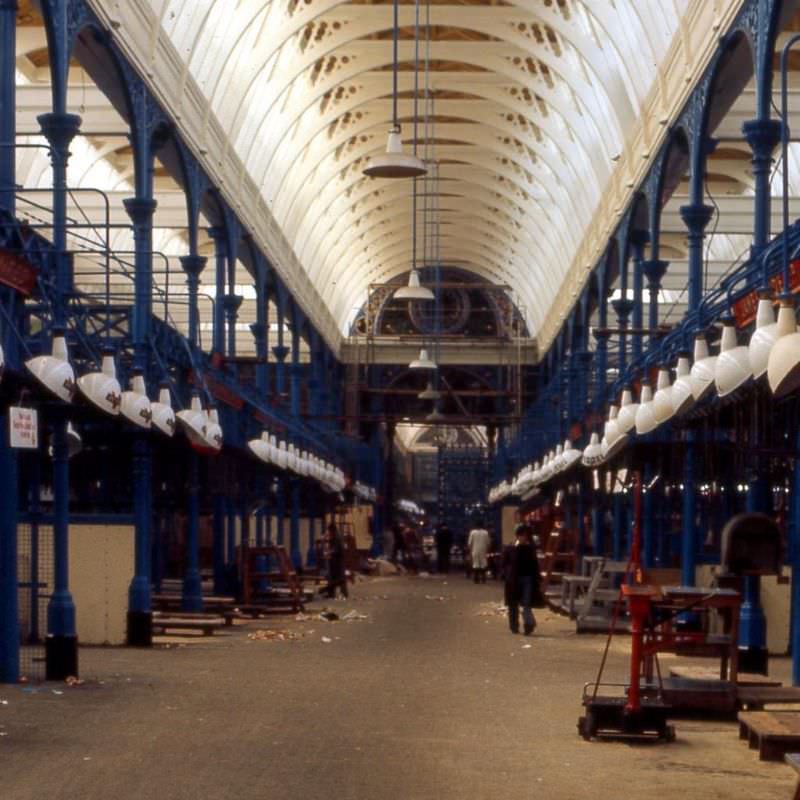
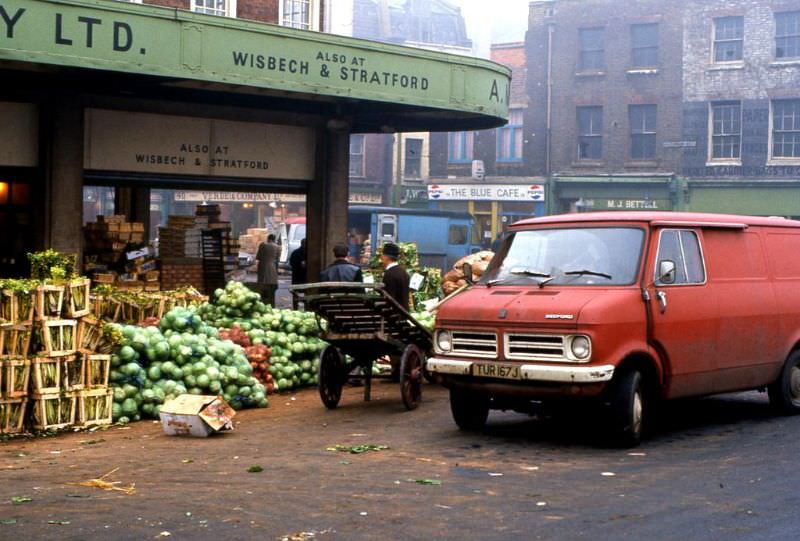
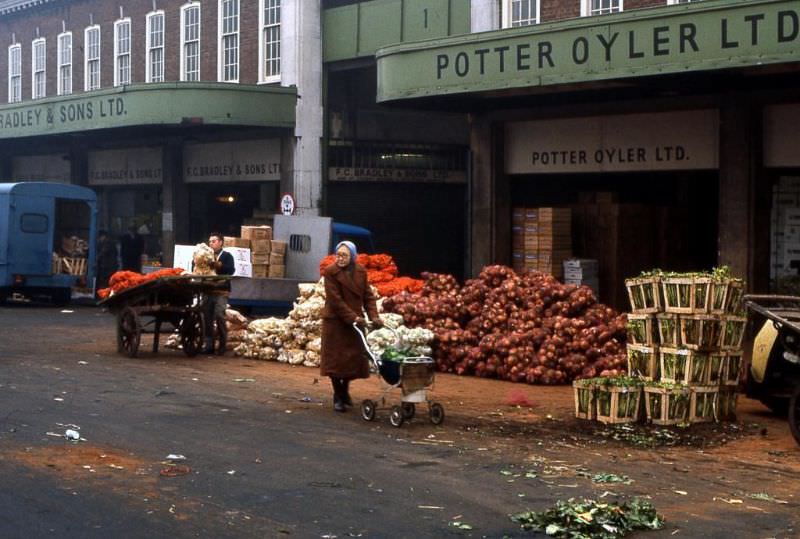
Petticoat Lane Market in the East End ran on Sundays, drawing thousands of shoppers hunting for cheap clothing, household goods, and food. Spitalfields Market, nearby, handled wholesale fruit and vegetables on weekday mornings. Smithfield meat market in the City operated through the nights, with deliveries arriving in the early hours so traders could be done before most of London had woken up.
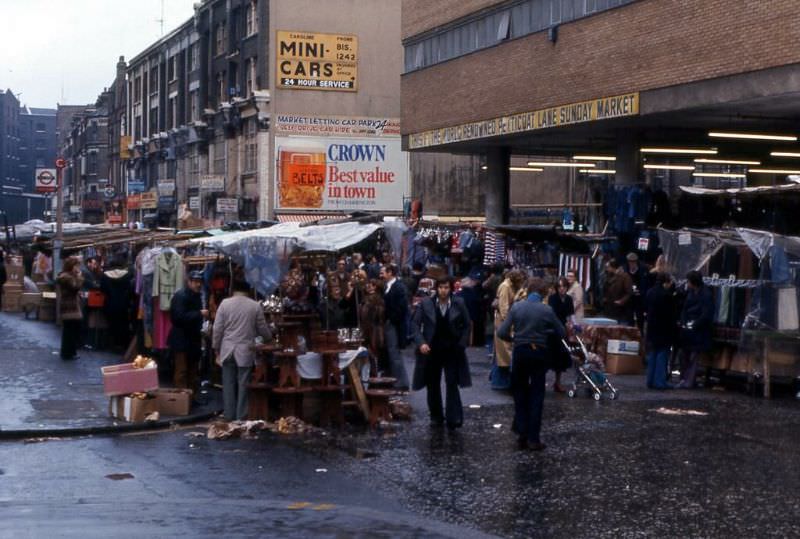
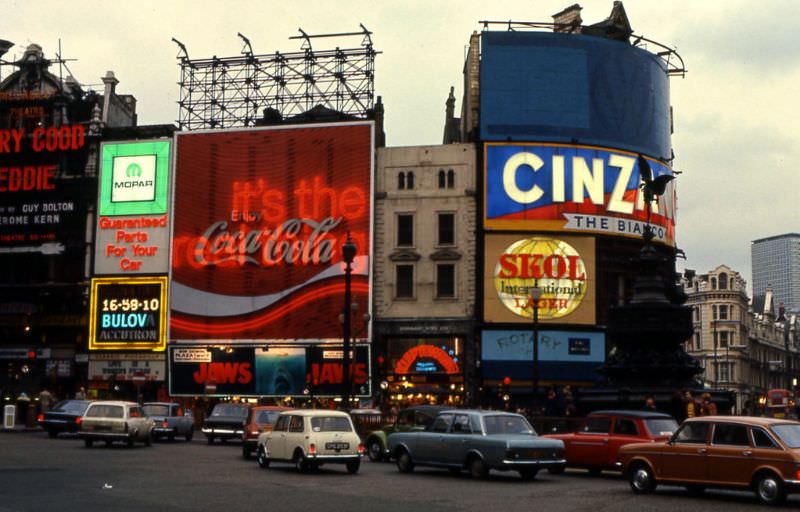
Petticoat Lane Market, London, February 1976
Piccadilly Circus, London, February 1976
Regent Street, London, February 1976
Smithfield meat market, London, February 1976
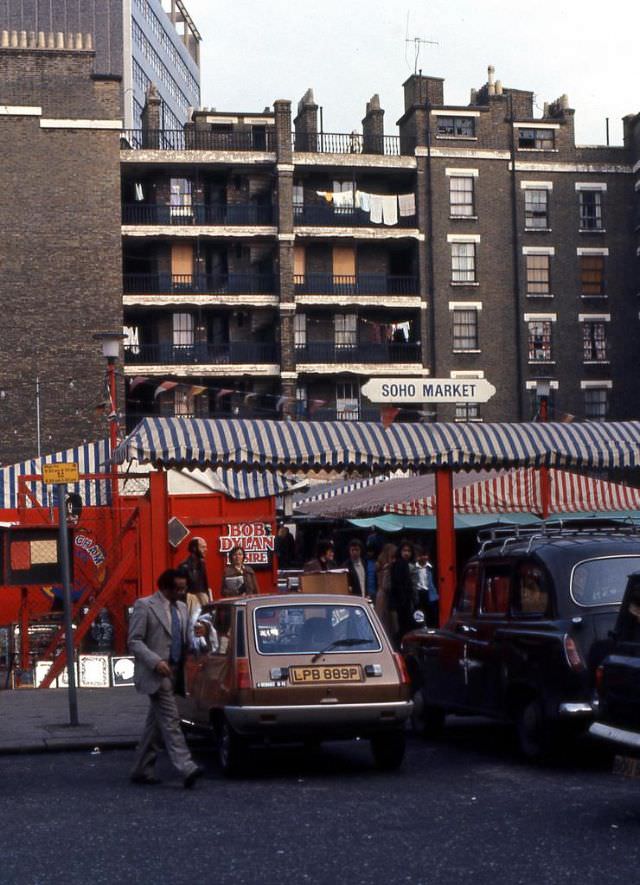
Soho Market, London, February 1976
Spitalfields Market, London, February 1976
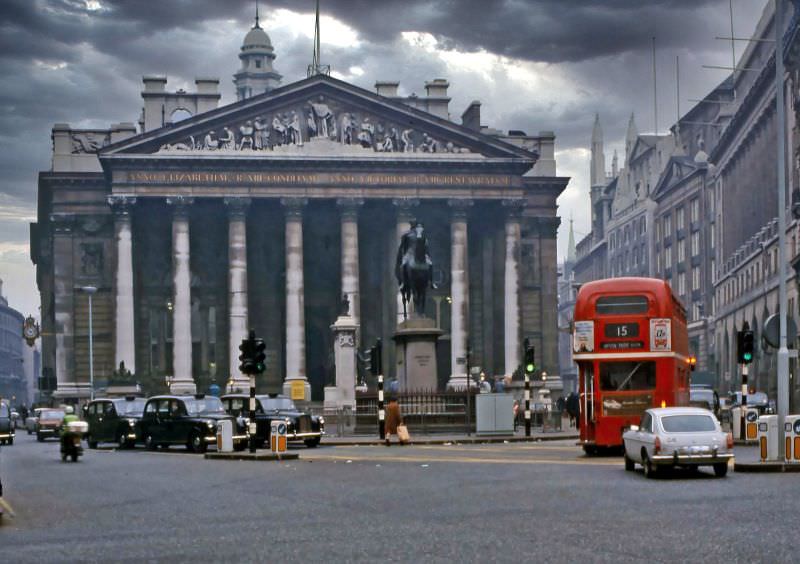
6The Royal Exchange, London, February 1976
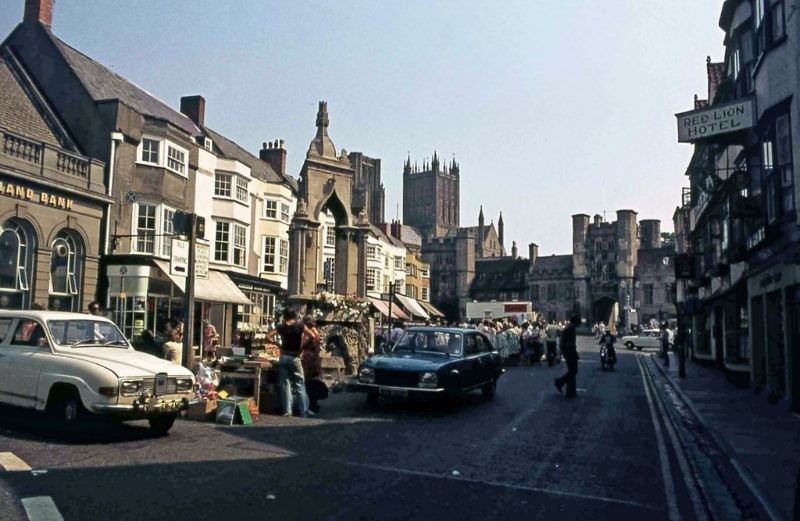
Wells Market, London, February 1976
Regent Street, London, February 1976

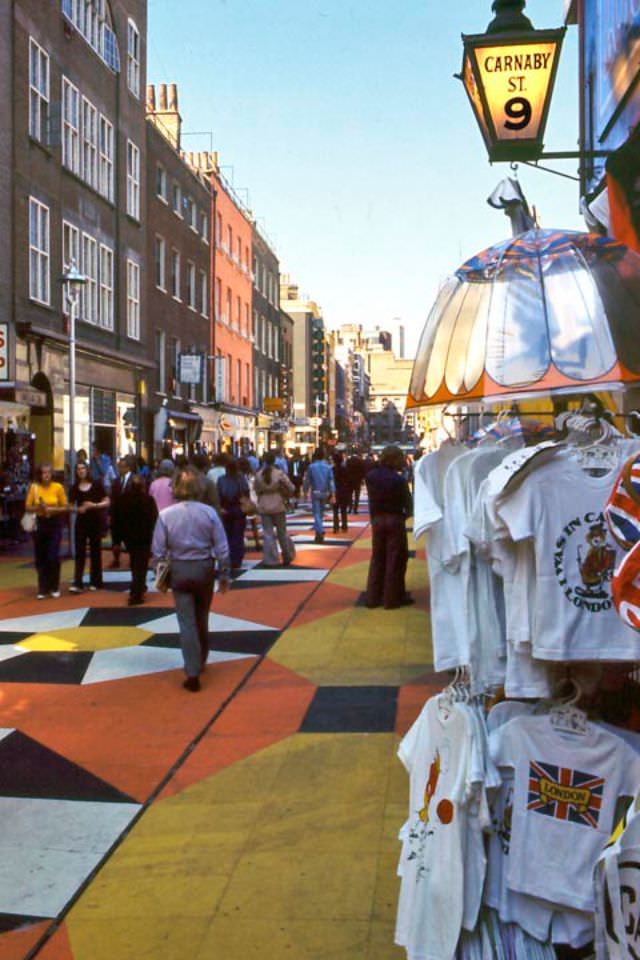
Carnaby Street had been the fashion center of Swinging London in the 1960s, and while its heyday had passed by the mid-1970s, it still drew tourists and shoppers. The street’s shops adapted to the changing decade, and the surrounding area remained a focal point of London’s West End. Bus queues, a fixed feature of London daily life, formed at stops across the city — a shared ritual for millions of people every single day.
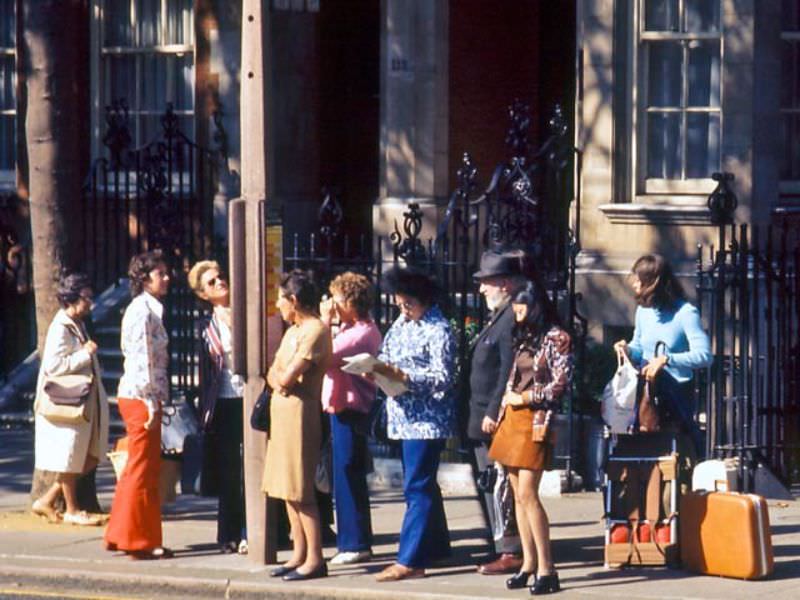
Bus Queue, 1970s
Bus Queue, 1970s
9 Carnaby Street, 1970s
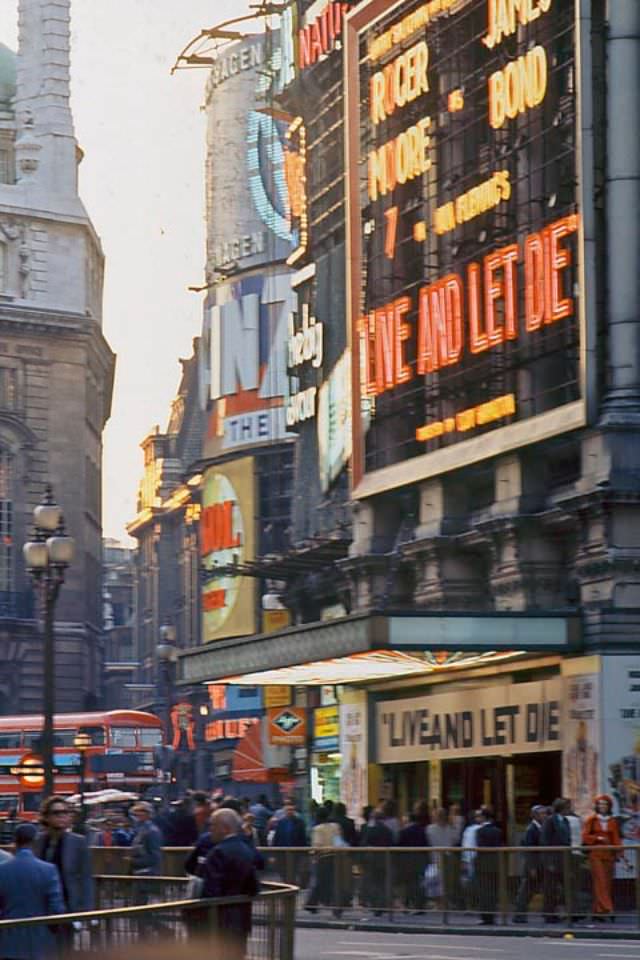
Live and Let Die, Piccadilly Circus, 1970s
Carnaby Street, 1970s
Double-decker bus on route # 11, 1970s
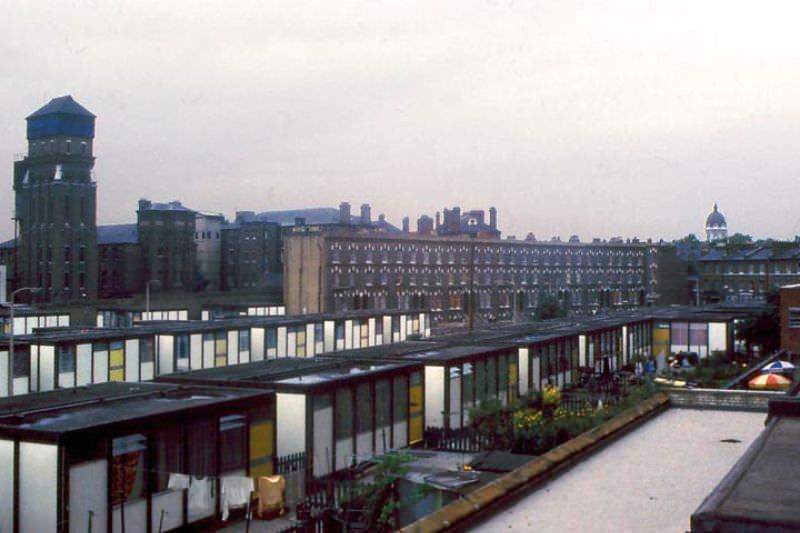
Day view from the London Park Hotel, 1970s
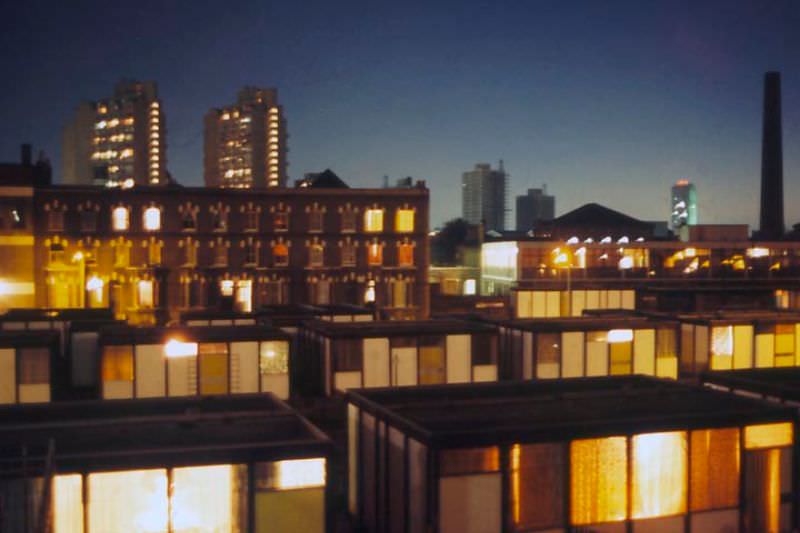
Night view from the London Park Hotel, 1970s

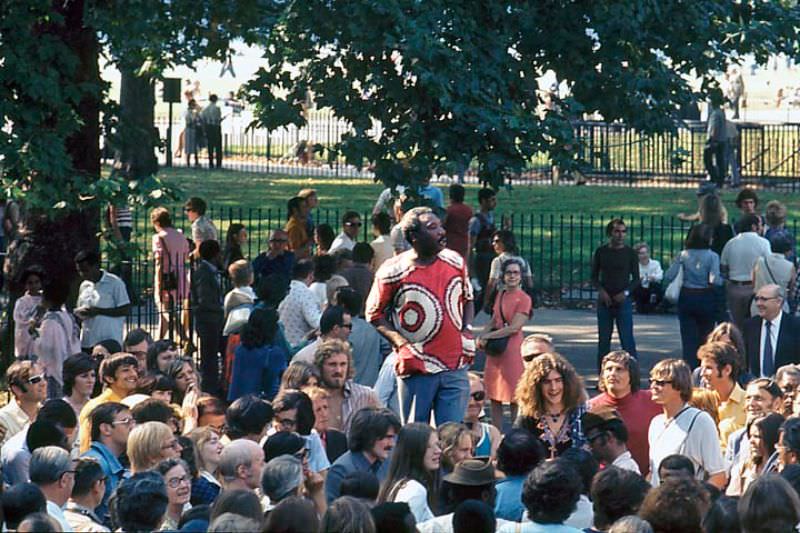
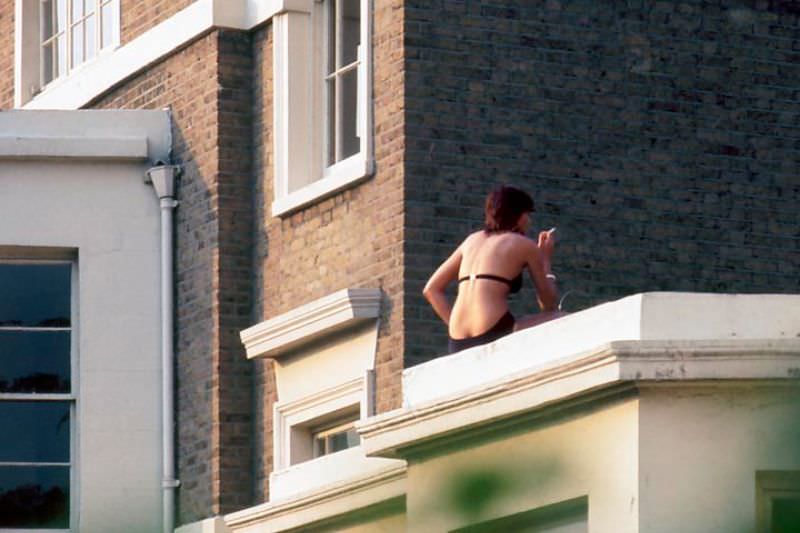
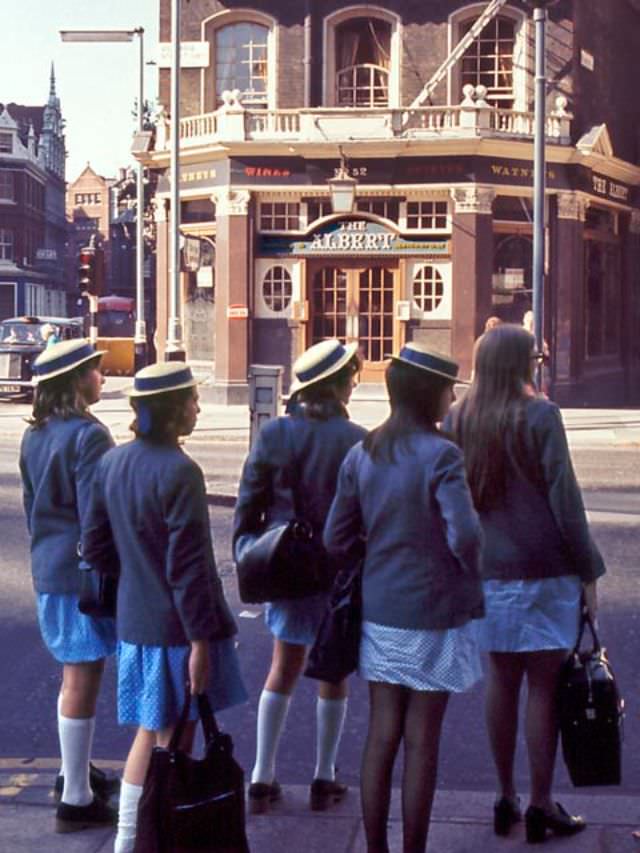
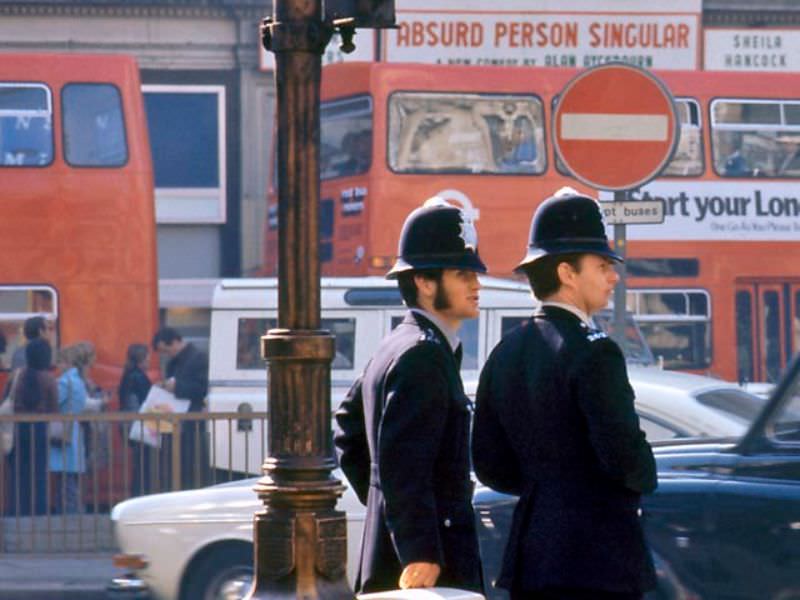
London’s streets held all kinds of people. A man asleep in a public space, bobbies in their traditional helmets walking a beat, schoolgirls passing a pub — these were the unremarkable but genuine moments of daily city life. Speaker’s Corner in Hyde Park drew people every Sunday to argue, preach, and hold forth on whatever subject they chose. It was one of the few places in the city where any voice, however eccentric, could be heard.
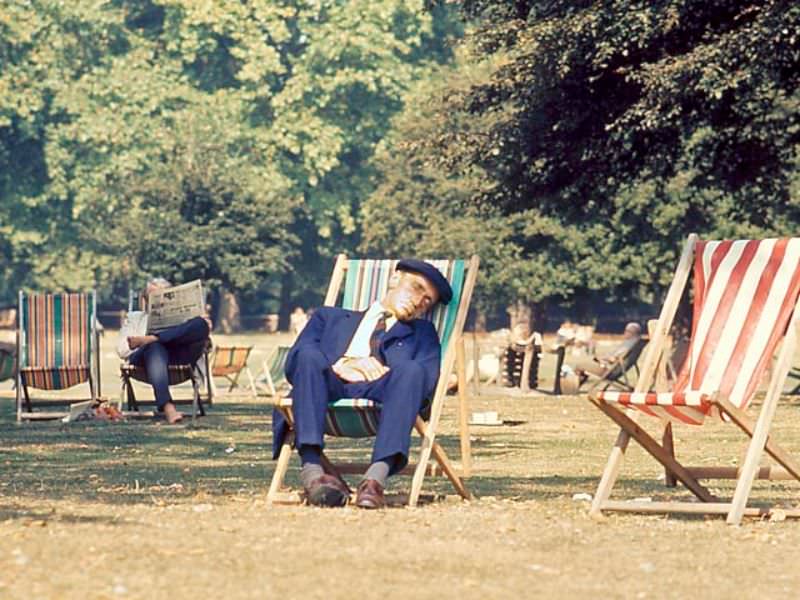
Man asleep, 1970s
Man asleep, 1970s
Bobbies in Helmets, 1970s
Kensington High Street, 1970s
Regent's Park, 1970s
Regent’s Park, 1970s
Train Station Ambulances, 1970s
Speaker's Corner in Hyde Park, 1970s
Speaker’s Corner in Hyde Park, 1970s
Shaftesbury Avenue, 1970s
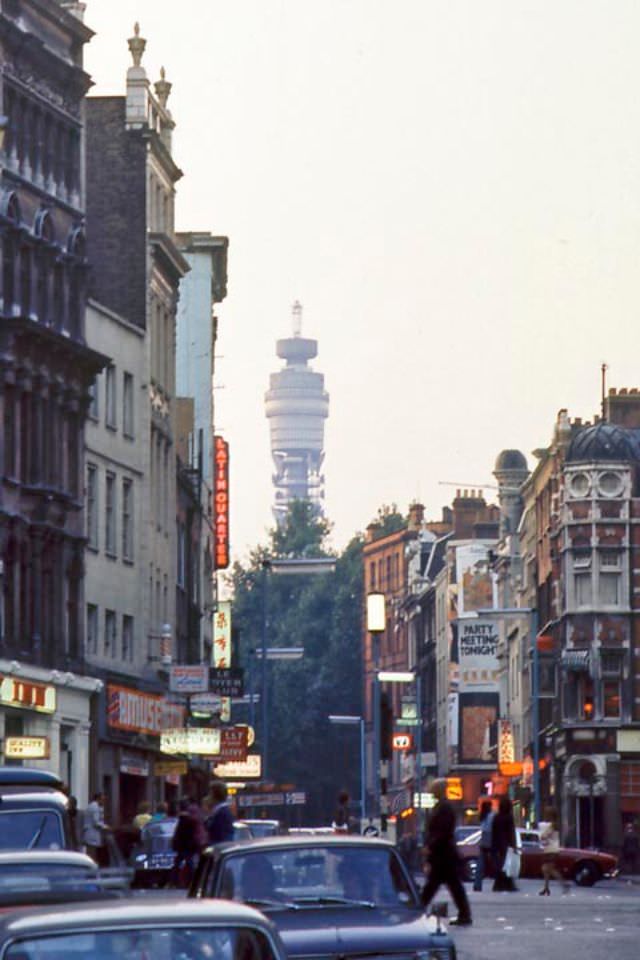
Post Office Tower, 1970s
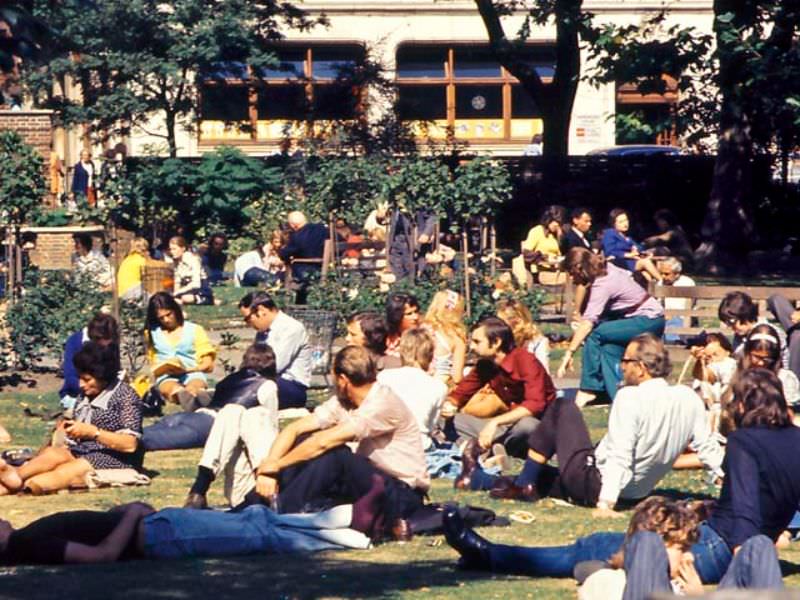
A lunch-hour crowd in Hanover Square, 1970s
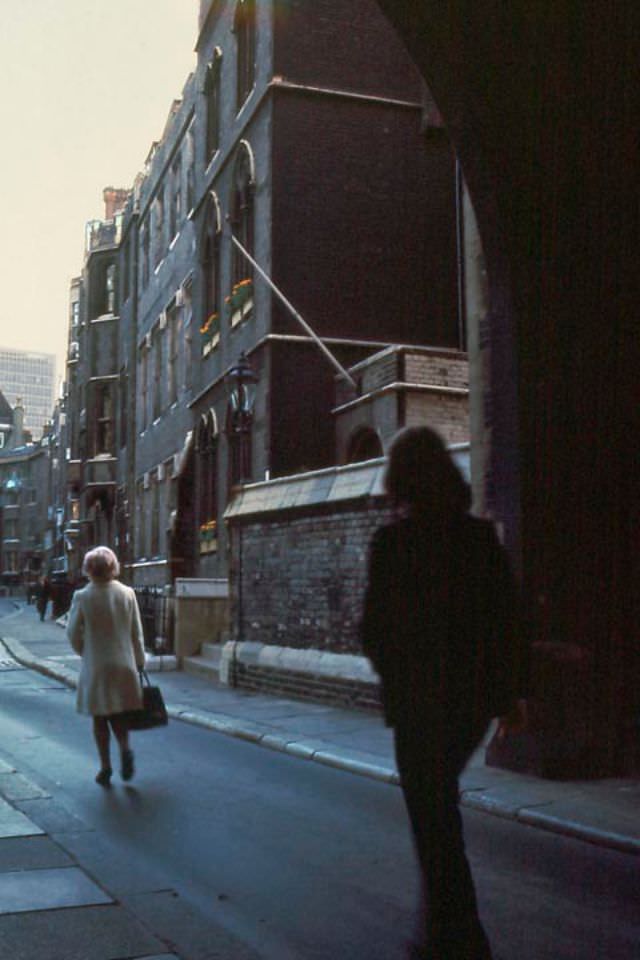
Entrance to Dean's Yard from Broad Sanctuary, 1970s
Entrance to Dean’s Yard from Broad Sanctuary, 1970s

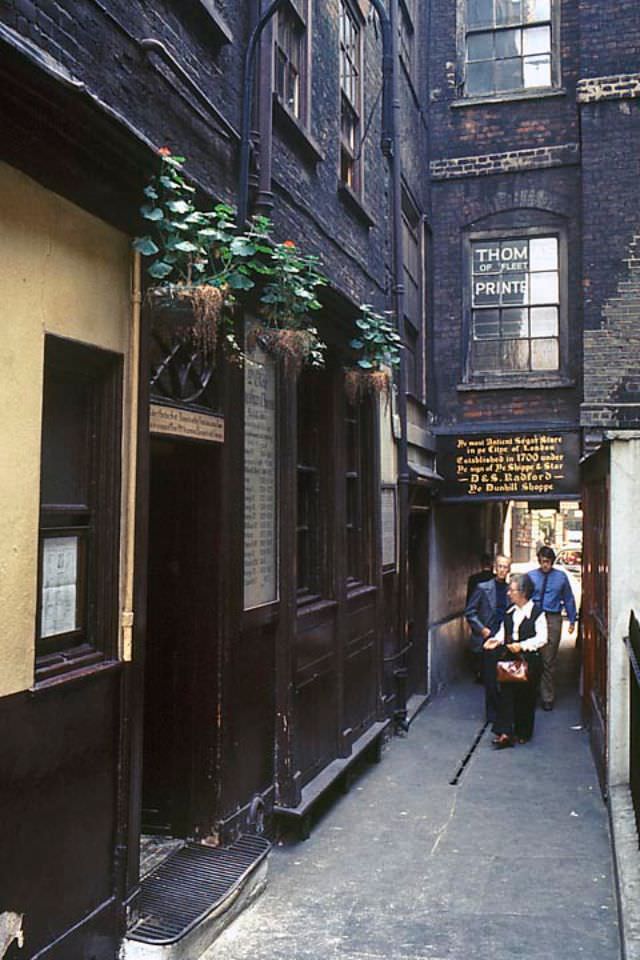
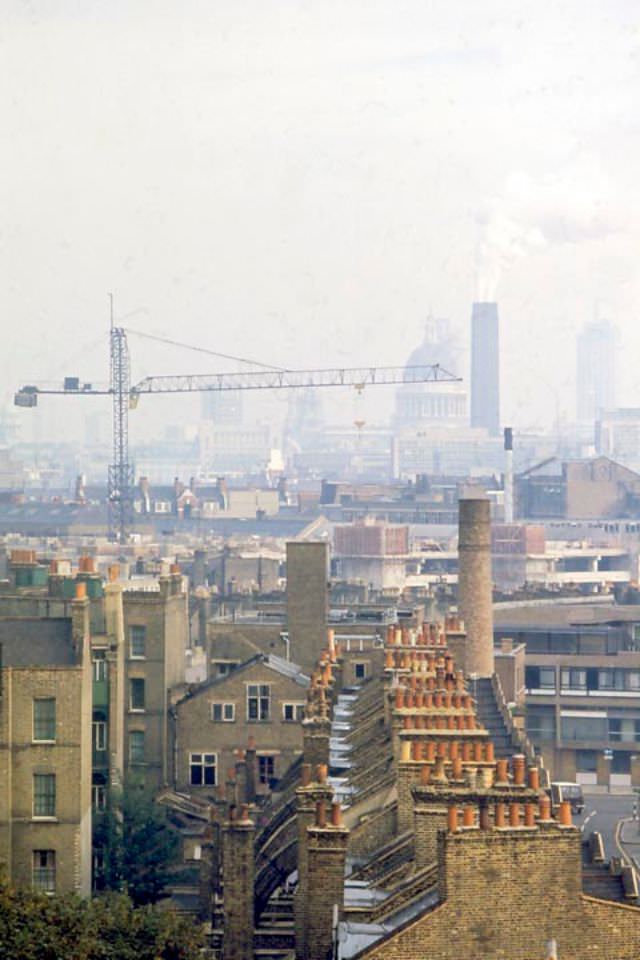
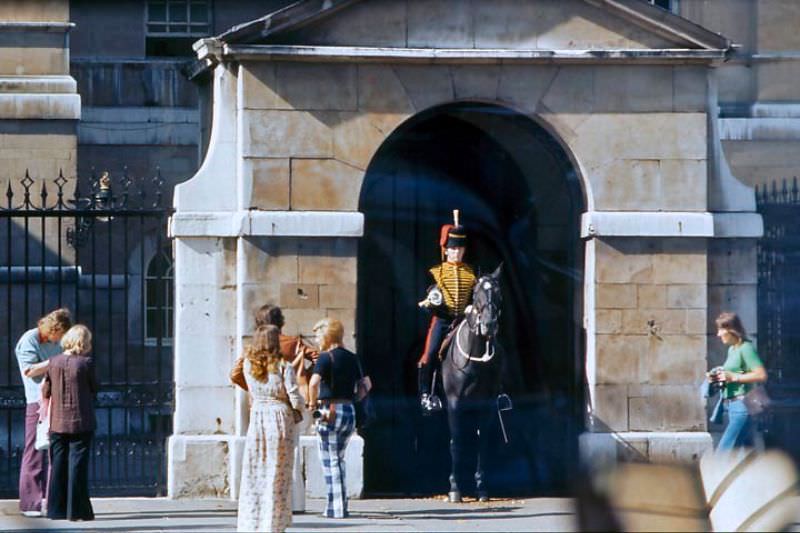
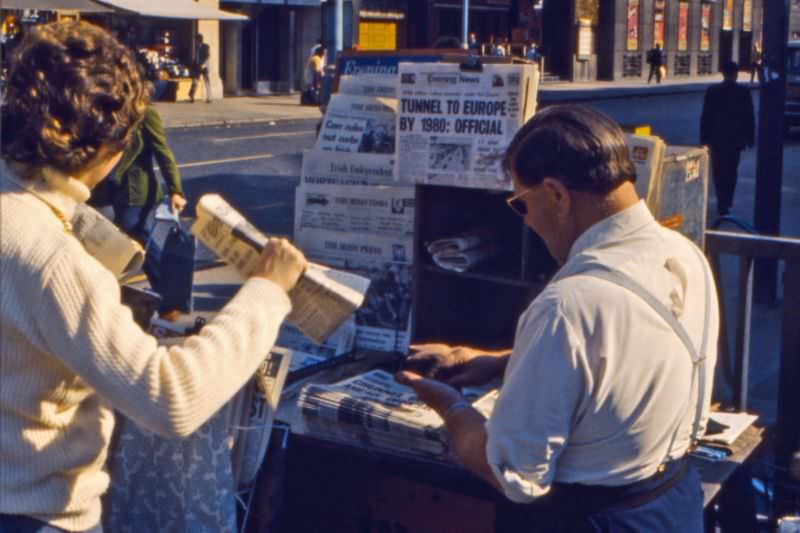
The Beefeaters at the Tower of London, the Horse Guards at Whitehall, and the grand view of St. Paul’s Cathedral rising above the City’s rooftops were among the landmarks that defined London’s public image during the decade. Fleet Street was still the home of the national press — every major British newspaper had offices there, and the street buzzed with journalists, delivery trucks, and printing machinery.
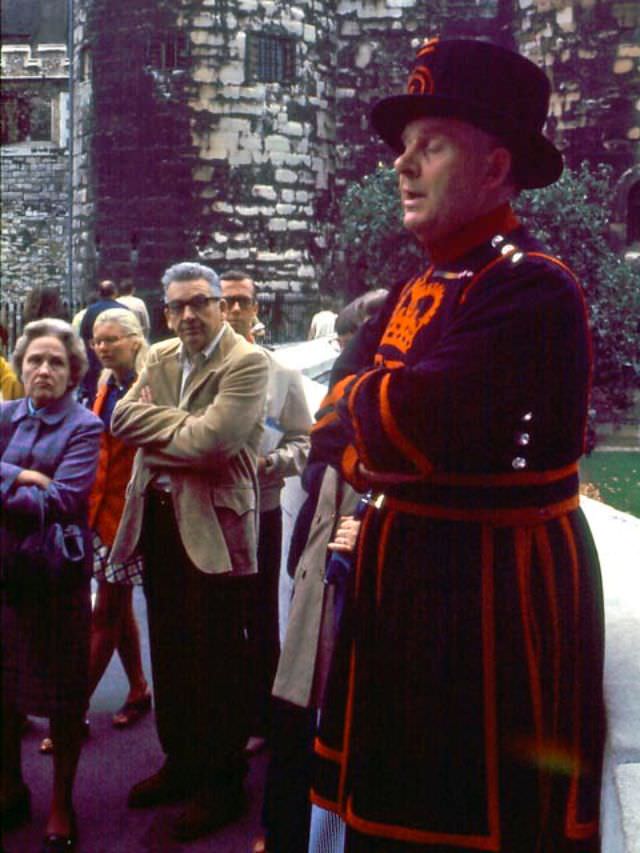
Beefeater, 1970s
Beefeater, 1970s
Vauxhall Bridge Road, 1970s
Ye Olde Cheshire Cheese restaurant on Wine Office Court off Fleet Street, 1970s
St. Paul's in the Distance, 1970s
St. Paul’s in the Distance, 1970s
Lincoln's Inn Fields, 1970s
Lincoln’s Inn Fields, 1970s
Visitors at the Horse Guards, 1970s
Fleet Street, 1970s
Fleet Street, 1970s
Smoke, 1970s
Smoke, 1970s
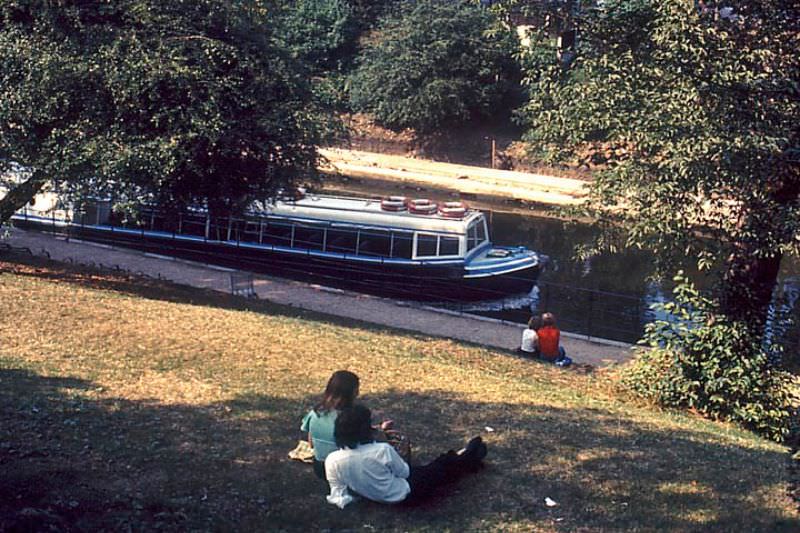
Picnic above the Regent's Canal, 1970s
Picnic above the Regent’s Canal, 1970s
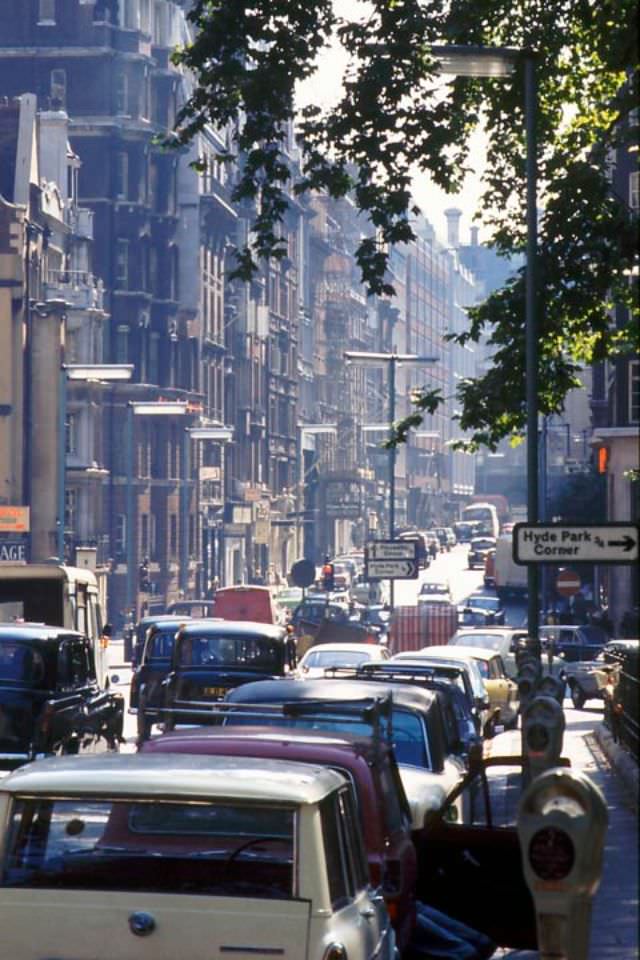
Mayfair Traffic, 1970s
Schoolgirls by The Albert, 1970s
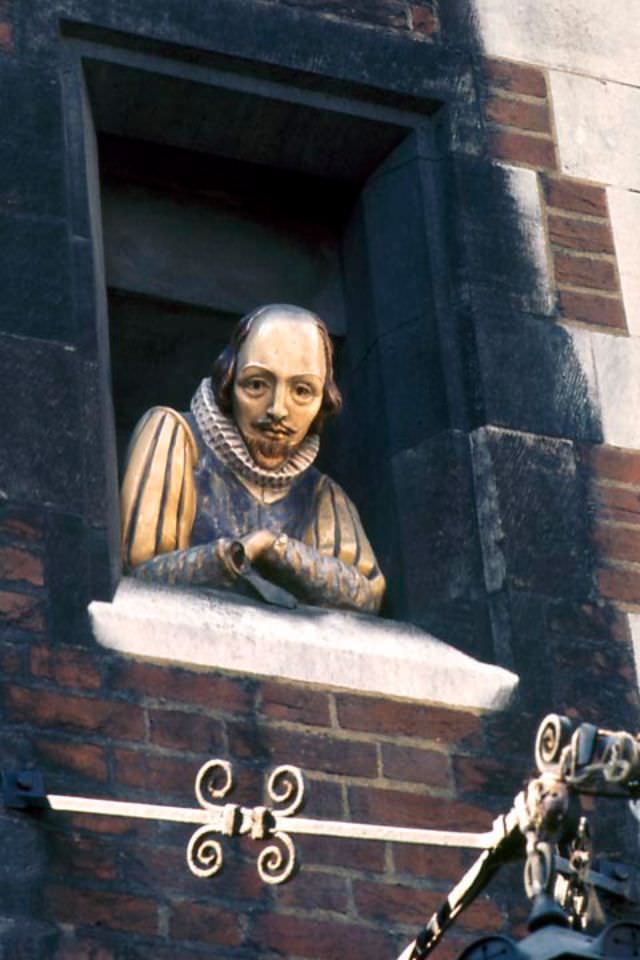
Sheakespeare's Head in Canaby Street, 1970s
Sheakespeare’s Head in Canaby Street, 1970s
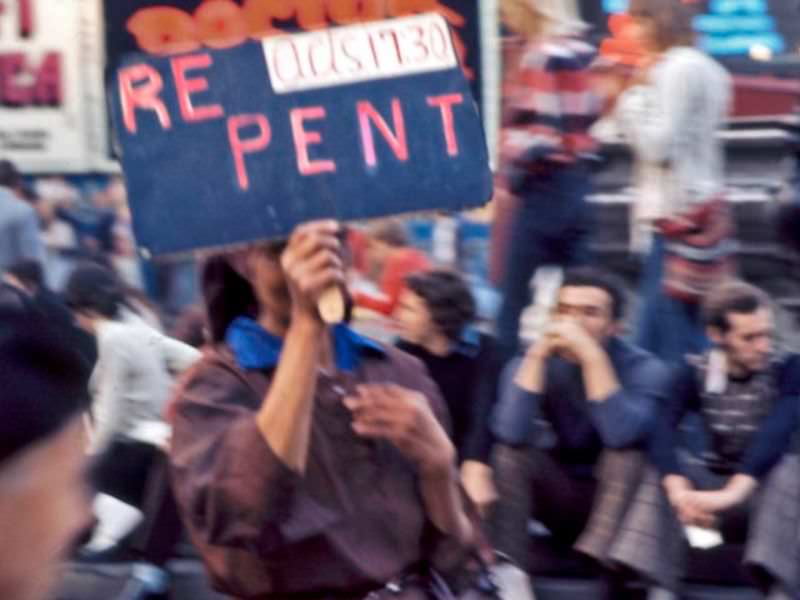
Repent!, 1970s
Repent!, 1970s
Enjoyed this post? Get new ones in your inbox.
Avatar of Jacob Aberto

Written by Jacob Aberto

Sincere, friendly, curious, ambitious, enthusiast. I'm a content crafter and social media expert. I love Classic Movies because their dialogue, scenery and stories are awesome.

Leave a Reply

Your email address will not be published. Required fields are marked *