
In the mid-1970s, the River Tyne was still alive with the noise and smoke of heavy industry. Giant cranes lined the banks. Massive hulls took shape in dry docks. Towns like Wallsend and South Shields had grown entirely around the shipyards, and the rhythms of daily life followed the rhythms of the shifts. It was into this world that photographer Chris Killip arrived in 1975, after being appointed as the Northern Arts Photography Fellow.
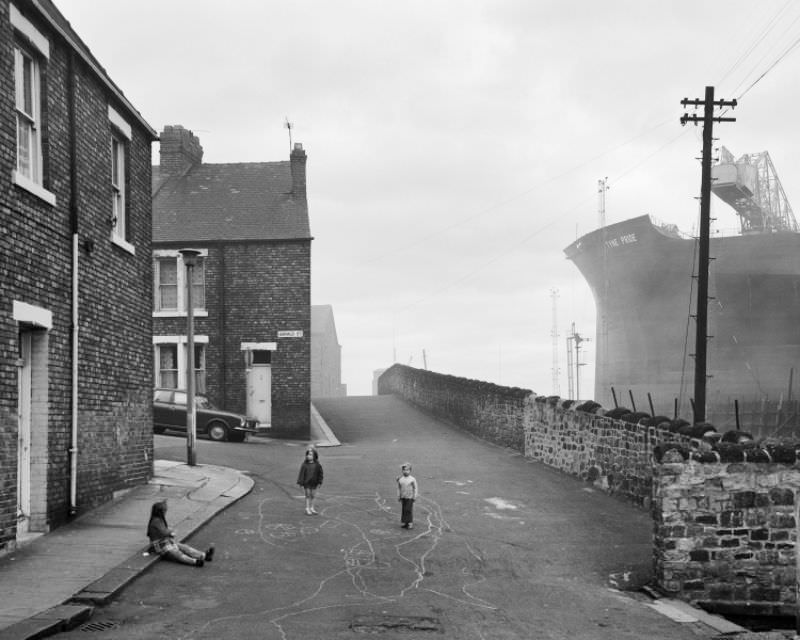
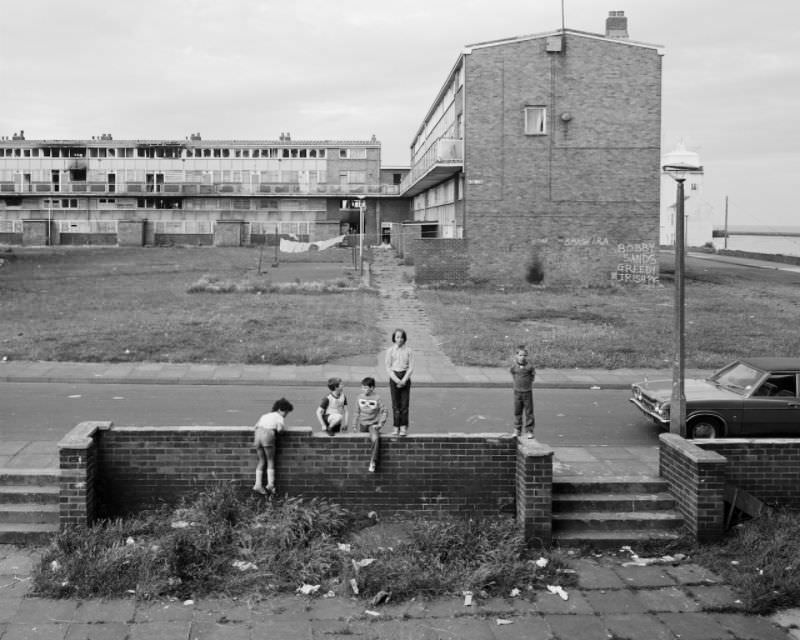
Killip spent years walking the streets of Tyneside, documenting what he saw with a direct, unsparing eye. The terraced housing sat in the shadow of the yards. Children played in back lanes overlooked by steel structures that dwarfed everything around them. The community and the industry were inseparable — one could not be understood without the other.
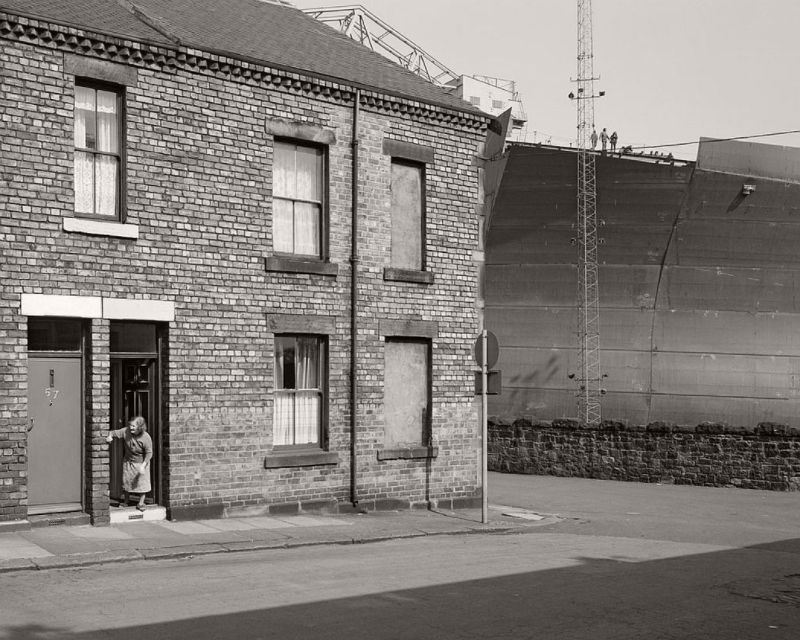
Workers filled the yards in their thousands. Killip photographed them at close range — men in hard hats, covered in grime, standing beside vessels that were almost incomprehensibly large. The Everett F Wells, captured at Wallsend in 1977, towers over the workers who built her, a reminder of the sheer physical scale of what these men produced with their hands every day.
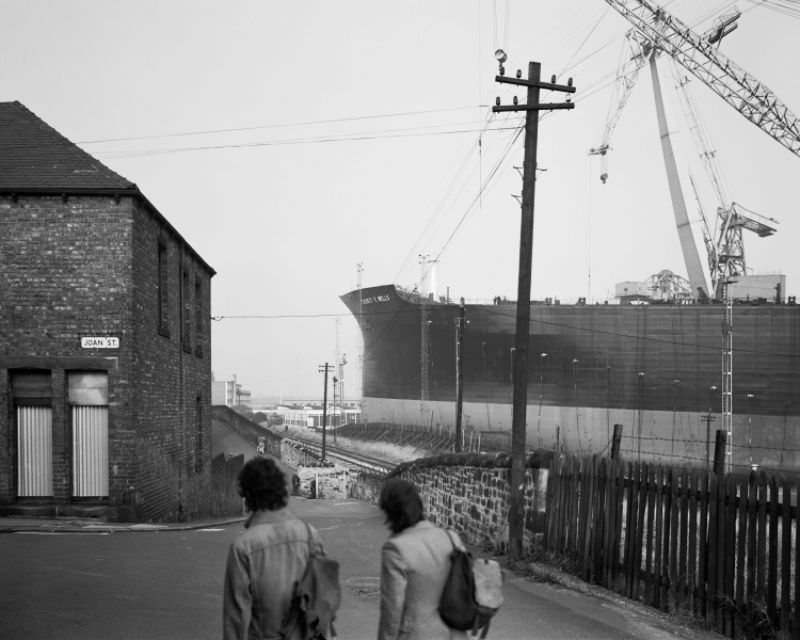
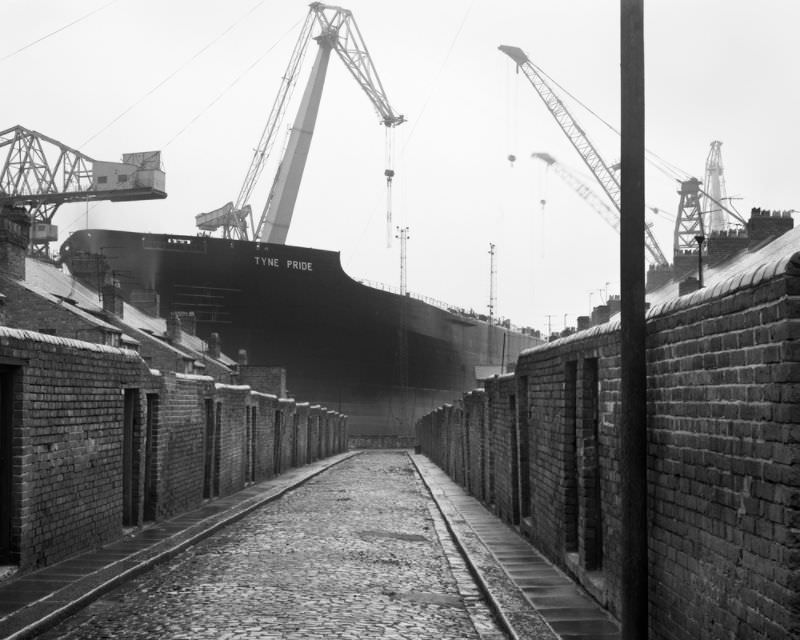
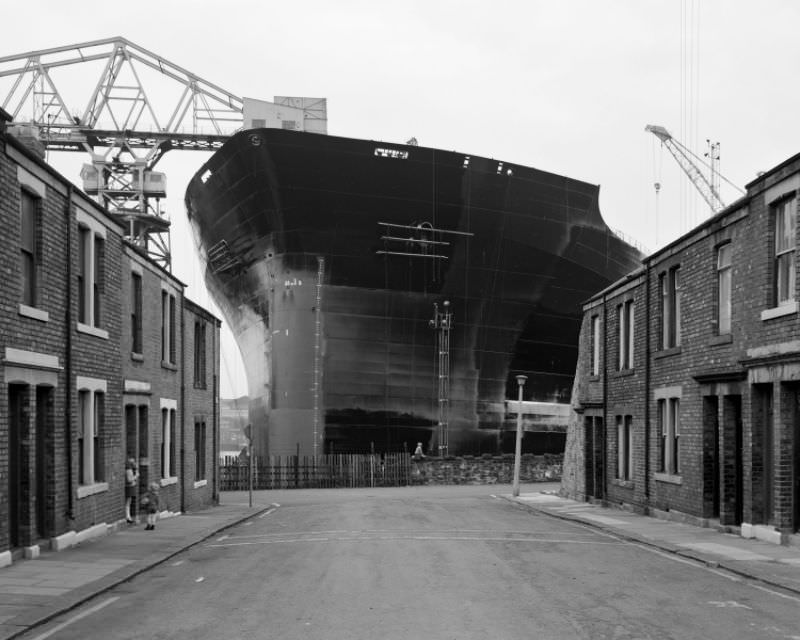
The most symbolic vessel Killip photographed was the Tyne Pride, launched in 1975. It was the largest ship ever built on the River Tyne — and also the last of its kind. Its bulk filled entire back lanes and blocked out the ends of residential streets. Killip photographed it from both vantage points, and the images are striking: an enormous ship framed by the narrow brick corridors of a working-class neighborhood.
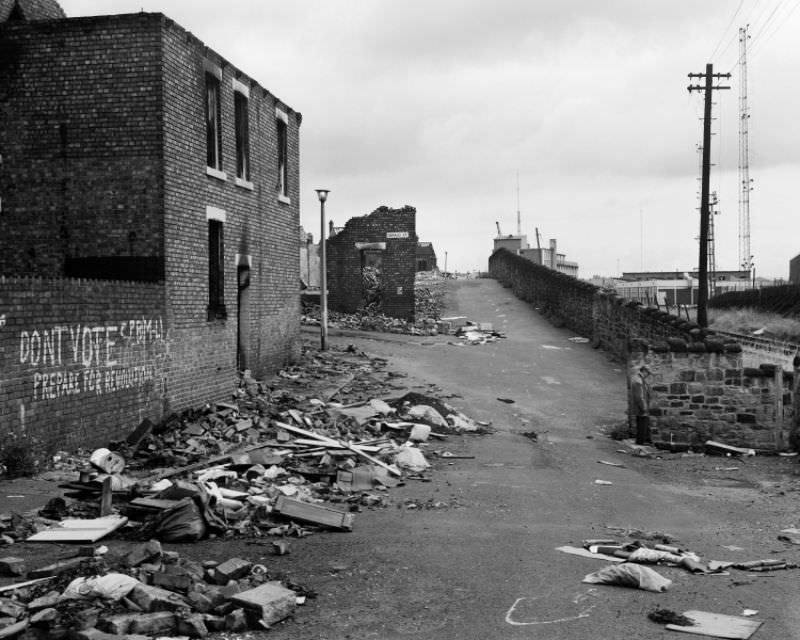
Even as the great ships were still being launched, the physical fabric of the communities around the yards was beginning to come apart. Whole streets were demolished. Killip photographed the rubble of cleared housing in Wallsend in August 1977 — a landscape already beginning to look like the aftermath of something rather than the backdrop of an ongoing way of life.
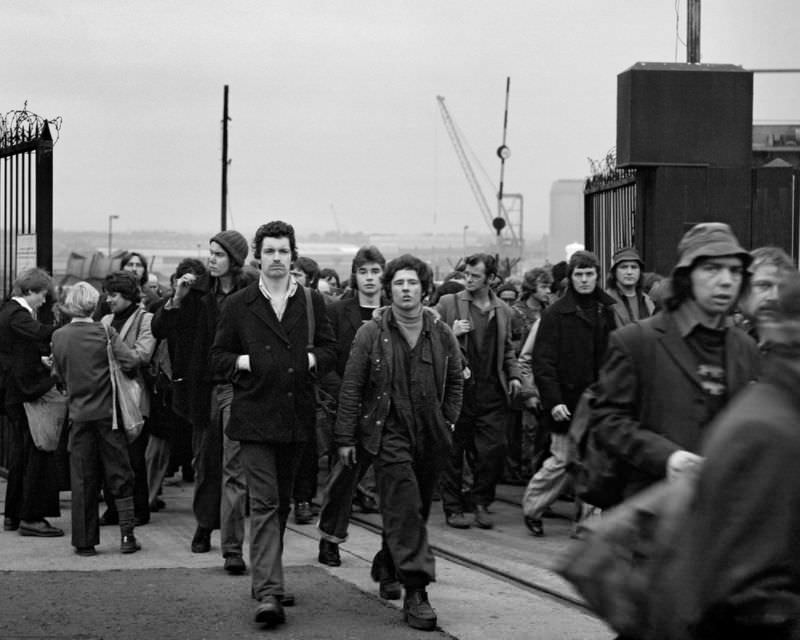
The end of a shift brought hundreds of workers streaming through the yard gates. Killip captured that moment of release — men walking out together, tools put down, another day done. There is energy in these images, but also something that reads differently in hindsight. Killip later said he sensed, even at the time, that it would not last. He had no idea how quickly it would all be gone.
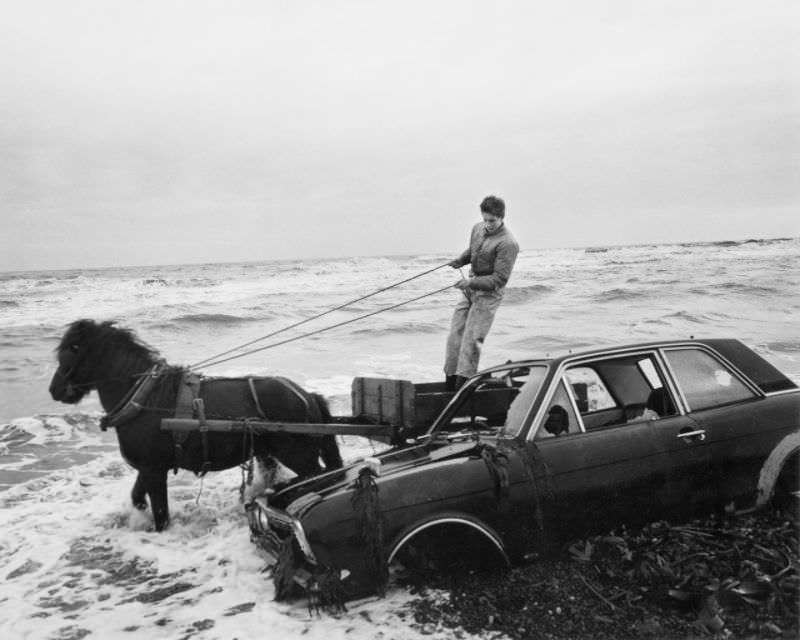
As the 1980s arrived, the industrial collapse accelerated. Killip’s lens turned to those pushed to the edges. At Lynemouth in Northumberland, seacoalers — people who gathered coal washed up on the beach — worked in difficult conditions, navigating a shoreline littered with debris, including dumped cars half-buried in the sand. It was hard, unglamorous work, and Killip showed it plainly.
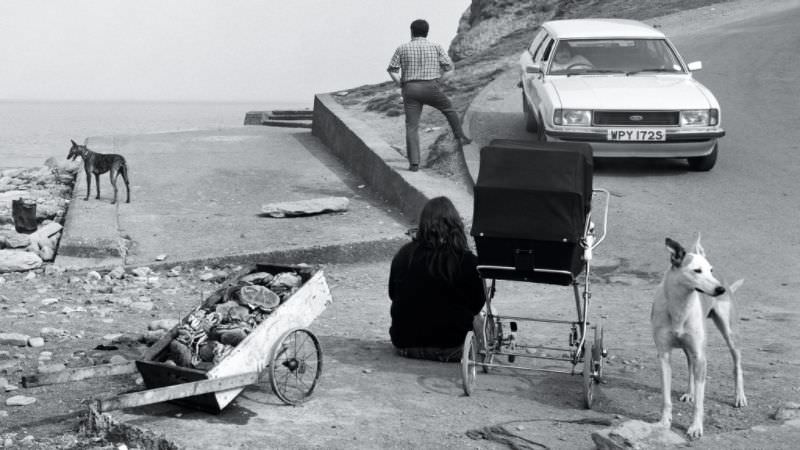
Across the river at North Shields, the fishing community held on. The quaysides were weathered, the boats aging. Killip photographed the town in May 1981, documenting a place that felt caught between an older way of life and an uncertain future. Further south in Skinningrove, North Yorkshire, fishing remained a living tradition — crabs, people, and the sea all bound together in daily routine.
Not all of Killip’s images were defined by labor and decline. In Gateshead in 1975, he photographed a wall marked with a simple declaration of love — an ordinary human moment set against the brickwork of a working industrial town. In Newcastle’s West End in 1980, a father and son watch a parade pass by, two generations standing together on a pavement, the street life of the city still carrying on around them.


In 1991, Chris Killip left England for the United States, where Harvard University hired him to teach photography in their Visual Studies Program. A set of his exhibition prints was later donated to the Laing Art Gallery in Newcastle, in honor of the Tyneside shipyard workers he had spent years photographing. The images remain among the most important documentary records of a way of life that disappeared with remarkable speed.




