
Connecticut’s Merritt Parkway was the state’s first divided, limited-access highway. Running 38 miles from Greenwich to Stratford, it opened in sections between 1938 and 1940. But it was never just a road built to move cars. It was designed from the start to be something drivers would actually want to look at — a highway that felt more like a scenic drive through the countryside than a utilitarian stretch of pavement.
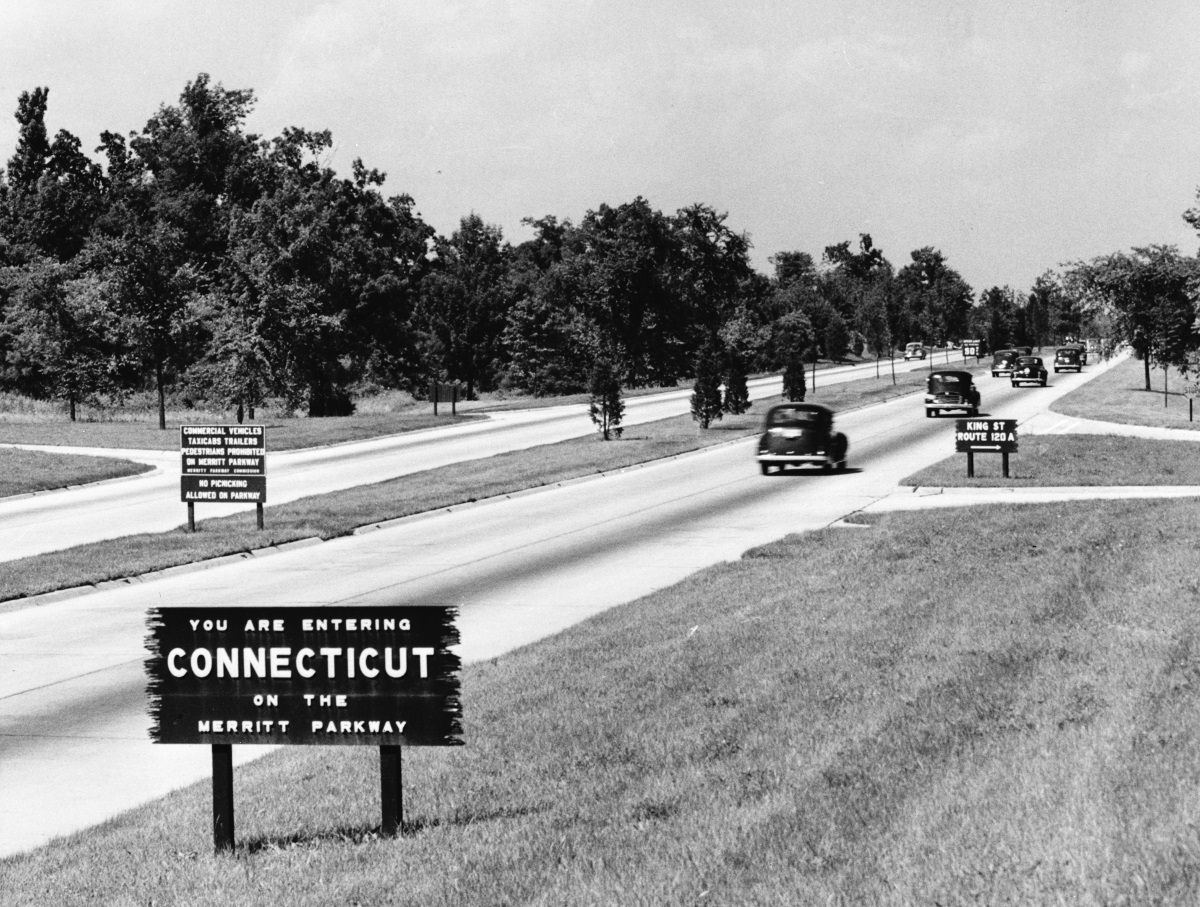
The parkway was one of the first in the country to blend the look of a recreational scenic road with the function of a high-speed motorway. Native trees and plants were carefully preserved along the route. Some bridges were left to be covered in ivy, letting them sink naturally into the surrounding landscape. Each of the parkway’s bridges was given its own unique decorative design — no two are exactly alike.
The man responsible for those designs was architect George L. Dunkelberger (1891–1960). He drew heavily from Art Deco and Art Moderne styles, two of the dominant architectural movements of the 1930s. Dunkelberger’s goal was to keep the scenic openness of the Connecticut countryside alive even as a major highway cut through it. The bridges he designed became the visual signature of the entire parkway. To build them, workers used experimental concrete forming techniques that allowed for intricate ornamentation that had rarely been attempted on highway infrastructure before.
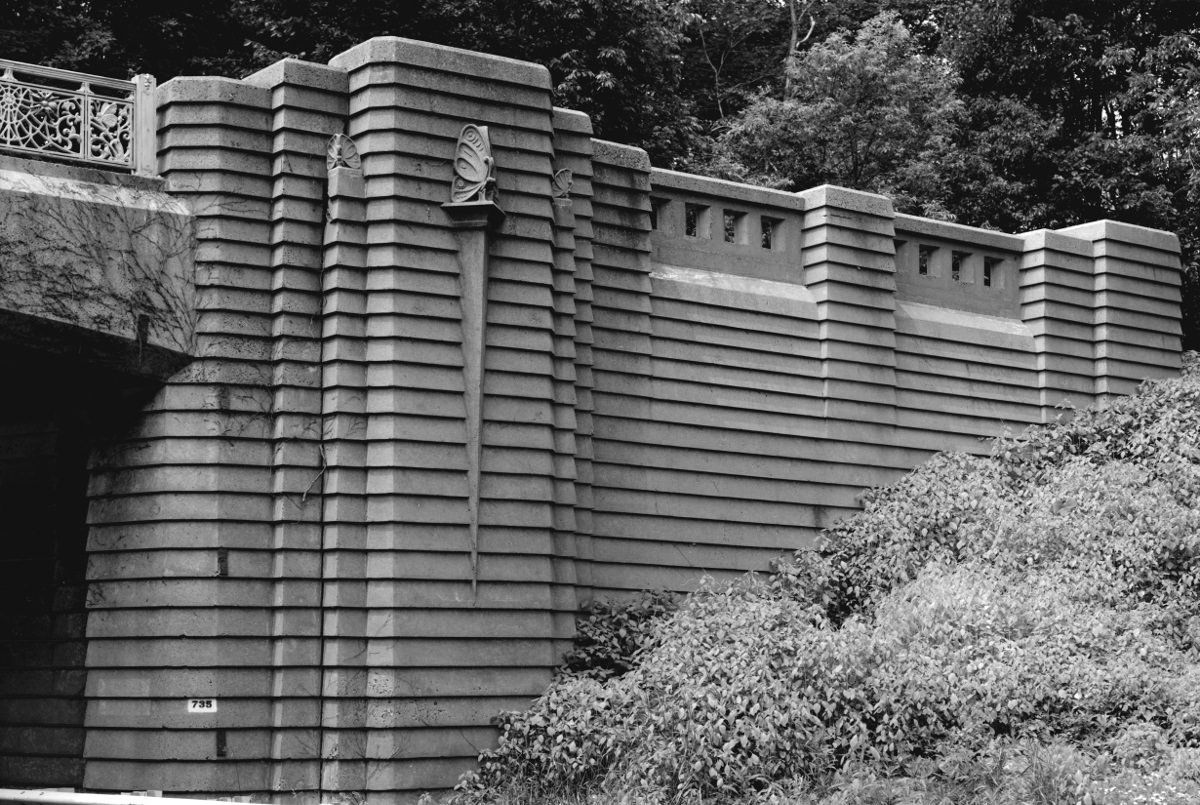
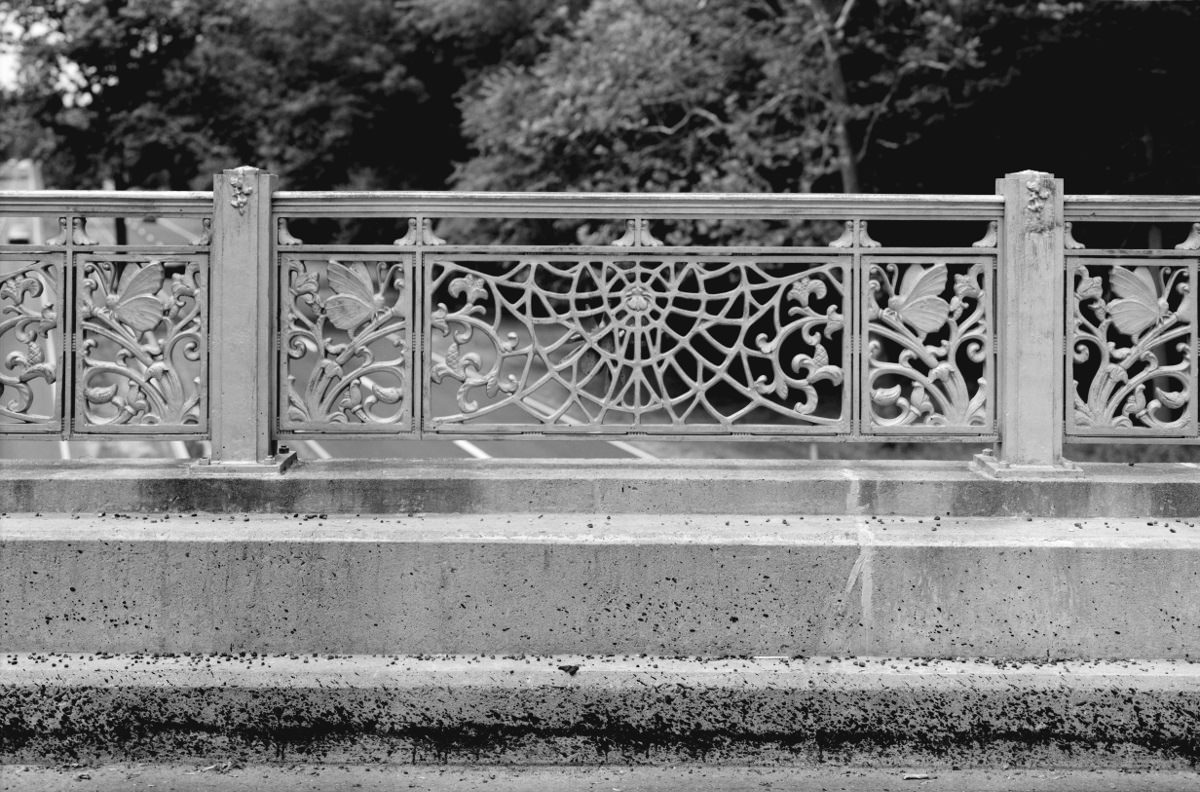
Merwin’s Lane Bridge in Fairfield is a clear example of how playful and detailed these structures could be. Ornamental butterflies appear on the pillars and in the decorative iron railings. The choice of motifs wasn’t random — each bridge’s decorations were tailored to reflect something about the surrounding area, a symbol, a natural element, or a broader theme tied to Connecticut’s identity.
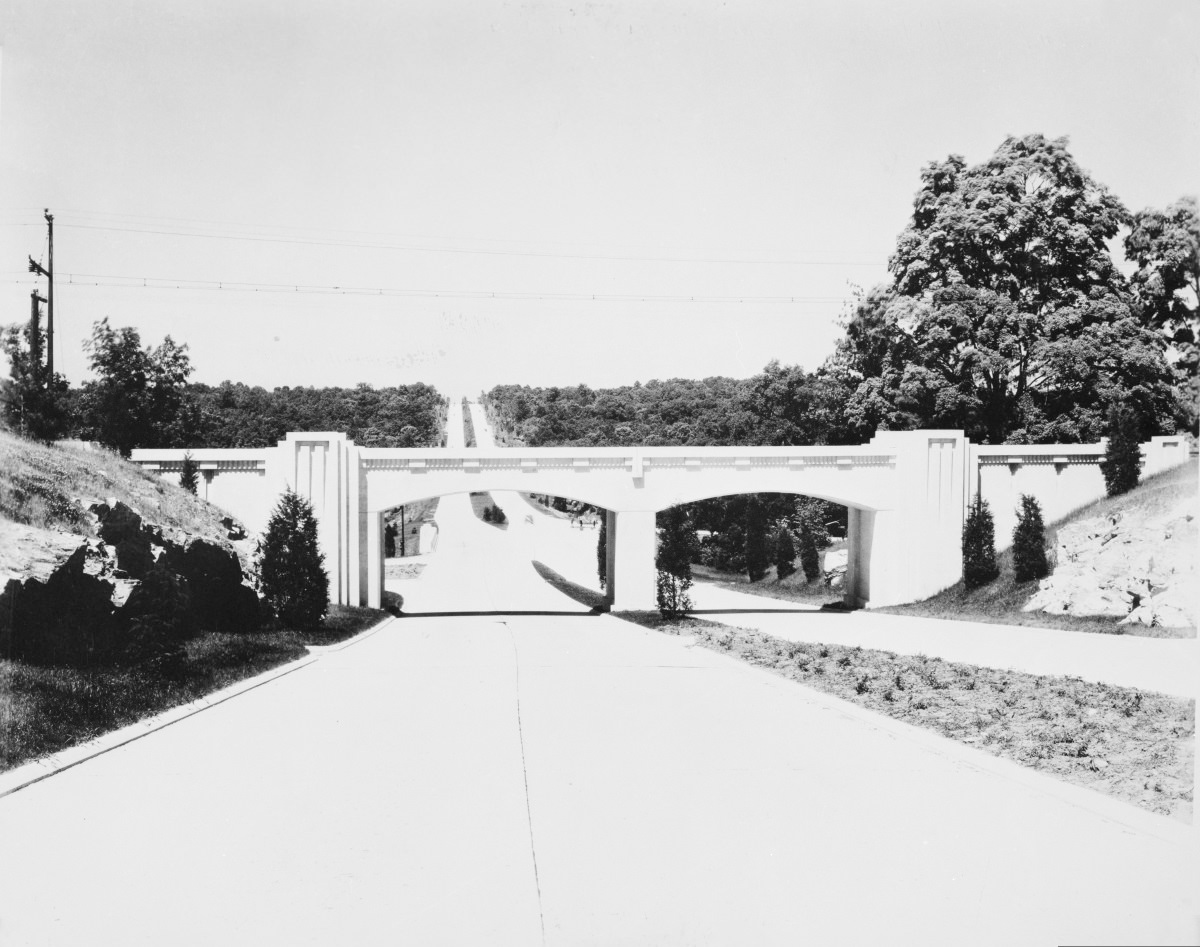
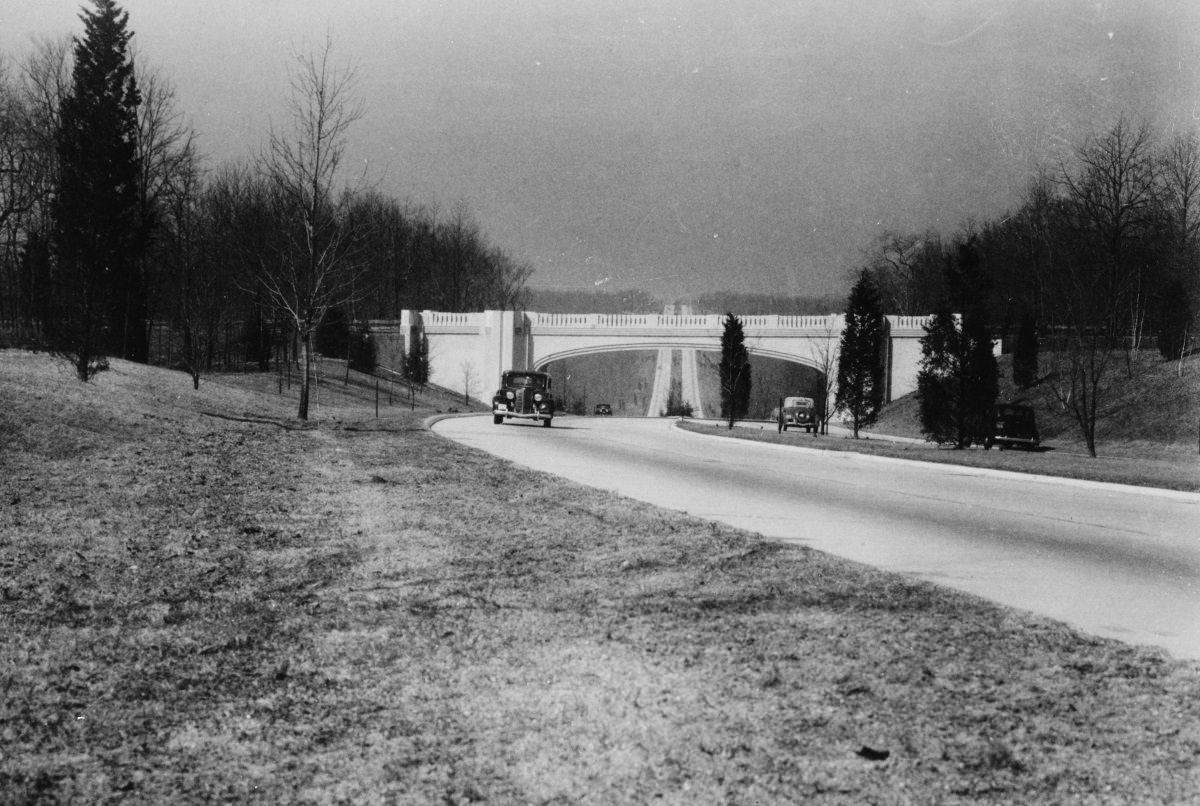
The Round Hill Road Bridge in Greenwich was photographed shortly after its construction in 1935. At that time, Dunkelberger’s vision of blending the bridge into an open rural landscape was fully intact. The structure sat cleanly in a wide, unobstructed setting.
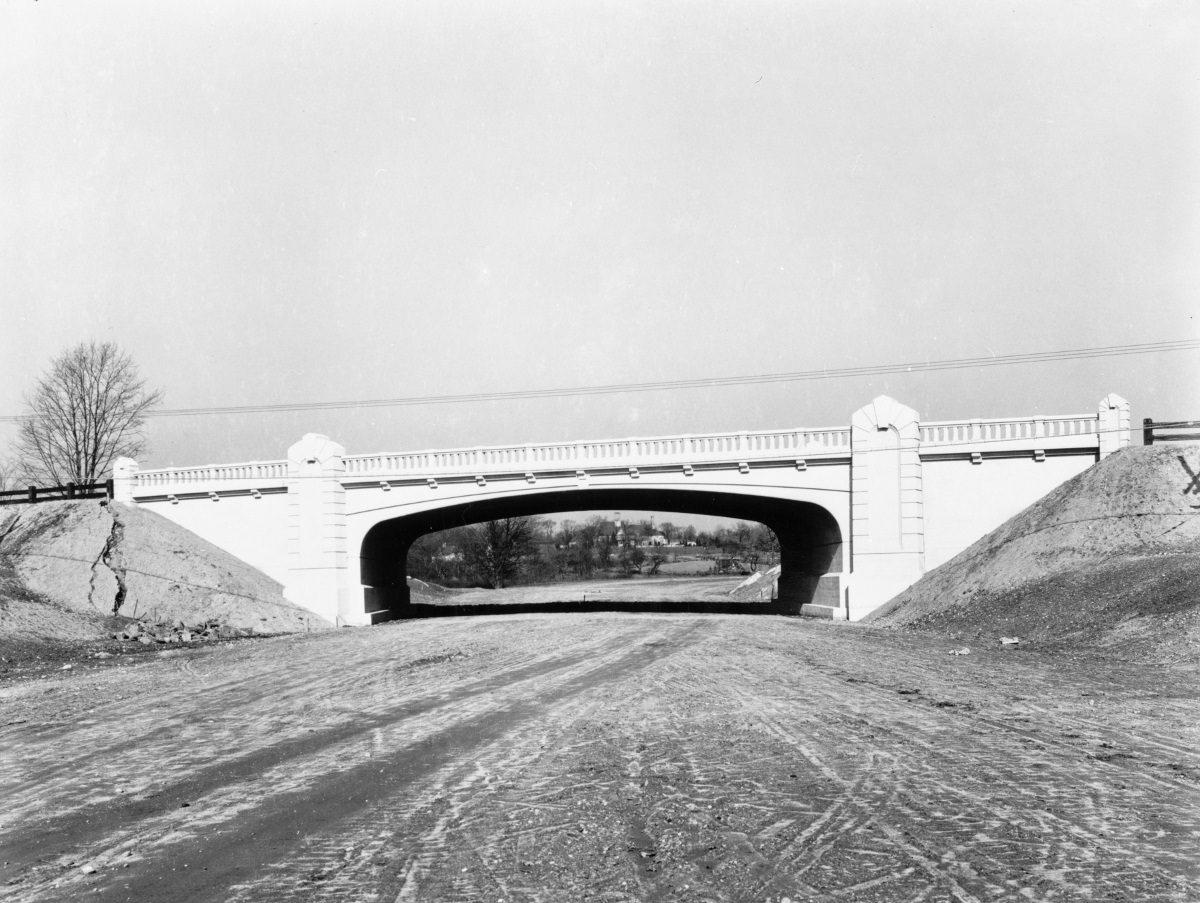
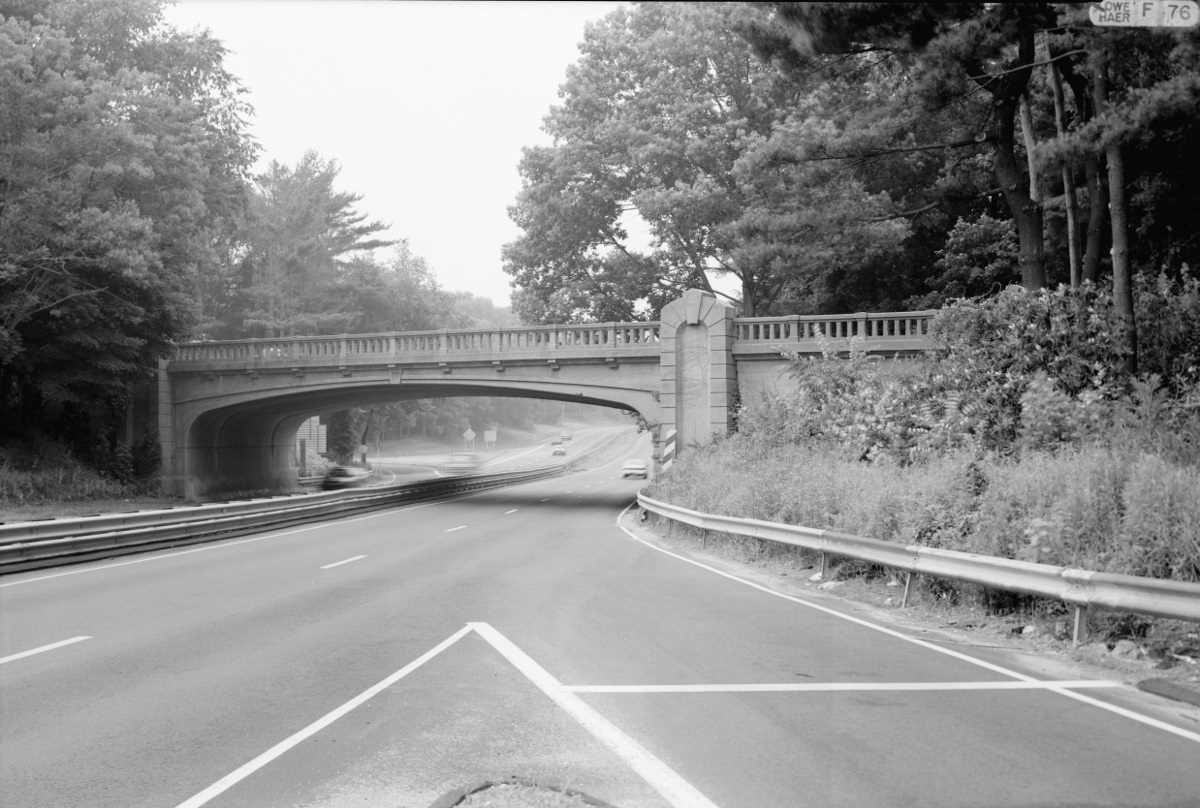
By 1968, just three decades later, vegetation had already begun to obscure the bridge’s original design. Development spread across the land surrounding the parkway throughout the postwar years, and much of the open space Dunkelberger had designed around was gone. The parkway itself had accelerated that development — by improving access to New York City, it made Fairfield County far more attractive for residential and commercial growth during the 1930s and 1940s.
The Lake Avenue Bridge in Greenwich sits at the 4.71-mile mark. Its most distinctive feature is the cast-iron ornamentation on its center and side posts — grapevines and urns worked into the metalwork with careful detail.
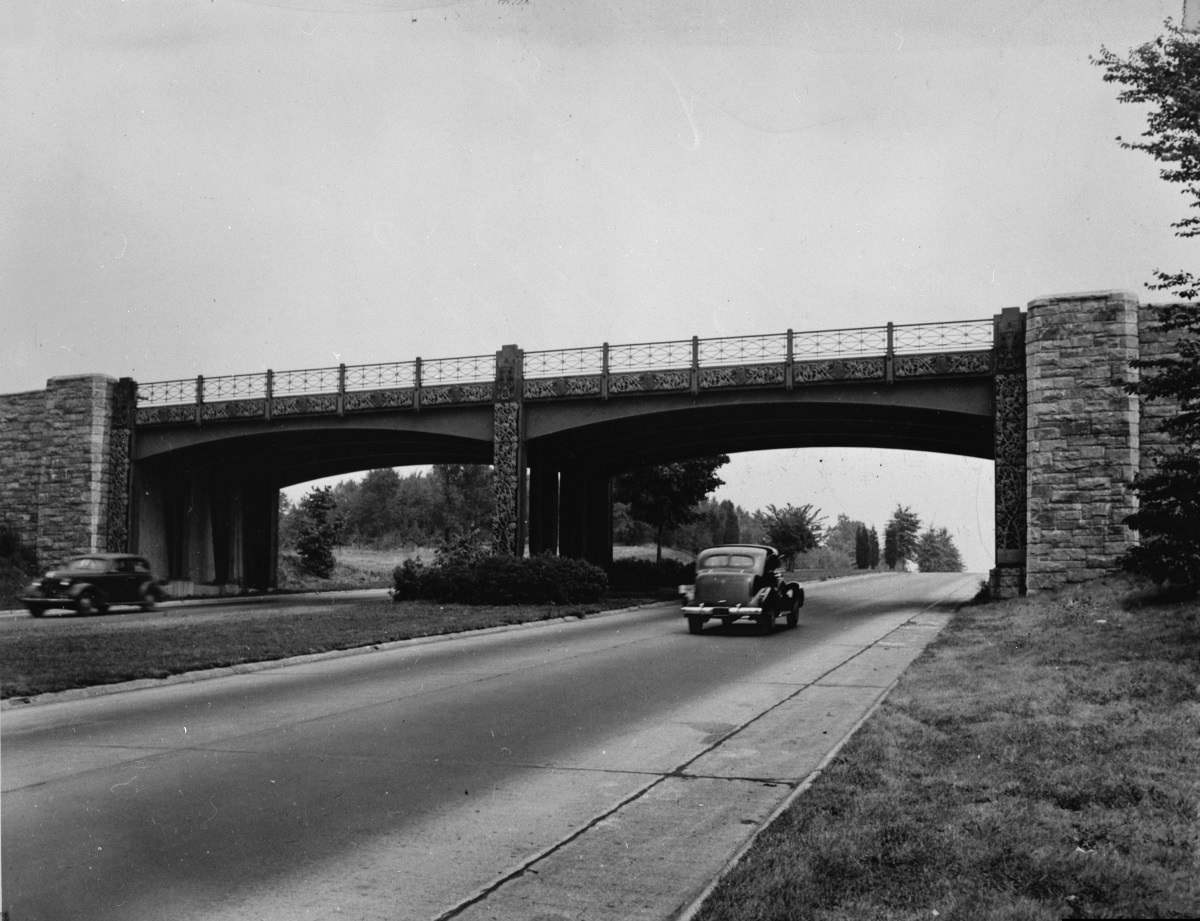
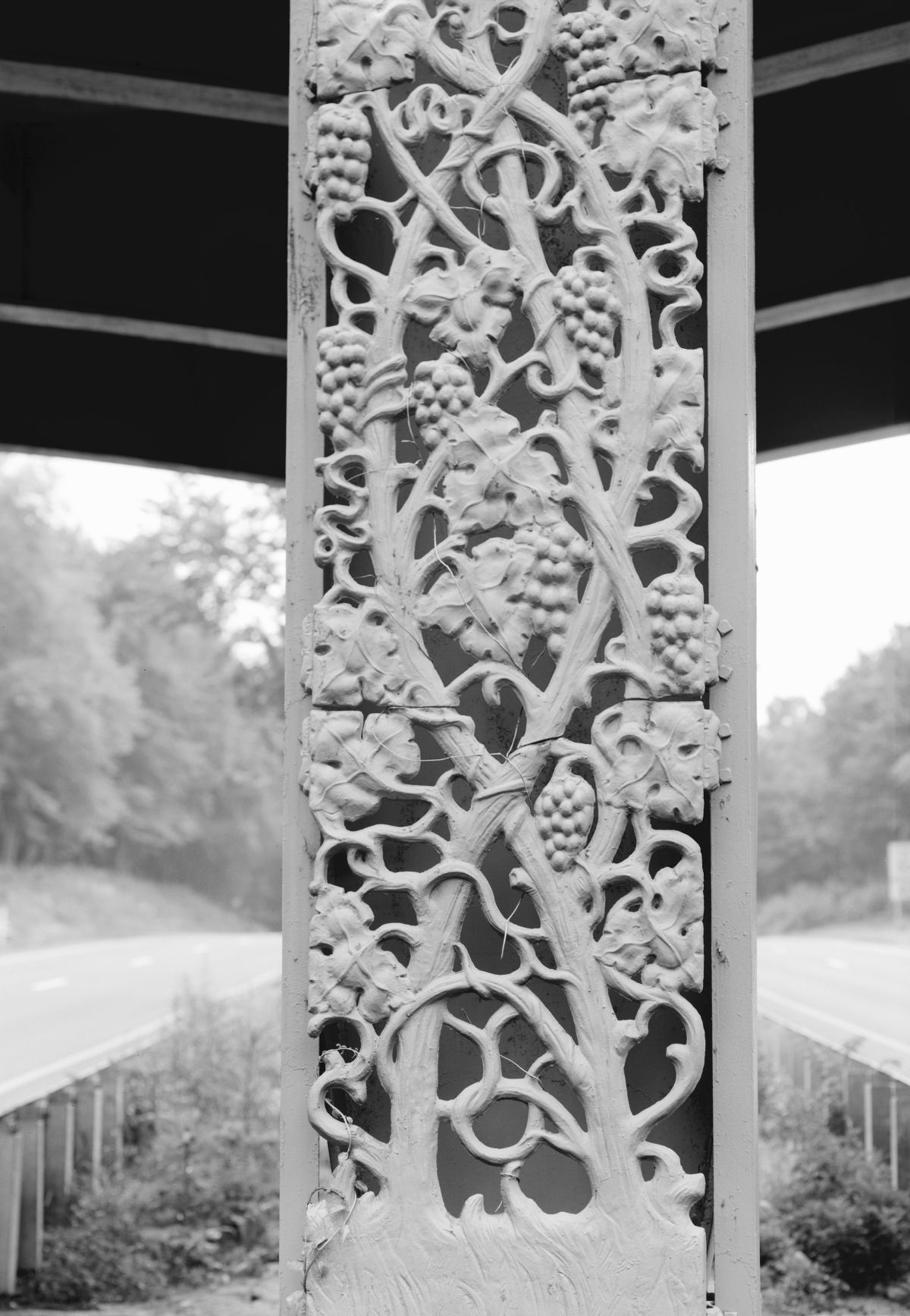
Those grapevines are a direct reference to the Connecticut State Seal, which features three grapevines bearing fruit. Beneath the vines on the seal is a banner carrying the state motto in Latin: “Sustinet Qui Transtulit” — “He who is transplanted still sustains.” Incorporating that imagery into a highway bridge was a deliberate way of rooting a modern infrastructure project in Connecticut’s longer history.
The Stanwich Road Bridge at the 7.47-mile mark in Greenwich takes a different approach. Its abutments carry a bas-relief shield displaying a winged wheel.
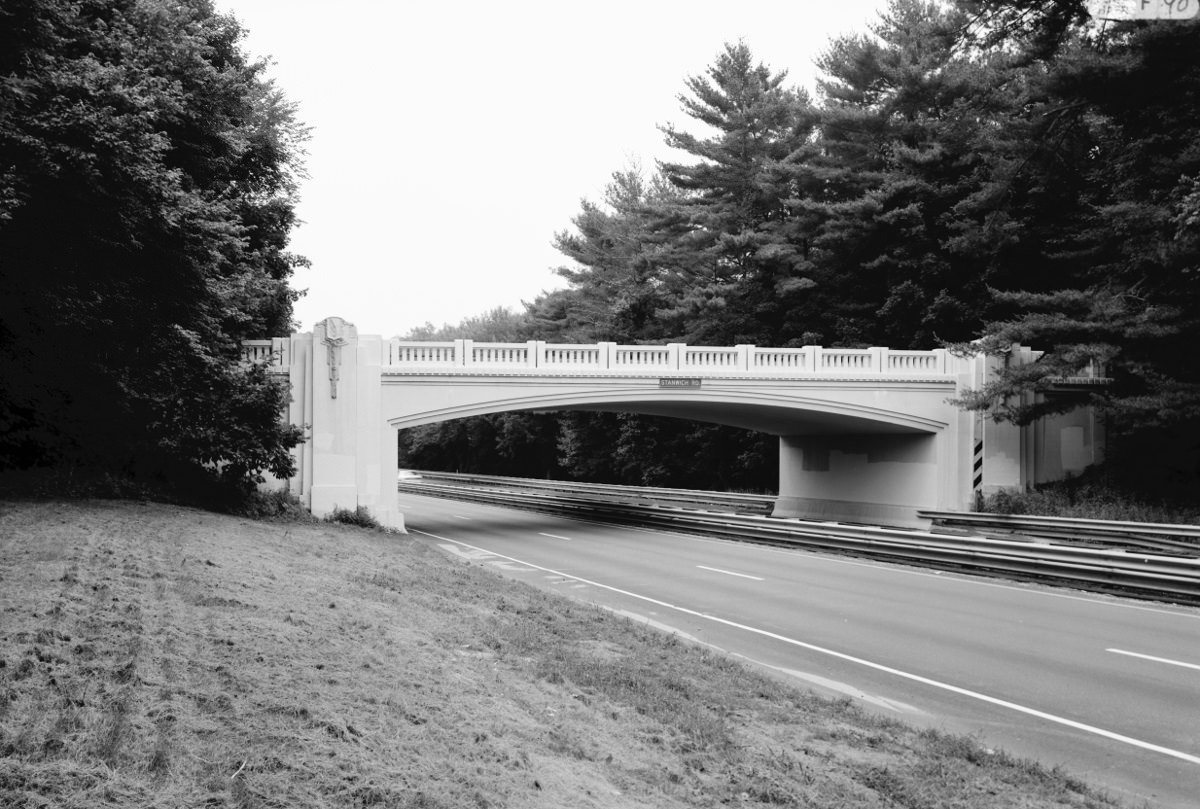
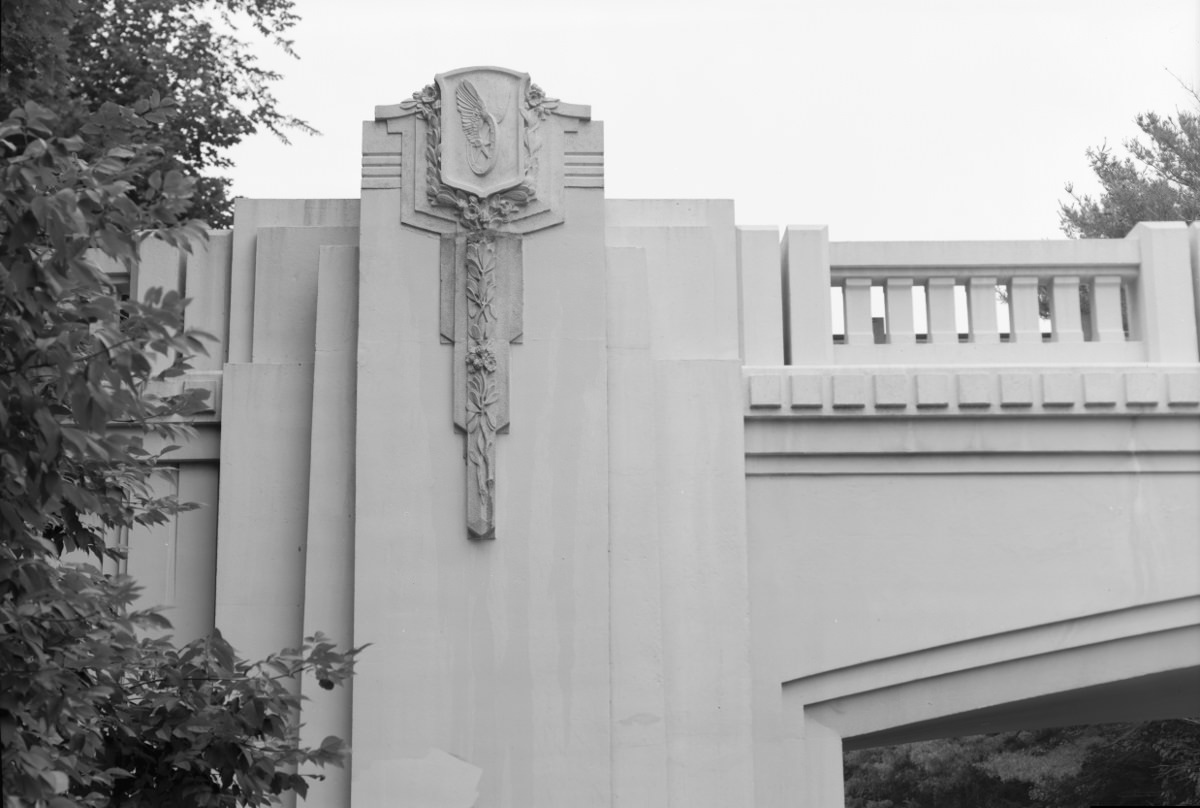
The winged wheel is a layered symbol. The wing comes from the iconography of the Greek god Mercury, representing speed. The wheel stands for the motor vehicle and the era of technological progress it brought with it. Together, they mark the parkway as a place of swift movement — a fitting emblem for a road that was, at the time, among the most advanced in the country.
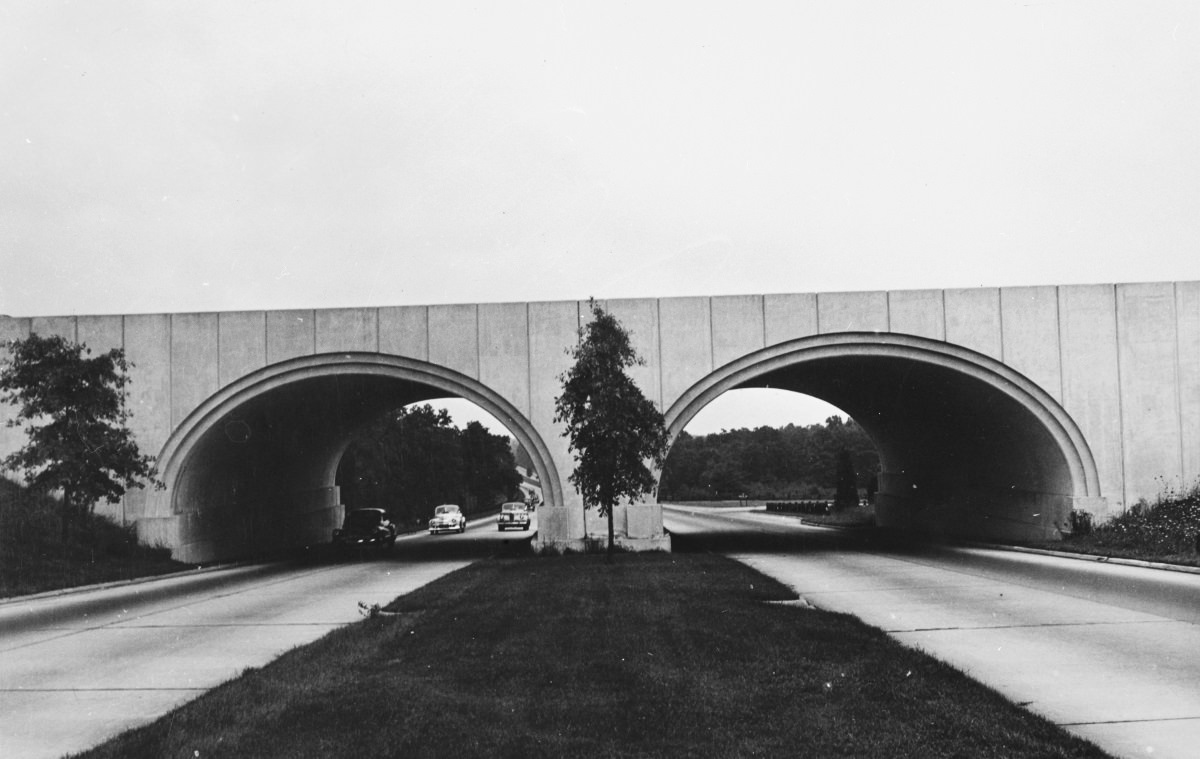
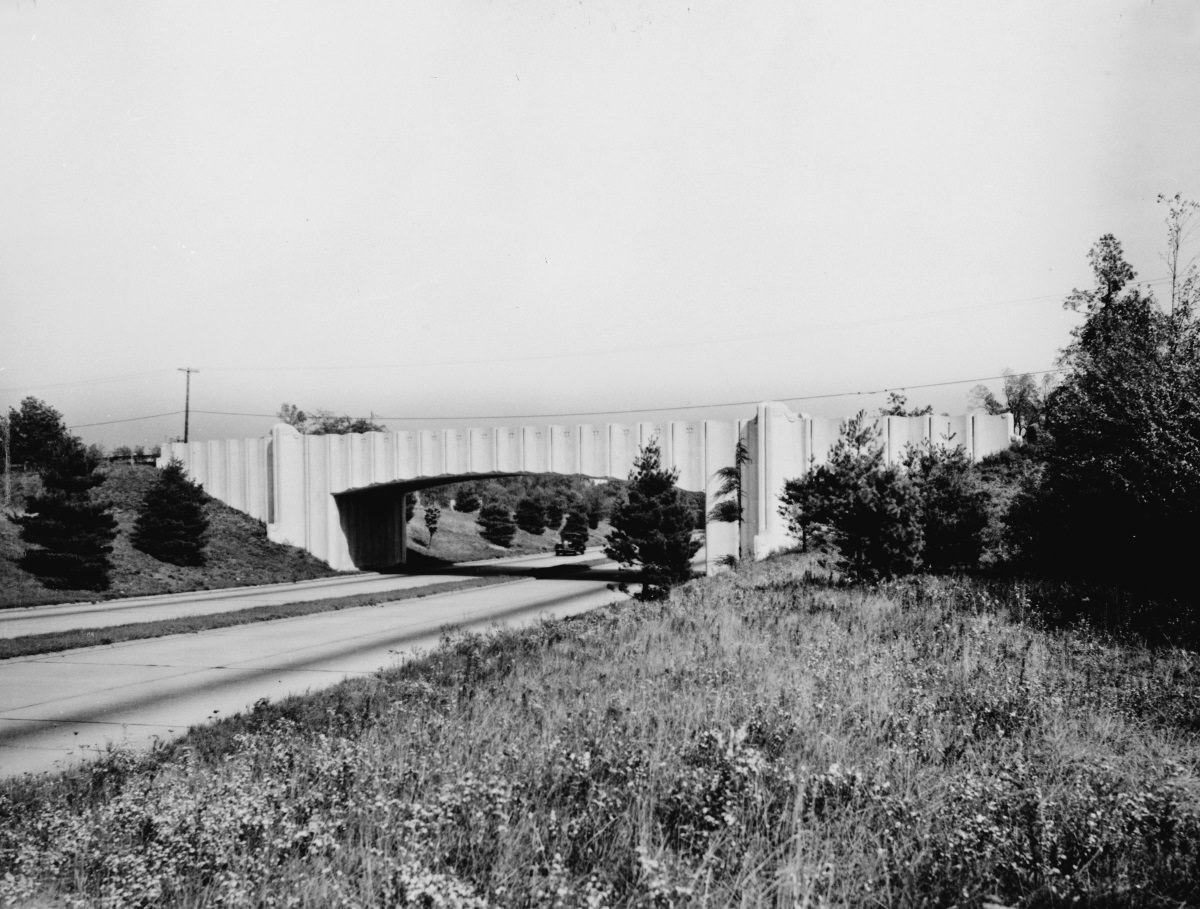
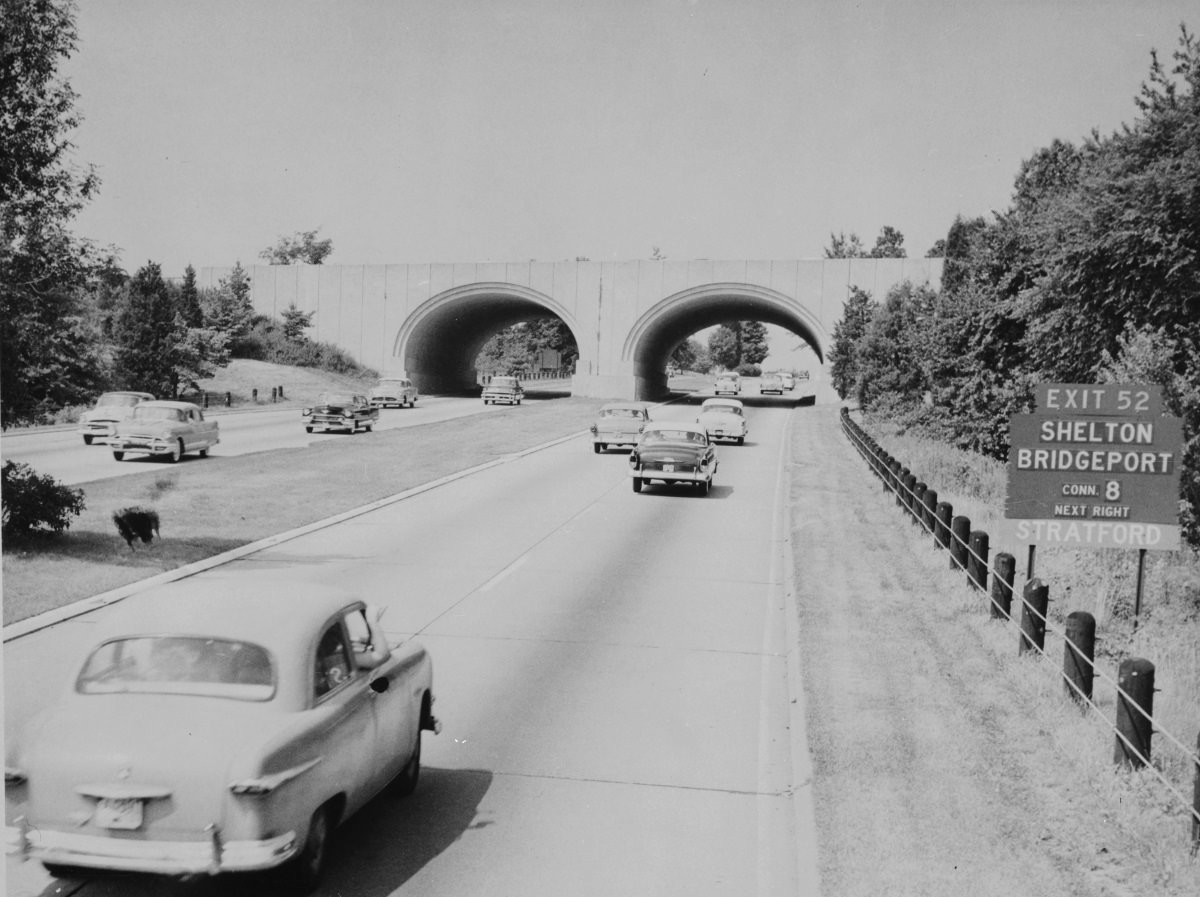
Not every bridge survived. The Route 65 Bridge — part of Nichols Avenue in Shelton — was constructed in 1940 and demolished in 1979. Only photographs remain.
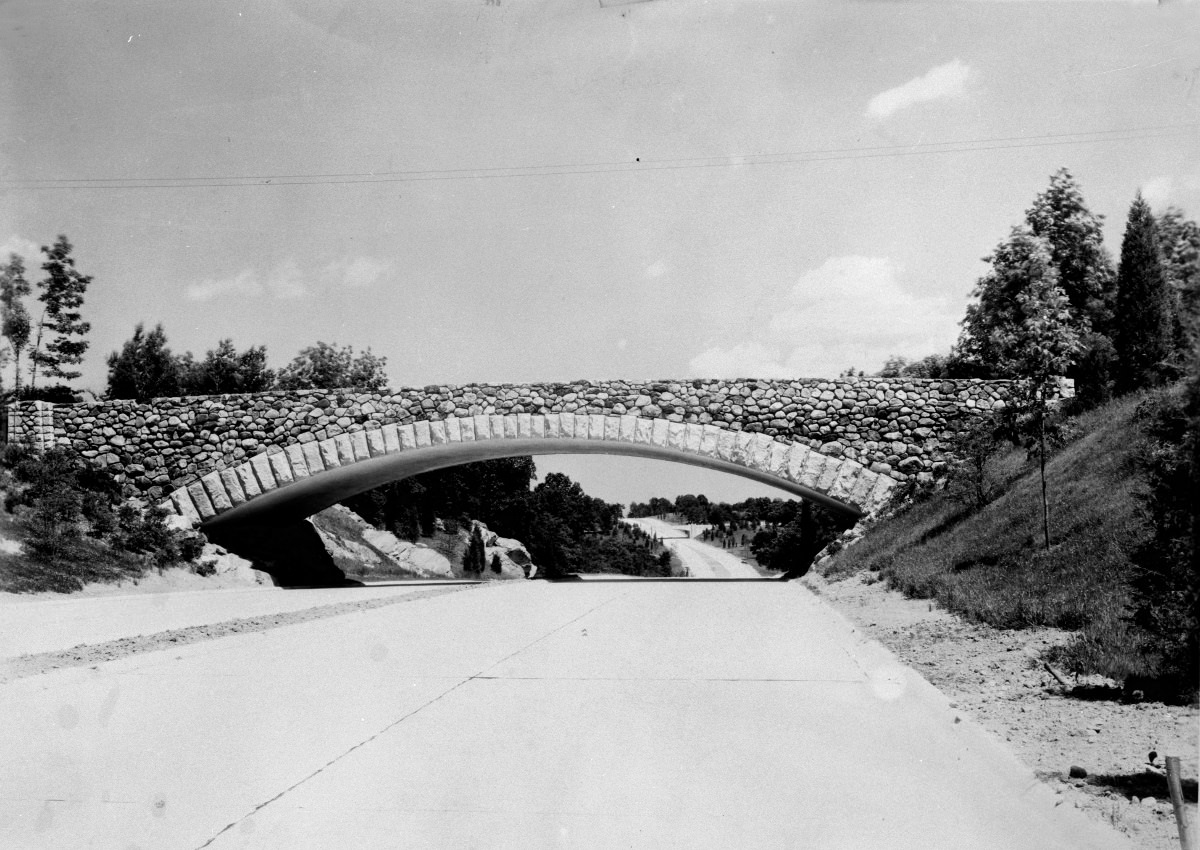
The Guinea Road Bridge in Stamford — also known as the Rocky Craig Road Bridge — took a more rugged approach. Its face is built from rock-faced rubble stone, giving it a rough, natural texture that stands apart from the smoother, more ornate concrete bridges elsewhere on the parkway.
The North Avenue Bridge in Westport is solidly Art Deco. At the top of its low protective wall, sgraffito panels depict ferns, flowers, and a snail — images scratched or carved into plaster to create a raised decorative surface.
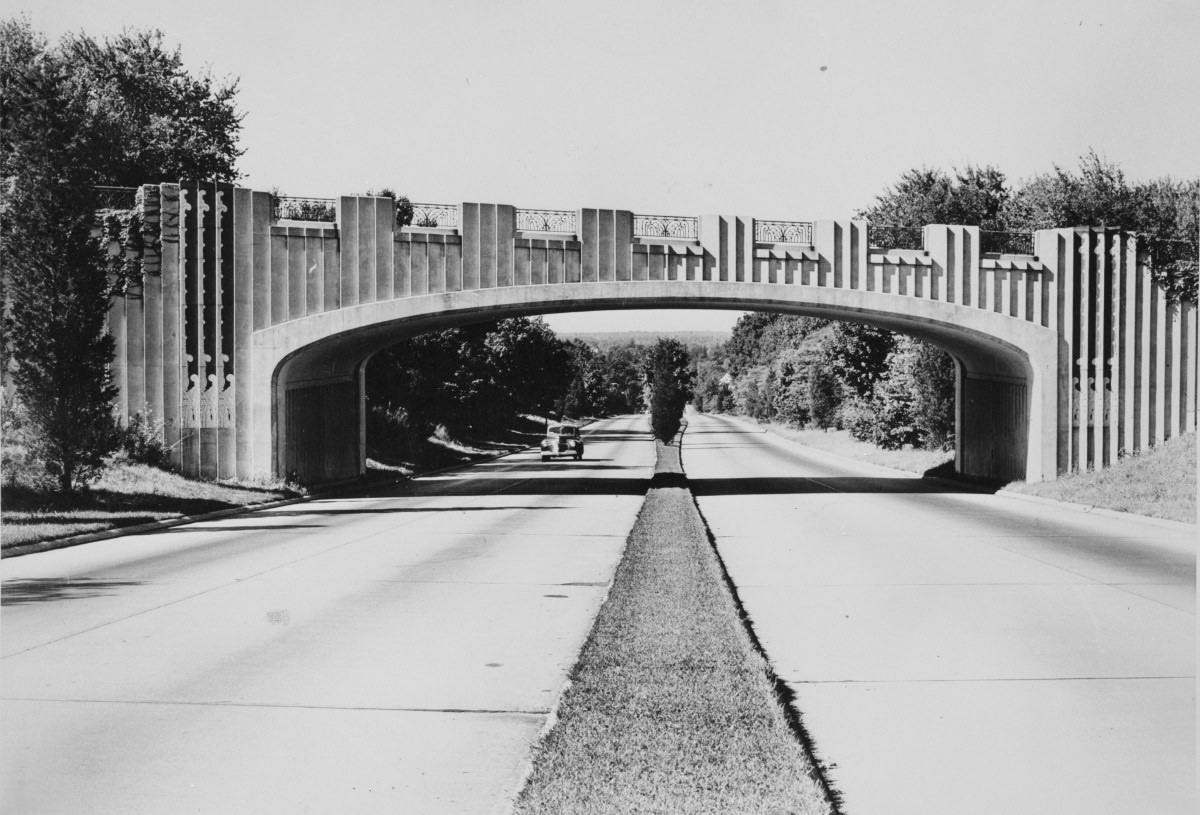
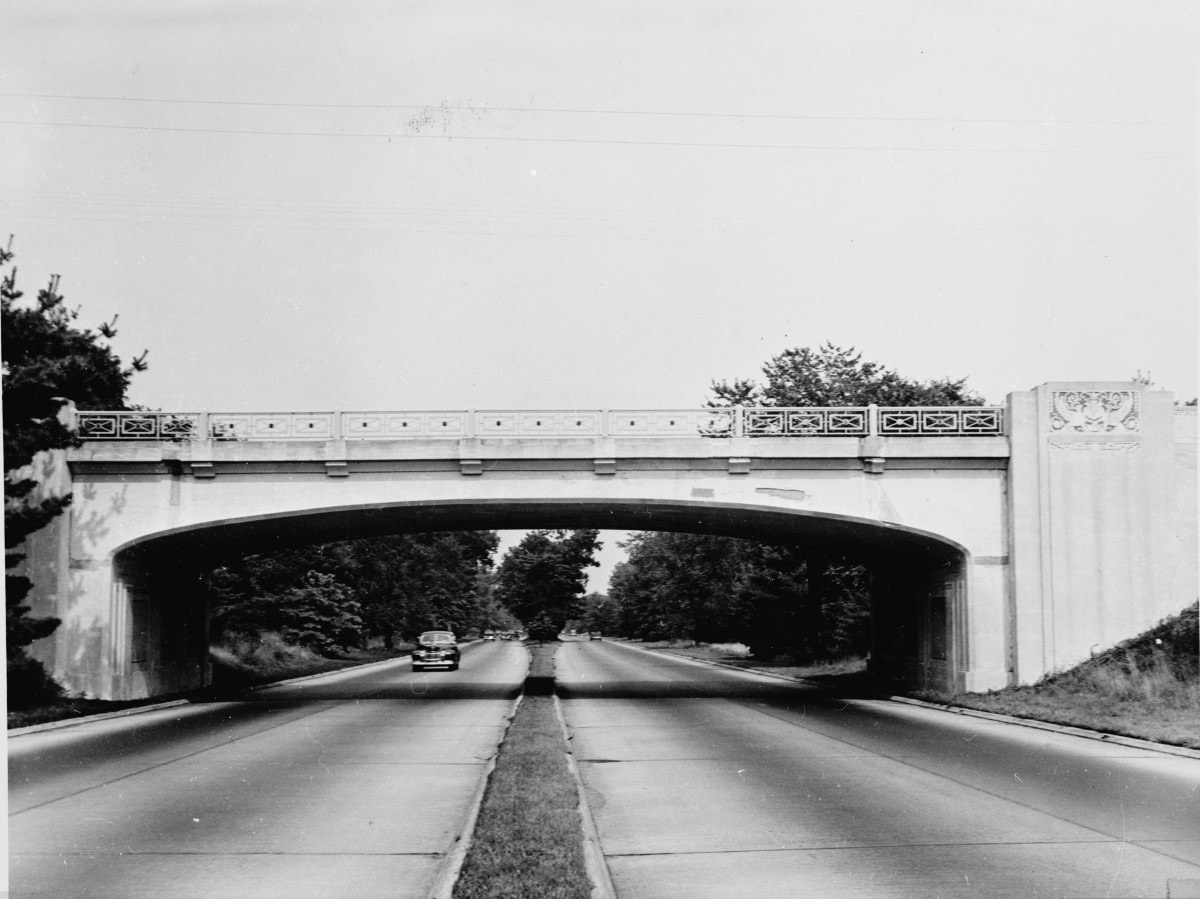
The Grumman Avenue Bridge in Norwalk — originally called the Grummond Hill Road Bridge — features neoclassical griffins rendered in sgraffito panels flanking the Connecticut State Seal. The combination of ancient mythological imagery with a 1930s highway structure is exactly the kind of contrast that makes the Merritt Parkway bridges so visually distinctive.
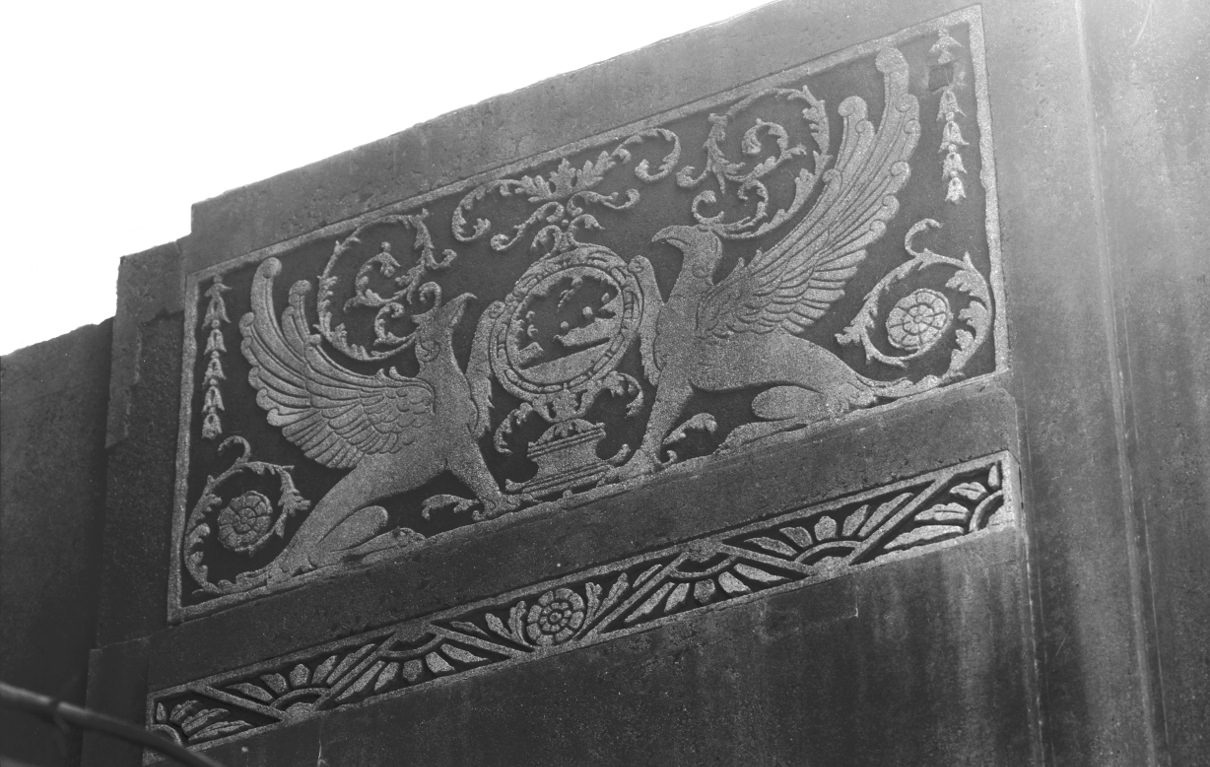
The Newtown Turnpike Bridge drew from an entirely different tradition. Designed in the French Renaissance Revival style, it was cast in concrete and then treated to imitate ashlar stone — cut stone laid in clean horizontal rows. The design was meant to evoke a fortified bridge, and it succeeds in looking far older than it is.
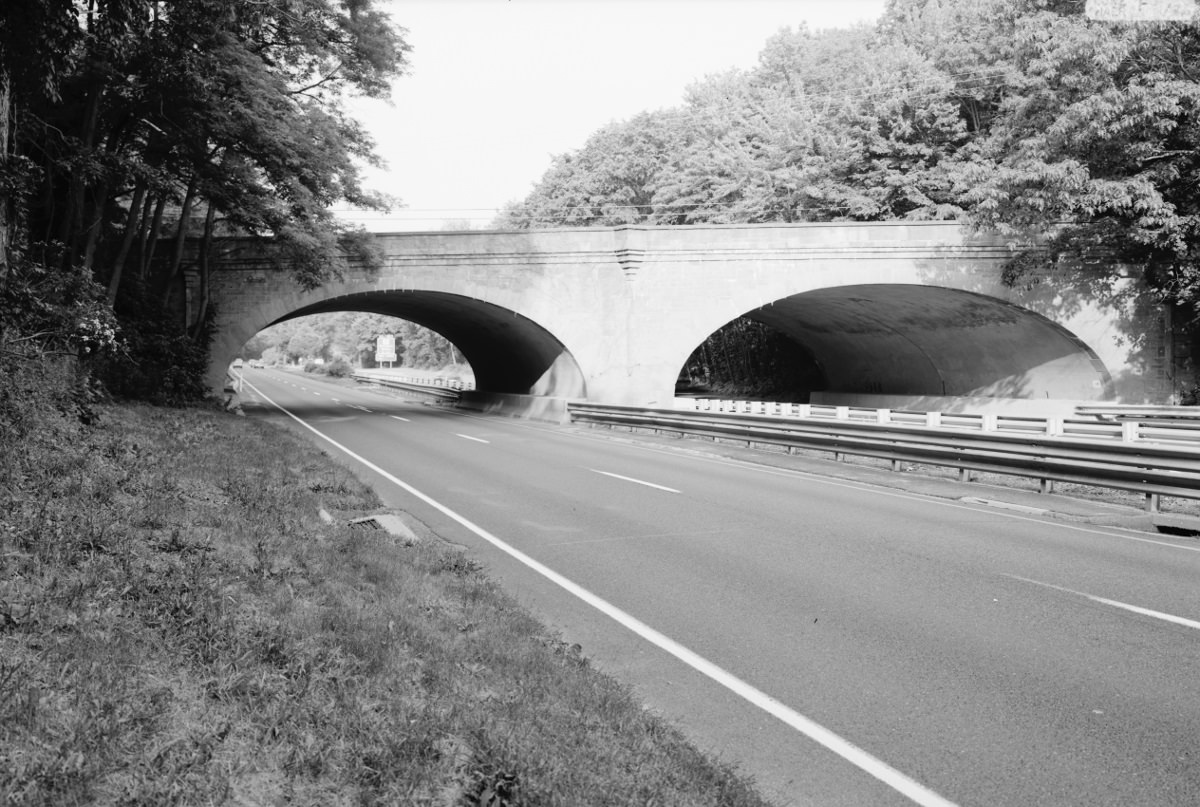
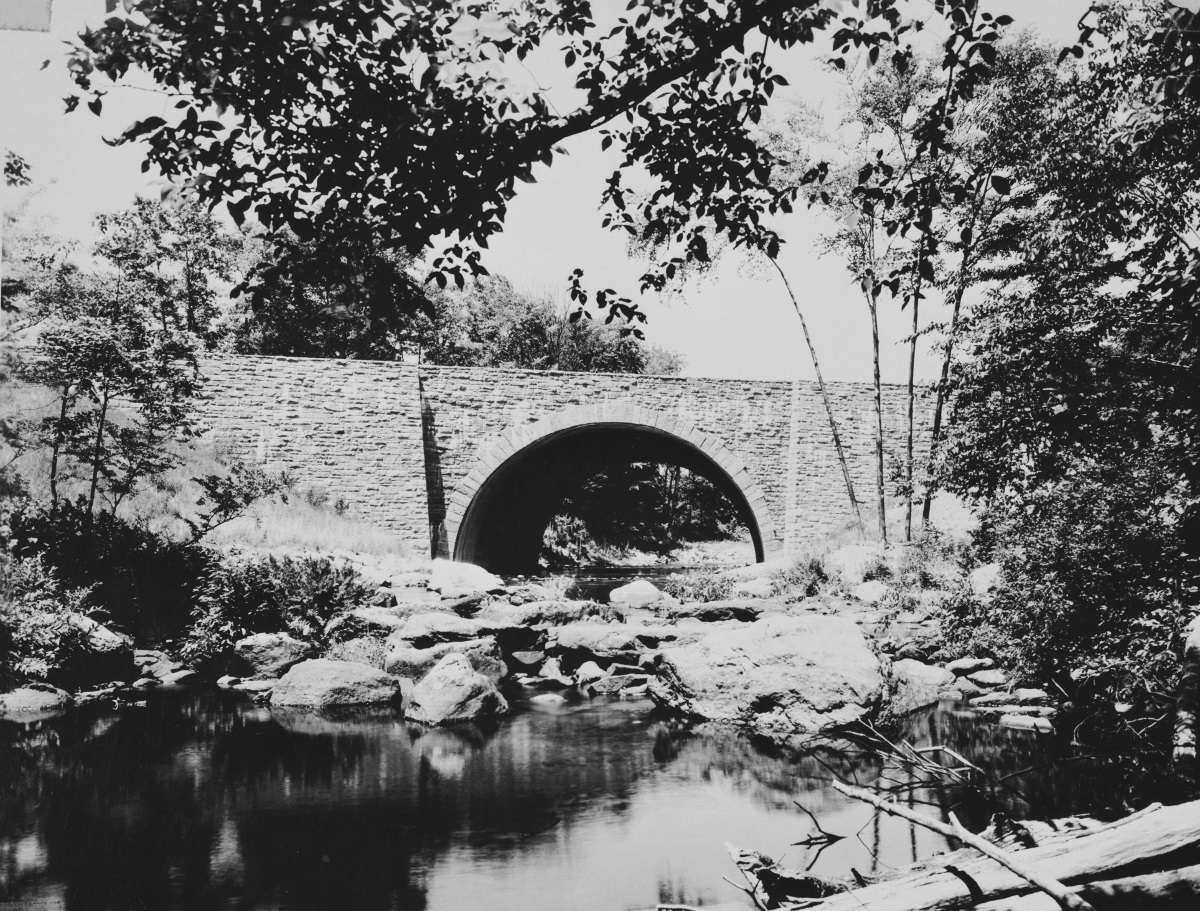
The Rippowam River Bridge spans the river of the same name in Stamford, cutting through the landscape of Fairfield County. Nearby, the Newfield Avenue Bridge in Stamford places the Connecticut State Seal at its center, continuing the parkway’s tradition of weaving state symbolism directly into its infrastructure.
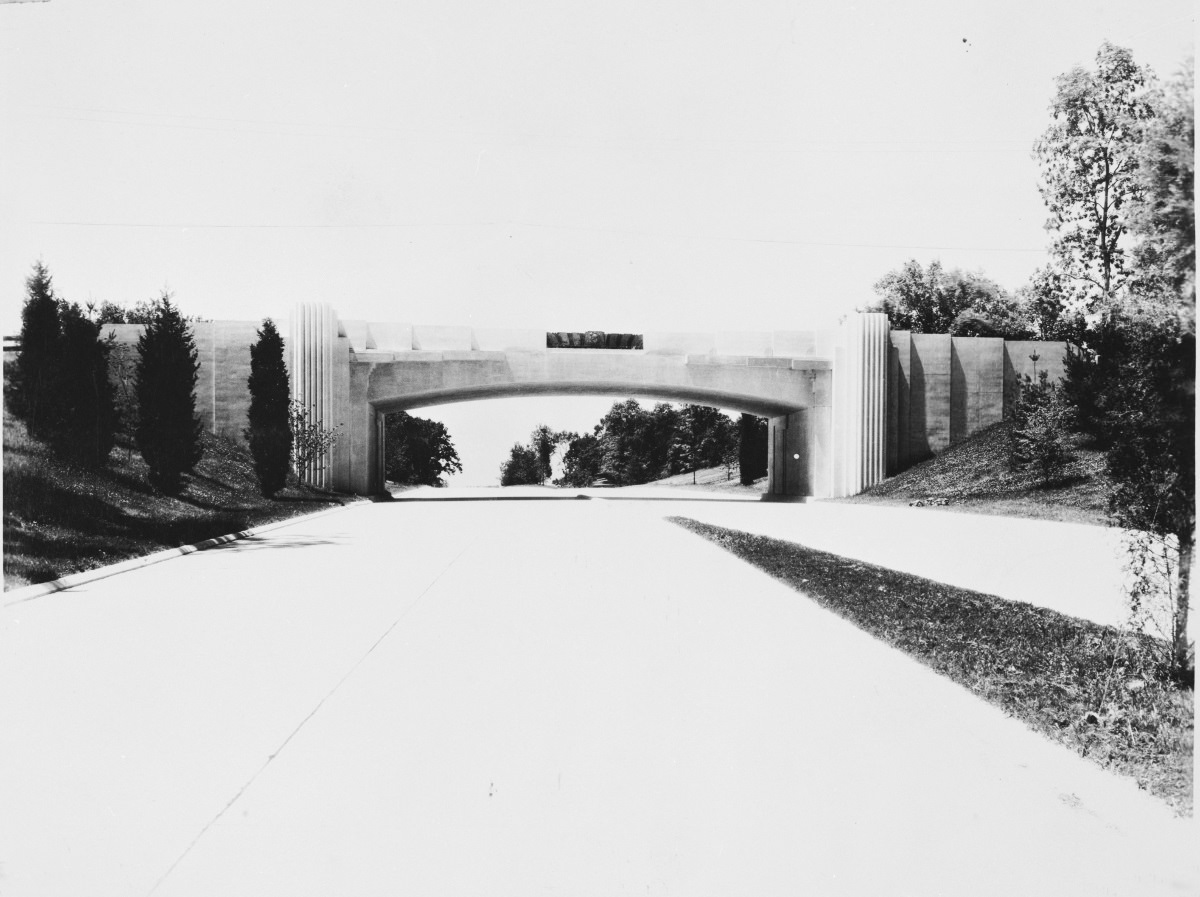
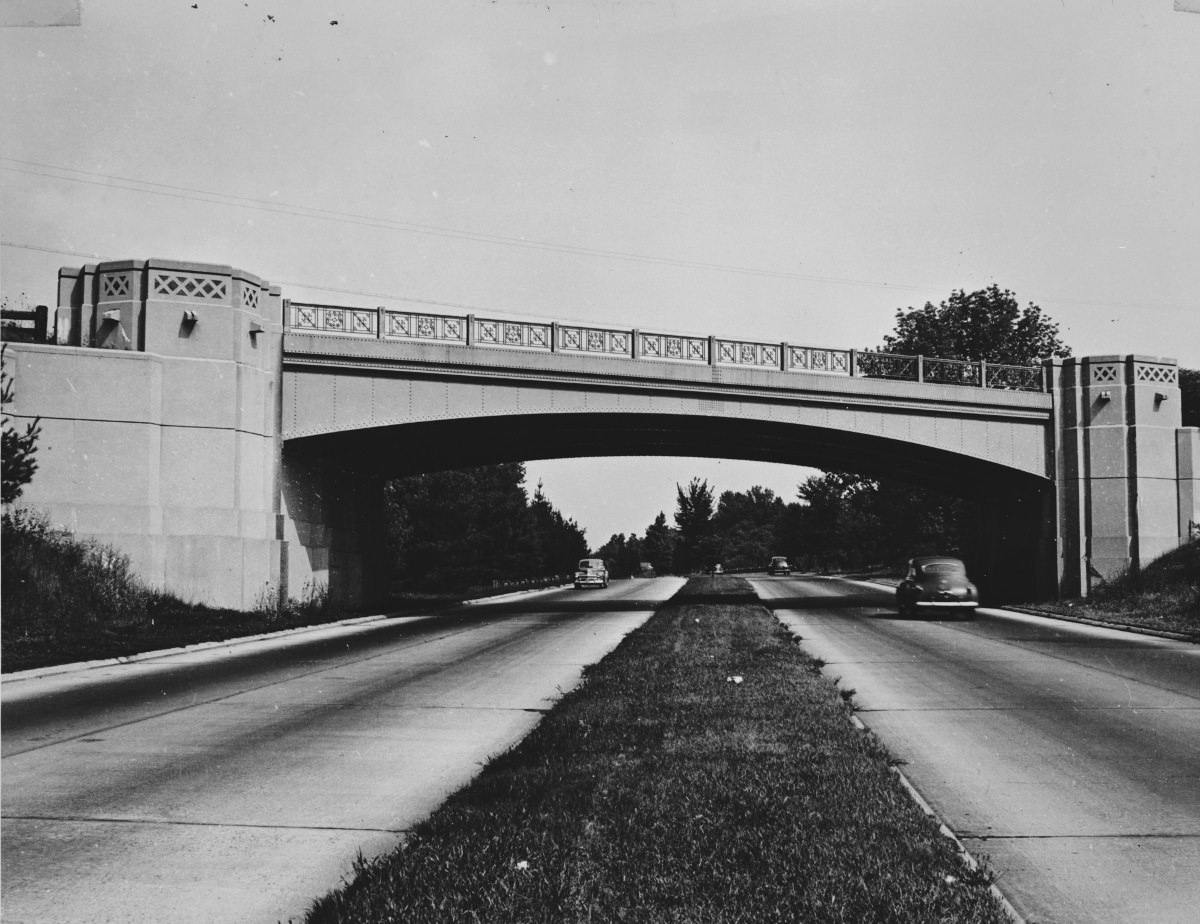
The Clinton Avenue Bridge in Westport has tower-like abutments with protruding waterspouts and shield patterns running through the metal railing. It gives the bridge a fortress-like character, which was a recurring theme across several Merritt Parkway structures.
Photographs taken around 1940 capture the parkway at the height of its early years, before postwar suburbanization reshaped the land around it. The Easton Road/Route 136 Bridge in Westport and the Redding Road Bridge in Fairfield both appear in photos from that era, showing the parkway in its original context.
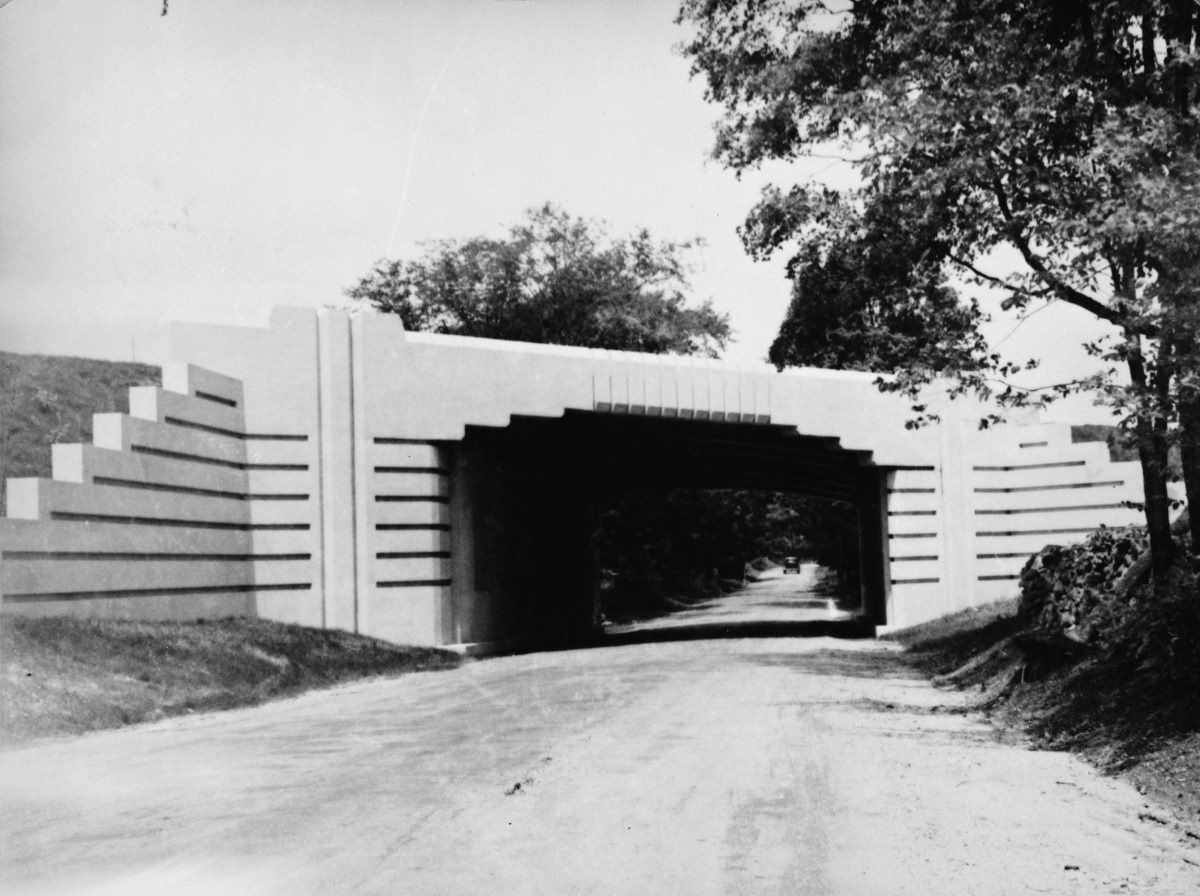
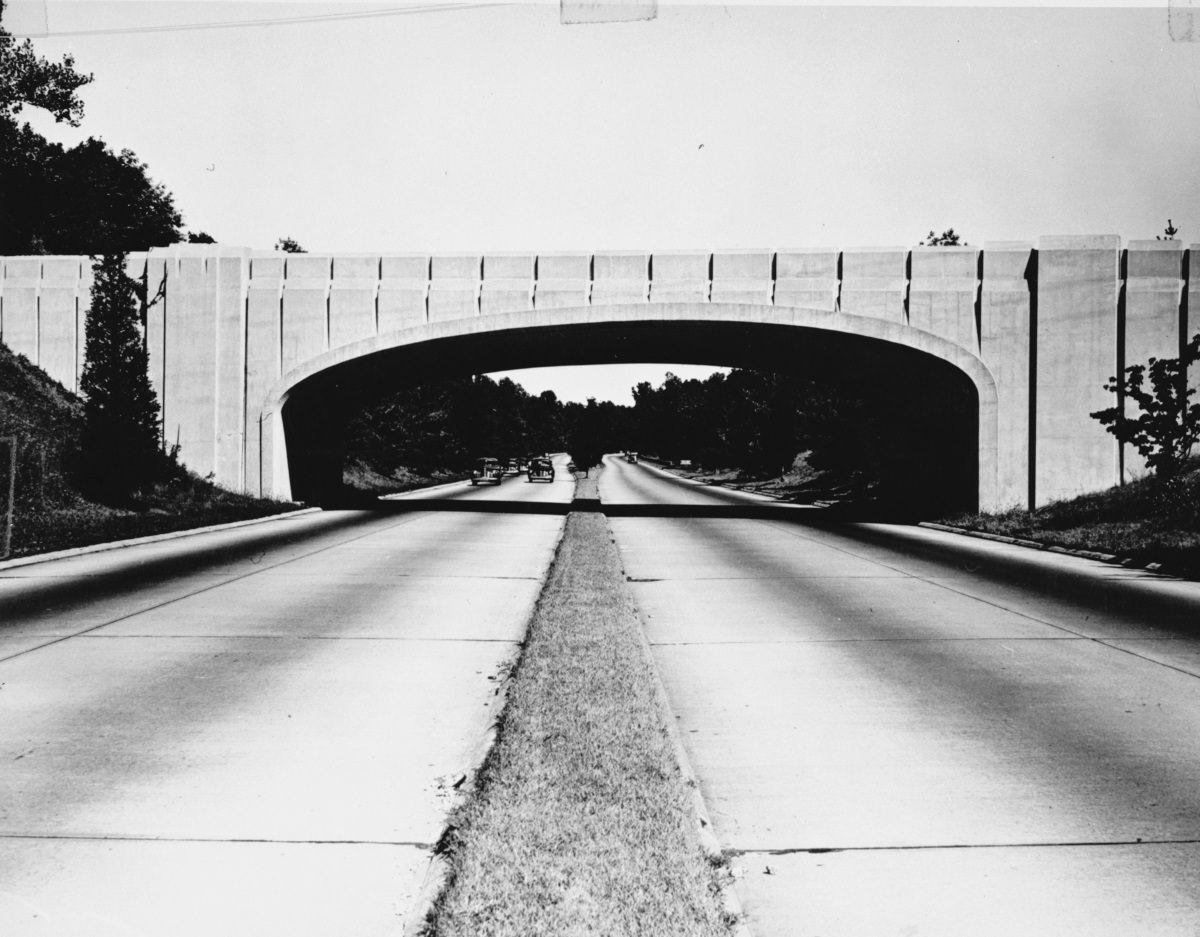
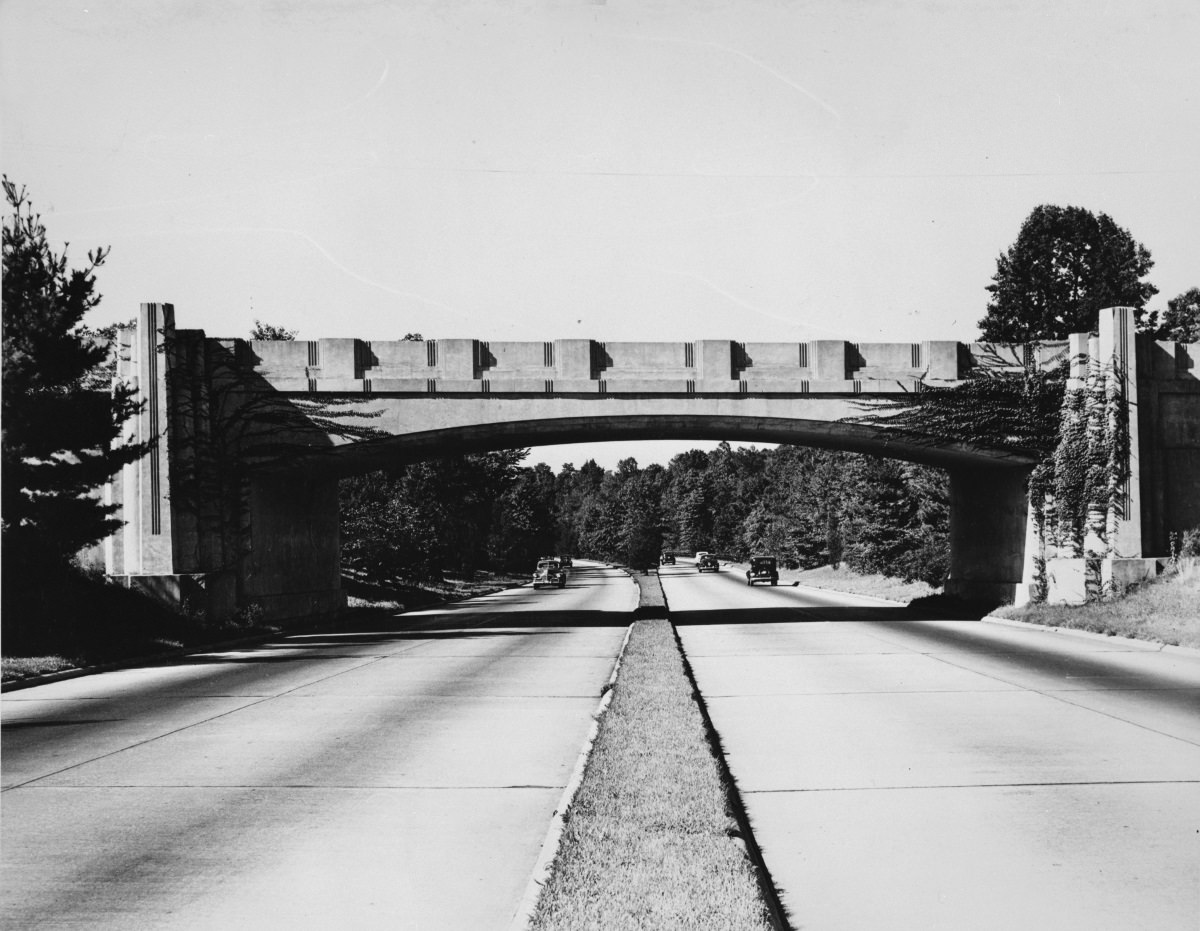
The Congress Street Bridge and the Hillside Road Bridge are both located in Fairfield. Hillside Road’s bridge features a detailed owl carved in relief on both of its supports — one of the more unusual motifs along the entire parkway.
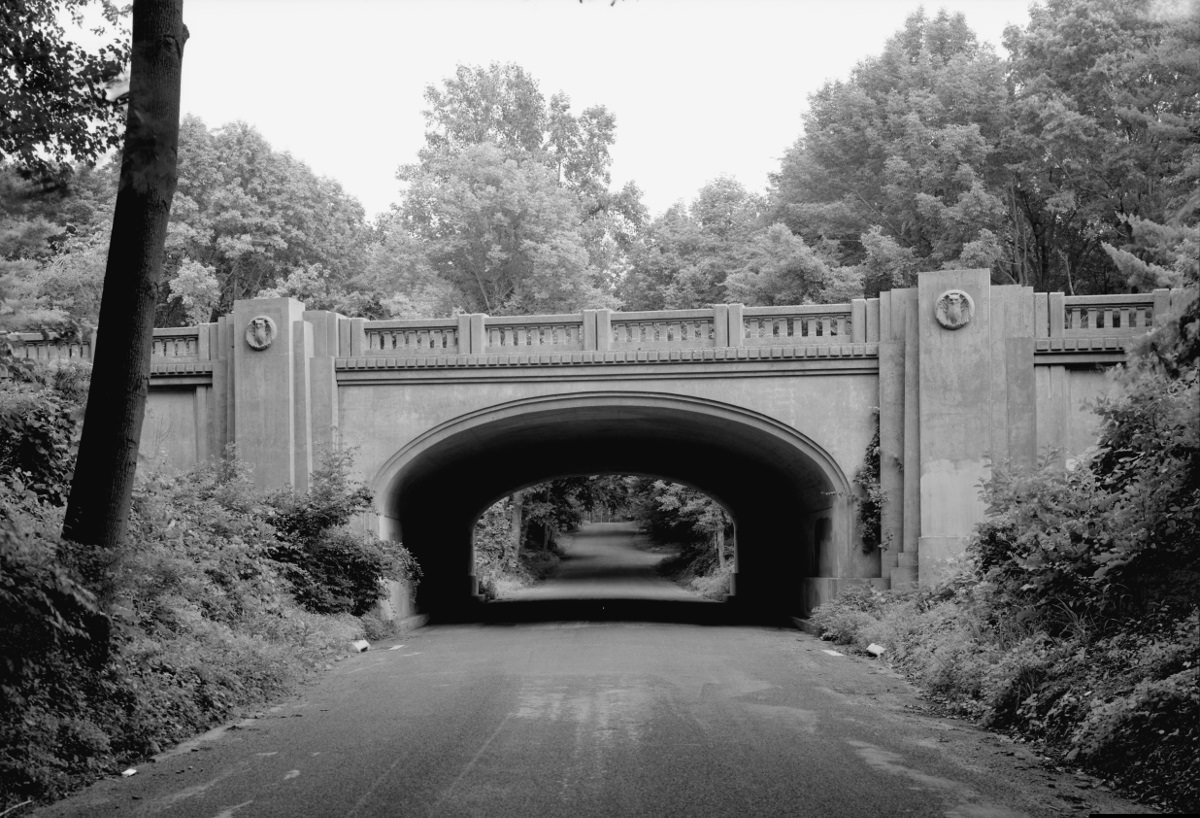
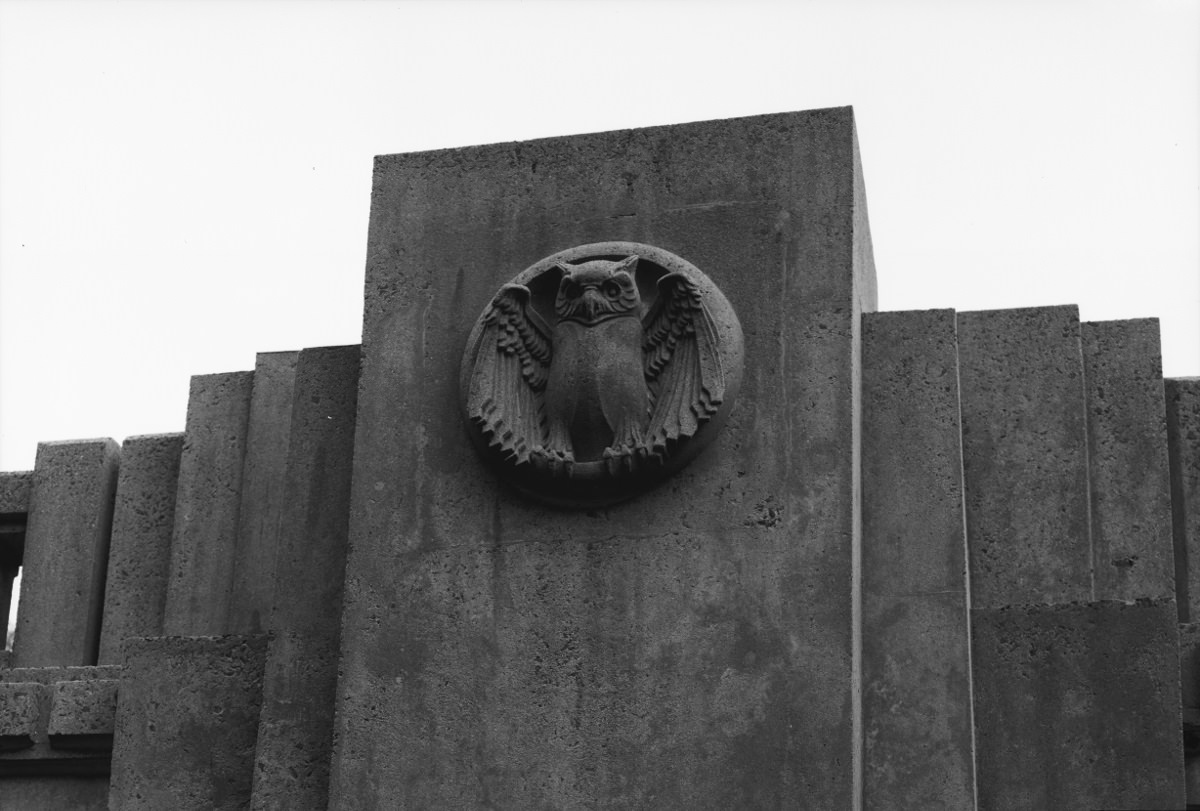
The Burr Street Bridge in Fairfield may be the most historically self-aware of all the parkway’s structures. Its bas-relief murals don’t draw on mythology or nature — they depict the people who built the road. One panel shows construction workers laying the parkway. Another shows engineers at work on the project. Photographed circa 1940, the bridge stands as a direct record of the labor behind the parkway’s construction.
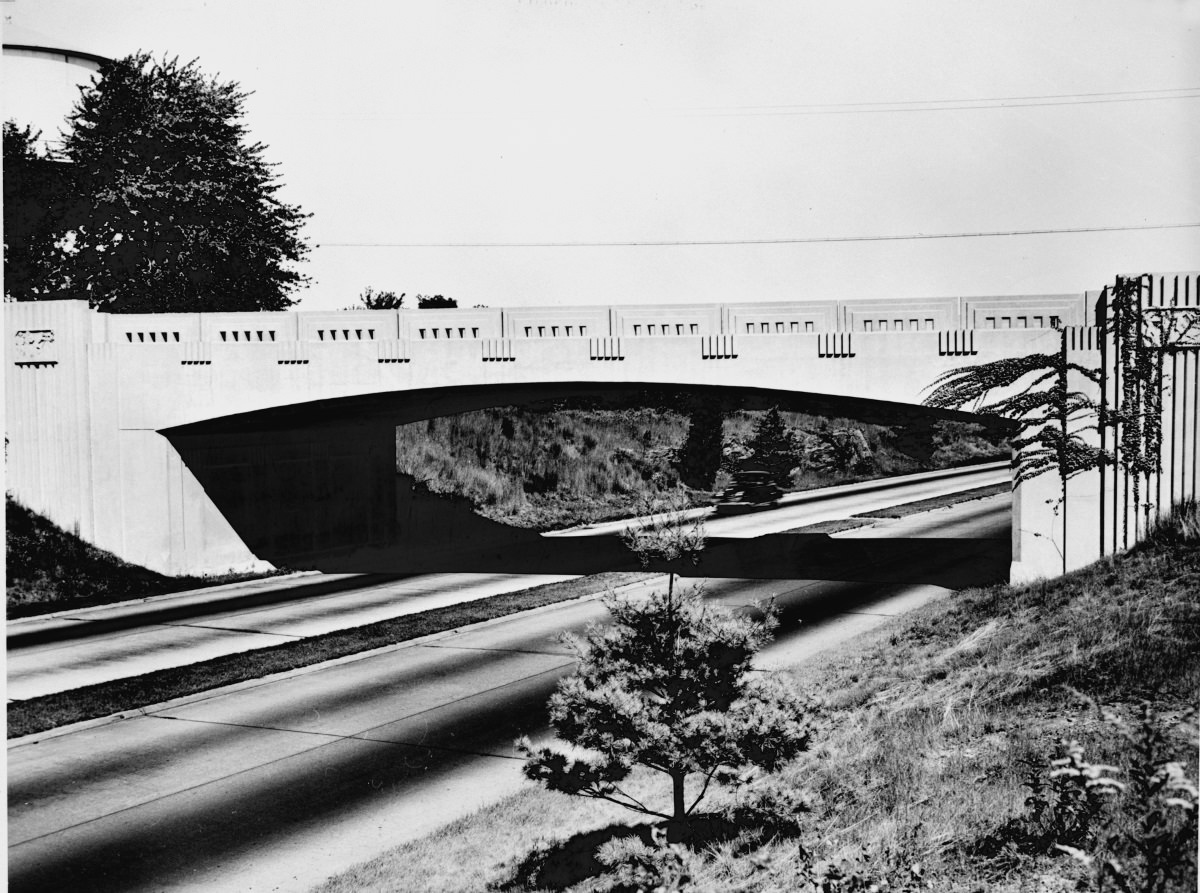
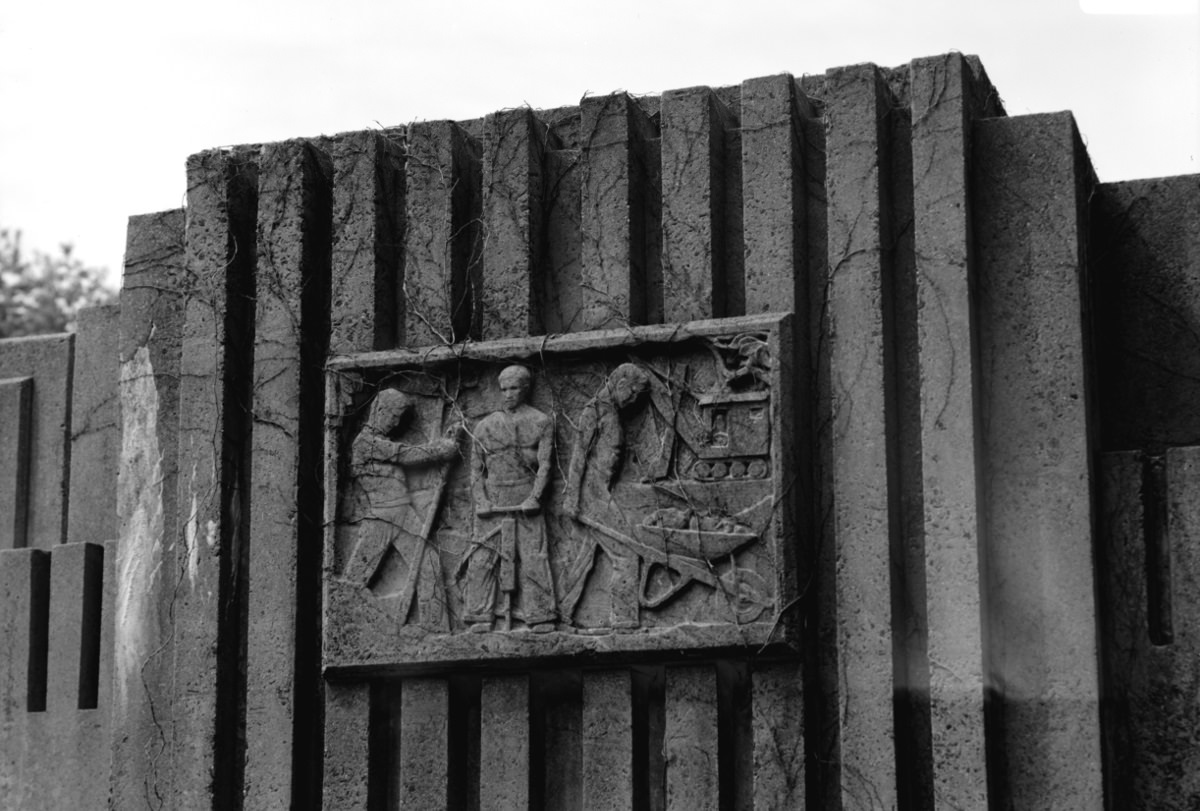
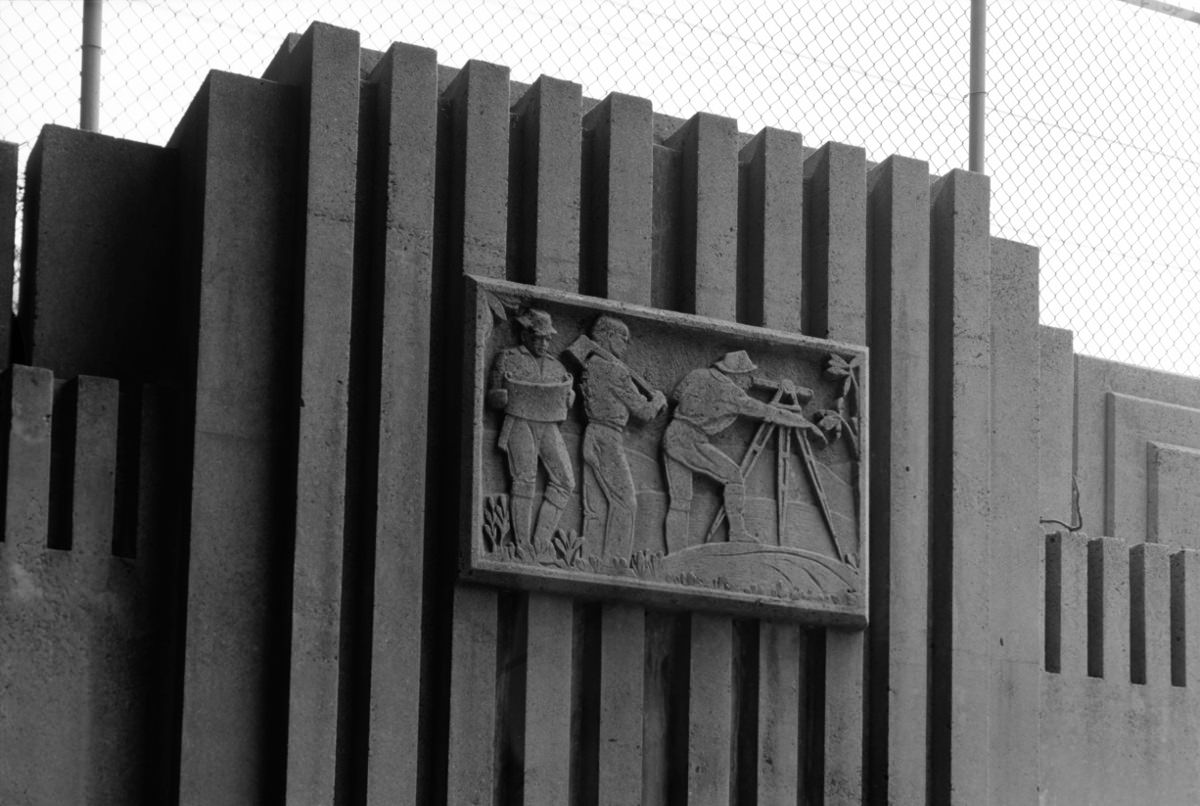
That labor was never straightforward. The planning and construction of the Merritt Parkway was plagued by serious misconduct. Land schemes, political cronyism, forged records, and destroyed documents all surfaced during the project’s development. There was also significant opposition from Fairfield County residents who didn’t want the highway cutting through their communities. The road was built anyway, and it reshaped the county entirely.
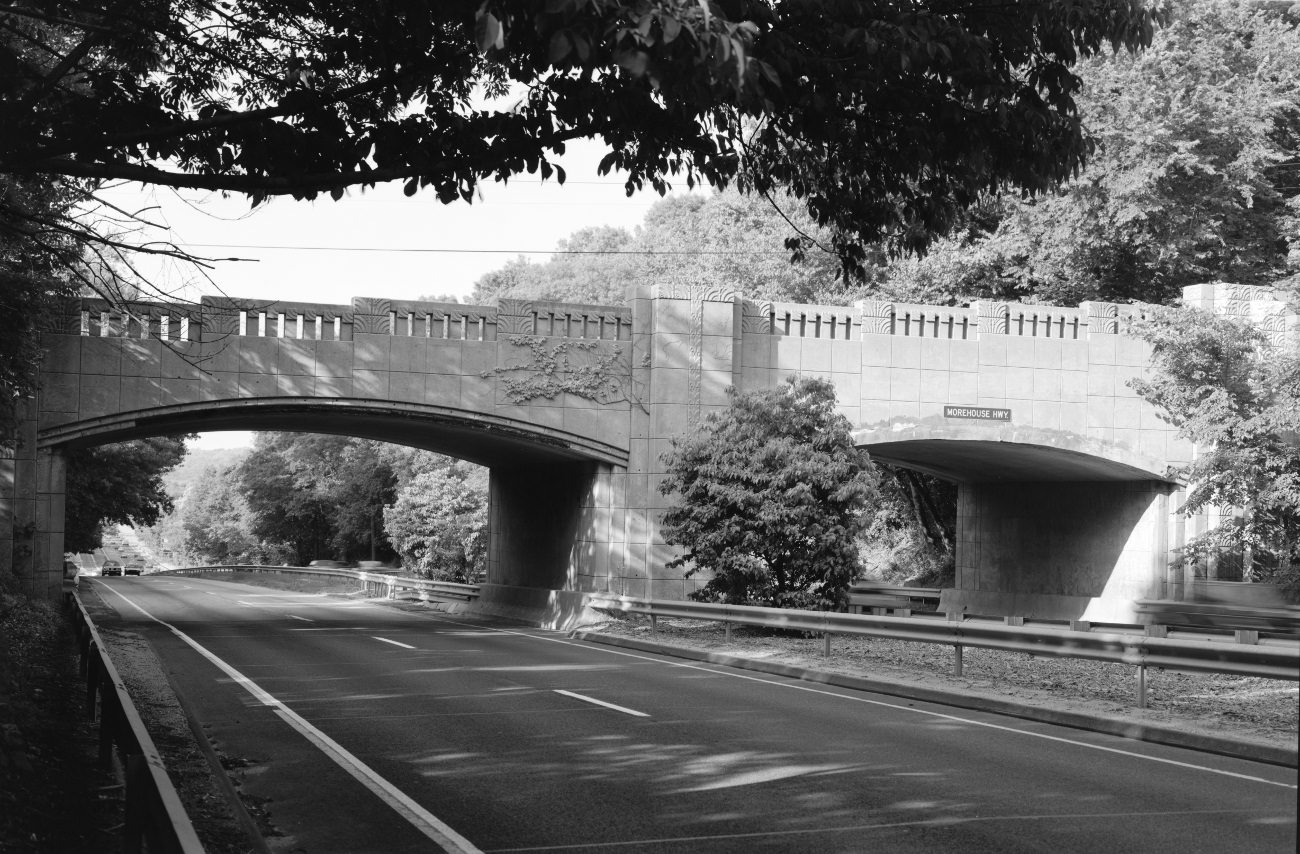
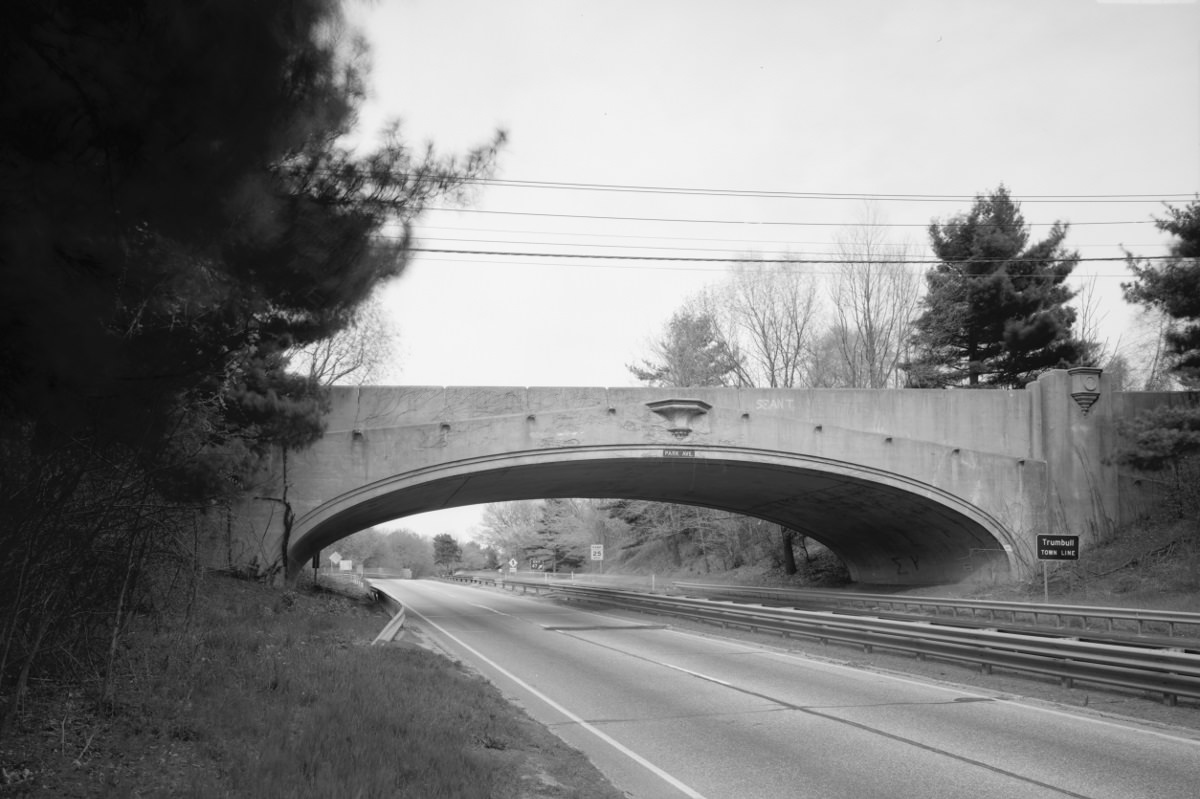
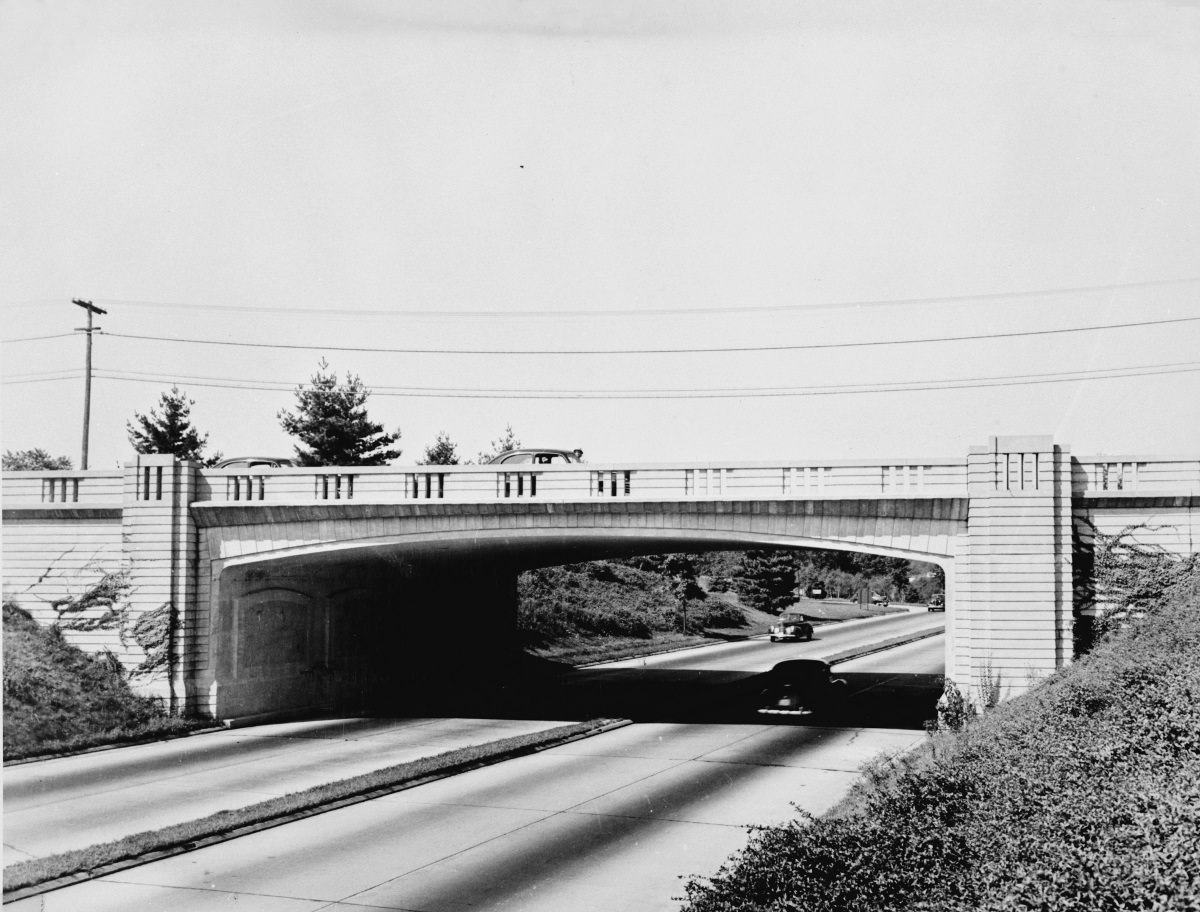
The Morehouse Highway Bridge in Fairfield features a grid of geometric patterns — concentric quarter circles nested within squares — giving it a precise, almost mechanical look. The Park Avenue Bridge in Trumbull follows the curve of its arch with drain spouts, a functional detail turned into a design element.
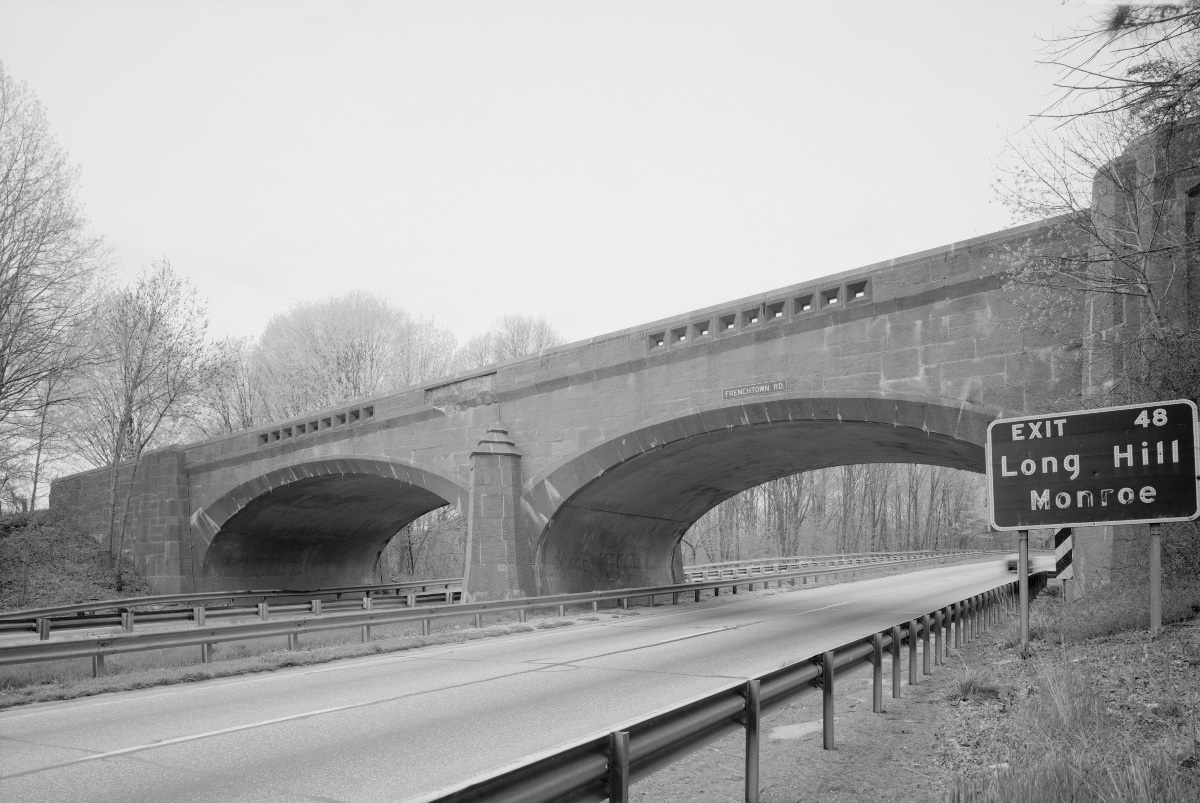
The Madison Avenue Bridge in Trumbull has panels that fold out from each abutment to form piers decorated with flowers and scrolls. The Frenchtown Road Bridge, also in Trumbull, returns to the fortified bridge concept — cast concrete treated to look like random ashlar stone, with a buttressed center pier and small square openings that recall a medieval battlement.
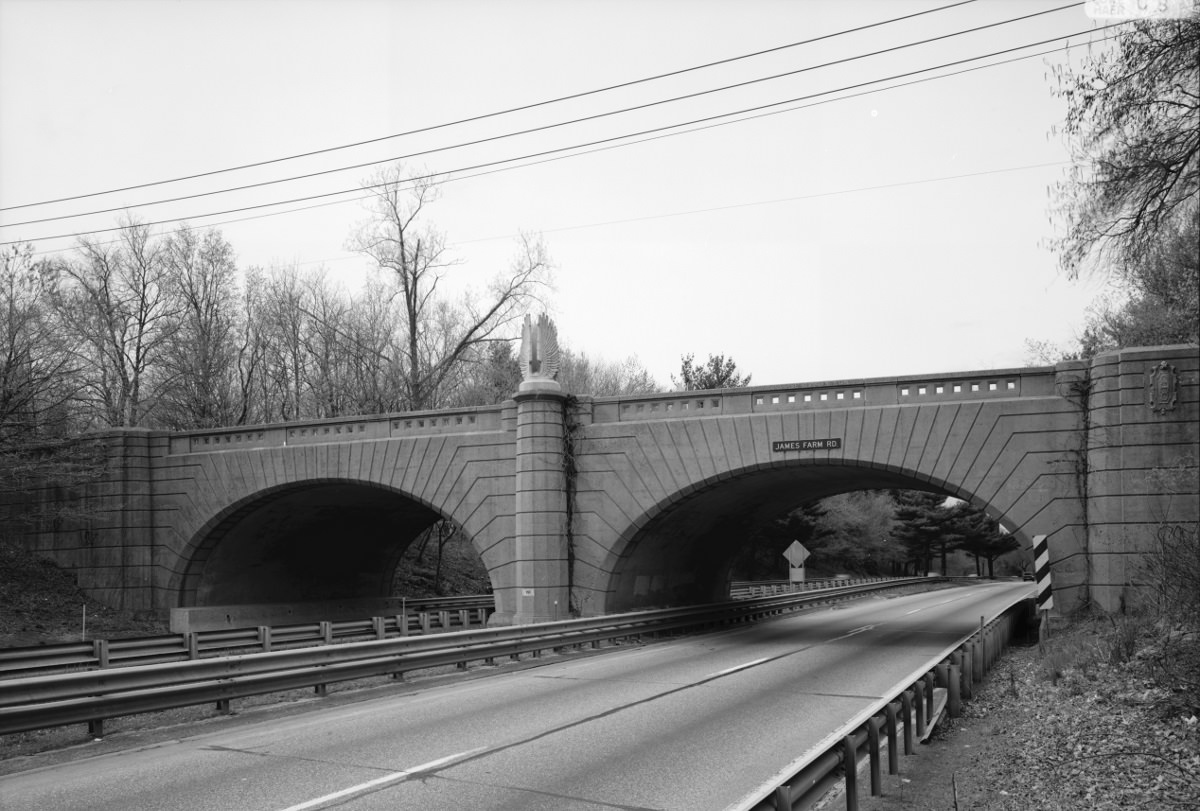
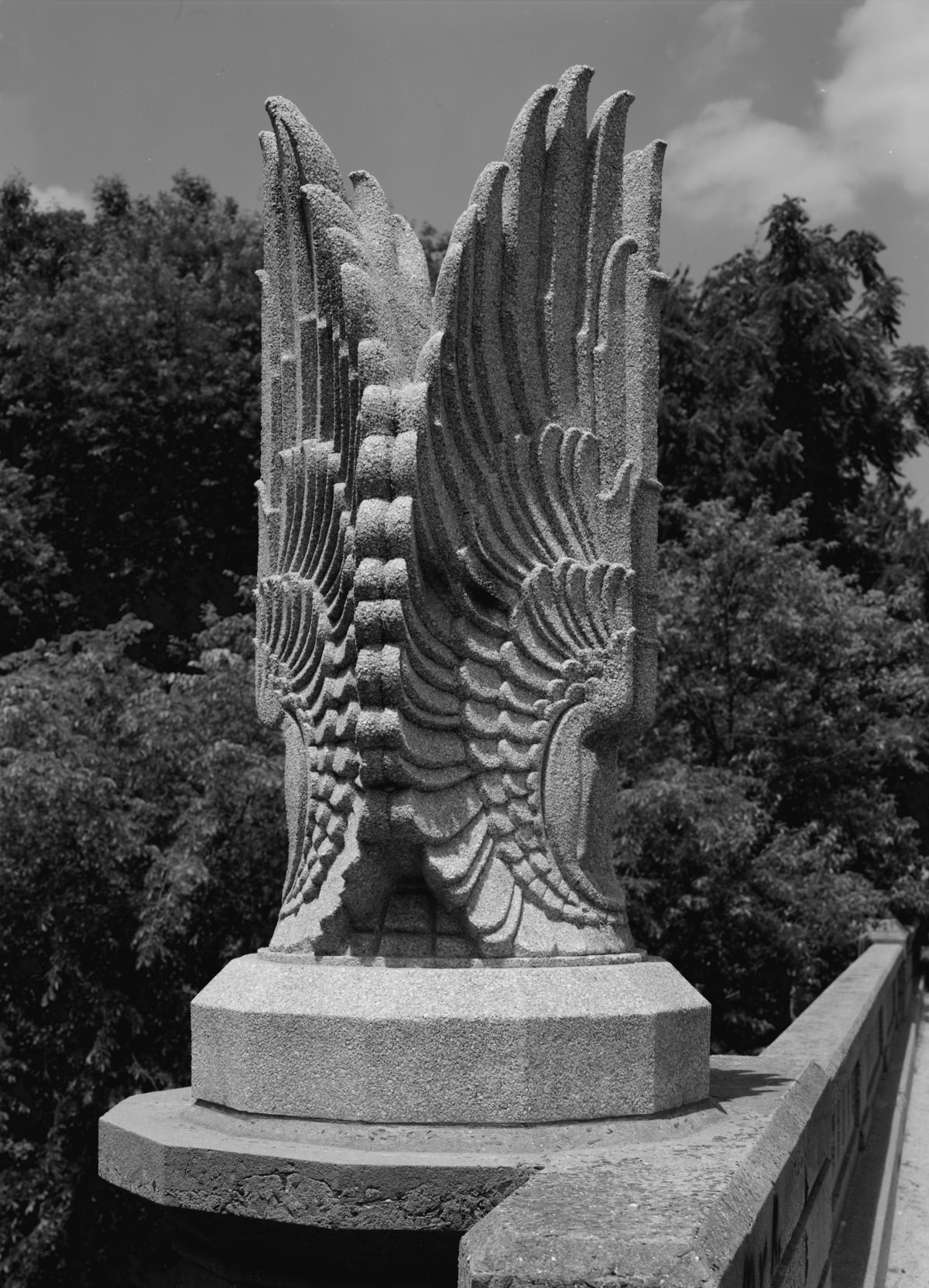
As the parkway approaches its eastern end near Stratford, the bridges continue to display individual character. The James Farm Road Bridge in Stratford is topped with a raised wing sculpture — a bold, streamlined form that captures the spirit of speed and forward motion that the entire parkway was designed to embody.
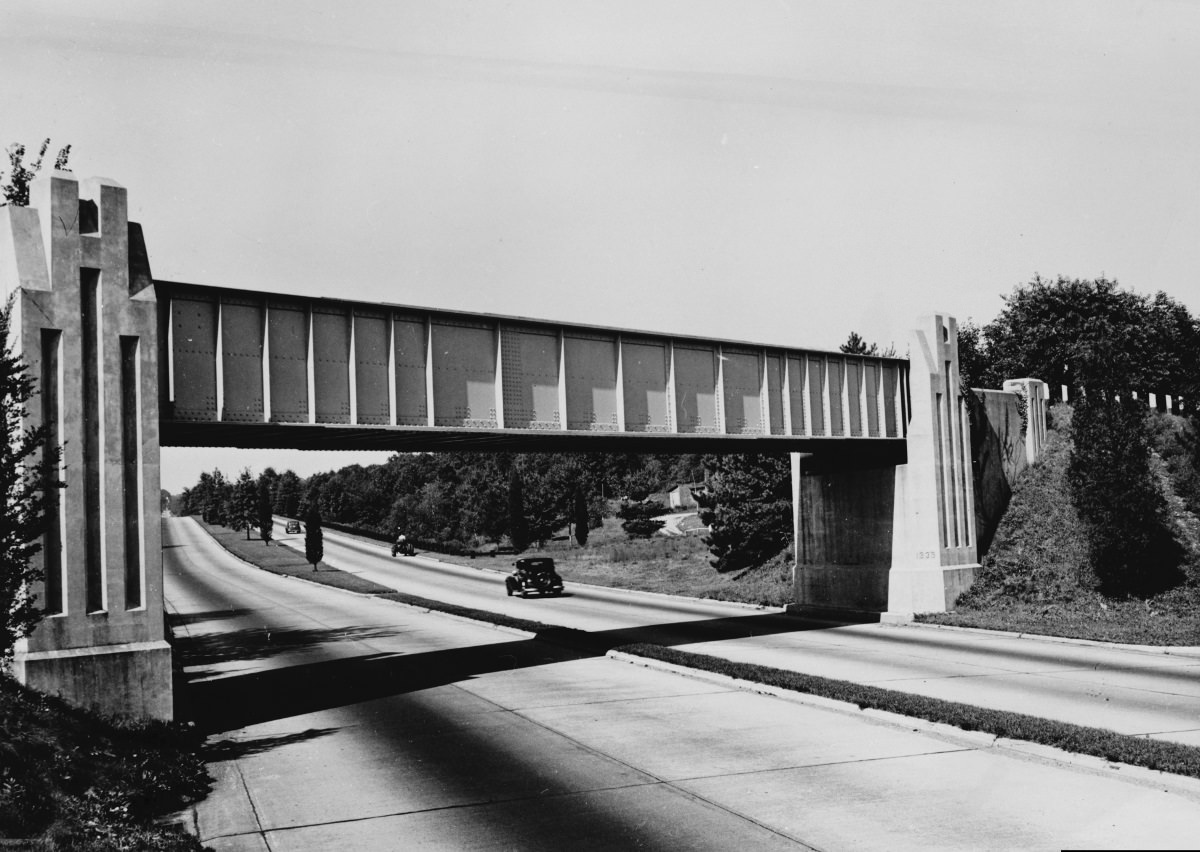
The Metro North Railroad Bridge in New Canaan is a different kind of structure — an abandoned bridge that once carried New York, New Haven & Hartford Railroad trains. It still stands, waiting in the event the Berkshire Division branch is ever reactivated.
The Lapham Avenue Bridge in New Canaan was replaced in 1937. The original structure featured cast panels with floral motifs — a quieter decorative approach compared to some of the more dramatic designs found elsewhere on the parkway.
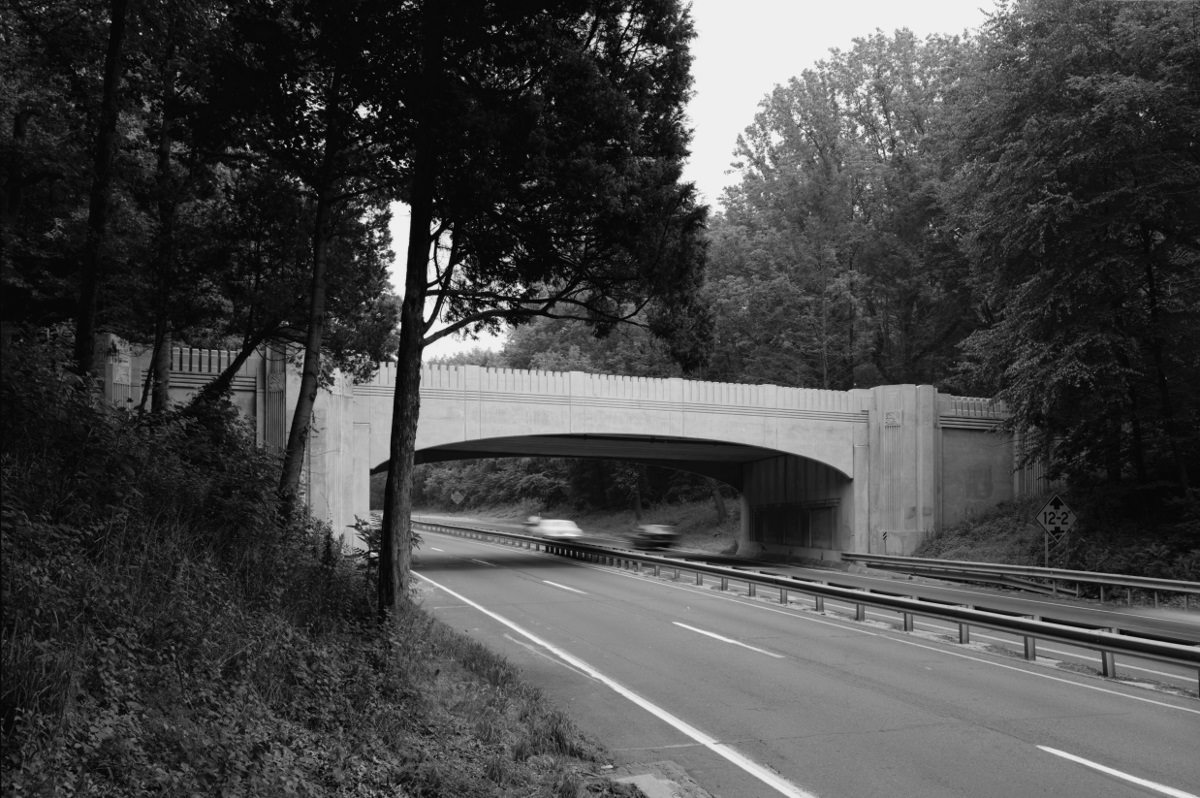
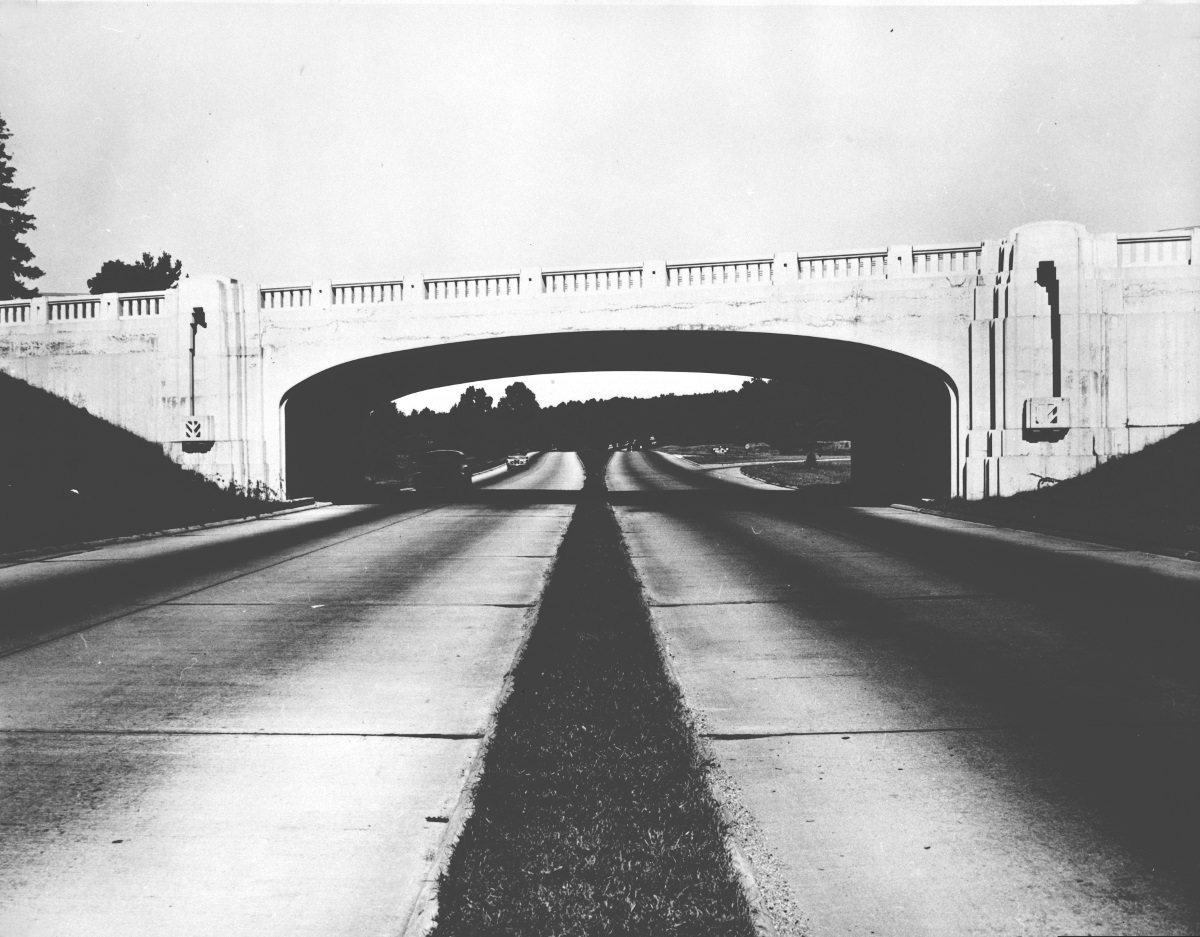
The Sport Hill Road Bridge spans the parkway at Route 59 in Fairfield, while the Rocky Hill Road Bridge — located at the 32.54-mile mark in Trumbull — carries clear Art Deco architectural elements that tie it to the broader design language Dunkelberger established across the entire route.





Merritt’s bridges always appeal to me.