In 1881, France occupied Tunisia and established it as a protectorate. Under this arrangement, the French recognized the nominal authority of local Tunisian rulers while taking firm control of the country’s administration. French engineers and planners moved quickly, laying out wide boulevards, new neighborhoods, and modern infrastructure across the capital. The result was a city split into two distinct zones: the traditional Arab medina on one side, and a growing European-style quarter on the other, filled with immigrants from across the Mediterranean.
The postcards in this collection were produced using the photochrom process — a technique that converted black-and-white photographs into full-color prints using lithographic stone plates. It was a demanding craft. The photographer’s eye mattered, but the final quality of each image depended far more on the skill of the artisans who hand-prepared each color layer. The results ranged from stunning to ordinary, depending entirely on the hands involved. The images below offer a rare, colorized window into Tunisian streets, markets, palaces, and people from that era.
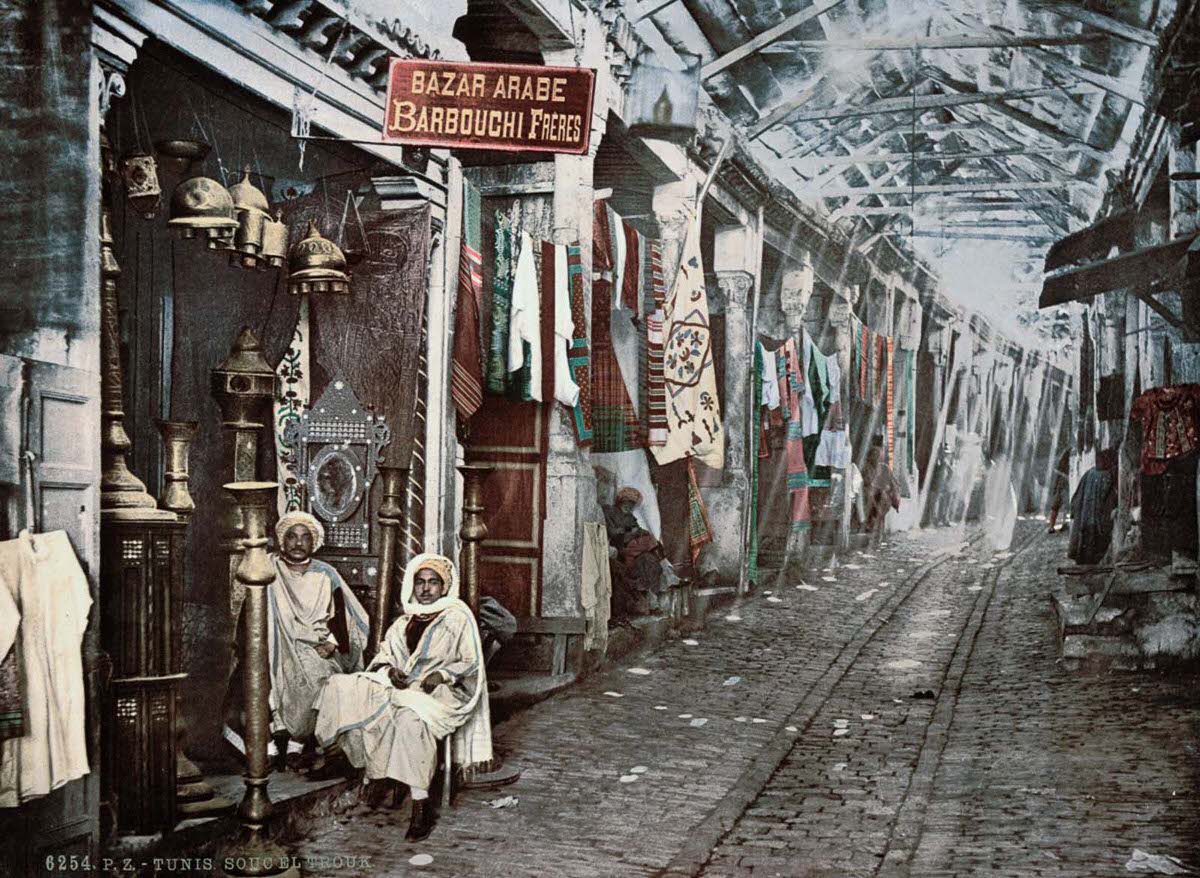
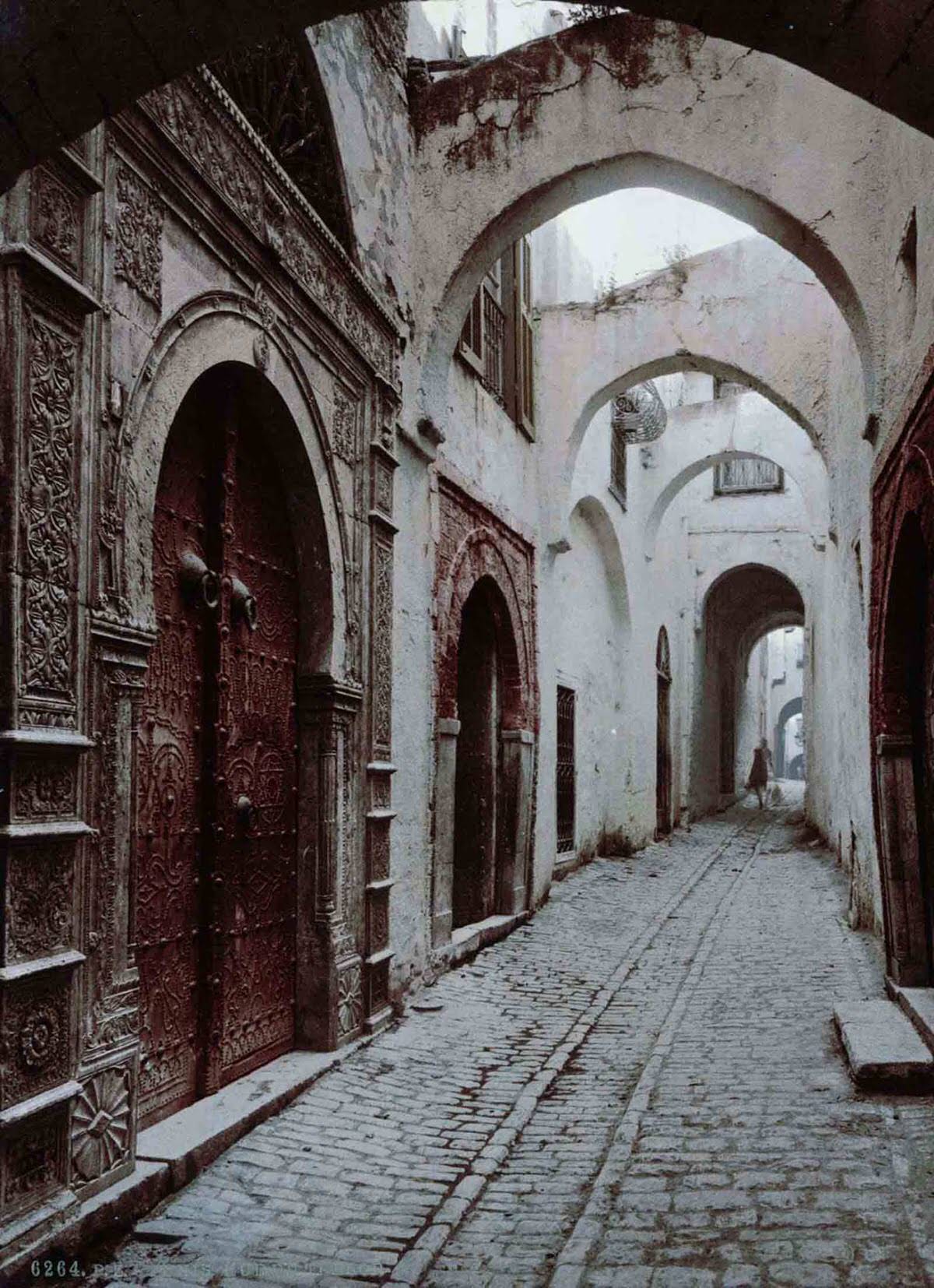
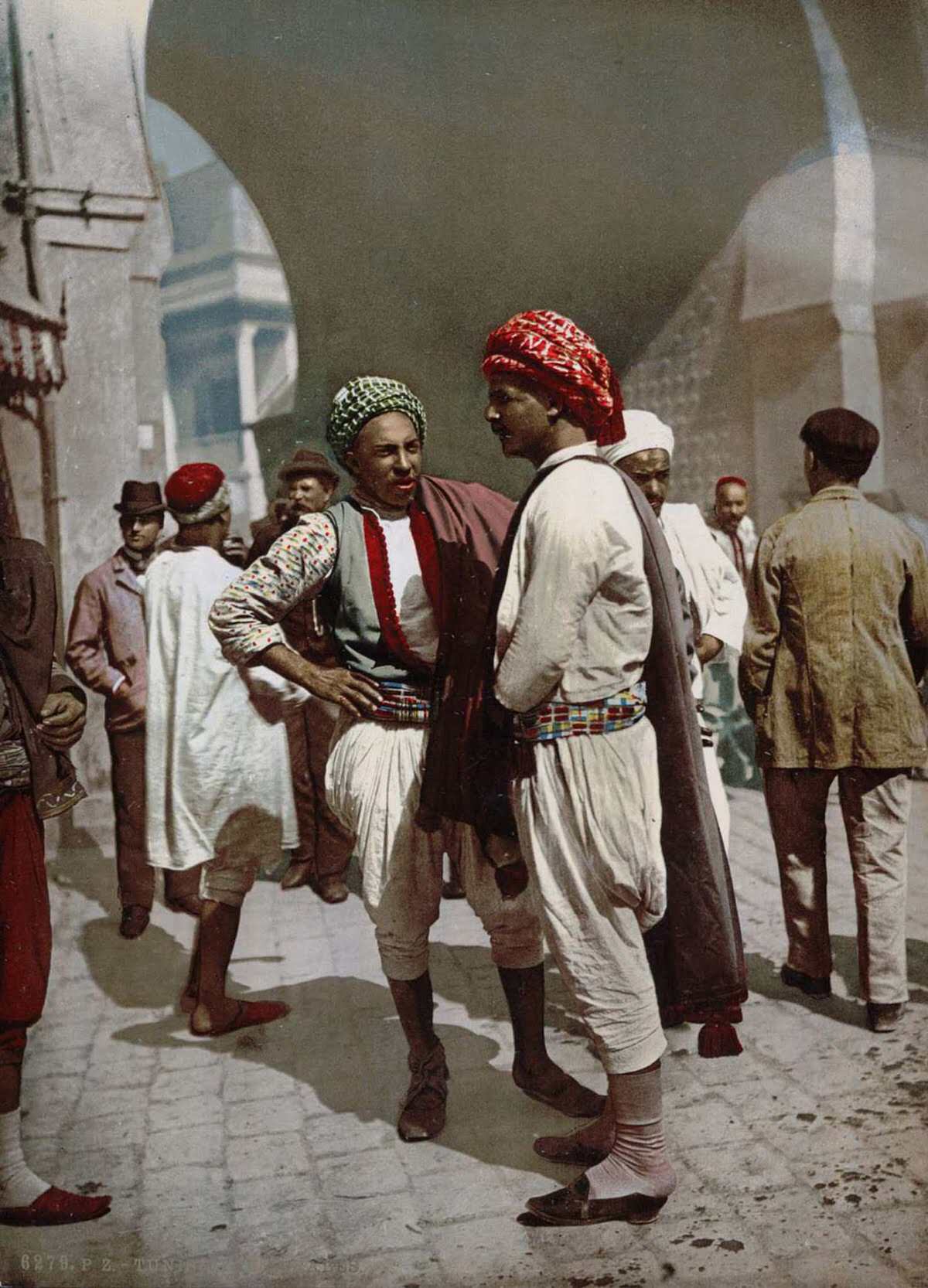
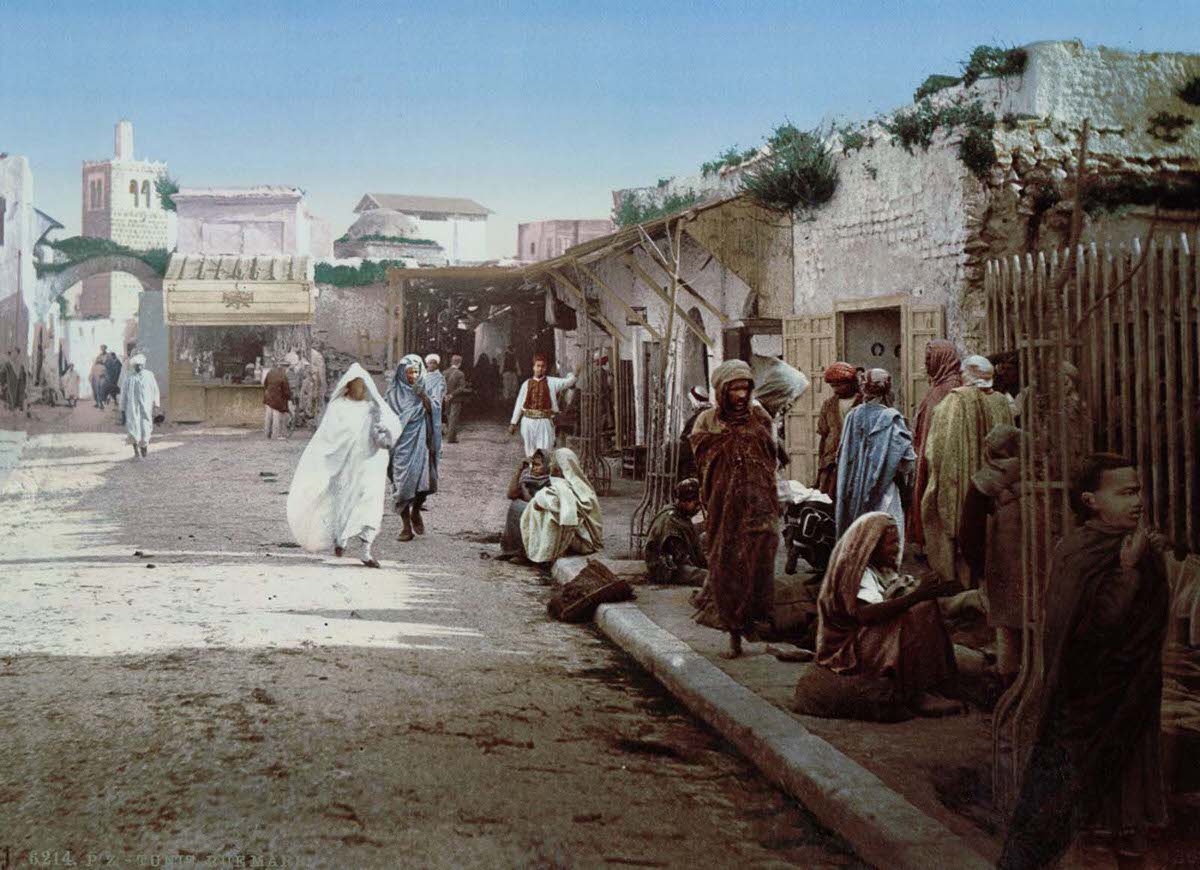
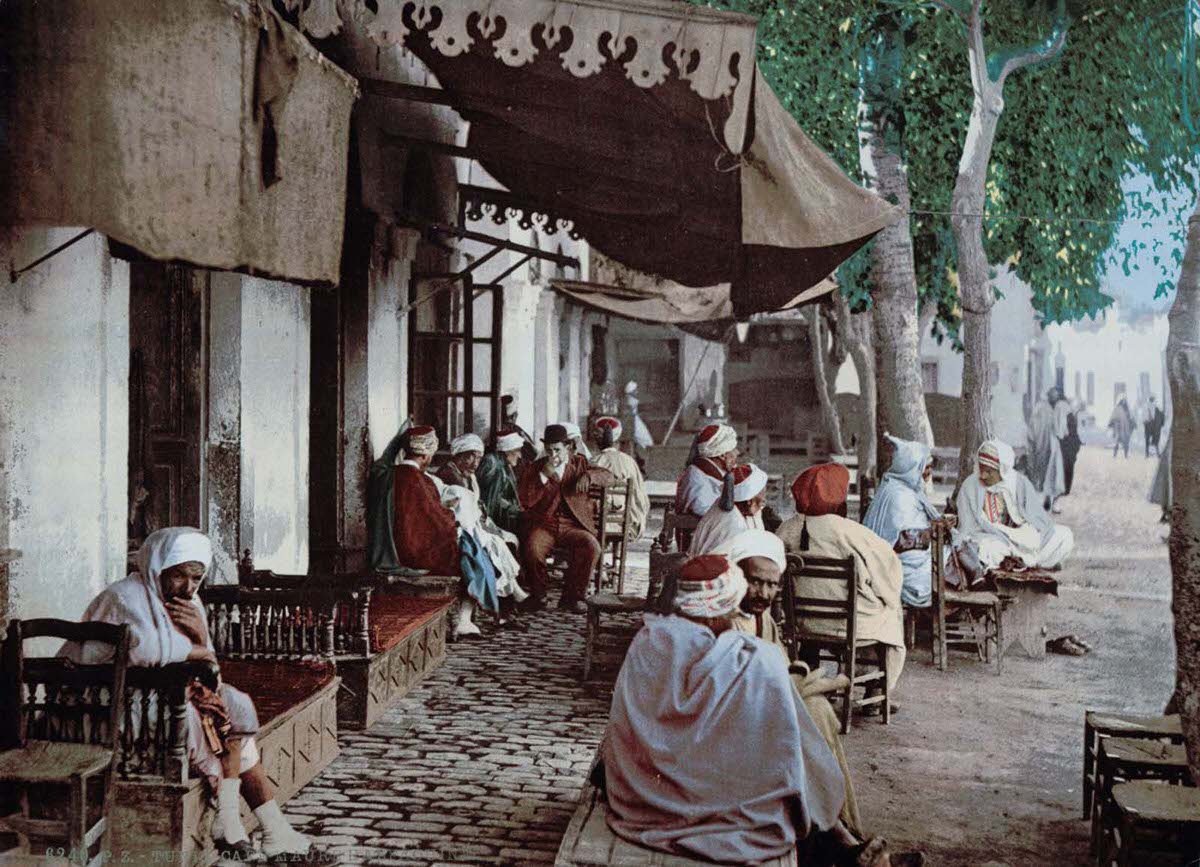
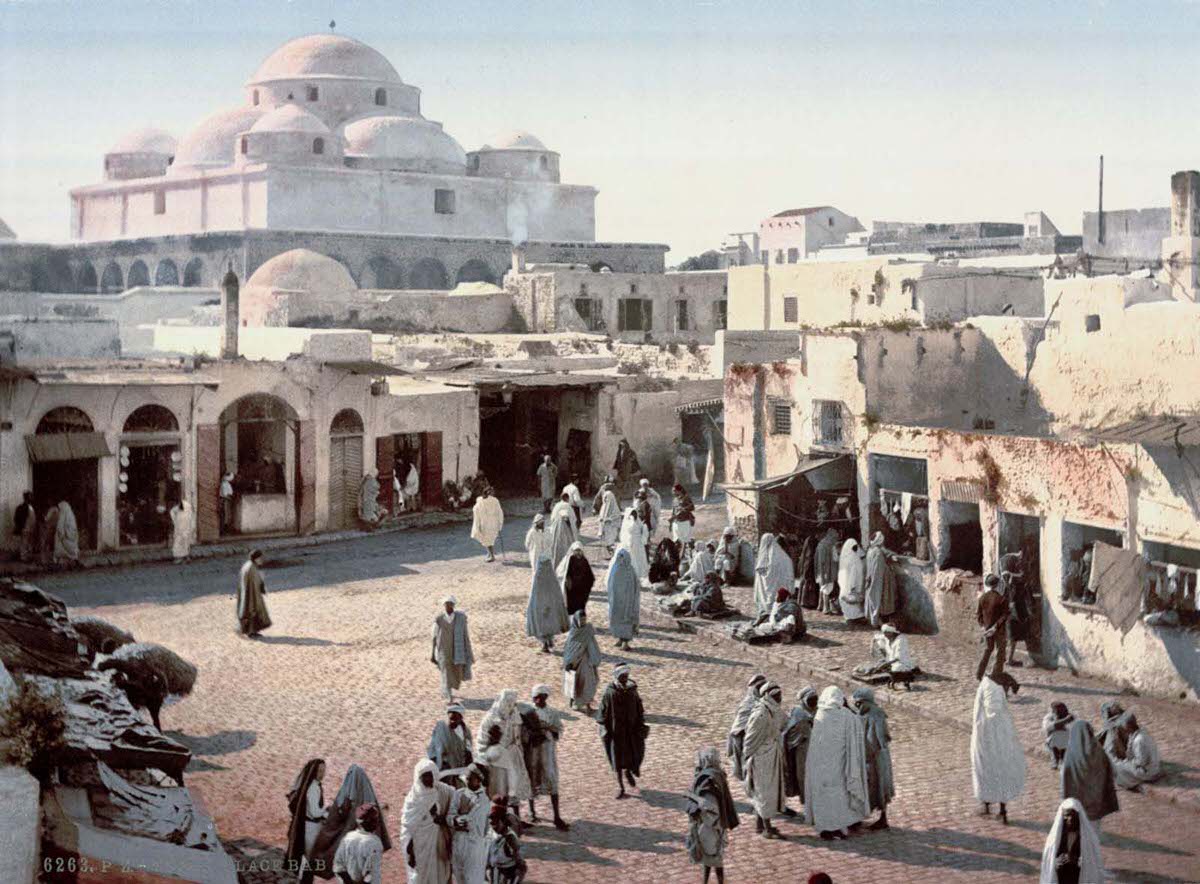
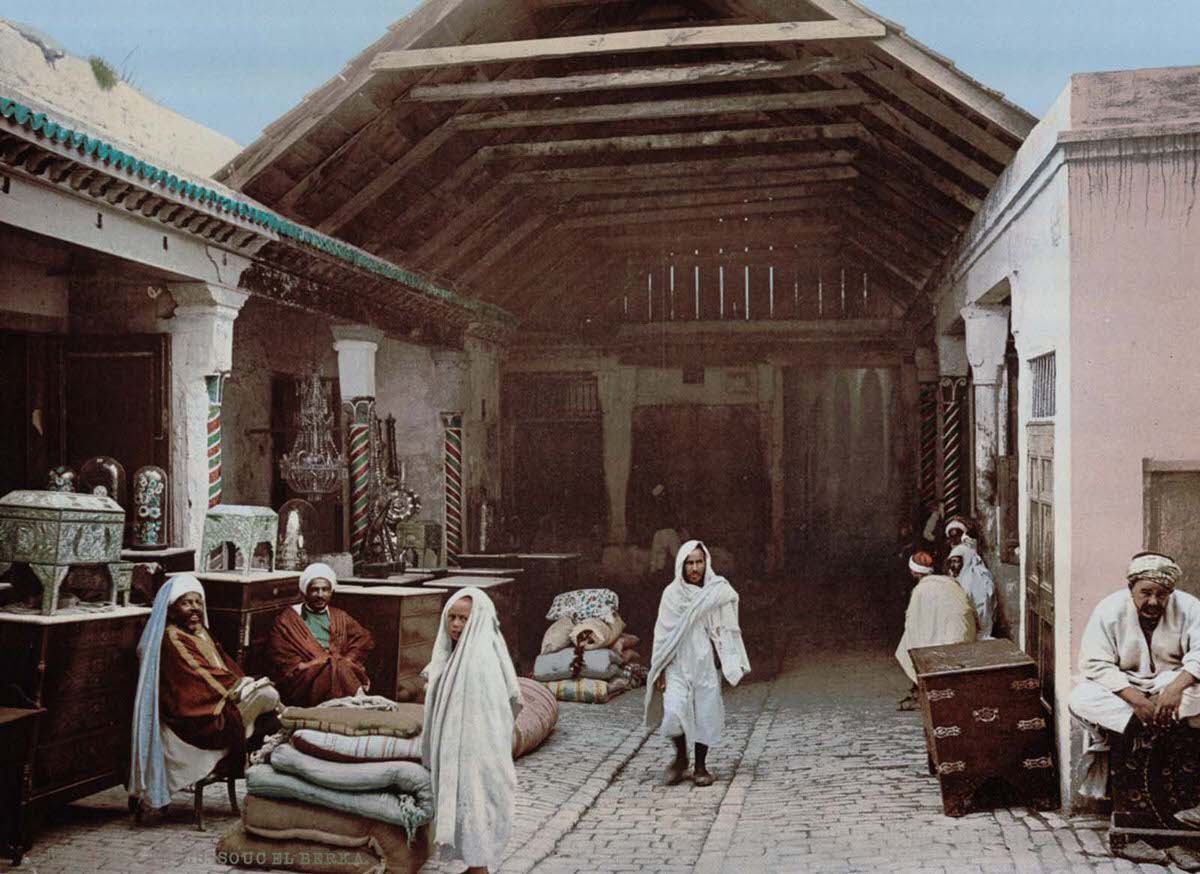
The markets and streets of Tunis were dense with activity. Narrow lanes in the medina wound between whitewashed walls, where merchants sold everything from spices to textiles. The souks were organized by trade — each craft or good occupying its own stretch of alley. This structure had existed for centuries and continued largely unchanged even as the French quarter rose nearby.
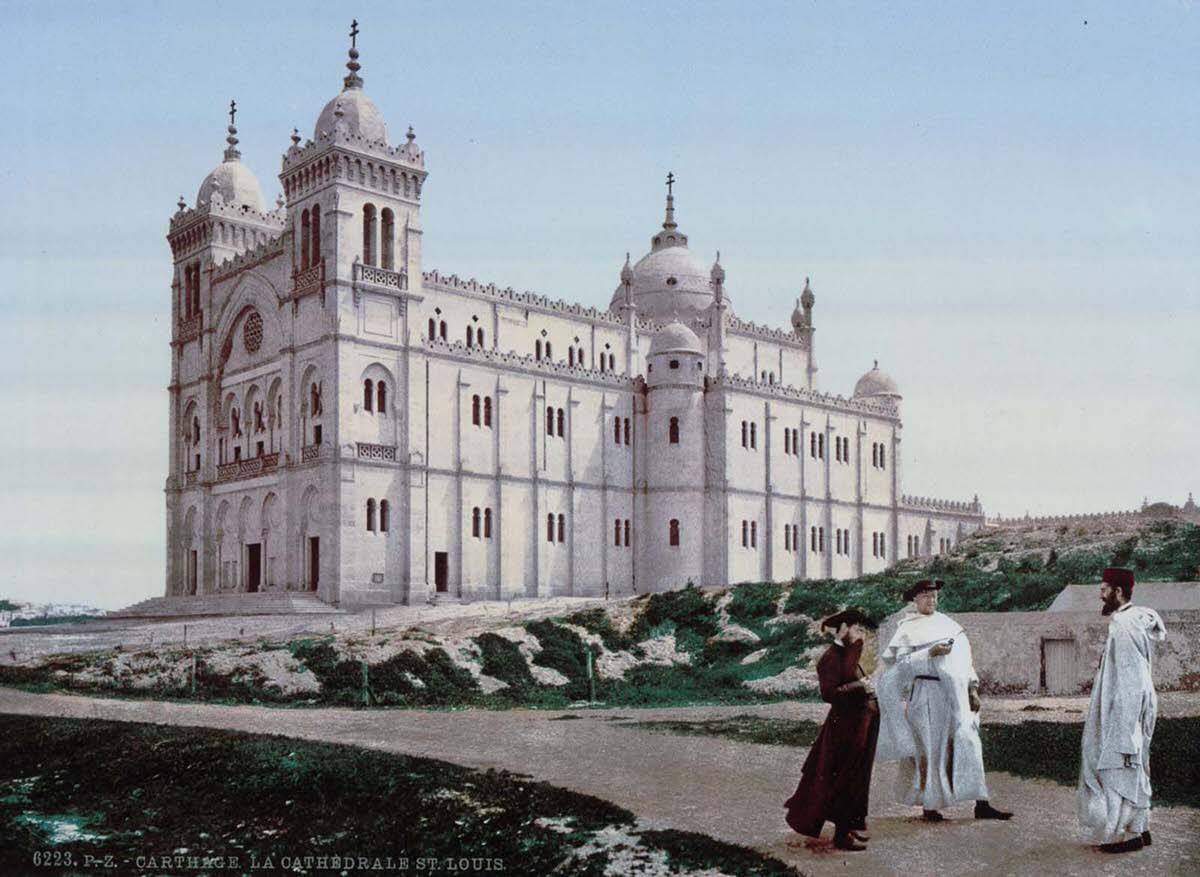
One of the most visible signs of French influence was the Cathedral of St. Louis, built on the hill of Byrsa at Carthage. The French consul secured permission from the Bey of Tunis before construction began. The building blended Byzantine and Moorish architectural styles, a deliberate design choice that reflected both European ambition and a nod to local aesthetics. It was named after King Louis IX of France, who died near Carthage during the Eighth Crusade in 1270.
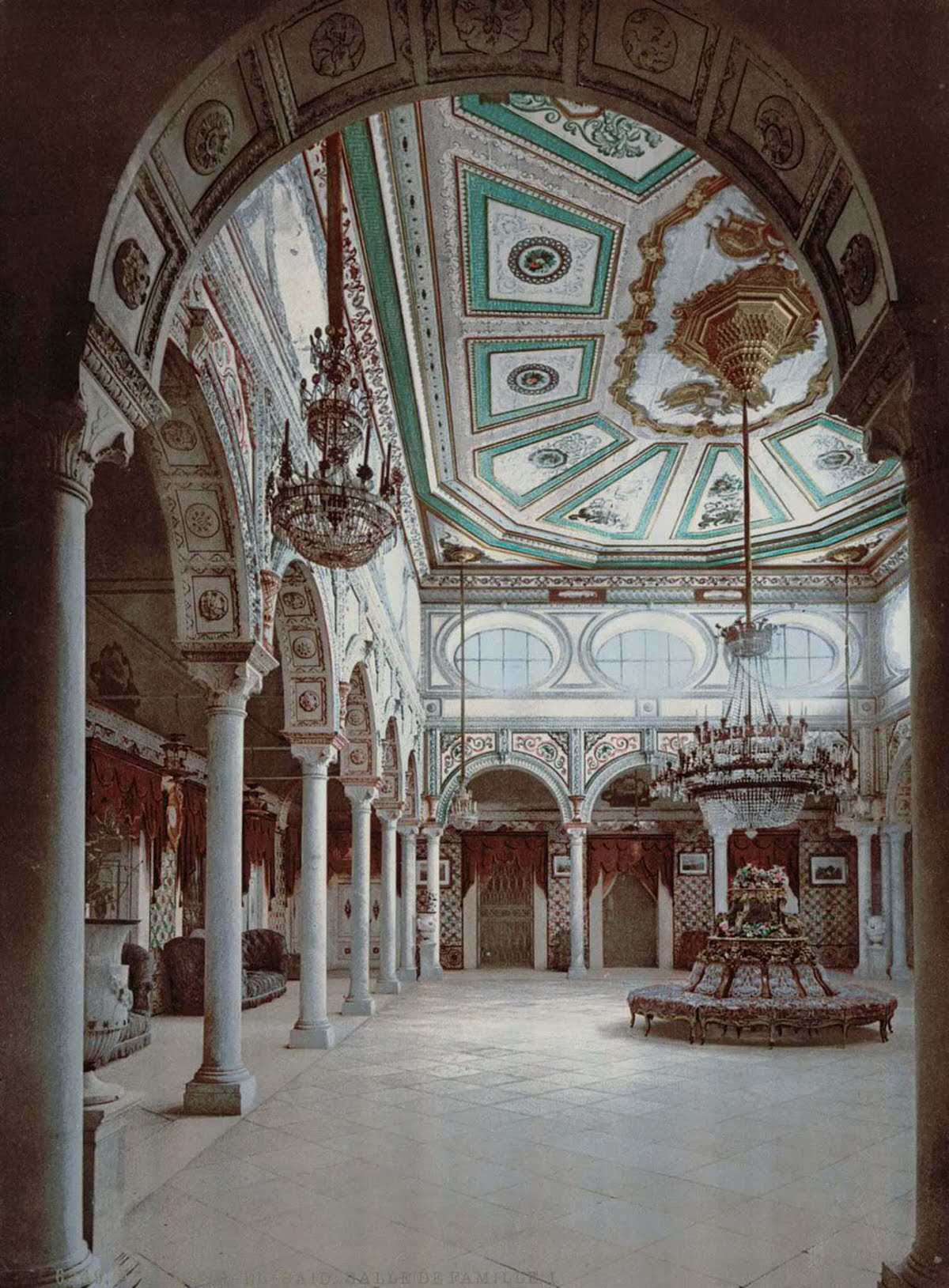
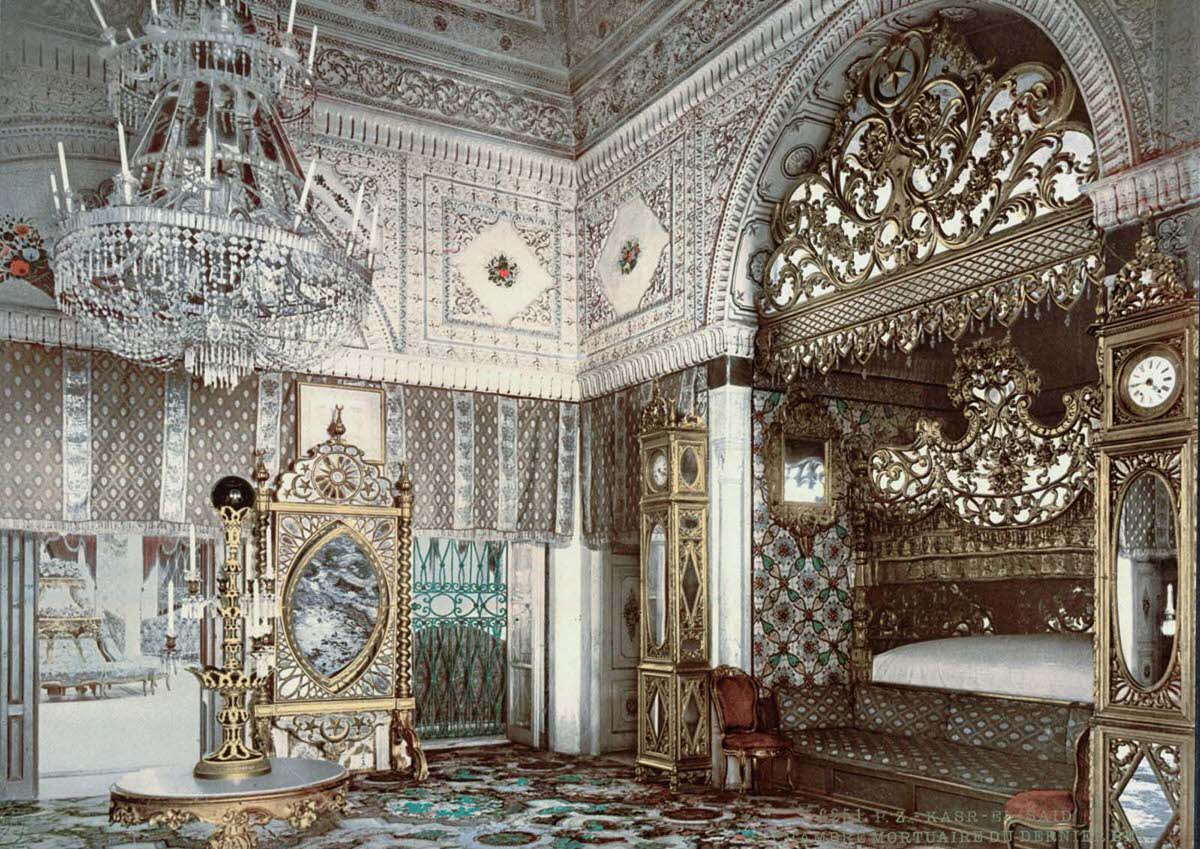
Away from the public streets, the interiors of Tunisia’s elite residences were richly decorated. The palace of Kasr-el-Said offered a glimpse into the private world of Tunisian nobility. Ornate tilework, carved plasterwork, and layered textiles filled its rooms. These spaces were a product of centuries of Moorish and Ottoman influence on Tunisian design.
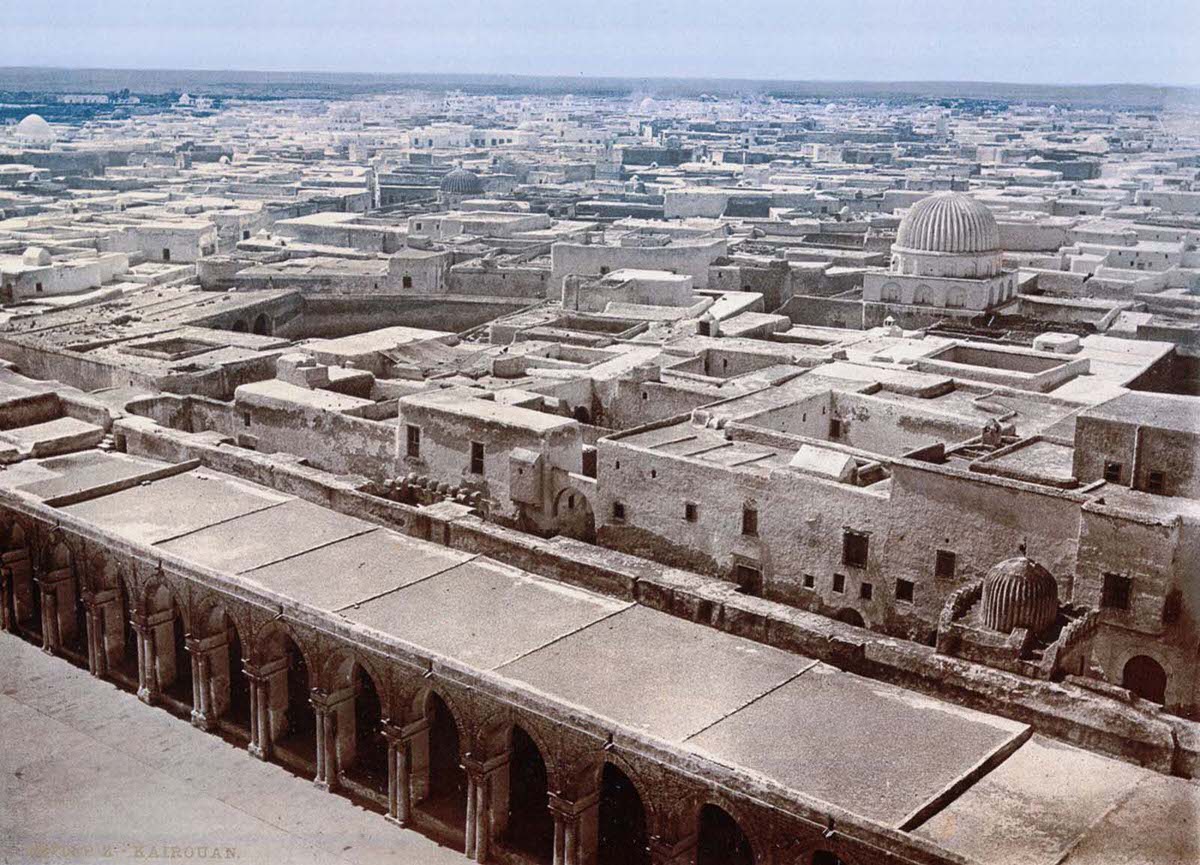
Kairwan — also spelled Kairouan — was one of the holiest cities in the Islamic world and a major center of Tunisian religious and cultural life. From the top of the minaret of the Great Mosque, the city spread out in every direction: low flat rooftops, minarets, and the surrounding plains. The Great Mosque itself was one of the oldest in North Africa, dating back to the 7th century.
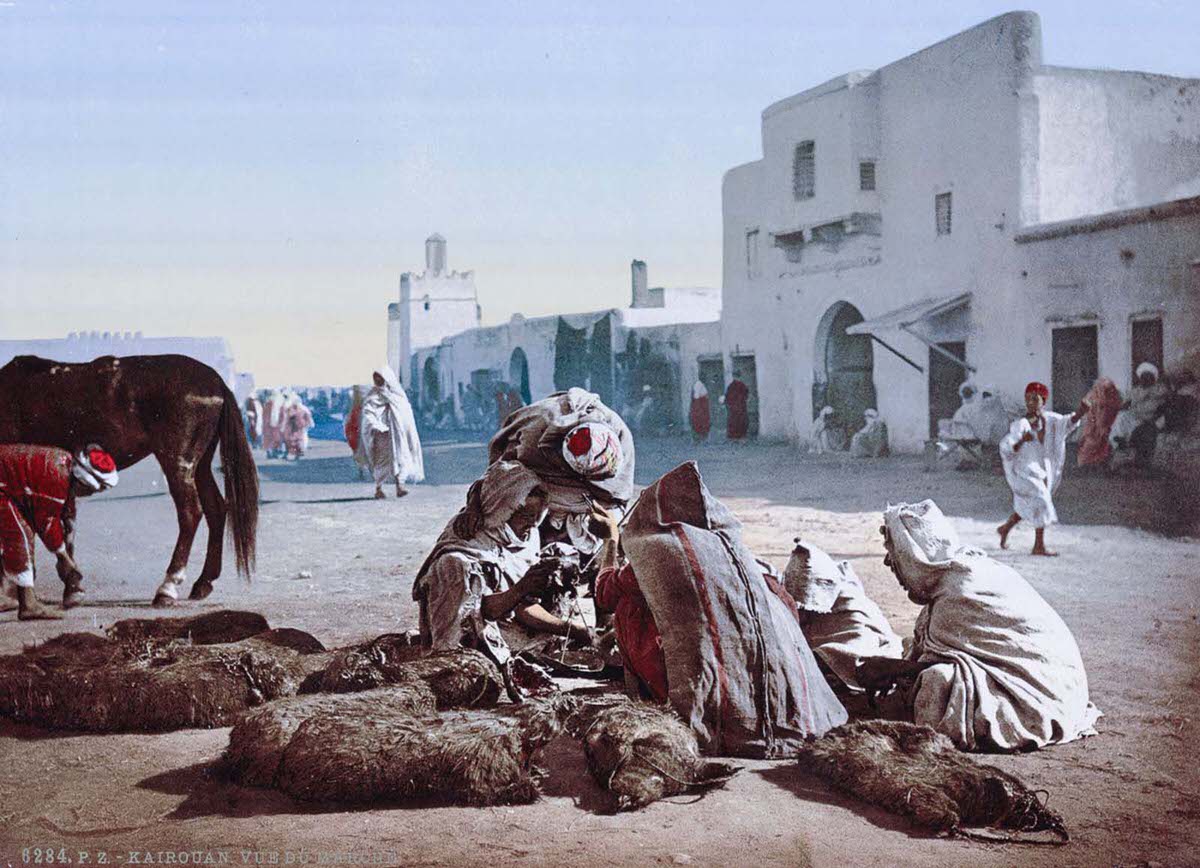
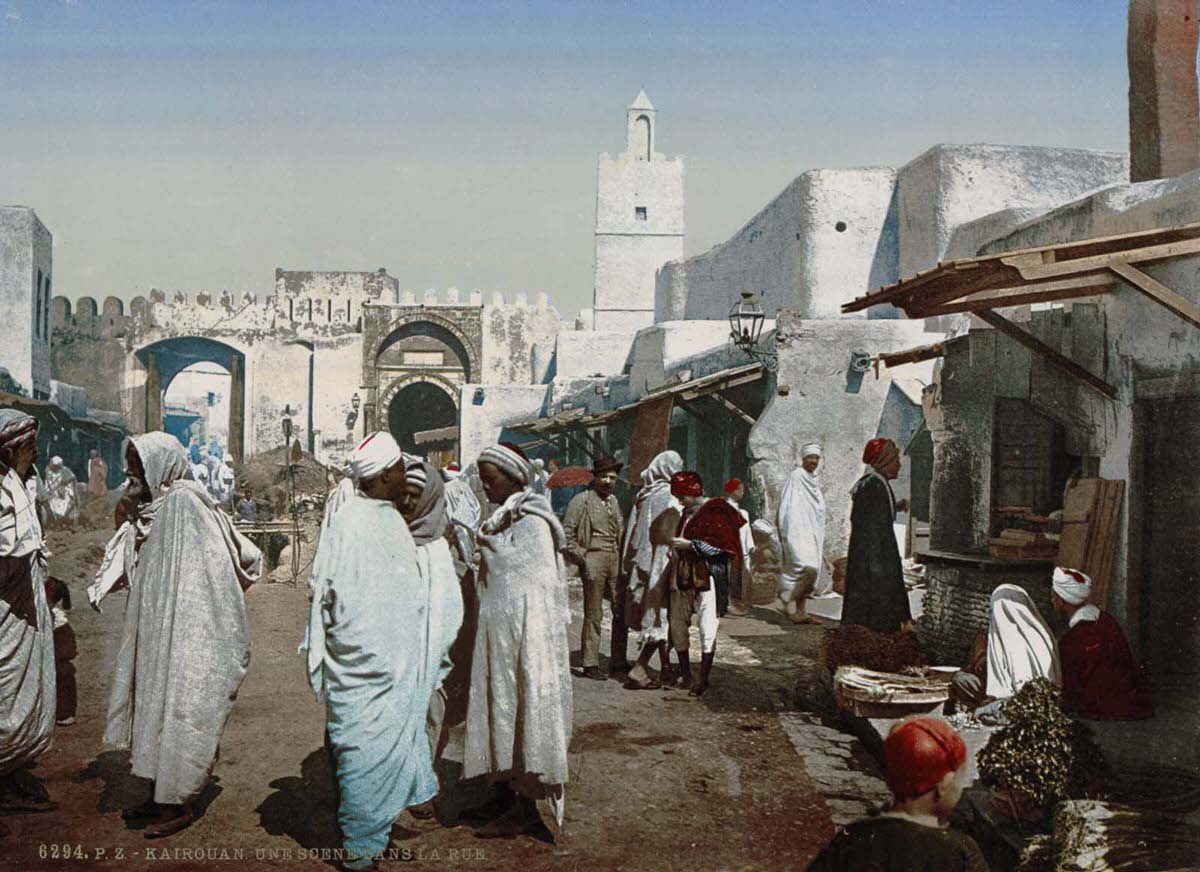
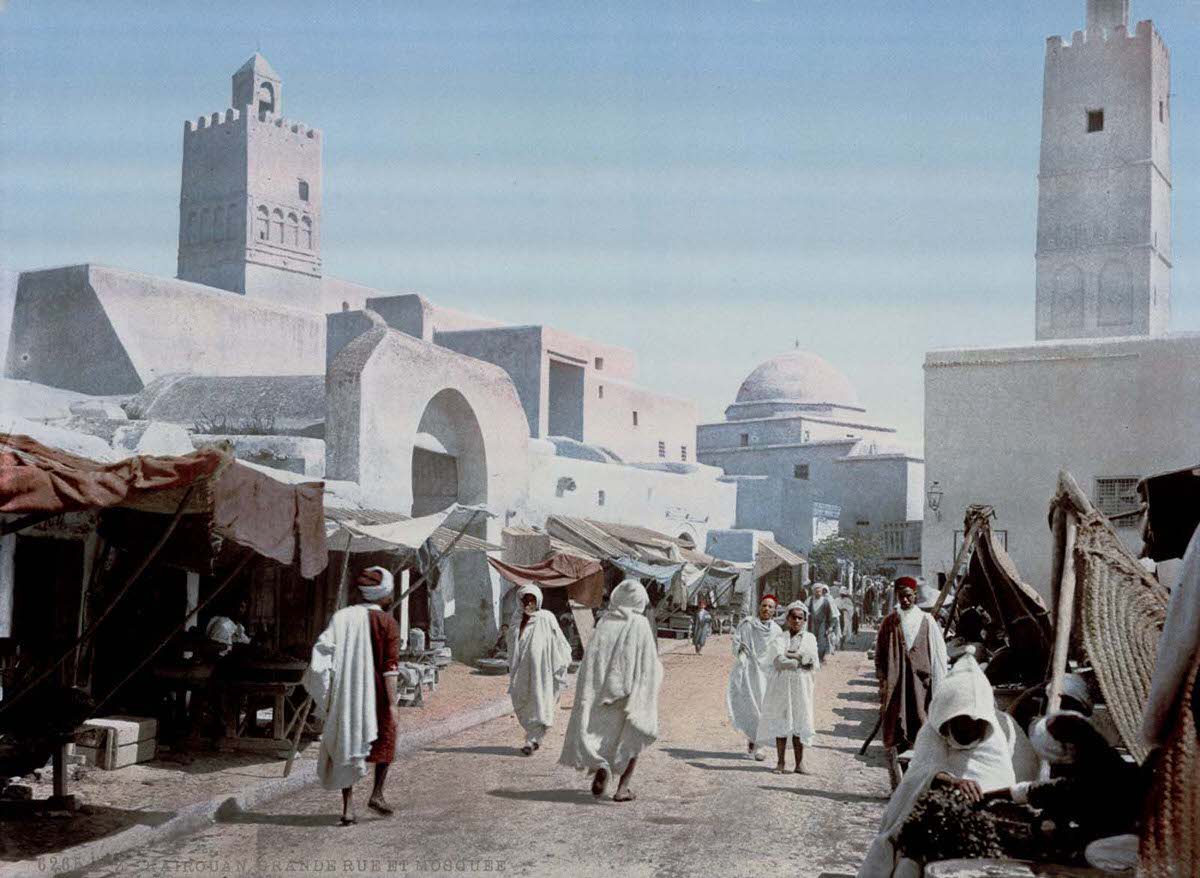
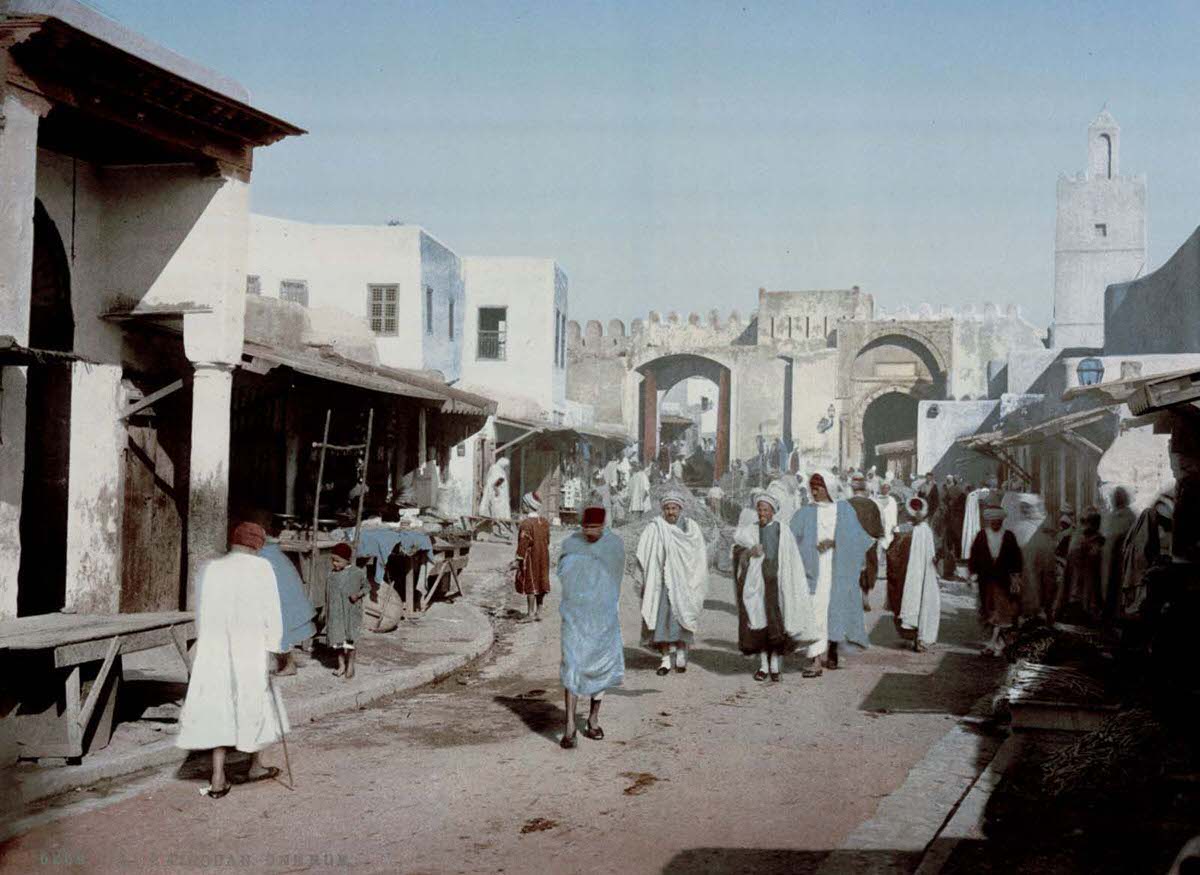
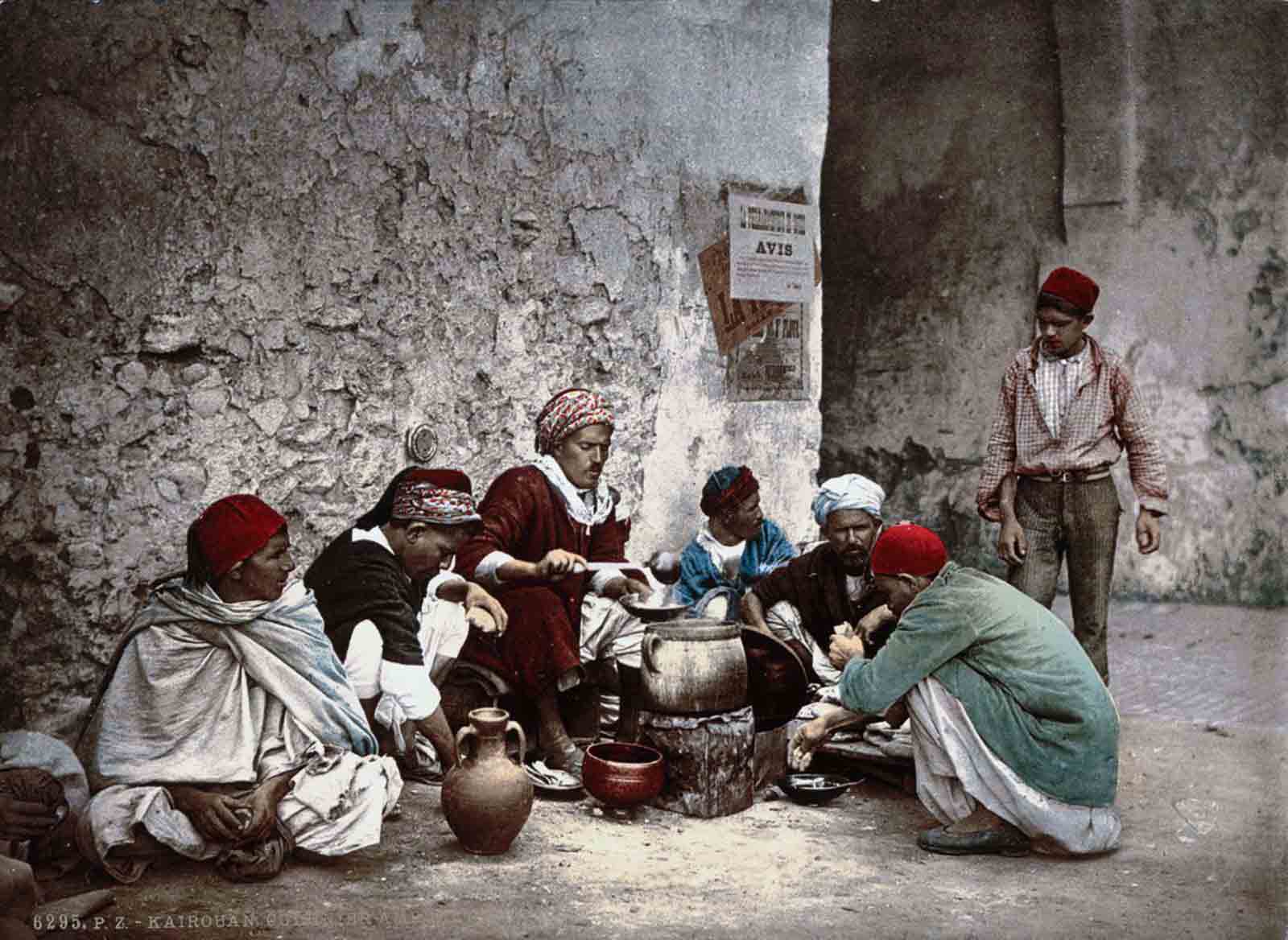
Street life in Kairwan was as layered as the city’s history. Vendors, travelers, and locals moved through the same narrow passages that had served the city for generations. Among them were traveling cooks who carried their equipment through the streets, preparing and selling food on the move — a common sight across Tunisian towns in this period.
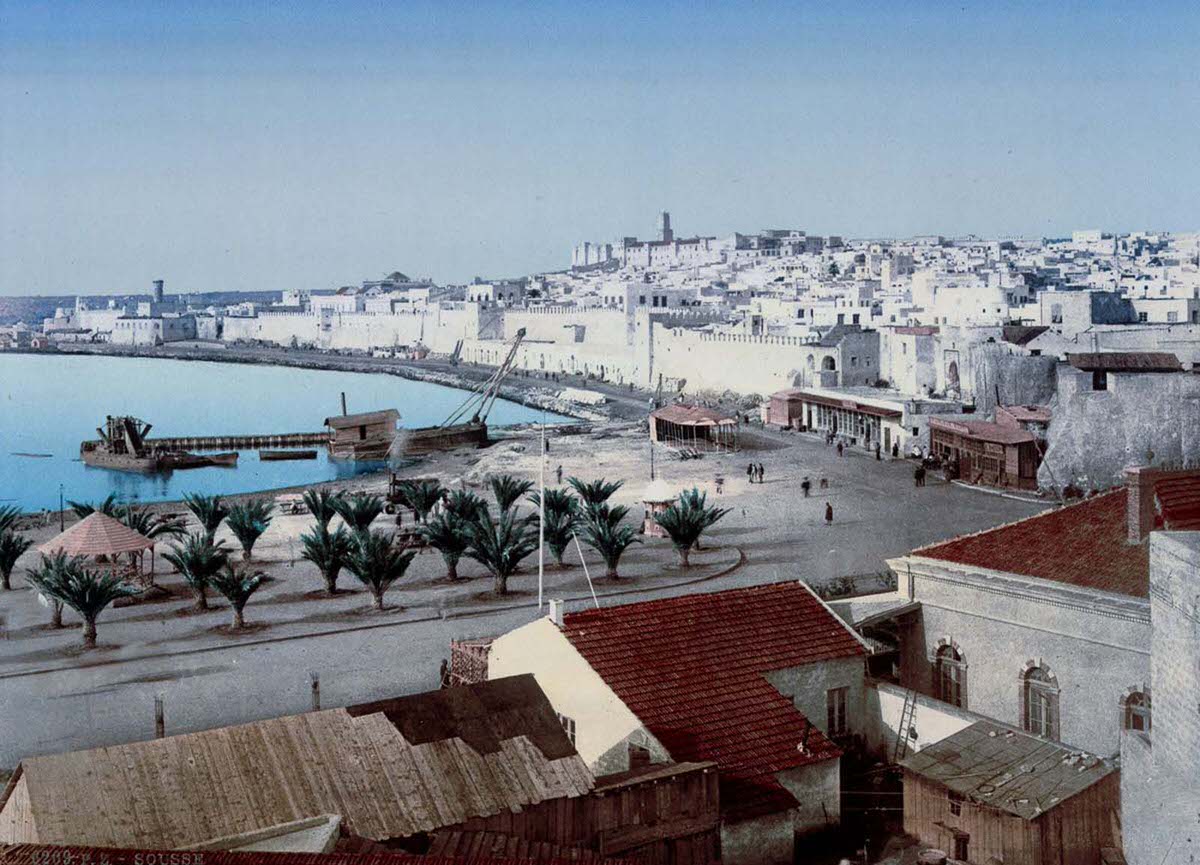
Tunisia’s coastal cities had their own distinct character. Sousse, a port city on the eastern coast, had a bustling waterfront shaped by both trade and its long history as a Mediterranean harbor. Its medina and ribat — a fortified monastery — dated back to the early Islamic period, and the waterfront remained a central point of commerce and movement.
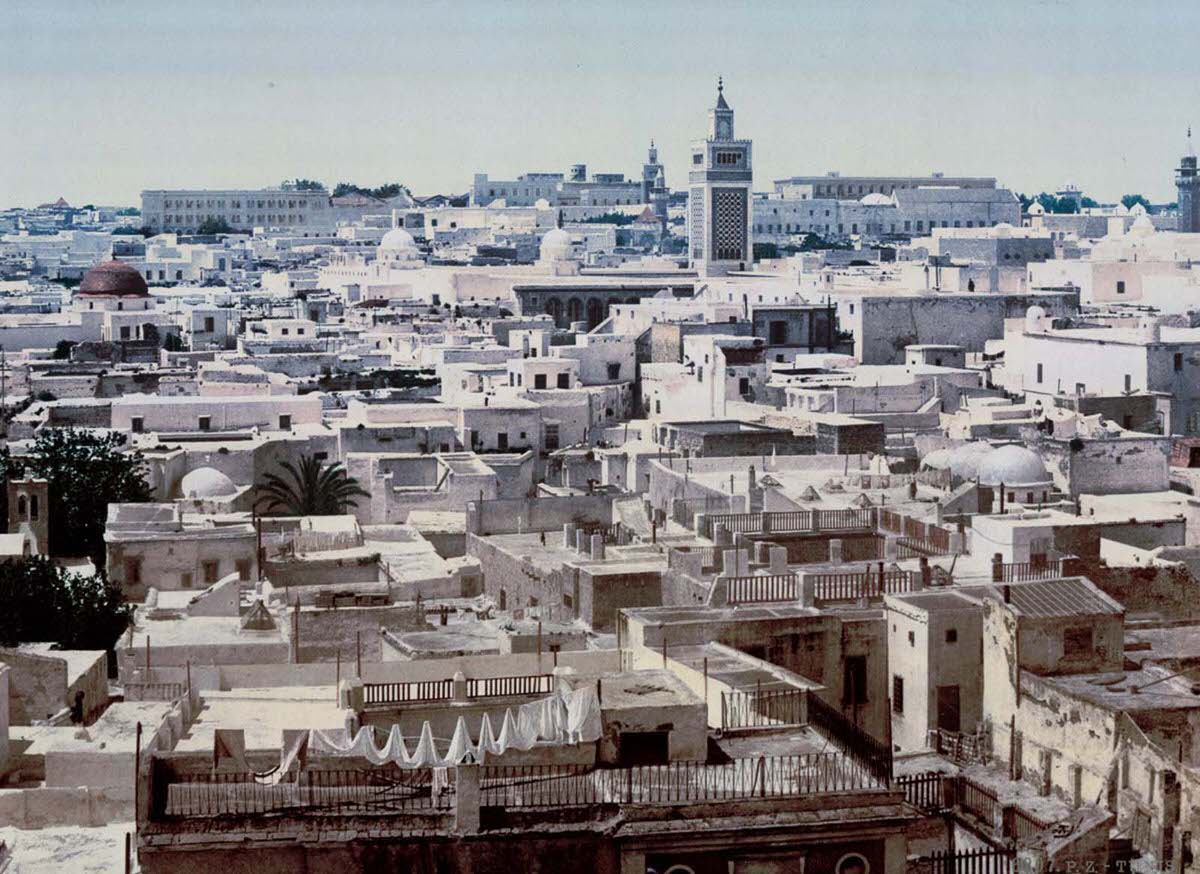
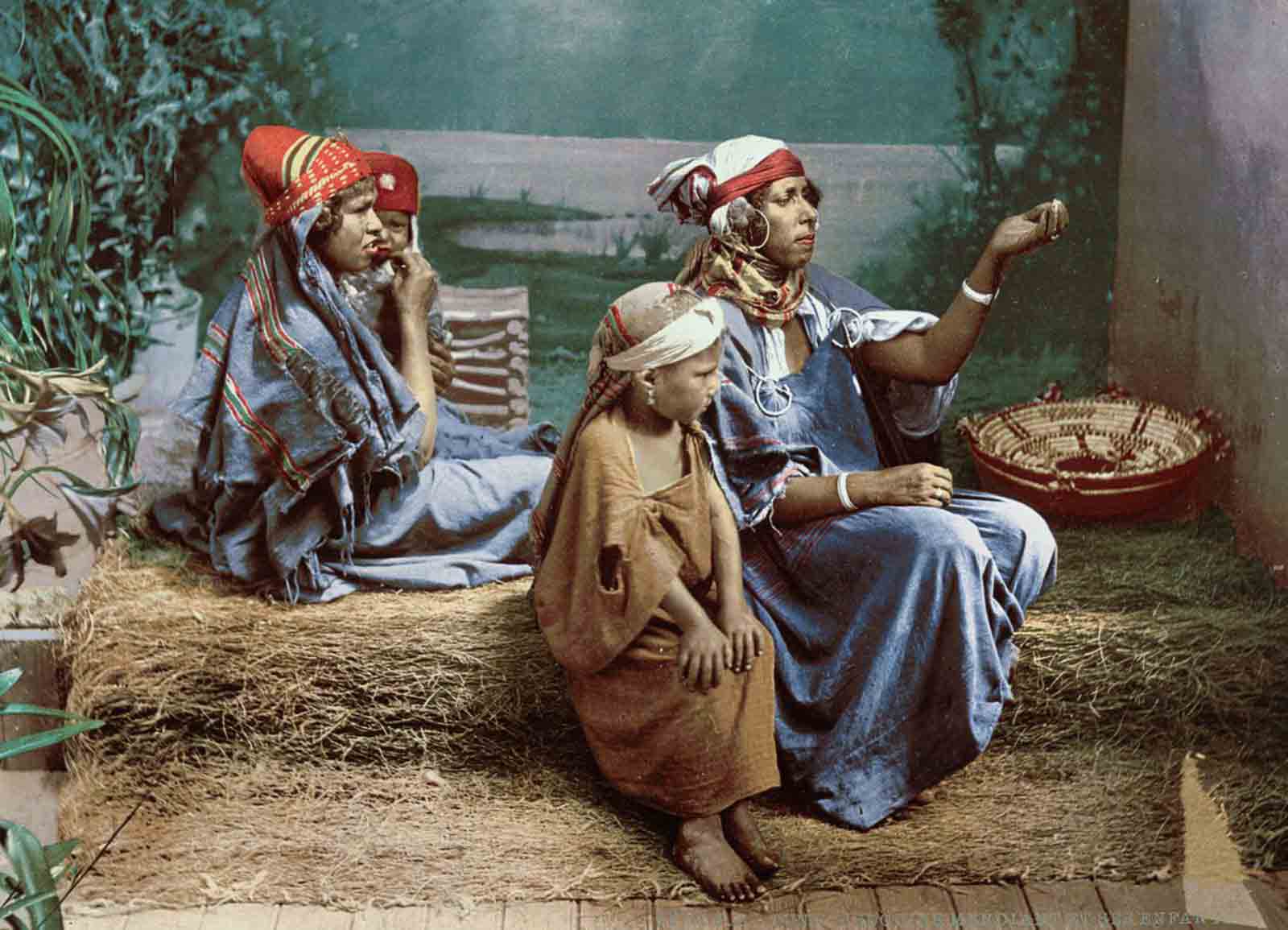
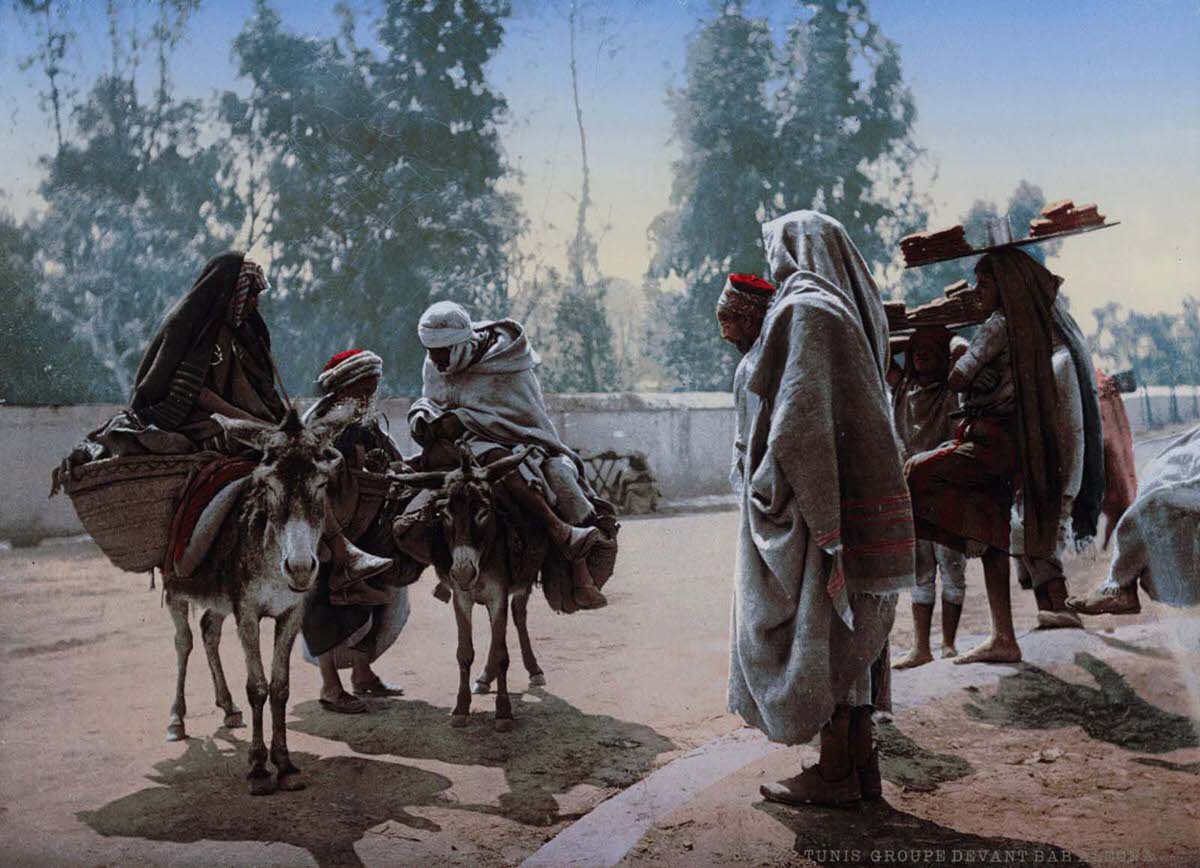
Within Tunis itself, the contrast between old and new was visible from almost every angle. Streets like Marr Street showed the European-influenced layout of the newer districts, while nearby squares like Bab Suika-Suker remained rooted in the older urban fabric of the medina. Bedouin families were also a common sight in the capital, some traveling in from the surrounding regions.
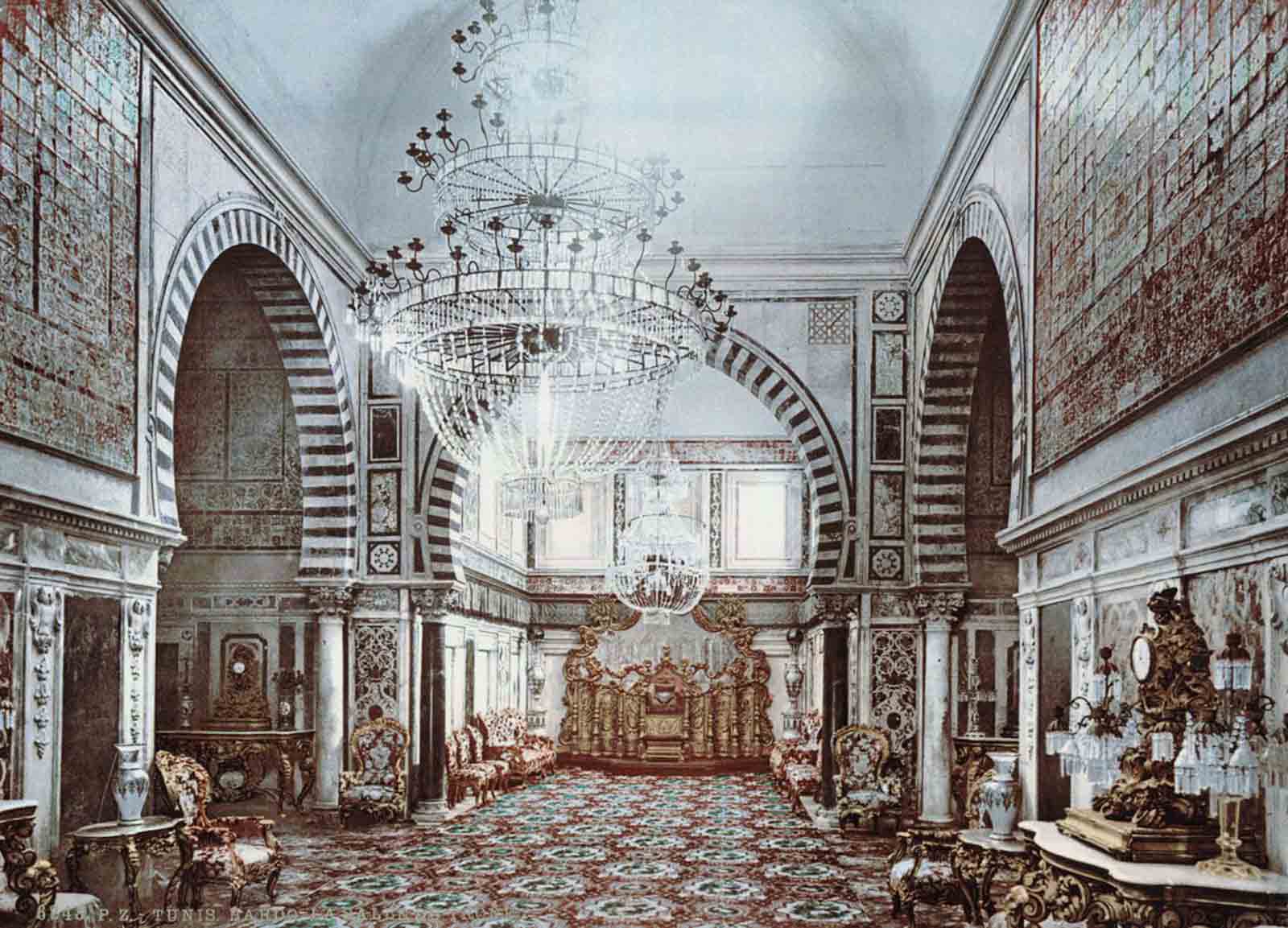
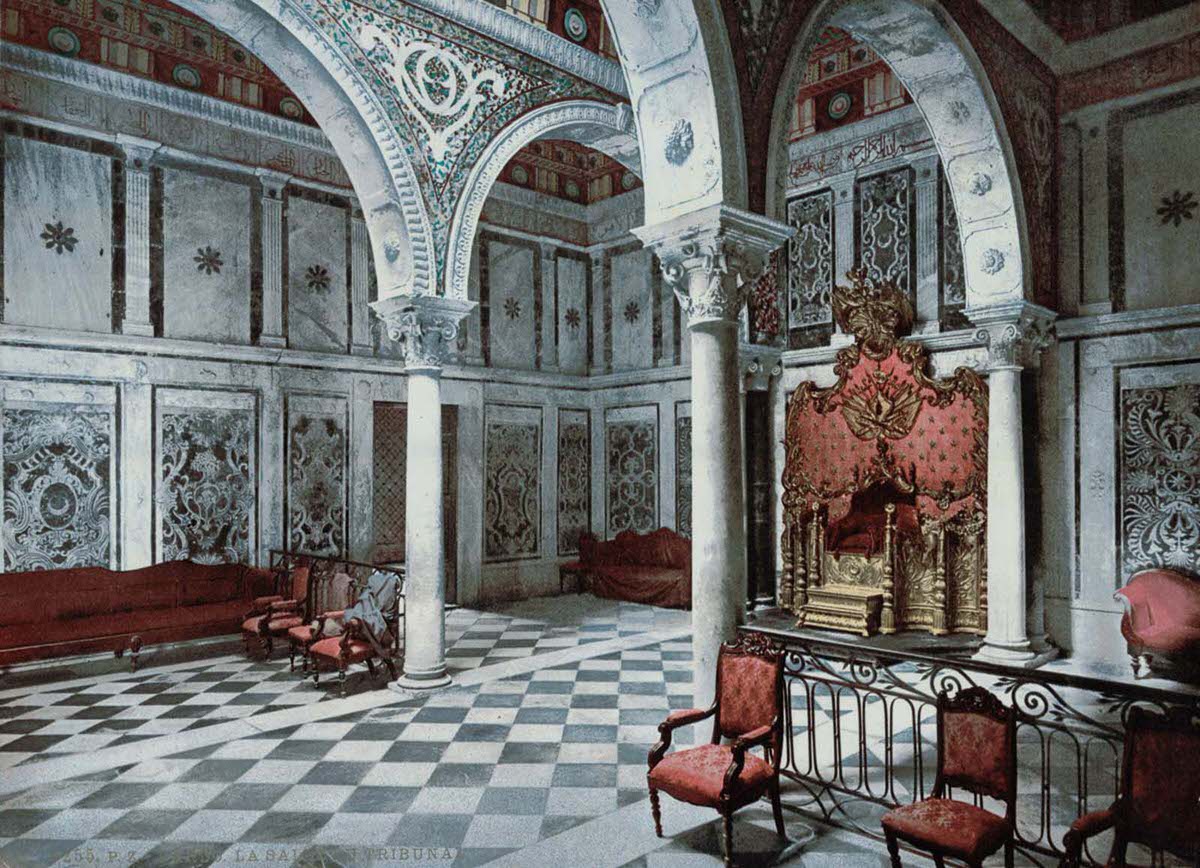
The Bardo Palace served as the seat of Tunisian government and the official residence of the Bey. Its throne room and tribunal chamber were among the most elaborately decorated interiors in the country — walls covered in intricate tilework, archways carved with geometric patterns, and ceilings painted in vivid detail. Even under the French protectorate, the palace remained a symbol of the Husseinid dynasty’s formal authority.
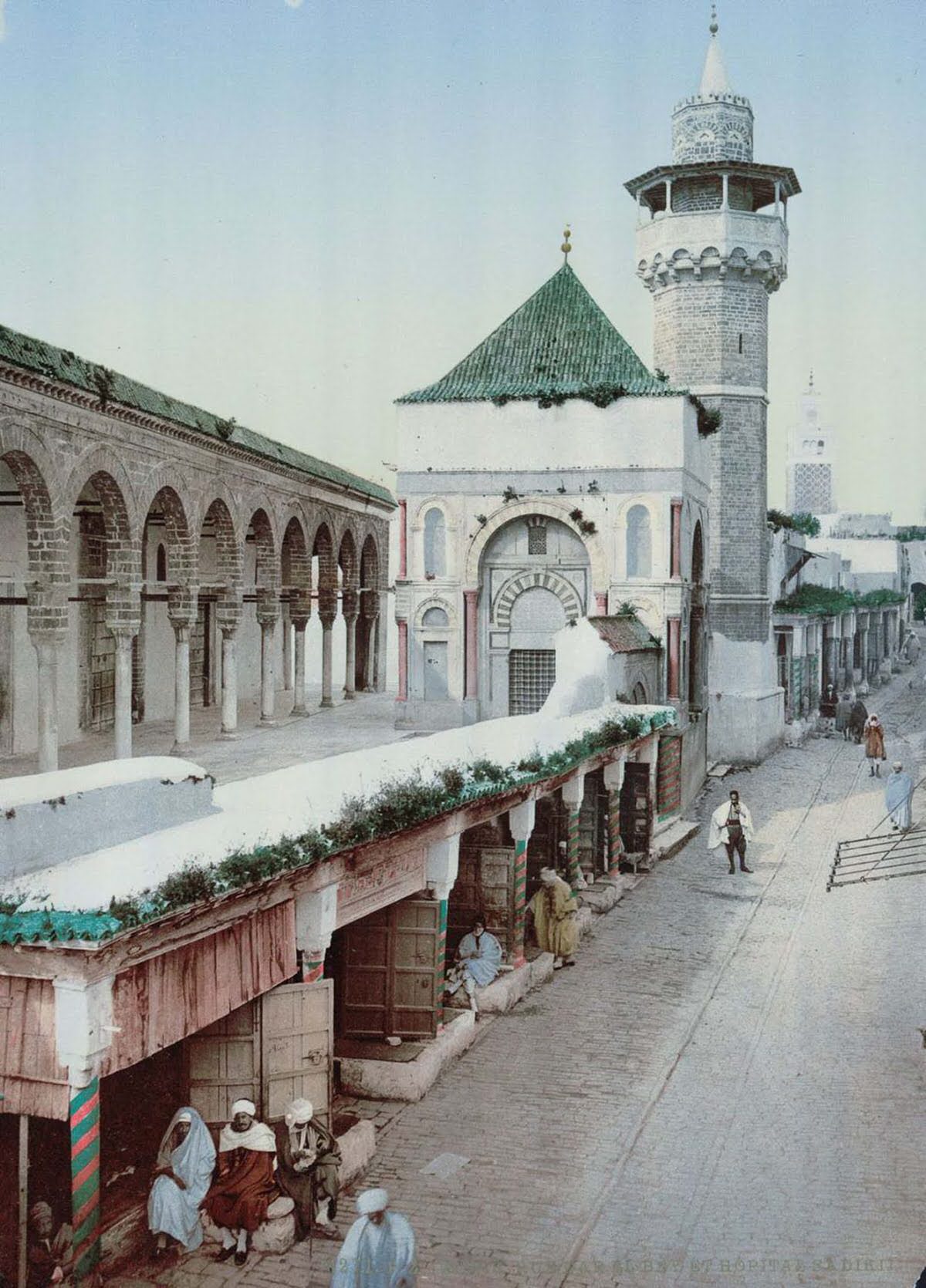
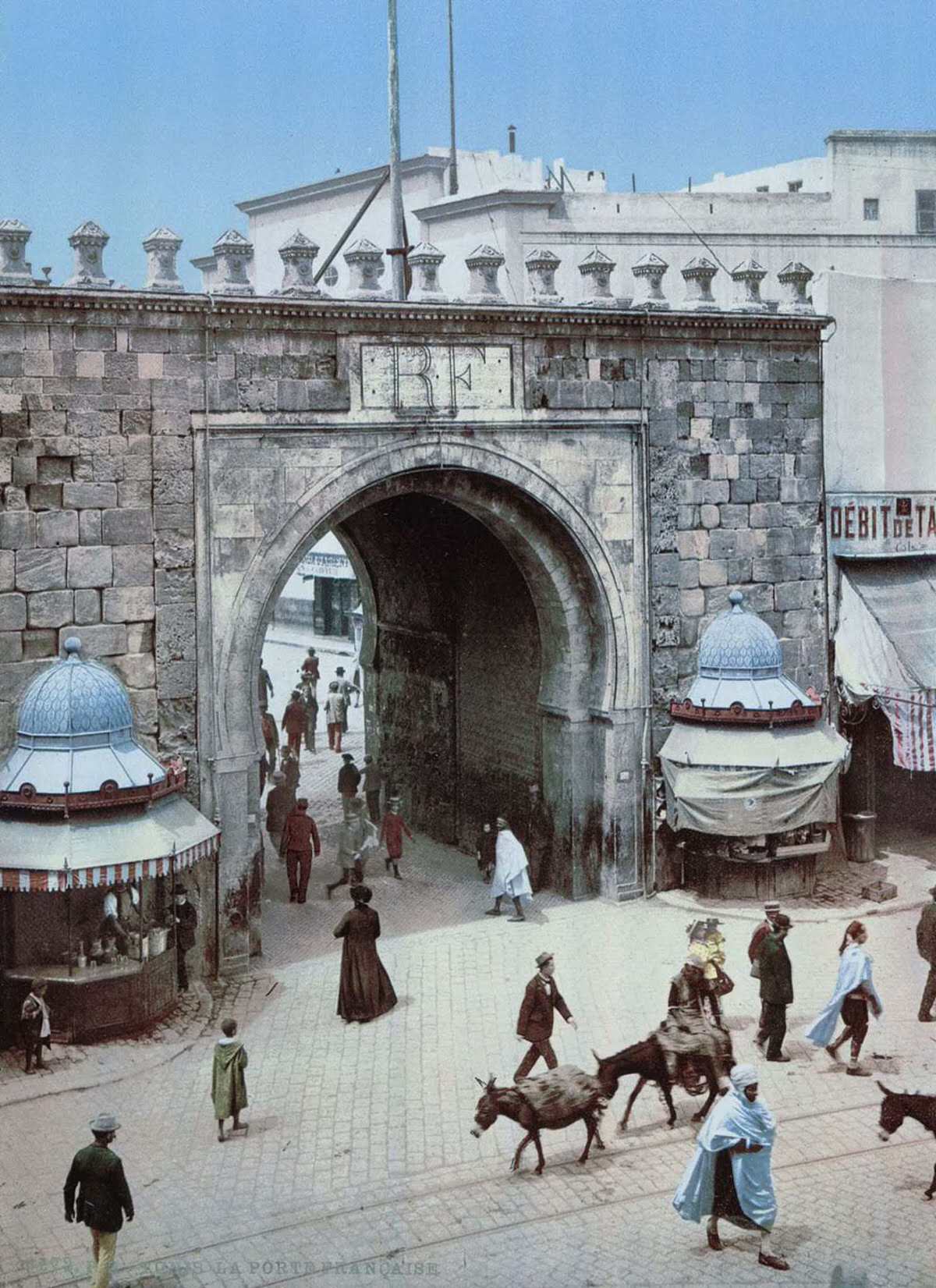
Commerce in Tunis took many forms. The Kasbah market, the ebony market, and the bazaars each served different goods and different buyers. La Porte Française — the French Gate — marked a physical threshold between the old medina and the newer European sections of the city. It was a symbolic as much as a practical boundary, representing the dual nature of Tunis under the protectorate.
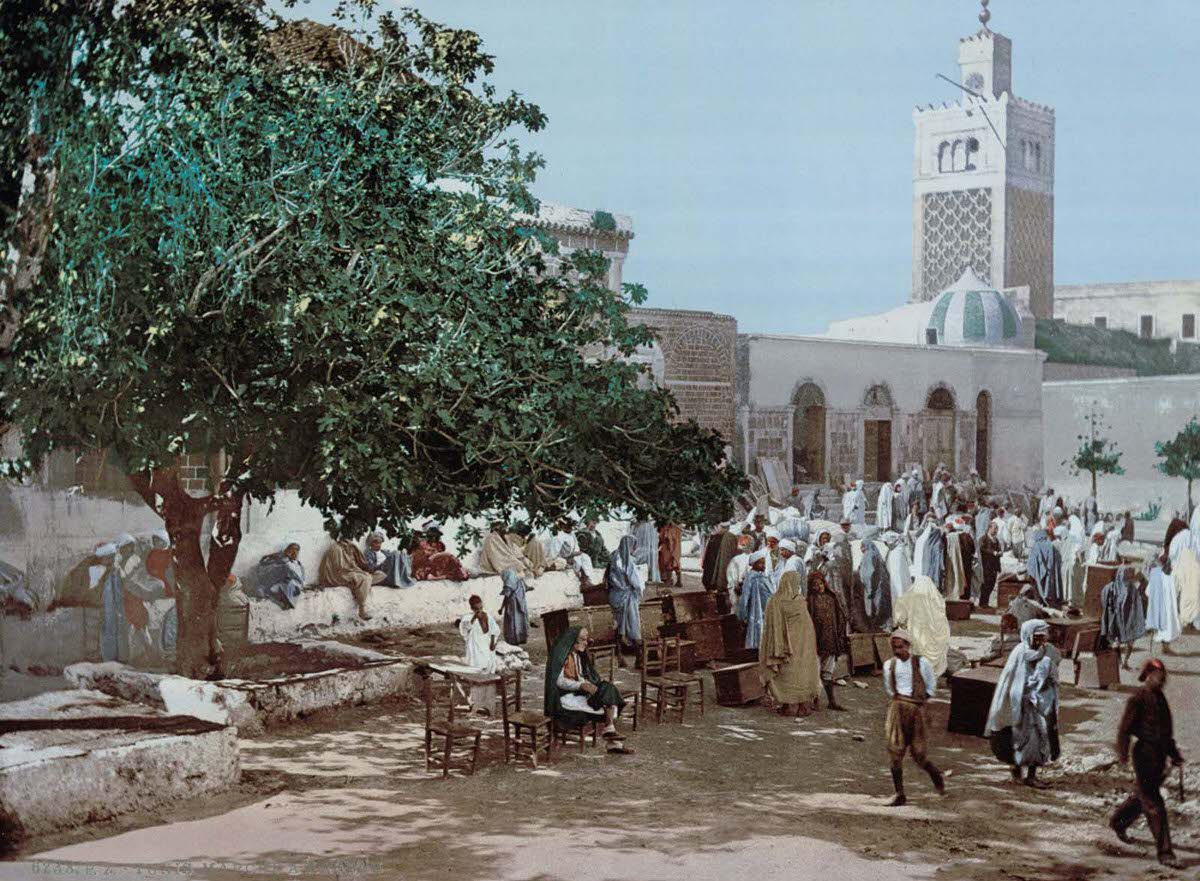
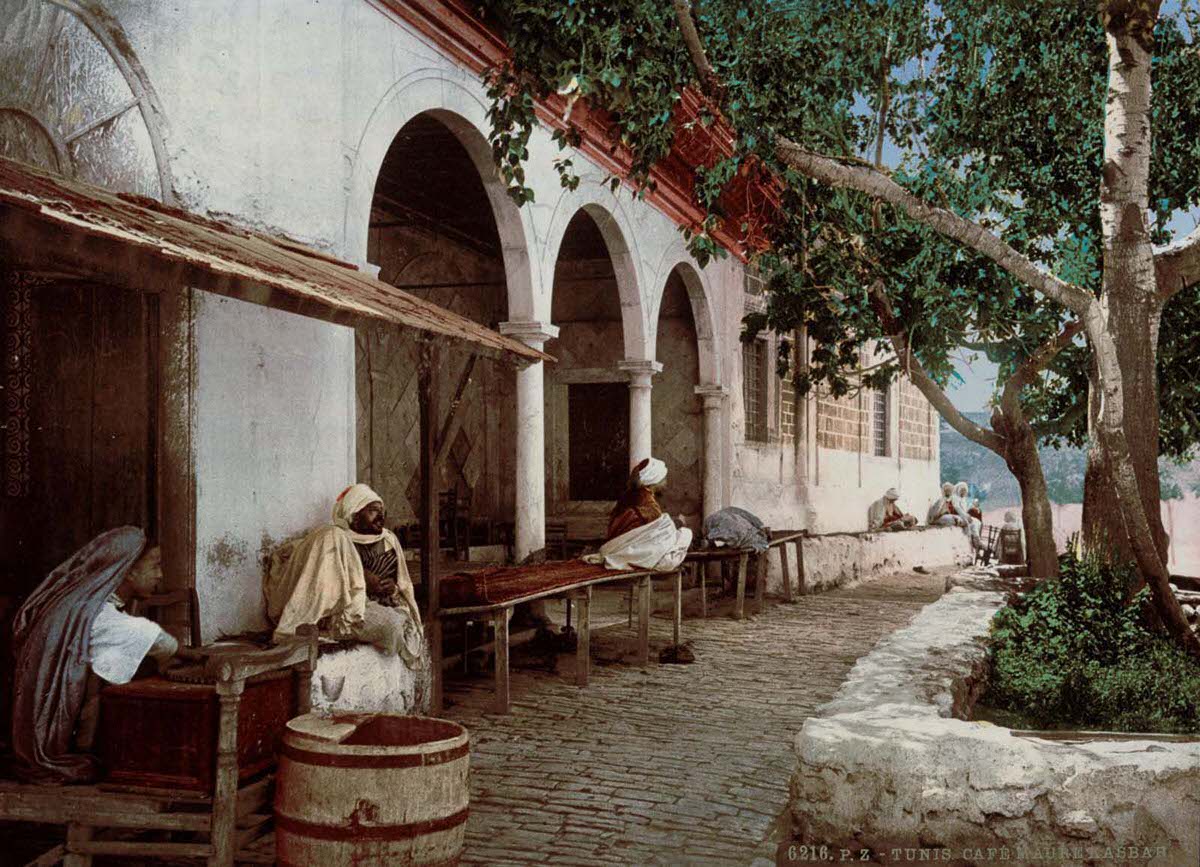
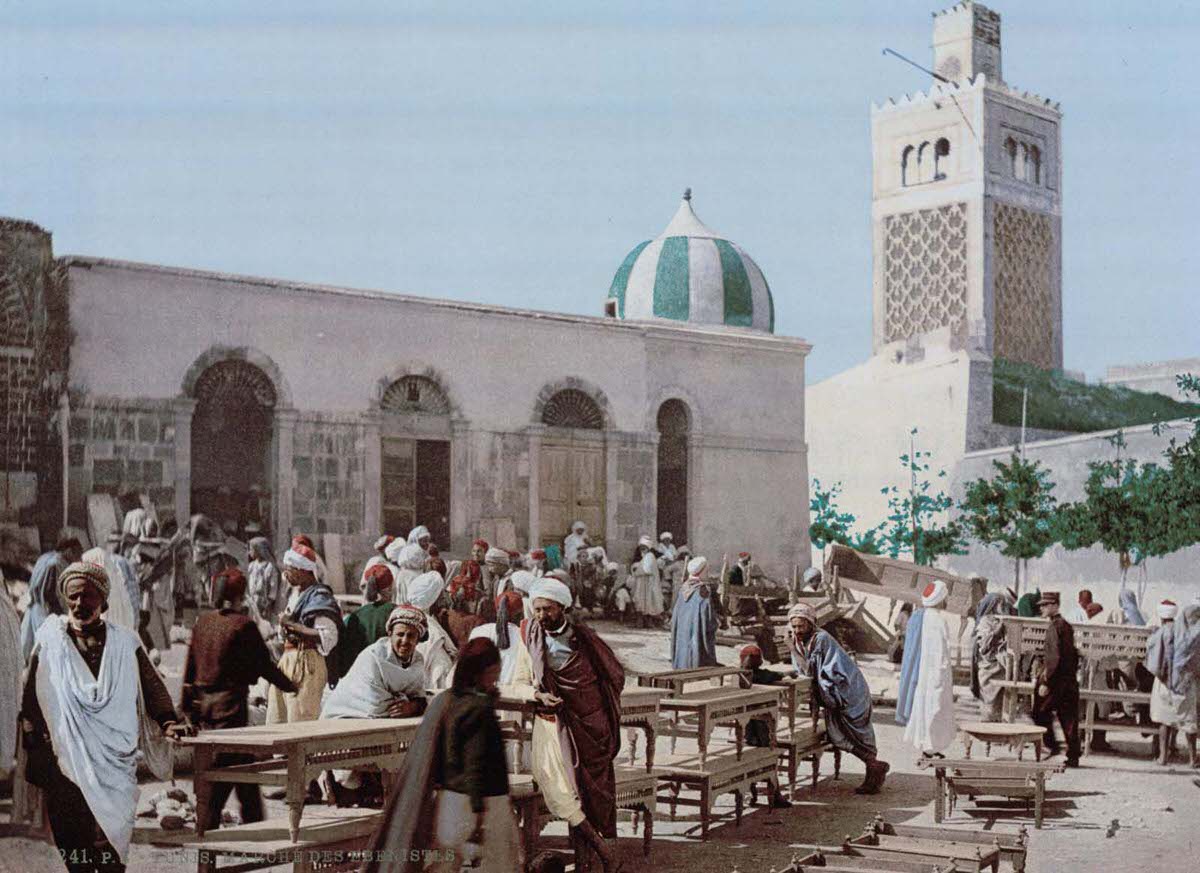
Religious life remained deeply woven into everyday activity. Processions moved through the streets of Kairwan on significant occasions, and the mosques of Tunis drew steady crowds throughout the day. Street performers, including snake charmers, were a regular feature of public spaces — drawing audiences in the open squares and thoroughfares of the city.
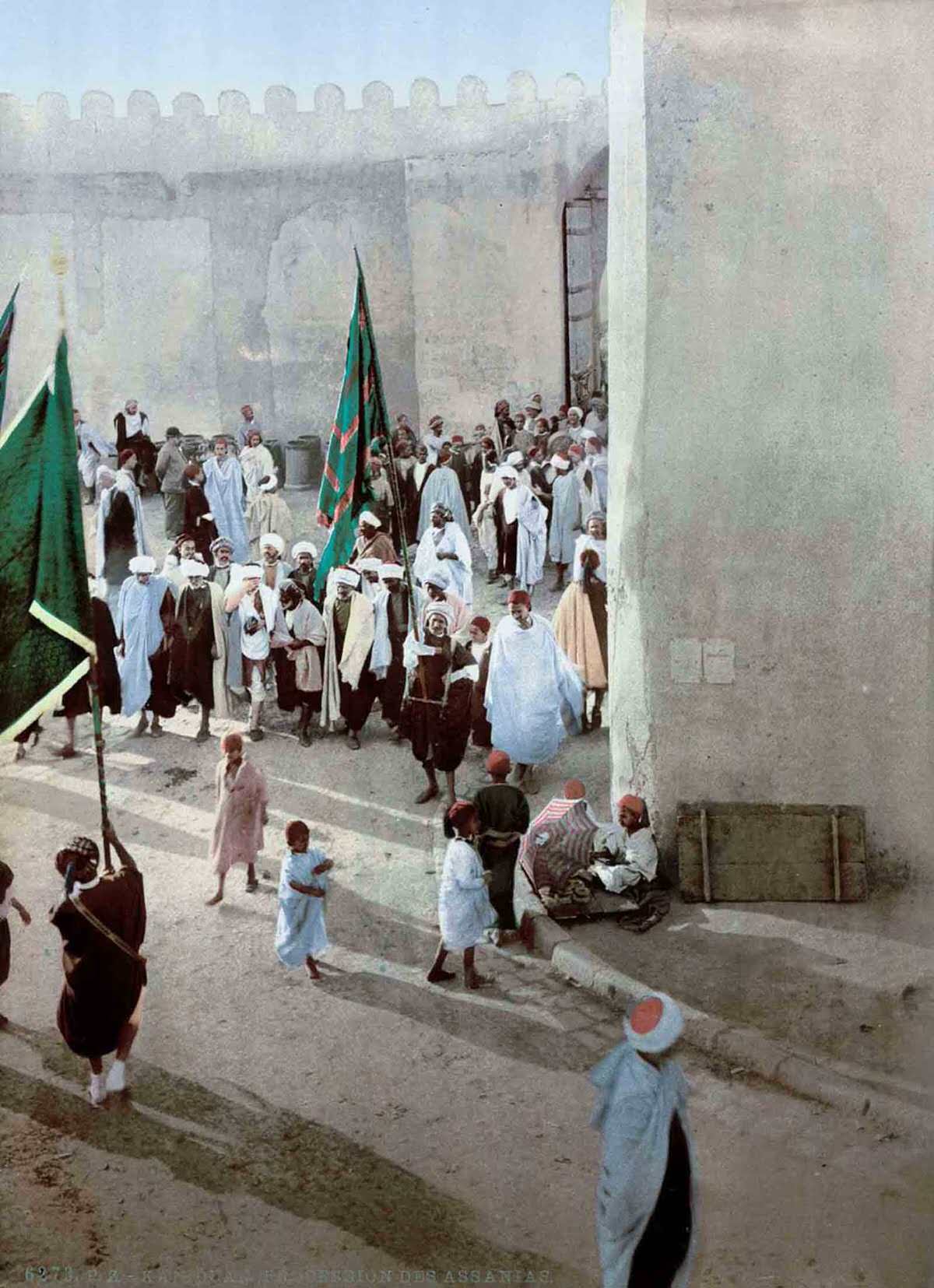
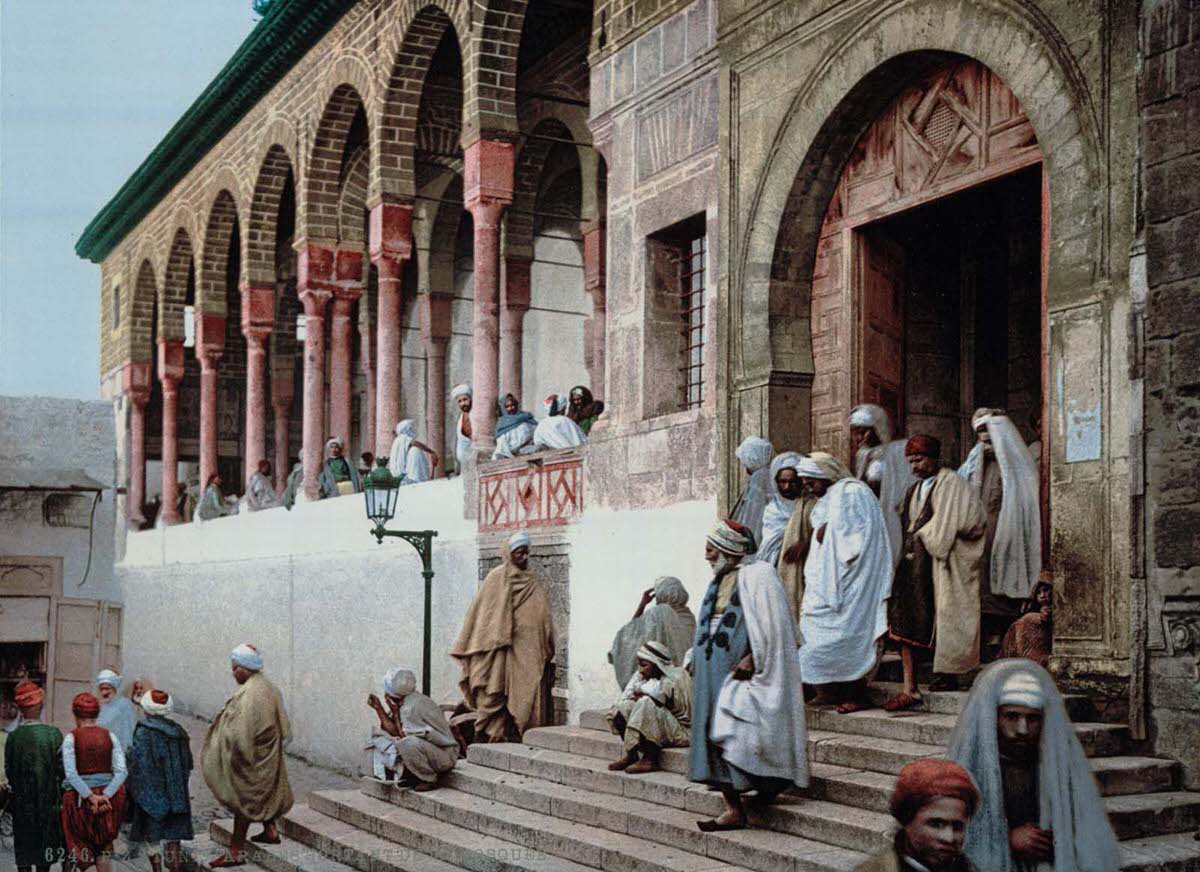
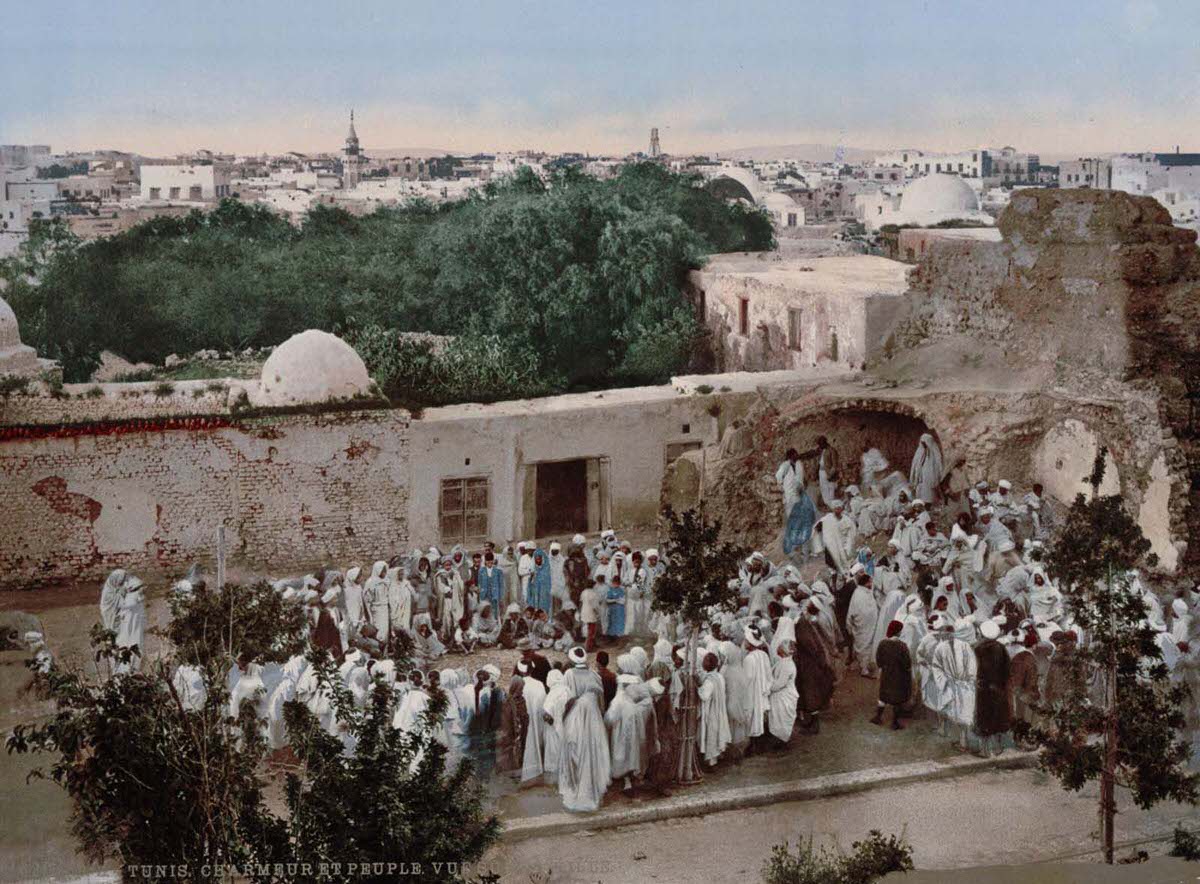
Food vendors were a constant presence in Tunisian street life. Couscous sellers set up in public spaces, serving one of the region’s most fundamental staples. The Mosque of St. Catherine stood as another landmark in the capital, while gates like Bab Aleona marked the boundaries of the old city. Nomadic groups camped on the outskirts of Tunis, maintaining a way of life that was largely unchanged by the political shifts happening in the cities around them.
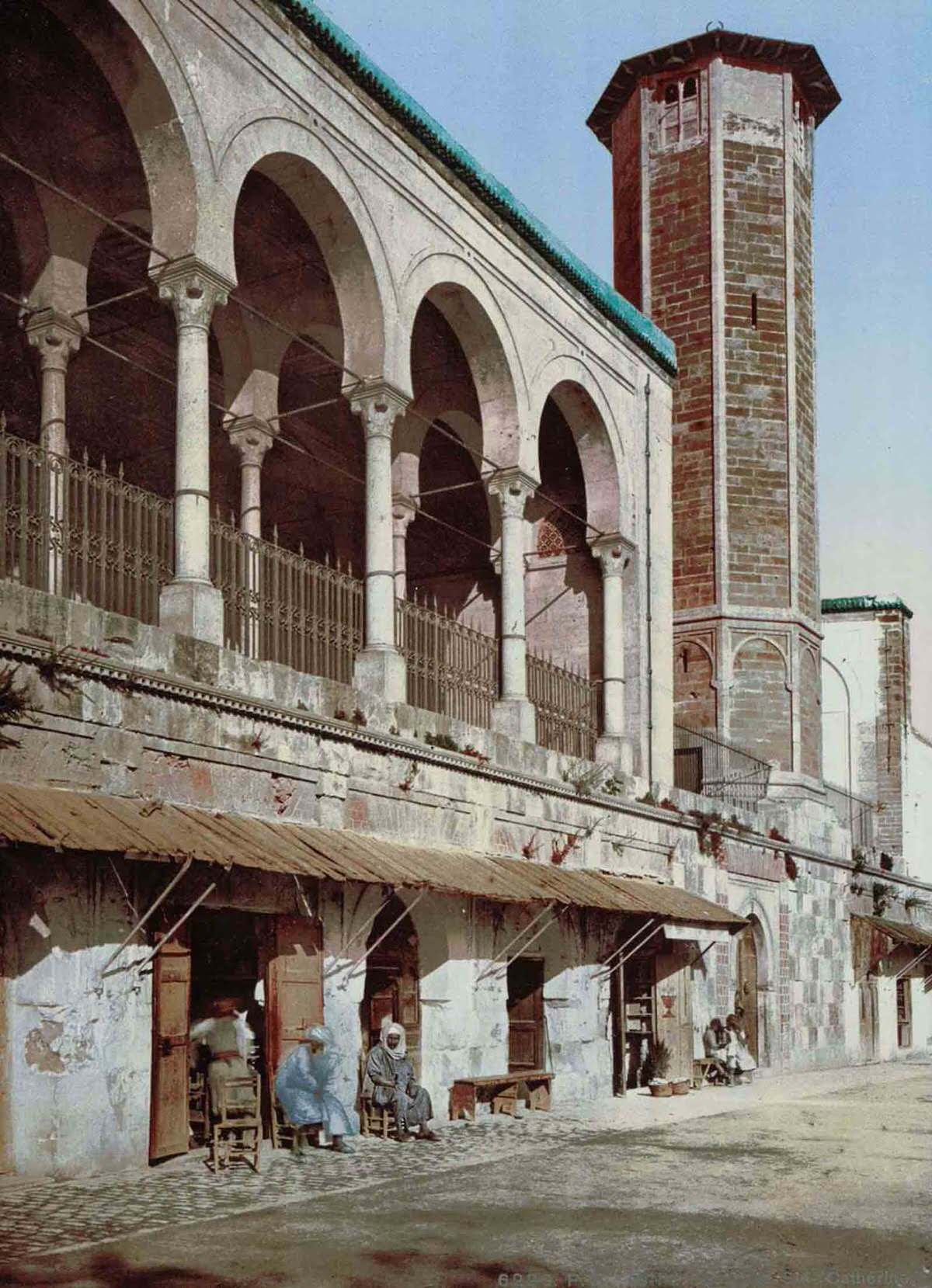
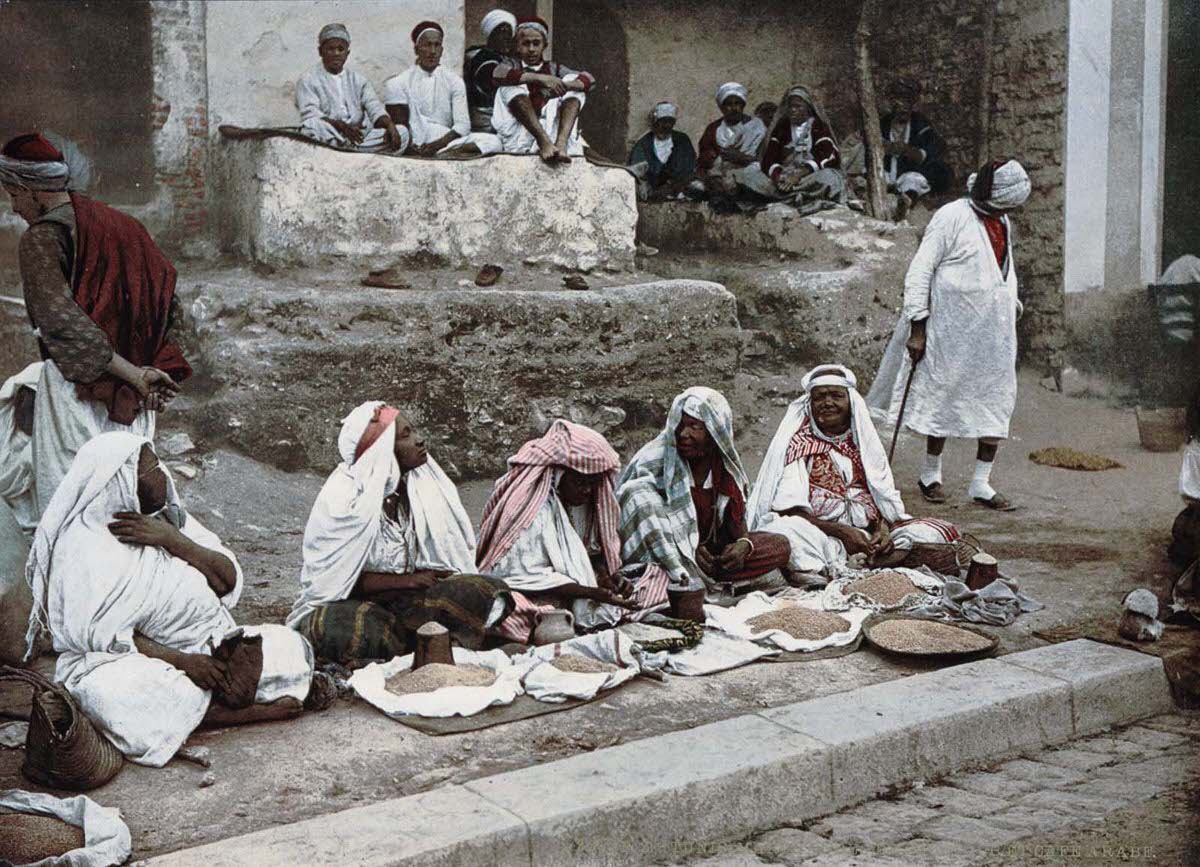
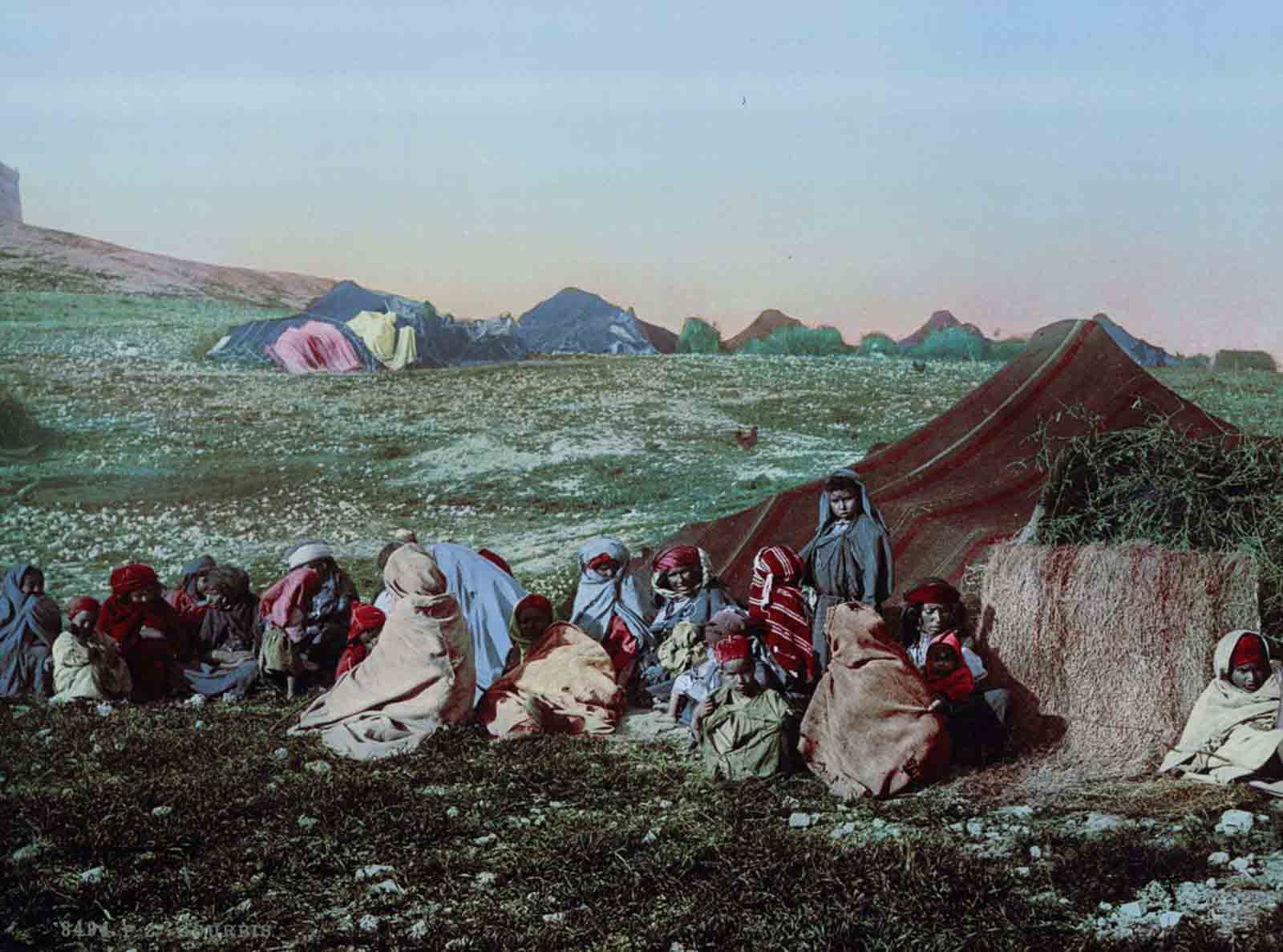
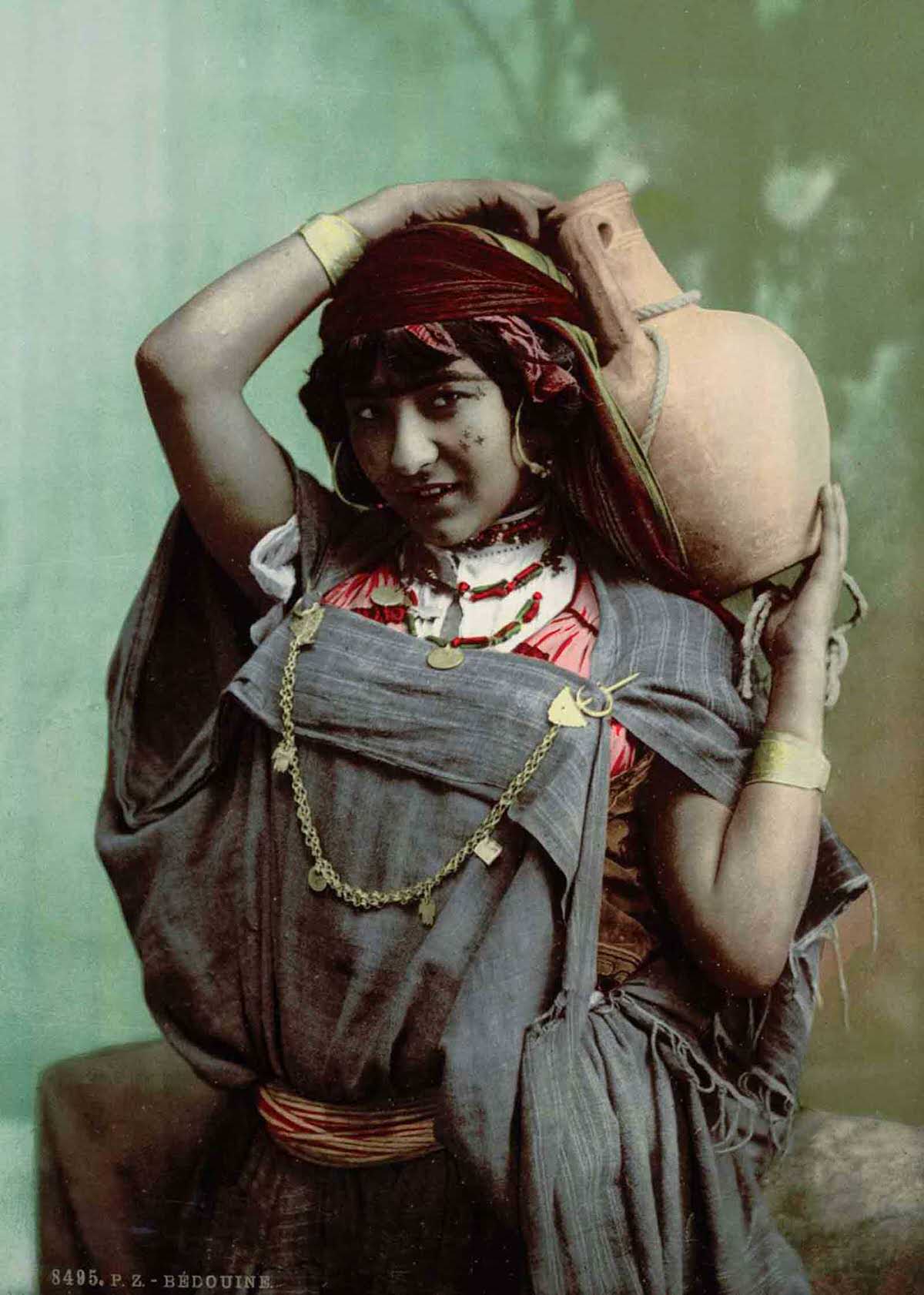
The alleyways of the medina carried names that reflected their history — Treasure Street was one such lane, lined with shops and the movement of daily commerce. Bedouin women, identifiable by their distinct dress, were photographed both in the city and on its margins, adding to the visual record of a society that straddled settled and nomadic worlds.