
Birmingham entered the 1980s in a state of crisis. The recession that gripped Britain in the early part of the decade hit the city especially hard, sending unemployment soaring to nearly 20% by 1982. In inner-city neighbourhoods like Aston, Handsworth, and Sparkbrook, the jobless rate reached close to 40%. Factories that had defined the city for generations were shutting their gates, and workers who had spent their careers on the shop floor found themselves with nothing. The strain was visible on every street.
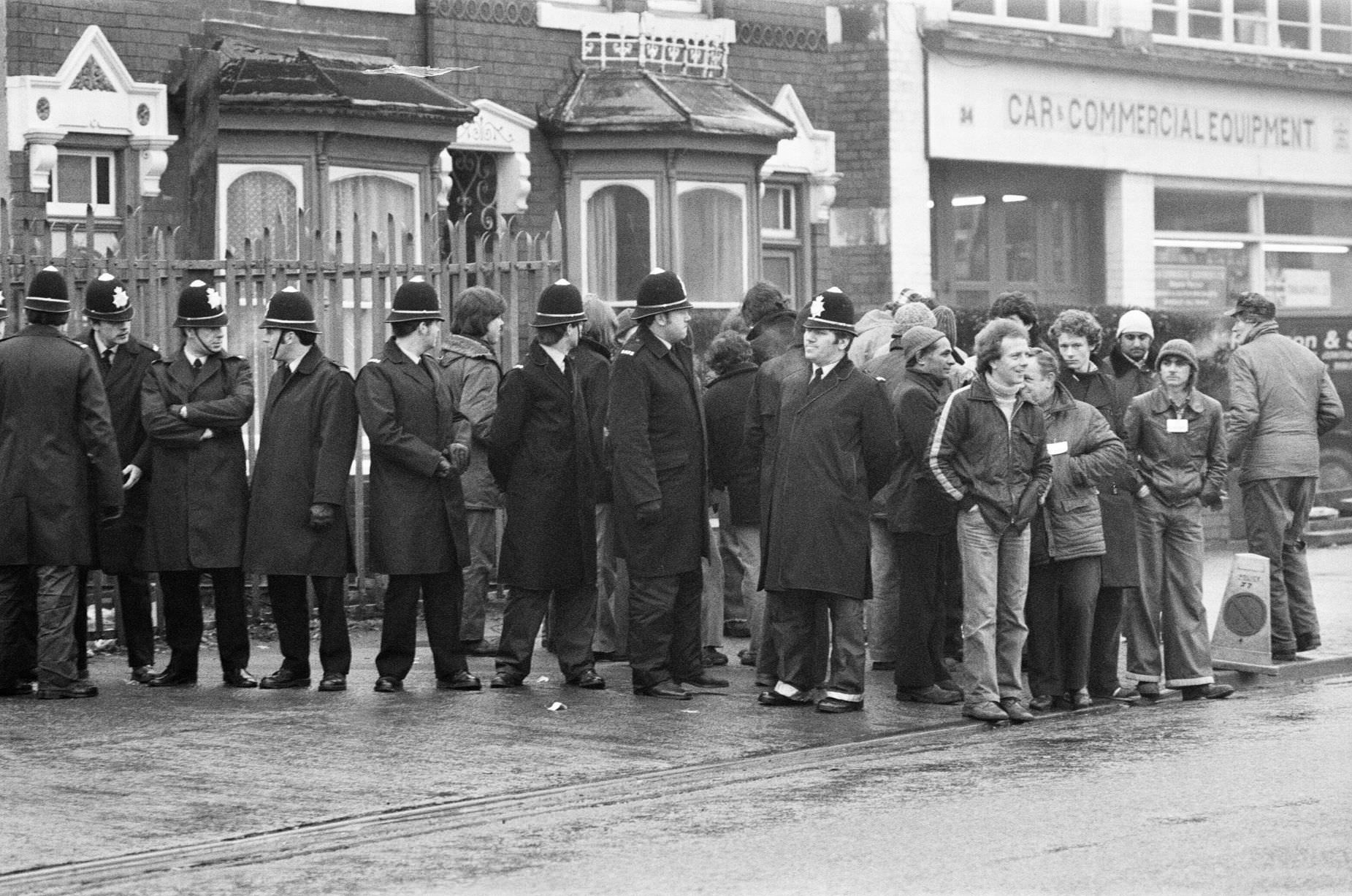
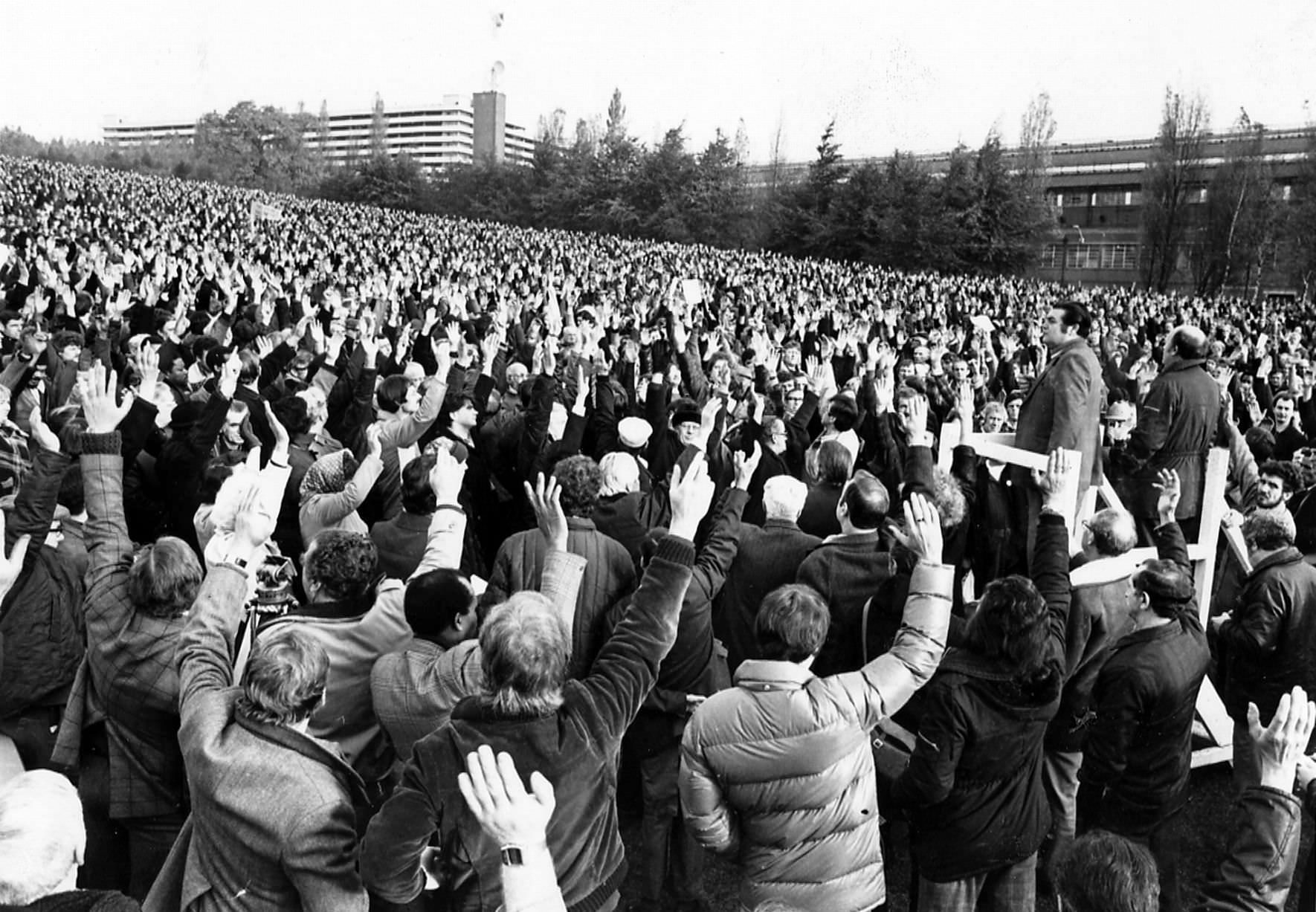
Industrial action was a constant backdrop to life in the region. Steelworkers, miners, and factory hands all took to the picket lines as employers cut jobs and wages. At Longbridge, the vast Rover car plant that employed tens of thousands, workers were regularly called to ballot on strike action as management pushed for changes the unions refused to accept.
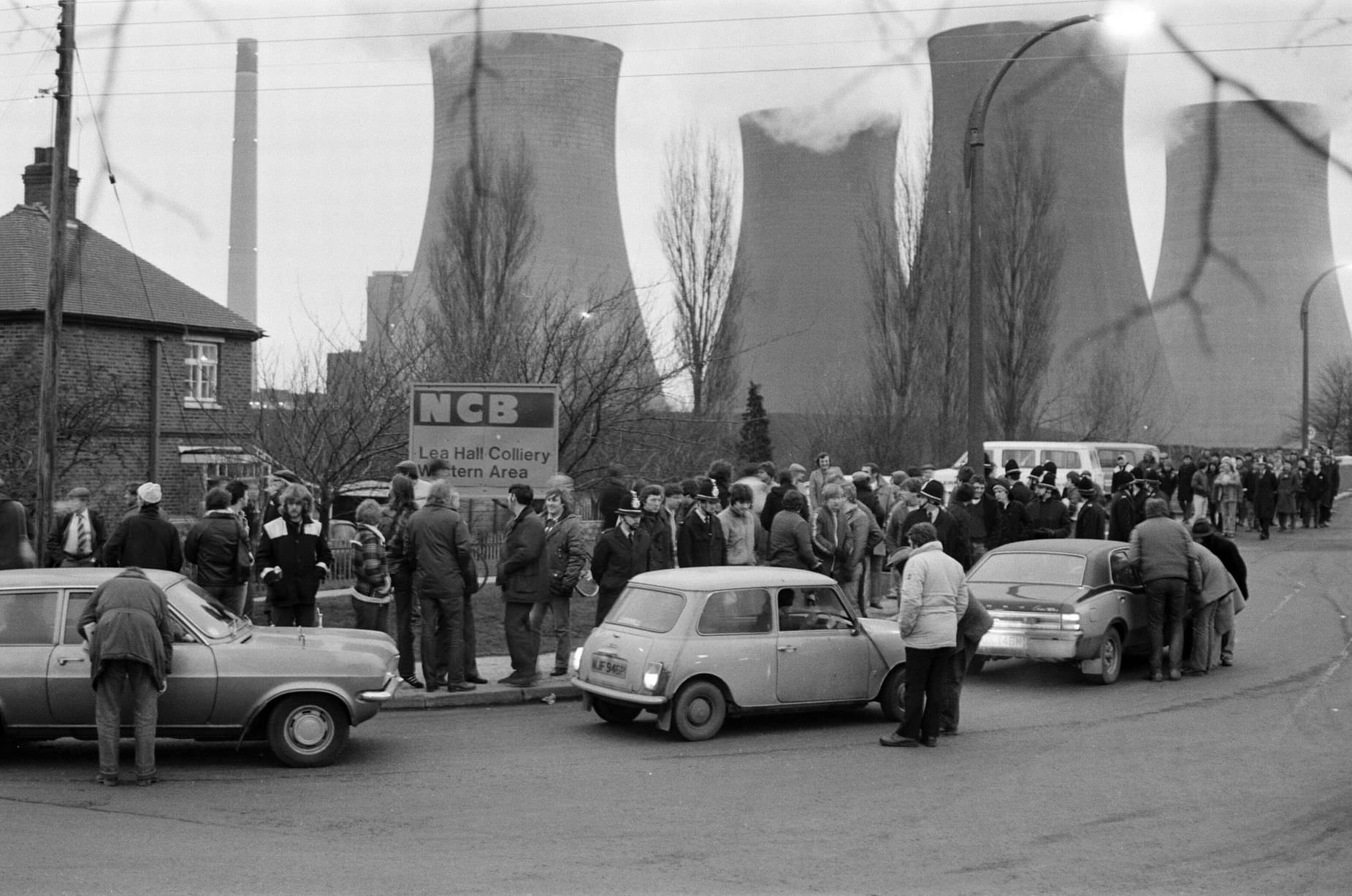
The miners’ strike of 1984 brought fresh tension to communities across the Midlands. When NUM president Arthur Scargill declared a national strike, pickets appeared at collieries throughout the region, including Lea Hall Colliery in Rugeley, Staffordshire. The dispute dragged on for months and left deep divisions in working communities.
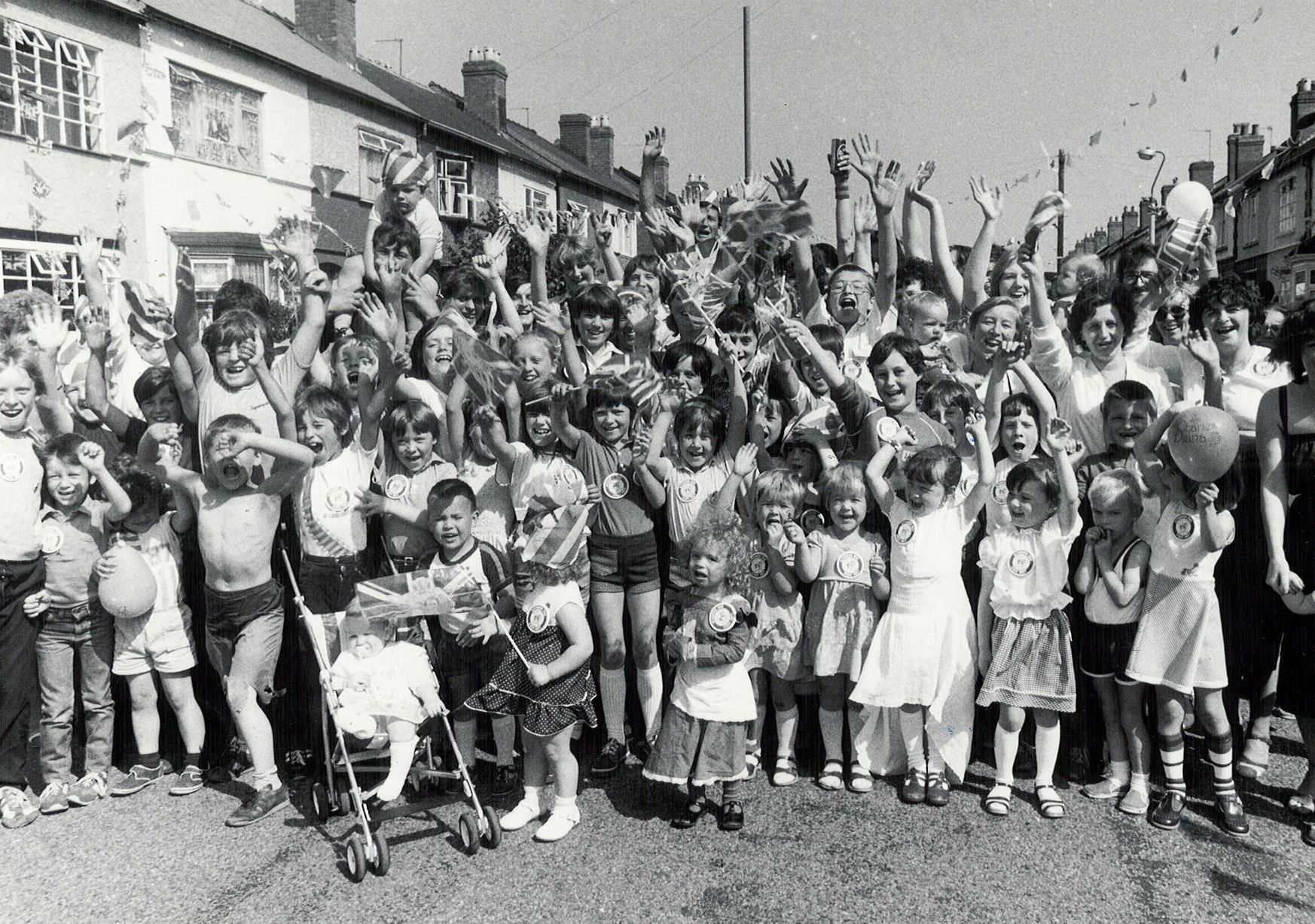
While industry struggled, the streets of Birmingham were not always defined by hardship. In July 1981, the Royal Wedding of Prince Charles and Lady Diana Spencer brought the country together in celebration. Residents of Blythswood Road in Tyseley threw a full street party, decorating their road and cheering as the occasion got underway.
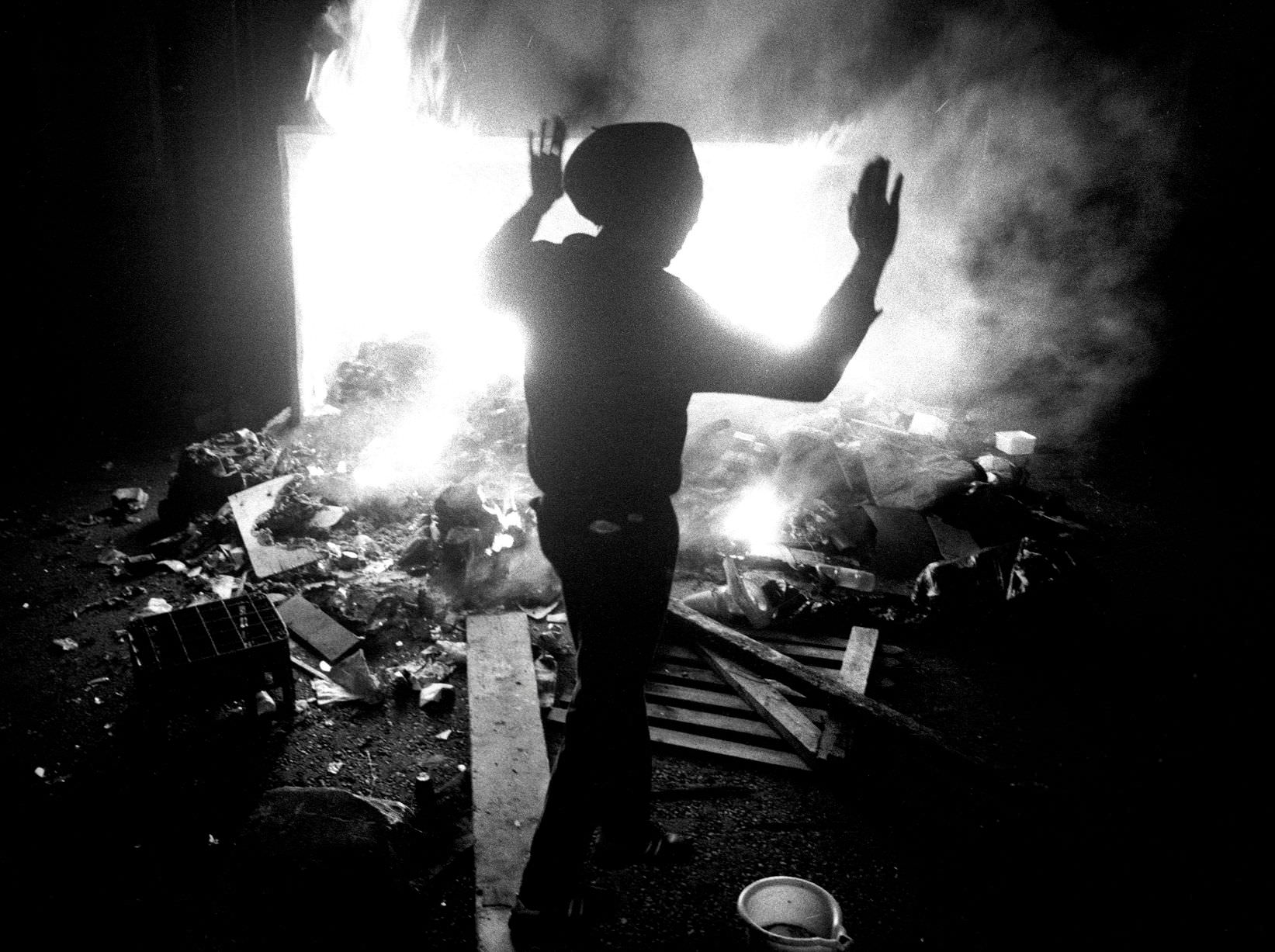
Just days before the royal celebrations, Handsworth had been the scene of serious unrest. Unemployment, poverty, and tensions with police boiled over into riots in July 1981, with fires burning and properties destroyed. It was one of several outbreaks of civil disorder that struck British cities that summer, and Birmingham’s version shocked the nation.
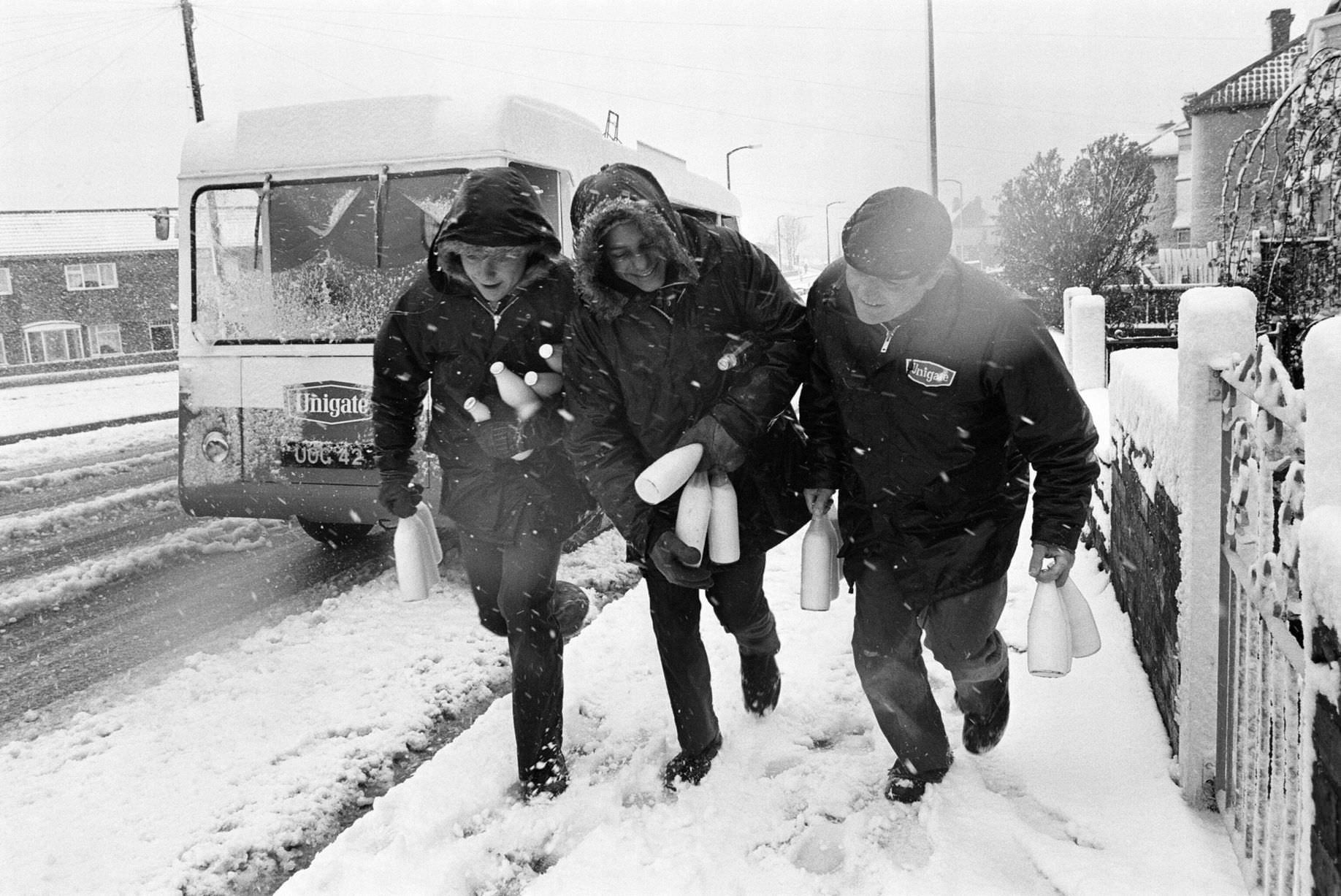
That same autumn brought a remarkable natural event. On 23 November 1981, an unprecedented tornado outbreak struck the UK. Two tornadoes touched down within Birmingham’s city limits — one in Erdington and another in Selly Oak — while six more struck across West Midlands County. It remains one of the most significant tornado events ever recorded in Britain. Earlier that spring, the city had also endured a dramatic late cold snap. The period from 23 to 26 April 1981 brought the coldest weather Britain had seen at that time of year since 1908, with heavy snow blanketing the region and northeasterly winds driving freezing temperatures.
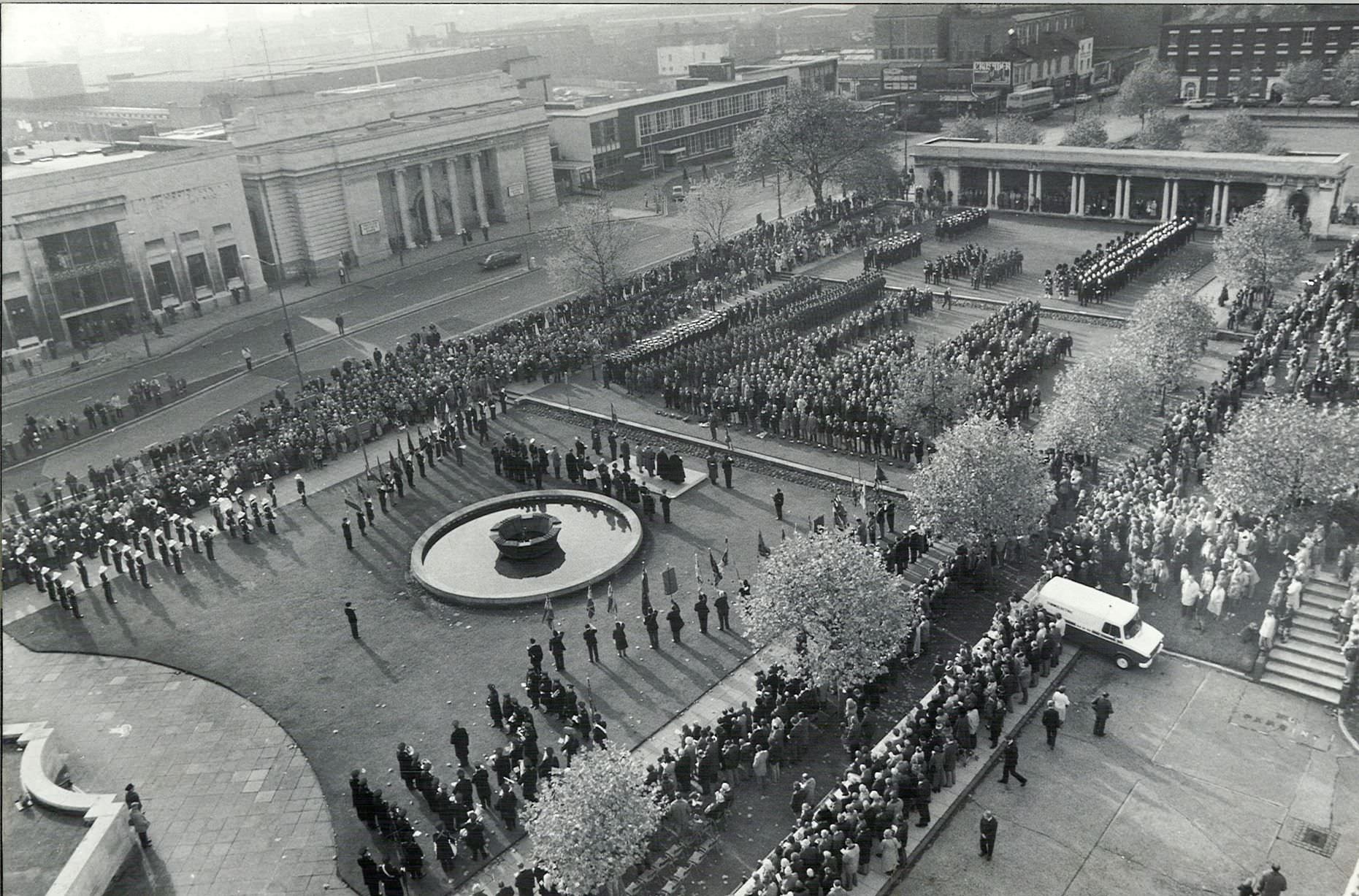
Remembrance Day that year drew large crowds to the Birmingham Hall of Memory. Among those attending the service on 6 November 1981 was an 80-strong party of sailors from HMS Birmingham, joining hundreds of civilians to pay their respects.
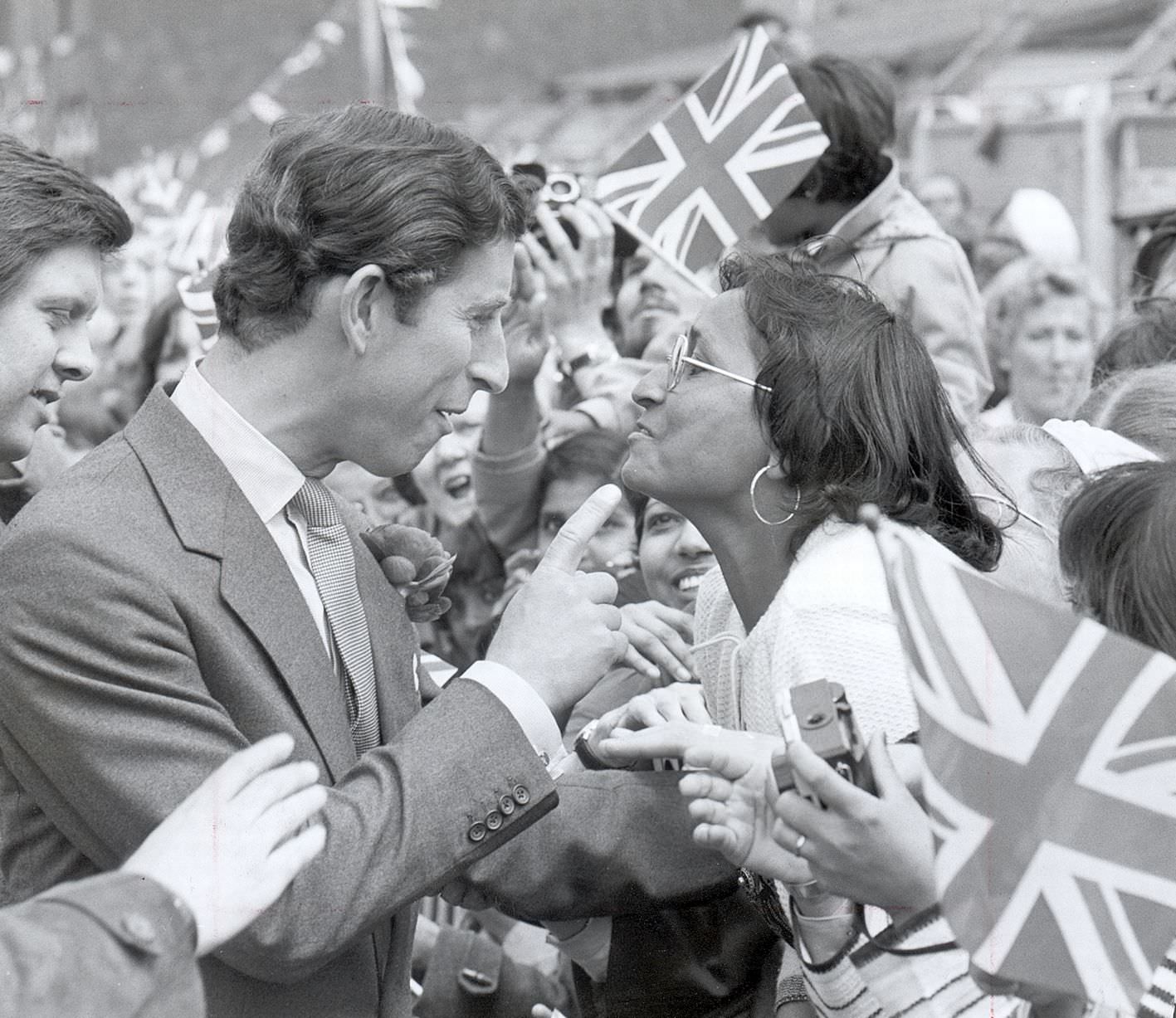
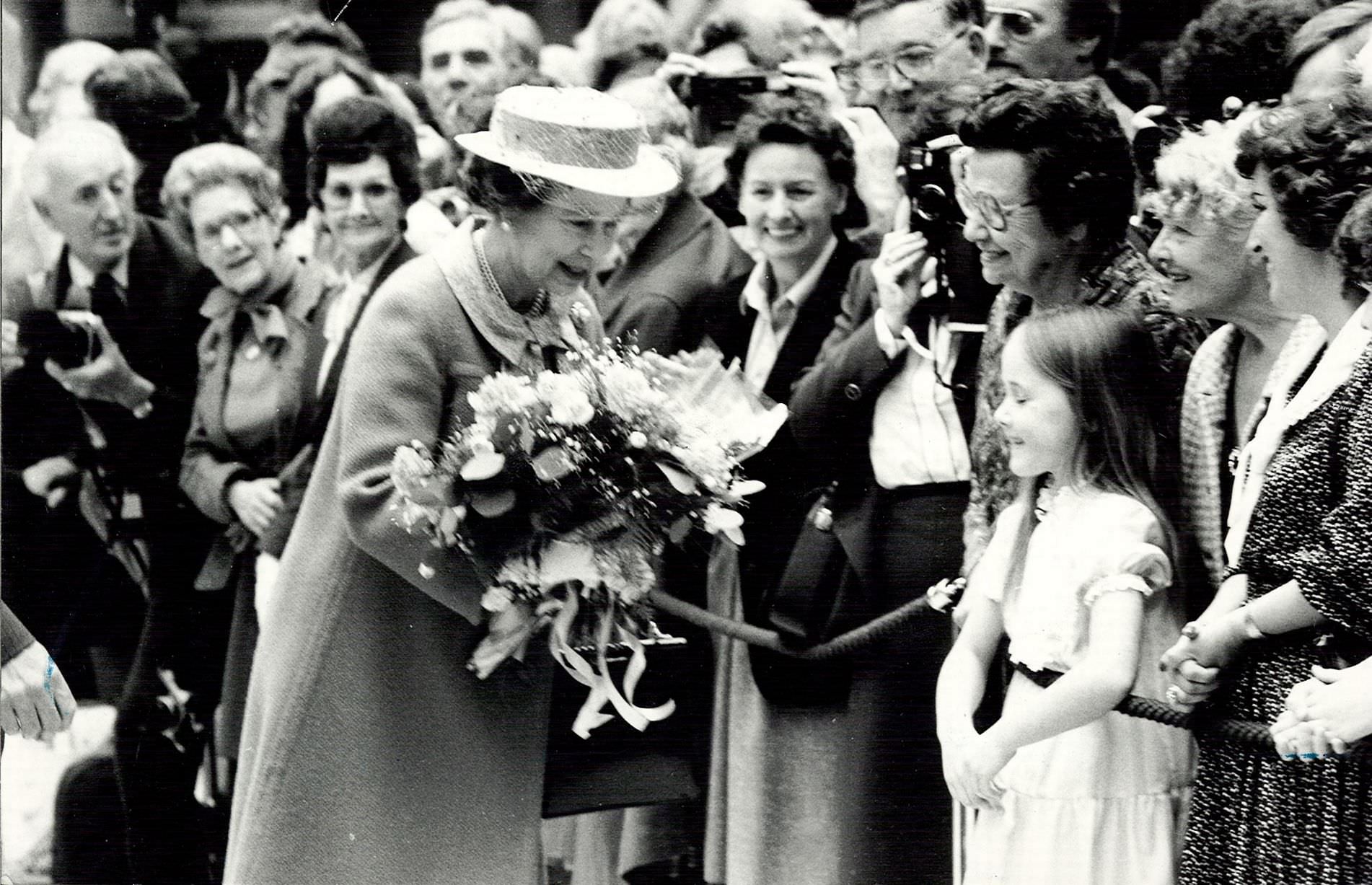
Royalty visited Birmingham more than once during the decade. Prince Charles toured Balsall Heath in 1980, seeing firsthand the conditions in one of the city’s most deprived areas. Later, in May 1984, the Queen officially opened Birmingham International Airport’s new terminal building, which had been relocated from the old Elmdon site. She was greeted by crowds who pressed flowers into her hands.
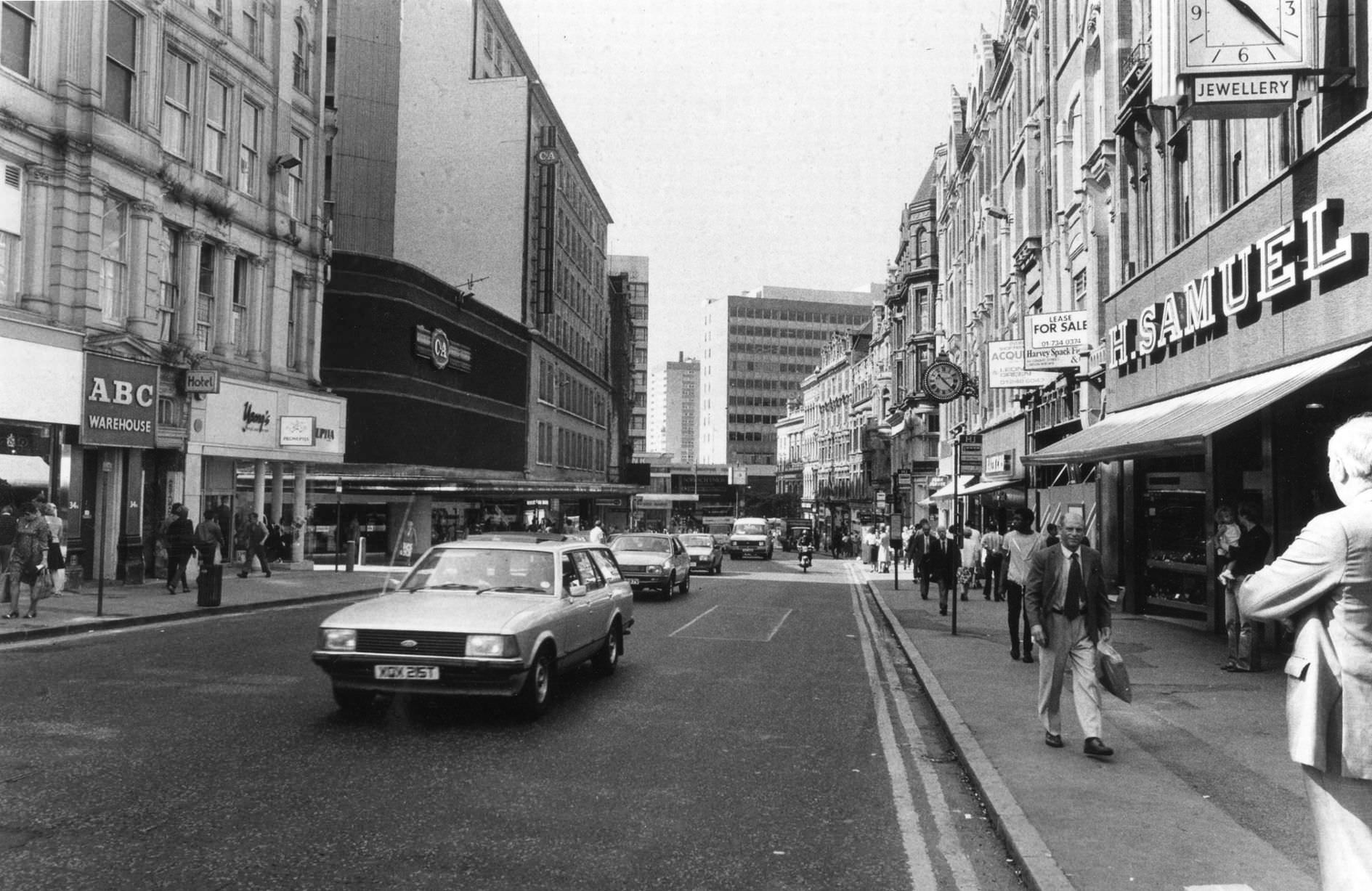
Corporation Street in the city centre remained a busy hub for shoppers throughout the decade. Familiar names like C&A, ABC Warehouse, and H. Samuel jewellers filled the storefronts, drawing crowds from across the city and beyond.
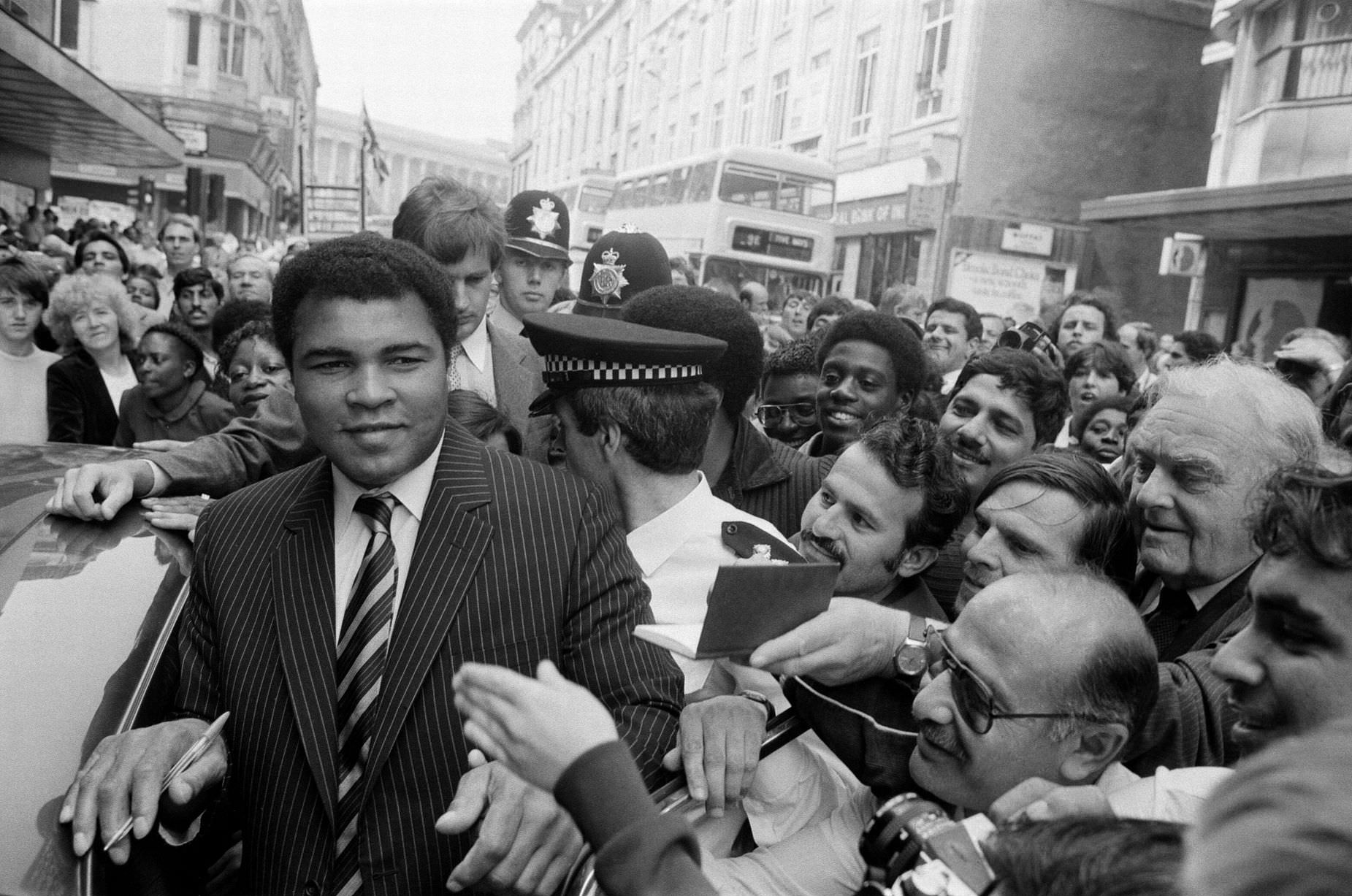
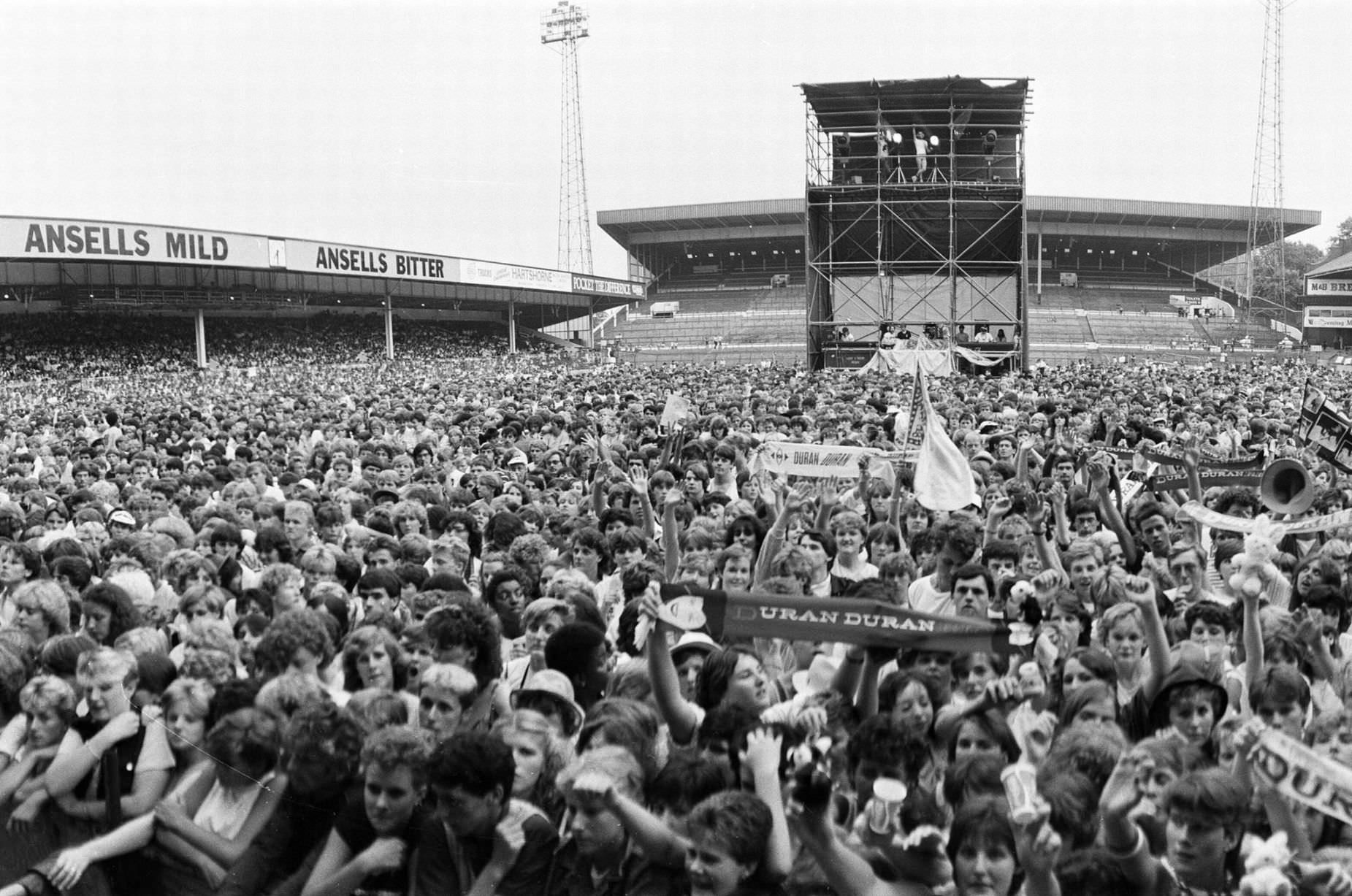
The summer of 1983 brought a string of memorable moments. Muhammad Ali visited Birmingham in August and was instantly surrounded by fans and supporters flooding the streets to catch a glimpse of the boxing legend. Just weeks earlier, Duran Duran — one of the biggest bands of the era and proud products of the Birmingham music scene — played Villa Park.
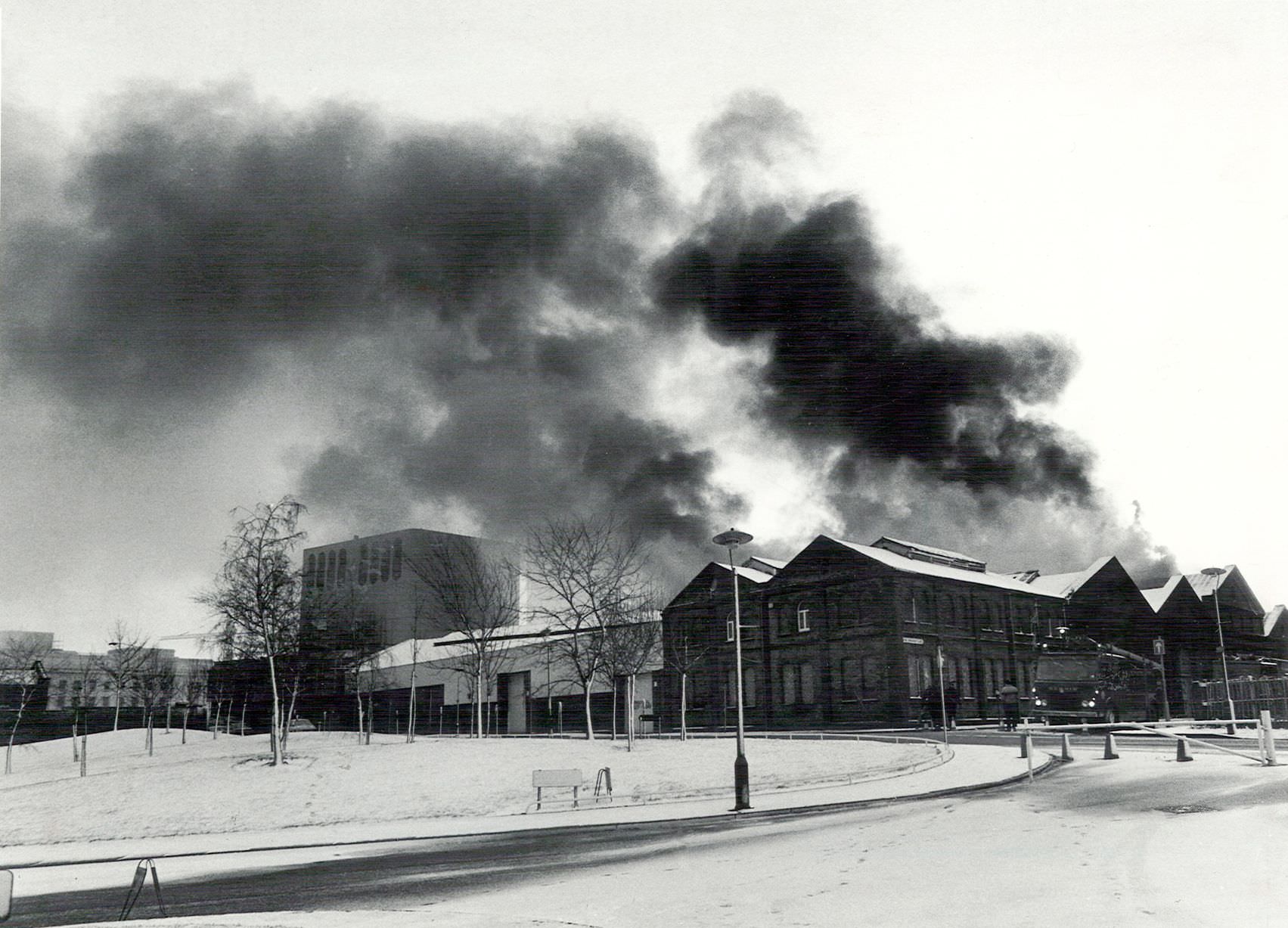
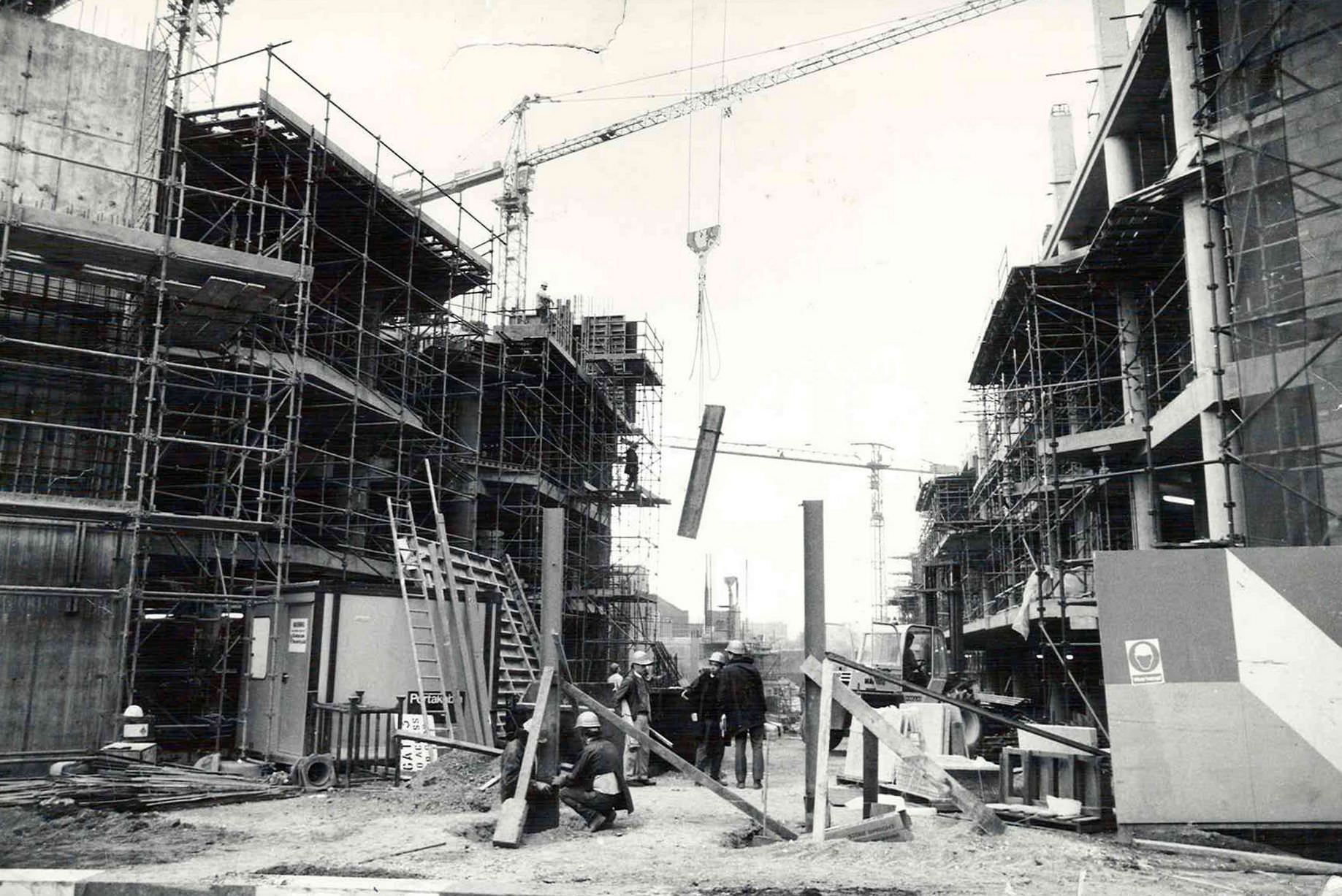
On 14 January 1984, a dramatic fire tore through Bingley Hall on Broad Street. Smoke poured into the winter sky as the historic exhibition hall burned. The site would not lie empty for long — it was later chosen as the location for the International Convention Centre, which was photographed mid-construction in October 1988.
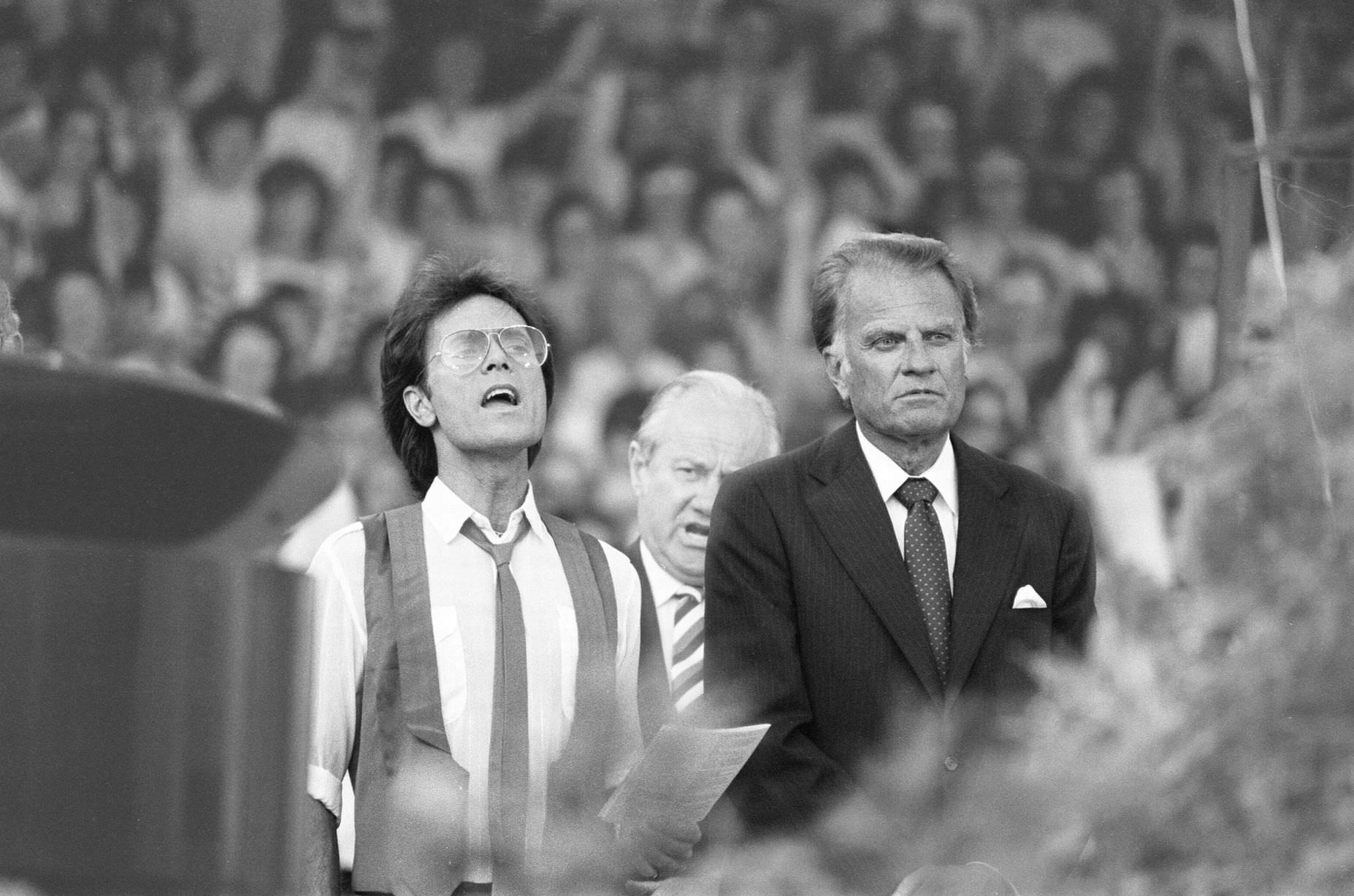
Villa Park also hosted American evangelist Billy Graham in July 1984 as part of his Mission England Crusade, with singer Cliff Richard appearing as a special guest. The event drew enormous crowds to the stadium.
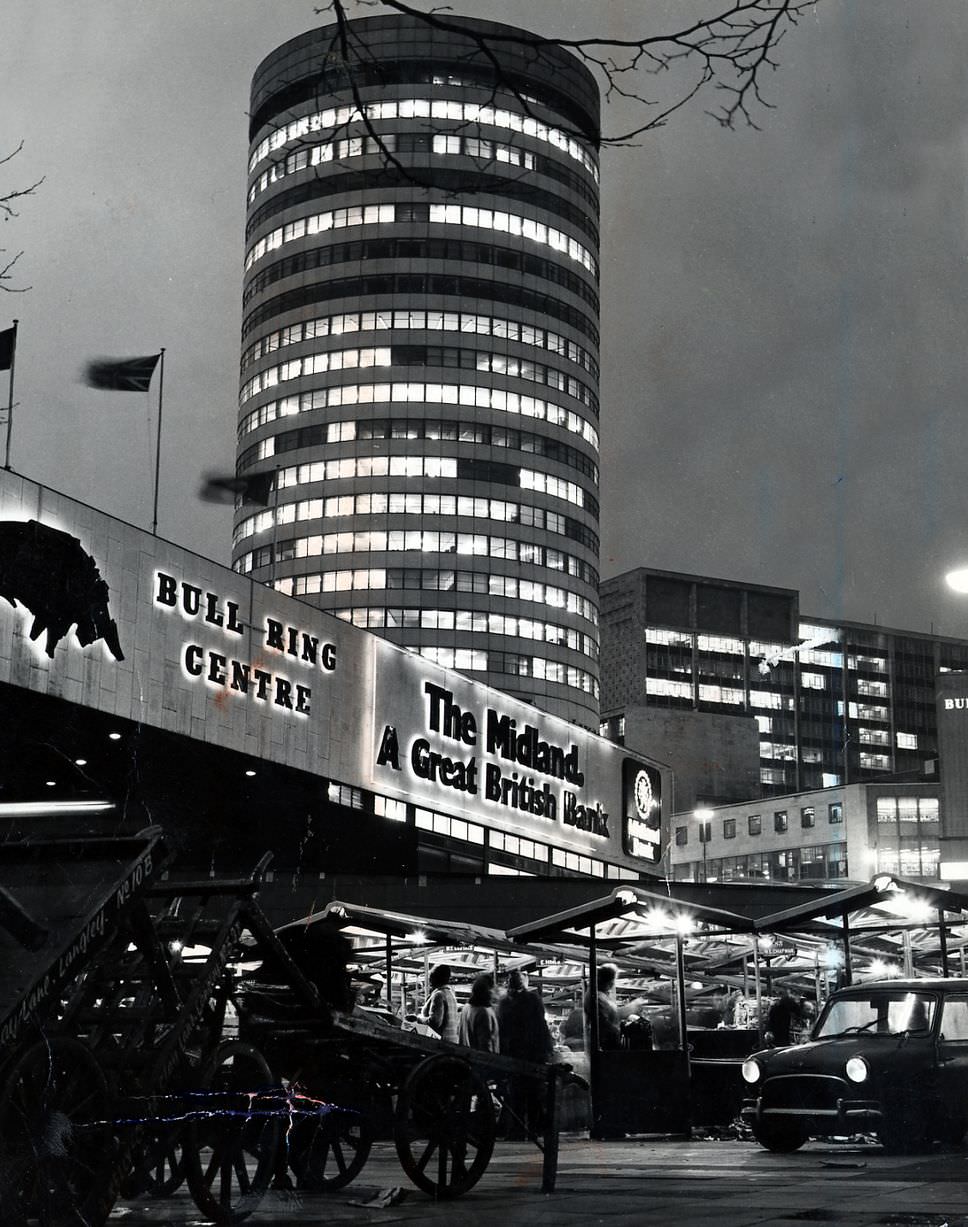
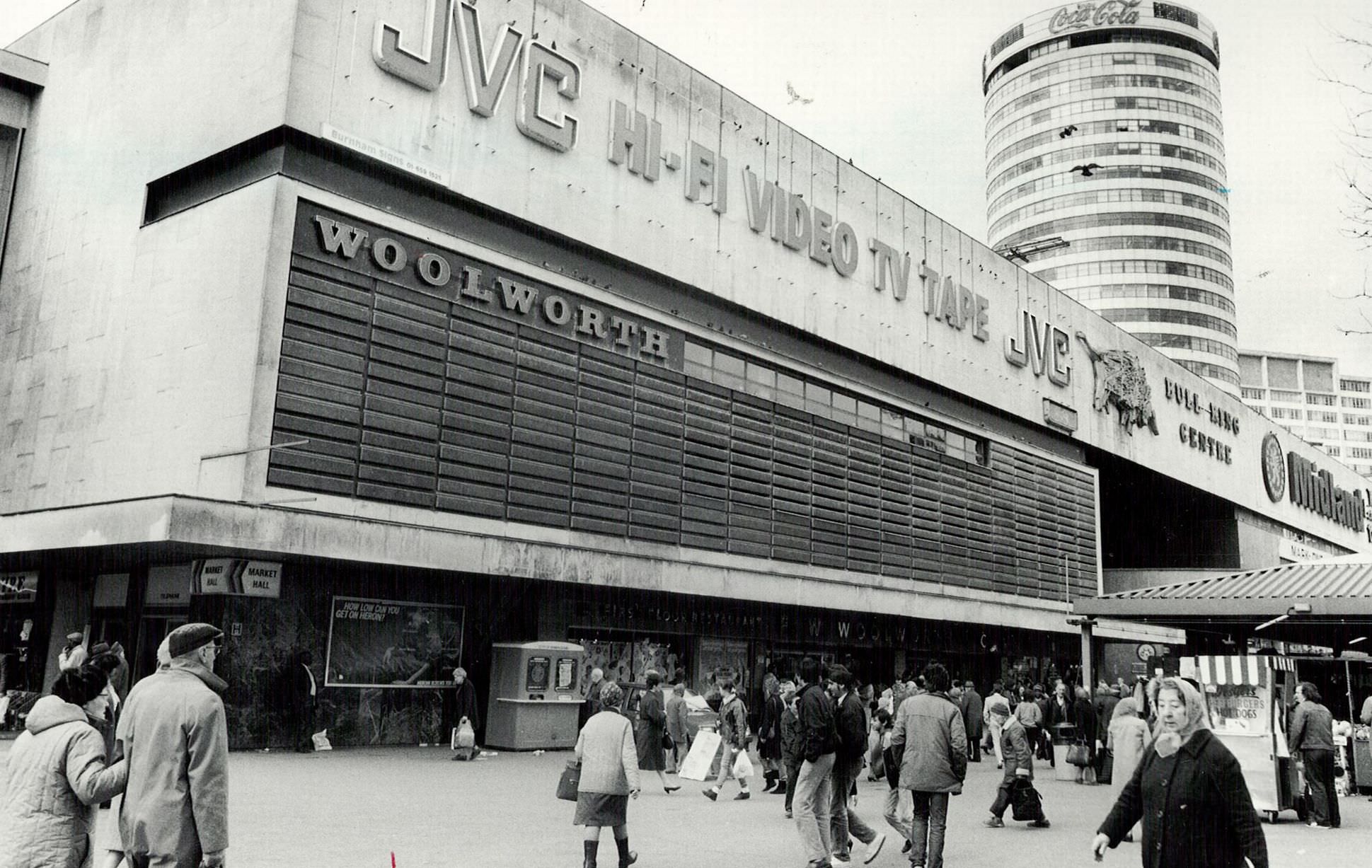
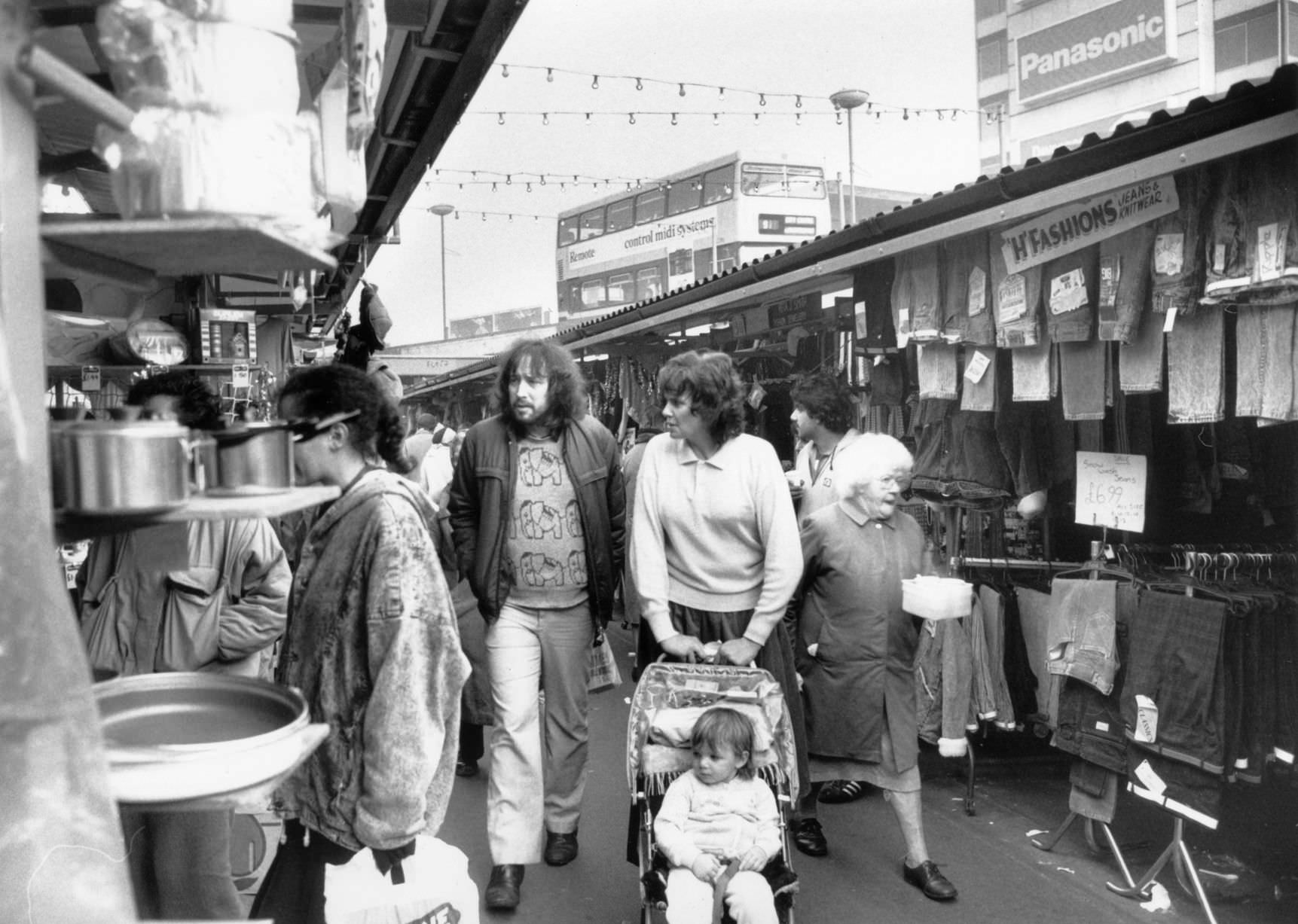
The Bull Ring remained one of the city’s most active gathering points throughout the decade. Whether it was a Thursday afternoon at the open-air market, the Woolworth store drawing in shoppers, or the iconic Rotunda watching over the market at night, the area pulsed with daily life.
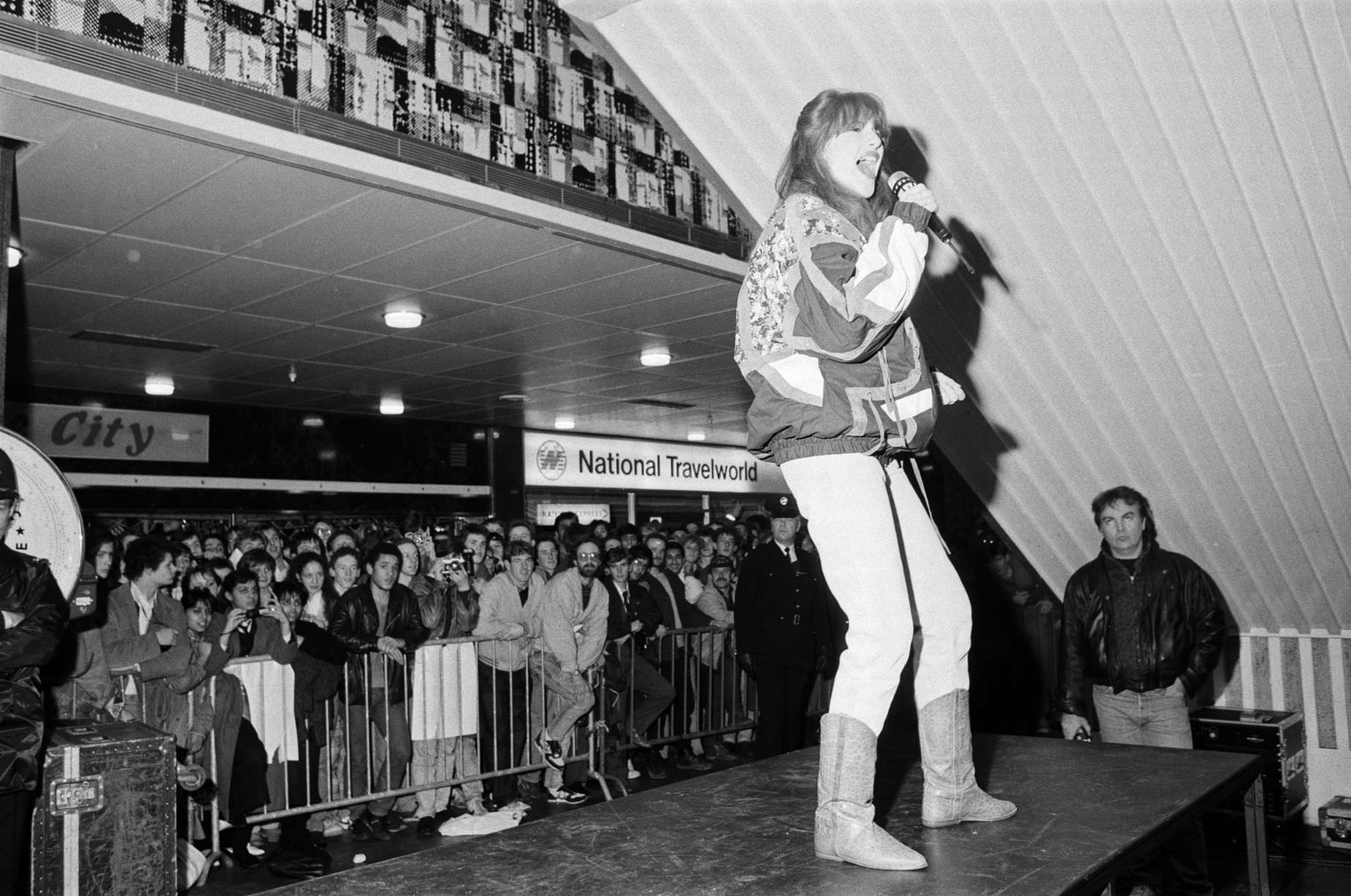
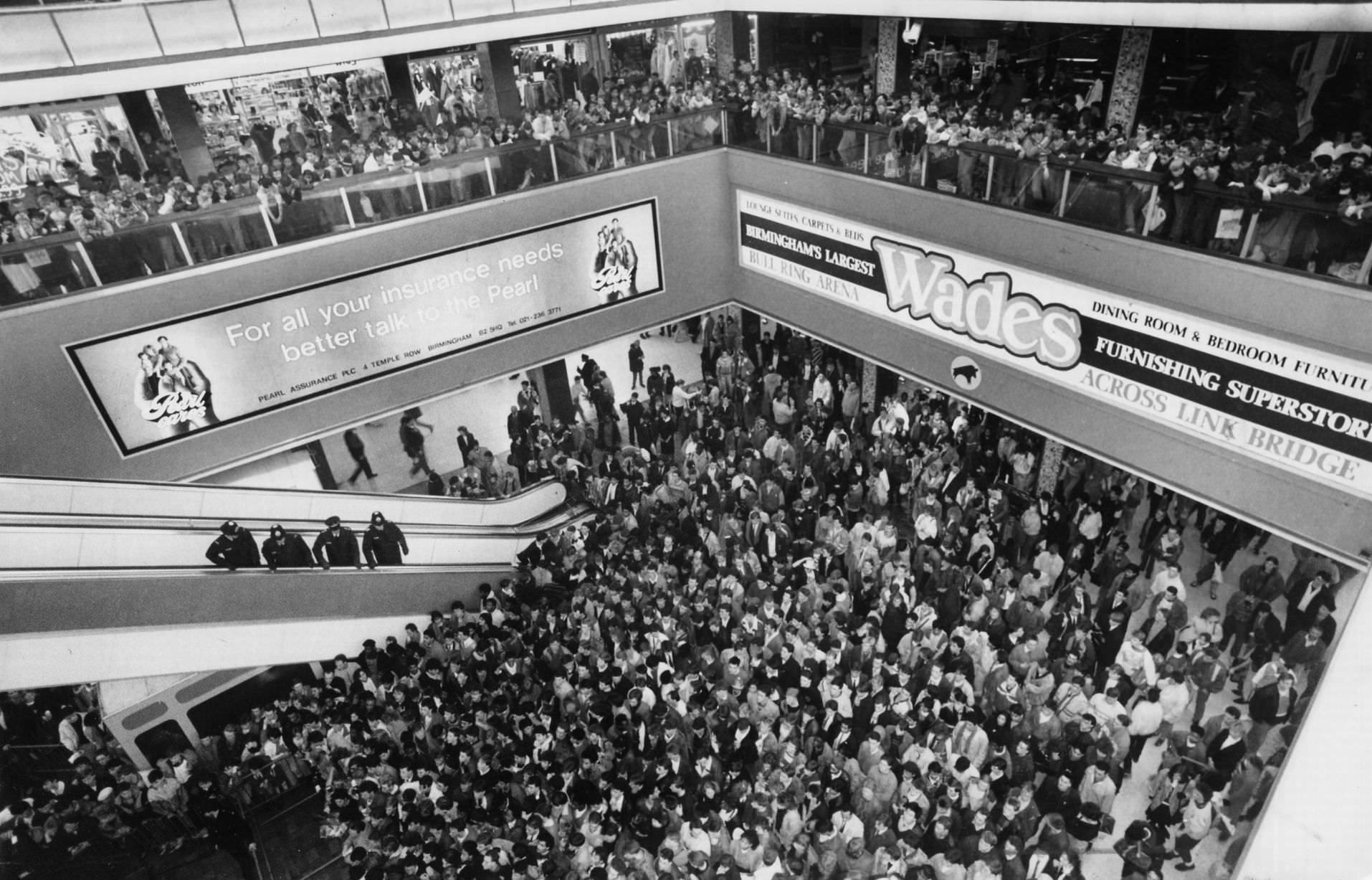
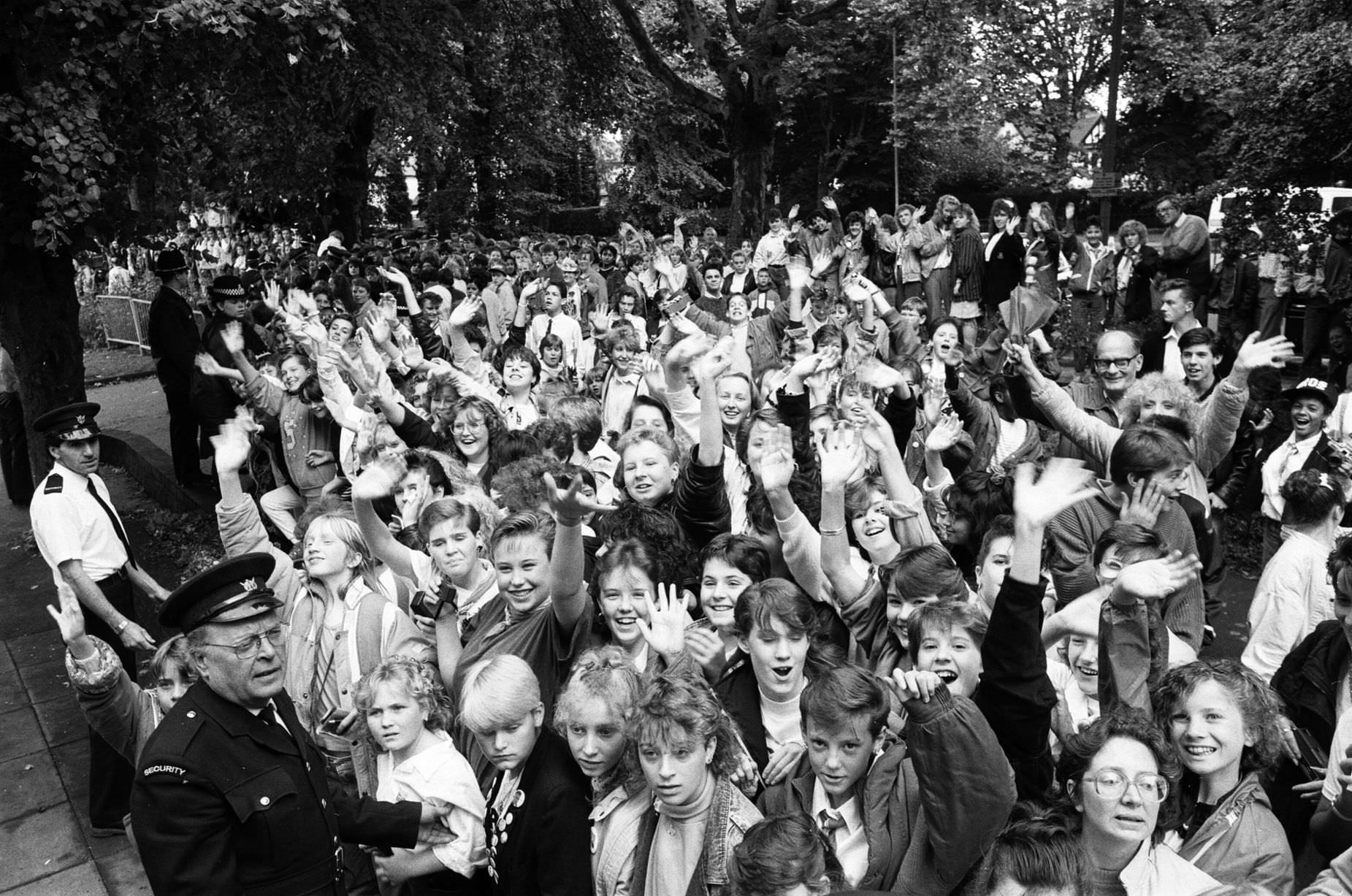
In January 1988, thousands of young fans packed the Bull Ring Shopping Centre to see American pop singer Tiffany, whose tour of shopping malls had made headlines across the Atlantic. The crowd that turned out in Birmingham was enormous, reflecting just how powerful pop culture had become by the end of the decade.
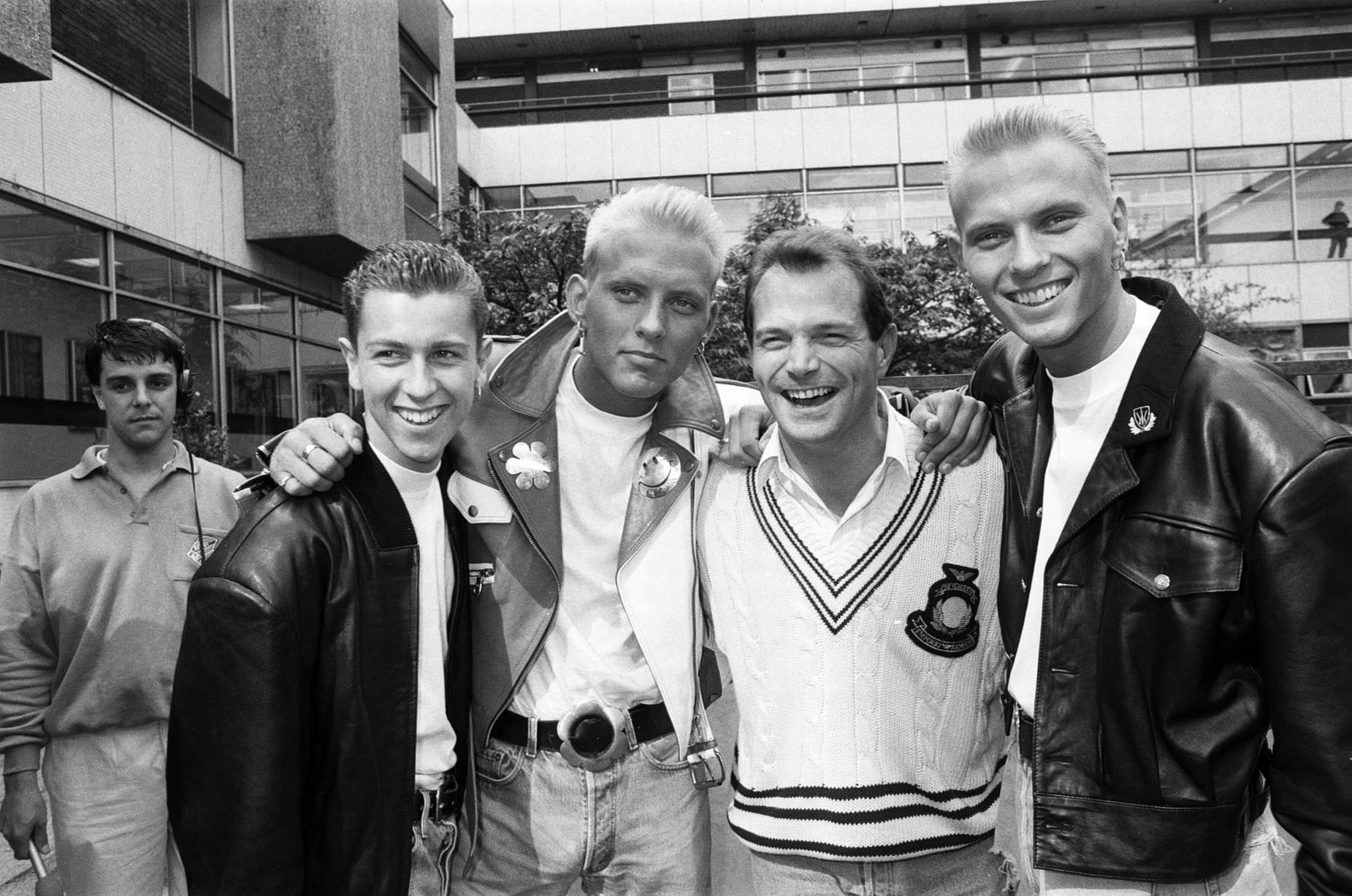
Pop duo Bros also made their way to Birmingham in September 1988, visiting BBC’s Pebble Mill Studios to help launch Radio One’s new frequency. The band was at the height of their fame, and the visit drew significant attention.
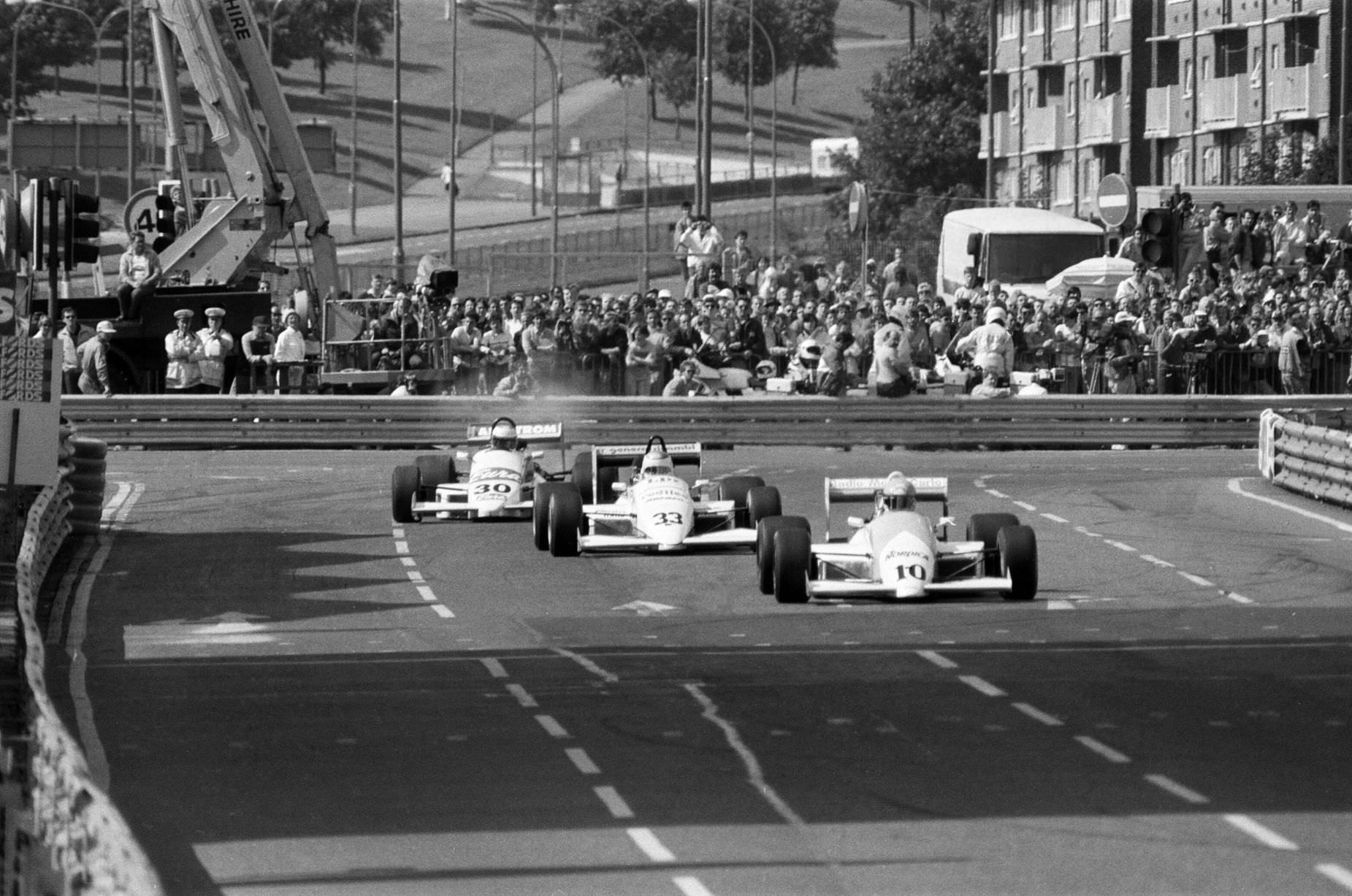
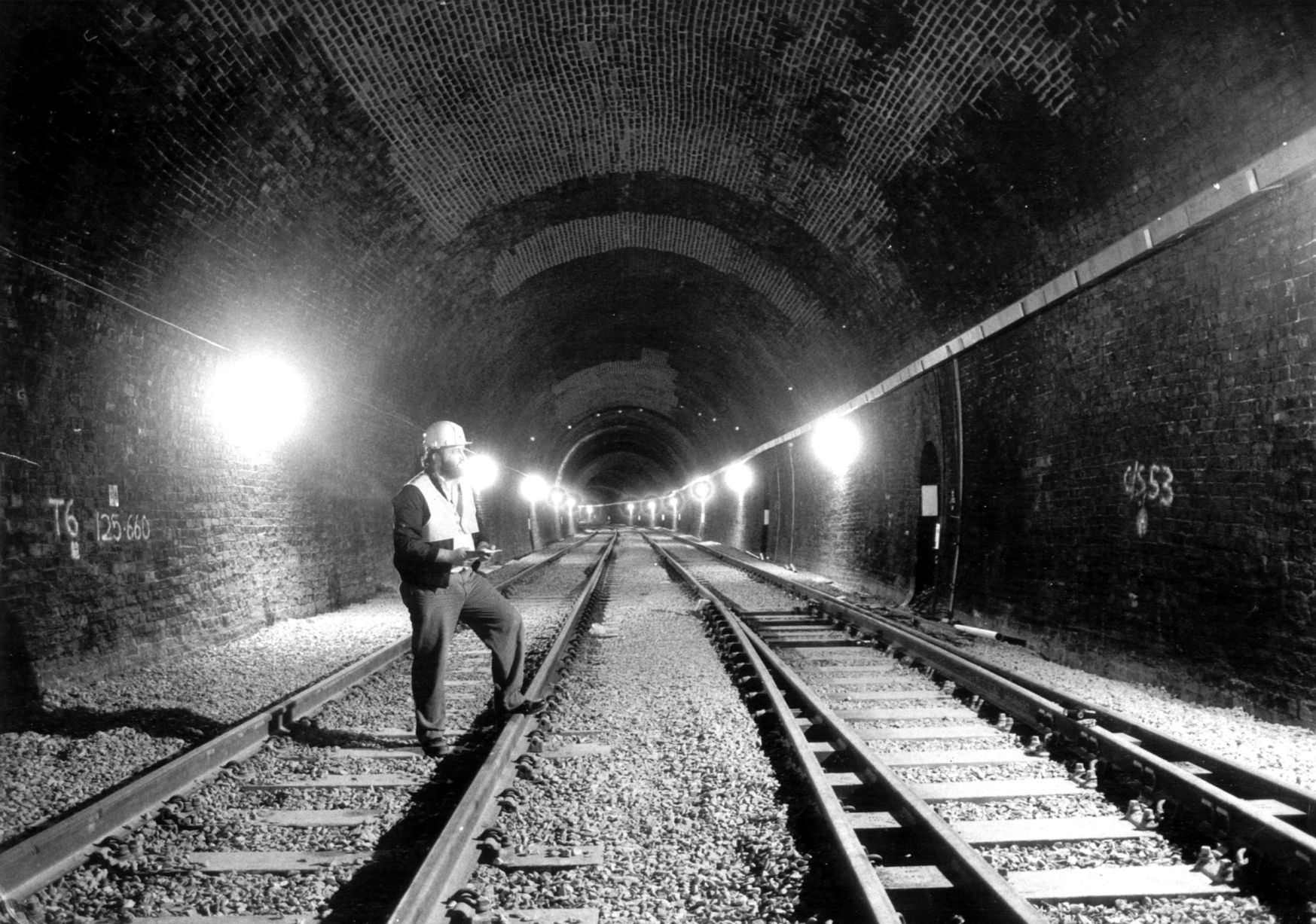
Birmingham’s streets took on a very different kind of excitement in August 1987, when the city hosted its Superprix street race. Formula 3000 cars thundered through the city centre circuit, drawing massive crowds and giving Birmingham a brief taste of motor racing glamour. That same year, Snow Hill Tunnel was photographed with its trackwork complete, ready for the reopening of rail services from Birmingham to Stratford.
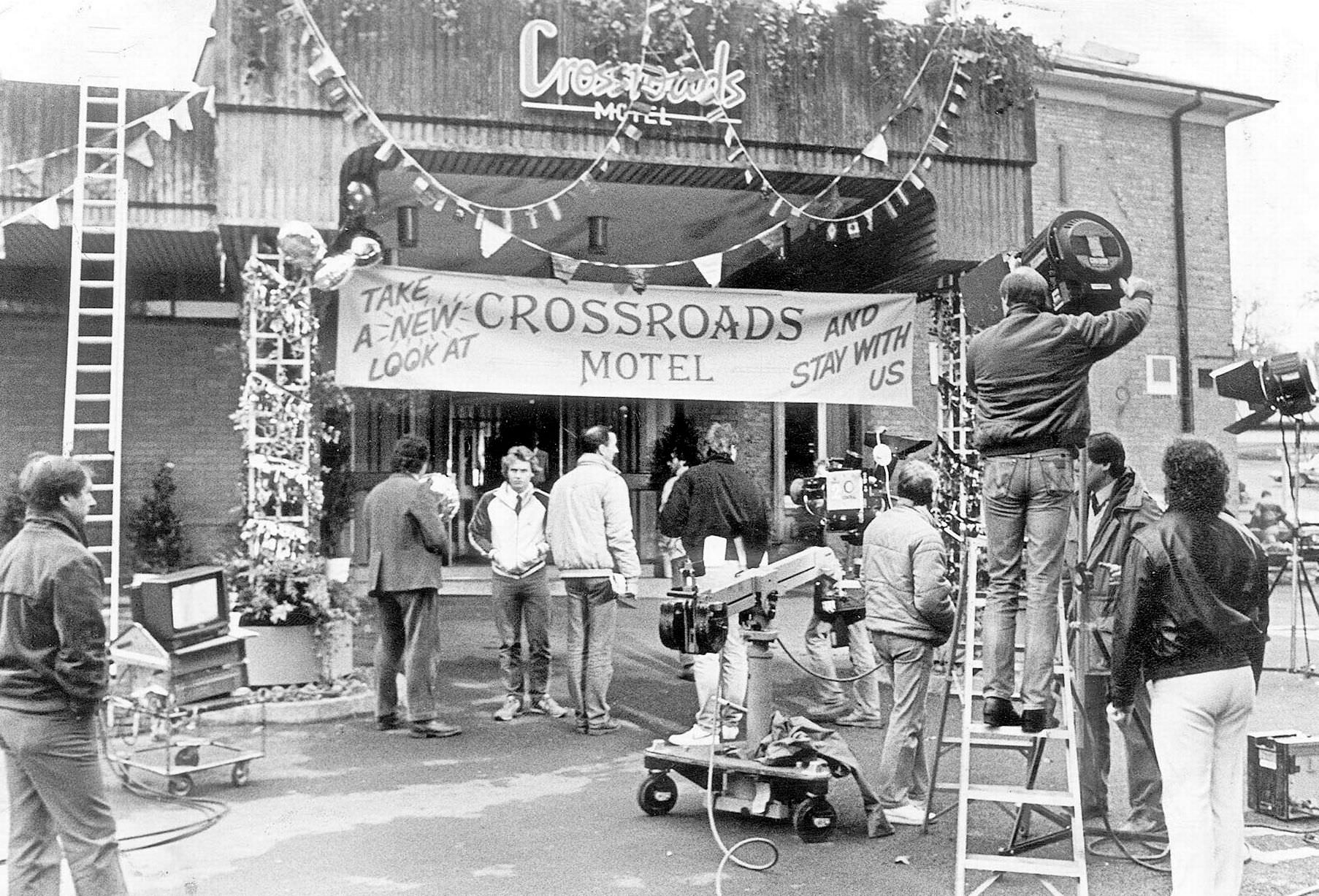
One of the decade’s more unusual filming locations was Penns Hall Hotel in Walmley, which was dressed up as the Crossroads Motel in May 1985. The long-running ITV soap opera used the Solihull-area hotel to stand in for the fictional motel that had become a staple of British television.
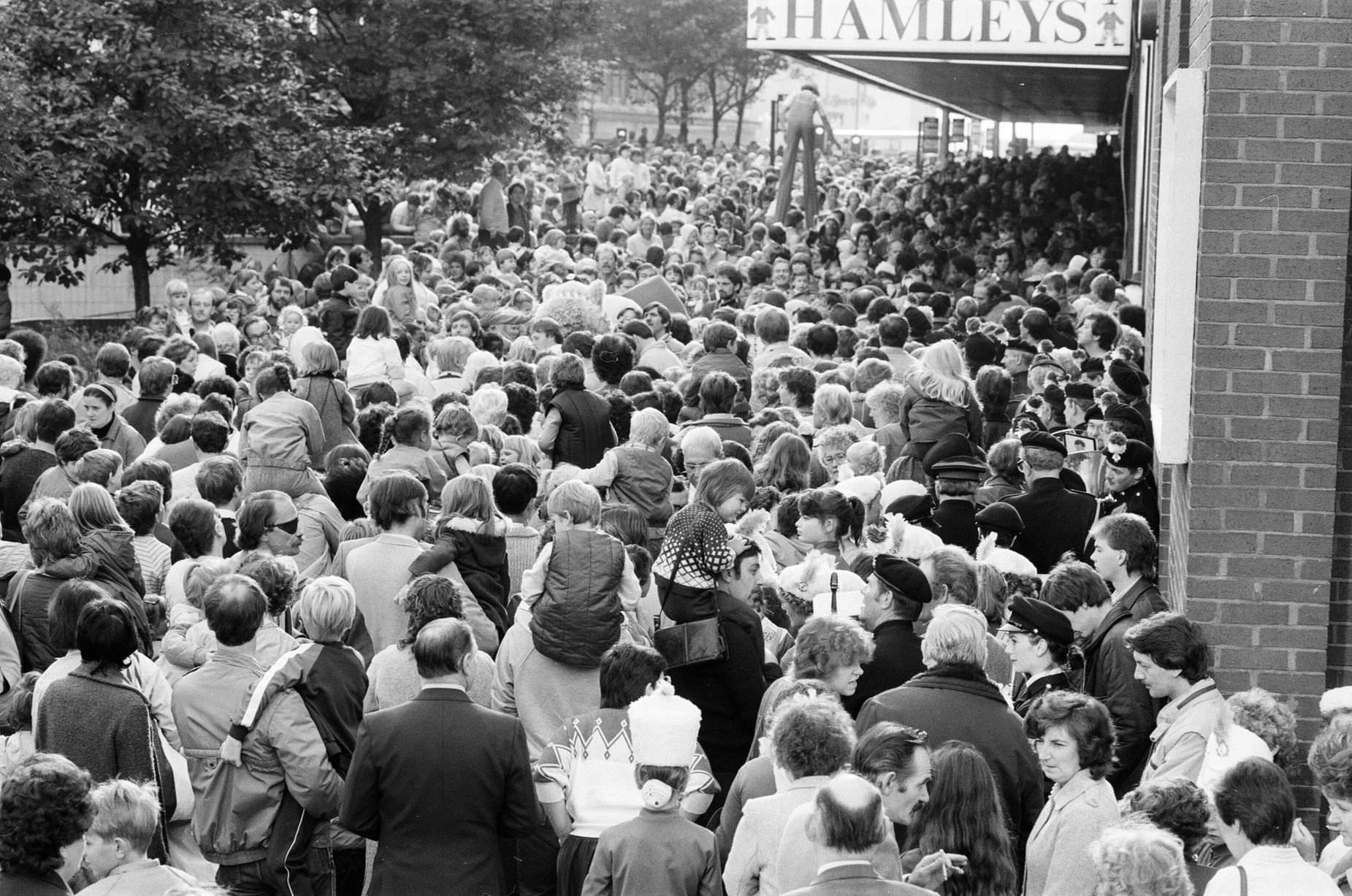
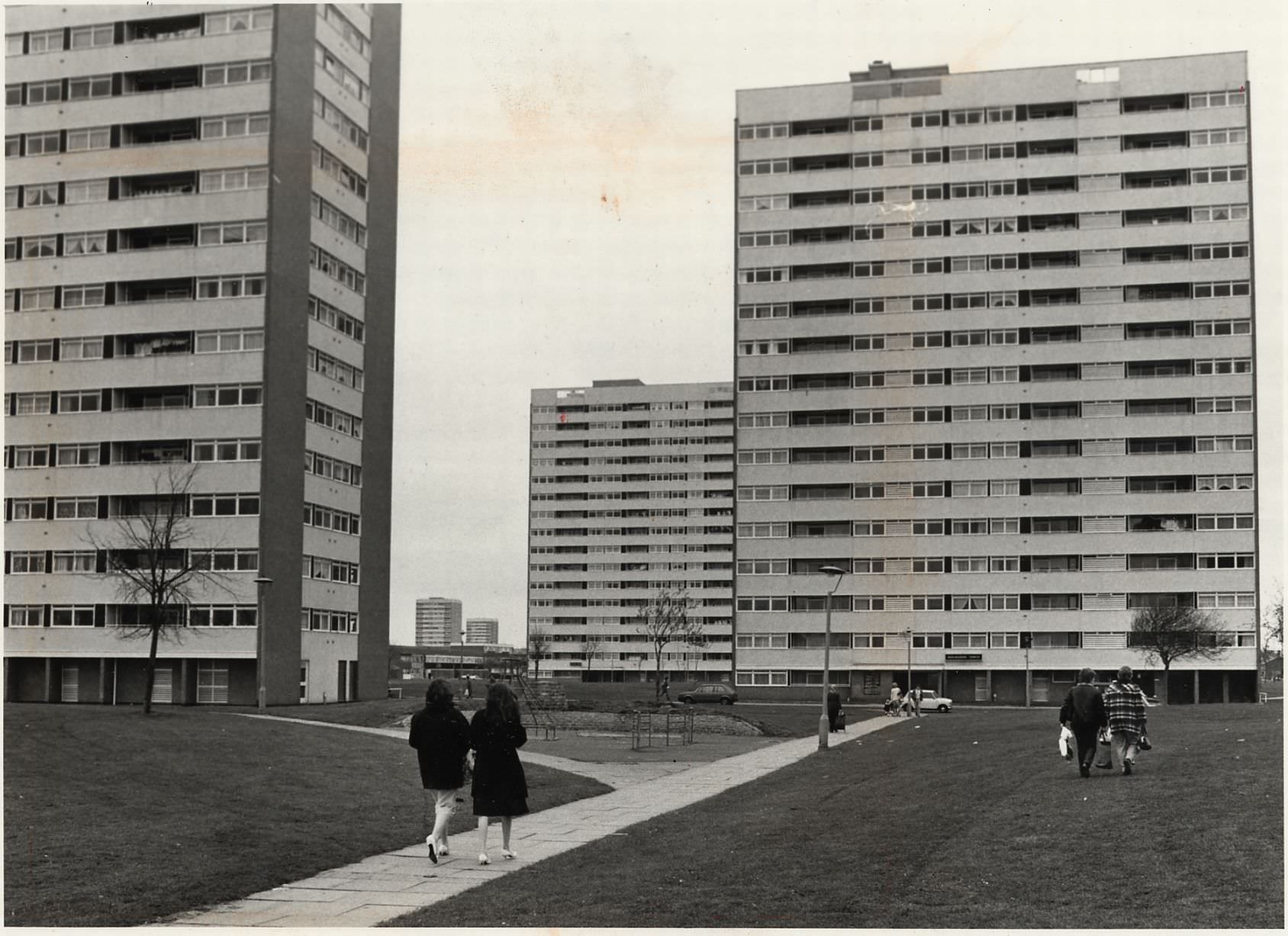
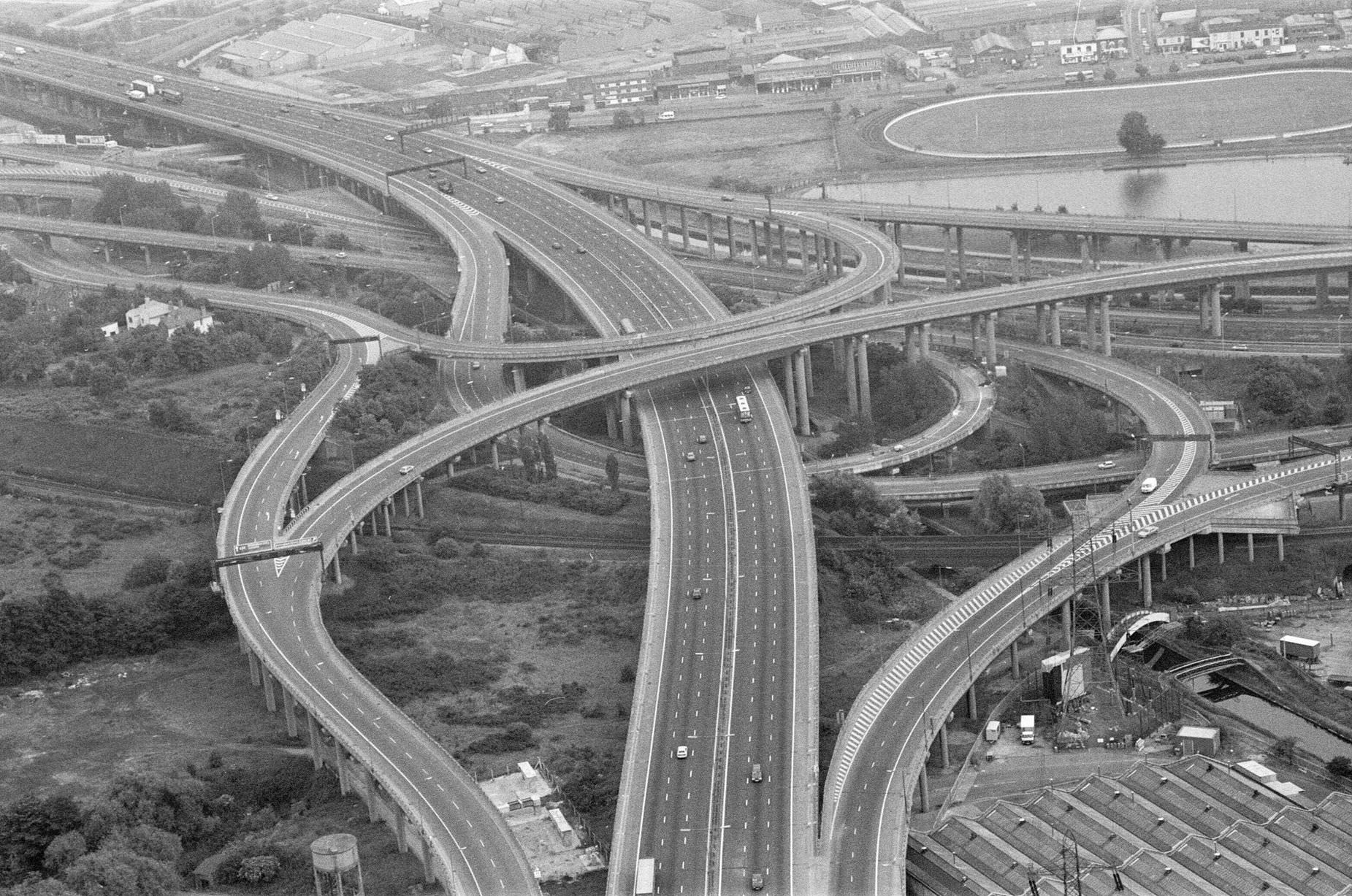
Hamleys opened a branch on Bull Street in October 1985, with the grand opening drawing excited families and children. Castle Vale’s distinctive tower blocks, photographed in April 1983, represented a style of housing that was already beginning to fall out of favour across the country. Meanwhile, the aerial view of Spaghetti Junction captured in June 1988 showed the scale of the motorway interchange that had become one of Birmingham’s most recognisable landmarks.
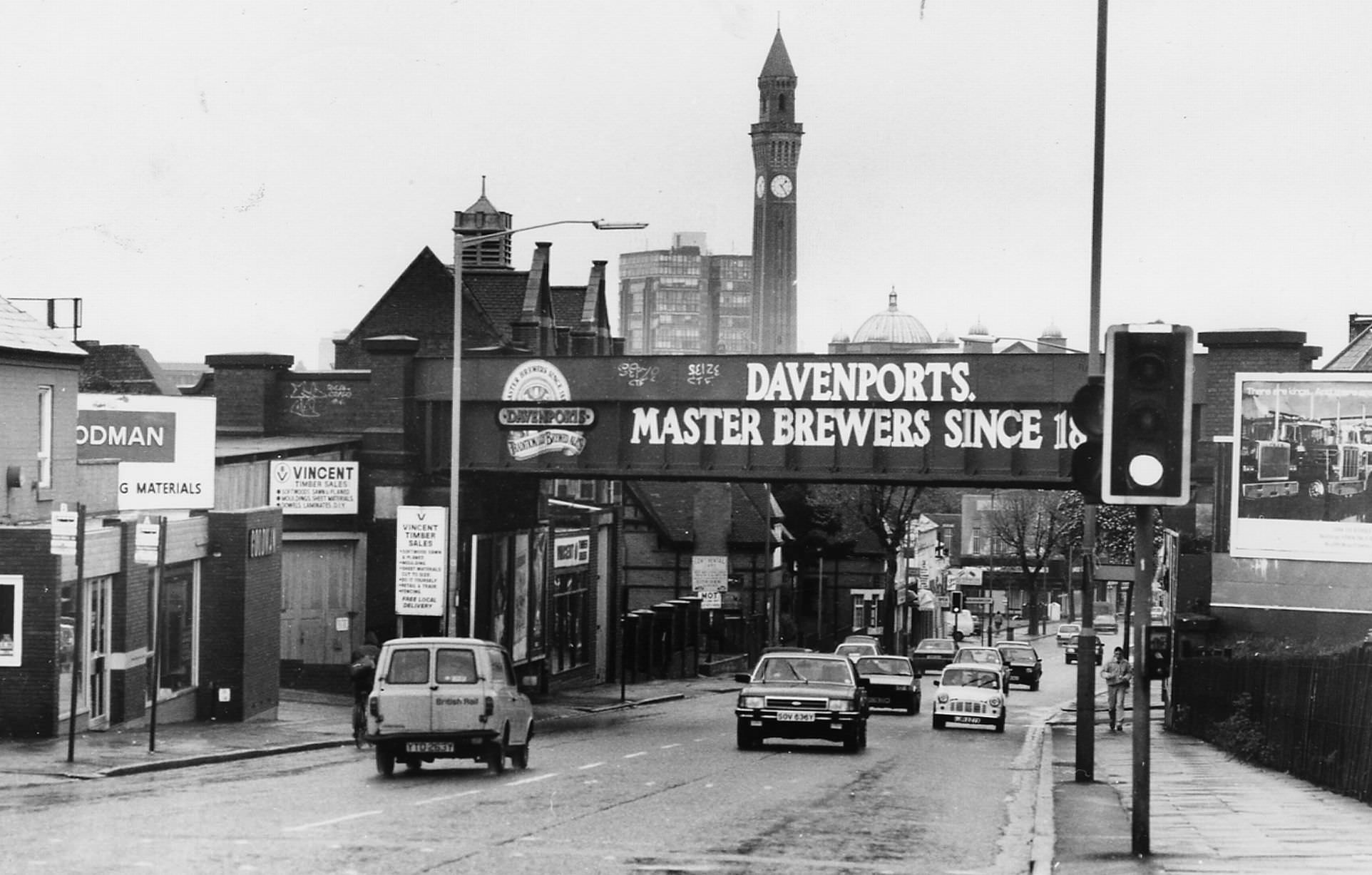
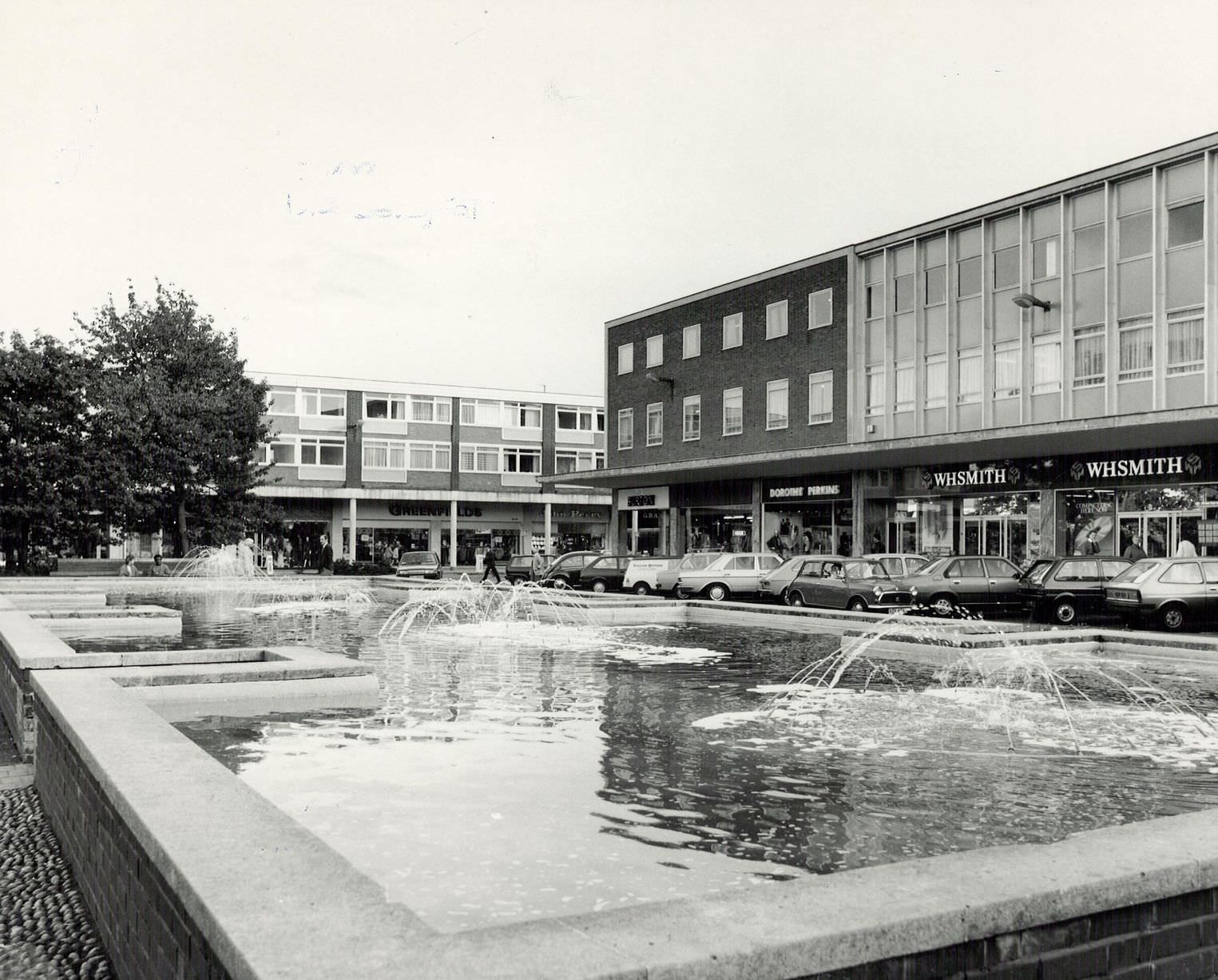
Bristol Road in Selly Oak, with its railway bridge and the University of Birmingham’s clock tower rising in the background, was photographed in May 1987 as an ordinary but telling snapshot of suburban Birmingham. Nearby Mell Square in Solihull, with its central fountains, offered a quieter suburban contrast to the city centre crowds.
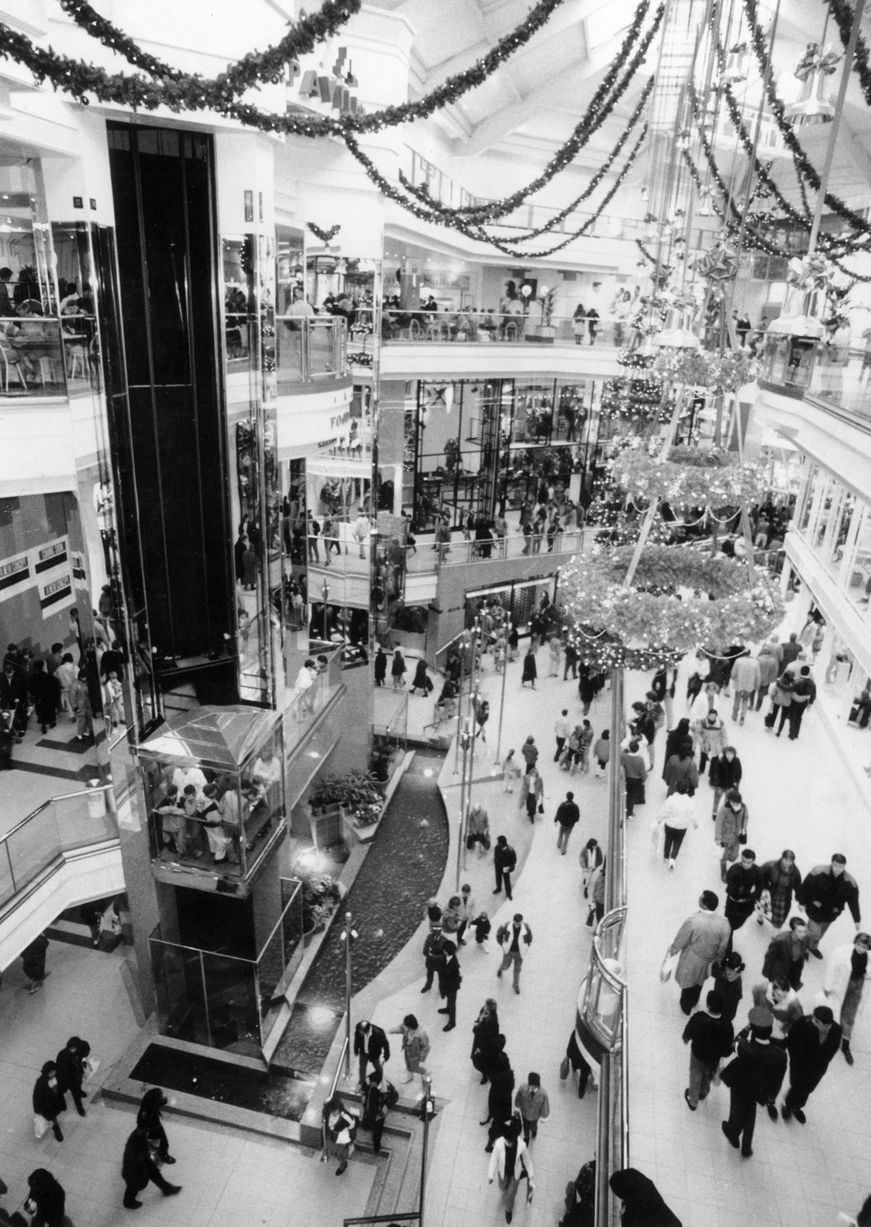
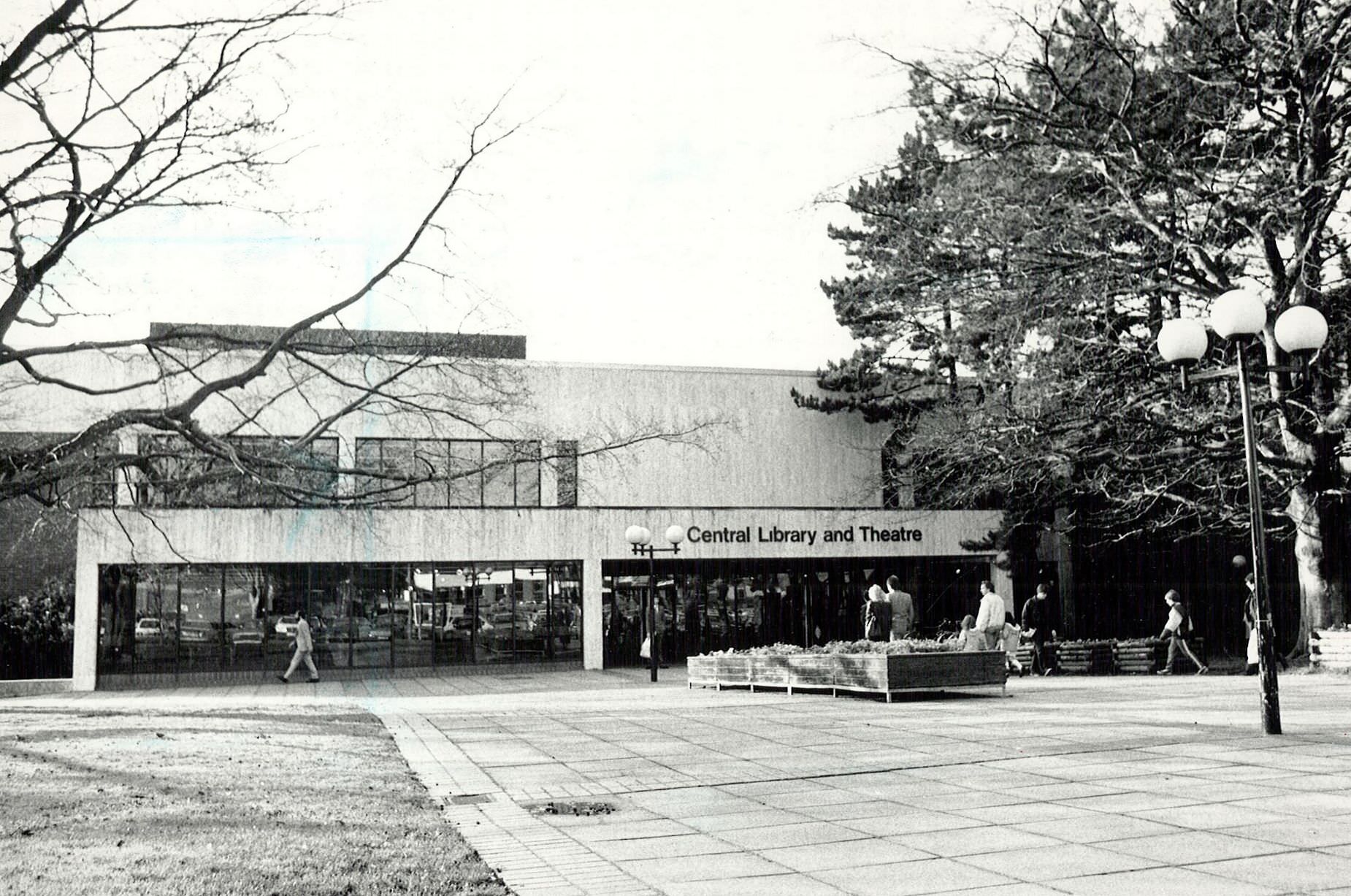
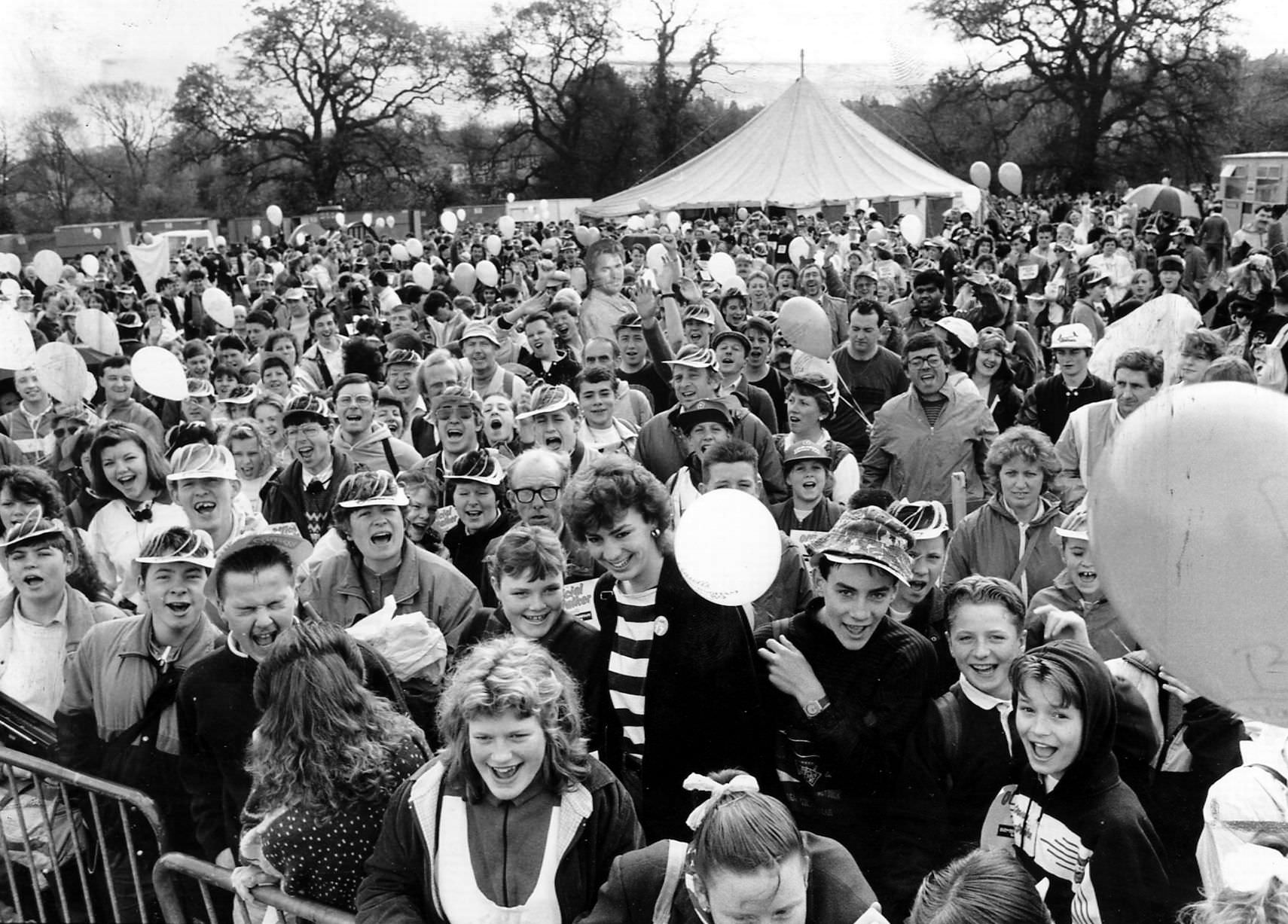
Shoppers filled the Pavilion Centre in November 1987, while Solihull Central Library and Theatre — photographed on the last day of 1987 — still stood open to the street before the Touchwood development eventually enclosed it. At Sarehole Mill in April 1989, crowds gathered for the start of a Walkathon, using one of Birmingham’s oldest surviving mill sites as a community event venue.
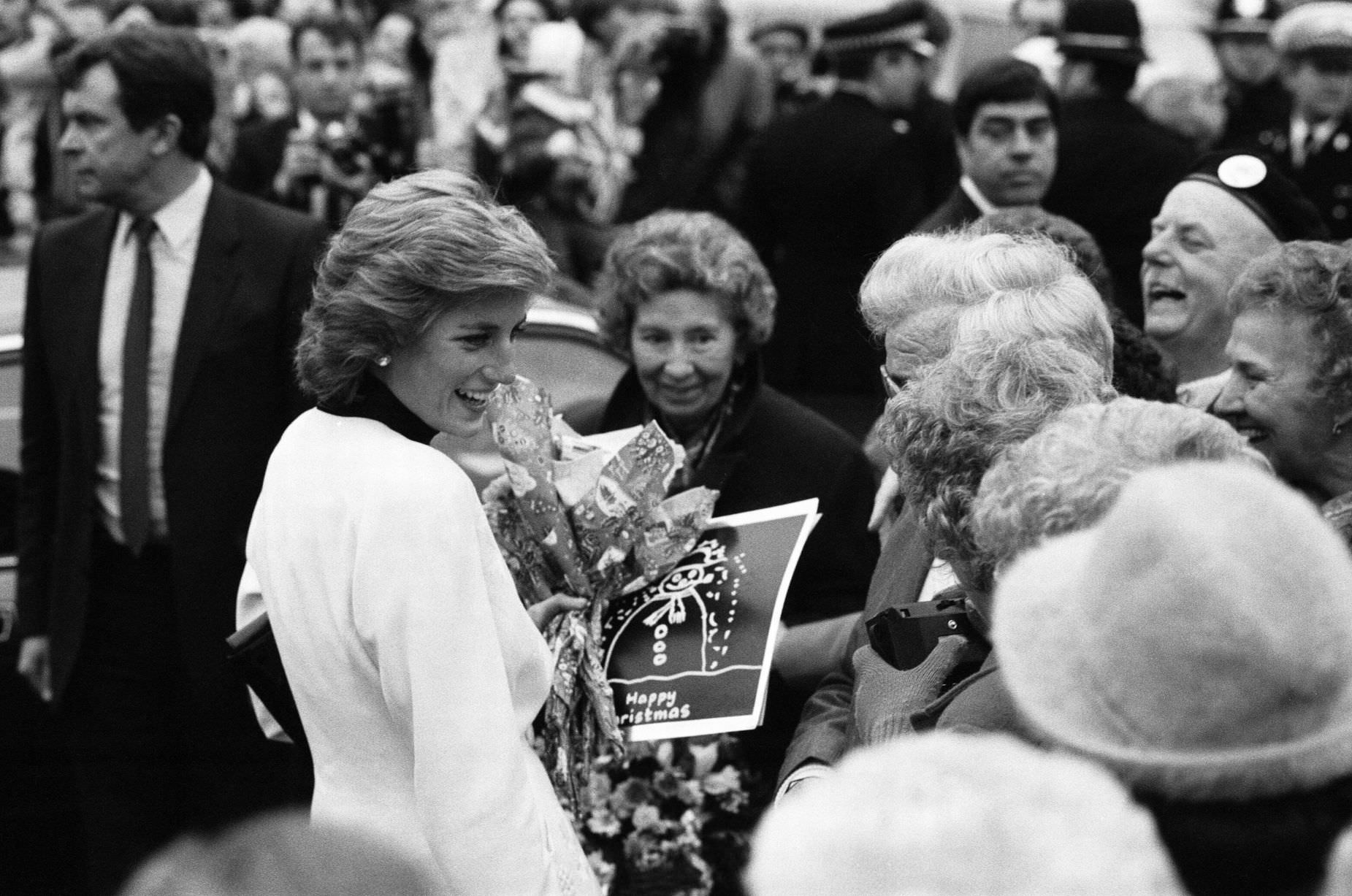
Birmingham also received new communities during the decade. Migrants arrived from Kosovo, Somalia, and other places without Commonwealth ties, adding new layers to a city that had been shaped by waves of migration for decades. In December 1988, Princess Diana officially opened Acorns Children’s Hospice, bringing national attention to a facility that would go on to serve thousands of families across the West Midlands.





We had colour film in the 80s.
Birmingham was 1,000 times better then. Today’s version is rubbish and in serious, possibly irreversible decline. It’s no longer the UK’s second city and has been left in the dust by Manchester.
The local die hards will disagree vehemently. But just because I may be in a minority of one does not mean I’m wrong.
Kinda sad that Birmingham isn’t as thriving anymore
Ok grandad
Completely predictable.
Get out and about. See what is happening in other British cities and you’ll quickly see that Birmingham is the Land That Time Forgot.
I’ll repeat
Ok grandad