

Madison, Wisconsin has always been a city that defies easy description. It is the state capital, a major university town, a hub of agricultural commerce, and a place shaped by lakes at nearly every turn. In the 1980s, all of these qualities were on full display — in the students crossing Bascom Hill in the fog, in the vendors lining State Street, and in the quiet glow of sunsets over Lake Mendota. The photographs collected here capture a city that was busy, vibrant, and unmistakably itself.
Madison was founded in 1836 by James Duane Doty, a former federal judge and land speculator who named the new settlement after President James Madison, who died that same summer. When Wisconsin achieved statehood in 1848, Madison became an official city with a population of 6,864. Its earliest settlers came from the eastern United States — Yankees who were soon followed by waves of German, Irish, and Norwegian immigrants. By the early 20th century, Italians, Greeks, Jewish communities, and African Americans had all made Madison their home, adding new layers to a city already defined by its diversity.
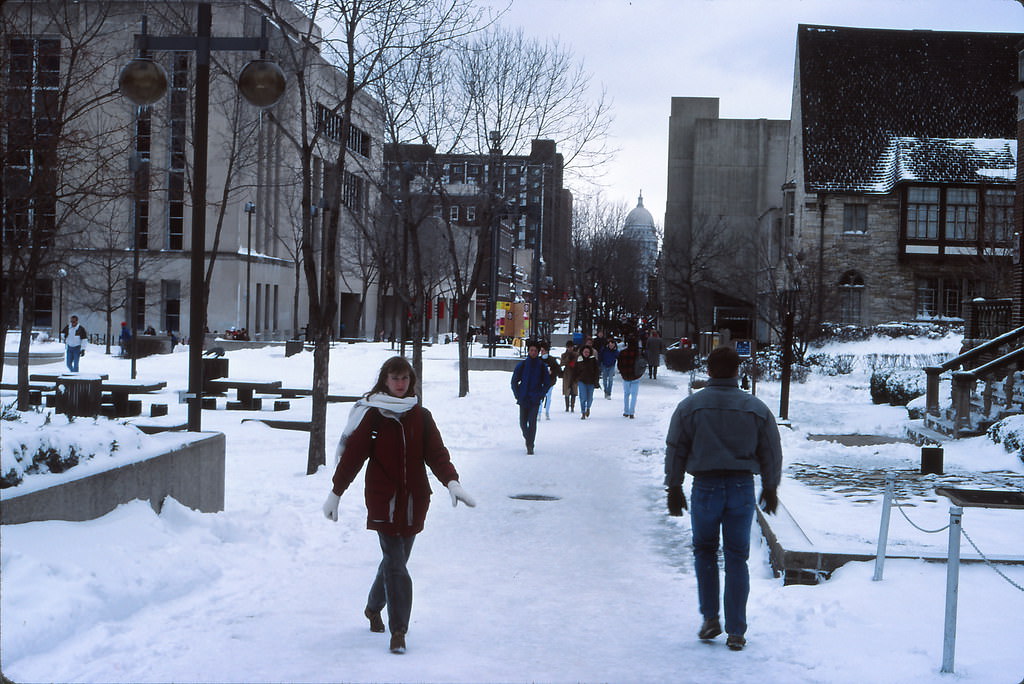
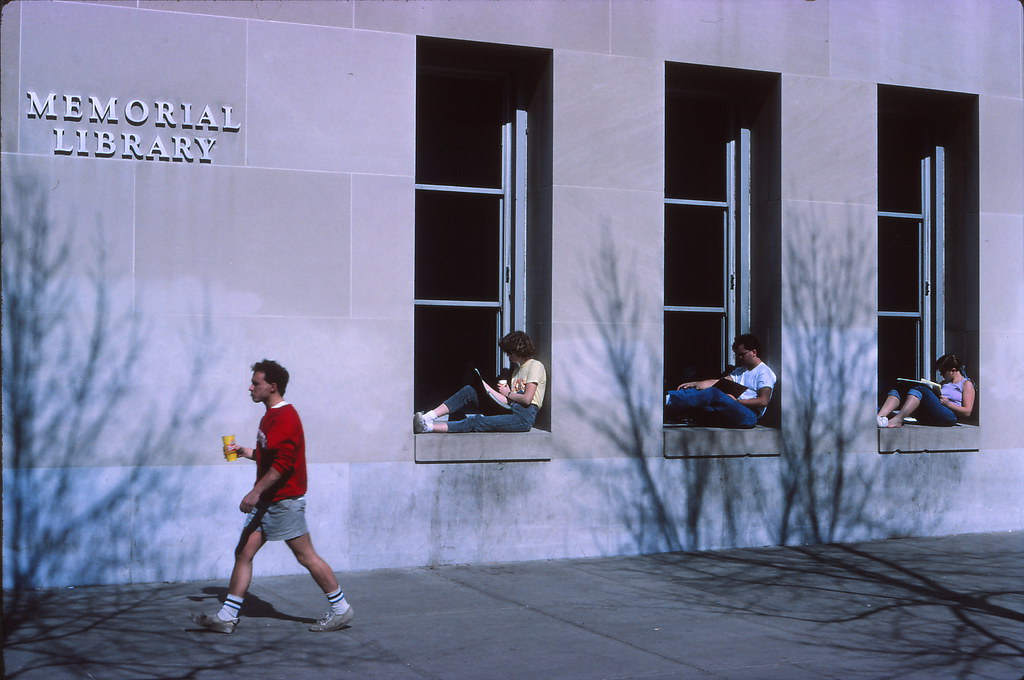
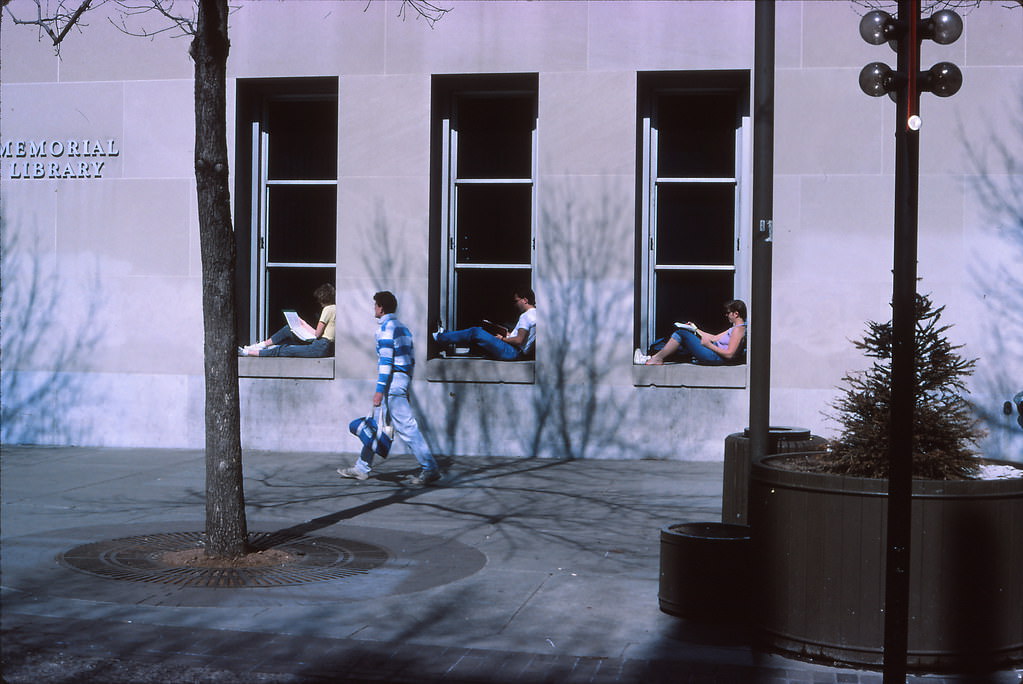
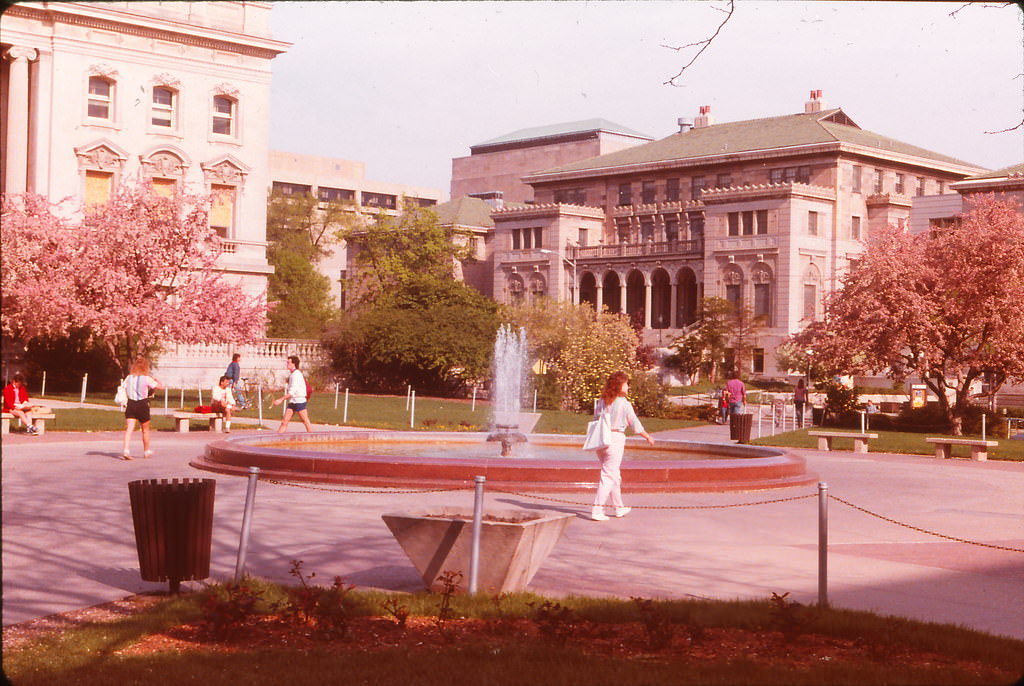
The University of Wisconsin-Madison sat at the heart of city life throughout the decade. Library Mall was a constant gathering place — students moved through it between classes, activists set up tables there, and musicians played on its open stretch. The mall connected the academic core of campus to the wider city in a way that few university spaces manage. On any given day in the 1980s, it reflected the full range of campus energy.
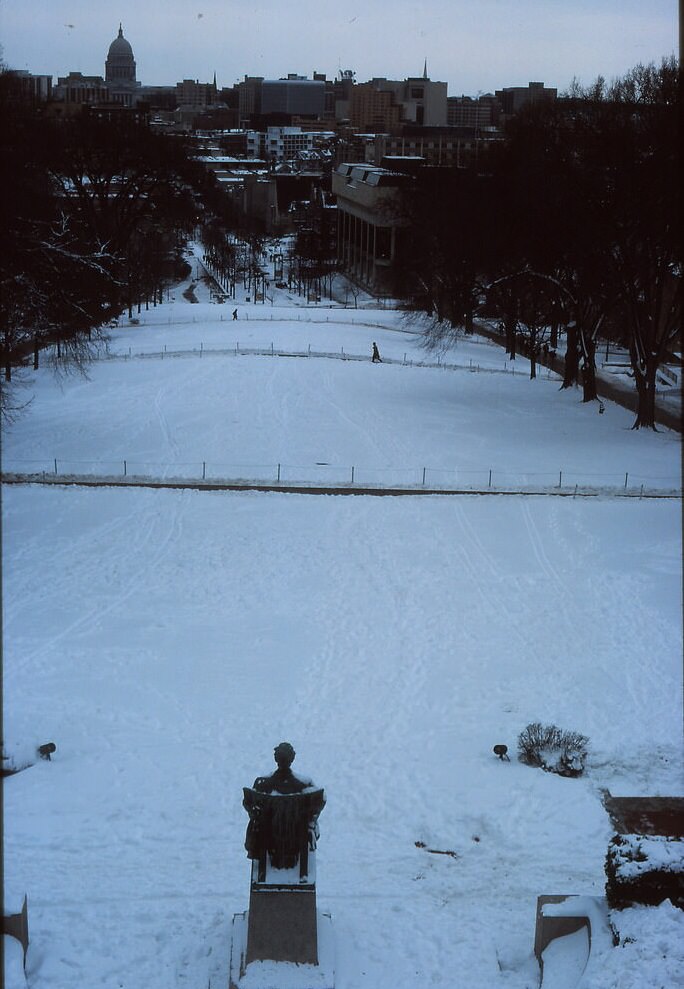
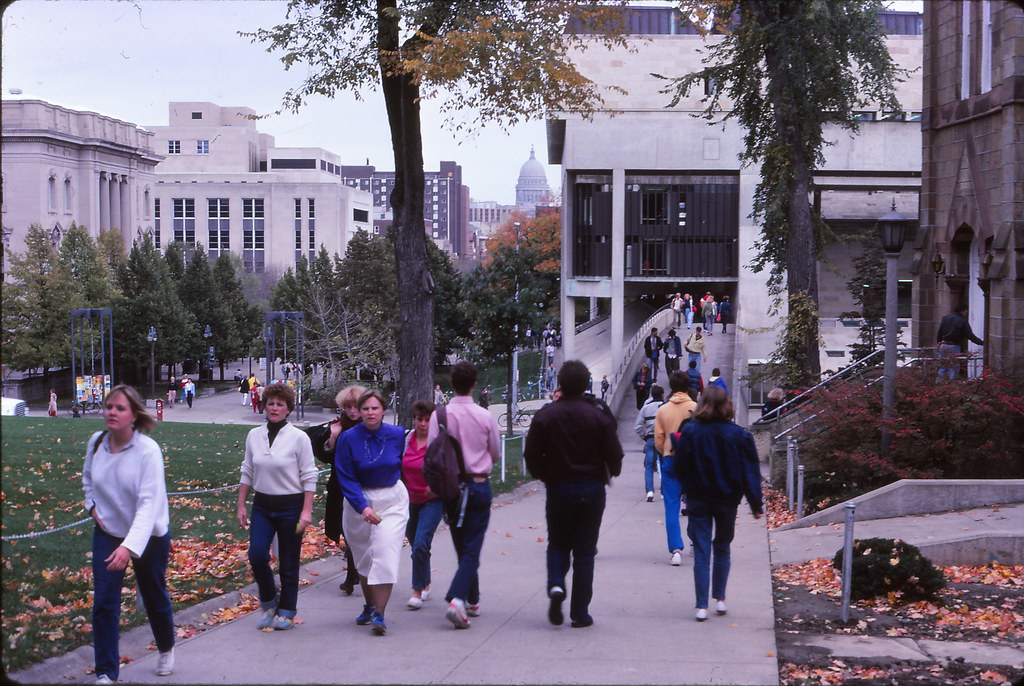
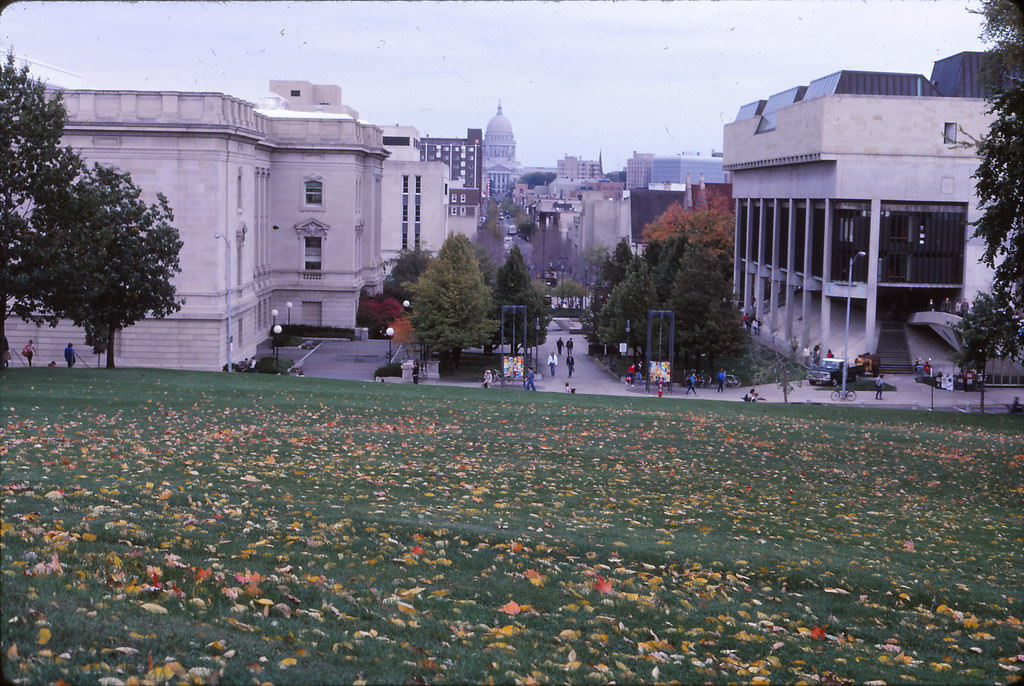
One of the most striking views in Madison was — and remains — the sight line from Bascom Hall down Bascom Mall toward the State Capitol dome in the distance. In the 1980s, that view made the relationship between the university and state government feel almost architectural. The two institutions shared a city, a history, and in many ways, a purpose. The Capitol sat at one end of State Street; the university sat at the other.
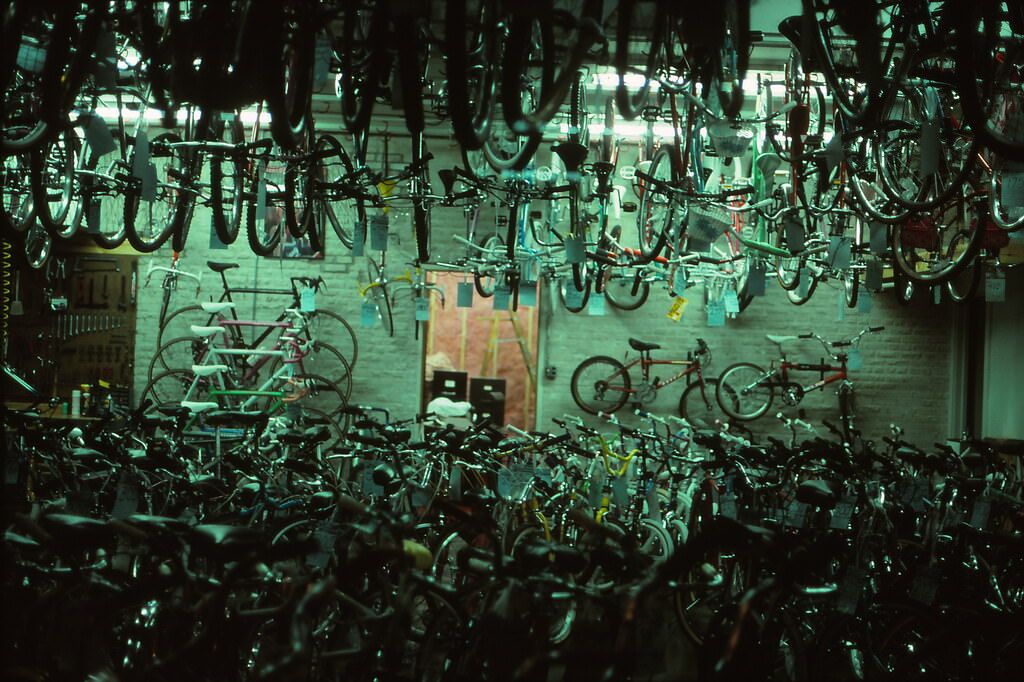
Madison’s identity as a bicycle city was well established long before the 1980s, but the decade saw that culture in full swing. Bike shops like Budget Bike on Regent Street were neighborhood fixtures. The city’s network of bicycle paths attracted residents year-round — even in the cold Wisconsin winters. Madison’s flat terrain near the lakeshore and its dense network of paths made it one of the most bike-friendly cities in the Midwest.
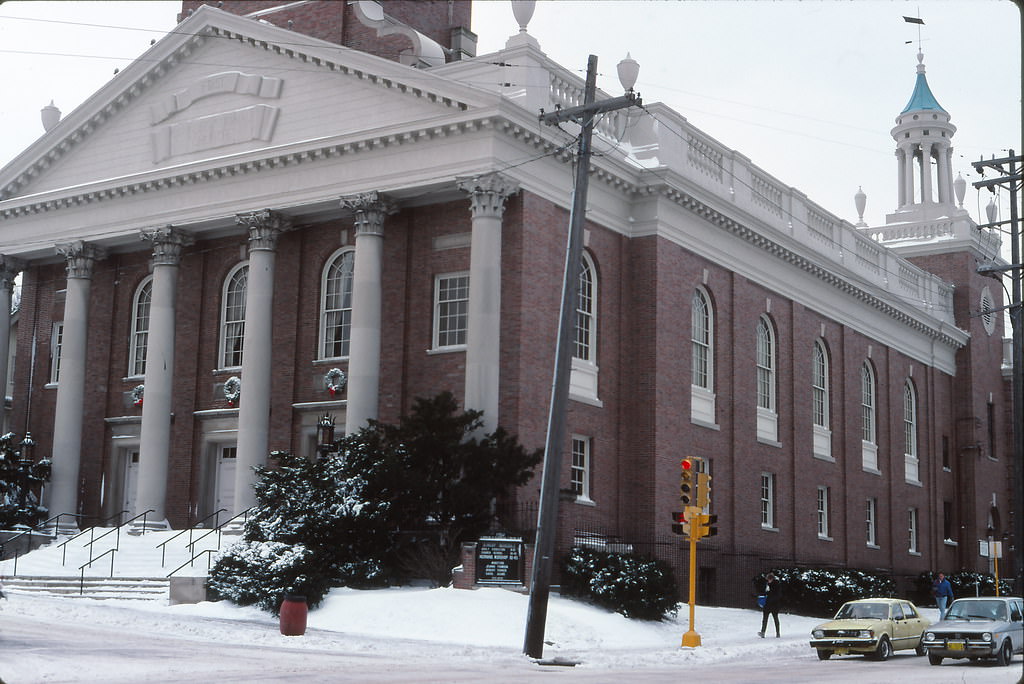
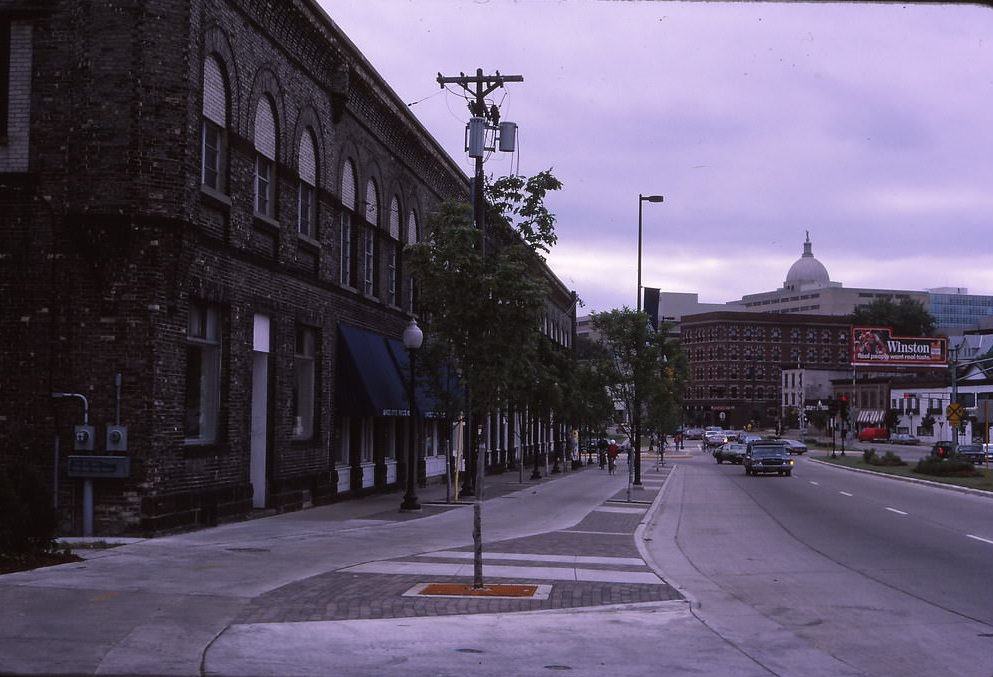
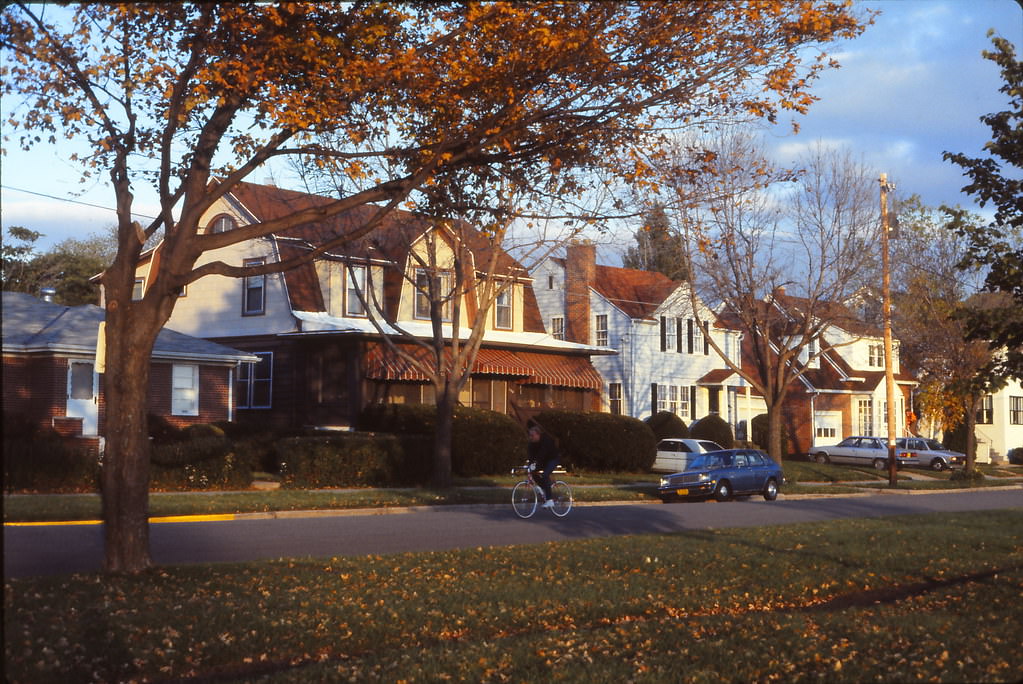
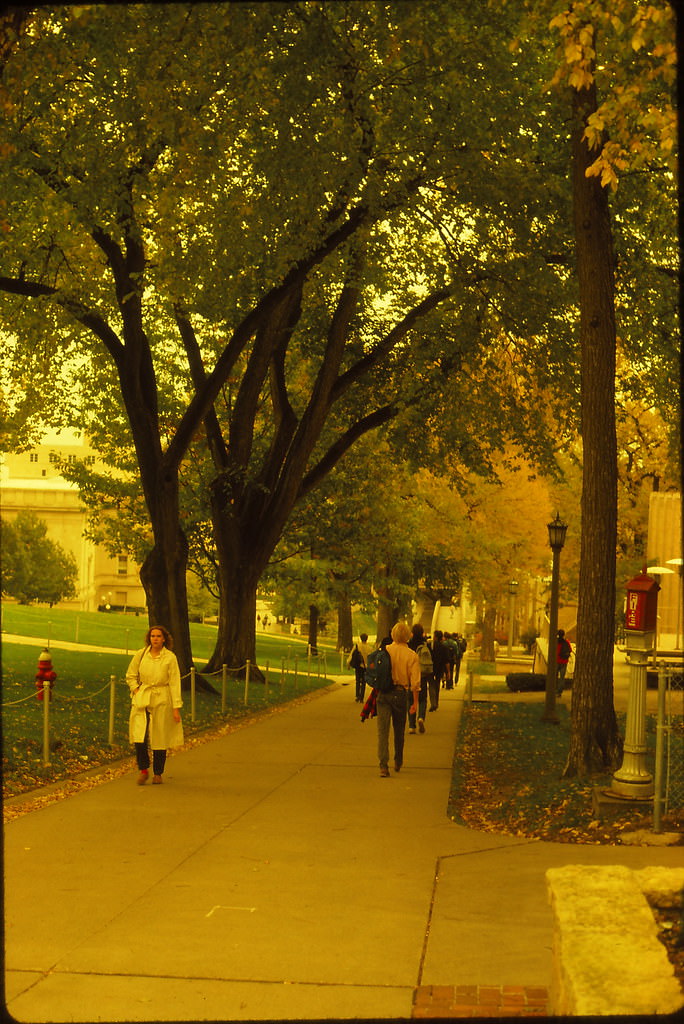
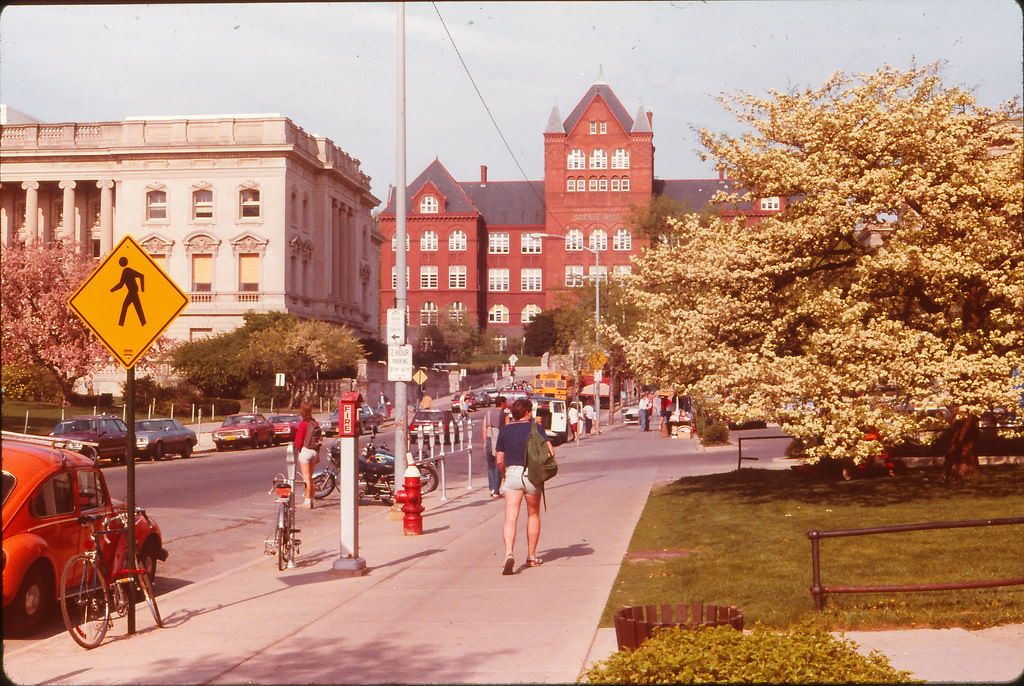
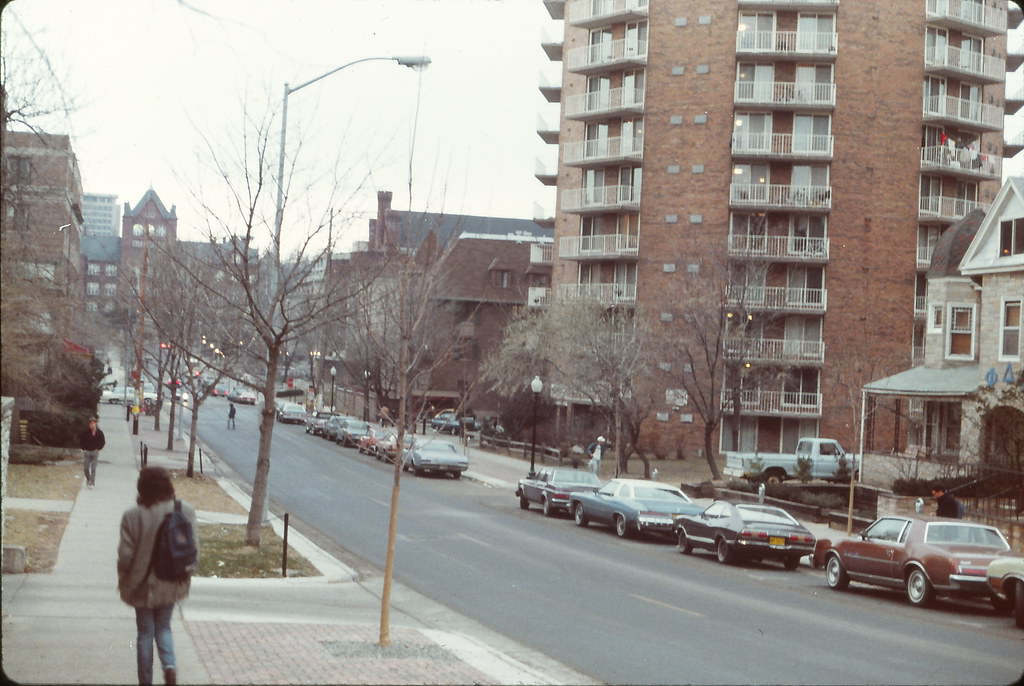
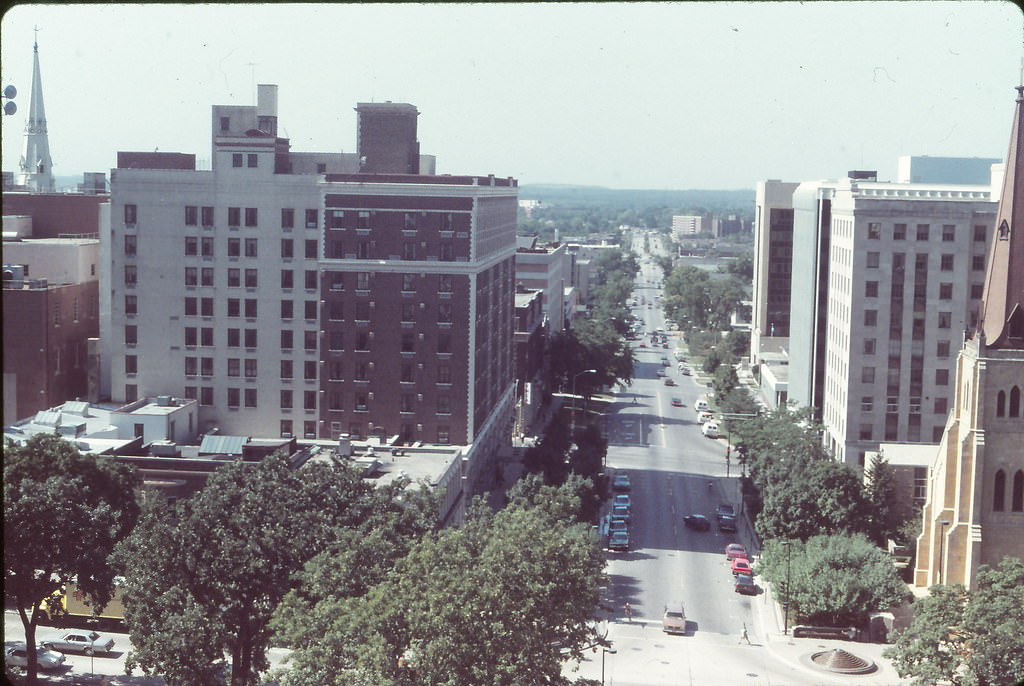
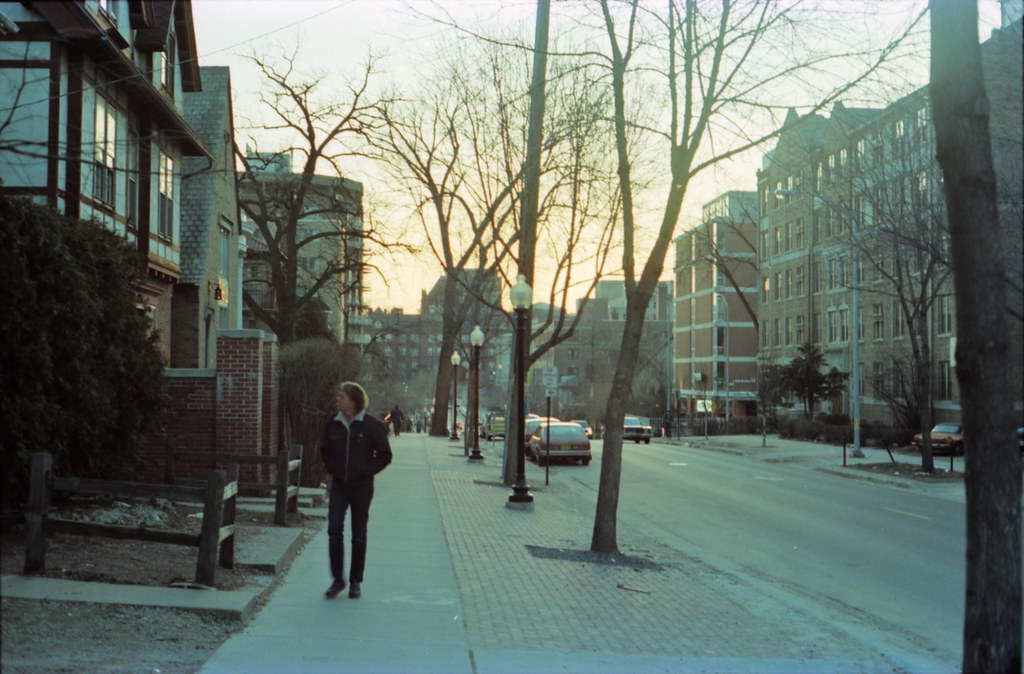
Spring in Madison was a genuine event. After long, often brutal Wisconsin winters, May brought students and residents alike back outdoors. The city’s parks and lakeshores filled up quickly. Fairchild Street, running toward State Street, was typical of Madison’s neighborhood corridors — tree-lined, walkable, and lined with the kind of everyday architecture that gave the city its grounded character.
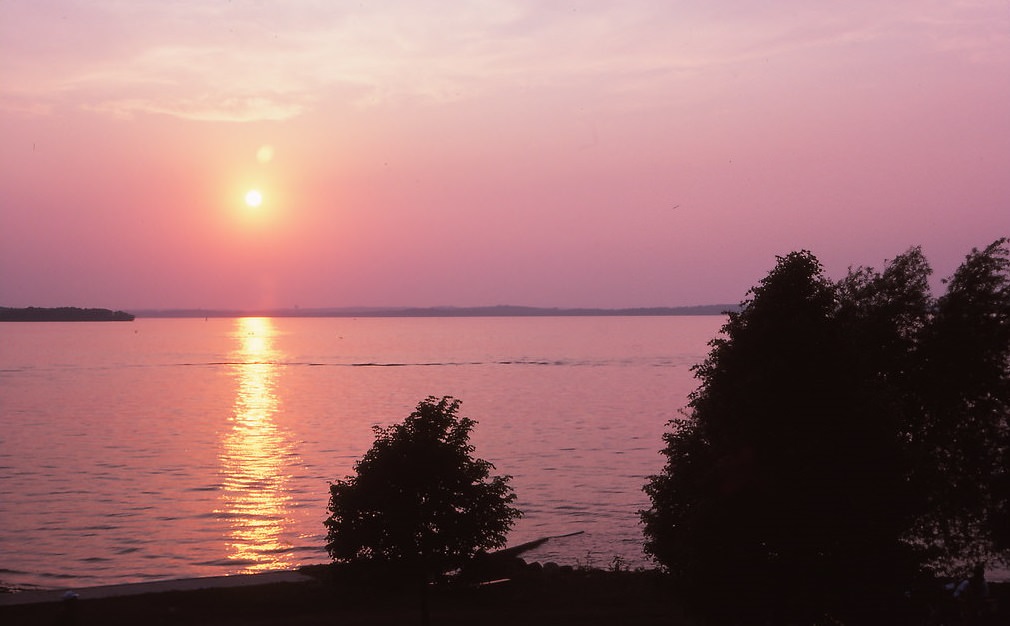
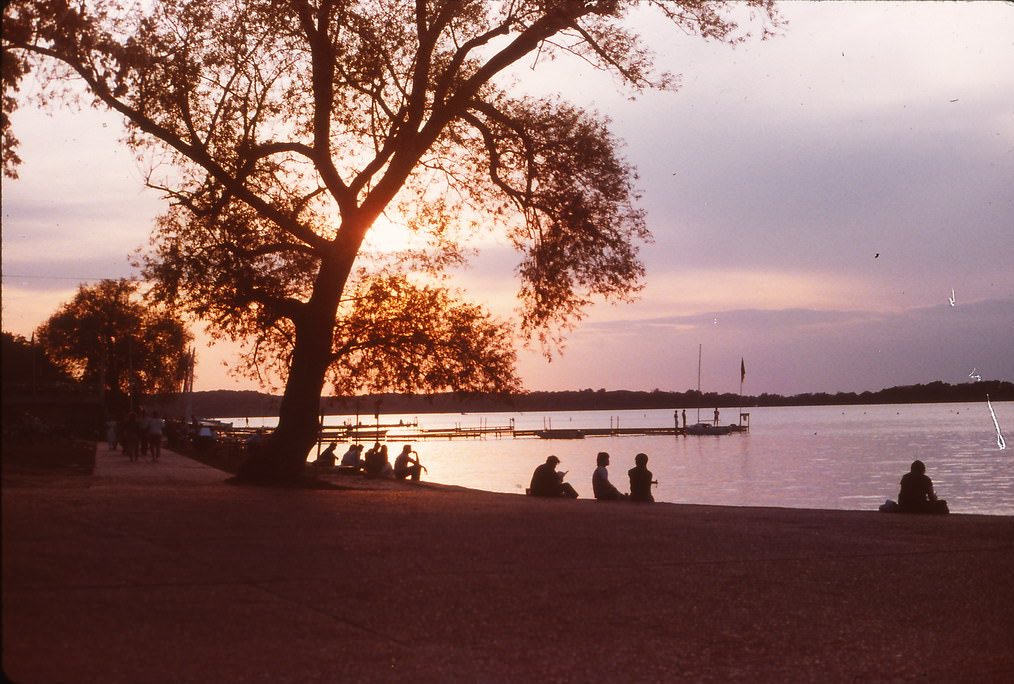
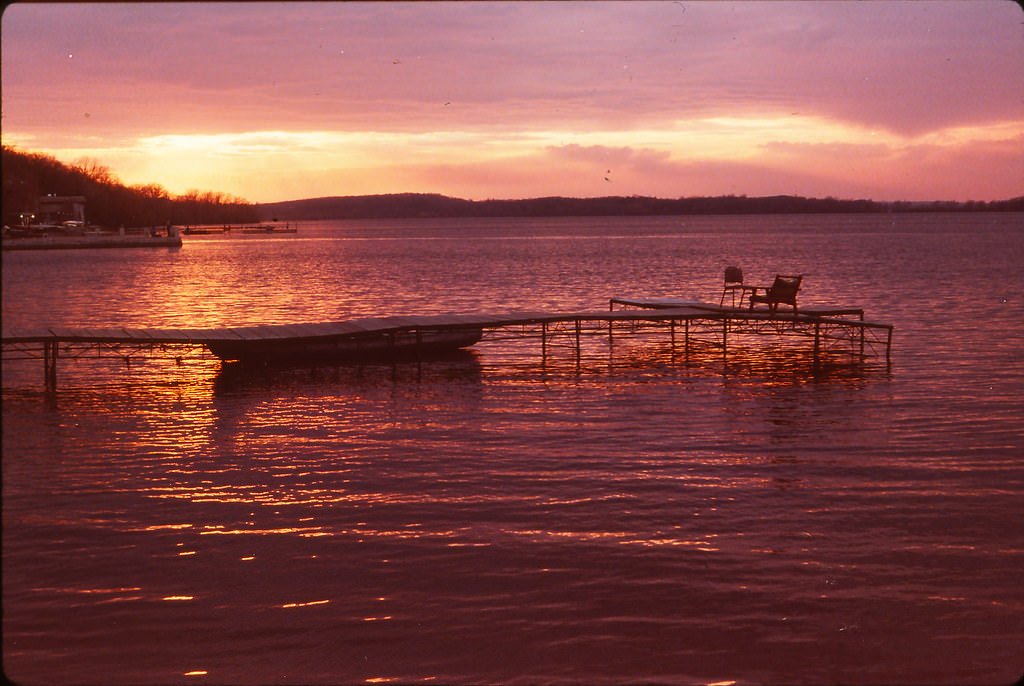
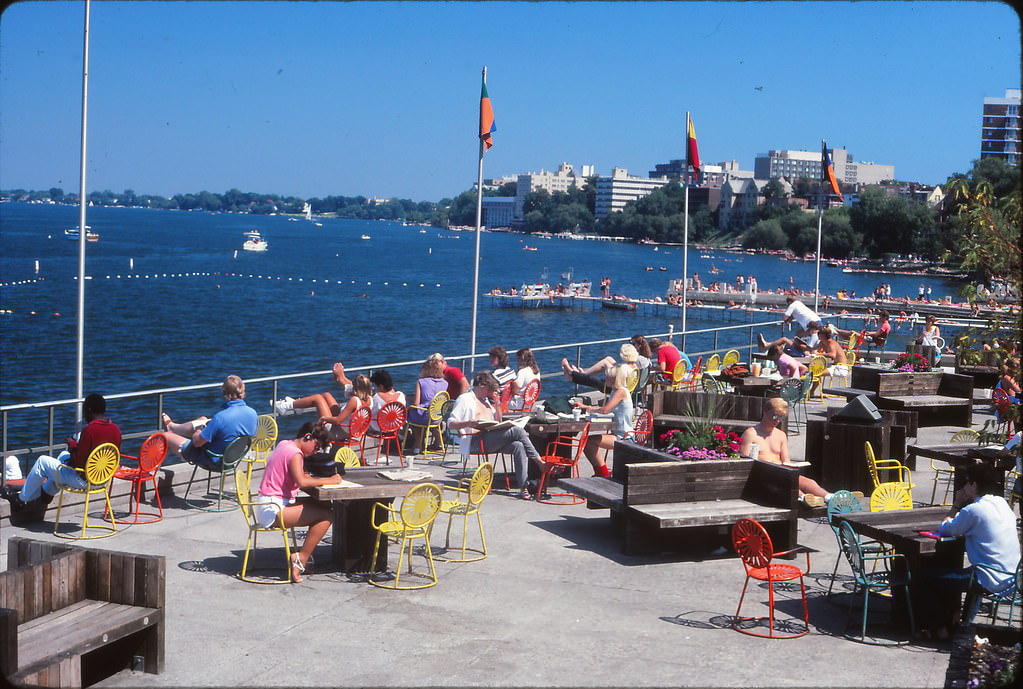
Lake Mendota, the larger of Madison’s two central lakes, was a defining feature of life in the city. It bordered the north side of the UW campus and offered some of the most photographed scenery in Wisconsin. Sunsets over the lake drew onlookers to the shoreline regularly, and the Memorial Union Terrace — right on the water’s edge — became one of the most beloved outdoor spaces in the entire state.
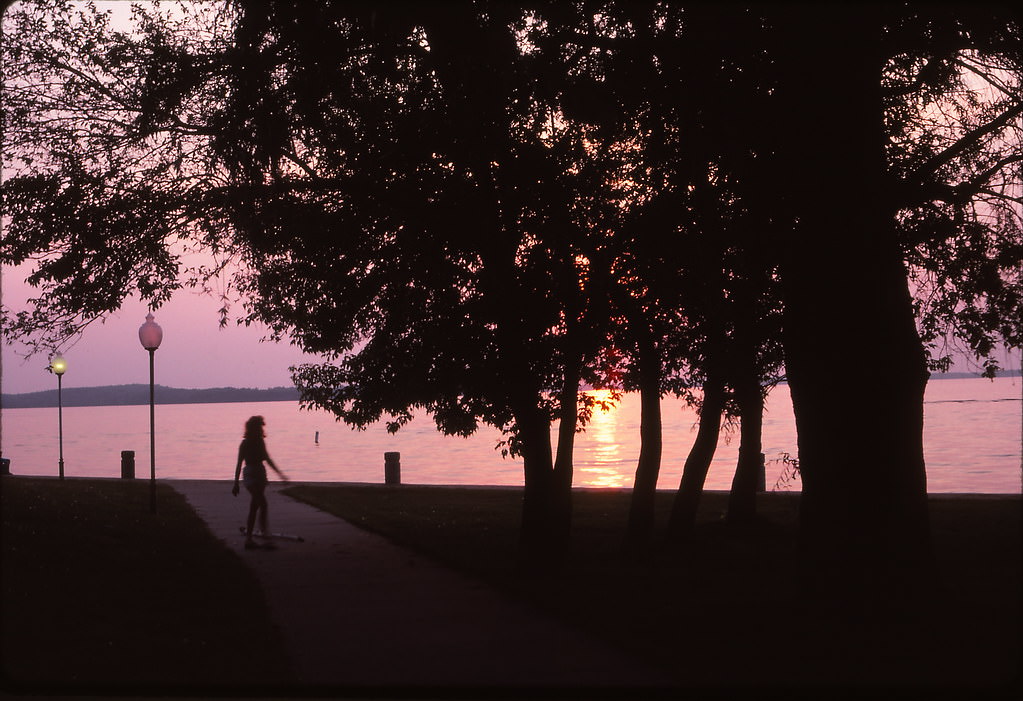
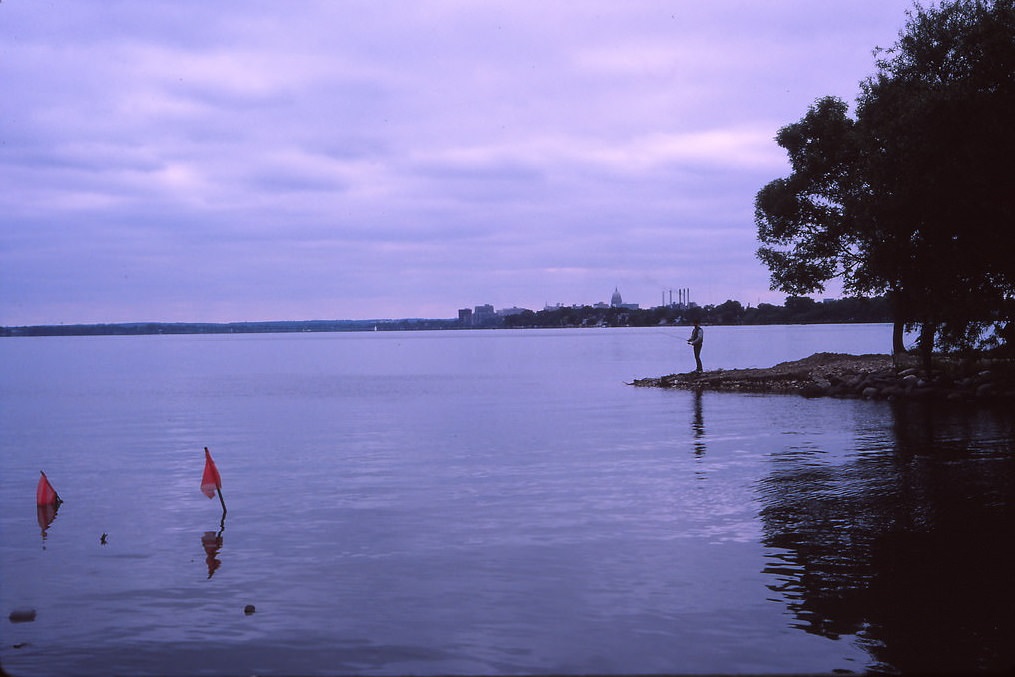
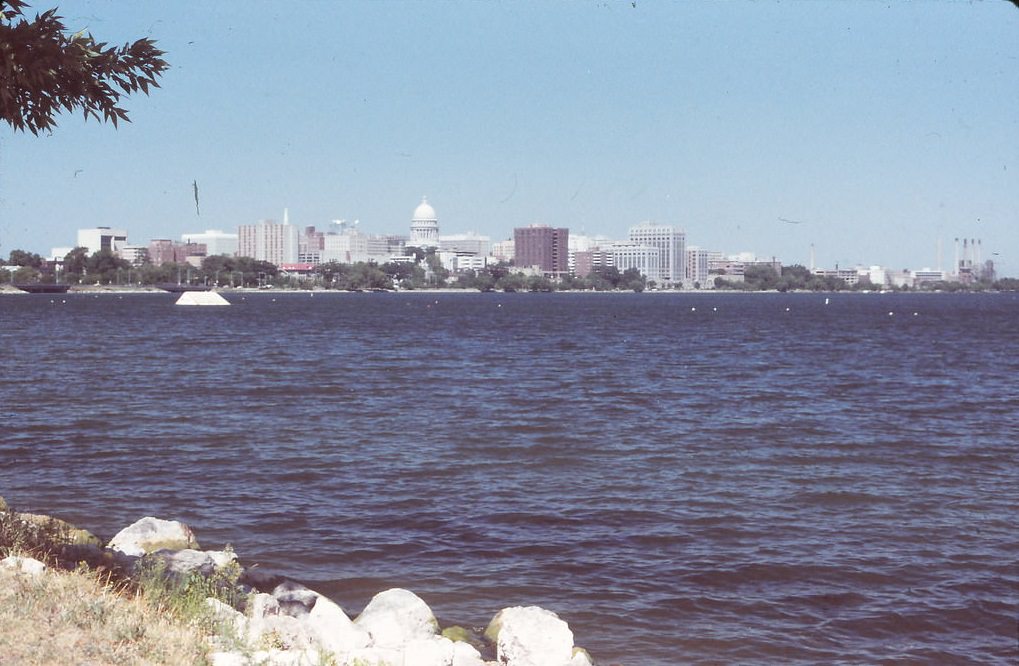
Lake Monona sat on the opposite side of downtown from Lake Mendota, flanking the city to the southeast. Together, the two lakes gave Madison its famous isthmus geography — a narrow strip of land connecting two bodies of water. In spring, Lake Monona’s shoreline was a favorite escape from the pressures of campus and city life alike.
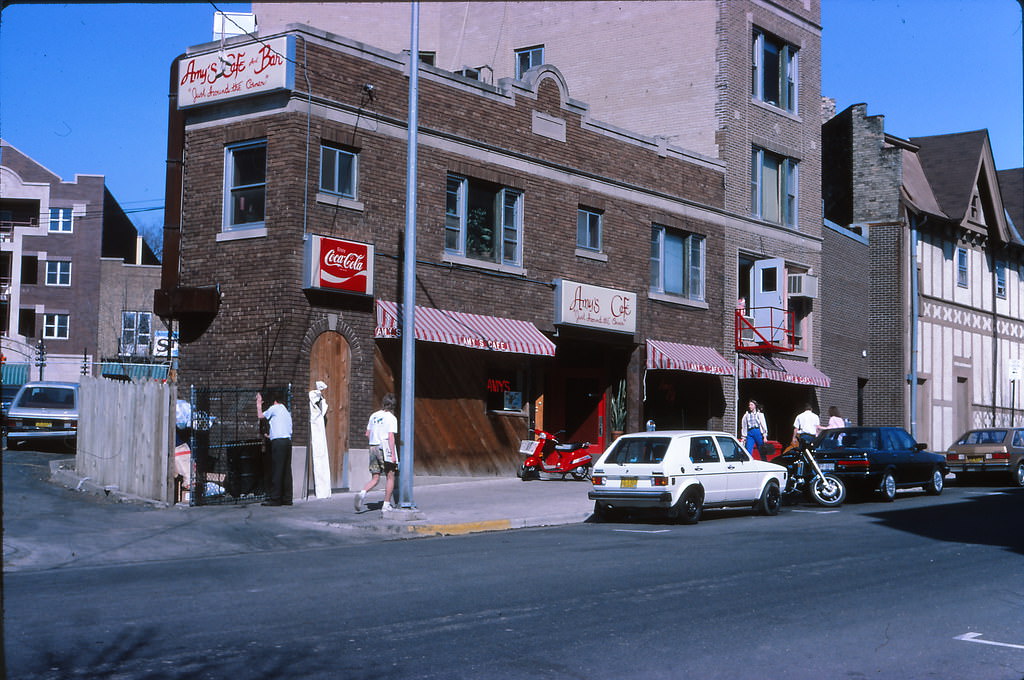
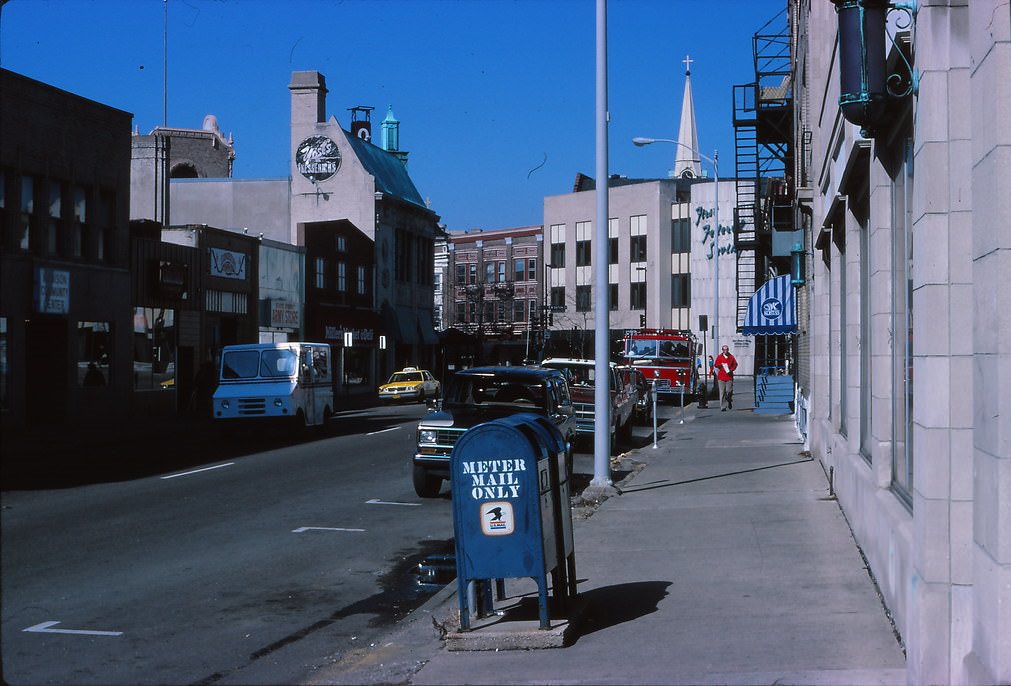
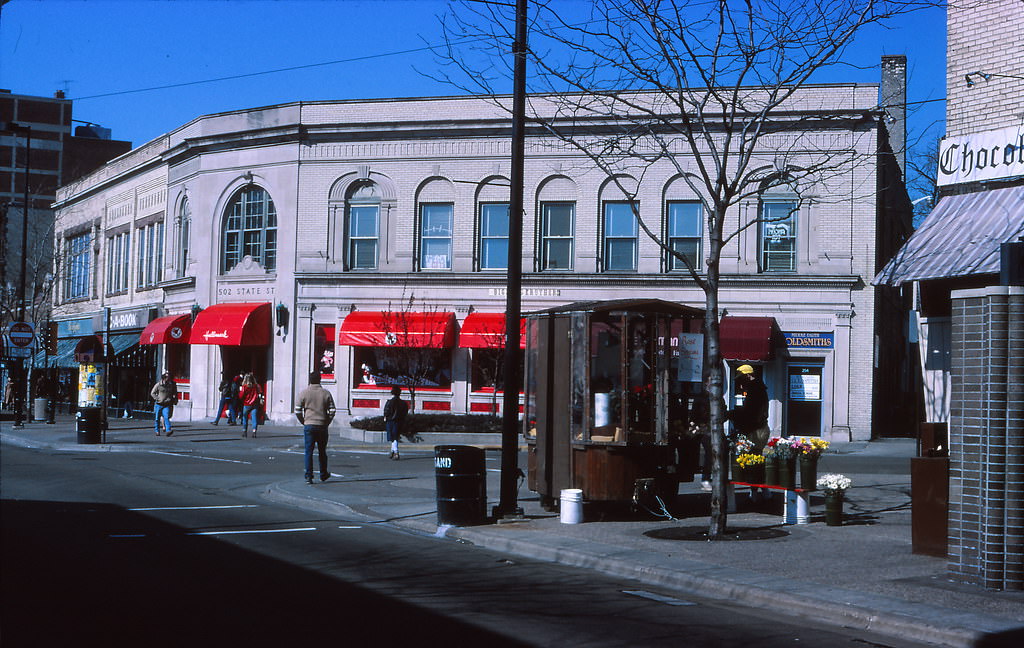
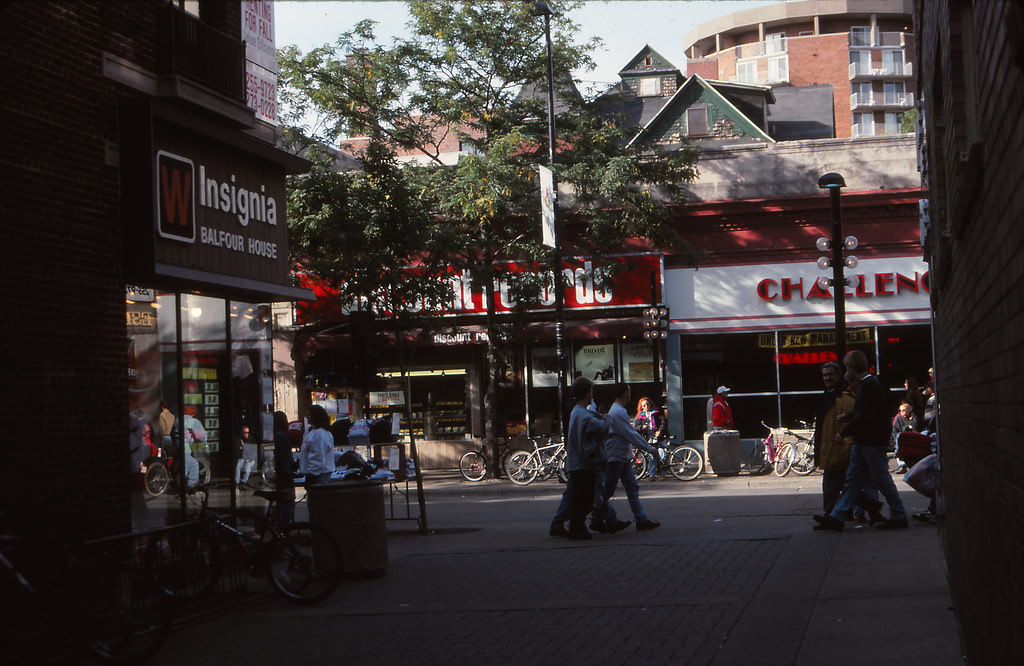
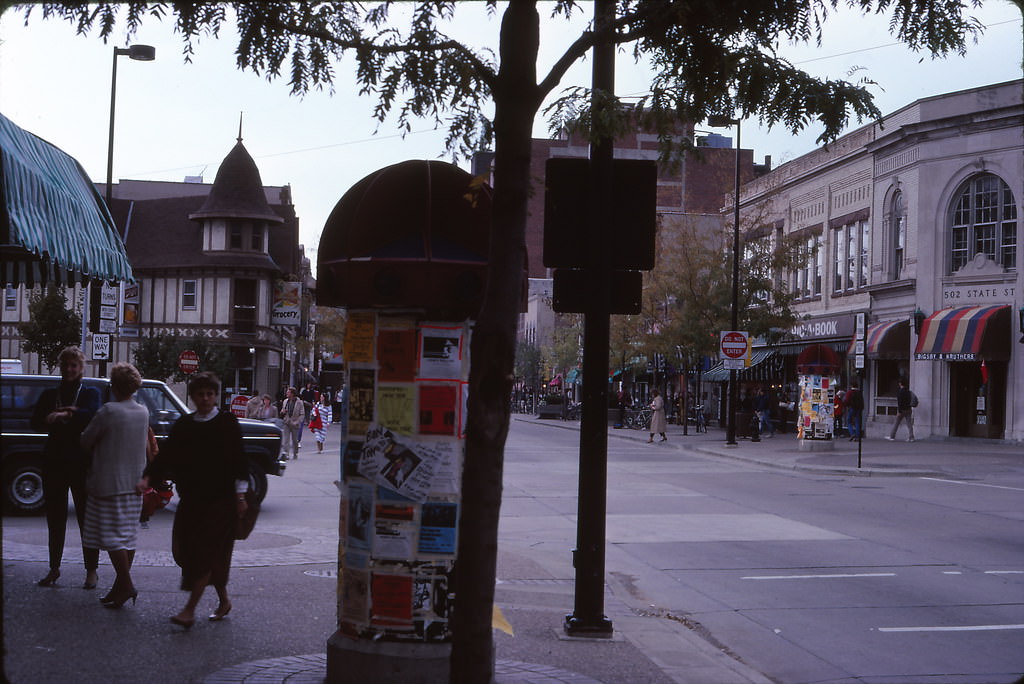
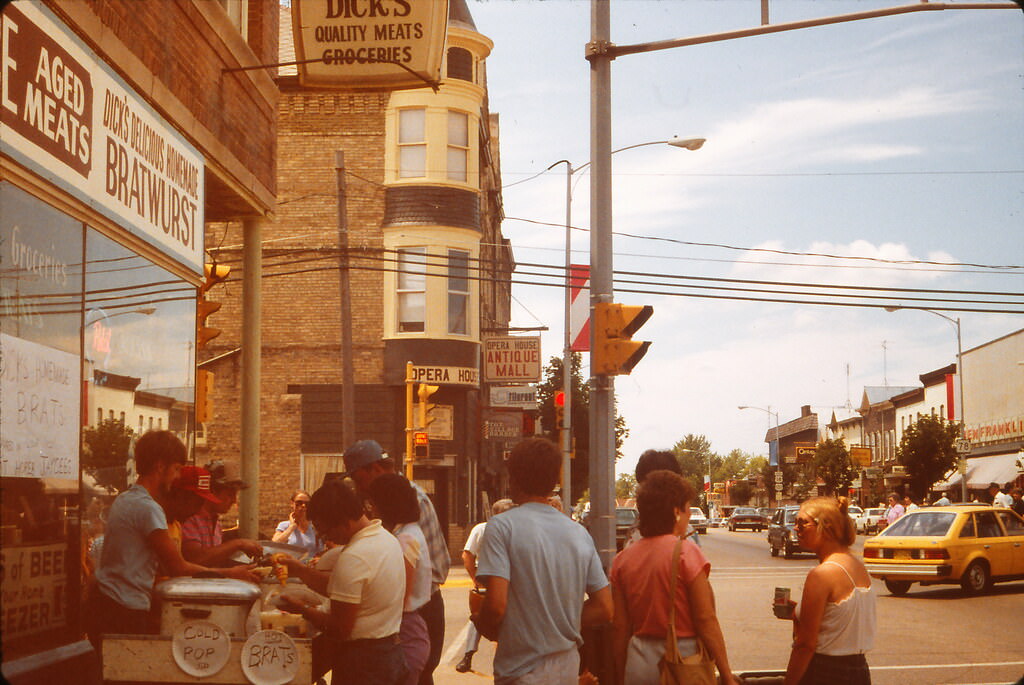
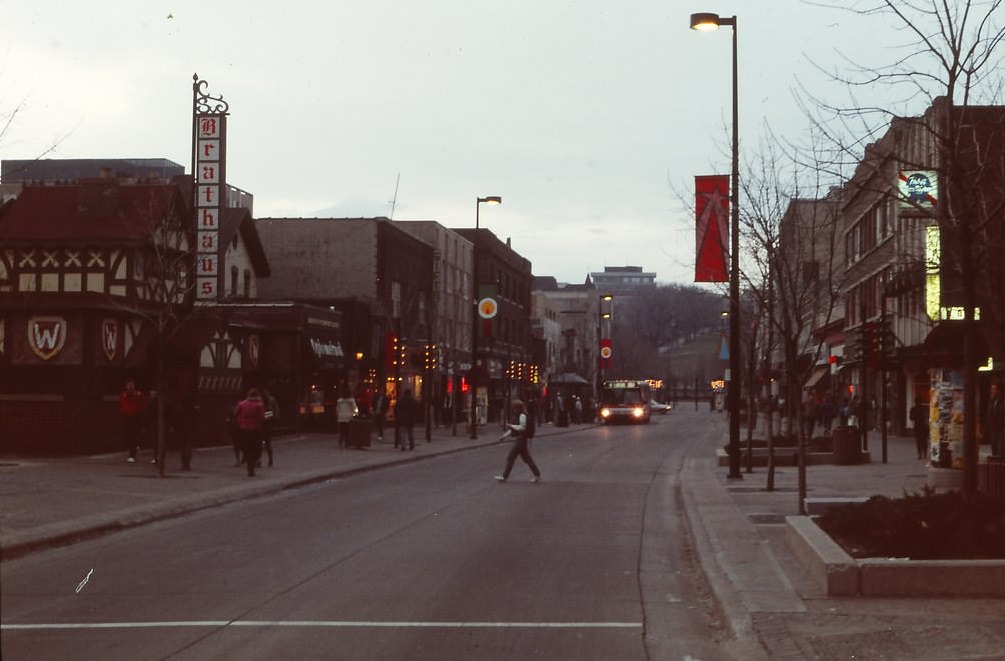
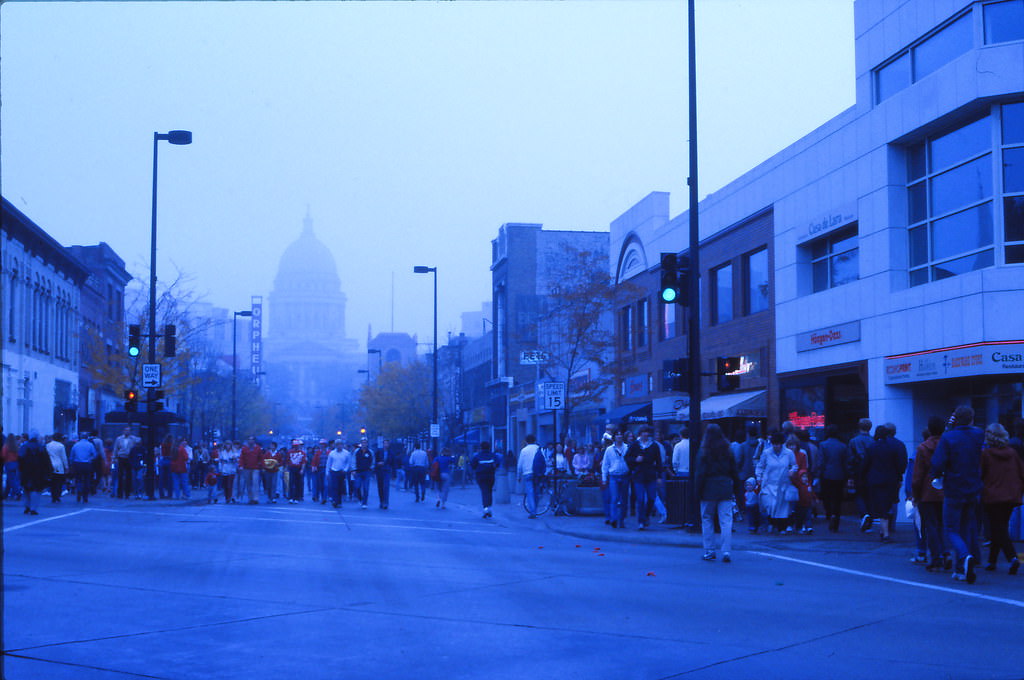
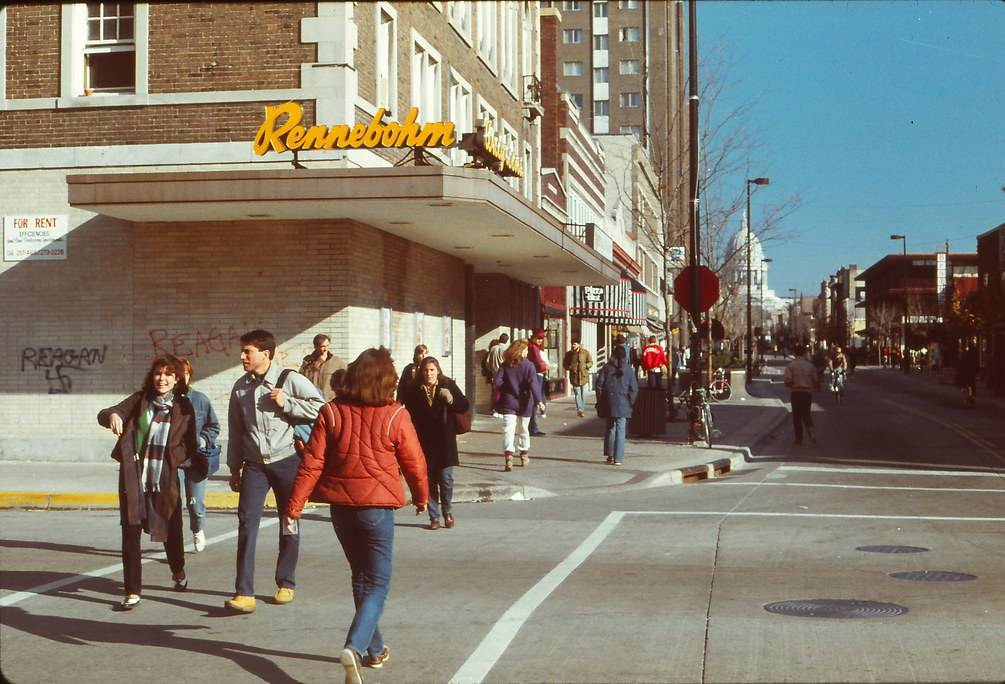
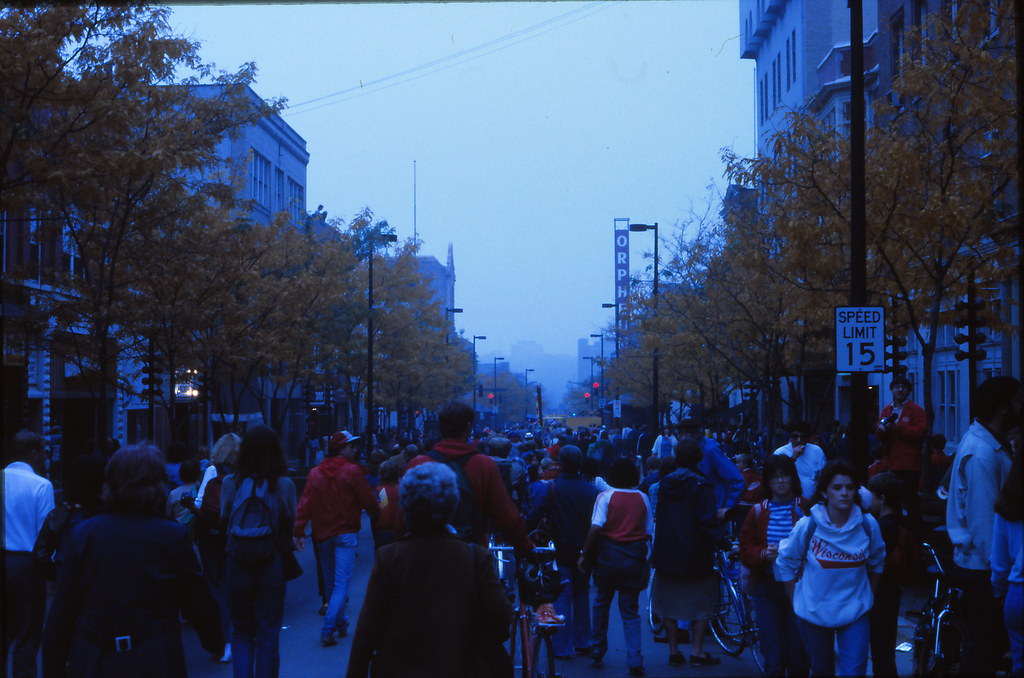
The corner of State Street and Fairchild was one of the busiest intersections in the city. State Street itself was Madison’s social spine — a pedestrian-friendly corridor stretching from the Capitol to the university, lined with shops, restaurants, bars, and theaters. In March 1987, the street showed its usual mix of foot traffic and storefronts, still months away from the summer crowds that would pack it during events like Maxwell Street Days.
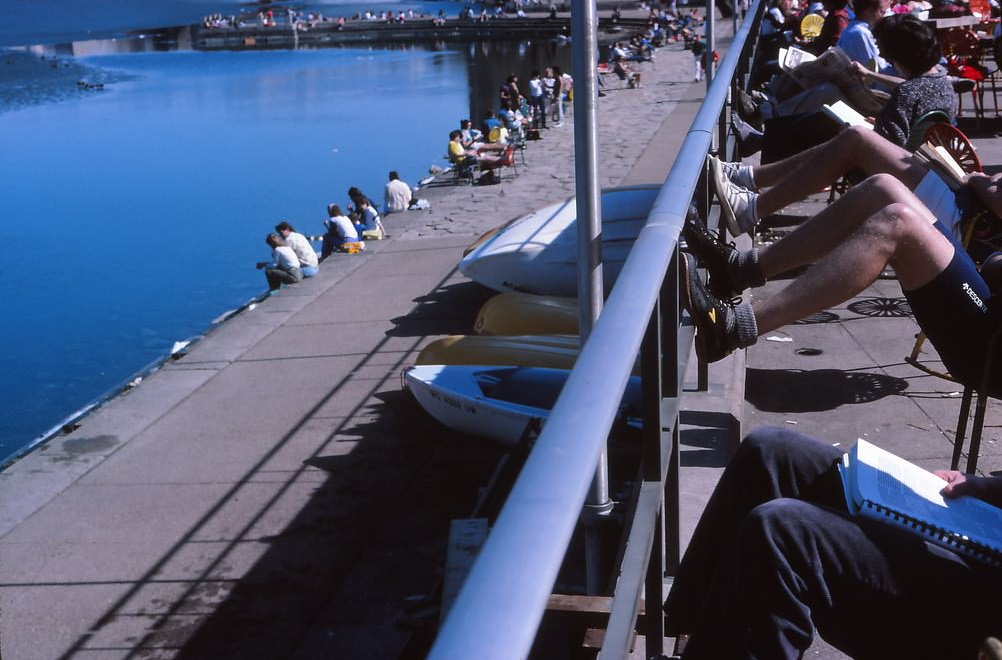
When the temperature climbed even slightly above freezing in early spring, the Union Terrace filled with students. The outdoor terrace along Lake Mendota was — and still is — a spot where people lingered long after the weather would otherwise drive them inside. In March 1987, with winter still loosening its grip, students were already out there soaking up whatever sunshine they could find.
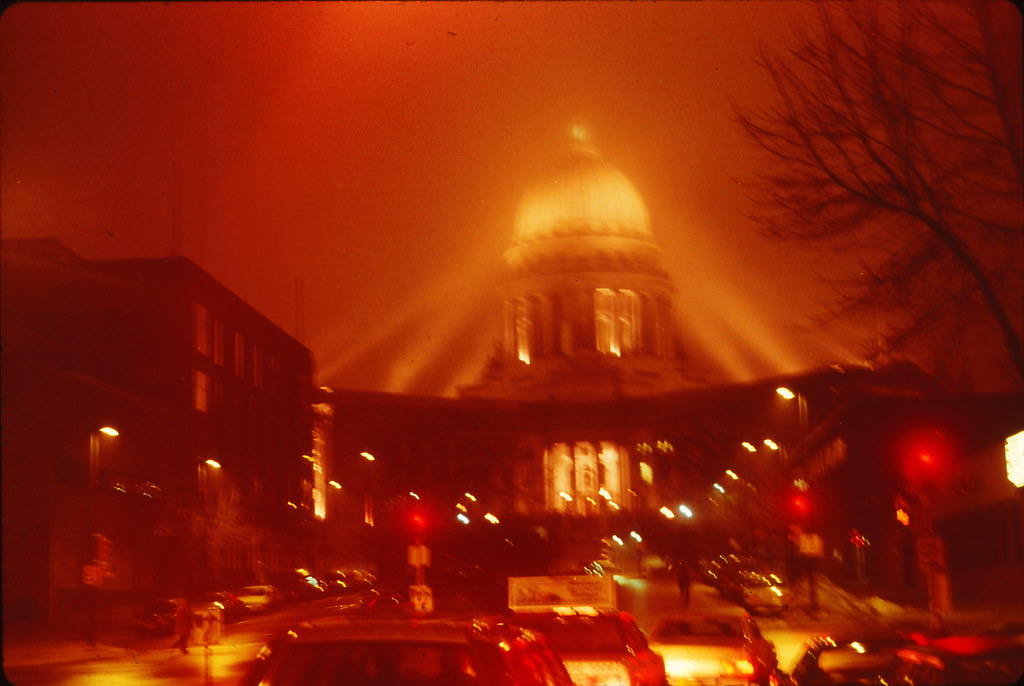
Few images captured the mood of Madison better than the Wisconsin State Capitol building shrouded in fog at night, its dome lit from below. Built between 1906 and 1917, the Capitol dominated the city’s skyline and served as the anchor of Capitol Square — the hub around which much of Madison’s civic and commercial life revolved. In 1985, a photograph of the floodlit dome emerging from evening fog made the building look almost otherworldly.
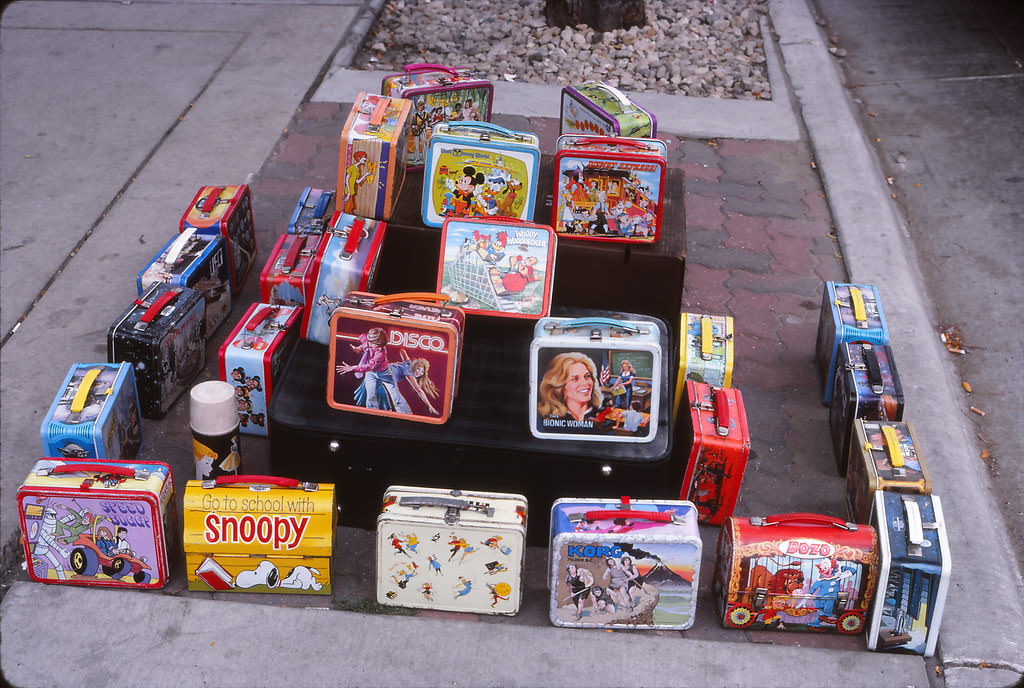
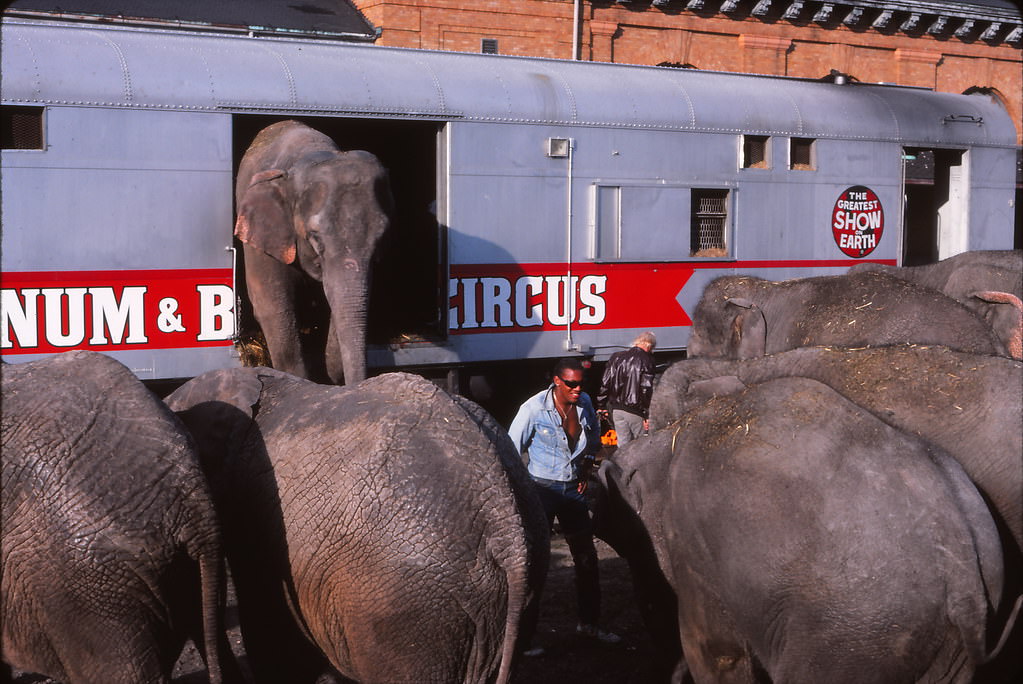
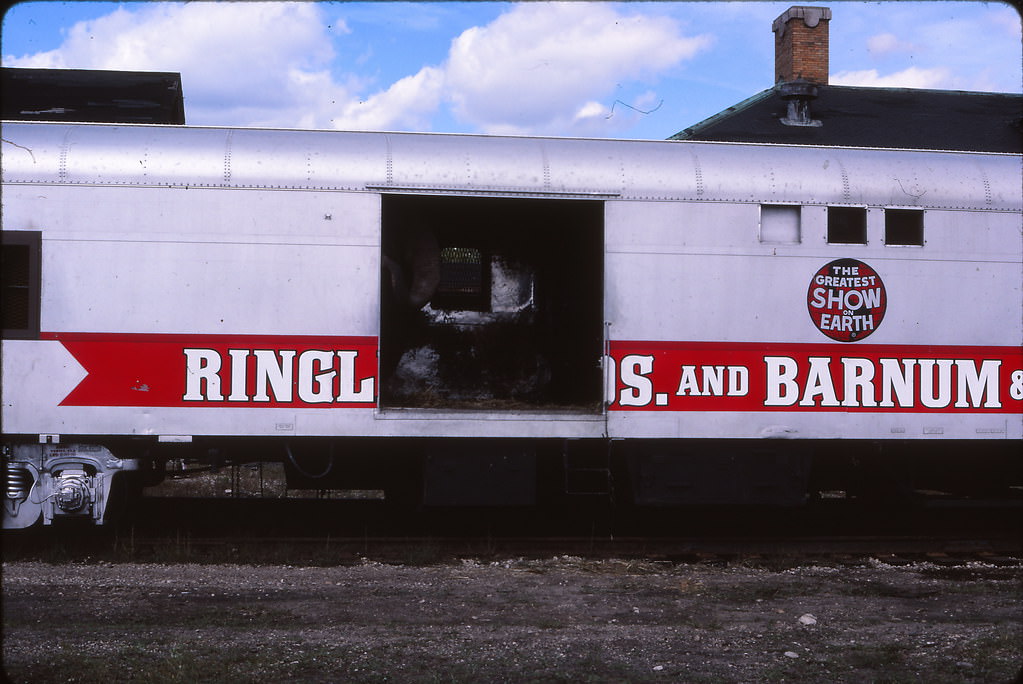
In September 1986, the Student Union hosted an unusual outdoor display — lunchboxes arranged on the terrace. It was the kind of quirky, low-key event that made the UW campus so distinct. A few weeks later, an even more dramatic spectacle arrived in Madison: elephants, reportedly connected to a circus, made their way through the city, drawing onlookers to the streets. The circus train that transported the animals was photographed rolling through Madison that same fall.
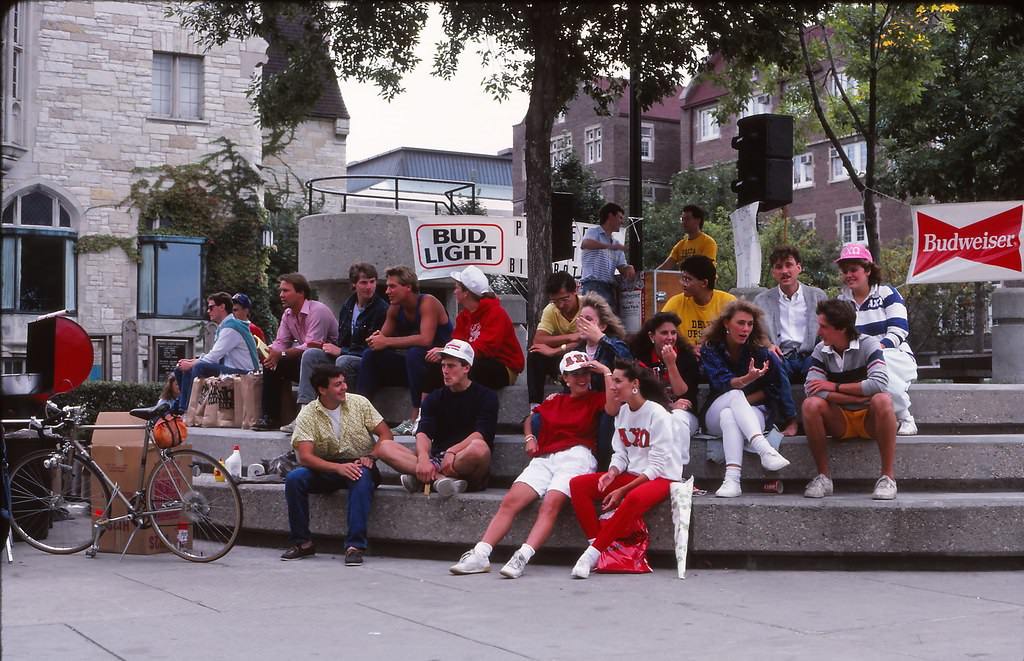
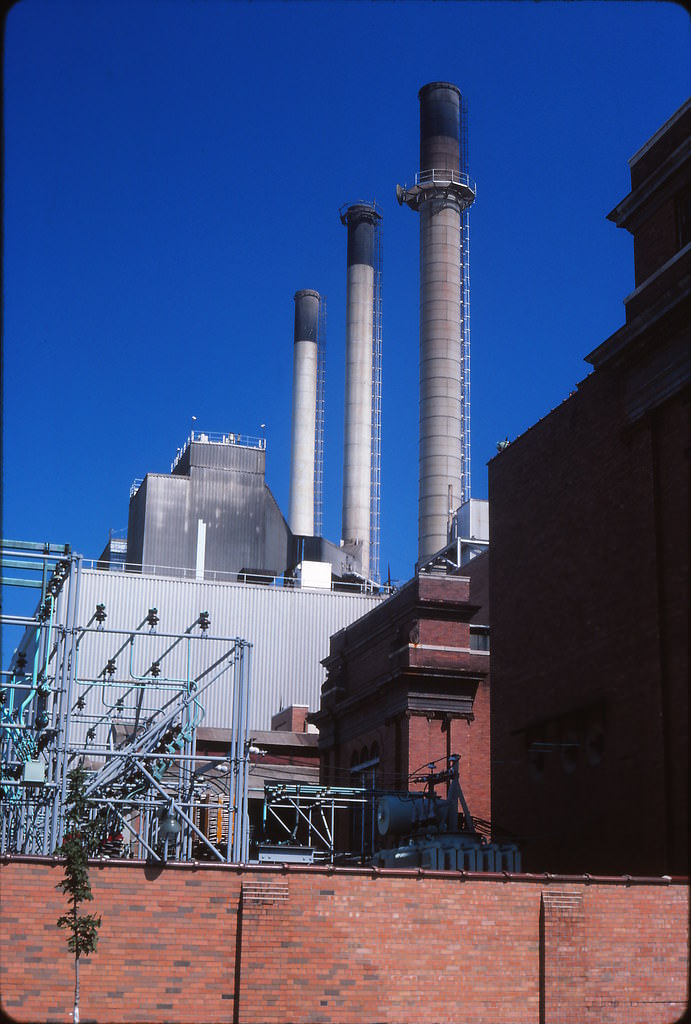
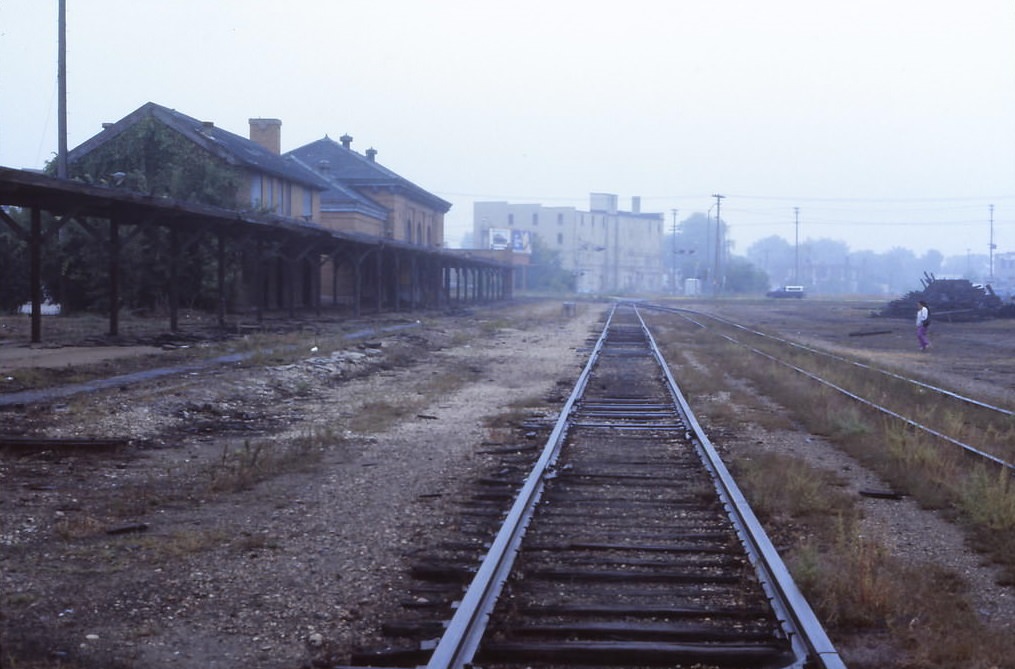
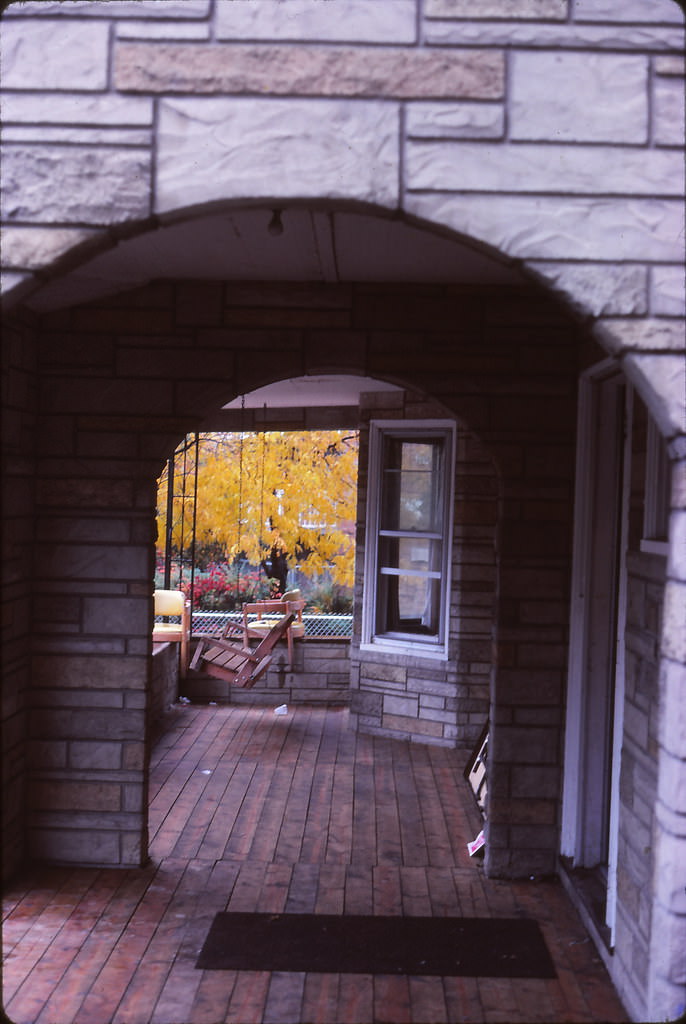
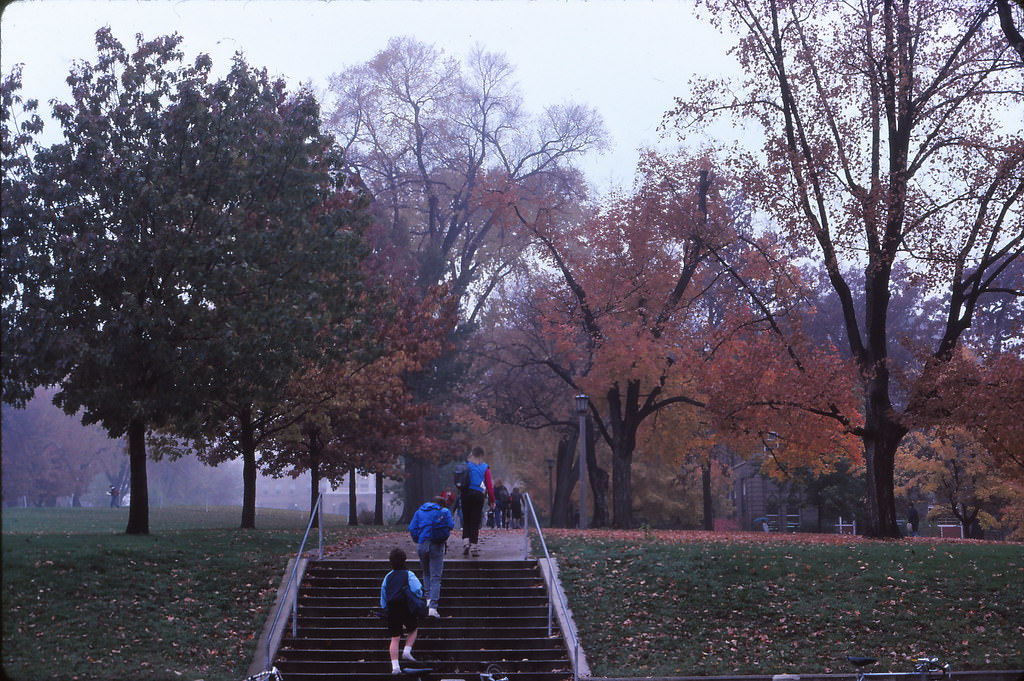
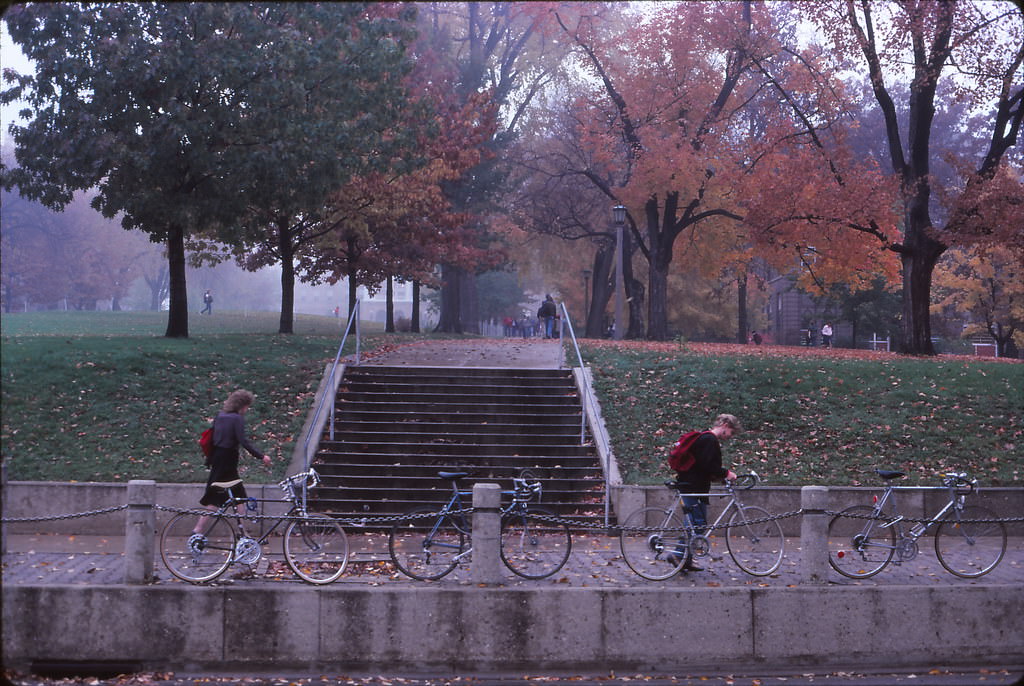
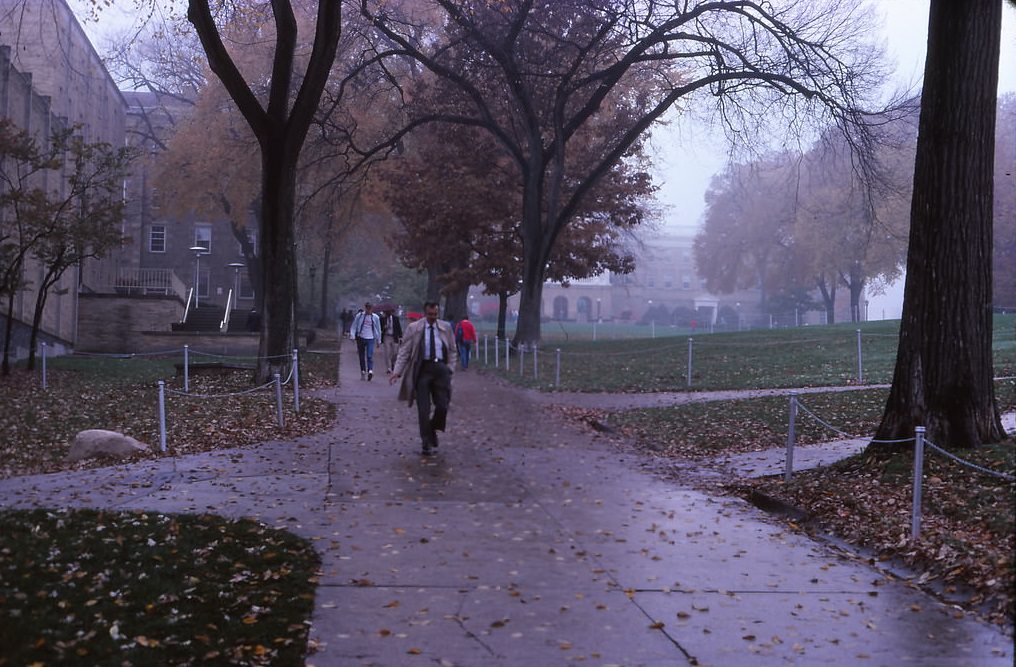
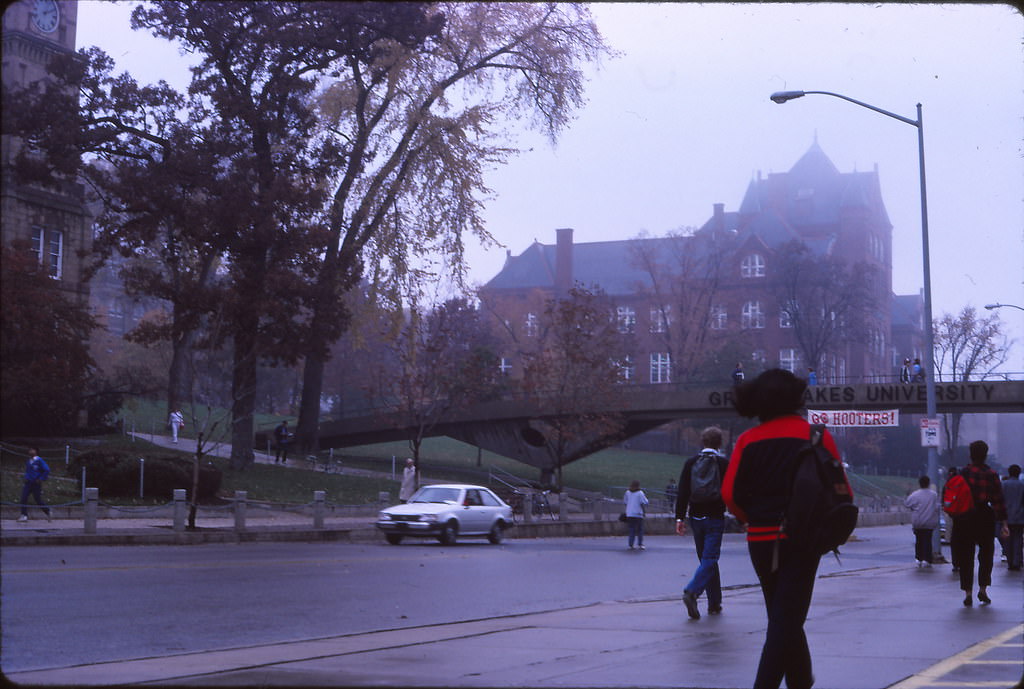
Autumn on the UW campus was particularly striking. Bascom Hill, the steep climb leading up to Bascom Hall, was lined with trees that turned deep gold and orange in October. On foggy fall mornings, the hill had an almost cinematic quality — students making their way up the slope through mist, the historic buildings at the top barely visible. Fall 1985 produced a series of photographs that showed this side of the campus at its most atmospheric.
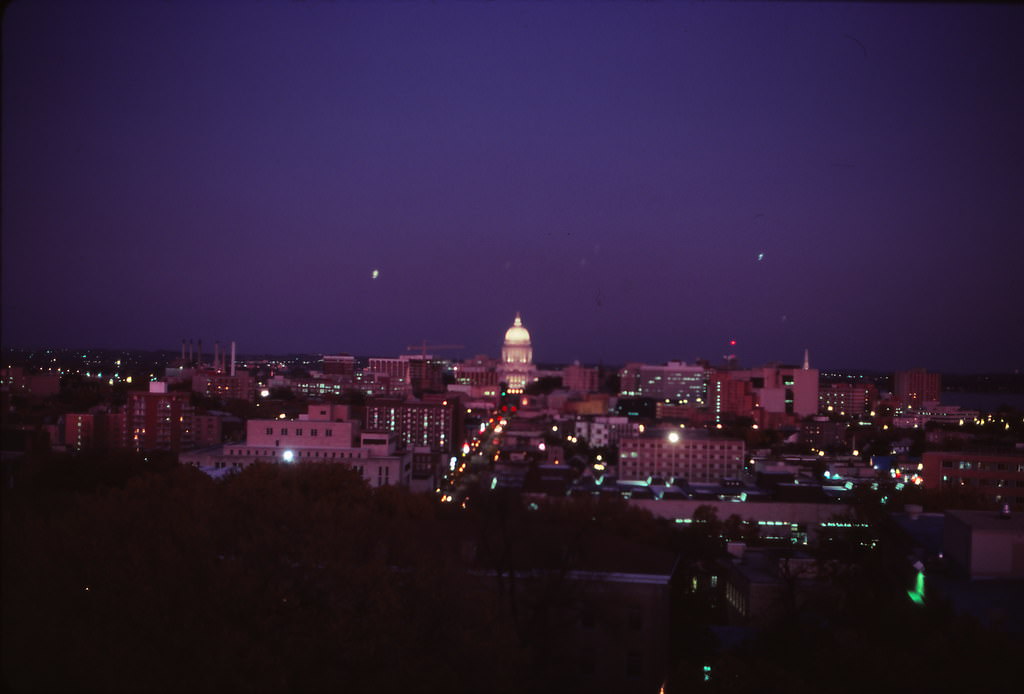
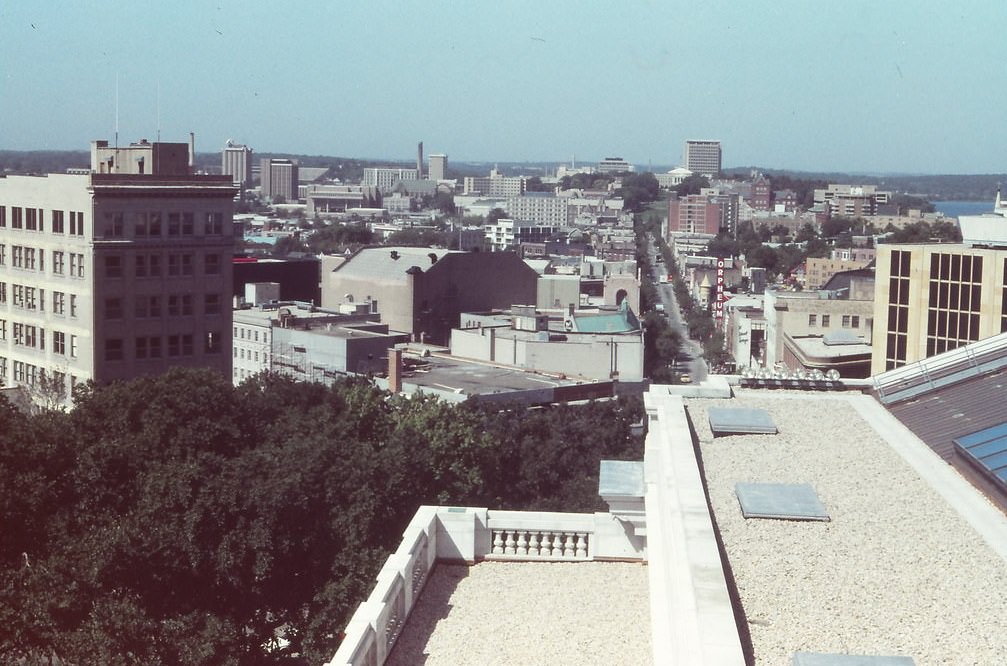
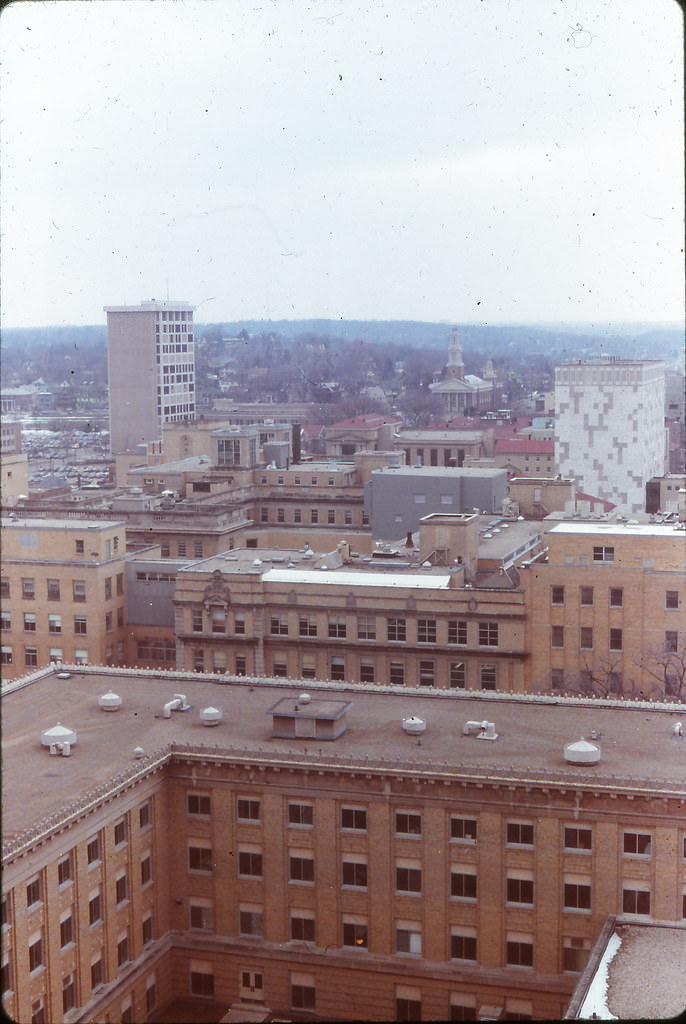
From the upper floors of the Van Hise Building on campus, the Madison skyline spread out in striking detail. The Capitol dome anchored the view, with the city’s mid-rise buildings clustered around Capitol Square and the lakes visible on either side of the isthmus. This vantage point made clear just how much of Madison’s identity was tied to its geography.
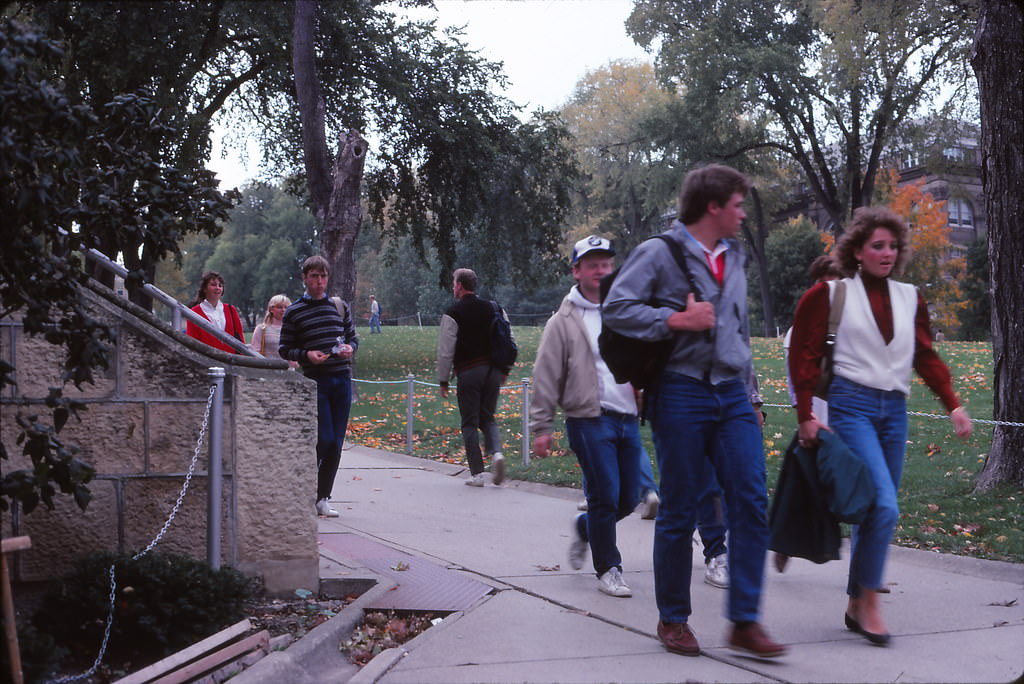
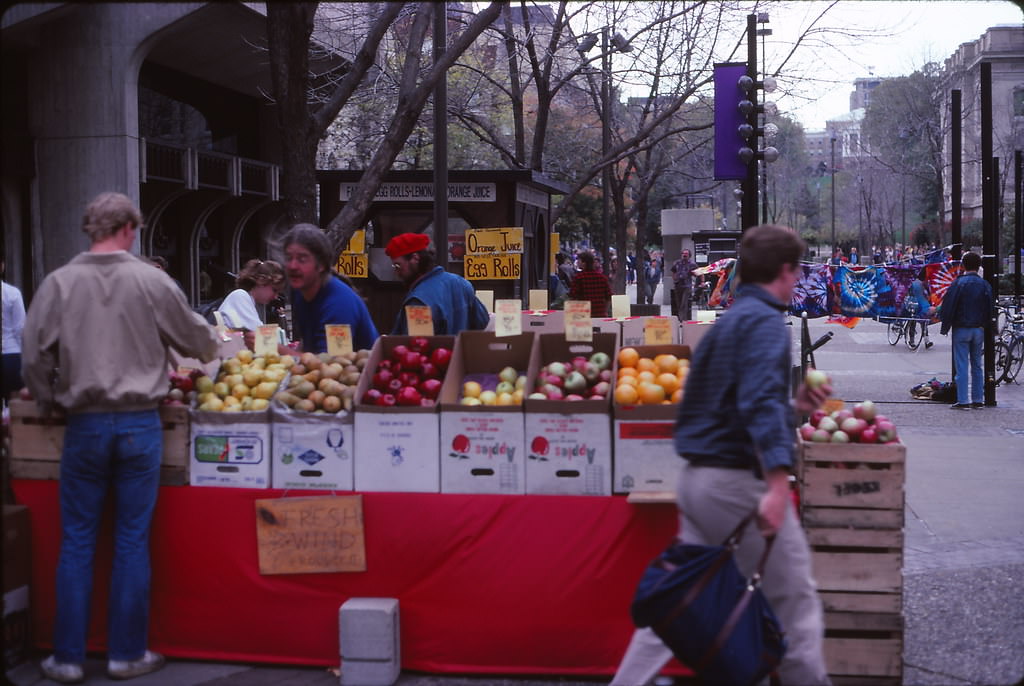
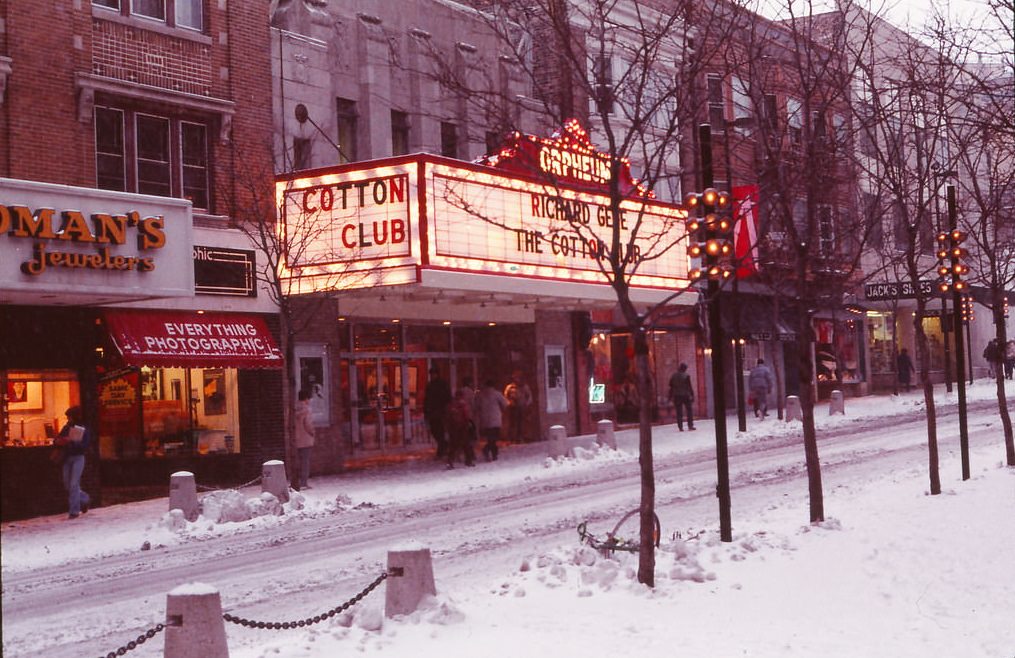
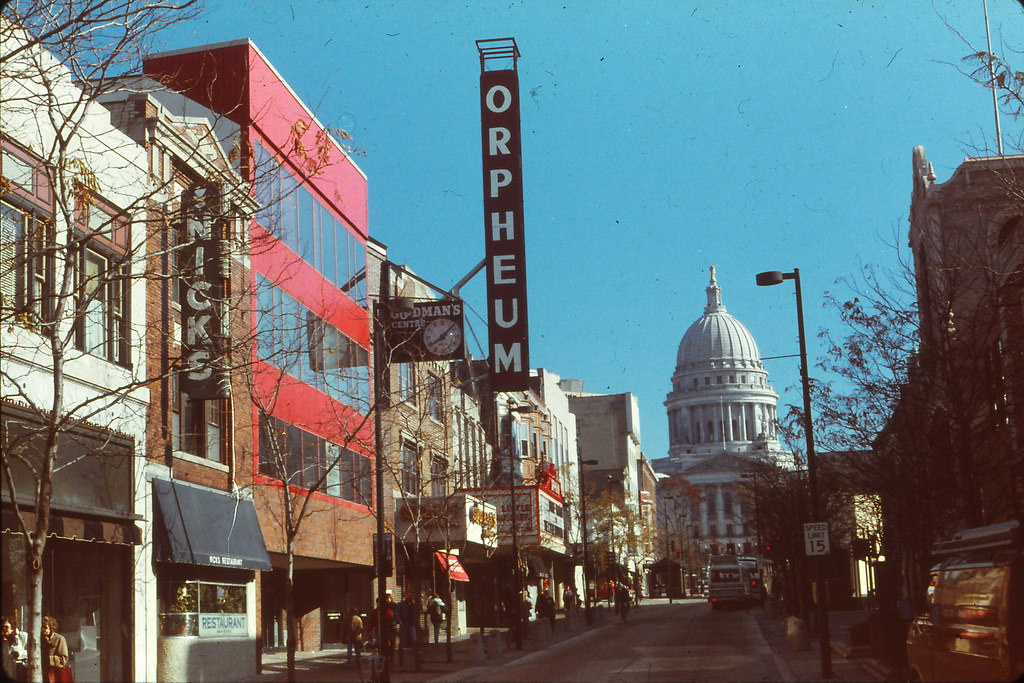
State Street in fall 1985 showed the street in its everyday working mode — storefronts open, pedestrians moving between the university and the Capitol, the usual mix of students, workers, and residents. The Orpheum Theater, a State Street landmark, had been showing films and hosting events since 1926. In January 1985, it appeared in photographs still doing what it had always done — drawing crowds to its marquee on one of Madison’s most traveled blocks.
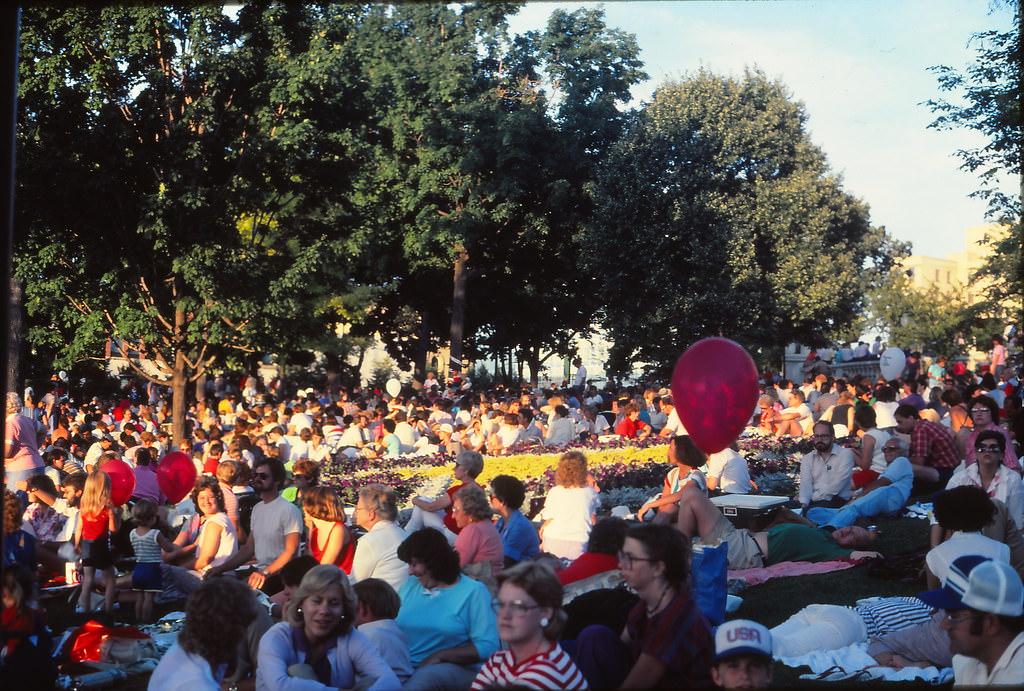
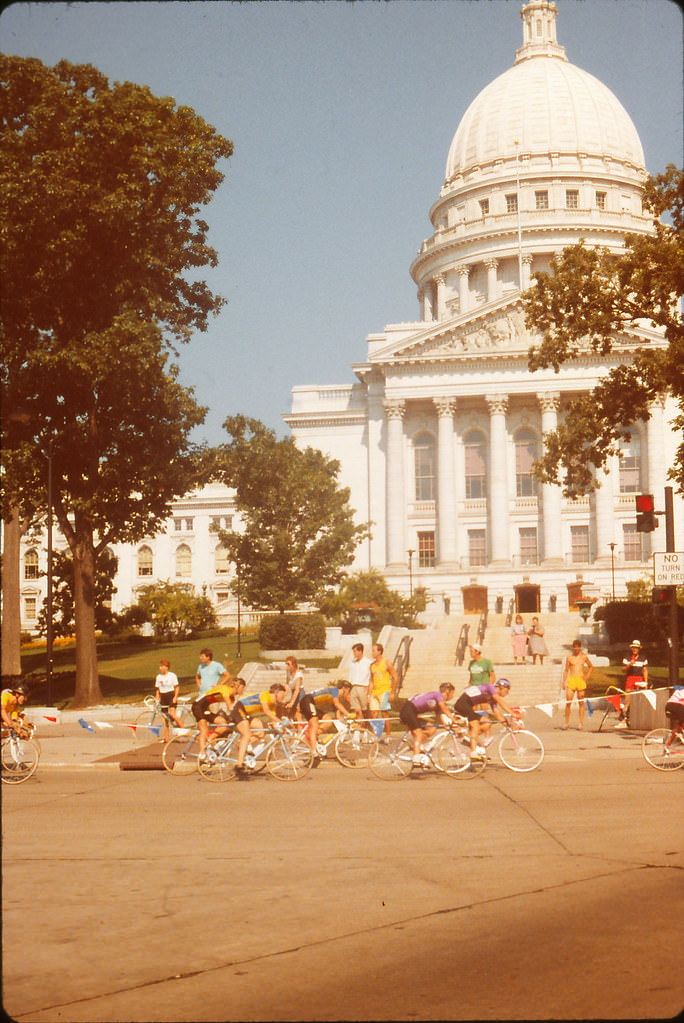
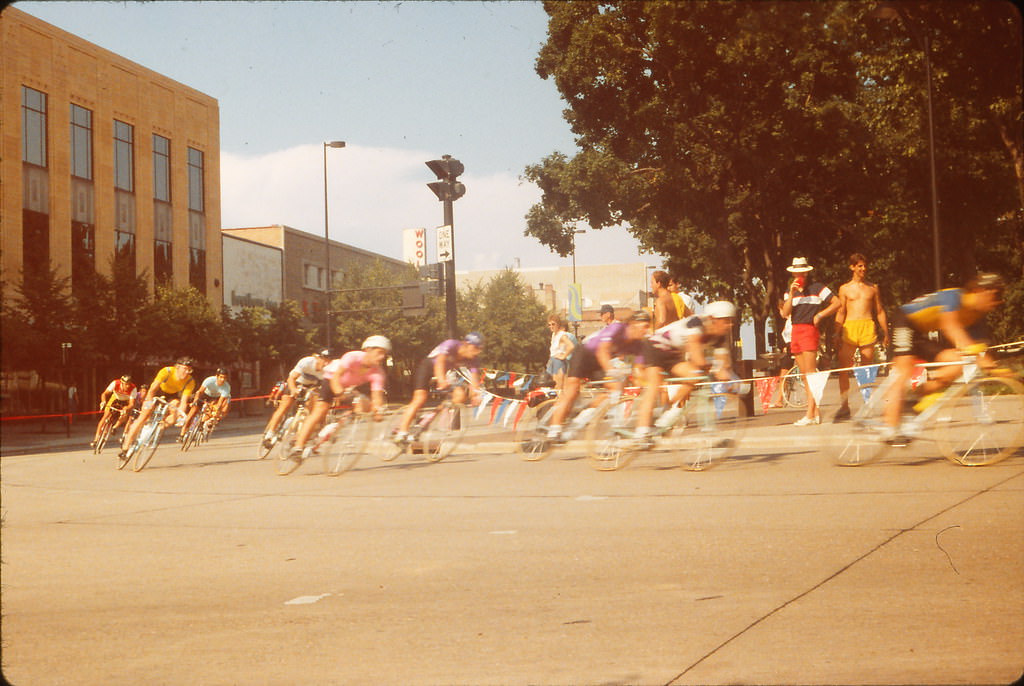
Summer 1985 brought two recurring Madison traditions into full view. Concerts on the Square, held on summer evenings in front of the Capitol, drew thousands of Madisonians who spread blankets on the lawn and listened to the Wisconsin Chamber Orchestra perform. And in July, bike racing around Capitol Square turned the city’s most prominent block into a racing circuit, with riders circling the Capitol building at speed.
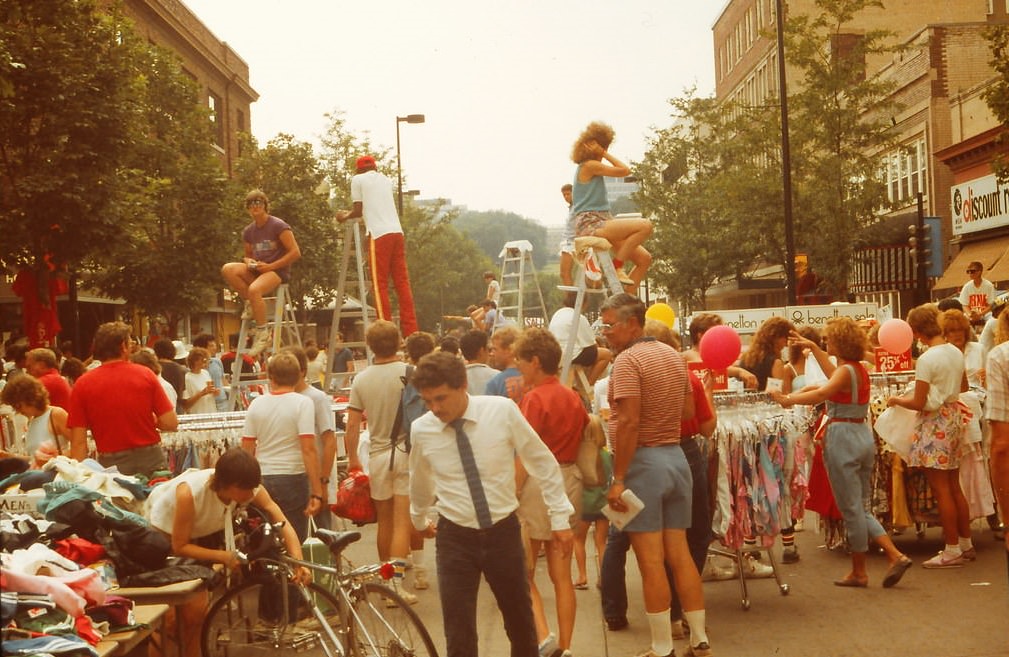
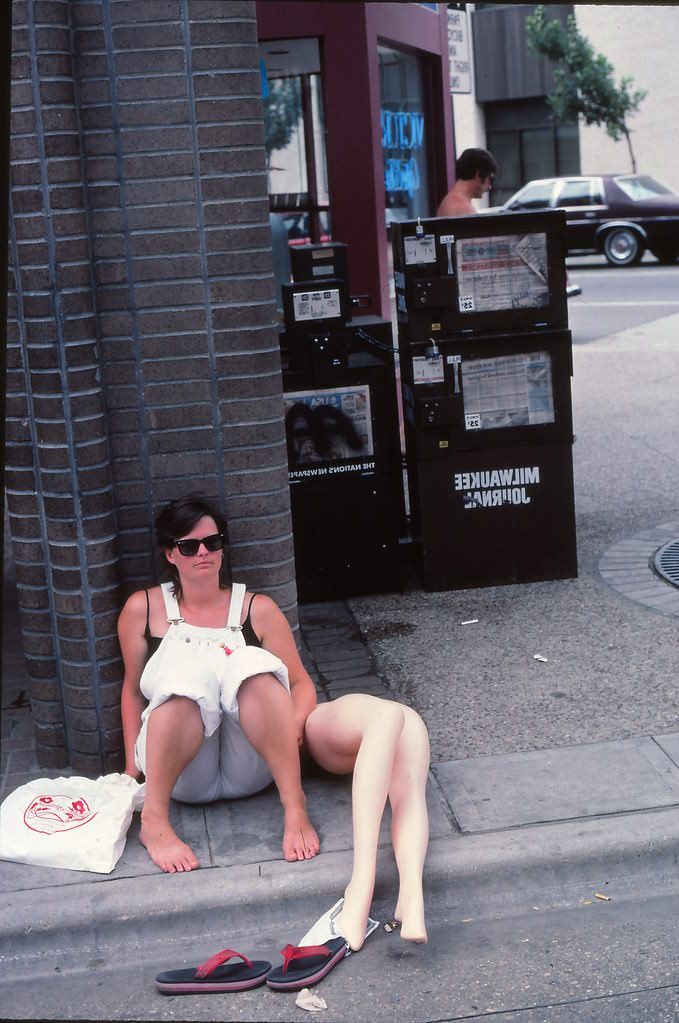
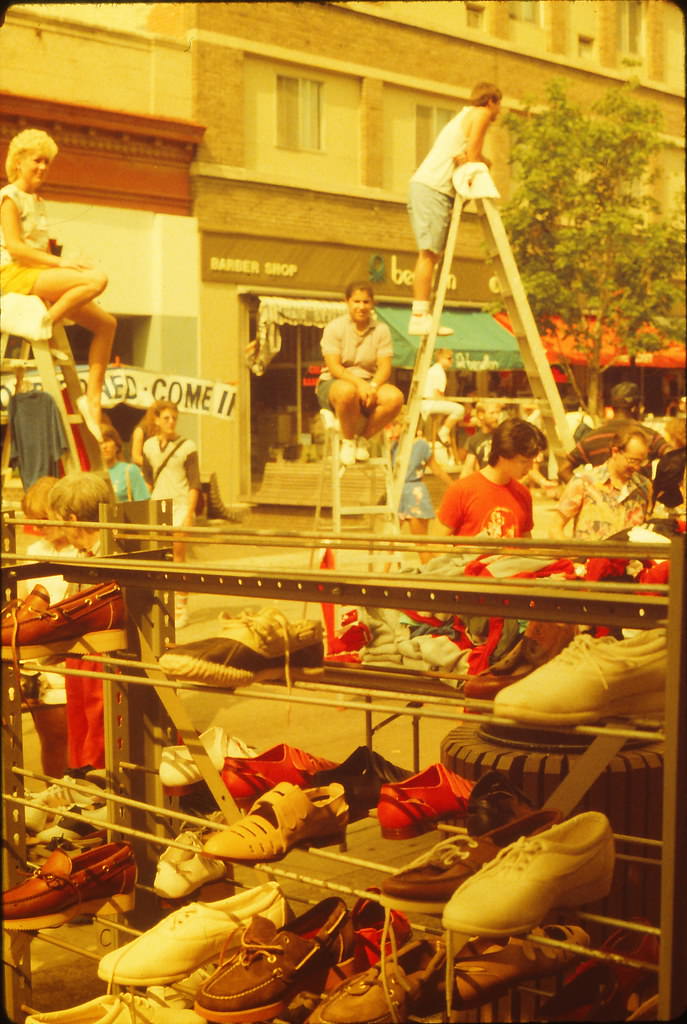
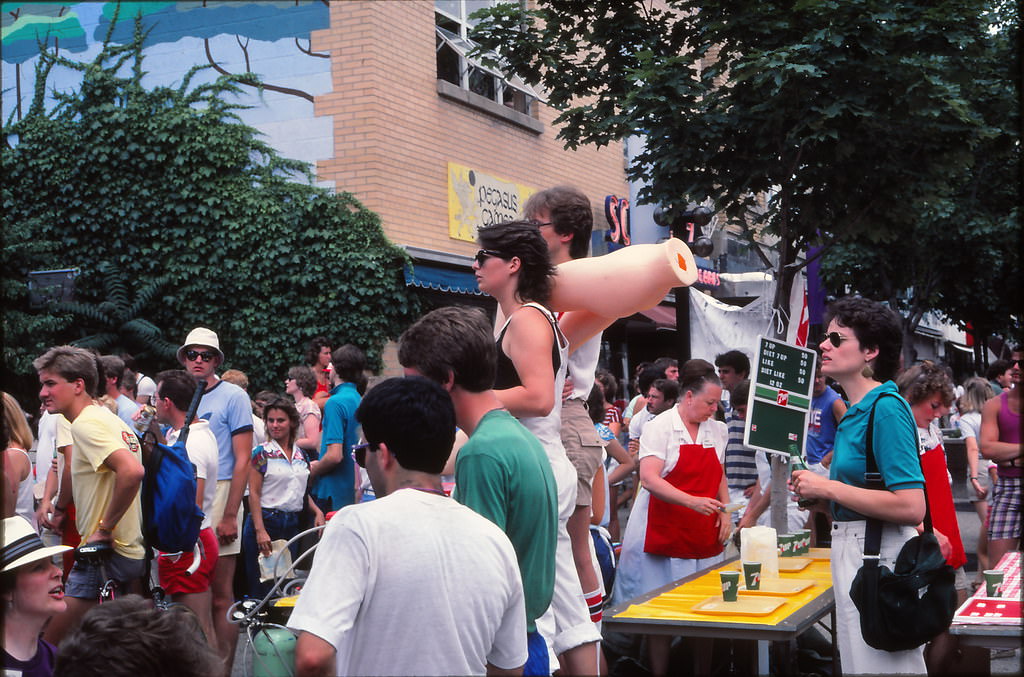
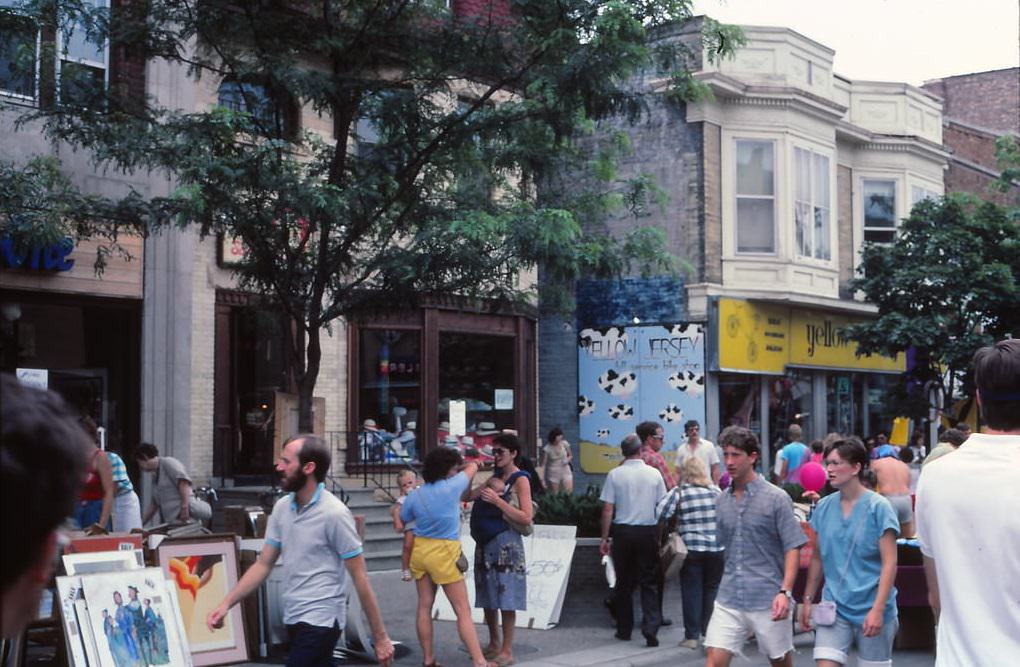
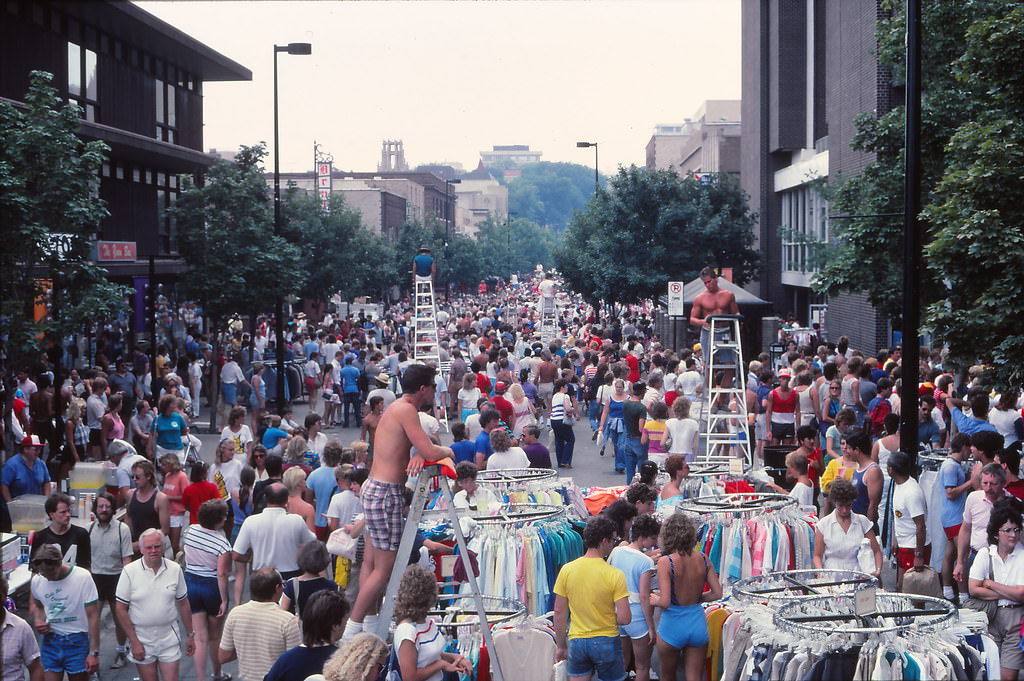
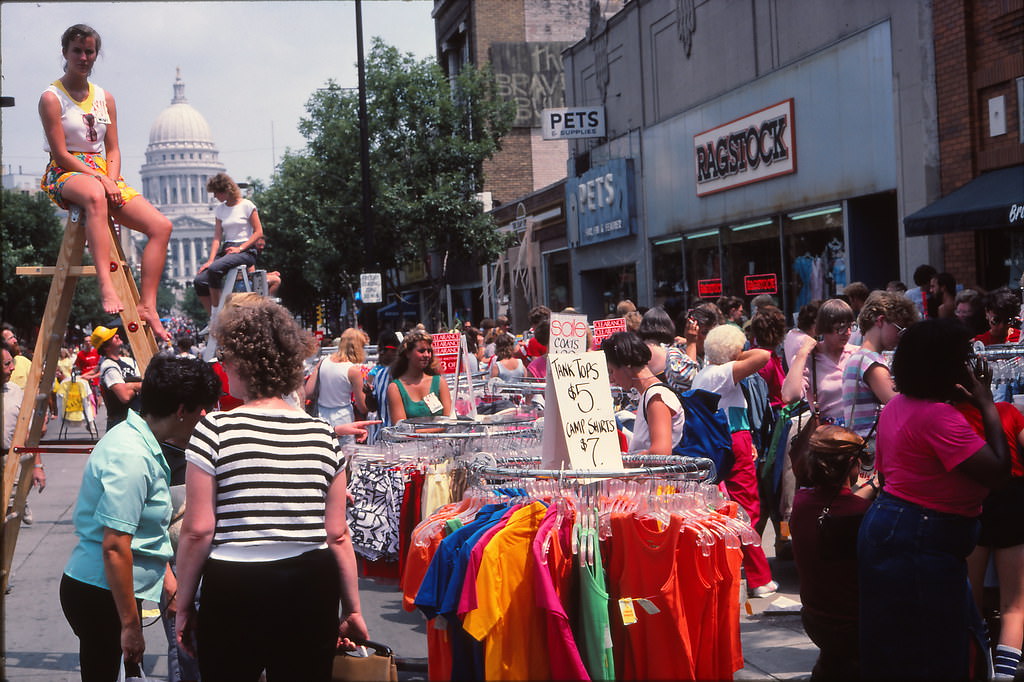
Maxwell Street Days was one of the biggest retail events Madison held each year. Merchants along State Street moved their goods outside and the street became an open-air market packed with shoppers. On July 13, 1985, the event transformed State Street from end to end. Racks of clothing, bins of merchandise, and tables of goods spilled out of storefronts onto the sidewalks and street. One memorable photograph from that day showed a person resting alongside a display of prosthetic legs — one of the stranger sights the event produced.
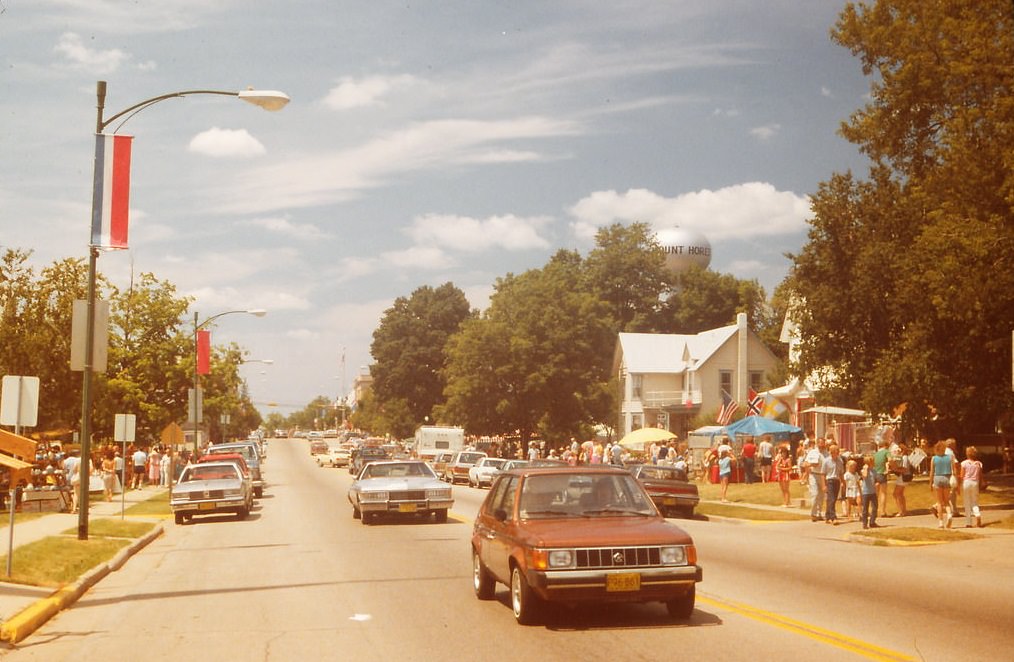
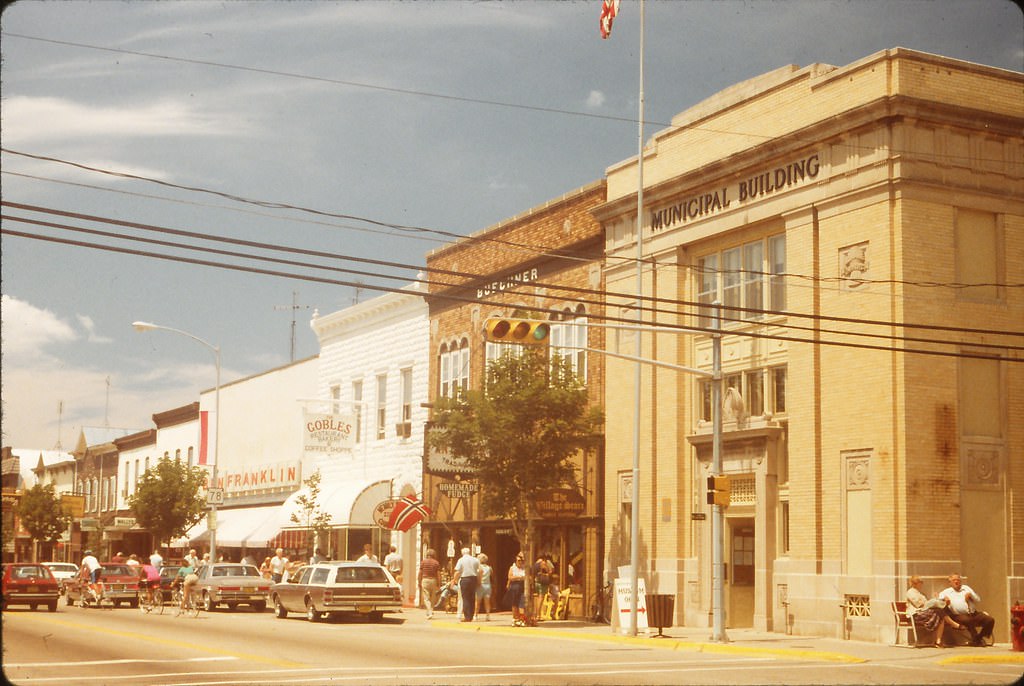
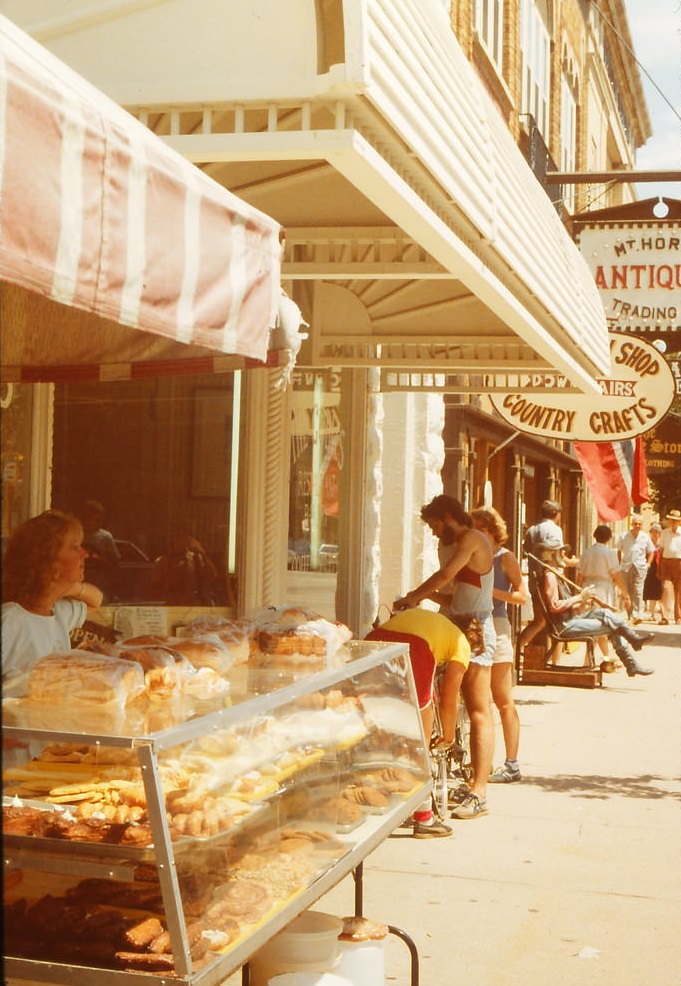
About 25 miles west of Madison sat the small town of Mount Horeb, a community that had developed a distinct identity around its Scandinavian heritage. By the 1980s, Mount Horeb’s main street was well known for its collection of carved wooden trolls — a nod to Norwegian folk tradition — which gave the town the nickname “The Troll Capital of the World.” Several photographs from the mid-1980s documented the town’s downtown storefronts and its unmistakable character.
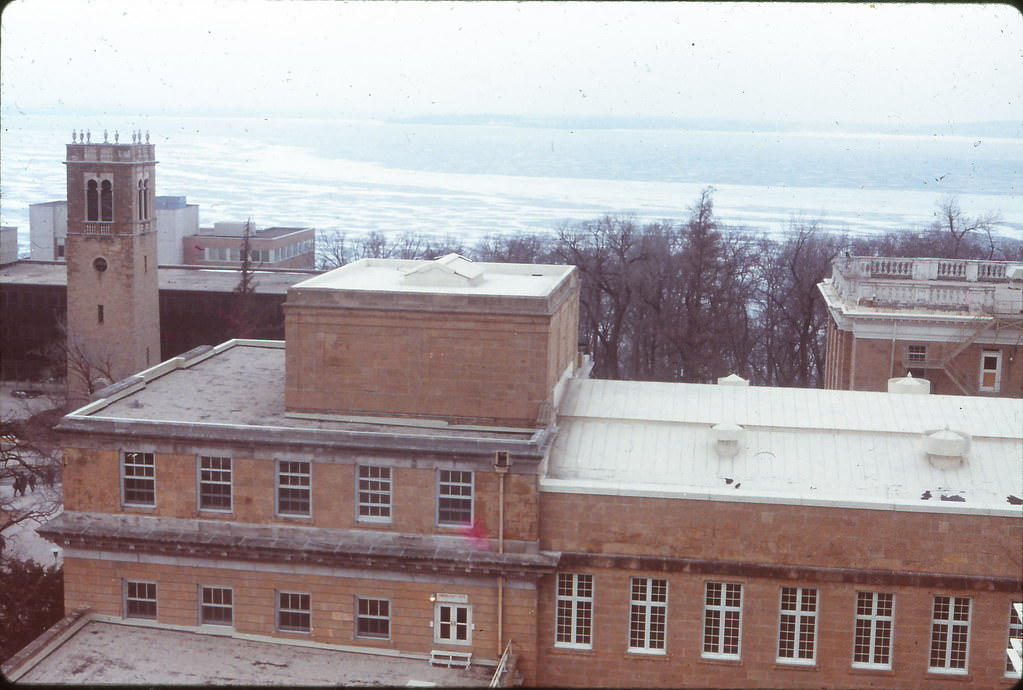
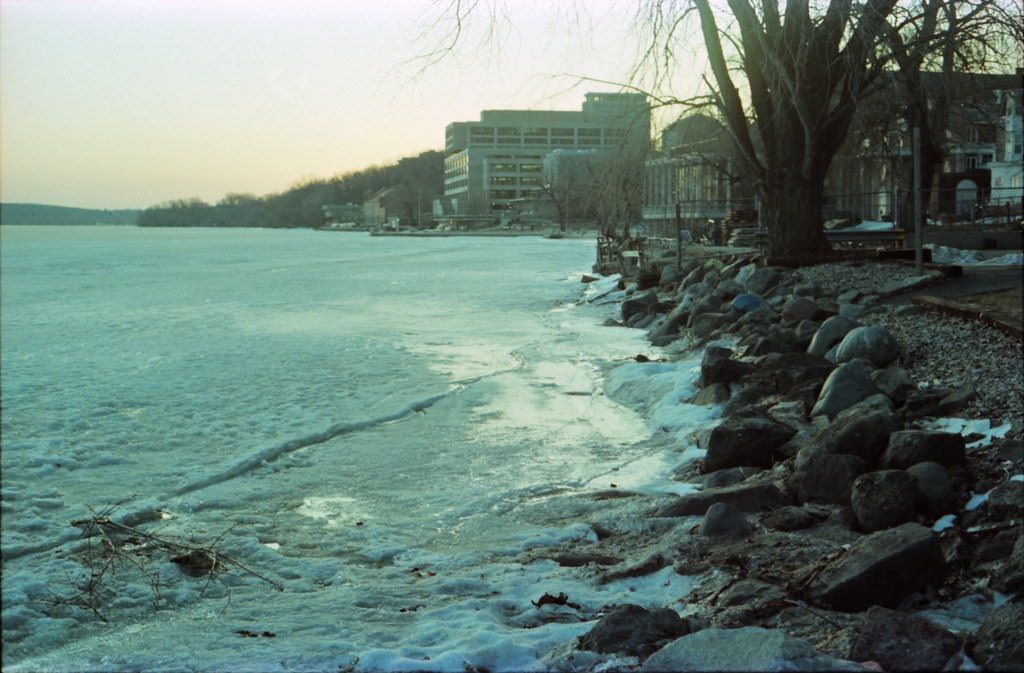
Spring on Lake Mendota in 1985 still showed ice breaking up along the shoreline — a reminder of how long winter held on in southern Wisconsin. By late spring, the lake was fully open, and its shoreline paths became some of the most walked stretches in the city. The proximity of the lake to the UW campus meant that students could move from a lecture hall to the water’s edge in minutes.
The Orpheum Theater on State Street had been a Madison institution for decades by the time these photographs were taken. In January 1985, its marquee was lit and its doors were open, as they had been through generations of Madisonians. State Street in the mid-1980s was the kind of street that rewarded walking — nearly every block offered something different, from used record stores to coffee shops to political bookstores catering to the university crowd.
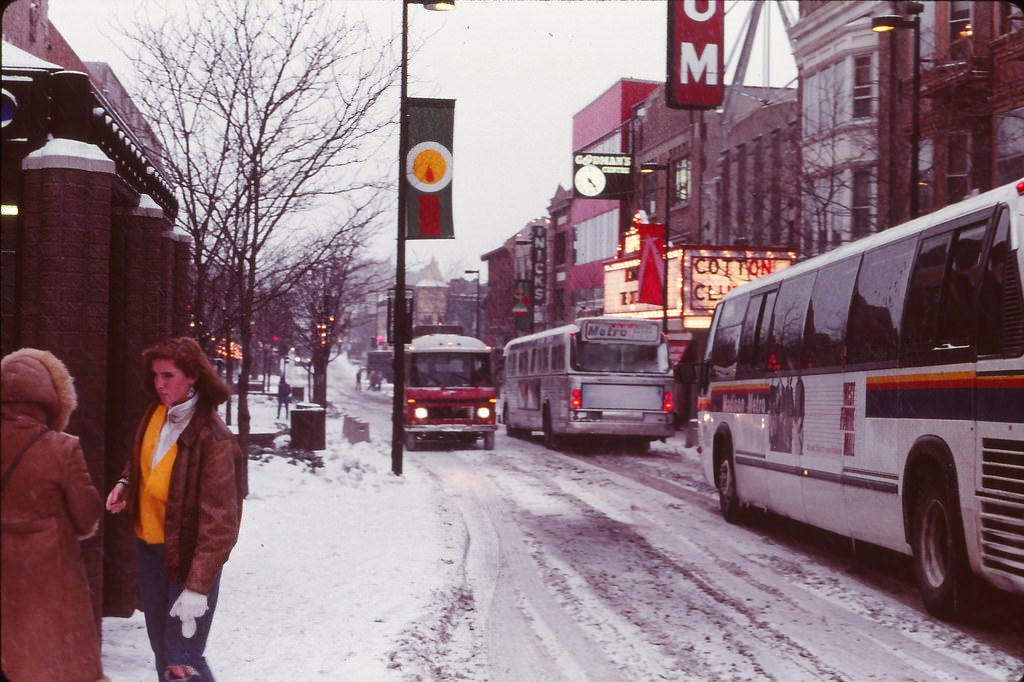
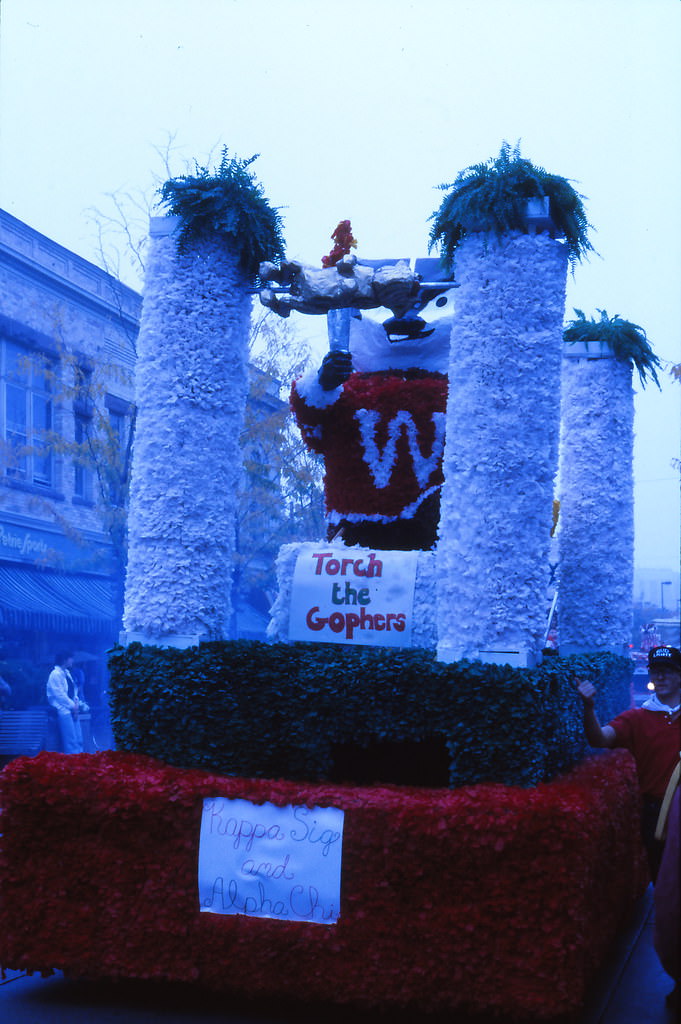
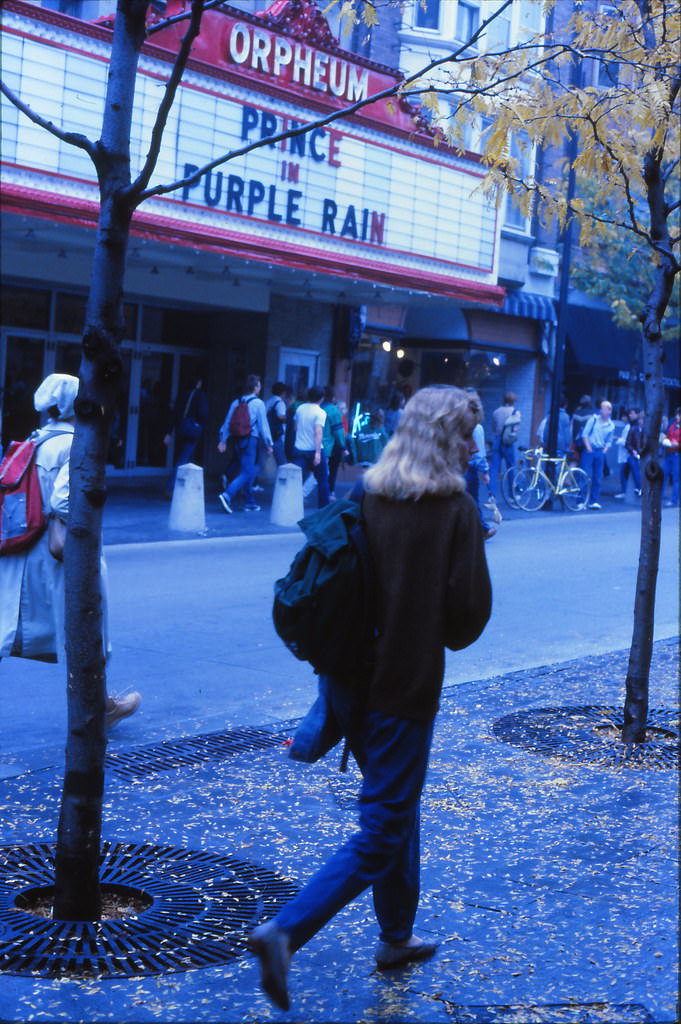
Fall 1984 was a particularly busy season in Madison. The UW Homecoming brought parades, bed races on State Street, and crowds to Capitol Square. Langdon Street, the historic fraternity and sorority row running along Lake Mendota, was packed with students. And on State Street, the Orpheum was showing Prince’s *Purple Rain*, which had been released that summer and was still drawing long lines.
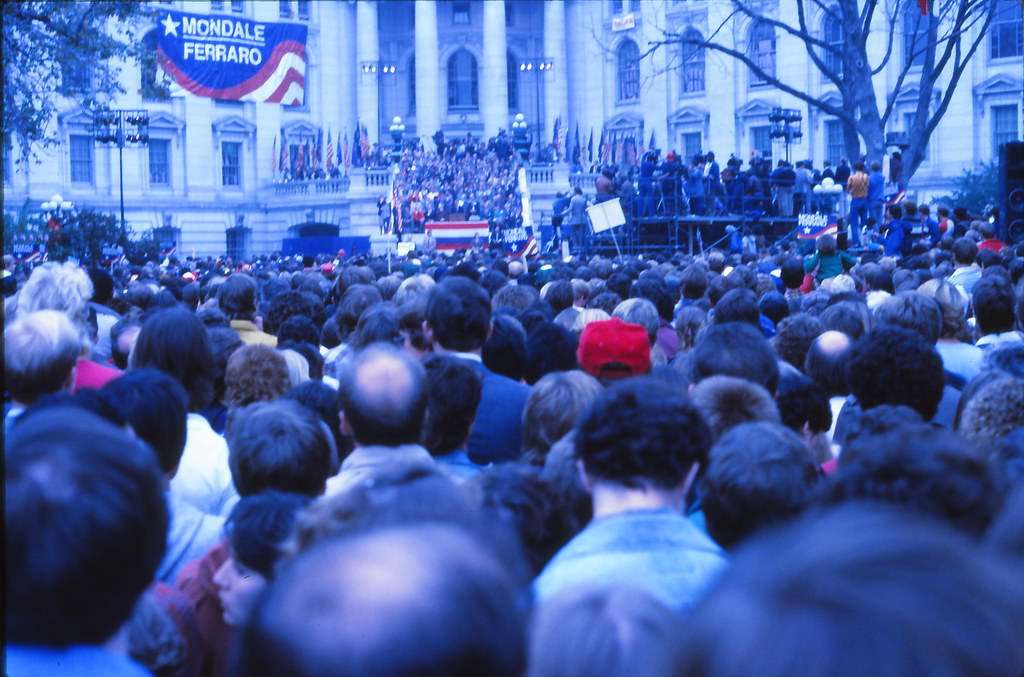
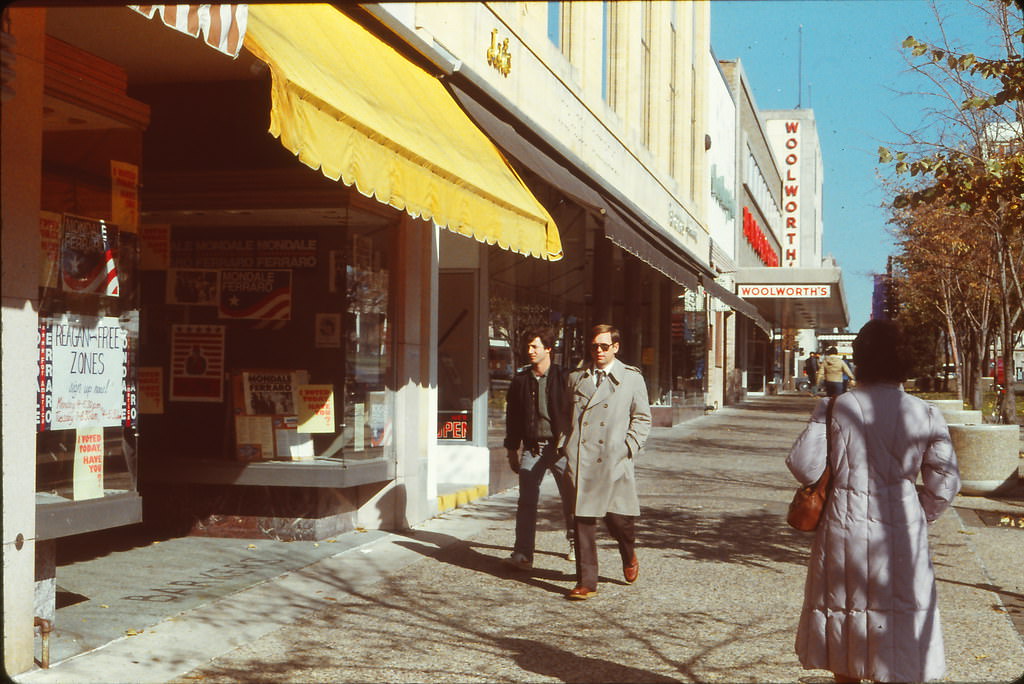
The 1984 presidential election brought a significant moment to Madison. Walter Mondale and Geraldine Ferraro held a rally at the Wisconsin State Capitol, drawing a large crowd to the square. Mondale was the Democratic nominee and Ferraro was his running mate — the first woman nominated for vice president by a major American political party. Madison, with its politically engaged university population and progressive voting base, was a natural stop for the campaign.
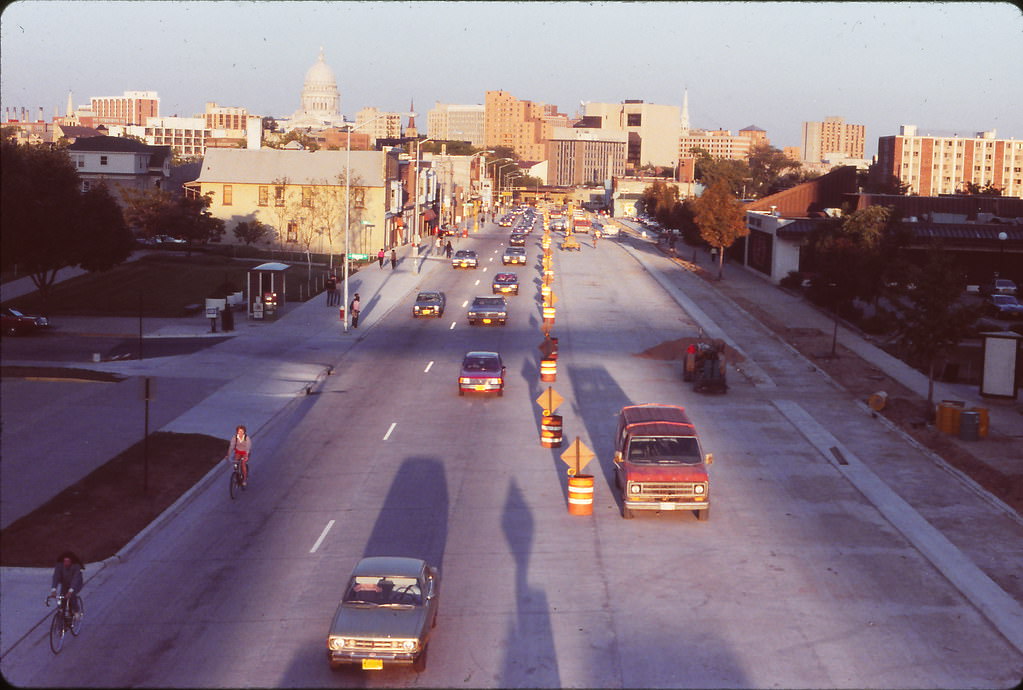
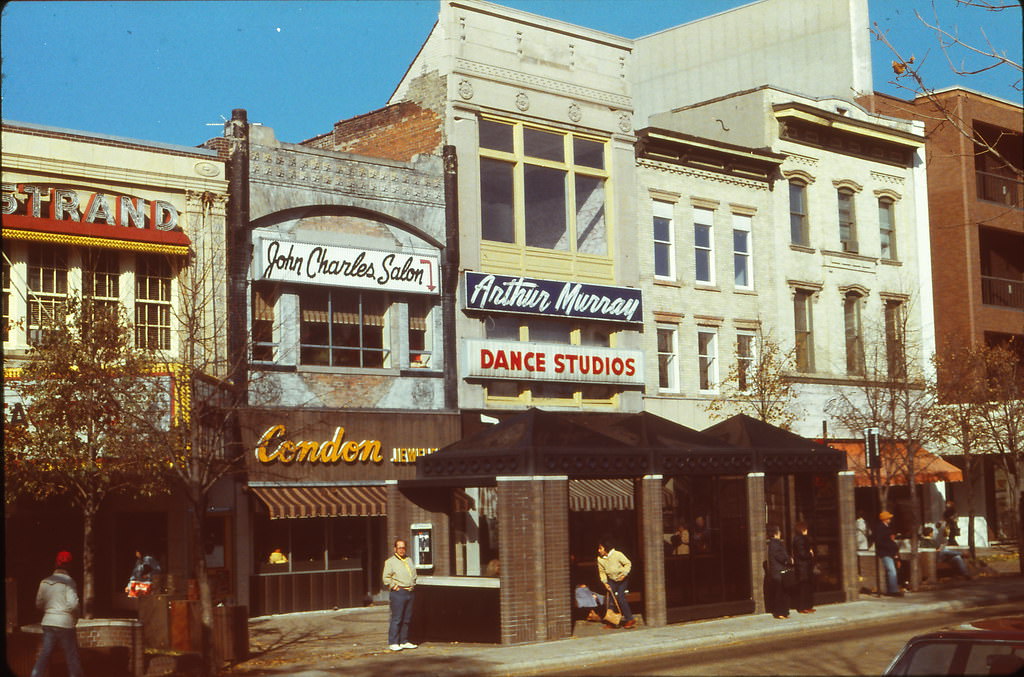
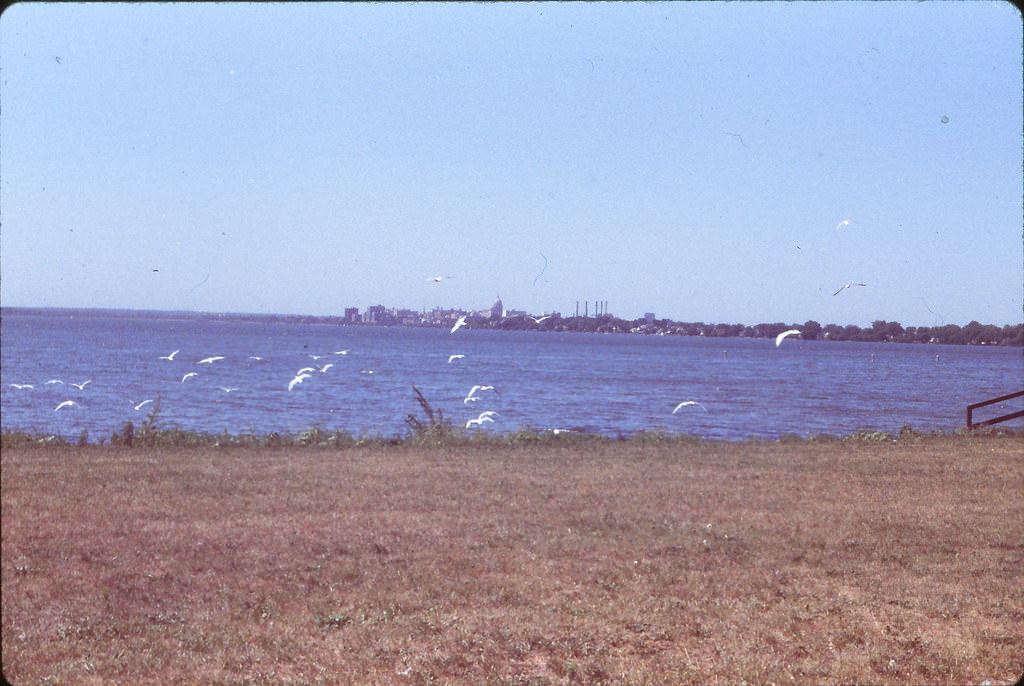
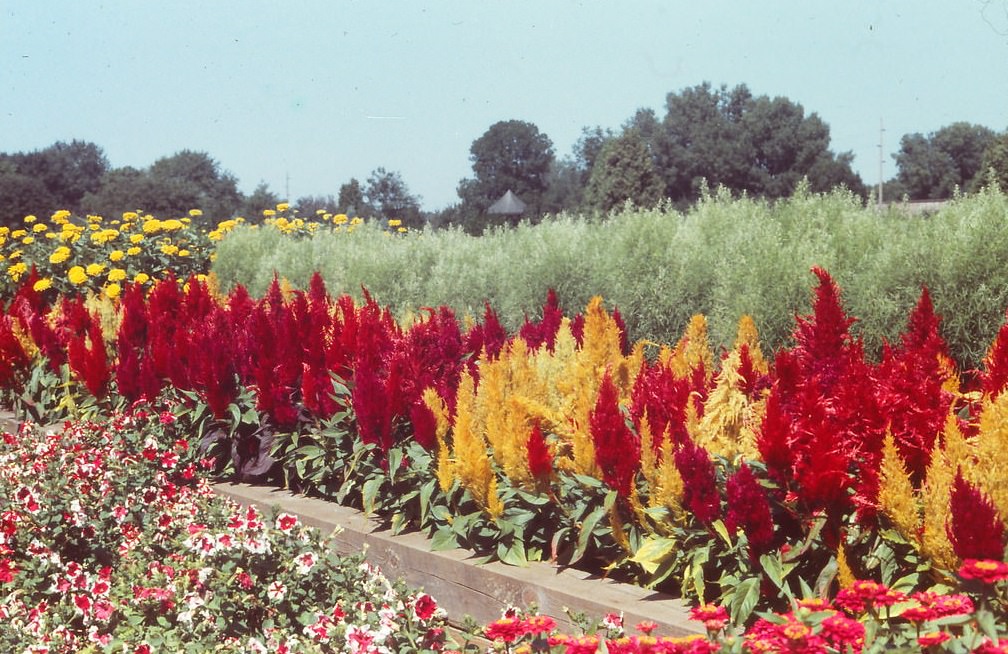
From Olin-Turville Park on the shore of Lake Monona, the Madison skyline had a different character than the view from campus. Lower and more spread out, the skyline reflected a city that had grown steadily since the railroad arrived in 1854 but had never sprawled dramatically. Olin Park’s gardens and walking paths made it a popular destination through every season, including the vivid color of a Wisconsin fall.
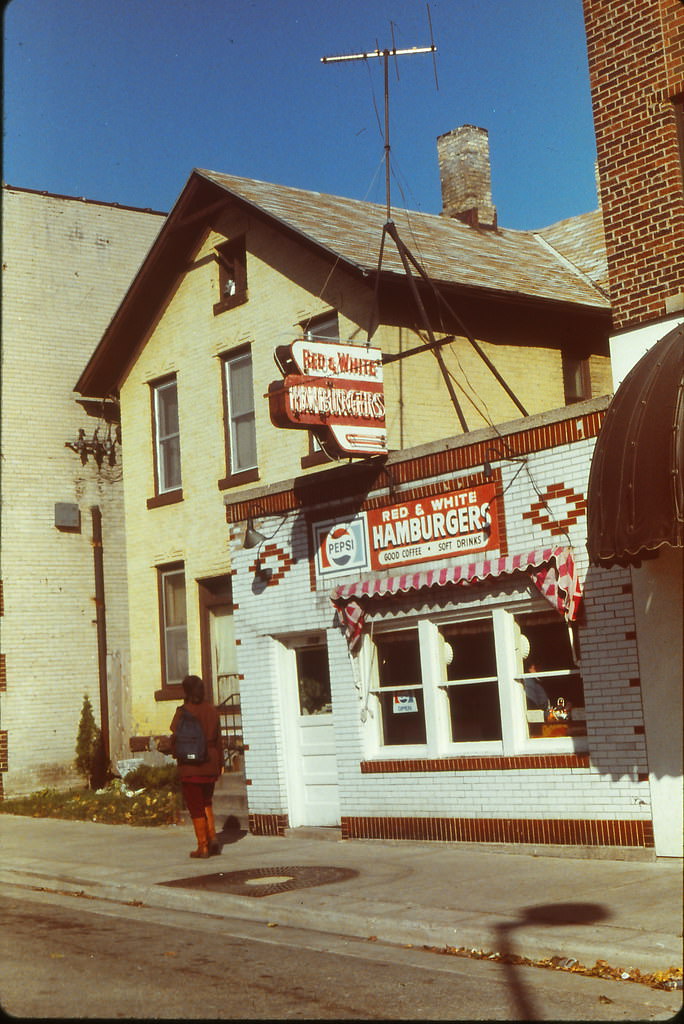
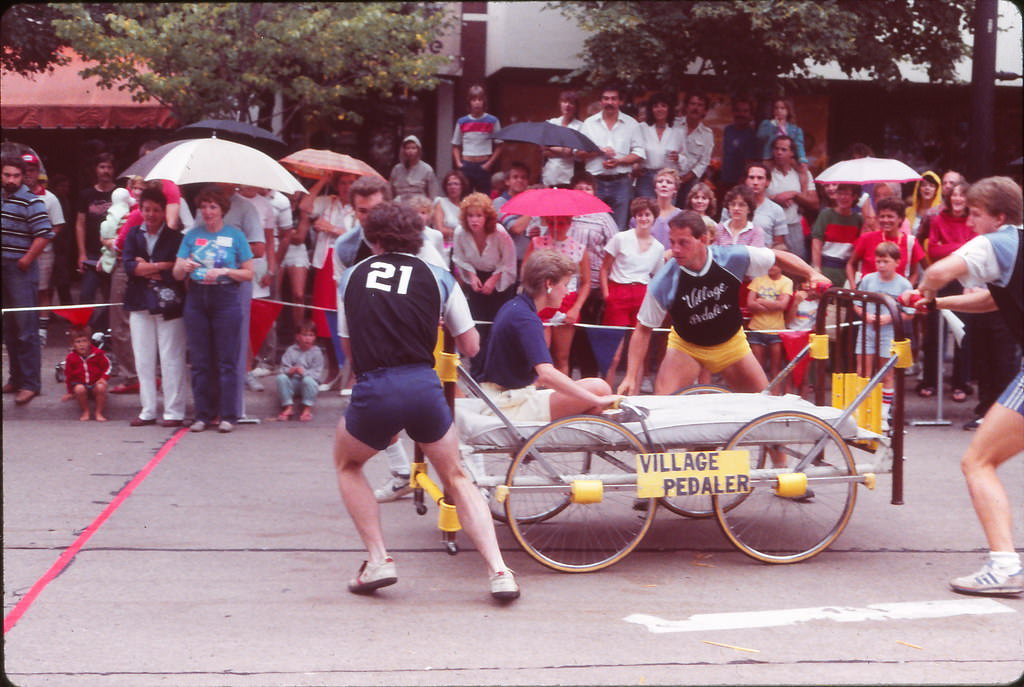
Red & White Hamburgers on North Henry Street was a neighborhood fixture near State Street. Places like it were the everyday texture of Madison — not destinations that made the travel guides, but spots where students grabbed a quick meal between classes or after a late night. The UW Homecoming traditions added another layer of energy to the fall calendar, including the bed races on State Street that turned a main artery into a track for dormitory teams pushing wheeled beds down the pavement.
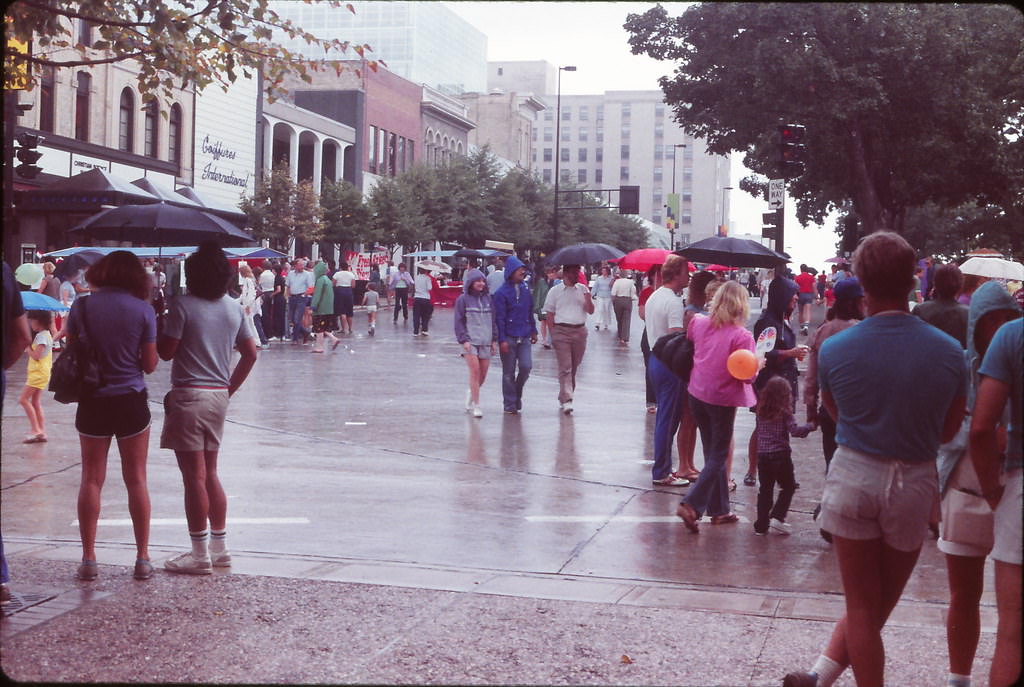
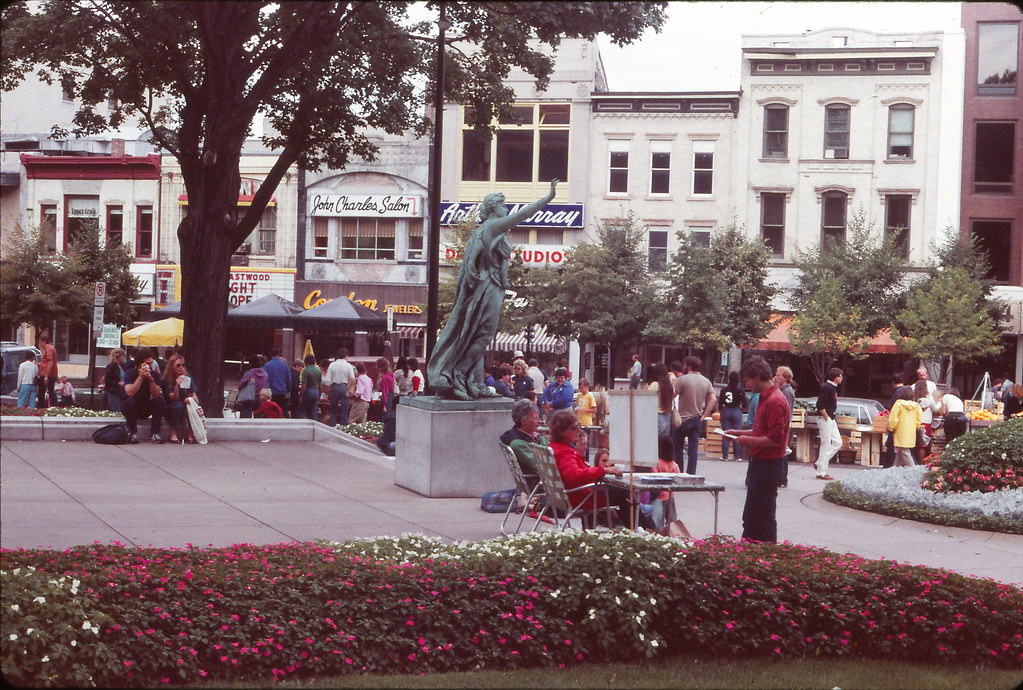
The Dane County Farmers Market on Capitol Square was one of the largest producers-only farmers markets in the United States. In fall 1984, vendors lined the sidewalks around the Capitol building with produce, cheese, baked goods, and flowers. Madison served as the trade center for a wide agricultural region producing dairy products, corn, soybeans, tobacco, and livestock — and the farmers market was where that agricultural identity came directly into the city.
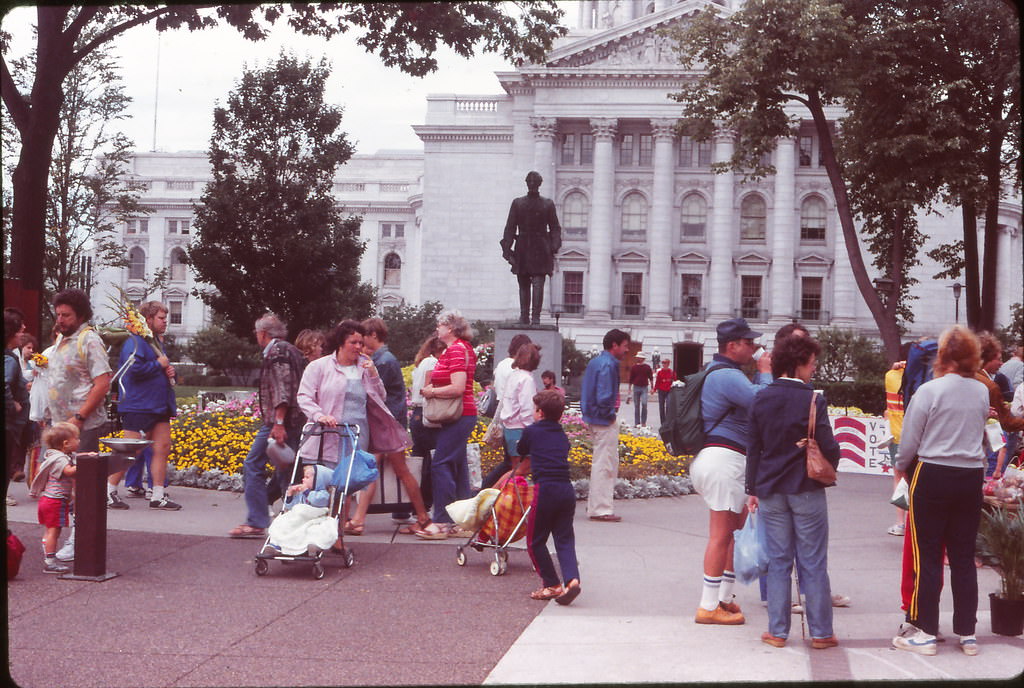
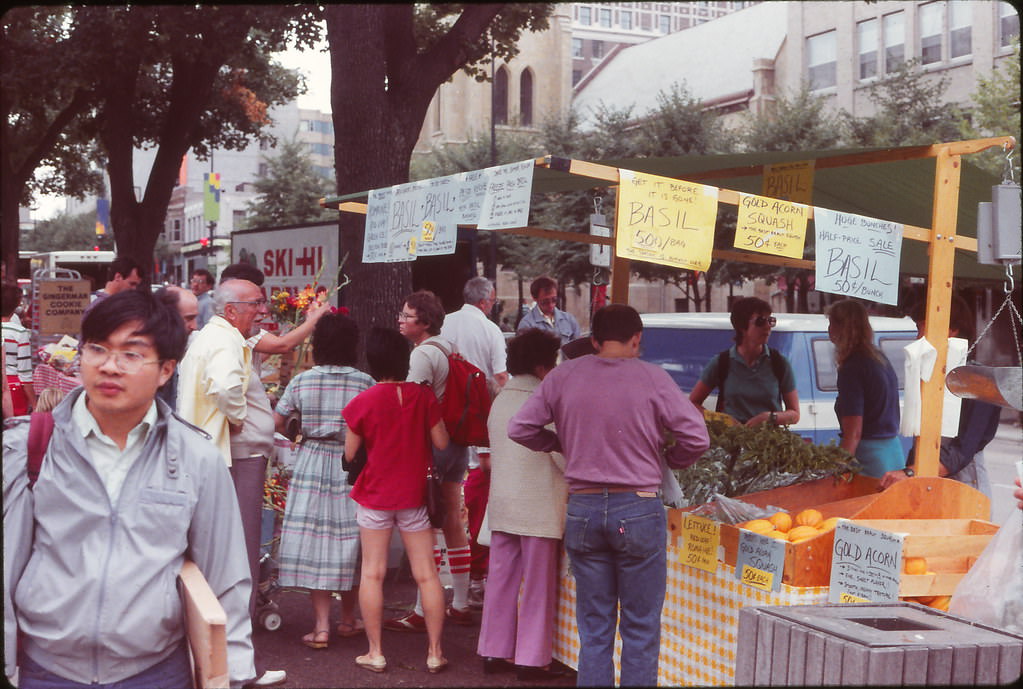
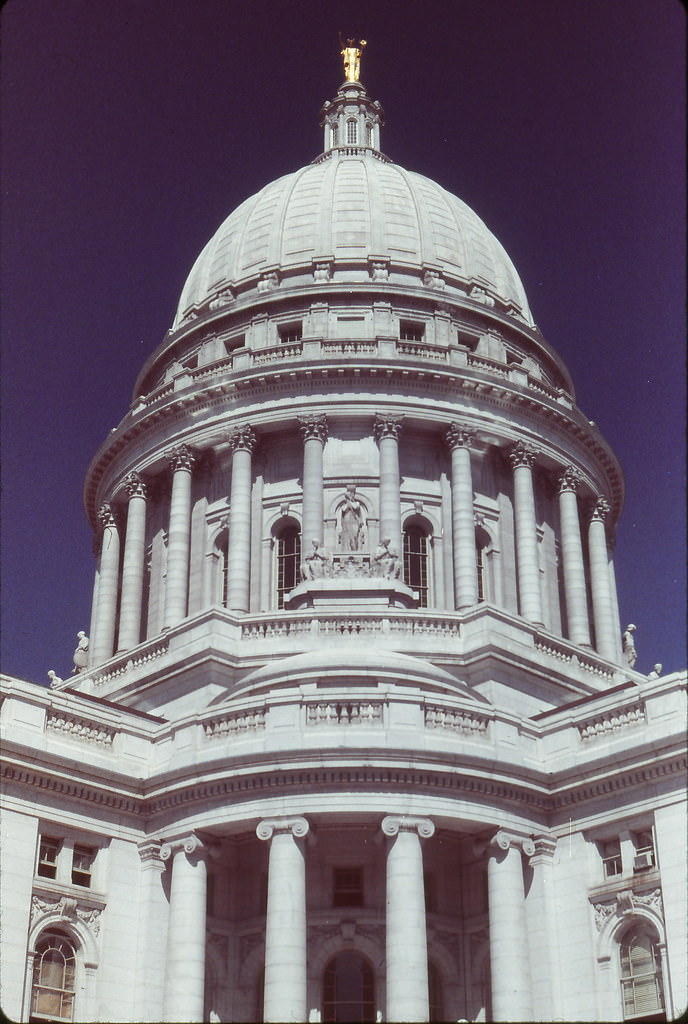
Looking west down West Washington Avenue from the Capitol steps gave a clear sense of Madison’s street grid and its mid-century commercial architecture. Looking east up State Street from the same point revealed the full length of the pedestrian corridor stretching toward campus. These were views that Madisonians passed through constantly — familiar enough to take for granted, but striking to anyone seeing them fresh in September 1984.
The Memorial Union Terrace along Lake Mendota was the social center of UW campus life. Designed with its signature multicolored sunburst chairs and tables arranged along the water, the terrace hosted everything from casual afternoons to organized events. Students gathered there to study, socialize, and watch sailboats move across the lake. In fall 1986, a circus train rolled through Madison carrying the animals and equipment of a traveling show — one of the more unusual sights the city had seen that year.
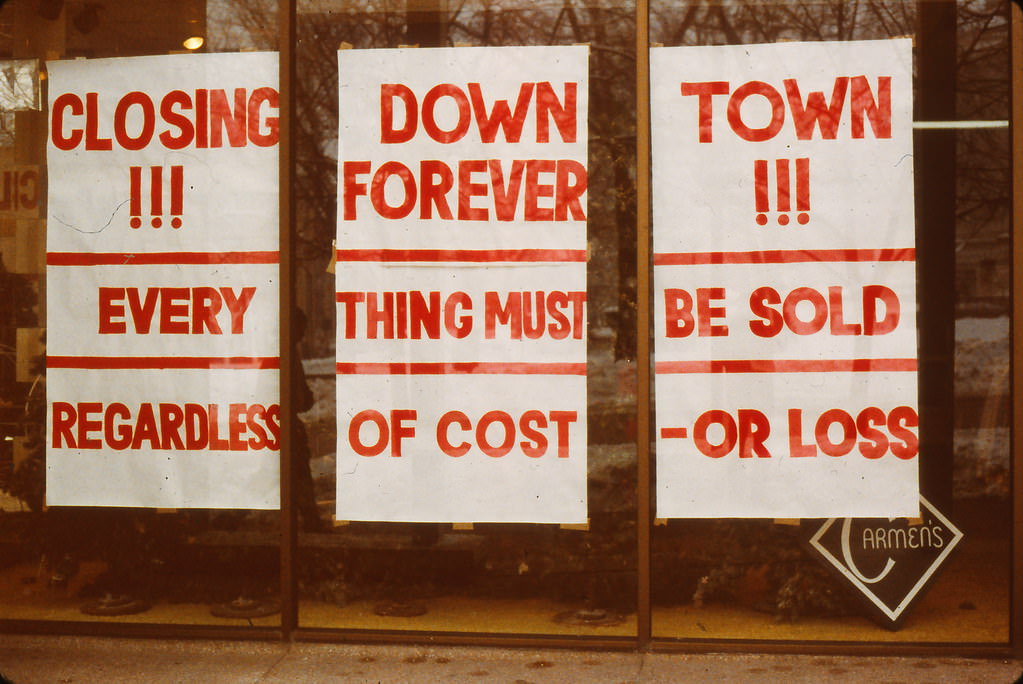
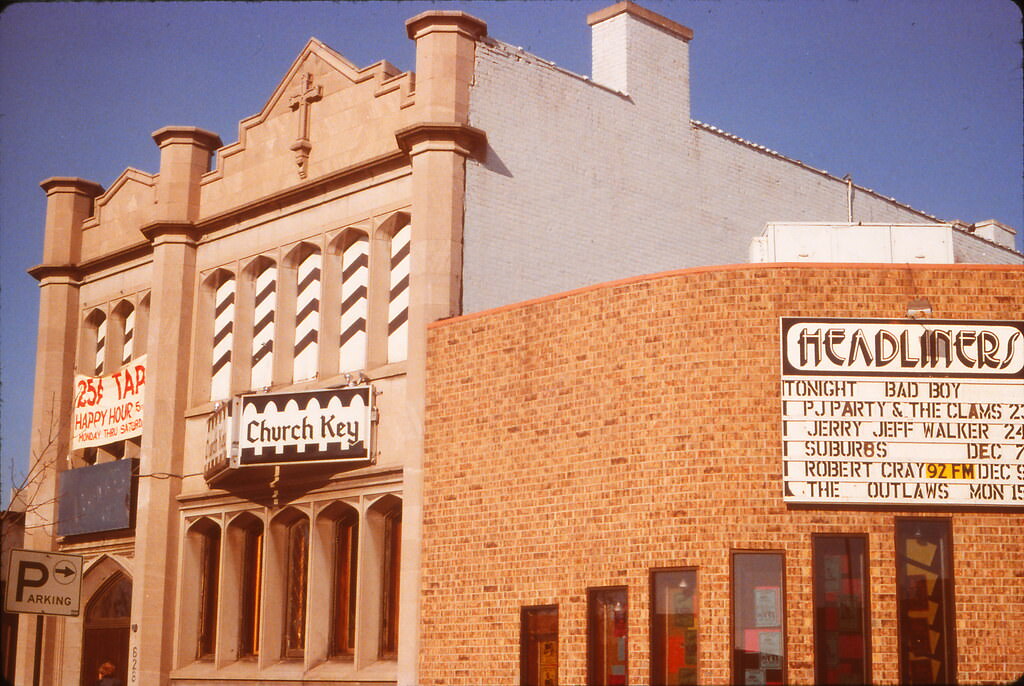
Even stores closing down were documented as part of Madison’s life in these years. A shuttered shop on Capitol Square in 1985 stood alongside the bars and nightlife that defined the city’s social scene. Church Key and Headliners were two Madison bars captured together in fall 1986 — representative of the dense concentration of nightlife options that had grown up around the university and State Street corridor over the decades.
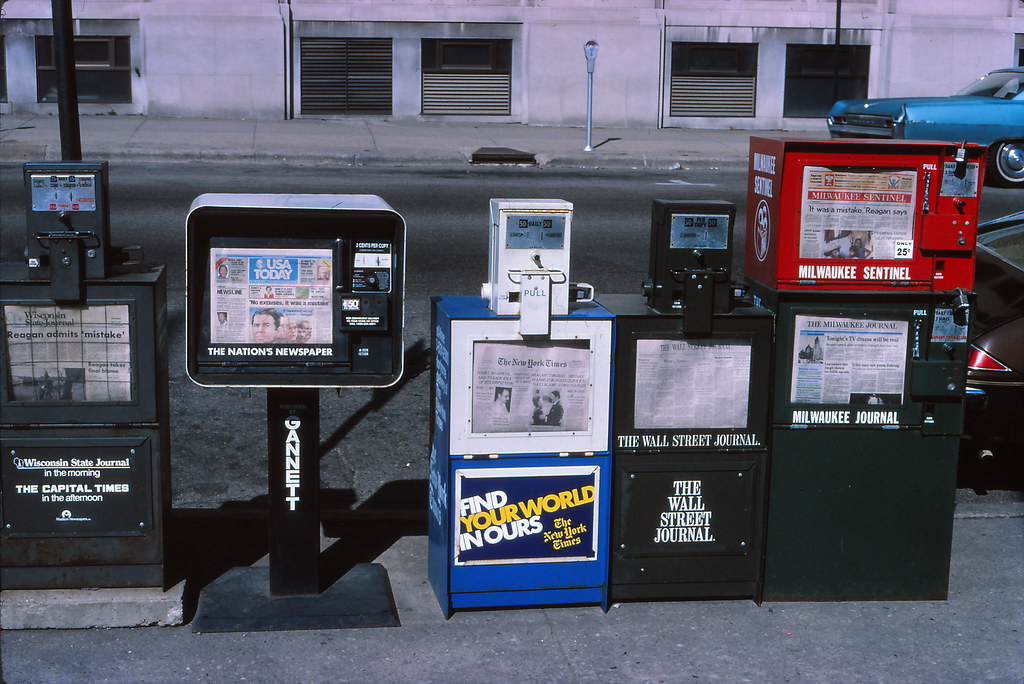
In March 1987, newspaper headlines across Madison announced that President Ronald Reagan had admitted making a mistake in the Iran-Contra affair — a major political scandal in which his administration had secretly sold weapons to Iran and used the proceeds to fund Contra rebels in Nicaragua. The story dominated national news and was keenly followed in Madison, a city with a long history of political engagement. The headlines photographed that month captured a specific moment in American political history, visible in an ordinary Madison setting.
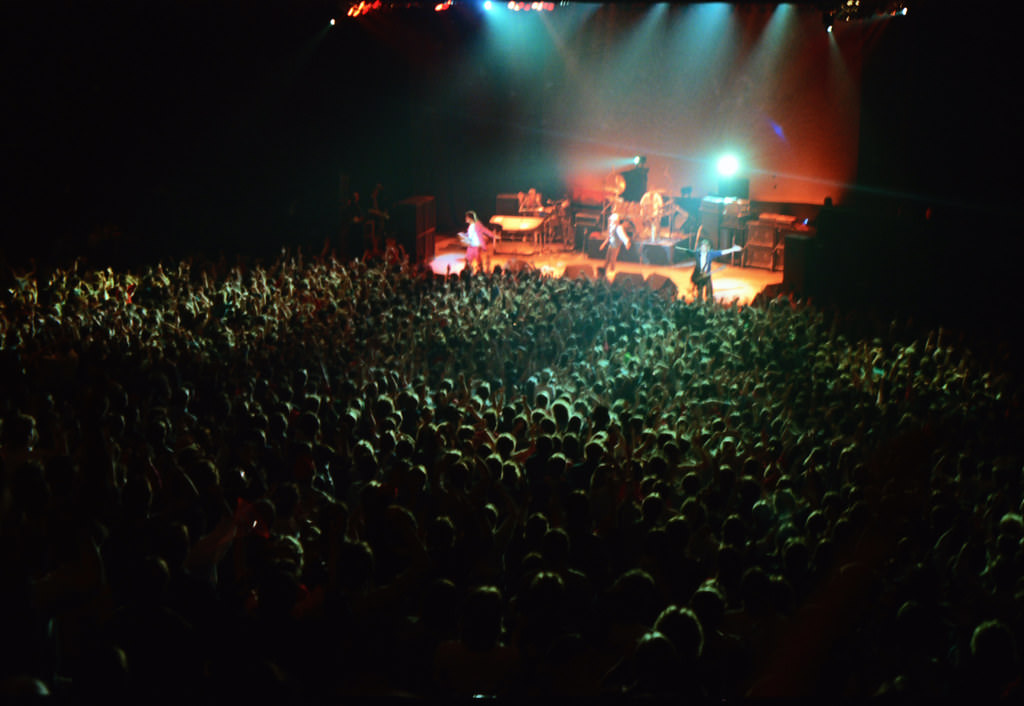
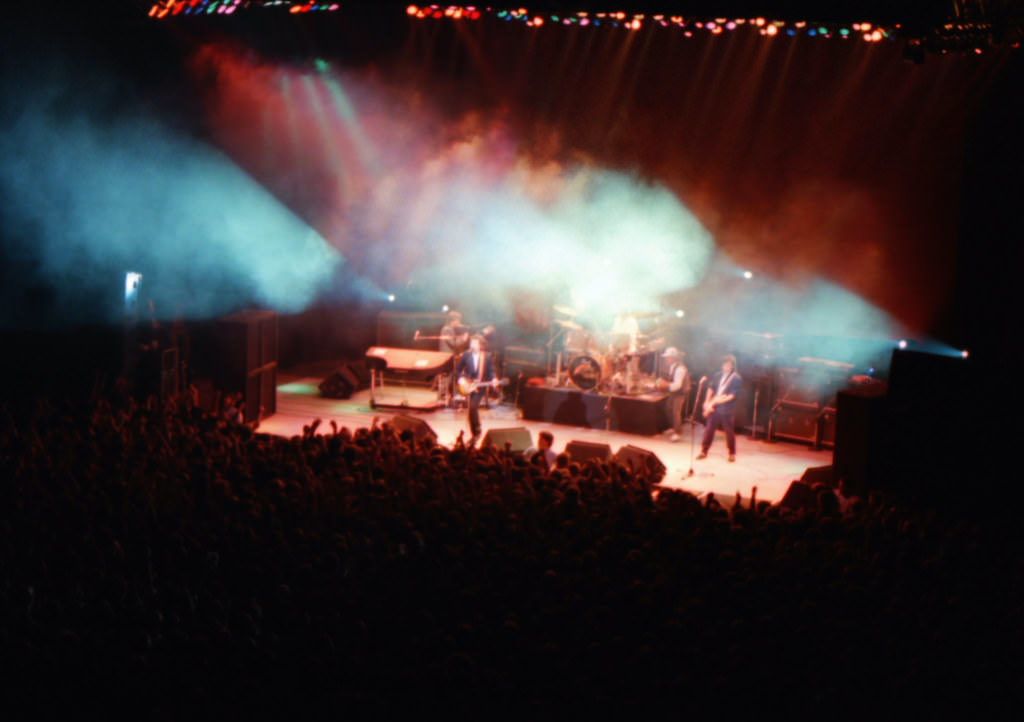
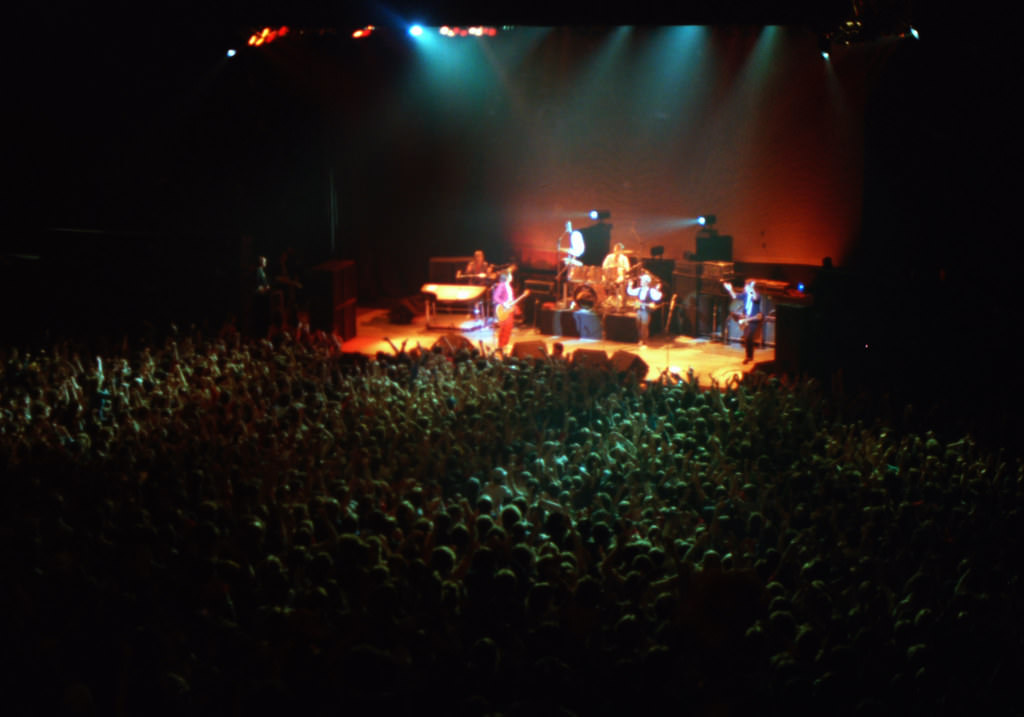
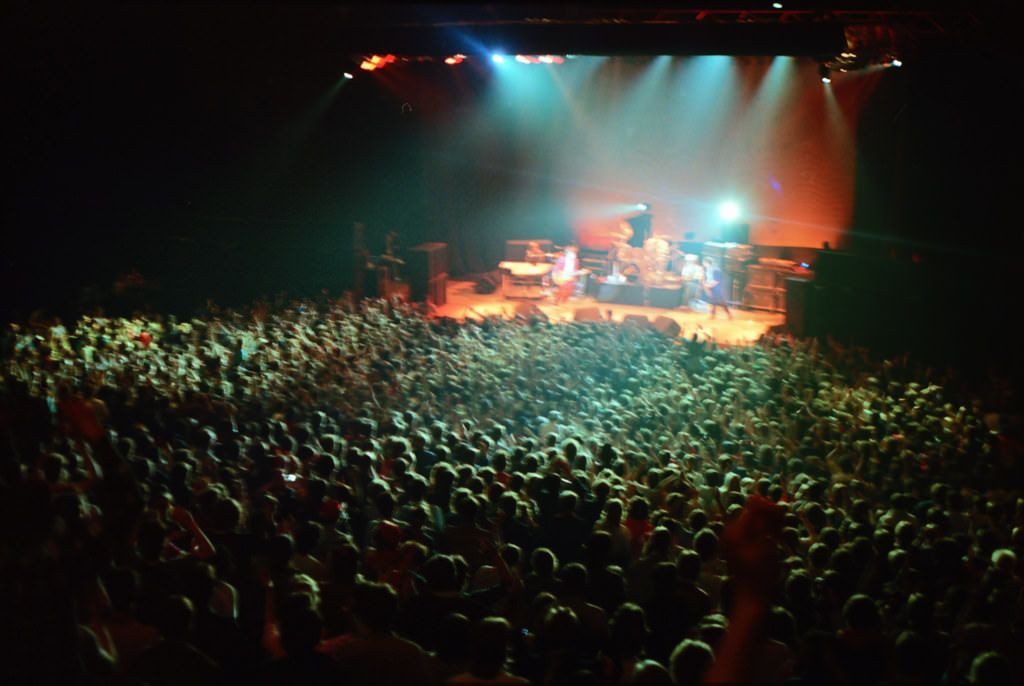
On March 10, 1985, The Kinks played the Dane County Coliseum. The British rock band, formed in London in 1964, had been one of the defining acts of the British Invasion and had maintained a loyal following through multiple decades of changing musical trends. By 1985 they were touring behind their album *Word of Mouth*. The show at the Coliseum was photographed extensively, capturing the band in performance and the audience in the arena.
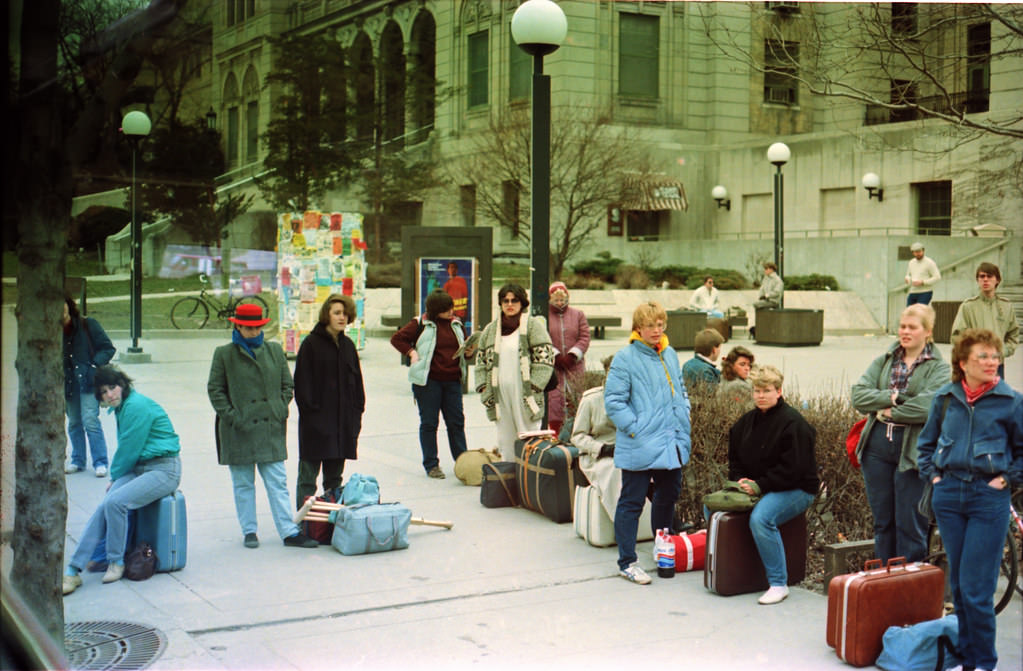
March 1985 on the UW campus showed the university in the last weeks of winter. Students waited for buses outside Memorial Union, bundled against the cold. The Lake Mendota shoreline was still partly frozen, its ice beginning to break up along the edges. Langdon Street near campus showed the quiet that came over Madison in the months before spring thaw — a stillness that made the arrival of warmer weather feel all the more earned.

It must’ve been sooooo nice with 100k fewer people
Why?
Possibly less crowded, less busy, less traffic, less development, less sprawl, fewer people at the parks, fewer at the markets, less noise, perhaps less litter. I can’t imagine anything that wouldn’t be improved.
I think the problem is more cars, not more people.
In so many ways, it was. Less crowded, more fun, and less edgy and hostile. Things were different then, and they won’t be the same again.
Then again, weren’t some areas much edgier? I don’t know how far back you have to go, but I remember Schenk’s corner being dicey in the 1970s.
My family members lived in this area in the 1970s. People who lived in the area worked at Kipp, Ray-O-Vac, or whatever the Goodman Center used to be (two different businesses now known as Ironworks and Brassworks), and so on.
People Most houses were owner-occupied, though not luxurious, everyone knew their neighbors, and everybody’s kids went to East. There wasn’t any tension between ethnic groups because demographics were pretty uniform (not what you’d want today, but that was how Madison was in the 70s). Perhaps there were some bars where people drank too much and acted stupid, but where doesn’t that happen?
Apart from the cars and outfits, it doesn’t look too different
I was going to mention the outfits and cars. 5-10 years after these photos, I started hanging out on state street.
Fascinating? Many of the photos look like current Madison photos with crappy 80s vehicles. A notable exception is Machinery Row before they sandblasted the facade to remove coal gunk. The difference was astounding while they cleaned the building: the Library Mall, minus the godawful new St Paul’s.
It would be nice to paint St Paul’s beige and cover it with ivy. It doesn’t look enjoyable.
The same thought crossed my mind. There were dozens of photos from the ’80s taken from places where Madison looks barely different today, except for Maxwell Street Days. It seems more like Maxwell Street Days of the 1990s than what it looks like today.
I remember those guys selling produce on the mall there
It would have been great if the Strand Theater had been preserved. The shopping on the Square is sorely missed.
Thanks for bringing back many happy memories from that era. There was a shot of Pic a Book, where I bought more than a few books and comics at that time.
Many places you would still recognize, many that have really changed.
Awesome stuff!