
History books tend to focus on wars, disasters, and hardship. That makes sense — those events shaped the world. But the camera has always captured more than conflict. For as long as photography has existed, ordinary people have pointed their lenses at laughter, tenderness, and small moments of joy. The result is a scattered but powerful archive of human happiness spread across more than a century. The photos collected here span from the 1880s to the 1990s. Some come from the middle of active war zones. Others were taken on quiet afternoons in parks, kitchens, and backyards. Together, they tell a story about people that headlines rarely tell.
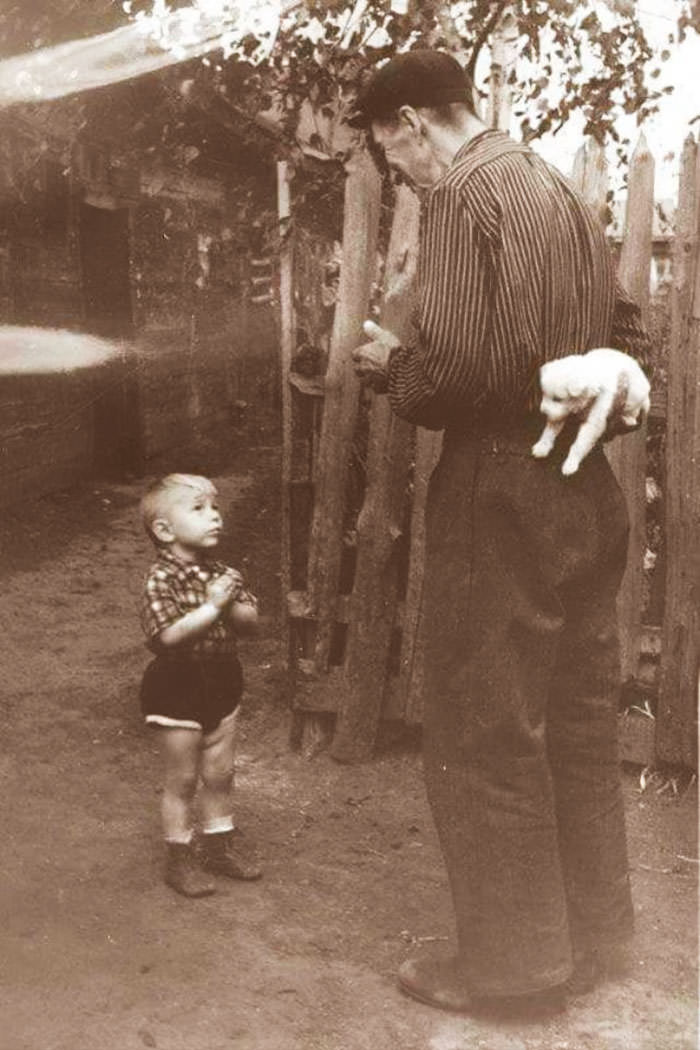
The best photographs are often the ones taken a split second before something wonderful happens. The subject hasn’t reacted yet. The moment is still building. That fraction of a second — pure anticipation — is impossible to recreate and almost impossible to plan for. Photographers who caught these instants left behind something rare.
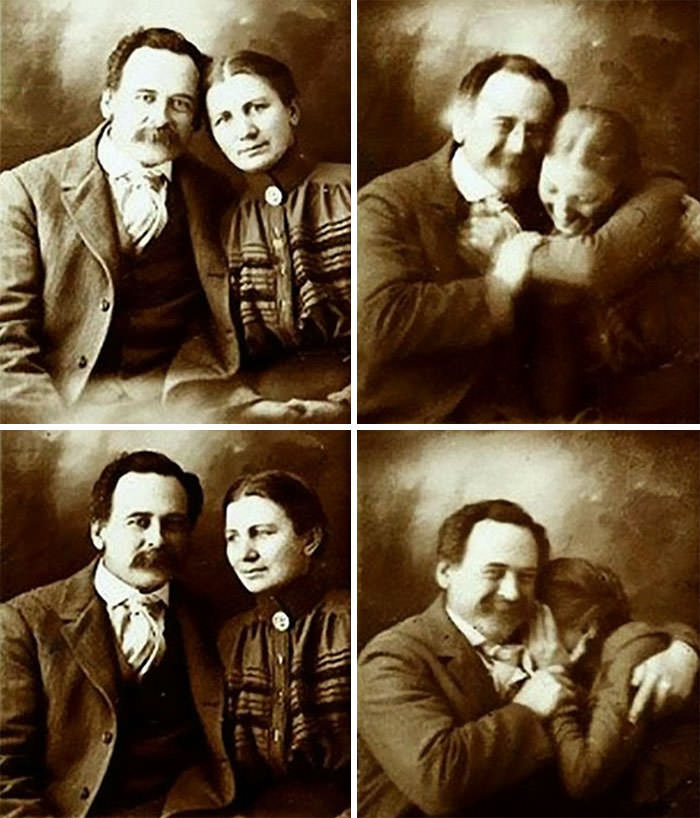
Victorian portrait photography required subjects to sit completely still for long exposure times. Formal, unsmiling portraits were the norm — not because people were unhappy, but because holding a smile steady was genuinely difficult. Which makes this Victorian couple, clearly fighting back laughter during their session in the 1890s, all the more delightful. They couldn’t hold it together, and the camera caught them anyway.
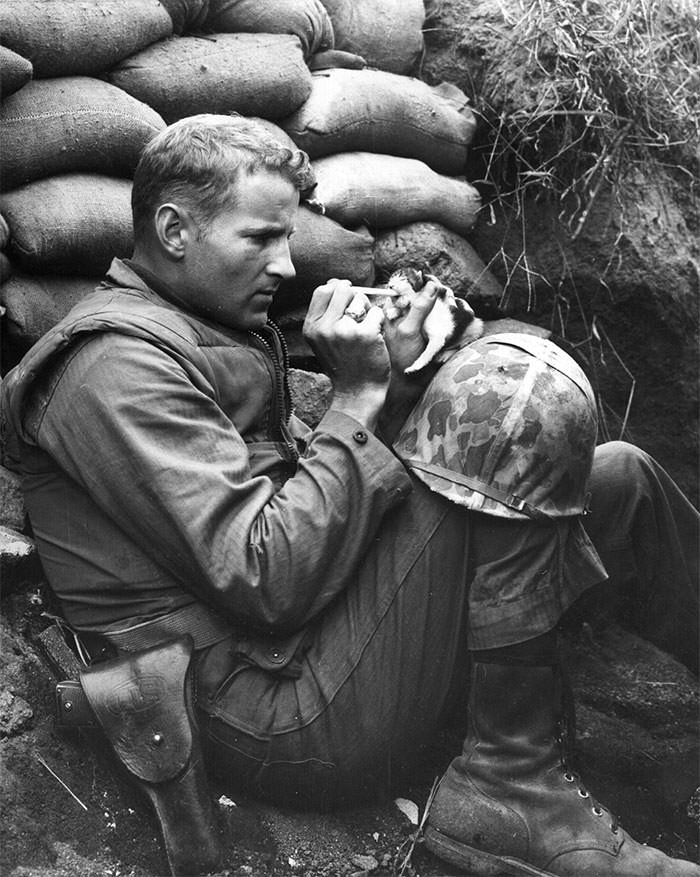
War produces some of the most unexpectedly gentle photographs in the historical record. Marine Sergeant Frank Praytor adopted an orphaned kitten after its mother died during the war, hand-feeding it in the middle of a combat zone. Soldiers forming bonds with stray animals was not uncommon — the animals provided comfort, and the soldiers provided care.
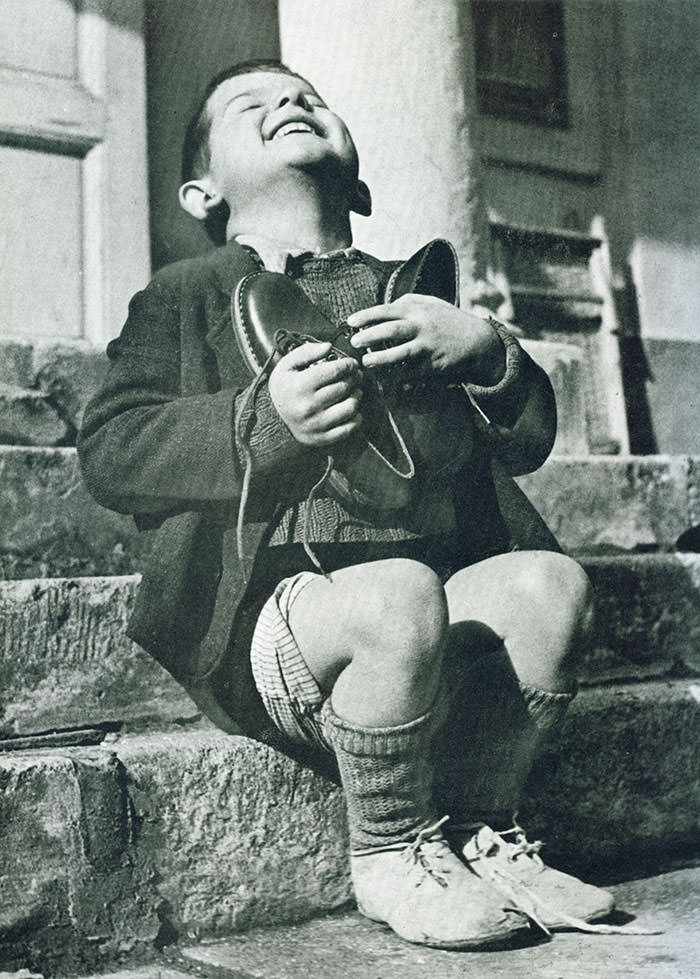
During World War II, civilian life across Europe was marked by severe shortages. Children often went without basic necessities for months. This photo of an Austrian boy receiving new shoes during the war captures a moment of simple, genuine relief. His expression says everything about what a pair of shoes meant in that context.
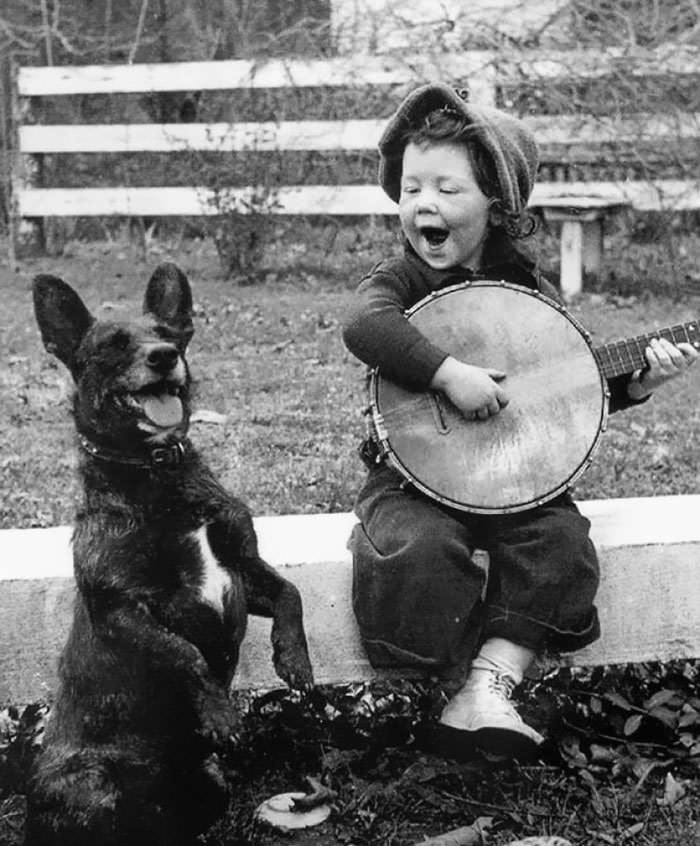
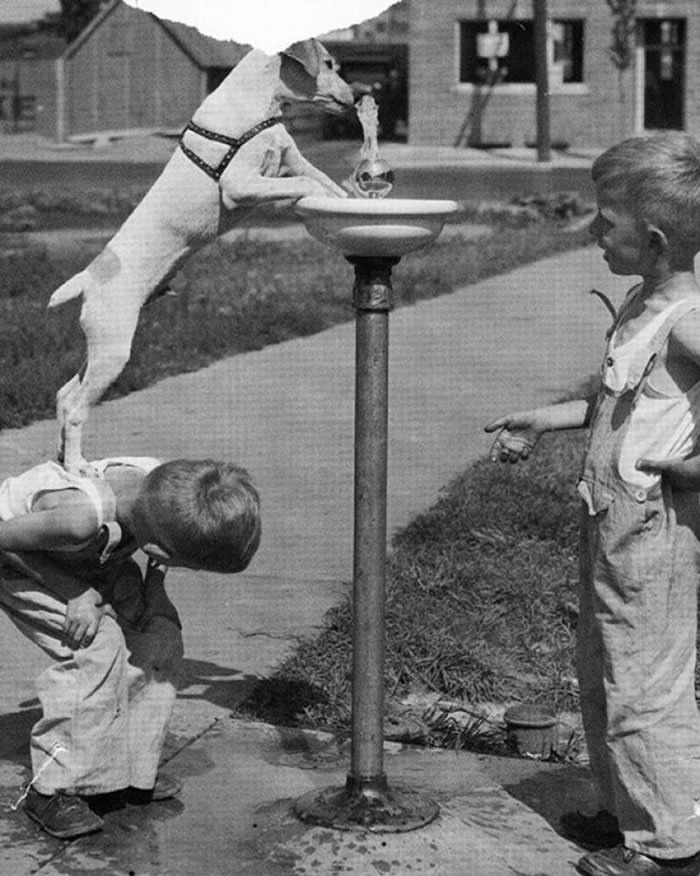
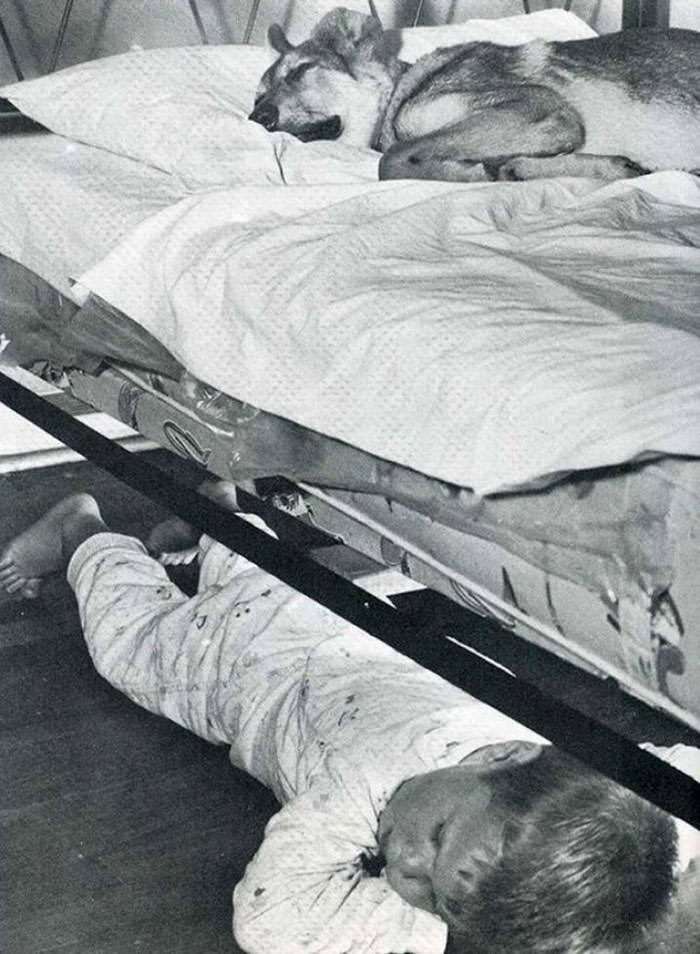
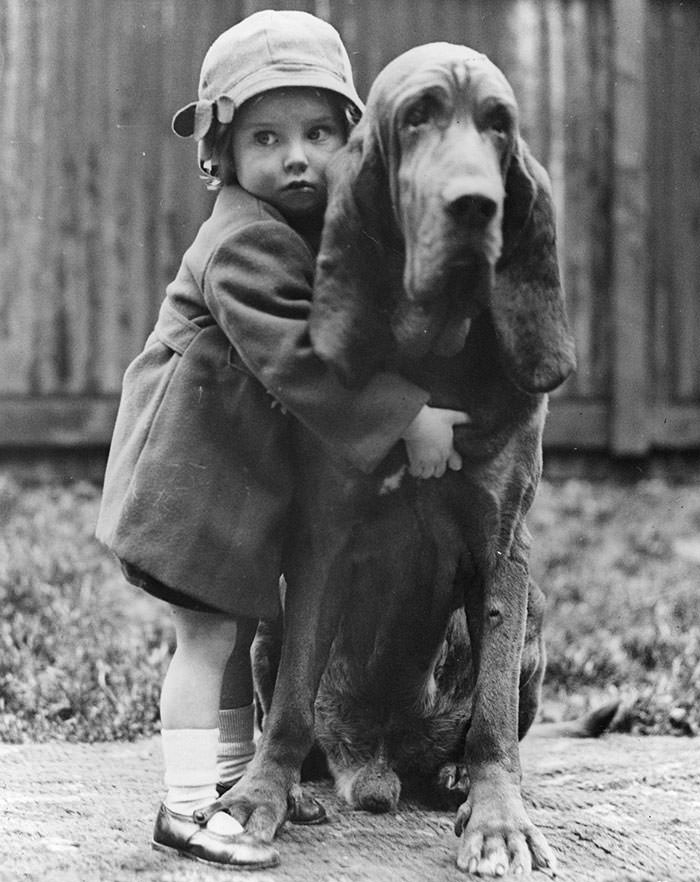
Children and animals have always made for some of the most natural photographs ever taken. Neither party is performing for the camera. A girl playing music for her dog, a boy sharing his bed with his pet — these moments happened countless times in countless households. The camera just happened to be there for some of them.
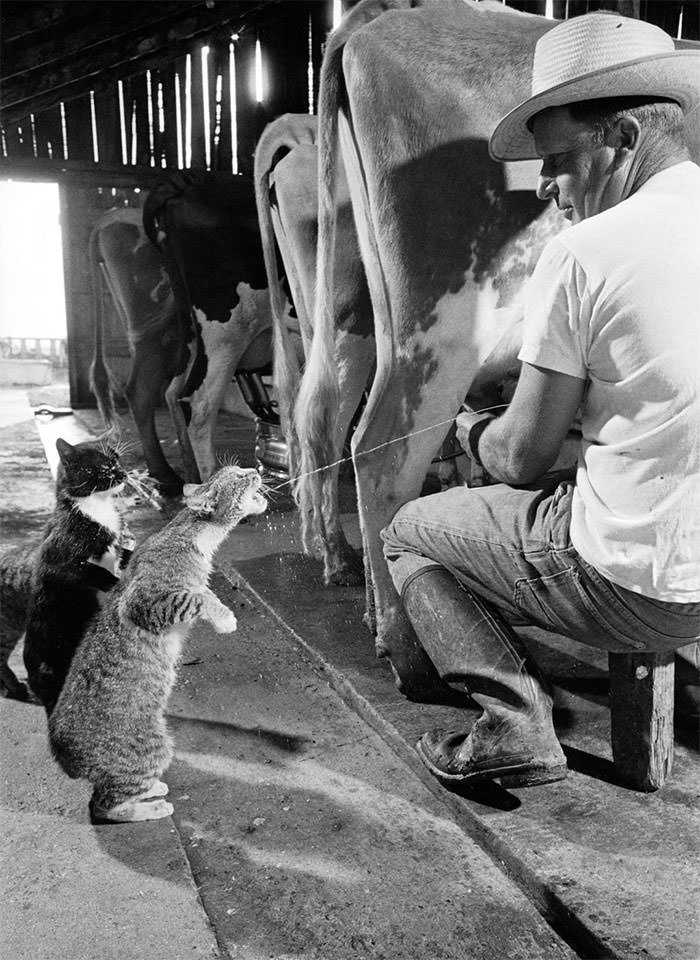
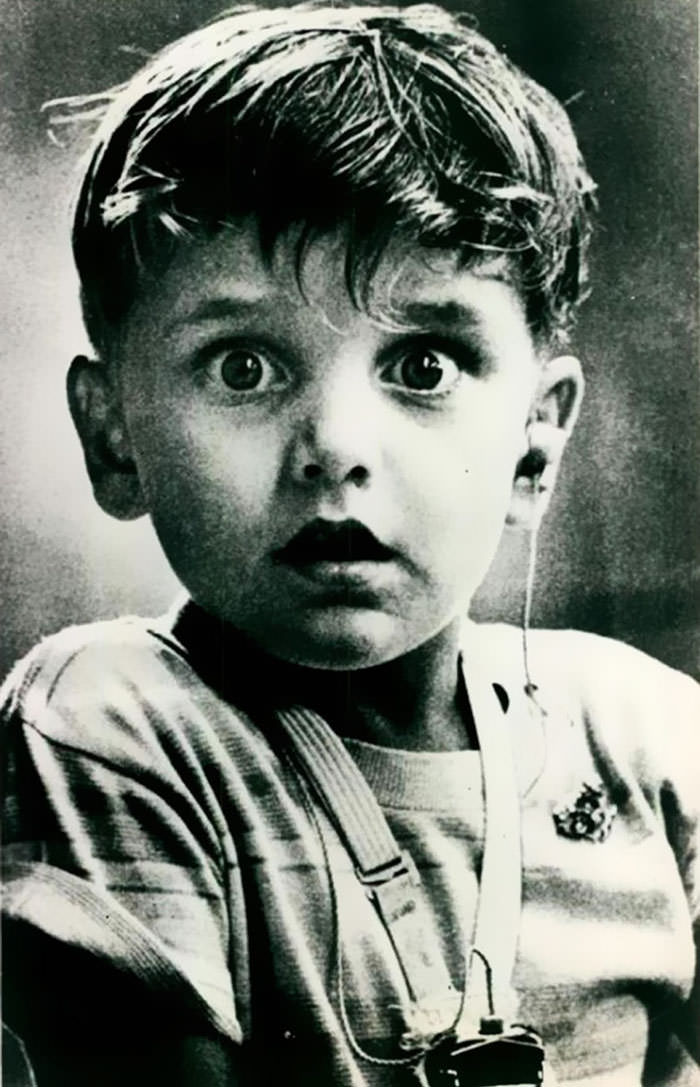
Few photographs in any archive carry as much emotional weight as this one. Harold Whittles, deaf from birth, is pictured in 1974 at the exact moment a doctor placed an earpiece in his ear and he heard sound for the first time. His expression — wide-eyed, mouth open, completely overwhelmed — is one of the most recognized faces in 20th-century photography.
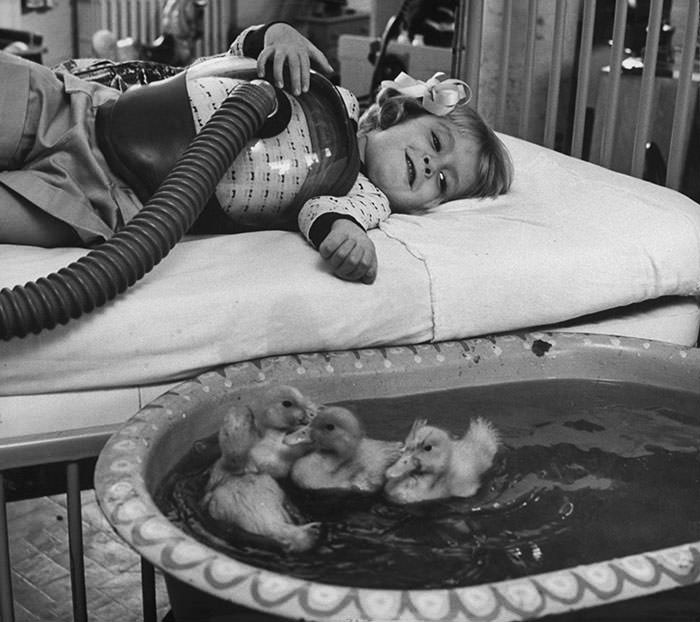
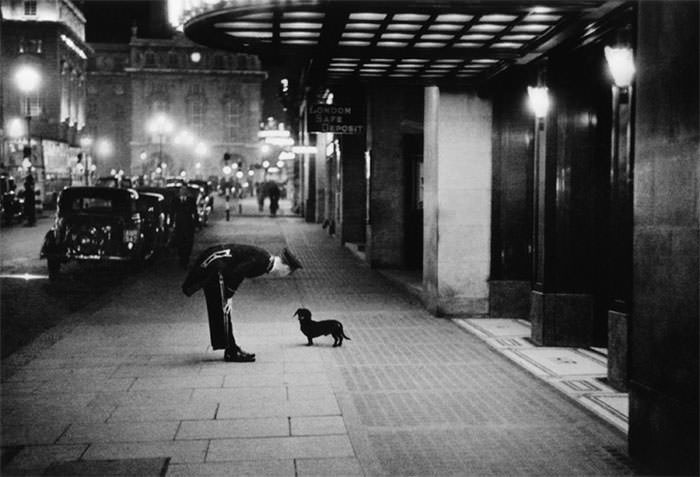
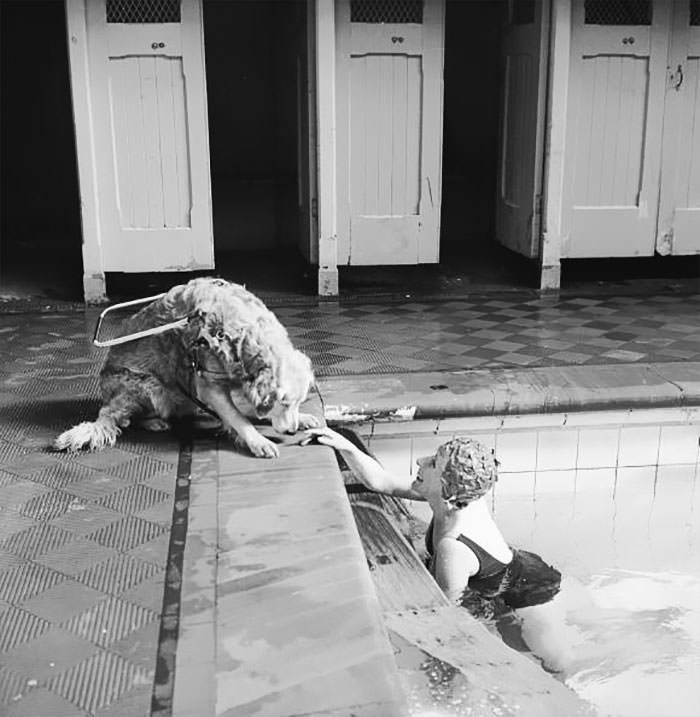
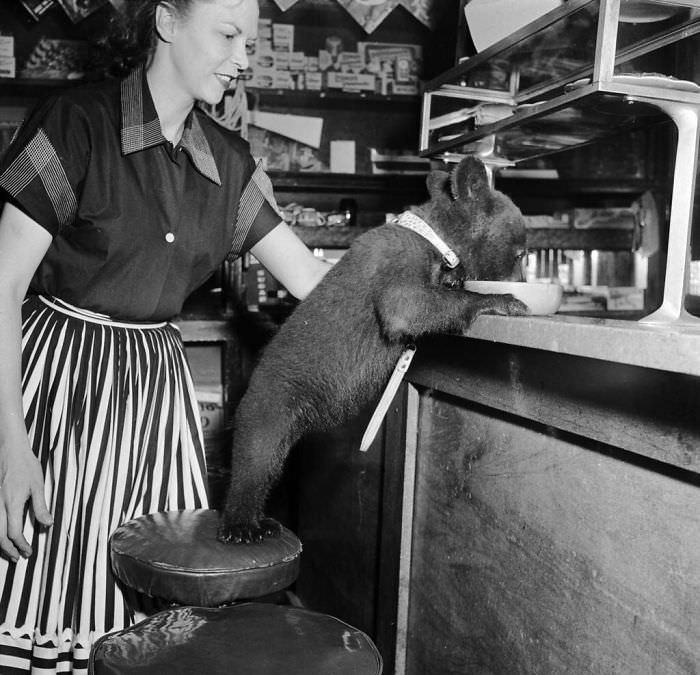
Animal-assisted therapy is often thought of as a modern practice, but this 1956 photograph proves otherwise. Animals were brought in to help patients recover — emotionally and physically — decades before the practice had a formal name. The calming effect of animal interaction on patients was recognized early, even if the science took longer to catch up.
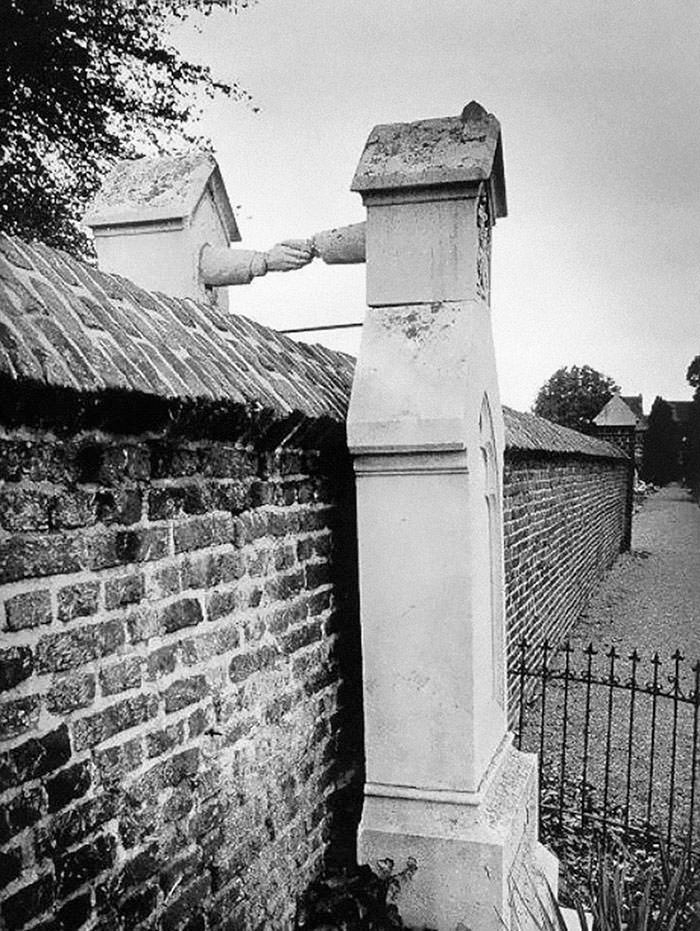
This photograph from Holland in 1888 shows two graves side by side — a Catholic woman and her Protestant husband — separated by a low wall that divided their respective sections of the cemetery. The husband’s grave features a sculpted hand reaching over the wall toward his wife’s side. Their families buried them in different grounds according to religious law, but the stonework tells a quieter story about how the couple themselves felt.
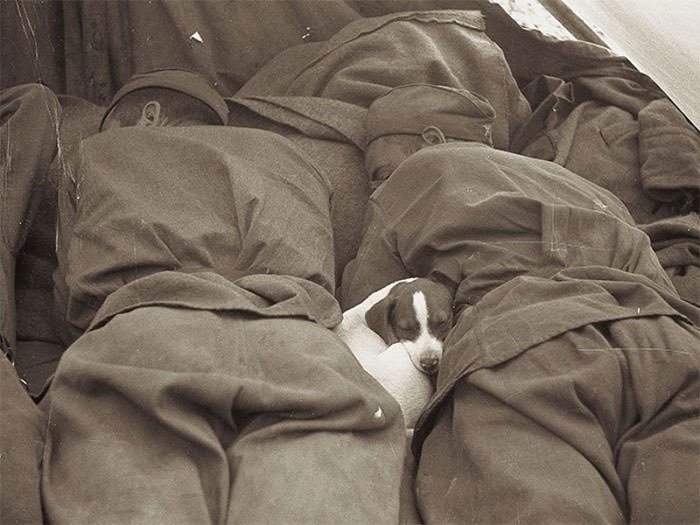
Russian soldiers on the Eastern Front endured some of the most brutal conditions of any theater in World War II. This photograph of soldiers sleeping with a small puppy shows the other side of that experience — the need for warmth, connection, and something soft to hold onto when everything else around them was hard.
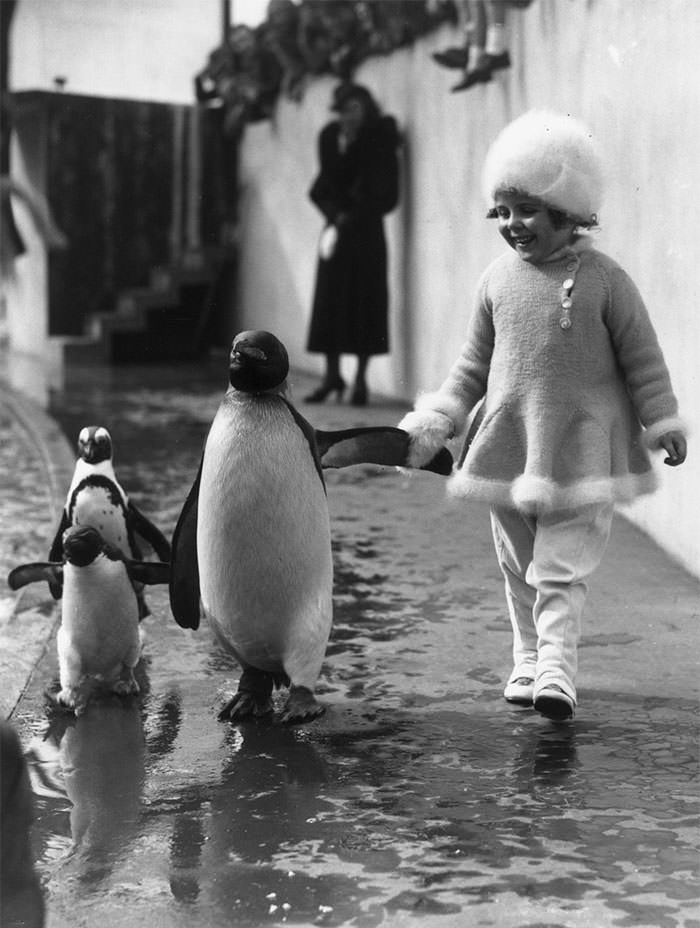
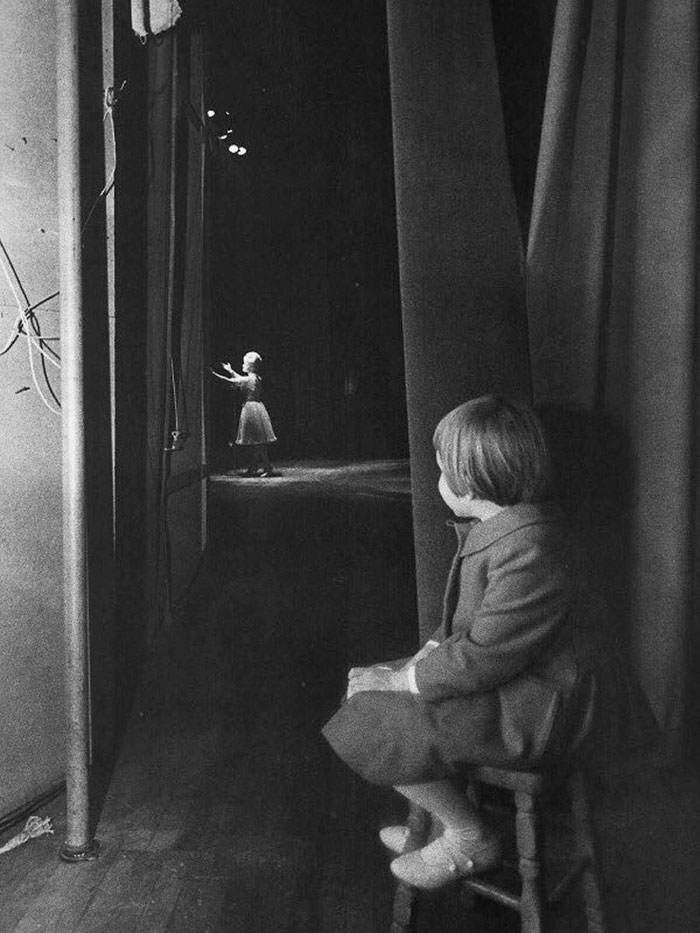
In 1963, a young Carrie Fisher watched her mother, Debbie Reynolds, perform on stage. Fisher was around six years old at the time. Reynolds was already a major Hollywood star, known for films like Singin’ in the Rain. This backstage glimpse of a famous mother-daughter pair — before either of their own careers fully defined them — is a snapshot of a private moment in a very public life.
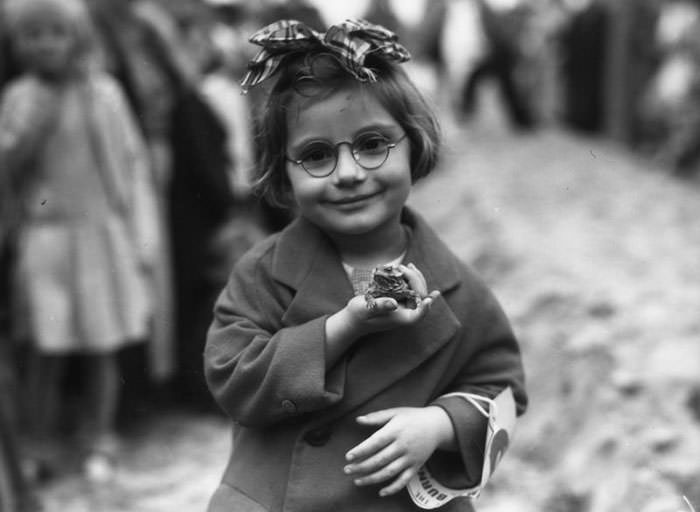
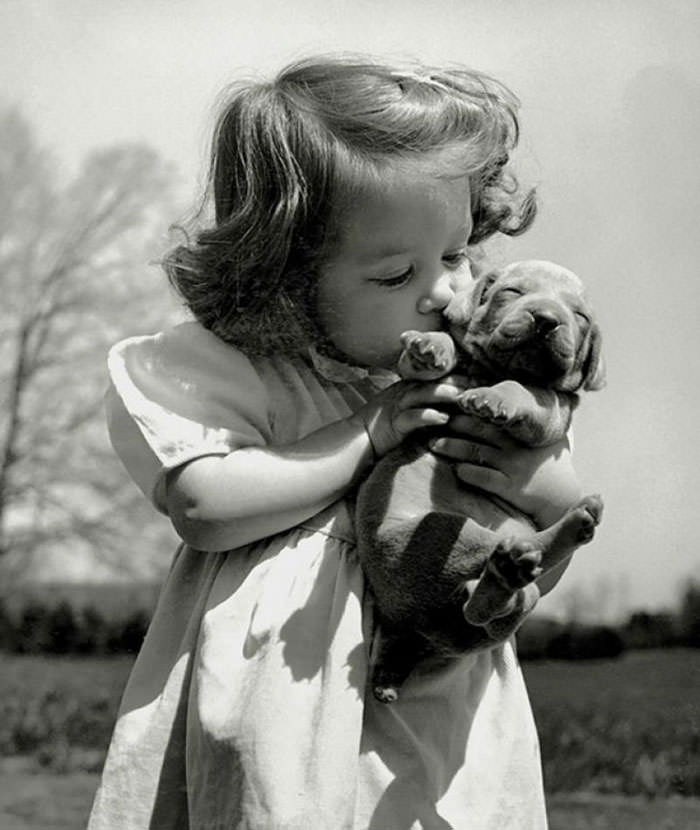
Venice Beach, California held pet shows in the 1930s where children could enter any animal they chose. The fact that toads made an appearance says something about the enthusiasm and creativity children bring to any competition. These two photos from 1936 capture the same little girl proudly showing off her toad — an entry that likely stood out in the lineup.
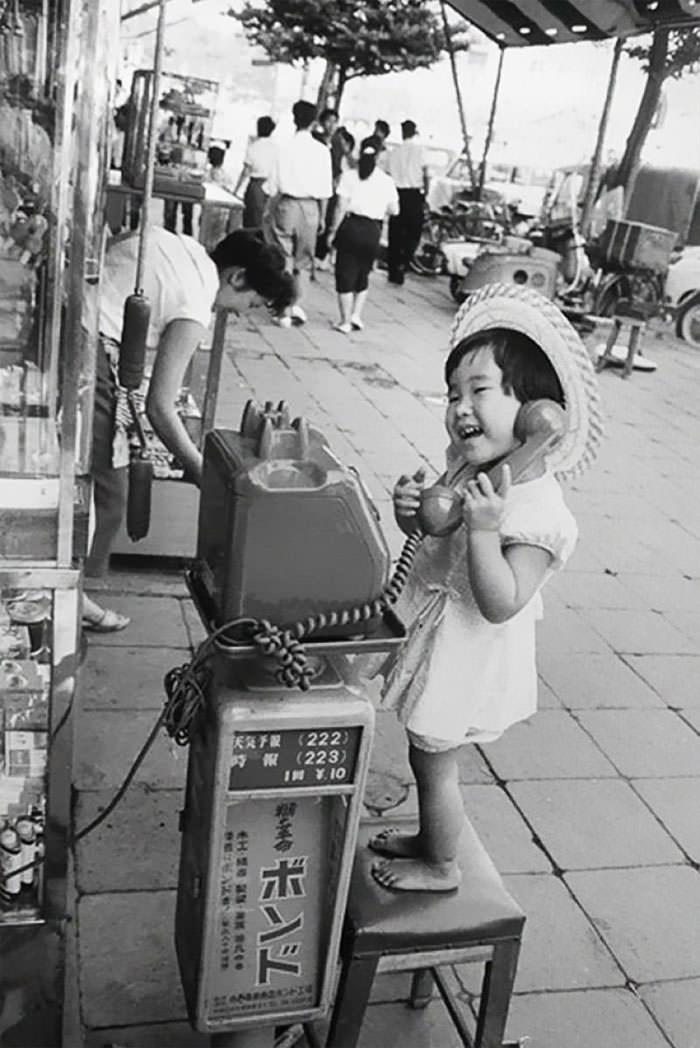
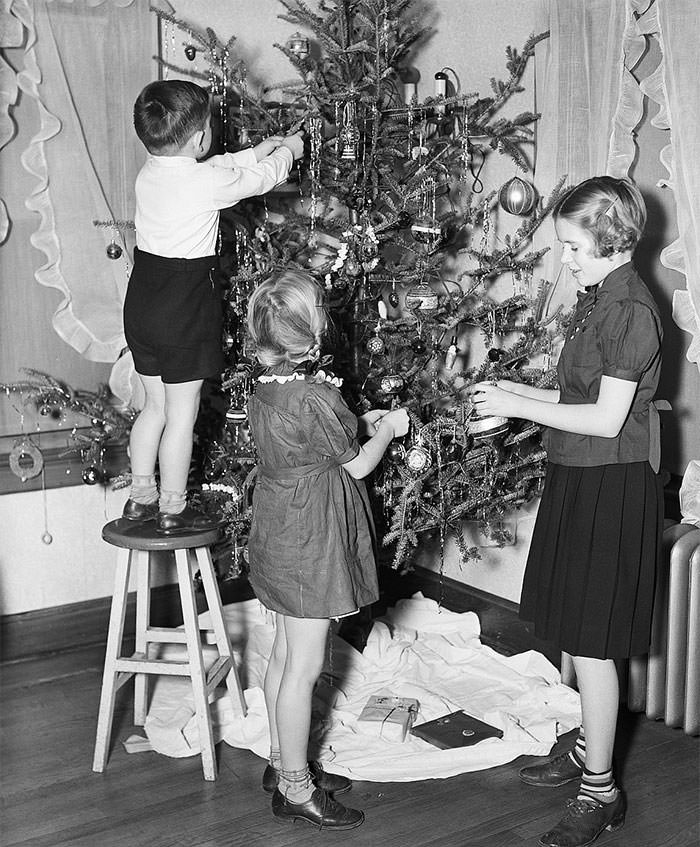
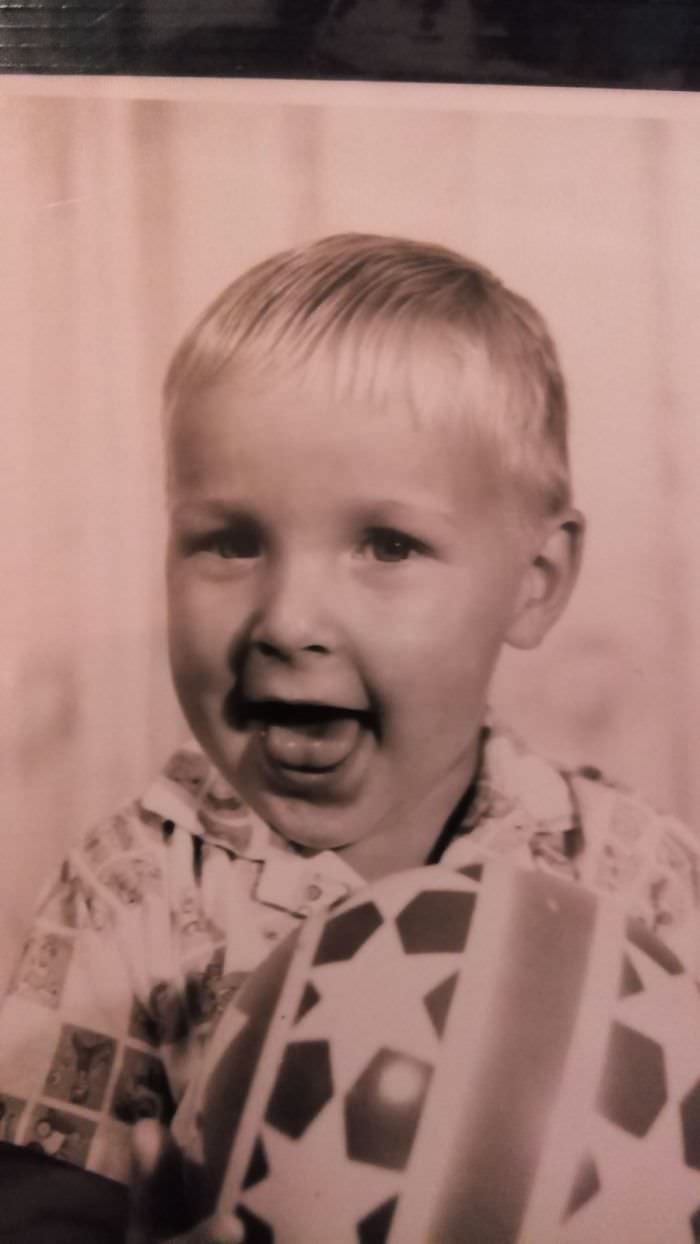
Children at play look the same in every country and every decade. A little girl in Japan in 1958 pretending to talk on a telephone, a boy in the Netherlands in 1966 absorbed in his new ball, kids in the 1940s decorating a Christmas tree — these images collapse time. The settings change, the clothes change, but the expressions don’t.
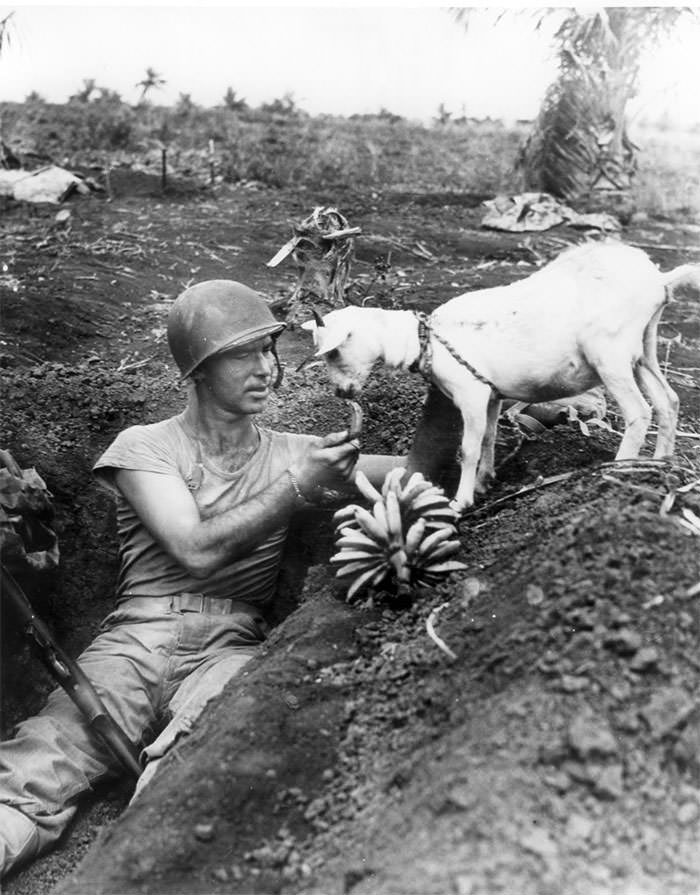
The Battle of Saipan in 1944 was one of the most intense Pacific theater engagements of World War II. In the middle of it, one soldier paused to share a banana with a goat. The photograph is almost absurd in its contrast — the machinery of war in the background, a moment of casual kindness in the foreground.
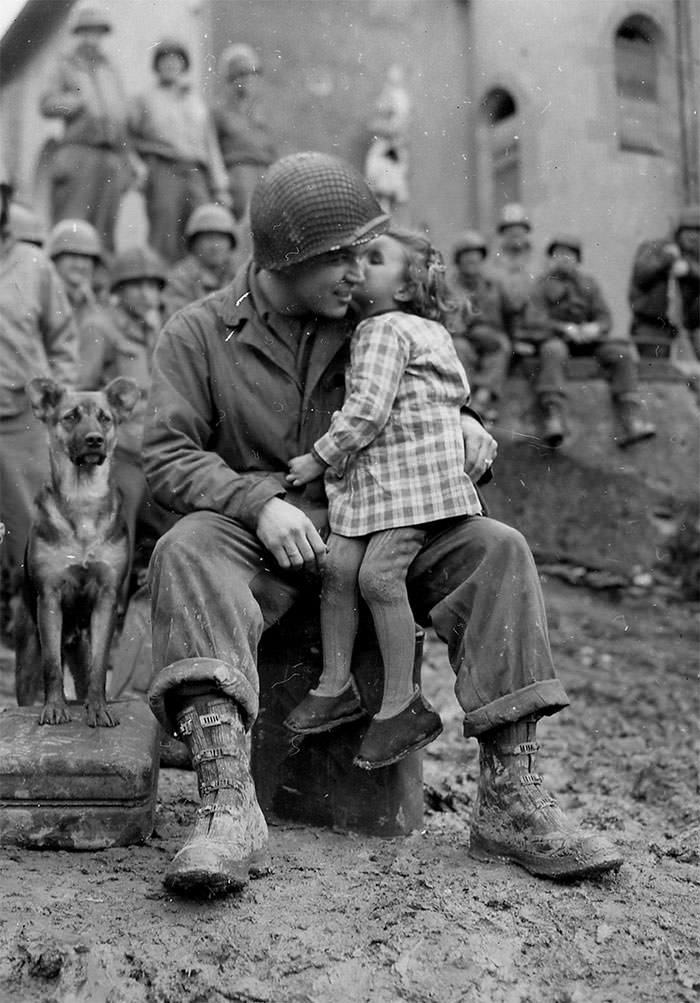
By Valentine’s Day 1945, American forces had been in France for several months following the D-Day landings of June 1944. This photograph of a little French girl giving an American soldier a kiss captures the warmth that existed between liberating troops and local civilians — particularly children, who were often the most open in expressing gratitude.
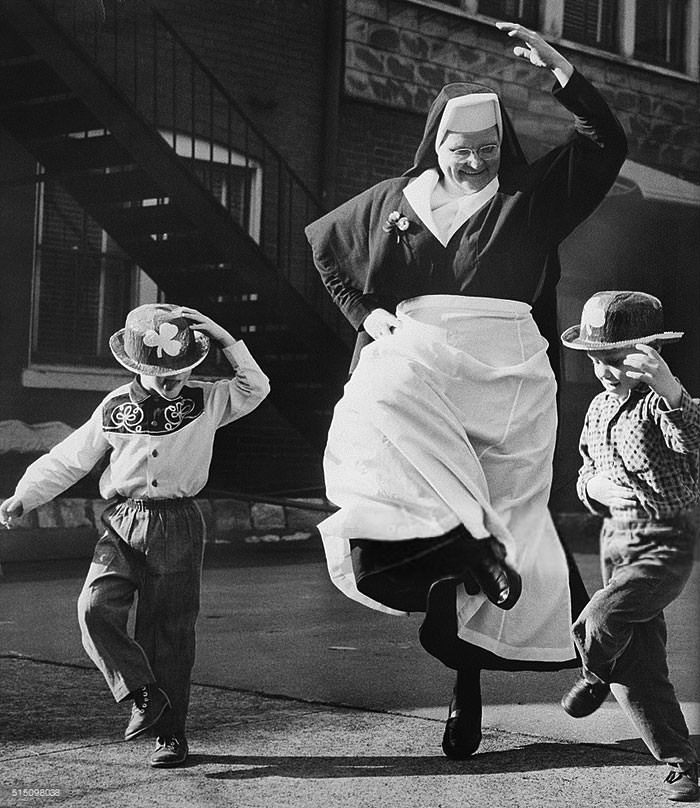
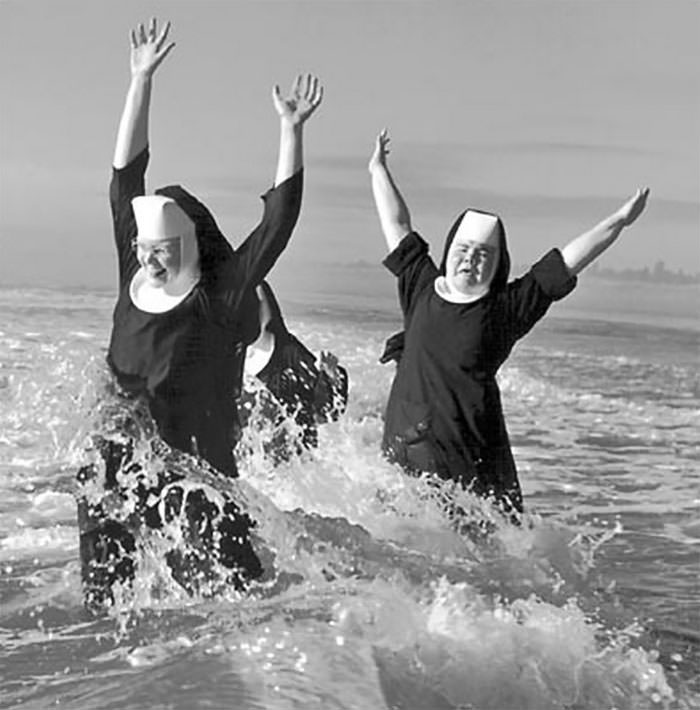
In 1964, a nun broke from the usual image of religious formality to dance with a group of children. The photograph strips away every assumption about what that setting should look like. It’s just an adult and some kids, moving together in the way that people do when they forget to be self-conscious.
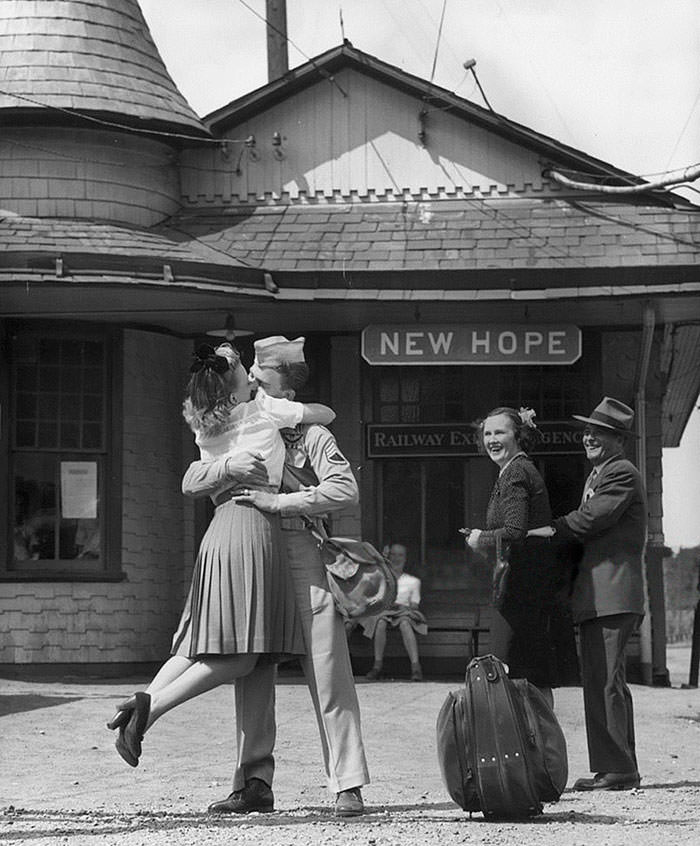
Train stations in 1945 were scenes of intense emotion. Soldiers returning from Europe and the Pacific were greeted by families who had spent years not knowing whether they would come home. This photo taken in Connecticut shows a young woman kissing a uniformed soldier, her feet off the ground entirely, the reunion too big to stay still for.
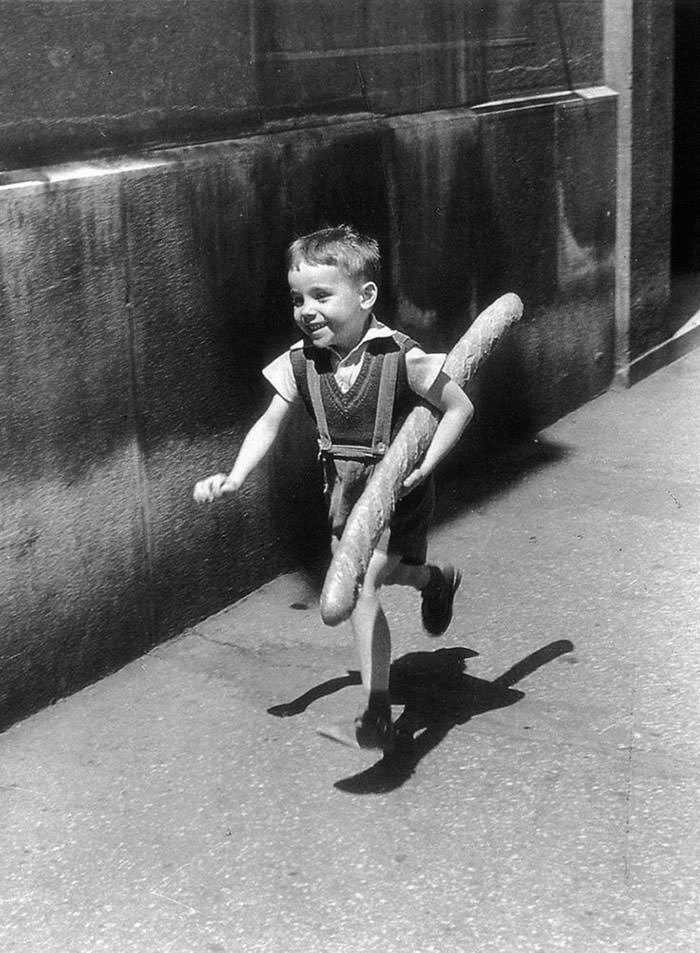
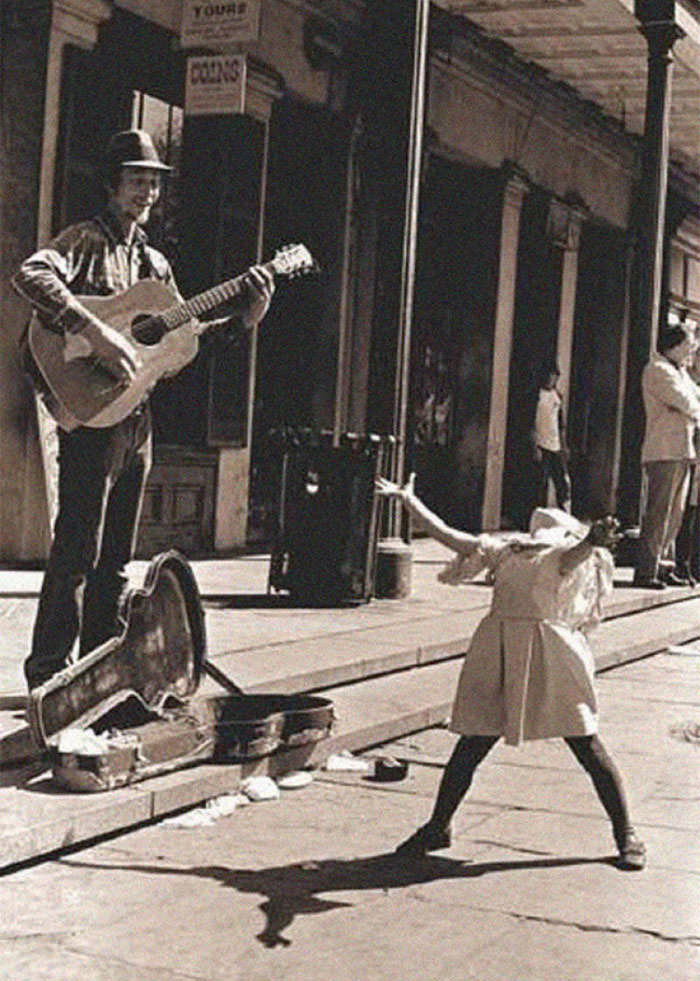
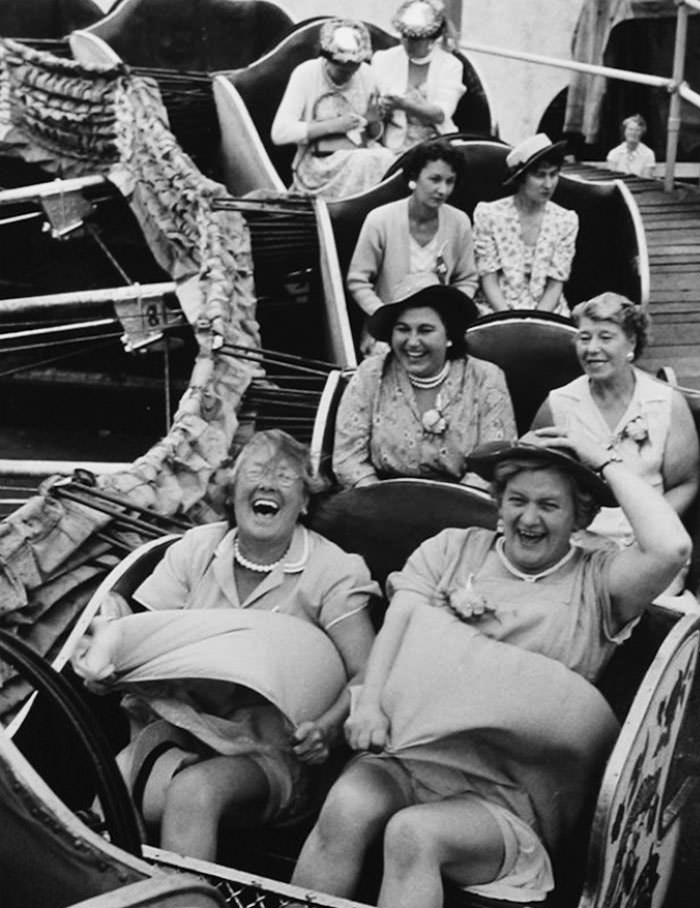
A group of women on a pub outing in Clapham, London in 1958, riding the caterpillar fairground attraction together — laughing, leaning into each other, completely present. These kinds of photographs — unplanned, mid-motion, full of noise you can almost hear — are often the most honest records of what everyday life actually felt like.
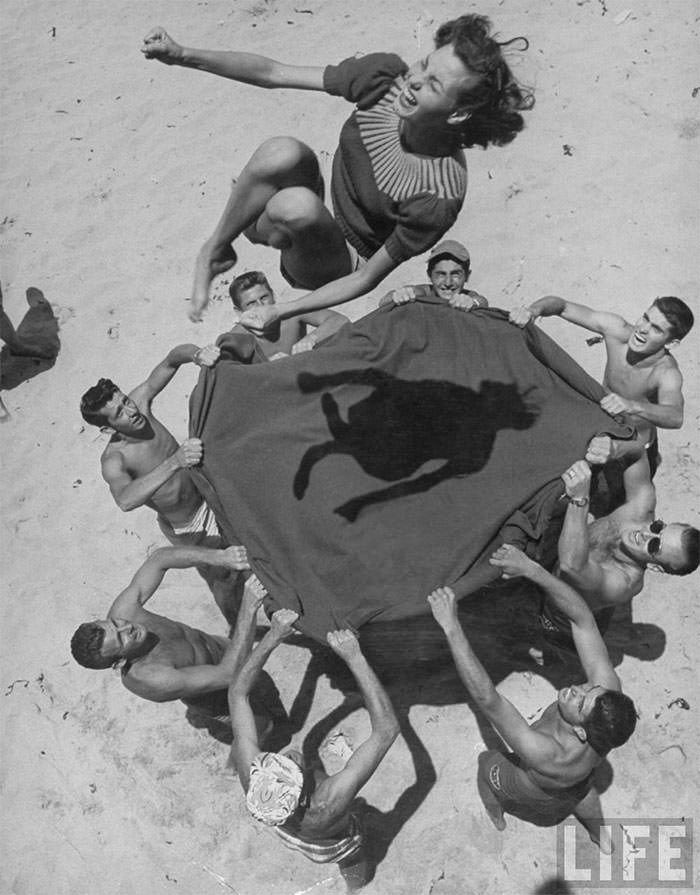
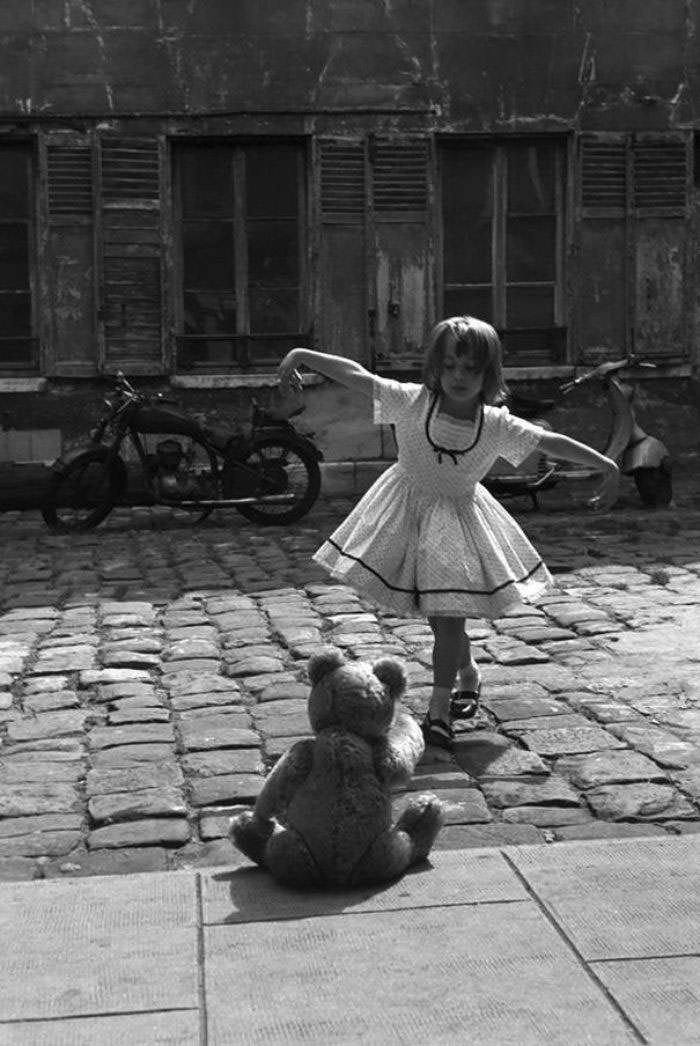
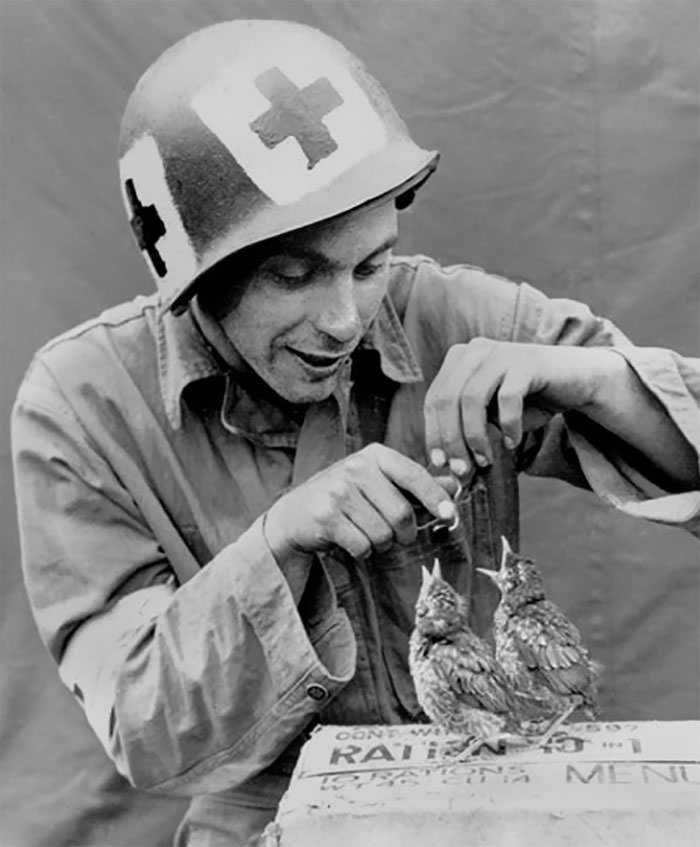
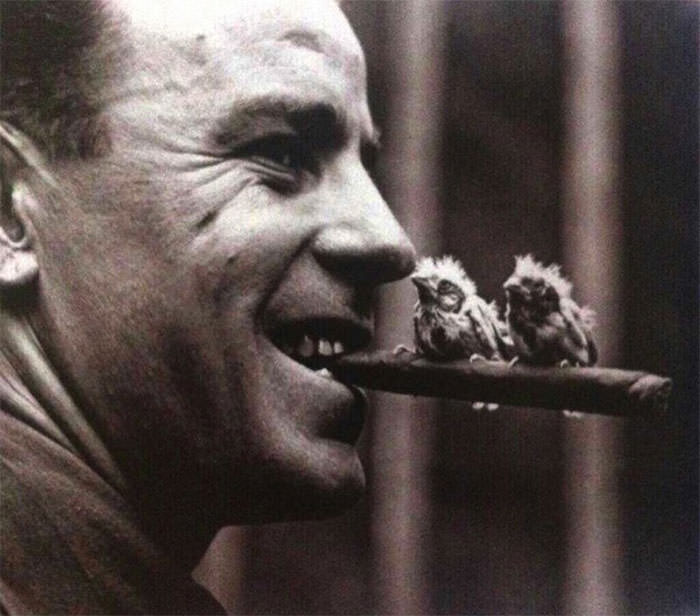
A military medic pausing to feed a nest of baby birds is the kind of photograph that says more than a caption ever could. The same hands trained to treat combat wounds are here carefully tending to something almost impossibly small and fragile. It’s a detail that reveals character — and the archive is full of these details, if you look for them.
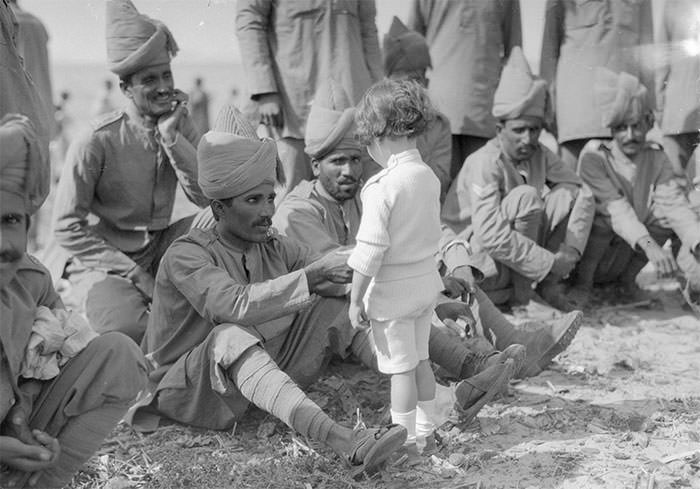
On September 30, 1914, Indian soldiers arrived in Marseilles, France to fight alongside French and British forces in World War I. A French boy stepped forward to introduce himself. The image — a child reaching across an enormous cultural and geographic distance with simple curiosity — was captured at a moment when the war was less than two months old and already drawing in soldiers from across the globe.
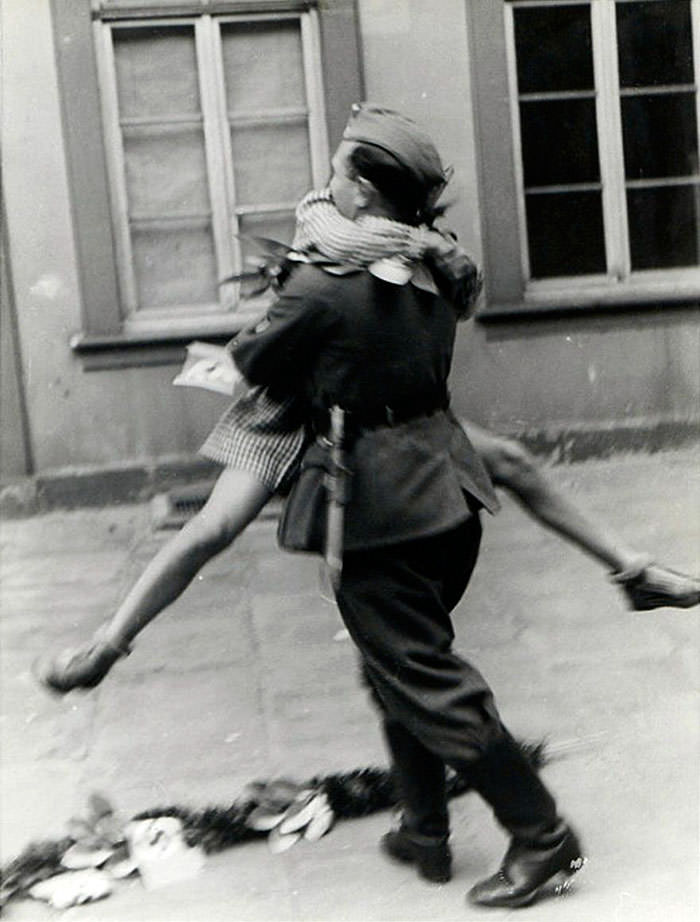
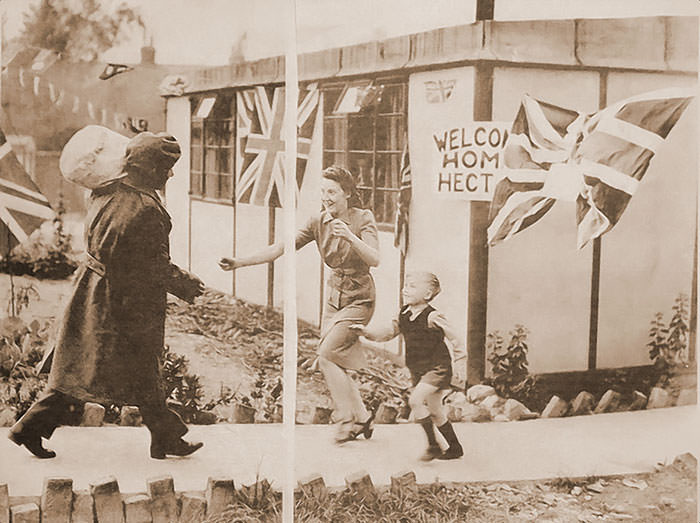
Homecoming photographs from the 1940s form their own distinct category in the historical archive. Whether it’s Gunner Hector Morgan returning in 1945 or an unnamed soldier climbing his front steps in the early part of the decade, these images share the same quality: a reunion that no one was sure would ever happen, now happening.
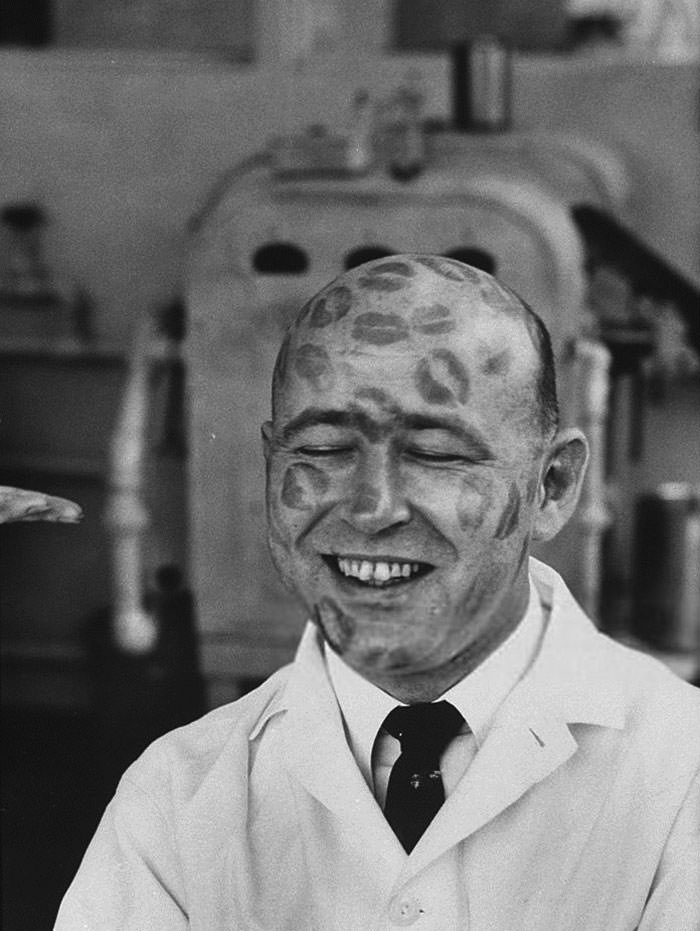
In 1960, a worker at a cosmetics company was photographed covered in lipstick kiss marks — a demonstration meant to prove that the dyes used in the products were harmless to skin. The stunt worked as both a safety test and an undeniably memorable publicity moment. The worker’s expression suggests he was fully aware of how the photo would look.
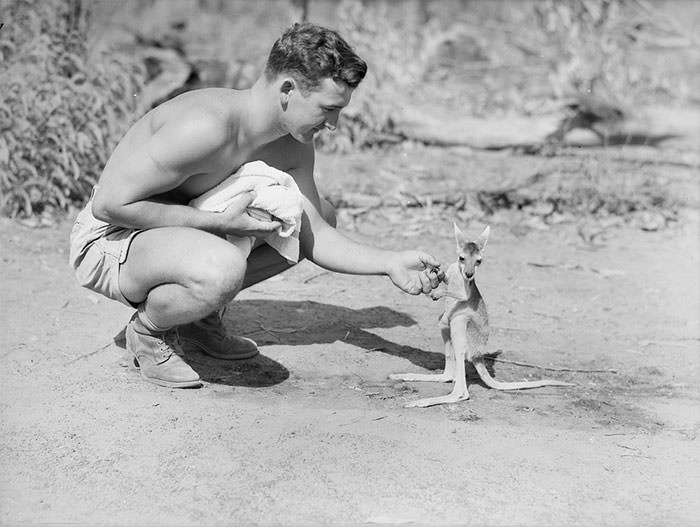
American soldiers stationed in the Pacific during World War II occasionally adopted local wildlife. This 1942 photograph of a soldier at an advanced Allied base with a pet kangaroo is a good example of the unexpected friendships that formed far from home. Soldiers in various theaters kept cats, dogs, monkeys, and in this case, a kangaroo — whatever company they could find.
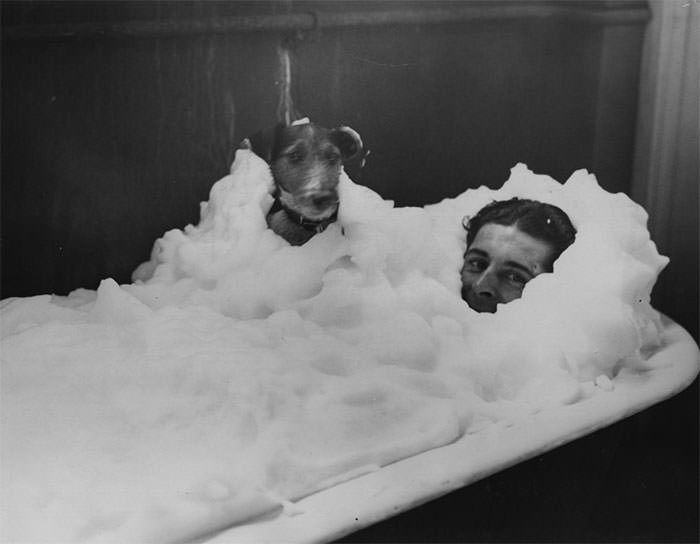
Wembley Stadium in 1934 is not where most people would picture a man and his dog sharing a foam bath, but that’s exactly what happened. Wally Kilminster, photographed grinning in a tub with his dog in the stadium dressing rooms, produced one of the more cheerful sports-adjacent photographs of the decade.
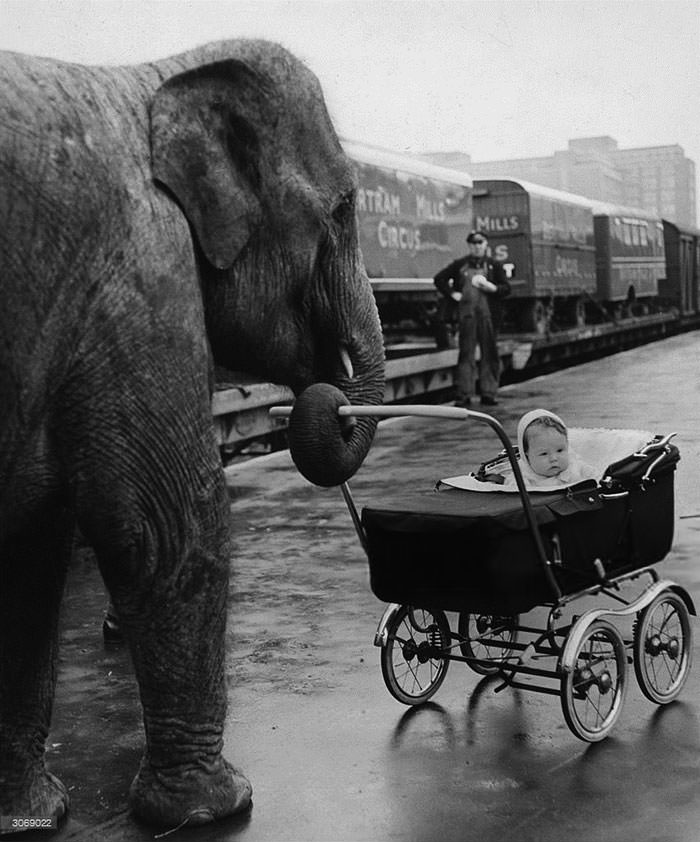
In 1958, circus baby Yvonne Kruse arrived at Addison Road Station in London pushed in her pram by Kam — one of the animals her mother worked with in the circus. The photograph is exactly as extraordinary as it sounds: a chimpanzee calmly pushing a human infant through a train station while onlookers watched.
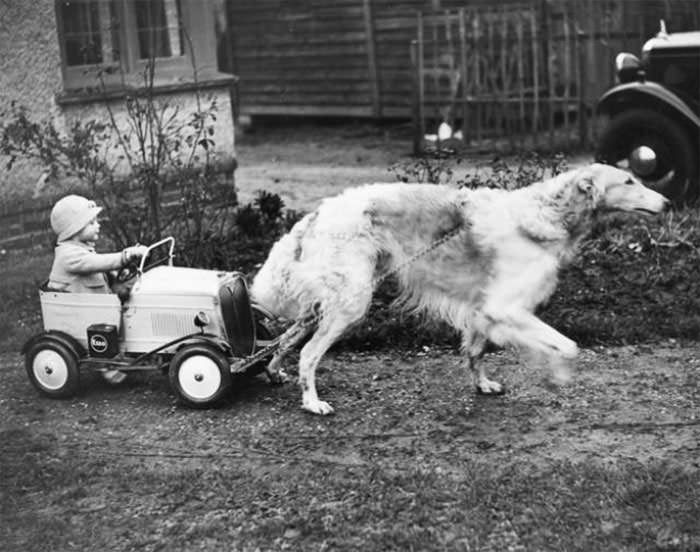
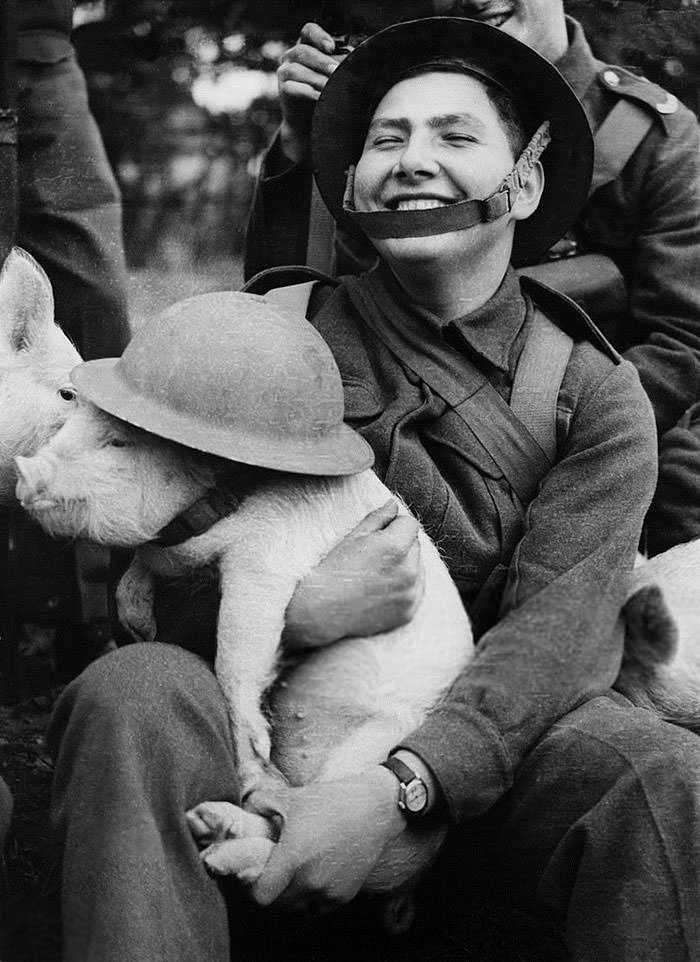
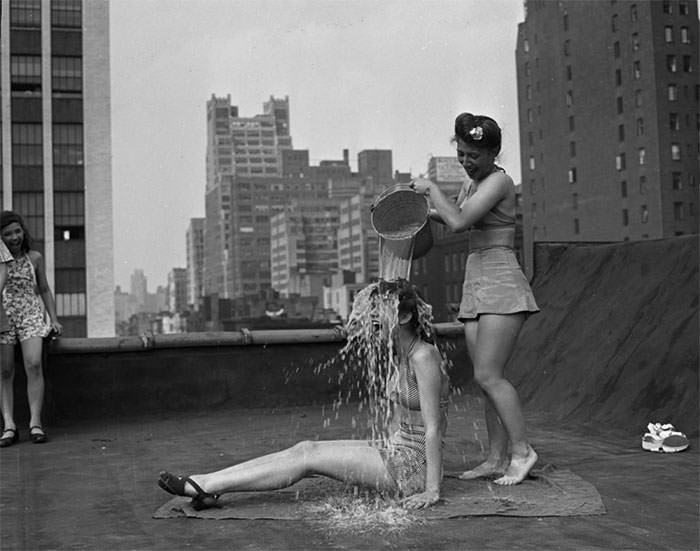
Long before the viral social media campaign of 2014, people in New York City were dumping buckets of ice water on each other for fun. This 1943 photograph shows exactly that — and proves that the impulse to drench a friend in cold water on a hot day is not a modern invention.
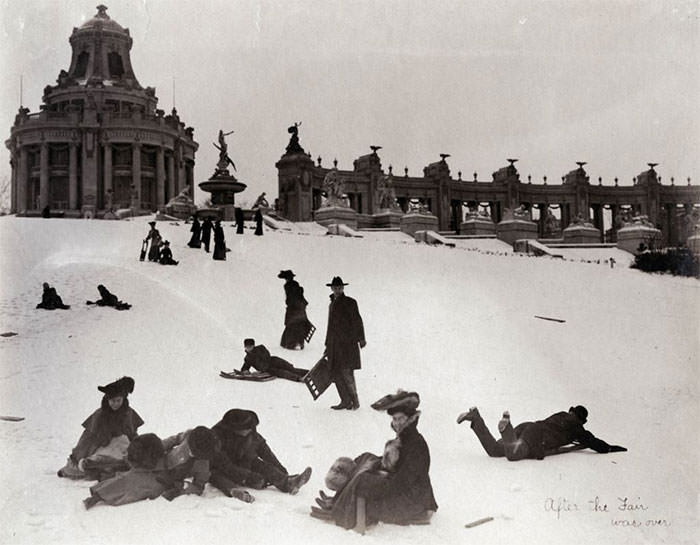
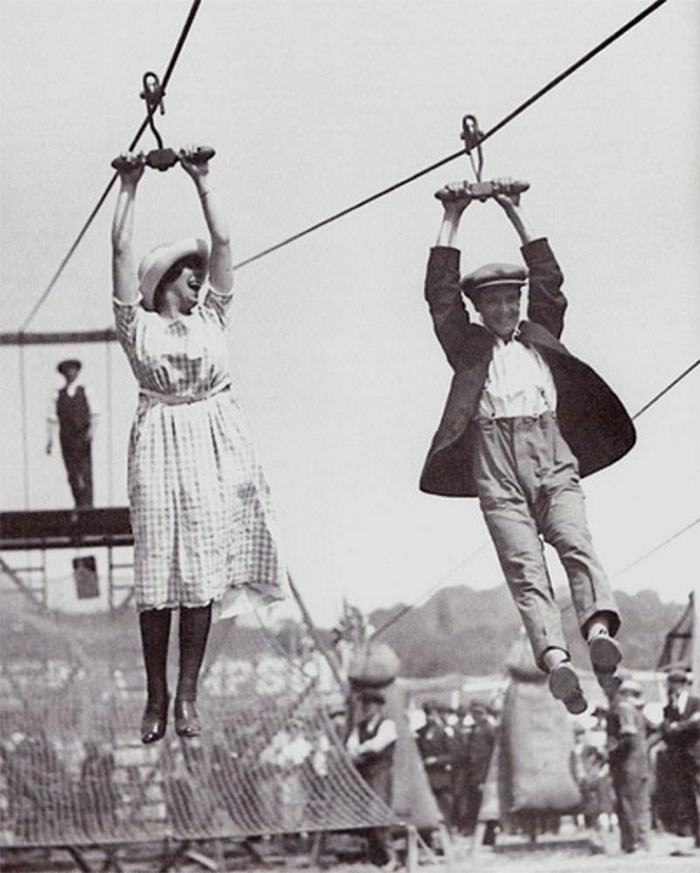
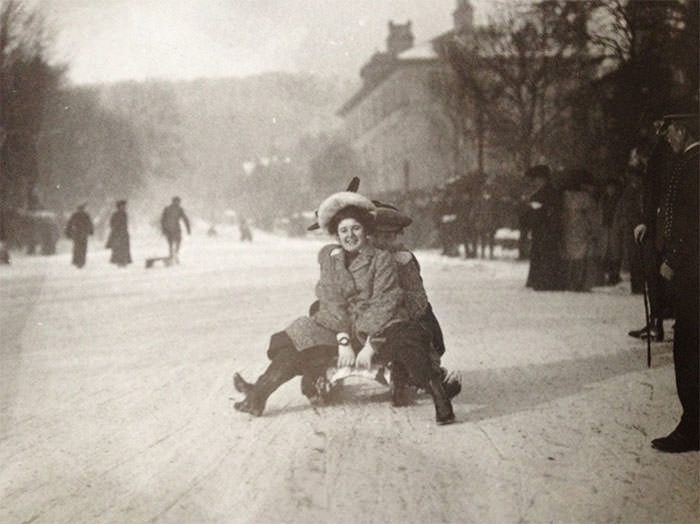
A couple sharing a zipline in 1923 is a reminder that thrill-seeking is not a modern impulse either. People have always looked for speed, height, and a little bit of controlled danger. Whether it was sledding down Art Hill in St. Louis after the 1904 World’s Fair or taking a zipline with your partner in the early 1920s, the desire to feel something exciting is constant across time.
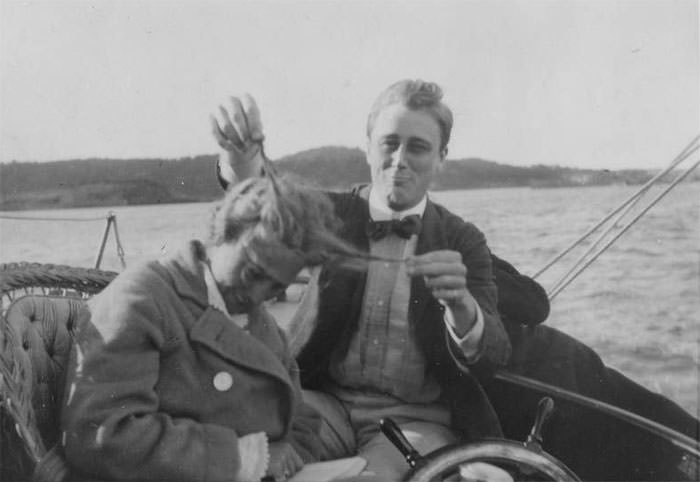
This 1910 photograph shows Franklin D. Roosevelt with his cousin — years before he served as the 32nd President of the United States, before the New Deal, before World War II, and before polio changed the course of his life. He’s just a young man in a photograph with a relative, with no way of knowing what’s ahead.
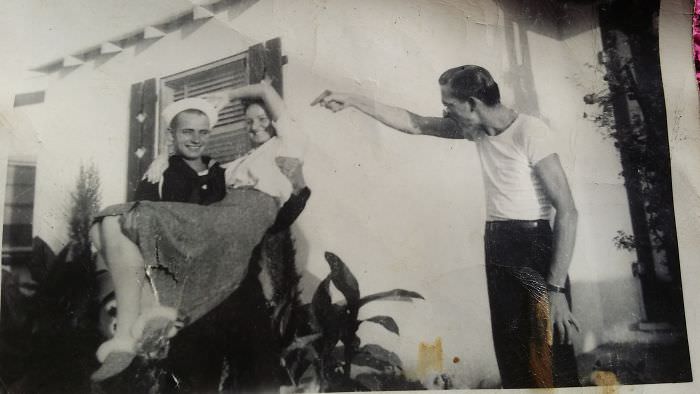
A man returns home from the navy, hoists his sister into his arms, and gets immediately soaked by his brother-in-law with a water pistol. The homecoming is barely through the door before it becomes a family scene — chaotic, warm, and completely unrepeatable. These are the photographs that families kept for generations.
In Altrincham, Cheshire around 1968, someone photographed what appears to be a cat placing an order with the milkman — four pints, apparently. The caption tells the story better than any description could. It’s a perfectly timed image of an era when milk was still delivered door to door, and apparently some customers were more demanding than others.
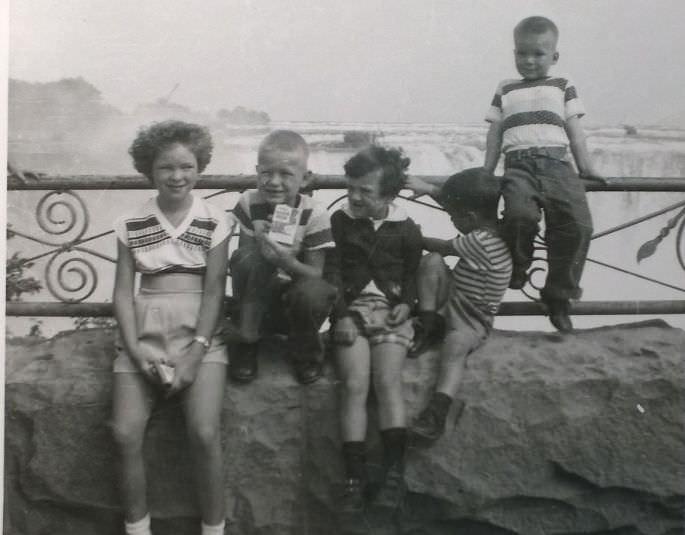
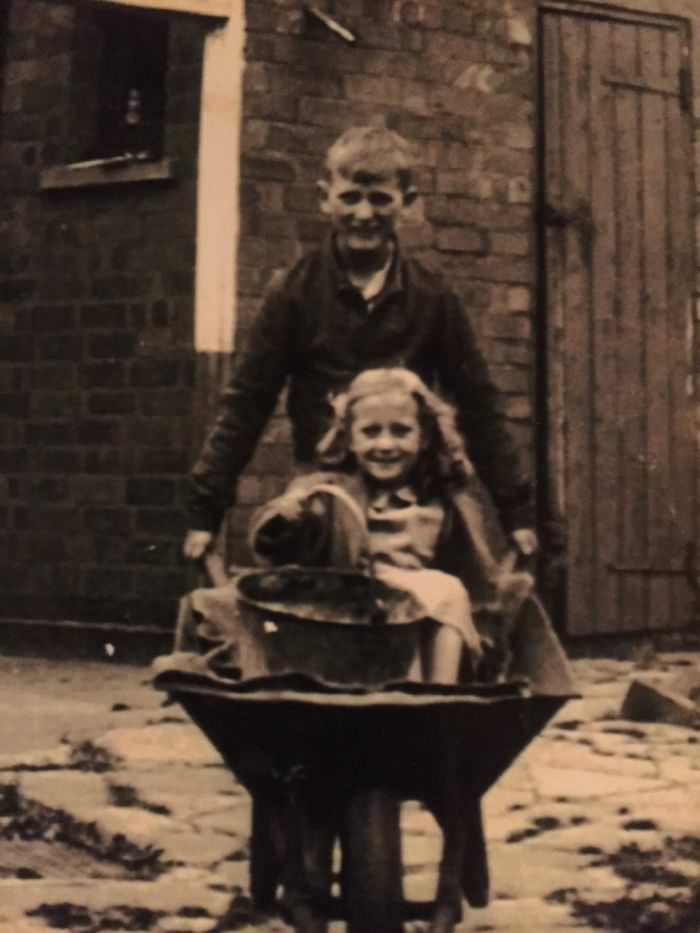
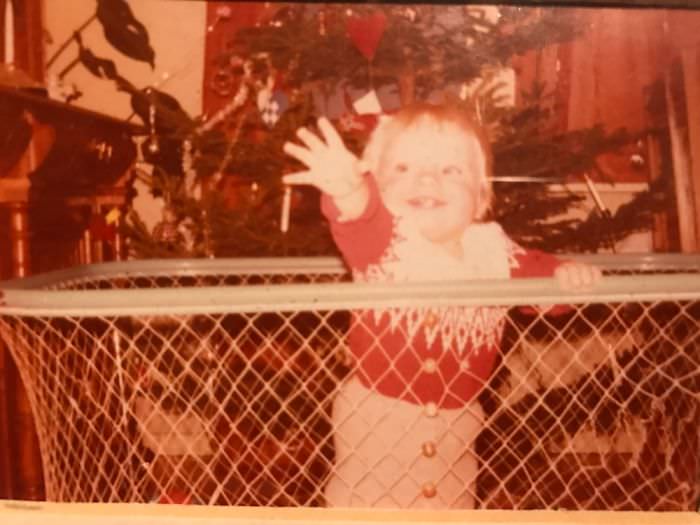
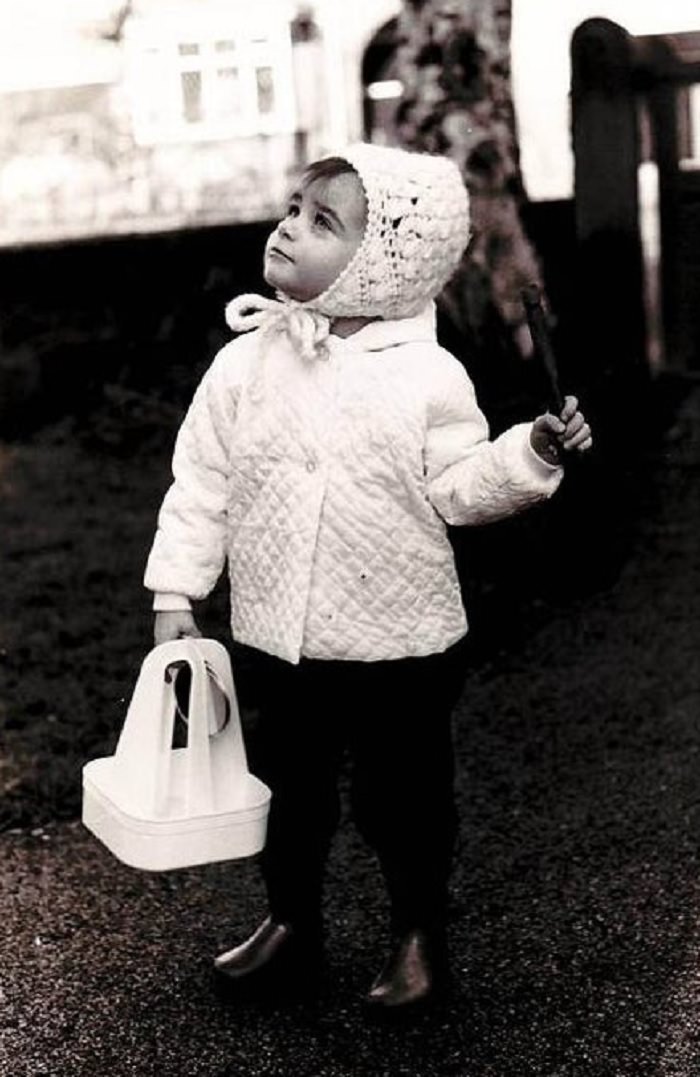
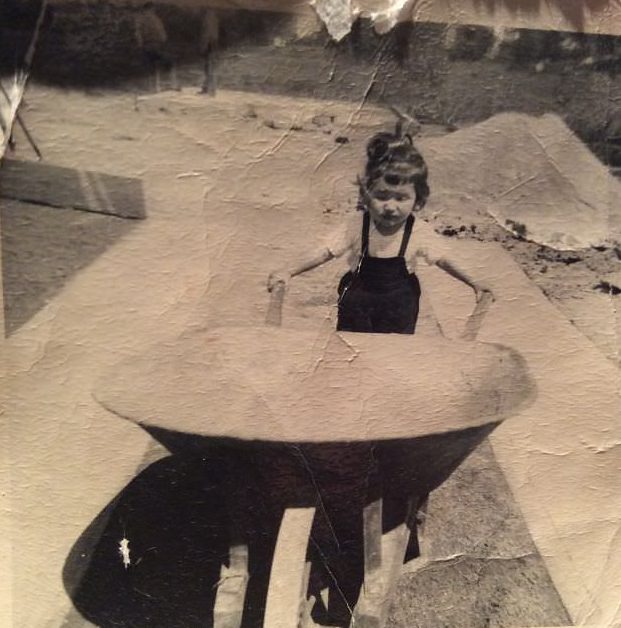
Personal family photographs from across the decades — a child at Niagara Falls in 1956, a wheelbarrow ride in Corley Moor in 1948, a Norwegian Christmas in 1975 — carry a different kind of weight than professionally shot images. They weren’t taken for publication. They were taken because someone wanted to remember.
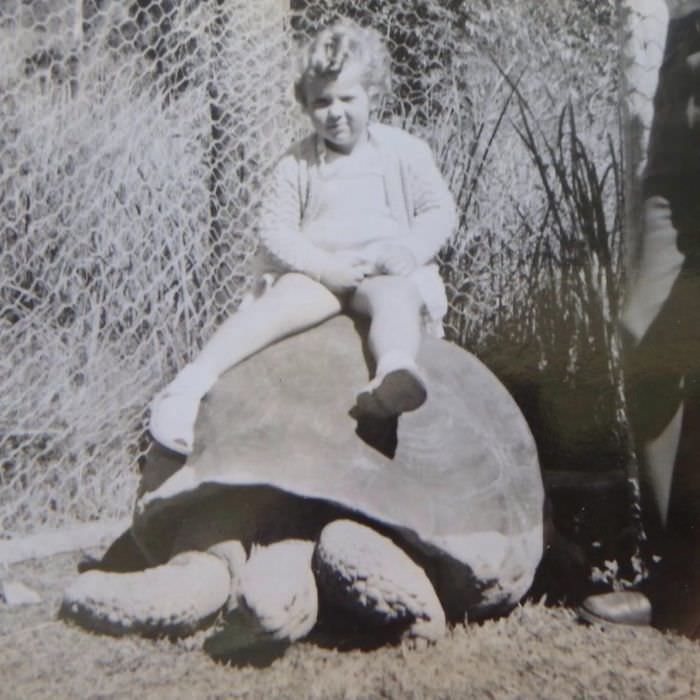
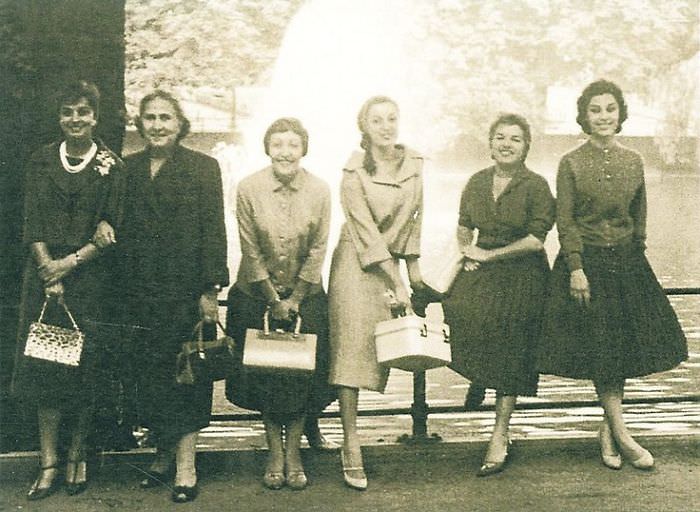
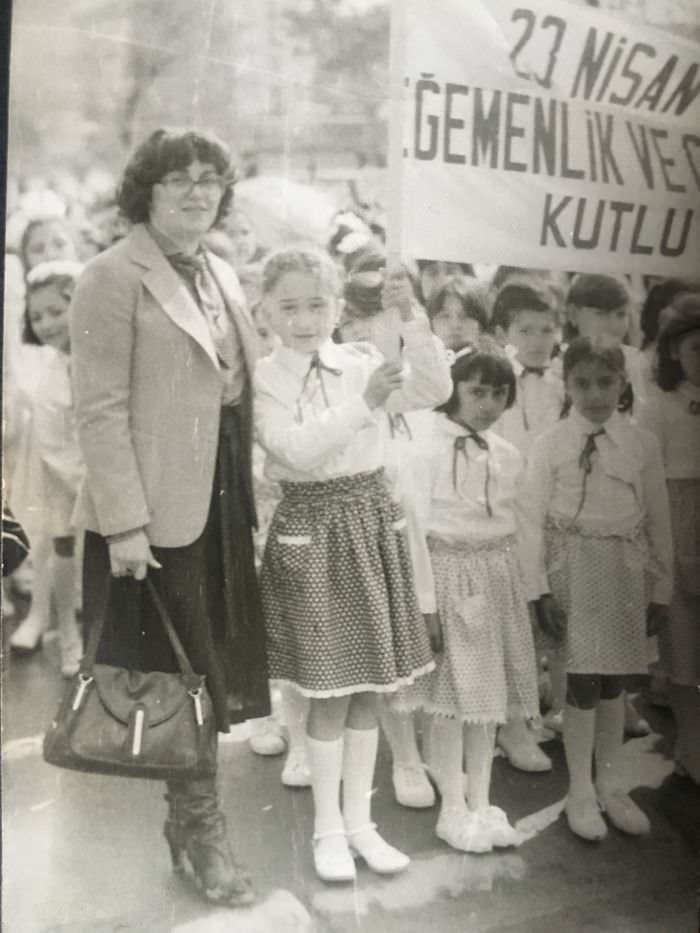
In 1930, Turkey became one of the first countries to grant women the right to vote and stand in municipal elections. This photograph documents some of those pioneering women — among the first in the country to be elected to mayoral positions. The image sits at the intersection of joy and history: a group of women who broke a barrier that had excluded them entirely just years before.
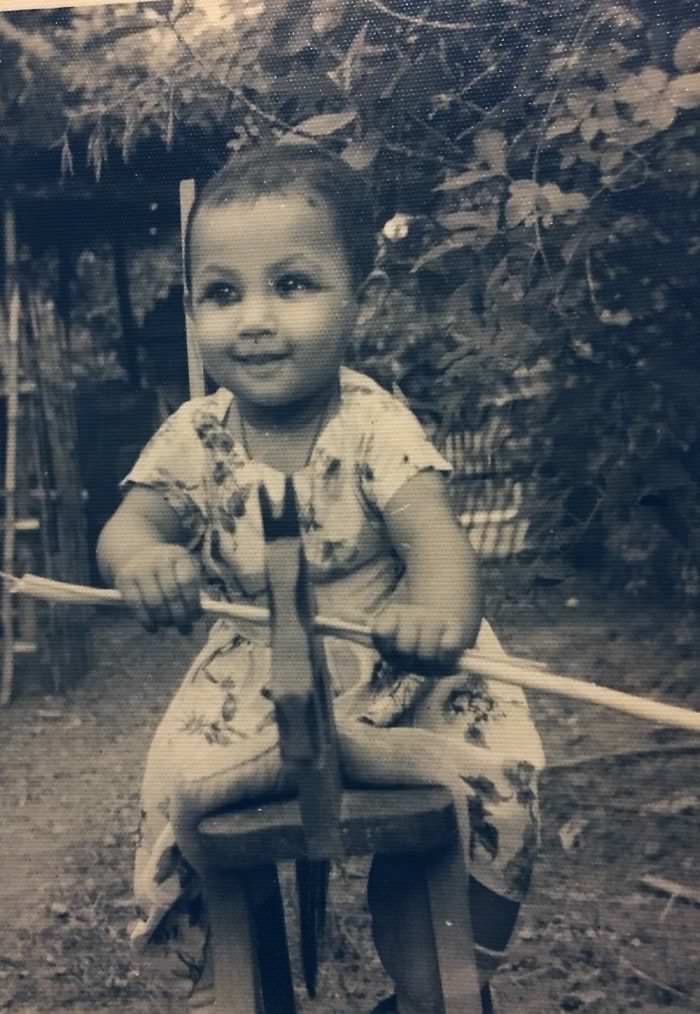
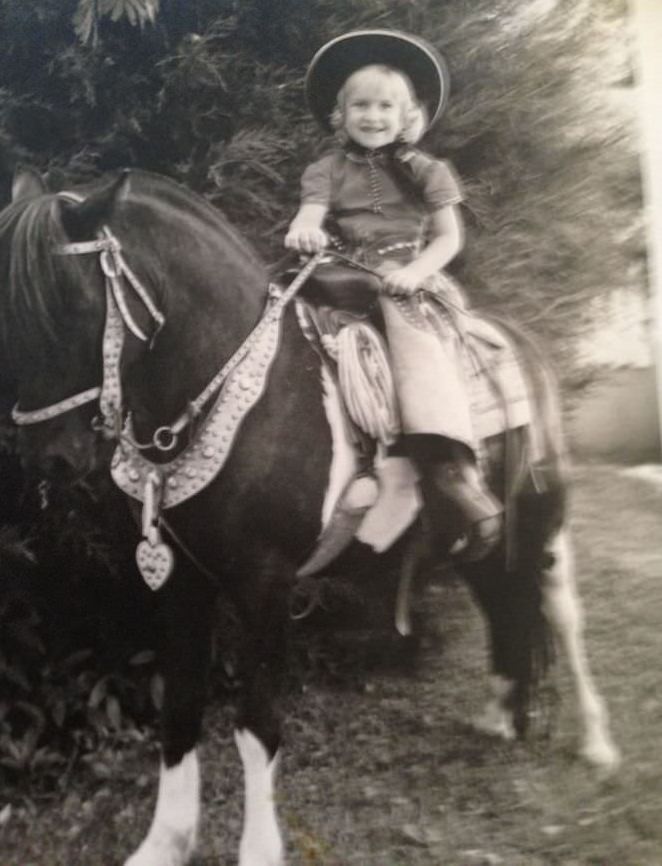
Traveling photographers were a common sight in many countries through the mid-20th century. They would arrive in towns and villages with their equipment and — sometimes a horse or other prop — and offer portraits to people who had no camera of their own. For many families, these were the only photographs they had of themselves.
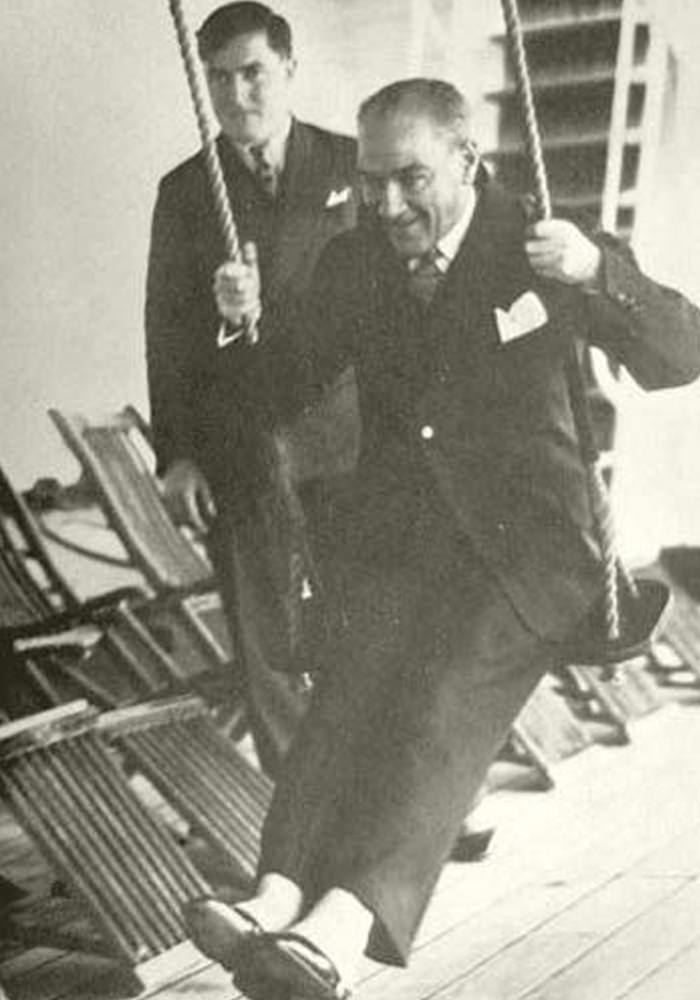
This photograph of Mustafa Kemal Atatürk — the founder of modern Turkey — sitting on a swing is unlike most official images of him. State leaders are rarely photographed in moments of leisure or play. The image is informal, spontaneous, and humanizing in a way that formal portraits almost never are.
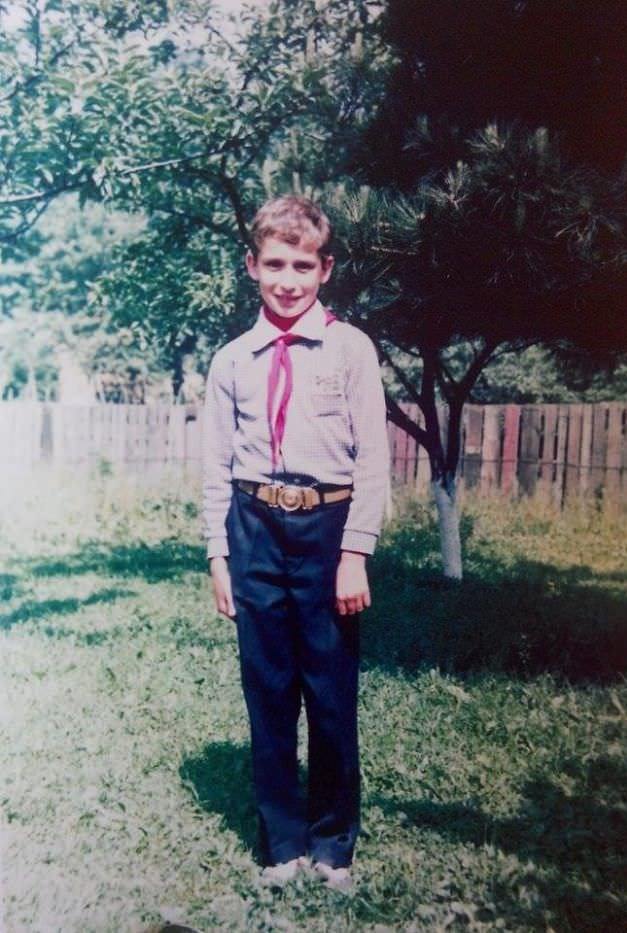
A child photographed in Romania in 1982 wearing a Communist Pioneer uniform is a reminder that childhood looked the same even inside very different political systems. The uniform carried ideological weight for the adults who designed it. For the child wearing it, it was just what you wore to have your picture taken.
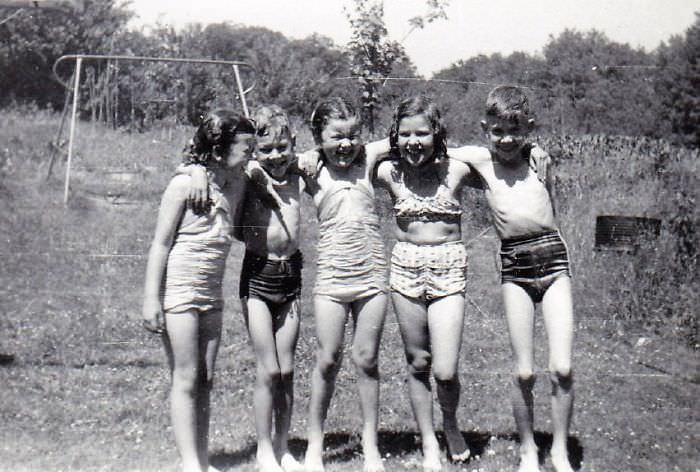
Around 1950, a group of children ran through a backyard sprinkler on a summer day — the same thing children had done before them and have done ever since. Cold water on a hot afternoon. That’s the whole story. No context needed. The archive of human happiness is full of moments exactly like this one, and they span every decade, every country, and every set of circumstances that history has produced.