By the late 19th century, visiting the bathhouse was not a luxury in Tbilisi — it was a way of life. Georgia was part of the Russian Empire at the time, and the capital’s famous oriental baths had earned a reputation that stretched far beyond the region. Built over natural sulphur springs, these bathhouses drew everyone from common men to members of the aristocracy, all seeking the same thing: a deep, thorough cleansing unlike anything available at home.
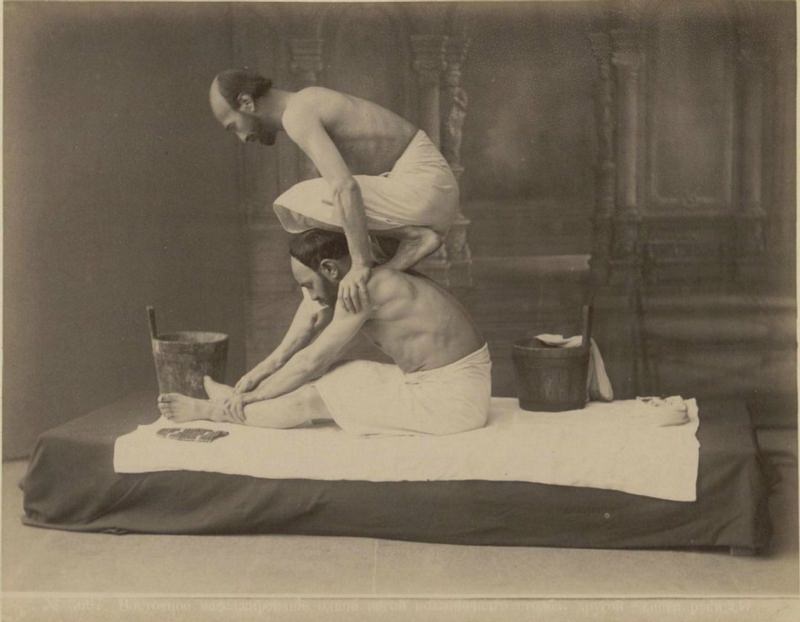
The sulphur springs beneath Tbilisi gave the baths their distinctive character. The warm, mineral-rich water was believed to cleanse the skin and restore the body. The bathhouses themselves were domed brick structures, many of them partially underground, designed to trap heat and steam. Stepping inside meant entering a world of thick fog, warm stone floors, and the sharp but familiar smell of sulphur hanging in the air.
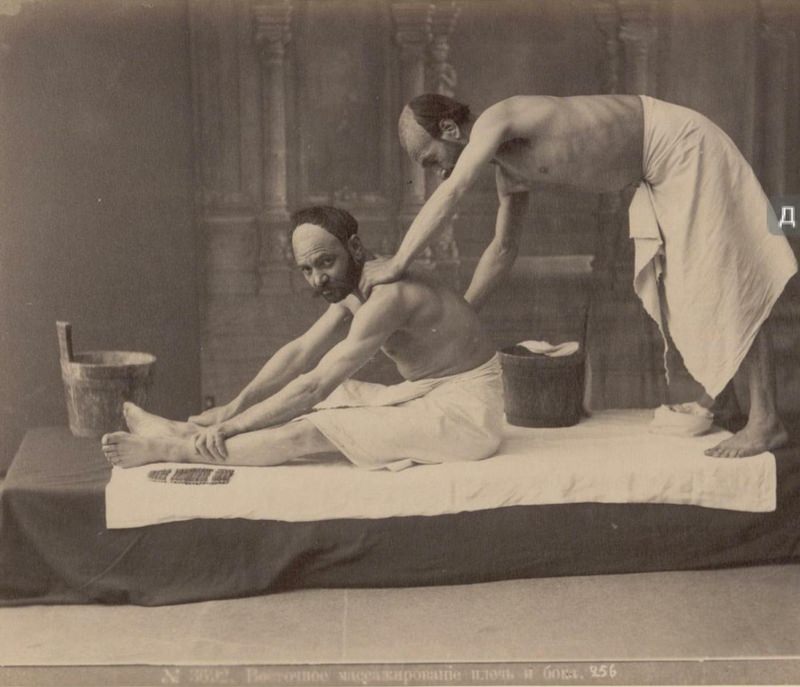
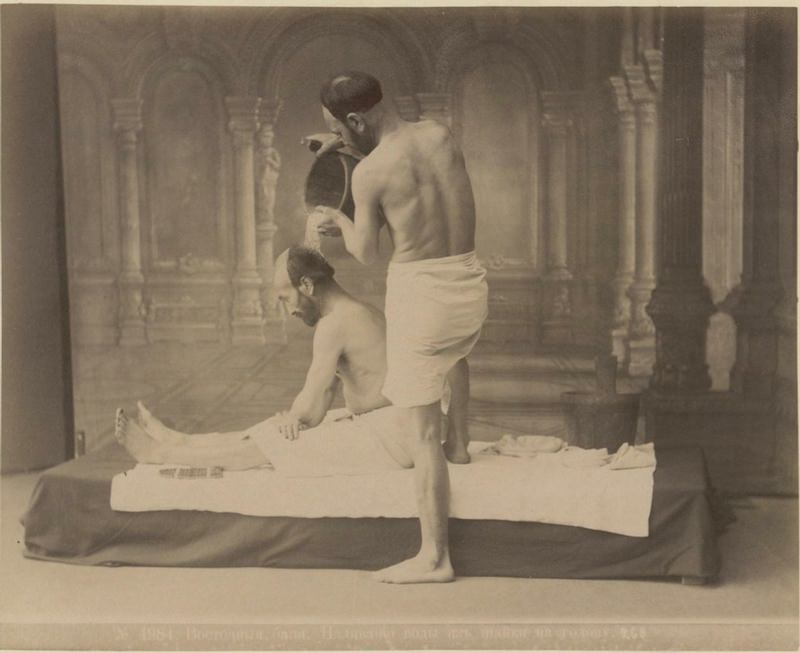
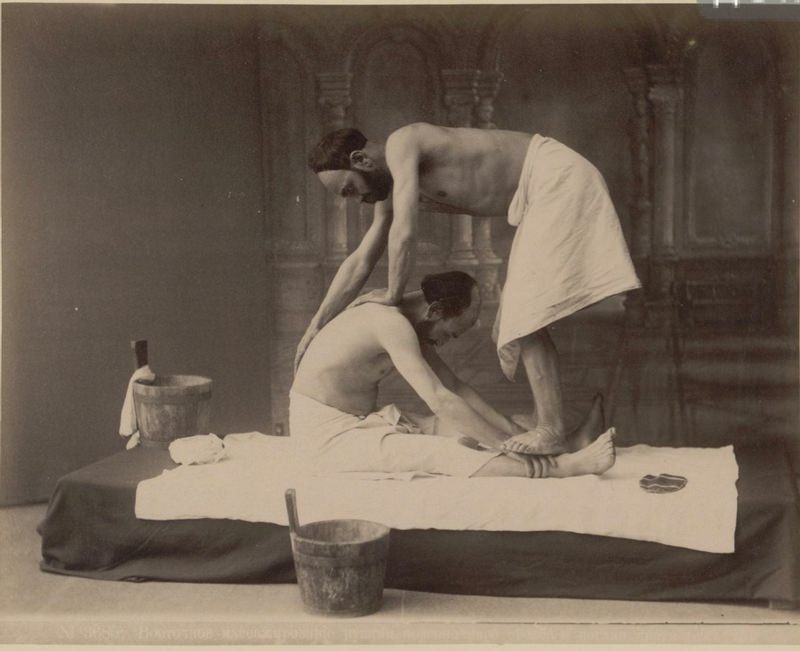
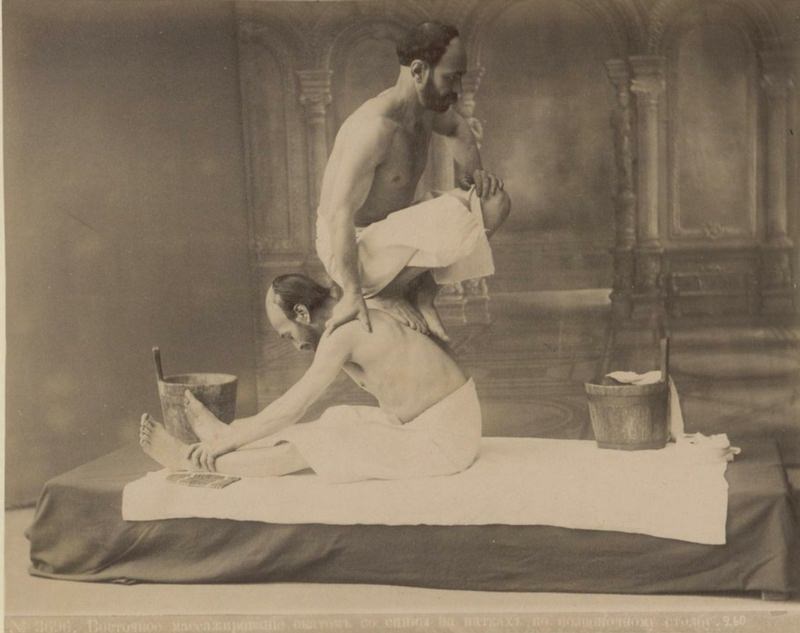
The photographs from the 1890s show unidentified men going through the full bathing ritual. What stands out immediately is the physical nature of the massage process. These were not gentle, spa-style treatments. The masseurs — known locally as “kisi” practitioners — used their full body weight and strength to work on their clients. Pushing, pulling, and trampling were all standard techniques, and the photos capture these moments with striking clarity.
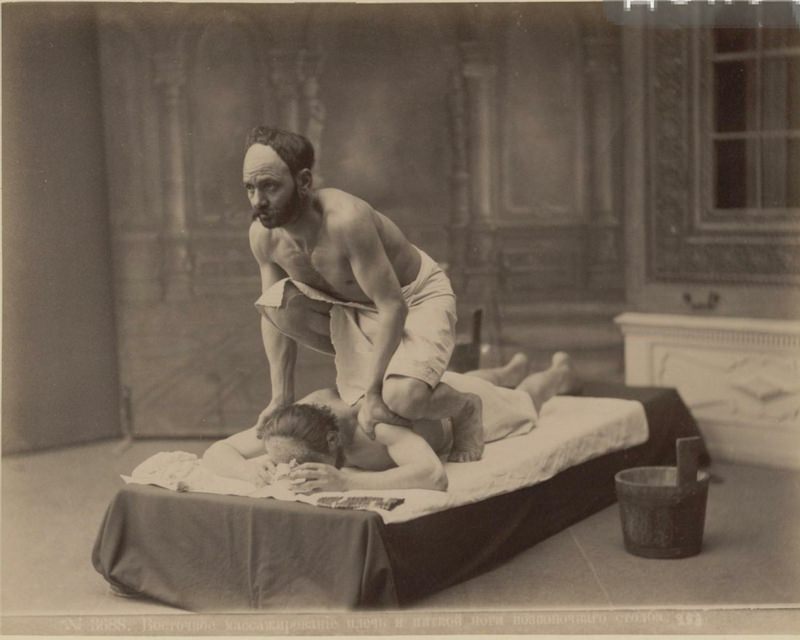
A masseur would scrub the client’s skin with a rough mitt to remove layers of dead skin, a step that was considered essential before the massage itself began. Then came the physical manipulation — limbs twisted, backs cracked, and bodies stretched in ways that look alarming to modern eyes but were considered deeply therapeutic at the time.
The tradition of bathing as a health practice is ancient. Greek thinkers including Hippocrates wrote about the benefits of bathing for the body and mind. In the Georgian context, the bathhouse carried both physical and social significance. Men gathered there not only to wash but to talk, negotiate, and spend time together. The bathhouse was, in many ways, a public living room.
Tbilisi’s bathhouses were spread across the Abanotubani district, a neighborhood whose name literally translates to “the place of baths.” This area had been the heart of the city’s bathing culture for centuries before these photographs were taken. The buildings, many with their distinctive beehive-shaped domes peeking above street level, remain one of the most recognizable parts of the old city.
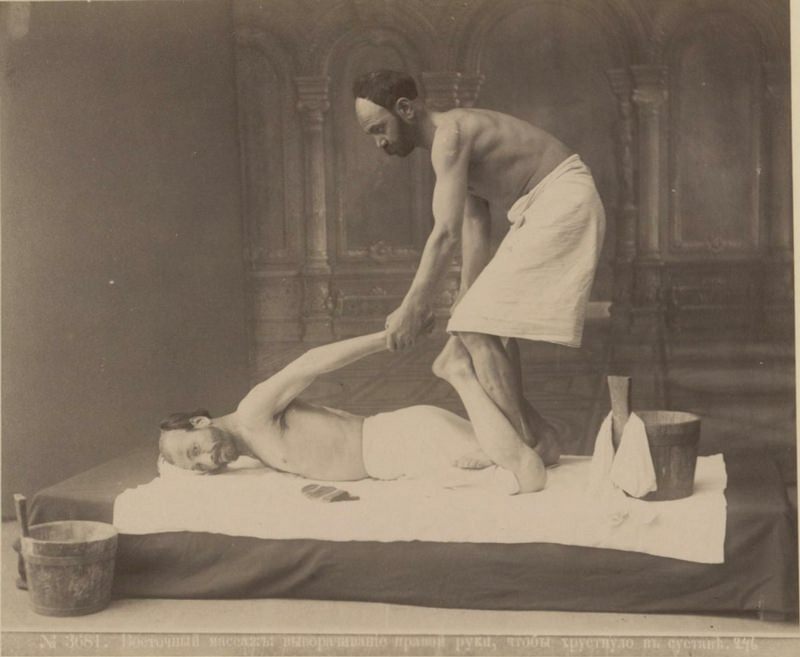
The men photographed in these images show no signs of discomfort despite the forceful techniques being applied to them. For regular bathhouse visitors, this kind of treatment was entirely normal. Some clients visited weekly. The masseurs who worked these baths were skilled tradesmen, often passing their techniques from father to son across generations.
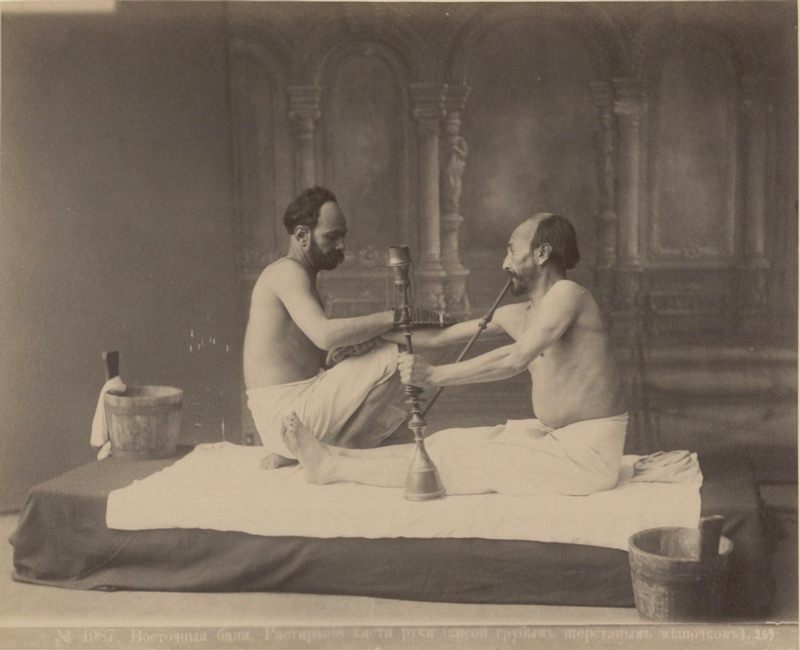
What makes these photographs particularly valuable is how candidly they document an everyday ritual that was rarely considered worthy of formal record. The camera caught masseurs mid-motion — one foot pressed into a client’s back, hands gripping an outstretched arm, a body bent at an angle that would make most people wince. These are not posed portraits. They are snapshots of a working bathhouse in full operation, preserved from a world that was still decades away from the upheaval of revolution.