In 1952, Indonesia was a young nation still finding its footing. It had only declared independence from the Netherlands in 1945, and by the early 1950s, the country was working through a new political system, a growing economy, and the daily rhythms of life that had defined its people for generations. These photographs offer a direct window into that world — not the political halls, but the farms, markets, canals, temples, and fishing shores that shaped ordinary Indonesian life.
Indonesia’s government in 1952 operated under a provisional constitution adopted in 1950, which replaced the earlier federal structure of 1949. Under this parliamentary system, President Sukarno held a figurehead role while elected governments managed day-to-day affairs. Every major political party of the era claimed to follow some form of socialism. The country’s first general election would not come until September 29, 1955, when nearly 38 million people voted. Sukarno’s Indonesian National Party won with 22.3 percent of the vote and fifty-seven seats in the House of Representatives. In 1952, all of that was still three years away, and the nation was simply getting on with life.
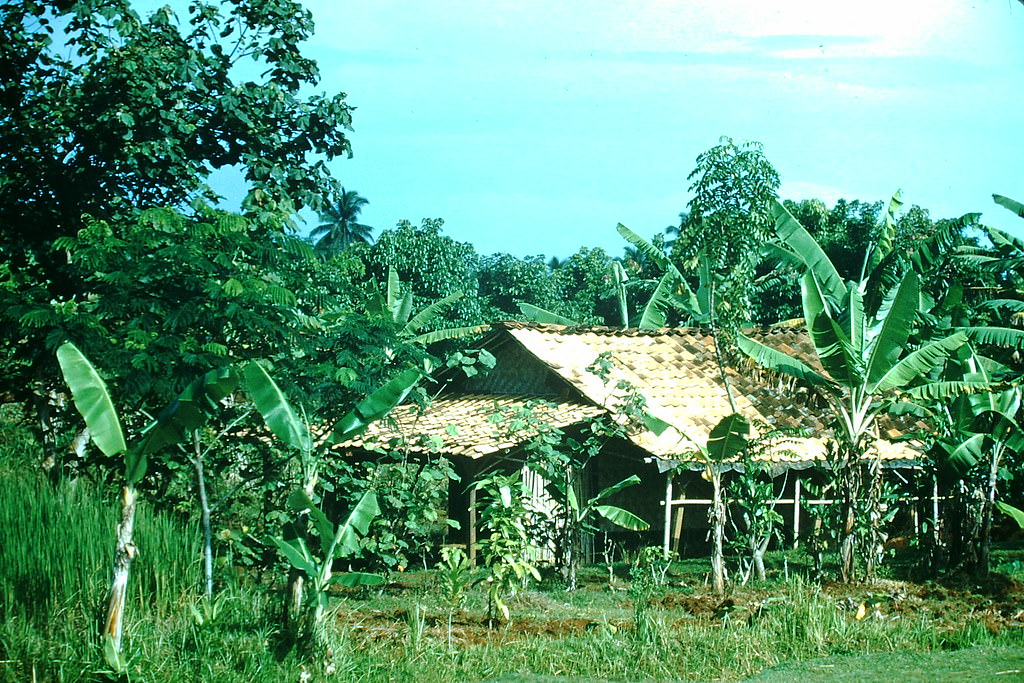
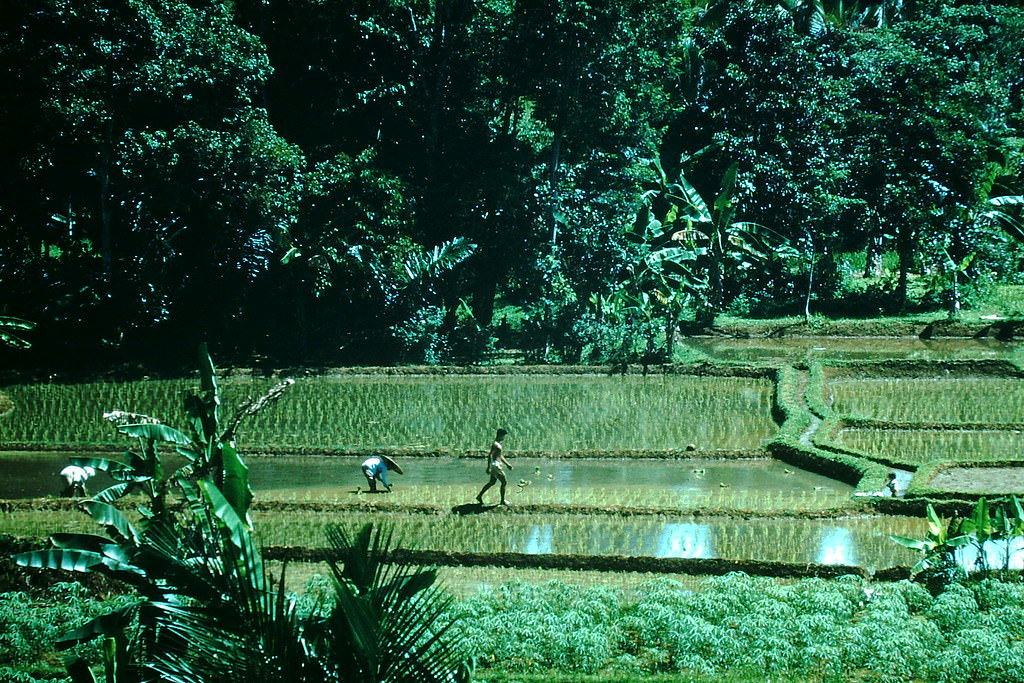
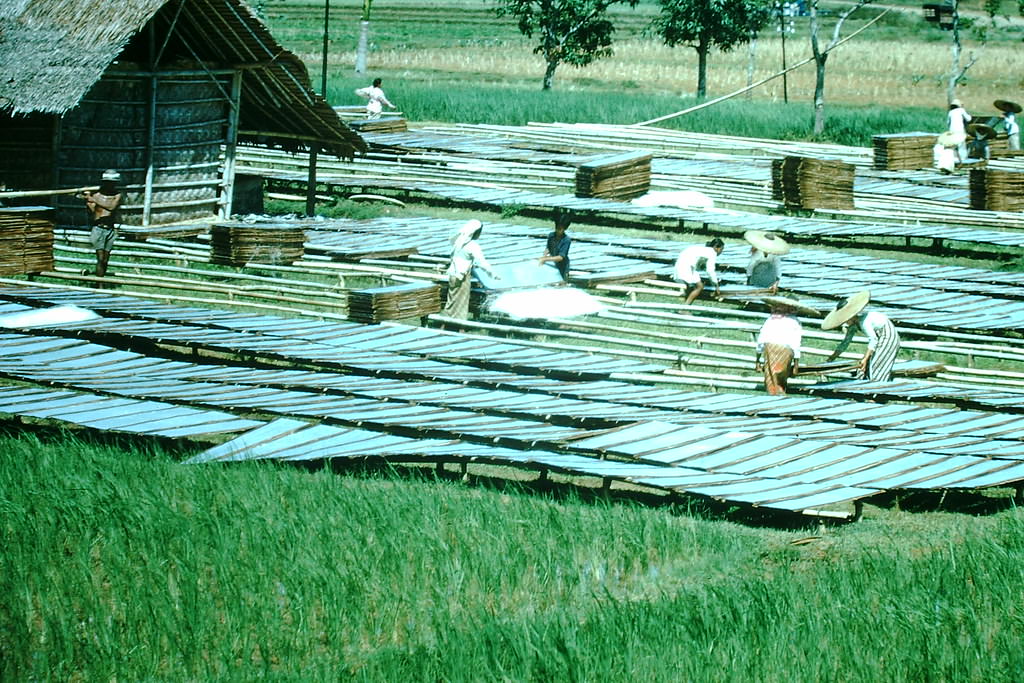
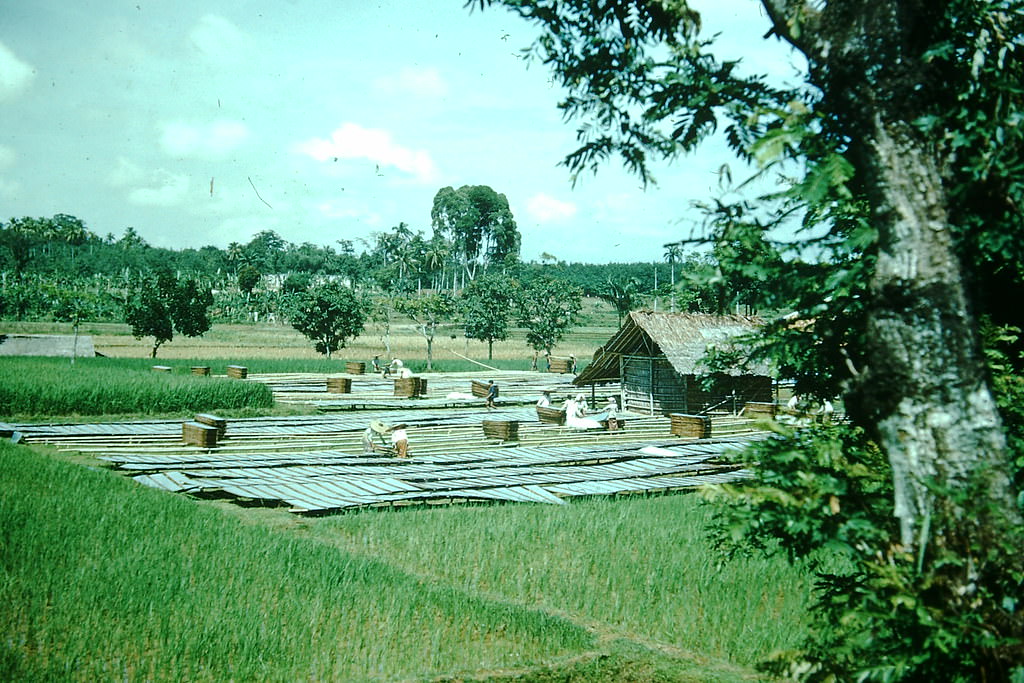
The area around Jakarta — then the nation’s capital and largest city — was heavily agricultural. Farms stretched outward from the city’s edges, and rice cultivation was central to the local economy and daily diet.
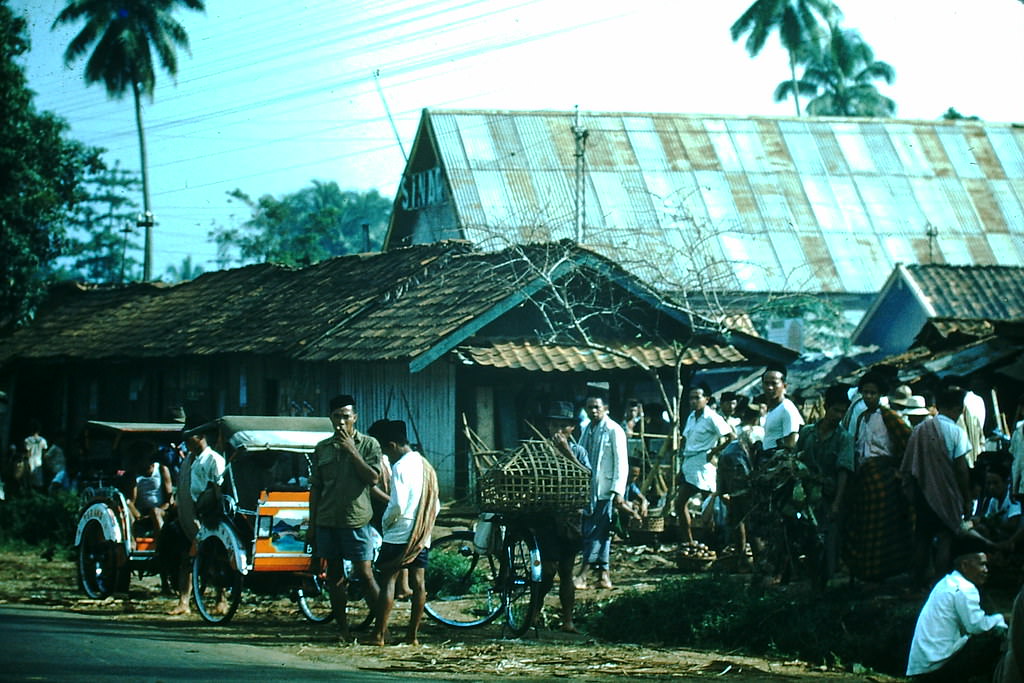
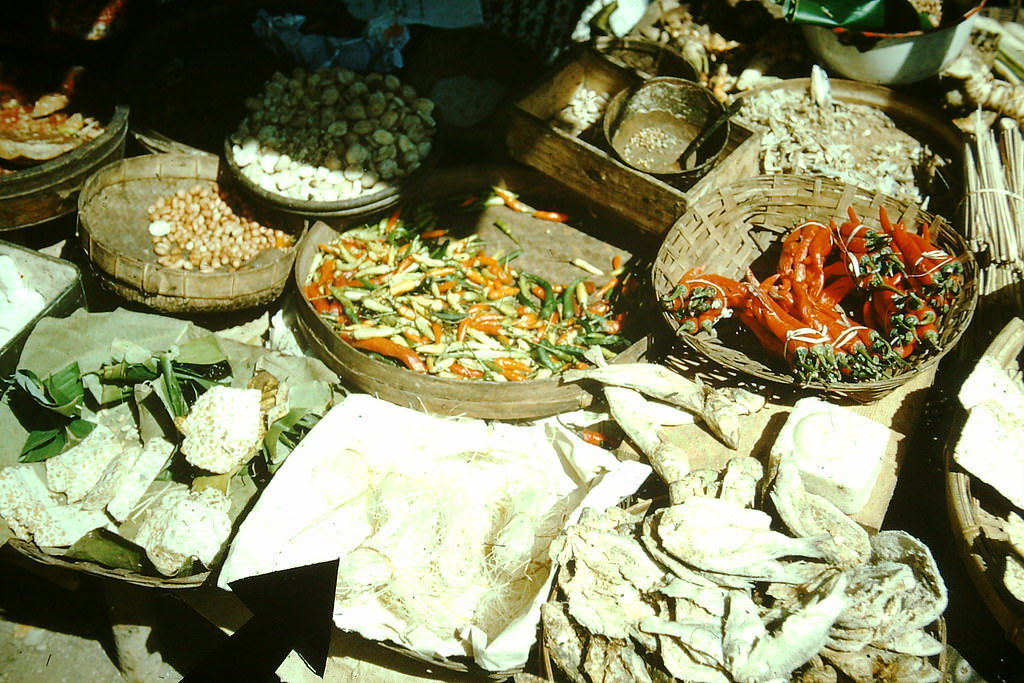
Jakarta’s markets were busy, crowded, and essential. They served as the main point of exchange for food, goods, and daily necessities for millions of residents. Vendors and buyers moved through tight rows of stalls, and the market scene captured here reflects the commerce that kept urban life running.
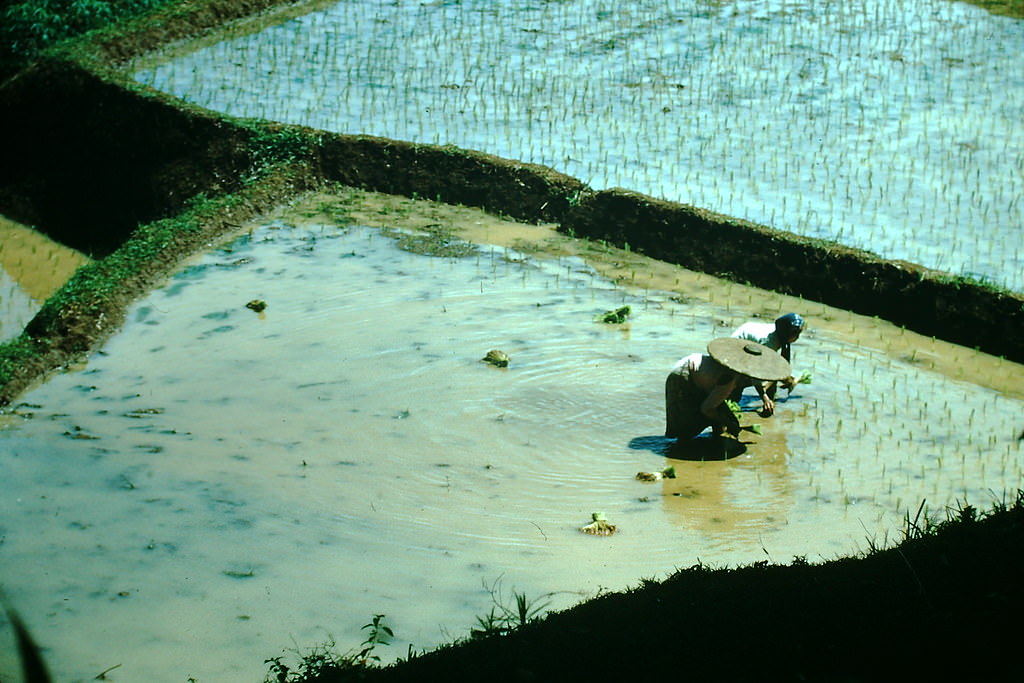
Rice farming in the Jakarta region required intensive hand labor. Workers planted seedlings one by one in flooded fields, a method that had been practiced for centuries. The physical demand of the work was constant, performed in heat and standing water from early morning.
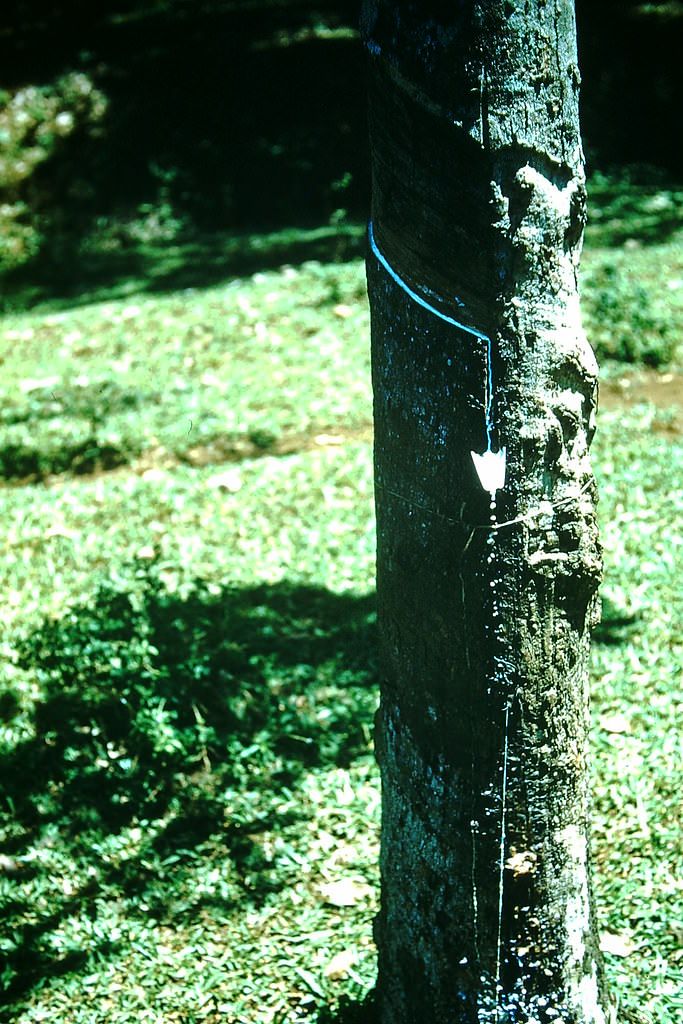
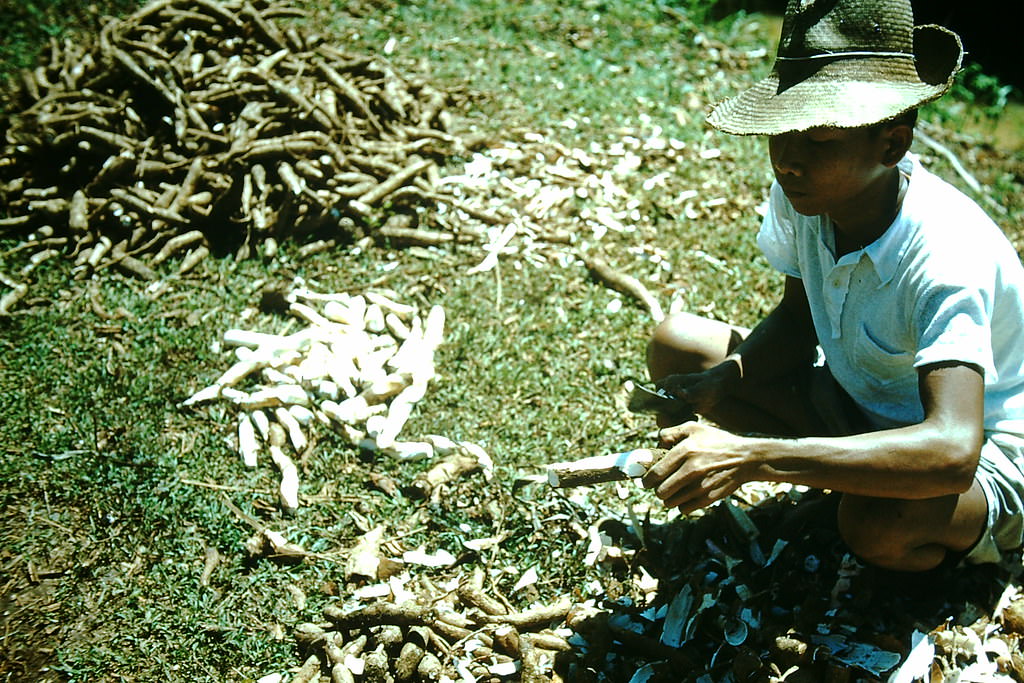
Beyond rice, Indonesia’s agricultural economy also depended on rubber and root crops. Rubber trees were tapped for latex, which was a major export commodity. Tapioca, derived from the cassava root, was another important crop grown widely across the islands.
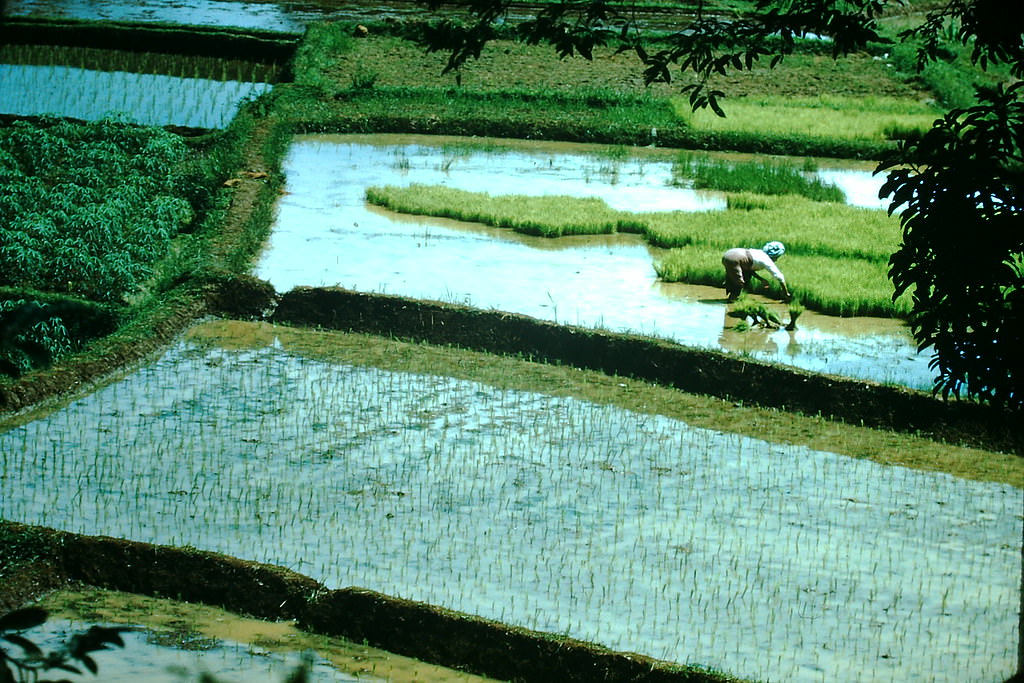
Transplanting rice was a communal task. Groups of workers moved young rice plants from nursery beds into the main paddies in coordinated rows. Wheat meal, another staple, was also processed locally and formed part of the diet alongside rice.
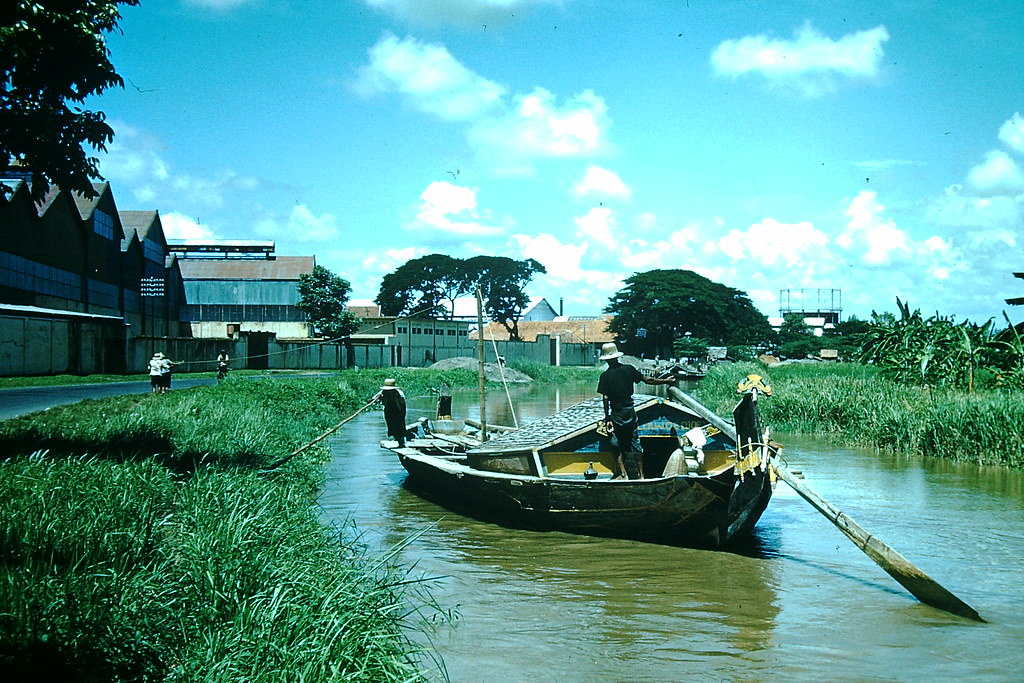
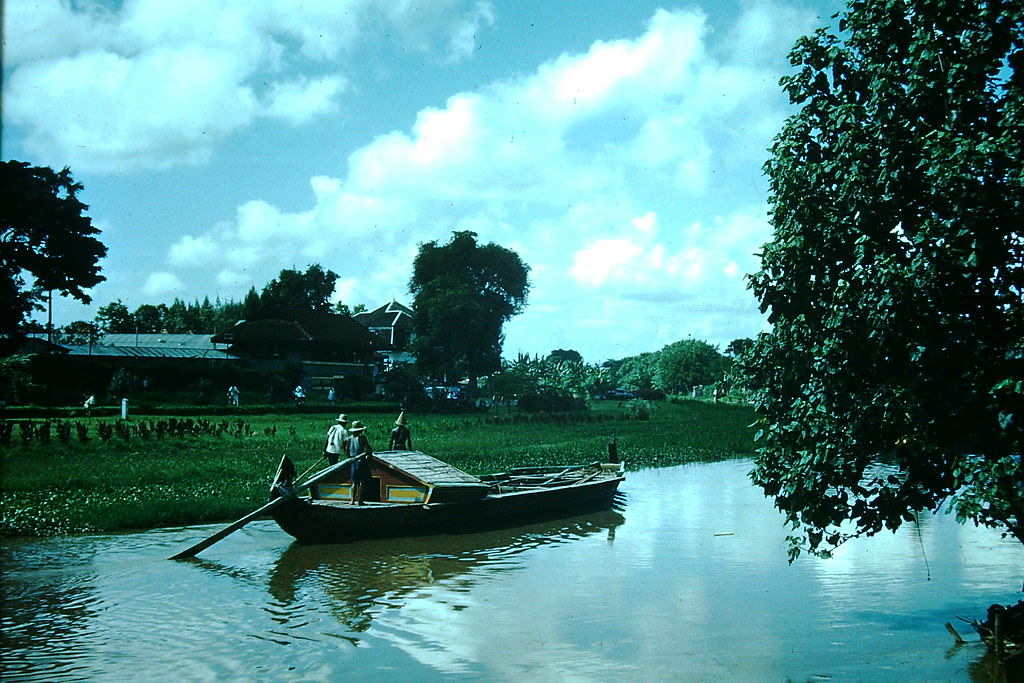
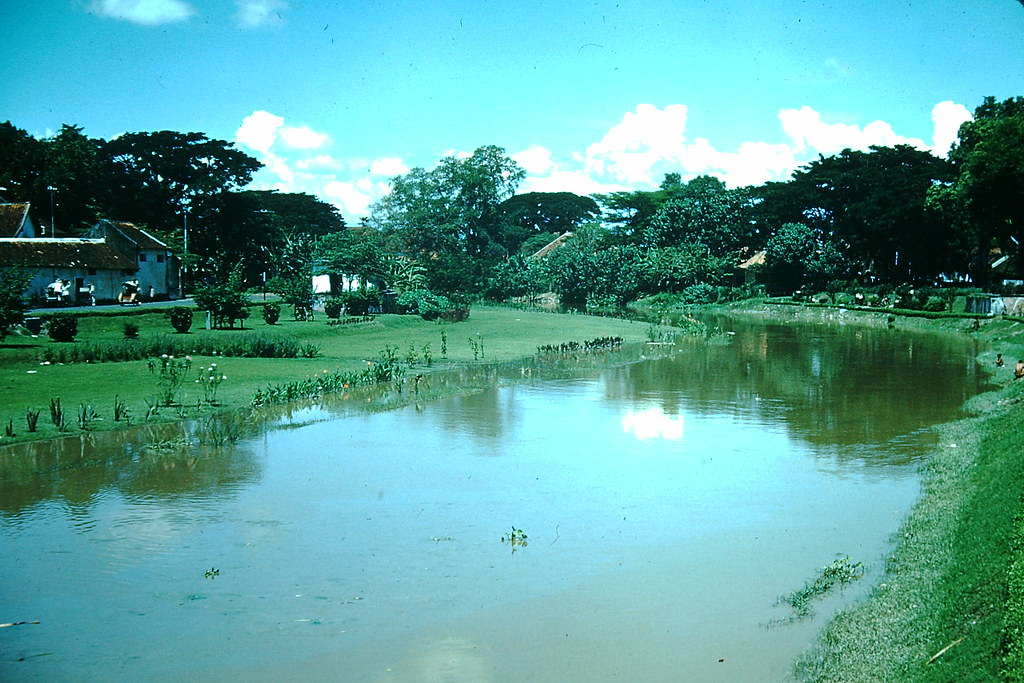
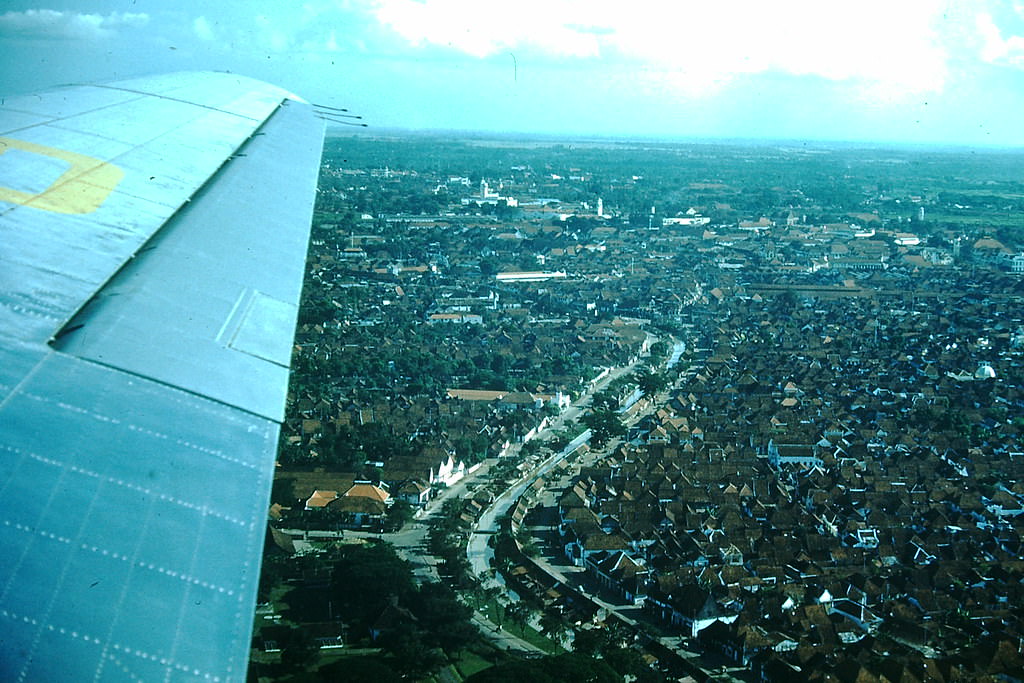
Indonesia’s second-largest city, Surabaya, presented a very different landscape from the farmlands around Jakarta. Located on the northeastern coast of Java, Surabaya was a major port city with a dense network of canals running through its urban core. Boats moved through these waterways carrying goods and people, and the canals were as much a part of daily transport as the roads.
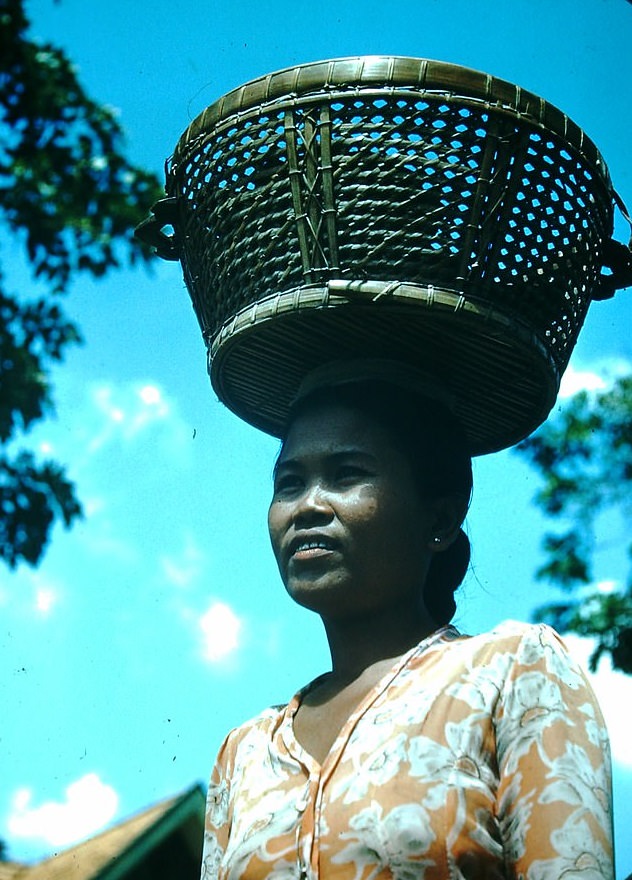
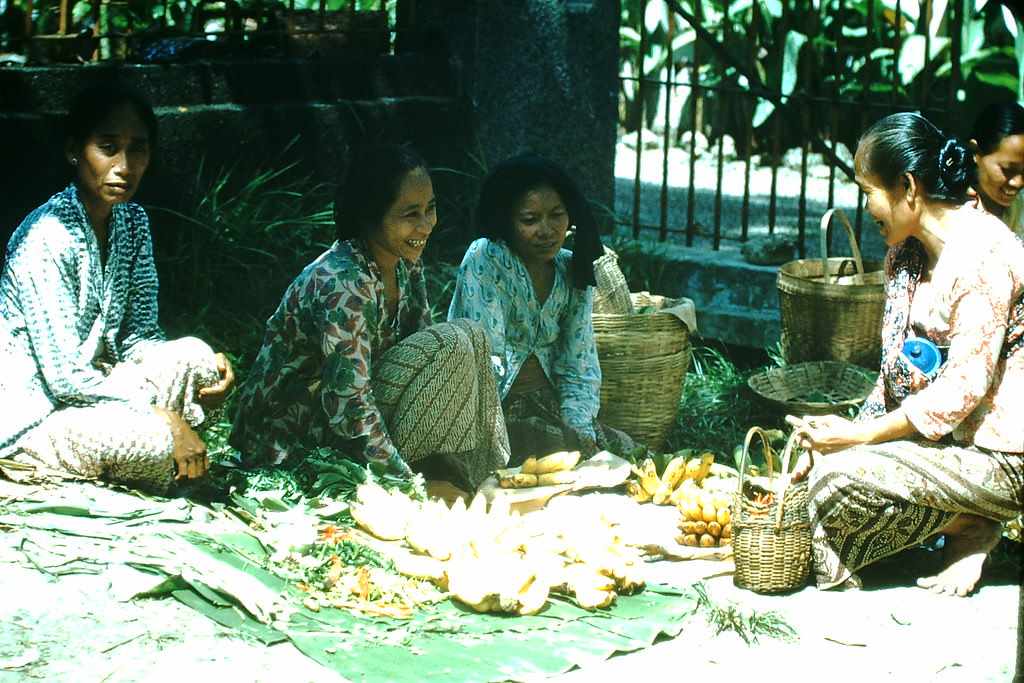
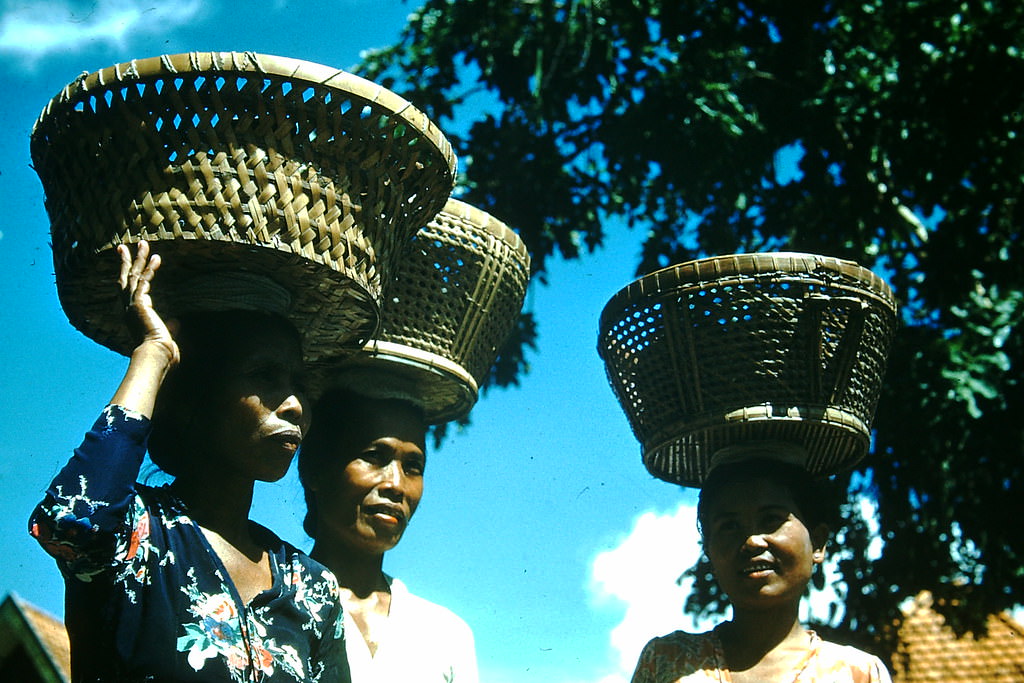
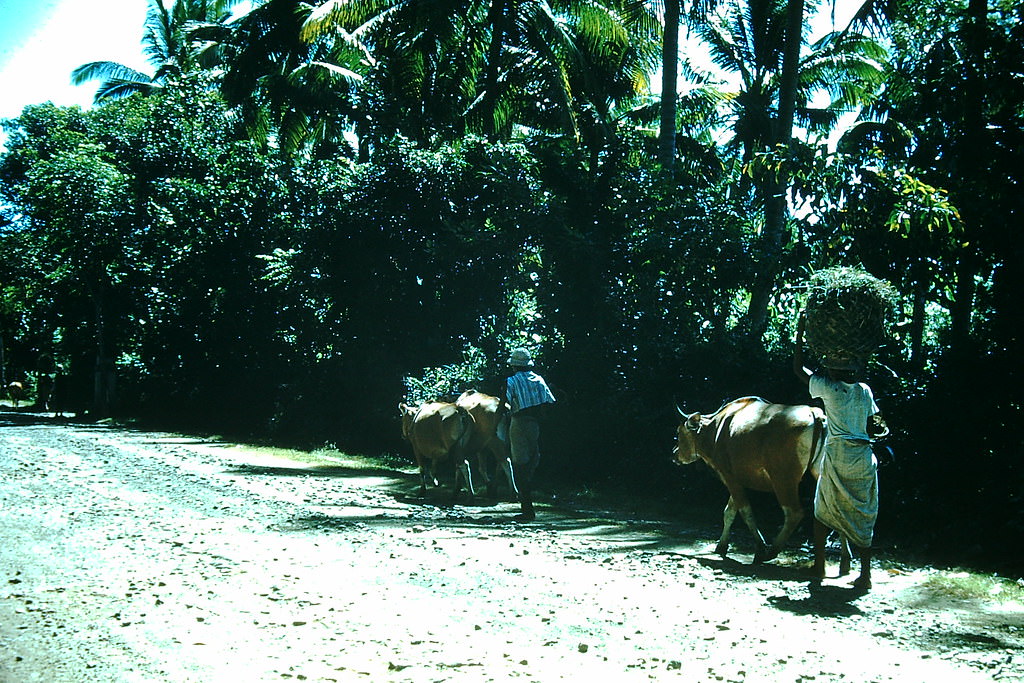
Surabaya’s streets were home to a mix of people, vehicles, and vendors. Javanese women carried goods on their heads to and from the market, a practical tradition that required balance and strength developed over years. The market women of Surabaya were a fixture of city life, selling everything from produce to textiles.
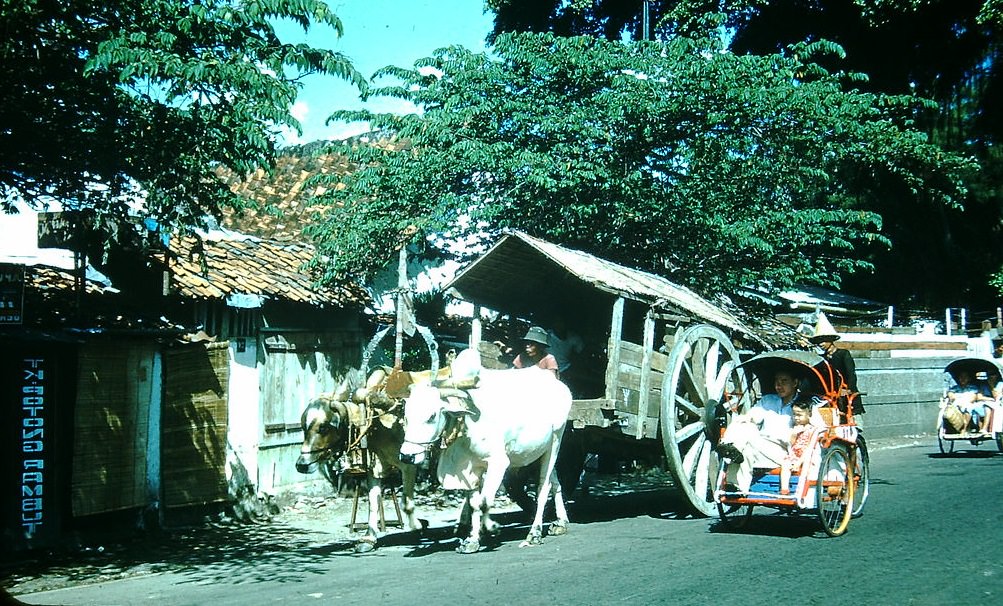
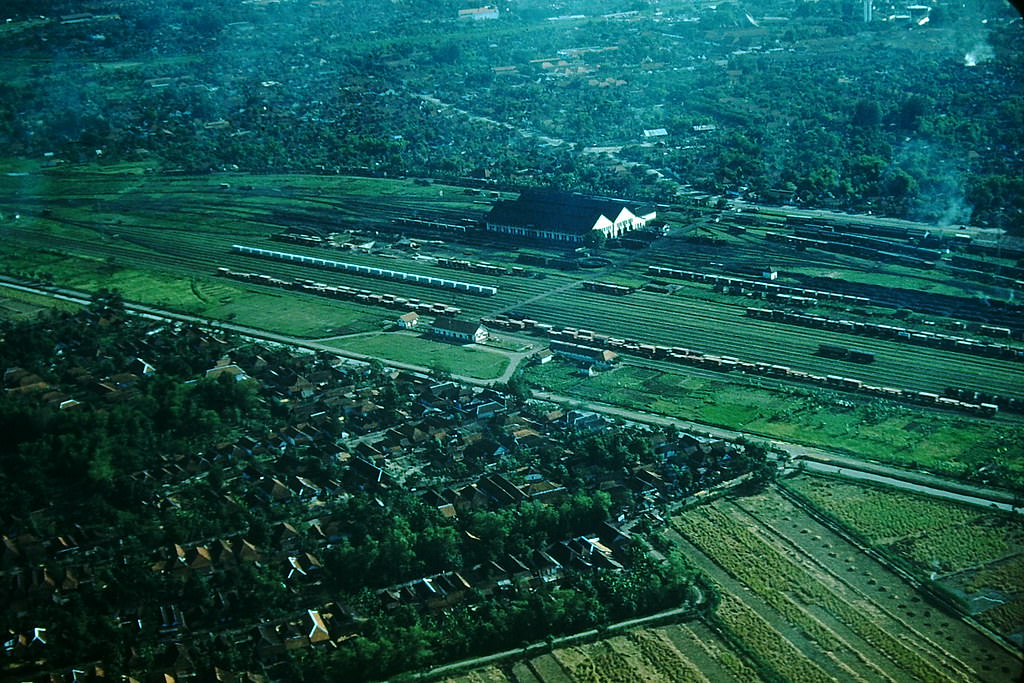
Surabaya’s streets mixed old and new forms of transport. Oxen-drawn carts operated alongside trishaws — three-wheeled cycle-rickshaws — that were the standard short-distance taxi of the era. The city’s rail yards, visible from the air, showed Surabaya’s role as a major transport hub connecting Java’s interior to its ports.
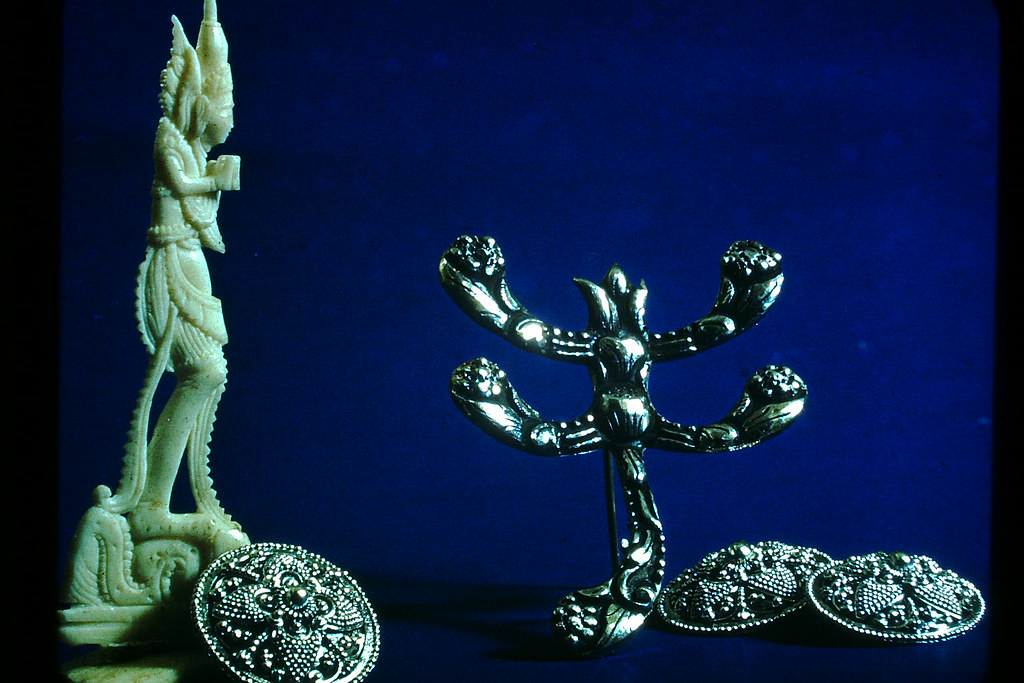
Bali, the island east of Java, had its own distinct culture rooted in Hinduism — a faith practiced by the vast majority of the island’s population while most of the rest of Indonesia was Muslim. Balinese craftsmanship was renowned across the archipelago. Wood carvers, weavers, and artisans produced goods that were sold locally and traded beyond the island.
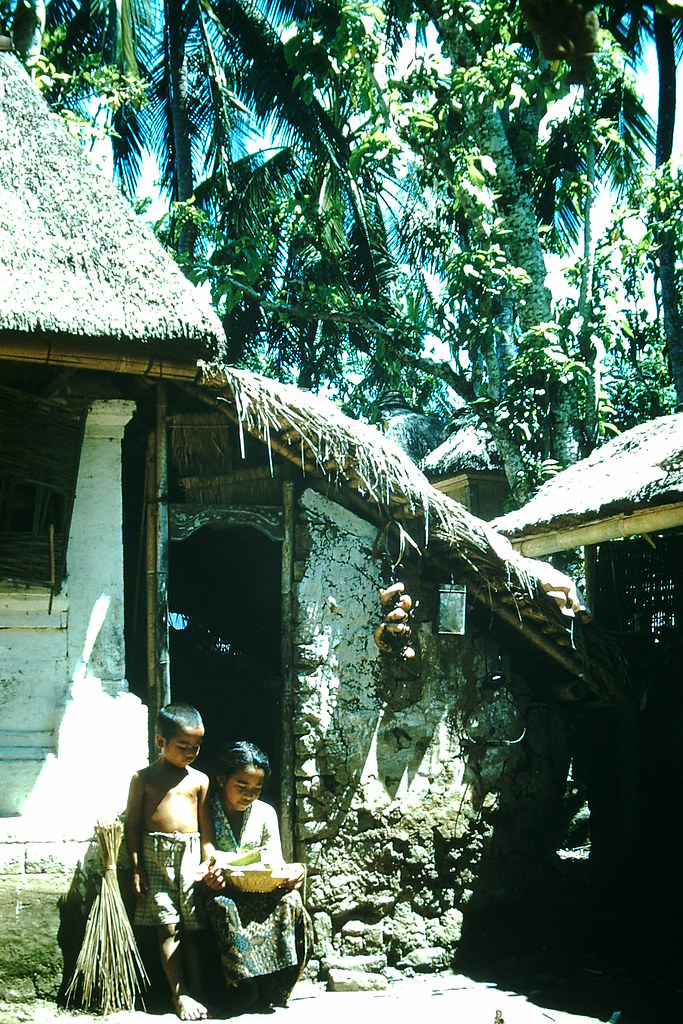
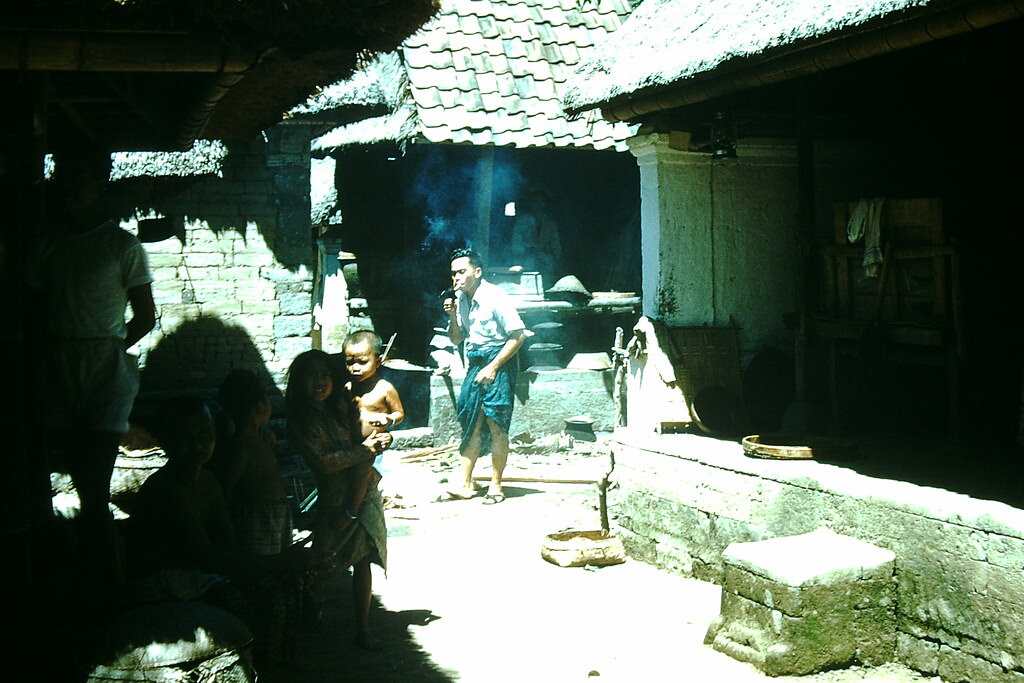
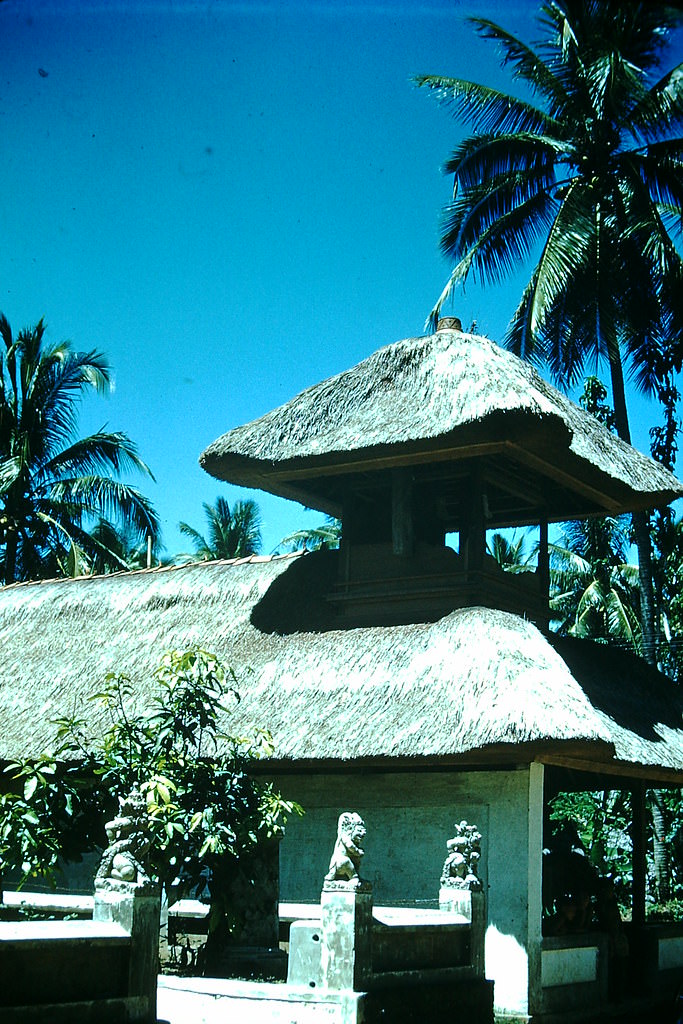
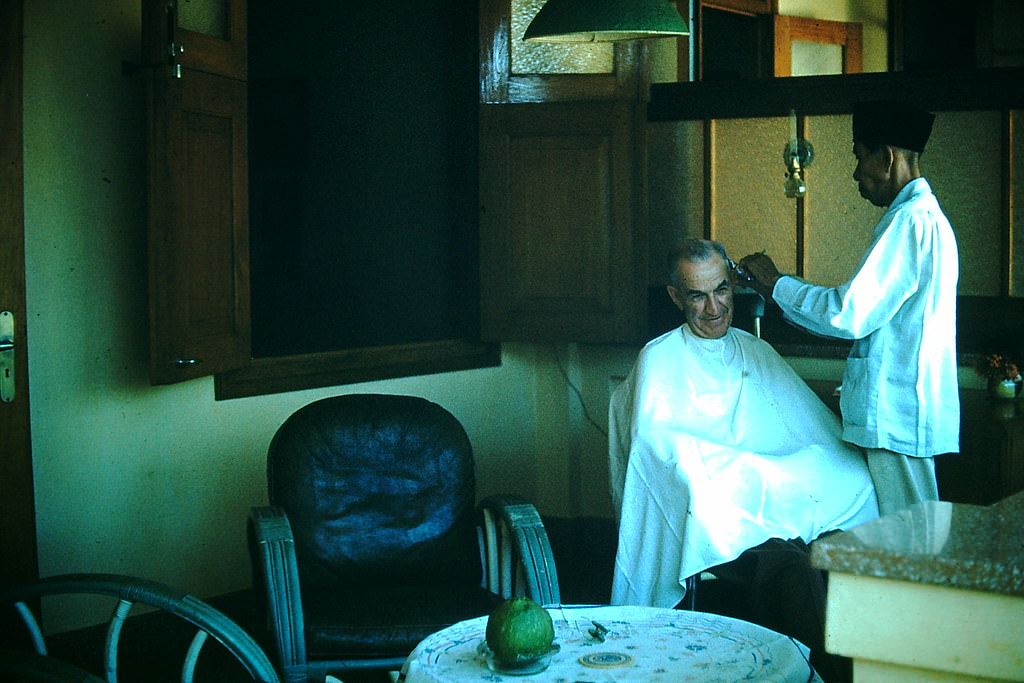
Balinese villages were organized around communal and religious life. The village bell was used to call residents together for announcements, ceremonies, and emergencies. Temples were found throughout every village, and a visit to the temple was part of daily and weekly routine for most Balinese. Getting a haircut, as shown in one photograph taken in Denpasar, was a casual, street-level affair in 1952.
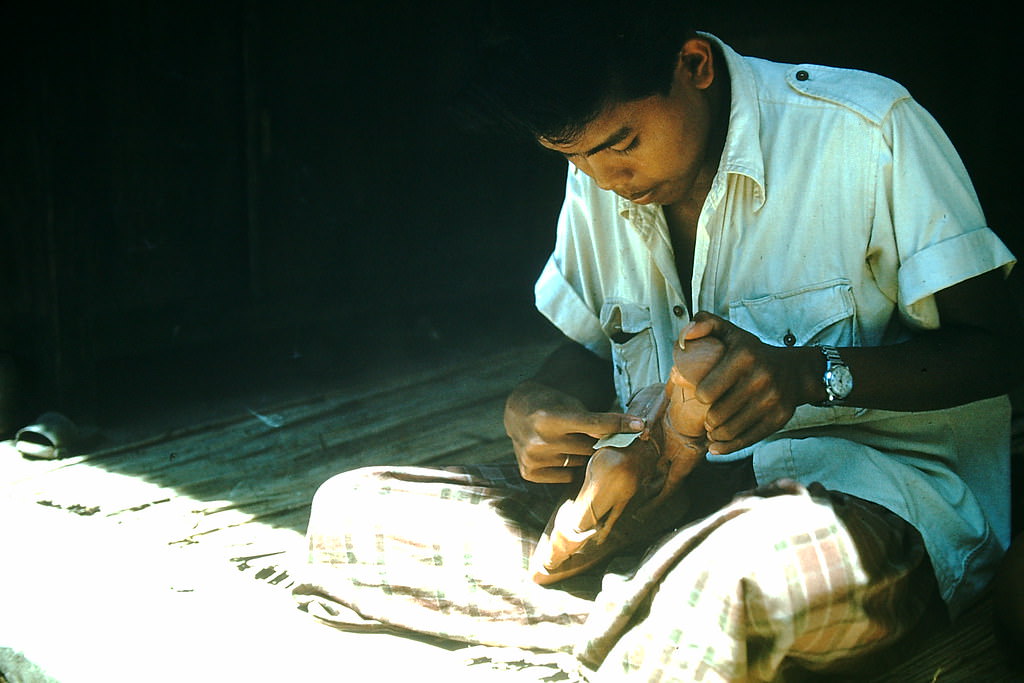
Wood carving was one of Bali’s most practiced crafts. Artisans carved detailed figures from local timber, then polished them to a smooth finish. The work required precision and patience, and the finished pieces ranged from small household decorations to large ritual objects.
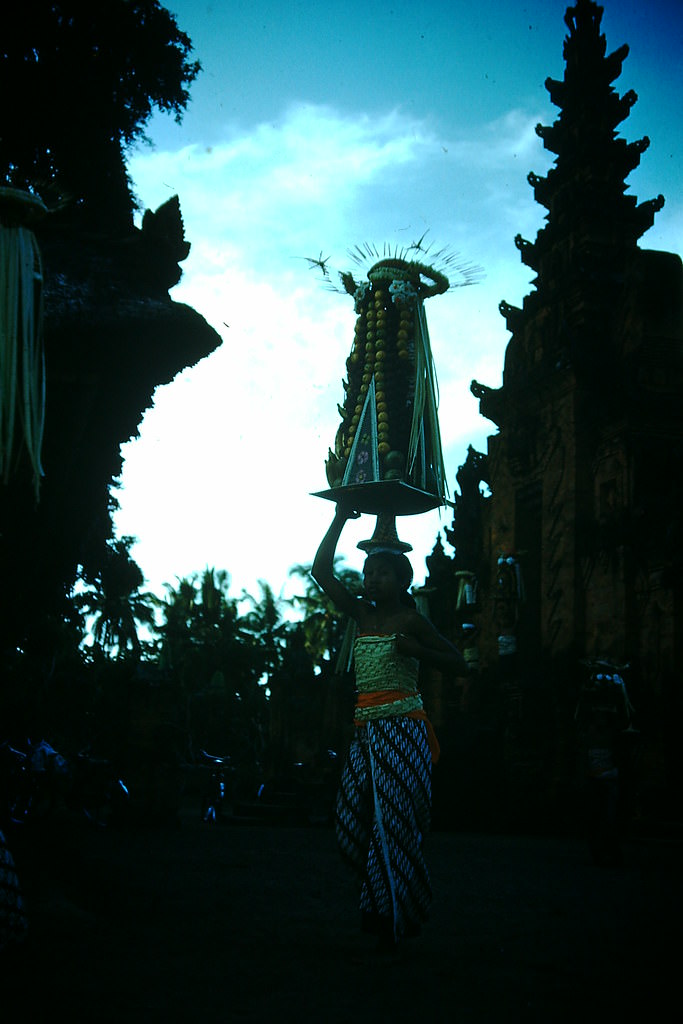
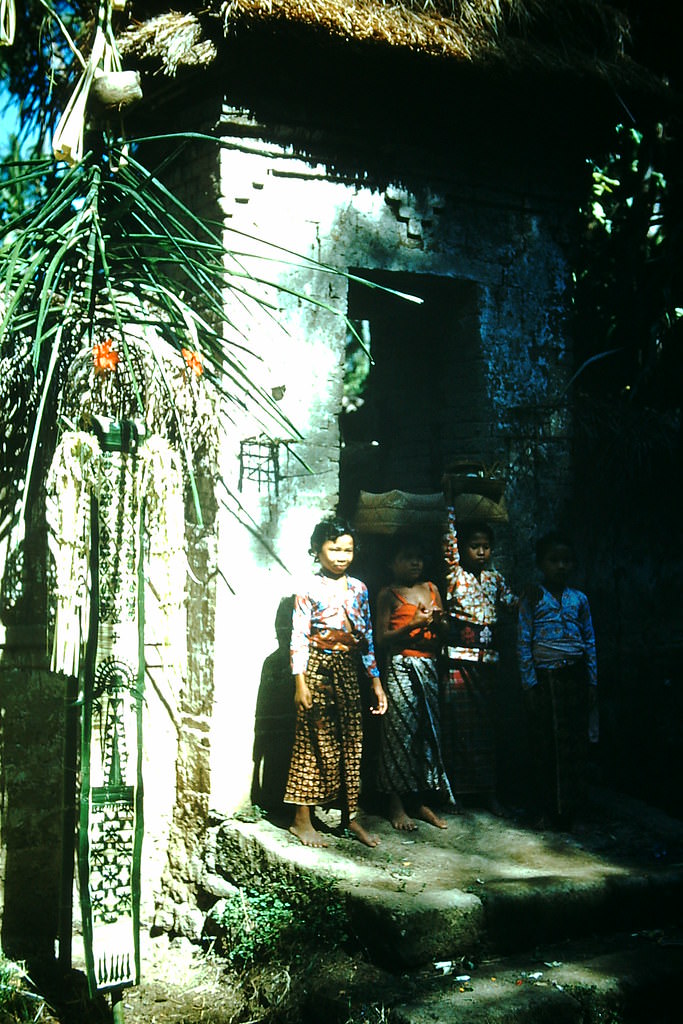
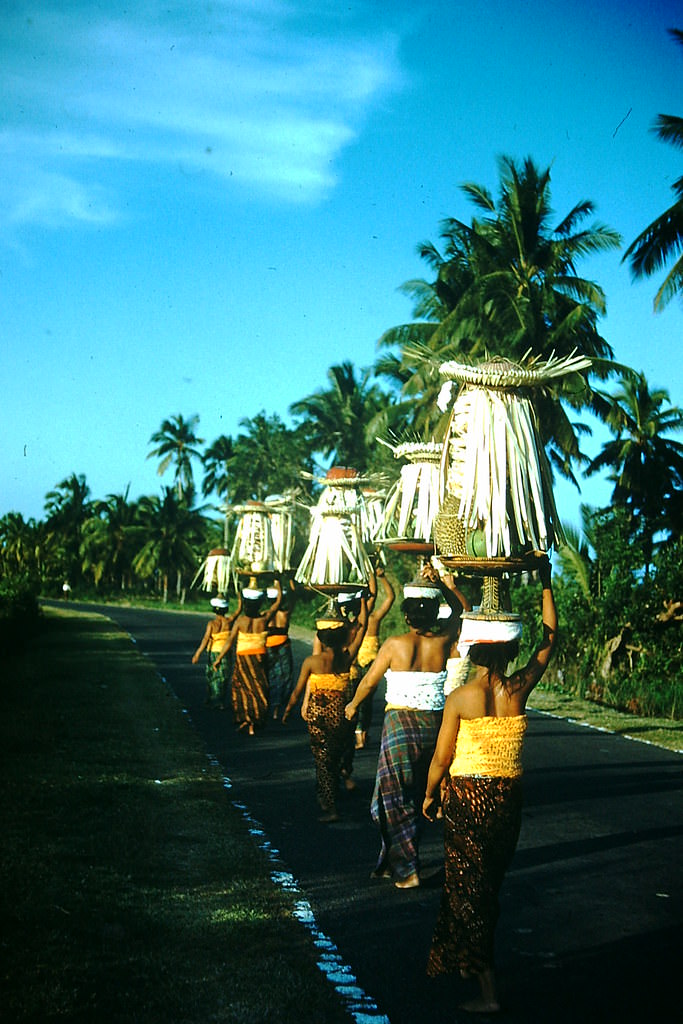
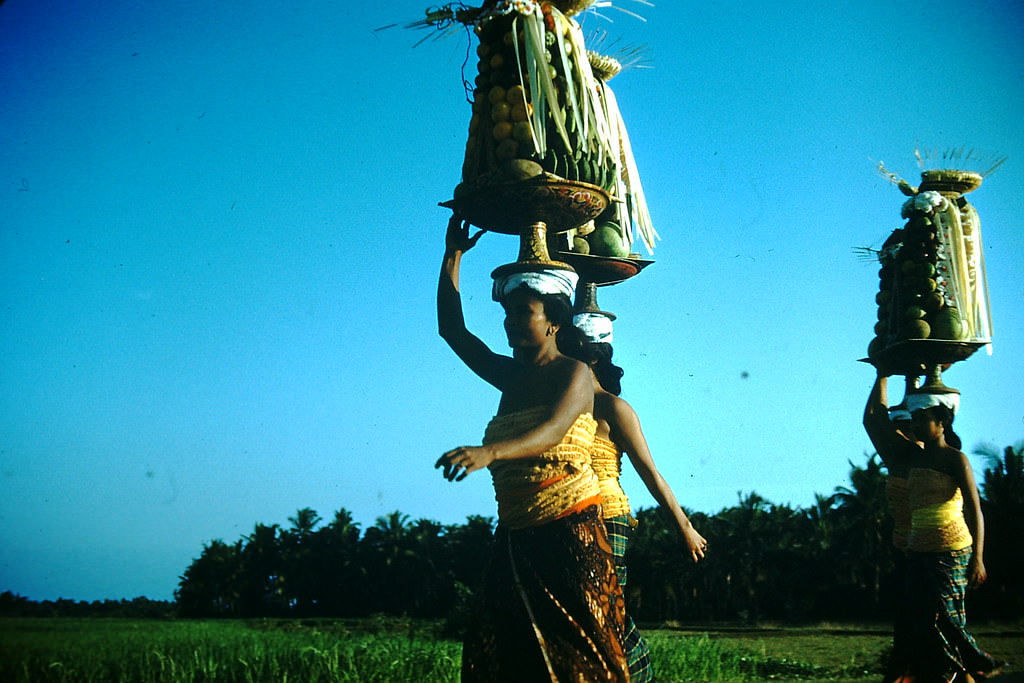
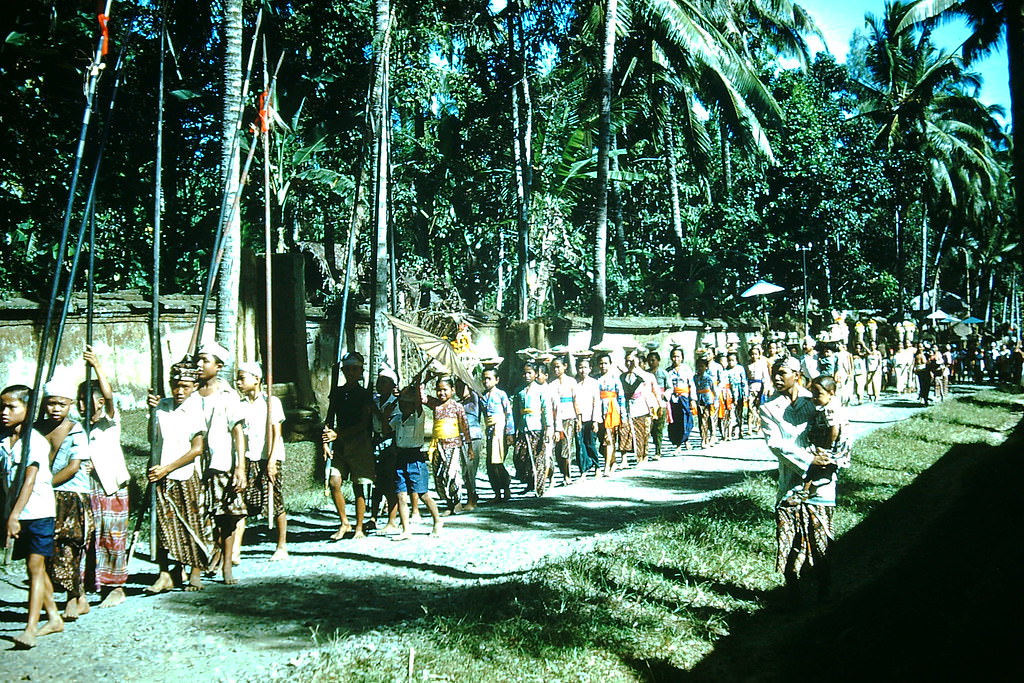
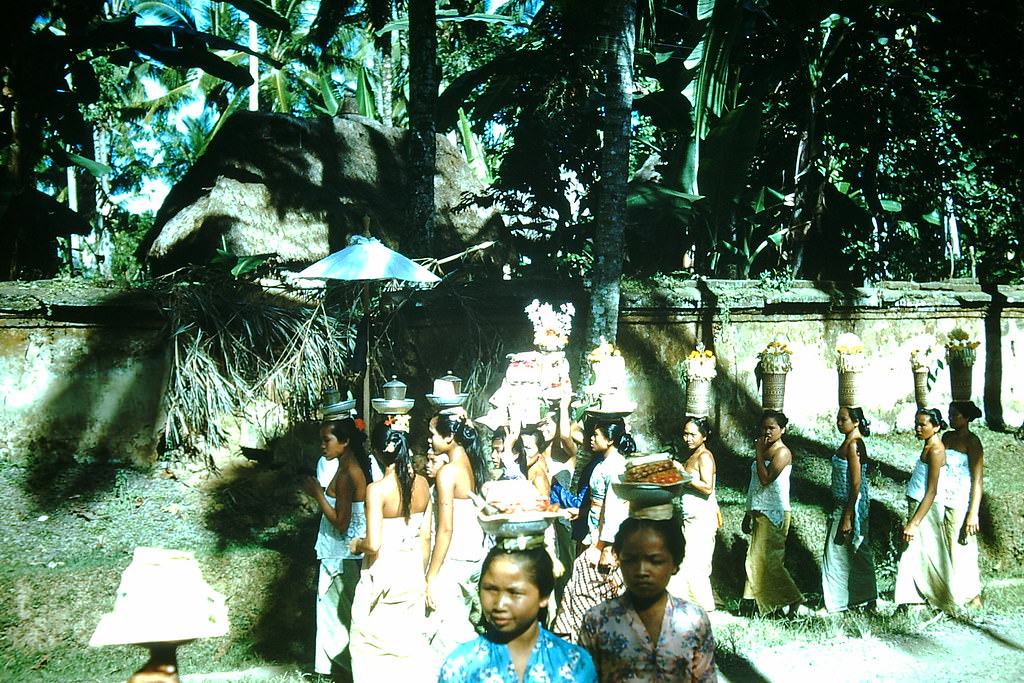
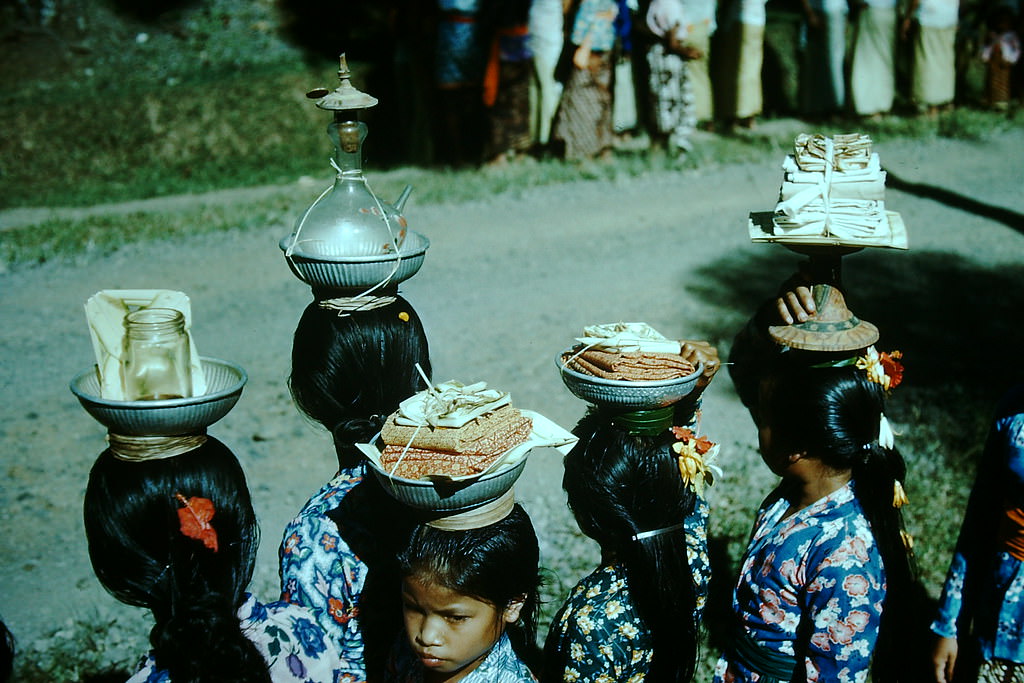
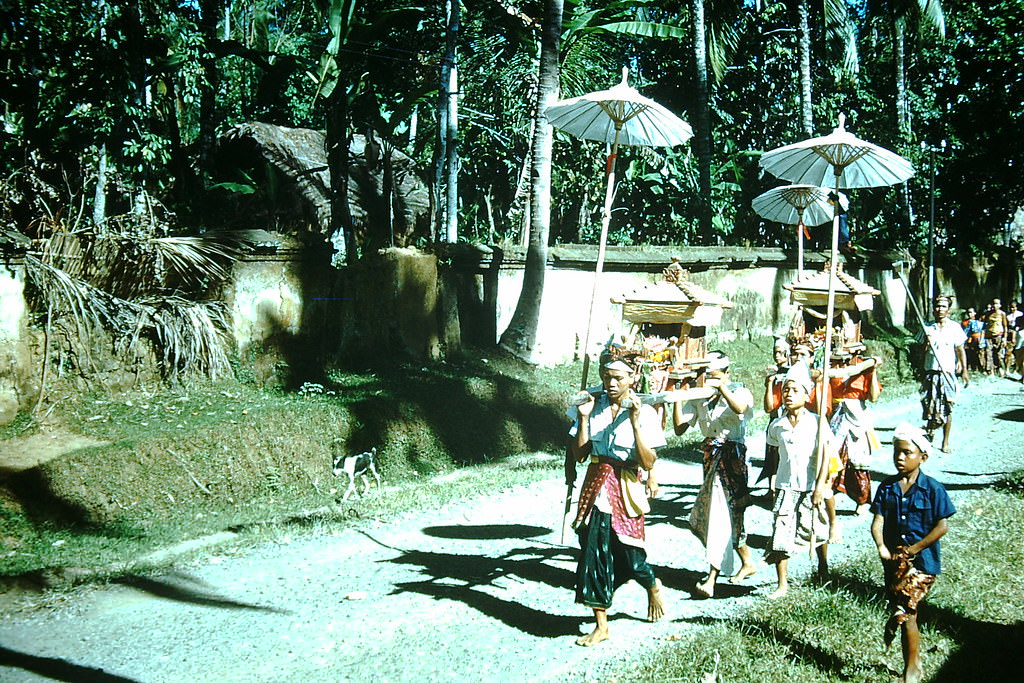
The Balinese New Year, known as Nyepi, was preceded by major community celebrations. In the lead-up to the holiday, residents prepared elaborate offerings for the temples. Processions moved through the streets, and decorations transformed entire roadways. The preparations were a community-wide effort involving men, women, and children alike.
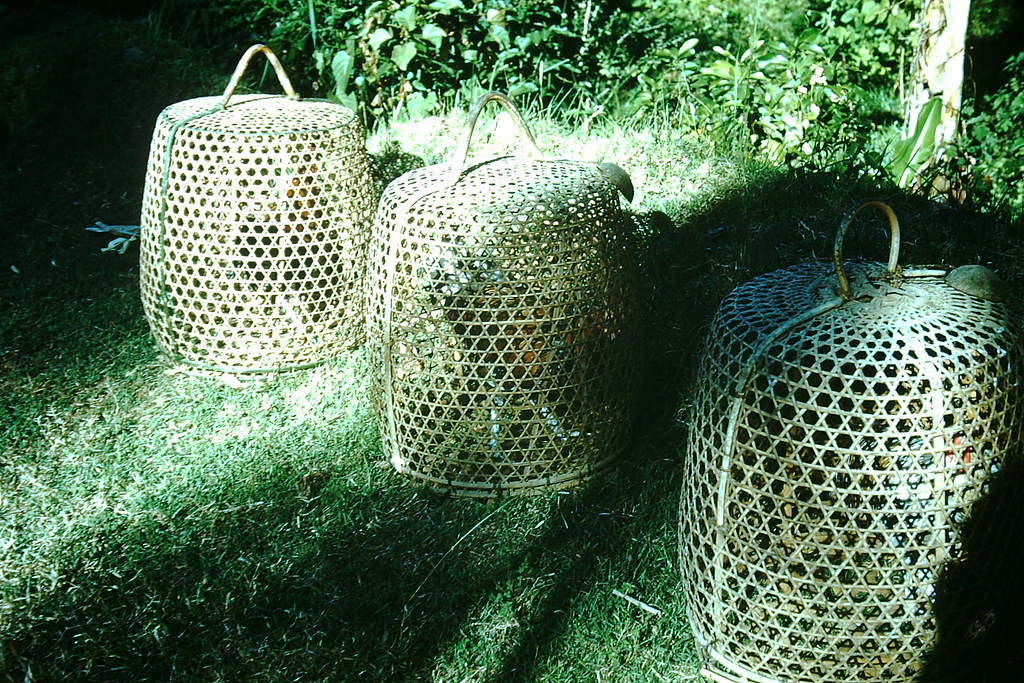
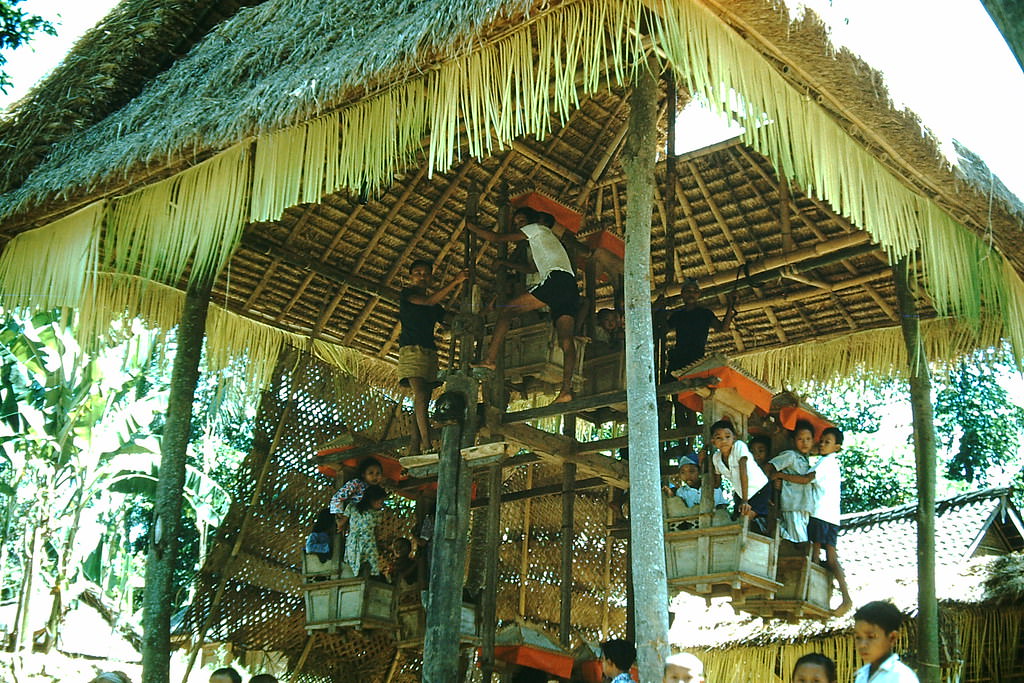
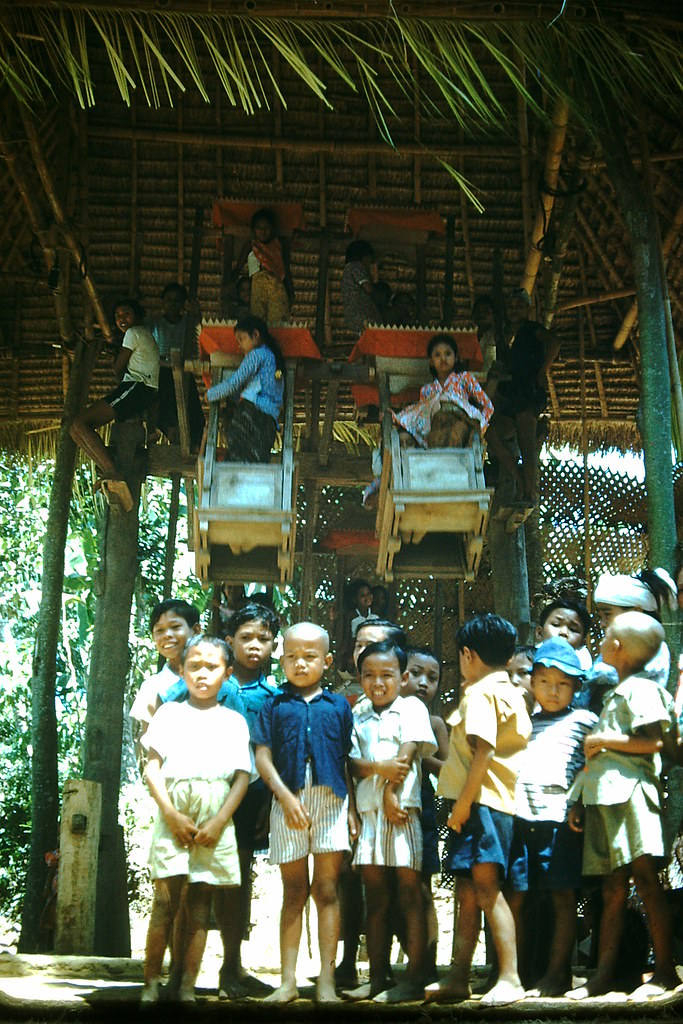
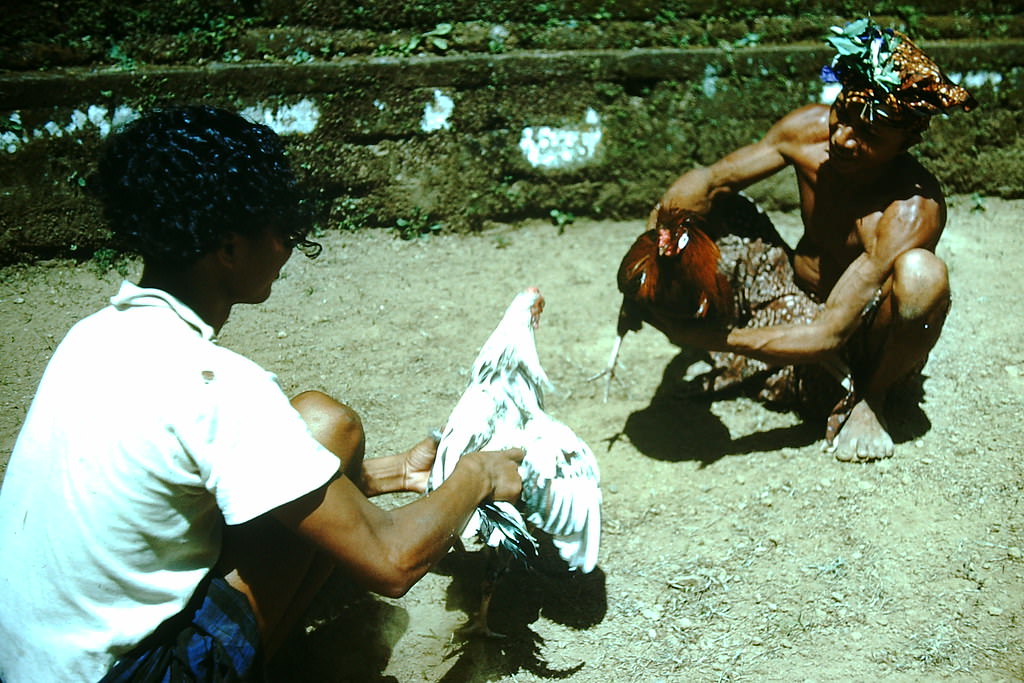
Cockfighting, known locally as tajen, was deeply embedded in Balinese culture and had religious as well as social dimensions. Roosters were carefully kept and trained for these contests. Ferris wheels and other fairground attractions also appeared during New Year celebrations, drawing crowds from surrounding villages.
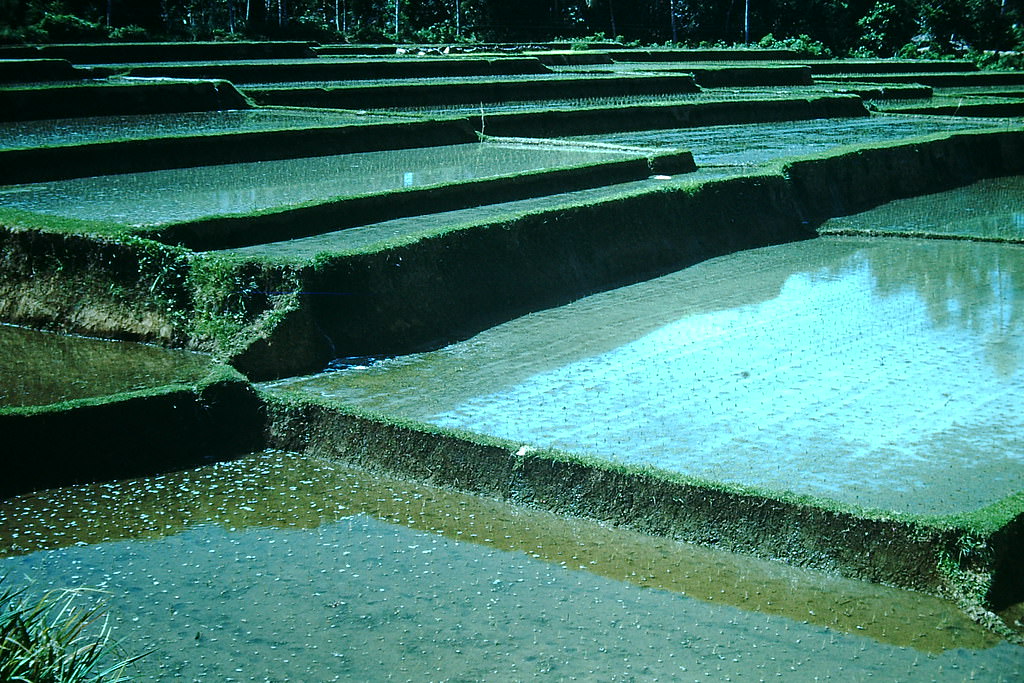
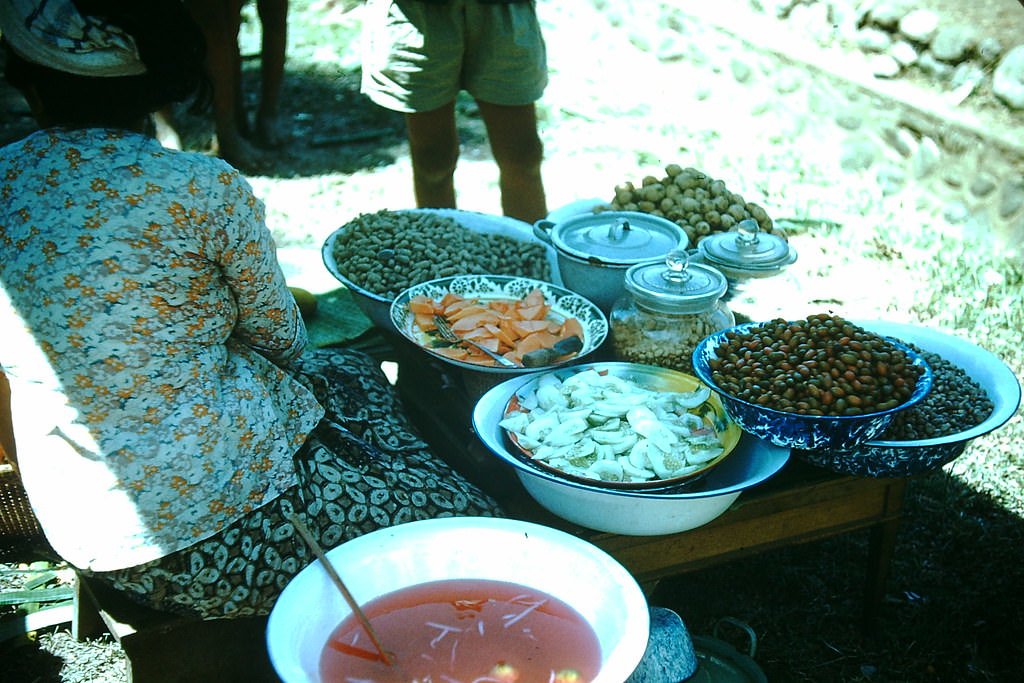
Bali’s rice paddies were shaped into terraced patterns that followed the curves of the land. These terraces, built and maintained over generations, allowed water to flow evenly from one level to the next. Refreshment stands near busy areas — roadsides, markets, and temple entrances — served food and drinks to passersby throughout the day.
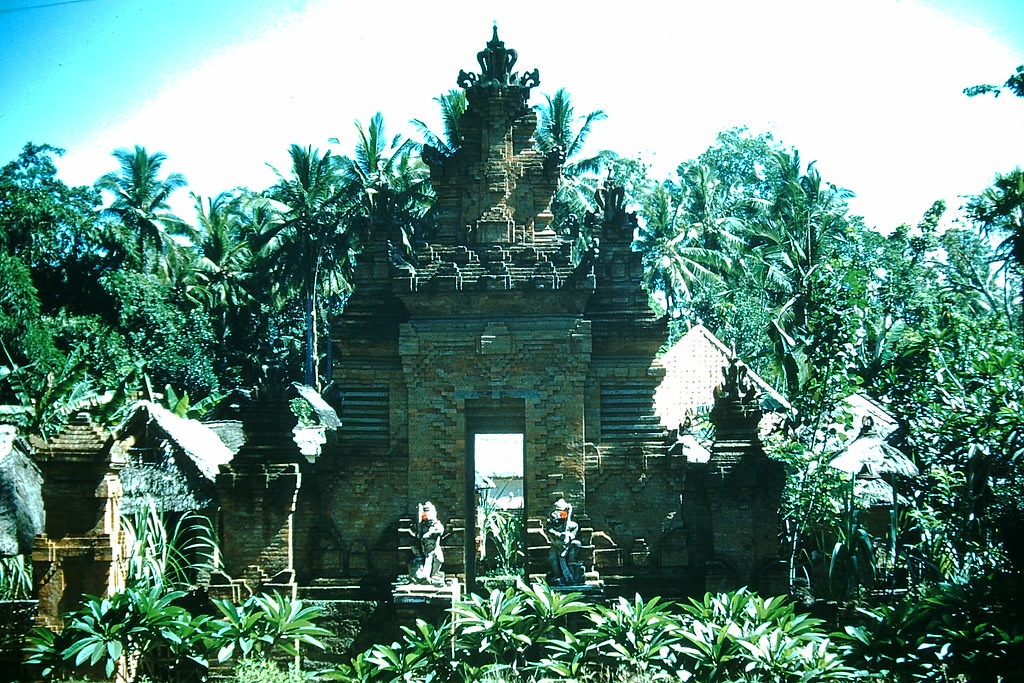
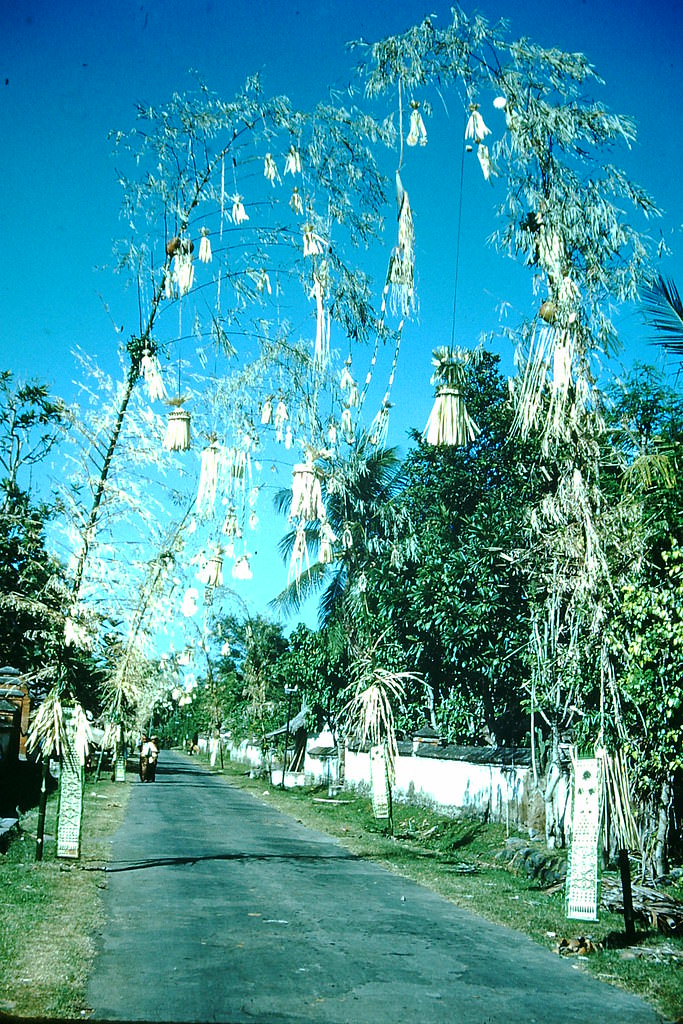
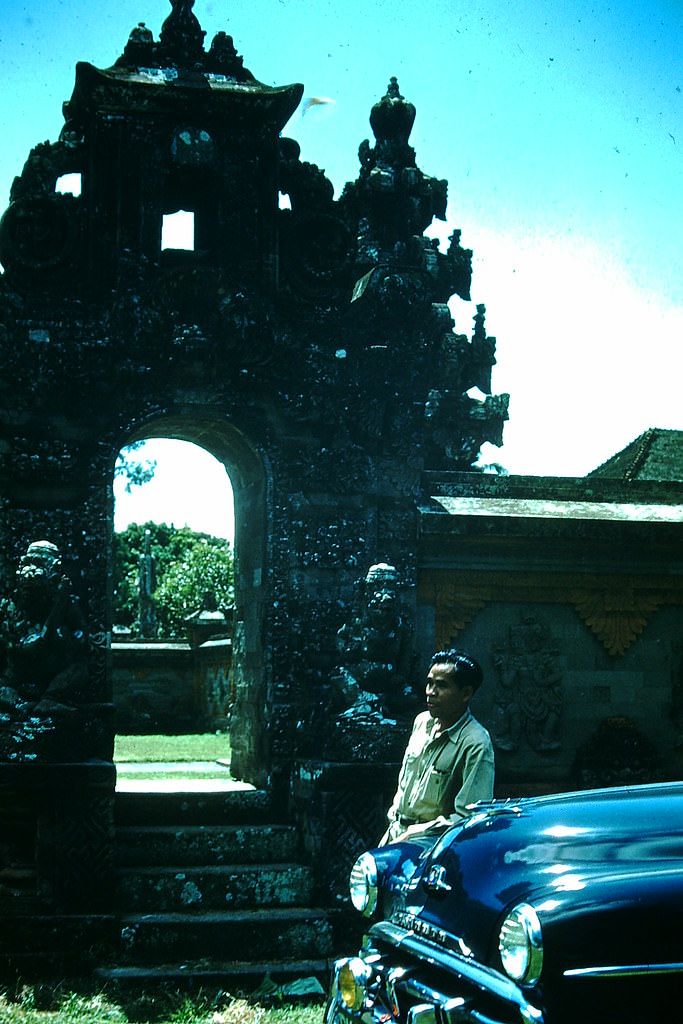
The Galungan festival — one of Bali’s most important religious observances — was marked by the erection of penjor, tall bamboo poles decorated with woven coconut leaves and offerings, lining the roadsides. The temples at Klungkung, one of Bali’s historic royal centers, were among the most impressive on the island, featuring intricately carved stone gates and open-air pavilions.
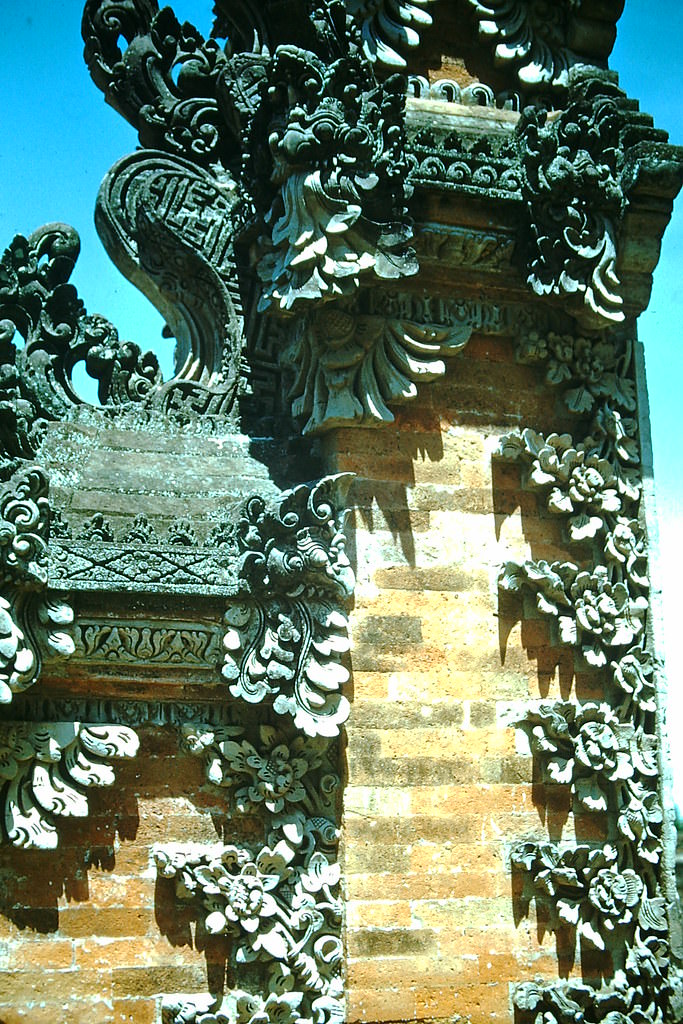
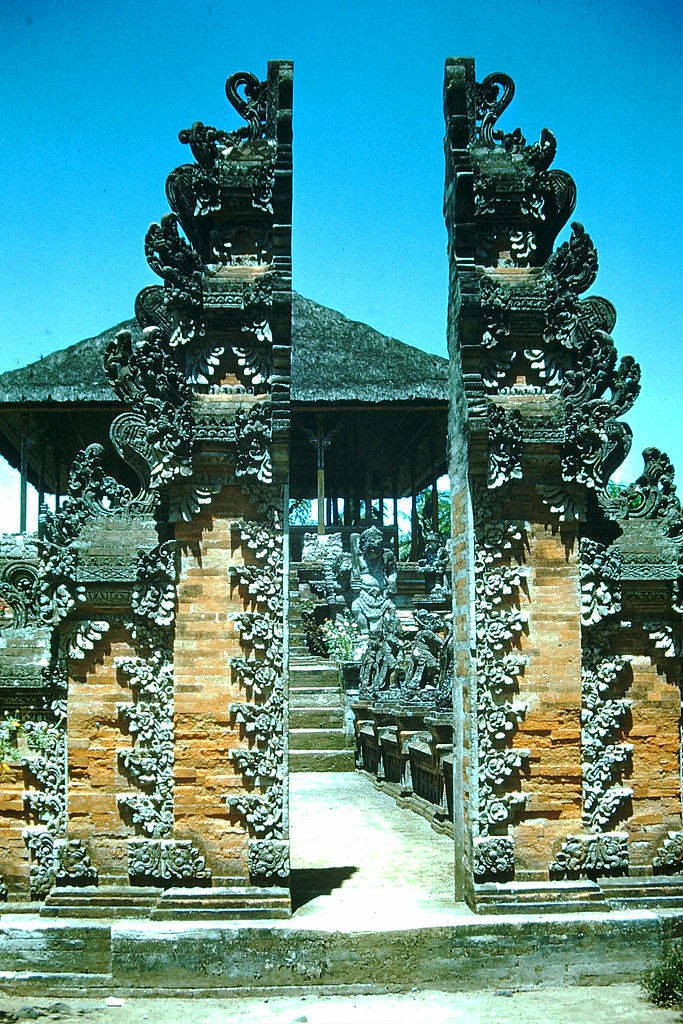
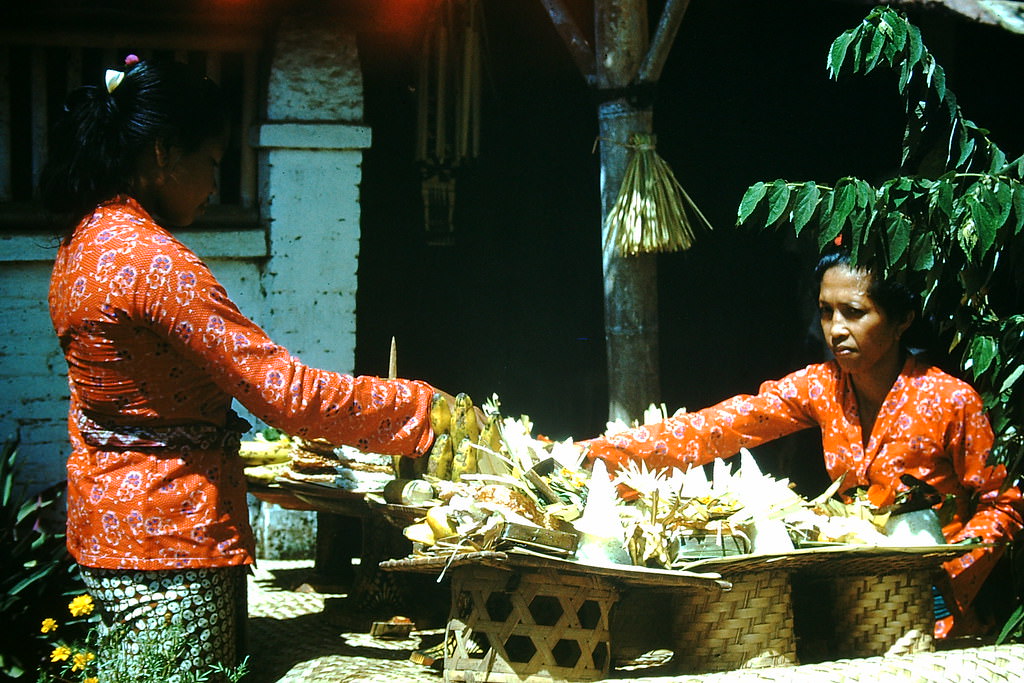
Temple offerings in Bali were prepared with great care. Stacked arrangements of fruit, flowers, rice cakes, and woven palm leaves were placed at shrines inside temple courtyards. These offerings were not casual gestures — their preparation followed specific rules tied to the Balinese ritual calendar, and their placement was done with ceremony.
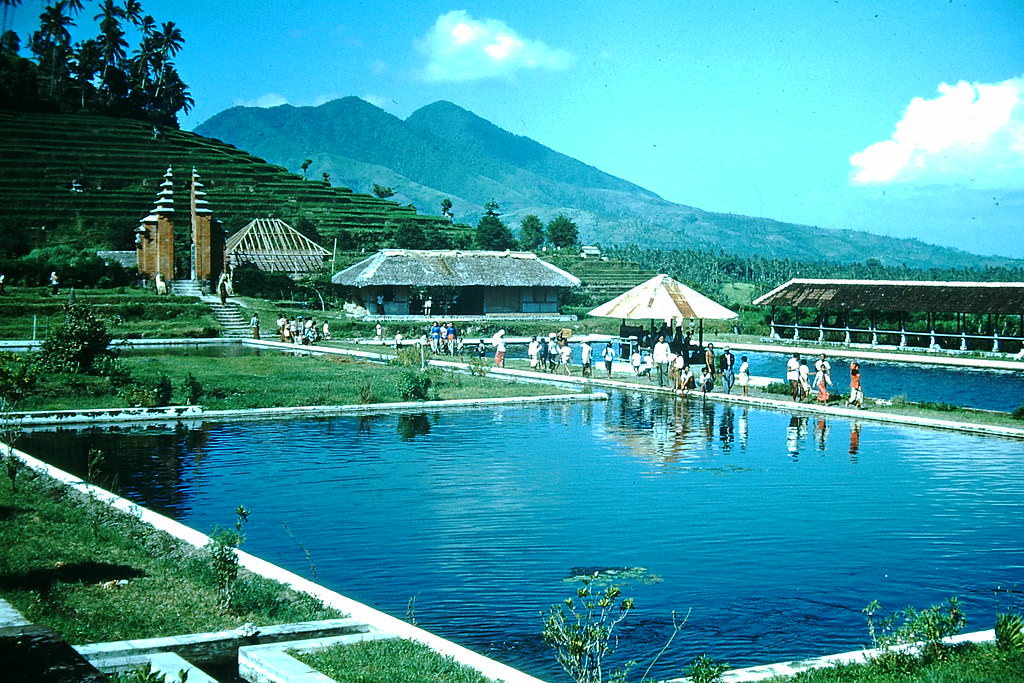
The water palace at Karangasem, known as Tirta Gangga, was built by the local raja in 1948 and featured ornate pools, fountains, and tiered stone structures surrounded by gardens. It was one of the most striking architectural landmarks on Bali’s eastern end.
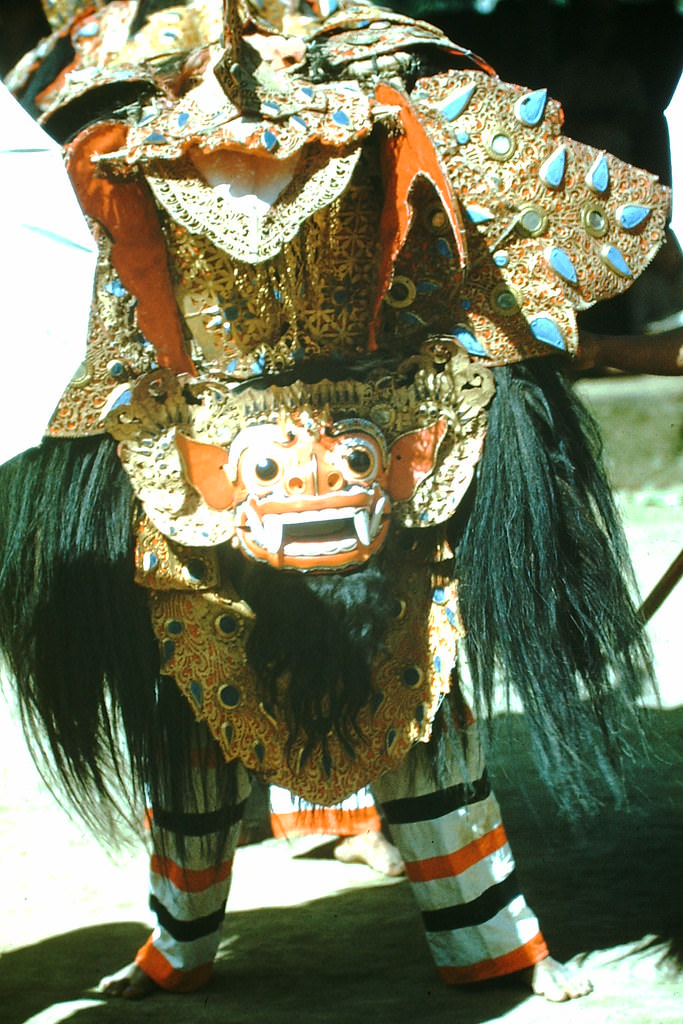
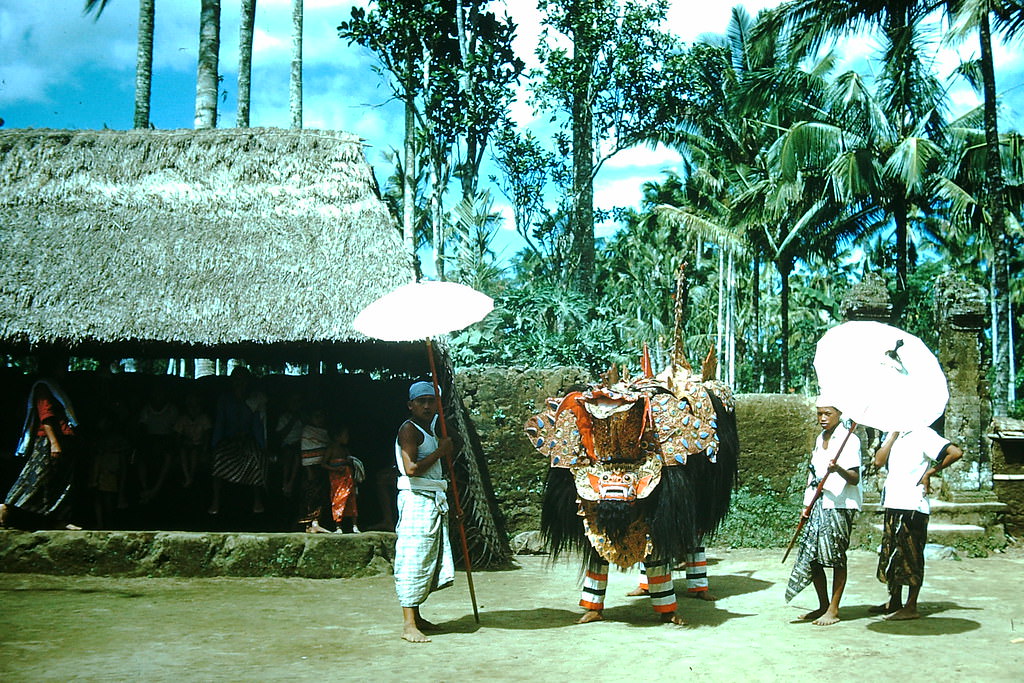
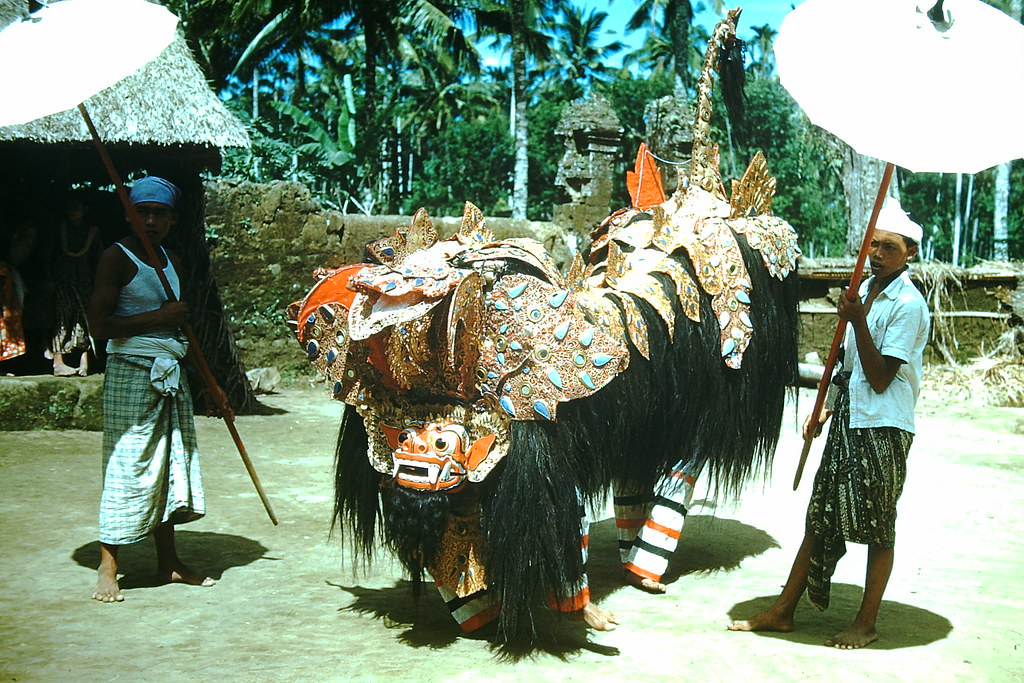
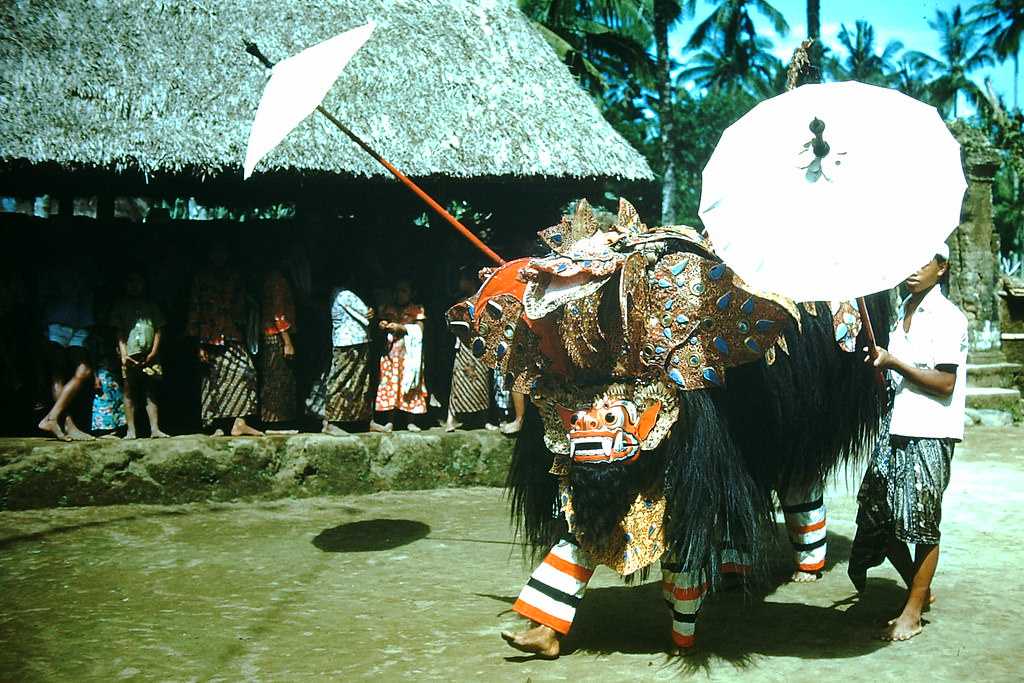
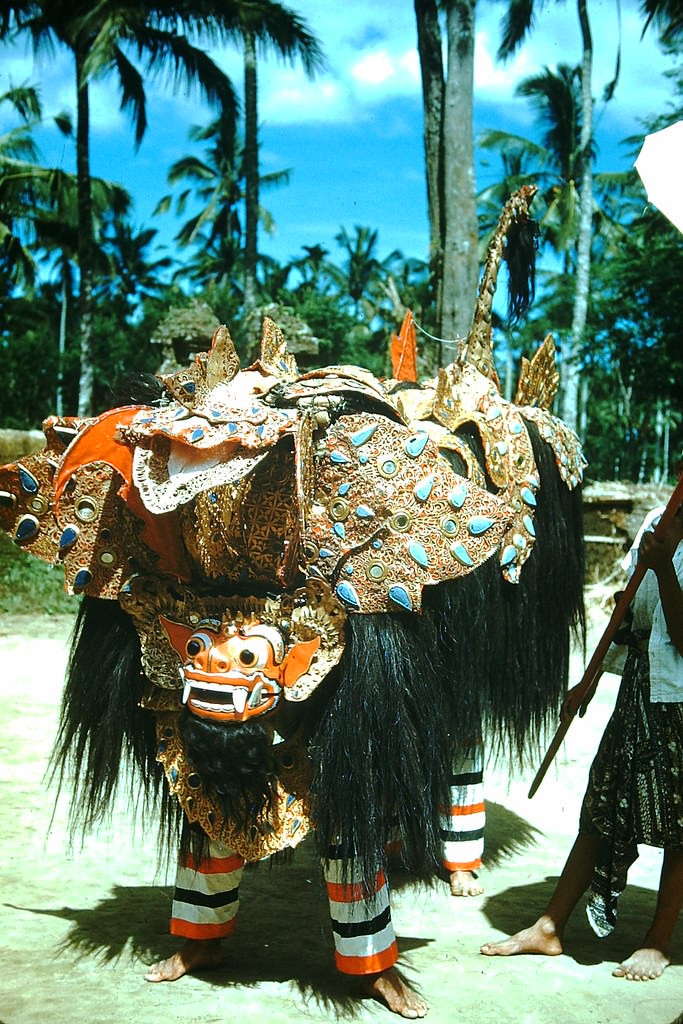
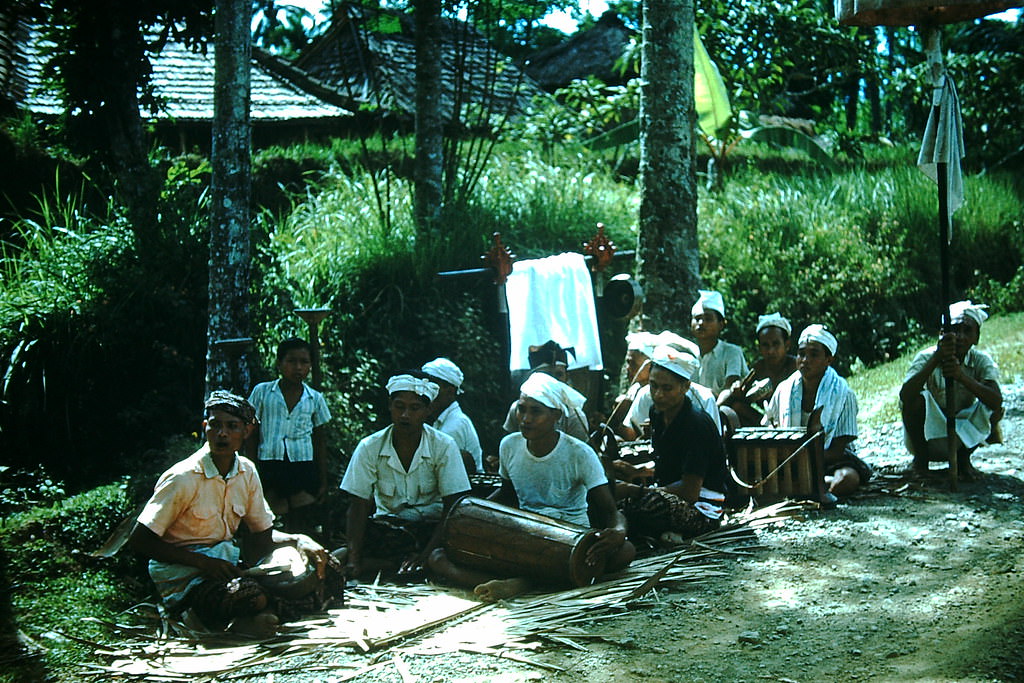
The Barong-Kris dance was one of Bali’s most well-known ritual performances. It depicted the battle between Barong — a lion-like creature representing good — and Rangda, the demon queen representing evil. Gamelan musicians provided the music that drove the performance, playing bronze instruments in tight, interlocking rhythms. The dance was not simply entertainment; it was a spiritual act meant to maintain balance between opposing forces.
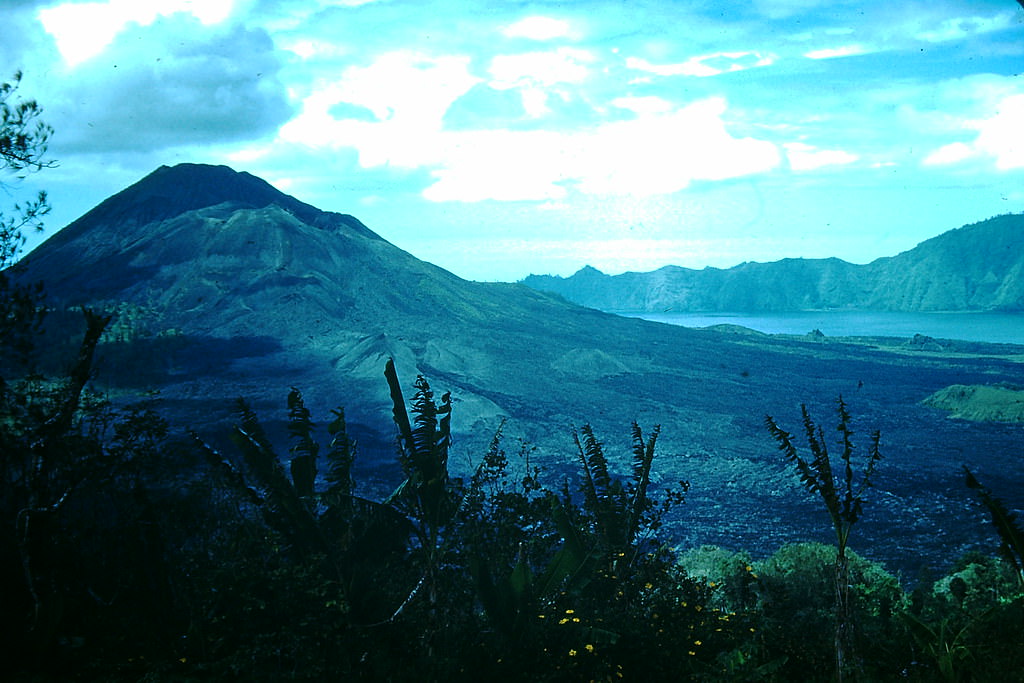
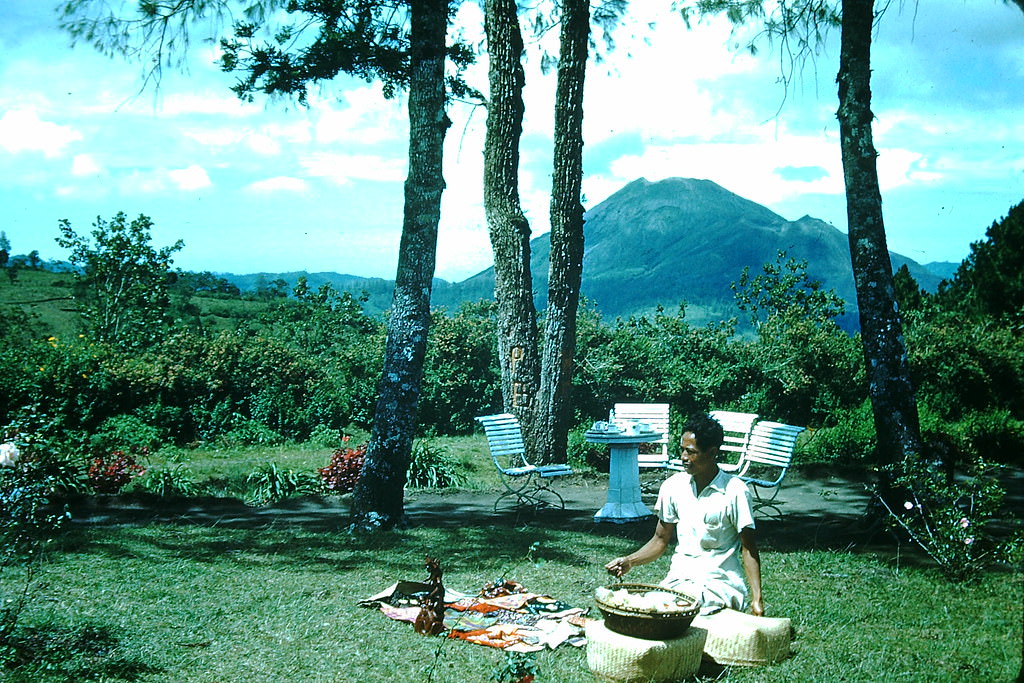
Mount Batur, an active volcano in Bali’s central highlands, loomed over the caldera lake that bears its name. The volcano last erupted in 1926, and by 1952 it remained a dominant presence in the landscape, visible from much of the island’s interior.
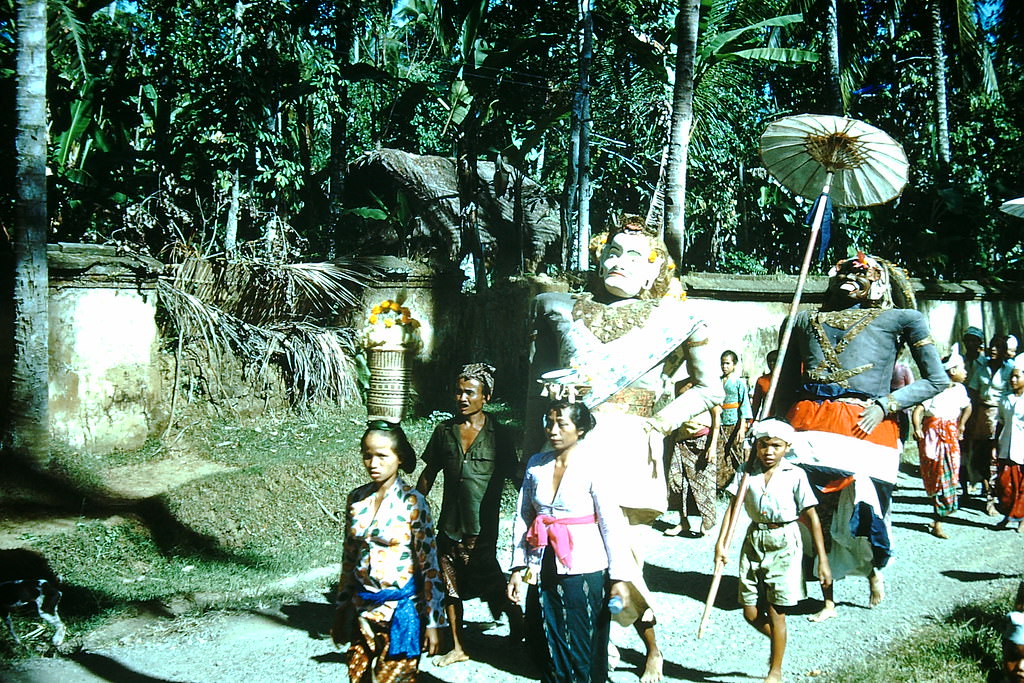
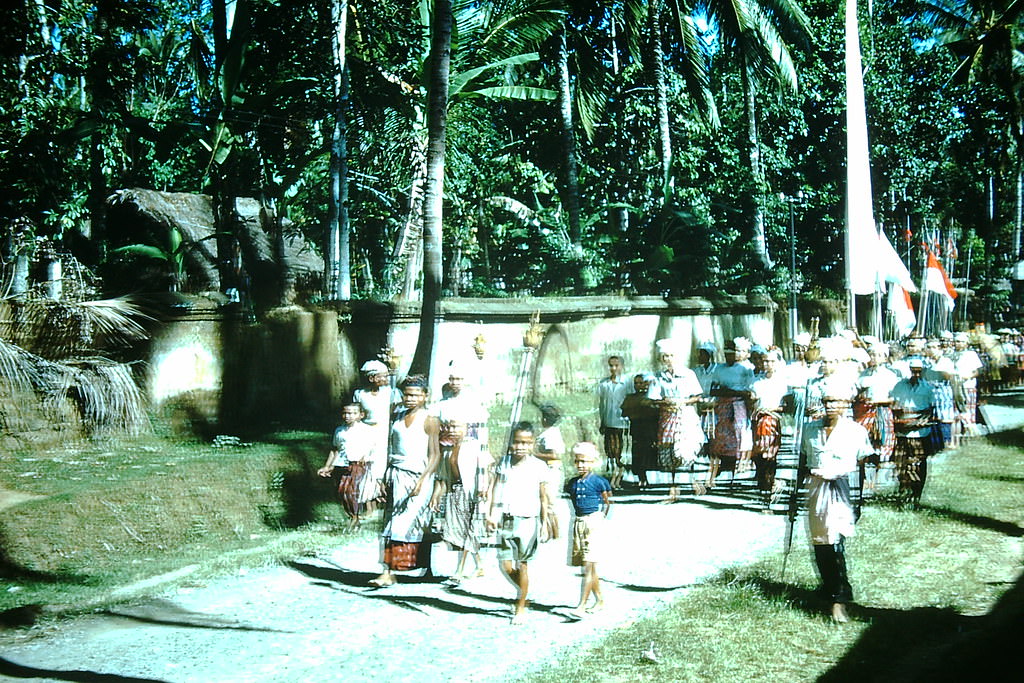
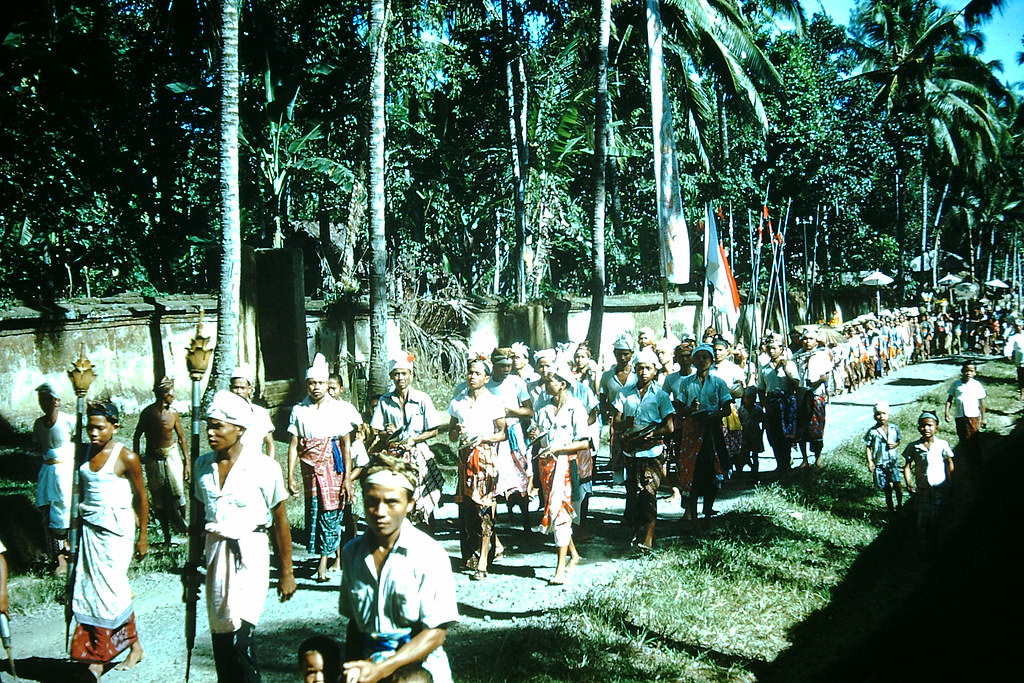
New Year processions from the temples brought the entire community into the streets. Participants dressed in traditional white and yellow clothing carried ceremonial objects, large offerings, and effigies through the village. The processions moved slowly and deliberately, and the atmosphere combined reverence with celebration.
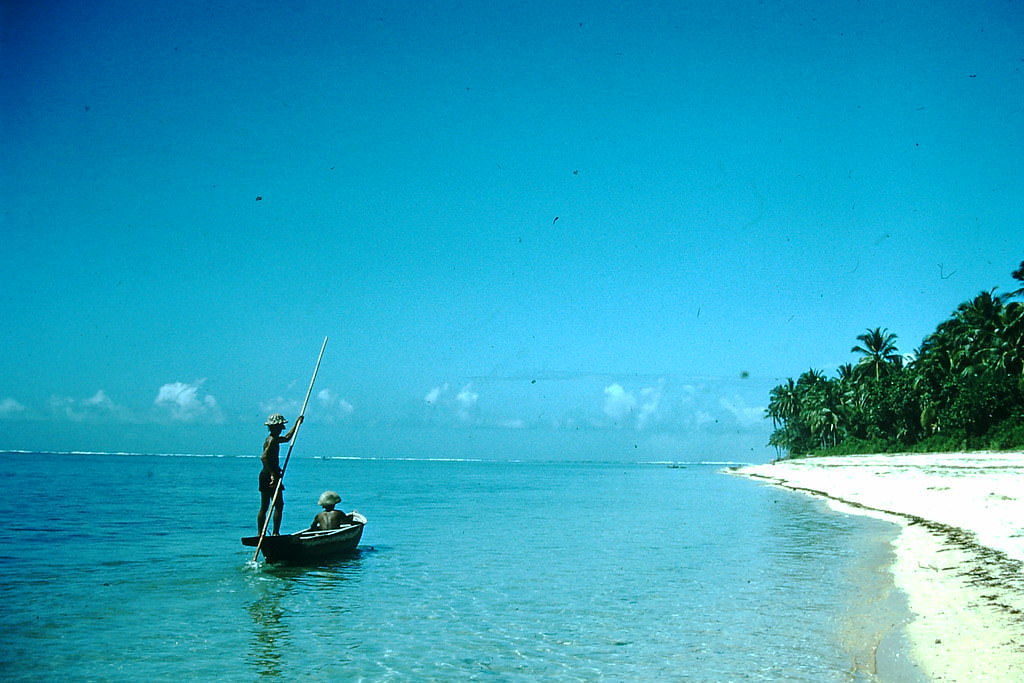
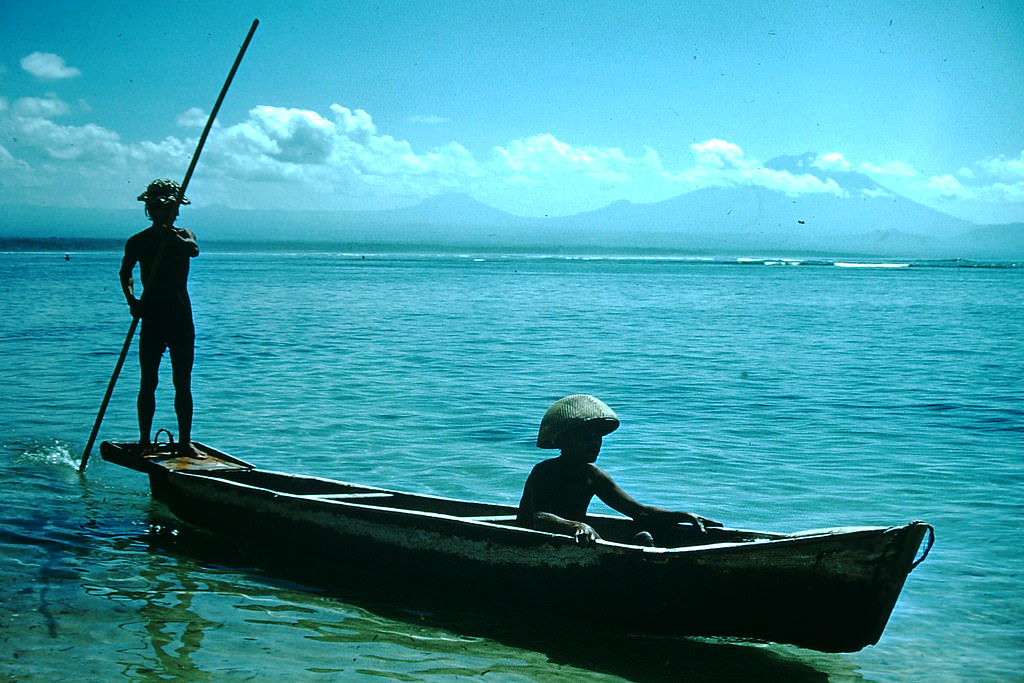
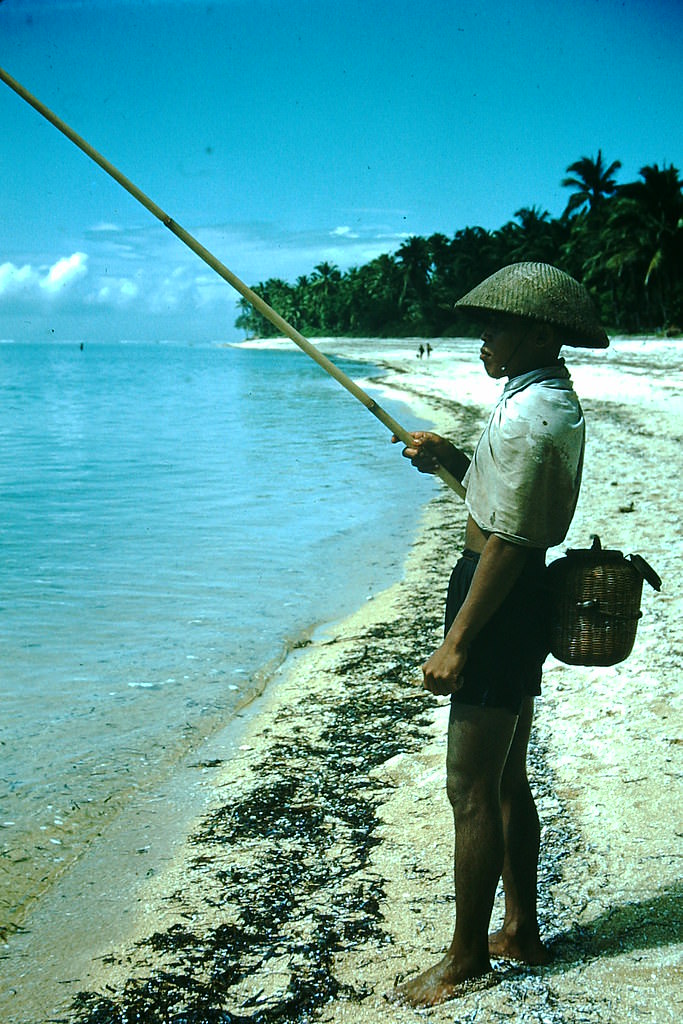
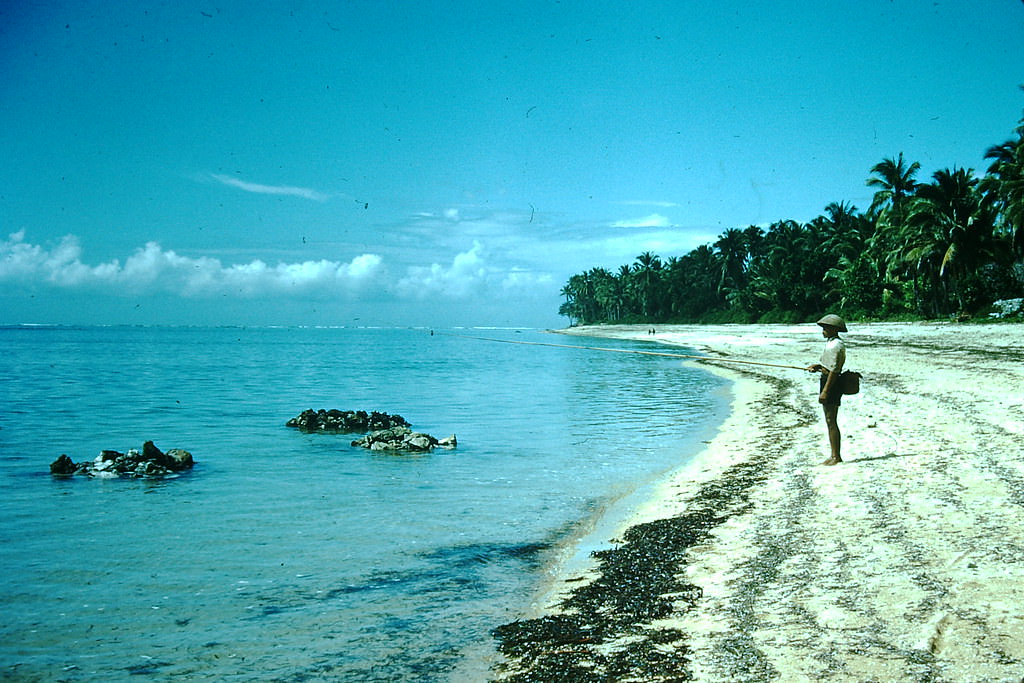
The coastal village of Sanur, on Bali’s southern shore, was one of the island’s main fishing communities in 1952. Balinese men who lived there built their lives around the sea. Roads leading through the village were lined with palms and low walls, and the pace of life was set by the tides and the fishing seasons.
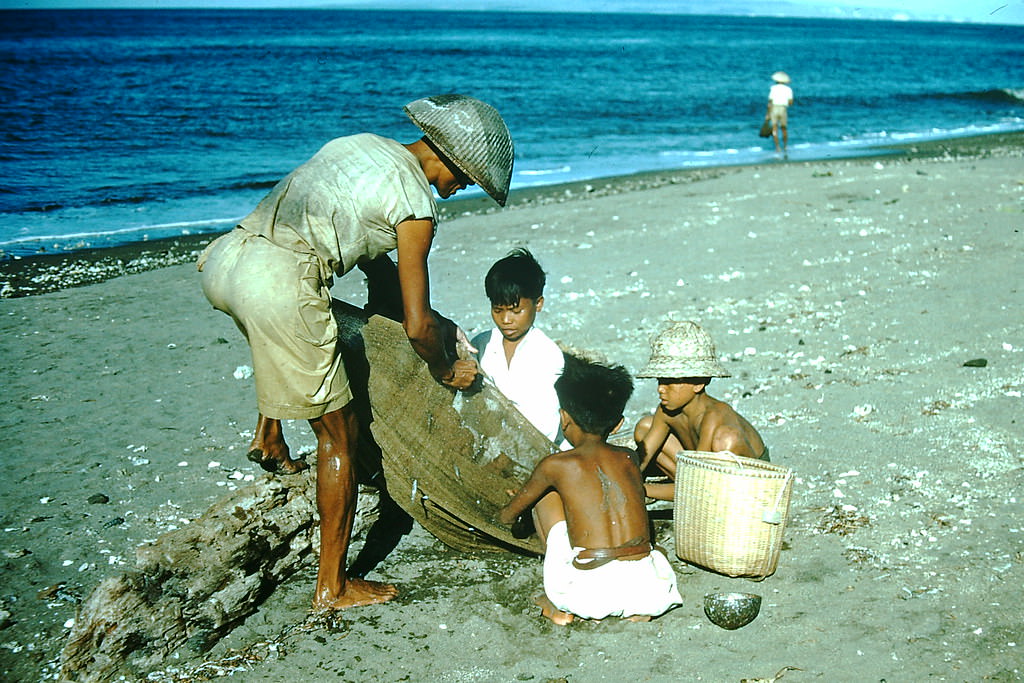
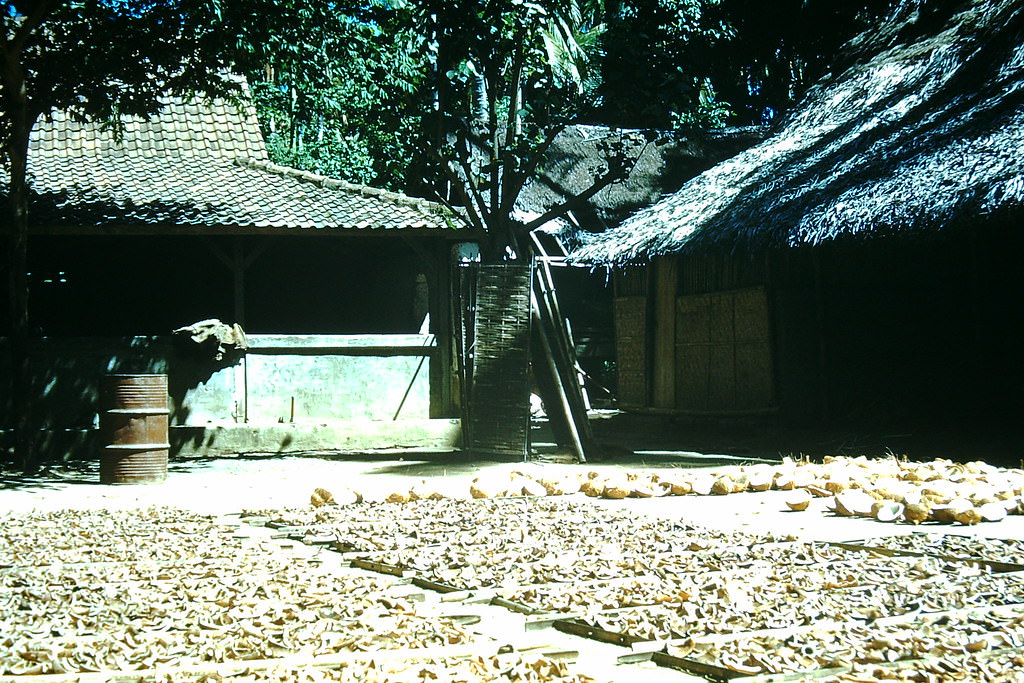
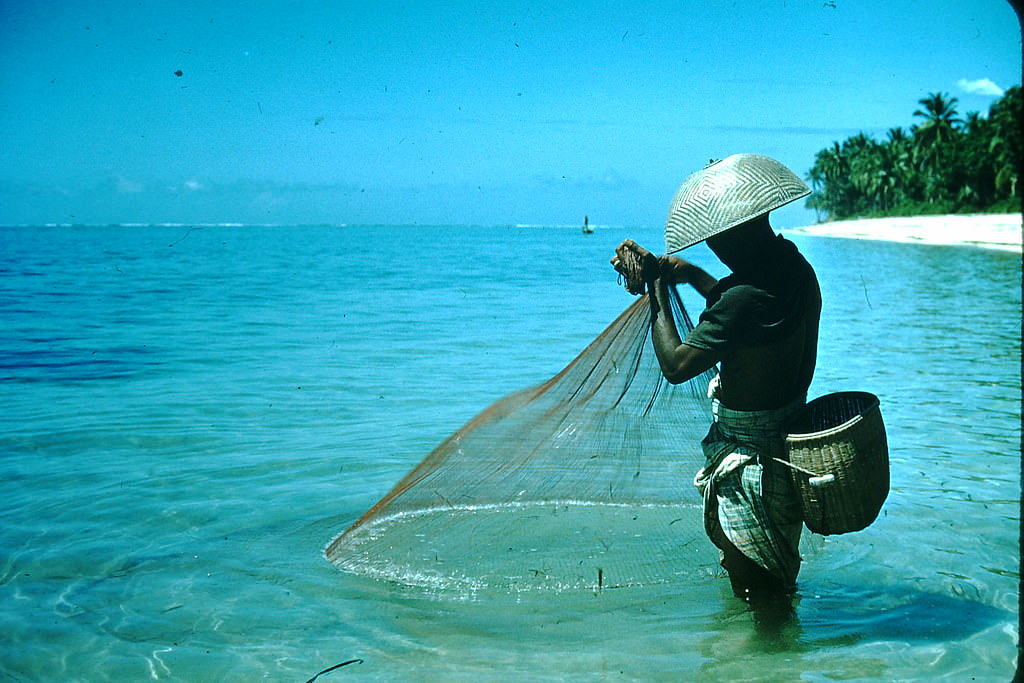
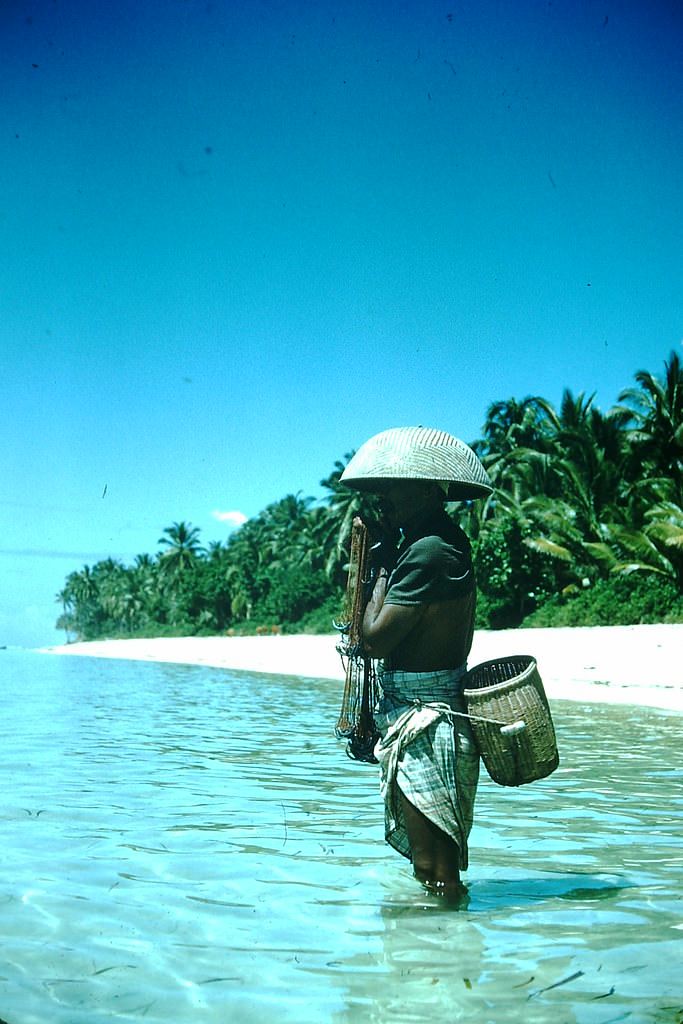
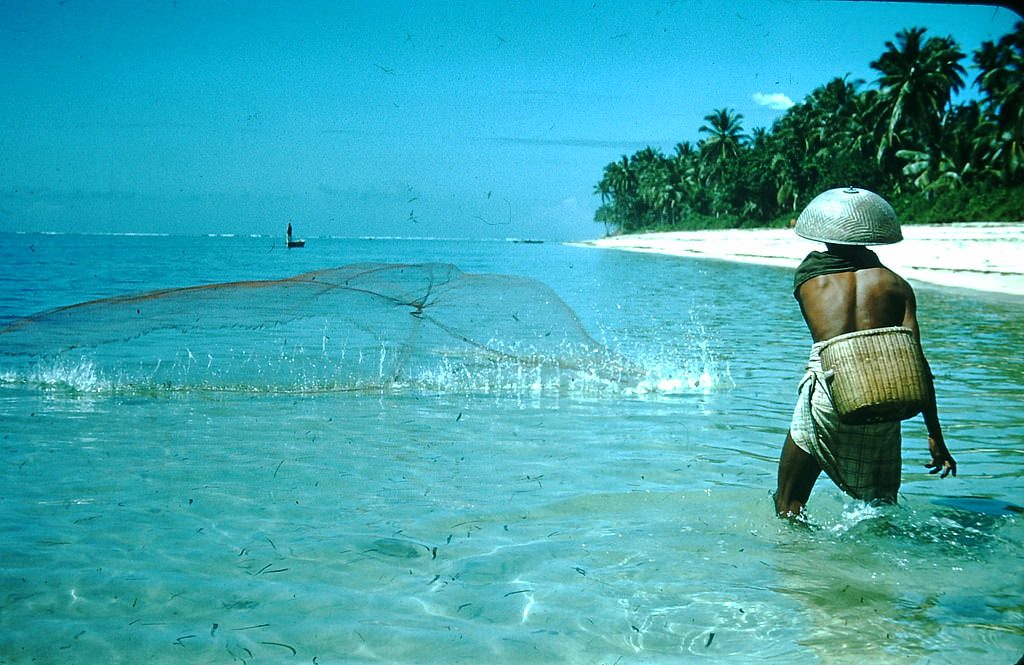
The boatmen of Sanur launched their outrigger canoes from the beach each morning before dawn and returned with their catch by midday. Fishermen also used large cast nets in the shallows, wading chest-deep into the water and throwing the nets in wide arcs to trap fish near the surface. Copra — dried coconut meat — was another product of the coastal economy. Split coconuts were laid out in the sun to dry before being processed for their oil.
The Bali Museum in Denpasar housed collections of traditional Balinese art, textiles, and ceremonial objects. Visitors to the museum in 1952 could see artifacts that documented centuries of Balinese culture and craftsmanship. Net fishing in Sanur required coordination between multiple men. One person cast or held the net while others helped guide it through the water and pull it to shore.
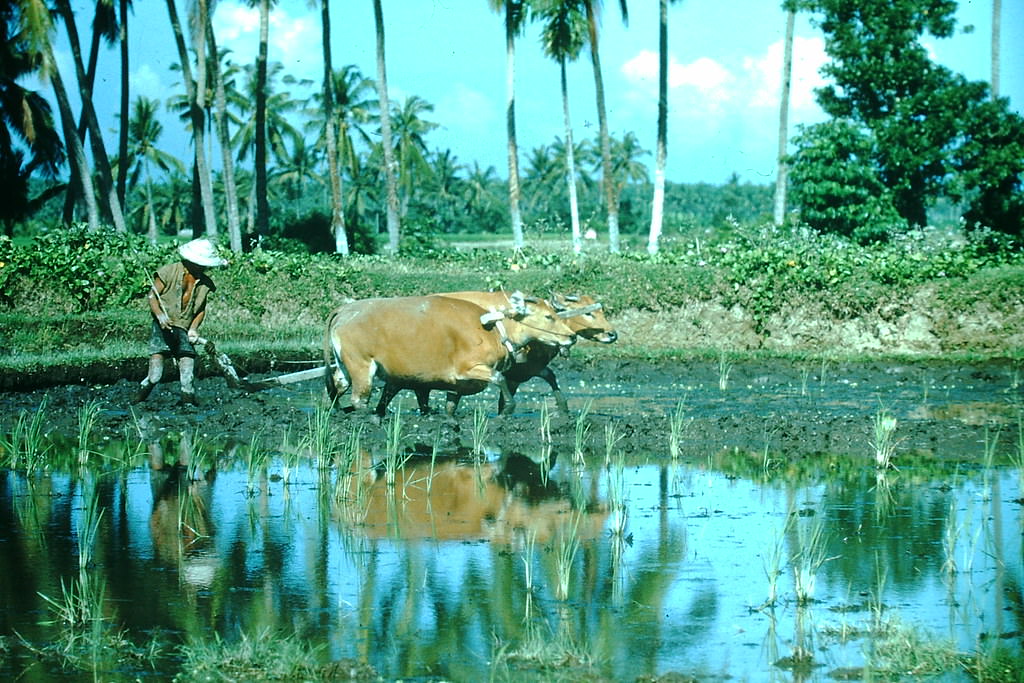
Oxen were used across Bali for plowing rice paddies. A farmer guided a pair of oxen through the flooded field, breaking the soil before planting. This method was the standard approach to rice cultivation throughout rural Bali in 1952. The village of Sanur was also home to the Belgian-born painter Adrien-Jean Le Mayeur de Merprès, who had settled there in 1932 after falling in love with Bali. His wife, Ni Pollok — known locally as Polak Le Mayeur — was a celebrated Legong dancer who modeled for many of his paintings. By 1952, Le Mayeur’s beach house had become both a home and an informal gallery.
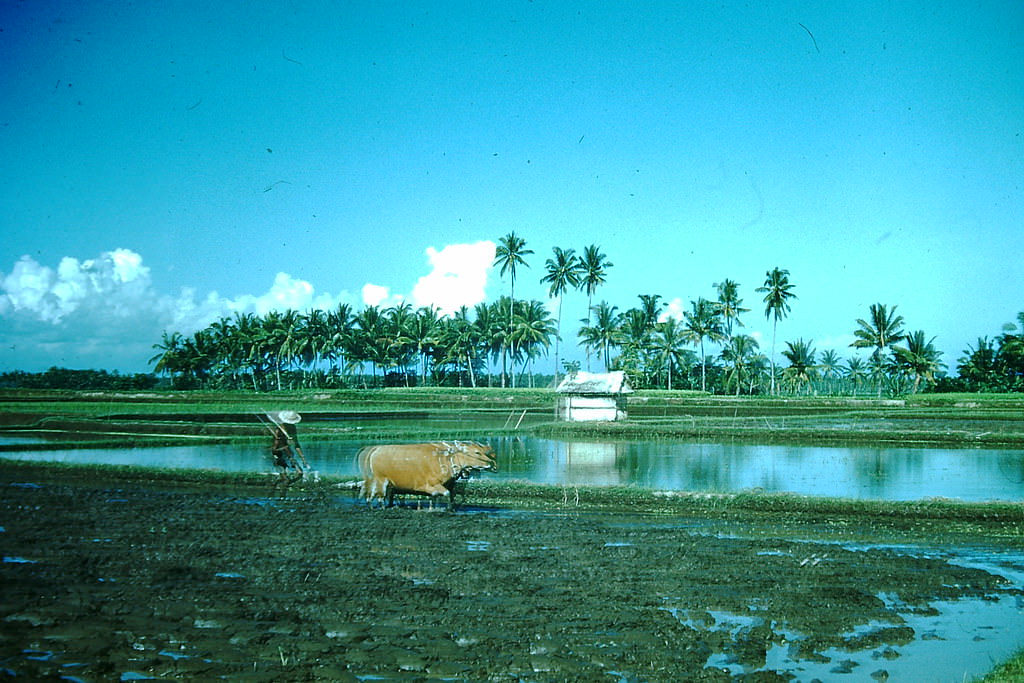
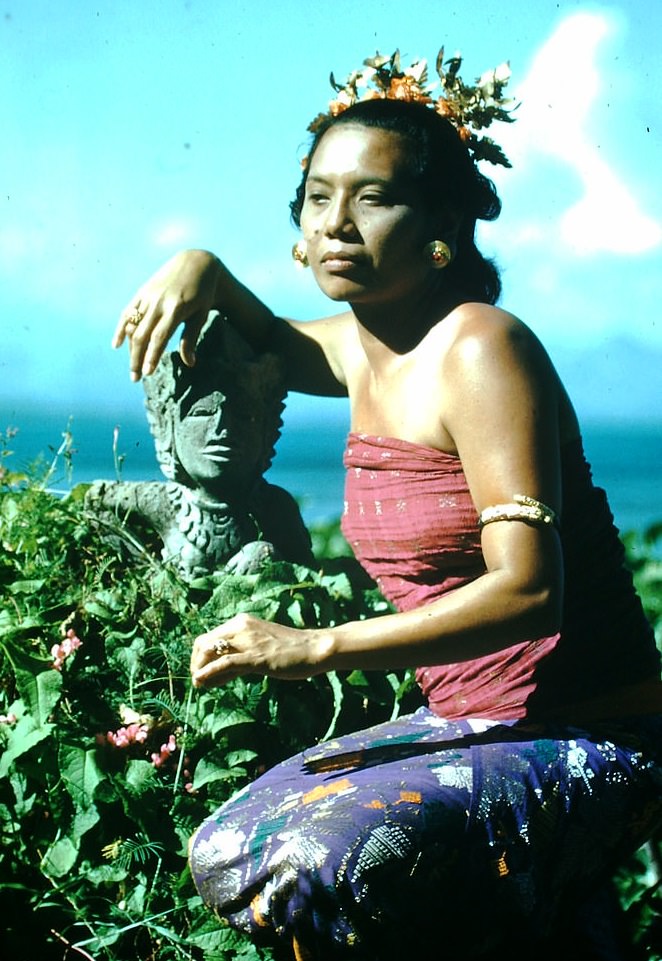
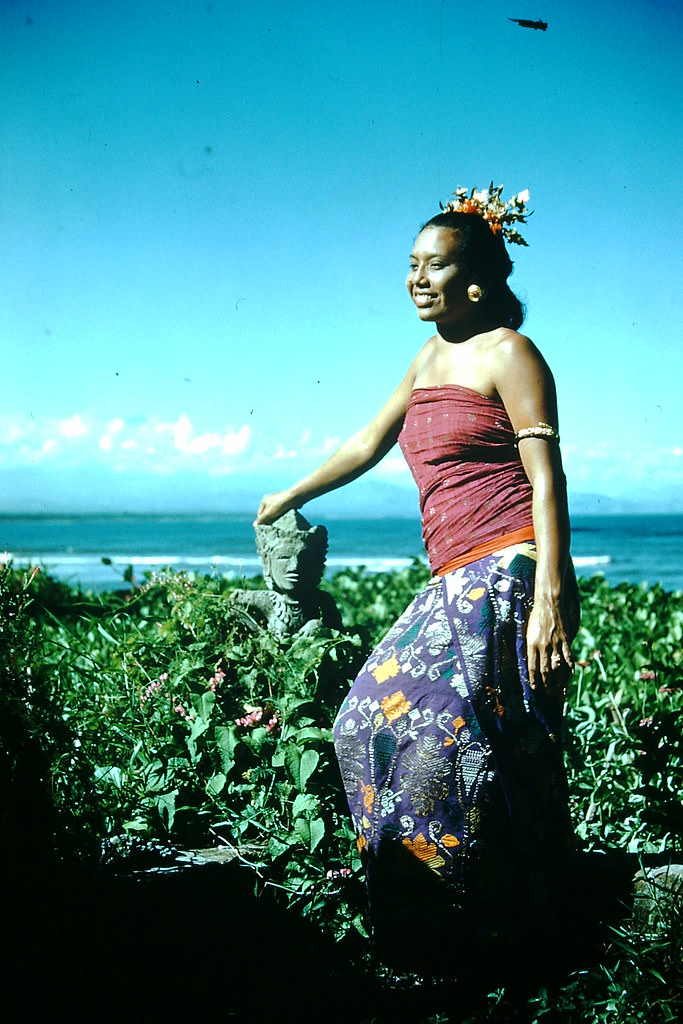
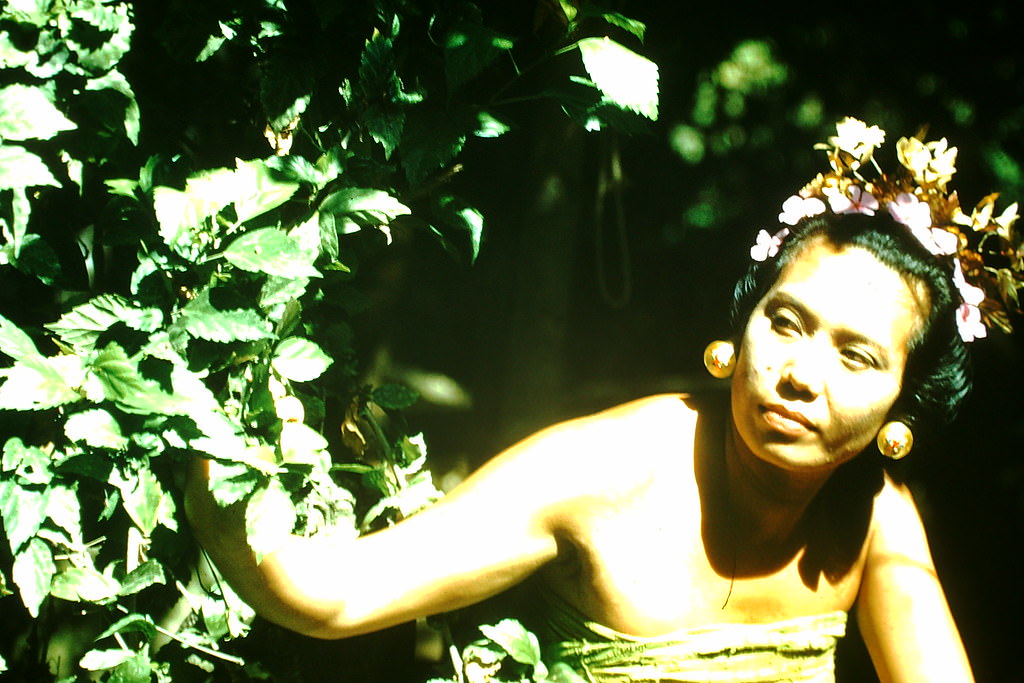
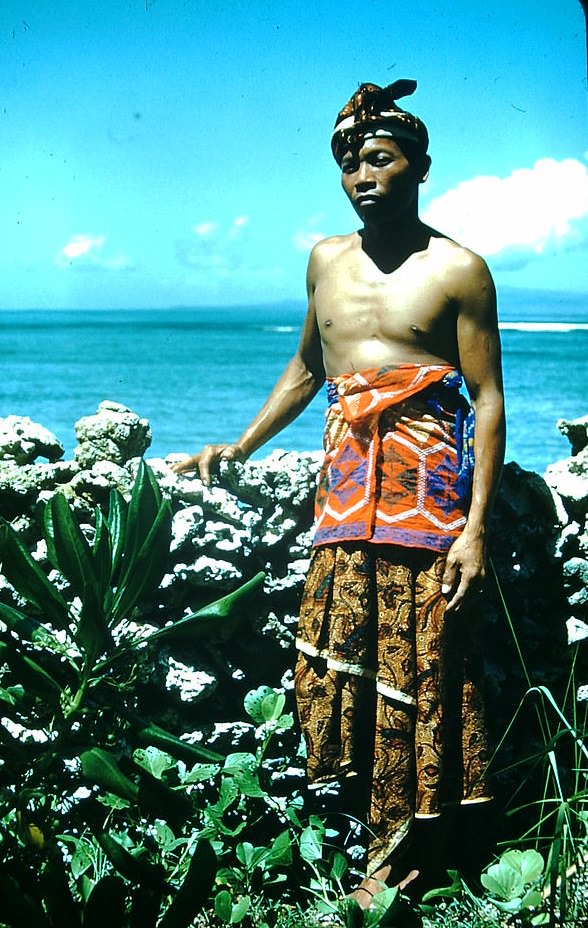
Portraits taken in Bali in 1952 show men and women with a quiet confidence. The Balinese rice farmer’s daily work was physically demanding and tied directly to the success of the harvest. Every stage of the rice cycle — plowing, planting, transplanting, and harvesting — was managed by hand with simple tools.
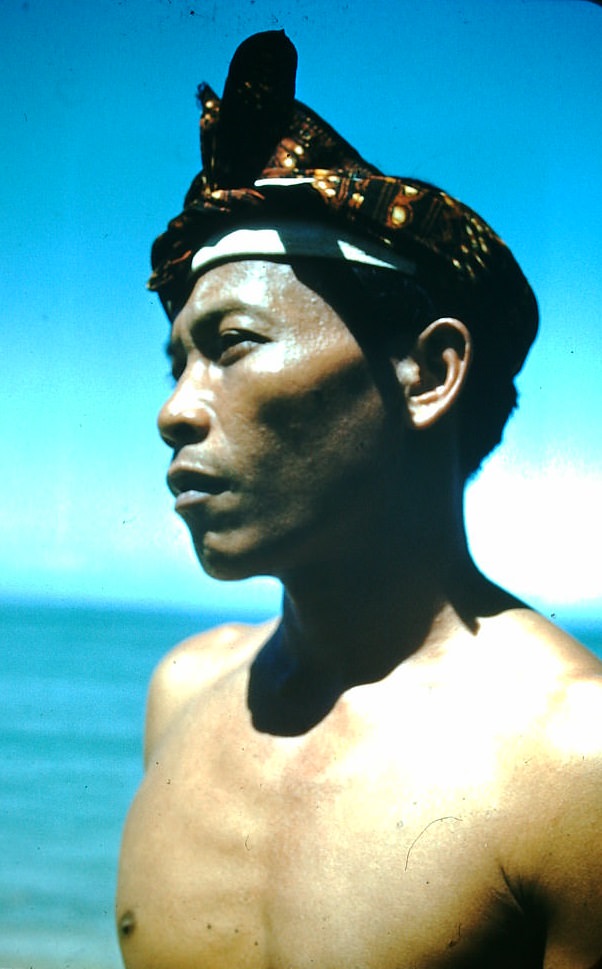
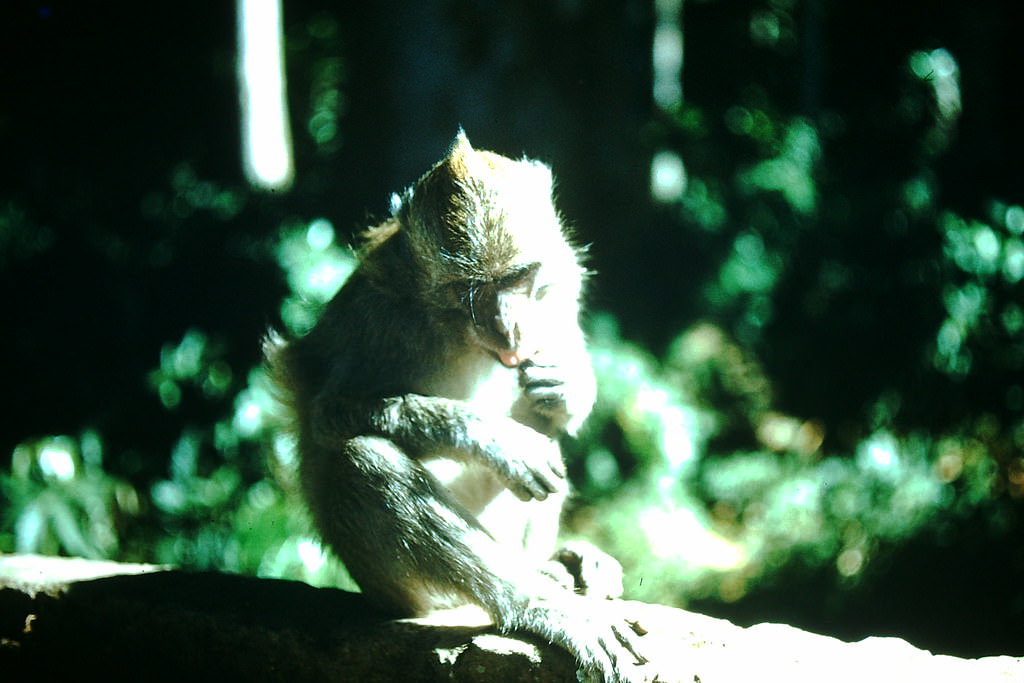
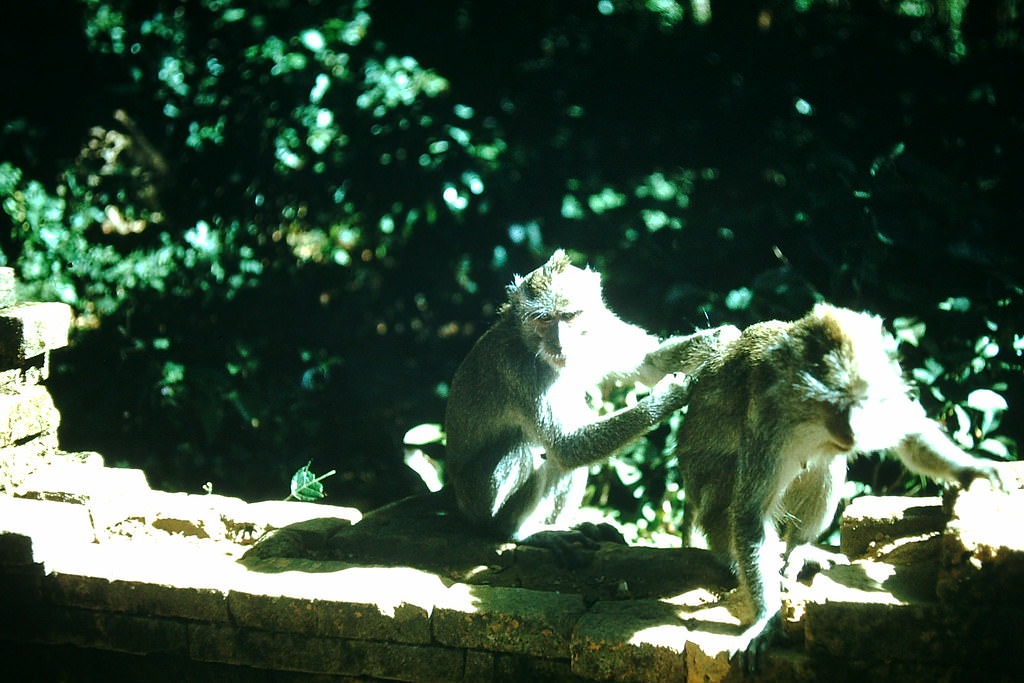
Cockfighting — here documented as rooster fighting — drew large crowds in Bali in 1952. The contests took place in open areas, with spectators forming tight rings around the fighters. The Balinese sacred monkey forest, home to large troops of macaques, was a place where the boundary between the human world and the natural world was considered thin. The monkeys moved freely through the temple grounds and were treated with a degree of reverence.
On Sanur’s beach, net fishing was a team effort. Helpers waded into the surf alongside the lead fisherman to spread and retrieve the nets. The work was done in open water under the sun, and a successful morning’s catch fed families across the village.