

Kilburn sits in the northern reaches of London, spread across the boroughs of Brent and Camden, with a small portion reaching into the City of Westminster. It is bordered by Brondesbury, Hampstead, Maida Vale, Cricklewood, and St. John’s Wood. For decades, Kilburn has carried a reputation as one of the most culturally layered neighbourhoods in the capital, and much of that identity is rooted in its large Irish community — the biggest of any area in London.
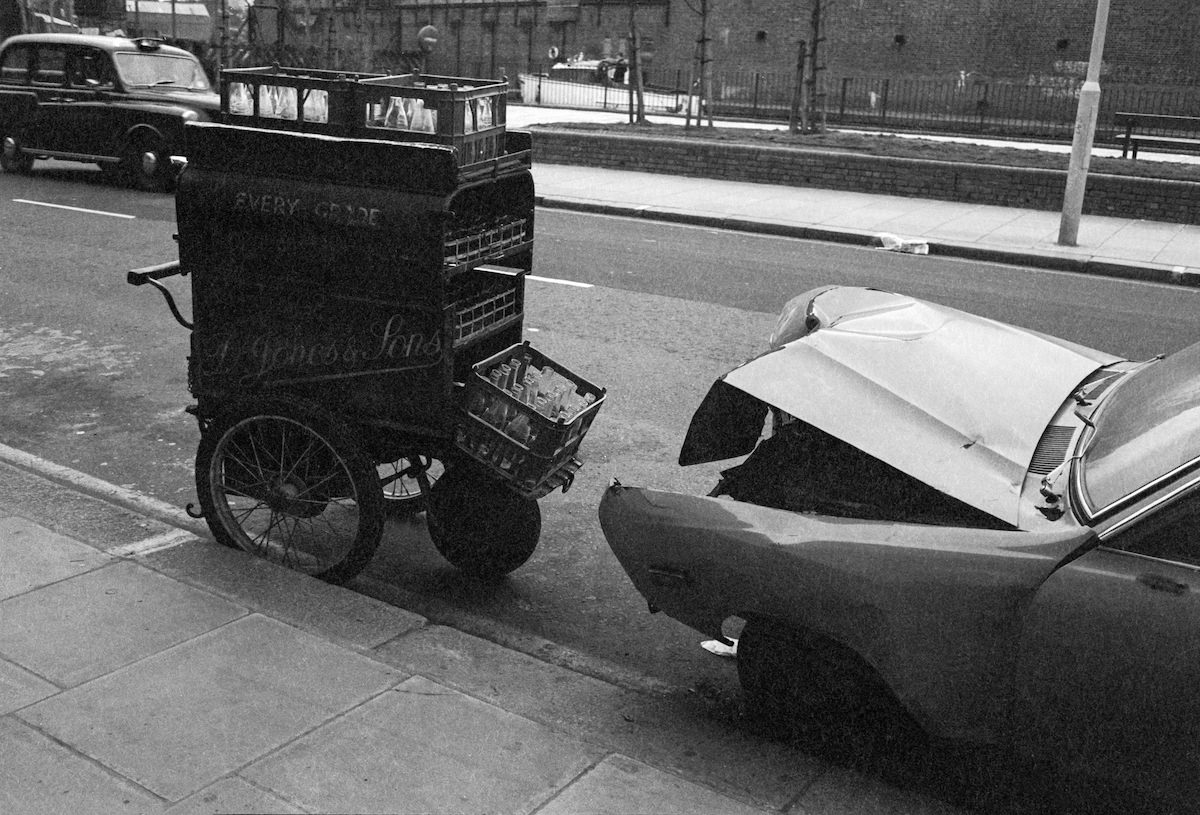
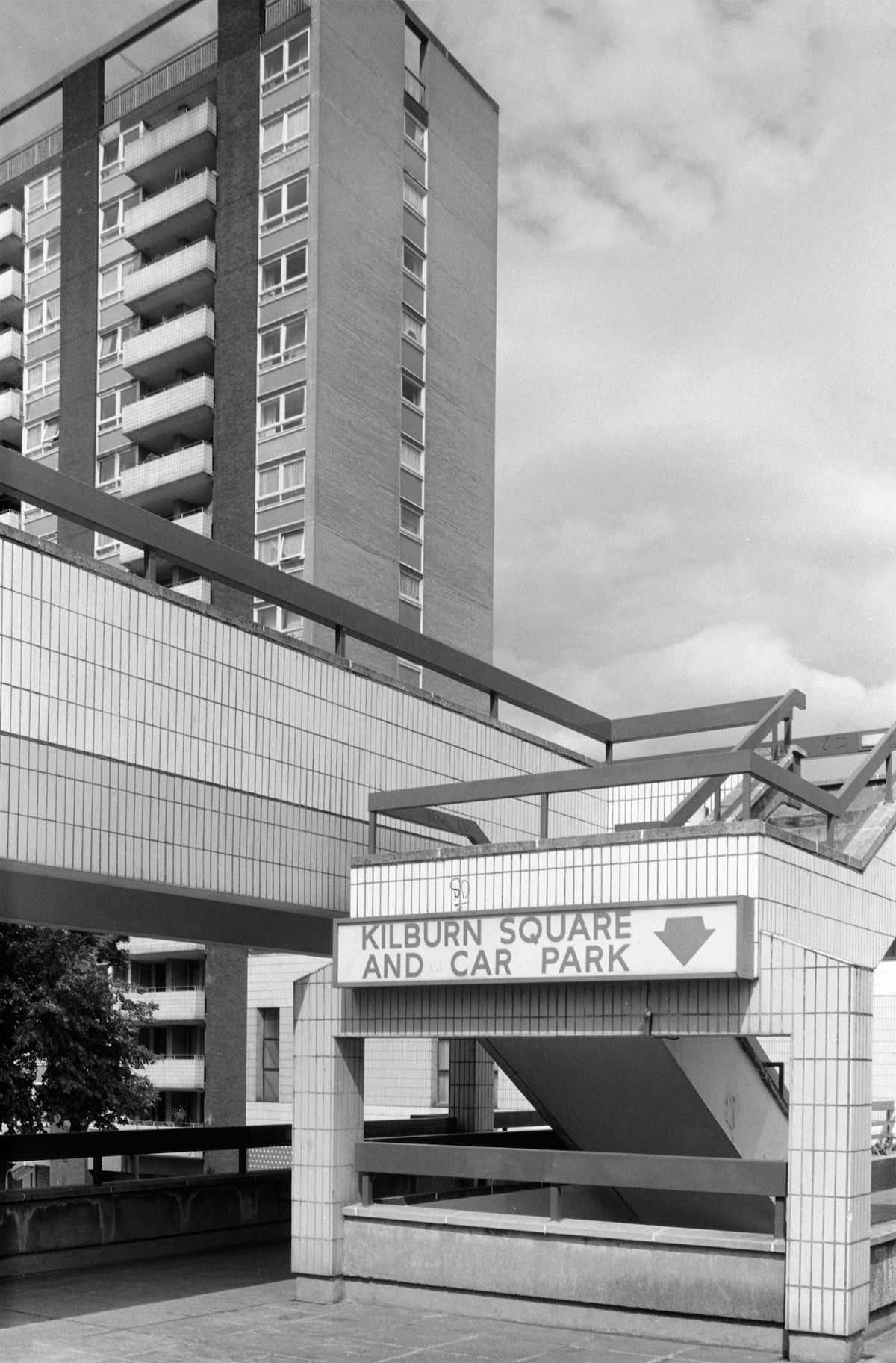
The built environment of Kilburn reflects waves of change going back generations. During the 1930s, slum clearances removed dense and overcrowded housing across wide stretches of the area. Then the Second World War caused further damage, and bomb-hit properties were cleared and rebuilt. By the 1970s, municipal authorities had constructed large estates of flats to house a growing population. Alongside the established Irish community, new arrivals came from the West Indies, Pakistan, and India, making Kilburn one of the most diverse pockets of the city.
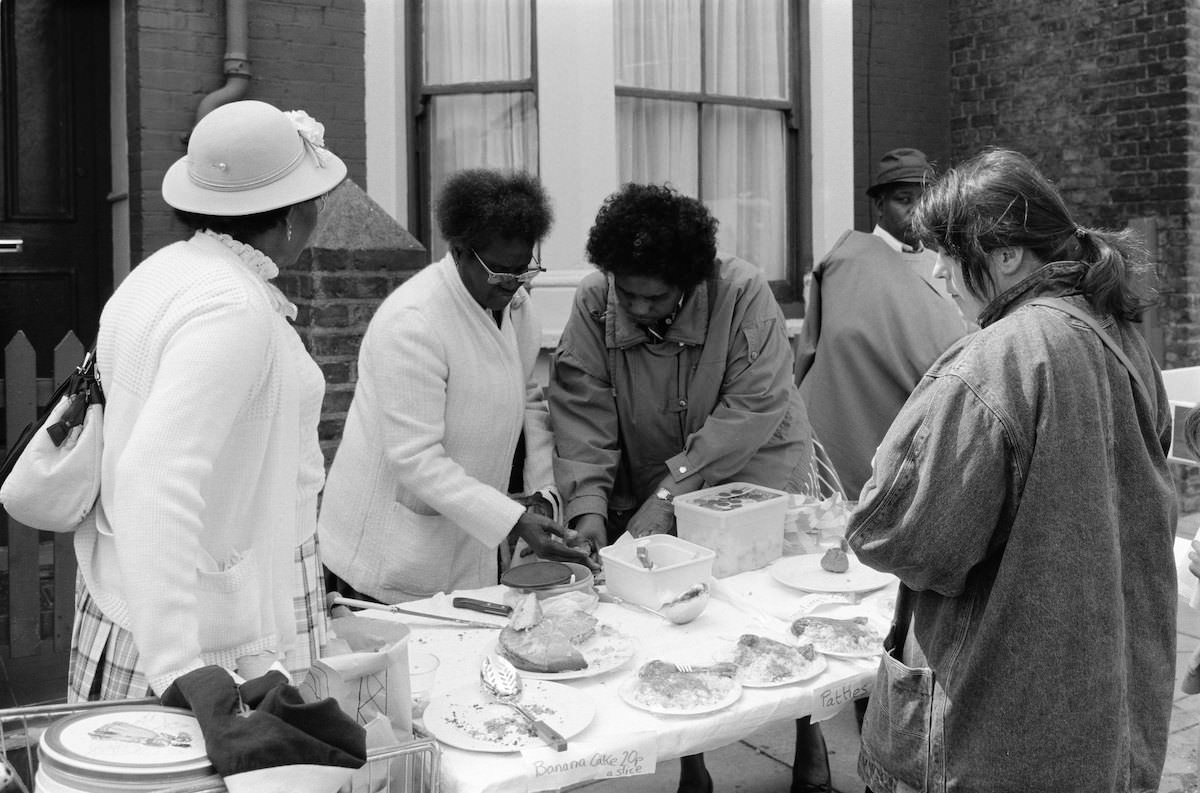
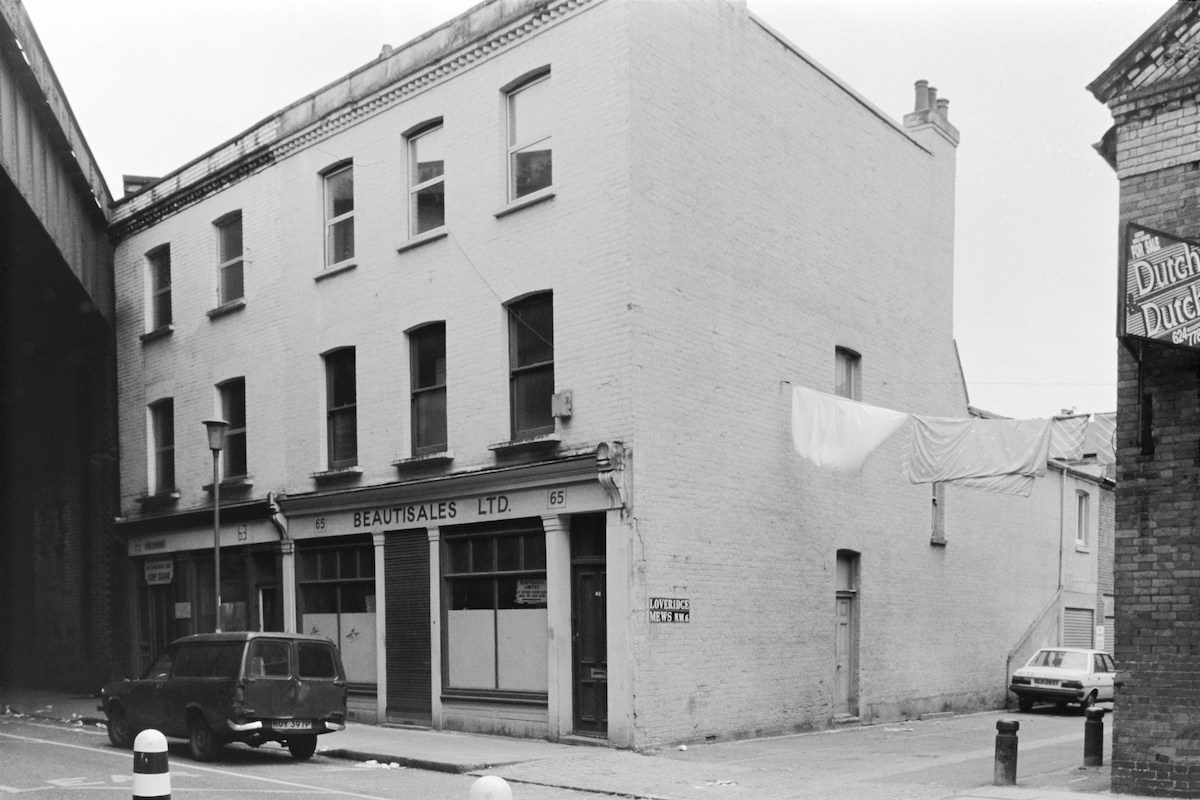
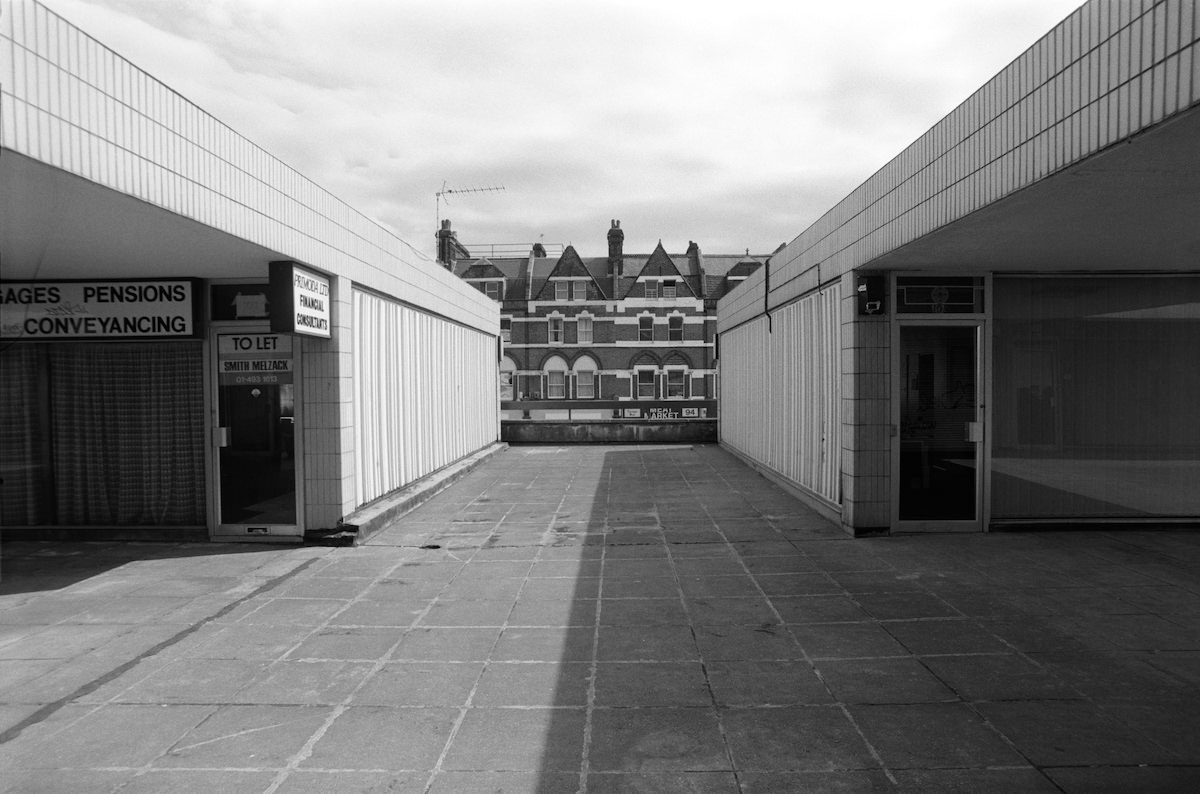
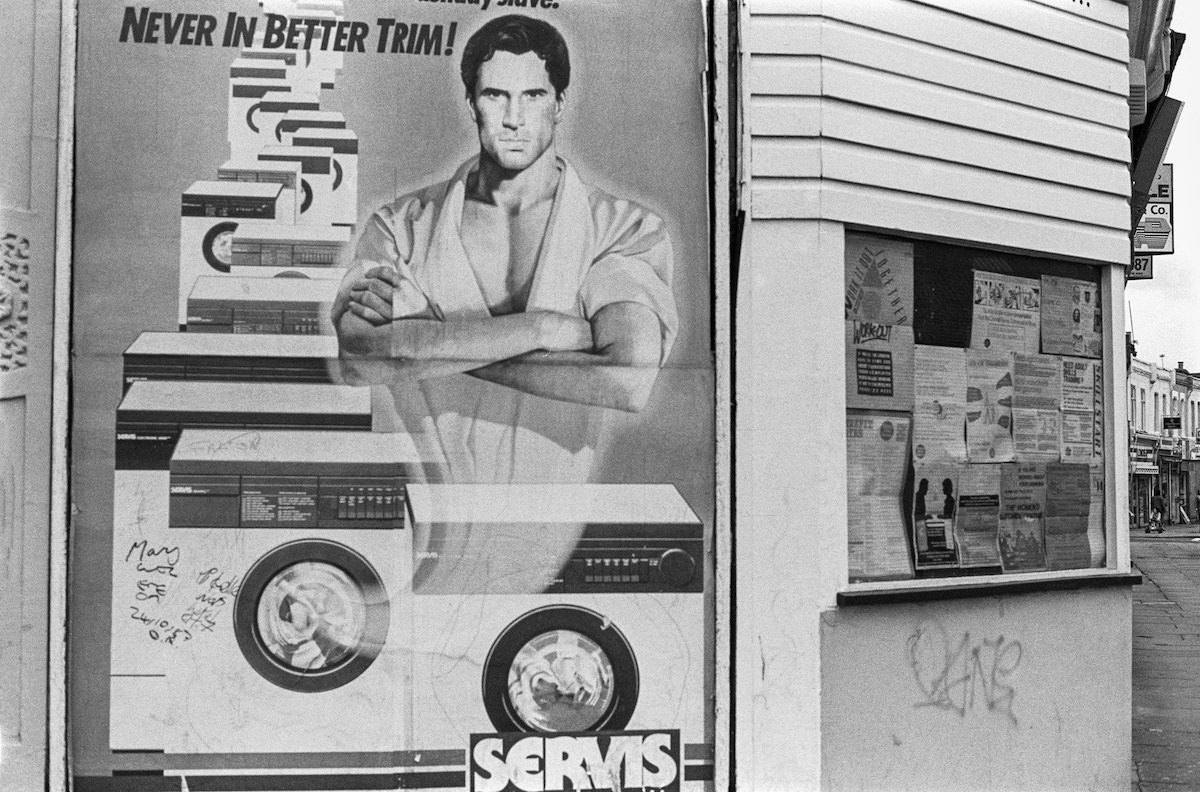
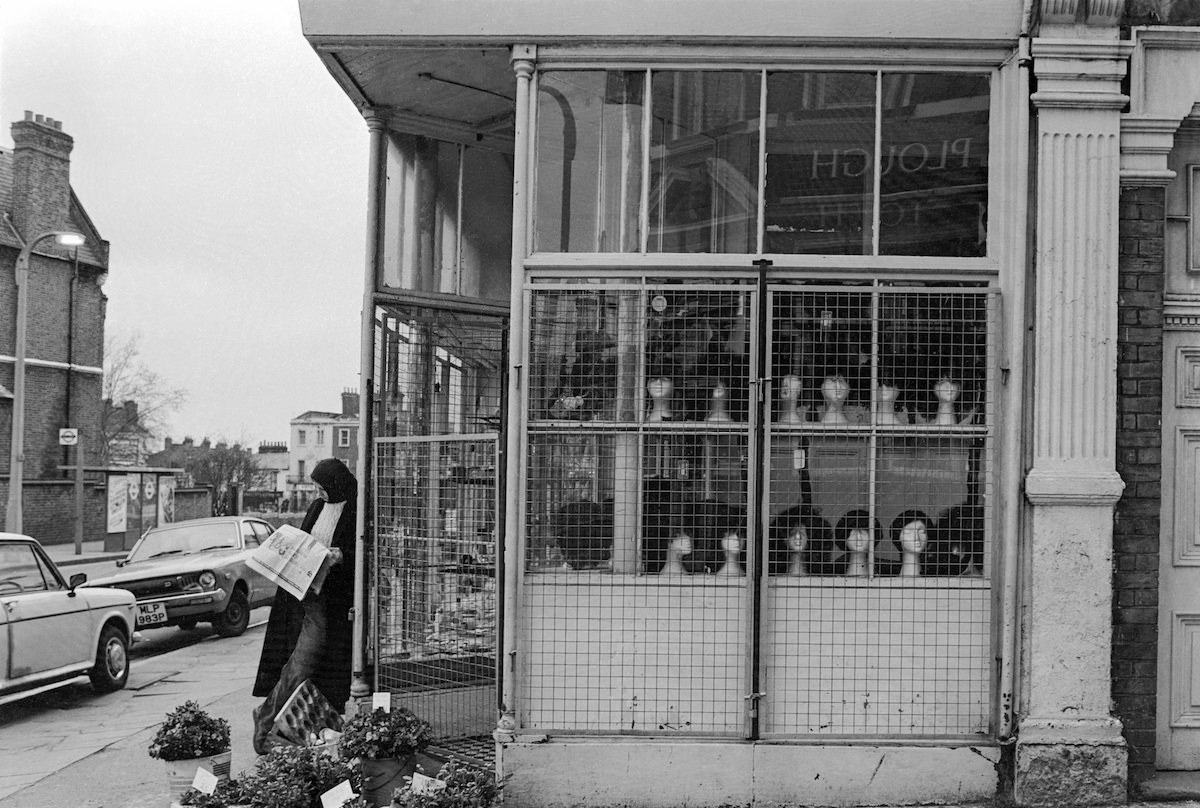
Photographer Peter Marshall documented Kilburn across several visits, capturing the area in both 1988 and 1998. His photographs focus on the streets, shopfronts, and people that defined the neighbourhood at street level. The Kilburn High Road runs through the heart of the area and appears repeatedly in his work — a long, busy corridor lined with independent businesses, pubs, and market stalls that gave Kilburn its lived-in character.
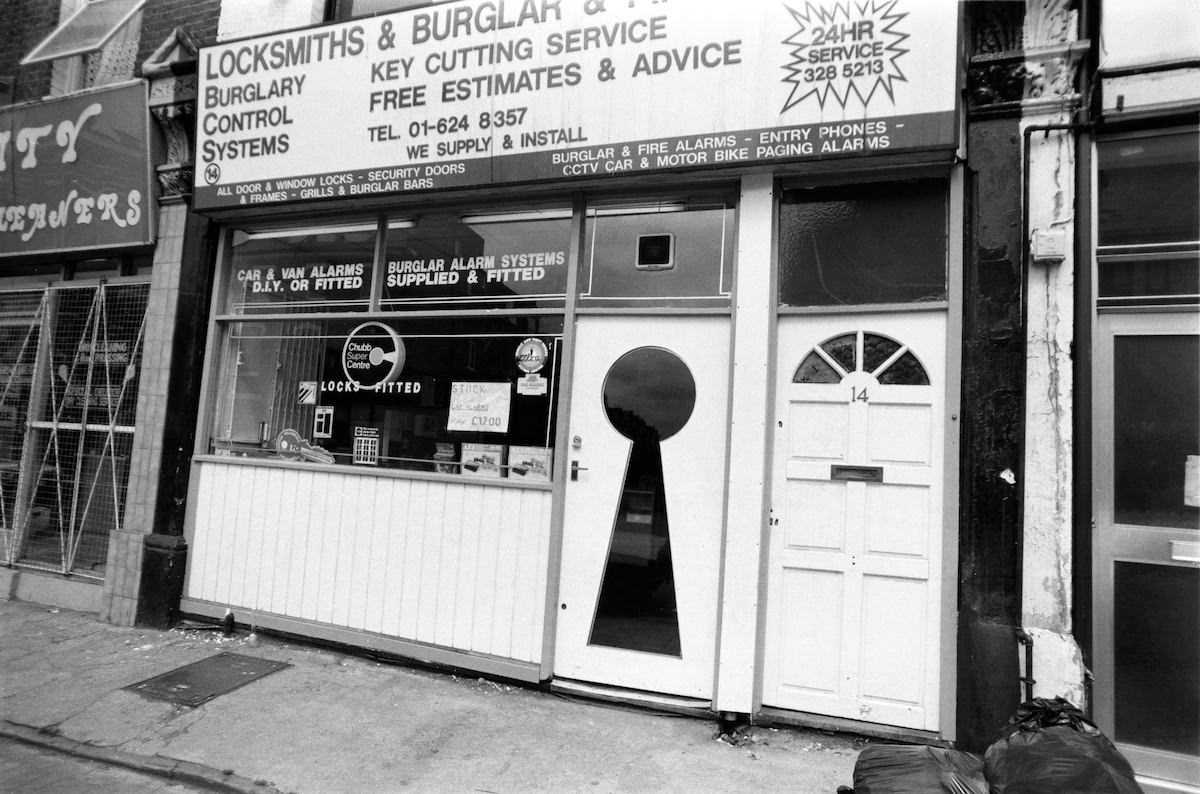
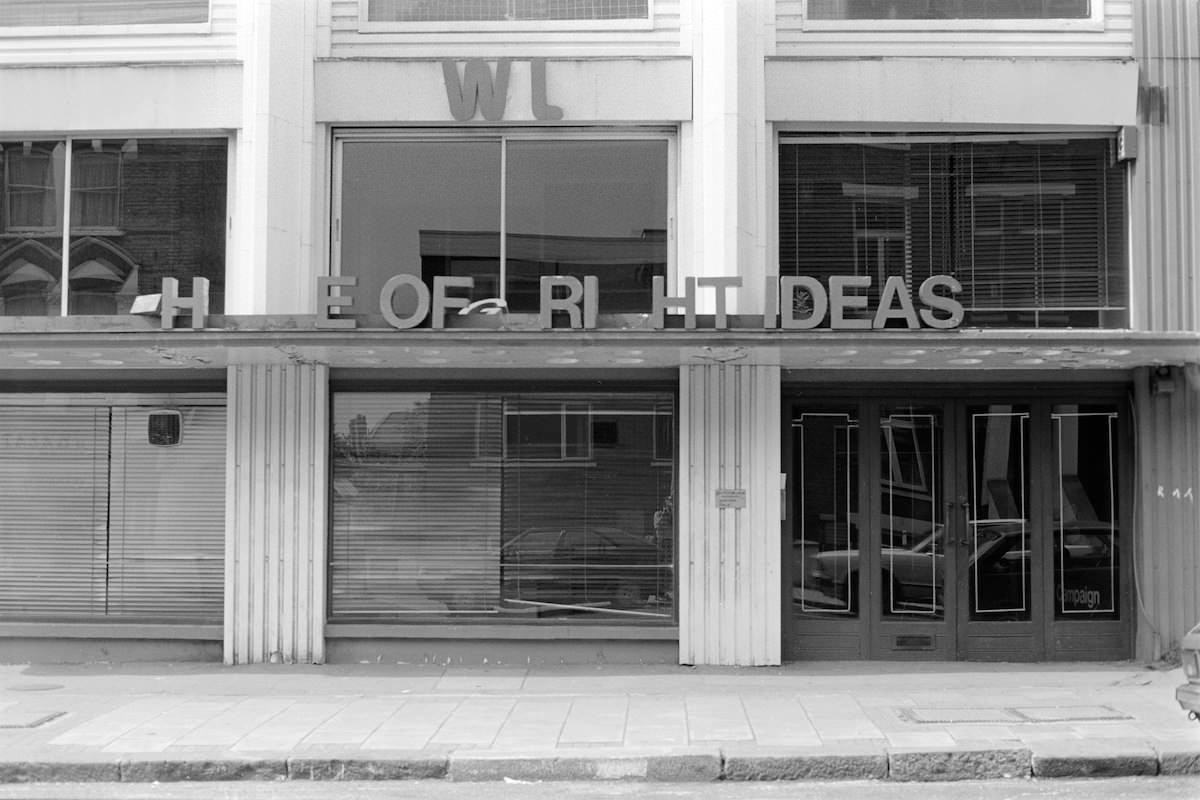
The residential streets away from the High Road told a quieter story. Rows of terraced and detached houses stretched through areas like Brondesbury and West Kilburn, where the pace slowed and the architecture spoke to an earlier era of London building. Marshall photographed these streets in detail, showing the textures and signage that gave each block its own identity.
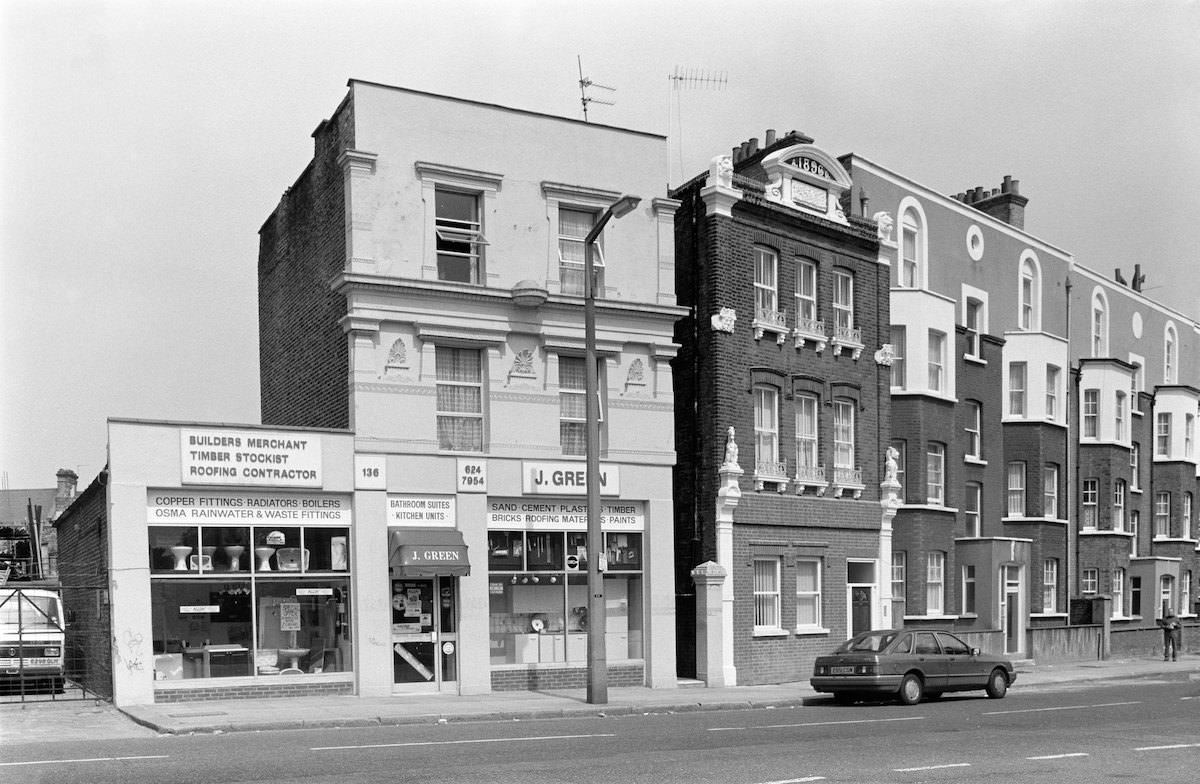
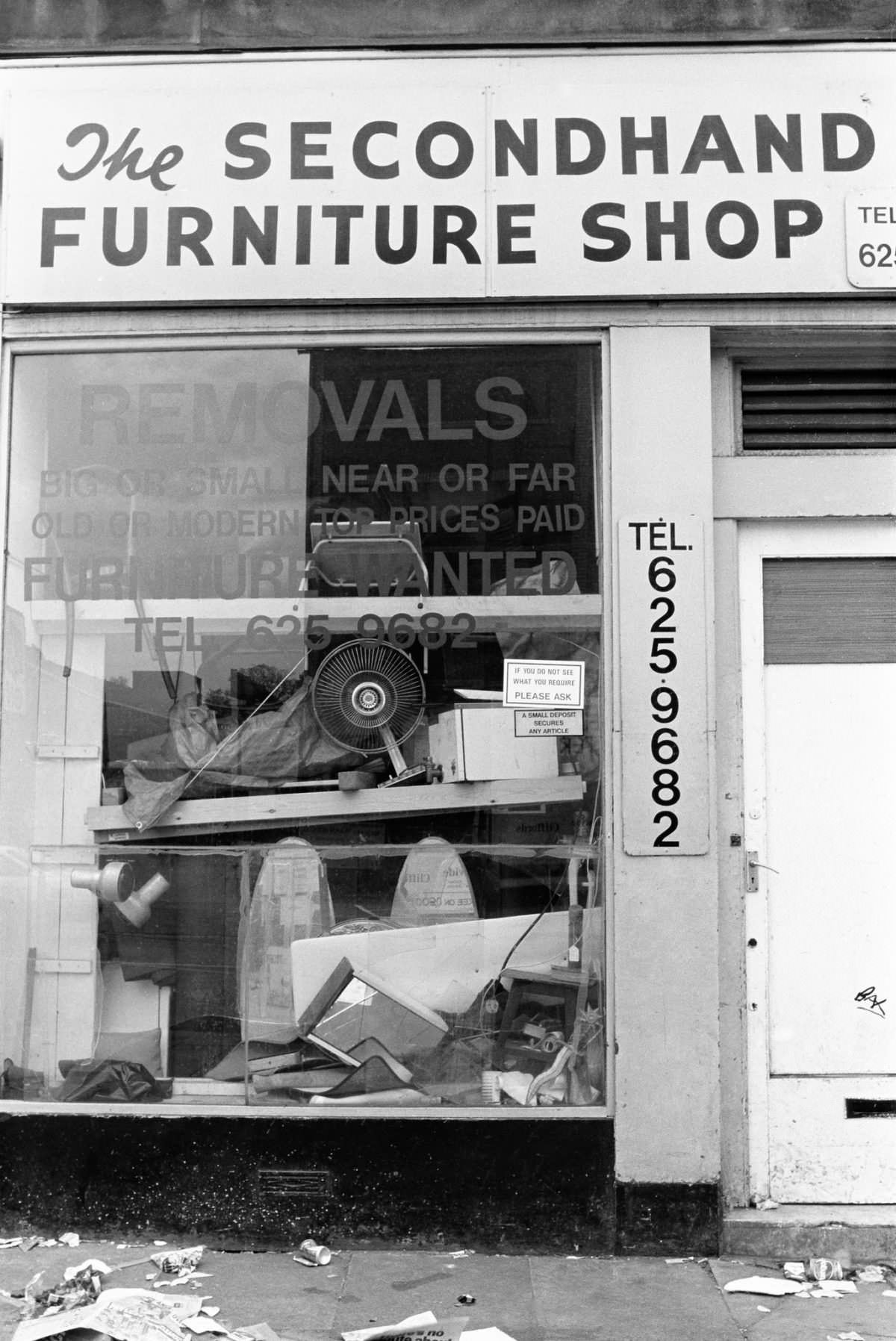
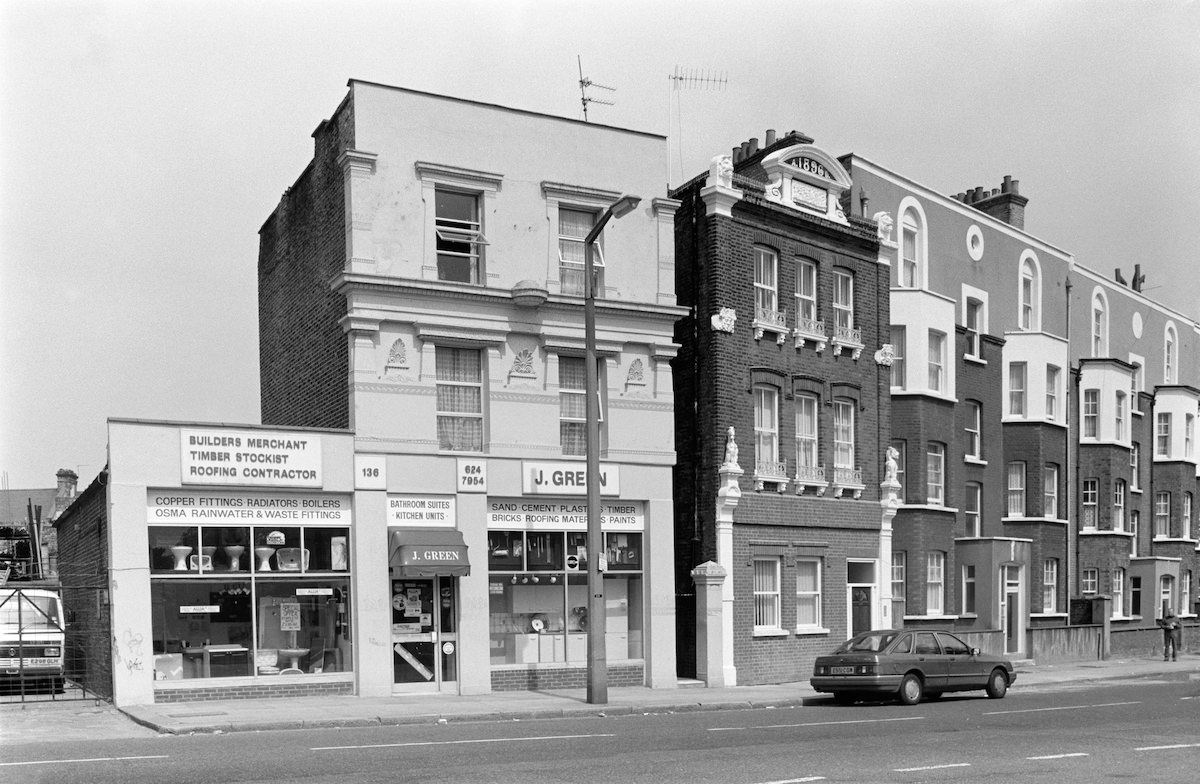
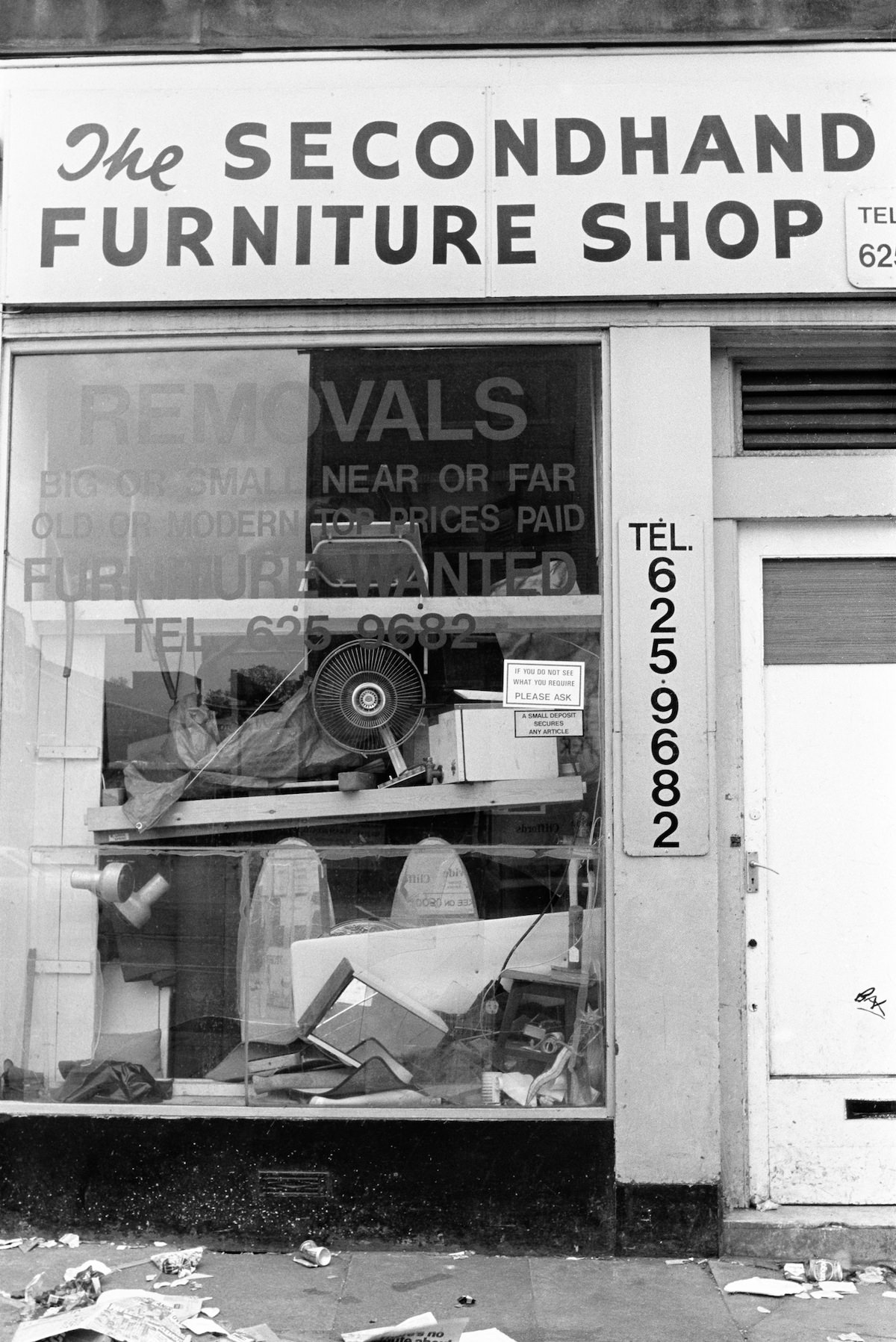
Small independent shops were a defining feature of Kilburn’s commercial life. Secondhand furniture dealers, locksmiths, chemists, and specialist traders all operated side by side along the High Road and the surrounding streets. These businesses served a working-class and immigrant population that had little use for the chain stores beginning to appear elsewhere in London.
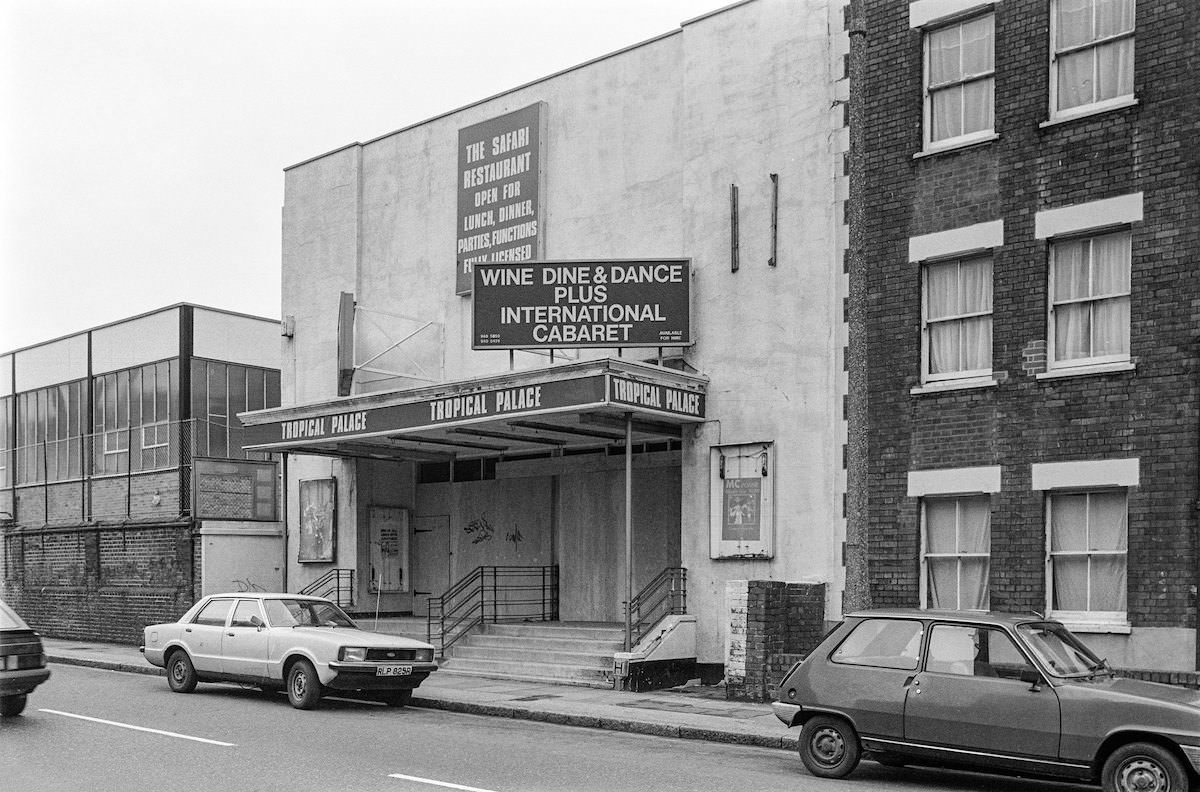
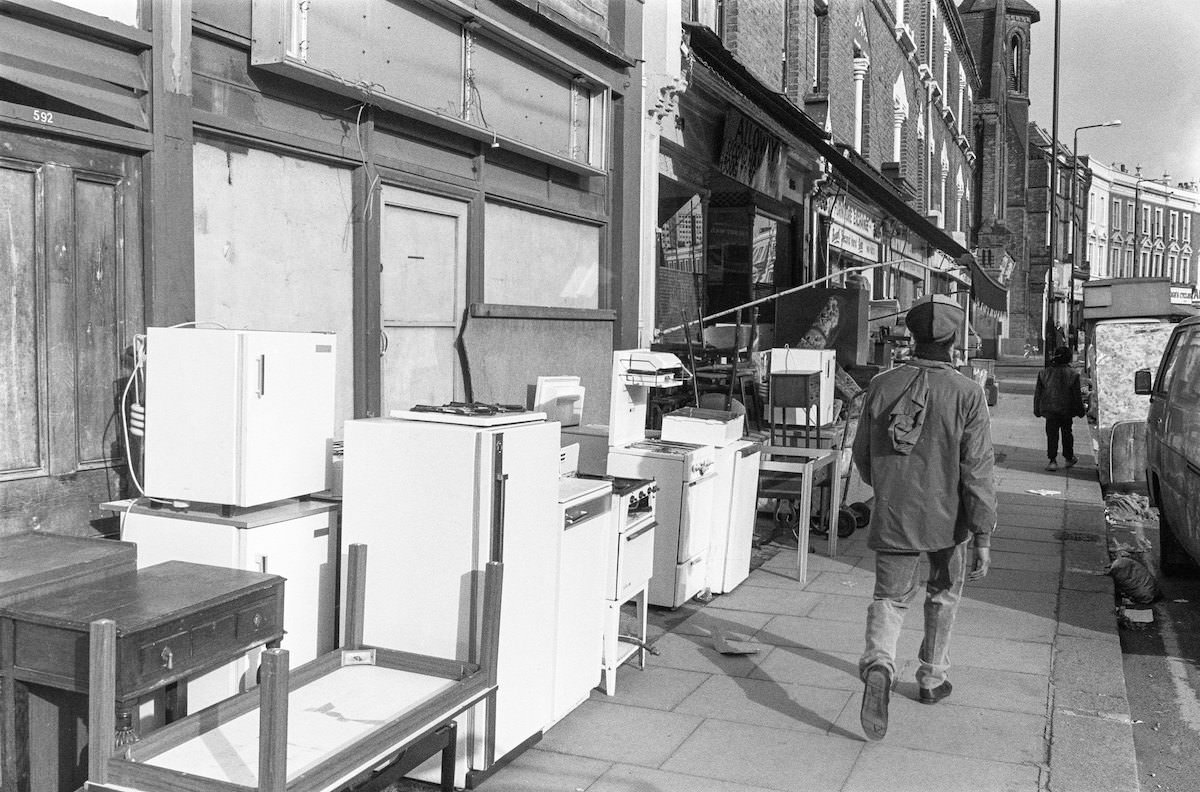
Harrow Road cut through West Kilburn and into Westminster, one of the busier arterial routes that Marshall returned to on multiple occasions. The stretch through West Kilburn was lined with a mix of housing, traders, and the kind of street-level commerce that made the area function day to day.
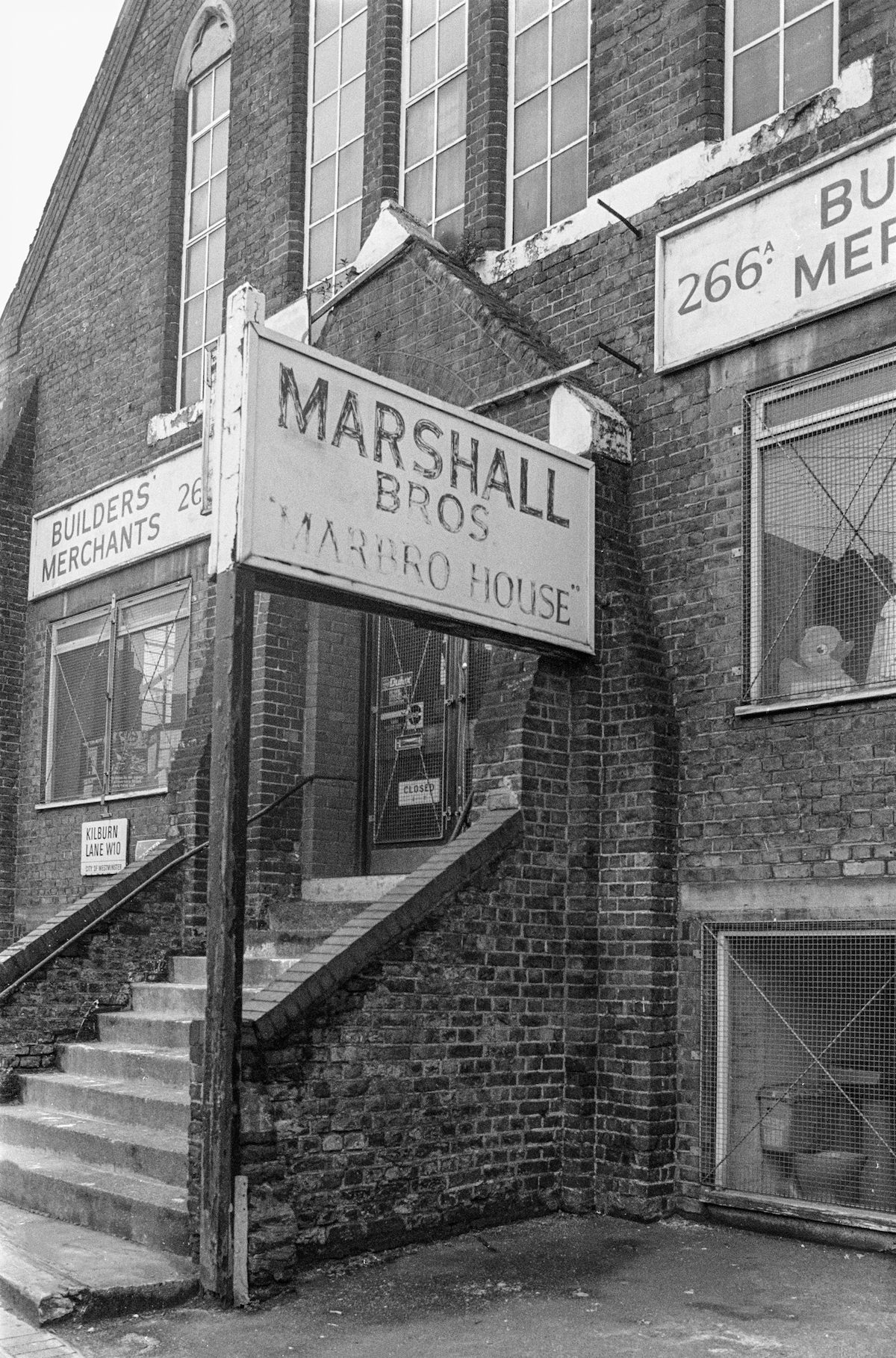
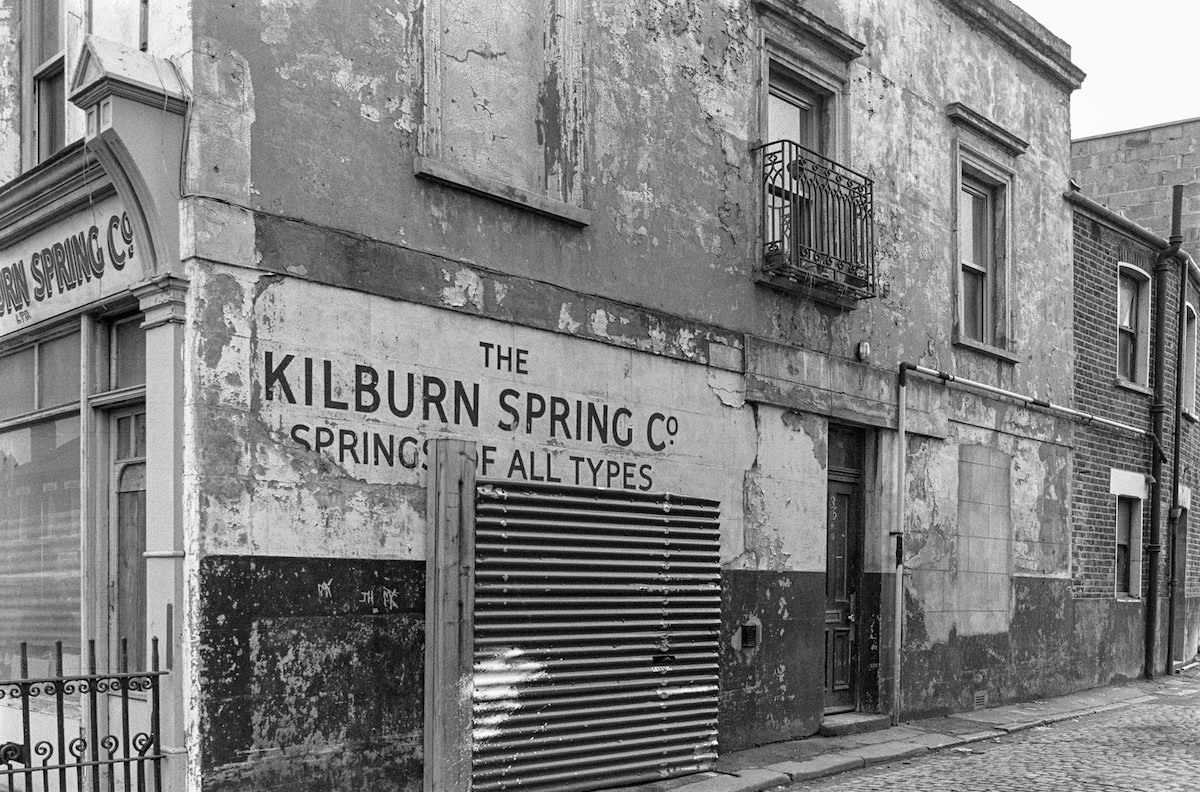
Kilburn Lane connected the neighbourhood toward Kensal Green and Kensal Rise, passing through a stretch of mixed-use streets. Businesses like the Kilburn Spring Co. and Marshall Bros operated along this route, their signage forming part of the visual record Marshall was building of a neighbourhood in constant, incremental change.
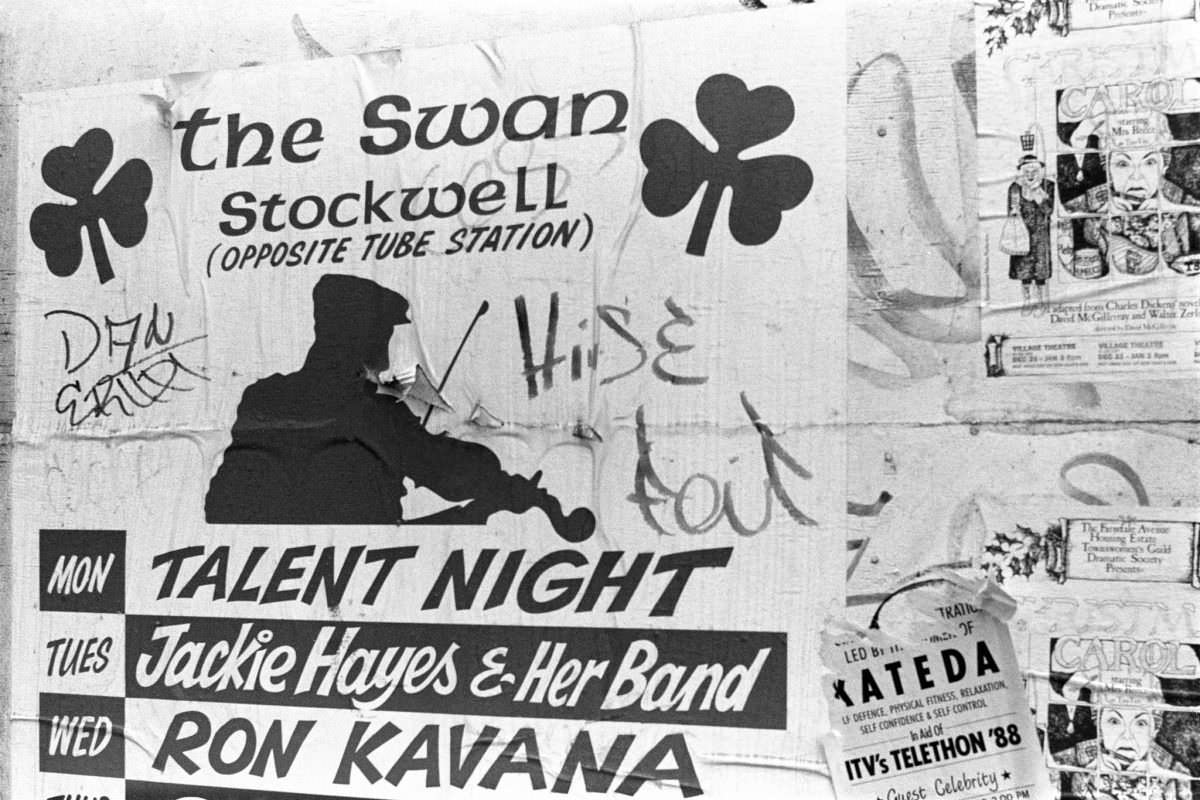
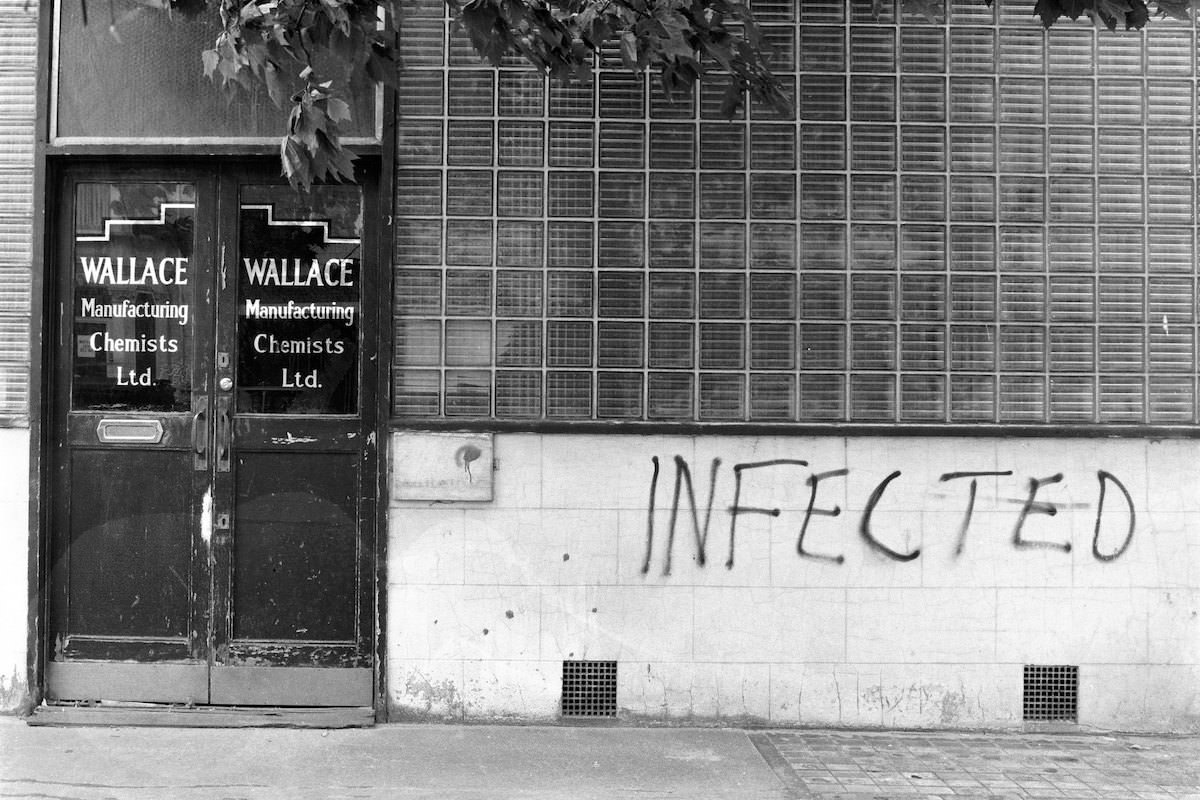
By 1998, some parts of Kilburn showed visible signs of neglect and urban wear. Graffiti marked the walls of businesses on Netherwood Street in the Camden portion of the neighbourhood. Marshall photographed these details without flinching — a chemist’s wall tagged with the word “Infected” captured the friction between the area’s established institutions and the pressures of life in a dense, underfunded urban district.
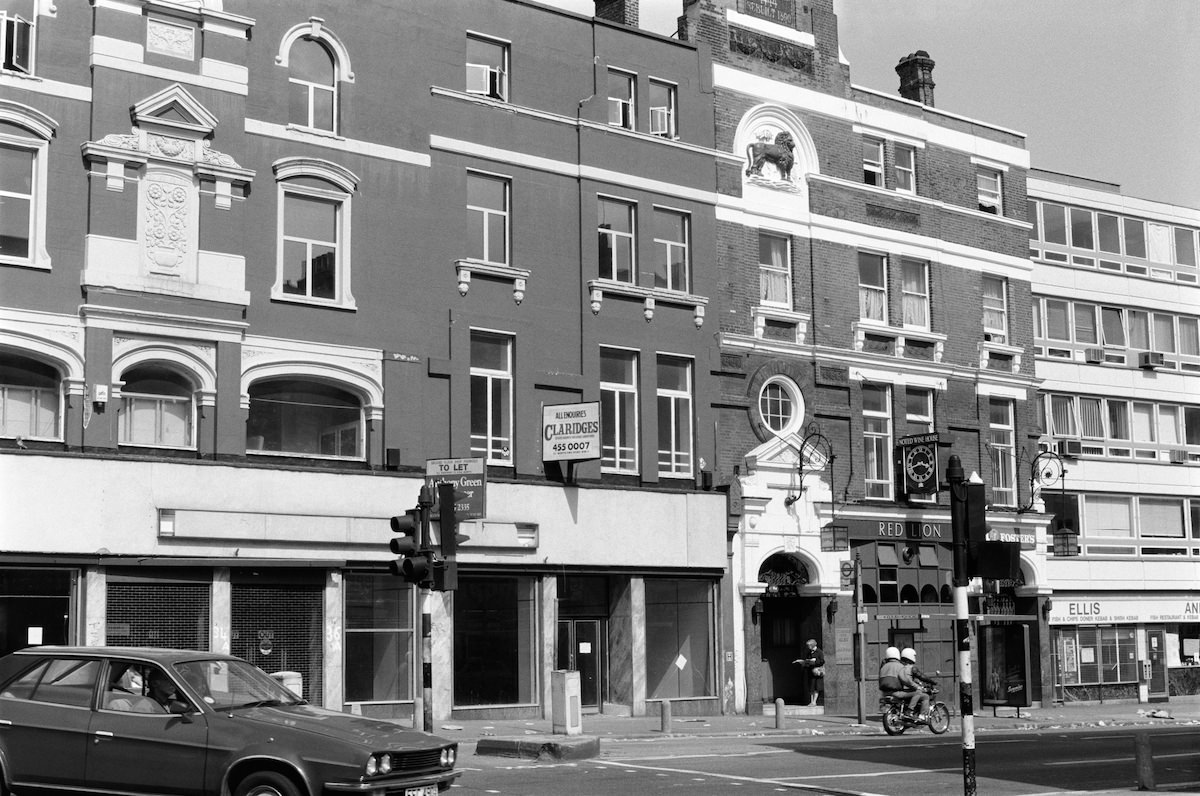
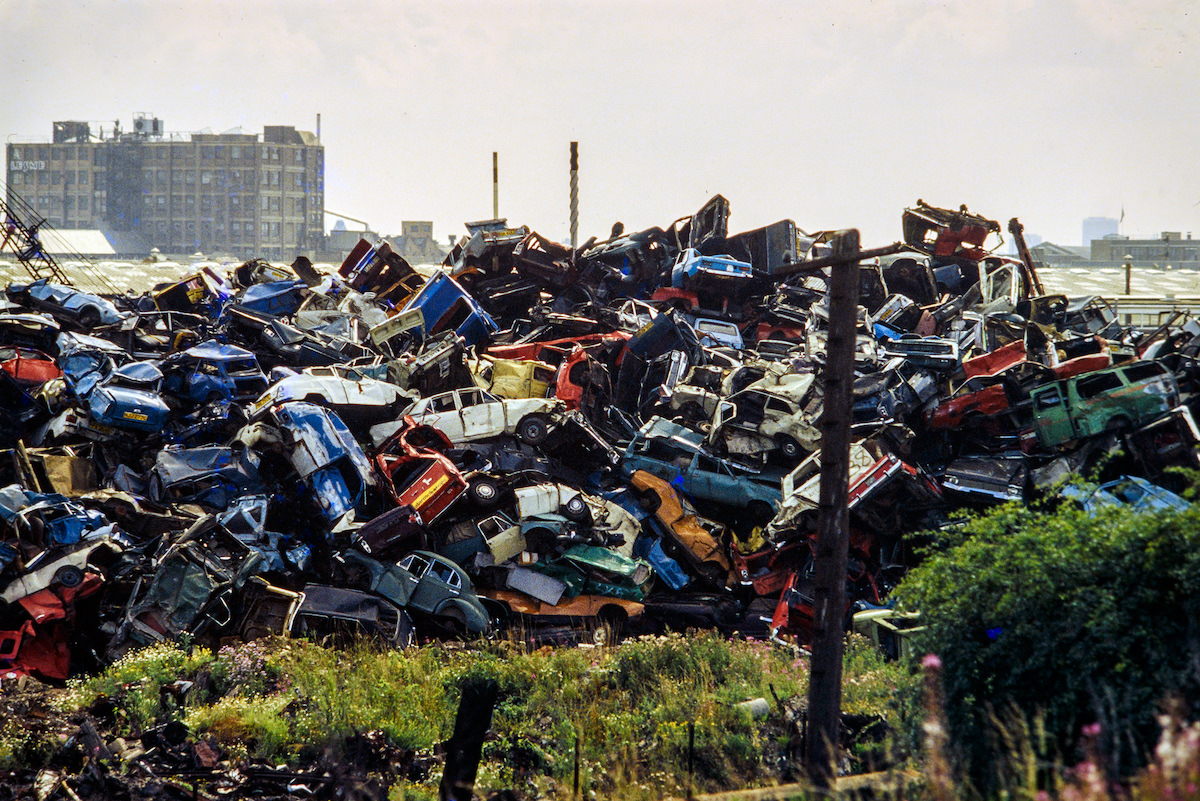
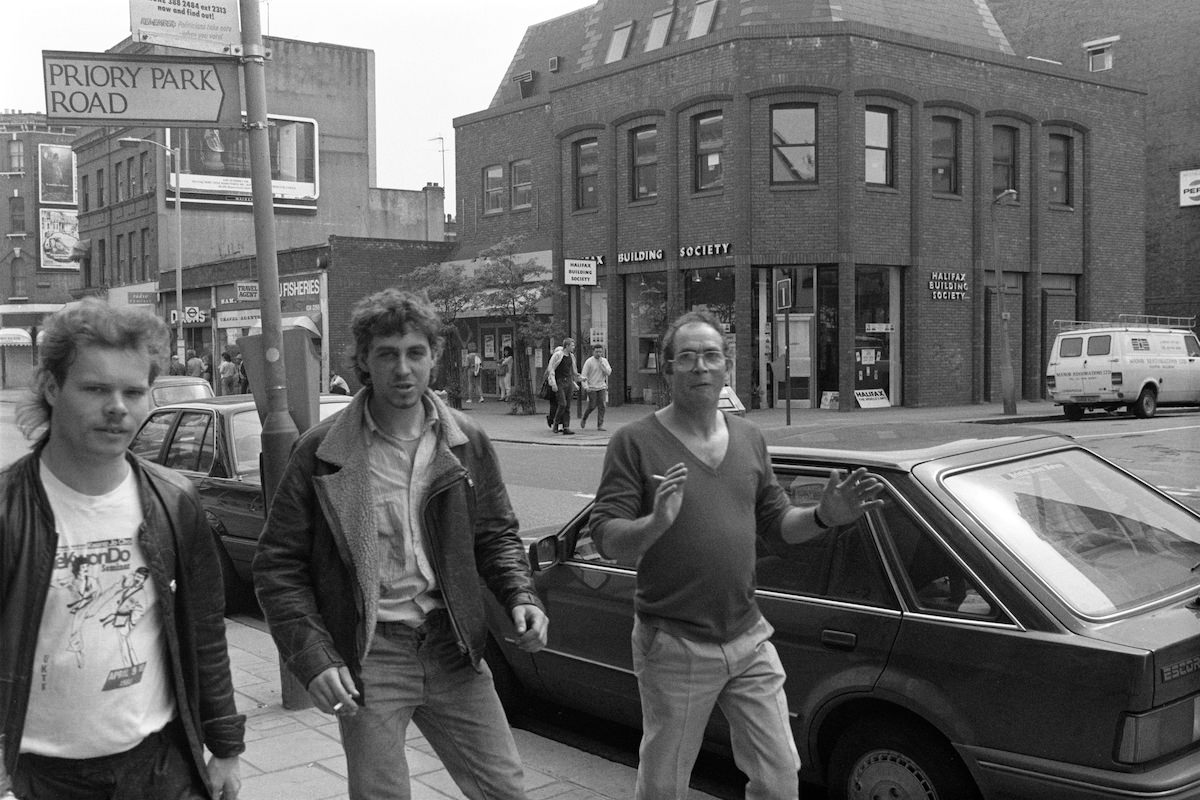
The Kilburn High Road in the Camden section had its own distinct feel compared to the Brent stretch. The 1988 photographs show a street still operating at full commercial capacity, with shoppers, buses, and traders filling the frame. Marshall captured the density of pedestrian life that made Kilburn’s main thoroughfare one of the busiest in North London.
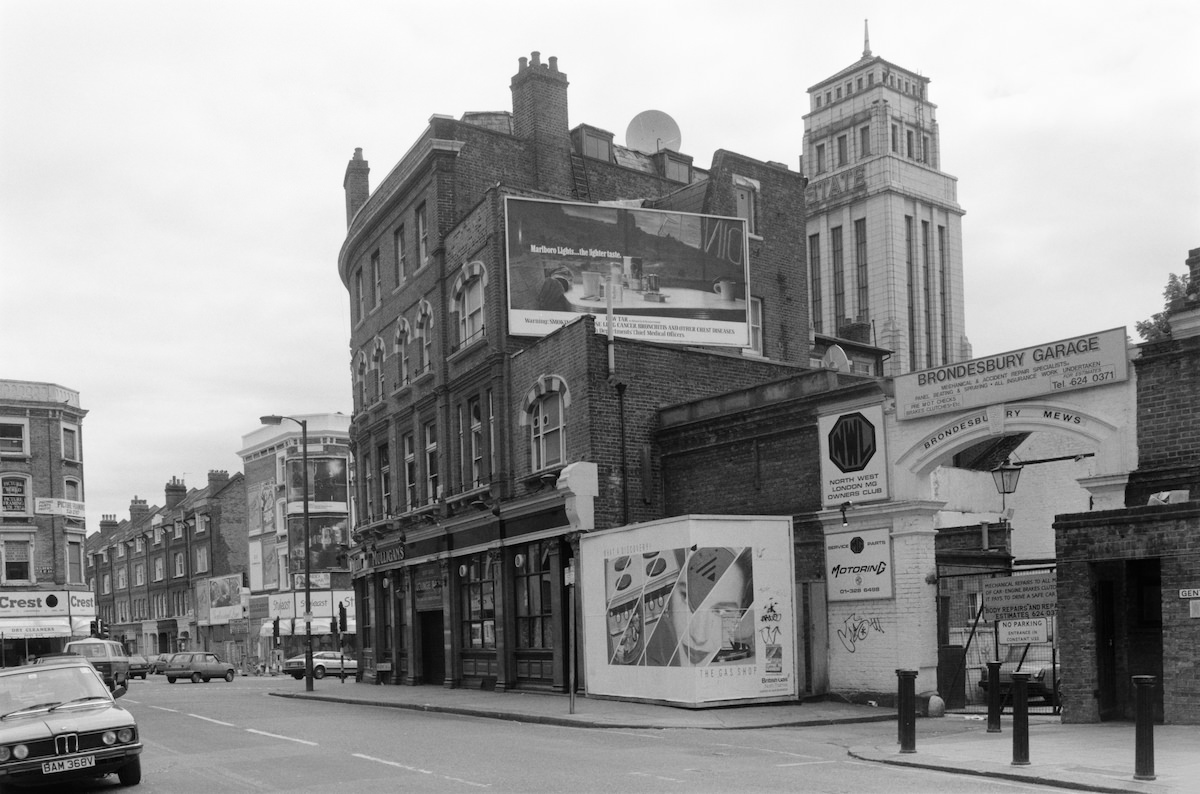
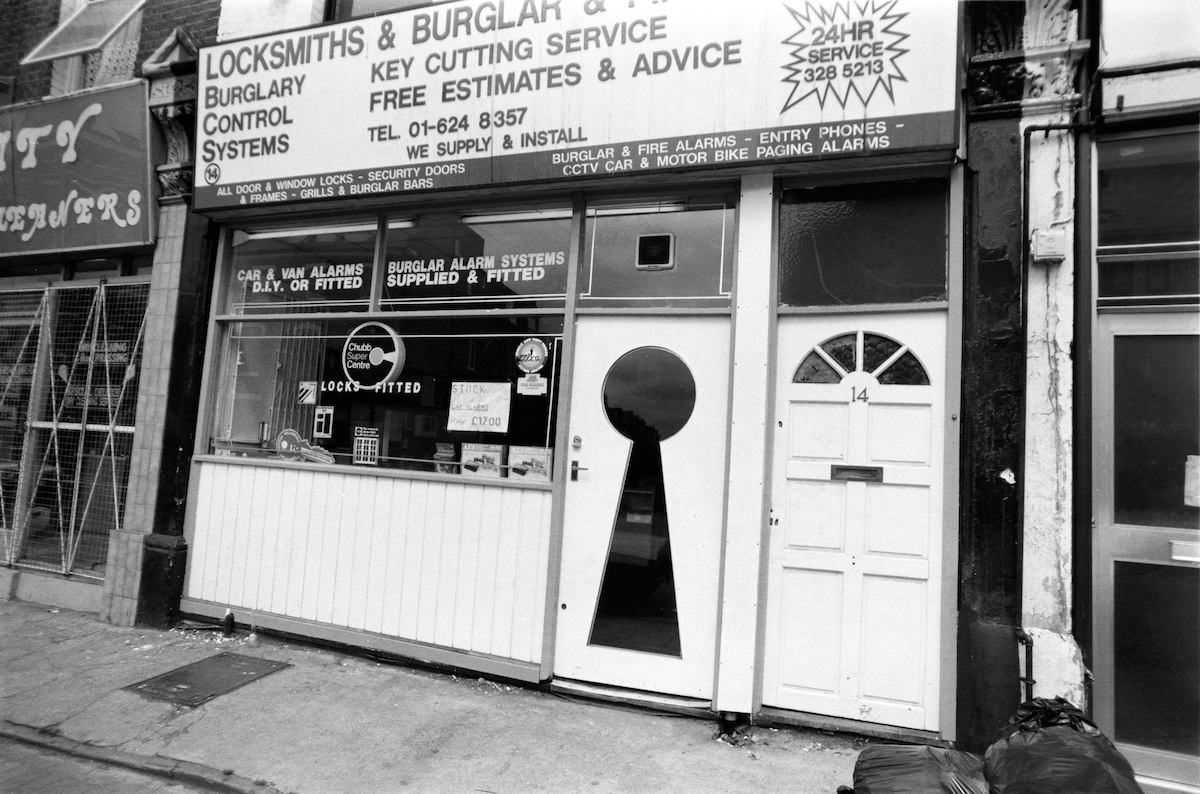
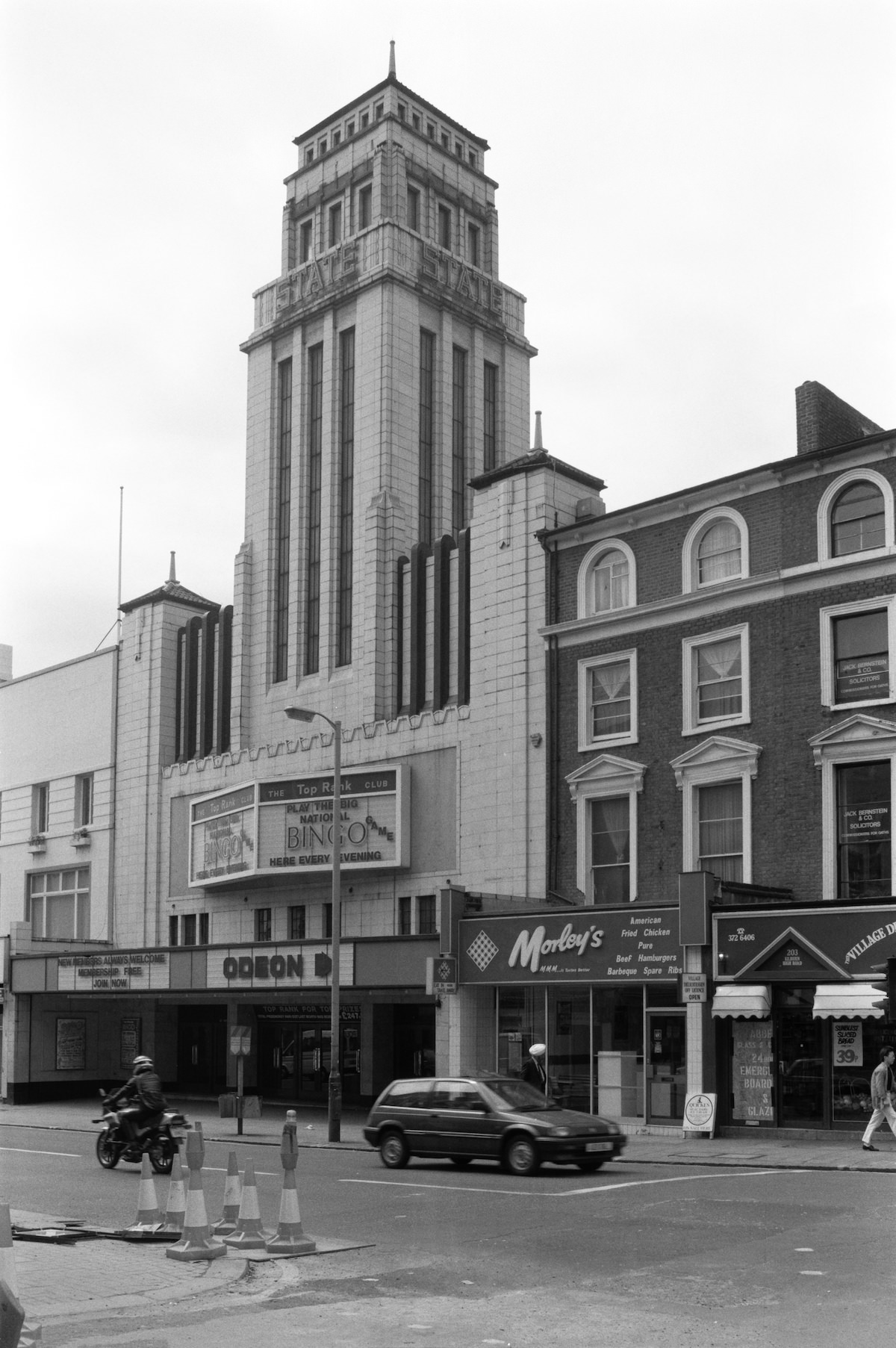
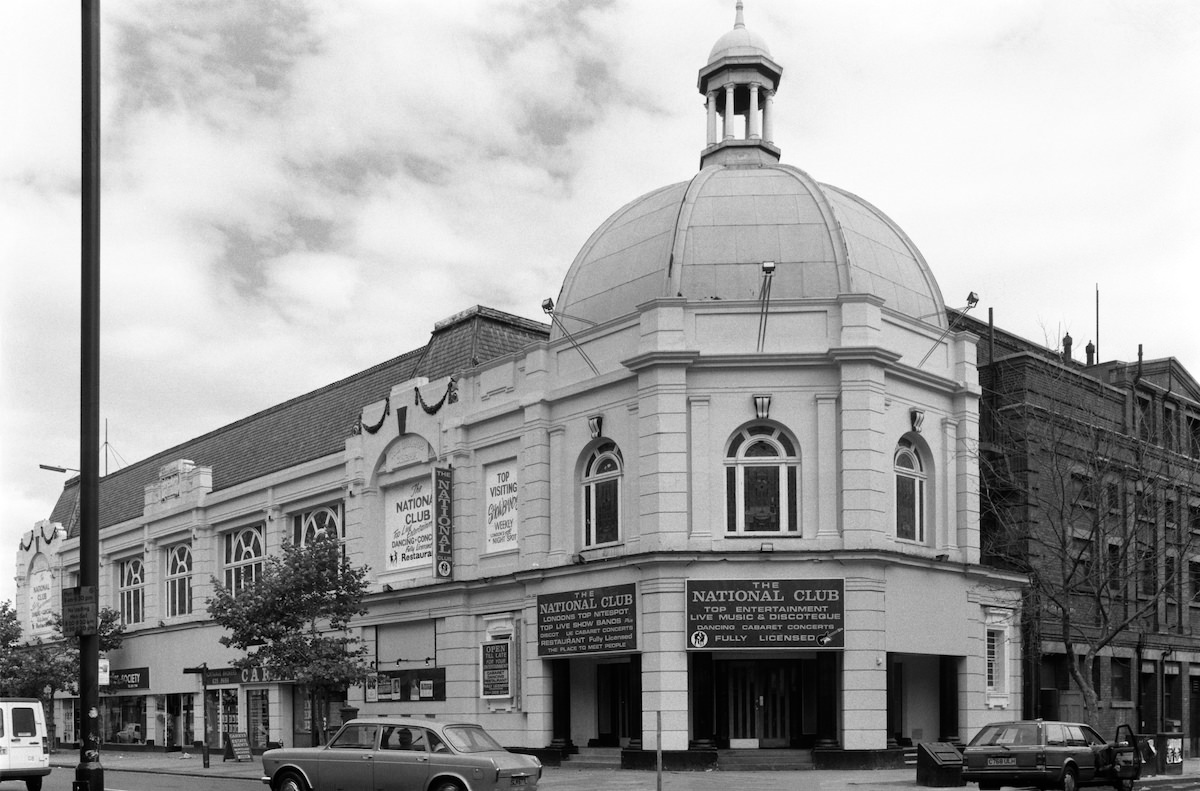
Among the most prominent landmarks on the High Road was the Kilburn State, a grand cinema that had been operating since the early twentieth century. By 1998, when Marshall photographed it, the building had taken on a different role but still dominated the streetscape with its imposing facade. Nearby, the National Club served as a hub for the Irish community, hosting music and events that kept cultural ties to Ireland alive in the heart of North London.
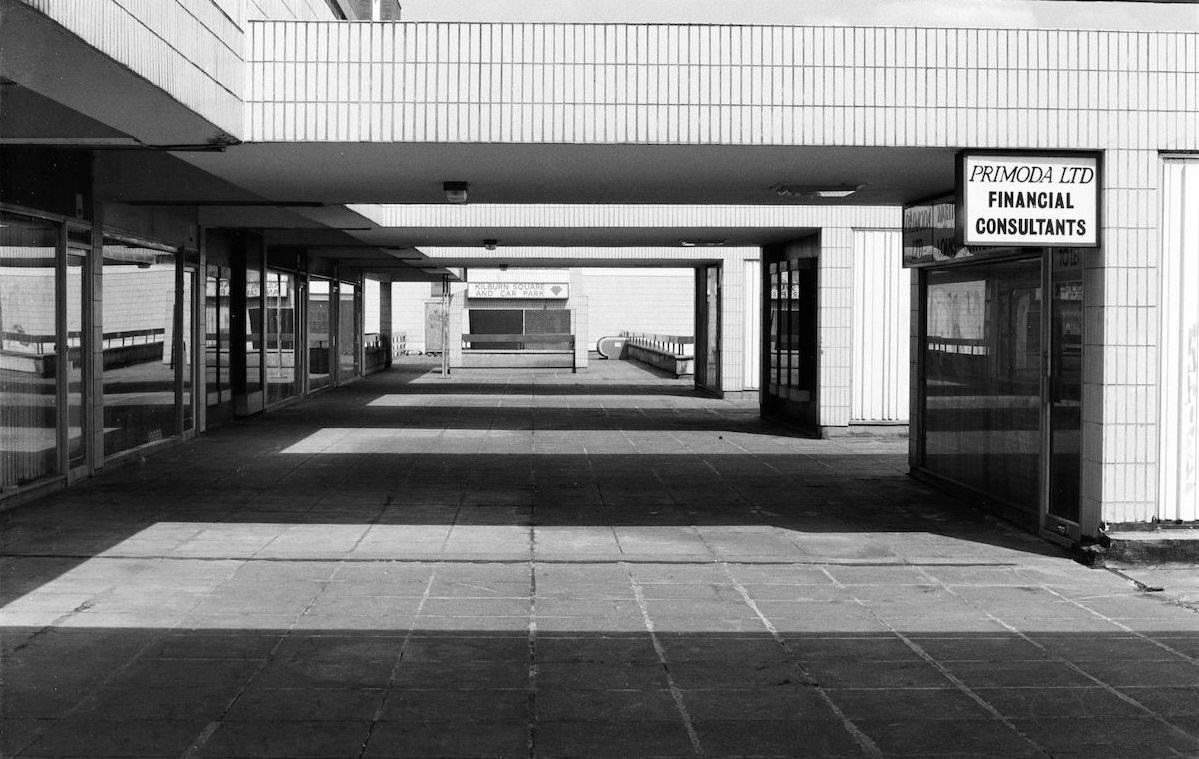
Kilburn Square, sitting at the junction of Kilburn High Road and Brondesbury Road, was a focal point for the neighbourhood in 1988. Marshall photographed it from multiple angles, showing the activity around its shops and the people moving through the space. The square functioned as a practical gathering point rather than a designed public amenity — the kind of place that becomes central to a community by use rather than by planning.
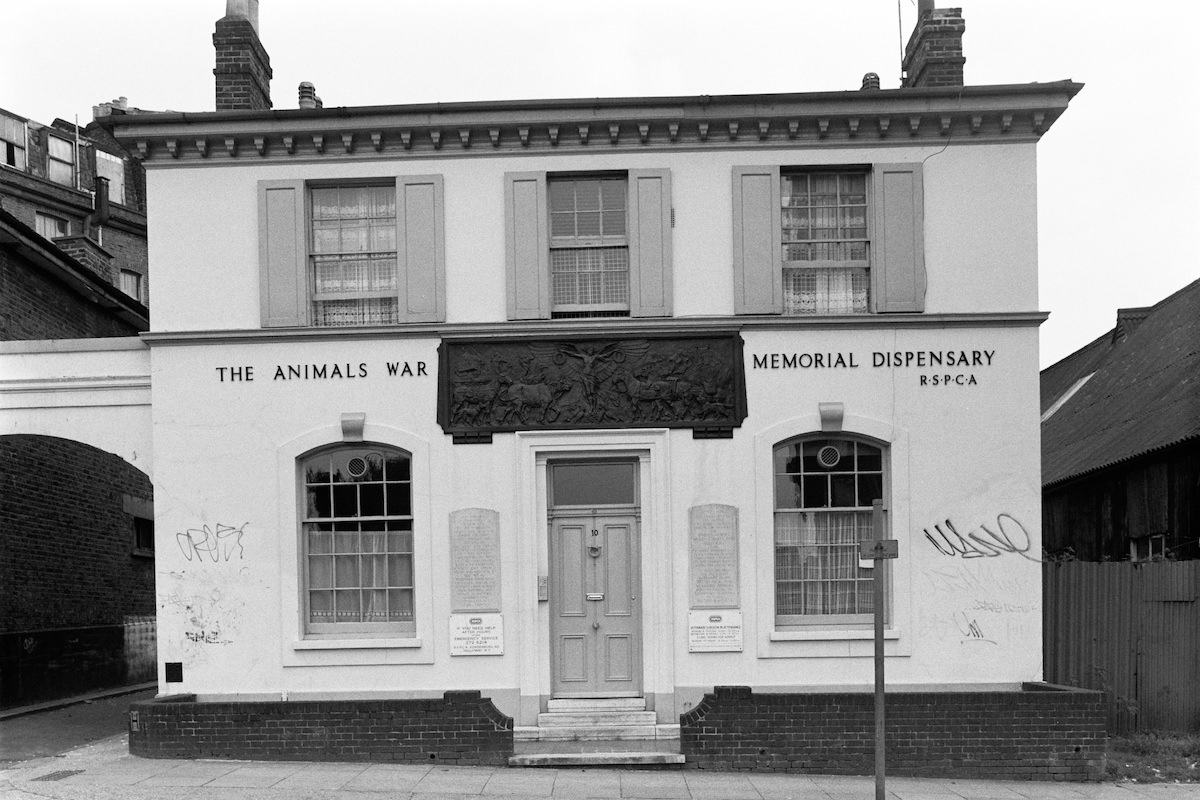
On Cambridge Avenue, the Animals War Memorial Dispensary stood as an unusual but established institution — a veterinary charity providing care for the animals owned by people in the area. It operated quietly alongside the more visible commercial and social life of Kilburn, a reminder that the neighbourhood contained layers of civic infrastructure that rarely made it into broader accounts of the area.
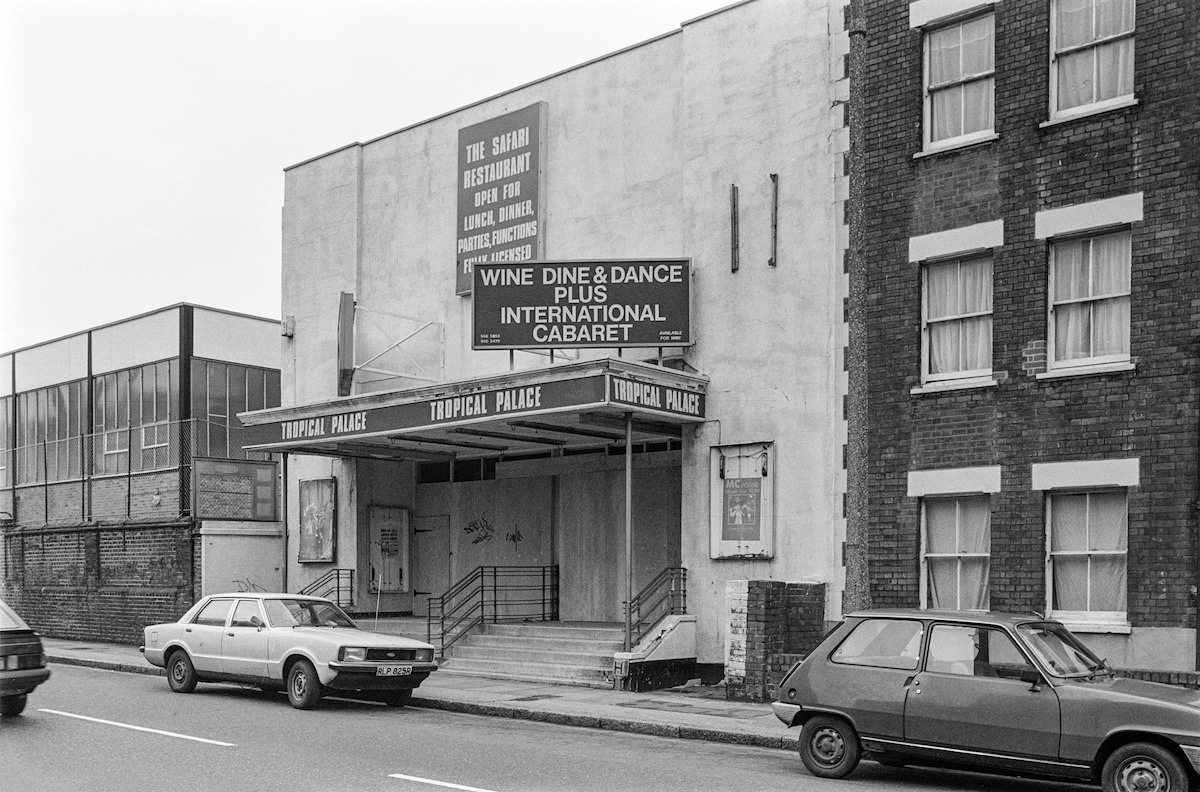
Entertainment venues also shaped the Kilburn High Road. The Kilburn State cinema and the nearby Odeon had both served the area for decades, and even as the cinema business shifted, the buildings remained landmarks. The Bingo Hall on Gascony Avenue drew regular crowds, part of a broader leisure economy that catered to Kilburn’s older and working-class residents.
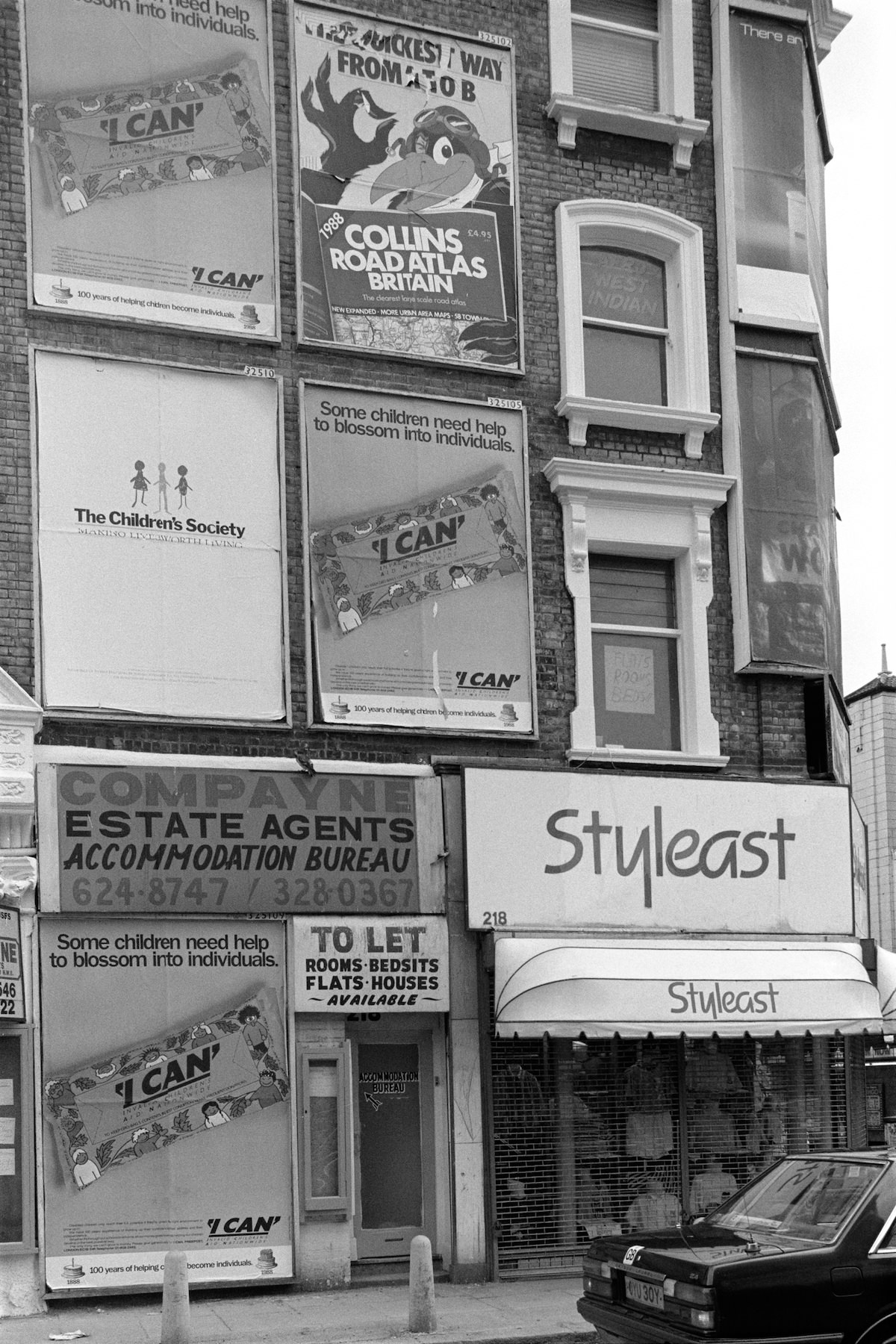
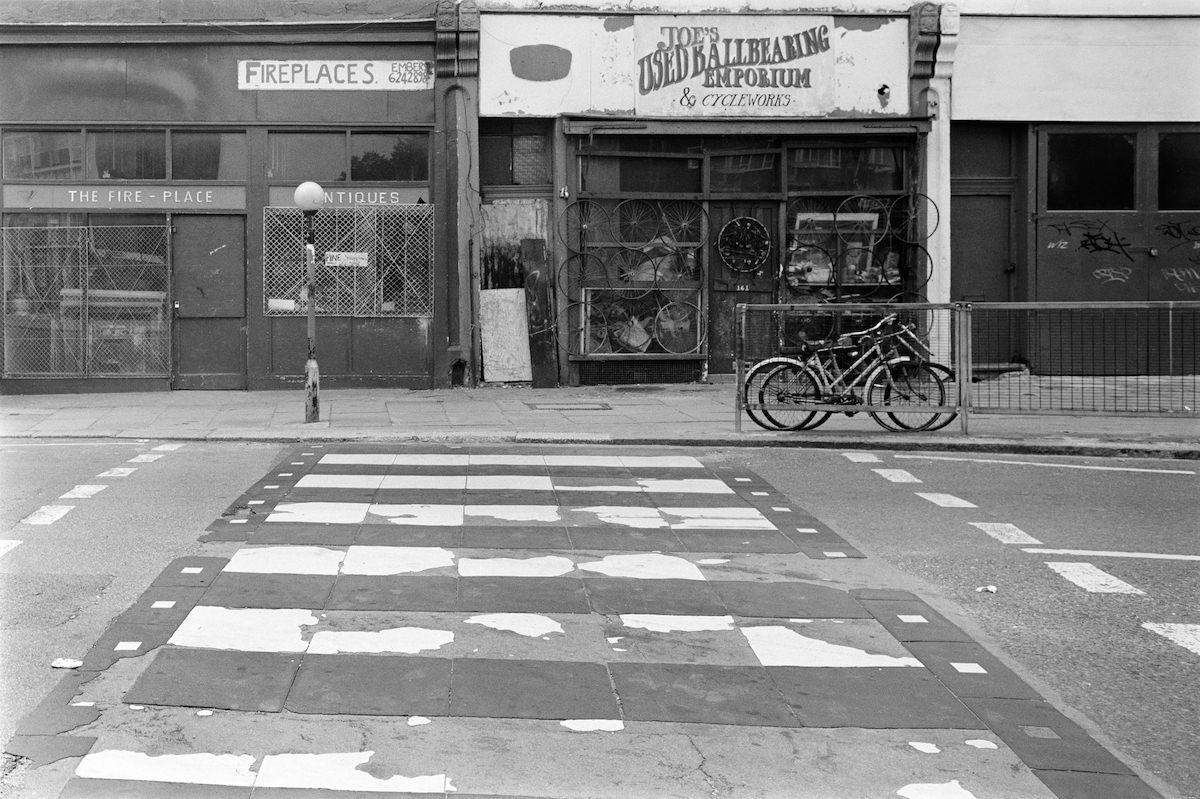
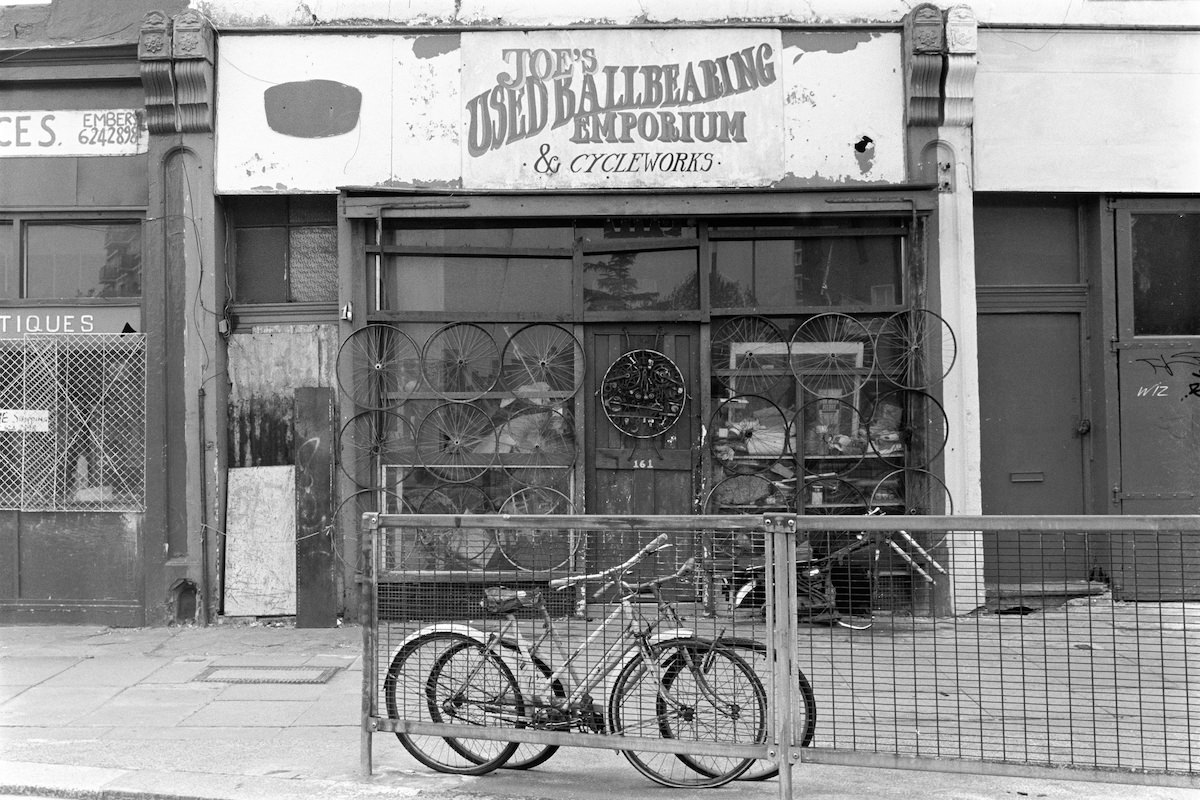
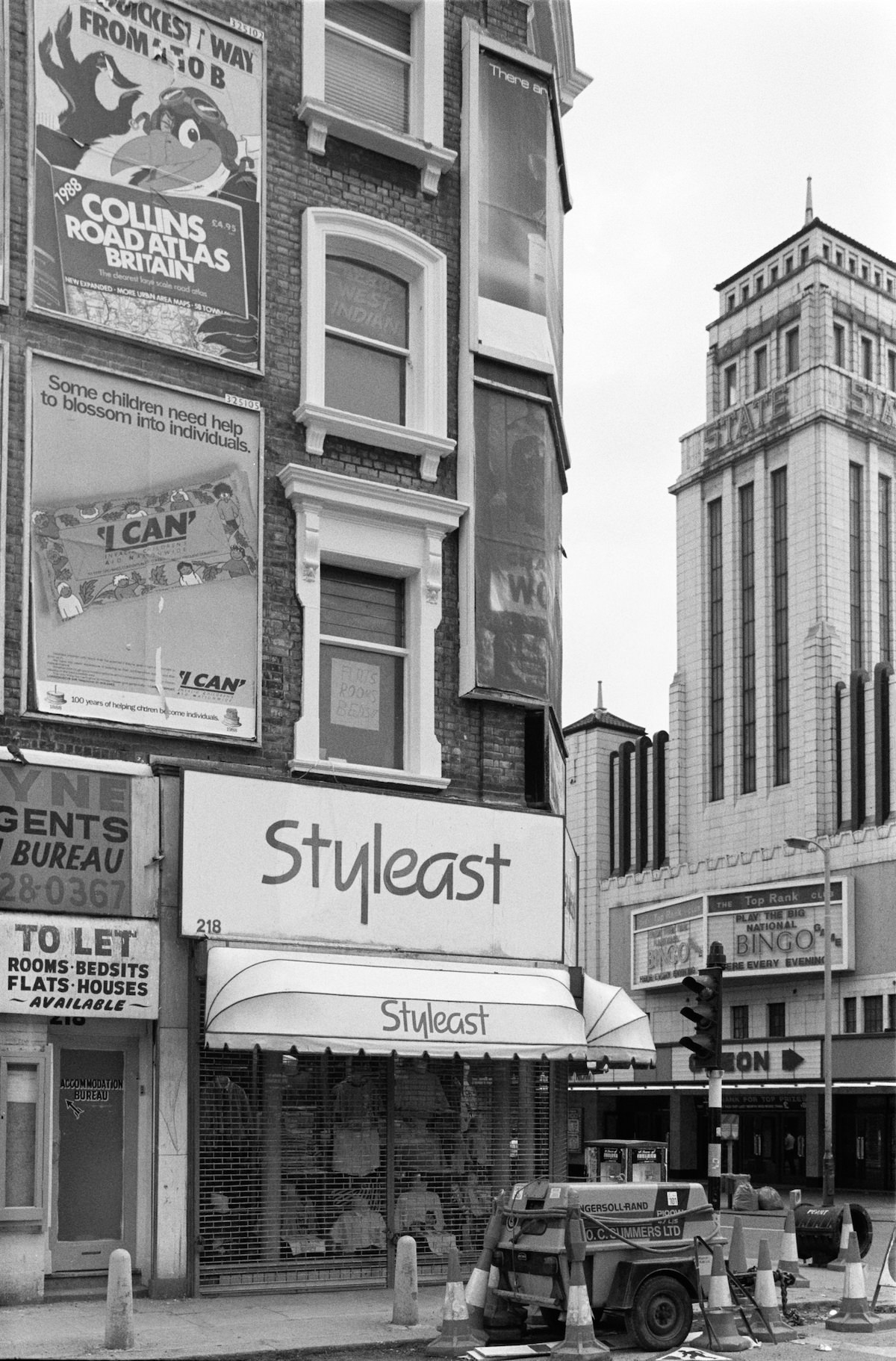
Carlton Vale ran along the southern edge of the Brent portion of Kilburn, connecting the neighbourhood toward Maida Vale. Along Willesden Lane in Brondesbury, the housing stock and street feel differed from the High Road — quieter, more residential, with front gardens and a slower pace that contrasted sharply with the commercial intensity just a few streets away.
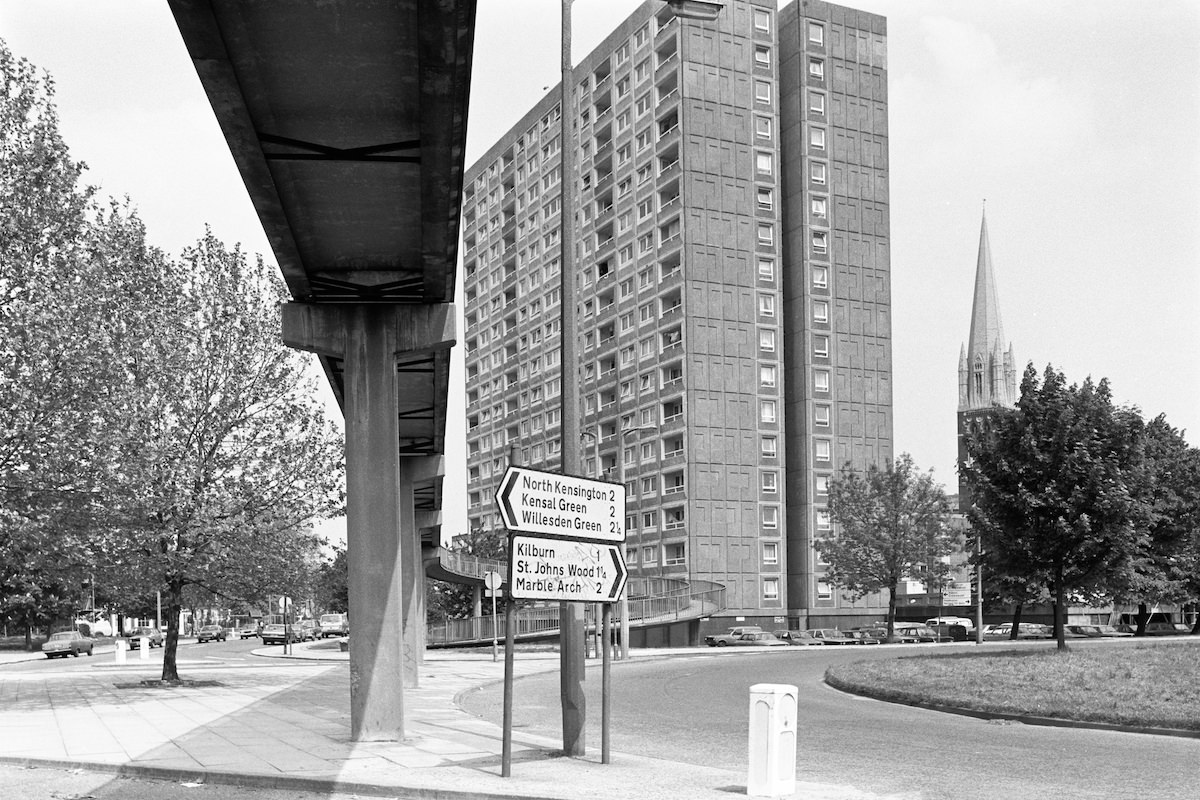
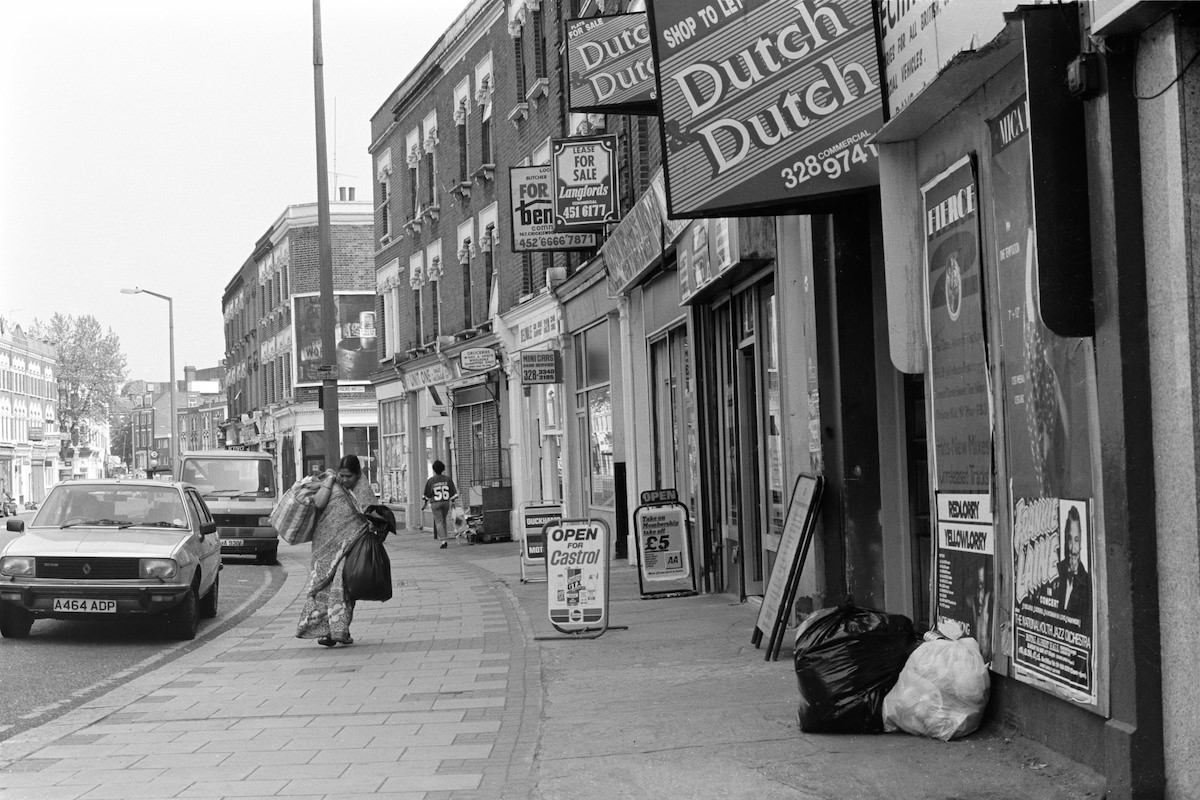
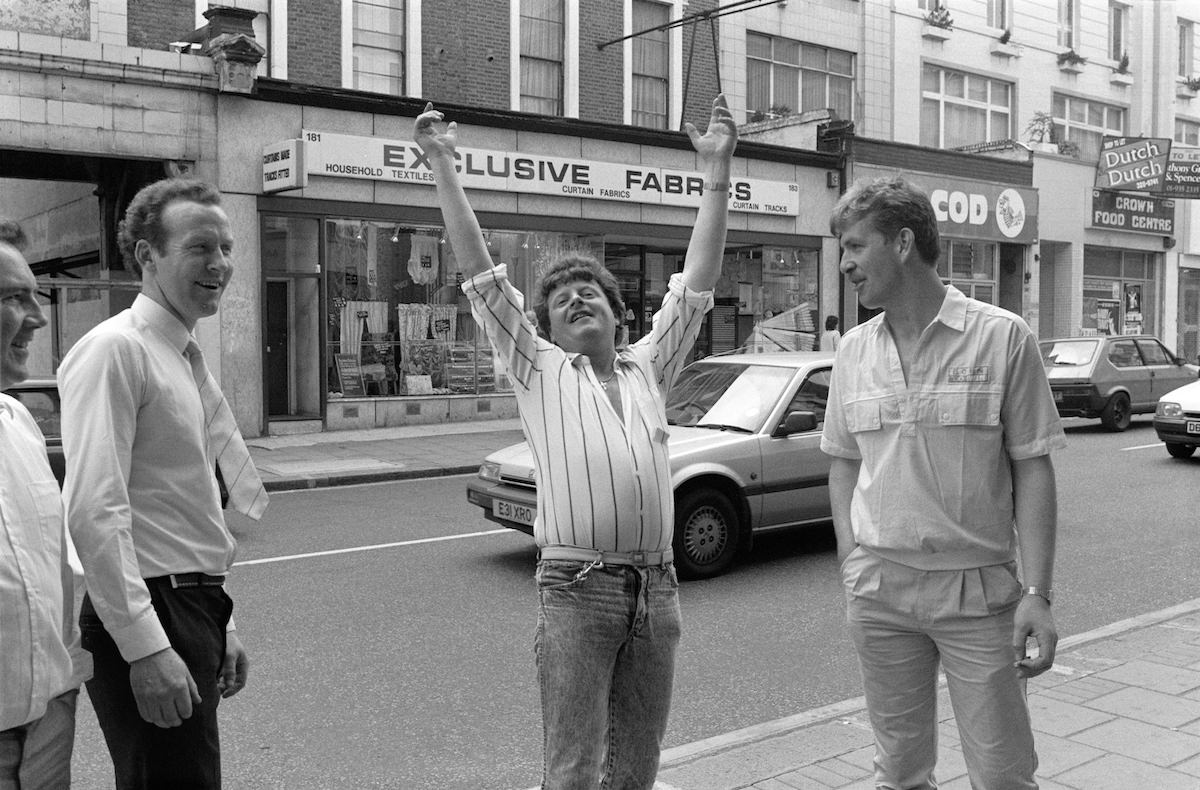
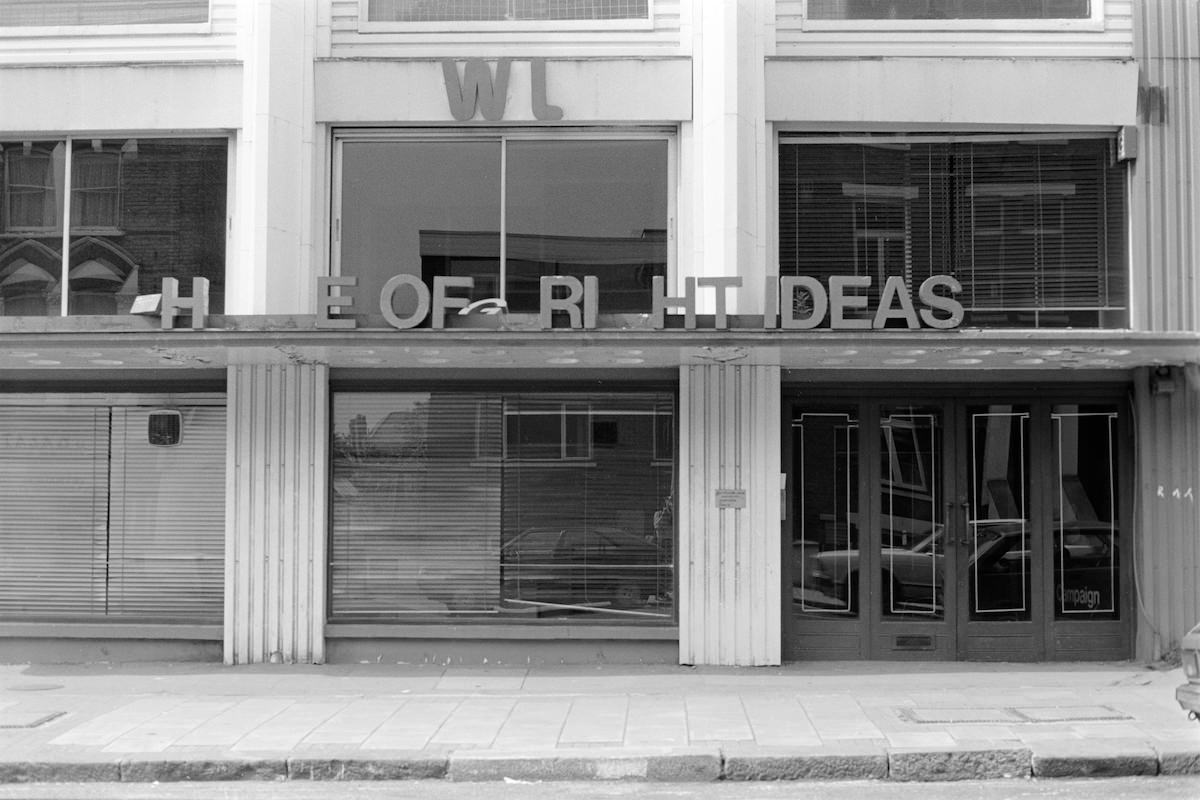
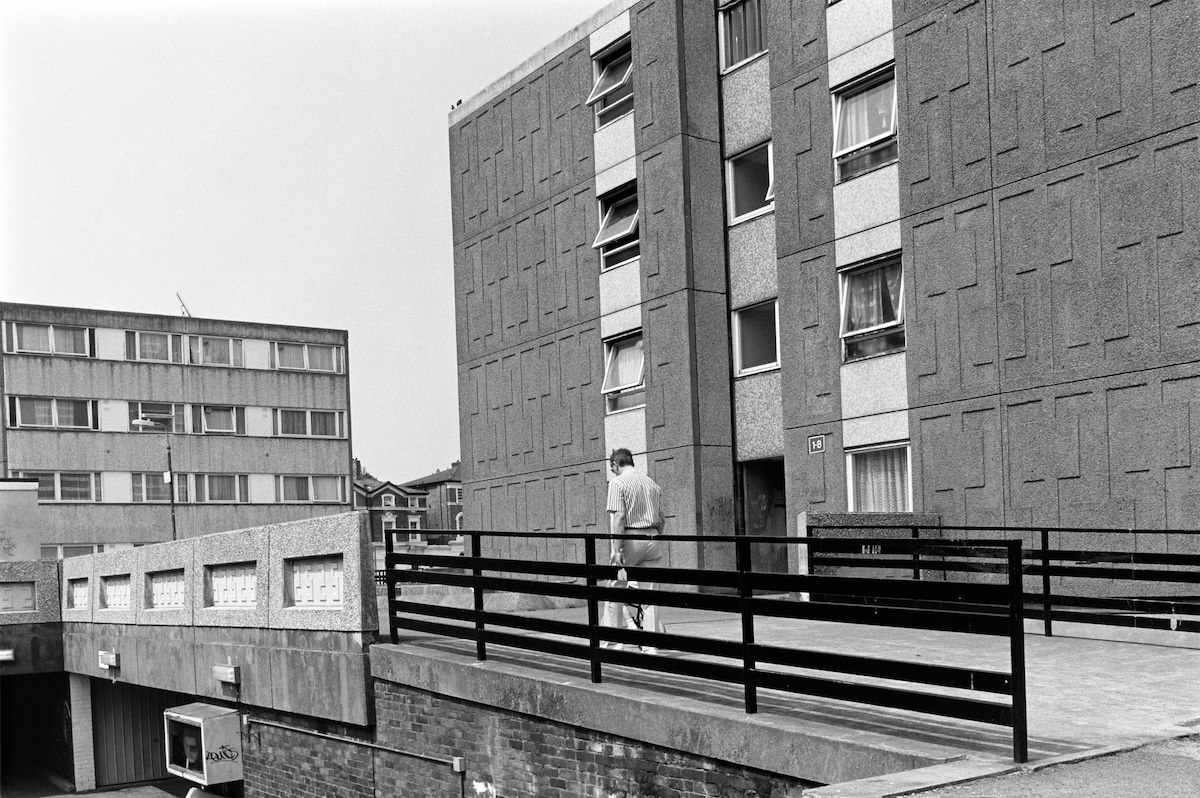
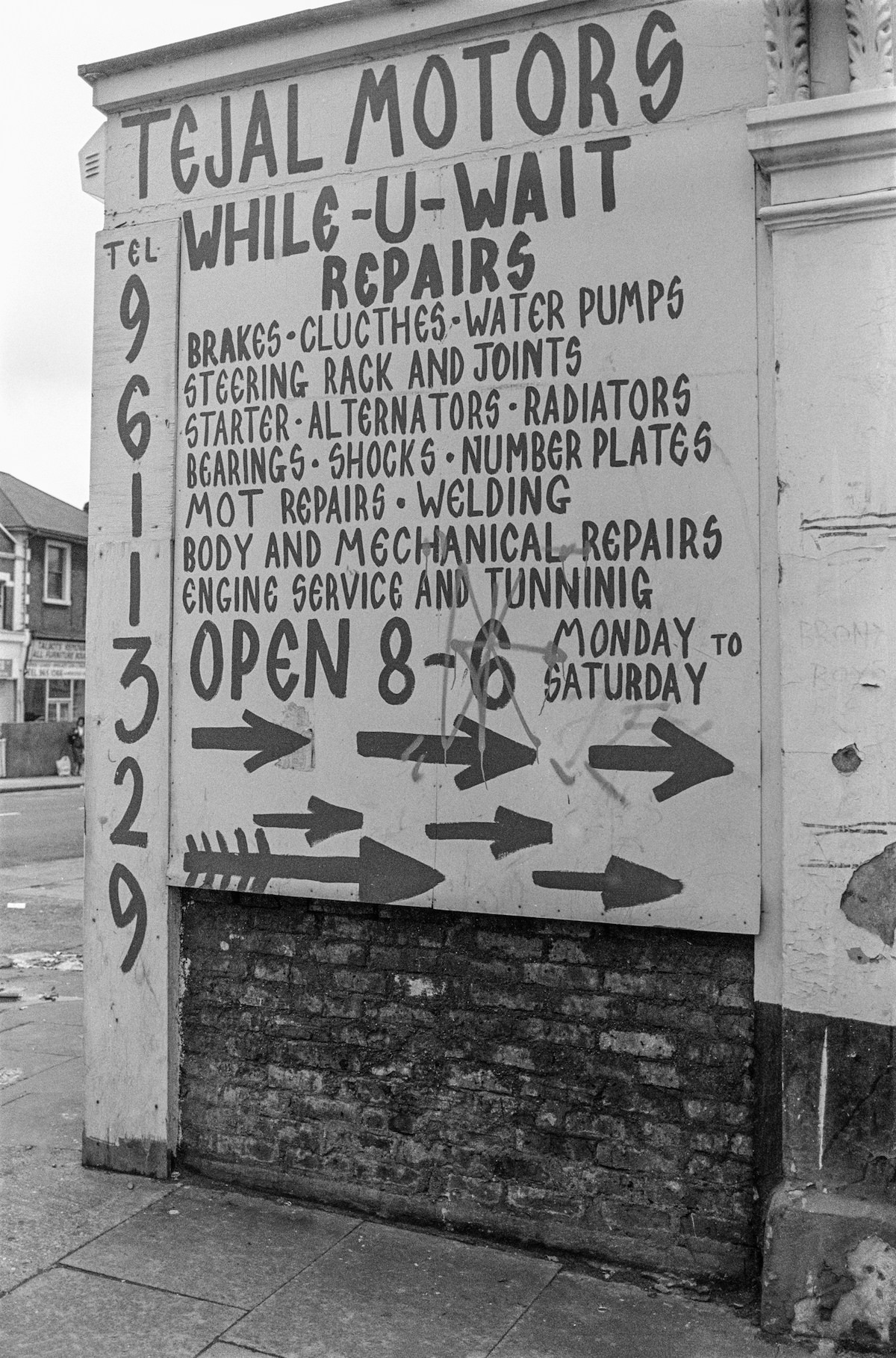
West Kilburn, sitting in the Westminster portion of the neighbourhood, had its own commercial strip along Harrow Road. Marshall photographed the street in both 1981 and 1988, tracking how the area looked across the decade. Traders along this stretch served a tightly packed local population, and the photographs show shopfronts advertising a range of goods and services that reflect the diverse needs of the community living nearby.
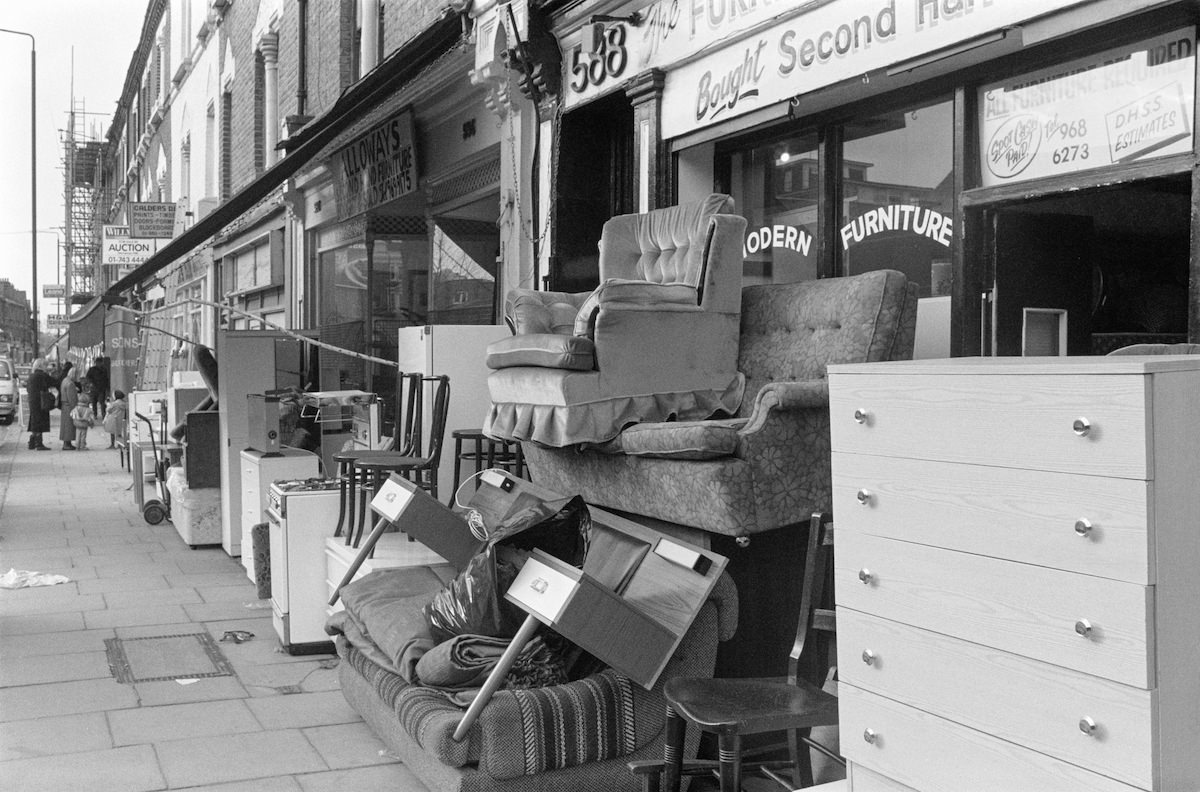
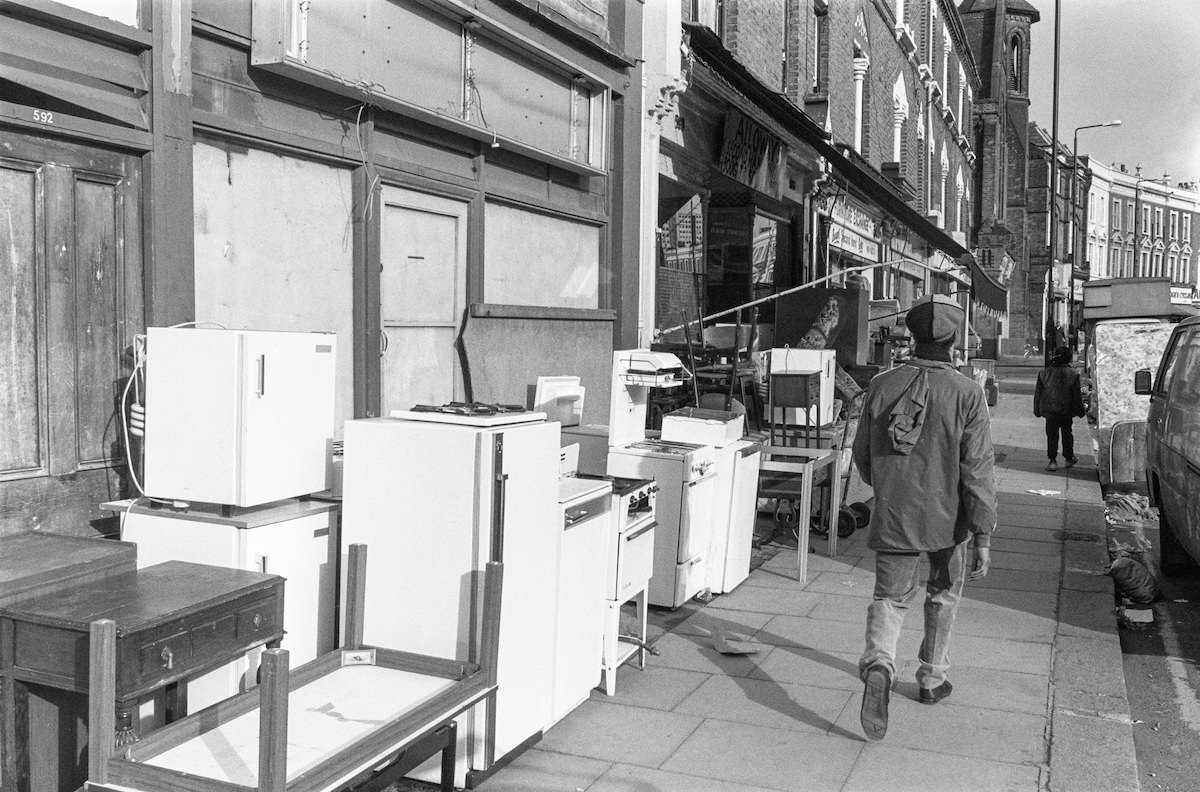
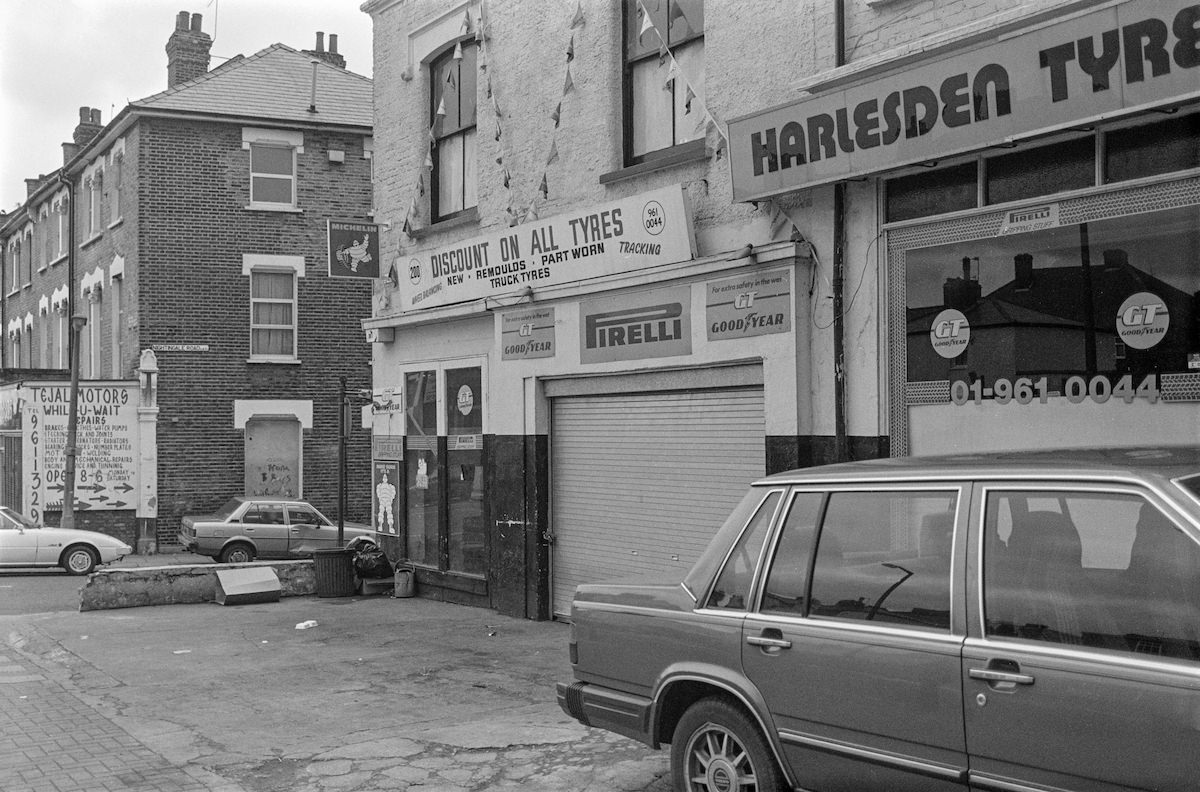
Further out toward Kensal Green and Harlesden, the character of the streets shifted again. Kilburn Lane passed the Kilburn Spring Co., one of several small industrial and trade businesses that operated in the gaps between residential and commercial zones. Harlesden’s High Street, just beyond Kilburn’s boundary, showed similar patterns — tyre shops, motor traders, and small businesses serving the borough’s working population.

Almost all the Irish have left Kilburn by now.
My uncle lived there in 2015 and there was nothing Irish about it.
It brings back many memories to see these photos!
I just wish I had taken more photos of the everyday. I have lots of holiday pictures but few of my old home environment. But we did not have mobile phones with built in cameras until recently.