Serge Balkin spent more than two decades working for Condé Nast Publications, and during that time he built one of the most refined bodies of work in mid-century American fashion photography. His images ran in Vogue, Glamour, and House & Garden — three of the most widely read style publications of the era. Whether he was shooting a street scene, a celebrity portrait, a fashion spread, or an interior, Balkin brought the same sense of elegance and immediacy to every frame. He worked in both black-and-white and color, and his eye for composition made each photograph feel deliberate without ever appearing stiff.
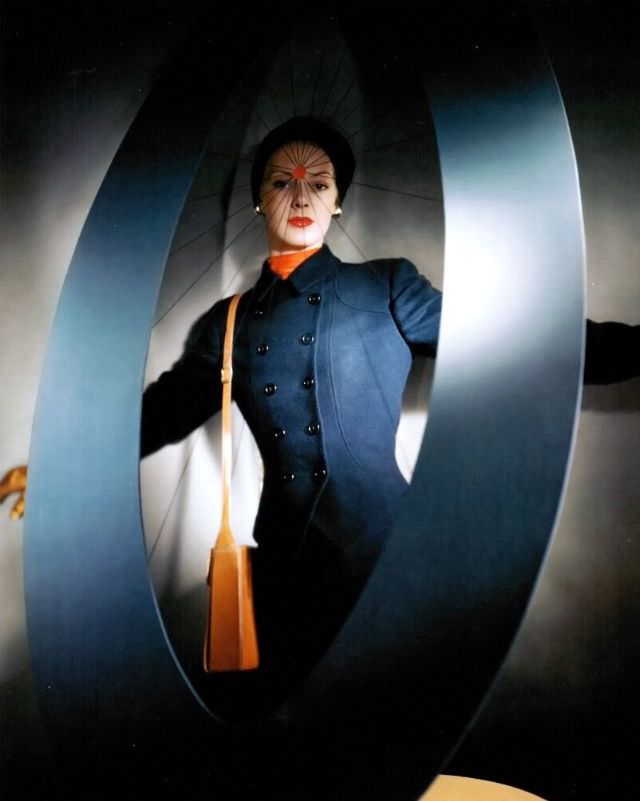
By 1944, Balkin was already producing polished editorial work for Vogue. His photographs from this period show a clear command of how clothing interacts with the body, the light, and the frame around it. One of his early wartime spreads featured a model dressed sharply for the season.
By 1945, Balkin was photographing well-known faces alongside anonymous models, treating each subject with the same careful attention. Actress Carole Landis appeared in one of his shoots that year, dressed in a coordinated blue ensemble complete with a veiled hat by John Frederics — a milliner celebrated in New York at the time.
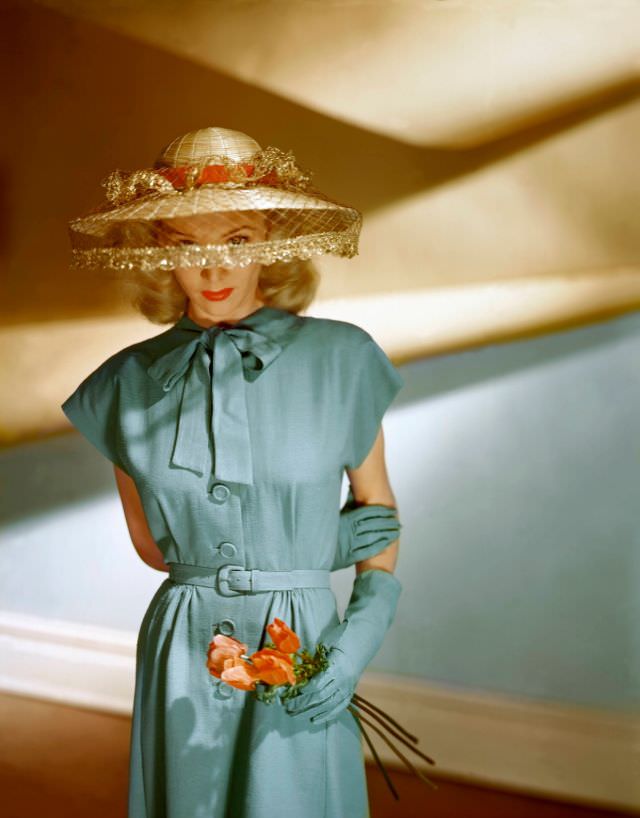
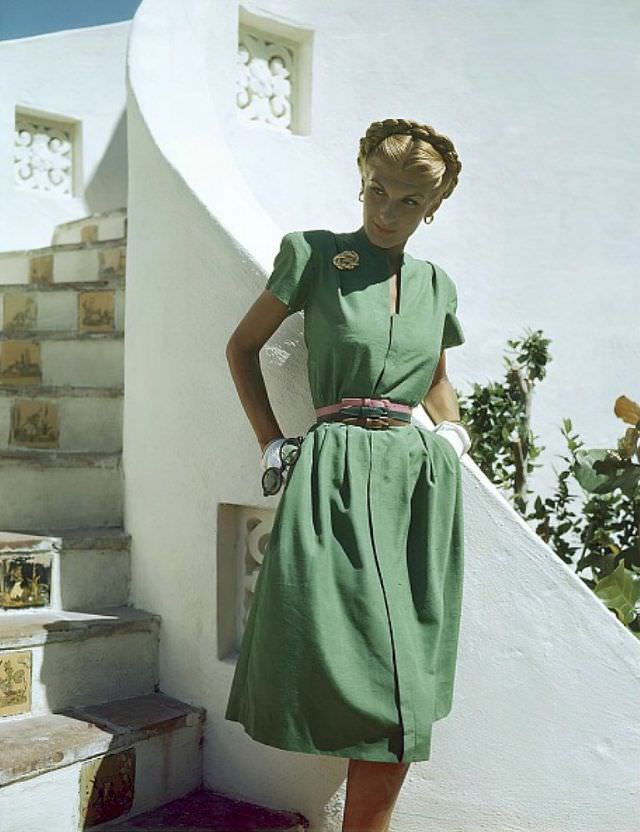
The mid-1940s were a turning point in American fashion. With World War II fabric restrictions still fresh in the public memory, designers were beginning to loosen up — introducing bolder colors, more relaxed silhouettes, and playful details. Balkin captured this shift across magazines and seasons. A grass-green shantung dress on model Bijou Barrington, pinned with a Coro brooch and cinched with a Vogue belt, appeared in Glamour that same year.
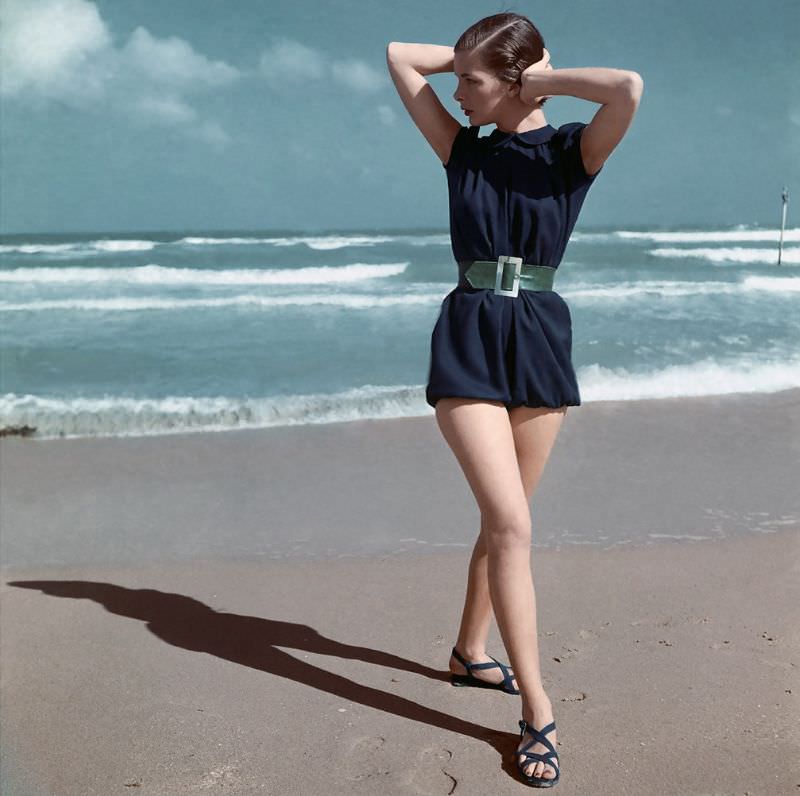
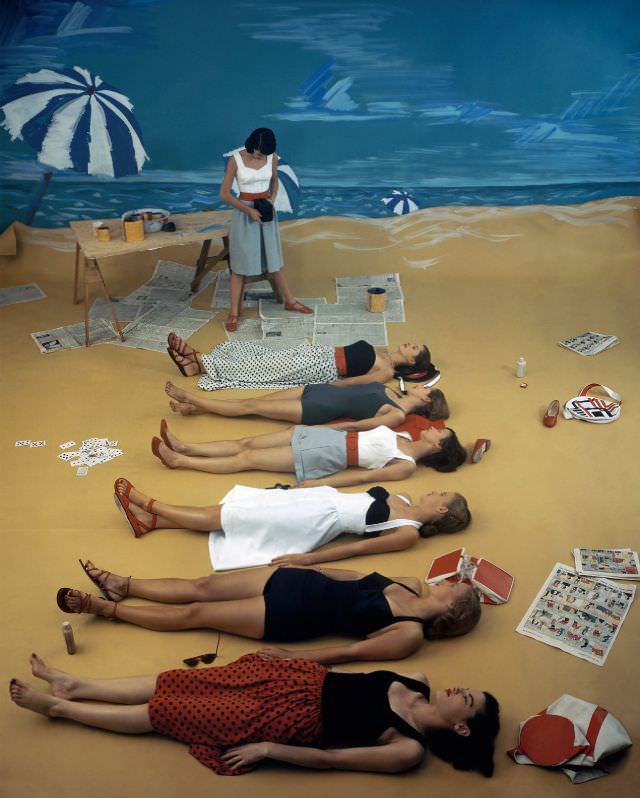
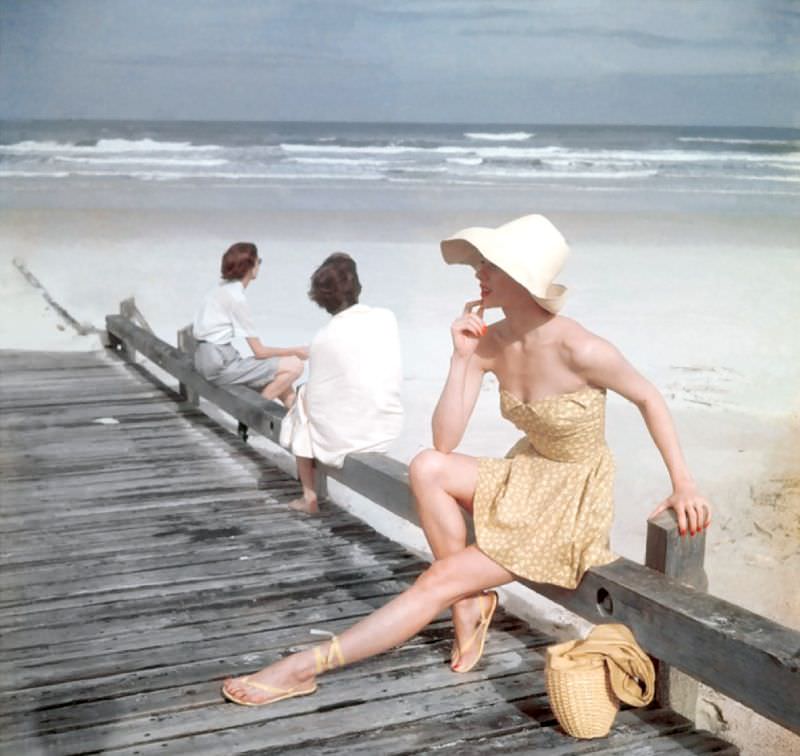
Balkin also photographed beachwear throughout 1945, showcasing how postwar leisure wear was becoming its own fashion category. Designers like Carolyn Schnurer were pushing sporty, functional pieces that still looked polished in print.
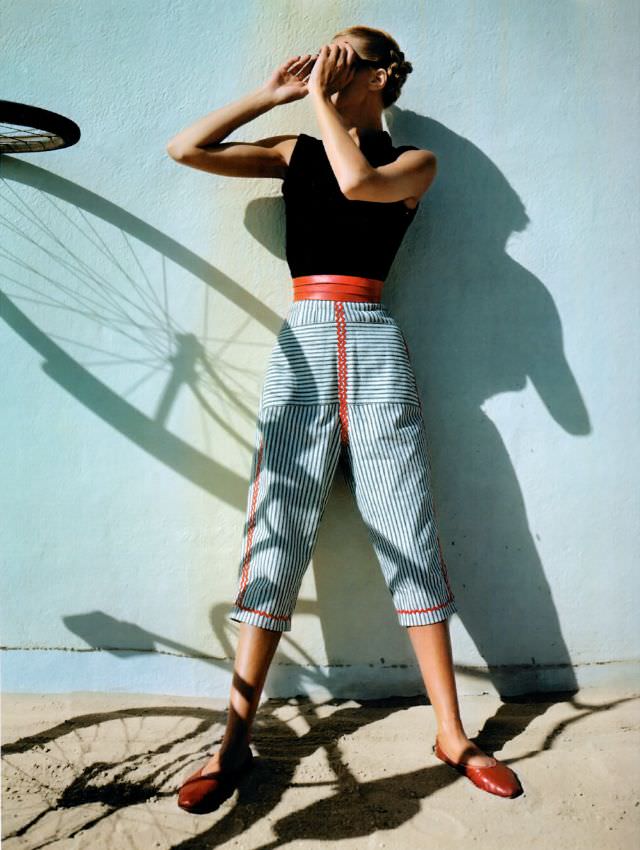
Vogue’s April 1945 issue showed just how casual American fashion was becoming. Balkin photographed a model in mattress ticking capri pants with red trim and a sleeveless turtleneck from Hi-Dee — a look that would have been unthinkable in pre-war editorial pages but felt completely natural in his hands.
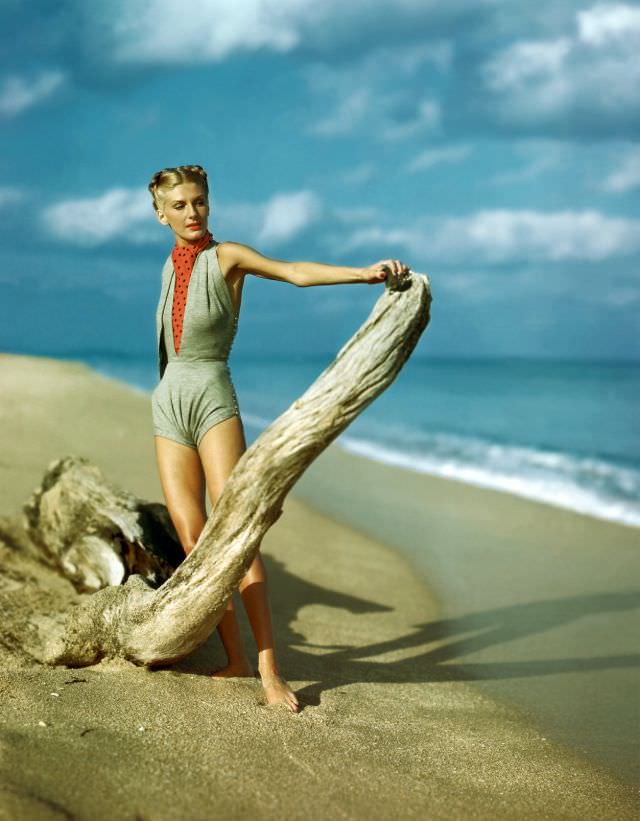
Designer Claire McCardell was one of the defining figures of American sportswear, and Balkin photographed her work more than once. Her gray V-midriff swimsuit with a polka-dot ascot showed how McCardell mixed practicality with a distinct sense of personality.
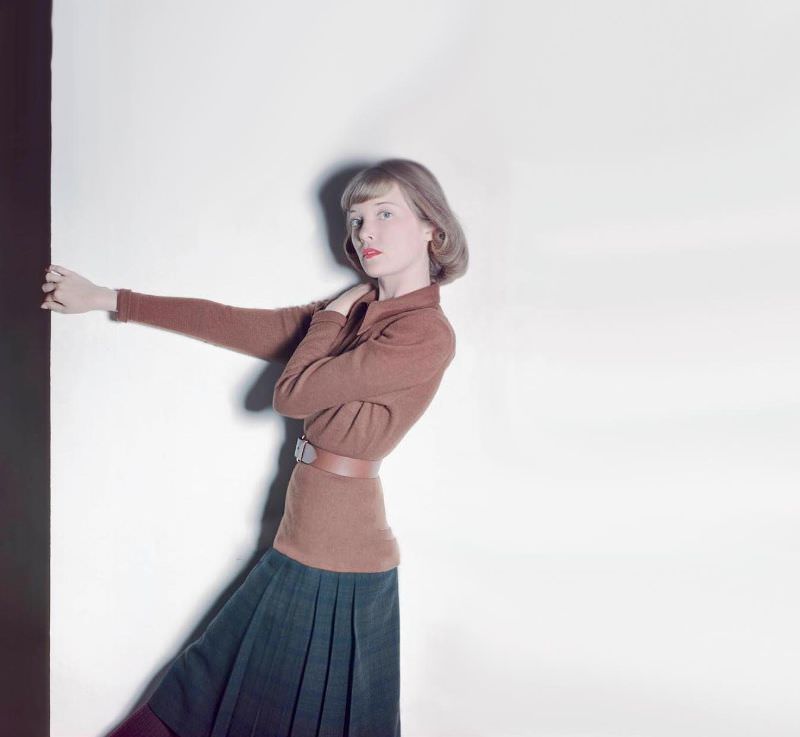
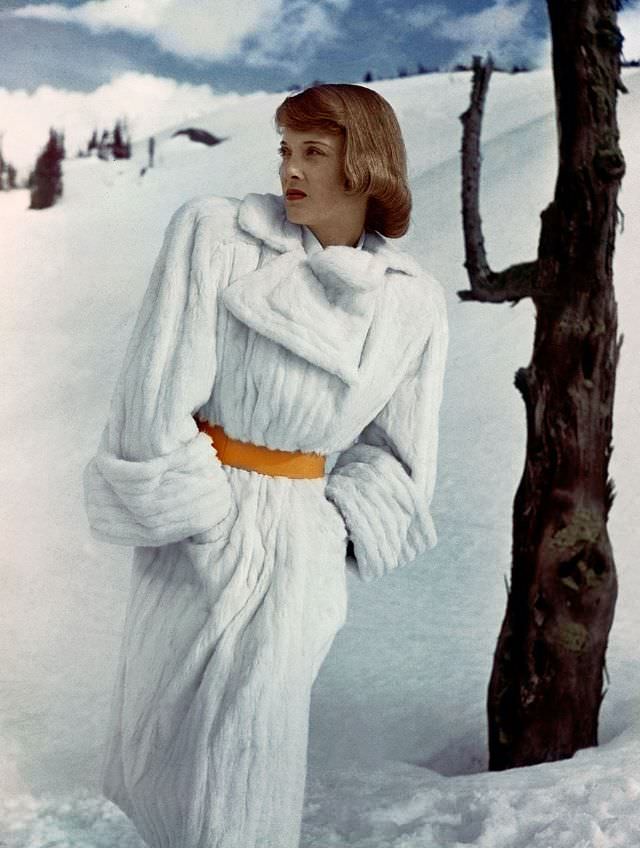
By 1946, Balkin was producing some of his most varied editorial work. He photographed model Charlotte Payne multiple times that year, capturing her in everything from a plaid wool skirt by Tilly Schanzer to a full-length white trench coat made of Russian ermine from Reine. The contrast between the two shoots — one grounded and collegiate, the other extravagant — illustrated Balkin’s range as a photographer.
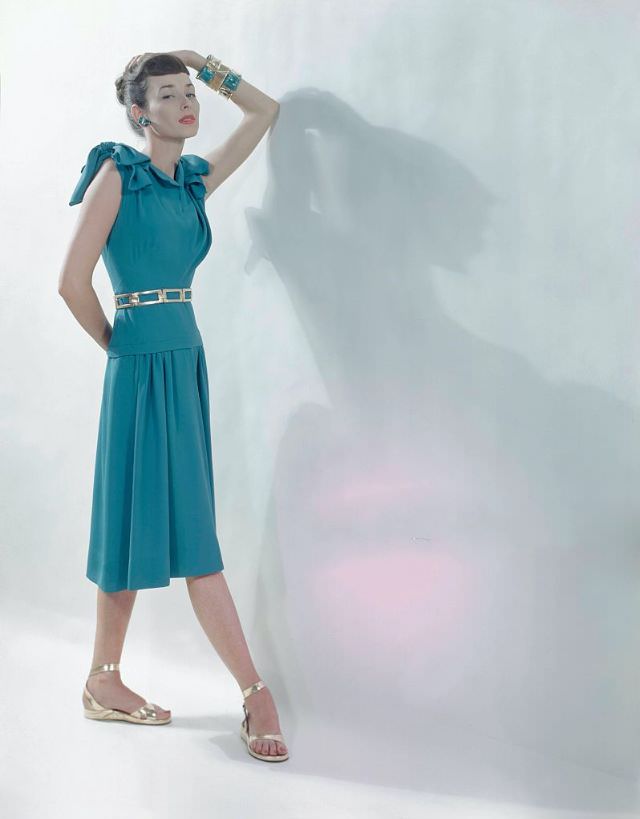
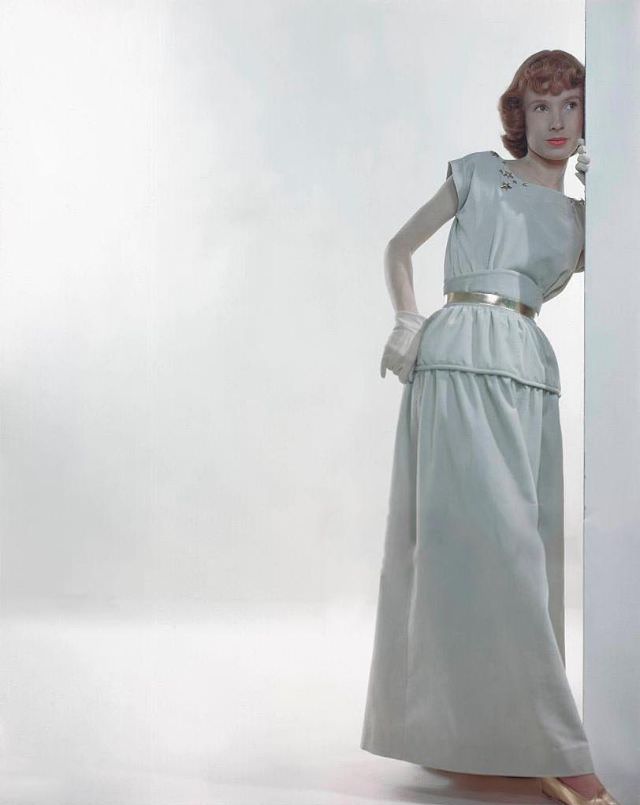
Also in 1946, Balkin photographed Dorian Leigh — one of the most prominent models of the postwar era — in a robin’s egg blue dress accessorized with a gold belt by Belt Creations, gold sandals, and jewelry by Hattie Carnegie. Leigh’s presence in Glamour that year reflected Balkin’s access to the top tier of modeling talent working in New York.
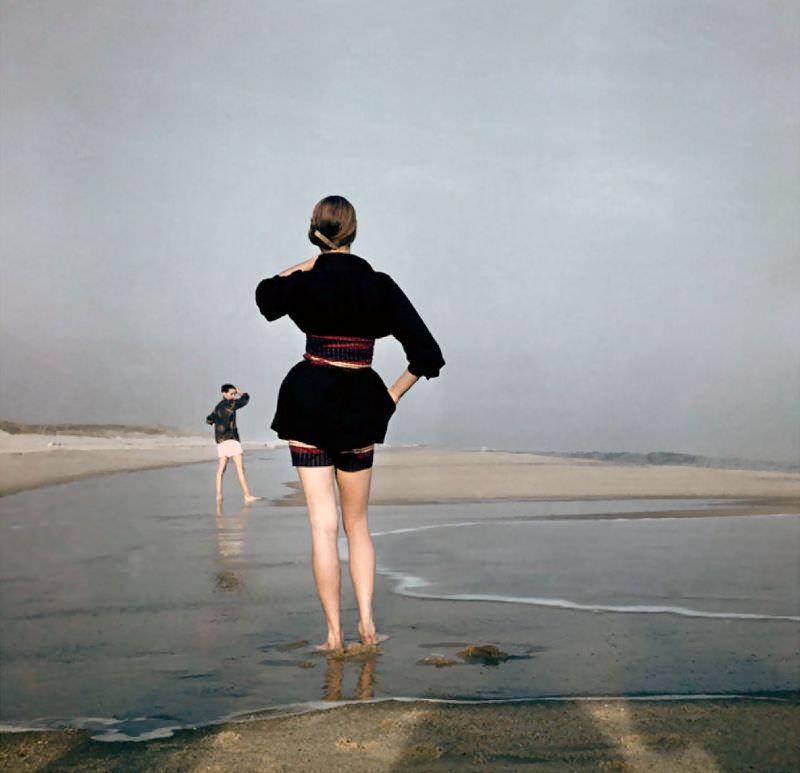
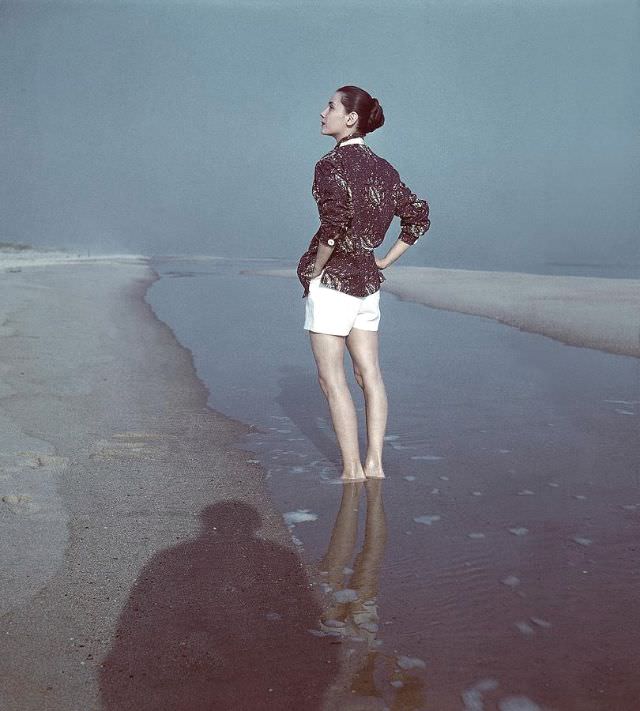
Batik-style prints were another trend Balkin documented that December, photographing vibrant patterned summer wear for Vogue. The bold repeat patterns and warm tones of these garments contrasted sharply with the minimal, structured pieces that had defined wartime fashion just a few years earlier.
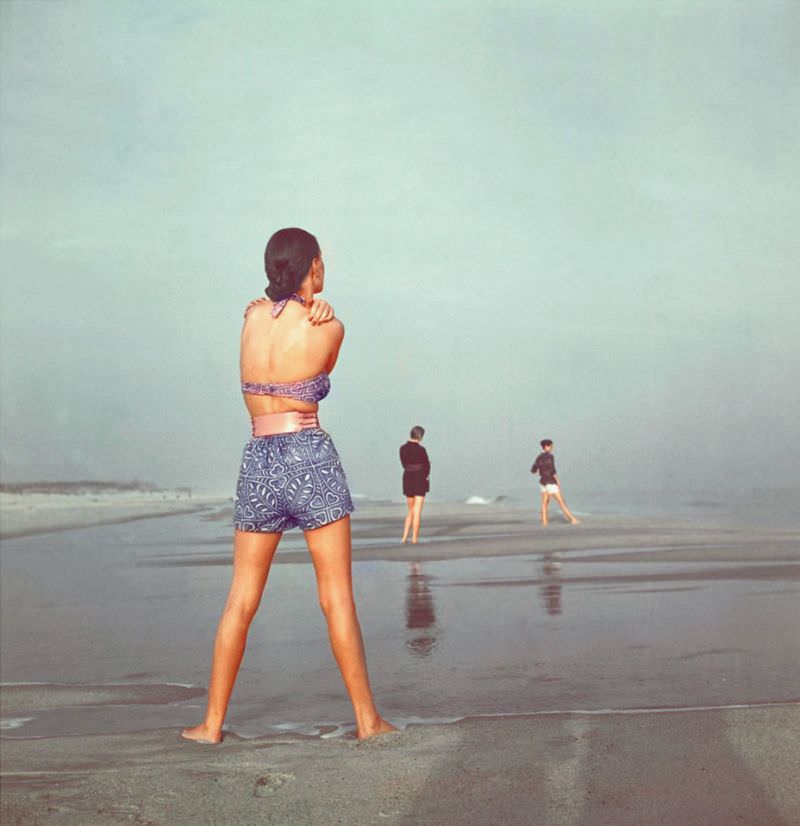
Fur was a recurring subject in Balkin’s Vogue work. Model Lily Carlson appeared in a long white stole of Russian ermine and Russian fox in the August 1946 issue — a statement piece that required the kind of controlled studio lighting Balkin used expertly to preserve the texture and depth of the material.
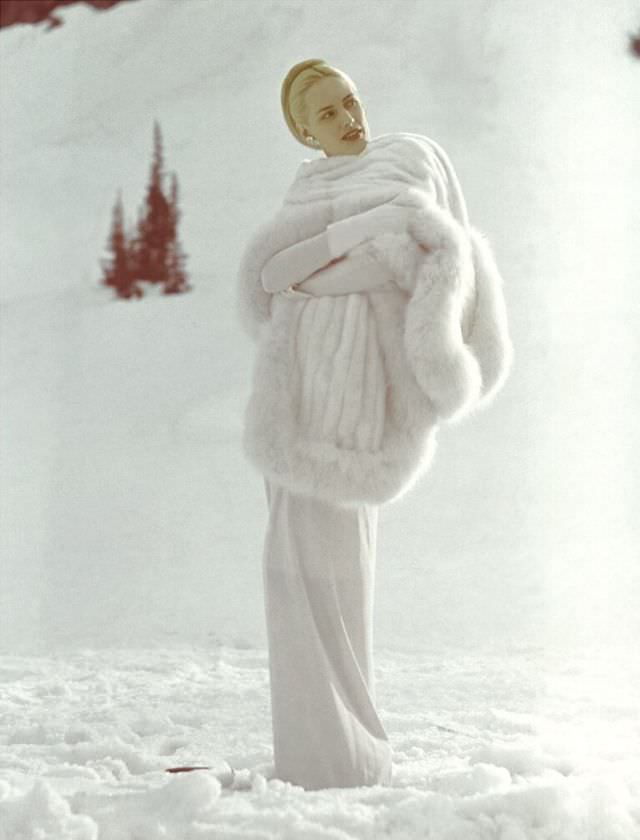
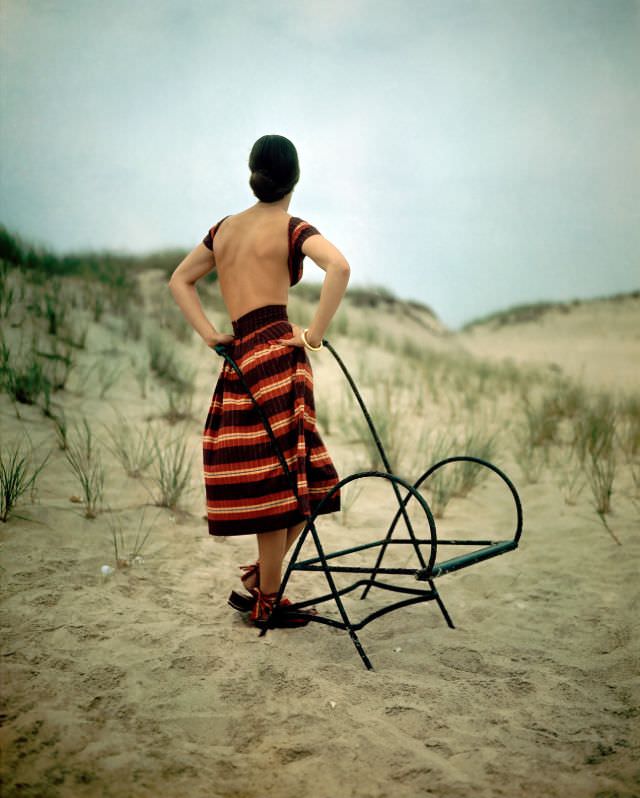
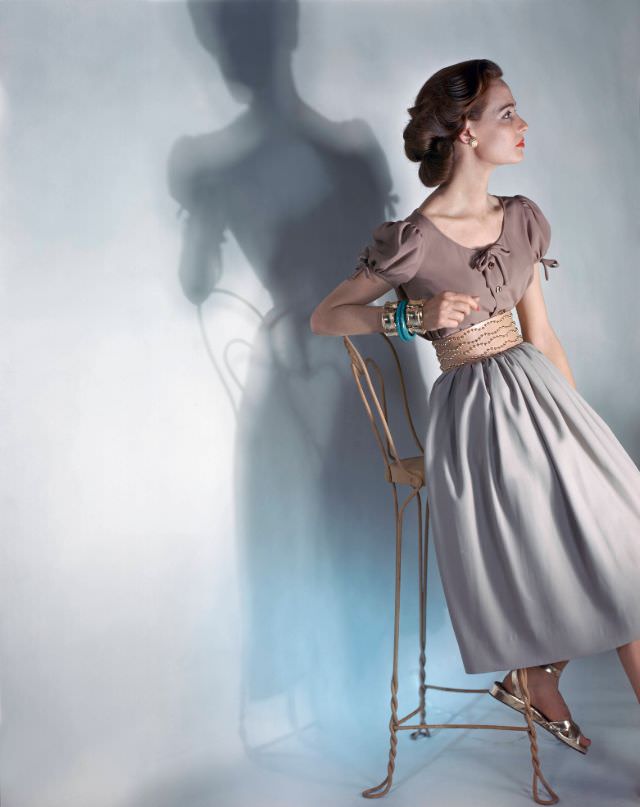
Balkin’s 1946 spreads covered a wide spectrum of American dress — from casual beach pieces to finely detailed day wear. A cocoa blouse paired with a beige skirt, wide leather belt with gold buttons, and gold sandals showed the kind of coordinated, accessory-driven dressing that Vogue and Glamour promoted to readers across the country.
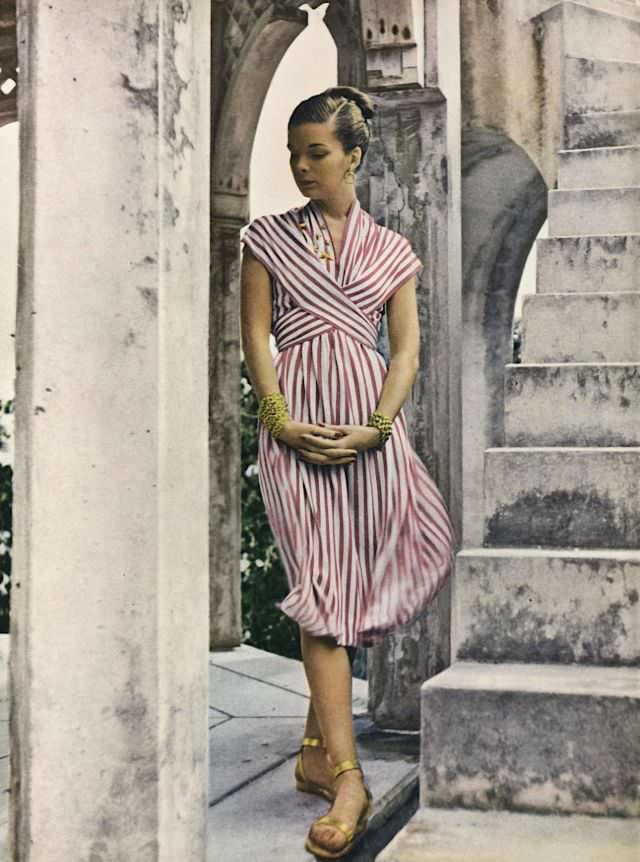
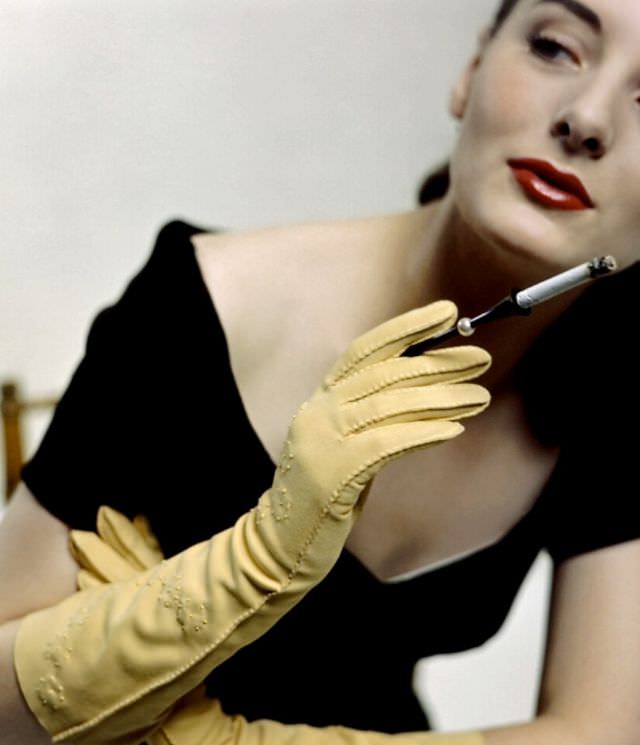
Wrapped bodices and jersey fabrics featured prominently in Balkin’s 1946 editorial work. A striped rayon jersey dress by Mildred Orrick appeared in Vogue that year, as did a close-up portrait of a model holding a cigarette holder, wearing yellow doeskin gloves by Alfred Orlik — a shot that captured the carefully curated accessories culture of postwar American style.
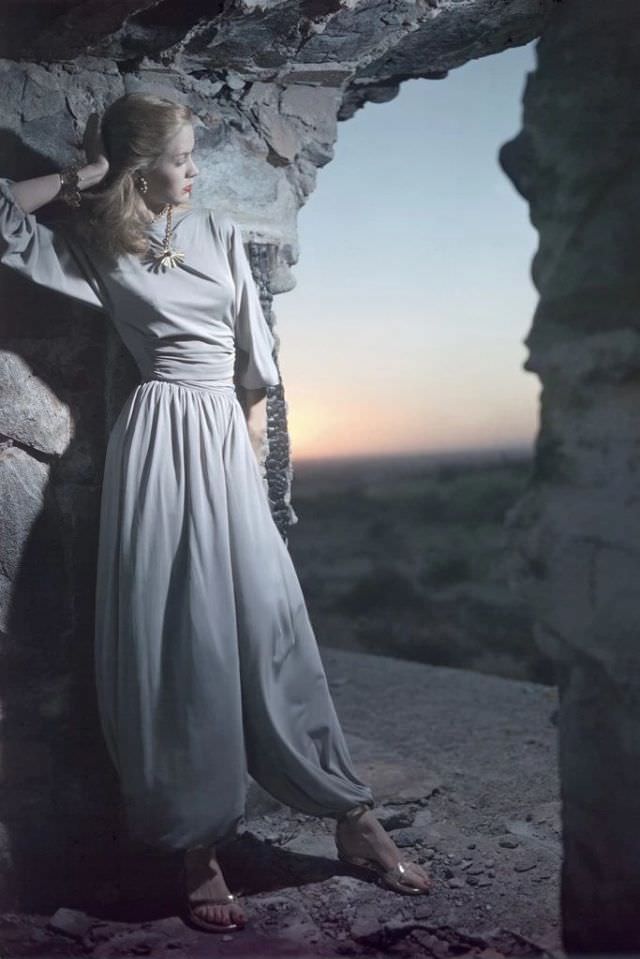
Claire McCardell appeared in Balkin’s work again in 1946 with her “Arabian Nights” trouser set in gray rayon jersey — a fluid, wide-legged design that stood apart from the tailored silhouettes dominating European fashion at the time. McCardell’s American sportswear sensibility was a perfect match for Balkin’s straightforward, unadorned photographic style.
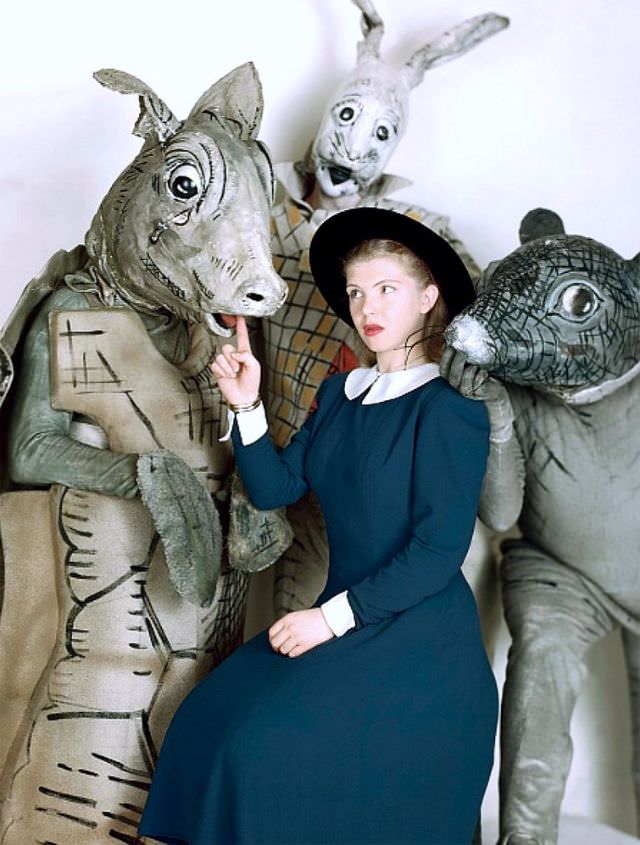
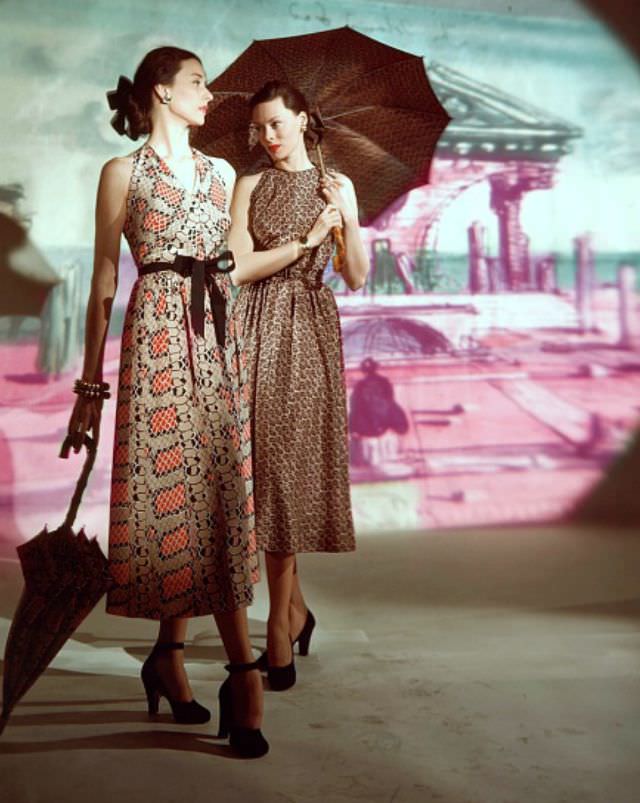
In 1947, Balkin continued shooting for Vogue and Glamour, photographing both emerging and established talent. Actress Bambi Lynn, then starring in a stage production of Alice in Wonderland, appeared in Glamour wearing a dress from a Vogue pattern and a hat by Chanda. That same year, top model Dorian Leigh appeared again — this time alongside Meg Mundy — in printed dresses by Traina-Norell, photographed in front of a painted backdrop by artist Eugene Berman.
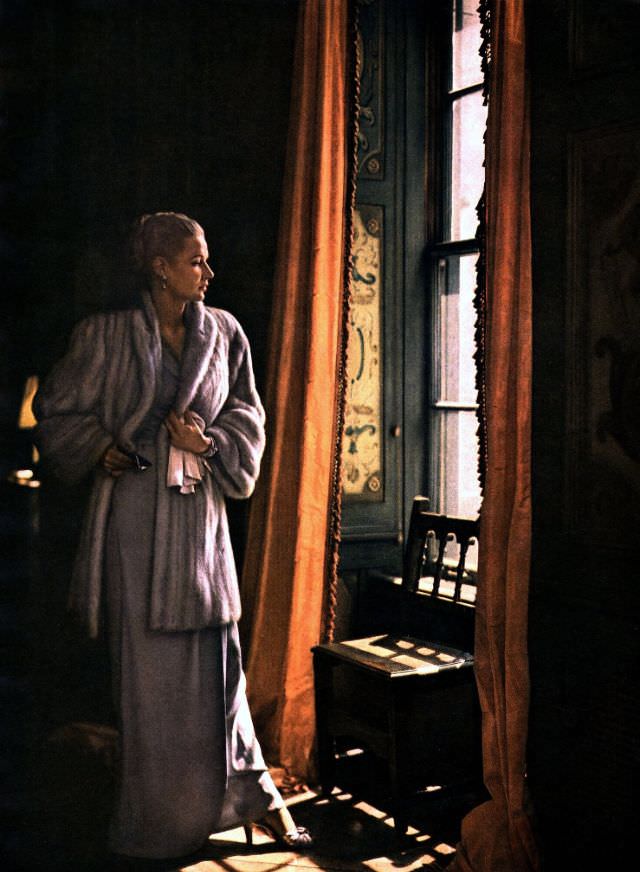
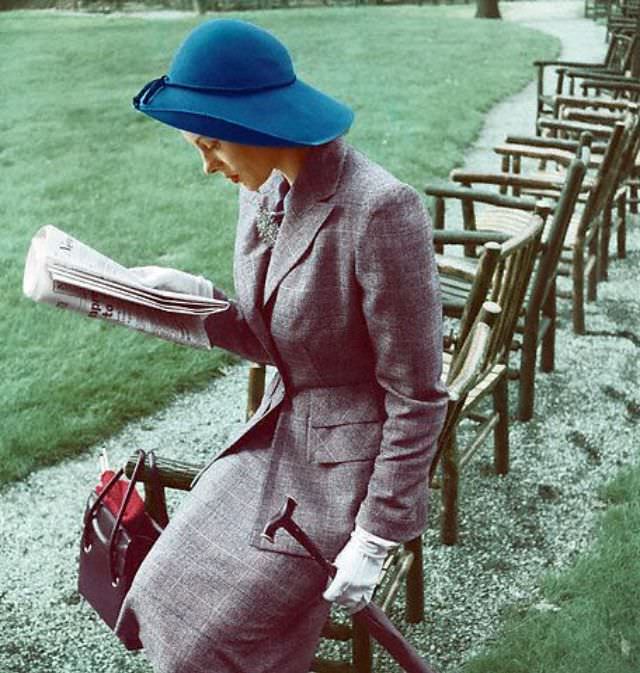
Balkin also traveled for assignments. Joan Pedersen appeared in a silver mink coat photographed in Paris for Vogue’s July 1947 issue, while Meg Mundy was shot closer to home in a grey muted plaid wool suit with a teal blue hat — a sharp, composed image that showed Balkin’s skill with tonal restraint in black-and-white.
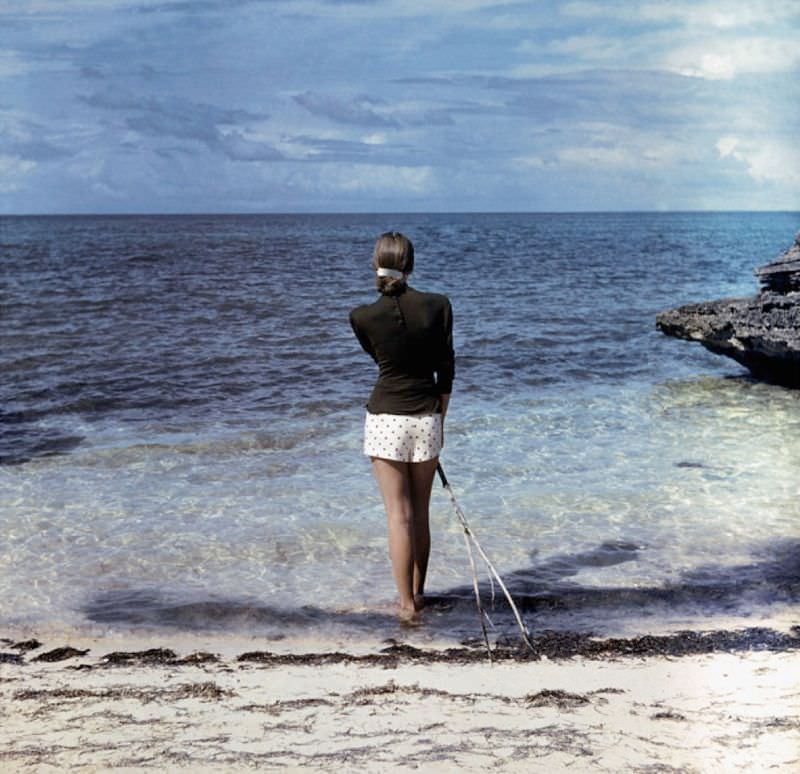
A Vogue March 1947 spread saw Balkin shooting a model in a short-sleeved print dress by Joseph Halpert, again against a backdrop painted by Eugene Berman. The collaboration between fashion photography and fine art was a recurring feature of Vogue’s editorial direction during this period, and Balkin handled the combined visual elements cleanly.
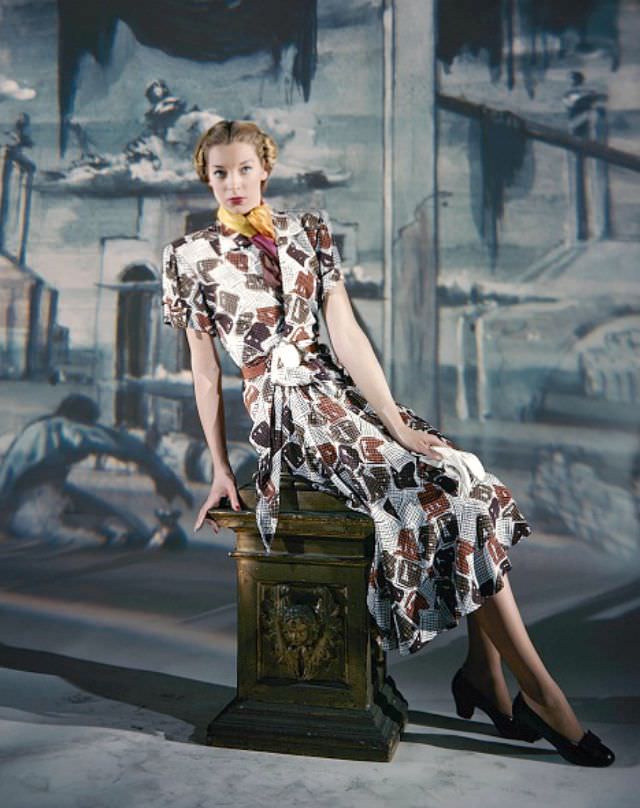
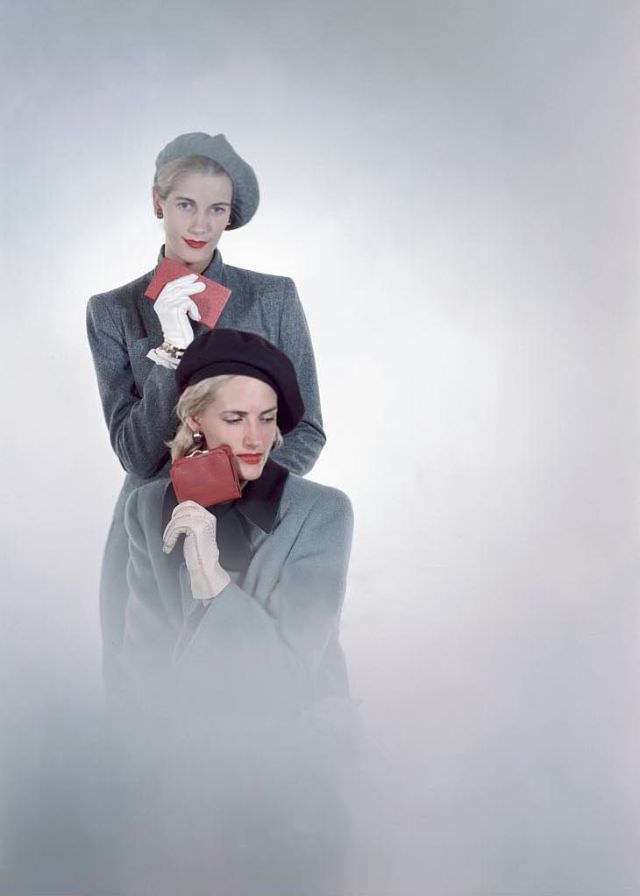
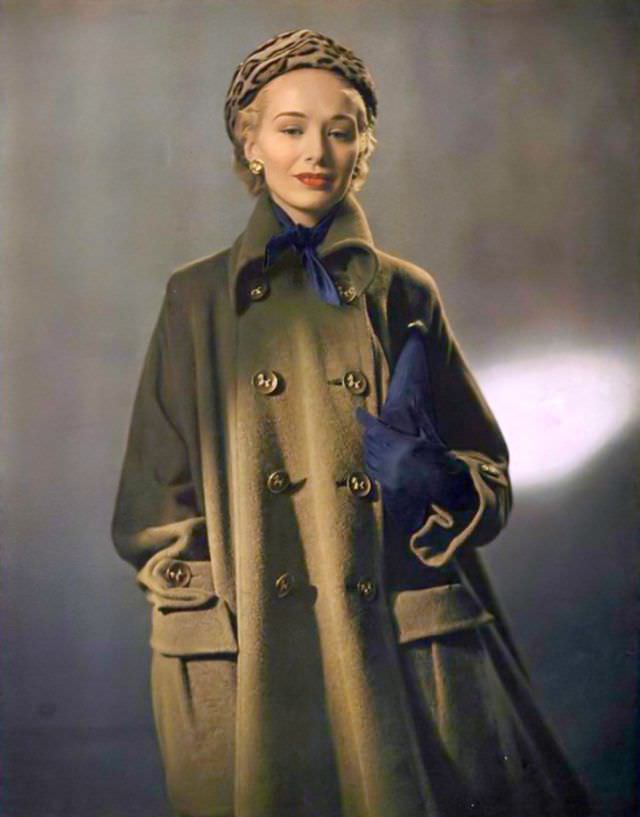
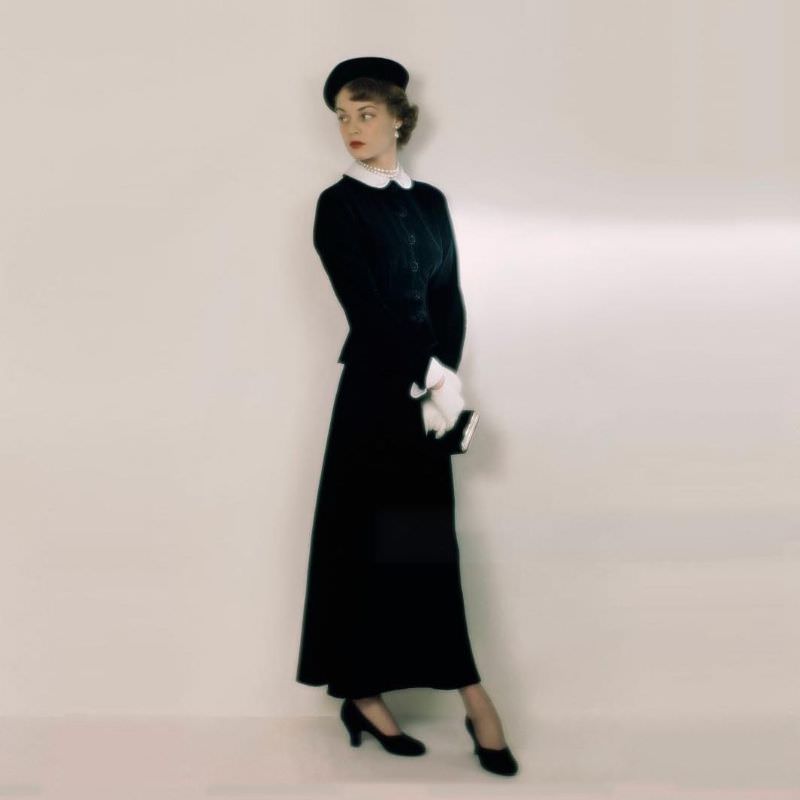
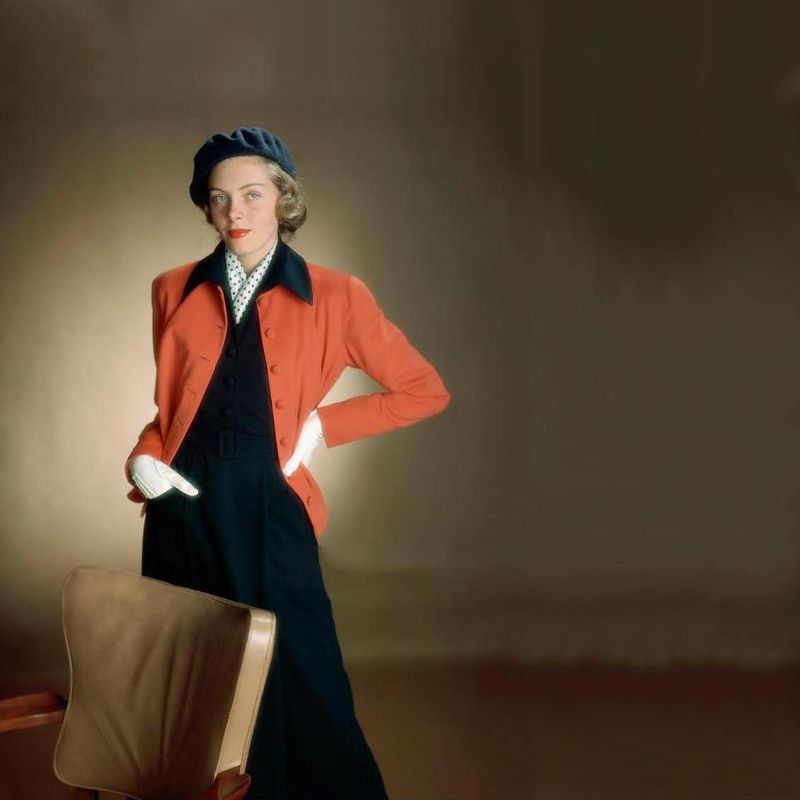
By 1948, Balkin was photographing a new generation of models who would go on to define the postwar era. Ford model Sandra Nelson appeared in a wool-alpaca coat by Originala paired with an ocelot hat and navy accessories. Jean Patchett — soon to become one of the most recognized faces in American fashion — wore a black velvet theatre suit with white collar, cuffs, and a matching beret for an October 1948 shoot.
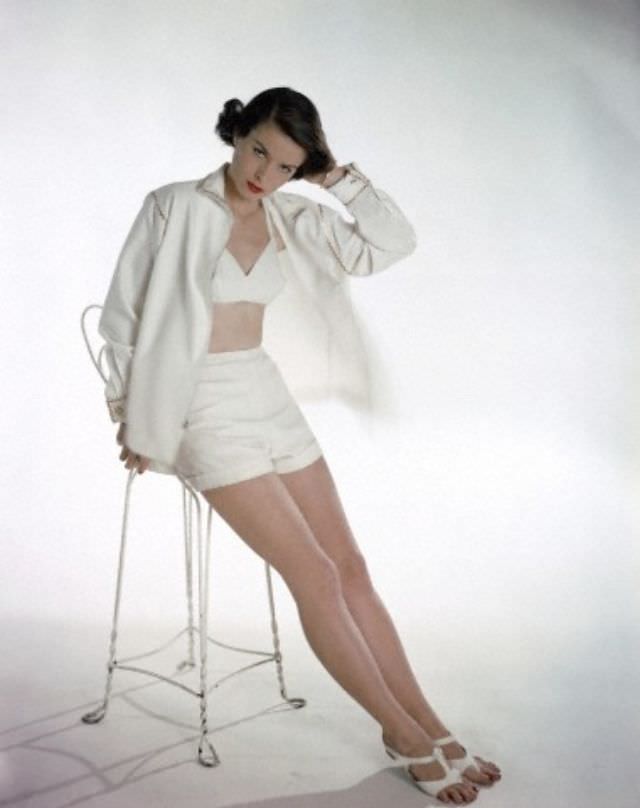
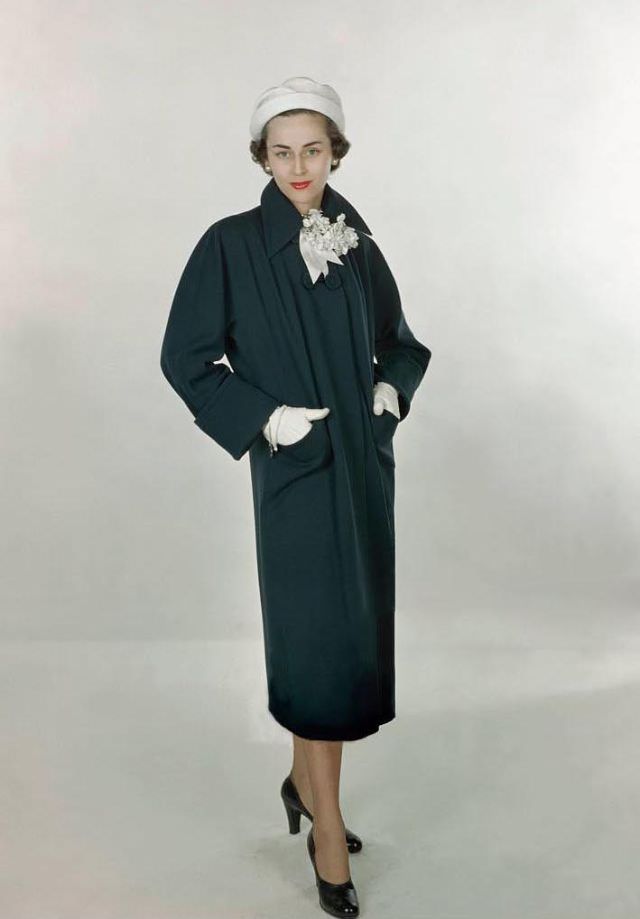
Glamour’s 1948 issues featured several of Balkin’s most detail-oriented photographs. Model Joan Petit appeared in a navy worsted wool coat by Lassie Maid with a crisp white piqué hat by Madcaps. Another shot showed a model kneeling in a calico top and black skirt, both pieces drawn from Junior Vogue sewing patterns — a nod to the budget-conscious younger readership that Glamour specifically targeted.
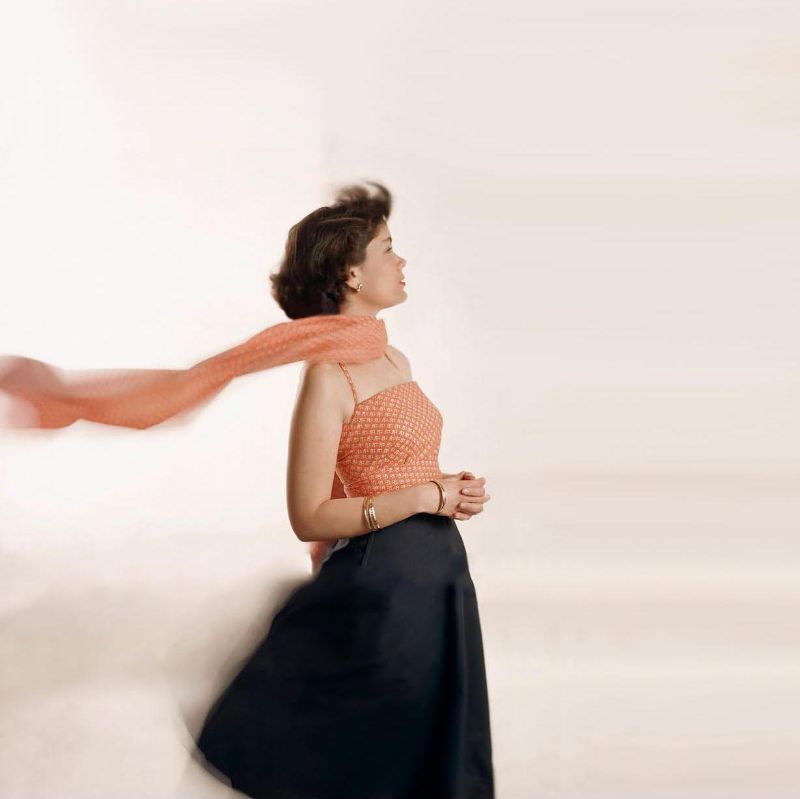
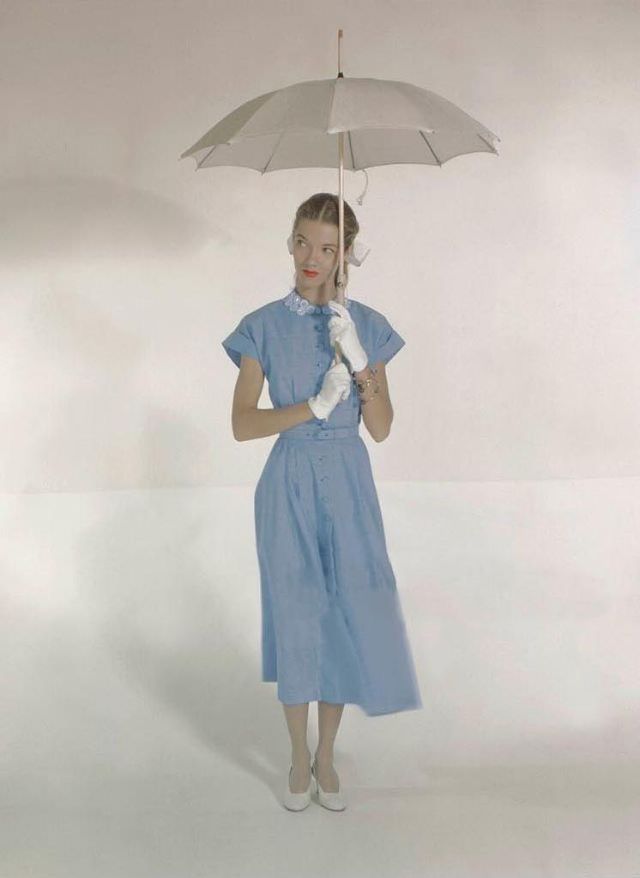
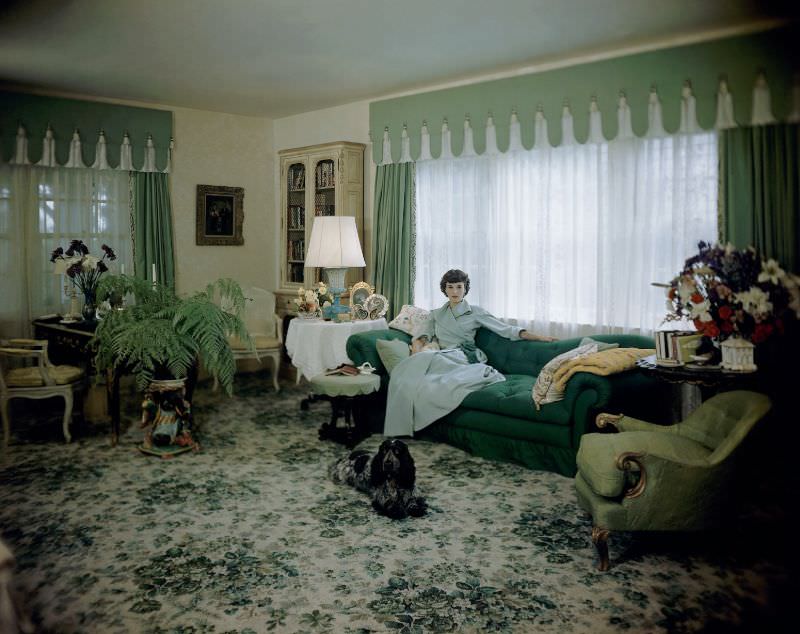
One of the most notable sitters Balkin photographed in 1948 was Barbara Cushing Mortimer, better known as Babe Paley — wife of CBS founder William Paley. She was already regarded as one of the most stylish women in New York society, and Balkin captured her in a light green wrap dress with the same ease he brought to professional models.
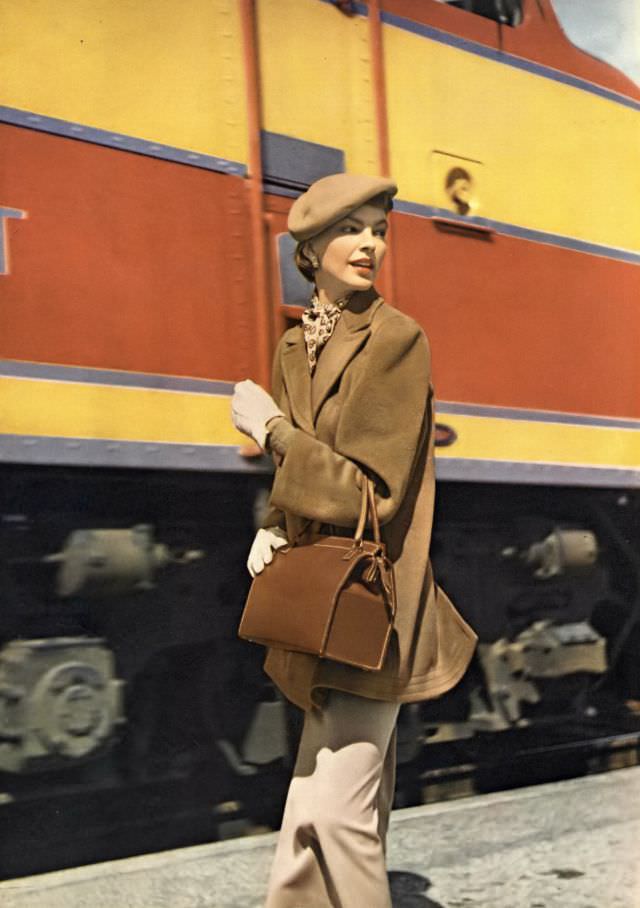
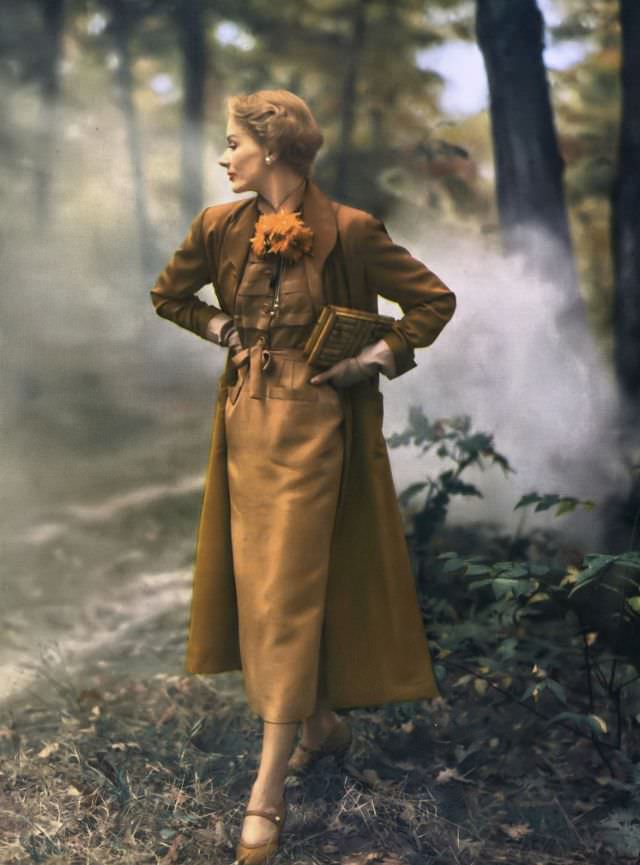
In 1949, Balkin photographed several models who were becoming fixtures in the fashion press. Katherine Cassidy appeared in Vogue’s May issue in a Worumbo Polo Cloth travel coat, felt hat, and cowhide bag — a practical, put-together look aimed at the postwar traveler. Lisa Fonssagrives, widely considered the first internationally recognized supermodel, appeared in a two-tone copper shantung ensemble from a Vogue Couturier Pattern in the January issue.
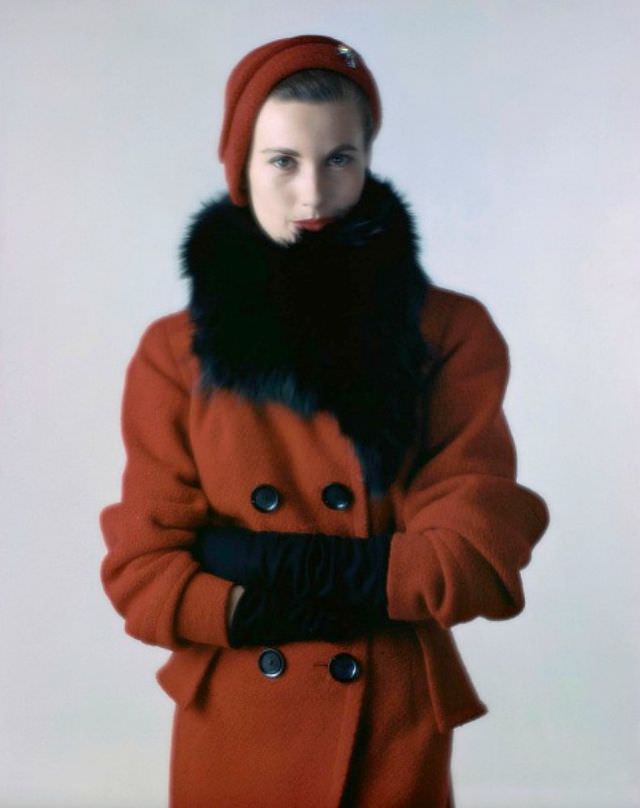
Mary Jane Russell — another major name in postwar modeling — wore a Juilliard wool tweed coat with a black fox collar in a 1949 Balkin shoot. Yellow petal-top beachwear filled another Vogue spread that same year, while a Glamour feature showed a model in a navy two-piece dress with a red cardigan jacket, the kind of sharp color-blocking that was becoming central to American ready-to-wear.
In 1950, Balkin partnered with photographers Fredrich Baker, Constantin Joffé, and Herbert Matter to open Studio Associates Inc., an advertising photography studio in New York. He was also married to Nina Leen, one of the first female photographers to work for Life magazine. Balkin continued working as a photographer until late in his life, and passed away in 1990 at the age of 84.