Hey There! Before You Go. 😧
Get the best vintage content straight into your inbox!

Don't worry, we don't spam

Fascinating Vintage Photos of the San Diego Bus System in the 1970s

San Diego’s public transit story stretches back to 1886, when the San Diego Street Car Company launched the city’s first line. Those early cars were pulled by mules along routes that would eventually grow into five lines running through Downtown San Diego. Even as that horse-drawn system was getting started in 1887, plans were already being drawn up for an electric streetcar line to replace it.

The electric streetcar era expanded quickly, largely thanks to a successful ballot initiative that gave businessman John D. Spreckels a charter amendment from the City of San Diego. The amendment handed him more than 25 years of leases on streetcar services, allowing the San Diego Electric Railway (SDERy) to grow its network across the region. But the system faced serious setbacks. The Great Flood of 1916 washed out several lines, and World War I sent the cost of railway construction materials soaring between 50 and 150 percent. Then came a new threat: the automobile. As more cars hit the streets, jitney drivers began cruising the same routes as the streetcars, pulling passengers away one fare at a time.
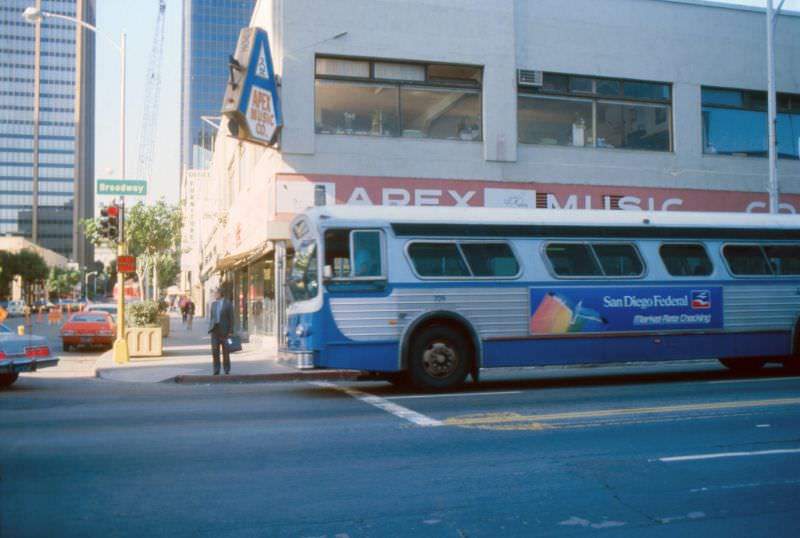
San Diego Transit 1974 Flxible bus on westbound Broadway at 7th Avenue in the 1970s

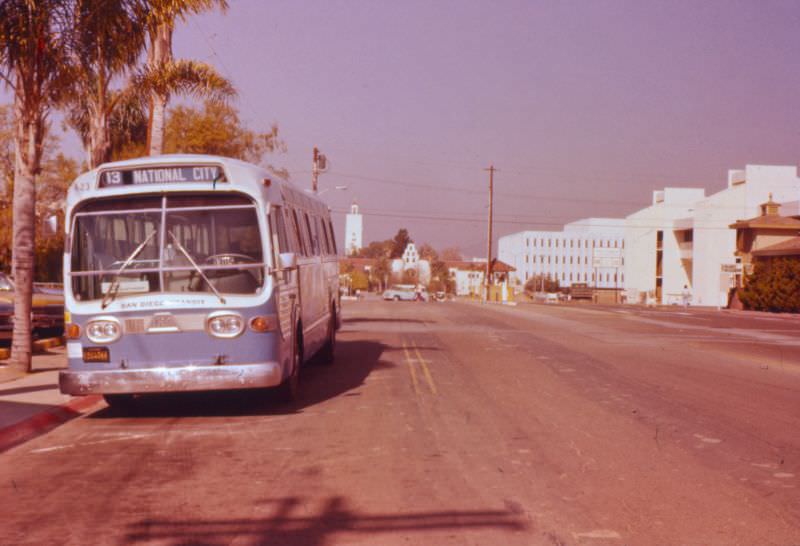
Motor buses arrived on San Diego’s streets in 1922, initially connecting National City with Chula Vista. The transition from rail to rubber wheels moved steadily over the following decades. On April 24, 1949, San Diego made history by becoming the first major city in California to drop rail service entirely, going fully bus-dependent. By the 1970s, the city’s bus network was a well-established part of daily life, with a varied fleet serving everything from busy downtown corridors to quiet neighborhood streets. The photos below capture that system in action across the decade.
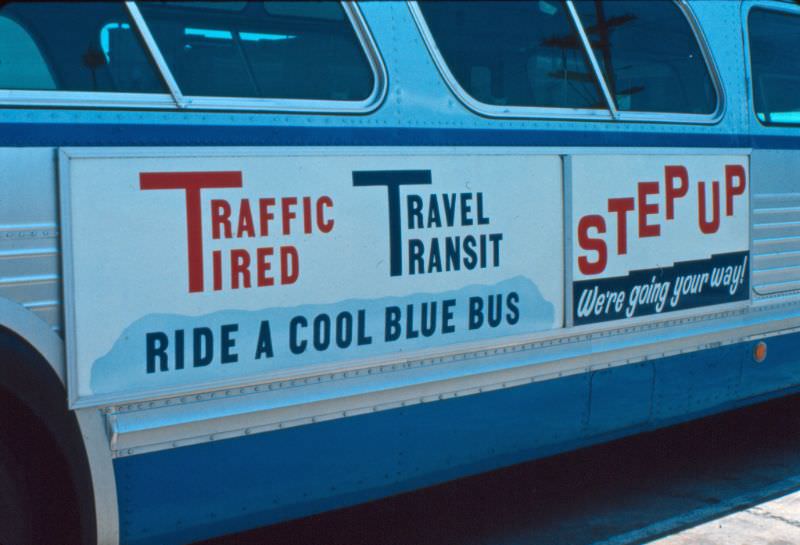
Promotional 'Bus King' advertisement from 1972
Promotional ‘Bus King’ advertisement from 1972

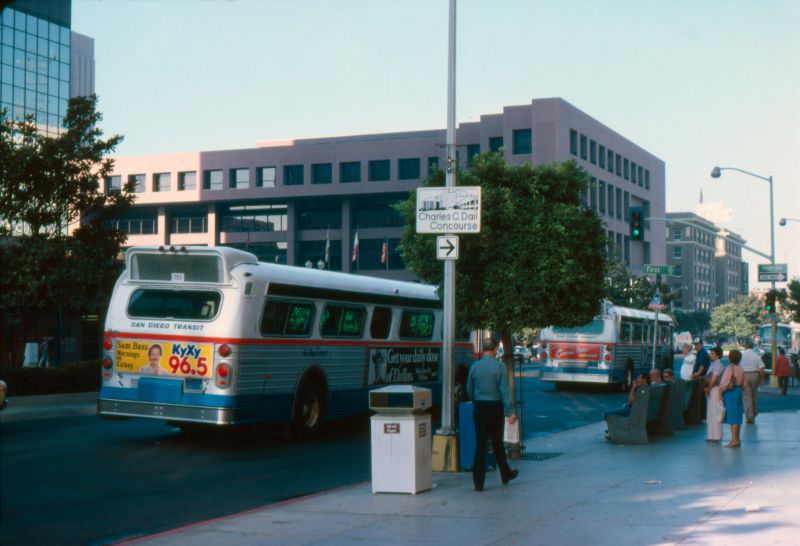
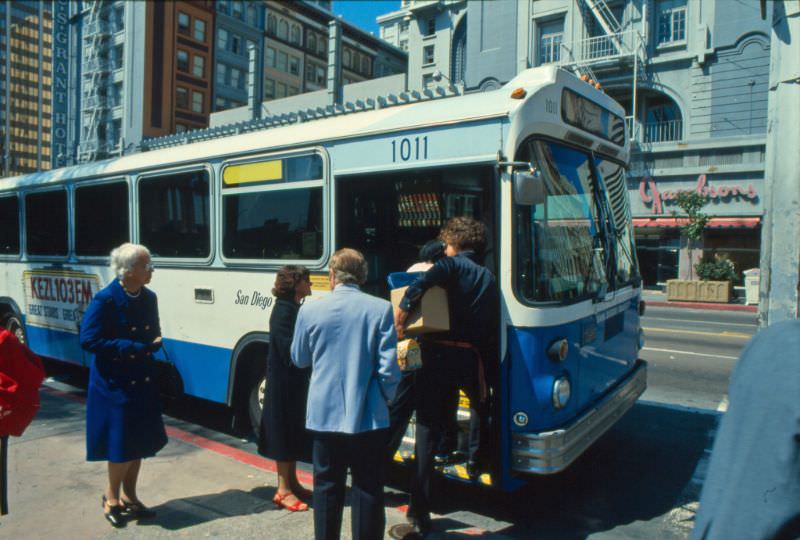
Broadway in Downtown San Diego was the spine of the bus network. Multiple routes converged there daily, and the street hummed with activity from morning rush hour through the evening. The GMC “old look” buses that had served the city for years were still a common sight, often running alongside newer models as the fleet gradually modernized.
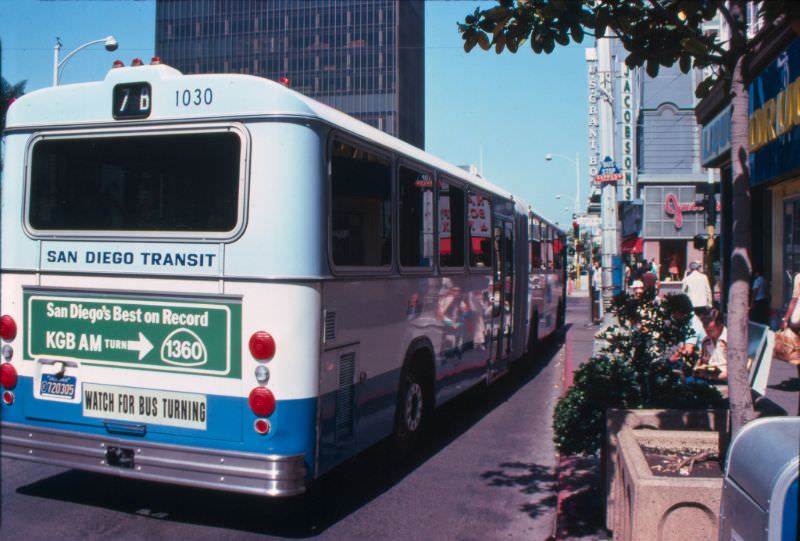
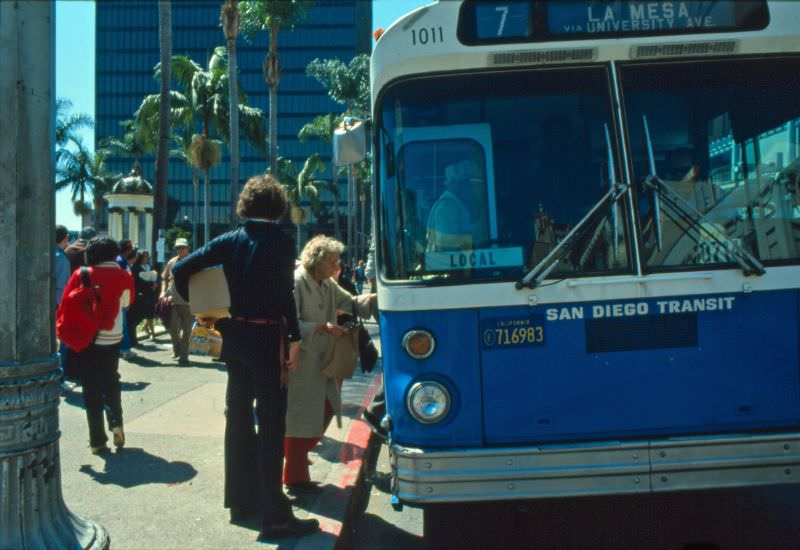
Route 7 bus on Broadway in Downtown San Diego

San Diego Transit wasn’t just focused on moving people — it was also pushing public awareness campaigns. A 1972 billboard urged residents to “Join your car pool,” reflecting broader national conversations about traffic congestion and energy use that would intensify later in the decade during the 1973 oil crisis.
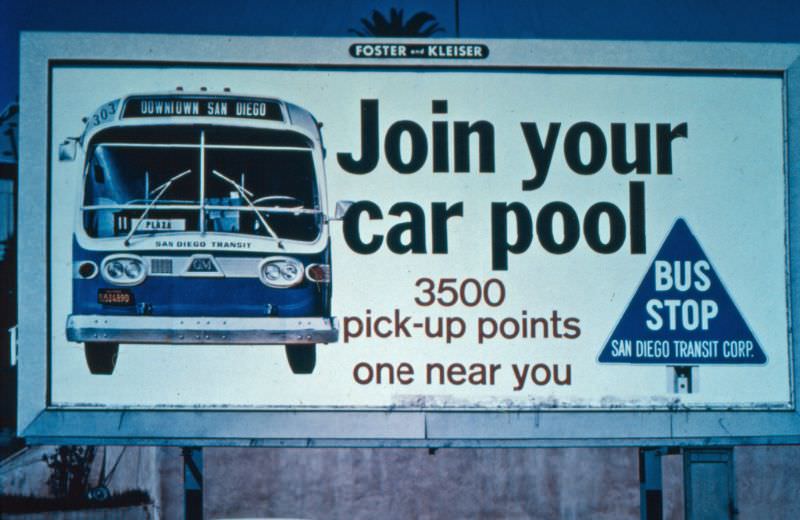
"Join your car pool", a San Diego Transit billboard, 1972
“Join your car pool”, a San Diego Transit billboard, 1972

In 1974, San Diego Transit tested a MAN articulated bus — a long, accordion-style vehicle designed to carry more passengers than a standard bus. The demonstrator model was shown off publicly, with local mascot Charlie Tuna on hand for the occasion. That same year, the agency took delivery of new Flxible suburban coaches, a model that would become a familiar part of the San Diego streetscape through the rest of the decade.
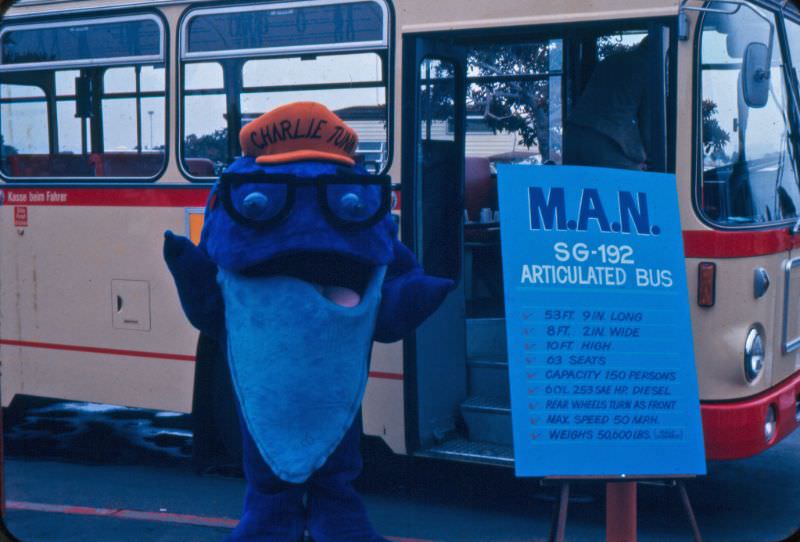
Charlie Tuna shows off a demonstrator MAN articulated bus in 1974
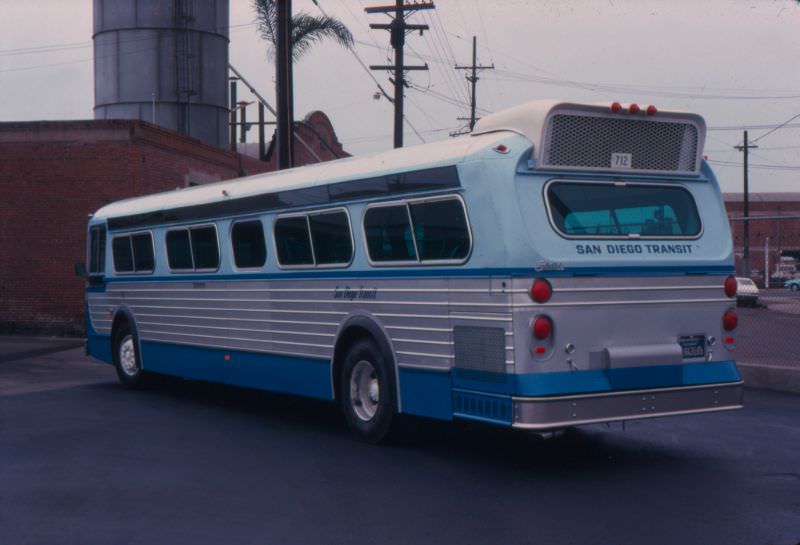
Just delivered to San Diego Transit, a brand new Flxible suburban coach in October 1974
New to the San Diego Transit fleet here in 1974

Getting schedule information to riders was a practical challenge in the pre-internet era. Transit staff refilled timetable racks placed inside supermarkets, making it easy for shoppers to grab a route schedule while running errands. It was a simple but effective way to keep the public informed.
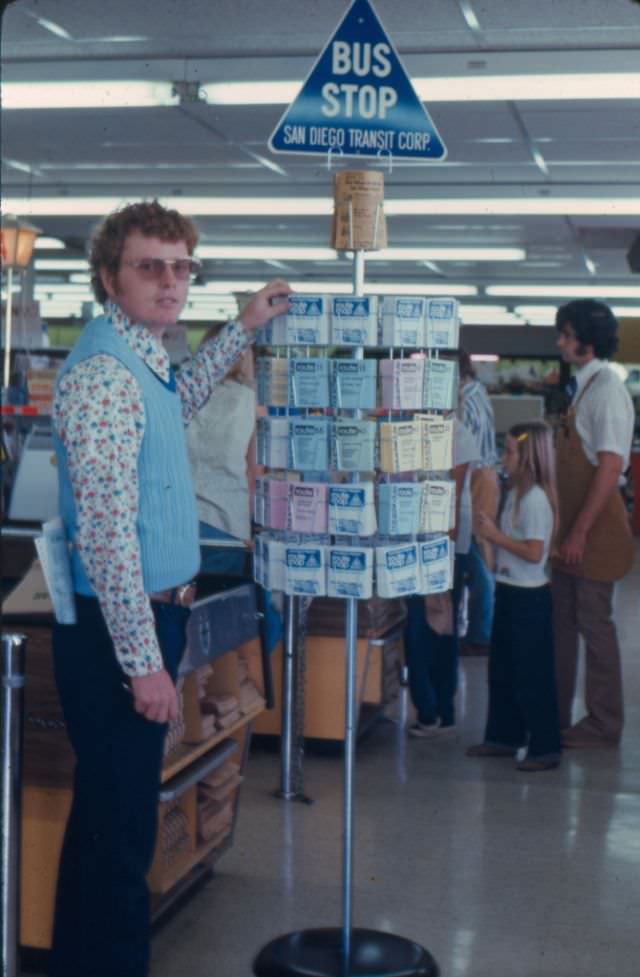
Re-filling a supermarket timetable rack in October 1975

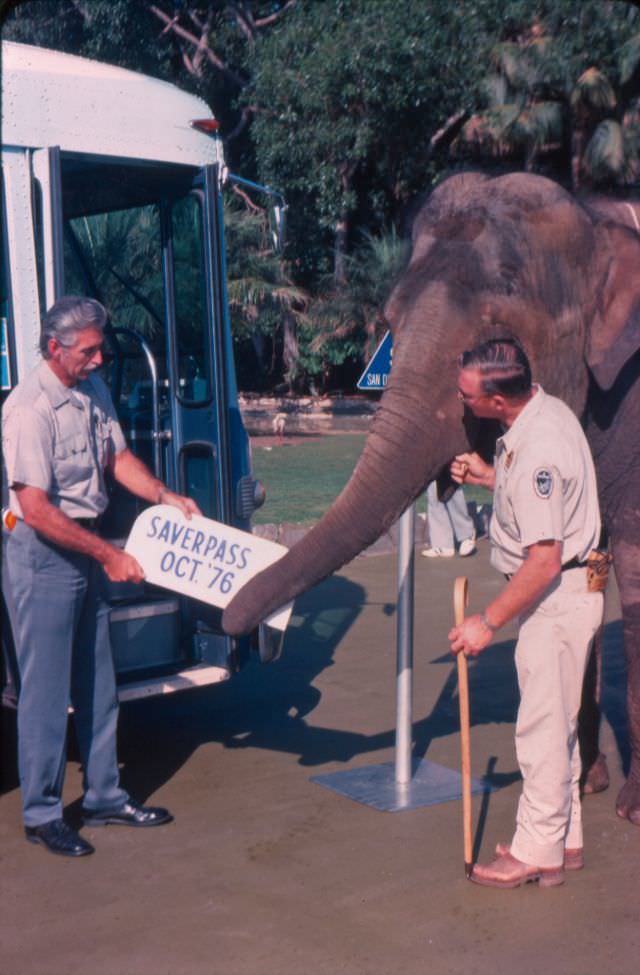
San Diego Transit also partnered with local businesses for public safety campaigns. In 1975, the agency teamed up with Yellow Cab to discourage drunk driving, giving people a clear alternative when they were in no condition to get behind the wheel. The following year brought a more lighthearted marketing moment, when Carol the elephant from the San Diego Zoo was brought in to promote the new Super Saver pass.
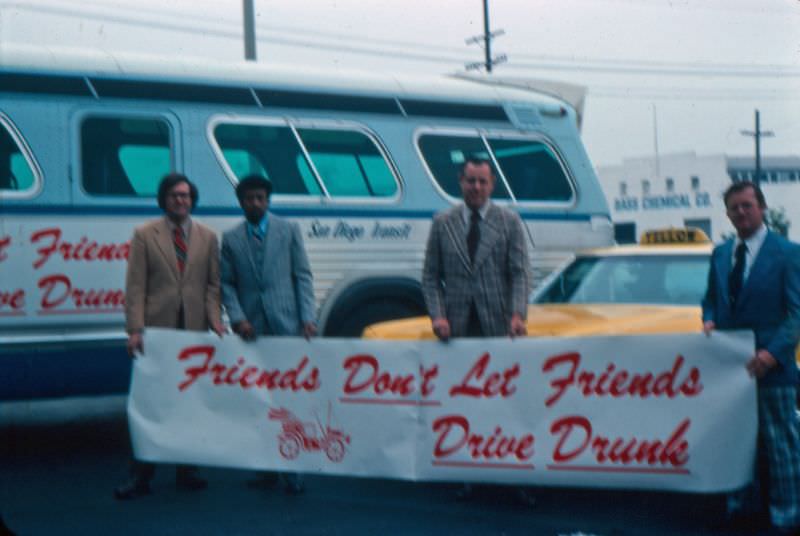
San Diego Transit and Yellow Cab teamed up for a campaign against drunk driving in 1975
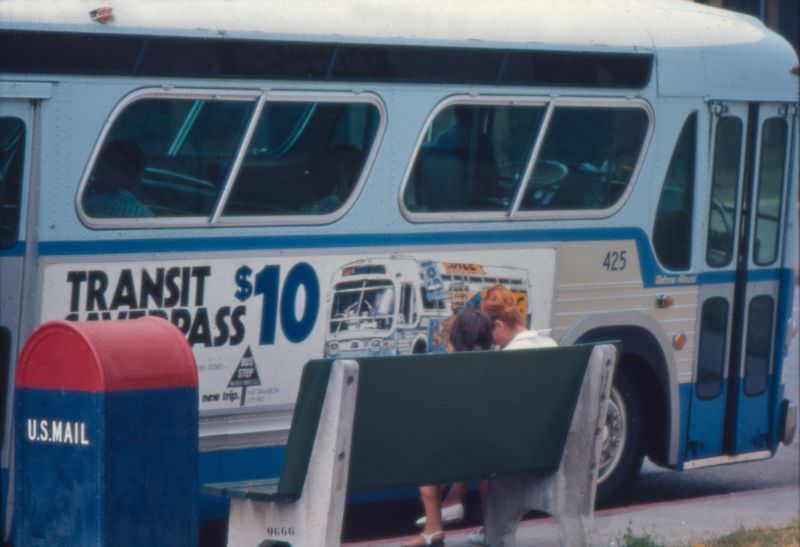
Carol the elephant from the San Diego Zoo introduces the Super Saver pass in 1976

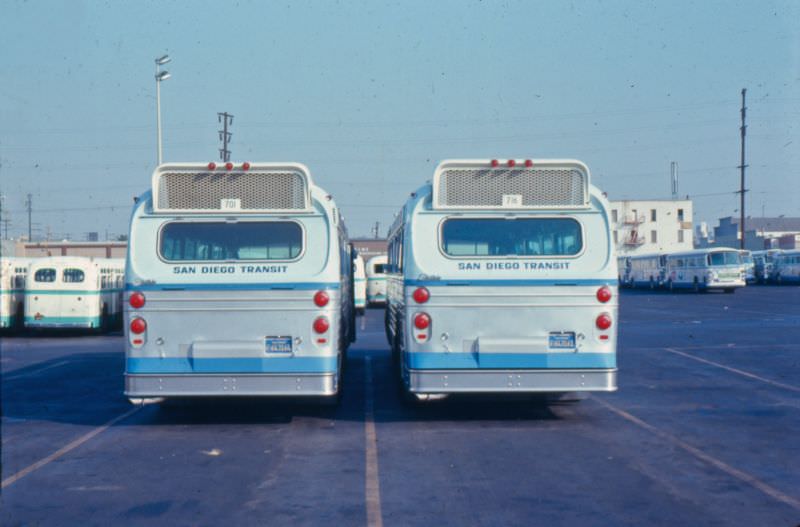
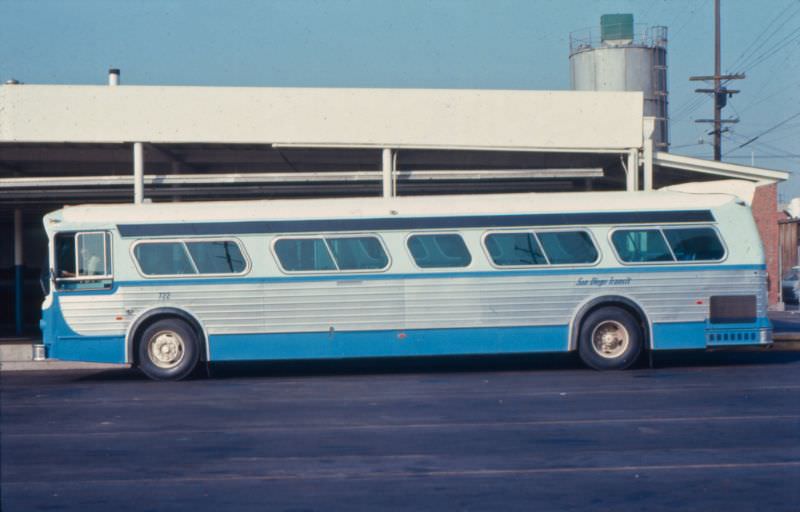
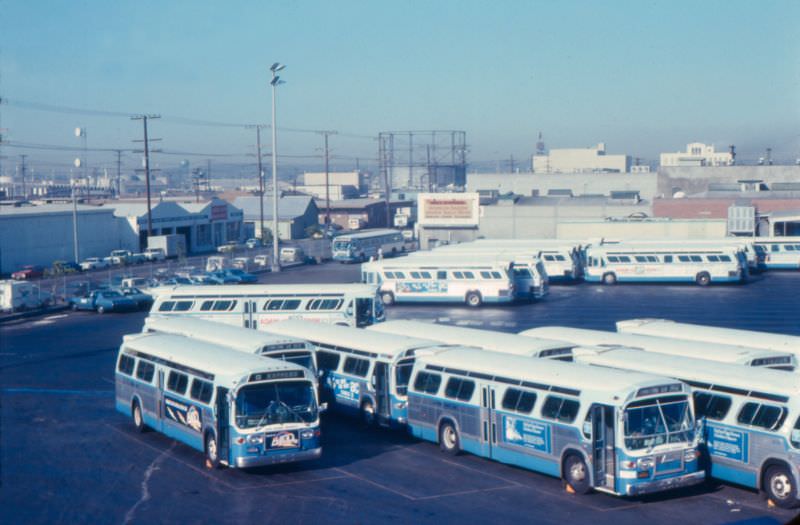
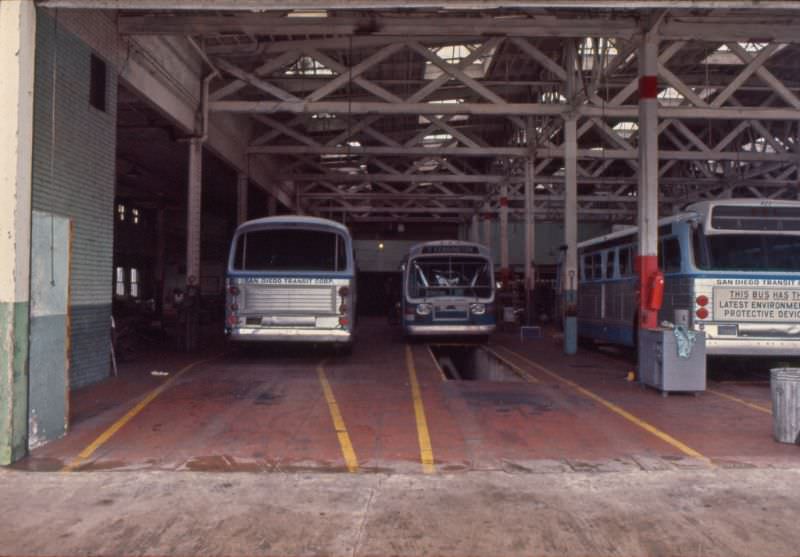
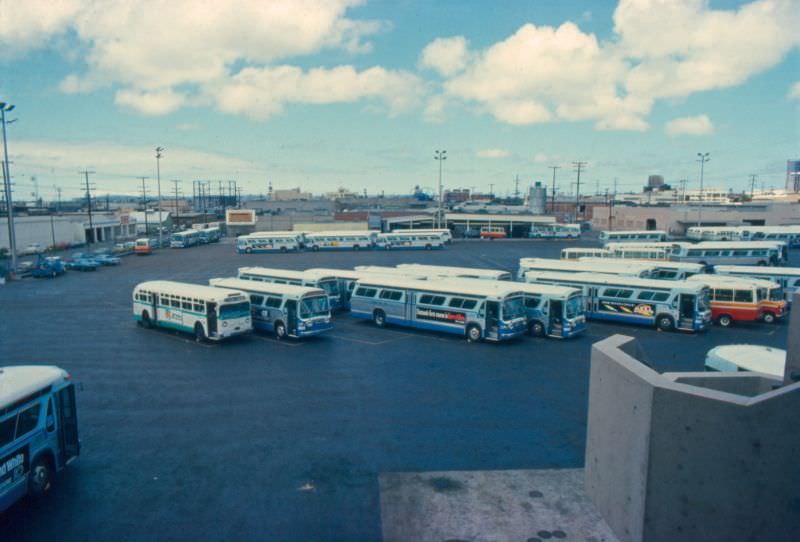
The Imperial Avenue Division served as the operational heart of San Diego Transit. It was where buses were stored, maintained, and dispatched across the city. The yard held an eclectic mix of vehicles — older GMC models alongside newer Flxible coaches — all kept running by the maintenance crews working in the shop on site.
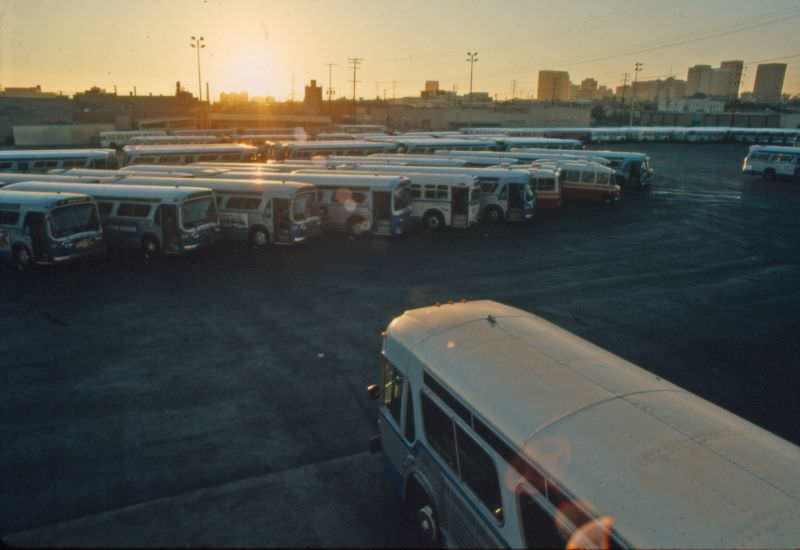
Sunset over San Diego Transit's Imperial Avenue Division in summer 1976
Sunset over San Diego Transit’s Imperial Avenue Division in summer 1976
1967 GMC at San Diego State University in 1977
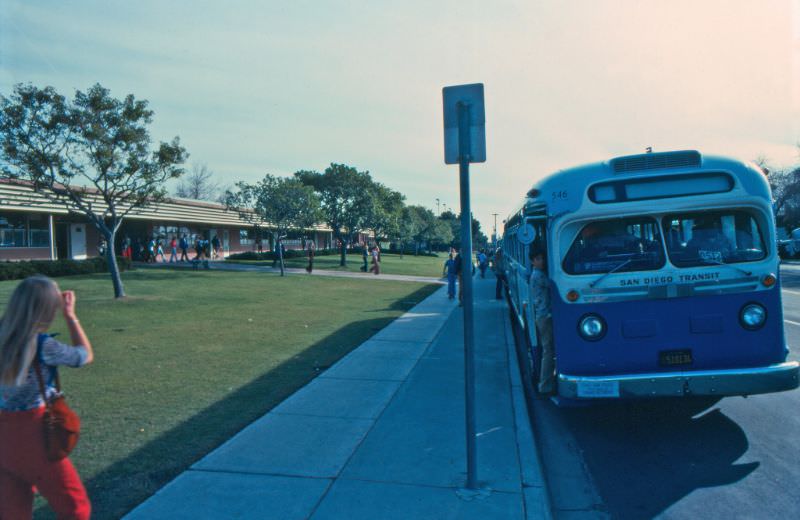
GMC "old look" bus on a school tripper at Marston Junior High School in January 1977
GMC “old look” bus on a school tripper at Marston Junior High School in January 1977

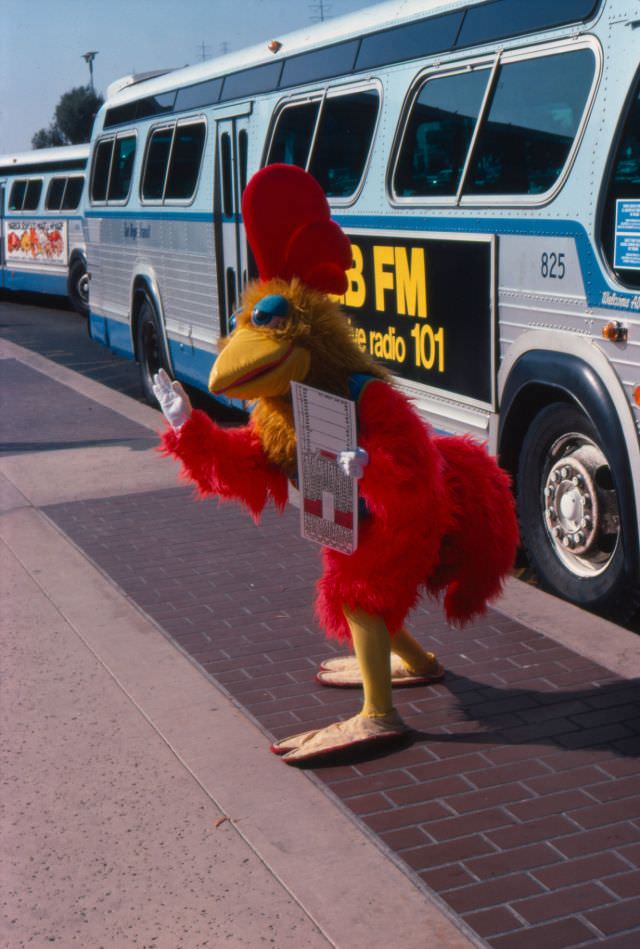
The Fashion Valley Transit Center was one of the busiest transfer points in the system by 1977. Riders could board multiple routes there, and the center served as a hub connecting neighborhoods across the western and northern parts of the city. It was a lively place, as these photos from January 1977 show — and it had its share of memorable visitors, including the San Diego Chicken, who turned up there in December 1977.
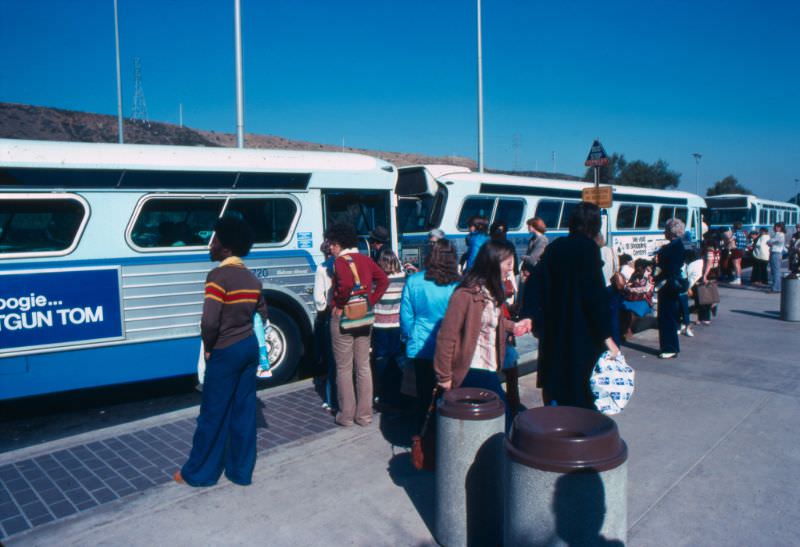
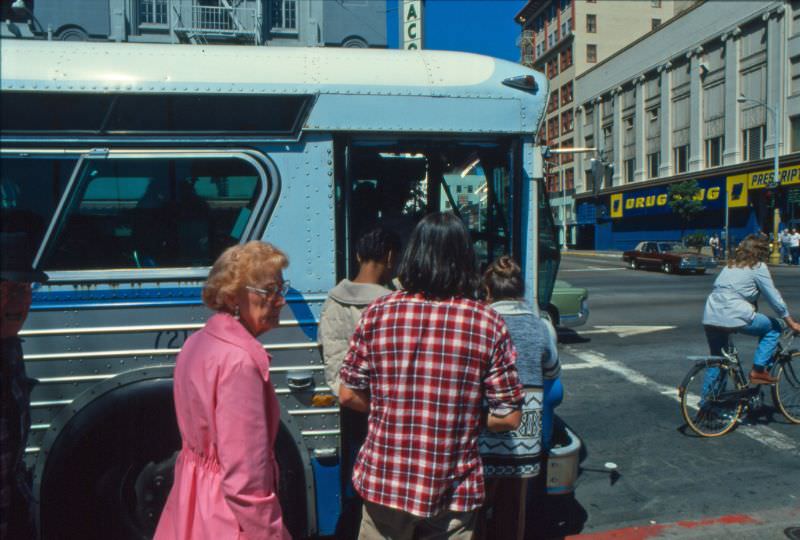
Passengers board San Diego Transit buses at the Fashion Valley Transit Center in January 1977
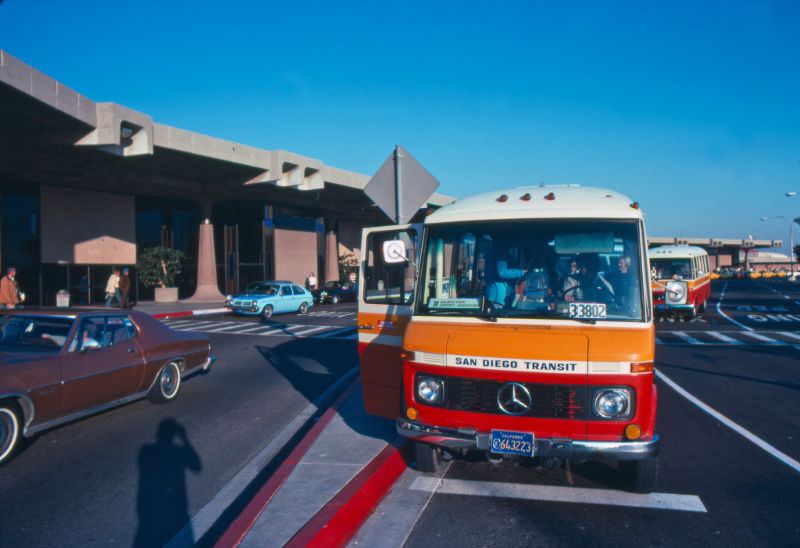
Route 38 Mercedes minibus at the San Diego Airport in January 1977
San Diego Chicken getting a ride at Fashion Valley Transit Center in December 1977

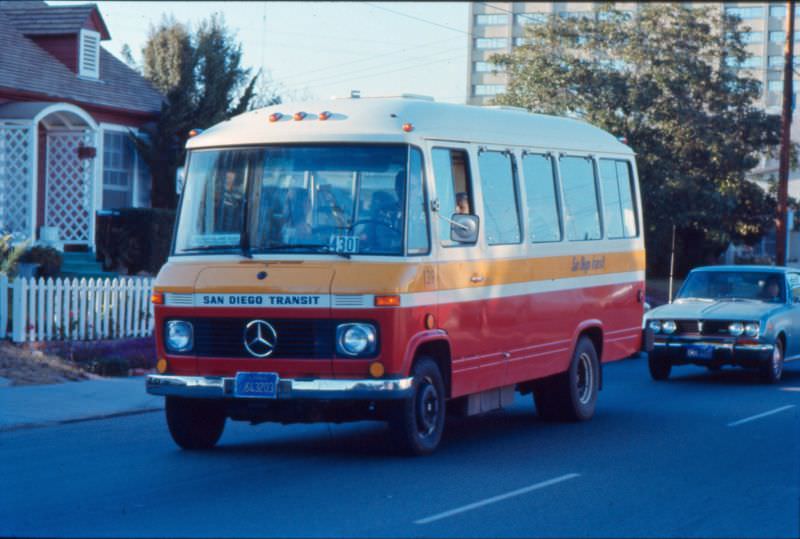
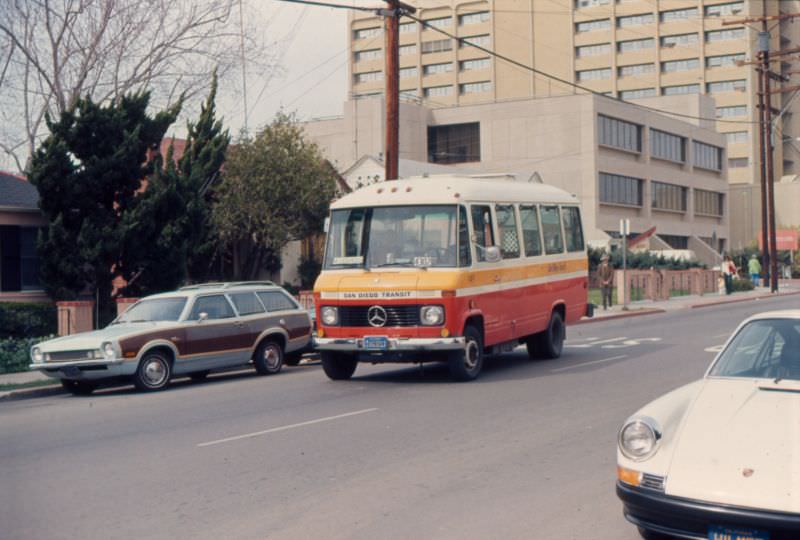
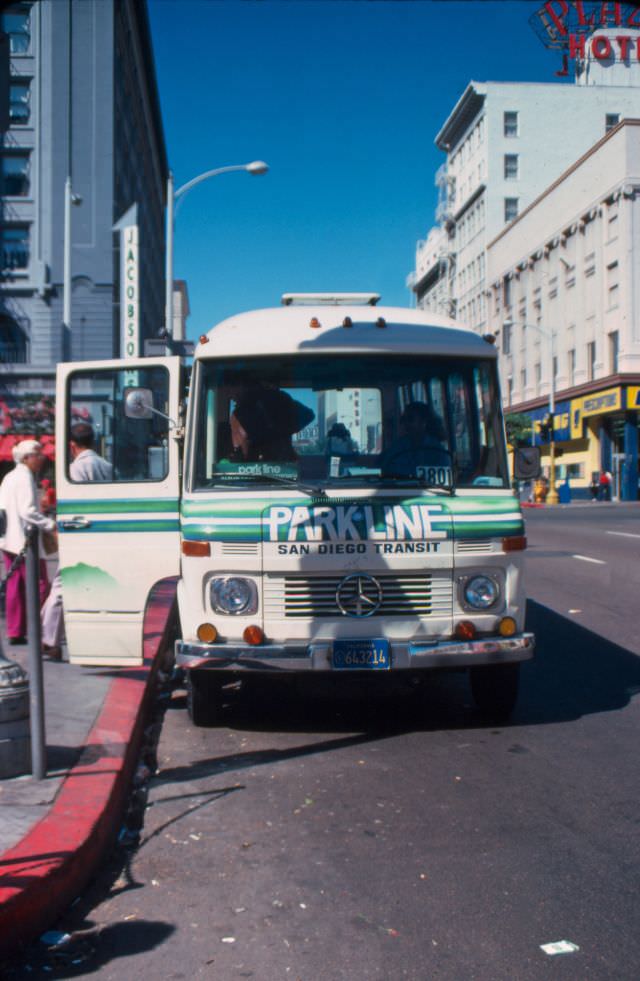
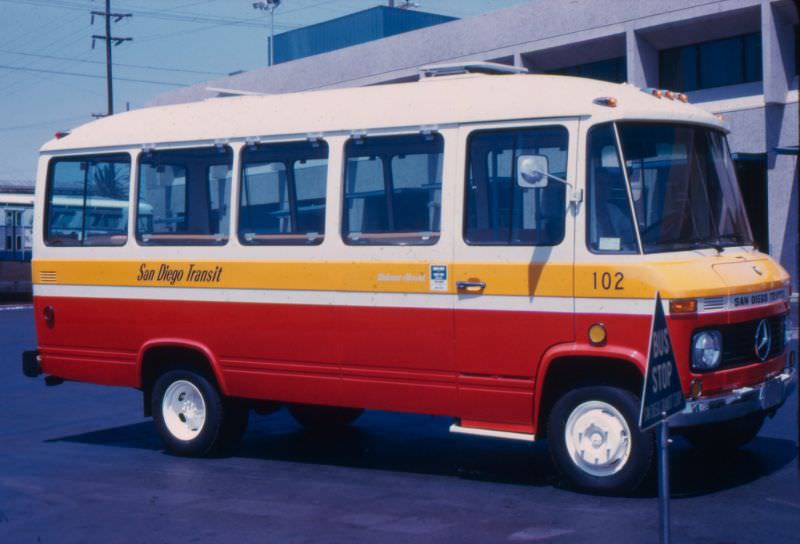
Not every route called for a full-size bus. San Diego Transit operated a fleet of Mercedes-Benz minibuses on neighborhood routes throughout the 1970s, threading through tighter streets in areas like Mission Hills and Hillcrest where a standard bus would have been impractical. These smaller vehicles brought transit access to parts of the city that might otherwise have been difficult to serve.
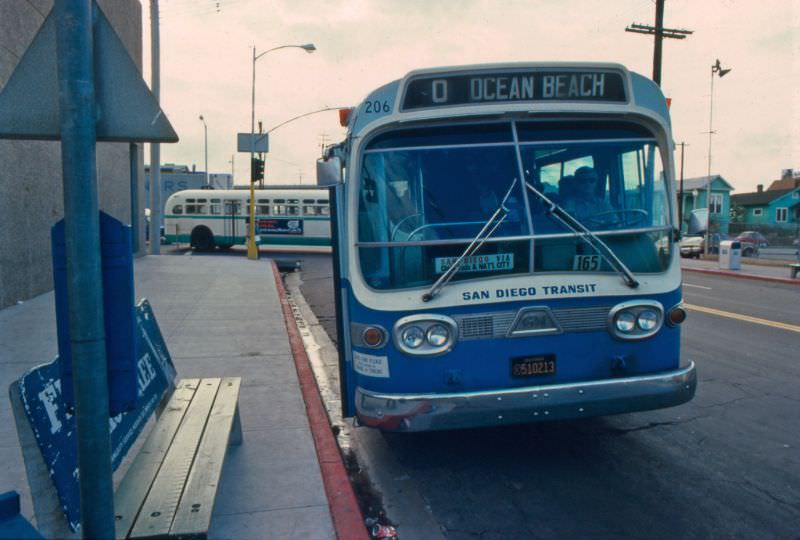
1959 GMC on Imperial Avenue at 16th Street in Downtown San Diego
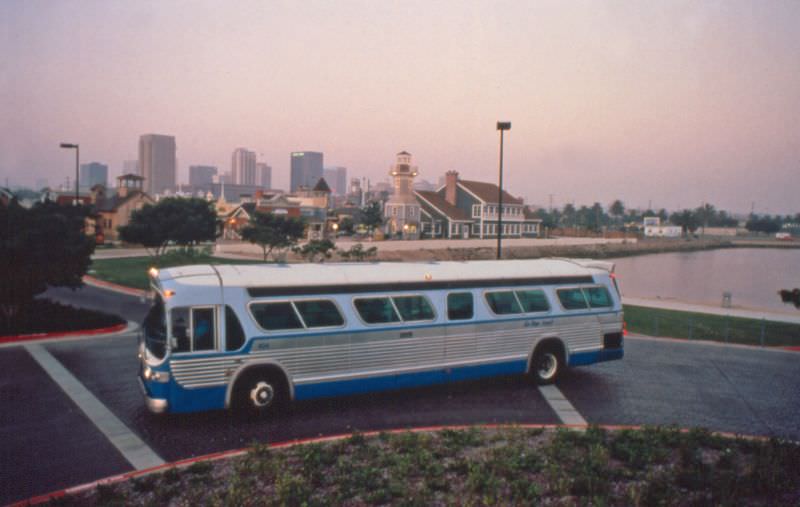
1972 GMC bus at Seaport Village in the 1970s
1974 Flxible bus outbound on G Street at 16th Street in Downtown San Diego in the late 1970s
1974 Flxible buses on westbound Broadway passing First Avenue

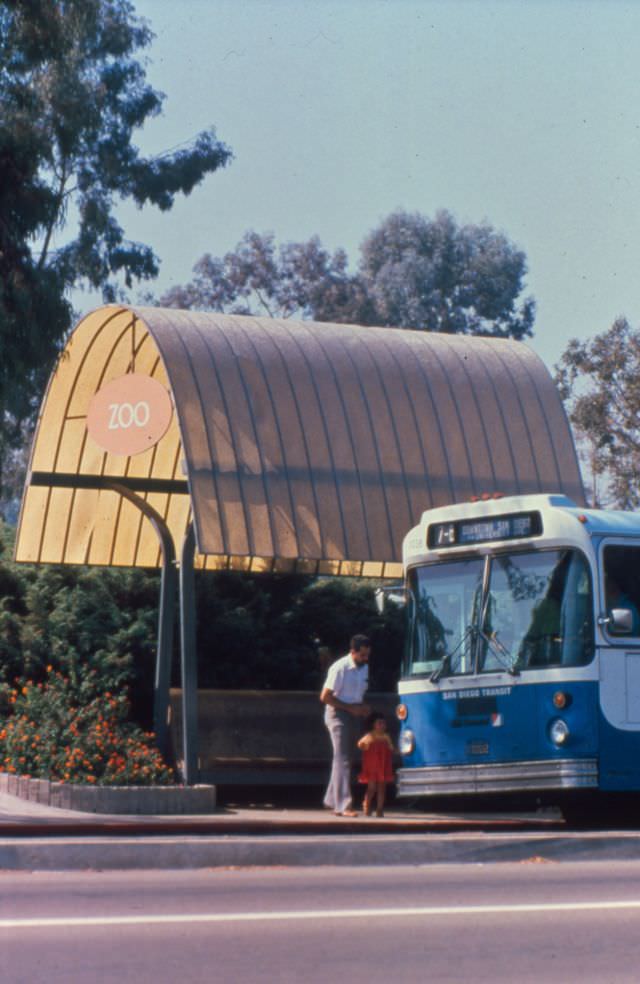
The San Diego Zoo stop on Park Boulevard was one of the more recognizable pickup points on Route 7. Both the older 1959 GMC buses and the newer 1978 MAN articulated buses served this stop at different points in the decade. The MAN articulated buses, which arrived in the fleet in 1978, were notably longer than anything that had come before, capable of carrying significantly more passengers on the busiest corridors.
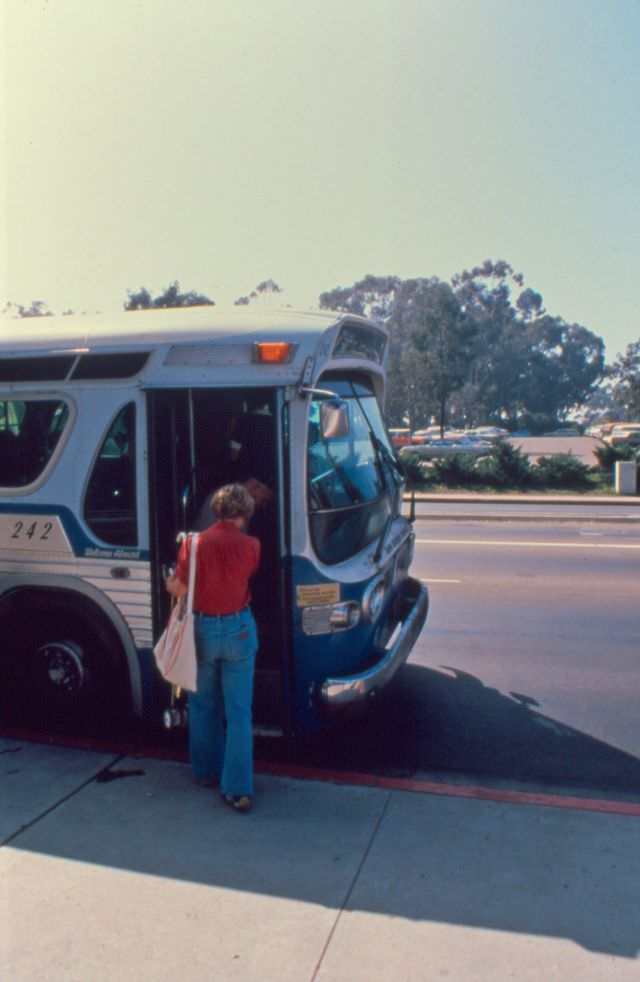
A 1959 GMC bus operating on Route 7 picks up passengers on Park Blvd. near the San Diego Zoo
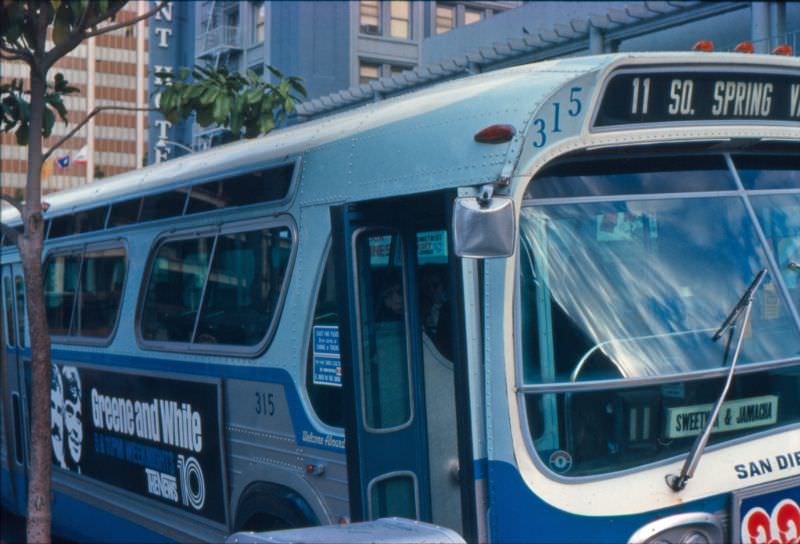
A 1968 GMC bus operating on Route 11 picks up passengers on Broadway at 4th Avenue (Horton Plaza)
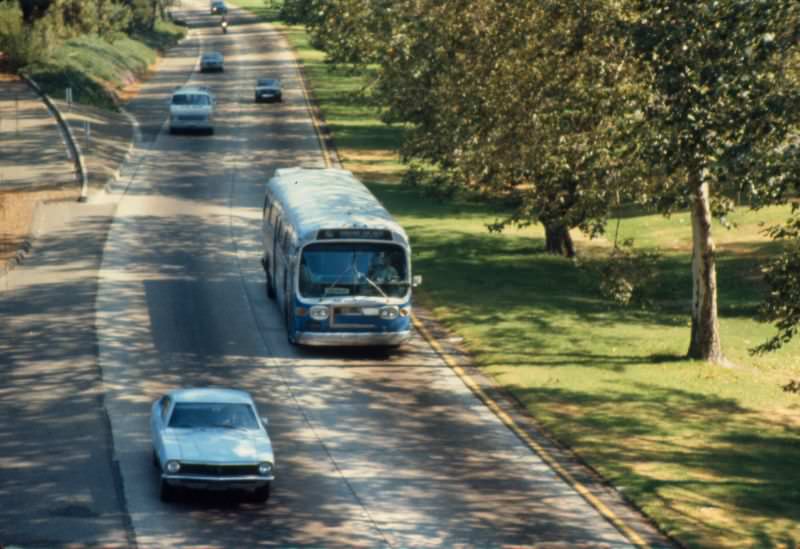
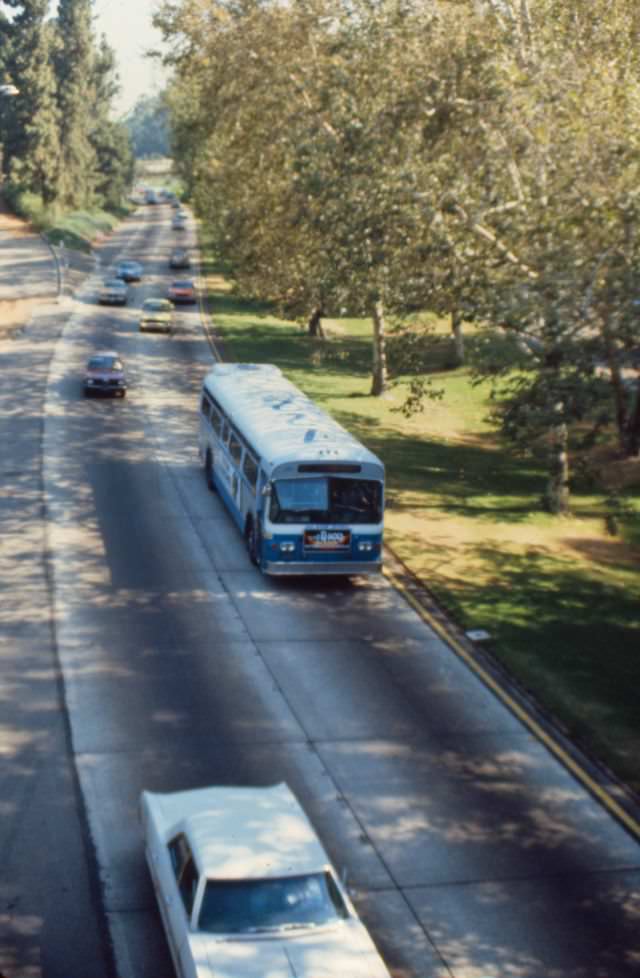
A 1968 GMC bus travels south on State Route 163 through Balboa Park into Downtown San Diego
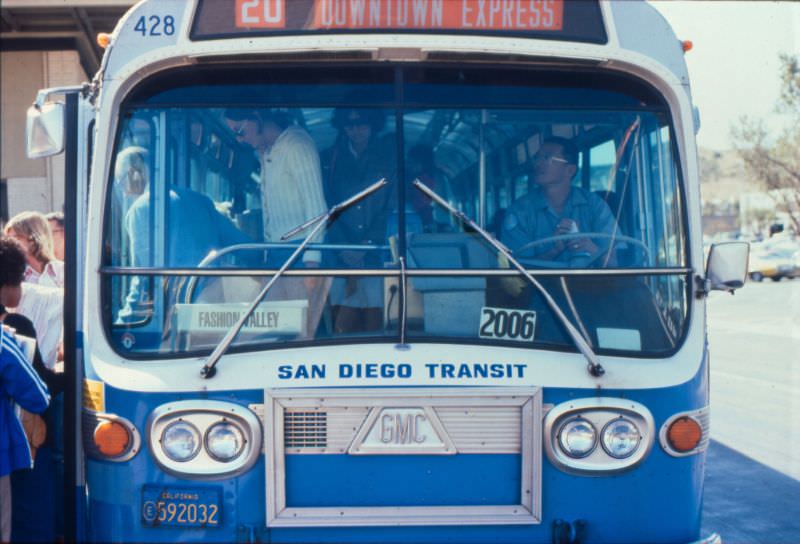
A 1972 GMC bus operating on Route 20 drops off passengers at the Fashion Valley Transit Center
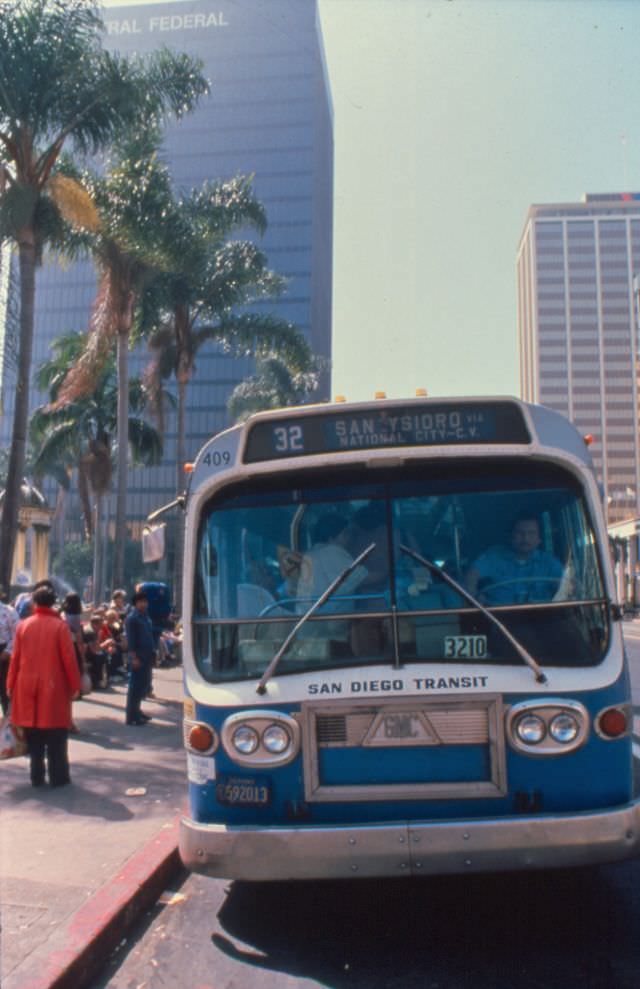
A 1972 GMC bus operating on Route 32 picks up passengers on Broadway at 4th Avenue (Horton Plaza)

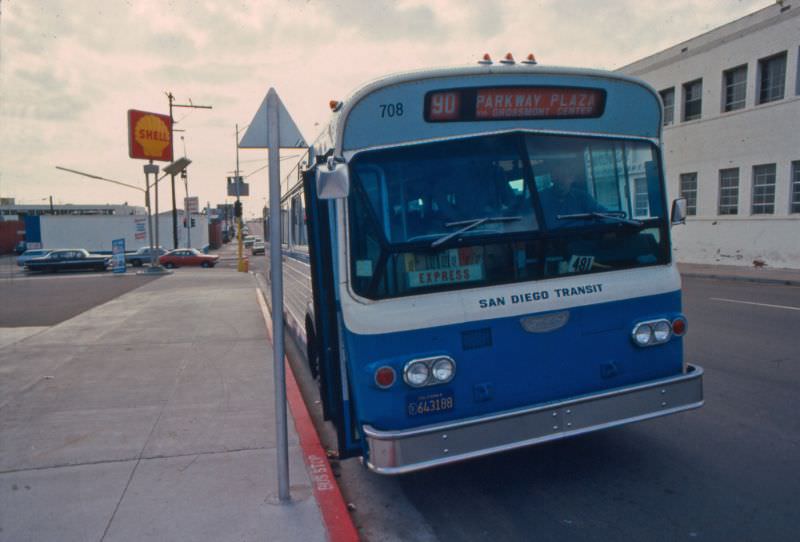
Horton Plaza at Broadway and 4th Avenue was among the most active bus stops in the entire system. Route after route used this location as a key stop, and photographs from throughout the 1970s show a steady stream of different bus models pulling up to the curb — 1968 GMCs, 1972 GMCs, 1974 Flxible buses, and eventually the 1978 MAN articulated models.
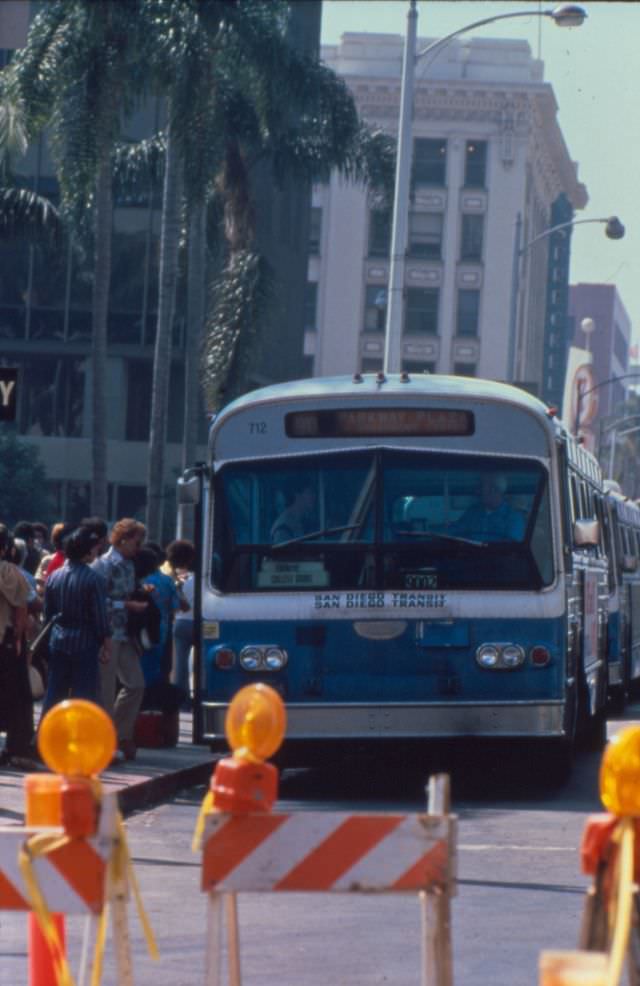
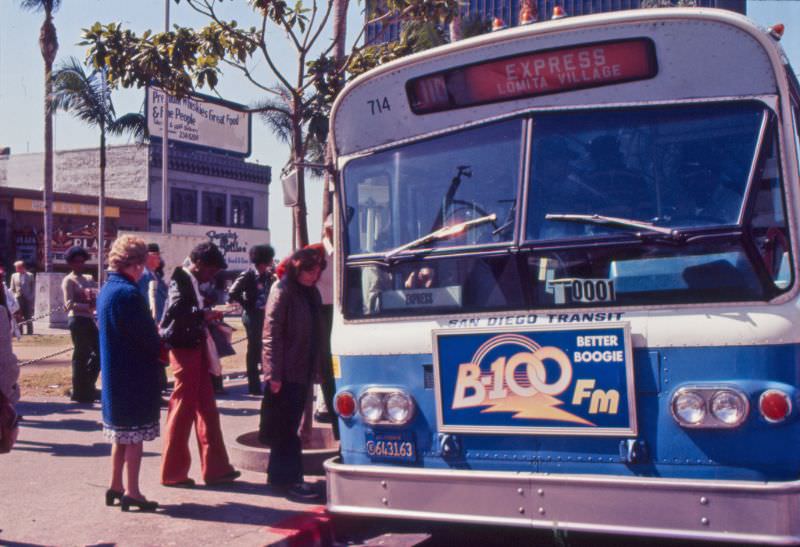
A 1974 Flxible bus operating on Route 90 picks up passengers on Broadway at 4th Avenue (Horton Plaza)
A 1974 Flxible bus operating on Route 110 picks up passengers on Broadway at 4th Avenue (Horton Plaza)
A 1974 Flxible bus picks up passengers on Broadway at 4th Avenue (Horton Plaza)
A 1974 Flxible bus travels south on State Route 163 through Balboa Park into Downtown San Diego
A 1974 Flxible surburban bus at San Diego Transit's Imperial Avenue Division in the 1970s
A 1974 Flxible surburban bus at San Diego Transit’s Imperial Avenue Division in the 1970s
A 1975 GMC bus operating on Route 41 stopped on layover
A 1978 MAN articulated bus operating on Route 7 picks up passengers on Broadway at 4th Avenue (Horton Plaza)
A 1978 MAN articulated bus operating on Route 7 picks up passengers on Park Blvd. at the San Diego Zoo

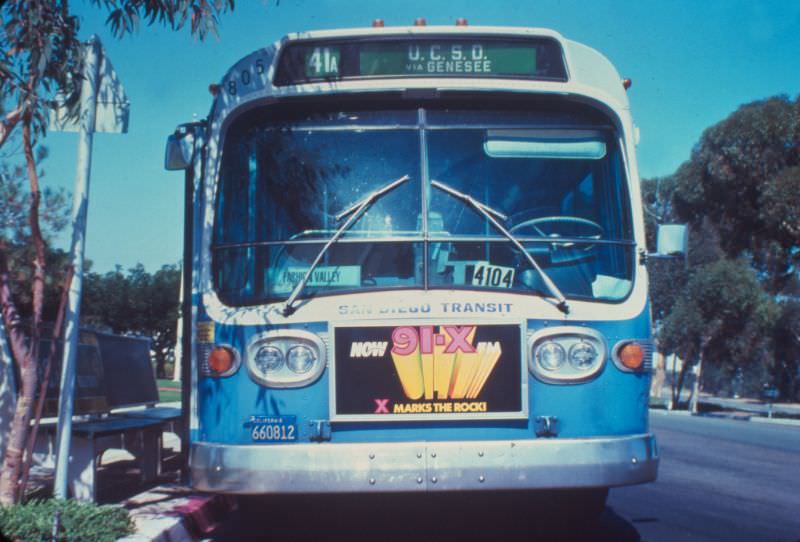
Cycling and transit were already being connected in San Diego well before bike racks became standard equipment. In the 1970s and 1980s, only select routes carried bike racks, with Route 41 — running between UCSD and Fashion Valley — among those equipped. It was a forward-thinking feature for the era, catering to the university crowd making the trip between campus and the city.
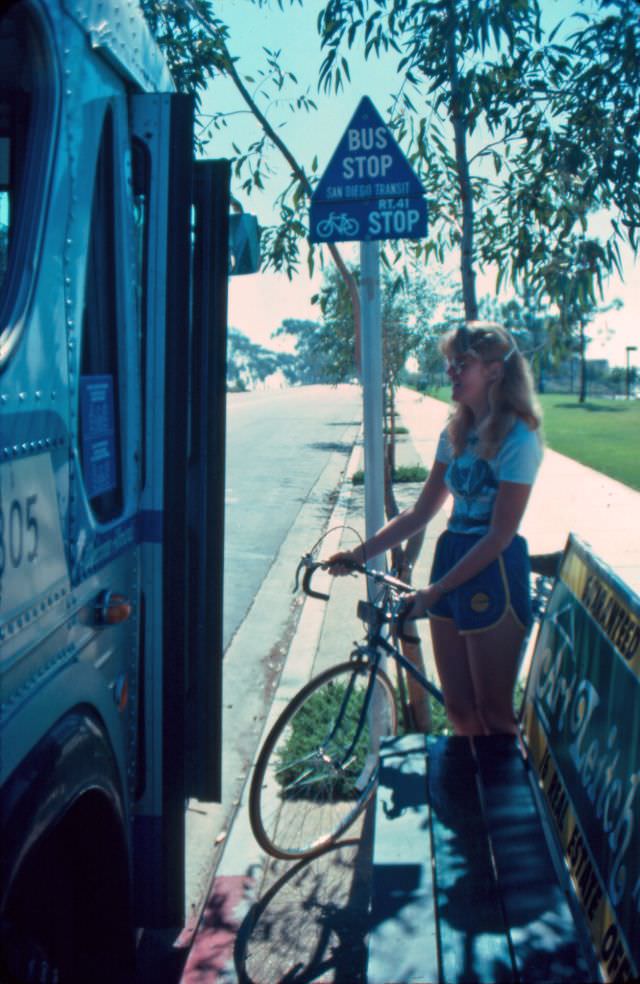
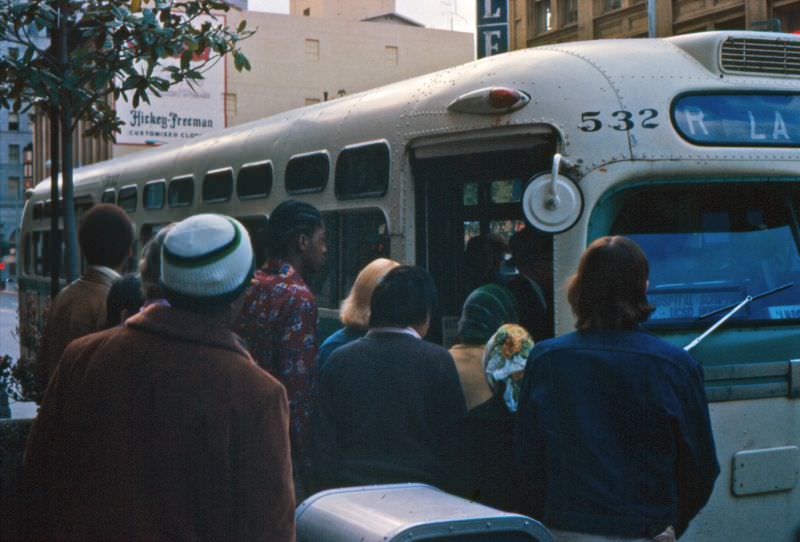
All MTS buses have bike racks now, but in the 1970s and 1980s, only selected routes were equipped, such as Route 41 connecting UCSD and Fashion Valley
An R-route "old-look" GMC bus picks up passengers on westbound Broadway at 4th Avenue
An R-route “old-look” GMC bus picks up passengers on westbound Broadway at 4th Avenue
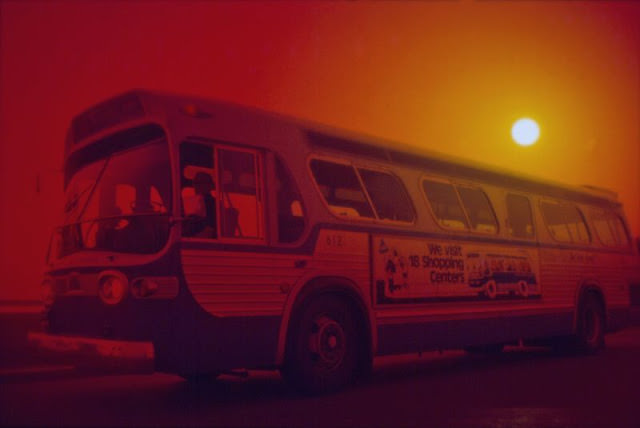
GMC bus at sunset
GMC bus at sunset

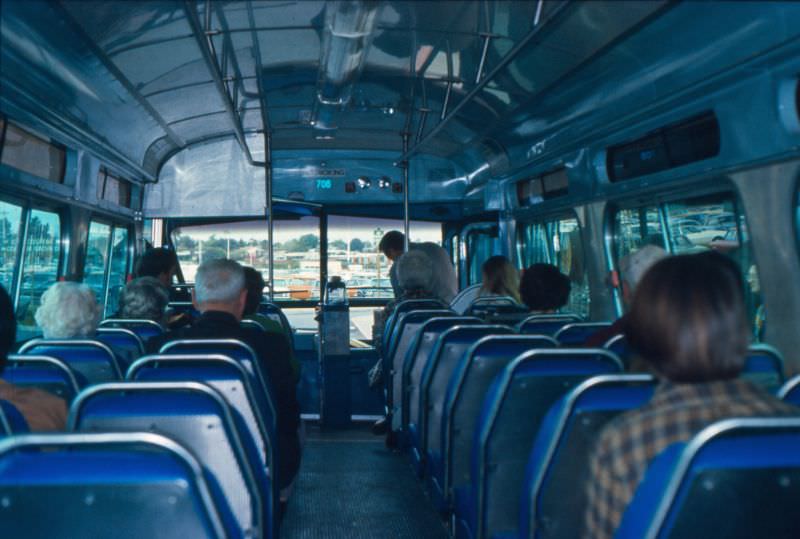
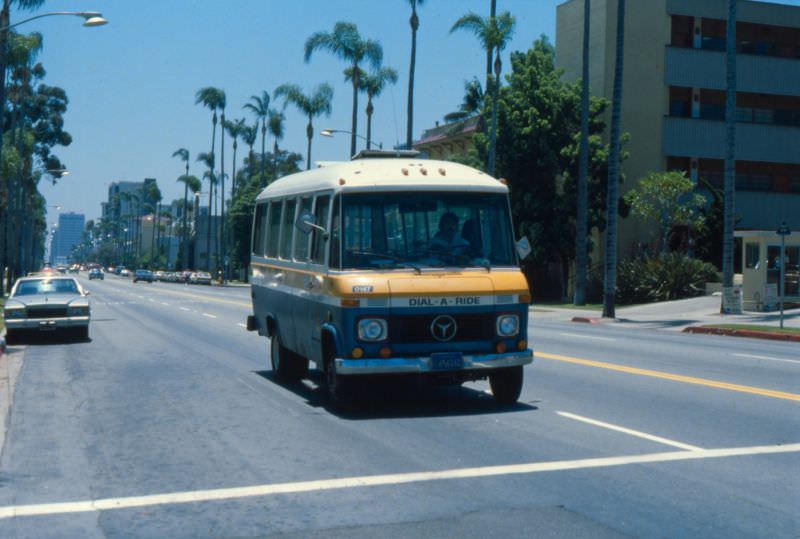
Inside the new 1974 Flxible suburban coaches, passengers found a noticeably different experience from the older GMC buses. The interiors were designed with comfort in mind for longer suburban runs, with seating arranged to serve riders traveling beyond the dense downtown core. Meanwhile, the Dial-a-Ride program, which used Mercedes-Benz vehicles, offered a more flexible, on-demand option for residents in specific neighborhoods.
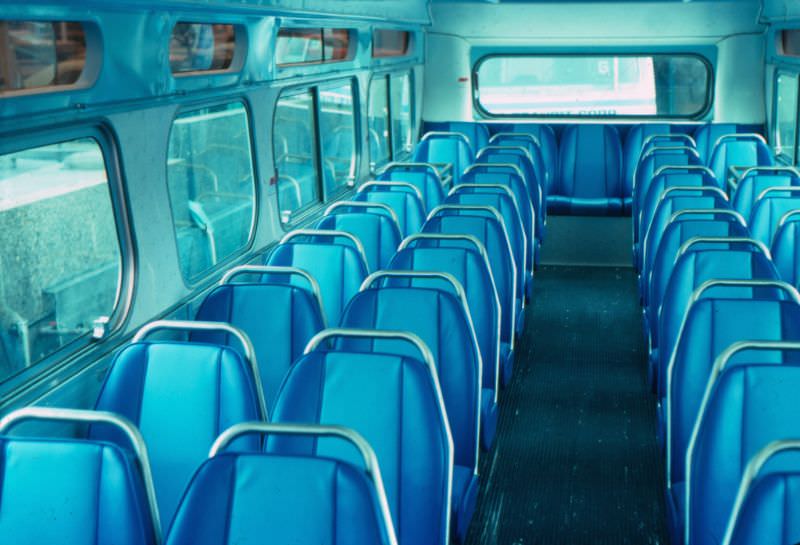
Interior of one of San Diego Transit's new 1974 Flxible 'suburban' coaches
Interior of one of San Diego Transit’s new 1974 Flxible ‘suburban’ coaches
Mercedes Benz bus used on the City of San Diego Dial-a-Ride program on Sixth Avenue near Balboa Park in the late 1970s
Mercedes Benz minibus in Mission Hills
Mercedes Benz minibus near the UCSD Hospital in Hillcrest
Mercedes Benz minibus on Fourth Avenue next to Horton Plaza in Downtown San Diego
Passengers on a San Diego Transit Route 90 express bus at College Grove Center in the 1970s
Promotional 'Bus King' advertisement from the 1970s
Promotional ‘Bus King’ advertisement from the 1970s
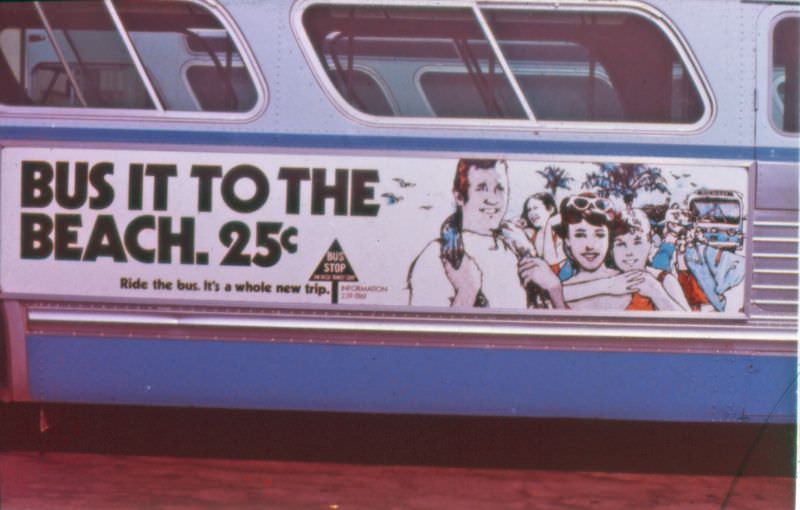
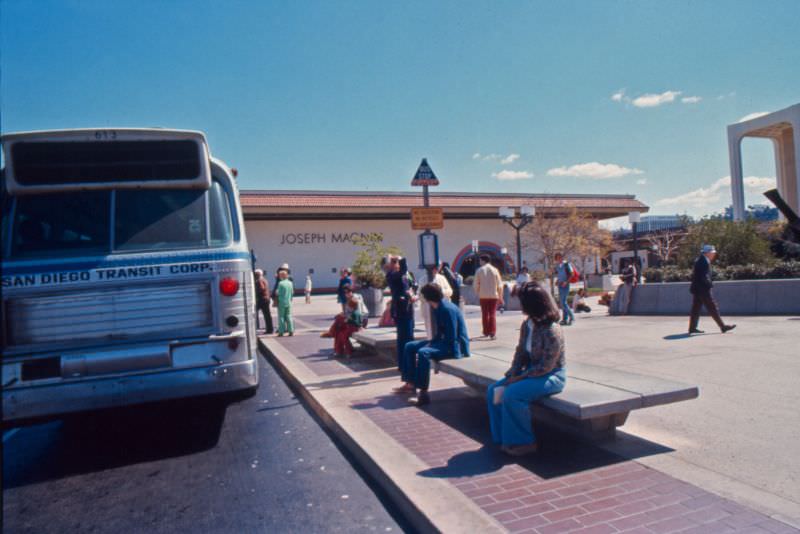
San Diego Transit bus stop in the early 1970s
San Diego Transit Route 25 passes through the Fashion Valley Transit Center
San Diego Transit used a fleet of Mercedes Benz minibuses for neighborhood routes in the 1970s
San Diego Transit's Imperial Avenue yard in downtown San Diego in the early-1970s
San Diego Transit’s Imperial Avenue yard in downtown San Diego in the early-1970s
The old maintenance shop at the Imperial Avenue Division in the 1970s
Fascinating Vintage Photos of the San Diego Bus System in the 1970s
Enjoyed this post? Get new ones in your inbox.

Leave a Comment

Your email address will not be published. Required fields are marked *

3 Comments

Share this Post 🥺

Please take a moment to share this content. Your support is greatly appreciated! 🙌🙏

Share this Post 🥺

Please take a moment to share this content. Your support is greatly appreciated! 🙌🙏
Scroll to Top
 
Hey Friend, Before You Go.. Please like & follow for more interesting content