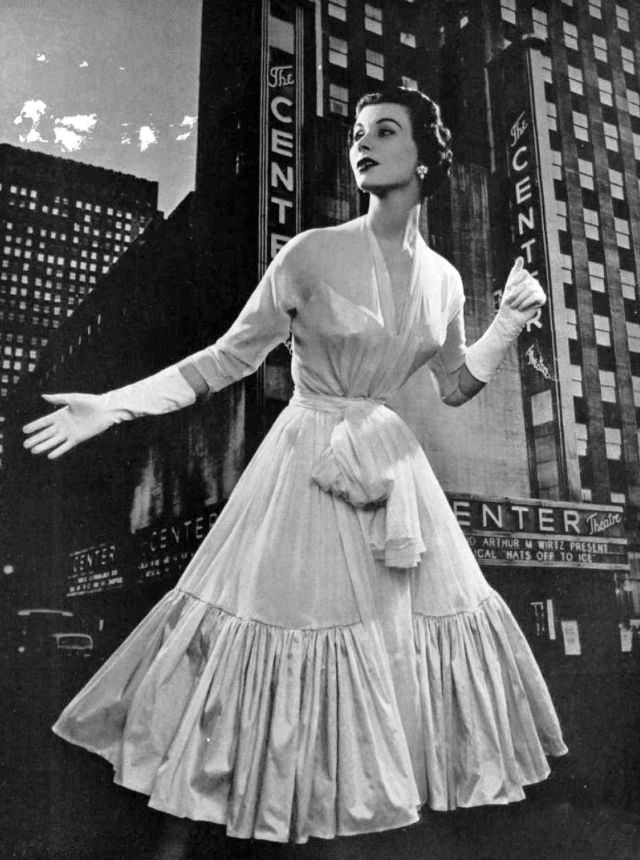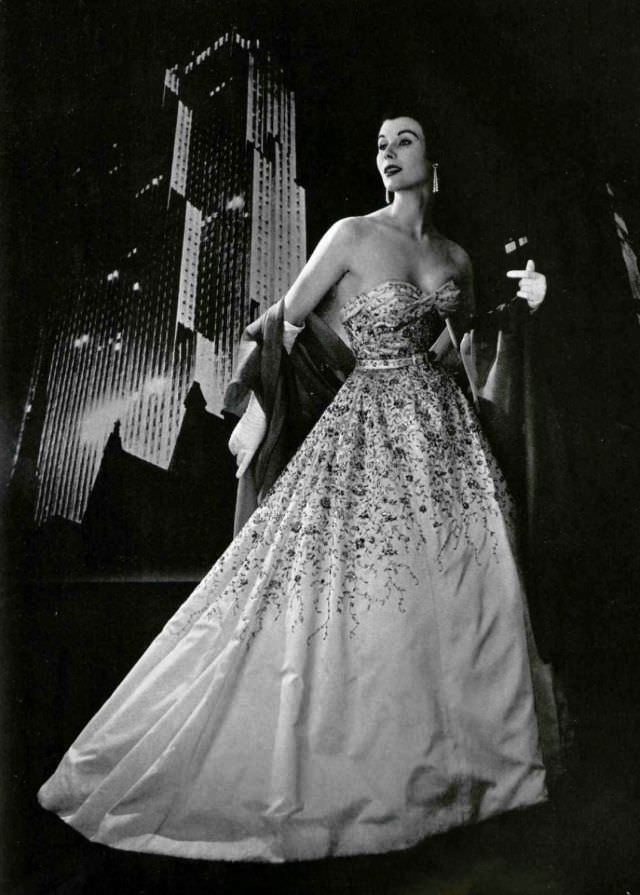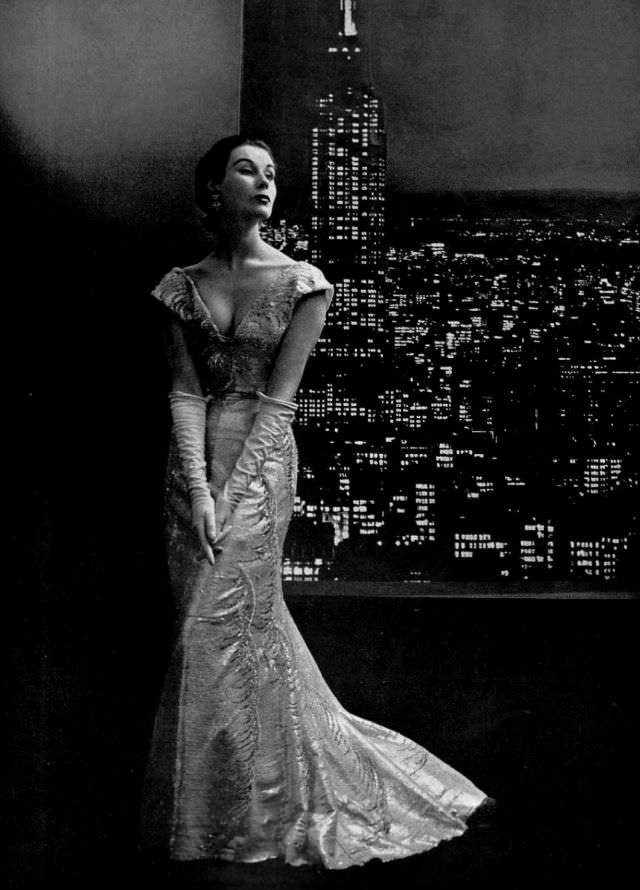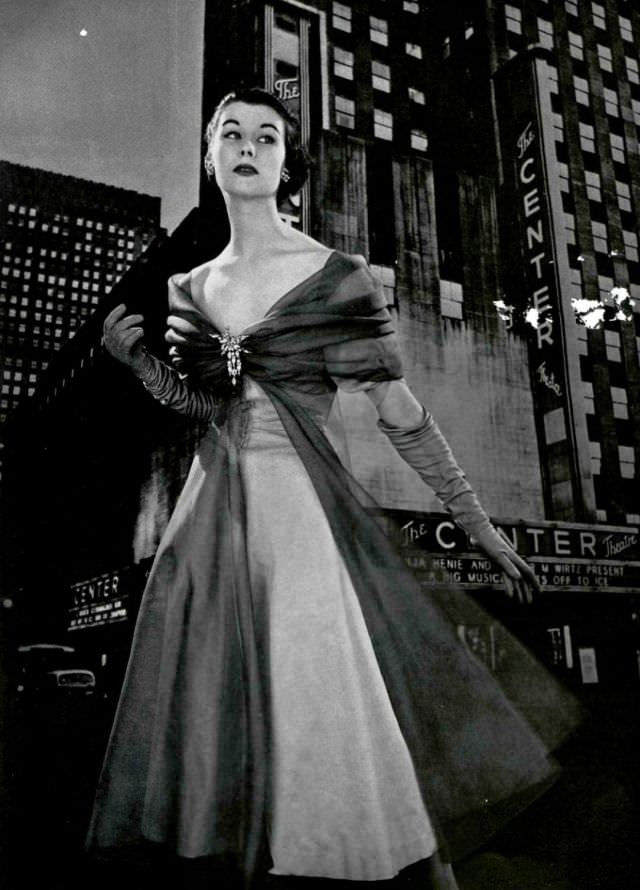

Myrtle Crawford was one of the most recognizable faces in fashion during the late 1940s and early 1950s. Born in Stirling, Scotland, she grew up with a strong connection to her home country ā one that never quite left her, even as her career took her far from it. She attended Killearne boarding school, but when World War II broke out, the school was evacuated to Roedean in England. Crawford hated the move. Scotland was home, and being pulled away from it left a mark. While she adjusted to life elsewhere, her mother was back in Scotland running the Auchentroig estate as a hospital for wounded soldiers.
After the war ended and school was behind her, Crawford moved to London. She enrolled at the London School of Architecture and took modeling classes at the same time. Money was tight despite her fatherās considerable wealth ā he gave her such a small allowance that she struggled to feed herself properly, and she became very thin during this period. Her first real modeling work came through her motherās tweed company in Glasgow. At one of those events, a Vogue editor spotted her. That chance encounter changed everything.

That Vogue connection led Crawford to her first official modeling assignment, and soon after she signed with the Jean Bell modeling agency in London. It was there that she shared a flat with fellow top model Susan Abraham. The two were part of a small, elite circle of women defining what glamour looked like in postwar Britain. Crawfordās measurements ā 36-19-36 ā gave her the classic hourglass figure that designers of the era built their clothes around. Despite all the attention and success, she remained a shy, reserved person by nature.

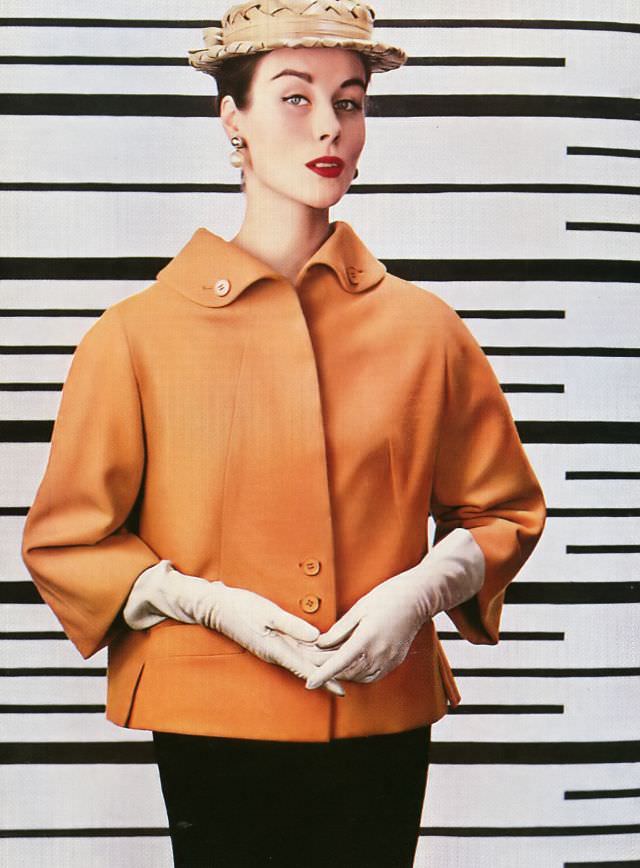
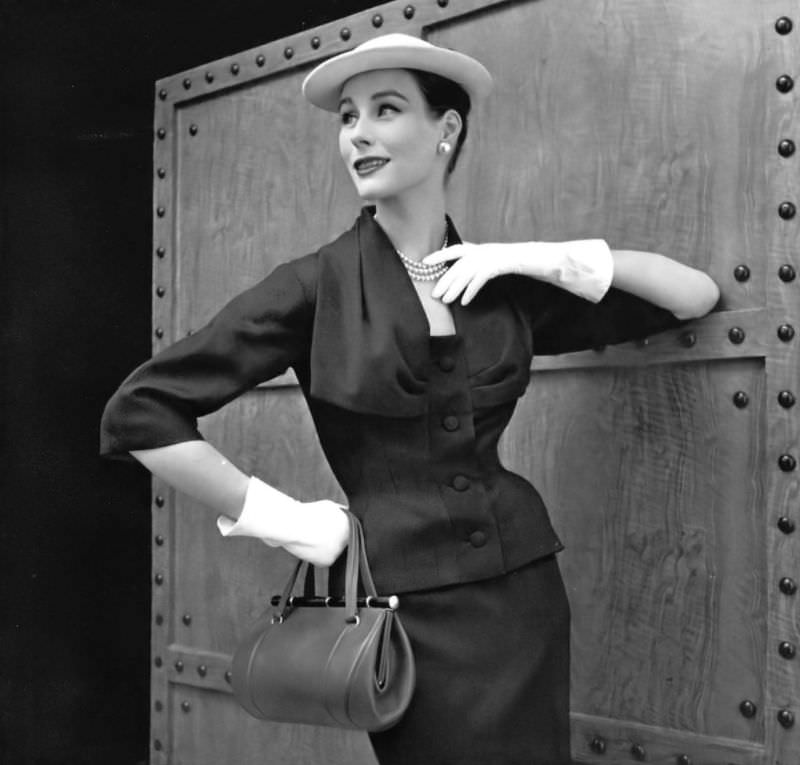
By the early 1950s, Crawford was working steadily with some of the most respected photographers in the industry. John French and Norman Parkinson both photographed her, lending their distinct visual styles to her already striking presence. Her work appeared regularly in Vogue and Harperās Bazaar, two of the most influential fashion publications in the world. She was also featured in Lux soap advertisements alongside other notable beauties of the era, including Elizabeth Taylor.
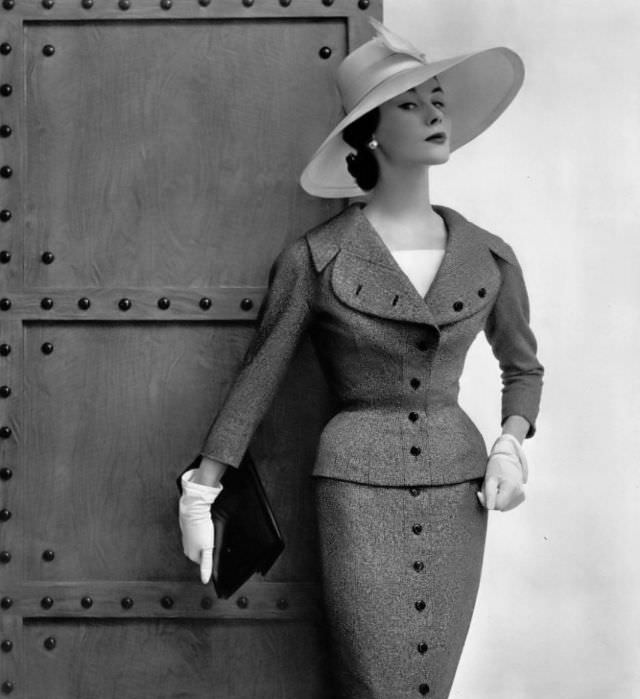
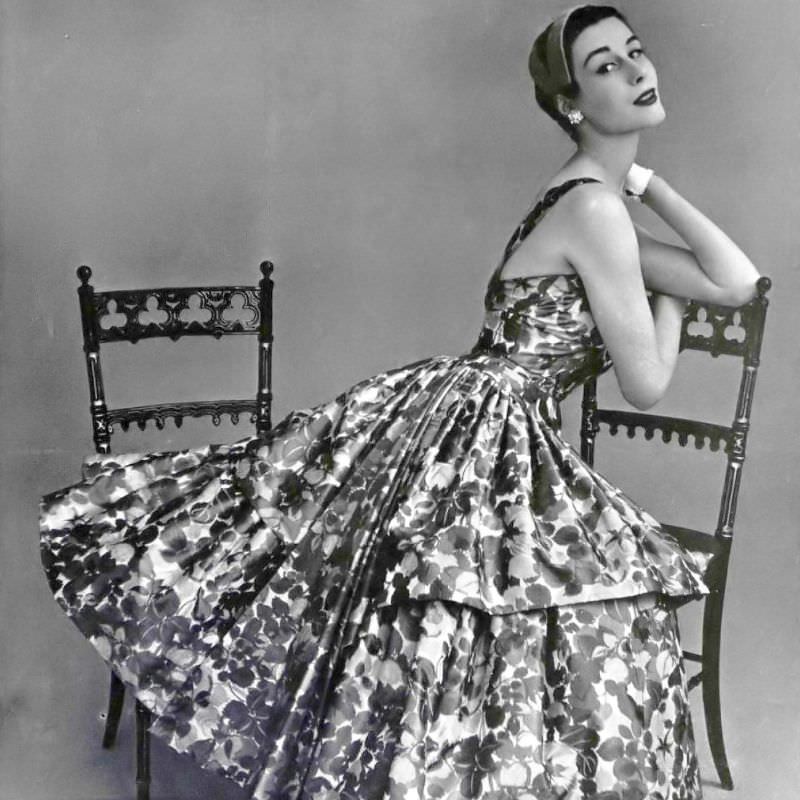

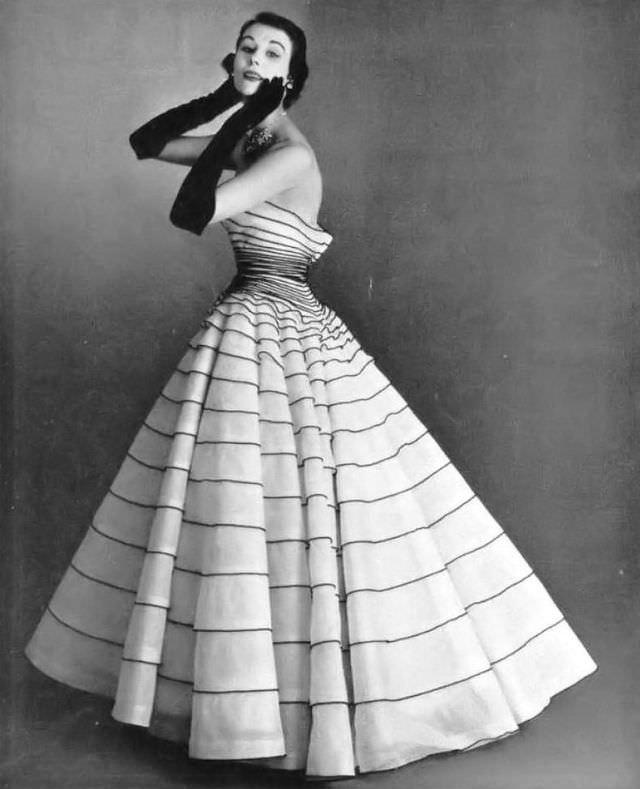
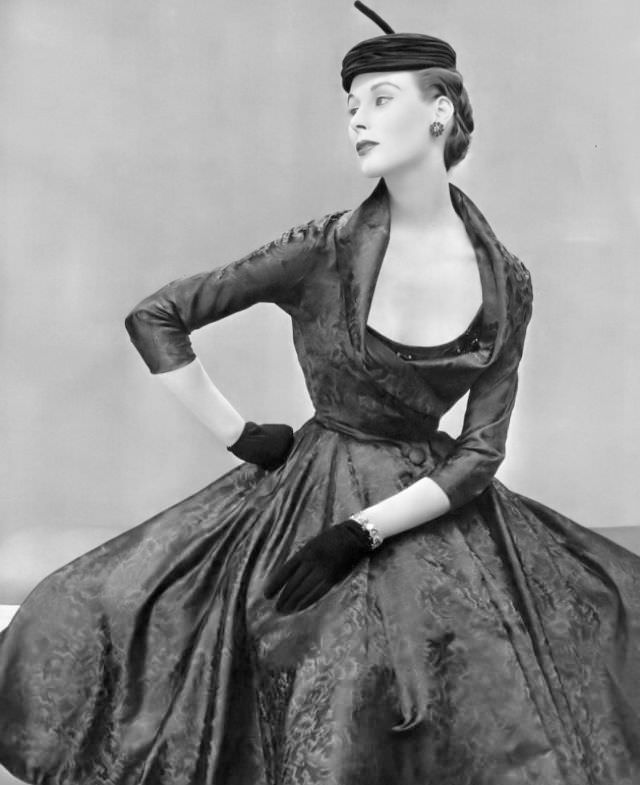
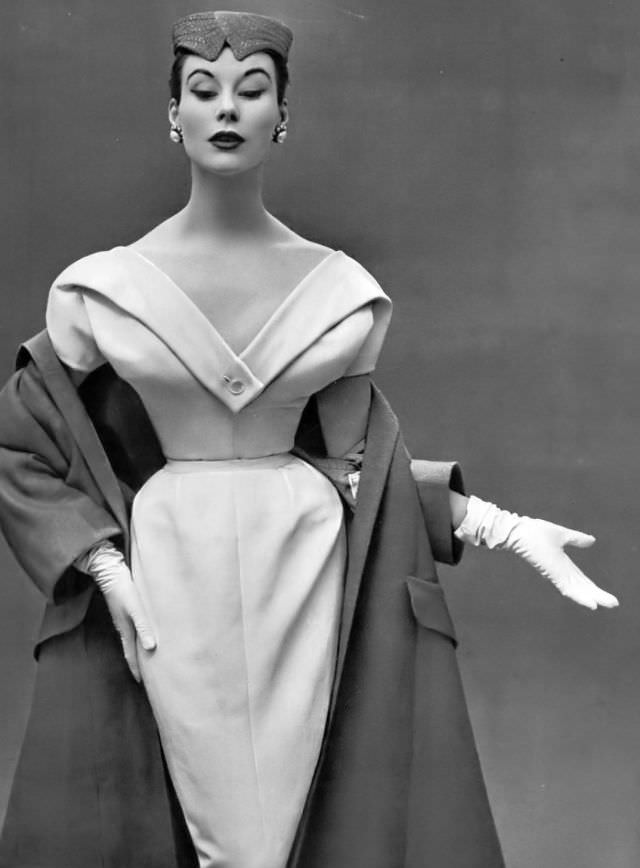
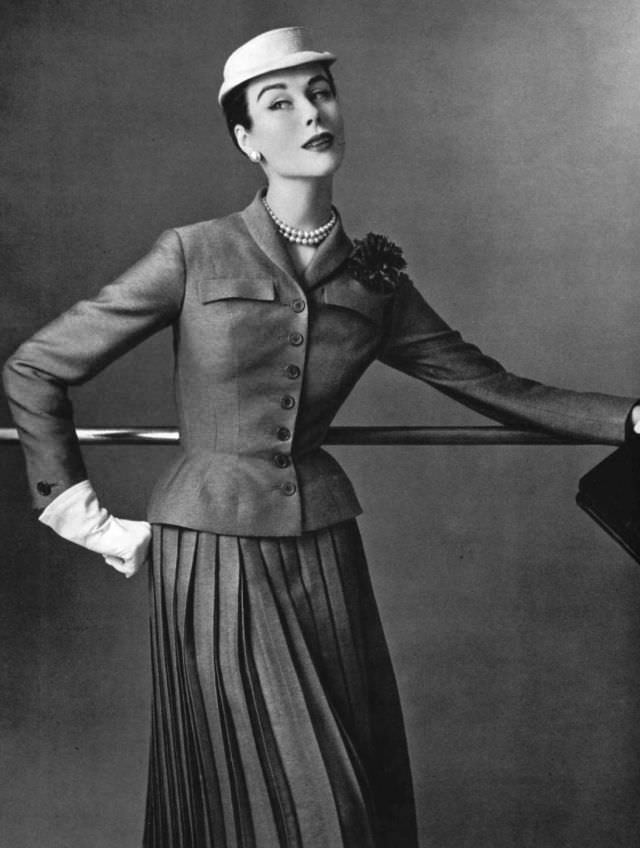
The Paris fashion world was equally drawn to Crawford. She walked the catwalks for Christian Dior and other major fashion houses, wearing designs that represented the very best of haute couture. Paris in the early 1950s was the center of the fashion universe, and Crawford moved through it with ease ā even if she did so with characteristic quietness. The clothes she wore ranged from sharp tailored suits to sweeping evening gowns, and she brought the same composed elegance to all of them.


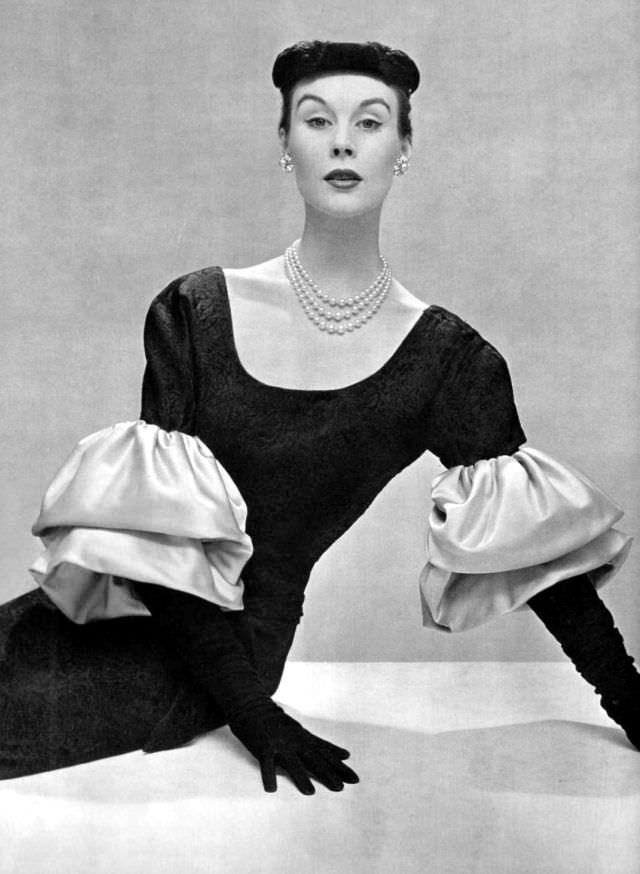
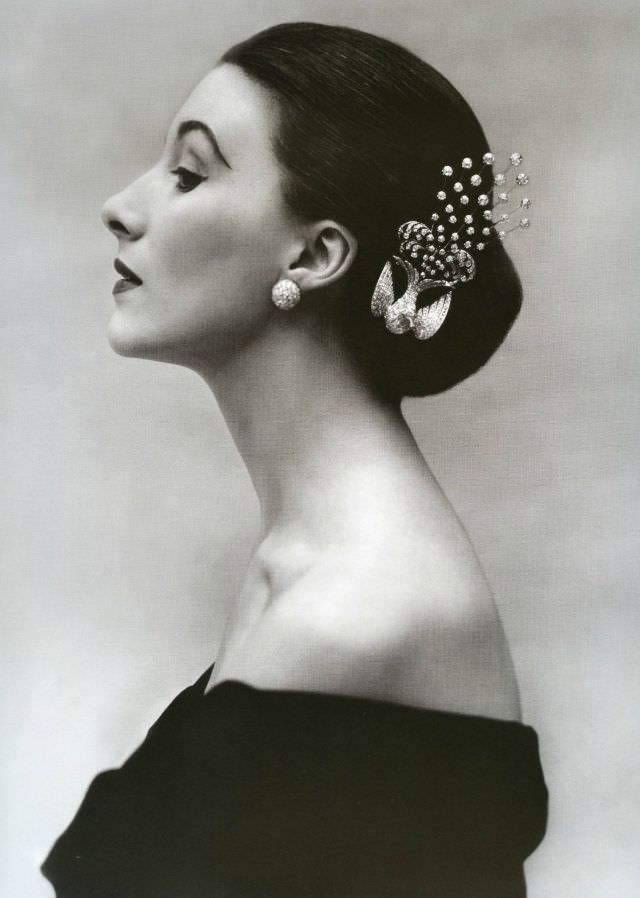
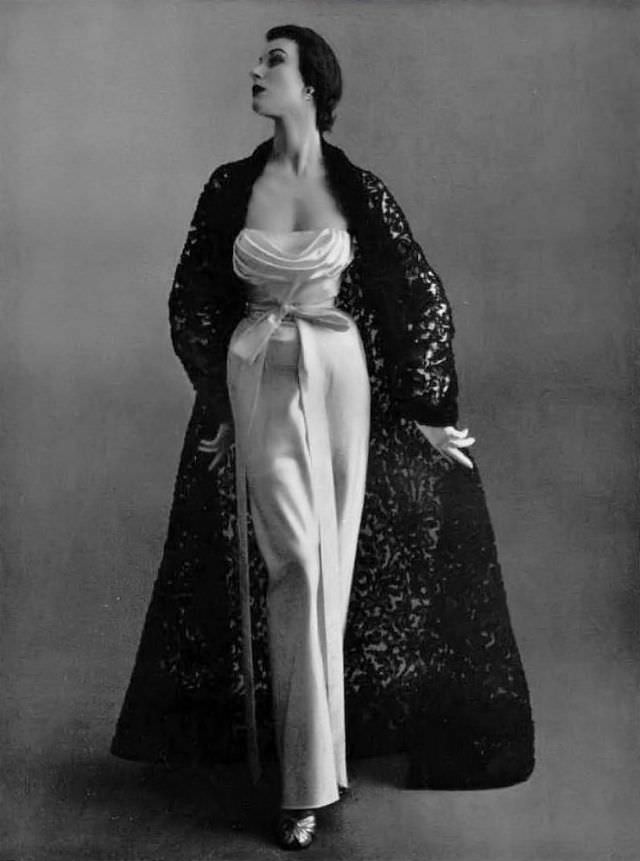
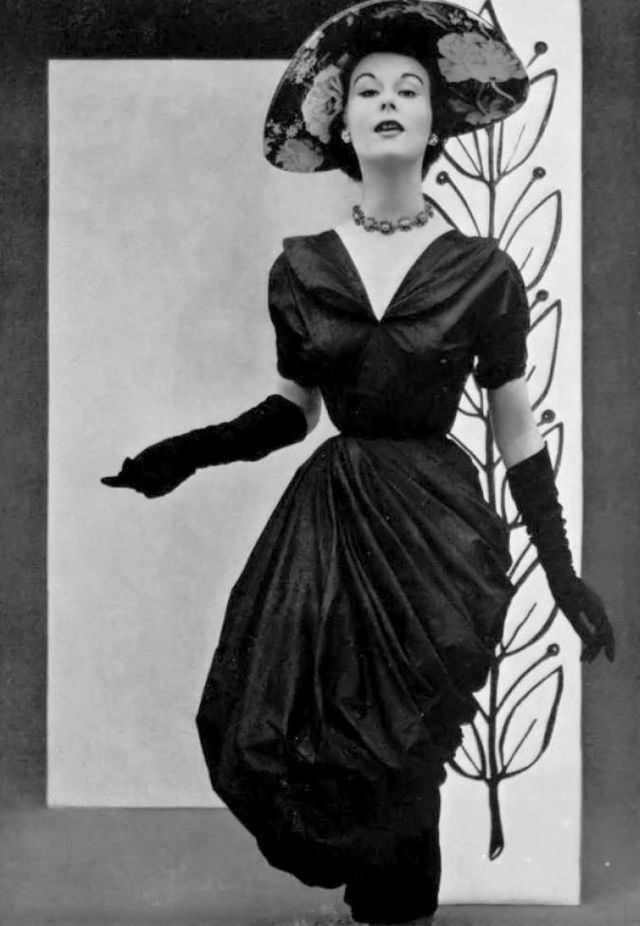
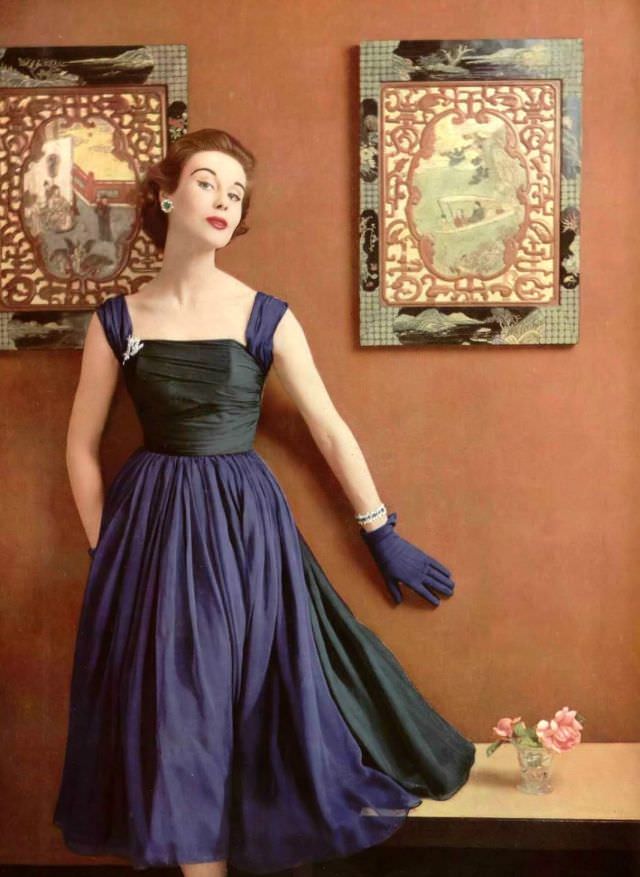
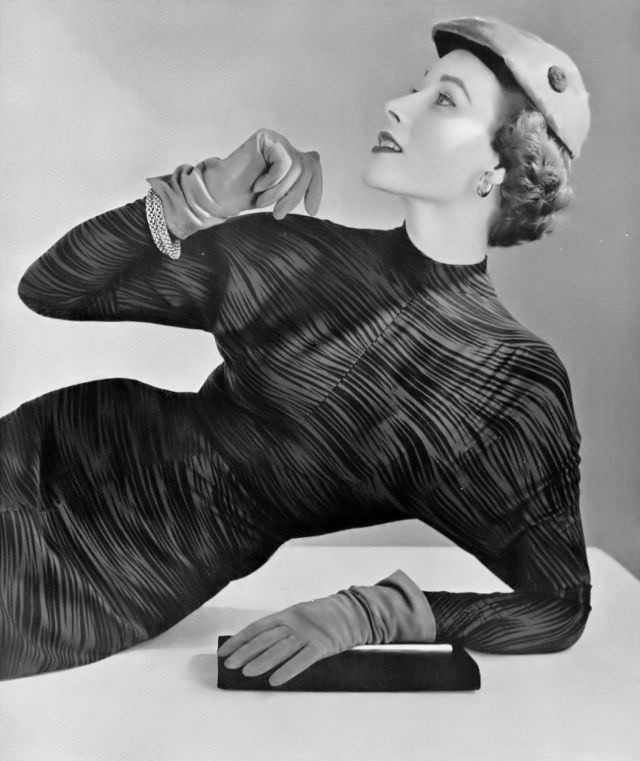
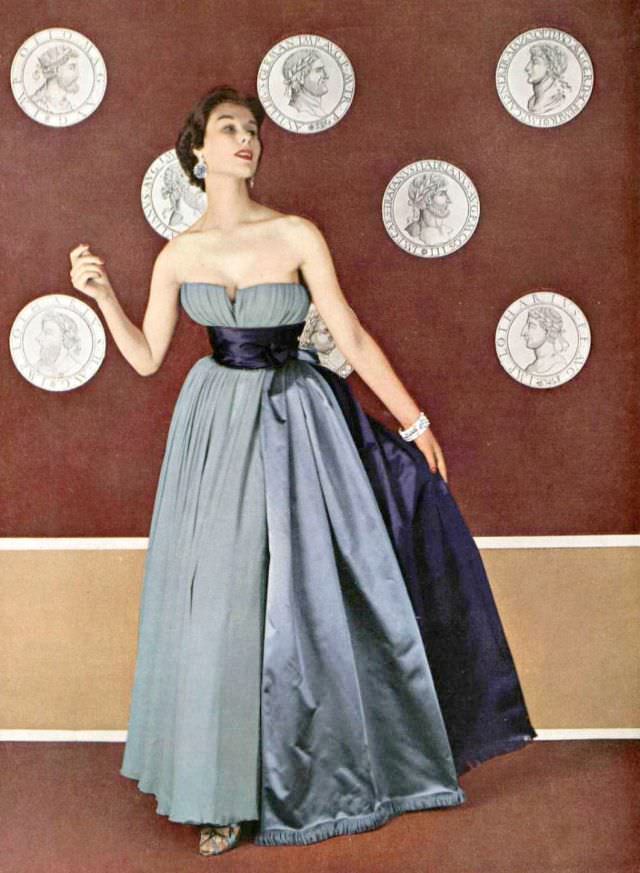
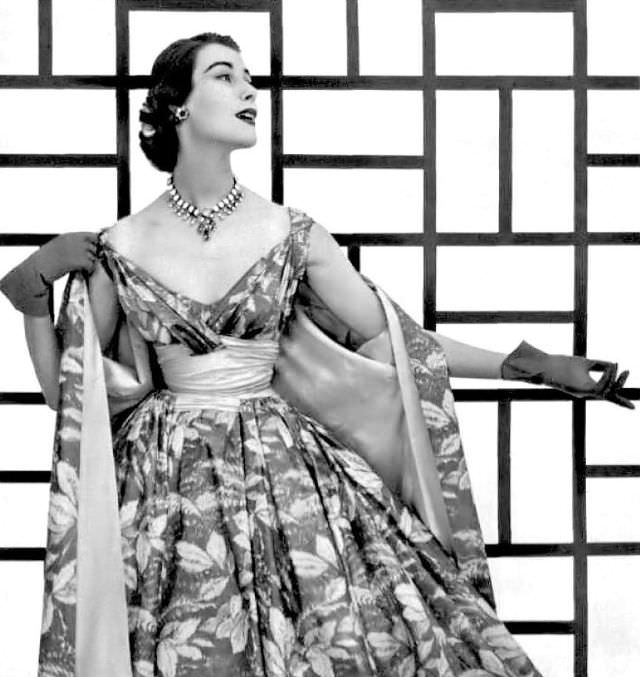
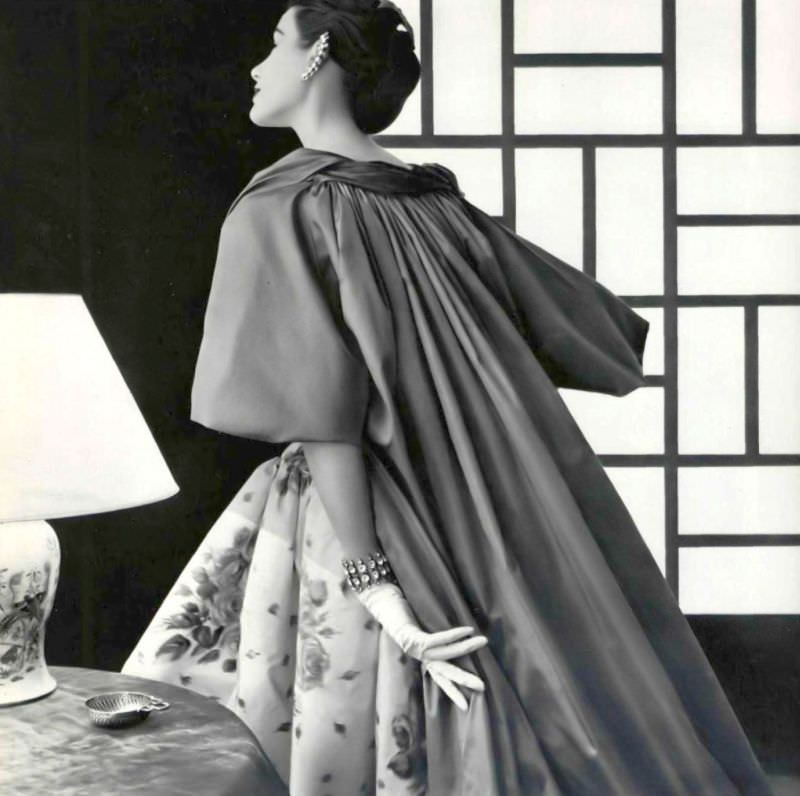
The 1952 season saw Crawford draped in some of the most elaborate creations of the decade. Givenchy dressed her in a satin evening gown paired with a black lace manteau. GrĆØs put her in a sculptural taffeta dress with a draped silhouette that echoed the rolled aprons of washerwomen ā a deliberate, artistic contrast. Lanvin-Castillo chose her for a chiffon dress in jewel-toned colors, paired with Roger ScĆ©mama jewelry. Each look reinforced her status as one of the most sought-after models of her generation.


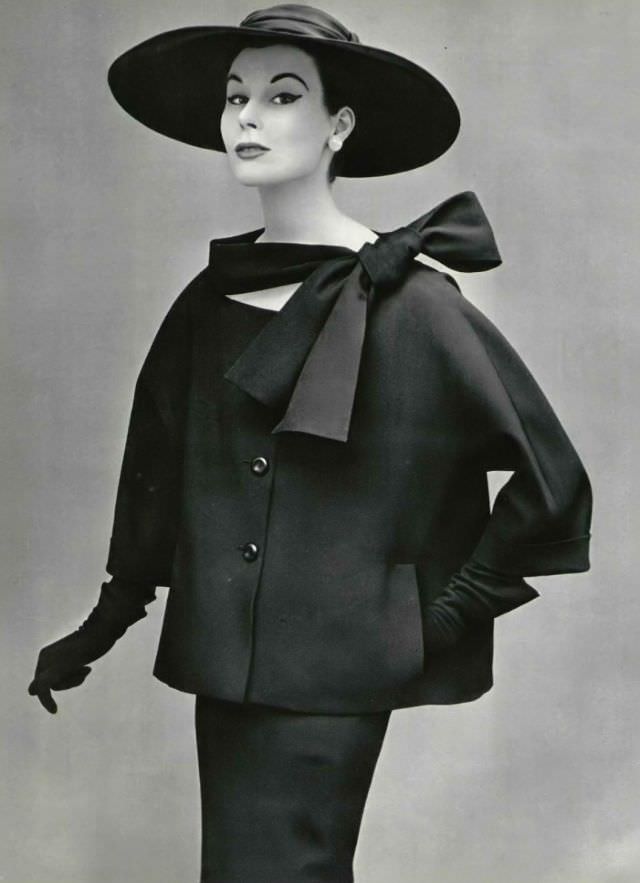
The year 1953 was the most prolific of Crawfordās career in terms of the sheer range of designers she worked with. Balenciaga, Christian Dior, Schiaparelli, Pierre Balmain, Jacques Fath, Nina Ricci, and Manguin all featured her. Each house had its own vision of what a woman should look like, and Crawford adapted to every one of them. From Balenciagaās restrained black silk dress with bold blue satin sleeves, to Diorās structured silhouettes with dramatically widened shoulders, she wore each design as if it had been made specifically for her body.


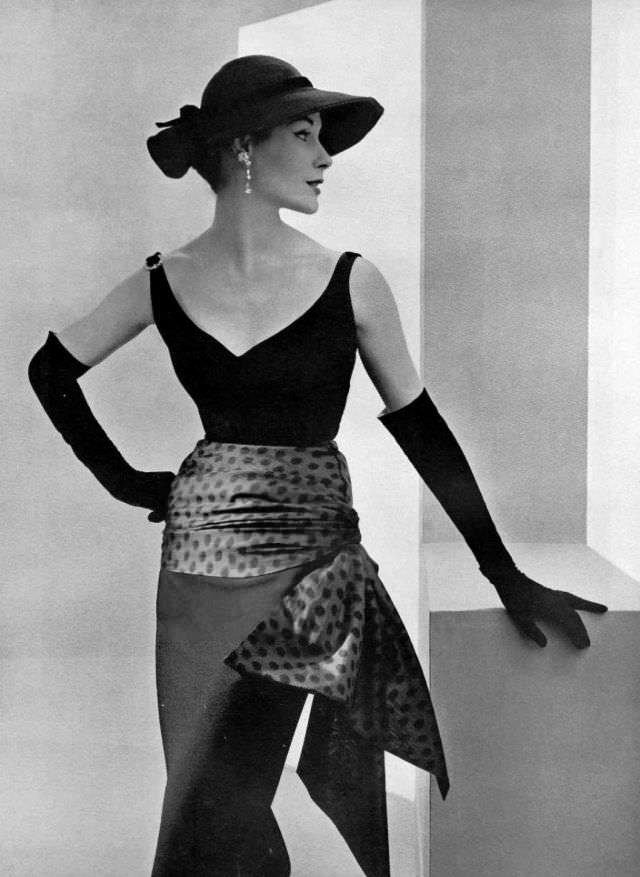
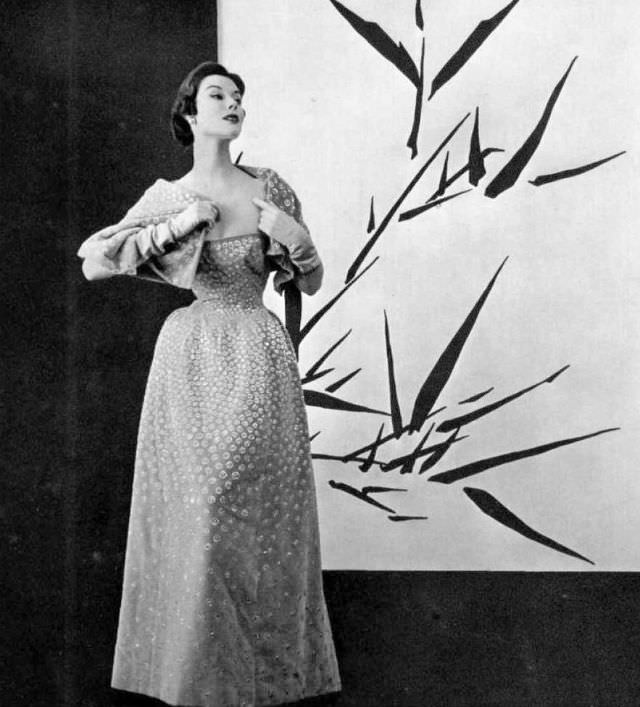
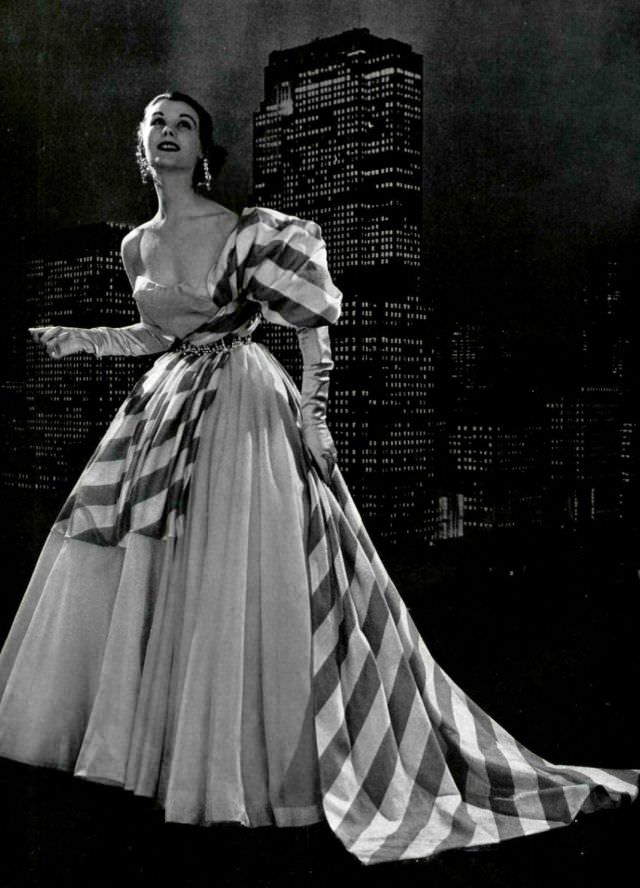
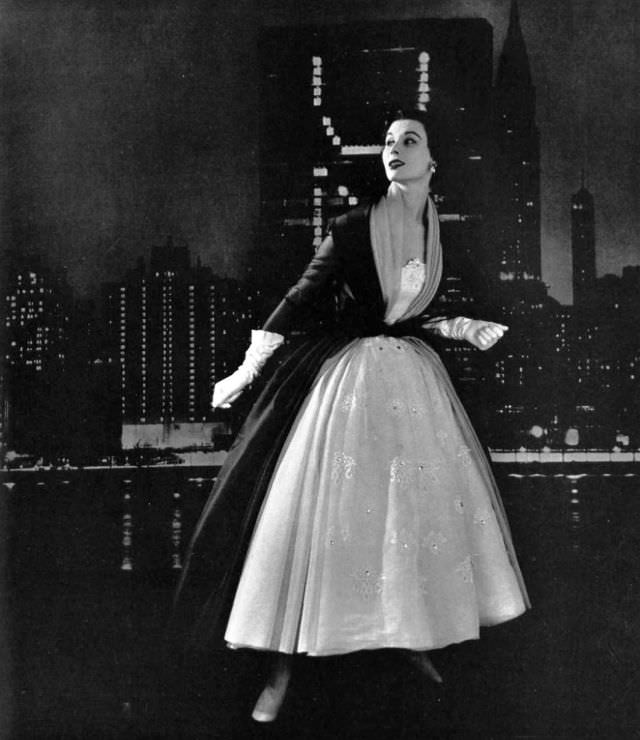
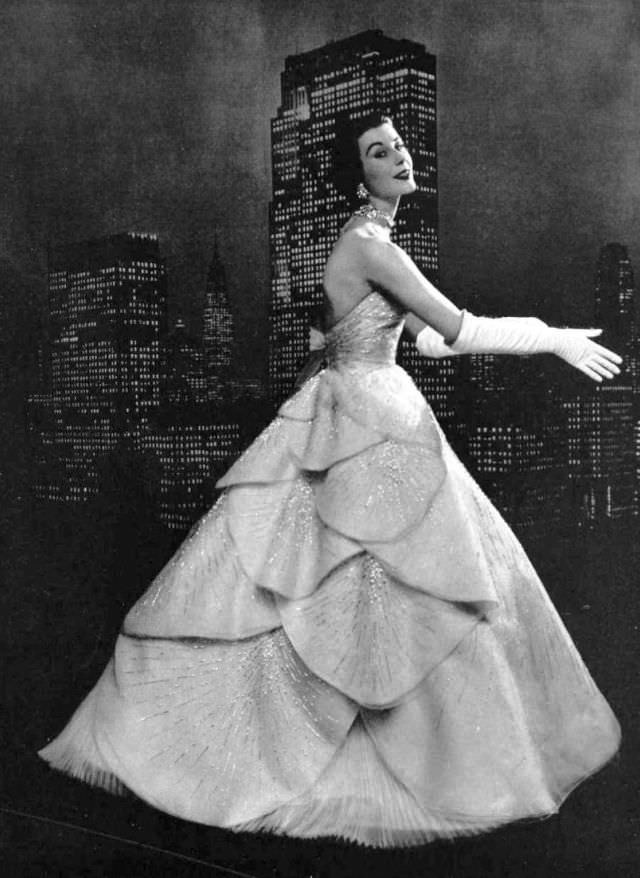
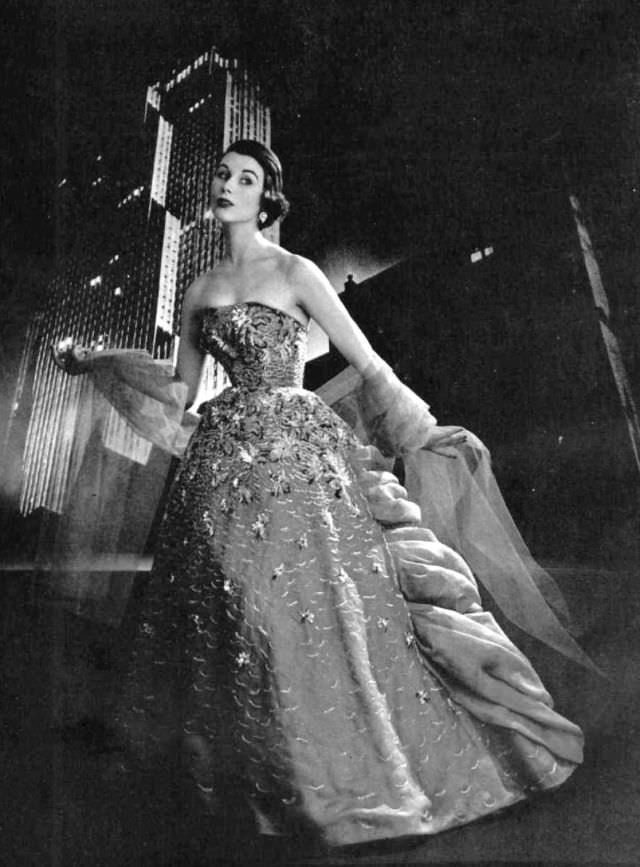
Evening wear was a particular strength. Pierre Balmainās embroidered gown, Schiaparelliās dramatic evening dress, and Jacques Fathās pale mauve chiffon gown with floor-length purple satin bands all appeared on Crawfordās frame in 1953. She also wore Fathās gala ball gown ā dark gray organdy covered in frosted multi-colored sequins, paired with a light gray tulle stole ā a look that summed up the theatrical grandeur that defined formal fashion in that era.


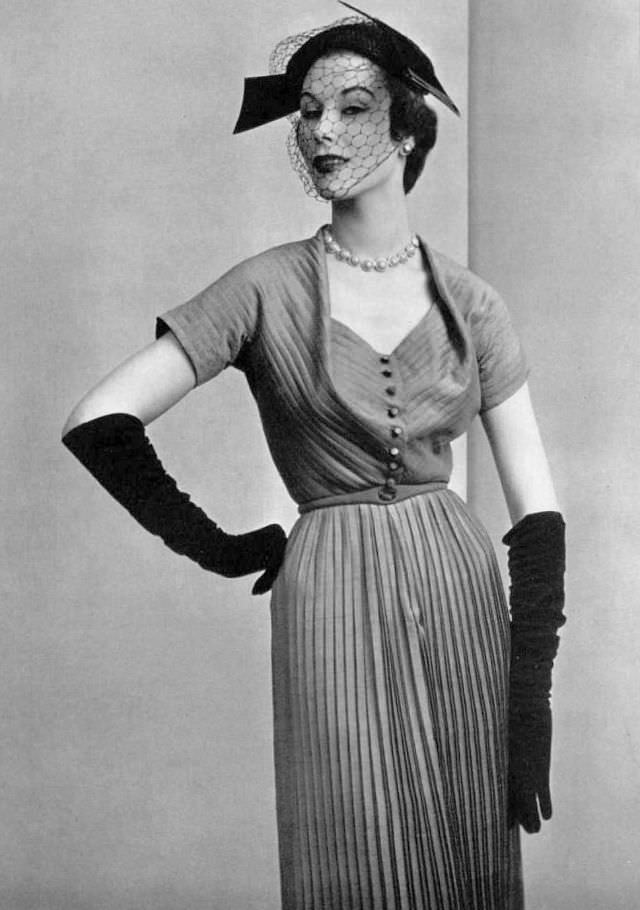
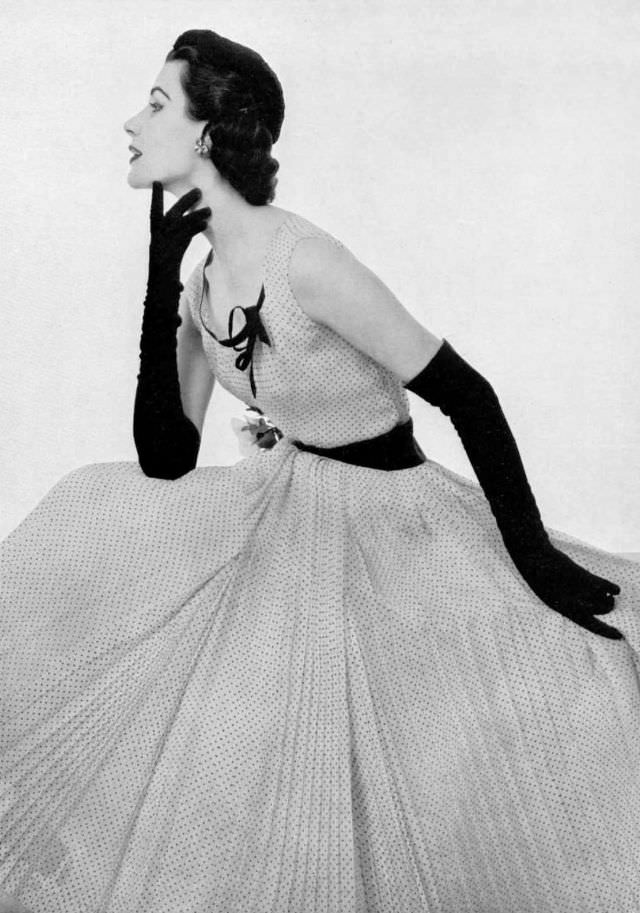
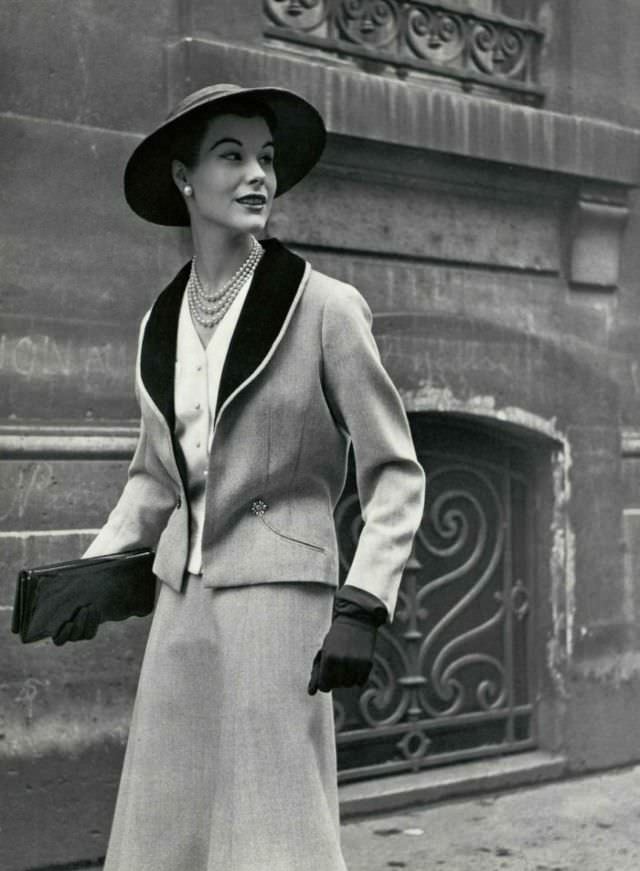
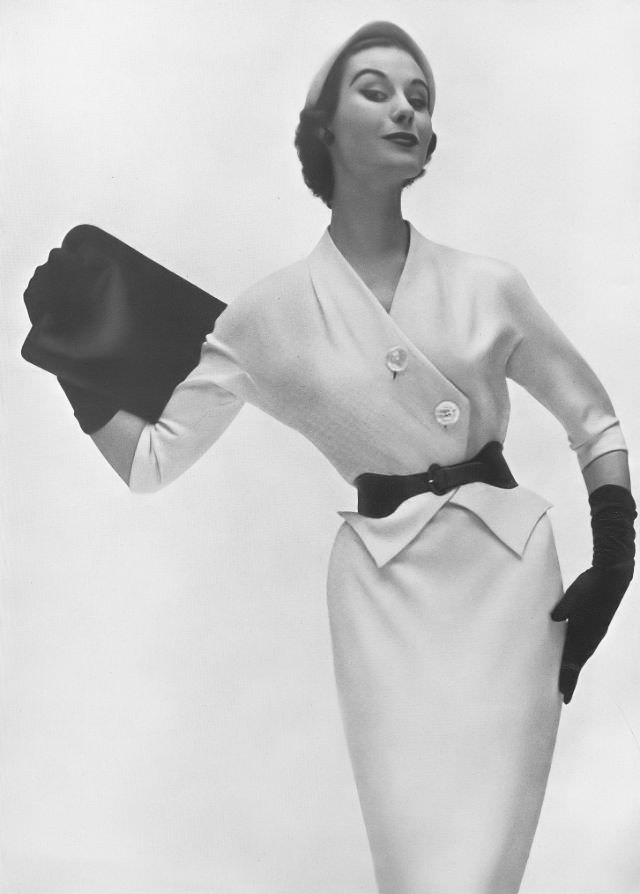
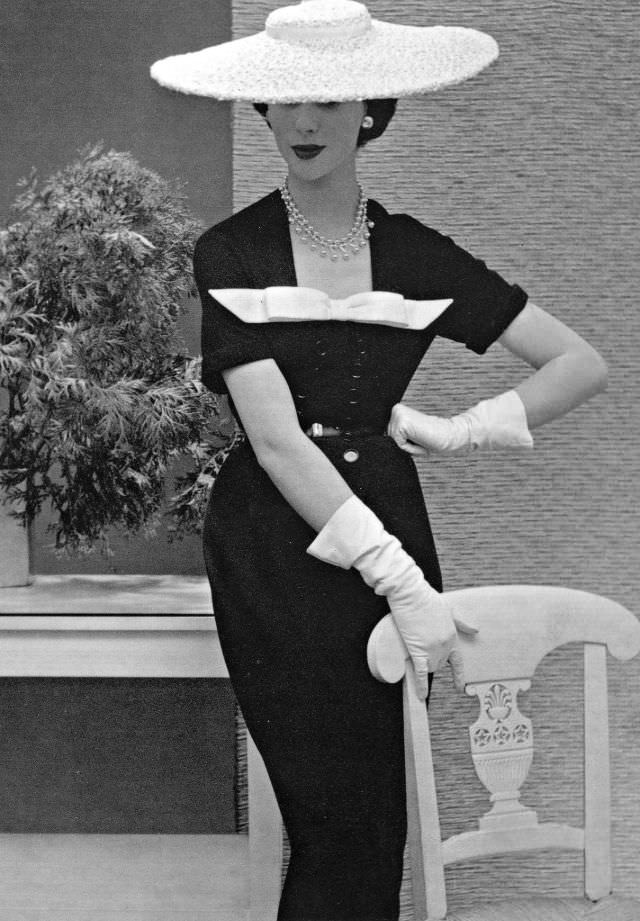
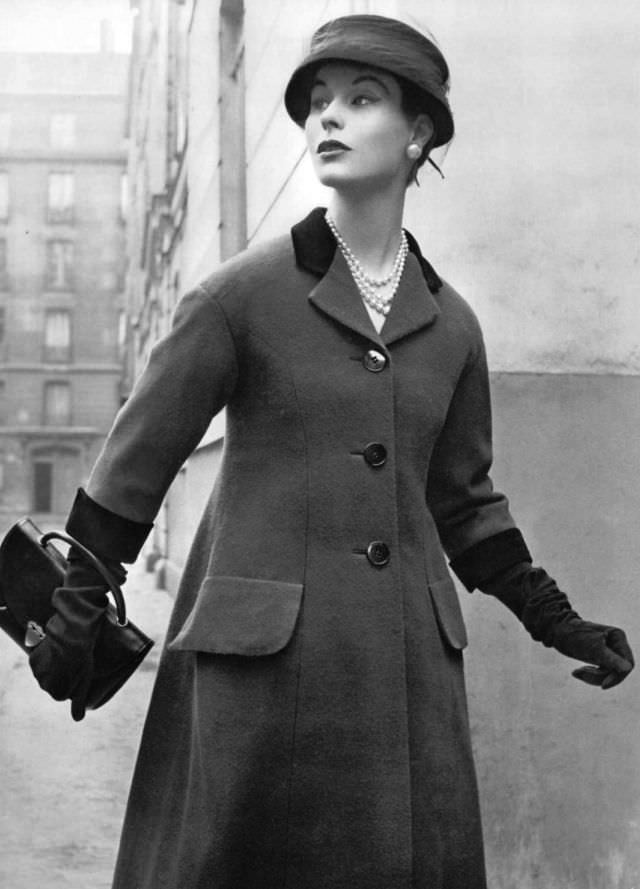
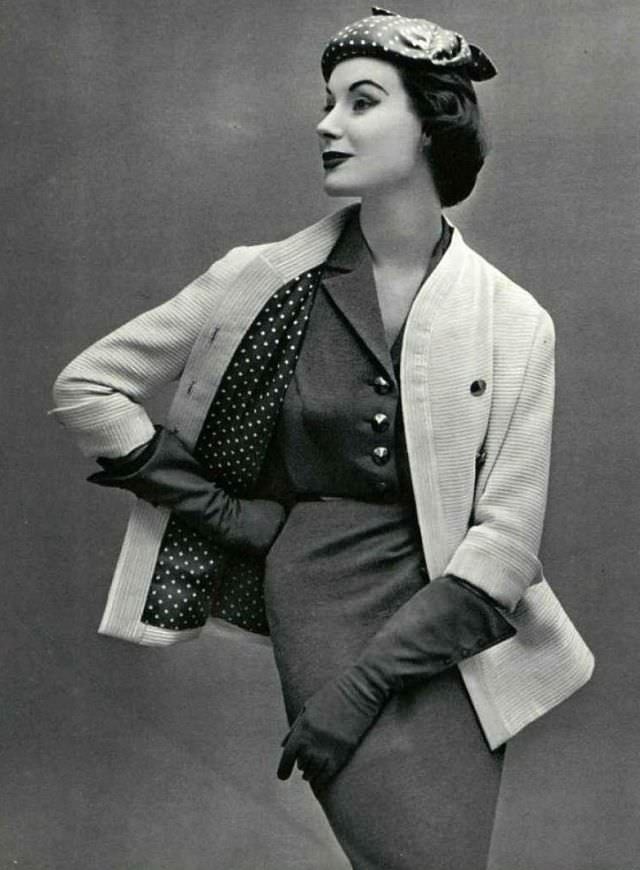
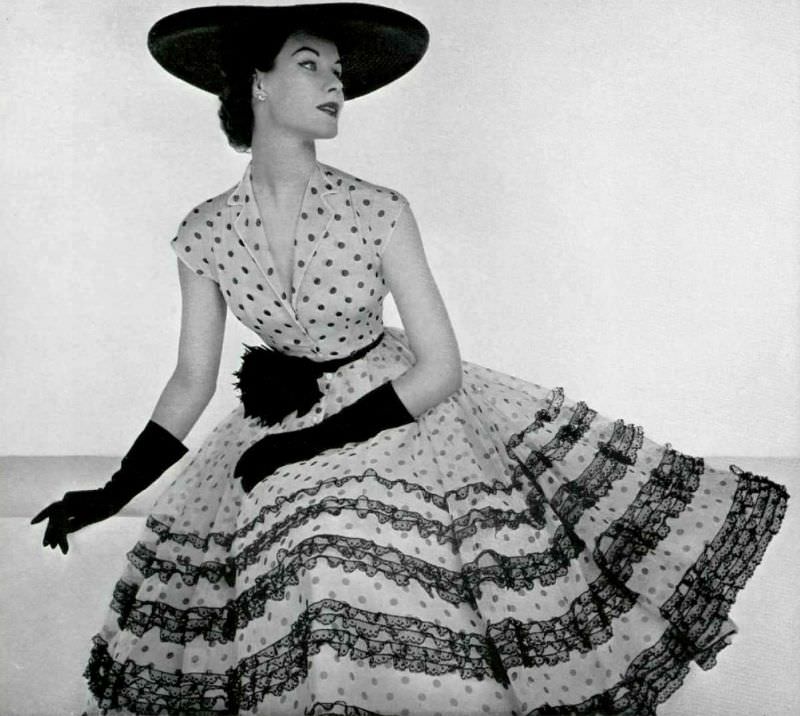
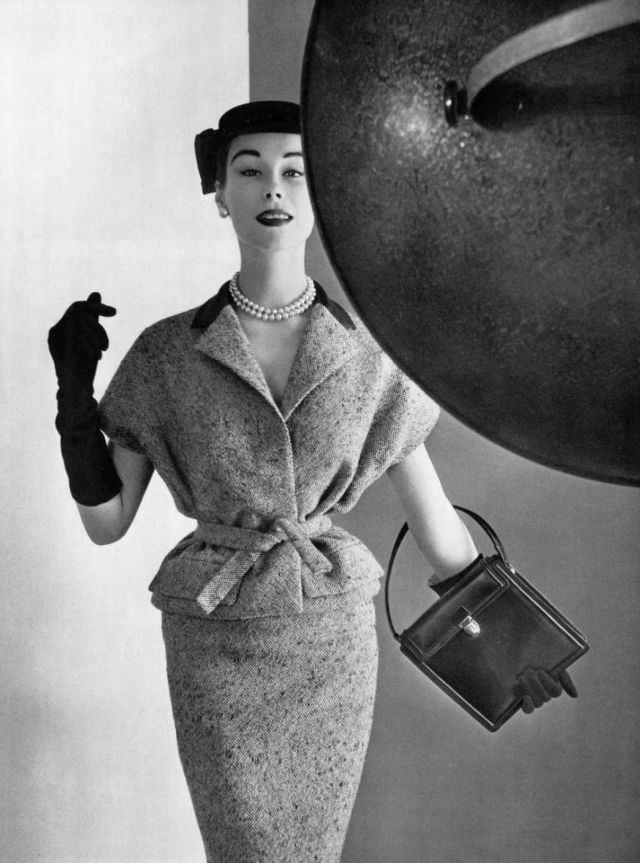
Daywear was just as well represented. Crawford wore a finely pleated white muslin dress dotted with black and trimmed with black ribbon for Madeleine de Rauch, a navy dress with a white piquĆ© bow for Nina Ricci, and a gray wool suit with a black velvet shawl collar for an unnamed house. Philippe Pottier photographed her for LāOfficiel in a two-piece black linen suit by Christian Dior. Harperās Bazaar UK ran her image in February 1953 in an ivory-white woolen day dress with a bold black belt by Matita.


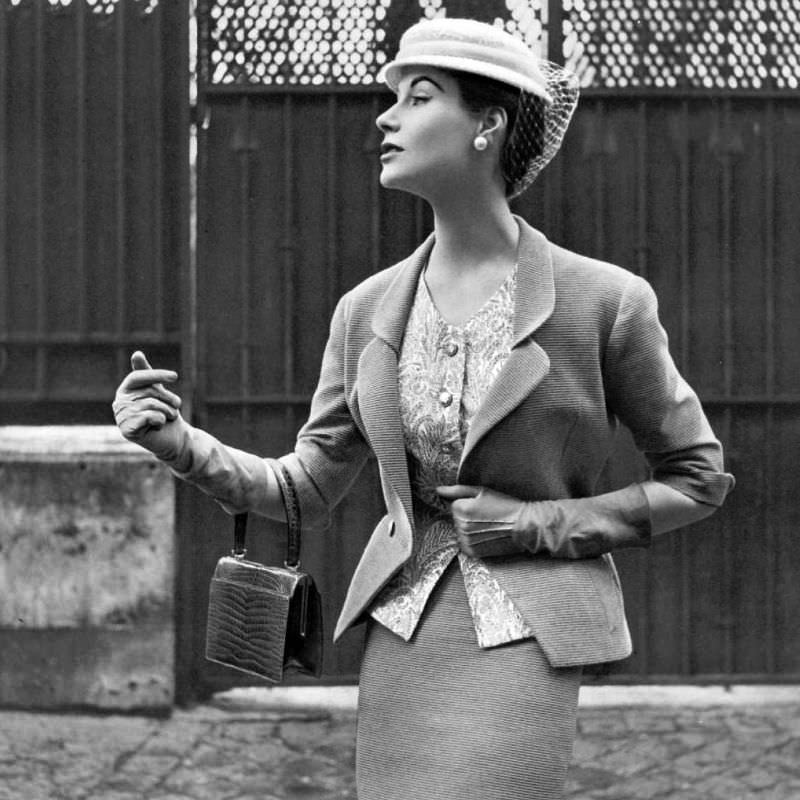
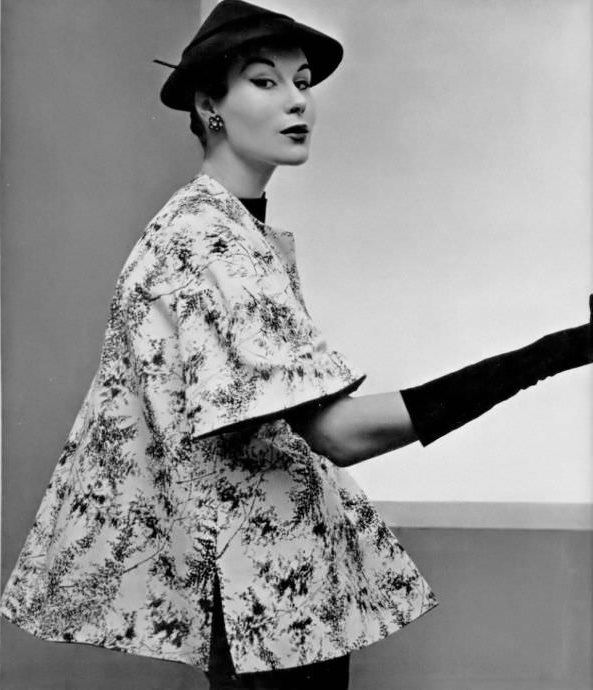
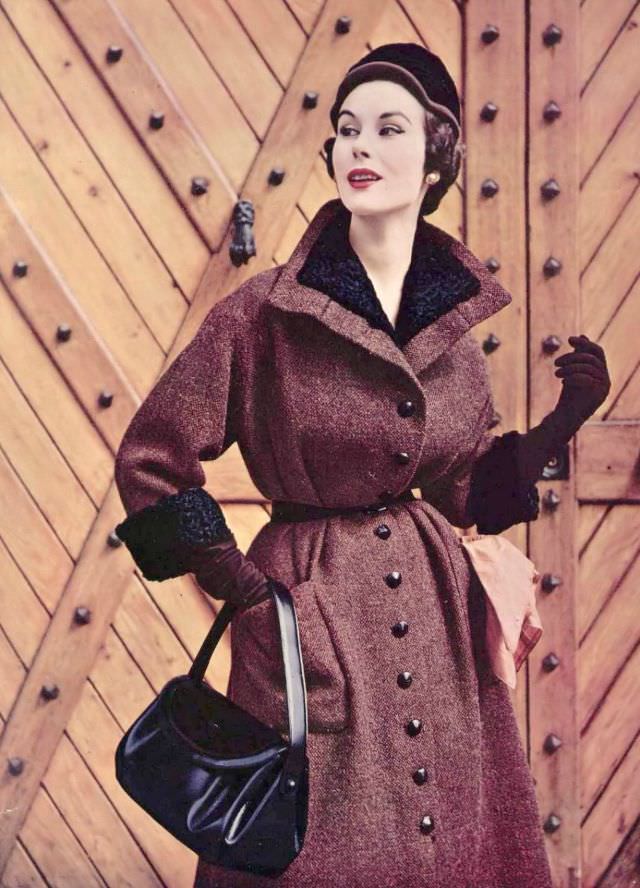
Accessories played a major role in the looks Crawford modeled throughout this period. HermĆØs provided handbags and gloves to pair with a Manguin tweed coat trimmed in astrakhan. Paulette made the hat for her beige Ottoman suit by Manguin, while Morabito supplied the crocodile bag. Claude St. Cyr designed hats for both her Nina Ricci silk dress and her Carven black and brown print dress. These collaborations between fashion houses and accessory makers were essential to the total look that high fashion demanded.


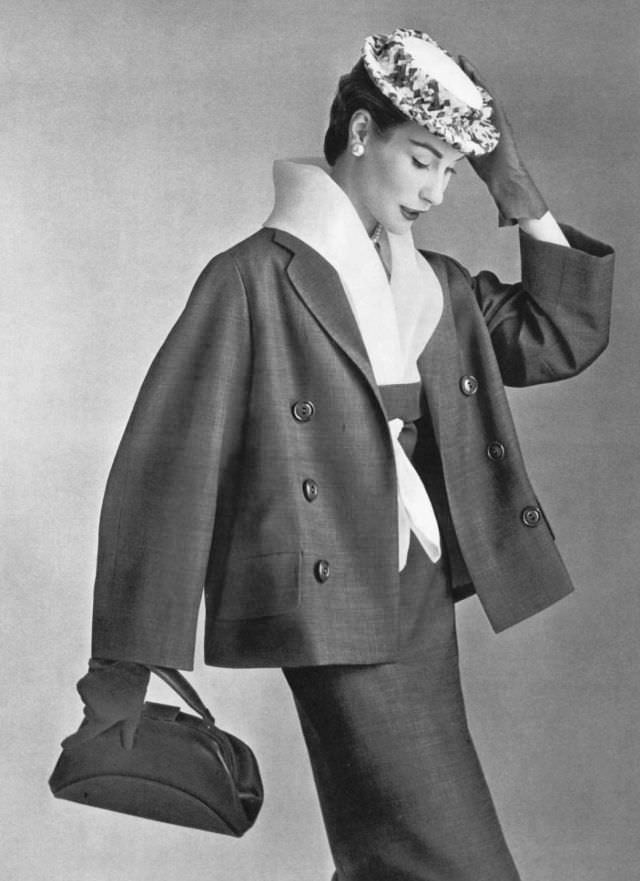
Givenchy dressed Crawford several times across 1953 and 1954. In 1953, she wore a white organza dress embroidered with flowers and rhinestones beneath a black organza coat lined in beige, as well as a beige velvet gown embroidered with small glass beads alongside Christian Dior. By 1954, Givenchy was putting her in a blue tweed two-piece with a navy toile collar, the armhole cut shaped like a chasuble. The 1954 season also brought work with Jean Patou, Jean DessĆØs, Maggy Rouff, and Pierre Balmain ā the full spread of Parisās most prestigious ateliers.


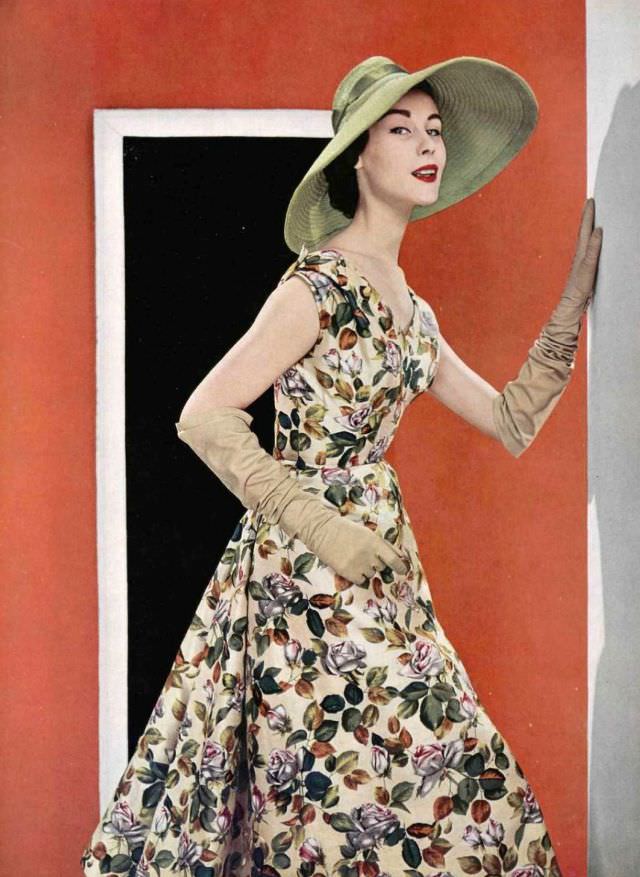
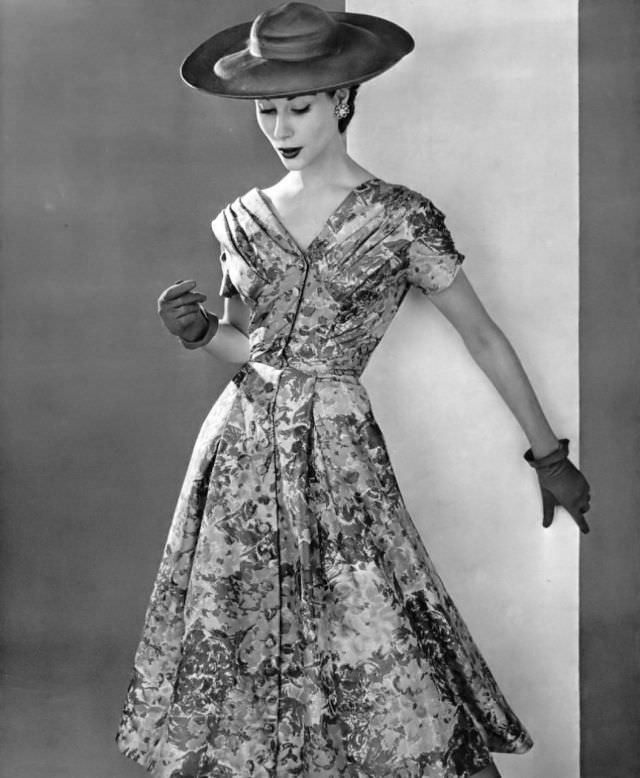
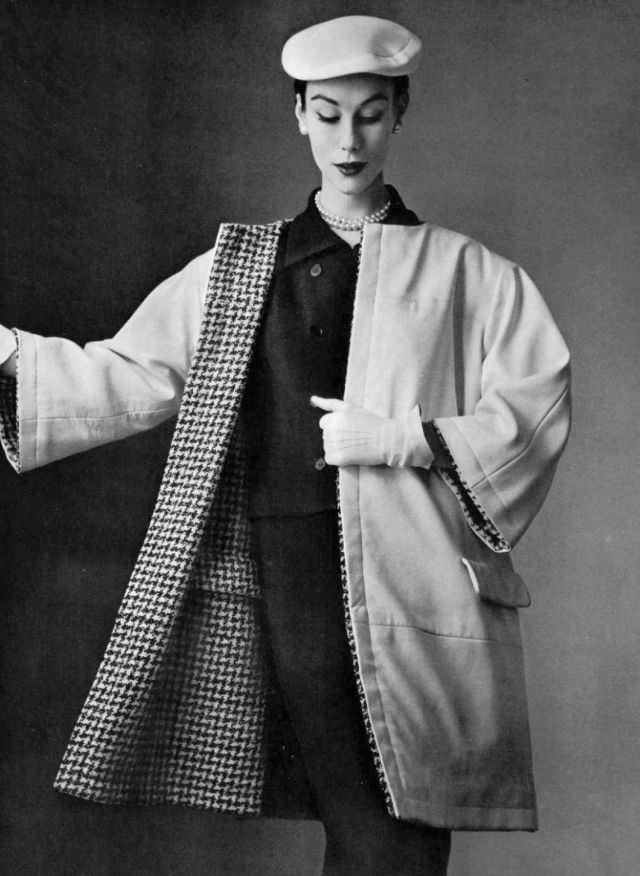
The 1954 collections brought a slightly softer, more wearable direction while still maintaining the precision that defined high fashion. Crawford wore a silk floral print afternoon dress by Jacques Fath under a wide-brimmed green straw hat, and a lovely pink and blue floral taffeta dress by Maggy Rouff held up by two delicate straps. Jean Patou put her in a coral taffeta Venetian-style cloak worn over a white and pink floral print dress ā a look built around layers and theatrical color. Balenciaga, always understated, gave her a collarless, buttonless white leather coat, reversible and lined in black and white houndstooth.


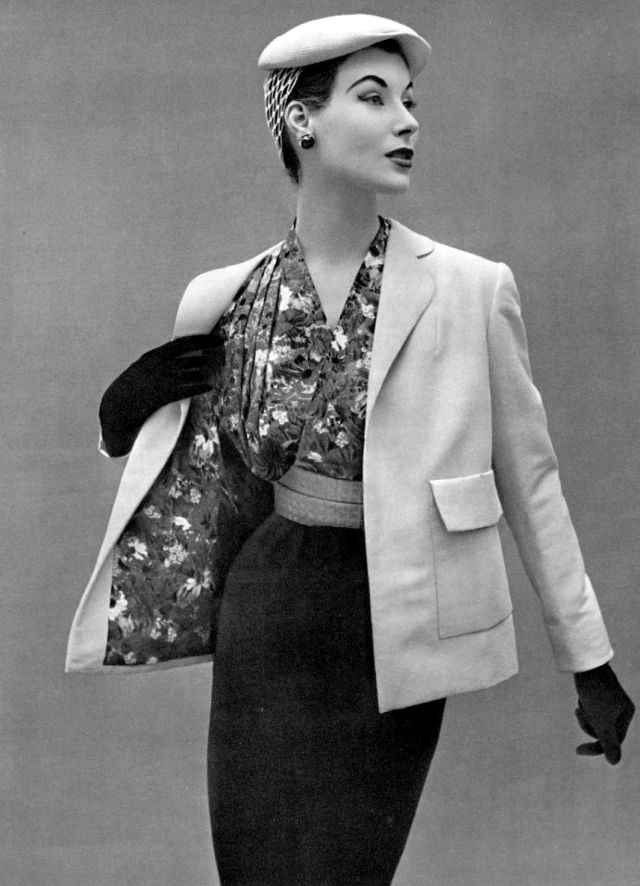
Lanvin-Castillo featured Crawford across multiple seasons. In 1953, she wore a beige alpaca wool jacket lined in the same silk floral print as her blouse ā a coordinated approach that was considered highly refined at the time. In 1954, the house dressed her in a white organdy fichu collar dress under a roomy jacket, and a navy wool afternoon suit with a cowl neck held by a grosgrain placket. The handbag for that last look came from Violette Cornille. These detailed records of who made what ā down to the glove maker and the jeweler ā reflect just how seriously the fashion world took every element of presentation in that era.


Myrtle Crawford died in 2013 at the age of 85. Her career spanned the most glamorous and creatively rich years in 20th-century fashion, and the photographs taken during that time remain a vivid document of what high fashion looked like when it was still built entirely by hand. The Scottish girl who first modeled her motherās tweeds in Glasgow ended up wearing the finest clothes in the world, photographed by the best photographers of her generation, for the most prestigious publications on the planet.