Camden High Street is a short but busy stretch of road running through Camden Town, in north-northwest London. It links central London to Hampstead and moves traffic in one direction only — northbound. Southbound vehicles take the parallel Camden Street instead. At either end of the high street sit major music venues, including the former Camden Palace. At the southern end, a bridge crosses the Regent’s Canal, marking the edge of one of London’s most distinctive neighbourhoods.
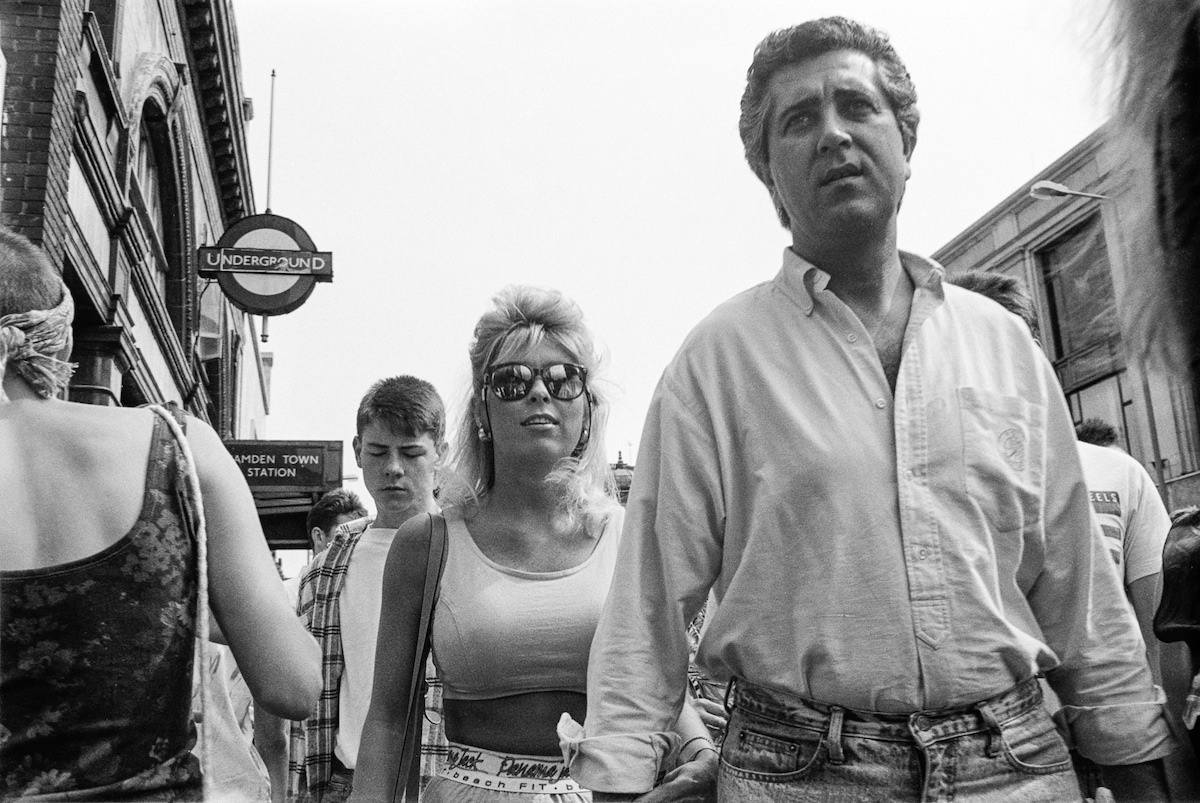
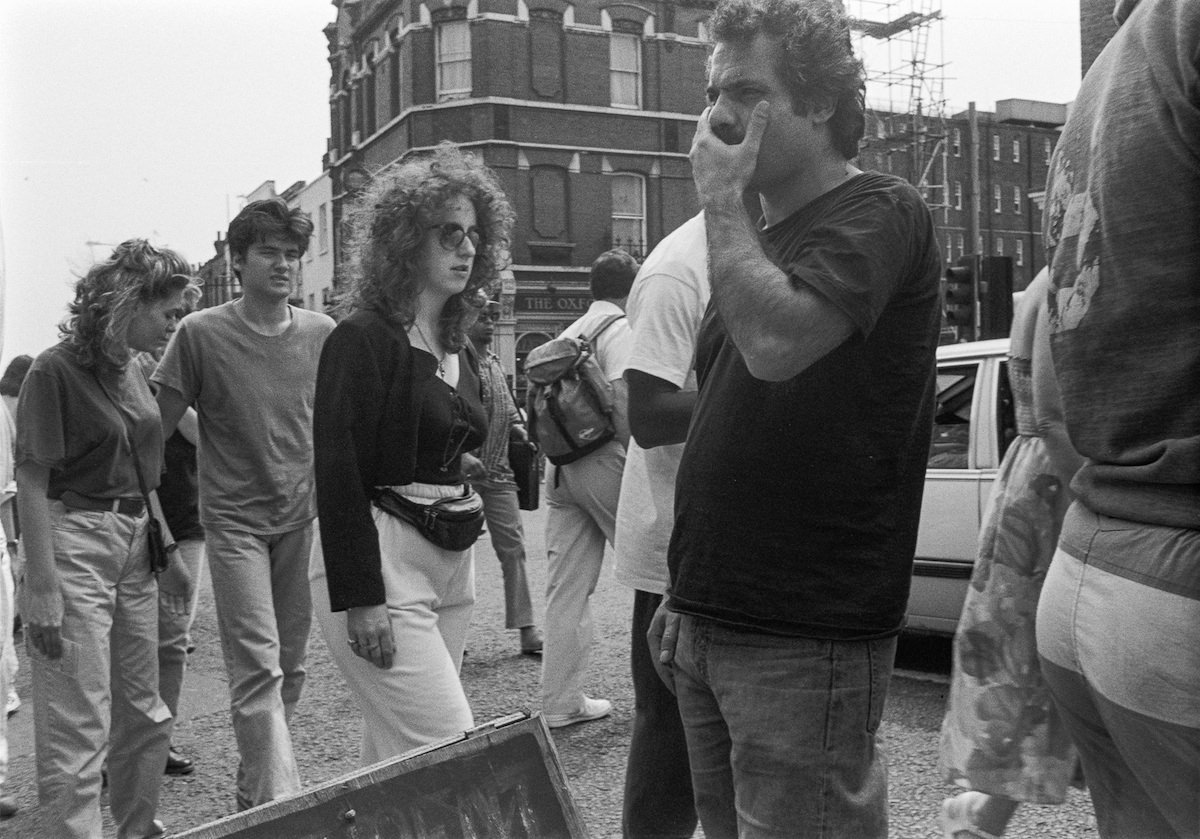
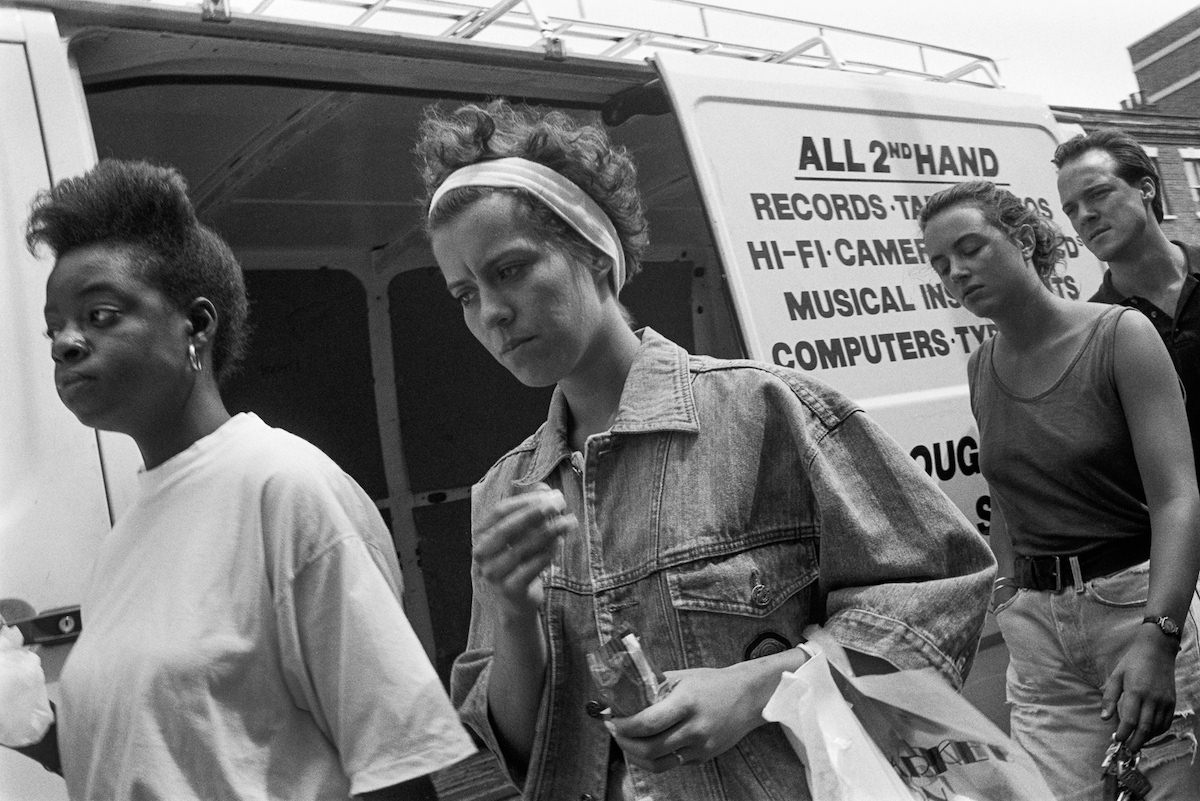
Photographer Peter Marshall first documented Camden Town in 1986. Four years later, in 1990, he returned to Camden High Street for another look around — what he called a mooch. His photographs from that second visit show a street alive with subcultures, street music, market energy, and everyday London life. Marshall had a sharp eye for the human detail that formal city photography often misses.
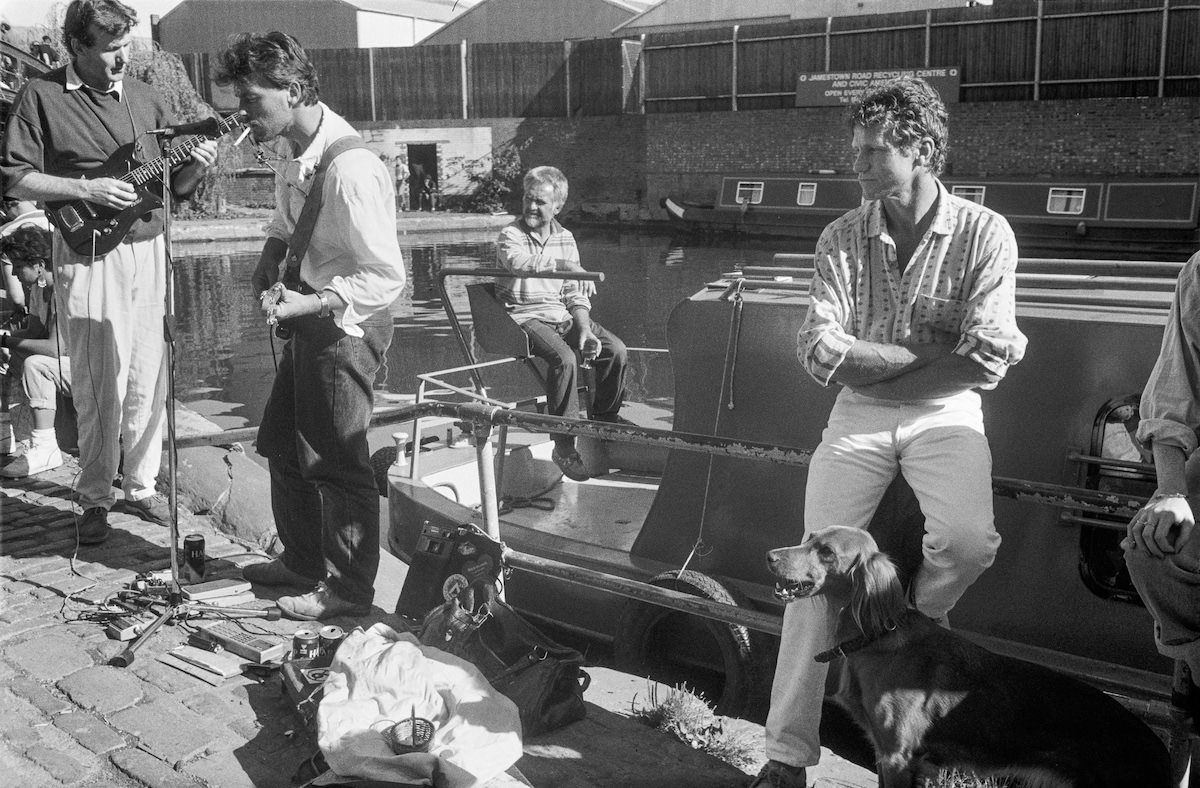
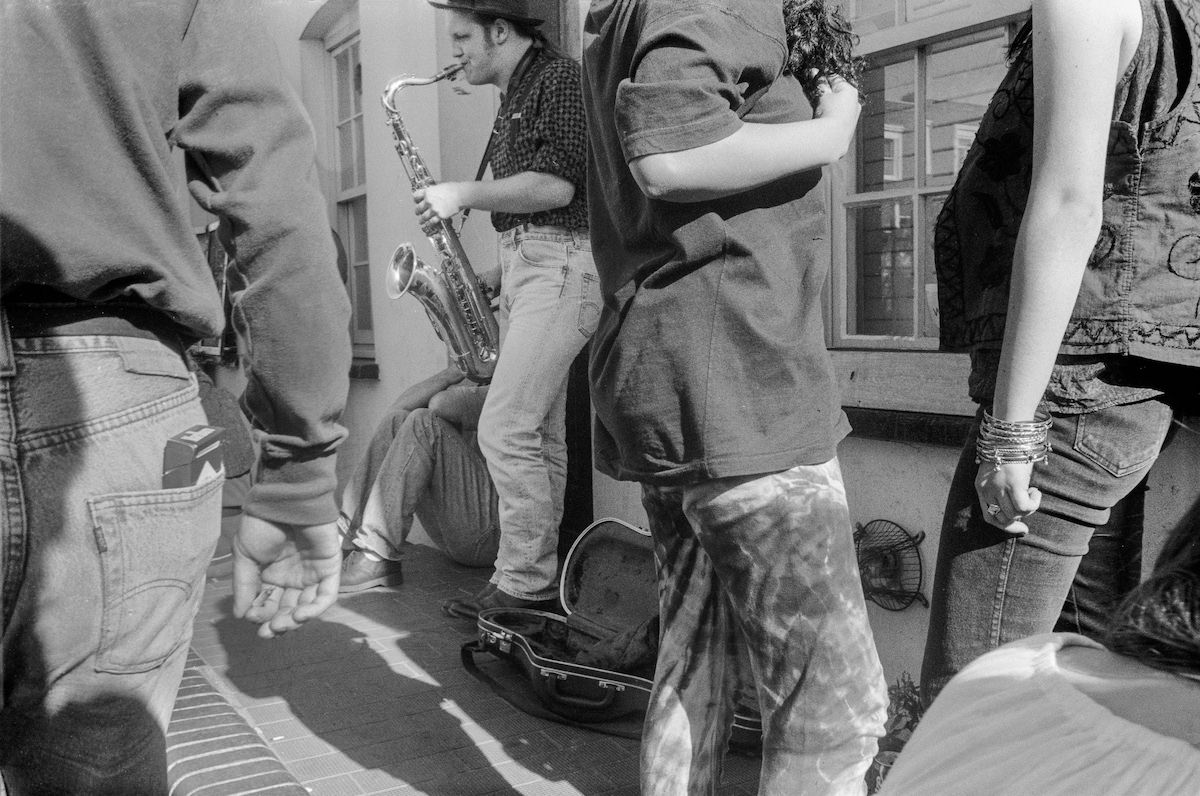
Buskers were a regular fixture along the high street and near the canal in 1990. Street musicians set up wherever they could find a crowd, and Camden’s mix of tourists, market-goers, and locals made it a reliable spot. The area around Camden Market was especially busy, drawing people from across London every weekend.
The street itself was plastered with posters in 1990. Bands like The Blow Monkeys and Nick Cave had their gig flyers stuck to walls, lamp posts, and shuttered shopfronts. Music was not just being performed on the street — it was advertised at every turn. Camden had long been a hub for alternative music, and the posters reflected the range of acts passing through the area’s venues.
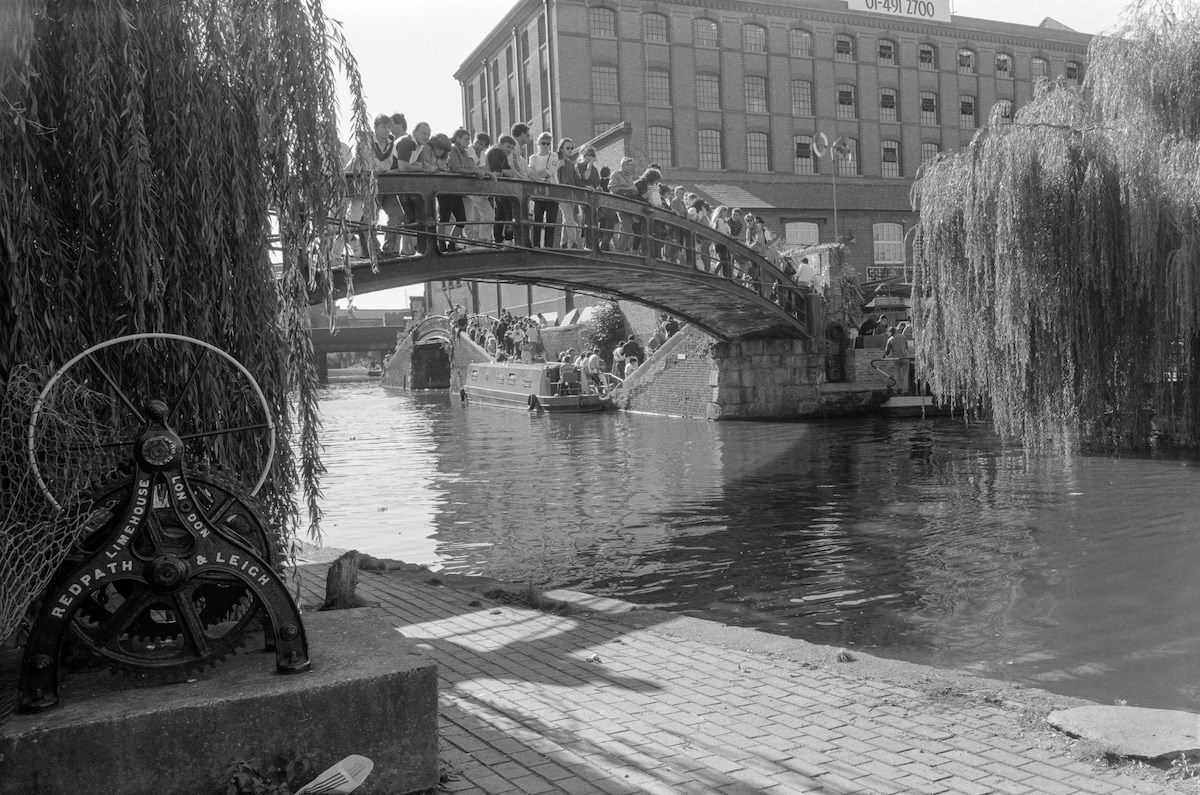
Near the southern end of the high street stands a cast iron bridge crossing the Regent’s Canal at Hampstead Road Lock. This Grade II listed structure dates from shortly after the canal opened in 1820. By the time Marshall photographed it in 1990, the bridge had already undergone restoration work — its original wrought iron stays replaced with steel and its decking renewed. Despite the updates, the bridge retained its historic appearance and remained a recognisable landmark.
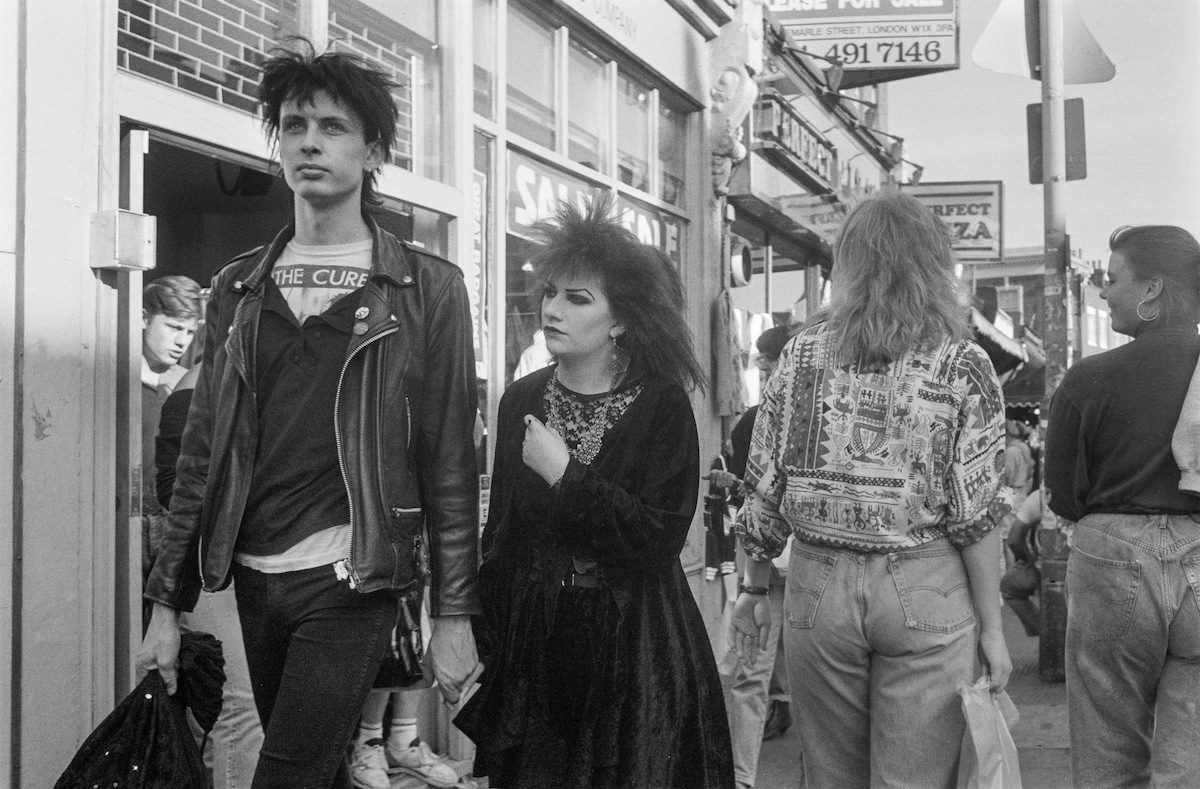
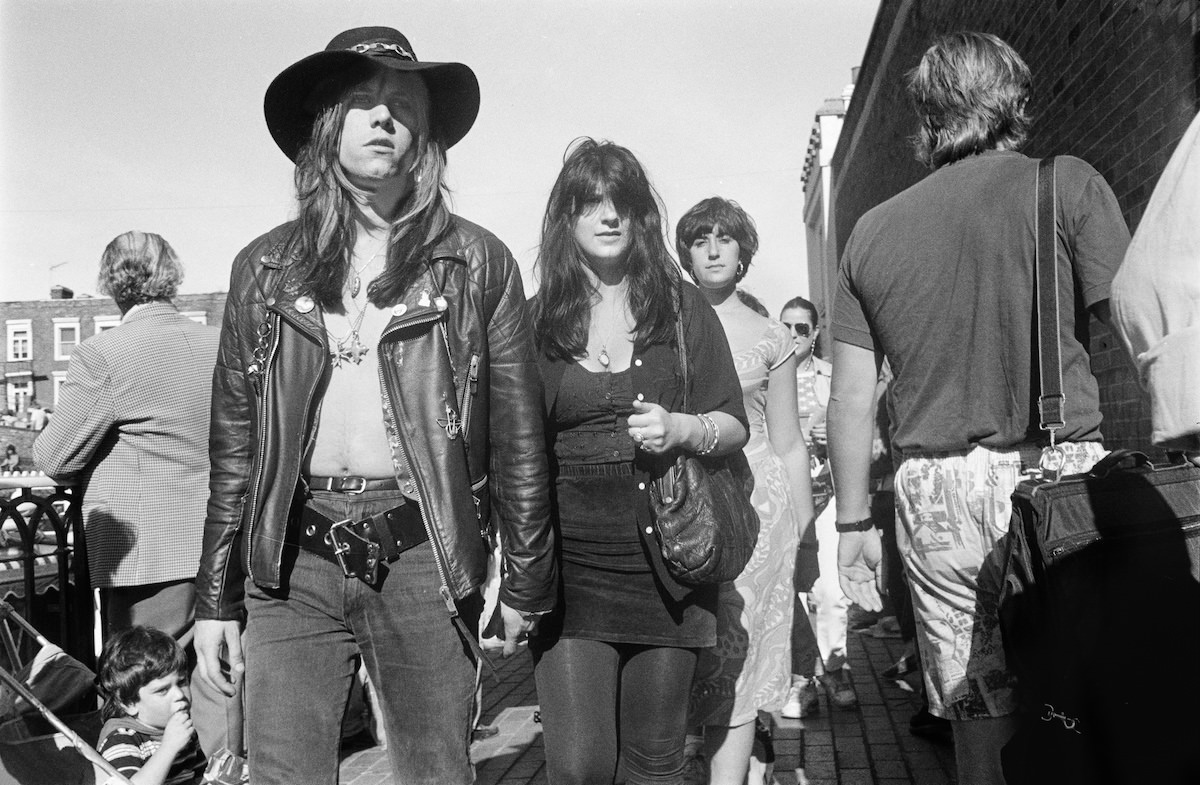
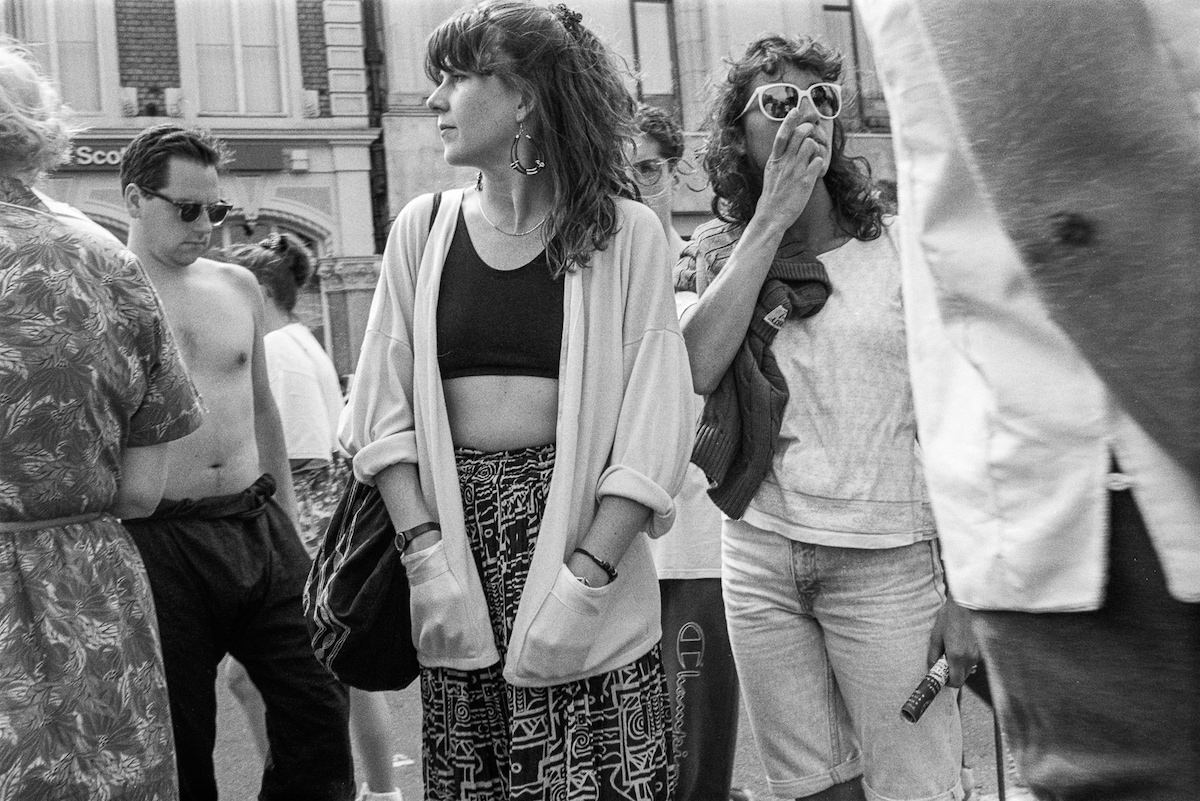
Walking along the high street in 1990 meant brushing shoulders with a remarkable variety of people. Punks, hippies, psychobillies, rude boys, and ravers all shared the same pavement. Camden Town had built a reputation as a place where subcultures could exist side by side without friction, and Marshall’s photographs capture that mix without editorialising.
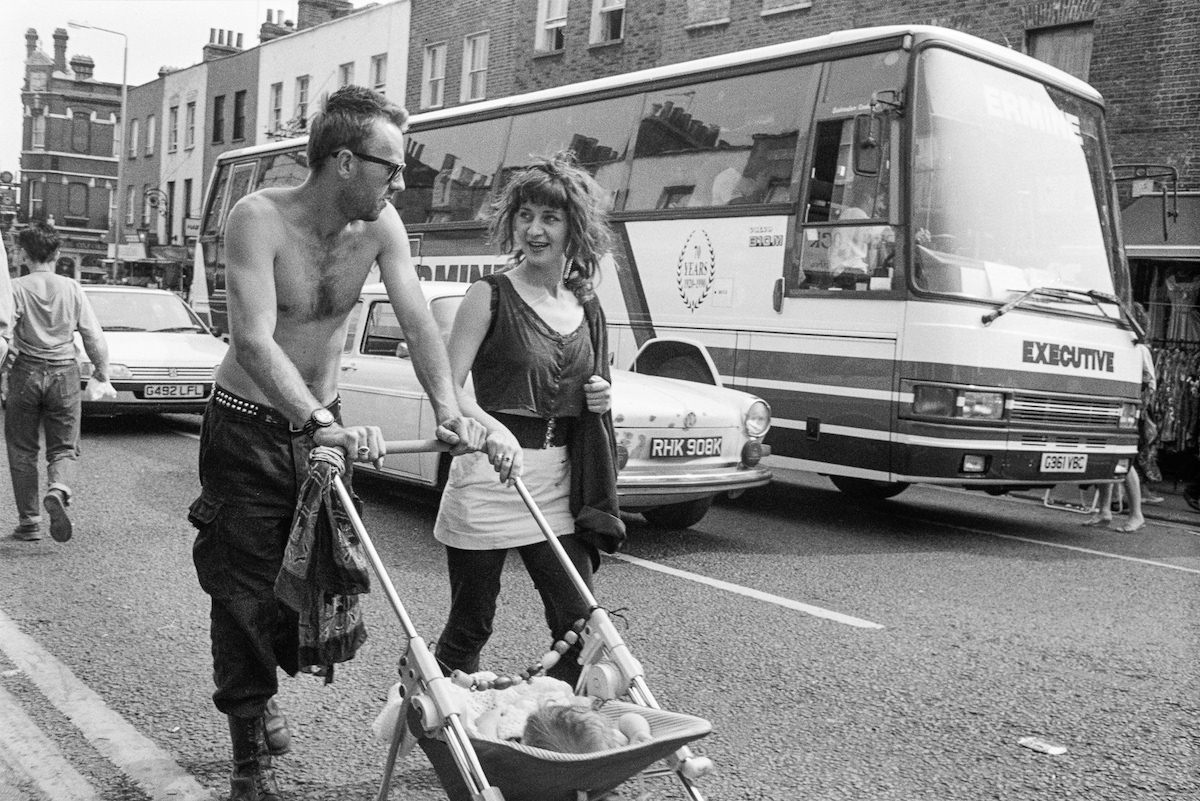
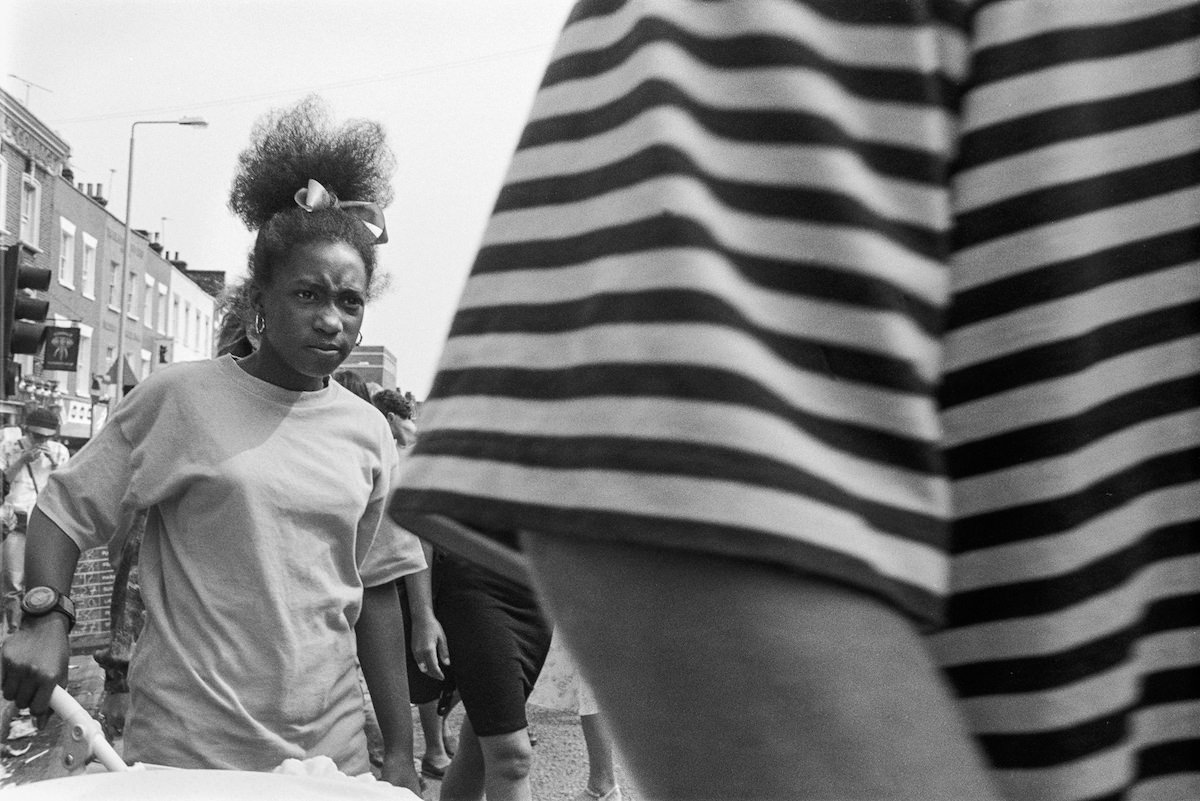
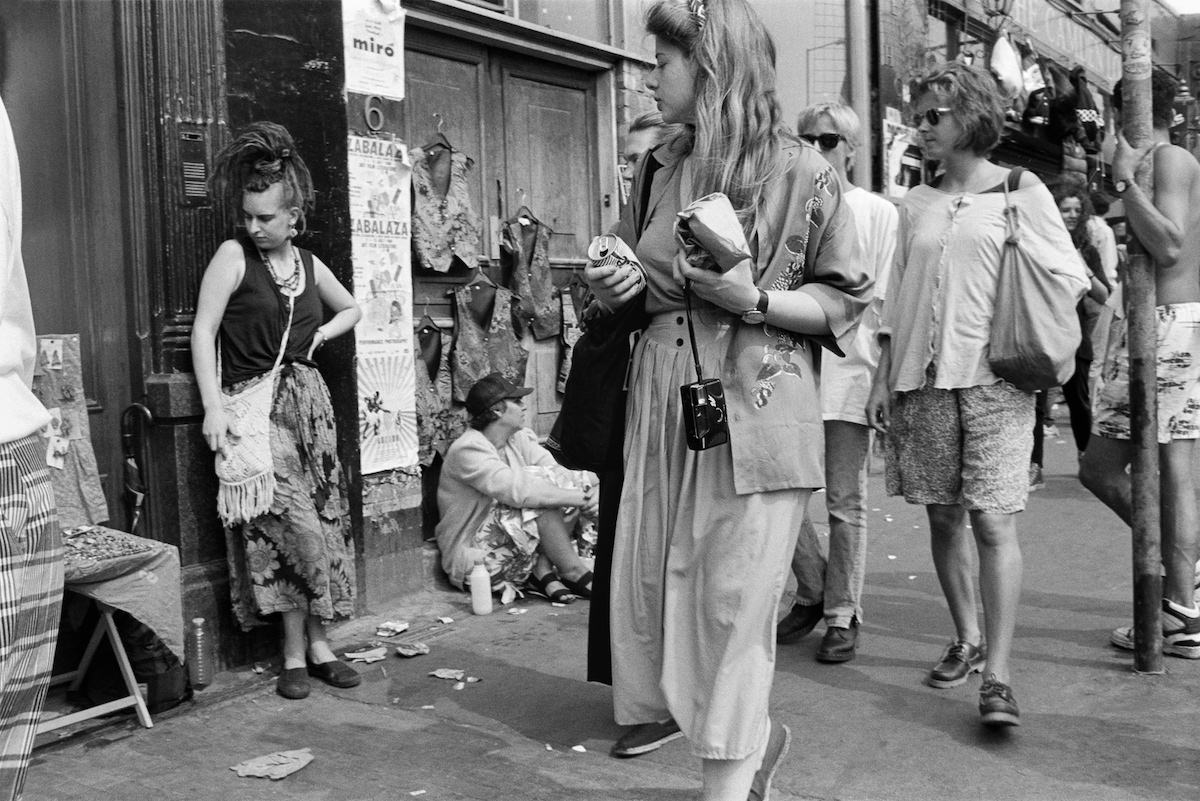
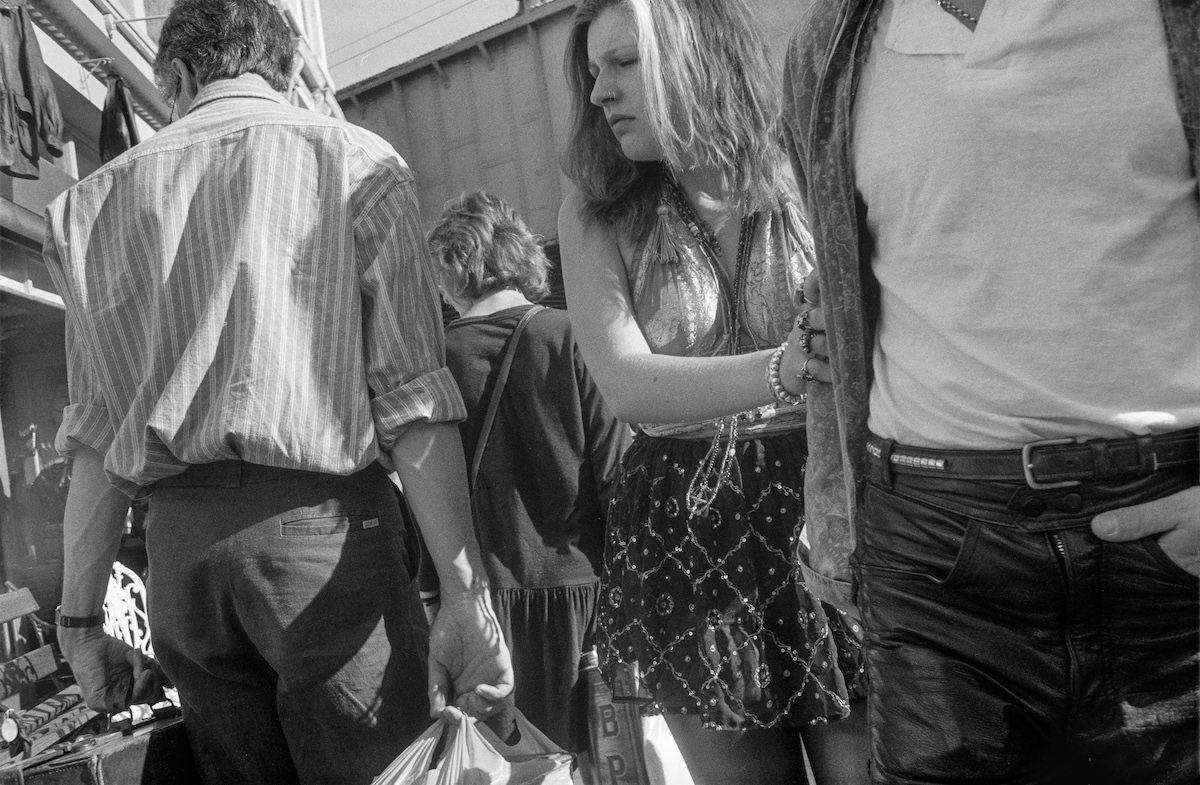
The market drew much of the foot traffic. Camden Market had grown steadily through the 1980s and by 1990 was pulling in large crowds on weekends. Stalls sold clothing, records, jewellery, and food. The area around the canal and the lock was particularly active, with traders and buyers filling the space between the water and the road.
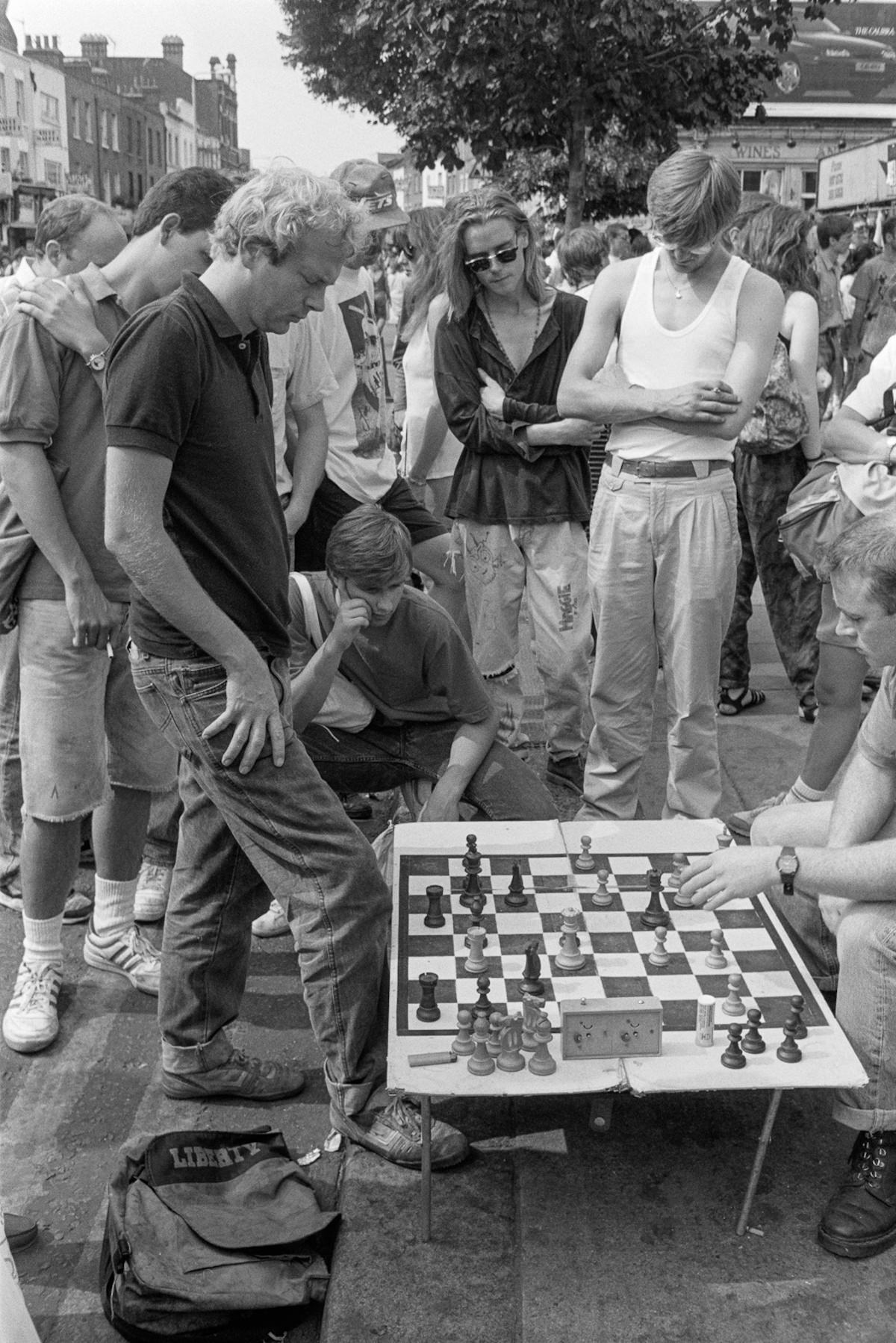
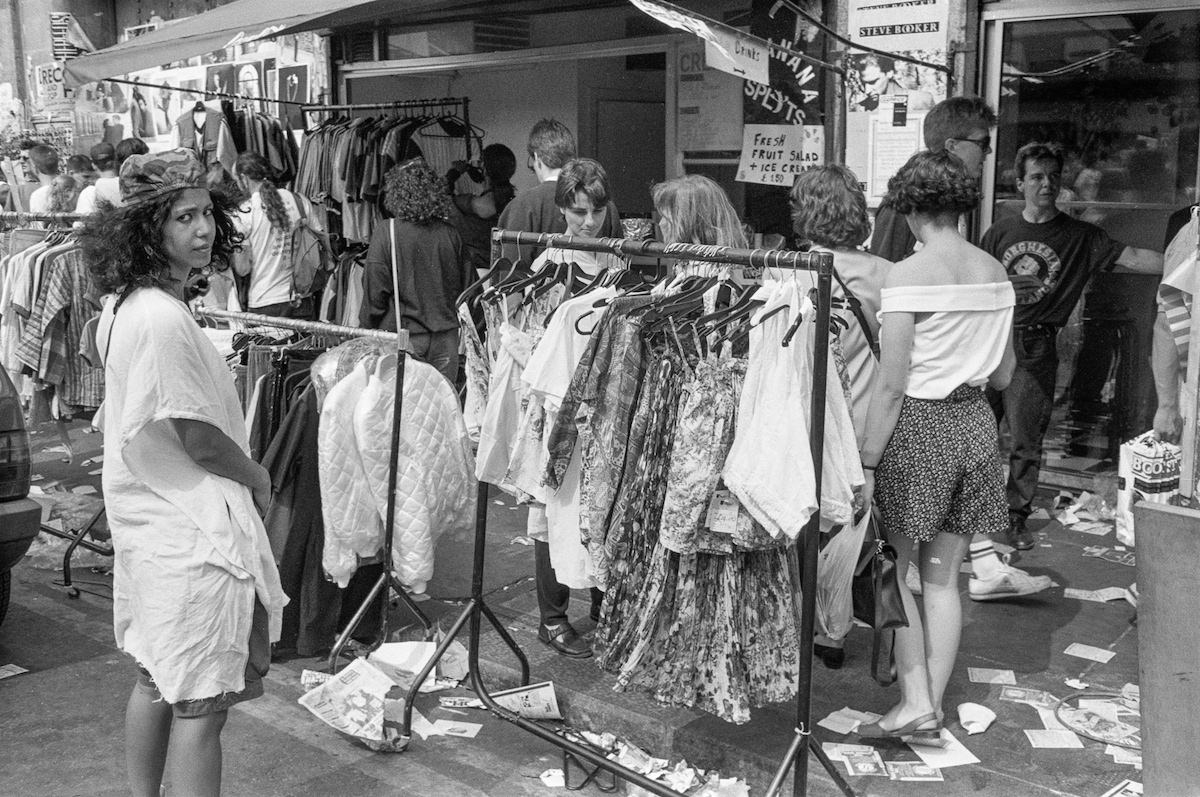
Marshall’s photographs do not stage scenes or arrange subjects. He moves through the street as an observer, catching people mid-action — talking, performing, walking, waiting. The result is a document of a specific time and place rather than a constructed portrait of the neighbourhood.
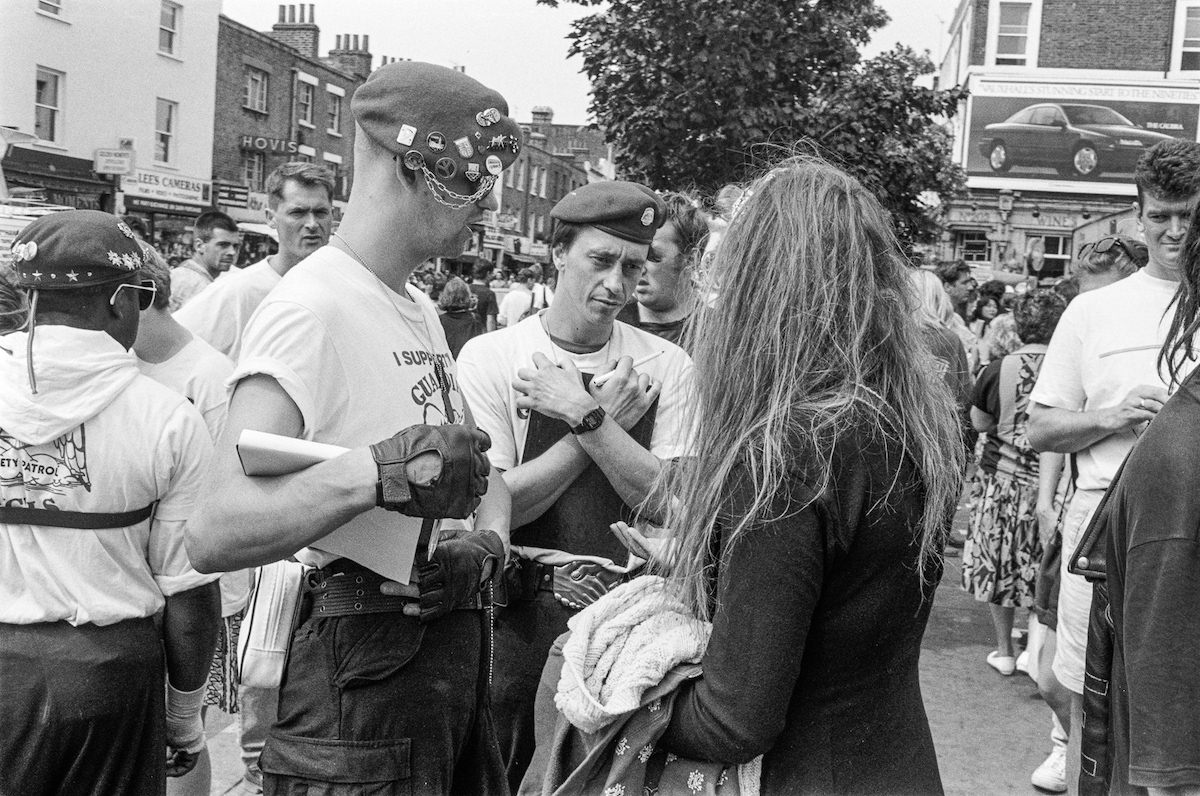
Street patrols were also part of the scene. Camden High Street in 1990 had a visible safety presence, reflecting the realities of managing a busy urban corridor that attracted large and diverse crowds. The presence of safety patrol workers alongside market vendors, musicians, and shoppers gives the photographs a fuller picture of how the street actually functioned day to day.
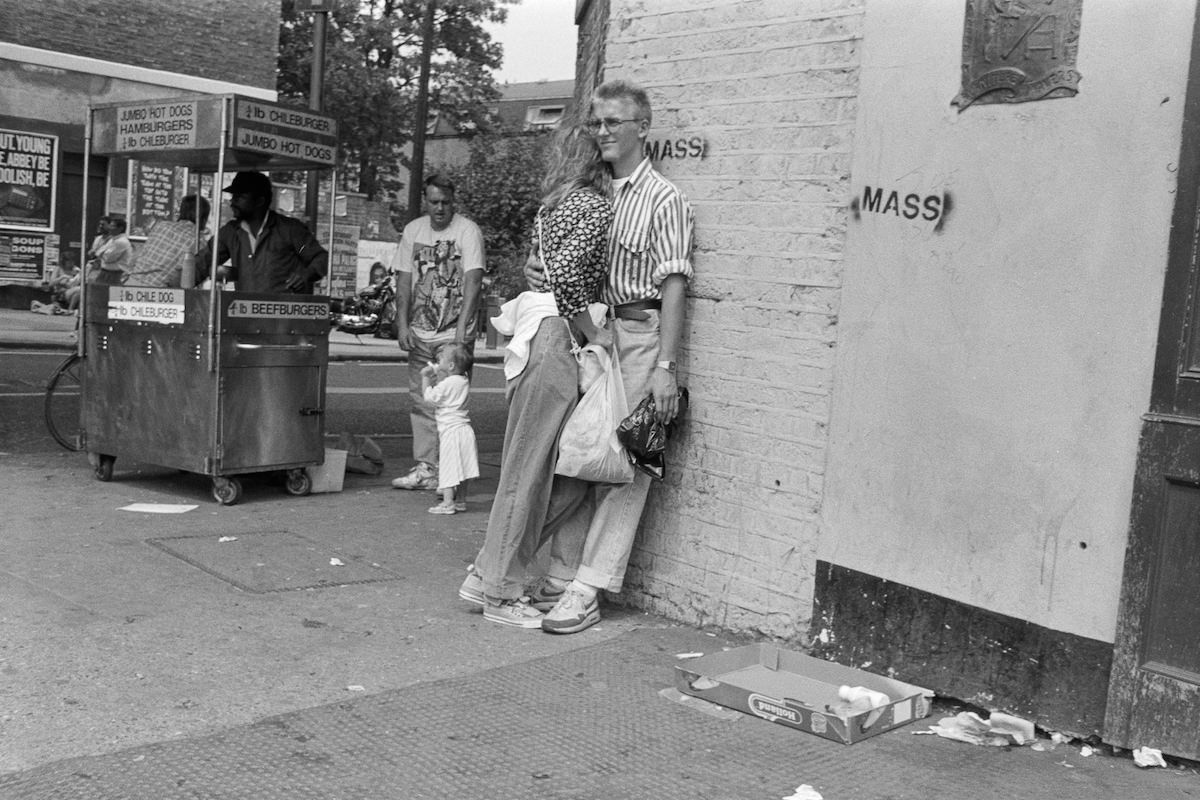
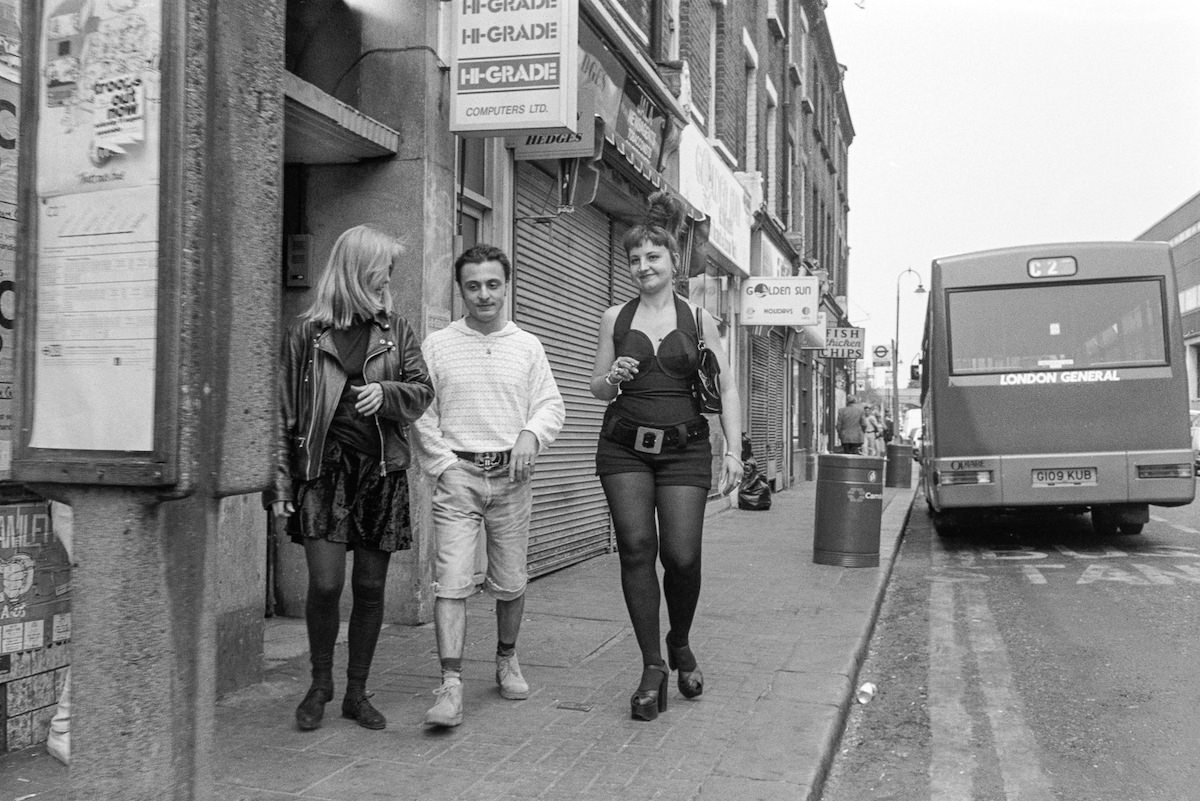
The one-way flow of the high street shaped the rhythm of the area. Northbound traffic pushed through while pedestrians spilled off the pavements and into the road near the busiest sections. The canal end acted as a natural gathering point, with people stopping on and around the bridge to watch the water below.
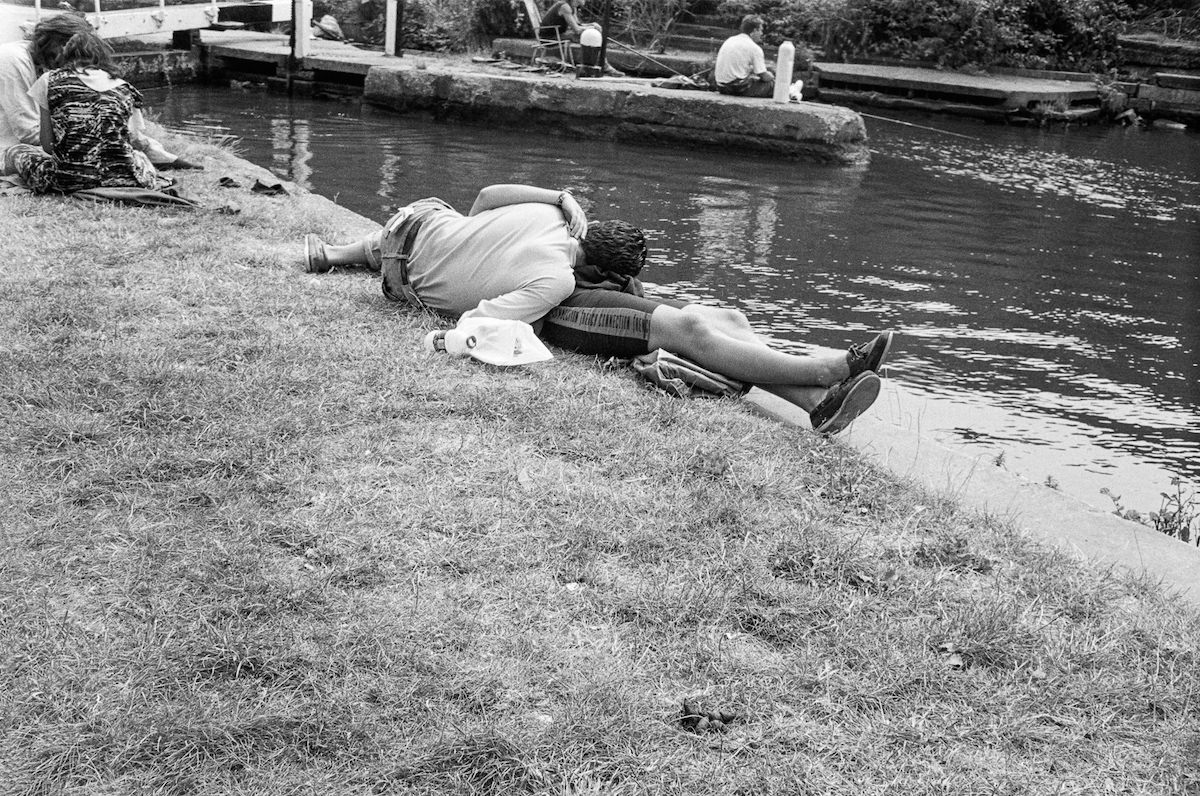
The Regent’s Canal bank itself was a draw. People sat along the water’s edge, away from the noise of the high street but still within the orbit of the market. In 1990 the canal corridor through Camden was less developed than it would later become, but it was already a popular spot for those looking for a quieter corner of the neighbourhood.