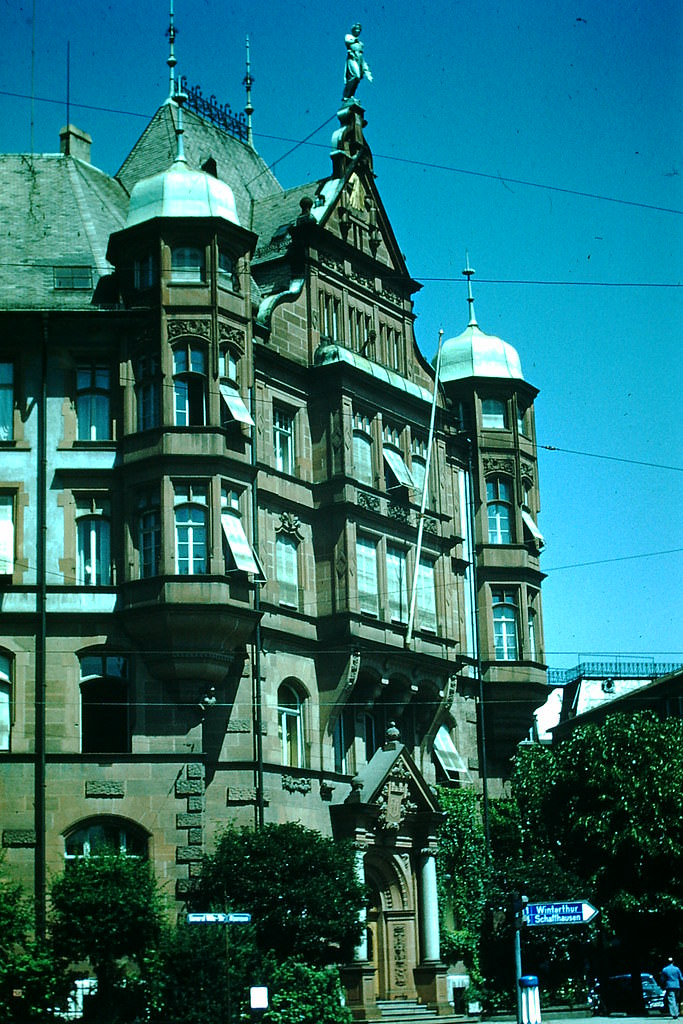
In 1954, Switzerland stood at an interesting crossroads. Its economy was growing steadily despite the financial pressures and trade restrictions placed on it by the United States, the Soviet Union, and the Allied powers in the postwar years. The country was drawing large numbers of foreign workers — Italians in particular — to fill the labor demands of its expanding industries. That same year, Switzerland hosted the FIFA World Cup, cementing its place on the world stage. During the Cold War, Swiss neutrality made the country a trusted go-between for opposing powers. At the same time, its capitalist democracy and strong citizen militia positioned it firmly against the spread of communism.
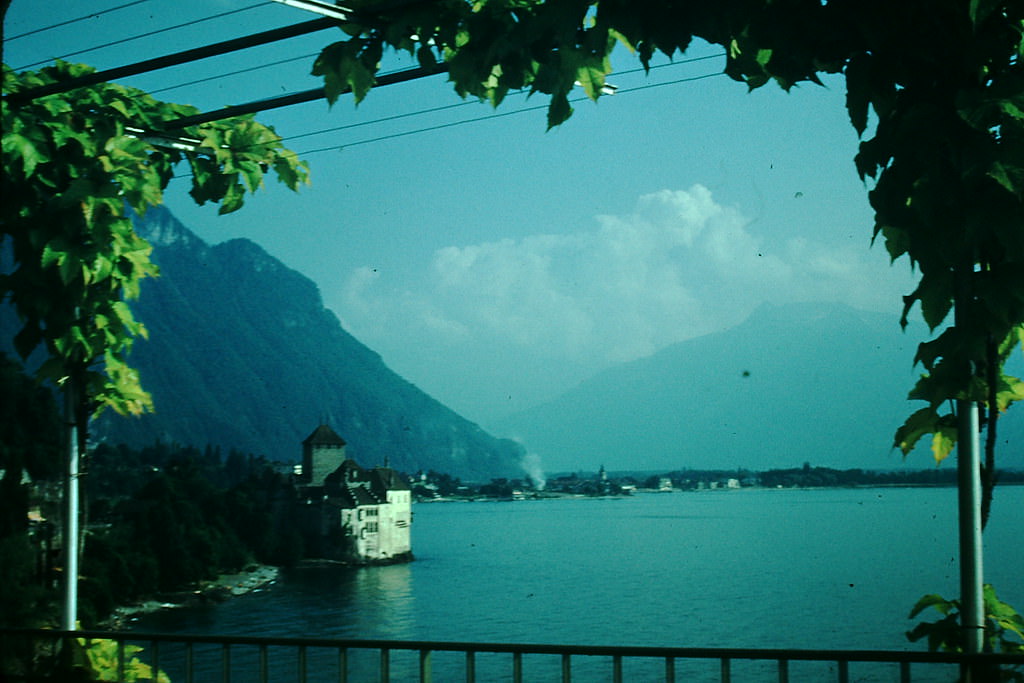
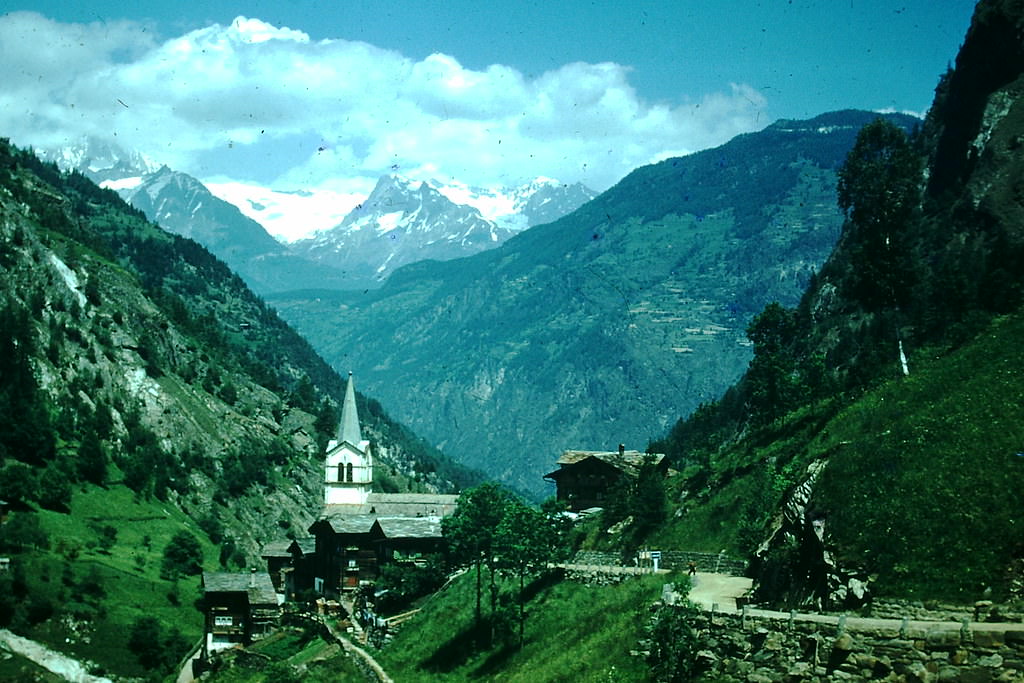
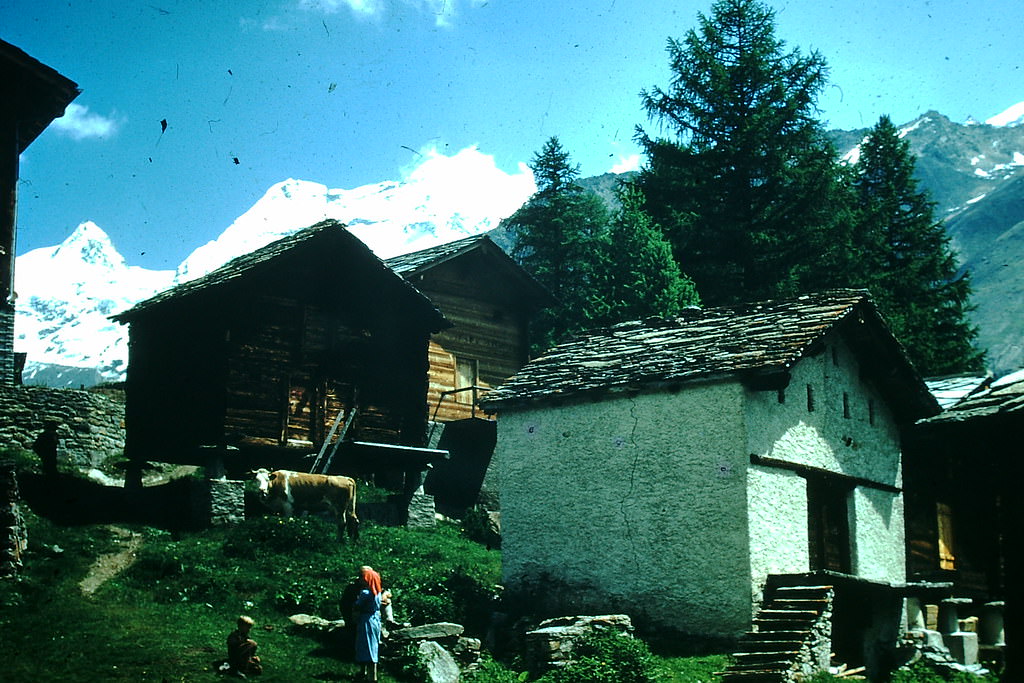
The landscape of Switzerland in 1954 ranged from medieval lakeside fortresses to quiet Alpine hamlets. Chillon Castle, perched on a rocky island at the edge of Lake Geneva, had stood for centuries as one of the country’s most recognized landmarks. Not far from the lake towns, small mountain villages like Eisten sat tucked between steep slopes, largely unchanged from earlier generations.
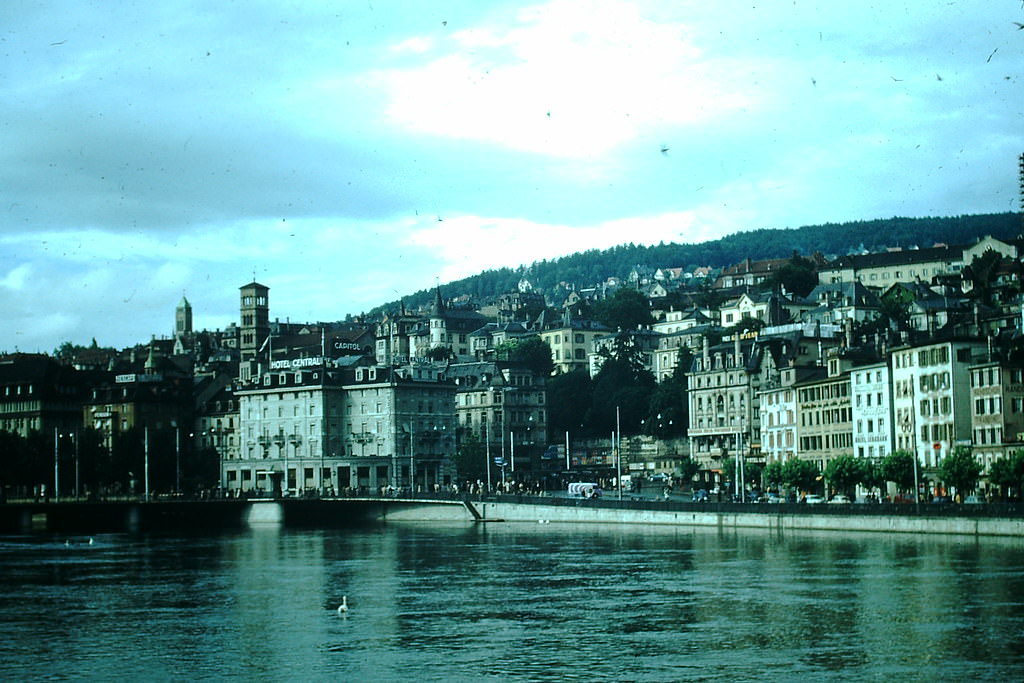
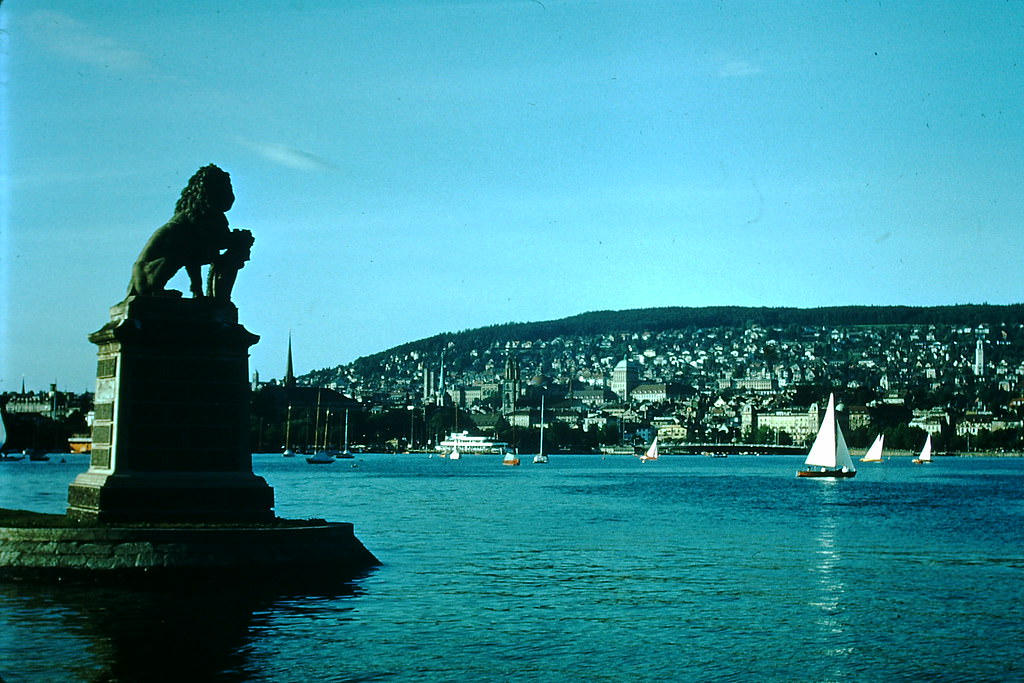
Zurich was the country’s largest city and its financial heart. The Limmat River ran straight through its center, flanked by historic church spires and guild houses that dated back to the medieval era. By 1954, the city had grown into a modern urban hub while keeping its older architecture largely intact.
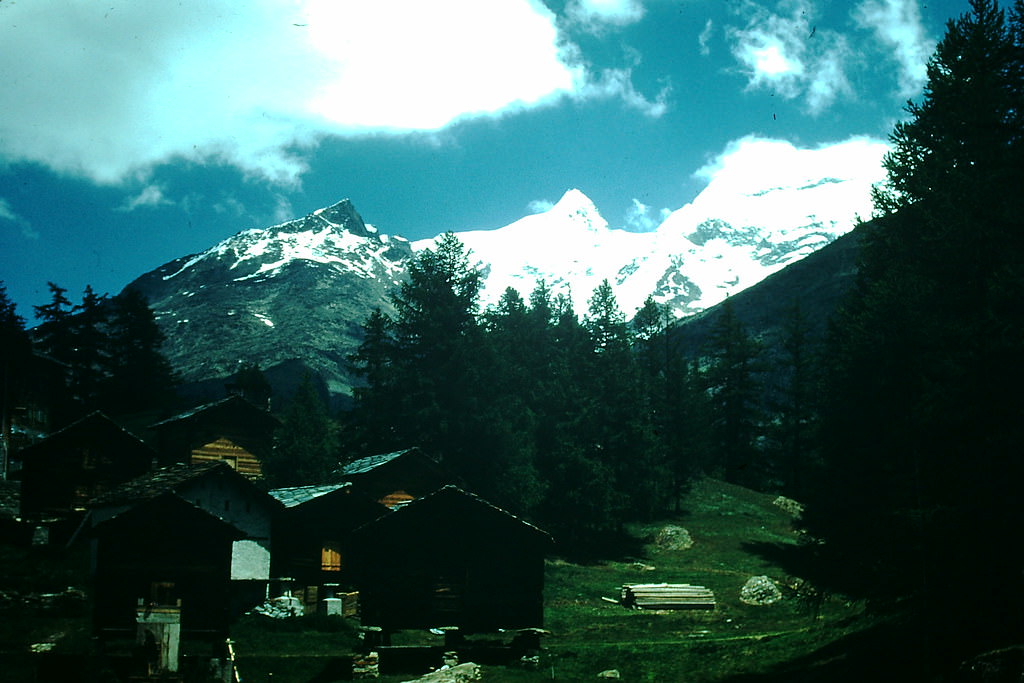
High in the Valais Alps, the resort village of Saas-Fee was surrounded by glaciers on three sides. Known as the ‘Pearl of the Alps,’ it was accessible only on foot or by mule in the early 1950s — no road had yet been built. The nearby valley settlement of Saas-Grund served as the main access point for travelers heading up to the higher village.
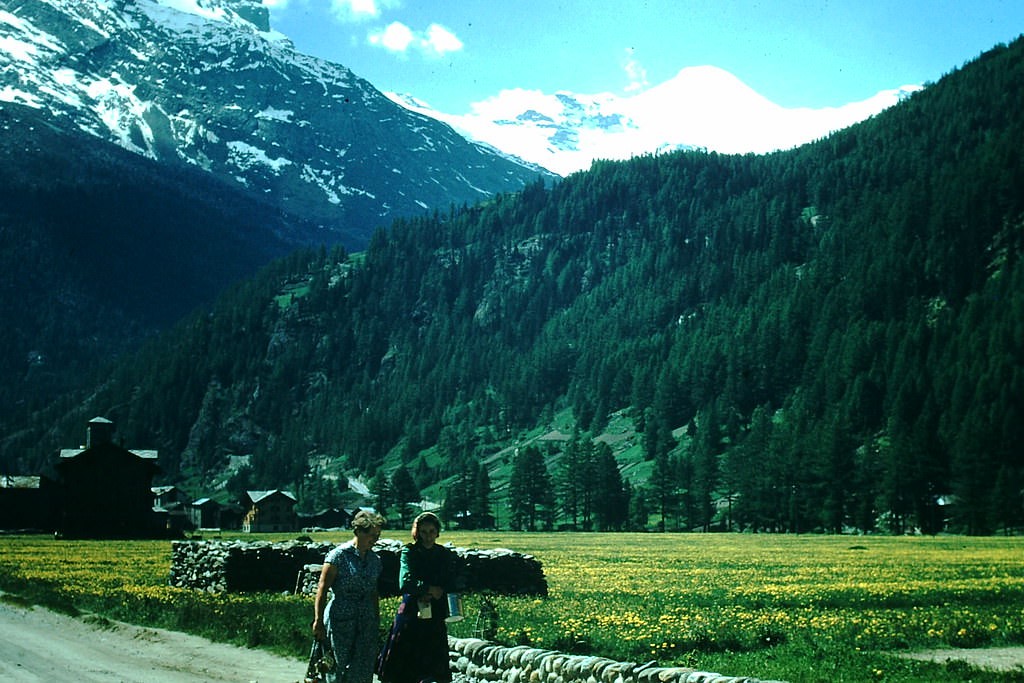
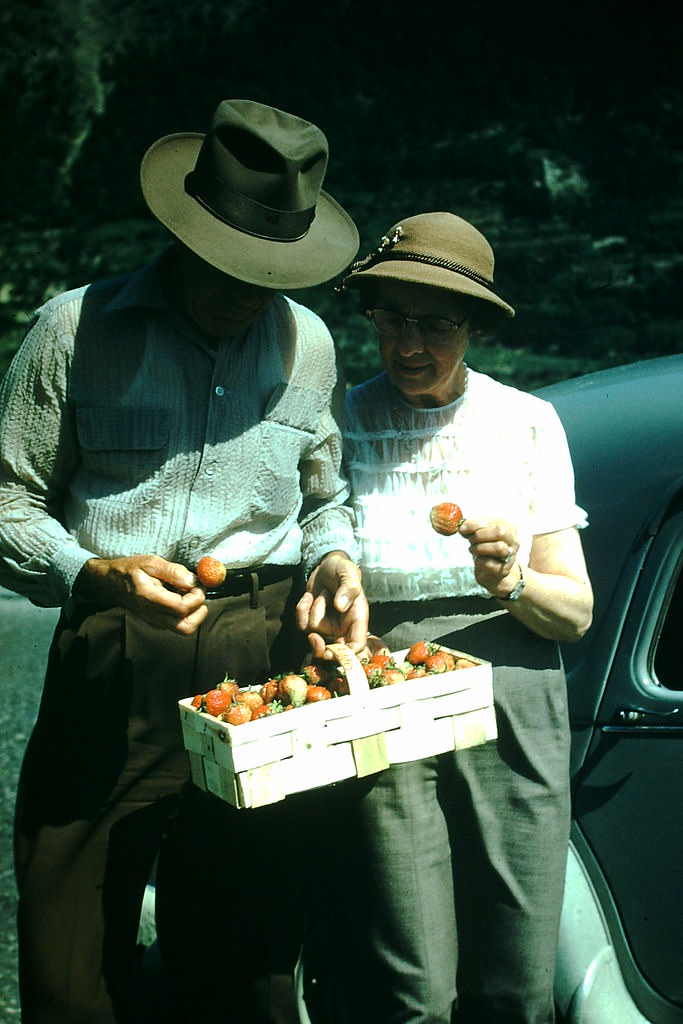
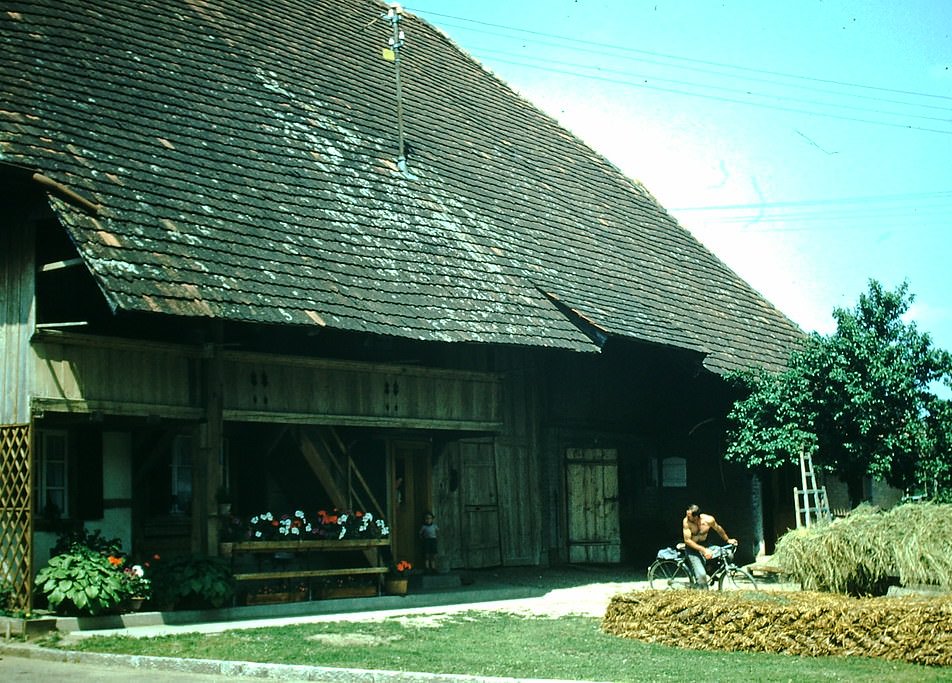
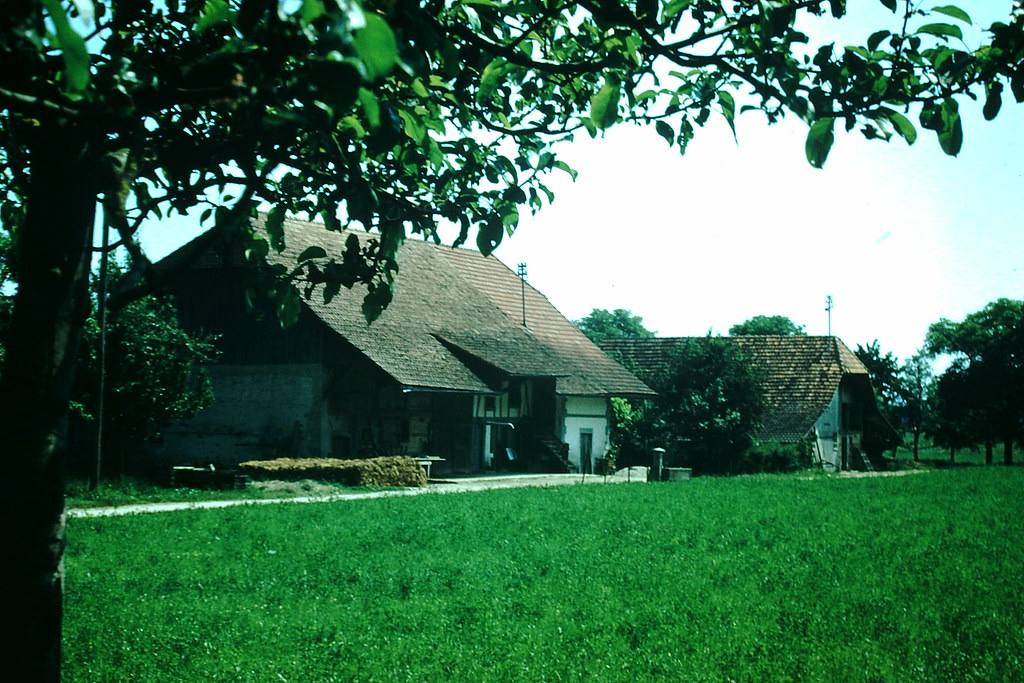
Agriculture remained a central part of Swiss rural life in 1954. The Valais region was known for its fruit production, and strawberry harvests were a common sight in the warmer months. Swiss farms near Berne and along the road between Zurich and Engelberg showed the tidy, well-kept character typical of the Swiss countryside — red-roofed farmhouses, neatly fenced pastures, and Swiss brown cattle grazing on open hillsides.
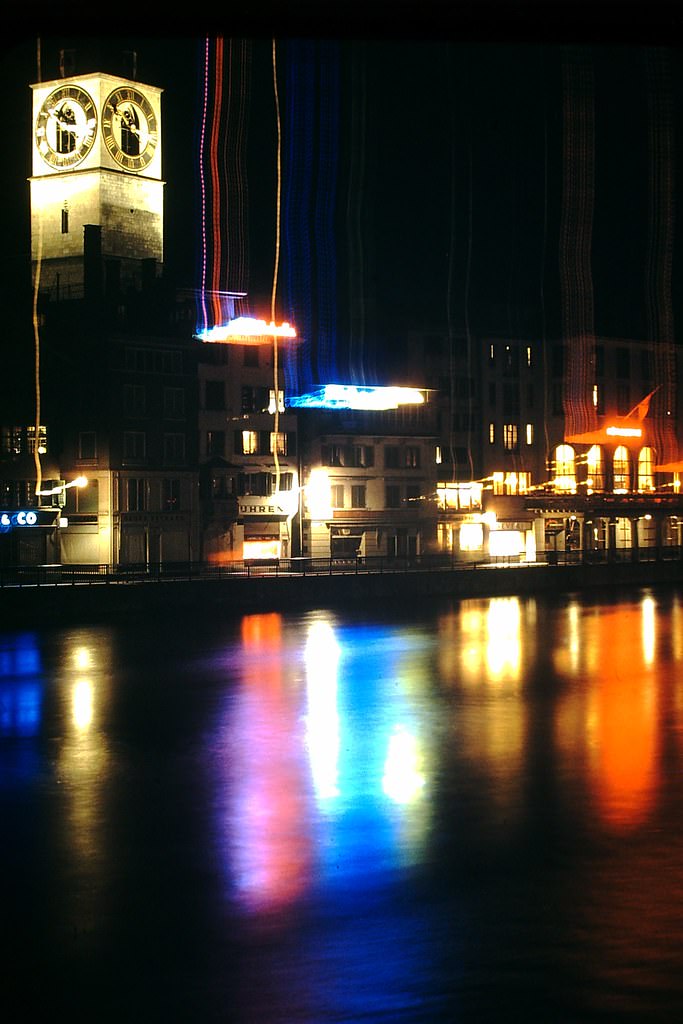
After dark, Zurich transformed into a lit-up city of bridges, towers, and reflections on the Limmat. The city’s nighttime silhouette in 1954 revealed a skyline shaped by centuries of building — church domes, the yellow dome of the Opera House along the lake, and rows of apartments lining the waterfront.
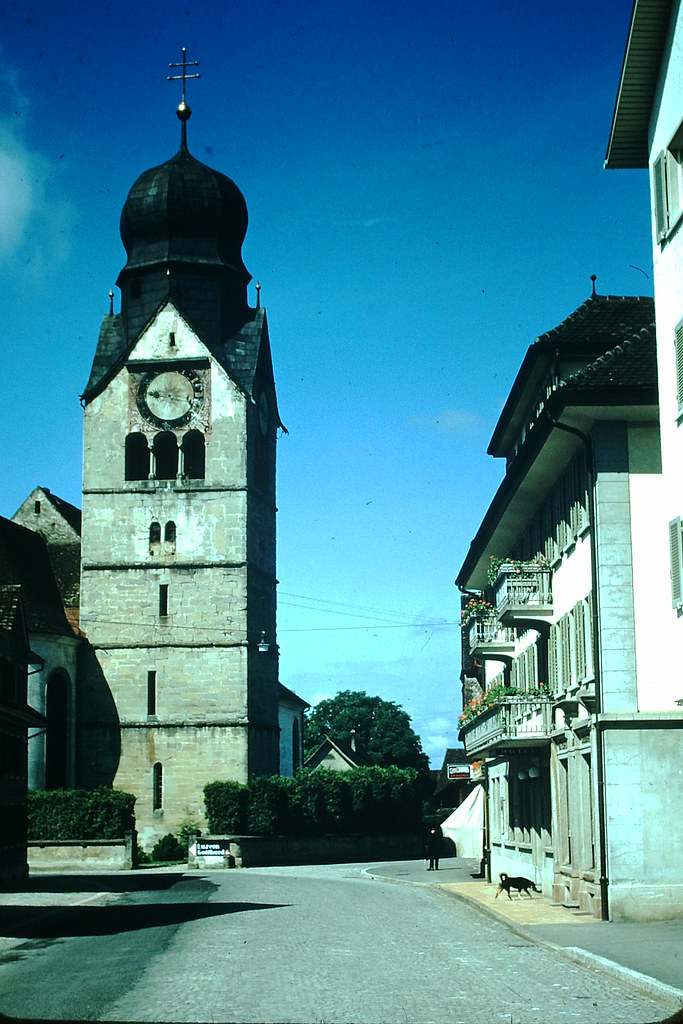
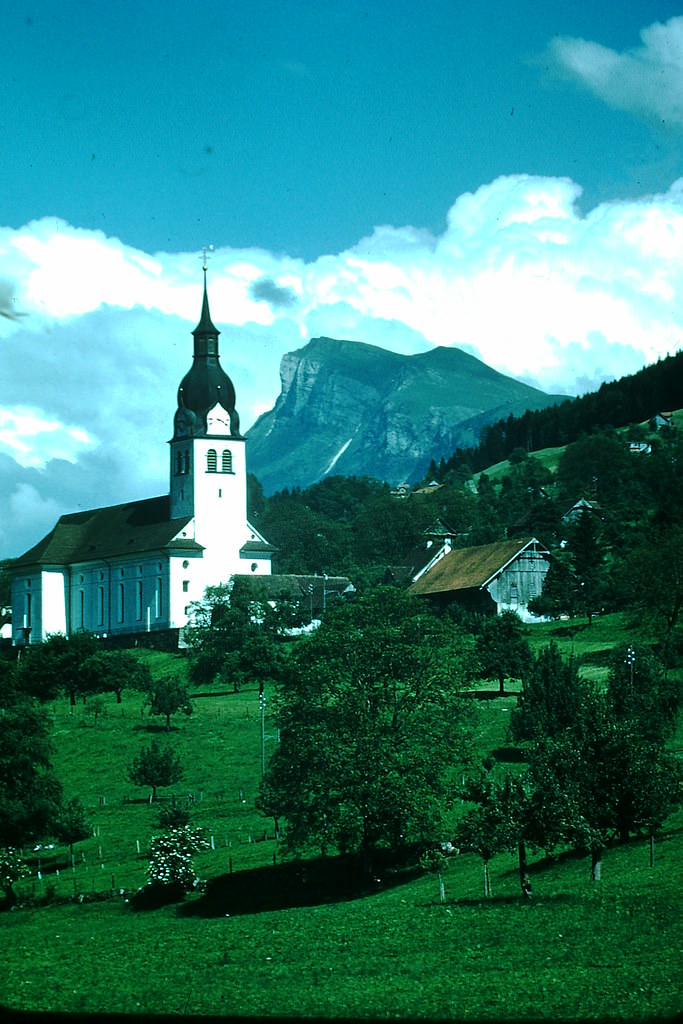
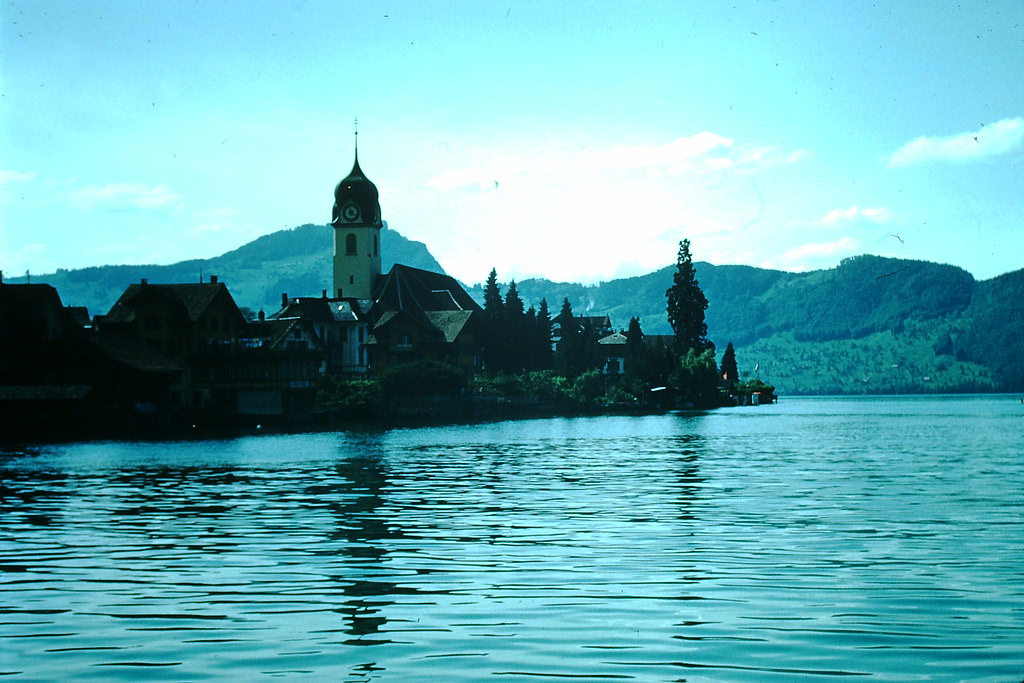
Central Switzerland was home to some of the country’s oldest religious architecture. The Canton of Zug contained what was recorded as the oldest Catholic church in the region, a reminder of Switzerland’s deep ties to medieval Christianity. The church at Buochs, on the southern shore of Lake Lucerne, was another well-preserved example of rural Swiss religious life.
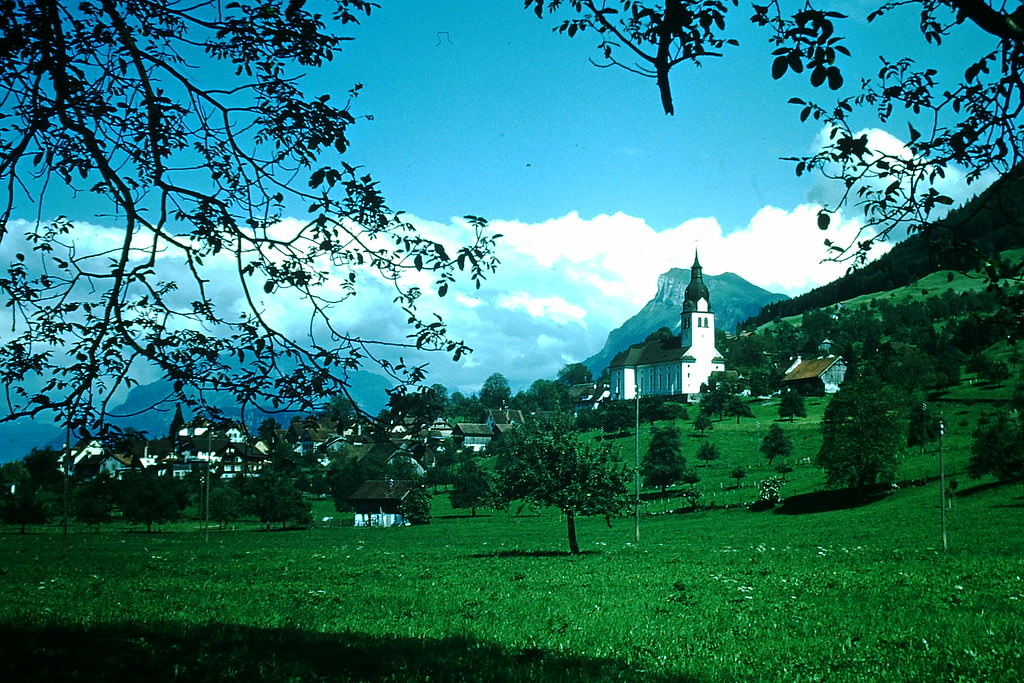
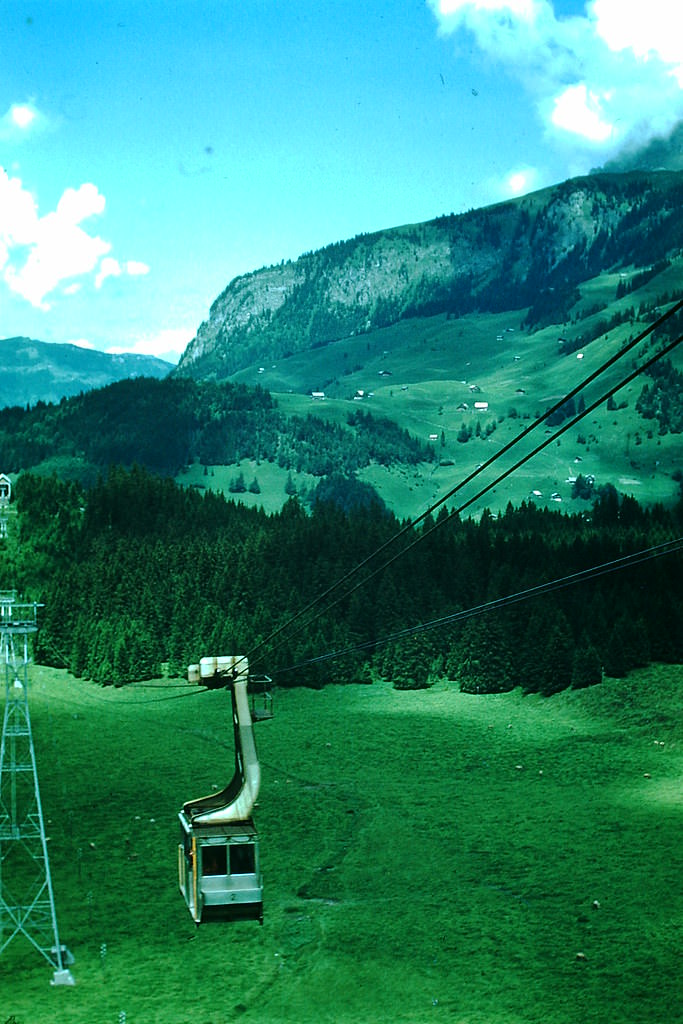
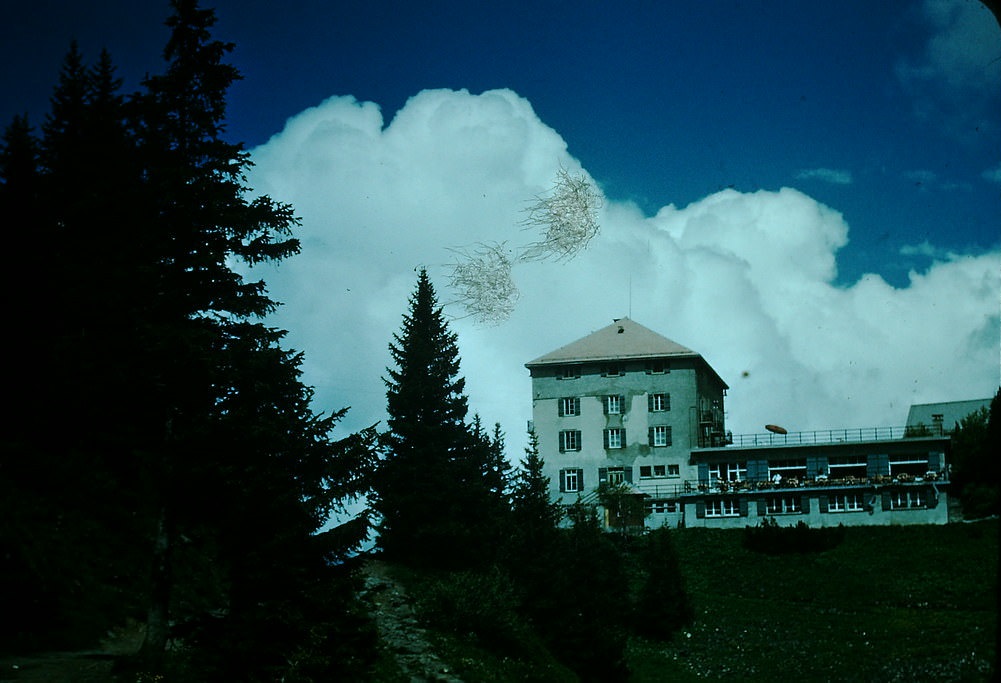
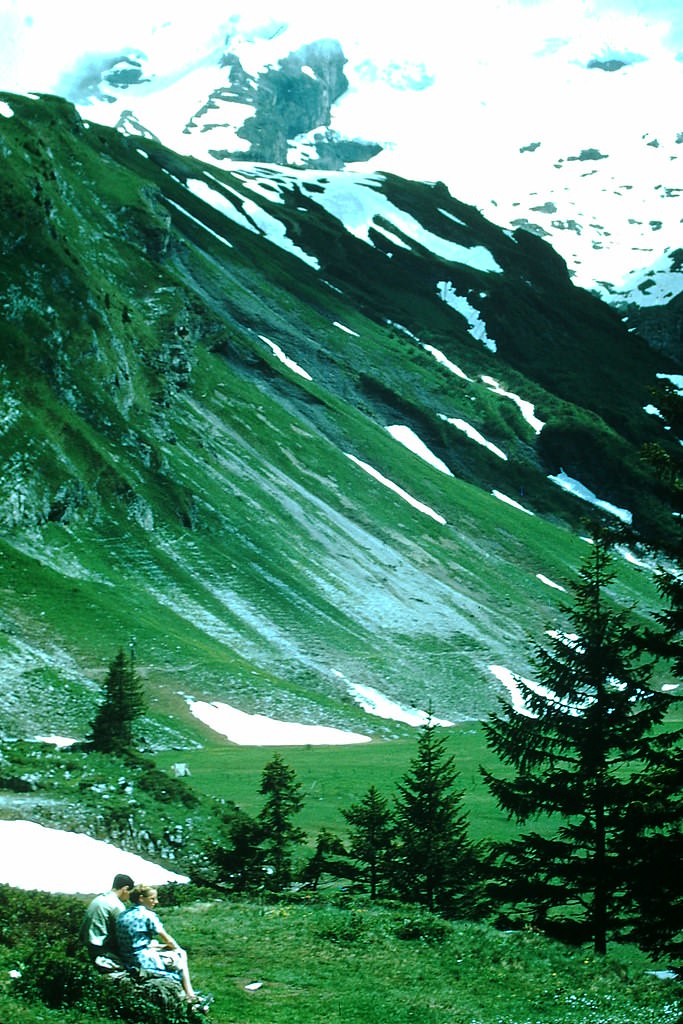
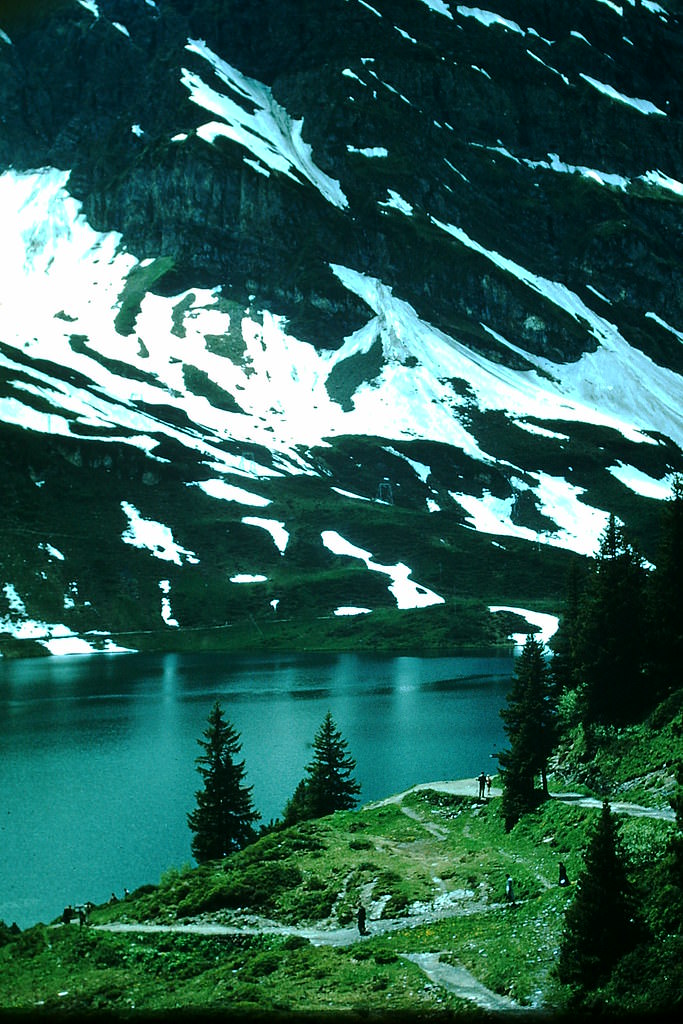
The mountain town of Engelberg, sitting at roughly 1,000 meters above sea level, was a popular destination for visitors heading to the higher Alpine terrain. A cable car system connected the valley to Trübsee, a small lake perched above the treeline. The ride gave passengers sweeping views of glaciers and rocky ridges. At Trübsee itself, a mountain inn offered shelter and rest for those exploring the high-altitude landscape.
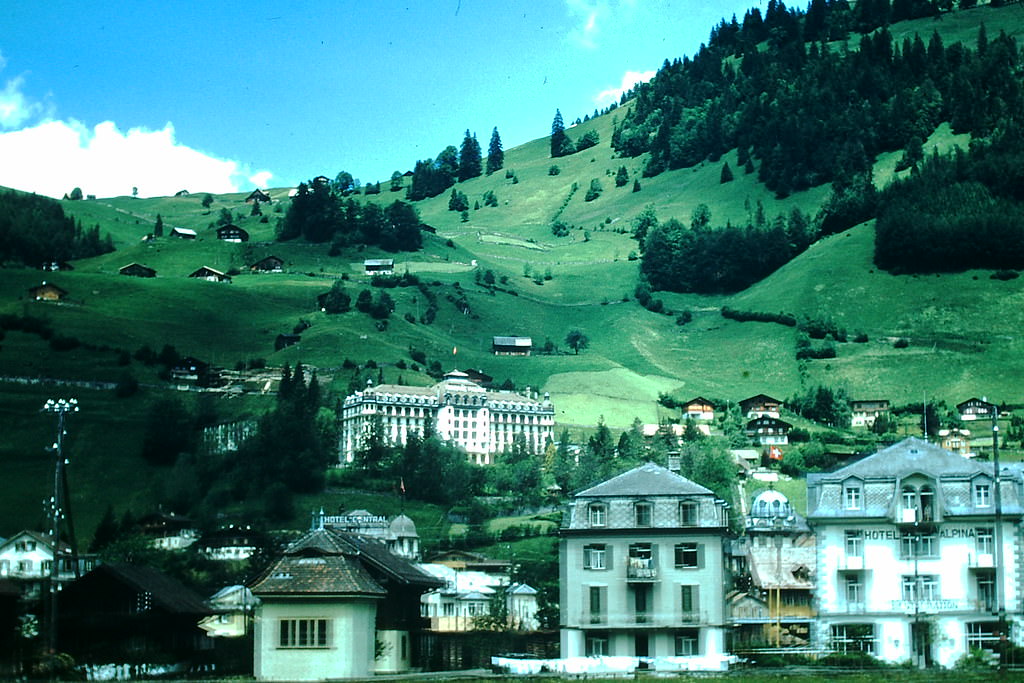
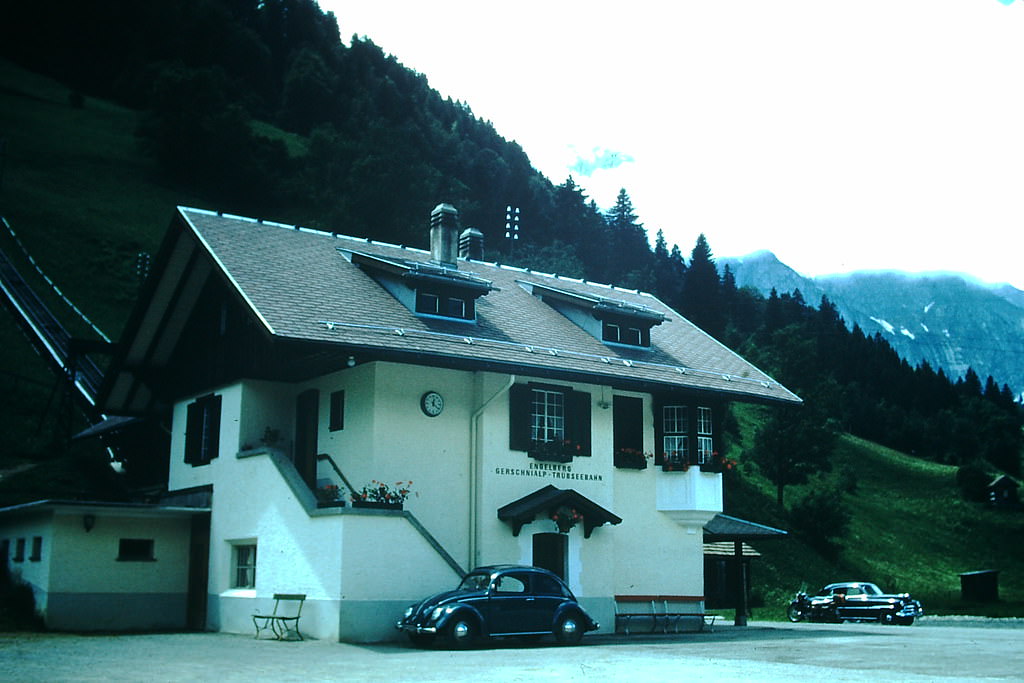
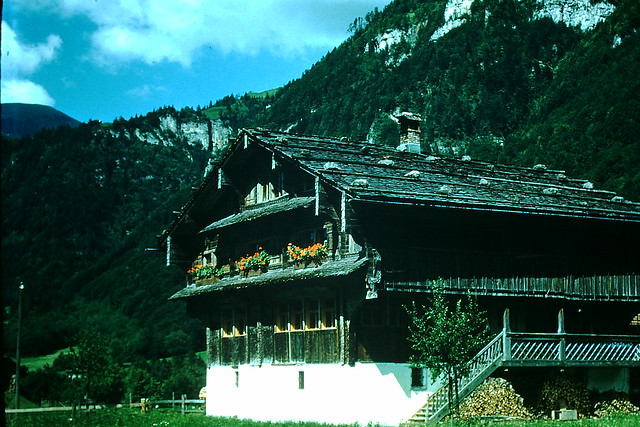
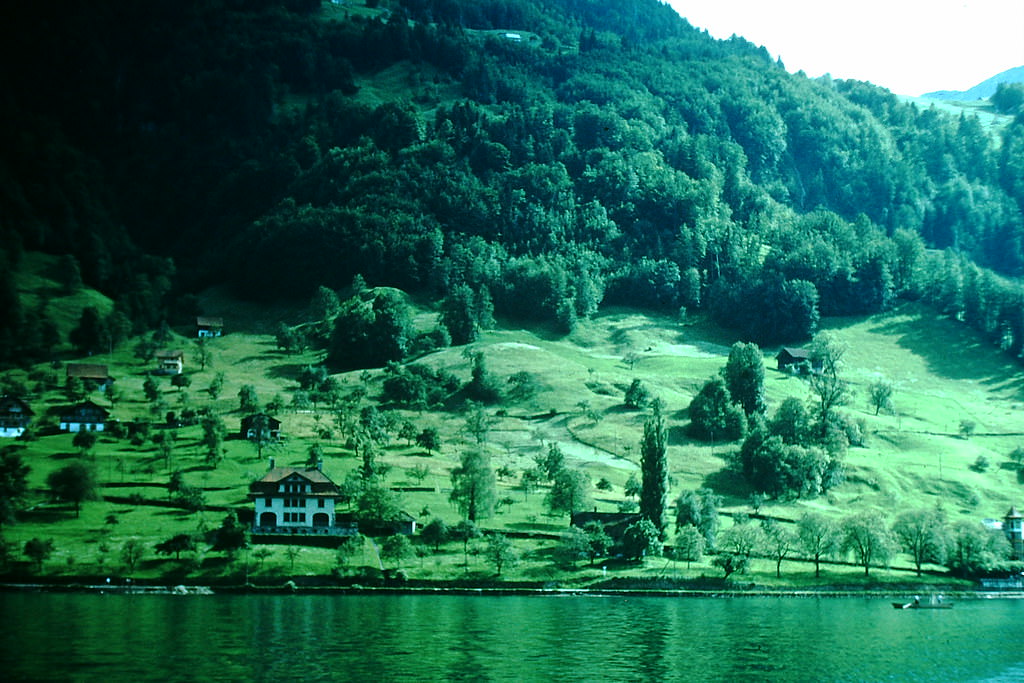
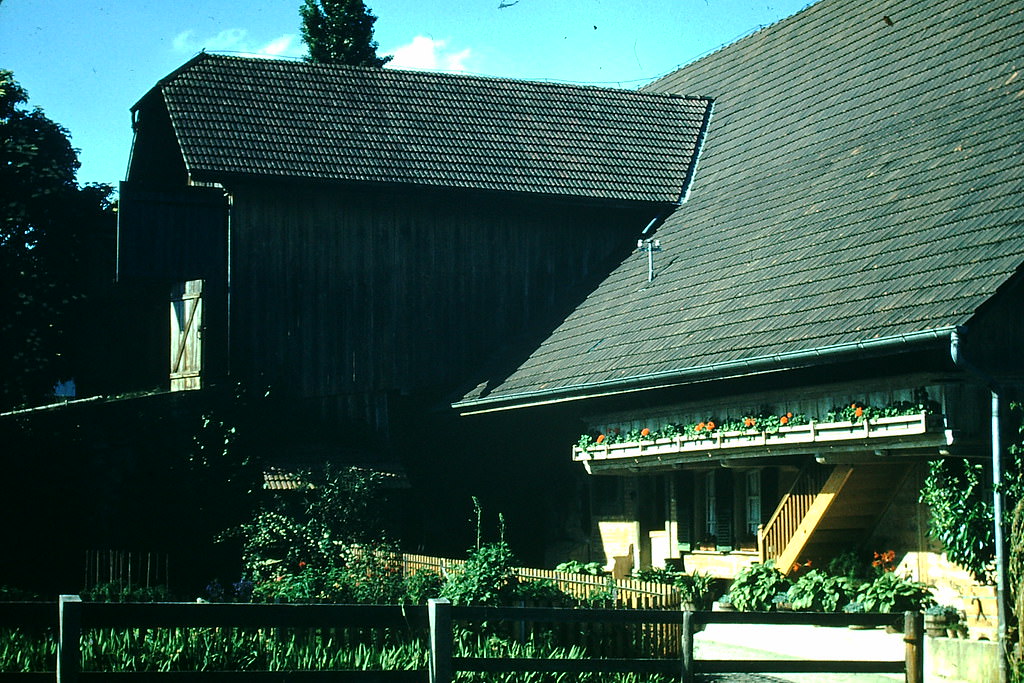
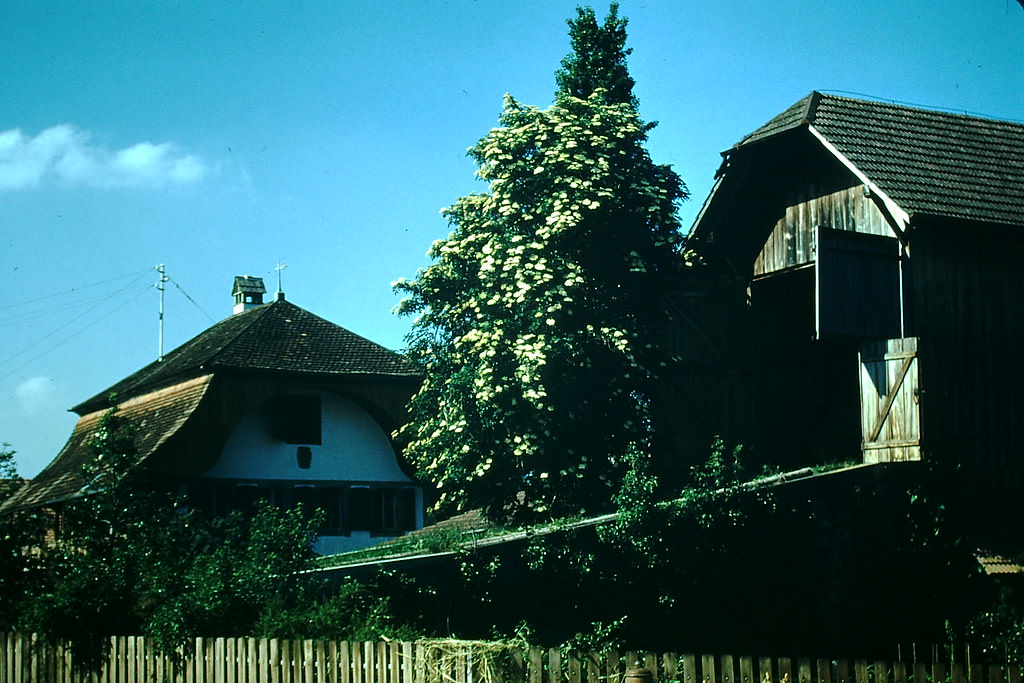
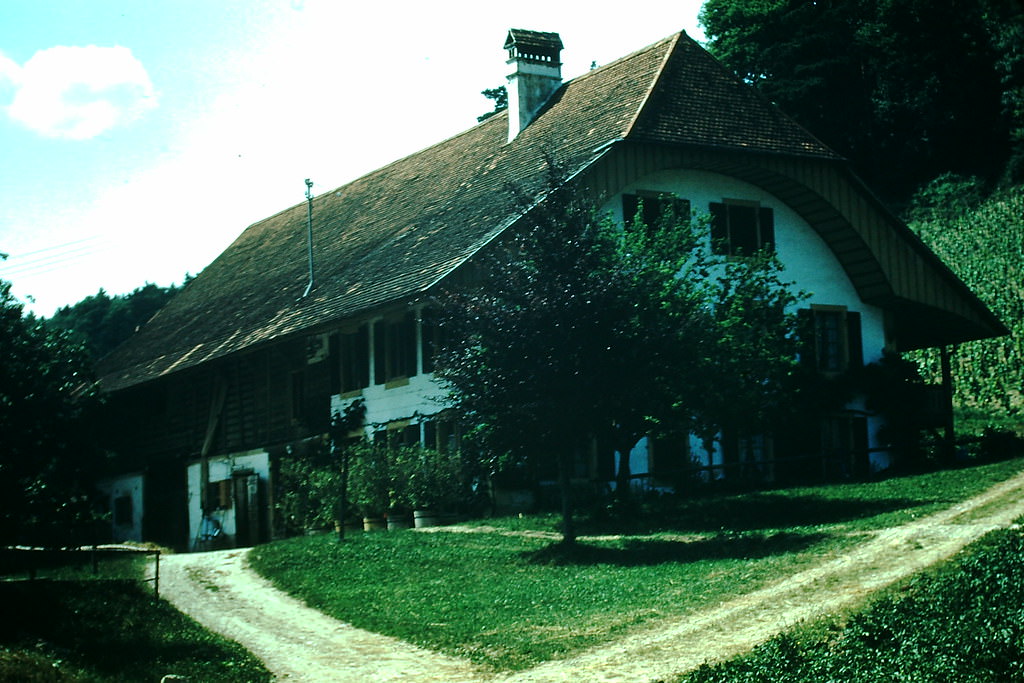
Farmhouses near Engelberg were built low and wide against the mountain weather, their heavy wooden structures designed to last through deep winter snows. These buildings were working farms, not decorative relics — families lived and worked in them year-round, raising livestock and cultivating what the short Alpine growing season allowed.

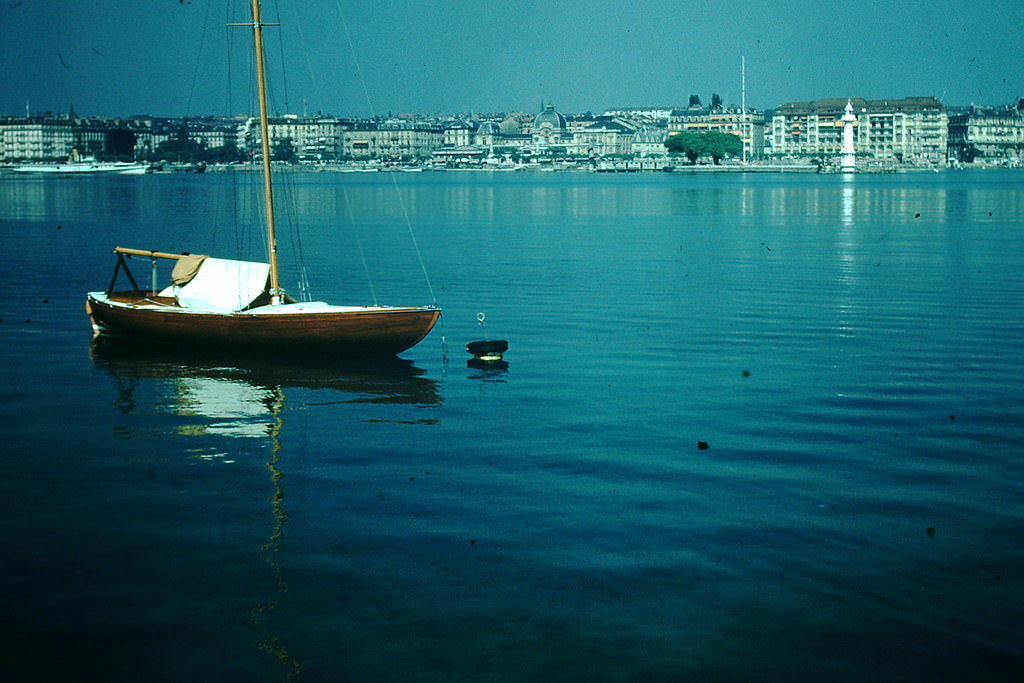
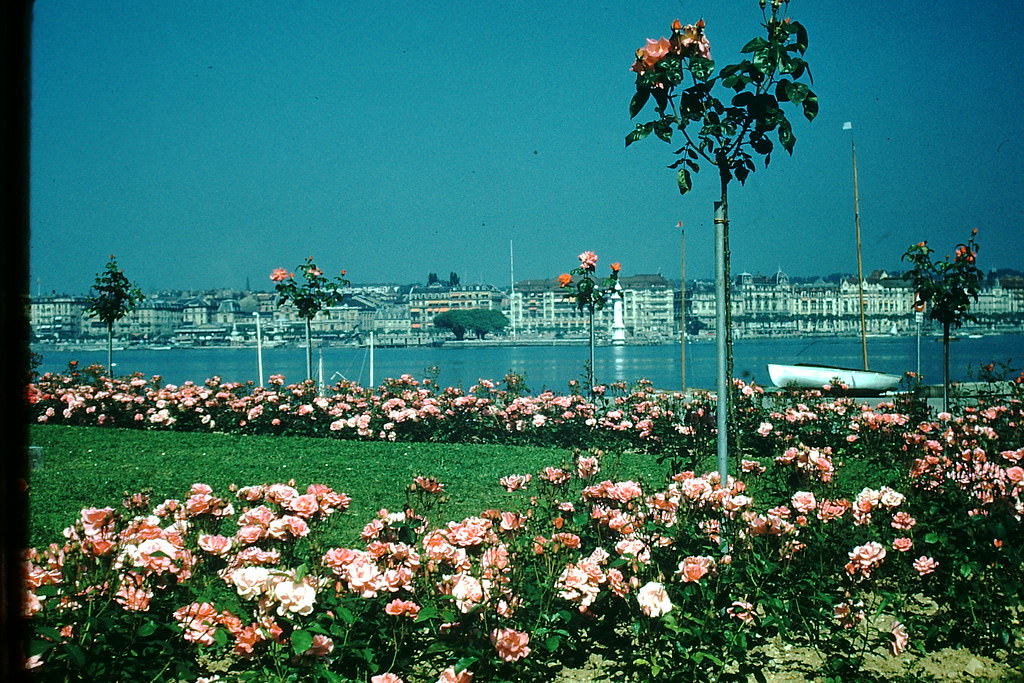
Geneva, located on the southwestern tip of Lake Geneva, was a city of international institutions in 1954. It was home to the Red Cross headquarters and numerous United Nations agencies, making it a hub of diplomatic activity during the Cold War. The city’s mix of French-speaking Swiss culture and global political presence gave it a distinct character unlike any other Swiss city.
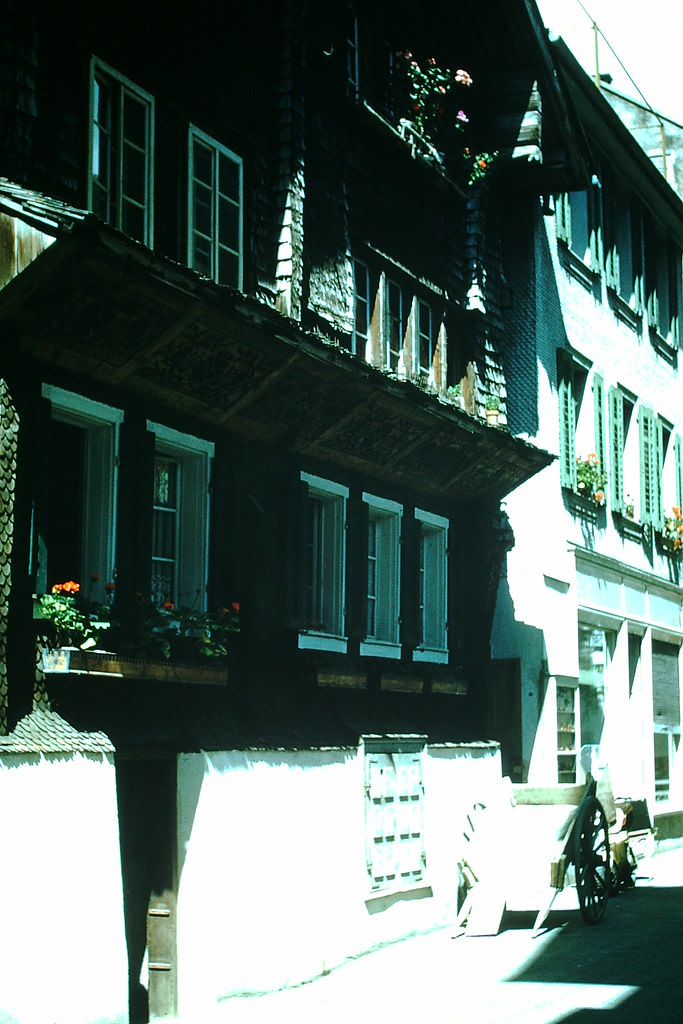
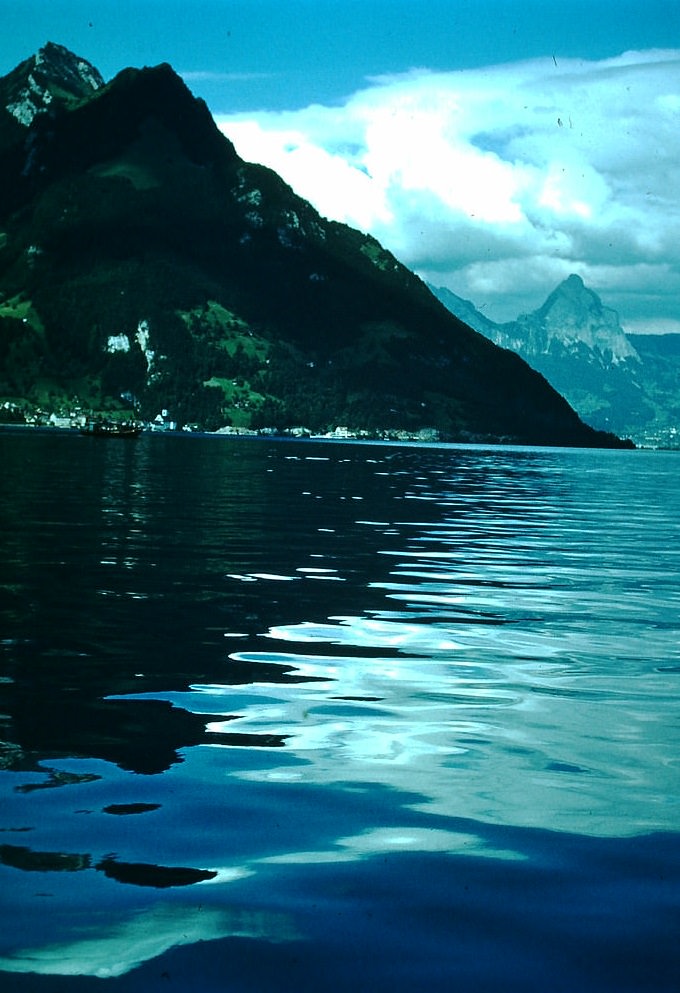
Lake Lucerne, one of the most photographed bodies of water in all of Switzerland, wound through a dramatic landscape of mountains and green shores. The village of Gersau sat along its edge — the smallest independent republic in the world for a period of its history, before joining the Swiss Confederation in 1817. By 1954, it was a quiet lakeside community with a strong sense of local identity.
The area around Muntschemier, in the canton of Berne near the Neuchâtel border, was flat agricultural land — a contrast to the Alpine scenery found elsewhere in the country. Fields stretched to the horizon, and the pace of life in these farming communities moved according to the seasons rather than the pressures of the city.
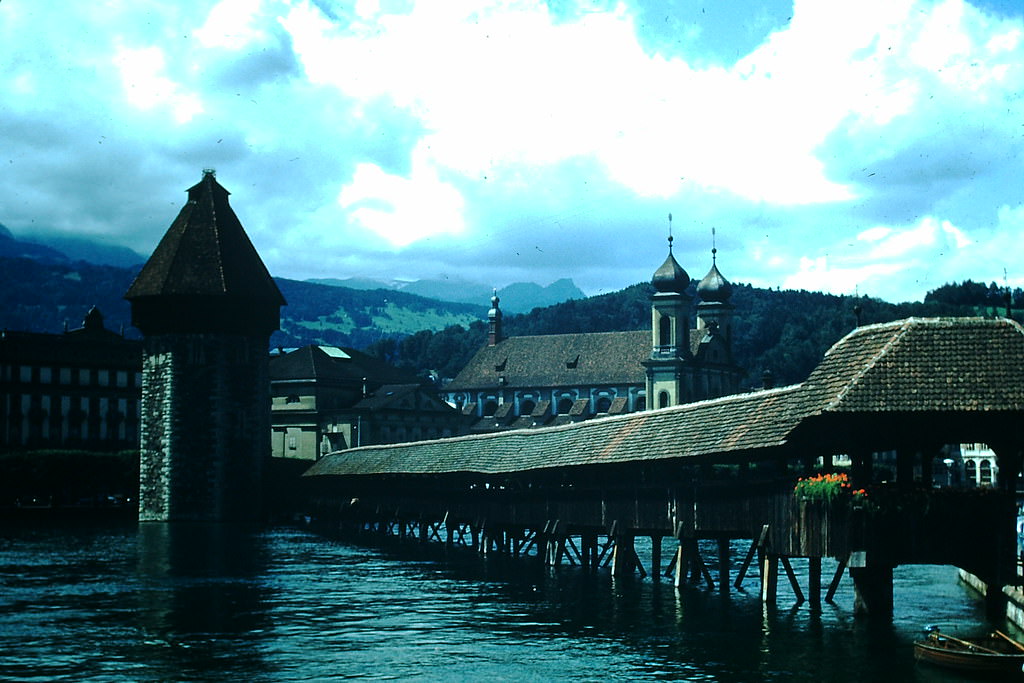
Lucerne’s covered wooden bridge, known as the Kapellbrücke, was one of the oldest in Europe. Built in the 14th century, it stretched diagonally across the Reuss River and was lined with painted panels depicting scenes from Swiss history. It remained a defining symbol of the city in 1954, drawing visitors from across the continent.
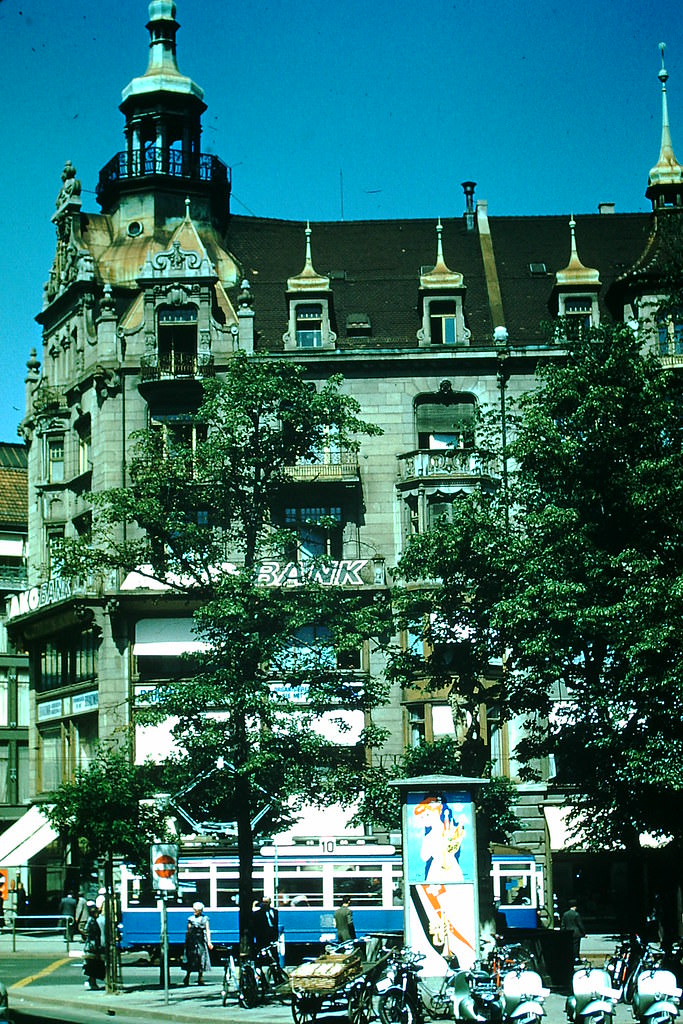
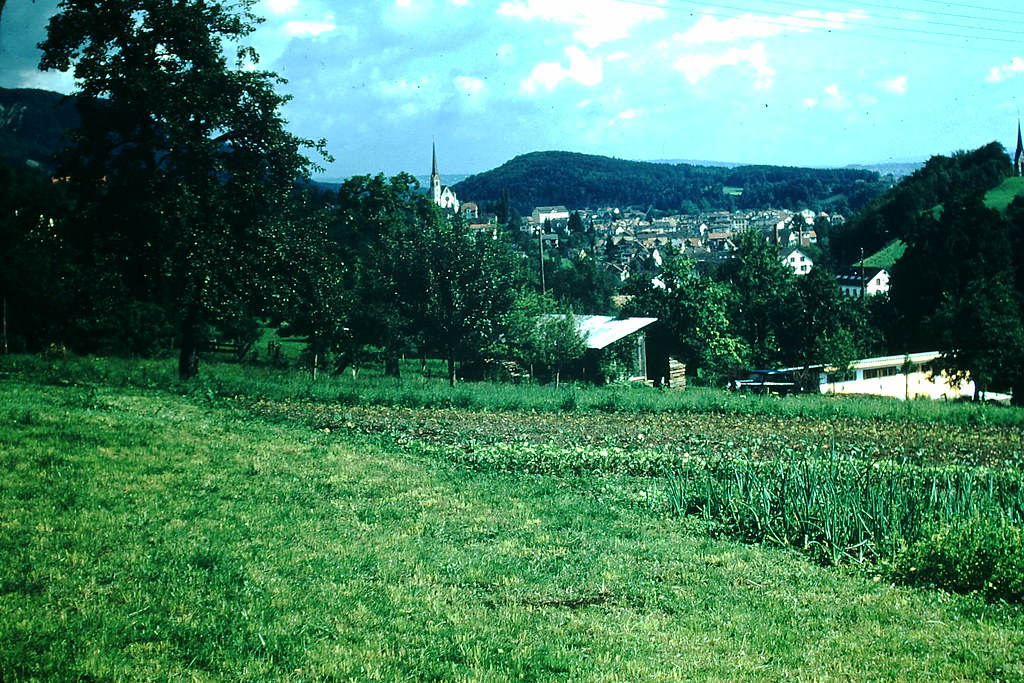
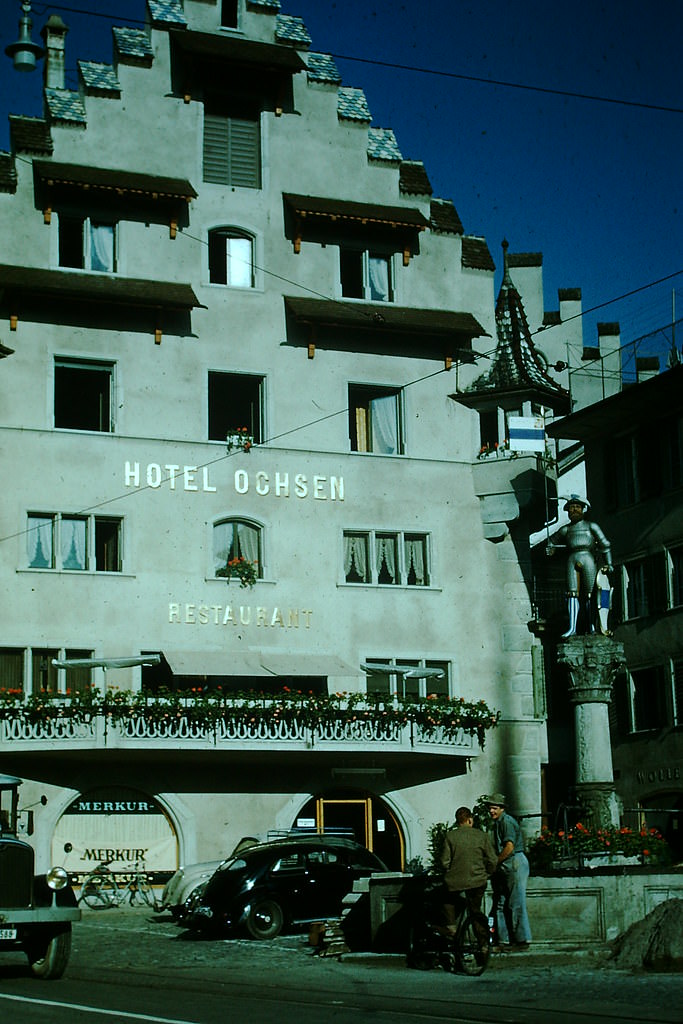
Zurich’s suburbs in 1954 were expanding as the city’s postwar economy brought more workers and residents into the metropolitan area. New apartment buildings were going up alongside older residential streets, and the waterfront neighborhoods retained their stately pre-war architecture. The city’s center remained dense with trams, pedestrians, and commercial activity.
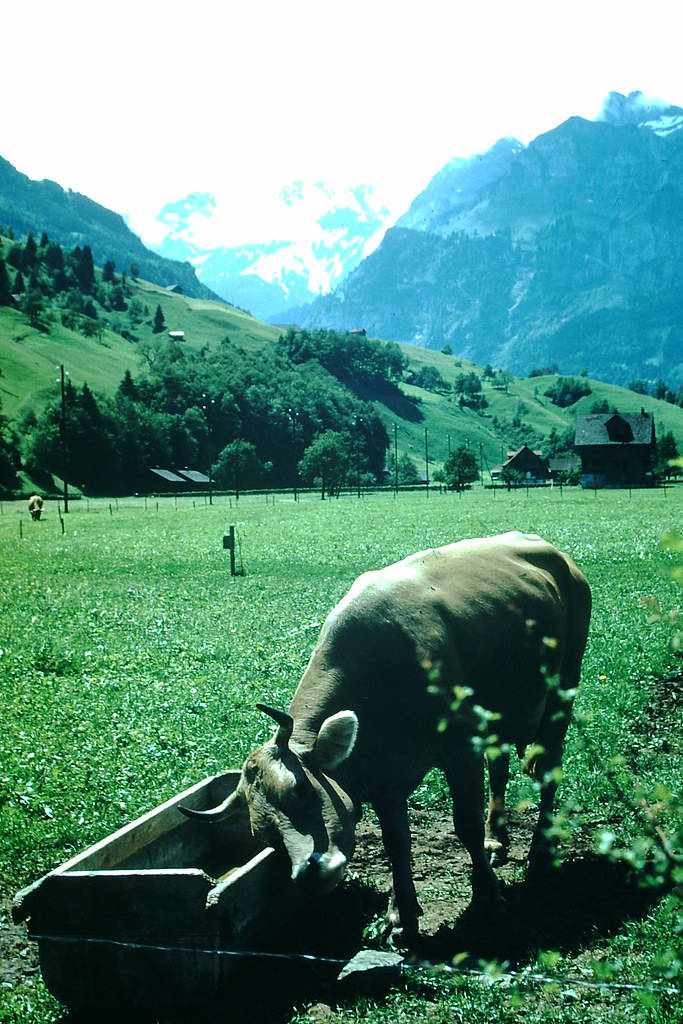
Swiss farms near Berne ranged from small family operations to larger working estates. The land around the capital was fertile and well-managed, with dairy farming forming the backbone of the rural economy. Swiss brown cattle, bred for both milk and draft work, were a fixture across the countryside.
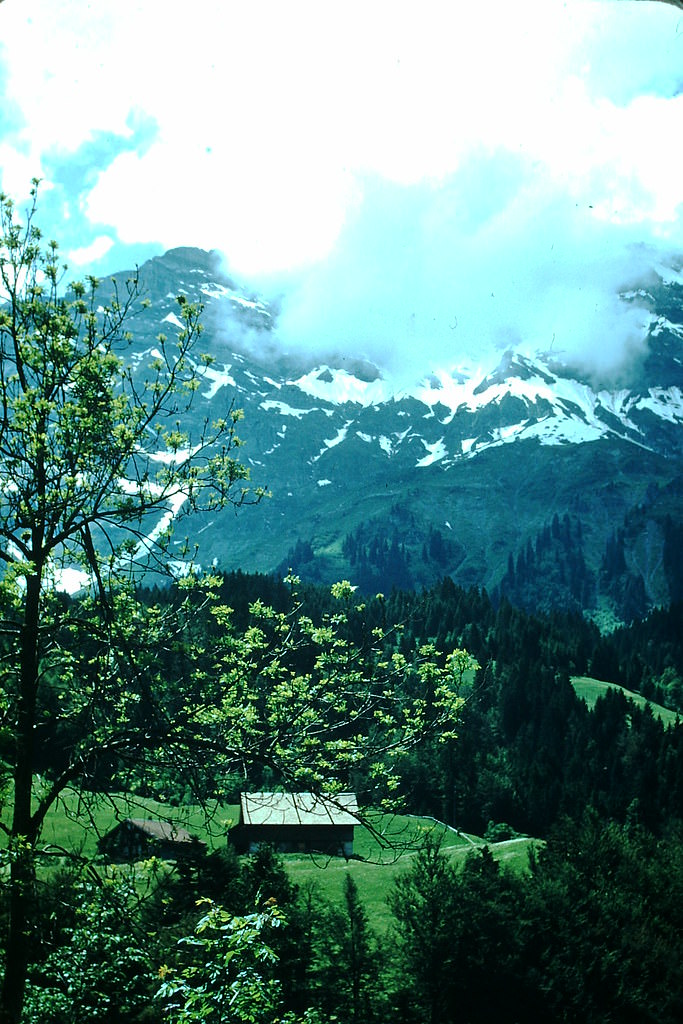
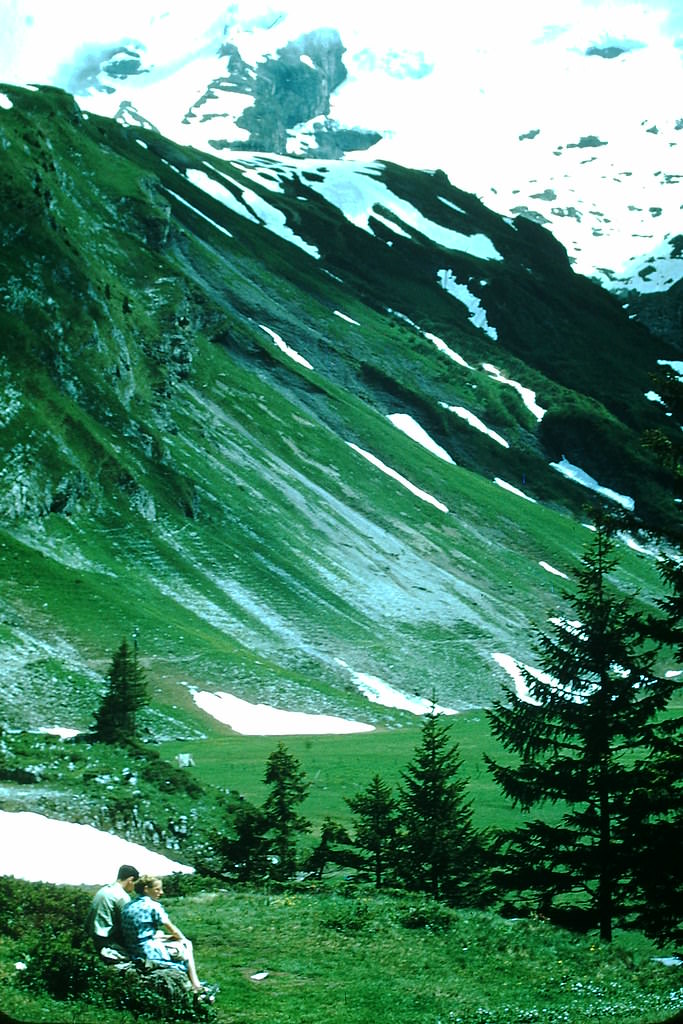
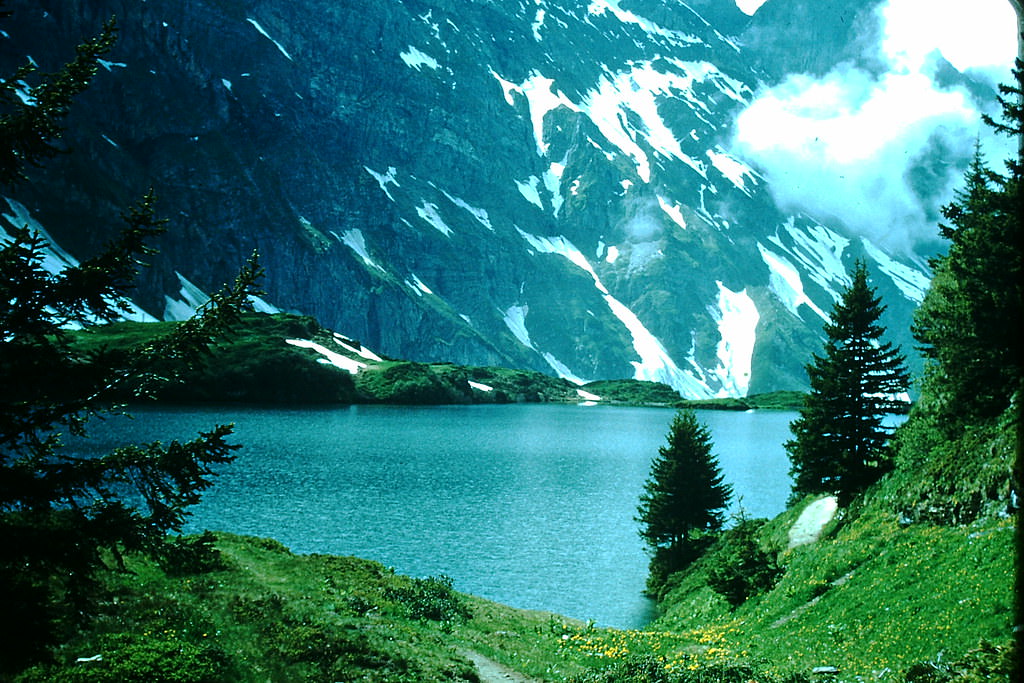
Trübsee, the high Alpine lake above Engelberg, offered a stark and open terrain year-round. In summer, the surrounding meadows bloomed briefly before the snow returned. The area’s isolation made it a retreat from the growing bustle of Swiss cities below, and photographs taken there in 1954 captured a landscape that had changed very little over centuries.
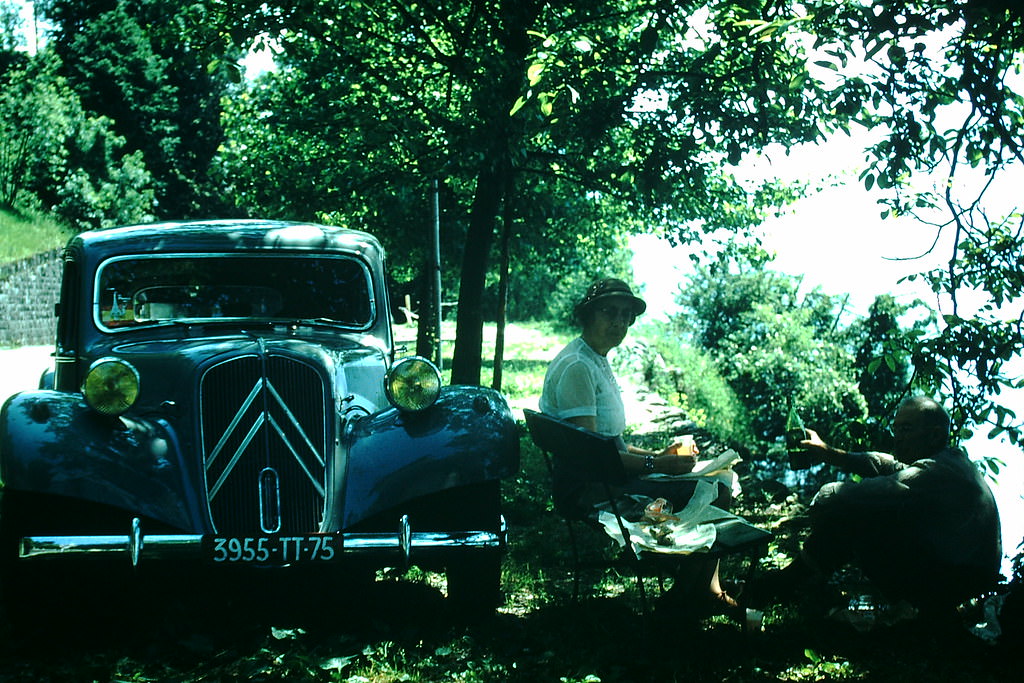
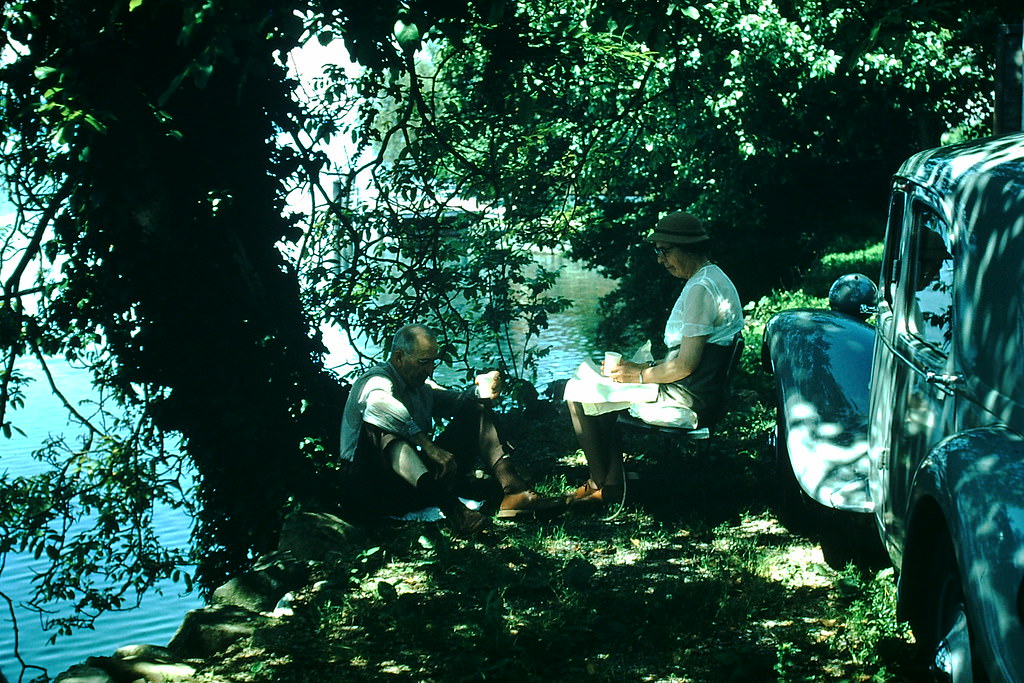
The canton of Zug, one of Switzerland’s smallest, sat at the center of the country along the shores of the Zugersee. The town of Zug itself combined a medieval old town with a growing modern economy. Residents enjoying a picnic on the Zugersee in 1954 reflected the comfortable pace of life in this prosperous canton.
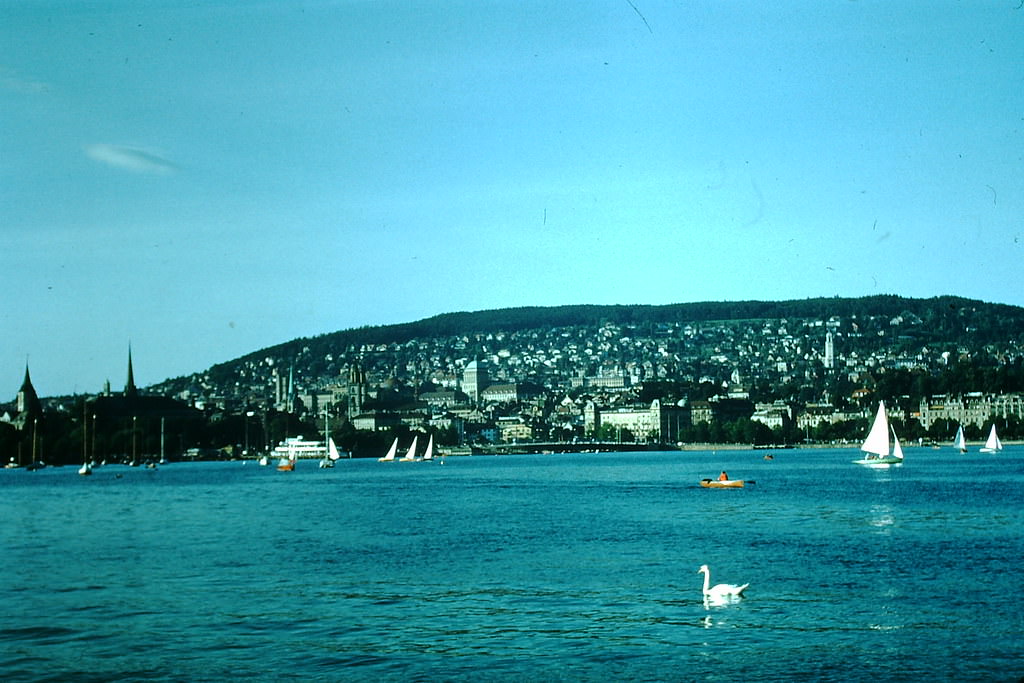
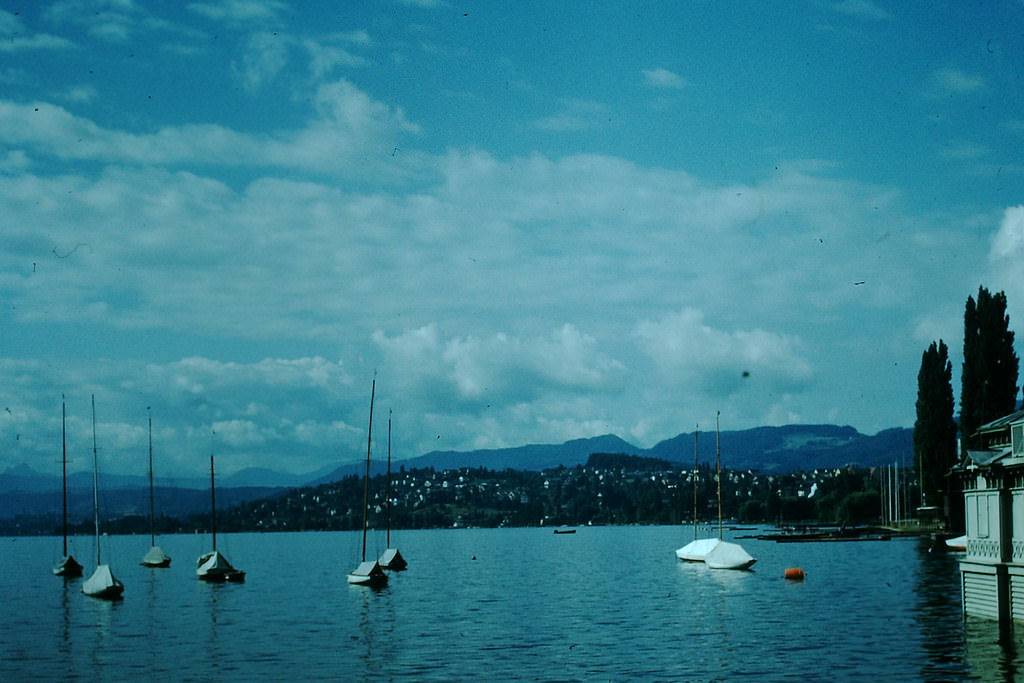
The Zurich Opera House, with its distinctive yellow dome, anchored the city’s cultural life along the Limmat. Completed in 1891, it hosted opera, ballet, and theater performances throughout the year. By 1954, it was a well-established institution in one of Europe’s leading financial cities. The church along the Limmat River, visible in many photographs of Zurich, reinforced how deeply the city’s religious and civic architecture remained tied together.
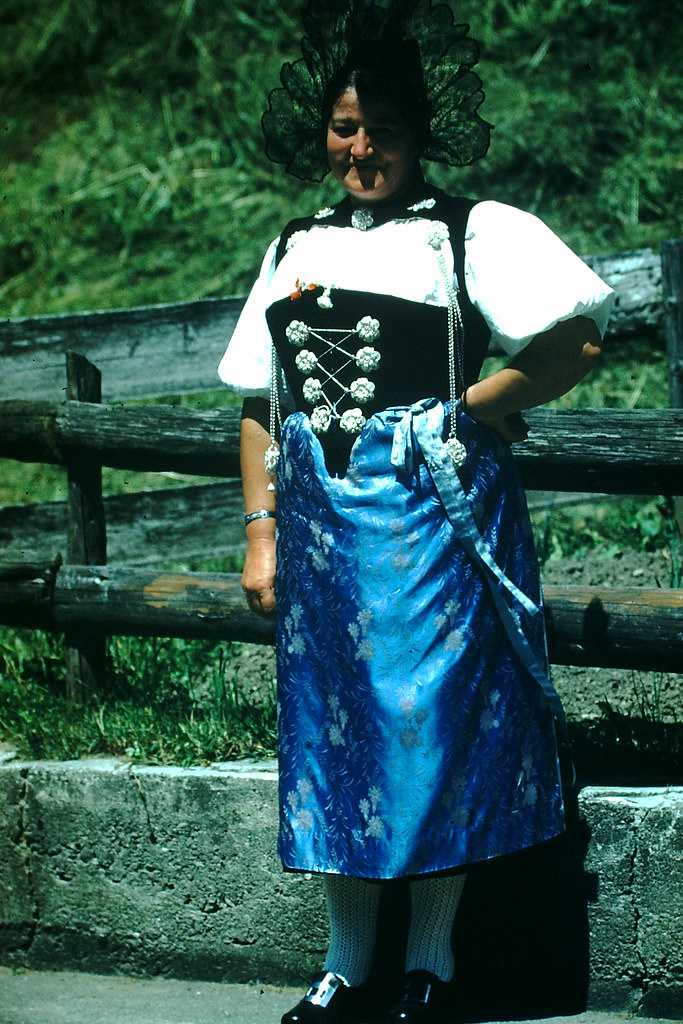
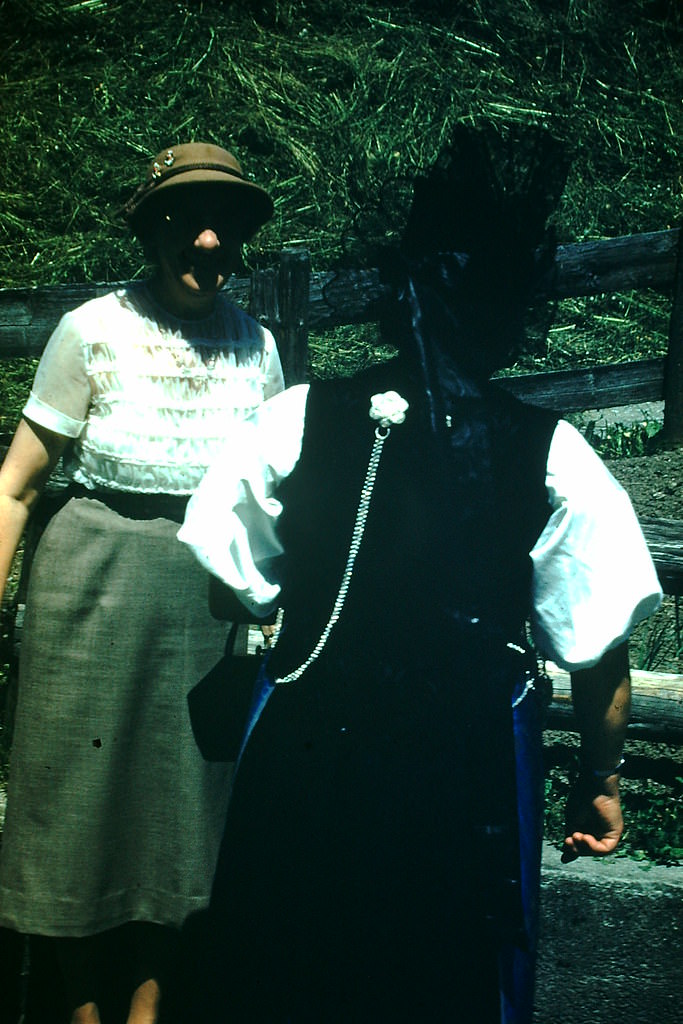
Traditional Swiss dress was still worn for festivals and local celebrations in 1954. In Interlaken, a tourist town between two lakes at the foot of the Bernese Oberland, local costumes were a part of public events and a source of regional pride. The town also showed the practical side of Swiss urban planning — traffic mirrors mounted at blind corners on narrow streets kept pedestrians and drivers safe in the pre-modern traffic era.
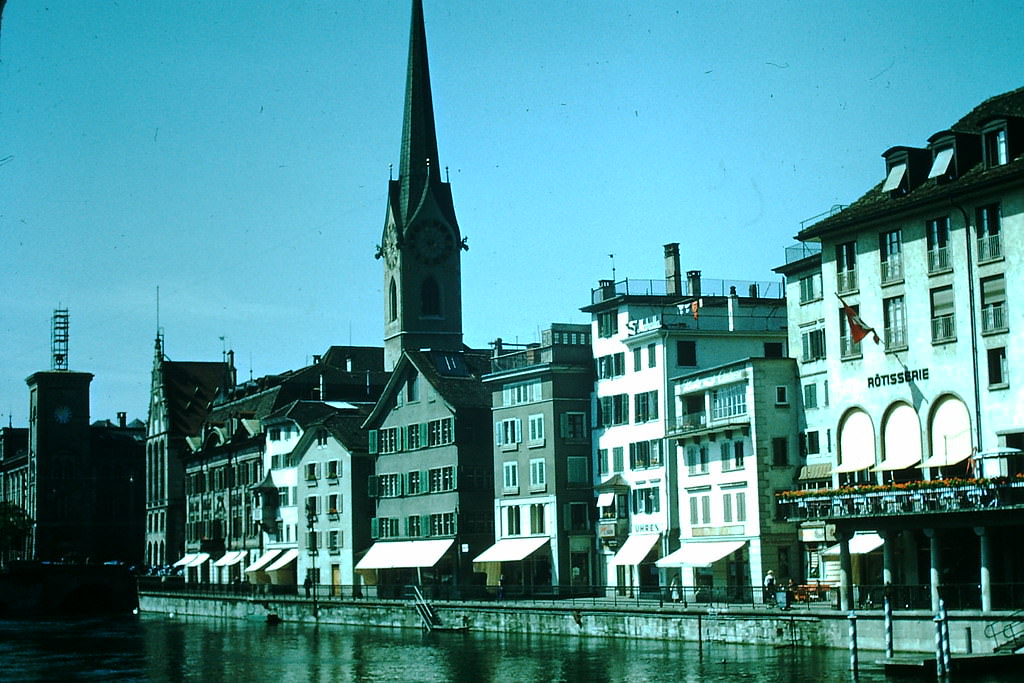
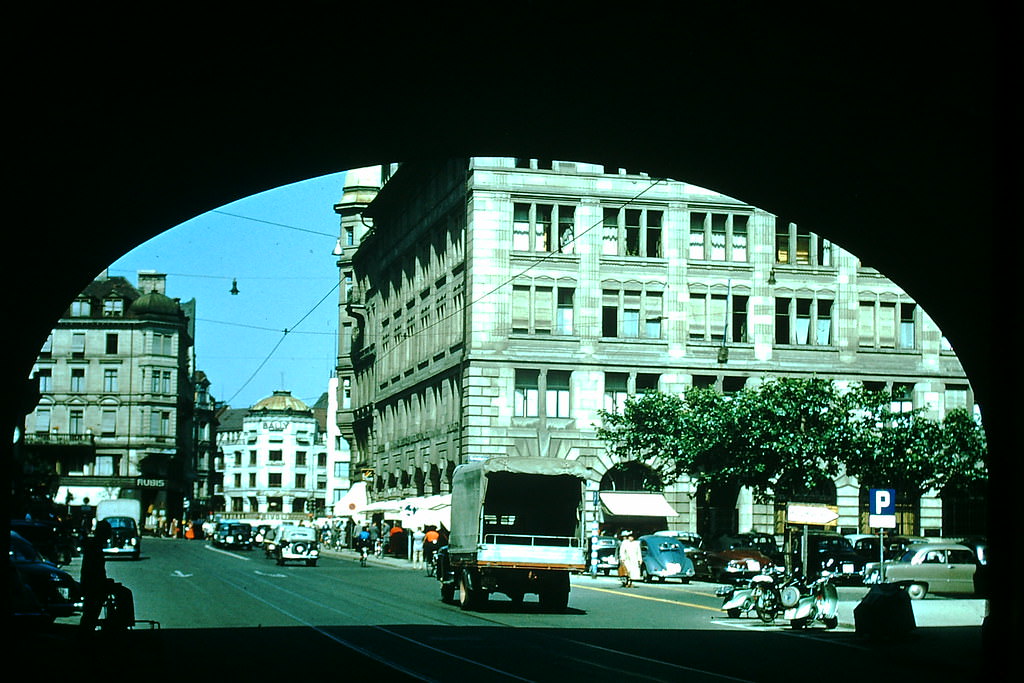
Zurich’s apartment buildings and city center in 1954 reflected a country managing postwar growth with careful planning. Residential blocks were solid and well-built, and the city center hummed with commerce and transit. These photographs, taken across a single year, show a Switzerland that balanced its Alpine rural traditions with the demands of a modernizing, internationally connected nation.