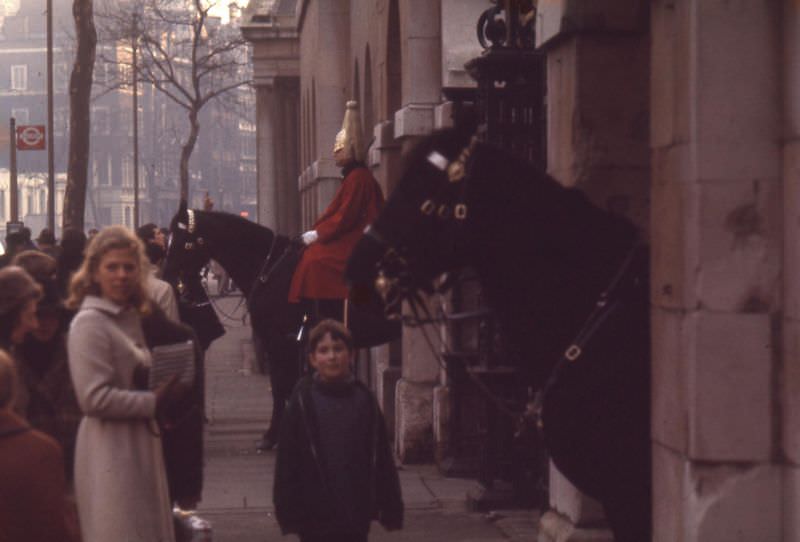
In 1969, German photographer Bernd Loos was traveling to Liverpool to visit friends when illness forced him to change his plans. He stopped in London for an afternoon and a Saturday night — an unplanned detour that turned into one of the most vivid street photography records of the city at the end of the 1960s. Despite overcast skies and steady rain, Loos picked up his Leica camera and walked the streets, shooting in color at a time when most street photographers still favored black and white.
The result is a rare set of images that show London not as a posed tourist destination, but as a living, breathing city mid-stride. Buses, shopfronts, pedestrians, and neon signs fill the frames with the kind of detail that only a sharp eye and a good camera can catch. One of the most recognizable spots he photographed was Piccadilly Circus — London’s famous junction of streets and advertising lights in the heart of the West End.
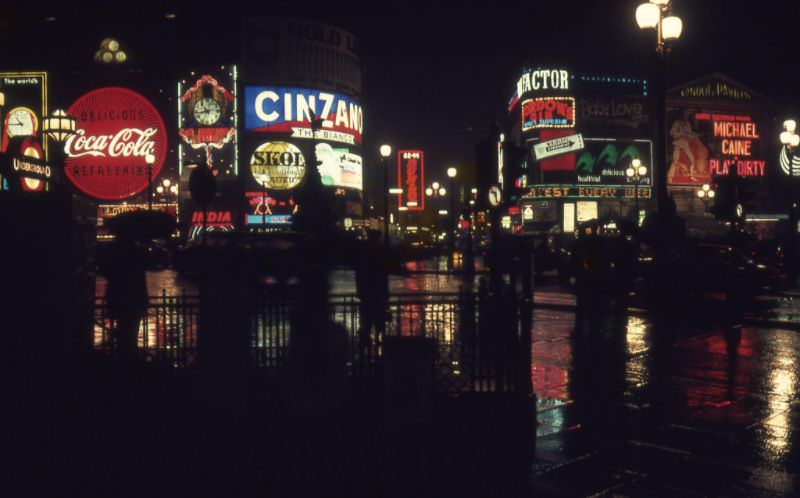
Just a short walk from the Circus, the long stretch of Piccadilly itself offered a different kind of scene — wider, more open, with grand facades lining both sides of the road. Traffic moved through the wet streets while shoppers and workers went about their Saturday.
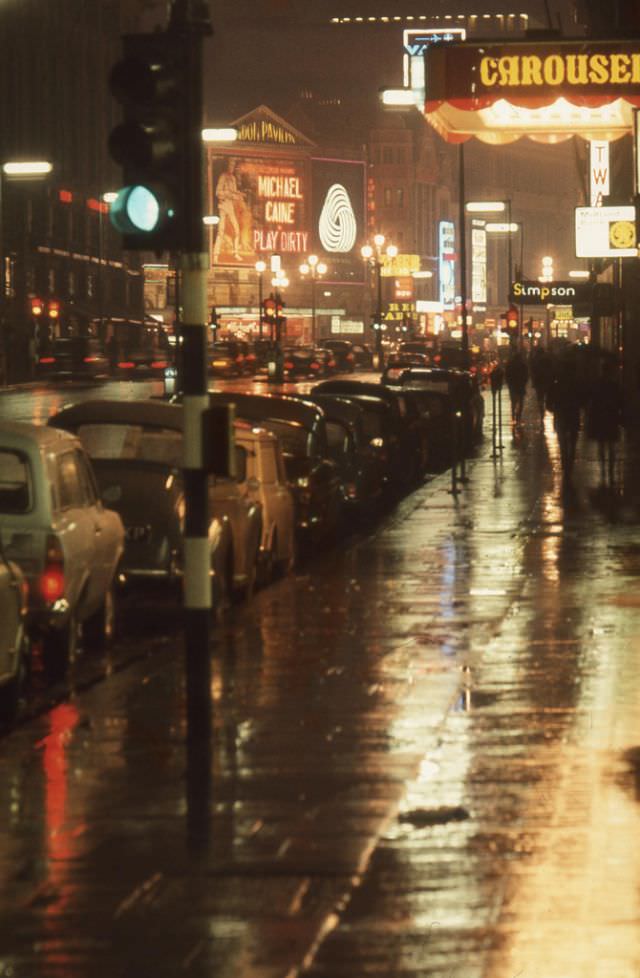
Loos also made his way to King’s Road in Chelsea, a street that had become the heartbeat of British fashion and youth culture throughout the 1960s. By 1969, it was still buzzing with boutiques, mod fashion, and a young crowd that made it unlike anywhere else in the city.
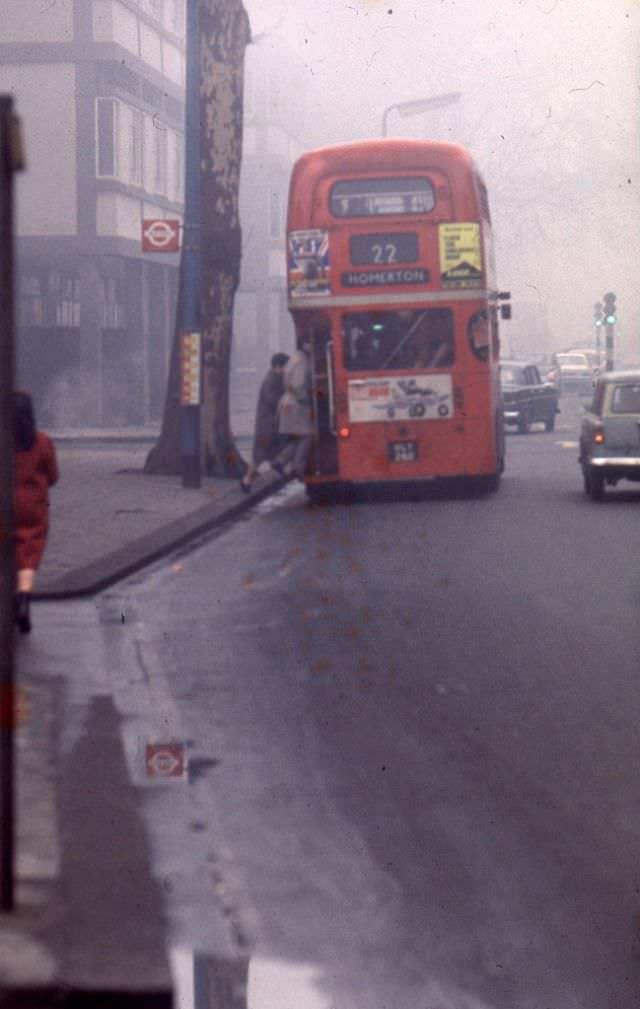
Not far away in spirit was Carnaby Street in Soho — another fashion-forward stretch that had exploded in popularity during the decade. The street had become a symbol of Swinging London, lined with independent clothing shops that attracted both locals and visitors from across the world.
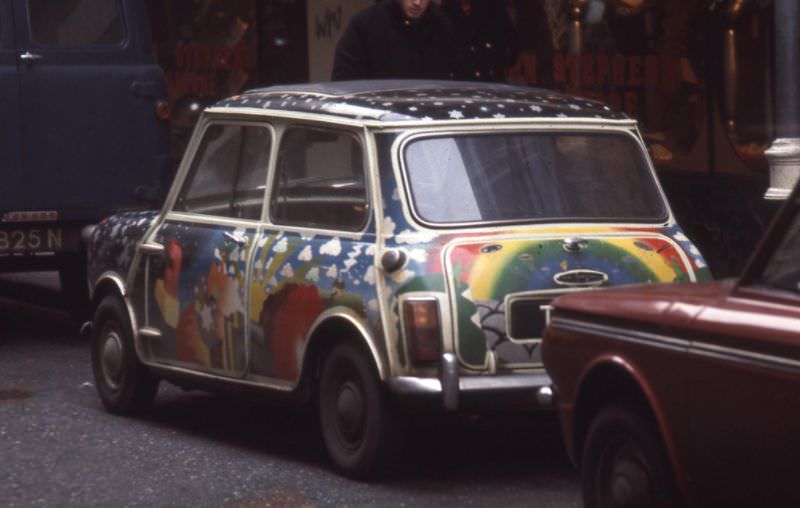
Loos also ducked underground, capturing the entrance to Tottenham Court Road Station. The London Underground was — and remains — a central part of daily life in the city, and the station served one of the busiest intersections in Central London.
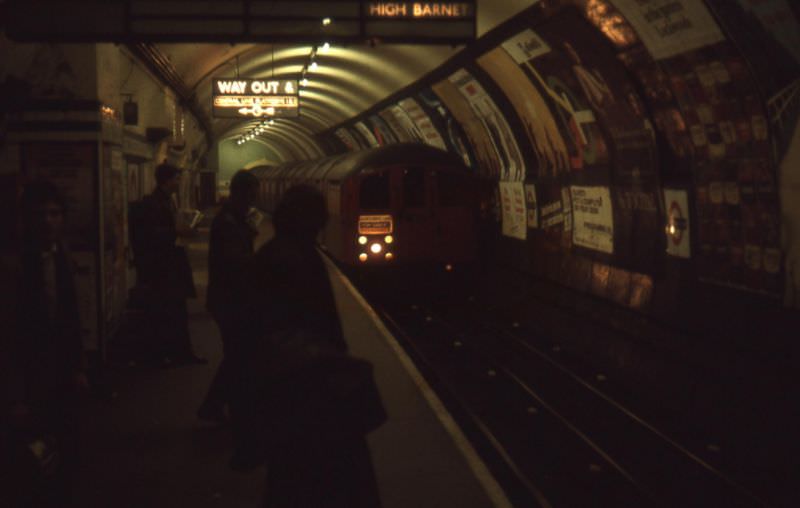
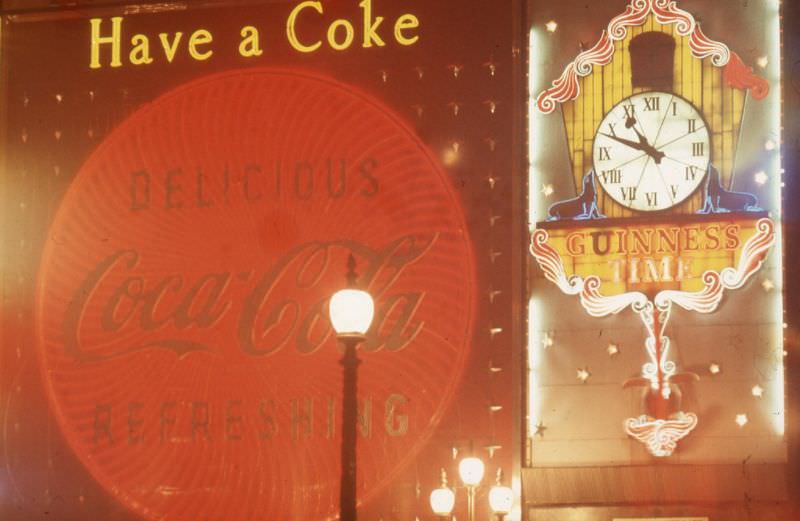
Back above ground, Piccadilly Circus drew Loos back more than once. Its energy was hard to leave. The neon advertisements, the flow of double-decker buses, and the steady stream of people made it a photographer’s natural anchor point.
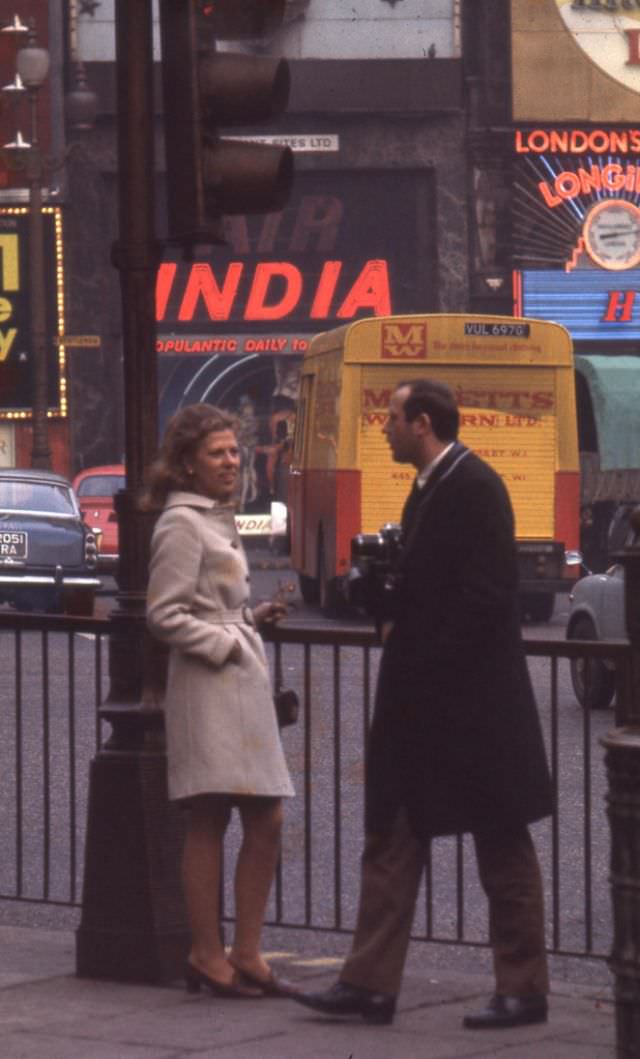
Waterloo Bridge offered a completely different perspective — a wide view over the River Thames, with the city stretching out in both directions. From here, London’s scale becomes clear. The bridge connected the South Bank to the Strand, and on a rainy 1969 afternoon, it made for a dramatic frame.
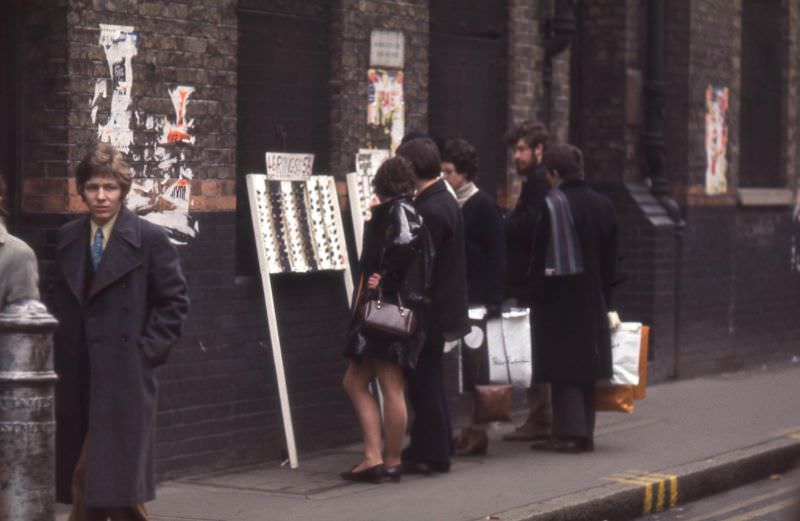
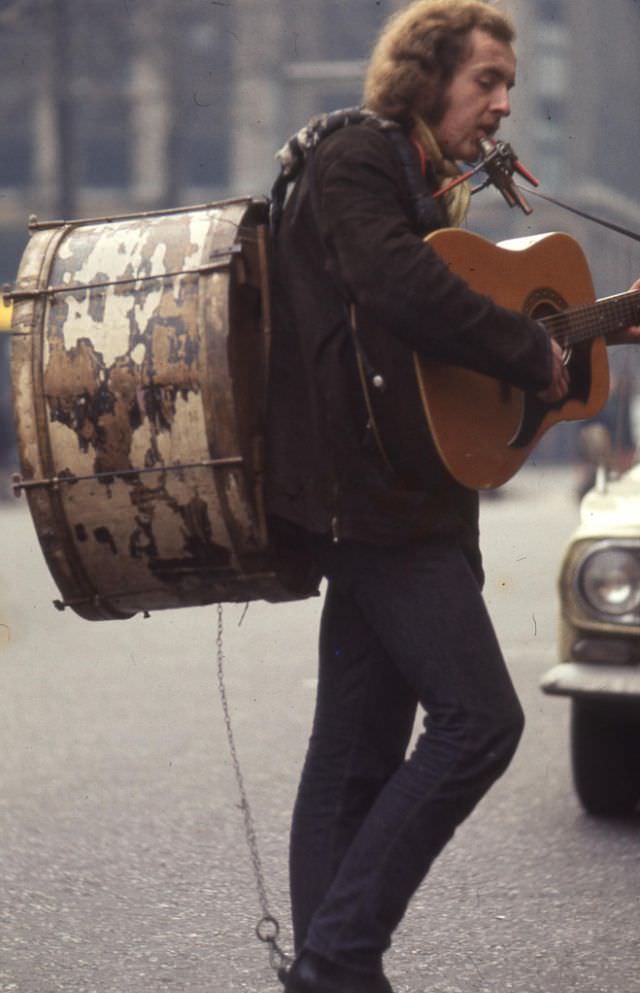
Among the quieter moments Loos captured was a street musician — one of countless performers who made the city’s pavements their stage. Street musicians were a common sight in London, adding sound and life to corners that might otherwise go unnoticed.
Trafalgar Square, with its towering Nelson’s Column and surrounding fountains, was another stop. The Square served as one of London’s great public gathering places — used for celebrations, protests, and everyday movement through the city.
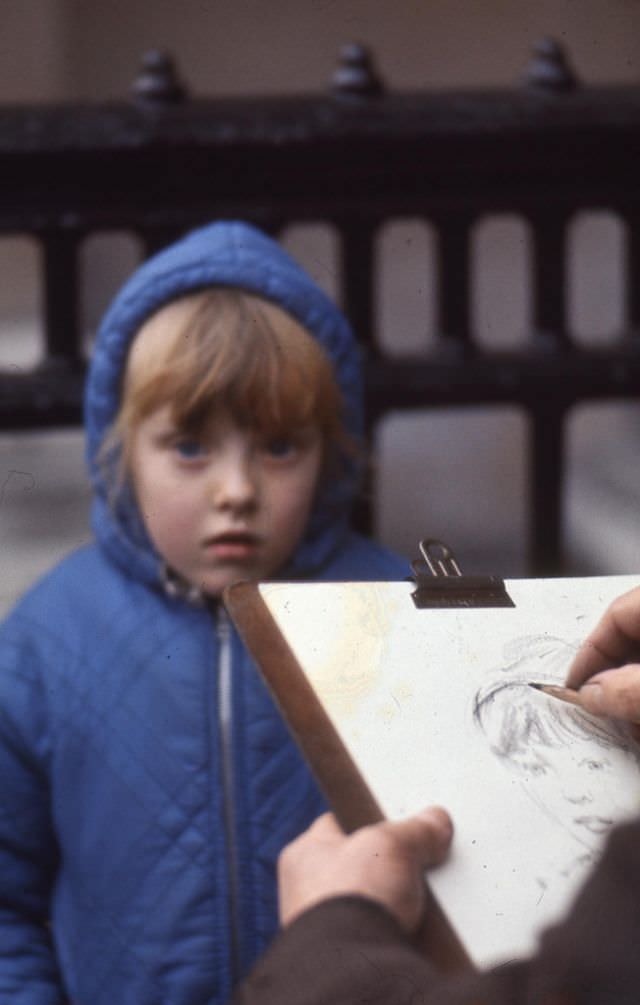
Piccadilly Circus appeared in Loos’s frame yet again — a testament to how naturally the location drew people and cameras alike. Each shot from the same location captures a slightly different slice of the crowd, the light, and the moment.
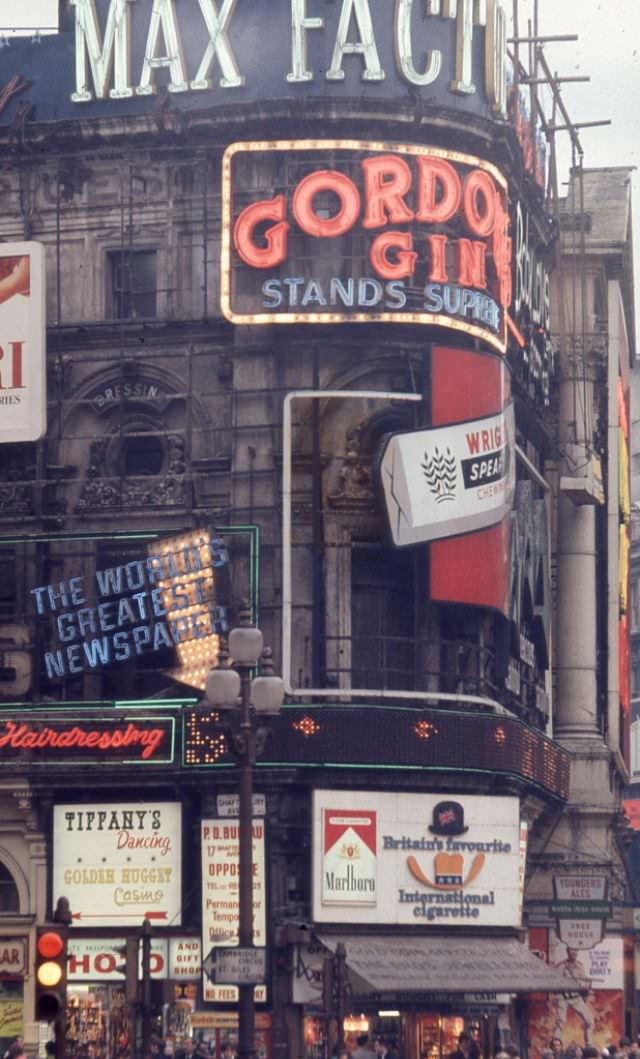
Further along the river, the Houses of Parliament stood as one of the most recognizable silhouettes in Britain. The Gothic Revival building, home to the UK’s two legislative chambers, had dominated the north bank of the Thames since the mid-19th century.
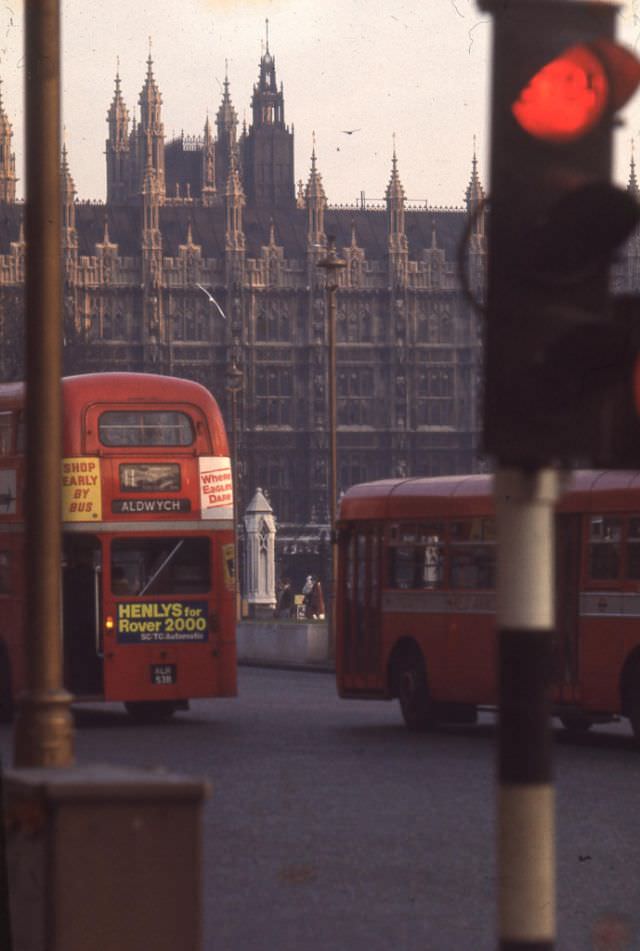
Loos returned to Piccadilly Circus once more, showing just how central it was to his day spent walking the city. Rain or not, the junction remained full of activity — a crossroads that seemed to collect the energy of the entire West End.
The final stop was Whitehall, where the mounted Horse Guards kept their ceremonial post outside the entrance to Horse Guards Parade. These soldiers — part of the Household Cavalry — had stood guard at this location for centuries, a fixed point of tradition amid the changing city around them.