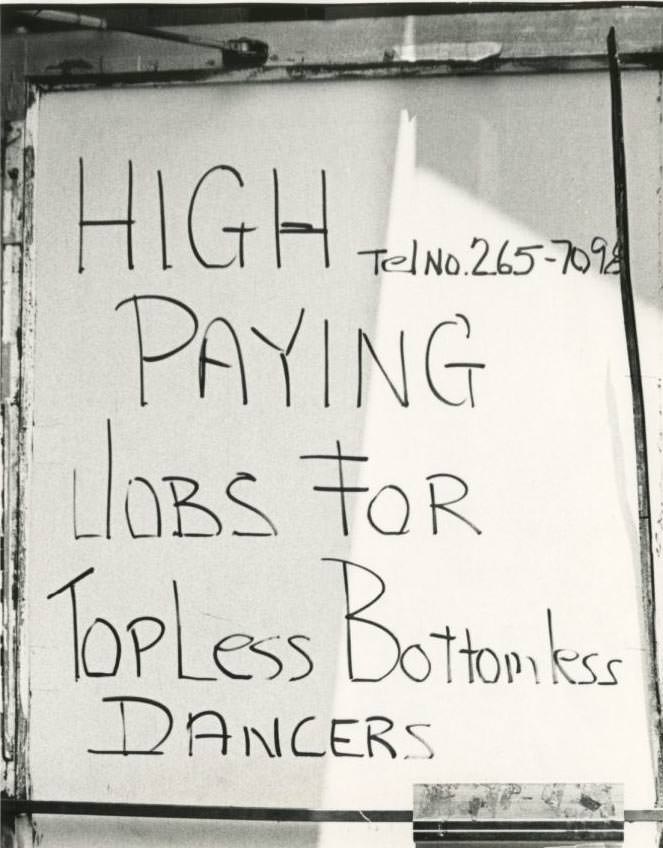
New York City in the 1970s and 1980s was a different world. Crime was high, the streets were rough, and large parts of Manhattan operated outside anything resembling order. Nowhere was this more visible than on 42nd Street, where sex was openly sold — not behind closed doors, but advertised in hand-painted signs, neon lights, and storefront windows that anyone walking by could read.
Photographer Eugene Gordon spent years documenting this world with his camera. Gordon started his career shooting photographs for textbooks and educational publications. He traveled widely, documenting religious ceremonies and the diverse communities he encountered abroad. Back in the United States, he turned that same documentary eye toward his home city — particularly Times Square and 42nd Street.
Gordon lived in Forest Hills, Queens, where he developed all of his prints in his own darkroom. His preferred subjects were street scenes, parades, and festivals — the everyday life of New York as it actually existed. Times Square was a natural draw. It was loud, colorful, and brutally honest about what it was selling.
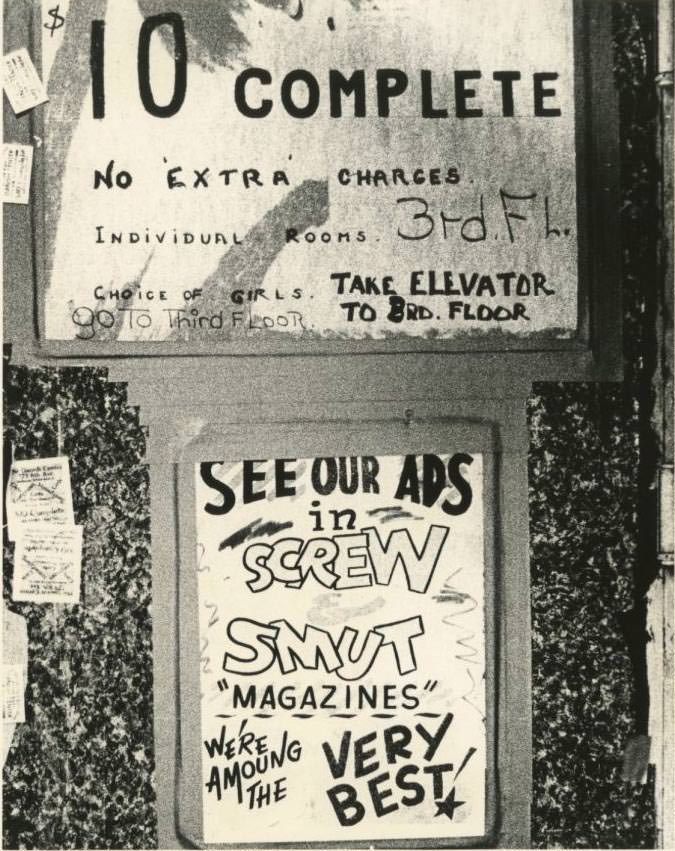
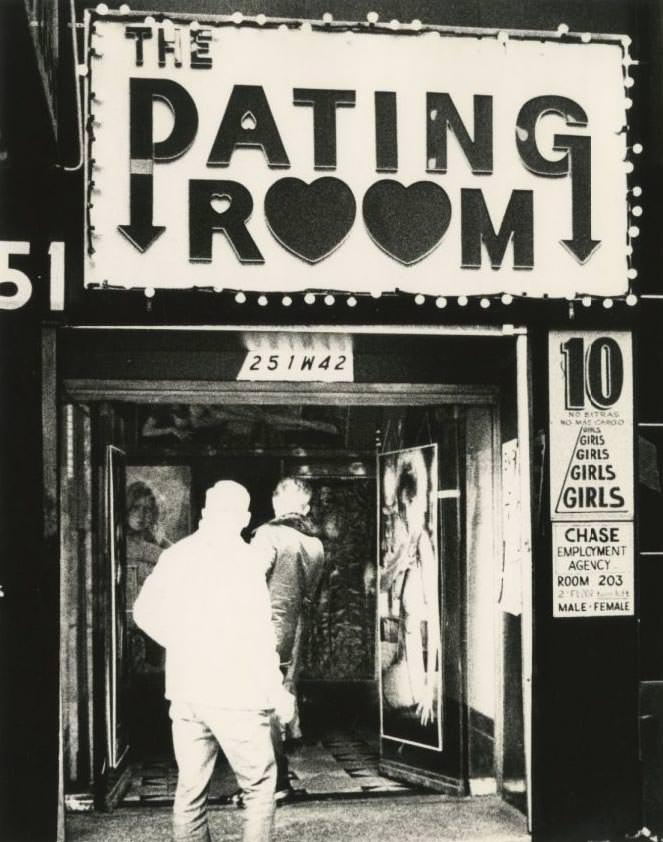
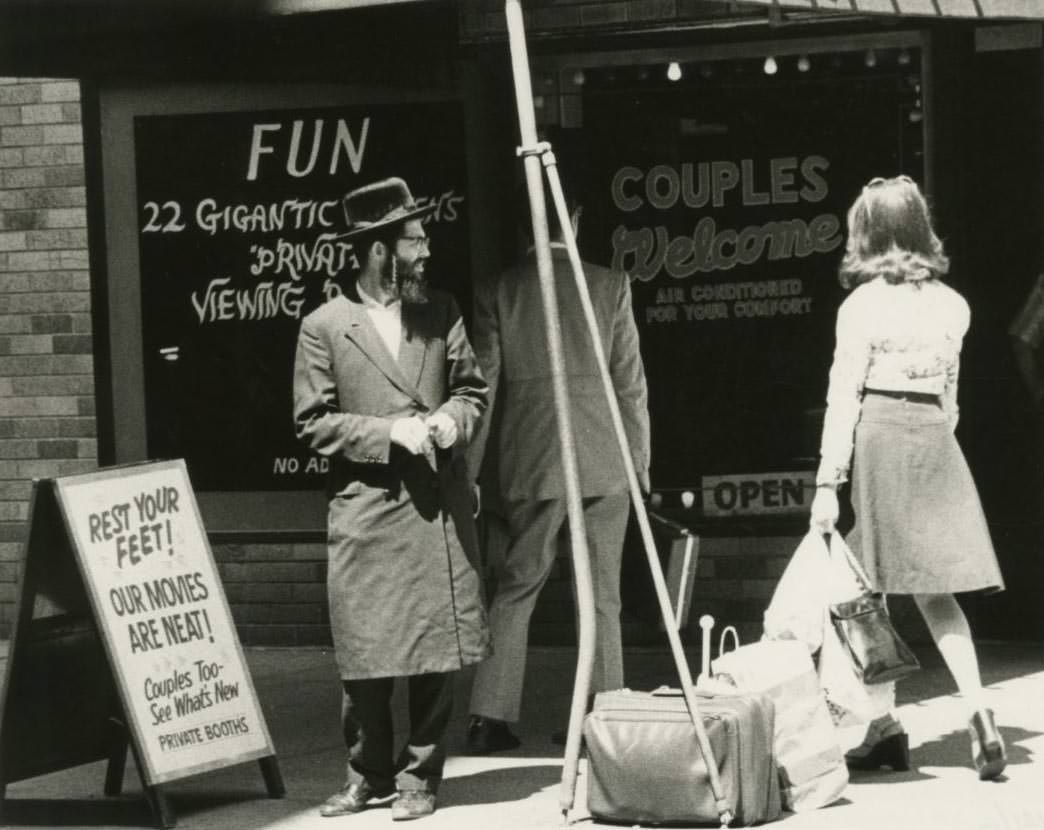
The sex industry on 42nd Street operated in plain sight. Clubs advertised live performances. Peep show booths lined the interiors of narrow storefronts. For a few coins, a man could sit on a sticky stool, peer through a small hole, and watch a short film or a live act. The transaction was brief, anonymous, and constant.
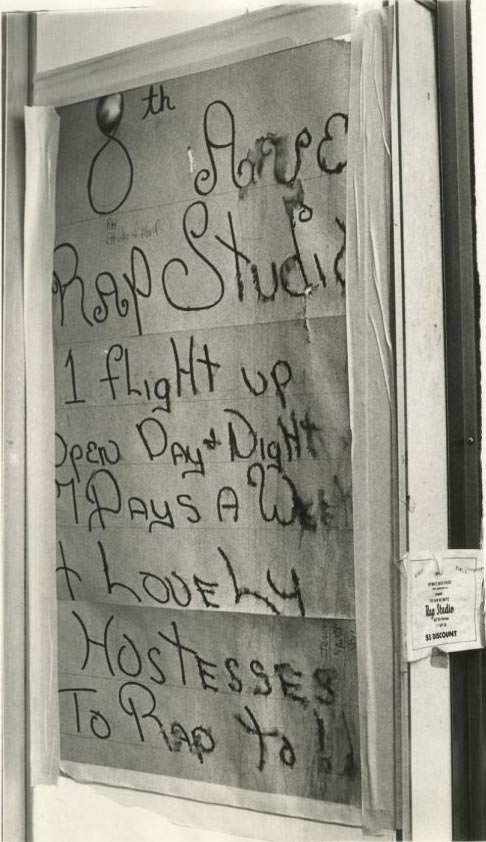
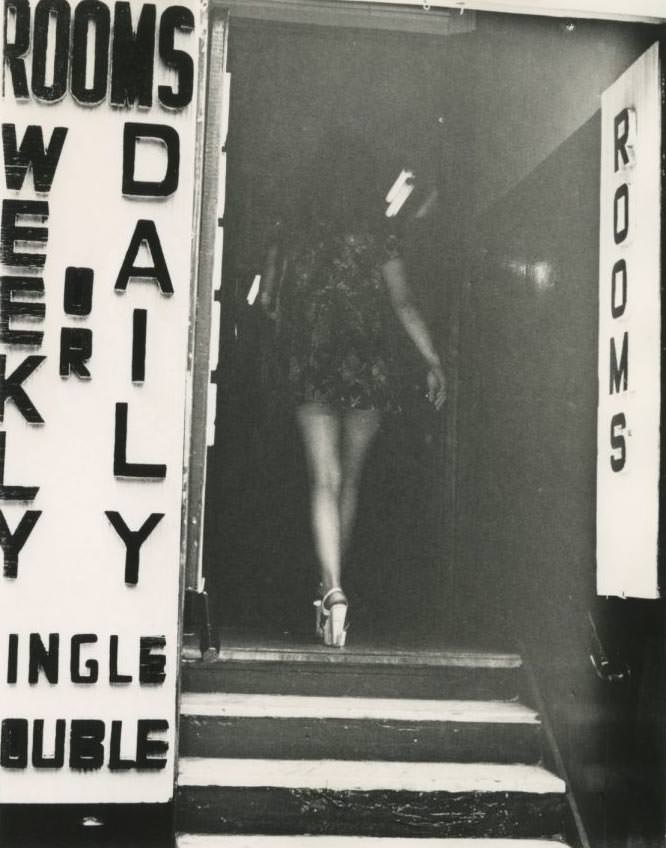
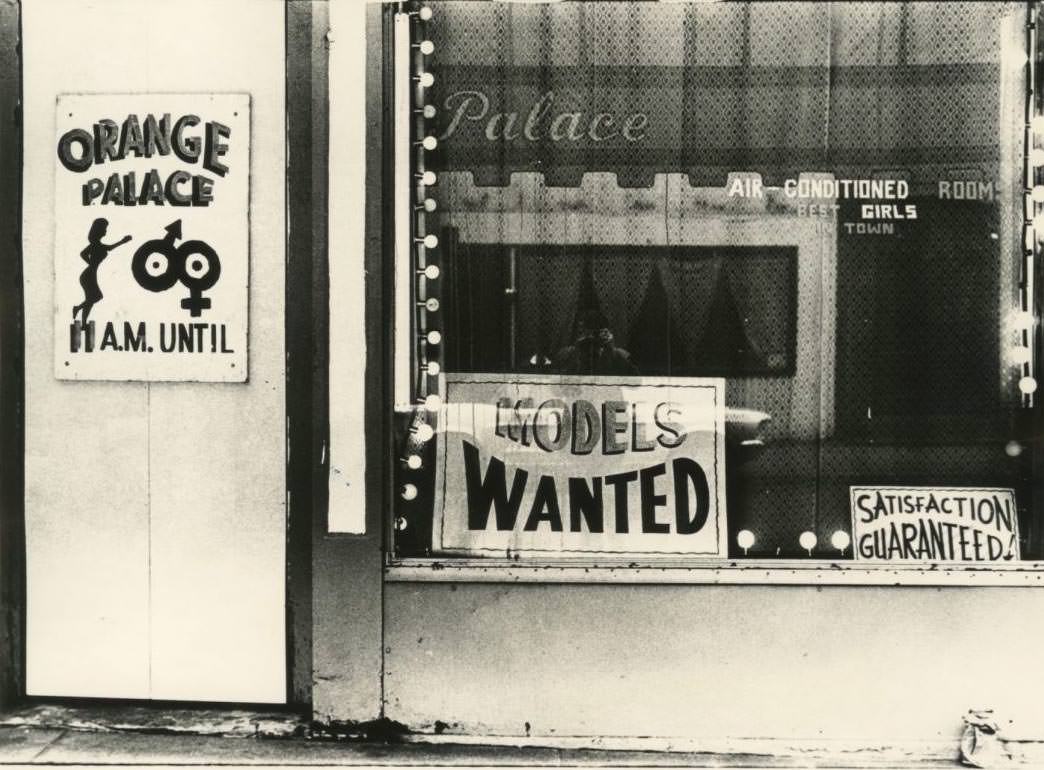
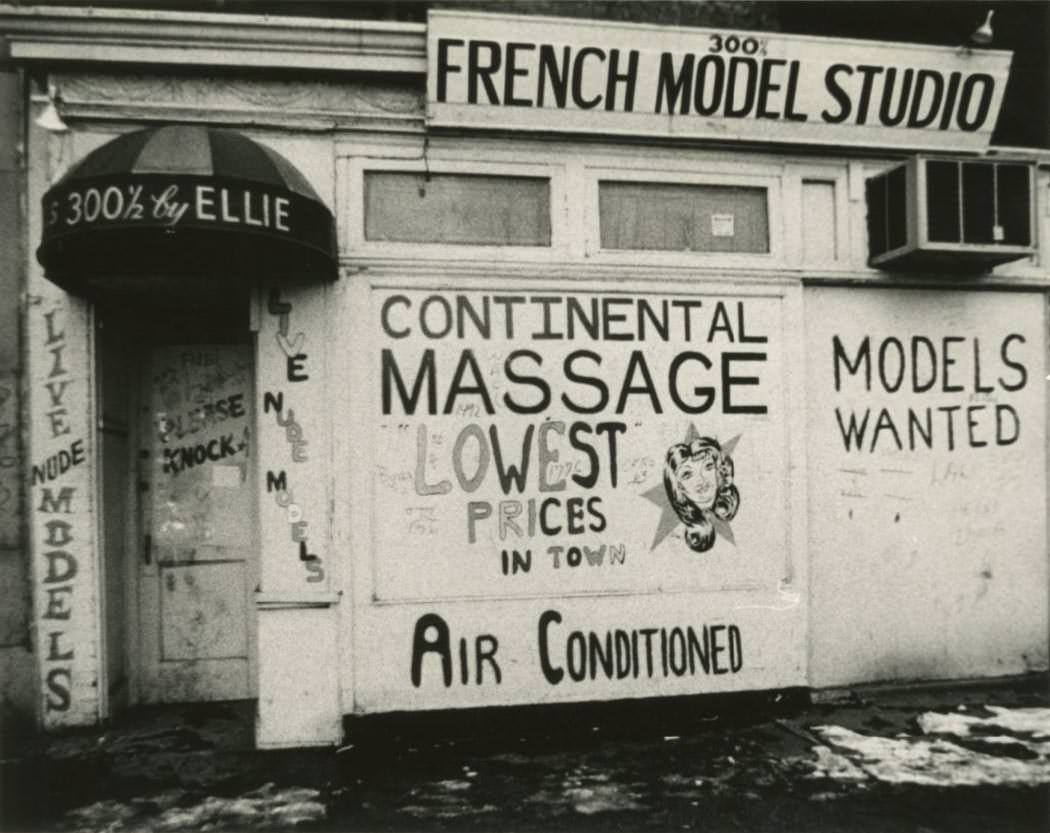
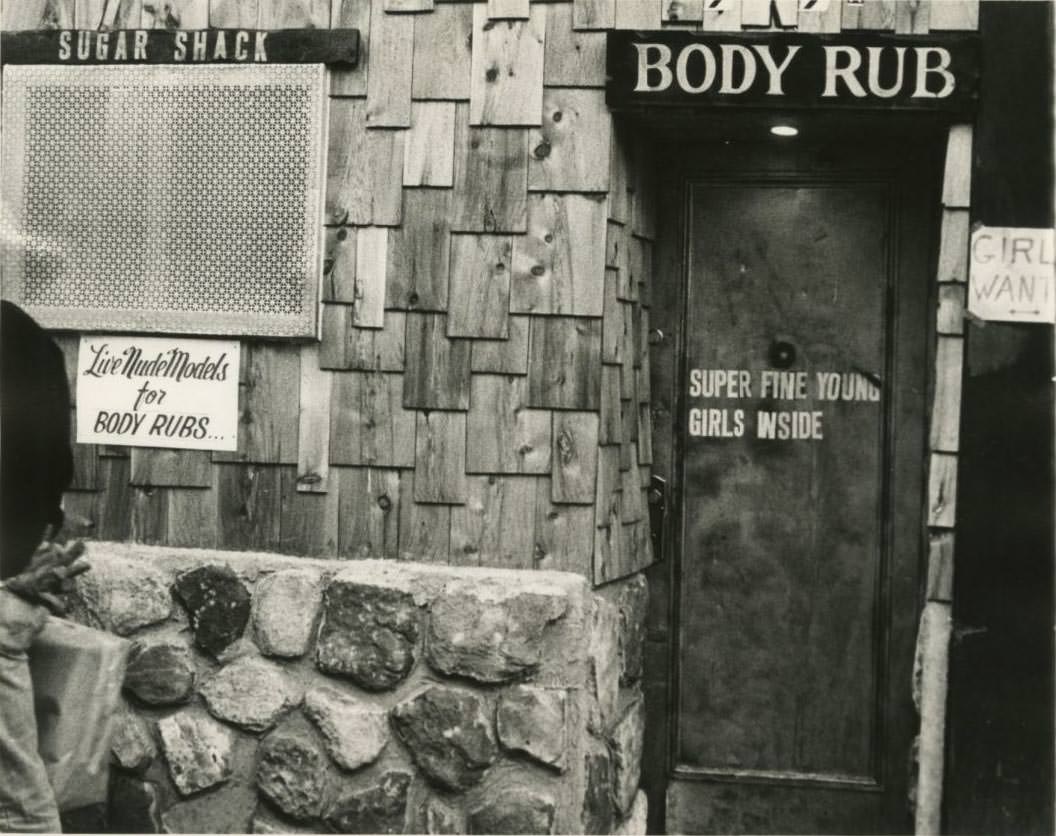
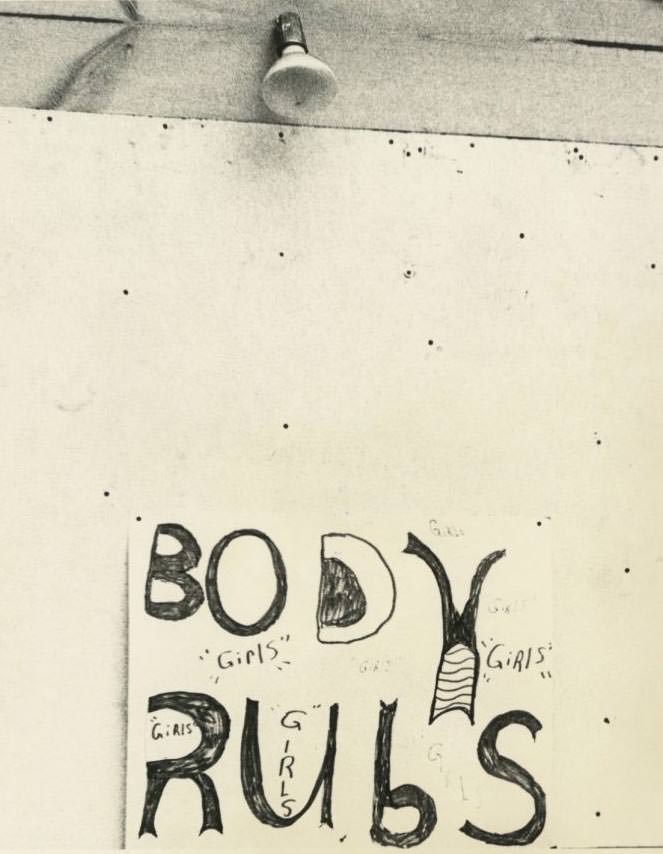
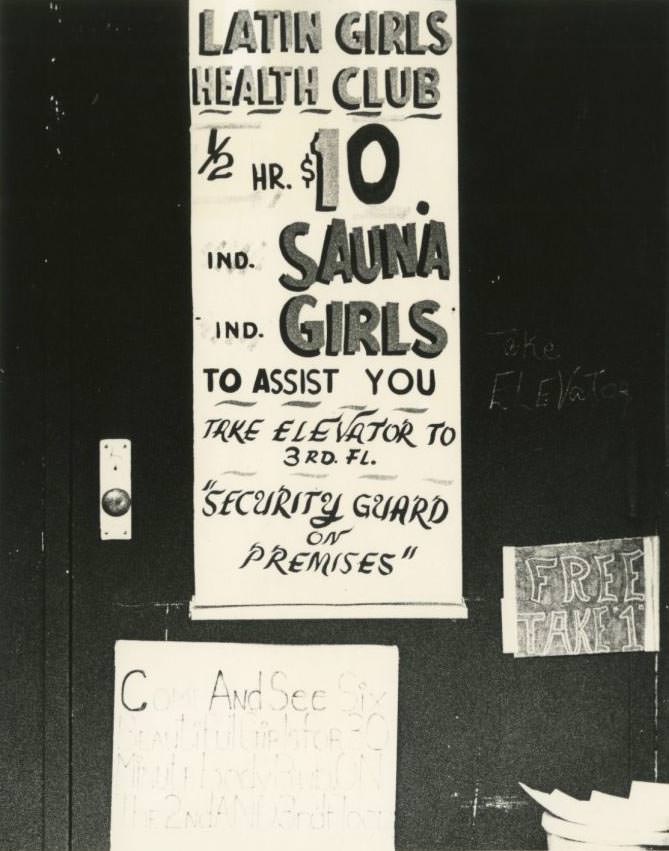
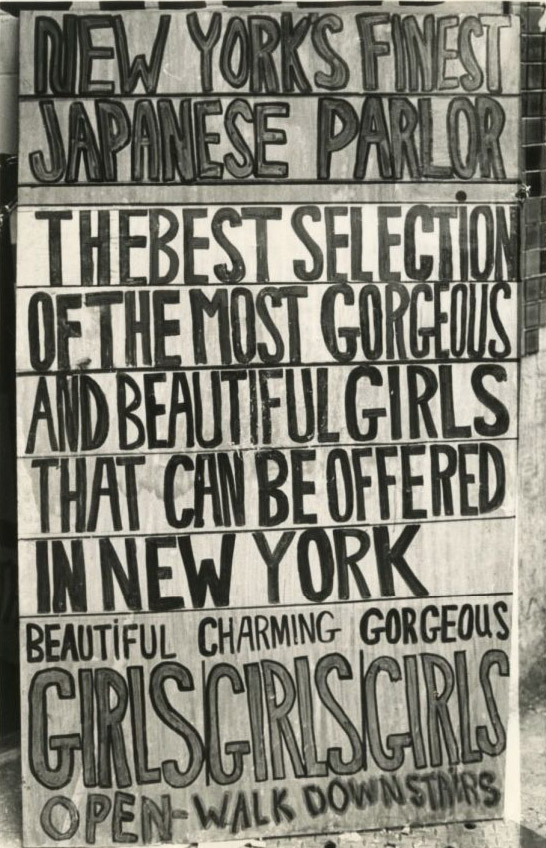
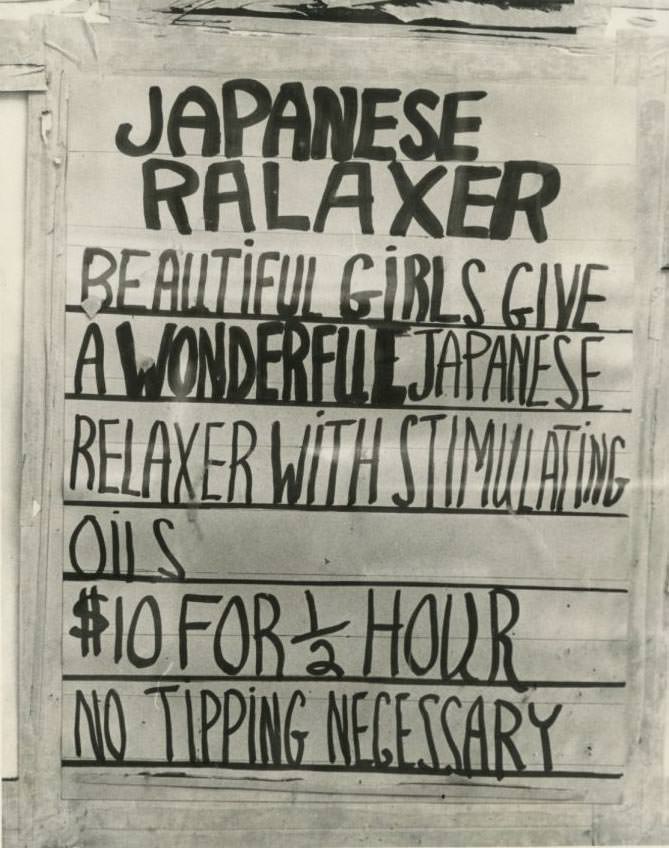
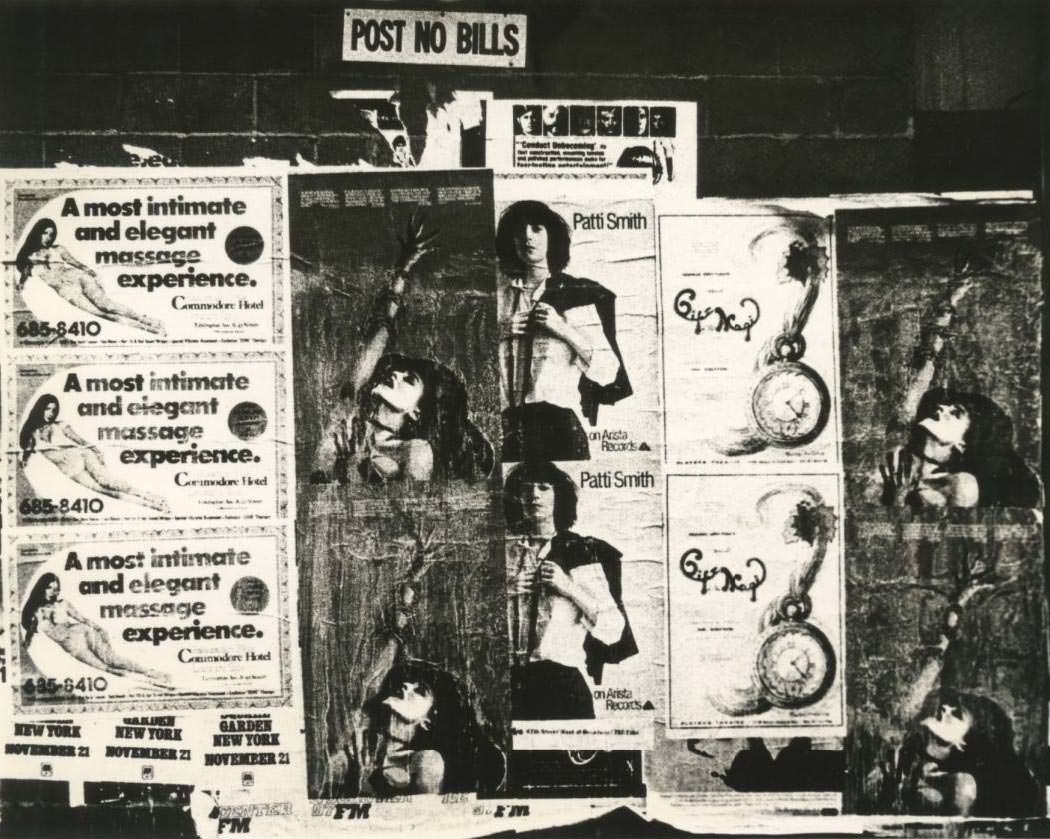
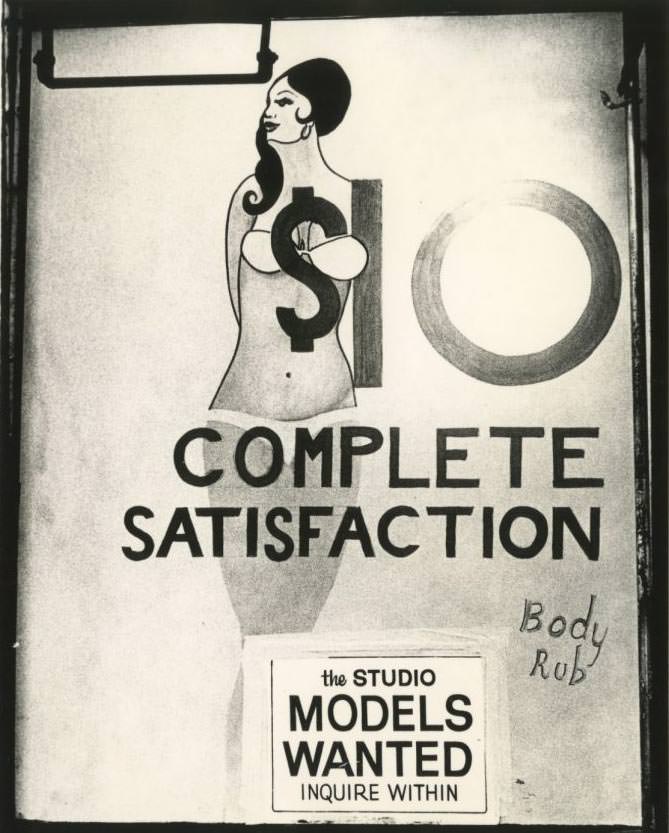
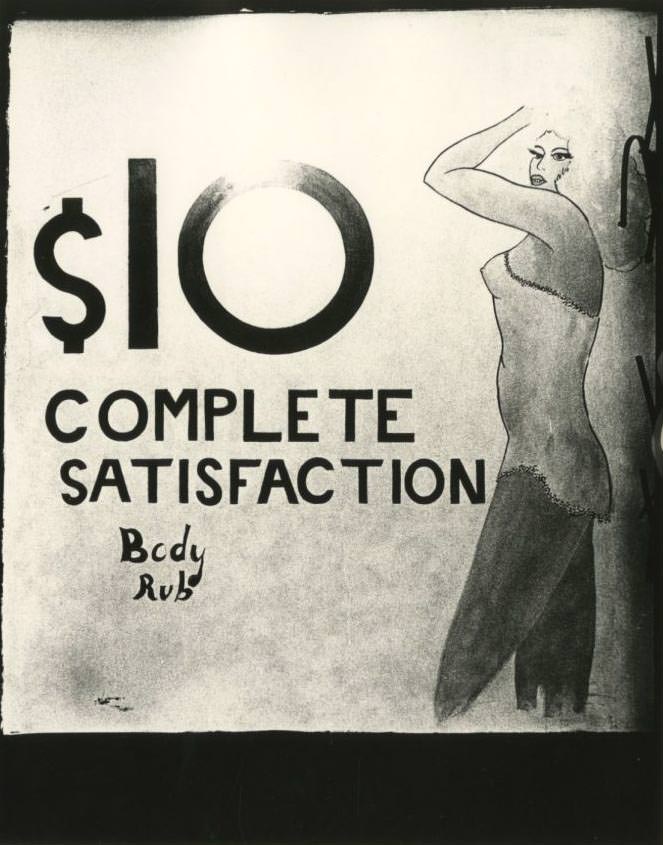
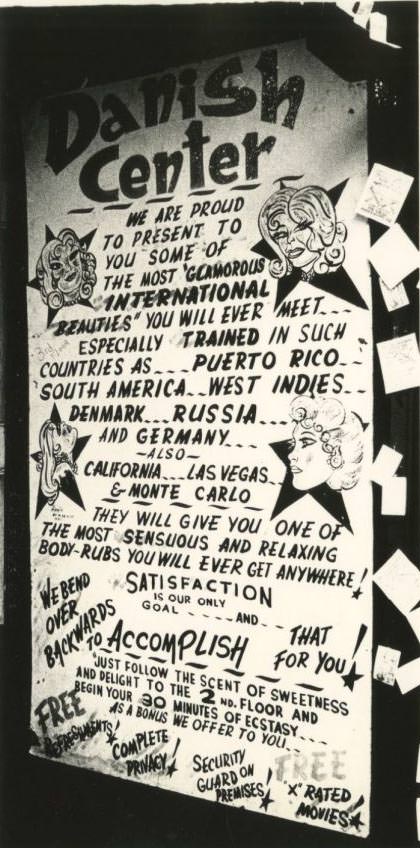
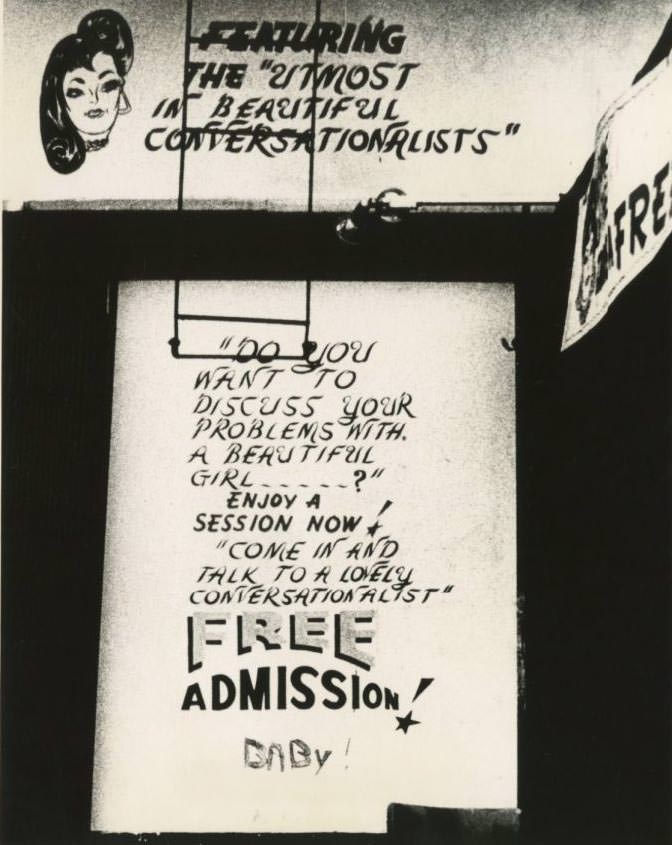
Gordon’s photographs also captured the handmade signs that filled doorways and stairwells throughout the area. Signs advertising “body rubs” and “massages” were a common sight. These were not legitimate massage businesses. They were small, informal operations offering sexual services — part of a sprawling cottage industry that thrived in the gaps between law enforcement attention.
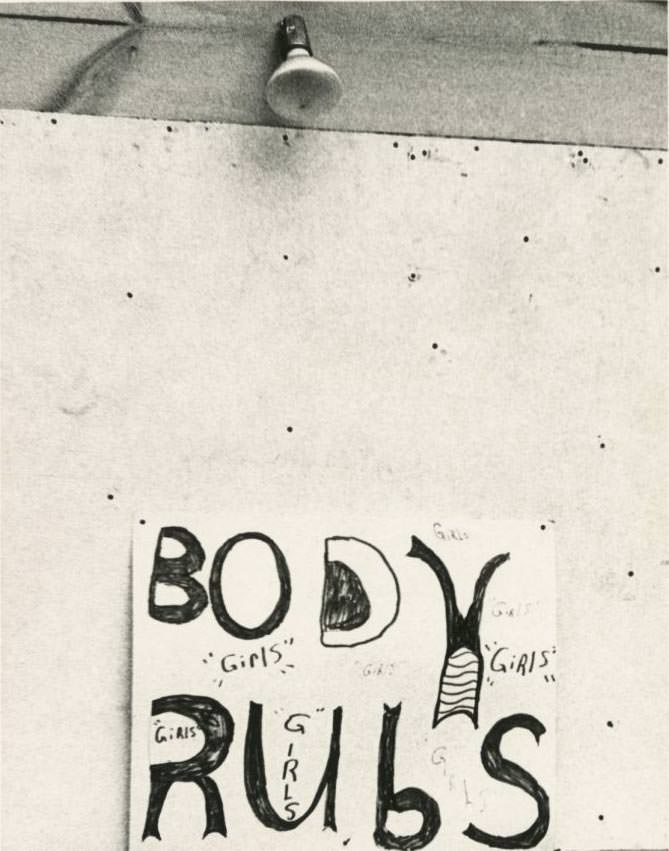
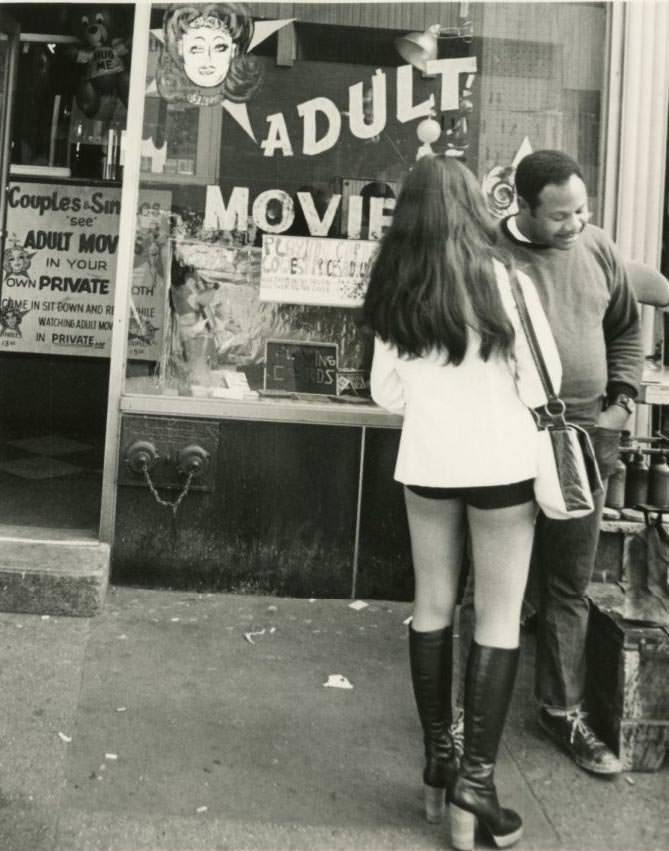
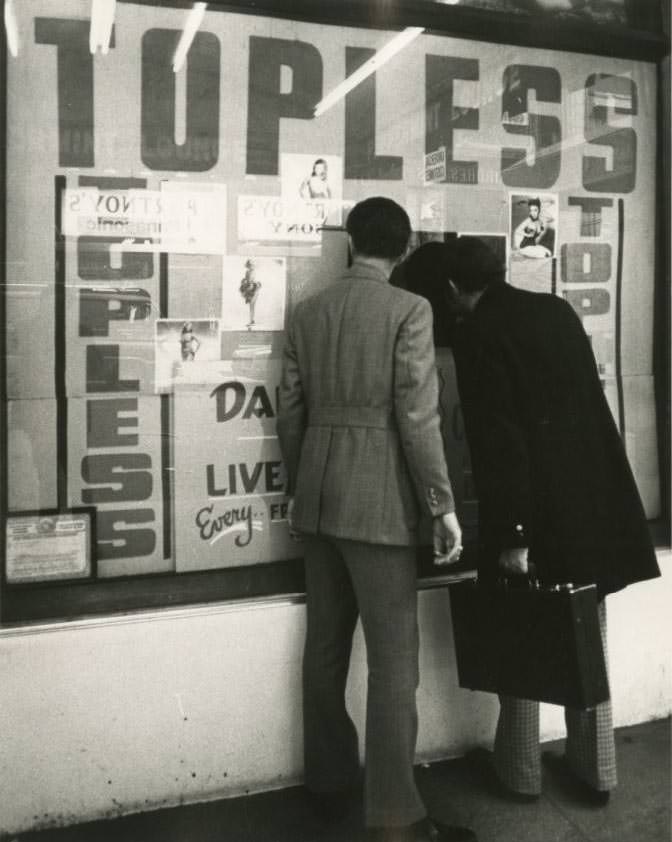
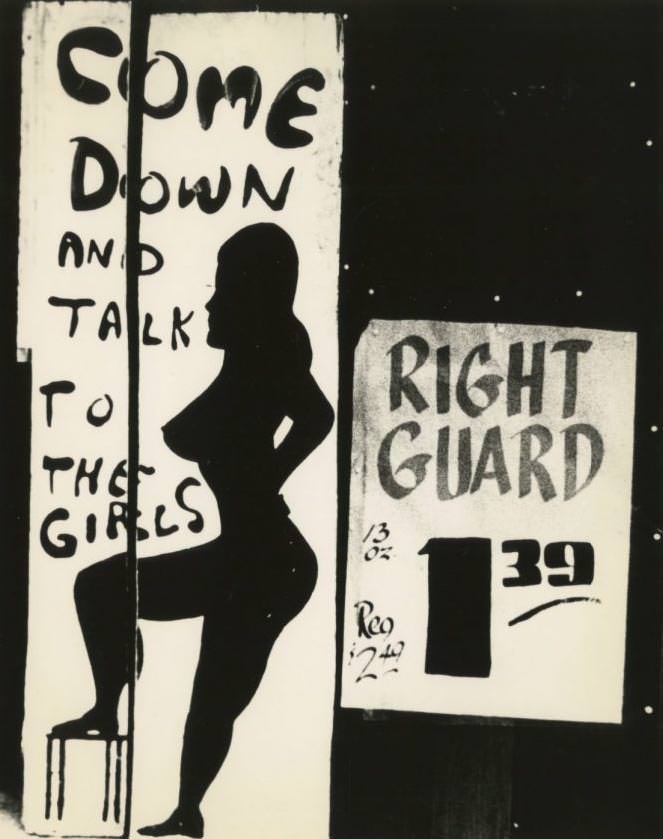
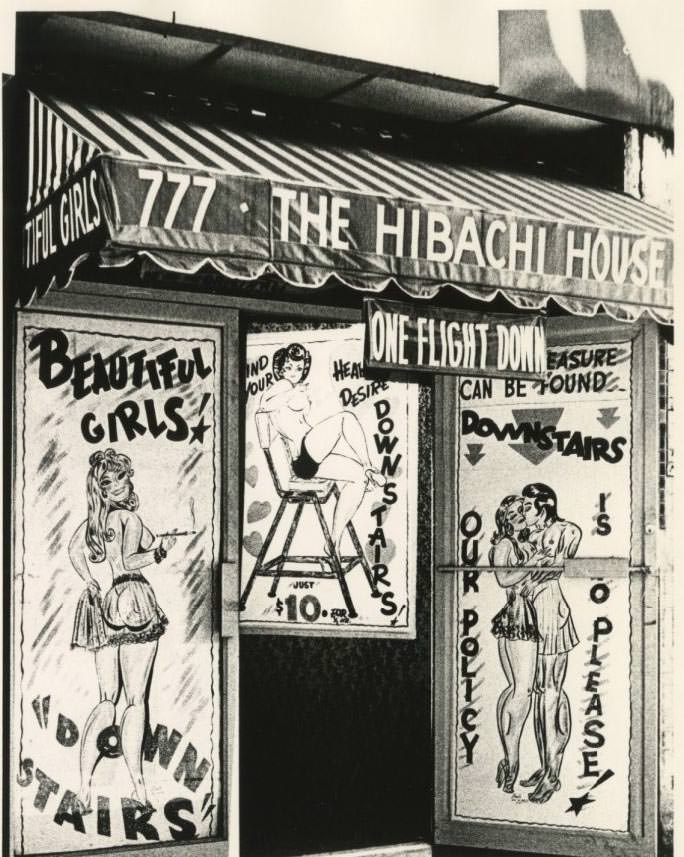
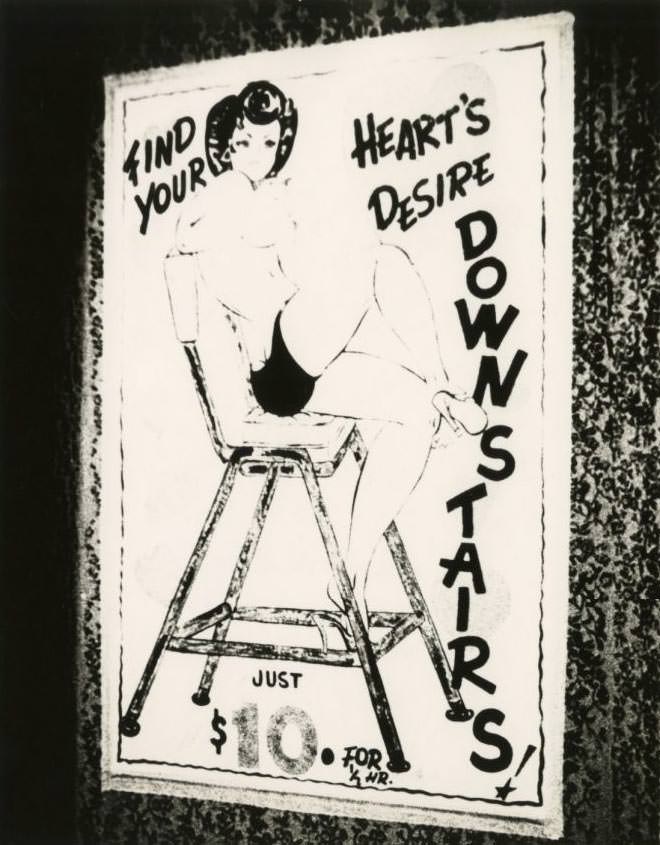
The signs themselves tell a story. Many were painted by hand on cardboard or plywood. Some were written in marker on notebook paper and taped to a door. They promised relief, companionship, and pleasure — all for a set price, all available immediately. There was nothing subtle about them.
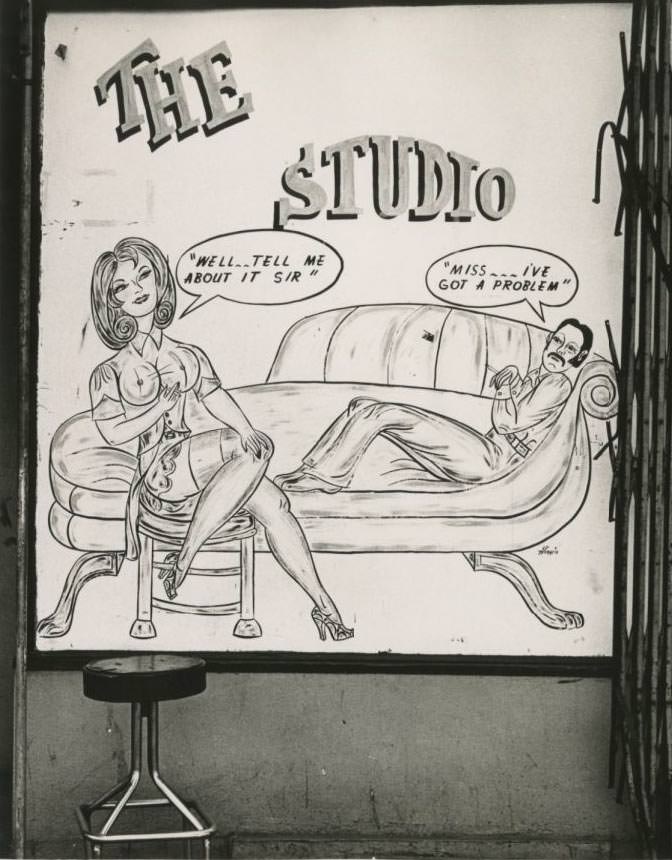
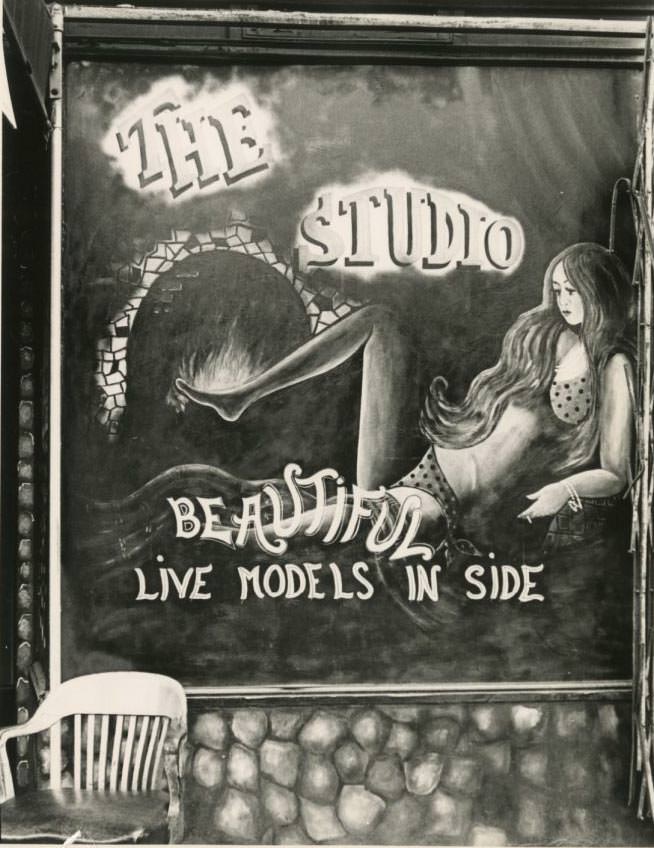
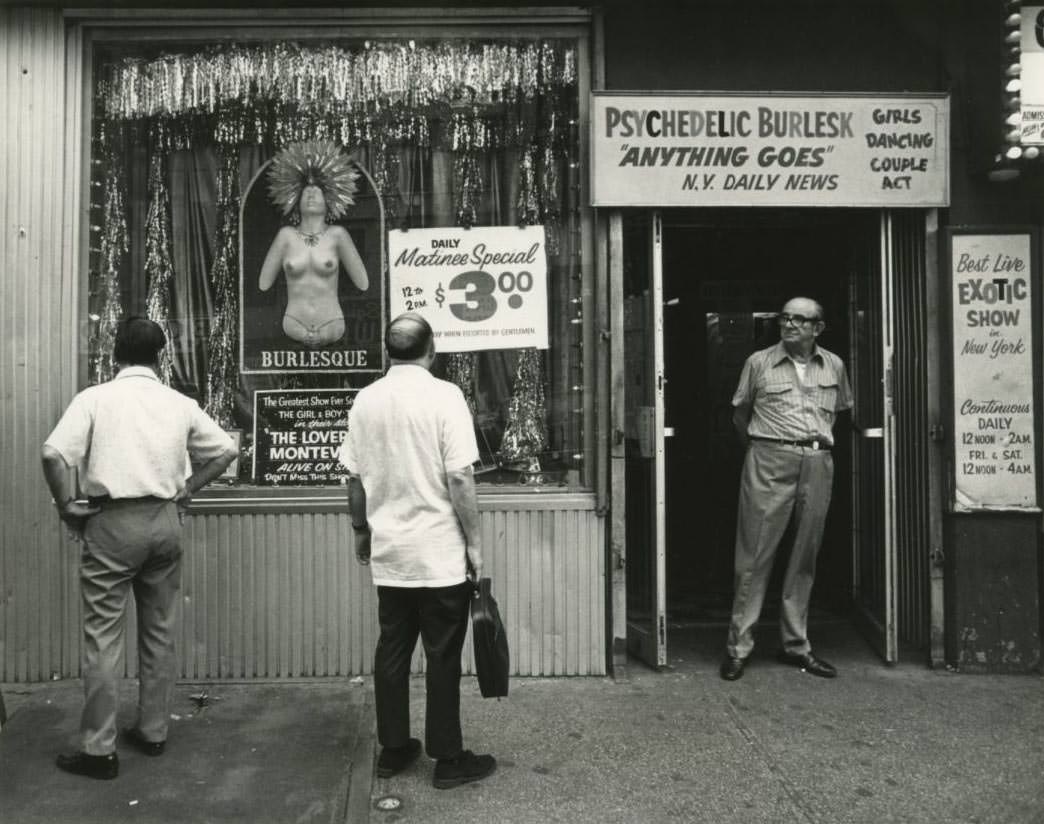
The clubs operating in the area were equally direct. Live music, dancers, and alcohol brought in crowds every night of the week. The line between a music venue, a strip club, and a brothel was often blurry. Drugs moved through these spaces freely. The atmosphere was one of controlled chaos — loud, dark, and purposeful.
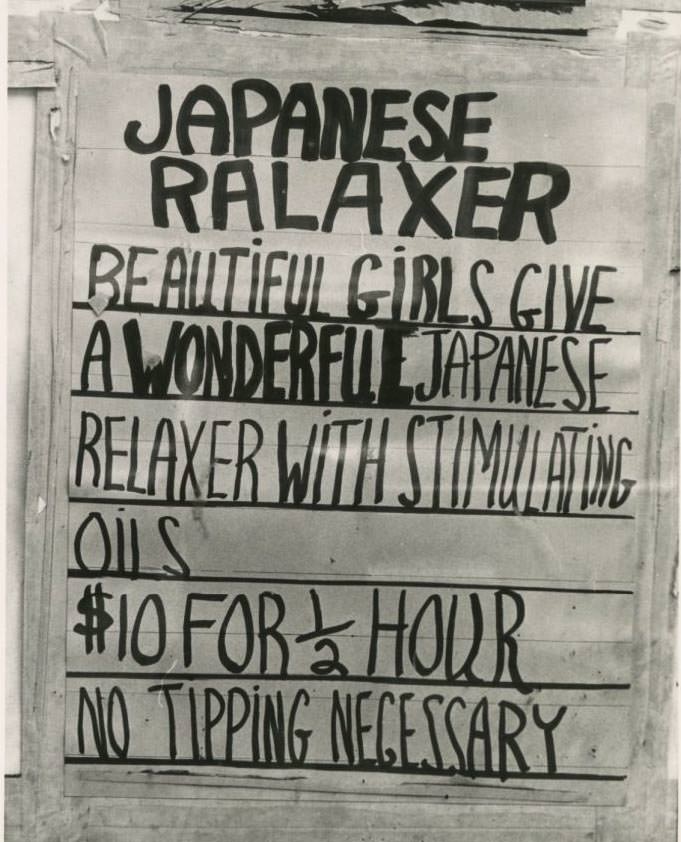
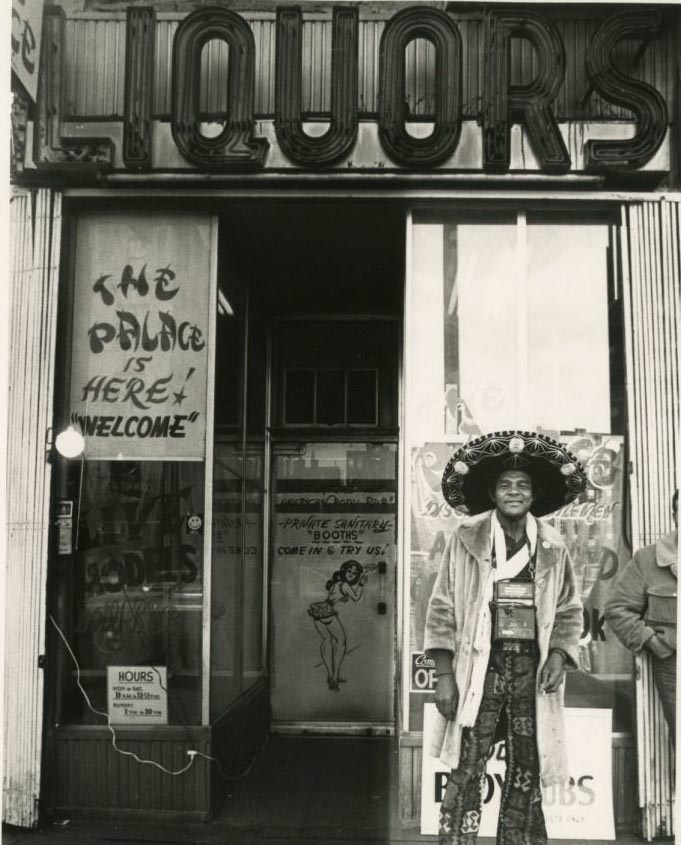
42nd Street between Seventh and Eighth Avenues was the heart of this activity. The block was dense with theaters that had long since stopped showing mainstream films and now screened pornographic movies around the clock. Admission was cheap. The audience was almost entirely men, many of whom came alone and left without speaking to anyone.
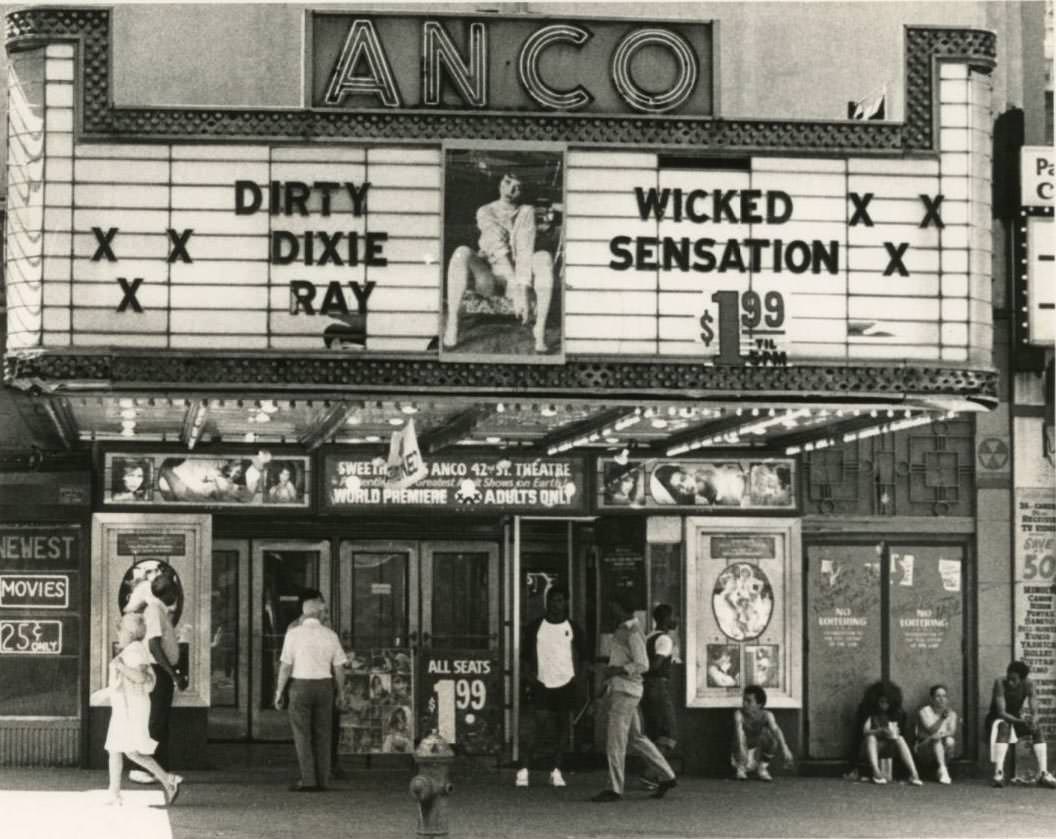
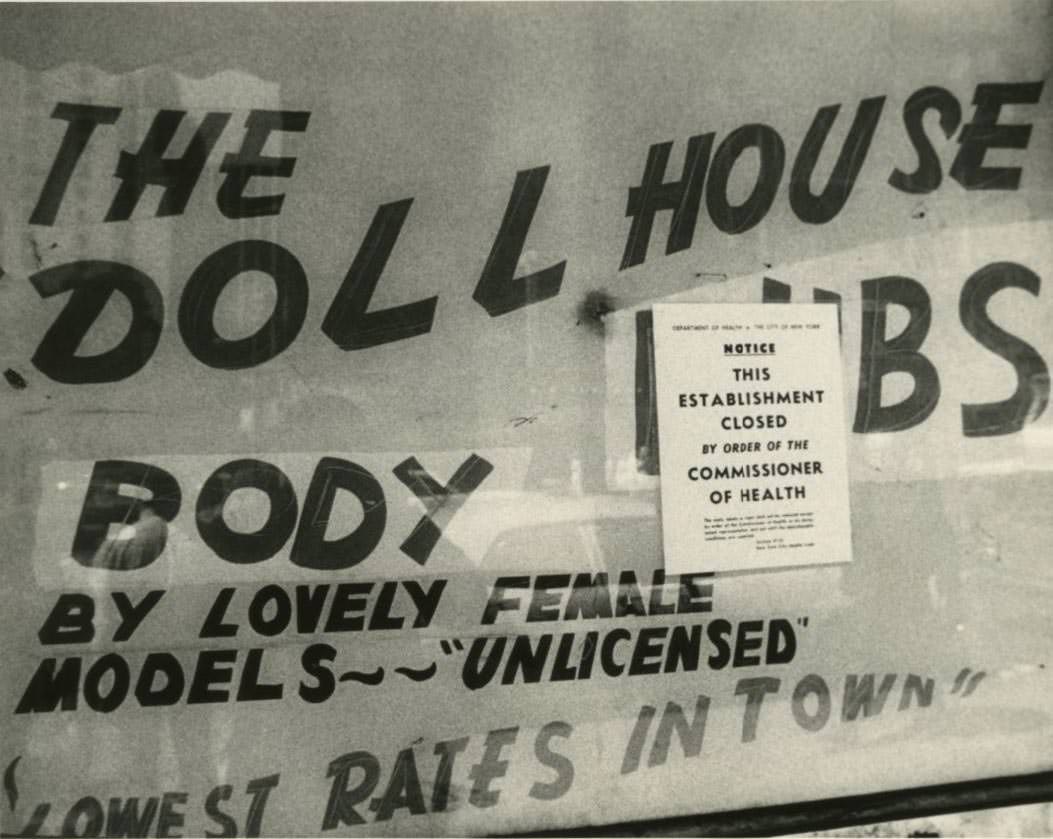
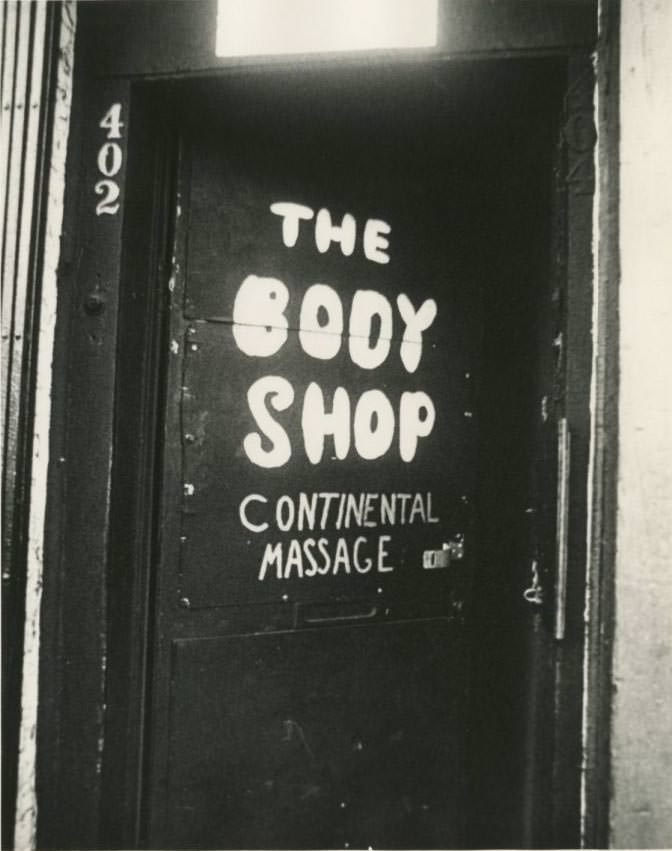
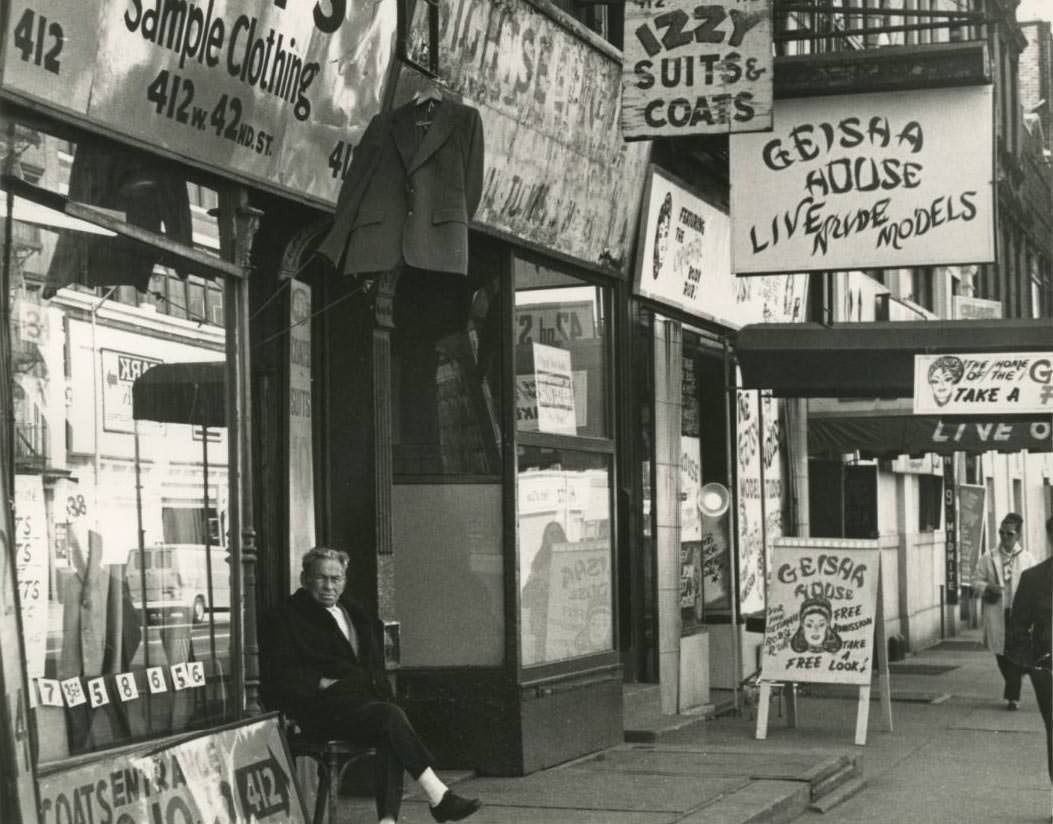
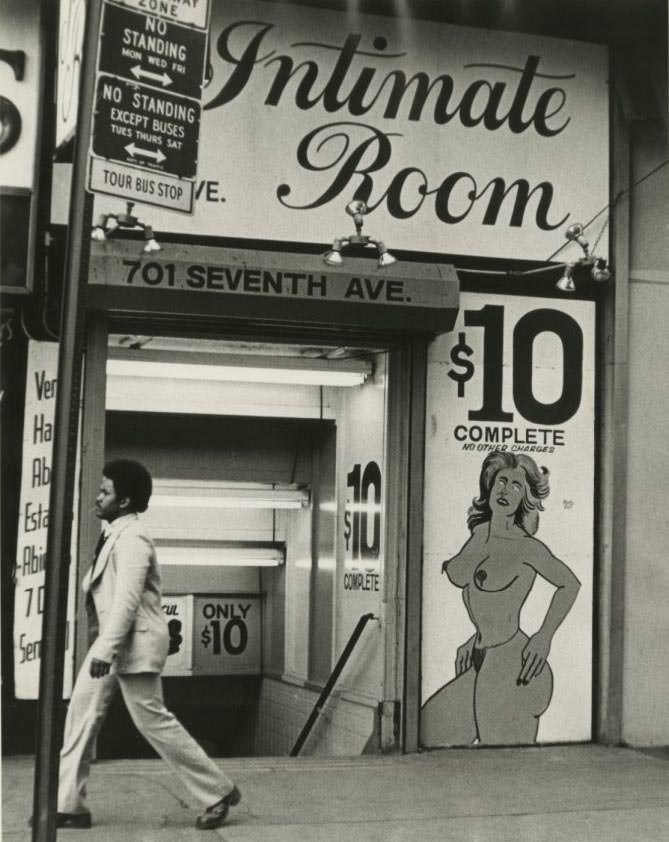
Gordon photographed the storefronts, the signage, and the street-level details that most people walked past without stopping to study. His images preserve what the area actually looked like — not the version cleaned up for a newspaper, but the real, unfiltered street as it existed day to day.
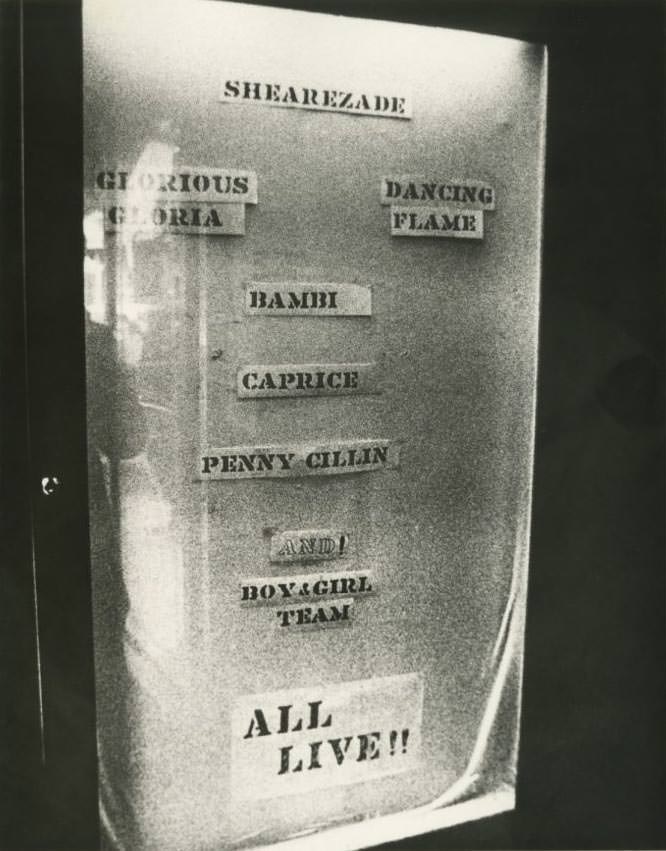
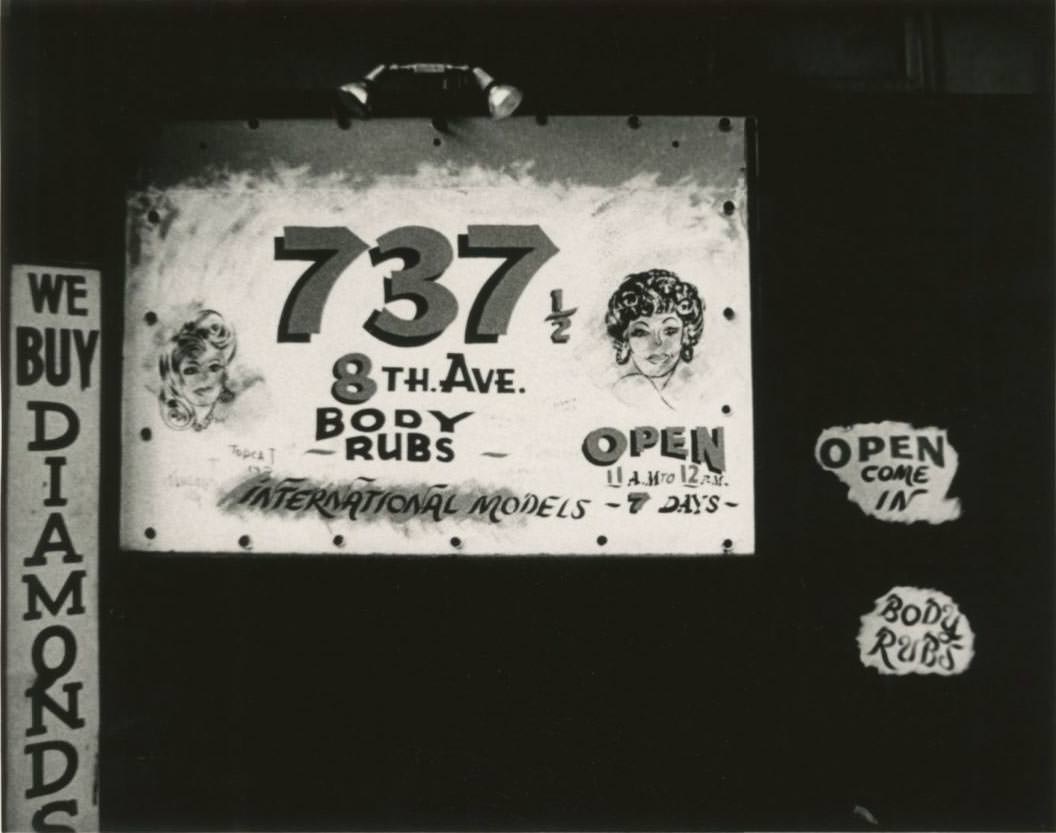
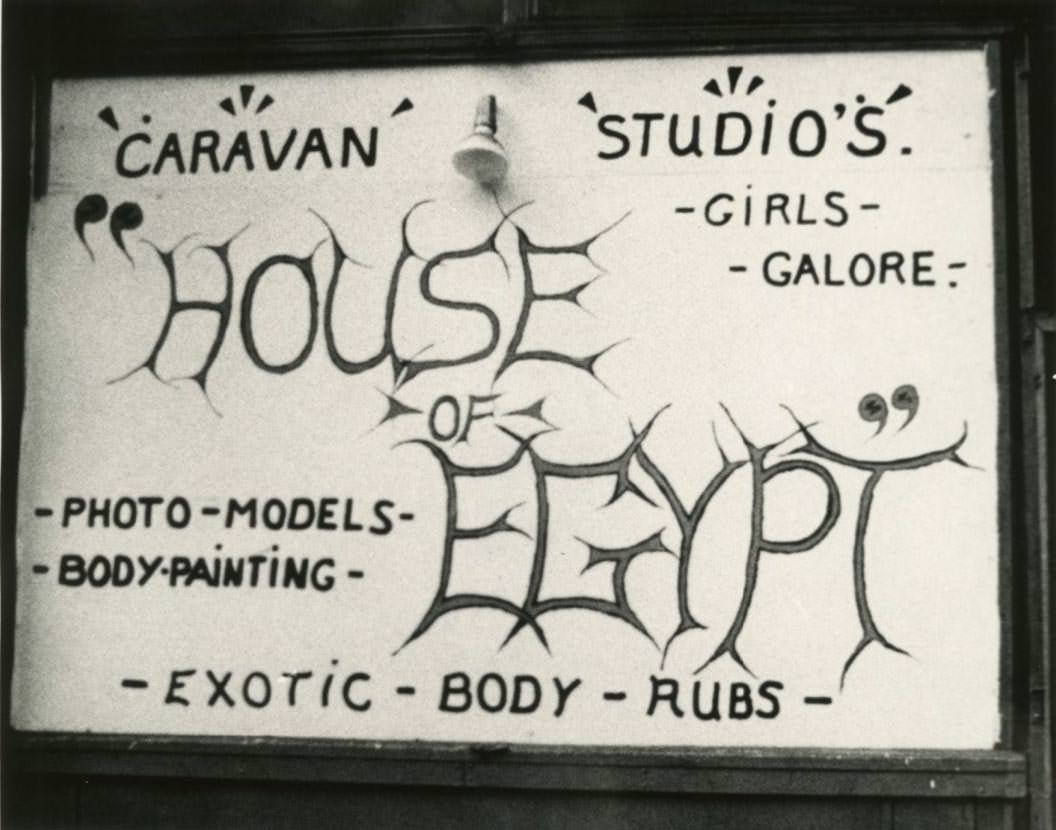
The women working in these spaces — in the clubs, the peep shows, the massage parlors — operated in conditions that were dangerous and largely unregulated. Violence was a constant risk. Police presence was inconsistent. Workers had few legal protections and little recourse when things went wrong.
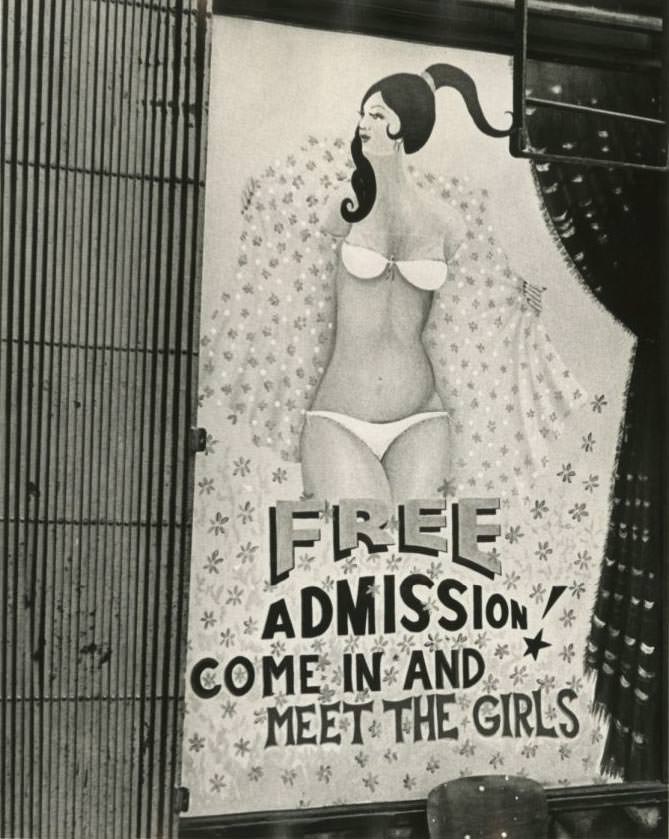
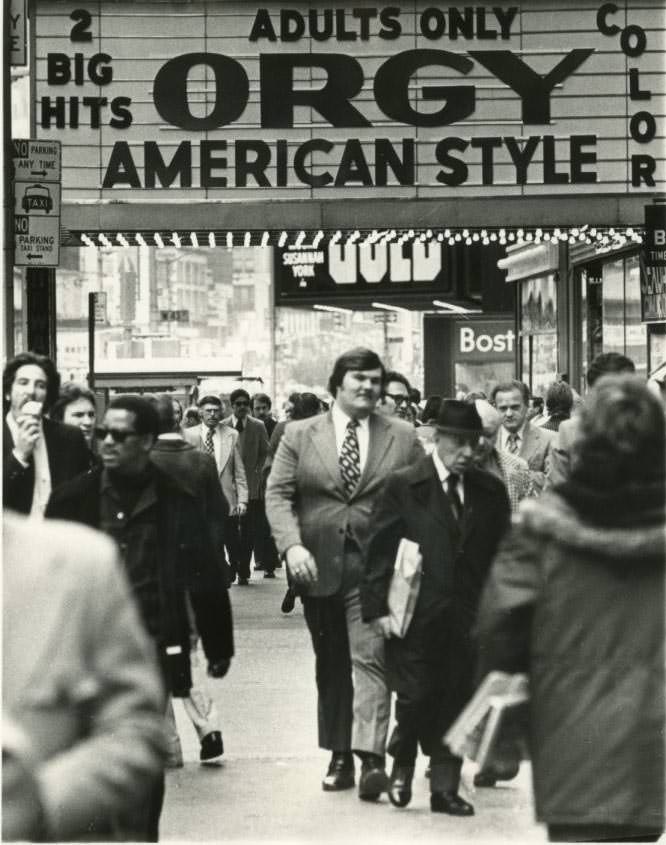
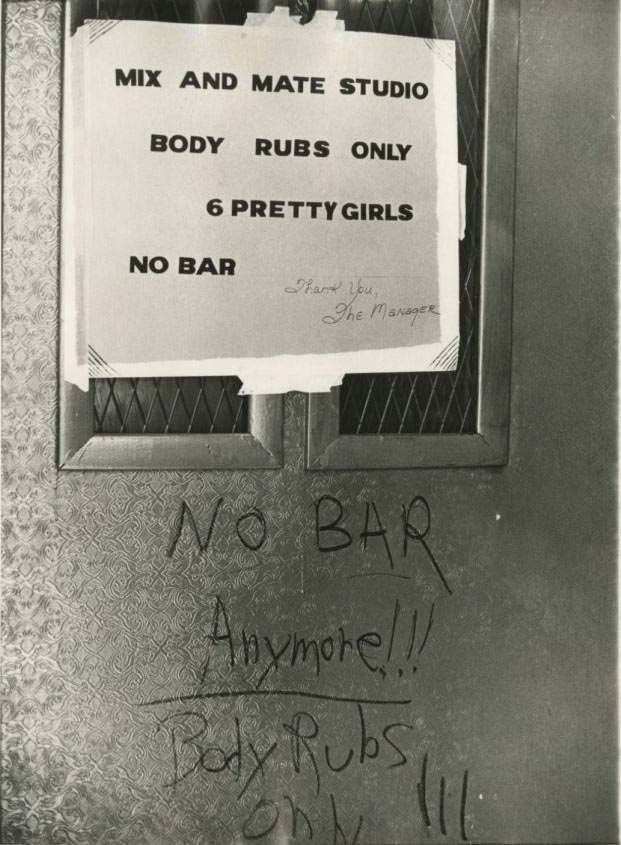
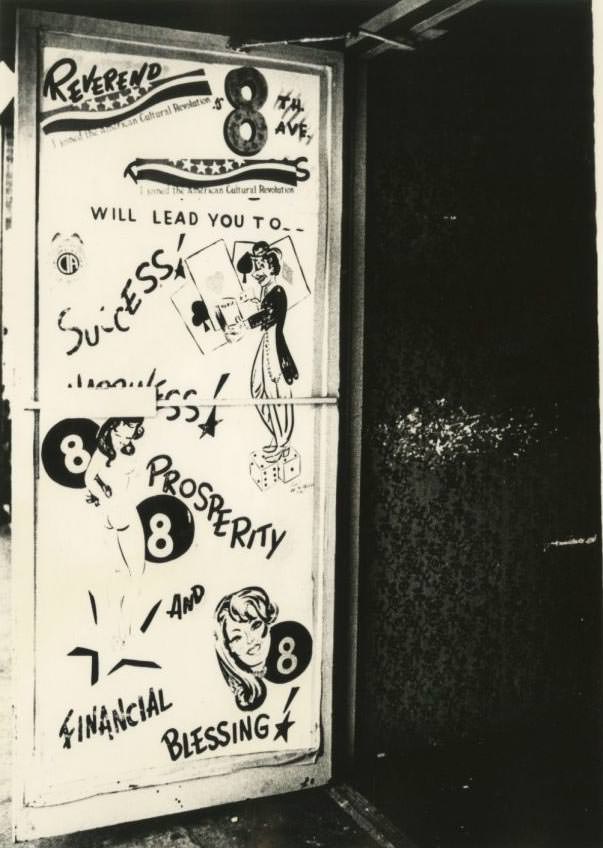
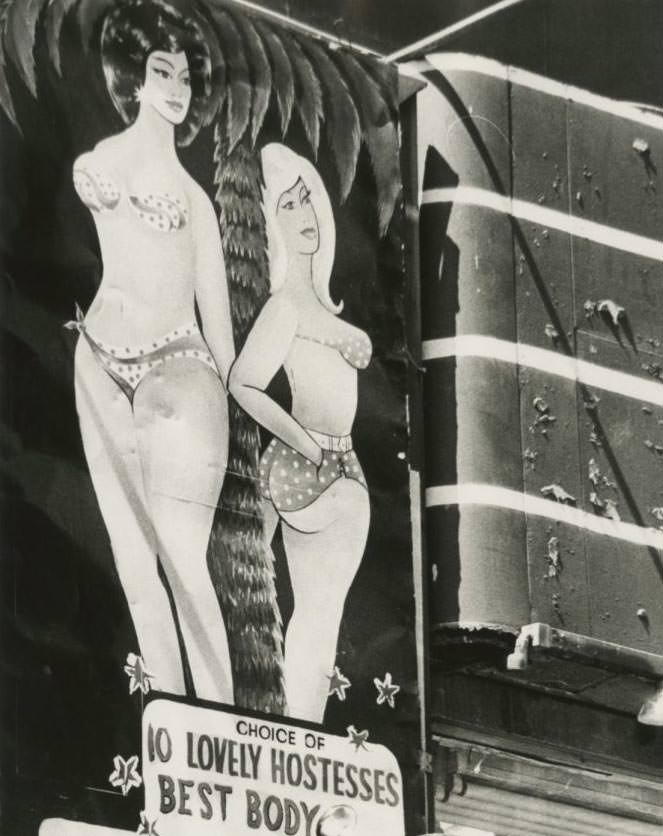
The advertising around this industry was remarkably creative given its constraints. Operators couldn’t use mainstream media. They relied entirely on physical signage — whatever they could put in a window or nail to a door. The result was a visual landscape unique to the era and the place.
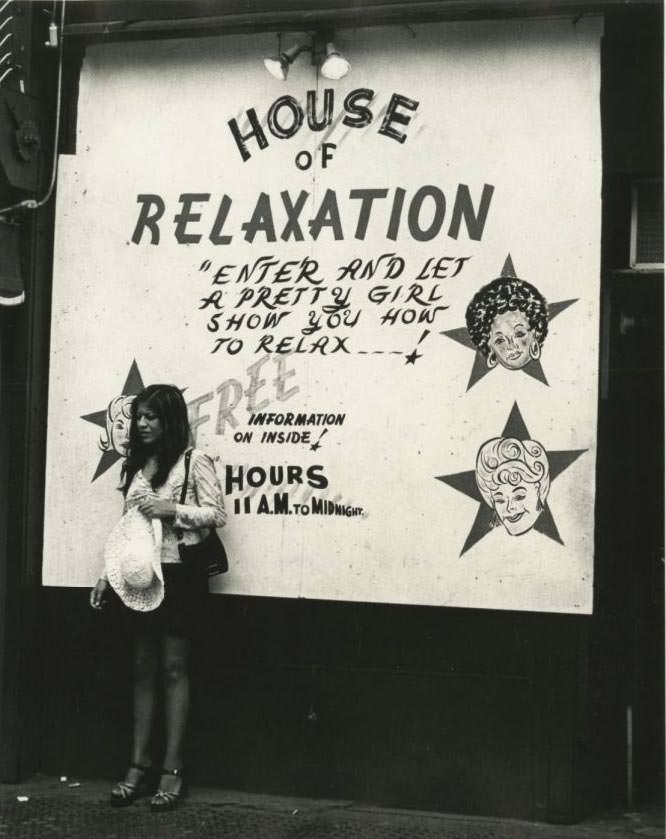
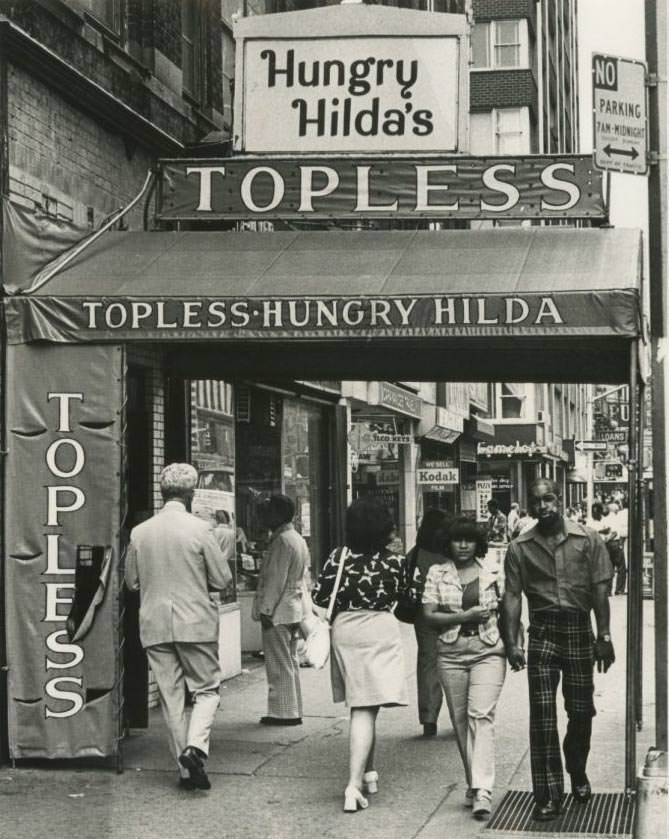
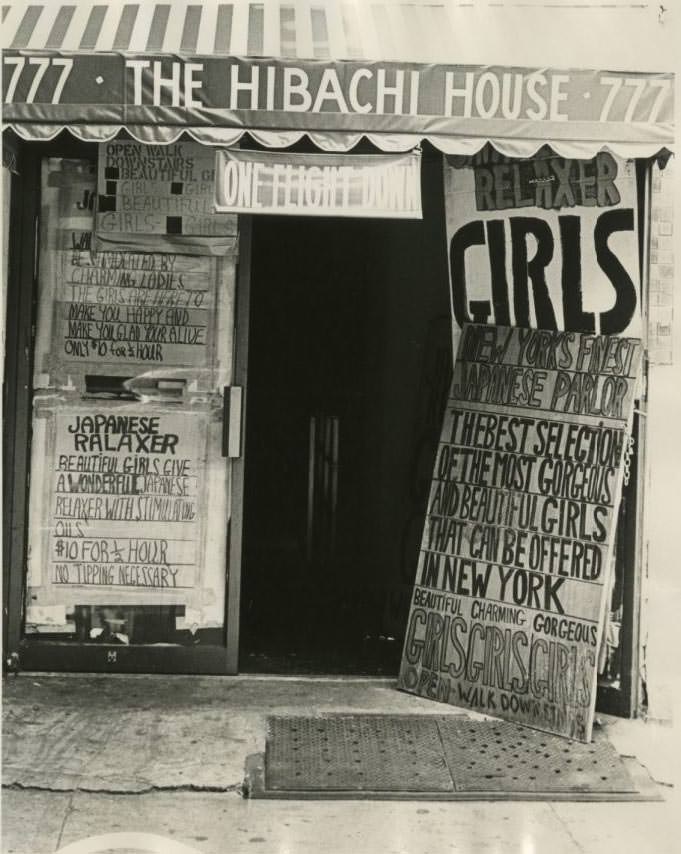
Some signs were elaborate, with painted illustrations and bold lettering. Others were bare and functional — a price, a service, an arrow pointing upstairs. Together they formed a kind of street-level catalog of what was available and for how much. Gordon’s camera captured all of it.
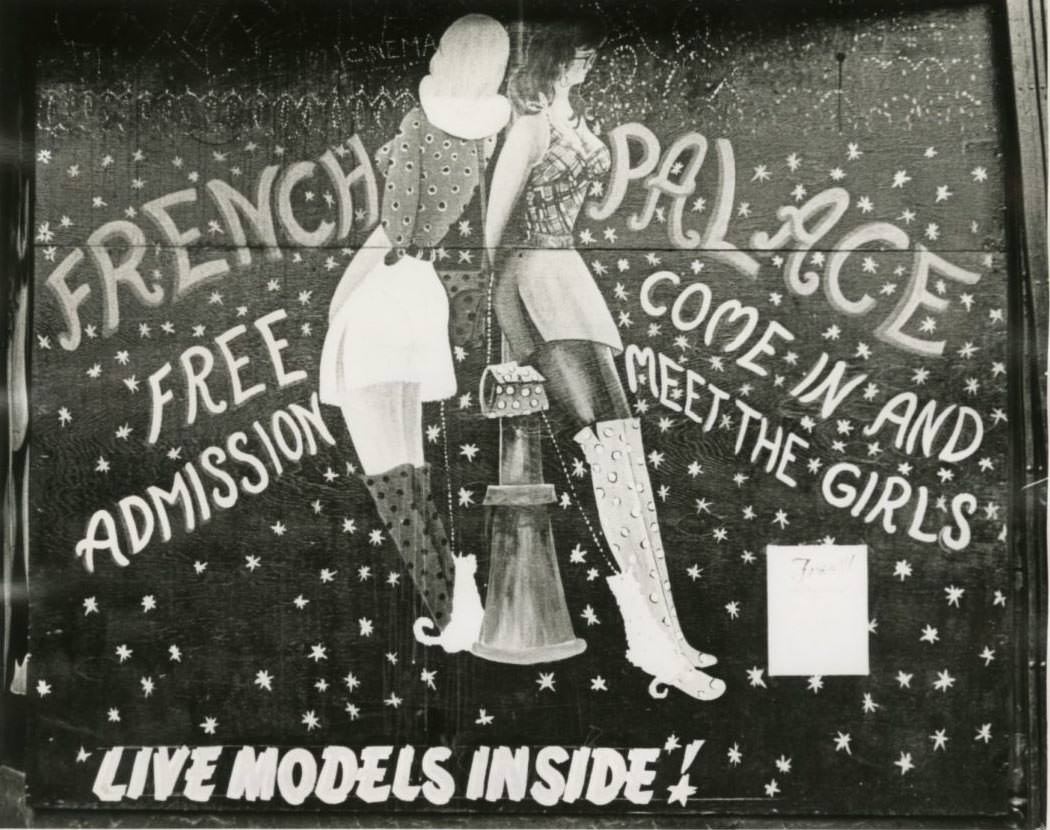
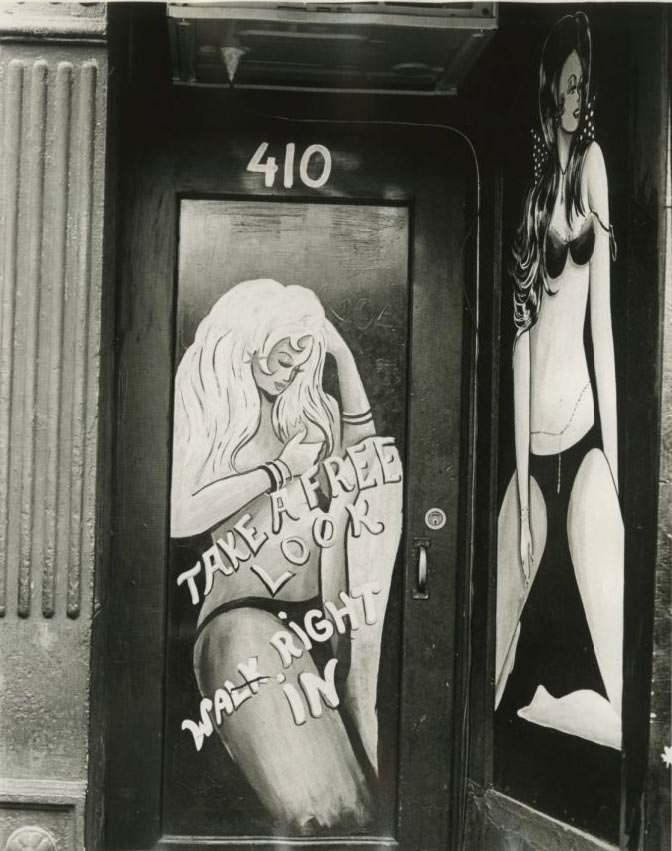
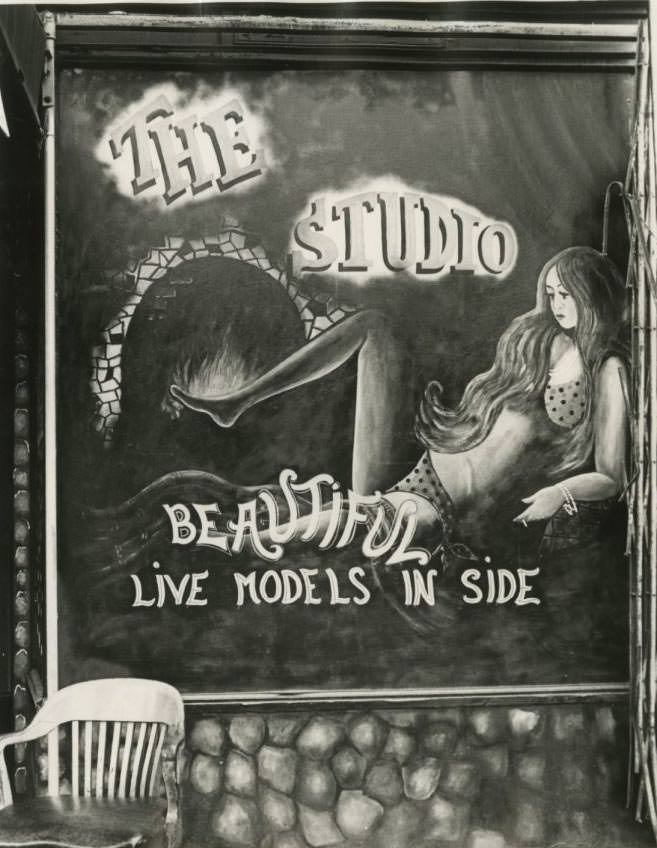
The scale of the sex trade on 42nd Street in this period was significant. It was not a fringe activity tucked away in back alleys. It was a central part of the block’s economy, drawing customers from across the city and beyond. The storefronts were busy. The money moved steadily.
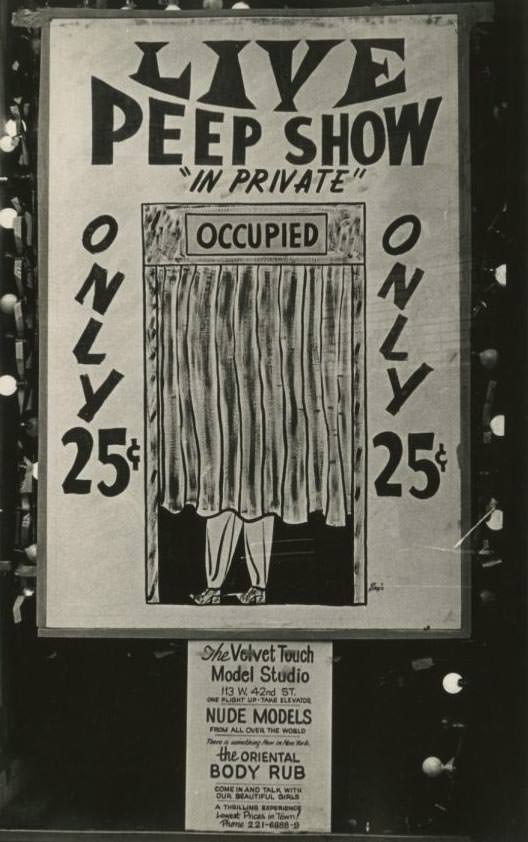
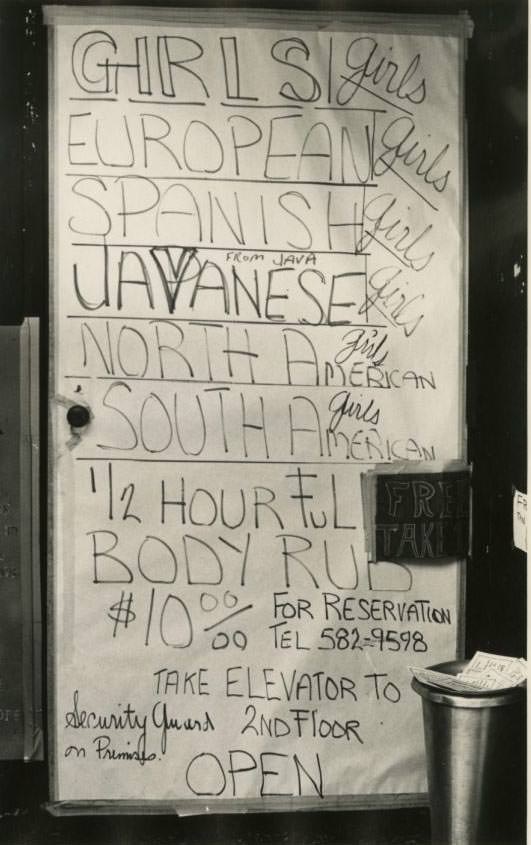
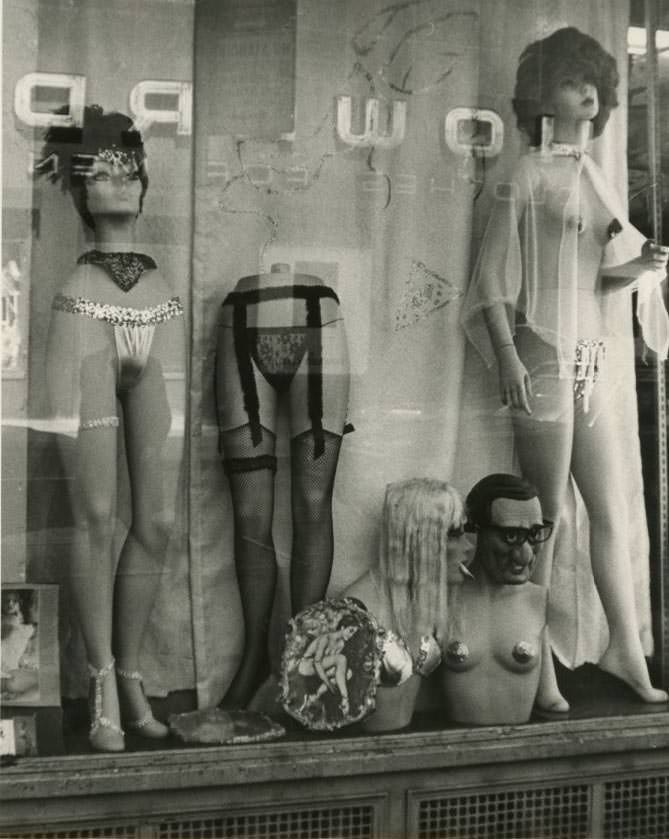
Gordon’s photographs from Queens — street scenes, community events, neighborhood life — exist alongside his Times Square work. But the 42nd Street images stand apart. They document a specific kind of commerce that was both very public and rarely examined closely. His lens treated it the same way he treated everything else: directly, without drama.
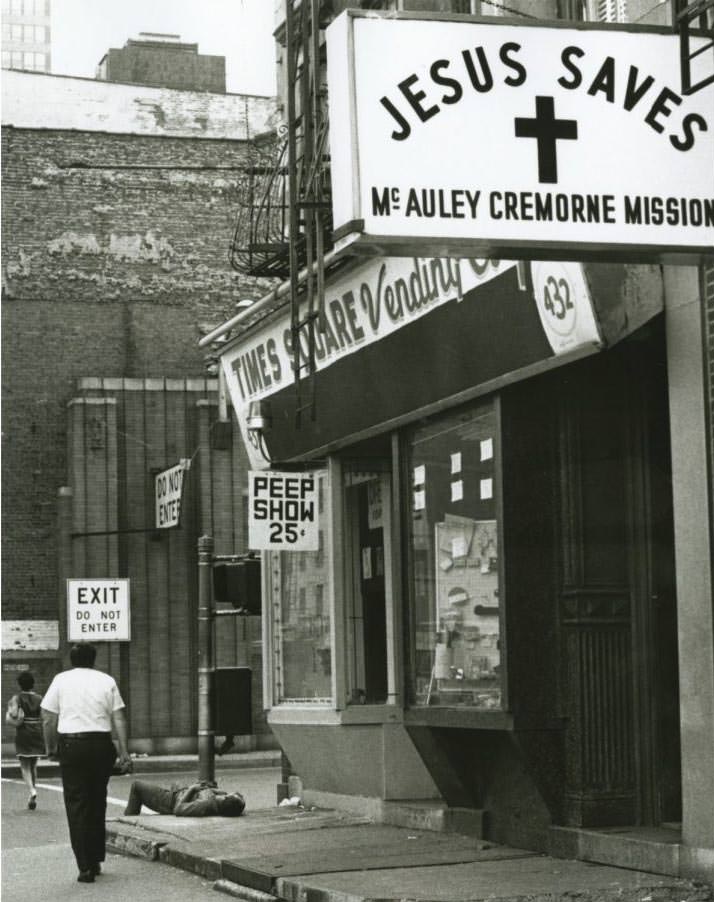
The peep show booths were a fixture of the strip. Small, dark, and ventilated poorly, they required no conversation and no commitment beyond the price of entry. They were built for anonymity. The machines took coins, the shutters opened, and whatever was on the other side was the transaction.
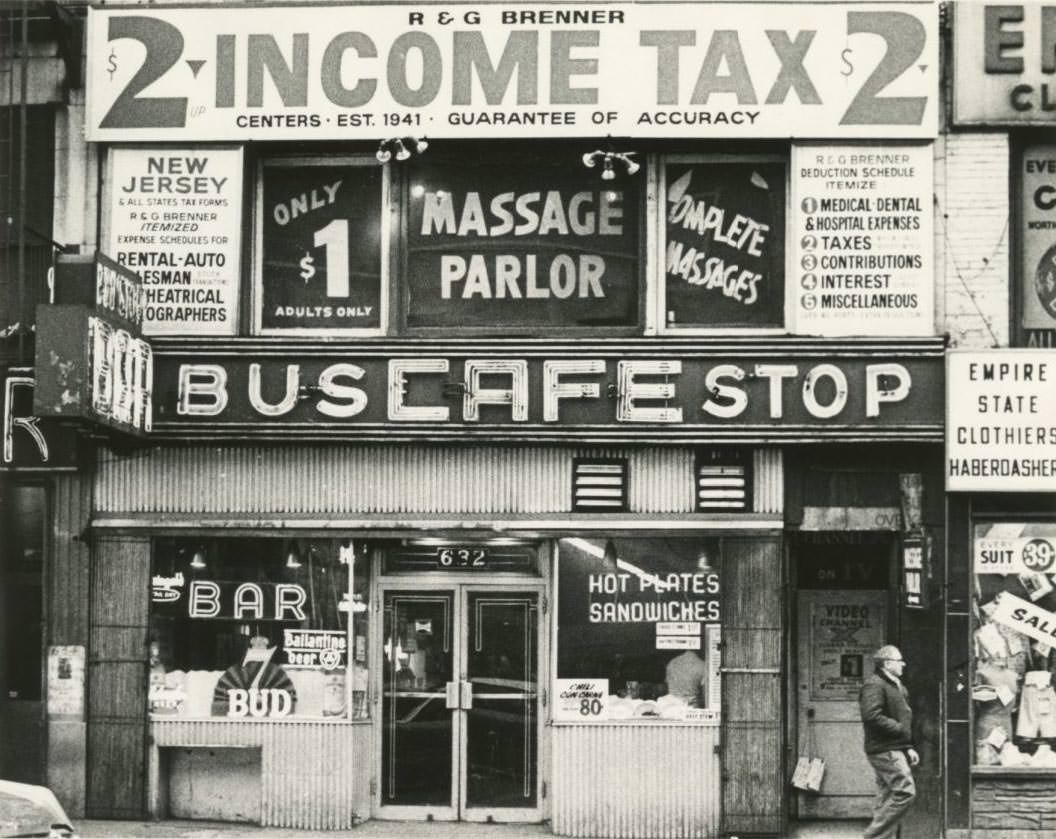
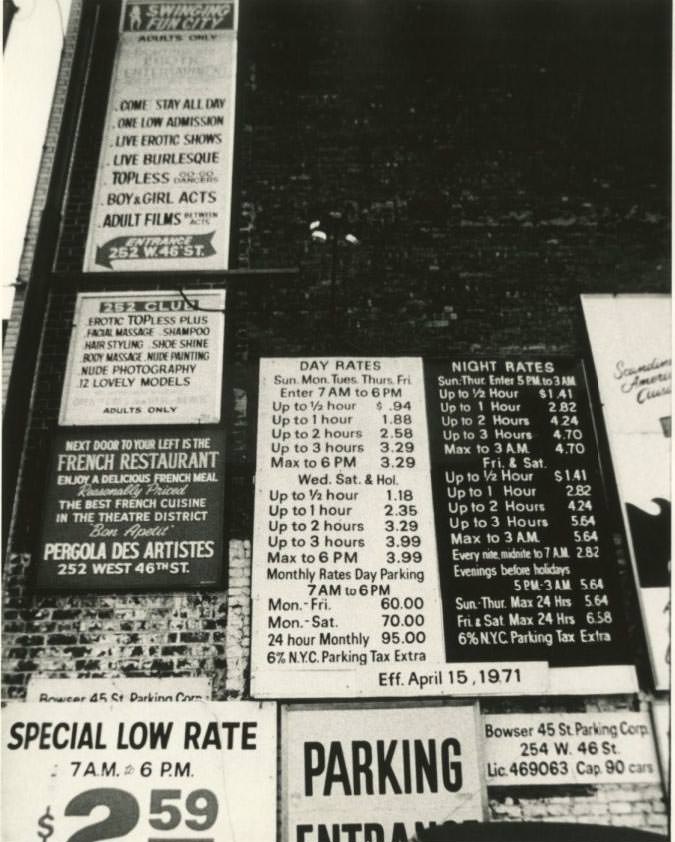
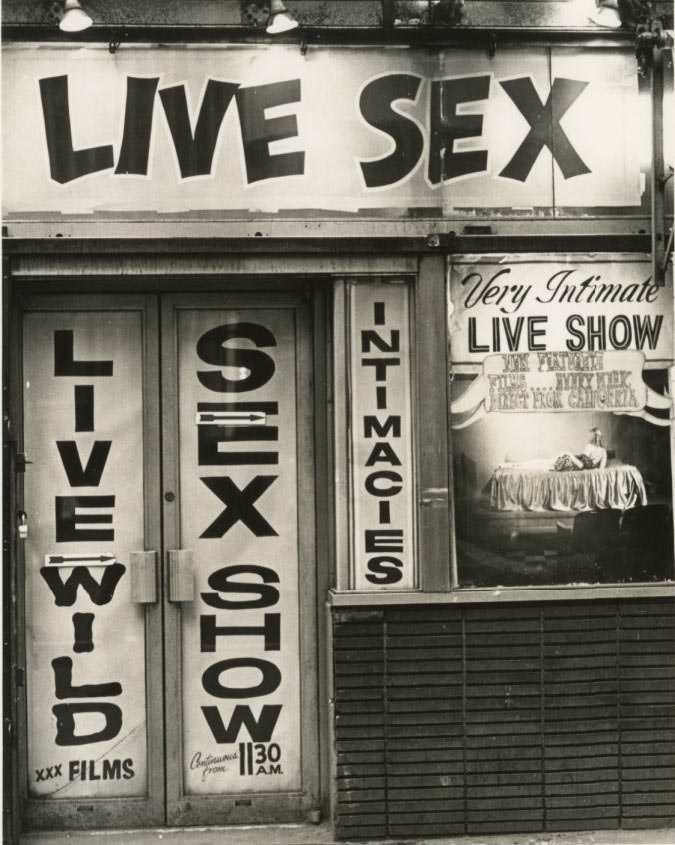
What Gordon’s photographs make clear is that this was a functioning economy with its own rules, its own advertising, and its own clientele. The signs in his images were not accidental. Each one was a deliberate business decision — a way to communicate a service to a specific customer walking down a specific block.
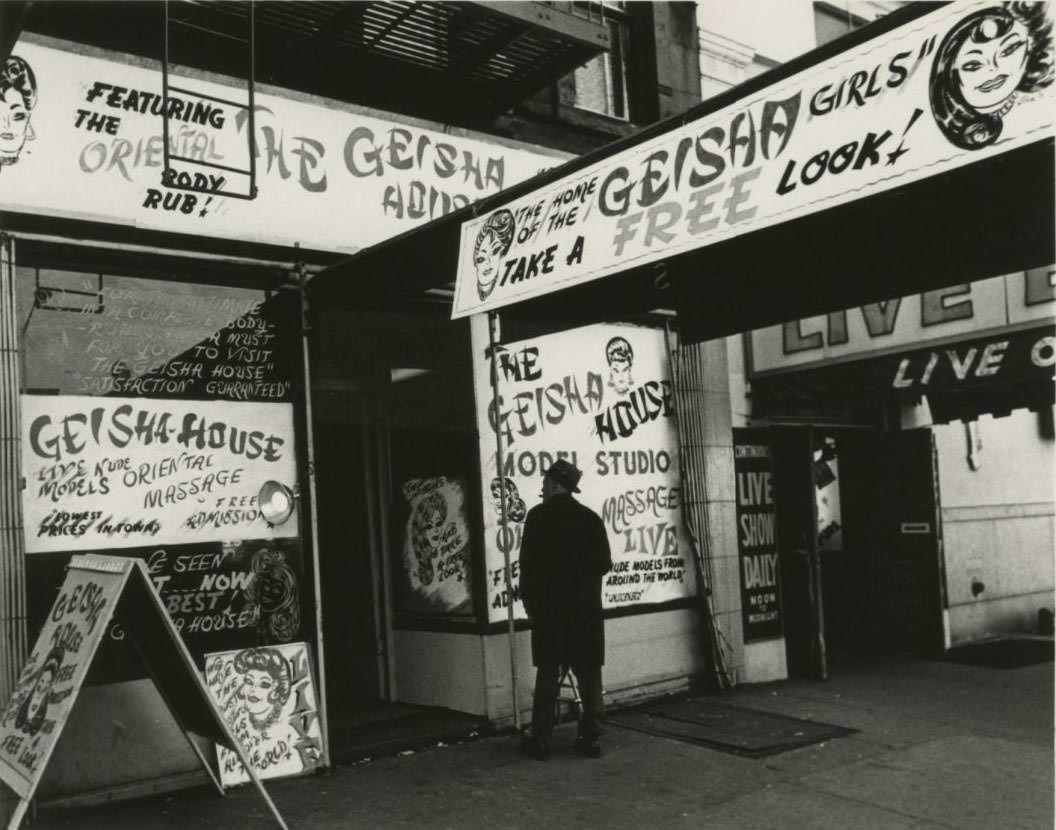
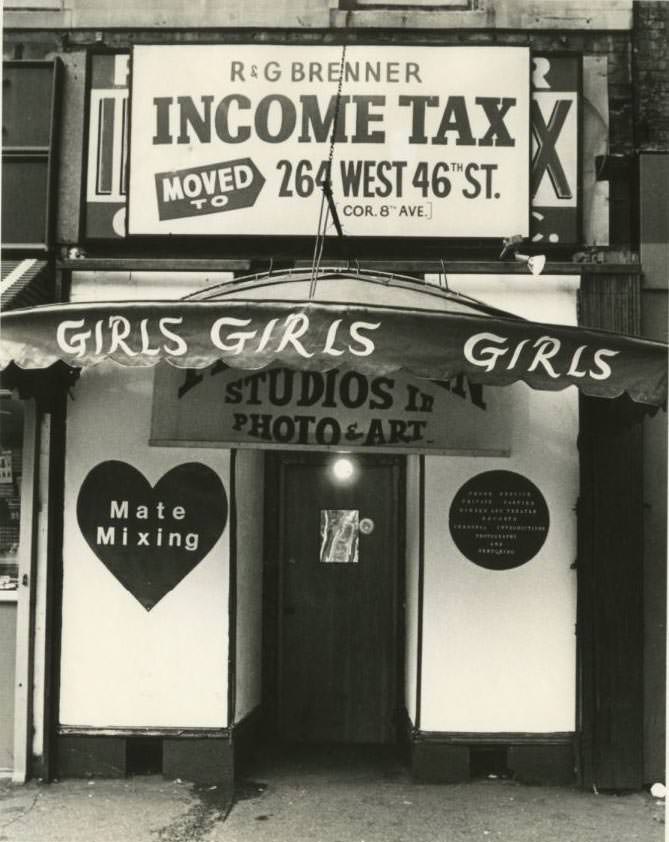
The broader city context matters here. New York in the 1970s was in fiscal crisis. The city nearly went bankrupt in 1975. Police forces were cut. Services deteriorated. Neighborhoods across all five boroughs struggled. In that environment, areas like 42nd Street were left largely to their own devices, and the sex industry filled the space.
By the 1980s, the AIDS crisis added a grim layer to everything happening in these spaces. The epidemic spread rapidly through sexual networks in New York, and the unprotected, high-volume nature of sex work on and around 42nd Street made the area a significant transmission point. Health outreach workers began appearing on the block, handing out information and supplies.
Still, the signs kept going up. New clubs opened when old ones closed. New peep show operations replaced the ones that got shut down. The demand did not stop, and neither did the businesses built to meet it. Gordon kept photographing through it all.
His archive captures a version of New York City that has been thoroughly scrubbed from the physical landscape. The theaters are gone. The peep show booths are gone. The handmade signs advertising body rubs for a fixed price have long since been torn down. What remains are photographs like Gordon’s — precise, unblinking records of what was there.
Gordon developed every one of these prints himself in his Forest Hills darkroom. That process — shooting on the street, then spending time alone in the darkroom with the results — gave his work a consistency that sets it apart from casual documentary photography. He was not a tourist on 42nd Street. He was a working photographer doing his job.