
Las Vegas entered the 1980s with serious problems. The economy was struggling, and the city was caught in an identity crisis. The casino industry, which had dominated American gambling since the 1950s and 60s, was no longer untouchable. Atlantic City had legalized gambling in 1976, and by the early 80s, it was pulling real money and real visitors away from Nevada. New casinos were also opening off the Strip, downtown, and in competing cities like Reno, spreading the market even thinner.
The decade opened with two disasters that shook the city. On November 21, 1980, a fire broke out at the original MGM Grand Hotel — later renamed Bally’s — and killed 85 people. It remains one of the deadliest hotel fires in American history. Just a few months later, in February 1981, a separate fire at the Las Vegas Hilton killed eight more people. Both fires exposed serious flaws in fire safety codes and forced major changes across the hospitality industry.
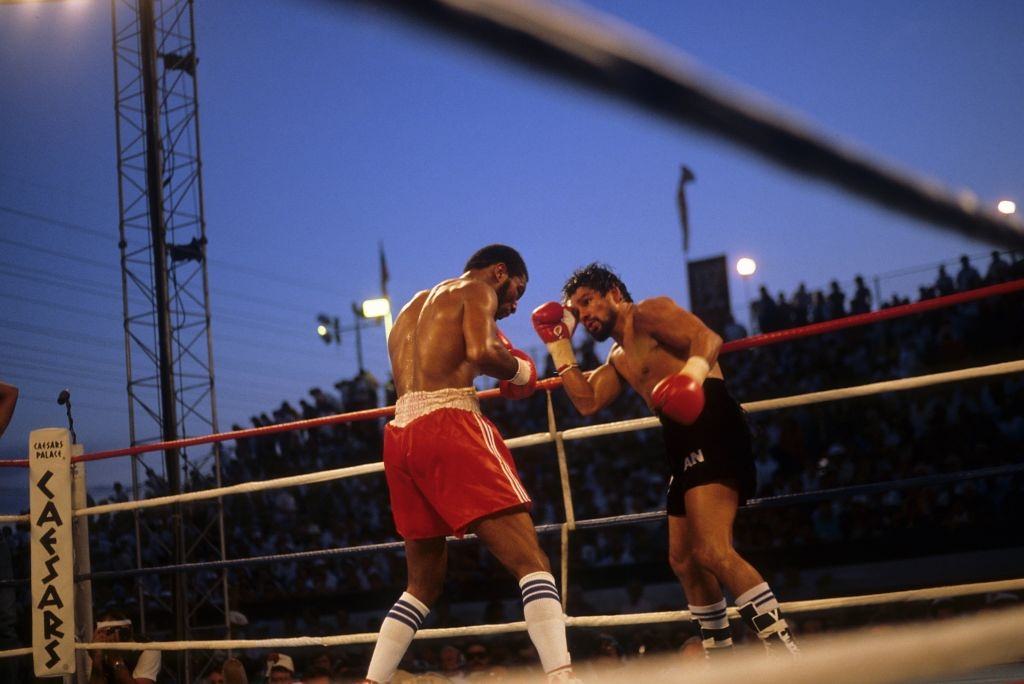
Despite the tragedies, Las Vegas remained a major hub for boxing. Some of the biggest fights of the era were held at Caesars Palace. In October 1980, Muhammad Ali came out of retirement to challenge WBC Heavyweight Champion Larry Holmes. Both men had trained in the Las Vegas desert in the weeks leading up to the bout.
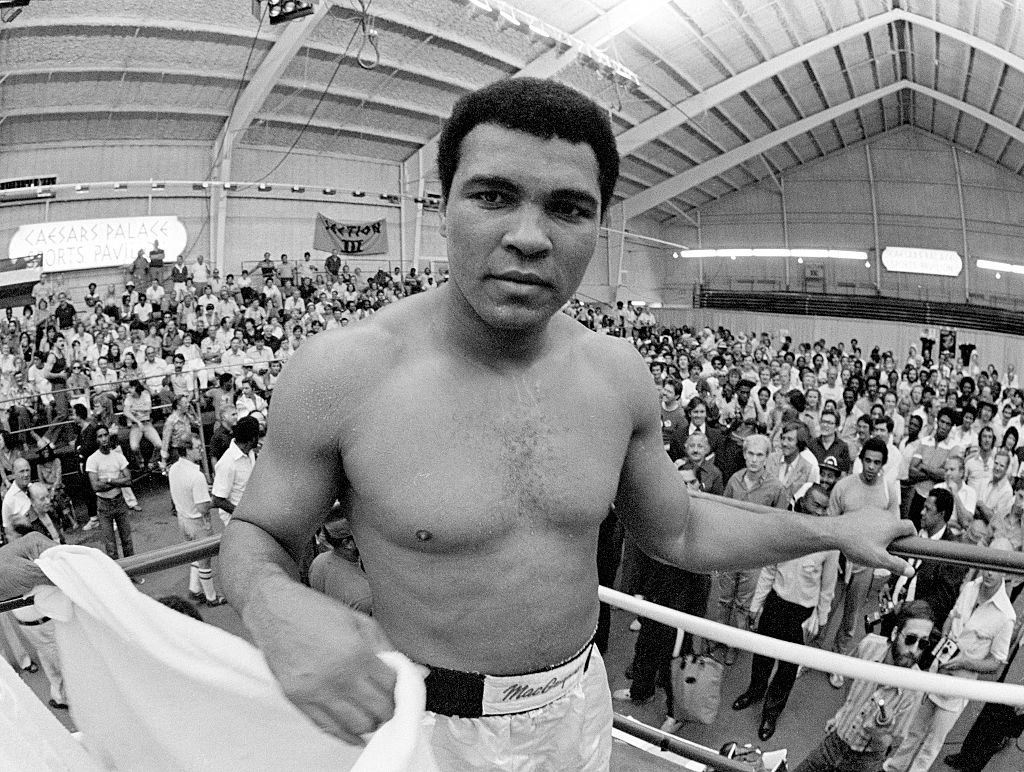
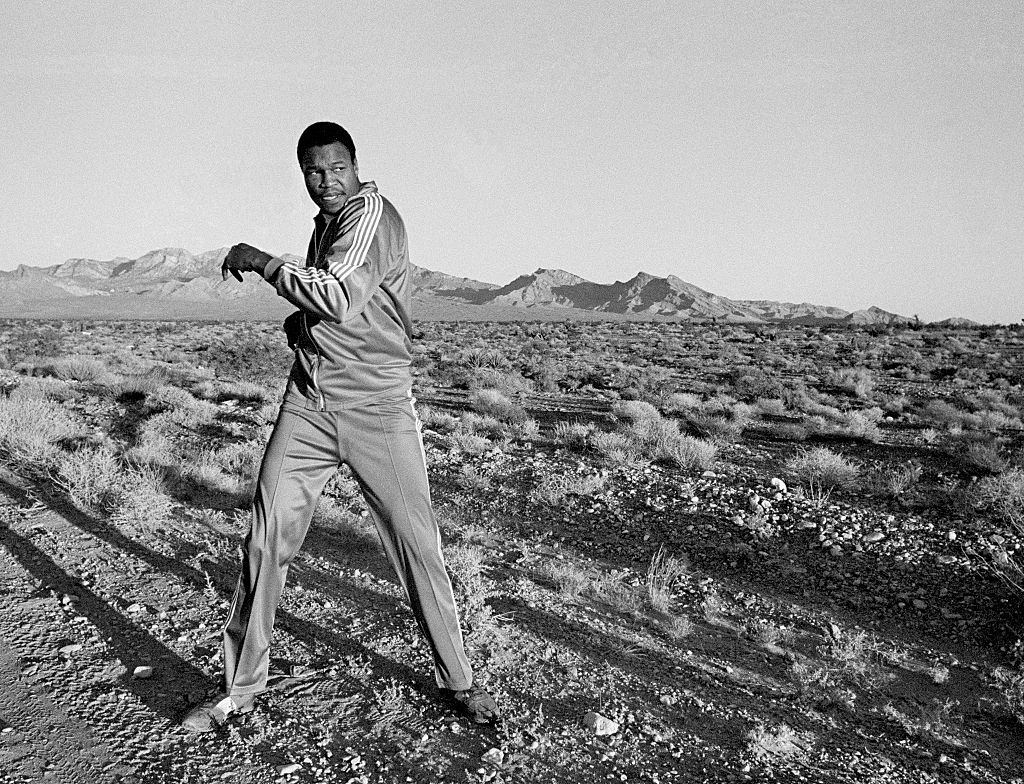
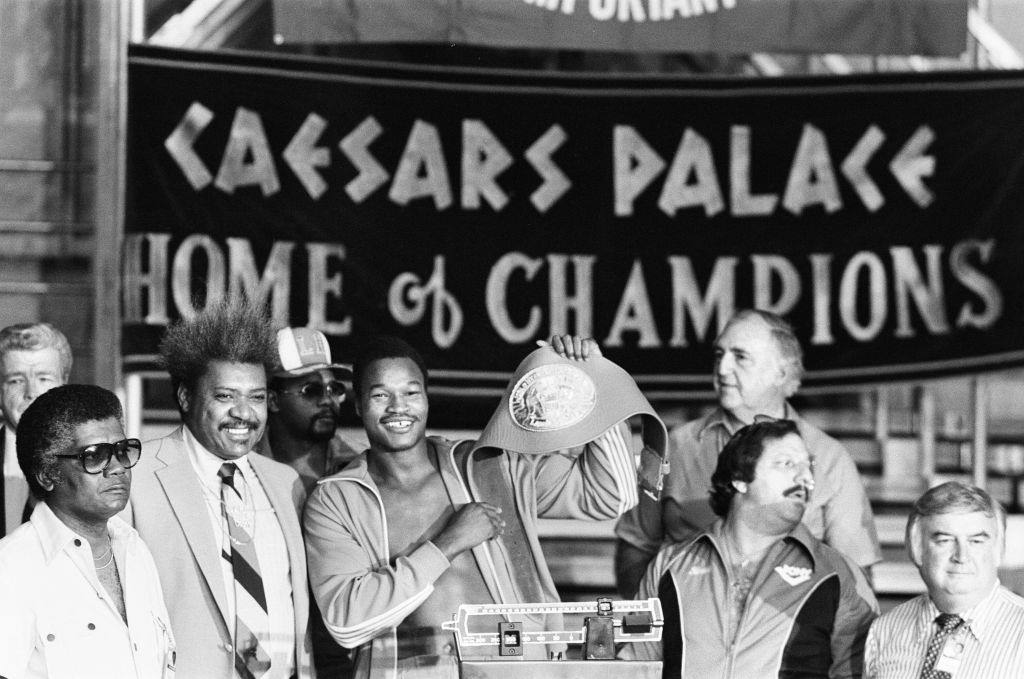
Holmes stopped Ali in the 11th round in what was widely described as a painful end to Ali’s career. Holmes went on to train again in Las Vegas throughout the early part of the decade, cementing the city’s reputation as the boxing capital of the world.
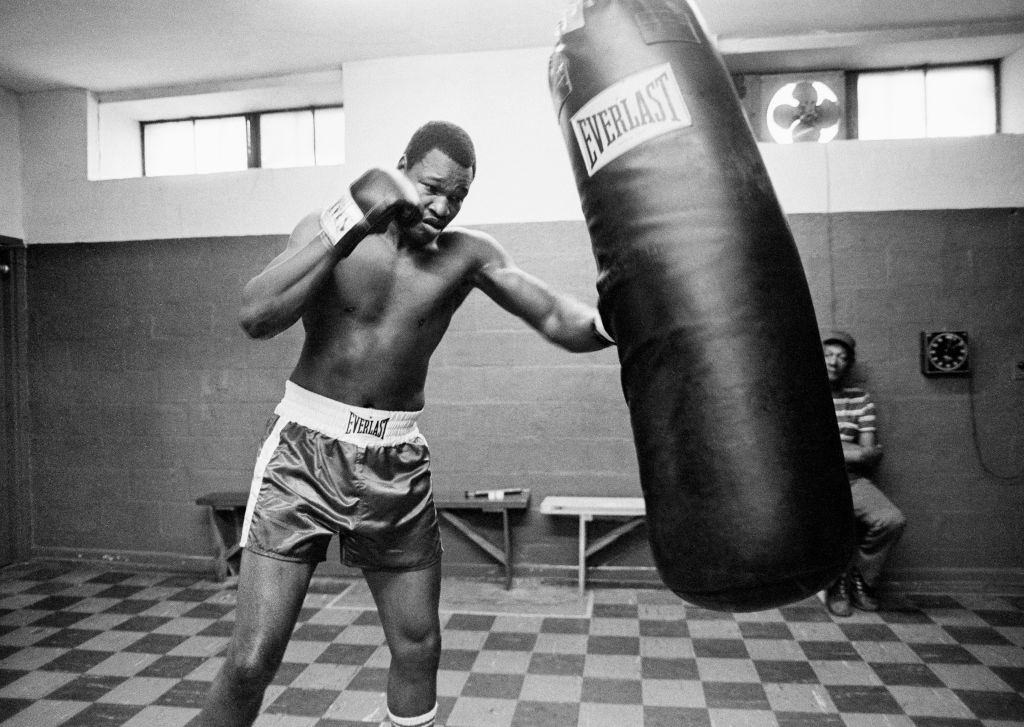
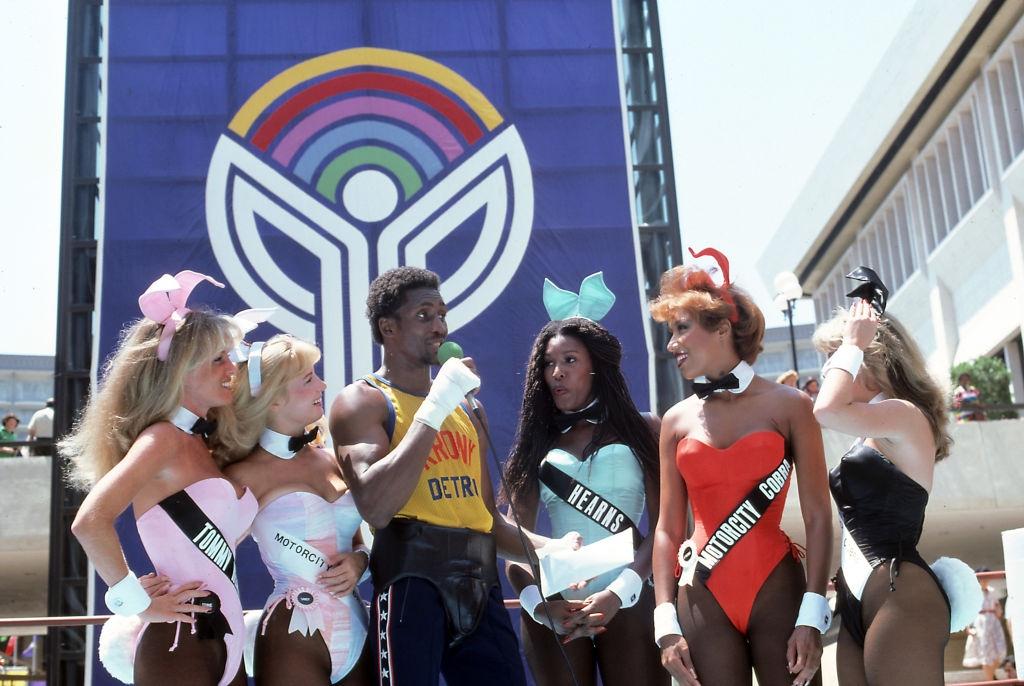
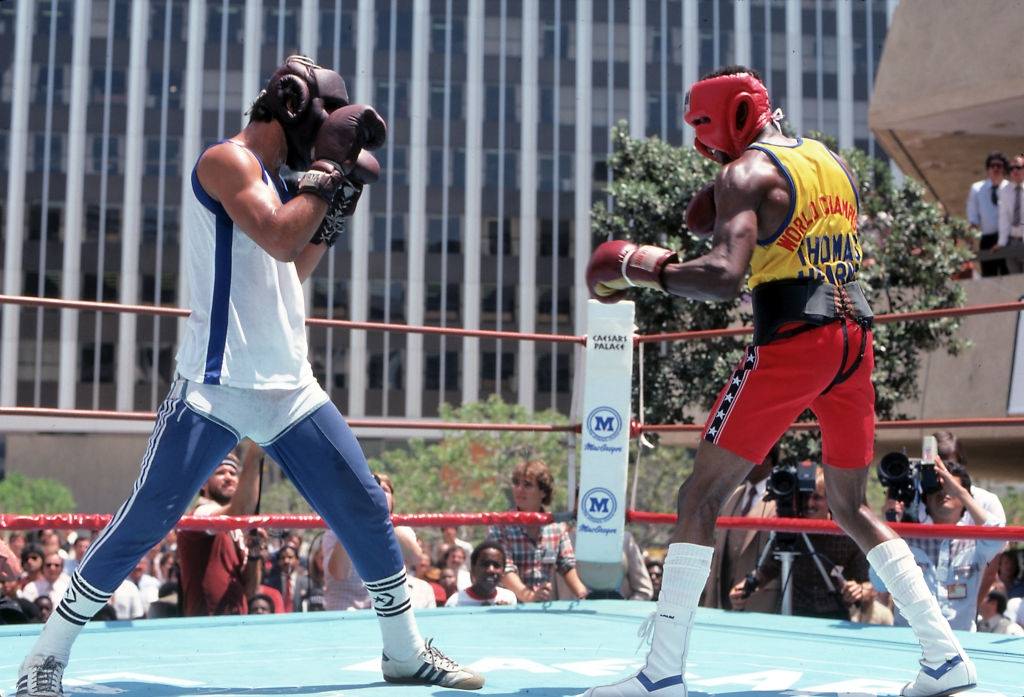
Thomas Hearns was another fighter who made Las Vegas his stage during the early 80s. The welterweight contender sparred and trained in the city as he built toward some of his most important fights of the decade.
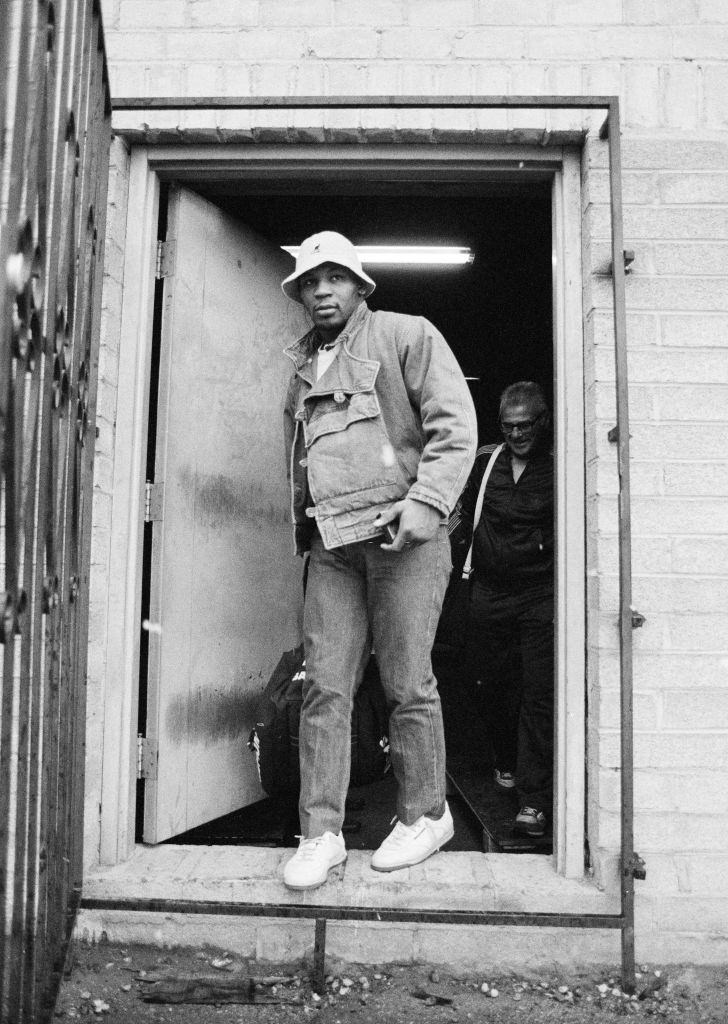
By the mid-to-late 80s, a new generation of fighters had taken over. Mike Tyson, who became the youngest heavyweight champion in history in 1986, was a regular presence in Las Vegas. In 1987, he defended his WBC and WBA titles against James ‘Bonecrusher’ Smith at the Las Vegas Hilton.
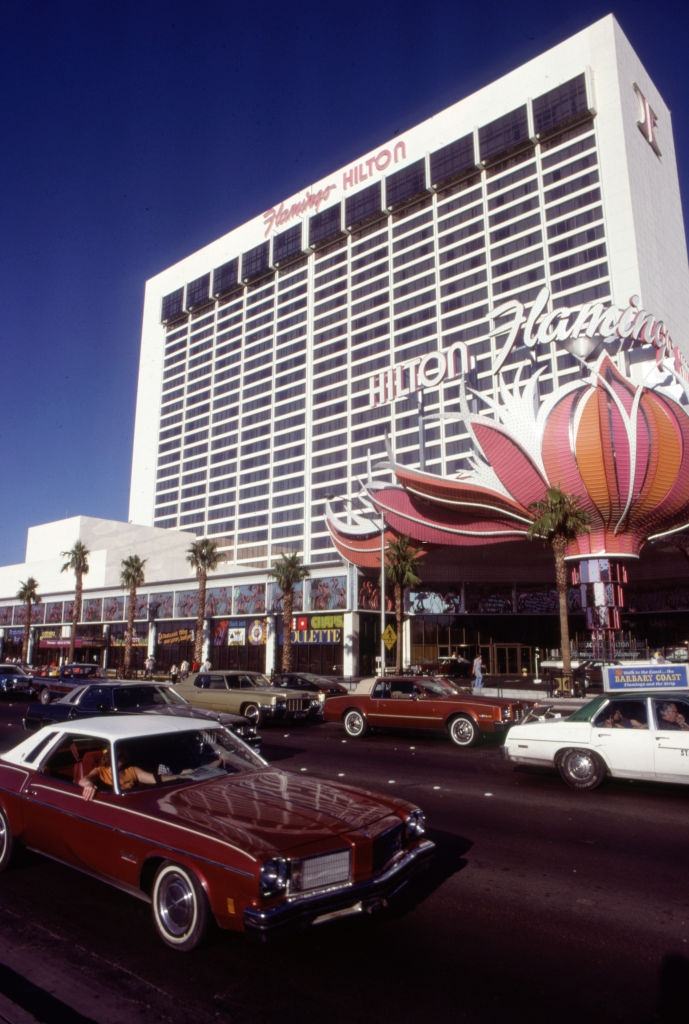
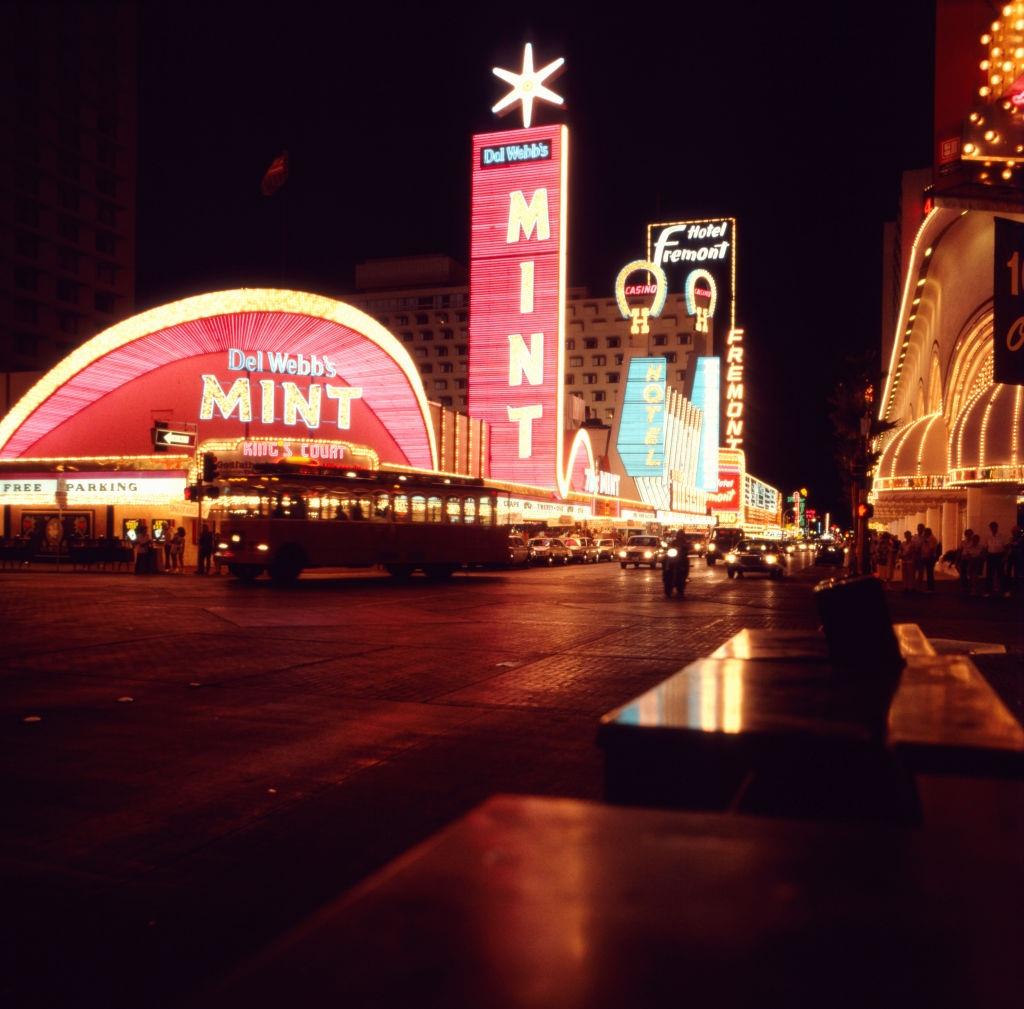
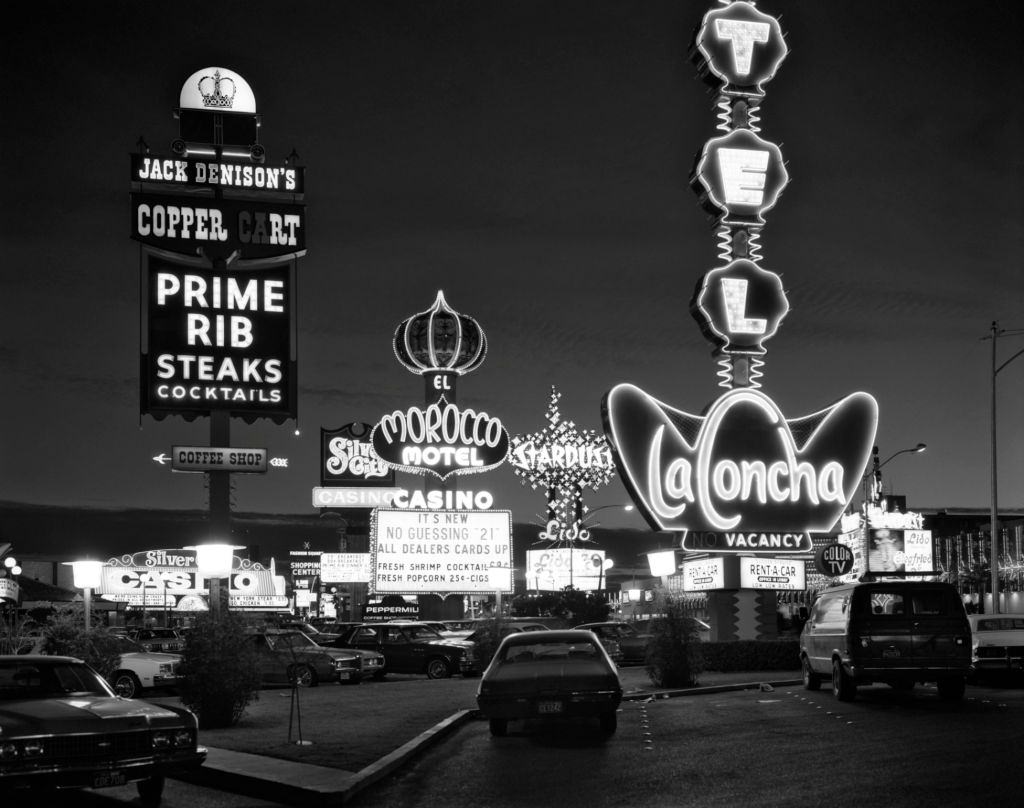
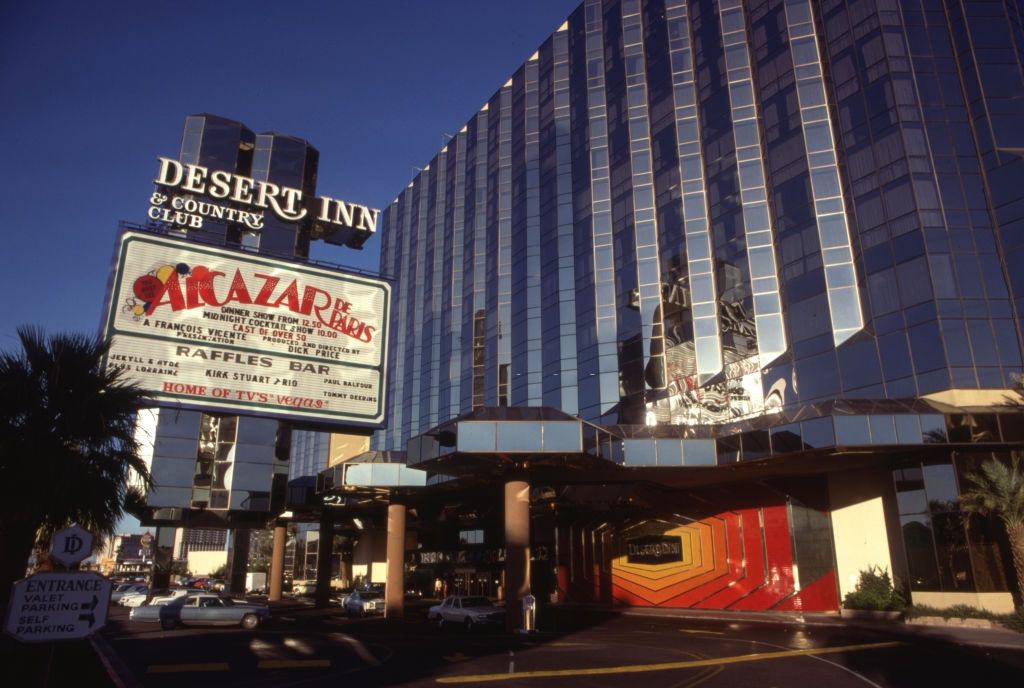
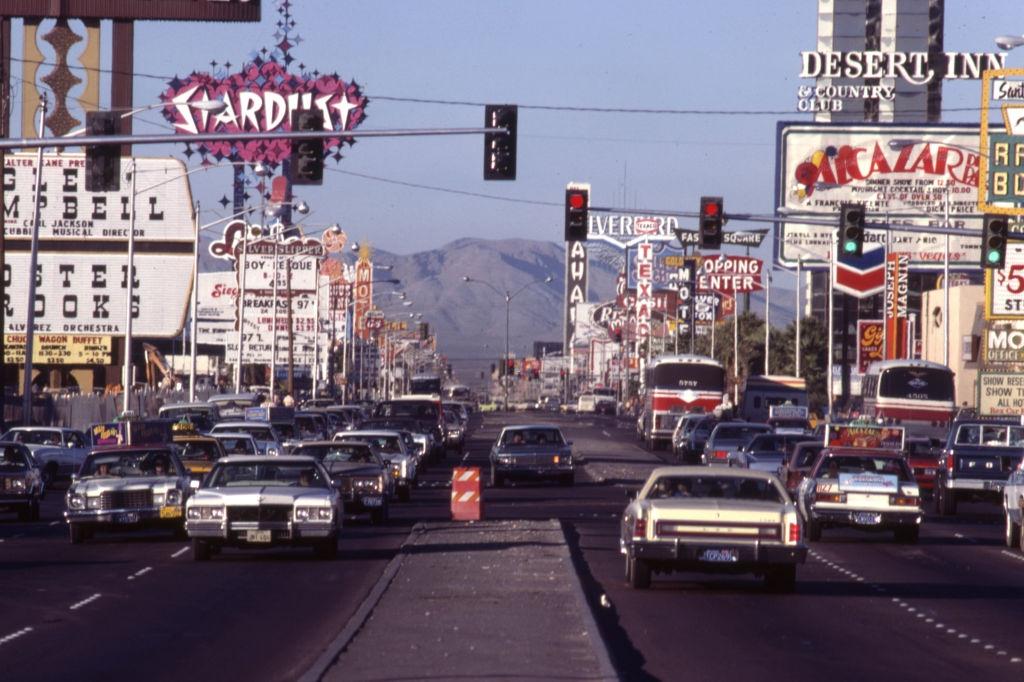
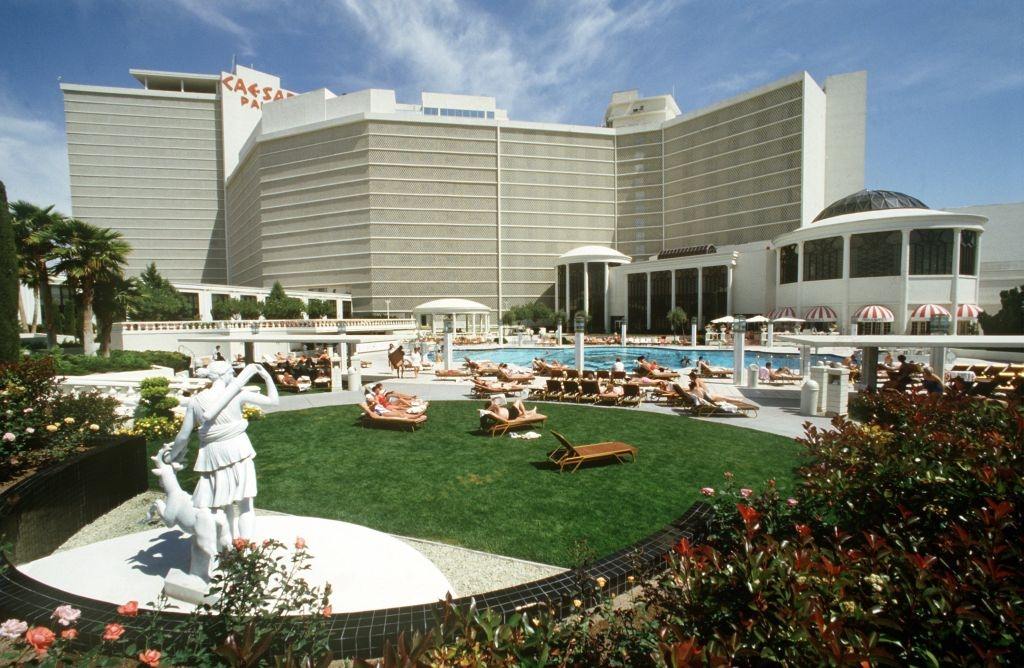
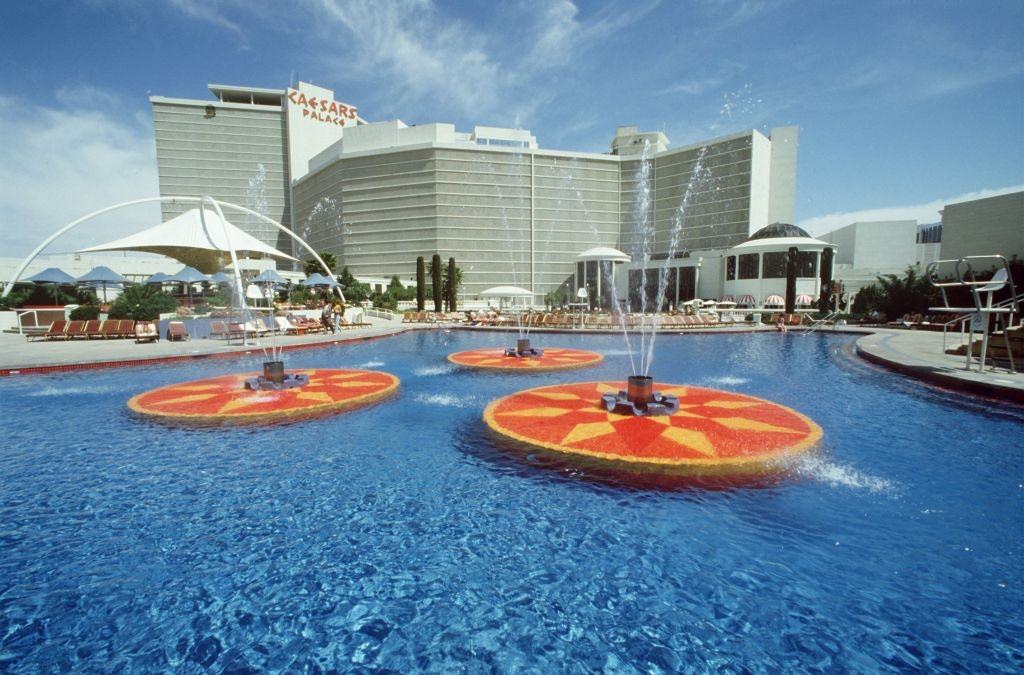
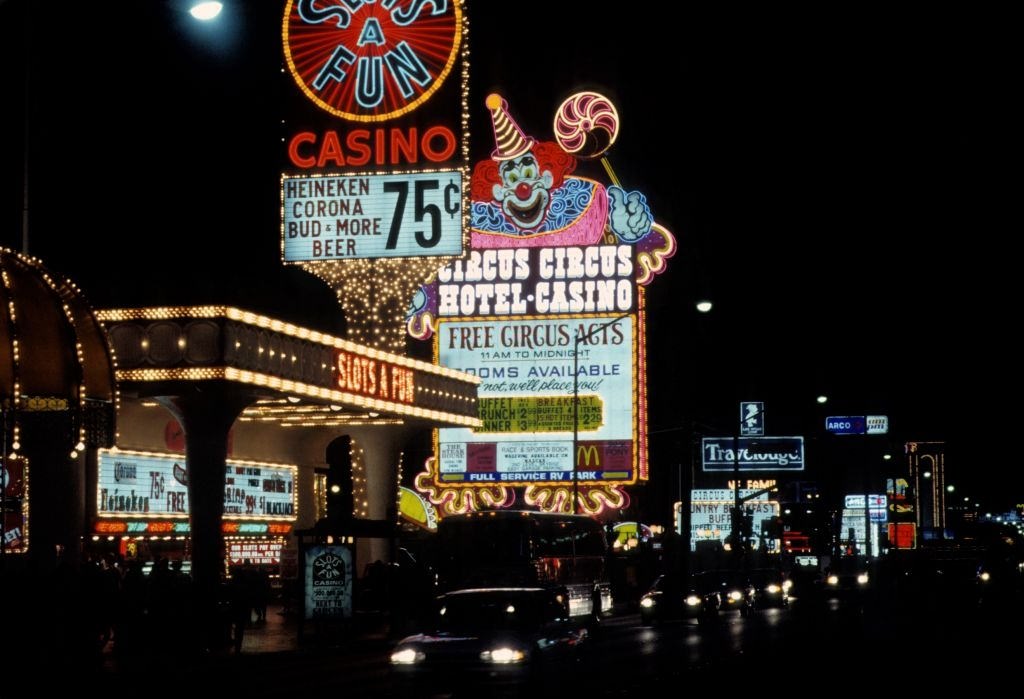
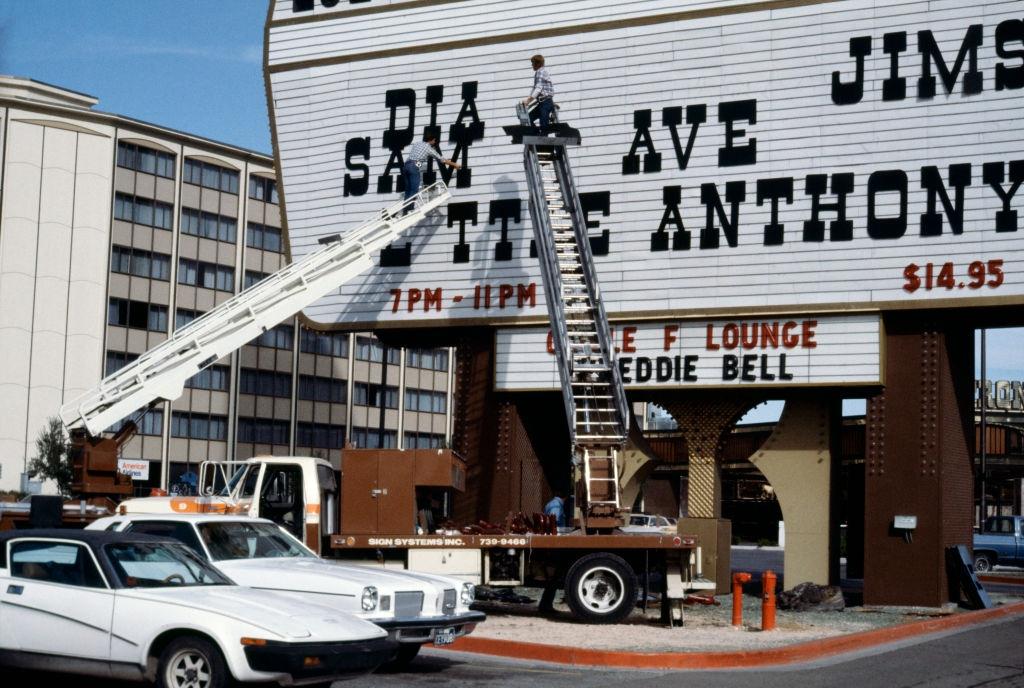
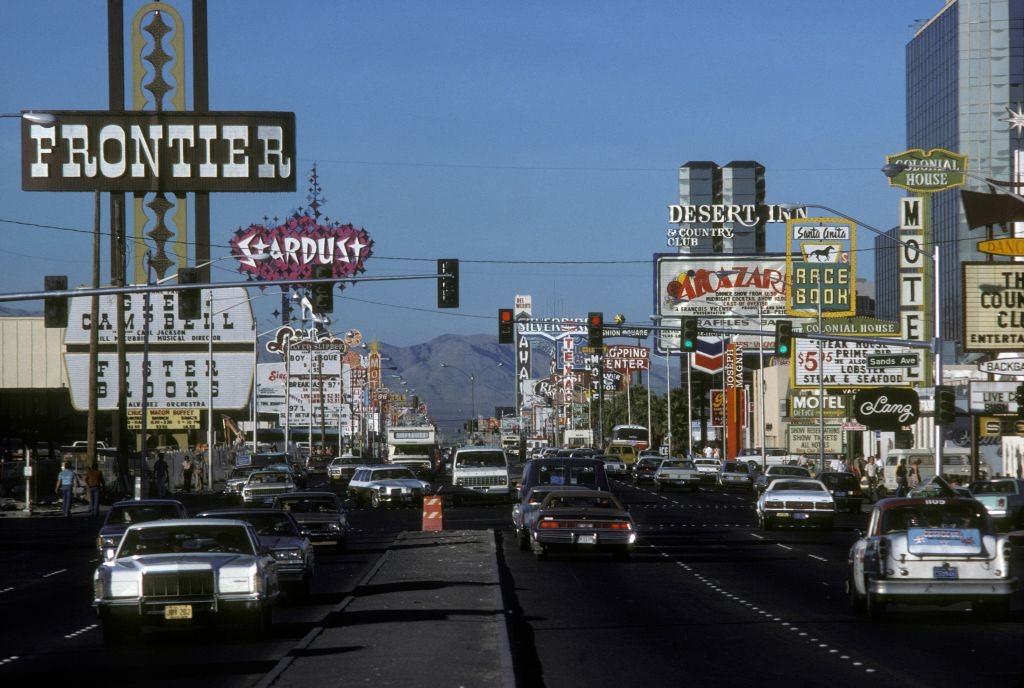
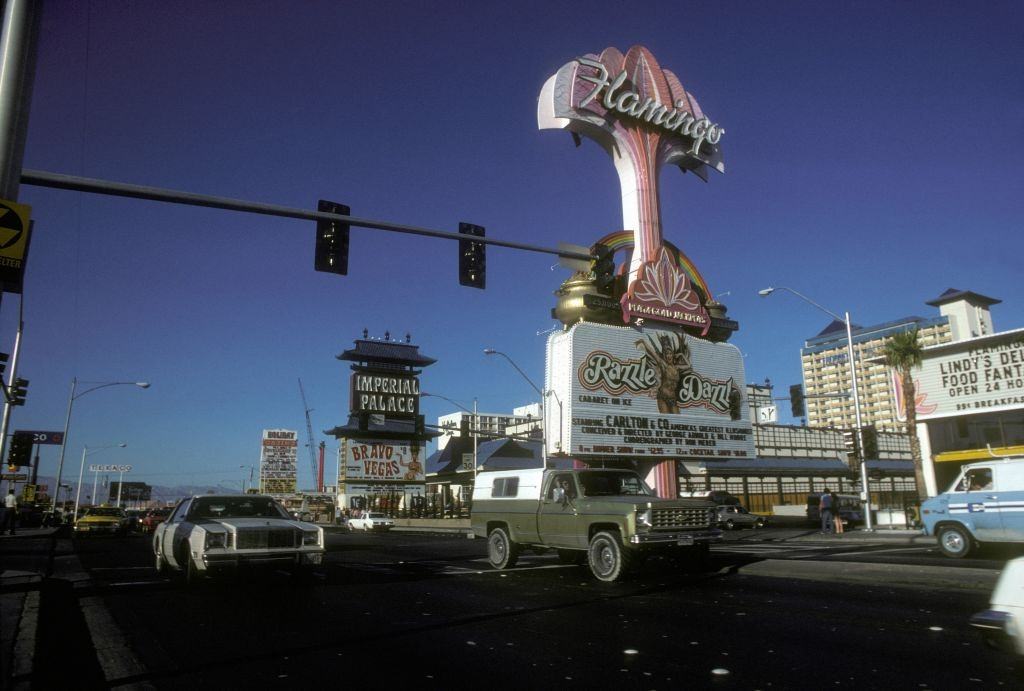
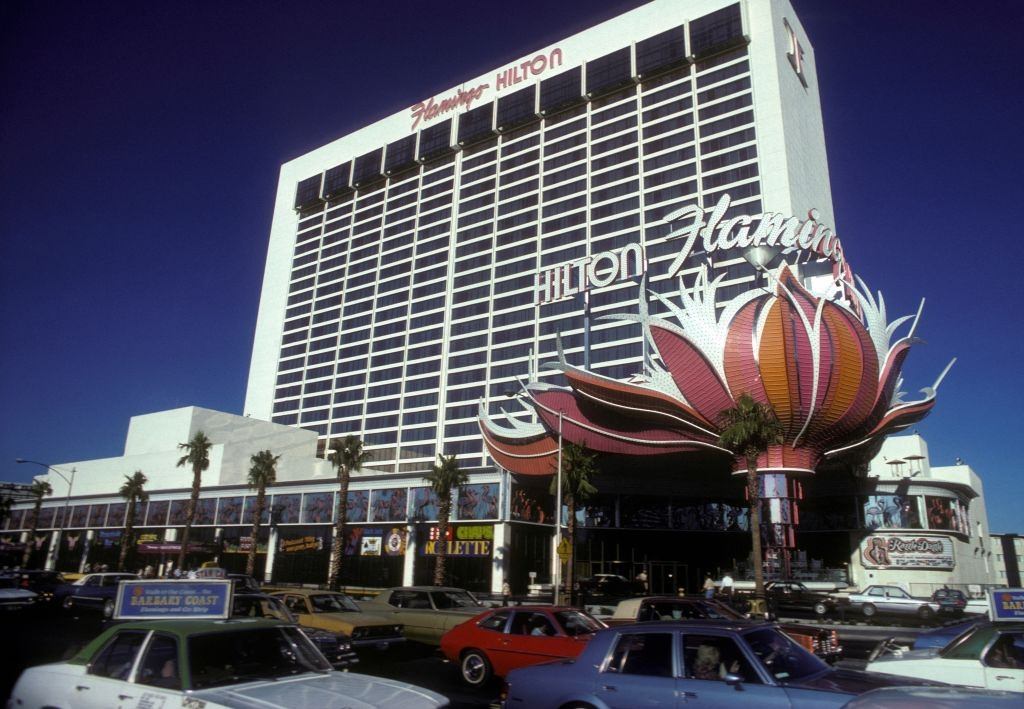
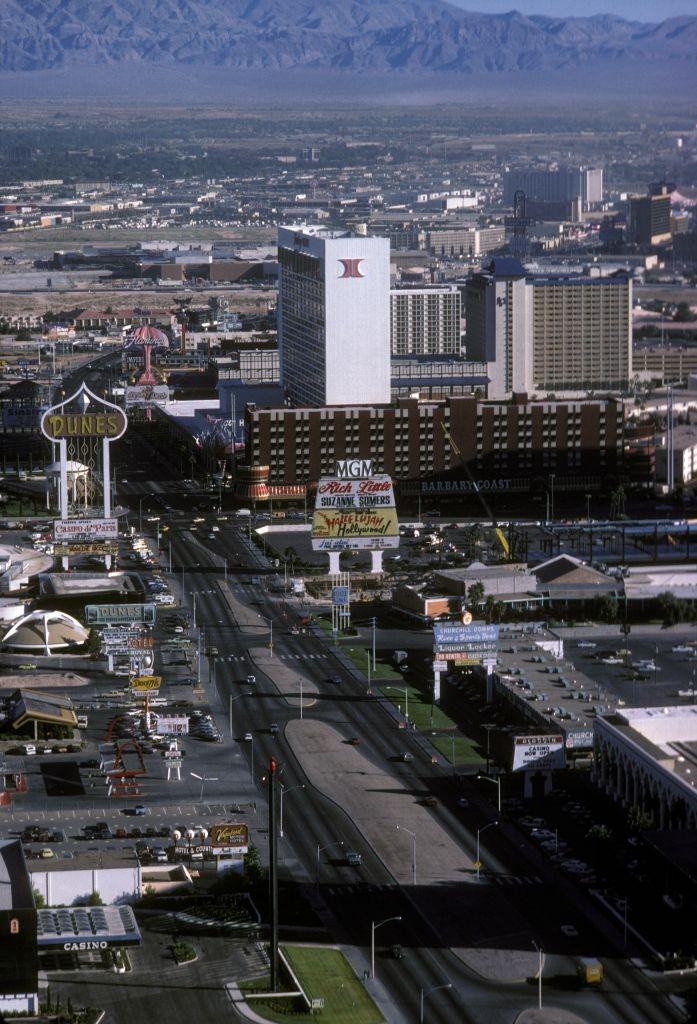
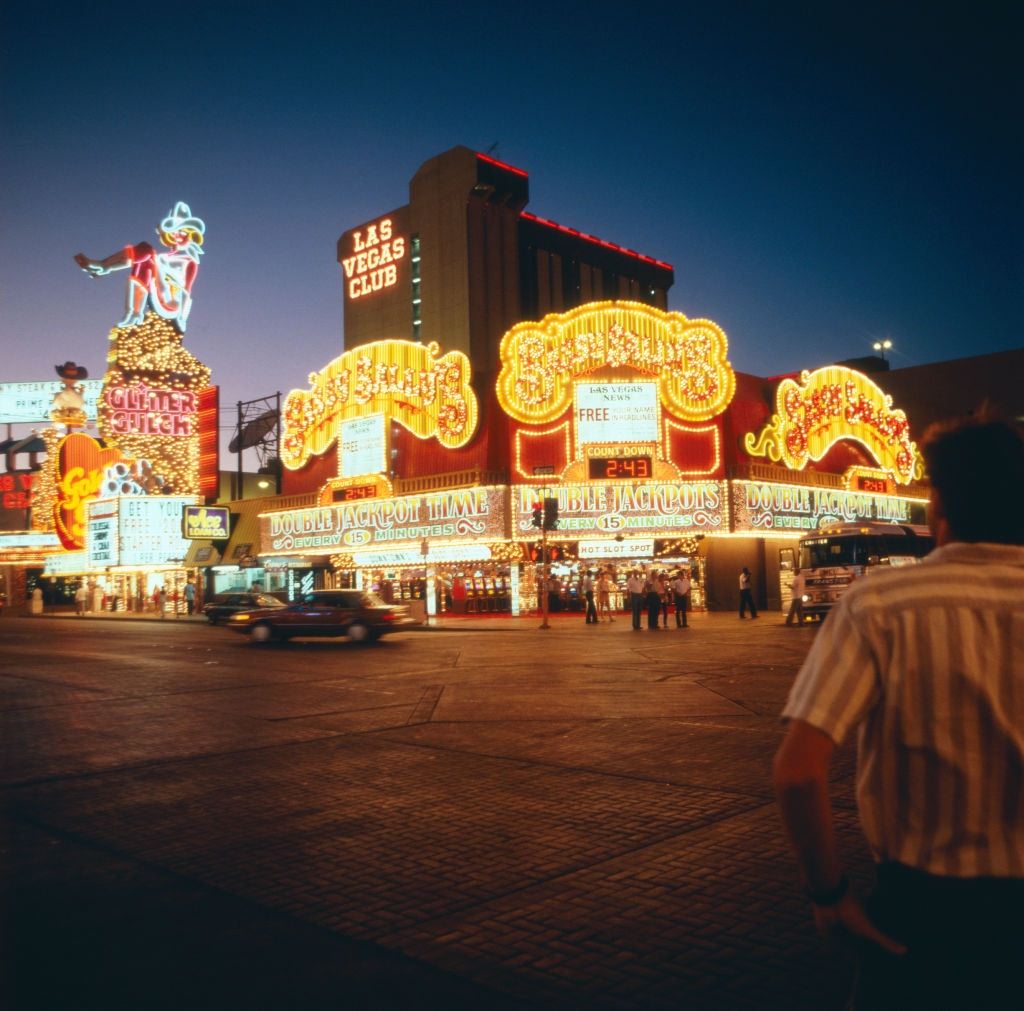
The Strip itself was changing in appearance. Neon signs advertising headlining acts and casino names stretched for blocks, lighting the desert sky at night. The iconic casinos — Caesars Palace, the Flamingo Hilton, the Desert Inn, Circus Circus, and the Stardust — still anchored the boulevard, but the showroom culture that had made them famous was starting to fade.
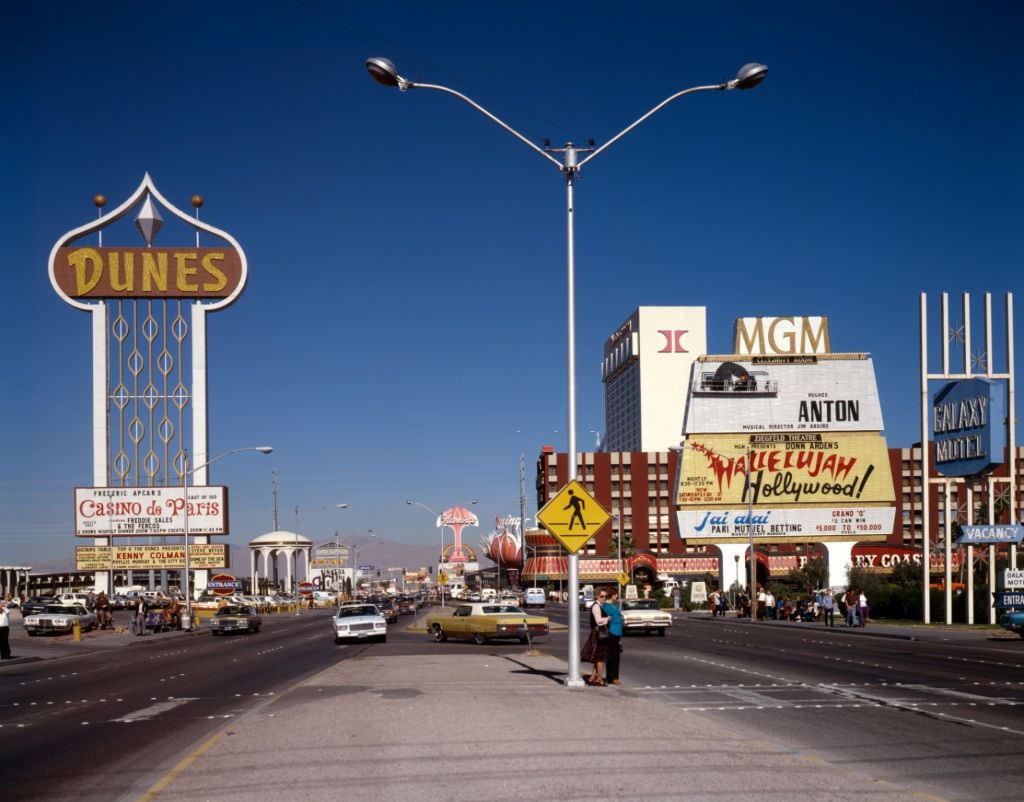
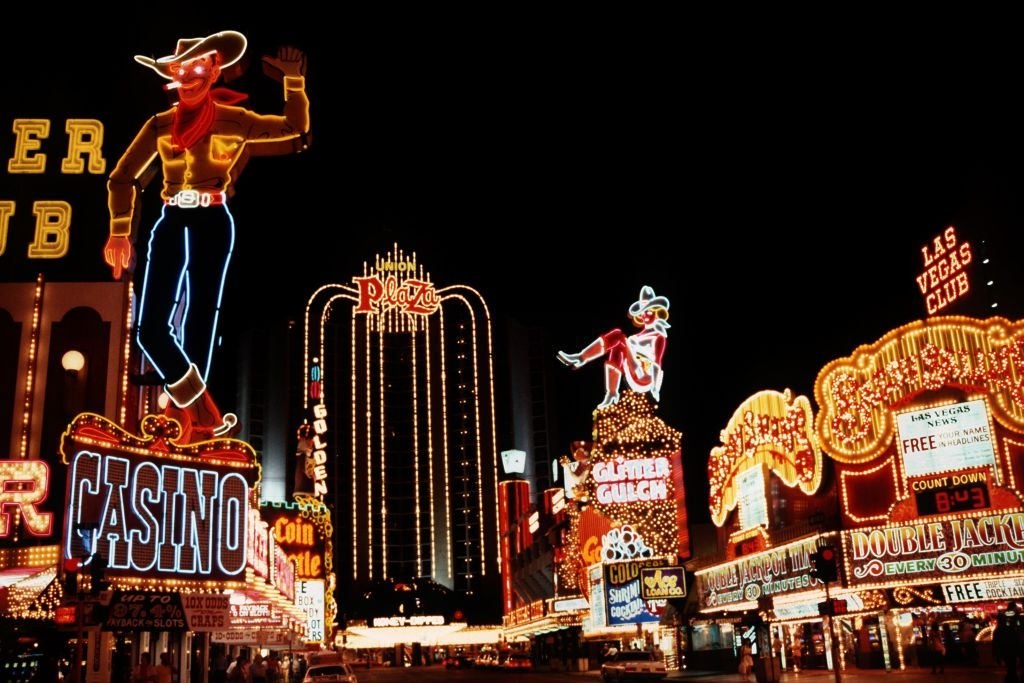
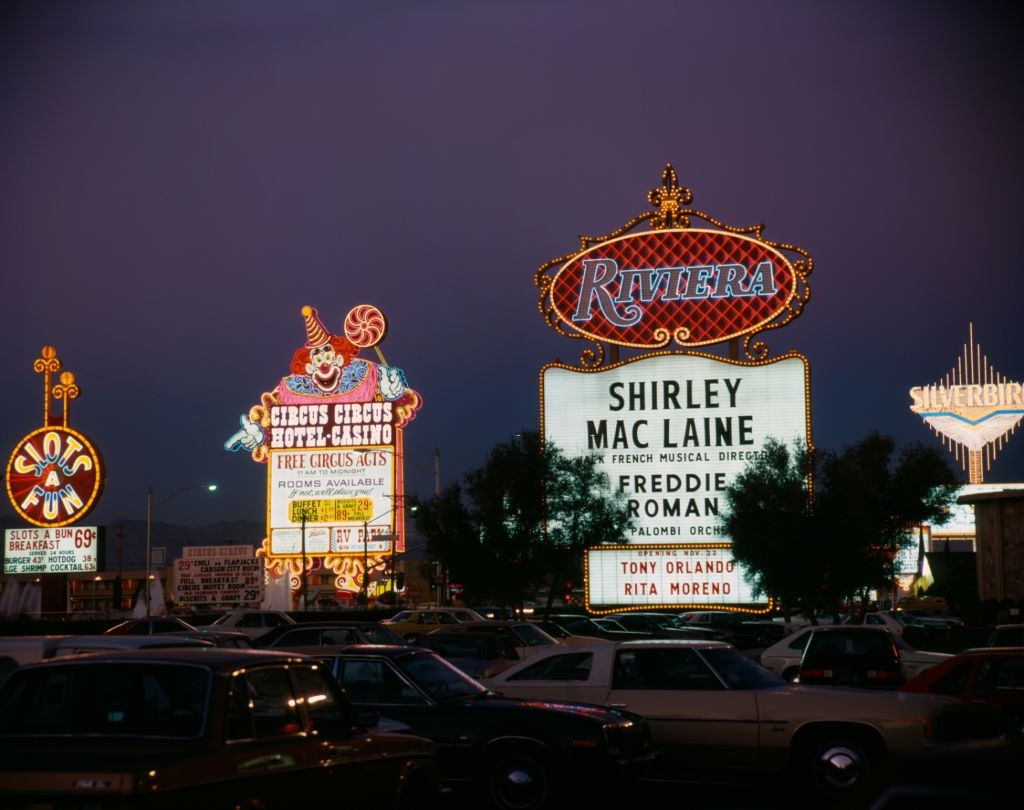
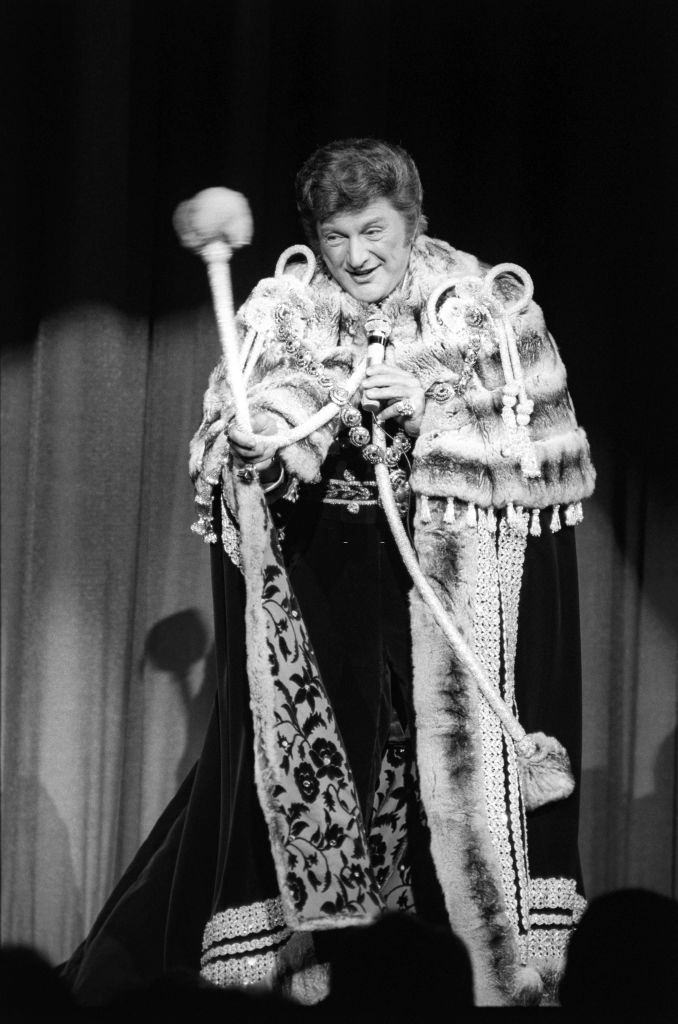
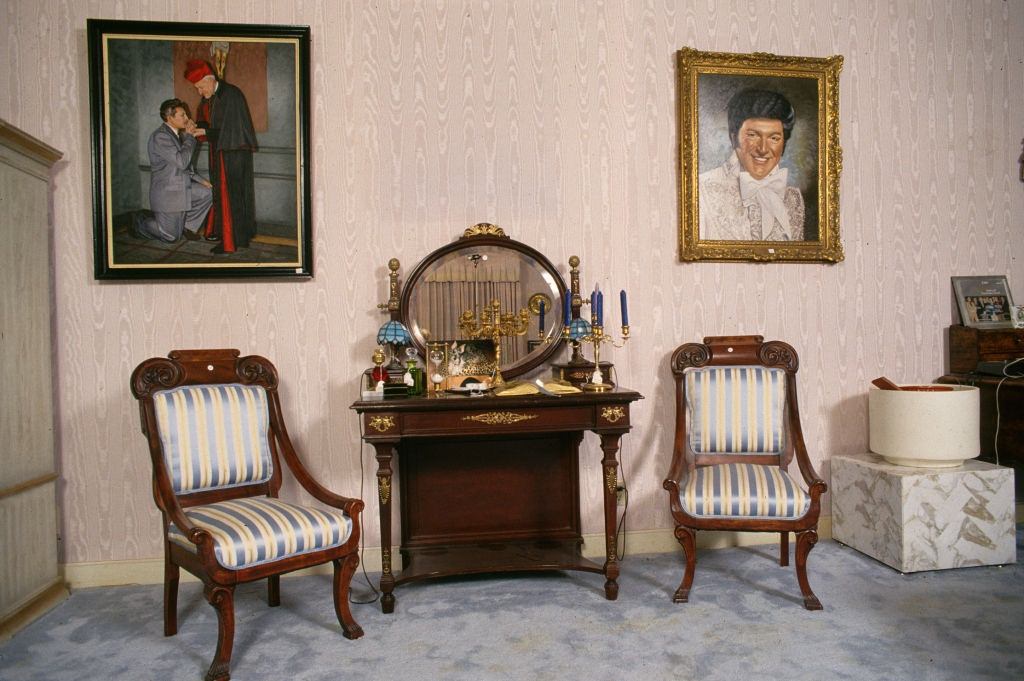
The lavish showrooms that had once drawn audiences from around the world were becoming a thing of the past. Entertainers like Liberace, who had been a Las Vegas staple for decades, still performed through the early 80s. His personal home in Las Vegas reflected the over-the-top style he was known for on stage.
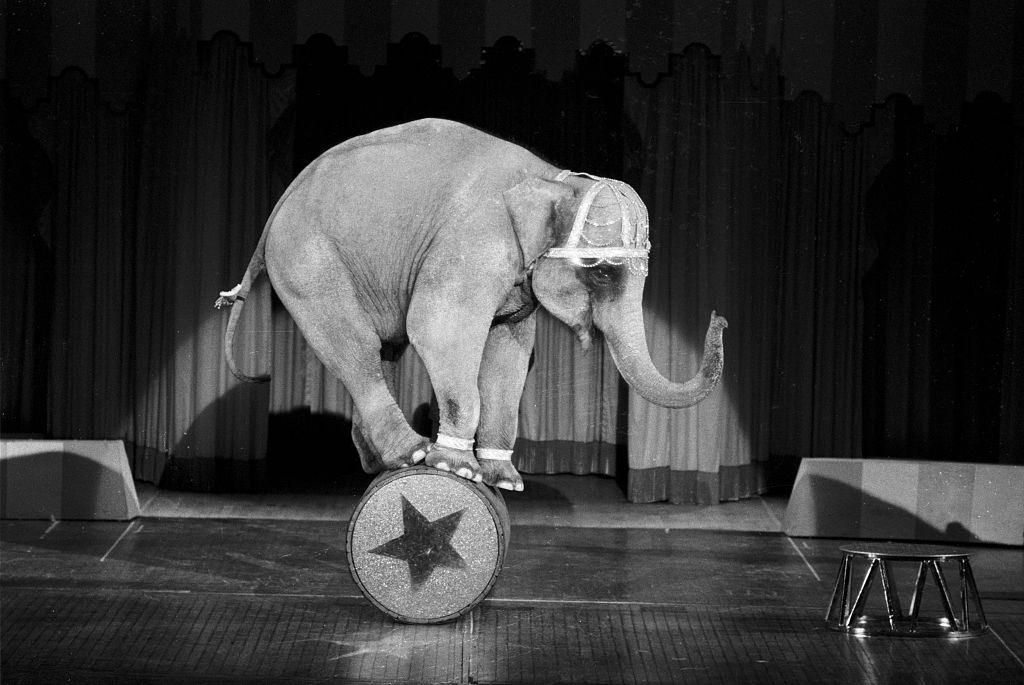
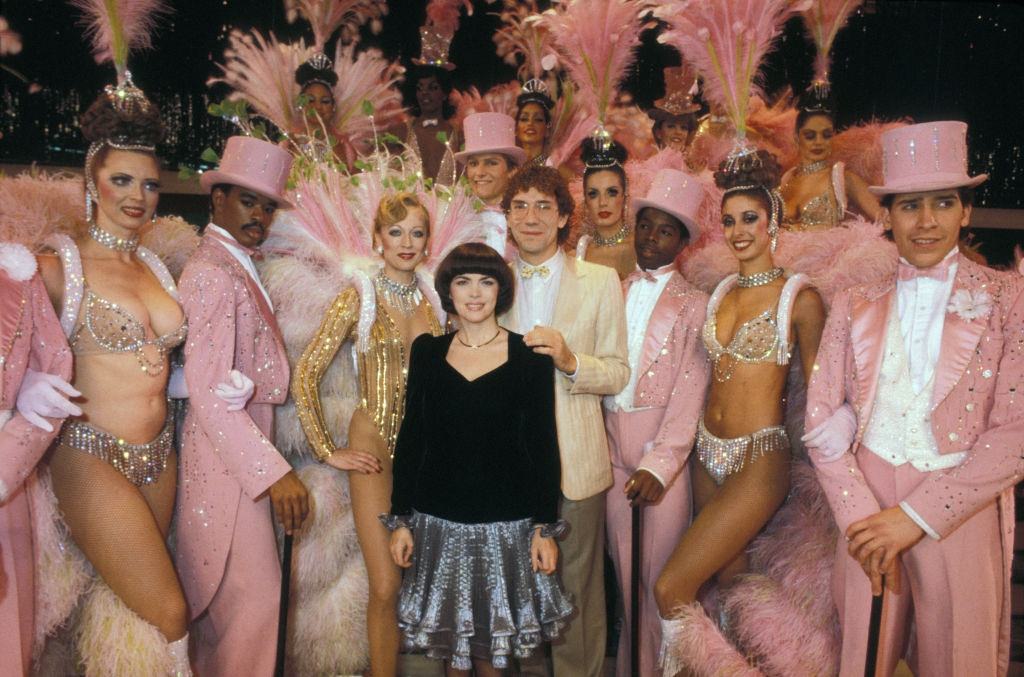
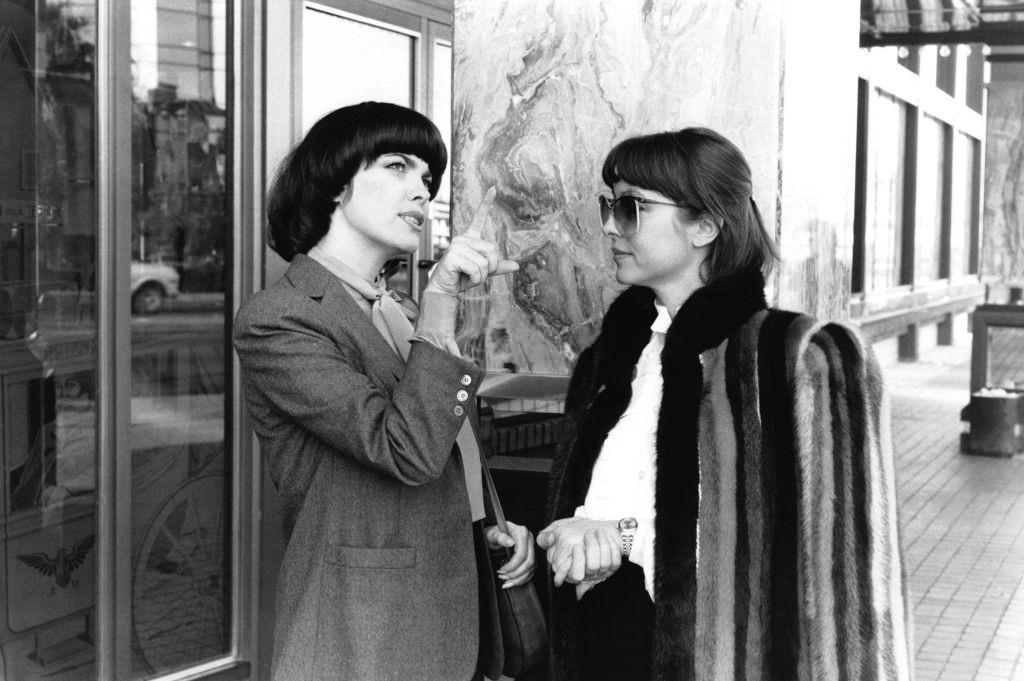
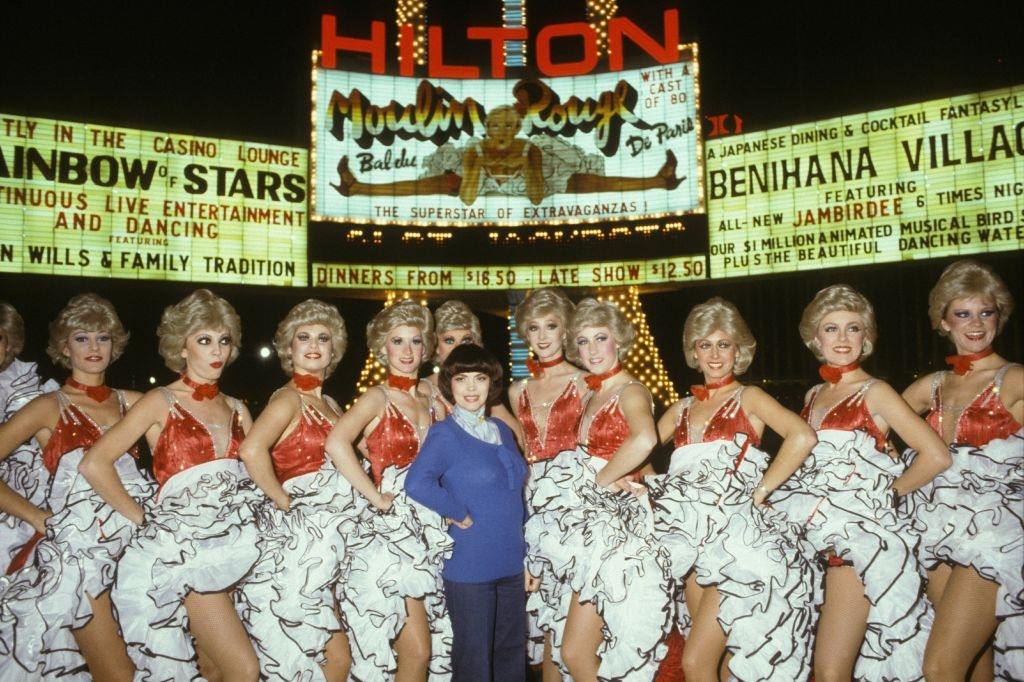
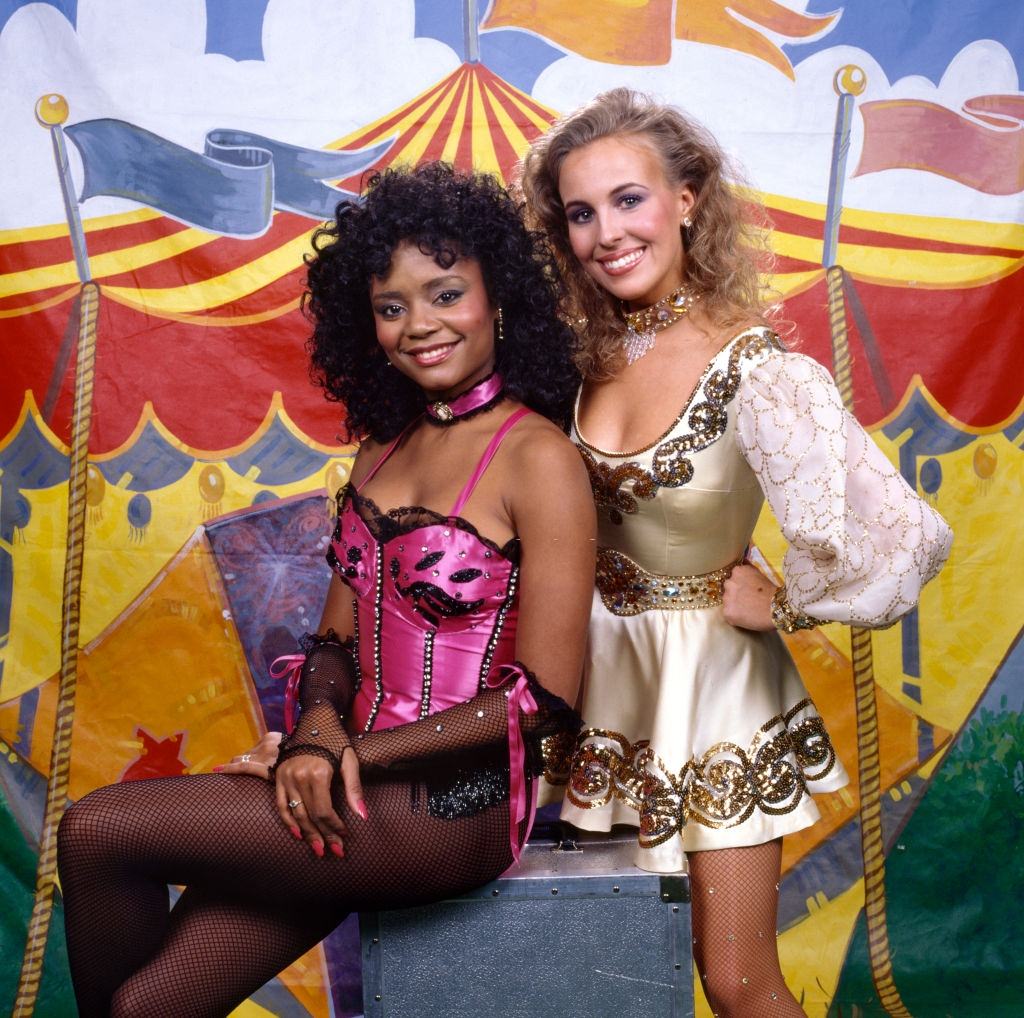
Tom Jones, Mireille Mathieu, and Willie Nelson all performed in Las Vegas during the decade. The Moulin Rouge troupe — complete with dancers and even a live elephant — brought a theatrical spectacle to the city in 1982. French singer Mireille Mathieu was photographed both on the Las Vegas streets and performing alongside the troupe.
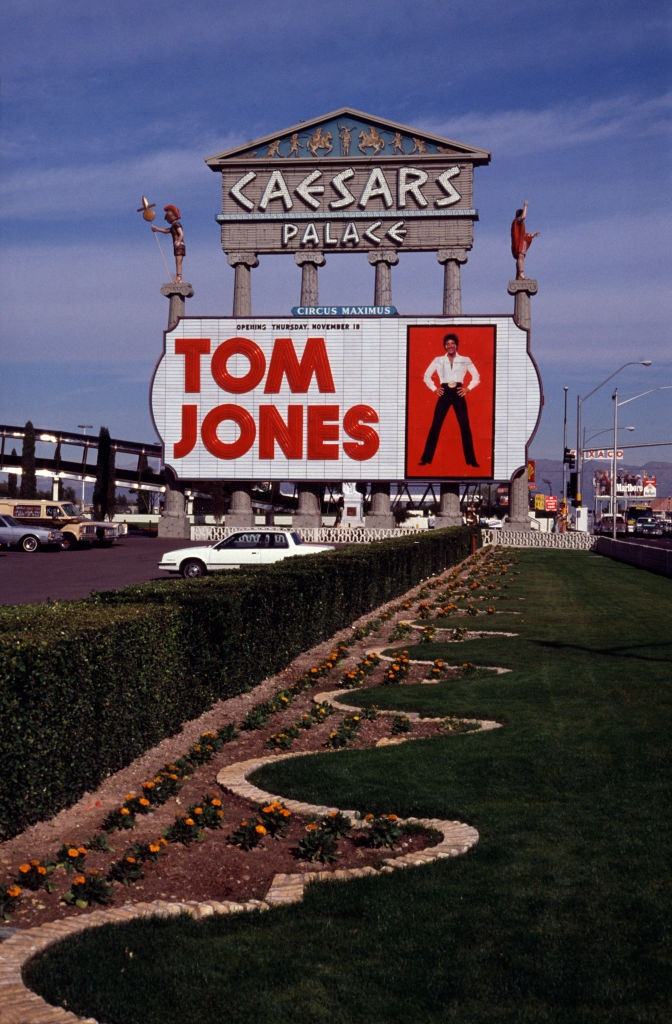
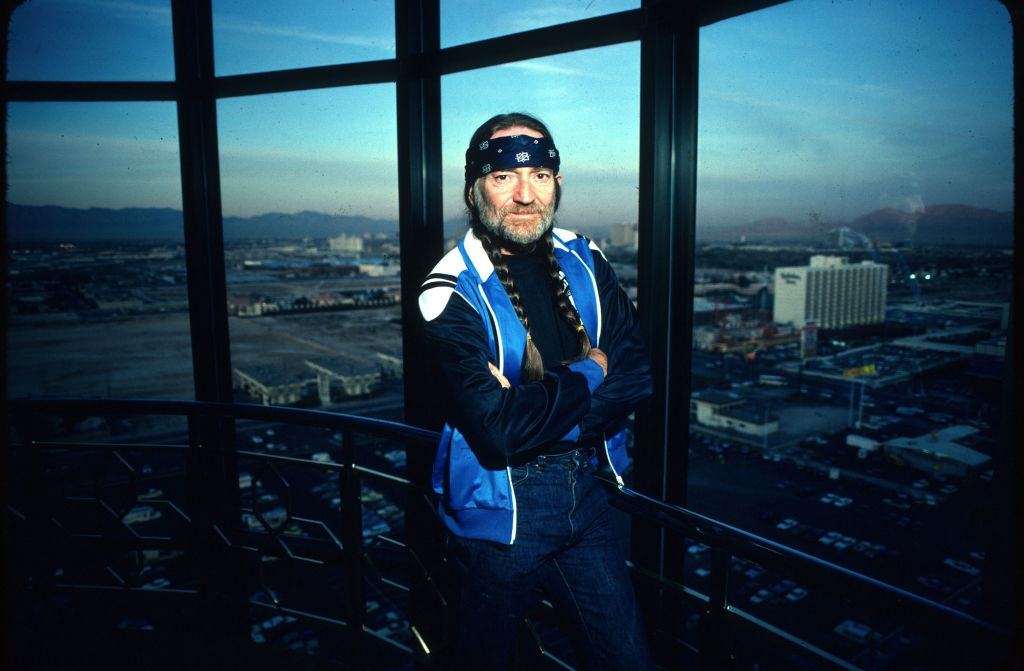
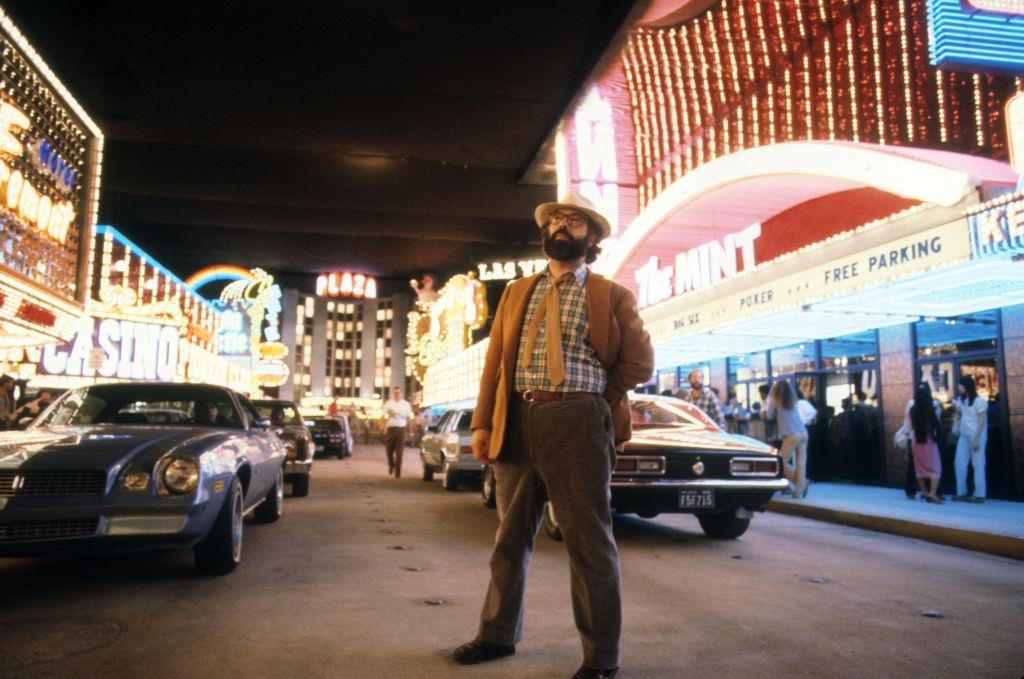
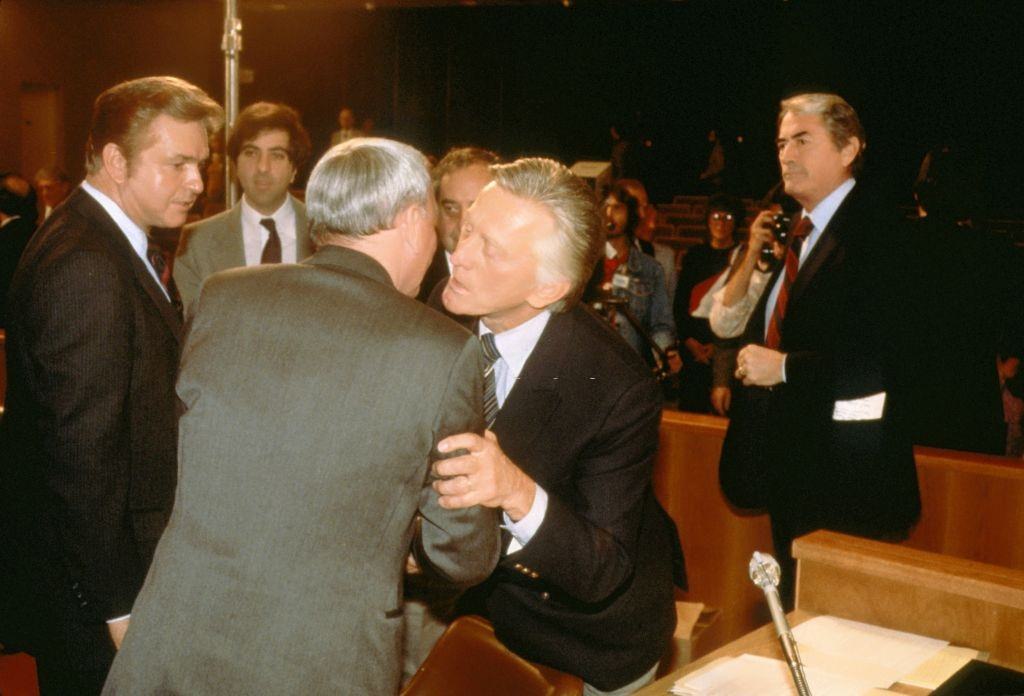
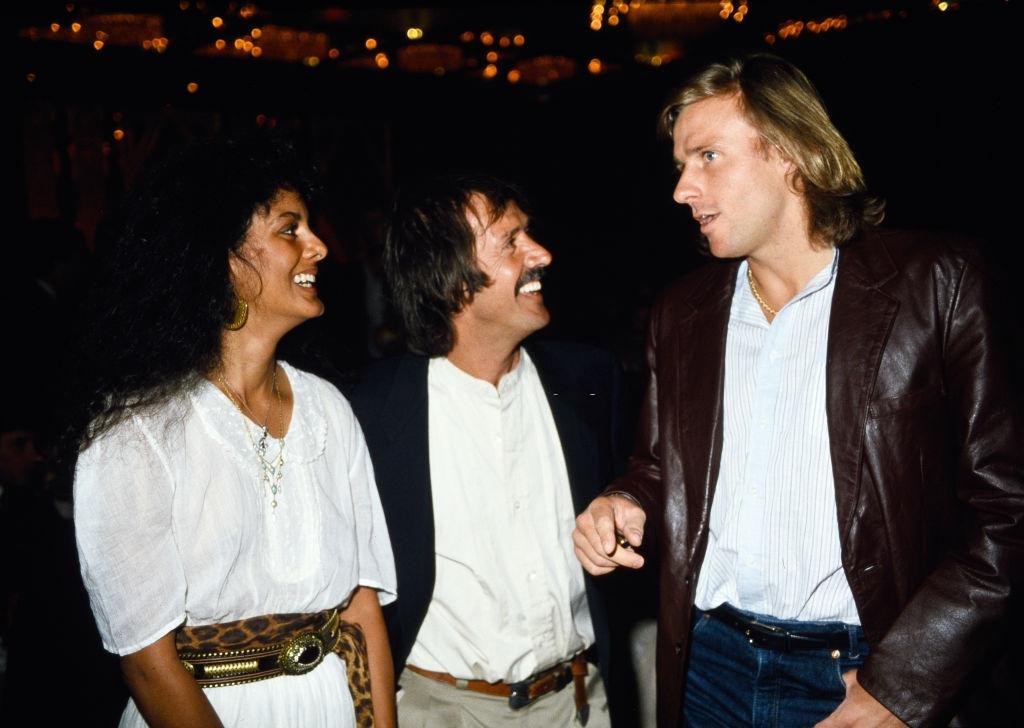
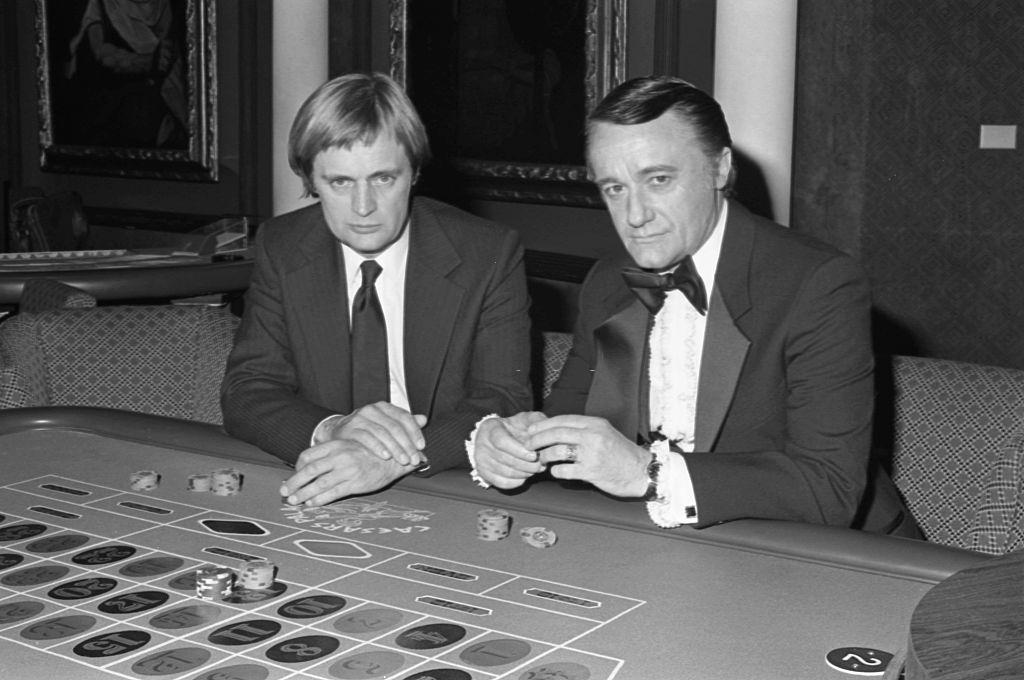
Caesars Palace was not just a venue for boxing and concerts. It was a social hub that drew celebrities from every field. Director Francis Ford Coppola, actor Gregory Peck, tennis star Bjorn Borg, and actor Robert Vaughn were among the well-known figures spotted in Las Vegas during the early 80s.
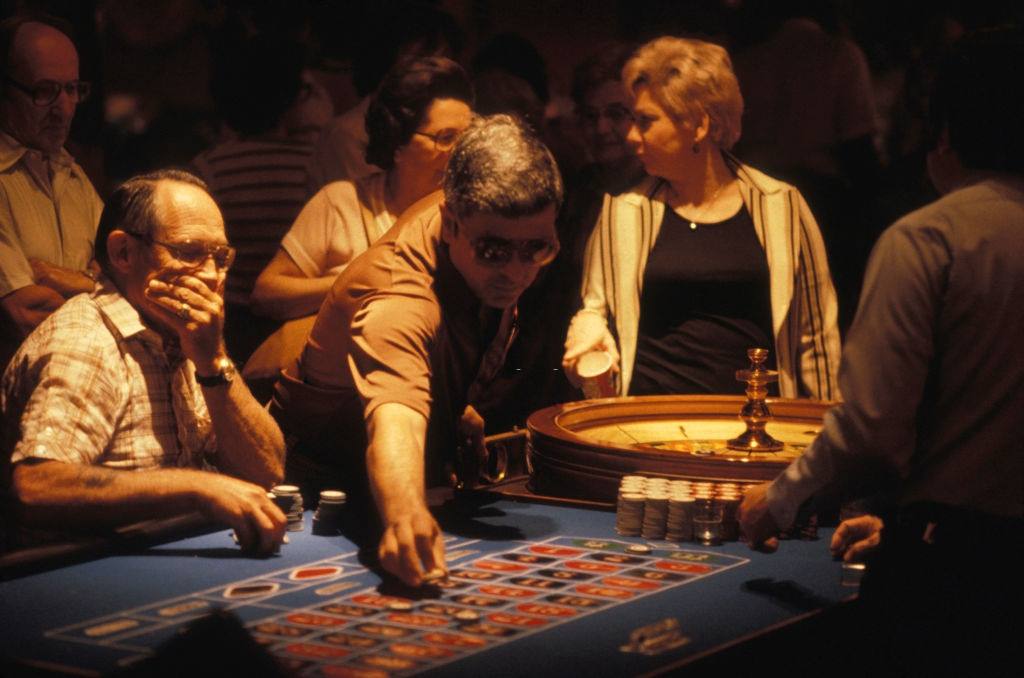
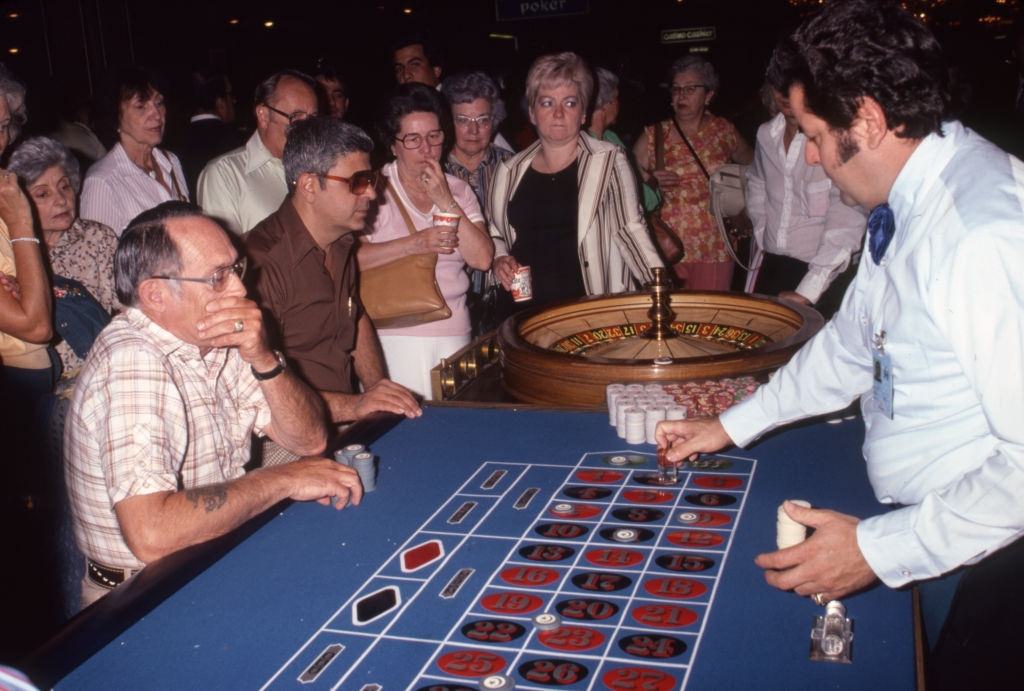
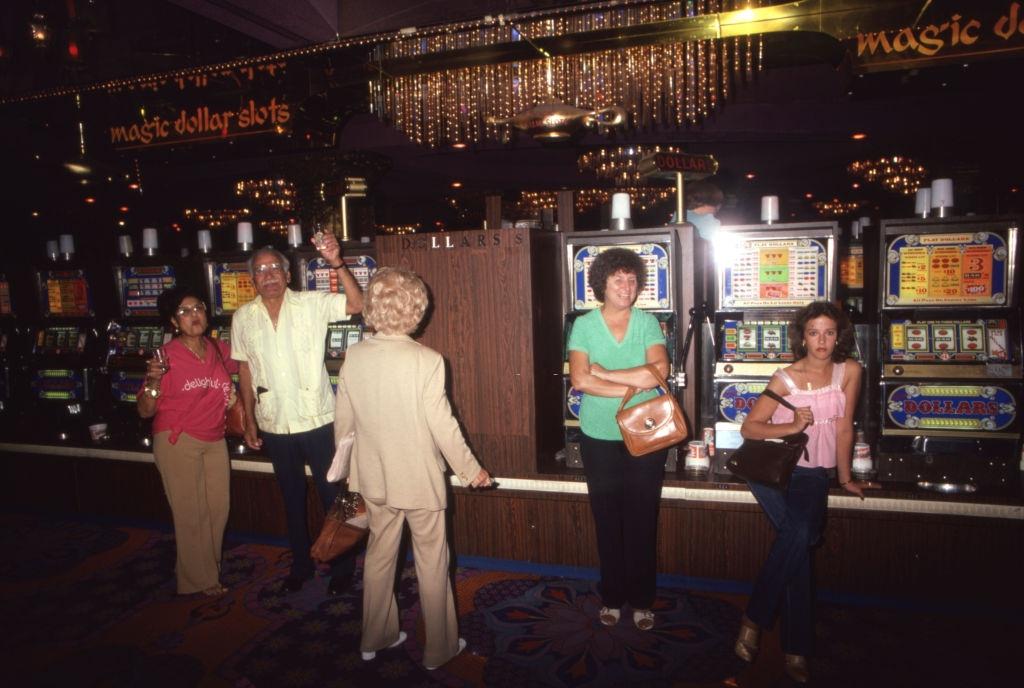
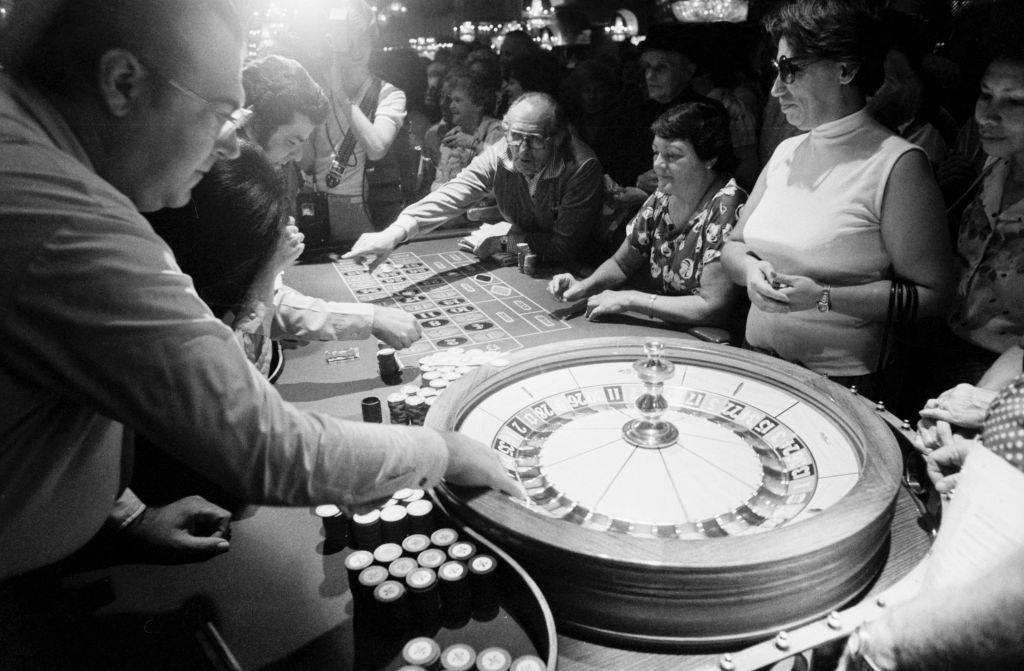
The casino floors themselves were busy throughout the decade. Roulette tables drew crowds, and slot machine rooms were packed at all hours. The gaming room layouts and the fashion of the players are a clear window into the era.
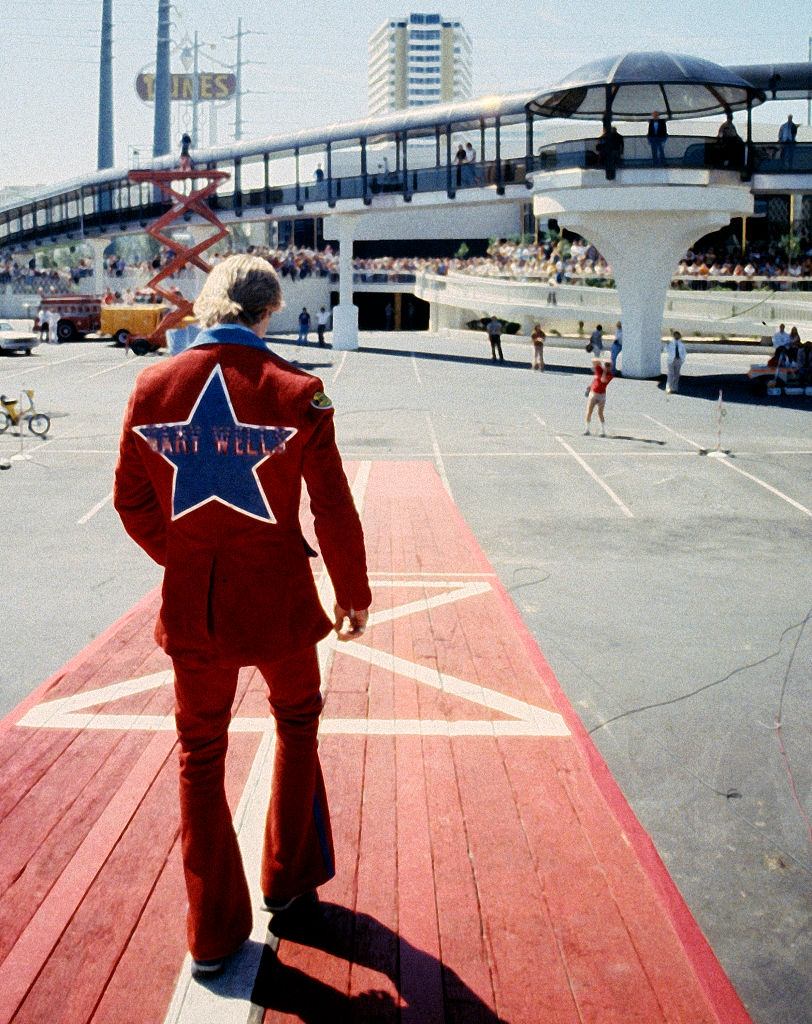
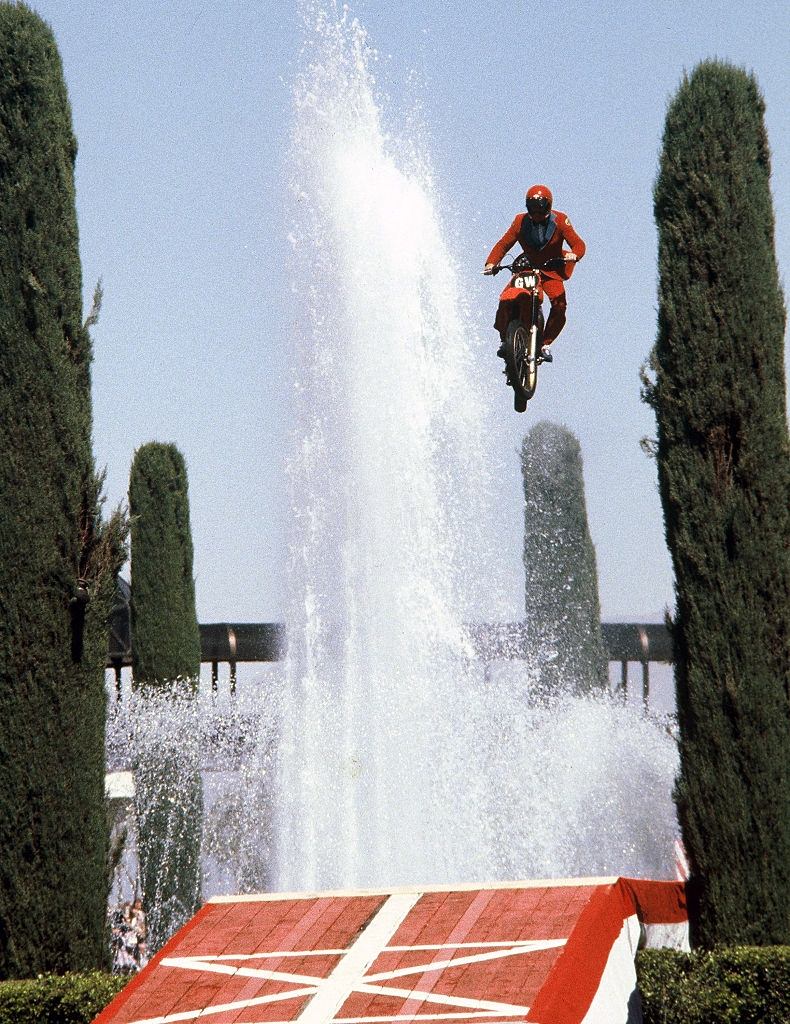
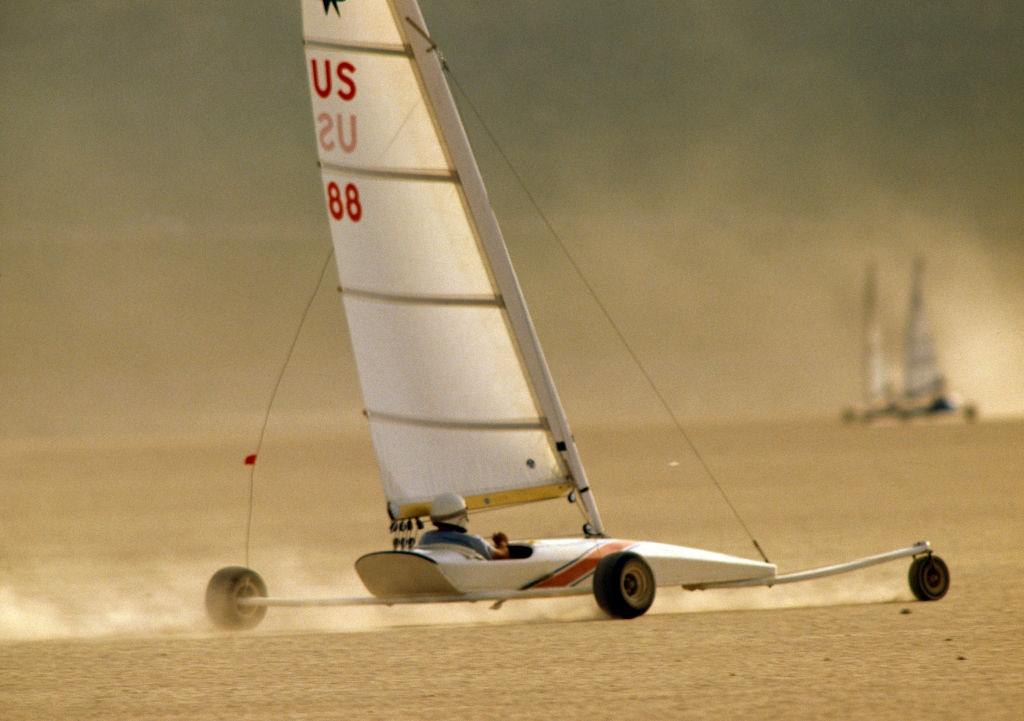
Away from the casinos, Las Vegas also hosted unusual events. American stunt driver Gary Wells performed a motorcycle jump over the fountains outside Caesars Palace in 1980. At the dry Ivanpah Lake bed near Las Vegas, competitors raced in the America’s Landsailing Cup in 1985. Television productions also used the city as a backdrop — the 1982 TV movie “The Return of the Man from U.N.C.L.E.” was filmed there, with David McCallum and Robert Vaughn reprising their original roles.
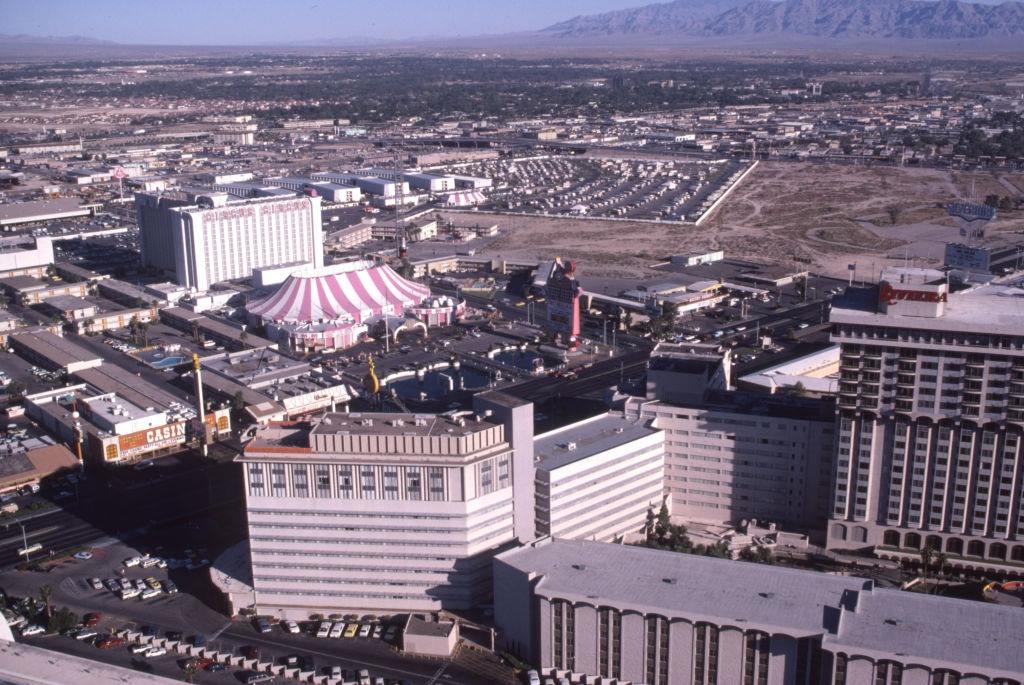
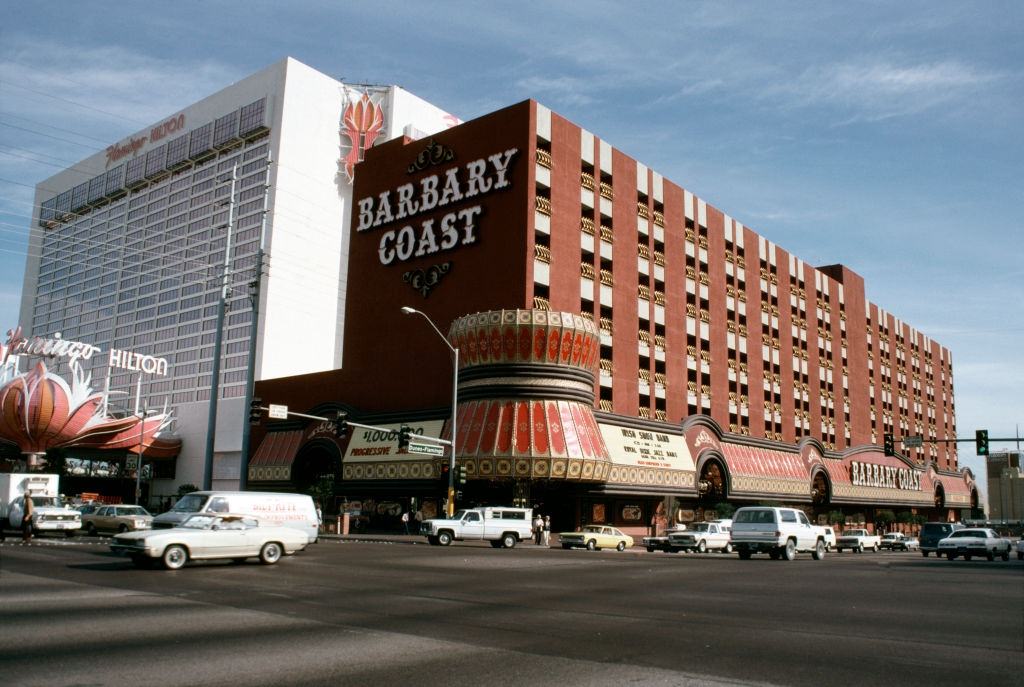
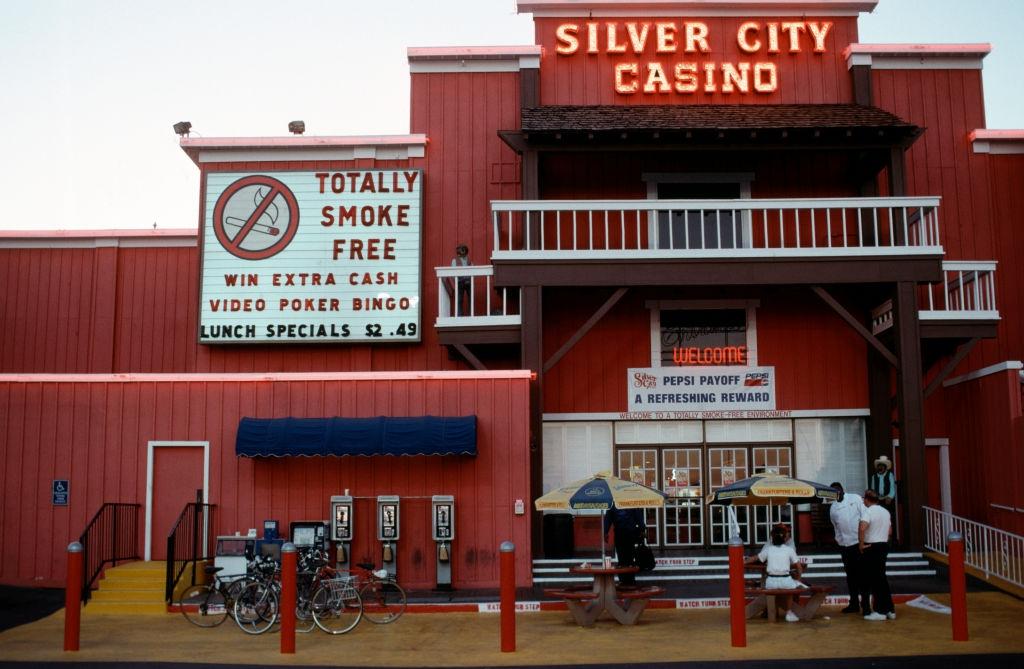
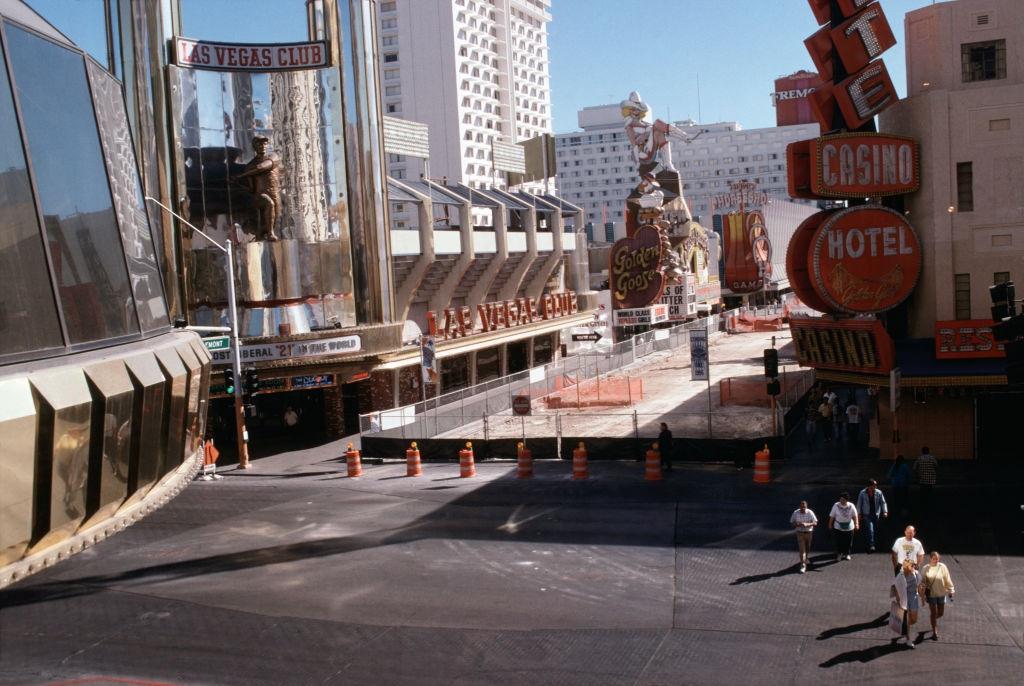
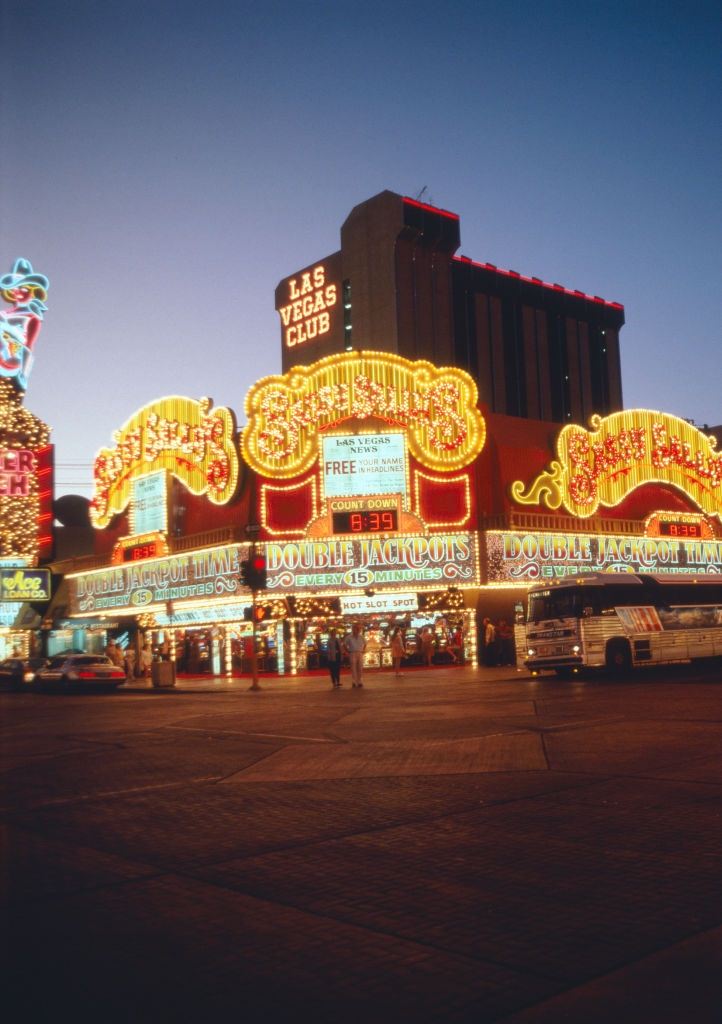
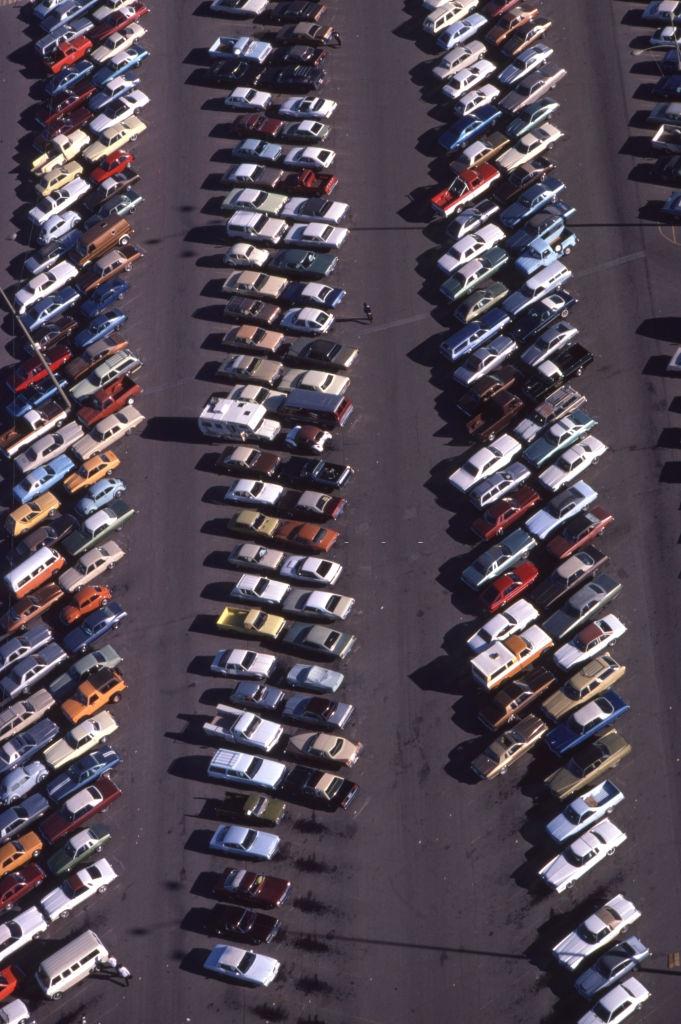
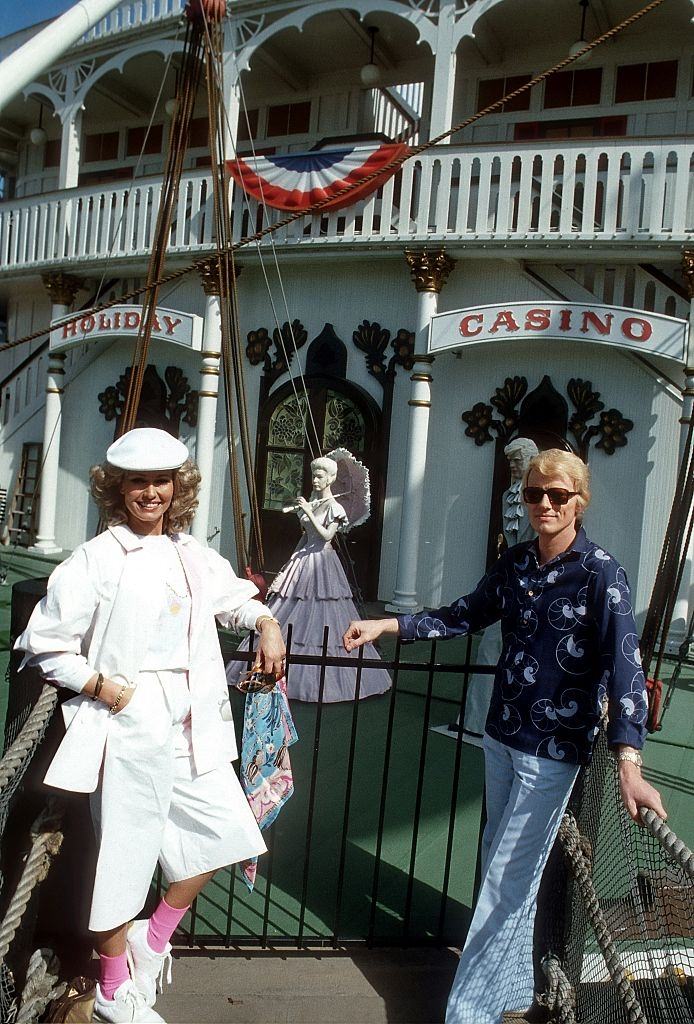
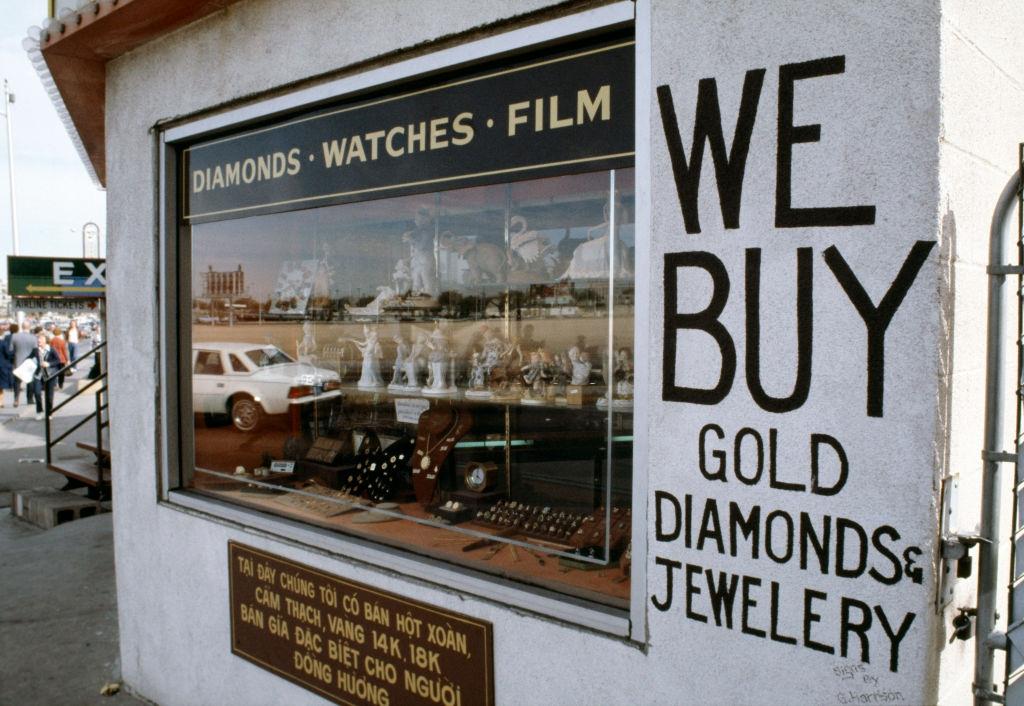
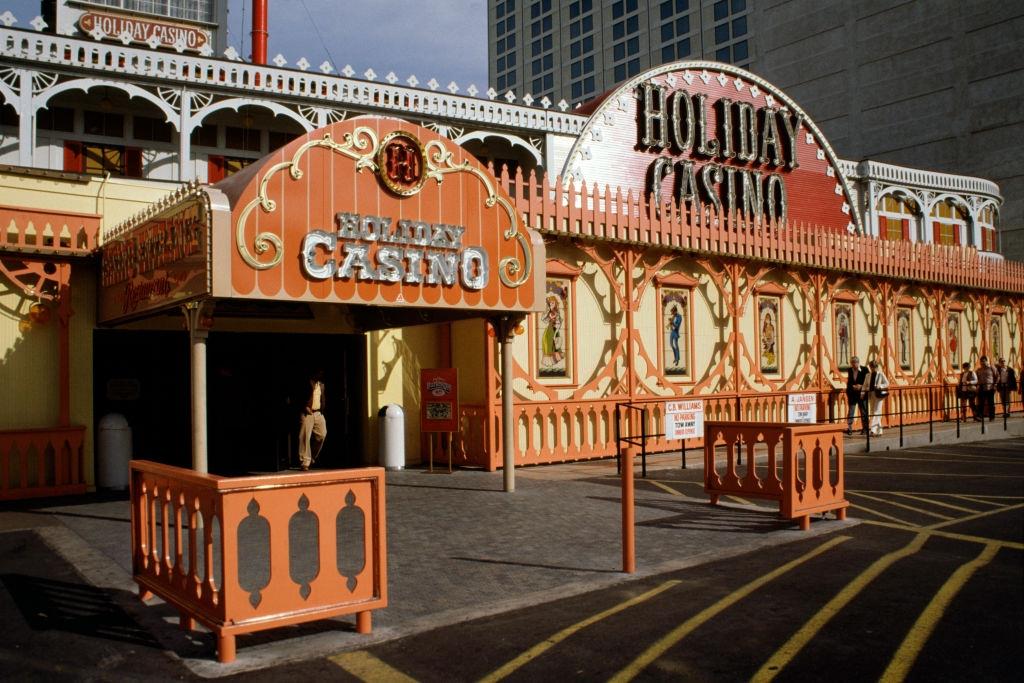
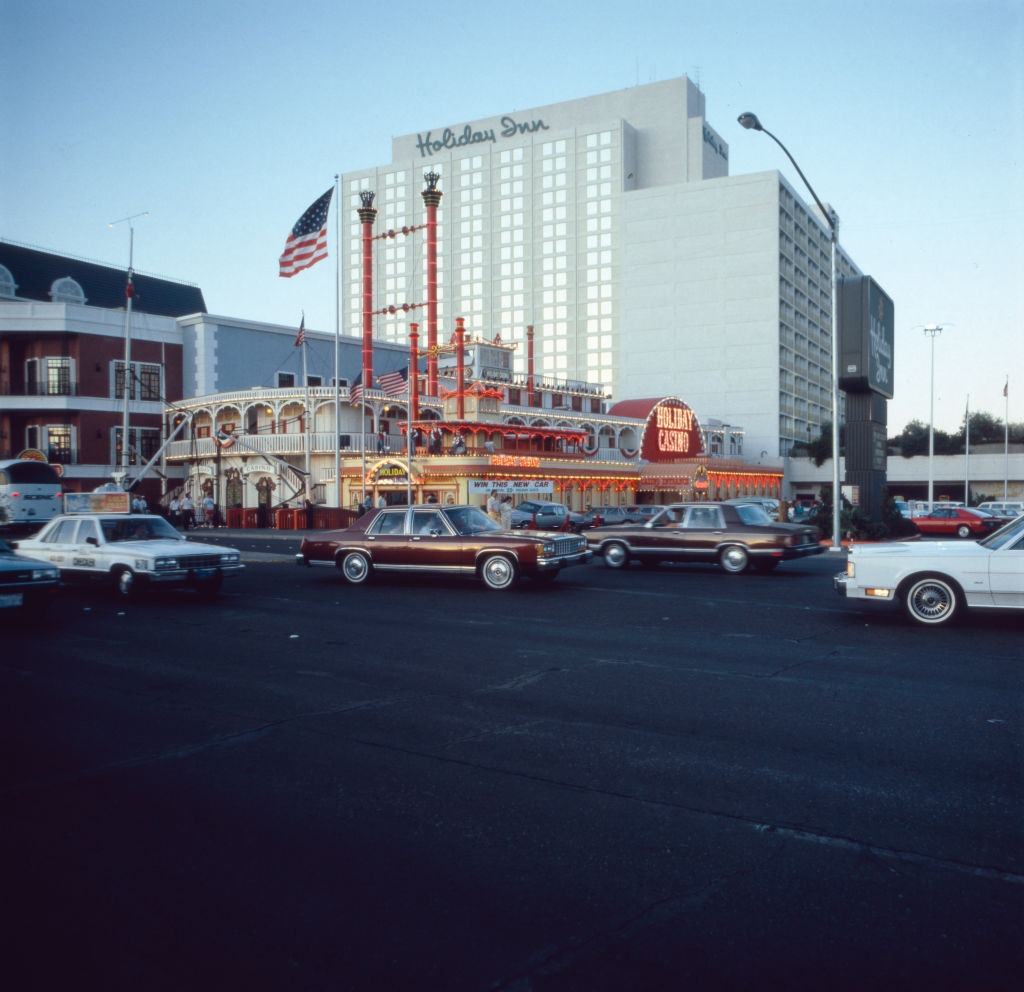
Downtown Las Vegas and Fremont Street still buzzed with activity. The older casino hotels — the Mint, the Barbary Coast, the Holiday Casino, the Silver City, and others — lined the streets and competed for the same gamblers the Strip was chasing. Aerial views of the city in the early 80s show how rapidly Las Vegas had grown beyond its original footprint, with parking lots, hotels, and neon signs spreading outward in every direction.
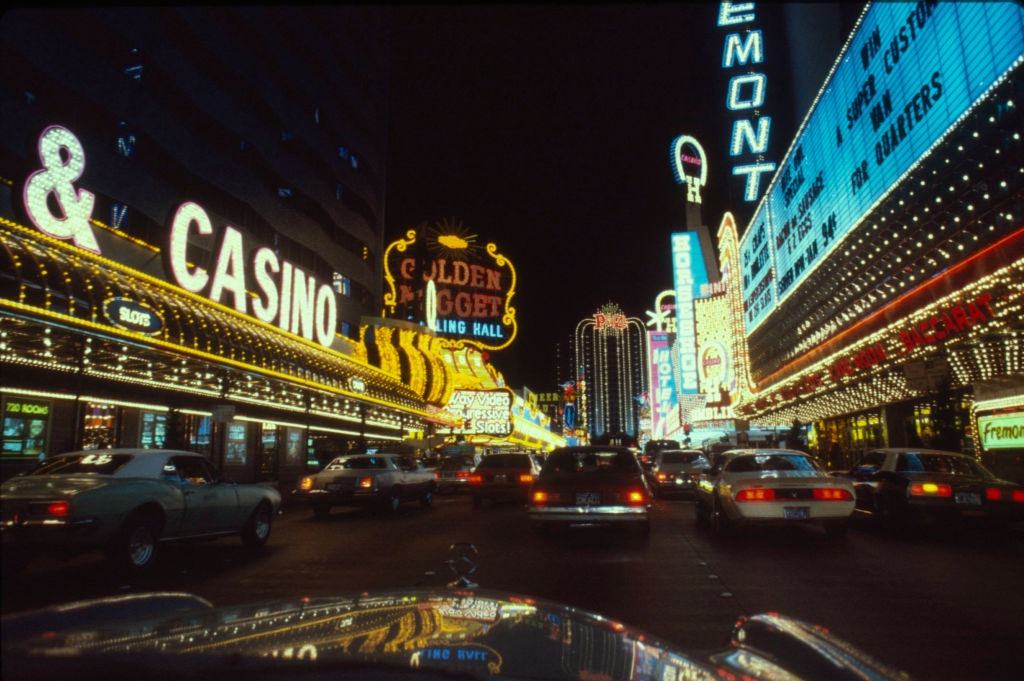
By the late 1980s, major investment was beginning to flow back into the city. The Golden Nugget expanded significantly, signaling a new wave of development that would transform Las Vegas in the decade to come. But for most of the 80s, the city wore a grittier, more uncertain face — still dazzling at night, but clearly in transition.
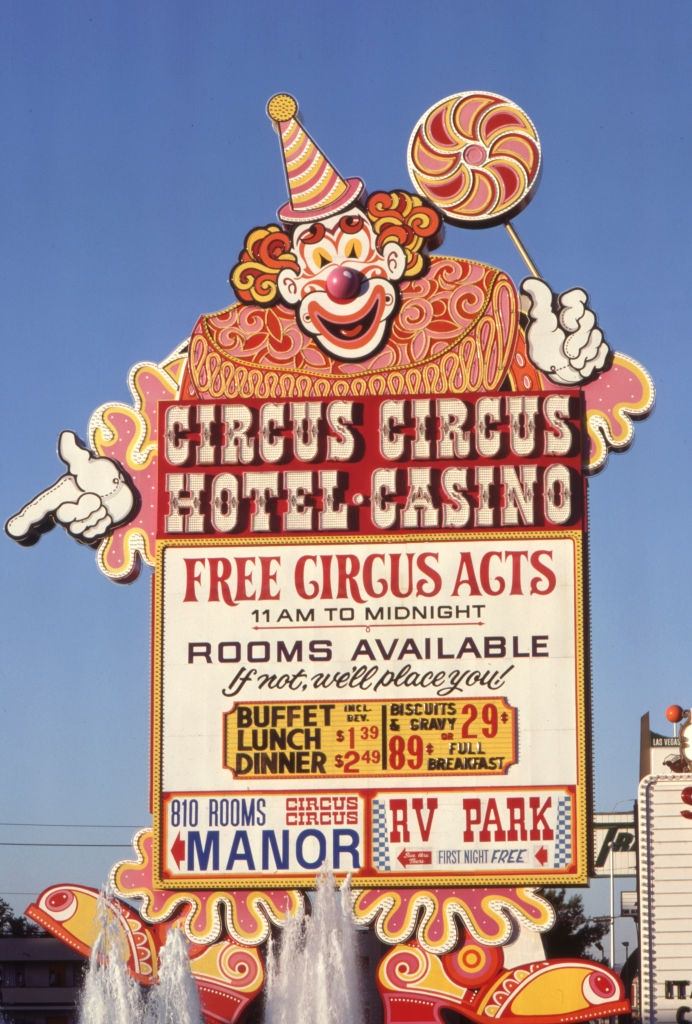





I could go for 29-cent biscuits and gravy even if it meant having to go inside Circus Circus to get it
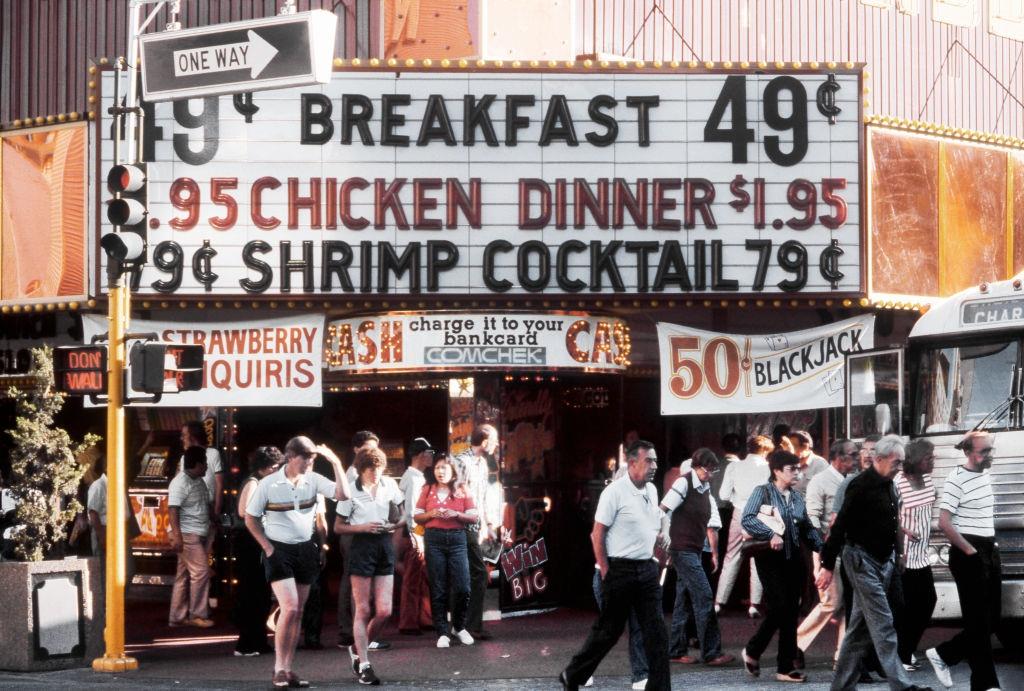
Love the “Charge it to your bank card” ad. Always a great idea
Most of these dates are incorrect
Ahh, nice picture of the Plaza hotel and saying it’s “The Strip”
lmao it was like “Tell me you’ve never been to Vegas without telling me
Most of these dates are incorrect.
Fast forward to 2024, and you have to move the decimal point two places to the right.
And Vegas was affordable
Seriously. One of the signs advertised what would be in today’s dollars a $1.60 breakfast and a $6.50 chicken dinner. Good luck finding a breakfast for less than 10 times that nowadays.
The 80s is also when the mob still ran Vegas.
Now it’s the corporate mob.
I wish we were back in the 80’s. Everything looked better, people were kinder and life was so much simpler.
It was a great time to be a kid, that’s for sure.
Ahh Yes the 80’s. We had the space shuttle blow up, the Chernobyl Disaster, the AIDS epidemic, the Tylenol tampering that killed 7 people and inspired copy cat killers, Reagan fired almost all the air traffic controllers for striking, Al Gores wife tried to silence artists starting with Prince, Ted Bundy, Jeffery Dalmer, Nancy Reagans war on drugs with people doing years in prison for pot, and racism was actually worse then! Fun times fun times.
Yes you’re right of course. World War 3 and the new global financial crisis will be much more fun
Dan Tanna’s garage/apartment is now replaying in my brain.
Vegas was fantastic in the ’80s and even into the 90s. I lived there for 25 years and it was a fantastic place to be at that time. Housing was affordable, everything was affordable. I built a thriving Media company specializing in huge video walls, including the one in the MGM Grand behind the front desk. As soon as installation was done I took over maintenance and new scheduling of videos for the first 3 years. At that point they figured how much they were paying me every year and decided to take it in house. Sadly, that’s when everything fell apart but that’s another story.
Made my first trip in ‘88. Was actually affordable for someone like me earning less than $30k. $2 blackjack. $6.95 prime rib. $4 all u can eat breakfast. Those were the days.
The Barbary Coast has the coldest draft beer. Great memories of walking in there with $50 and feeling like a boss!
Moved to Vegas in 1986 and raised my sons there. It was really a pretty good place to live. Education was even good!! Unfortunately the corporations took over much of the strip and so many things changed. I moved in 2023 and feel the past 20 years were not so good. I will never put down the city I lived in for 37 years but happy to have moved!! Vegas will never be the same of course but too big, too much traffic and too expensive!!