Hey There! Before You Go. 😧
Get the best vintage content straight into your inbox!

Don't worry, we don't spam

1970s Hong Kong: Fascinating Historical Photos Offer A Glimpse Into Everyday Life

Hong Kong in the 1970s was a city in full motion. Under Governor Murray MacLehose, the government launched sweeping reforms that touched nearly every part of daily life. Compulsory education was extended from six years to nine years, raising literacy rates across the population. New legislation guaranteed equal pay for men and women and gave married women the right to remain permanent employees. High-tech industries — especially electronics — began to take root, and both the property and financial markets expanded rapidly.
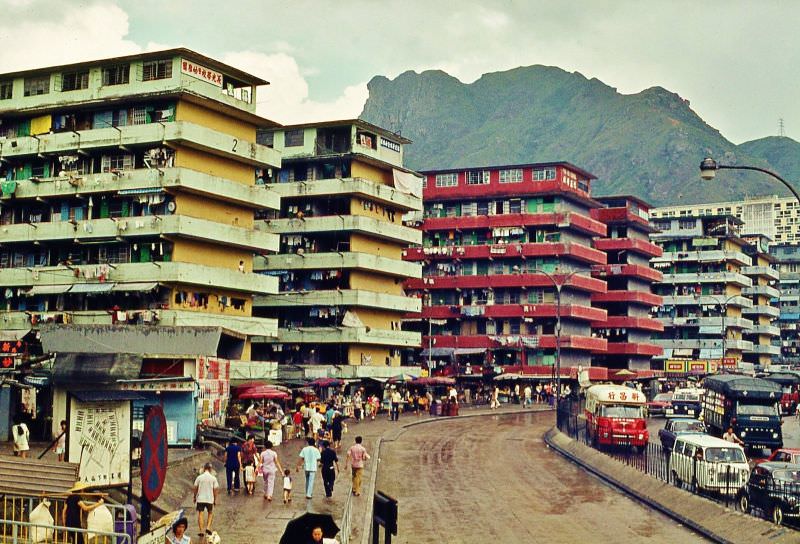
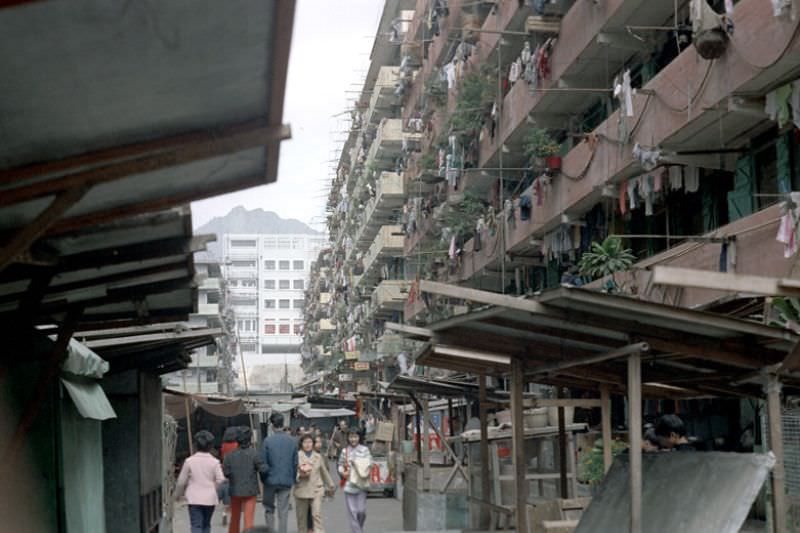
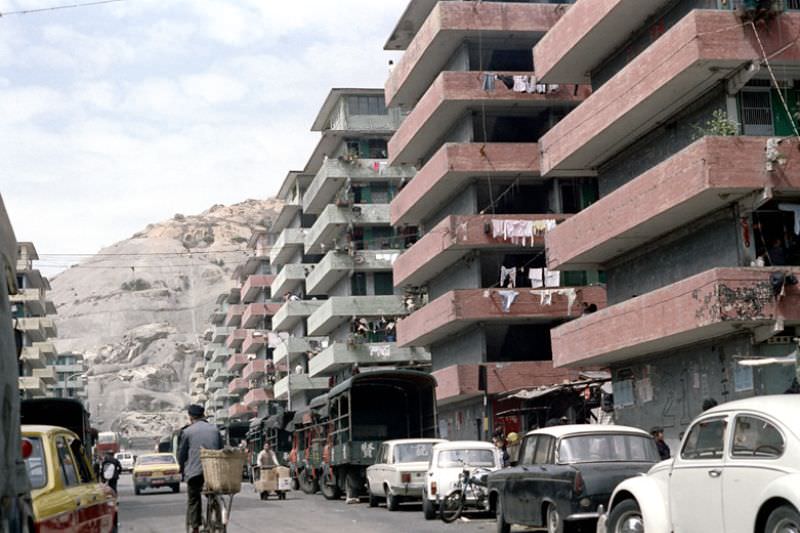
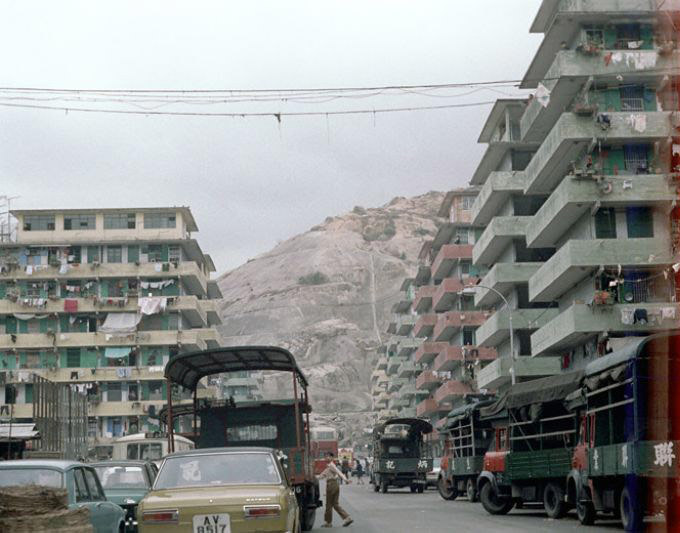
San Po Hong resettlement flats, Lion Rock behind, 1970s

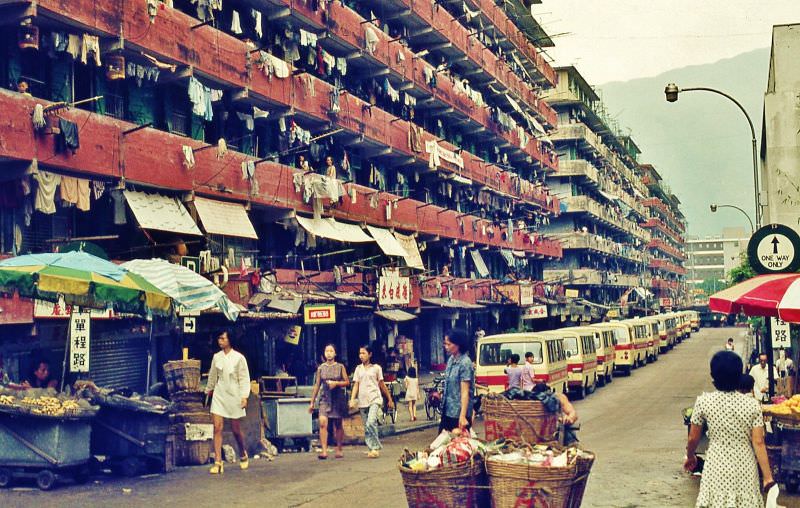
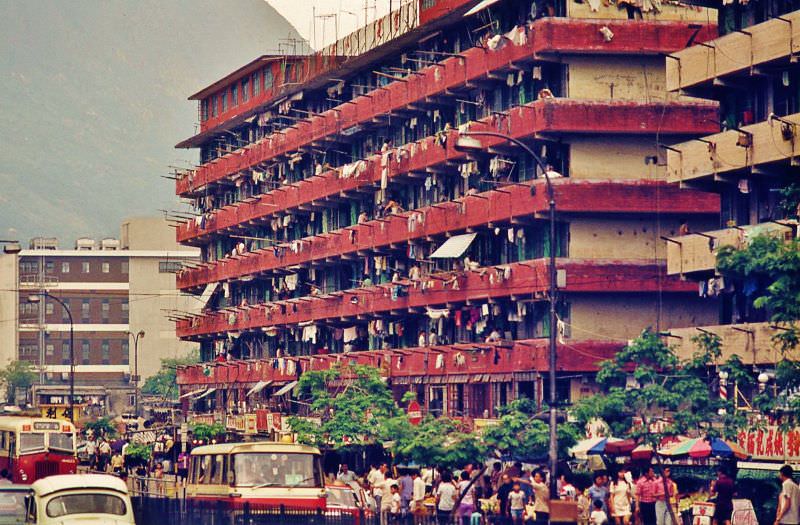
One of the decade’s most urgent challenges was housing. The government built large public resettlement estates to accommodate a fast-growing urban population. Towering blocks of flats filled districts like Wong Tai Sin and Shek Kip Mei, providing basic shelter for tens of thousands of families who had previously lived in overcrowded squatter settlements.
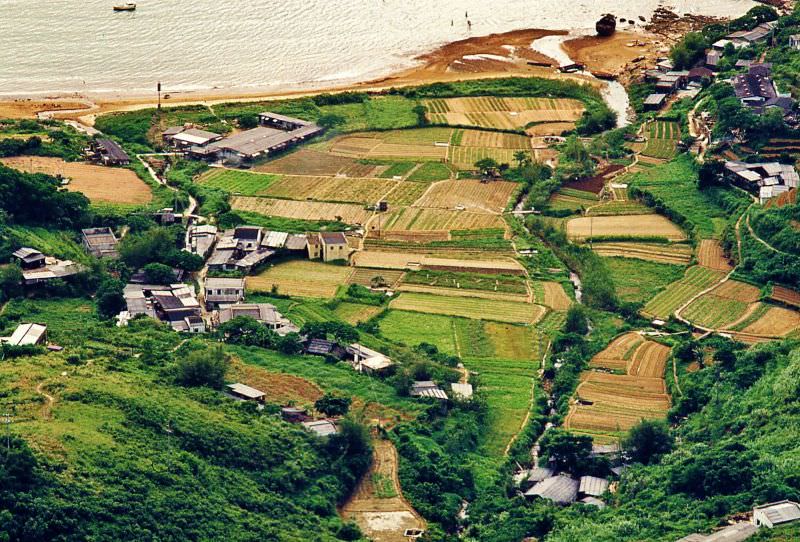
A village in Clearwater Bay, 1970s
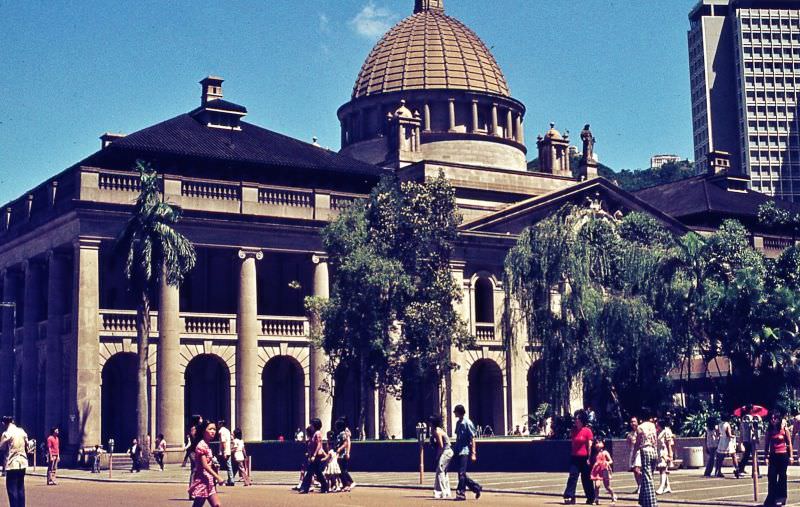
Assembly building, one of the few remaining old colonial buildings, Hong Kong, 1970s

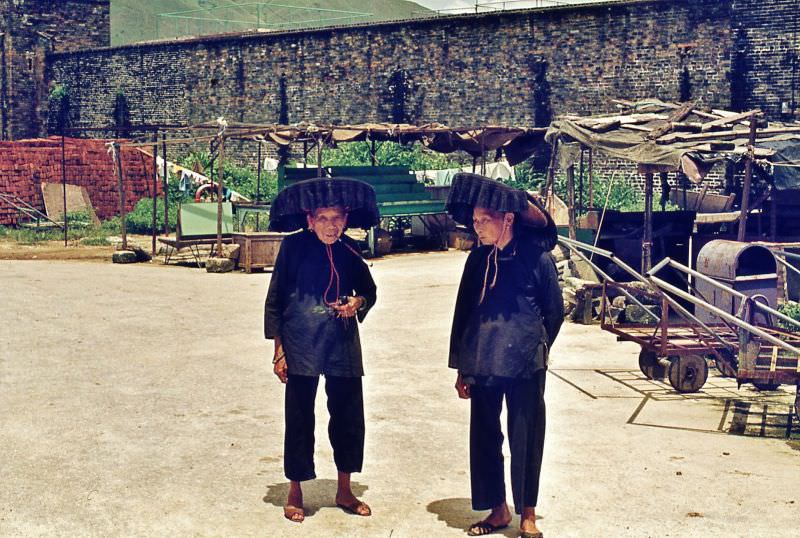
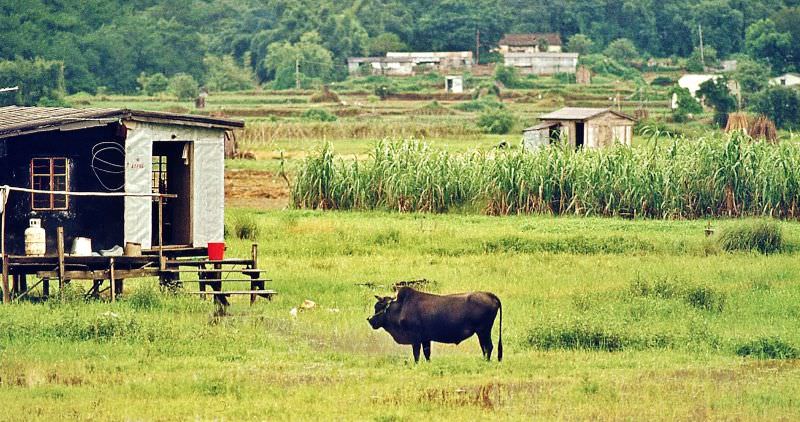
Not every part of Hong Kong moved at the same pace. While the urban core modernized quickly, colonial-era buildings still stood in Central, and rural villages in the New Territories carried on much as they had for generations. Walled villages like Kam Tin and Kat Hing Wai preserved their old defensive structures, and farming communities in areas like Sheung Shui maintained traditional ways of life just miles from the city skyline.
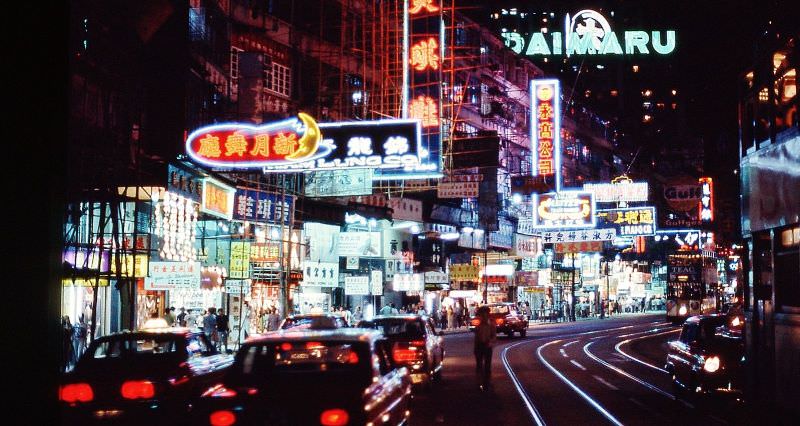
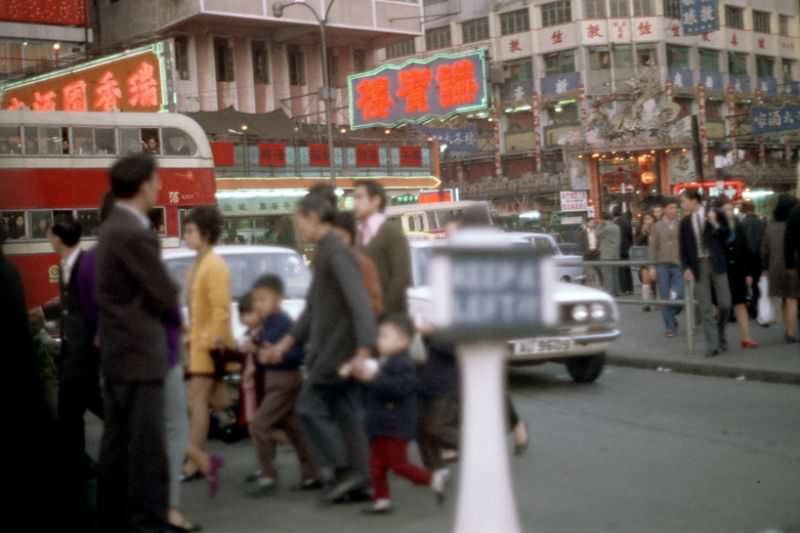
Causeway Bay area at night, , Hong Kong, 1970s
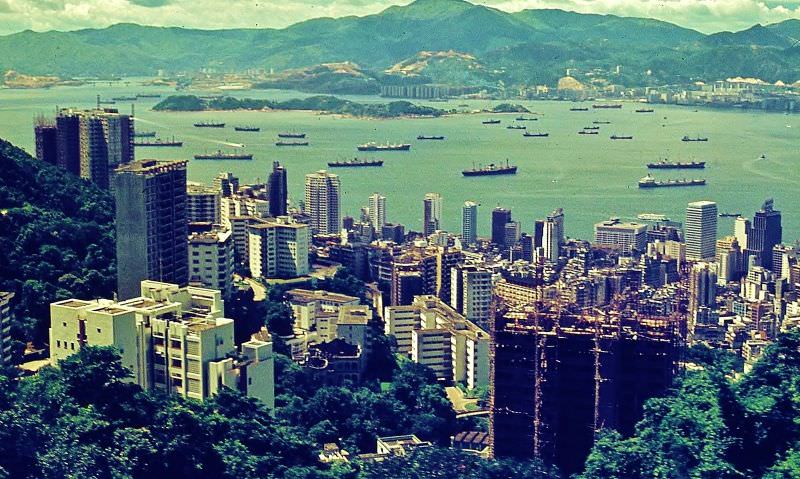
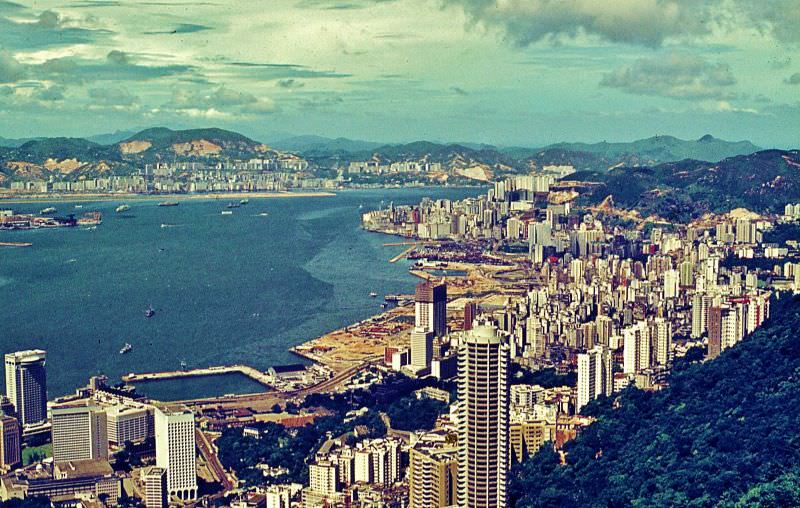
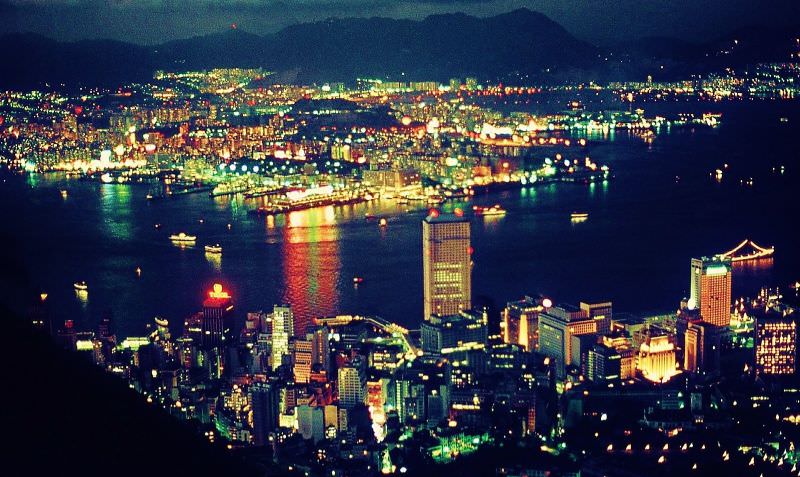
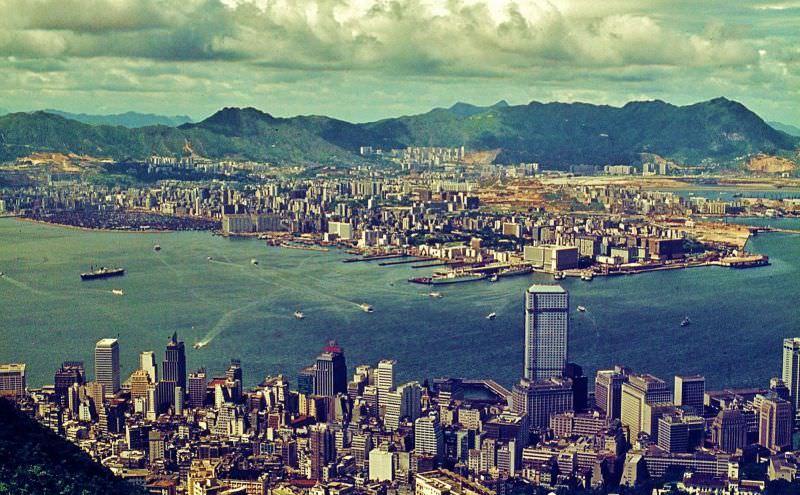
Central District and Kowloon Peninsula from The Peak, Hong Kong, 1970s

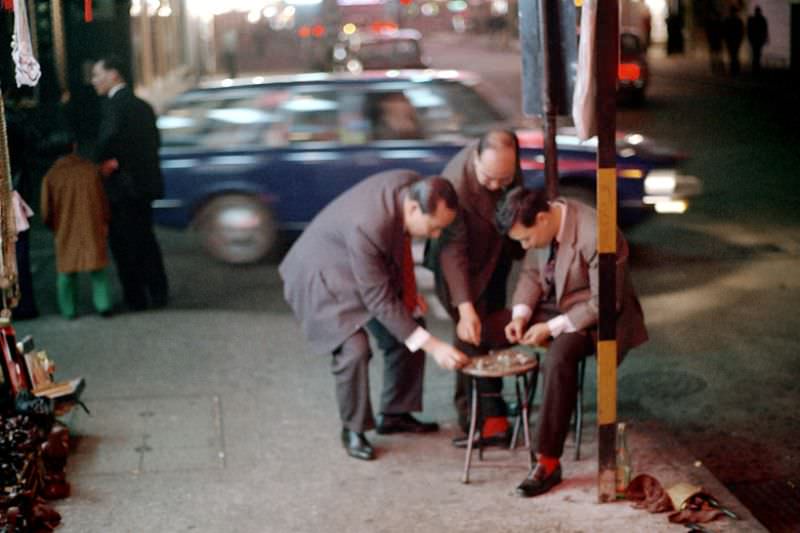
At night, the city transformed. Causeway Bay and Central lit up with neon signs and street activity, drawing residents and visitors alike. Viewed from The Peak, the lights of Hong Kong Island and the Kowloon Peninsula reflected across Victoria Harbour — a striking image of a city that rarely slowed down after dark.
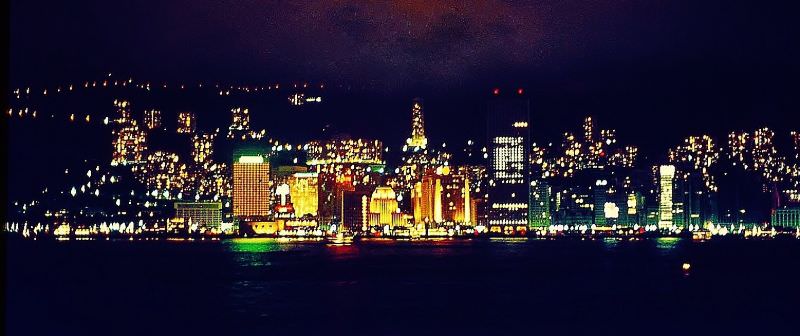
Central Hong Kong at night, 1970s
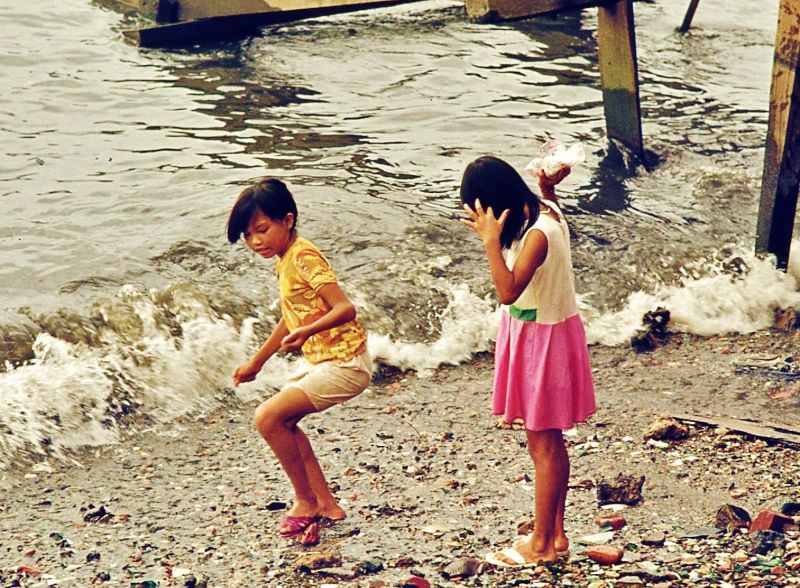
Dodging the wave, Cheung Chau, 1970s

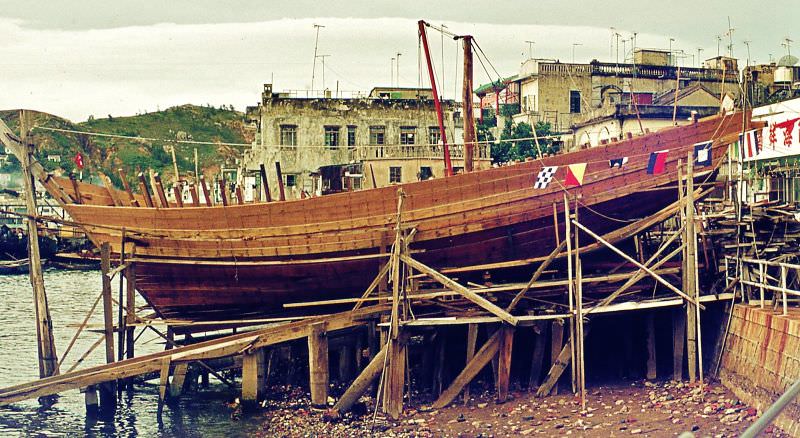
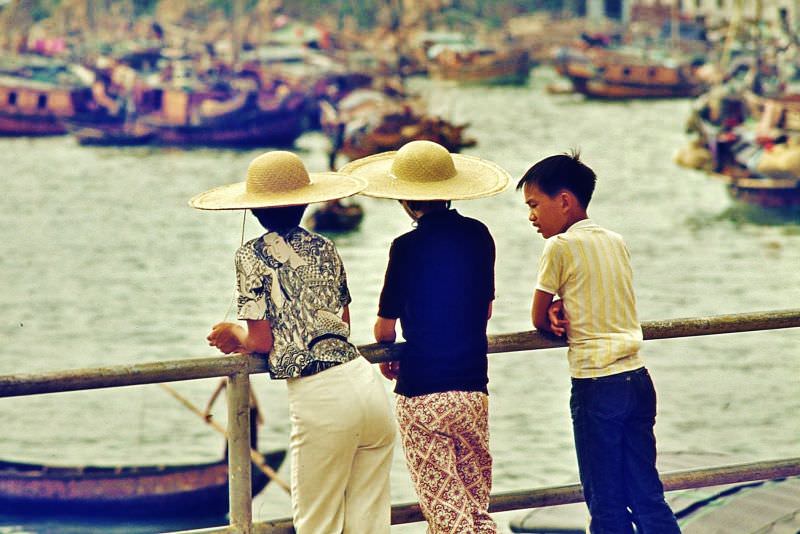
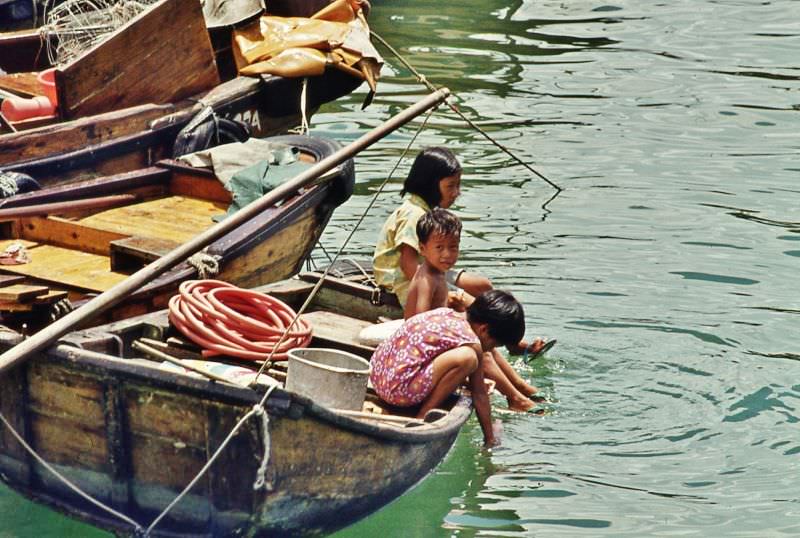
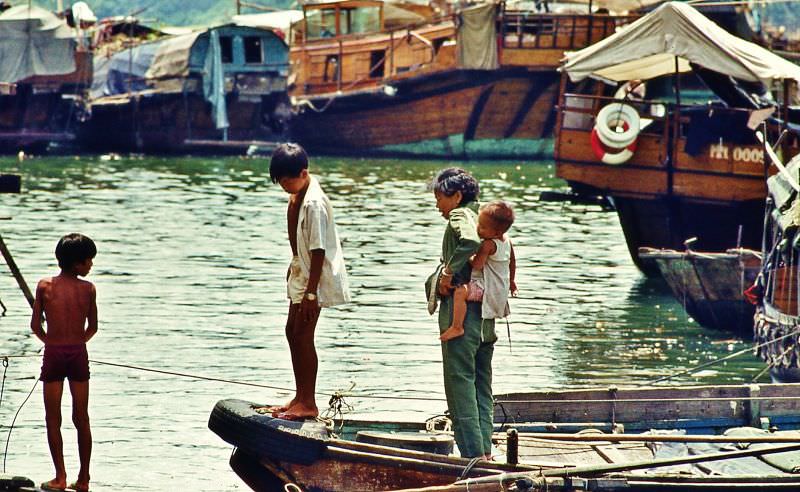
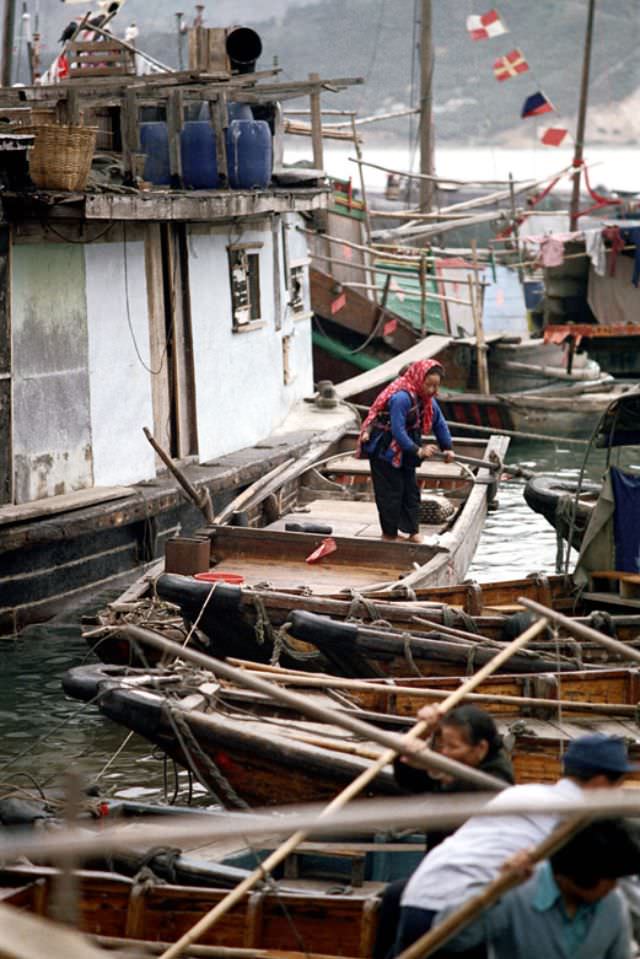
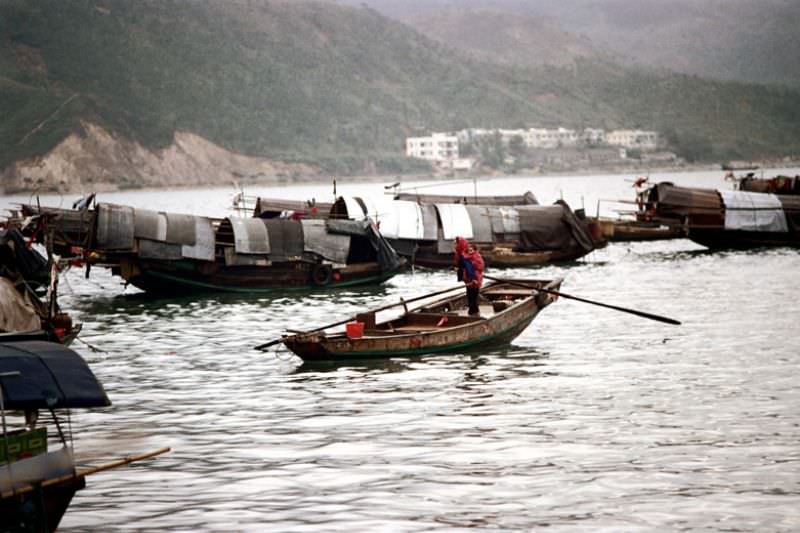
Beyond the main island, outlying communities like Cheung Chau had a character entirely their own. The small island’s harbor bustled with fishing boats, and residents lived closely tied to the sea. Boat people — families who lived and worked aboard their vessels — were a visible part of harbor life throughout Hong Kong during this period.
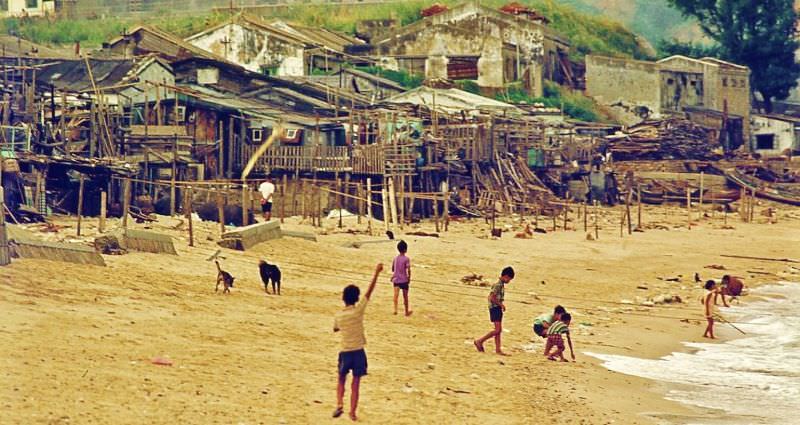
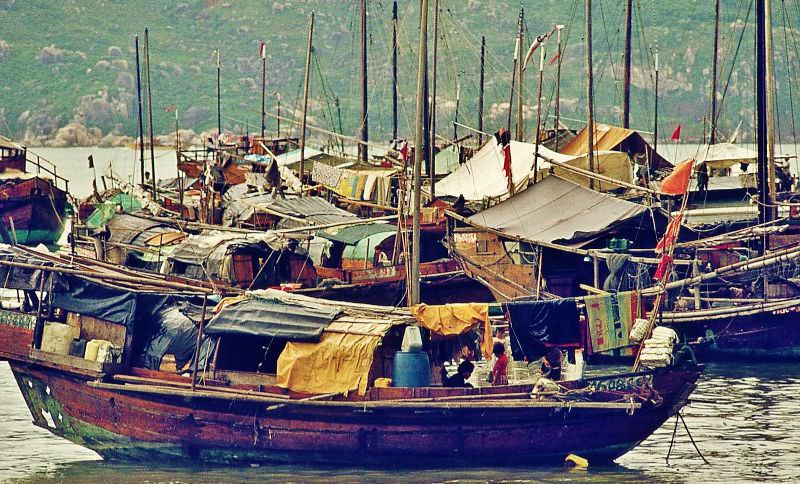
Alongside the beach, Cheung Chau, 1970s
Hong Kong Boat People, 1970s
Boat people, Cheung Chau, 1970s
The harbour, Cheung Chau, 1970s
Cheung Chau, Hong Kong, 1970s

Corruption was a serious problem in Hong Kong at the start of the decade. It ran through the police force and various government departments, and many residents saw it as simply a cost of daily life. In 1974, the government established the Independent Commission Against Corruption — the ICAC — to directly confront this issue. The commission had real investigative power and quickly became one of the most consequential institutions in Hong Kong’s modern history.
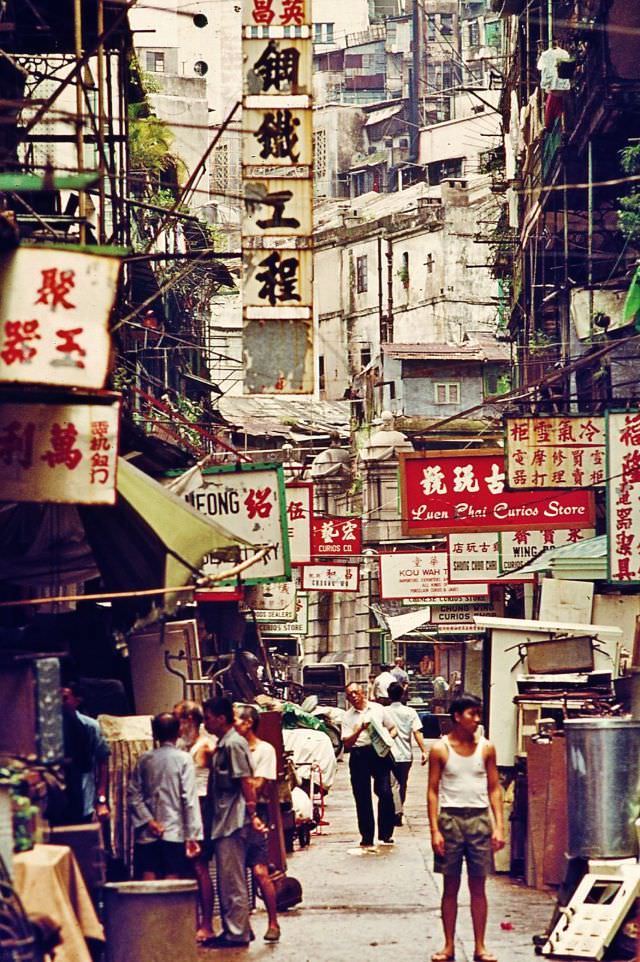
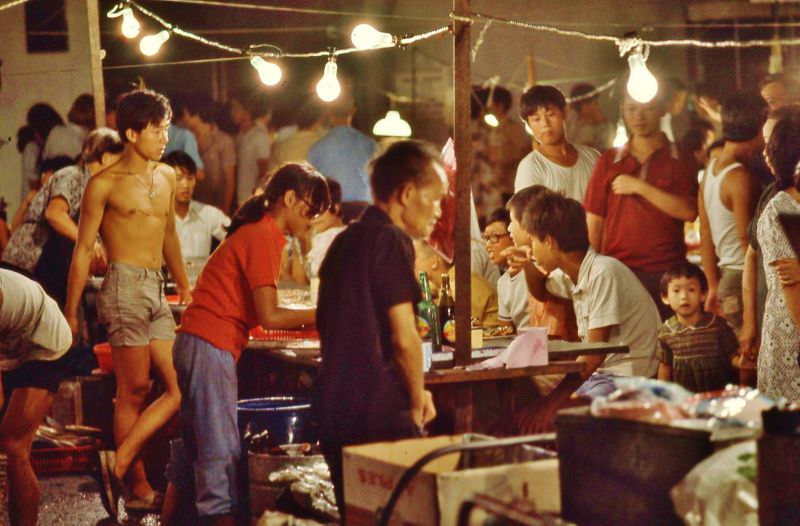
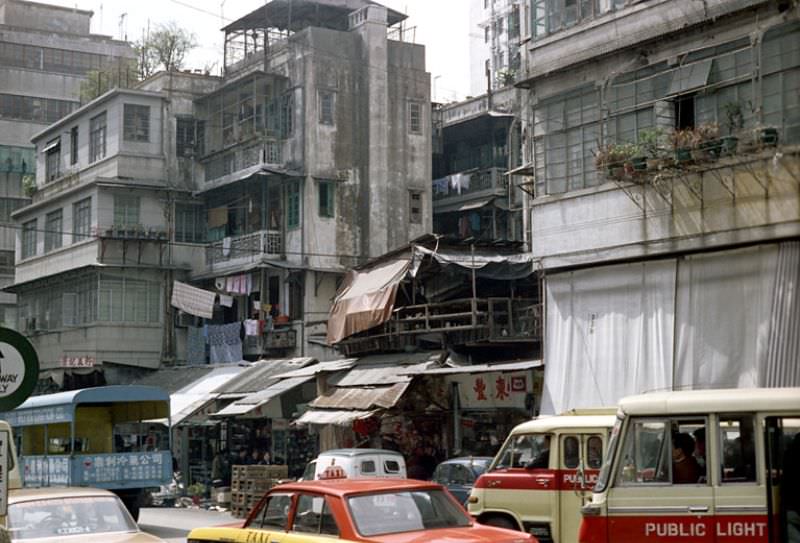
Congested buildings in Hollywood Road area
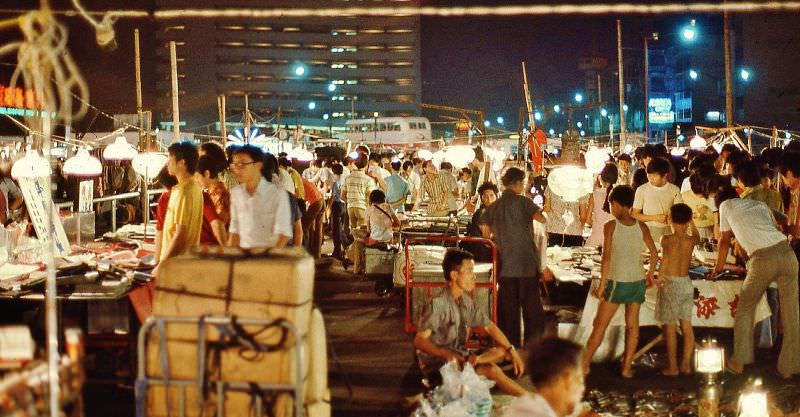
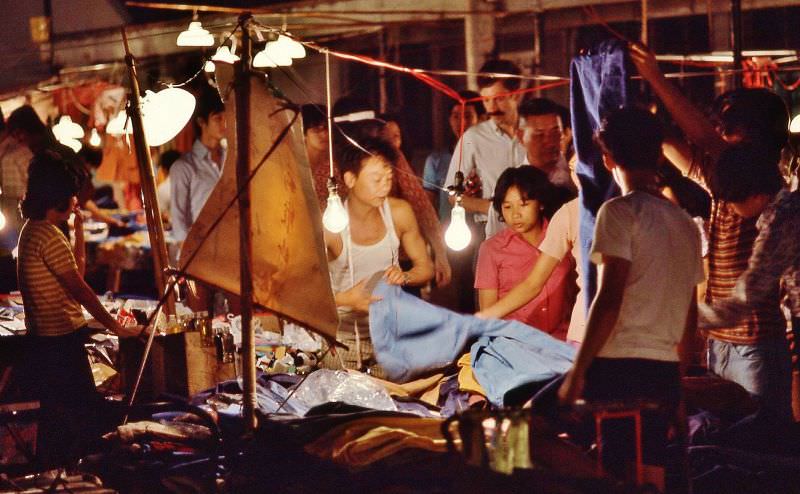
Connaught Road night market, Hong Kong, 1970s

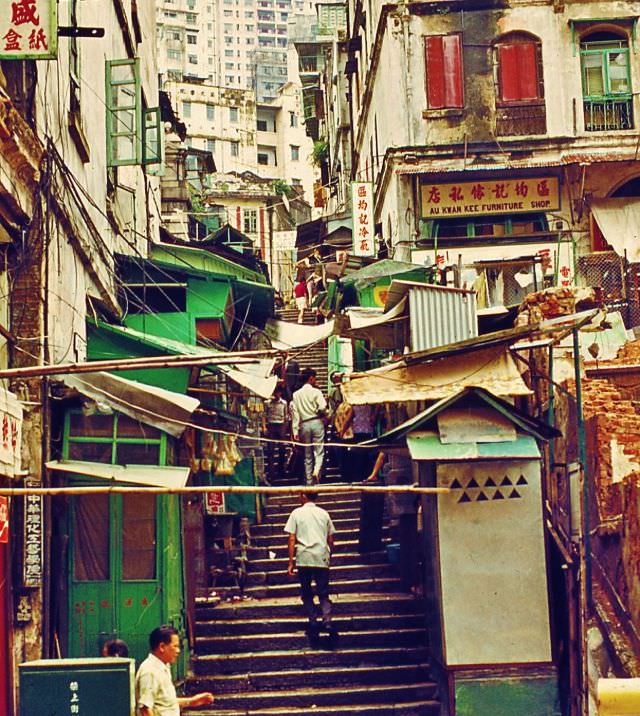
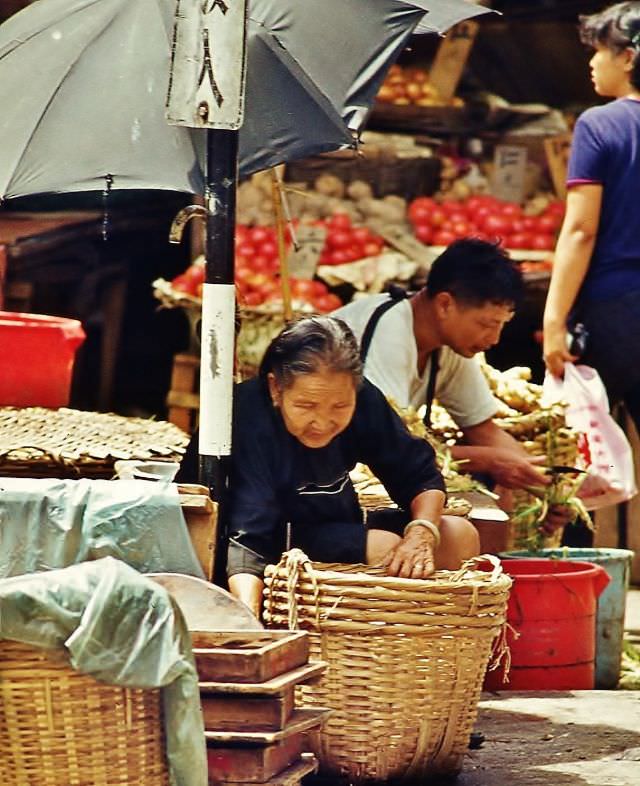
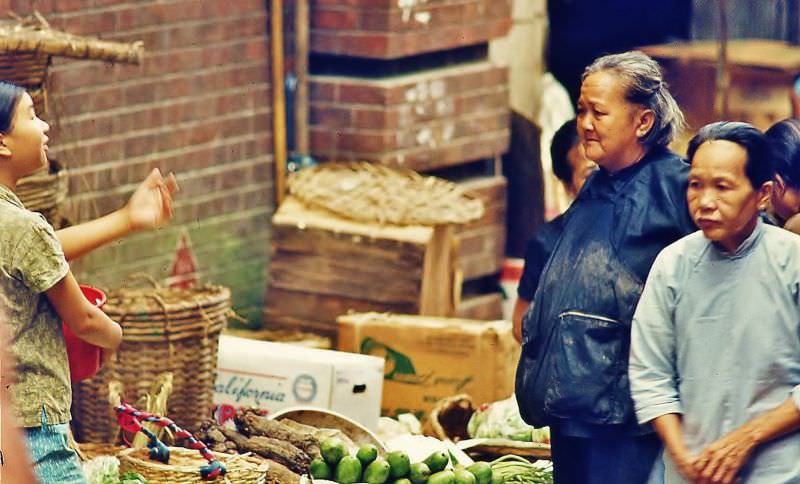
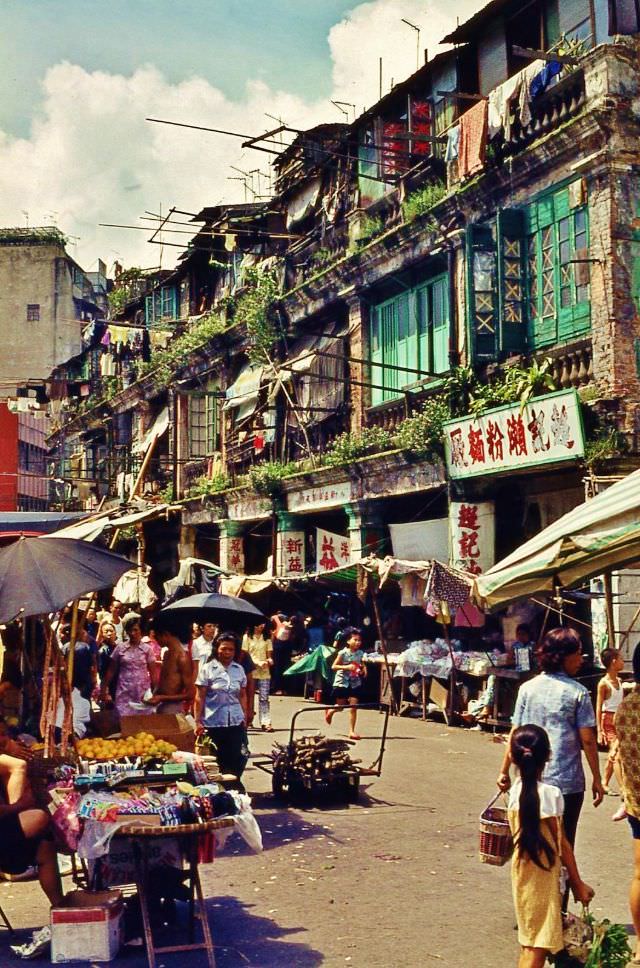
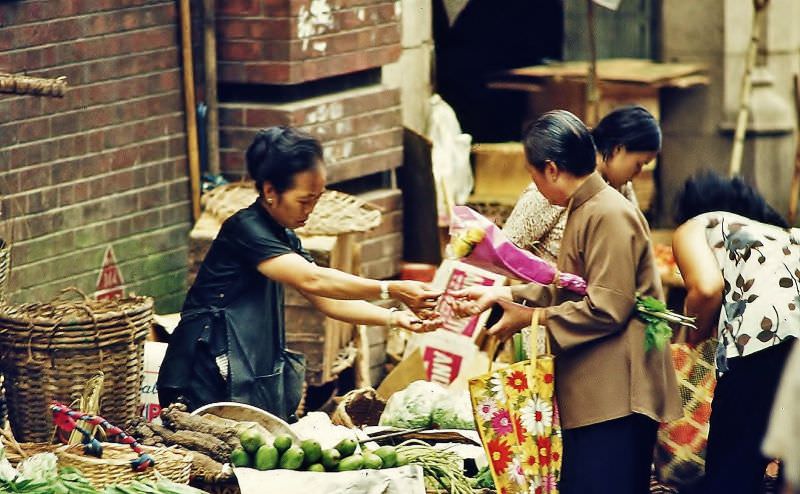
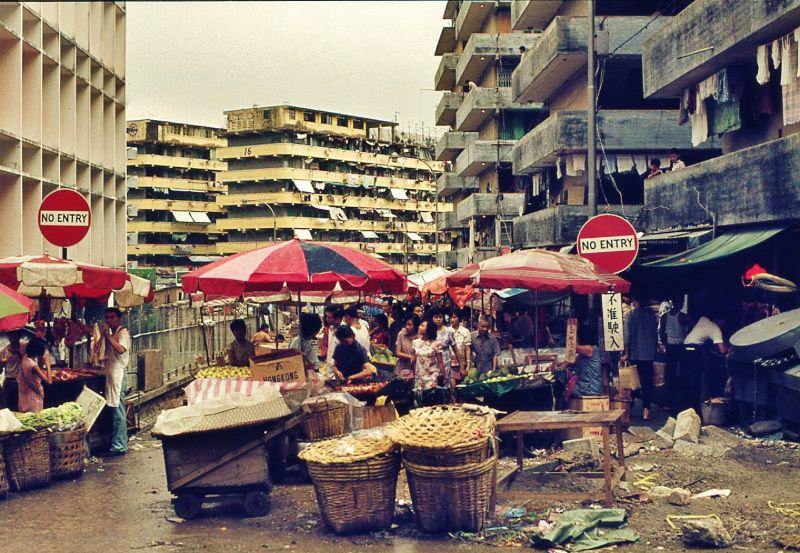
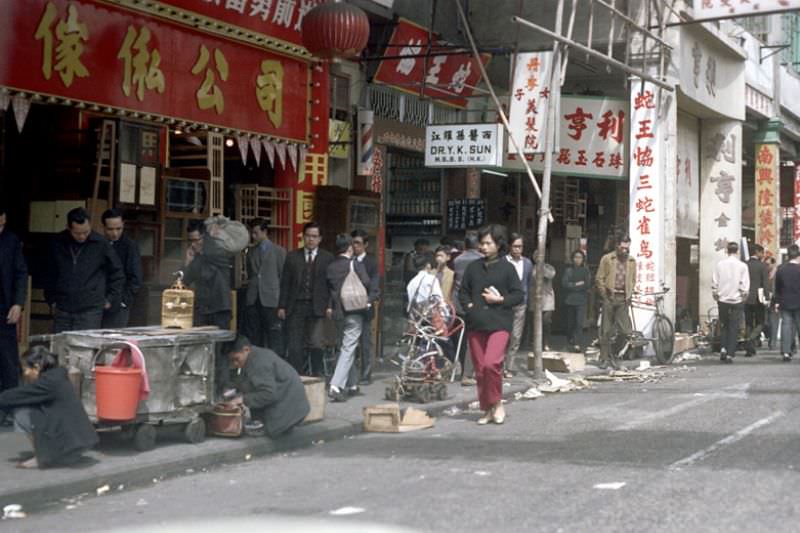
Street markets were a central feature of everyday Hong Kong life. The Connaught Road night market drew crowds of shoppers every evening, with vendors selling food, goods, and household items under open skies. In the Hollywood Road area, stalls packed tightly along narrow streets offered everything from antiques to fresh produce. These markets were not just places to shop — they were social hubs where neighbors gathered and street traders made their living.
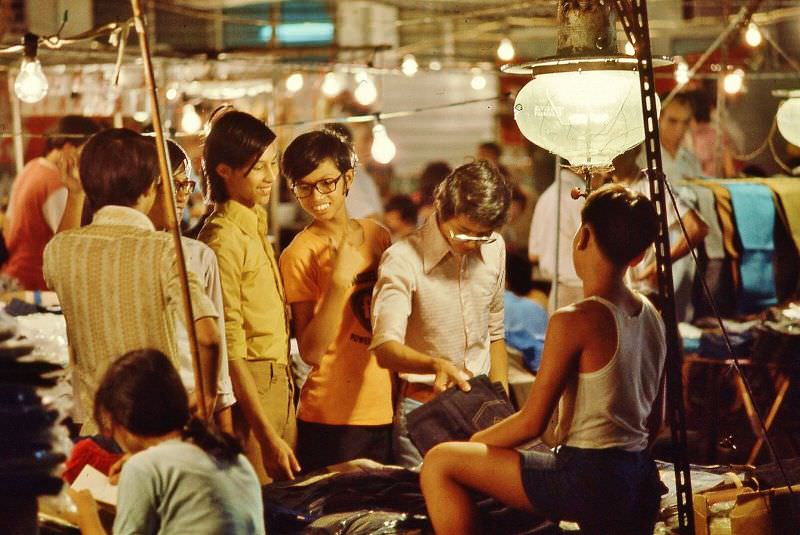
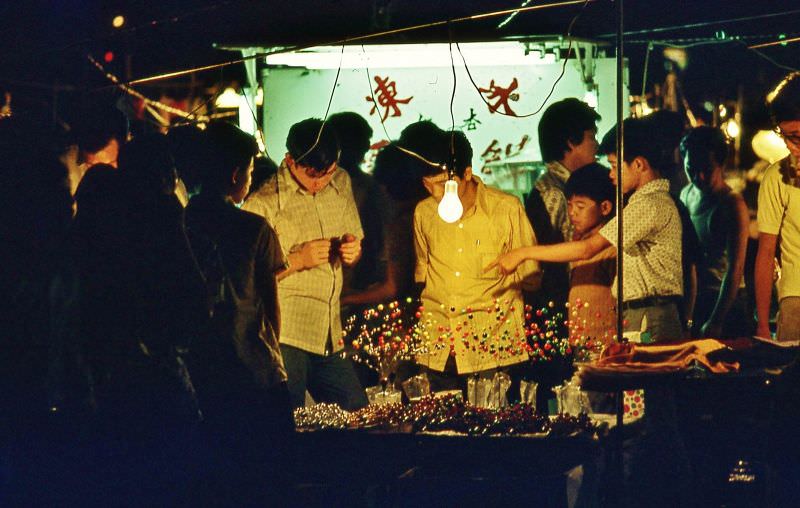
Connaught Road night market, Hong Kong, 1970s
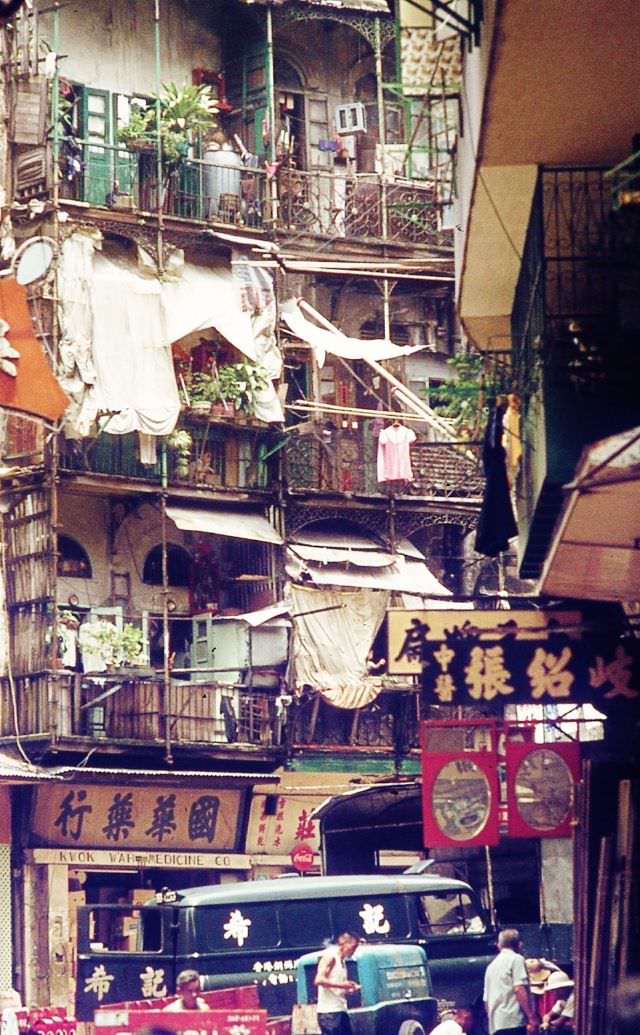
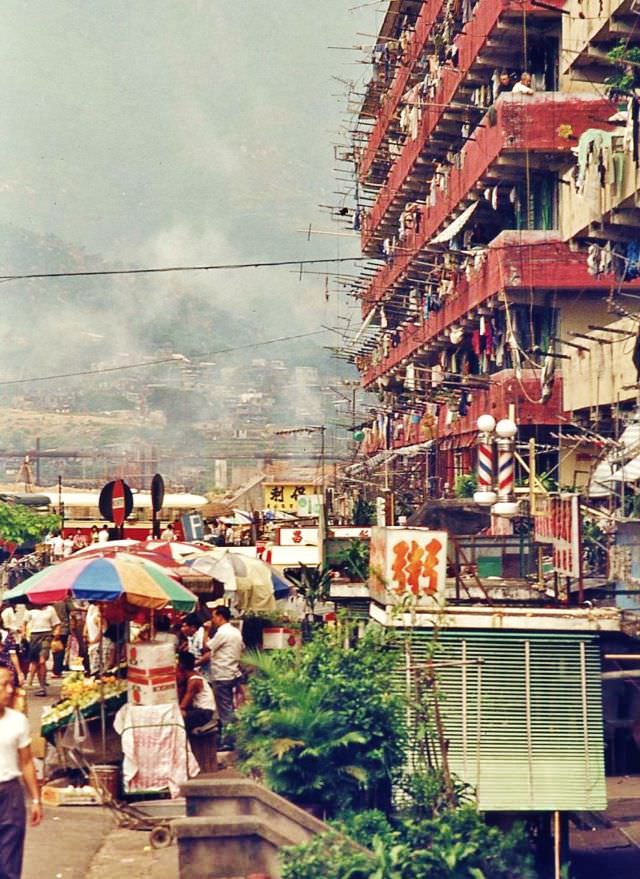
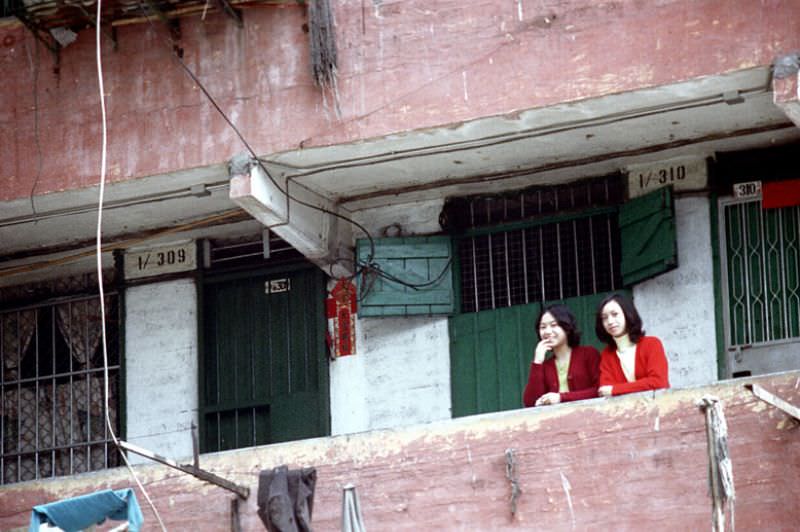
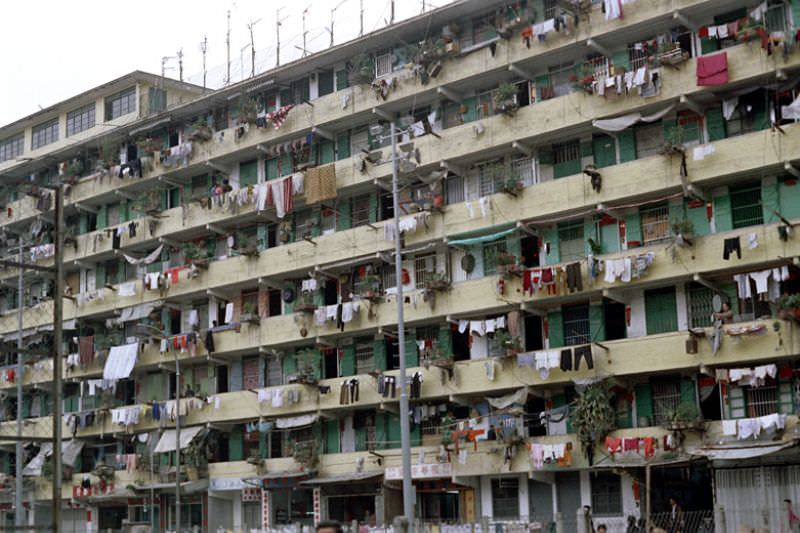
Crowded balconies, Hong Kong, 1970s

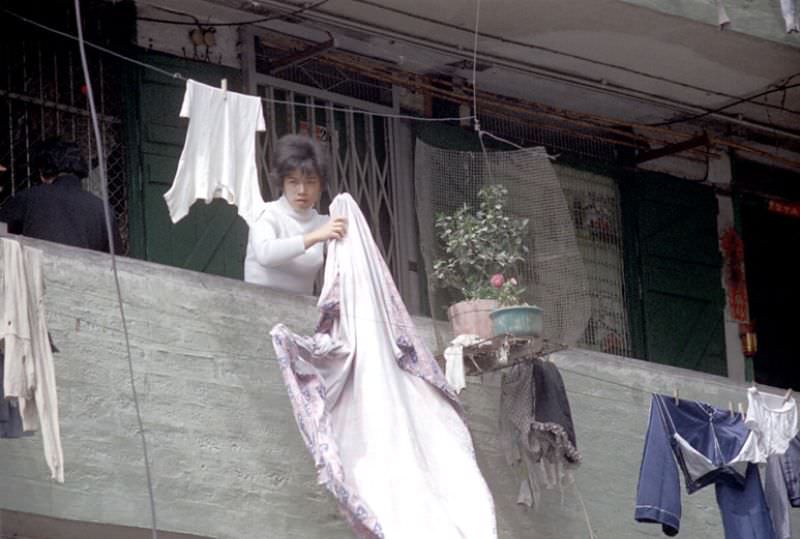
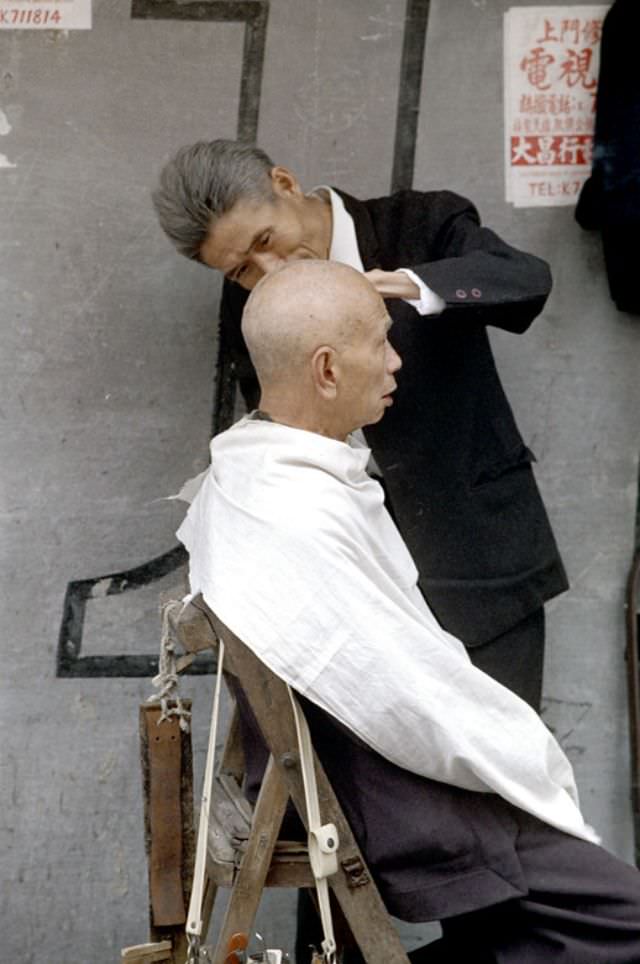
Space was scarce and precious in urban Hong Kong. Apartment balconies overflowed with laundry, potted plants, and stored goods. Buildings in older districts were packed so closely together that sunlight barely reached the streets below. Yet within these dense neighborhoods, life was remarkably organized — street barbers, fortune tellers, and food vendors each claimed their own small patch of pavement.
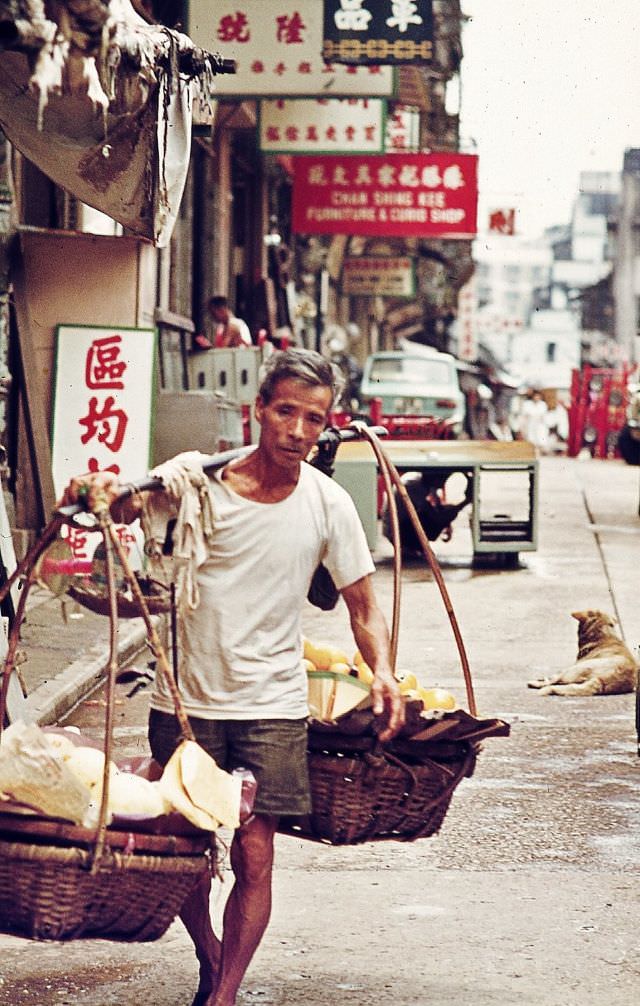
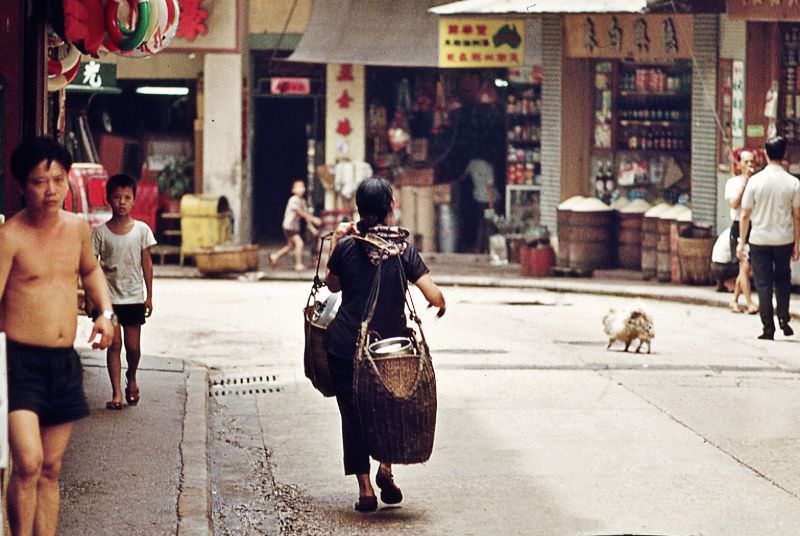
A seller, Hong Kong, 1970s
Hollywood Road area, Hong Kong, 1970s
Hong Kong Island's tram route, Hong Kong, 1970s
Hong Kong Island’s tram route, Hong Kong, 1970s

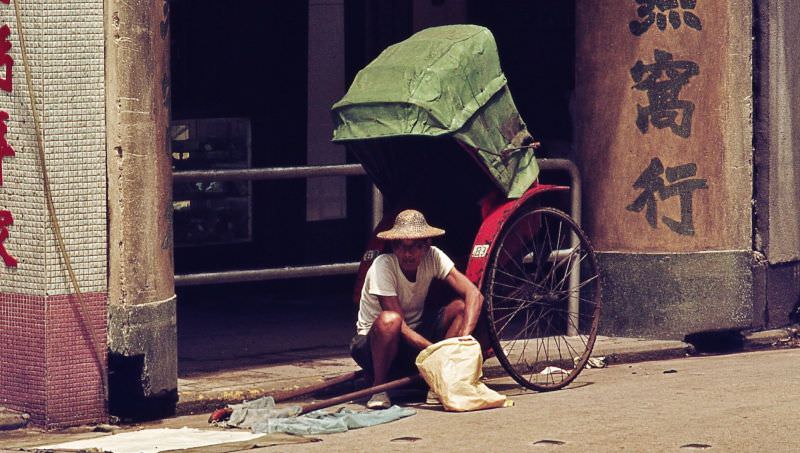
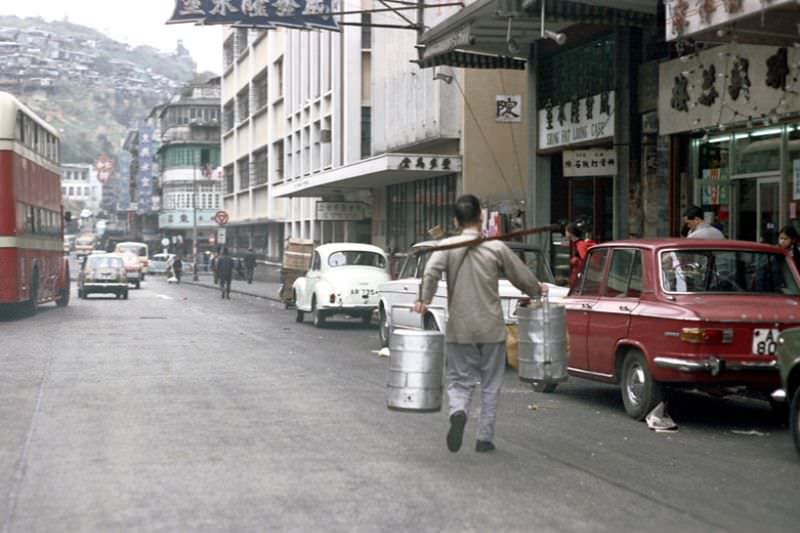
Hong Kong Island’s iconic double-decker trams ran along their fixed route as they had for decades, weaving through the busiest streets of the city. In Kowloon, rickshaws could still be found — a man-powered transport that was already fading from common use but still represented an earlier era of the city’s street life.
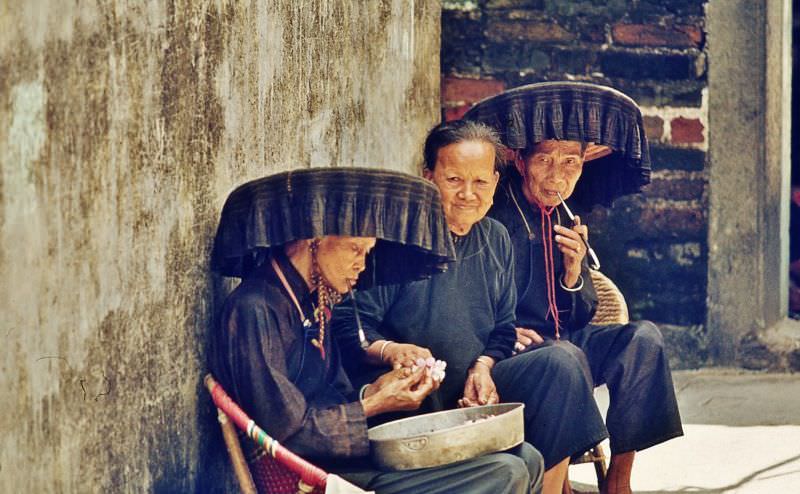
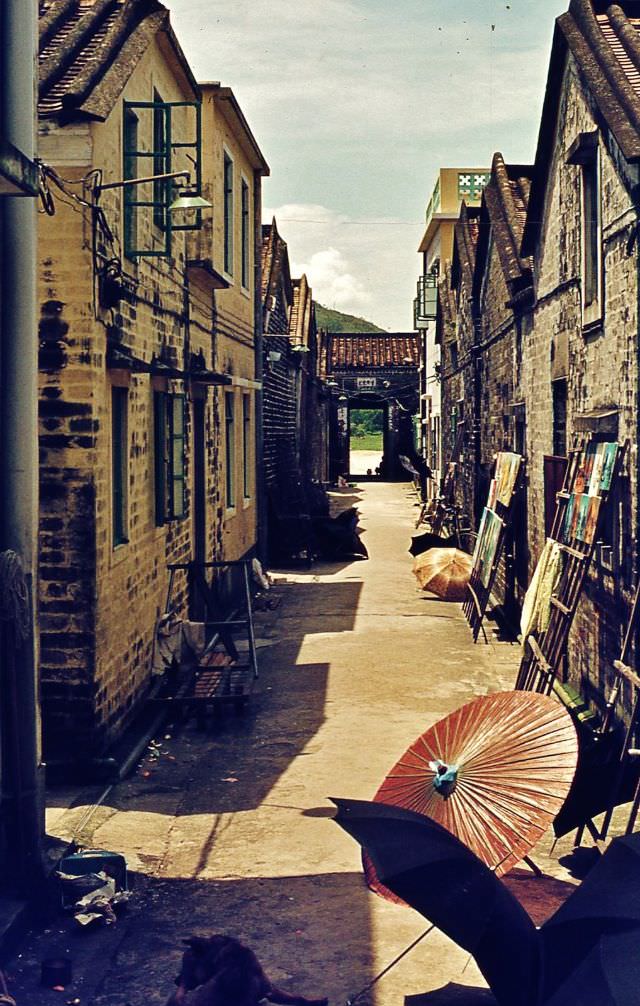
Kam Tin Walled Village, Hong Kong, 1970s
Kat Hing Wai Walled Village, Hong Kong, 1970s
Shanghai Street, Kowloon, 1970s
Man sitting by his rickshaw, 1970s

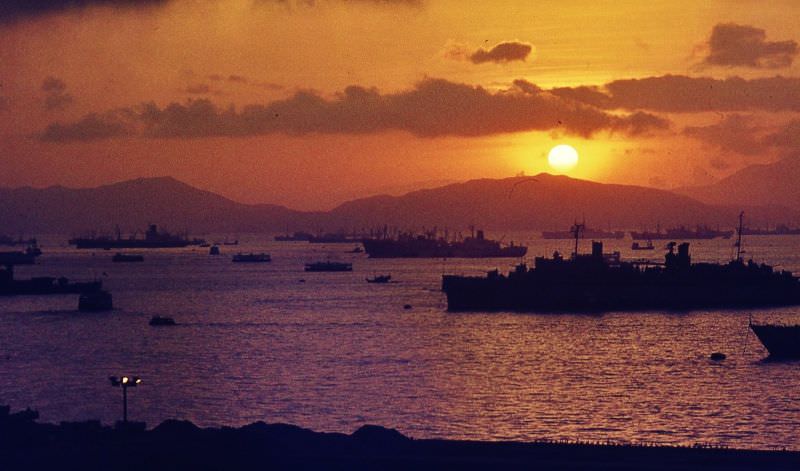
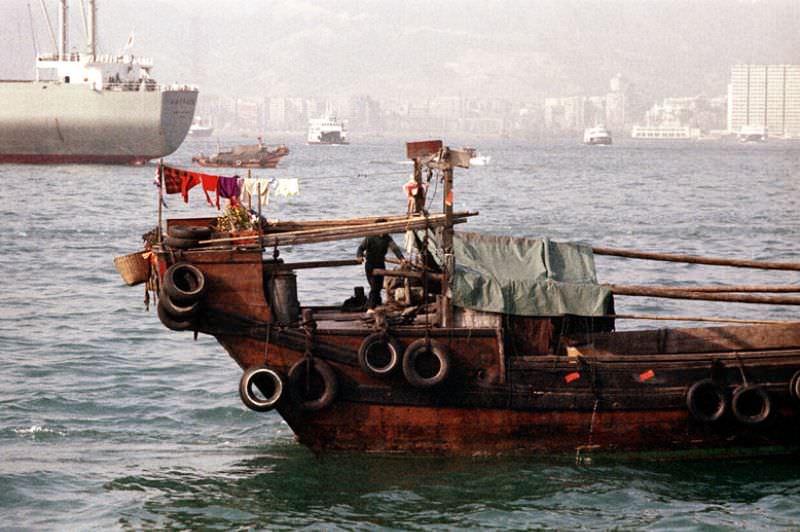
Victoria Harbour remained the beating heart of Hong Kong’s economy. Cargo vessels, fishing boats, and passenger ferries crossed the water constantly. With rising incomes, the city was also becoming a destination. Tourism grew steadily as Hong Kong positioned itself as a commercial and hospitality hub across Asia. US Navy ships docked in the harbor during the Vietnam War era, with sailors arriving for rest and recreation — a regular sight throughout the early part of the decade.
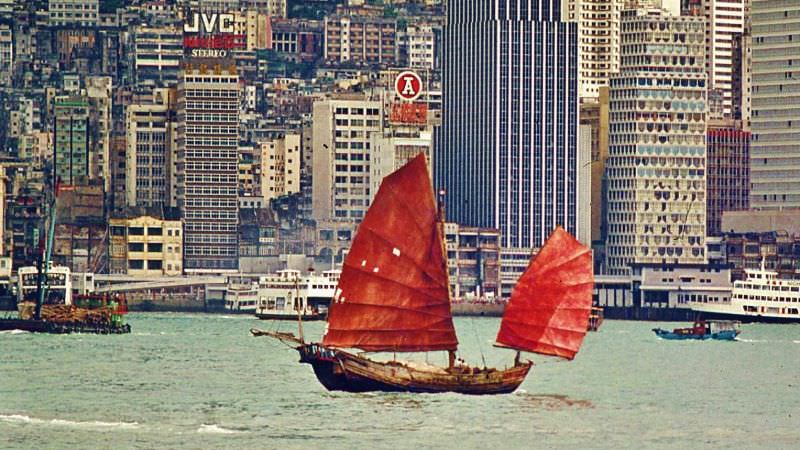
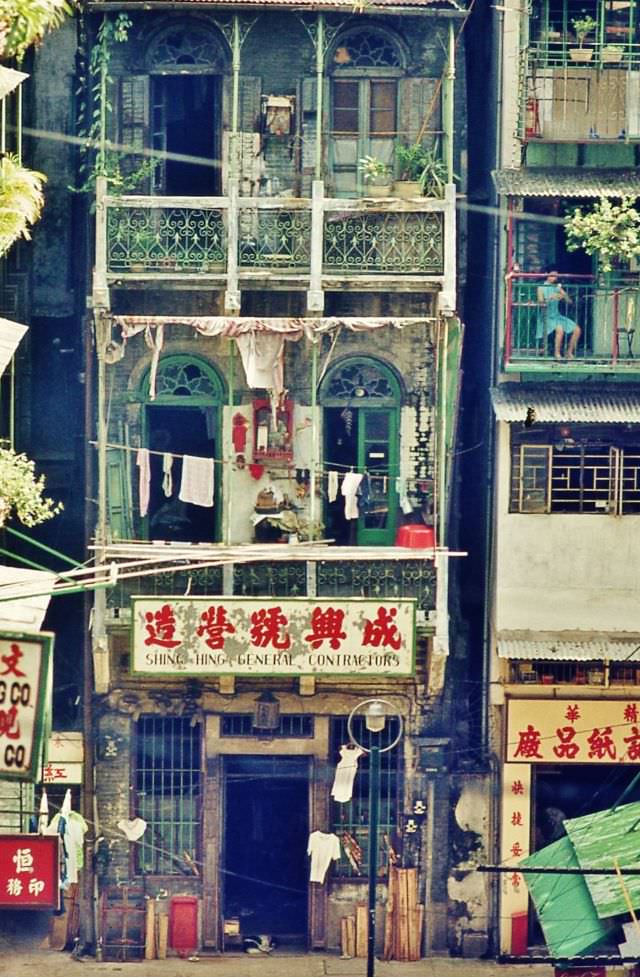
A boat at the harbor, Hong Kong, 1970s
Ornate balconies, Hong Kong, 1970s
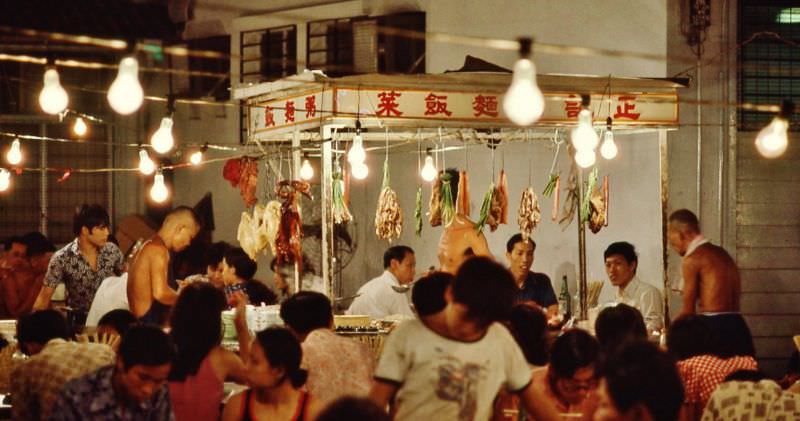
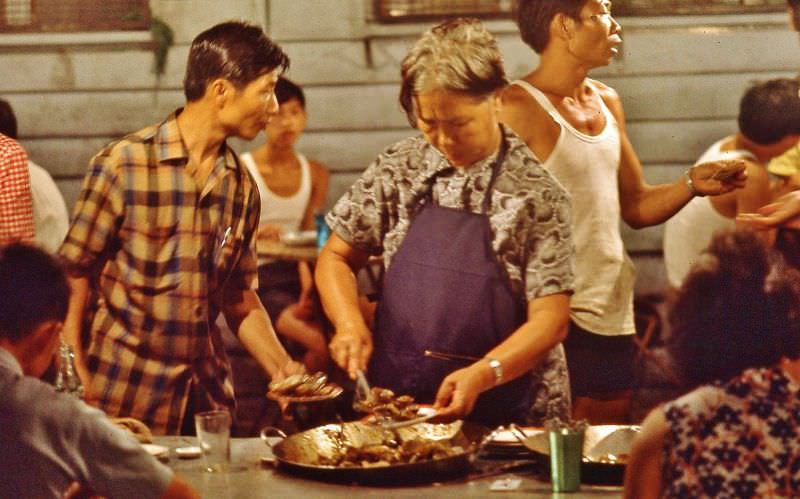
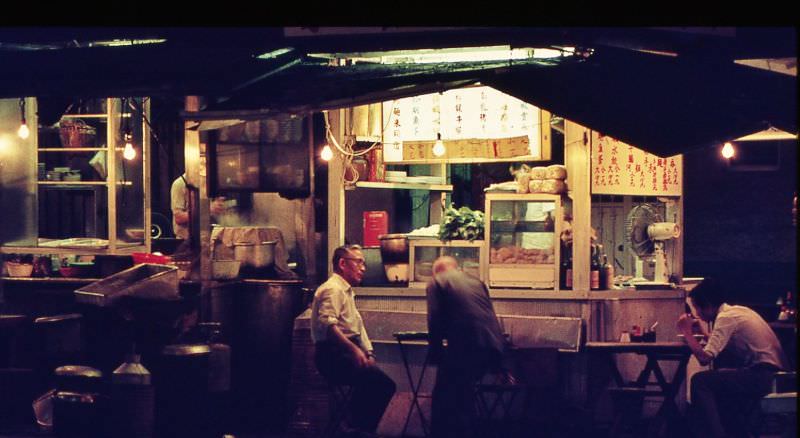
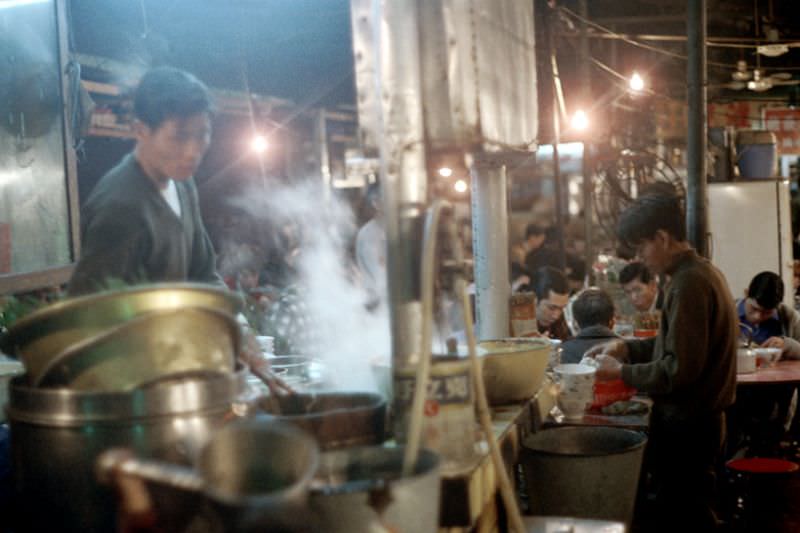
People at a night restaurant, Hong Kong, 1970s
Sai Kung, Hong Kong, 1970s

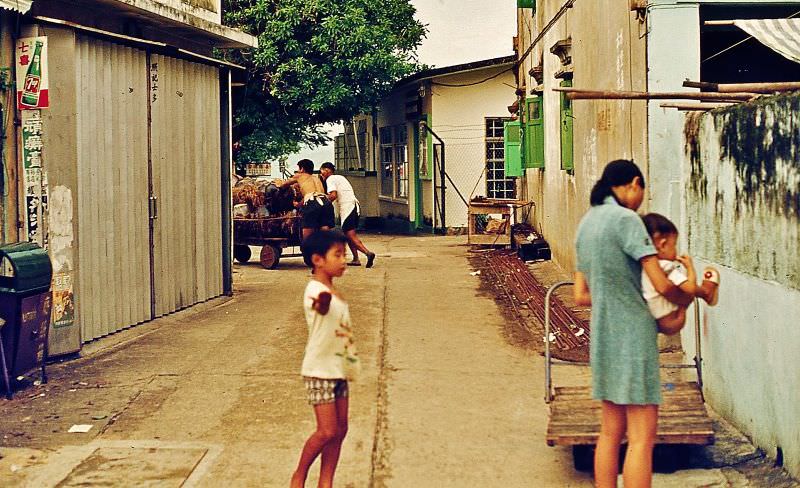
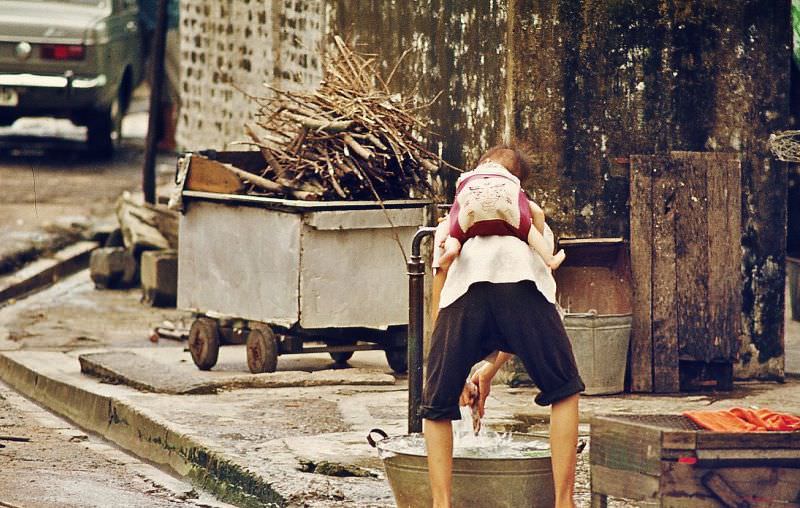
Coastal towns like Sai Kung retained a quieter, fishing-village atmosphere far removed from the density of Kowloon or Central. Meanwhile, scrap collectors, street washerwomen, and manual laborers filled roles that kept the city functioning at a ground level that rarely made headlines but was visible on every block.
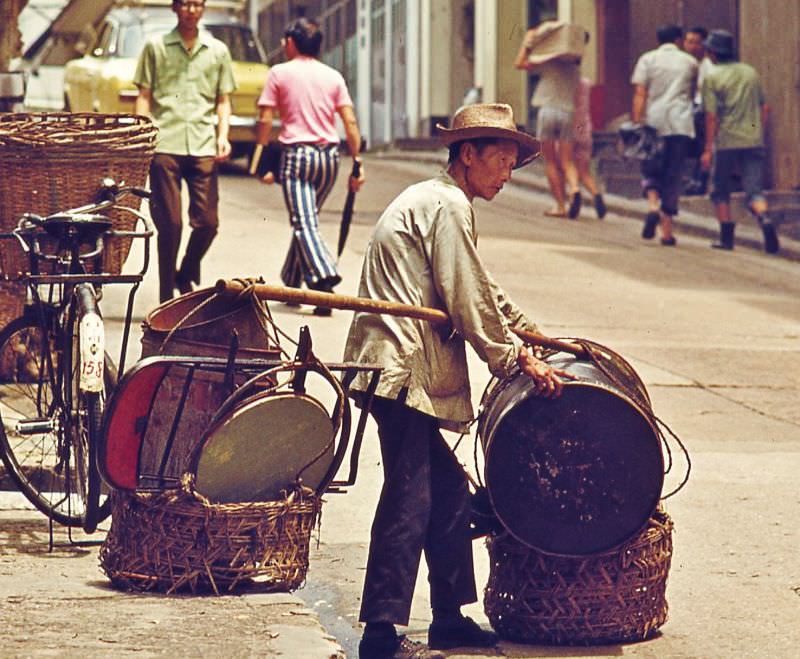
Scrap metal collector takes a rest, Hong Kong, 1970s
Doing the washing, Sheung Shui, Hong Kong, 1970s
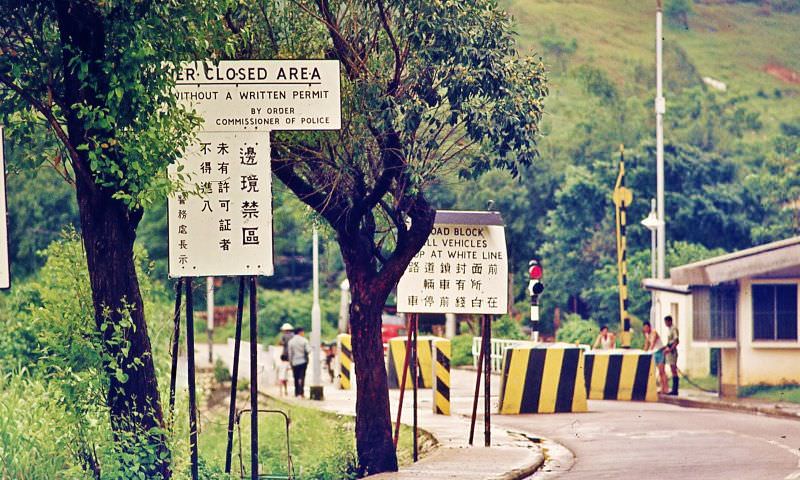
Frontier Closed Area, Sheung Shui, Hong Kong, 1970s
Sheung Shui, Hong Kong, 1970s
Shops and stalls around the Hollywood Road area of Hong Kong, 1970s
Street market at Hollywood Road area, Hong Kong, 1970s
Street market, Hong Kong, 1970s

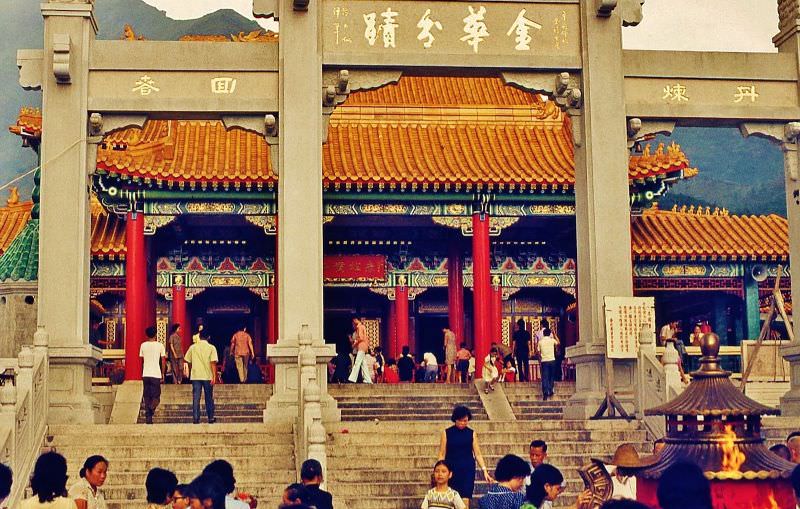
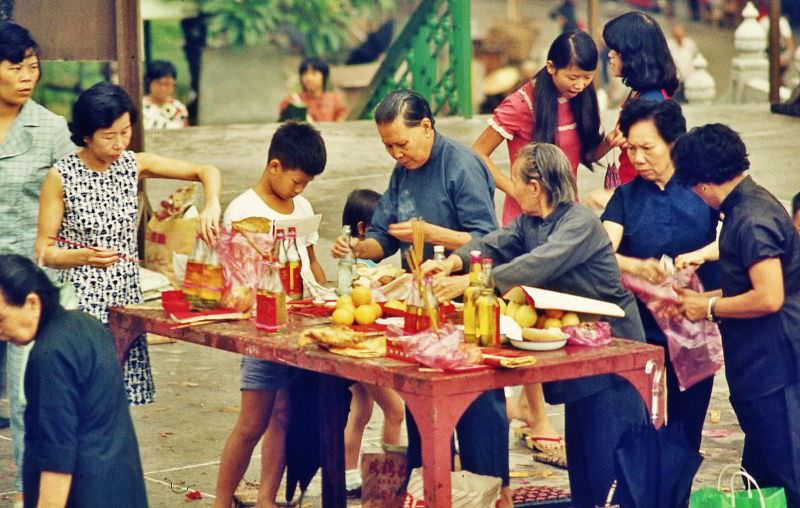
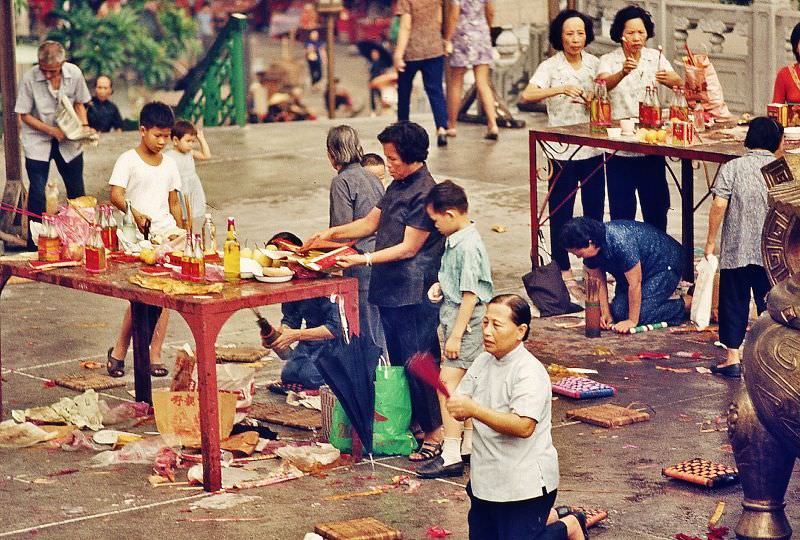
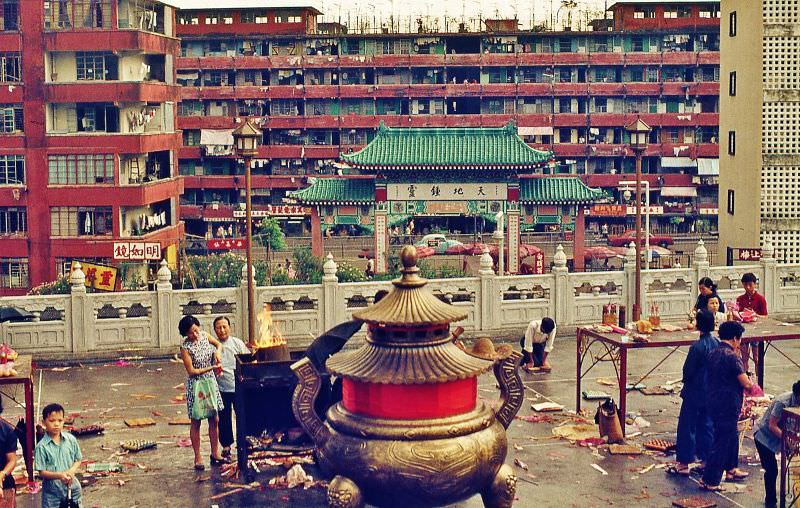
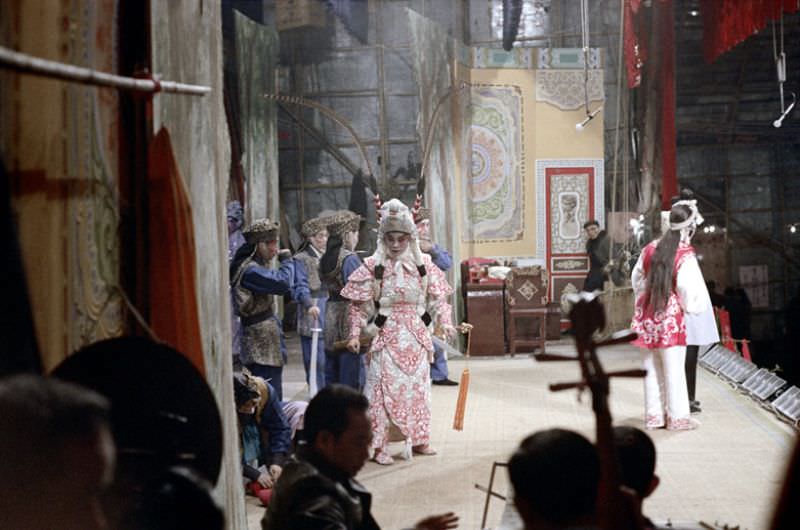
Traditional culture held its ground alongside rapid modernization. Fortune tellers set up near temples and busy street corners, and Chinese opera performances drew audiences in open-air settings. The Wong Tai Sin Temple remained a major religious site, its entrance busy with worshippers seeking guidance from the deity associated with healing and wish-granting.
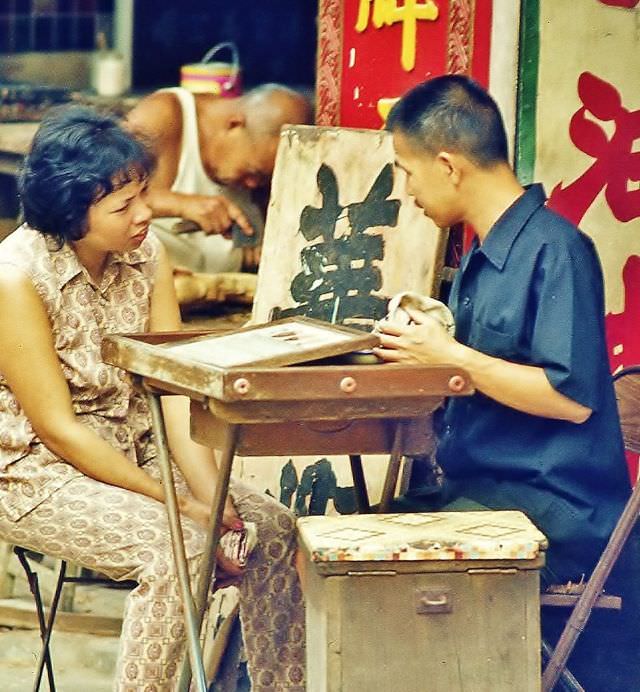
The fortune teller, Hong Kong, 1970s
The Kowloon peninsula opposite Hong Kong Central district, 1970s
The new territories from Hong Kong Peak, 1970s
The north of Hong Kong Island with landfilled areas ready for building, 1970s
US navy ships visiting Hong Kong for R & R during the Vietnam war, 1970s
Wong Tai Sin resettlement flats, Hong Kong, 1970s
Wong Tai Sin Temple entrance, Hong Kong, 1970s

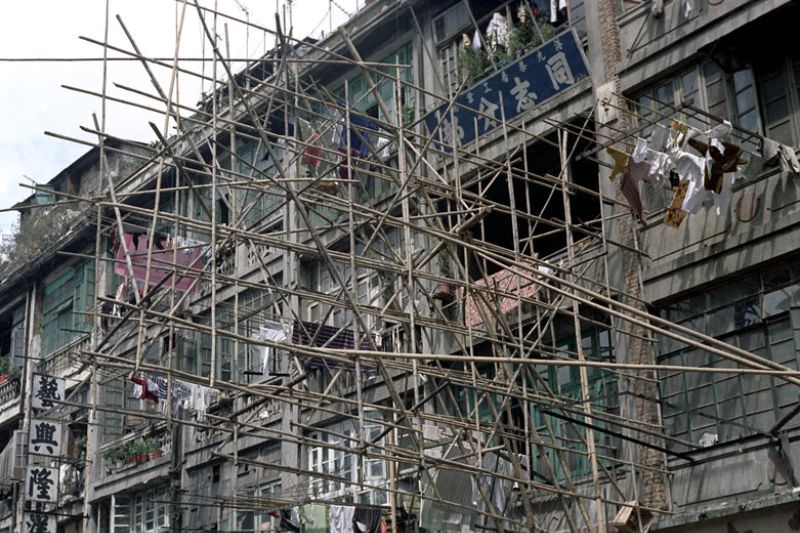
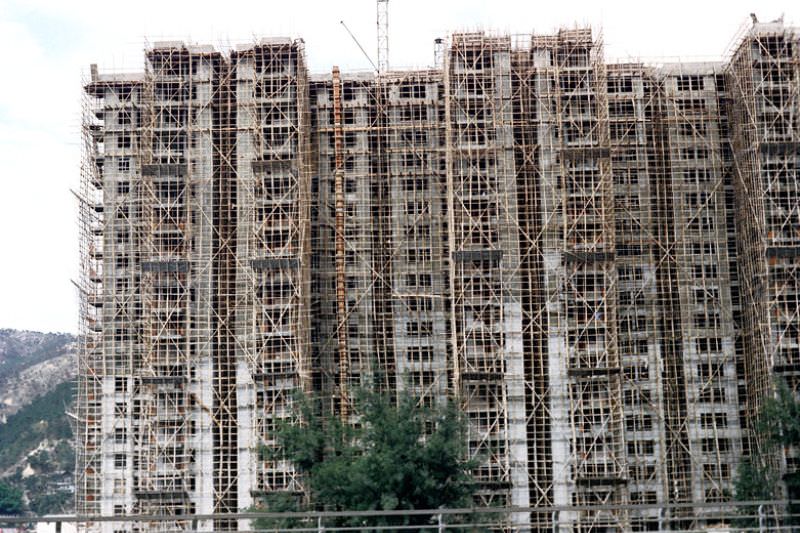
By 1972, construction was reshaping Hong Kong’s skyline at a rapid pace. Bamboo scaffolding — used by local builders rather than metal frames — climbed the sides of new apartment blocks. Landfill projects along the north shore of Hong Kong Island created new land ready for development. In Mong Kok’s Mei Foo Sun Chuen, one of the city’s first large-scale private housing estates was already filling with residents. The first high-rise private estates, including the later Taikoo Shing development, signaled that rising incomes were creating demand for something more than basic public housing.
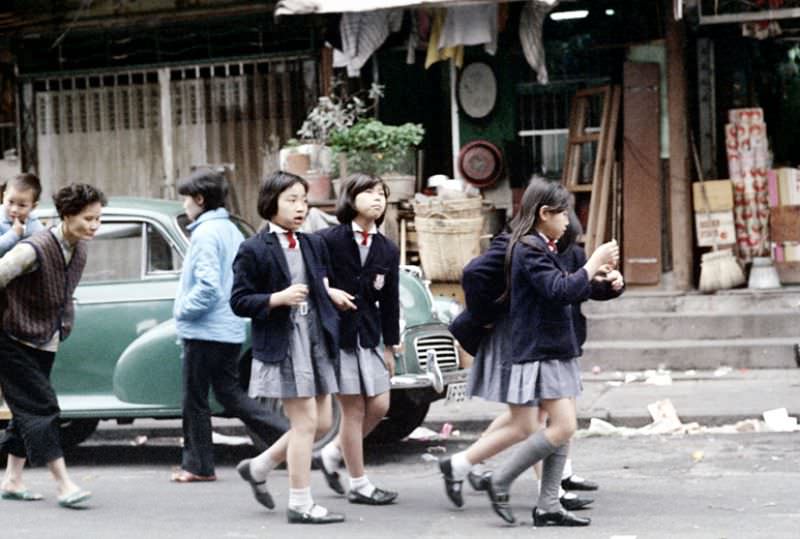
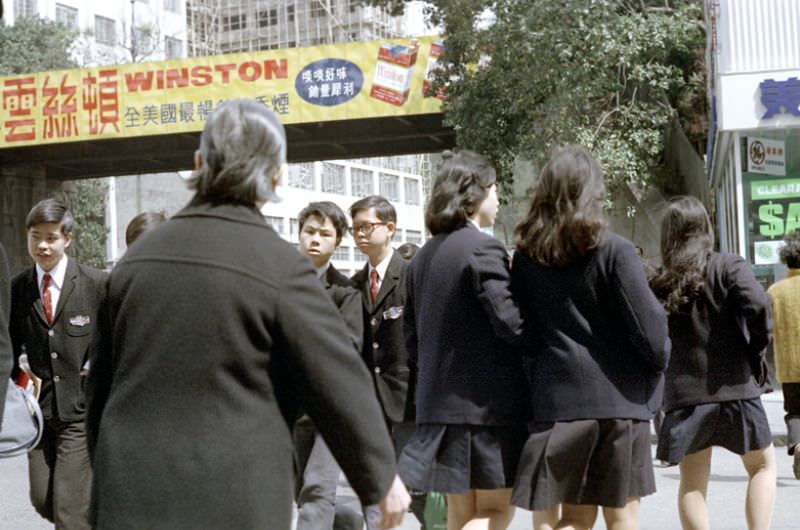
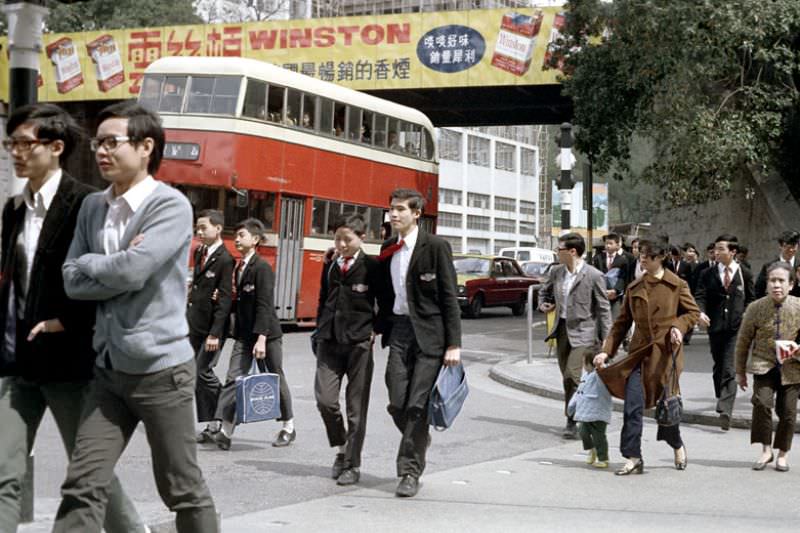
Schoolgirls, Hong Kong, 1972
Schoolgirl, Hong Kong, 1972

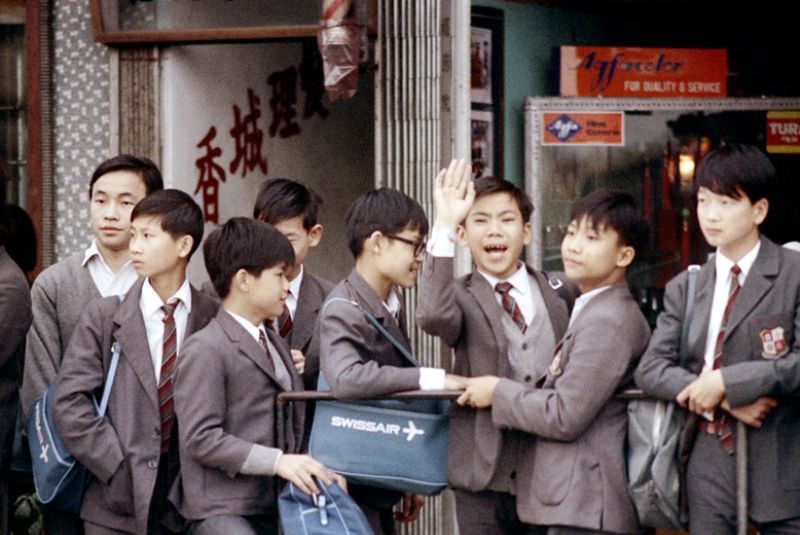
The extension of compulsory schooling was visible on the streets. Uniformed schoolchildren — boys and girls alike — were a common sight across every district. The policy shift meant that children who would previously have entered work or informal learning at a young age now had a guaranteed path through nine years of formal education.
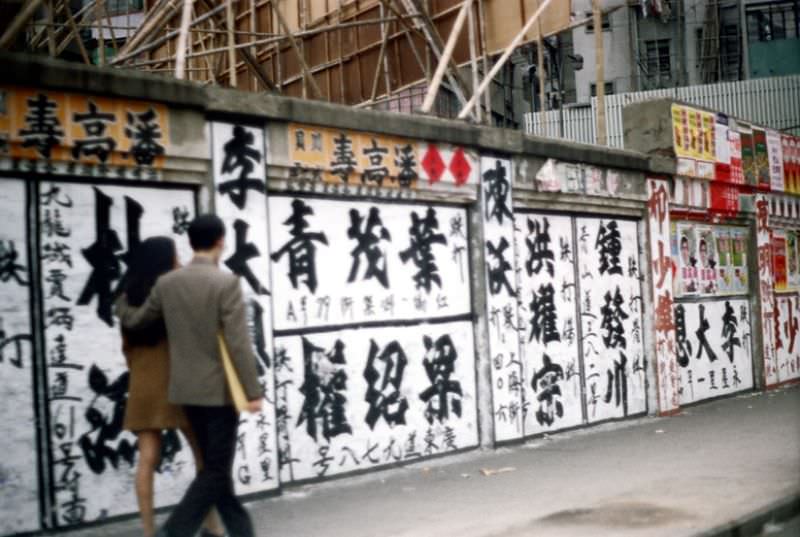
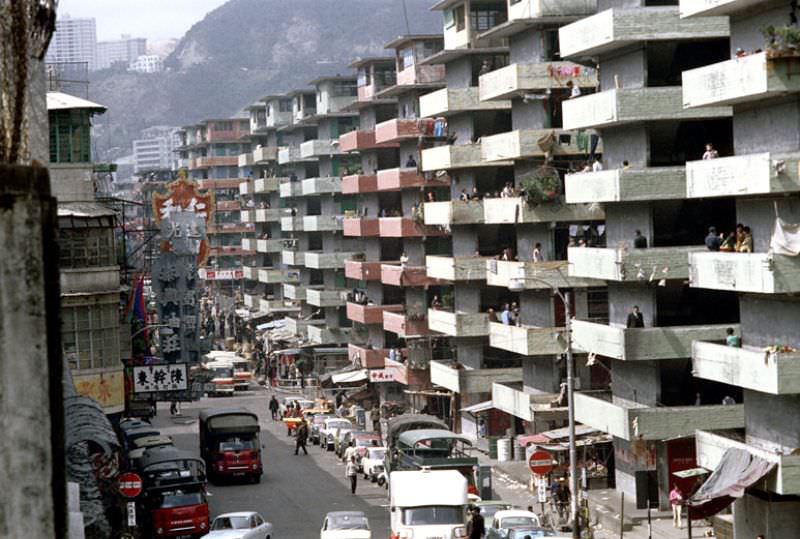
Advertising posters, Hong Kong, 1972
Apartments, Hong Kong, 1972
Argyle Street, Mong Kok, Hong Kong, 1972
Bamboo scaffolding, Hong Kong, 1972
Chinese opera, Hong Kong, 1972
From balconies, Hong Kong, 1972
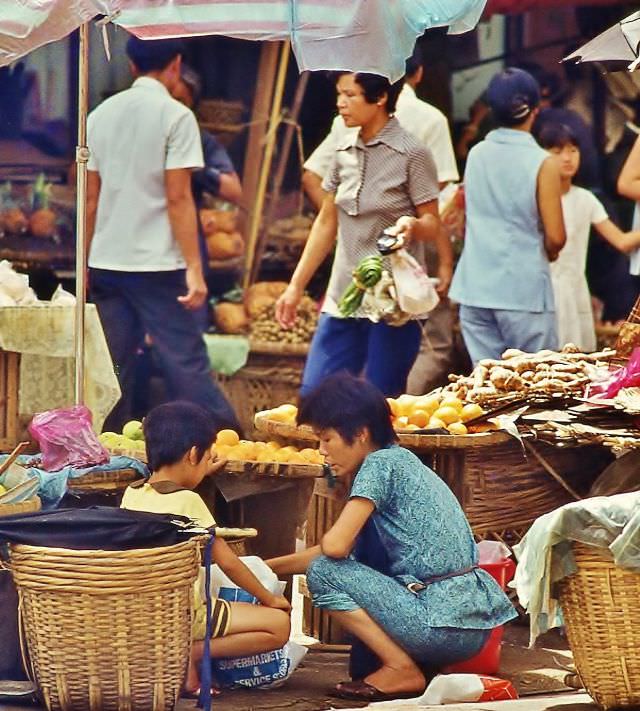
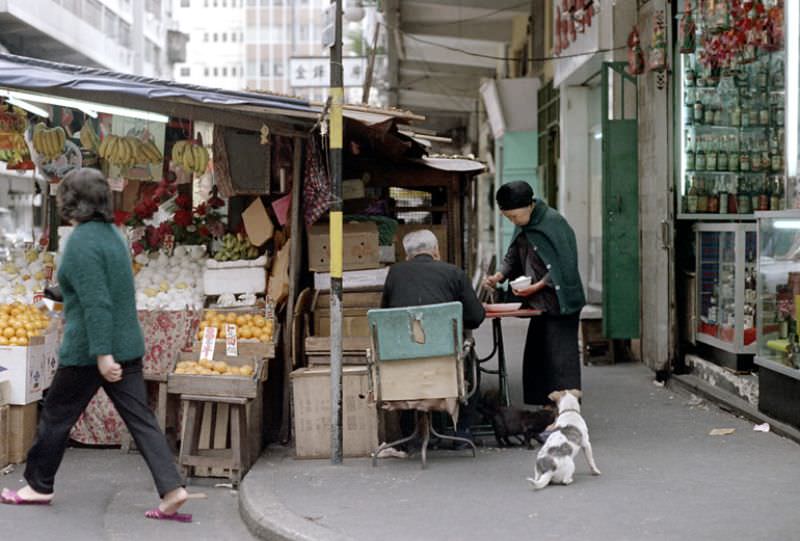
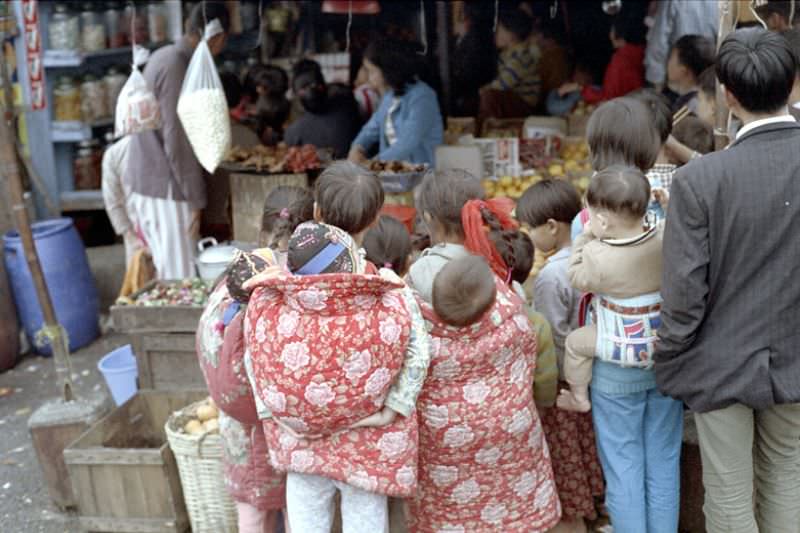
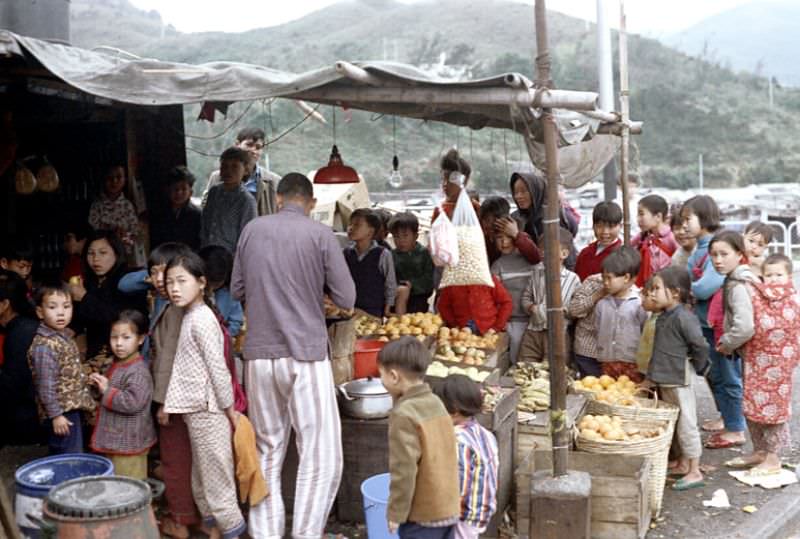
Fruit stand, Hong Kong, 1972

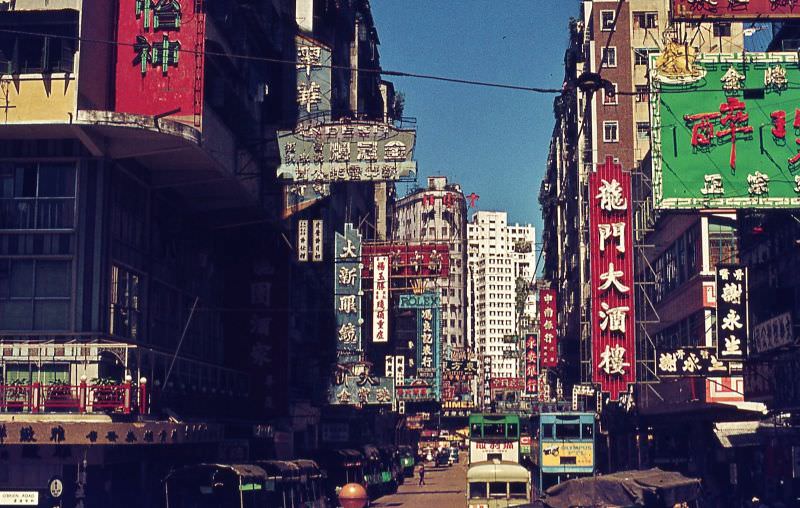
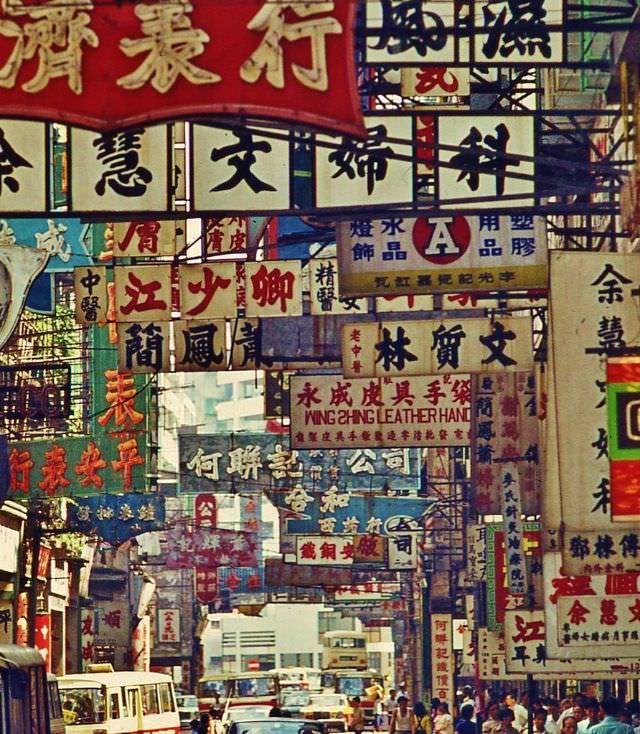
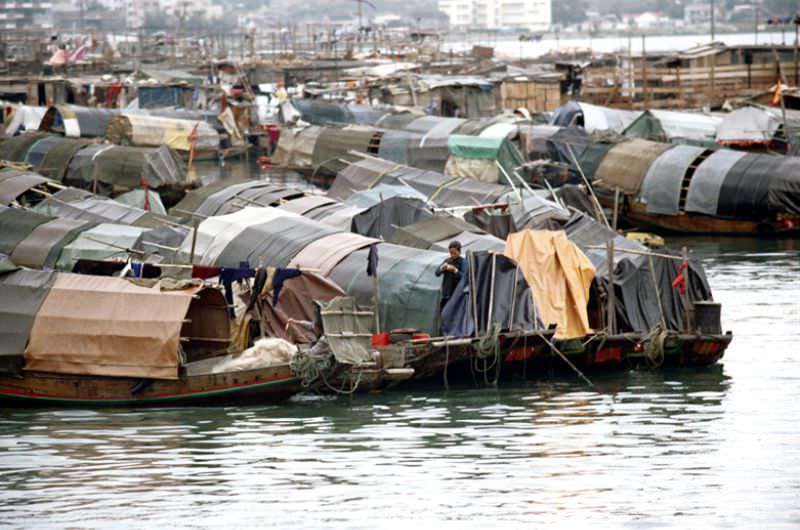
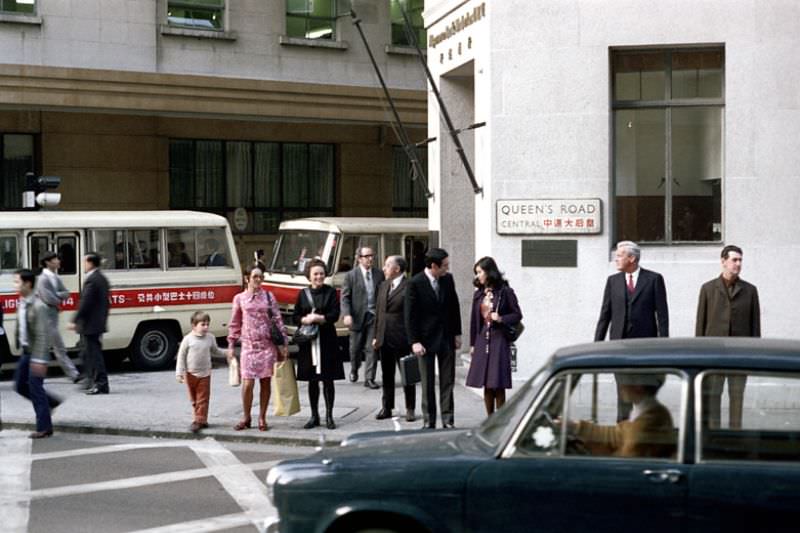
Harbor life in 1972 captured the mix of old and new that defined the decade. Wooden junks and sampans shared the water with modern cargo ships. Houseboats moored along the edges of the harbor were home to entire families. On Queen’s Road Central and along Kowloon’s busiest streets, advertising signs competed for space on building facades, and the sounds of commerce filled the air from dawn until well into the night.
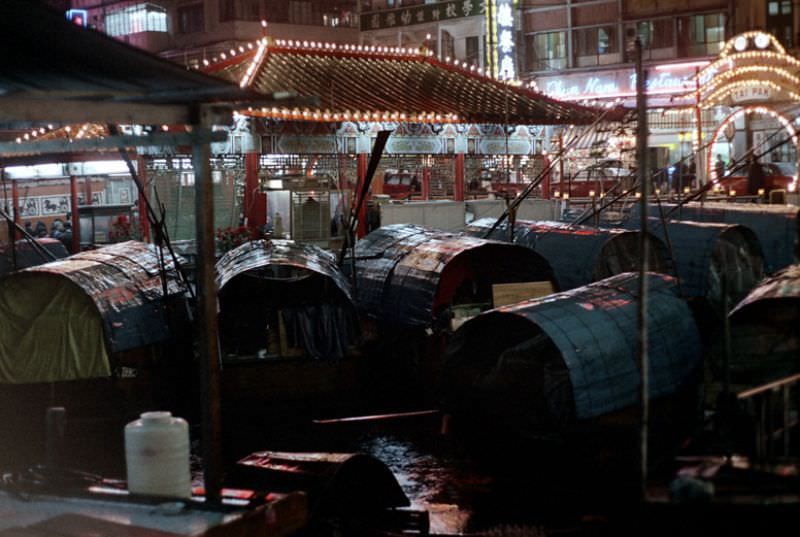
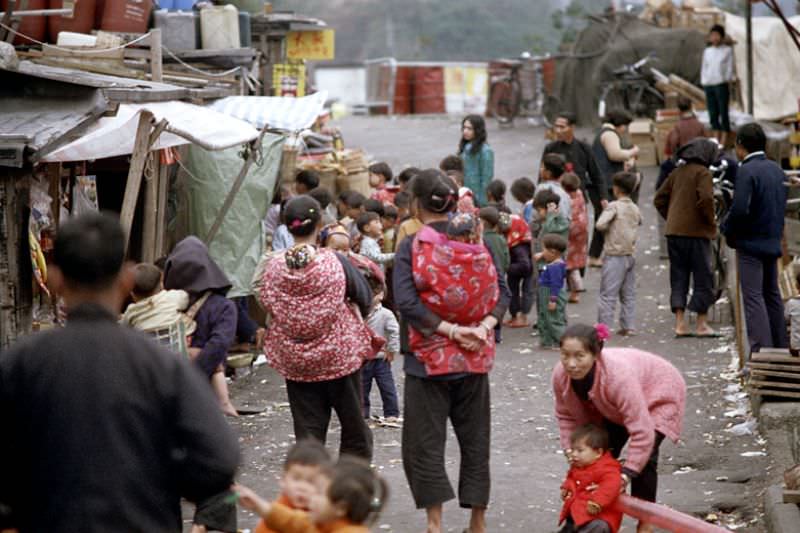
Harbor life, Hong Kong, 1972
Hong Kong street scenes, 1972
Houseboats, Hong Kong, 1972
Kowloon, Hong Kong, 1972
Market, Hong Kong, 1972
Mei Foo Sun Chuen, Hong Kong, 1972
Night life, Hong Kong, 1972

Public housing estates like Shek Kip Mei in Sham Shui Po stood as a direct response to the devastating 1953 squatter fire that left tens of thousands homeless. By 1972, the estate was well-established — a dense grid of concrete blocks where working-class families lived in small but functional flats. The streets around Berwick Street and Shek Kip Mei Street were busy with foot traffic, small shops, and the everyday routines of tens of thousands of residents.
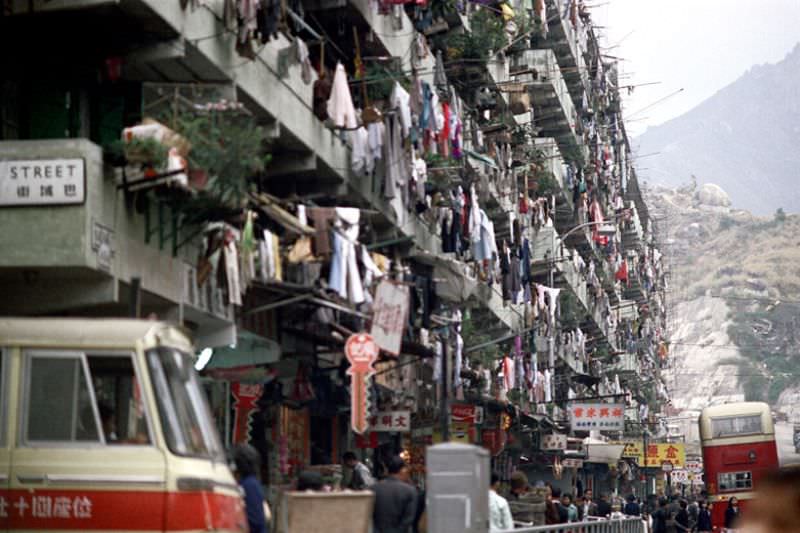
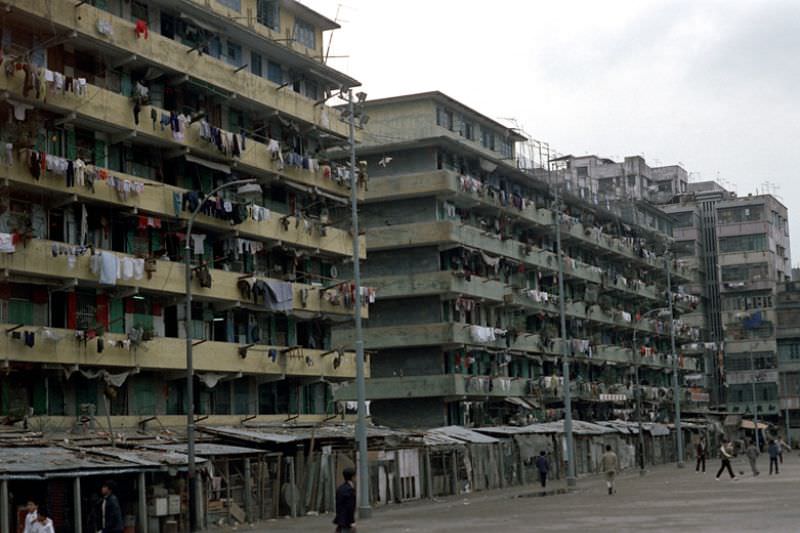
Public housing estate, Berwick Street, Shek Kip Mei, Hong Kong, 1972
Public housing estate, Hong Kong, 1972
Queen's Road Central, Hong Kong, 1972
Queen’s Road Central, Hong Kong, 1972
Rural life, Hong Kong, 1972
Schoolboys, Hong Kong, 1972
Shek Kip Mei estate, Hong Kong, 1972
Shek Kip Mei estate, Sham Shui Po, Hong Kong, 1972
Shek Kip Mei, Hong Kong, 1972
Street barber, Hong Kong, 1972
Street vendor, Hong Kong, 1972
The intersection of Barwick Street and Shek Kip Mei Street in Sham Shui Po, Kowloon, Hong Kong, 1972
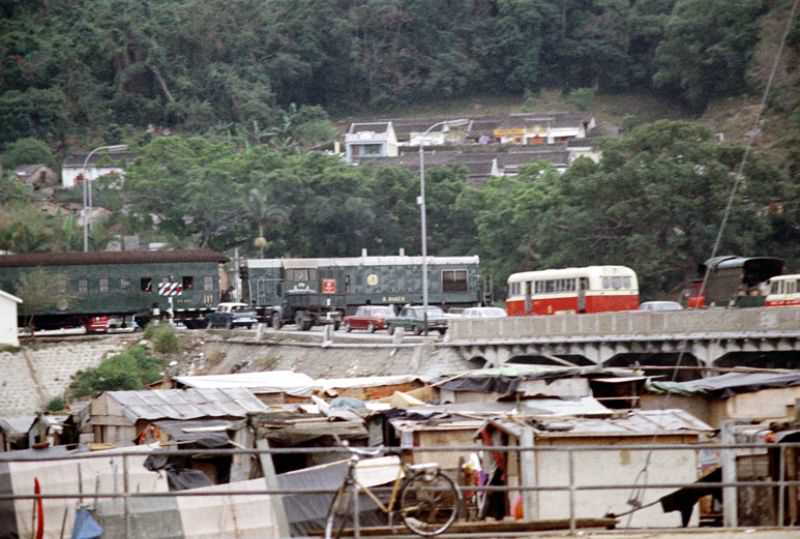
Train crossing, Hong Kong, 1972
Tsuen Wan, Hong Kong, 1972
Victoria Harbour, Hong Kong, 1972
Enjoyed this post? Get new ones in your inbox.

1 thought on “1970s Hong Kong: Fascinating Historical Photos Offer A Glimpse Into Everyday Life”

Leave a Comment

Your email address will not be published. Required fields are marked *

Share this Post 🥺

Please take a moment to share this content. Your support is greatly appreciated! 🙌🙏

Share this Post 🥺

Please take a moment to share this content. Your support is greatly appreciated! 🙌🙏
Scroll to Top
 
Hey Friend, Before You Go.. Please like & follow for more interesting content