Hey There! Before You Go. 😧
Get the best vintage content straight into your inbox!

Don't worry, we don't spam

The Century 21 Exposition: Fascinating Historical Photos from the 1962 Seattle World’s Fair
The Century 21 Exposition — better known as the 1962 Seattle World’s Fair — stands as one of the most ambitious events in Pacific Northwest history. Over the course of six months, it drew 9,609,969 visitors to Seattle, Washington, transforming the city’s identity and placing it on the global stage. The road to opening day was long, but the results were extraordinary.
The idea originated with Seattle City Councilman Al Rochester. In 1955, after generating support from city and state decision-makers, Rochester secured $5,000 to form a commission tasked with researching whether Seattle could realistically host a world’s fair. The answer was yes. In 1957, Seattle voters approved a $7.5 million fairground bond, and the state legislature matched that figure. With funding secured, the Century 21 Commission lobbied heavily for official recognition from the International Bureau of Expositions, which granted certification in 1960. That stamp of approval was critical — it gave fair organizers the credibility they needed to attract international exhibitors and major American corporations.

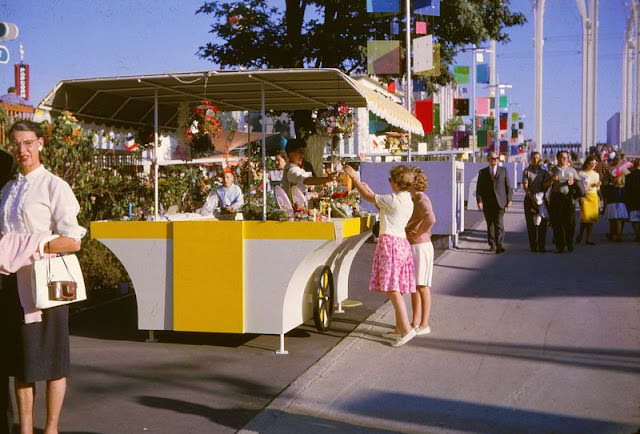
Buying flowers at the 1962 Seattle World's Fair
Buying flowers at the 1962 Seattle World’s Fair
Major American companies jumped at the opportunity. Ford Motor Company, Boeing, and Bell Telephone all established exhibits in the fair’s marketplace section, recognizing that millions of fair-goers represented an unmatched audience. The grounds buzzed with the energy of corporate ambition meeting public curiosity, and visitors moved between pavilions representing science, industry, culture, and commerce.

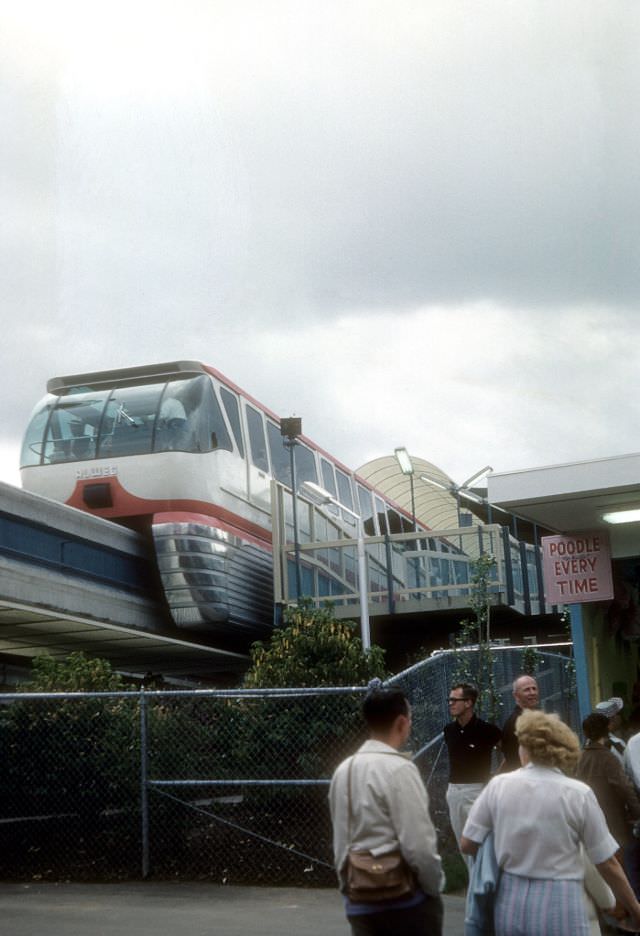
Poodle or Death Every Time" - the monorail during the 1962 Seattle World's Fair
Poodle or Death Every Time” – the monorail during the 1962 Seattle World’s Fair
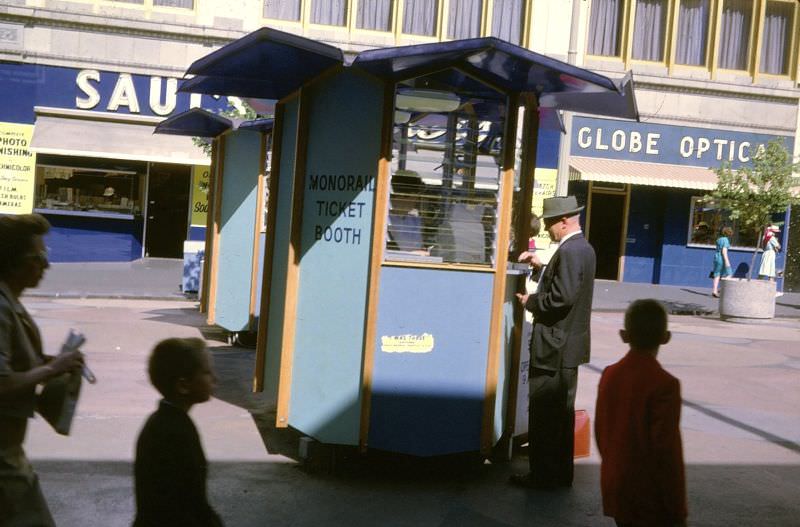
One of the most recognizable features of the fairgrounds was the monorail, a sleek elevated rail system that connected the exposition site to downtown Seattle. It became an icon of the fair’s futuristic theme and carried enormous crowds throughout the event’s run.

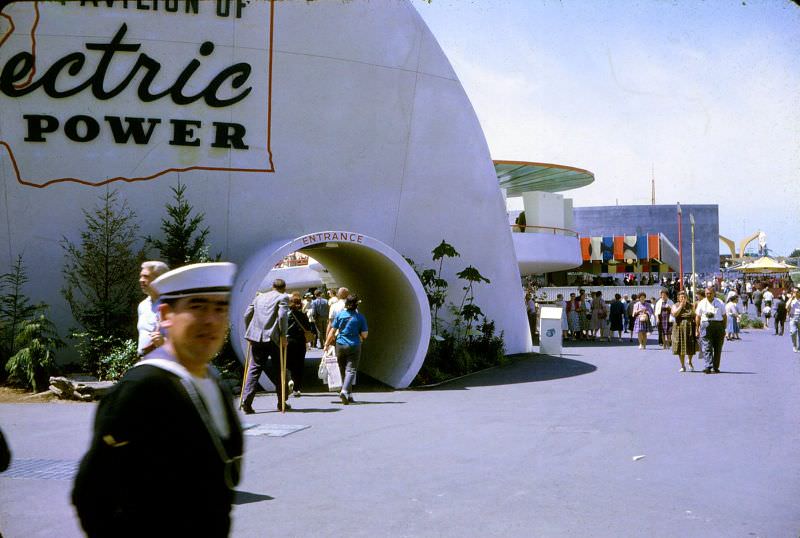
A sailor walks by as a man on crutches enters the Pavilion of Electric Power at the 1962 Seattle World's Fair
A sailor walks by as a man on crutches enters the Pavilion of Electric Power at the 1962 Seattle World’s Fair
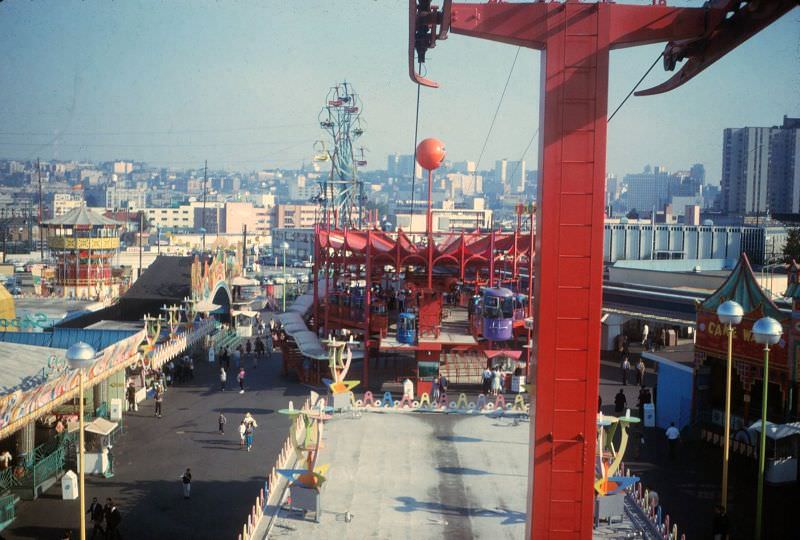
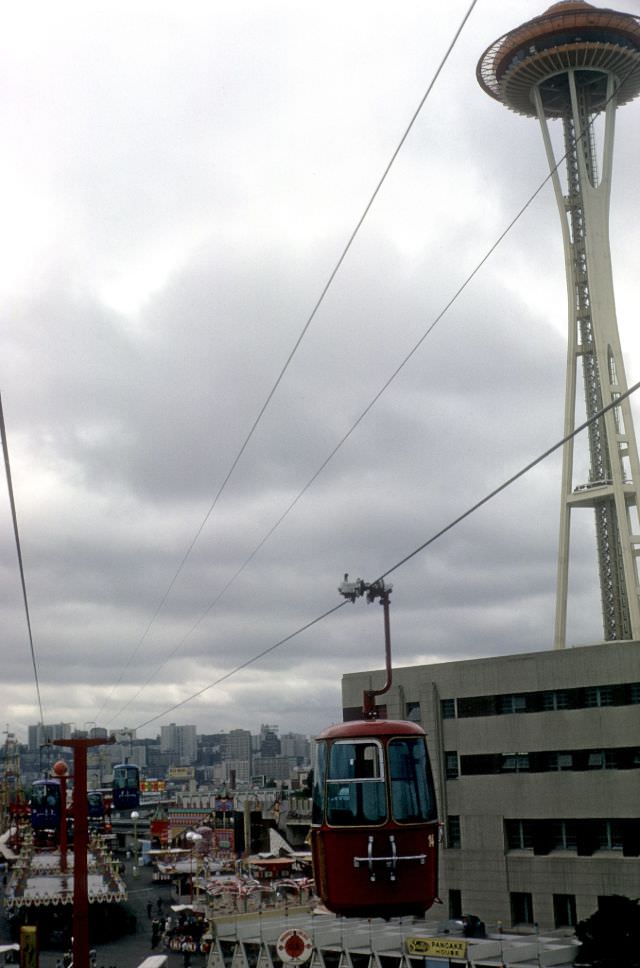
A view of the gateway from the Union 76 Skyride at the 1962 Seattle World's Fair
A view of the gateway from the Union 76 Skyride at the 1962 Seattle World’s Fair
The opening ceremony on April 21, 1962 was designed to impress. Exposition President Joseph Gandy officially opened Century 21 with 538 clanging bells, 2,000 balloons released into the air, and 10 F-102 fighter jets roaring overhead. The spectacle set the tone for everything that followed.

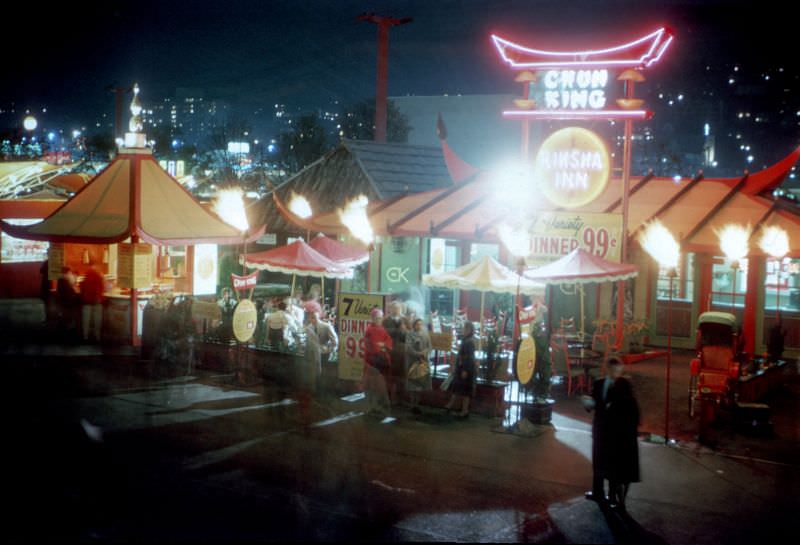
Chun King Chinese food stand on the World's Fair grounds during the 1962 World's Fair
Chun King Chinese food stand on the World’s Fair grounds during the 1962 World’s Fair

Food vendors and dining options spread across the grounds, catering to the steady stream of visitors who spent full days exploring the site. The fairgrounds were a self-contained world, with restaurants, food stands, and entertainment venues operating side by side with educational and commercial exhibits.

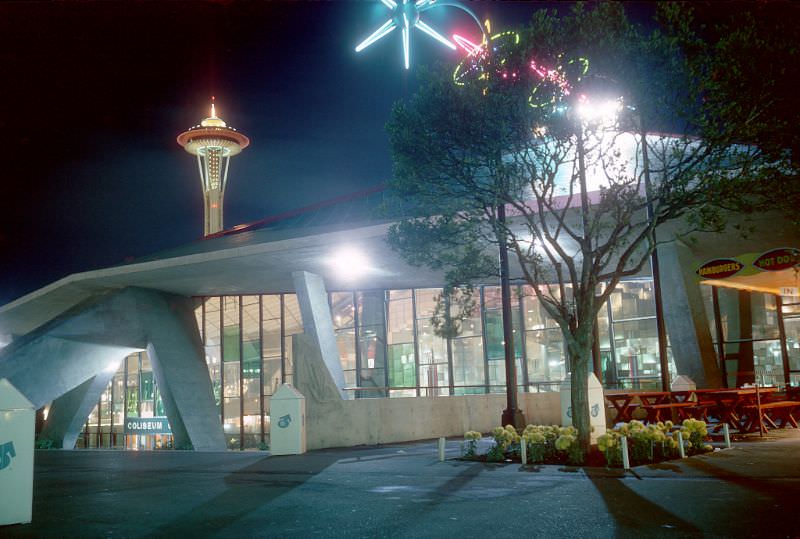
Coliseum 21 and the Space Needle at the 1962 Seattle World's Fair
Coliseum 21 and the Space Needle at the 1962 Seattle World’s Fair
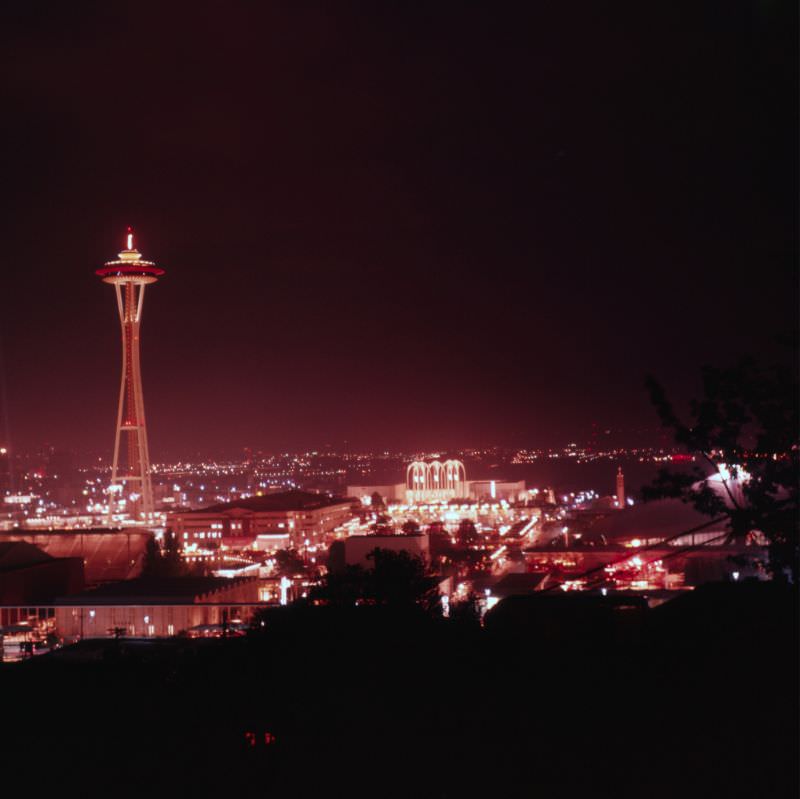
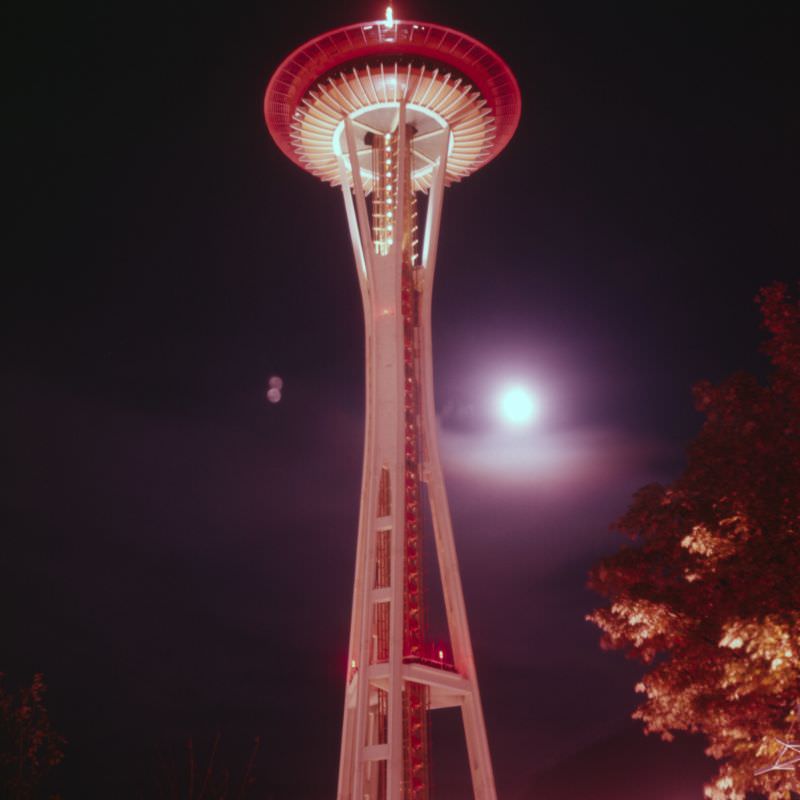
The Space Needle was built specifically for the fair and became its defining symbol. Rising 605 feet above the ground, the structure was visible from nearly every corner of the fairgrounds and quickly became the most photographed site at the exposition. Alongside it stood Coliseum 21 — the building now known as Climate Pledge Arena — which hosted large-scale events and exhibitions throughout the fair’s run.

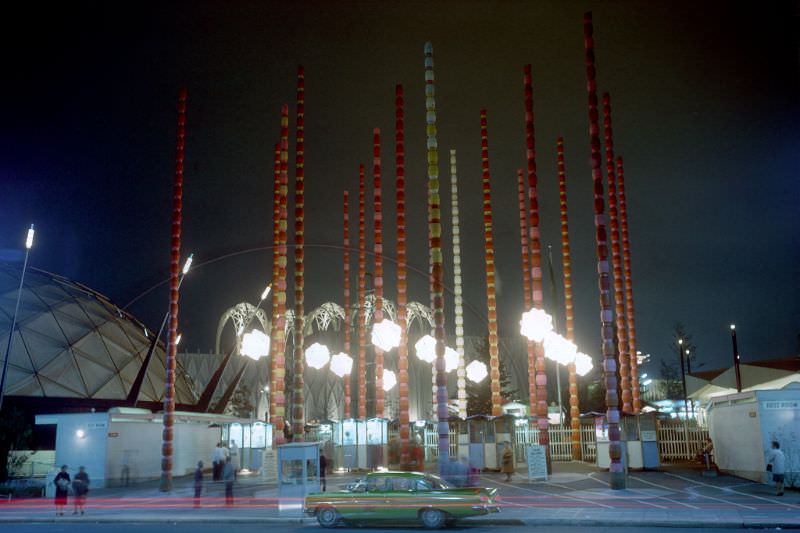
Entrance gate at Night at the 1962 Seattle World's Fair
Entrance gate at Night at the 1962 Seattle World’s Fair
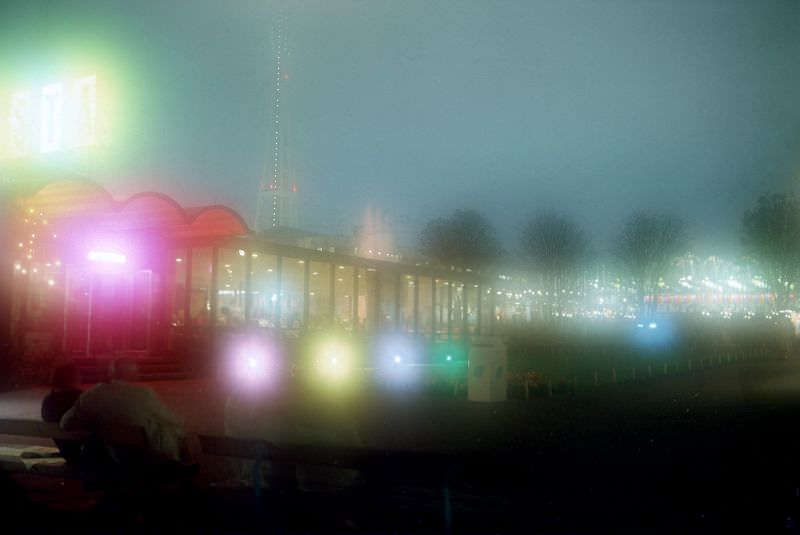
Fiesta Restaurant on a foggy night at the 1962 Seattle World's Fair
Fiesta Restaurant on a foggy night at the 1962 Seattle World’s Fair
After dark, the fairgrounds took on a completely different character. Lit up against the Seattle skyline, the exposition ran a packed schedule of evening entertainment. Over the six-month run, the fair featured musical acts, orchestras, dance companies, art exhibitions, singers, and comedians. The entertainment roster was extensive and drew audiences who returned to the grounds multiple times.

Monorail Ticket Booth at the 1962 Seattle World's Fair
Monorail Ticket Booth at the 1962 Seattle World’s Fair
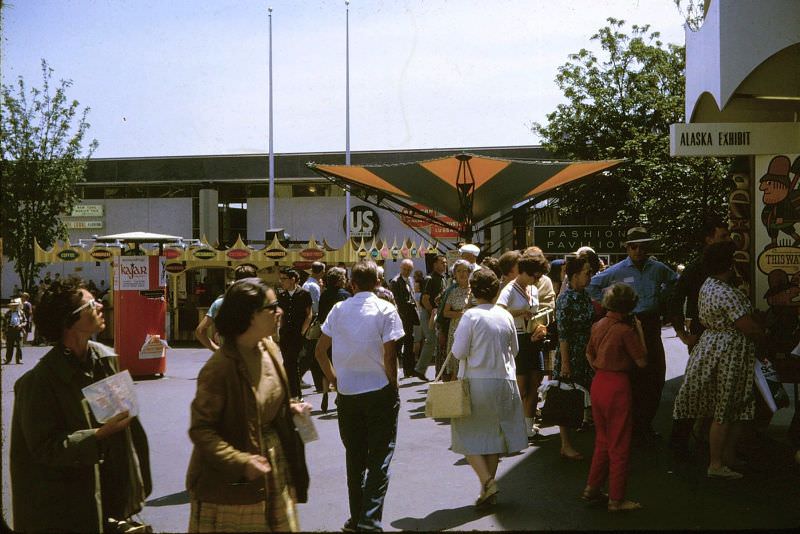
Patron's walking the World's Fair near the Alaska Exhibit on a summer's day in 1962
Patron’s walking the World’s Fair near the Alaska Exhibit on a summer’s day in 1962

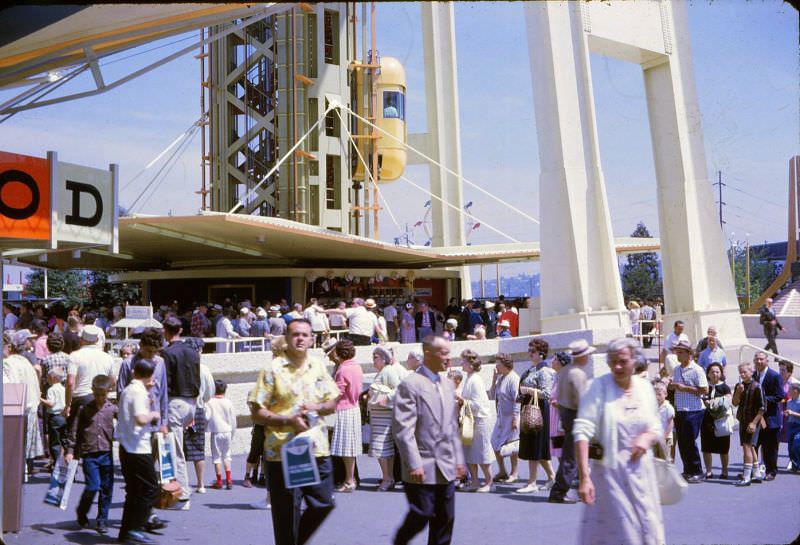
Exhibits representing different regions and nations drew visitors in large numbers. The Alaska exhibit reflected the state’s recent admission to the union in 1959, and it resonated with fair-goers curious about America’s newest and most remote state. On warm summer days, the grounds were packed with families, couples, and solo visitors moving from one attraction to the next.

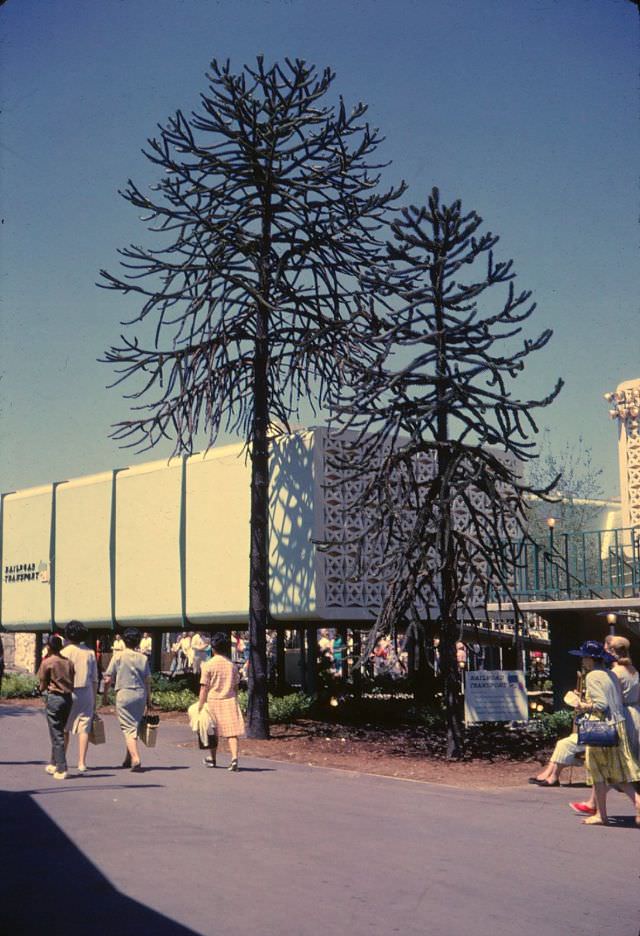
Railroad Transport Building at the 1962 Seattle World's Fair
Railroad Transport Building at the 1962 Seattle World’s Fair
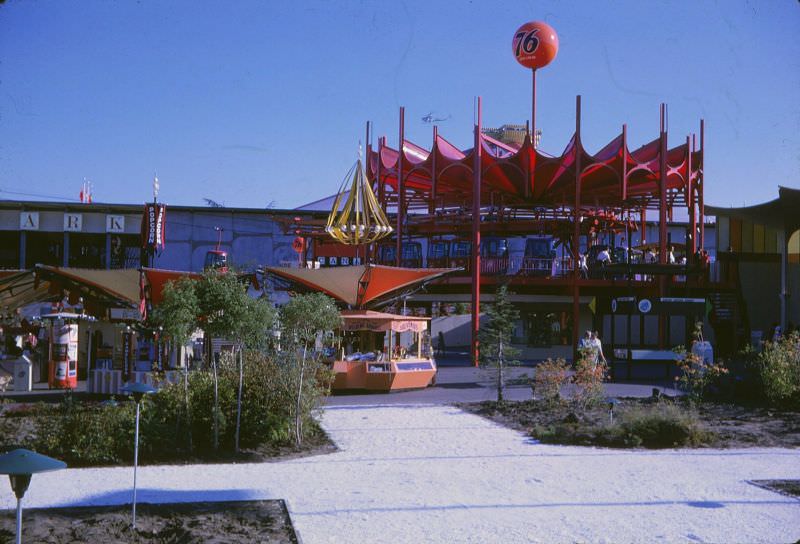
Transportation was a major theme at Century 21. The Railroad Transport Building showcased the role of rail in American industry and commerce — a fitting exhibit given Seattle’s history as a major rail hub on the Pacific coast. The Union 76 Skyride offered visitors a bird’s-eye view of the entire fairgrounds, giving a sense of just how expansive the exposition was.

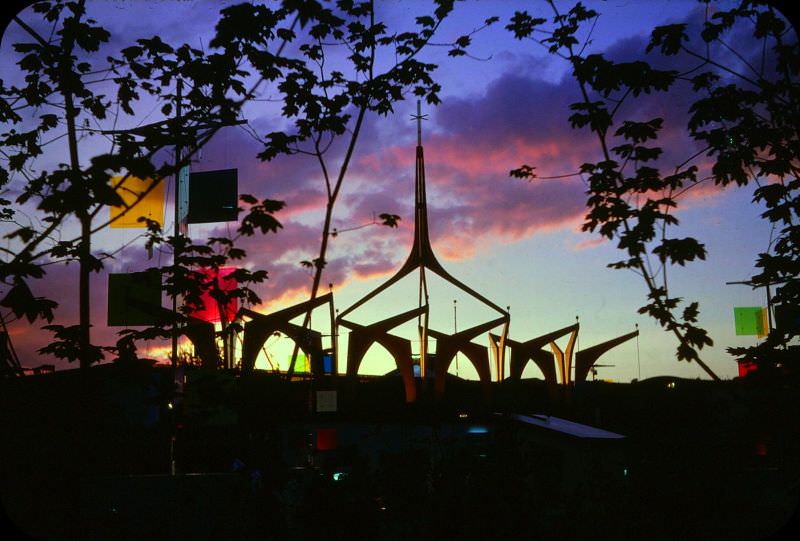
The Christian Pavilion as the sun sets on a June day at the 1962 Seattle World's Fair
The Christian Pavilion as the sun sets on a June day at the 1962 Seattle World’s Fair
The fair at night at the 1962 Seattle World's Fair
The fair at night at the 1962 Seattle World’s Fair
The celebrity presence at the fair was substantial. Elvis Presley arrived on the grounds to film scenes for his movie “It Happened at the World’s Fair,” bringing Hollywood directly to Seattle. Vice President Lyndon Johnson attended as an official guest, while Walt Disney and Prince Philip of Great Britain visited as tourists. Their presence reinforced the fair’s status as a genuinely international event.

The fairgrounds at the 1962 Seattle World's Fair. The building on the left in the very front is the Christian Pavilion
The fairgrounds at the 1962 Seattle World’s Fair. The building on the left in the very front is the Christian Pavilion
The interior of Washington State Coliseum (now known as Key Arena) during the 1962 Seattle World's Fair
The interior of Washington State Coliseum (now known as Key Arena) during the 1962 Seattle World’s Fair
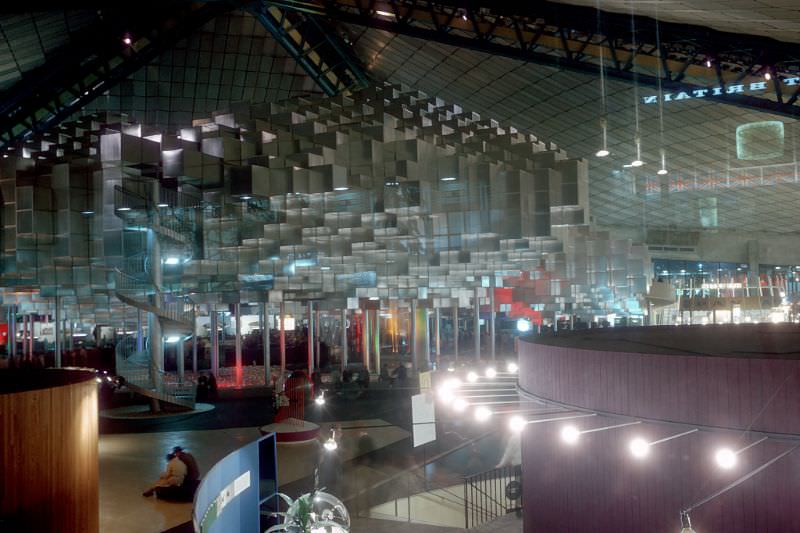
The Washington State Coliseum served as one of the largest indoor venues on the grounds. Its cavernous interior hosted exhibitions and events that required enormous floor space, making it one of the most versatile structures built for the fair. The building remained standing long after the exposition closed and continued to serve Seattle for decades.

The Science Pavilion arches during the 1962 World's Fair in Seattle, Washington
The Science Pavilion arches during the 1962 World’s Fair in Seattle, Washington

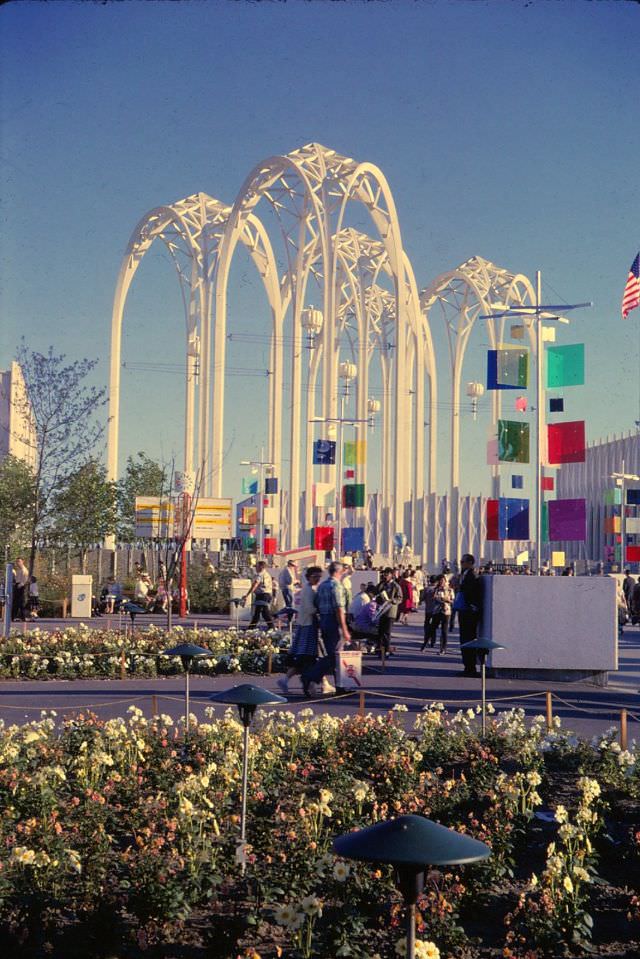
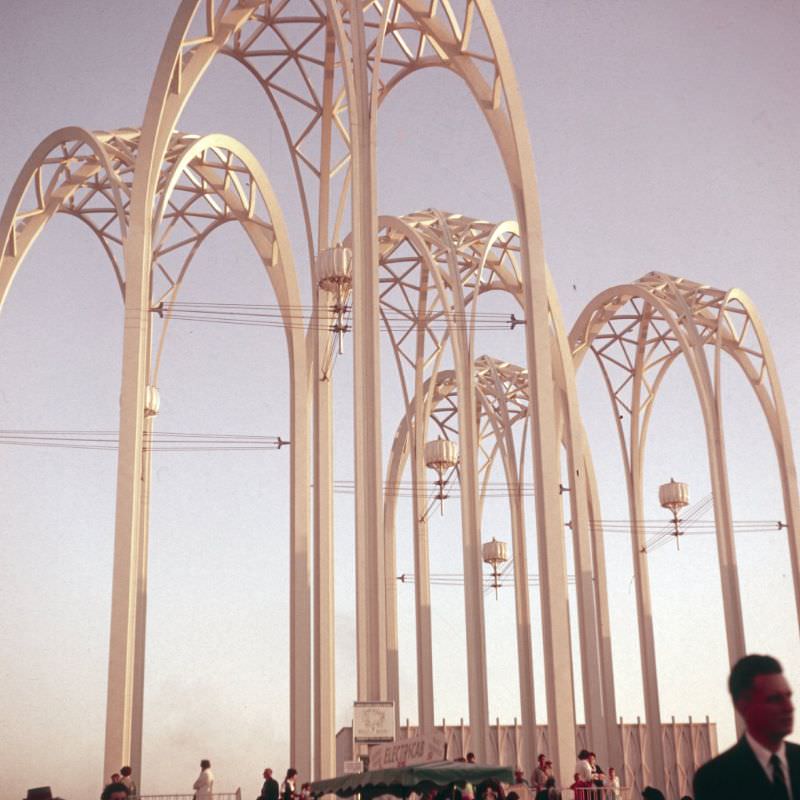
The U.S. Science Pavilion was one of the most visually striking structures at the entire fair. Its soaring white arches were designed by architect Minoru Yamasaki and created an instantly recognizable silhouette. The pavilion housed exhibits focused on science and technology, reflecting the broader national obsession with space exploration and innovation that defined the early 1960s.

The Skyride at the 1962 Seattle World's Fair
The Skyride at the 1962 Seattle World’s Fair
The Space Needle at the 1962 Seattle World's Fair
The Space Needle at the 1962 Seattle World’s Fair
The Space Needle drew lines of visitors every single day. Its observation deck and rotating restaurant sat at the top of a structure that engineers designed to withstand winds of up to 200 miles per hour and earthquakes measuring 9.1 on the Richter scale. For millions of fair-goers, a trip to the top was the defining experience of their visit to Century 21.

The Union 76 Skyride at the 1962 Seattle World's Fair
The Union 76 Skyride at the 1962 Seattle World’s Fair
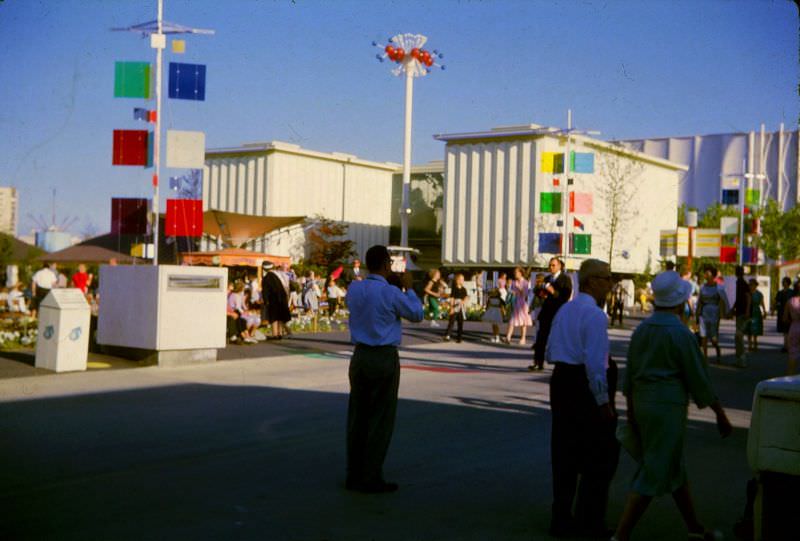
Tourists wander the grounds of the Century 21 Exposition at the 1962 World's Fair in Seattle, Washington
Tourists wander the grounds of the Century 21 Exposition at the 1962 World’s Fair in Seattle, Washington

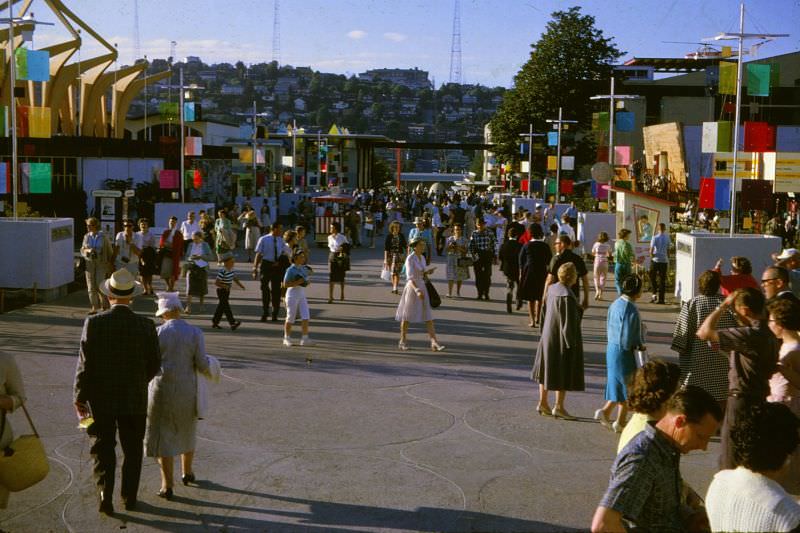
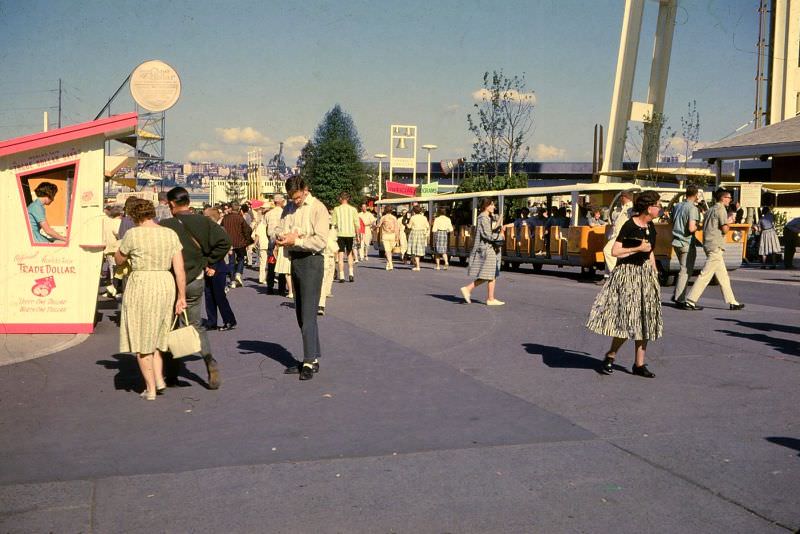
Day after day, tourists from across the country and around the world filled the pathways of the Century 21 Exposition. They came from different backgrounds and with different interests, but the fair offered something for nearly everyone — science, food, art, commerce, and spectacle all packed into a single site in Seattle’s Lower Queen Anne neighborhood.

Trade Dollar Booth at the 1962 Seattle World's Fair
Trade Dollar Booth at the 1962 Seattle World’s Fair

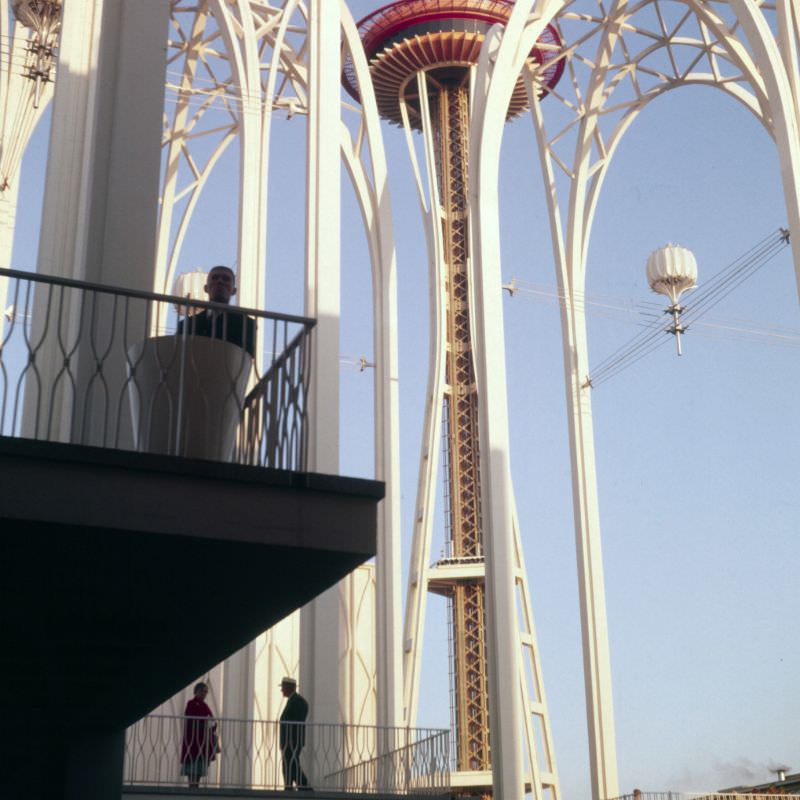
U.S. Science Pavilion arches and Space Needle at the 1962 Seattle World's Fair
U.S. Science Pavilion arches and Space Needle at the 1962 Seattle World’s Fair
U.S. Science Pavilion arches at the 1962 Seattle World's Fair
U.S. Science Pavilion arches at the 1962 Seattle World’s Fair

The pairing of the Science Pavilion arches and the Space Needle in the same sightline became the defining image of the fair. Together, they told the story of what Century 21 was about — a city and a country looking forward, investing in science, technology, and a vision of the future.

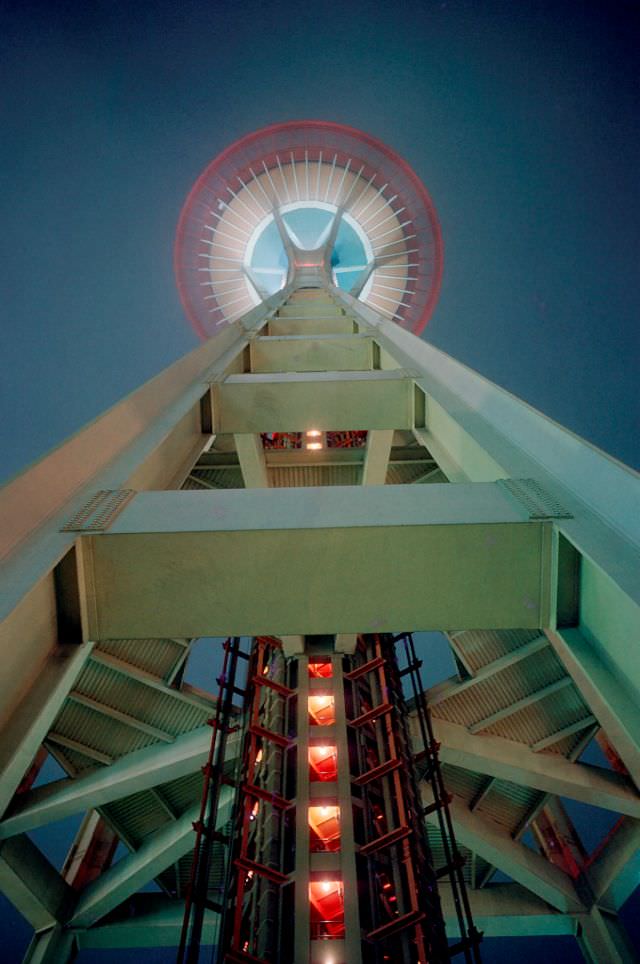
Under the Space Needle on a foggy night during the 1962 Seattle World's Fair
Under the Space Needle on a foggy night during the 1962 Seattle World’s Fair

Seattle’s weather added its own character to the fair. On foggy nights, the Space Needle rose into the mist, its observation deck disappearing into the low clouds while its illuminated base anchored it to the ground. These atmospheric conditions gave the grounds an almost otherworldly feel that photographs captured with striking effect.

Visitors walk the fairgrounds at the 1962 Seattle World's Fair
Visitors walk the fairgrounds at the 1962 Seattle World’s Fair

The fair ran until October 21, 1962, closing exactly six months after it opened. The official final count of 9,609,969 visitors made it a clear success by every measure organizers had set. The photographs from Cardboard America Archives captured the daily life of the exposition — the crowds, the architecture, the food stalls, and the quiet moments between the spectacle — preserving a detailed record of what Seattle built and what the world came to see.

Enjoyed this post? Get new ones in your inbox.

Leave a Comment

Your email address will not be published. Required fields are marked *

Share this Post 🥺

Please take a moment to share this content. Your support is greatly appreciated! 🙌🙏

Share this Post 🥺

Please take a moment to share this content. Your support is greatly appreciated! 🙌🙏
Scroll to Top
 
Hey Friend, Before You Go.. Please like & follow for more interesting content