
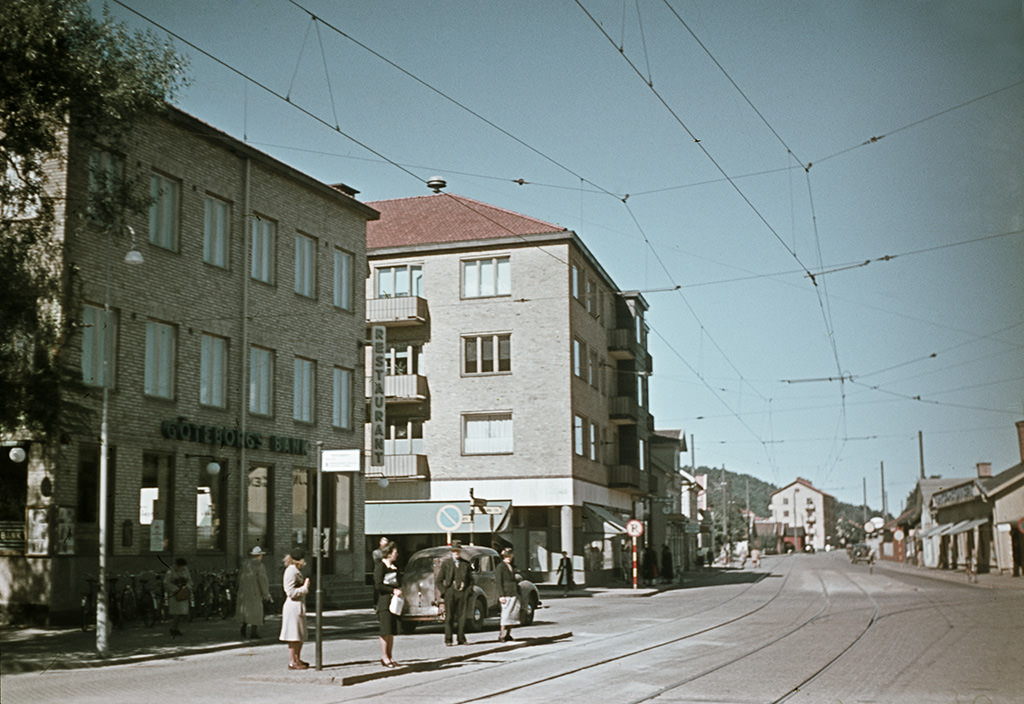
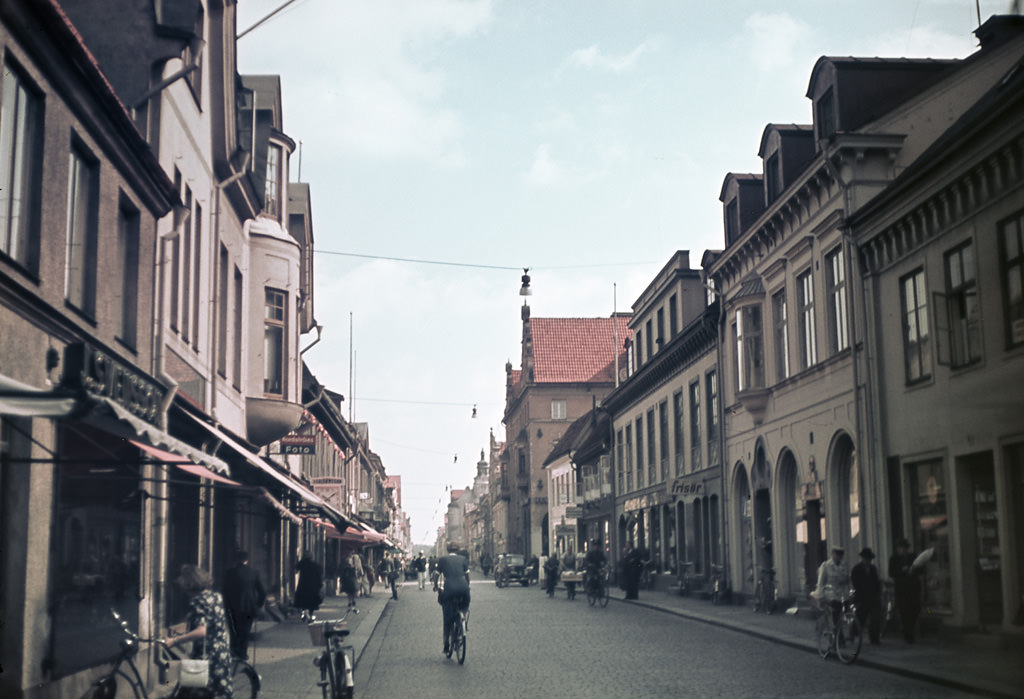
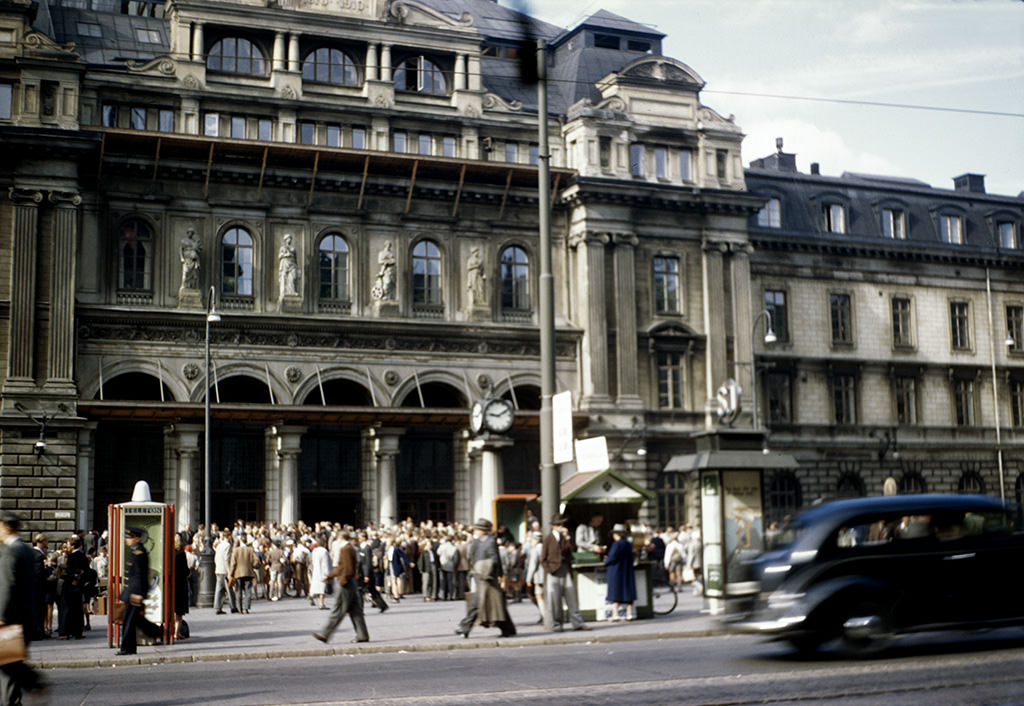
Color photography in the 1940s was not a casual hobby. Kodachrome film was expensive, technically demanding, and far from common. Most photographers of the era shot in black and white. That makes the collection left behind by Swedish engineer Fredrik Daniel Bruno all the more remarkable. During the 1940s, Bruno traveled widely across Sweden with his camera and a supply of Kodachrome film, documenting cities, harbors, public squares, parks, markets, and the quiet rhythms of everyday life in vivid color.
Bruno was an engineer by trade, not a professional photographer. Yet his approach to composition shows real instinct. He sometimes shot from the middle of a road, other times from high vantage points. Occasional technical quirks — a stray thumb at the edge of a frame, a shot pulled from shadow — give the photos a raw, almost covert quality. There is something of the documentary observer in how he worked, capturing scenes without drawing attention to himself.
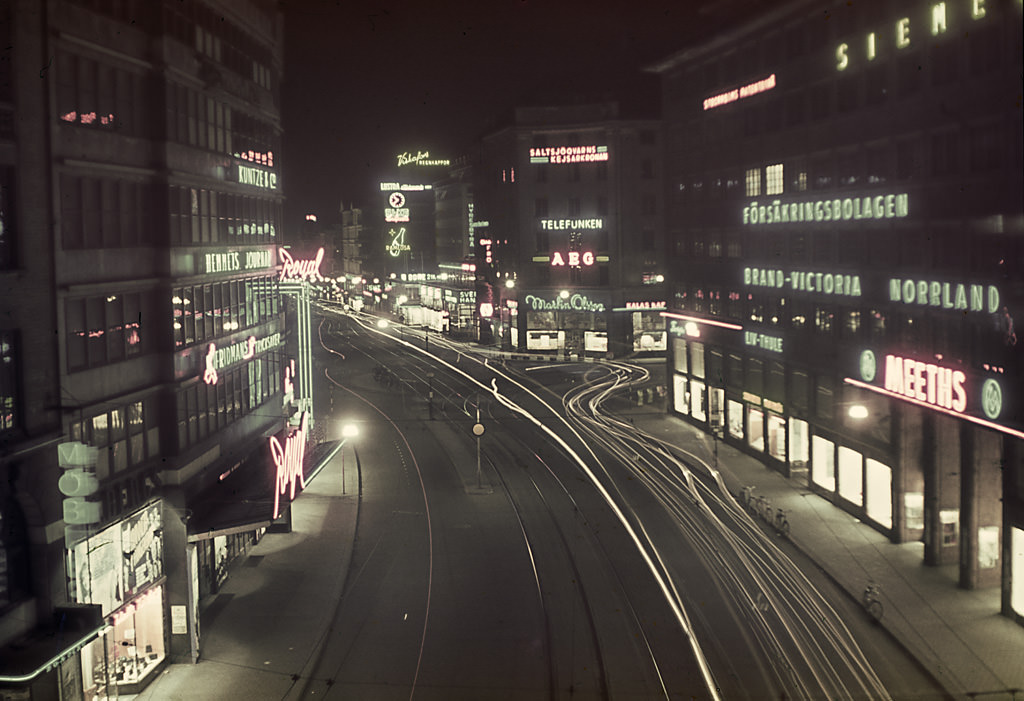
Stockholm appears frequently in Bruno’s collection. One of his earliest Kodachrome shots, taken in 1940, shows Kungsgatan street at night, lit up at the intersection with Sveavägen. The neon glow and wet streets give the city a cinematic quality that feels more like a film still than a travel photograph.
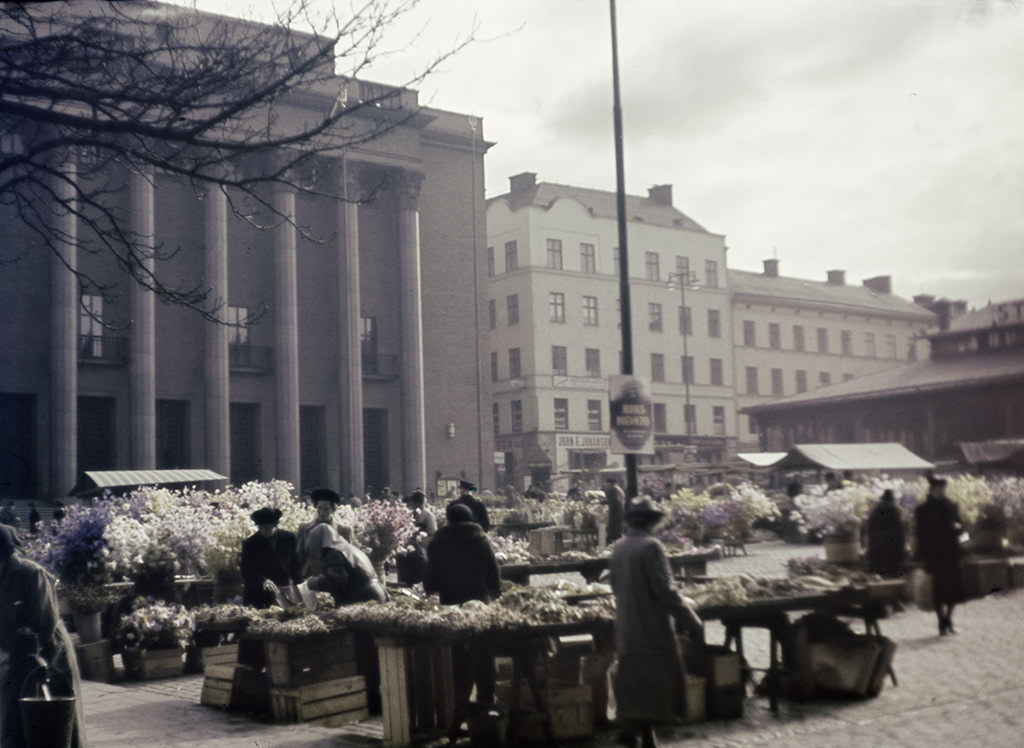
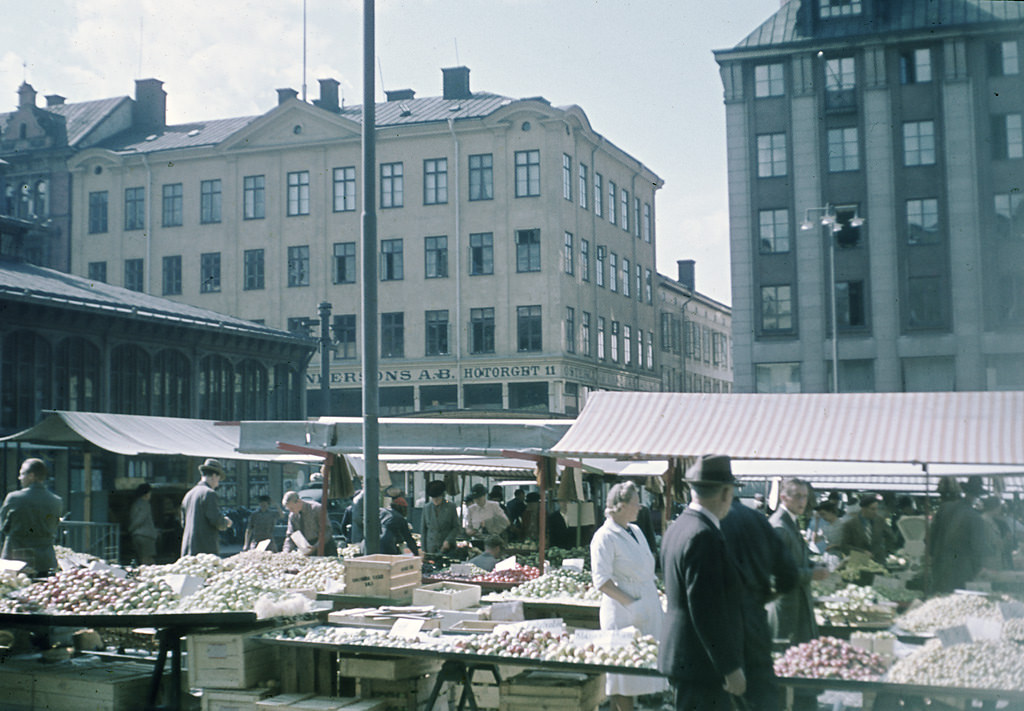
By day, Stockholm’s streets were full of activity. The Haymarket — Hötorget — was one of the city’s busiest open-air spaces. Bruno photographed it in both 1942 and 1943, capturing vendors and shoppers against the backdrop of the Stockholm Concert Hall, its blue facade unmistakable even in a crowd scene.
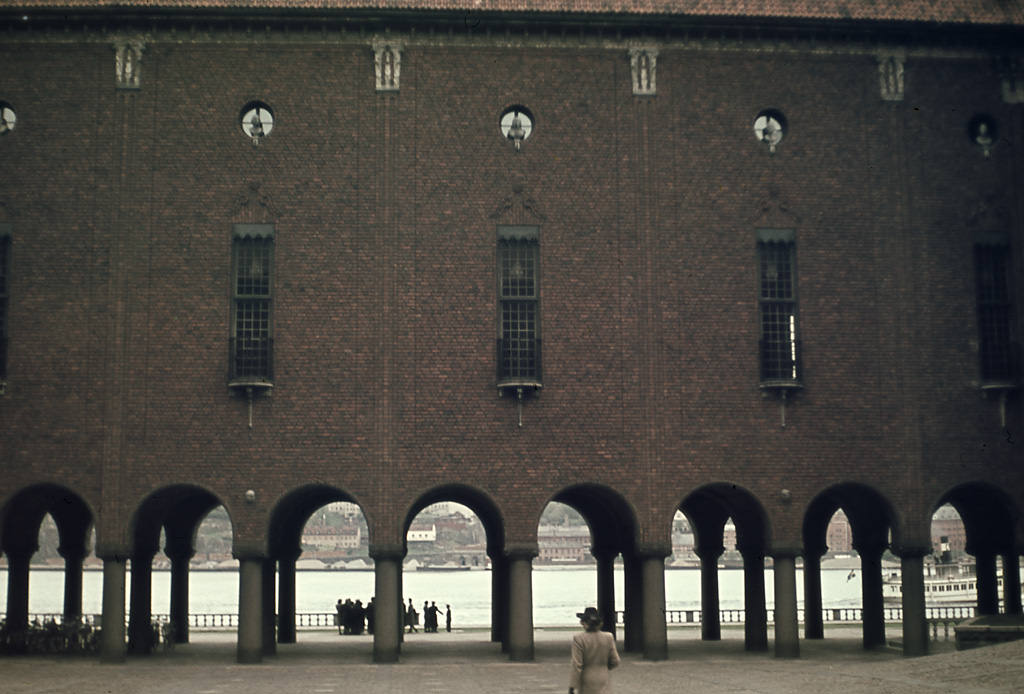
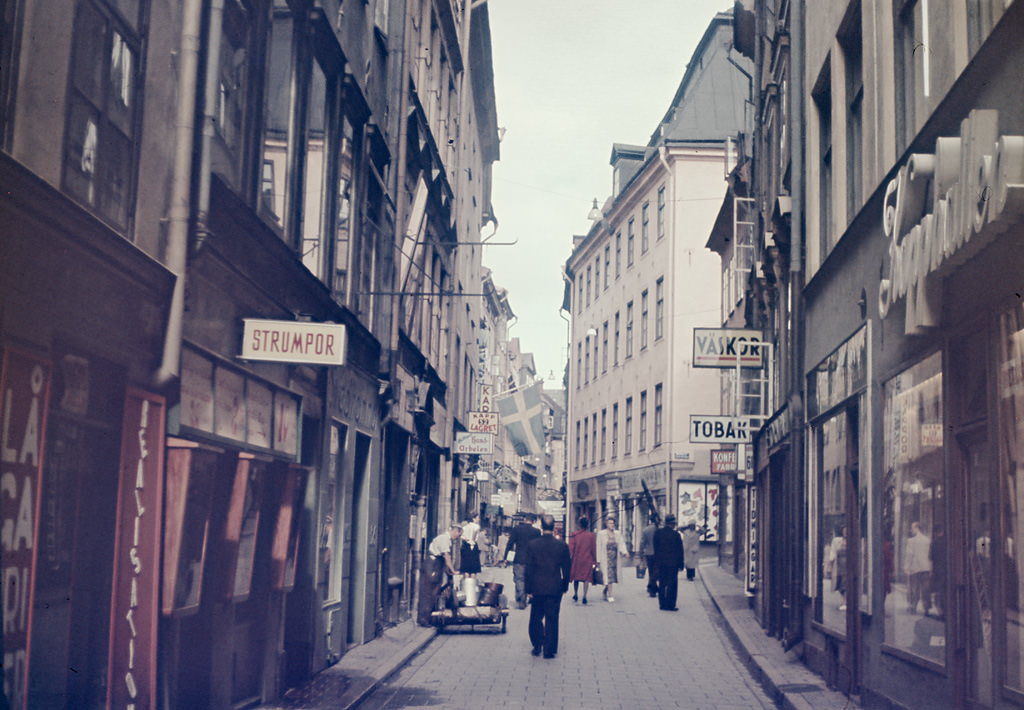
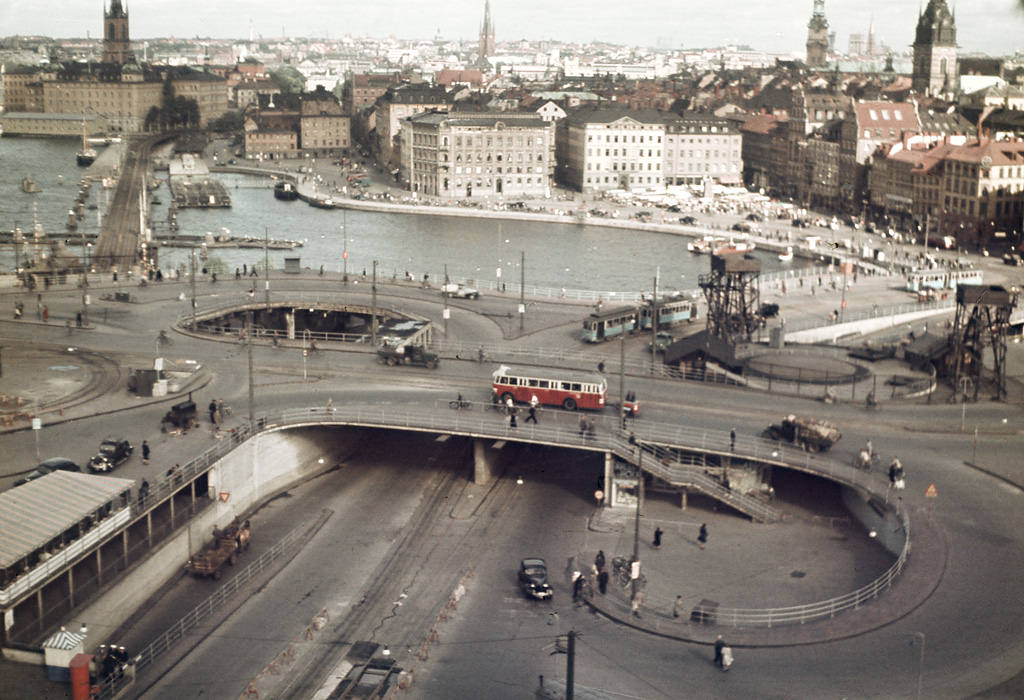
Bruno’s Stockholm coverage extended to its most iconic landmarks. The City Hall, completed in 1923, appears in a 1944 photograph — its distinctive tower reflected in the calm waters of Lake Mälaren. He also walked through the Old Town’s narrow lanes, photographing Västerlanggatan street, where the medieval street grid and old stone buildings had changed little in centuries.
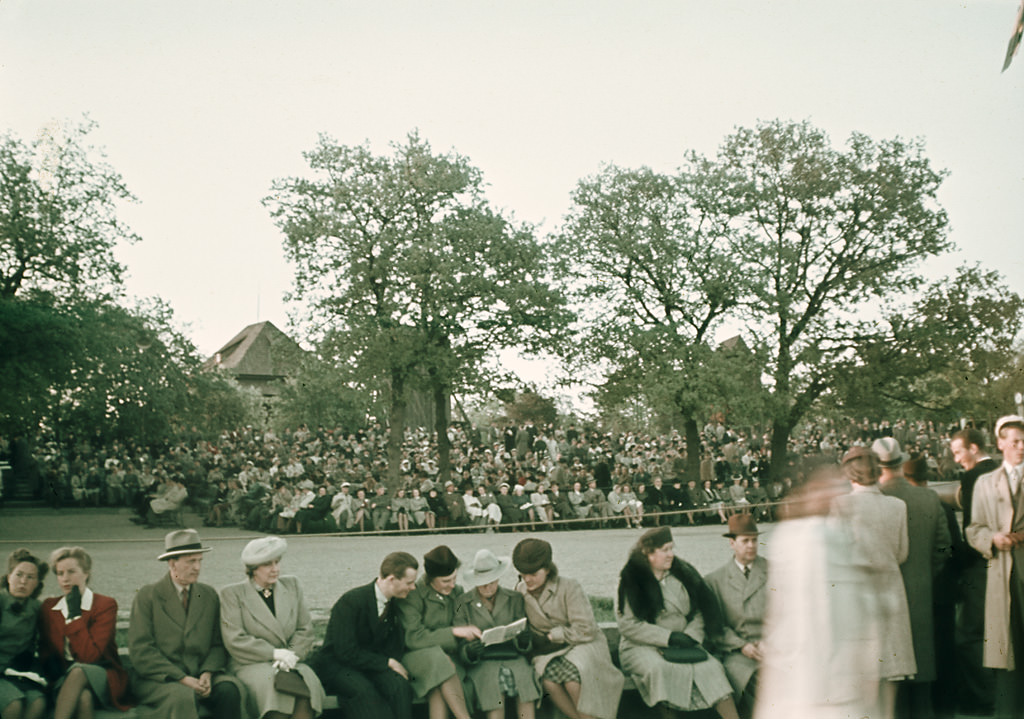
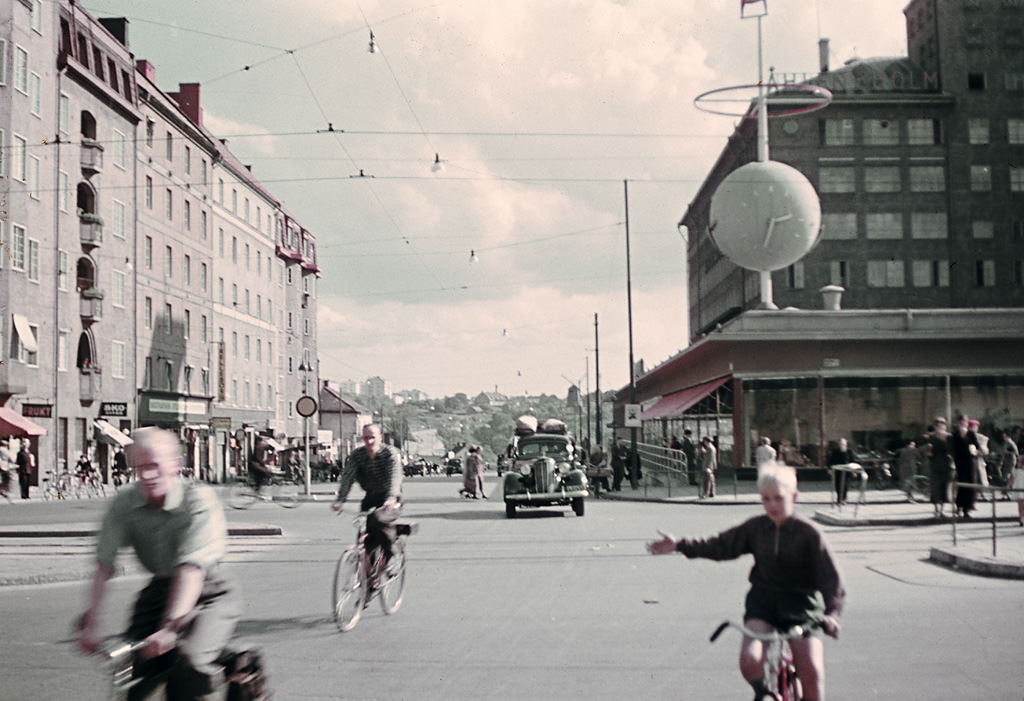
At Skansen, the open-air museum on Djurgården island, Bruno photographed visitors moving among the historic buildings in 1943. The museum had been drawing Swedes since 1891, and wartime did nothing to reduce its appeal. A separate 1944 shot on Drottninggatan street catches the city’s commercial center, pedestrians and shopfronts framed at the junction with Brunkebergsgatan.
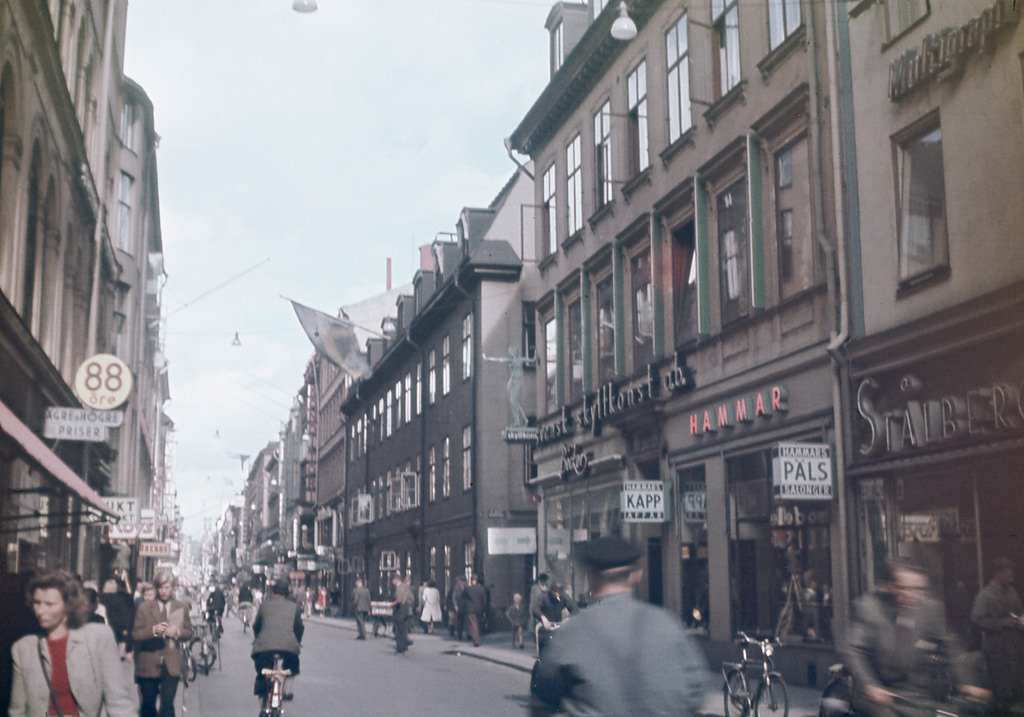
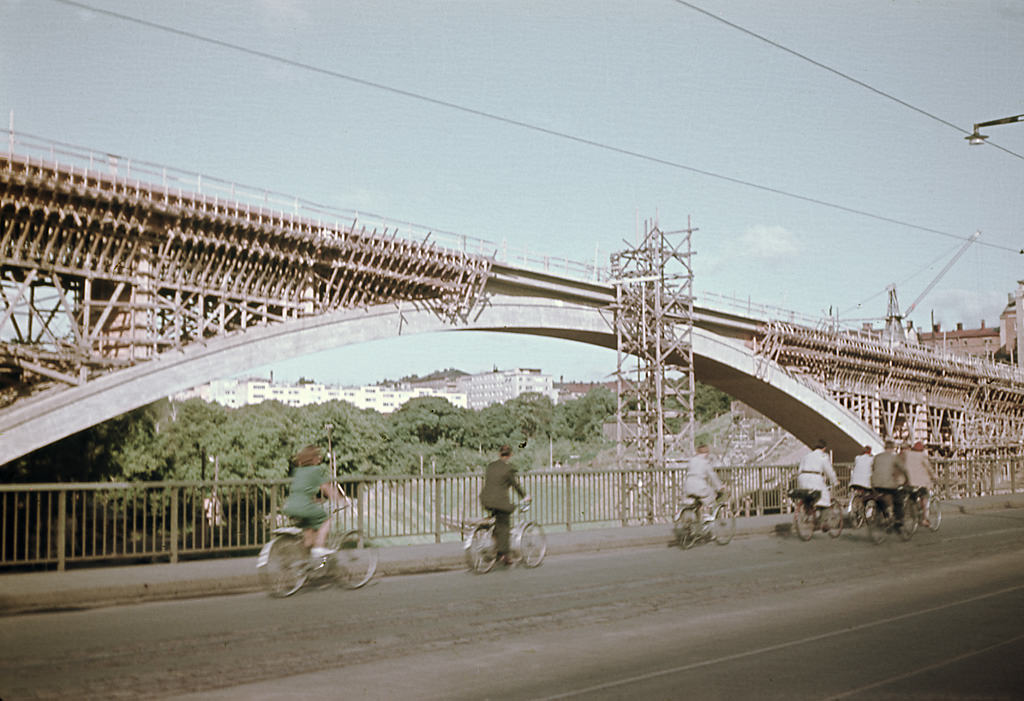
In the northern part of the city, Norrtullsgatan street offered a quieter view of residential Stockholm. Bruno captured it in 1944, along with ongoing construction work at Skanstull in the south, where a new bridge was being built in 1945. These infrastructure shots are easy to overlook, but they record a city in active development during a decade when much of Europe was being torn apart.
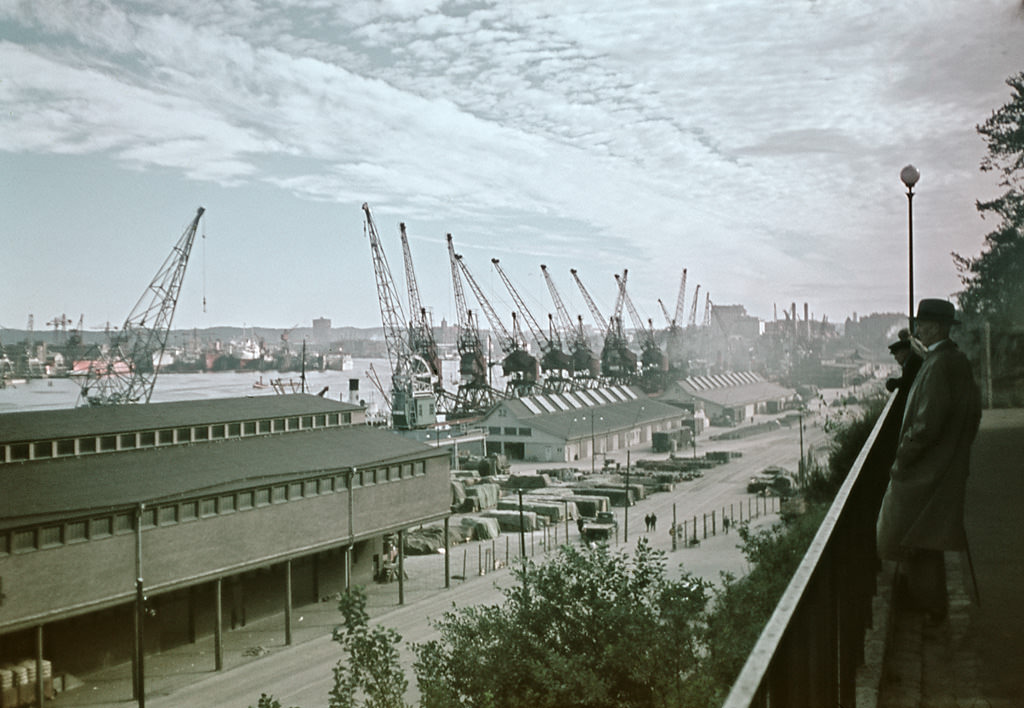
Outside Stockholm, Bruno devoted considerable attention to Gothenburg, Sweden’s second-largest city and a major port. From the Maritime Museum, he photographed the Stigbergskajen and Masthuggskajen quays along the Göta River in 1944, the water traffic and dockside cranes forming a working portrait of industrial Sweden.
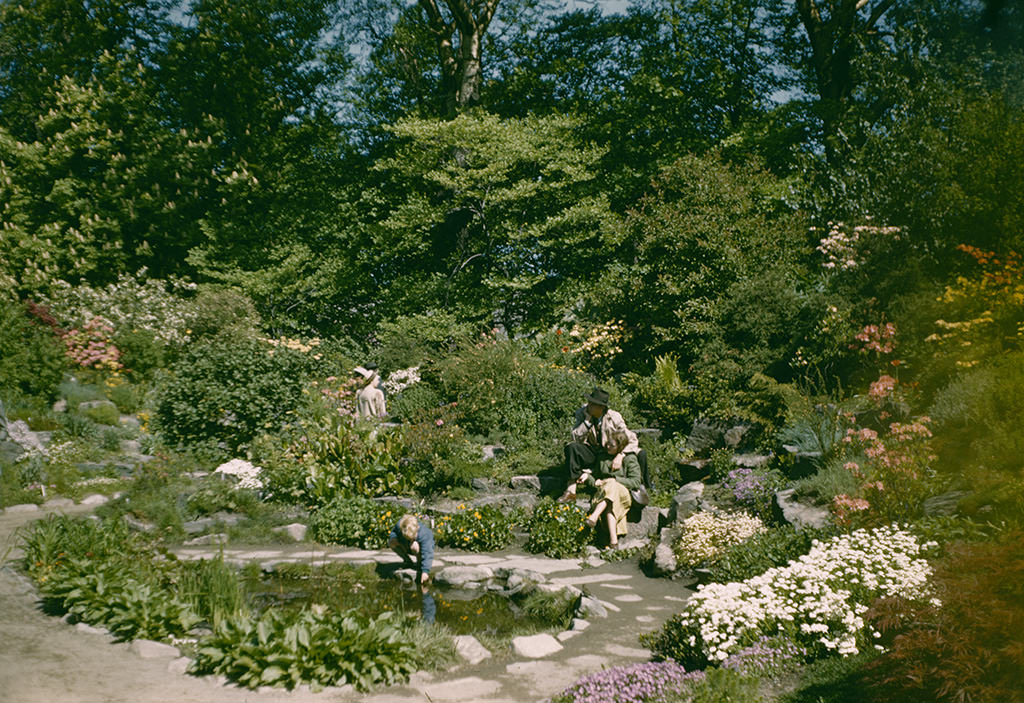
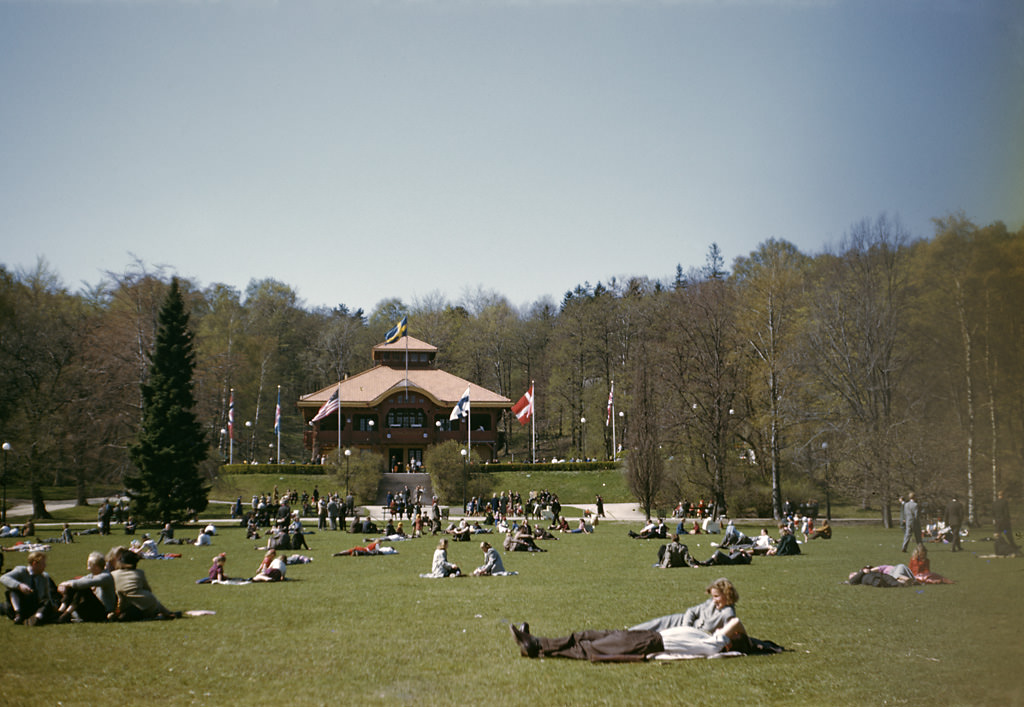
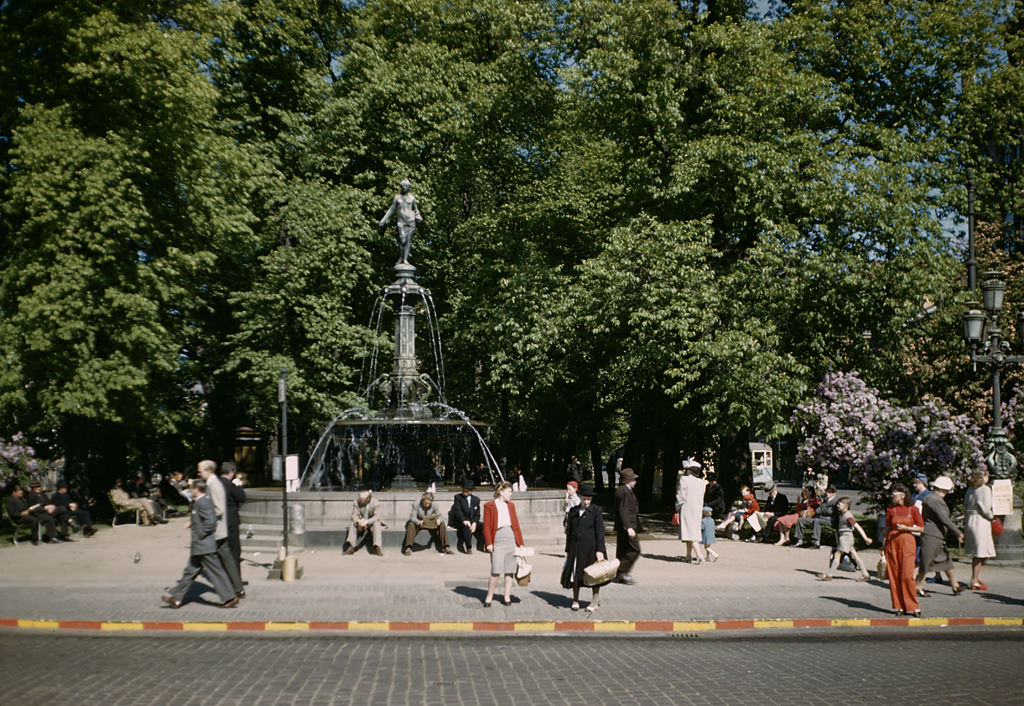
Gothenburg’s green spaces also appear in Bruno’s work. In 1948, he photographed visitors at the Garden Society of Gothenburg — Trädgårdsföreningen — one of Europe’s best-preserved 19th-century parks. That same year, he visited Slottsskogen, the city’s large public park, where people relaxed near the Large Restaurant building from 1906, locally known as Björngårdsvillan.
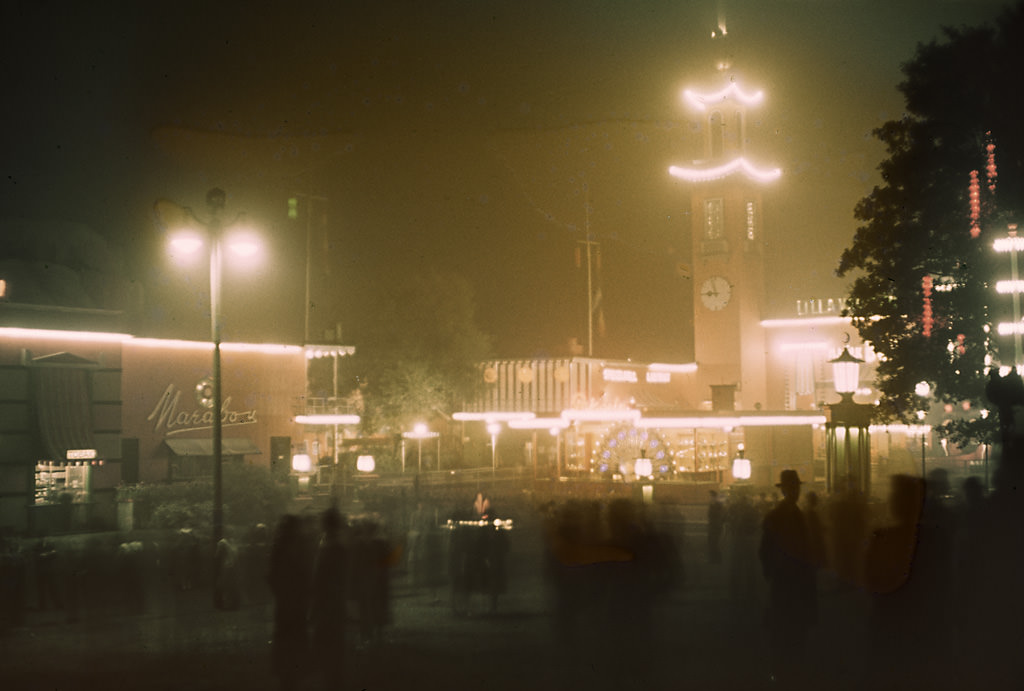
One of the most atmospheric photographs in the entire collection was taken at night. Liseberg, Gothenburg’s famous amusement park, glows with artificial light in a 1943 shot that is striking simply because night photography of this quality was technically difficult at the time. The park had opened in 1923 and was already one of Scandinavia’s most popular attractions.
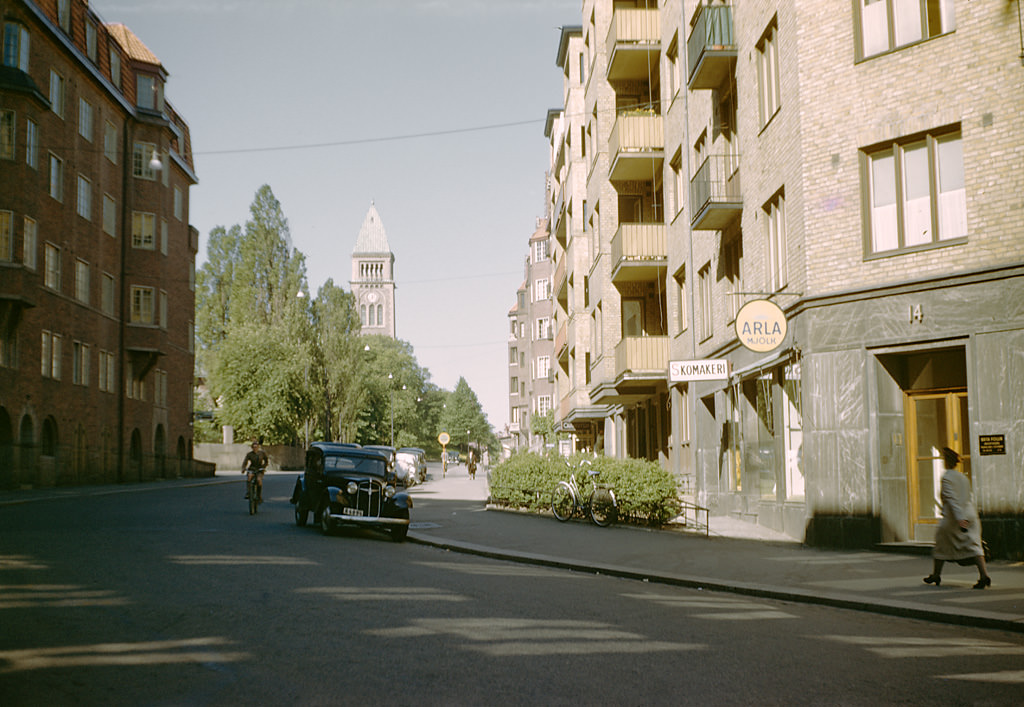
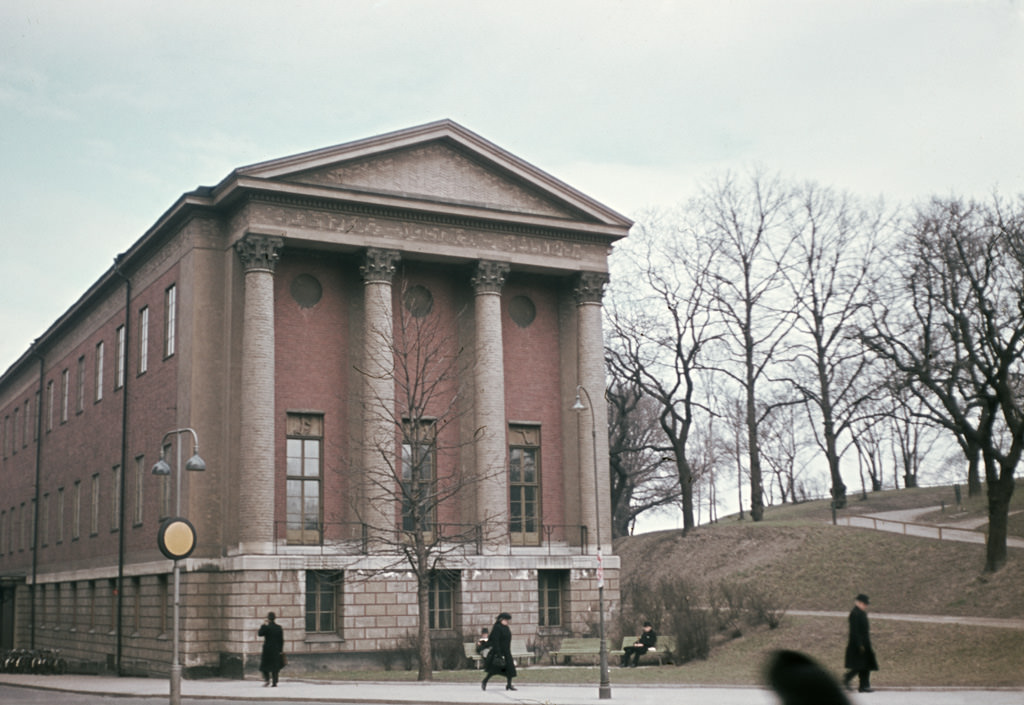
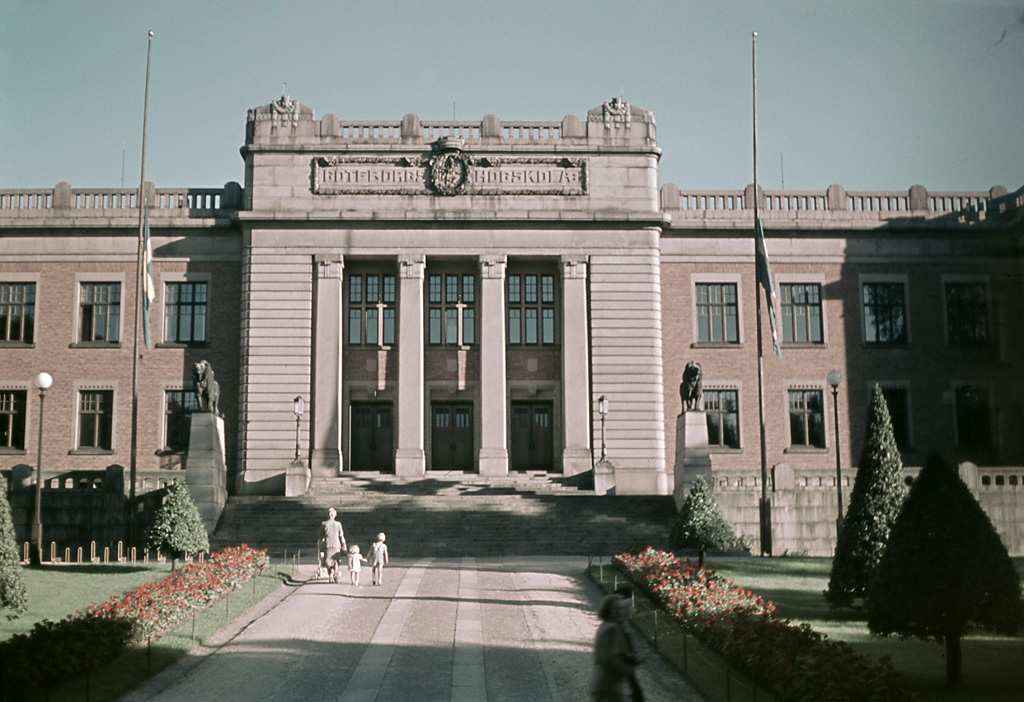
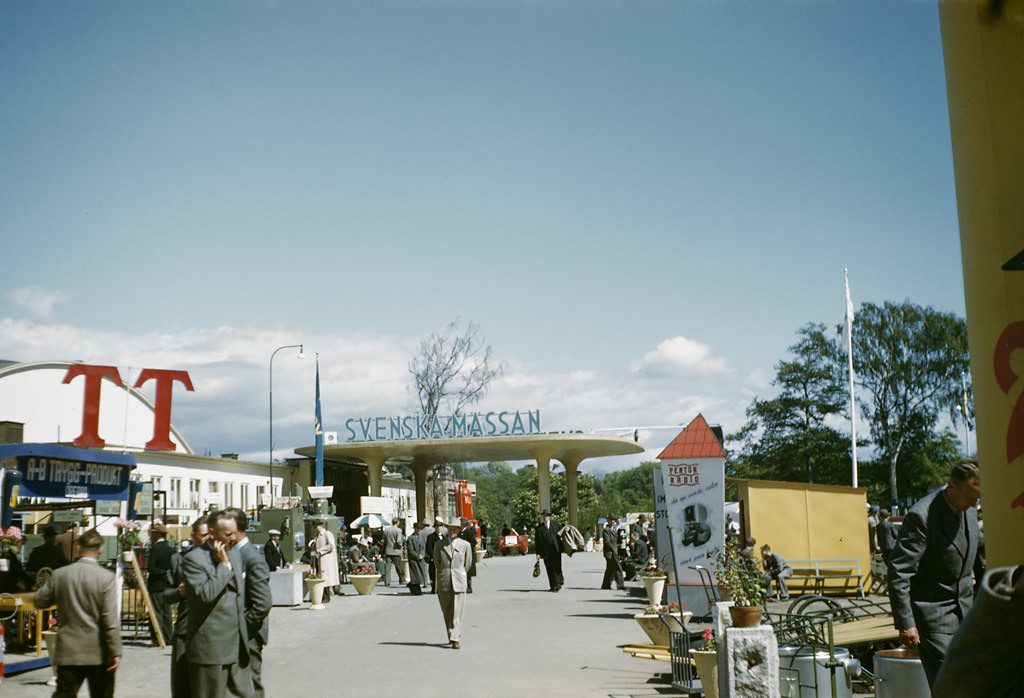
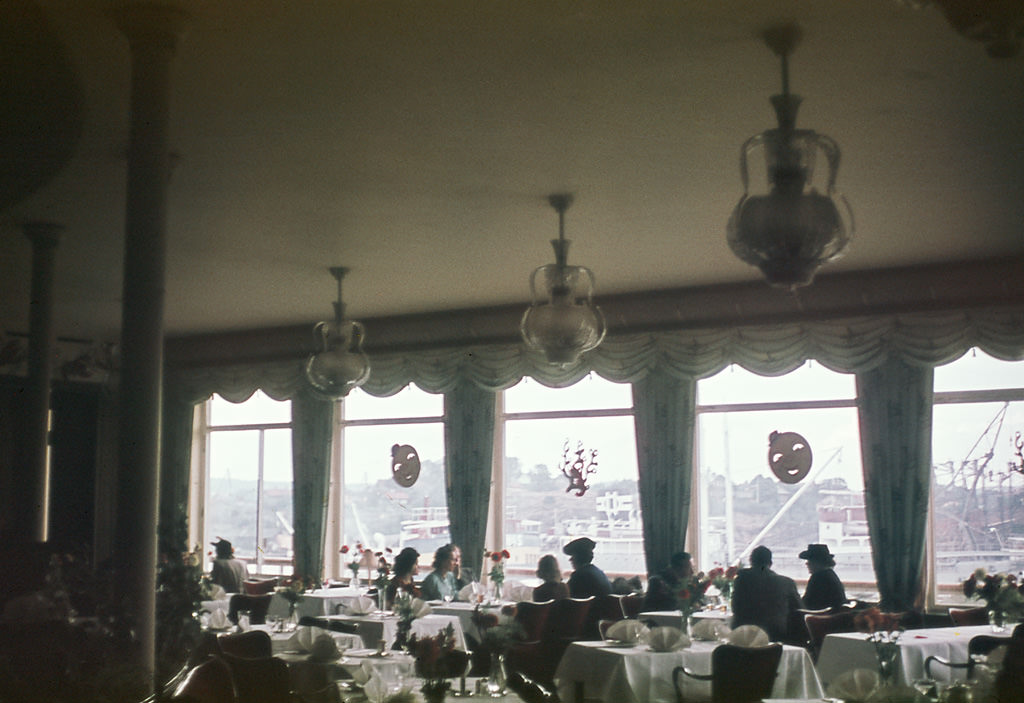
Bruno also photographed the University College of Gothenburg in 1945 — now the University of Gothenburg — and the Svenska Mässan exhibition and congress center in 1948. The Henriksberg Restaurant at Stigbergsliden, known locally as the Lind House, appears in a 1944 shot perched above the city with sweeping views.
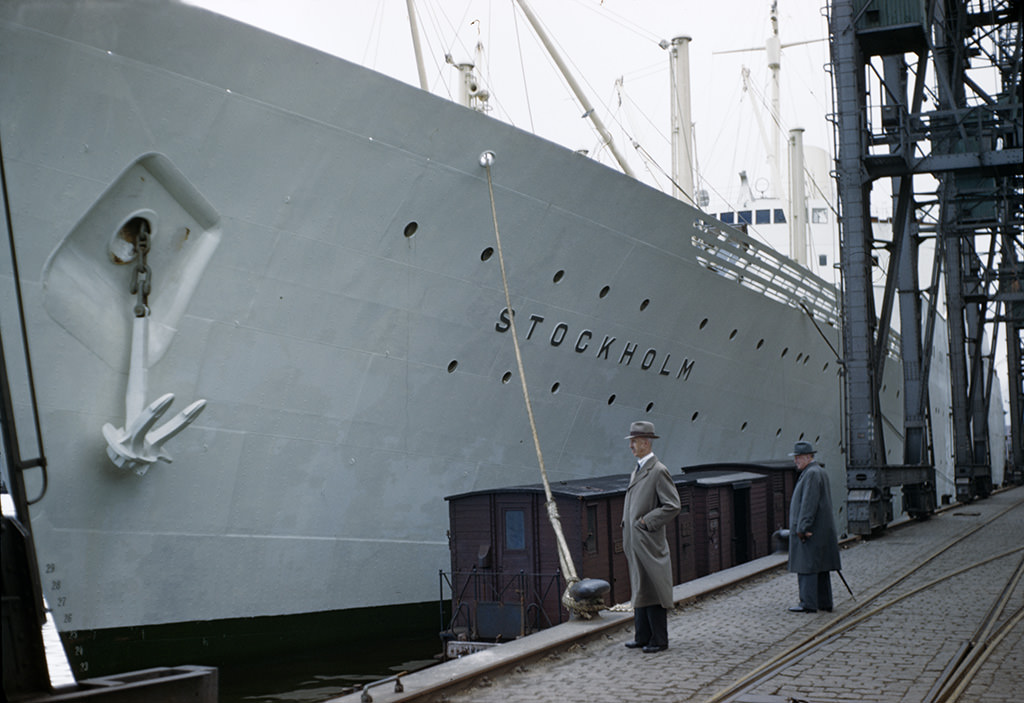
In 1948, Bruno photographed the M/S Stockholm of the Swedish American Line moored at Stigbergskajen quay. Standing to the left of the frame is Thore Bruno, a relative of the photographer. The ship was one of the flagship ocean liners of the era, making transatlantic crossings between Sweden and New York.
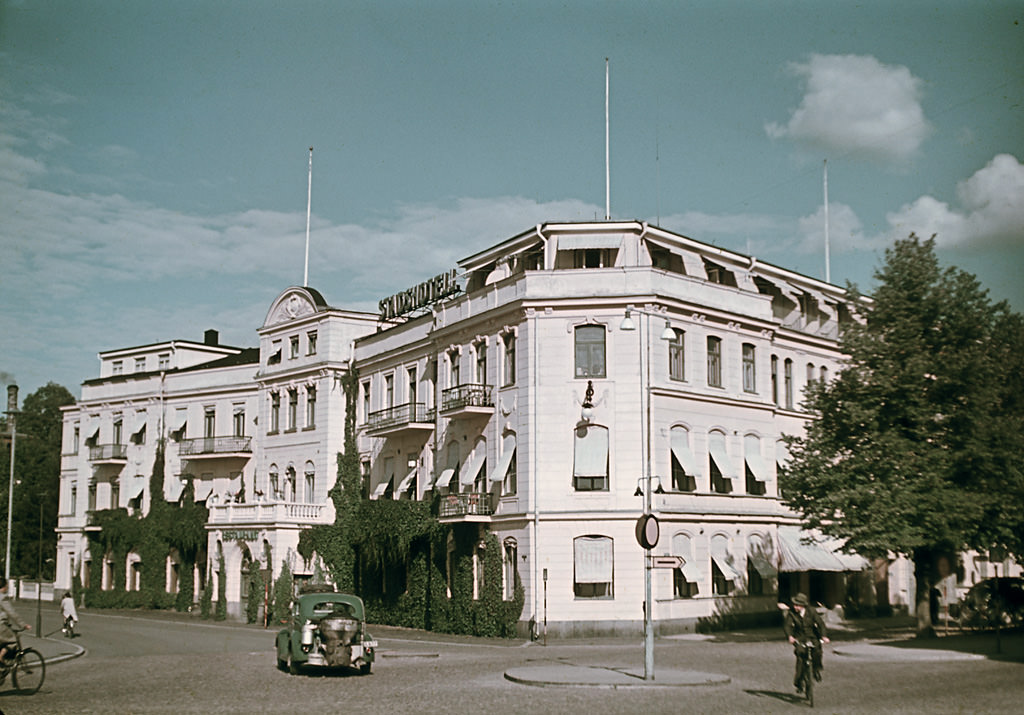
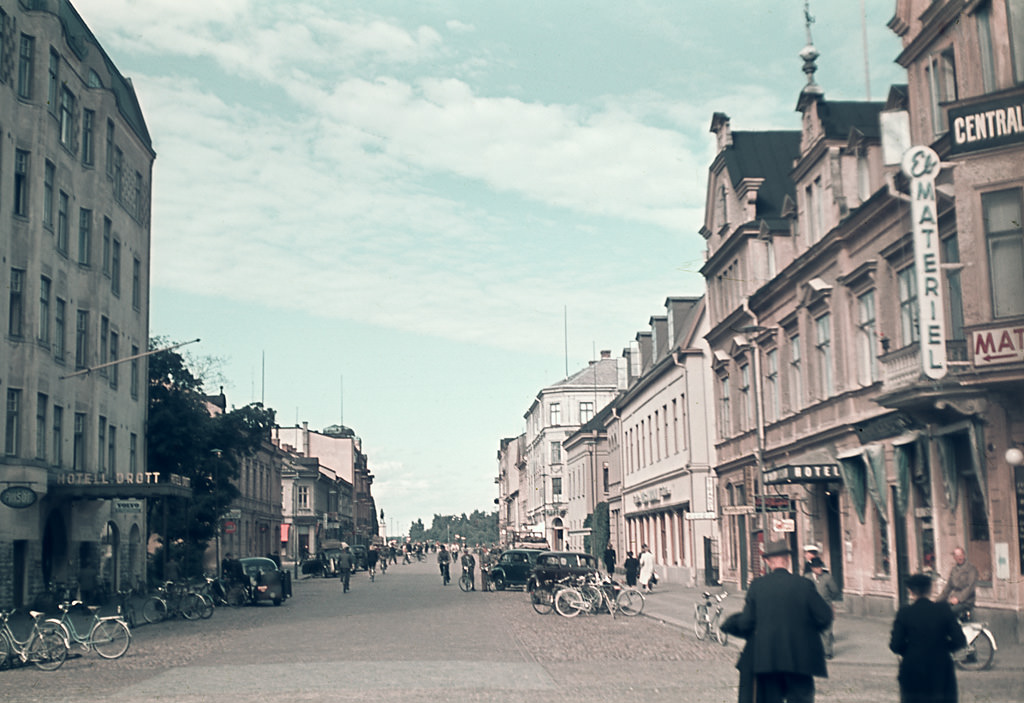
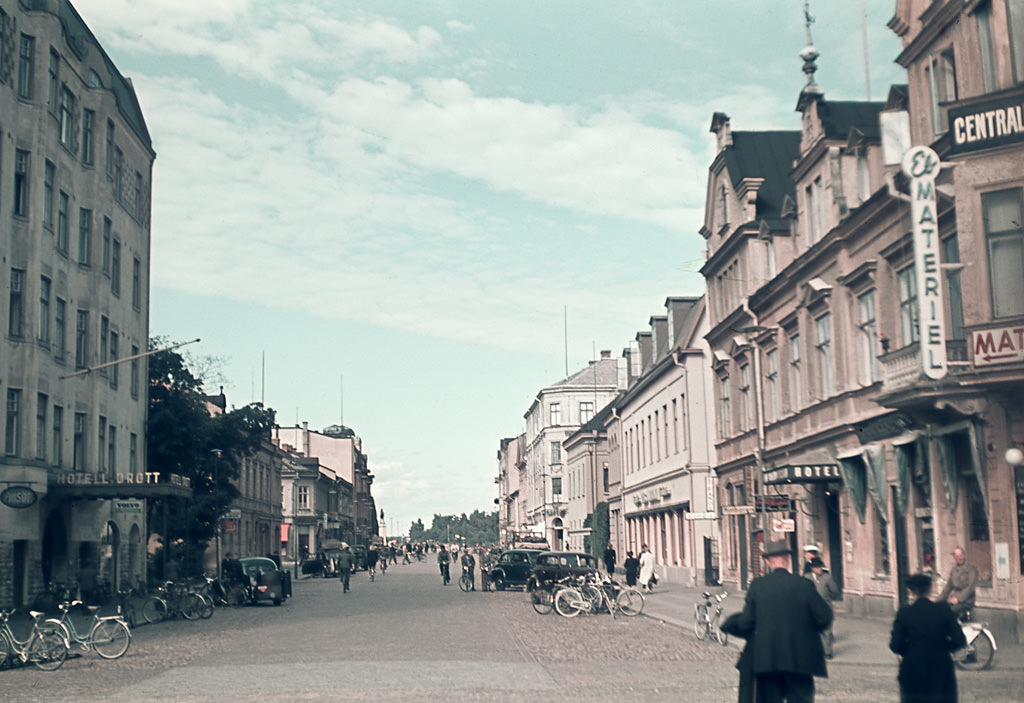
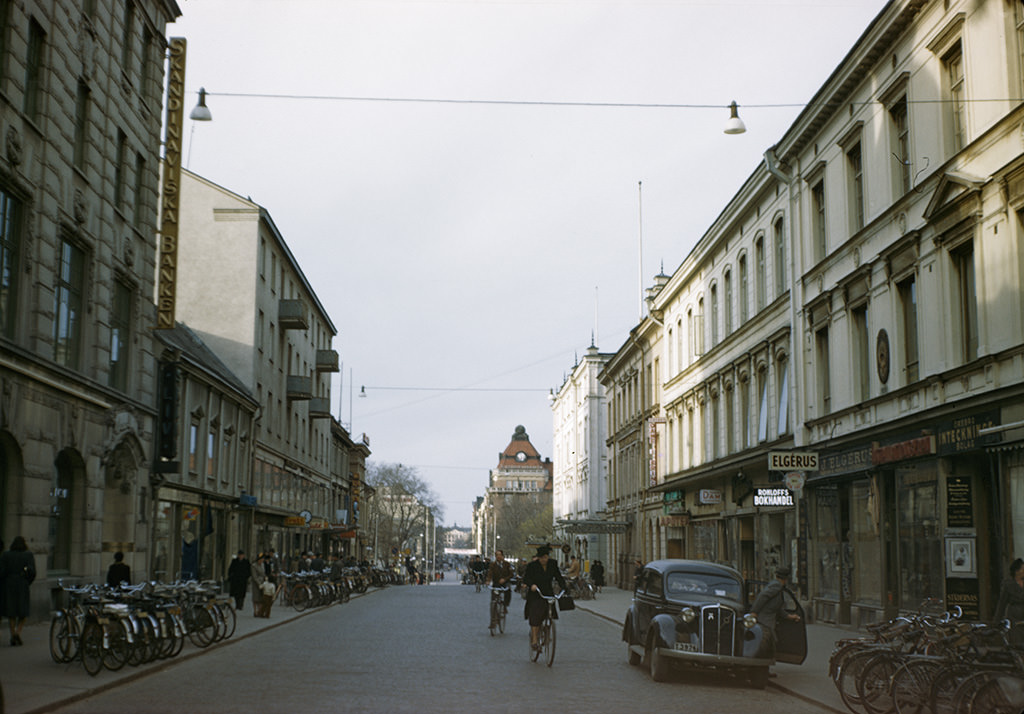
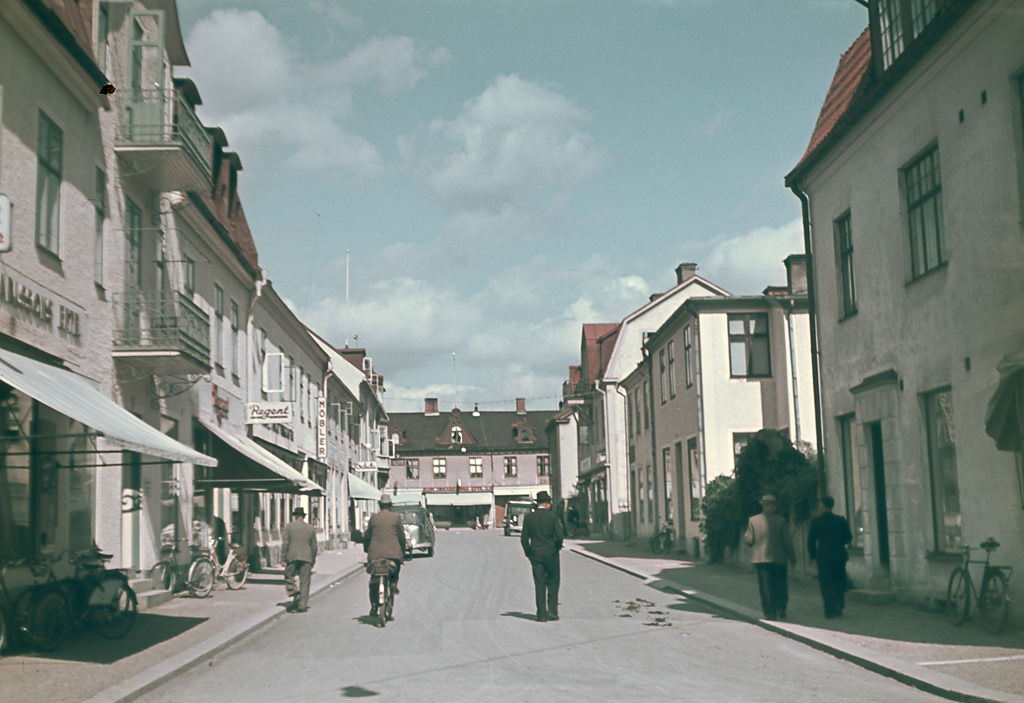
Bruno’s travels took him well beyond the two major cities. In Karlstad, he photographed the City Hotel on Kungsgatan street in 1943, with a producer gas-driven car parked outside — a common wartime adaptation in Sweden, where fuel rationing pushed drivers to convert vehicles to run on wood gas. Jarnvägsgatan street in Karlstad and Hotel Drott appear in a separate 1943 photograph.
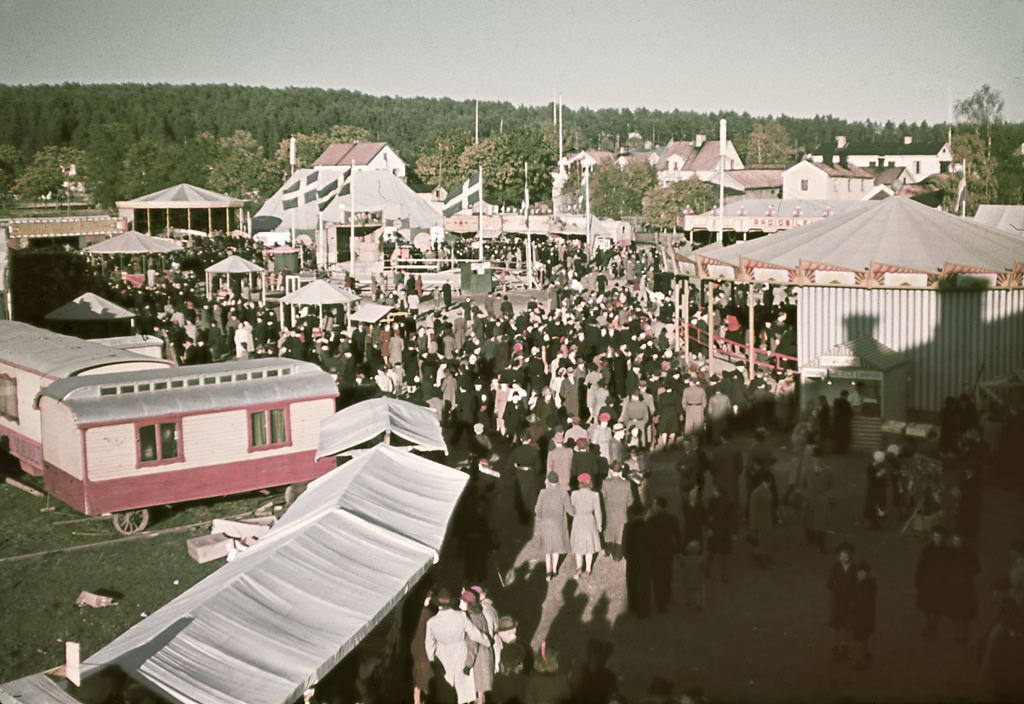
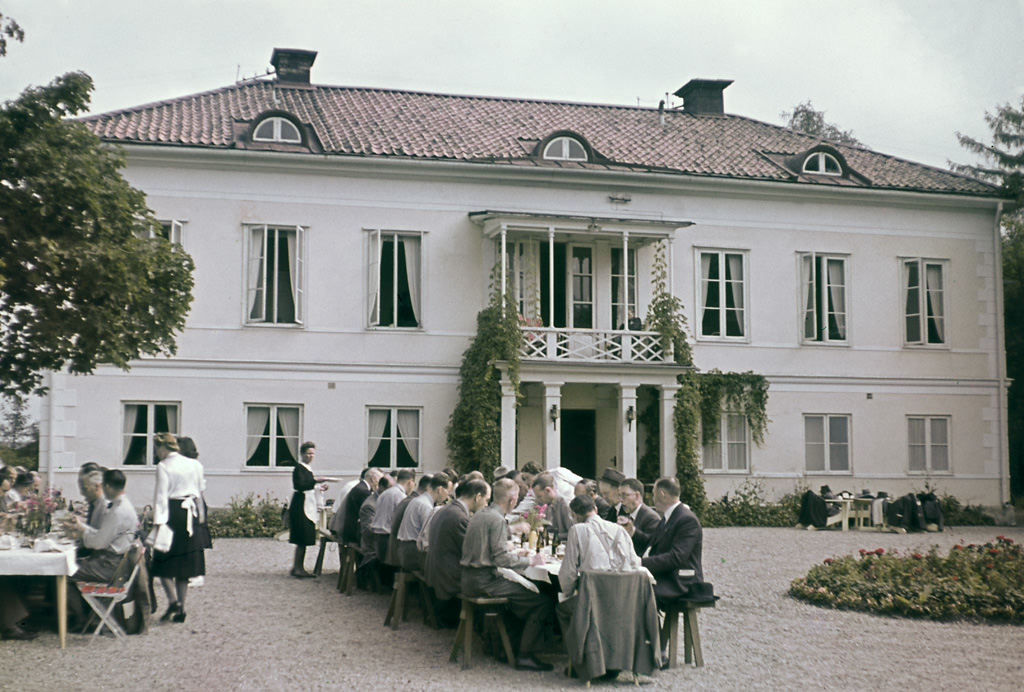
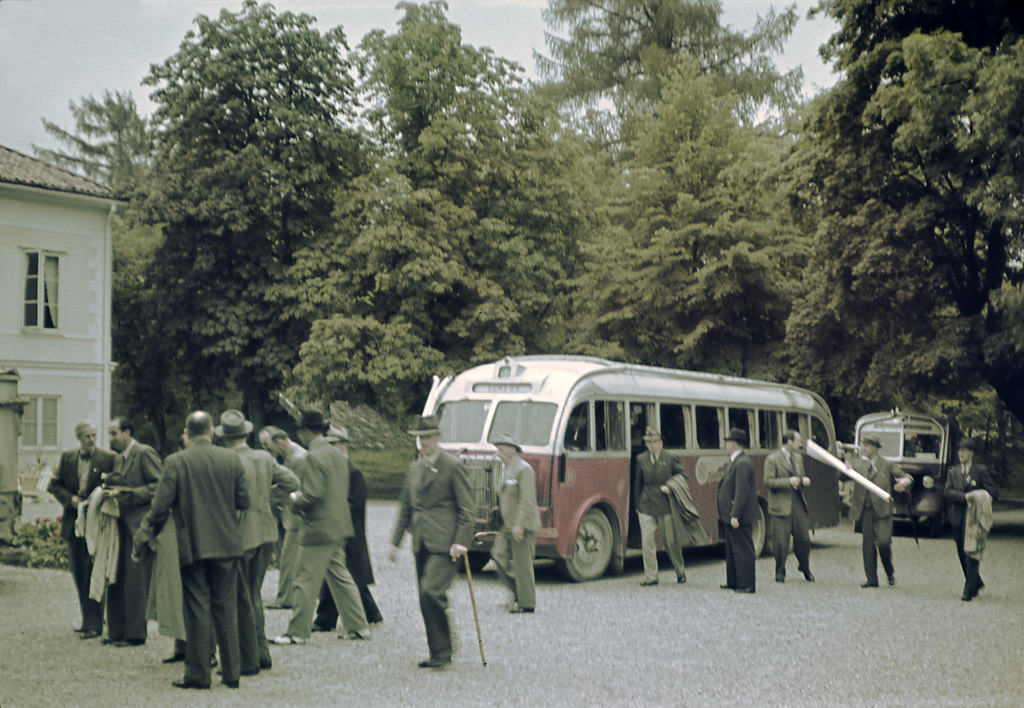
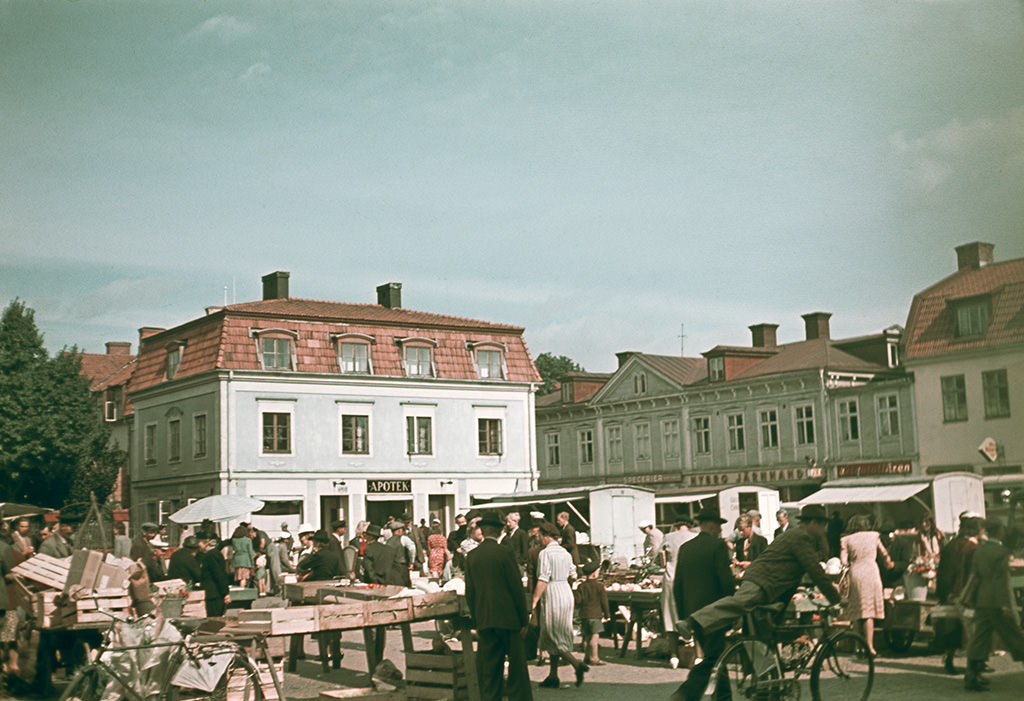
Hudiksvall, Bruno’s own hometown, appears in a 1942 photograph of a local funfair. The shot carries a personal dimension that many of his city photographs do not — this was the place he grew up, and the image has the ease of someone photographing familiar ground. That same year, he was in Eskilstuna, capturing men seated at a table outside a house and a separate scene of men boarding a bus.
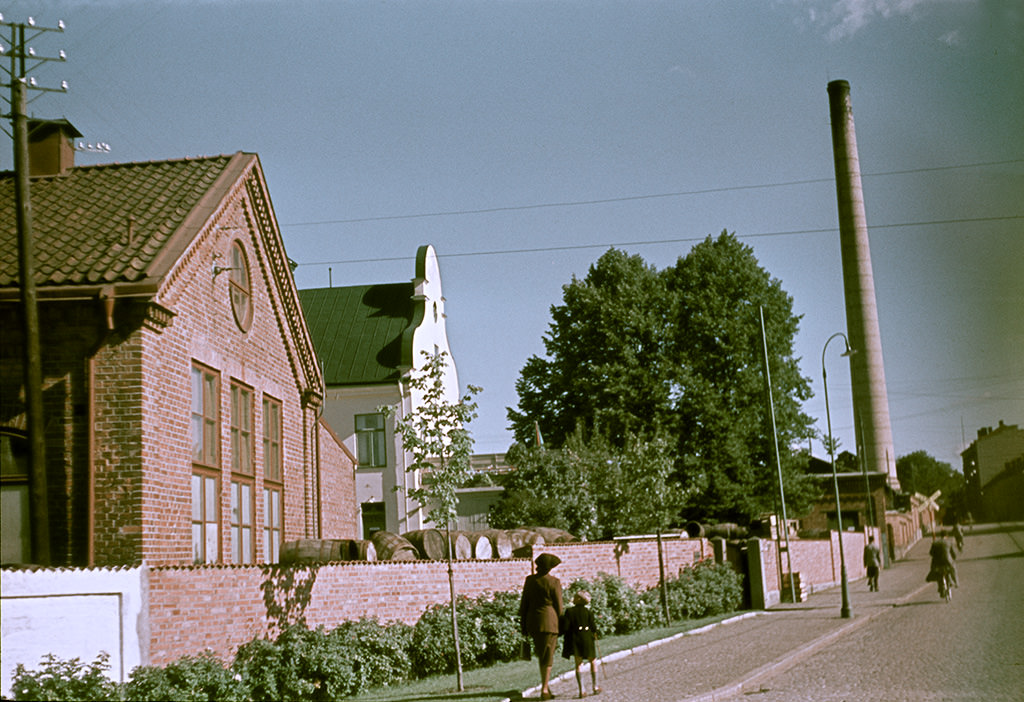
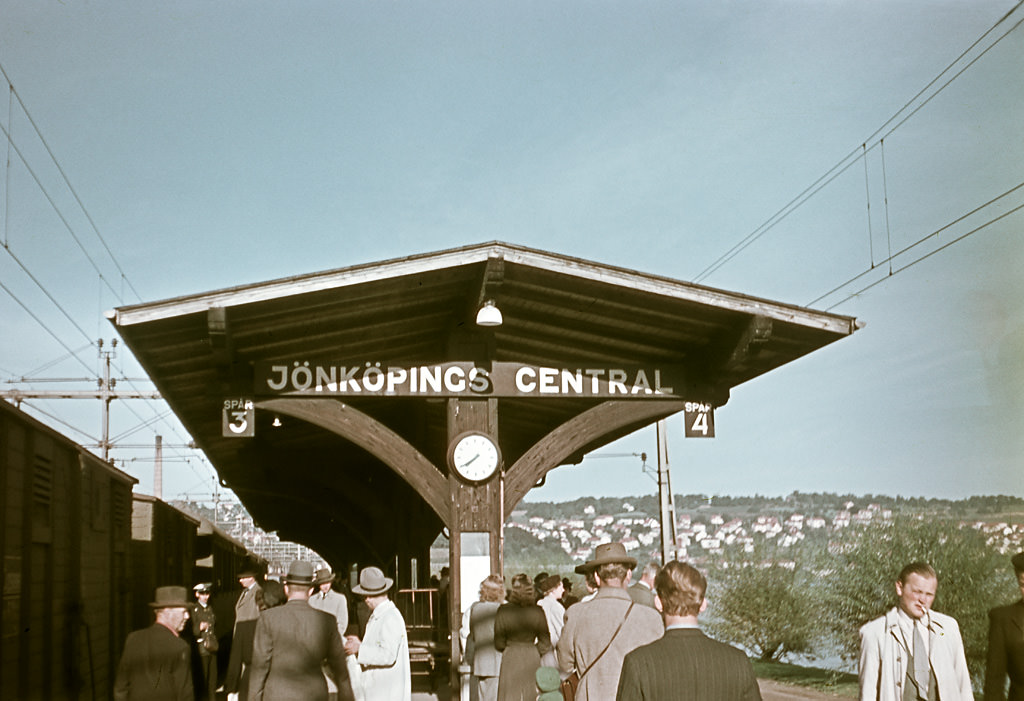
Jönköping, on the southern shore of Lake Vättern, provided Bruno with several subjects in 1945. He photographed the city’s famous match factory — Jönköping was the global center of match production in the 19th and early 20th centuries — as well as the railway station and the general urban streetscape.
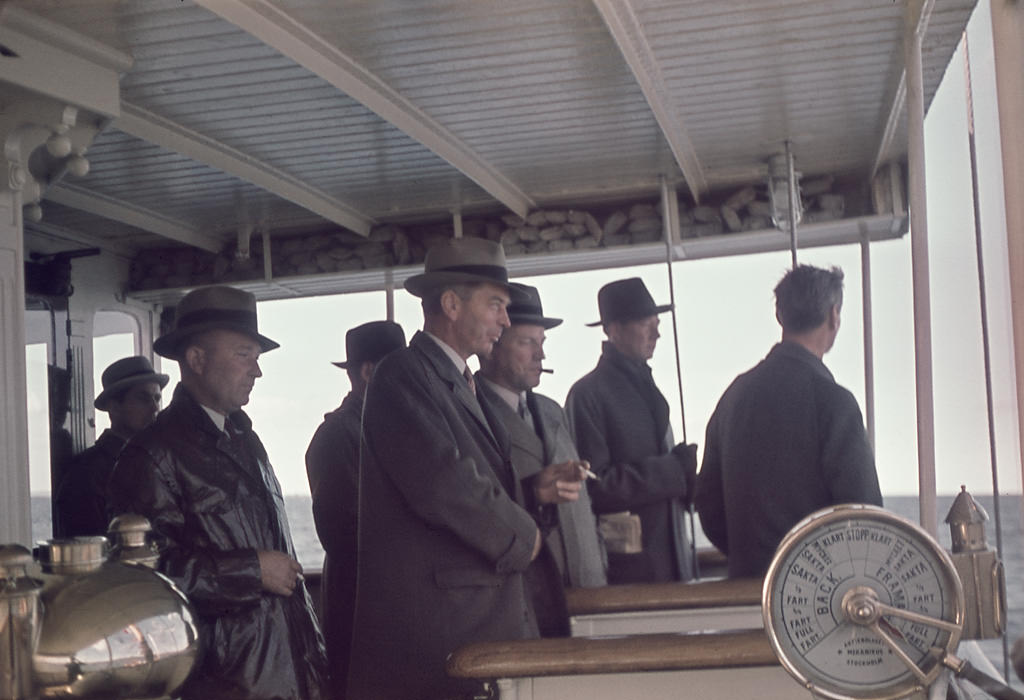
On Lake Vättern itself, Bruno photographed men aboard a steamer in 1945, the lake’s broad expanse visible behind them. Lake Vättern is Sweden’s second-largest lake, and passenger steamers were a common form of transport across it before roads and rail made them largely unnecessary.
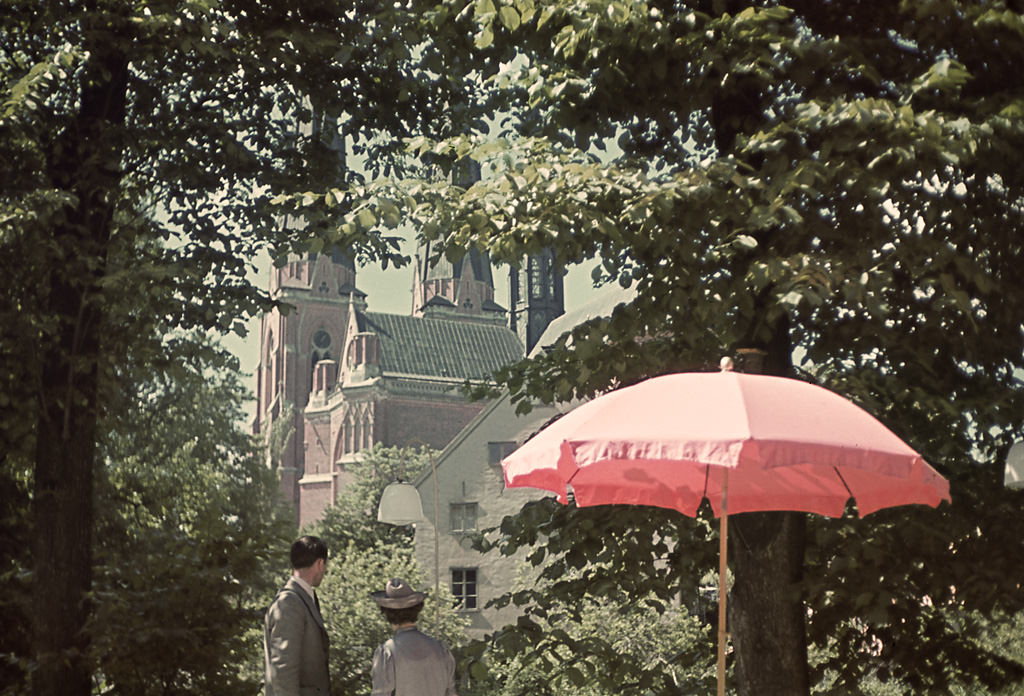
The cathedral at Uppsala — one of Scandinavia’s largest — appears in a 1943 photograph taken from the garden of the Skytteanum building. A man and a woman stand in the foreground, the woman holding a pink parasol, with the cathedral’s twin towers rising in the background. It is one of the most composed shots in the collection.
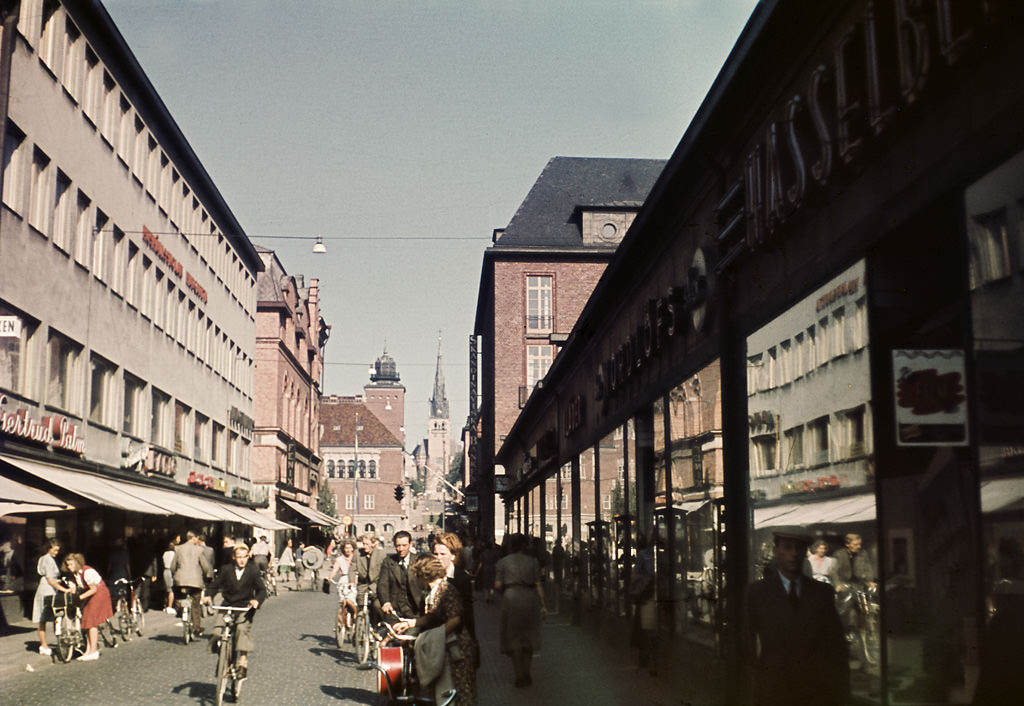
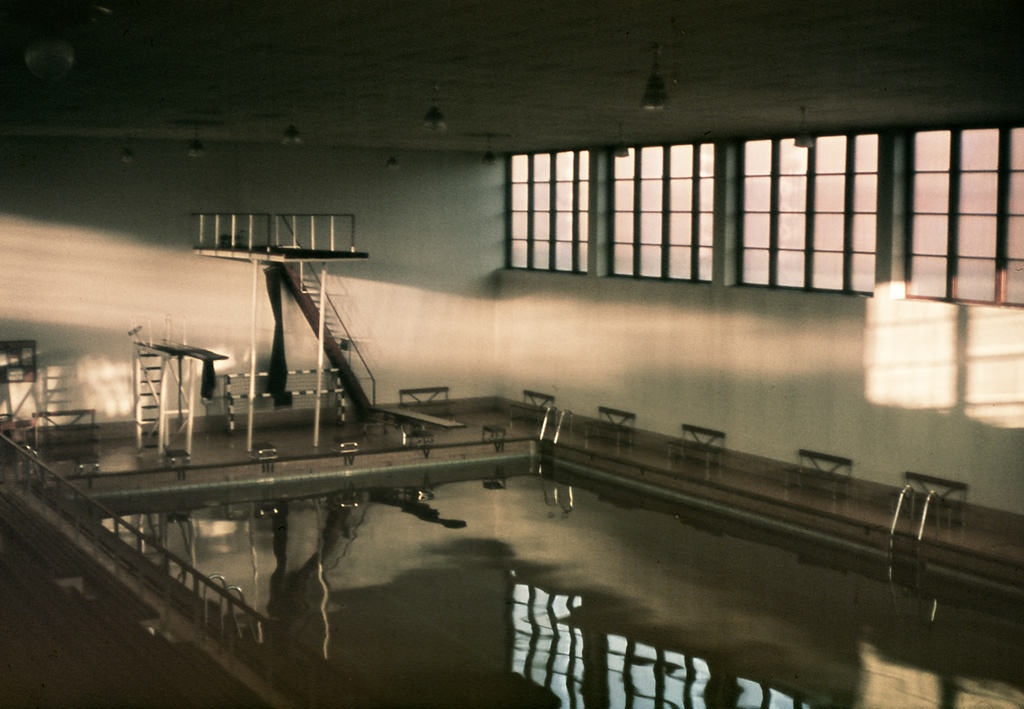
In Borås, a 1944 photograph on Stora Brogatan street shows the town’s commercial center, while a separate shot captures the indoor swimming pool of the old Borås Swimming Baths. The pool image is one of the more unusual in the collection — the tiled interior and greenish water give it a timeless quality, though the building itself was later demolished.
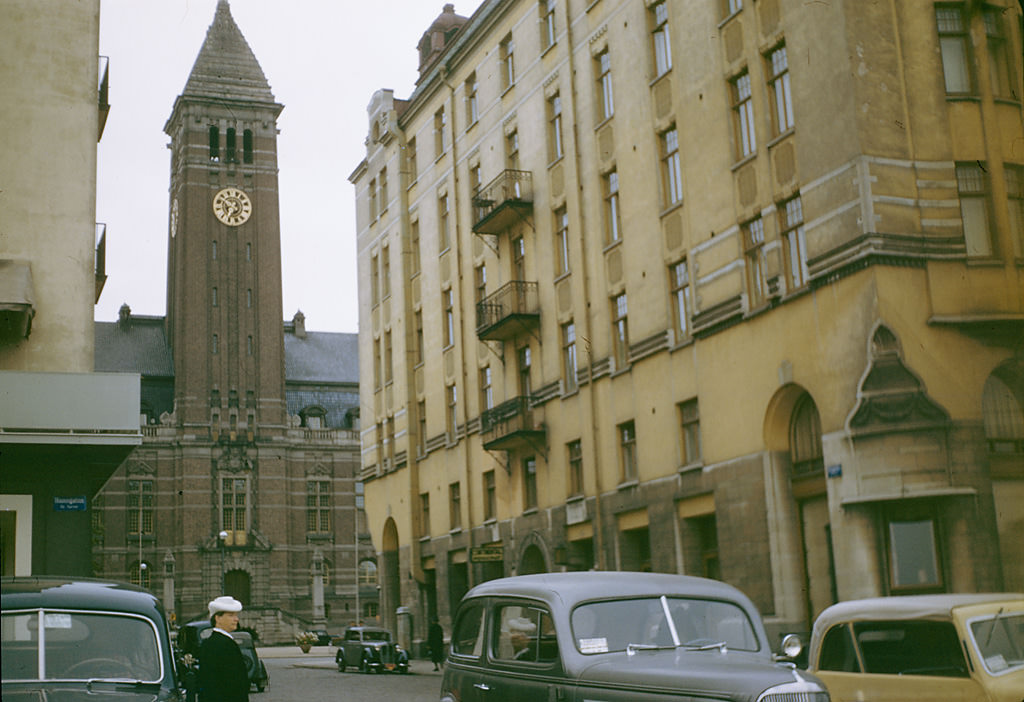
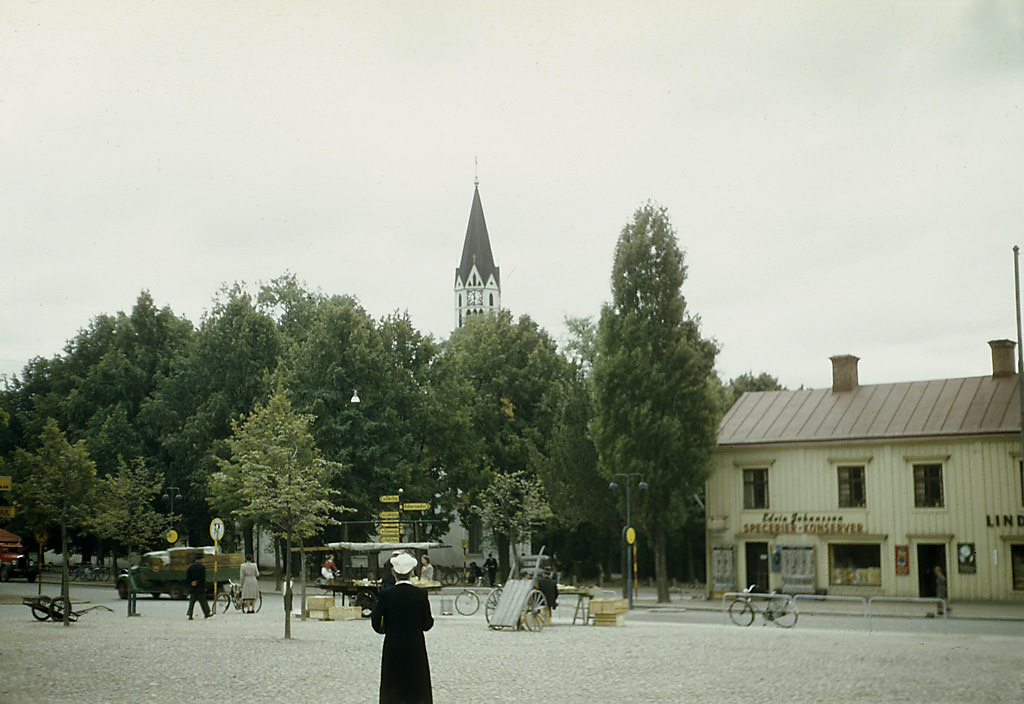
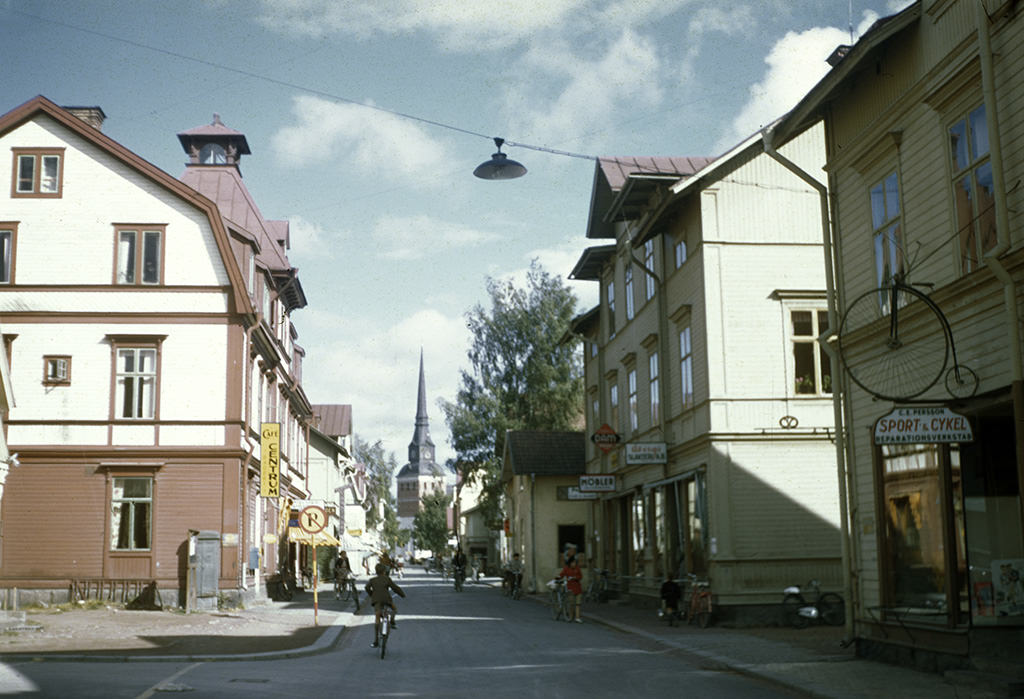
Norrköping’s Tyska Torget — the German Square — appears in a 1947 photograph featuring the Town Hall and the Grand Hotel. Motala’s Main Square, with Motala church in the background, was photographed in 1944. These smaller city centers are valuable records, showing the scale and character of Swedish provincial life before postwar redevelopment changed many of them.
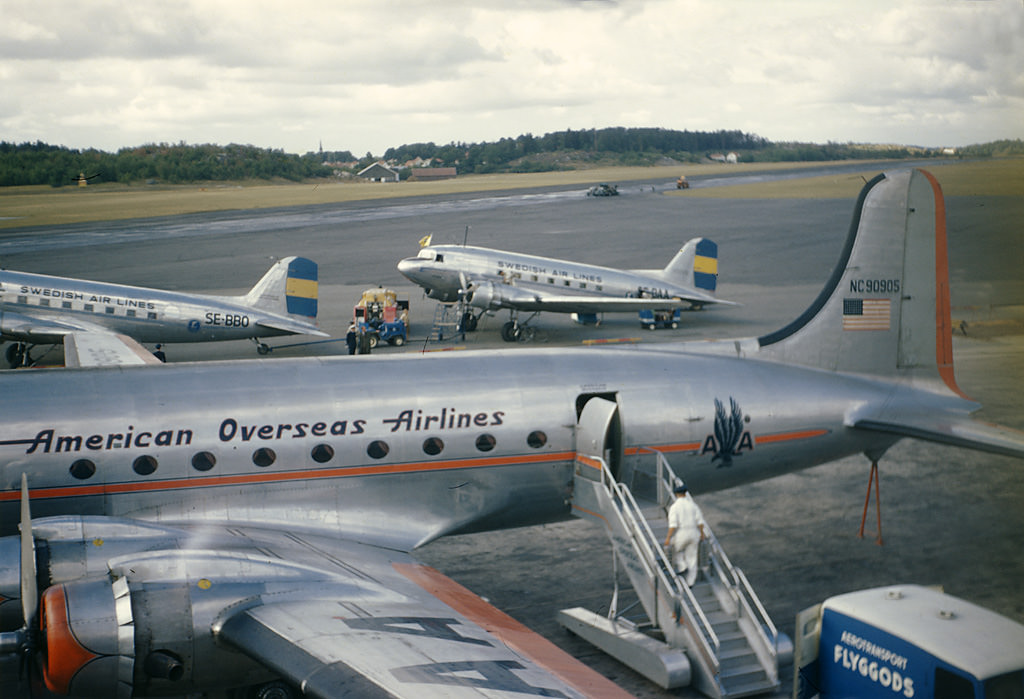
Bromma Airport near Stockholm appears in a 1947 photograph showing a Douglas DC-4 in the foreground and two Douglas DC-3s in the background. Commercial aviation was still a novelty for most Swedes at the time, and Bromma served as Stockholm’s primary airport before Arlanda opened in 1960.
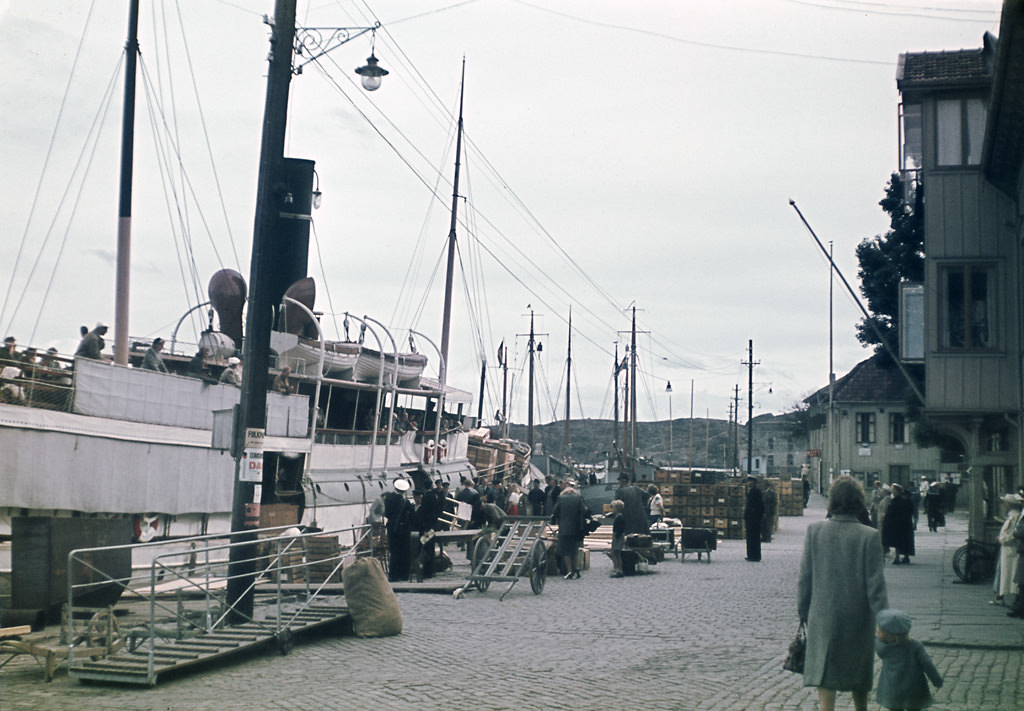
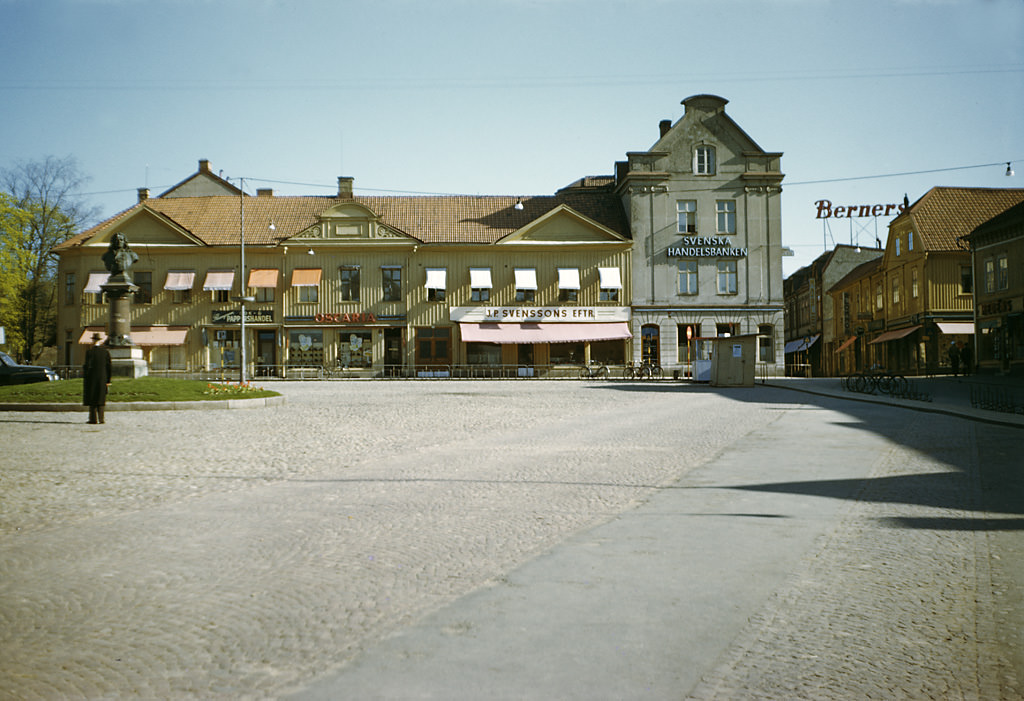
The coastal harbor of Marstrand was photographed in 1948, its traditional wooden buildings and moored boats creating one of the more picturesque scenes in the collection. Bruno also captured the High Street in Landskrona in Scania in 1943, and the Main Square in Alingsås in 1948 — each a snapshot of a different corner of Sweden.
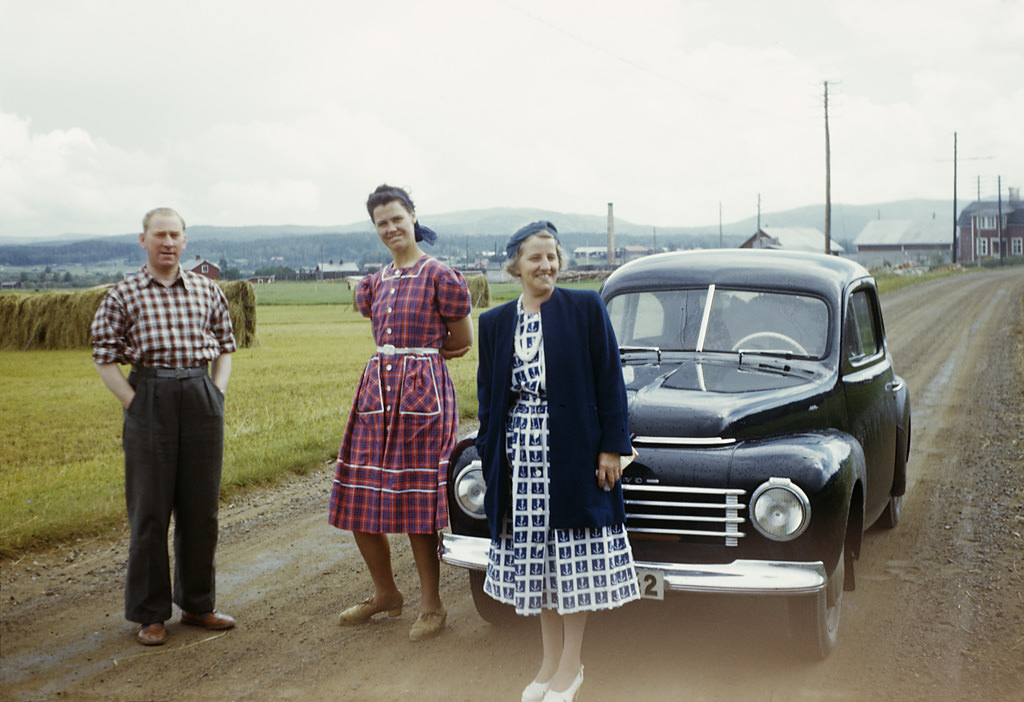
Bruno’s personal life appears briefly in a 1948 photograph taken on the road to Norway, showing three companions — Gustaf, Carin, and Lilly — alongside a Volvo PV. The car was one of the defining Swedish vehicles of the postwar era, and the image captures the beginning of a leisure trip at a moment when such travel was becoming more accessible to ordinary Swedes.
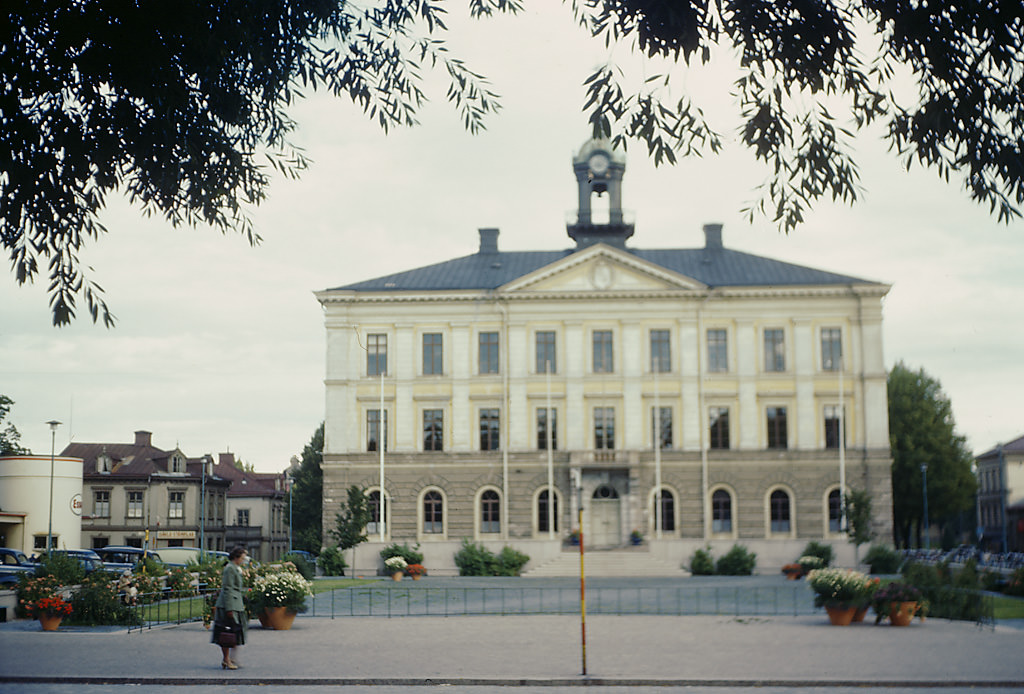
The Gävle Town Hall, built between 1784 and 1790, was photographed by Bruno in 1949 — one of his last documented shots from the decade. It stands as a fine example of Swedish neoclassical civic architecture, and Bruno’s color photograph preserves details that a black-and-white image simply would not.
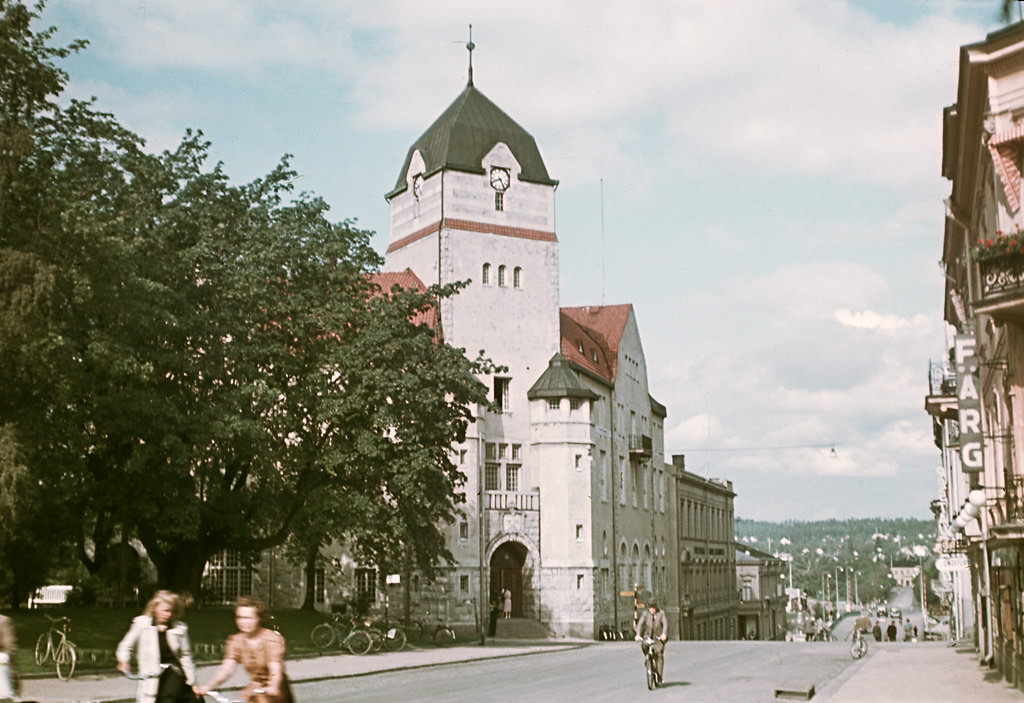
Across the full collection, Bruno photographed Sweden in a way that no official record of the period could replicate. His images cover the obvious landmarks but also linger on side streets, harbors, parks, and everyday moments. The Kodachrome process gave his photographs a richness of color that has held up remarkably well over eight decades, making them among the most vivid surviving records of Swedish life in the 1940s.
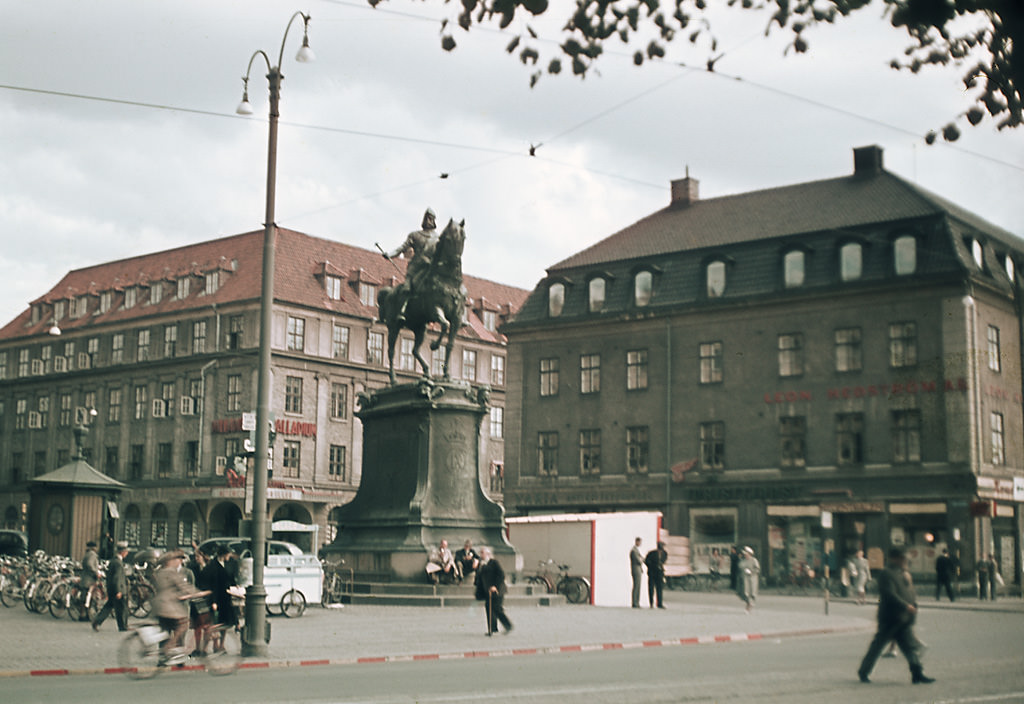
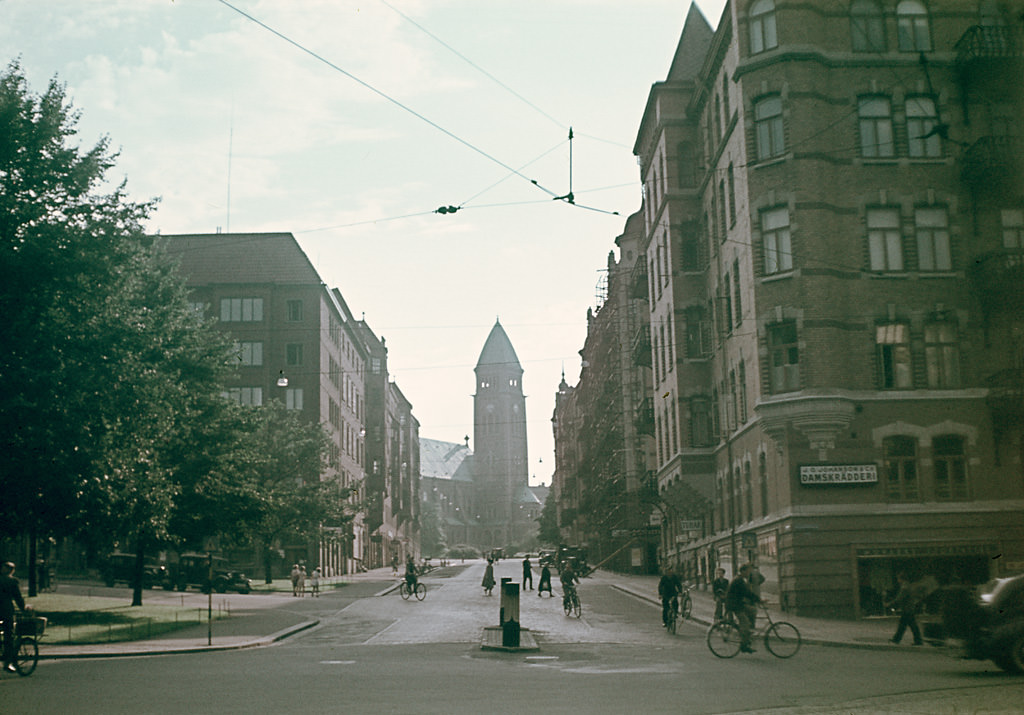
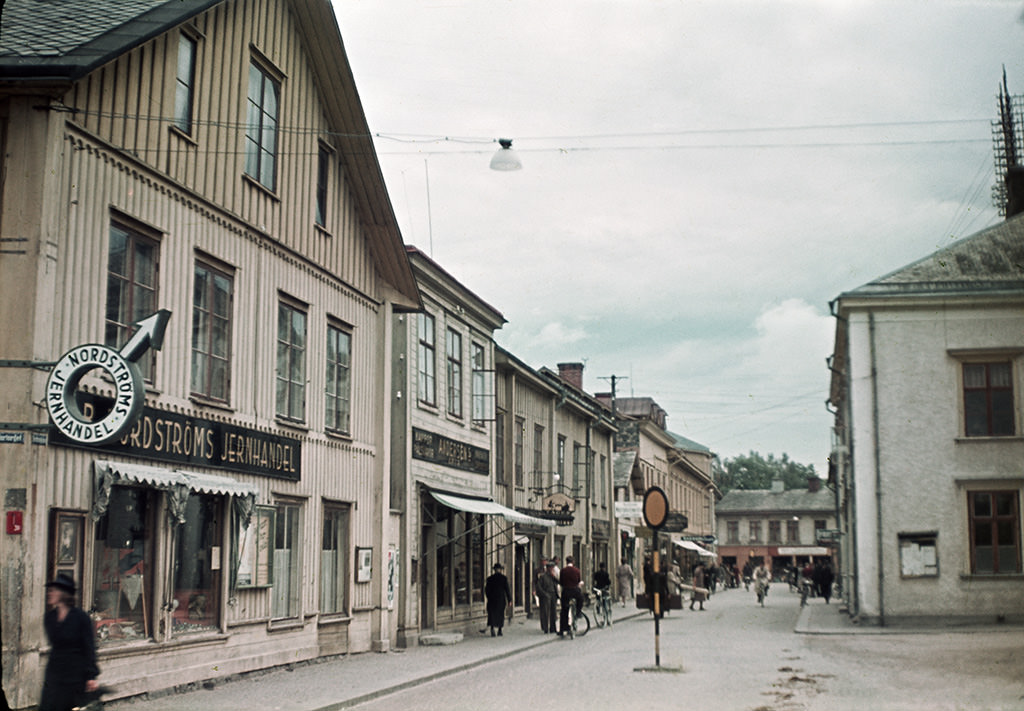
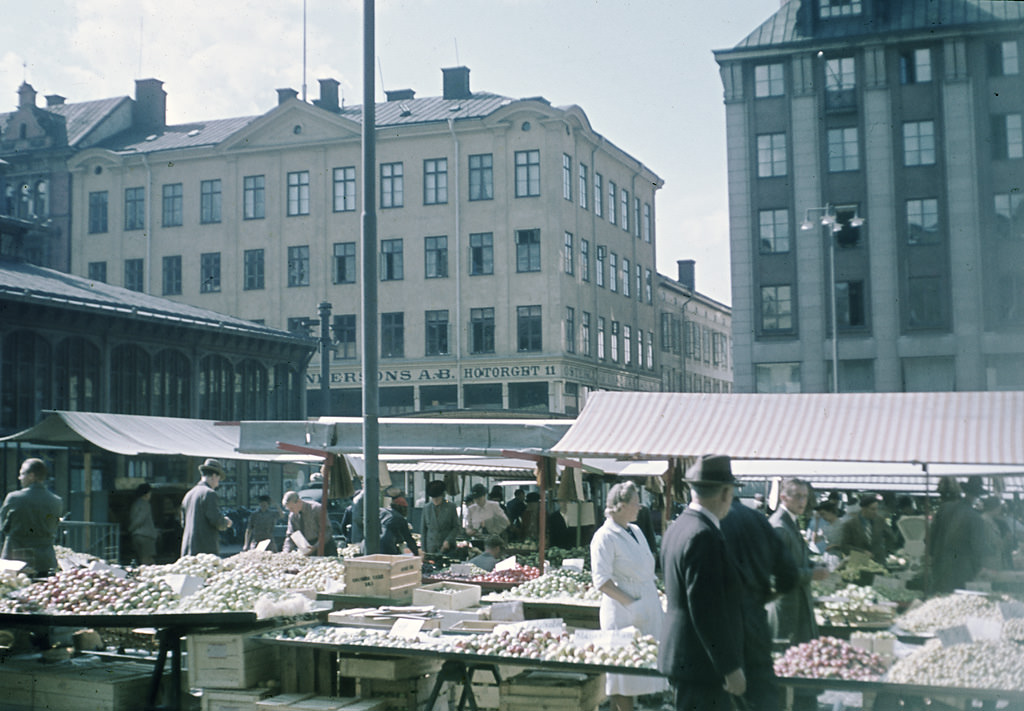





How Hötorget changed with those disgusting scrapers is completely unforgivable.
Ah det här påminner mig om en praktik jag hade i högstadiet, satt och scannade in glasnegativ i färg på Upplandsmuseéts reproduktionsavdelning. Ska se om jag kan rota fram de bilderna, jätteintressanta ögonblicksbilder från 20- och 30-talet!
Alla köpte sina kläder på myrorna verkar det som.