
New York City in the 1930s was a city under pressure. The Great Depression had hit hard, leaving hundreds of thousands of New Yorkers unemployed. Wages were slashed. Families who could not afford food waited in breadlines that stretched around city blocks. Yet the city kept moving — its streets crowded, its neighborhoods loud, its people grinding through one of the hardest decades in American history. These photographs capture that world in raw, precise detail.
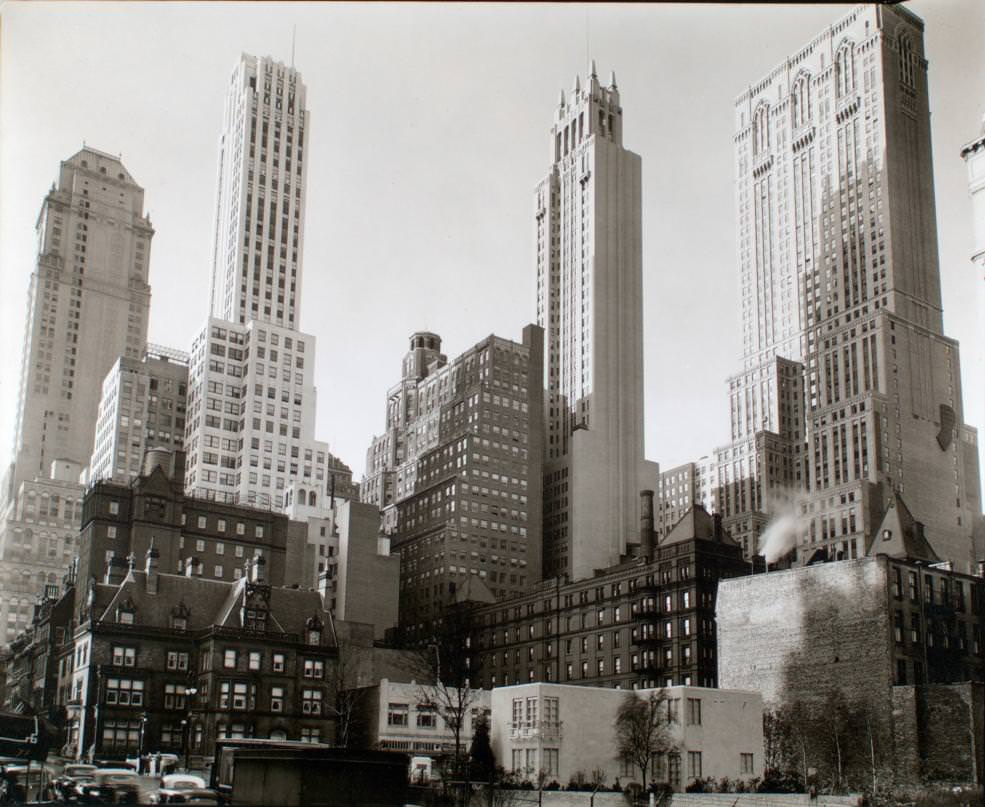
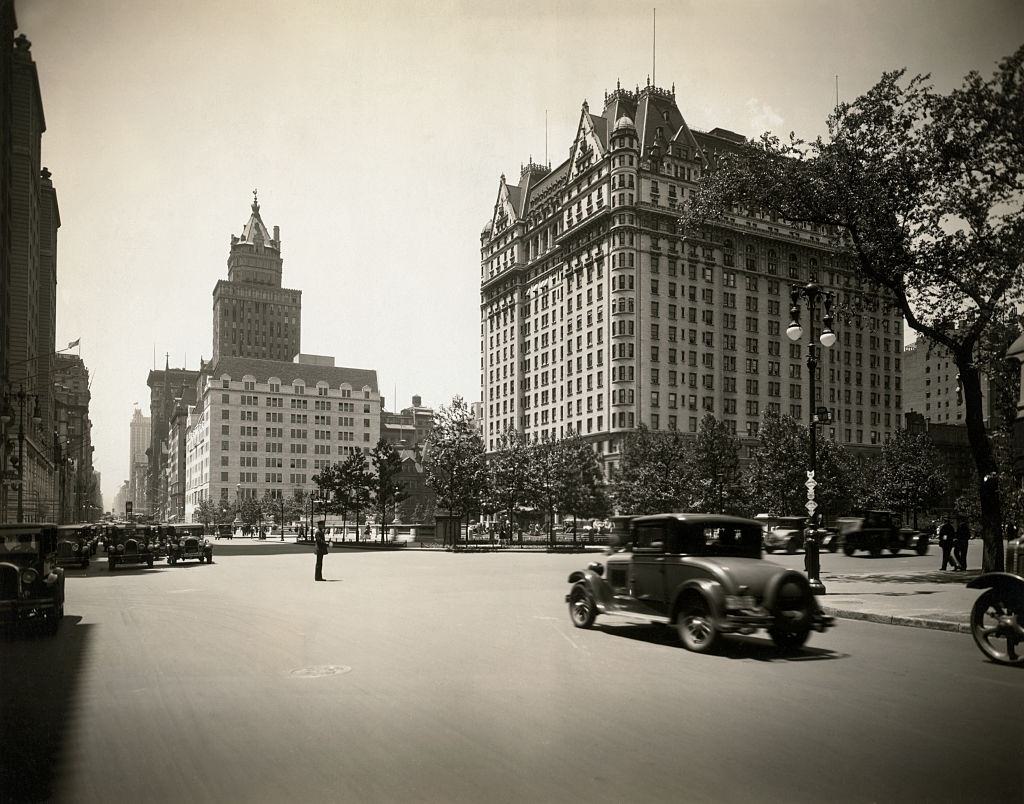
Midtown Manhattan remained a hub of activity even during the Depression years. Park Avenue and the streets surrounding it were lined with commercial buildings, hotels, and the constant movement of pedestrians and vehicles. The city never truly stood still, even when its economy faltered.
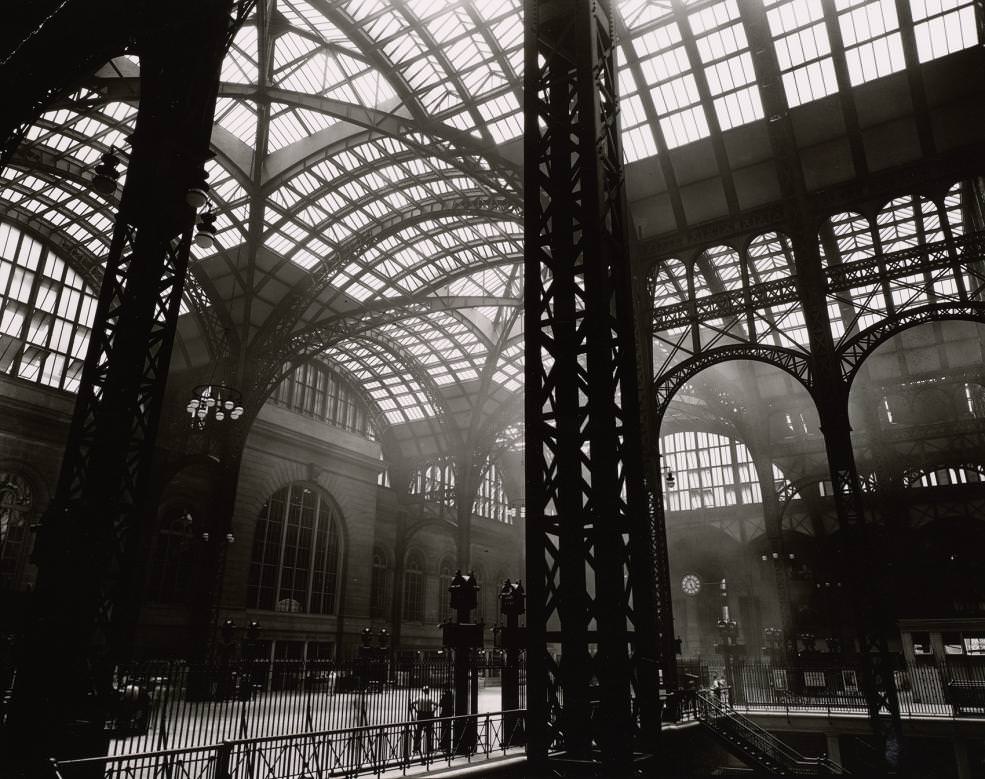
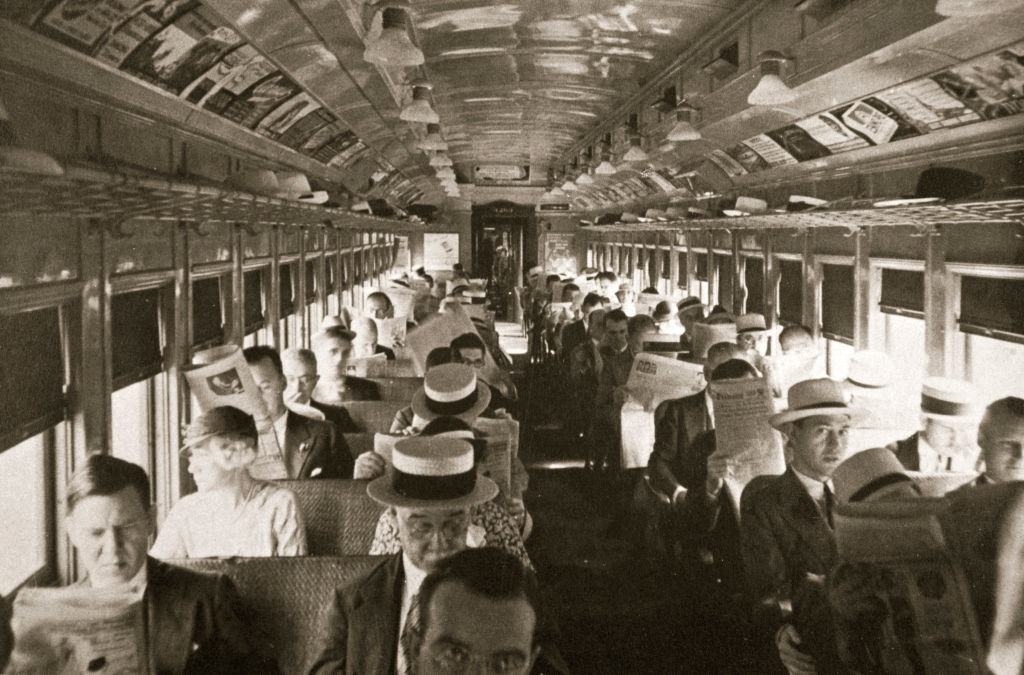
Pennsylvania Station was one of the most heavily trafficked buildings in the country during the 1930s. Thousands of commuters, travelers, and workers passed through its massive concourse every day. Rail travel was the dominant form of long-distance transportation, and Penn Station sat at the center of it all.
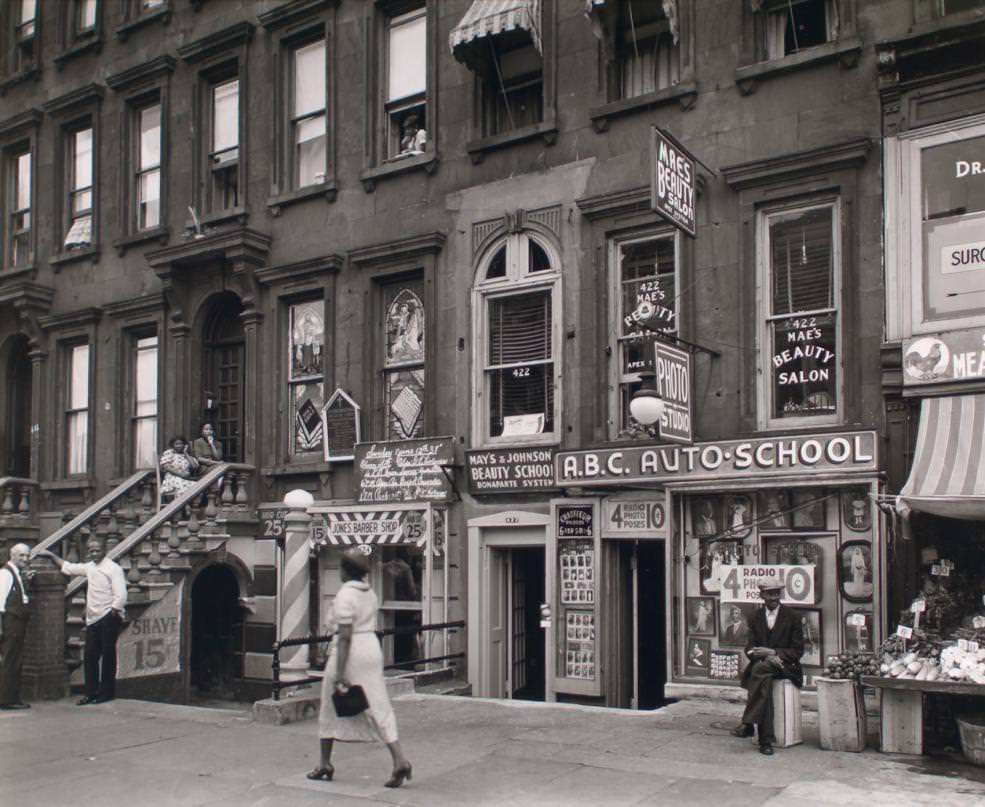
Harlem was a world of its own. The neighborhood had been a center of Black cultural life since the 1920s, and despite the economic collapse, that energy did not vanish. Lenox Avenue — one of Harlem’s main corridors — was lined with businesses, street vendors, and residents navigating daily life with whatever resources they had.
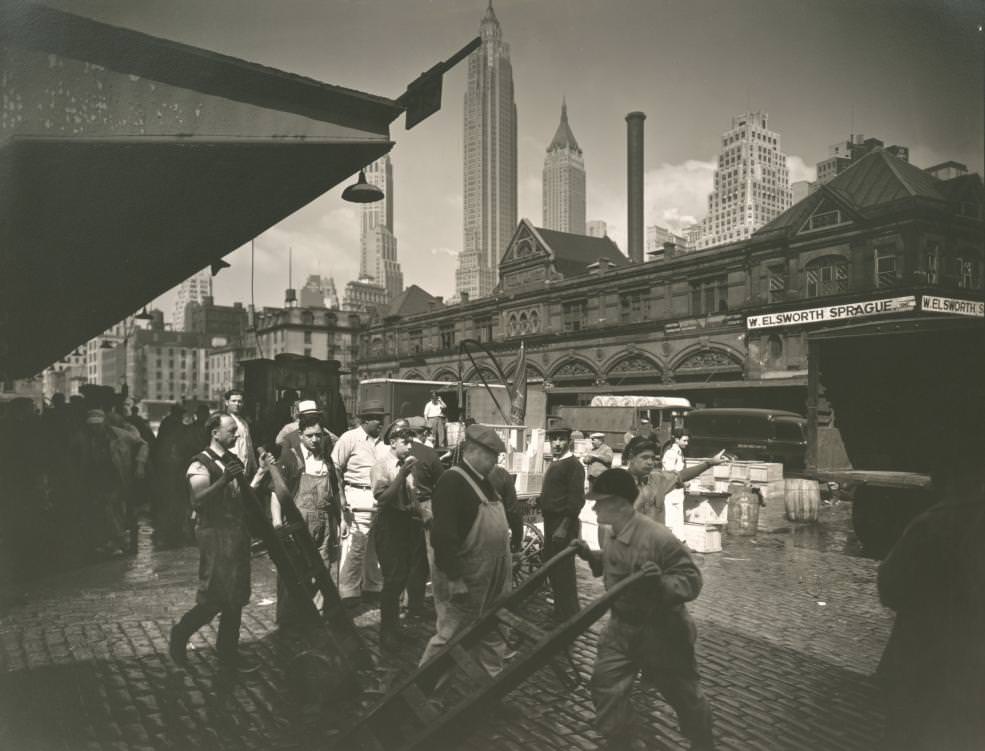
Markets like the one on Fulton Street were lifelines for working-class New Yorkers. Fresh fish, fruits, vegetables, and other goods were bought and sold at these open-air and indoor markets daily. For families stretching every dollar, buying directly from vendors at a market was often the most affordable option.
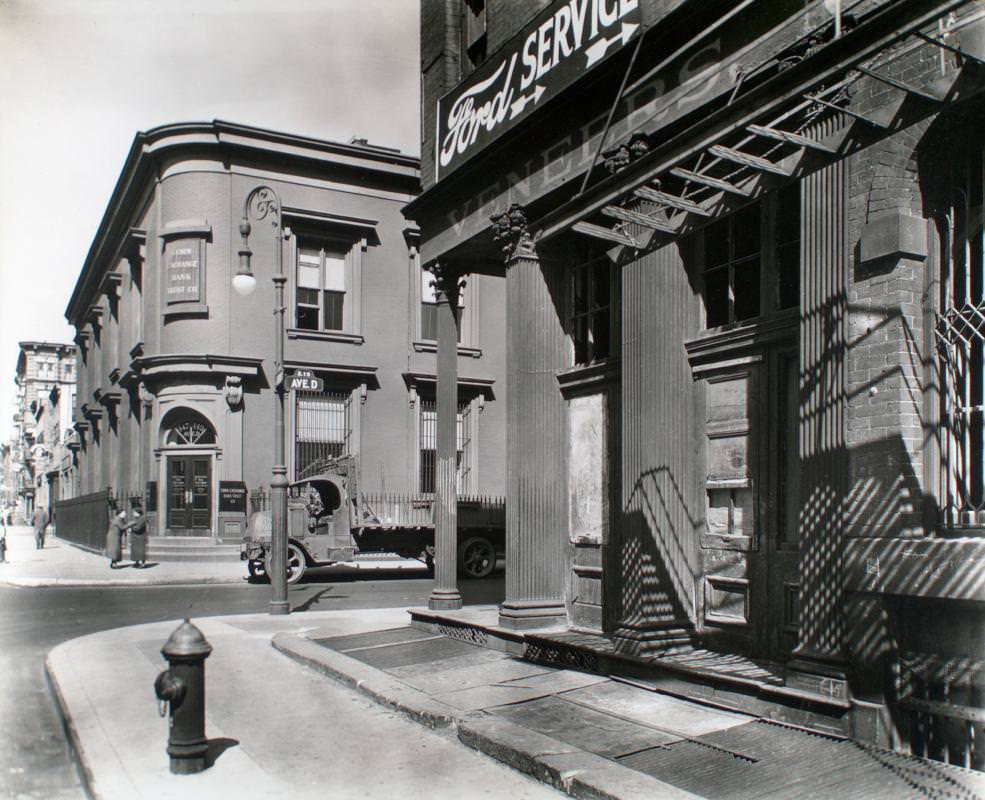
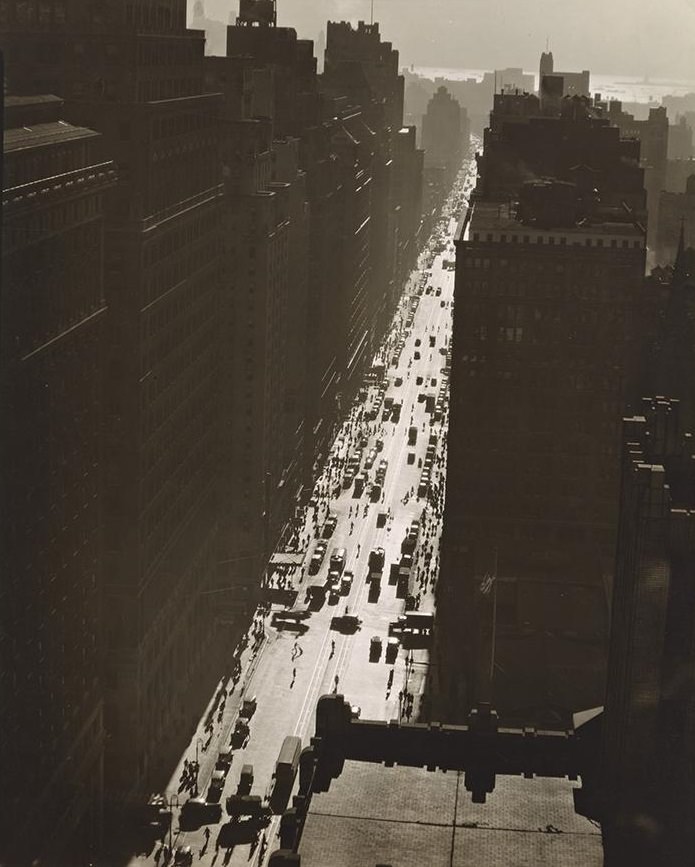
The federal government’s response to the Depression reshaped New York City physically. Under President Franklin D. Roosevelt’s New Deal, billions of dollars in federal funding poured into public works projects. New York received highways, bridges, public housing complexes, new schools, parks, and an expanded Brooklyn Navy Yard. These were not just economic programs — they permanently altered the city’s landscape.
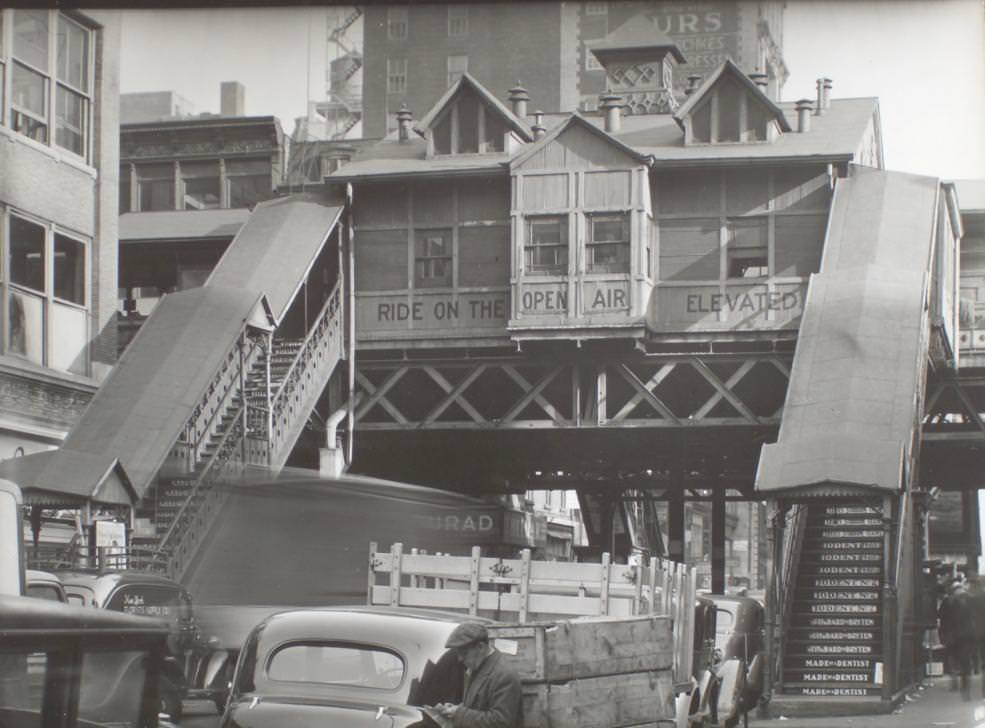
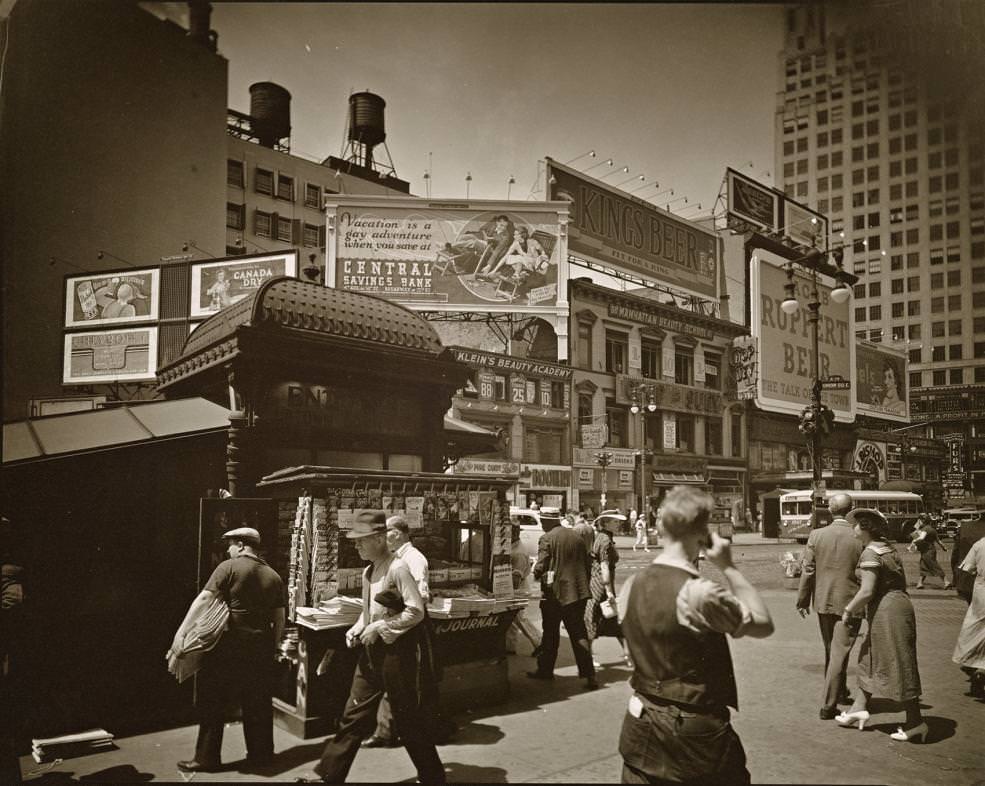
Union Square had long been a gathering place for political protest and public rallies. During the 1930s, labor movements, socialist groups, and unemployed workers frequently filled the square with demonstrations. It was one of the most politically charged public spaces in the country during this decade.
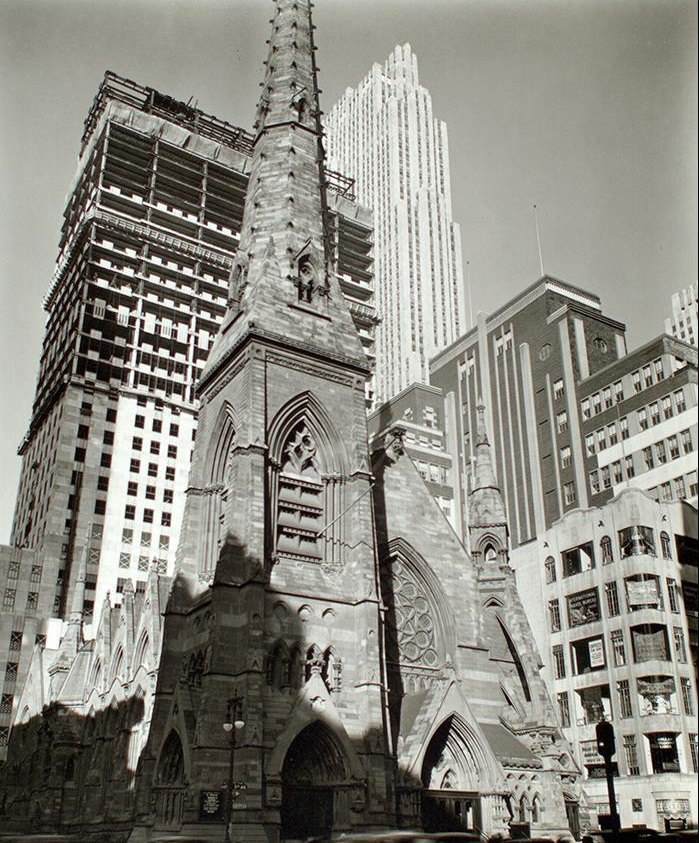
Rockefeller Center was under construction for much of the early 1930s, becoming one of the most visible symbols of large-scale development during the Depression era. It stood as a contrast — massive private investment in steel and stone while much of the city struggled to get by.
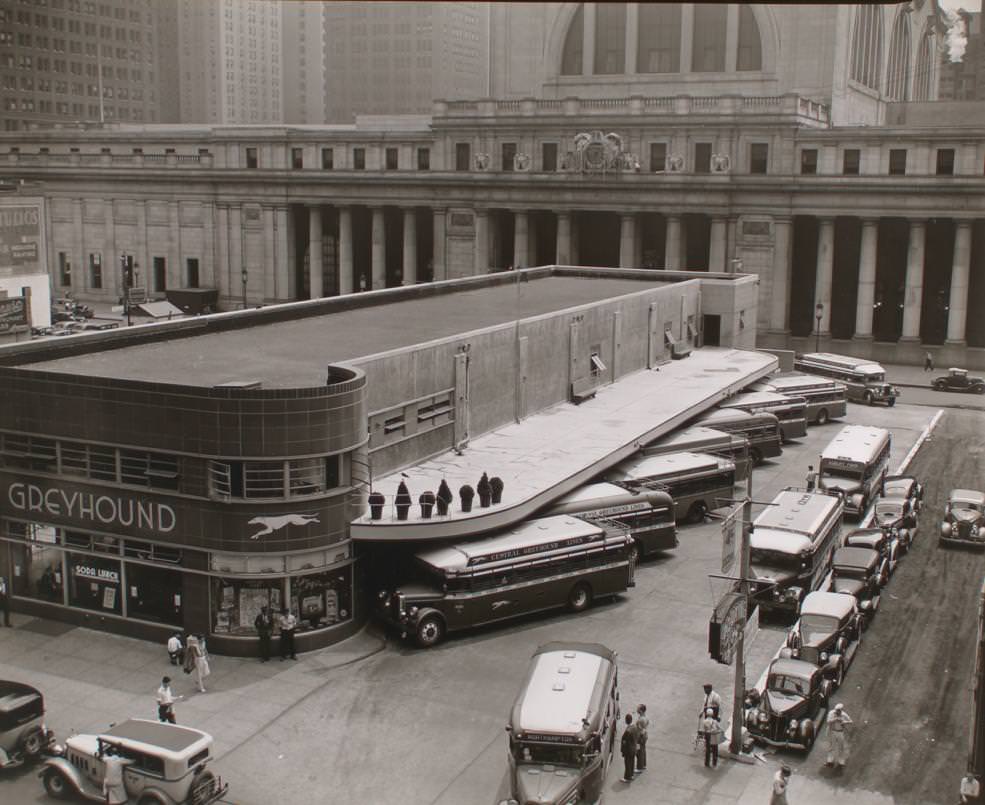
For those who could not afford train tickets, the Greyhound bus terminal near 33rd and 34th Streets offered a cheaper way out of — or into — the city. Bus travel expanded significantly during the Depression as Americans sought affordable ways to move across the country in search of work.
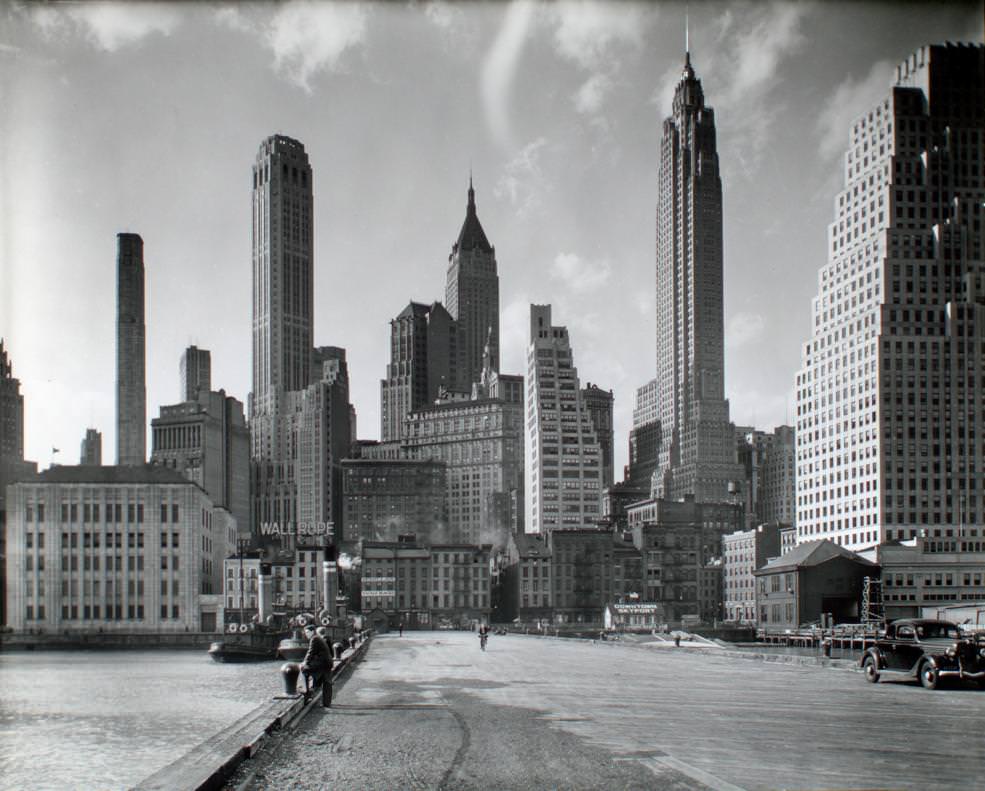
Seen from the waterfront, Manhattan’s skyline in the 1930s was already a defining image of American ambition. The Empire State Building was completed in 1931, and the cluster of towers rising from lower and midtown Manhattan formed a backdrop that was recognized across the world.
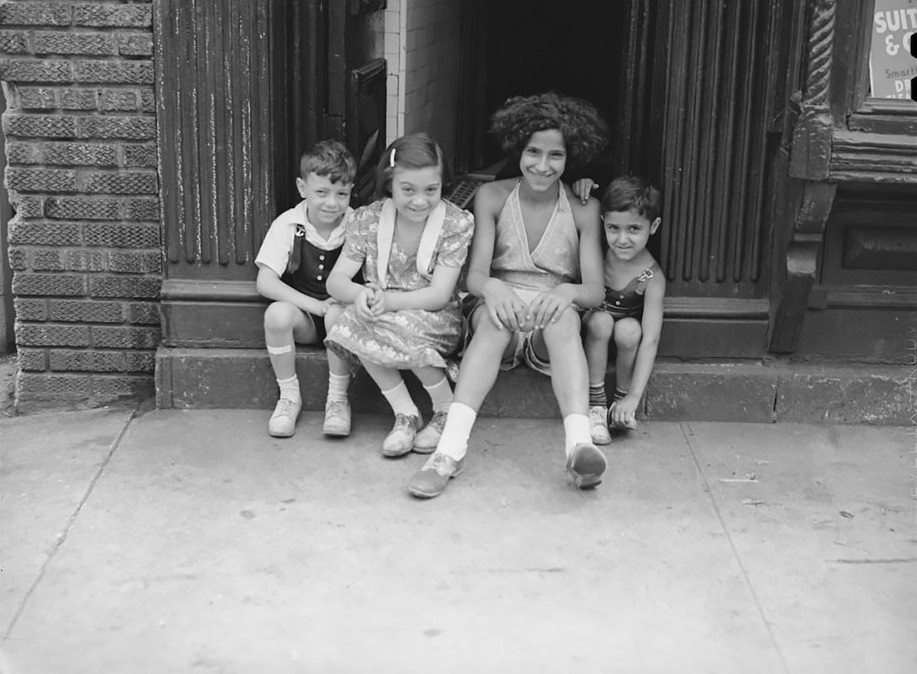
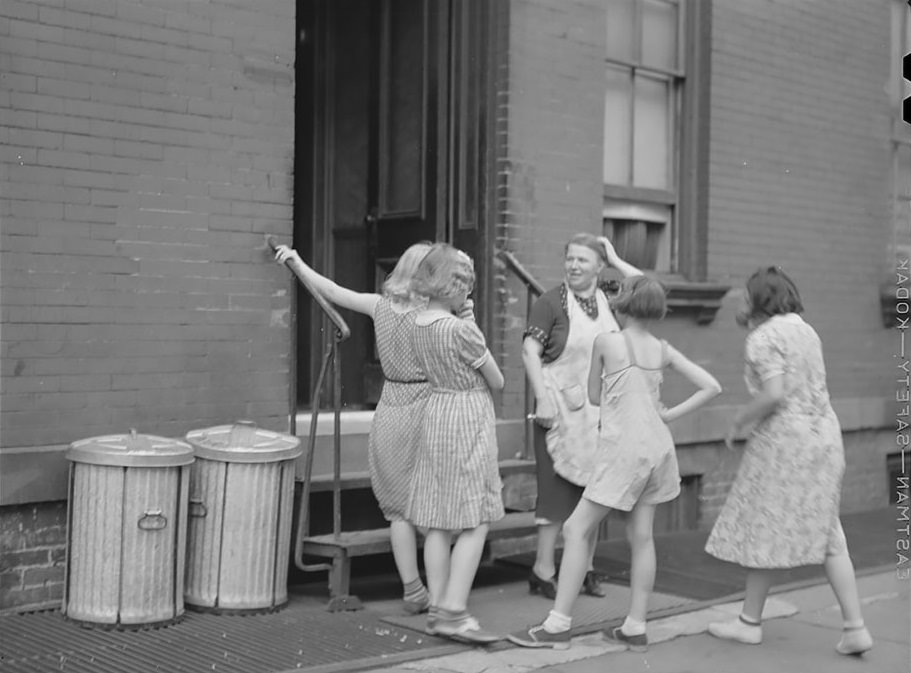
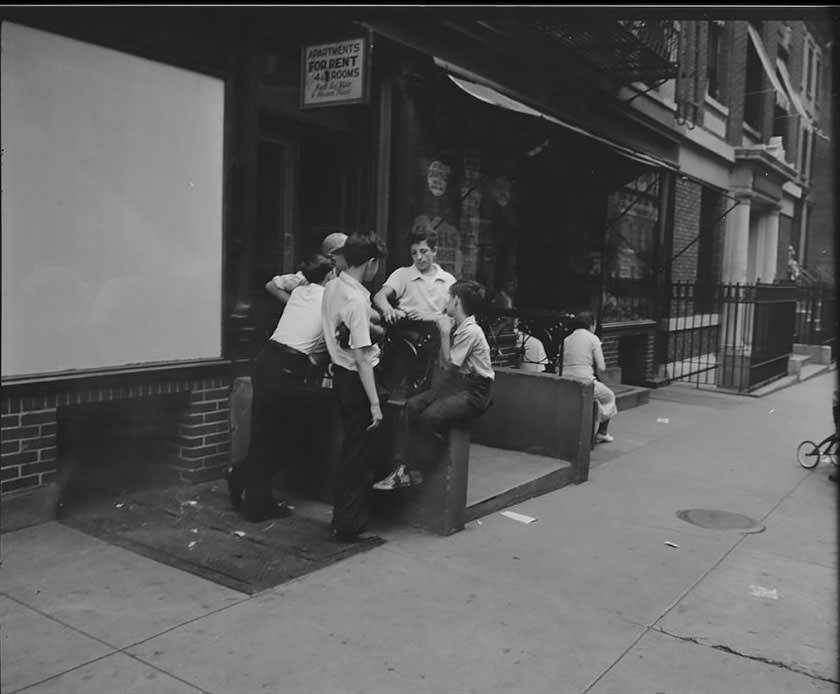
For children in working-class neighborhoods, the street was the playground. Sidewalks and gutters became spaces for games, socializing, and simply passing time. The blocks around 1st Avenue and the East Side streets were densely packed with tenement housing, and outdoor life was an extension of cramped apartment living.
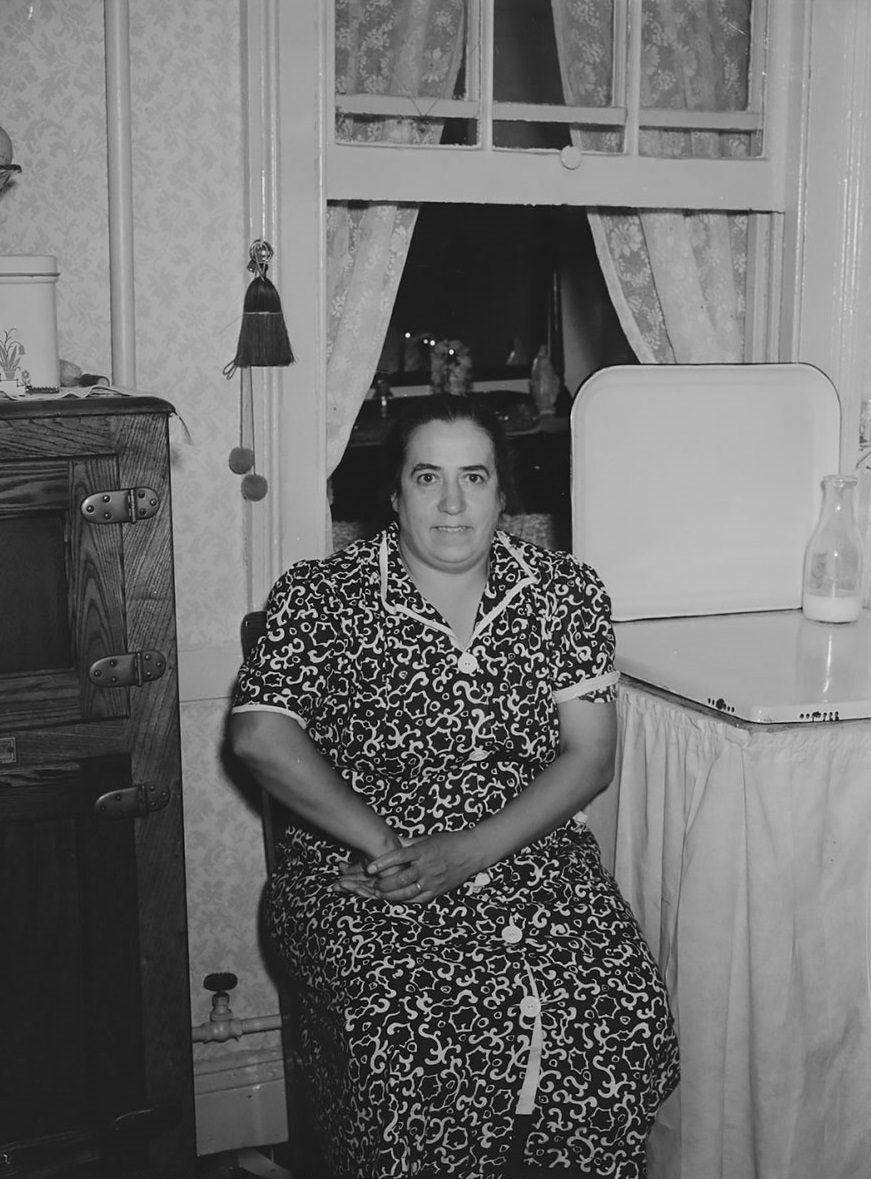
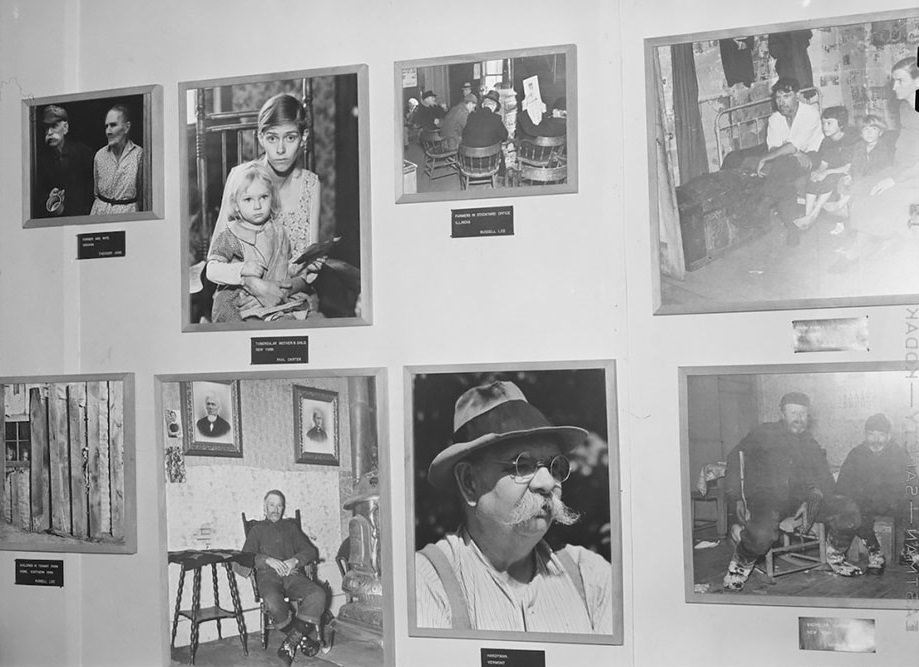
New York City remained a cultural destination even through the Depression. Photography was emerging as both a fine art and a documentary tool, and exhibitions like the first international photographic exhibit drew public attention to the medium. Government-funded photography programs, including those under the Works Progress Administration, documented American life with unprecedented detail during this period.
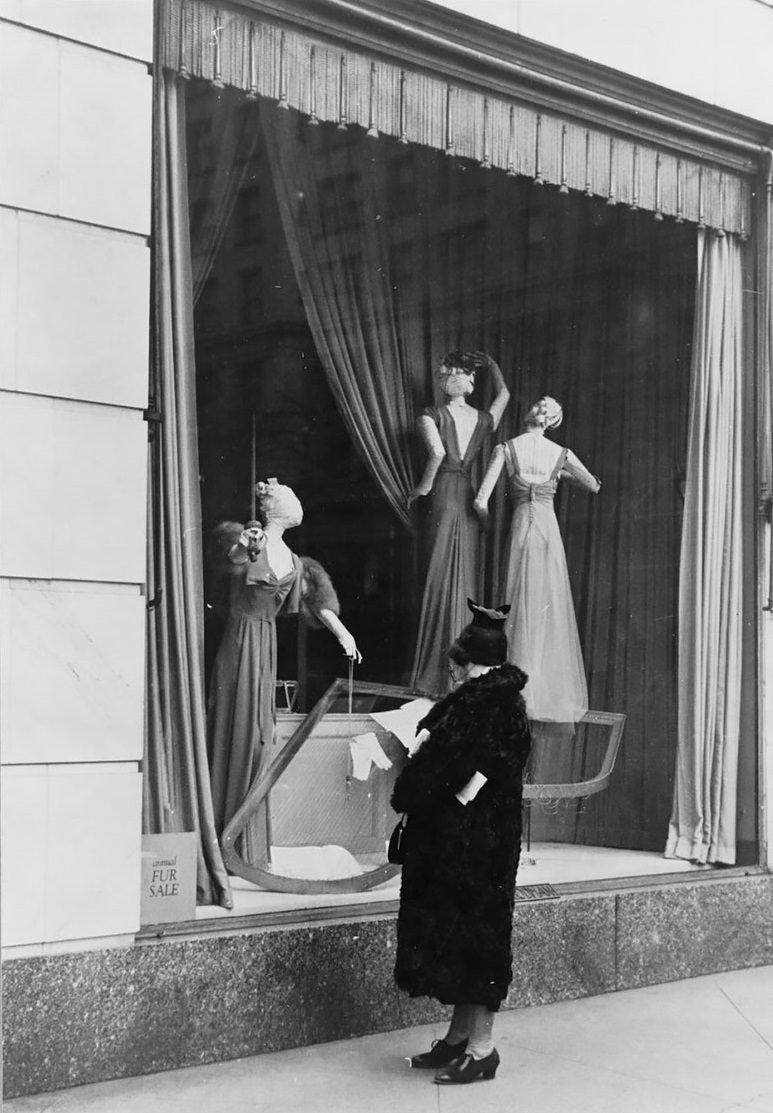
Department stores like Bergdorf Goodman catered to the wealthy, who continued to shop even as unemployment surged. Their window displays became elaborate art installations designed to draw foot traffic and attention. The surrealist movement, popular in European art circles, made its way into American commercial design by the mid-1930s.
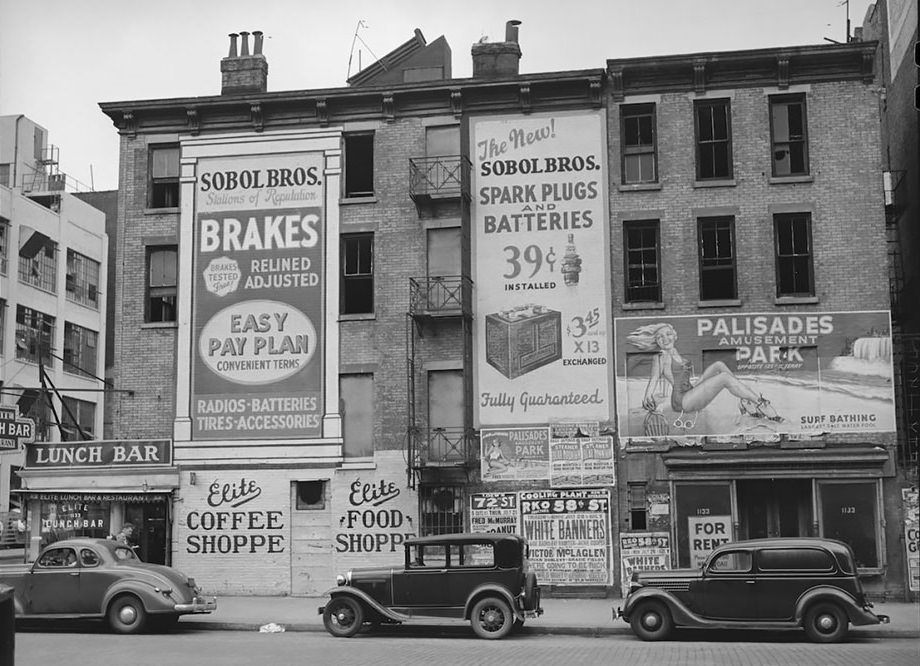
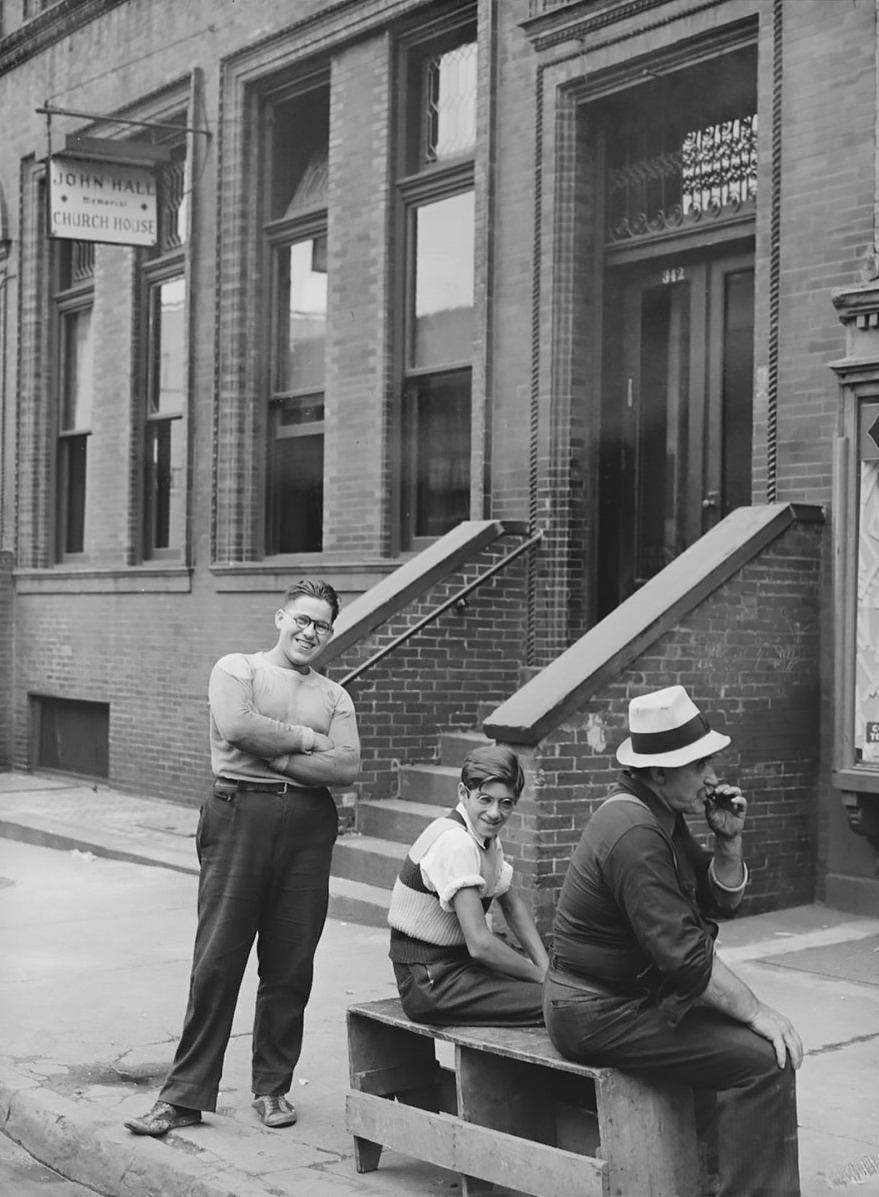
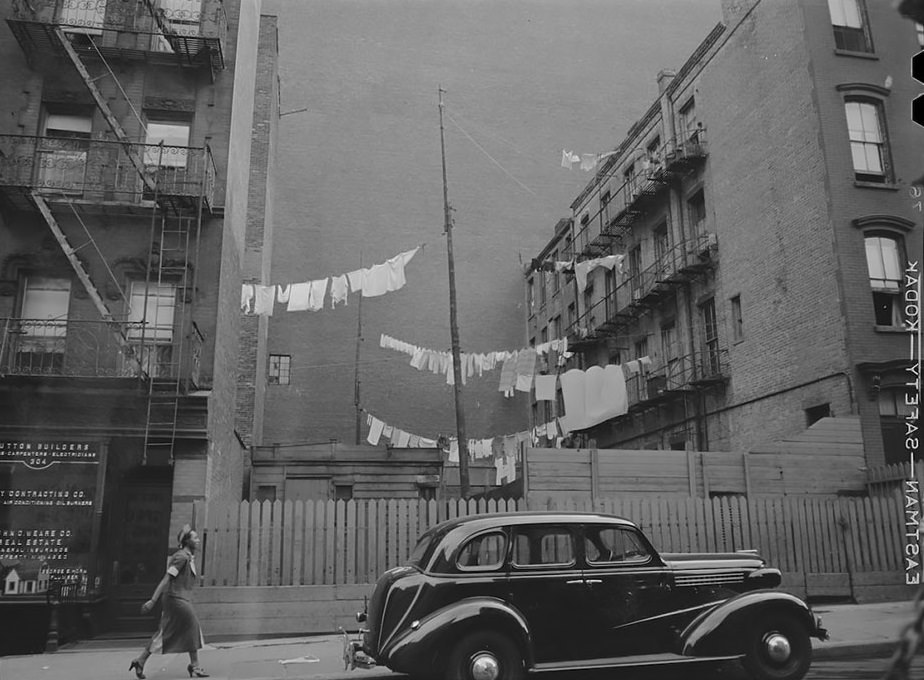
The East 60s on Manhattan’s Upper East Side were a mix of old tenements and newer residential buildings. Streets like 63rd were home to immigrant families and working-class New Yorkers living in close quarters. The neighborhood’s character was shaped as much by the people on its stoops and sidewalks as by the buildings themselves.
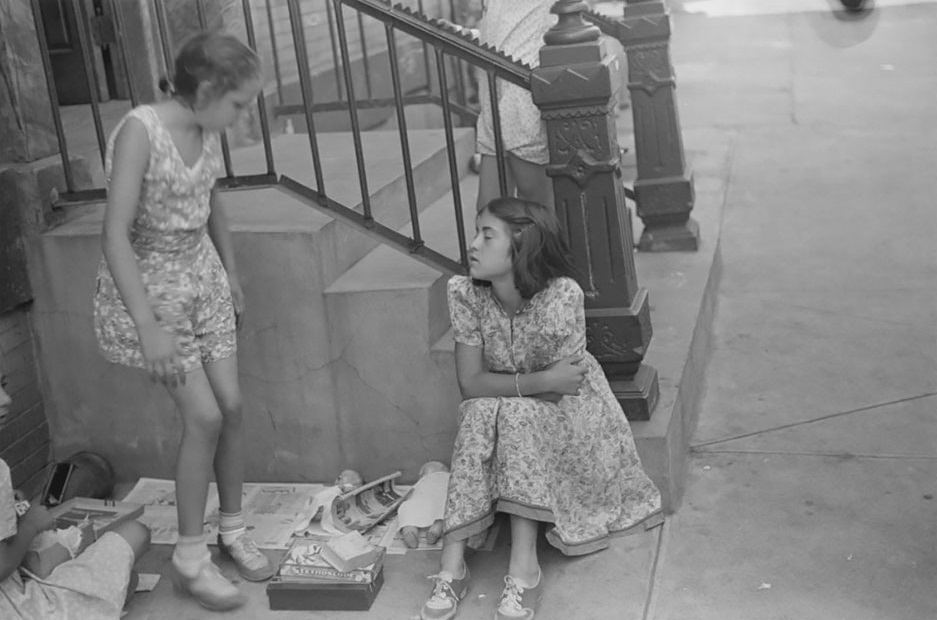
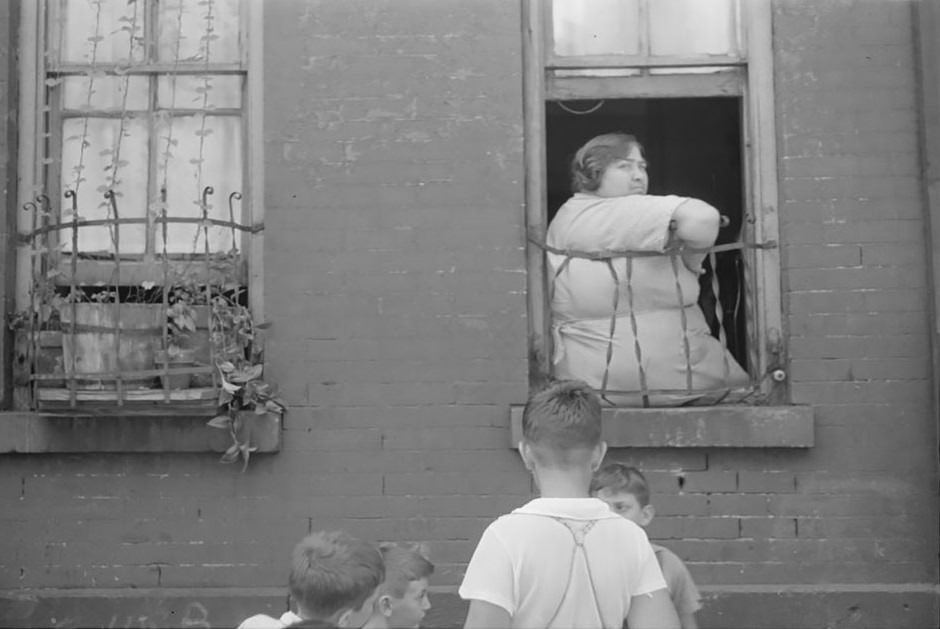
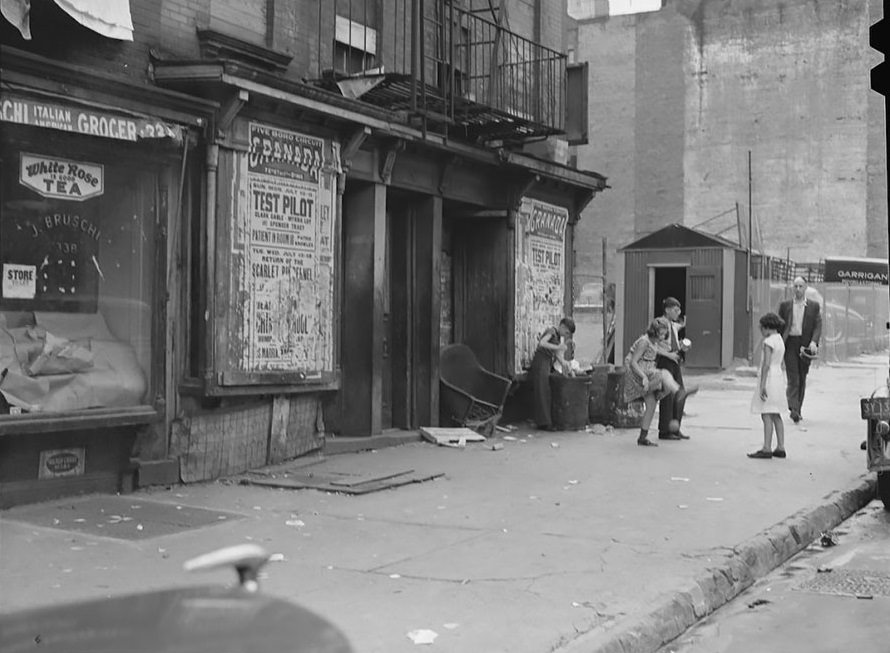
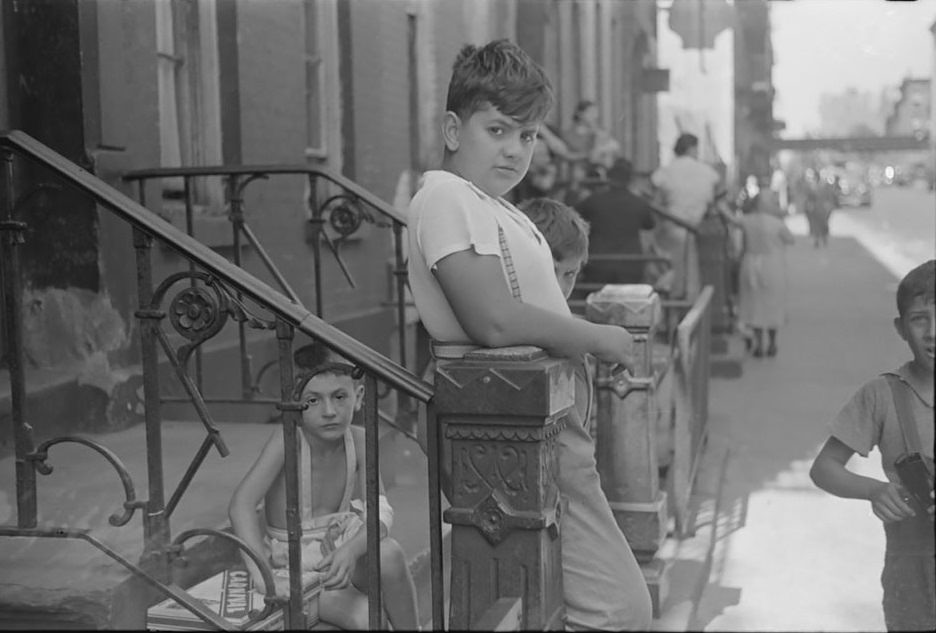
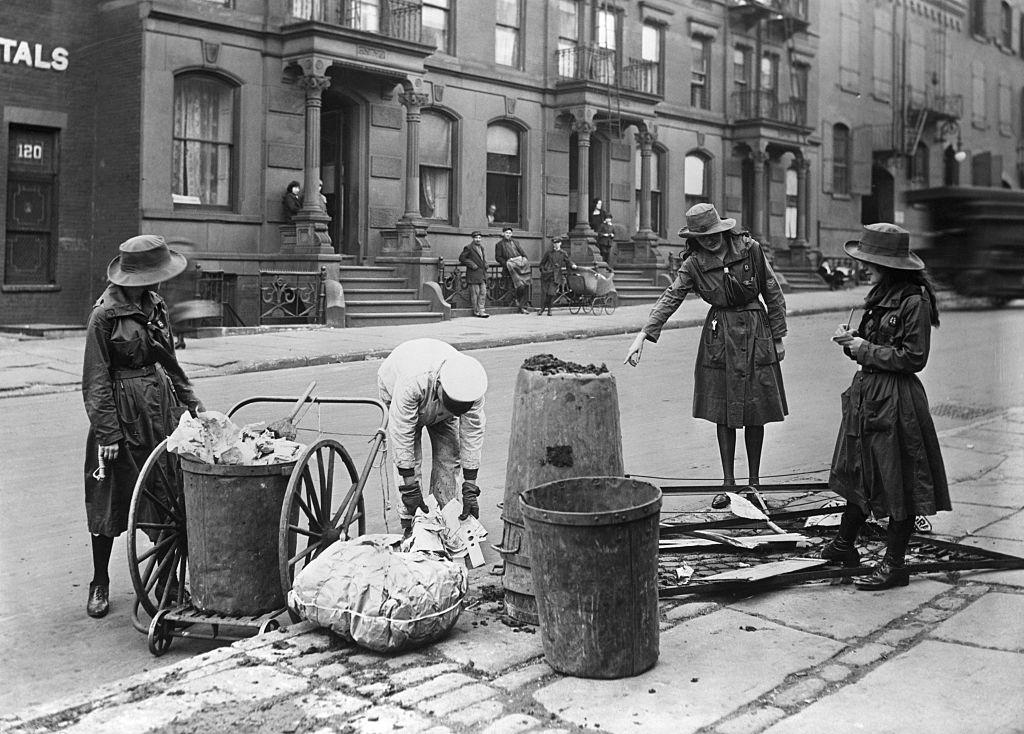
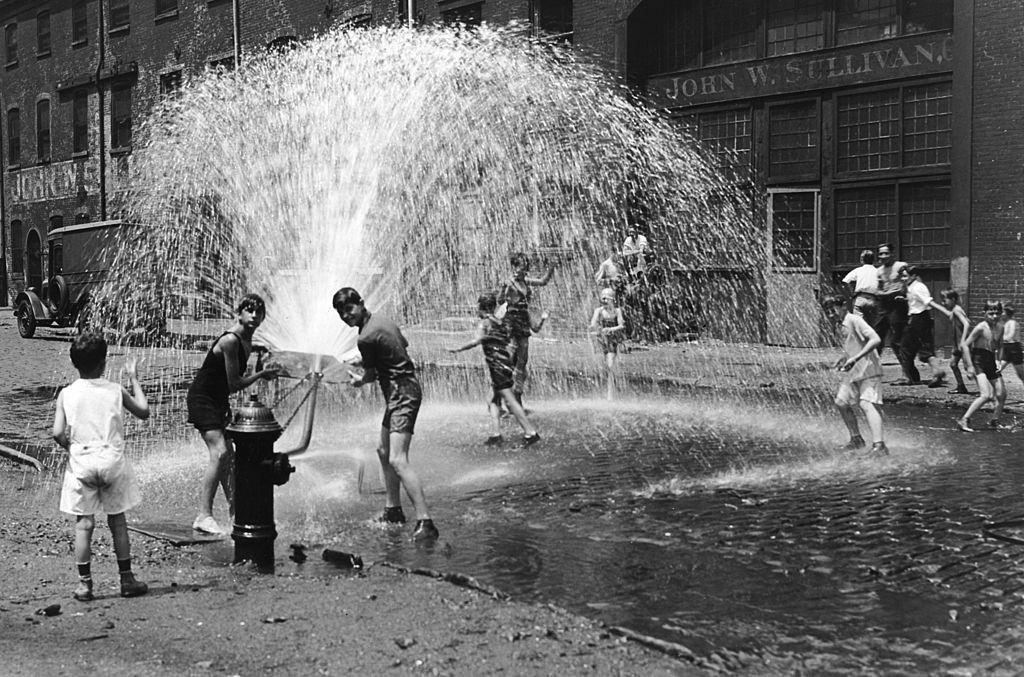
Children in these East Side blocks claimed the streets as their own. With little access to organized recreation, kids improvised. They played in the road between parked cars and passing traffic, used stoops as bases, and opened fire hydrants on hot days. These photos, taken within a few blocks of each other, show how consistent and self-contained neighborhood life was during this era.
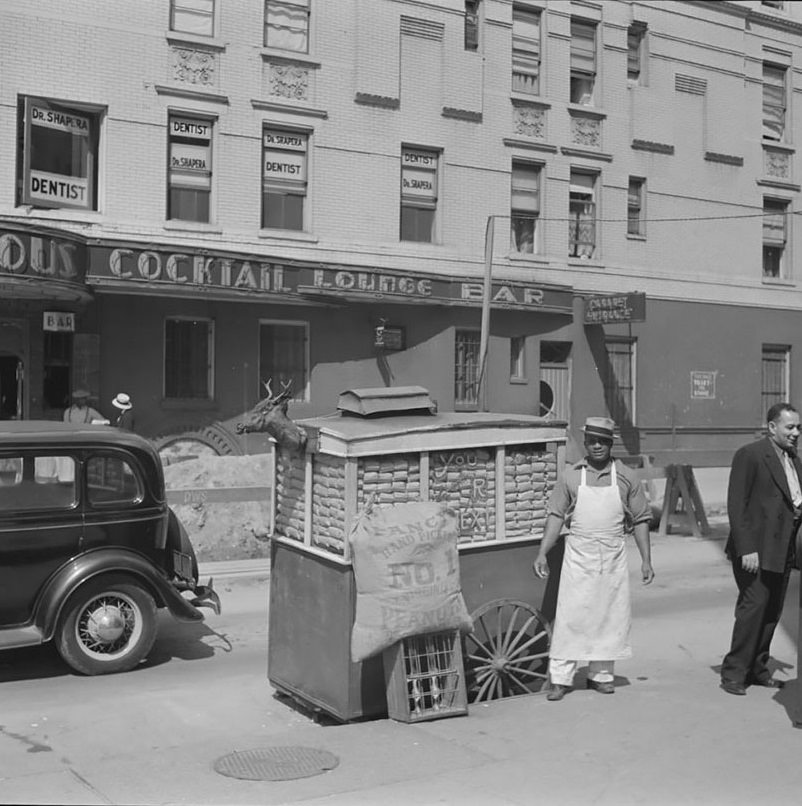
Street vendors were everywhere in 1930s New York. A peanut wagon on Lenox Avenue and 133rd Street in Harlem was a fixture of the neighborhood’s commercial street life. These small operators — selling peanuts, fruit, sodas, and other cheap goods — made a living on foot traffic and repeat customers from surrounding tenements and businesses.
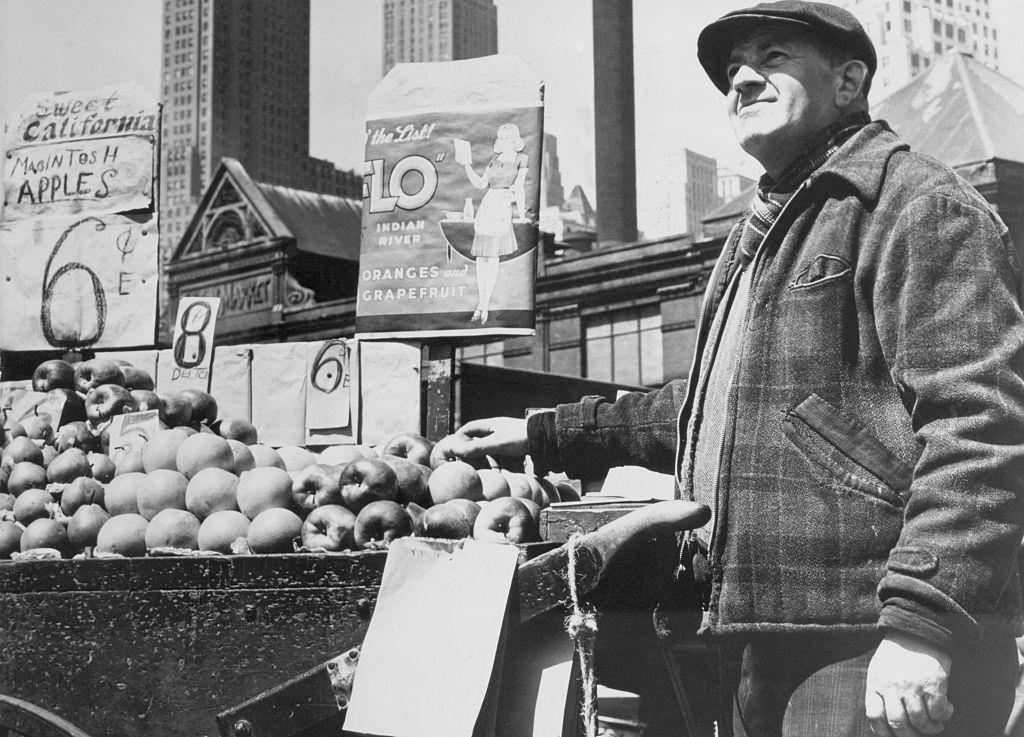
Apple selling became one of the most recognizable symbols of Depression-era unemployment. The International Apple Shippers’ Association promoted the idea of selling apples on credit to unemployed men, who would then sell them on street corners for five cents each. At the height of the program, over 6,000 apple sellers stood on New York City streets.
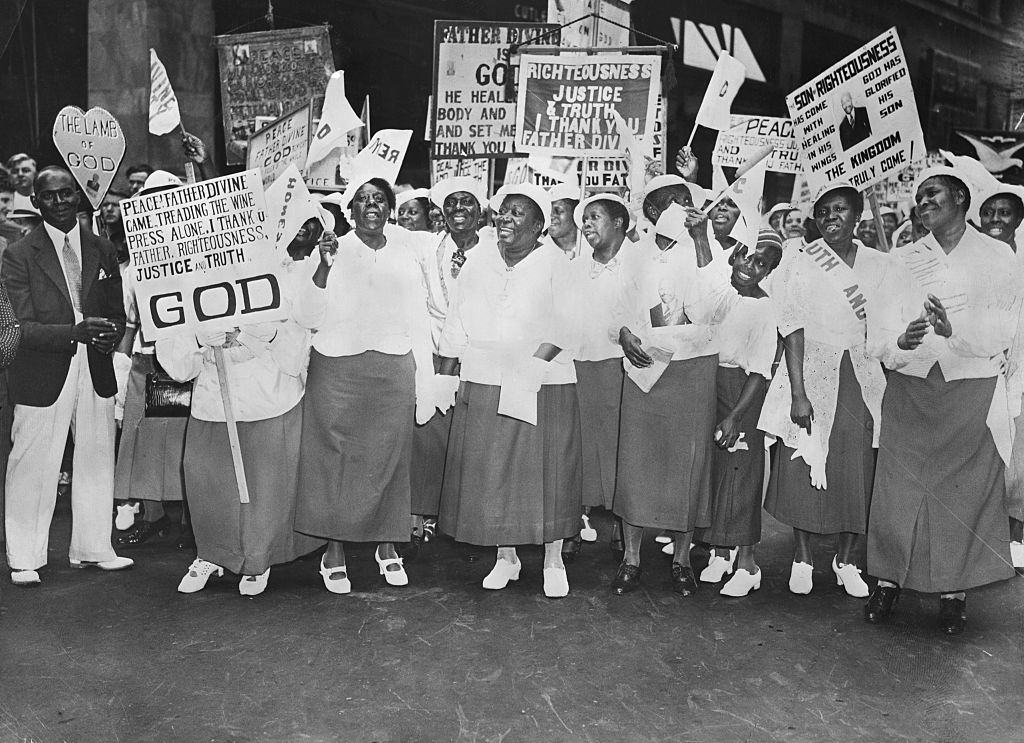
Father Divine was one of the most influential religious figures in Depression-era New York. His Peace Mission movement provided free meals and housing to thousands of followers, many of them Black New Yorkers hit hardest by the economic collapse. His Harlem parades drew large crowds and were a visible expression of the community’s spiritual and social networks.
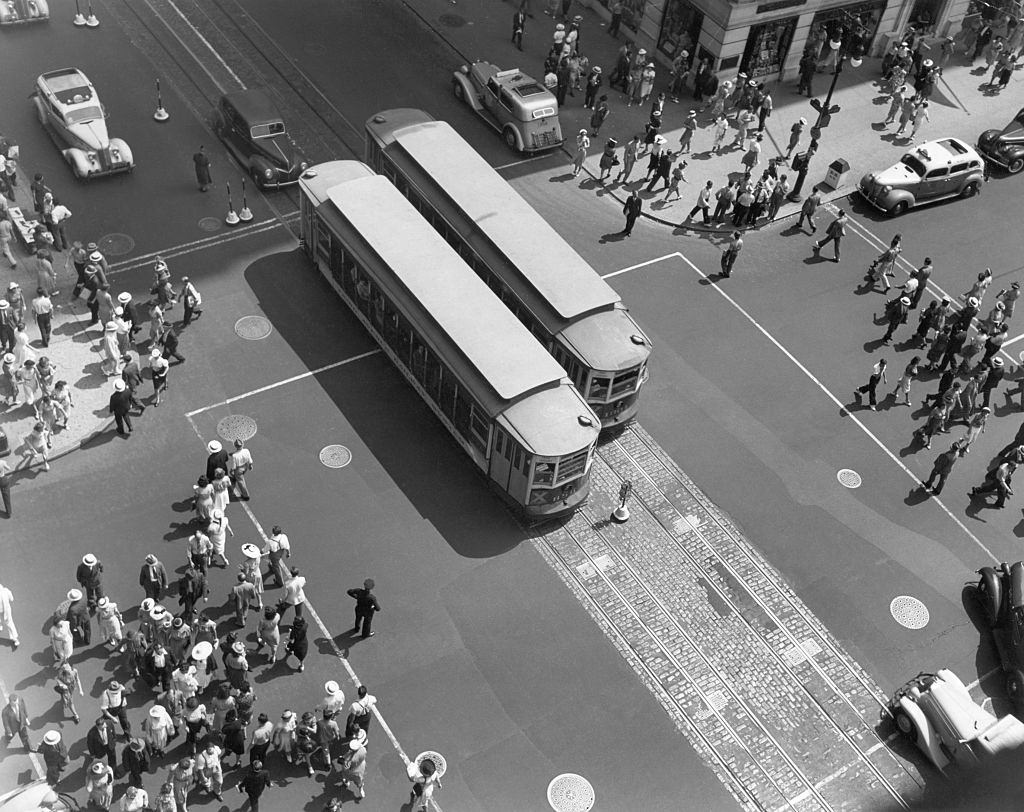
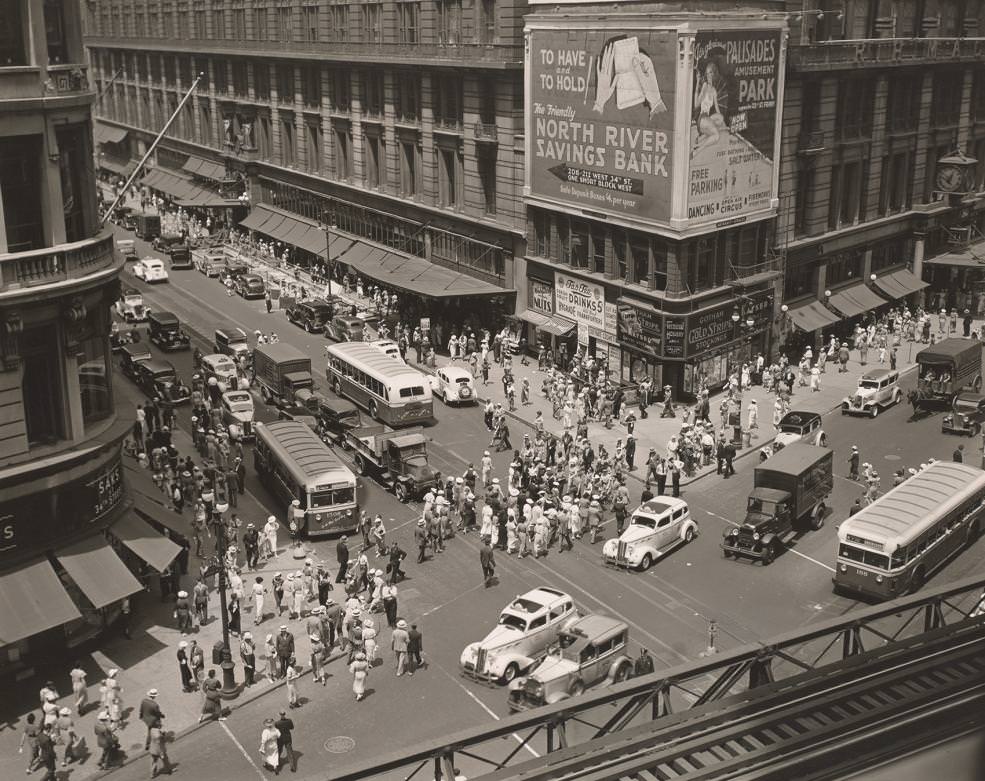
The intersection of 42nd Street and Fifth Avenue was one of the busiest crossroads in the world. Overhead views from the period show dense pedestrian traffic mixing with cars, buses, and the occasional horse-drawn cart. Midtown Manhattan had become the commercial and cultural center of the entire country by this point.
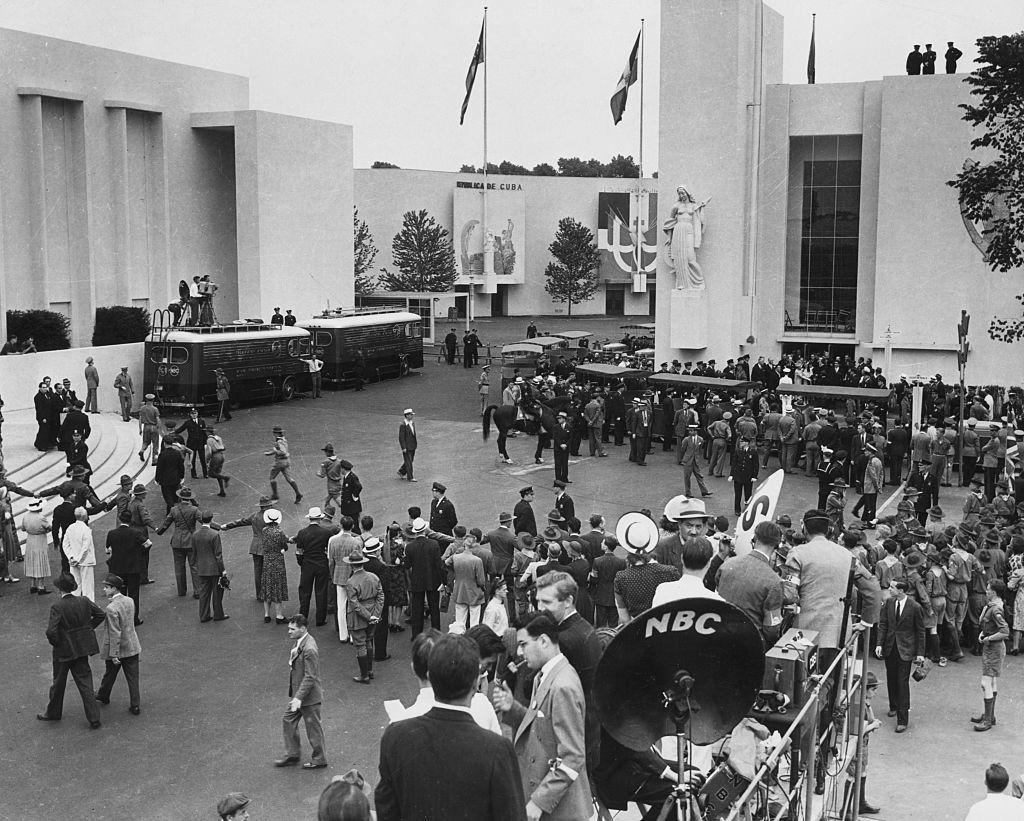
The 1939 New York World’s Fair marked a turning point at the end of the Depression decade. Held in Flushing Meadows, Queens, under the theme “The World of Tomorrow,” it drew over 44 million visitors. NBC used the fair to broadcast some of the first public television transmissions in the United States, a milestone captured here during the royal visit of King George VI and Queen Elizabeth.
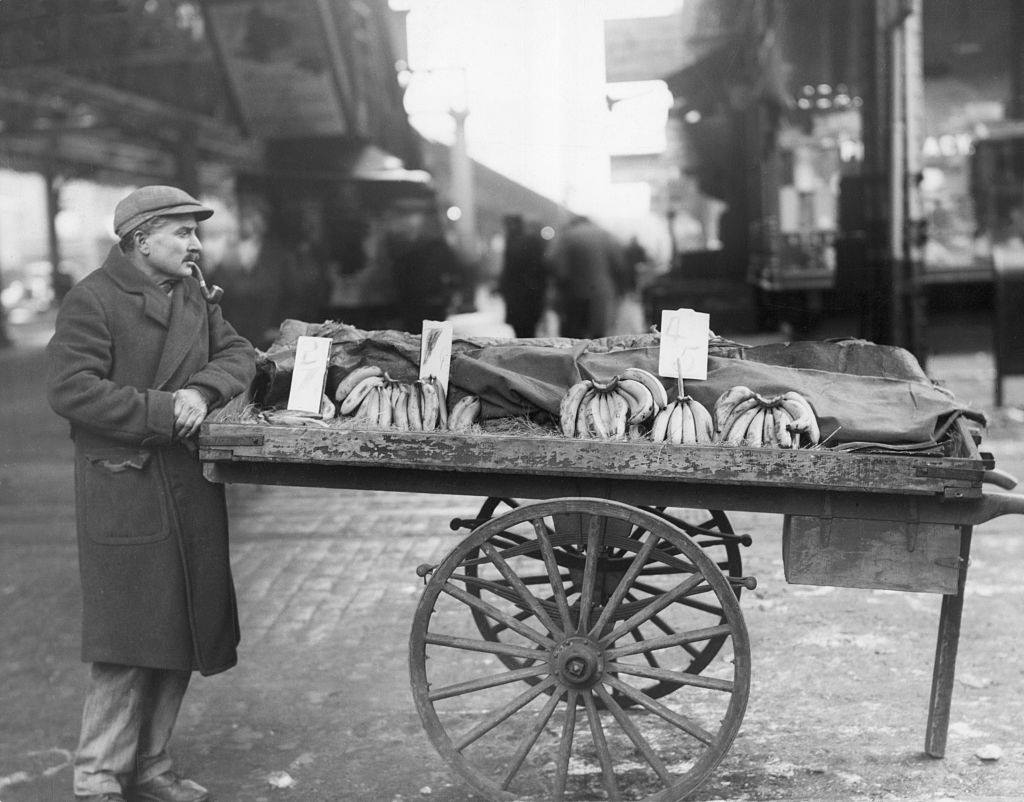
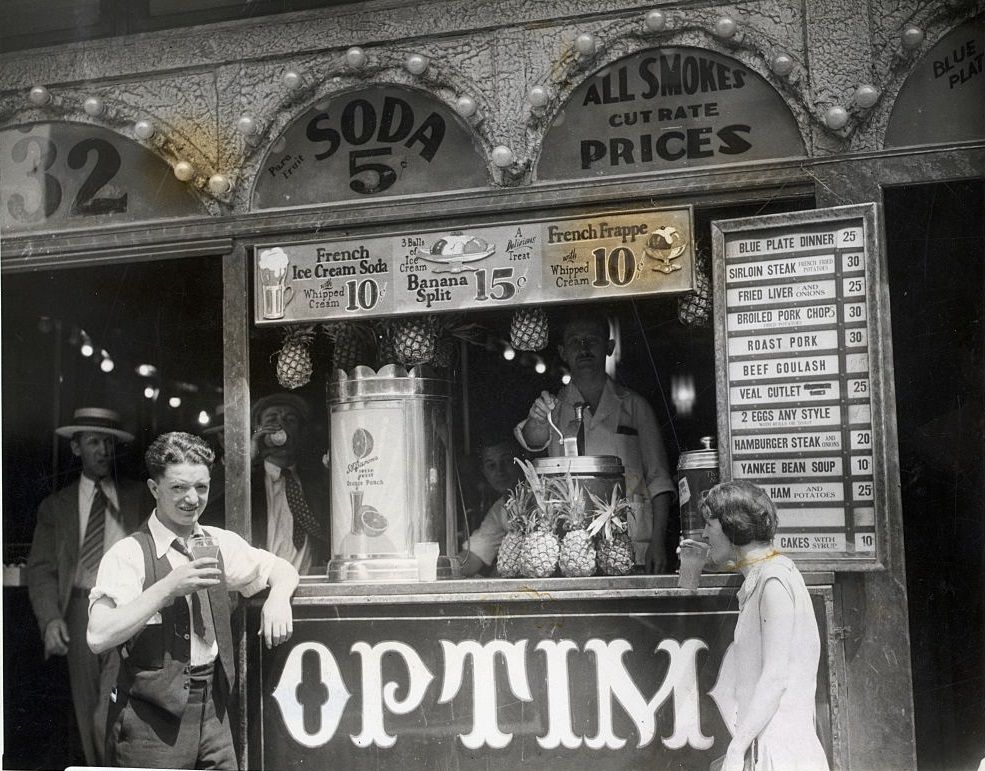
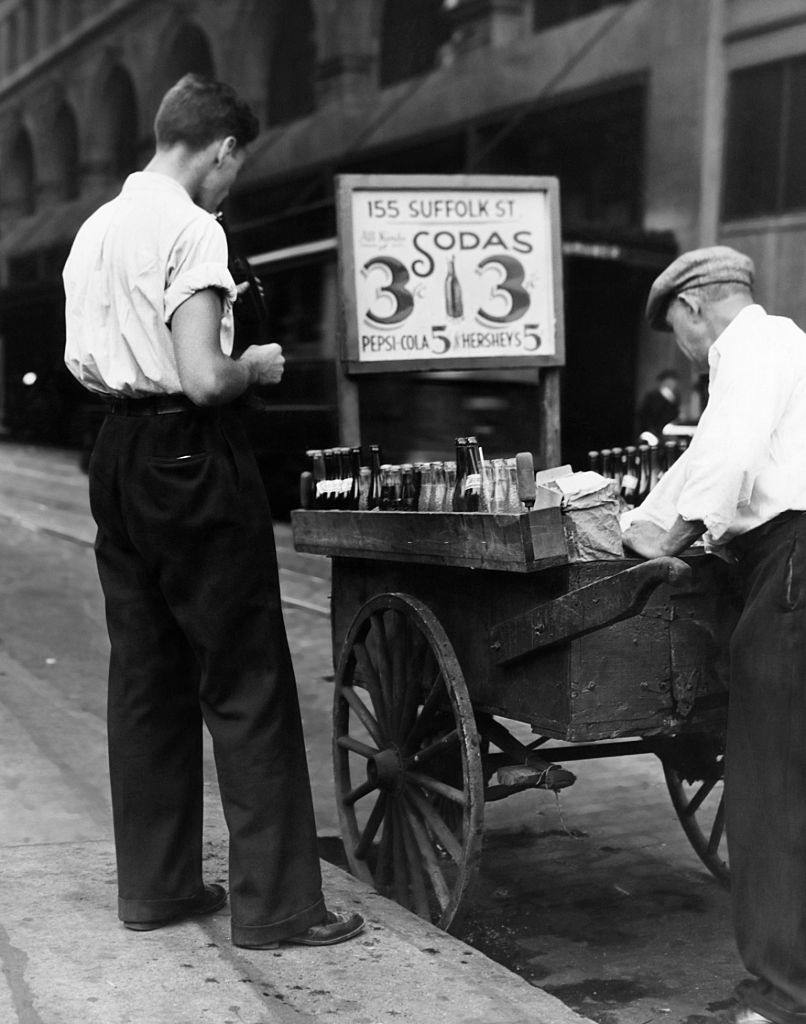
Luncheonettes and pushcart vendors served the everyday needs of New Yorkers who bought food in small quantities, meal by meal. A cold fruit drink for a few cents or a banana from a pushcart was within reach for most, even during lean times. These small transactions were the economic pulse of street-level New York.
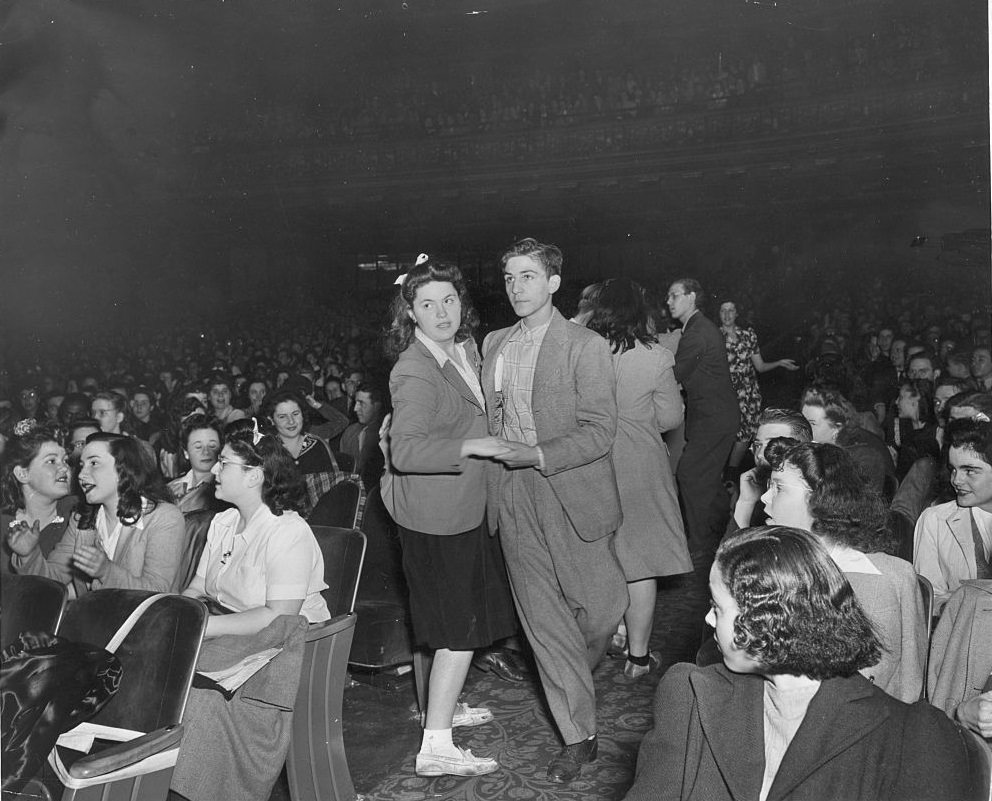
The Paramount Theater on Broadway was one of New York’s top entertainment venues. Big band performances and popular music acts drew teenage crowds who danced in the aisles — sometimes before, during, and after the show. Live music and movies were among the most affordable escapes available during the Depression, and New Yorkers took full advantage.
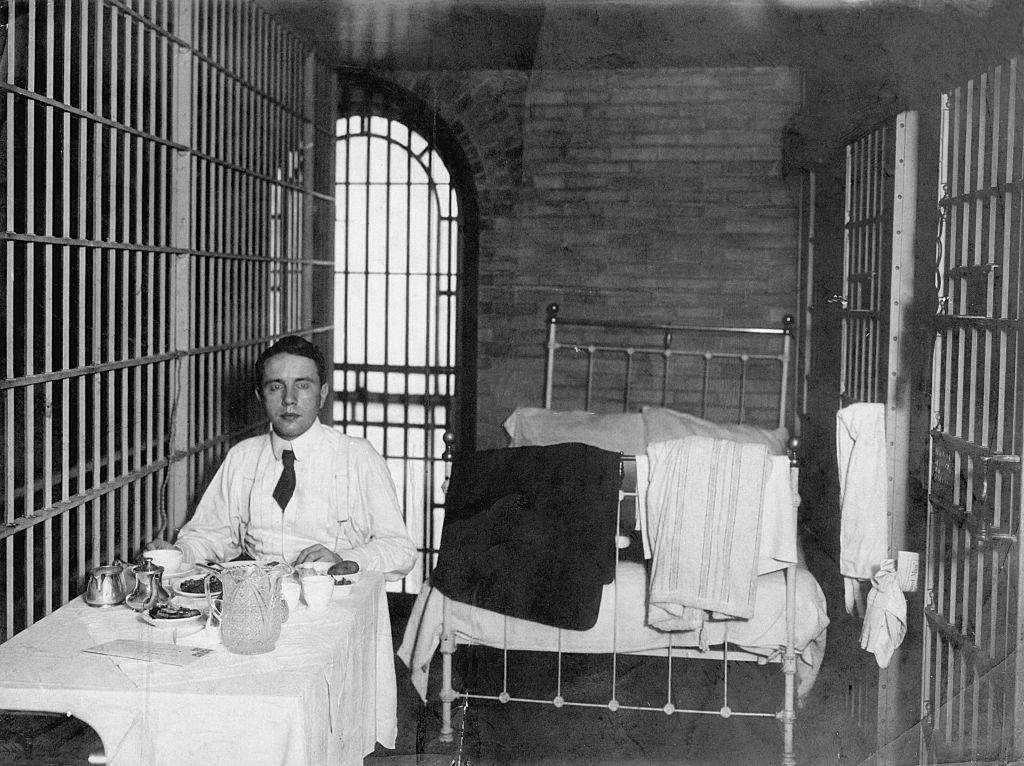
Harry K. Thaw was one of New York’s most notorious criminal figures. He had shot and killed architect Stanford White in 1906, and spent years cycling through trials, institutions, and legal battles. His ability to have Delmonico’s restaurant deliver breakfast to his jail cell was a sharp illustration of how wealth insulated certain individuals from the full consequences of incarceration — a contrast not lost on a Depression-era public.
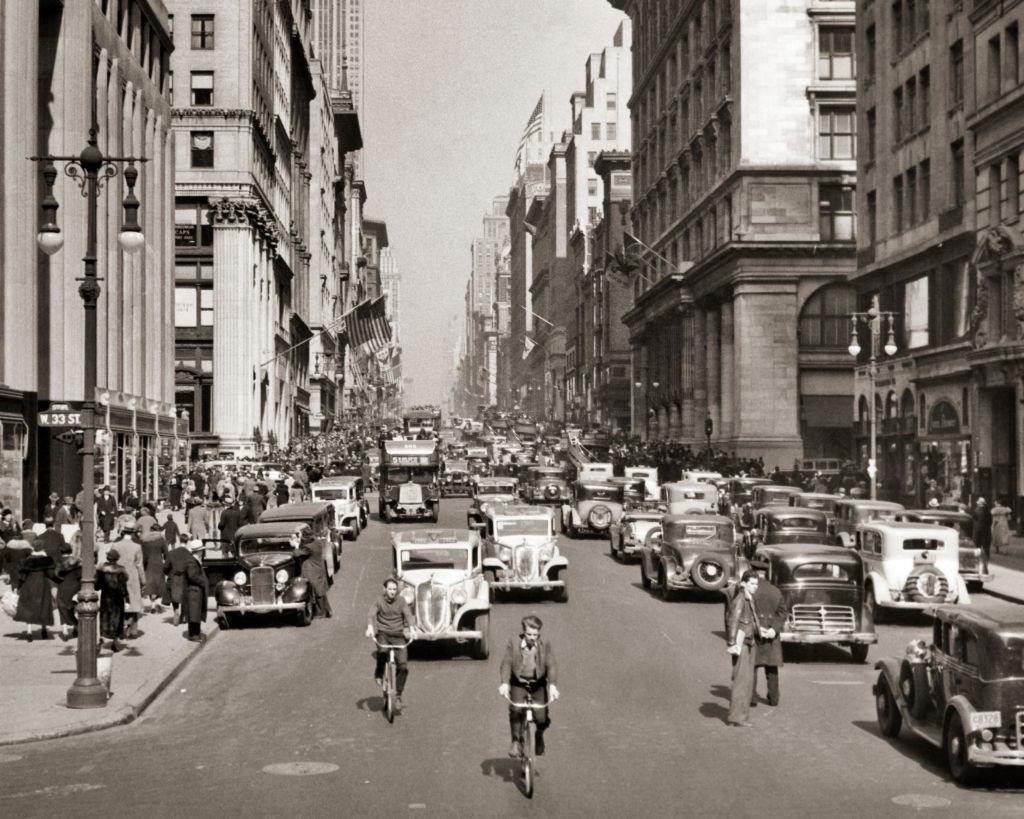
Fifth Avenue in the 1930s still carried two-way automobile traffic, a detail that would later change as the city reorganized its street grid. Cars, taxis, and buses competed for space alongside pedestrians and delivery vehicles. The density of traffic on Fifth Avenue even during the Depression reflected how deeply the automobile had embedded itself in city life by this point.
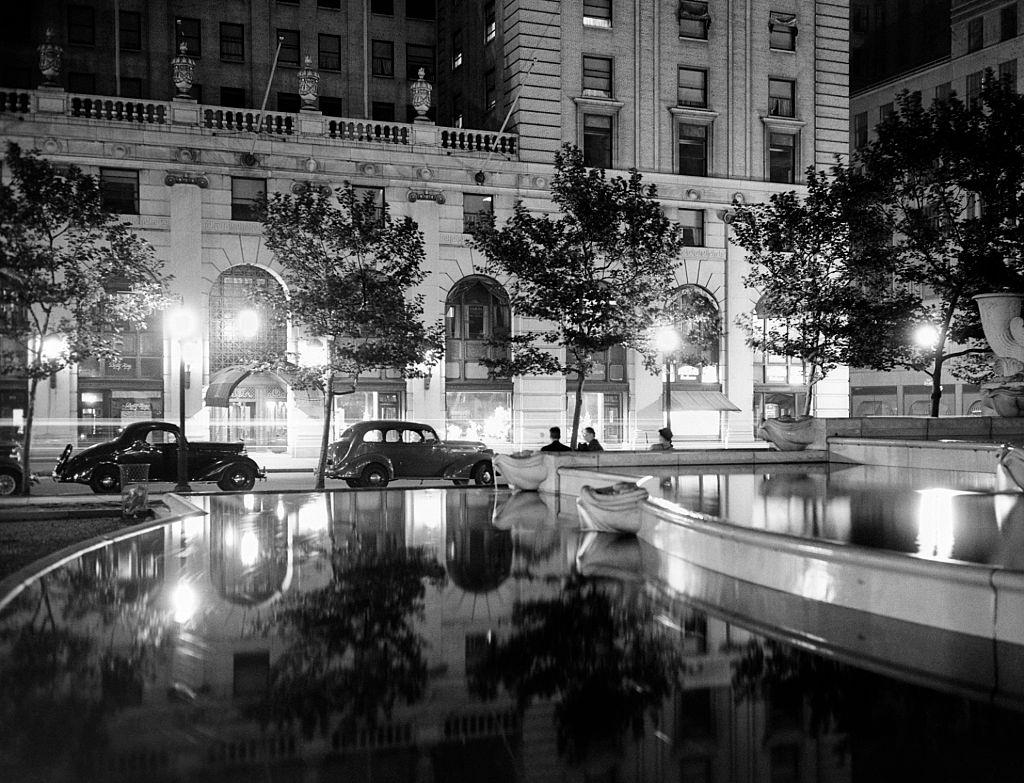
At night, Fifth Avenue transformed. Electric lighting illuminated storefronts and marquees, and the avenue took on a different energy — quieter in some stretches, still buzzing in others near theaters and hotels. The 1931 nighttime view of Fifth Avenue came just months after the Empire State Building opened, adding a new peak to the city’s glowing skyline.
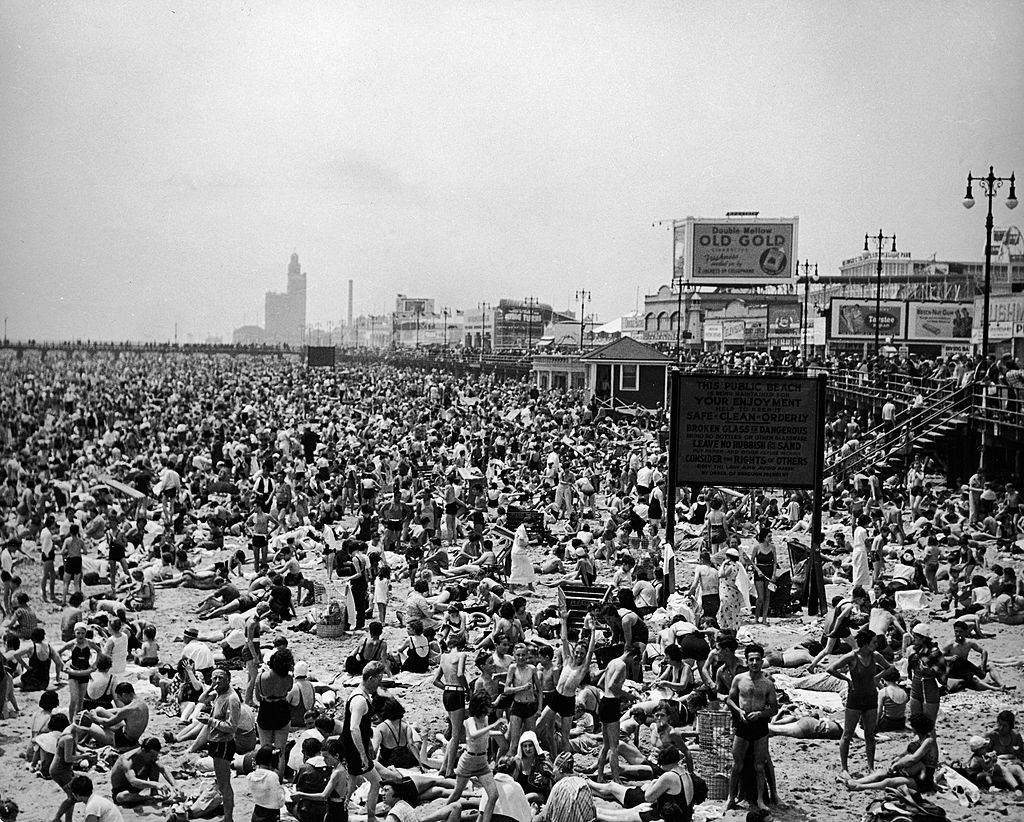
Coney Island was one of the few places where working-class New Yorkers could spend a day without spending much money. The subway ride to Brooklyn cost a nickel, and the beach itself was free. On summer weekends, the boardwalk and shoreline packed with hundreds of thousands of people — factory workers, immigrants, families, and children — all sharing the same stretch of sand.
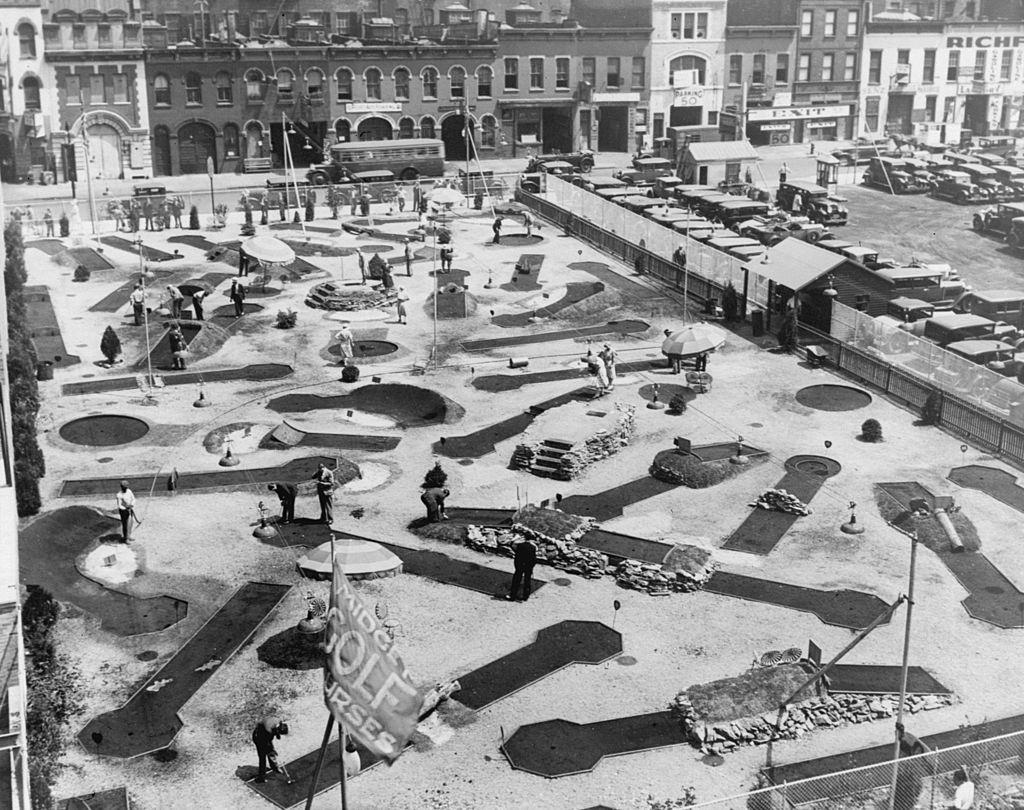
Miniature golf exploded in popularity during the early 1930s as a low-cost entertainment option. Courses popped up across Manhattan, including this one on 50th Street next to Roxy’s Theatre. At its peak, New York City had dozens of rooftop and street-level mini golf courses operating simultaneously.
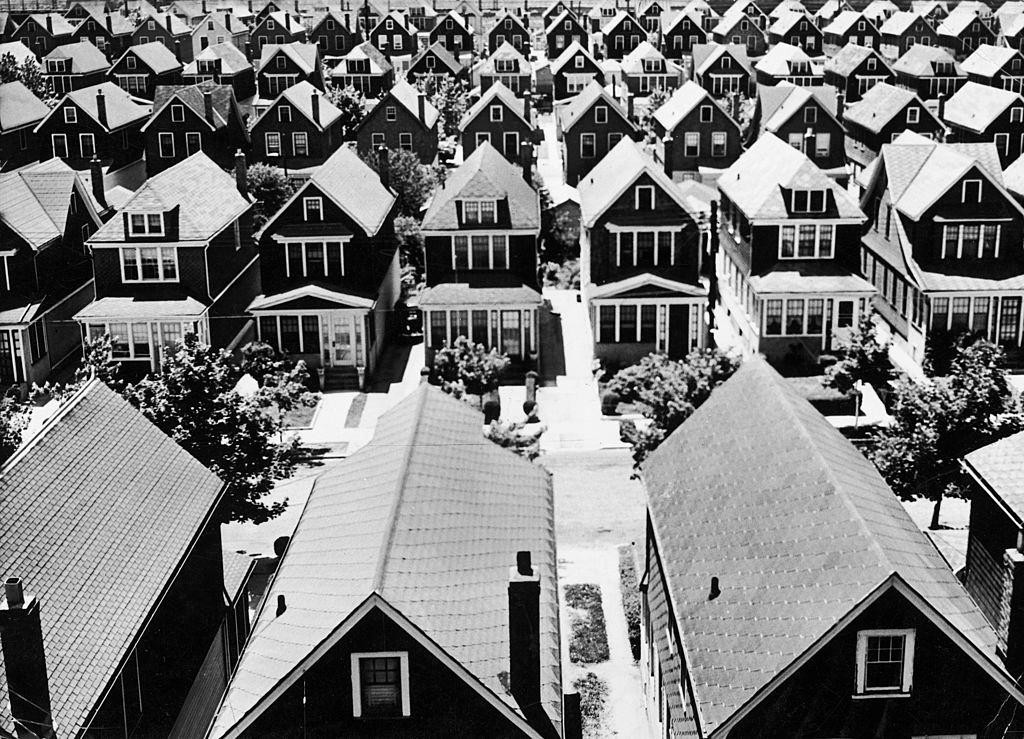
The expansion of public and private housing in the 1930s produced entire neighborhoods of near-identical row houses and apartment blocks. Aerial views reveal the geometric regularity of these developments — grid-like streets, uniform rooftops, and block after block of housing designed for mass occupancy rather than individual character.
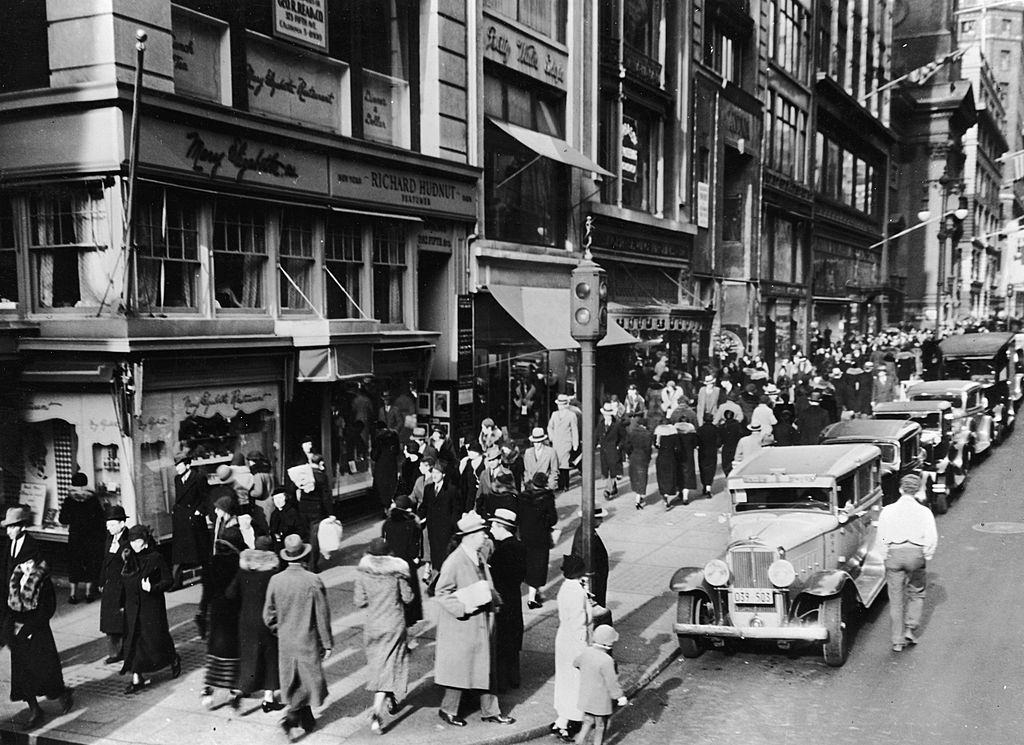
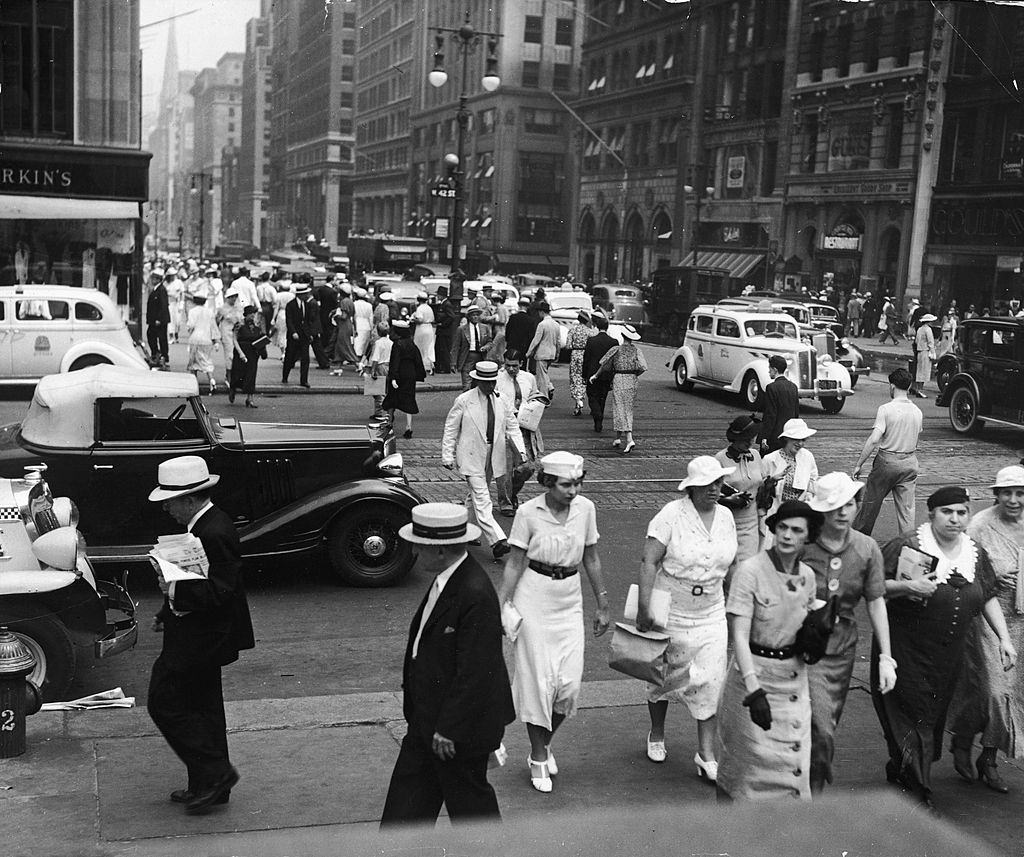
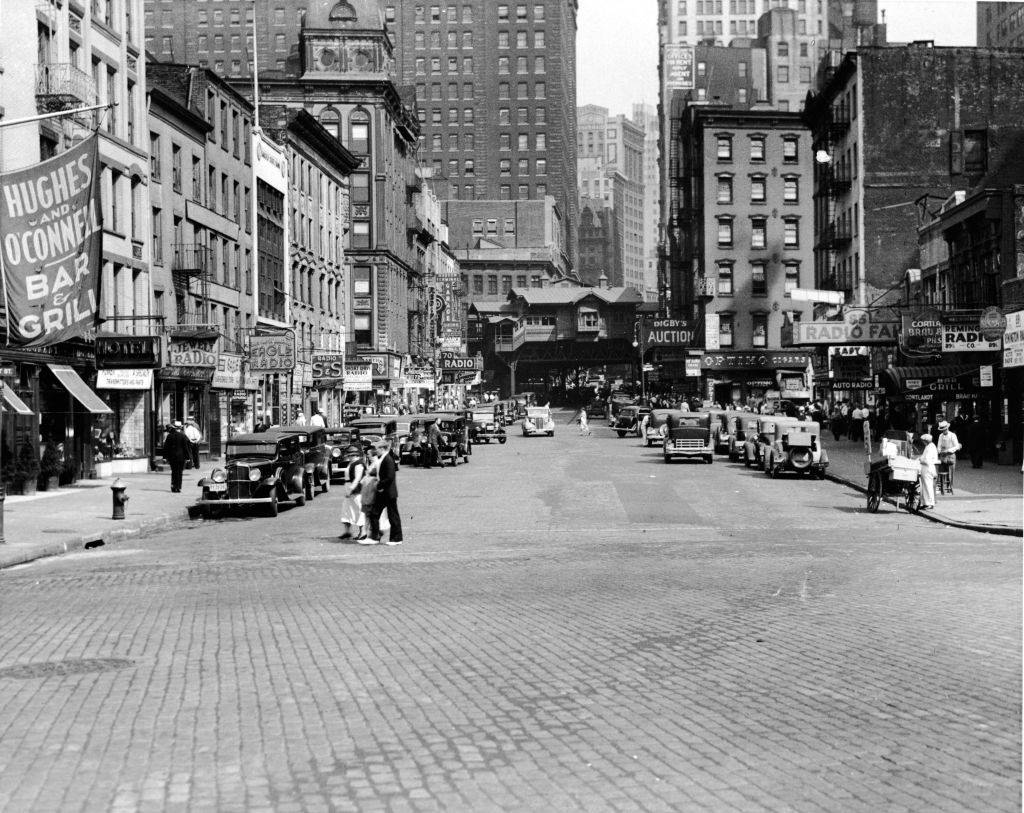
Lower Manhattan’s Cortlandt Street ran through one of the city’s oldest commercial districts, packed with electronics dealers, hardware stores, and small shops. Looking east from West Street, the canyon of buildings reflected the density that defined downtown New York. This area was later entirely demolished and replaced by the World Trade Center complex in the 1960s and 70s.
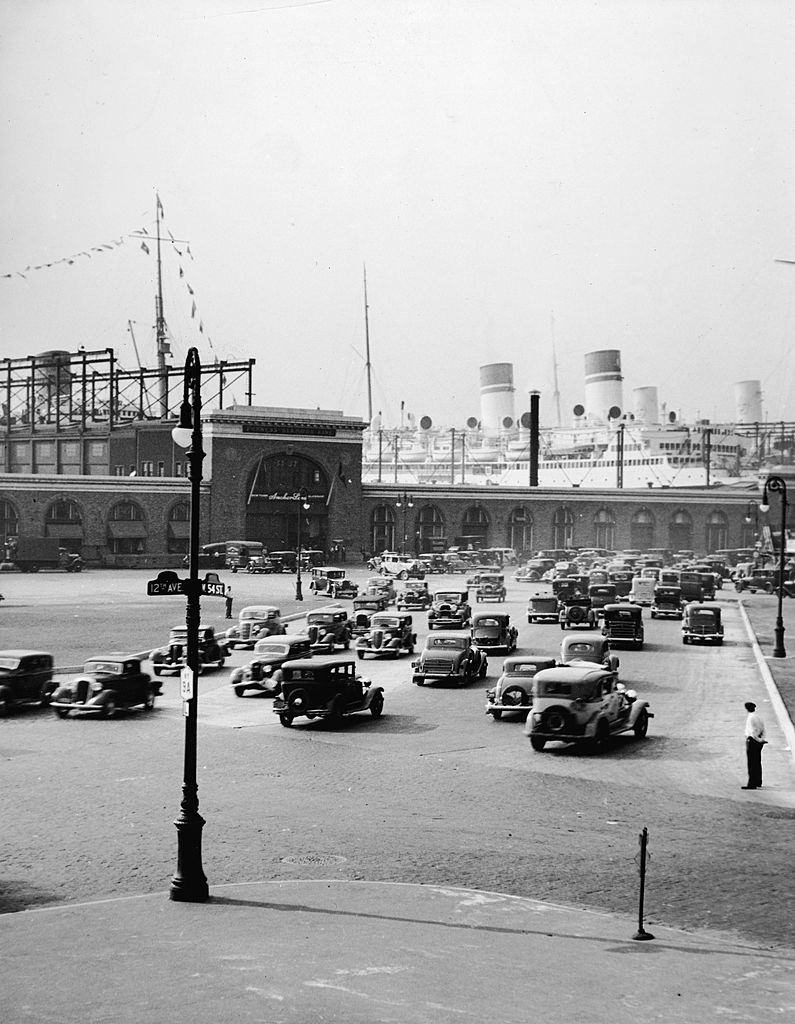
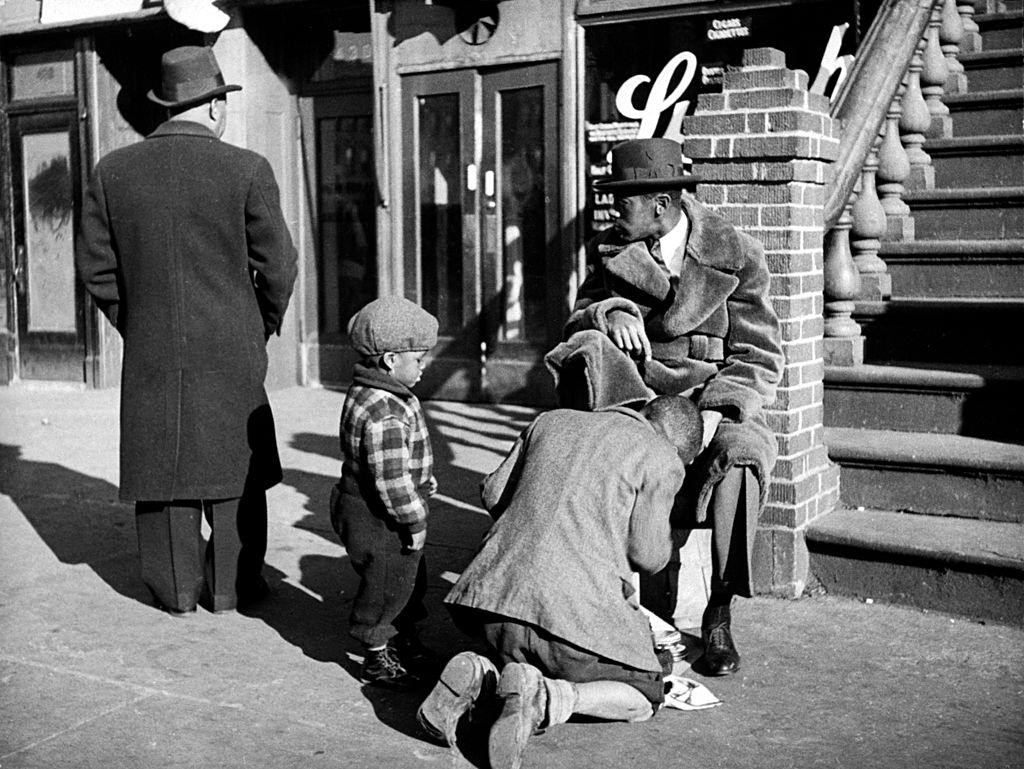
Shoeshine stands were a common feature of New York’s street economy. In Harlem, as in other neighborhoods, shoeshine workers set up on corners and sidewalks, offering a service that was both affordable and in steady demand. For many Black workers shut out of other industries by systemic discrimination, street-level service work was one of the few consistent sources of income available.
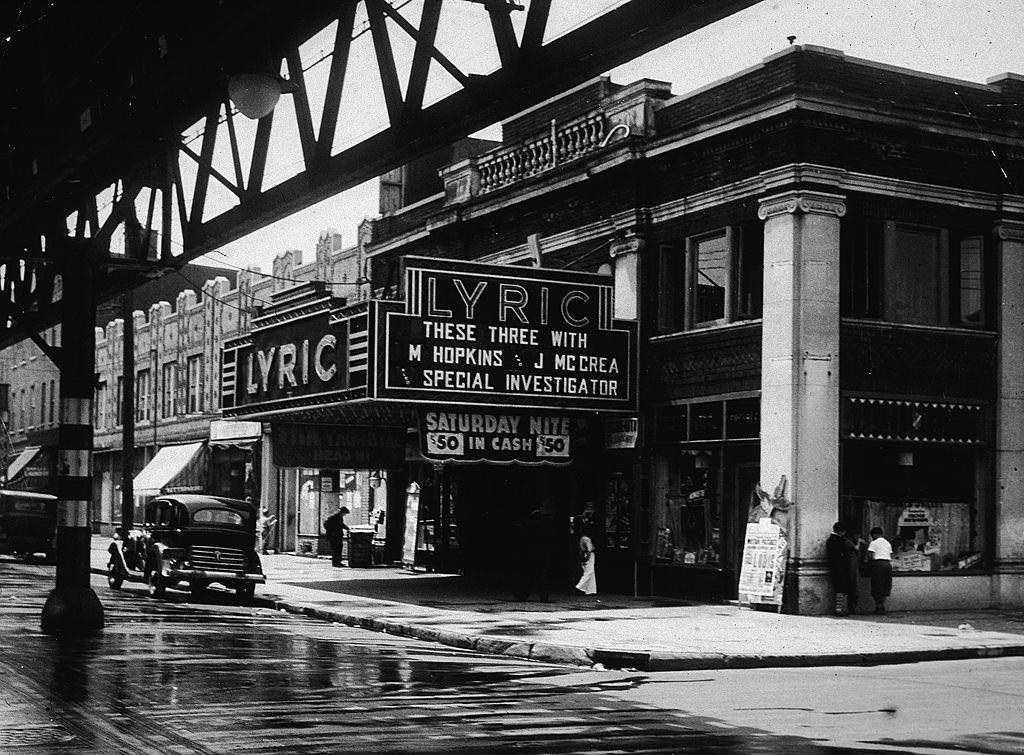
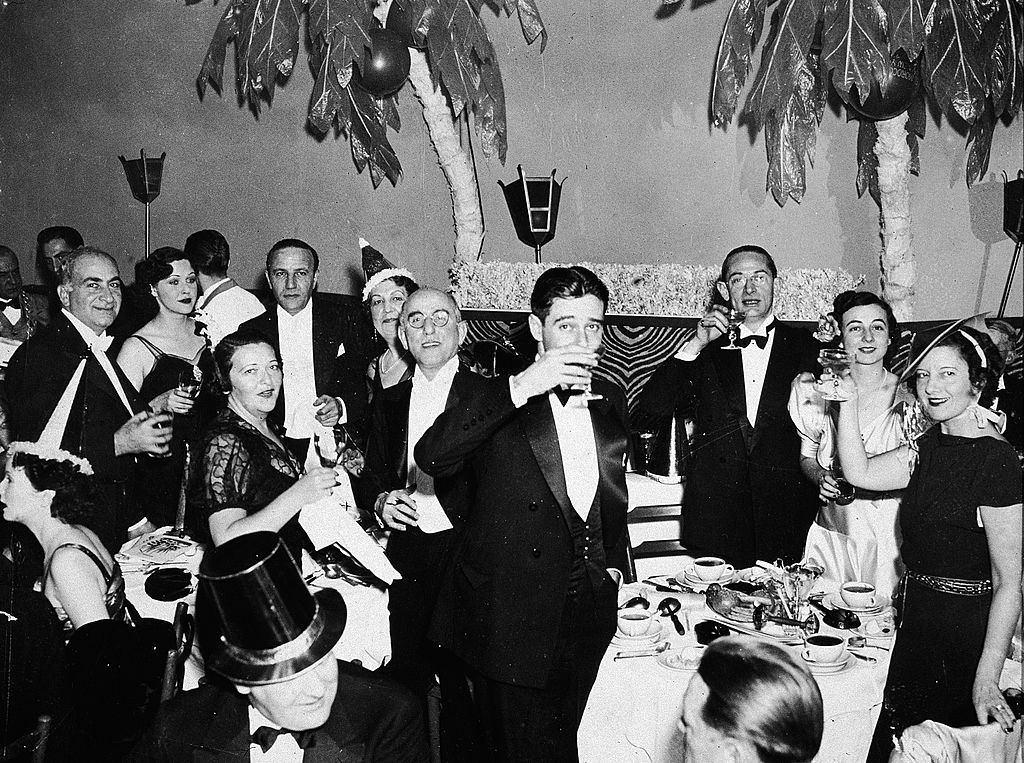
El Morocco was one of Manhattan’s most exclusive nightclubs during the 1930s. While breadlines formed outside, inside El Morocco the city’s wealthy and well-connected celebrated in full formal dress. New Year’s Eve 1935 drew the usual mix of socialites, celebrities, and old-money families who kept the club’s signature zebra-striped banquettes filled throughout the decade.
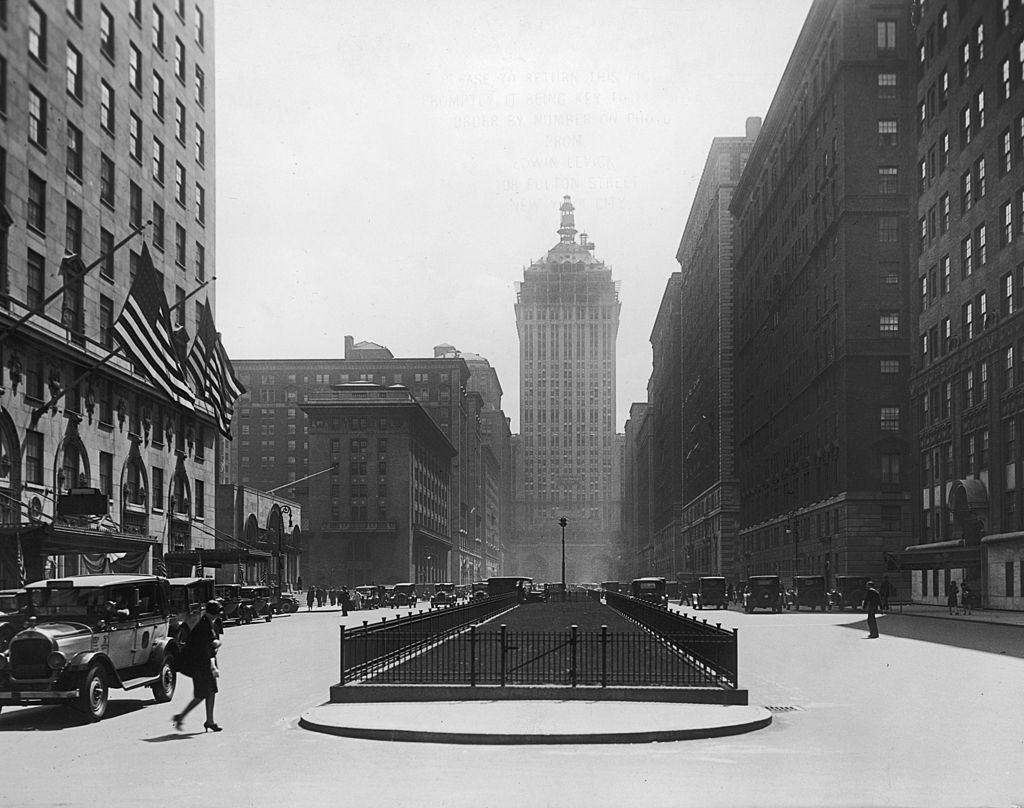
Park Avenue looking north toward Grand Central Terminal was one of the most photographed views in the city. The New York Central Building — completed in 1929 and rising directly above the terminal’s train shed — anchored the midtown skyline from the south. The avenue itself was a dividing line between the city’s wealthiest residential corridor to the north and the dense commercial district to the south.
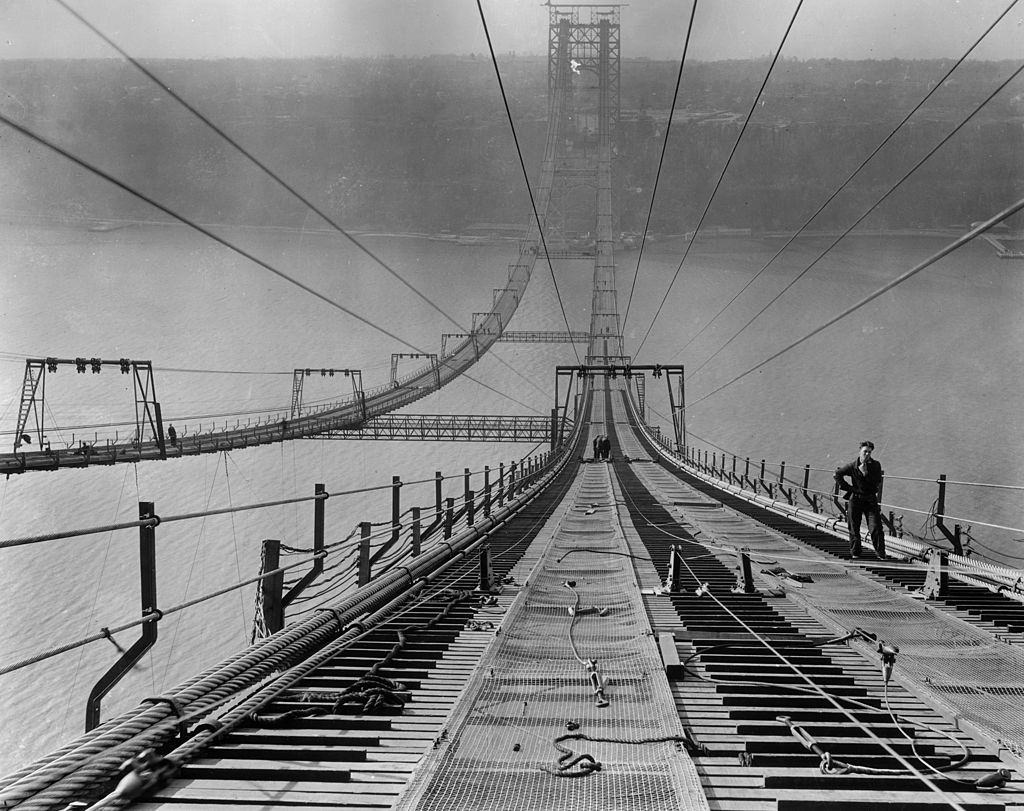
The George Washington Bridge opened in October 1931, connecting Manhattan to New Jersey across the Hudson River. It was the longest suspension bridge in the world at the time of its completion. The bridge was a New Deal-era engineering milestone and one of the most significant infrastructure projects to reshape the city’s relationship with the surrounding region.
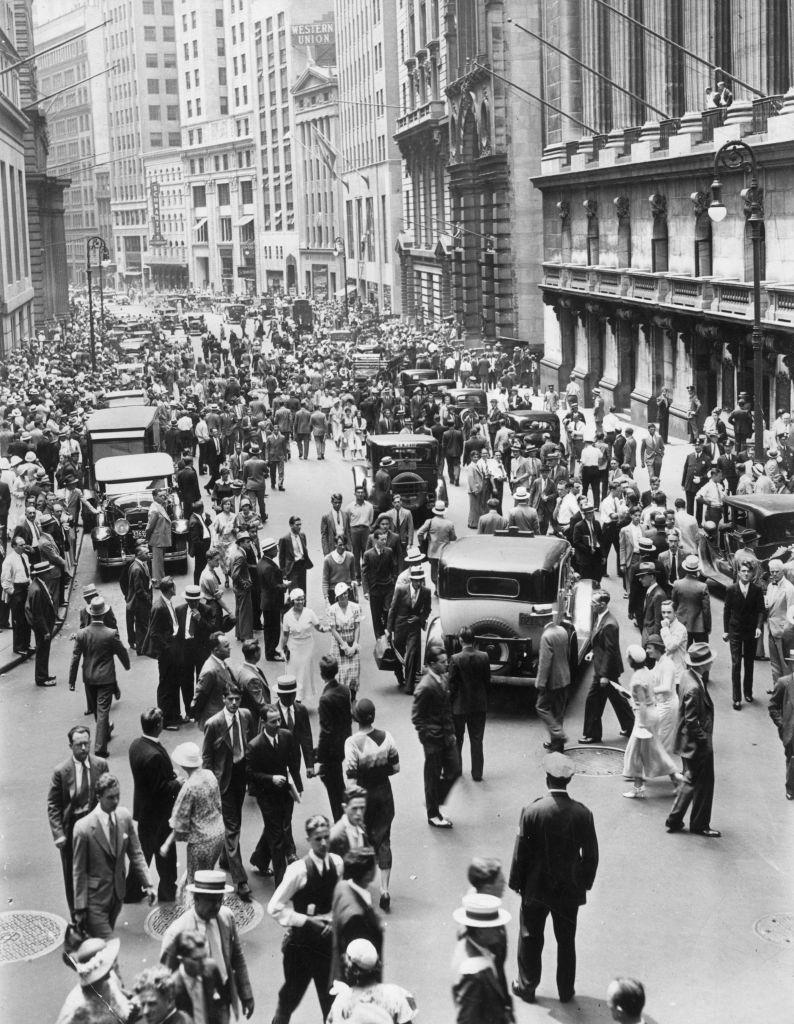
Wall Street in the 1930s was a place defined by anxiety. The stock market crash of October 1929 had wiped out billions in wealth, and the Exchange spent the entire following decade in a state of uncertainty. The mood on the trading floor shifted with each report, each policy announcement, each piece of economic data. For the men who worked there, and for the millions of Americans whose savings and livelihoods were tied to the market’s movements, the Exchange was the most consequential building in the country.




