At the start of the 20th century, St. Louis, Missouri, was one of the most important cities in the United States. Its population had surpassed 500,000, making it the fourth-largest city in the country. The city was alive with growth — new streets were being paved, infrastructure was expanding, and commerce was spreading block by block. From its bustling riverfront to its packed commercial avenues, St. Louis in the 1900s was a city in full motion.
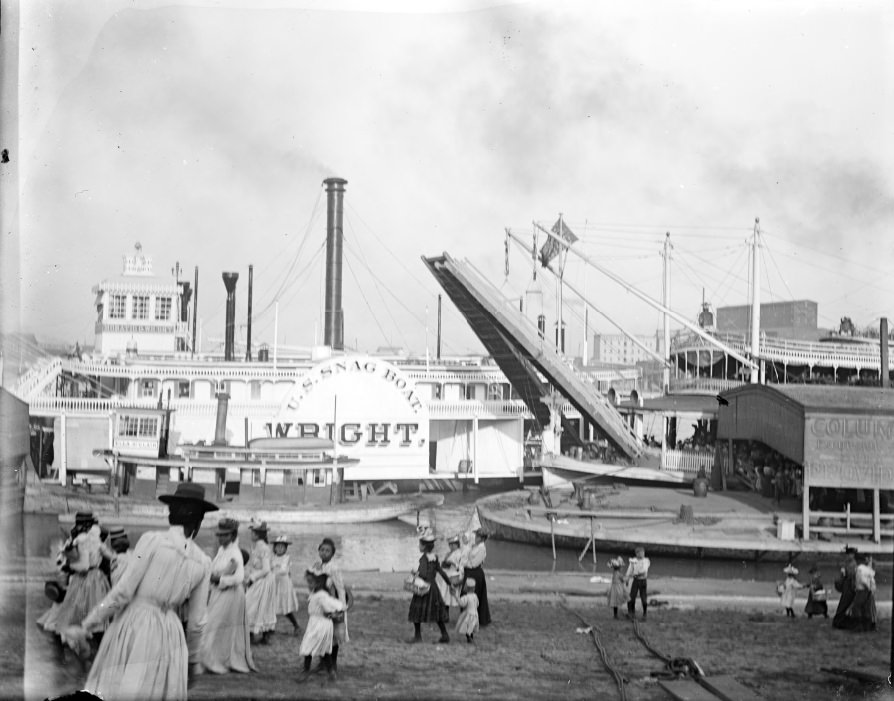
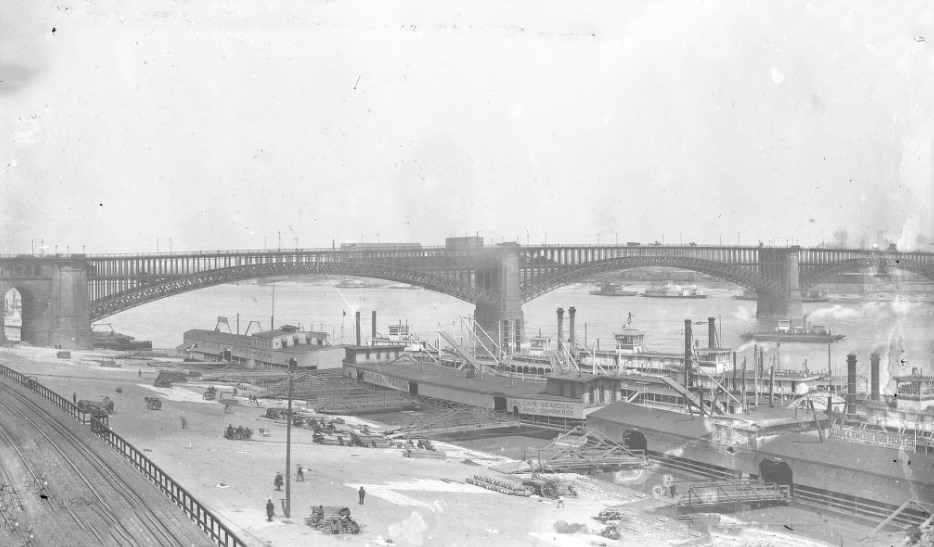
Saint Louis Riverfront, 1900
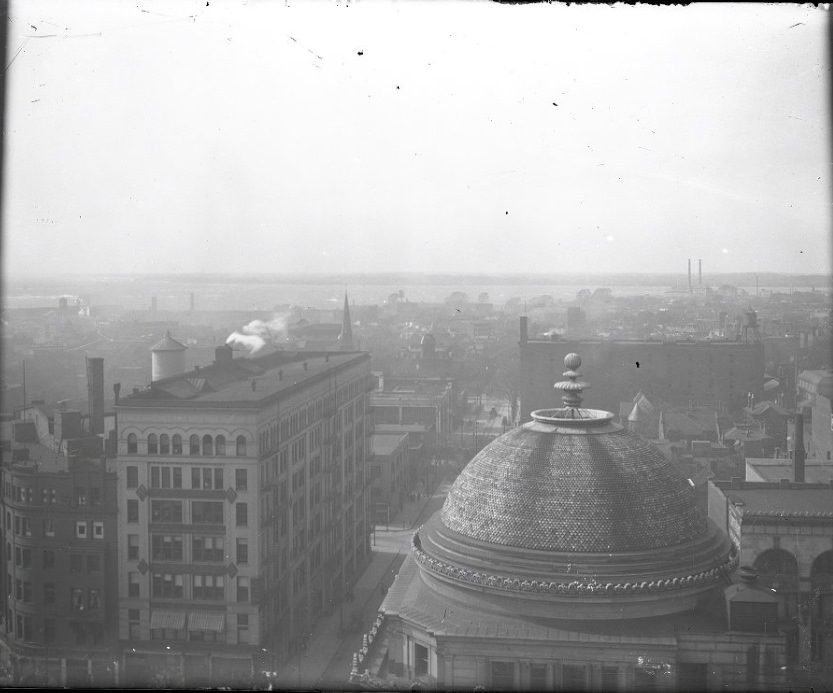
The Mississippi River was the city’s economic backbone. Steamboats, tugboats, and freight vessels moved goods and people along the waterfront daily. The riverfront was not just a commercial hub — it was a defining feature of city life, visible from the rooftops and rooftop vantage points of downtown St. Louis.
An Aerial View of Saint Louis, 1901
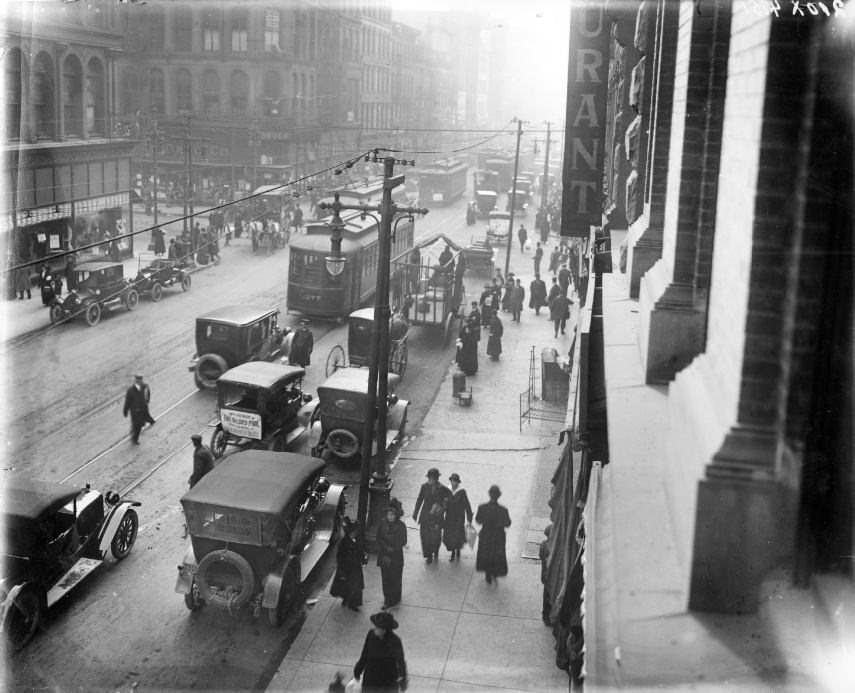
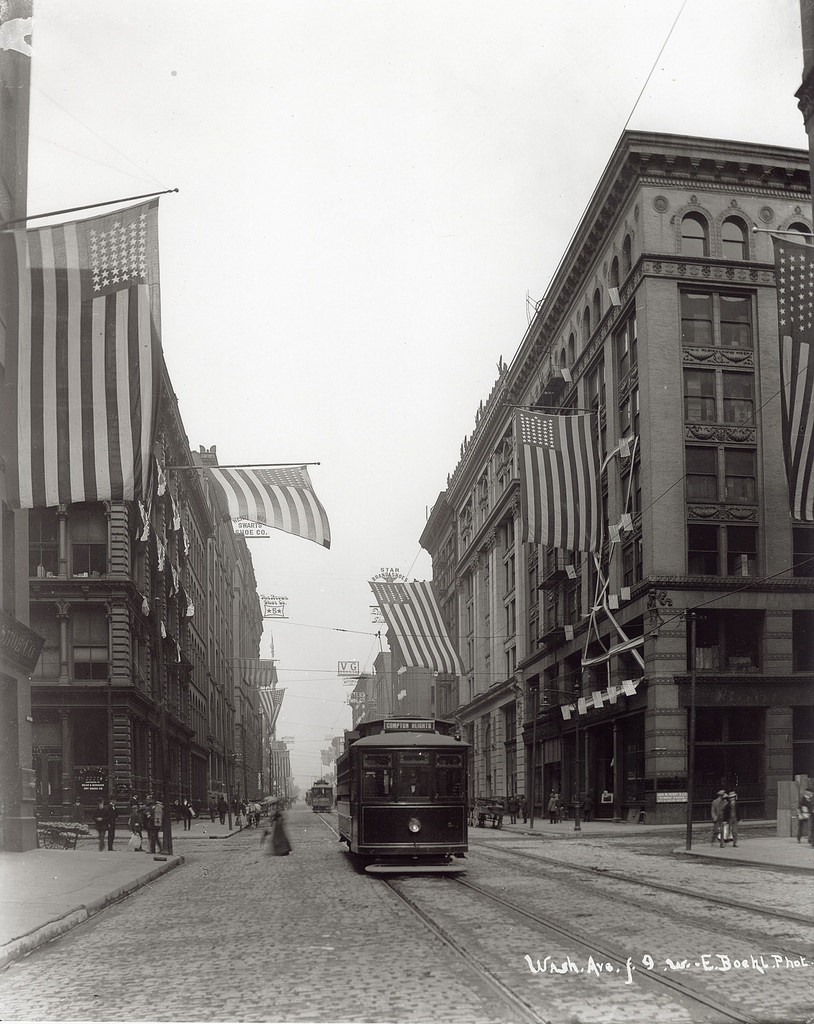
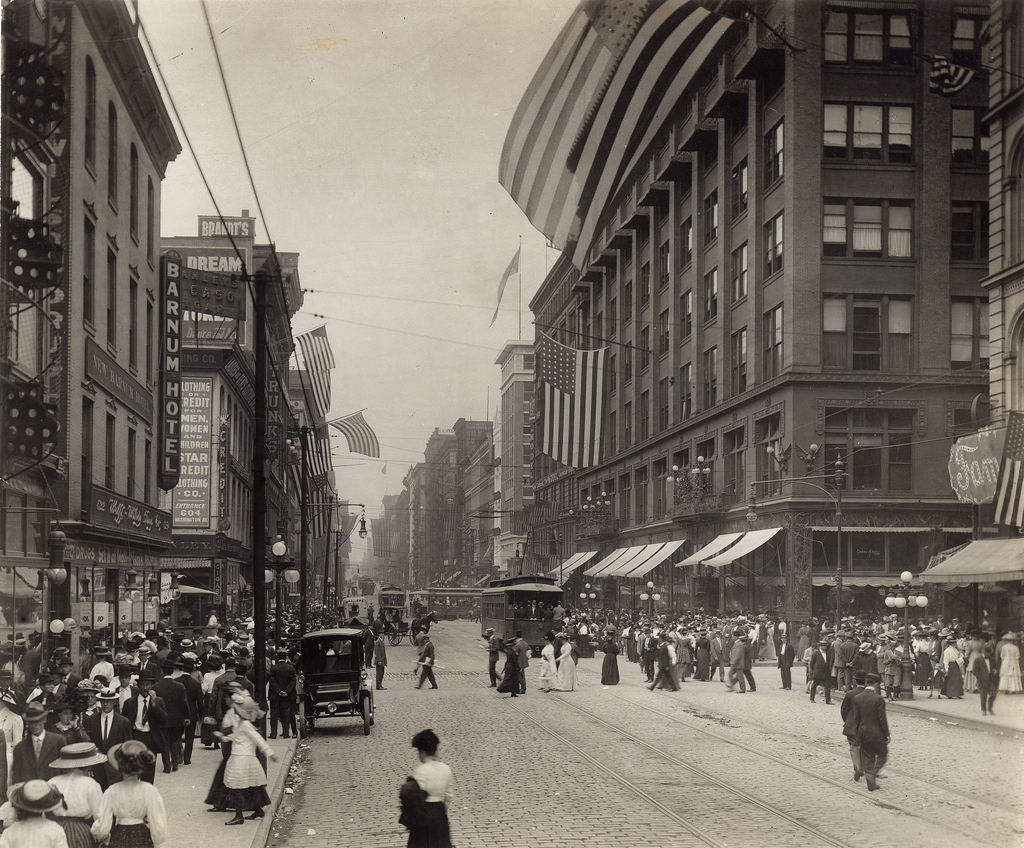
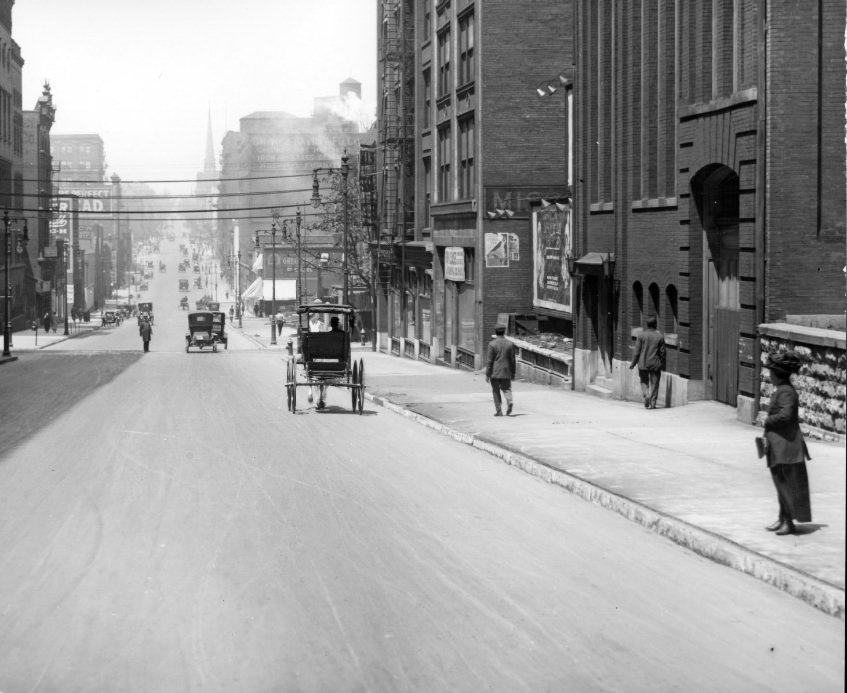
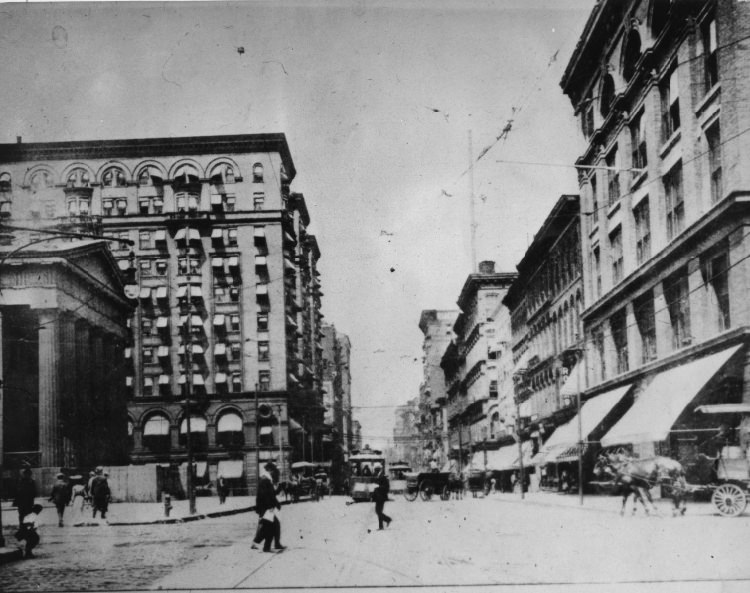
Washington Avenue was one of the city’s main commercial corridors. In the early 1900s, the street teemed with automobiles, horse-drawn wagons, electric streetcars, and pedestrians all sharing the same cobblestone road. The mix of transportation modes was a clear sign that St. Louis was transitioning from the horse-drawn age into the era of the automobile.
Washington Avenue looking west. Automobiles, pedestrians, electric streetcars and horse-drawn wagons are visible, 1905Washington Avenue from approximately North Tucker Boulevard, 1901.
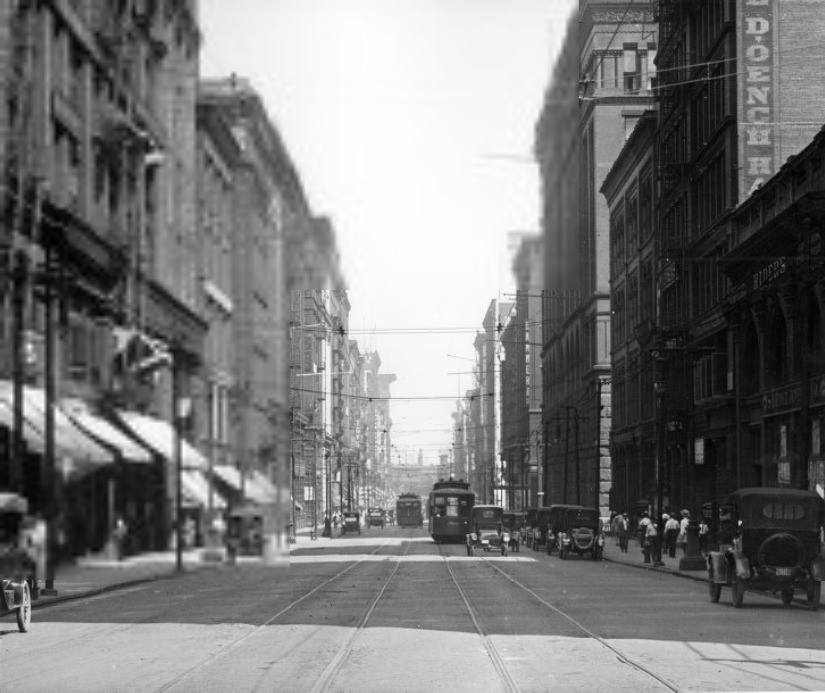
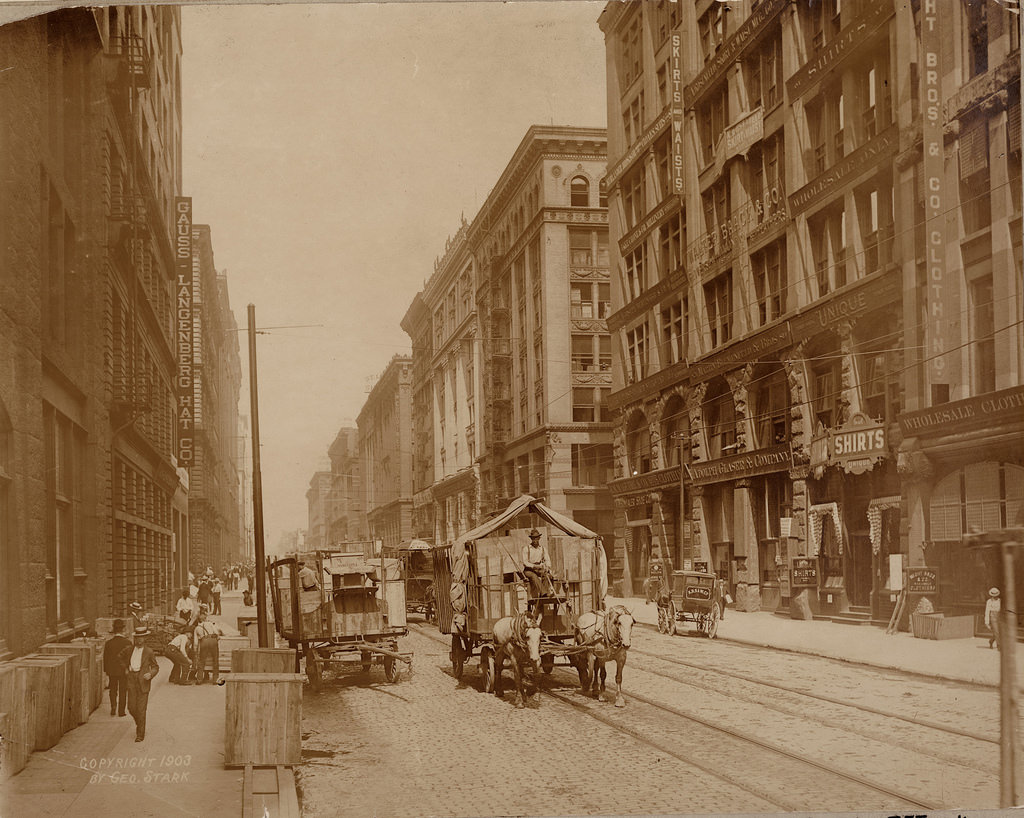
By 1903, Washington Avenue was already a dense commercial strip. Looking west from Ninth Street, you could see an unbroken row of storefronts, office buildings, and signs. This stretch of the city was photographed repeatedly over the decade, offering a rare visual record of how quickly the avenue changed year by year.
Washington Avenue west from Ninth Street, 1903Washington Avenue west from Eighth Street, 1903
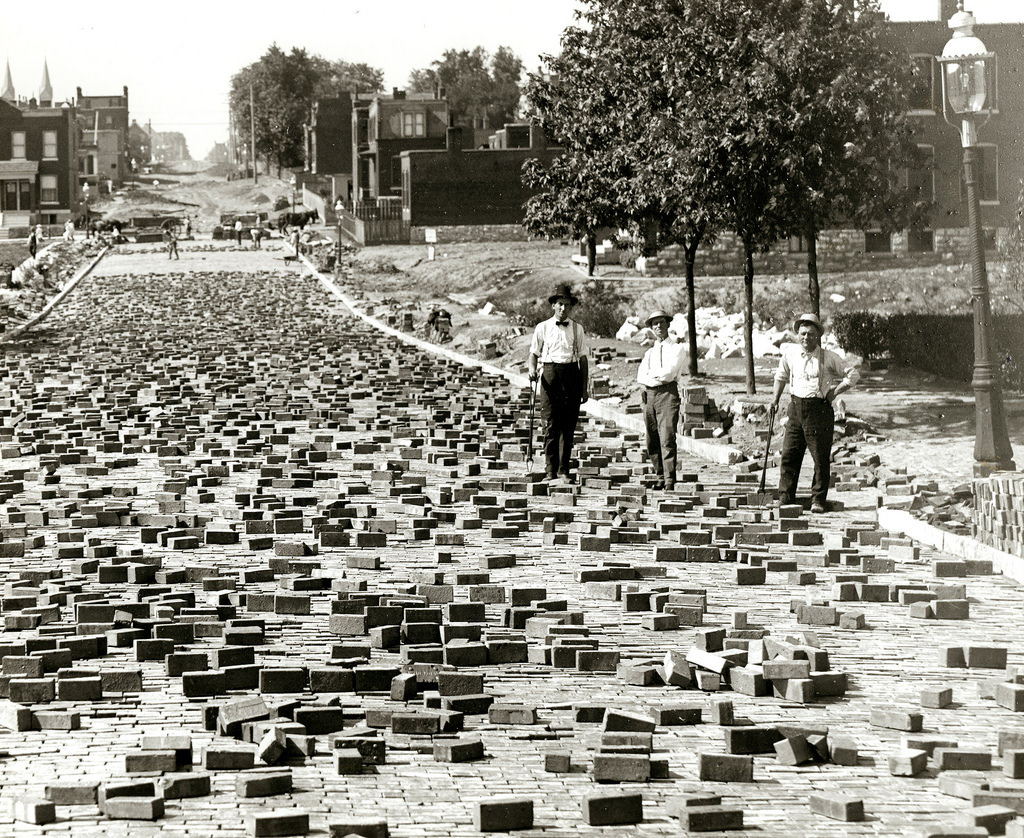
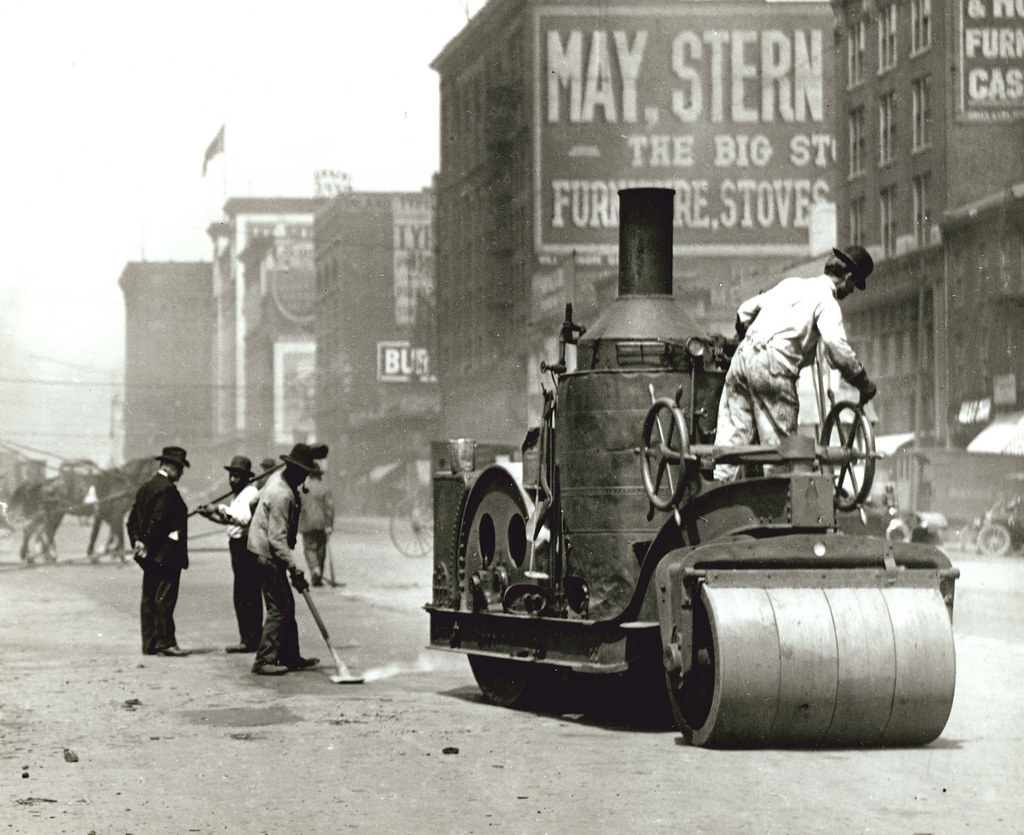
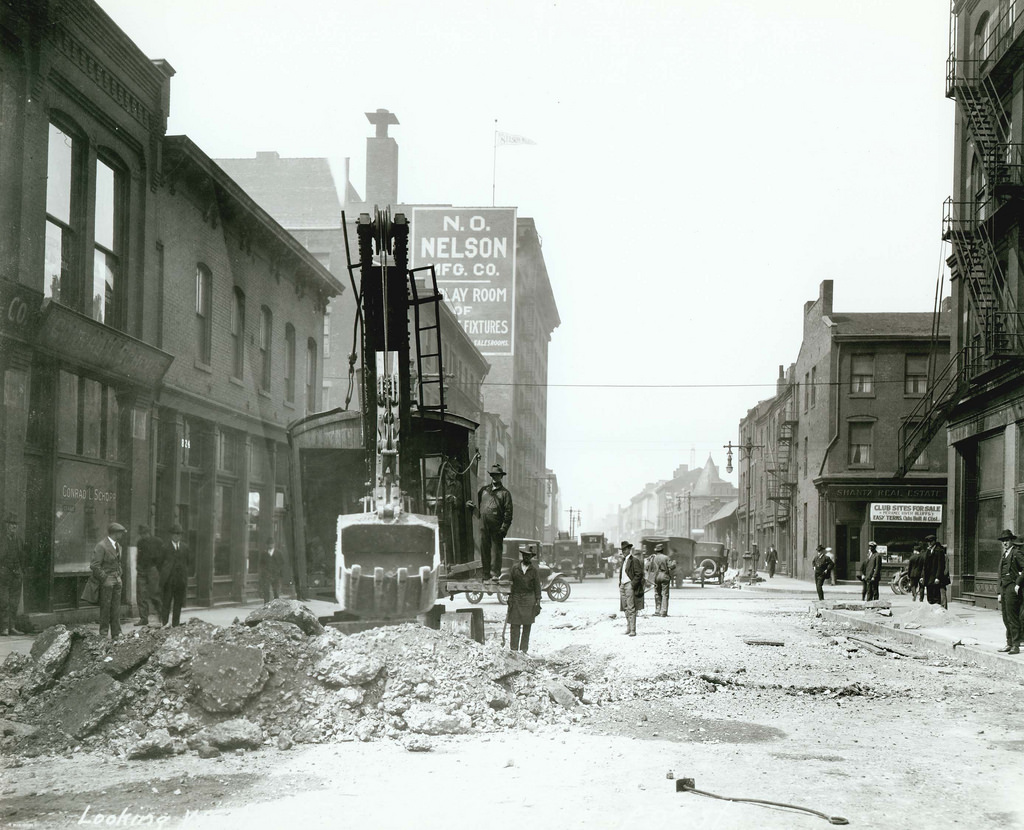
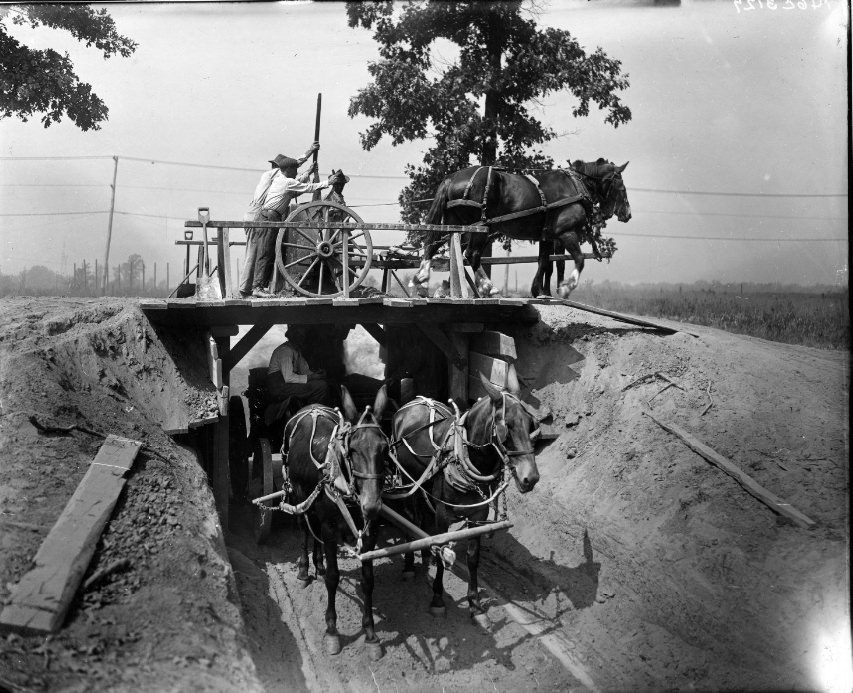
The city’s streets were in a near-constant state of construction. Workers paved roads, dug trenches for pipes, laid cobblestones, and repaired aging surfaces throughout the decade. Steam rollers, horse-drawn carts, and hand crews worked side by side. Road work was so common that it became a regular backdrop of everyday city life.
Street pavers at work on Compton Avenue north of Meramec, 1906Street workers using a steam roller to repair Twelfth Street between Chestnut and Pine Streets, 1910
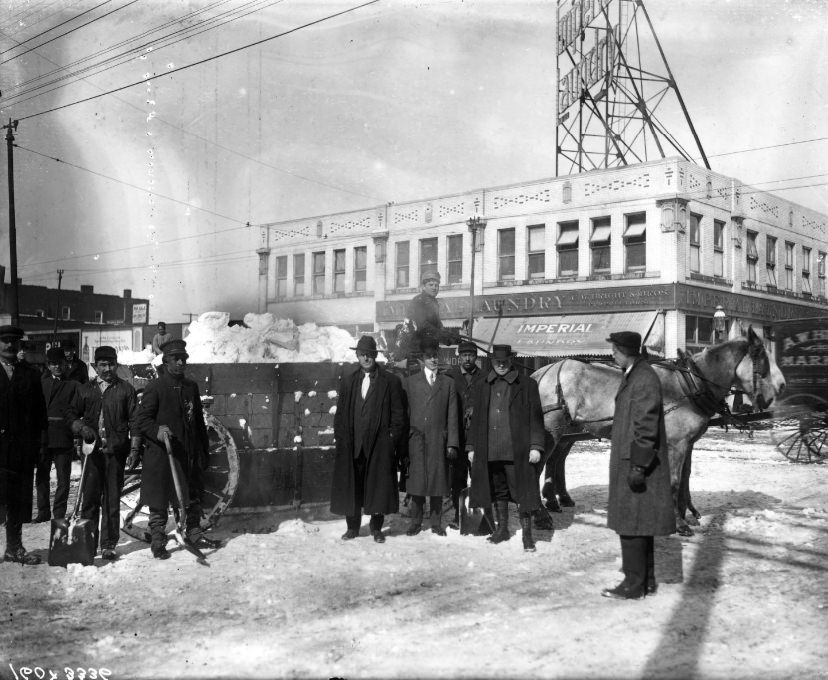
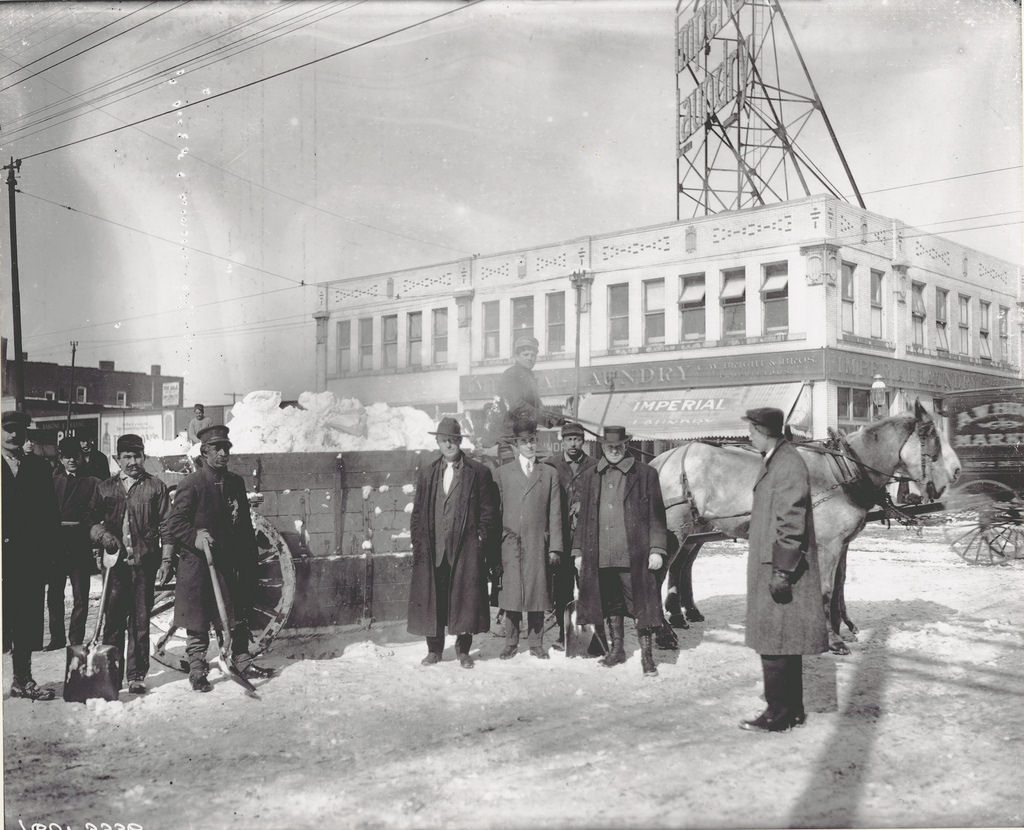
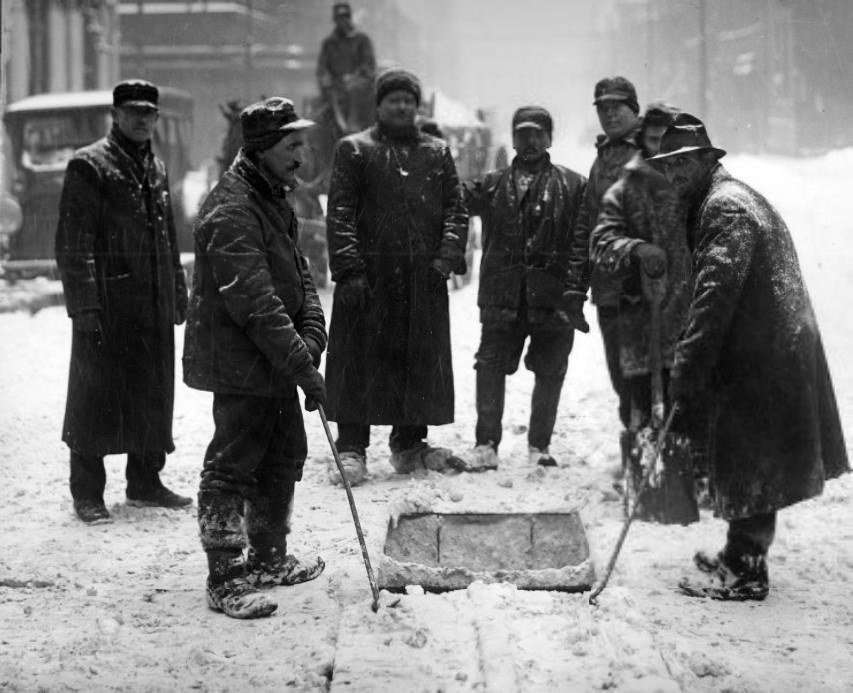
Snow removal was another constant challenge. St. Louis winters were harsh, and city crews worked in difficult conditions to keep streets passable. In 1901, workers were photographed clearing snow outside the Imperial Laundry, and in 1909 a dedicated snow truck and cleaning crew were deployed along Chouteau Avenue.
Snow removal outside Imperial Laundry, 1901.Snow Truck and Cleaning crew on the 2800 block of Chouteau Avenue, 1909
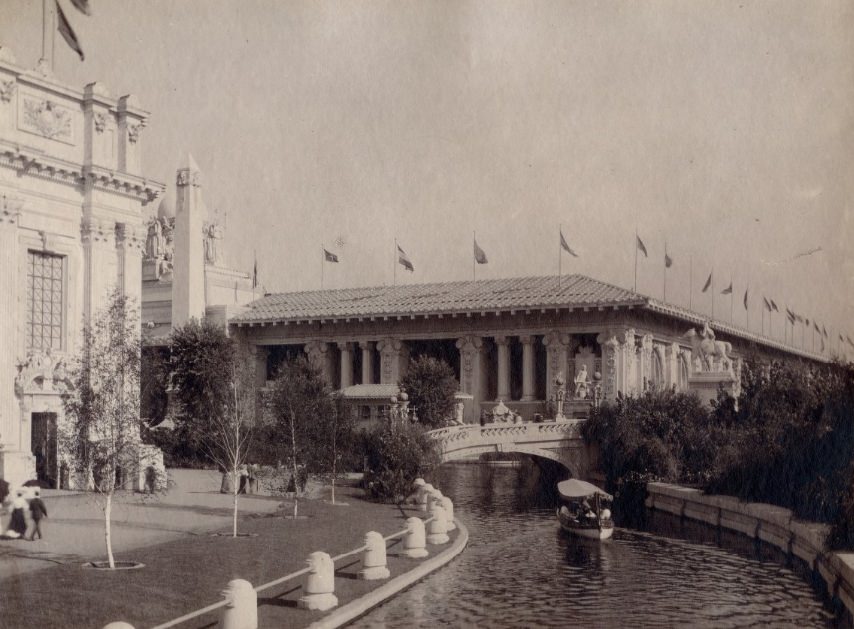
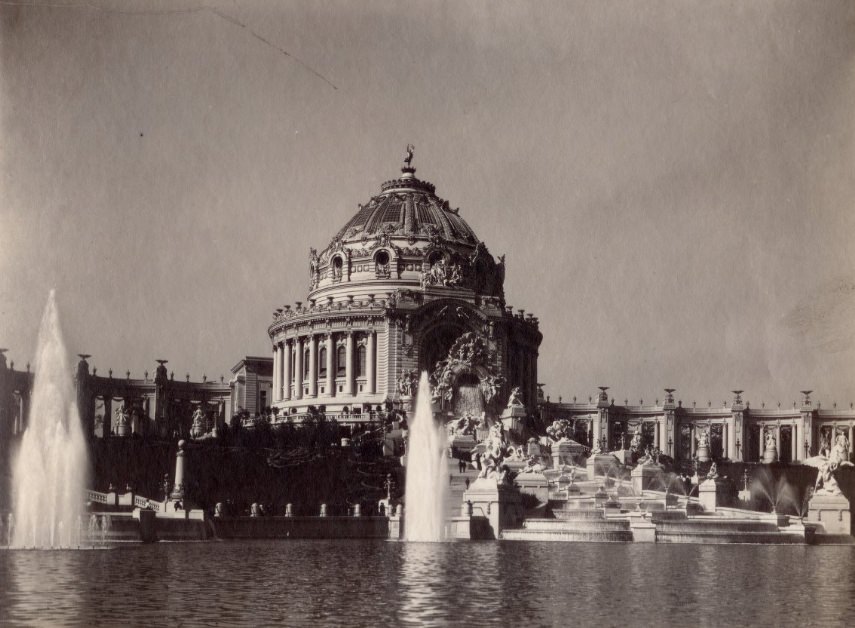
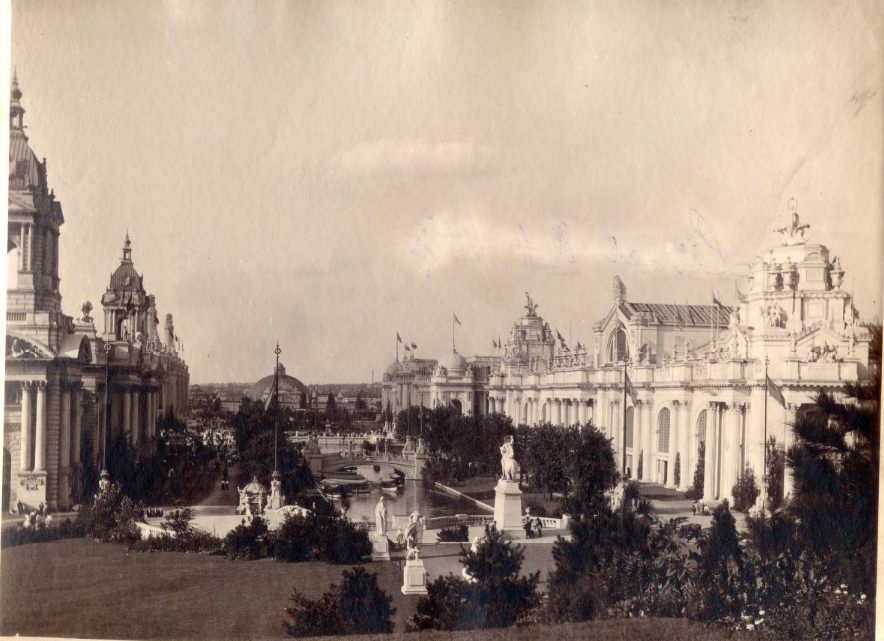
The single biggest event in the city’s history during this period was the 1904 Louisiana Purchase Exposition, held in Forest Park and along the western edge of the city. The fair celebrated the centennial of the Louisiana Purchase and drew visitors from around the world. Over 20 million people attended during its seven-month run. The event was so culturally significant that it inspired the song “Meet Me in St. Louis, Louie,” which became one of the most recognized songs of the era.
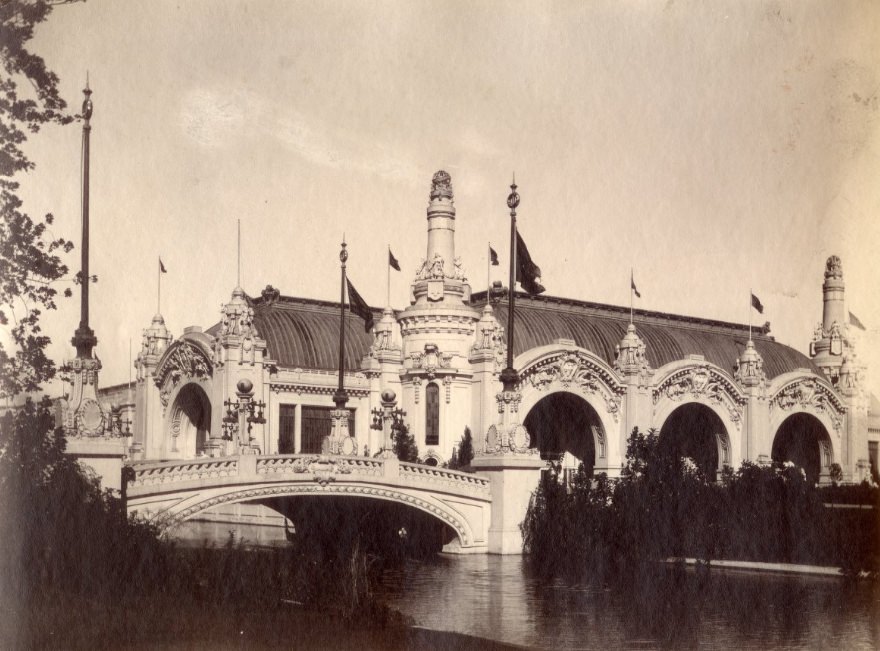
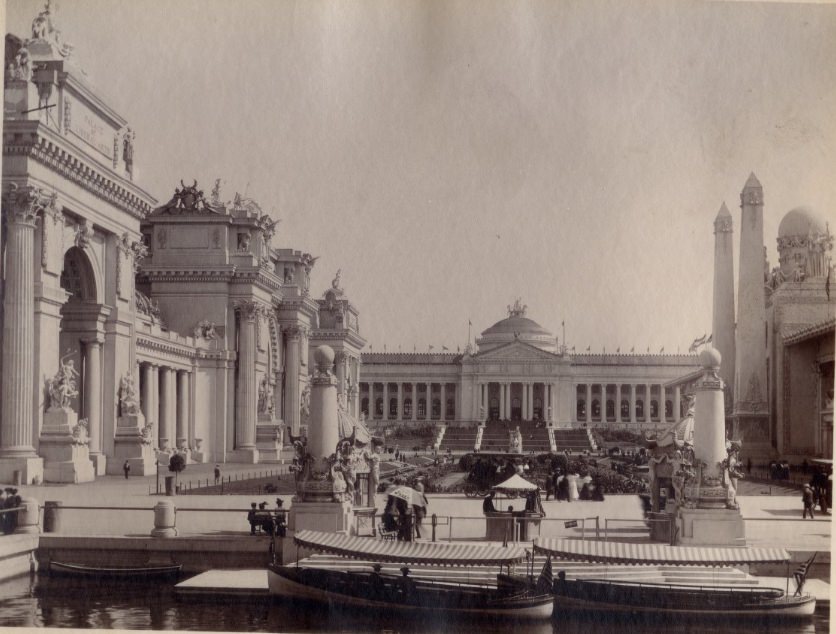
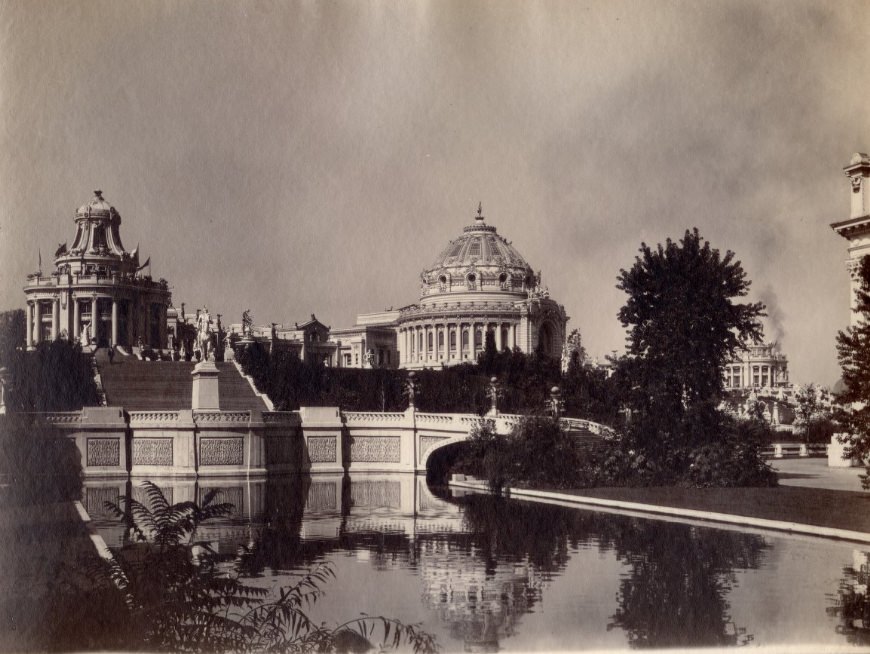
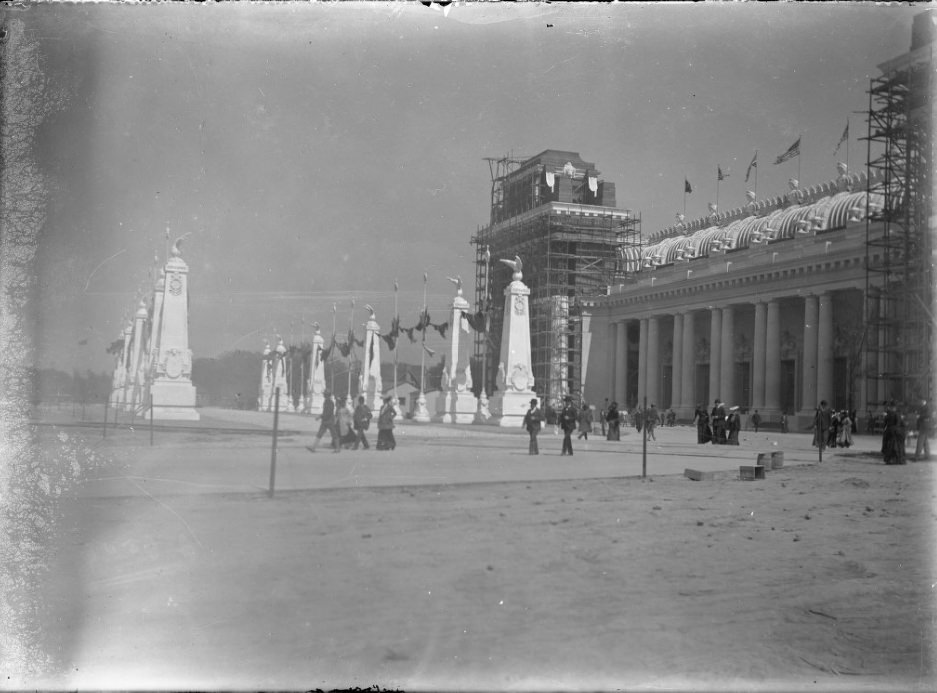
The lagoon leading east from the grand basin at the 1904 World’s Fair in St. Louis.Festival Hall at the 1904 World’s Fair.
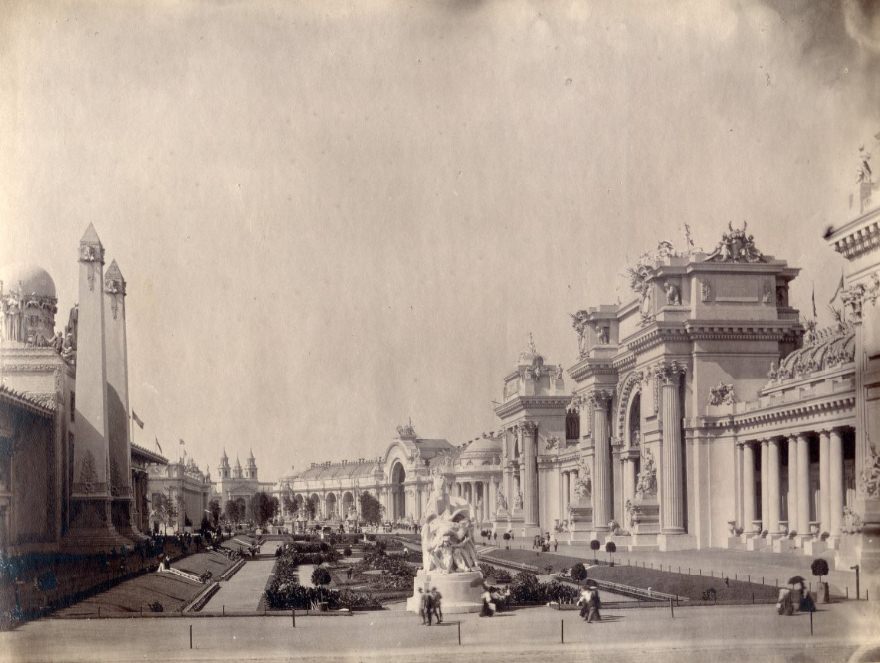
The fairgrounds were built on a massive scale. Enormous exhibition palaces housed displays on transportation, electricity, machinery, liberal arts, manufacturing, and more. The Palace of Transportation, the Palace of Electricity and Machinery, and the Palace of Manufactures were among the most visited structures. Their neoclassical facades and grand proportions were designed to leave visitors in awe.
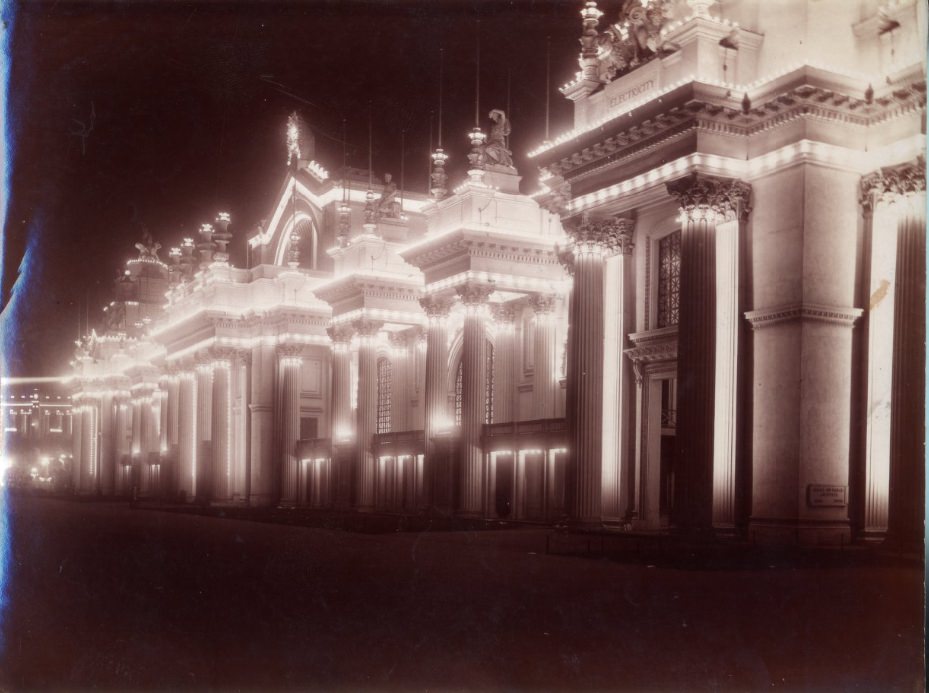
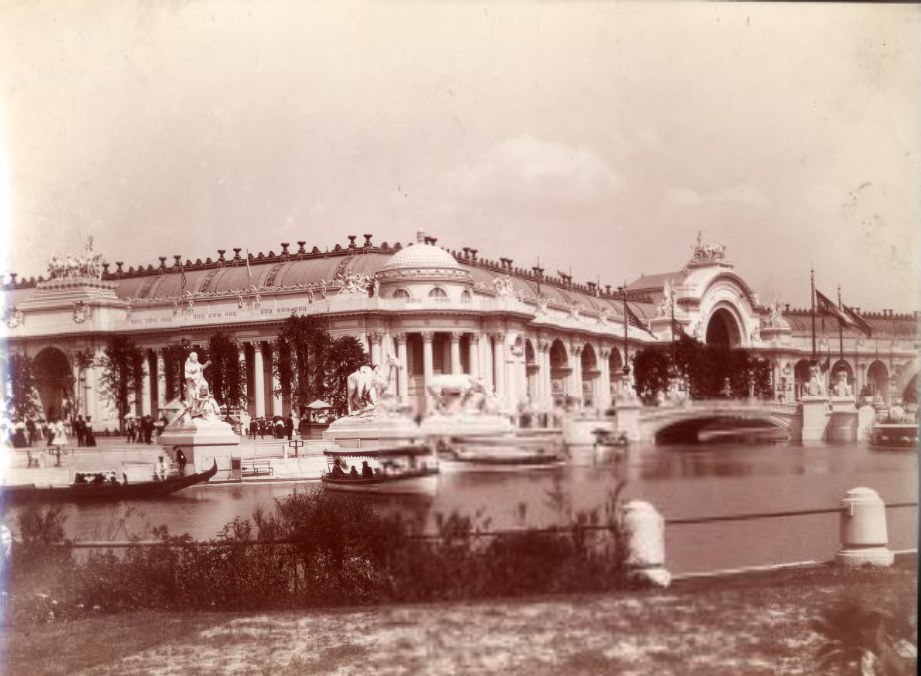
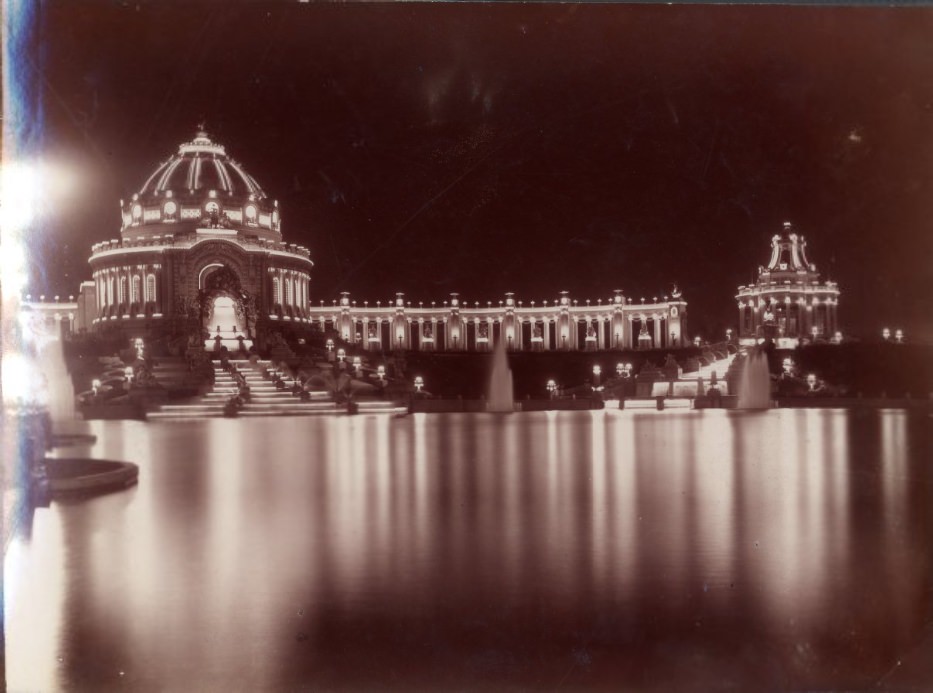
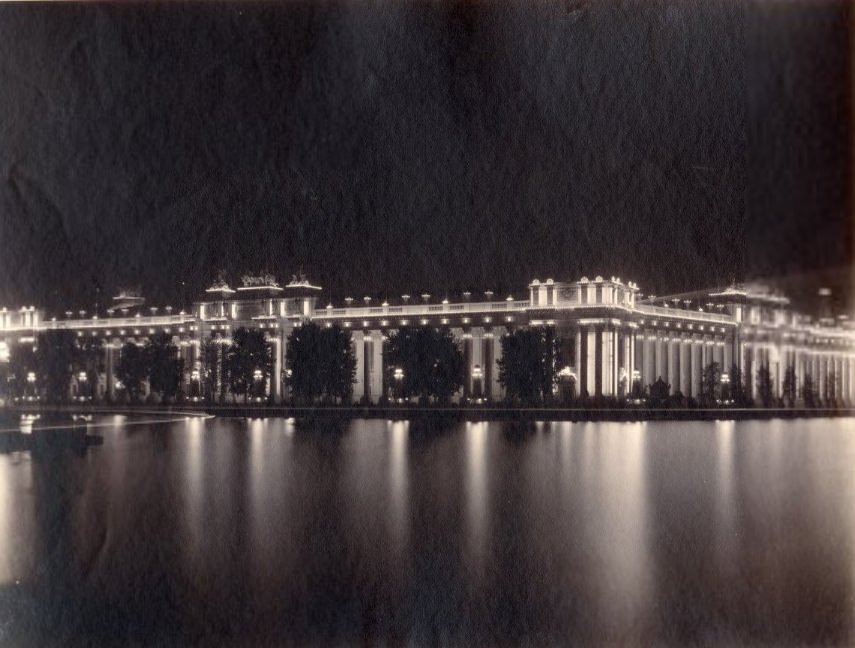
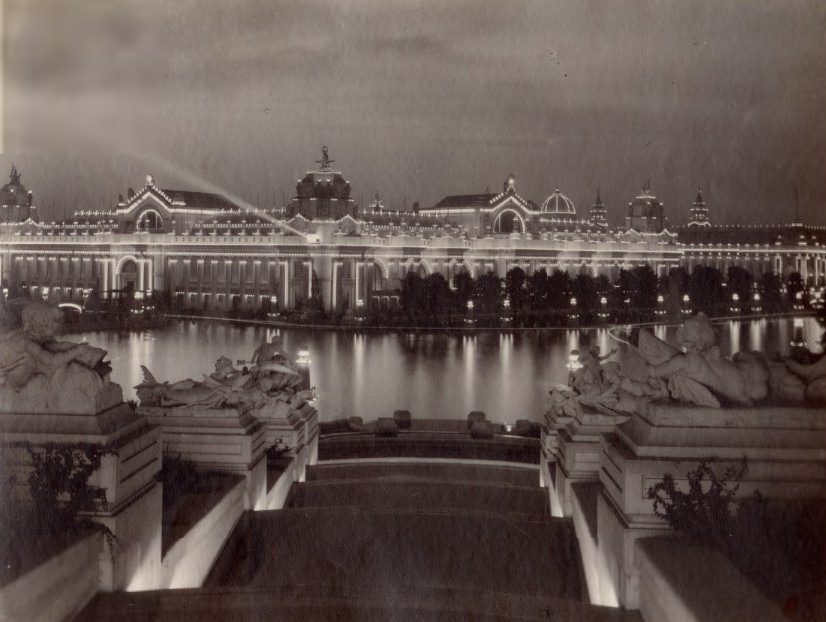
Palace of Transportation at the 1904 St. Louis World’s Fair.The Palaces of Electricity and Machinery at the 1904 World’s Fair. The picture was taken at night from the walkway between the Grand Basin and the building.The Palace of Manufactures at the 1904 World’s Fair in St. Louis.
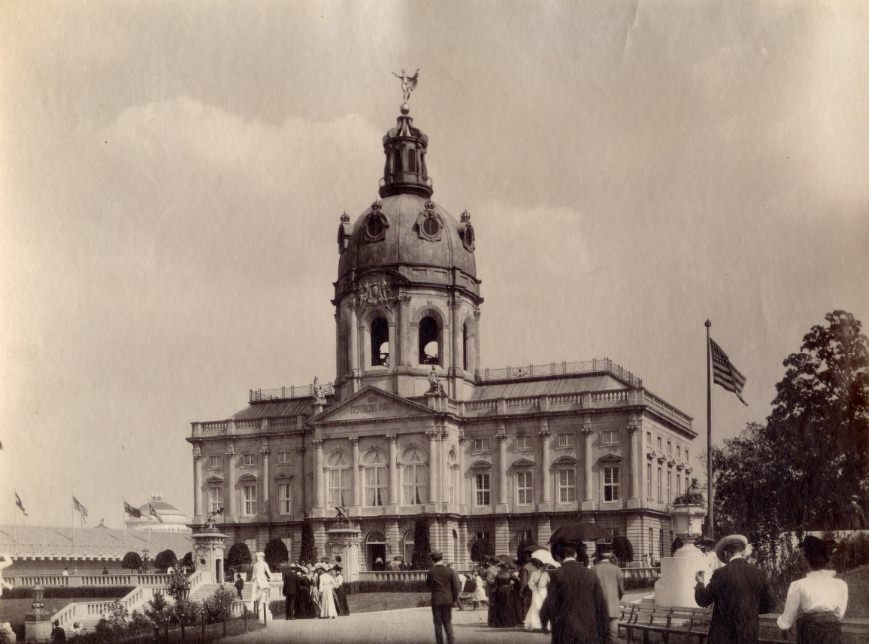
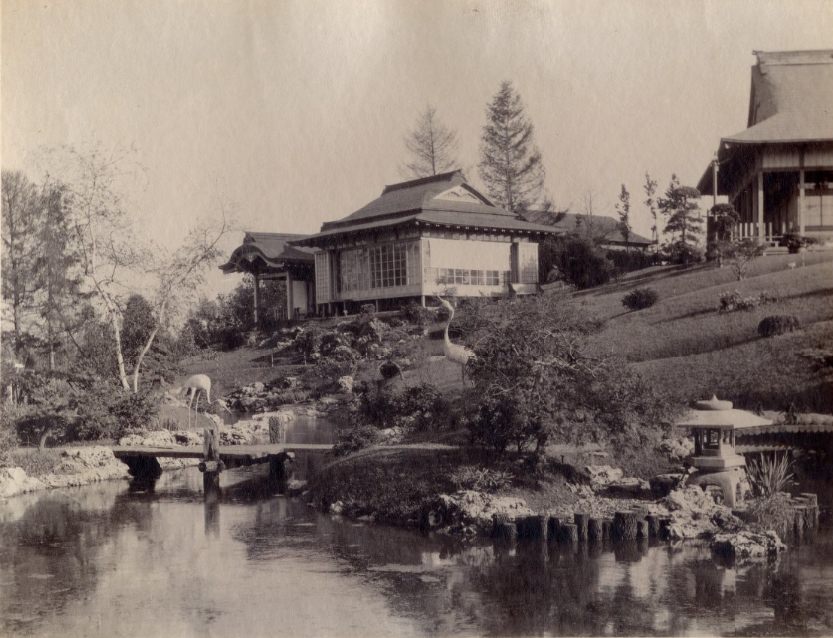
International pavilions added a global dimension to the fair. Countries from around the world built their own structures on the fairgrounds. Germany’s pavilion became famous for its bells, which could be heard from a great distance across the grounds. Japan’s pavilion featured traditional architecture surrounded by carefully designed gardens.
The German Pavilion at the 1904 World’s Fair in St. Louis, 1906. This pavilion was best known for its bells which could be heard from a great distance.Japanese Pavilion and gardens at the 1904 World’s Fair in St. Louis, 1904
The sunken garden and Art Hill were among the most photographed locations at the fair. Art Hill offered sweeping views of the grand basin and the palace complexes. The Missouri building, a temporary structure built specifically for the event, stood near the Plaza of St. Louis and was demolished after the fair closed. The World’s Fair Pavilion was later built on that same site.
Sunken Garden, 1904The western edge of Art Hill looking north toward the dome of Creation at the 1904 World’s Fair in St. Louis.
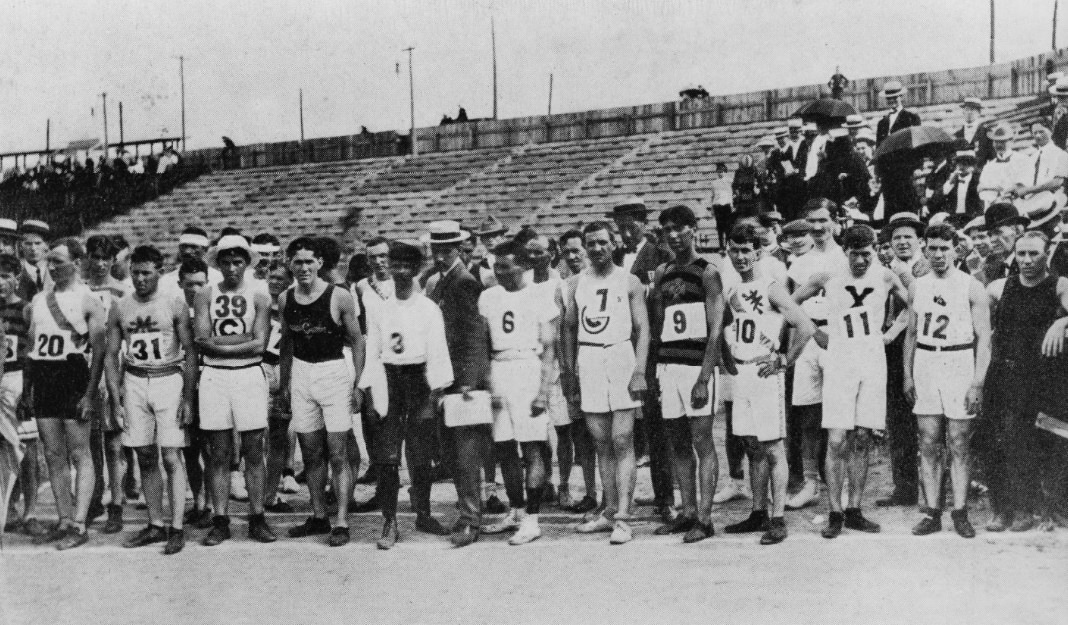
Alongside the World’s Fair, the 1904 Olympic Games were held at Washington University’s Francis Field — the first time the Olympics were held in the United States. The events drew athletes from across the country and abroad, placing St. Louis at the center of the international sporting world for that summer.
Olympic Games 1904
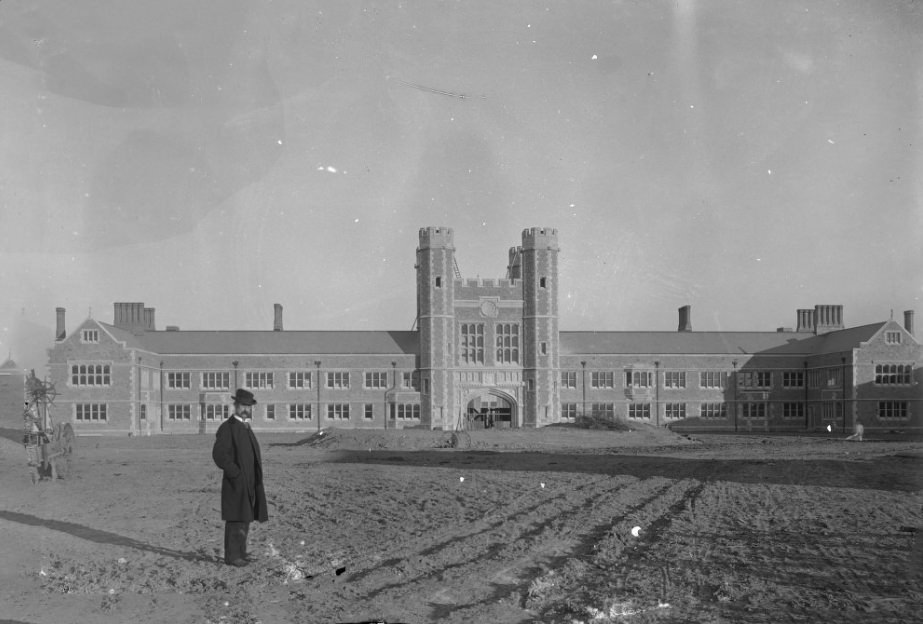
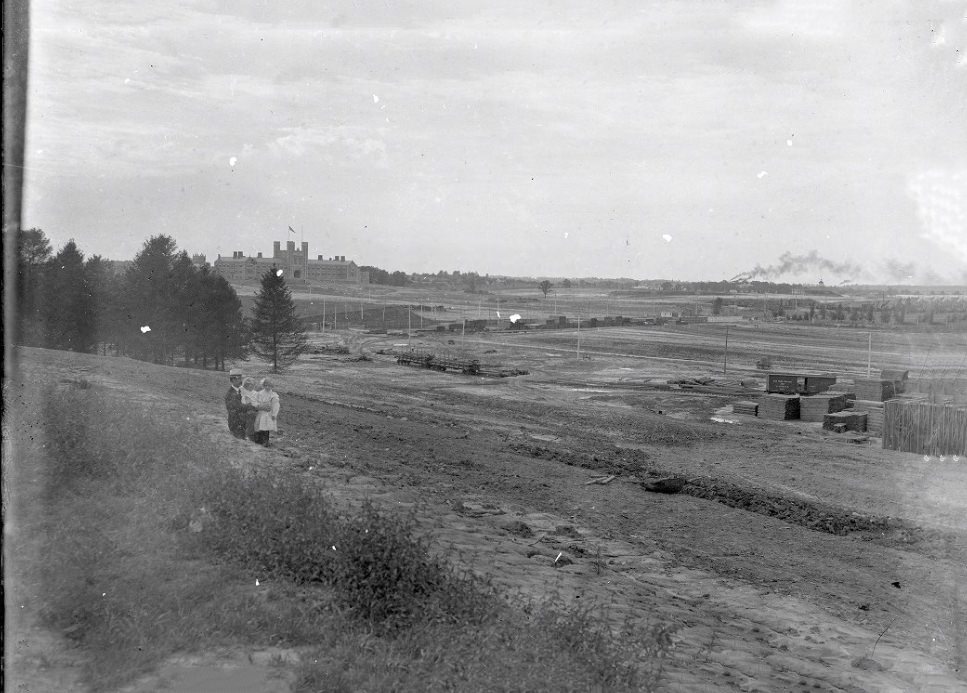
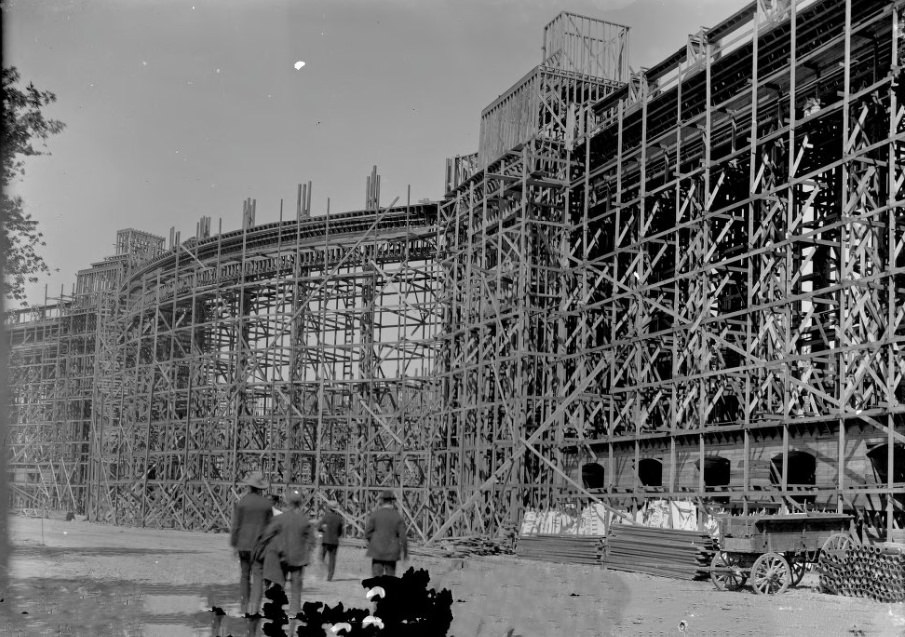
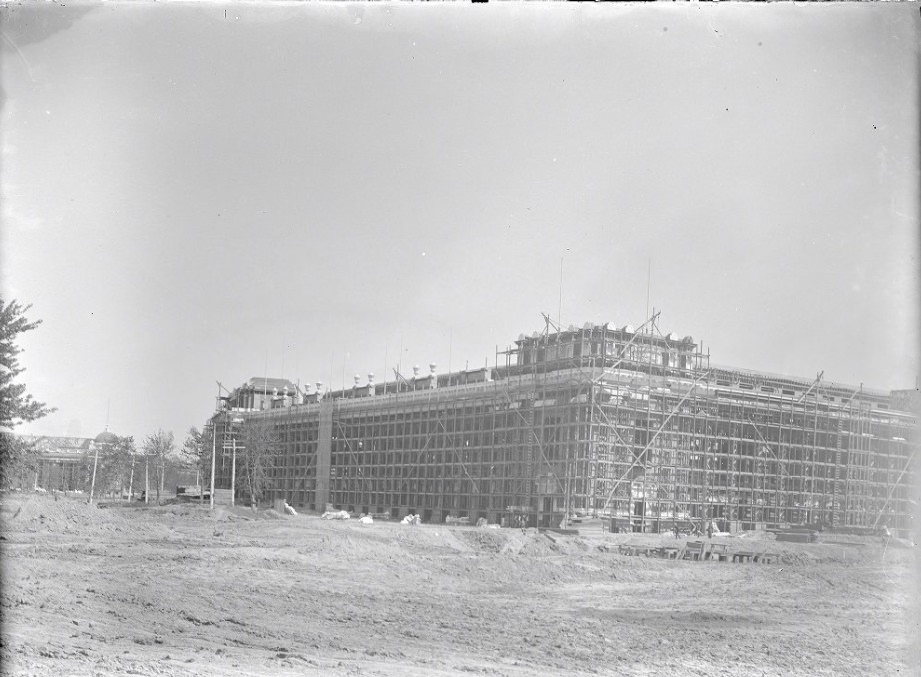
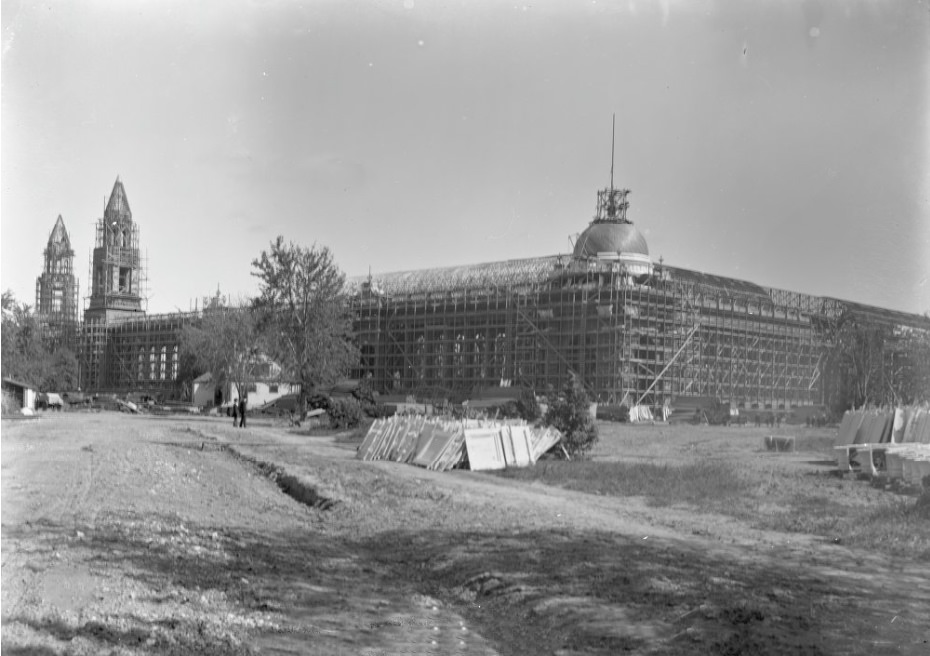
Washington University’s campus was still actively being developed during this period. Brookings Hall, the university’s iconic main building, was photographed in 1903 with fresh dirt still on the grounds and construction materials visible nearby. The university’s proximity to both the fair and the Olympic venue made it one of the most active zones of development in the city.
Washington University’s Brookings Hall in Saint Louis, Missouri, 1903
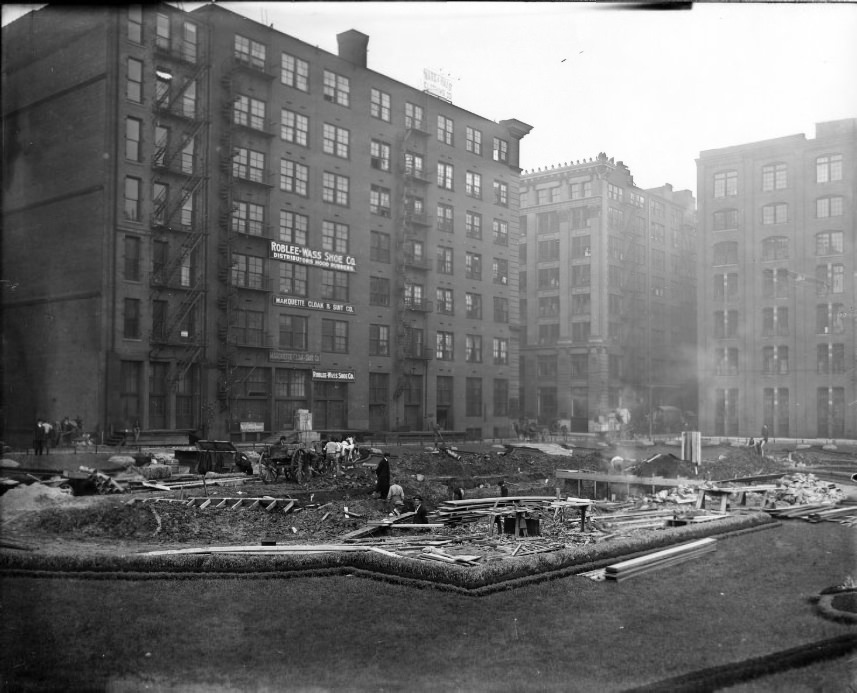
Away from the fairgrounds, the rest of the city was also under rapid development. New buildings were rising across downtown, old ones were being torn down, and the street grid was expanding outward. By 1903, construction in Lucas Gardens Park was underway as the site was being converted back into a public park after the demolition of the Exposition and Music Hall that had previously occupied the land.
Construction taking place in Lucas Gardens Park, 1903Construction of North Taylor Avenue at the intersection of Florissant Avenue, 1906
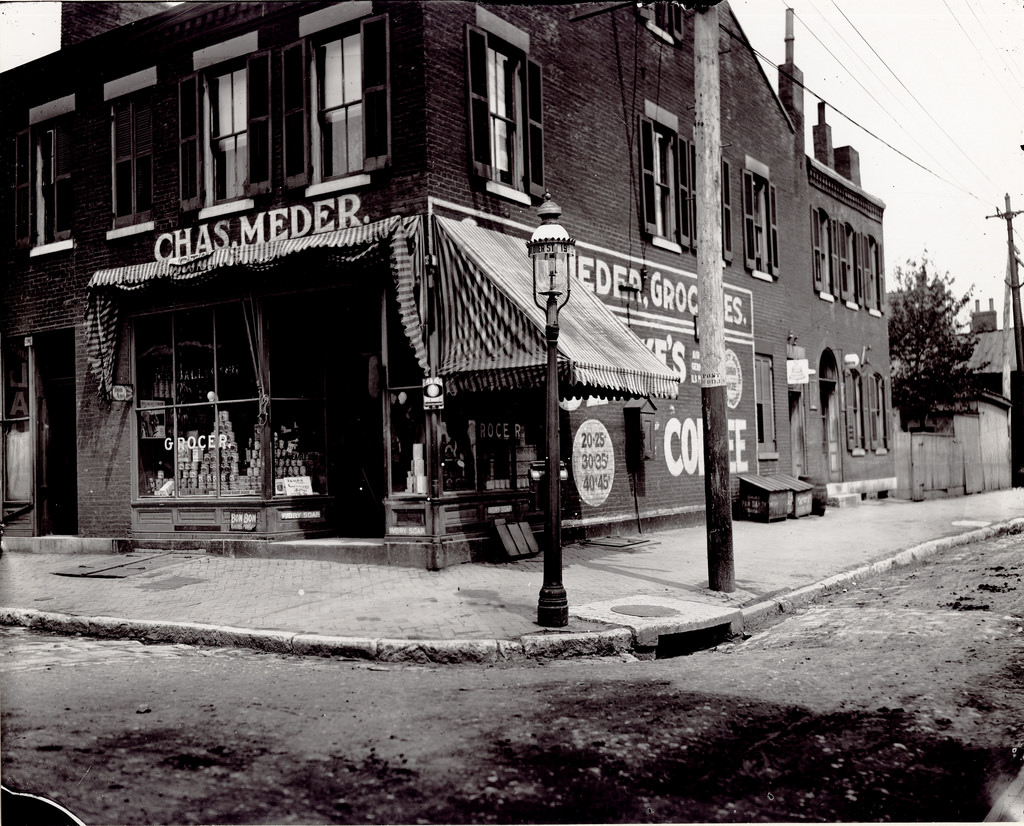
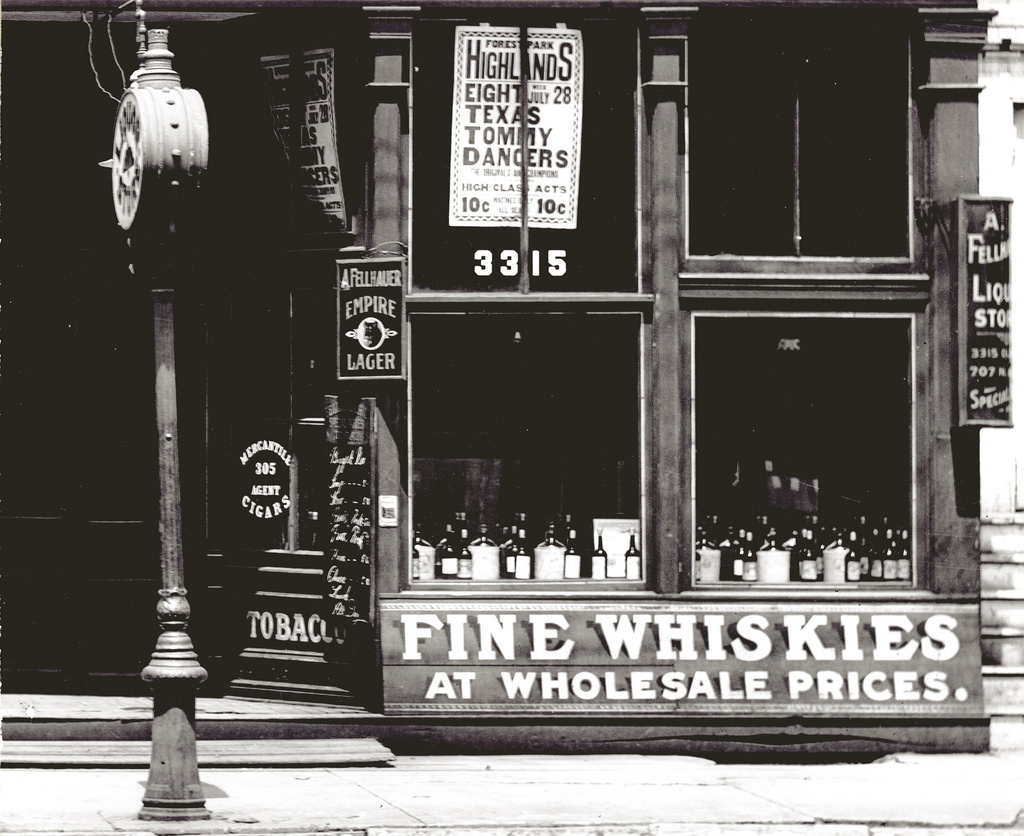
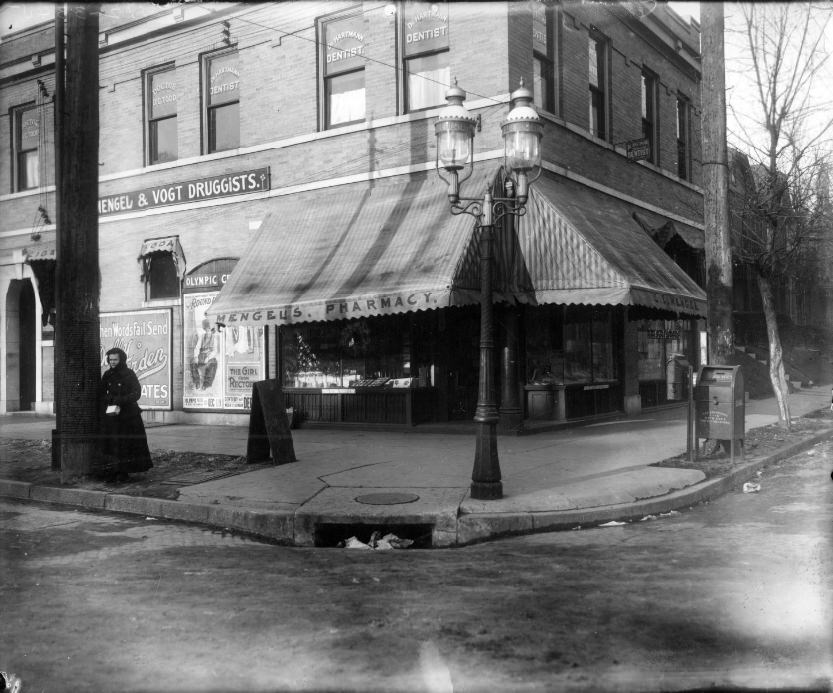
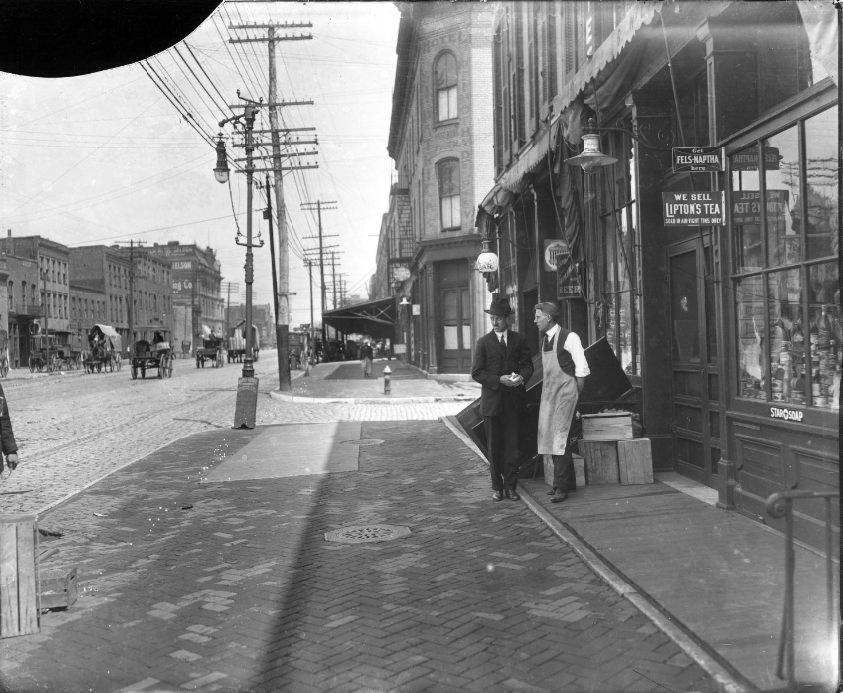
Neighborhood commercial life was rich and varied. Grocery stores, saloons, barbers, pharmacies, and specialty shops lined the residential streets. The Charles Meder Grocery at the corner of Nineteenth and Dodier, the Fellhauer Brothers Saloon on Olive Street, and Mengel & Vogt pharmacy at Taylor and Page Avenues were all part of the dense commercial fabric that served everyday St. Louis residents.
Charles Meder Grocery store at the corner of Ninteenth and Dodier Streets, ca. 1900sStore front windows for Fellhauer Brothers (August and Martin) Saloon at 3315 Olive Street, 1907Mengel & Vogt pharmacy at Taylor and Page Avenues, 1906. A woman is standing next to a pole in front of the building. The building still exists and appears to be vacant.
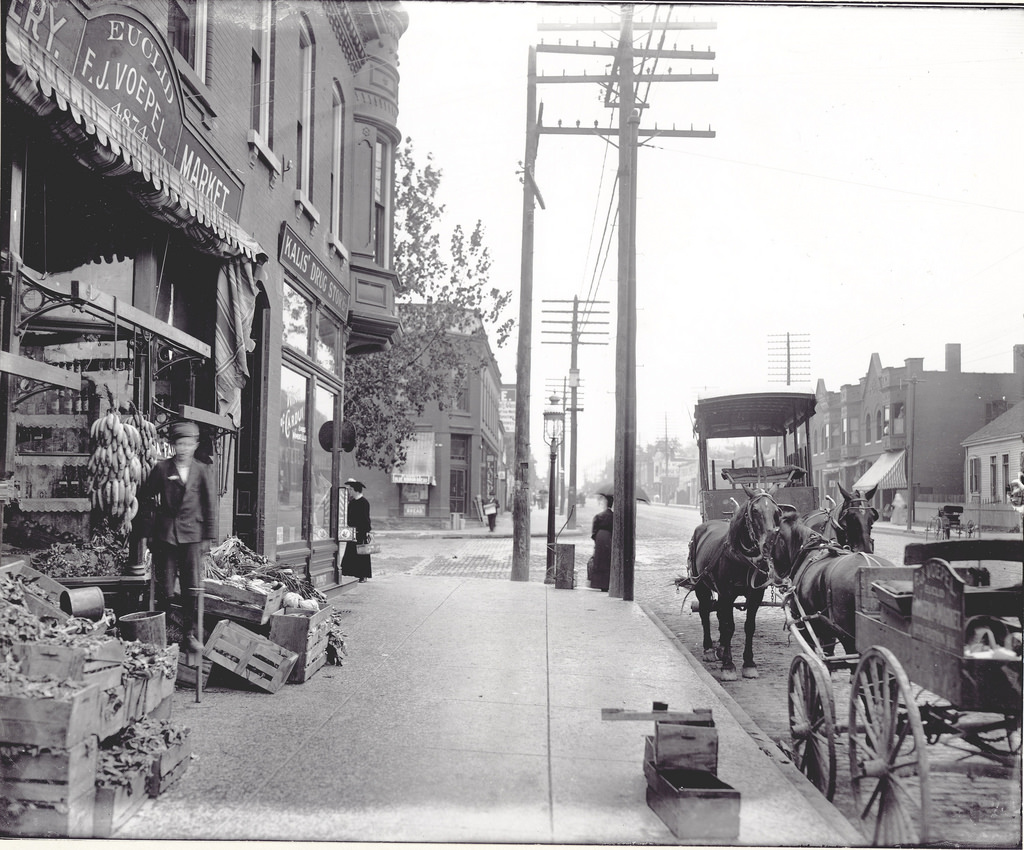
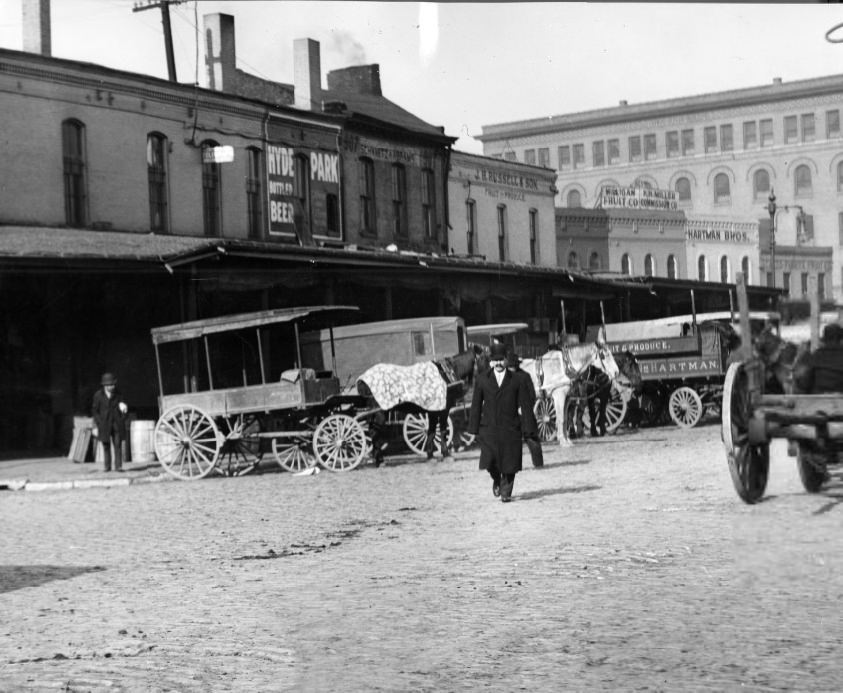
The city’s produce markets were a lively part of street life. Vendors set up stands along North Fourth Street and at established market locations around the city. In 1906, a boy on stilts was photographed standing in front of the produce stands at the F.J. Voepel Market — one of the more striking images of commercial life from this era.
A boy on stilts stands in front of the produce stands in front of the F.J. Voepel Market, 1906Row of produce vendors along North Fourth Street, 1908. A horse-drawn carts are visible in front of the businesses.
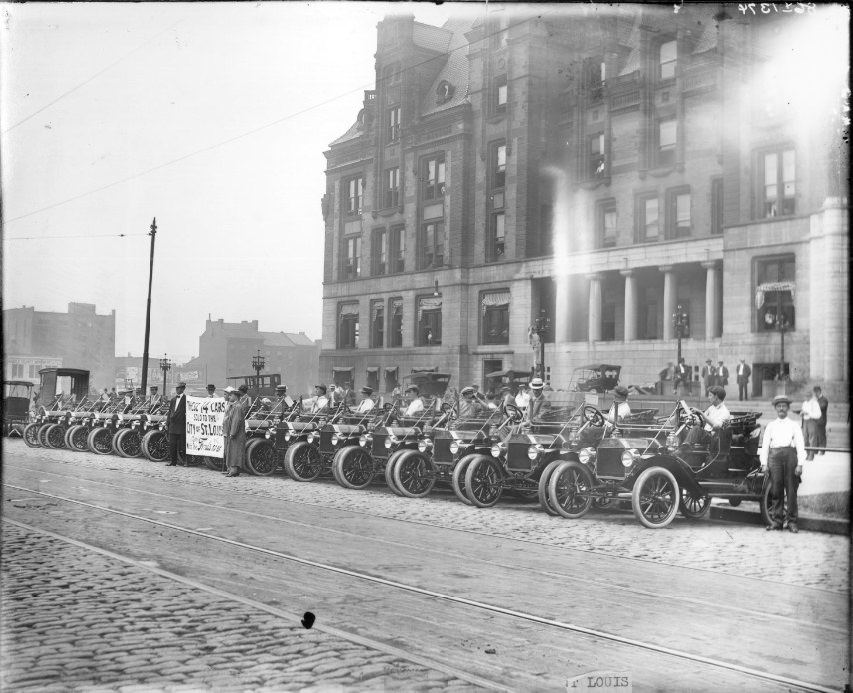
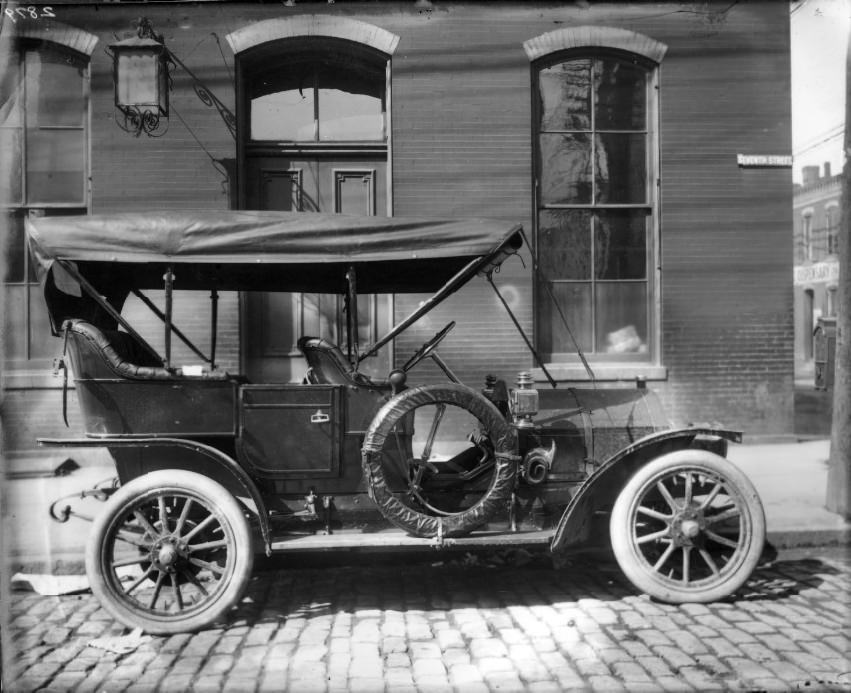
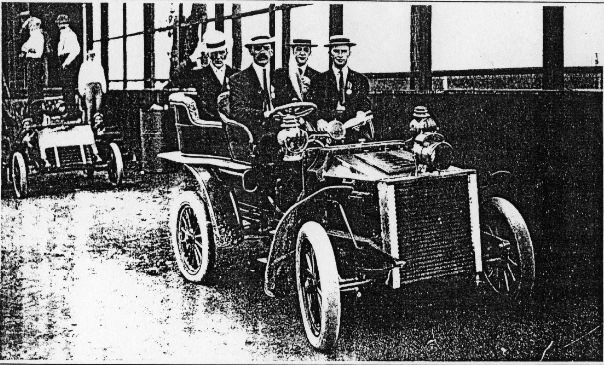
Transportation in St. Louis during this decade was in a period of rapid change. Horse-drawn wagons still outnumbered automobiles, but cars were becoming a more common sight. In 1905, a fleet of 14 Ford Model T automobiles was sold to the city of St. Louis and photographed in front of City Hall, with drivers in each car and men holding a banner that read: “These 14 cars sold to the city of St. Louis, watch the Fords go by.”
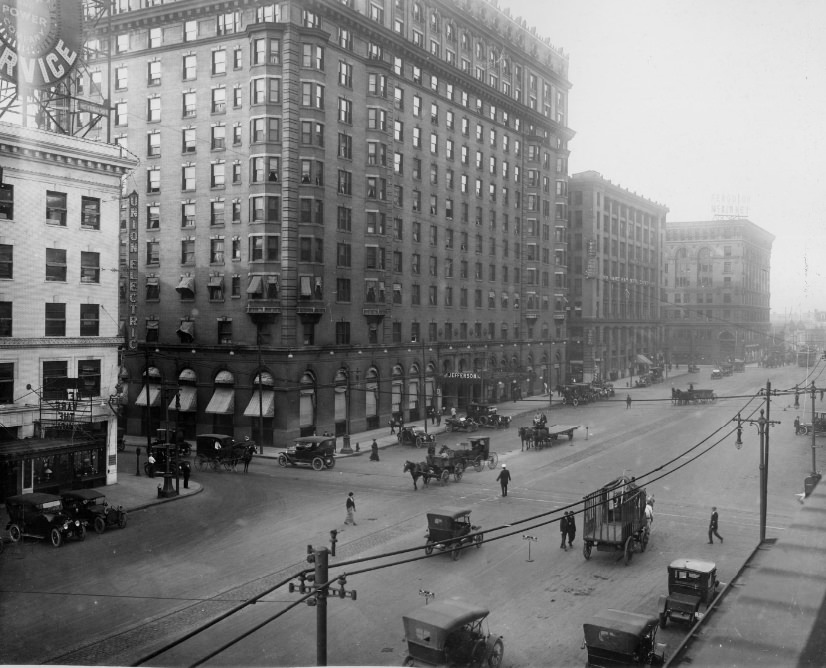
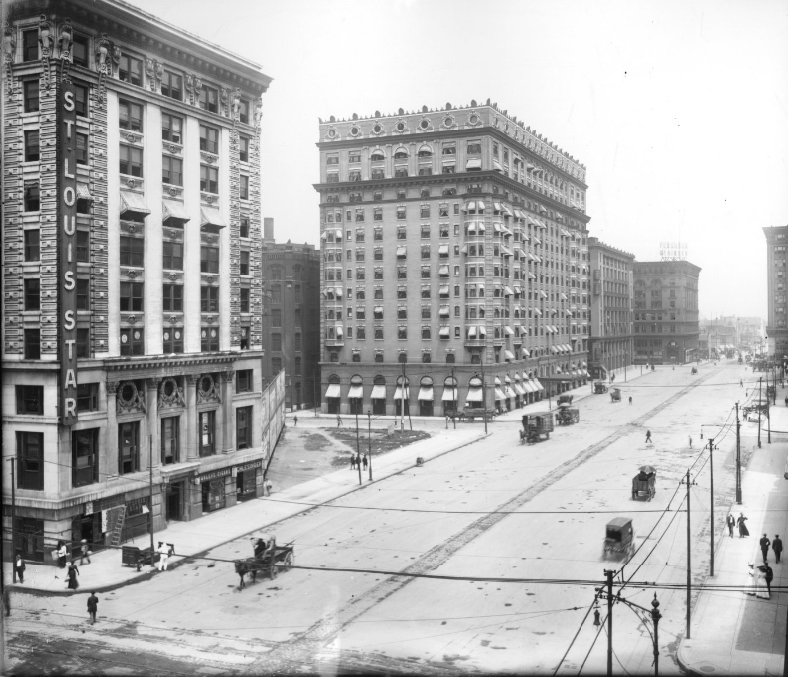
Fleet of Ford Model T automobiles in front of St. Louis city hall, 1905The Hotel Jefferson looking north along Tucker Boulevard, 1908
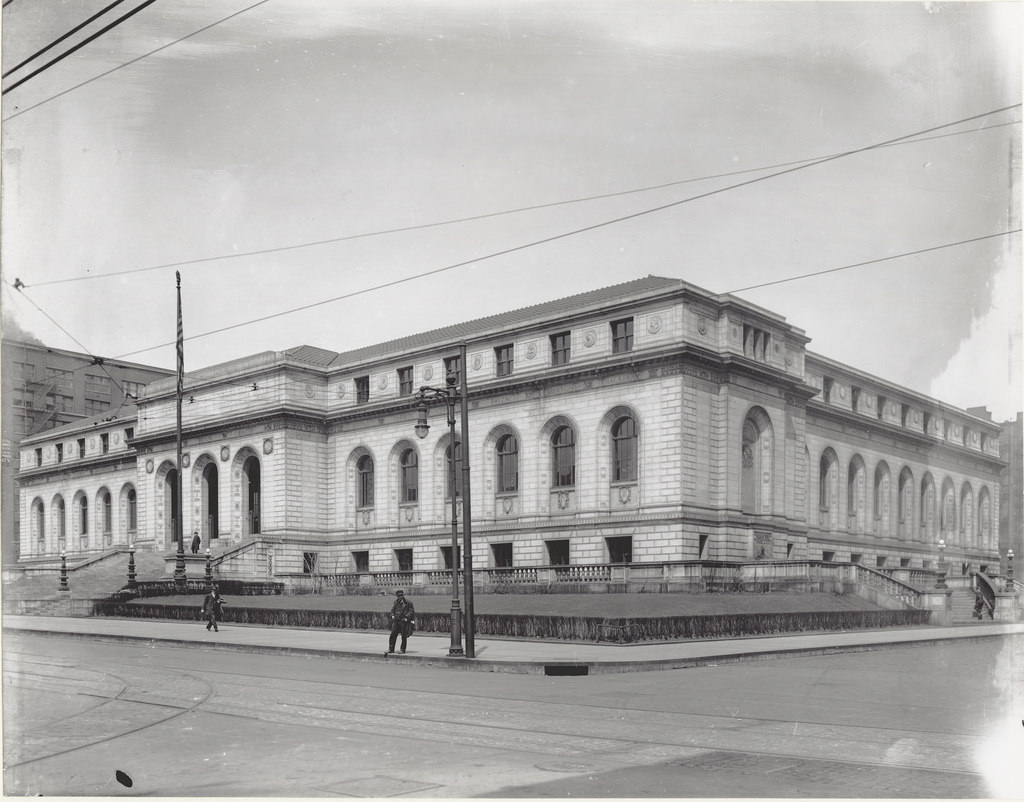
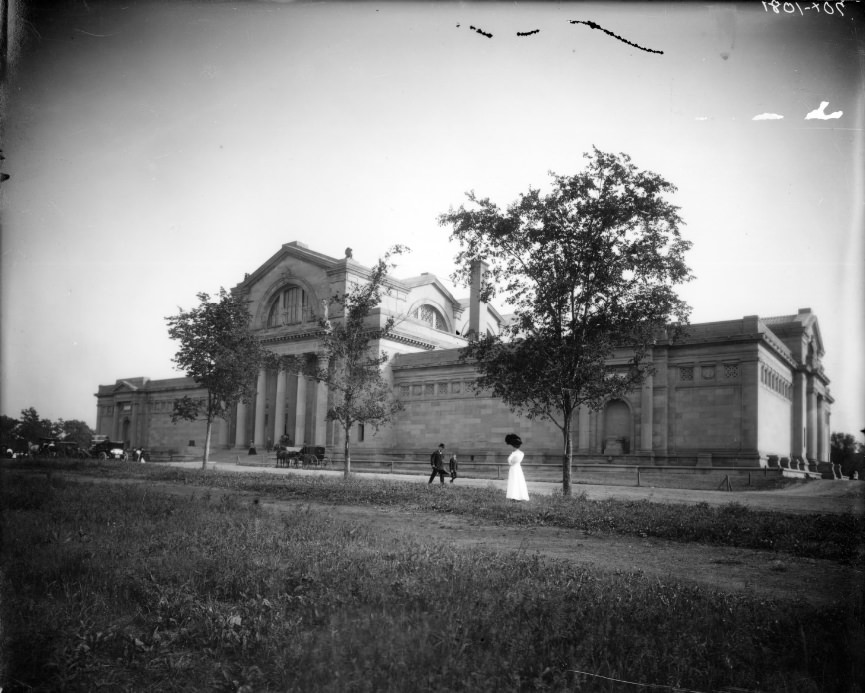
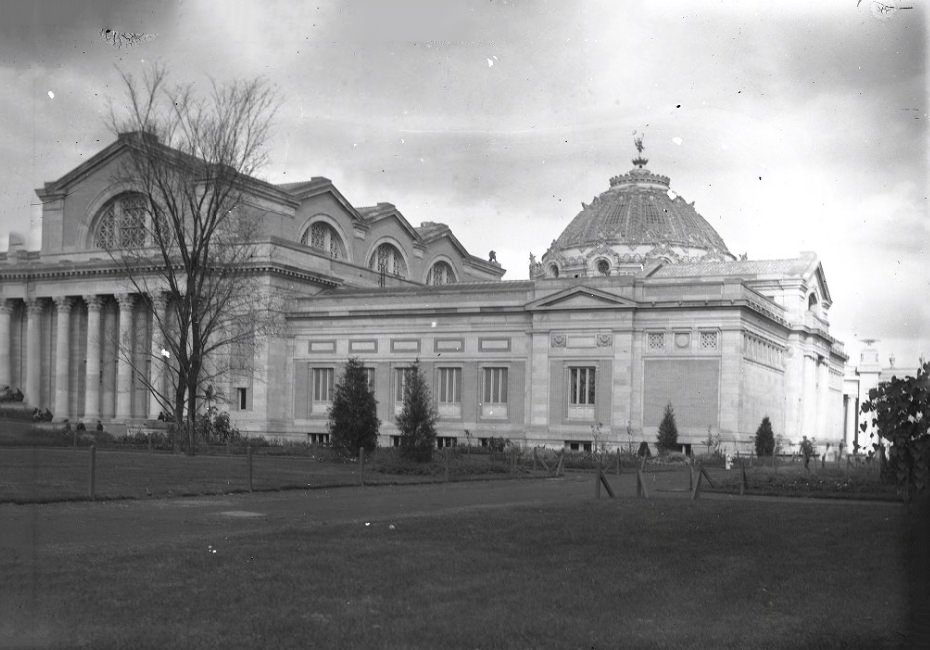
St. Louis had a well-established network of public institutions by the early 1900s. The St. Louis Public Library at 1301 Olive Street, St. Louis City Hall, and the Saint Louis Art Museum were all operating landmarks that served the growing population. The Art Museum, housed in a grand neoclassical building in Forest Park, was one of the few permanent structures built for the 1904 World’s Fair.
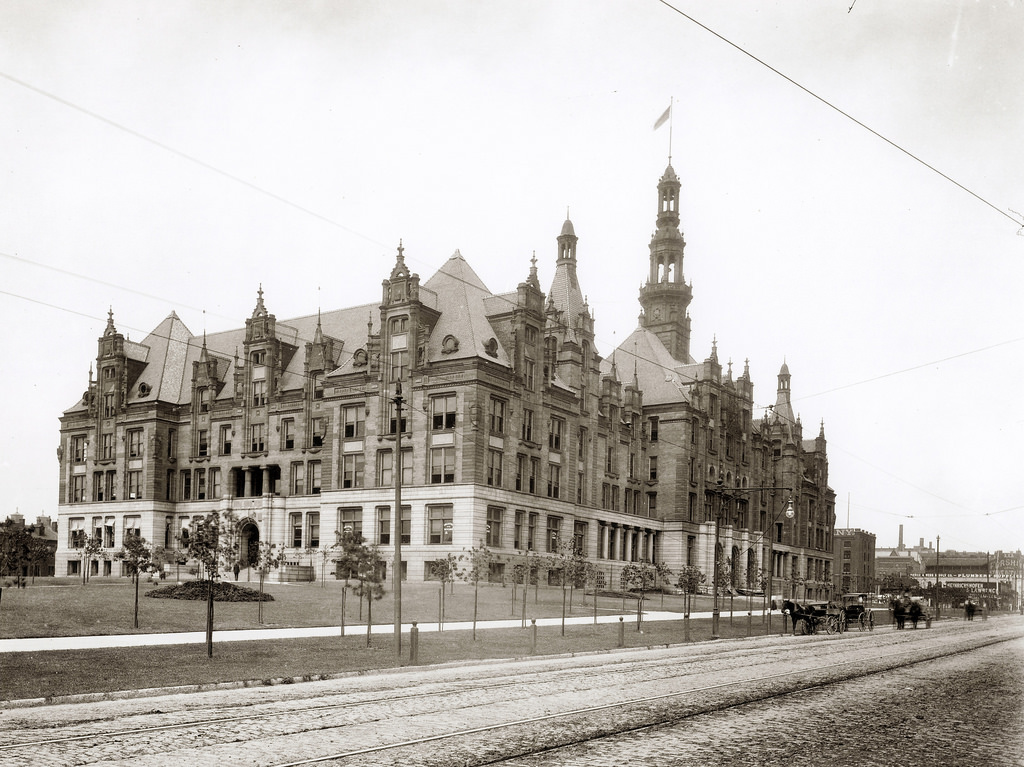
St. Louis Public Library at 1301 Olive Street, ca. 1910St. Louis City Hall, ca. 1900sSaint Louis Art Museum, 1905
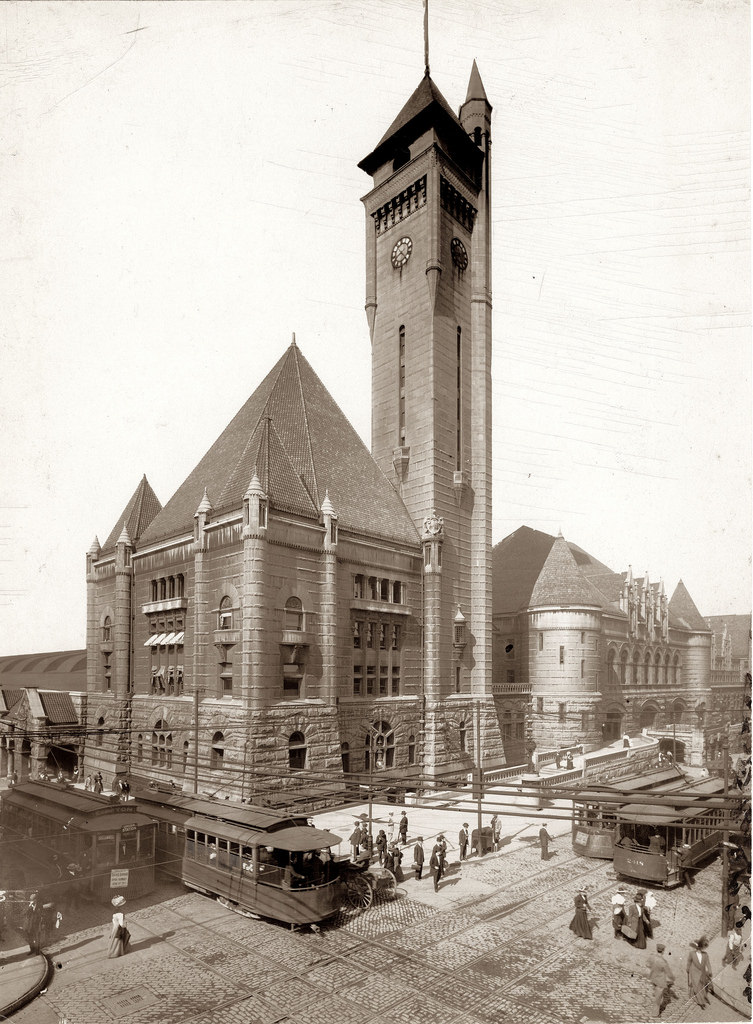
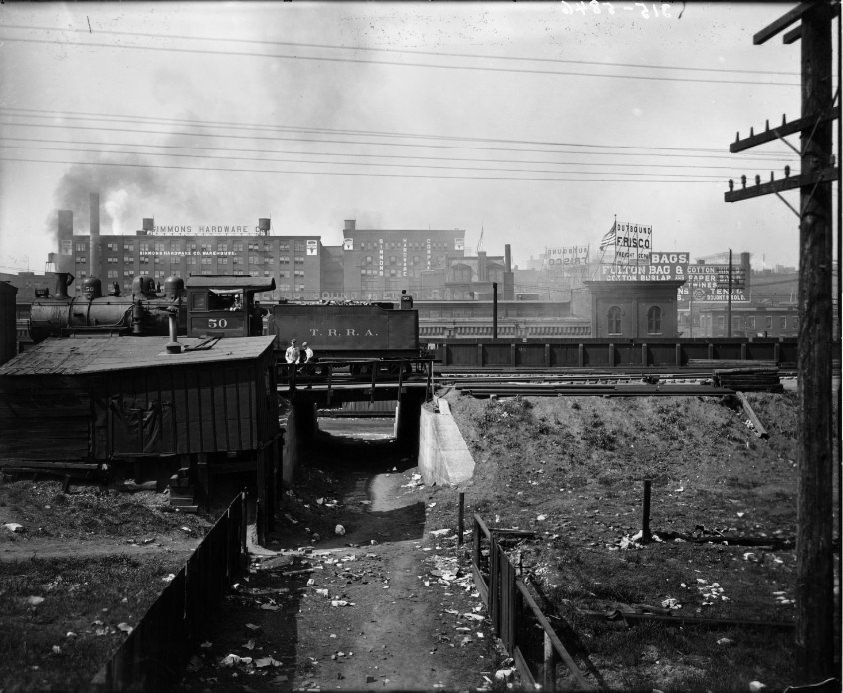
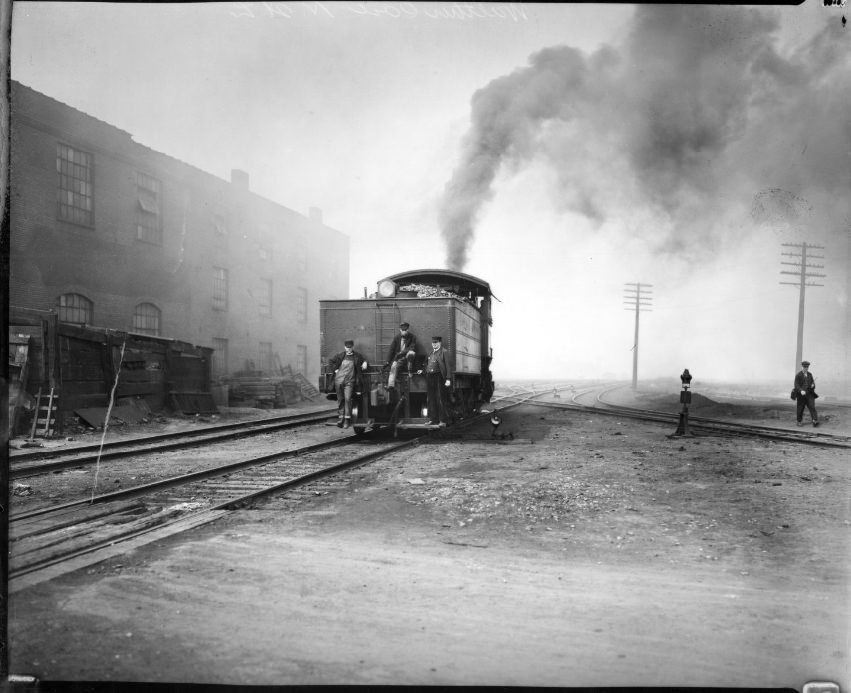
Union Station, photographed in 1904 at Eighteenth and Market Streets, was one of the busiest rail terminals in the country at the time. The Terminal Railroad Association kept locomotives and freight cars moving through a network of yards and warehouses, including the Cupples Station block, which was photographed in 1909 with warehouses visible in the background.
Union Station from Eighteenth and Market Streets, 1904Terminal Railroad Association train engine with tender stopped in rail yard, warehouses in the Cupples station block are visible in the background, 1909
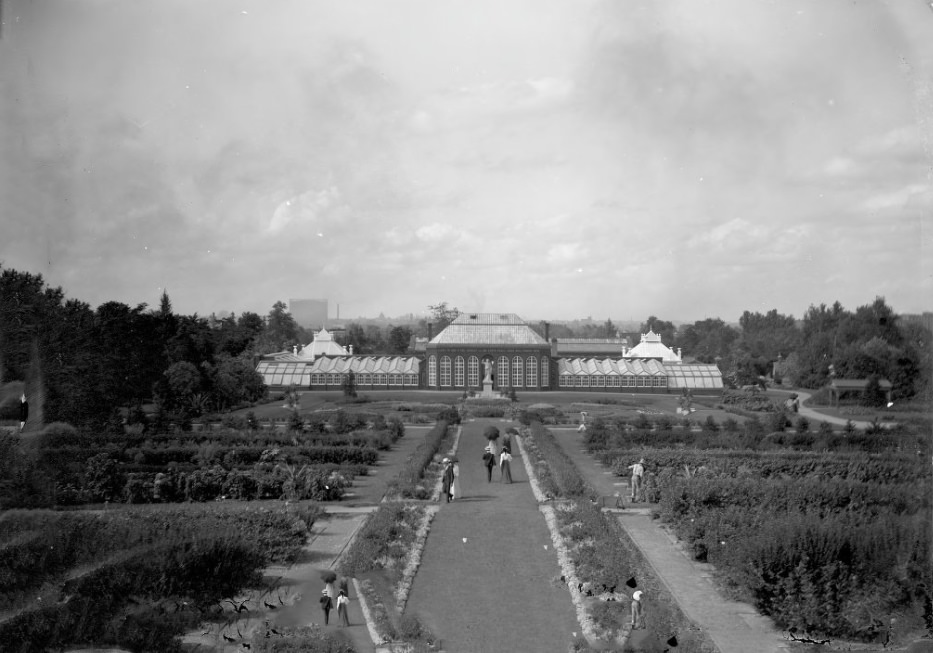
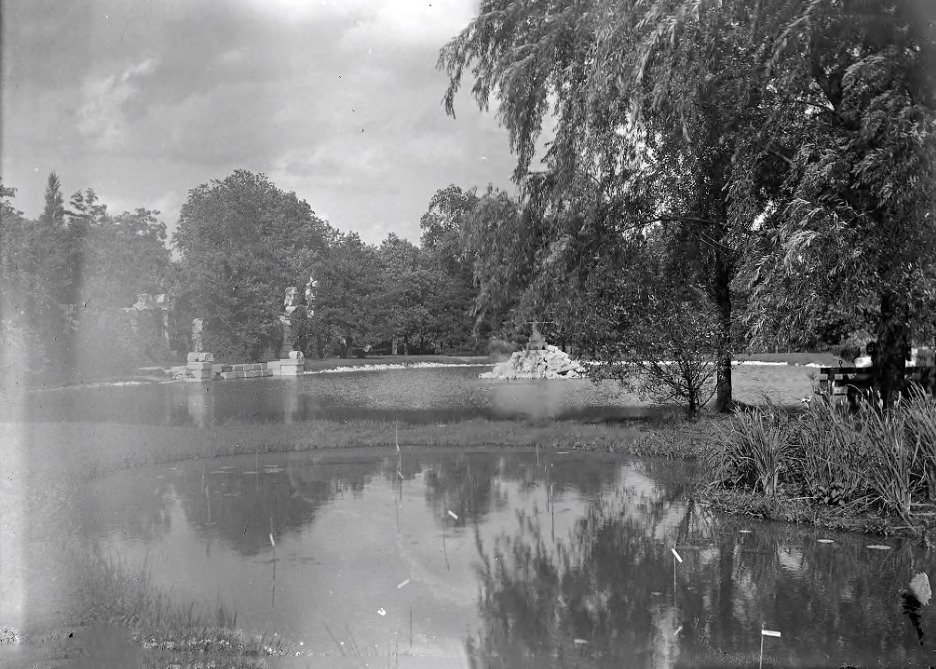
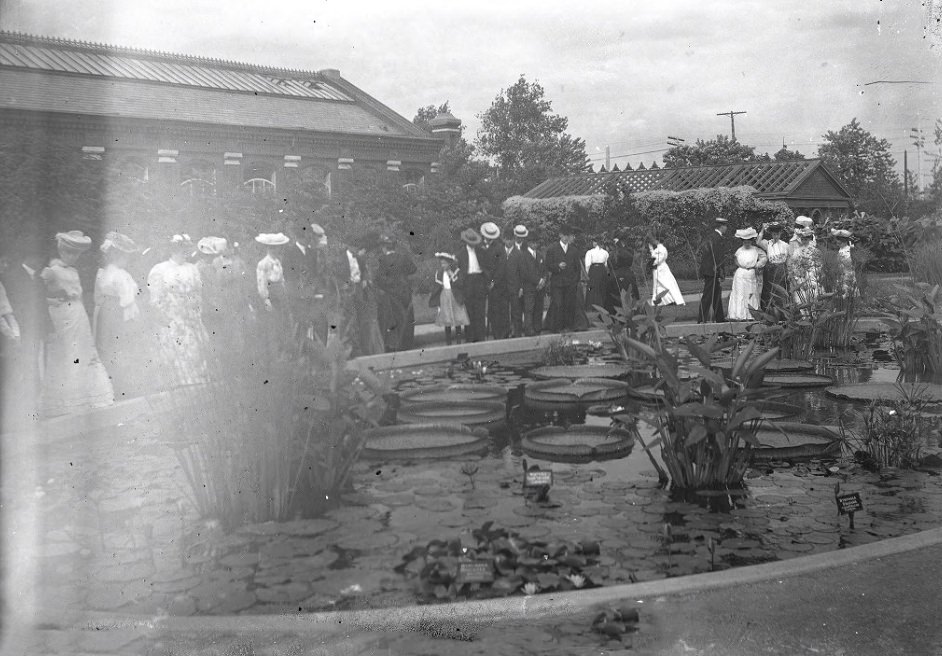
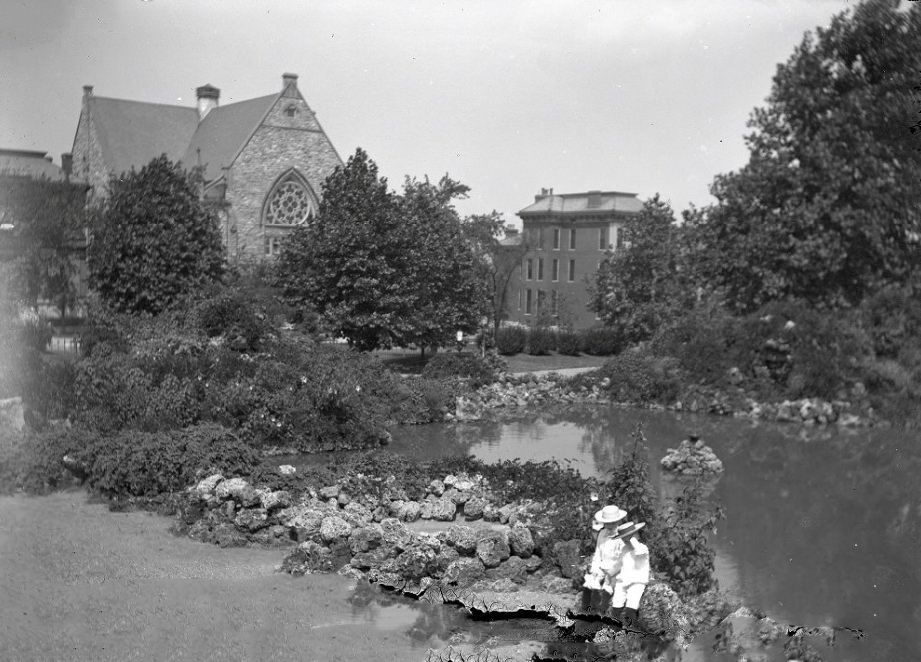
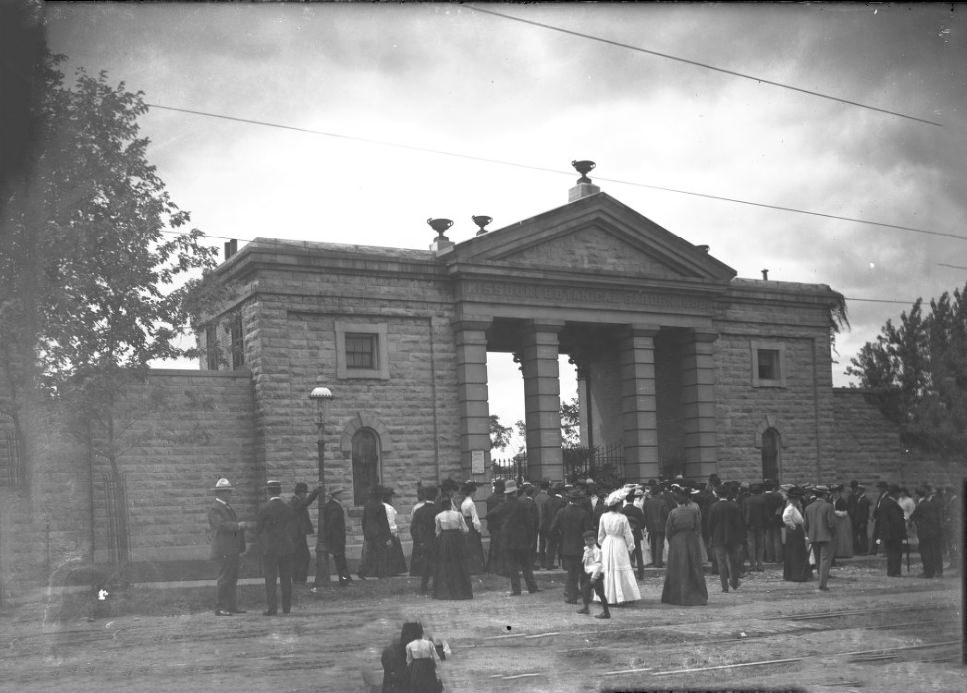
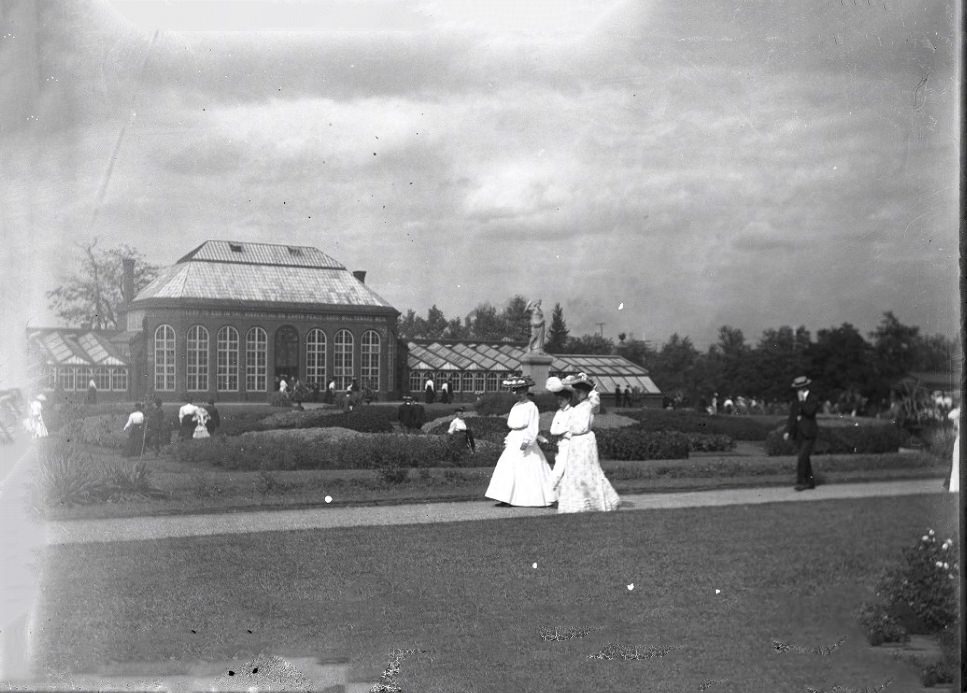
The Missouri Botanical Garden and Tower Grove Park offered green spaces for residents seeking recreation away from the noise of the city. The botanical garden’s main pathway was lined with flower beds tended by gardeners, and its lily pond was a popular attraction. Tower Grove Park had its own unusual feature: ruins of the Lindell Hotel, which burned down in a fire. Henry Shaw had the remains arranged and placed in the park as decorative ruins.
Missouri Botanical Garden, 1903Te Tower Grove Park Ruins, 1903
The Grand Avenue Water Tower, completed in 1871, remained one of St. Louis’s most recognizable landmarks throughout the 1900s. Standing 154 feet tall on Grand Avenue, it continued to serve the city’s water pressure system while also becoming a visual symbol of the city’s Victorian-era infrastructure. By 1915, it had already been standing for over four decades.
Grand Avenue Water Tower, 1915
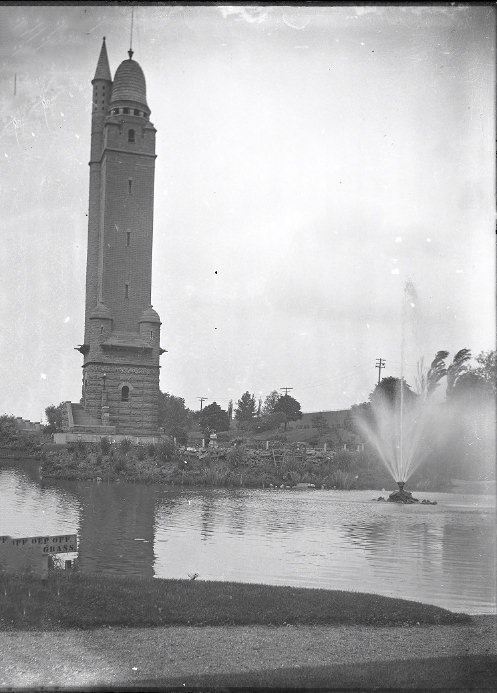
The Compton Hill Water Tower, 1908
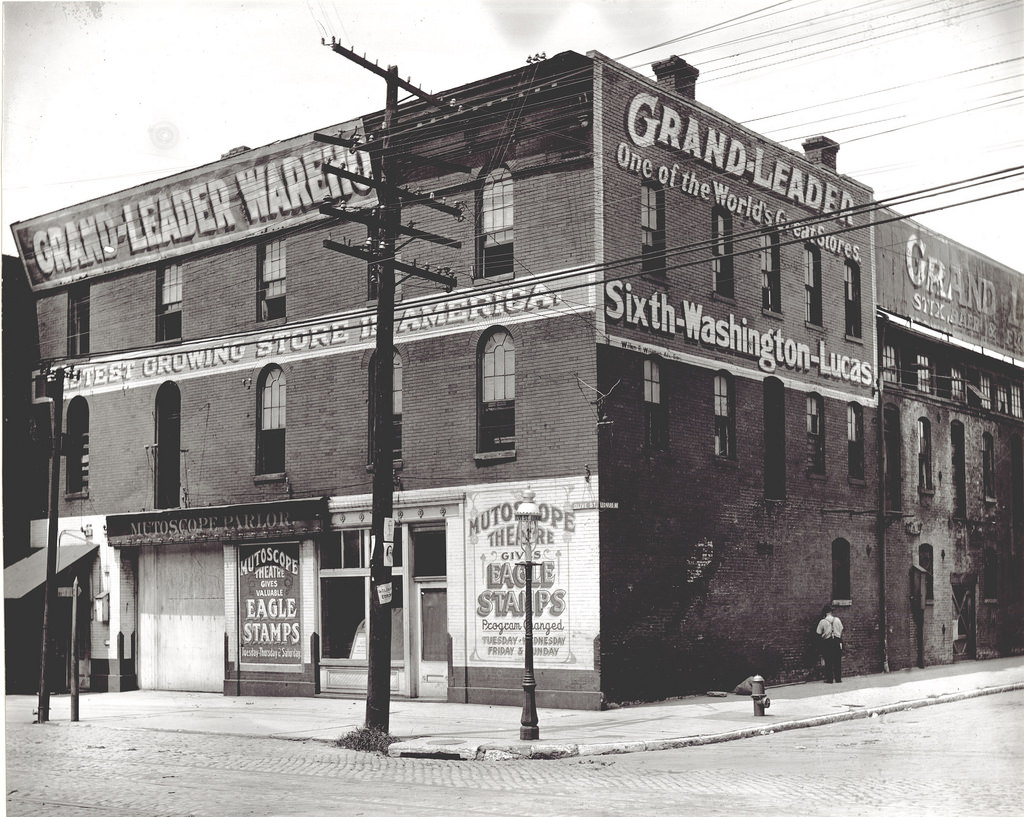
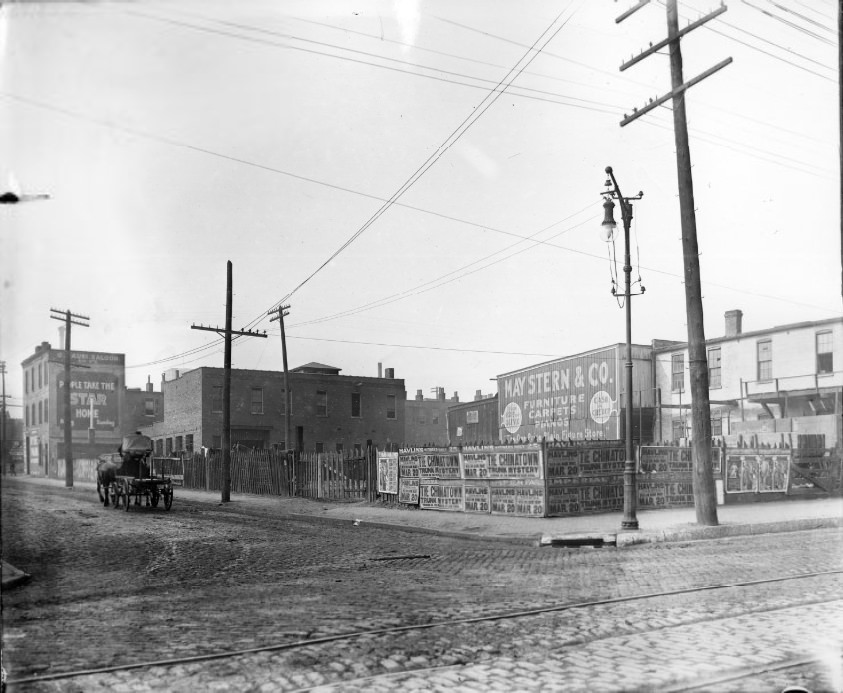
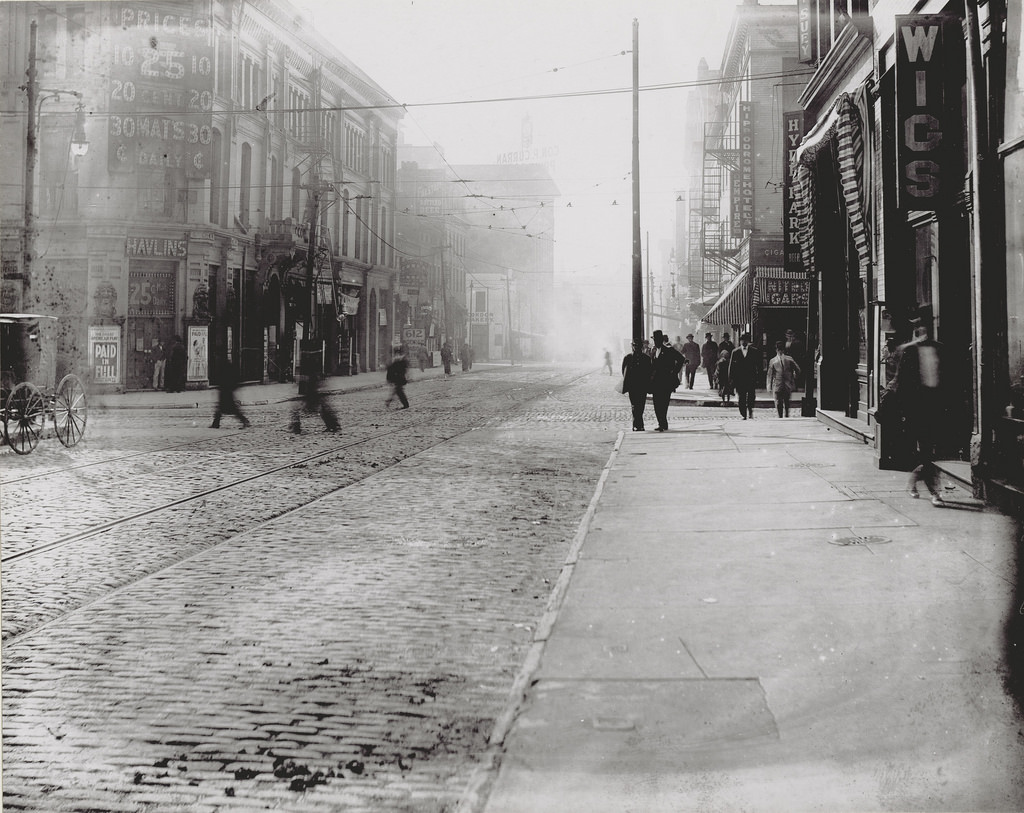
Entertainment was a growing part of city life. Theaters, saloons, barbershops, and novelty parlors competed for customers along busy commercial streets. The Mutoscope Parlor and Theatre on the corner of Olive Street and Leonard Avenue, photographed in 1912, was one of the early motion picture and novelty attractions in the city. Billboards and theater posters plastered onto buildings and fences advertised shows like “The Chinatown Trunk Mystery” at the Havlins Theater.
Mutoscope Parlor and Theatre on the northwest corner of Olive Street and Leonard Avenue, 1912City street intersection with theater posters and building billboards visible, 1907
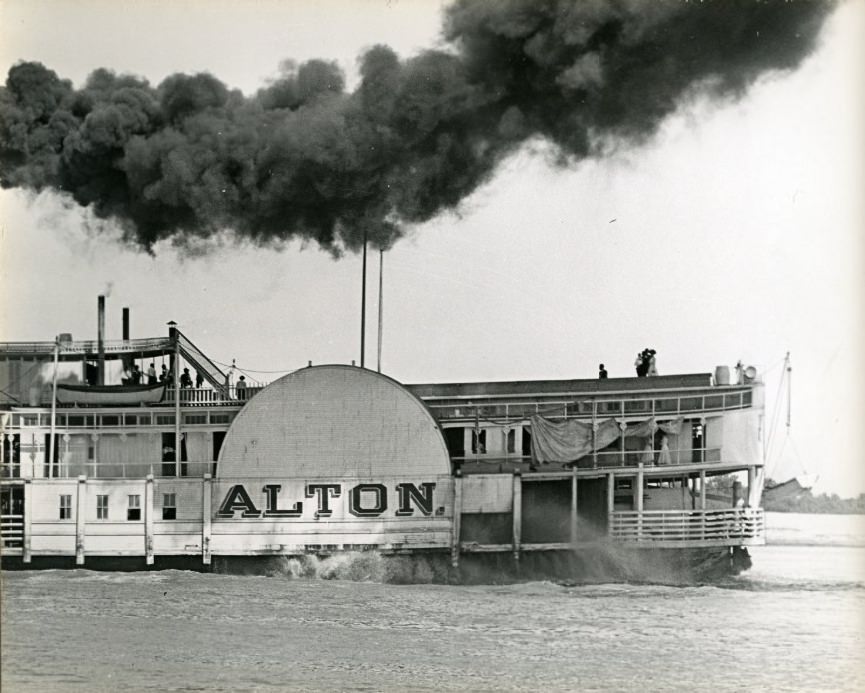
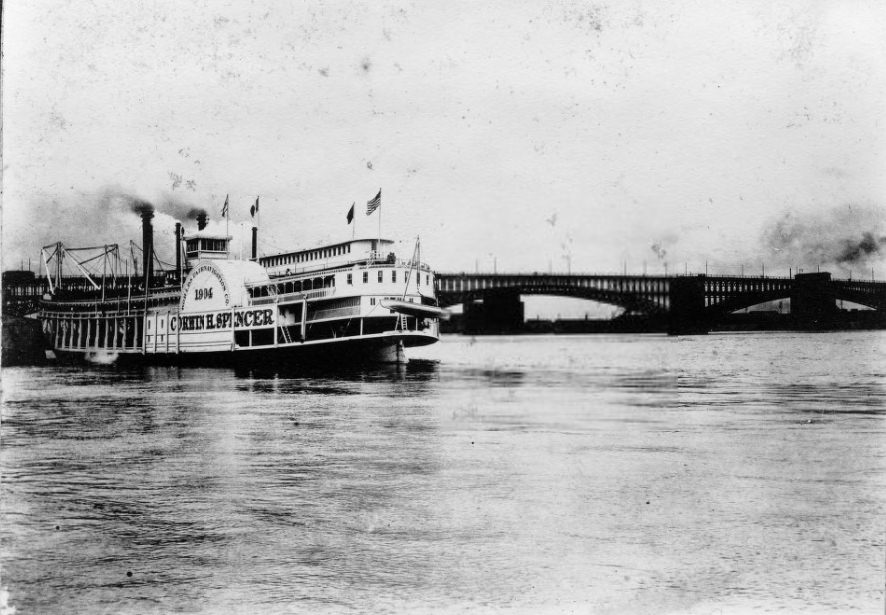
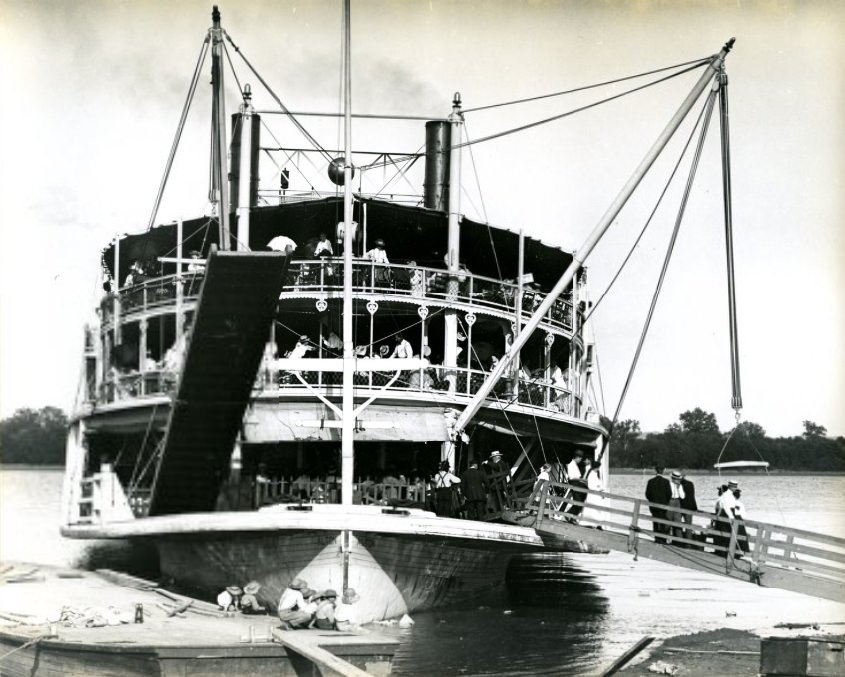
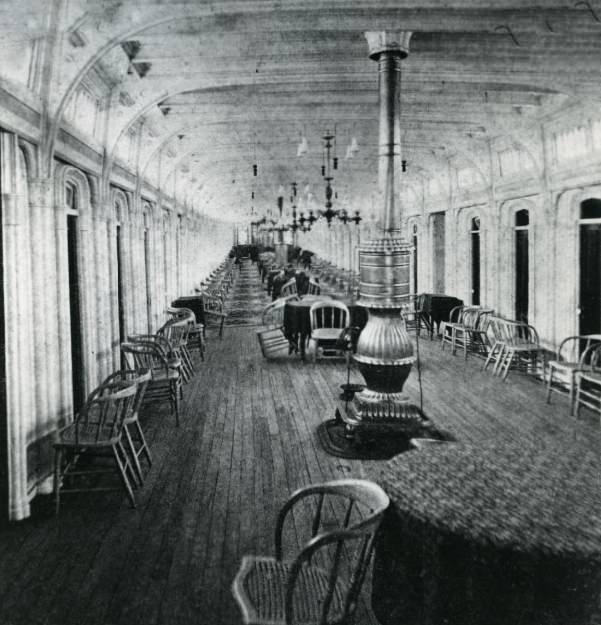
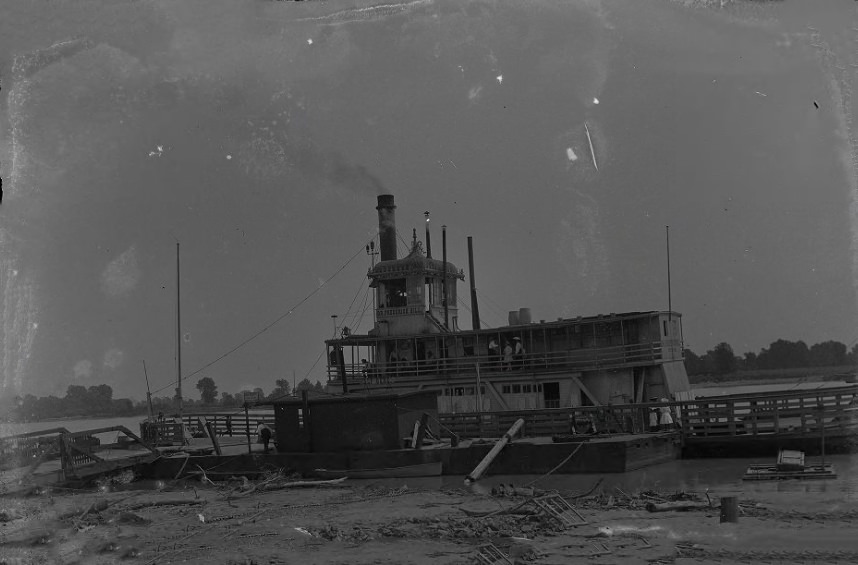
The riverfront remained active with excursion boats well into the decade. The side-wheel excursion boat Alton made regular runs from St. Louis to Six-Mile Island on the Illinois River. The Corwin H. Spencer, originally built as the Anchor Line steamer City of Monroe in 1887, operated as an excursion boat on the St. Louis riverfront until it burned just above Jefferson Barracks, Missouri, on October 12, 1906.
Side-wheel excursion boat Alton on river. Most days, this steamer ran St. Louis to Six-Mile Island on the Illinois River, 1909Corwin H. Spencer, 1906
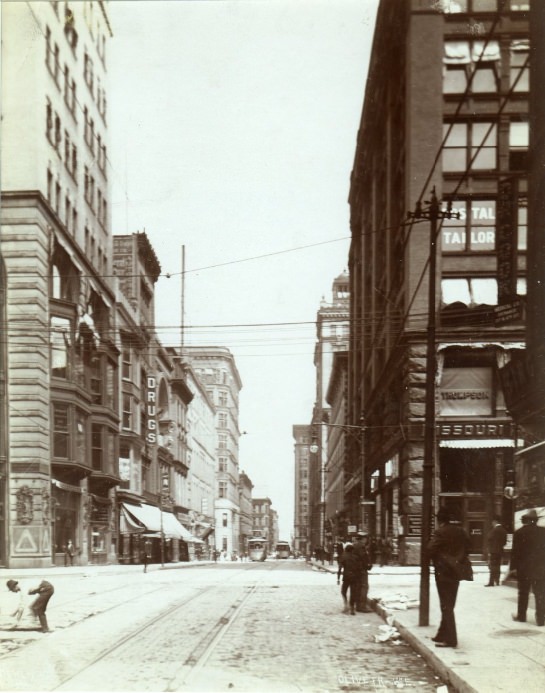
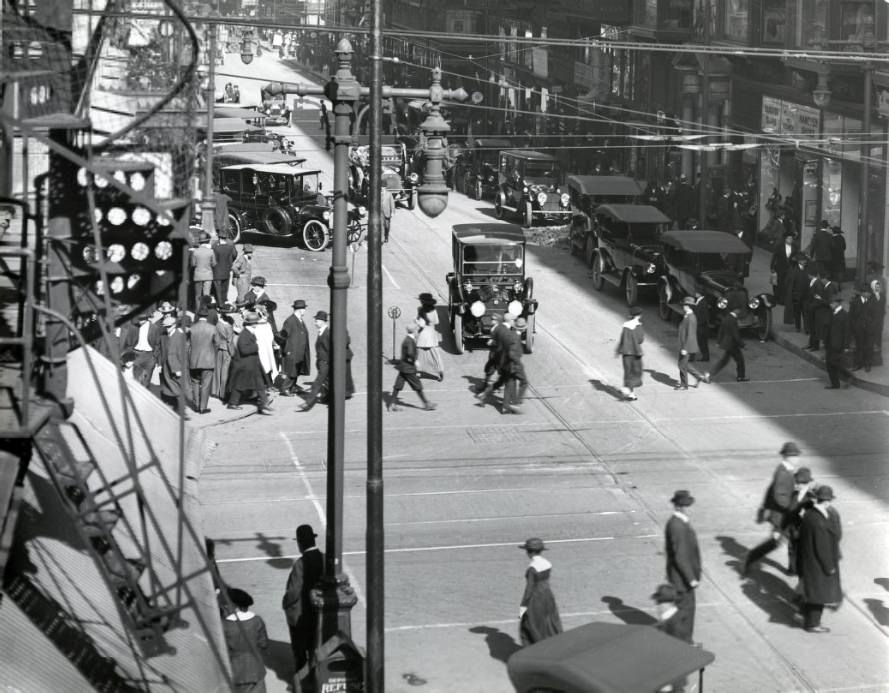
Olive Street was one of the most photographed thoroughfares in early 1900s St. Louis. Looking east across Sixth Street in 1905, the view captured a dense urban corridor of multi-story commercial buildings, pedestrians on the sidewalk, and the electric streetcar lines that connected the city’s neighborhoods. The Hanover and Regal shoe stores visible at Olive and 7th Street in 1909 illustrate just how commercially dense this corridor had become.
Olive Street in St. Louis looking east across Sixth Street, 1905Olive and 7th Street, looking east. Hanover and Regal shoes in the right foreground. Many pedestrians crossing the street, 1909
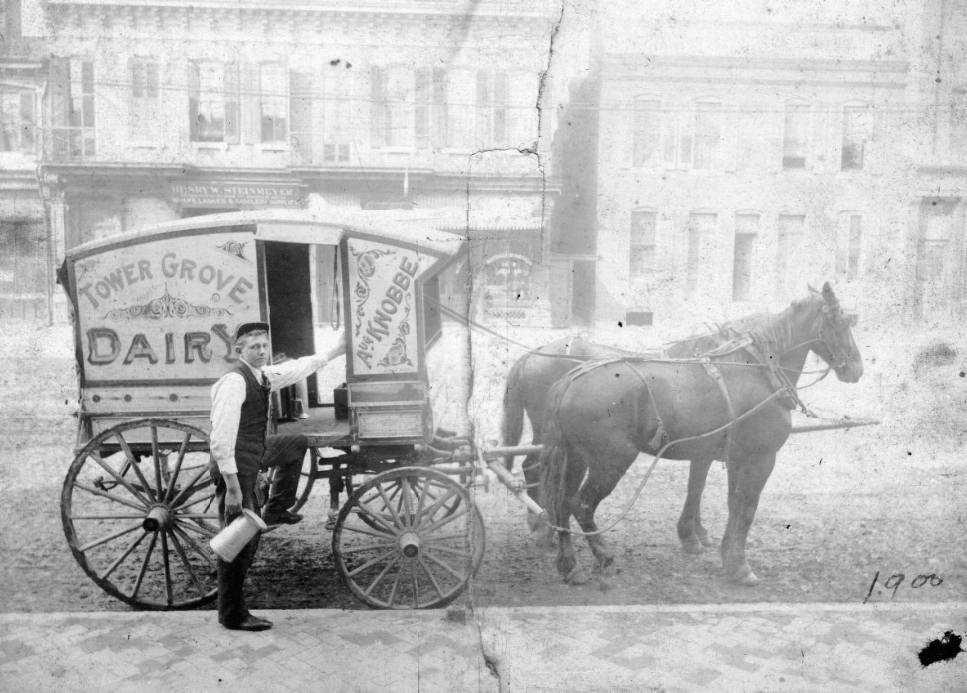
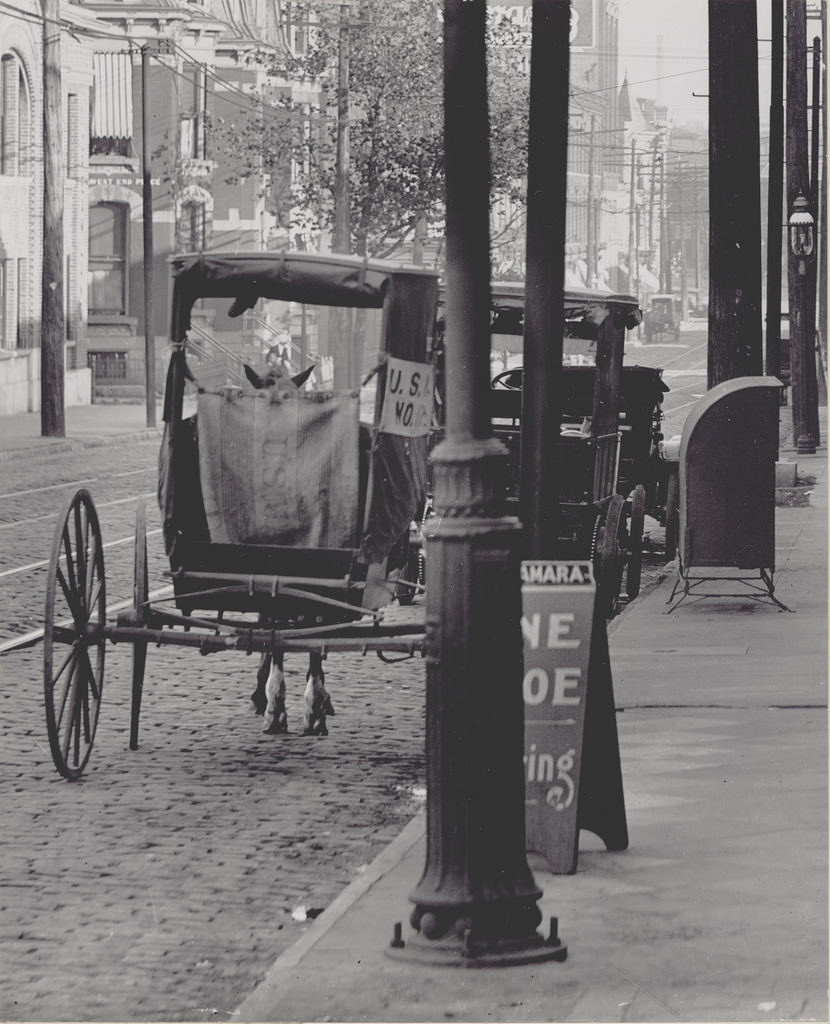
Daily delivery services kept the city’s households and businesses supplied. The Tower Grove Dairy, owned and operated by August Knobbe, had employees making regular rounds to residents across the city as early as 1900. U.S. Mail carriages parked along Olive Street near Grand Avenue, and horse-drawn wagons carried fruit, produce, and dry goods to shops and homes throughout the neighborhoods.
An employee for the Tower Grove Dairy delivering goods to residents of St. Louis, 1900.U.S. Mail Carriage parked on Olive Street near Grand Avenue, 1906
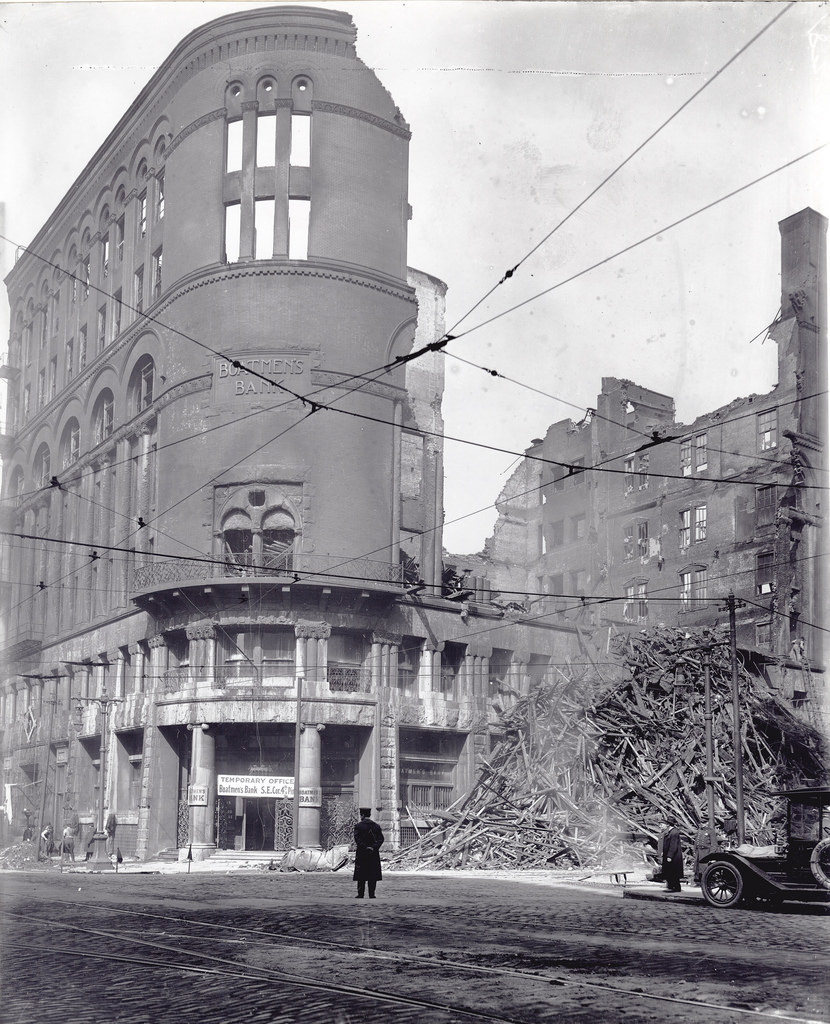
The Missouri Athletic Club fire in 1914 left significant wreckage at the northwest corner of Fourth Street and Washington Avenue. Fires were a recurring threat in the dense urban environment, and the destruction caused by such events was documented by city photographers. Buildings that once defined a corner were reduced to rubble within hours.
Missouri Athletic Club fire wreckage at the northwest corner of Fourth Street and Washington Avenue, 1914
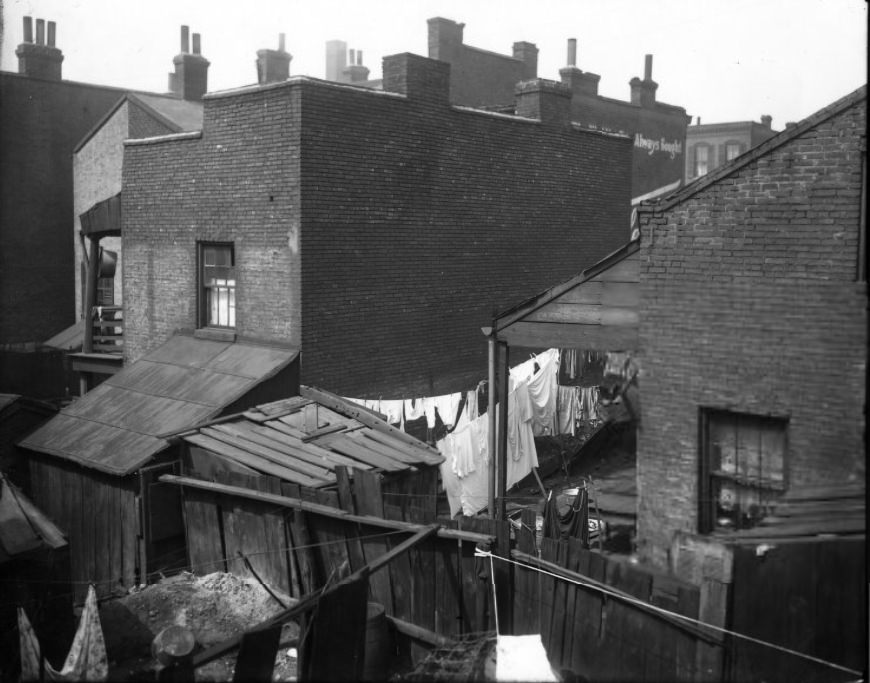
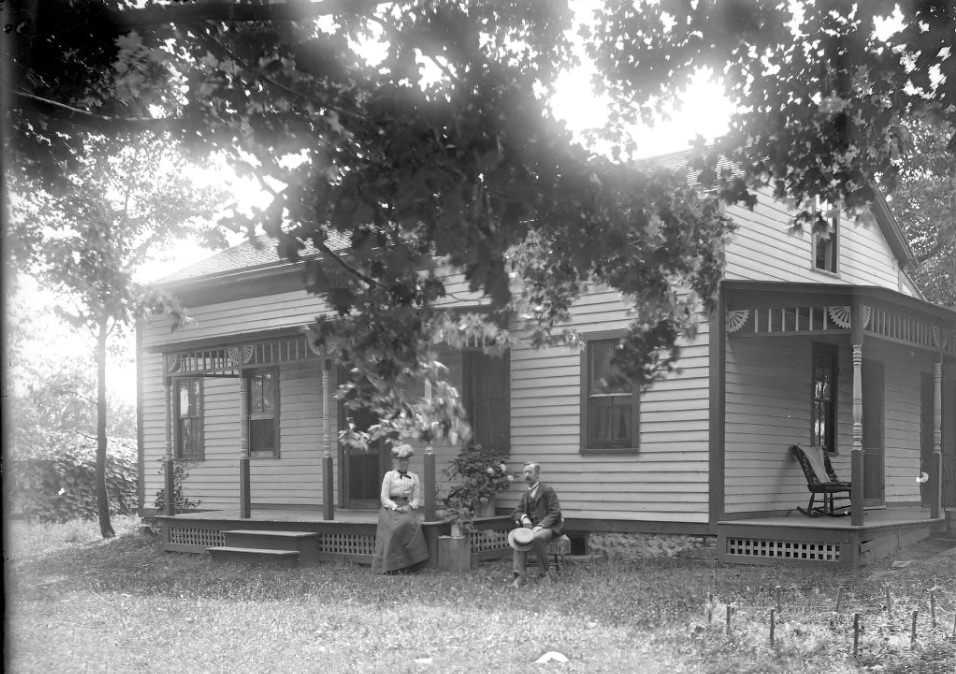
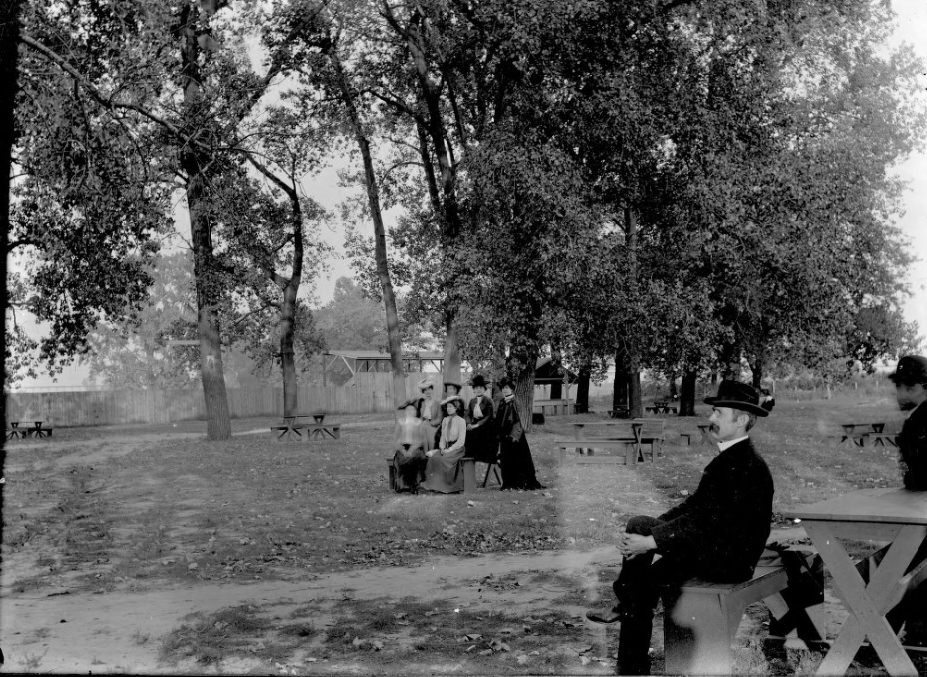
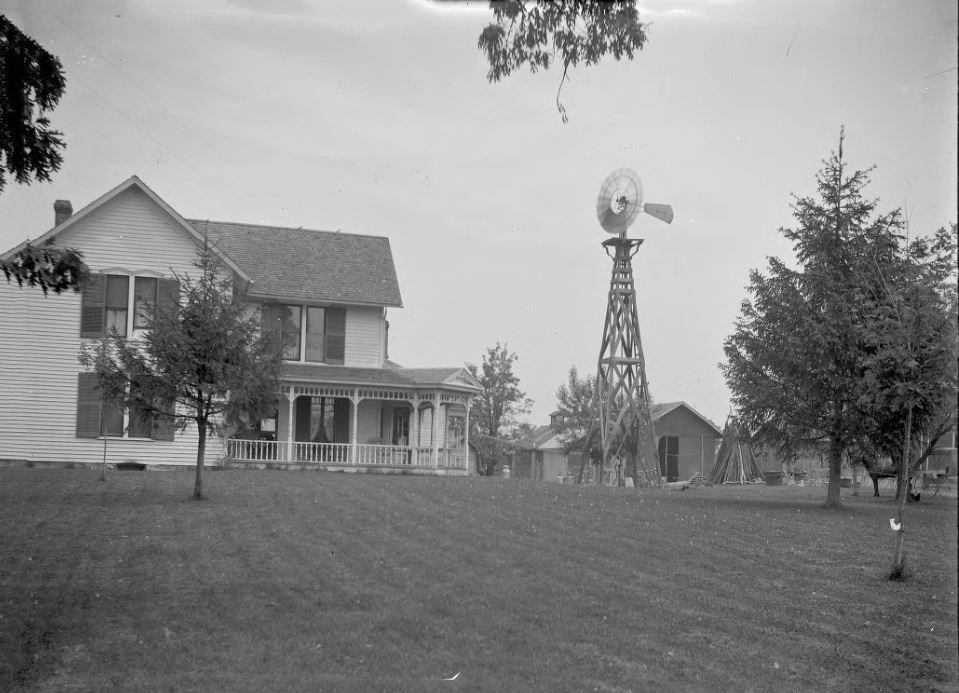
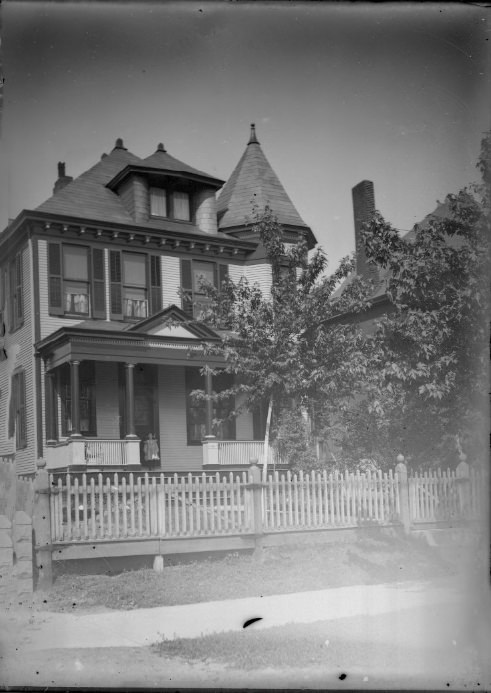
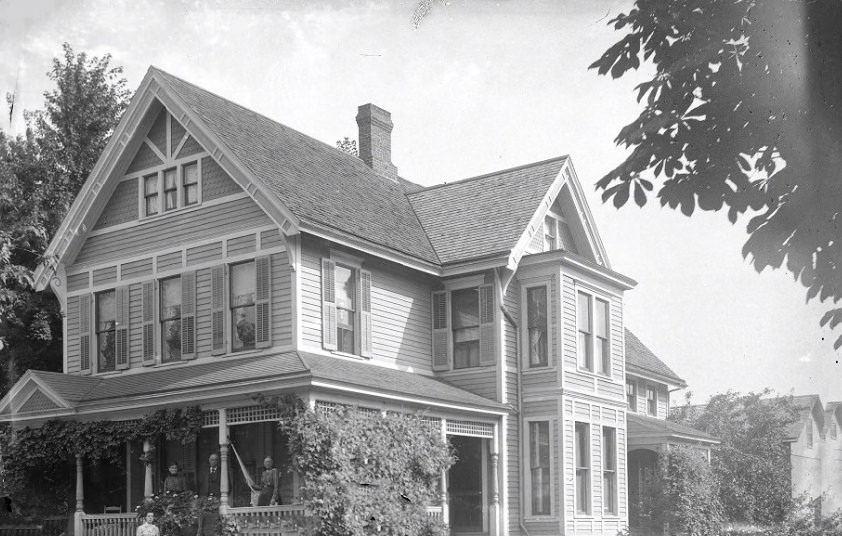
Residential life in St. Louis ranged widely across economic lines. Wealthier neighborhoods featured large homes with wraparound porches, while working-class areas had tightly packed housing with laundry drying in the rear yards. Farmhouses still existed on the edges of the city in 1901 and 1902, and parks like Forest Park offered a shared outdoor space for families across all income levels.
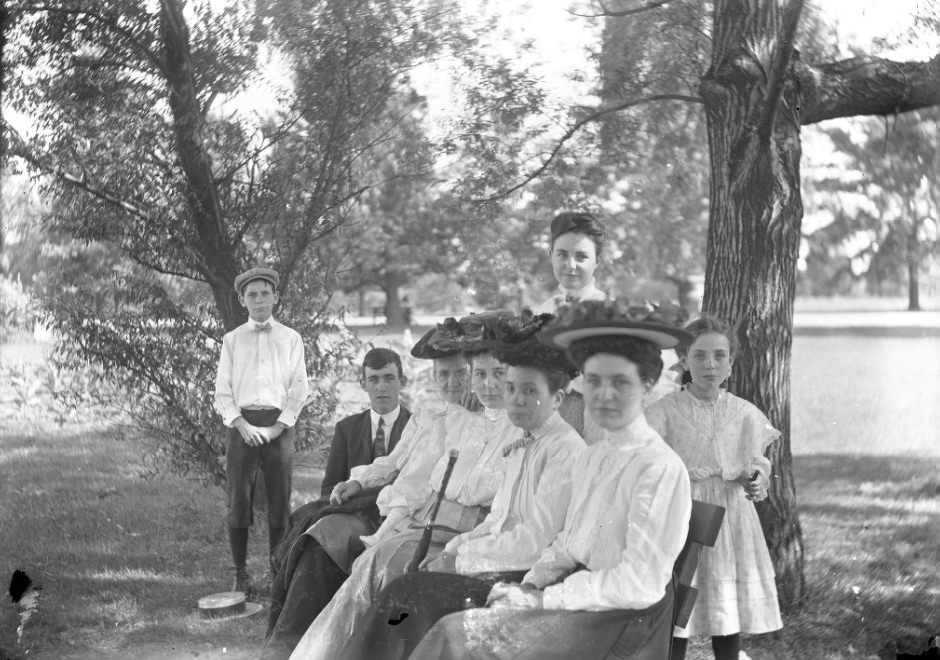
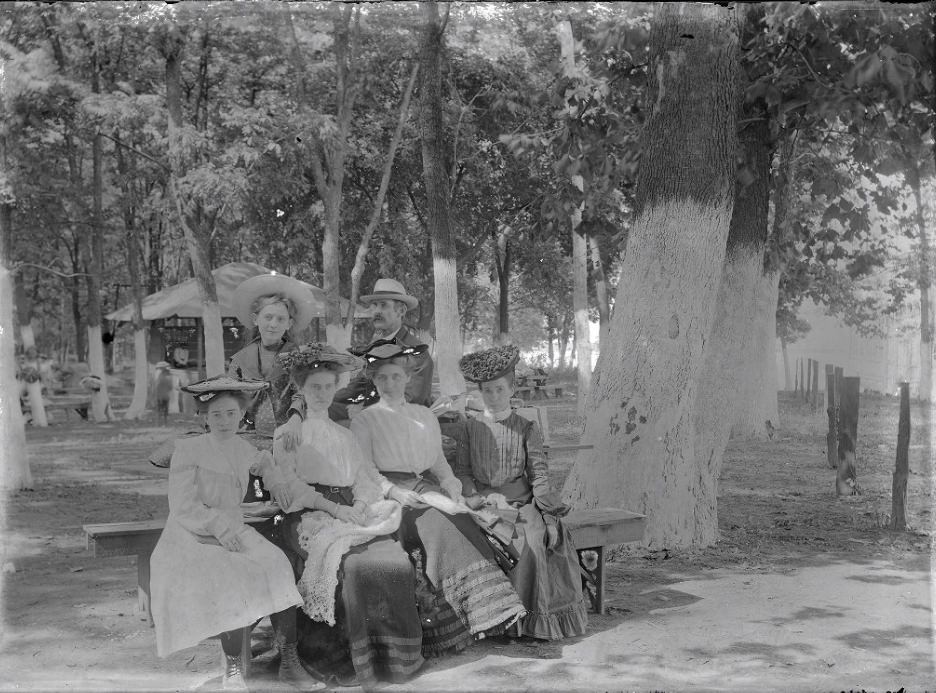
Rear of urban residential housing showing laundry drying, 1907Saint Louis Farmhouse, 1901A Family Taking Portraits in a Park, 1904
These photographs represent just a portion of what was captured by photographers working in St. Louis during the first decade and a half of the 20th century. Taken together, they form a detailed and vivid record of a city that was simultaneously building itself, celebrating its past, and racing toward the future. Each image captures a moment that, without the camera, would have been lost entirely to time.
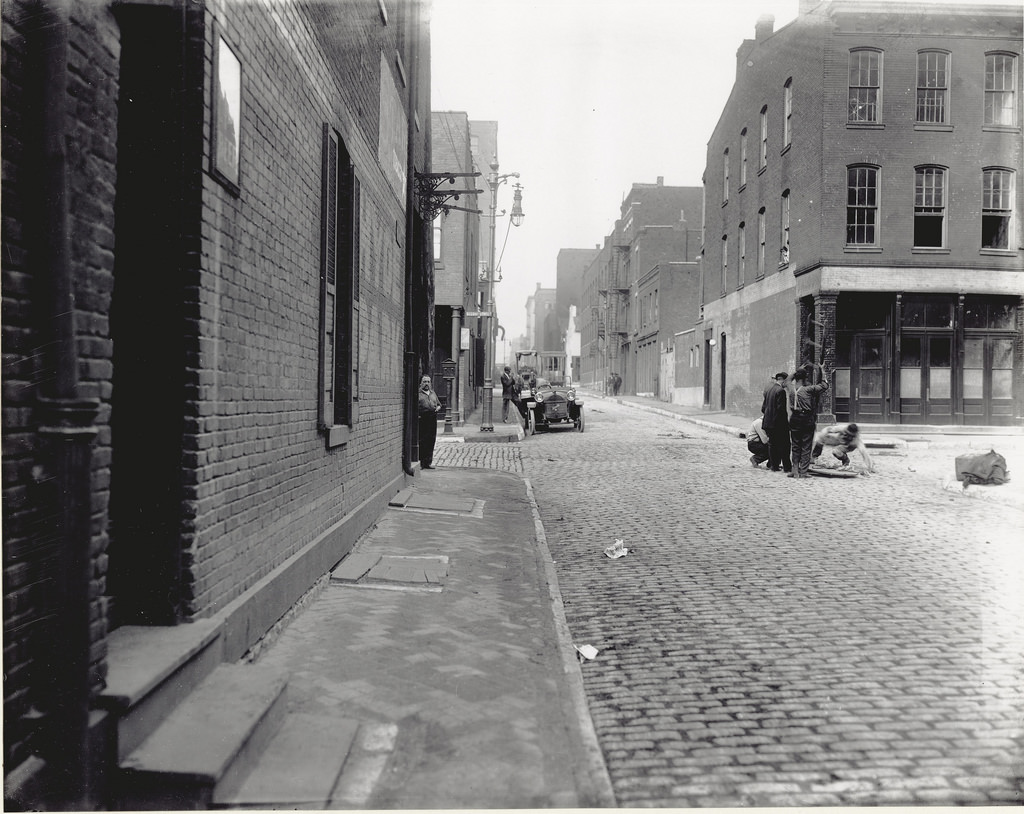
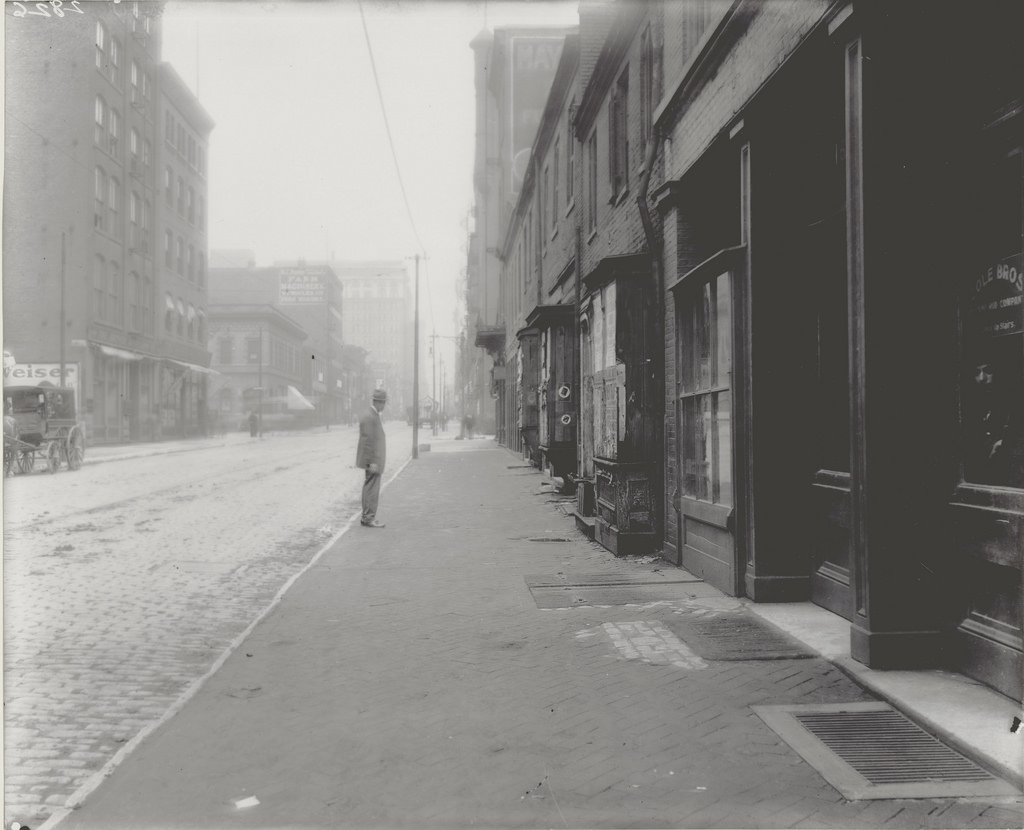
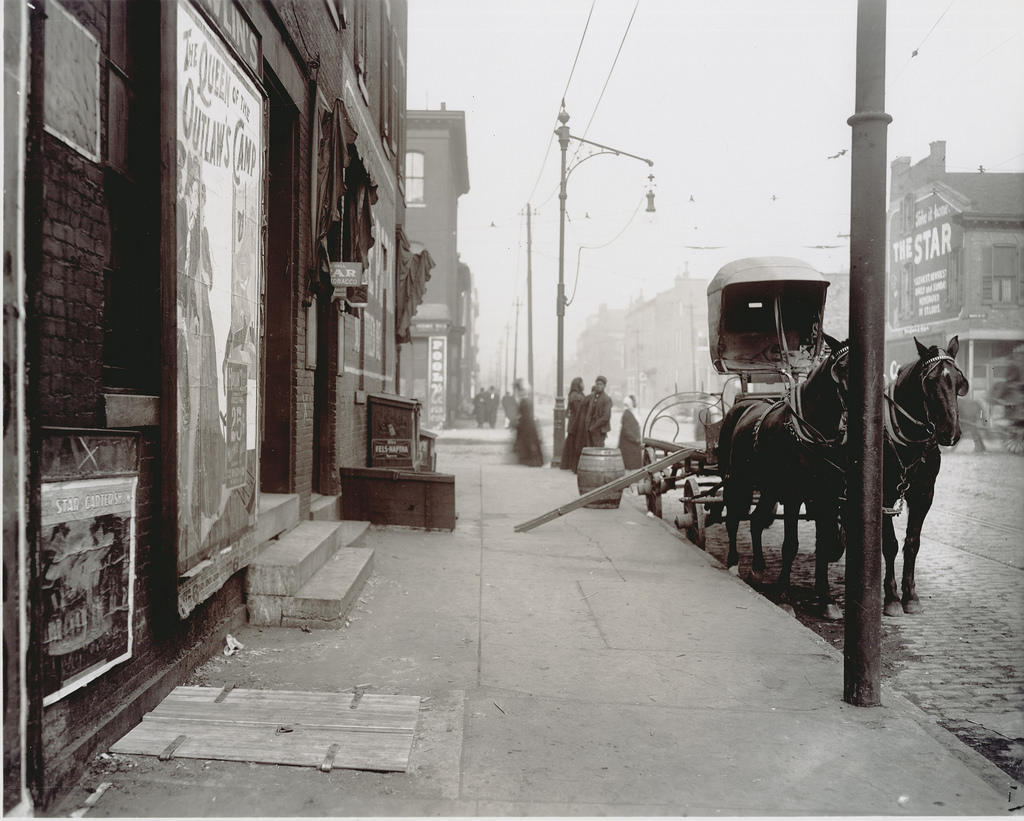
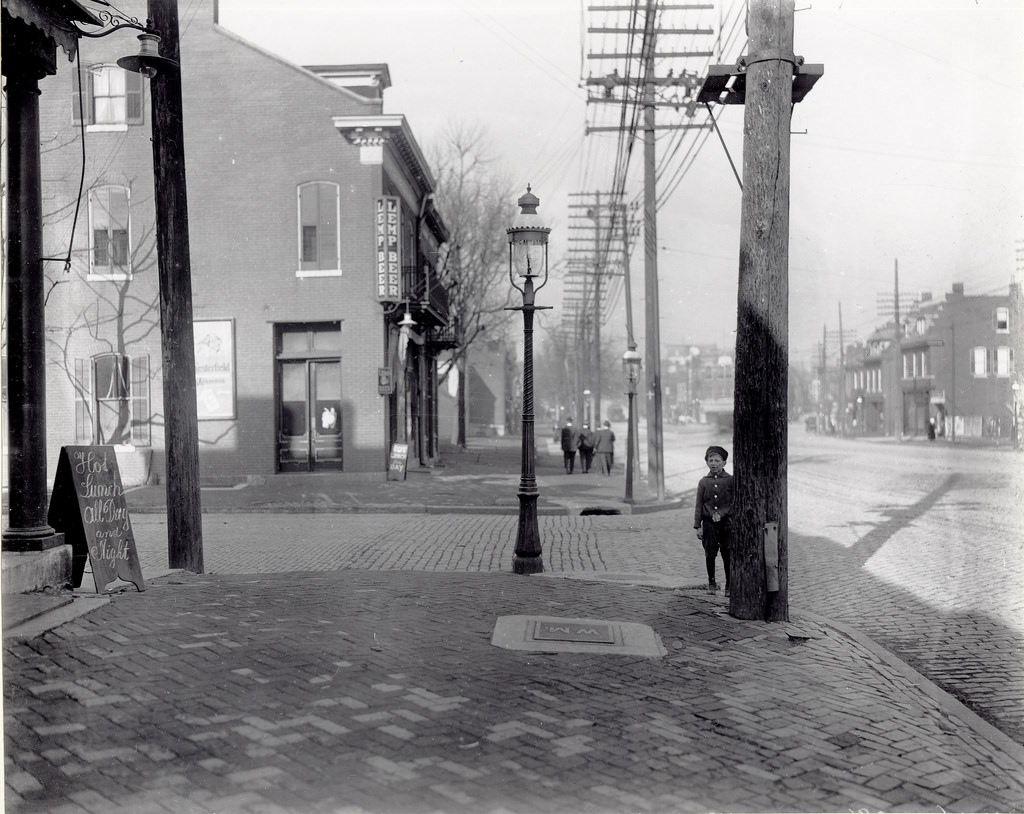
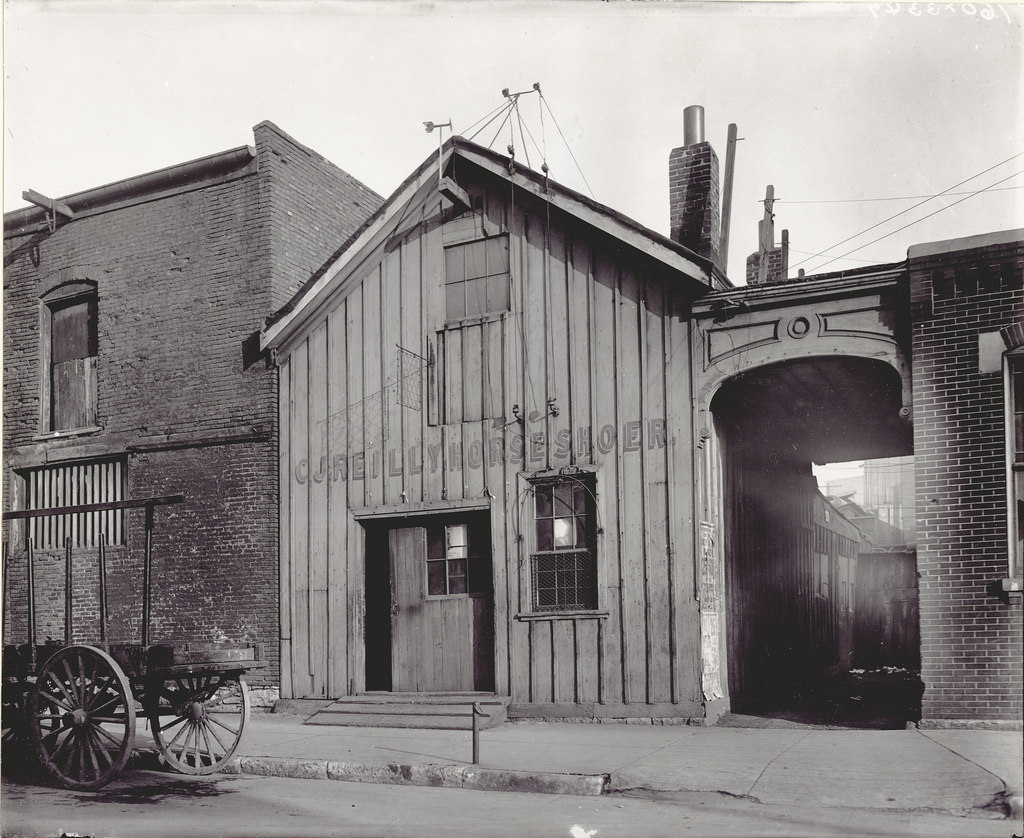
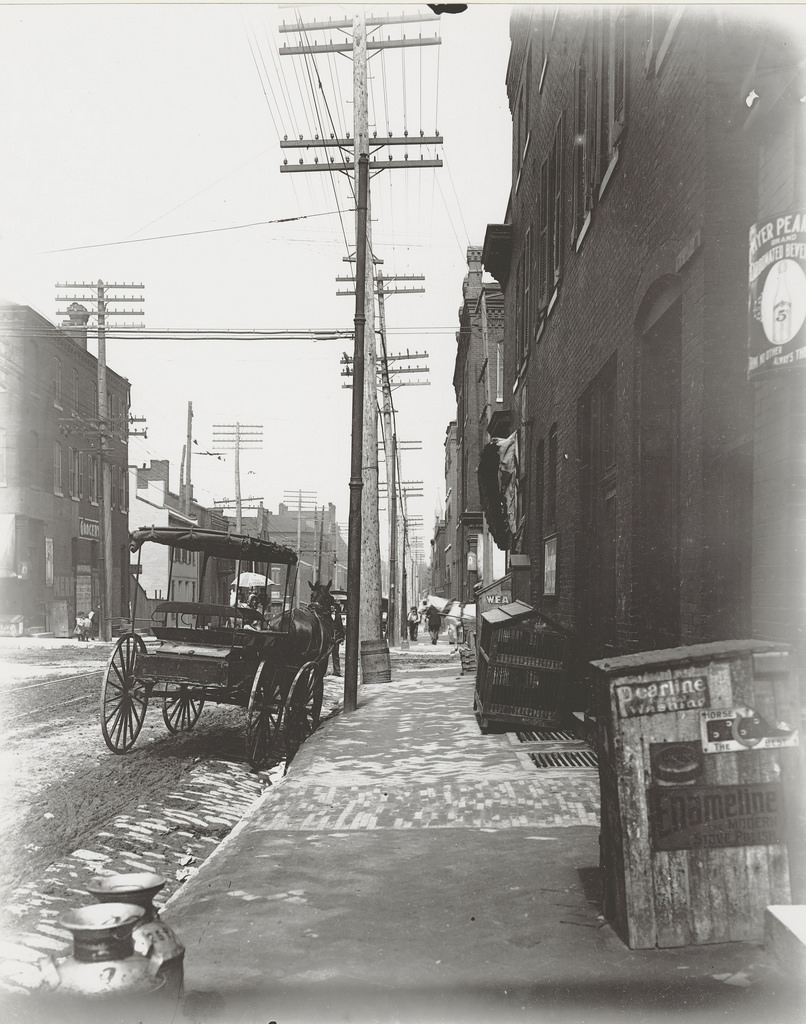
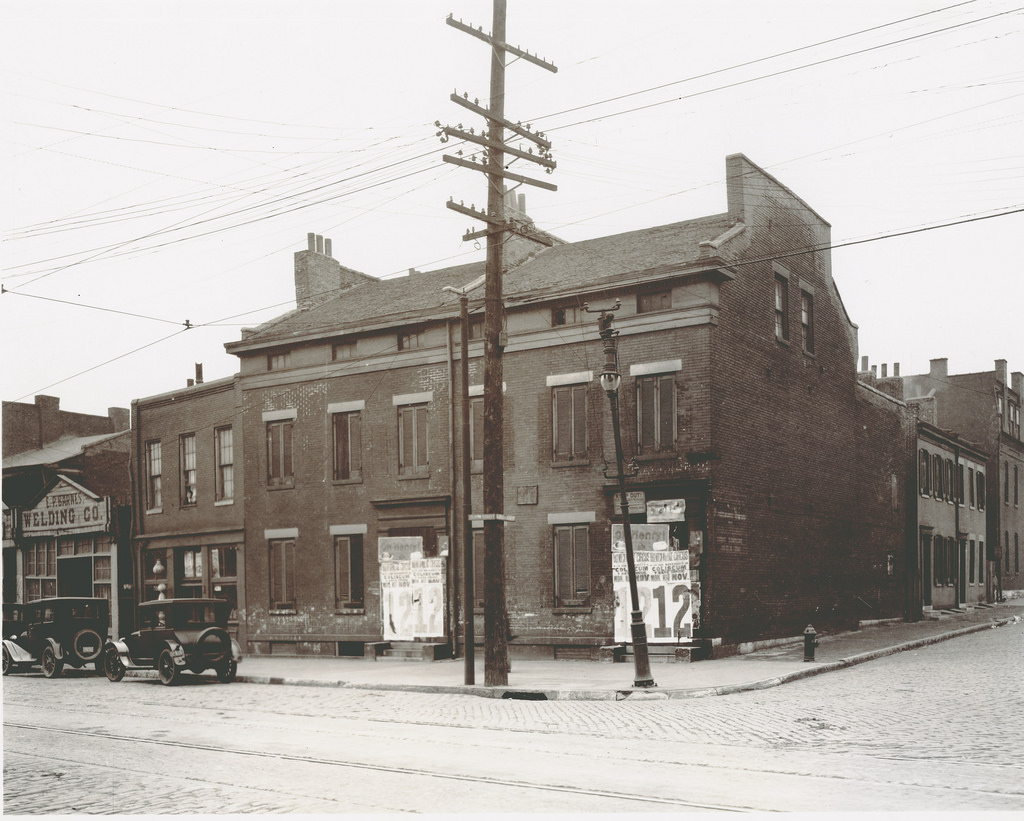
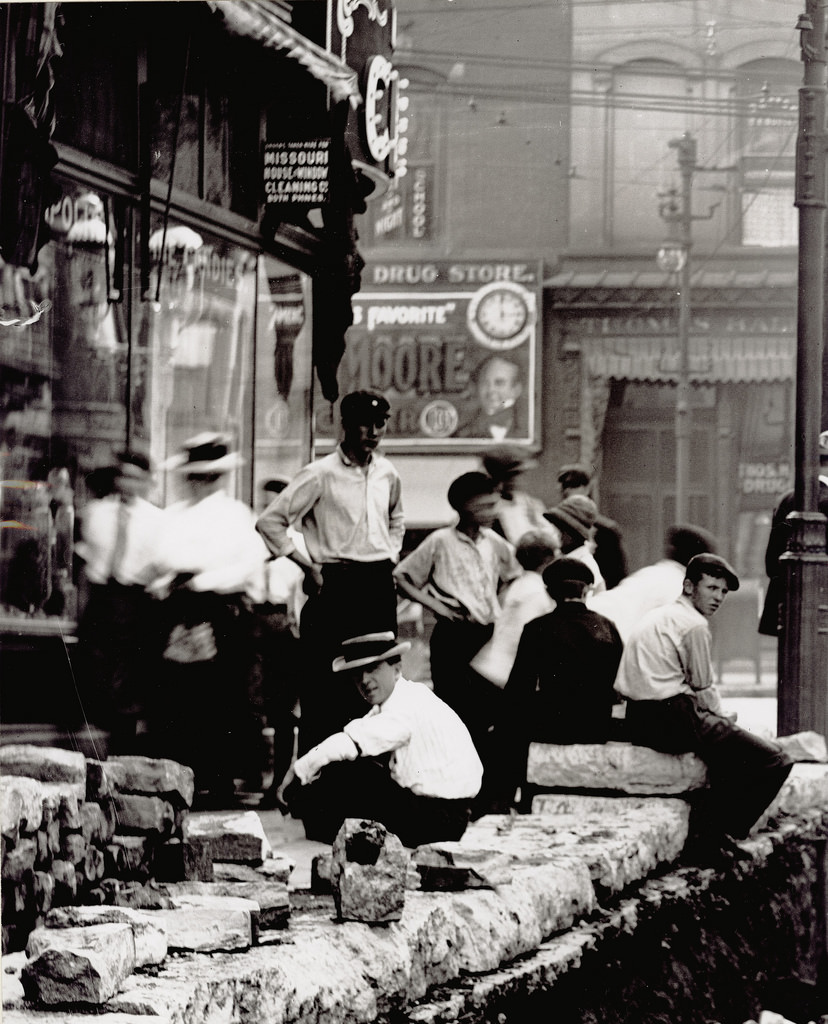
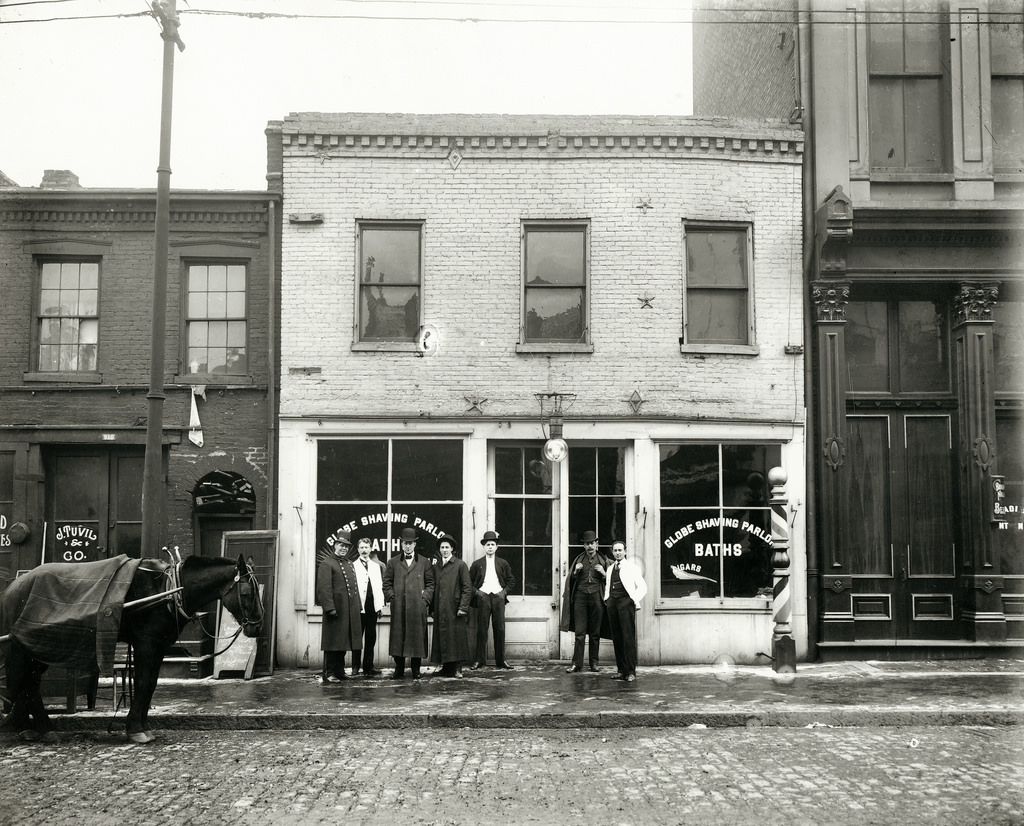
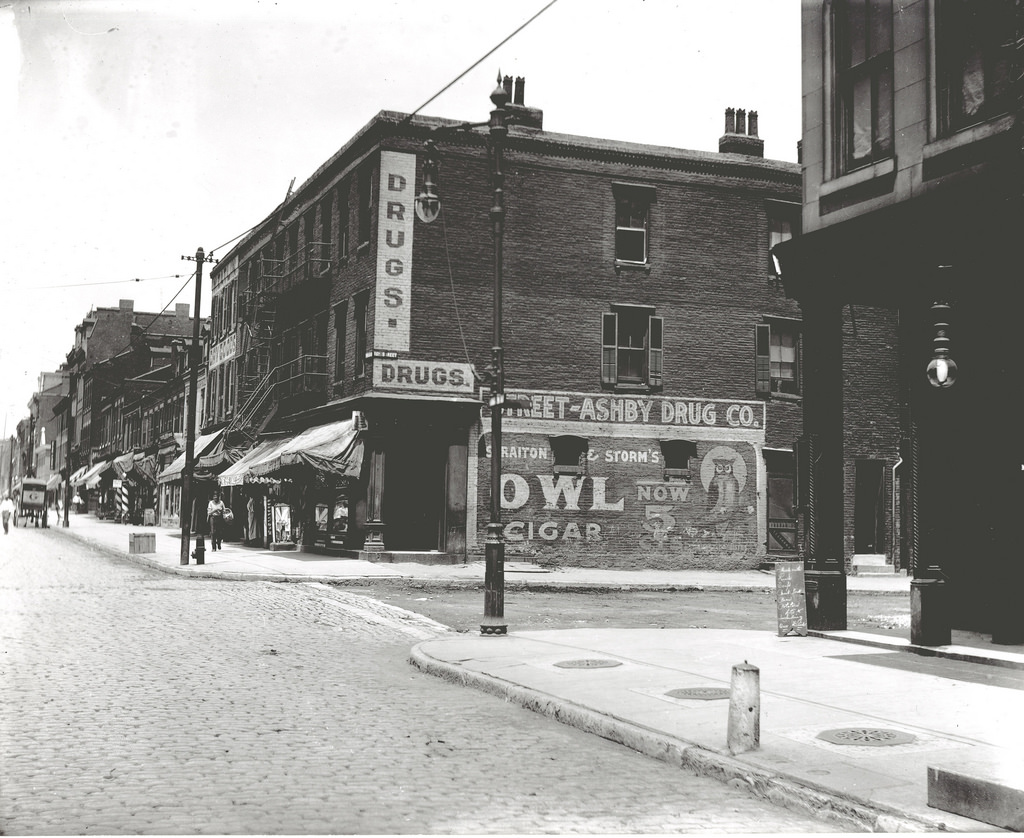
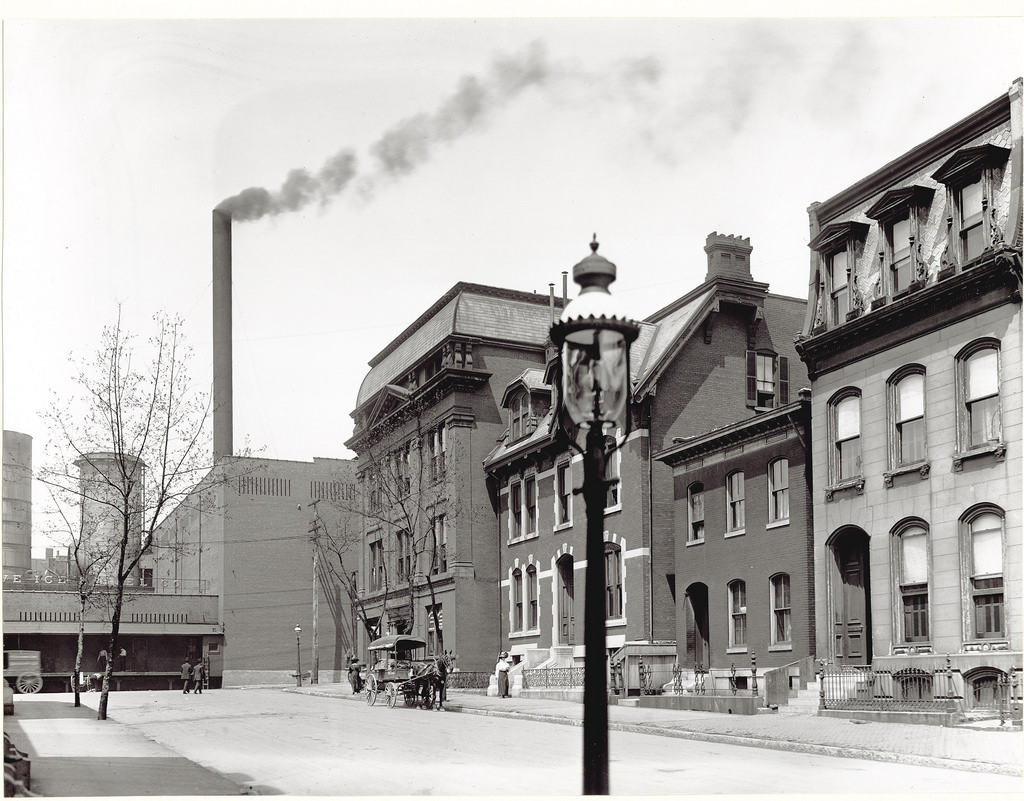
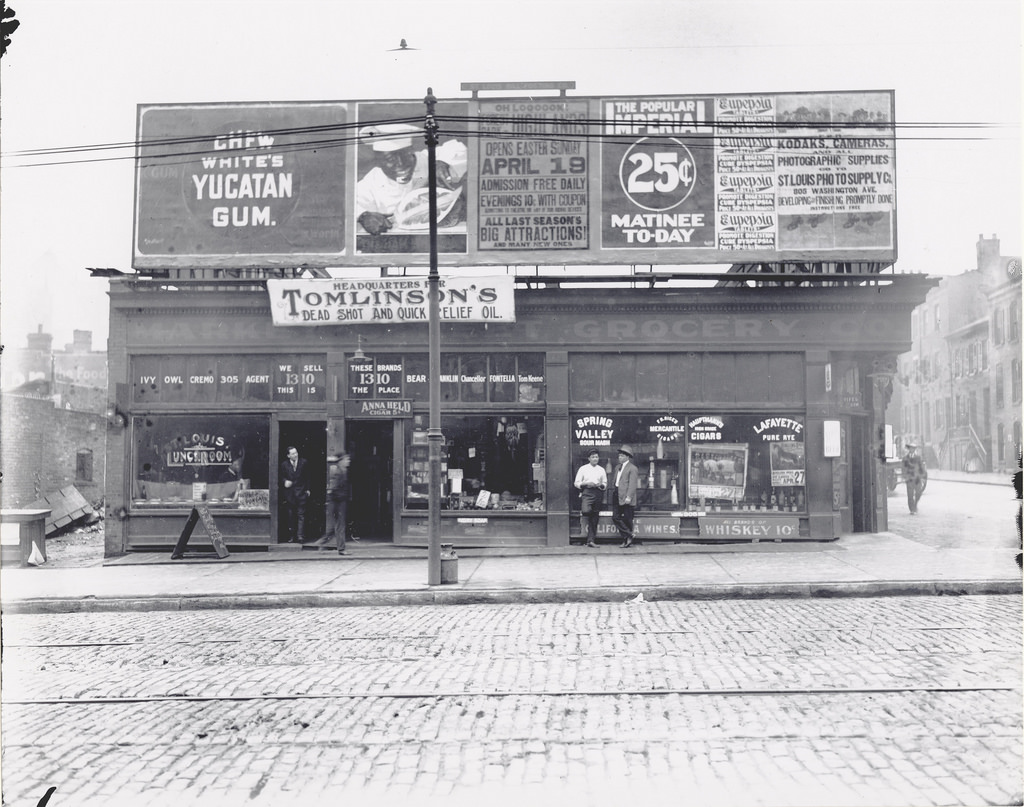
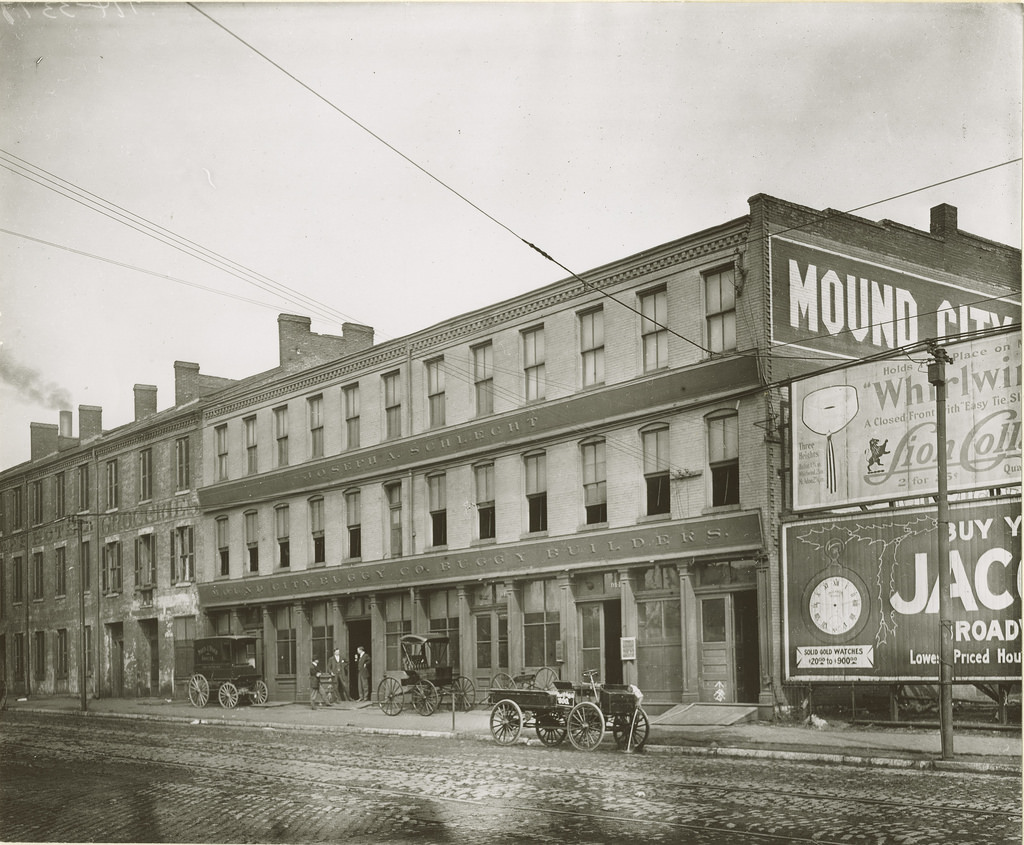
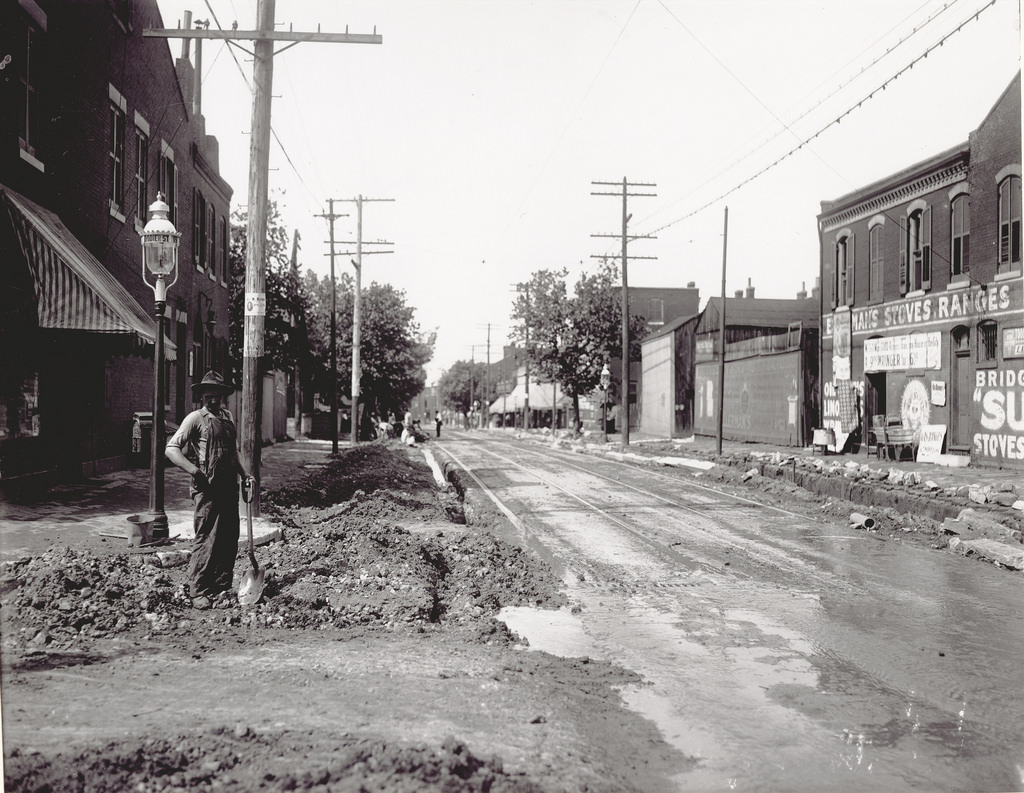
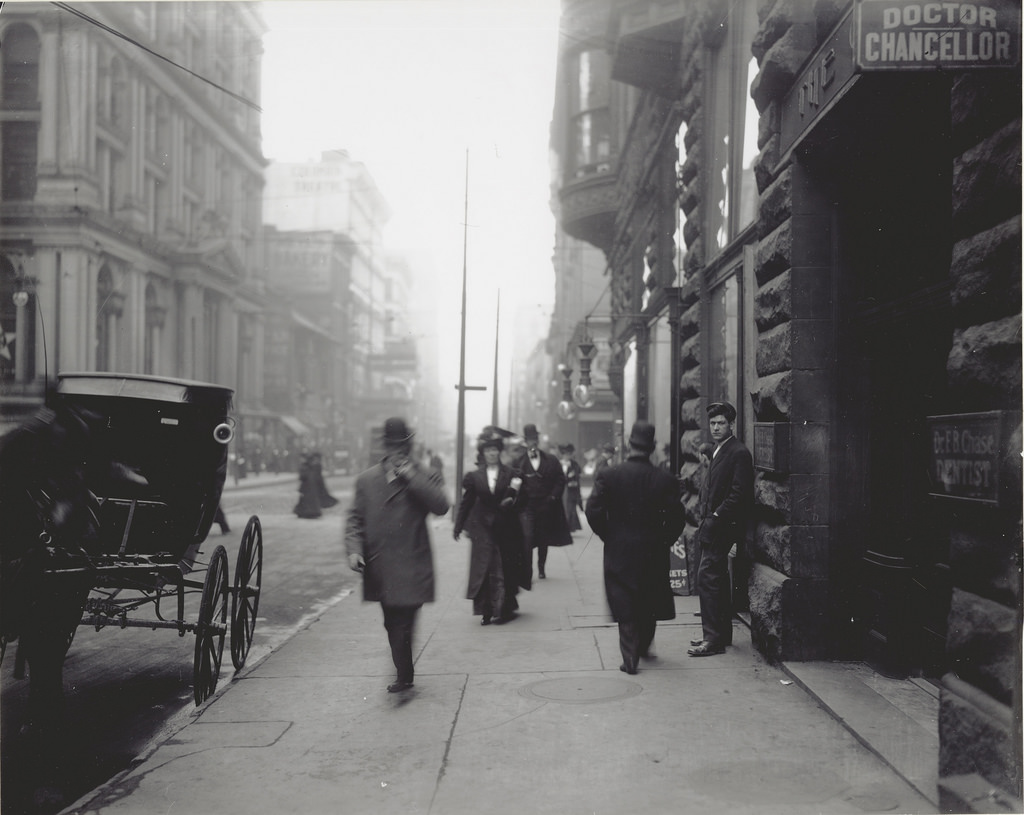
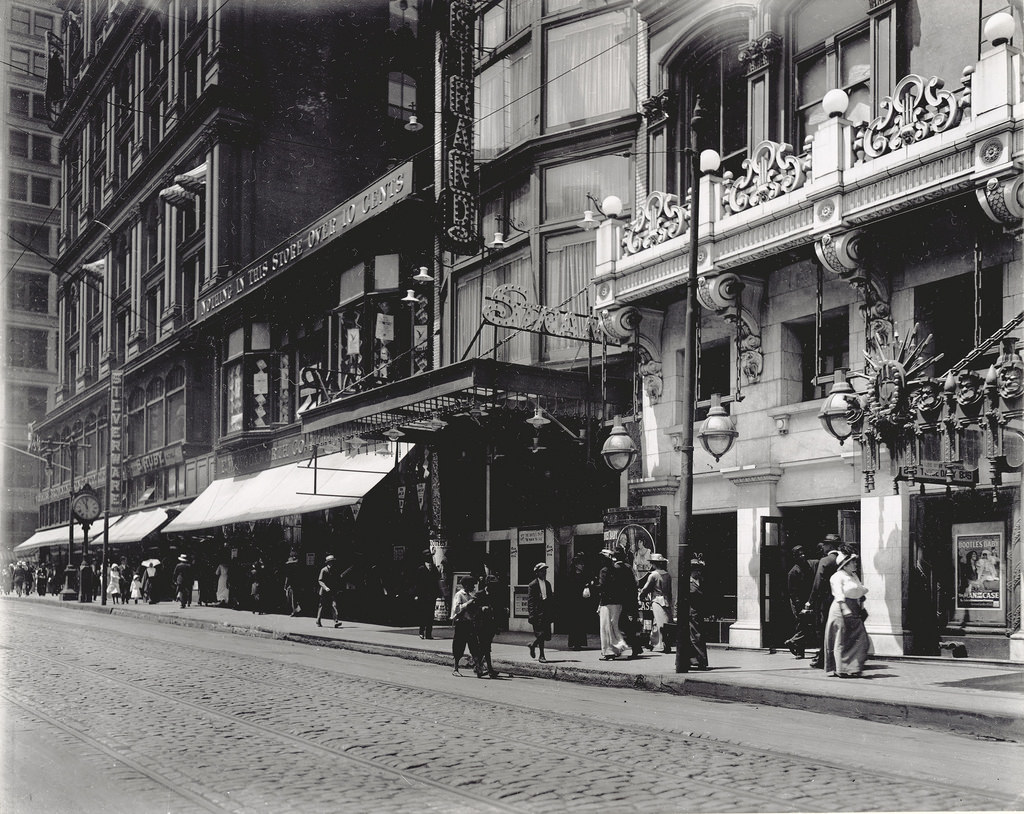
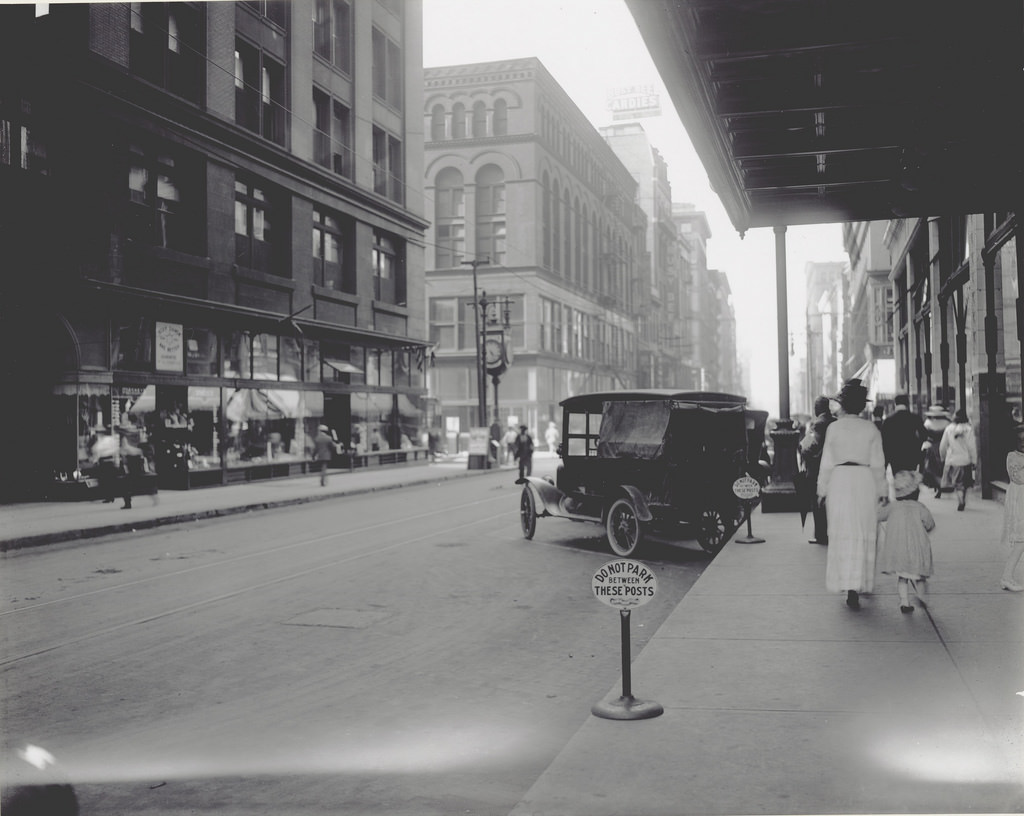
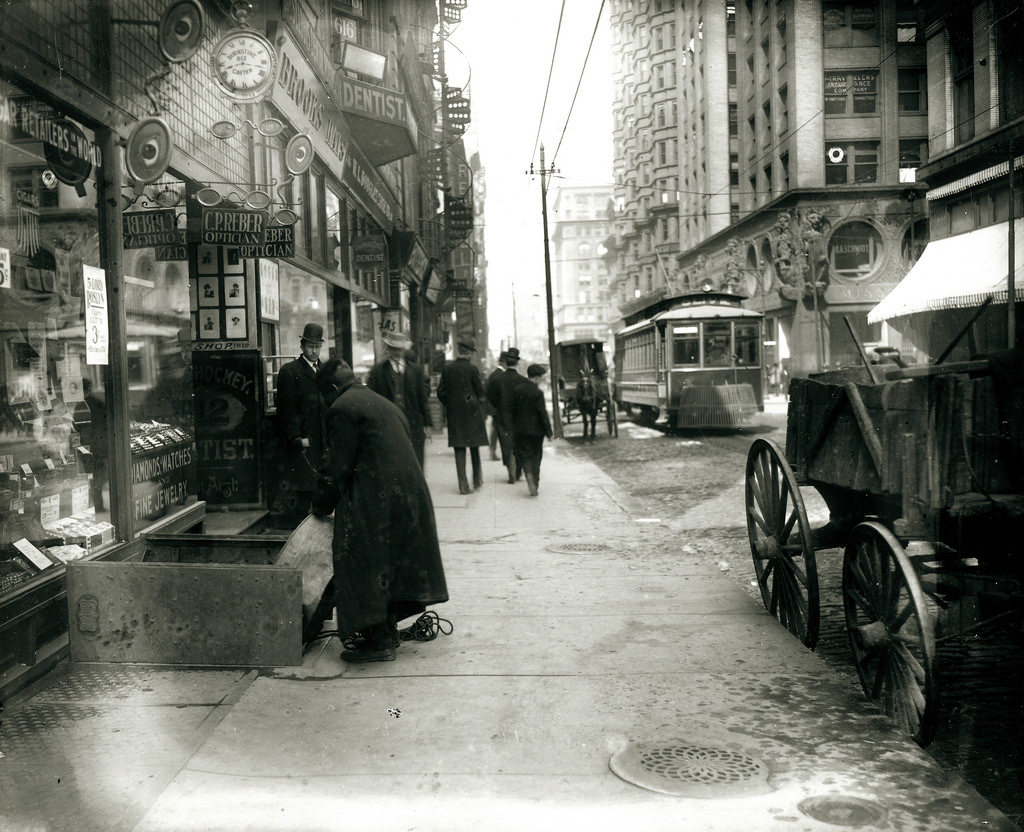
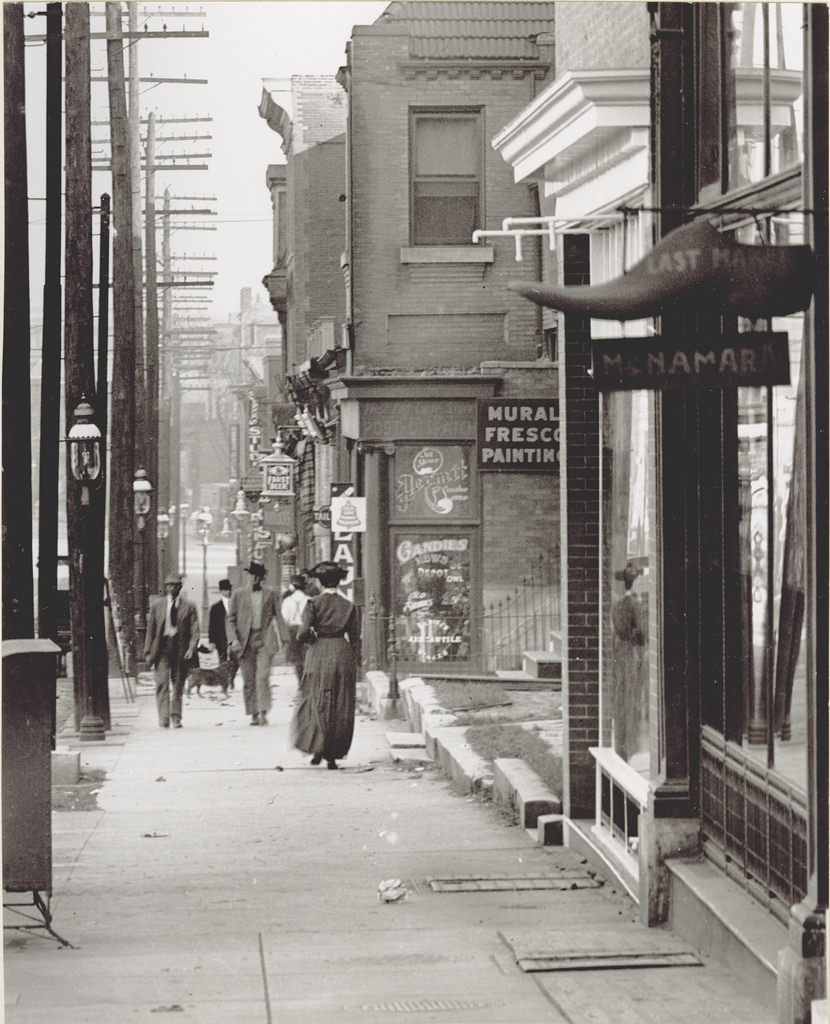
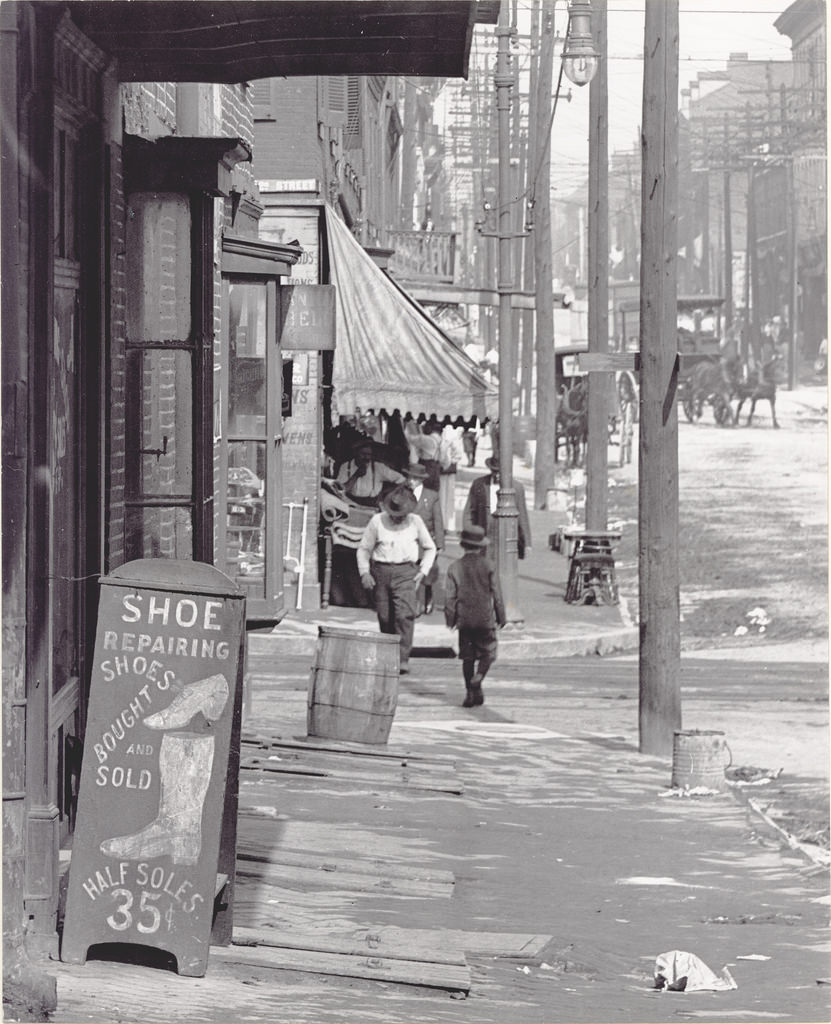
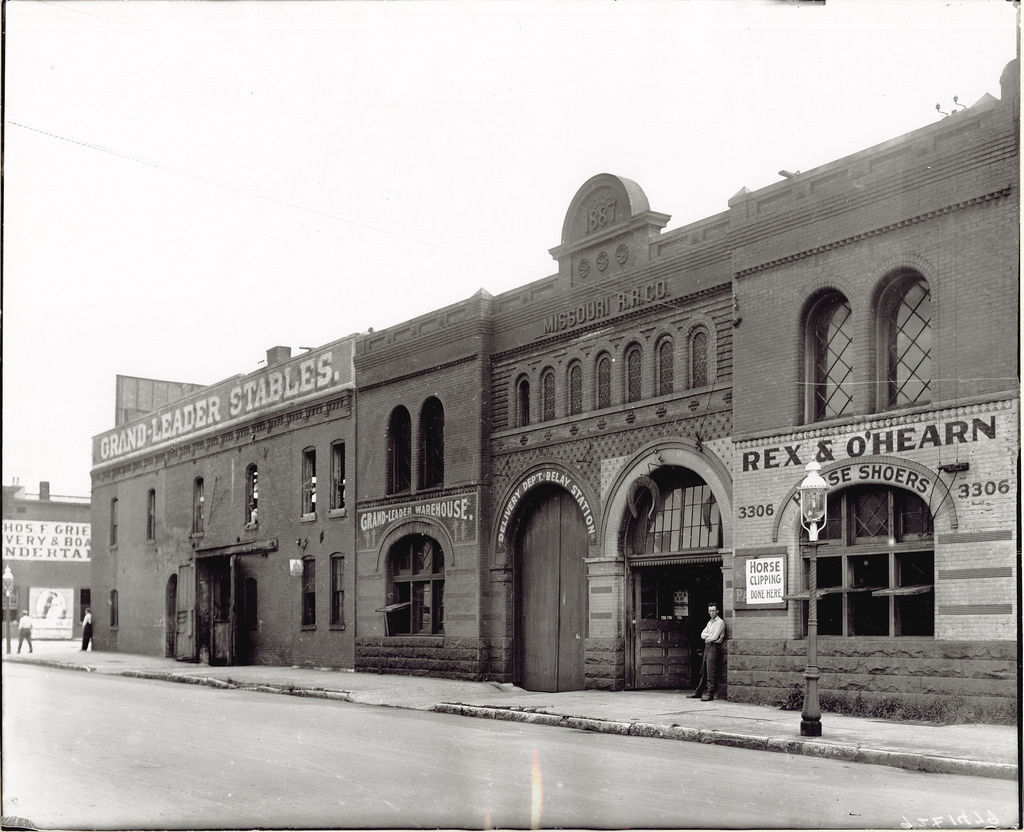
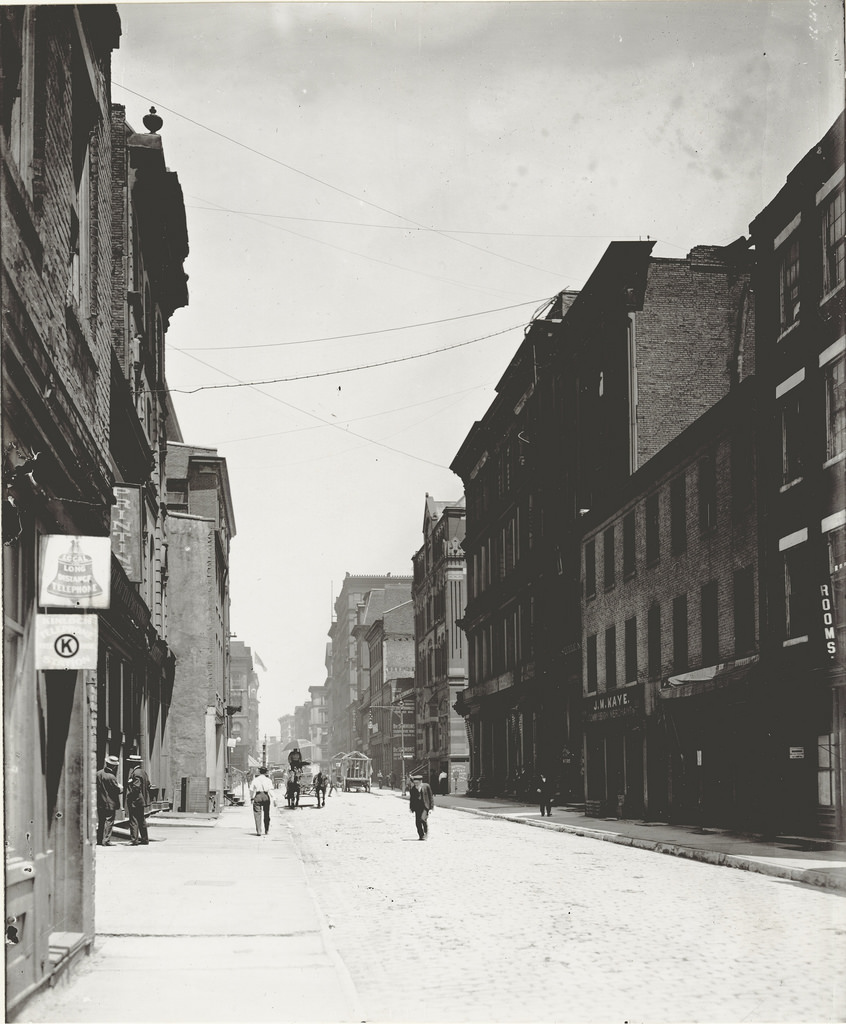
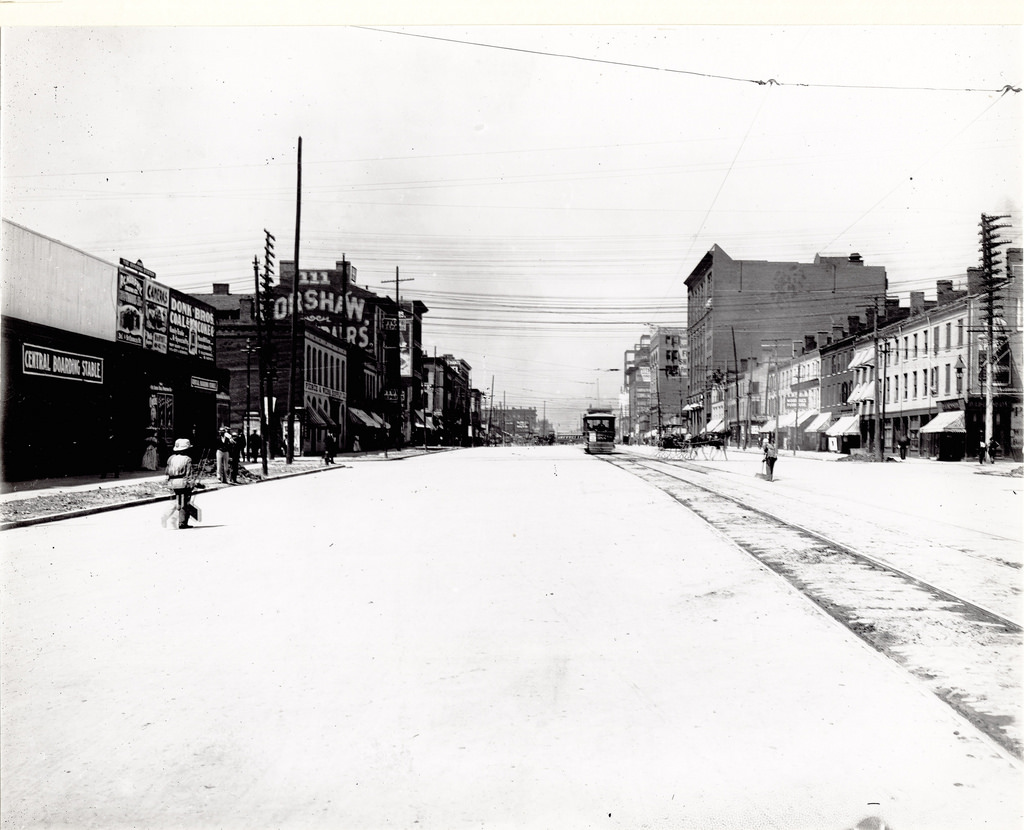
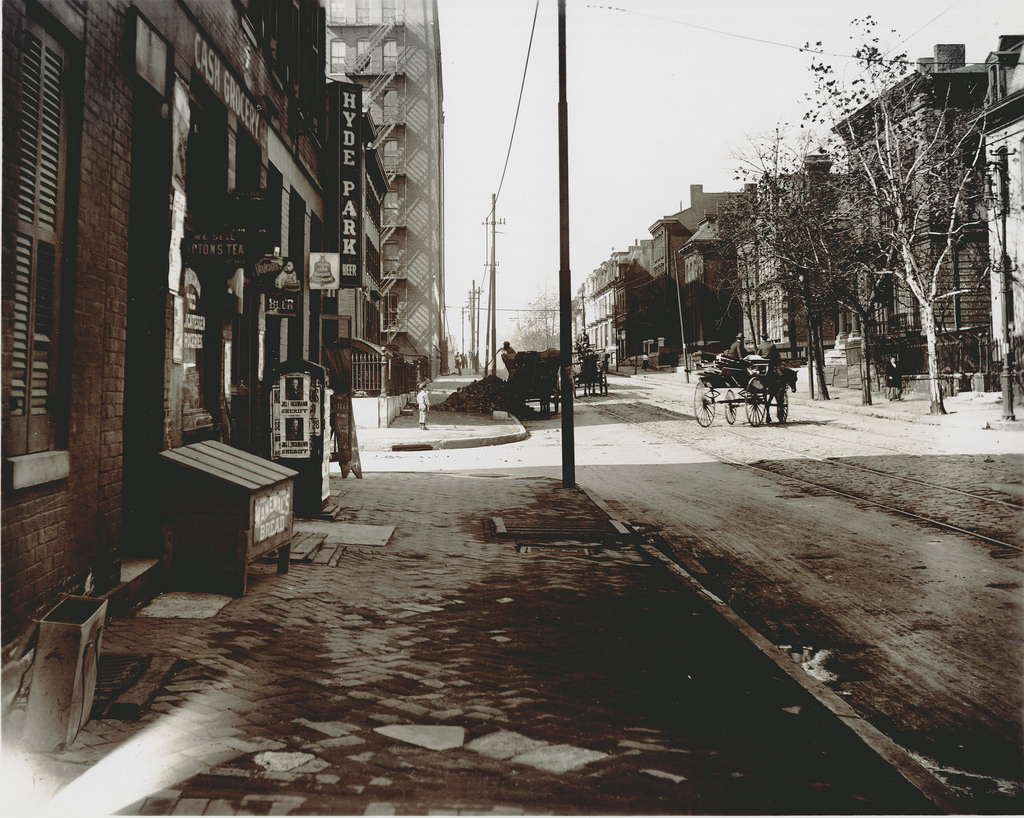
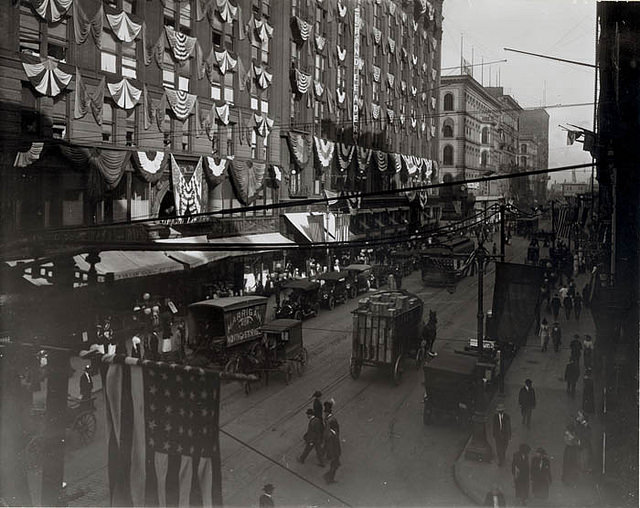
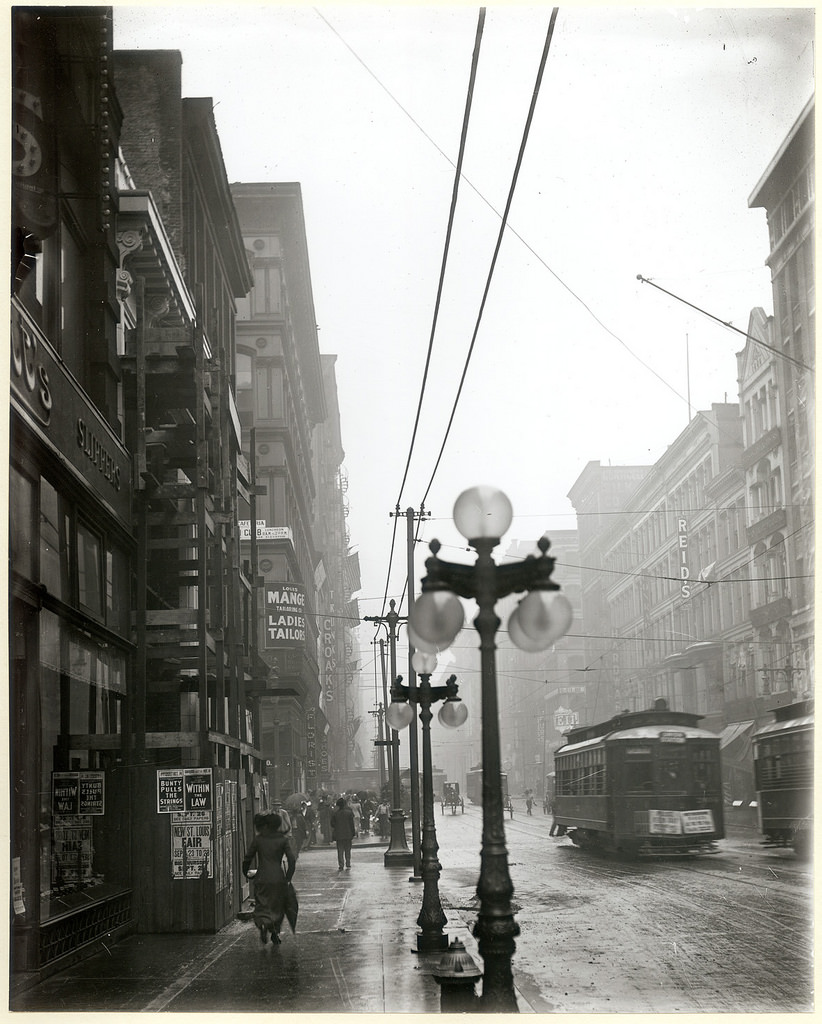
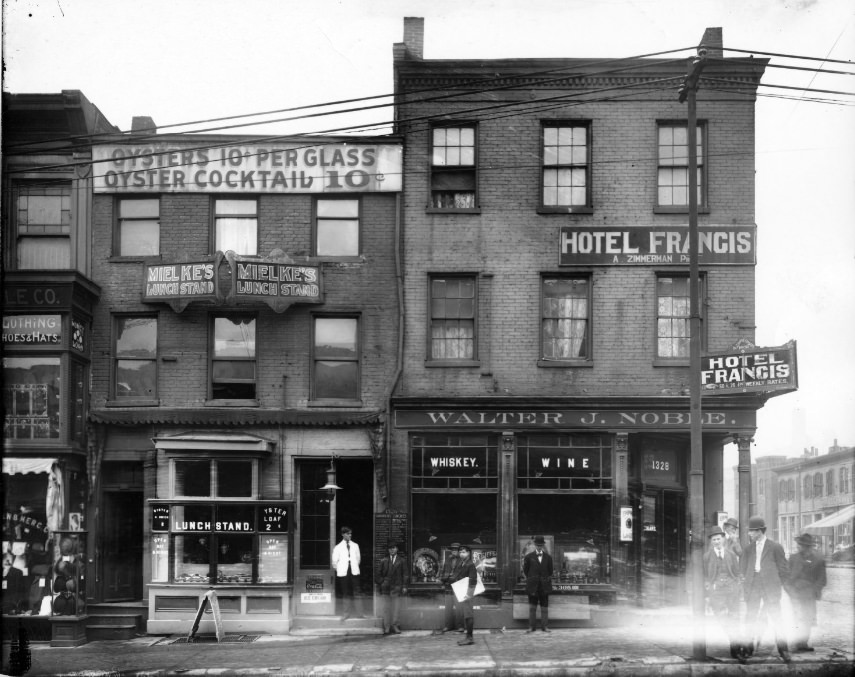
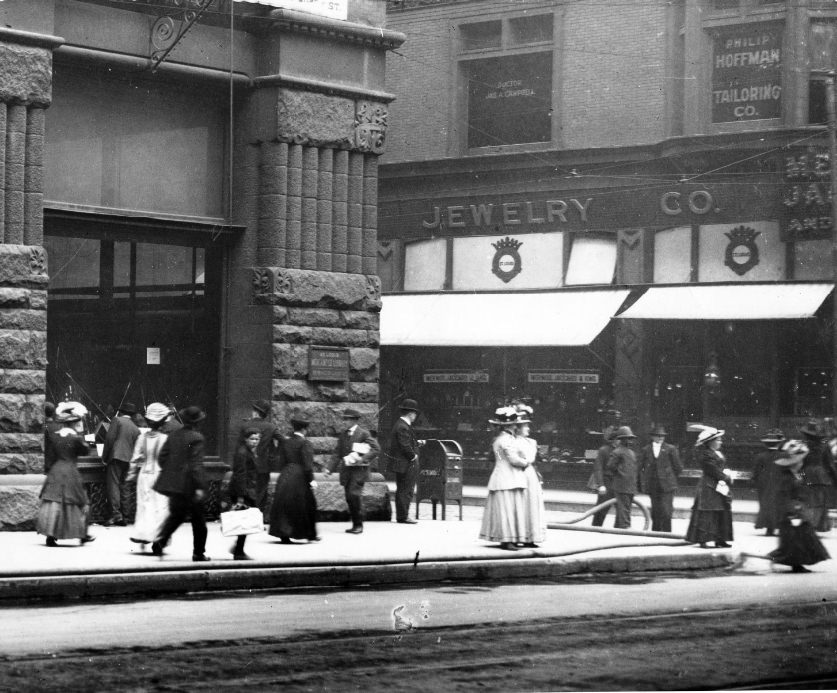
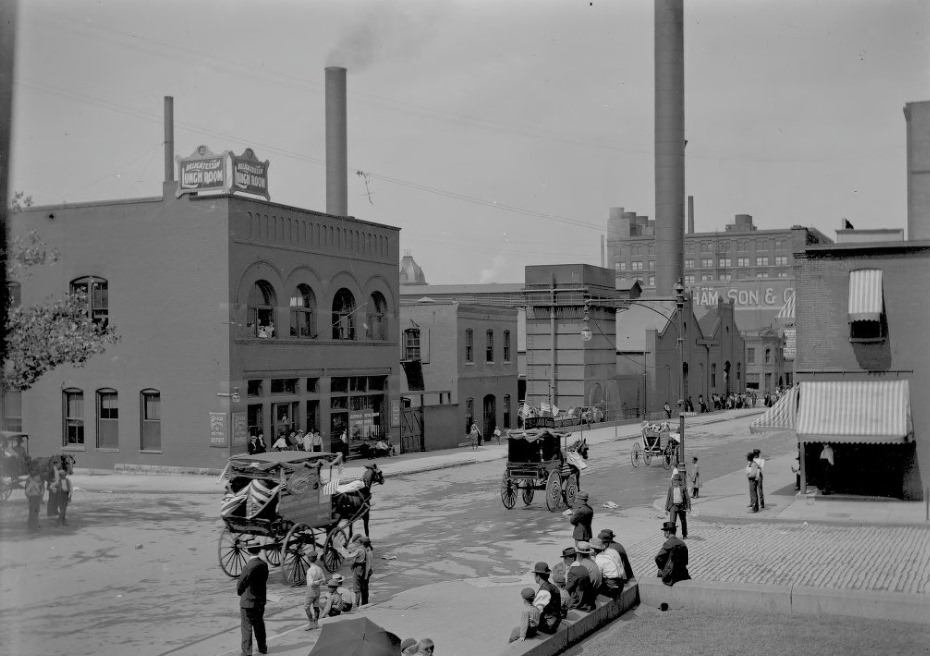
A man peers out of the window at Cole Brothers Lightning Rod Company at 316 S. Seventh Street, ca. 1900sAn empty cart for distributing beer in front of a bar on a street, ca. 1900sBroadway looking north from Keokuk Street, ca. 1900sC.J. Reilly Horse Shoer shop at 308 North Leonard Avenue, 1906Carr Street north of Eleventh Street, ca. 1900sColonel Frederick Dent Residence at the southwest corner of Fourth and Cerre Streets, 1915Delmar Boulevard from Kingshighway, 1914Grand Avenue and Olive Boulevard, south side, street under construction, 1907Gravois Road looking east at River des Peres, 1914Group of men standing in front of the Globe Shaving Parlor at 1015 Carr Street, ca. 1910Horse-drawn cart stopped at the curb of a street in St.Louis, ca. 1900sIntersection of Fifteenth Street and Franklin, looking northwest, ca. 1900sIntersection of Sixth and Walnut Streets, 1907Lawton Street looking west to Beaumont, ca. 1910Market Street Grocery Company building, ca 1900sMound City Buggy Company on east side of Broadway between Papin and Chouteau, ca. 1900sNineteenth Street looking north from Dodier Street, 1900Nineteenth Street looking south across Morgan and Lucas Streets, ca. 1900sNortheast corner of Third Street and Lucas Avenue, ca. 1900sNorthwest corner of Eighth and Pine Streets, 1910Olive Street looking toward Sarah Street. Photograph, ca. 1910Pedestrians on the sidewalk near the intersection of Sixth and Locust Streets, ca. 1900sPedestrians passing the F.W. Woolworth Company store at 413 N. Sixth Street and the Strand Theater box office, 1914Seventh Street looking north towards Locust Street, ca. 1910sSidewalk in front of 1006 Olive Street, ca. 1900sSidewalk on Olive Street looking west from Seventh Street, ca. 1900s
Sidewalk on the 3500 block of Olive Street, 1907
Sidewalk scene on a street in St. Louis, ca. 1900s
Sixth Street looking south from Lucas Avenue, 1906Southwest corner of Leonard Avenue and Locust Street, ca. 1900sSpruce Street looking toward Second Street, ca. 1900s
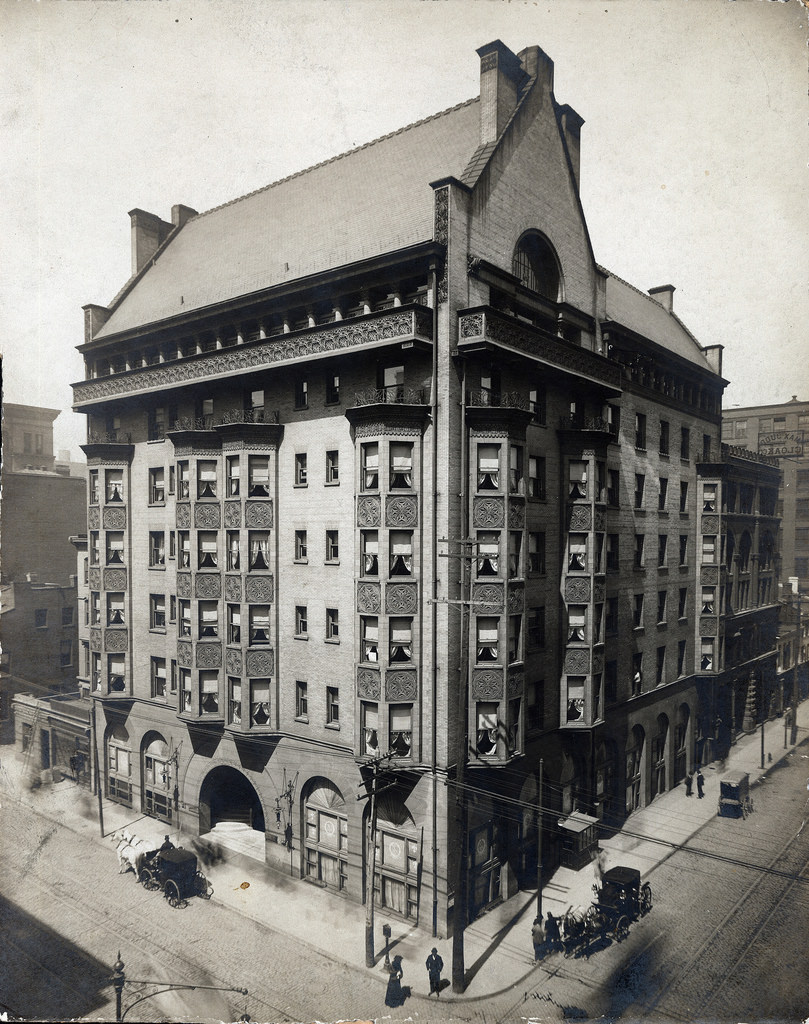
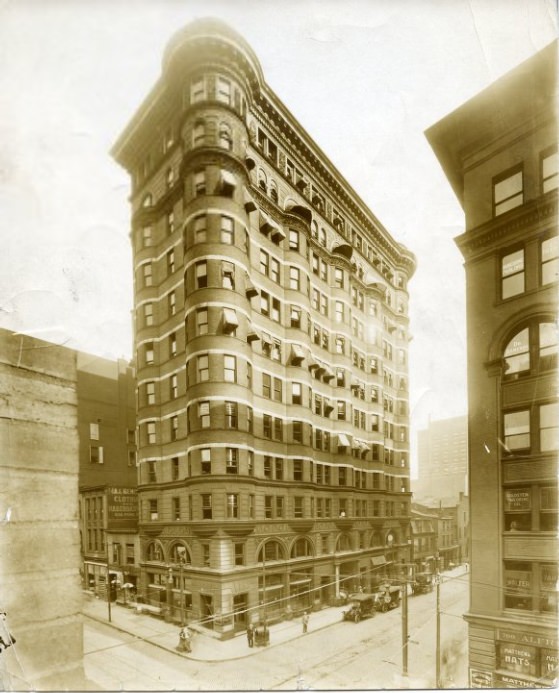
St. Nicholas Hotel, 407 North Eighth Street (northwest corner of Eighth and Locust Streets, also known as the Victoria Building), 1905
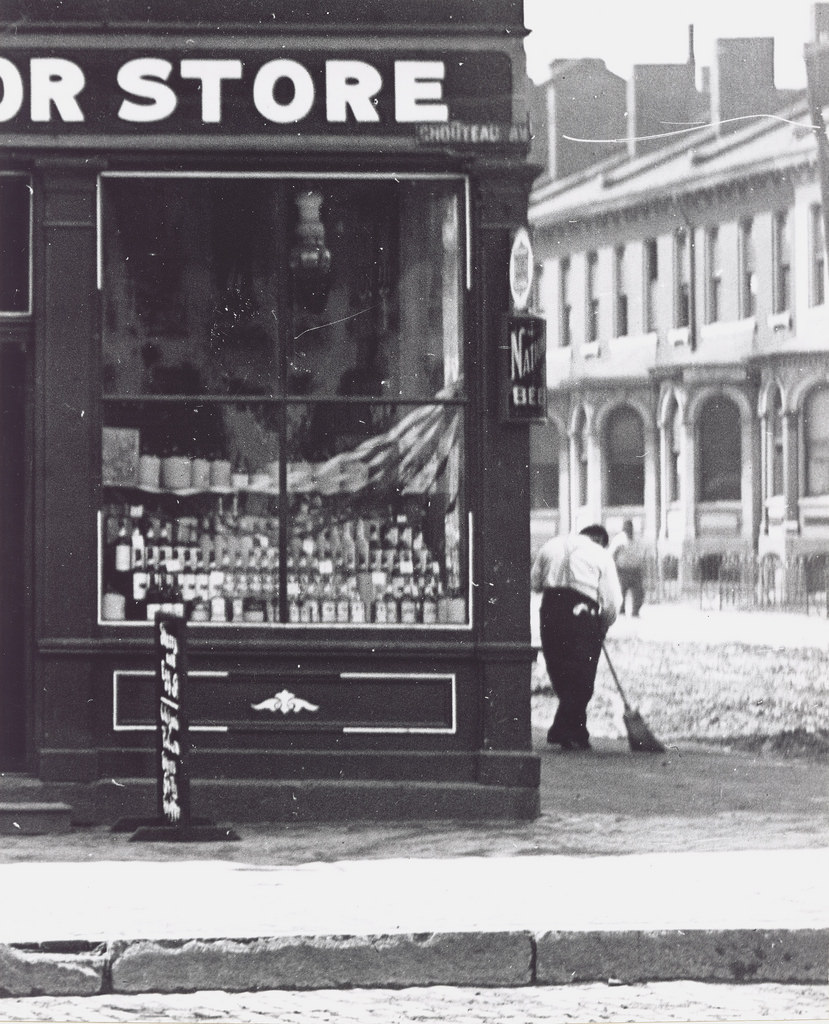
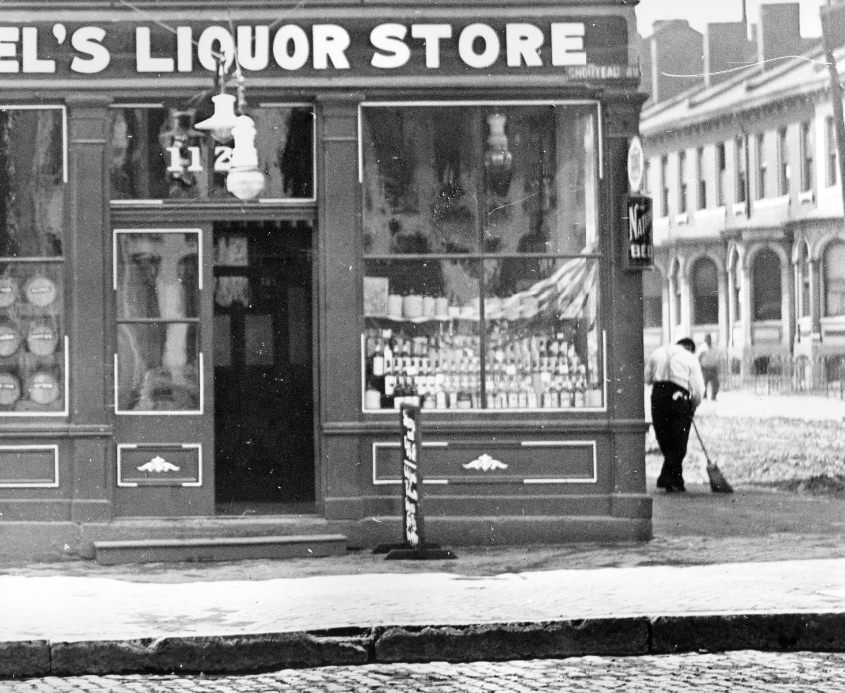
Store front window of a liquor store on Chouteau Avenue, ca. 1900s
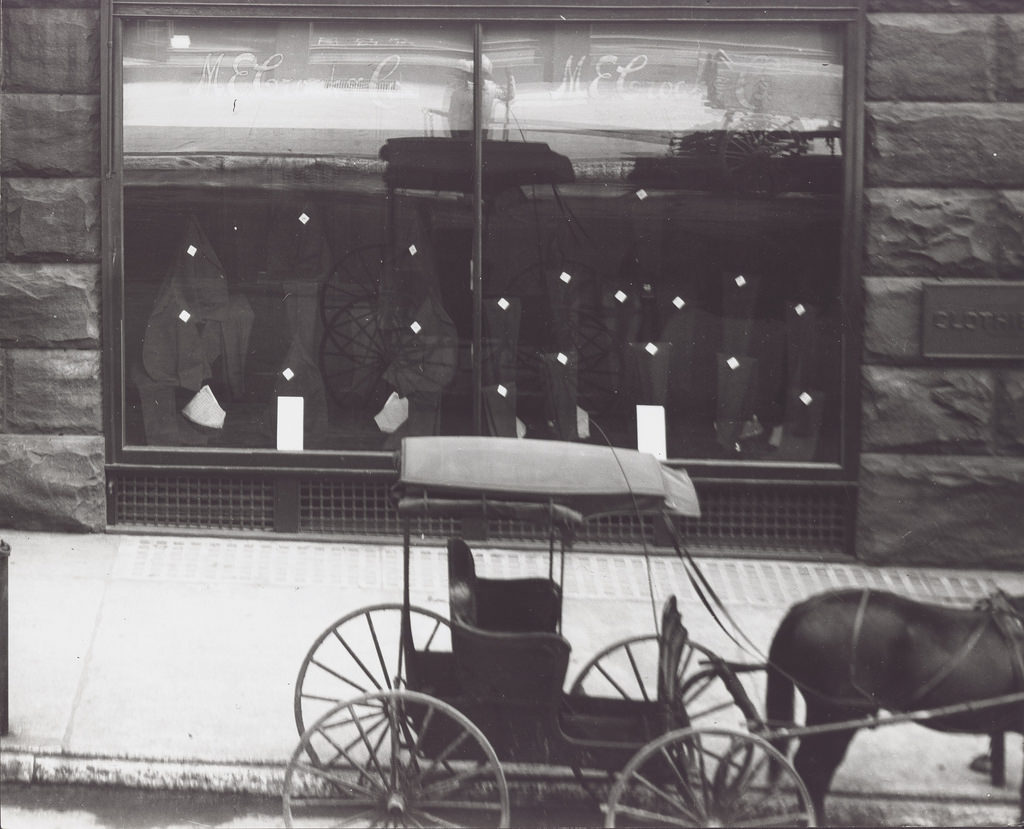
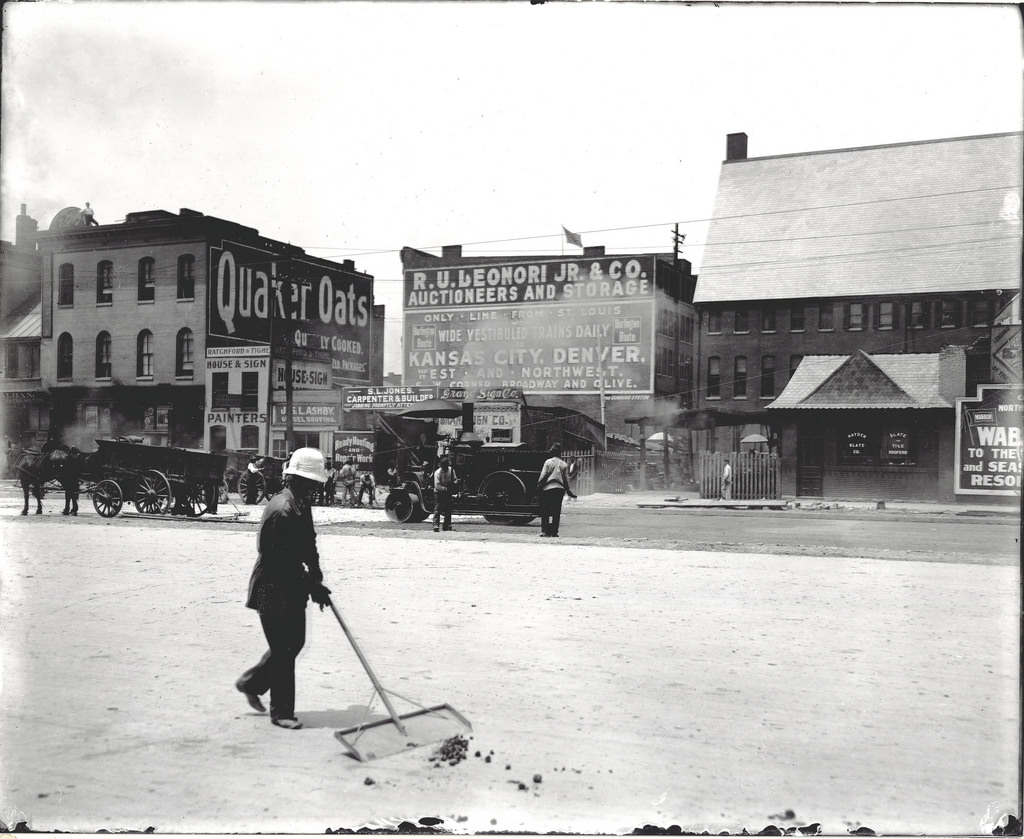
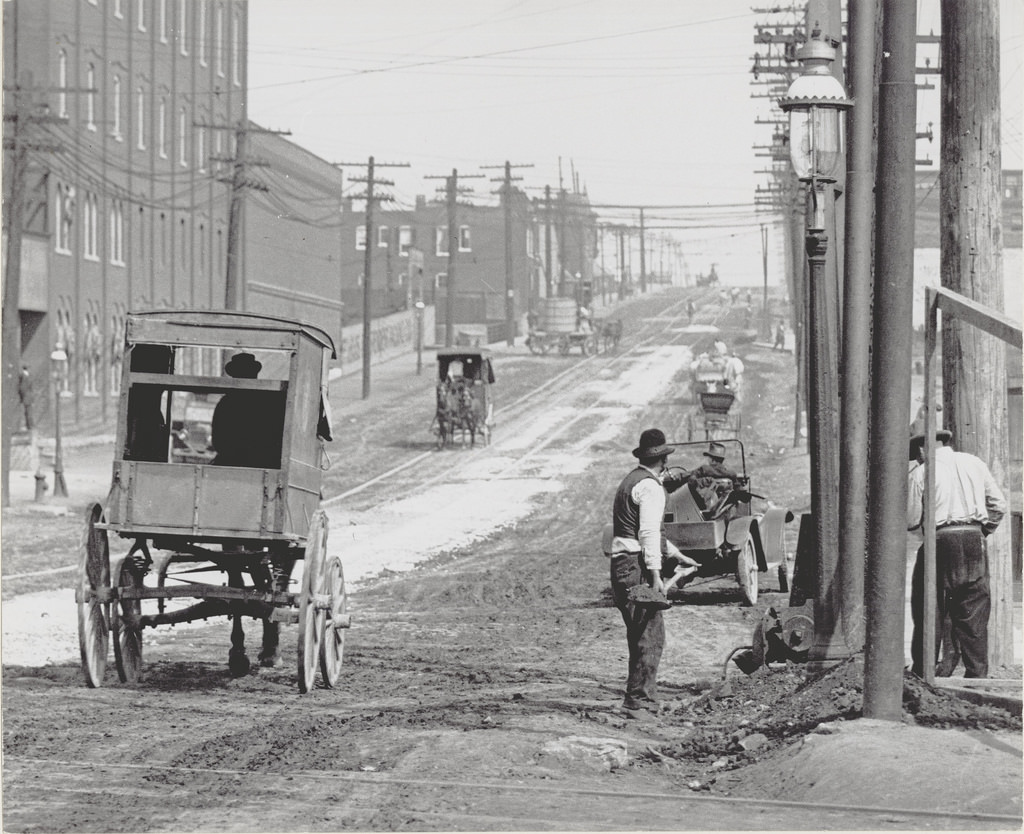
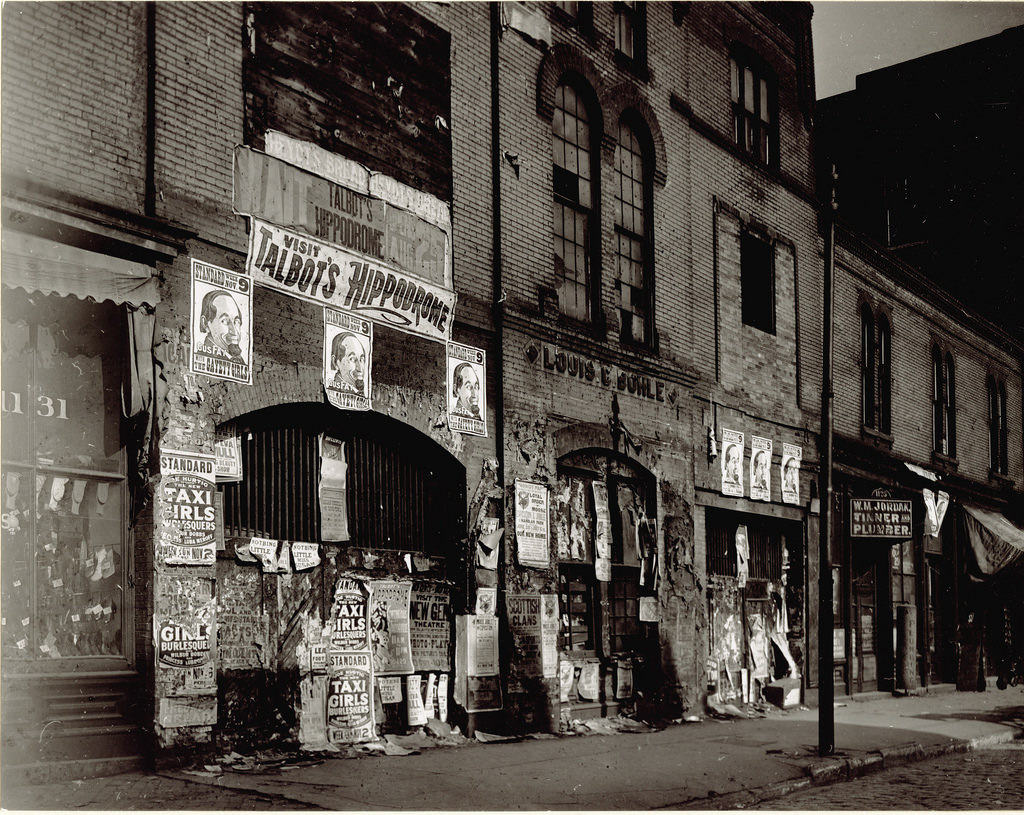
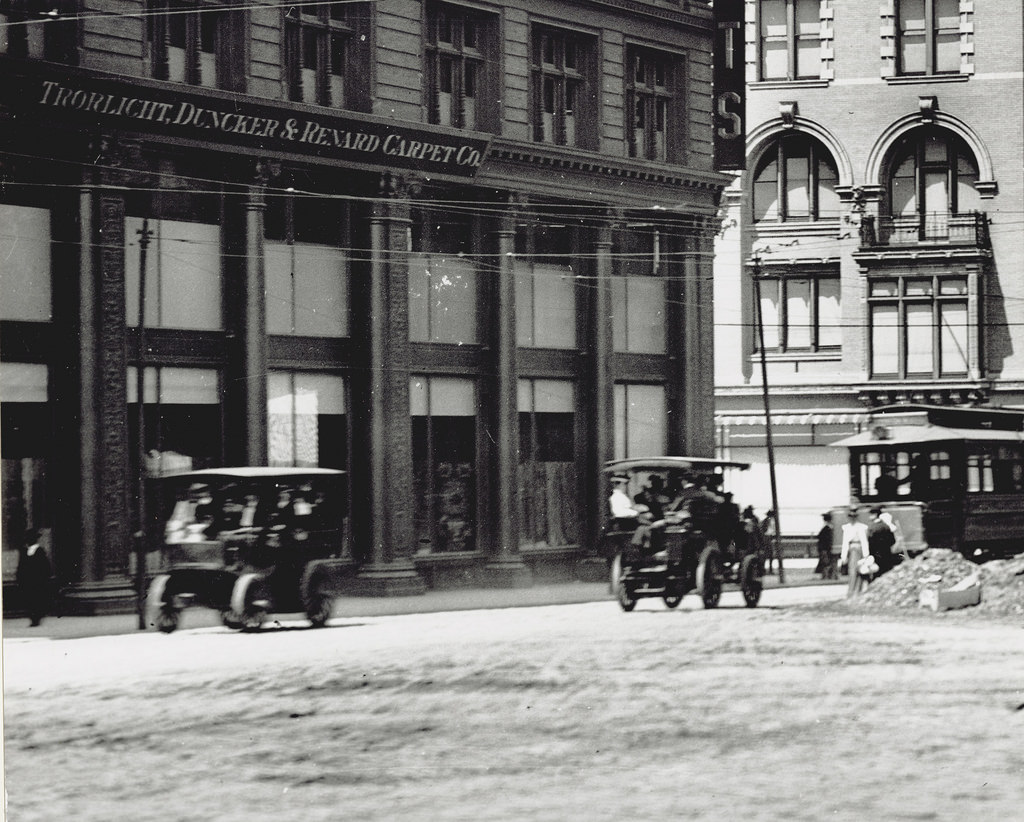
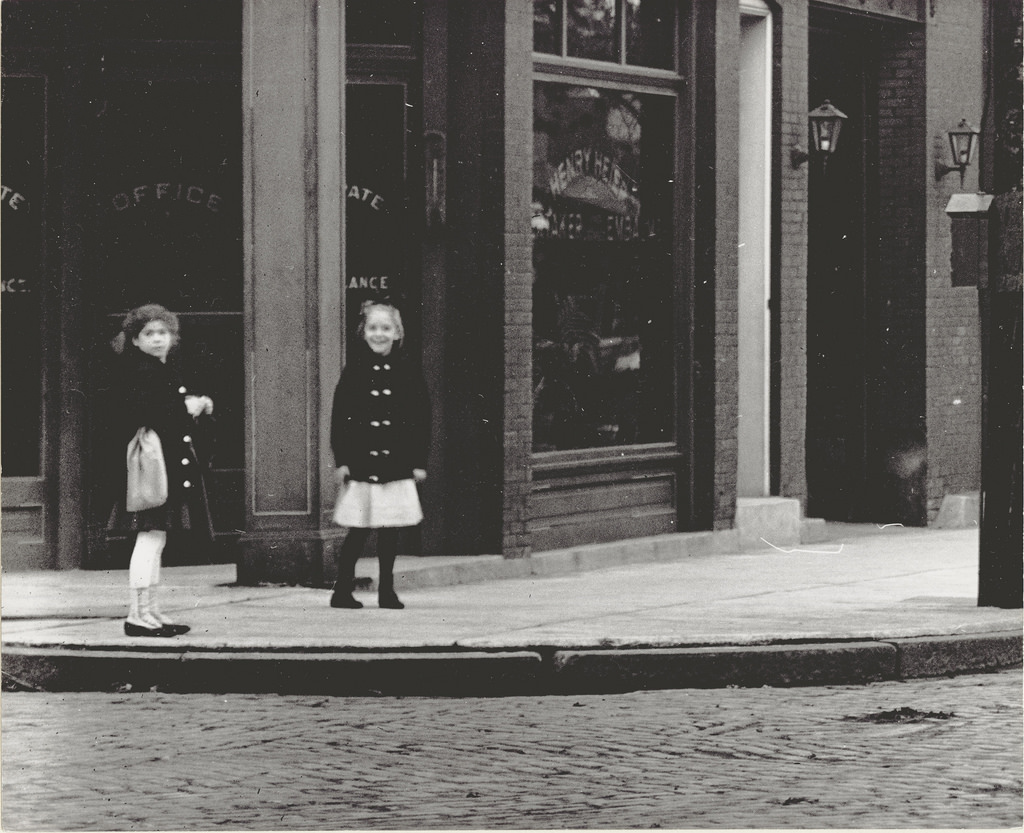
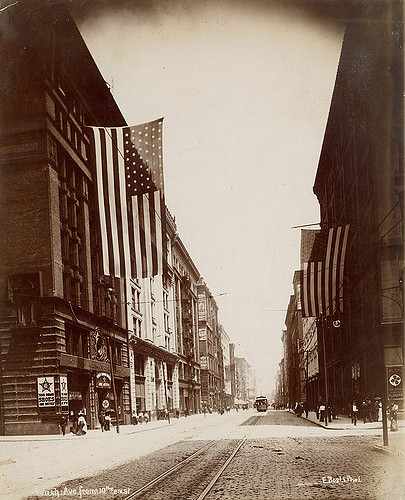
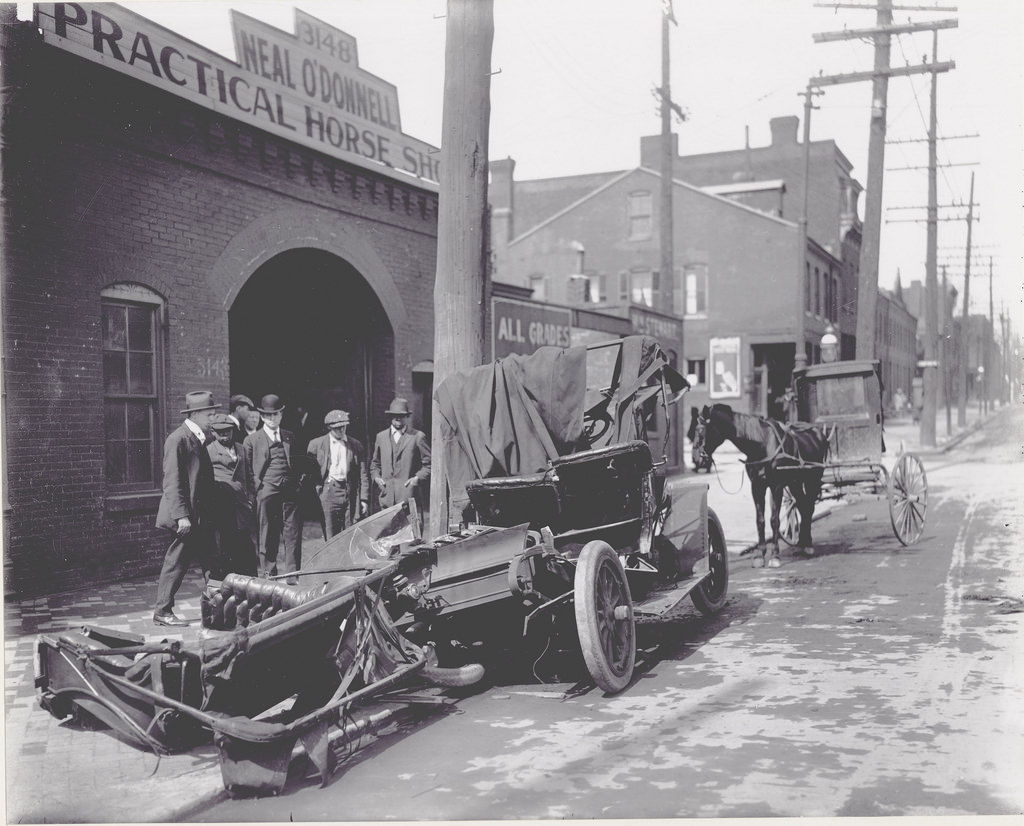
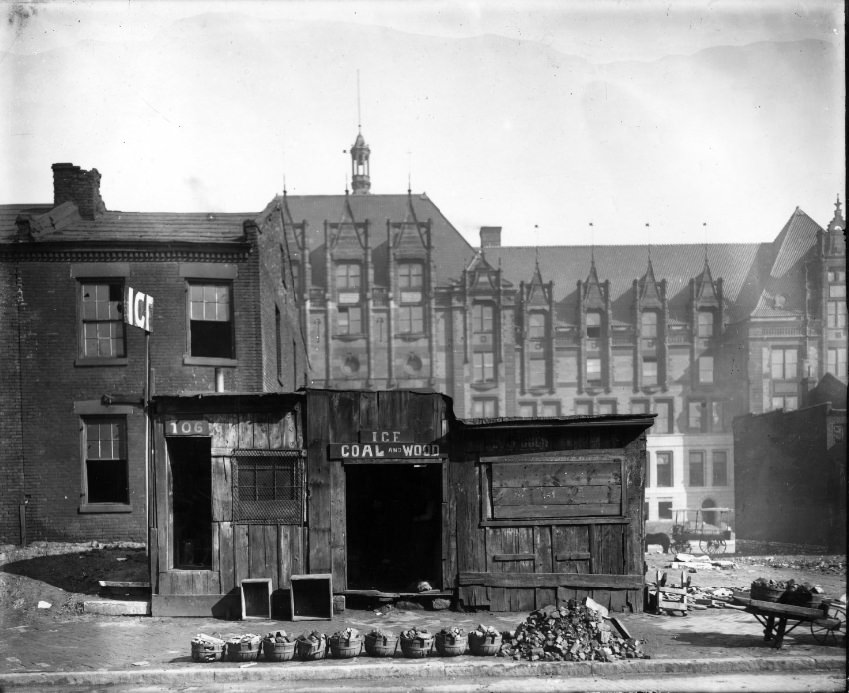
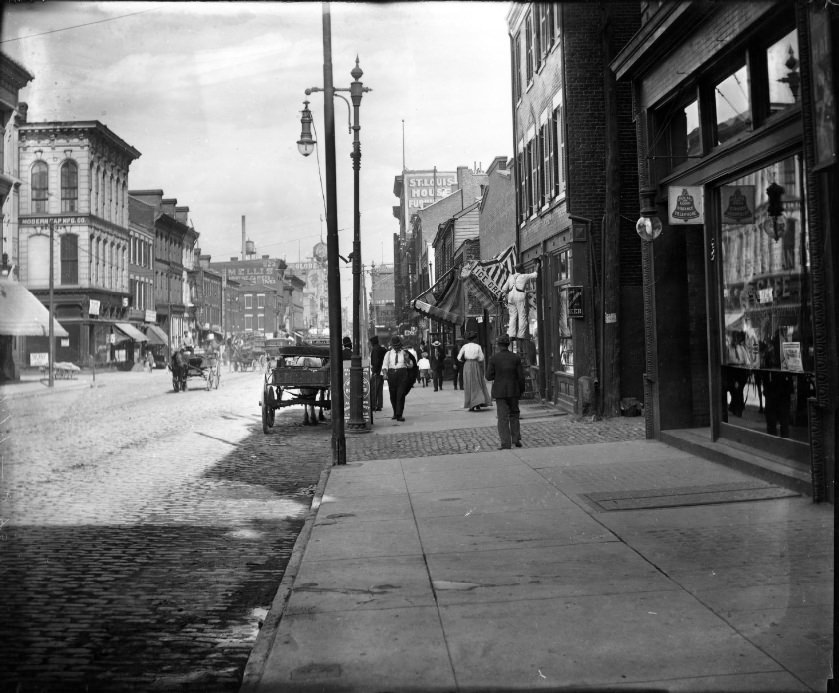
Store front window of M.E. Croak and Company Clothier on the southeast corner of Olive and Tenth Streets, 1904Street cleaner at work on Twelfth Street between Olive and Locust Streets, 1909Street workers and carriages on a street in St. Louis, ca. 1900sTalbot’s Hippodrome posters posted on buildings at 1123 – 1131 Market Street, ca. 1900sThird Street, looking north to Chestnut Street, ca. 1900sTrorlicht, Duncker and Renard Carpet Company on Washington Avenue east of Third Street, 1904Twelfth Street north of Market Street, 1909Two girls standing in front of Henry Heier Undertaker and Embalmer shop at 3432 Shenandoah Street, 1906Wash Street, between Eighteenth and Nineteenth Streets, ca. 1900sWashington Avenue looking east from Seventh Street, 1912Washington Avenue looking east from Seventh Street, ca. 1910Washington Avenue west from Seventh Street, ca. 1900Washington Street east from Tenth Street, 1905Washington Avenue west from Sixth Street, 1906Workers using a crane to tear up the road on Chestnut Street west of Ninth Street, 1914Wrecked car parked outside of Neal O’Donnell’s Practical Horse Shoeing shop at 3148 Chouteau Avenue, 1906Broadway and Locust, southwest corner, 1909Ice, coal and wood stand in downtown St. Louis. The rear of St. Louis City Hall is visible in the background, 1909
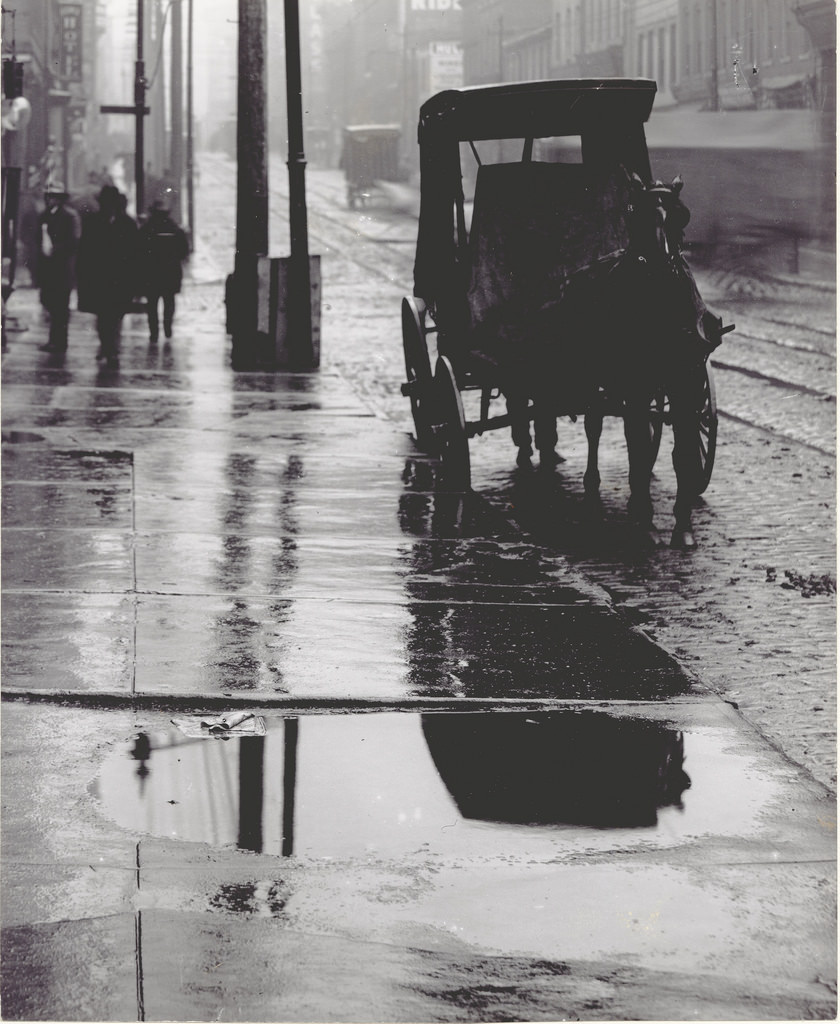
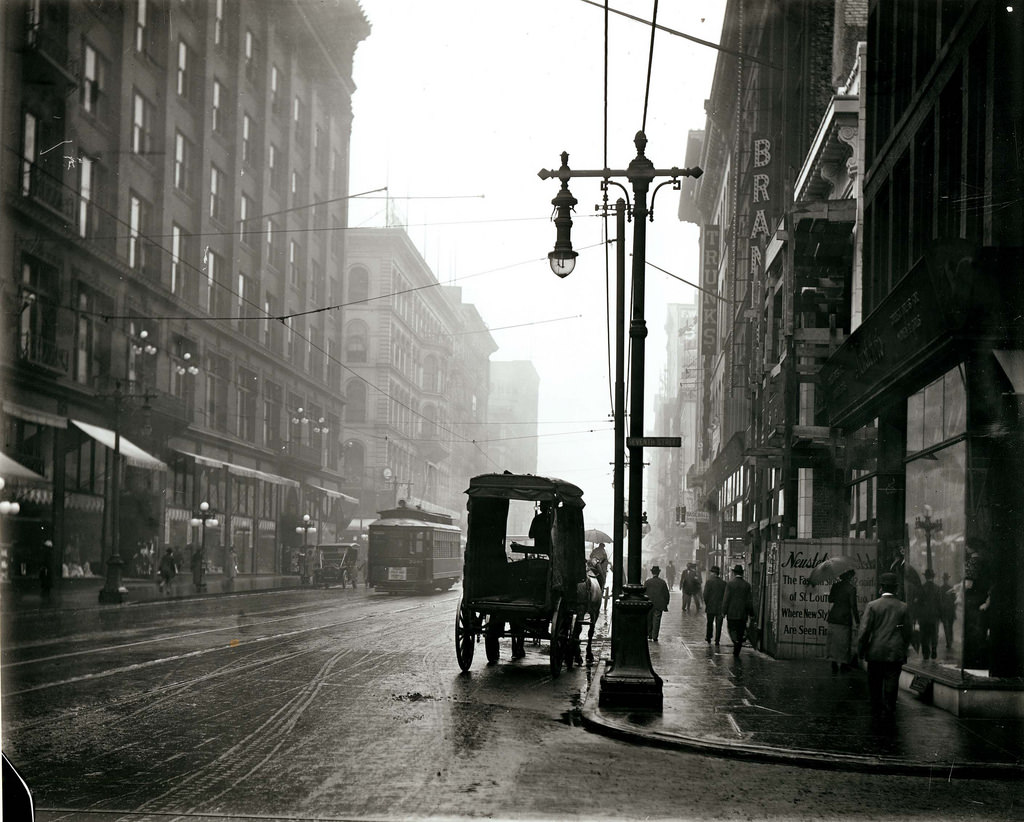
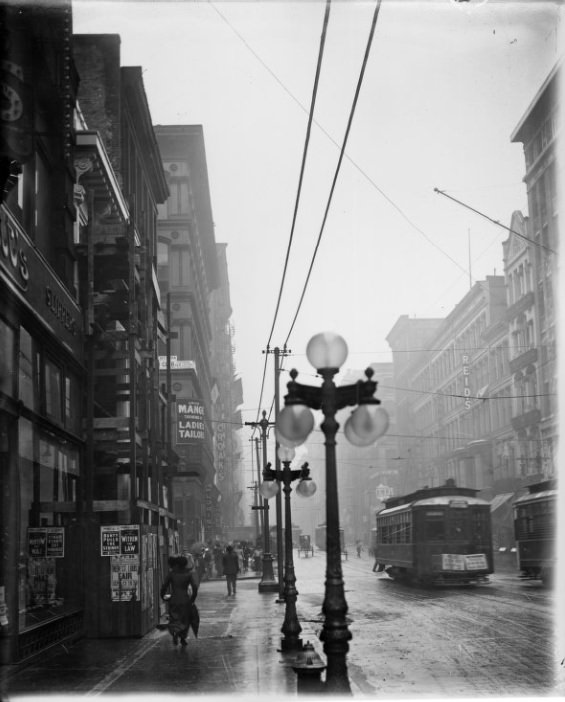
Rainy city street with street lamps visible in the foreground, 1901
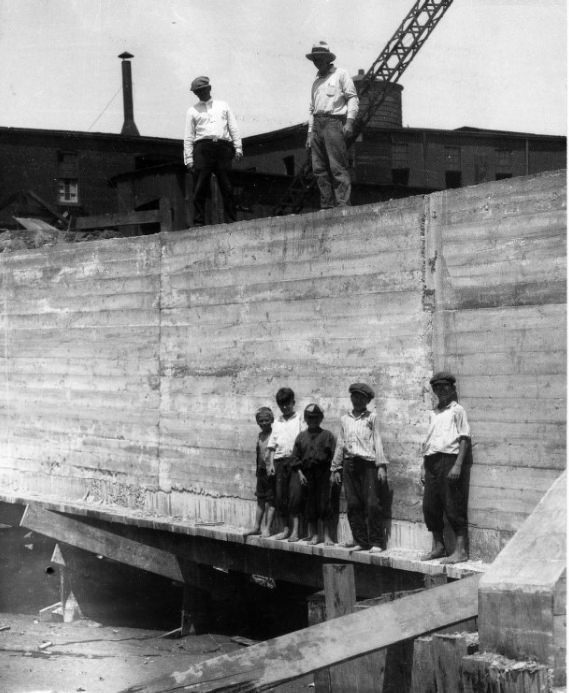
Five boys standing along the base of a poured concrete wall at a construction site, 1902
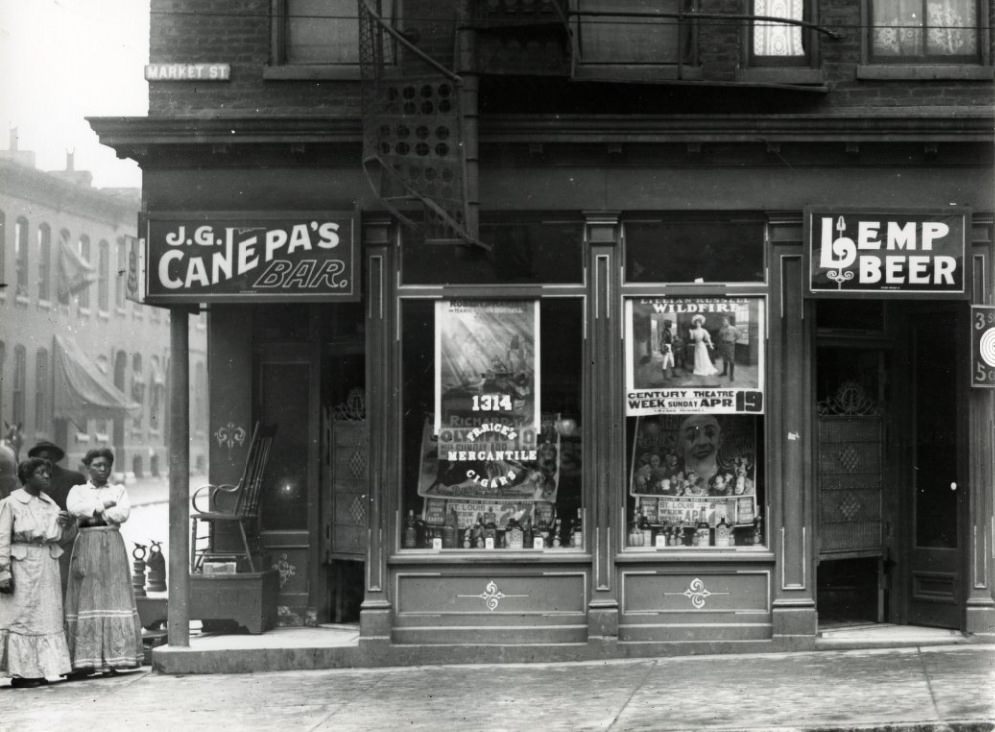
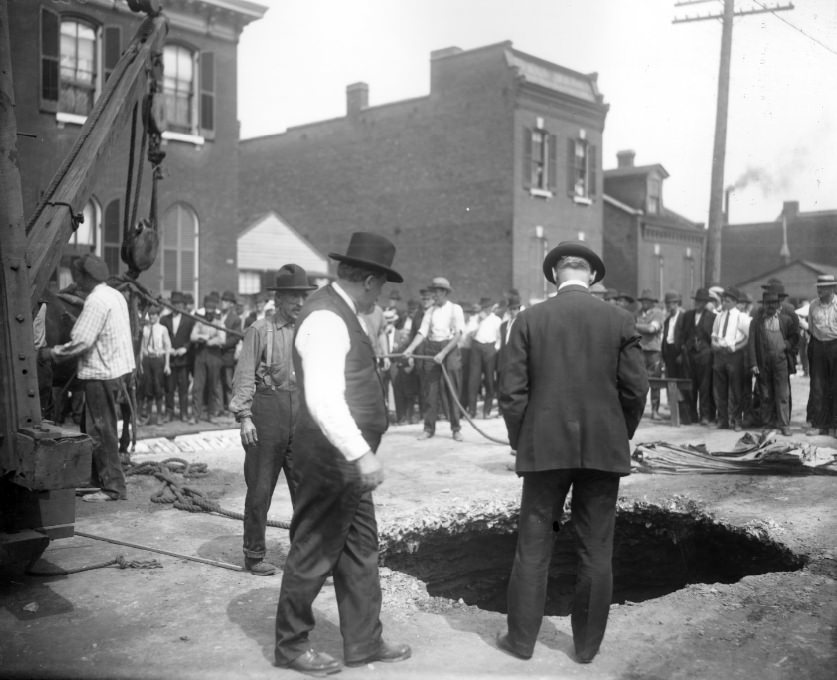
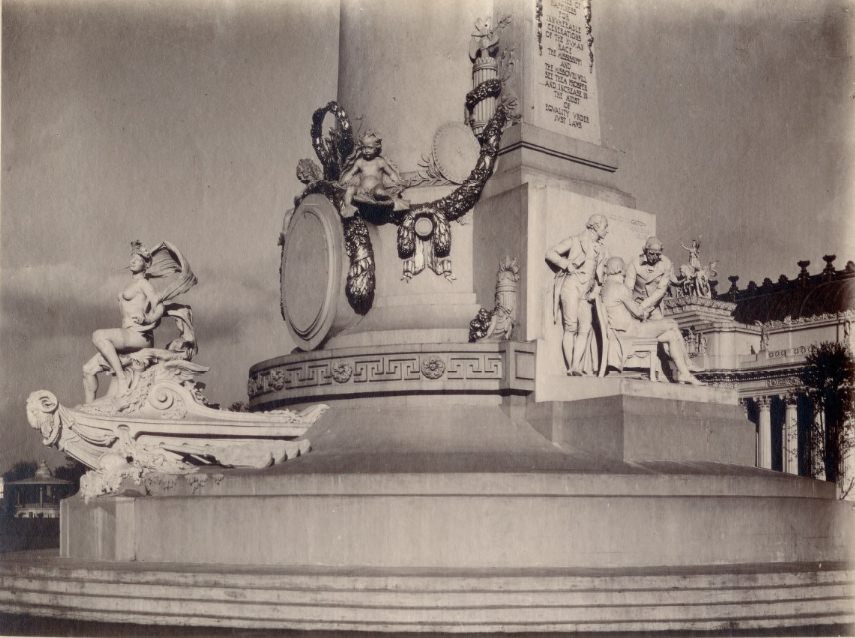
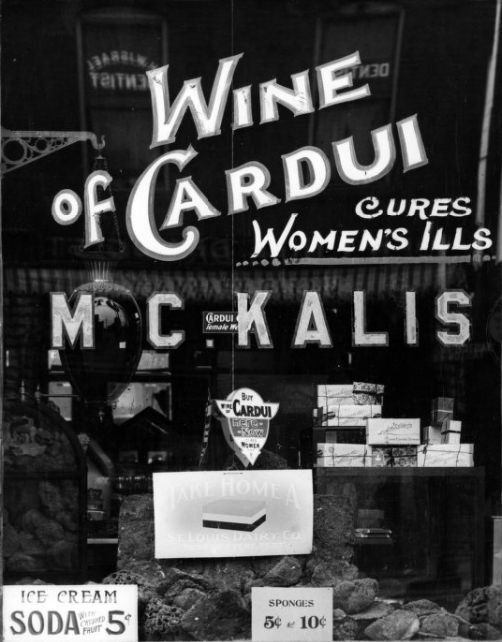
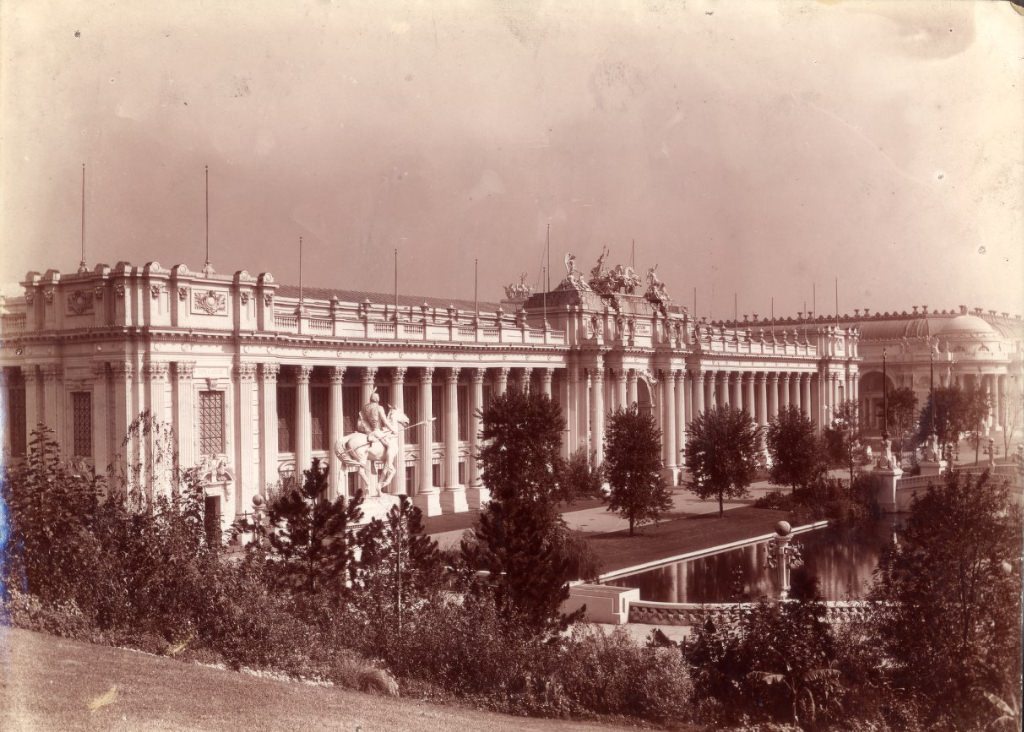
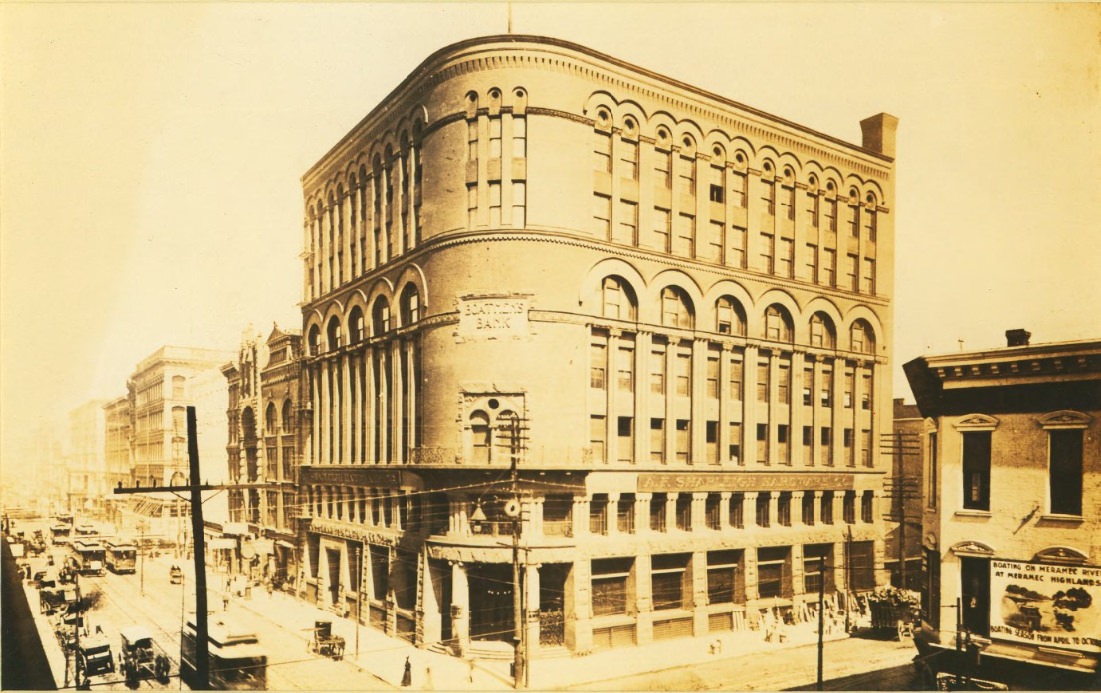
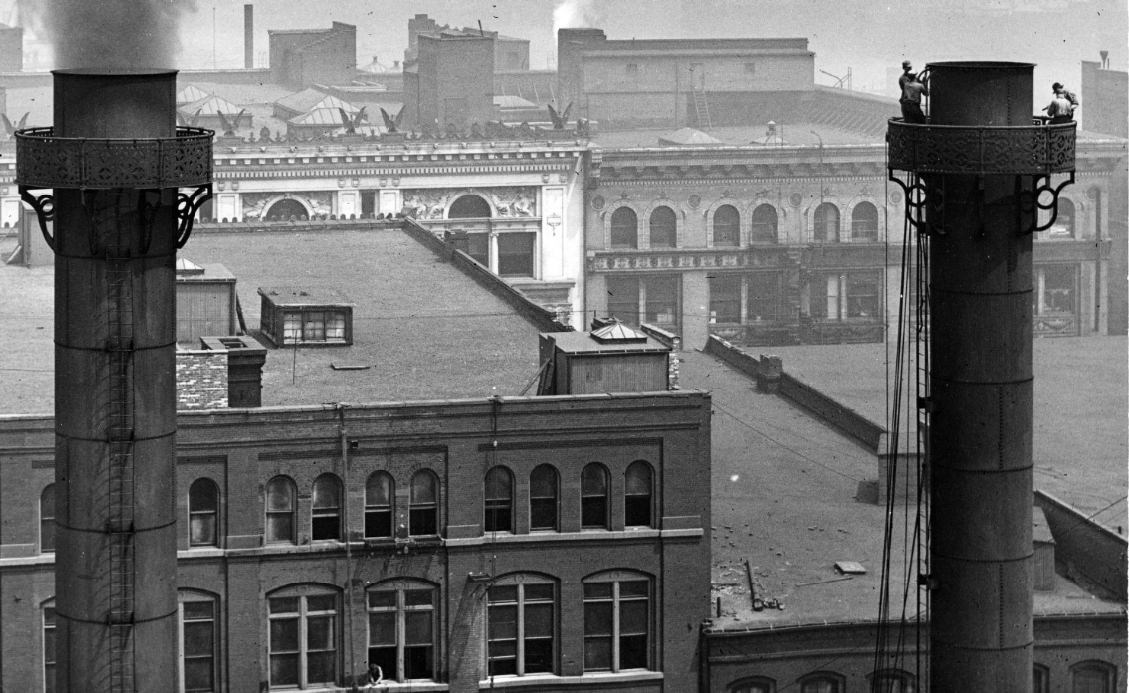
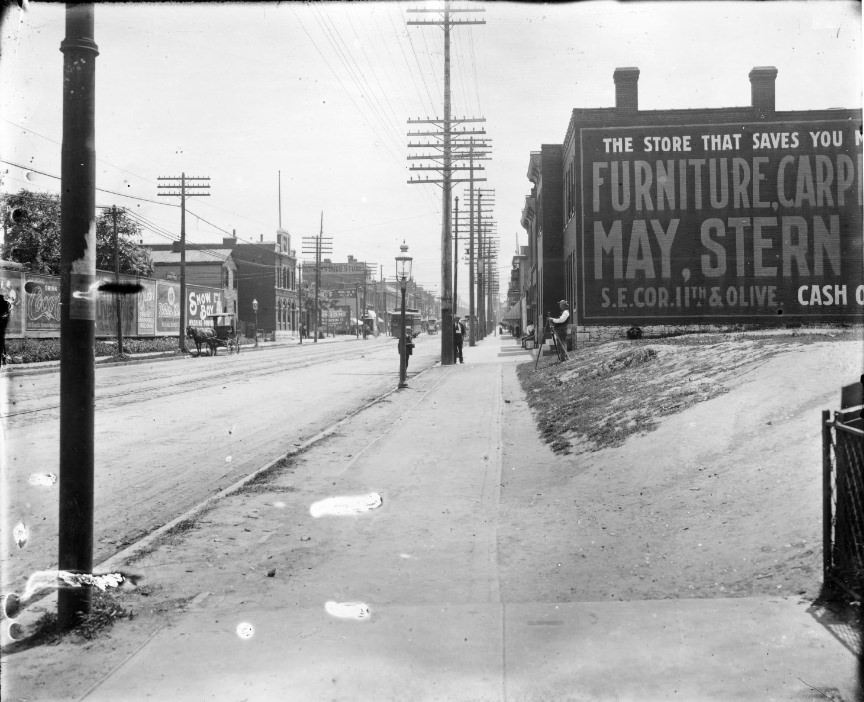
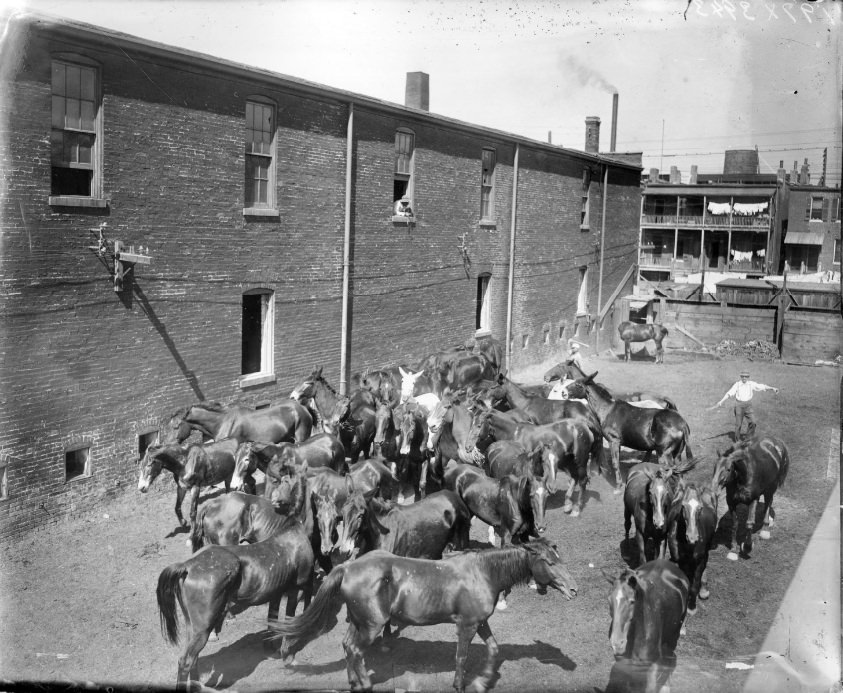
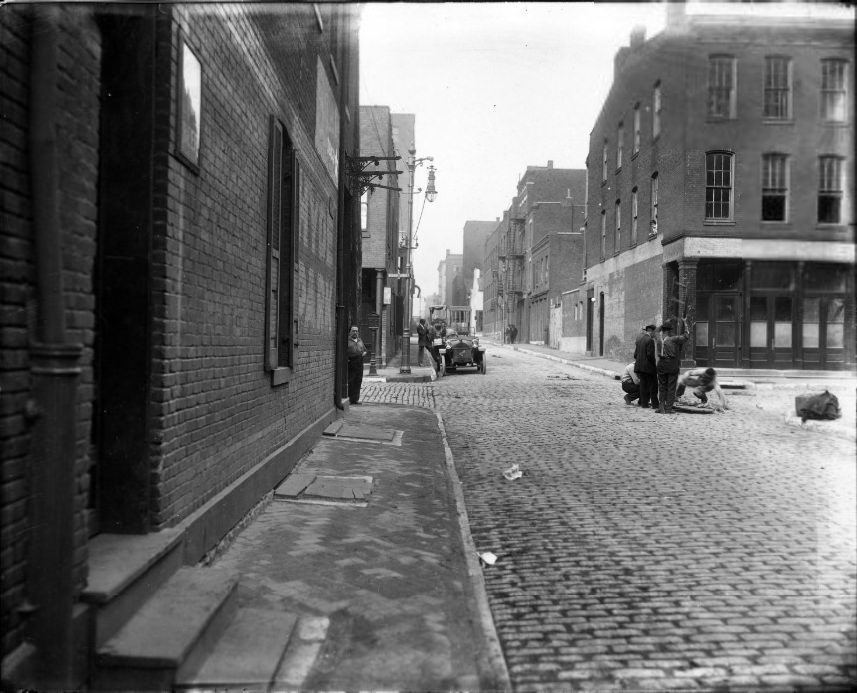
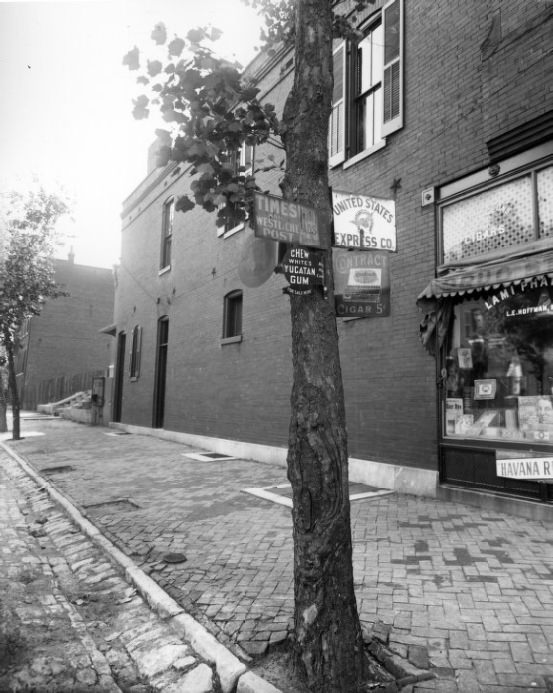
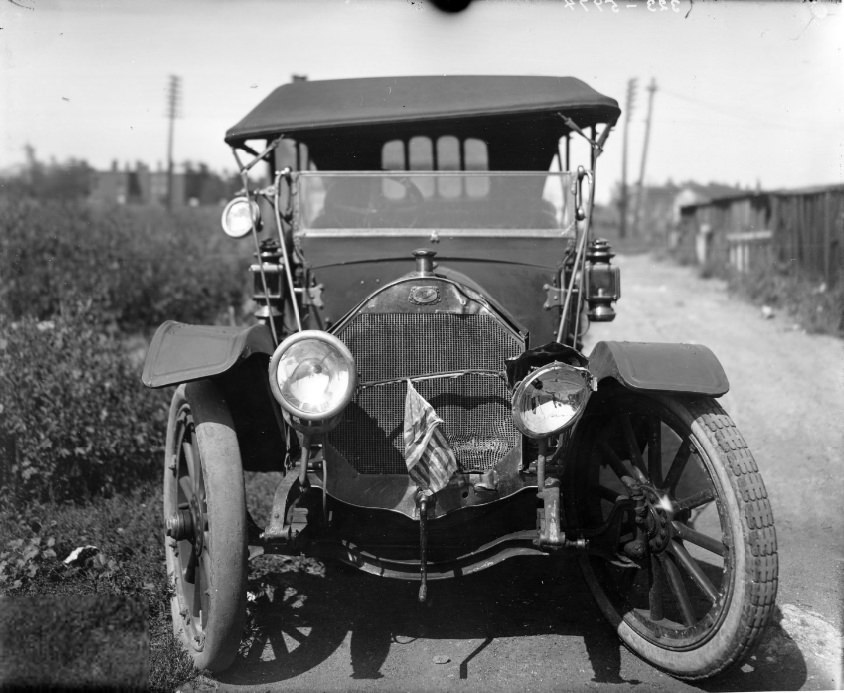
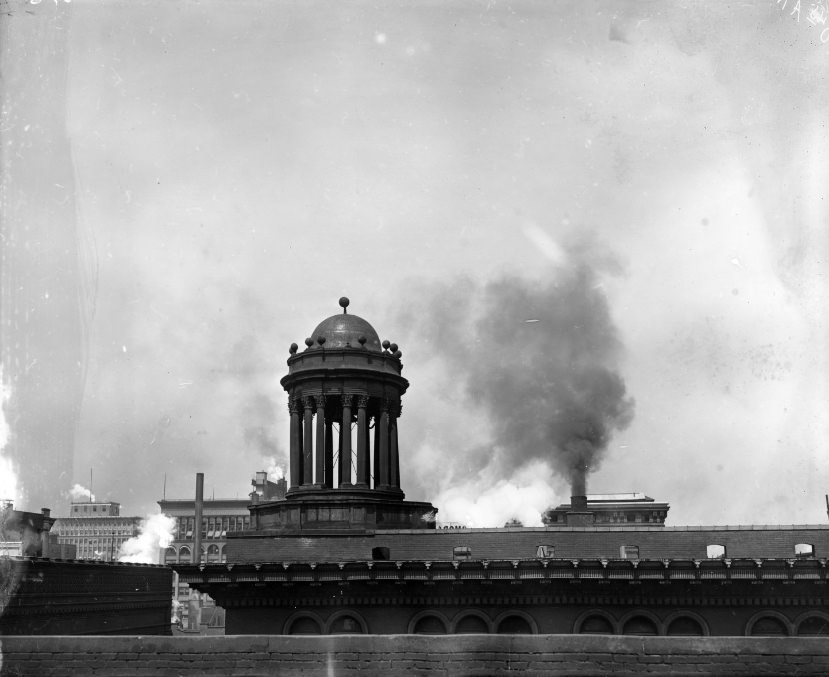
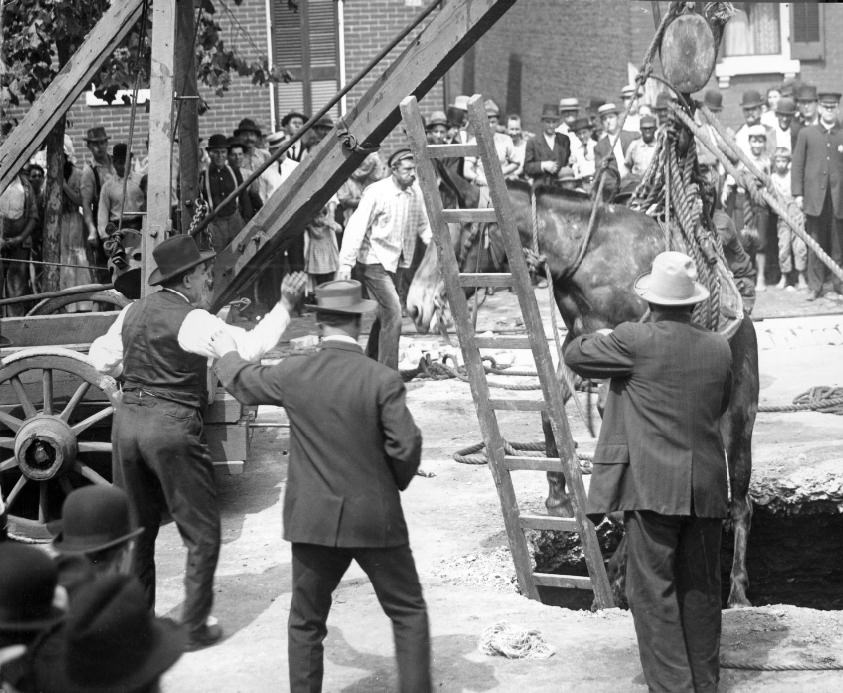
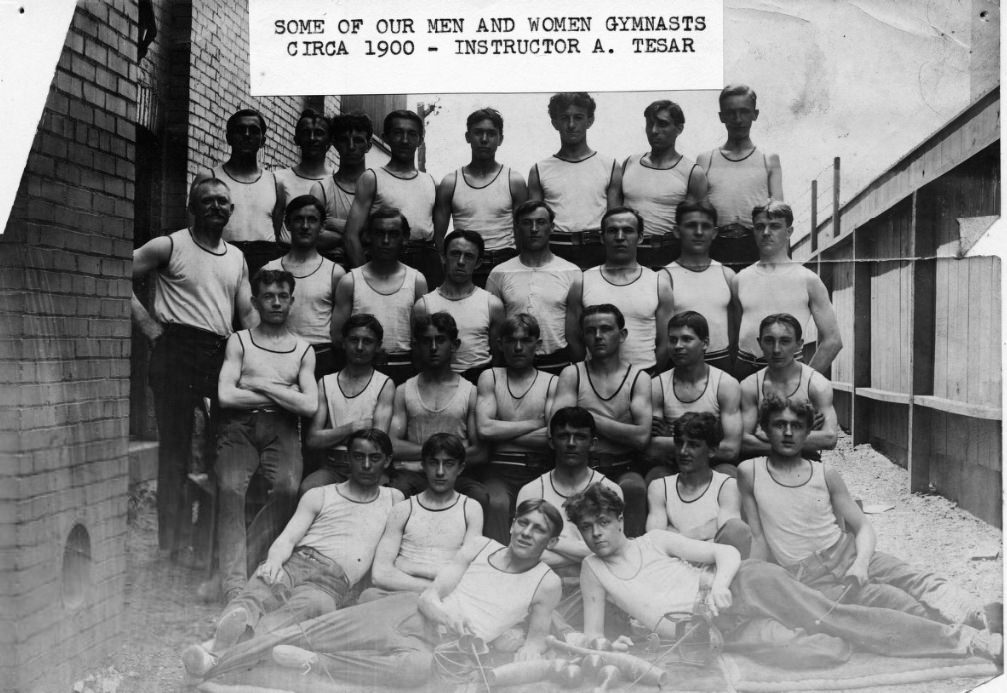
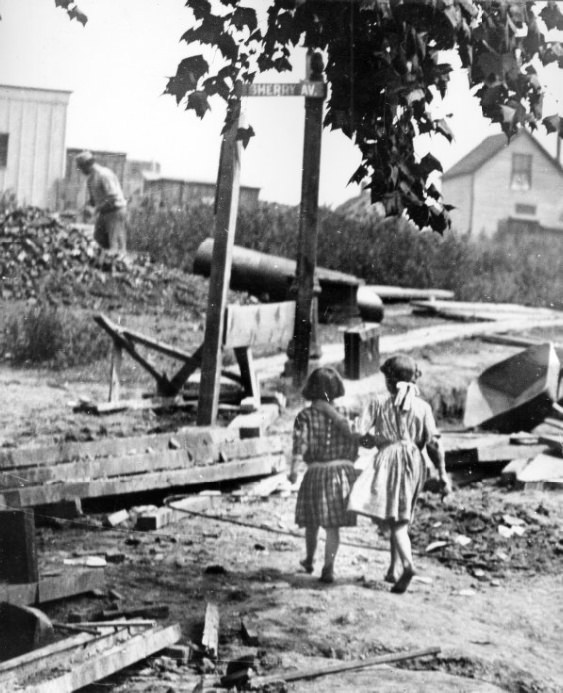
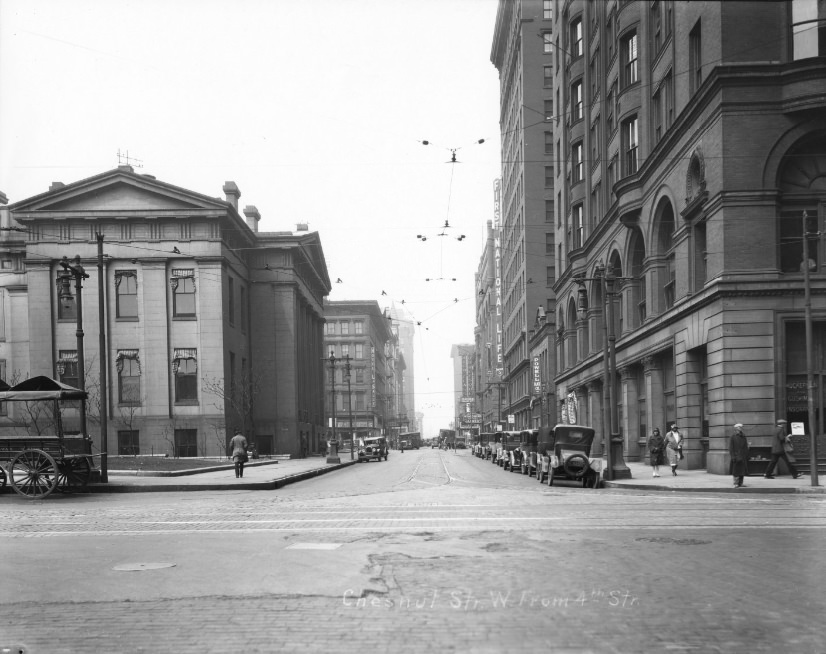
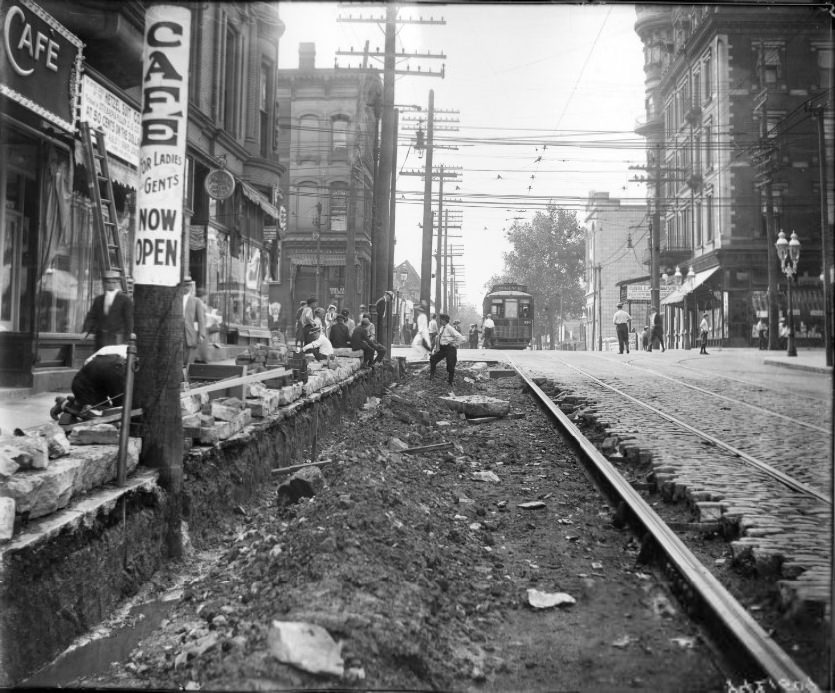
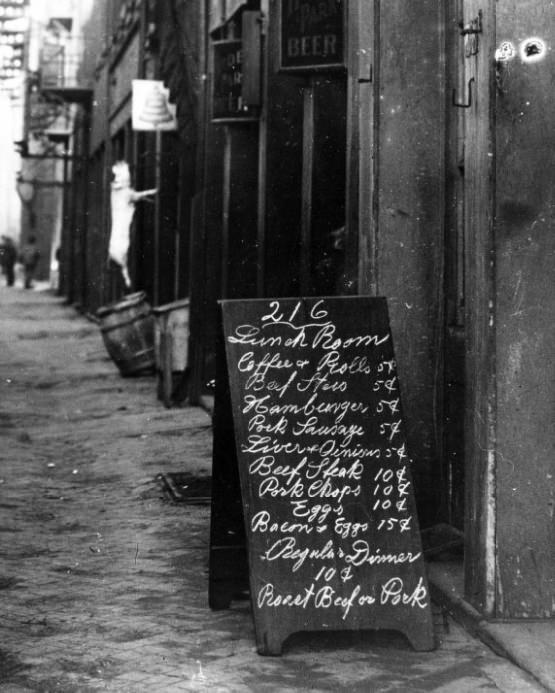
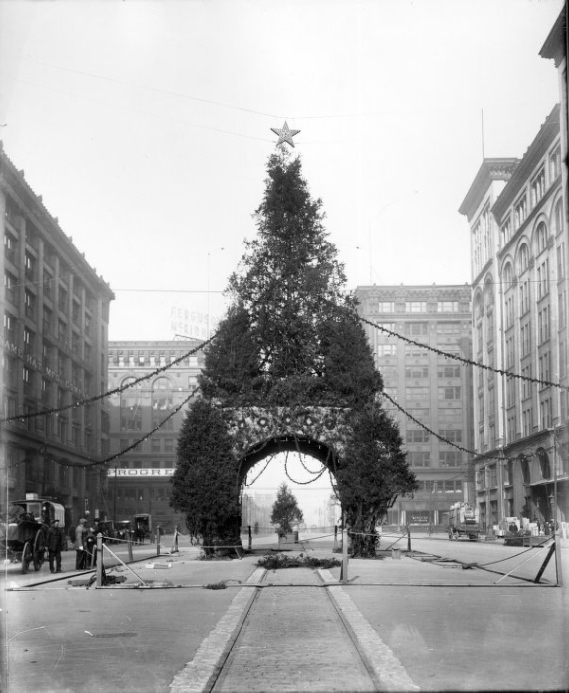
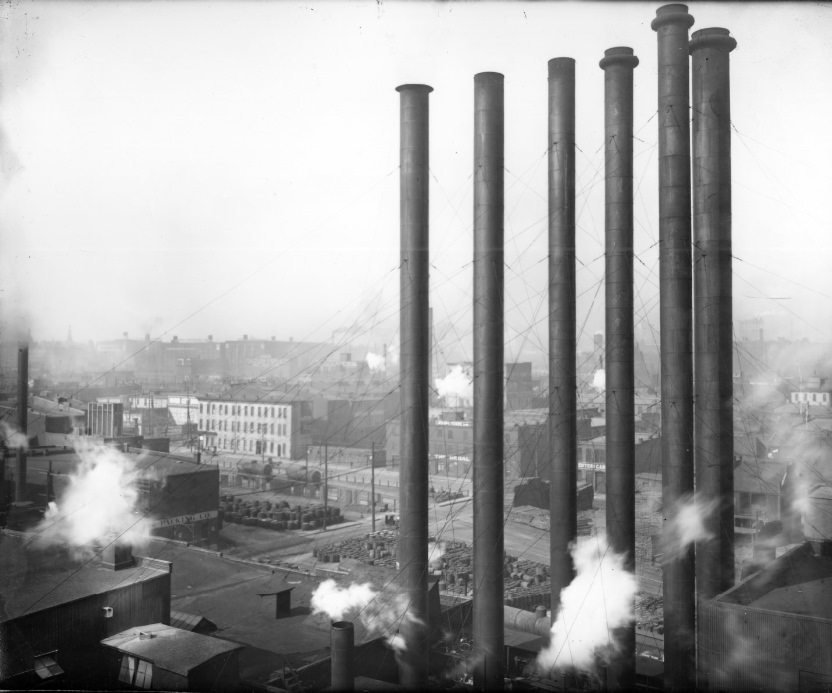
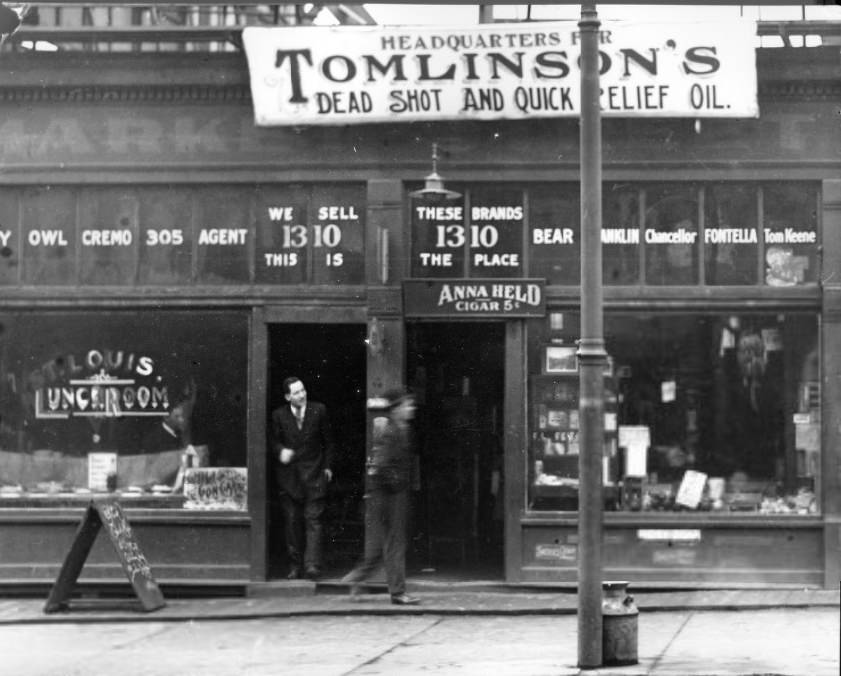
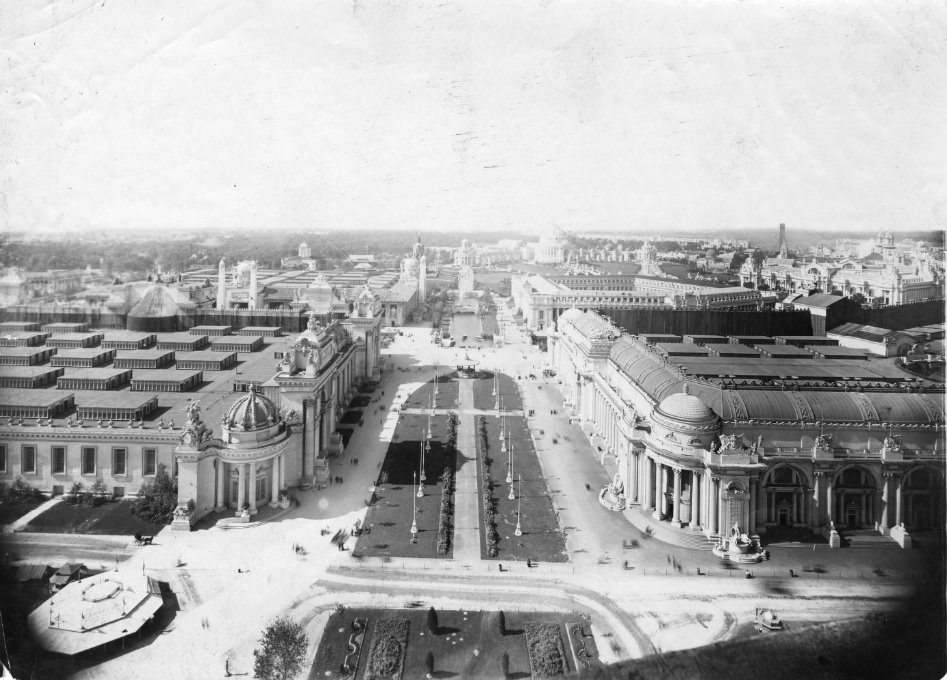
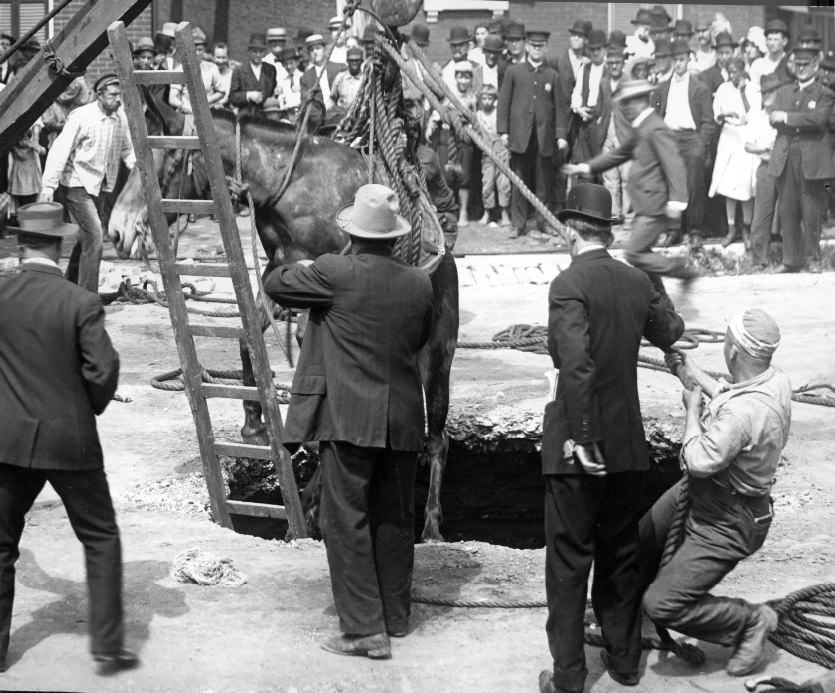
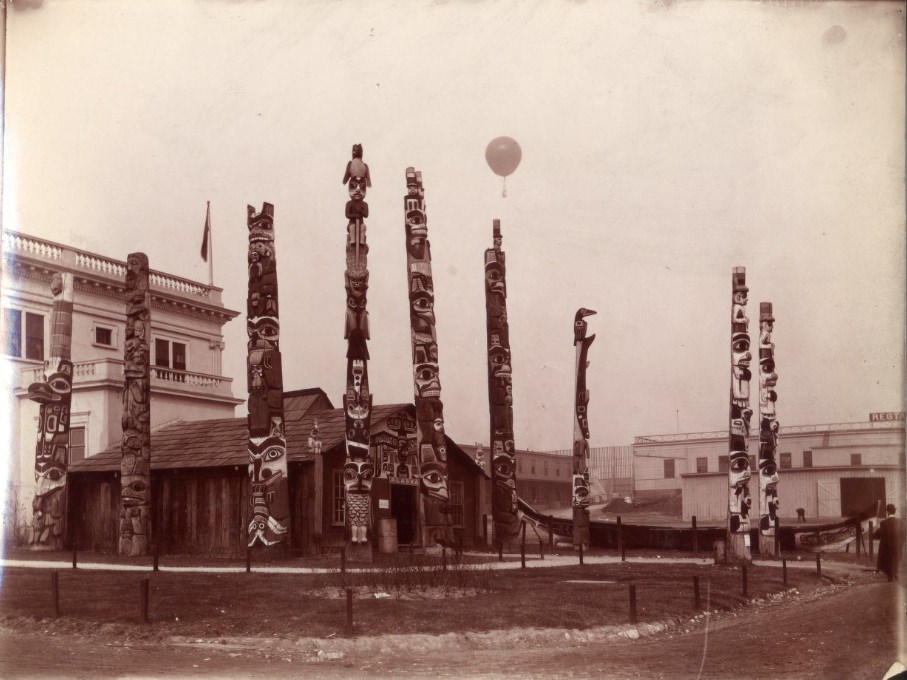
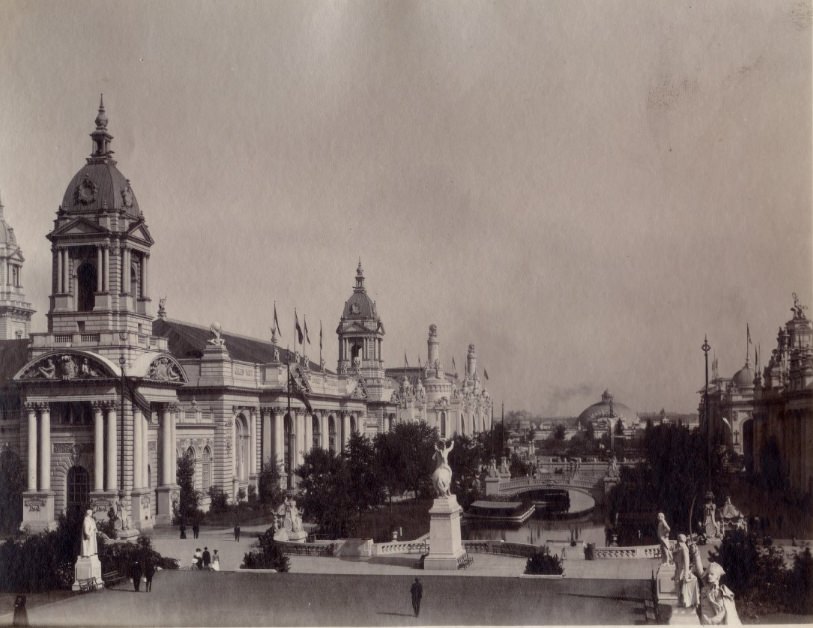
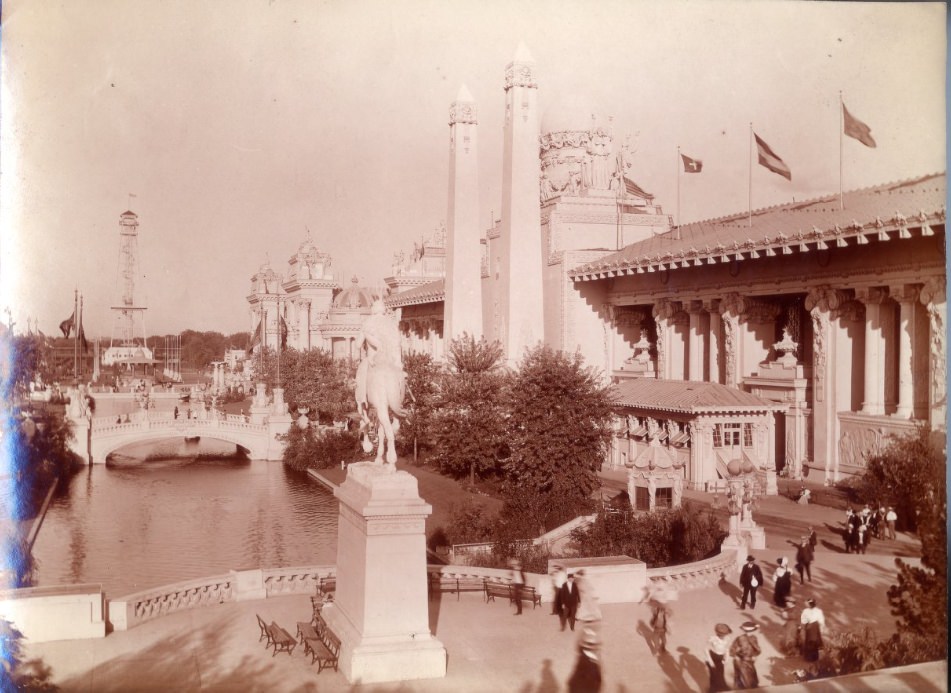
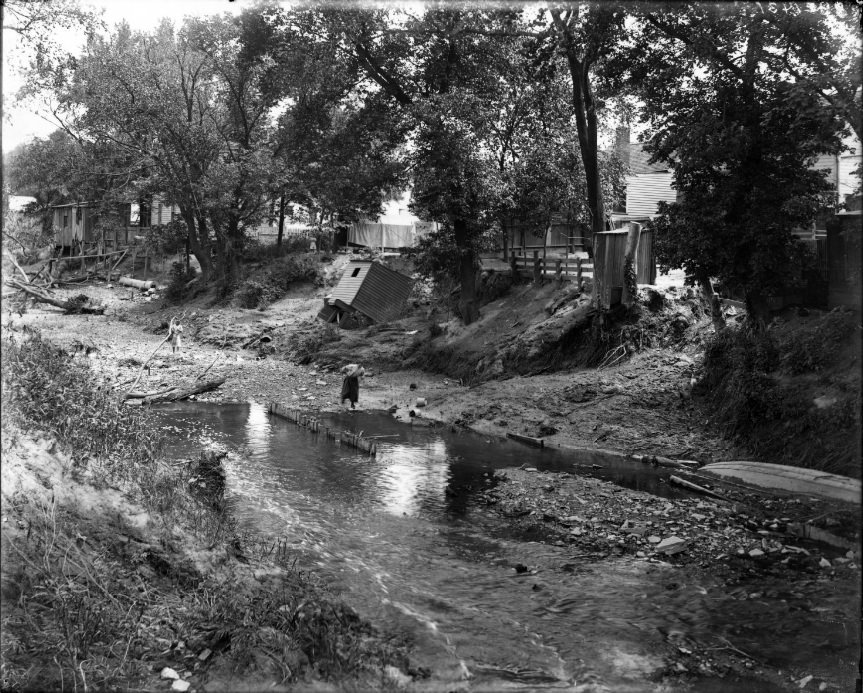
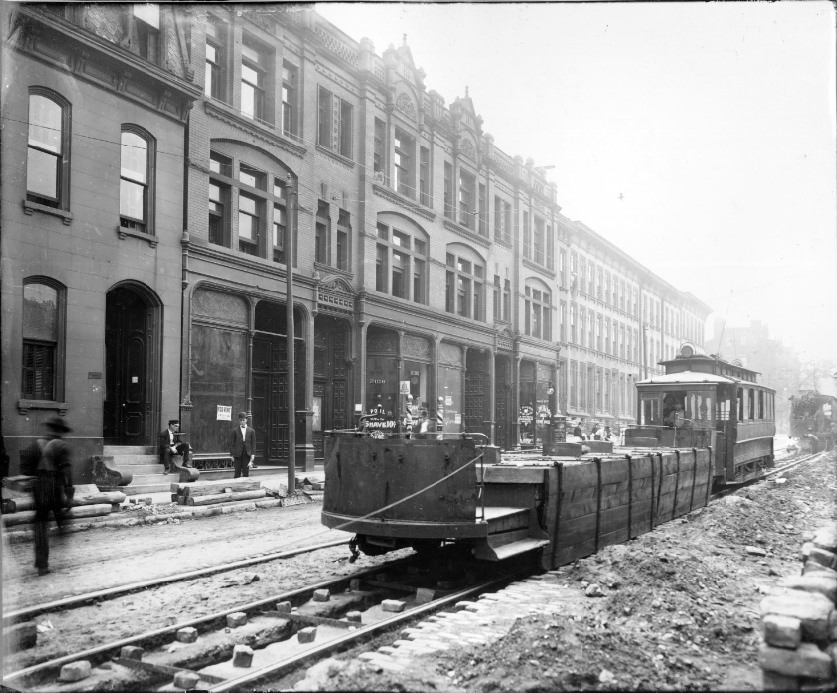
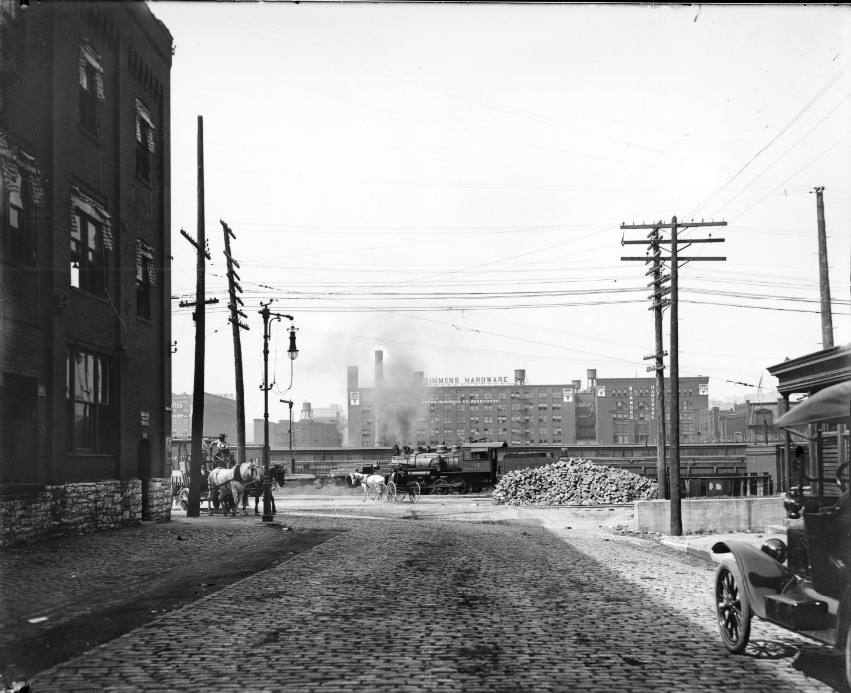
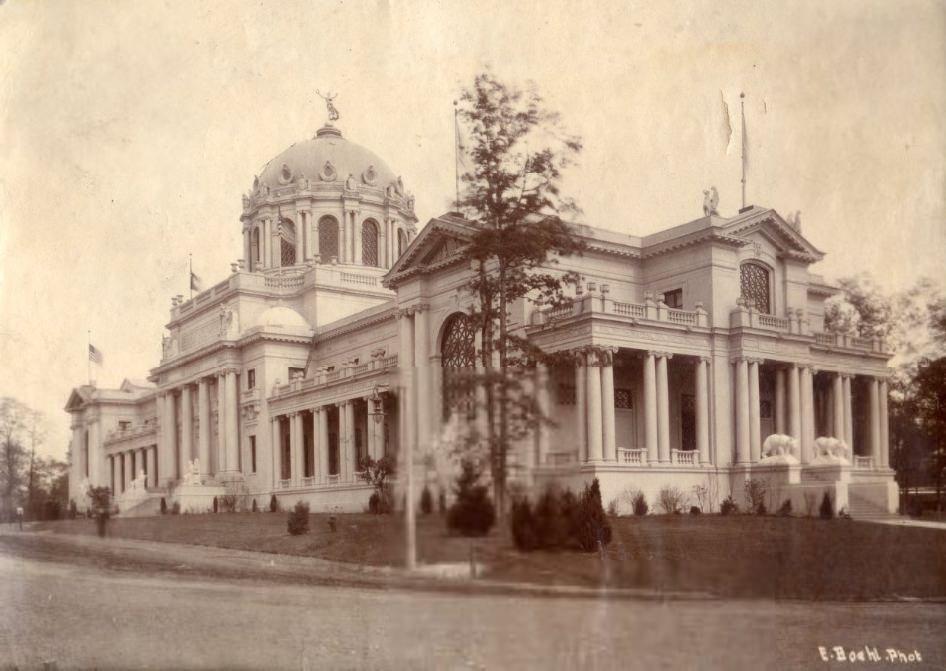
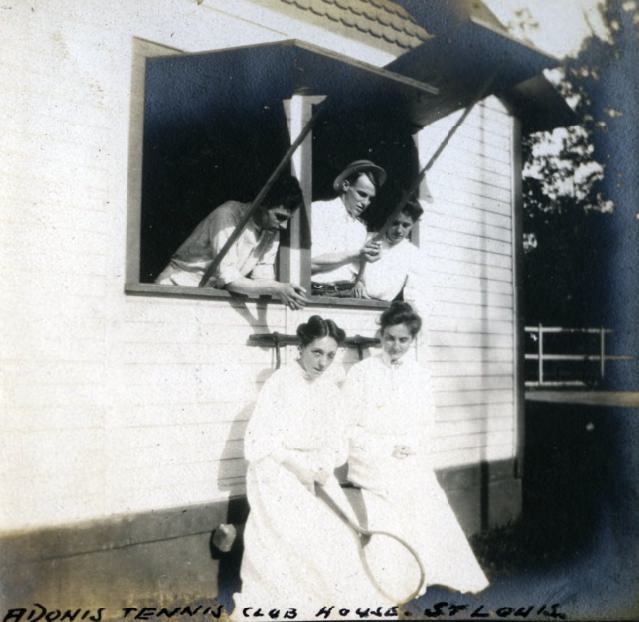
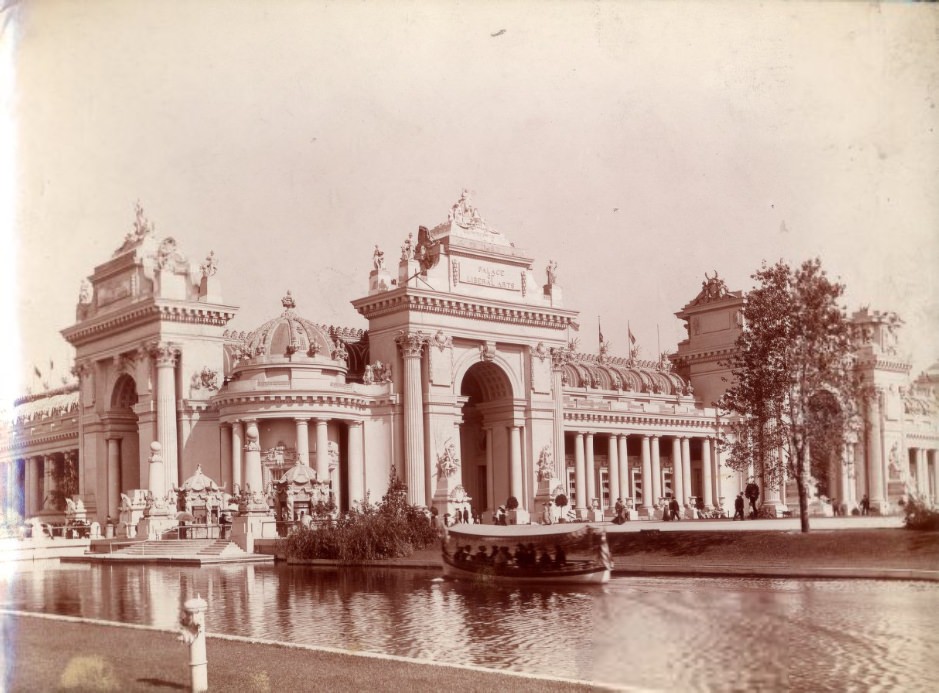
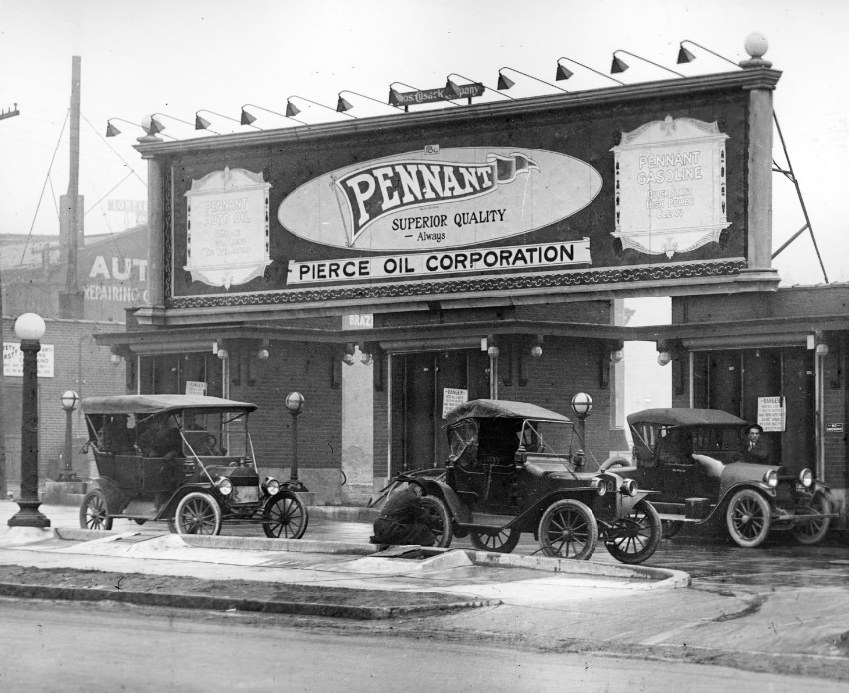
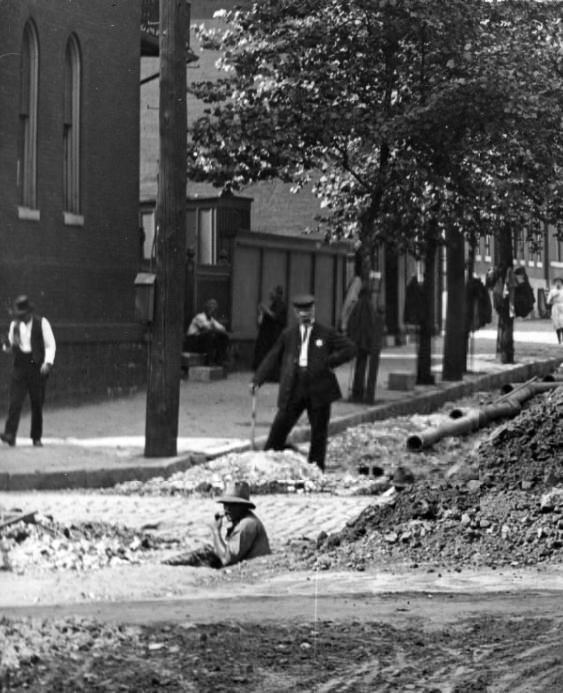
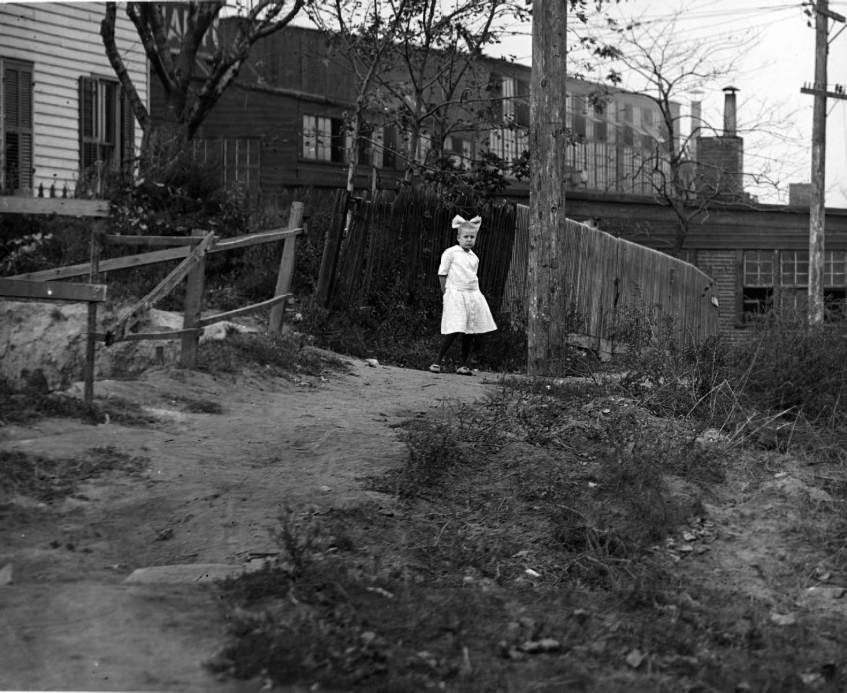
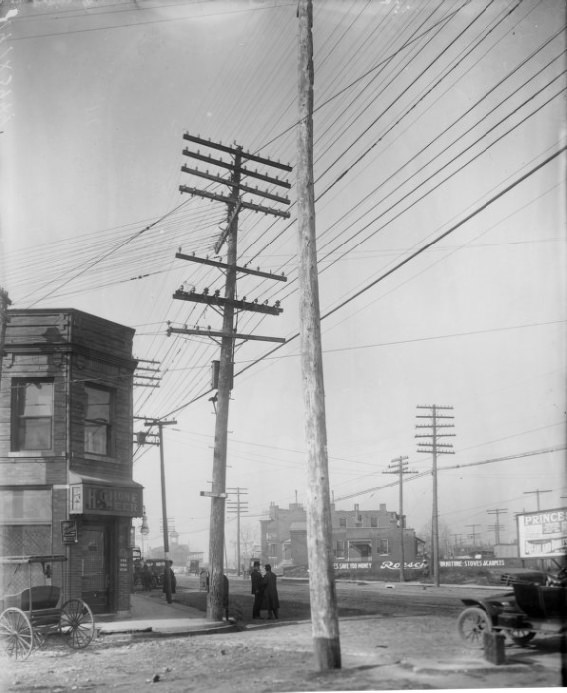
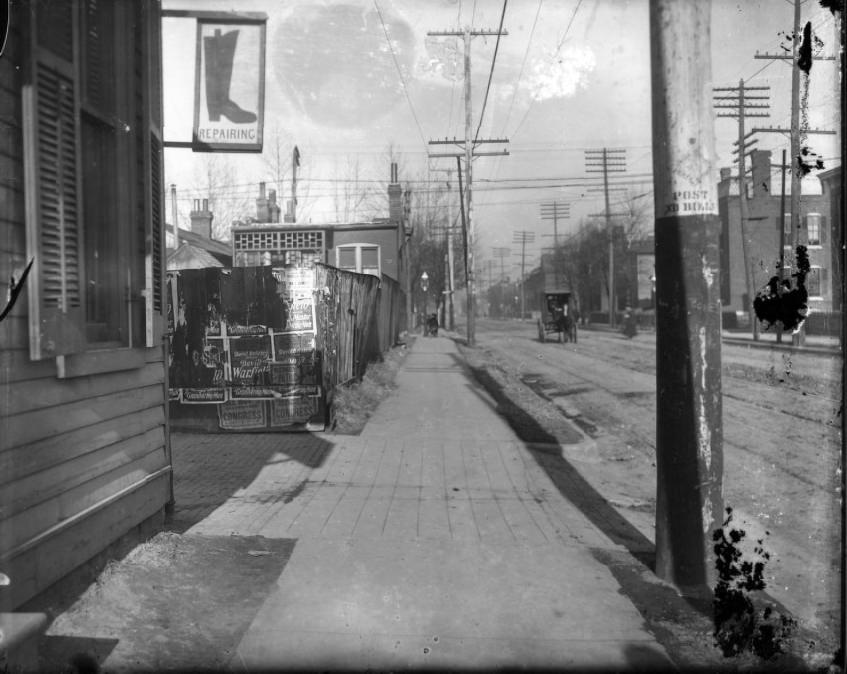
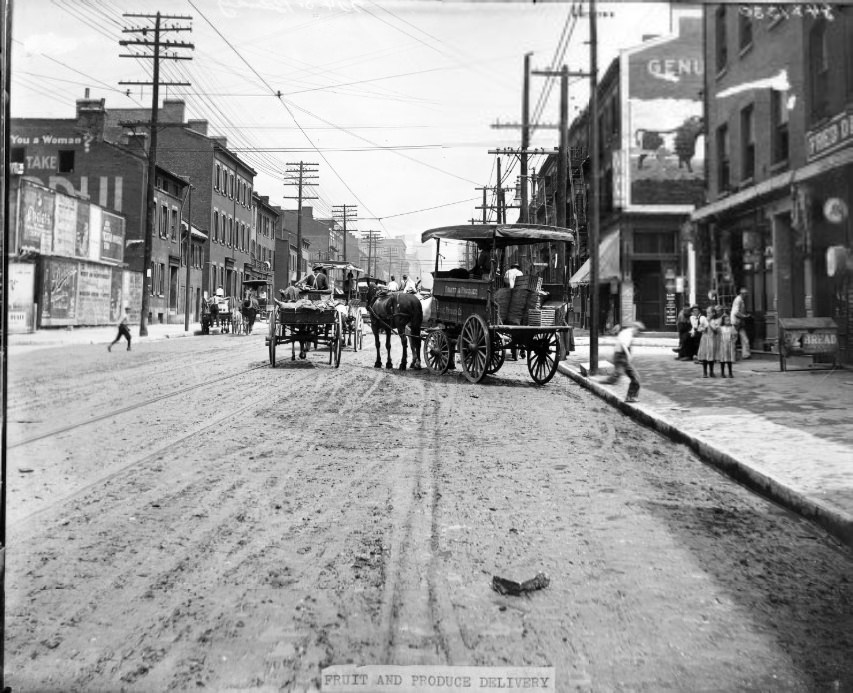
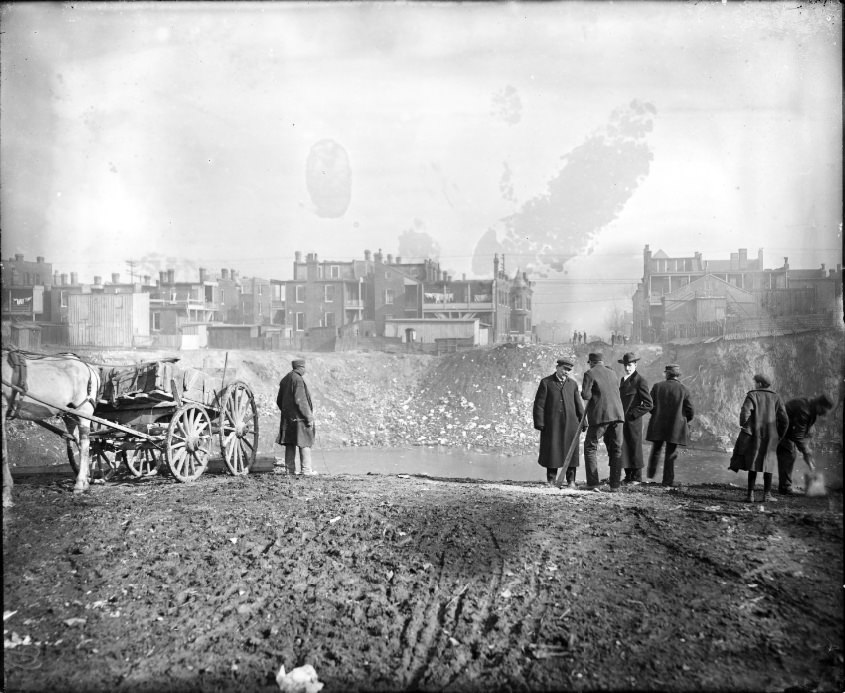
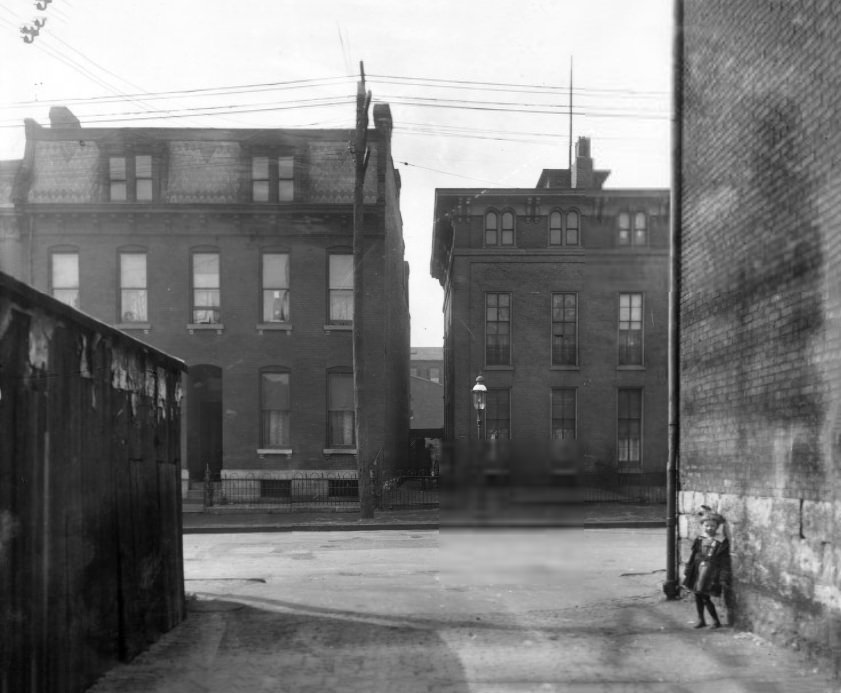
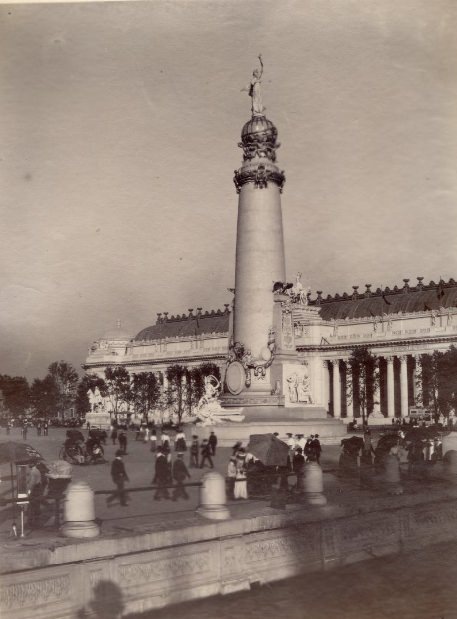
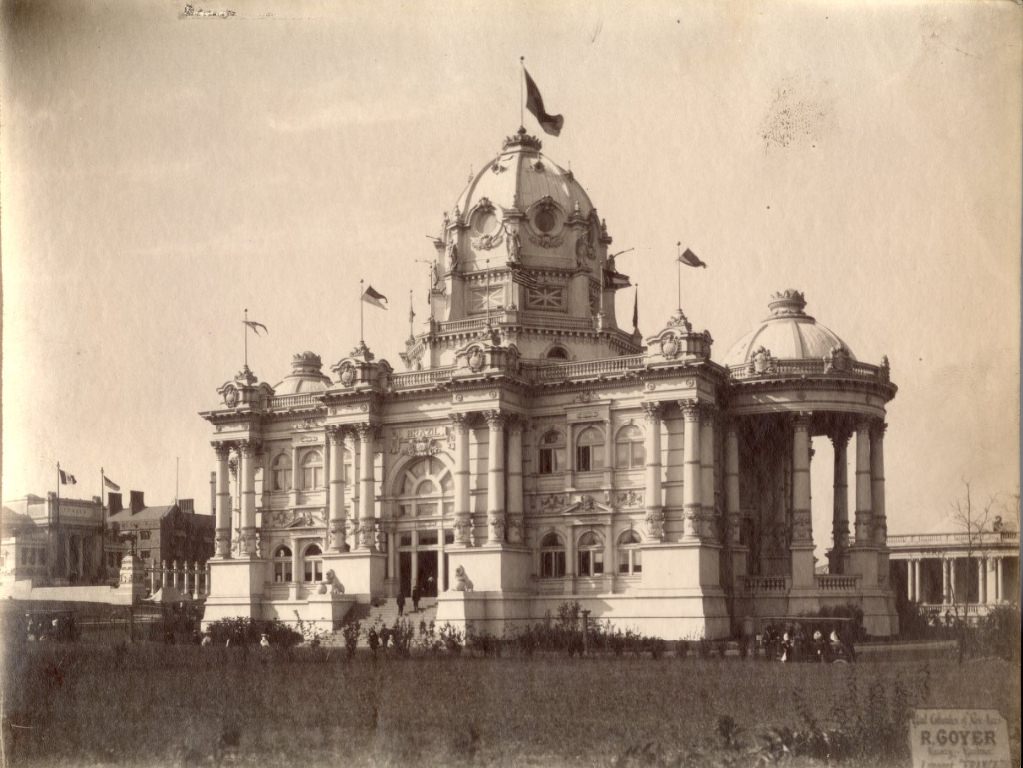
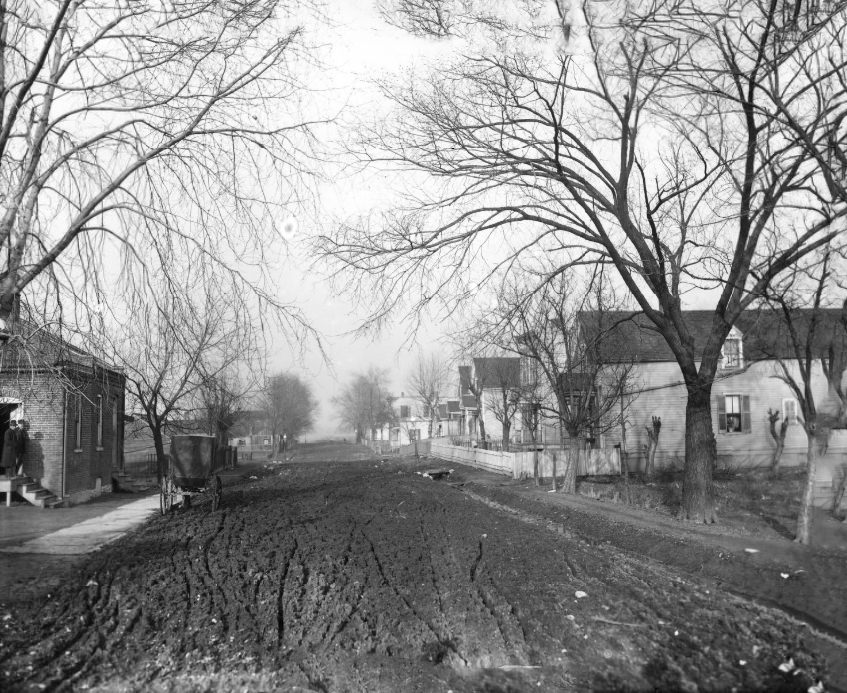
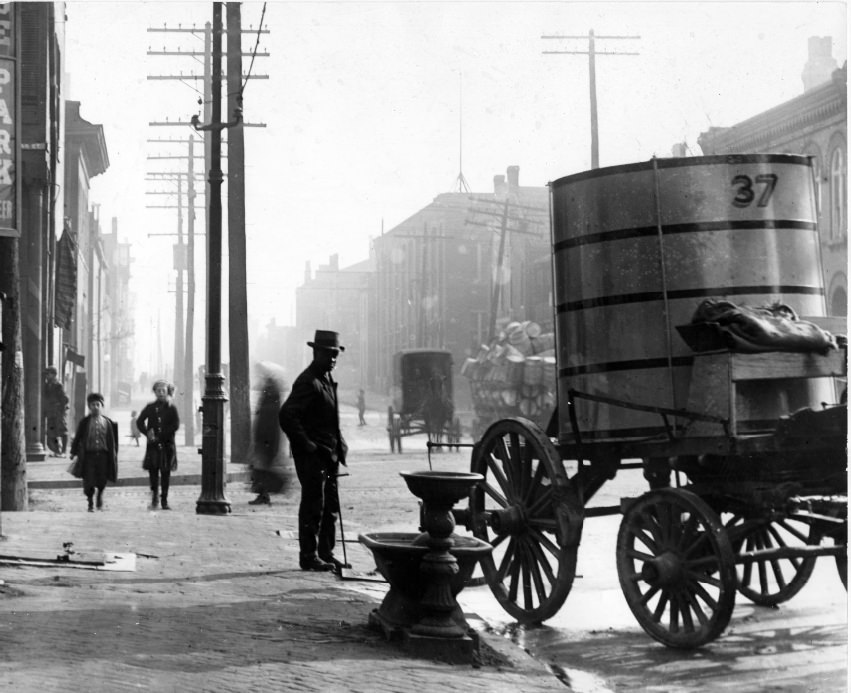
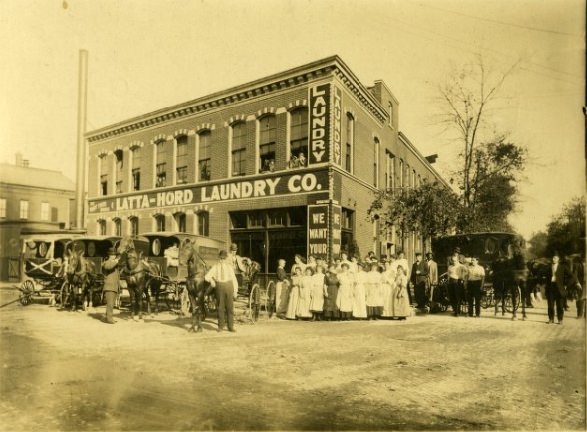
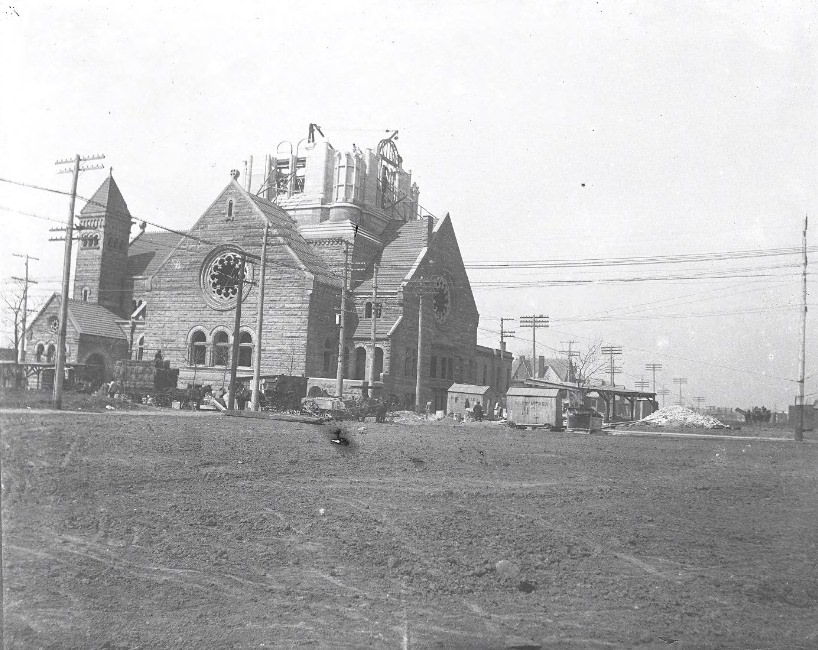
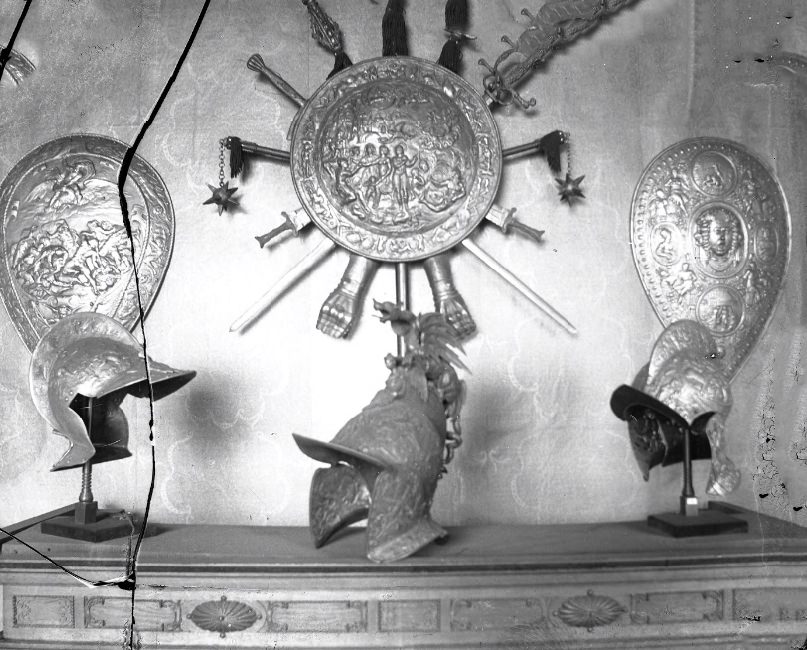
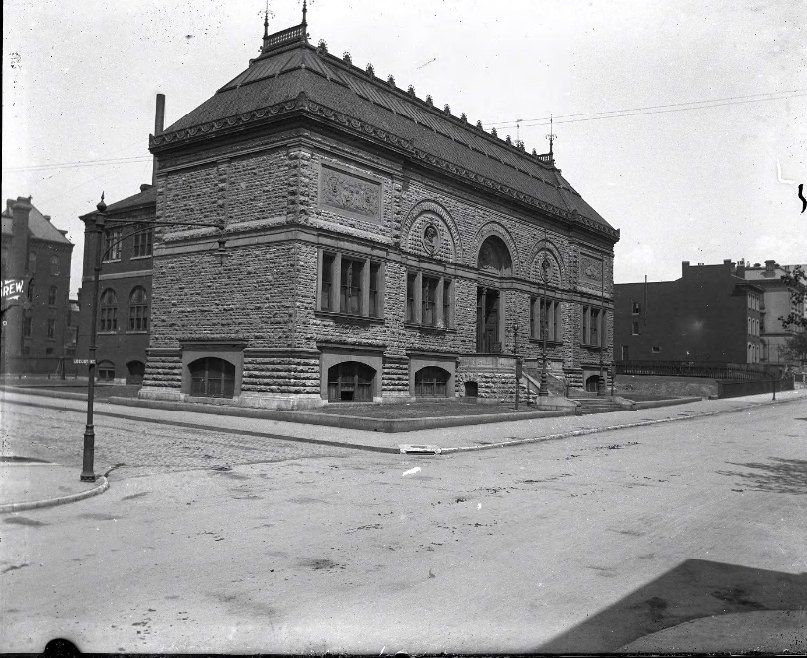
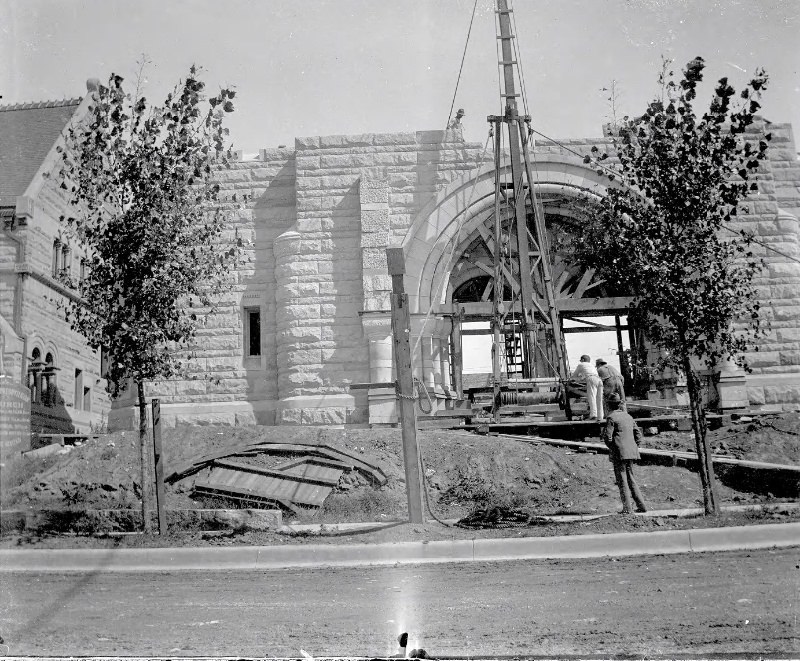
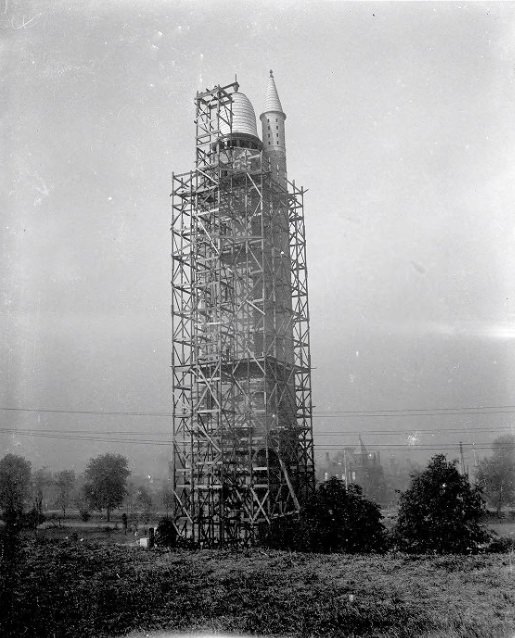
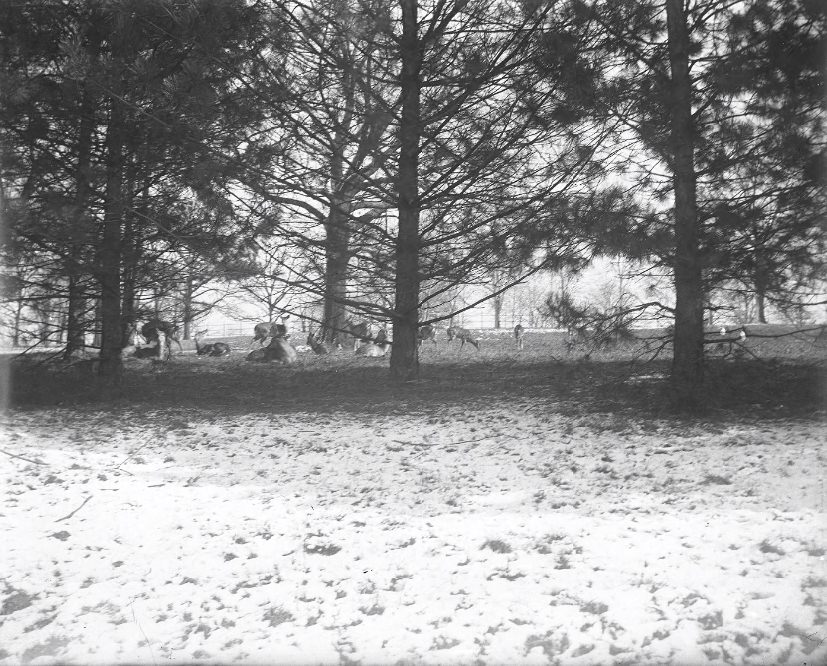
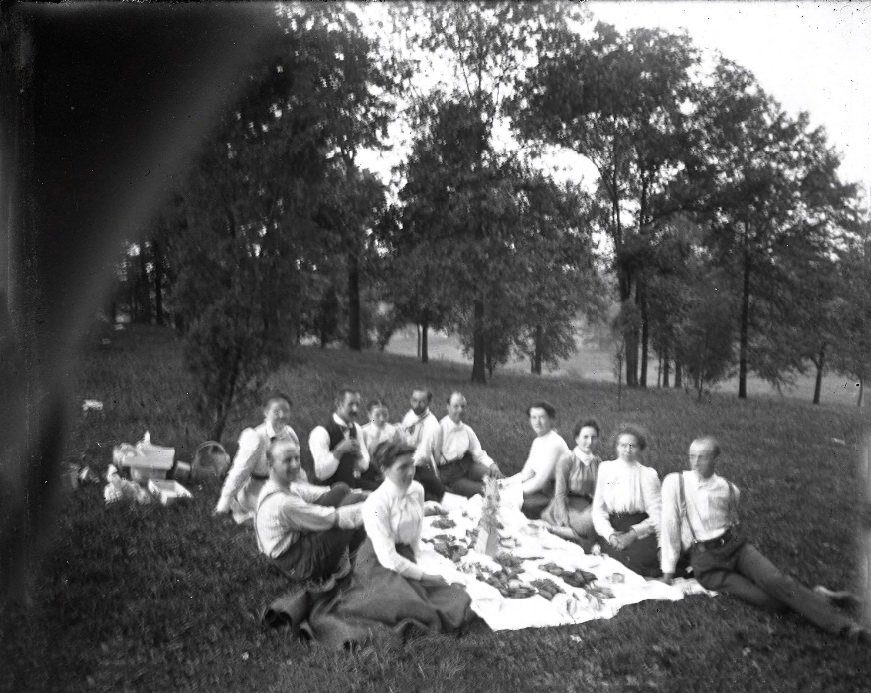
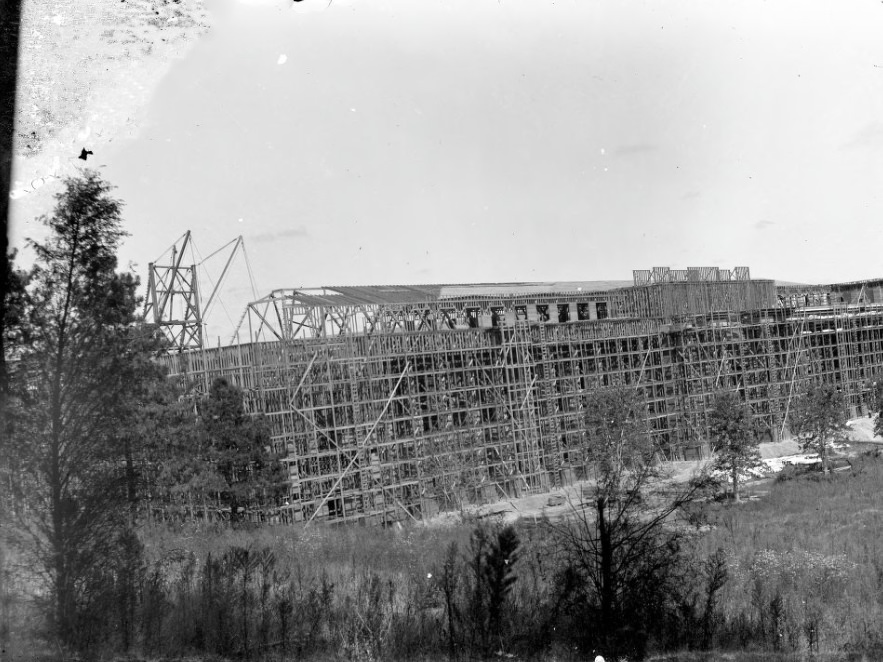
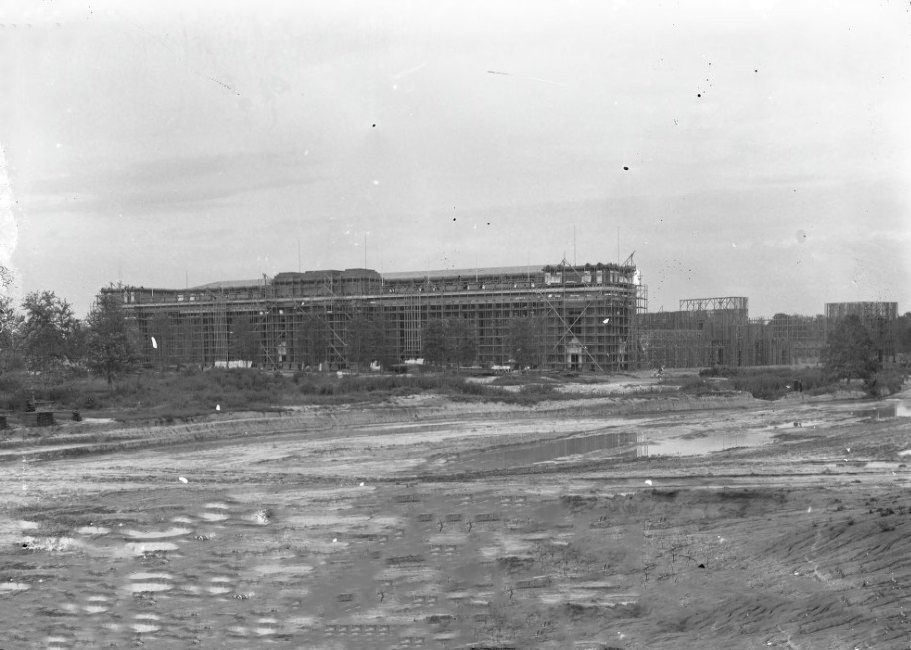
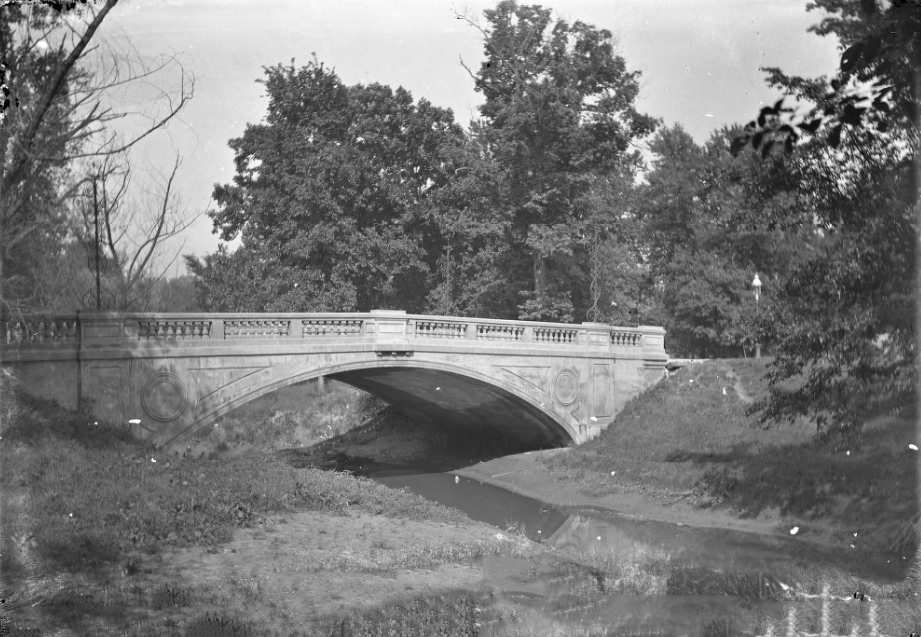
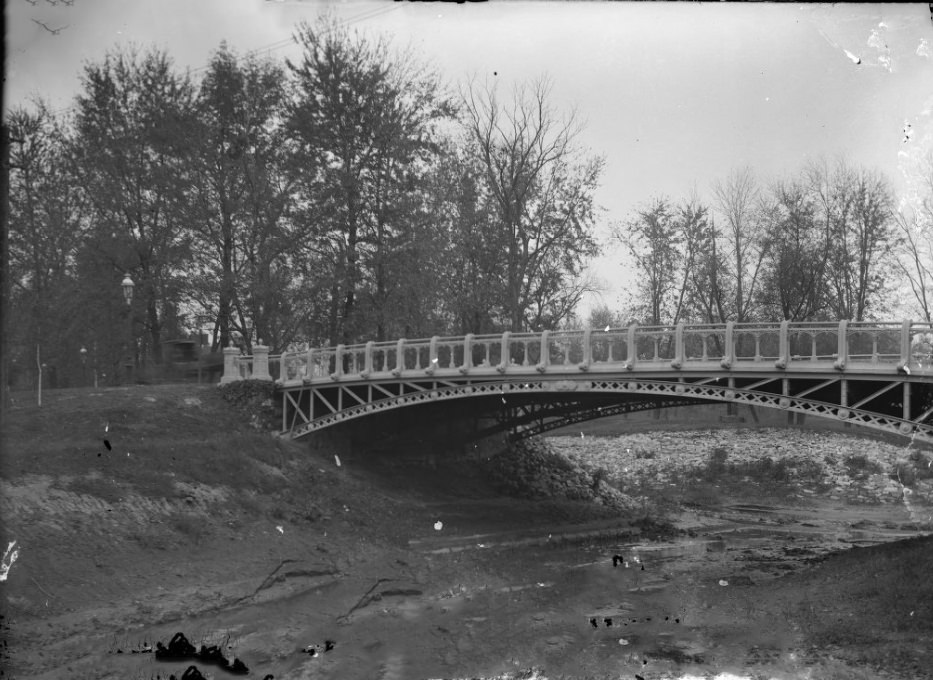
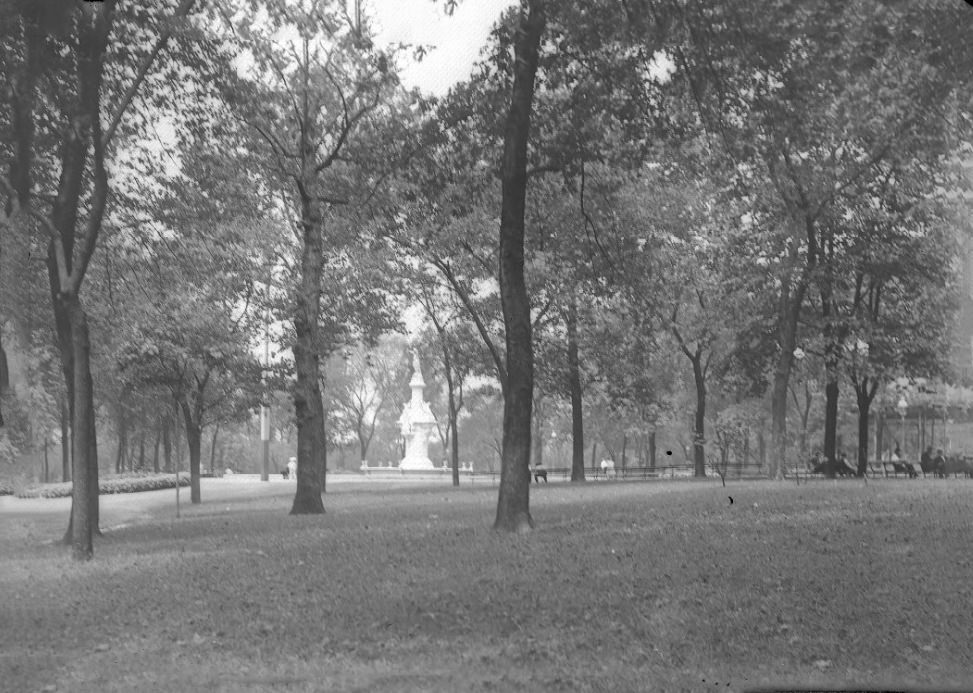
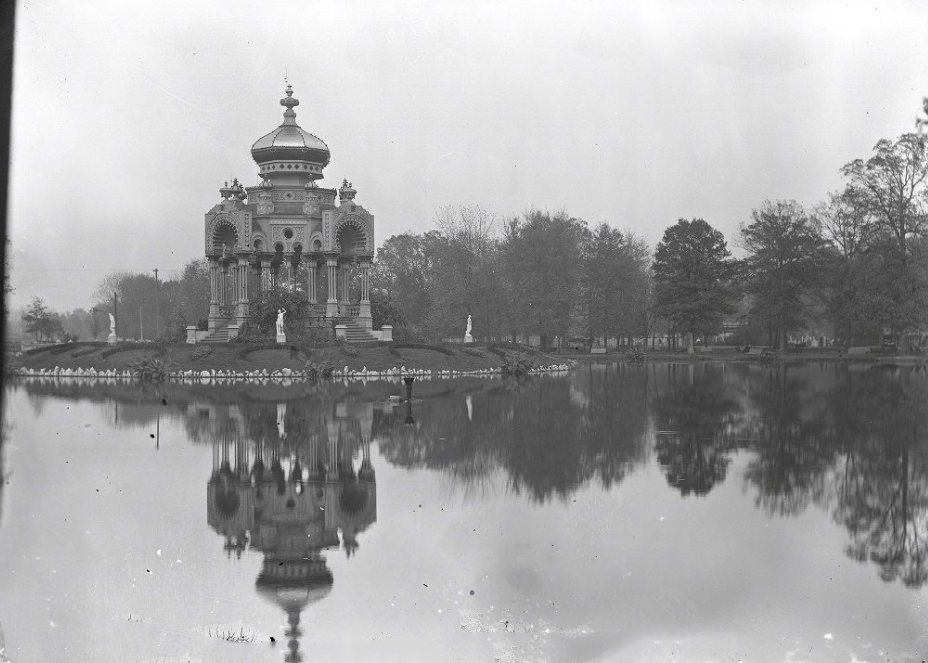
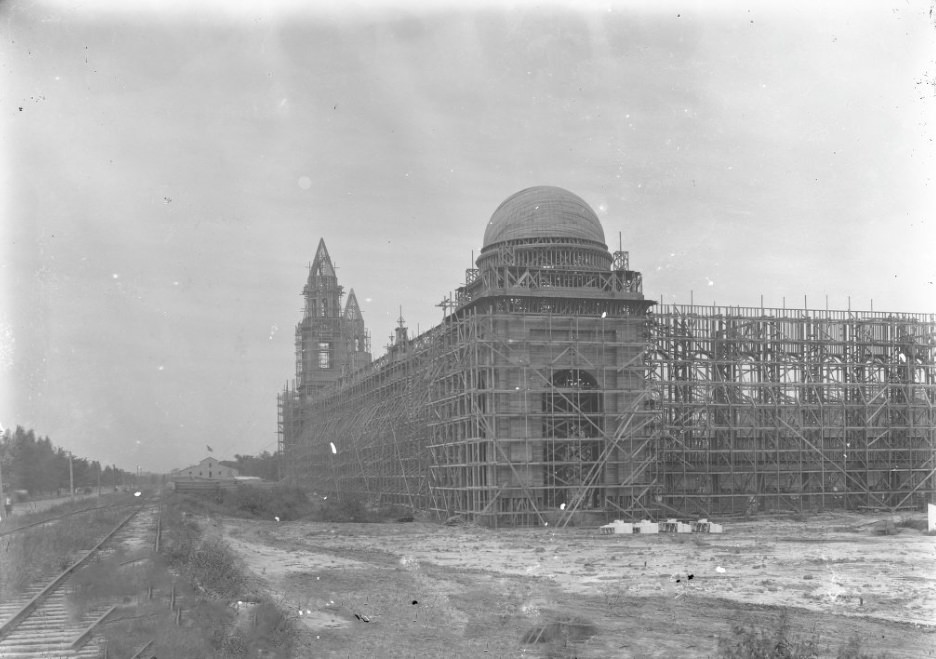
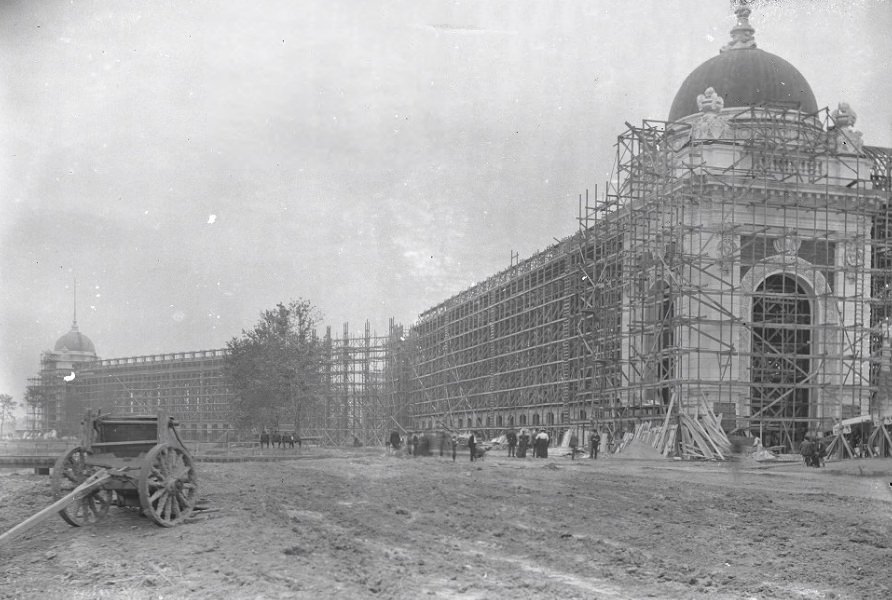
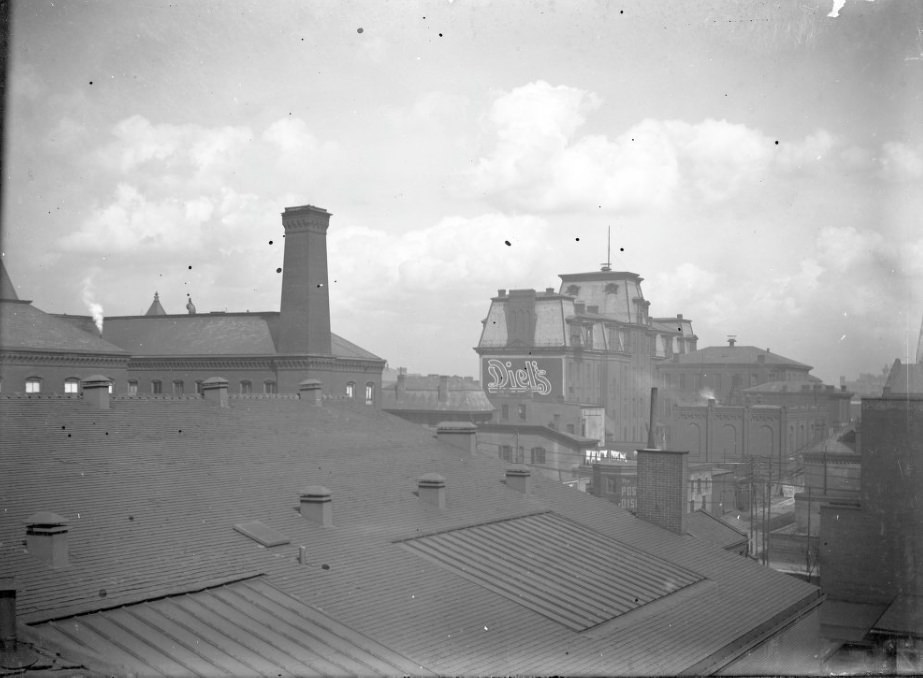
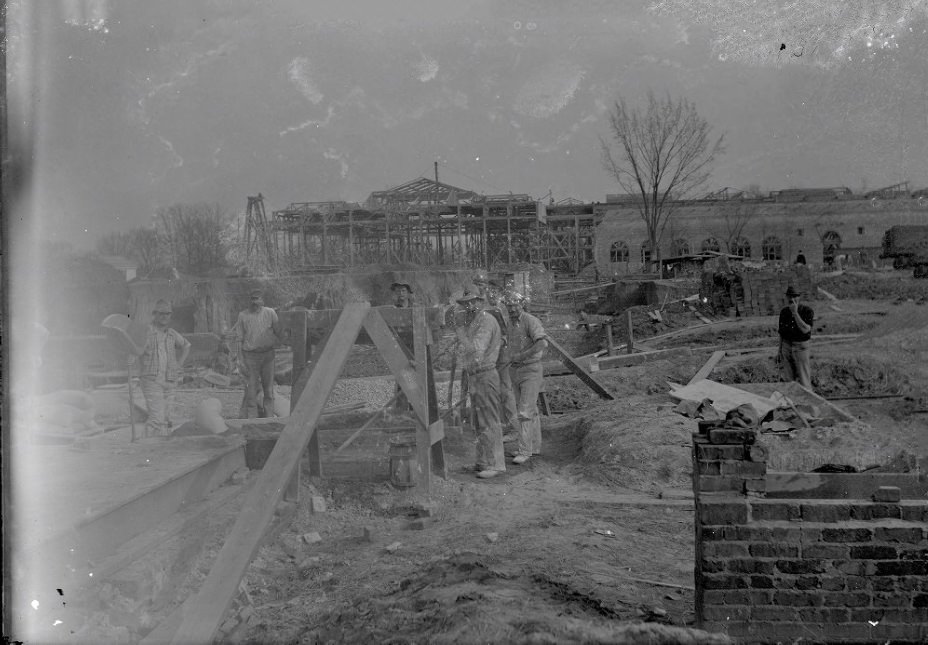
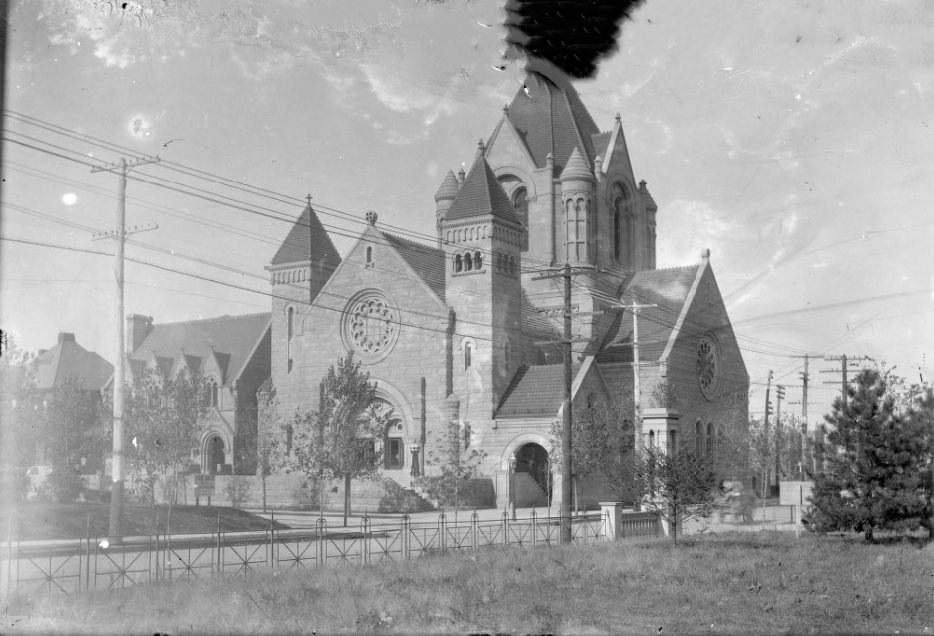
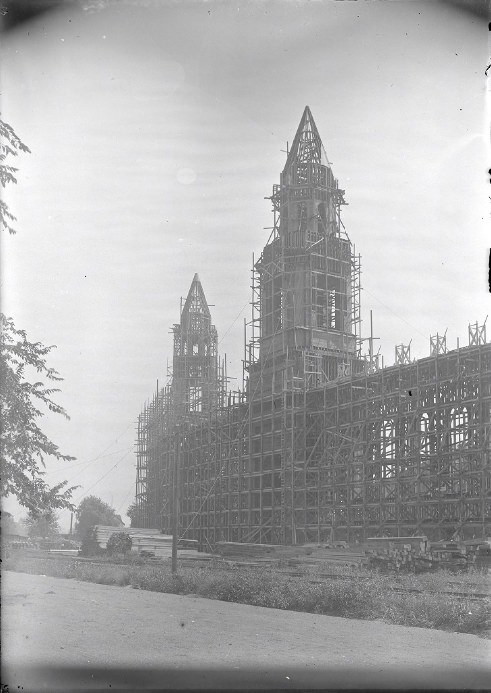
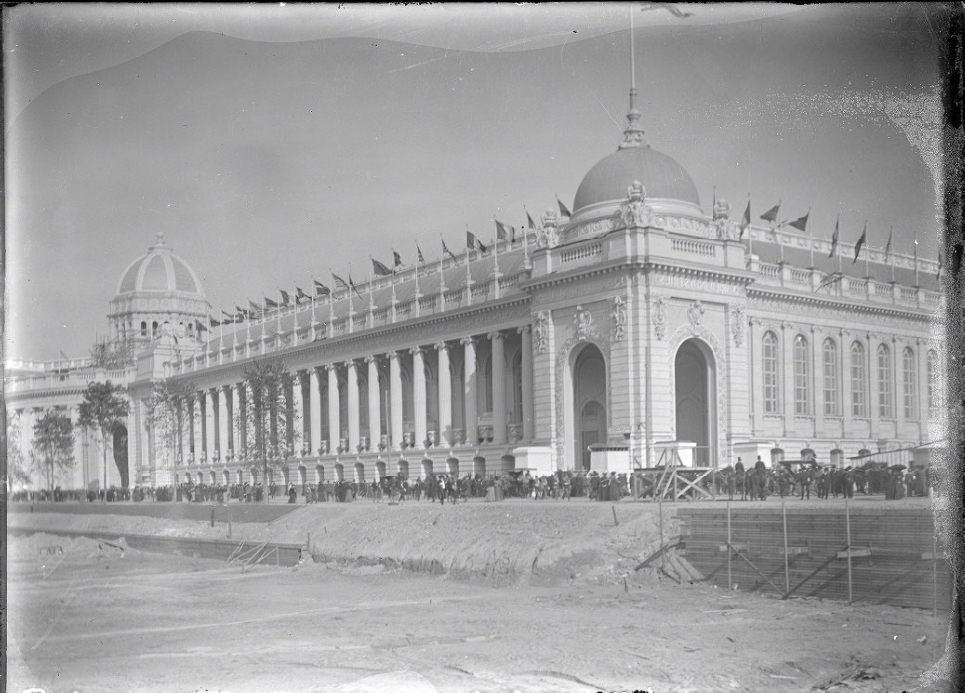
J. G. Canepa’s Bar, 1314 Market, corner of Market and Centre Streets, 1901View of Locust Street headed downhill toward 18th Street, 1907A couple of two-hitch horse wagons, 1901Two men standing on the sidewalk of a major street. One man appears to work at the grocery they are standing in front of, 1904St. Louis Star newspaper building and Hotel Jefferson along North Tucker Boulevard, 1905People standing around a large hole in a city street. Two men in the foreground are looking down the hole, 1903The base of the Louisiana Monument at the 1904 World’s Fair in St. Louis. The monument features various statues and motifs.Drugstore window advertising “Wine of Cardui”, 1903The Palaces of Education and Social Economy at the 1904 World’s Fair.Rear of a railway locomotive travelling away from the camera, 1905The old Boatman’s Bank building in March of 1900.A pair of smokestacks, one of which is being worked on by a group of men near the top of the stack, 1908Looking along city sidewalk with major street on one side and vacant lot on the other, 1906Herd of horses in urban neighborhood. Two men appear to be trying to corral the horses, 1906Intersection of Second Street with another street with men working in the middle of the intersection, 1907Tree along South 11th Street with signs attached to it, 1904Site where house has just been demolished in the midst of an urban area, 1907Wrecked Dorris, 1907The Jaccard Building stood at the corner of Broadway and Locust Street, at 407 N. Broadway, 1907A horse either being lowered into or lifted out of a hole in a city street, 1908Men of the Gymnastic Association Sokol in St. Louis, 1900Two Young Girls at a Construction Site on Sherry Avenue, 1905Chestnut Street West From 4th Street, 1905City Street Construction, 1907Restaurant Menu Sign Board, 1904The Sunken Garden at the 1904 World’s Far with the U.S. Government building in the background.The Festival Hall on Art Hill in Forest Park at the 1904 World’s Fair.Christmas Tree on North Tucker, 1908Industrial Smokestacks, 1908Urban Horse Herd Closeup, 1908Car Parked On Seventh Street, 1906Market Street Lunch Room, 1907The 1904 World’s Fair from the top of the Buffalo Tower. The view looks out over the Plaza of Orleans to the distant eastern restaurant pavilion on Art Hill.A horse either being lowered into or lifted out of a hole in a city street, 1908Alaska House and Totems, 1908The Palace of Machinery at the 1904 World’s Fair in St. Louis.A vista looking down the lagoon at the 1904 World’s Fair.River at low level running through a neighborhood, 1906. People are in the riverbed and a shack that has fallen off its foundation is also visible along the bank.Streetcars on street under repair, 1909 .A modified streetcar with the cab removed is in the foreground. Men are visible in the background on the sidewalk in front of the businesses.A cobblestone cross-street fitted with a gas powered street light and a series of telephone wires, 1908The Missouri building at the 1904 World’s Fair in St. Louis. This was a temporary structure demolished after the fair. The World’s Fair Pavilion was then built on this site.Adonis Tennis Club House, St. Louis. One of 31 photos bound in a leather stamped album, 1904The Palaces of Education and Social Economy at the 1904 World’s Fair. This image is of the buildings at night viewed from across the Grand Basin.North 7th Street showing people at work and walking along street, 1904The Palace of Liberal Arts at the 1904 World’s Fair.Team of men working in the middle of a city street during a snowstorm, 1902The Palaces of Electricity and Machinery at the 1904 World’s Fair.A Pennant Pierce Oil Corporation filling station, 1908. Three cars are visible in front. A man appears to be putting air into the tire of one of the cars.Men installing a pipe in a city street, 1908Girl on Path, 1907Mielke’s Lunch Stand and Hotel Francis, 1906The intersection of South Taylor Avenue and Manchester Avenue, 1906The intersection of North Euclid and McPherson Avenues, looking west along McPherson Avenue, 1907City sidewalk with wooden fence with posters plastered on it, 1907Horse-drawn wagon delivering fruit and produce to a business, 1907. Other horse-drawn wagons are visible in the street. Two girls on the sidewalk are watching the delivery.Large pit in the middle of an urban area that is filled with water, 1908.Front of Two Urban Residences, 1907The Louisiana Monument at the 1904 World’s Fair in St. Louis. The monument was in an area called the Plaza of St. Louis, and in this picture the Palace of Manufactures can be seen in the background.Street scene of St. Louis after during or after 1904. Two women on sidewalk. Trolley car on rails in the cobblestone street. Buildings with mansard roofs.The intersection of North Broadway looking north from Market Street, 1903Construction site at railway interchange, 1903Children standing along and hanging on a rope near a construction site, 1904Fullerton Building, 1901Side-wheel excursion boat Alton at port, 1909Cabin of the excursion boat Alton, 1909Automobile crossing streetcar tracks over wooden road crossing, 1909Brazilian Pavilion at the 1904 World’s Fair in St. Louis.Unpaved road that is muddy, many ruts from carriage wheels are visible, 1902The Festival Hall at the 1904 World’s Fair viewed from the northeast looking across the lagoon.Water wagon on major St. Louis street near the intersection with Carr Street, 1903Store front of liquor store on Chouteau Avenue, 1903Latta-Hord Laundry Company, 1903The Saint Louis Mercantile Library building in downtown St. Louis at Broadway and Locust Streets, 1903Biddle and Broadway, showing the City Market, 1908A man and two children watching construction on the Washington University Campus, 1908Construction in an Open Field, 1903Woman Standing in Front of World Fair Construction, 1904The entrances to Tower Grove Park in Saint Louis, Missouri, 1903The Second Presbyterian Church Progress, 1902An armor helmet and shield display, 1908Saint Louis School and Museum of Fine Arts, 1902Construction progress on the Second Presbyterian Church in Saint Louis, Missouri, 1902Compton Hill Water Tower Construction, 1902Deer or Elk Among Large Trees, 1902A Group of People Having a Picnic, 1903The Missouri Botanical Garden Lily Pond, 1902World’s Fair Construction, 1903World’s Fair Construction, 1903Franklin Bridge in Forest Park, Saint Louis, Missouri, 1903A bridge going over a stream in Forest Park, Saint Louis, Missouri, 1903Workers on a World’s Fair Construction Site, 1903Painting of Ships, Crew, and Passengers, 1903World’s Fair Construction, 1903of Construction of World’s Fair Buildings, 1903Two Boys in a Park, 1902Missouri Botanical Garden Entrance and Crowd, 1902Trees and a Statue in a Park, 1901The Forest Park Band Pagoda, 1902The Side of Exposition Building Construction, 1903Missouri Botanical Garden Visitors, 1903
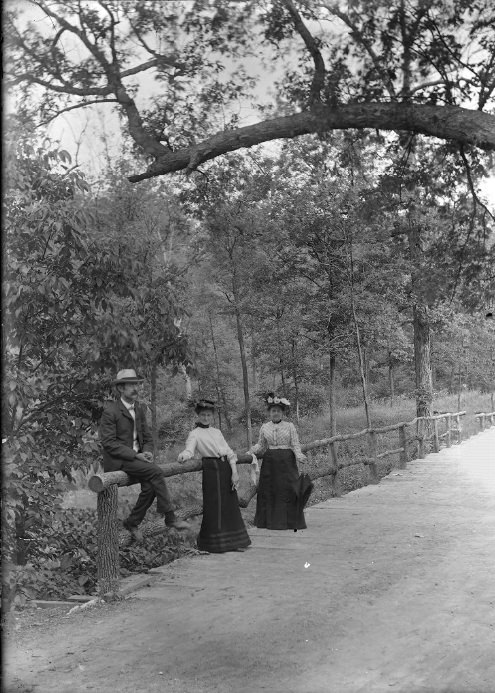
Three People Leaning on a Wooden Railing, 1901
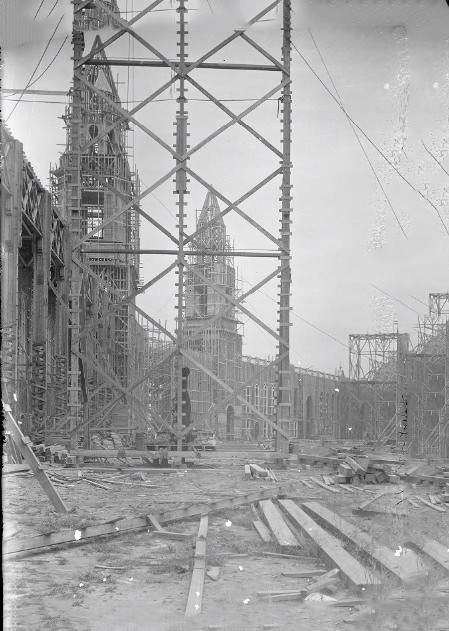
Close Up of World’s Fair Construction, 1902
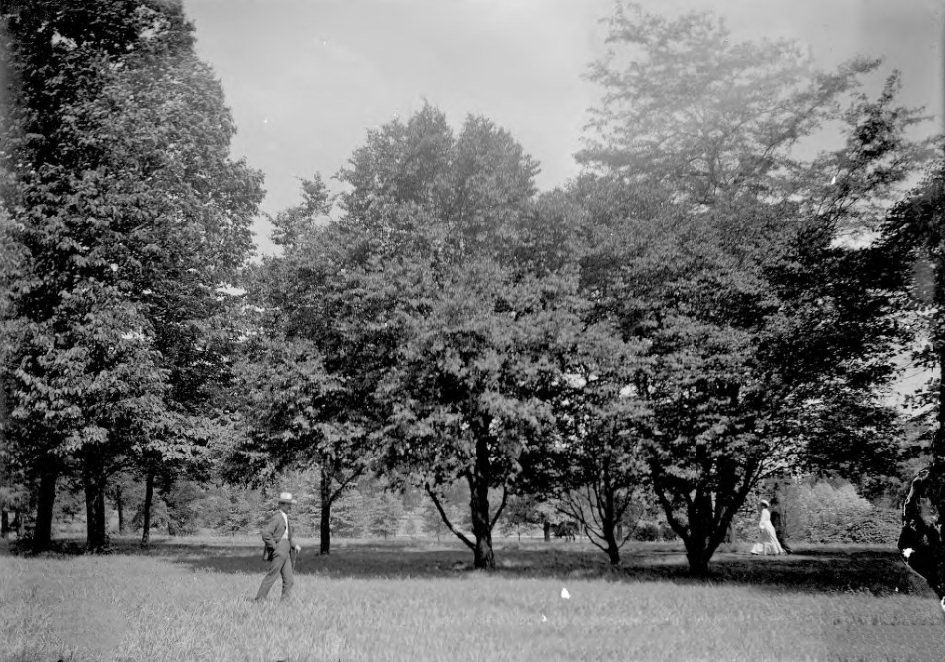
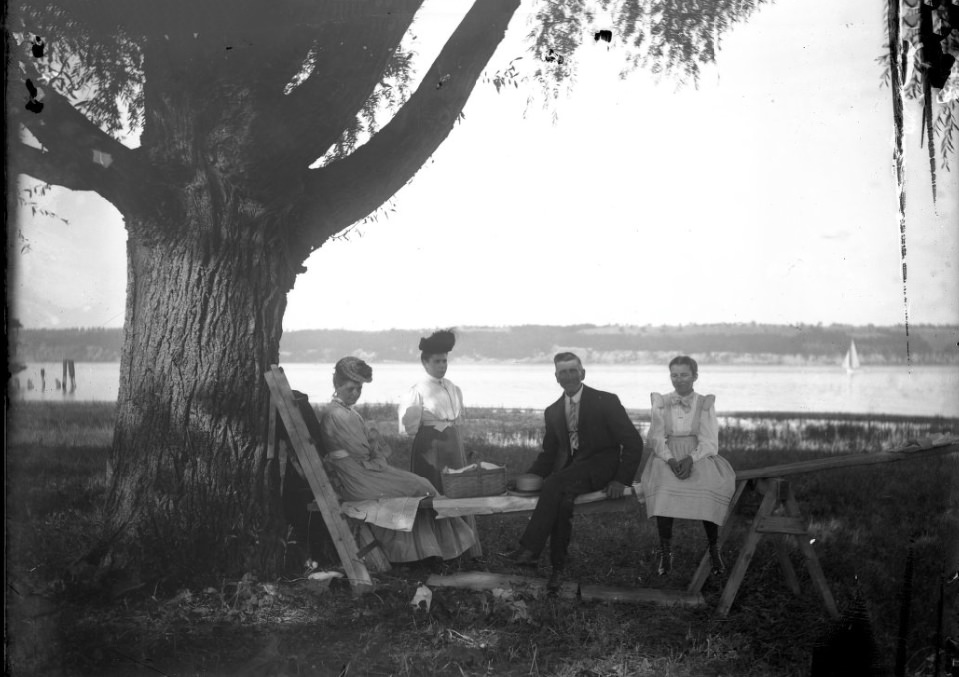
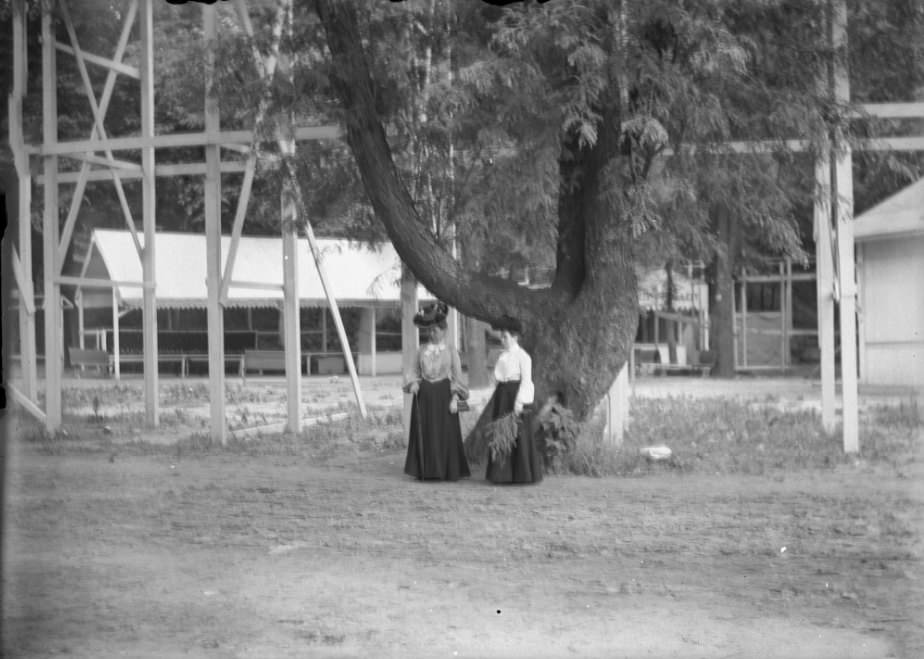
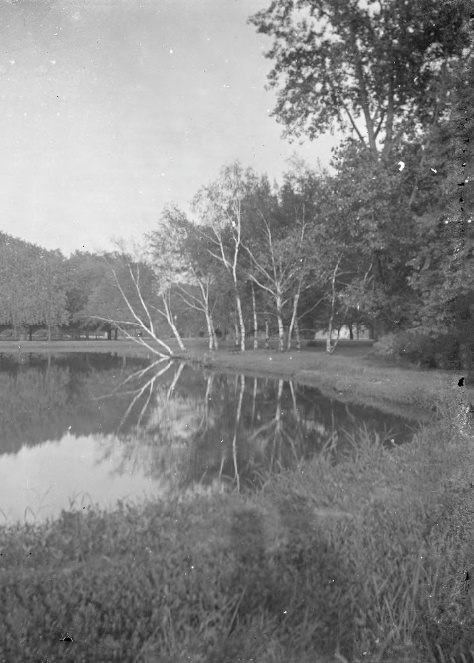
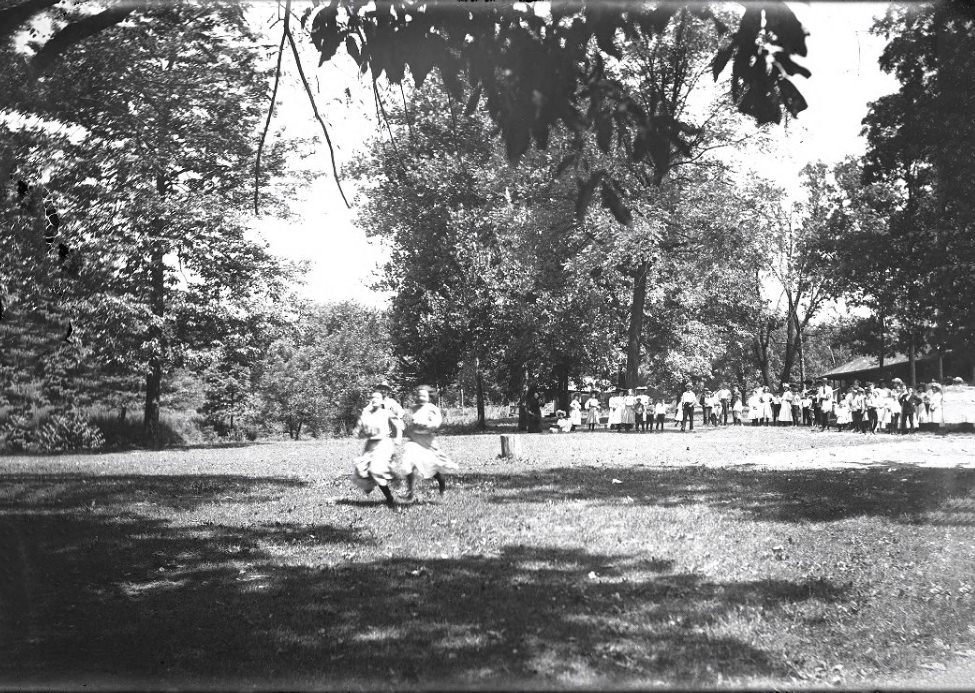
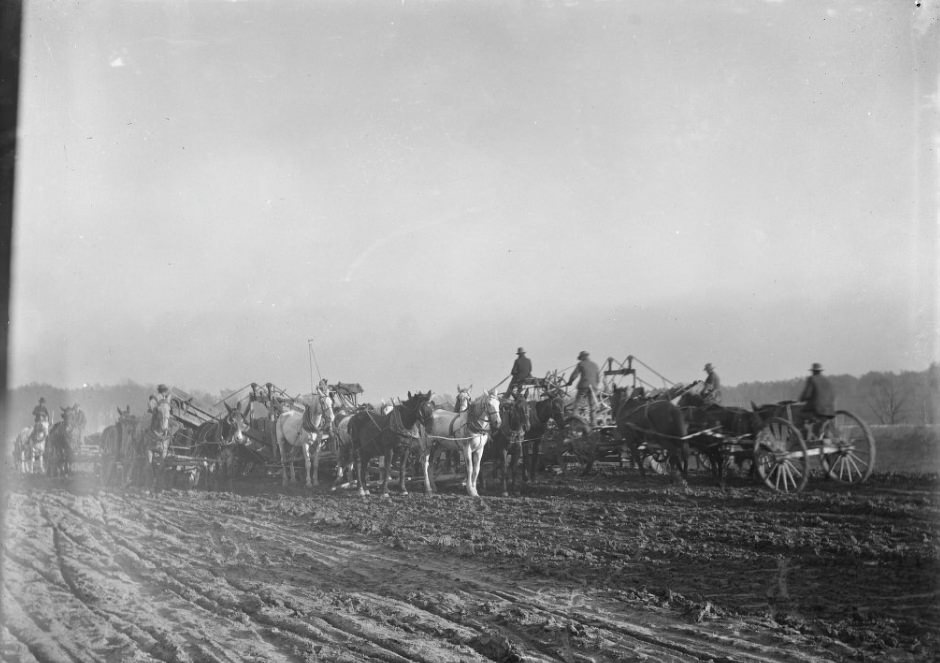
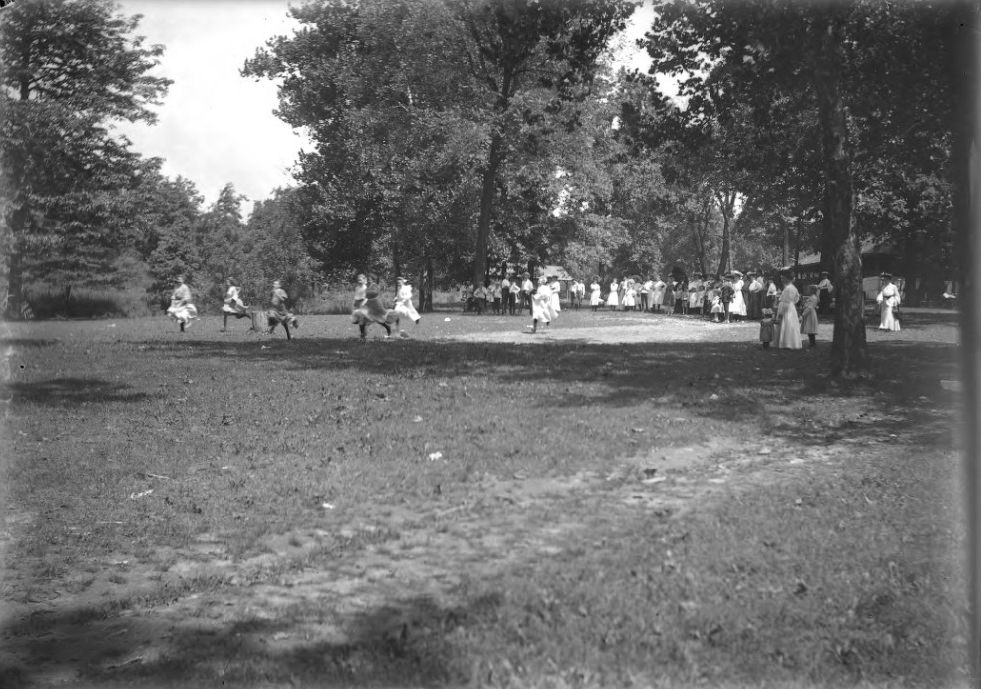
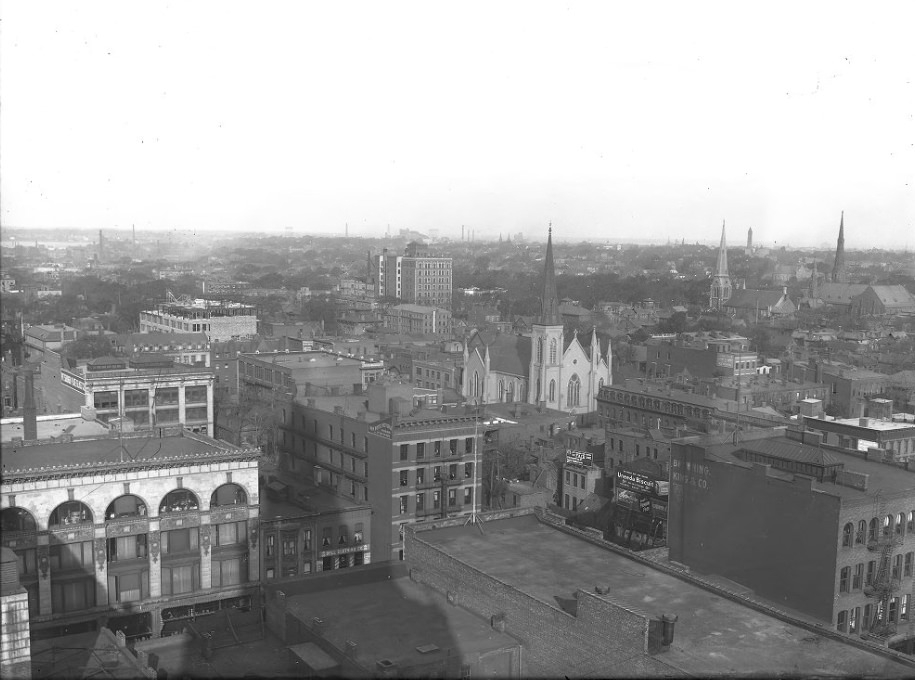
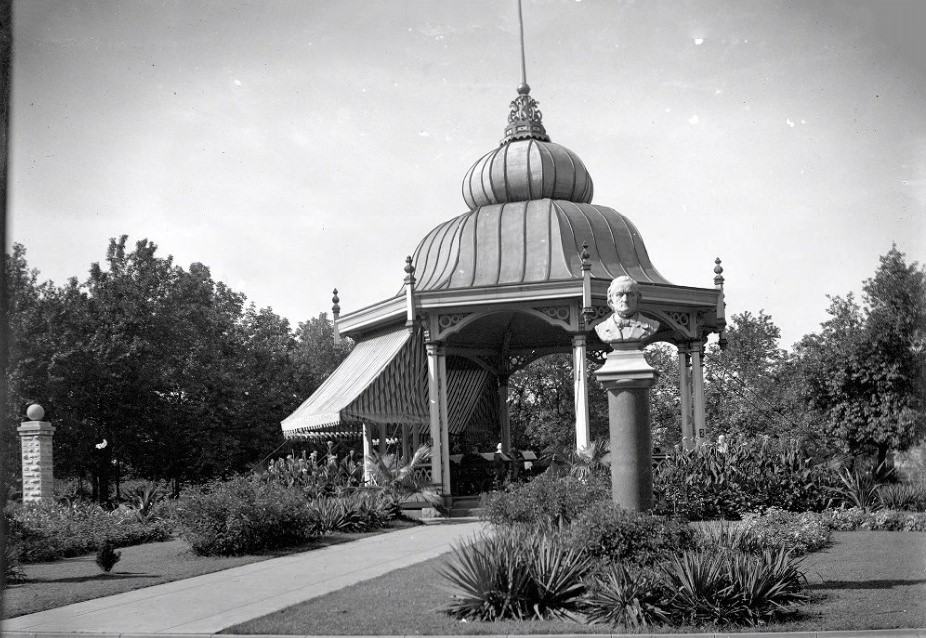
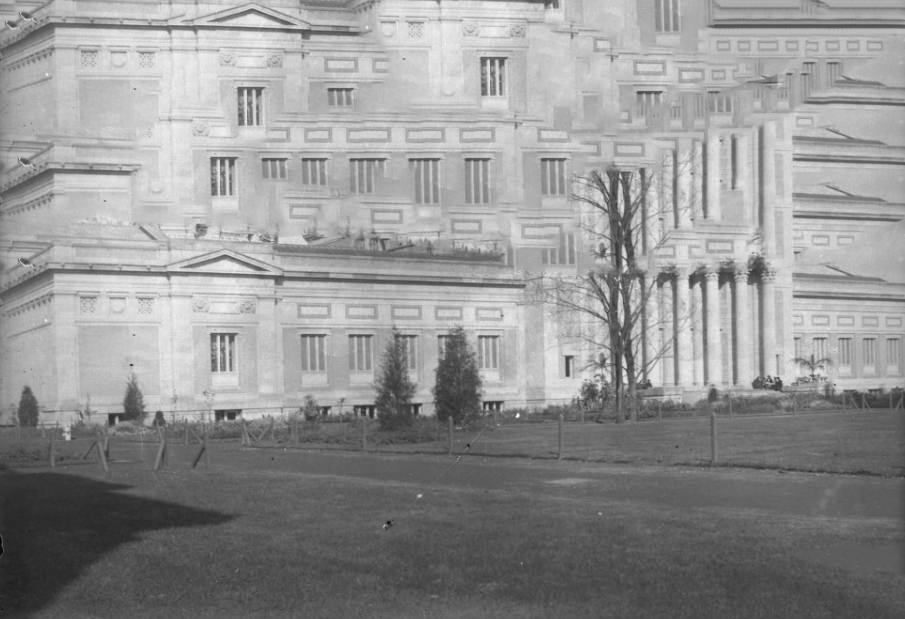
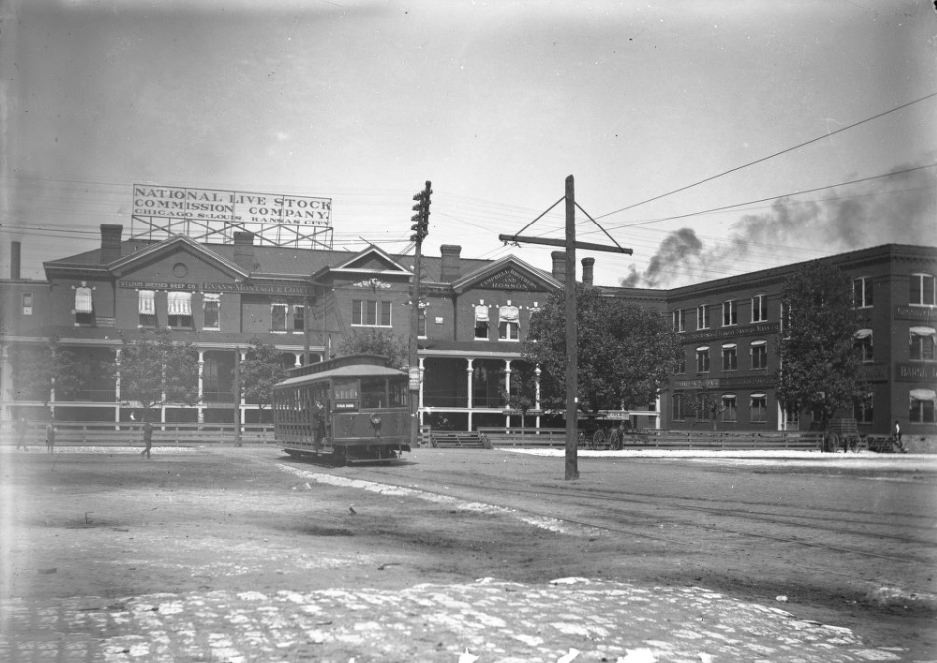
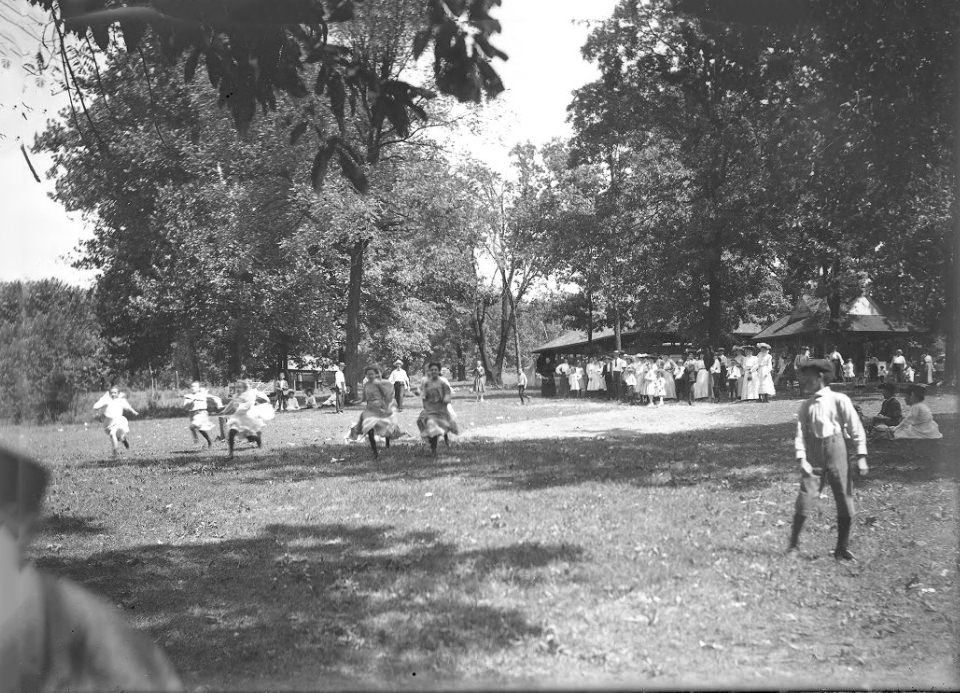
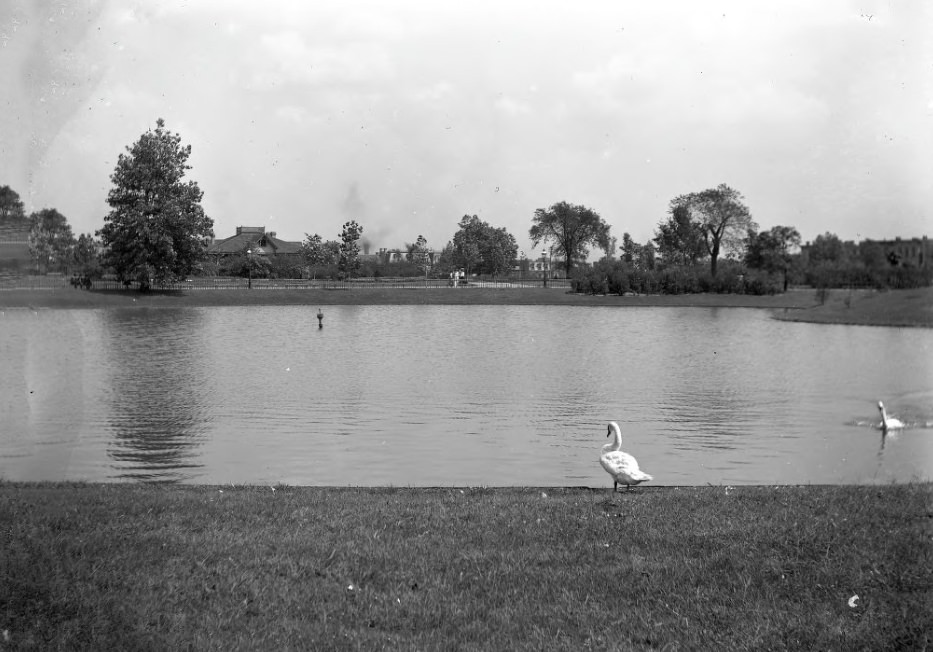
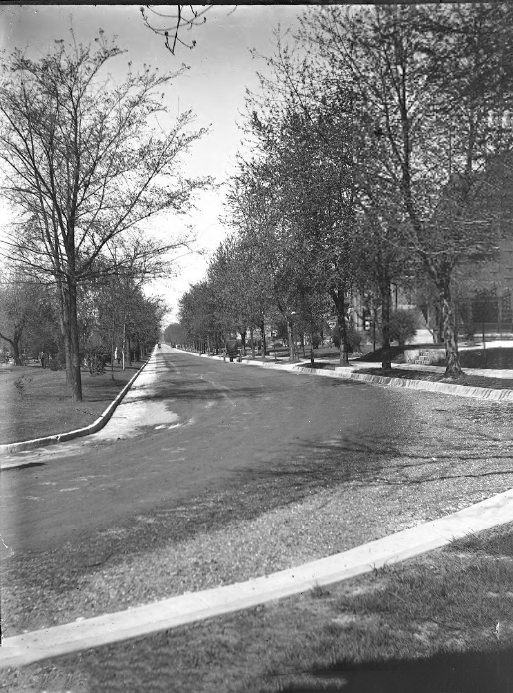
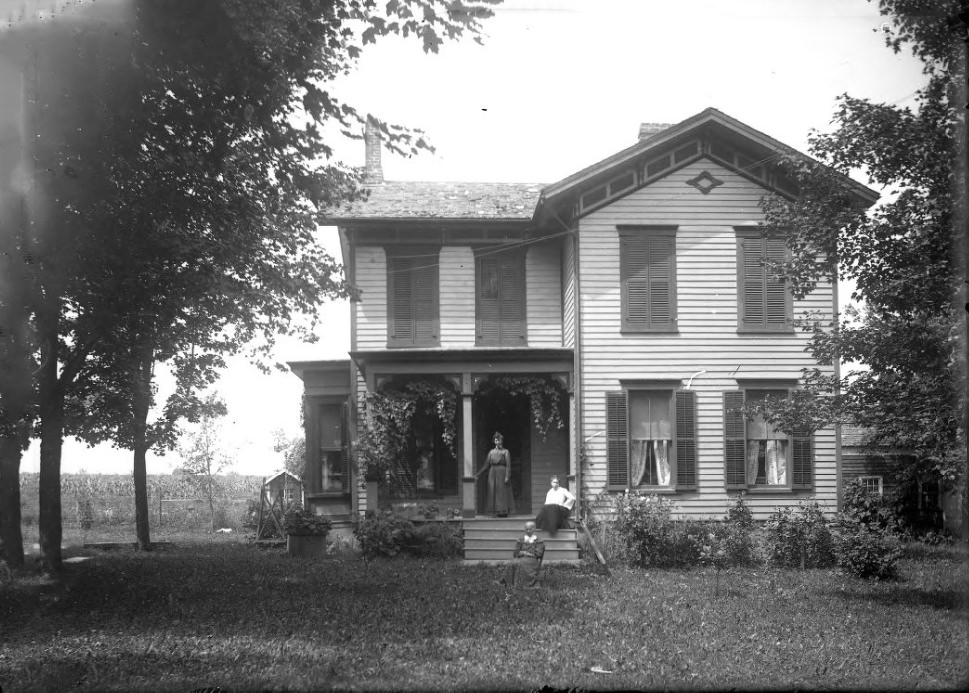
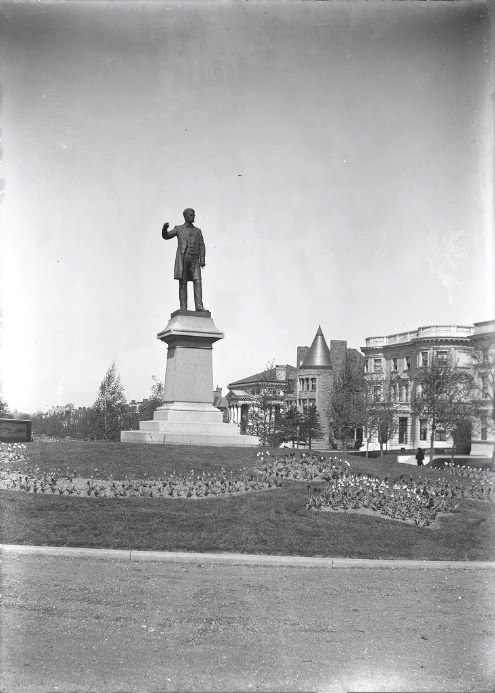
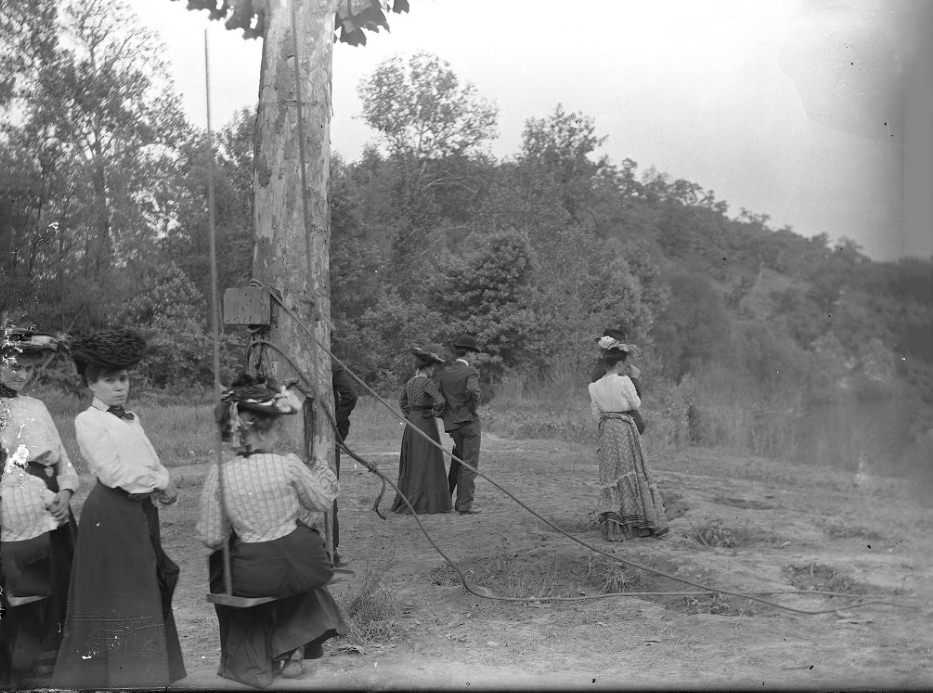
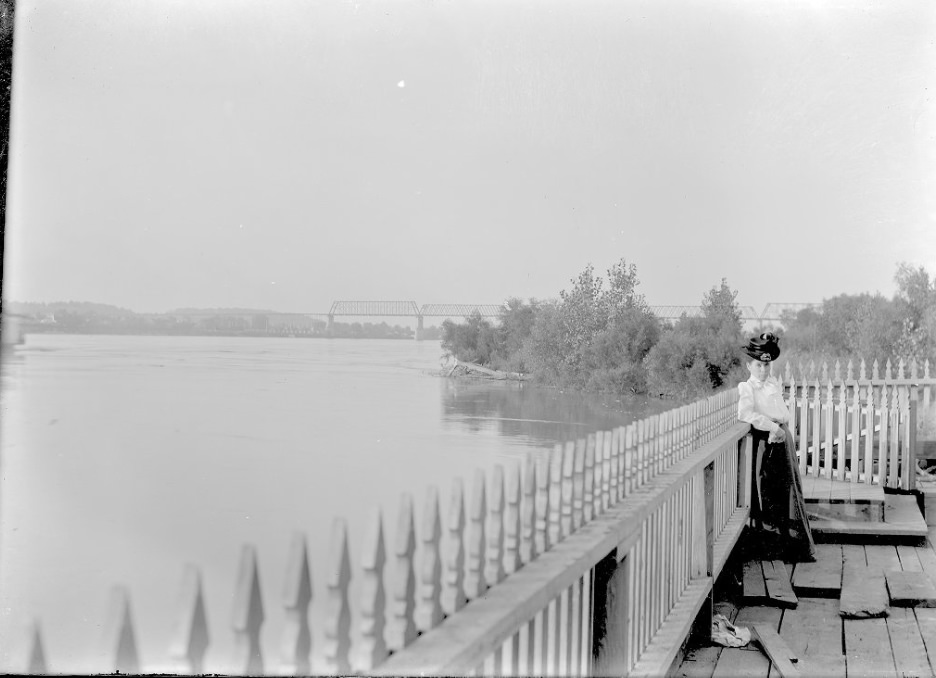
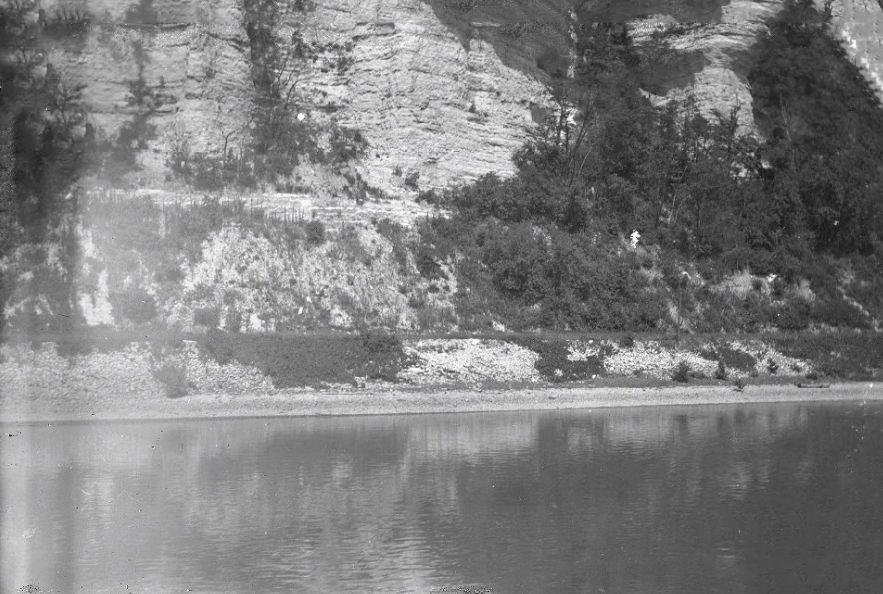
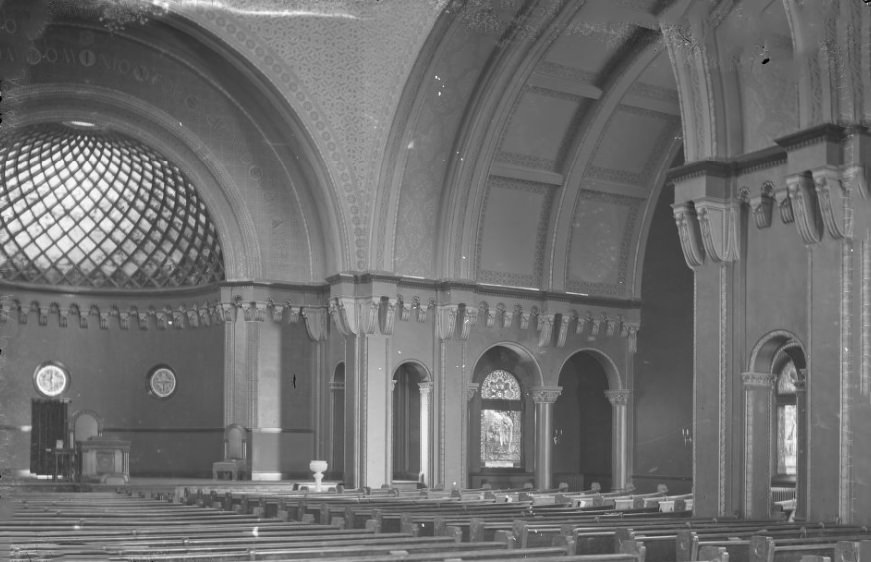
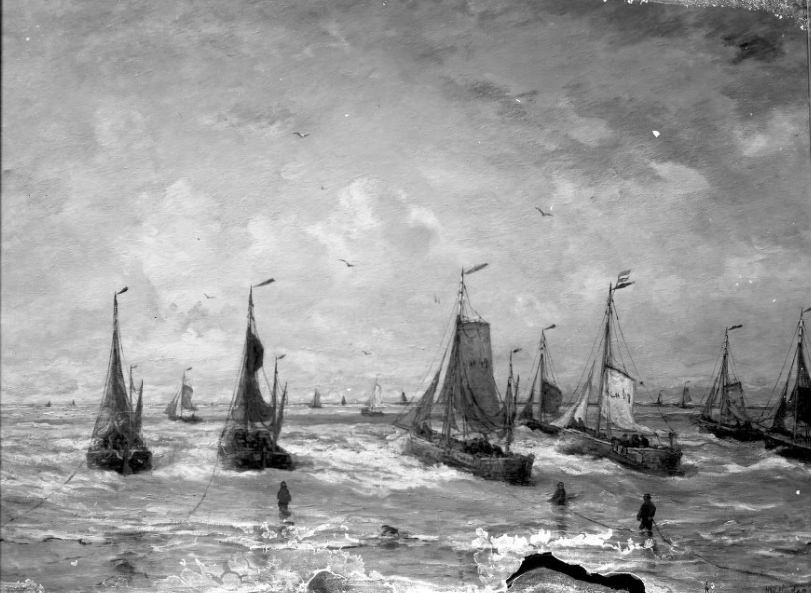
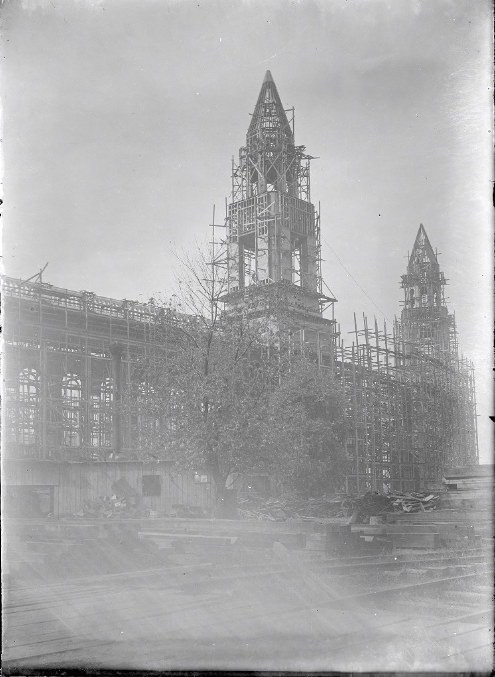
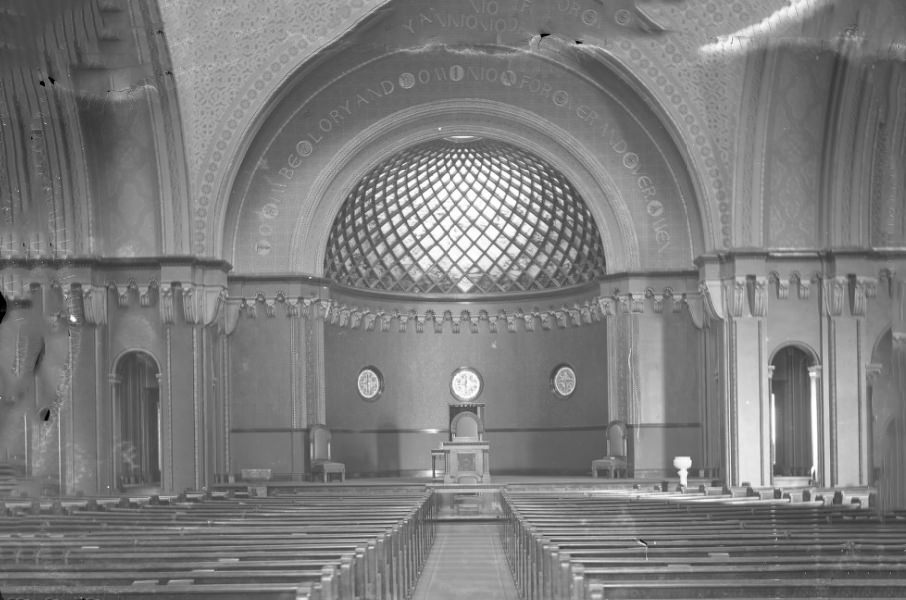
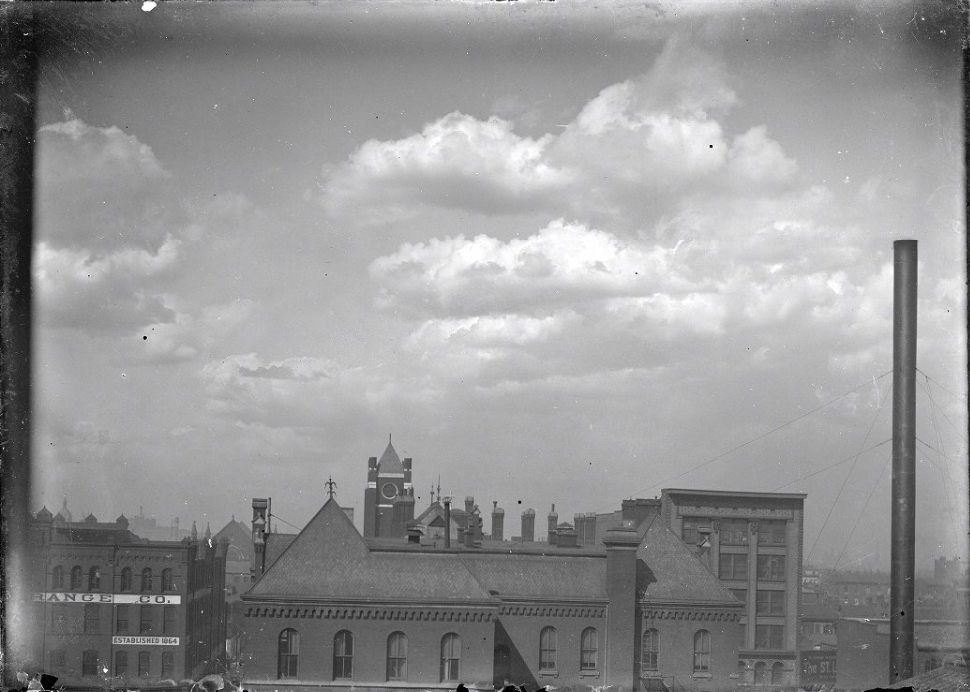
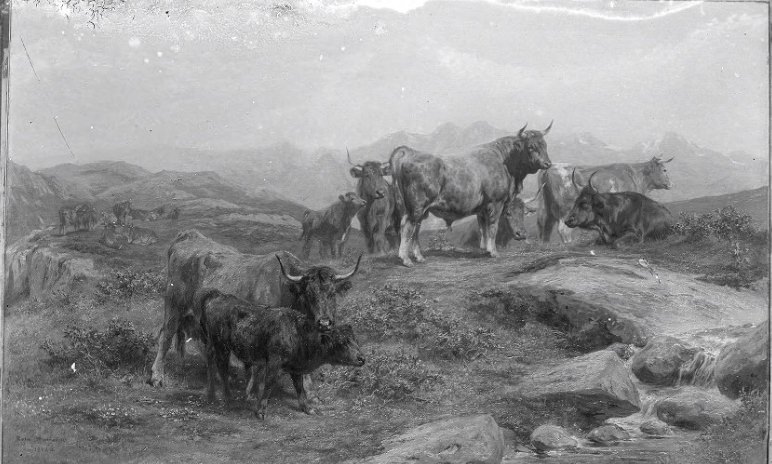
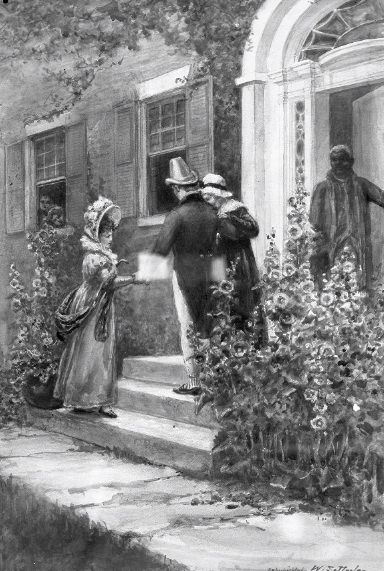
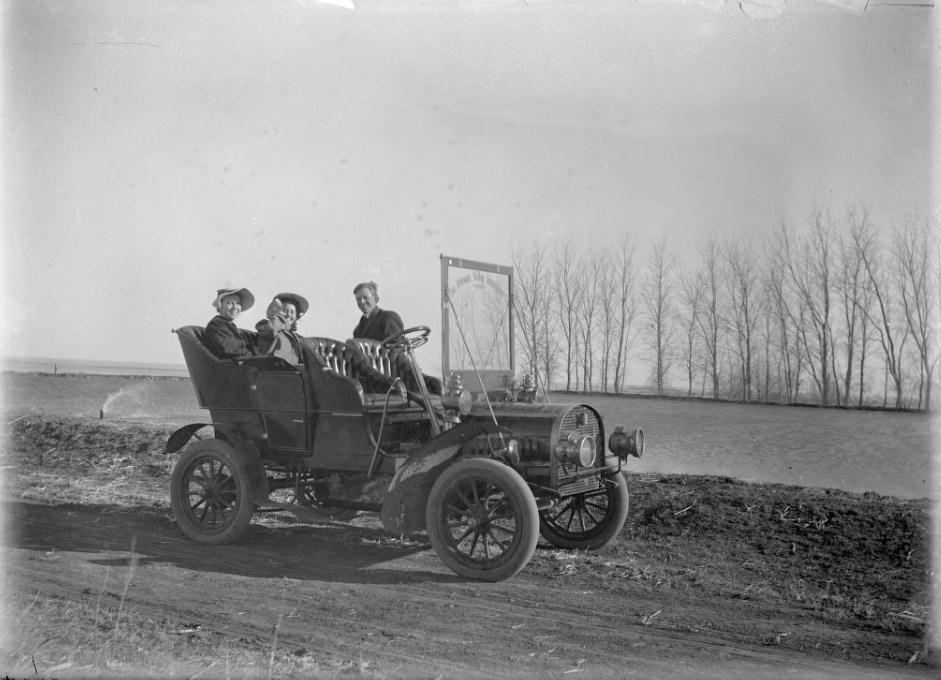
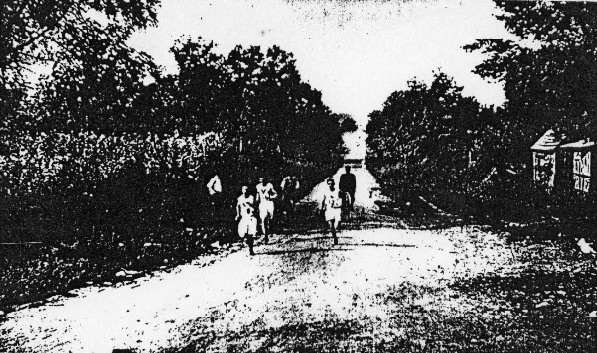
People Walking Through a Park, 1903eople Having a Picnic by the River, 1907Two Women Standing by a Tree, 1903Trees Reflected onto Water in a Park, 1903A Family in a Park, St. Louis, 1901Horse-Drawn Carriages in Downtown Saint Louis, 1901Children Running Through a Park, 1901Horses and Mules Pulling Carts in a Field, 1901Girls Racing as a Crowd Watches, 1901Saint Louis City from a Roof, 1901Saint Louis Art Museum, 1904Construction progress on the Palace of Varied Industries for the 1904 World’s Fair.The Bandstand in Tower Grove Park, 1908Saint Louis Art Museum, 1908The National Live Stock Commission Company, 1903Children Racing Through a Park, 1902Swans in a Park Pond, 1903Down the Length of a Residential Street, 1903A Farmhouse in Saint Louis, 1902A Family in Front of a Farmhouse, 1902A Child Standing on the Porch of a Large House, 1901Horse-Drawn Carts Going Down a Boulevard, 1903Statue of Francis P. Blair Jr. on a pedestal surrounded by tulip beds, 1904A Group of People Gathered by a Tree, 1904An Upper Class Suburban Landscape, 1901A Woman by the River, 1901The riverbank and bridge; the Saint Louis and Tennessee River Packet Company, the Consolidated Coal Company, Cape Girardeau and Commerce, and Diamond Line Steamers line the river side, 1904A stopped steamboat, labeled “Dr. Frederick Hill of St. Louis”, 1907Landscape Photograph of Water and a Cliffside, 1908The Pews and Altar of a Church, 1907A painting of several ships and crews at the edge of the water, 1907A construction site in Forest Park, Saint Louis, Missouri, 1903Saint Louis, 1902A busy construction site shows the wide skeleton of a building in the background, stacks of bricks and lumber are in the middle ground, 1907The Altar and Dome of a Church, 1904The Second Presbyterian Church in Saint Louis, Missouri, 1907Construction for the World’s Fair in Forest Park of Saint Louis, Missouri, 1904A World’s Fair Building with a Crowd, 1902A City View with a Smokestack, 1903. Several other buildings with a cloudy sky, and a smokestack on the right side of the image.A Painting Titled Beef and Bulls, a Cantal Breed, 1902A Large Home With People on the Porch, 1903The Construction of the Palace of Liberal Arts, 1903A Painting by Walter Satterlee, 1902Family Portrait in a Park, 1905Three people in a company care parked by the river, 1909Following the Marathon Race, 1907On the Road, 1902Fourth street, looking north from Market, 1903North Broadway Street, 190018th and Market Streets, 1900

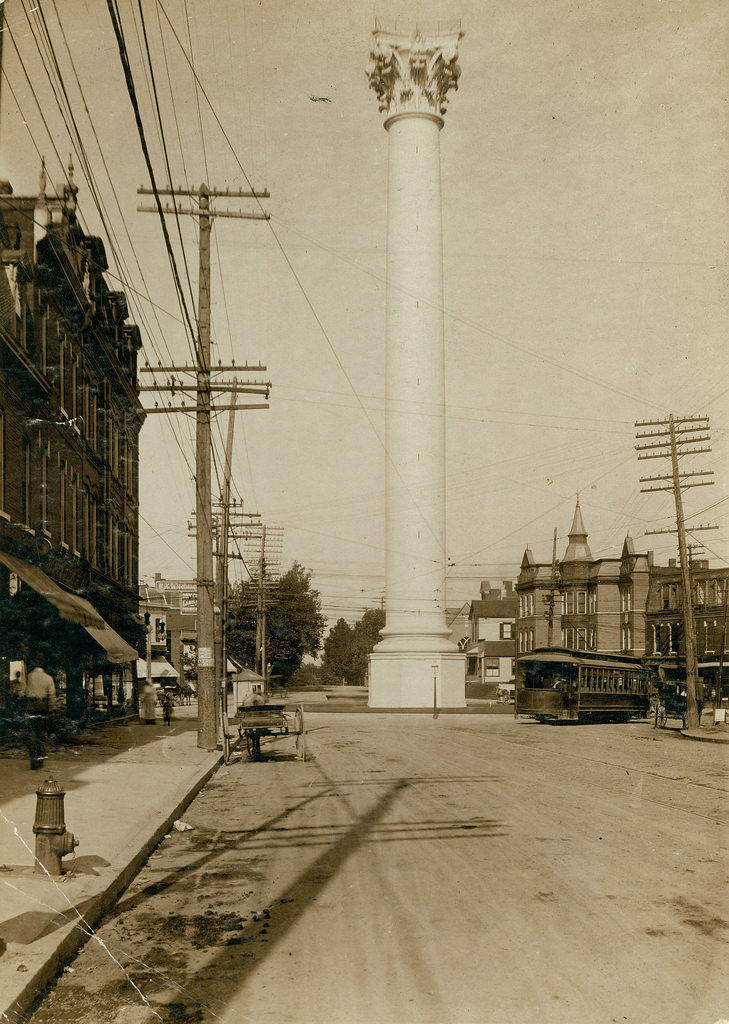
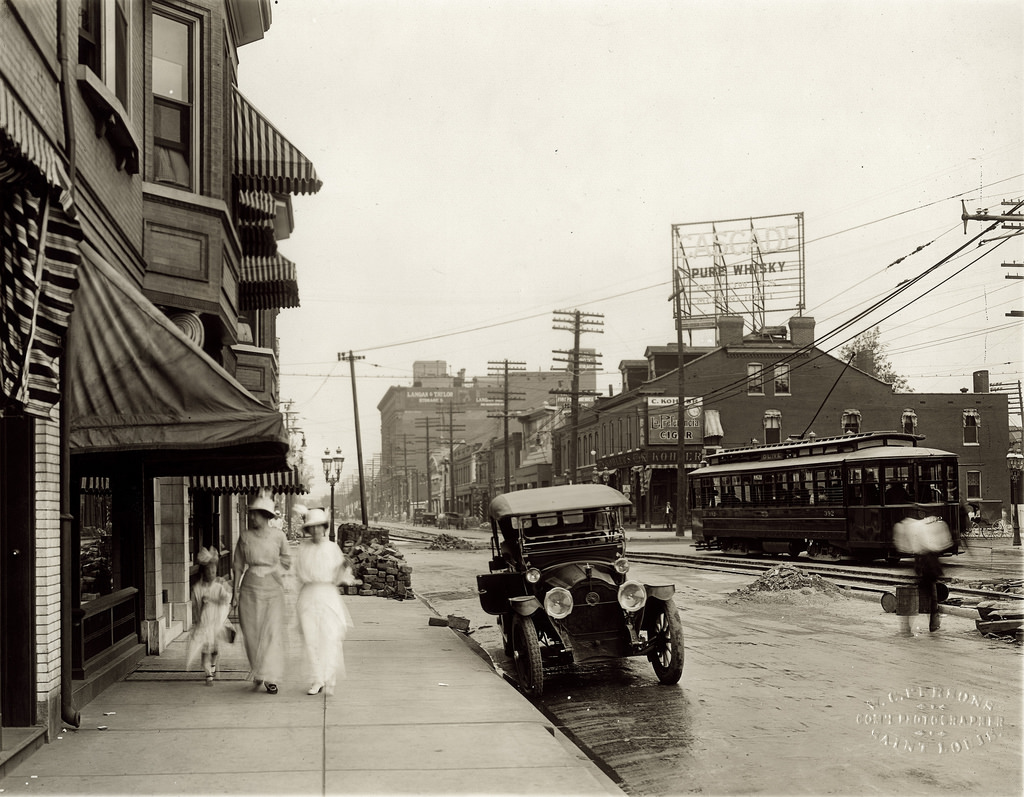
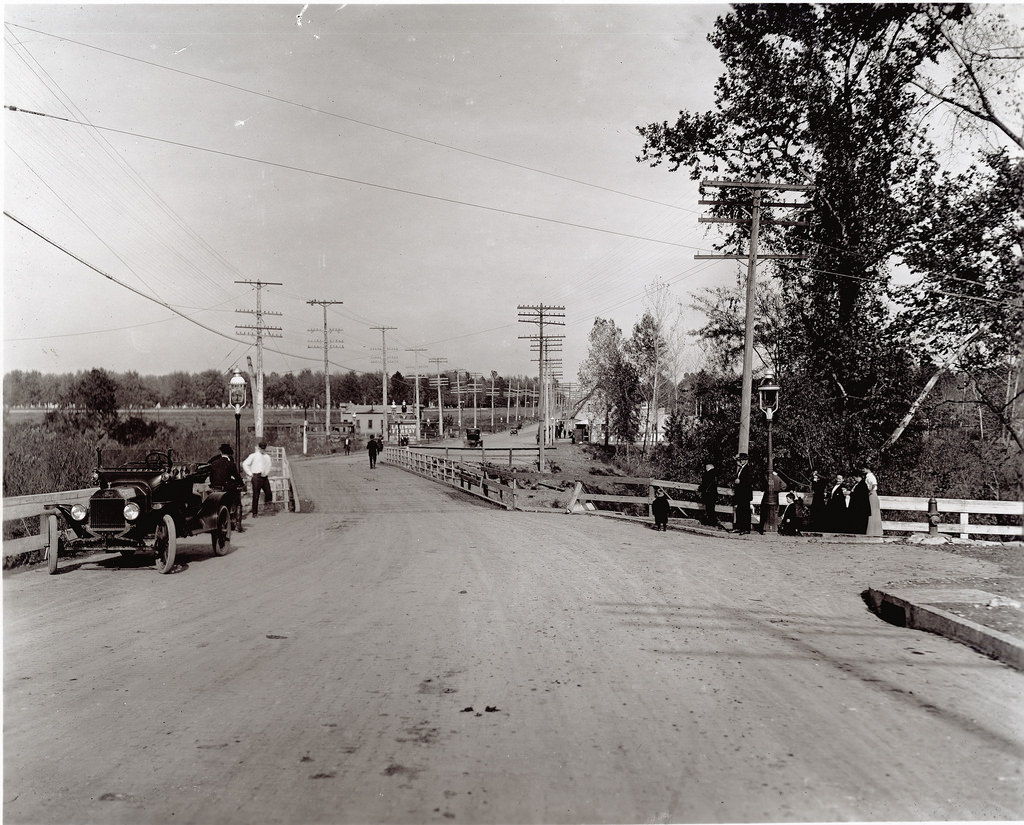
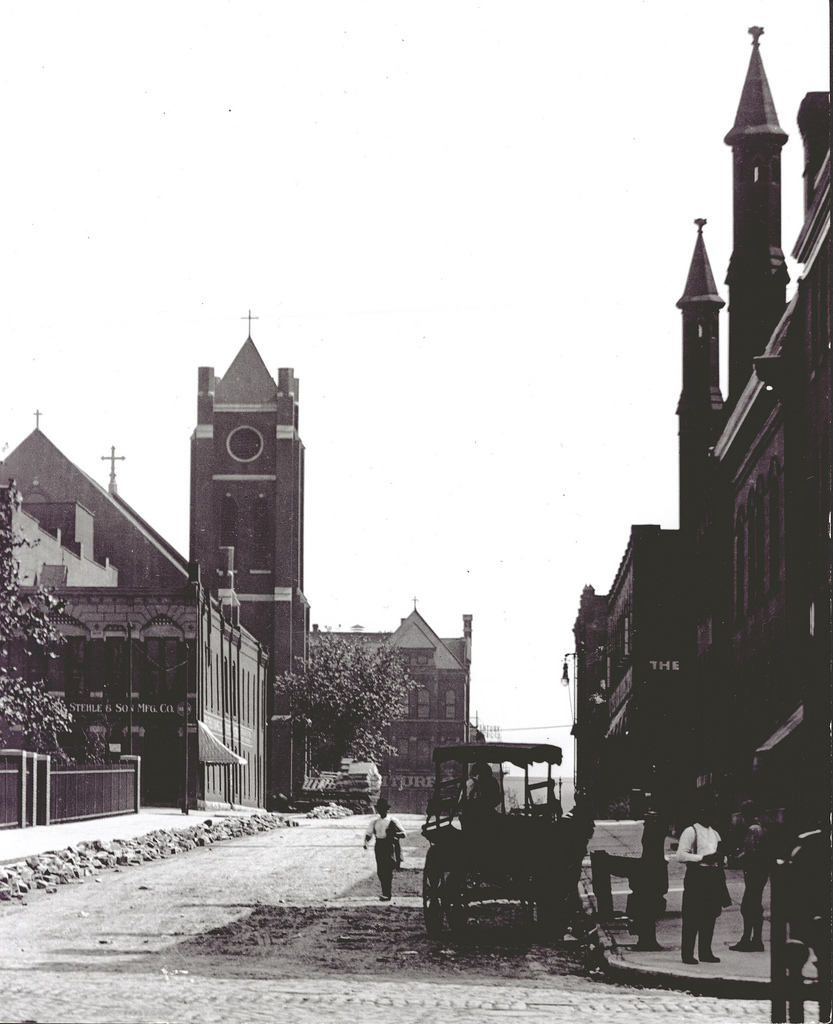
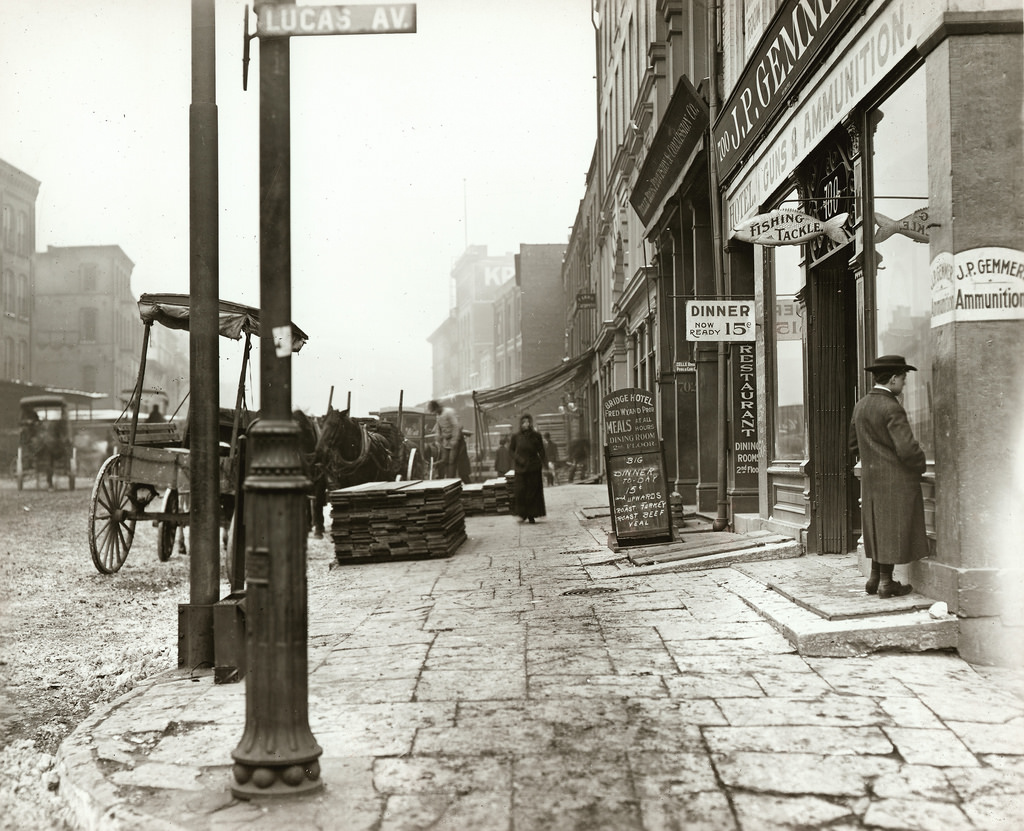
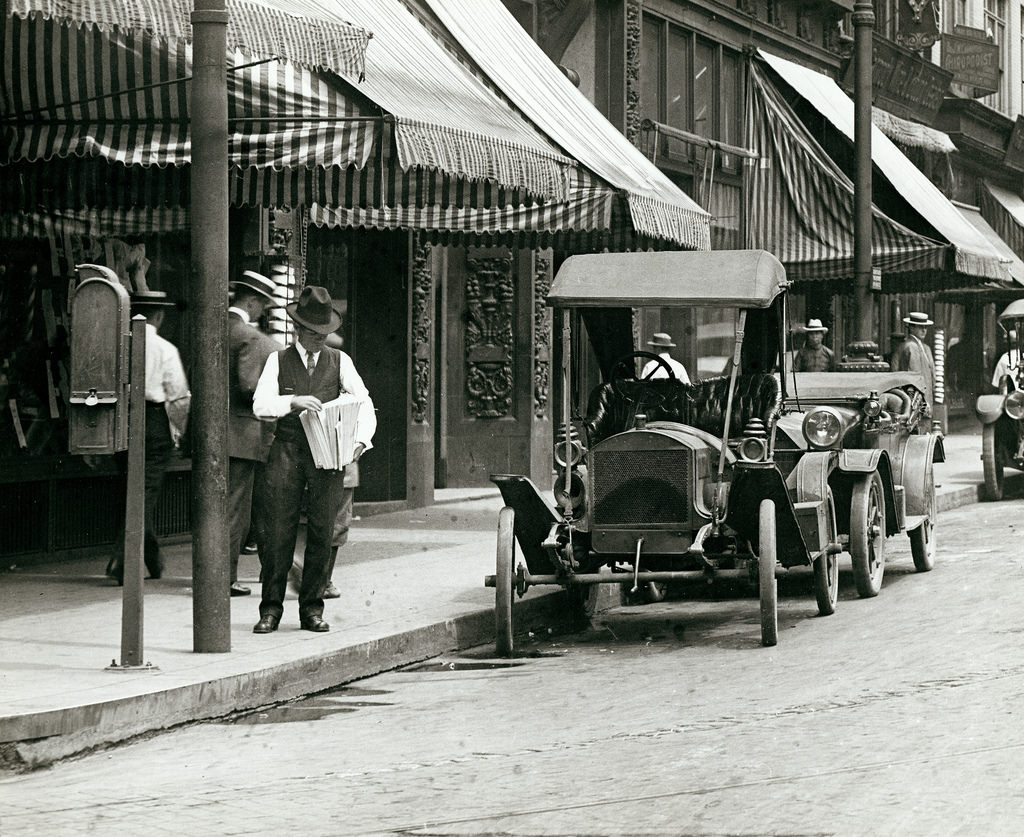
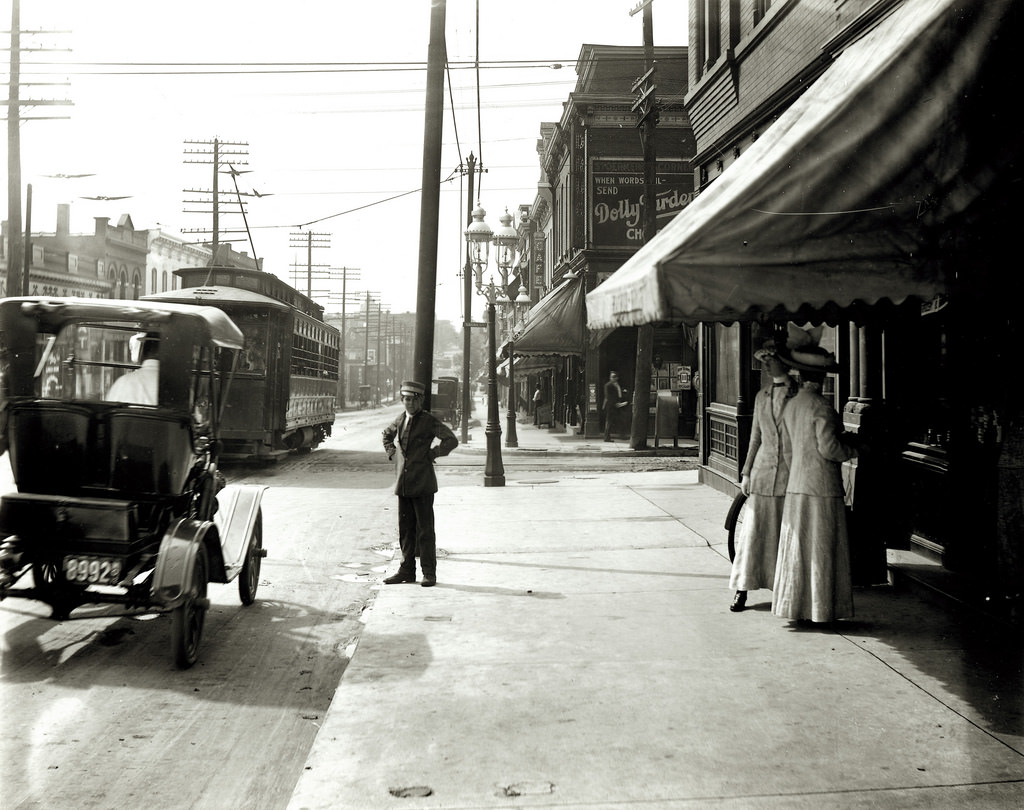
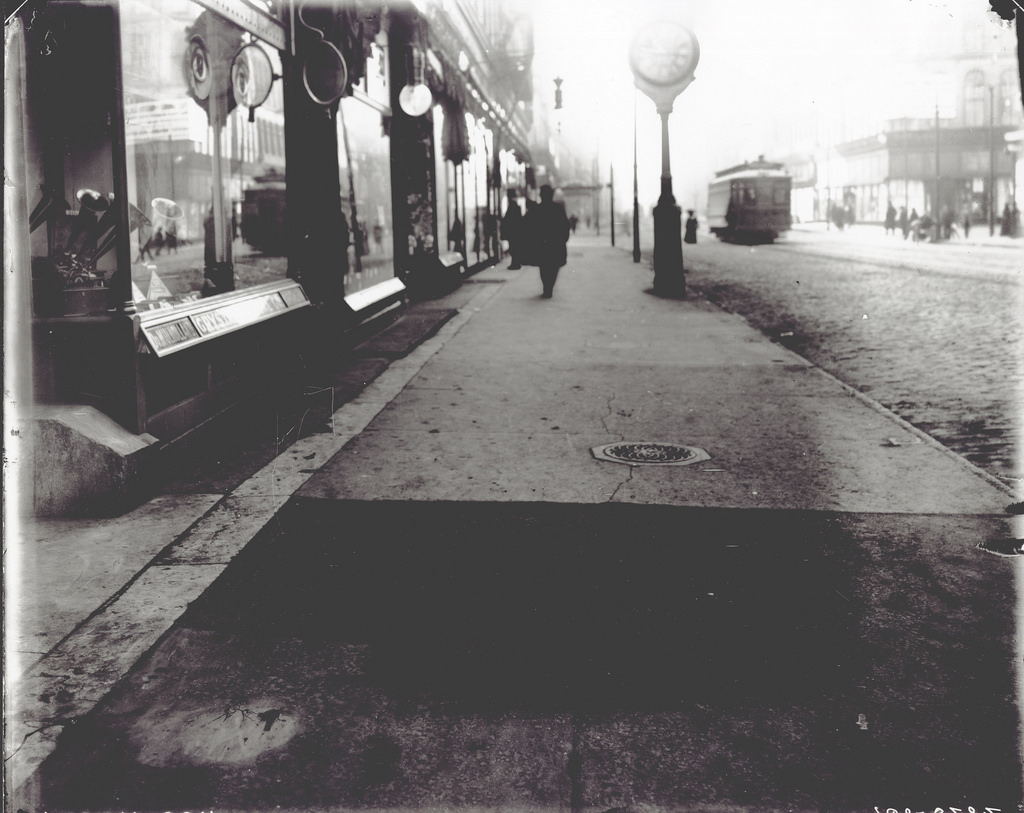
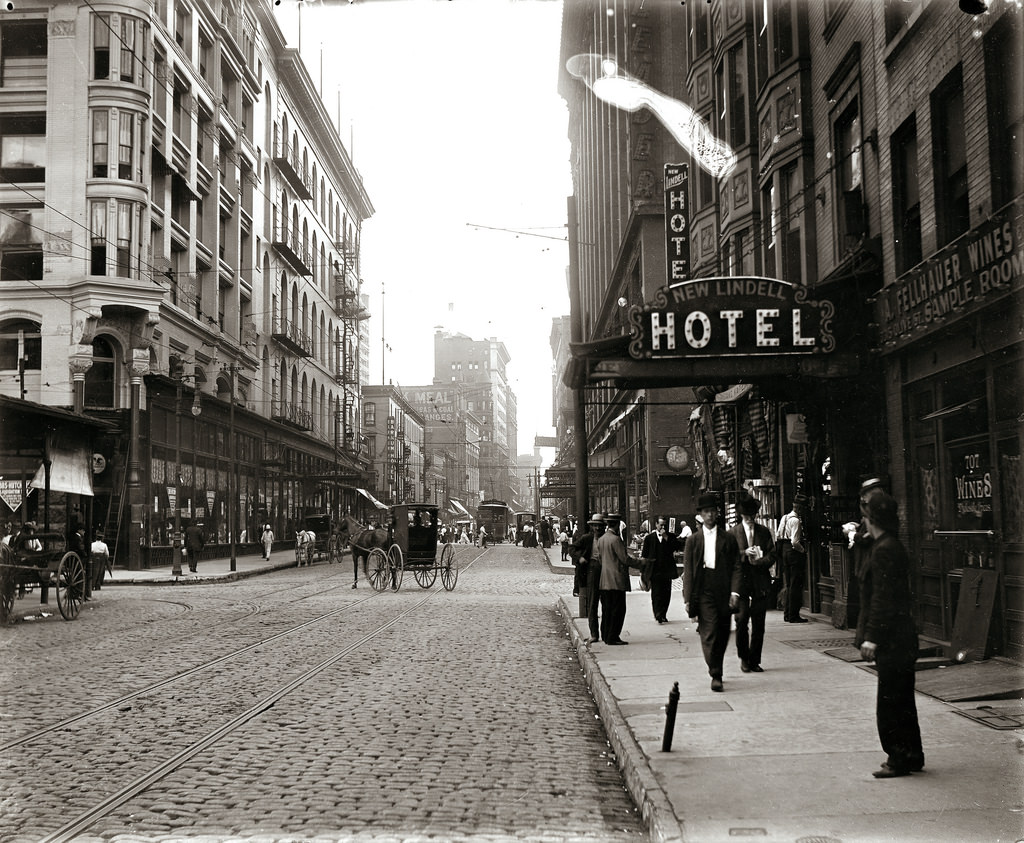

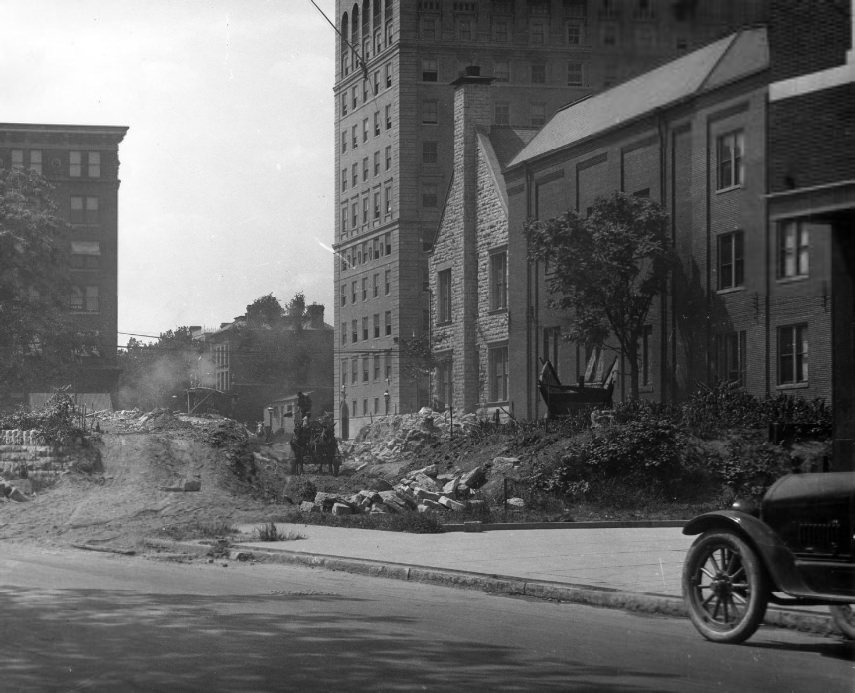

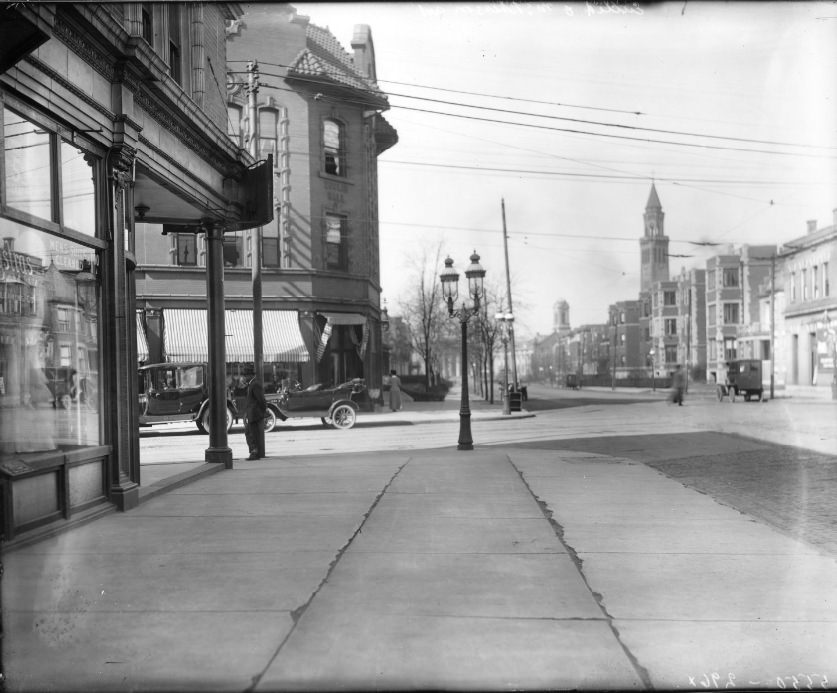
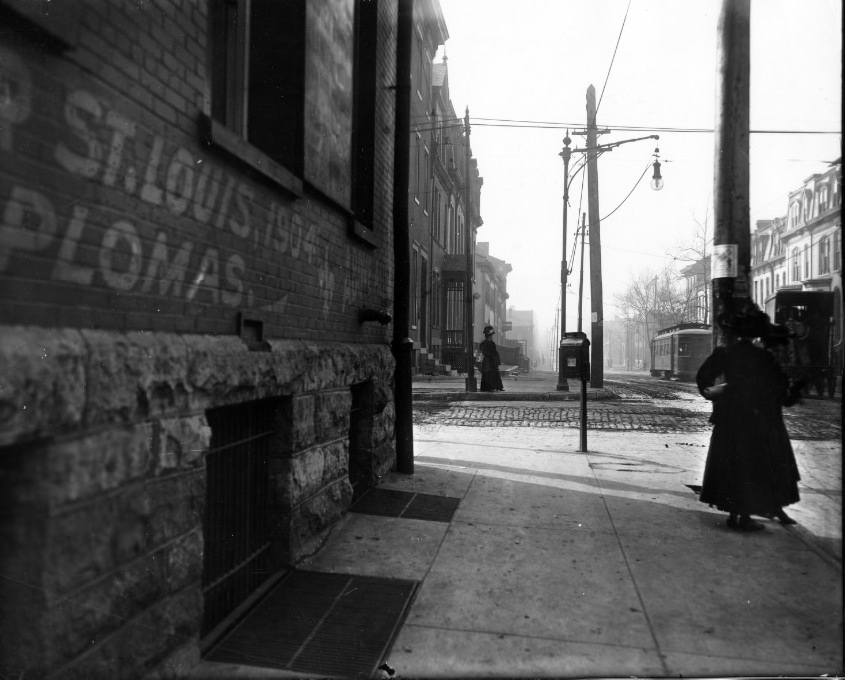
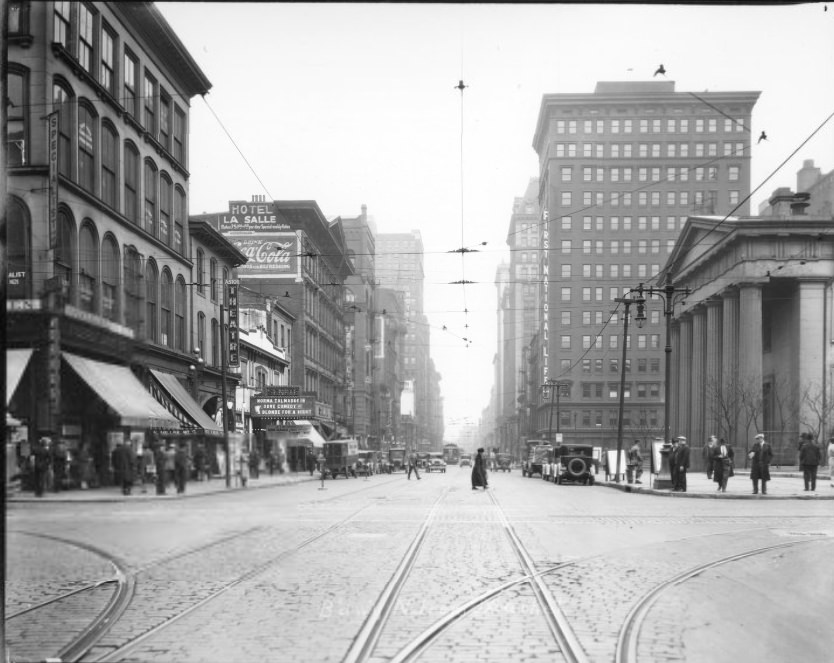
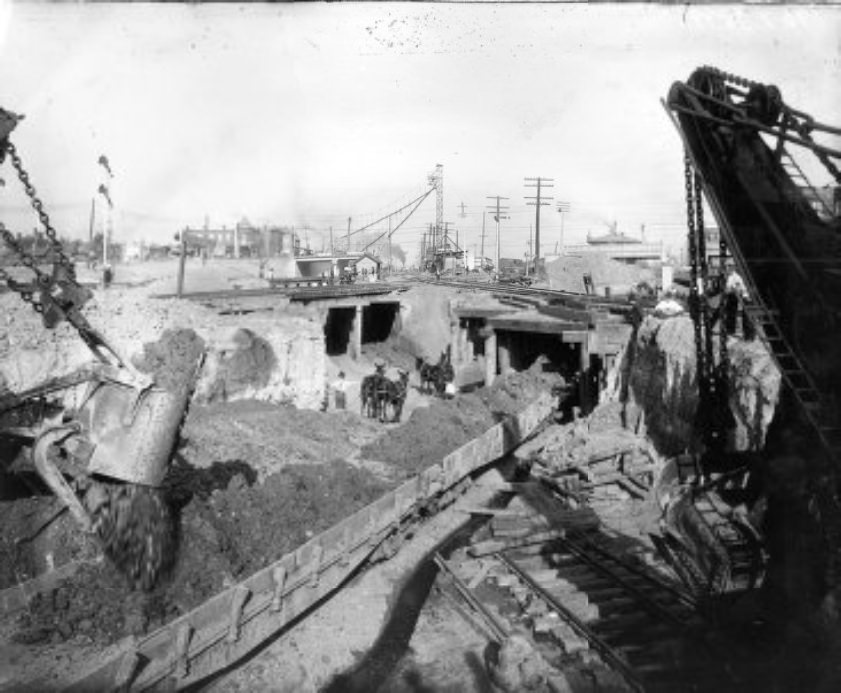
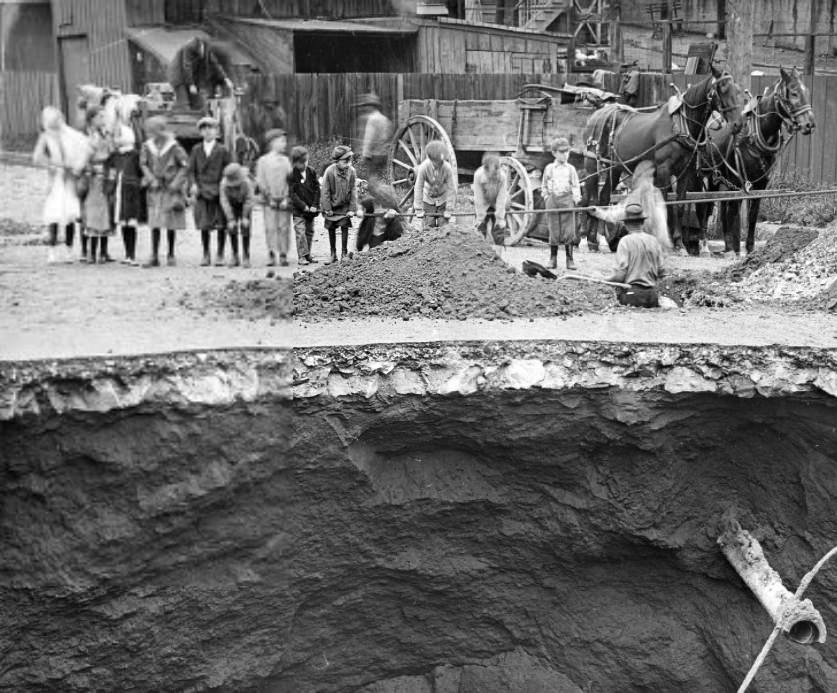
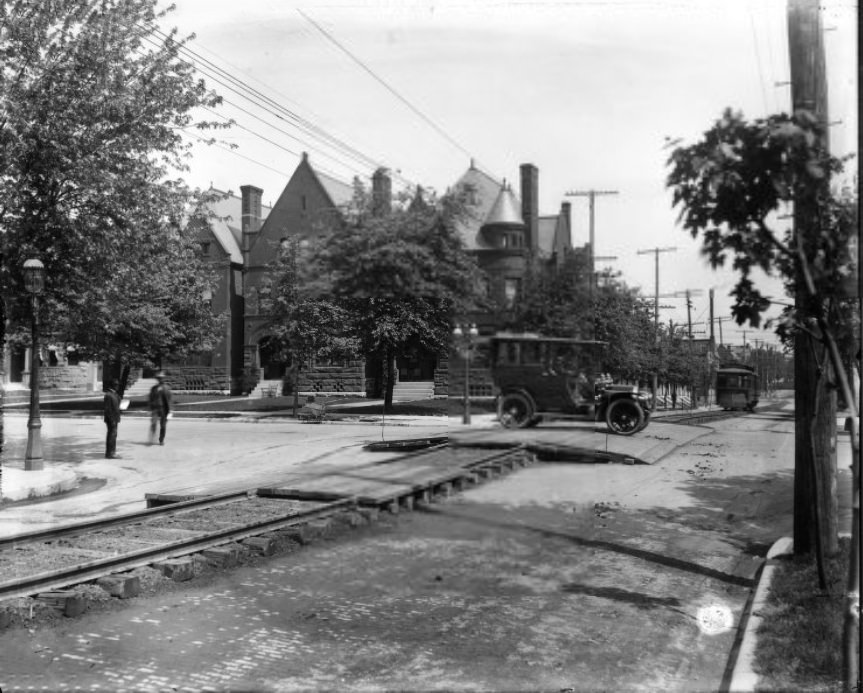
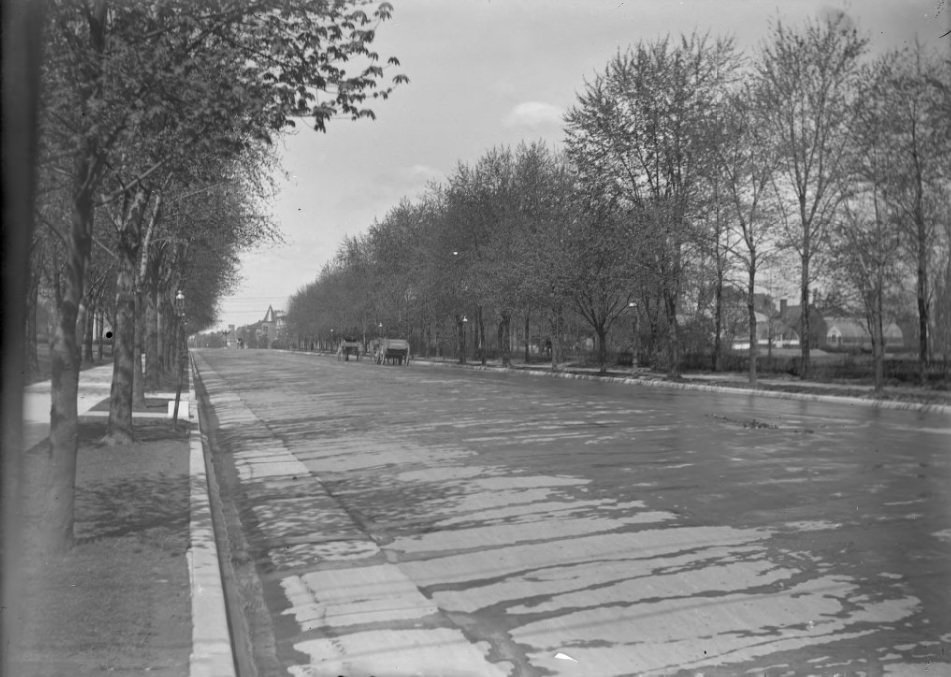
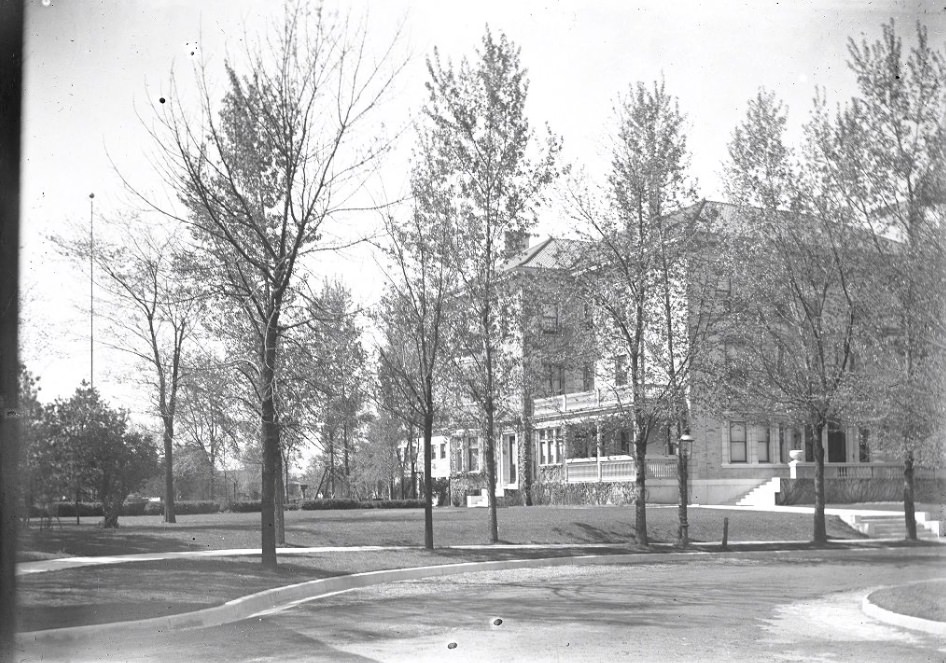
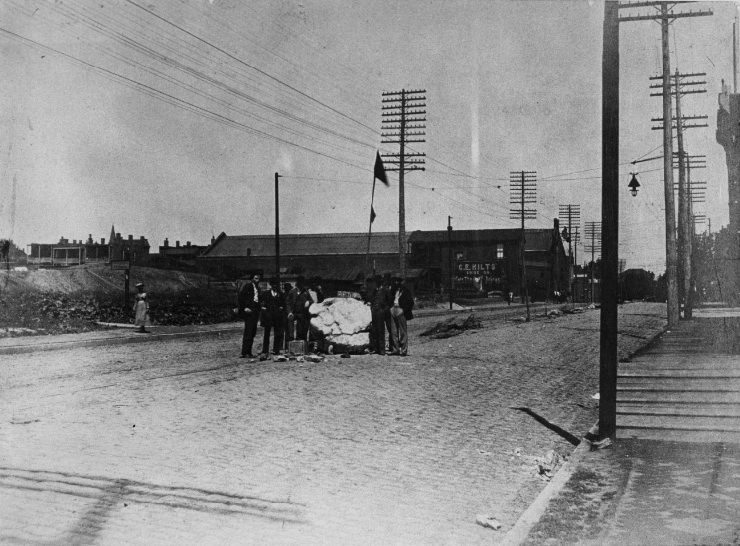
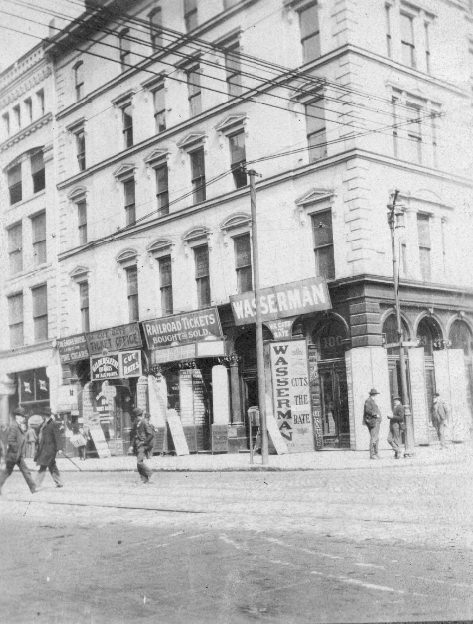





Delmar Boulevard from Kingshighway, 1914
It’s the Loop Trolley!!!
It has always been here, always a part of us. The loop trolly is our goddamn Pennywise.
Holy shit. That’s so good. The Loop Trolly returns every 100 years to wreak havoc on our community and then leave.
Except for the first few decades, it was good. Since we viciously destroyed our streetcar system, it’s just a ghost haunting us.
True. If anything we need more light rail. Just….not like this.