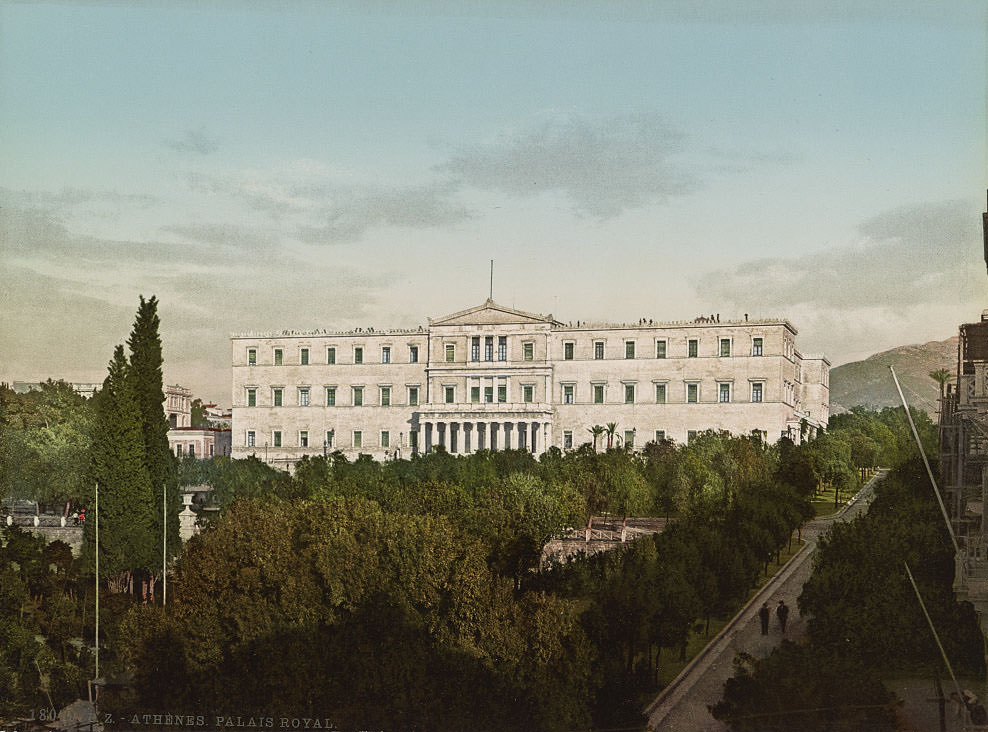
Greece has one of the longest recorded histories in the world. The ancient Greek civilization stretches back to around 3200 BC, but the story of the modern Greek state begins much later. In 1828, Greece won its independence from the Ottoman Empire, with Russia, Great Britain, and France — collectively known as the Great Powers — formally recognizing the new nation. A democratic government was established, but the country’s first elected president was assassinated not long after taking office. The Great Powers stepped back in and replaced the republic with the Kingdom of Greece, setting the political tone for the rest of the century.
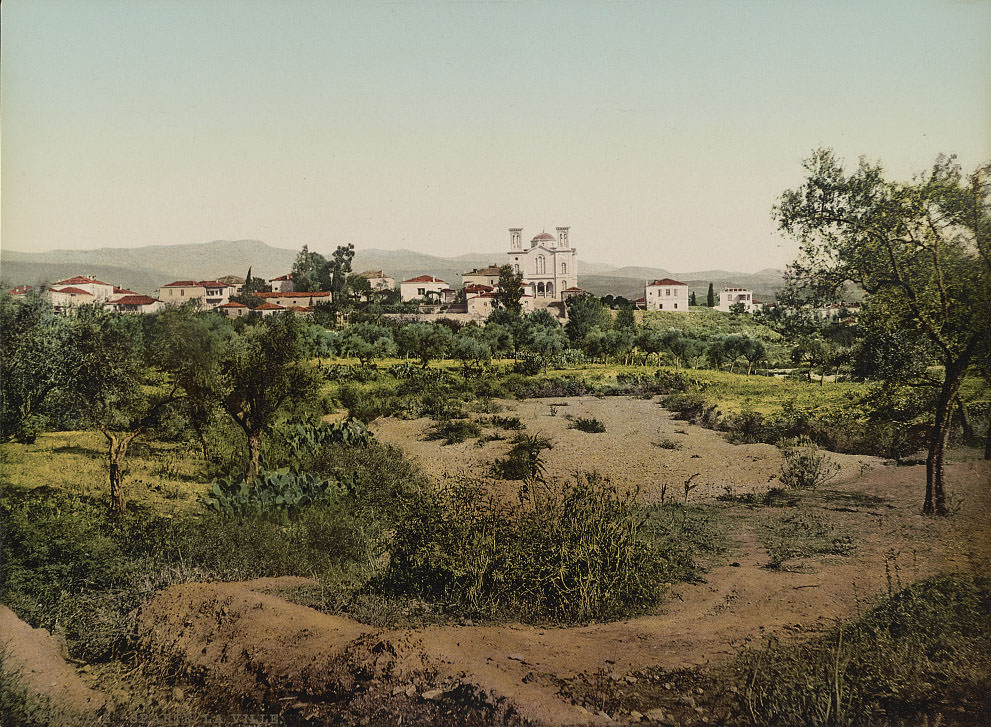
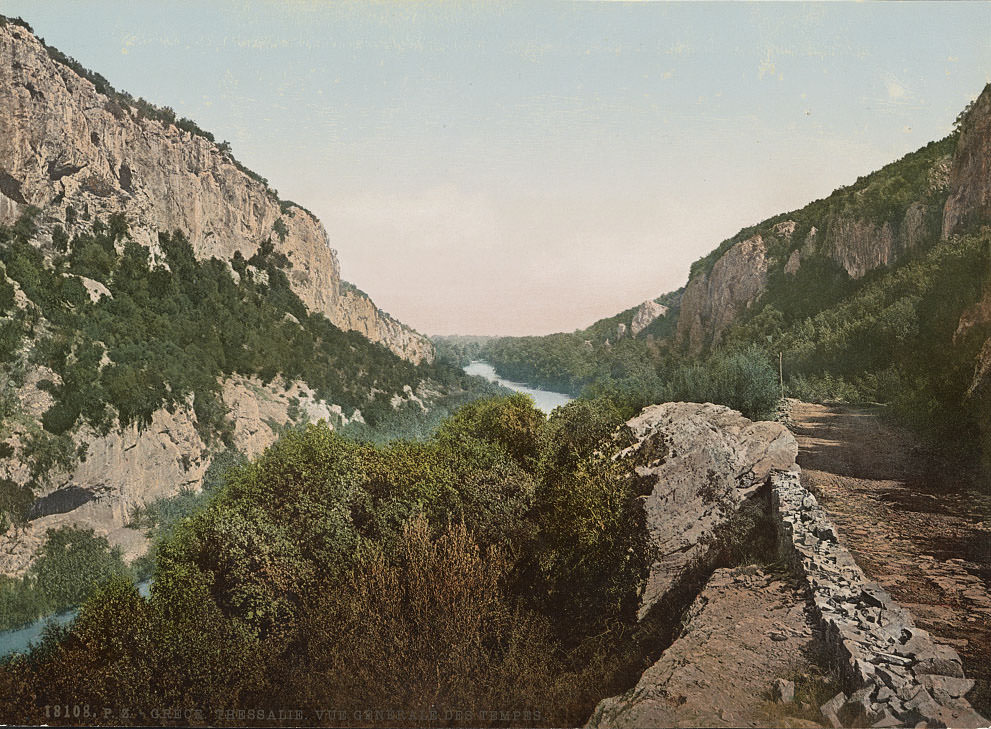
The images in this collection were produced using the Photochrom process, a printing technique developed in the late 19th century that applied color to black-and-white photographic negatives using lithographic methods. The result was a level of color richness and geographic detail that standard photography of the era simply could not achieve. These prints give us one of the most vivid visual records of Greek towns, cities, ports, and ancient ruins as they appeared in the 1890s.
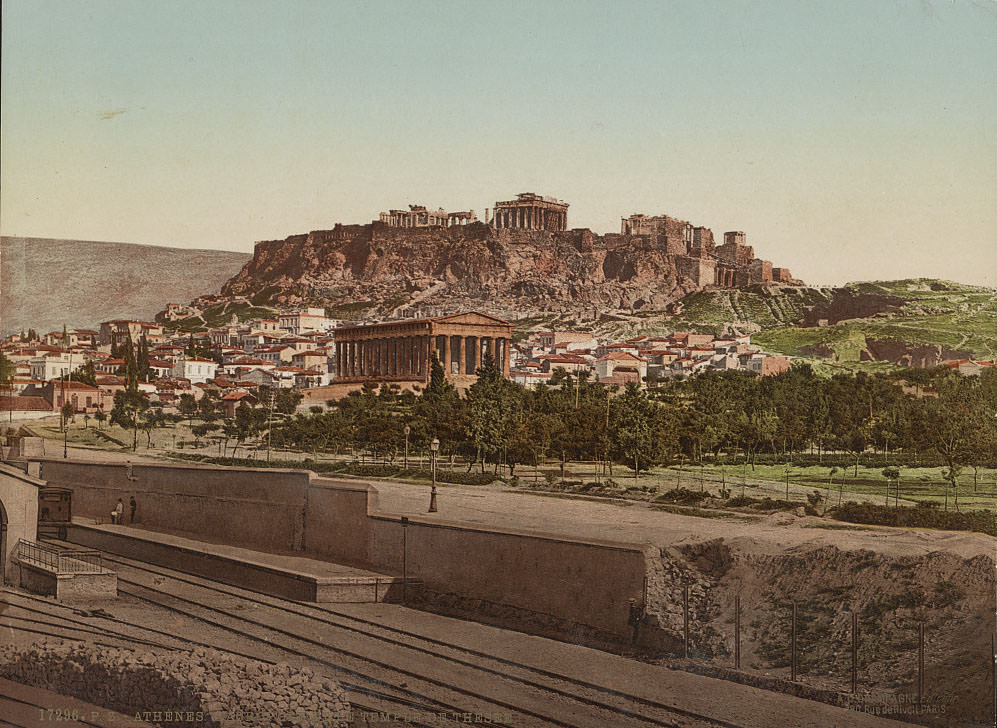
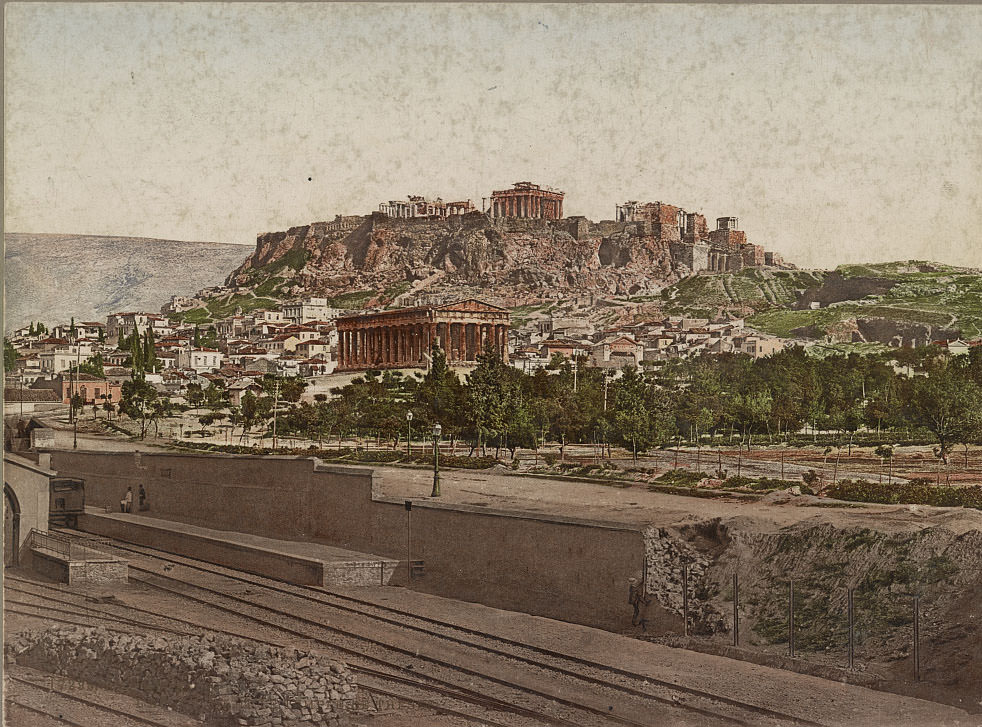
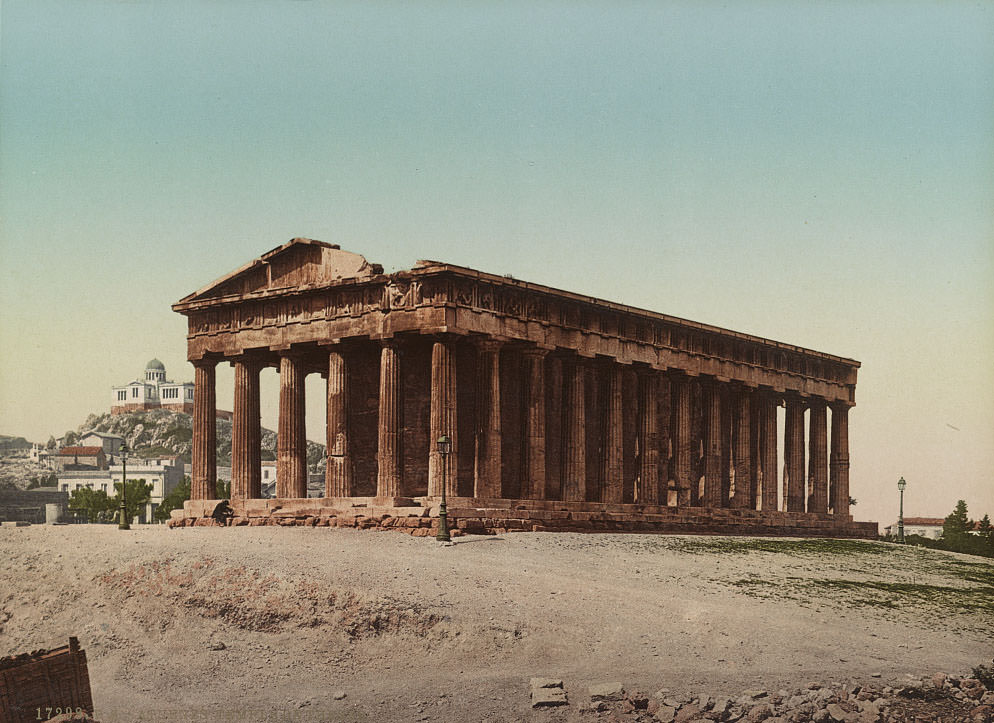
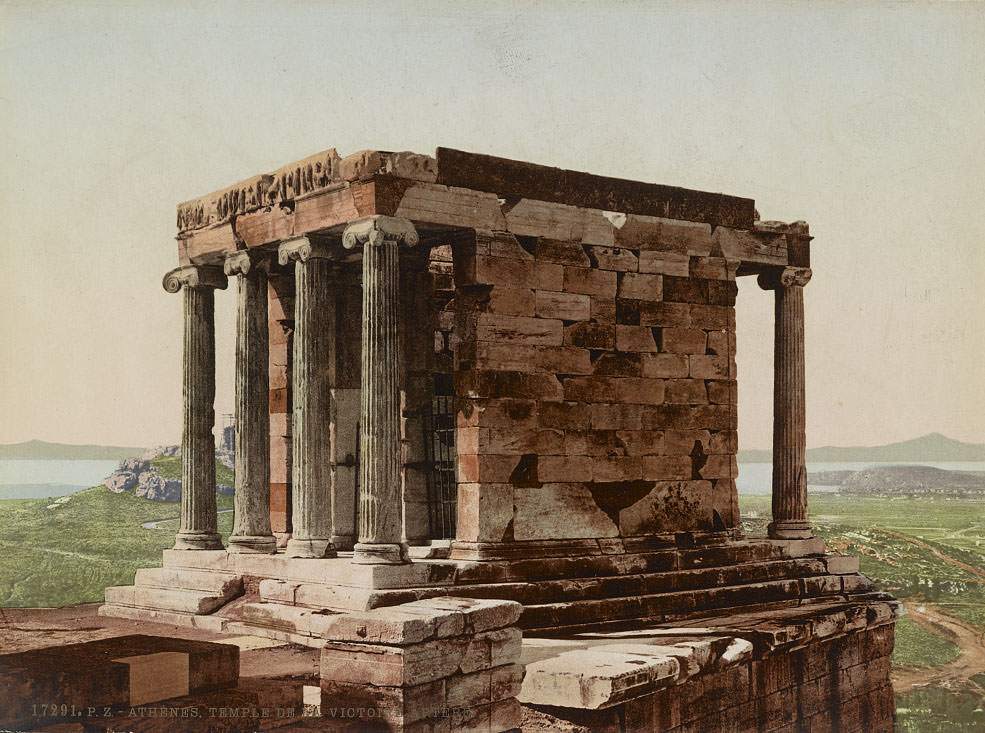
Athens was naturally one of the most photographed locations. The city sat at the intersection of ancient history and a newly forming modern state. Among its most recognizable landmarks were the great temple structures that had survived centuries of conquest, neglect, and repurposing. The Temple of Hephaestus, also known as the Theseion, was one of the best-preserved ancient Greek temples in existence by the time these photos were taken.
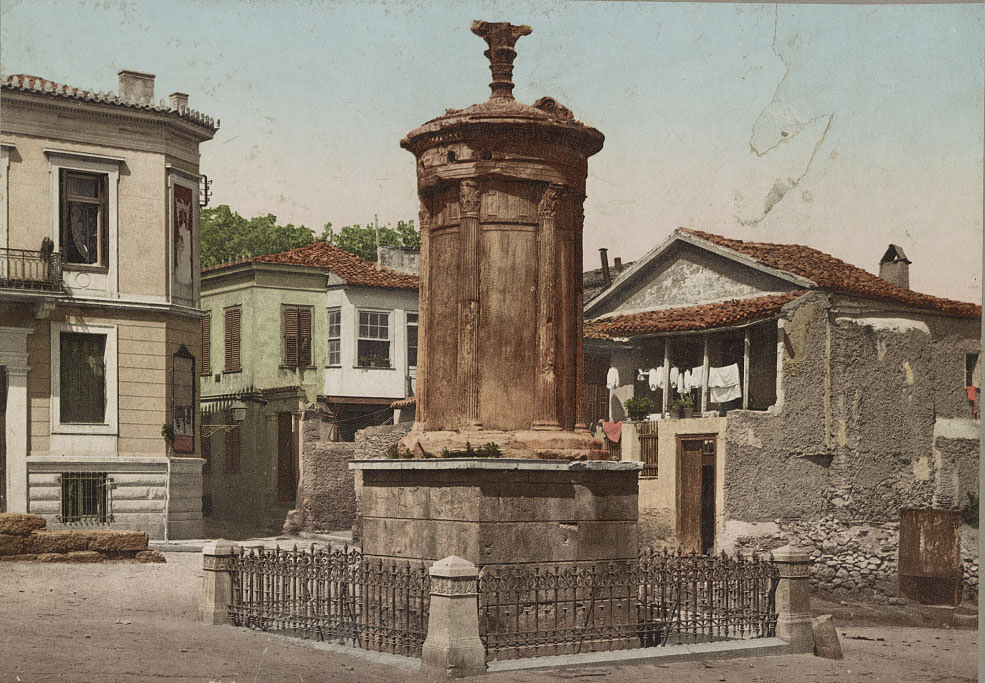
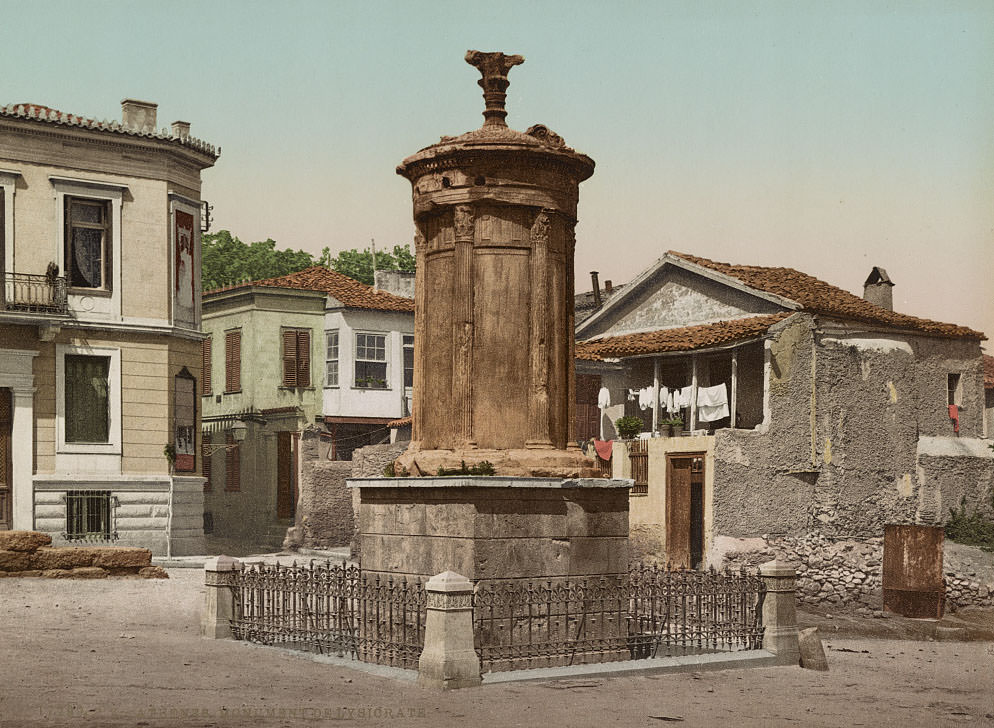
The Monument of Lysicrates, a circular marble structure built in 335 BC to honor a choragic victory, stands in the Plaka neighborhood of Athens. It is one of the earliest known examples of the Corinthian order on the exterior of a building. By the 1890s, it had already survived incorporation into a Capuchin monastery and a period as a study room used by Lord Byron during his time in Athens.
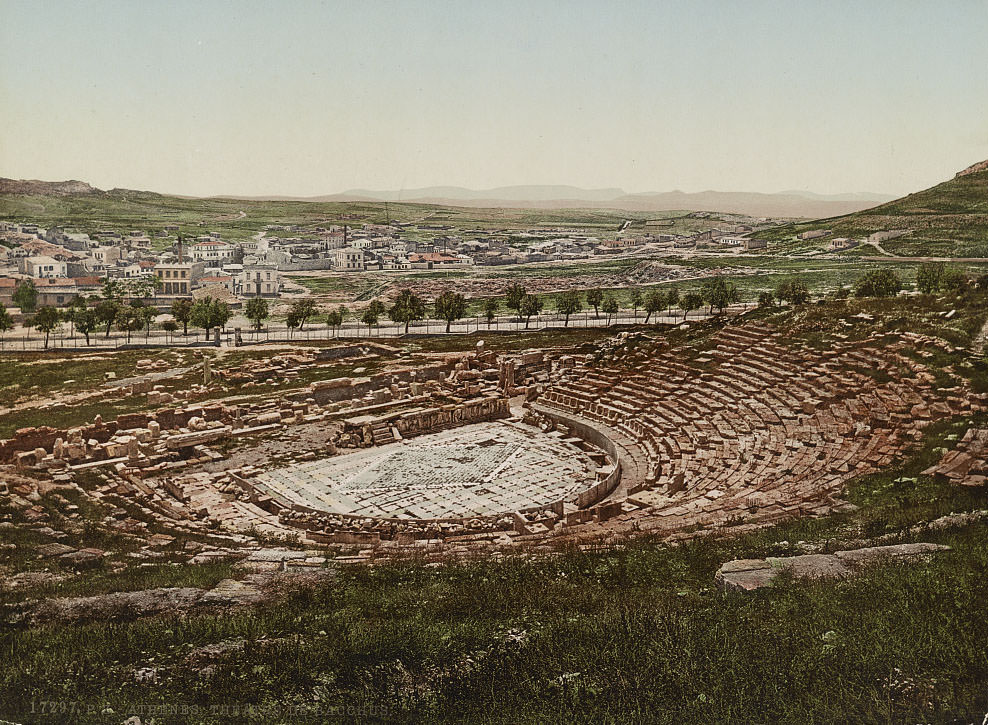
The Theatre of Dionysus, carved into the southern slope of the Acropolis, is widely considered the birthplace of Greek drama. Plays by Sophocles, Euripides, Aeschylus, and Aristophanes were first performed here. By the late 1800s, the site had been partially excavated, revealing tiered stone seating and a marble stage floor decorated with relief carvings.
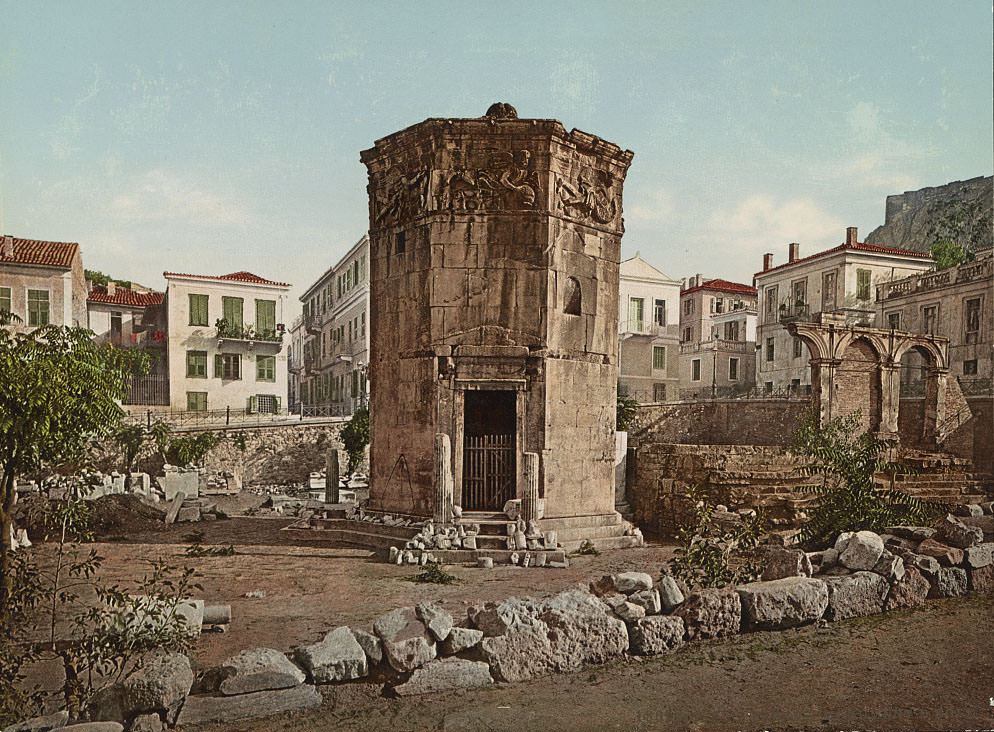
The Tower of the Winds, known in French as the Monument d’Éole, is an octagonal marble clocktower in the Roman Agora of Athens. Built in the 1st century BC, each of its eight sides faces a cardinal or intercardinal direction and features a carved relief of the corresponding wind deity. During the Ottoman period, it served as a tekke — a gathering place for Sufi dervishes. By the 1890s, it was a prominent archaeological landmark.
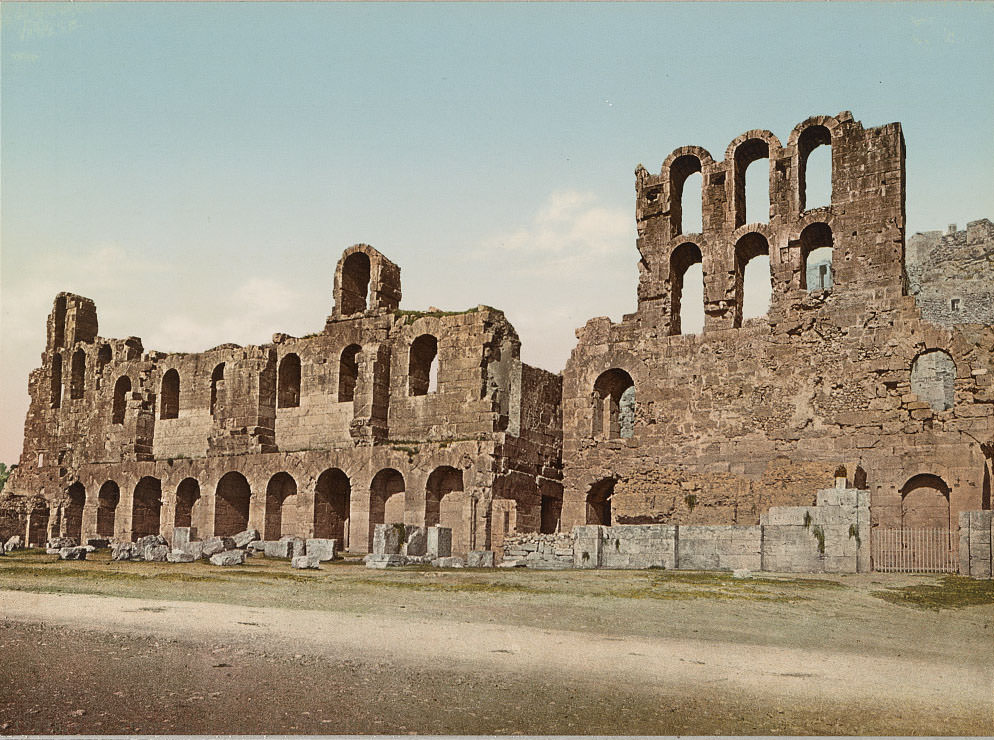
The Odeon of Herodes Atticus is a stone theater built in 161 AD by the wealthy Athenian Herodes Atticus in memory of his wife. It sits on the southwest slope of the Acropolis and originally had a cedar roof over its 5,000-seat auditorium. The roof was destroyed in a Herulian raid in 267 AD, and the structure remained open-air from that point forward.
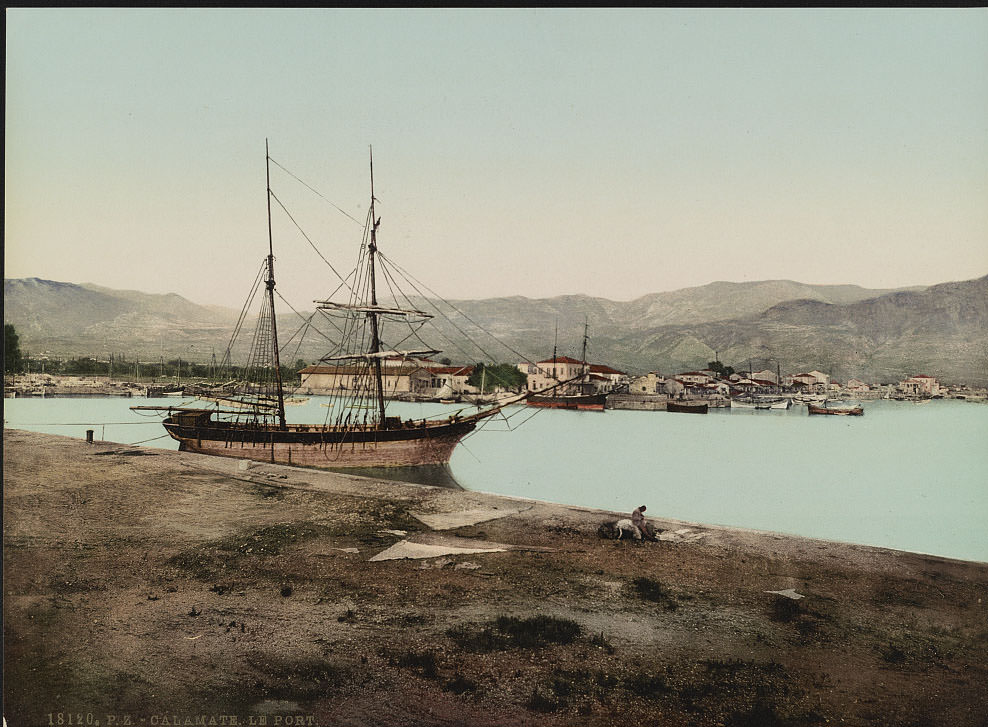
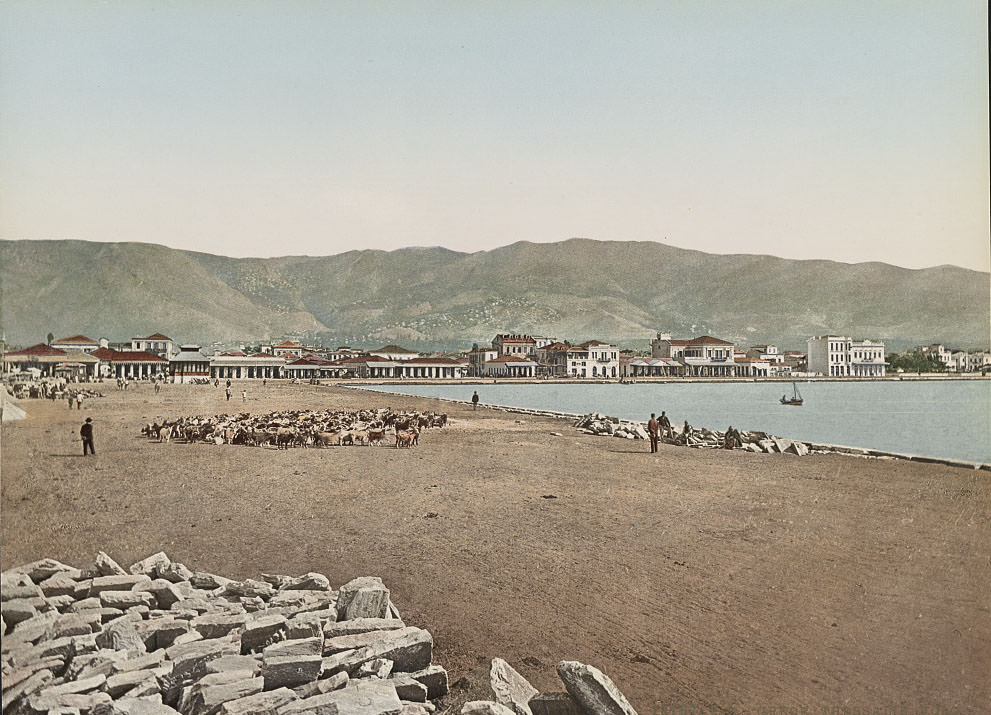
Beyond Athens, the photographs capture the ports and harbors that drove Greek commerce in the late 19th century. Kalamata, located in the southern Peloponnese, served as a significant export hub for olive oil, currants, and the region’s famous black olives. Patras, on the northwestern coast of the Peloponnese, was the third-largest city in Greece and one of its busiest ports, connecting the country to Western Europe.
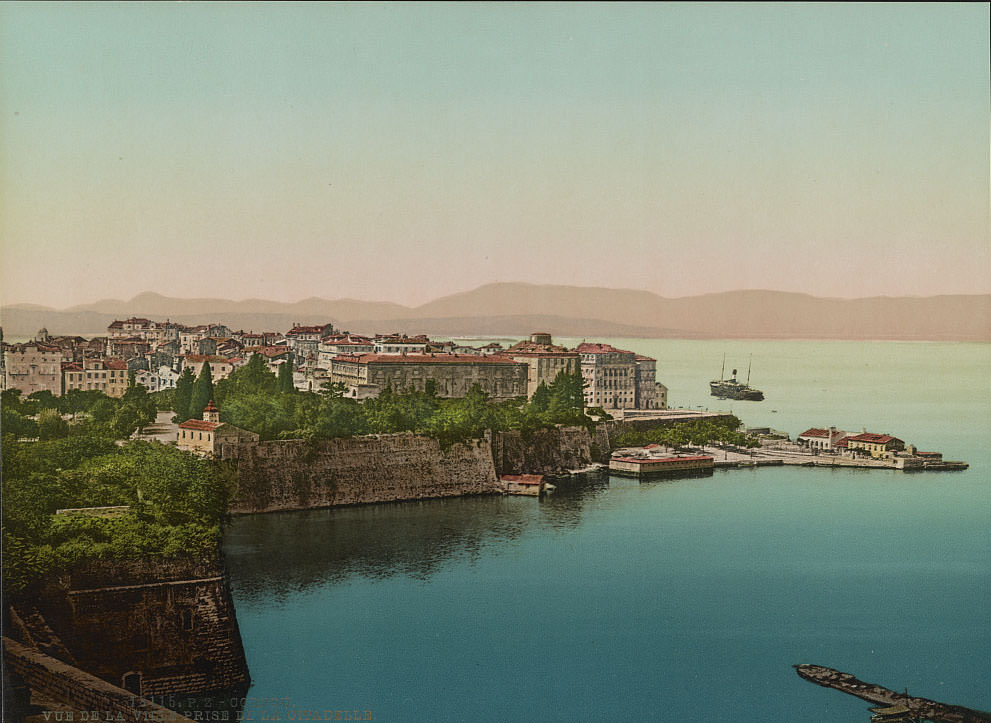
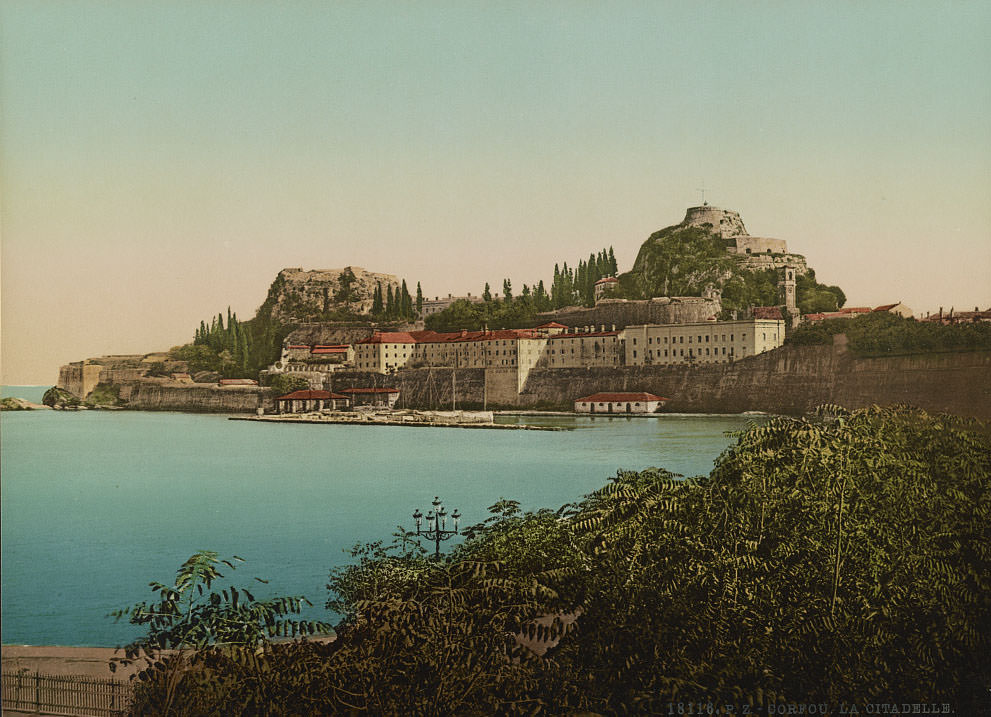
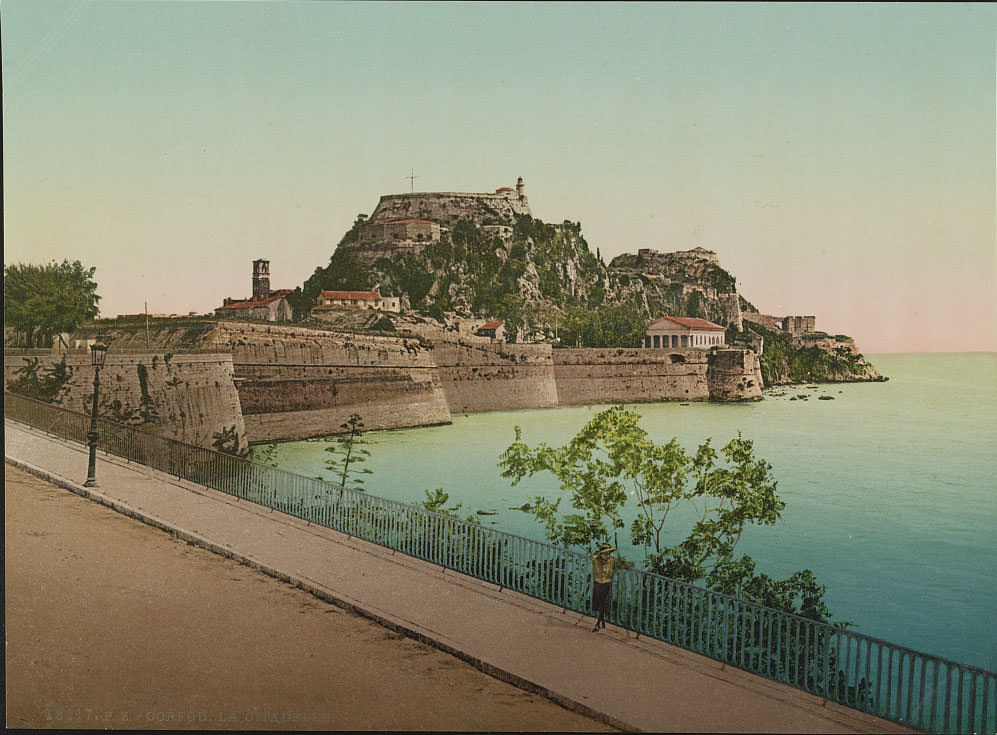
Corfu, the Ionian island off Greece’s northwest coast, had a distinct character shaped by centuries of Venetian, French, and British rule before it was united with Greece in 1864. The Old Fortress of Corfu, built by the Venetians on a rocky promontory, dominates the town’s waterfront. The photos taken from the citadel show a city that blended Italian-style architecture with Greek street life.
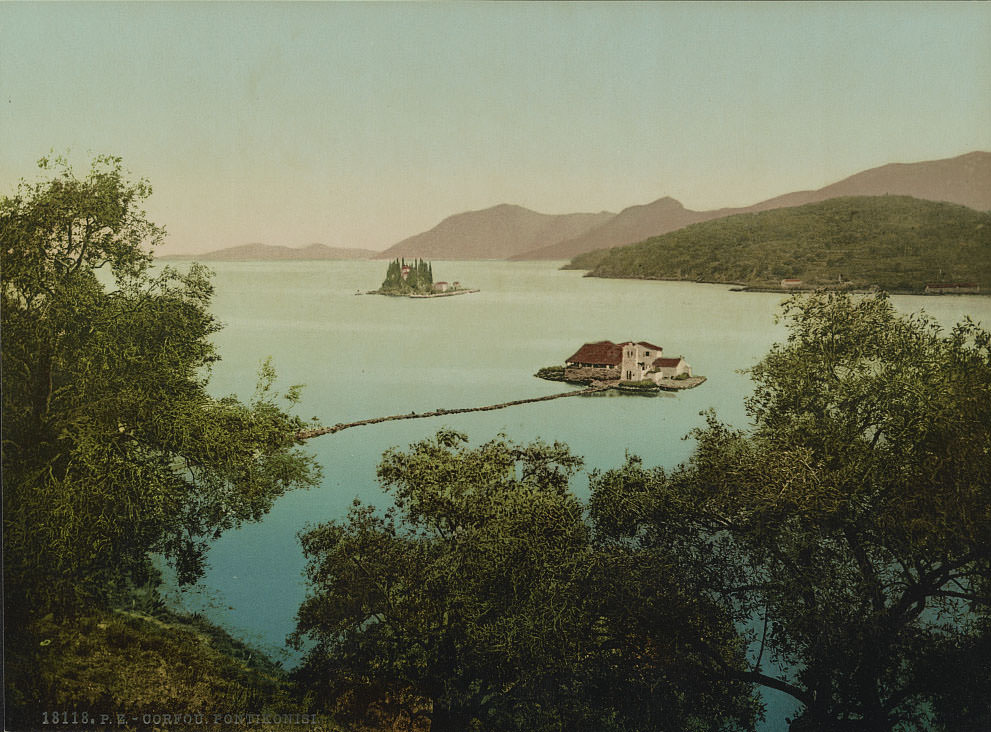
Mouse Island, just off the coast of Corfu near the village of Kanoni, is one of the most photographed spots in all of Greece. The tiny islet holds the Monastery of Vlacherna, connected to the mainland by a narrow causeway. In the 1890s, as today, the contrast of the white monastery walls against the deep blue-green water made it a striking subject.
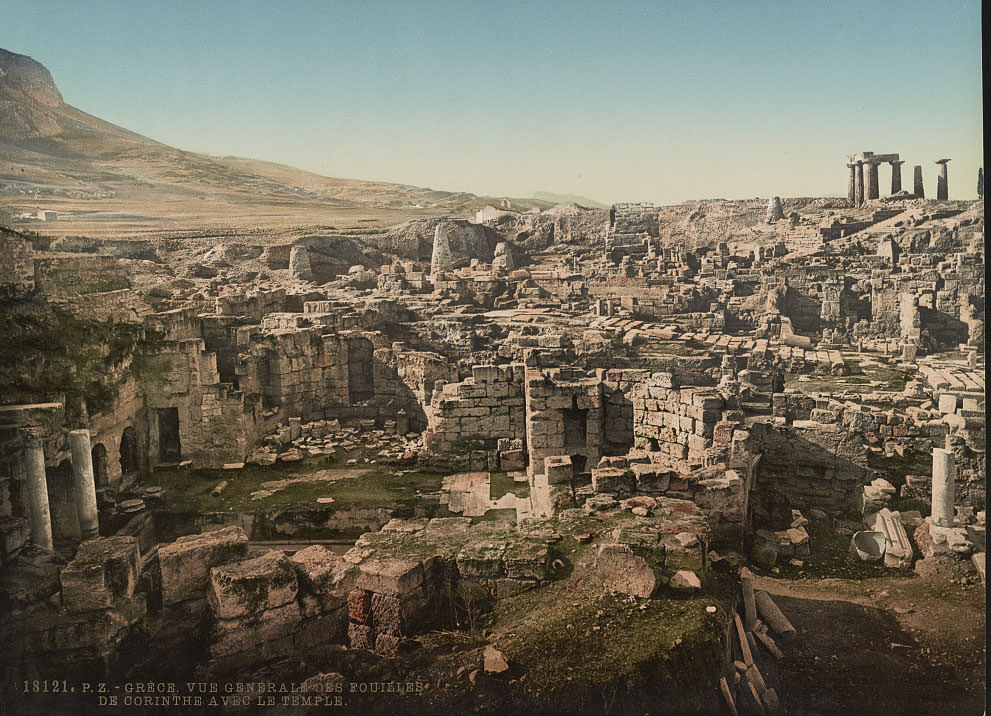
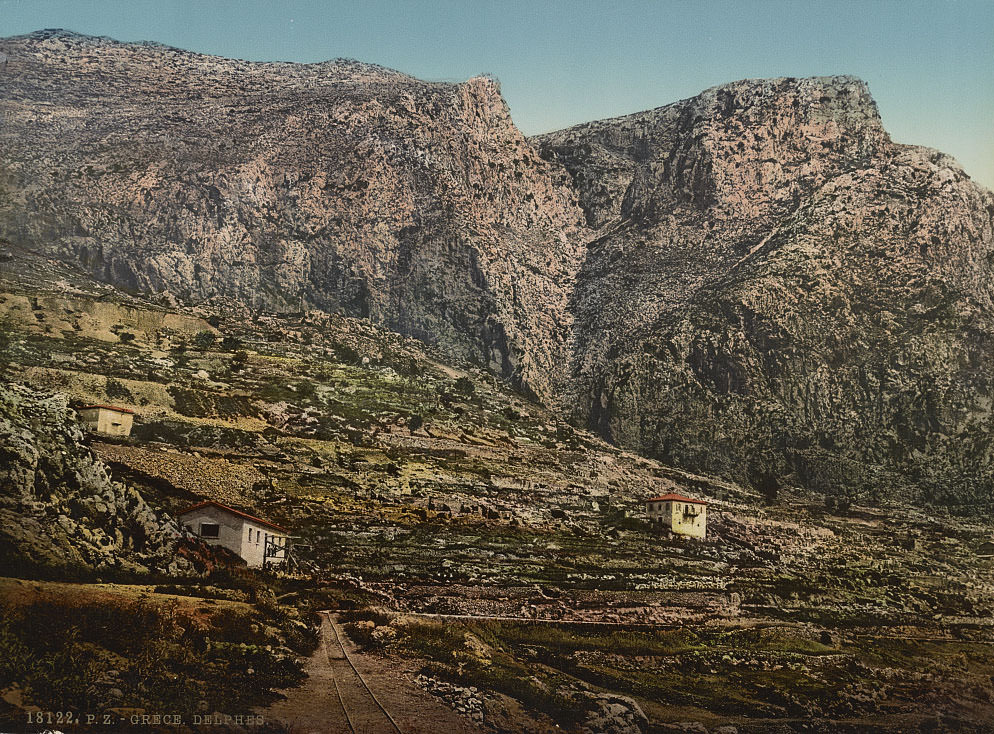
Delphi, perched on the slopes of Mount Parnassus, was the site of the Oracle of Apollo — for centuries the most important religious sanctuary in the ancient Greek world. By the 1890s, French archaeologists from the École française d’Athènes were in the midst of what they called the ‘Great Excavation,’ systematically uncovering the sanctuary after purchasing and demolishing the village of Kastri that had been built directly over it.
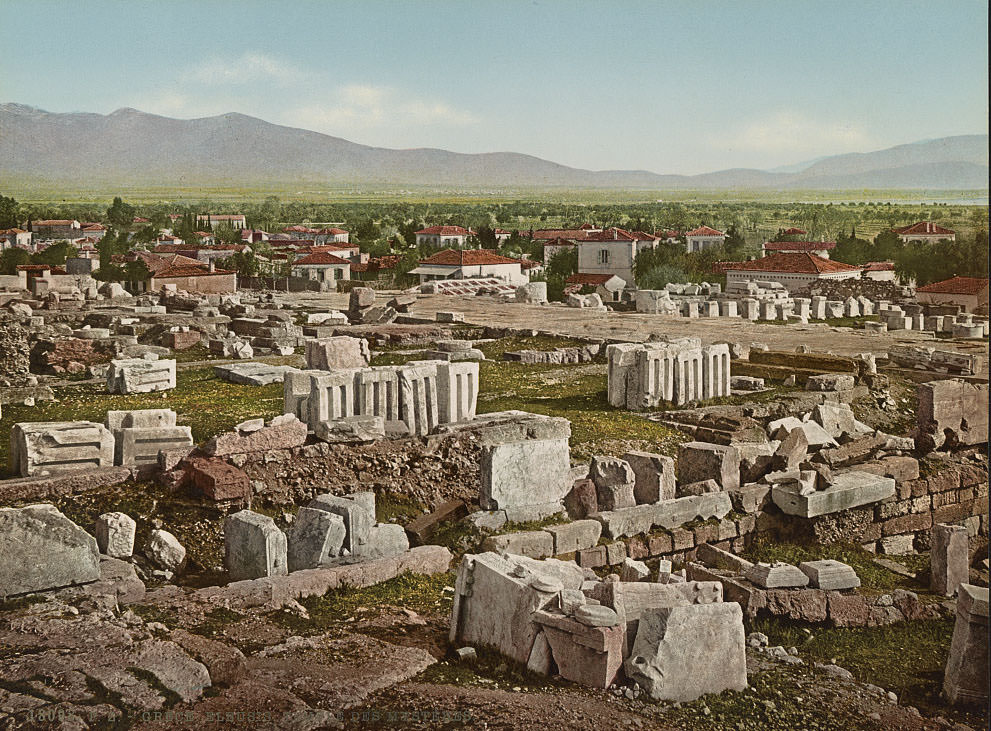
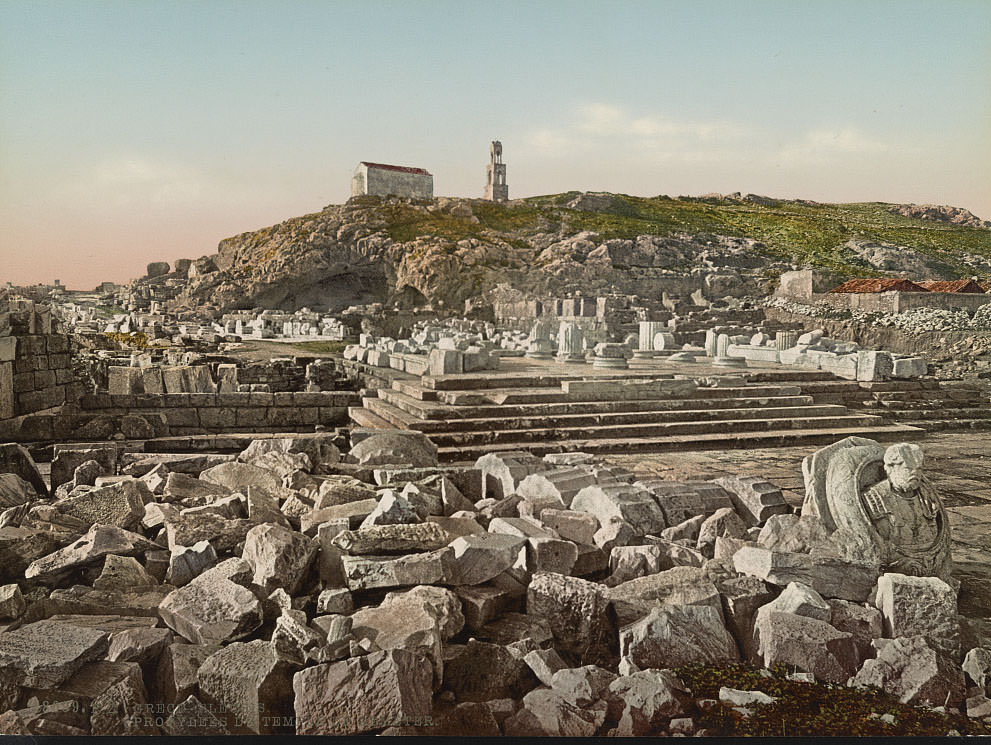
Eleusis, west of Athens, was home to the Eleusinian Mysteries — a set of annual initiation rituals held in honor of Demeter and Persephone. These rites were among the most sacred in ancient Greek religion, and their specific contents were kept strictly secret by initiates for over a thousand years. The temples photographed here were already ancient ruins by the 1890s, but the site still carried enormous archaeological significance.
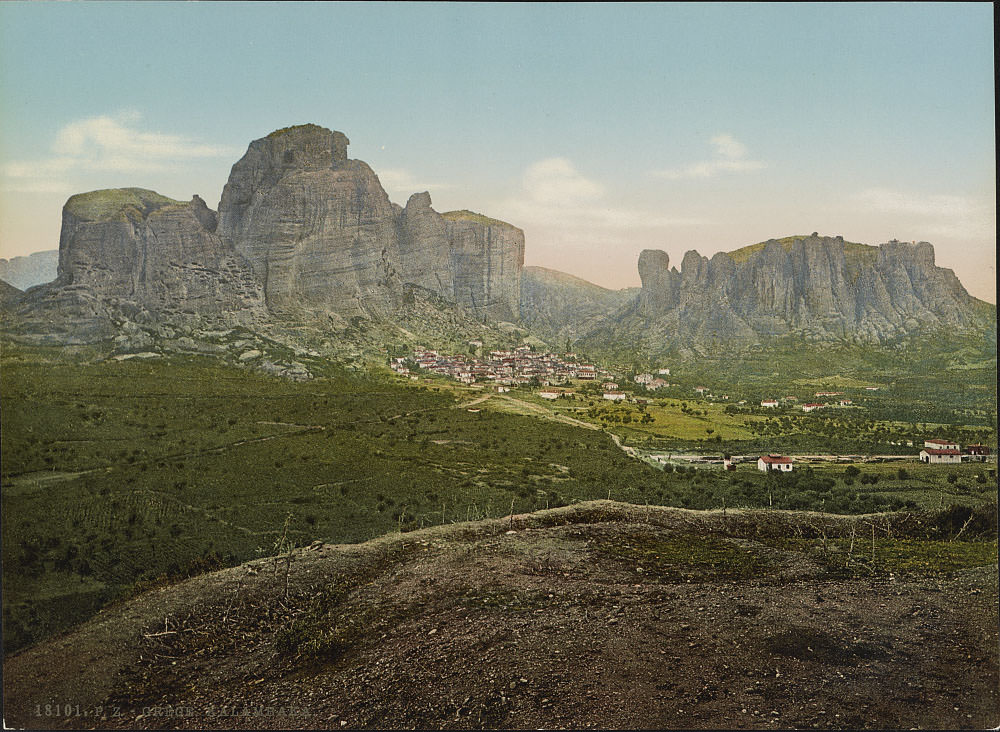
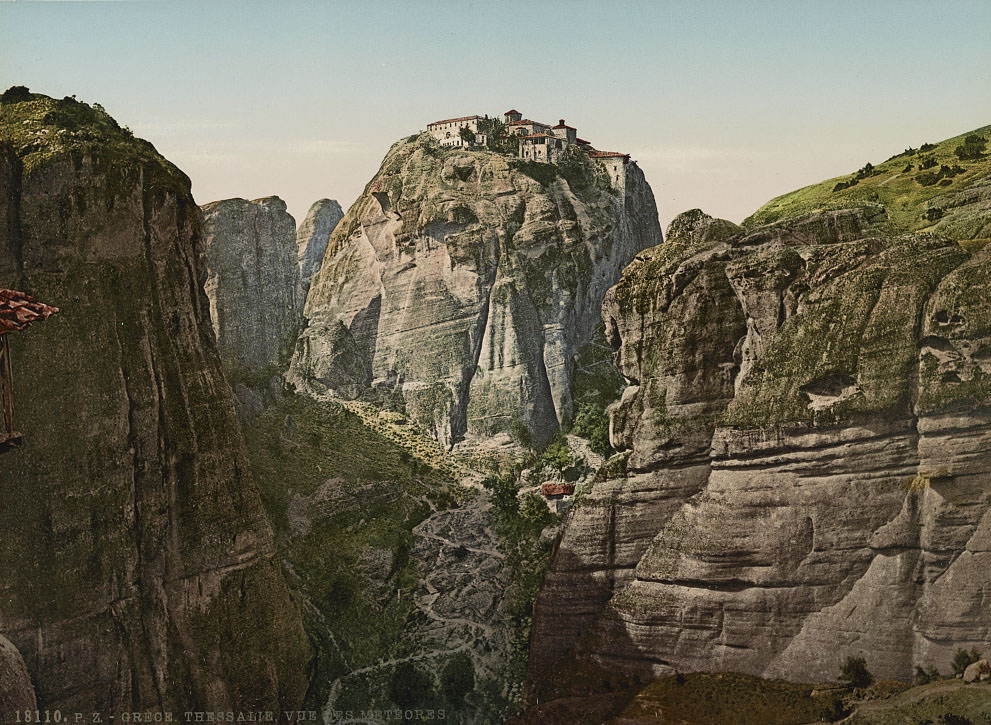
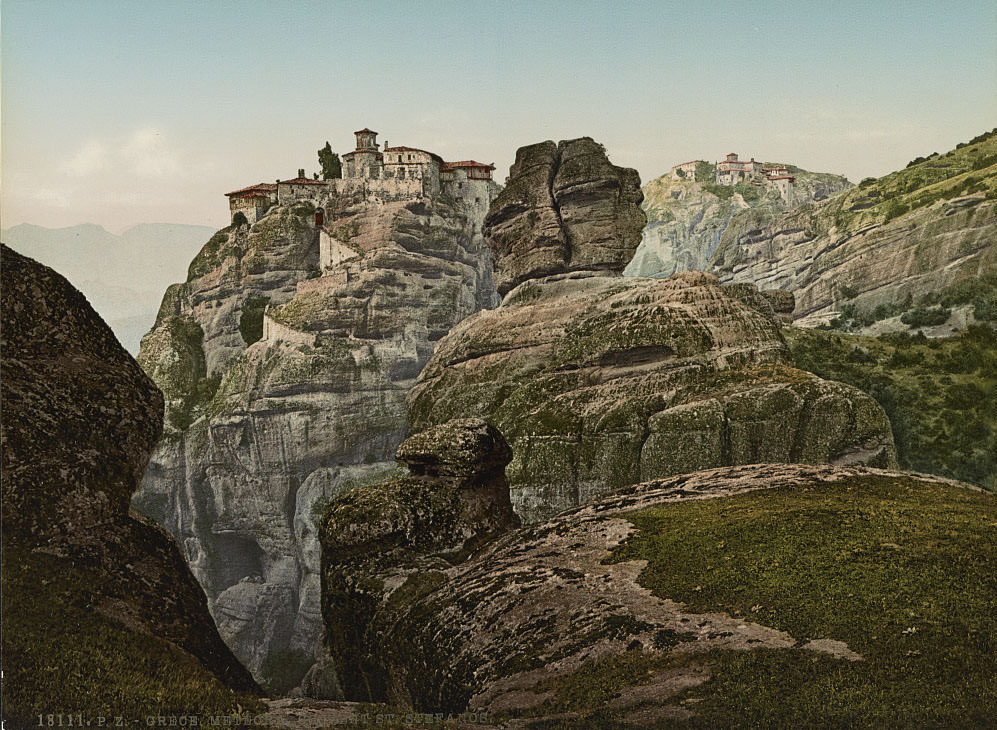
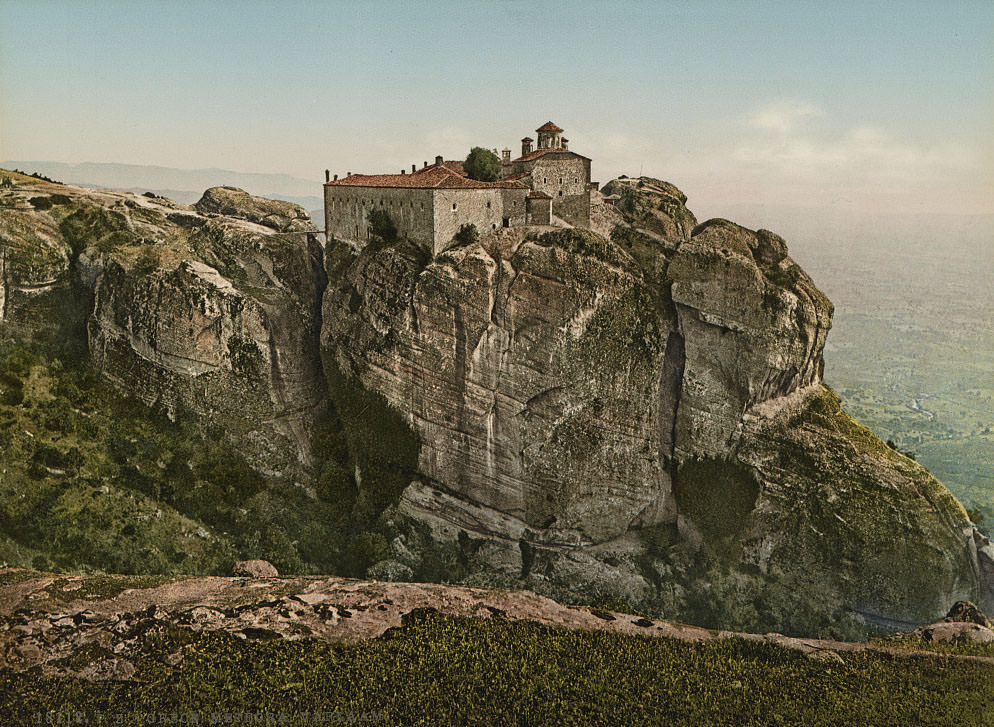
Kalabaka sits at the foot of the Meteora rock formations in the Thessaly region of central Greece. The towering sandstone pillars that rise above the town were already home to a series of Eastern Orthodox monasteries built as early as the 14th century. Monks chose these near-inaccessible heights deliberately, hauling building materials up by rope and basket to create communities that could survive raids and political turmoil below.
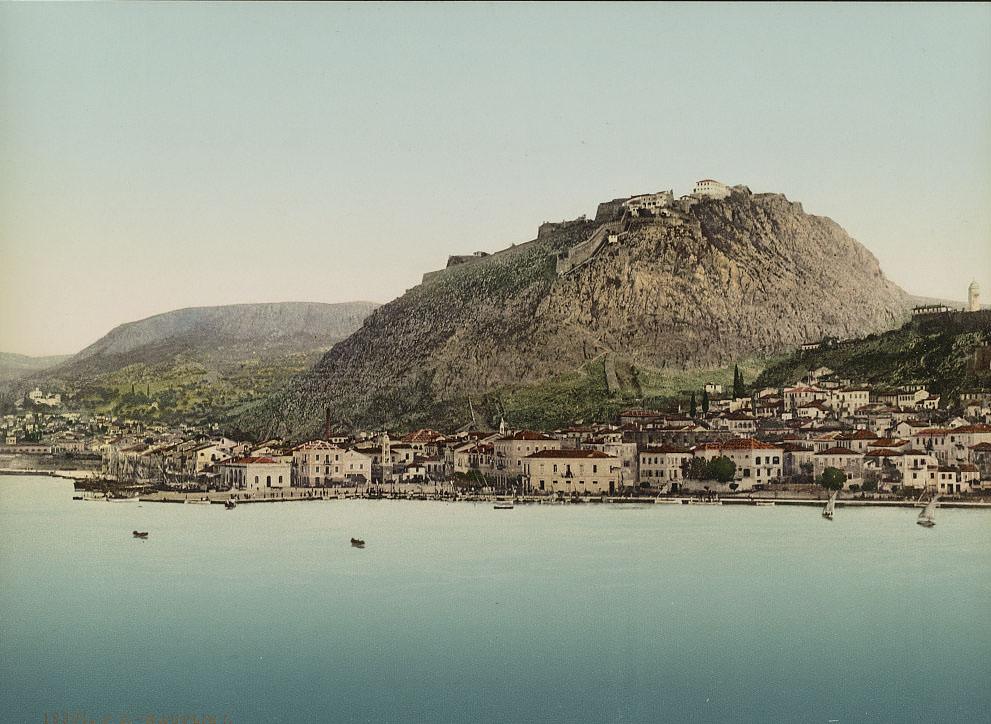
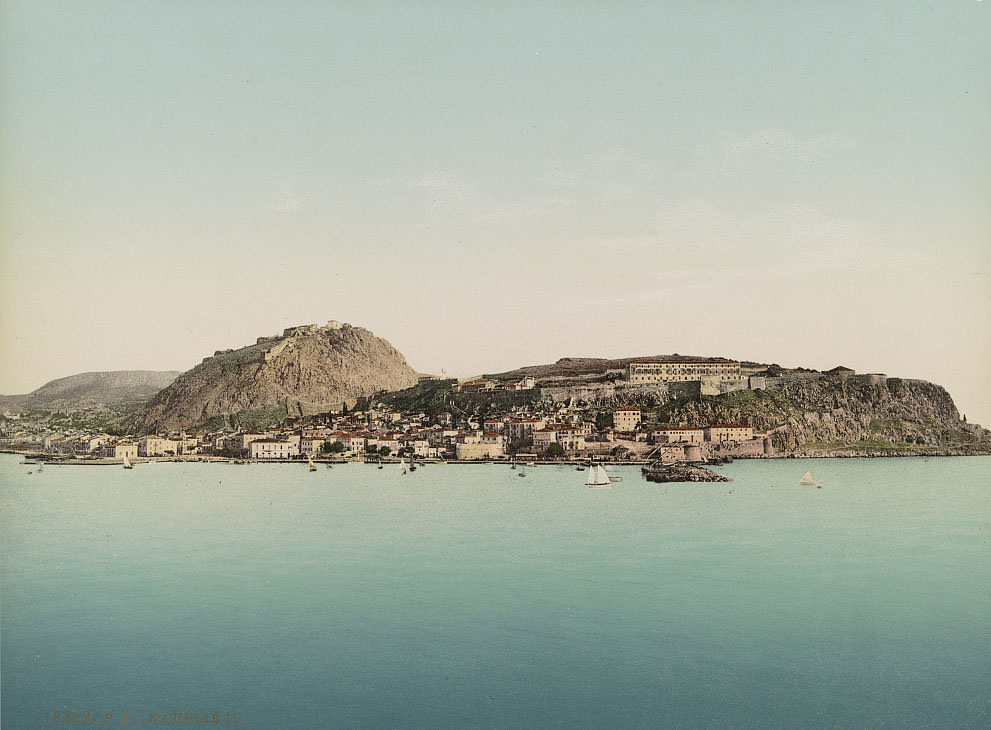
Nafplio, shown here as ‘Nauplie,’ was the first capital of the modern Greek state after independence. It served as the seat of government from 1829 until 1834, when the capital was moved to Athens. The city is dominated by the Palamidi fortress, a Venetian stronghold that rises sharply above the town on a hill nearly 200 meters high. It was here that Greece’s first governor, Ioannis Kapodistrias, was assassinated in 1831.
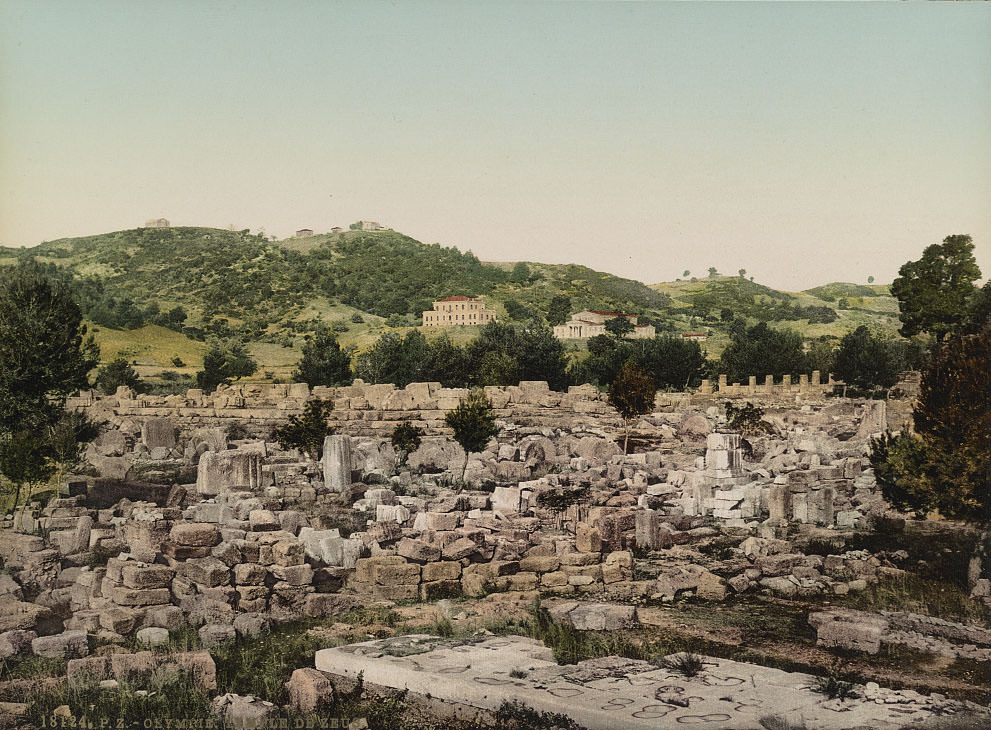
Olympia, in the western Peloponnese, was the religious and athletic center of ancient Greece and the original home of the Olympic Games, held every four years beginning in 776 BC. The Temple of Zeus at Olympia once housed one of the Seven Wonders of the Ancient World — a colossal ivory-and-gold statue of Zeus created by the sculptor Pheidias. By the 1890s, German archaeologists had been excavating the site for over a decade.
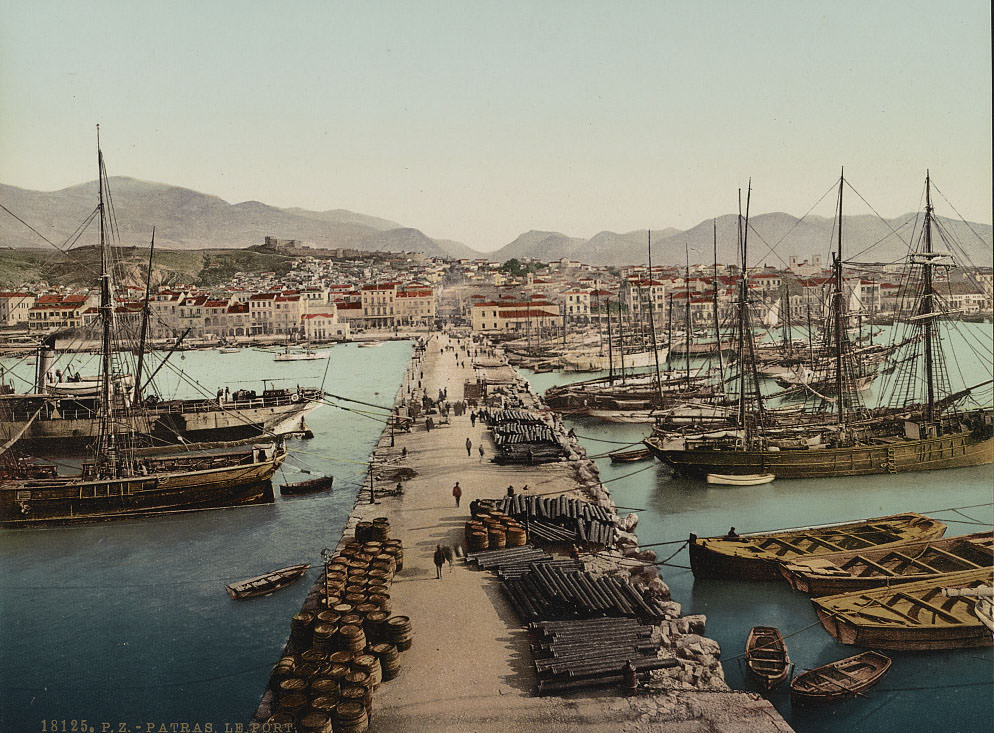
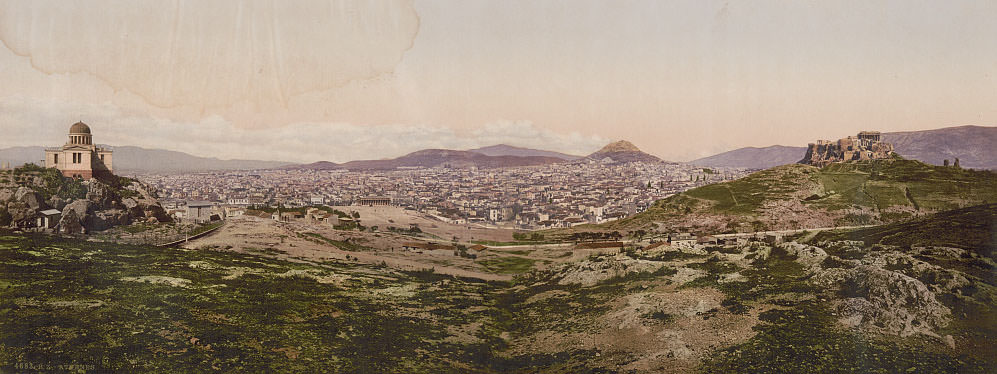
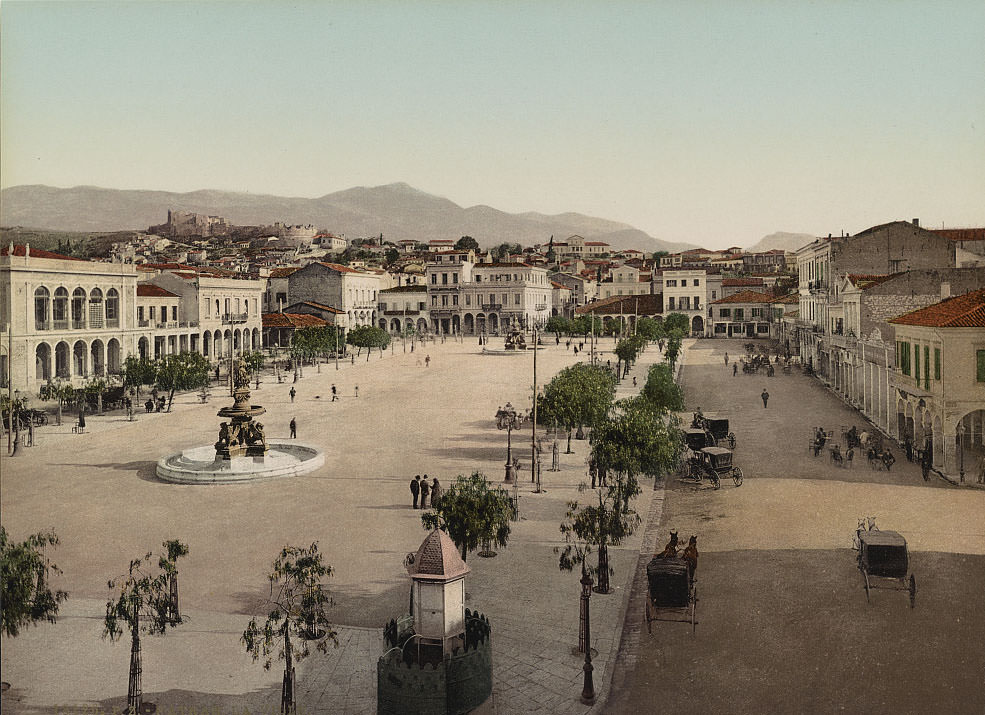
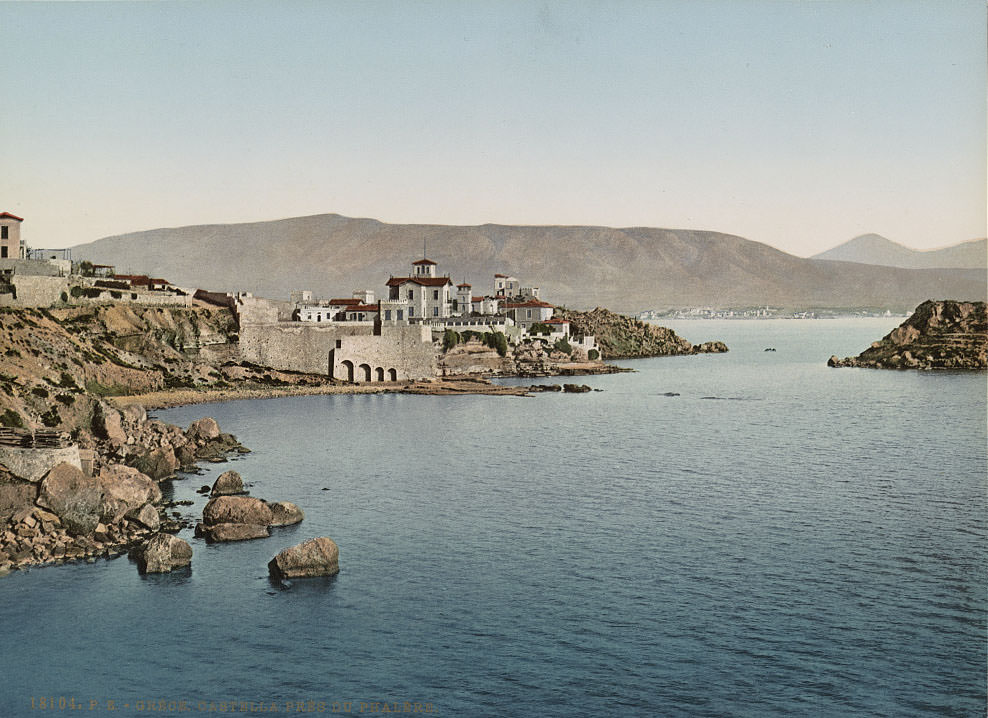
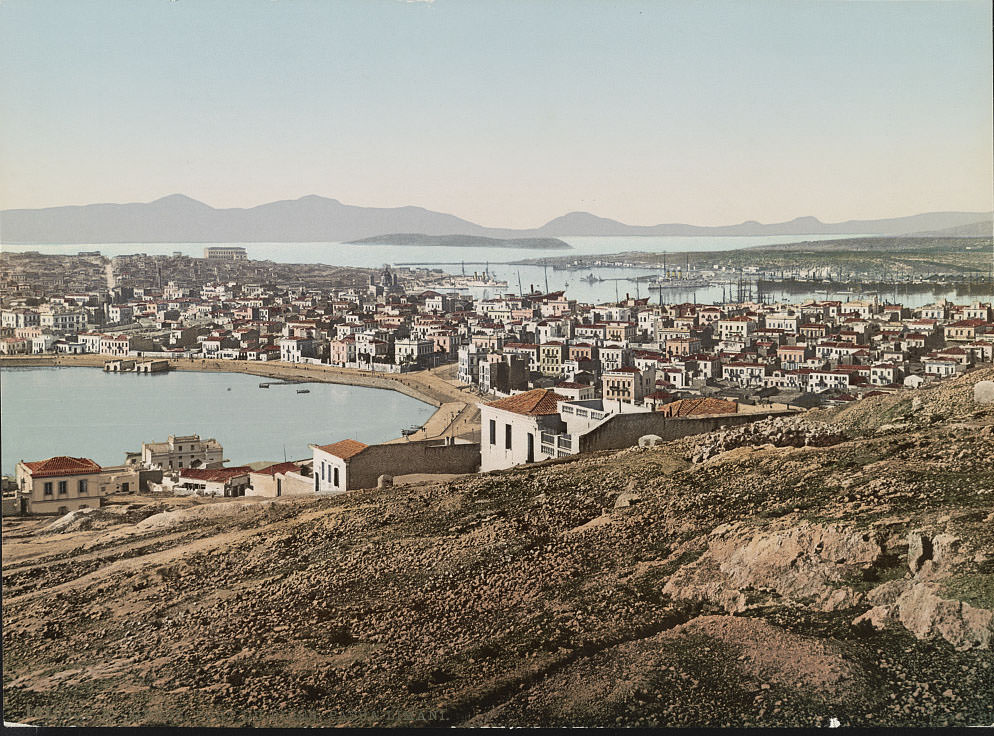
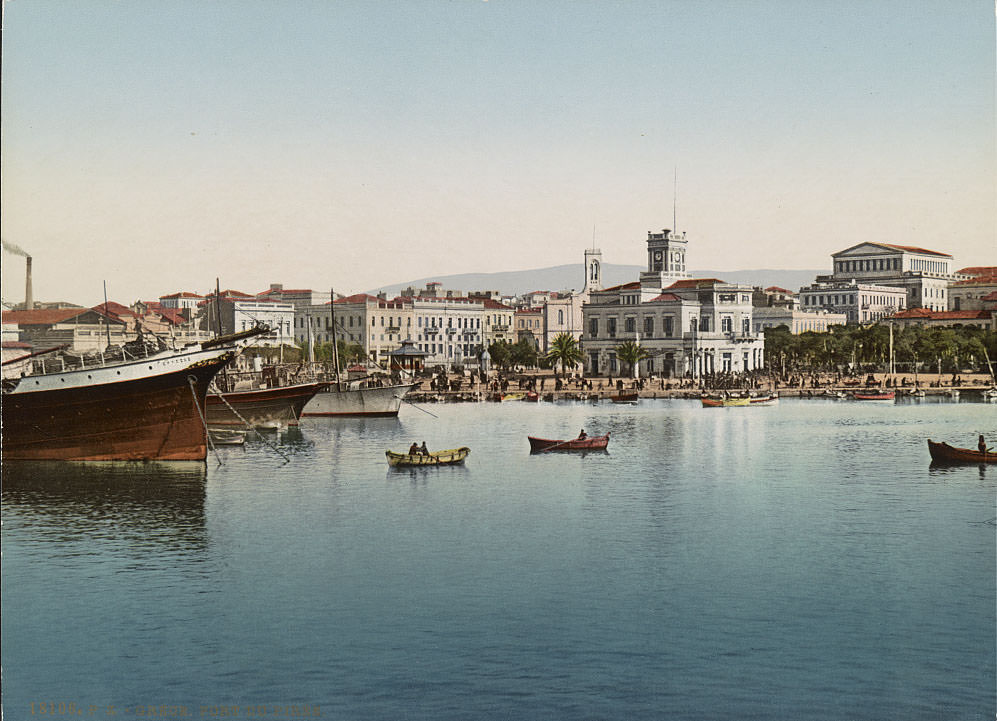
Piraeus served as the main port of Athens and one of the busiest harbors in the entire Mediterranean. The port of Zea, now known as Marina Zeas, was used primarily for the Greek navy’s torpedo boats in the late 19th century. The Kastella neighborhood above the harbor offered panoramic views of the Saronic Gulf. Phaleron, just east of Piraeus, was a popular seaside destination for Athenians before larger beaches further along the coast were developed.
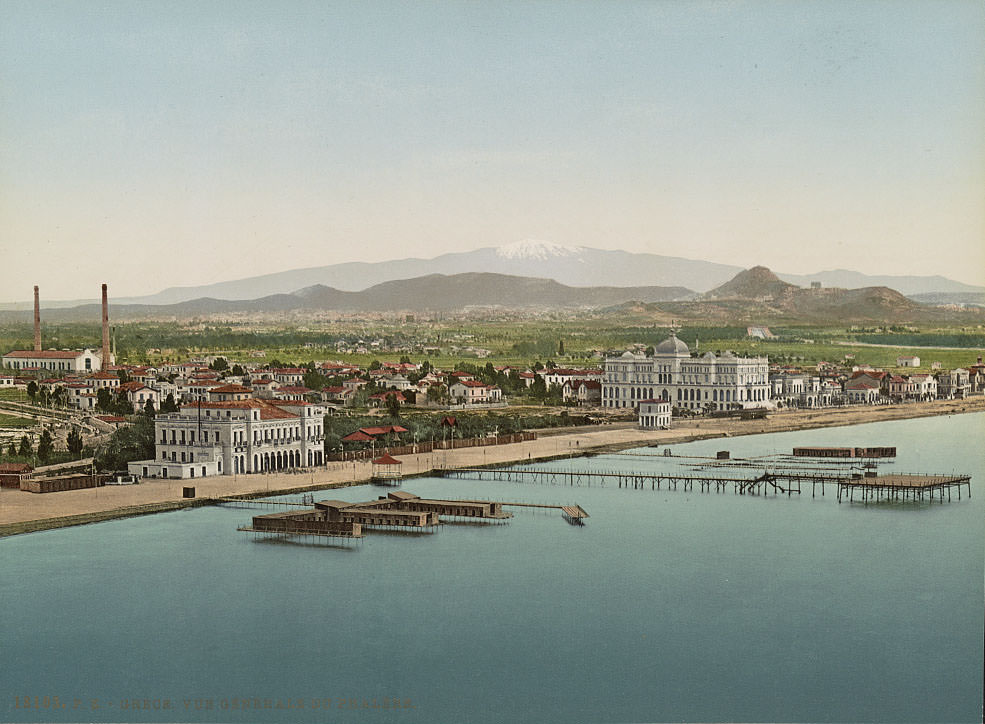
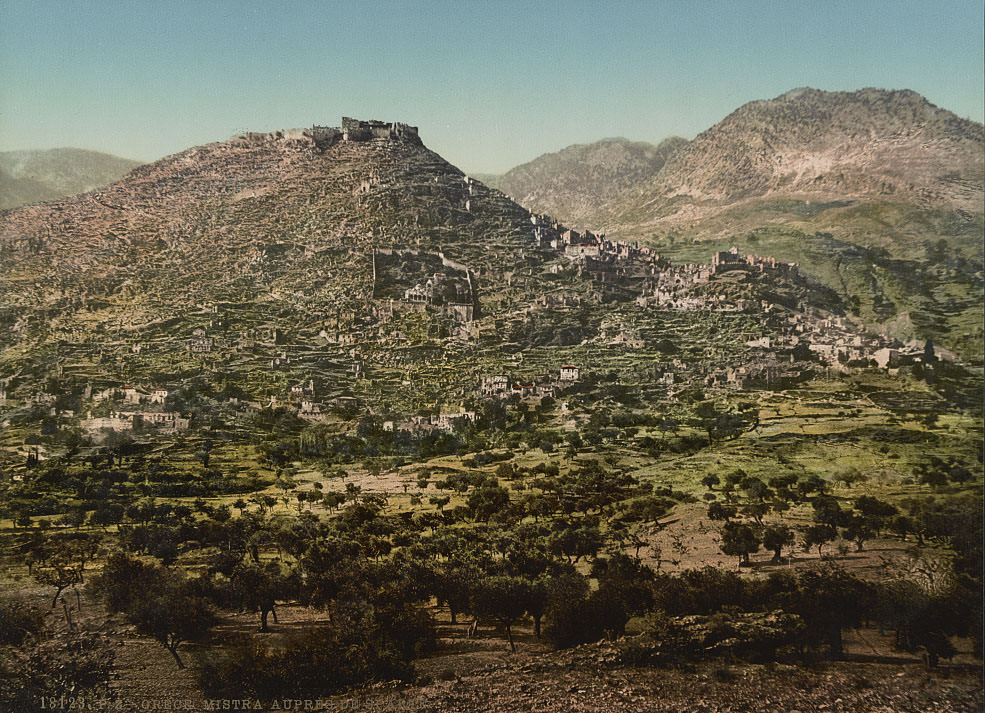
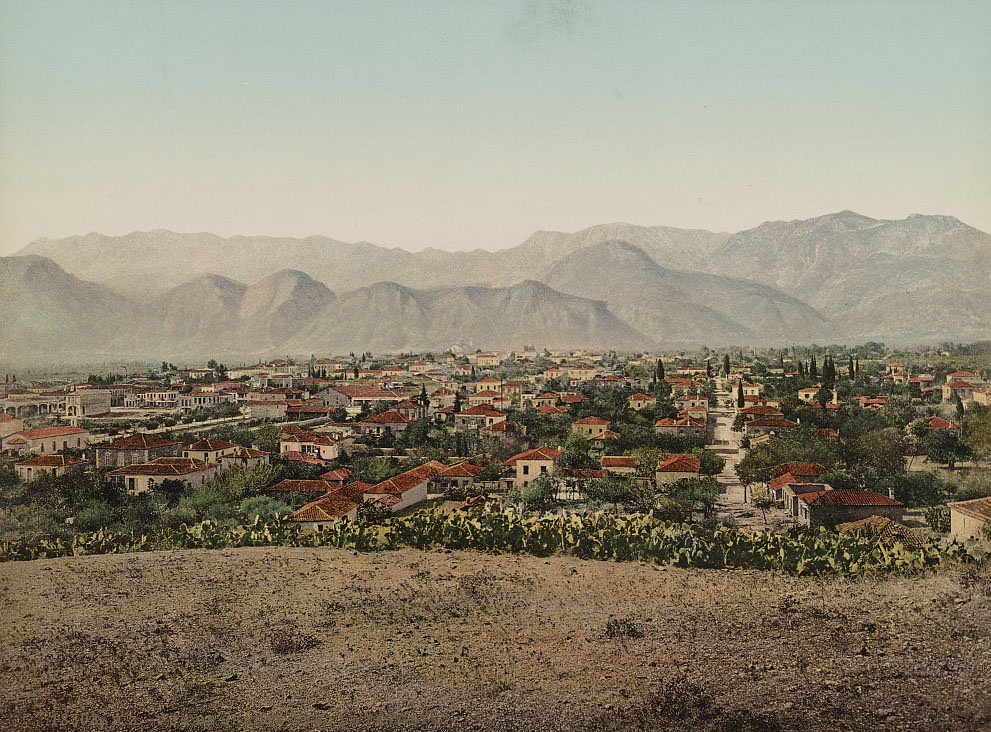
Sparta, in the Laconia region of the Peloponnese, presents an interesting contrast in these images. The ancient city of Sparta was one of the most powerful military states in Greek history, yet it left remarkably few monumental ruins compared to Athens. The modern city of Sparta was founded in 1834 near the ancient site. By the 1890s, it was a small administrative town surrounded by the flat valley of the Eurotas River and the peaks of the Taygetos mountain range.
The Meteora monasteries of Thessaly represent some of the most dramatic religious architecture in Europe. Six monasteries still stand today on the region’s extraordinary rock pillars, but at the height of their use in the 16th century there were 24. The Monastery of St. Stephen and the Monastery of Varlaam, both visible in this collection, were among the largest and most active. Varlaam was built in 1541 and contains a katholikon — a main church — decorated with intricate frescoes.
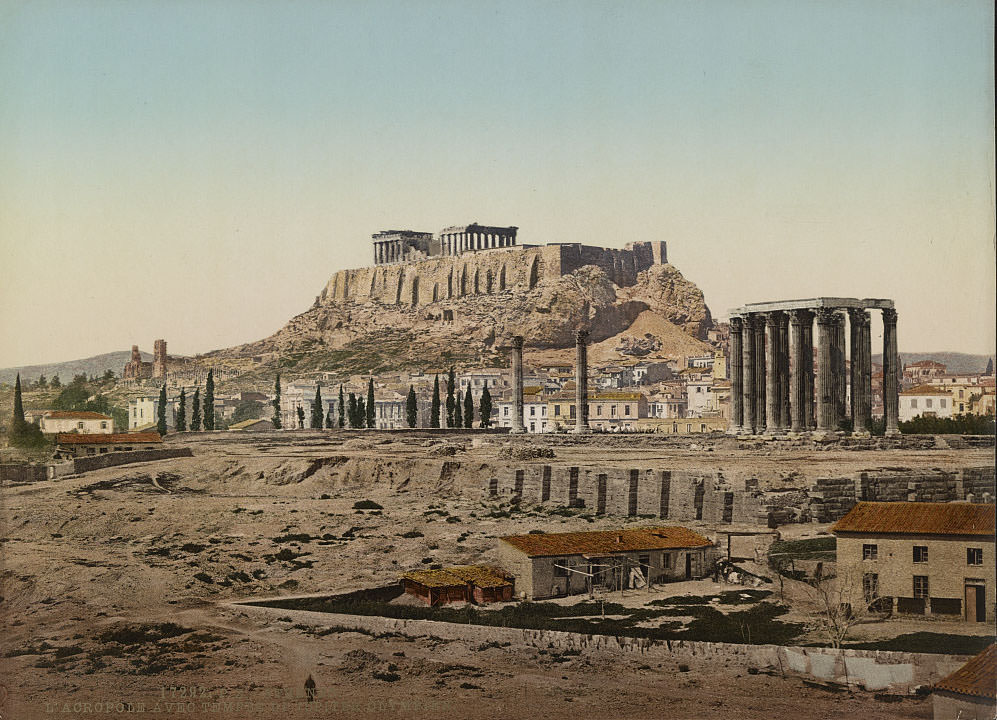
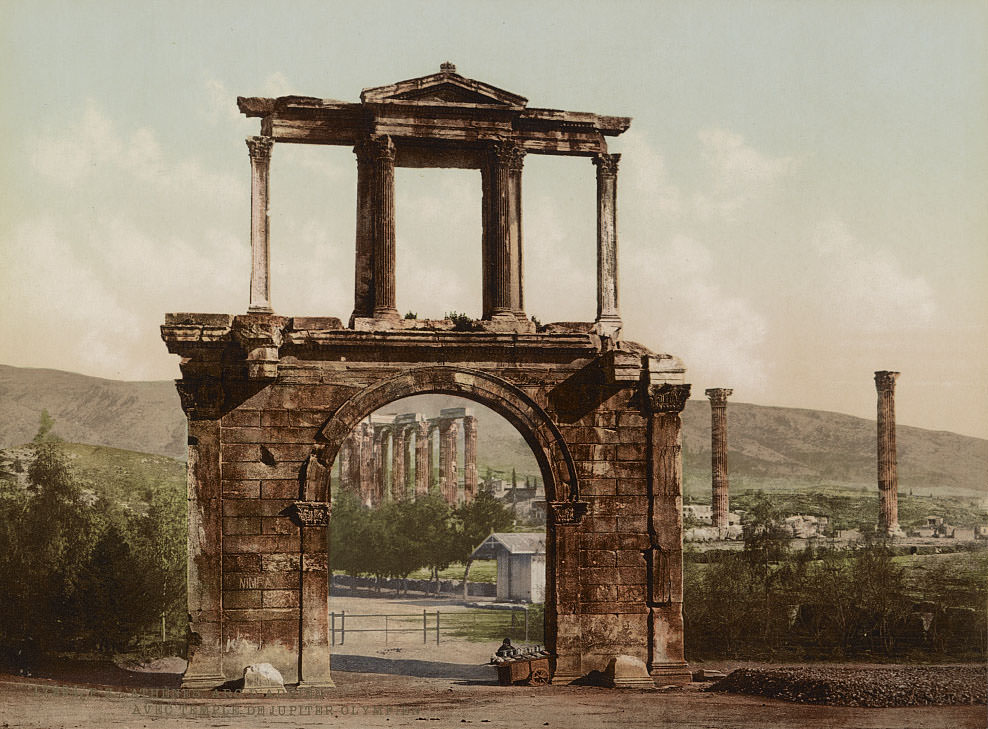
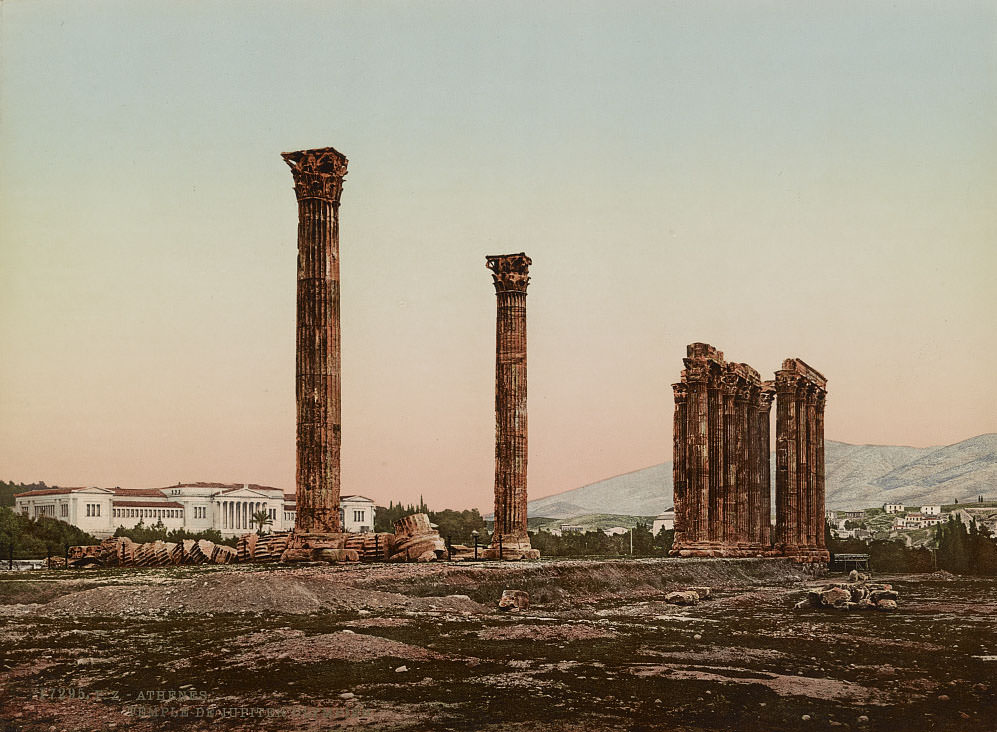
Back in Athens, the Temple of Olympian Zeus — also called the Olympieion — was one of the largest temples ever constructed in ancient Greece. Construction began in the 6th century BC under the tyrant Peisistratos but was not completed until 131 AD under the Roman Emperor Hadrian, roughly 638 years later. Of the original 104 Corinthian columns, only 15 remain standing today. Hadrian’s Arch, built nearby to mark the boundary between the old Greek city and his new Roman addition, is visible in several of these photographs.
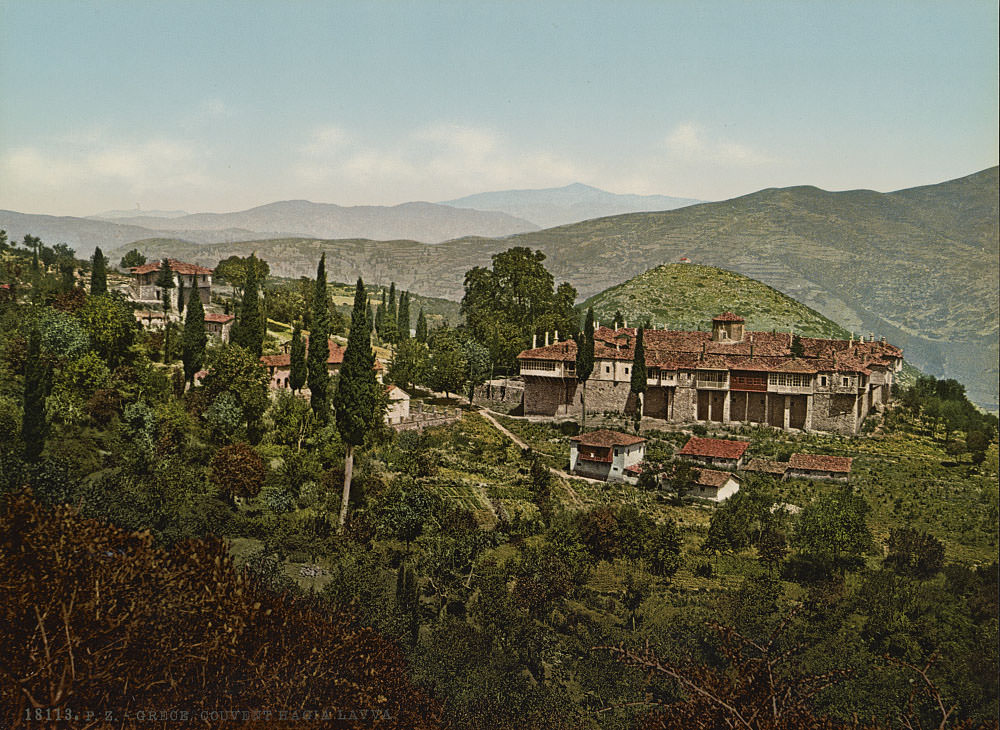
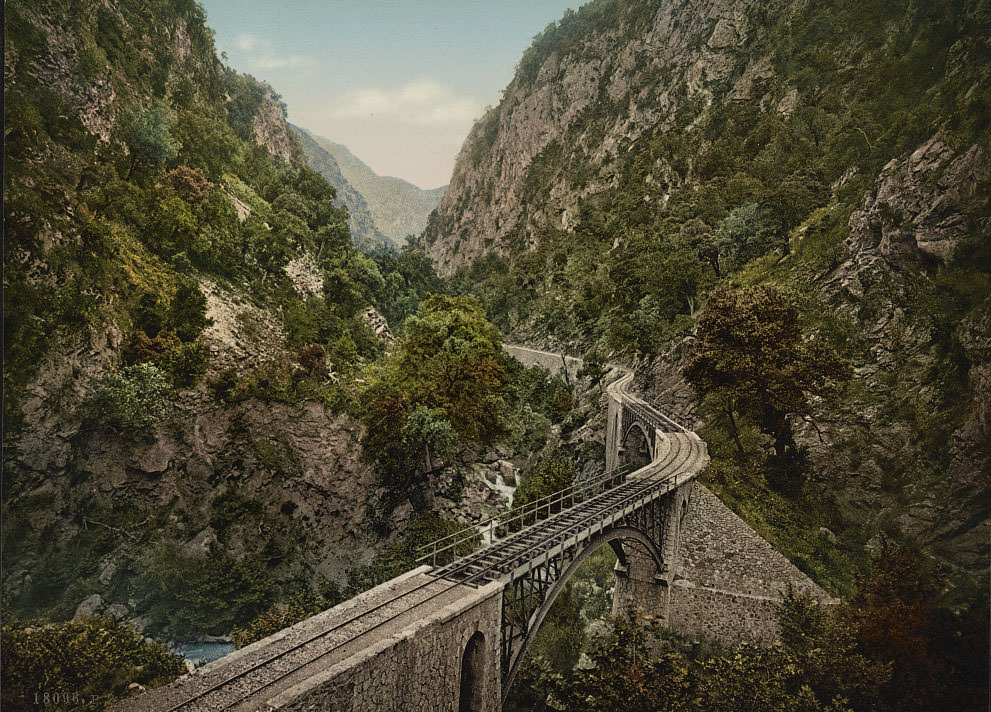
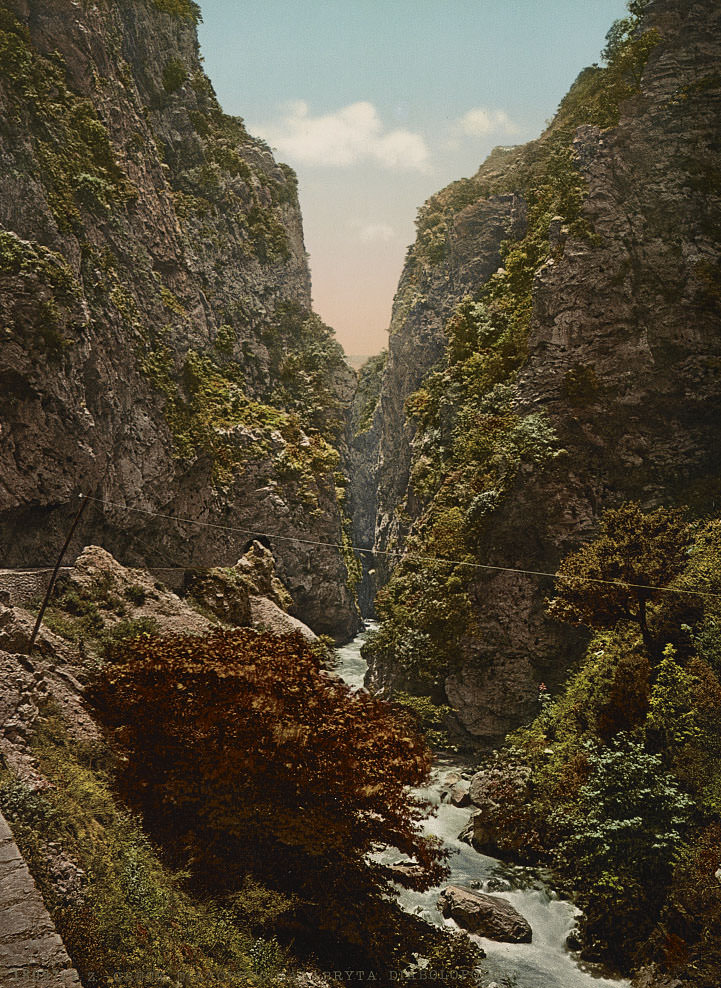
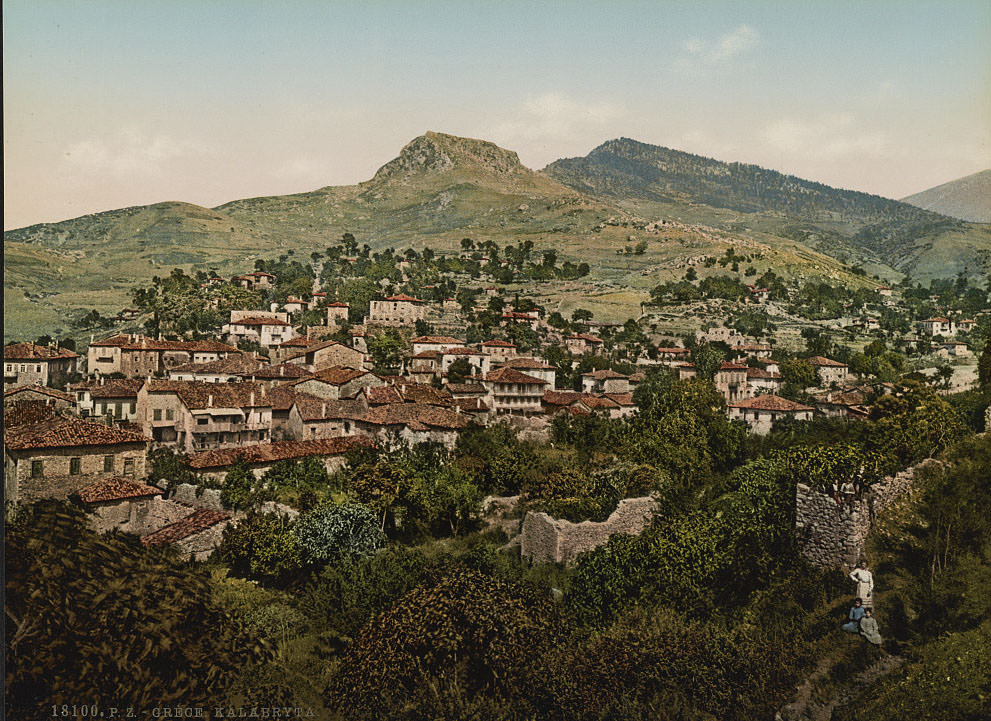
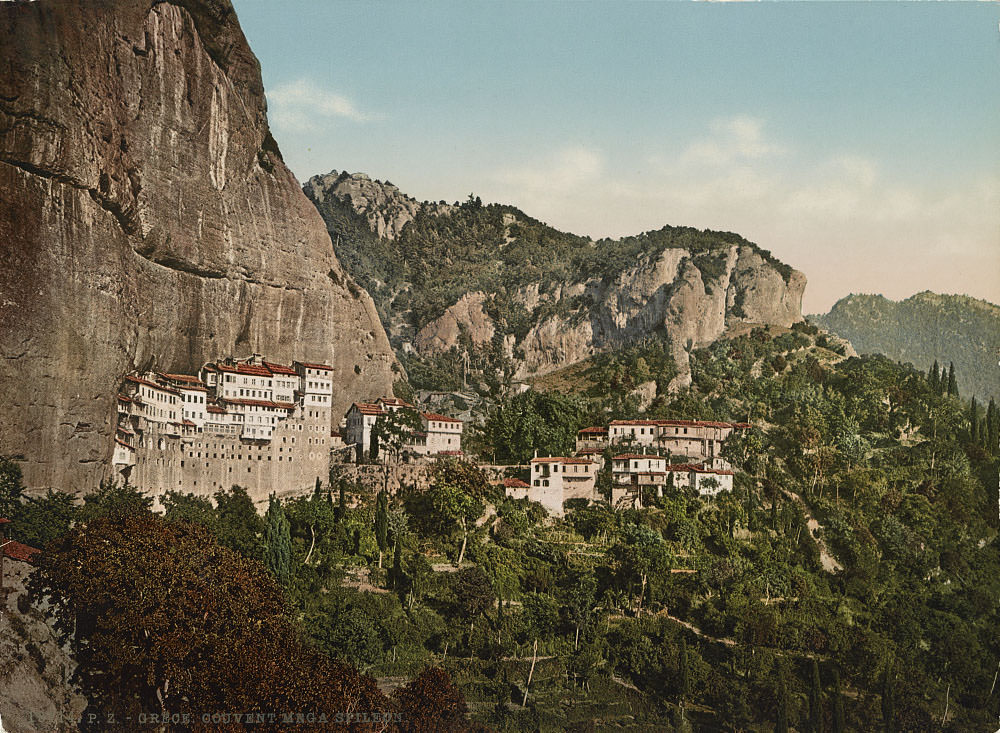
Mega Spilaio, meaning ‘Great Cave,’ is a monastery built into a massive rock cave on the steep cliffs of the Vouraikos Gorge near Kalavryta. It is considered one of the oldest monasteries in Greece, with origins traced to the 4th century AD. The monastery was partially destroyed by an explosion and fire in 1934, but in the 1890s it still stood in its older form, embedded dramatically into the cliff face above the gorge.
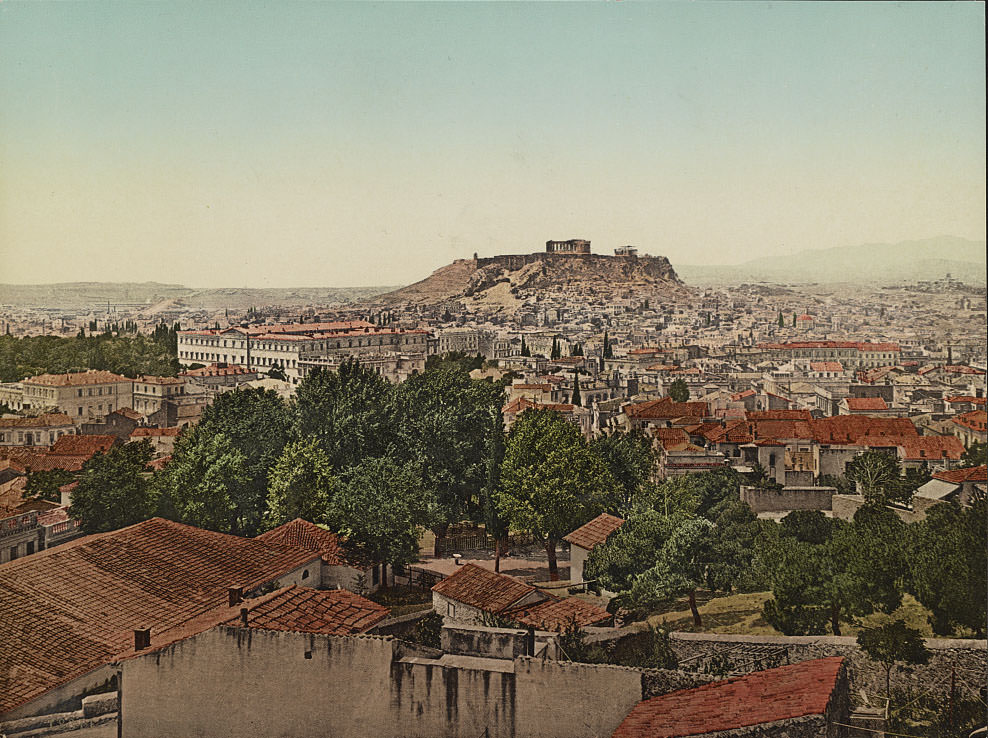
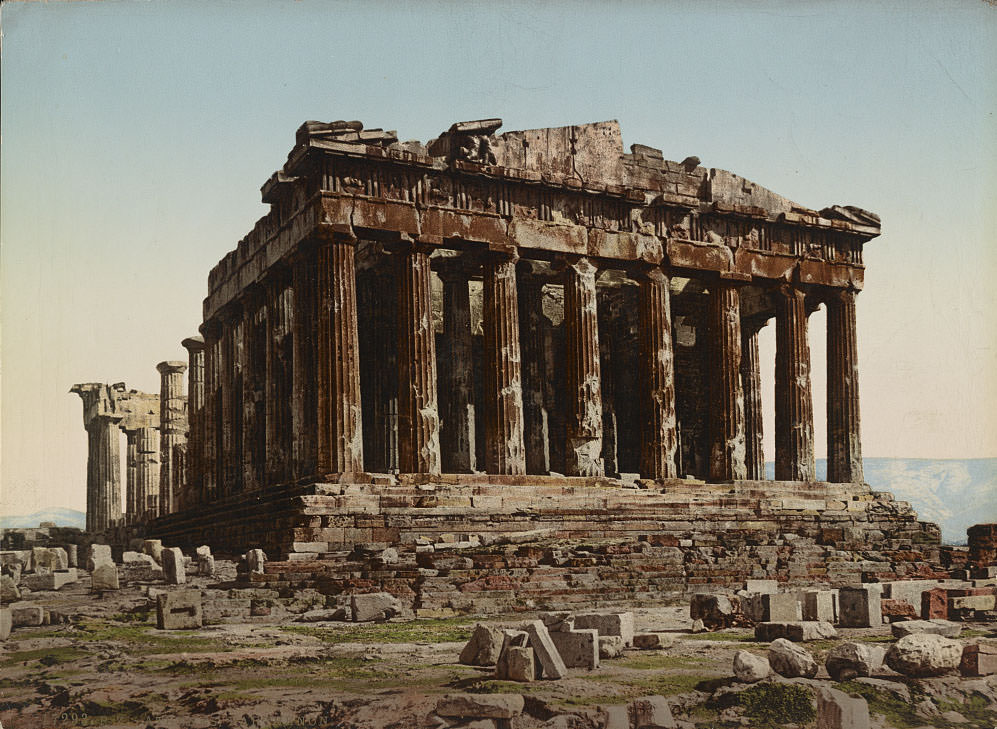
The Parthenon remains the defining image of Athens and of ancient Greece as a whole. Built between 447 and 432 BC under the direction of the statesman Pericles, it served as a temple to Athena Parthenos — Athena the Virgin — and housed a massive gold-and-ivory cult statue of the goddess. By the 1890s, the building had already suffered its most catastrophic damage: in 1687, a Venetian mortar shell struck an Ottoman powder magazine stored inside, causing an explosion that blew out the central structure. Despite this, what remained was still one of the most recognizable buildings on earth.
The Temple of Hephaestus, often called the Hephaisteion, sits on a low hill northwest of the Ancient Agora of Athens. Dedicated to Hephaestus, the god of fire and the forge, and to Athena Ergane, patron of craftsmanship, it was completed around 415 BC. It is the best-preserved ancient Greek temple in the world, largely because it was converted into a Christian church in the 7th century AD, which protected it from ruin for well over a thousand years.