
Florida has a long and layered history. For much of the 17th and 18th centuries, the land changed hands between Spain, France, and Great Britain. The United States took control in 1821, and Florida was formally admitted to the union as the 27th state in 1845. Over the following decades, waves of immigrants arrived from Latin America, Africa, Asia, and Europe, shaping the culture and communities that would define the state. By the 1890s, Florida was in the middle of a dramatic transformation — and these photographs capture it.
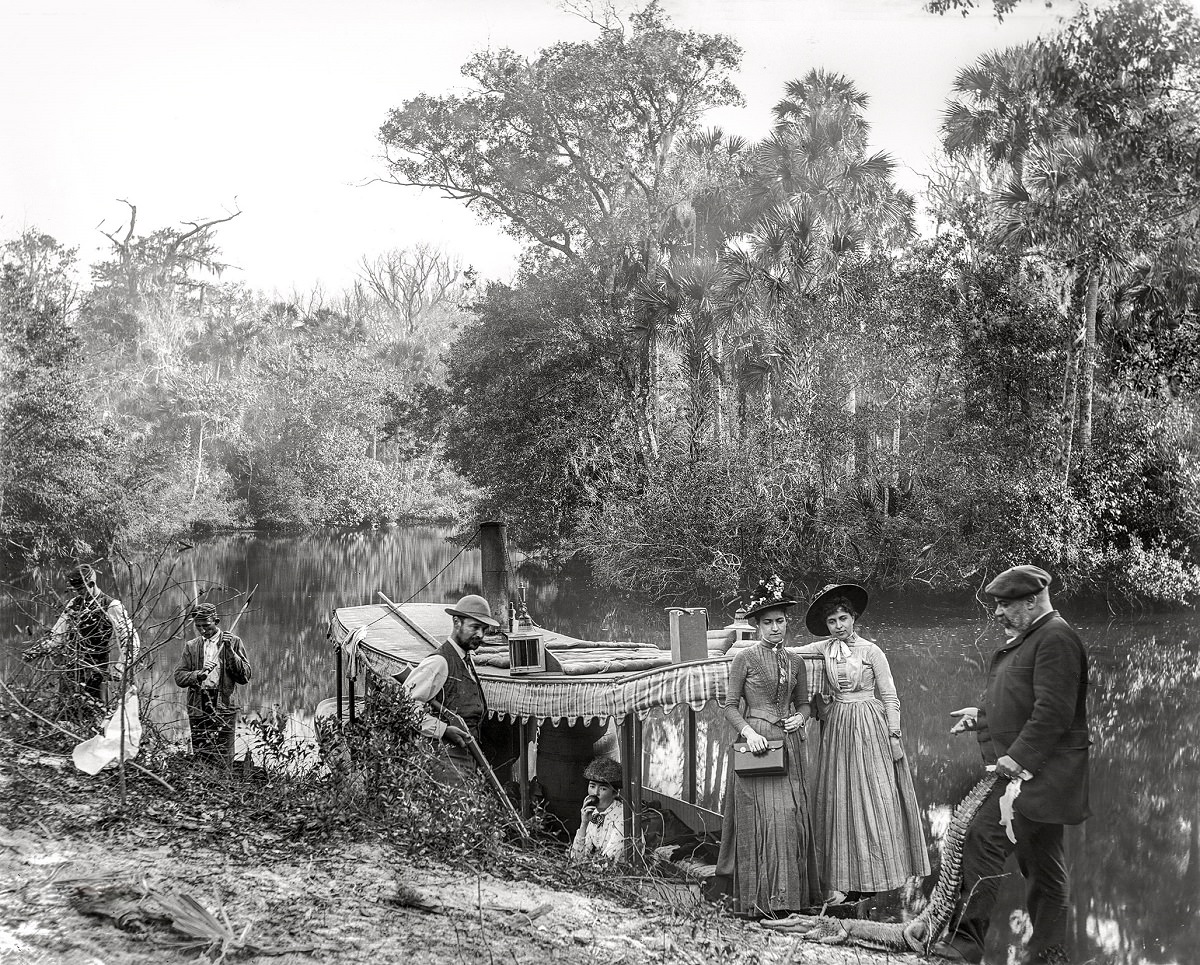
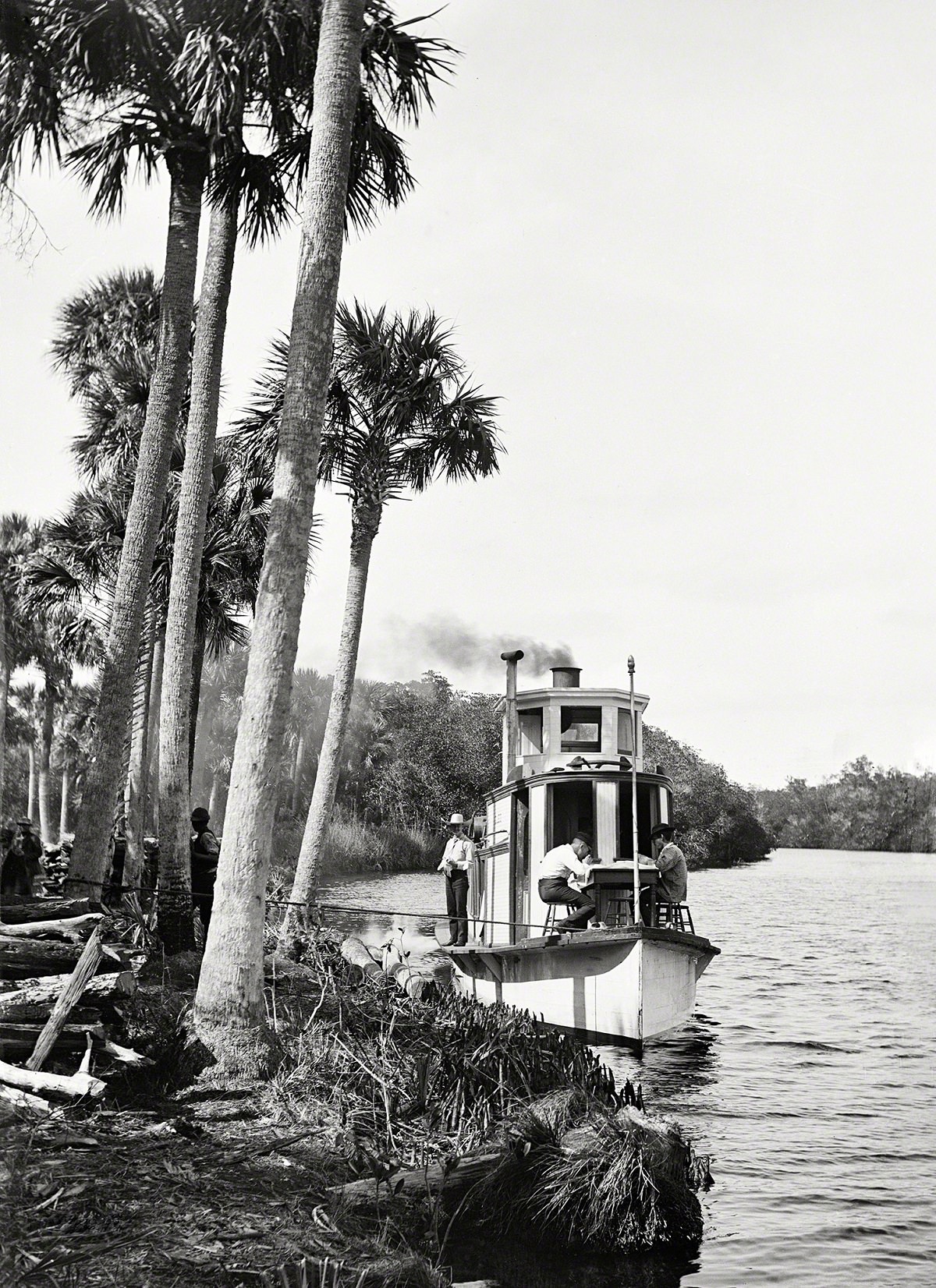
The late 19th century brought an economic boom to Florida. Railroads pushed into previously unreachable areas, opening up land for agriculture, settlements, and industry. Factories were built, towns expanded, and the state’s population roughly doubled. Tourism followed close behind, as residents of Northern states began traveling south to escape brutal winters. Florida’s rivers, like the Tomoka in Volusia County, served as vital transportation and trade arteries during this period.
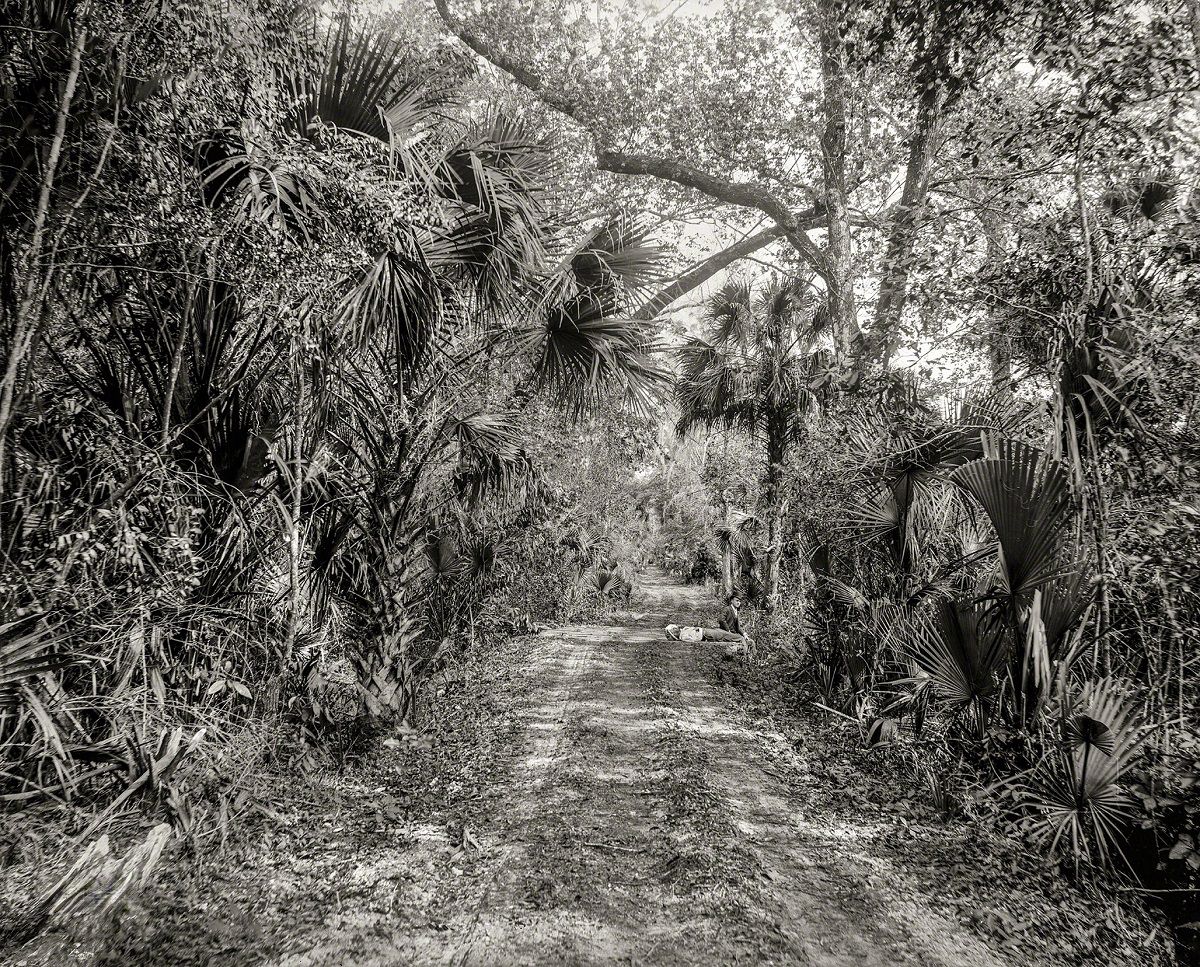
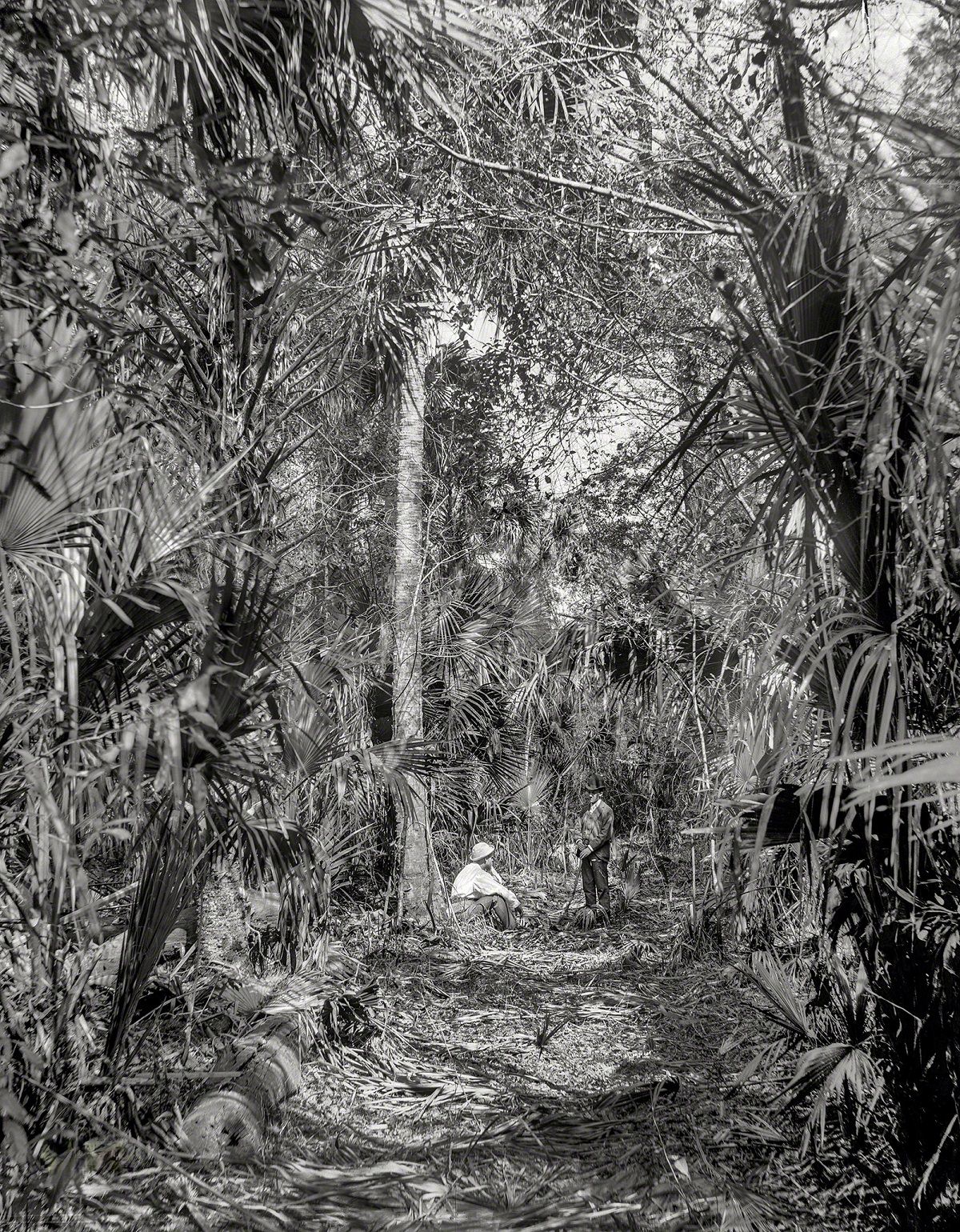
The roads and natural landscapes of Volusia County reflect the quiet but steady growth of rural Florida. Hammock roads — paths cut through dense, shaded groves of live oaks and subtropical vegetation — connected communities that had little else linking them. These routes were used daily by locals and travelers alike, winding through landscapes that looked much the same for miles.
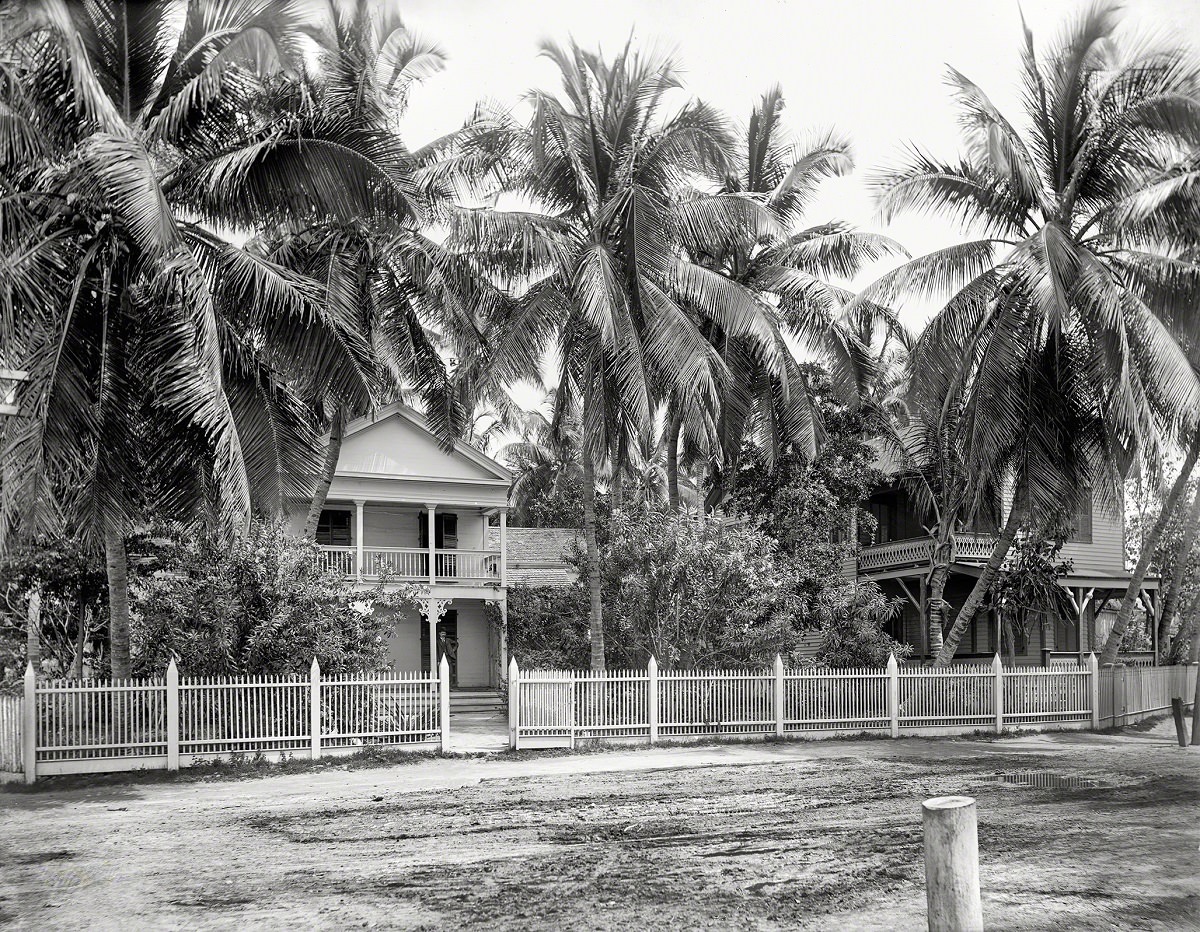
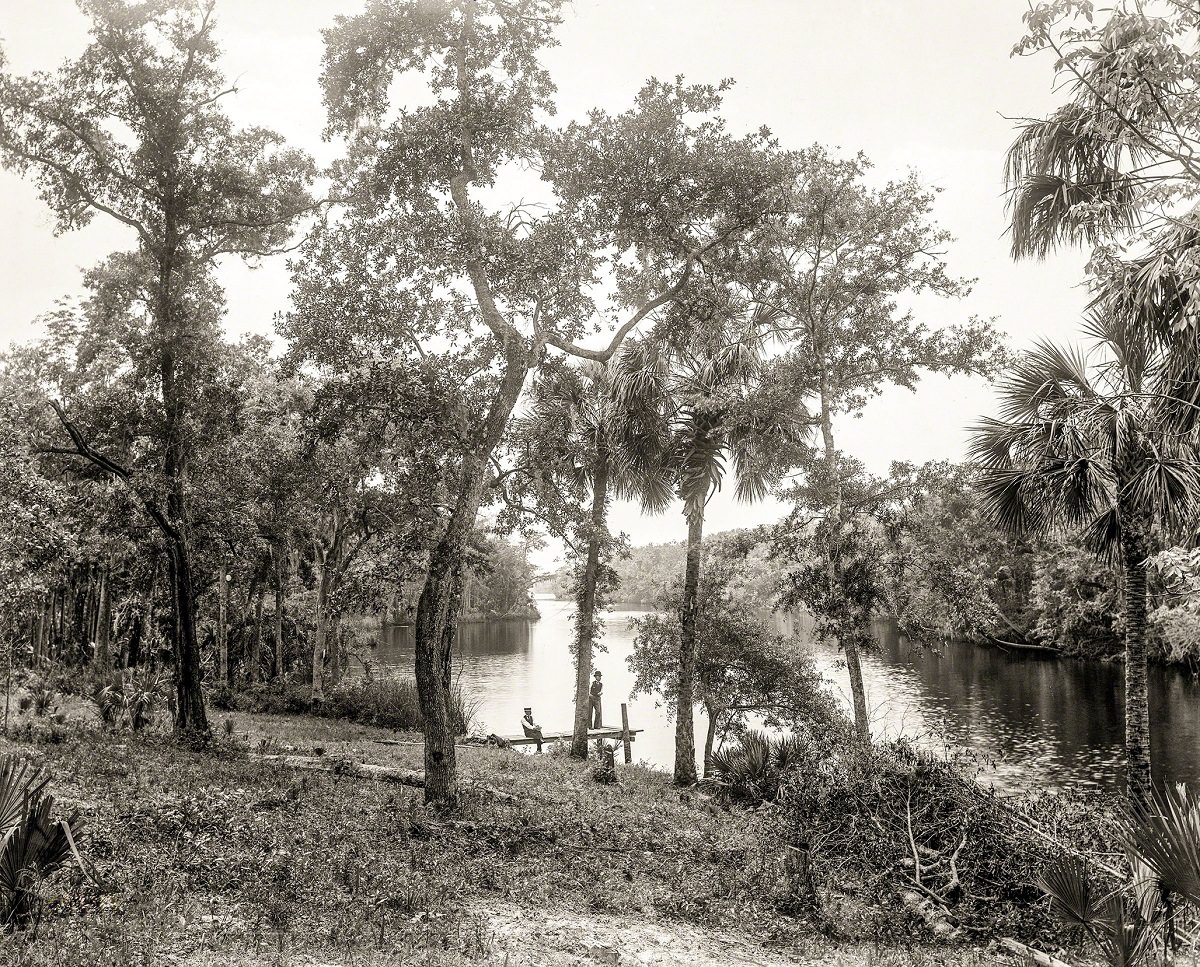
River landings like Misenor’s on the Tomoka were common gathering points for goods, passengers, and news. Boats were the most reliable way to move freight in areas where roads were little more than dirt tracks. Further south, Key West carried its own distinct character — an island city shaped by maritime trade, cigar manufacturing, and a dense mix of cultures that set it apart from the rest of the state.
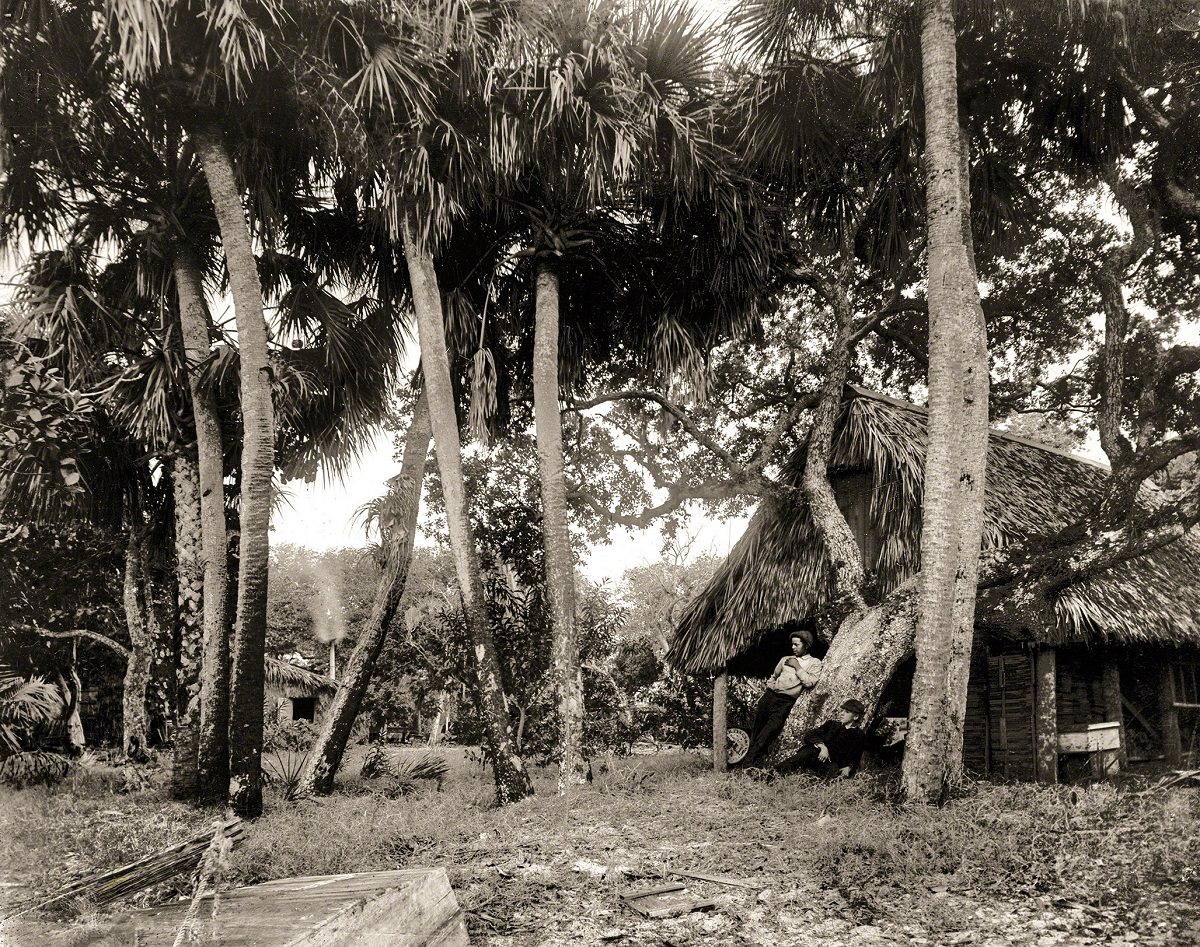
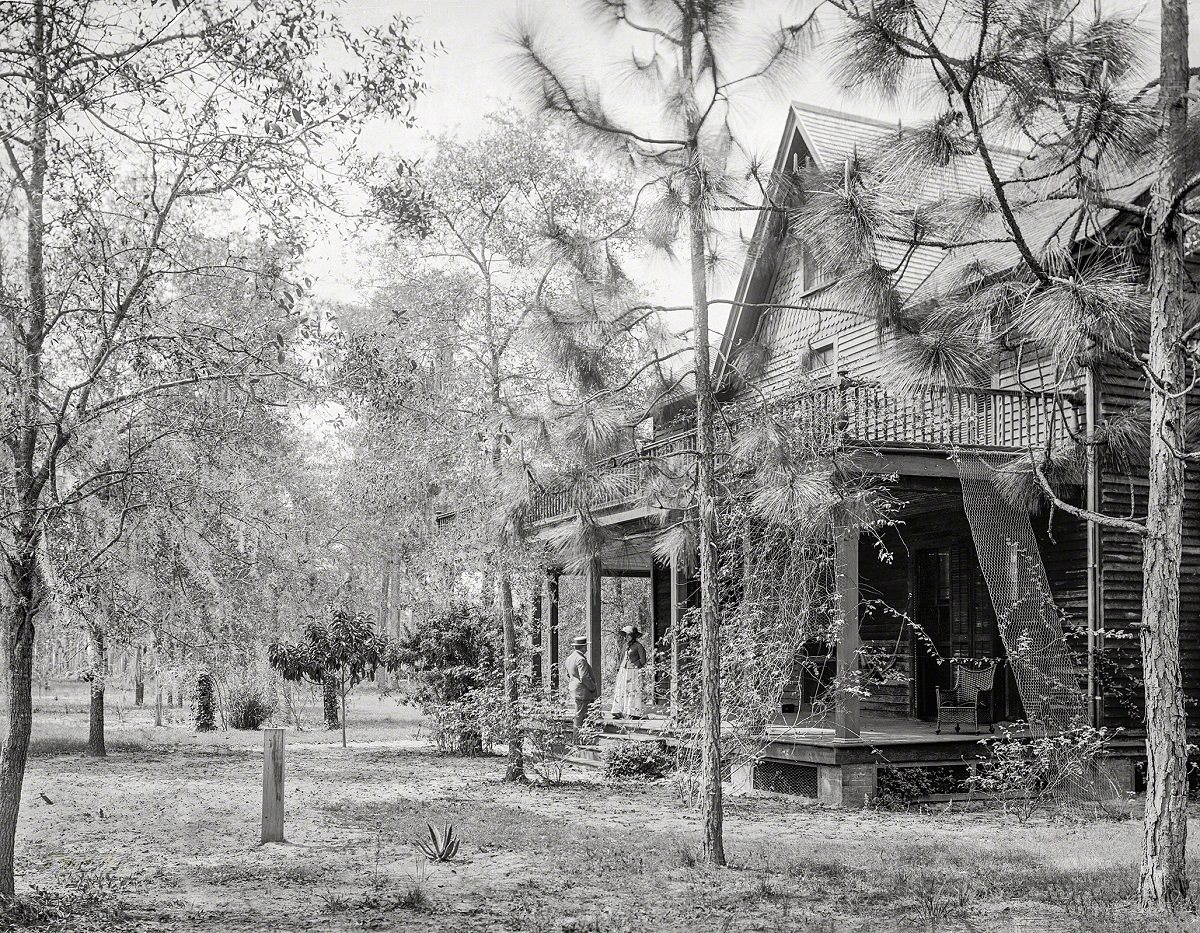
Along the Indian River lagoon on Florida’s east coast, small settlements like Gem Island developed around fishing, farming, and trade. The Indian River was not a true river but a long, narrow estuary stretching more than 150 miles. Its calm waters made it ideal for boat travel and supported a thriving fishing economy. Small homes in inland towns like Seville, tucked into the landscape, show how Floridians built lives in quieter corners of the state.
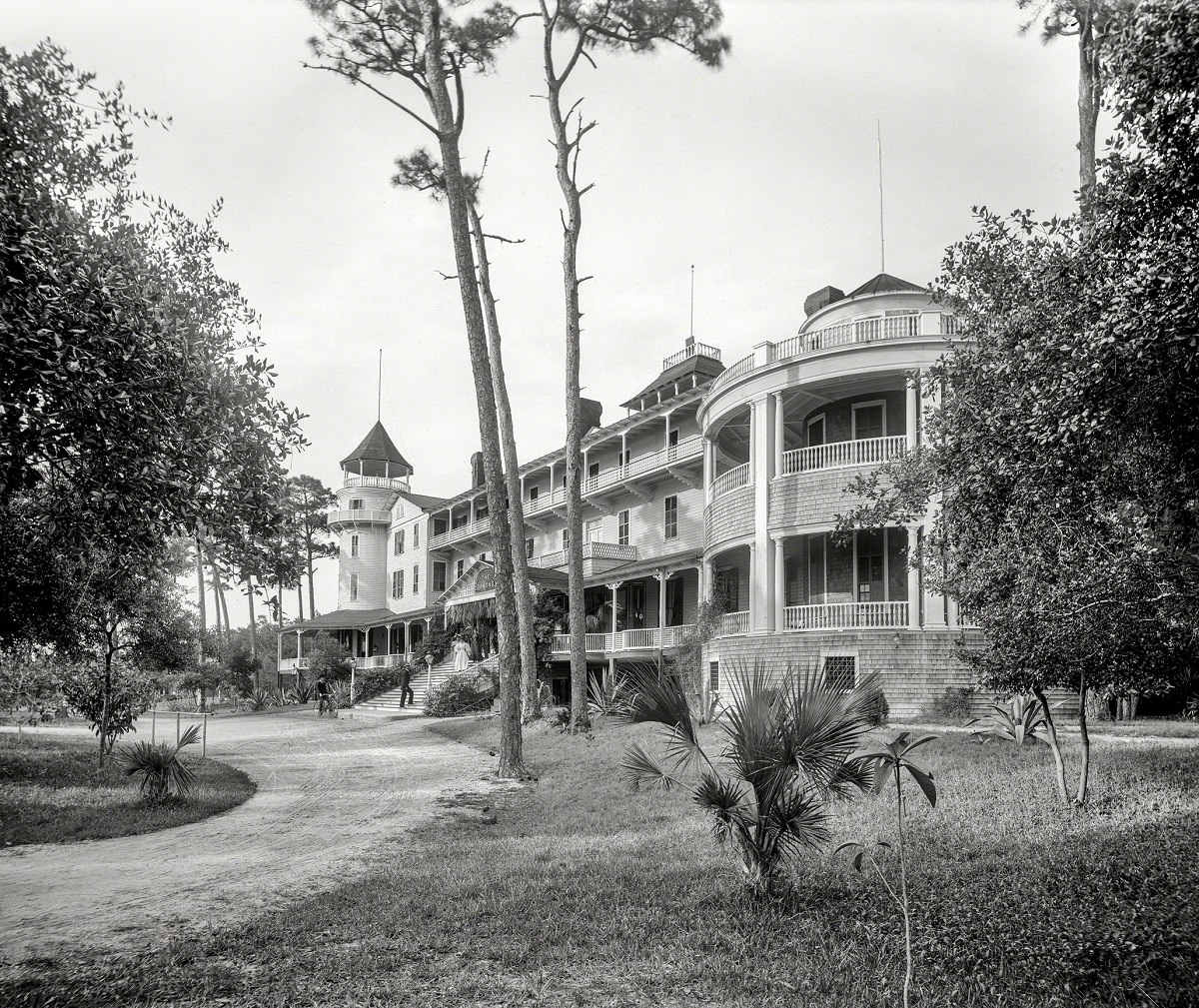
Ormond Beach, located just north of Daytona, was already drawing visitors by the early 1890s. Its wide, hard-packed beach would later become famous for automobile speed trials, but in this era it was a destination for leisure and relaxation. To the south, the Indian River corridor offered travelers and settlers alike a landscape dense with wildlife, citrus groves, and tropical vegetation.
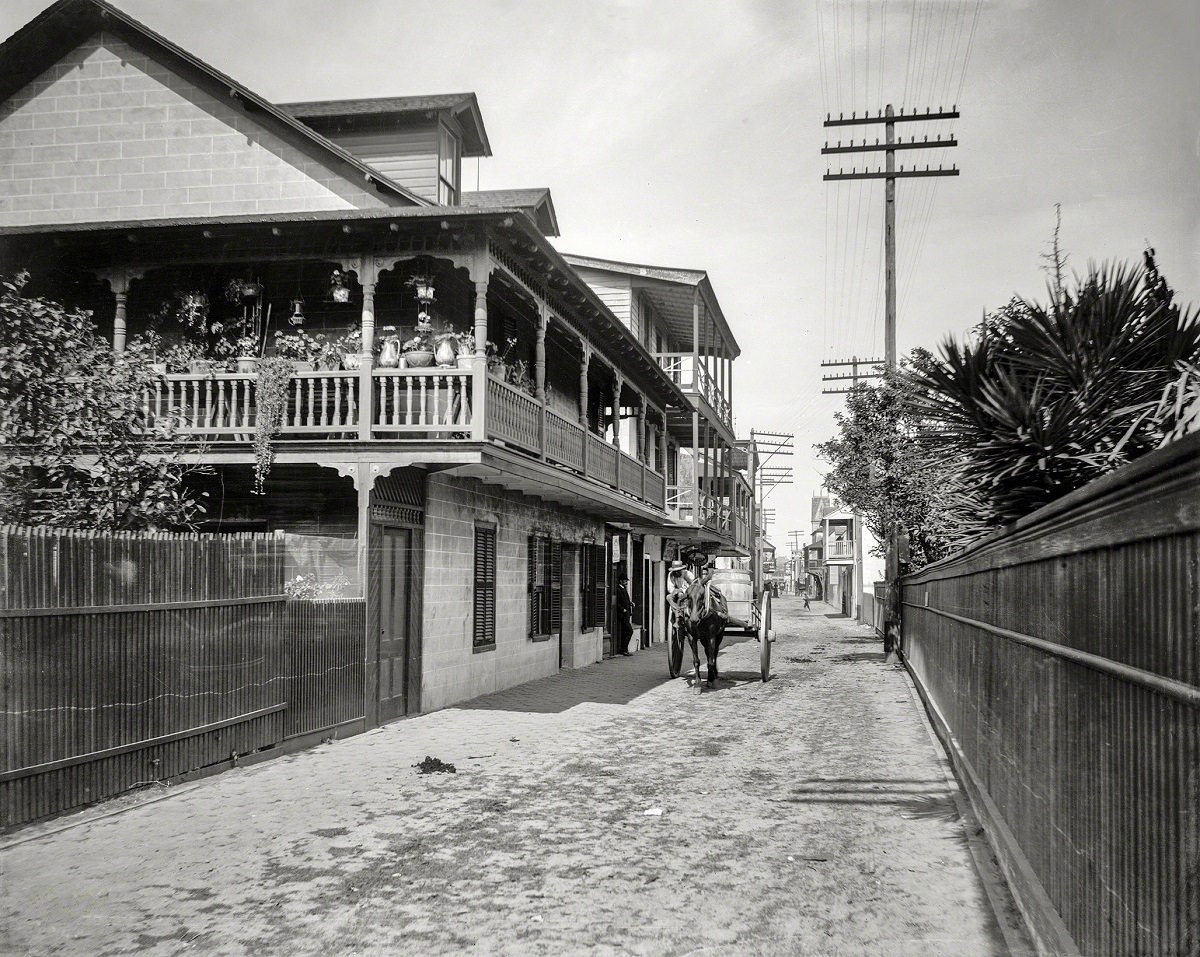
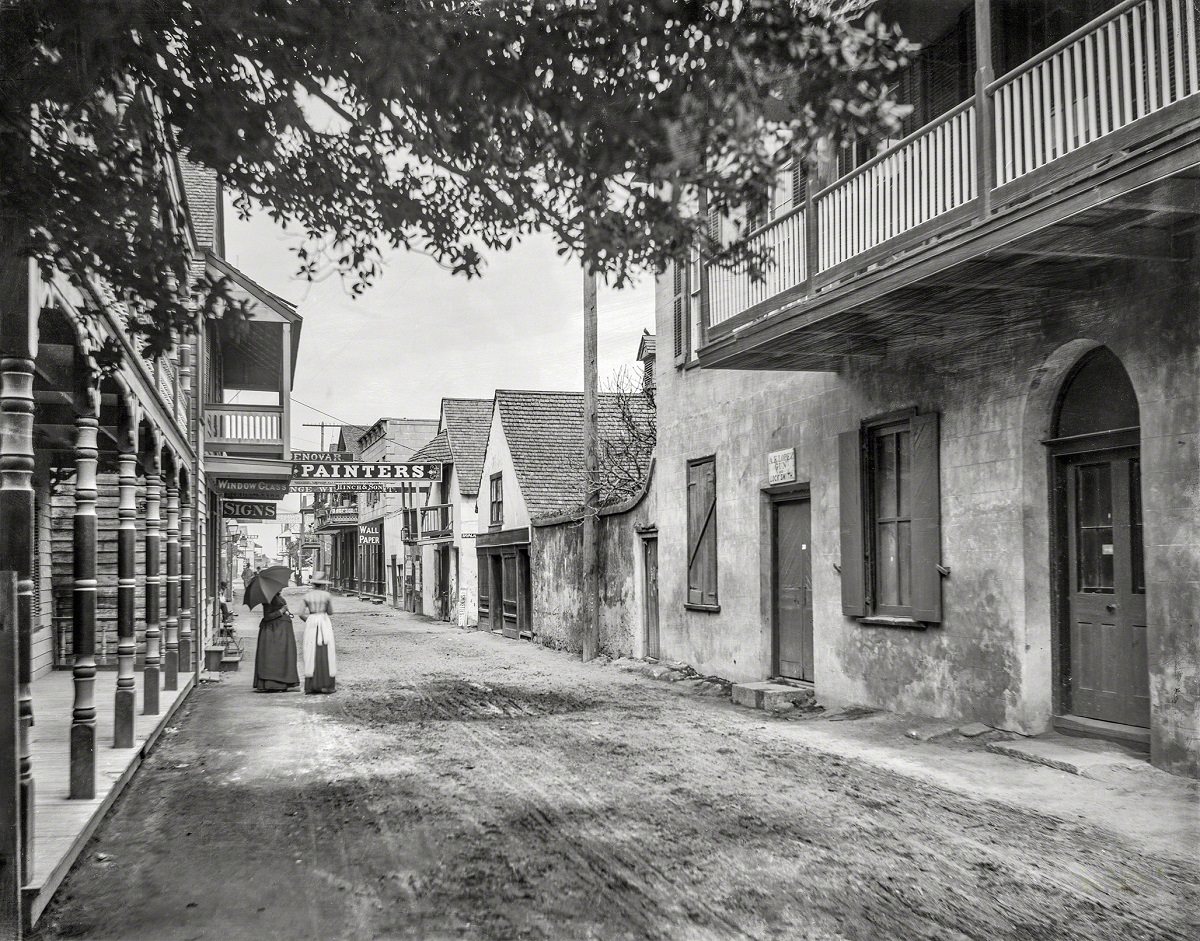
St. Augustine, founded by Spanish colonists in 1565, holds the distinction of being the oldest continuously occupied European settlement in the United States. By the 1890s, it had become one of Florida’s most visited destinations. St. George Street, one of its oldest thoroughfares, was lined with shops, homes, and historic structures that told the story of centuries of occupation. The street’s narrow layout and Spanish colonial architecture made it unlike anything else in America.
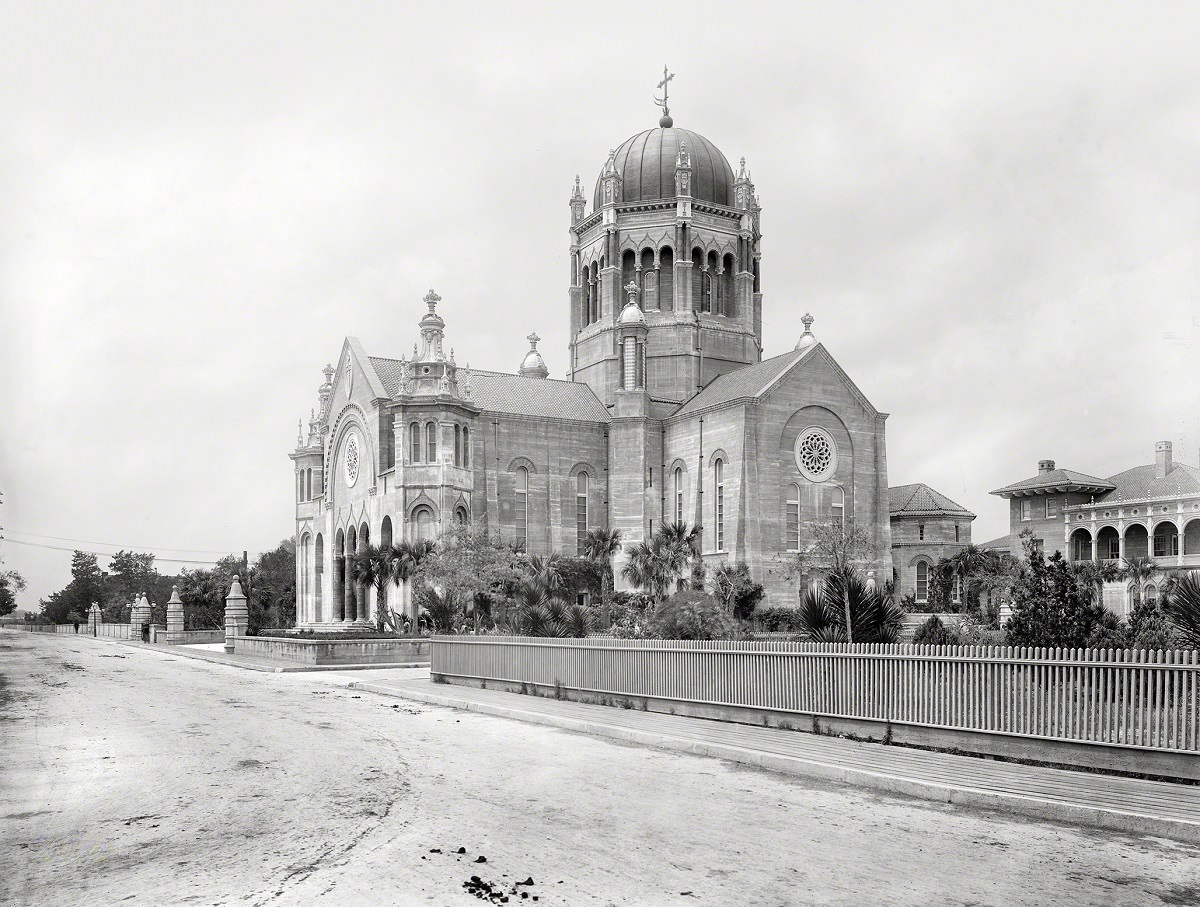
Henry Flagler, the Standard Oil co-founder turned railroad magnate, did more to shape 1890s Florida than almost any other single person. He extended his Florida East Coast Railway down the Atlantic coast and built luxury hotels that made the state a destination for the wealthy. In St. Augustine, Flagler also funded the construction of the Memorial Presbyterian Church, completed in 1890, in memory of his daughter who died that same year. The church, built in Venetian Renaissance style, still stands today.
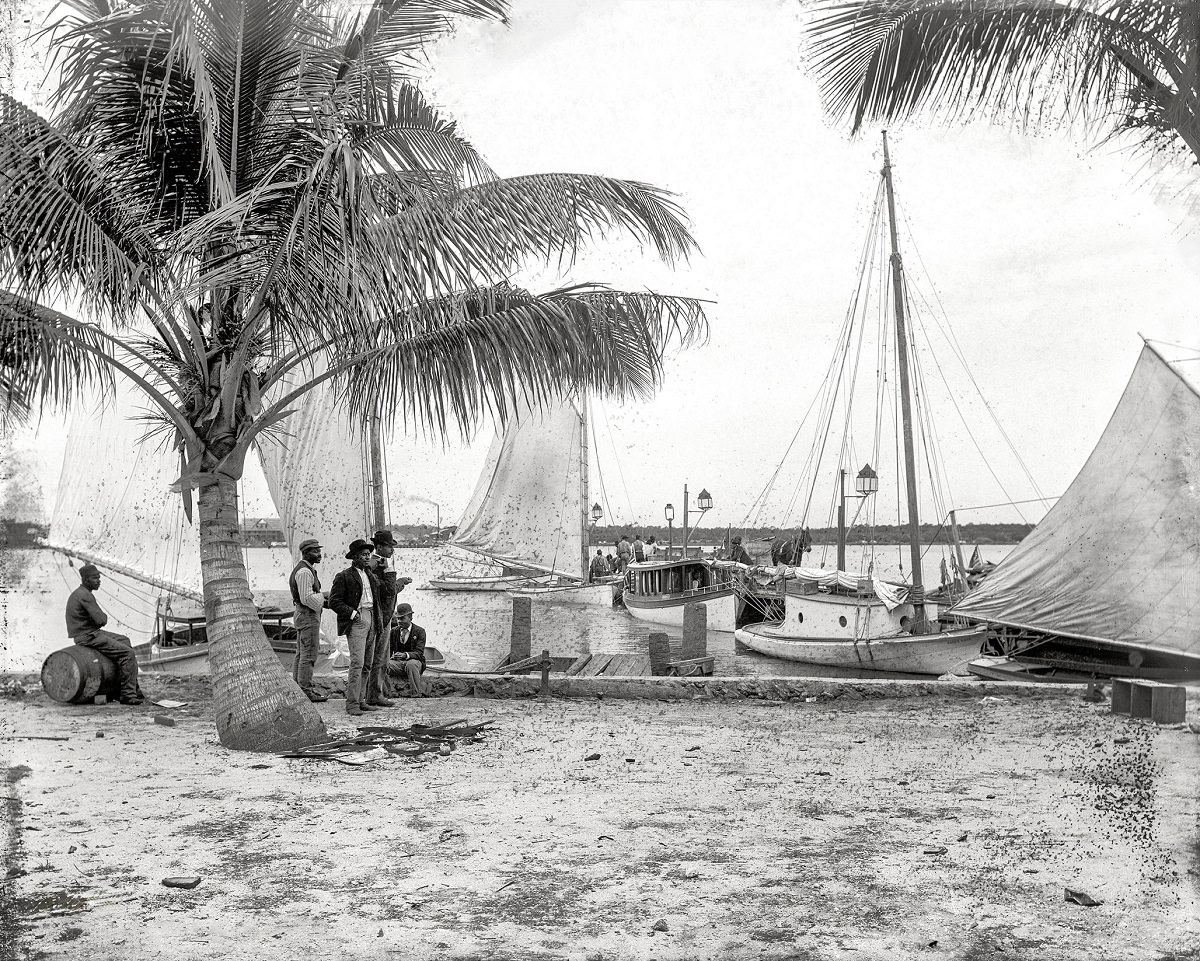
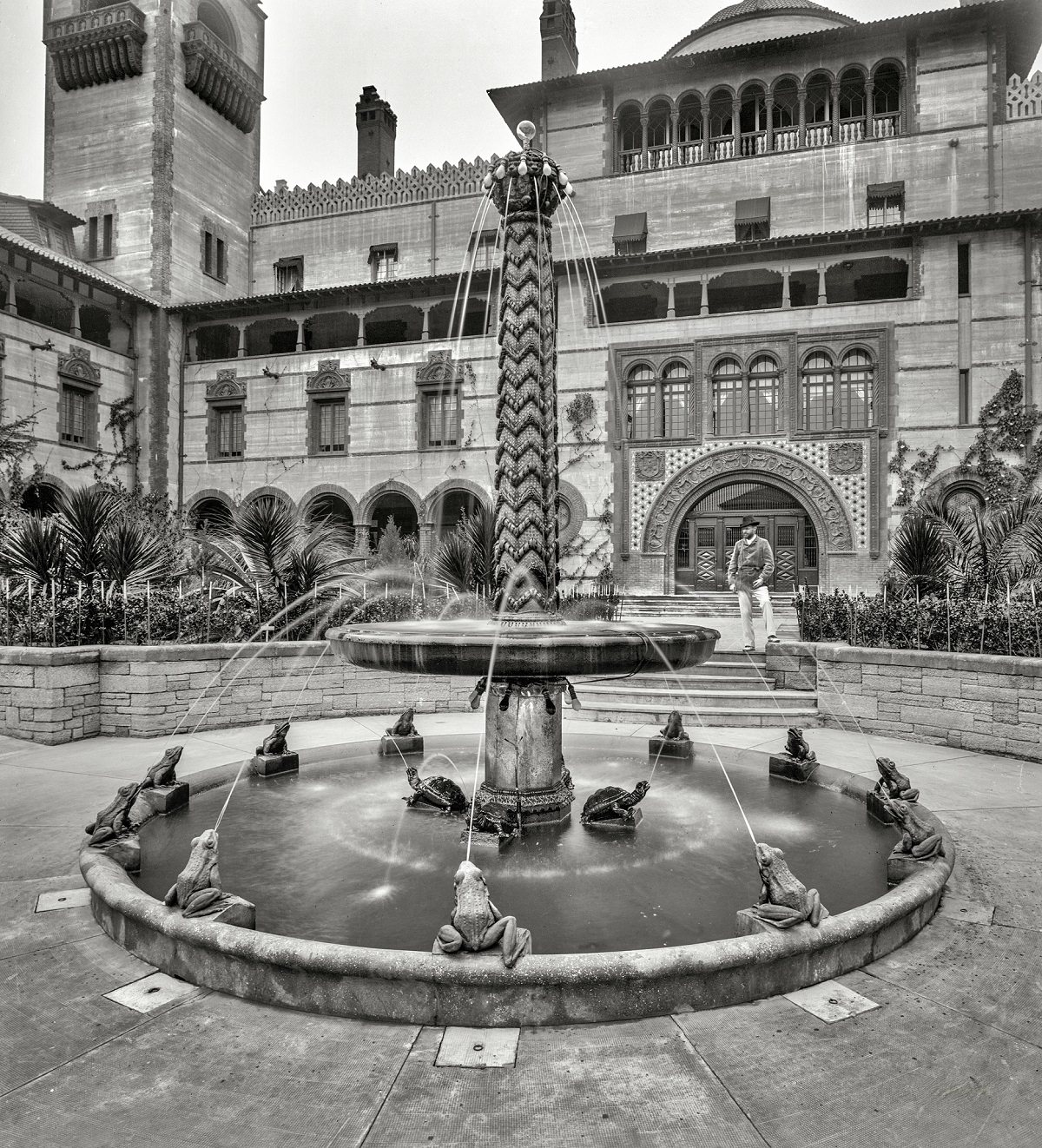
Palm Beach in the 1890s was still a relatively new destination, transformed by Flagler’s railroad and his grand Hotel Royal Poinciana. Guests arrived by boat at the Palm Beach landing before the infrastructure caught up with the demand. Meanwhile, in St. Augustine, Flagler’s Ponce de Leon Hotel — opened in 1888 — set a new standard for American resort hotels. Its central fountain, ornate architecture, and electric lighting made it one of the most talked-about buildings in the country.
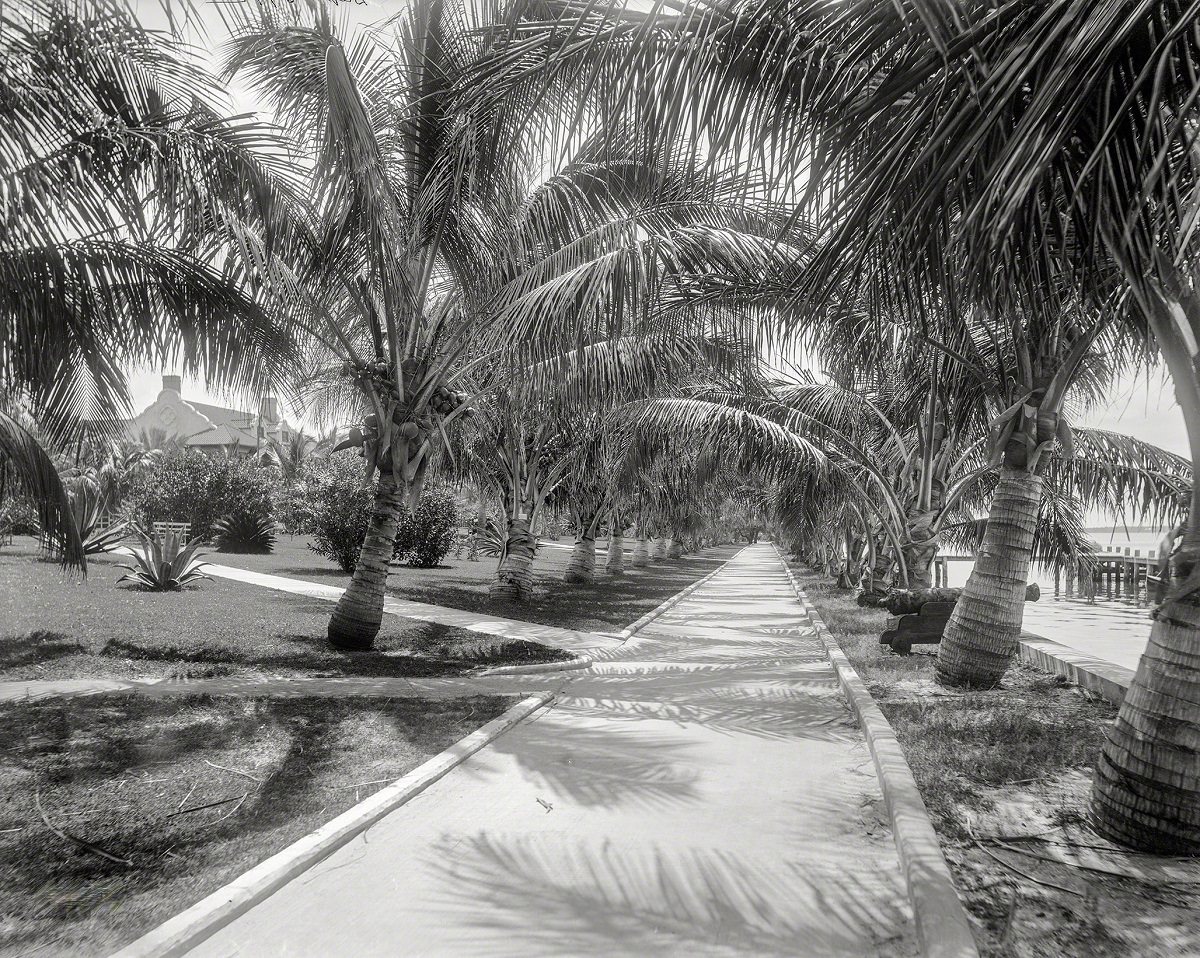
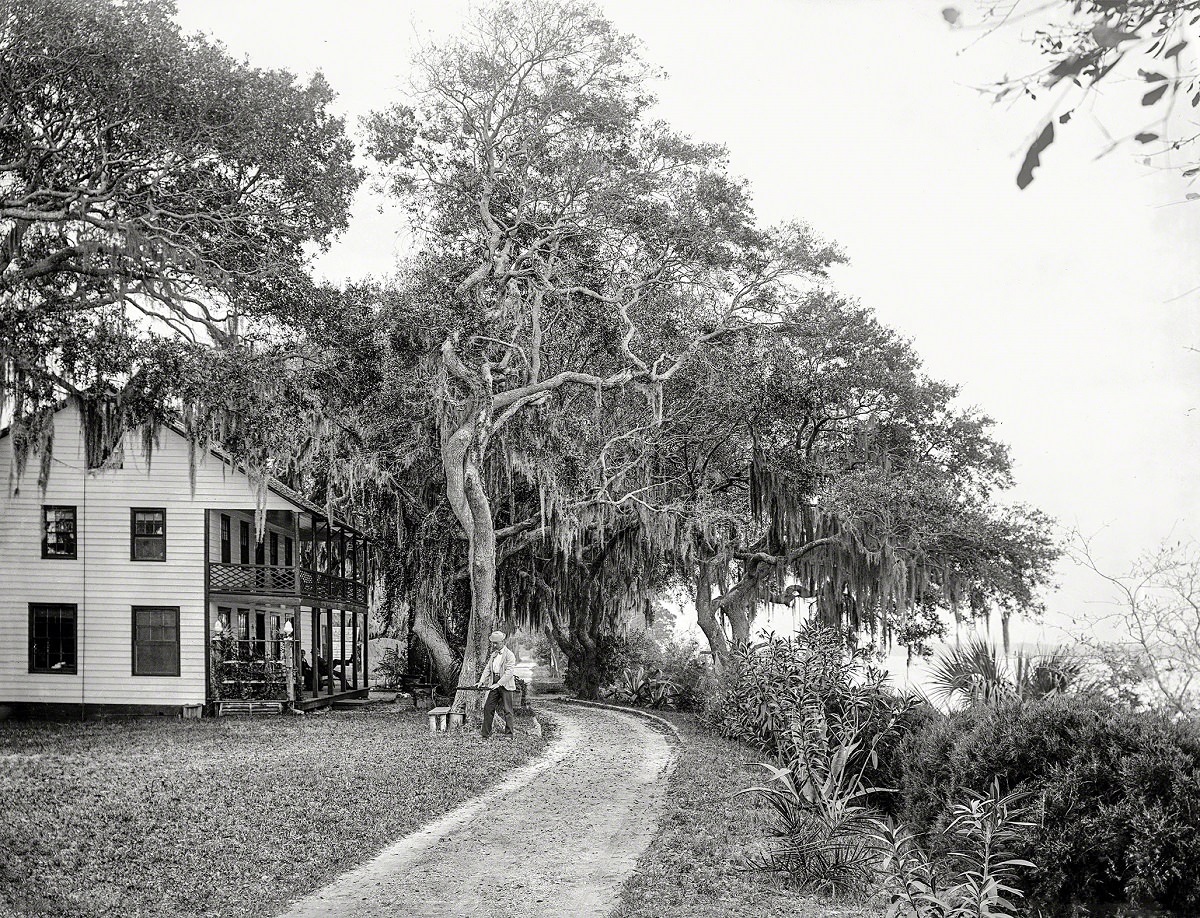
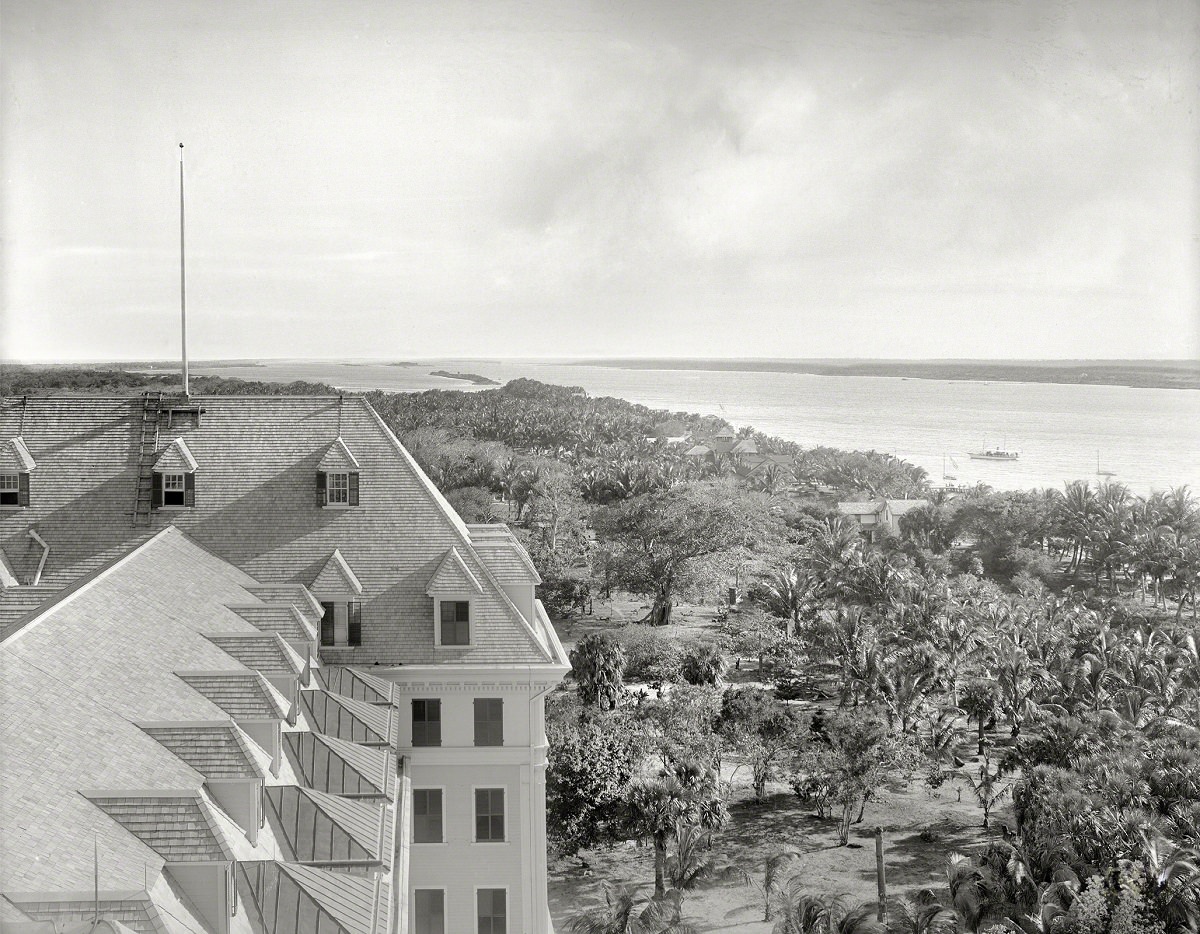
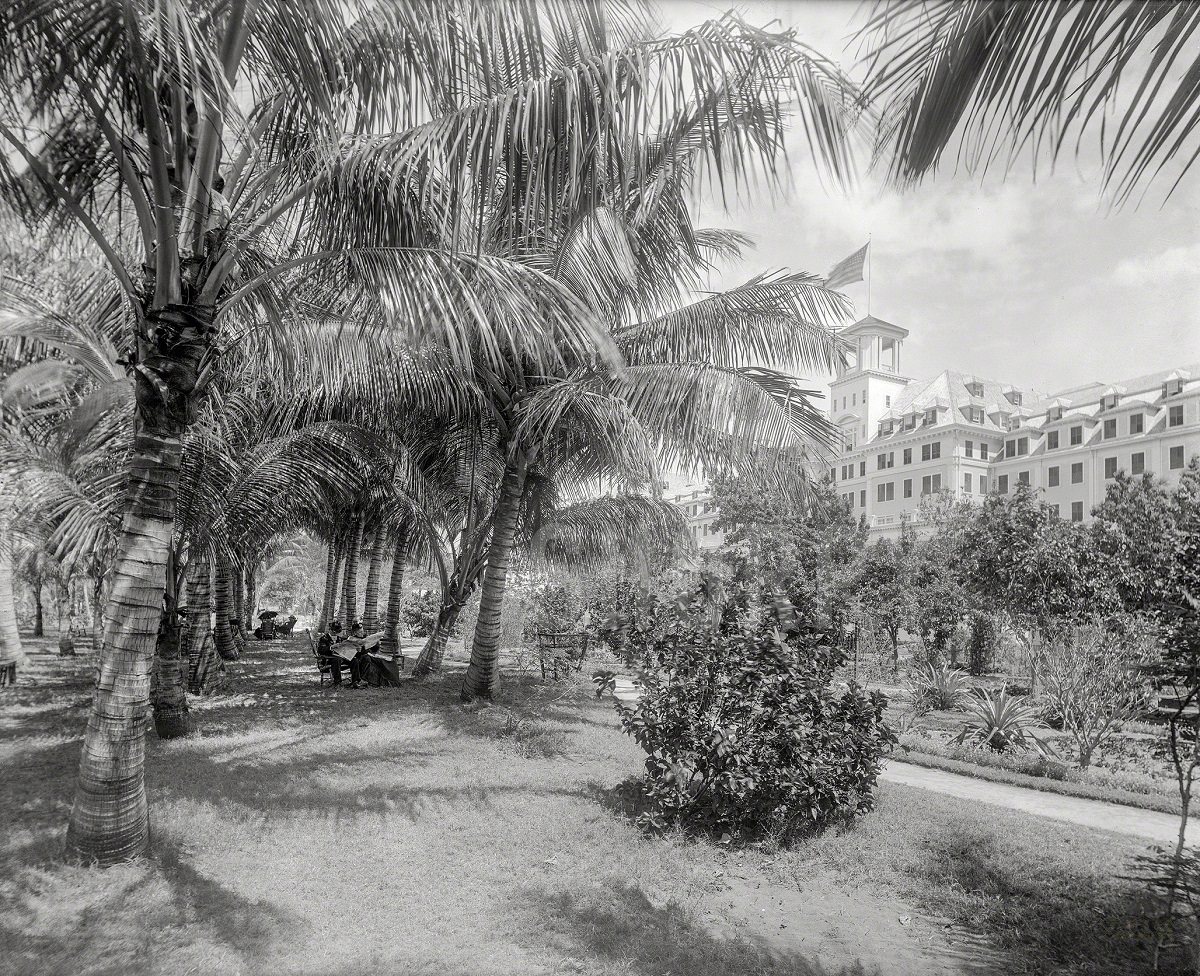
Lake Worth, the lagoon separating Palm Beach from the Florida mainland, was fringed with coconut palms that gave the area a distinctly tropical feel. Strolling its palm-lined paths became a popular activity for wealthy winter visitors. Further north, the Halifax River near Ormond was home to small riverside establishments like Bostrom’s, catering to fishermen and tourists exploring the waterways by small boat.
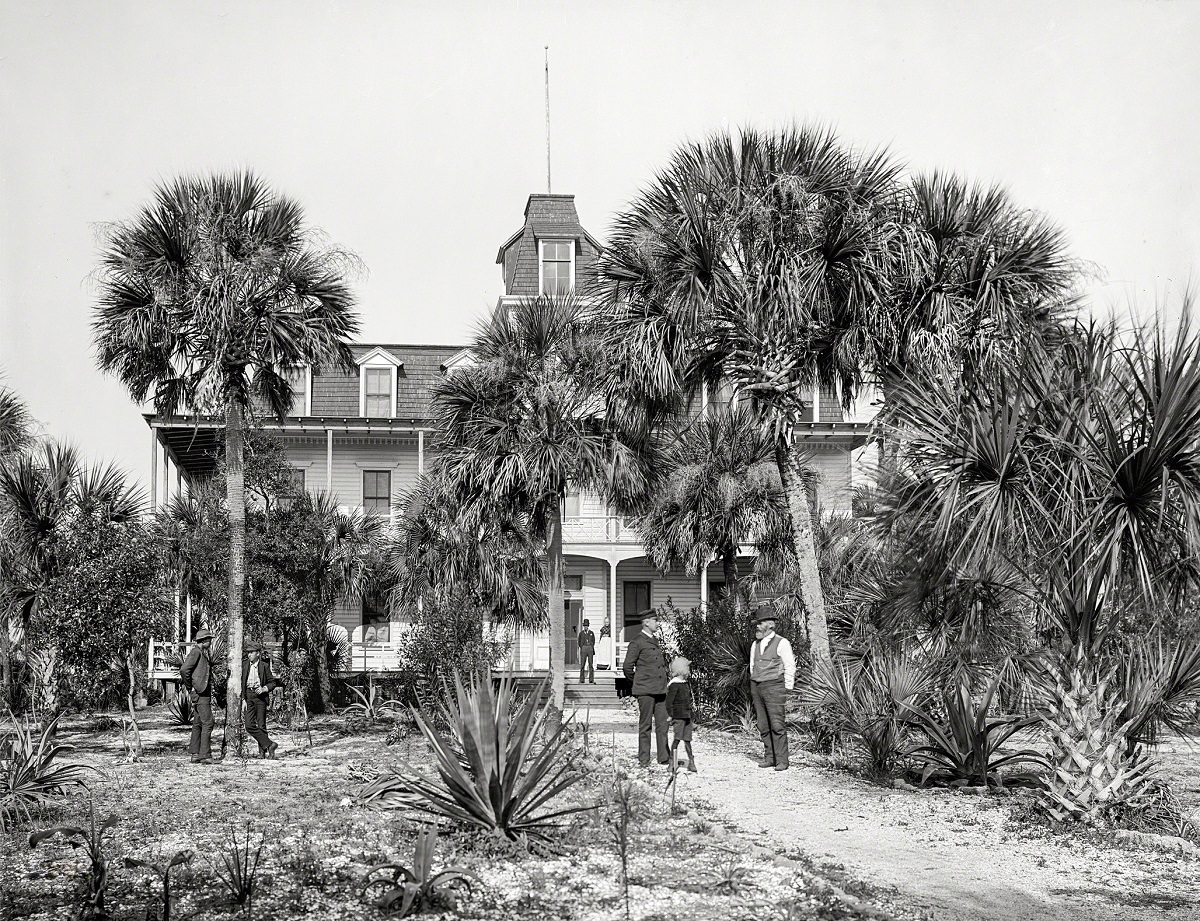
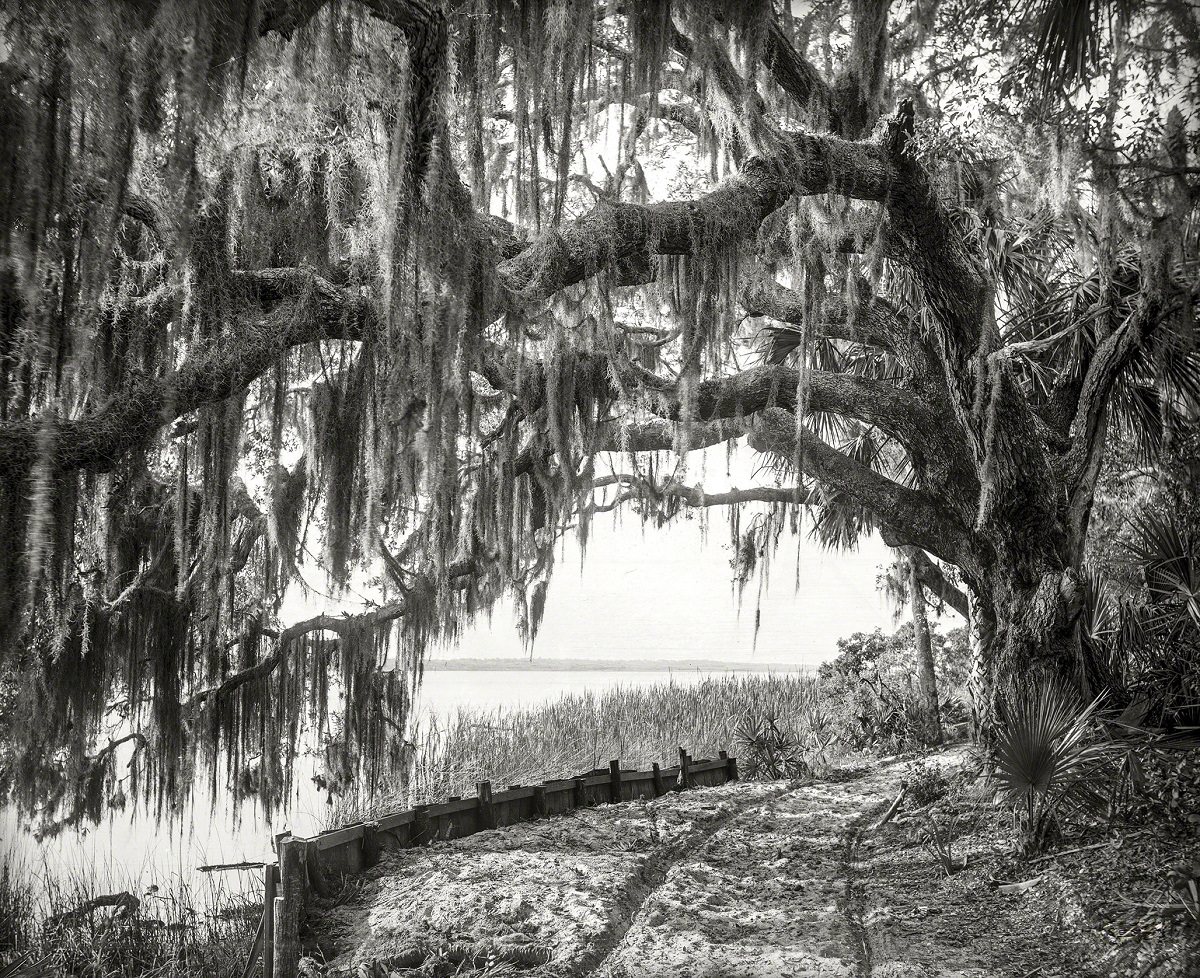
Hotels along the Indian River served a growing number of visitors making their way down Florida’s east coast. The Hotel Eau Gallie in Brevard County was one of many small but well-appointed establishments that appeared as the railroad extended its reach. Inland, the iconic sight of live oaks draped in Spanish moss defined the visual landscape of central Florida. These ancient trees, their long gray strands hanging like curtains, became one of the most recognizable symbols of the region.
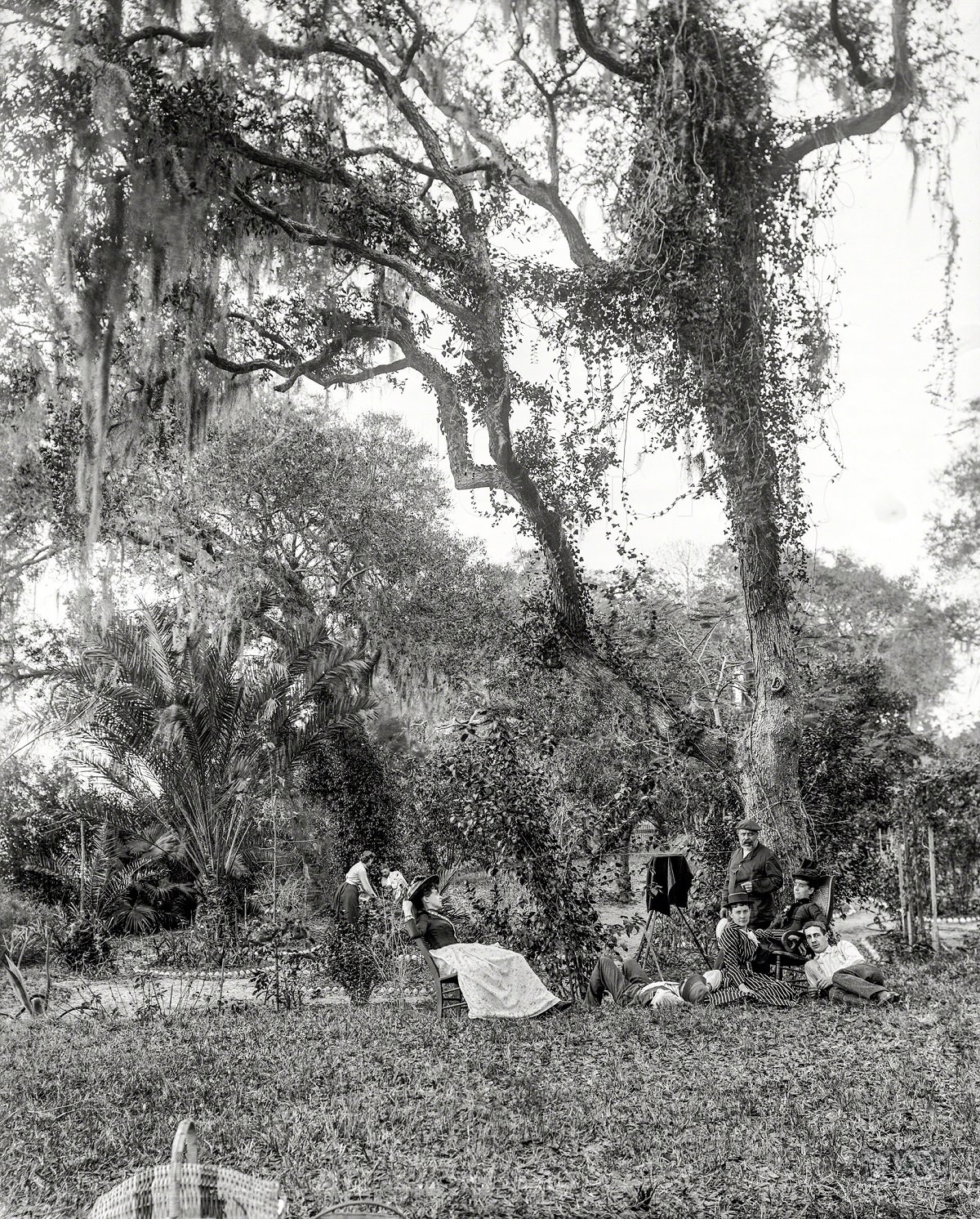
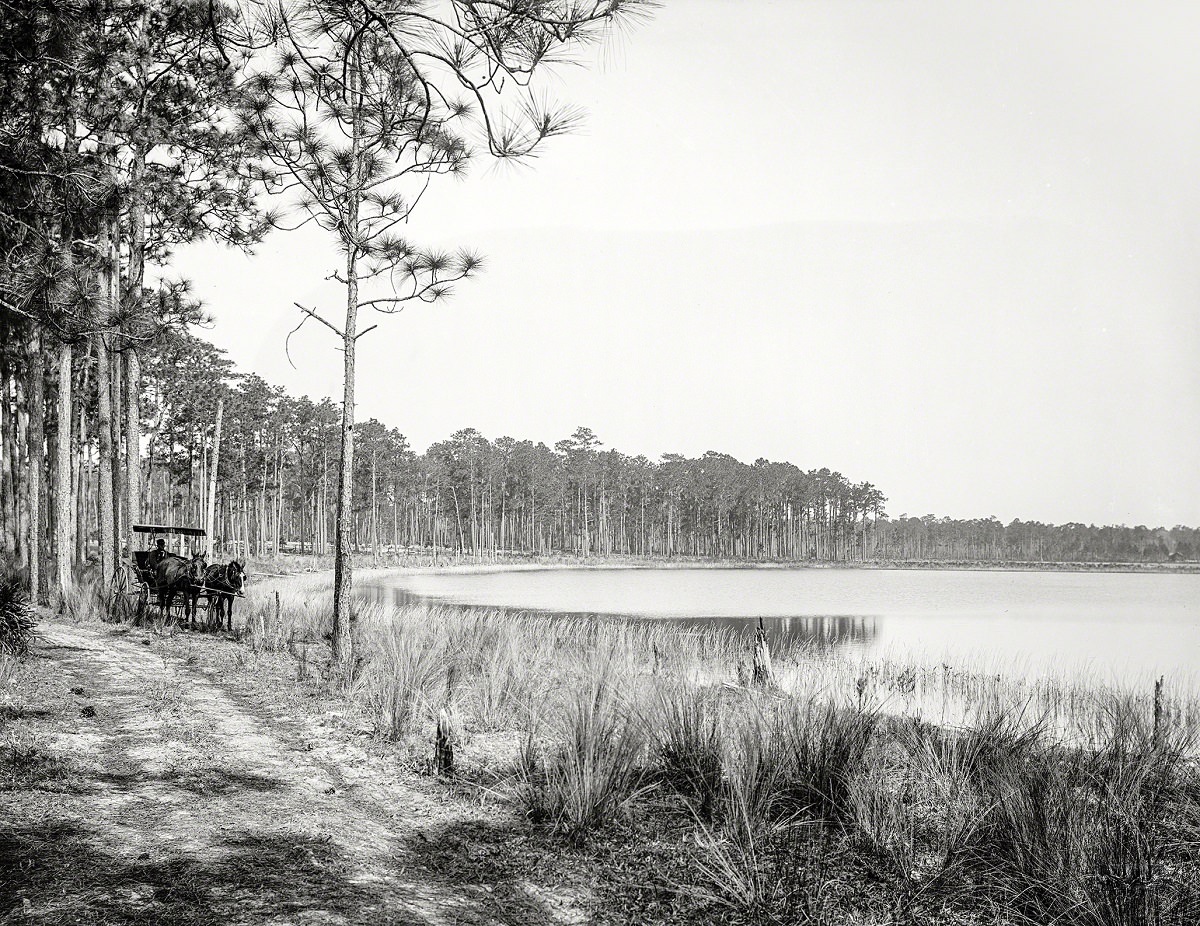
Agriculture was a central part of Florida’s economy throughout the 1890s. Gardens and citrus groves near Daytona supplied both local communities and northern markets. The arrival of rail lines made it possible to ship fresh produce long distances for the first time, giving Florida farmers access to markets that had previously been out of reach. Quiet inland lakes like Lake Louise near Seville reflected the peaceful, rural character of Volusia County away from the busy coastal towns.
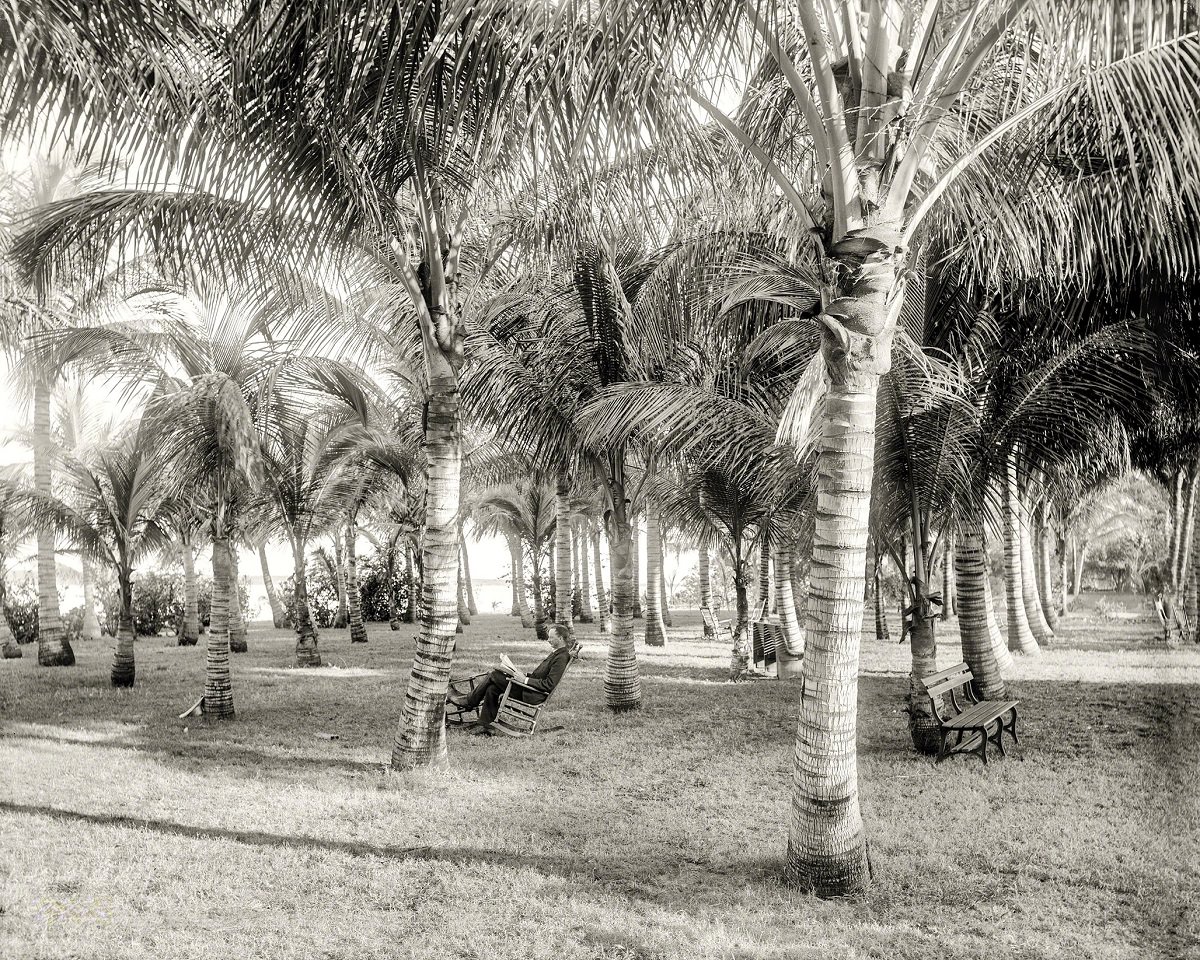
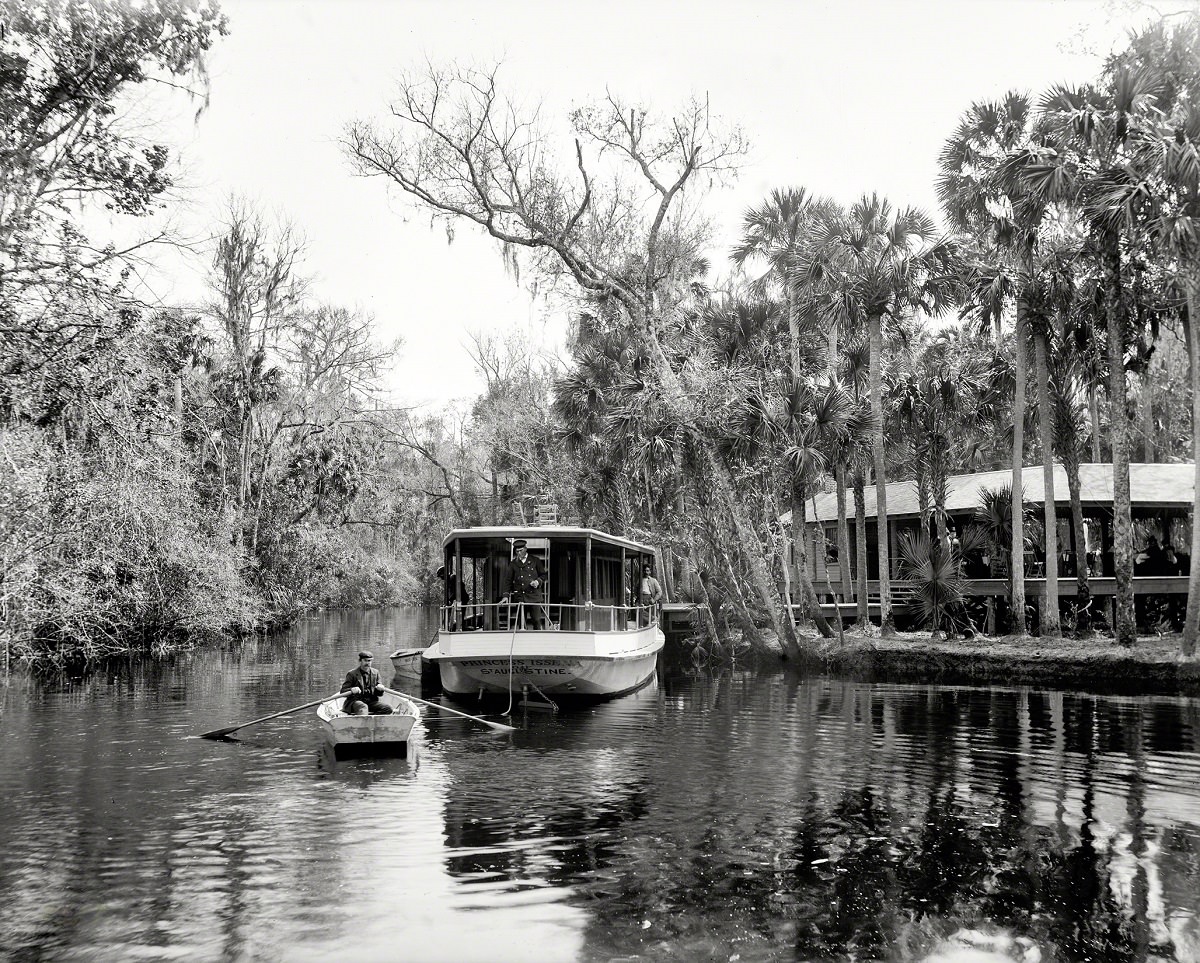
Coconut palms were planted extensively around Lake Worth in the 1870s and 1880s, and by the 1890s, groves like the one at McCormick’s were a defining feature of the Palm Beach landscape. On the Tomoka River, small steamboats and vessels like the Princess Issena made regular runs to river landings, carrying passengers and supplies to communities that had no road connections.
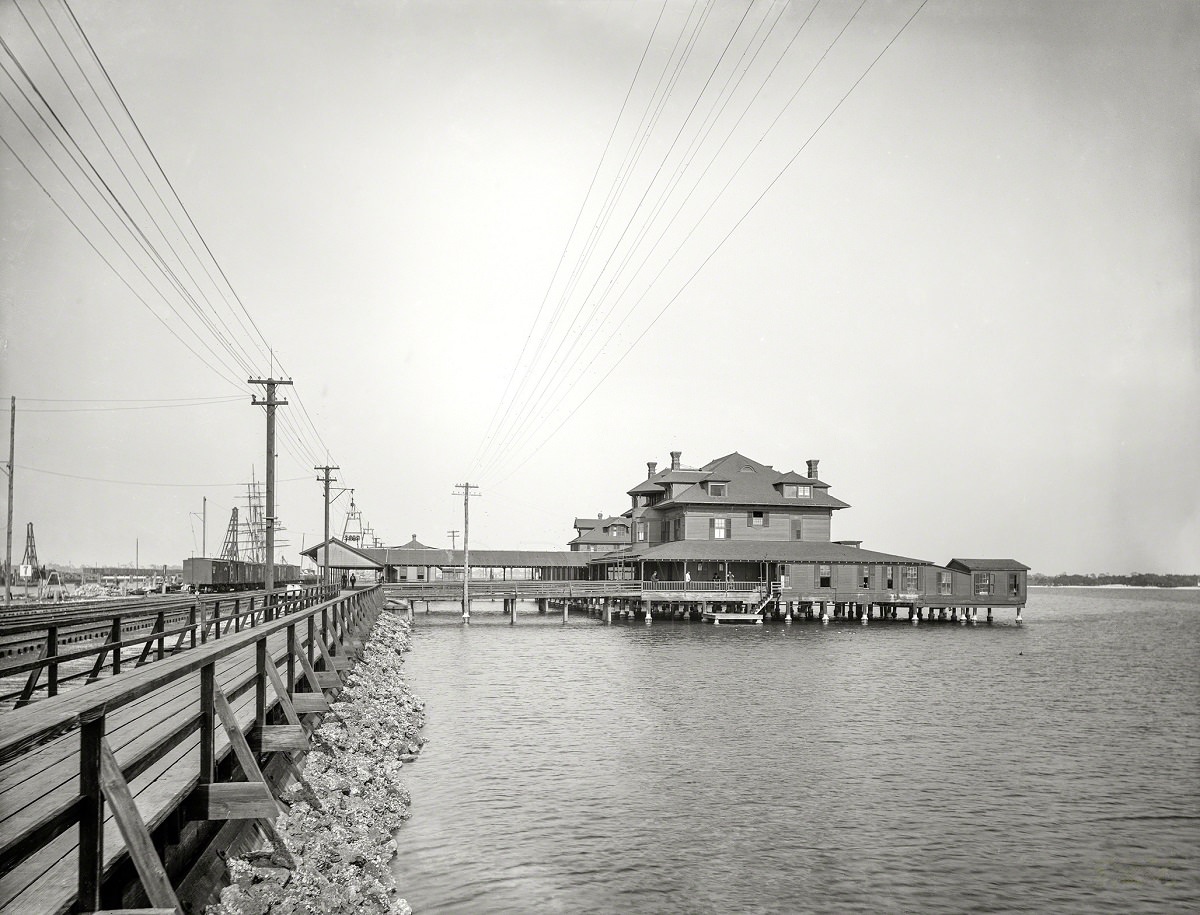
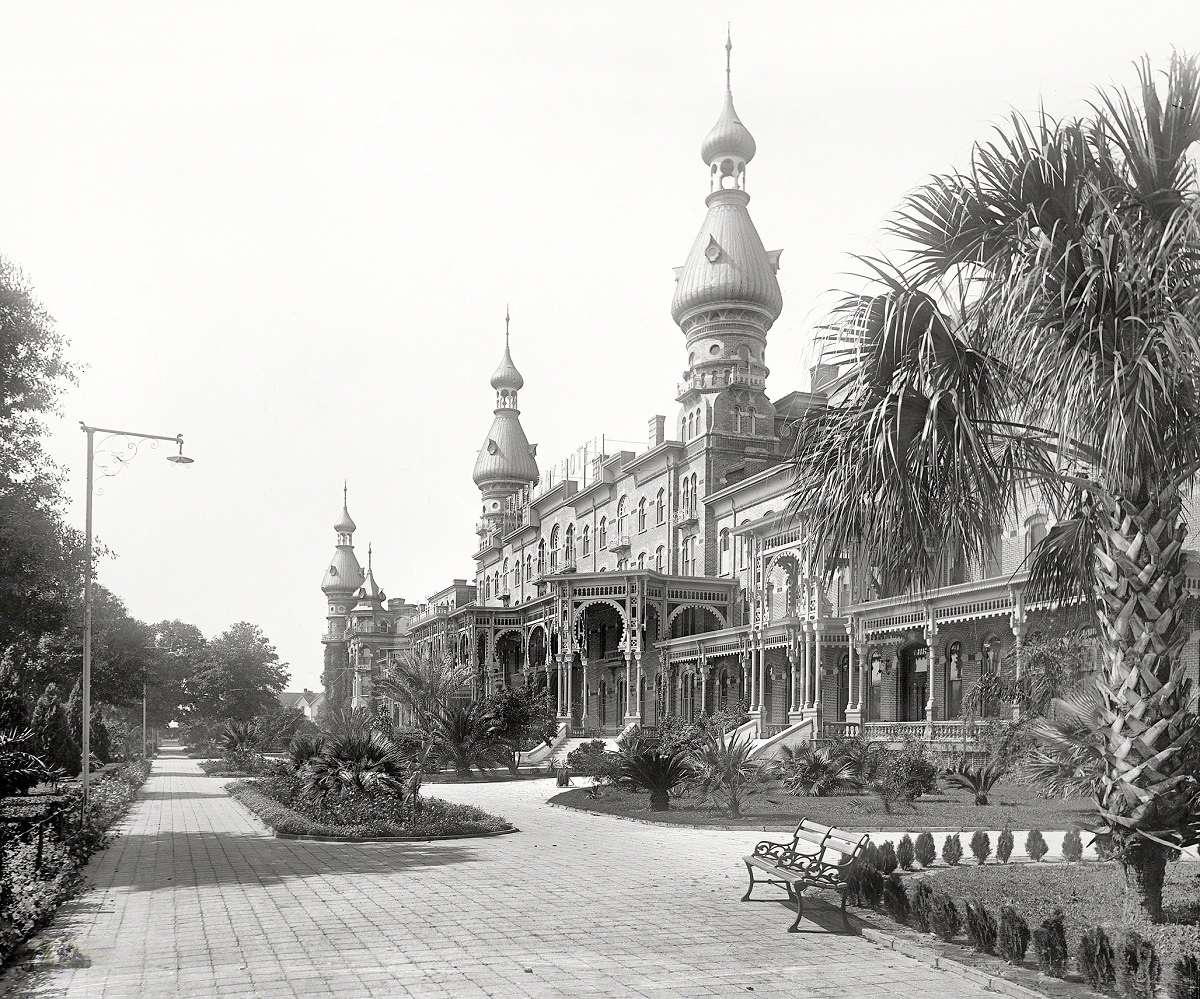
Tampa grew rapidly in the 1890s, fueled by the cigar industry, phosphate mining, and its role as a strategic port. During the Spanish-American War of 1898, Tampa served as the main staging point for U.S. troops heading to Cuba, thrusting the city onto the national stage. The Port Tampa Inn and its connected rail line made the port one of the most active on the Gulf Coast. The Tampa Bay Hotel, built by railroad developer Henry Plant and opened in 1891, served as a military headquarters during the war and became a landmark of gilded-age excess.
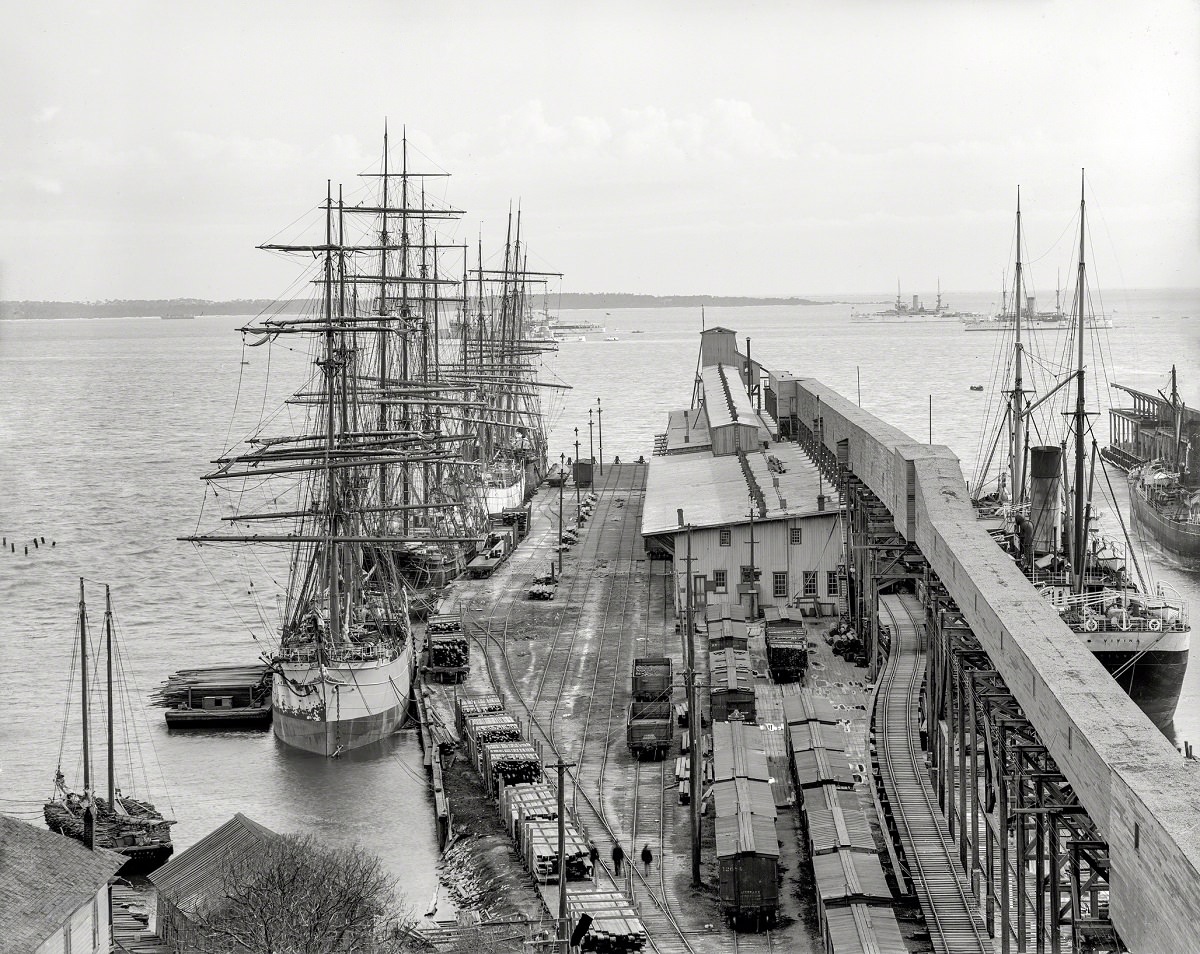
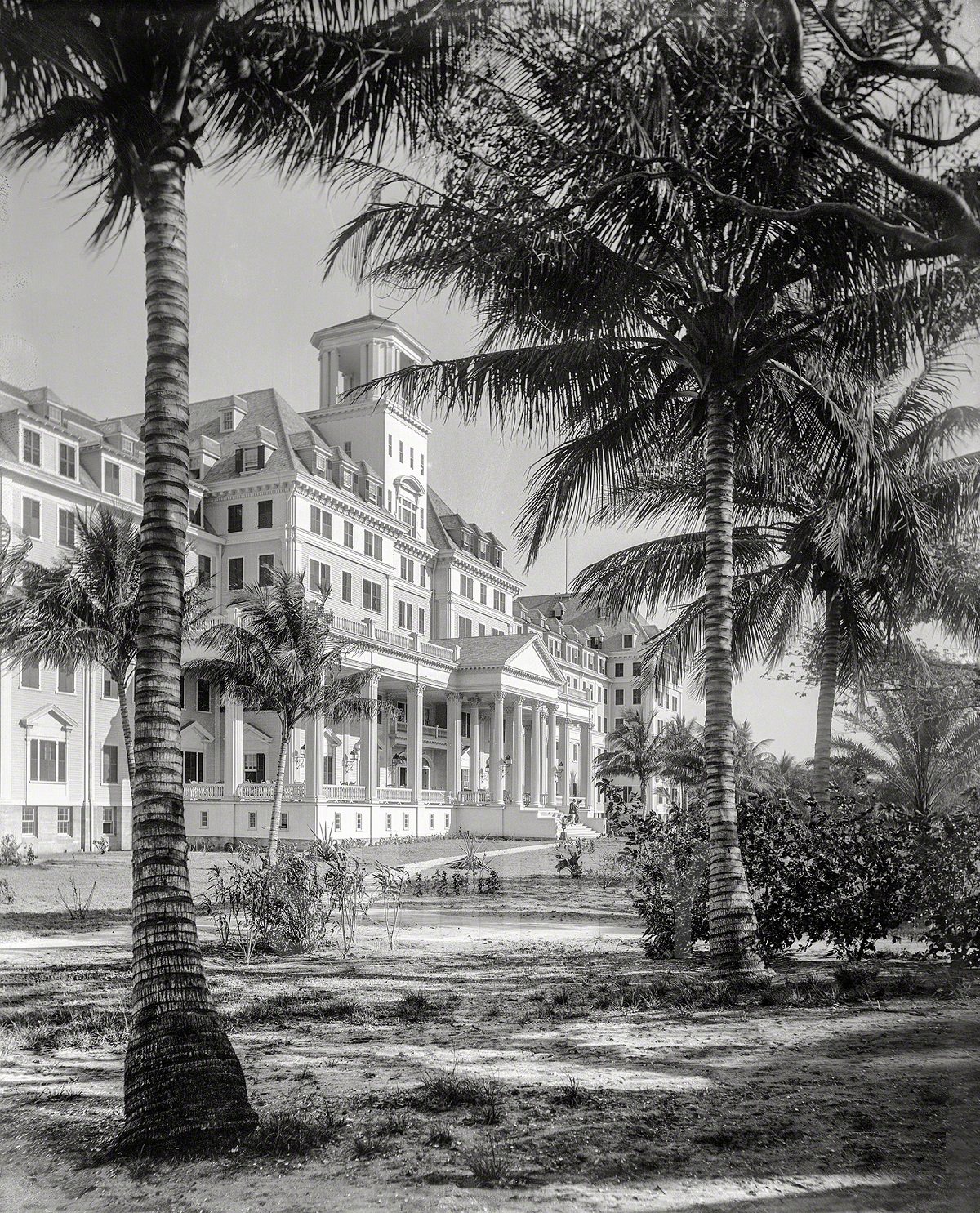
Pensacola, in the Florida Panhandle, was one of the state’s oldest port cities and remained an important hub for timber and naval stores trade into the late 19th century. Its deep harbor made it a preferred stop for large vessels. On the opposite coast, Flagler’s Hotel Royal Poinciana at Palm Beach opened in 1894 and immediately became the largest wooden hotel in the world. It could accommodate more than 1,700 guests and set the tone for Palm Beach’s identity as a playground for America’s elite.
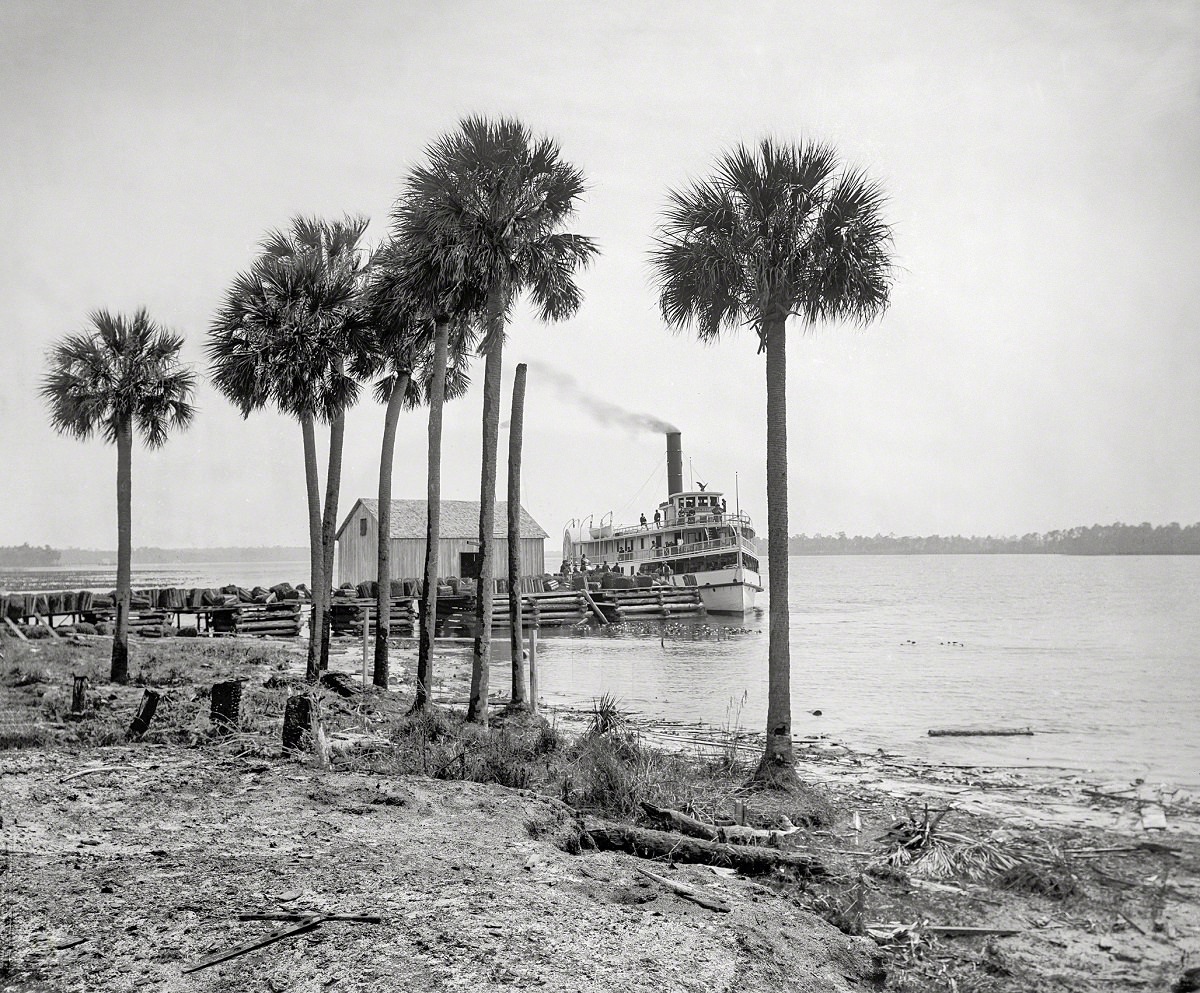
The St. Johns River was Florida’s most important inland waterway, running nearly 310 miles northward through the heart of the state. Sidewheel steamboats like the City of Jacksonville made regular runs along the river, stopping at landings like Beresford to load and unload freight and passengers. River travel remained an essential part of Florida life even as the railroads expanded, especially in areas where the tracks had not yet reached.
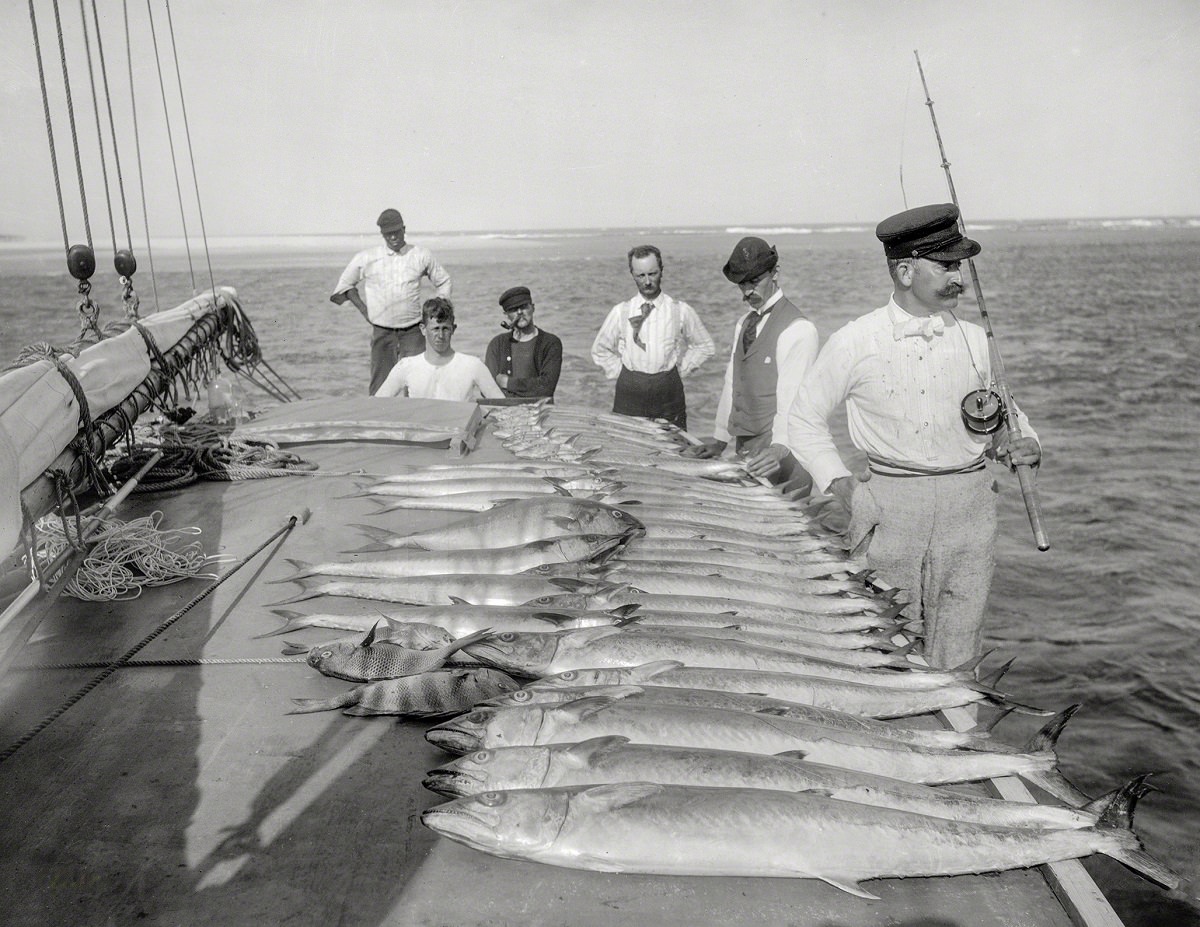
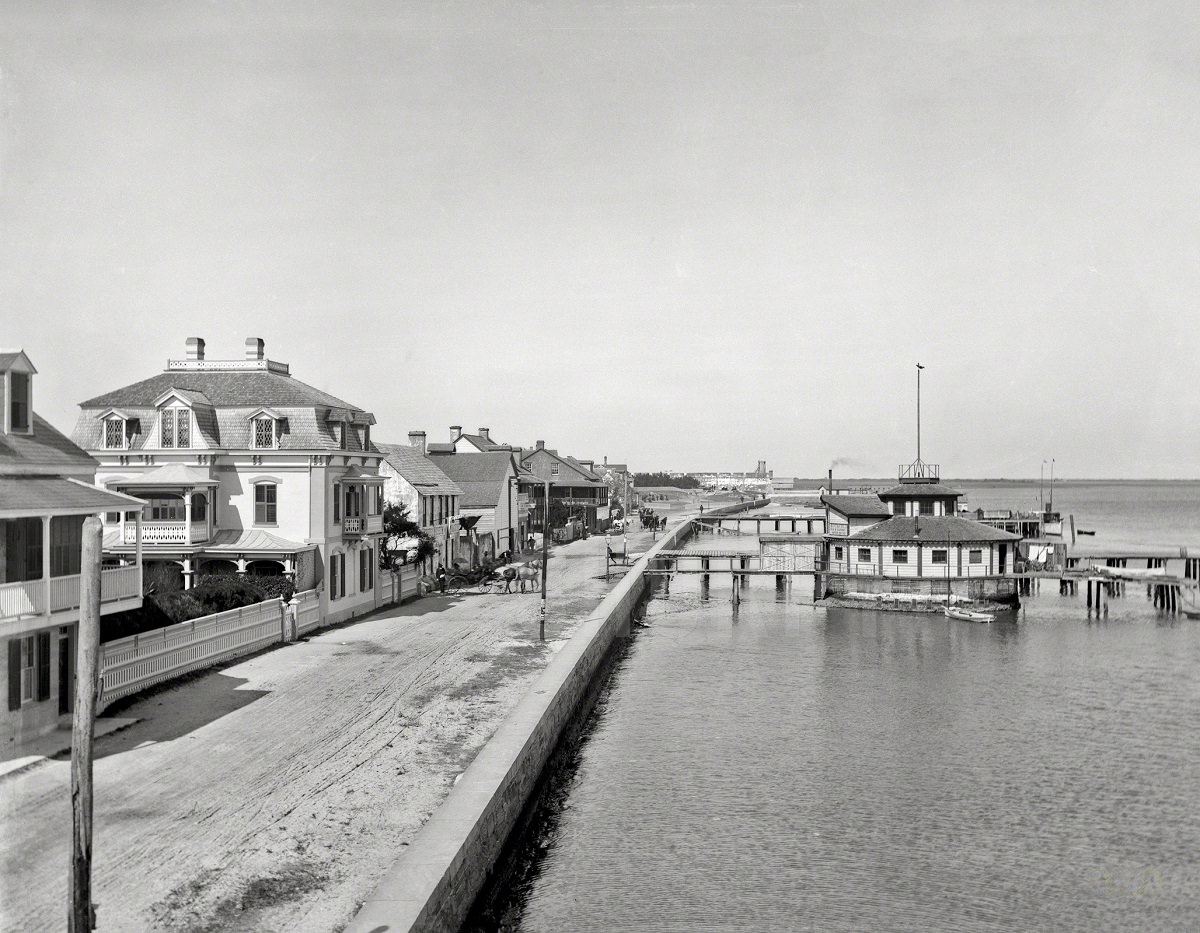
Sport fishing attracted wealthy visitors to Palm Beach and the surrounding waters. The Gulf Stream runs close to the Florida coast here, bringing a variety of large game fish within easy reach of small charter boats. In St. Augustine, the sea wall along the Matanzas Bay waterfront was a central gathering place for residents and tourists. Built in part to protect the city from storm surges, it offered a scenic promenade with views across the bay.
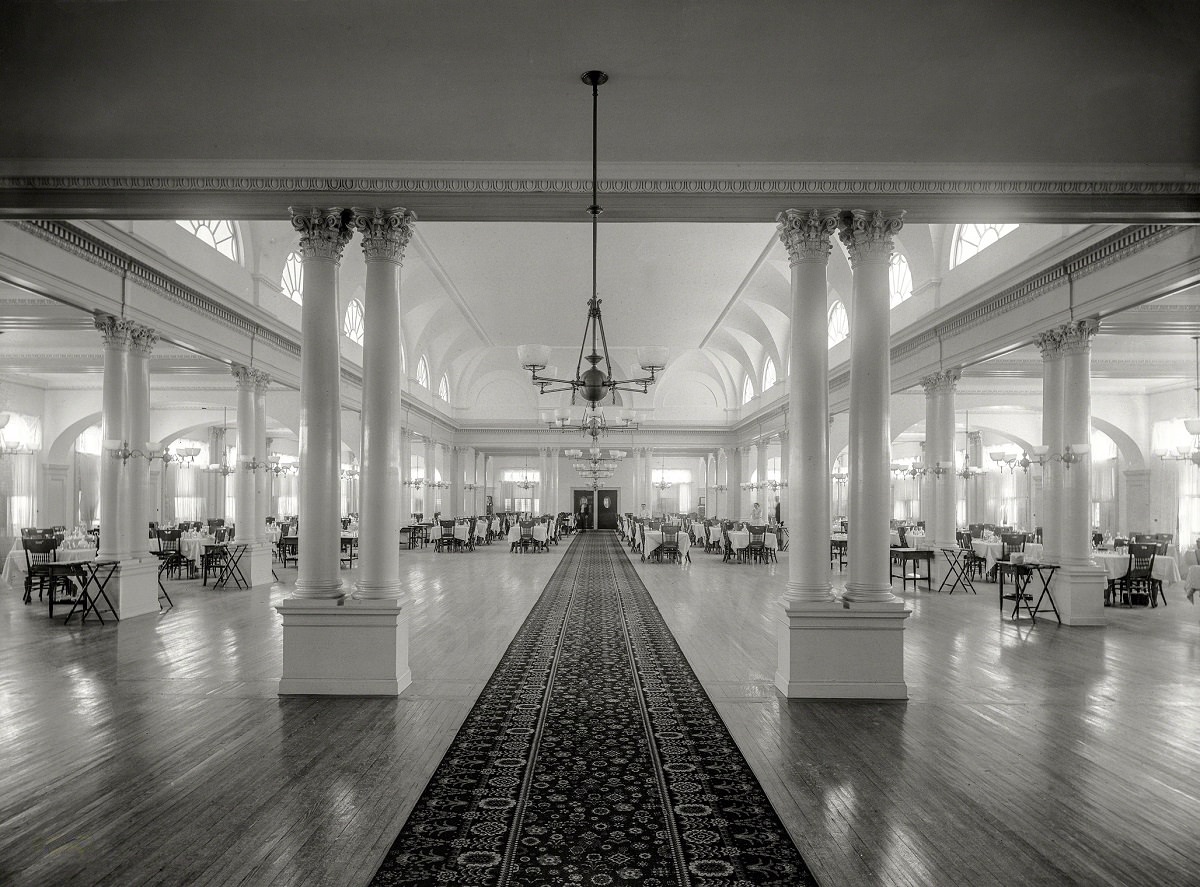
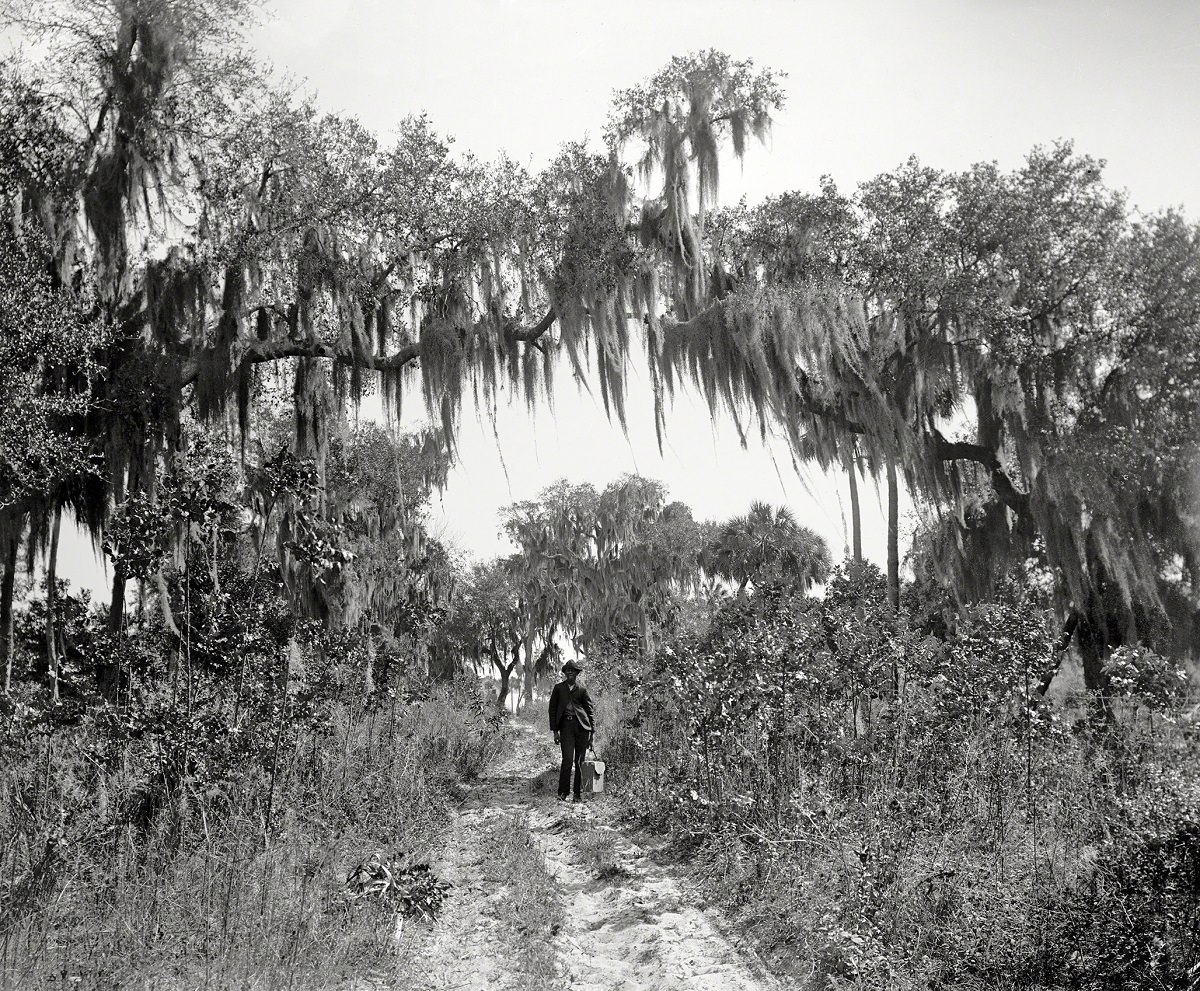
Inside the Hotel Royal Poinciana, the dining room was an event in itself. With seating for hundreds of guests and a staff to match, it represented the scale of ambition that Flagler brought to Florida tourism. Beyond the luxury hotels, most of Florida’s roads in the 1890s were unpaved and often sandy, making travel difficult. The road near Rockledge, flanked by tropical growth, gives a sense of what overland travel looked like for the average Floridian far from the polished hotel corridors.
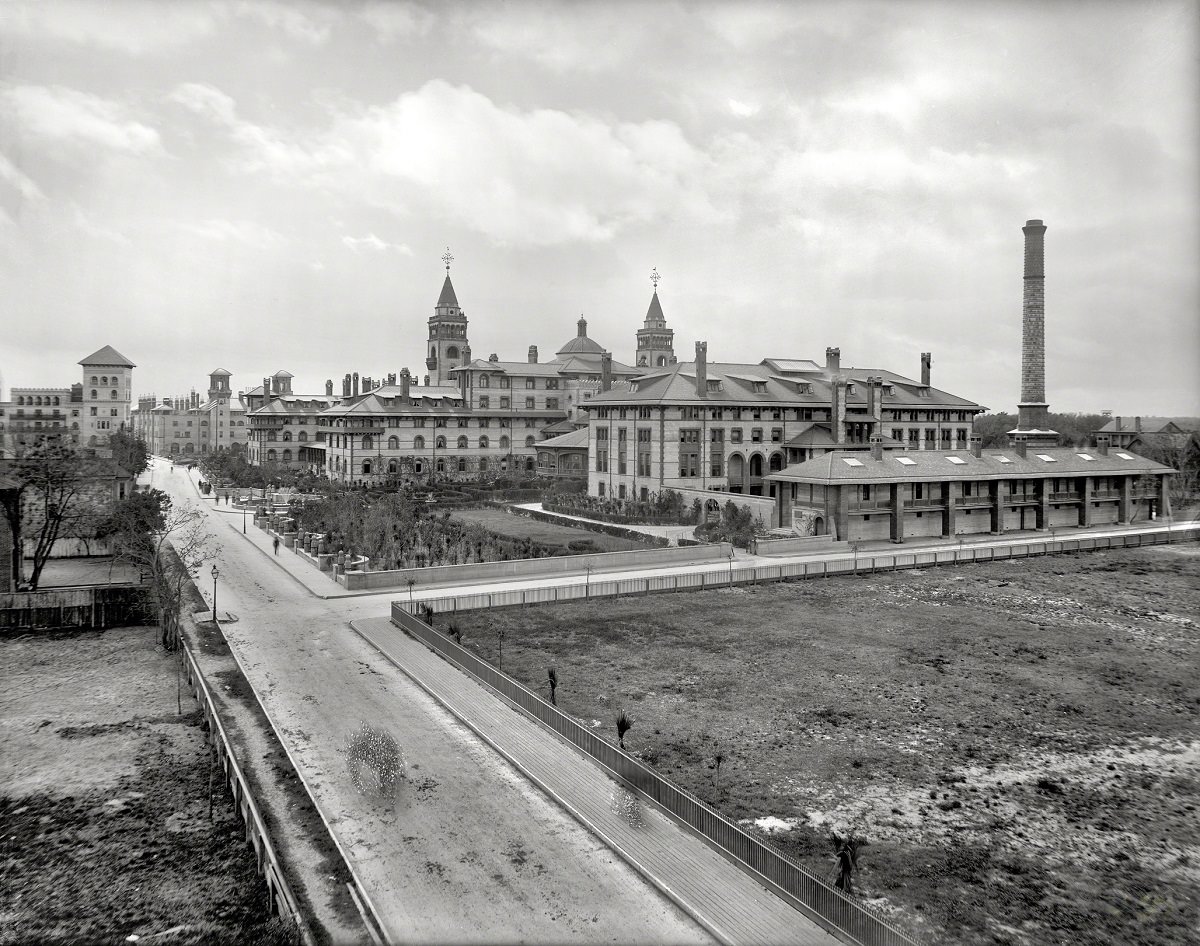
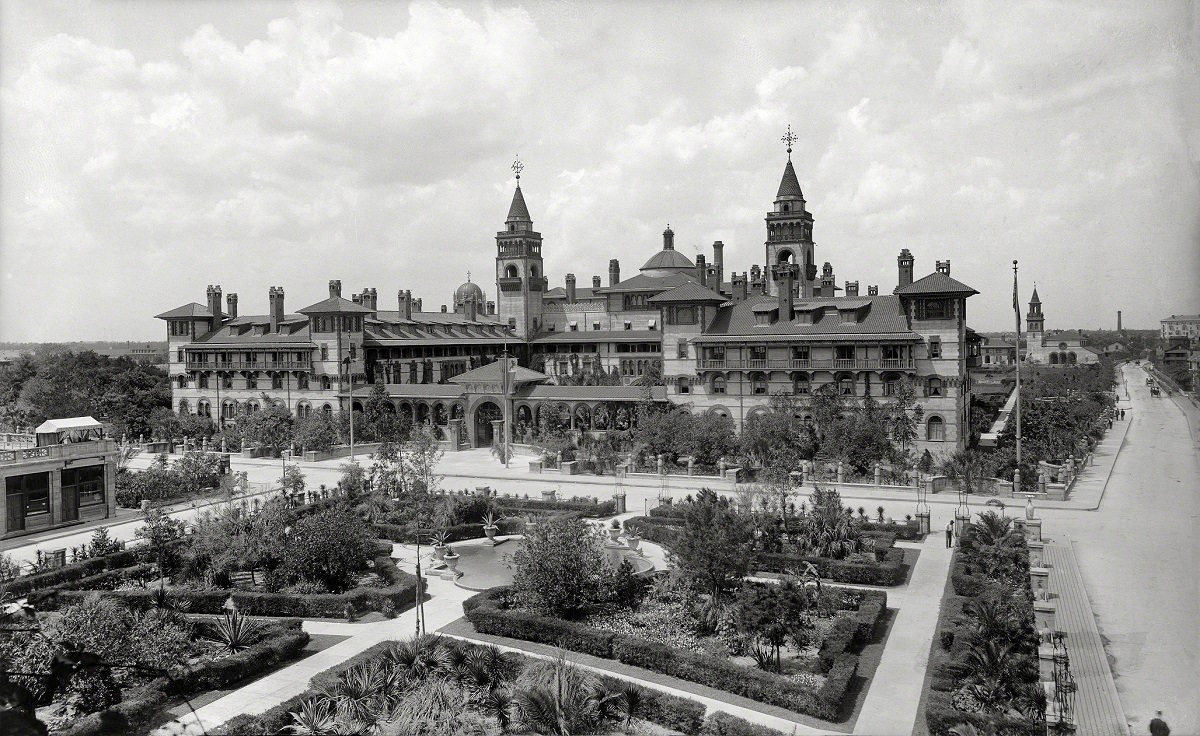
The Ponce de Leon Hotel was Flagler’s most architecturally ambitious project. Designed by the firm of Carrère and Hastings in the Spanish Renaissance Revival style, it was constructed largely of poured concrete — a relatively new material at the time. The building featured elaborate towers, courtyards, and murals painted by prominent American artists. It opened in January 1888 and attracted some of the most prominent figures in American society each winter season.
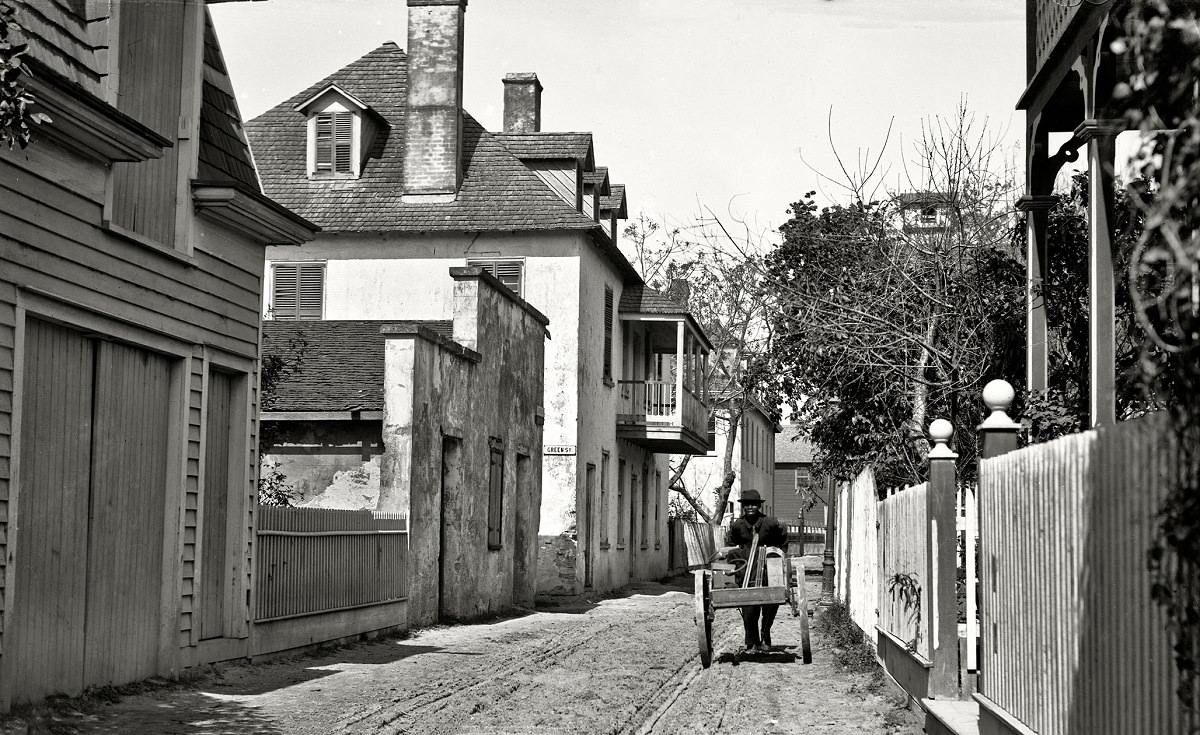
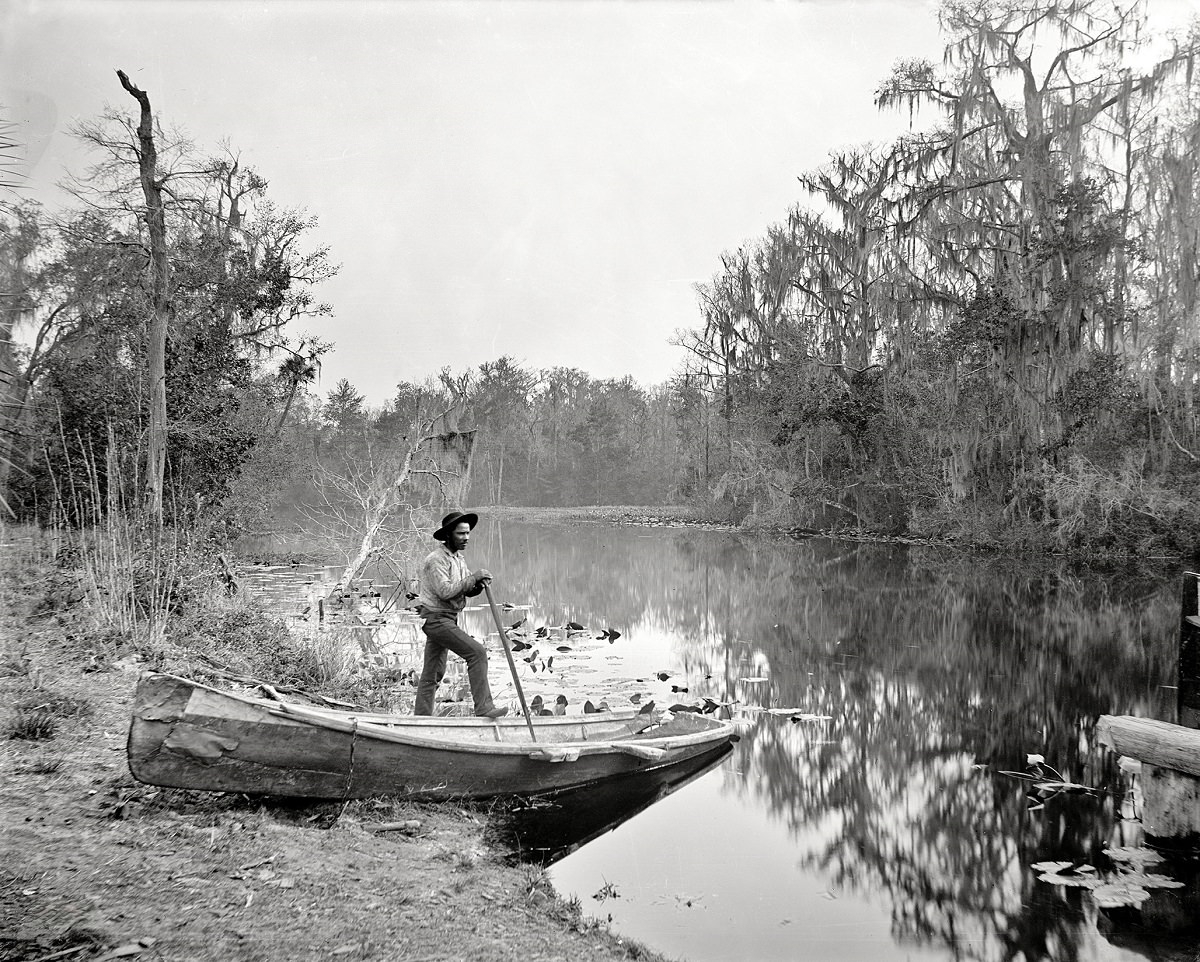
St. Augustine’s street grid reflected its Spanish colonial origins, with narrow lanes like Hospital Street preserving the layout of the original 16th-century settlement. Away from the city, rural Putnam County offered a different Florida entirely. Rice Creek, winding through dense subtropical forest near Brown’s Landing, was typical of the remote waterways that shaped daily life for settlers in the state’s interior.
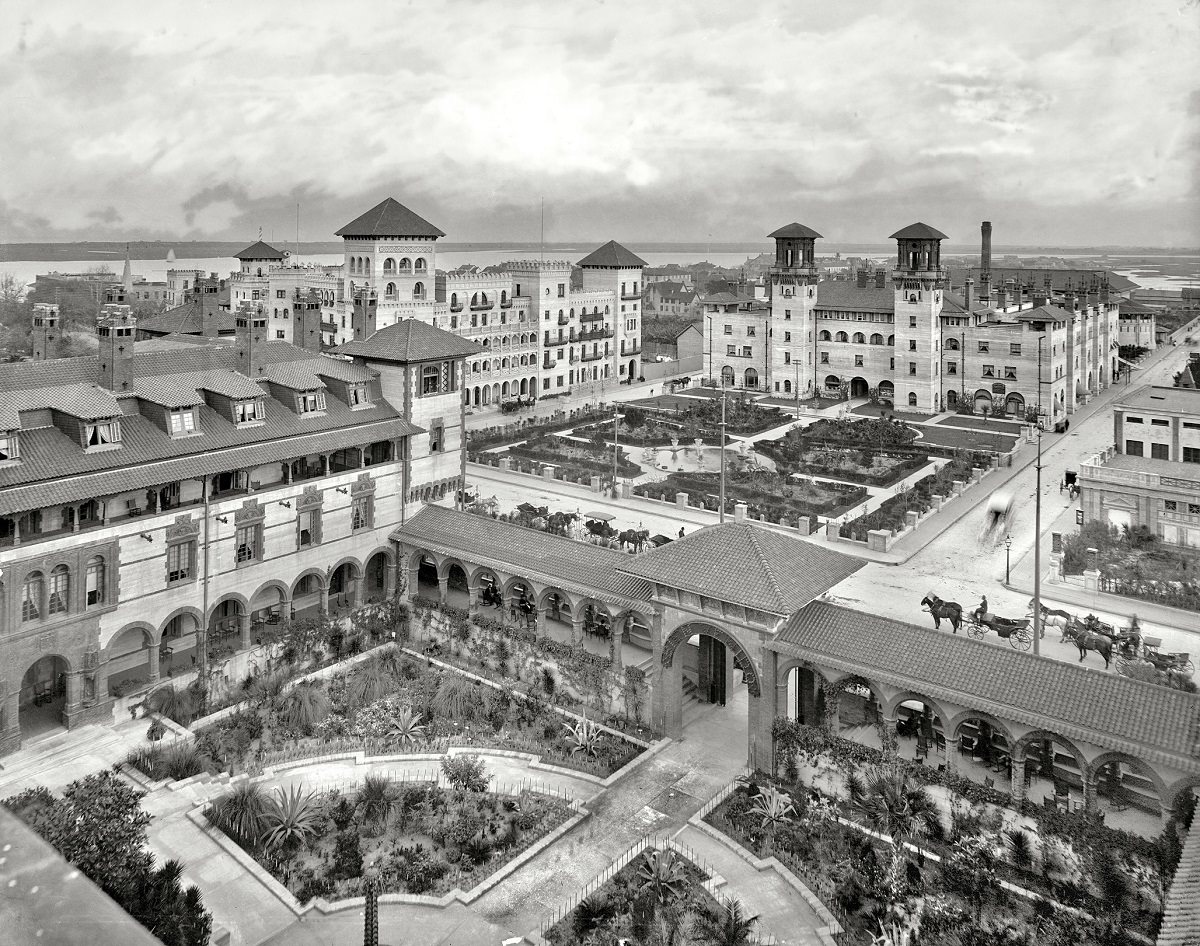
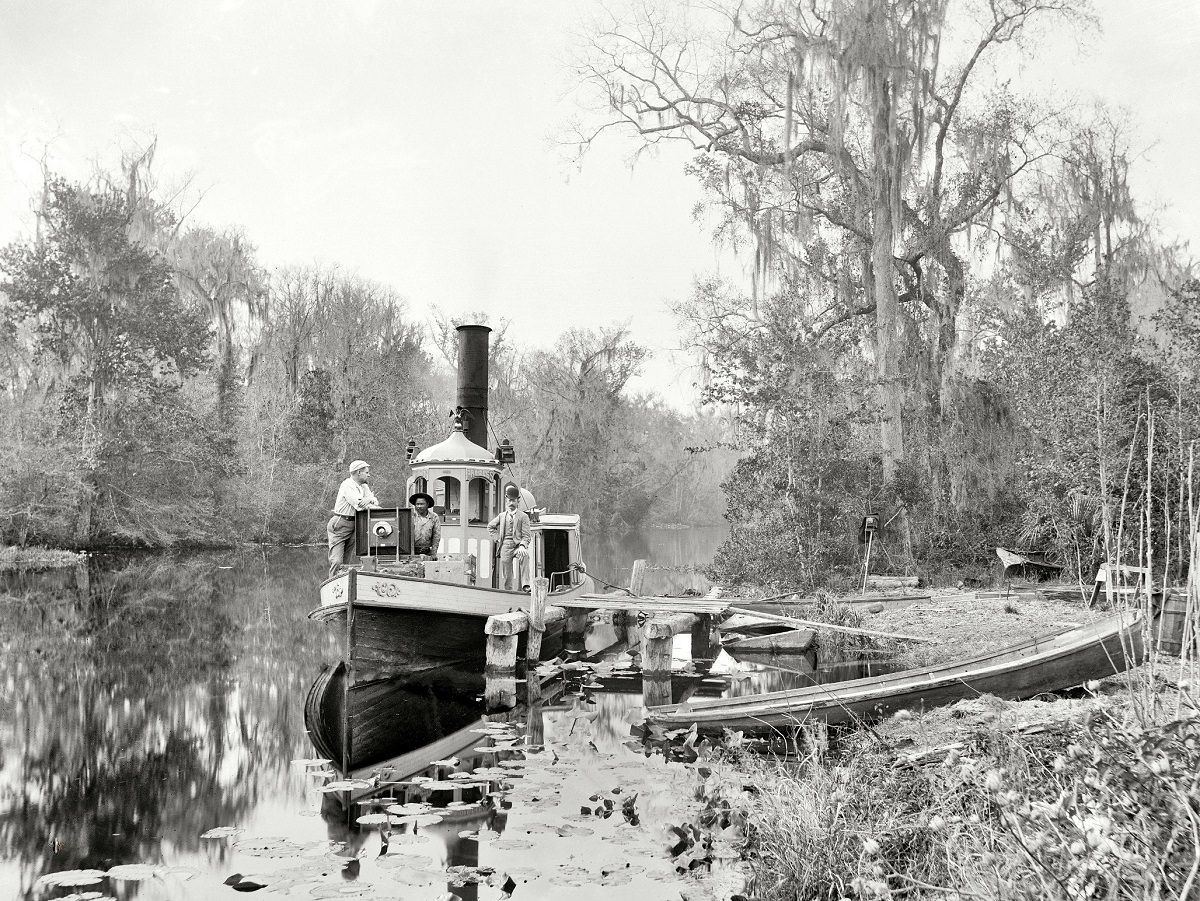
Flagler built the Hotel Alcazar directly across from the Ponce de Leon in St. Augustine, opening it in 1889. The Alcazar housed a casino, spa, and what was at the time the largest indoor swimming pool in the world. The nearby Cordova Hotel completed a trio of grand properties that made St. Augustine the premier winter resort destination in the country. Meanwhile, remote spots like Brown’s Landing on Rice Creek stood in stark contrast — simple wooden docks serving a rural economy built on timber and small-scale farming.
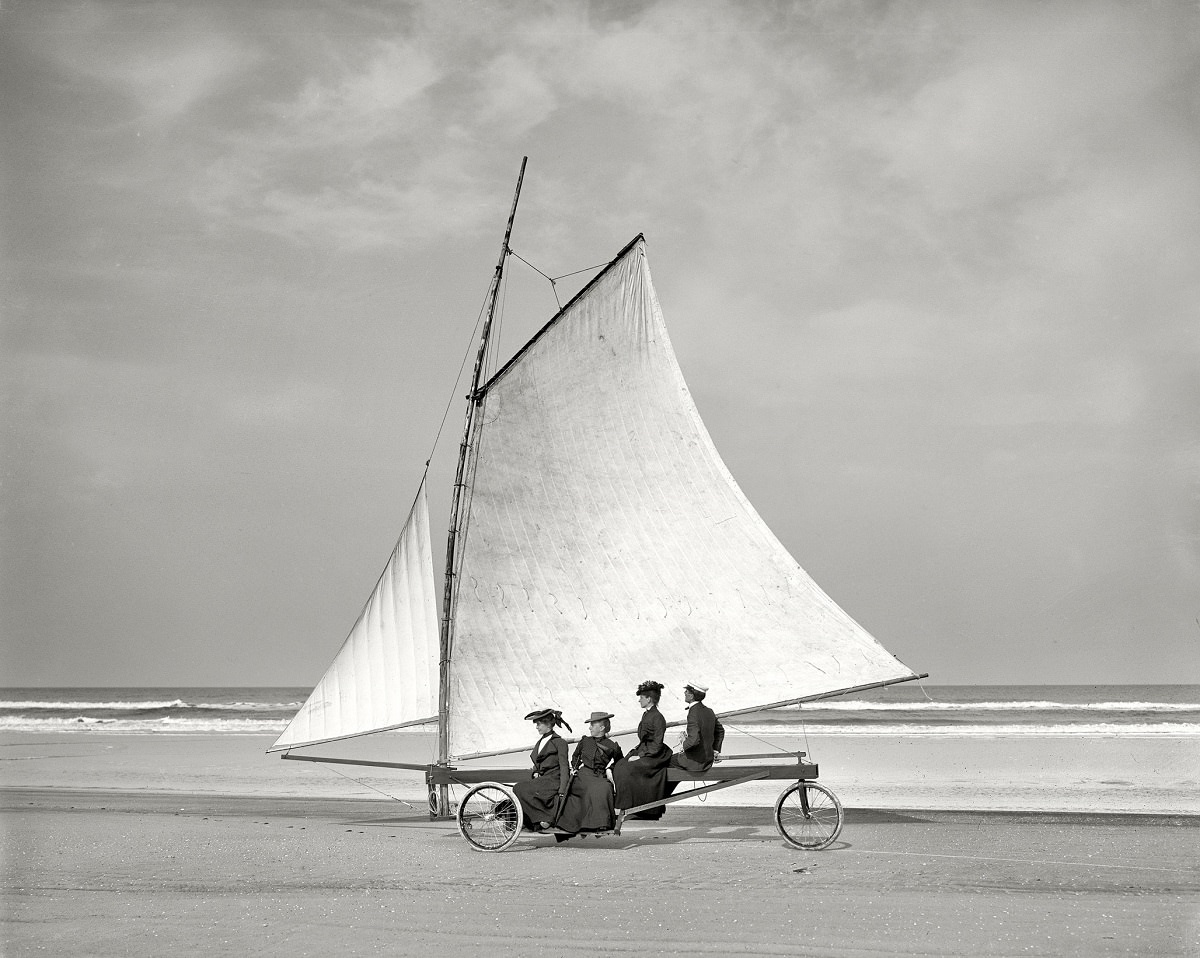
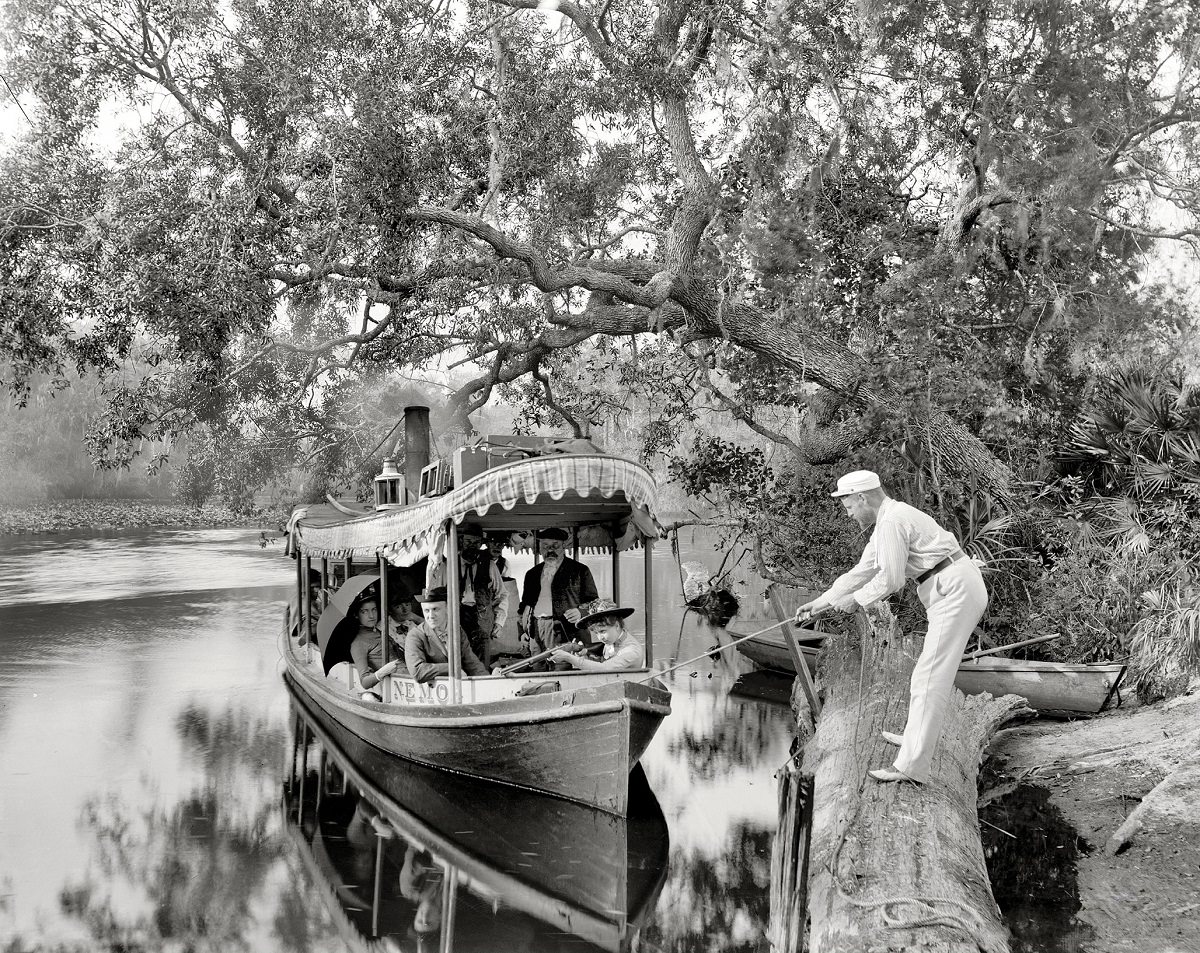
Ormond Beach’s wide, flat shoreline made it possible to sail directly on the sand — an unusual activity that drew curious visitors and thrill-seekers. The beach’s firm surface was hard enough to support wheeled vehicles and sail rigs alike. Nearby, the Tomoka River continued to serve as a working waterway, with its landings used regularly for moving goods and people through Volusia County’s wetlands and forests.
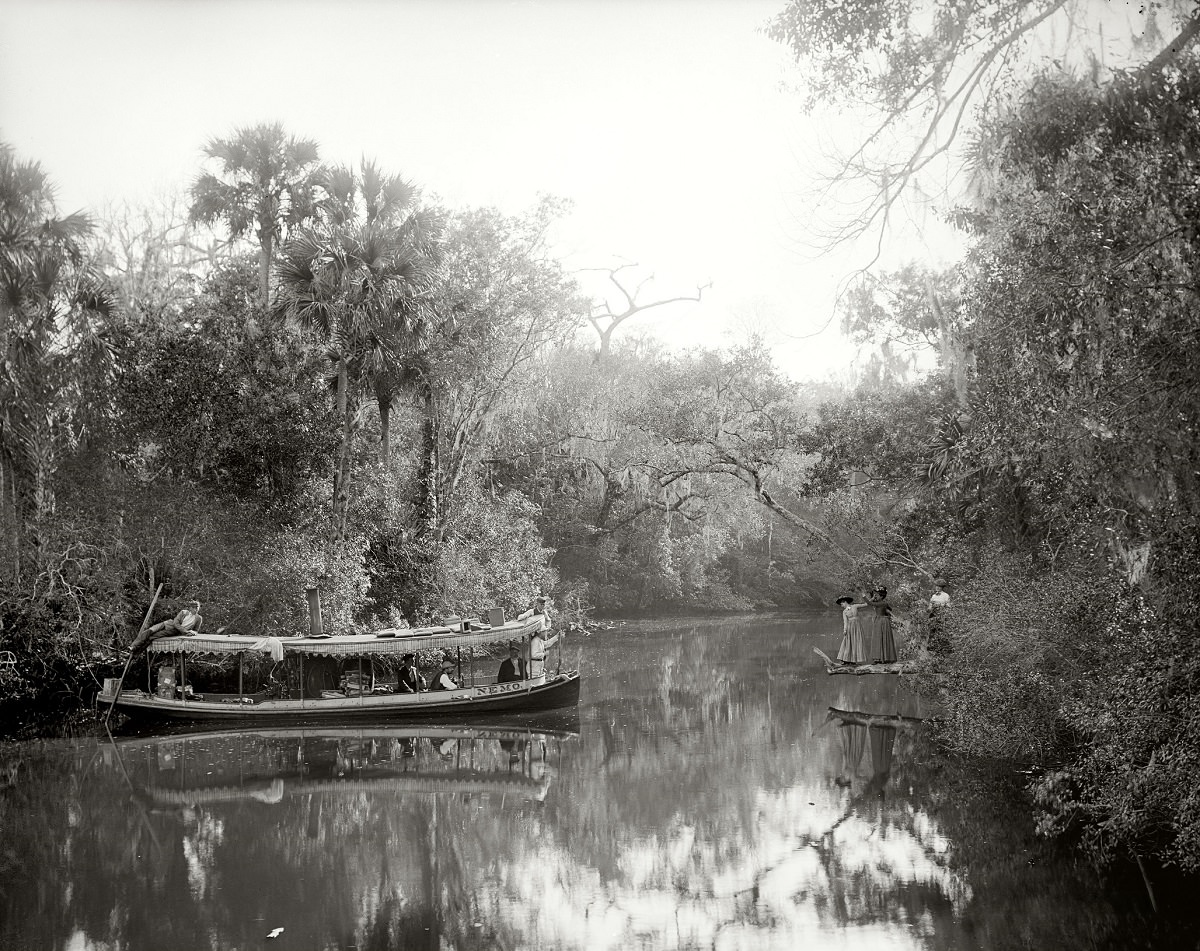
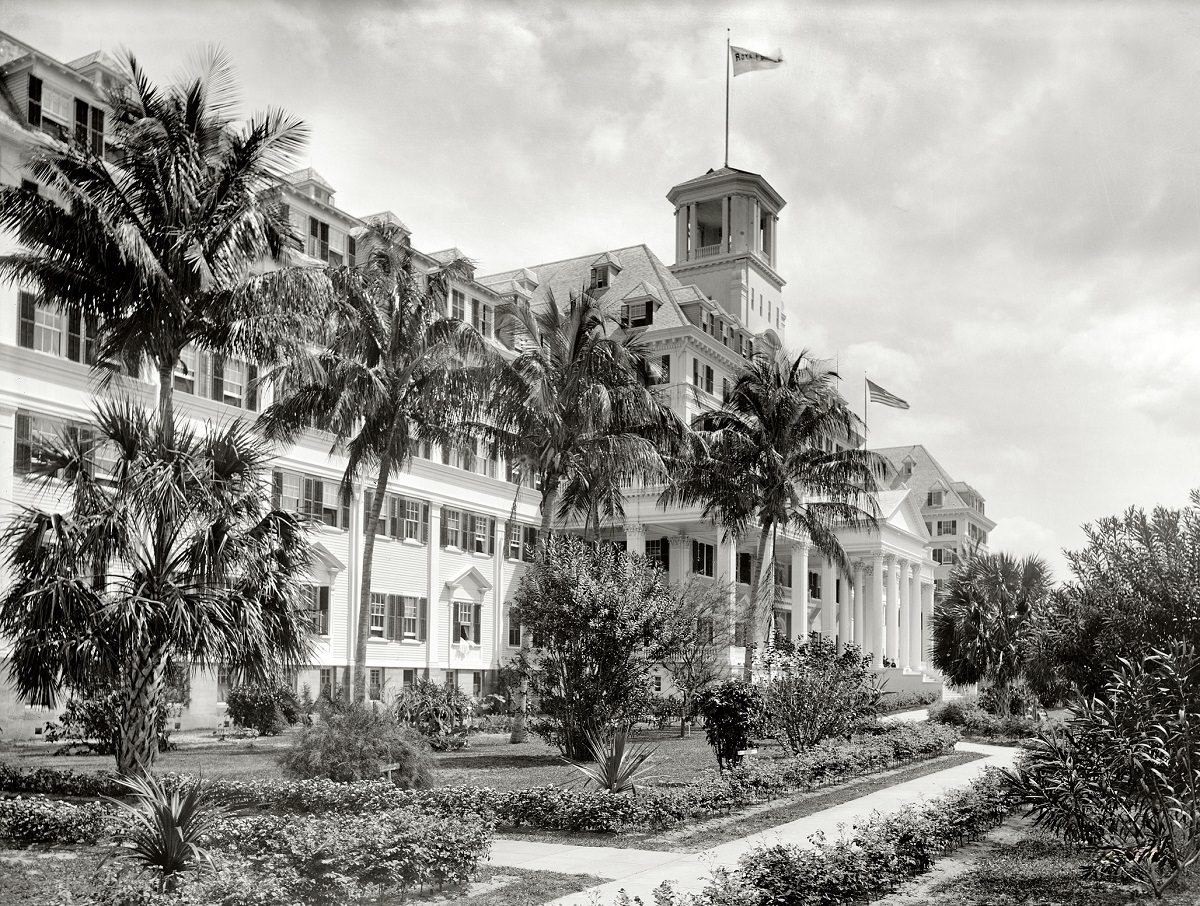
The Tomoka River attracted both working fishermen and leisure boaters throughout the 1890s. Its slow-moving, tannin-dark waters wound through marshes and ancient cypress groves, offering a sheltered and scenic environment. By 1900, the Hotel Royal Poinciana had solidified its reputation as one of the most fashionable winter destinations in the Western Hemisphere, drawing industrialists, politicians, and socialites from across the country each season.
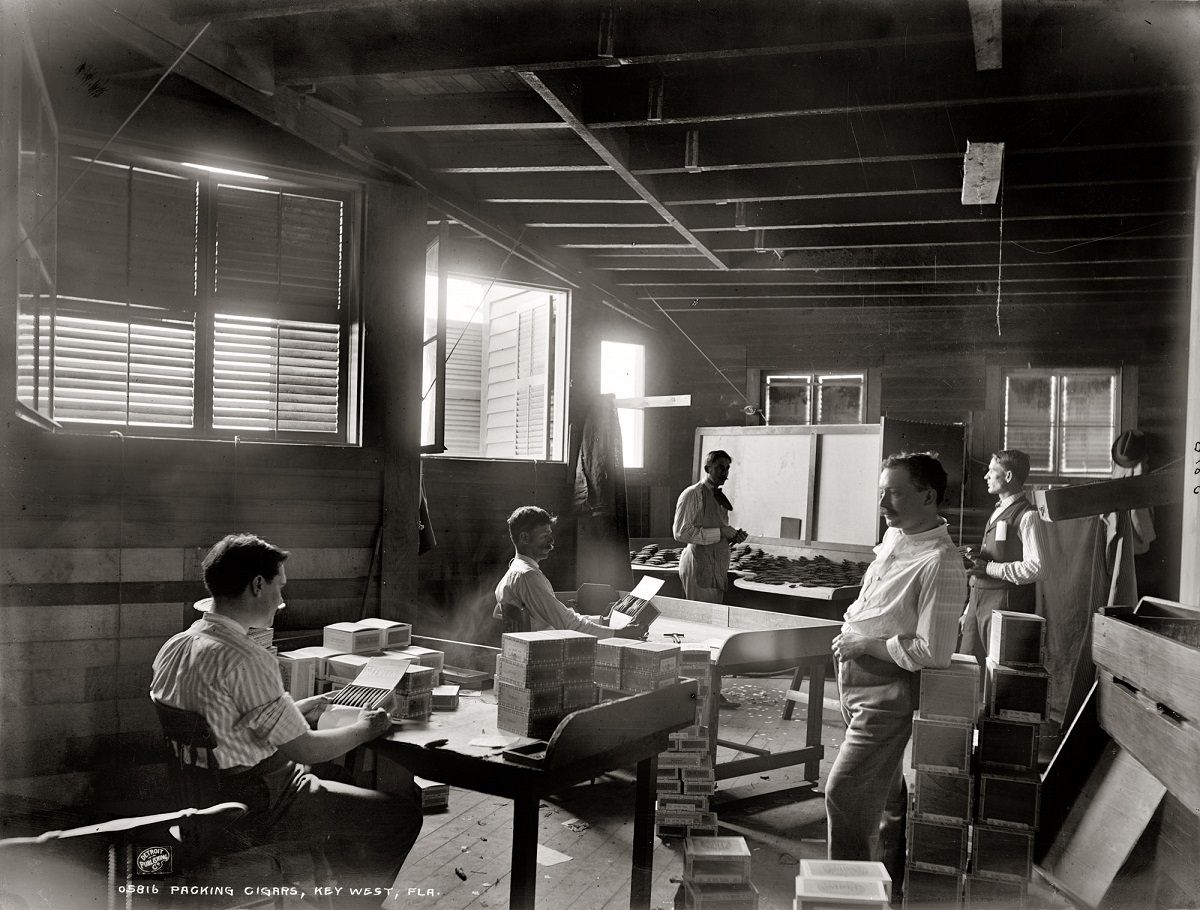
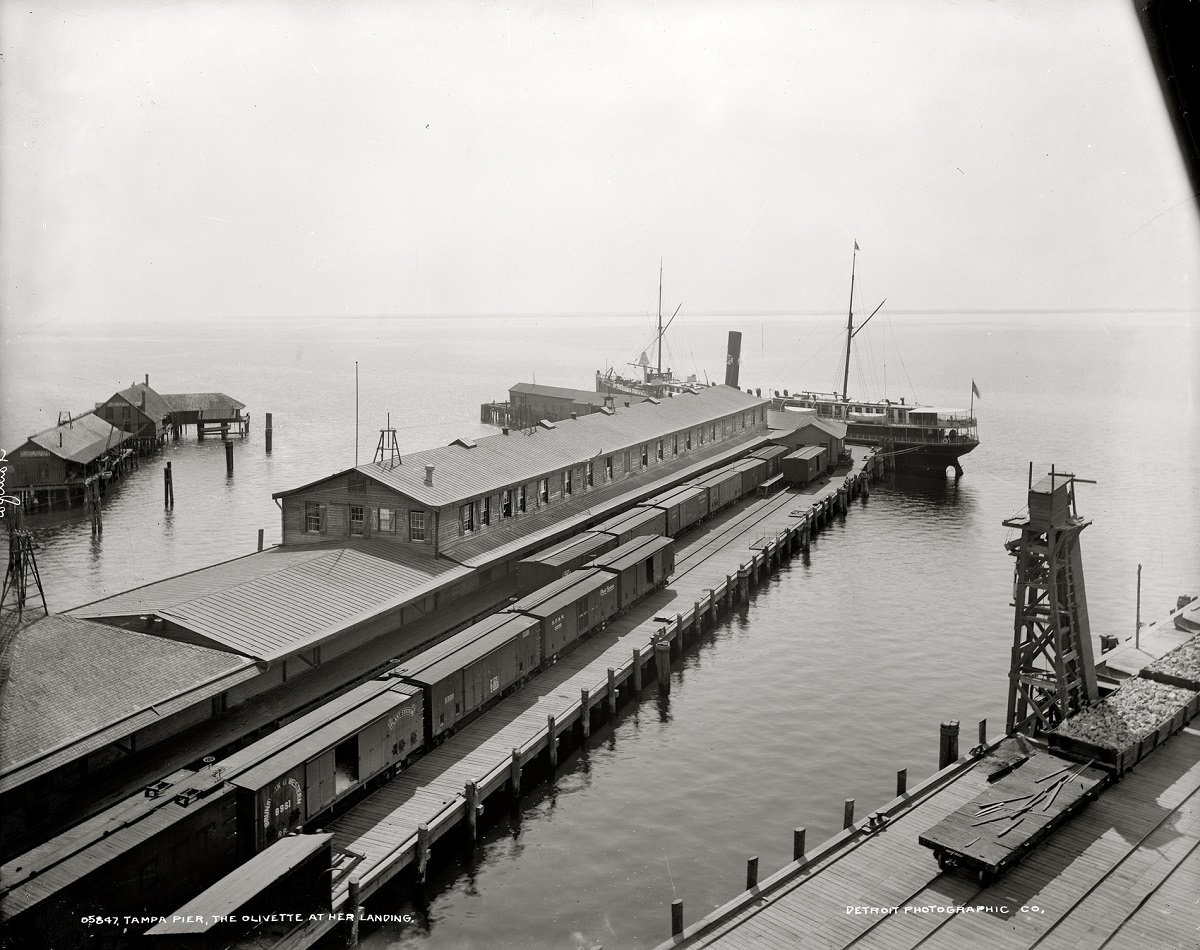
Key West at the turn of the century was the largest and wealthiest city in Florida by population, its economy driven by cigar manufacturing, sponge harvesting, and wrecking — the salvage of cargo from ships that ran aground on the surrounding reefs. Tampa, by contrast, had exploded in size during the 1890s. The city’s Ybor City neighborhood, founded in 1886 by Cuban cigar manufacturer Vicente Martinez-Ybor, became one of the most productive cigar-making centers in the world.
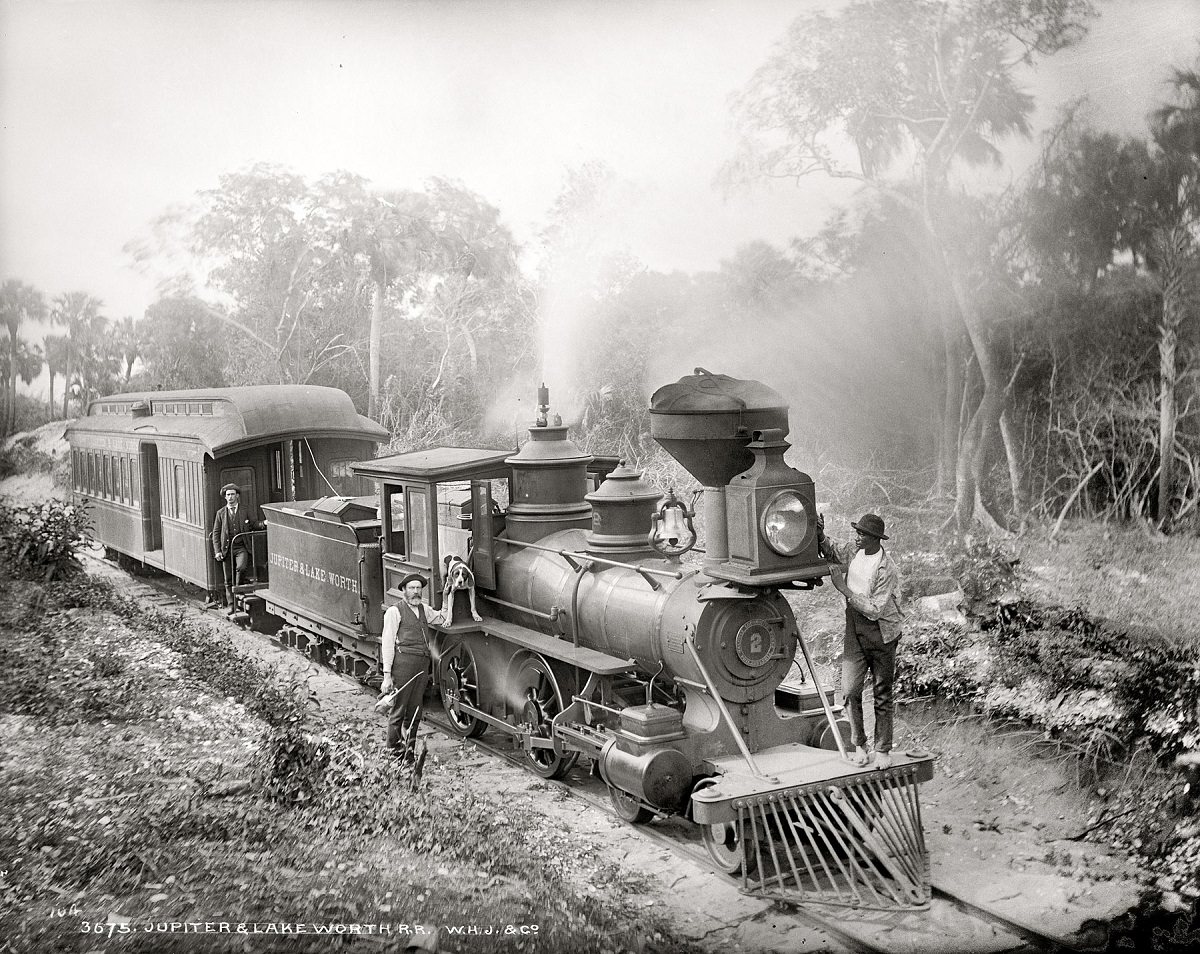
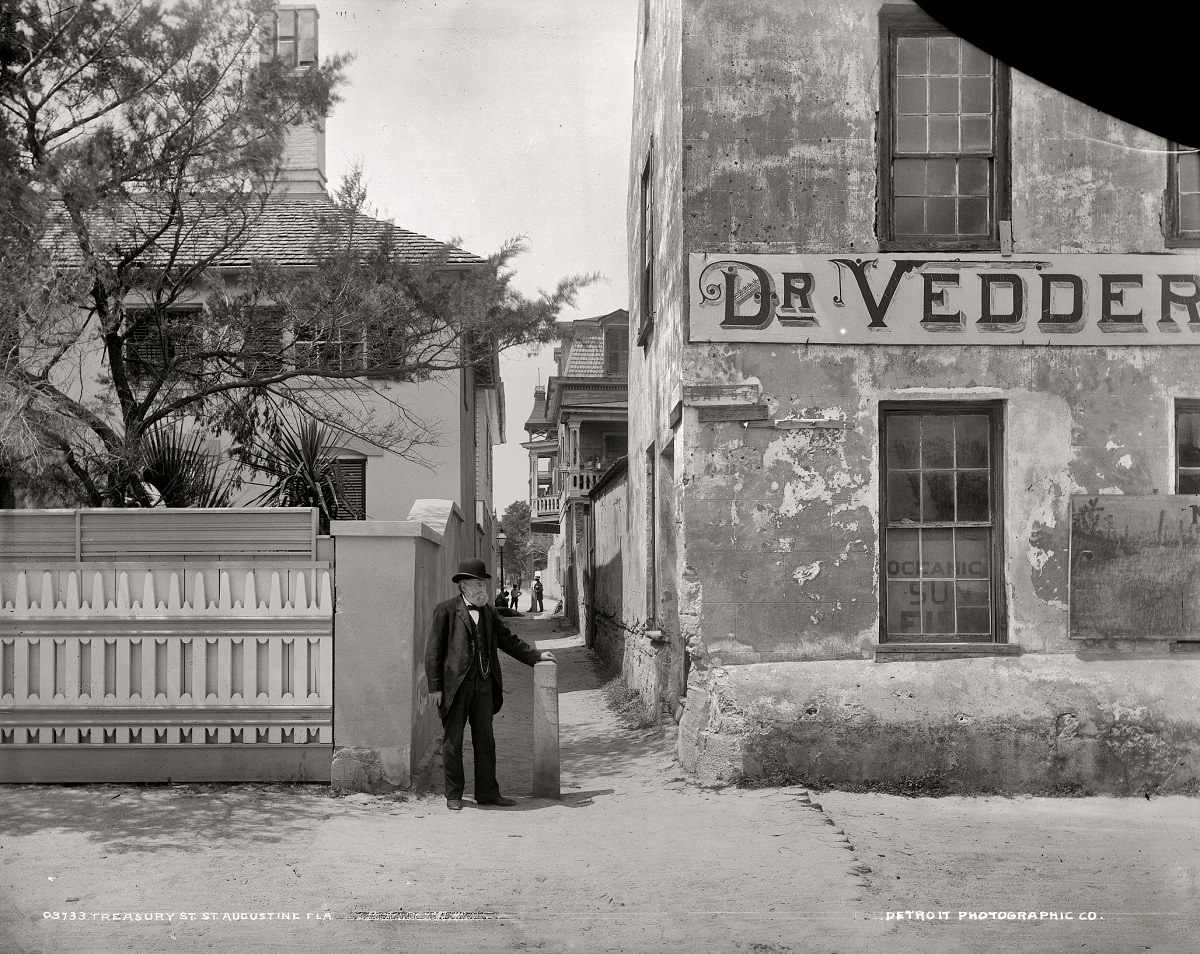
The Jupiter and Lake Worth Railroad, known locally as the “Celestial Railroad,” was one of the shortest railroads in the country at just under eight miles. It connected Jupiter to Juno, carrying mail, supplies, and passengers across the narrow strip of land between the two bodies of water before Flagler’s main line reached the area. In St. Augustine, Treasury Street reflected the commercial activity of the city’s historic core, where merchants, government offices, and residents occupied buildings that in some cases dated back centuries.
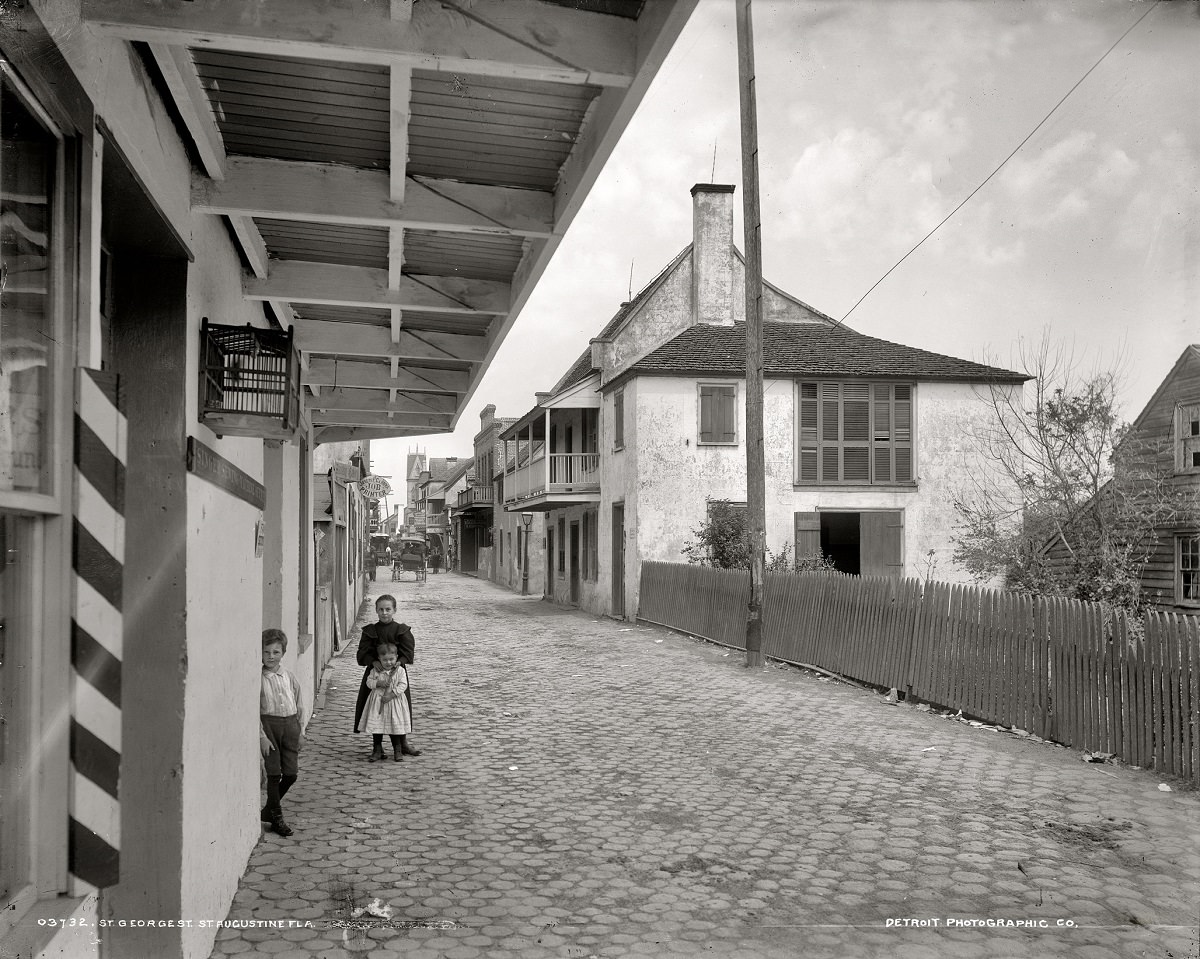
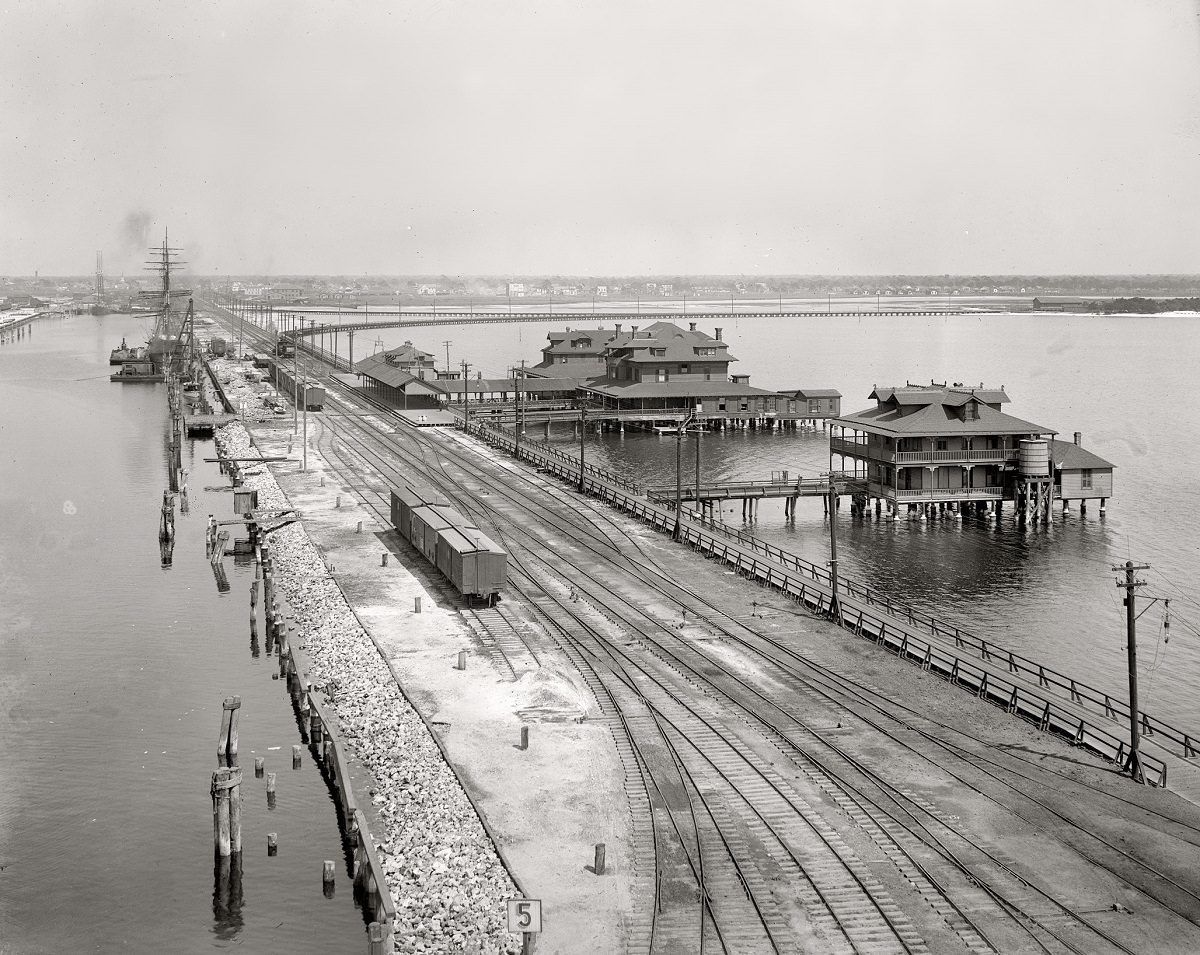
St. George Street in 1894 shows a community caught between its colonial past and its growing role as a tourist destination. Horse-drawn carts and pedestrians shared the street in front of buildings that had stood for generations. At Port Tampa, the docks and inn reflected the city’s rapid growth as a commercial and military port. In 1898, troops under General William Shafter departed from these very docks for Cuba during the Spanish-American War.
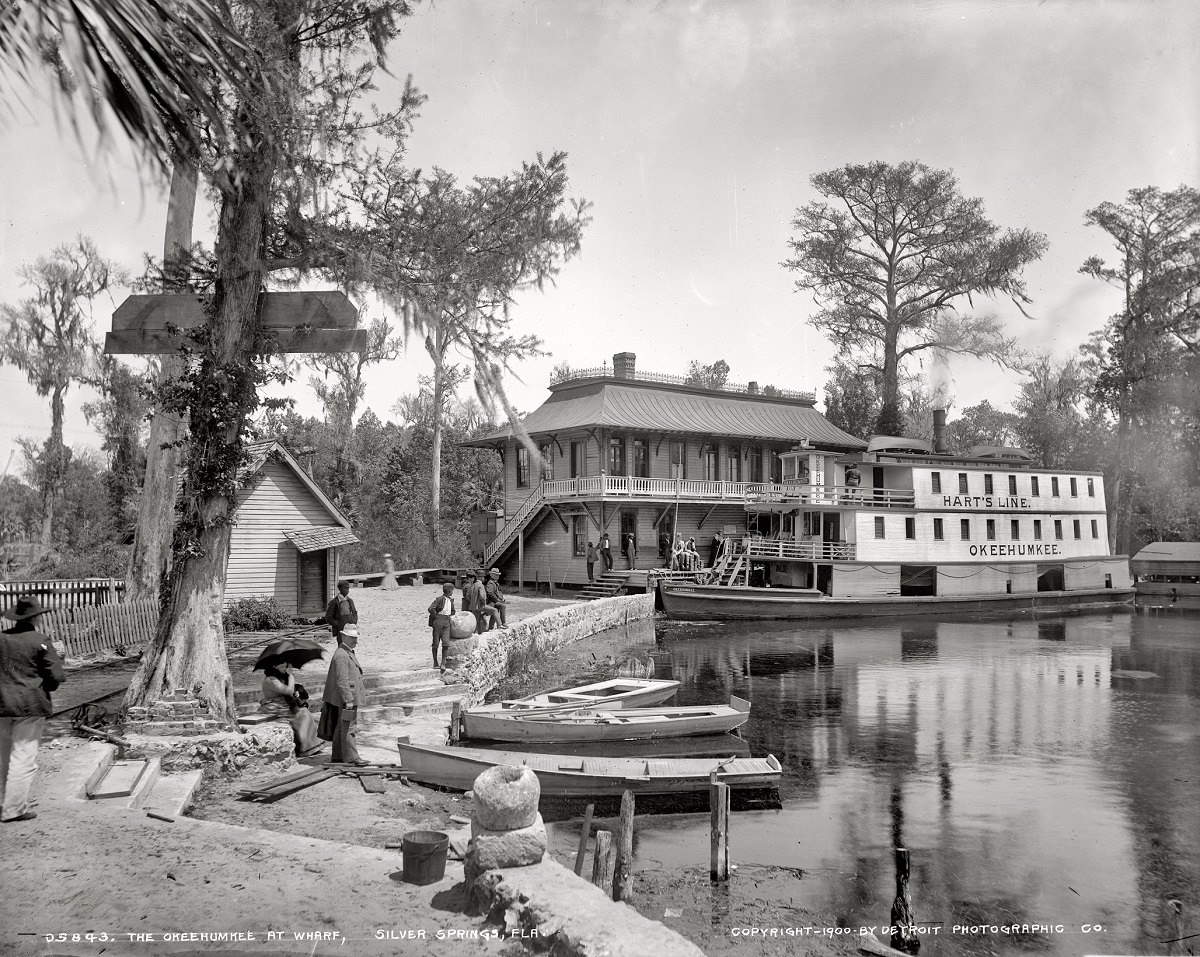
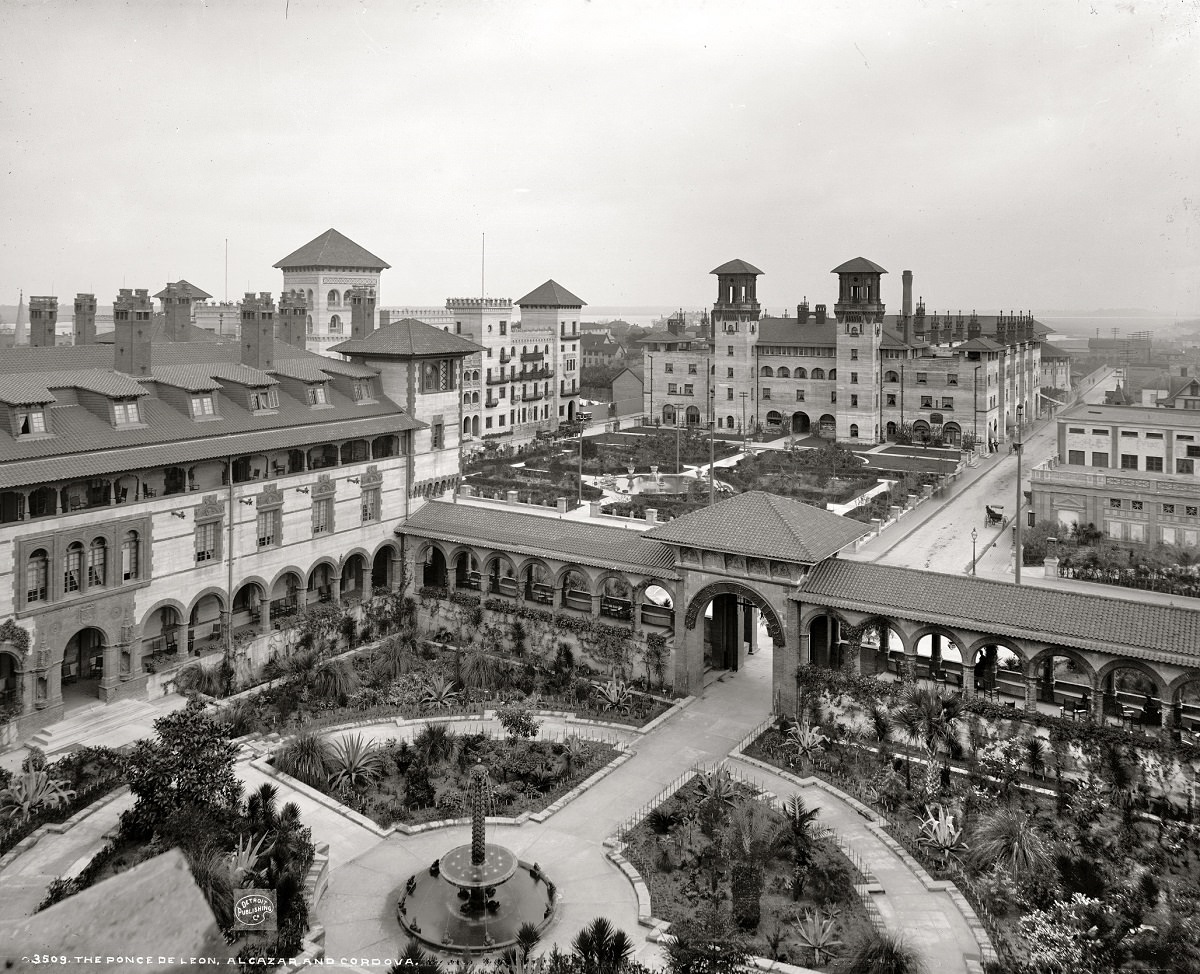
Silver Springs, located in Marion County in north-central Florida, was already a well-known attraction by the 1890s. Its spring-fed waters are among the clearest in the world, and glass-bottom boats allowed visitors to look down through the water at the spring vent and the aquatic life below. The springs had been a tourist draw since the 1870s, long before Florida’s coastal resort scene took hold. Back in St. Augustine, the cluster of Flagler’s three hotels — the Ponce de Leon, Alcazar, and Cordova — formed the architectural centerpiece of the entire region.
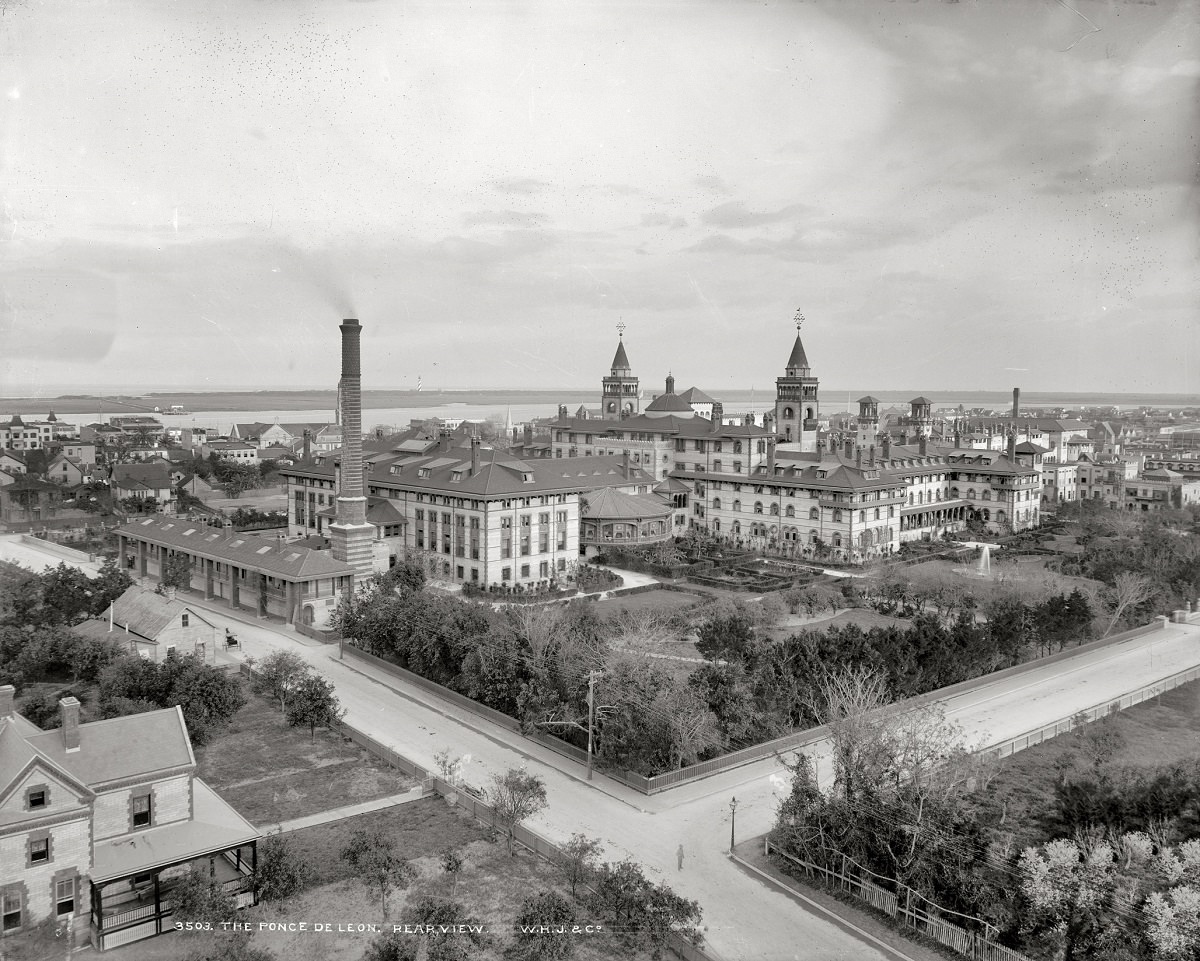
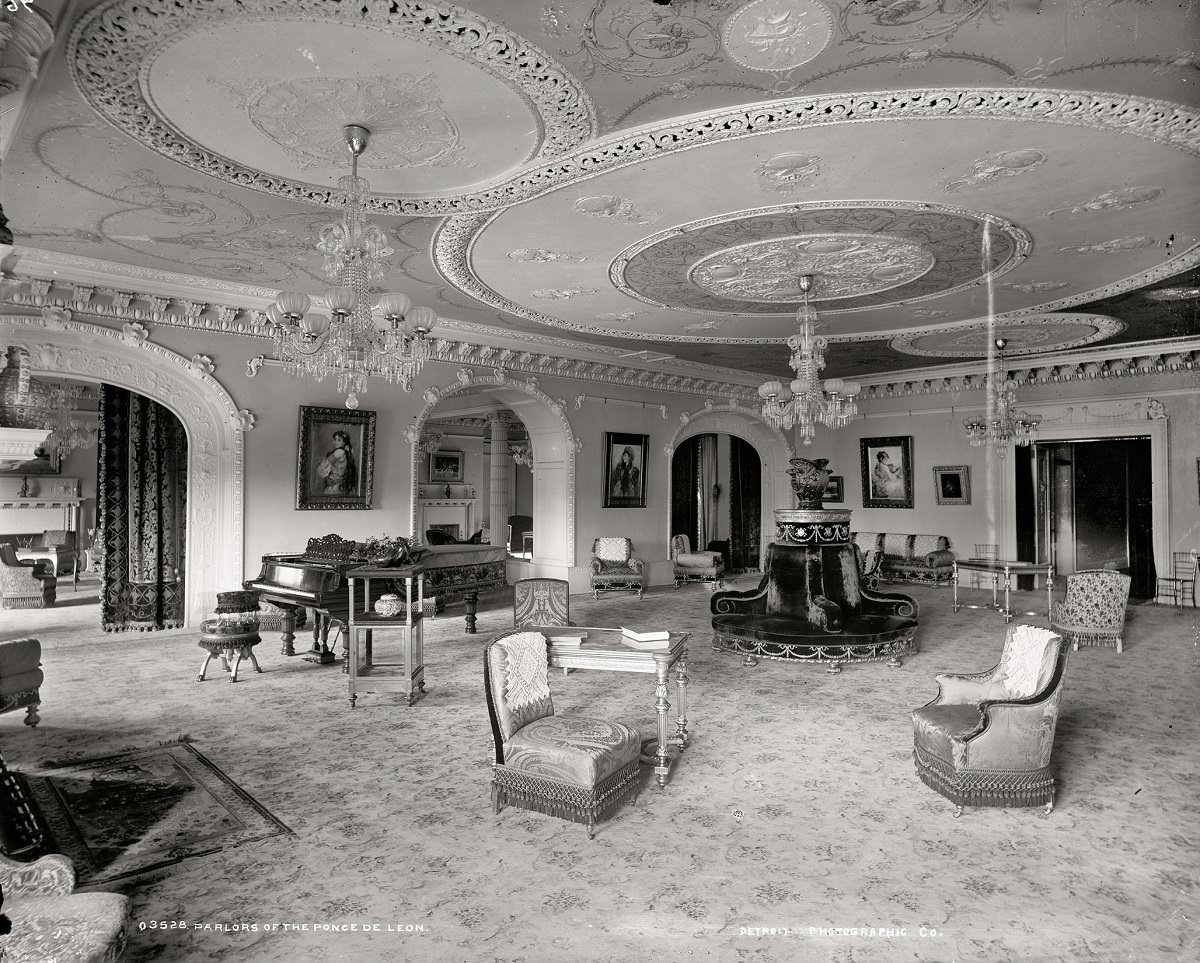
The interiors of the Ponce de Leon Hotel were as impressive as its exterior. The parlors featured stained glass windows designed by Louis Comfort Tiffany, ornate woodwork, and hand-painted ceilings. The hotel was also one of the first buildings in Florida to be wired for electricity, with Thomas Edison himself reportedly helping to plan the electrical system. Every detail was designed to signal wealth and refinement to the hotel’s elite clientele.
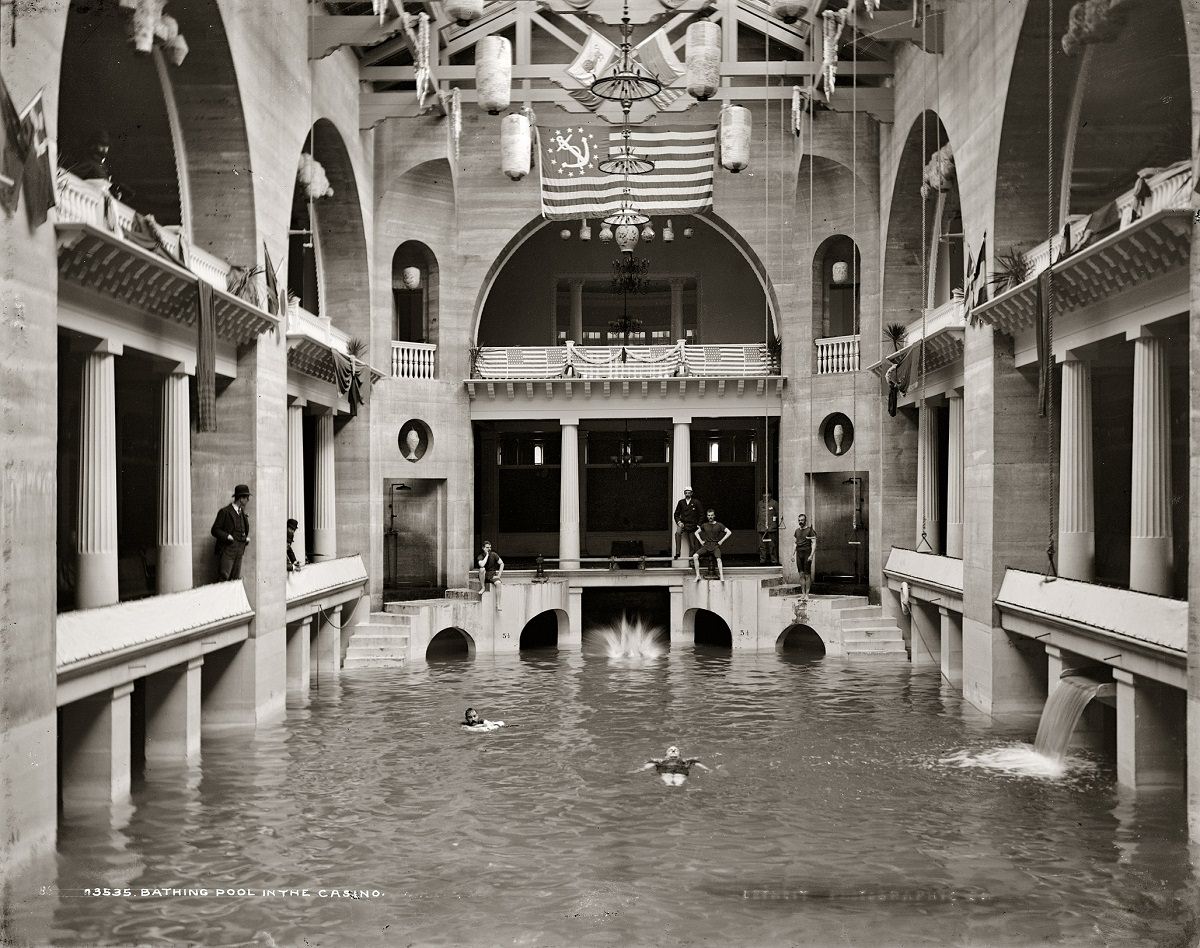
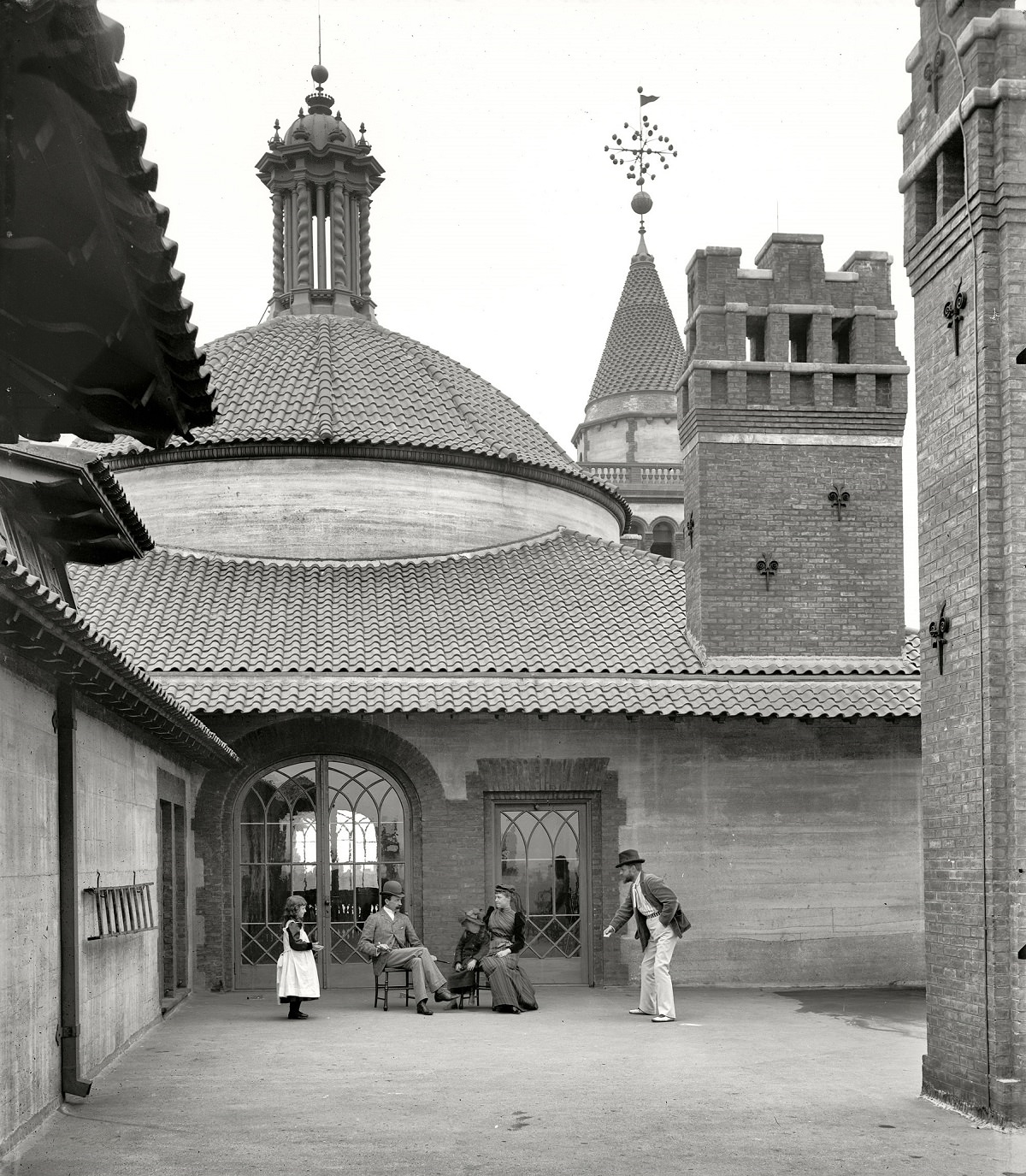
The Casino at the Hotel Alcazar housed a bathing pool that was genuinely extraordinary for its time. Measuring roughly 120 by 50 feet, it was fed by both fresh and salt water and included dressing rooms, lounges, and a café. It drew guests who came specifically for the bathing experience, which was considered both fashionable and healthful. From the rooftop of the Ponce de Leon next door, guests could look out over the rooftops of St. Augustine and the water beyond — a view that few travelers in 1890s America could have matched.
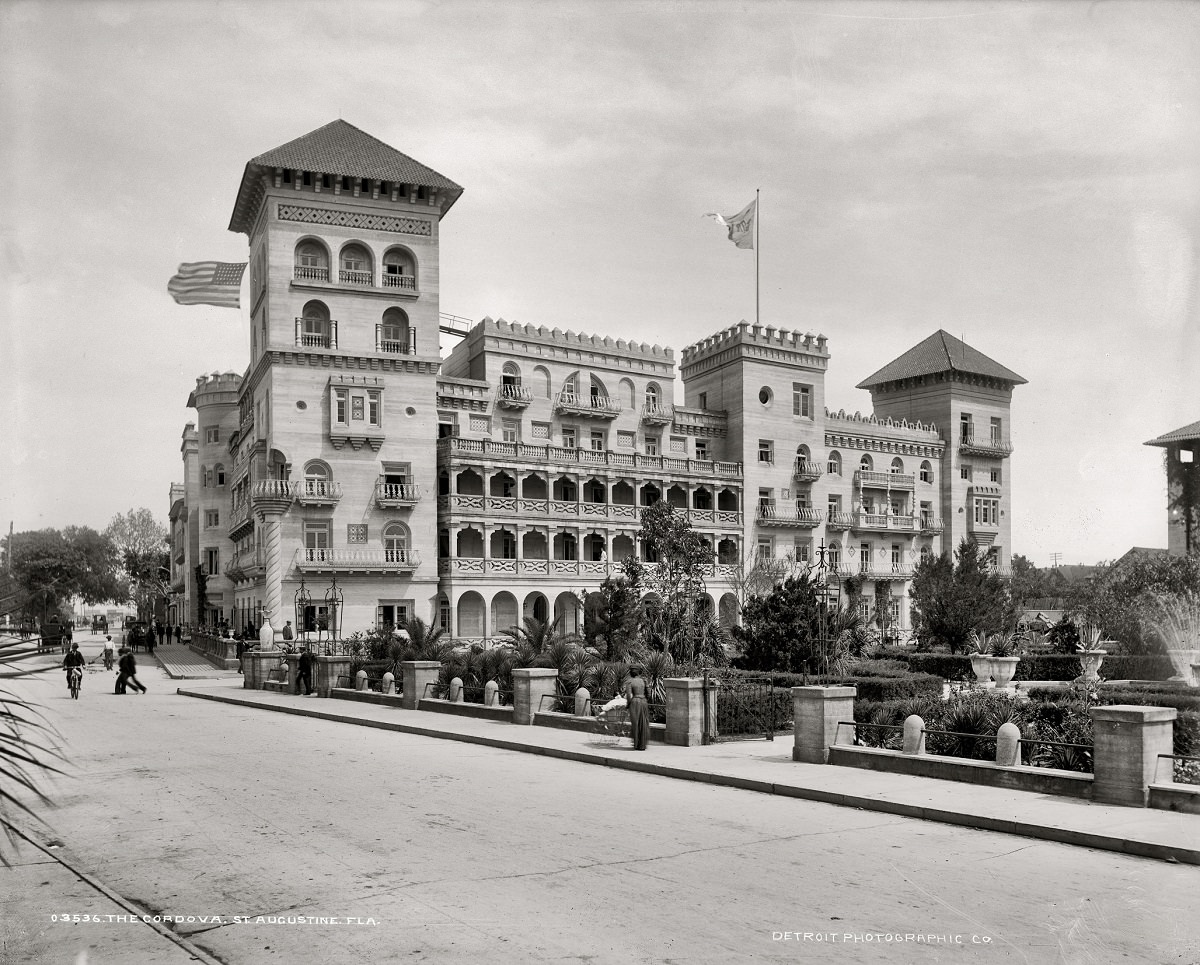
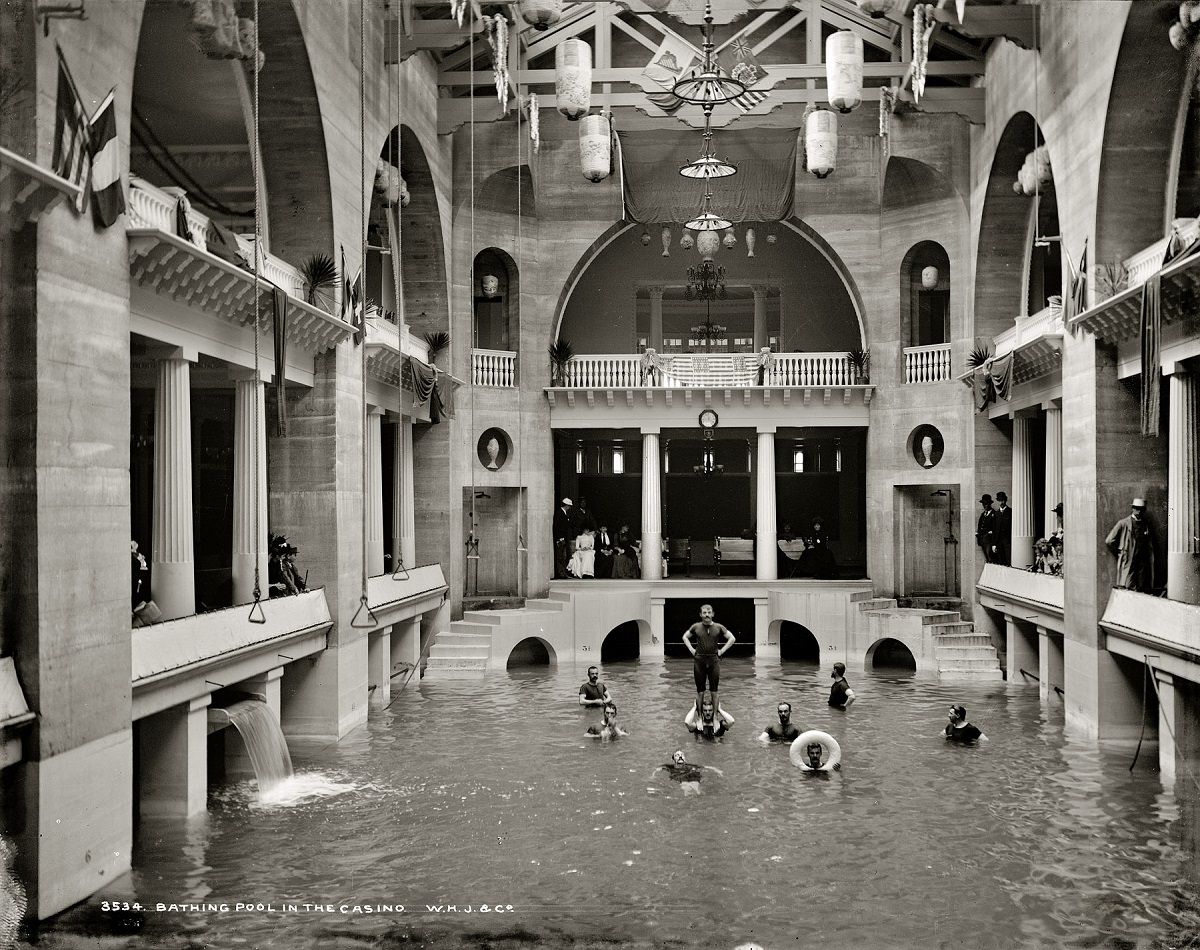
The Cordova Hotel, also built by Flagler and opened in 1888, originally served as a hotel for guests who could not secure rooms at the more exclusive Ponce de Leon. It was later connected to the Alcazar and eventually used for various other purposes. The bathing pool in the Ponce de Leon’s Casino rounded out the remarkable range of amenities that Flagler assembled in St. Augustine — a city that, in the span of just a few years in the late 1880s and 1890s, was deliberately reshaped into the winter capital of American high society.



Thank you! These are indeed some great pictures.
It would have been nice if they had posted the temperature in these pictures. I’m guessing it was probably pretty pleasant outside.
I noticed that the people on the sailboat buggy in the beach picture are fully dressed in suits.
It was still hot as balls
Back then, the streets had pleasant walkways with attractive architecture. Nowadays, it seems that much of the city has succumbed to suburban sprawl, with strip malls and cars dominating the landscape.
Many of the sights and attractions in St. Augustine remain unchanged to this day, except for the fact that the landscaping has matured over time.
These photos are truly amazing.
I am really enjoying this!😊