in

What Houston looked like in the 1990s through these Nostalgic Photos

Houston in the 1990s was a city in motion. It was growing outward into new suburbs, building upward with new skyscrapers, and deepening its identity as one of the most diverse cities in America. The energy industry had bounced back from its painful 1980s crash, and the confidence that came with that recovery showed up everywhere — in construction cranes, packed sports arenas, and busy port terminals. These photographs capture that decade in vivid detail, from the grand and official to the quiet and everyday.
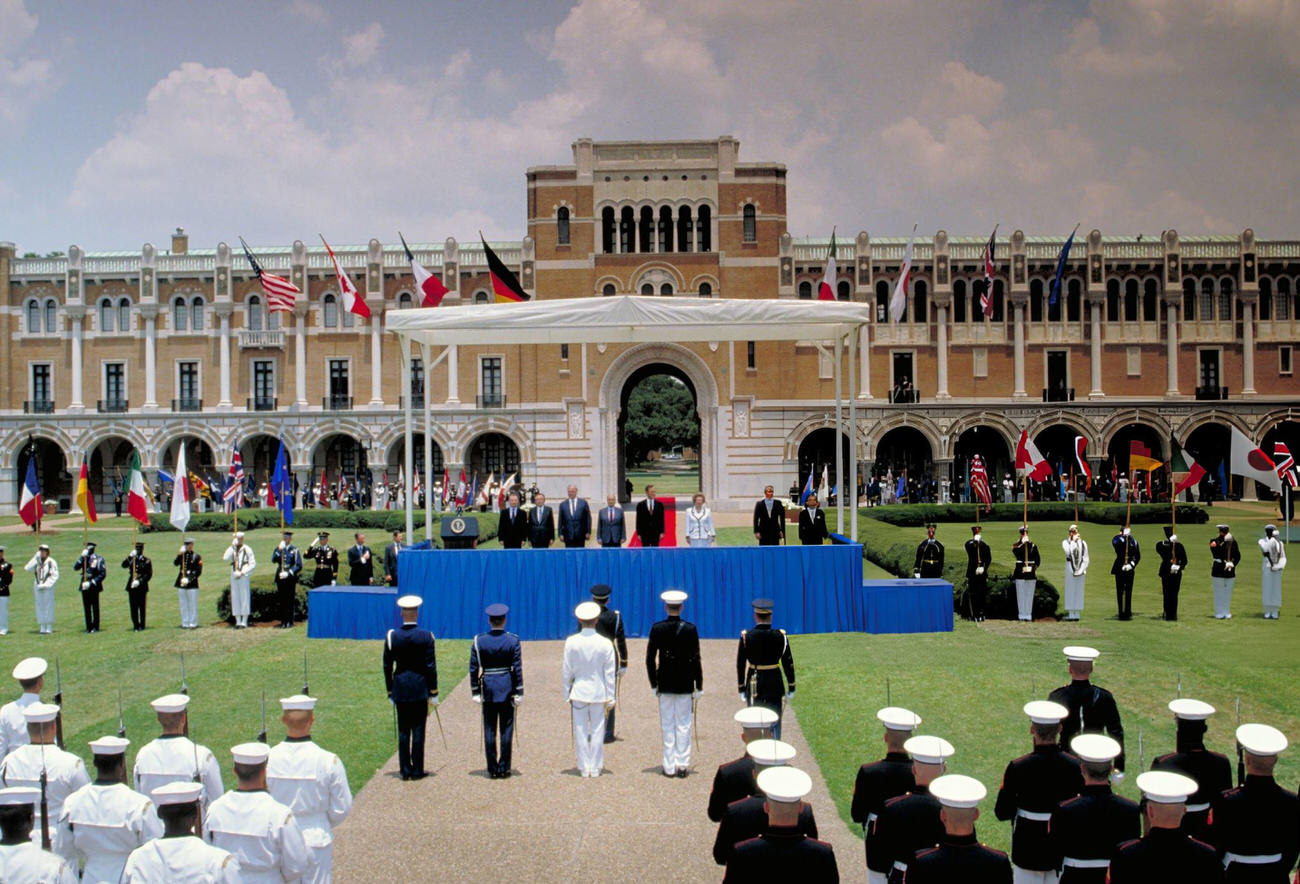
Leaders of the G7 industrialized nations at the 16th Economic Summit at Rice University, Houston, Texas, 1990.

Houston opened the decade on the world stage. In July 1990, Rice University hosted the G7 Economic Summit, bringing together leaders from the United States, the United Kingdom, France, Germany, Italy, Canada, and Japan. President George H.W. Bush, a Houston resident himself, presided over the gathering. It was a signal to the world that Houston was not just an oil town — it was a global city.
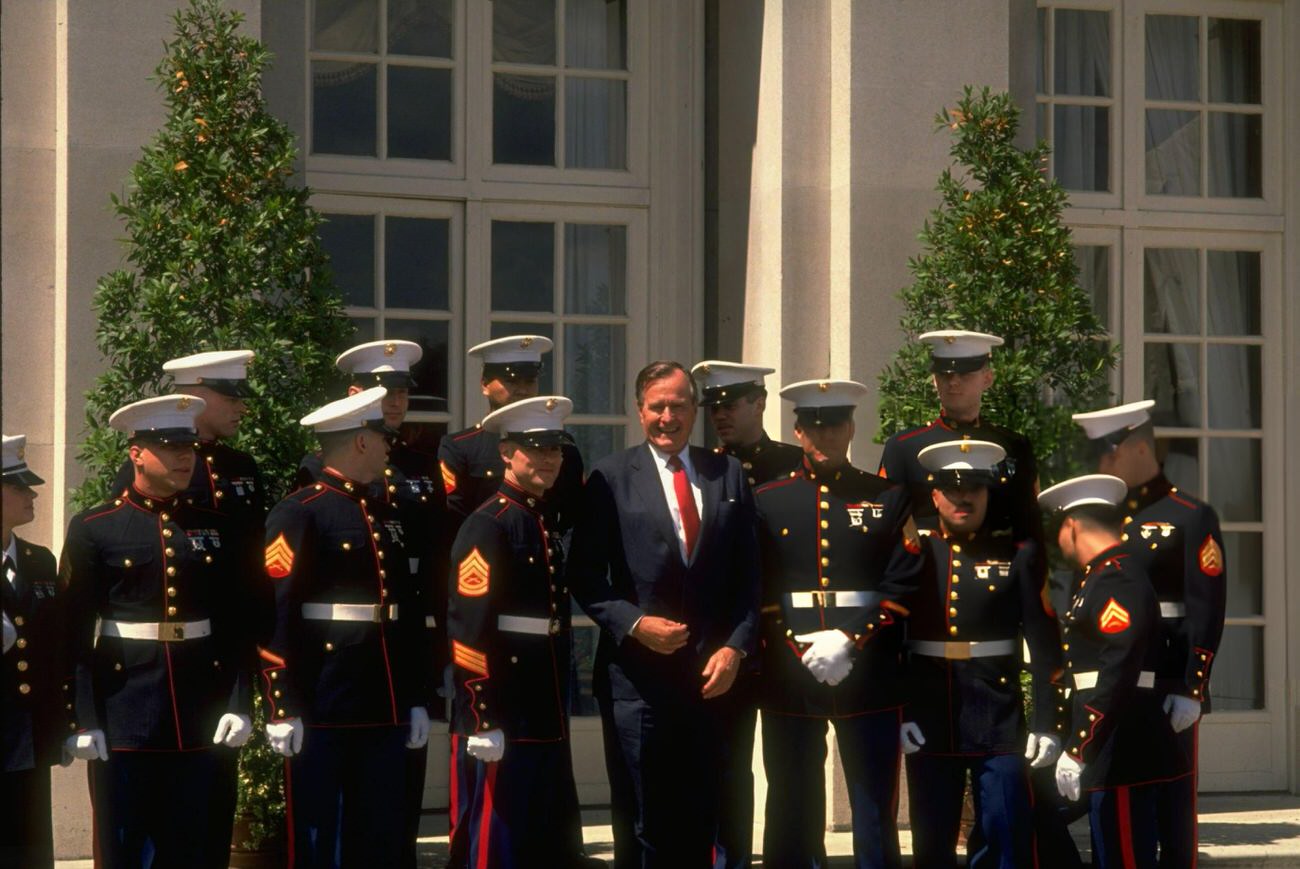
President George H.W. Bush is flanked by his white-gloved honor guard marines during the Houston Economic Summit, Texas.

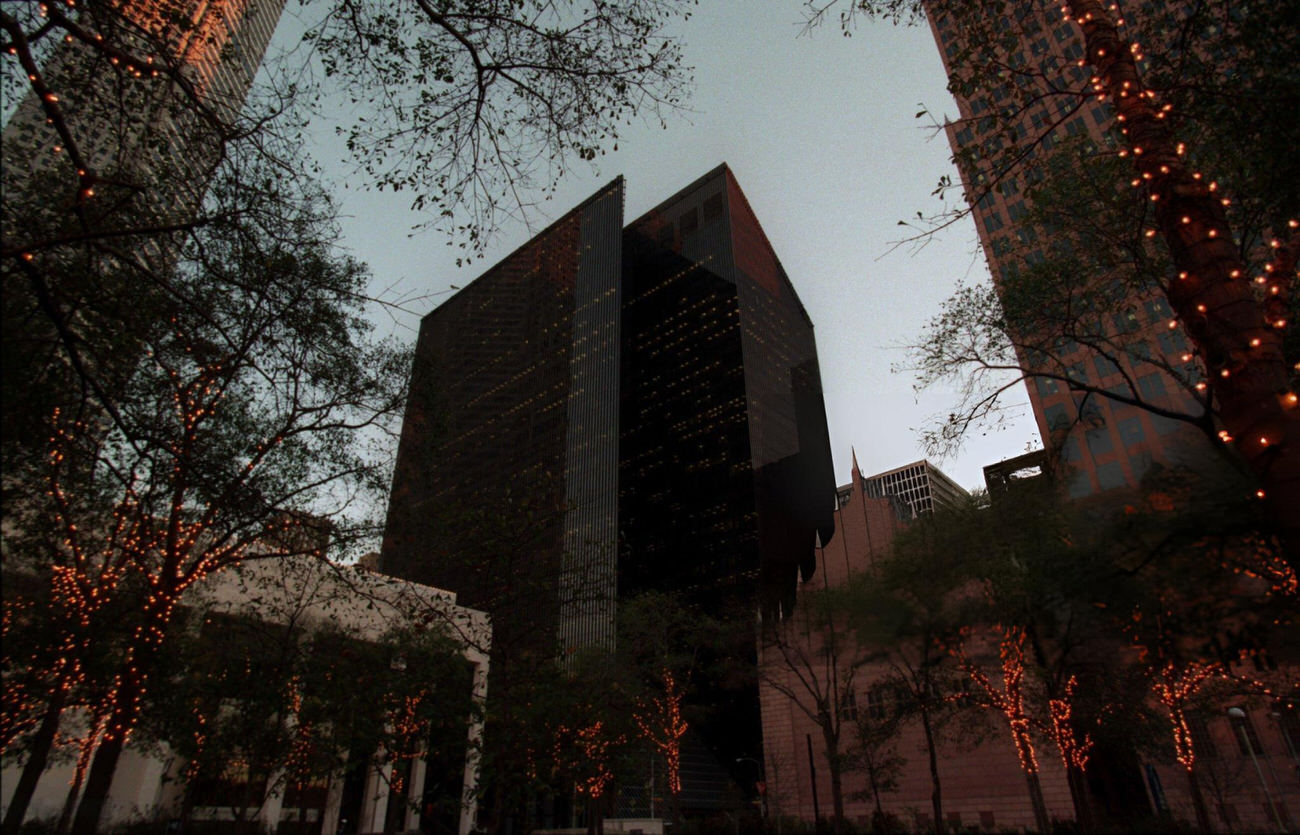
The city’s skyline reflected its economic ambitions. Downtown Houston added major office towers during this period, and large corporations committed firmly to the city. Shell Oil renewed a massive lease at One Shell Plaza, locking in over a million square feet of downtown office space. Pennzoil Place, one of the most architecturally distinctive buildings in Texas, was acquired by a German investment group in 1997 — a sign of the international attention Houston’s real estate was drawing.
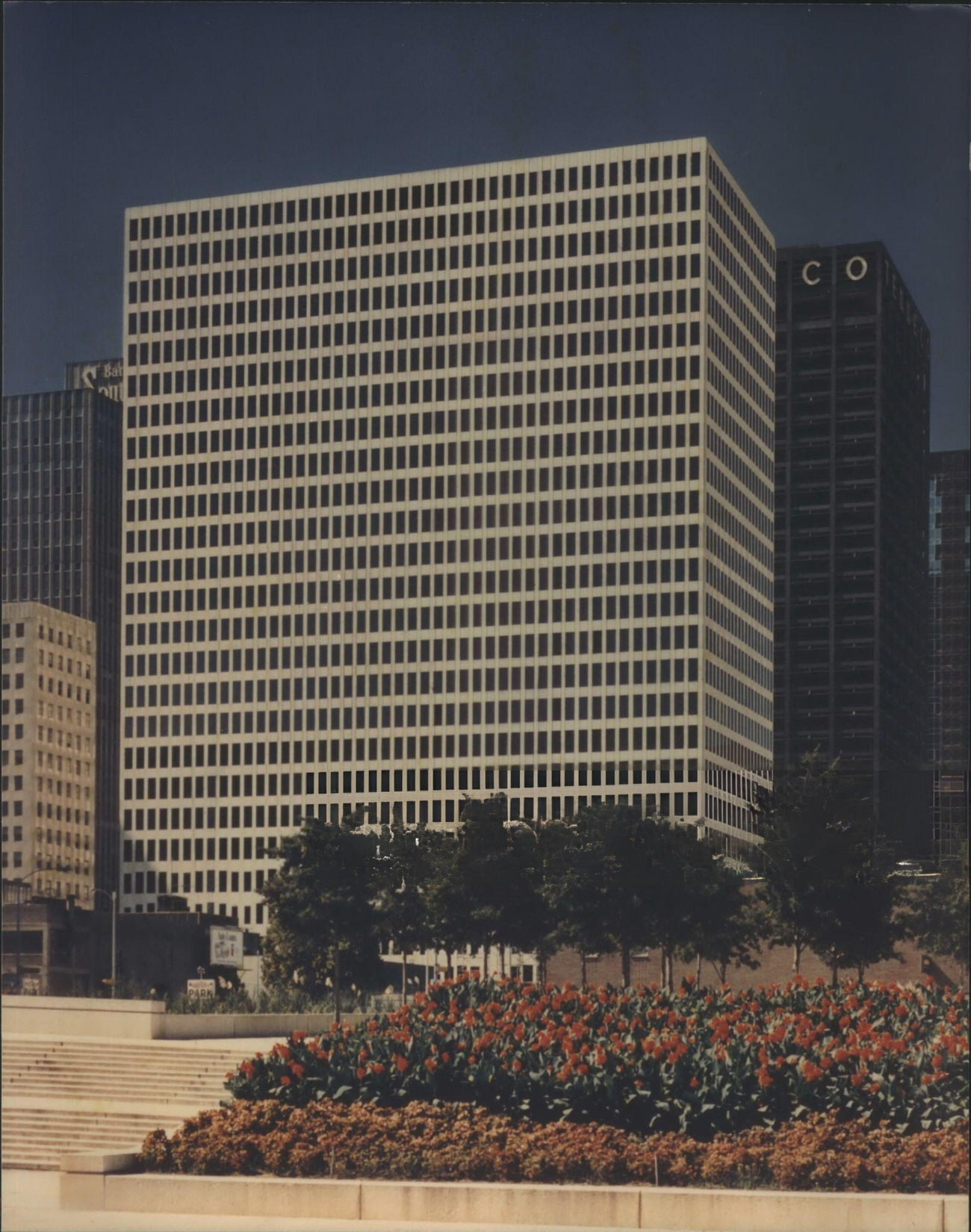
Shell Oil Company renews its 1.14-million-square-foot lease in One Shell Plaza, a significant commitment to downtown Houston
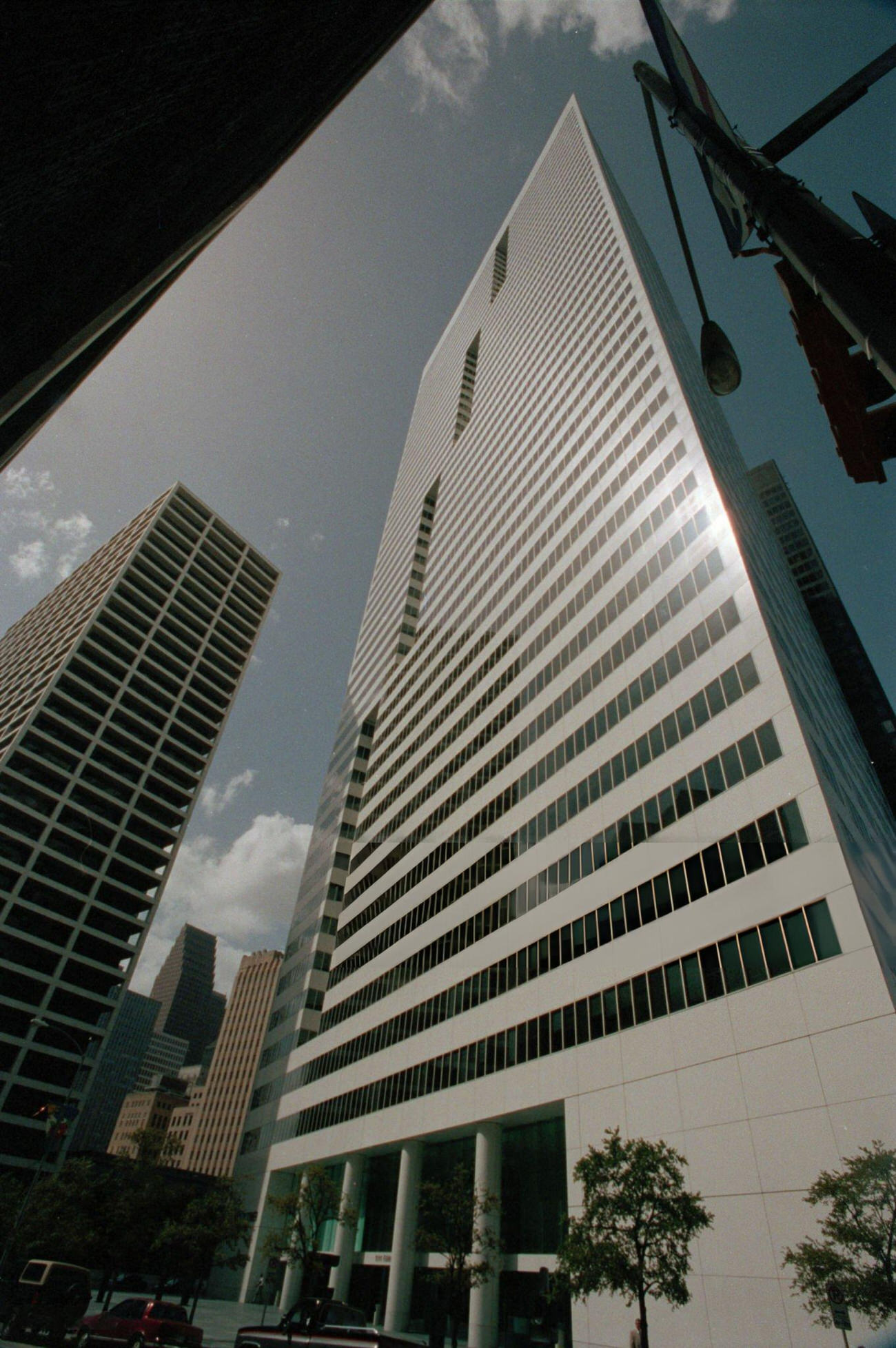
First City Tower's feature on July 1, 1993, emphasizes the architectural and commercial growth of downtown Houston, housing 1.3 million square feet of office space, Texas.
First City Tower’s feature on July 1, 1993, emphasizes the architectural and commercial growth of downtown Houston, housing 1.3 million square feet of office space, Texas.

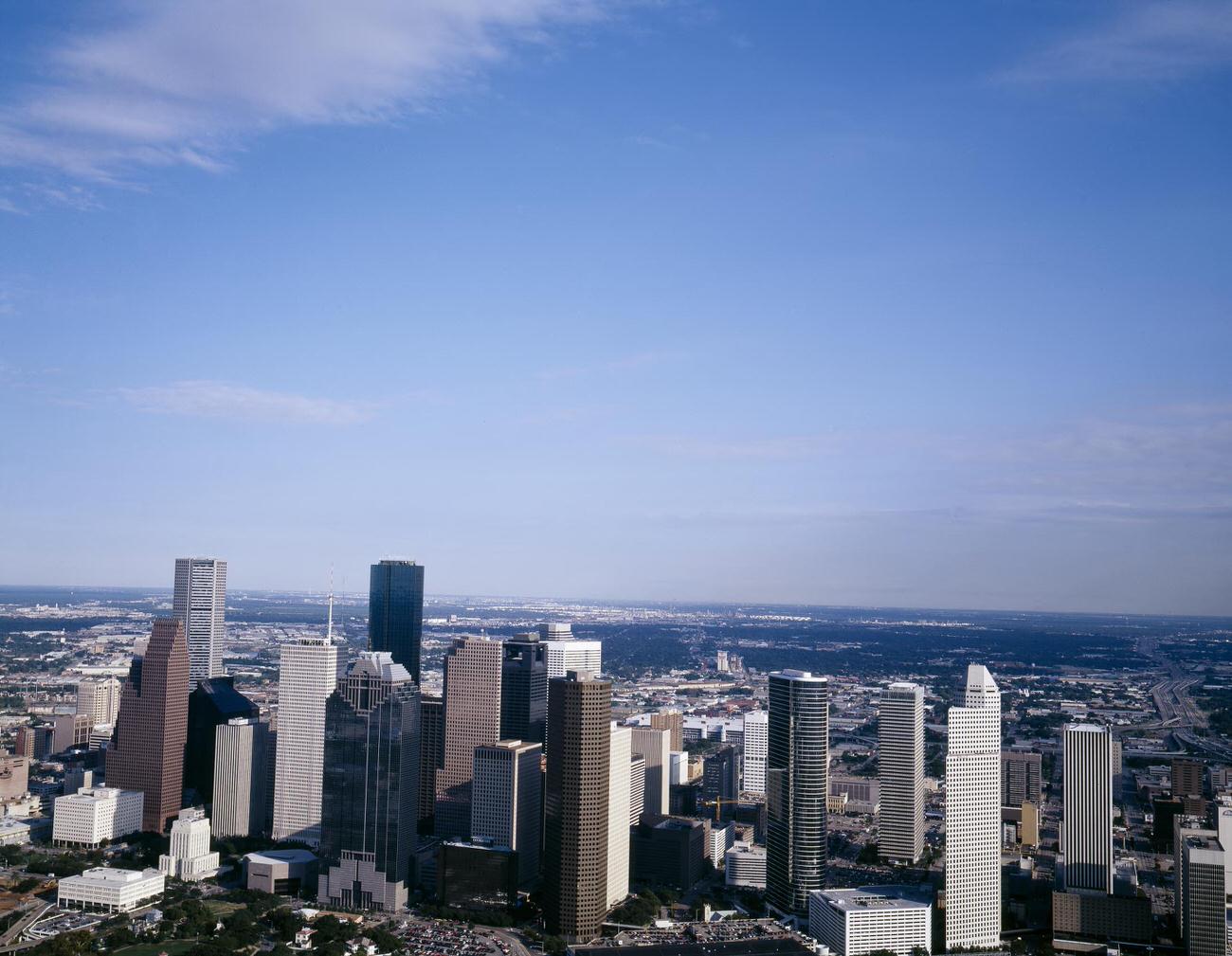
From above, Houston’s scale was hard to miss. The Texas Medical Center — already the largest medical complex in the world — kept expanding through the decade, drawing patients, researchers, and doctors from across the globe. New facilities rose alongside existing ones, and the surrounding neighborhoods shifted to accommodate the thousands of people who worked there.
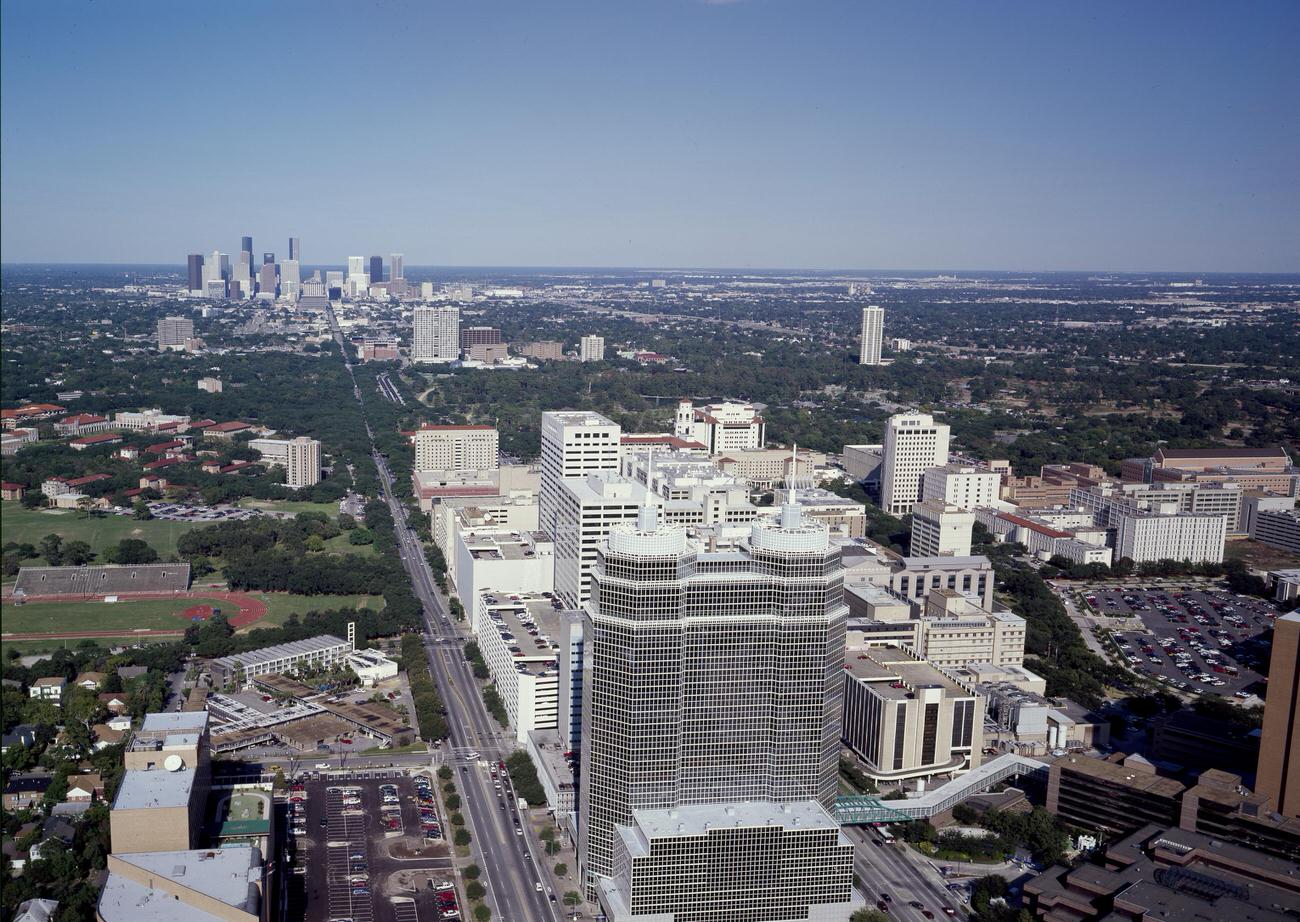
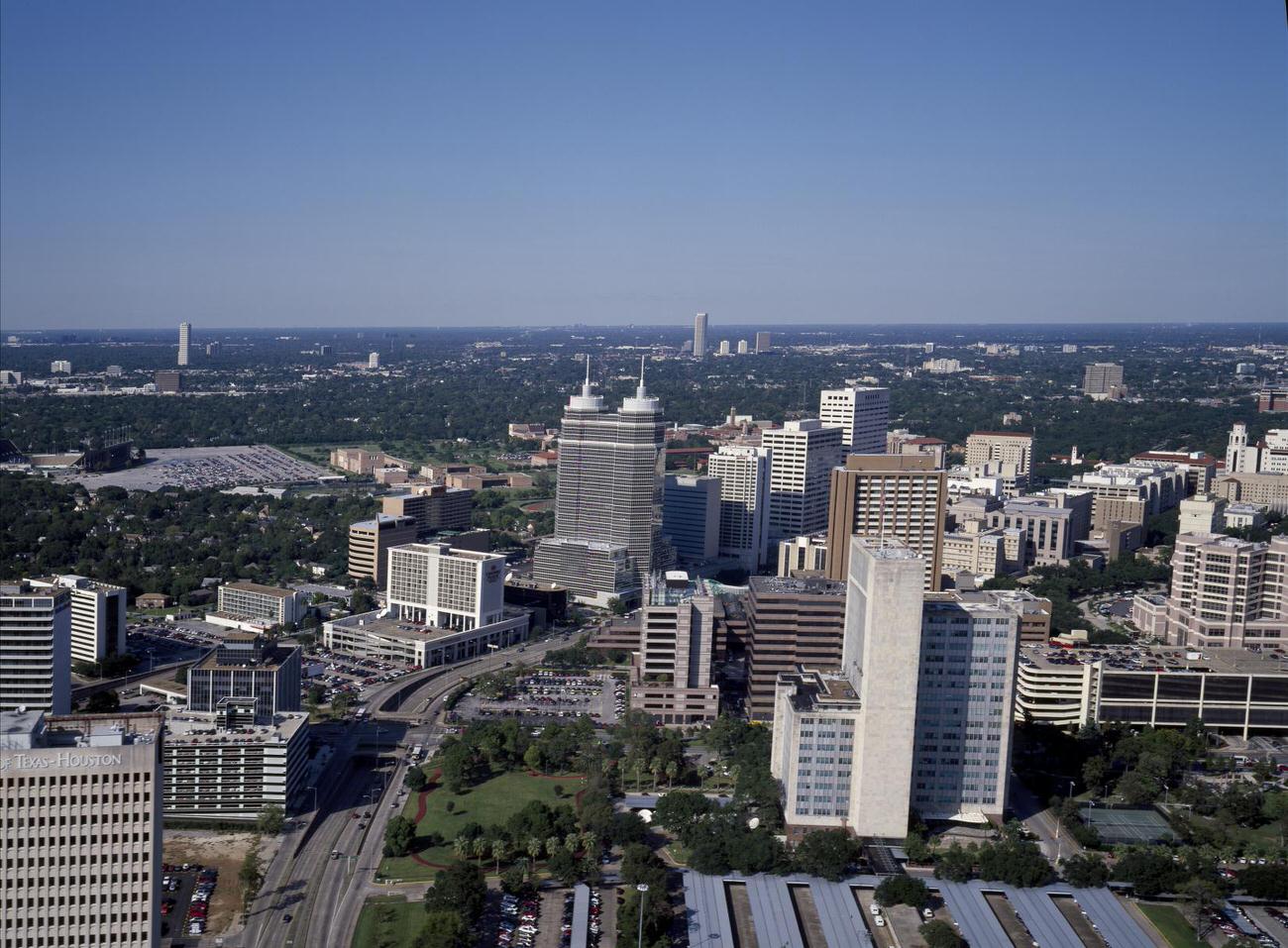
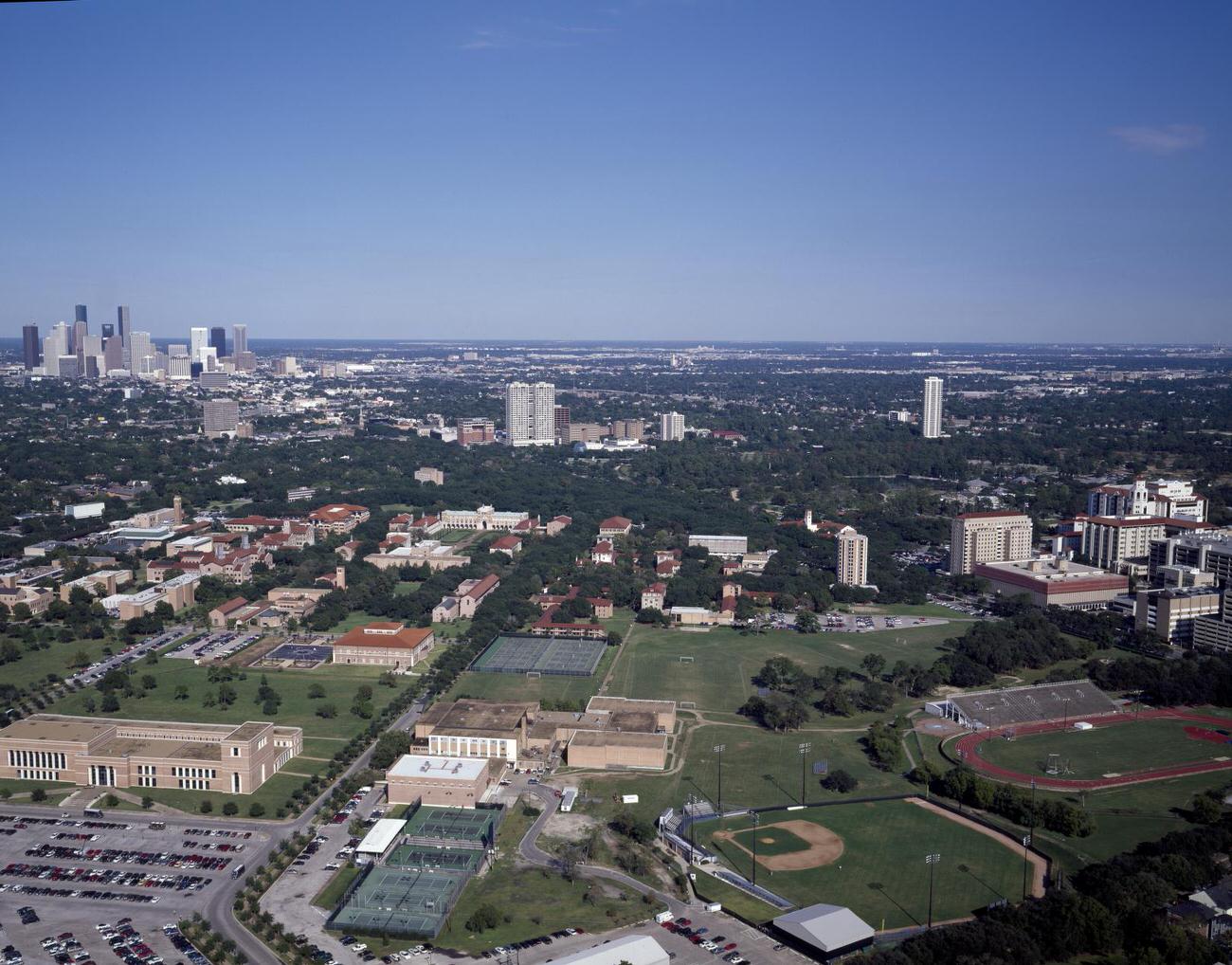
Aerial view of the Texas Medical Center with Houston skyline in the background, 1990s
Aerial view of Houston, Texas, above its famous Medical Center, 1990s

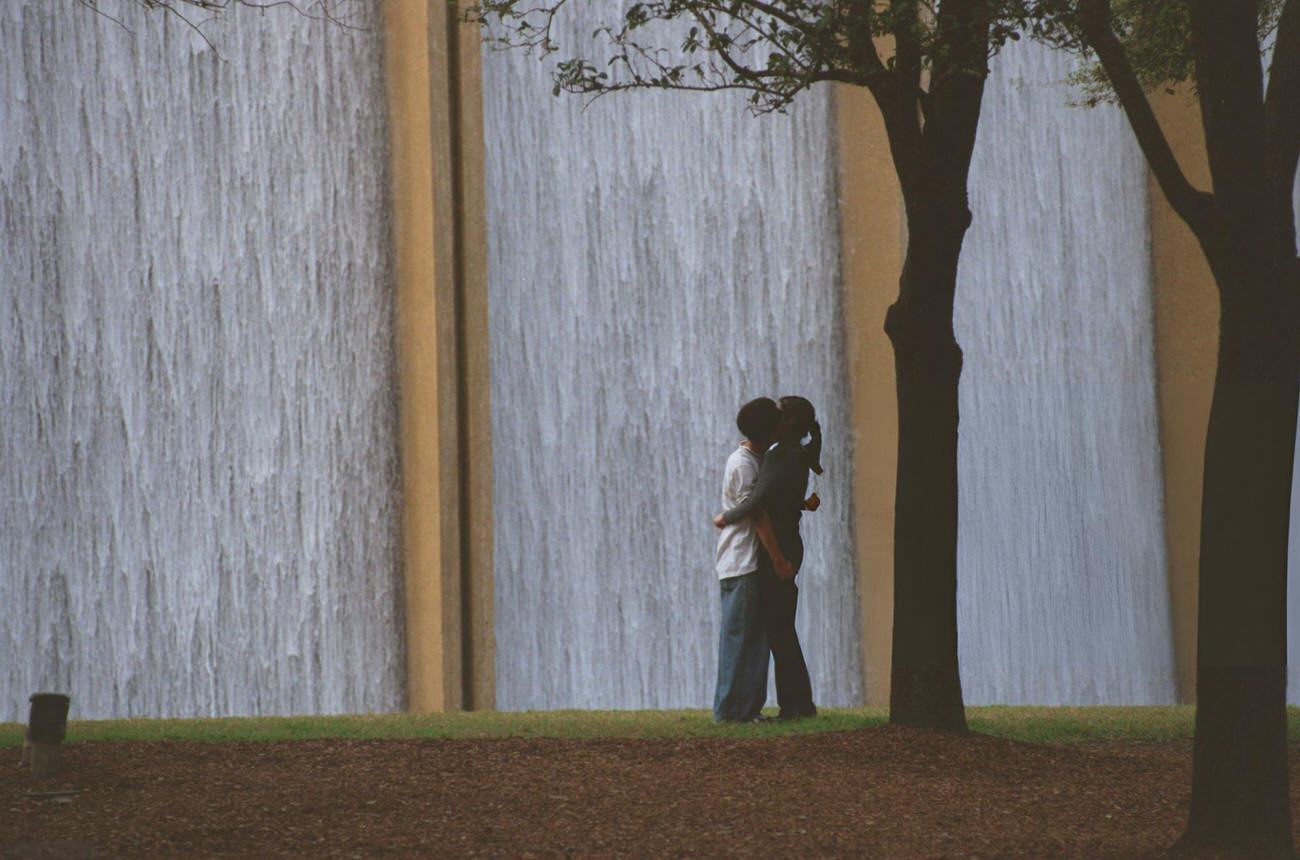
The Transco Tower — later renamed the Williams Tower — stood as one of the most striking landmarks outside of downtown. Rising from the Galleria area, it defined the city’s expanding commercial districts. The water wall at its base became a popular gathering spot, one of those rare places where the urban and the human felt genuinely connected.
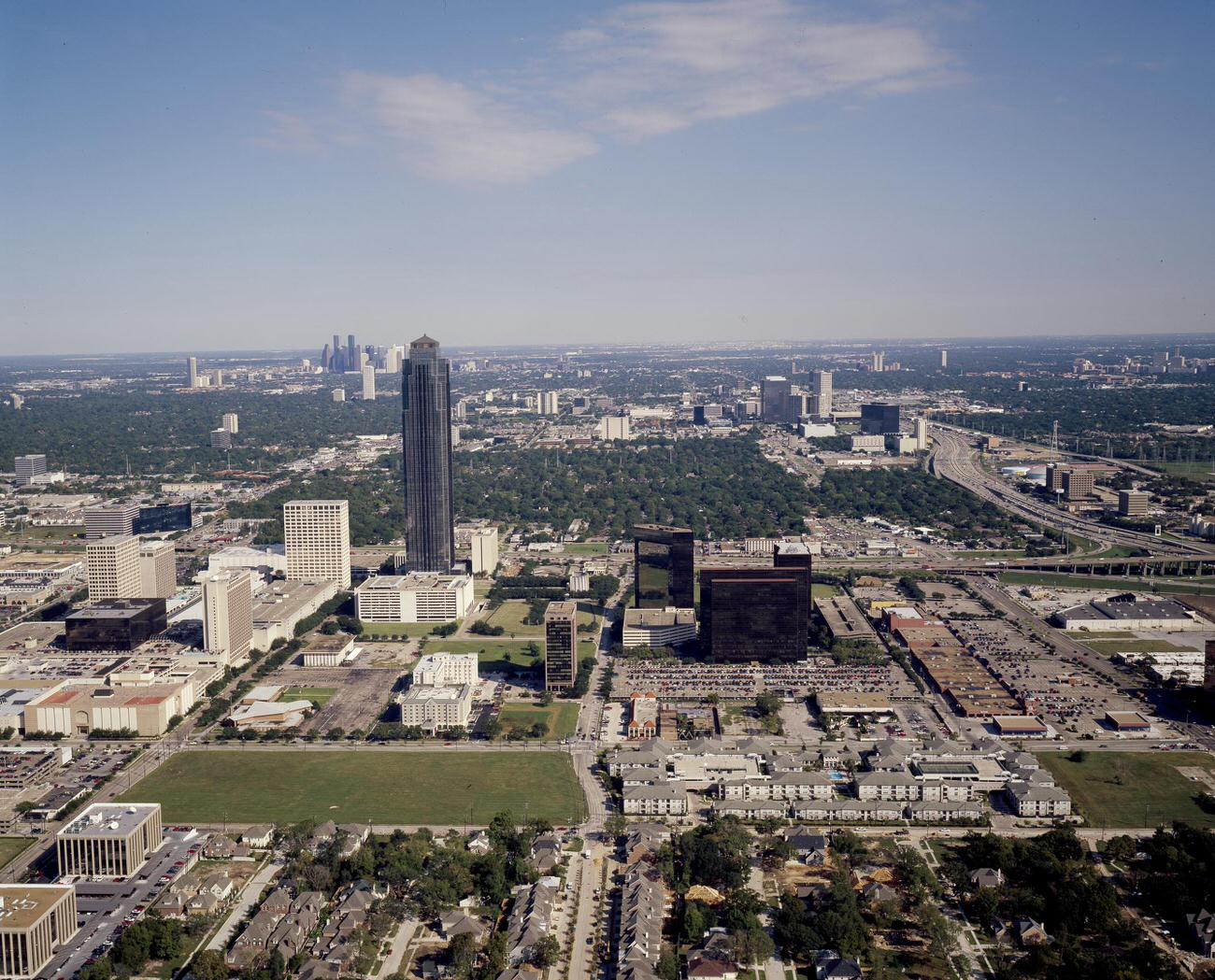
Aerial view of Transco Tower (Williams Tower) with Houston skyline in the background, 1990s
Yvonne Lee and Michael Nguyen by the Transco Tower water wall, Houston, Texas, 1999.

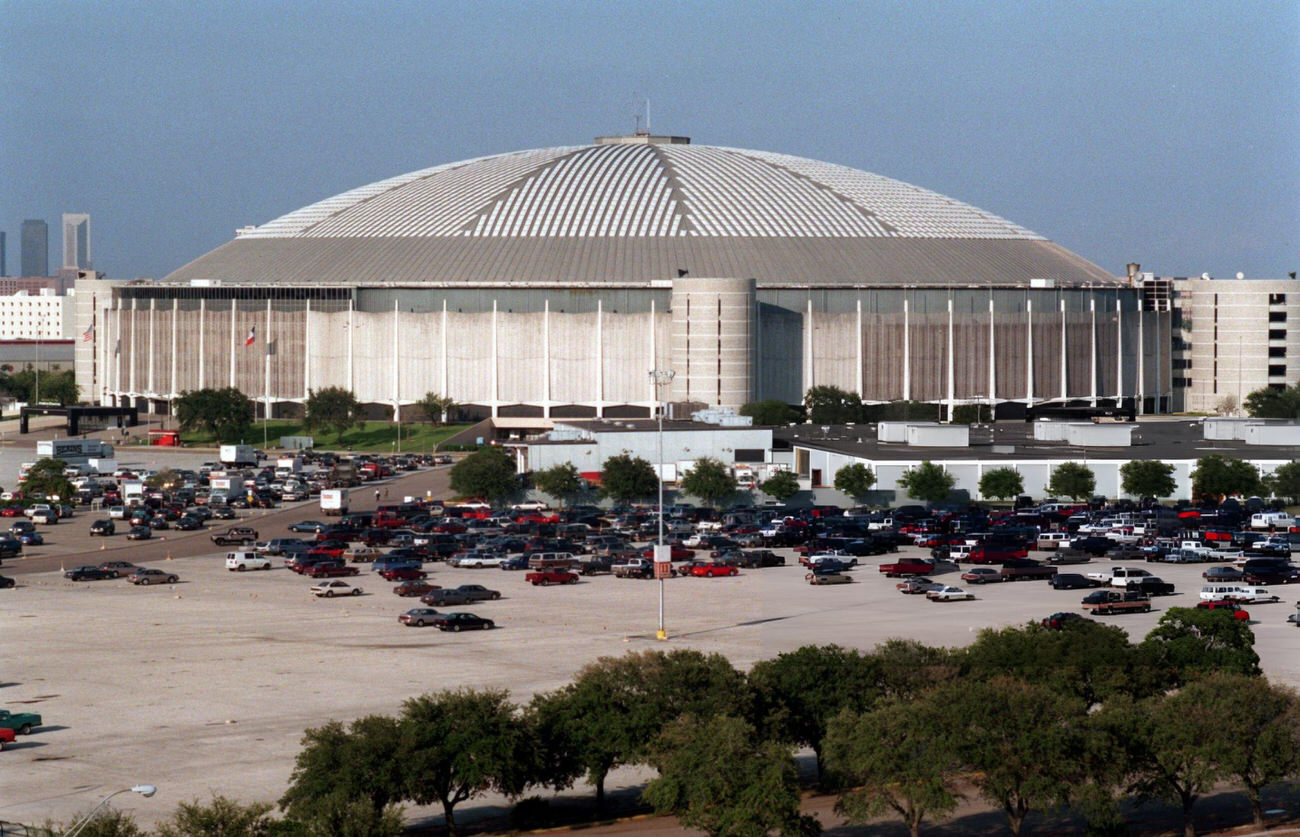
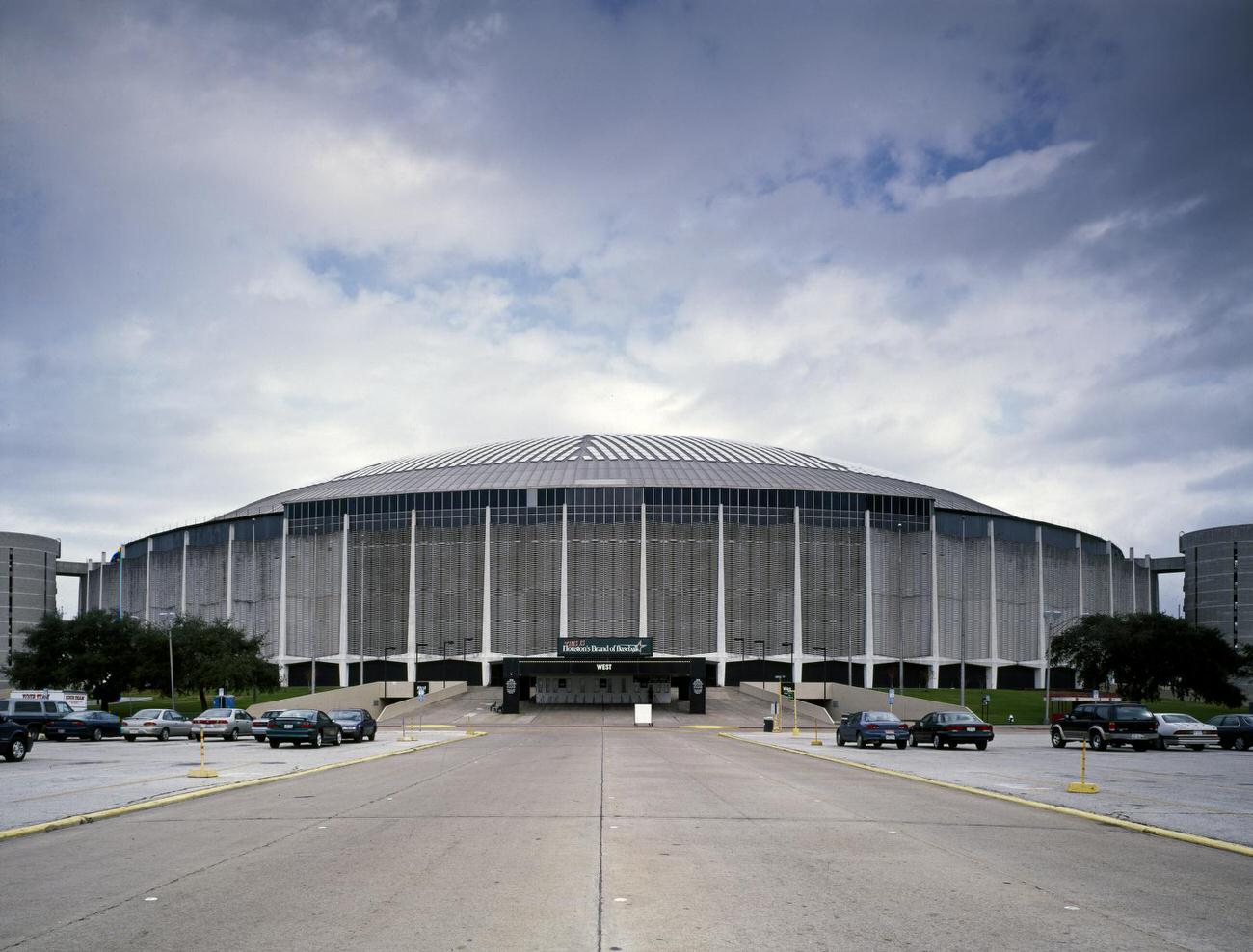
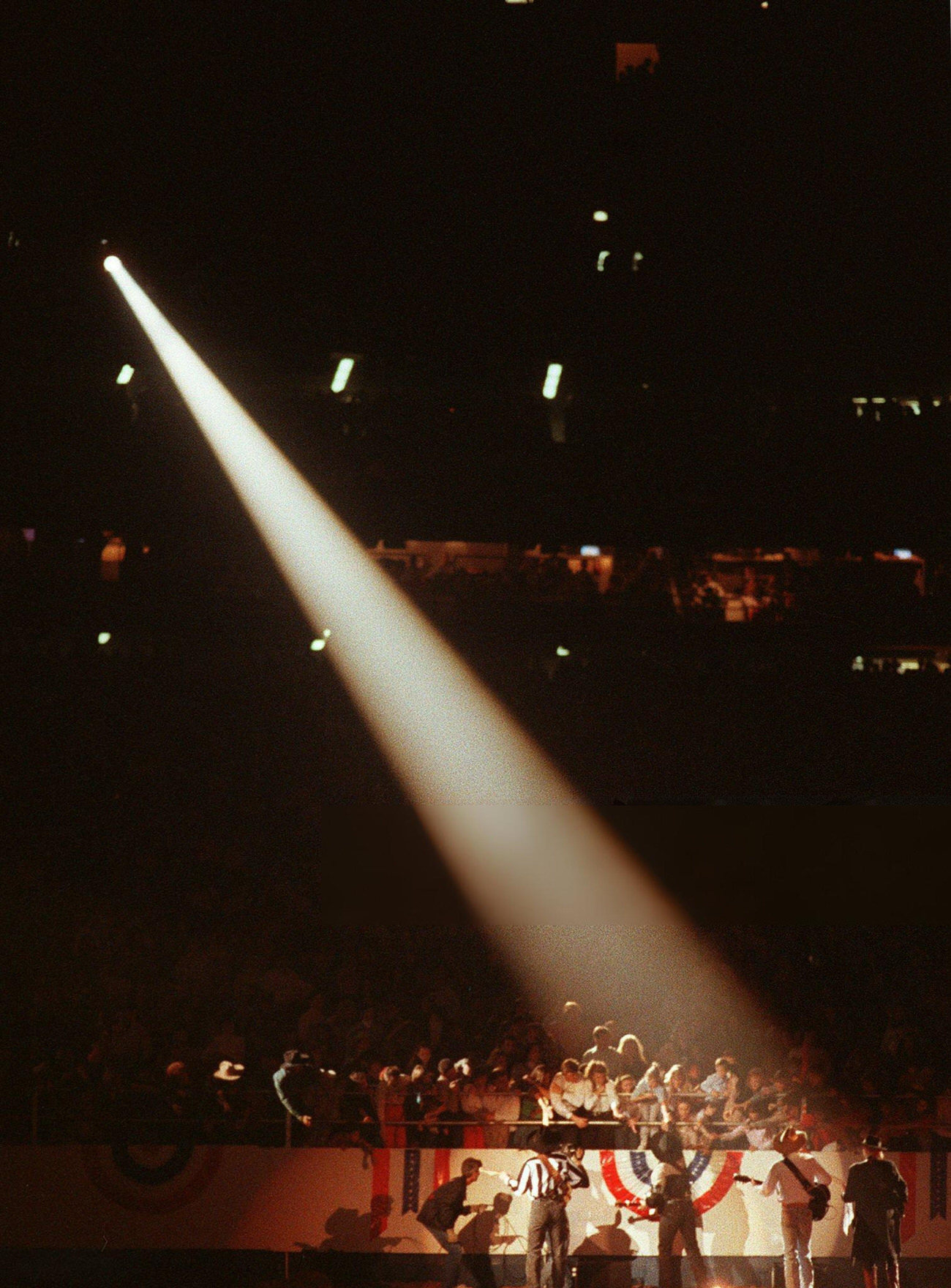
No building in Houston carried more cultural weight in the 1990s than the Astrodome. Built in 1965 and dubbed the “Eighth Wonder of the World,” it hosted the Houston Astros throughout the decade. The Rockets’ back-to-back NBA championships in 1994 and 1995 — led by Hakeem Olajuwon — gave the city some of its proudest moments, and the Astrodome hosted the energy of those years. The Houston Livestock Show and Rodeo also filled the dome annually, including Garth Brooks’ 1991 performance, which drew a massive crowd.
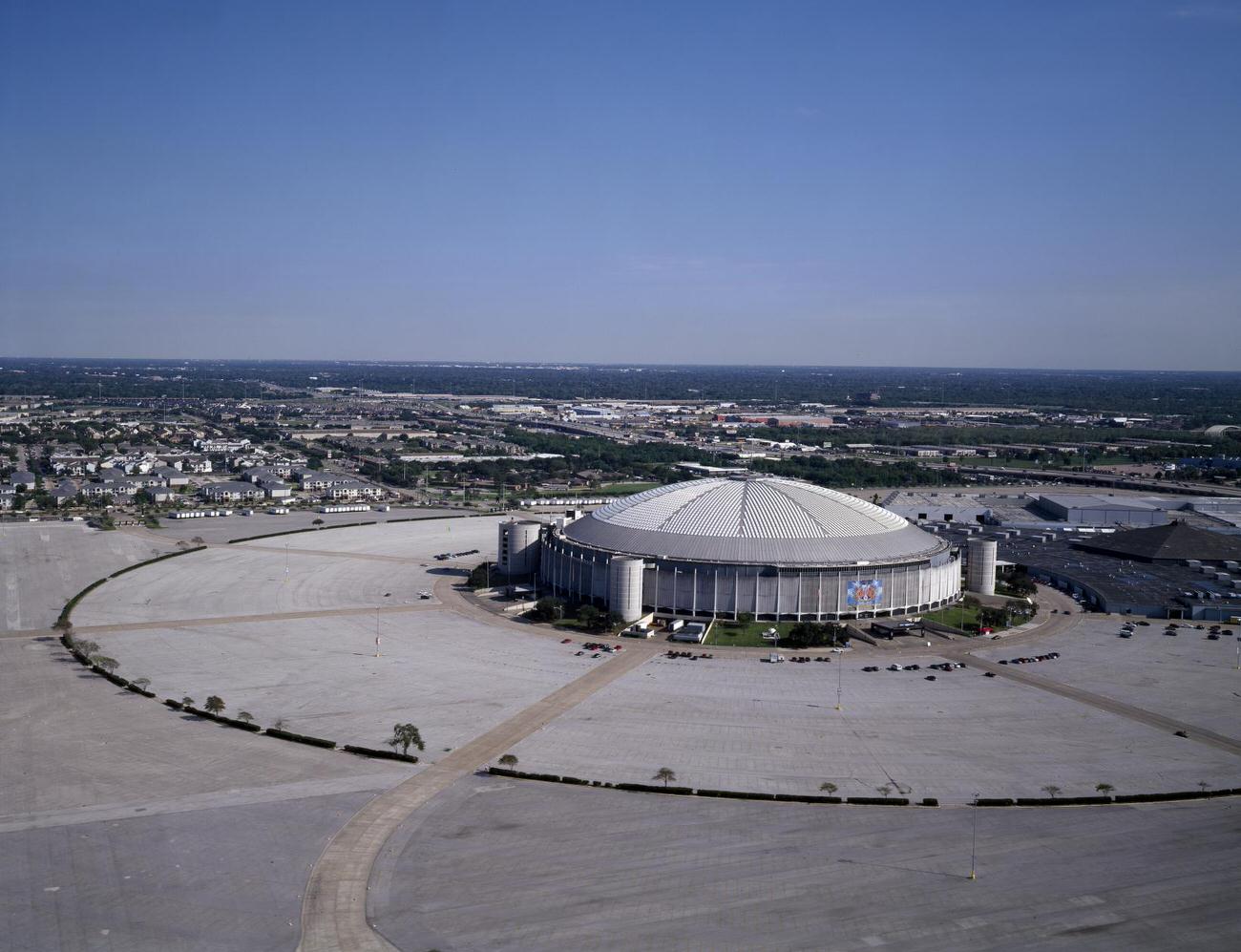
The Astrodome in Houston, Texas, 1990s
Garth Brooks's performance at the rodeo in the Astrodome captures the event's cultural significance, Houston, Texas, 1991.
Garth Brooks’s performance at the rodeo in the Astrodome captures the event’s cultural significance, Houston, Texas, 1991.
Exterior view of the Houston Astrodome, Houston, Texas, 1996.

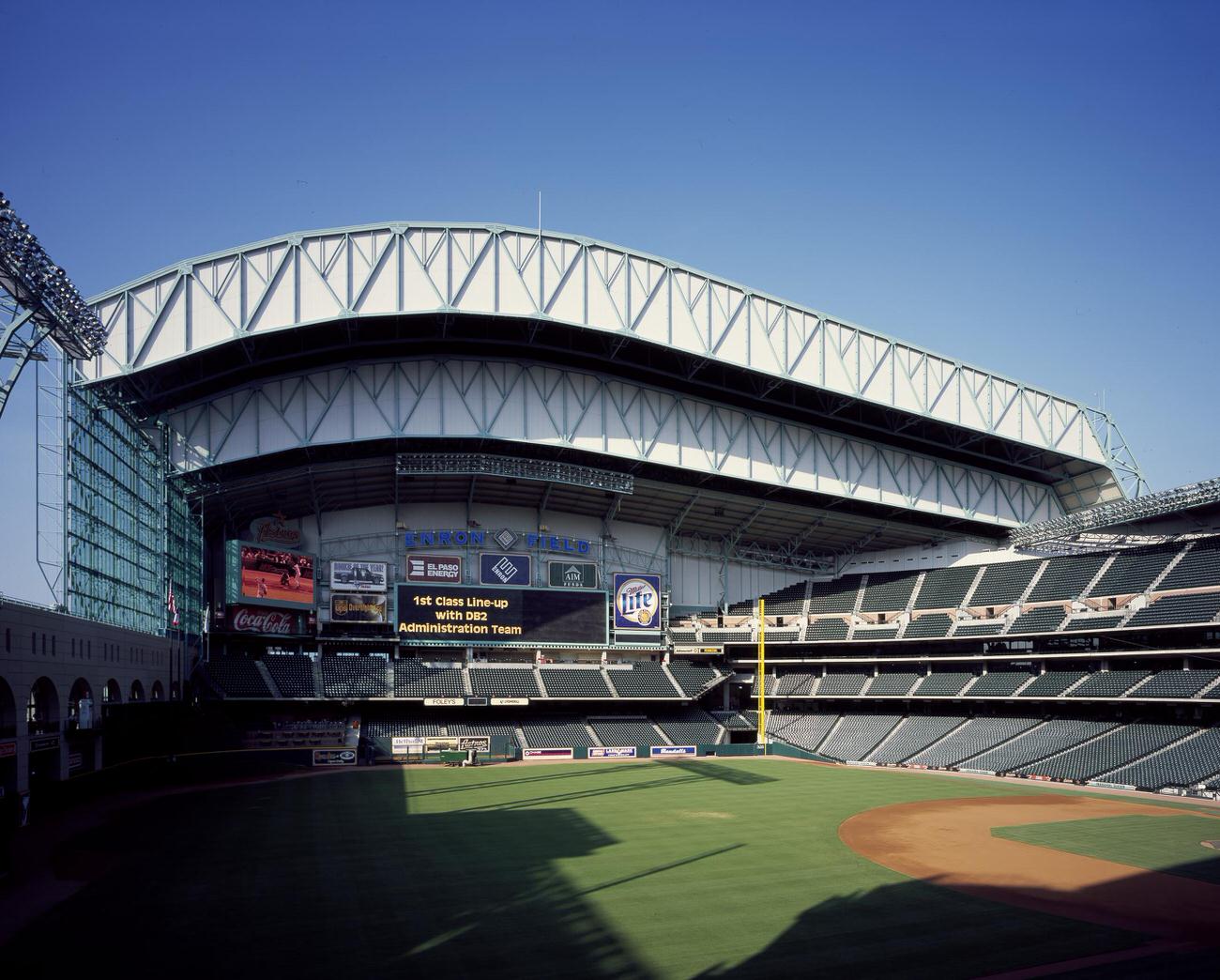
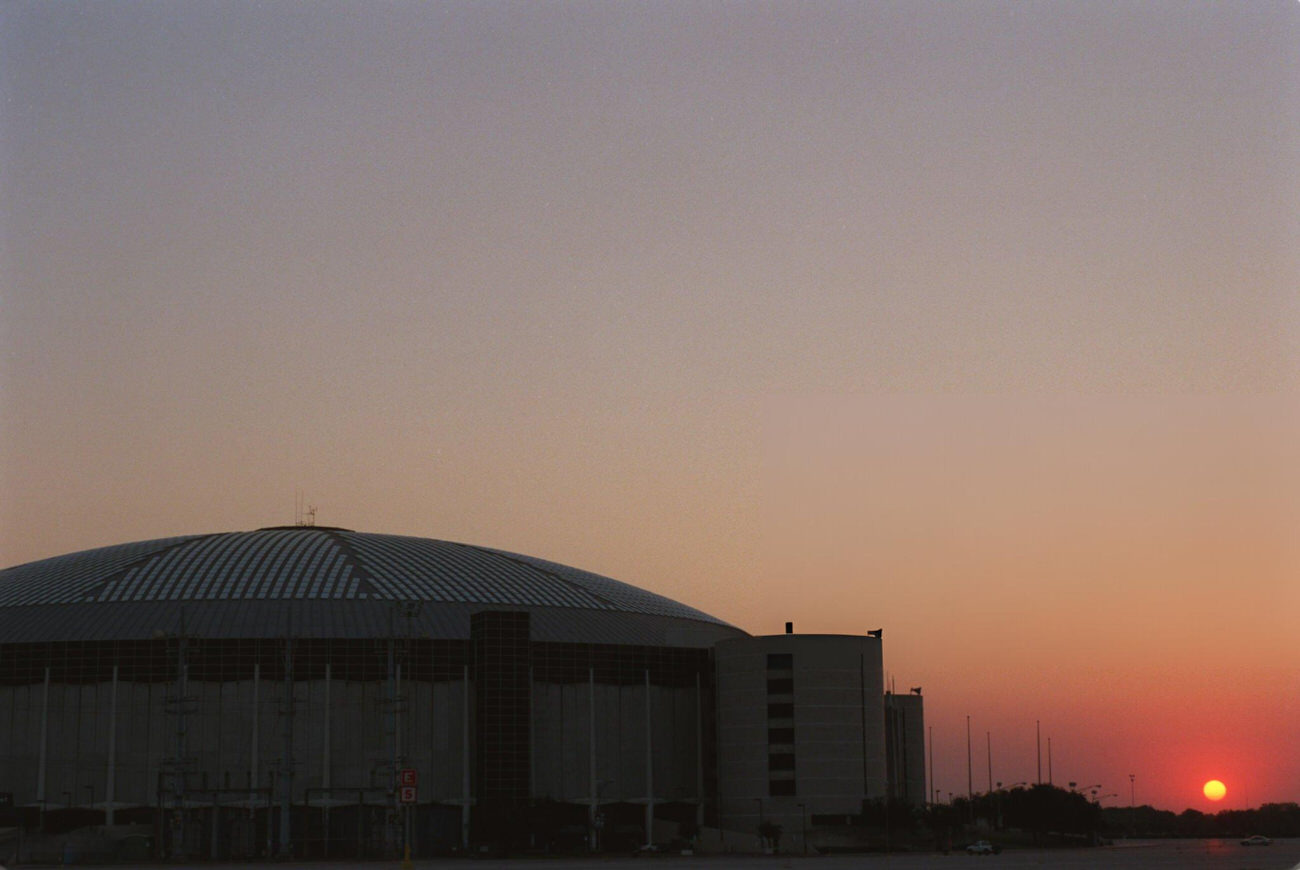
By the end of the decade, the Astrodome’s era as an active sports venue was winding down. Construction on Enron Field — the Astros’ new open-air stadium — was already underway by 1998 and 1999, visible in aerial shots of downtown. The old dome, still standing, cast a long shadow over the newer development rising beside it.
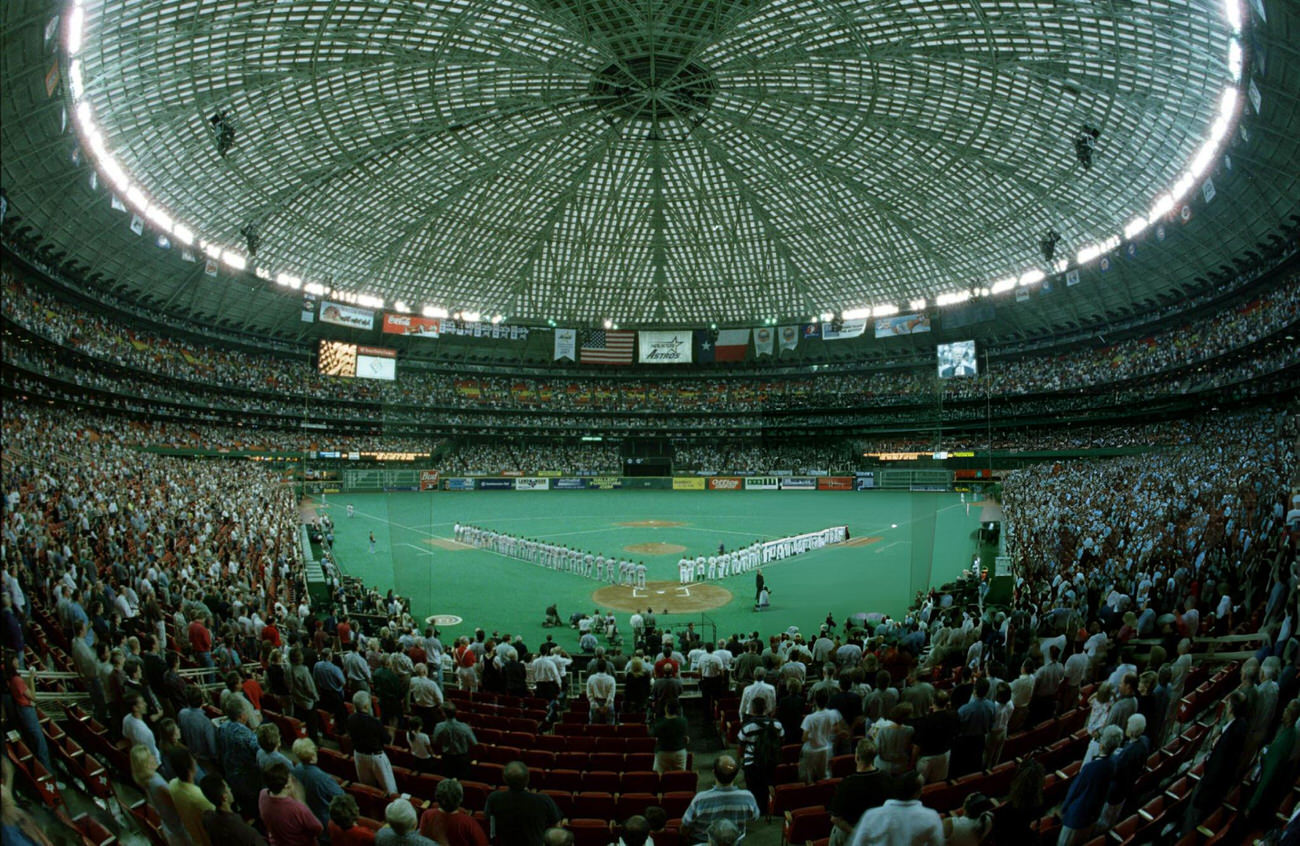
Dome filled during pregame introductions for the Astros vs. Cubs game, Houston, Texas, 1999.
The Astrodome at sunset, marking the end of its era as a sports venue, Houston, Texas, 1999.
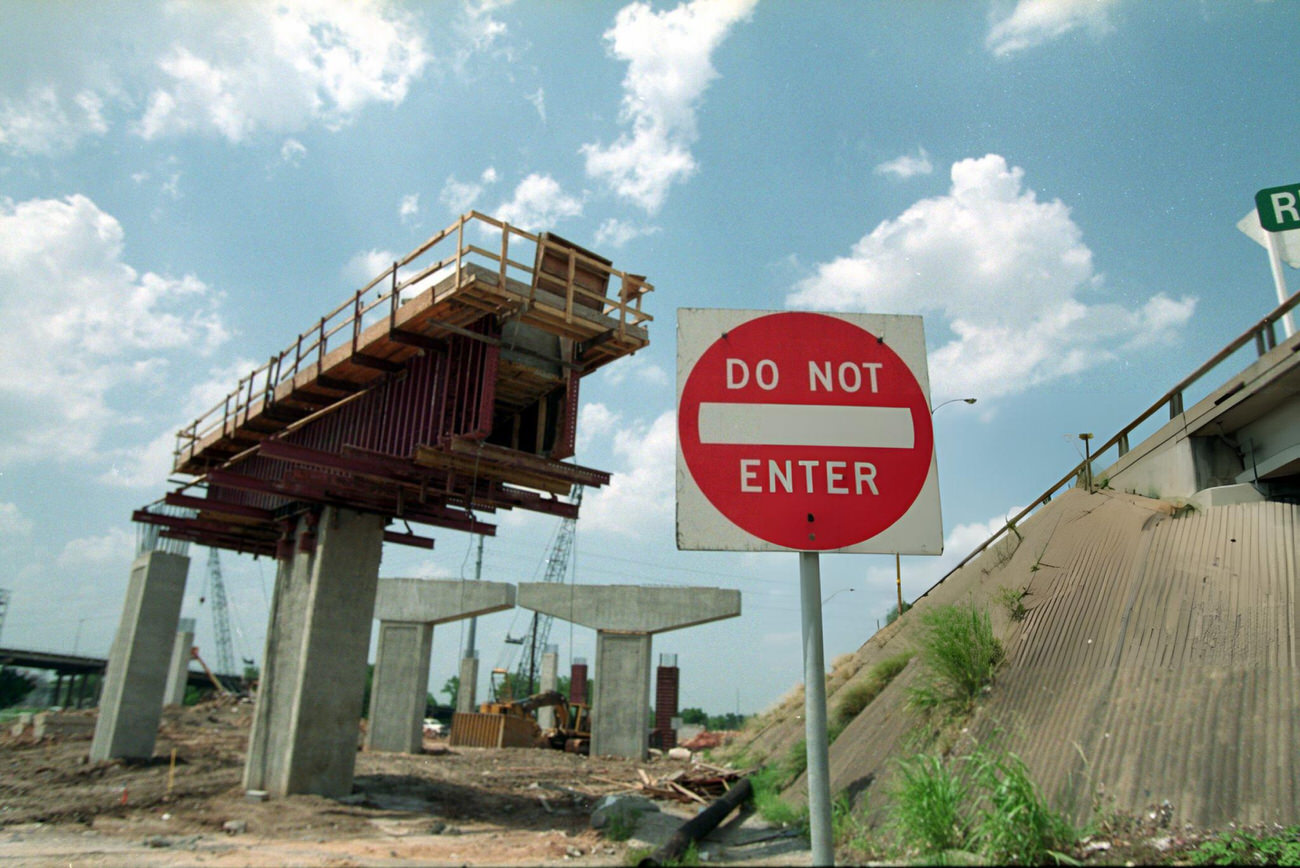
Construction near Enron Field includes new exit ramps from southbound I-59, Houston, Texas, 1998.

On February 26, 1995, Tejano superstar Selena performed at the Houston Livestock Show and Rodeo — what would turn out to be her final concert. She was shot and killed just over a month later, on March 31, 1995. That Astrodome performance, seen in photographs, became one of the most remembered nights in the building’s history.
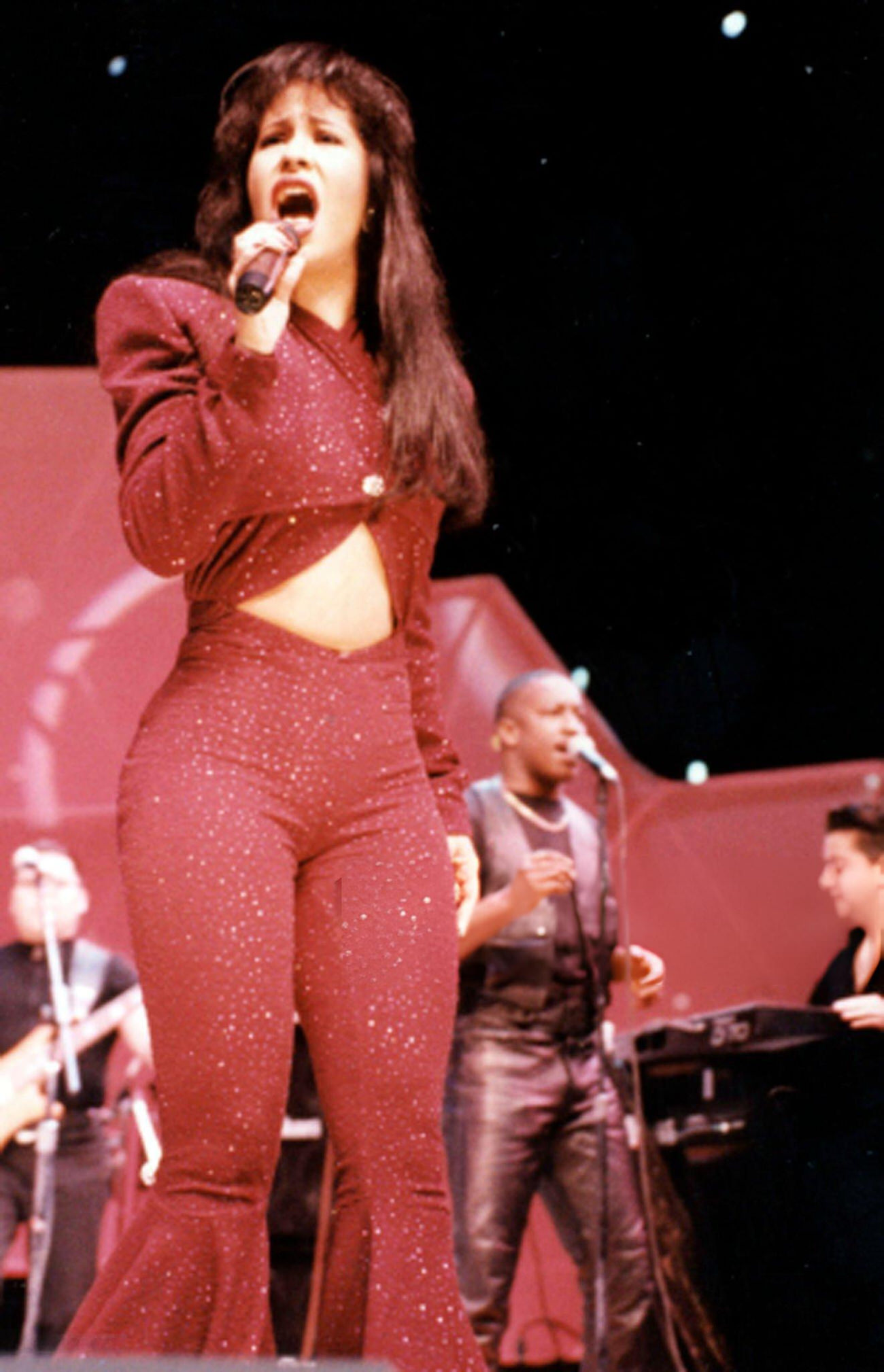
Selena's final performance at the Houston Livestock Show & Rodeo on February 26, 1995, immortalizes the beloved singer's lasting impact on music and Latino culture before her tragic death, Houston, Texas.
Selena’s final performance at the Houston Livestock Show & Rodeo on February 26, 1995, immortalizes the beloved singer’s lasting impact on music and Latino culture before her tragic death, Houston, Texas.

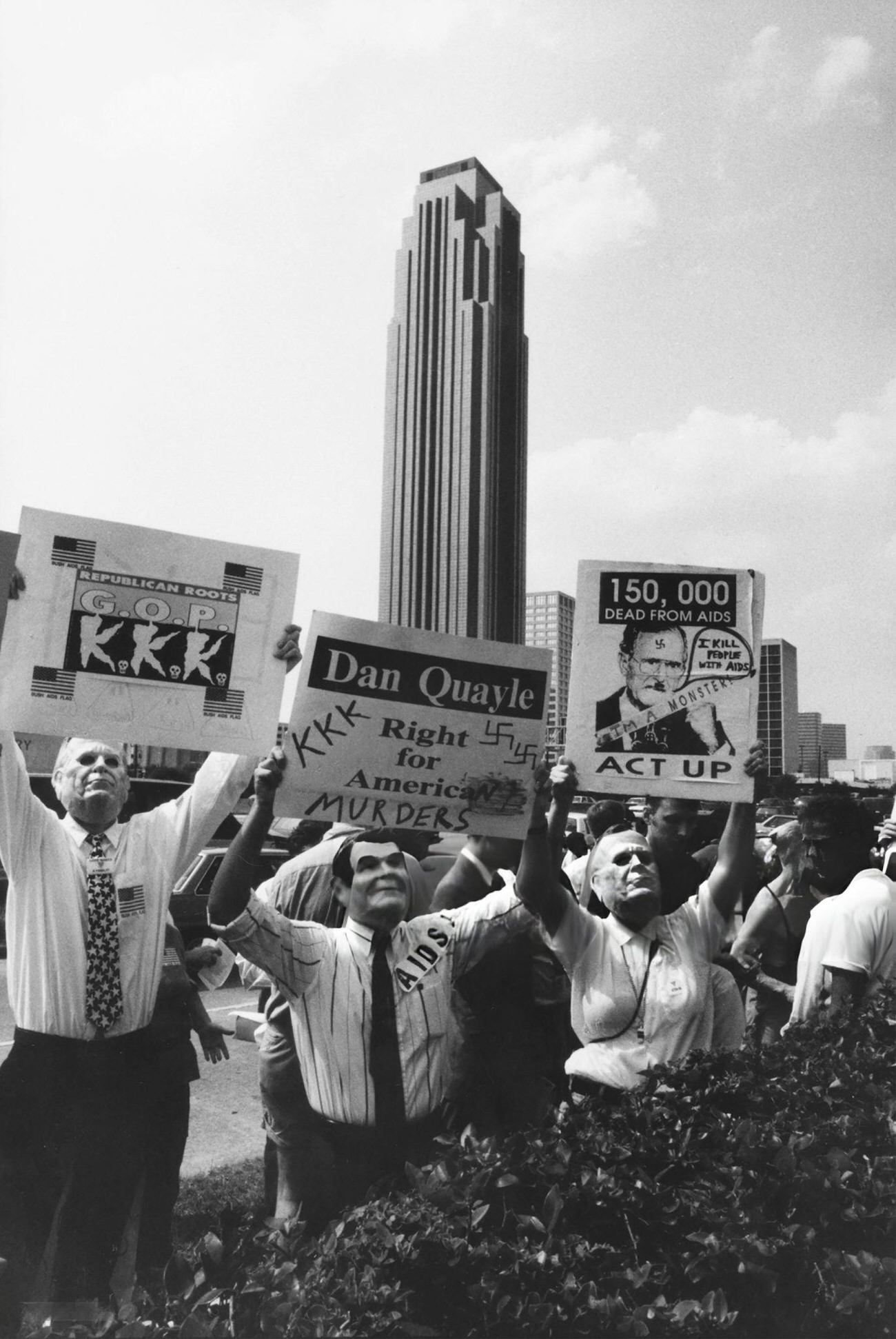
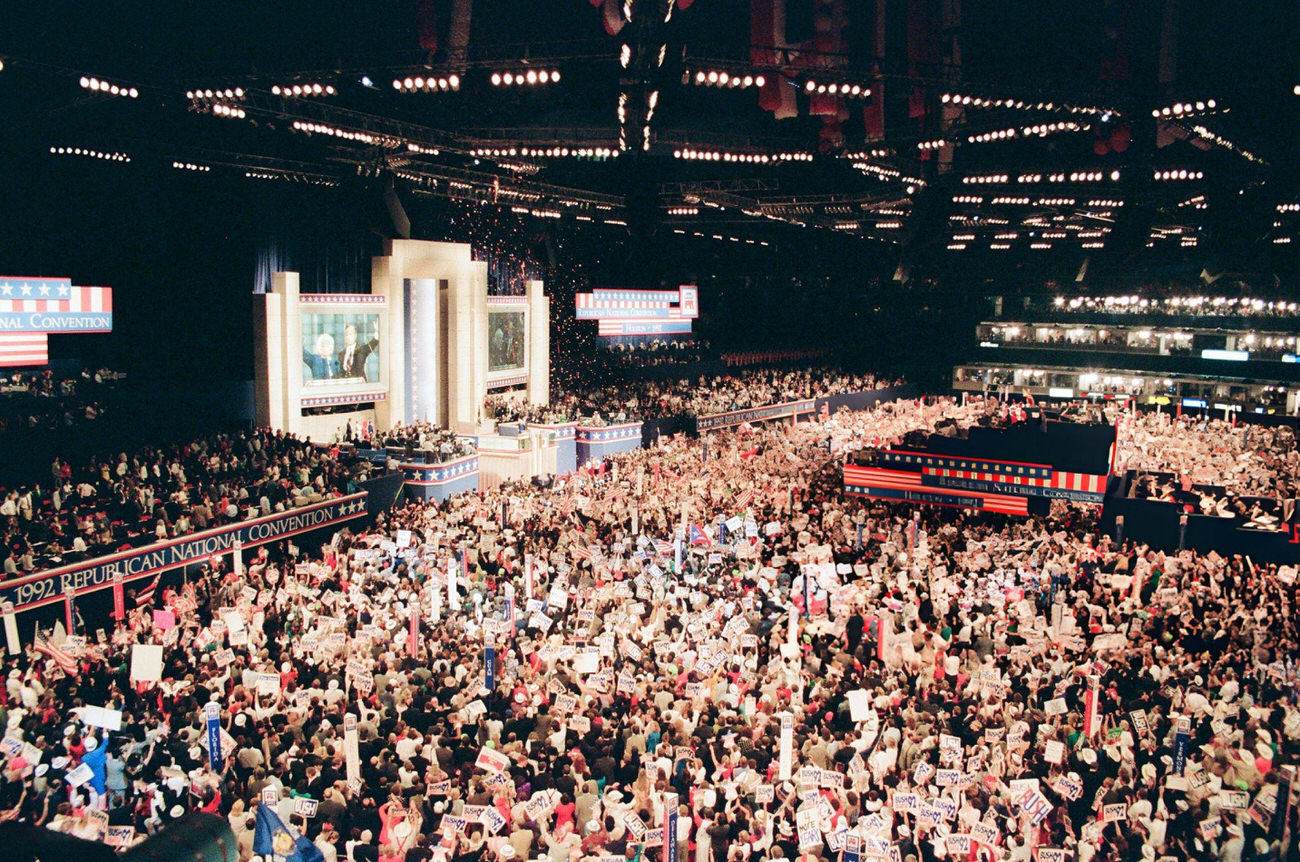
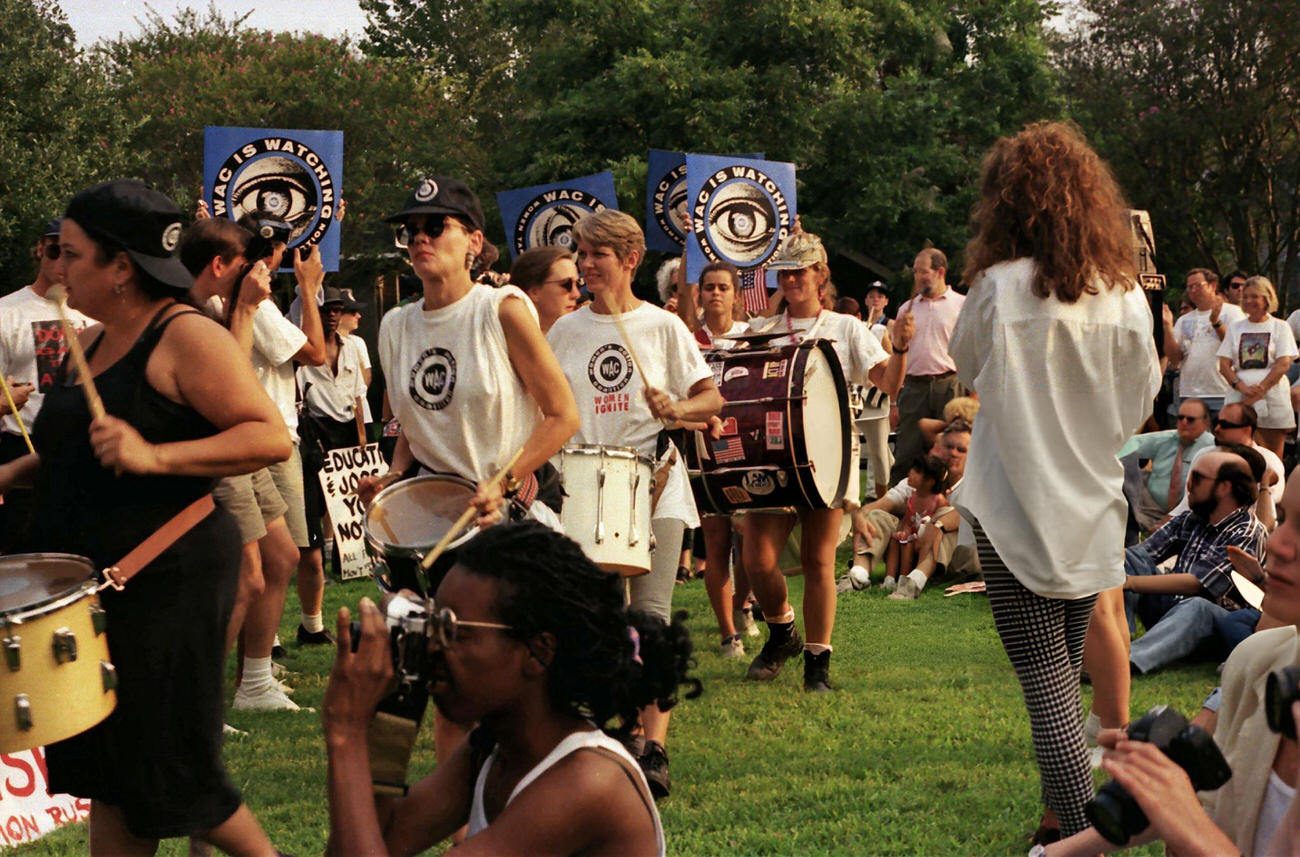
Houston’s streets told equally vivid stories. In 1992, the Republican National Convention brought the city into the national spotlight — and brought protesters into its streets. The NOW Rally for Choice, the Women’s Action Coalition’s drum corps, and ACT UP demonstrators wearing Ronald Reagan and George H.W. Bush masks all took to Houston’s sidewalks to challenge government policies on reproductive rights and the AIDS crisis.
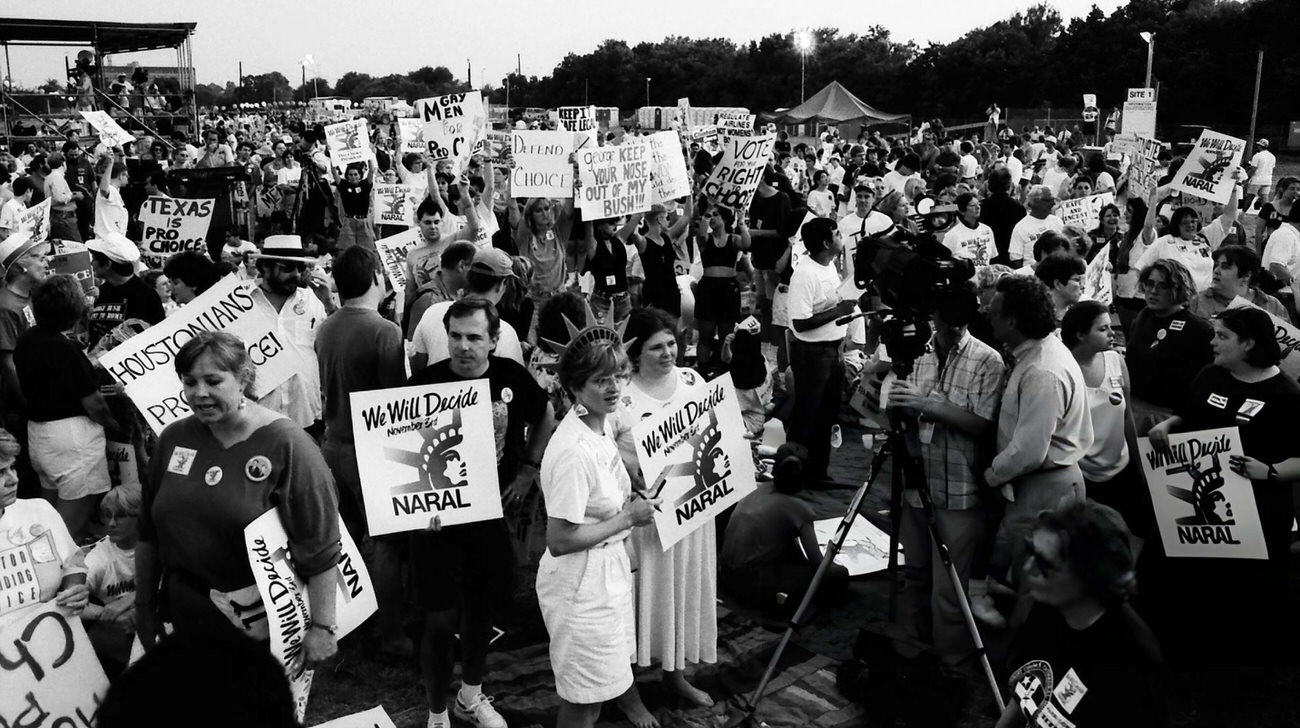
The 1992 Republican National Convention Protests, including the NOW Rally for Choice,Houston, 1990s
The Women's Action Coalition's drum corps at the Freedom of Expression rally on August 18, 1992
The Women’s Action Coalition’s drum corps at the Freedom of Expression rally on August 18, 1992
ACT UP activists' protest on August 20, 1992, wearing Ronald Reagan and George H.W. Bush masks, criticizes government inaction on AIDS and conservative policies, showcasing the era's political and health activism, Houston, Texas.
ACT UP activists’ protest on August 20, 1992, wearing Ronald Reagan and George H.W. Bush masks, criticizes government inaction on AIDS and conservative policies, showcasing the era’s political and health activism, Houston, Texas.

Activism took other forms too. In 1991, Queer Nation picketed outside an apartment building in protest of the firing of journalist Juan Palomo, whom they believed was dismissed due to discrimination. These scenes were part of a broader national push for LGBTQ rights that played out in cities across the country — and Houston was firmly part of that story.
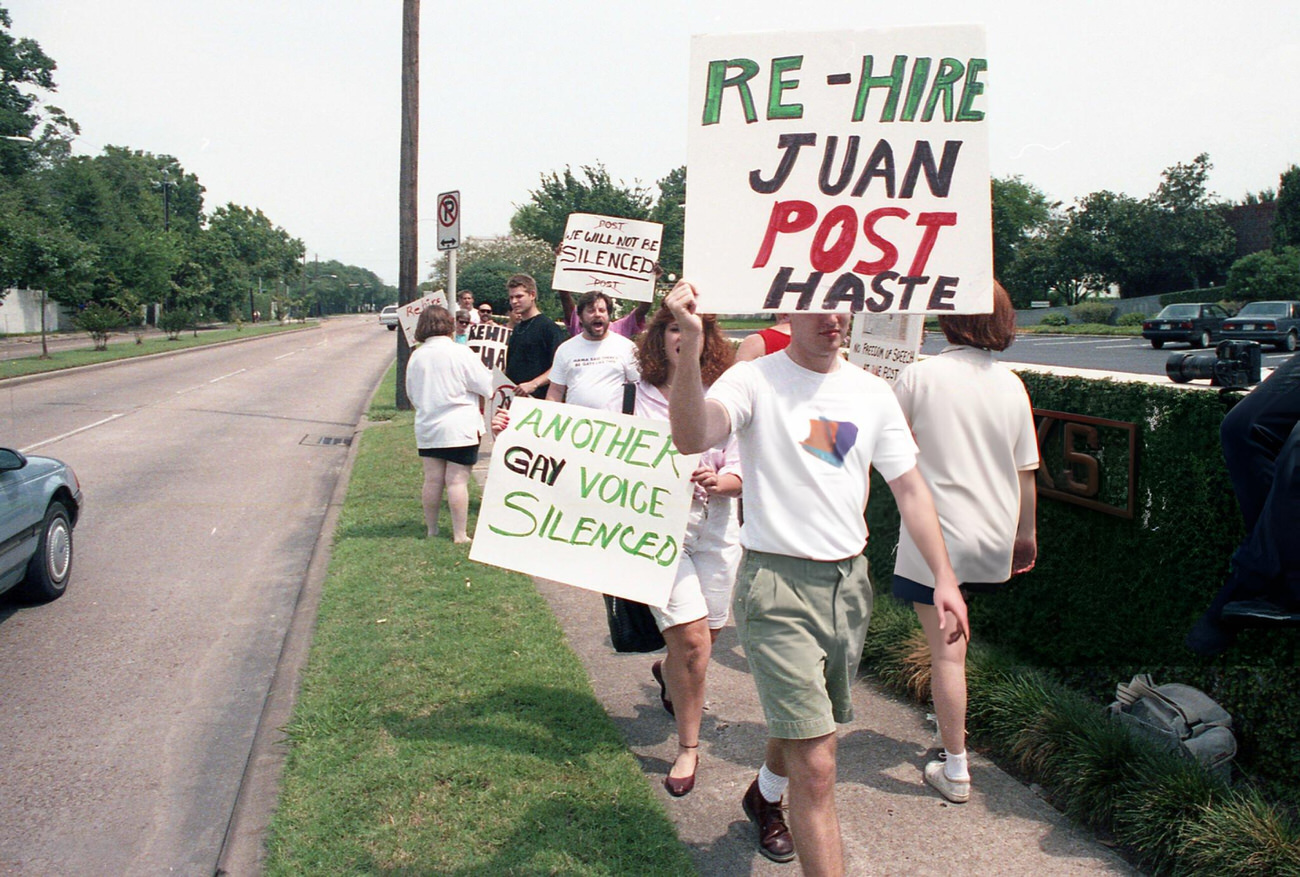
Queer Nation's picket outside Charles Cooper's apartment for Juan Palomo's rehiring showcases activism against perceived discrimination, Houston, Texas, 1991.
Queer Nation’s picket outside Charles Cooper’s apartment for Juan Palomo’s rehiring showcases activism against perceived discrimination, Houston, Texas, 1991.

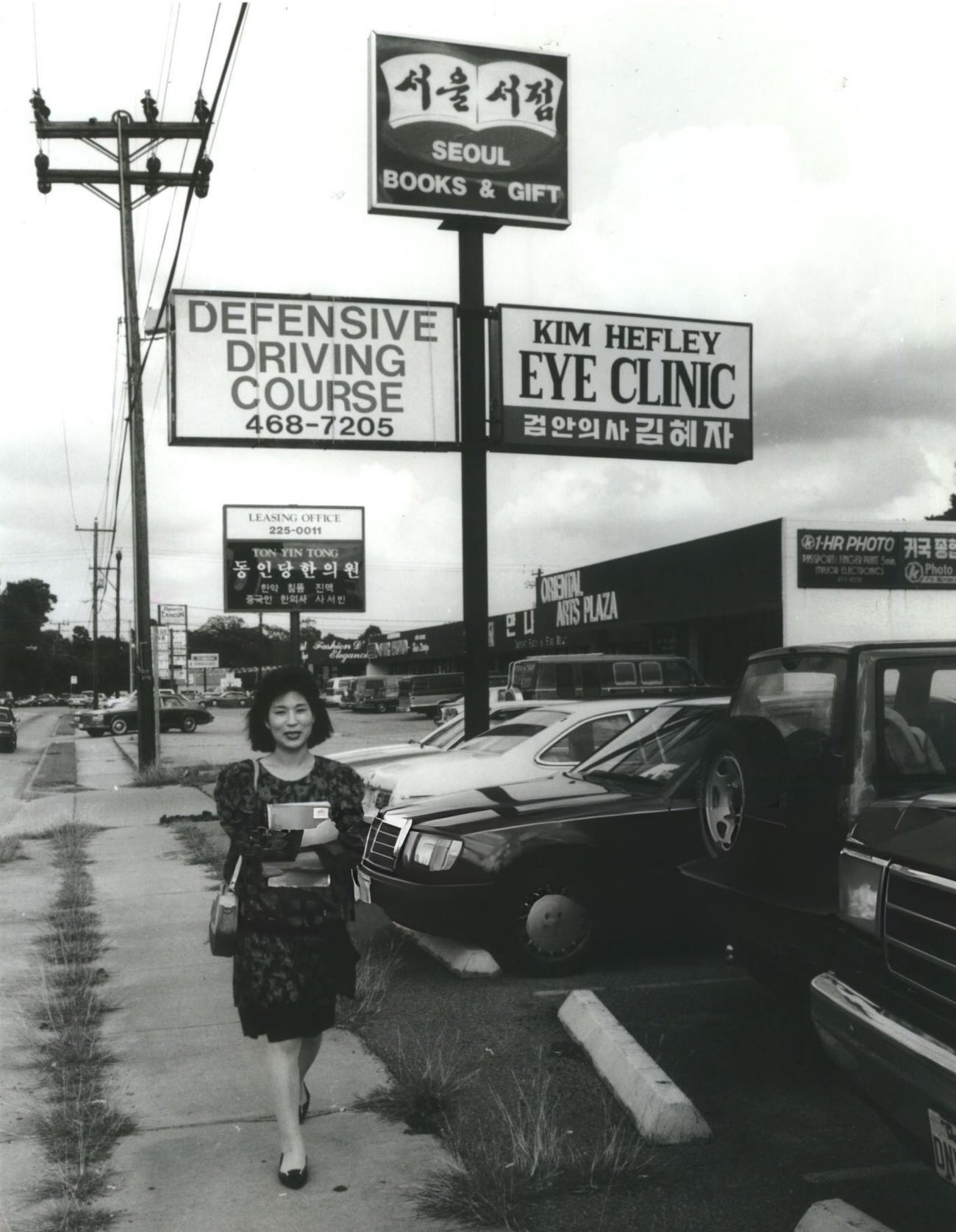
The city’s neighborhoods each had their own texture. The Fifth Ward, one of Houston’s oldest African American communities, showed signs of economic strain — boarded-up storefronts lined Lyons Avenue, a visible reminder of the disinvestment that had hit many urban neighborhoods across America. Meanwhile, the Spring Branch area on Houston’s west side was being transformed by Asian immigrants who opened businesses and rebuilt commercial corridors.
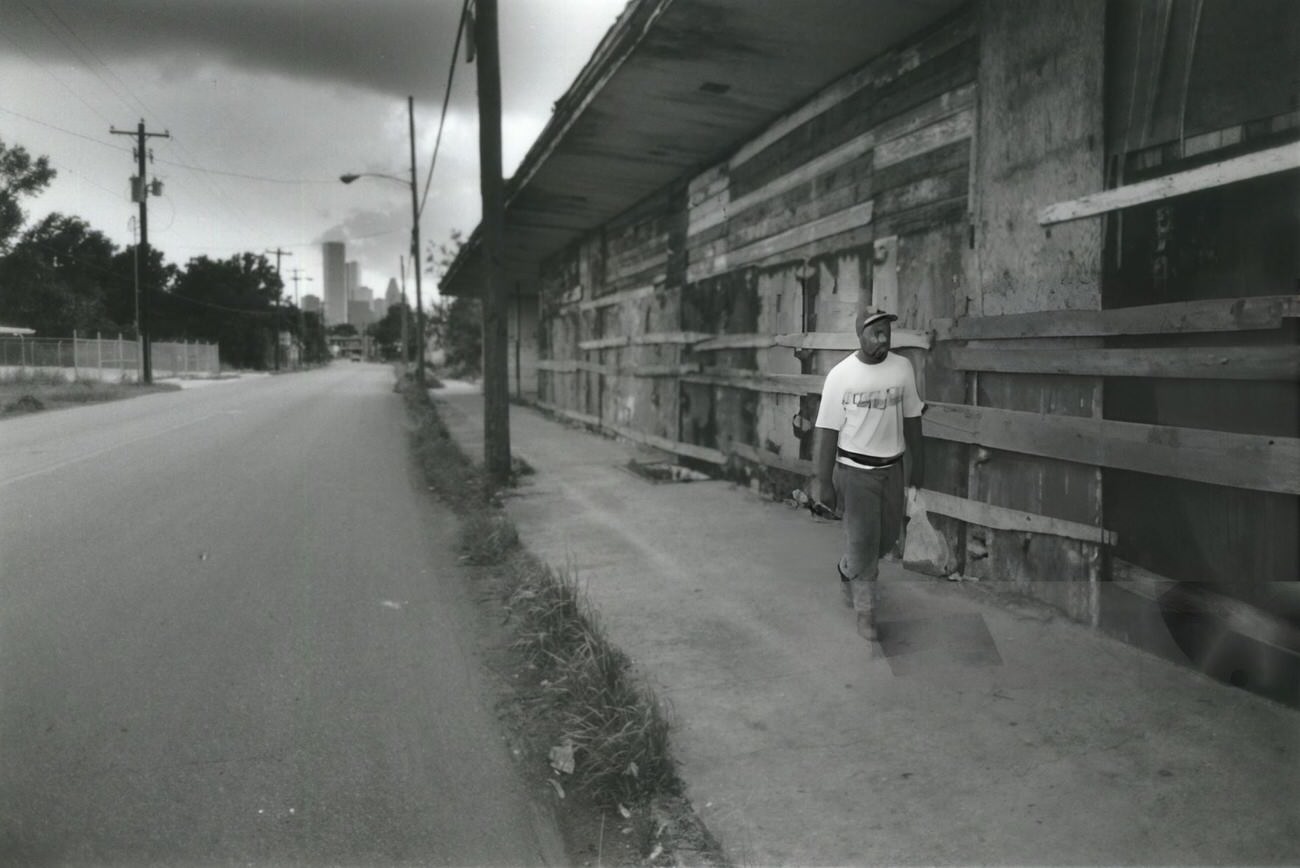
Horace Wilson's walk past boarded-up storefronts on Lyons Avenue illustrates the decline of once-vibrant business districts in Houston's Fifth Ward.
Horace Wilson’s walk past boarded-up storefronts on Lyons Avenue illustrates the decline of once-vibrant business districts in Houston’s Fifth Ward.
Un Kyong Kim's journey along Long Point in Spring Branch reflects the positive impact of Asian immigrants in revitalizing Houston's west side neighborhoods.
Un Kyong Kim’s journey along Long Point in Spring Branch reflects the positive impact of Asian immigrants in revitalizing Houston’s west side neighborhoods.

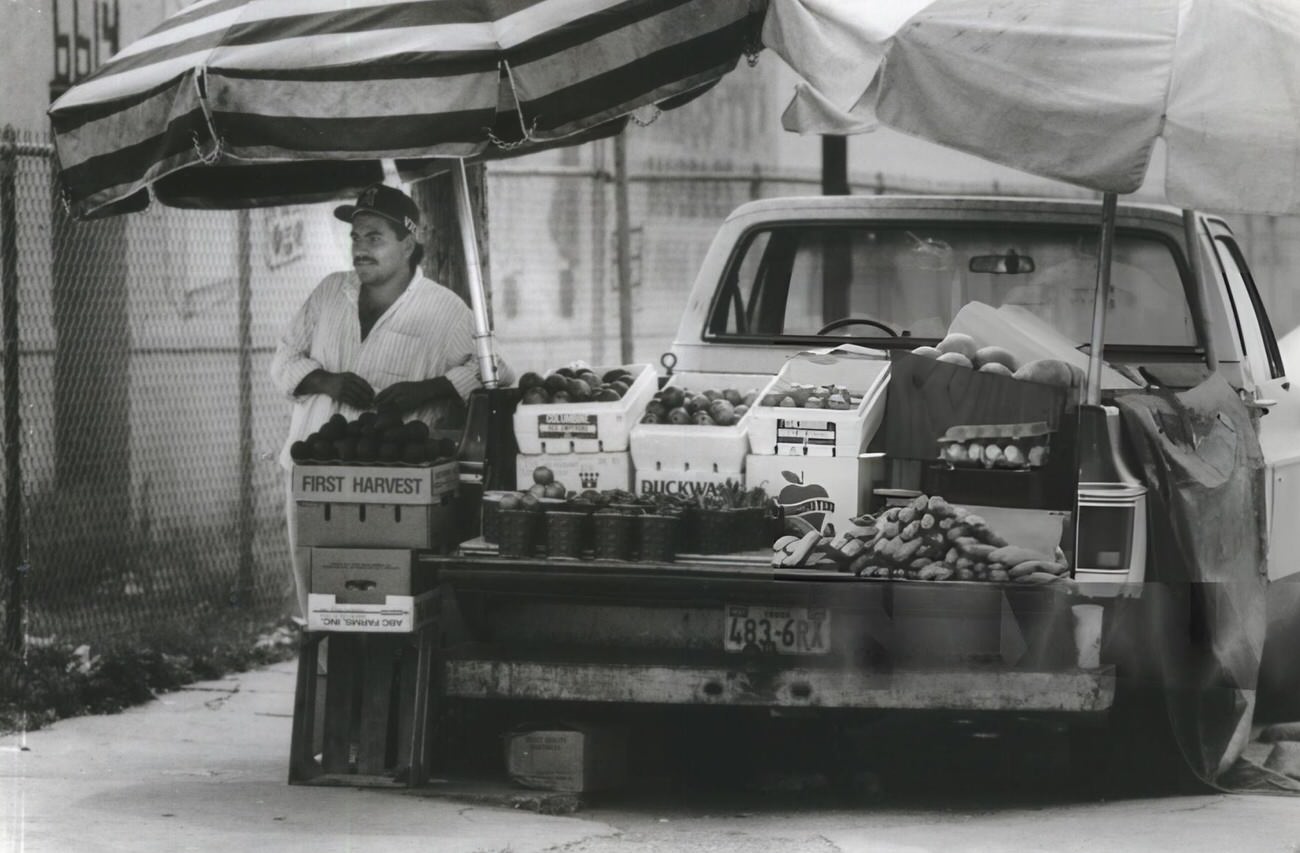
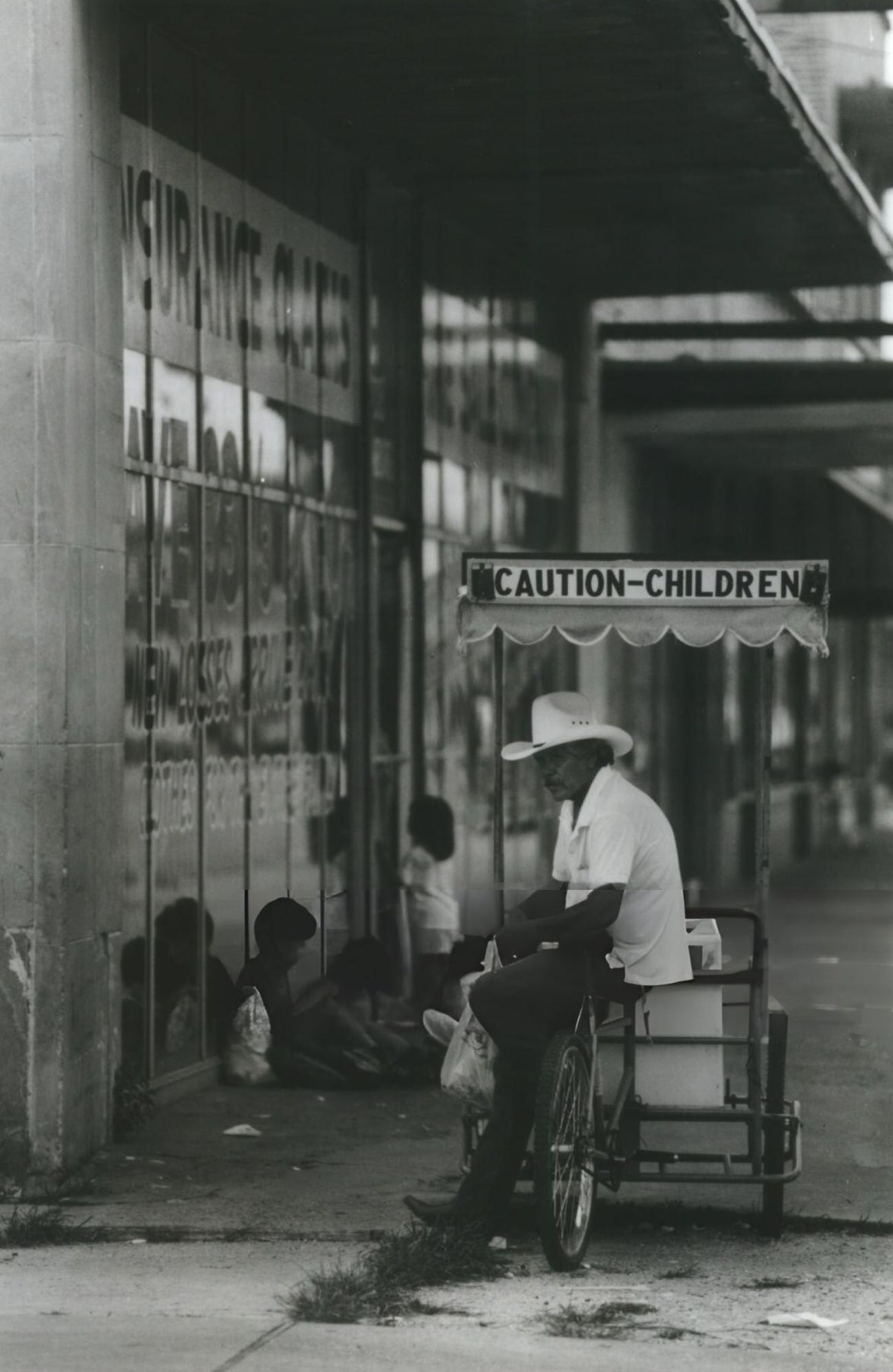
The East End told its own story of immigrant life. Street vendors from Mexico — selling fruit and ice cream along Harrisburg — were a daily fixture. Victor Villejas from Tampico and Jose Tello from San Luis Potosi were two among thousands of Mexican-born residents who shaped the neighborhood’s character and economy throughout the decade.
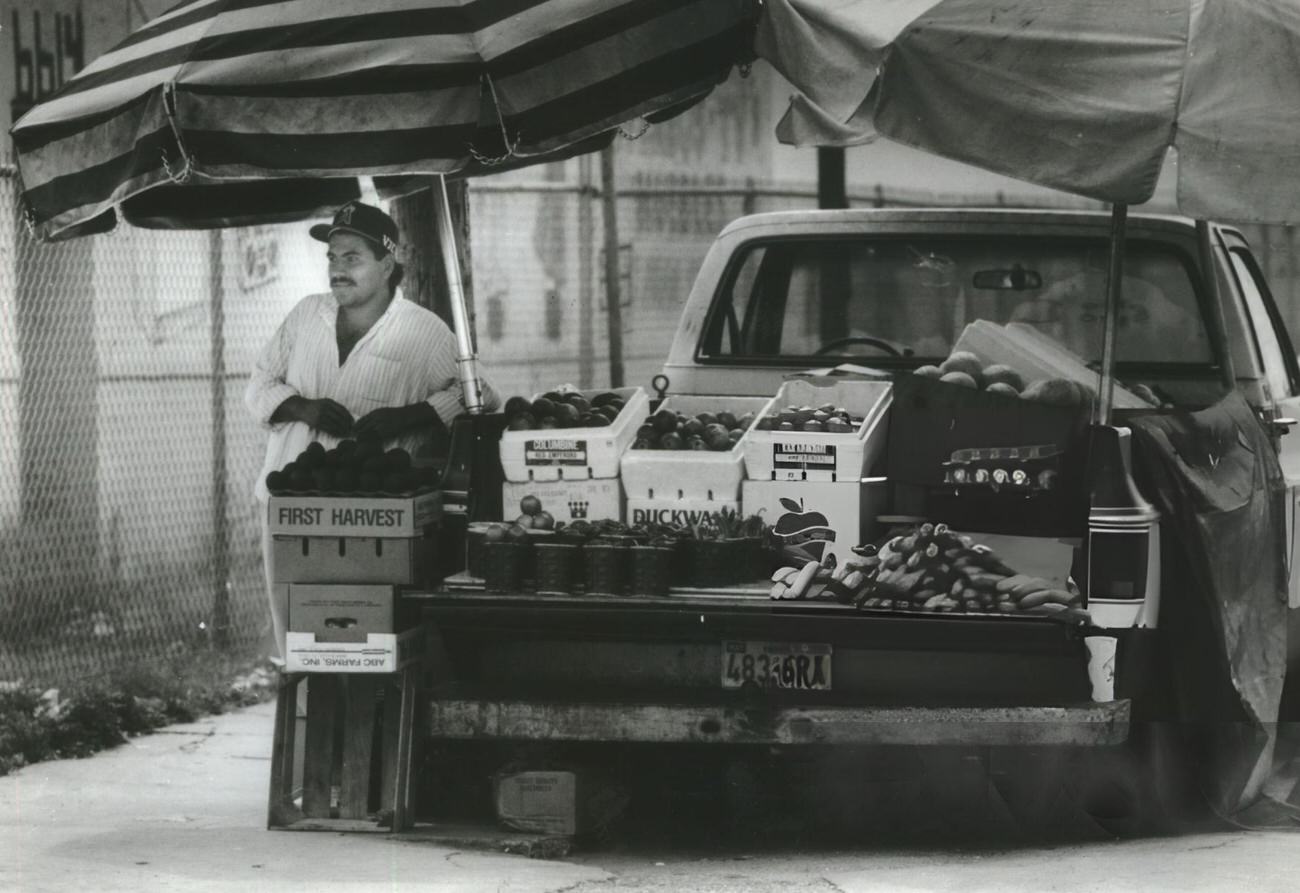
Victor Villejas from Tampico, Mexico, contributes to the East End's vibrancy by selling fruit along Harrisburg, enriching Houston's cultural mosaic.
Victor Villejas from Tampico, Mexico, contributes to the East End’s vibrancy by selling fruit along Harrisburg, enriching Houston’s cultural mosaic.
Ice cream vendor Jose Tello from San Luis Potosi, Mexico, adds to the local flavor of Houston neighborhoods by selling on Harrisburg.
Victor Villejas, 23, from Tampico, Mexico, exemplifies entrepreneurial spirit by selling fruit on Harrisburg, enriching Houston's neighborhood diversity.
Victor Villejas, 23, from Tampico, Mexico, exemplifies entrepreneurial spirit by selling fruit on Harrisburg, enriching Houston’s neighborhood diversity.

In older residential areas like Jensen and Hill, longtime residents anchored communities with deep roots. Willie Woods, who had lived in the area since 1936, was 84 years old when photographers captured him in the 1990s — a living link to a Houston that had existed long before the freeways and glass towers.
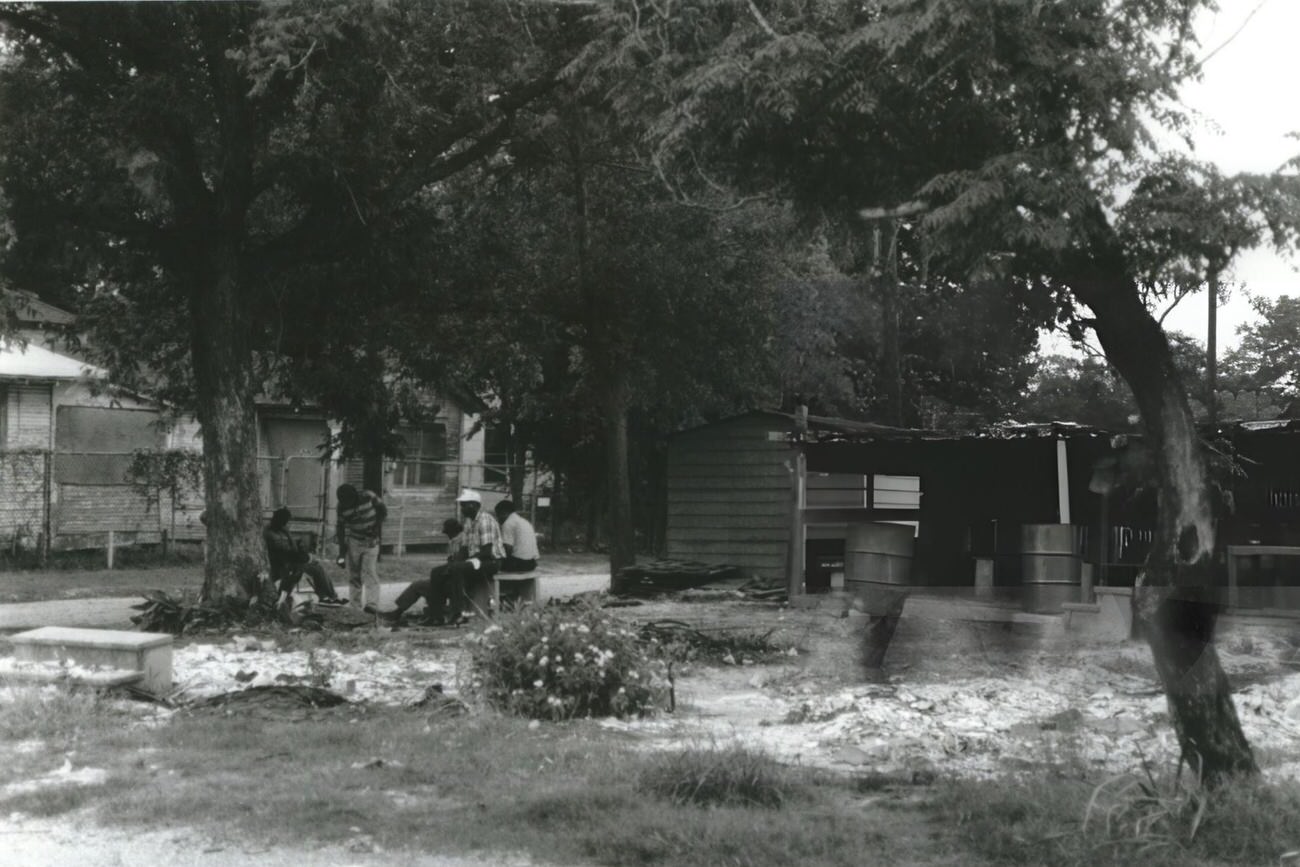
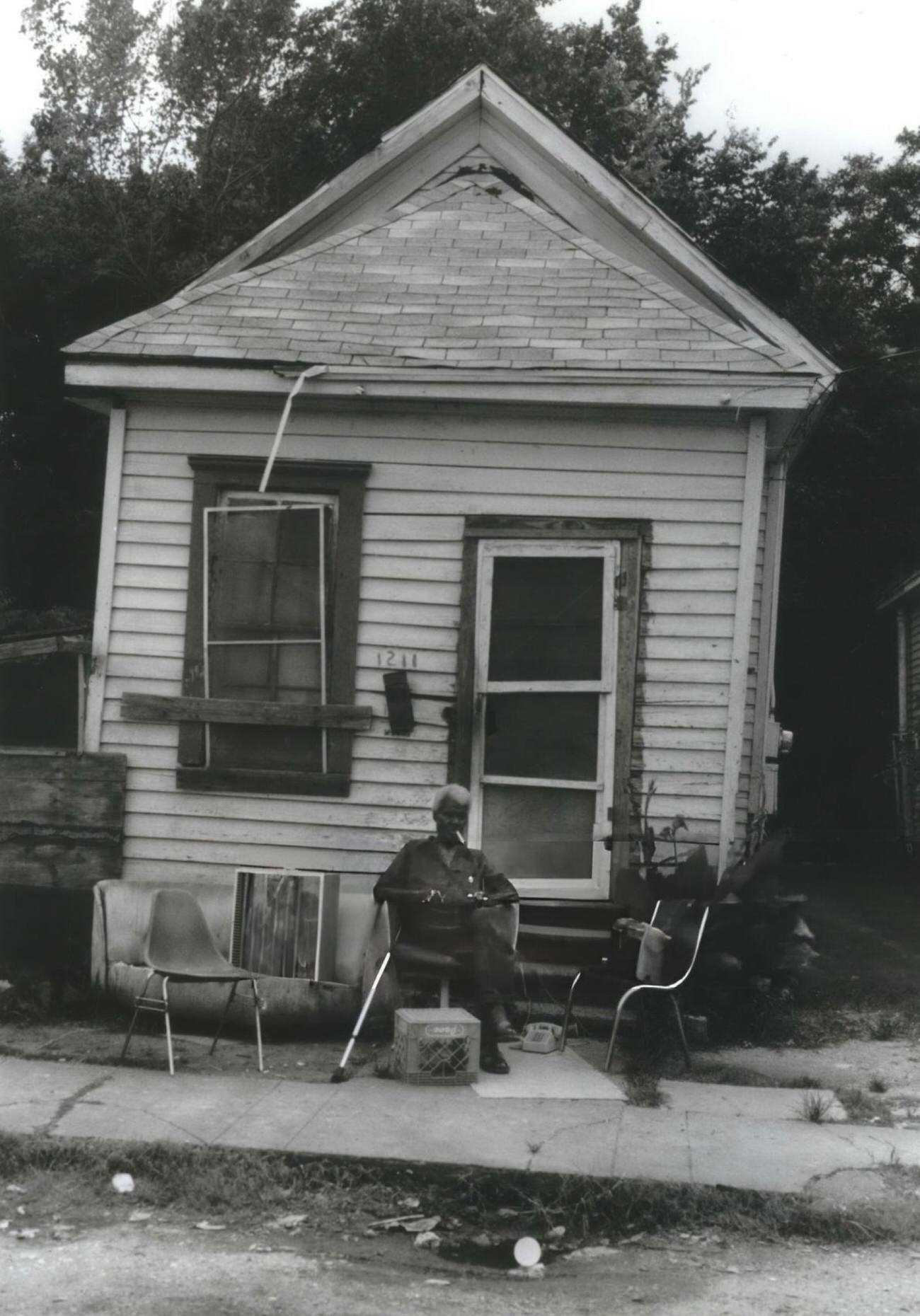
Residents of Jensen & Hill neighborhoods spend a communal afternoon at a local lot, showcasing community life, Houston, Texas.
Willie Woods, at 84 years old, remains a testament to the historical depth and personal stories within the Jensen and Hill area since 1936, Houston, Texas.

The Third Ward’s Project Row Houses became one of Houston’s most distinctive cultural projects of the decade. Founded in 1993, the initiative restored a row of historic shotgun houses in one of the city’s historically Black neighborhoods, turning them into a space for art installations, community programs, and affordable housing. Local artists gathered there to create and exhibit work that spoke directly to the neighborhood’s history.
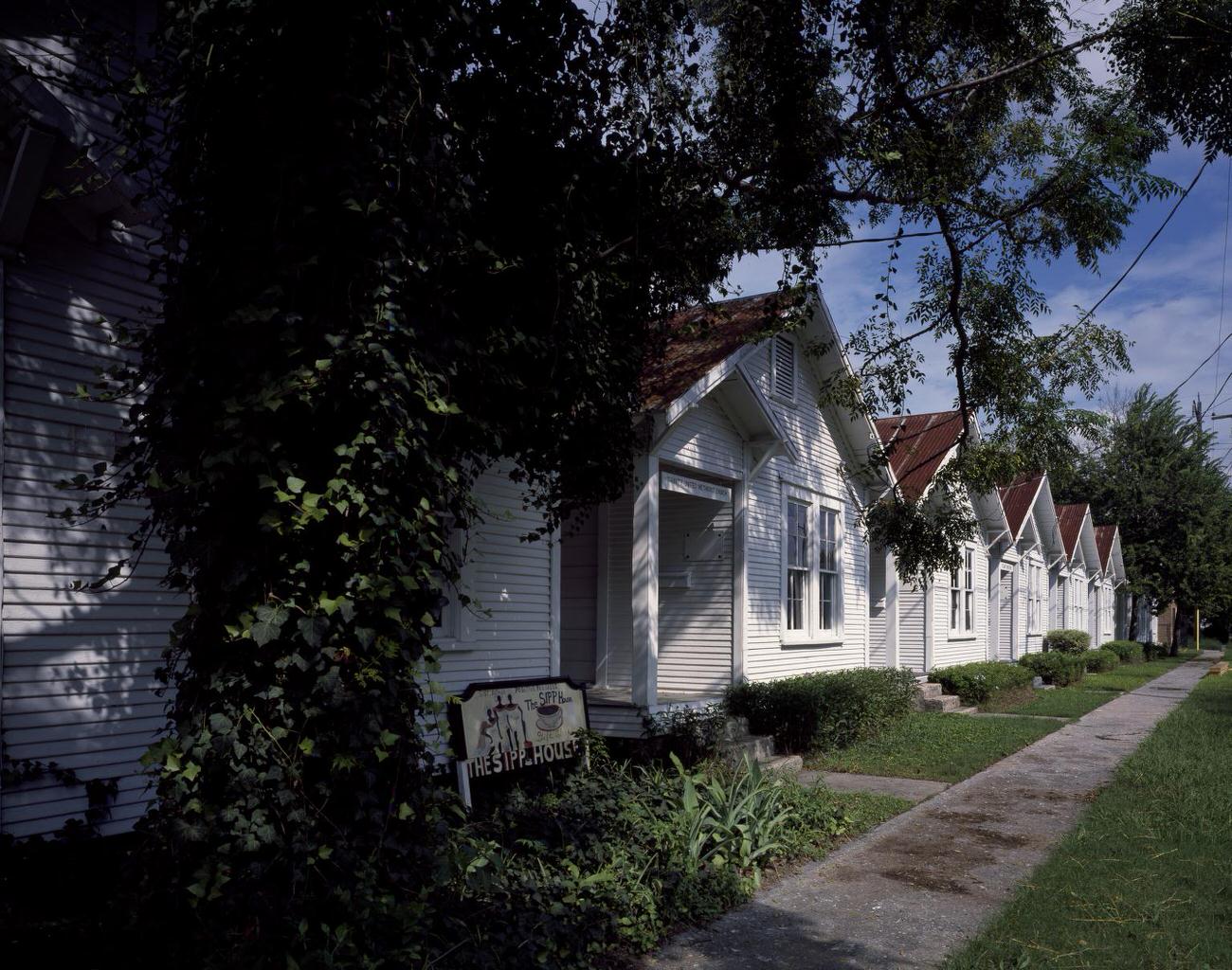
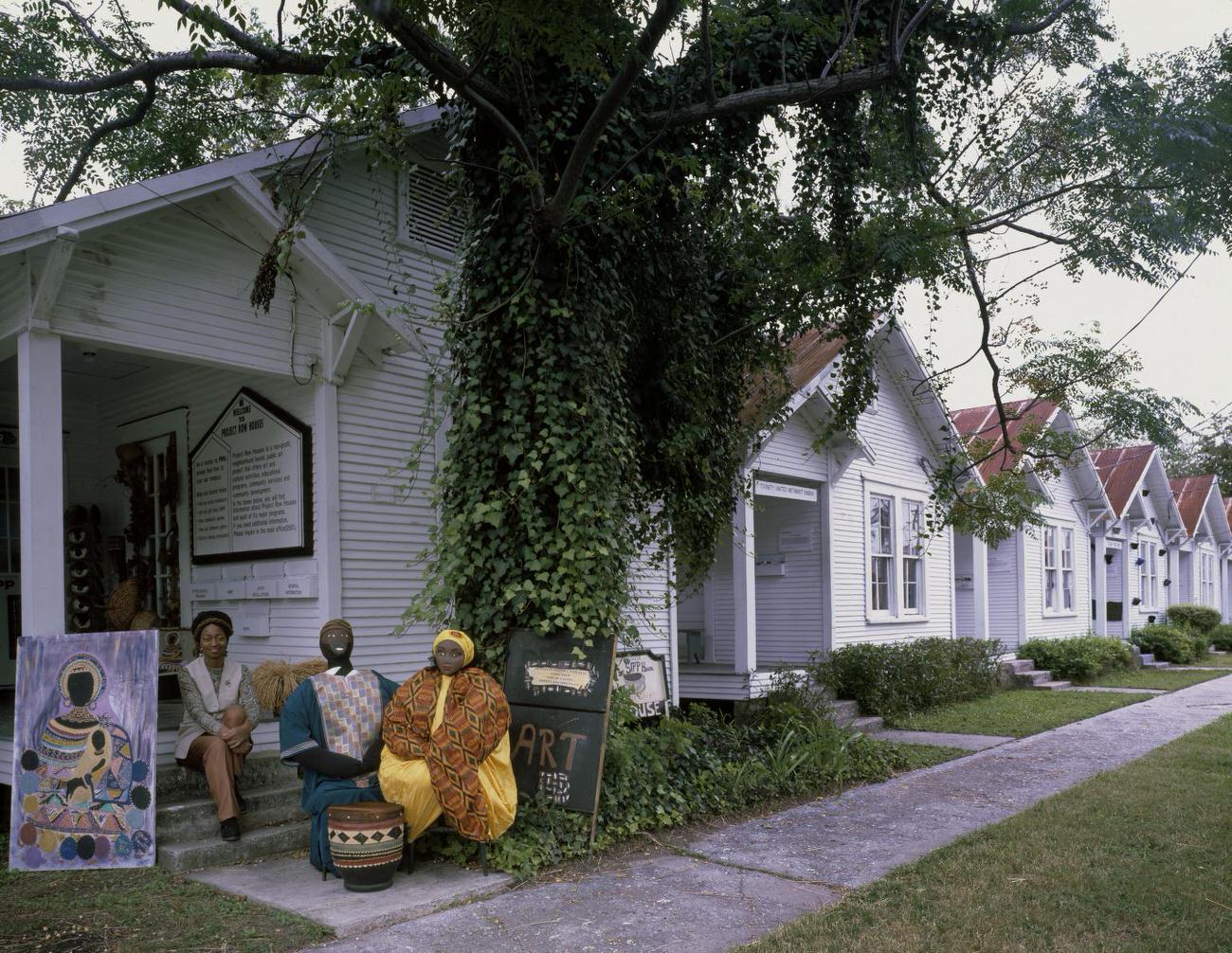
Shotgun houses in Project Row House, a public-art project in Houston, Texas, 1990s
Houston artists in front of Project Row House in the Third Ward, Houston, Texas, 1990s

Houston’s diversity extended into its celebration calendar. The Khmer community in Houston — one of the largest outside of Southeast Asia — hosted New Year celebrations that drew crowds to the streets of their neighborhoods. Preparations and festivities on Shreveport Boulevard gave the city yet another dimension of cultural life that most outsiders never saw.
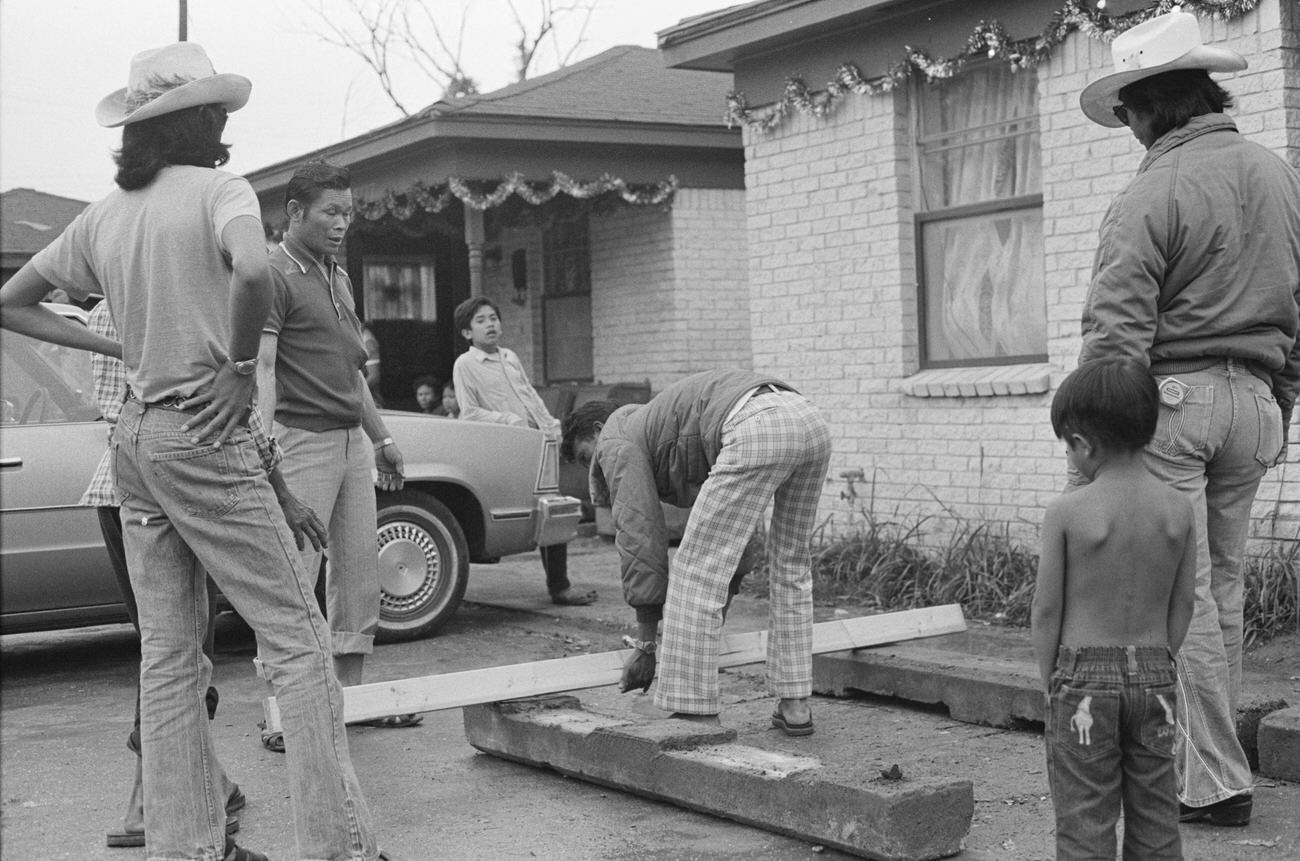
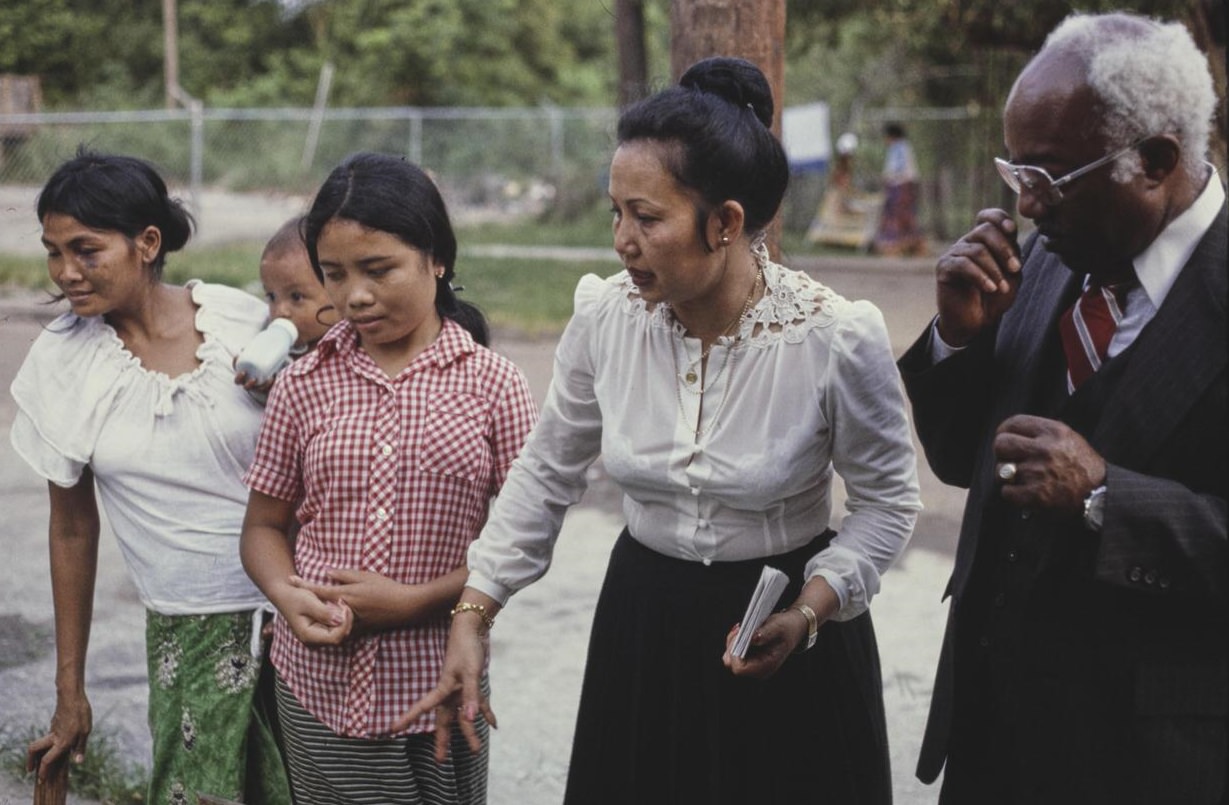
Preparations for Khmer New Year celebration at Khmer Village in Houston, 1990s
Khmer Village scenes and street party on Shreveport Blvd. in Houston, 1990s

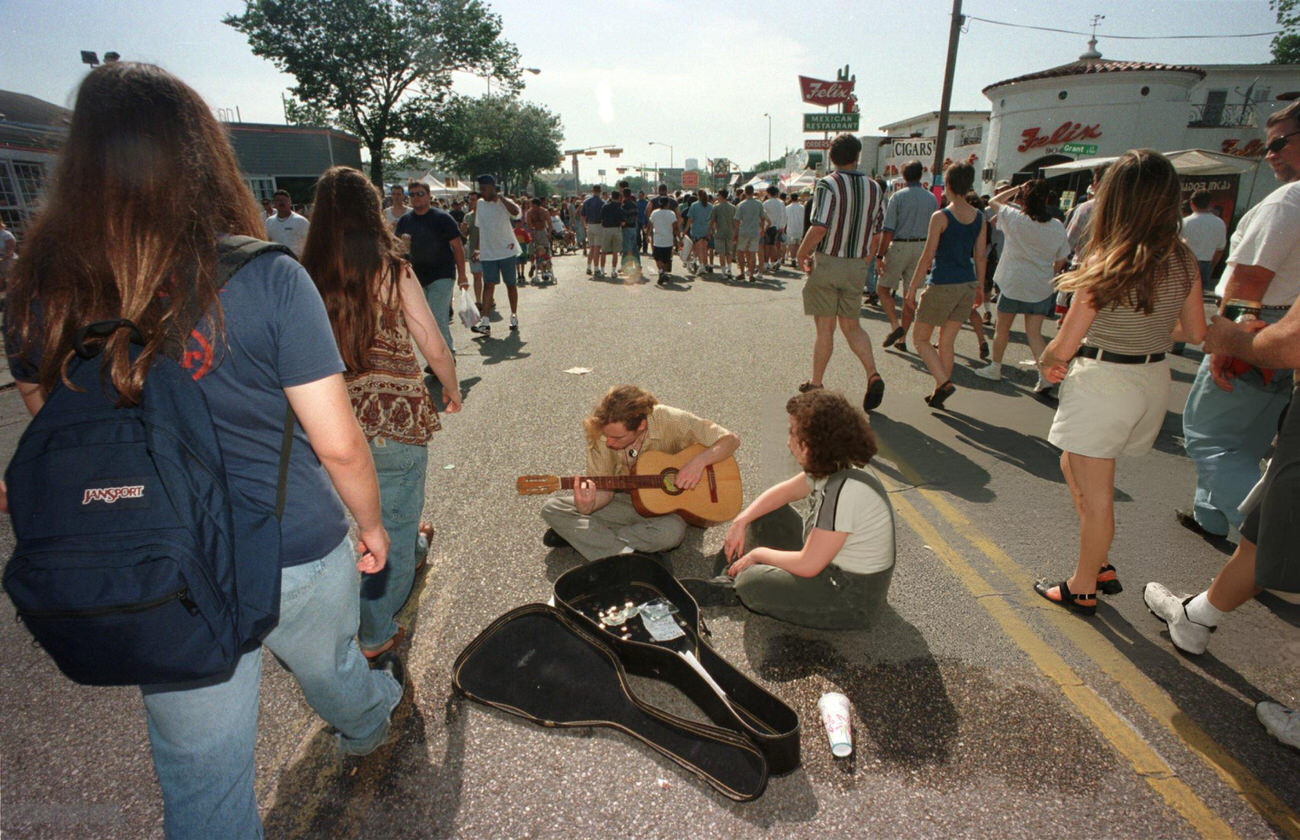
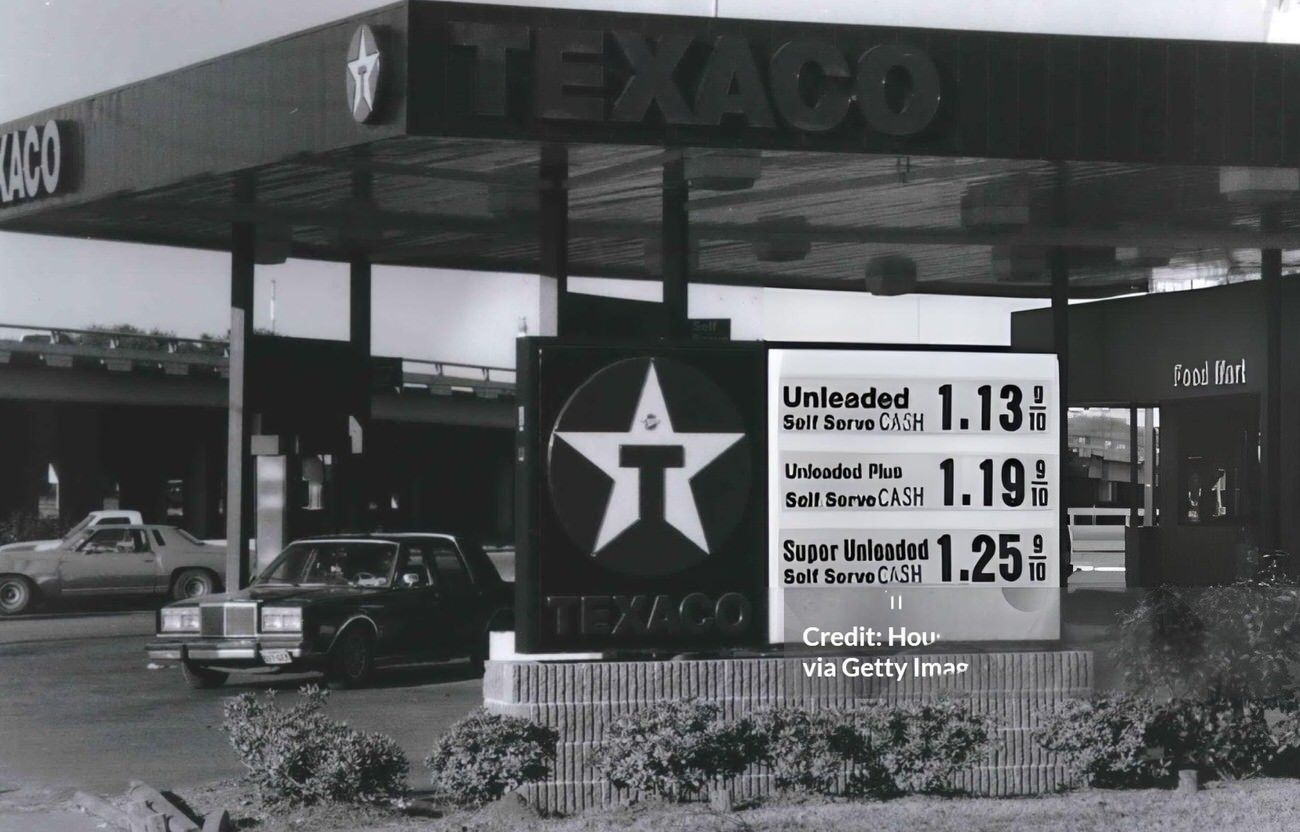
Street-level Houston had its own rhythm. Post office employees collected IRS forms from motorists in drive-through lines before the internet made paper filing feel ancient. Gas prices at competing stations along Loop 610 varied noticeably from pump to pump — a reflection of a market still shaped by local competition. At the Westheimer Street Festival in 1998, musicians played to open-air crowds on a street that had long been the axis of Houston’s counterculture scene.
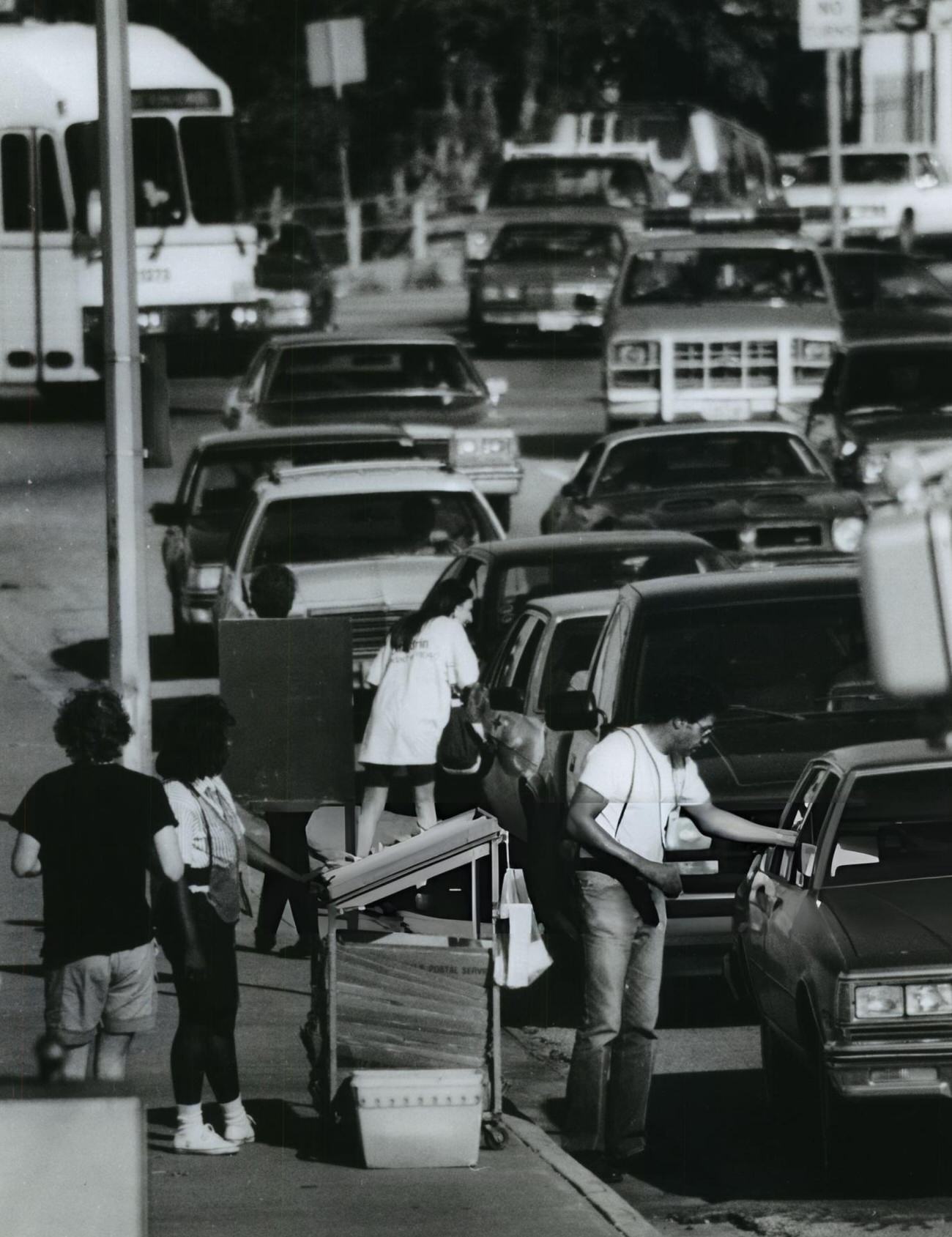
Post Office employees efficiently collect IRS Forms from motorists, a snapshot of pre-digital tax filing, Houston, Texas.
Gasoline prices show variability at three stations at Loop 610 South and Broadway, reflecting economic differences, Houston, Texas, 1991.
Patrick Napier and Melissa Garrett play guitar amid the crowd at the Westheimer Street Festival, Houston, Texas, 1998.

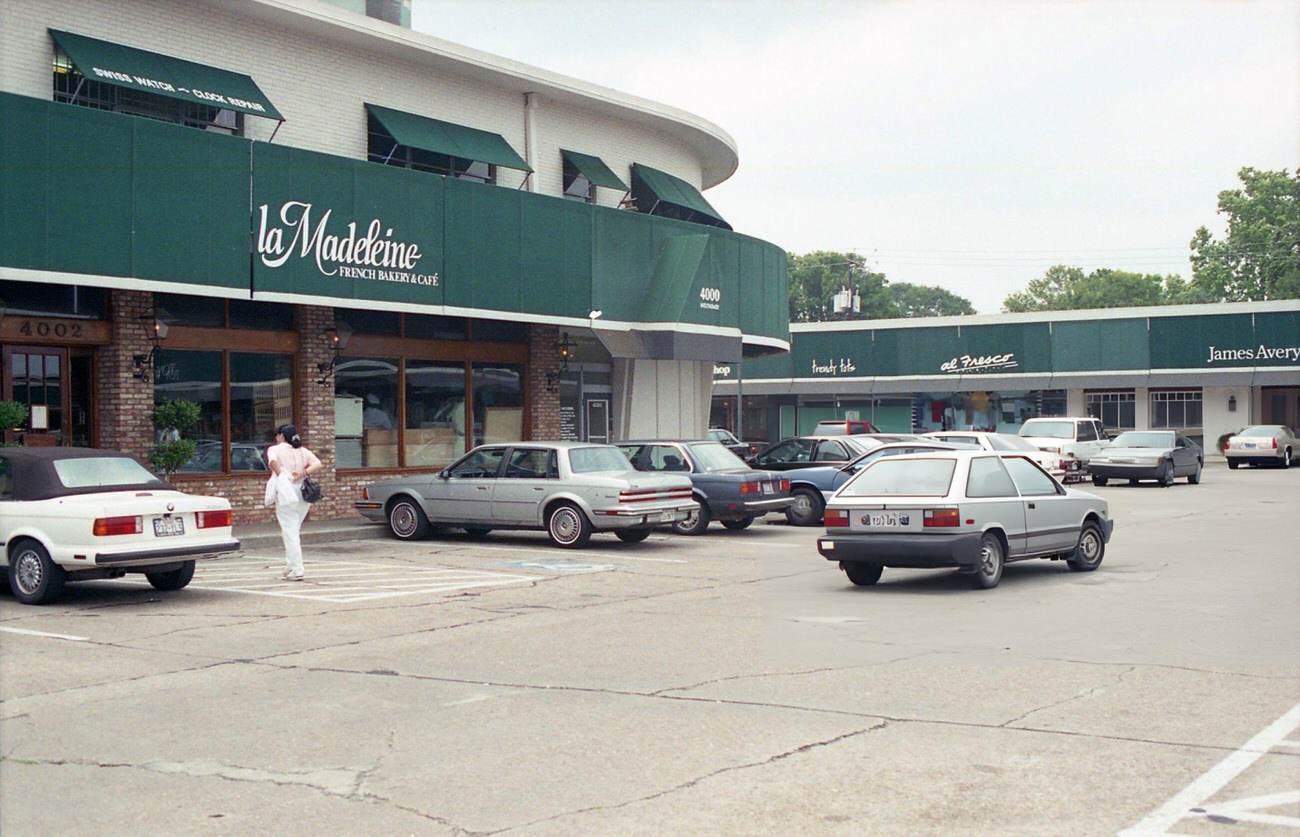
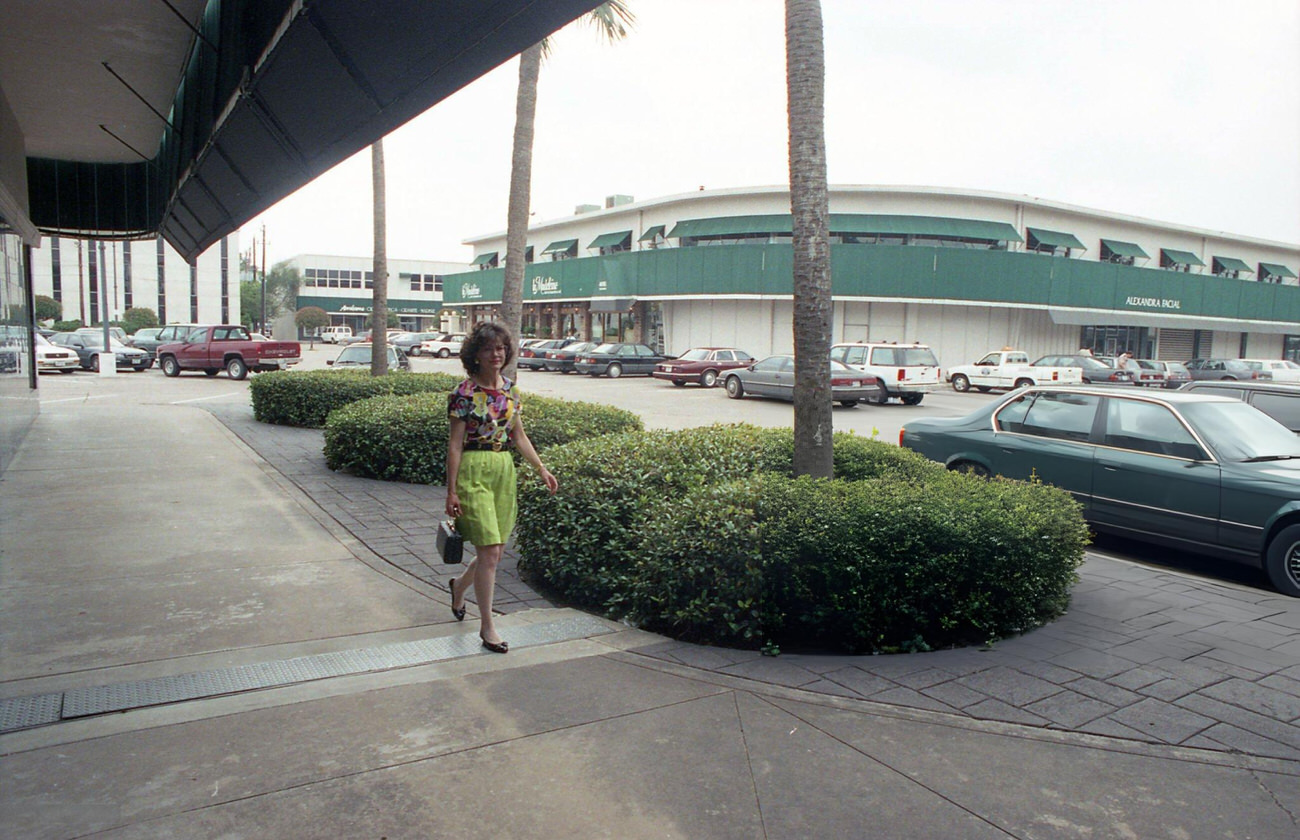
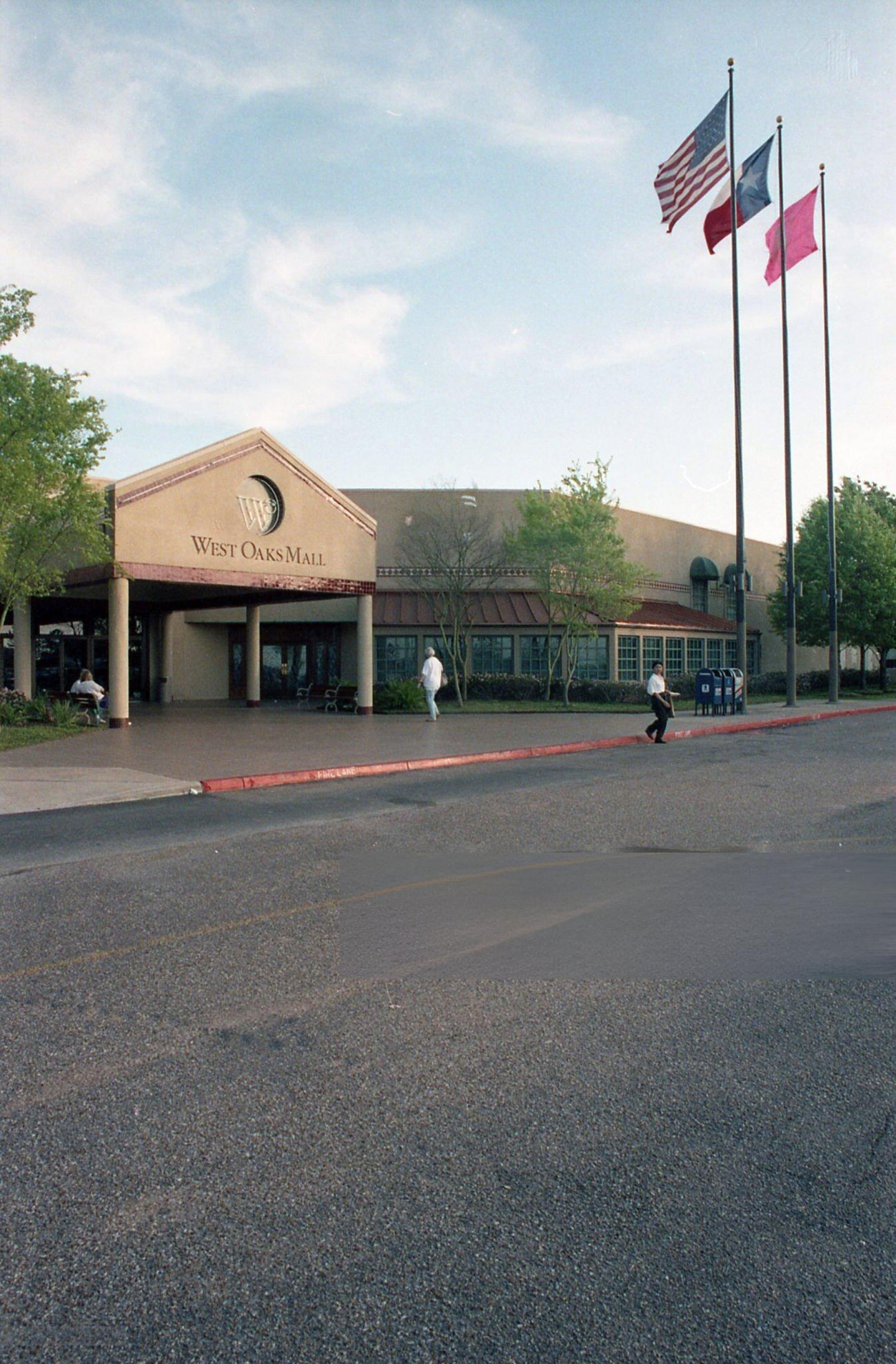
Retail was transforming too. West Oaks Mall and Willowbrook Mall anchored the suburbs. Highland Village catered to upscale shoppers. The Galleria — one of the largest malls in the country — remained a centerpiece of Houston’s commercial life, complete with its famous indoor skating rink. Meanwhile, Sharpstown Mall, once a thriving shopping destination, was already beginning to show signs of decline by the end of the decade.
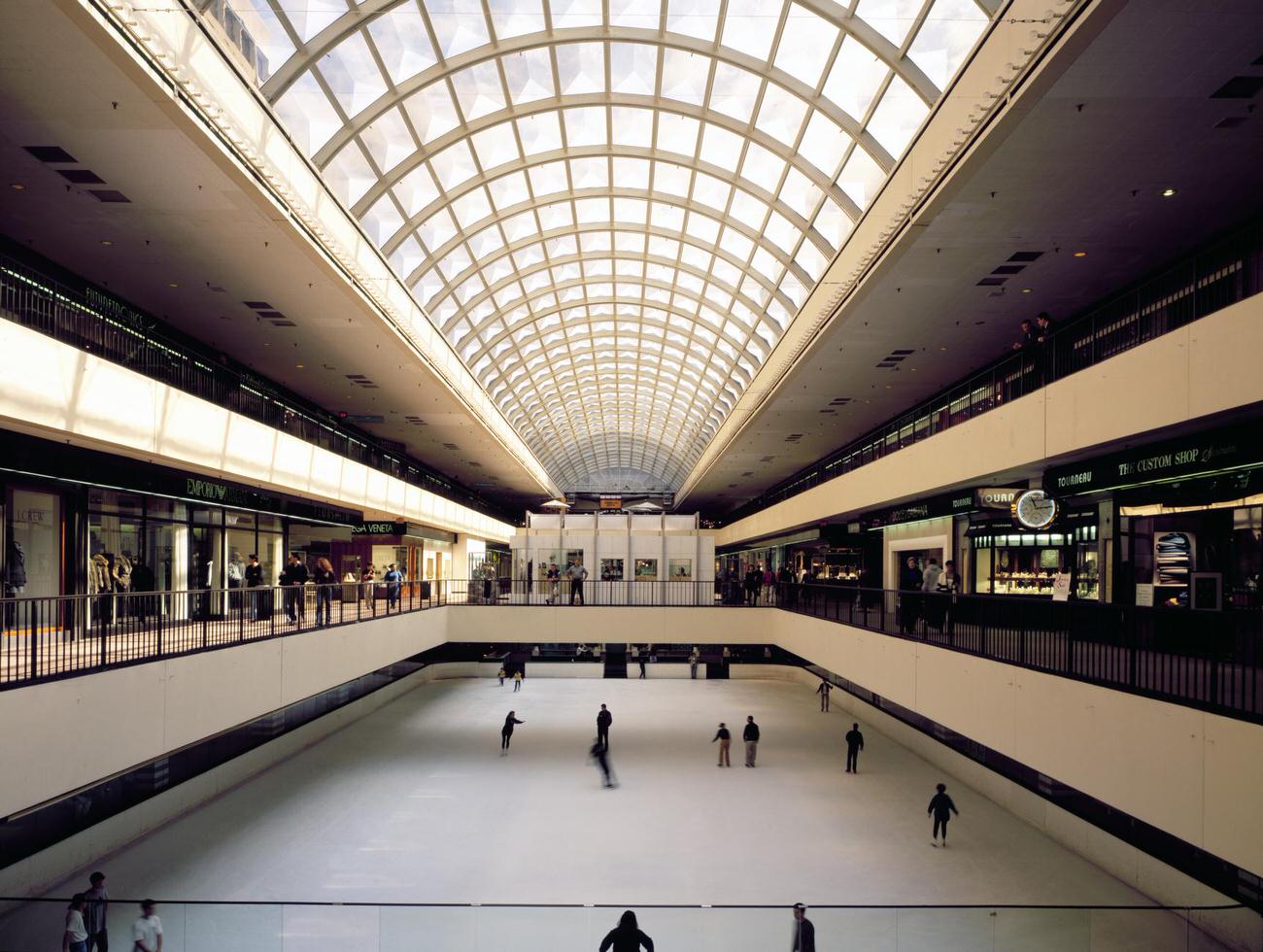
Skating rink inside Galleria Mall in Houston, 1990s
West Oaks Mall's depiction in March 1992 captures the evolving retail landscape and suburban expansion in Houston, Texas.
West Oaks Mall’s depiction in March 1992 captures the evolving retail landscape and suburban expansion in Houston, Texas.
Highland Village's mention in May 1992 reflects the area's status as a premier shopping destination, contributing to Houston's commercial appeal, Texas.
Highland Village’s mention in May 1992 reflects the area’s status as a premier shopping destination, contributing to Houston’s commercial appeal, Texas.

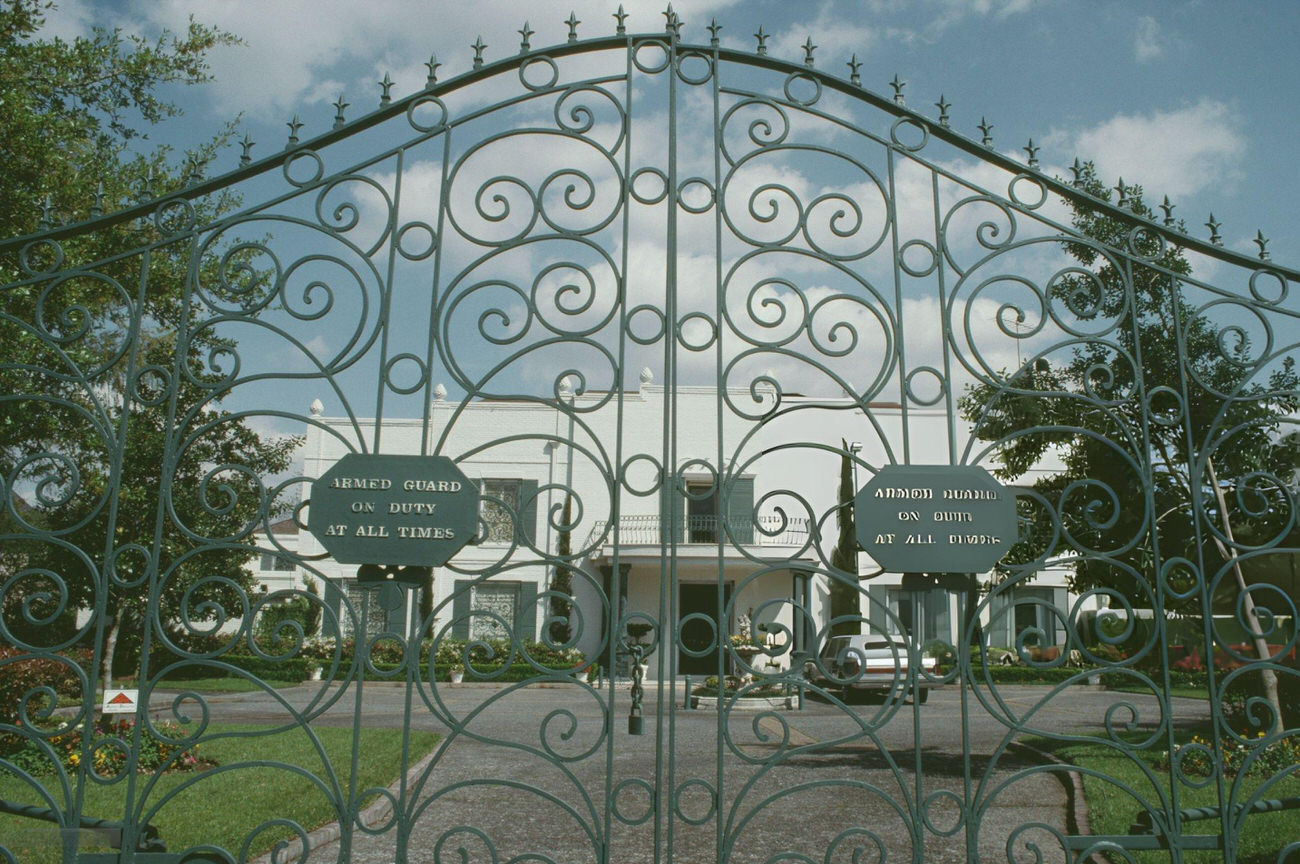
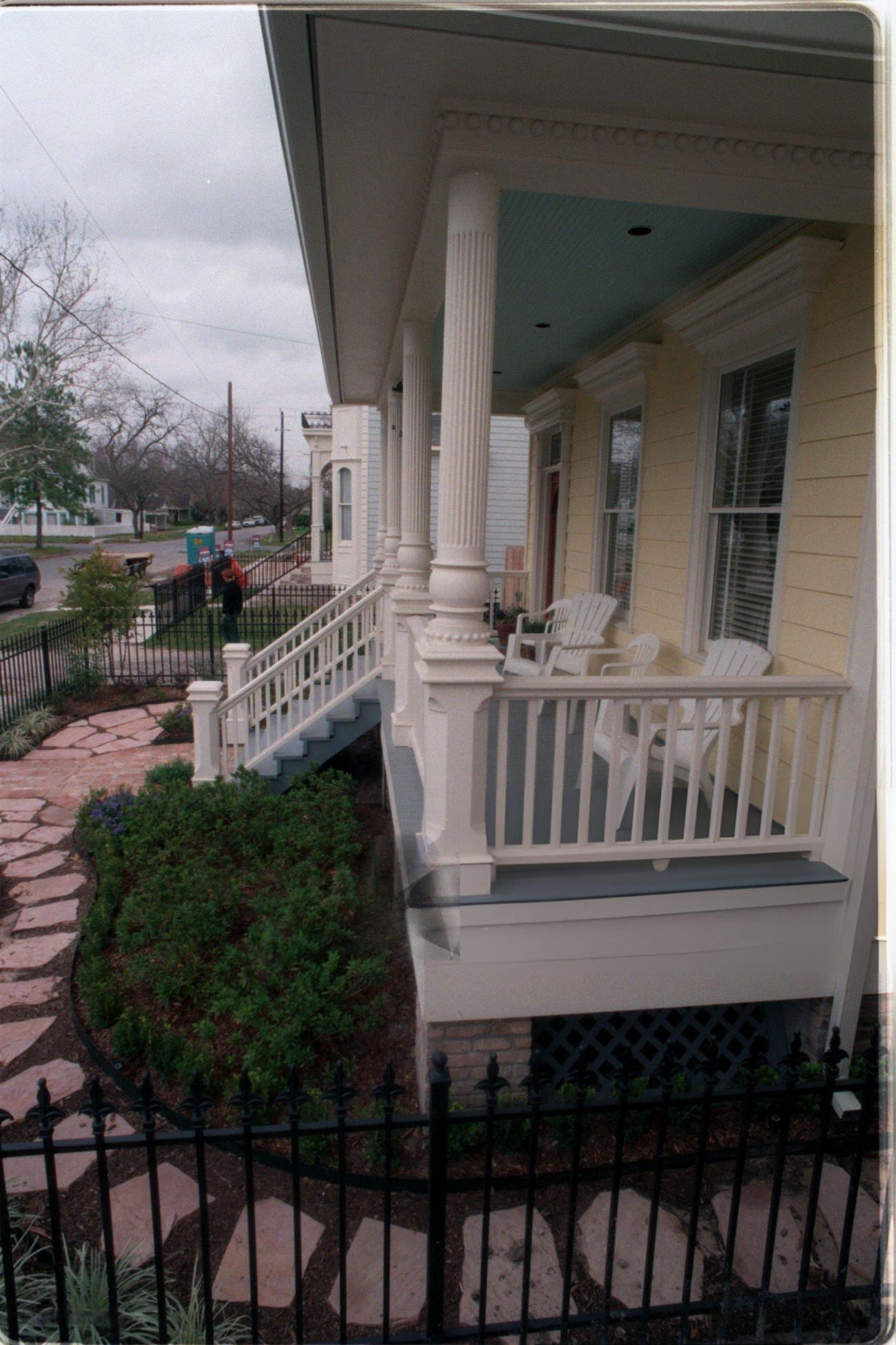
The suburbs pushed further outward. New homes in areas like Canyon Gate and the Heights reflected rising median prices and a surge in residential construction. Gated communities appeared across the metro area, and newer developments in Sugar Land, Katy, and The Woodlands attracted families leaving the inner city for more space.
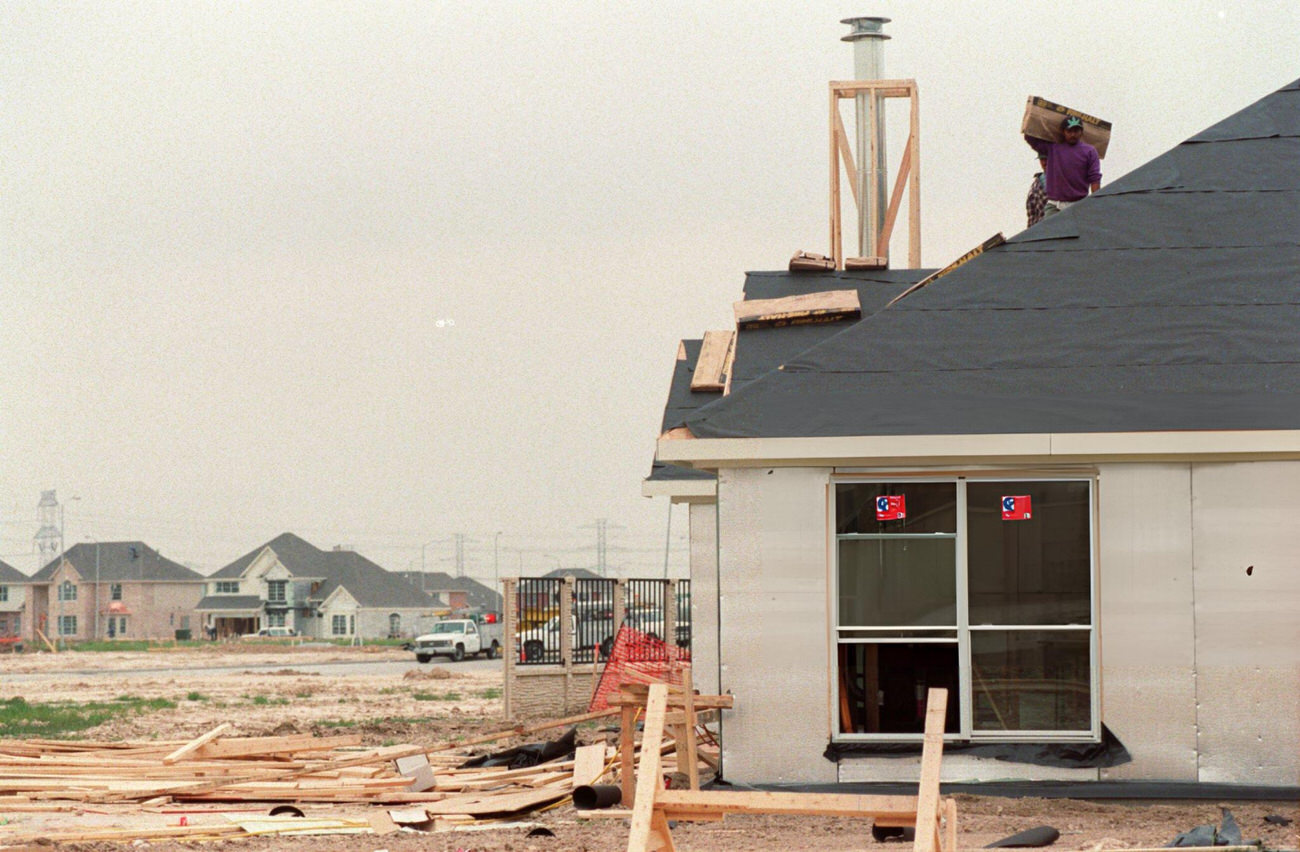
The focus on new homes in the Canyon Gate Area on March 12, 1998, reflects residential growth and the evolving landscape of Houston's suburbs, Texas.
The focus on new homes in the Canyon Gate Area on March 12, 1998, reflects residential growth and the evolving landscape of Houston’s suburbs, Texas.
Home construction showcases wicker furniture and iron fence in the Houston Heights with rising median prices, 1998.
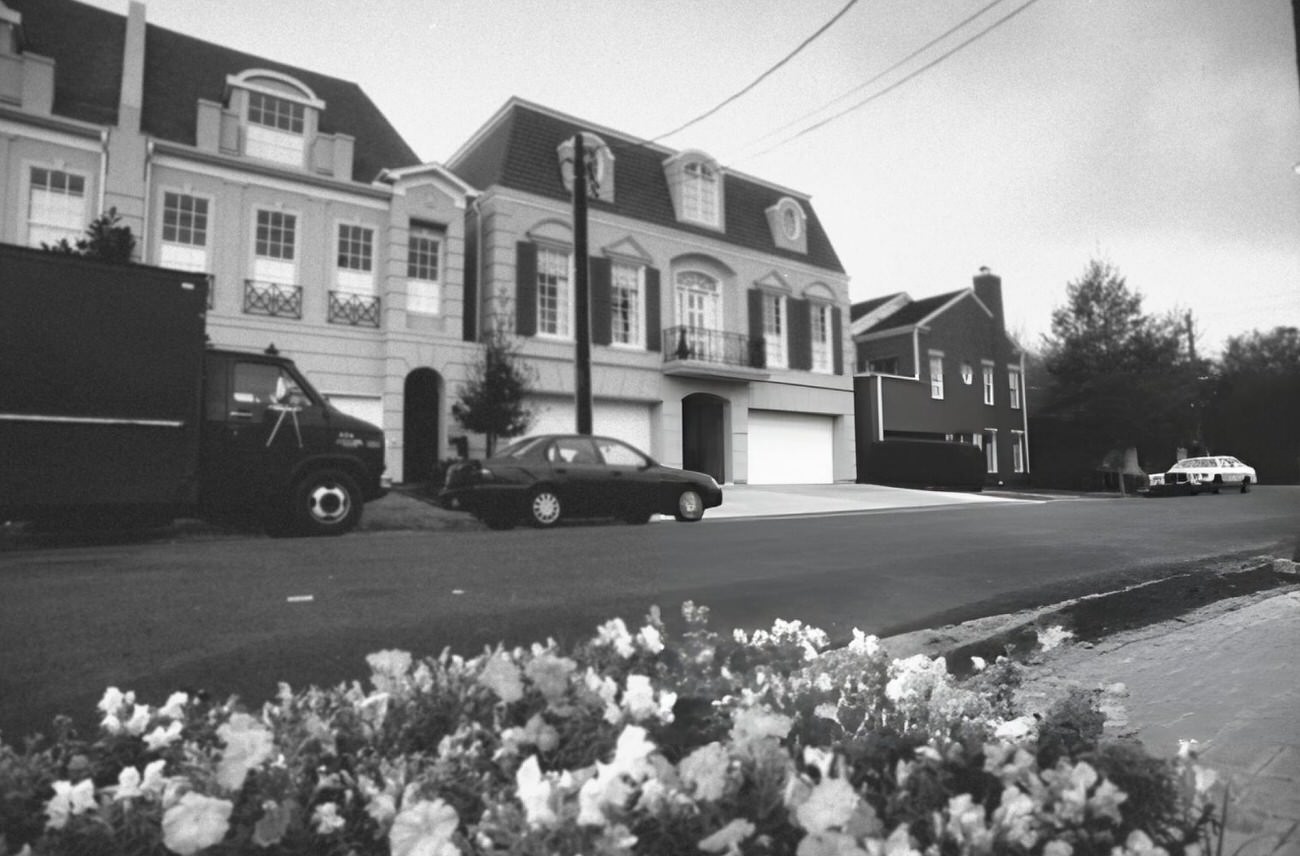
The gate of a private residential building in April 1992 symbolizes the exclusivity and privacy valued in Houston's residential architecture, Texas.
The gate of a private residential building in April 1992 symbolizes the exclusivity and privacy valued in Houston’s residential architecture, Texas.

Public transportation was expanding to keep pace with the growing city. Metro buses ran full routes across the region, and by the end of the decade, the groundwork for the METRO Light Rail system was being laid. Commuters boarding buses on Louisiana Street in downtown Houston were part of a daily flow that the system was struggling — and working hard — to manage.
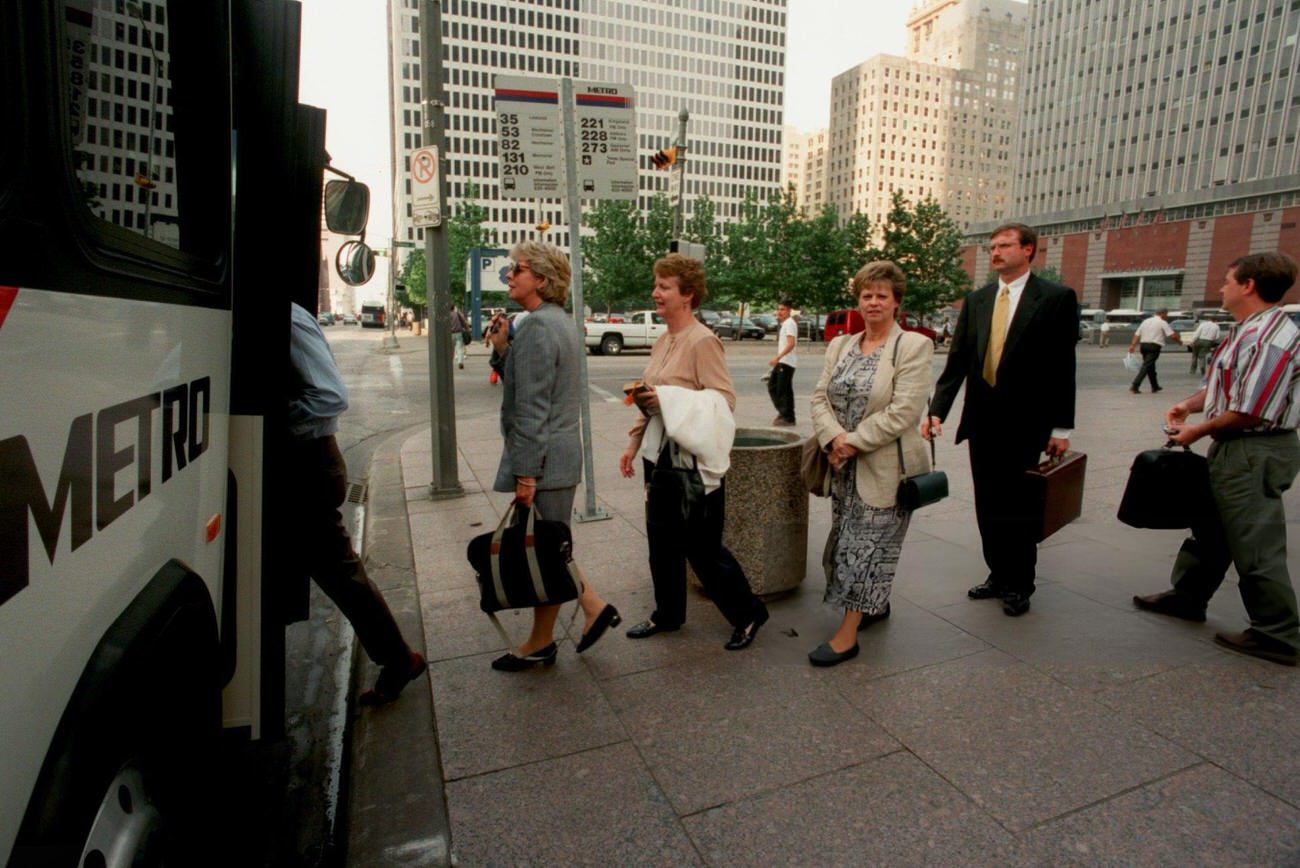
Commuters board a Metro bus on Louisiana Street, reflecting Metro's increased passenger trips, Houston, Texas, 1998.
Commuters board a Metro bus on Louisiana Street, reflecting Metro’s increased passenger trips, Houston, Texas, 1998.

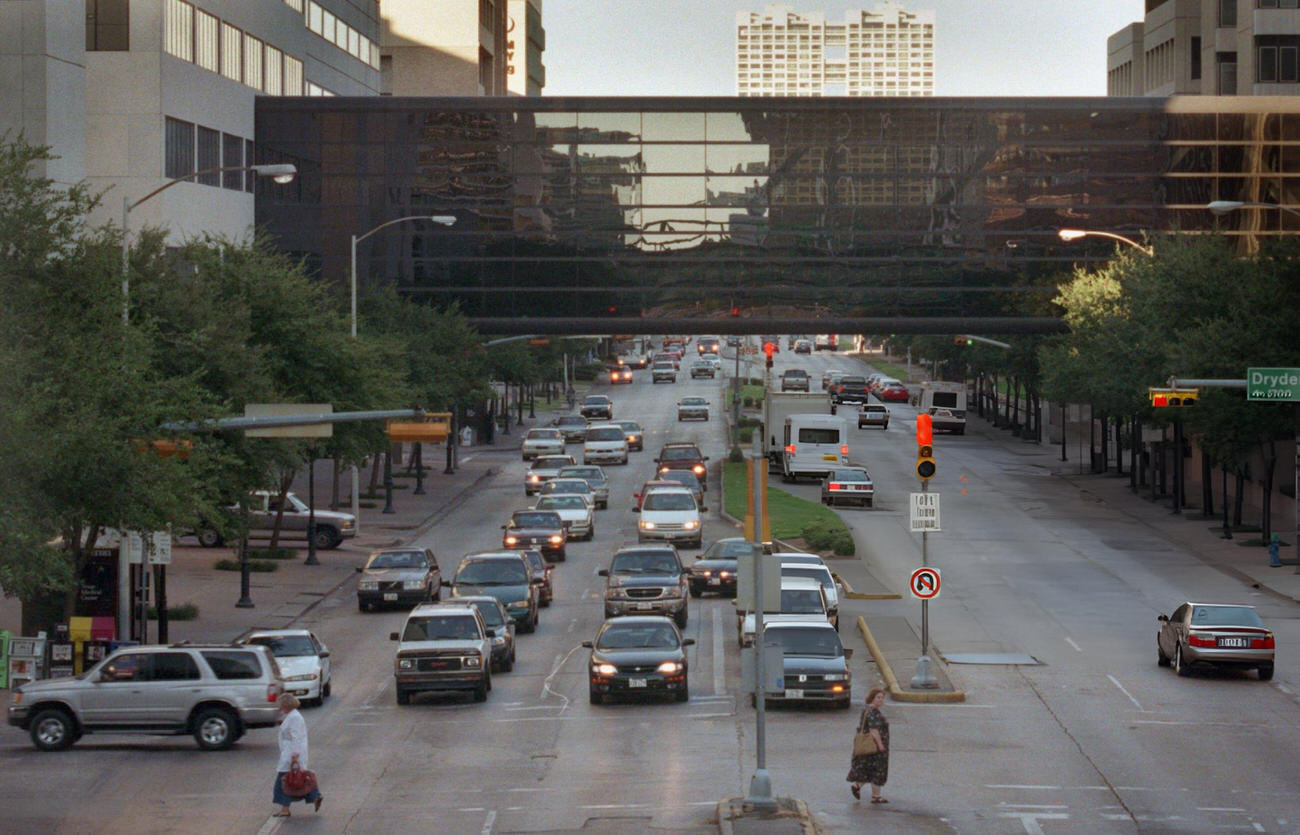
Houston’s road infrastructure was constantly under construction. Work on Beltway 8 at I-45 reflected the city’s relentless effort to widen and extend its highway network to keep up with growth. The speed limit debate running through the Texas Medical Center — proposing a reduction to 20 mph for pedestrian safety — illustrated the friction between a car-dependent city and the needs of people on foot.
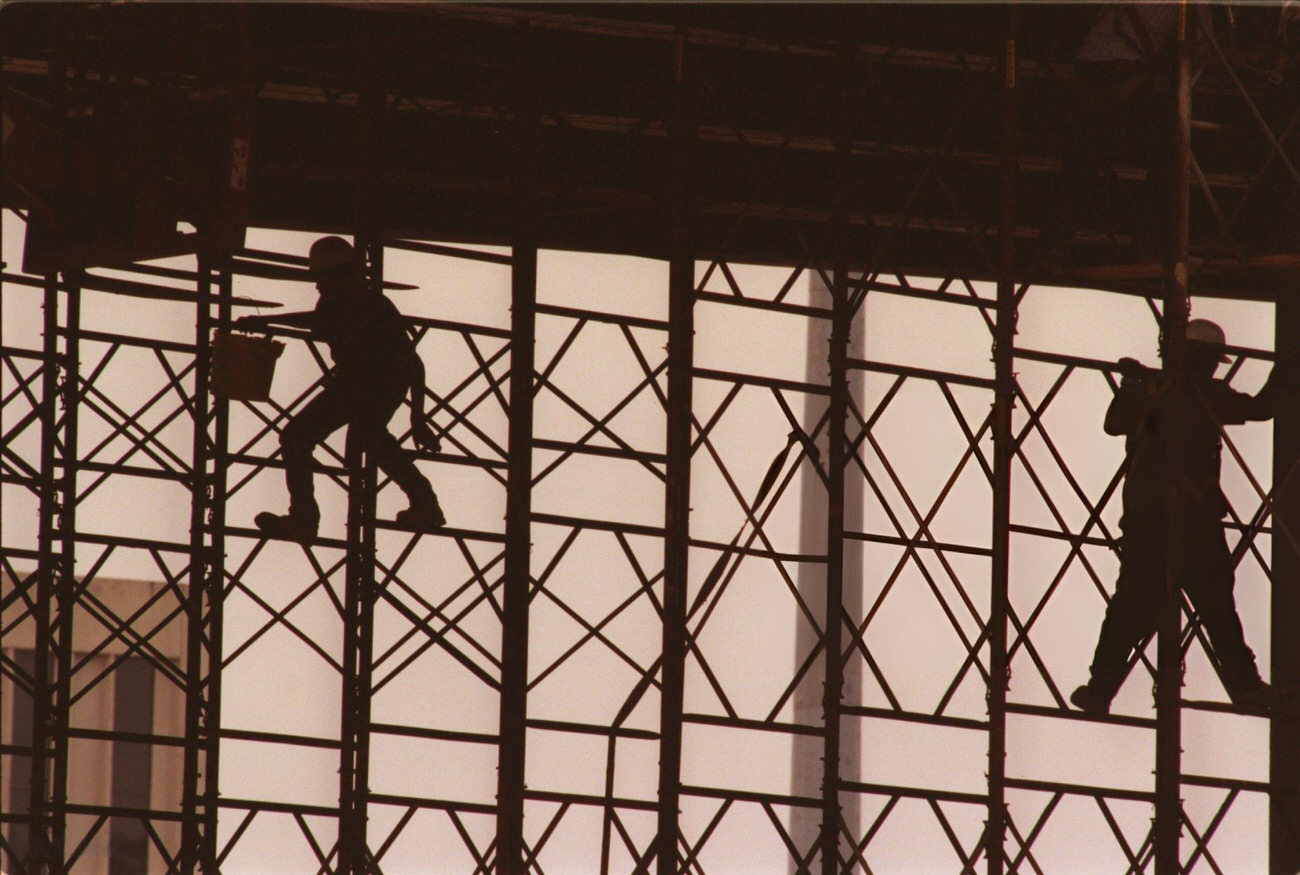
Construction workers perform maintenance on Beltway 8 at I-45, Houston, Texas, 1999.
Speed limit reduction to 20 mph through the Houston Medical Center debated for safety, Houston, Texas, 1999.

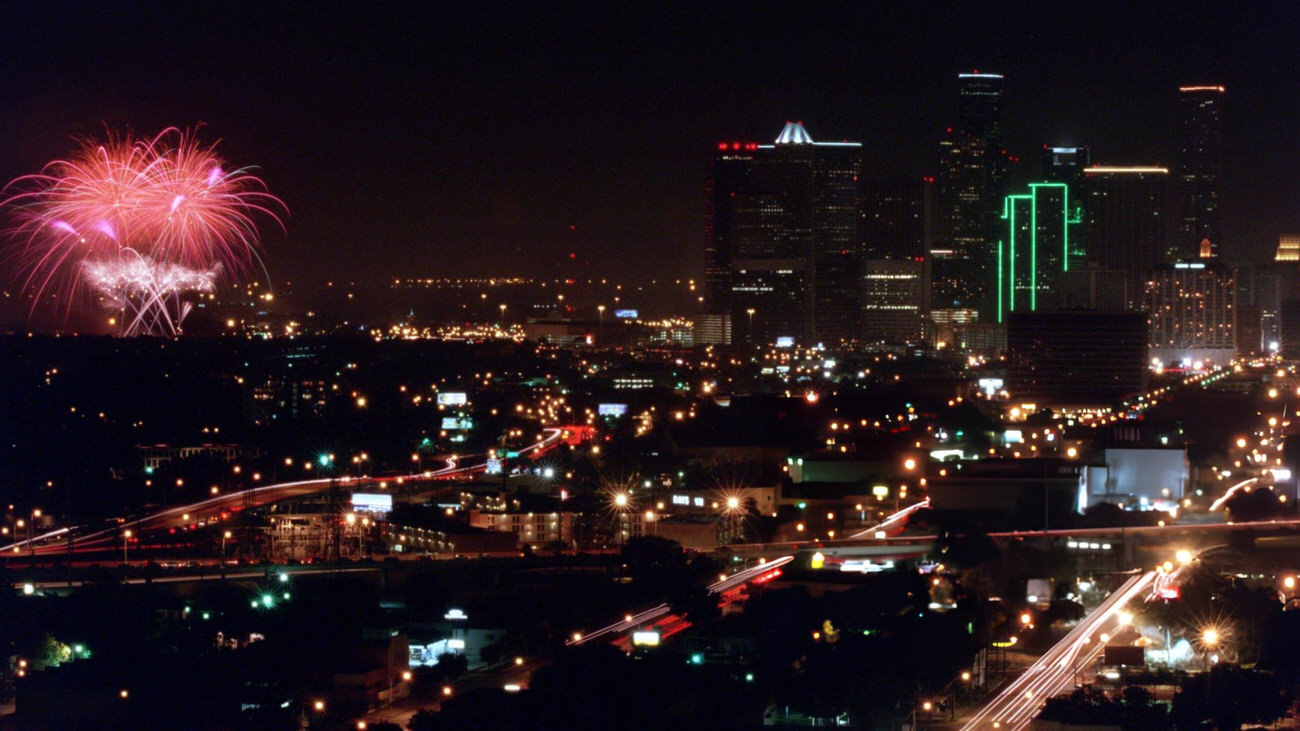
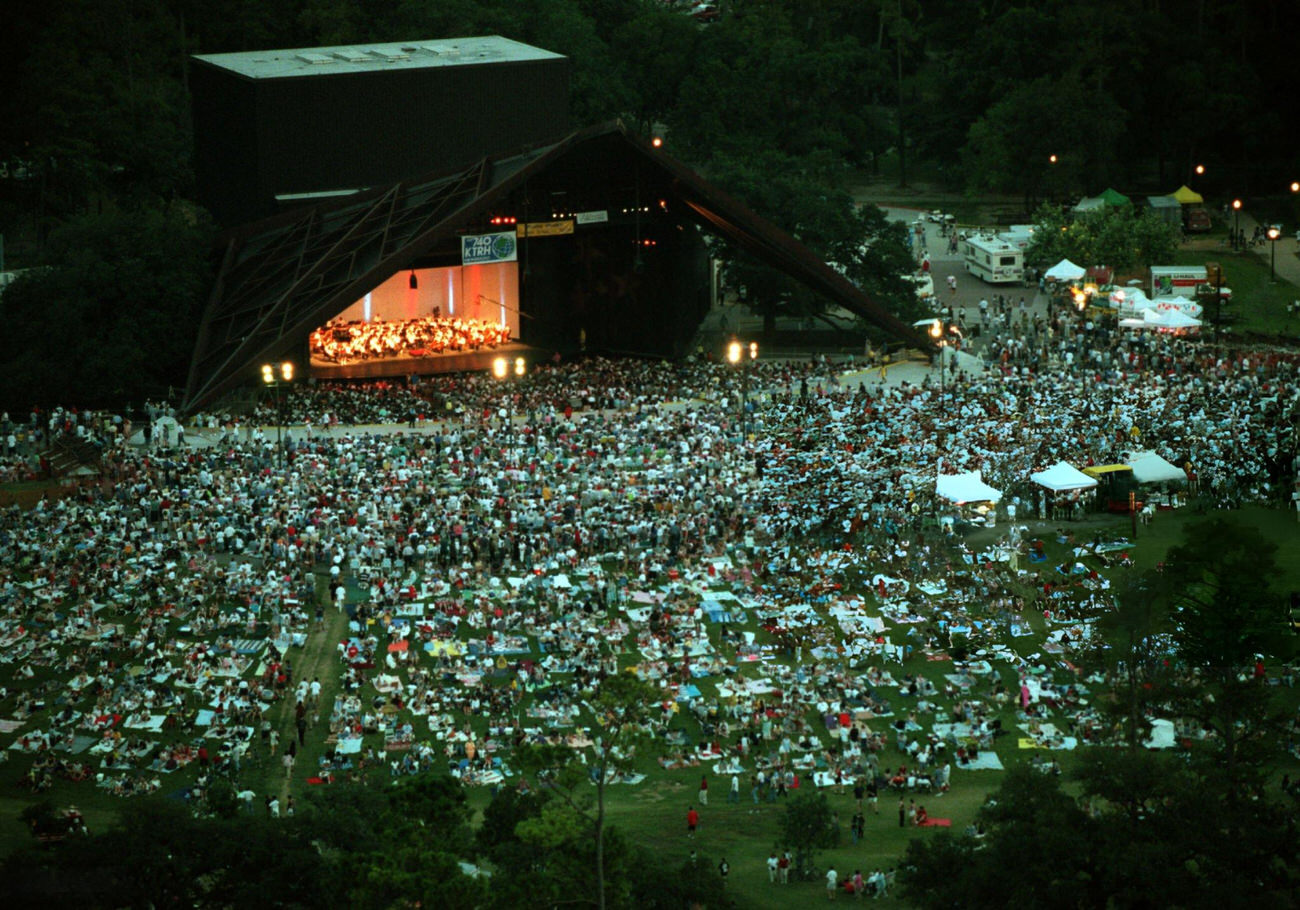
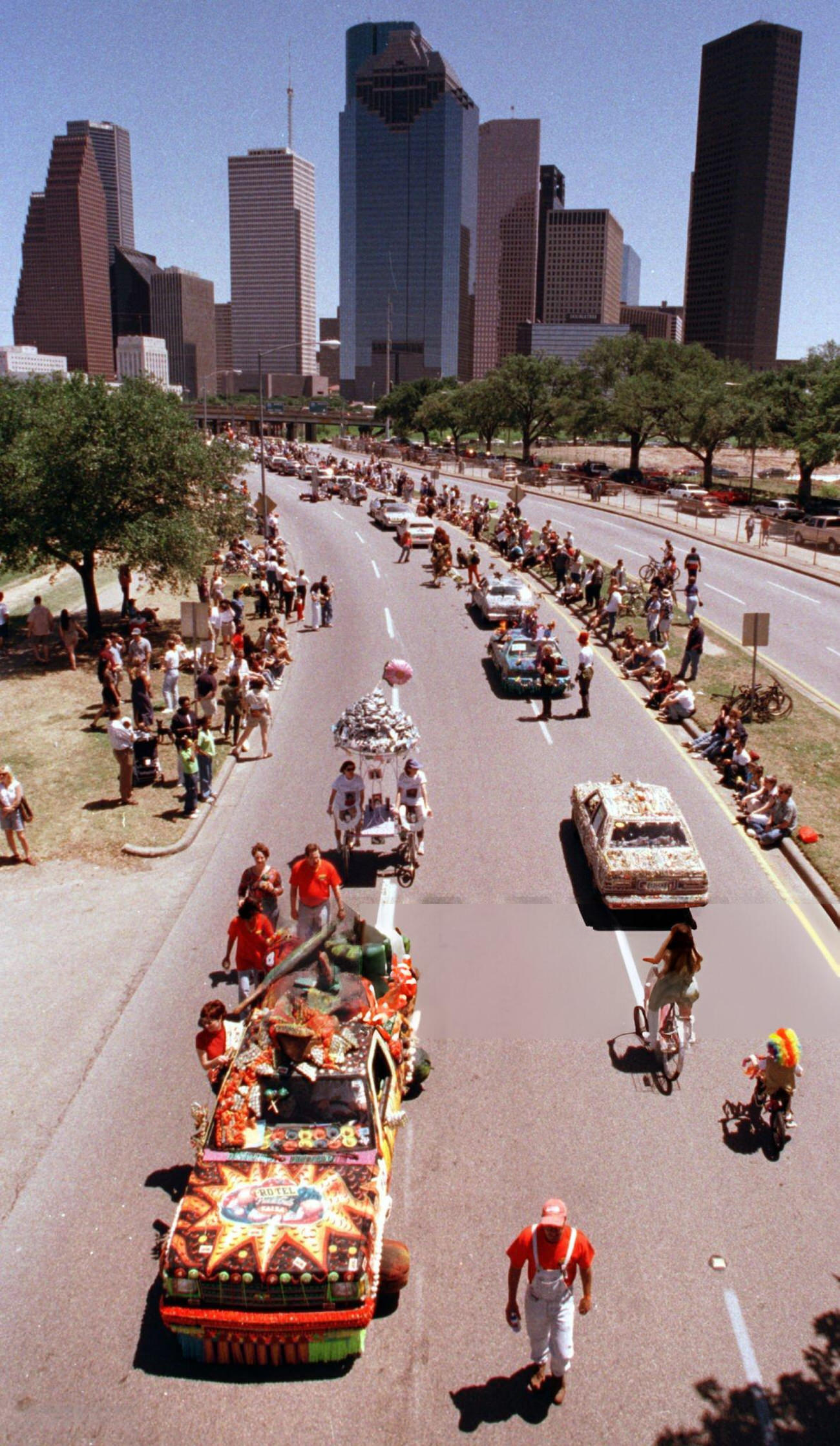
Public life in Houston mixed the festive with the serious. The Earth Day Festival at Buffalo Bayou Park drew crowds in 1999, with a firefighter misting attendees in the spring heat. The Art Car Parade — a Houston original — rolled down Allen Parkway each year, turning decorated vehicles into moving sculpture. Independence Day brought fireworks over the downtown skyline, visible from Warwick Towers, while the Houston Symphony performed at Miller Theater for crowds sprawled across the grass.
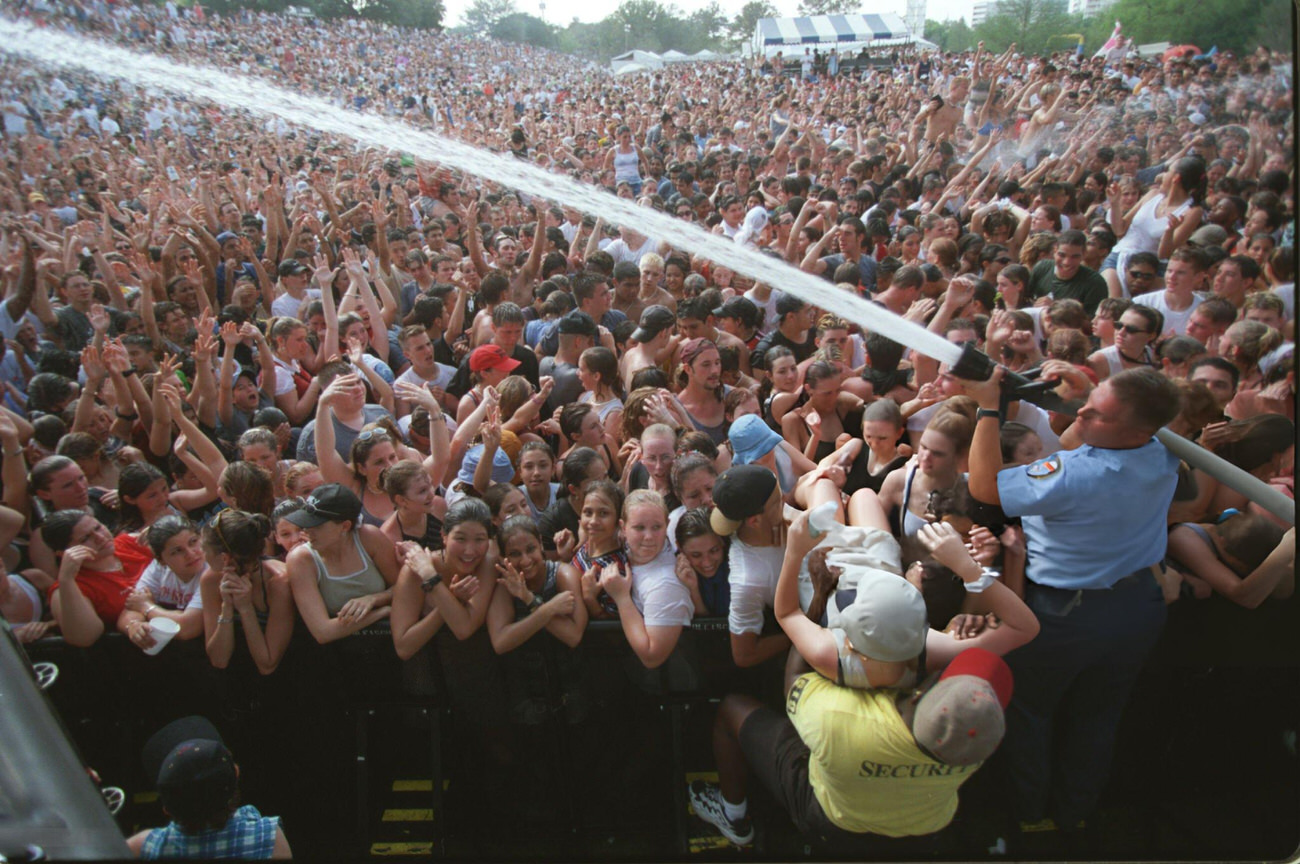
Firefighter cools down crowds at the Earth Day Festival in Buffalo Bayou Park, Houston, Texas, 1999.
The 12th Annual Art Car Parade along Allen Parkway, Houston, Texas, 1999.
Fireworks near downtown during the Independence Day celebration viewed from Warwick Towers, Houston, Texas, 1999.
Crowds at Miller Theater for the Independence Day celebration with the Houston Symphony, Houston, Texas, 1999.

The dining scene reflected Houston’s demographics. New restaurants opened constantly. Cabo, the Mix-Mex Grill, launched in downtown Houston in April 1998, adding to a food culture that already spanned dozens of nationalities. The city’s Vietnamese community had made pho a mainstream Houston staple, and Tex-Mex remained the default cuisine at family tables and corner restaurants alike.
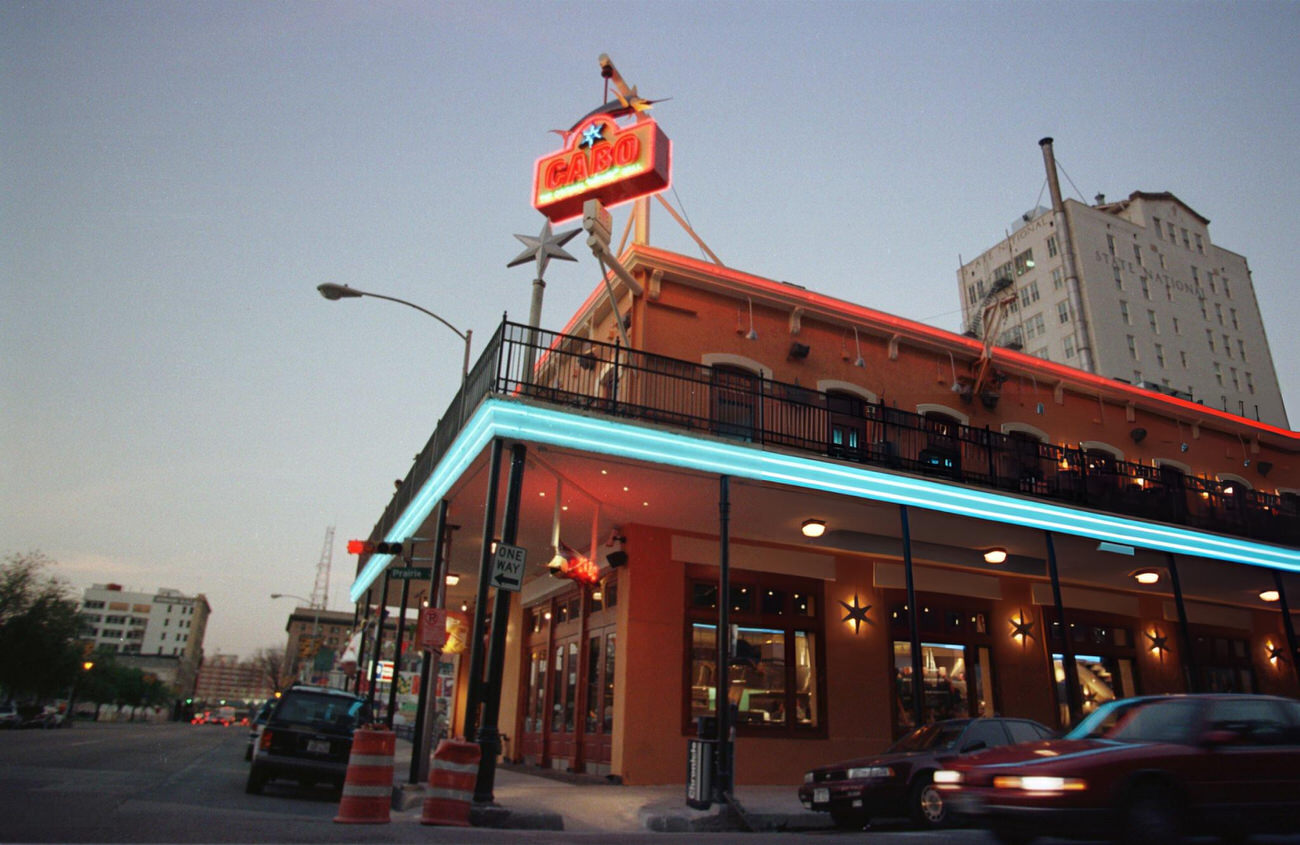
The opening of Cabo, The Original Mix-Mex Grill, in downtown Houston on April 1, 1998, highlights the city's expanding culinary scene and nightlife, offering a vibrant dining experience, Texas.
The opening of Cabo, The Original Mix-Mex Grill, in downtown Houston on April 1, 1998, highlights the city’s expanding culinary scene and nightlife, offering a vibrant dining experience, Texas.

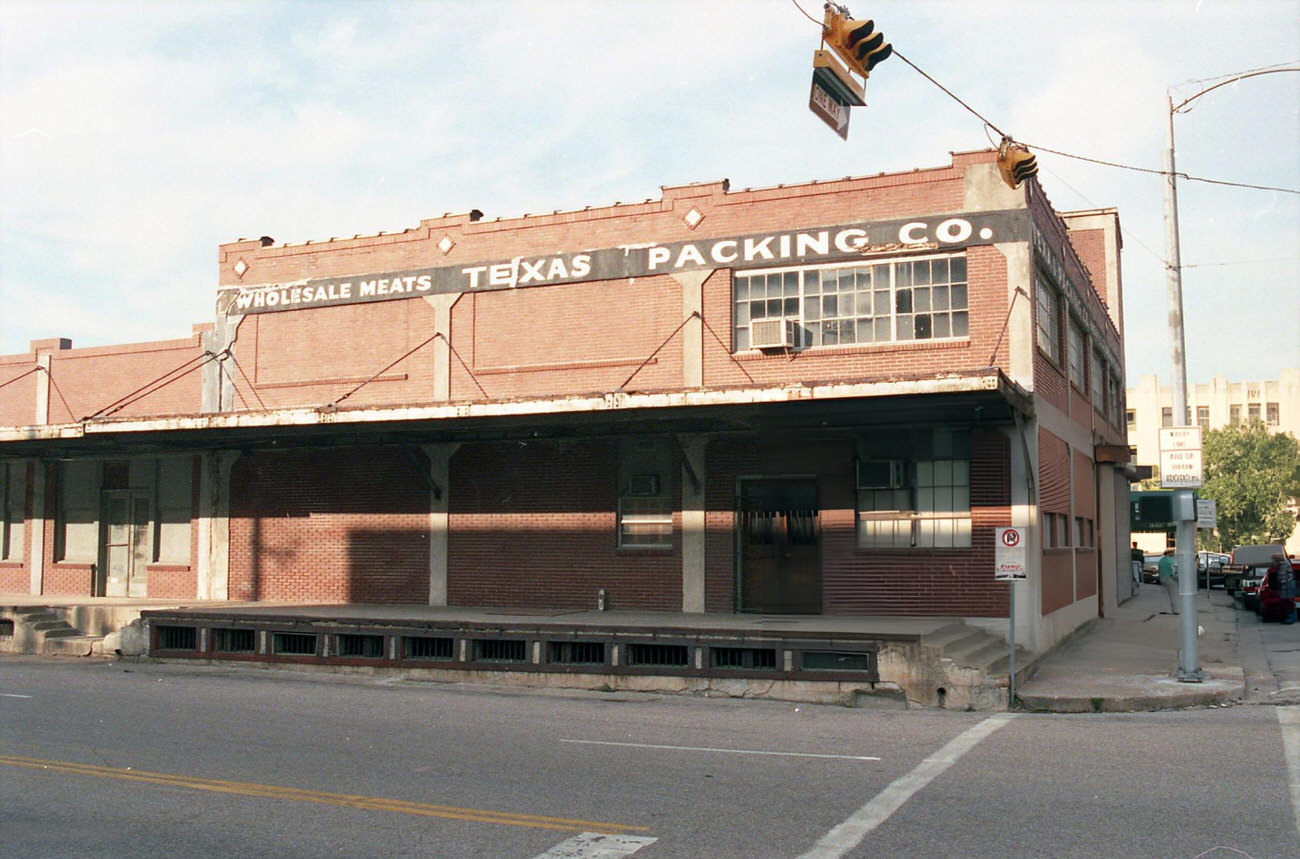
Houston’s nightlife found its edges in places like No Tsu Oh — a late-night coffee and game spot in downtown — and in rooftop bars like Prive Club on Westheimer and Montrose. Club Hey Hey reopened in a renovated section of the historic Texas Packing Plant, reclaiming one of Houston’s oldest entertainment traditions in a new form.

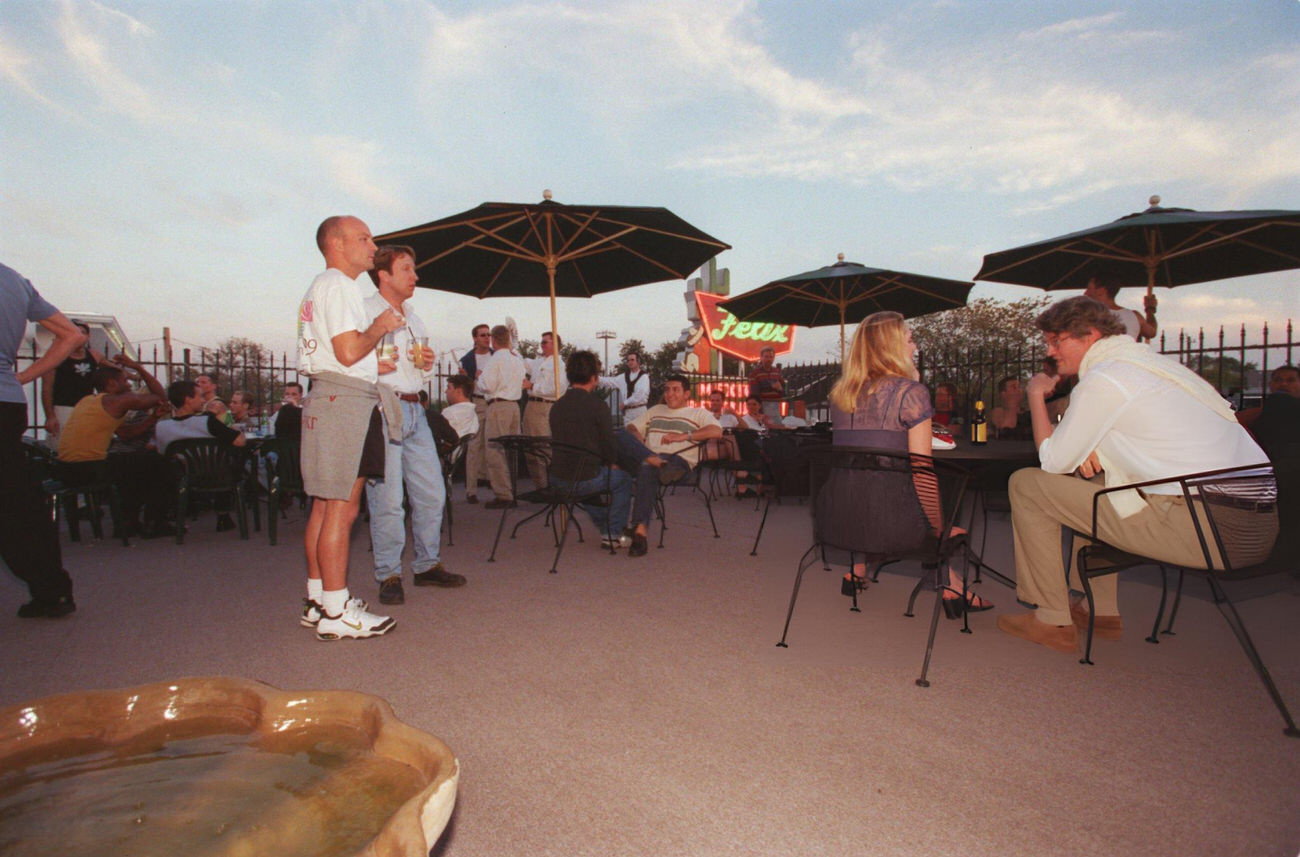
No Tsu Oh, an eclectic late-night coffee and game joint in downtown Houston, Texas.
Houstonians enjoy fall weather at Prive Club with a rooftop overlooking Westheimer and Montrose, Houston, Texas, 1999.
The announcement of Club Hey Hey's revival after the renovation of the historic Texas Packing Plant underscores Houston's evolving entertainment landscape, 1991.
The announcement of Club Hey Hey’s revival after the renovation of the historic Texas Packing Plant underscores Houston’s evolving entertainment landscape, 1991.

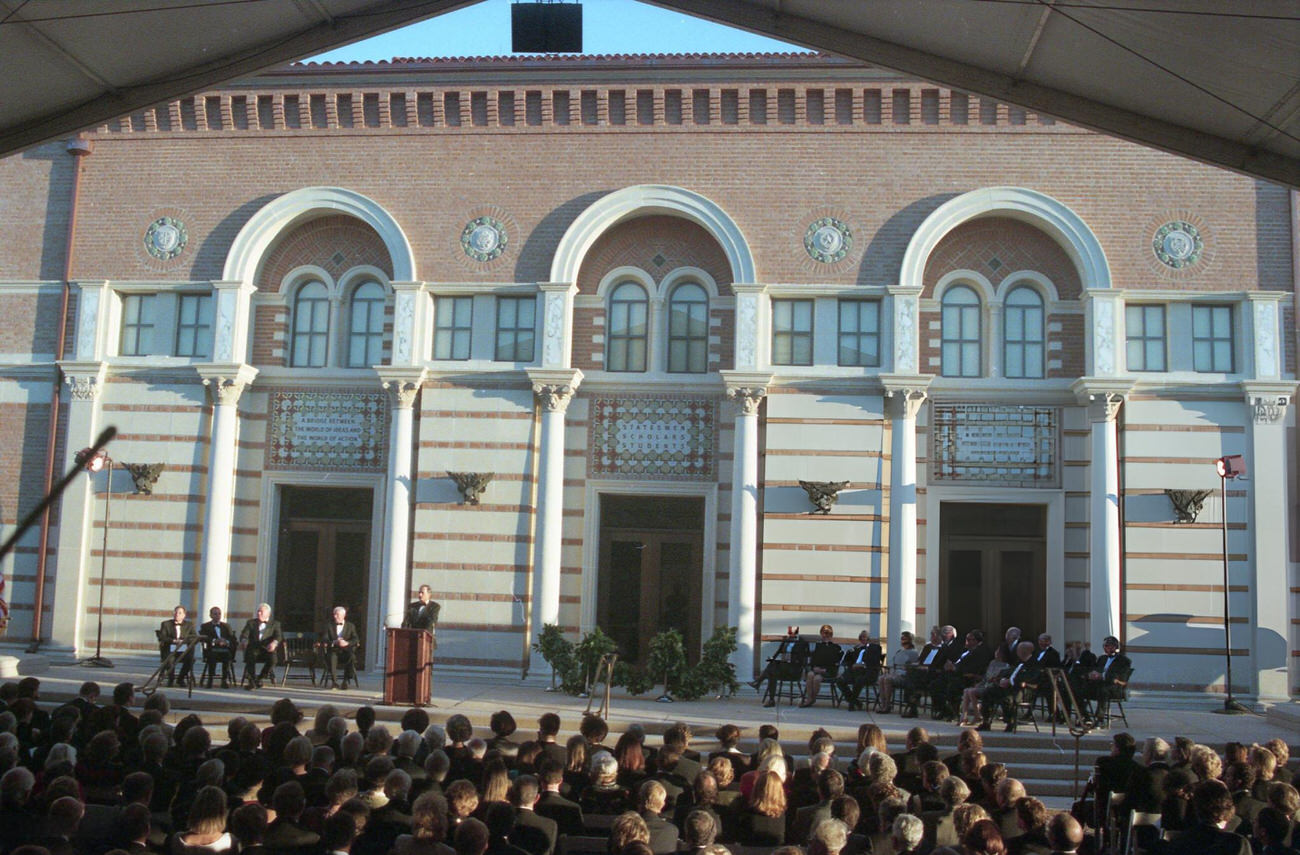
Former President Jimmy Carter delivered the commencement address at Rice University in 1993, and James A. Baker III — Secretary of State under George H.W. Bush — had a hall dedicated in his name at Rice in 1997. These events placed Houston squarely in the flow of American political history, connecting the city’s academic institutions to the country’s power centers.
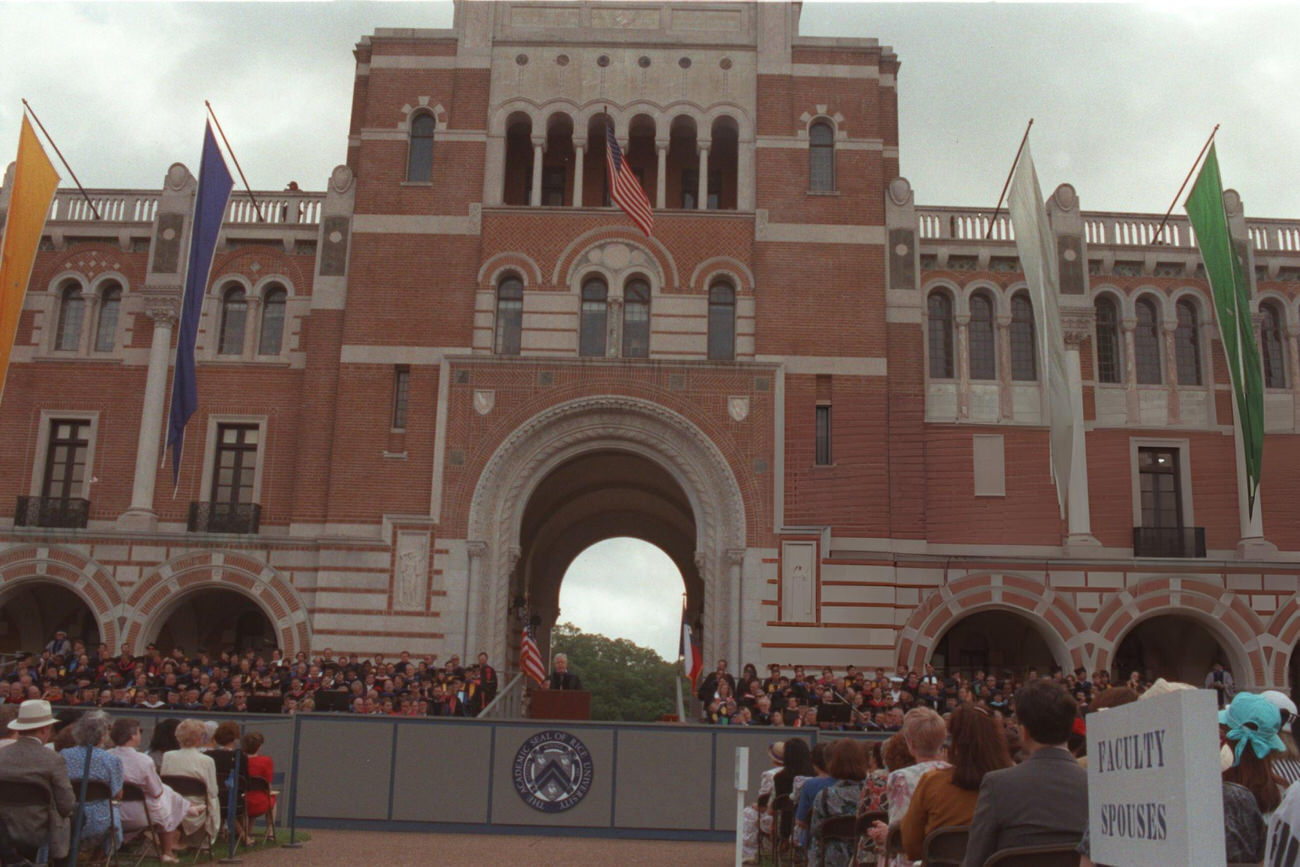
Former President Jimmy Carter's commencement address at Rice University on May 8, 1993, exemplifies the intersection of political leadership and academic celebration, Houston, Texas.
Former President Jimmy Carter’s commencement address at Rice University on May 8, 1993, exemplifies the intersection of political leadership and academic celebration, Houston, Texas.
The dedication of James A. Baker III Hall at Rice University on October 15, 1997, honors the former Secretary of State, reinforcing the connection between public service and academic institutions, Houston, Texas.

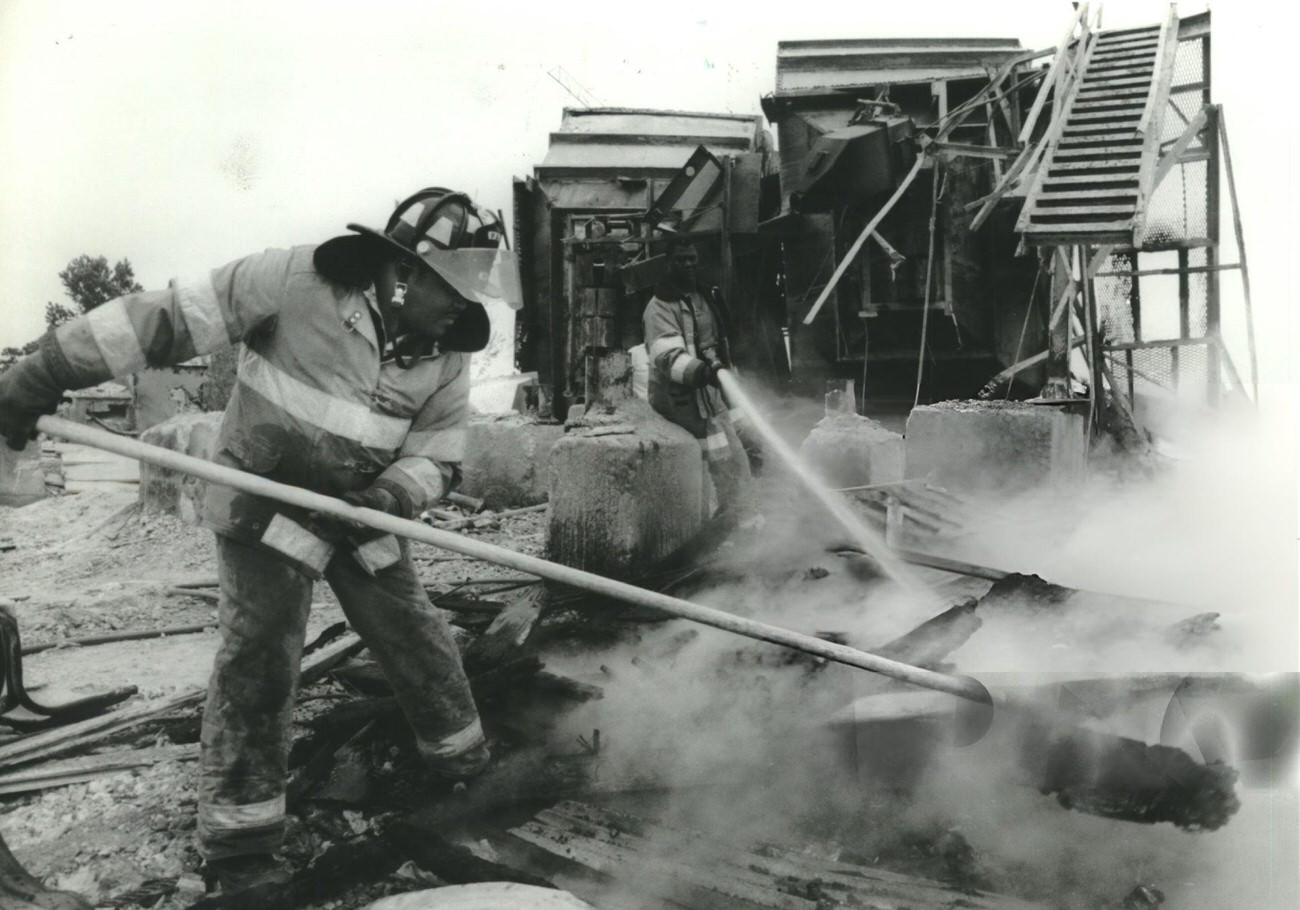
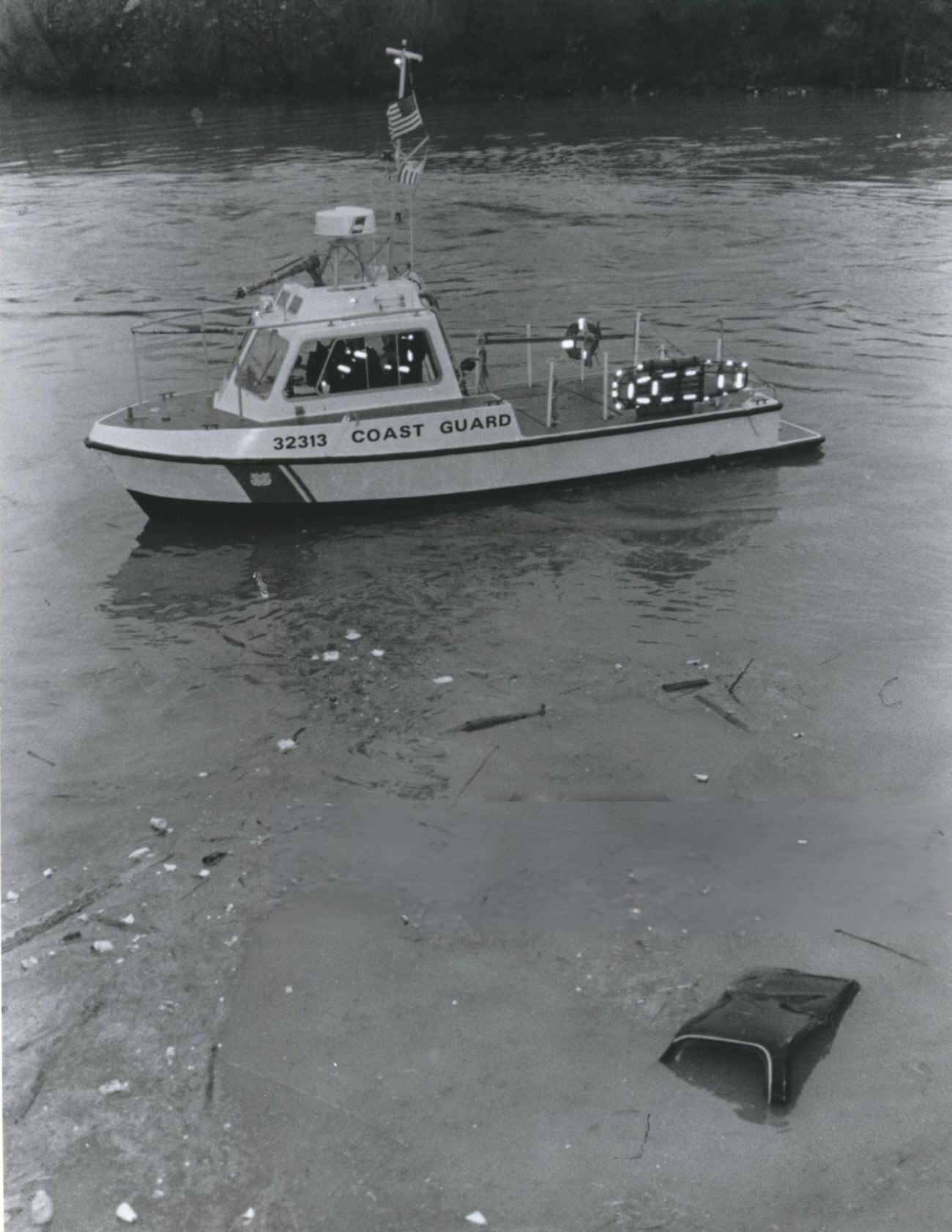
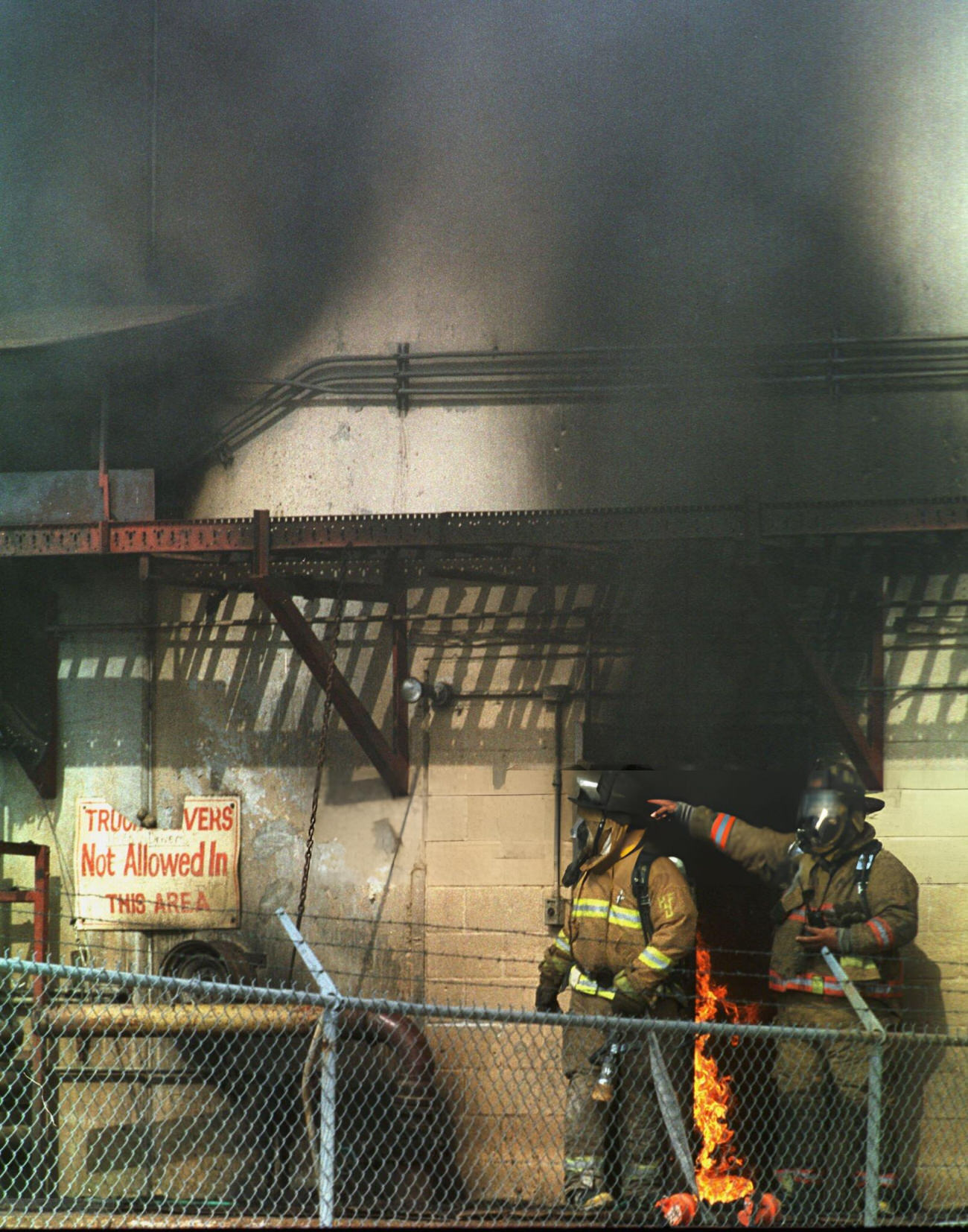
Not all of the decade’s stories were celebratory. A drug sting operation by undercover Pasadena police in 1999 ended in a shootout, killing two suspects. A fire at the Schoenhamm Produce warehouse drew Houston firefighters to a two-alarm blaze. A Coast Guard boat worked near a stolen car that had been found submerged in Buffalo Bayou. An earlier fire at the South Post Oak Glass Company consumed the old building’s timber frame. These images show that Houston’s 1990s, like those of any large American city, carried a full weight of crime, disaster, and emergency.
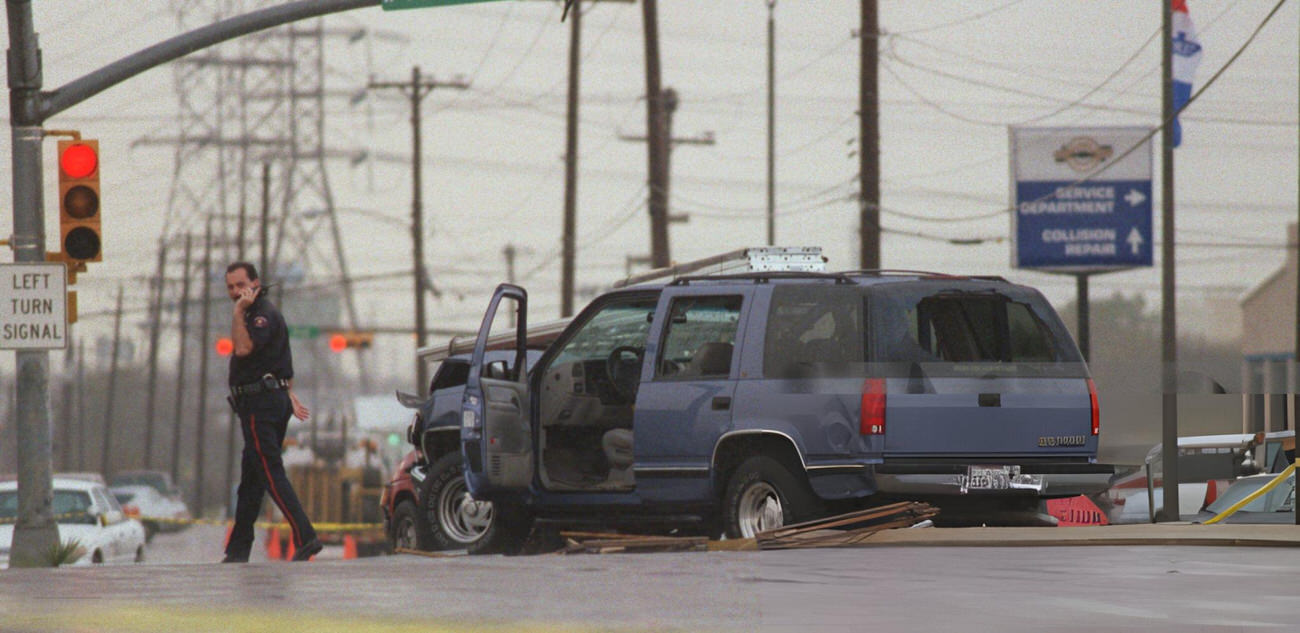
Undercover Pasadena police engage in a shootout during a drug sting, resulting in two suspects dead, Pasadena, Texas, 1999.
Houston firefighters battle a 2-alarm fire at Schoenhamm Produce warehouse, Houston, Texas, 1999.
Firefighters combat a blaze at the defunct South Post Oak Glass Company, highlighting old timbers and debris burning, Houston.
A Coast Guard boat near a surfaced stolen car in Buffalo Bayou highlights the unexpected discoveries in urban waterways, Houston, Texas.

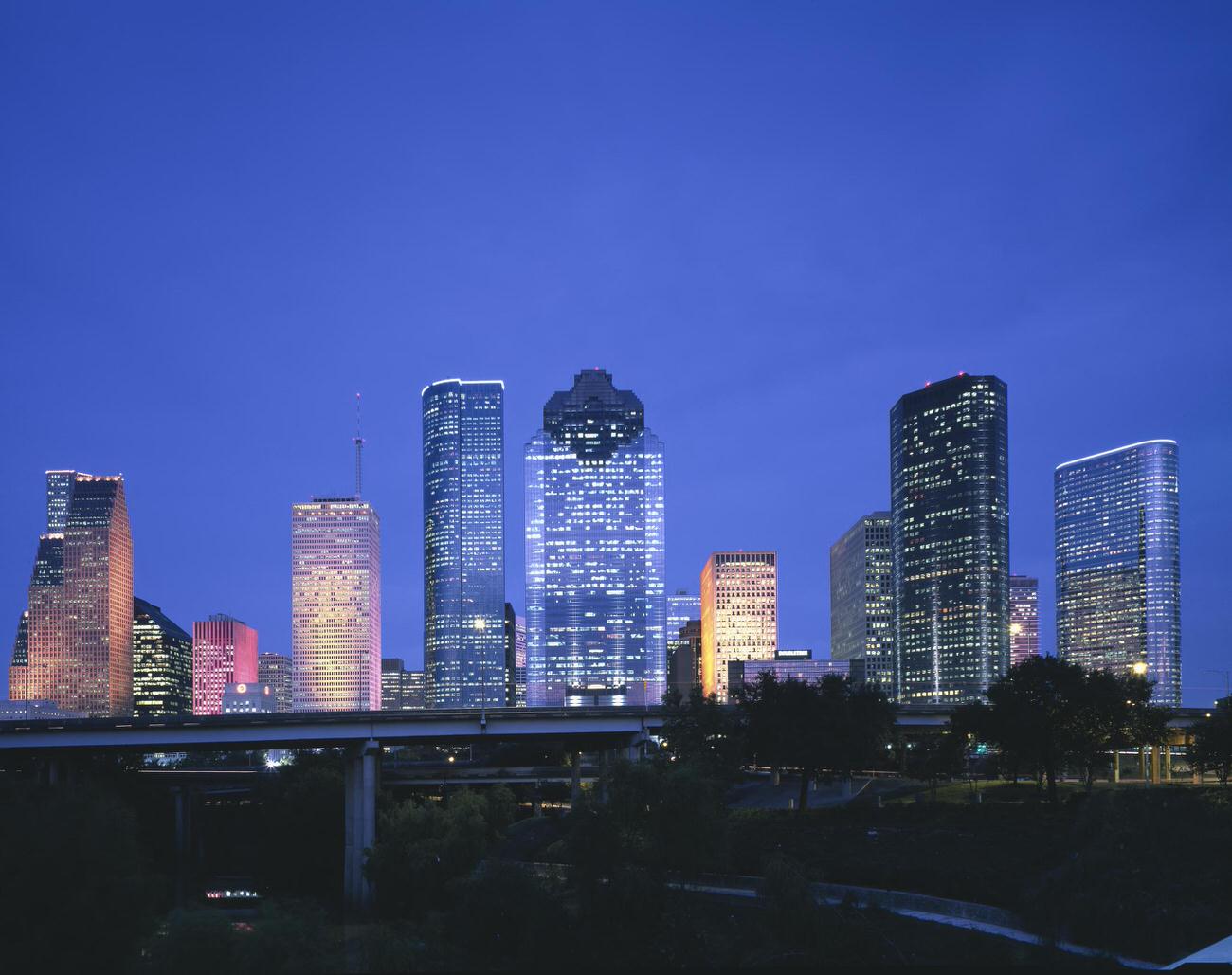
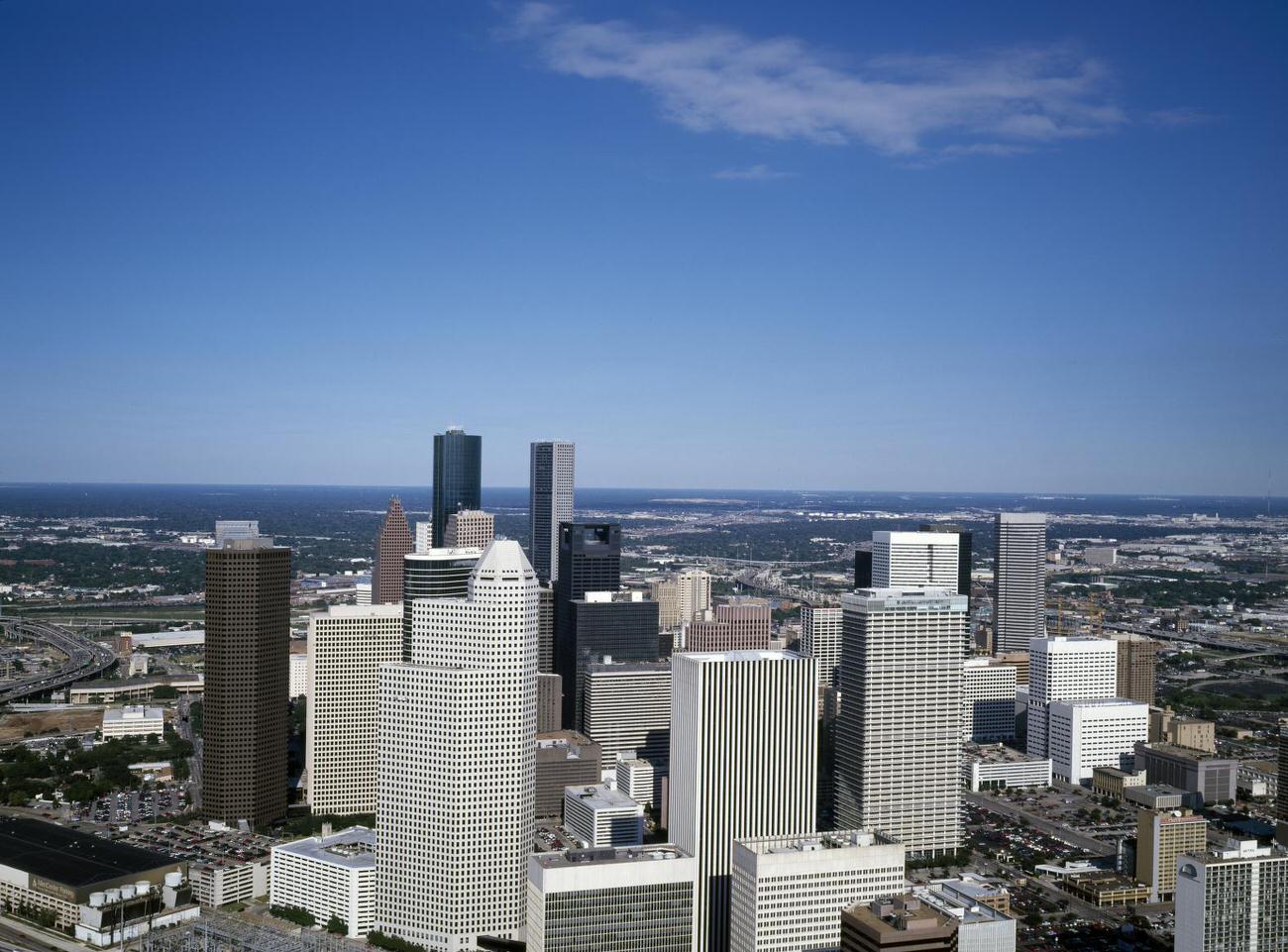
The Houston skyline, viewed from different vantage points across the decade, told the story of a city accumulating ambition in concrete and steel. From the White Oak bridge at dusk, from aerial shots above the Medical Center, from Sam Houston Park — each angle added a new layer to a portrait that was always changing and never quite finished.
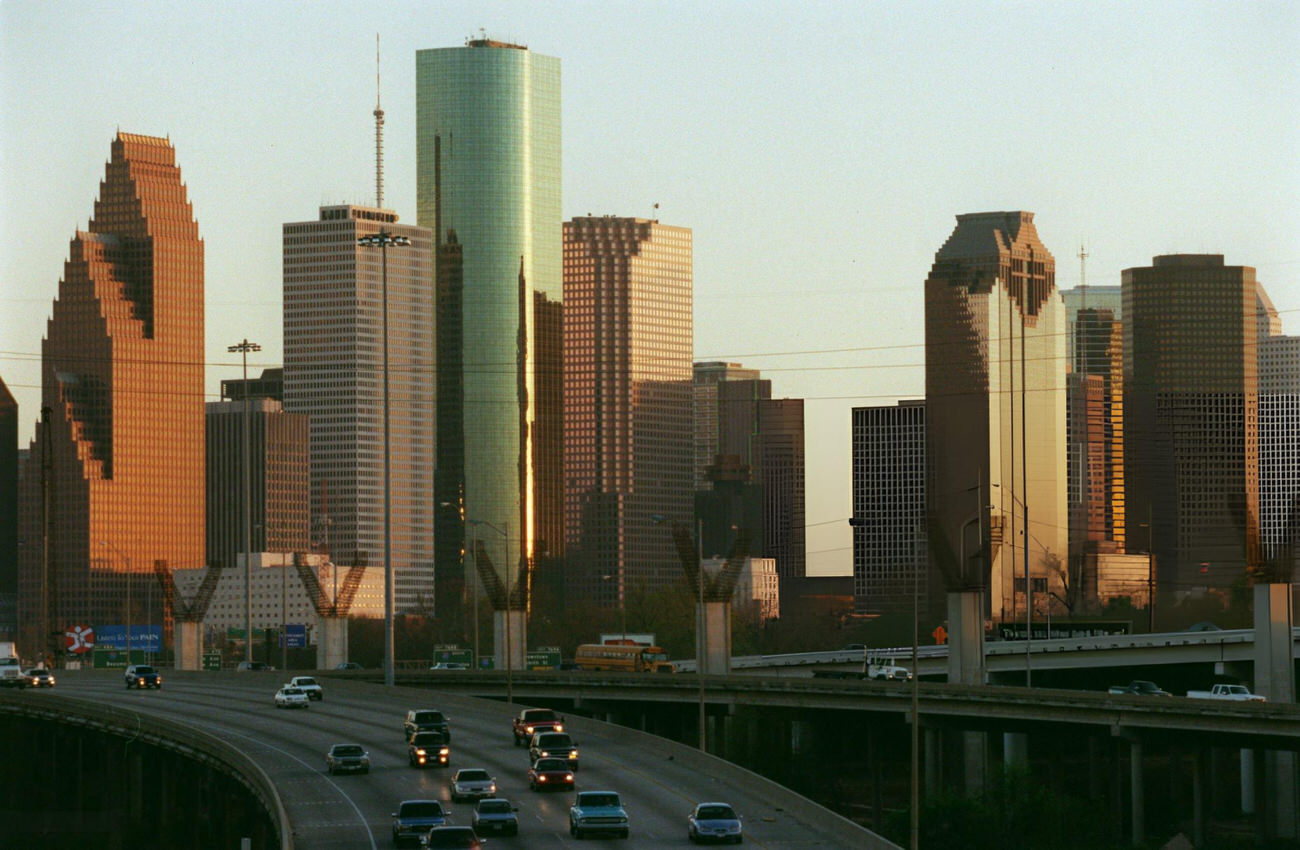
Houston skyline viewed from White Oak bridge in the evening light, Houston, Texas, 1999.
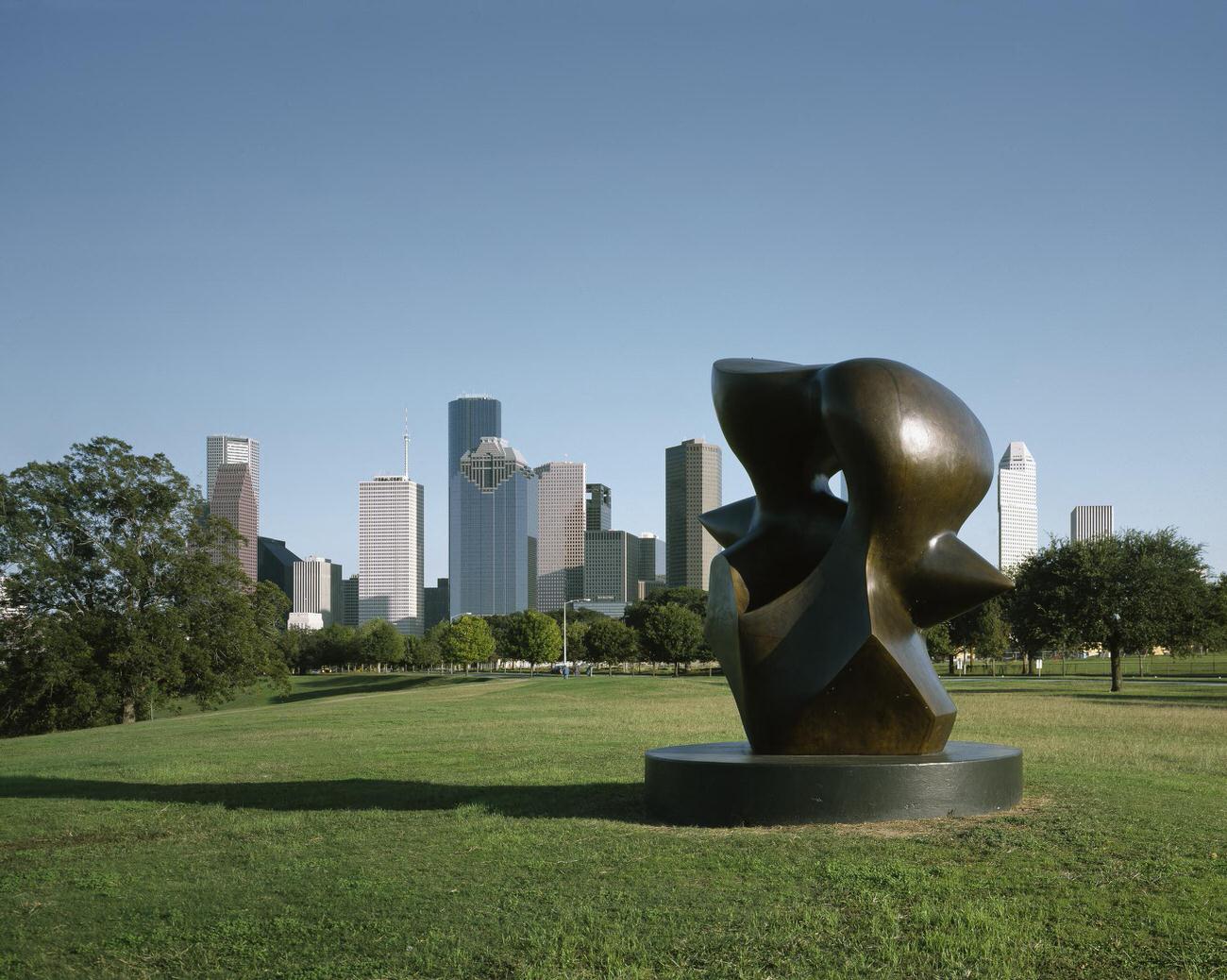
Skyline of Houston, Texas, 1990s
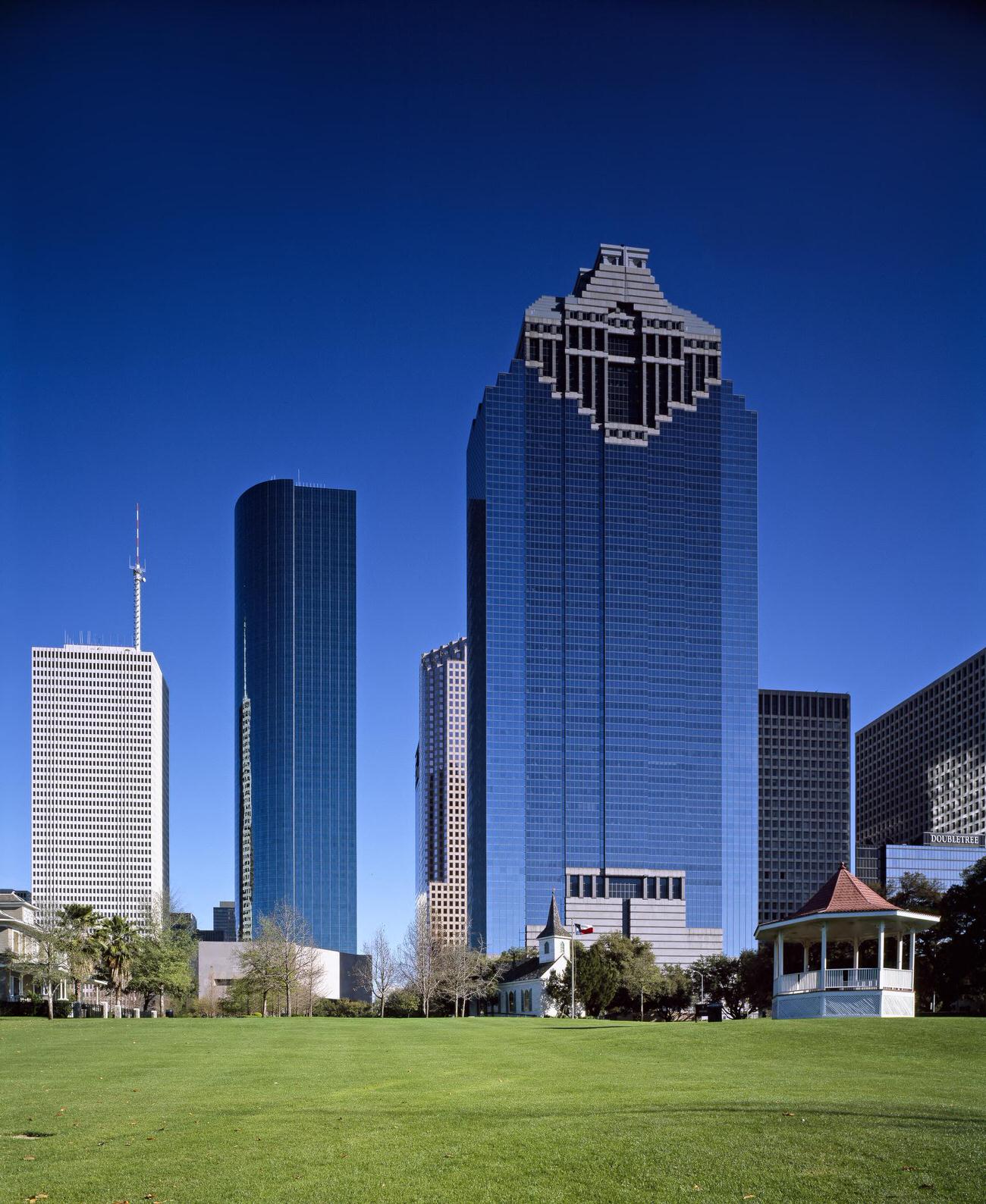
Skyline from Sam Houston Park in Houston, 1990s
Aerial view of Houston, Texas, with downtown in the distance, 1990s

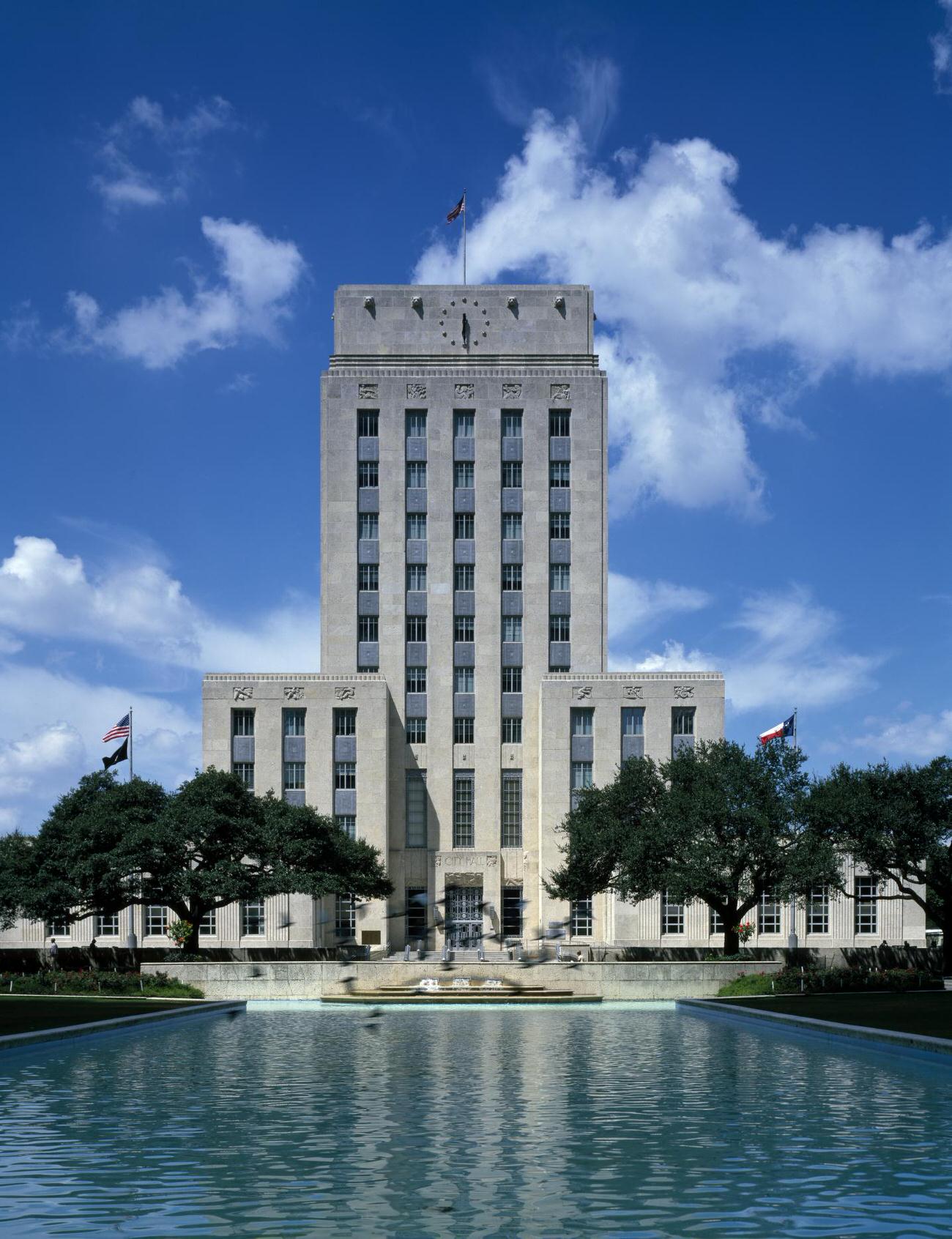
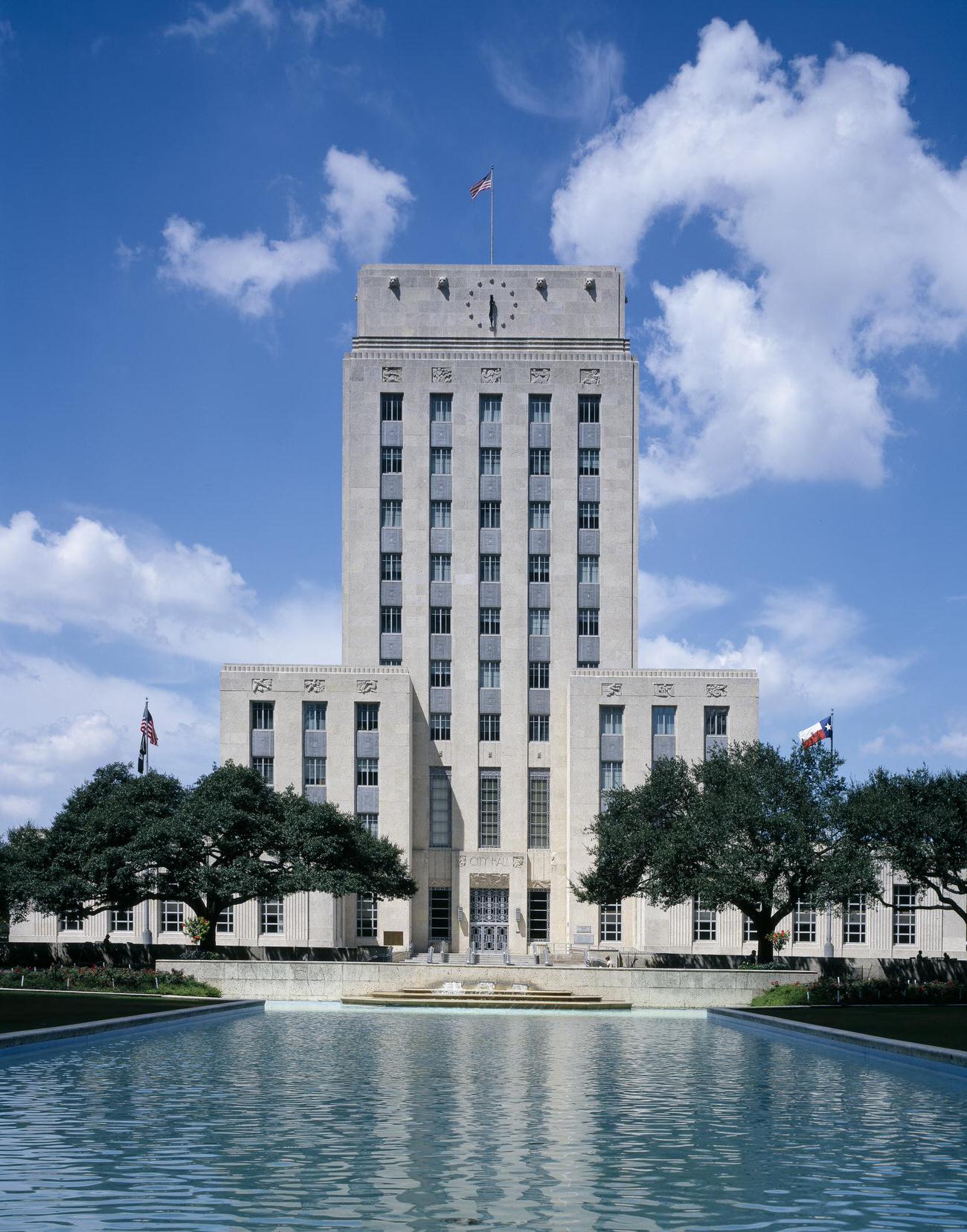
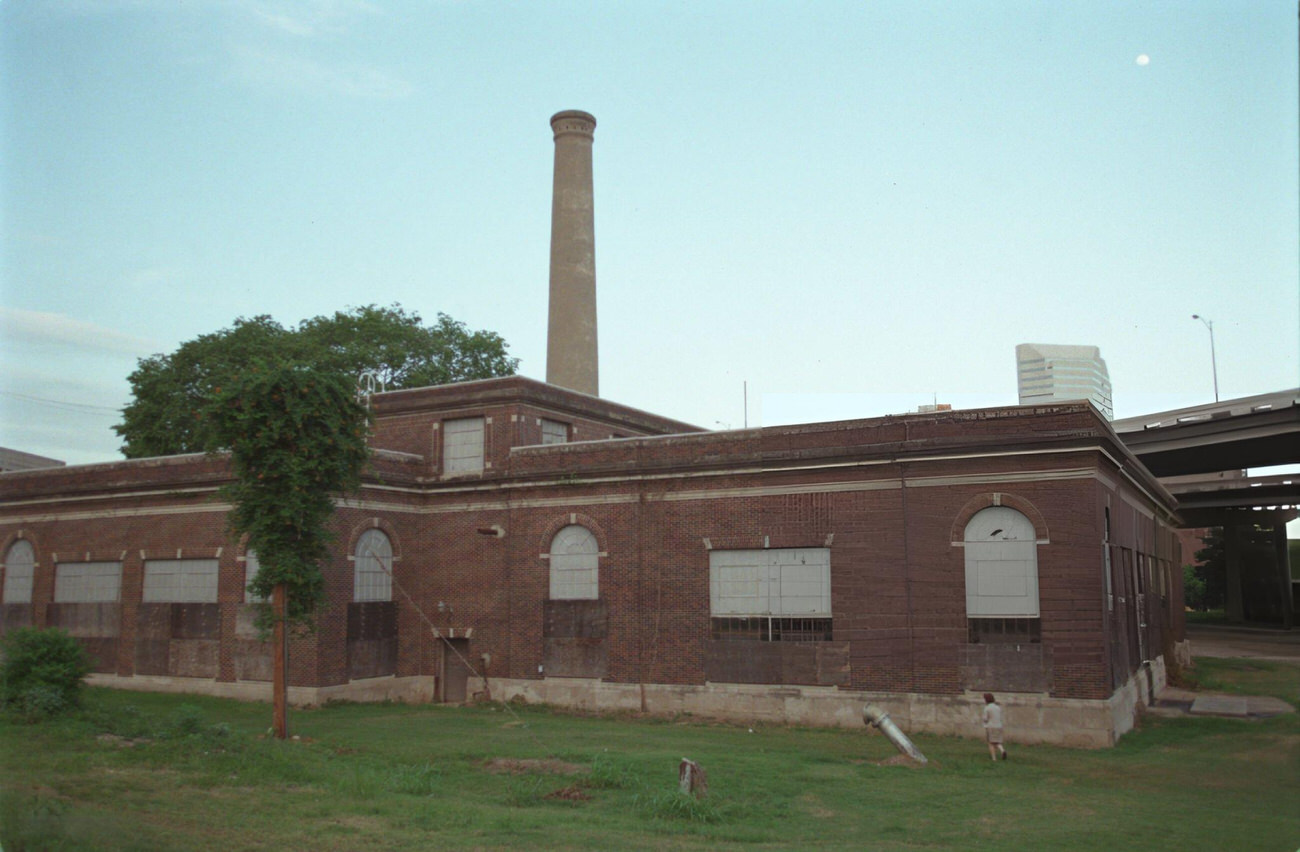
Houston City Hall anchored the civic center, surrounded by a city that was simultaneously tearing down its past and building something new. Historic structures like the Old Central Waterworks were being slated for redevelopment. One of the few remaining old office buildings downtown stood in contrast to the glass towers that had replaced most of its neighbors. Buffalo Bayou Park wound through it all, a green thread connecting neighborhoods that the city was only beginning to stitch back together.
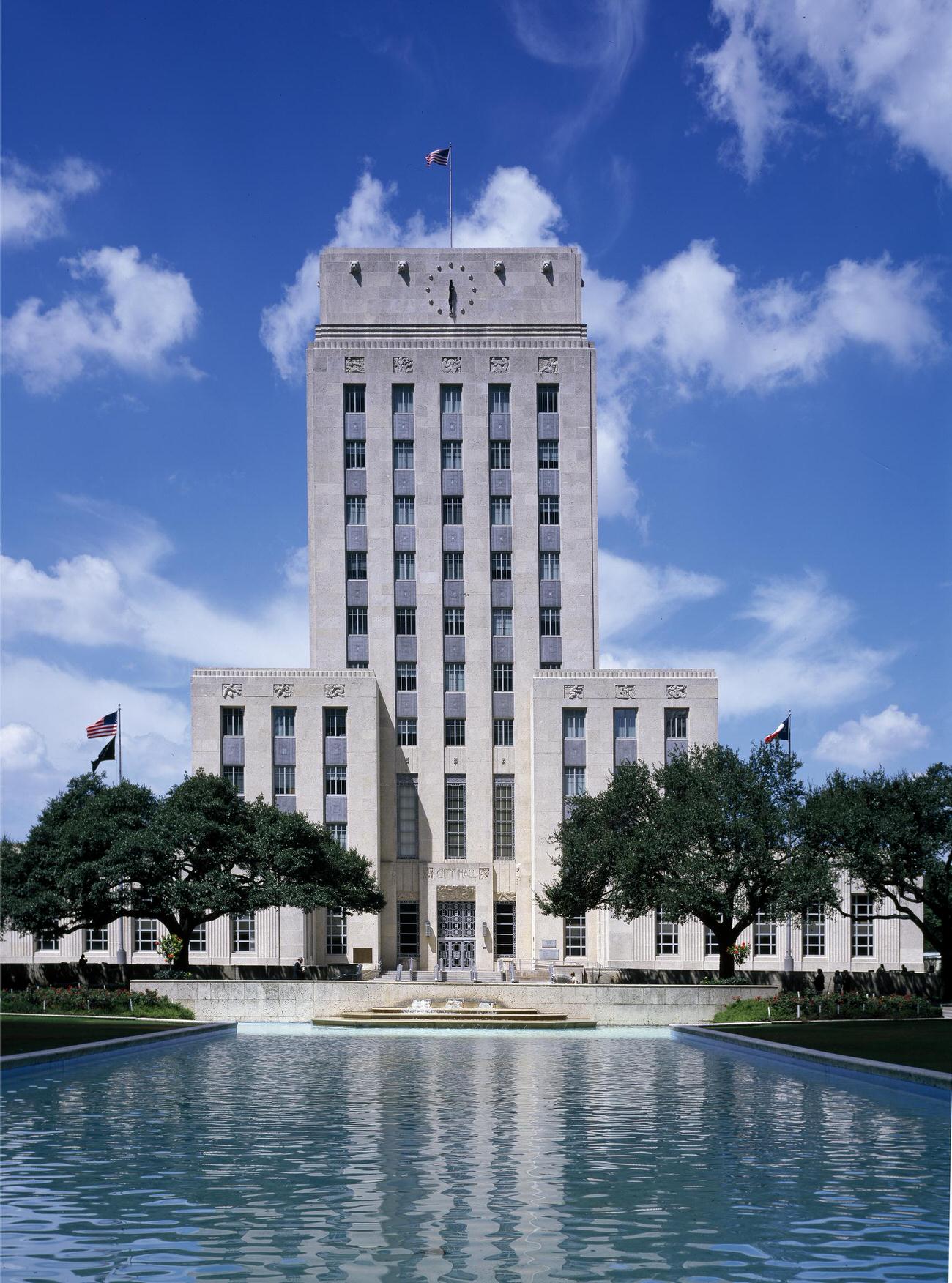
City Hall in Houston, Texas, 1990s
The Old Central Waterworks slated for redevelopment, Houston, Texas, 1999.
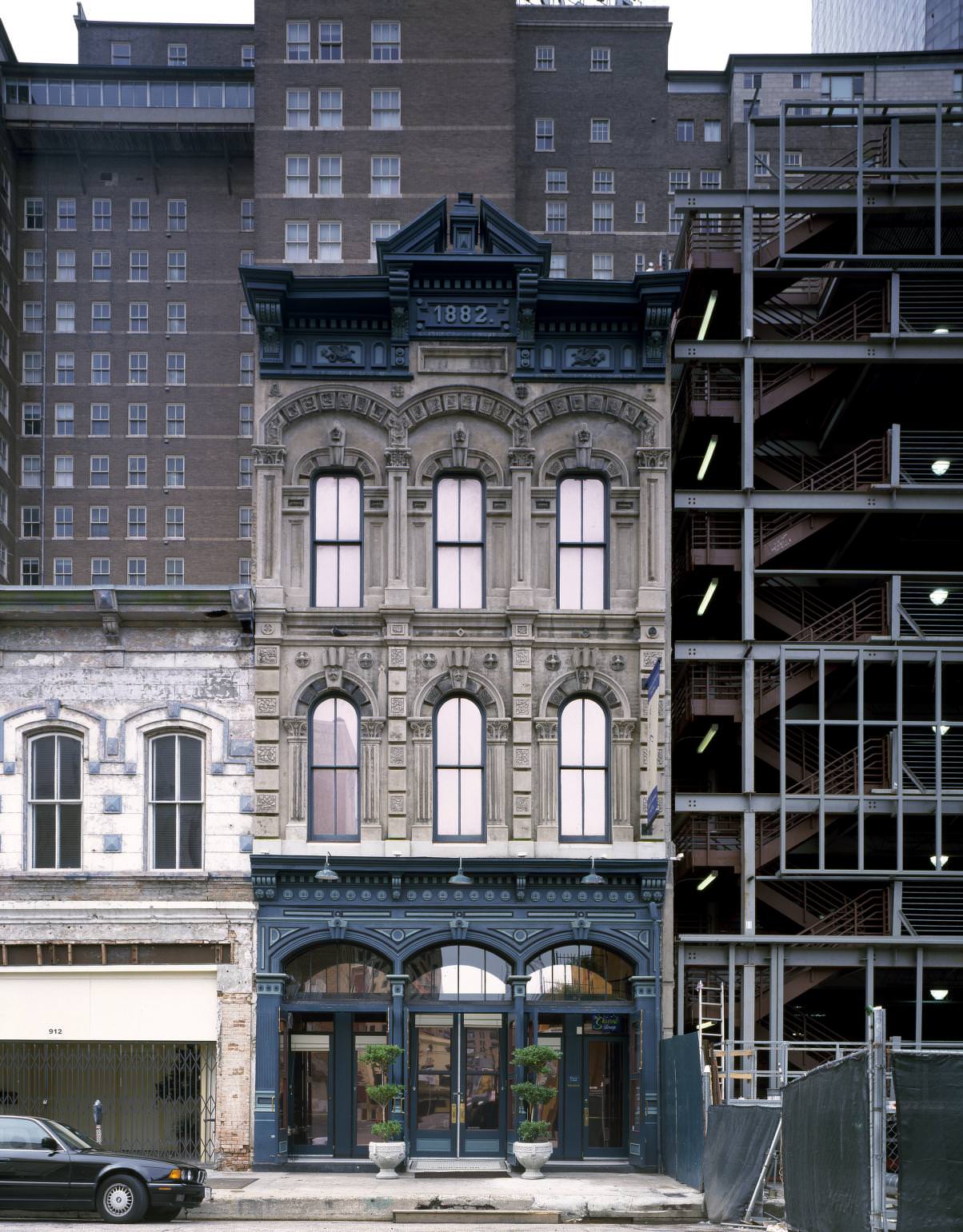
One of the few remaining old office buildings in modern Houston, 1990s
Buffalo Bayou Park in Houston, Texas, 1990s

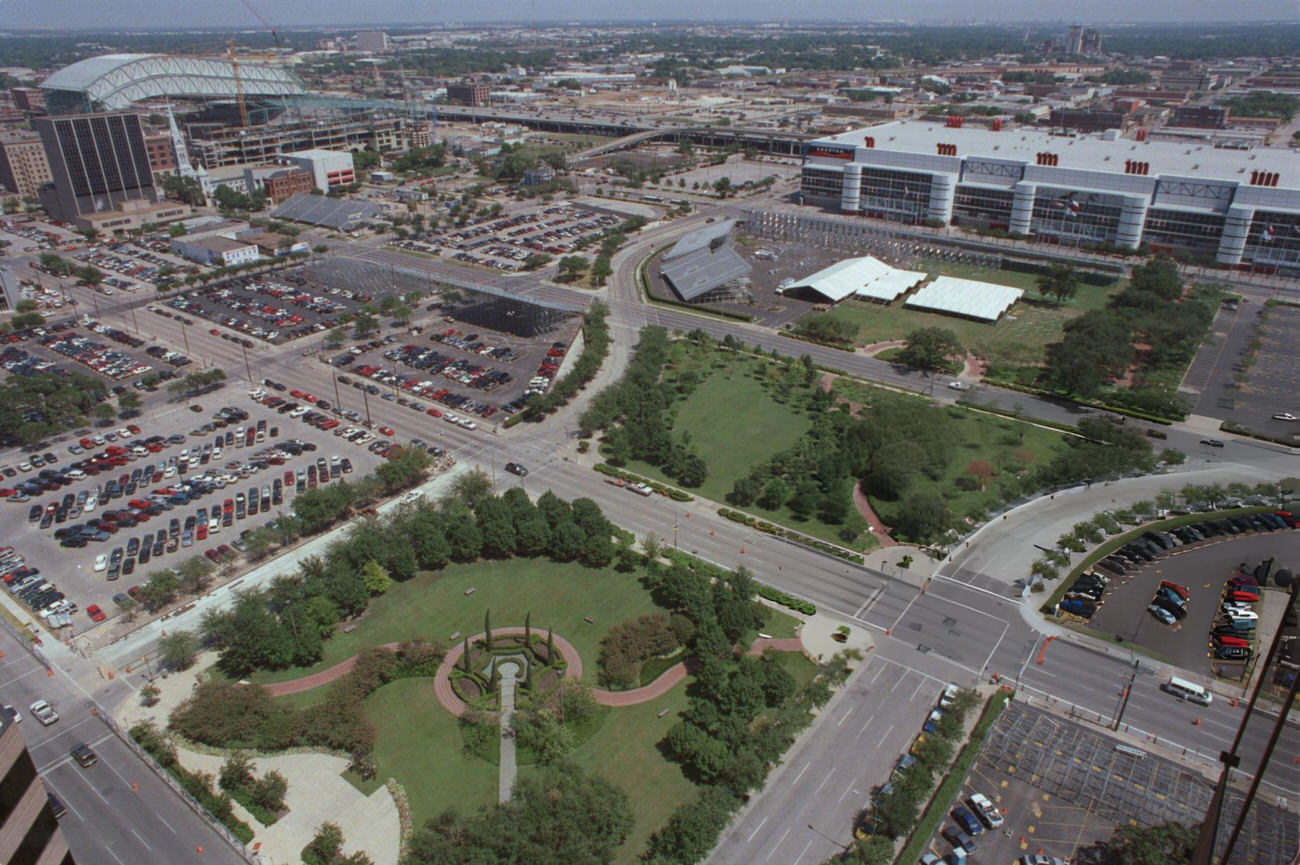
The George R. Brown Convention Center, opened in 1987, was a fixture of Houston’s growing events calendar by the 1990s. It hosted everything from trade shows to political conventions, and by 1999, it sat adjacent to the rising Enron Field construction site — two buildings side by side representing two very different chapters in the city’s story.
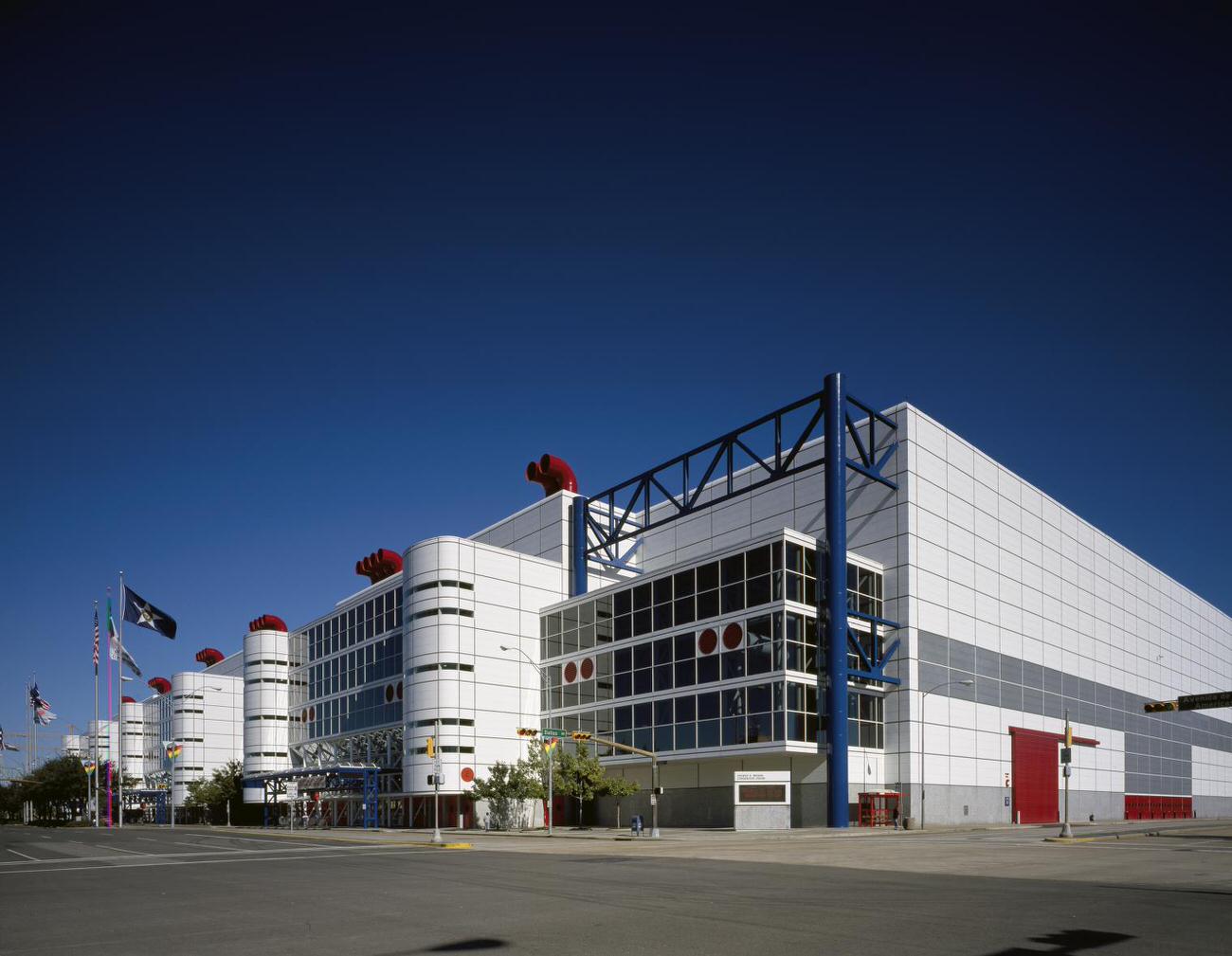
George R. Brown Convention Center in Houston, Texas, 1990s
Aerial view of downtown near George R. Brown convention center and Enron Field, Houston, Texas, 1999.

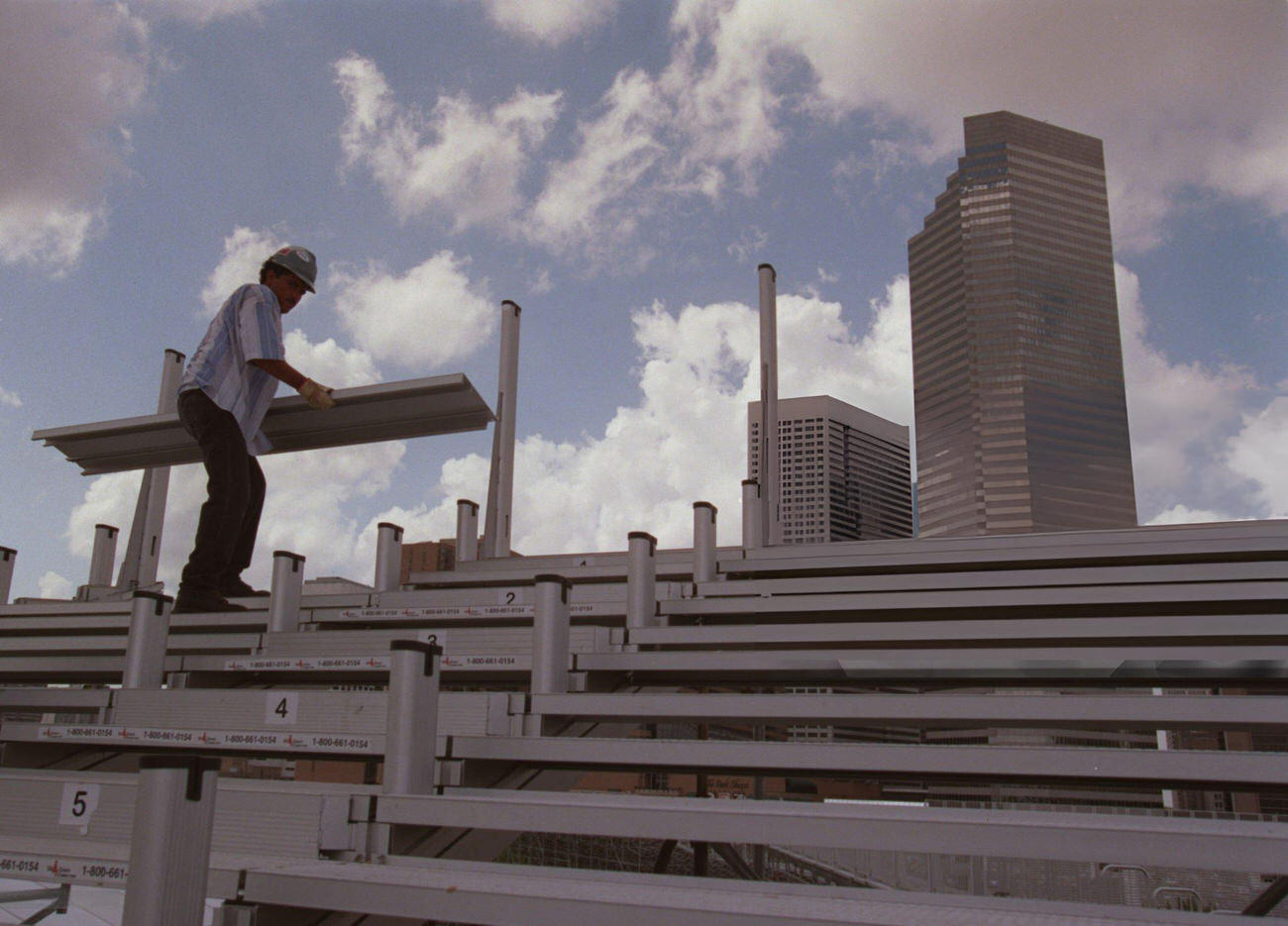
Racing came to Houston’s downtown streets in 1998 and 1999 with the CART Grand Prix. Juan Montoya, who would go on to win the Indianapolis 500 and compete in Formula One, qualified on the urban circuit with the Houston skyline as a backdrop. The Texaco Grand Prix drew international attention and added motorsport to the city’s already wide sporting calendar.
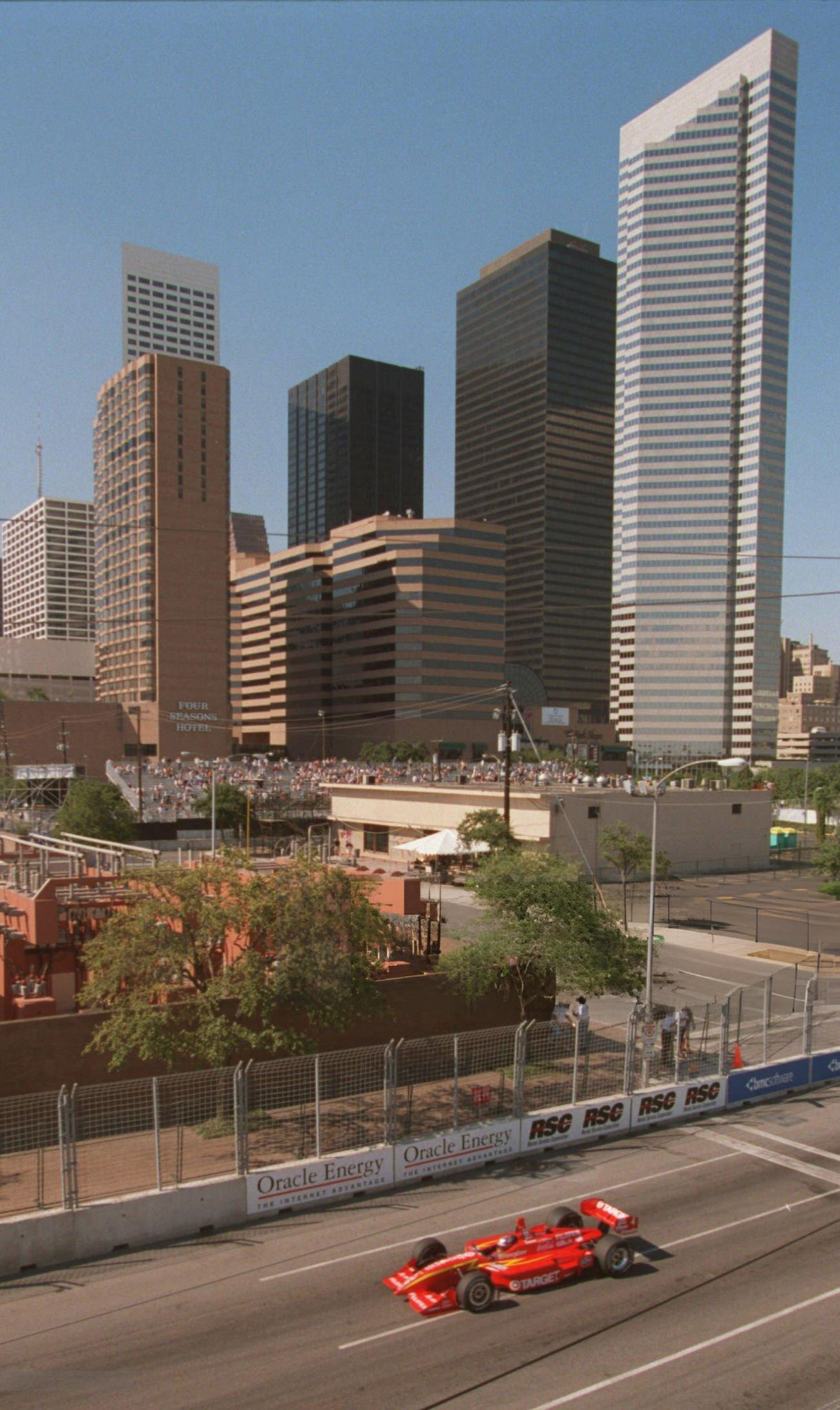
Juan Montoya races past the downtown skyline during CART qualifying, Houston, Texas, 1999.
Jaime DelaFuente dismantles scaffolding from the Texaco Grand Prix at the George R. Brown Convention Center, Houston, Texas, 1998.

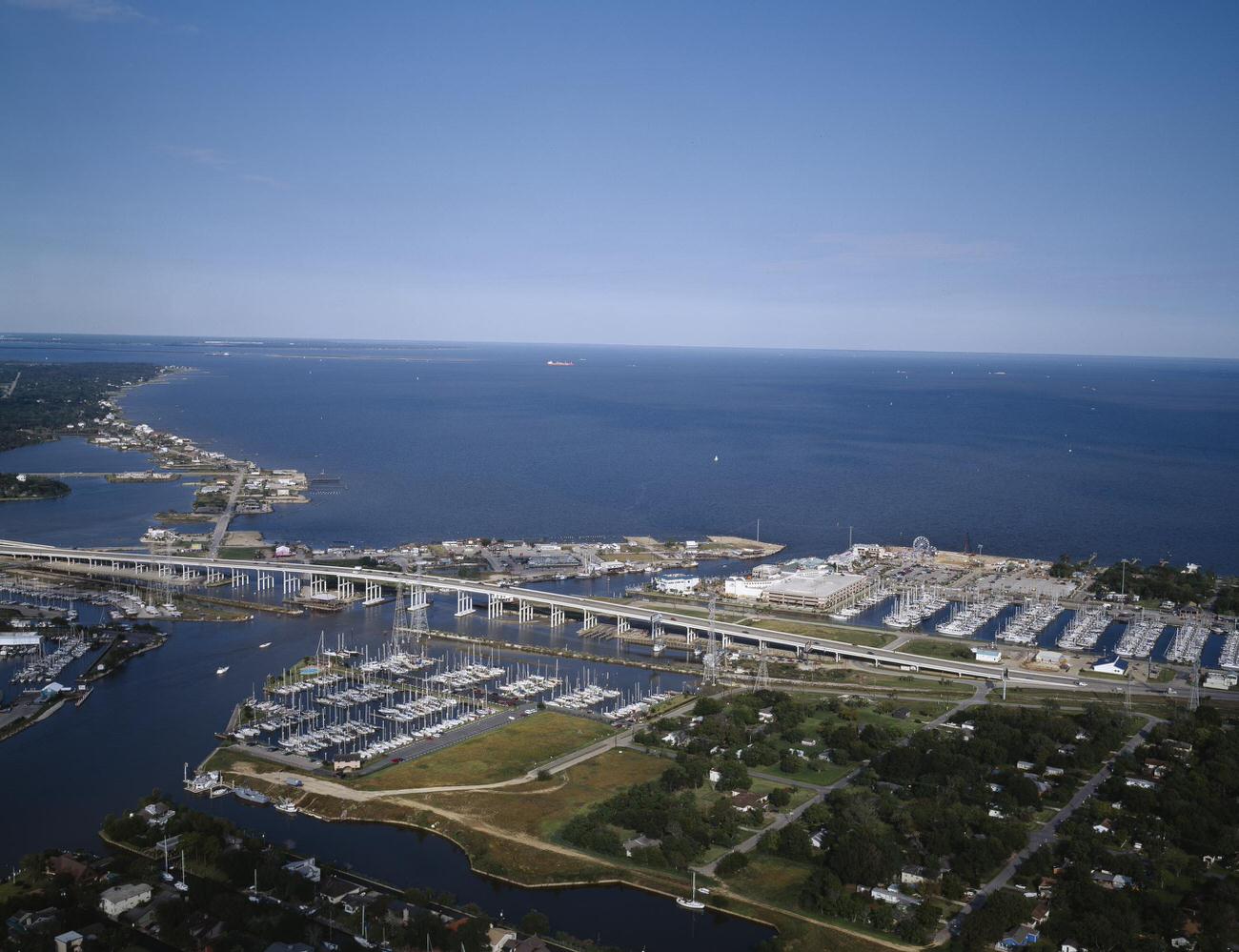
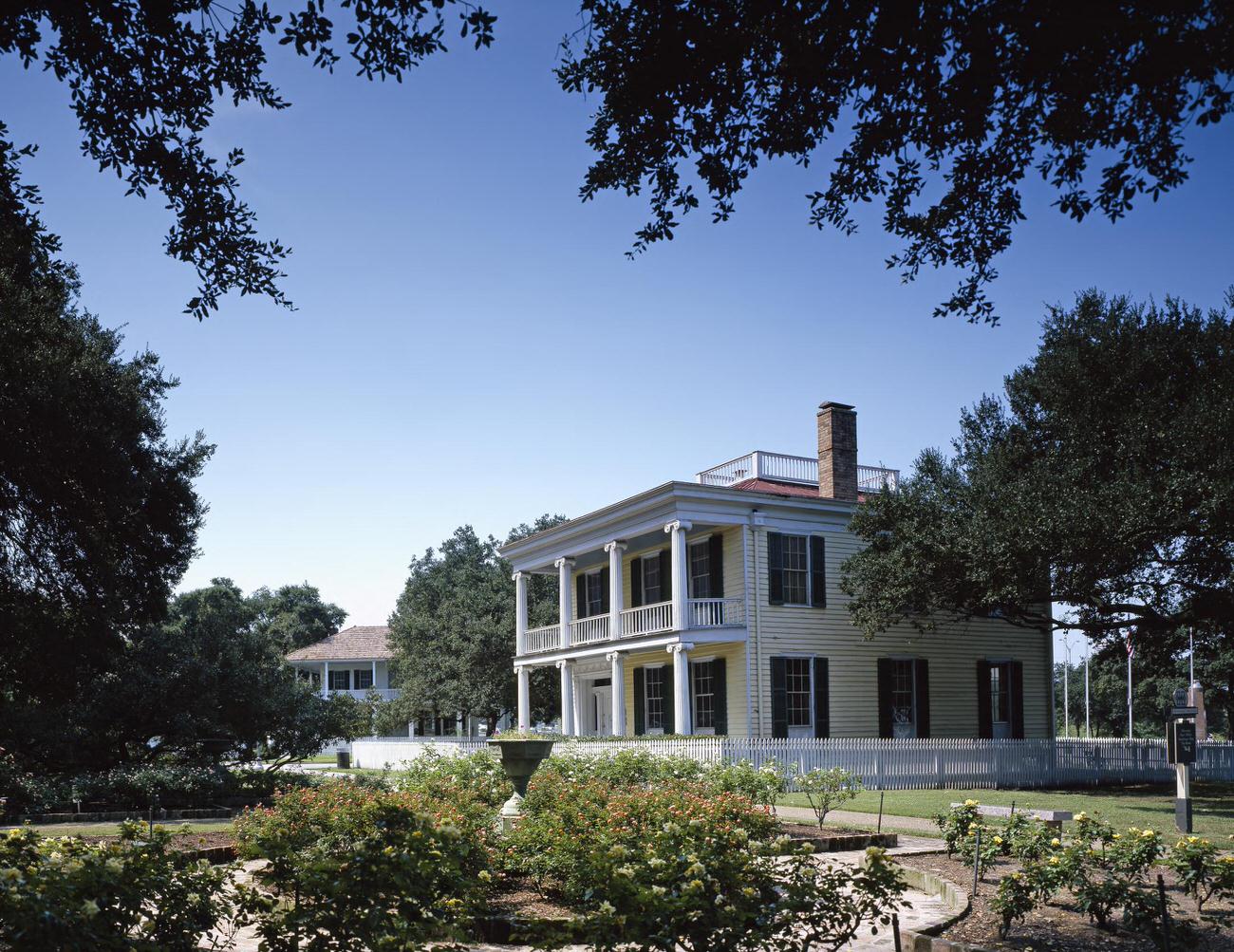
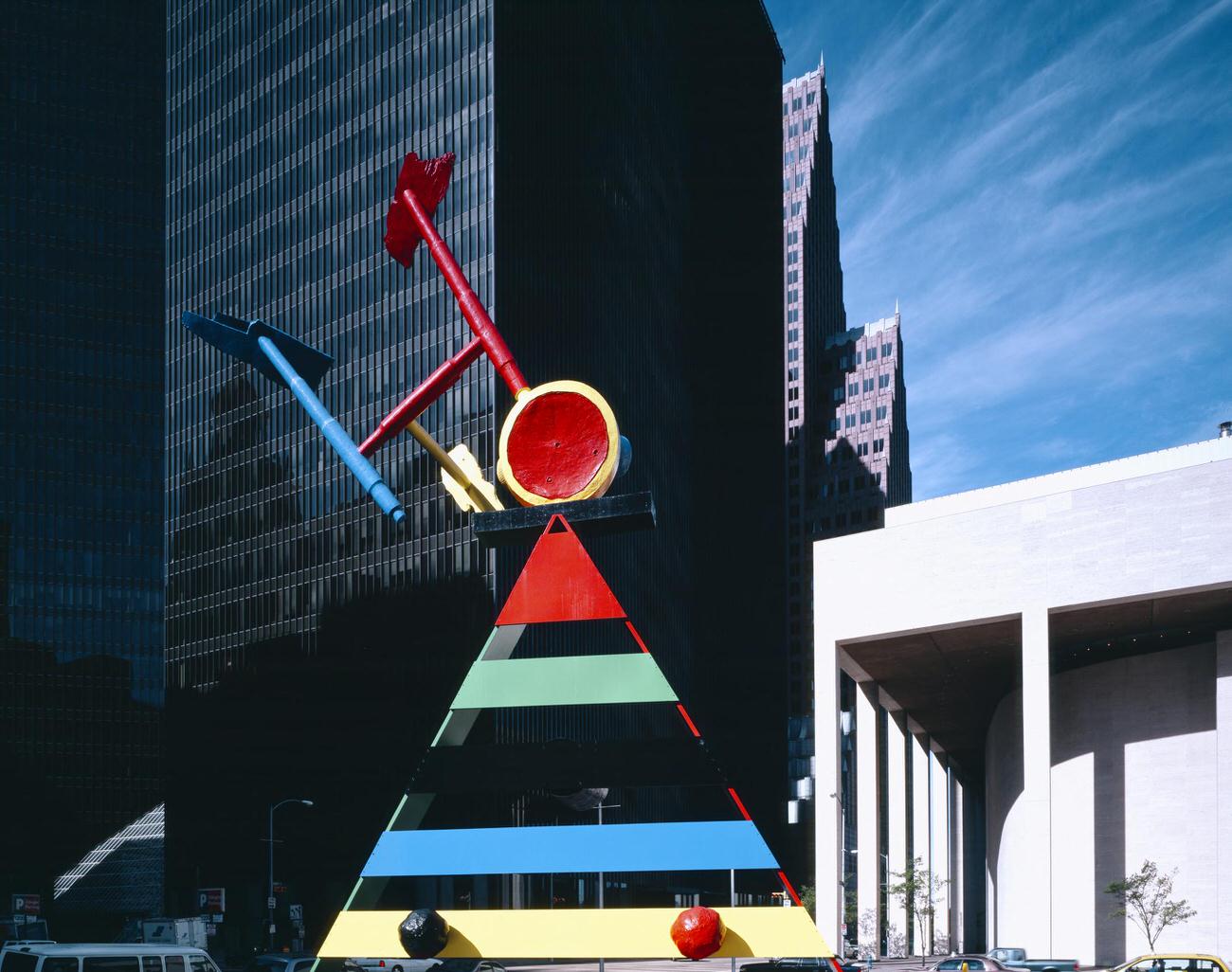
Houston’s quirks were part of its character. The Beer Can House in one of the city’s inner neighborhoods — covered entirely in flattened beer cans — became a beloved oddity. Joan Miró’s sculpture “Personage and Birds” stood in the downtown streetscape, a splash of color and surrealism in a city more often associated with oil rigs and highways. Clear Lake Marina offered quiet contrast to the city’s frenetic pace, and the Nichols-Rice-Cherry House in Sam Houston Park preserved a domestic scale from another era entirely.
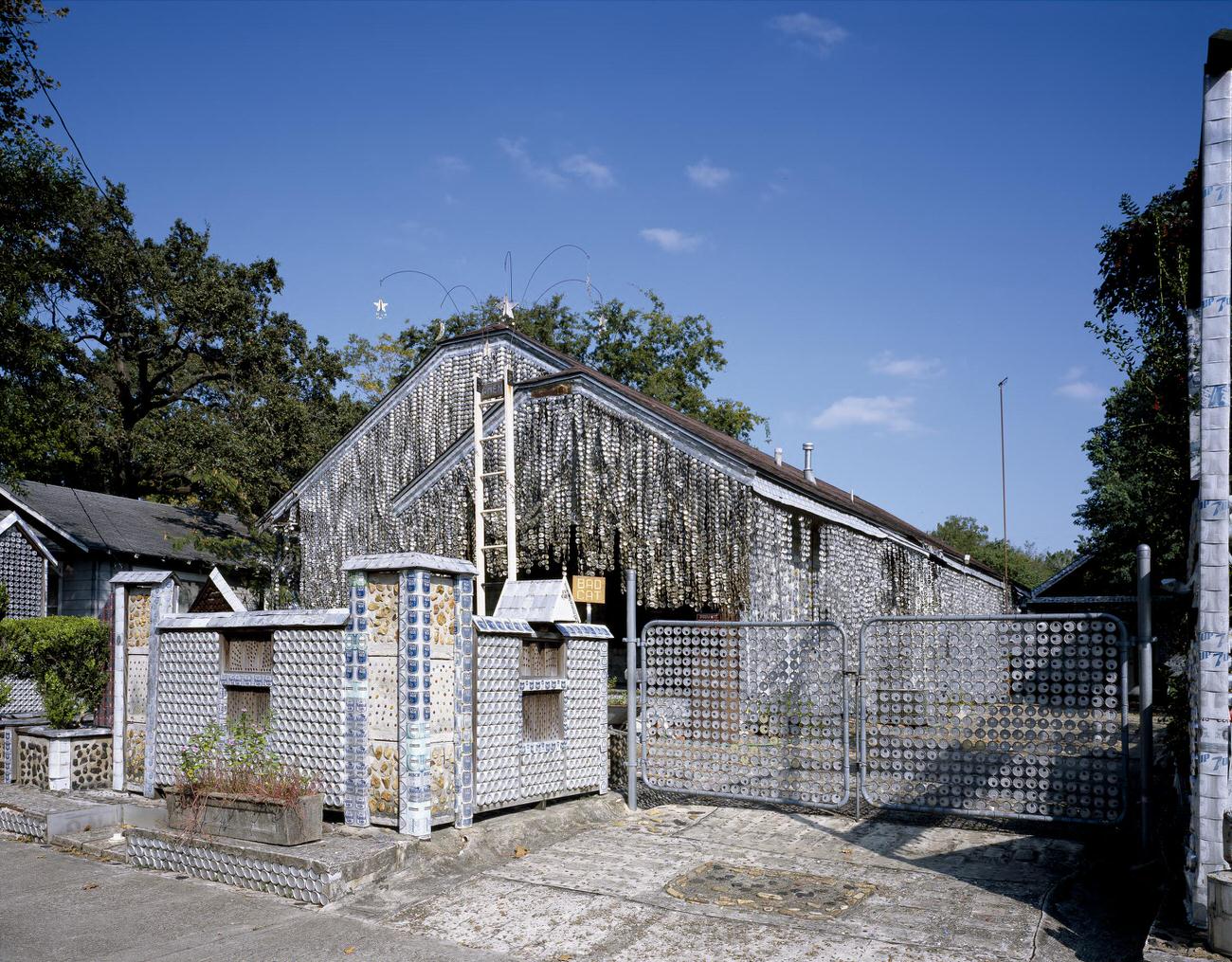
Quirky beer can house in Houston, Texas, 1990s
Joan Miro's sculpture 'Personage and Birds' in Houston, Texas, 1990s
Joan Miro’s sculpture ‘Personage and Birds’ in Houston, Texas, 1990s
Clear Lake Marina in Houston, Texas, 1990s
Nichols-Rice-Cherry house in Houston, 1990s

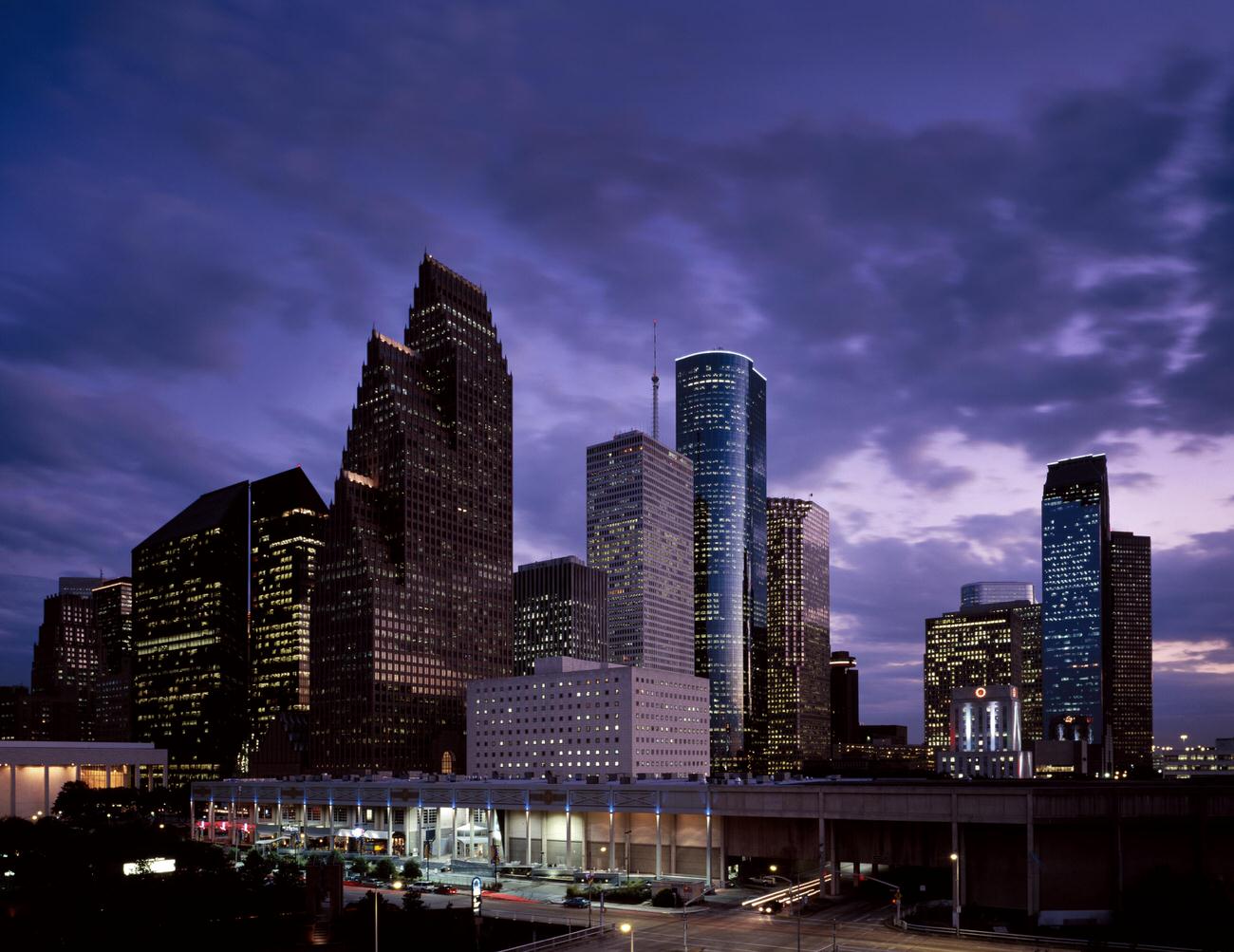
Older neighborhoods like the Sixth Ward held onto their historic wooden homes, many of them shotgun-style houses that dated back generations. Nearby, twilight settled over streets that had seen decades of change but still retained a neighborhood feel. These places existed in the same city as the glass towers and the suburban cul-de-sacs, a reminder that Houston was never just one thing.
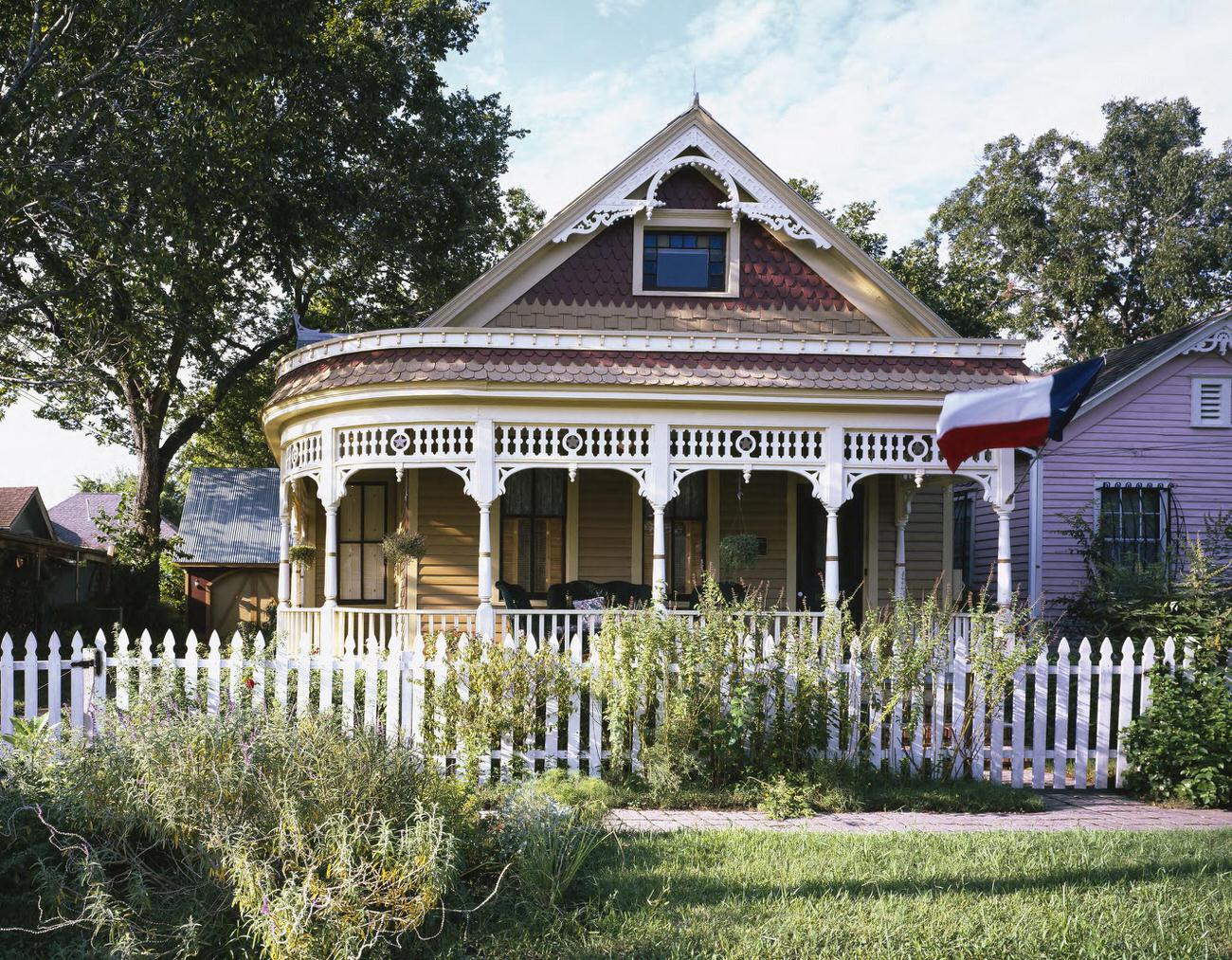
Home in the 6th Ward of Houston, Texas, 1990s
Twilight scene in Houston, Texas, 1990s

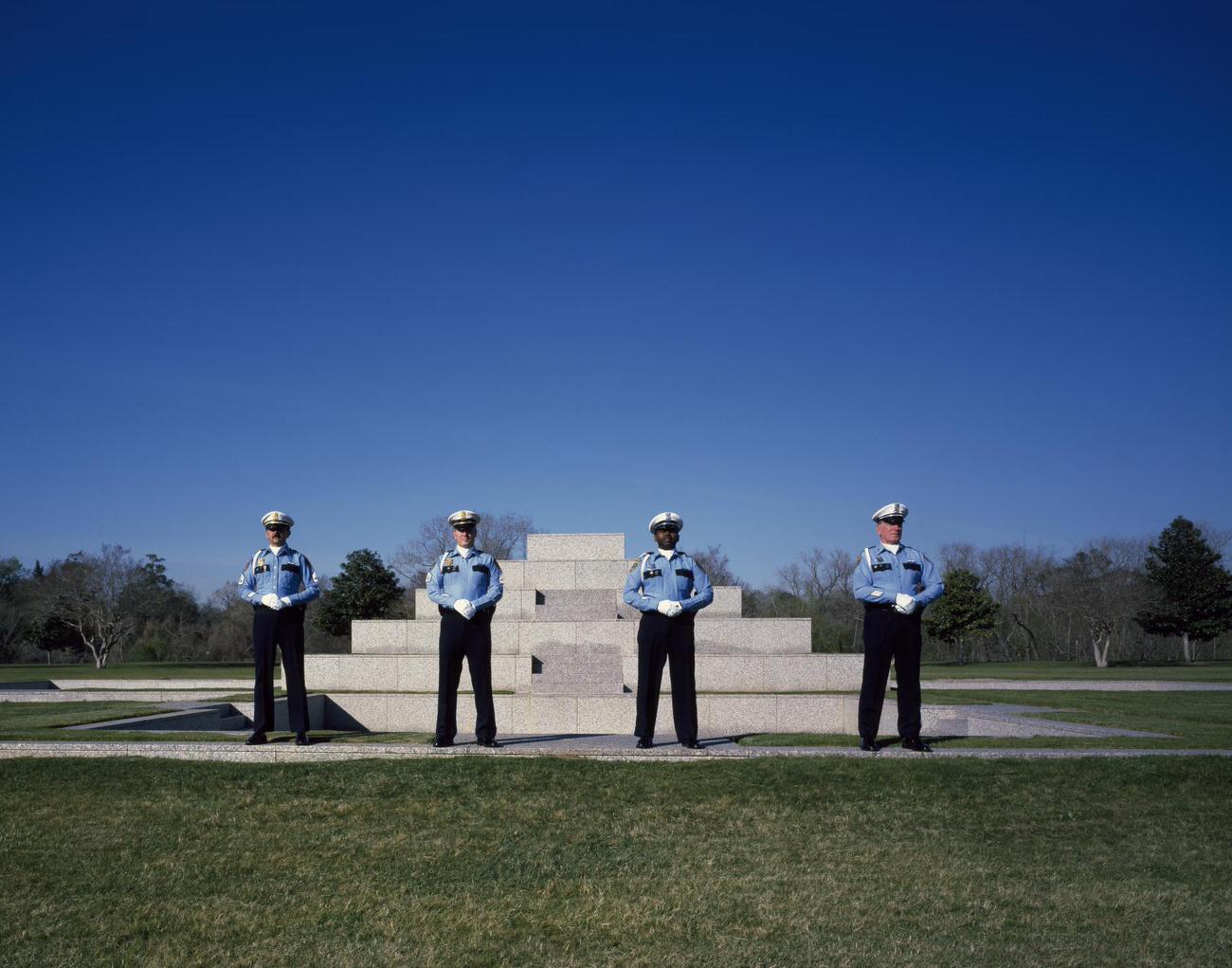
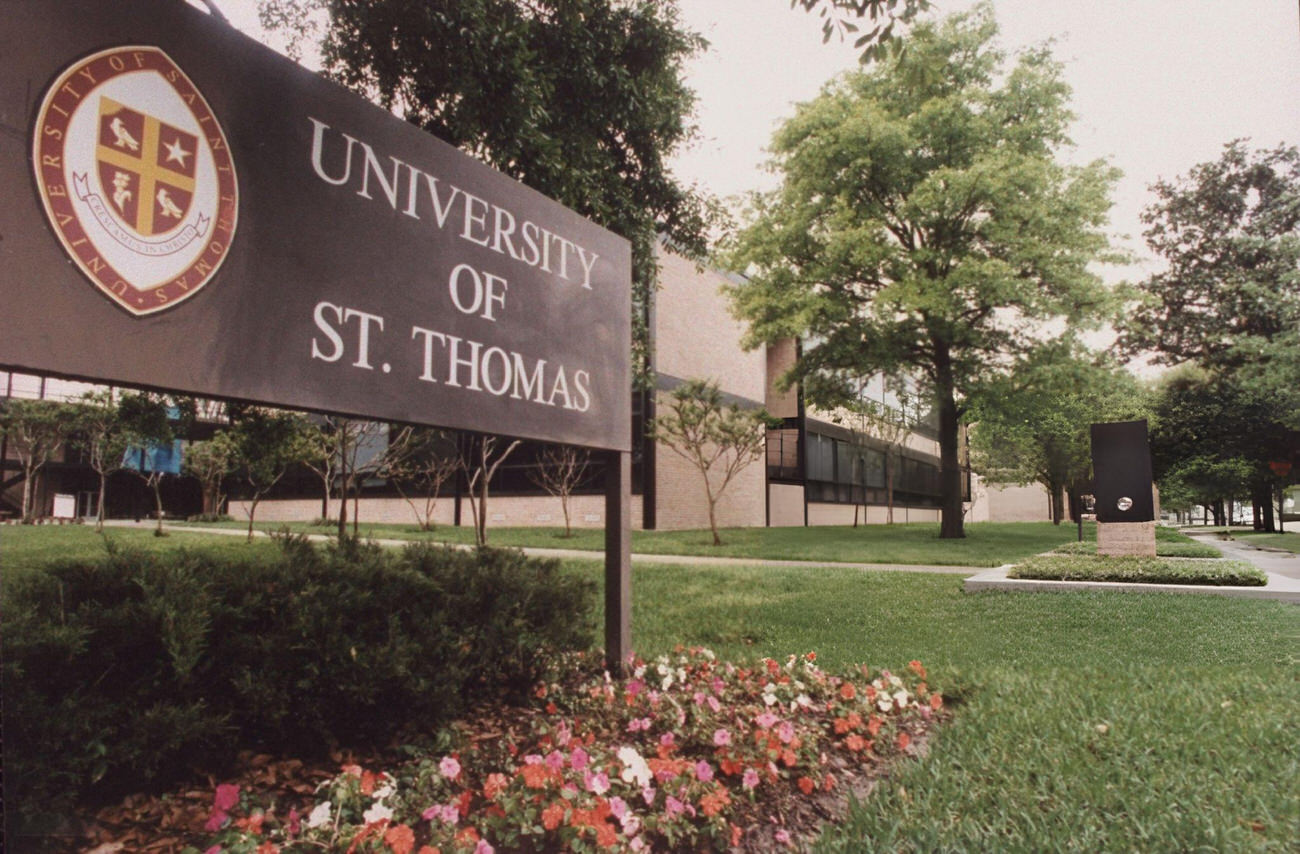
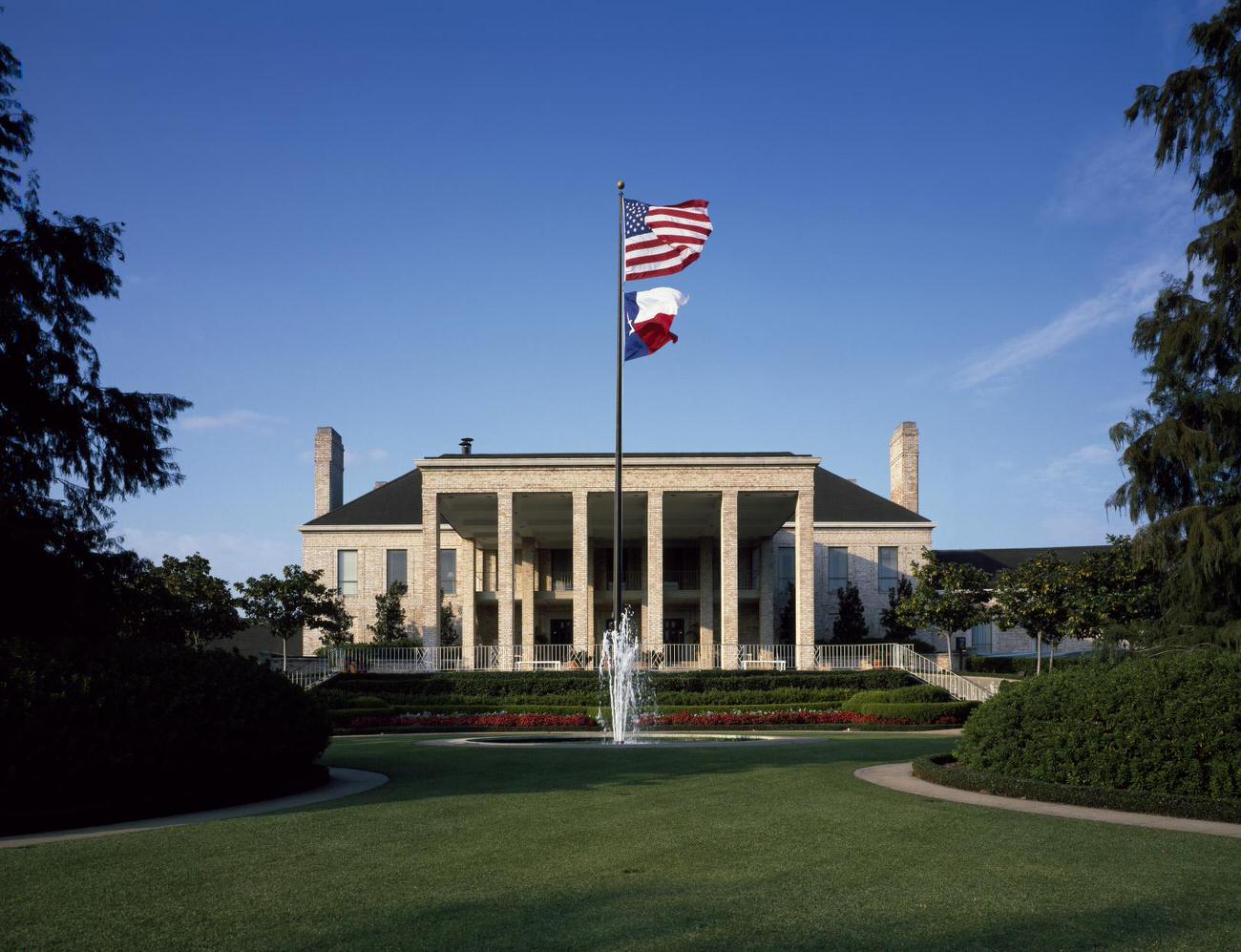
Polo at Ranch Polo in 1997, a country club on a quiet afternoon, the police memorial standing in tribute to fallen officers — these images round out a picture of a city with established wealth alongside civic grief, with leisure alongside loss. Marshall Herff Applewhite, the Heaven’s Gate cult leader, had ties to the University of St. Thomas in Houston before his path took a darker turn — a detail that places even infamy within the city’s boundaries.
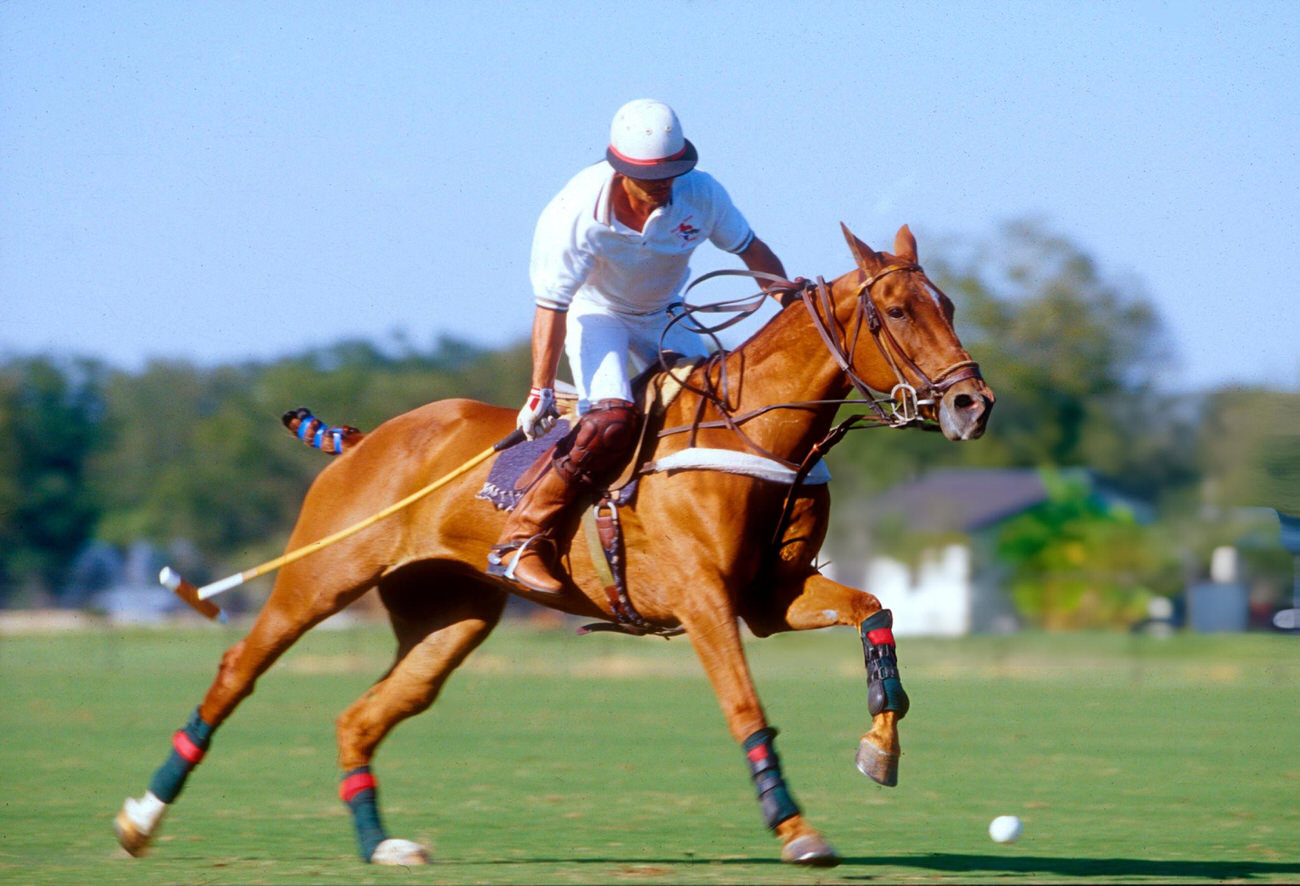
A high-goal player at Ranch Polo in 1997 showcases the sporting and cultural dimensions of polo, reflecting the diverse interests within Houston, Texas.
Country club in Houston, Texas, 1990s
Police memorial in Houston, Texas, 1990s
The University of St. Thomas's connection to Marshall Herff Applewhite, a cult leader, in 1997, raises questions about the influence of educational backgrounds on individuals' paths to infamy, Texas.
The University of St. Thomas’s connection to Marshall Herff Applewhite, a cult leader, in 1997, raises questions about the influence of educational backgrounds on individuals’ paths to infamy, Texas.

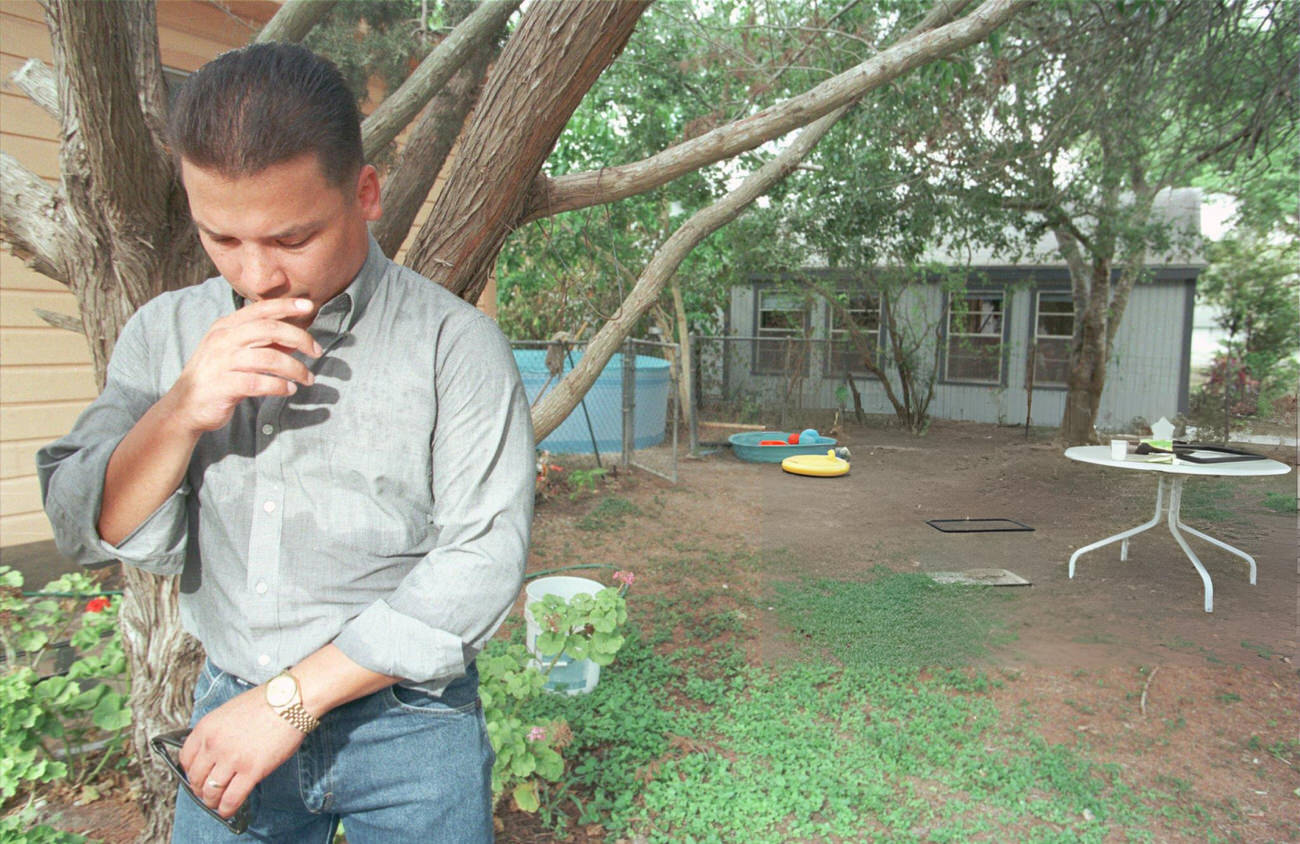
Some of the decade’s stories were deeply personal. Christy Pollard, a fifteen-year-old mother, walked with her infant son Jonathan and boyfriend after school — a single frame that held an entire life inside it. Army Sgt. Daniel Morin spoke publicly about a family shooting in Harlingen. Teresa Rodriguez lost her townhouse to IRS seizure in a government fraud scandal involving minority business aid programs. These moments, photographed and preserved, show the human cost of the forces shaping the city.
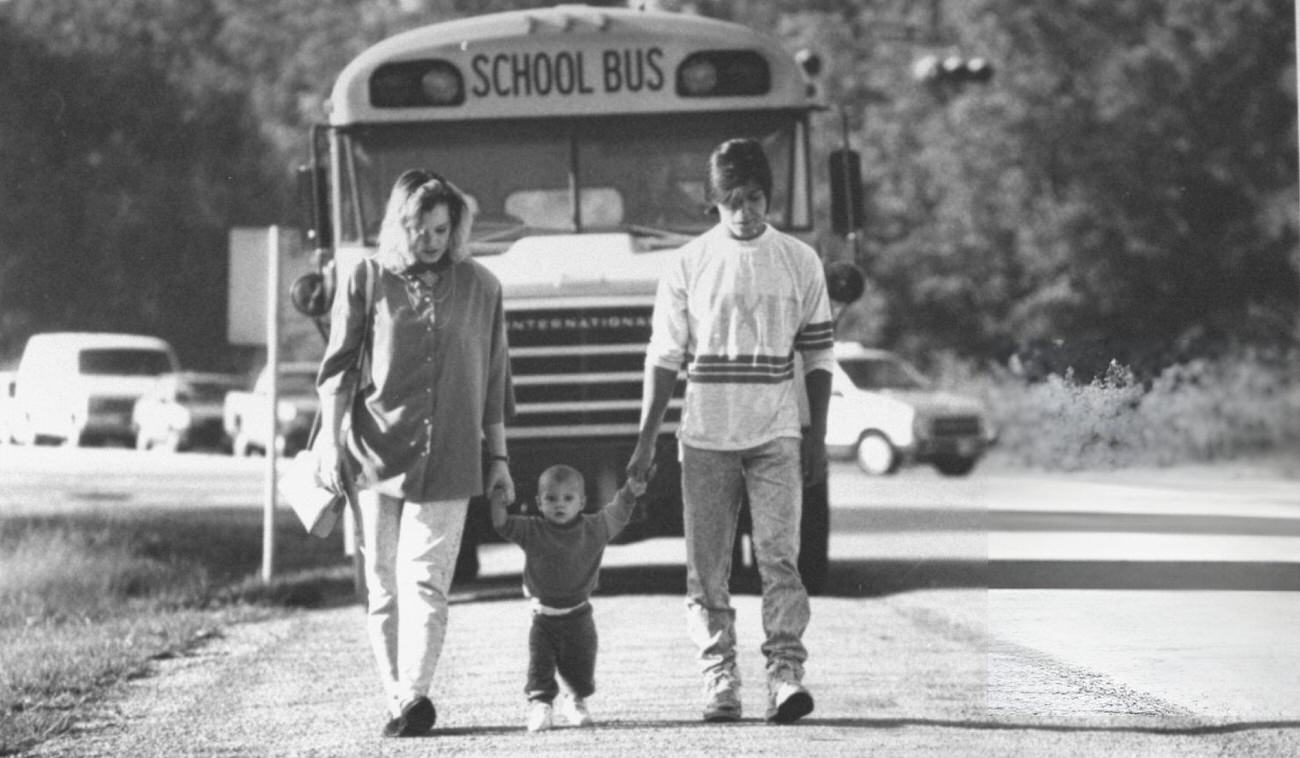
Fifteen-year-old mother Christy Pollard walks with her son Jonathan and boyfriend Johnny Rivera after school, highlighting young family dynamics.
Army Sgt. Daniel Morin speaks about the tragic loss of his family in a shooting, Harlington, Texas, 1998.
The seizure of Teresa Rodriguez's townhouse by the IRS over a major financial scandal spotlights issues of fraud and trust within government-sponsored minority business aid programs.
The seizure of Teresa Rodriguez’s townhouse by the IRS over a major financial scandal spotlights issues of fraud and trust within government-sponsored minority business aid programs.

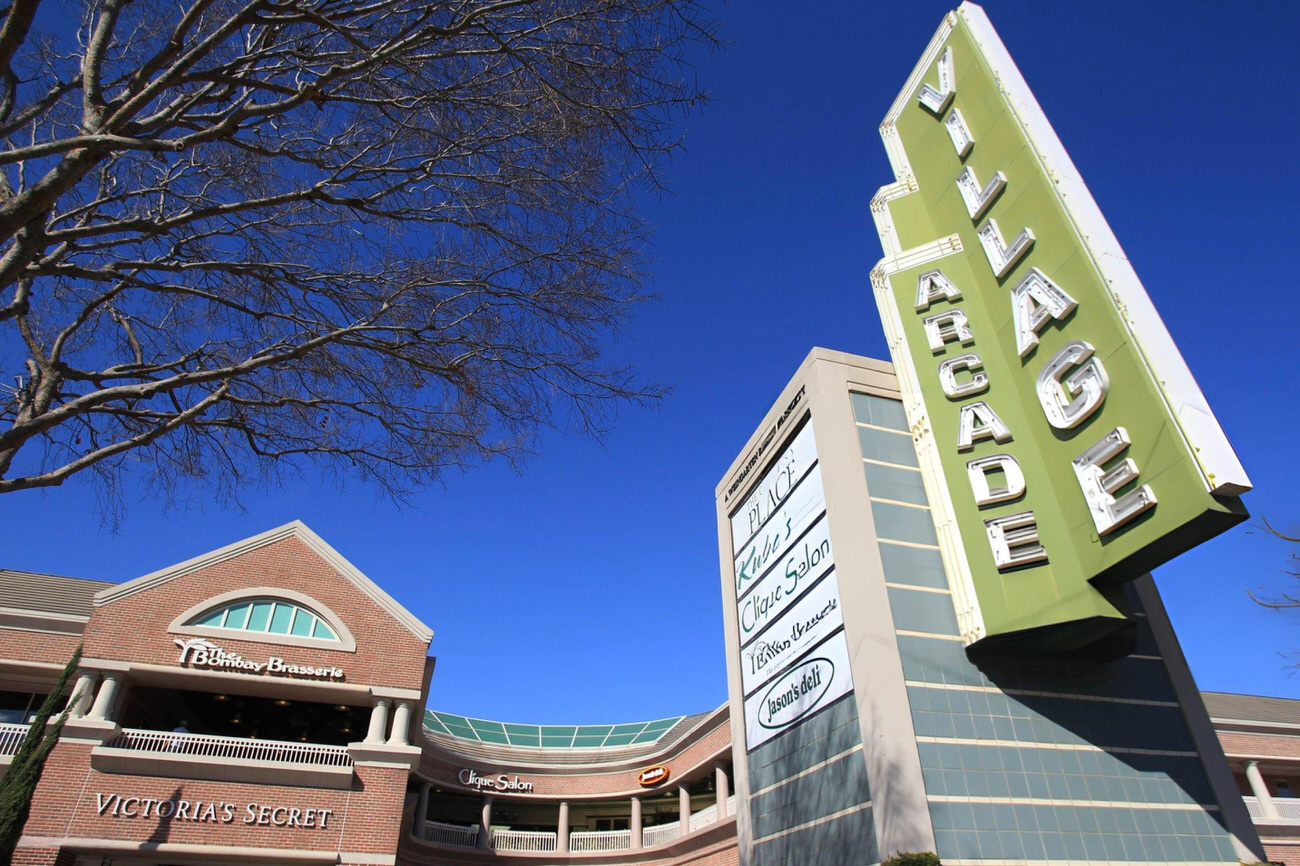
A few of these photographs stretch slightly past the decade’s formal end, offering a glimpse of what Houston was becoming. Sharpstown Mall, photographed after its foreclosure in 2001, was already a symbol of suburban retail’s fragility. Rice Village Arcade, still active in 2014 before Rice University moved to buy out its ground lease, had been a shopping destination throughout the 1990s. These afterimages help close the frame on a decade that never stopped moving.
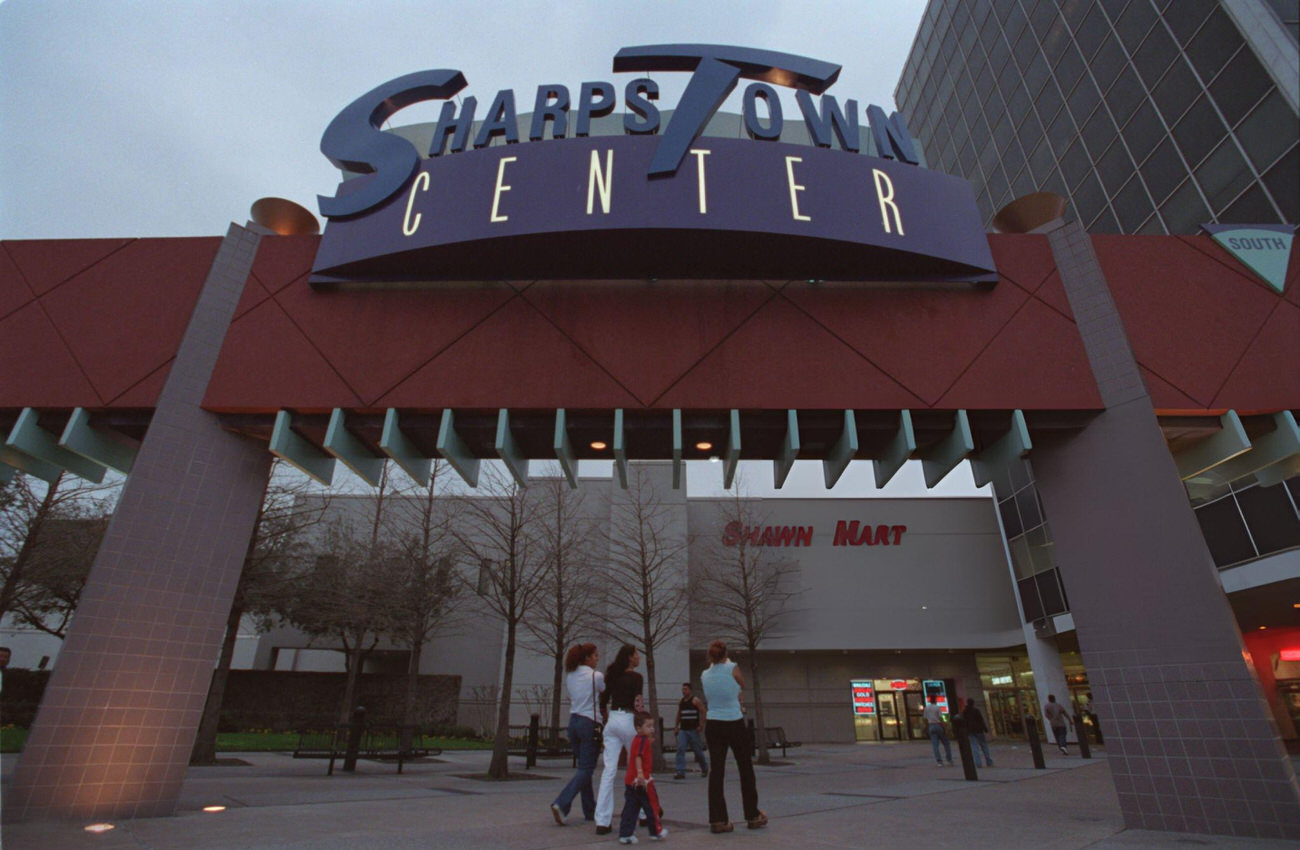
Exterior of Sharpstown Mall following foreclosure and attempts at revitalization, Houston, Texas, 2001.
Rice University plans to buy out a Rice Village Arcade ground lease from Weingarten Realty, Houston, Texas, 2014.

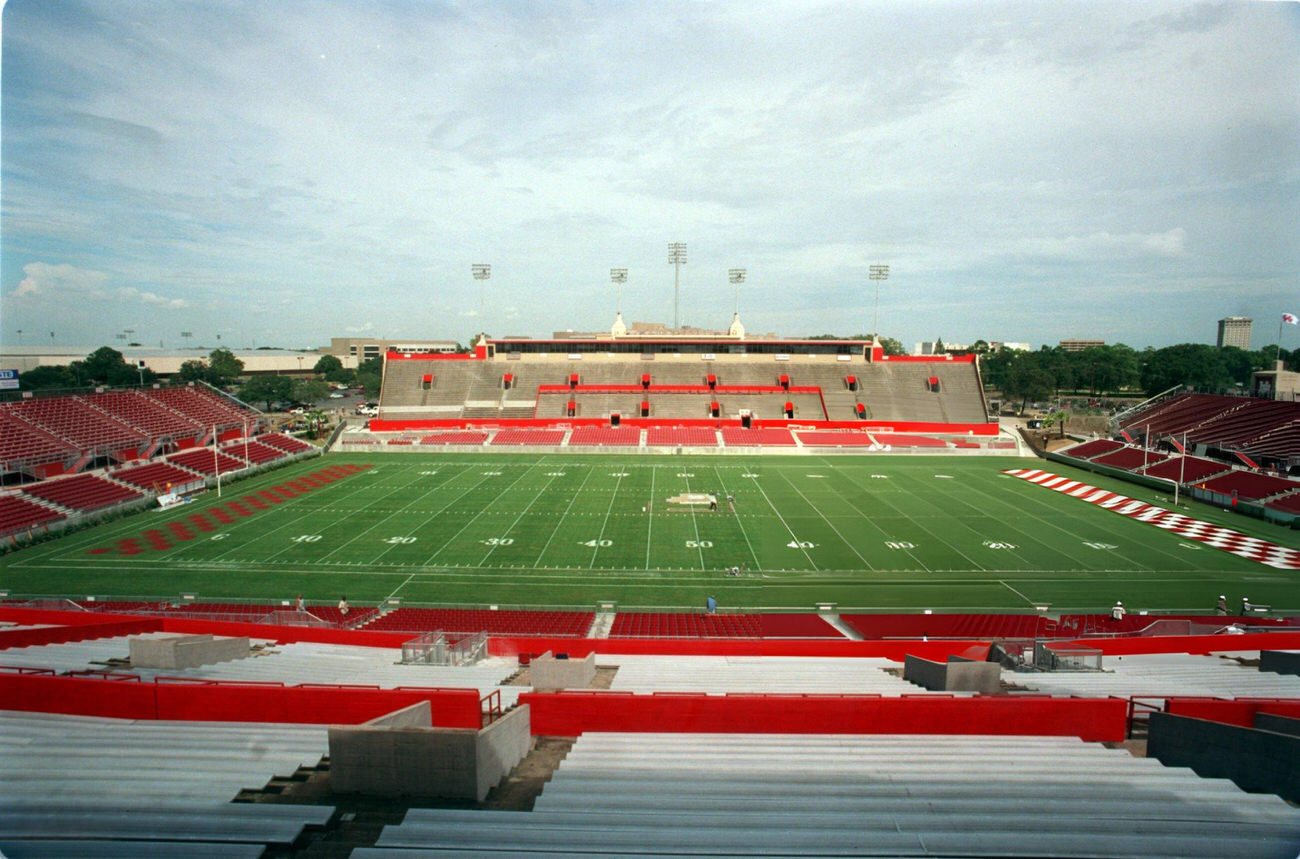
Several photographs in this collection reach just outside Houston proper. The Buccaneer Hotel in Galveston, photographed in 1993 — six years before its demolition — had by then been converted into elderly apartments, its grand coastal past faded but not yet gone. Robertson Stadium, after its renovations, stood ready to host the Bayou Bucket rivalry game between Houston’s two major universities. These surrounding places were part of the same urban world that Houston anchored.
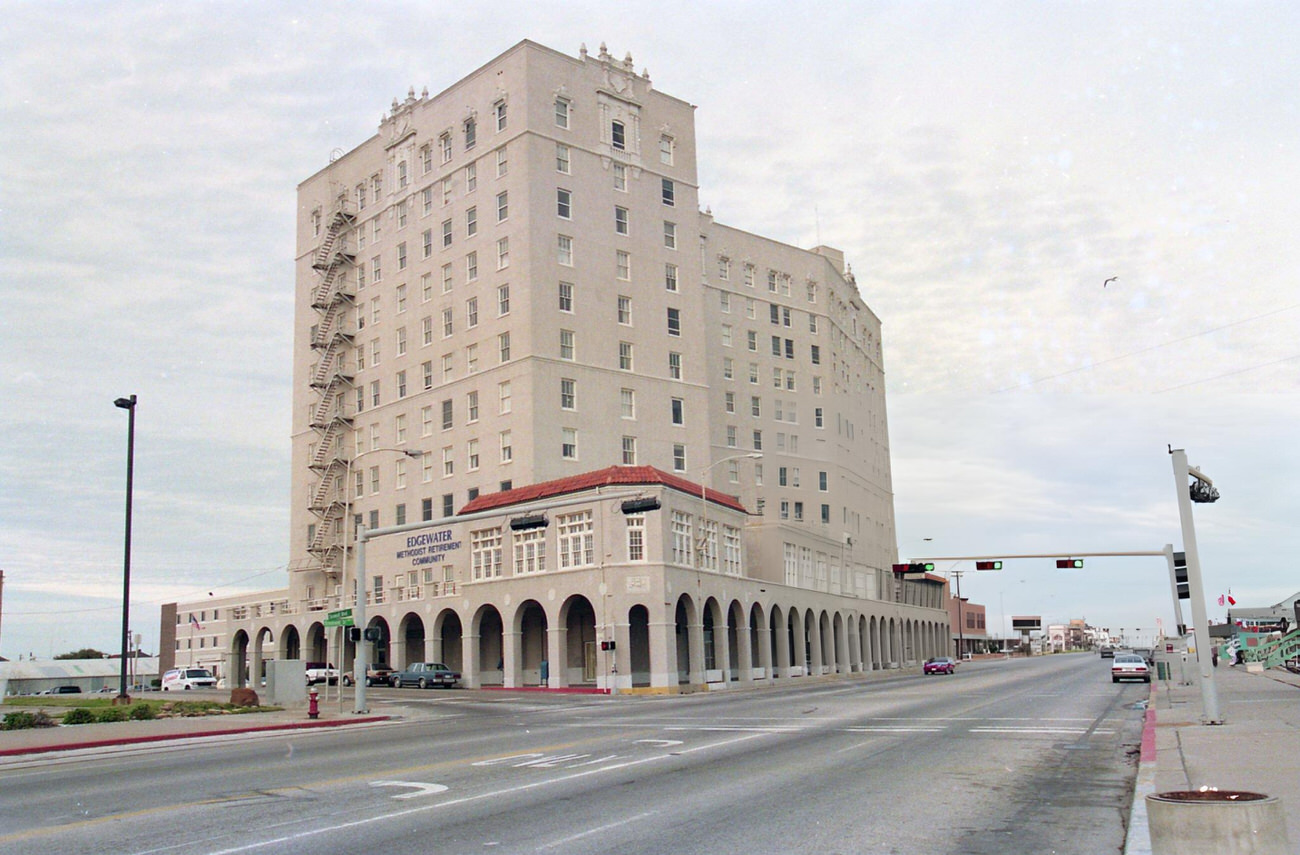
The former Buccaneer Hotel in Galveston, serving as elderly apartments before its 1999 demolition, Galveston, Texas, 1993.
Robertson Stadium ready for the 'Bayou Bucket' game after renovations, Houston, Texas, 1999.
Robertson Stadium ready for the ‘Bayou Bucket’ game after renovations, Houston, Texas, 1999.

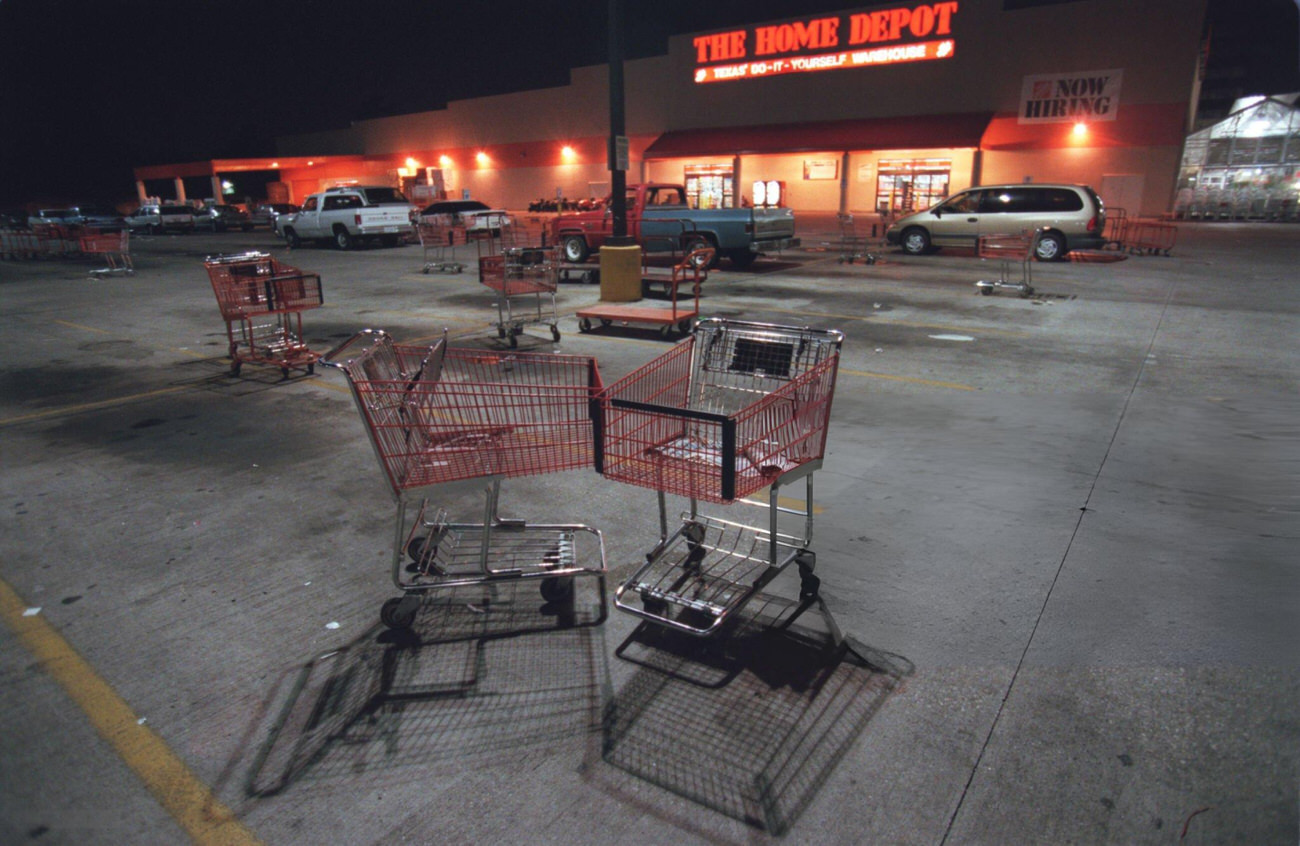
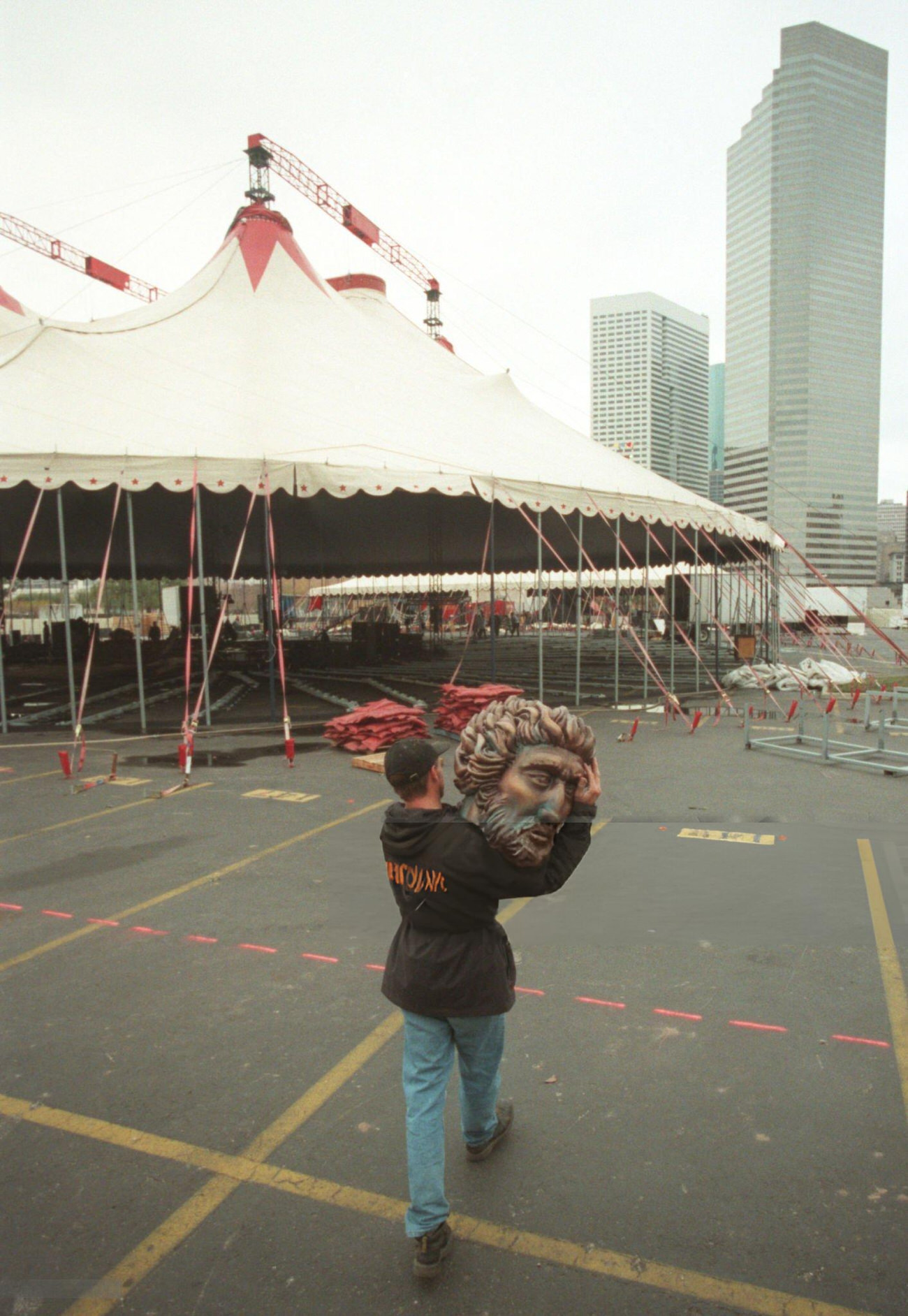
What these photographs add up to is a city too large and too varied to reduce to a single story. Houston in the 1990s had industry and poverty, growth and decay, celebration and crisis — all running in parallel, all happening at once. The smog hanging over the skyline from North MacGregor Way, the circus tent going up downtown, the 24-hour Home Depot parking lot nearly empty before dawn — these are the textures that give a decade its true shape.
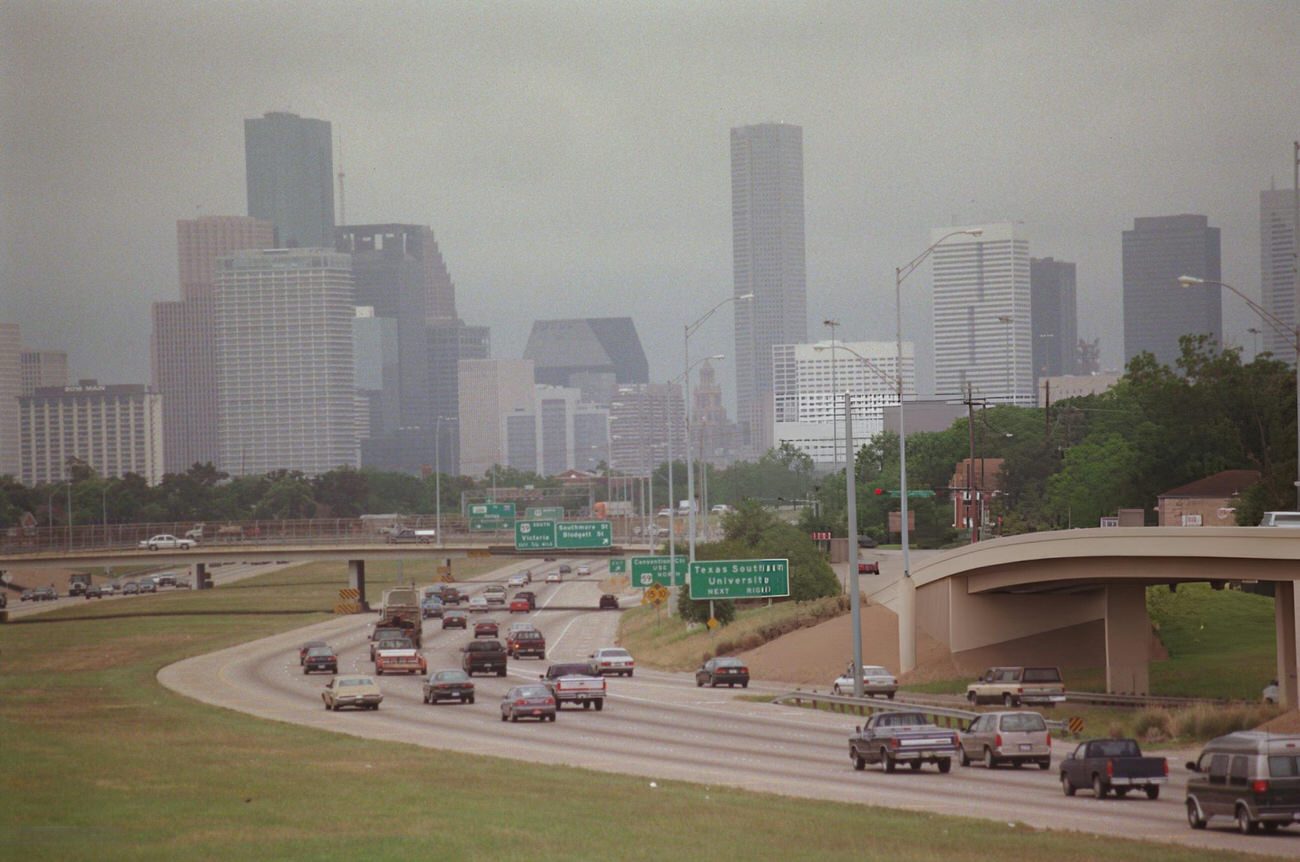
Downtown Houston skyline obscured by smog, viewed from North MacGregor Way bridge, Houston, Texas.
Barnum's Kaleidoscape's ring boss prepares for the circus under a tent downtown, Houston, Texas, 1999.
Barnum’s Kaleidoscape’s ring boss prepares for the circus under a tent downtown, Houston, Texas, 1999.
Mostly empty parking lot at a 24-hour Home Depot, Houston, Texas, 1999.
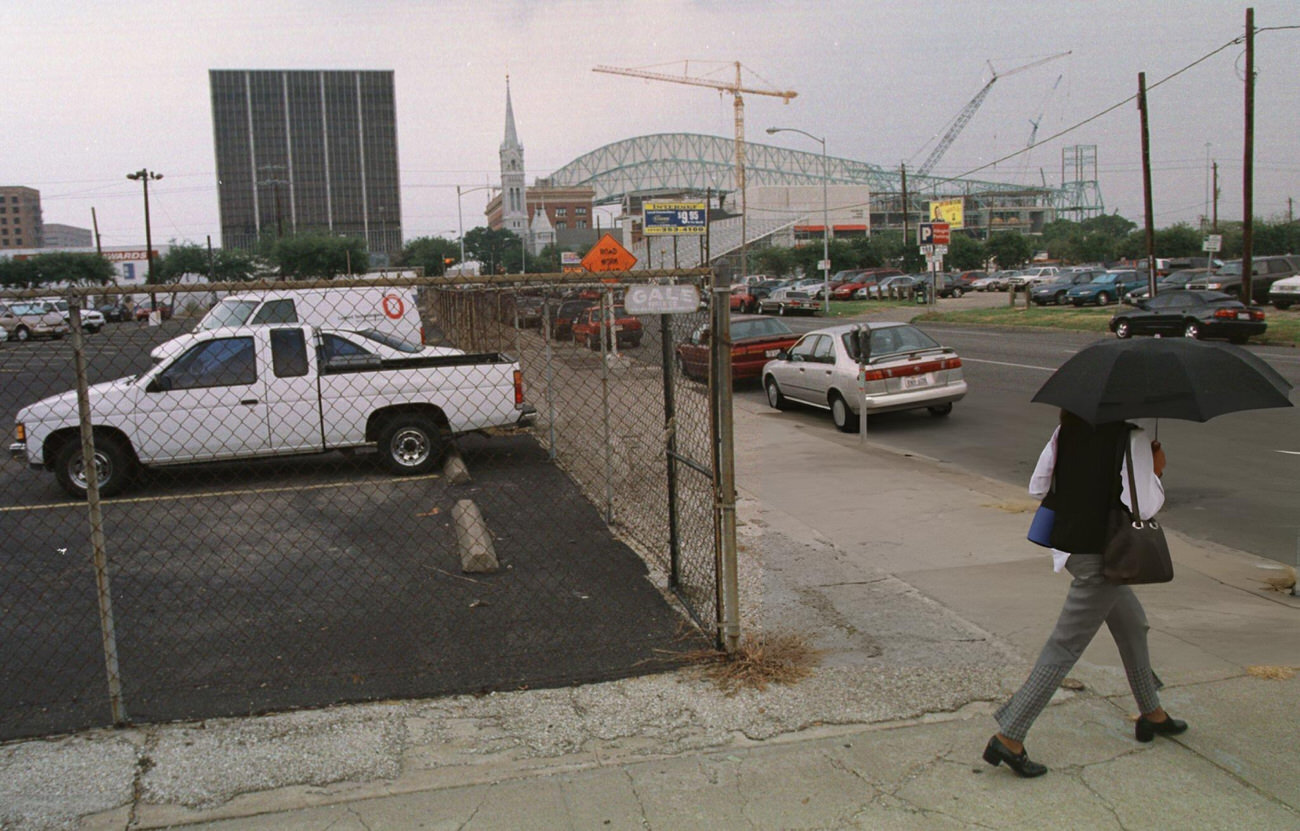
Pedestrian walks past a future basketball/hockey arena site downtown, Houston, Texas, 1999.
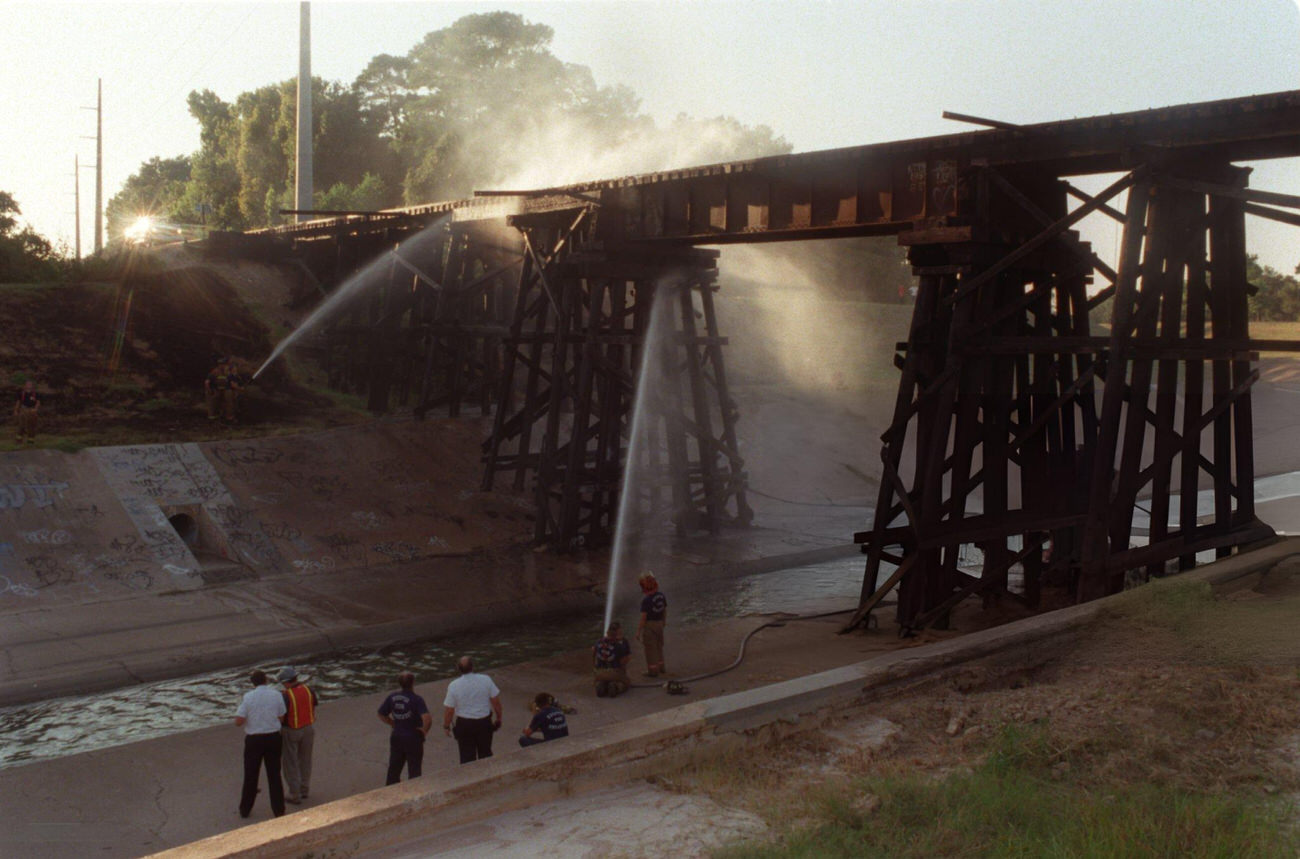
Firefighters douse a burning railroad trestle over White Oak Bayou, Houston, Texas, 1999.
Skyline of Houston, Texas, 1990s
Aerial view of Houston, Texas, 1990s
City Hall in Houston, Texas, 1990s
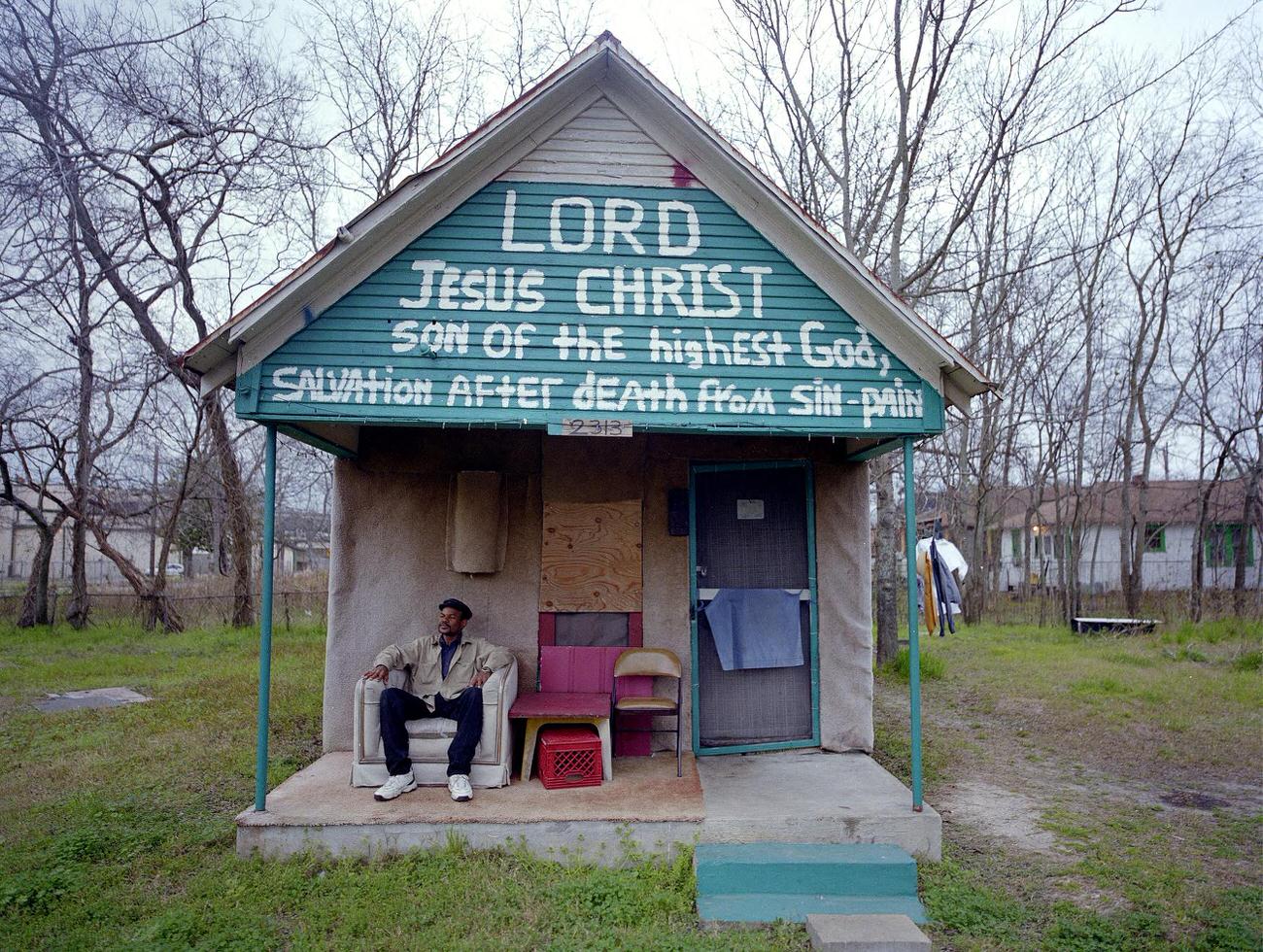
Man with a message in Houston, Texas, 1990s
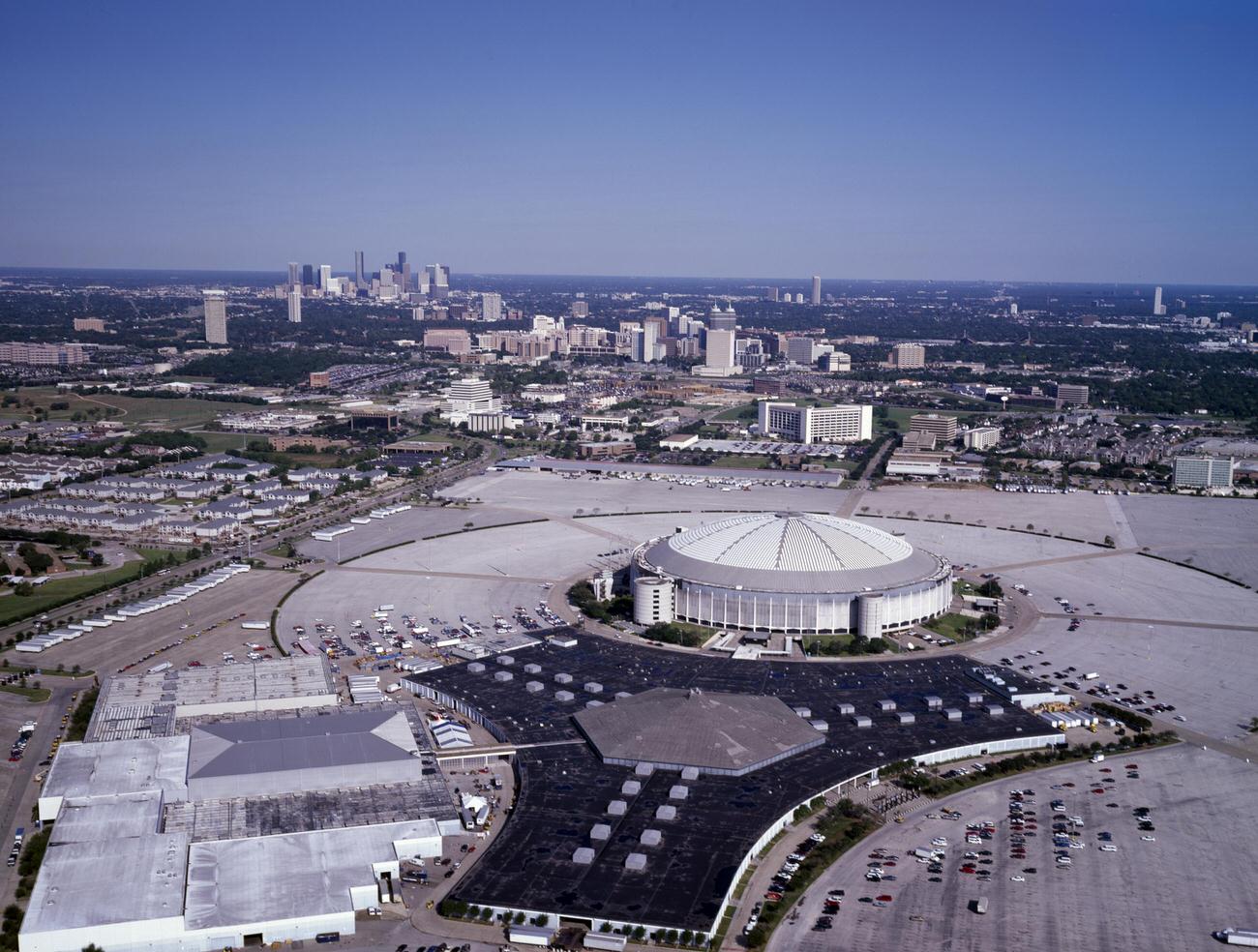
Aerial view of the Houston Astrodome, with downtown in the distance, 1990s
The Astrodome, the world's first domed stadium, in Houston, Texas, 1990s
The Astrodome, the world’s first domed stadium, in Houston, Texas, 1990s
City Hall in Houston, Texas, 1990s
Enron Stadium in Houston, Texas, 1990s
The repetition of Highland Village's significance on May 11, 1992, reinforces its role in Houston's retail landscape, Texas.
The repetition of Highland Village’s significance on May 11, 1992, reinforces its role in Houston’s retail landscape, Texas.
The Republican National Convention appearance on "The Tonight Show with Jay Leno" on August 18, 1992
The Republican National Convention appearance on “The Tonight Show with Jay Leno” on August 18, 1992
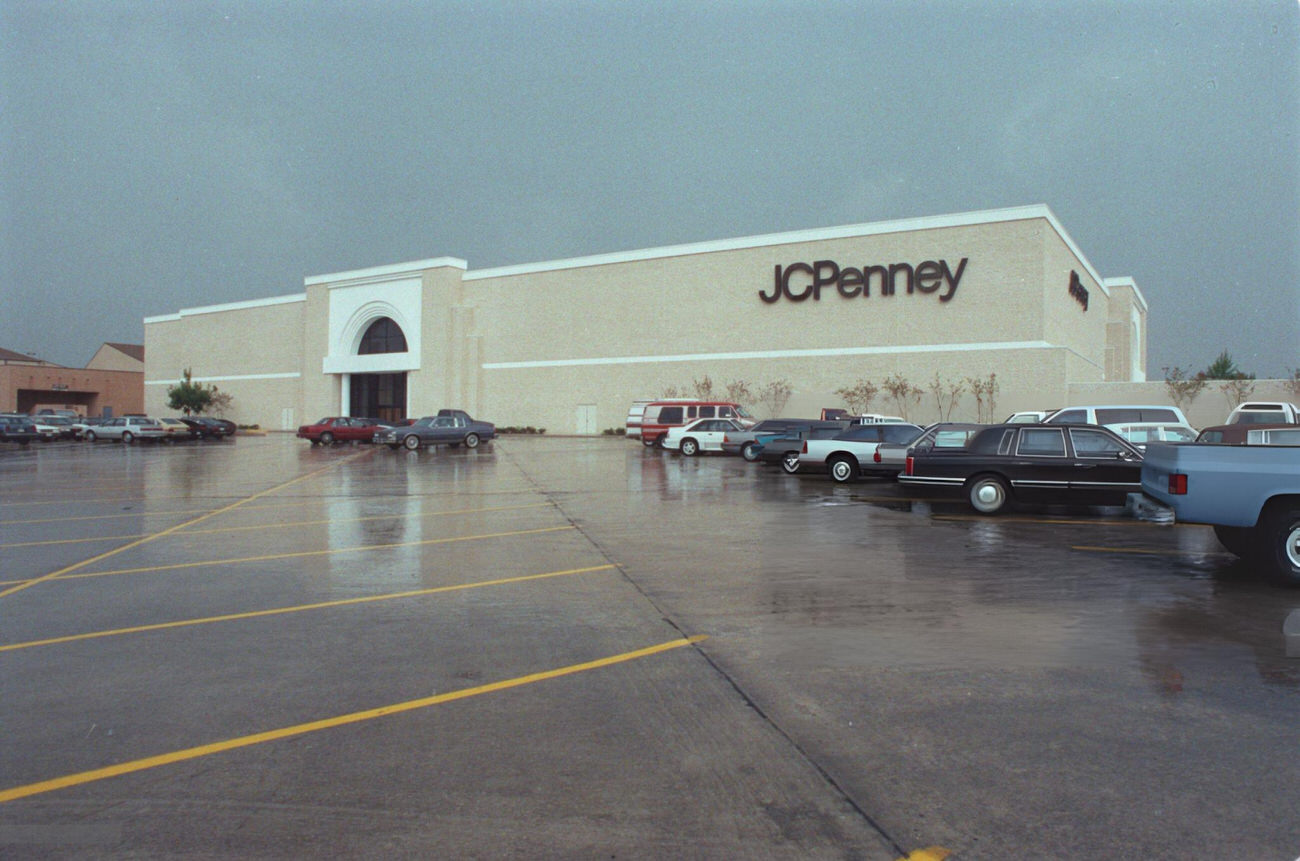
The opening of a new J.C. Penney store in Willowbrook Mall on September 10, 1992, signifies retail growth and economic optimism, contrasting with later challenges faced by the retailer, Houston, Texas.
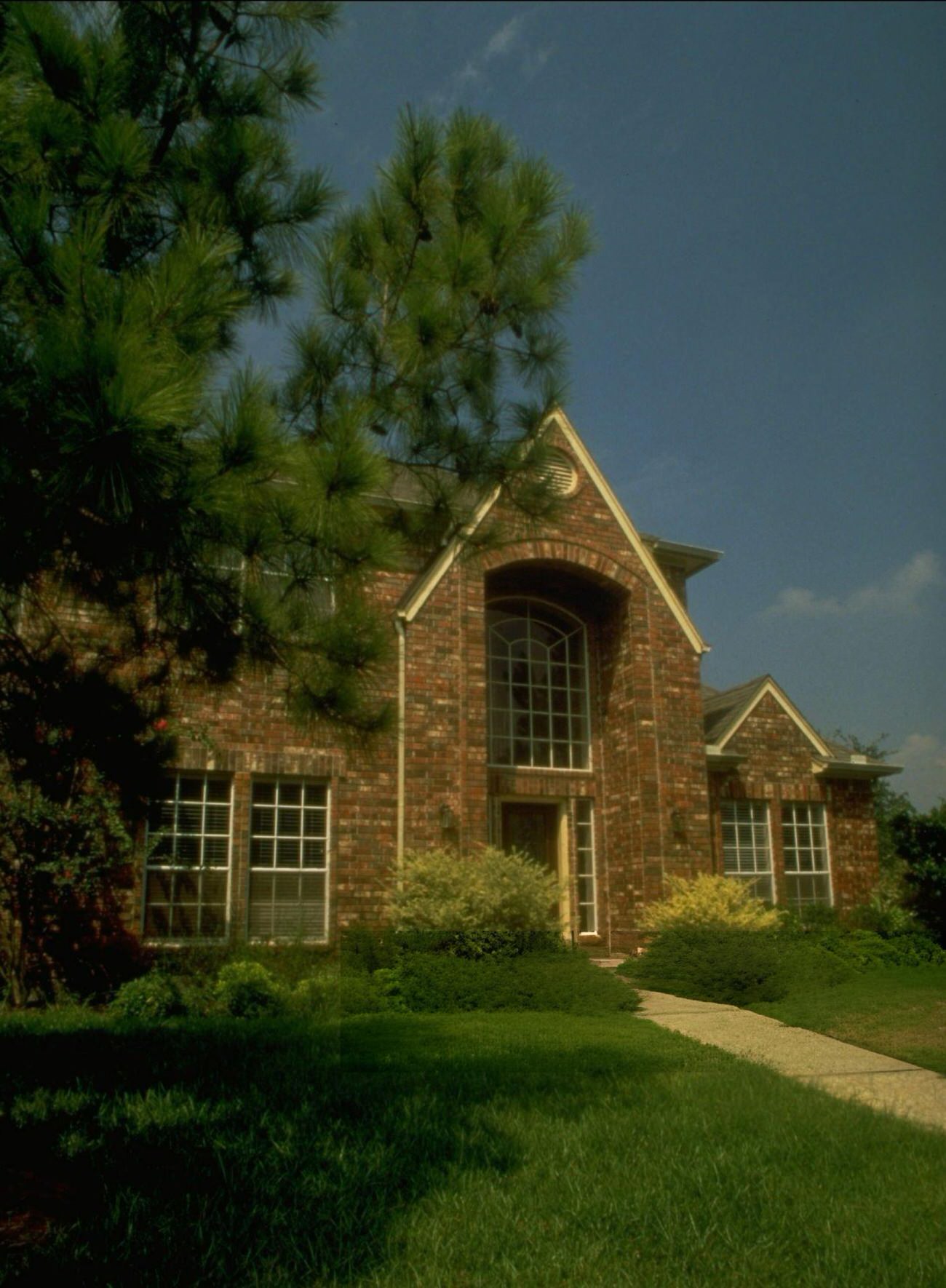
The home of Rose Turford, linked to a notorious crime spree with Carolyn Stevens, draws parallels to "Thelma & Louise," reflecting on the dramatic and criminal aspects of personal lives gone awry.
The home of Rose Turford, linked to a notorious crime spree with Carolyn Stevens, draws parallels to “Thelma & Louise,” reflecting on the dramatic and criminal aspects of personal lives gone awry.
The acquisition of Pennzoil Place by a German investment group on January 9, 1997, signals international interest and investment in Houston's commercial real estate, Texas.
The acquisition of Pennzoil Place by a German investment group on January 9, 1997, signals international interest and investment in Houston’s commercial real estate, Texas.
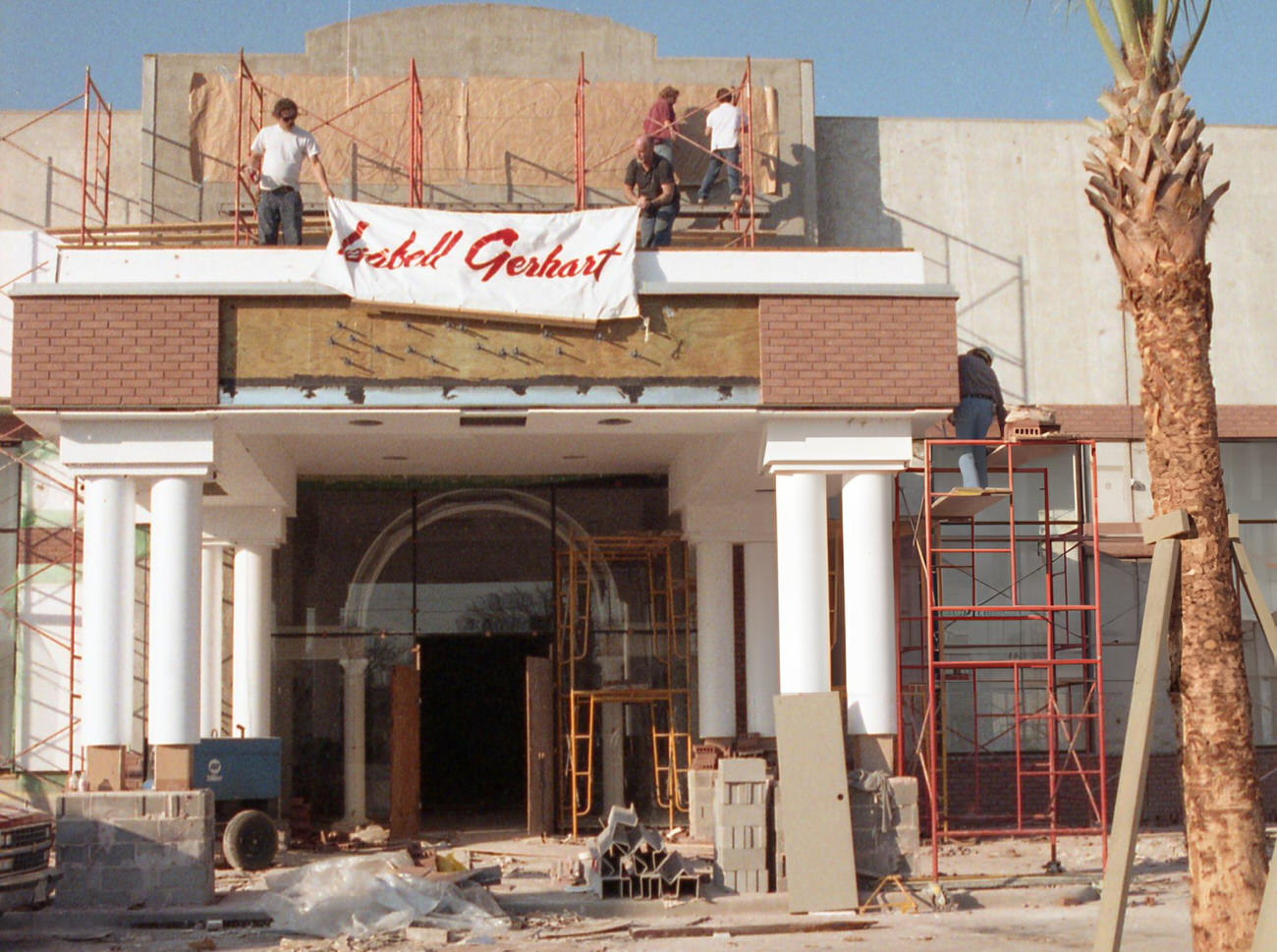
Workers install a banner at the Isabell Gerhart store in River Oaks Plaza, marking the upscale clothier's relocation from the Galleria, Houston, Texas, 1991.
Workers install a banner at the Isabell Gerhart store in River Oaks Plaza, marking the upscale clothier’s relocation from the Galleria, Houston, Texas, 1991.
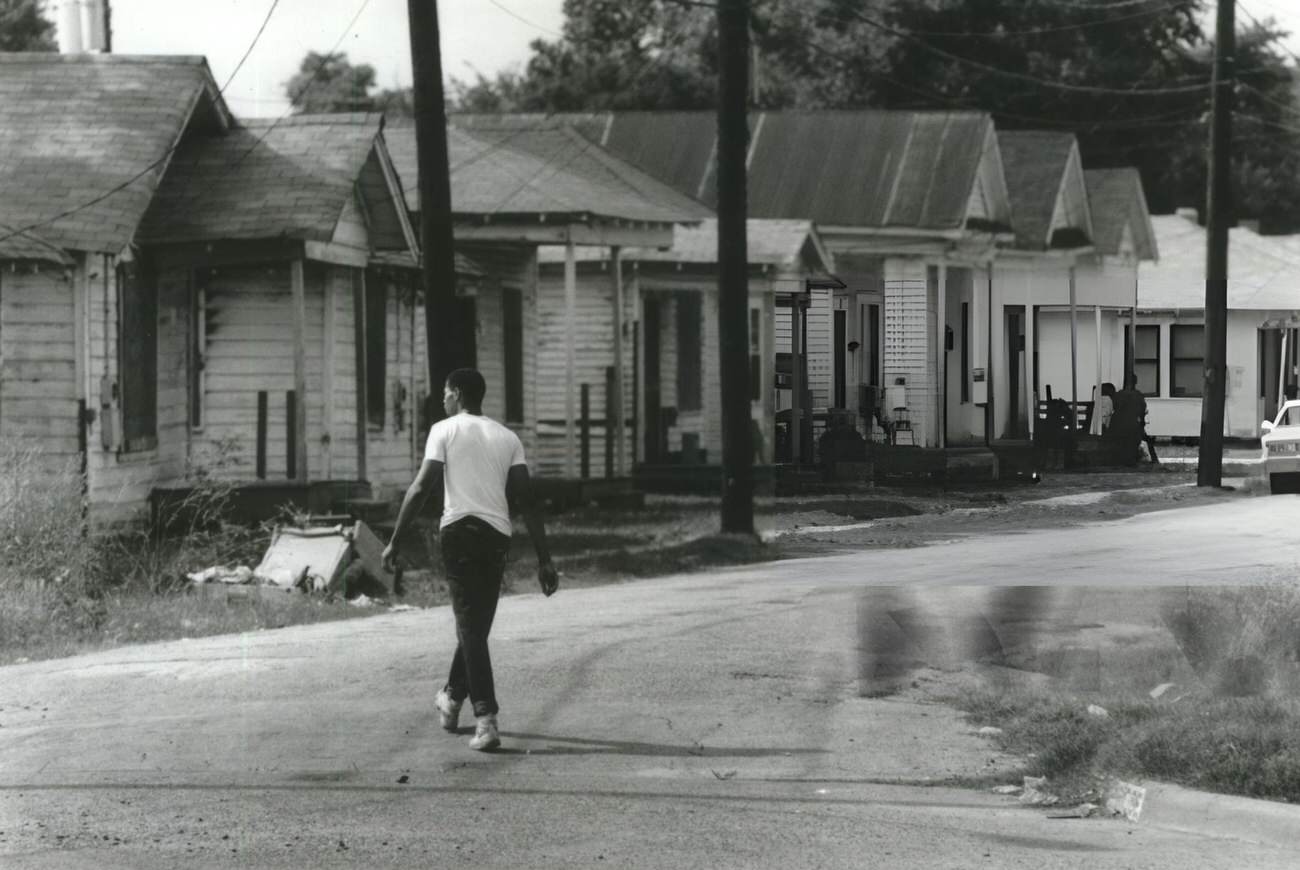
A man on Brackenridge Street disappears before he can be named, adding mystery to the neighborhoods of Houston, Texas.
Enjoyed this post? Get new ones in your inbox.
Avatar of Kevin Clark

Written by Kevin Clark

Kevin Clark is a historian and writer who is passionate about sharing the stories and significance behind historical photos. He loves to explore hidden histories and cultural contexts behind the images, providing a unique insight into the past.

Leave a Reply

Your email address will not be published. Required fields are marked *

One Comment